WO2000044762A1 - 5-GLYCOSYLOXY-6-HYDROXYNAPHTO[2,3-f]QUINOLINE-7,12-DIONE A EFFET ANTICANCEREUX - Google Patents
5-GLYCOSYLOXY-6-HYDROXYNAPHTO[2,3-f]QUINOLINE-7,12-DIONE A EFFET ANTICANCEREUX Download PDFInfo
- Publication number
- WO2000044762A1 WO2000044762A1 PCT/JP2000/000479 JP0000479W WO0044762A1 WO 2000044762 A1 WO2000044762 A1 WO 2000044762A1 JP 0000479 W JP0000479 W JP 0000479W WO 0044762 A1 WO0044762 A1 WO 0044762A1
- Authority
- WO
- WIPO (PCT)
- Prior art keywords
- group
- compound
- general formula
- dione
- amino
- Prior art date
- Legal status (The legal status is an assumption and is not a legal conclusion. Google has not performed a legal analysis and makes no representation as to the accuracy of the status listed.)
- Ceased
Links
Classifications
-
- C—CHEMISTRY; METALLURGY
- C07—ORGANIC CHEMISTRY
- C07H—SUGARS; DERIVATIVES THEREOF; NUCLEOSIDES; NUCLEOTIDES; NUCLEIC ACIDS
- C07H17/00—Compounds containing heterocyclic radicals directly attached to hetero atoms of saccharide radicals
- C07H17/02—Heterocyclic radicals containing only nitrogen as ring hetero atoms
-
- A—HUMAN NECESSITIES
- A61—MEDICAL OR VETERINARY SCIENCE; HYGIENE
- A61K—PREPARATIONS FOR MEDICAL, DENTAL OR TOILETRY PURPOSES
- A61K31/00—Medicinal preparations containing organic active ingredients
- A61K31/70—Carbohydrates; Sugars; Derivatives thereof
- A61K31/7042—Compounds having saccharide radicals and heterocyclic rings
- A61K31/7052—Compounds having saccharide radicals and heterocyclic rings having nitrogen as a ring hetero atom, e.g. nucleosides, nucleotides
-
- A—HUMAN NECESSITIES
- A61—MEDICAL OR VETERINARY SCIENCE; HYGIENE
- A61P—SPECIFIC THERAPEUTIC ACTIVITY OF CHEMICAL COMPOUNDS OR MEDICINAL PREPARATIONS
- A61P35/00—Antineoplastic agents
Definitions
- the present invention relates to a novel compound having an anticancer activity or an antitumor activity, namely, 5-glycosyloxy-6-hydroxysinaphtho [2,3-f] About quinolin-7,12-dione.
- the present invention makes use of the above-mentioned 5-glycoline-oxy-6-hydroxynaphtho [2,3-f] quinoline-7,12-dione
- the present invention relates to an anticancer agent or an antitumor agent composition as a component.
- daunomycin also referred to as danonorevicin
- adriamycin also referred to as doxonorevicin
- Adriamycin in particular, is widely used clinically as a cancer chemotherapeutic agent, but its toxicity is quite high.
- the present inventors have synthesized a variety of novel anthracycline derivatives having a fluorosugar so far, and have been preparing many of these novel anthracycline derivatives. Have shown remarkable antitumor activity and relatively low toxicity (eg, Japanese Patent Publication No. 9-1132589, US Patent No. 5,789,386). And European Patent HA No. EP00761678A1).
- An anthracycline derivative having a fluorosaccharide synthesized by the present inventors has a higher antitumor activity than adriamycin, and is useful for humans. And low toxicity to mammals.
- such anthracycline derivatives having phenolic sugars have been sufficiently reduced in their toxicity to humans. Absent. It is anticipated that patients receiving the anthracycline derivative will experience inconvenience or injury during treatment due to the toxicity of the anthracycline derivative. Was.
- Disclosure of the invention Therefore, it is possible to provide a novel compound having significantly reduced toxicity and exhibiting anticancer activity as compared with conventionally known anthracycline derivatives. There is a strong demand.
- the present inventors conducted research on synthesizing a novel compound having a completely different chemical structure of the skeleton from that of anthracyclin and having anticancer activity.
- various dalycosyl groups were bonded to the 5-position hydroxyl group of the alizarin blue compound of the formula (A), and the alizarin blue molecule was elaborated.
- a group of dalicoside compounds generally represented by the following general formula (I) has a strong cancer cell growth inhibitory activity against various cancer cells, and It has been found that it has significantly reduced toxicity compared to thiol.
- the present invention has been completed based on these findings.
- A is a methyl group or a trifluoromethyl group
- B is a hydrogen atom, or a phenol group or a chloro group as an electron-withdrawing group.
- A is a trifluoromethyl group
- B represents a hydrogen atom
- A is a methyl group
- B represents the above electron-withdrawing group.
- R 1 is a hydroxyl group or an amino group, or has the following formula (a):
- X represents a hydrogen atom, an alkyl group, or a substituted alkyl group bonded to the ⁇ carbon atom of a known ⁇ -amino acid molecule.
- Y is a hydrogen atom or a lower alkyl group, or an aryl group, especially a phenyl group or a substituted phenyl group, or An aralkyl group, particularly a benzyl group or a substituted benzyl group), which is a hydroxyl group esterified with an acyl group represented by ,
- R 1 Pen door over the scan Ri by the or Waeki source one scan 0 - da Ri Li co-acylation, non-mud key sill based on Der
- R 2 is to be al the same meaning as R 1 5-L or D-glycosyloxy-6-hydroxy synapto [2,3-f] quinoline-7,12-dione represented by
- the first compound of the general formula (I) according to the present invention which is provided with a pharmaceutically acceptable acid addition salt, comprises an amino group or a compound in the compound.
- An imino group can form an acid addition salt with a pharmaceutically acceptable acid.
- the pharmaceutically acceptable inorganic acids used here are, for example, hydrochloric acid, sulfuric acid, nitric acid or phosphoric acid, and the pharmaceutically acceptable organic acids are, for example, It is acetic acid, trifluoroacetic acid, propionic acid, malonic acid, lactic acid, tartaric acid or methansnolefonic acid.
- 2,6-dideoxy or 6-dexoxy- ⁇ or / 3-L or D-ta lanosyl group Or 2,6-dideoxy or 6-doxy- ⁇ or] 3-L or D-galactosilane group, or 2,6-dioxy Deoxy or 6-doxy- ⁇ or] 3-L or D-mannyl lanano group, one of which is 2,6-dideoxy- ⁇ Is an L or D-glycosyl group having a j3 -L or D-lyxo-hexopyranosyl group as a basic skeleton of the glycosyl group be able to.
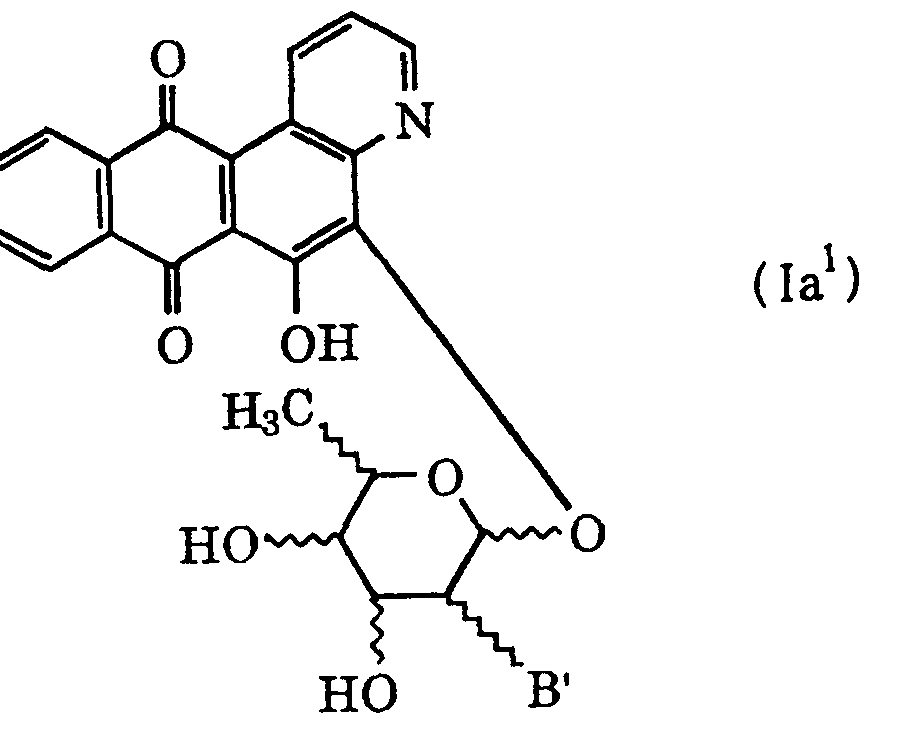
- the first compound of the general formula (I) according to the present invention has the following general formula (la)
- B ′ represents a phenolic group, a chloro group, a bromo group, a sulfide group, a diphenylo group (-F 2 ) Is an alkoxy group or a cyano group (-CN) having a prime number of 1 to 5, and R 1 is a hydroxyl group or an amino group, or
- X is a hydrogen atom, an alkyl group, or a substituted alkyl group bonded to a known ⁇ -amino acid molecule.
- Y is a lower alkyl group or a phenyl group, especially a phenyl group or a substituted phenyl group, or a aralkyl group, especially A benzyl group or a substituted benzyl group), or a hydroxy group esterified by an acyl group represented by Is
- R 1 is a hydroxy group which is 0-glycorinated by a pencil or hexose
- R 2 is R 1 5- (2,6-dideoxy or 6-deoxy-2-substituted-3-0-substituted or unsubstituted- Or 4-0-substituted or unsubstituted- or 3,4-0-disubstituted or unsubstituted -L or D-glycoloxy) -6-hydroxy Includes [2,3-f] quinolin-7,12-dione.
- glycosyl group represented by 2,6-dideoxy or 6- Deoxy- ⁇ or 0-L or D-tarovinylosyl group, or 2,6-dideoxy or 6-dexoxy-ct or] 3-L Or a D-galactosilane group, or Glycosyl having a 2,6-dideoxy or 6-doxy- ⁇ - or -L or D-mannobilanosyl group as a basic skeleton of the glycosyl group. It can be a sil group.
- glycosyl group of the above formula (c ′) is a 4-amino-2,4,6-tridoxy-2-substituted-tarovinylosinole or glass.
- the compounds of the above general formula (la) include a fluoro group, a chloro group, a bromo group, a difluoro group, a methoxy group, an ethoxy group in which is an electron-withdrawing group.
- R 1 is a hydroxyl group, an amino group, a glyoxyl group, an alanyloxy group, or an acetoxy group.
- R 2 is a hydroxyl group, an amino group, a glycyloxy group, an aryloxy group or an acetate group. It can be a compound of (la).
- B is an electron-withdrawing group having the same meaning as defined above, or a 5- (2,6-dideoxy or 6-doxy group. -2-substituted-L or D-taroylanosiloxy or galactopyranosiloxy or mannoviranosiloxy) -6-hydroxy Synafto [2,3-f] quinoline Including -7,12-dione.
- E 1 is a hydrogen atom, or a dalysyl group, an alanyl group, a linole group, a mouth isole group, an isolysyl group, or a phenyl group.
- E 2 is a hydrogen atom, Oh Ru stomach grayed lysyl group, ⁇ La group, carbonochloridate Li Norre group, mouth Lee Shinore group, Lee Seo ports Lee Shinore Motoma other Ru Oh in a non-error Nirua La El based on ⁇ - Ri a Mi acid residue der, however teeth ⁇ 1 your good beauty ⁇ 2 are both at the same time hydrogen atom 5— (2,6-dideoxy—2-substitution—3-mono 1—amino—anorecanoy—or 4-mono ” — 0—Amino Anolecanor — or 3,4-Di—0—Amino Anorecanor — L or D—Taro Villano Siloki or Garaku Topira No siloxy or mannopyrano siloxy) -6-Hydroxy synapht [
- the first compound of the general formula (I) according to the present invention includes Compounds of general formula (la) is containing the or the following general formula (la 5)
- T 1 is a hydrogen atom
- Ru Ah is formate Honoré group
- ⁇ Se ethyl group Pro Pioniru group
- ⁇ 2 is One is also the same meaning as ⁇ 1, however tooth ⁇ 1 your good beauty ⁇ 2 Are not hydrogen atoms at the same time.
- R 1 is heat mud key Sill group or is A Mi Roh Motodea Ru force 2 or the following formula (a)
- X represents a hydrogen atom, an alkyl group, or a substituted alkyl group bonded to an ⁇ -carbon atom of a known ⁇ -amino acid molecule.
- R 1 is represented by the following formula (b)
- R 1 is a hydrogen atom or a lower alkyl group, or an aryl group, especially a phenyl group or a substituted phenyl group, or A hydroxyl group, particularly a benzyl group or a substituted benzyl group), or a hydroxy group which is esterified by an acyl group represented by Yes, R 1
- R 2 is to be al the same meaning as R 1 5- (2,6-dideoxy-6,6,6-trifluoro-3-0-substituted or unsubstituted-or 4-0-substituted Or unsubstituted or 3,4-0-disubstituted or unsubstituted -glycosyloxy) -6-hydroxy synapto [2,3-f] quinoline Includes 1,7-, 12-dione.
- the glycosyl group represented by is a 2,6-dideoxy-6,6,6, -triphenyleneole- ⁇ - or -L or D-ribo-hexapilla Nosyl group or 2,6-dideoxy-6,6,6-trifnoreo mouth -a or ⁇ -L or D-arapino-hexopyranosyl group Or 2,6_dideoxy-6, 6, 6-trifnoreo mouth-c-or) 3-L or D-xy mouth-hexopyranosinole group, Or 2,6-dideoxy-6,6,6-triffnole mouth — ⁇ or] 3-L or D-lixo-hexopyranosyl group grayed that Ki de also re co sill group da re co sill groups der Ru this having as a basic skeleton of the above compound of general formula (lb) is, R 1 in the formula of that non-de-opening key Syl, amino, glyoxy, alanyloxy or case
- R 2a is a hydroxyl group, an amino group, a glycyloxy group, an alanyloxy group, or an acetoxy group.
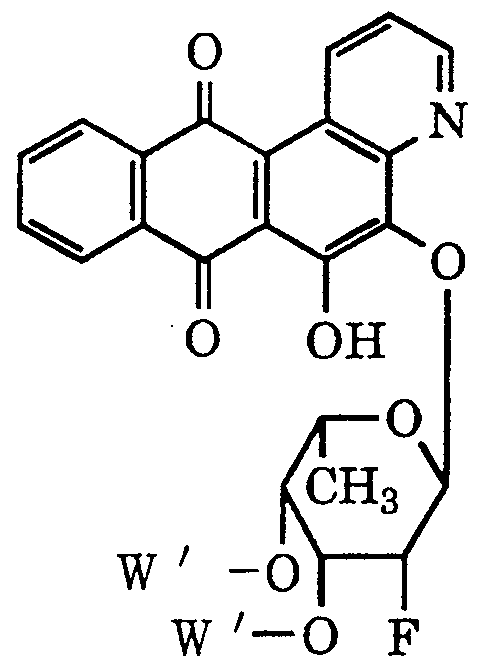
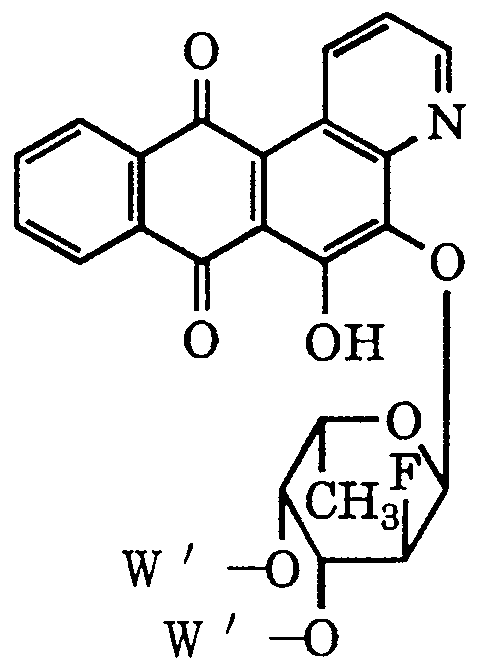
- L (2,6-dideoxy—6,6,6—trif-noreolo ⁇ -L-lyxo-hexoxolano siloxy) represented by Kina synafto [2,3-f] quinoline-7,12-dione (hereinafter, the compound of the present invention may be referred to as L), and the following: formula (lb 1 - 2)
- Test Example 1 shows a test example for measuring growth inhibitory activity on cancer cells.
- Test Example 1 the following five compounds, which are representative examples of the compound of the general formula (I) of the first invention, that is,
- Test example 1 was used as the test compound. Test example 1
- a culture medium for culturing cancer cells put a culture medium for culturing cancer cells, and inoculate the culture medium with various types of mouse cancer cells or human cancer cells shown in Table 1 below, and further at 37 ° C. in medium containing 5% C0 cancer cells cultured in the Hare good of c this cultured in 2 conditions, and the test compound, the above-mentioned present invention compounds a, B, D, E or is an F Various concentrations were added.
- the culture of the cancer cells is continued for 72 hours, and the concentration of the test compound that can inhibit the growth of mouse or human cancer cells by 50% (50% inhibition concentration: IC 50 , ⁇ g / ml) were measured.
- IC 50 50% inhibition concentration
- mice and human cancer cells used in the test are the 12 species shown in Table 1.
- Mouse colon cancer colon 26
- mouse B cell line. Tumor L32T
- mouse lymphoma L-1210
- human cervical carcinoma HeLa
- human acute promyelocytic leukemia HL60
- human prostate cancer PC3
- Human vulvar squamous cell carcinoma A431)
- human lung cancer PC6
- human breast cancer MCF7
- human esophageal cancer TT
- human prostate cancer LNcap
- DLD- 1 der Ru c test result to IC 5 which it is measured.
- Table 1 Cancer cell growth of 50% inhibitory concentration; IC 5. ( ⁇ g / ml)
- each of the compounds A, B, D, E and F of the present invention inhibited the growth of various types of mouse and human cancer cells. It has been found that inhibition can be achieved at concentrations similar to or lower than that of adriamycin, and that the antitumor or anticancer activity of these compounds is reduced. It turned out to be as good as or larger than Amycin.
- the compound of the present invention has 5.6 times, 8.2 times, 11 times, and 2.6 times the anticancer activity of the compounds A, D, E, and FPC3 of the present invention, respectively, as compared to adoramysin.
- A, B, D, E, and F showed a 16-fold, 1.7-fold, 16-fold, 48-fold, and 11-fold increase in the anticancer activity of DLD-1 as compared to adriamycin, respectively.
- a derivative in which the hydroxyl group at the 6-position of compound A is methylated that is, 5- (2,6-dideoxy-2 phenol) - ⁇ -L-ta sheet) - 6 main DOO key sheet - Na oice [2, 3- f] onboard Li down - 7, 12-dione, IC 5 Shi pairs to all human cancer cells.
- the value was> 100 ⁇ g / ml, indicating no anticancer activity. From this, it became clear that the hydroxyl group at position 6 on the aglycon in the compound of the present invention is essential for the expression of anticancer activity.
- the acute toxicity of the compound A of the present invention administered to a mouse was tested. That is, compound A of the present invention was administered intraperitoneally to ICR mice (4 per group), followed by breeding for 14 days. The survival of each mouse was observed, and the number of surviving days was counted. Adriamycin (as the hydrochloride) was also tested for comparison. The results are shown in Table 2 below.
- the compound of the general formula (I) according to the present invention is the same as Adriamycin currently used in clinical practice. It has a better or better anticancer activity and has much lower toxicity than adriamycin, and is therefore useful in the treatment of various cancers. Is expected.
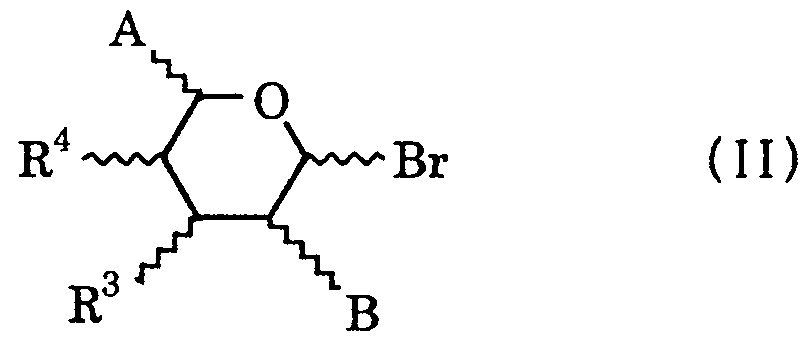
- R 3 is a hydroxy group protected by an appropriate hydroxy protecting group, for example, an acetyl group. Or protected by an appropriate amino protecting group, e.g., a trifluoroacetyl group or a quaternary butoxycarbonyl group or a benzyloxy group.
- R 4 has the same meaning as R 3 L- or D-glycosinolebromide represented by the following formula) in a water-free organic solvent, for example, benzene: mercuric yellow oxide, mercuric bromide, molecular -Condensed by reflux in the presence of sieve 3A, the following general formula (1 ')
- X has the above-mentioned meaning
- Q represents an amino protecting group, for example, a benzyloxycarbonyl group or a tert-butoxycarbonyl group.
- the active ester of the ⁇ -protected ⁇ -amino acid for example ⁇ -succinimide ester, is equimolar or slightly excess And the resulting mixture is stirred under heating, for example at an elevated temperature, for example 50-60 ° C., to give the compound of formula ('′) 3′-position or 4′-position.
- the hydroxyl group at the 1-position is esterified with the above-mentioned amino-protected amino acid, and the amino-protected group (Q) is removed from the resulting esterified product by a conventional method. It can be manufactured by a method consisting of separation.
- the ⁇ -protected ⁇ -amino acid activity of the above formula ( ⁇ ) In reacting the ester with the compound of the formula ( ⁇ '), the amount of the amino acid-active ester of the formula (III) is increased to increase the amount of the ester of the formula ( ⁇ ').
- a diester compound in which both the 3′- and 4′-hydroxyl groups of the compound are esterified with ⁇ -protected- ⁇ -amino acid is obtained.
- the 3′- and 4′-hydroxyl groups were esterified with ⁇ -amino acid by deprotection of this ester compound. In this case, the compound of the general formula (I) is obtained.
- R 1 and (or) R 2 in the general formula (I) are esterified with an acyl group.
- the compound represented by the following formula (IV) is reacted with the glycoside of the formula (') in an organic solvent in the presence of an acid binder such as sodium hydroxide.
- Z-Br (where Z is a pentosinole group or hexo group) Pentosinole bromide or hexosyl ⁇ ), which is a silyl group), which is formed by reacting bromide in the presence of a condensing agent, for example, mercuric dianhydride. It can be manufactured by any method.
- the alizarin blue derivative is considered to have excellent anticancer activity and low toxicity, and is extremely useful as an anticancer drug that can be used clinically, and is similar to adriamycin. It is expected to be useful for the treatment of various cancers. Therefore, the compound of the general formula (I) according to the first aspect of the present invention can be usefully used as a therapeutic agent for cancer in medical treatment of solid cancer and ascites cancer.
- the 5-glycooxy-6-hydroxynaphtho [2,3-f] quinoline of the above general formula (I) Containing, as an active ingredient, pharmaceutically acceptable solid or liquid form of the pharmaceutically acceptable acid addition salt of -7-, 12-dione or its pharmaceutically acceptable acid addition salt.
- the compound of the general formula (I) which is an active ingredient, Of the general formula (la) or general formula (lb) of the formula: 5-Glycosinoleoxy 6-hydroxy synapto [2,3-f] quinoline-7,12-geo Or an acid addition salt thereof.
- R 1 or R 2 among the compounds of the general formula (I) according to the first invention , R 1 or R 2 , or both of the compounds of the general formula (I) may be used.
- the compound is a compound represented by the above-mentioned general formula (I ⁇ ).
- the hydroxyl group at the 3'-position and / or the 4'-position of the sulfide compound is esterified with the N-protected c-amino acid of the above formula (JH). Power He explained that it can be manufactured by the method of forming.
- R 1 and R 2 in the general formula (I) are hydroxyl groups, and the 6-position of the agoricone is a hydroxy group.
- the compound which is a sil group includes the compound of the general formula (la 1 ) and the compound of the general formula (lb 1 -1) or the compound of the general formula (lb 1 -2).
- A is a methyl group or a CF 3 group
- B is a hydrogen atom or the above-mentioned electron-withdrawing group. It is a derivative of [2,3-f] quinoline-7,12-dionone.
- the compound of the general formula ((') is generally poorly water-soluble or water-insoluble. When the compound of the general formula ( ⁇ ′) is administered by intravenous injection, the compound may not dissolve in blood plasma, which may hinder intravenous administration.
- the hydroxy group at the 3′- and (or) 4′-position of the compound of the general formula (I ′′) is converted into the compound represented by the formula ( ⁇ ) of ⁇ - in Tsu by the and the child you e scan te Norre reduction in a Mi Roh acid, the general formula of a water-soluble was high because, et al. (la 4) Can be obtained.
- ⁇ is a methyl group or a trifluoromethyl group
- B is a hydrogen atom, or a phenolic group or a chloro group as an electron-withdrawing group.
- A is a trifluoromethyl group
- B represents a hydrogen atom
- A is a methyl group
- B represents the above-mentioned electron-withdrawing group
- R 5 is a hydrogen atom or the following formula (d)
- G is a straight-chain alkylene group having 2 to 6 carbon atoms which may be substituted with a (C, -C 6 ) alkyl group
- R 6 your good beauty R 7 in La difference shows the residue
- R 6 your good beauty R 7 in La difference shows the residue
- Shi R 5 shows the residue
- R 6 your good beauty R 7 is Ru Oh simultaneously to all in the hydrogen atom 5-L or D-glycoloxy-6-hydroxy or 6-0-substituted hydroxy-naphtho [2,3- f] Quinoline-7,12-dione and its pharmaceutically acceptable acid addition salts are provided.
- a third compound of the general formula (V) according to the present invention has the following general formula (Va)
- each of R 5 , R 6 and R 7 is the ⁇ -amino acid residue of formula (d) having the same meaning as defined for formula (V). Or a hydrogen atom, provided that R 5 , R 6 , and R 7 are not all hydrogen atoms at the same time.
- the ⁇ -amino acid residue is converted to a 3-amino propylionyl group, a 4-amino butyl group, a 5-amino pentanoyl group, and a 6-amino group. It is a xanano group, a 7-amino heptanoi group, a 4-amino-2-methylbutyno group or a 5-amino-3-ethylpentano group. Is preferred.
- Va The compounds of the above general formula (Va) are preferably represented by the following general formulas (Va-1), (Va-2) and (Va-3) as preferred embodiments. Including the compounds of
- Va-1 (Wherein, R 5 is a hydrogen atom or a ⁇ -amino acid residue of the formula (d) shown in the formula (V), and R 6 and R 5 are R 5 has the same meaning, but R 5 and R 6 are not simultaneously a hydrogen atom.) 5- (2,6-dideoxy-2-phenolic port — 3-Mono — 0—Amino force or No. 1 — 0—Amino or Noreka or No. 3, 4-Di — 0—Amino A / L / D / T-vinyl -6-hydroxy synthate [2,3-f] quinoline-7,12-dio N.
- R 5 is a hydrogen atom or an ⁇ -amino acid residue of the formula (d) shown in the formula (V), and R 6 is the same as R 5 R 5 and R 6 are not both hydrogen atoms at the same time, but have the same meaning.
- Preferred examples of the compound of the above general formula (Va-1) include the following three compounds.
- Preferred examples of the compound of the above general formula (Va-2) include the following four compounds.
- G is a straight-chain alkylene group having 2 to 6 carbon atoms which may be substituted with a (CC 6 ) alkyl group;
- the reaction is carried out at room temperature or higher, whereby the hydroxyl group at the 3′-position or 4′-position of the compound of the above formula (1) is converted to the above-mentioned formula ( VI), the amino-esterified product is obtained with the ⁇ -protected ⁇ -amino acid, and the amino-protected group (Q) is obtained from the obtained mono-esterified product.
- the usual law Ru is in achieving Ri by the this whether Naru Luo Ru how de-release.
- Preferred examples of the ⁇ _amino acid of the above formula (VI) include 3-aminopropionic acid, 4-aminoaminoacid, 5-aminoaminovaleric acid, There are -amino hexanoic acid, 7-amino heptanic acid, 4-amino-2-methylbutyric acid, or 5-amino-3-ethyl valeric acid.
- a third compound of the general formula (V) according to the present invention in particular, compounds of the present invention NT (total 7 compounds) which are specific examples of the compound of the general formula (Va)
- NT total 7 compounds
- the cancer cell proliferation inhibitory activity against various mouse cancer cells and various human cancer cells was measured in Test Example 3 below.
- test method and the type of test cancer cells are the same as in Test Example 1 described above. However, in Test Example 3, of the 12 types of cancer cells used in Test Example 1, eight types of cancer cells shown in Table 3 below were used.
- each of the compounds N, 0, P, Q, R, S, and T of the present invention showed an inhibitory effect on the growth of various mouse cancer cells. It was found to inhibit human cancer cell growth at a lower concentration than Adriamycin, although it was weaker. All of the compounds of the present invention show strong anticancer activity against human prostate cancer PC3 and human colon cancer DLD-1. In particular, the present invention R-conjugate R is effective against PC3. Shows 2.9 times the anticancer activity compared to Drill Mycin, and shows 19 times the anticancer activity against DLD-1 compared to Adriamycin This is noteworthy.
- the compound of the general formula (V), particularly the compound of the general formula (Va) according to the third aspect of the present invention has excellent anticancer activity as clearly shown in Test Example 3 Therefore, it is useful as an anticancer agent.
- Xinaphtho [2,3-f] quinoline contains, as an active ingredient, 7,12-diamine or a pharmaceutically acceptable acid addition salt thereof as an active ingredient.
- an anticancer or antitumor agent composition characterized by containing a pharmaceutically acceptable solid or liquid carrier.
- the compound represented by the general formula (Va-1) or the compound represented by the general formula (Va-2) represented by It can be a compound, a compound of the general formula (Va-3), or a pharmaceutically acceptable acid addition salt thereof.
- the first compound of the present invention represented by the general formula (I) or the third compound of the present invention represented by the general formula (V) is actually administered, it is generally administered by an oral route. Alternatively, it can be administered non-parenterally.
- the compounds of the invention of the general formula (I) or (V) can be converted into the usual pharmaceutically acceptable solid carriers used in the field of pharmaceutical preparations, for example in the form of starch or liquid. For example, it is mixed with ethanol to prepare powders, granules, tablets, syrups or injections, and then orally or non-orally. It can also be administered steadily.
- the compound of the present invention in the case of animals, is administered as an injection such as intraperitoneal injection, subcutaneous injection, intravenous injection into a vein or artery, and topical administration.
- an injection such as intravenous injection or local administration into veins or arteries, and its total dose may be adjusted in consideration of the results of animal studies and various circumstances. It can be administered continuously or intermittently within a certain range.
- the dose of the compound of the general formula (I) according to the first invention or the compound of the general formula (V) according to the third invention is administered.
- Type of cancer or tumor e.g. age, weight, sex, sensitivity, diet, administration time, concomitant drug, patient or cancer
- the dose may be changed depending on the extent of the tumor.
- the usual dose of the compound of the present invention is adjusted when it is used as an anticancer drug.
- the dose can be as high as that of liamycin.
- the appropriate dose and frequency of administration of the compound of the present invention must be determined by a specialist based on the above guidelines and determined by an appropriate amount determination test. . These administration conditions are considered for both oral and non-oral administration.
- the reaction solution thus obtained was filtered through a cellite to obtain a filtrate.
- the celite was washed with benzene.
- the washing solution was combined with the above filtrate, and the obtained solution was washed with a 30% aqueous solution of potassium iodide and then with water. After drying over anhydrous sodium sulfate, the mixture was concentrated under reduced pressure.
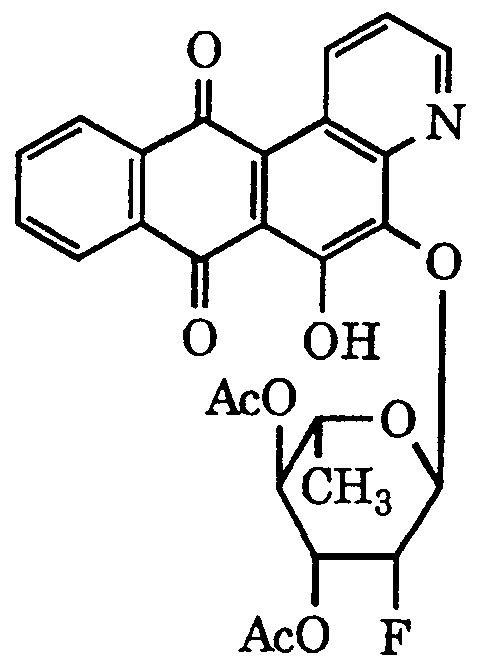
- the resulting residue was purified by silica gel preno. Separation and purification were carried out using a TLC (developing solvent: chlorophenol / ethyl acetate, 12: 1). 222 mg (58% yield) of the title compound 2 was obtained as a red solid.
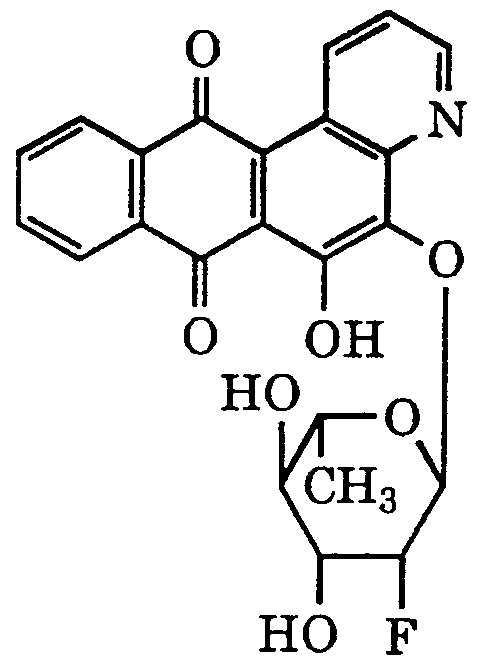
- Example 1- Compound 2 obtained in (1), i.e., 5- (3,4-di-0-acetyl-2,6-dideoxy-2-phenylene mouth- ⁇ -L-ta mouth Lanosiloxy) -6-Hydroxy Synapht [2,3-f] quinoline-7,12 175 mg of dione in 17.5 ml of tetrahydrofuran and methanol Dissolved in 8.8 ml of the mixture. 0.14 ml of a 0.5 M solution of sodium methoxide in methanol was added to the obtained solution.
- the resulting mixture was allowed to stand for 15 hours, and then 0.14 ml of a 0.5 M solution of sodium methoxide in methanol was added, and the mixture was allowed to stand for 25 hours. , And 0.5M solution 0.14 ml of methanol solution of methoxide was added, and the mixture was allowed to stand for another 18 hours to remove the 3,4-di-0-acetyl group of compound 2. A protection reaction was performed.
- Antibiotics J Vol. 42, pp. 1318-1320, 1989 24.2 mg ⁇ 20.4 mg of rizarin blue, 72.5 rag of yellow mercuric oxide, 24.6 mg of mercuric bromide, 193 mg of powdered molecular sieves 3A was suspended in 3.8 ml of anhydrous benzene. The obtained suspension was refluxed while stirring at a place for 5 hours.
- the obtained reaction solution was filtered through Celite to obtain a filtrate.
- the celite was washed with benzene.
- the washing solution was combined with the filtrate, and the obtained solution was washed with a 30% aqueous solution of potassium iodide and water. After drying over anhydrous sodium sulfate, the mixture was concentrated under reduced pressure.
- the obtained residue is washed with a flash Separation and purification were performed using Lam Chromatography (developing solvent: black mouth ethyl monoacetate, 12: 1). 14.6 mg (yield 39%) of the title compound 4 of the present invention was obtained as a red solid.
- Example 2 Compound 4 obtained in _ (1), that is, 5- (3,4-di-0-acetino 6-dexoxy 2—0—methinole—a—L 6-Hydroxynaphtho [2,3-f] quinoline -7,12-dione 69 mg of tetrahydrofuran 0 It was dissolved in a mixture of 7 ml and 0.7 ml of methanol. The obtained solution was caloried with 0.01 ml of a 5 M sodium methoxide-methano-nole solution. After leaving for 15 hours, further apply 0.02 ml of 5 M sodium methoxide-methanol solution and leave for 18 hours to remove the acetyl group from compound 4. A deprotection reaction was performed.
- the reaction solution was filtered through Celite to obtain a filtrate.
- the celite was washed with benzene.
- the washing solution was combined with the filtrate, and the obtained solution was washed with a 30% aqueous solution of potassium iodide and water. After drying over anhydrous sodium sulfate, the mixture was concentrated under reduced pressure.
- the obtained residue was separated and purified by flash silica gel chromatography chromatograph (developing solvent: chloroform-form-ethyl acetate, 15: 1) to give the title compound of the present invention. 38.5 mg (yield 51%) of (6) was obtained as a red solid.
- reaction solution was filtered through Celite to obtain a filtrate.
- the celite was washed with benzene.
- the washing solution was combined with the filtrate, and the obtained solution was washed with a 30% aqueous solution of potassium iodide and water.
- the mixture was concentrated under reduced pressure.
- the obtained residue was separated and purified by flash gel force gel chromatography (developing solvent: chlorophorone-ethyl acetate, 12: 1) to give the title. 27 mg (yield 32%) of compound 8a and 25 mg (29% yield) of compound 8b were each obtained as red solids.
- Example 5-Compound 10a obtained in (1) that is, 5- (3,4-di-0-acetyl-2,6-dideoxy-2-phenol) mouth_ ⁇ -L-Ga Lactopyrano siloxy) -6-Hydroxy synapht [2,3-f] quinoline-7,12-dione 11 mg of anhydrous tetrahydrofuran 1 It was dissolved in a mixed solution of 1 ml and 1 ml of anhydrous methanol. To this solution was added 3 ⁇ l of 0.5 sodium methoxide-methanol solution. After leaving for 15 hours, add 0.5 ⁇ A solution of methanol and methanol was left under 35 zl force for 16 hours to perform a deprotection reaction to remove an acetyl group from compound 10a.
- Example 5-Compound 10b obtained in (1), that is, 5- (3,4-di-0-acetinole-2,6-dideoxy-2-phenol) Mouth--L-gal Tatopyranosiloxy) -6-Hydroxynaphtho [2,3-f] quinoline-7,12-dion 26 mg of anhydrous tetrahydrofuran 2.6 ml of anhydrous and 2.6 ml of anhydrous methanol c Dissolved in a mixture of 2.6 ml of 0.5 M sodium methoxide-methanol solution 85 ⁇ 1 was added, and the mixture was allowed to stand at room temperature for 15 hours to carry out a deprotection reaction for removing an acetyl group from compound 10b.
- the reaction solution was filtered through a celite to obtain a filtrate.
- the celite was washed with benzene.
- the filtrate and the washing solution were combined, and the obtained solution was washed with a 30% aqueous solution of potassium peroxide and water. After drying over anhydrous sodium sulfate, the mixture was concentrated under reduced pressure.
- the resulting residue was purified by silica gel chromatography chromatography (developing solvent: chlorophorone-ethyl acetate, 10: 1) and flash silica.
- Example 7 (1) 5— [3— 0—a setinole — 2,4,6— trideoxy—2—noreolo—4— (trif noreoroacetamide) — ⁇ — L—Taro virano synolexy] —6—Production of hydroxy synapto [2,3—f] quinoline-1,7,12-dione (Compound 14)
- the reaction solution was filtered through a celite to obtain a filtrate.
- the celite was washed with benzene.
- the filtrate and the washing solution were combined, and the obtained solution was washed with a 30% aqueous solution of potassium chloride and water. After drying over anhydrous sodium sulfate, the mixture was concentrated under reduced pressure.
- the resulting residue is purified by flash gel gel chromatography (developing solvent: toluene-ethyl acetate, 8: 1). W
- the reaction solution was filtered through a celite to obtain a filtrate.
- the celite was washed with benzene.
- the filtrate and the washing solution were combined, and the obtained solution was washed with a 30% aqueous solution of potassium chloride and water.
- After drying over anhydrous sodium sulfate the mixture was concentrated under reduced pressure.
- the obtained residue is washed with flash gel gel chromatography. Separation and purification were carried out by means of Rafie (developing solvent: toluene-ethyl acetate, 7: 1) to obtain 30 mg (yield 32%) of the title compound 16 of the present invention as a red solid.
- Example 8-Compound 16 obtained in (1) that is, 5- [4-0-acetyl-2,3,6-tridoxy-2-fluoro-3- ( Trifnorole acetamide) —a—L—Taro virano cinoleoxy——6_hydroxynaphtho [2,3—f] quinoline—7,12 Zion 22 2.2 ml of a 1 M aqueous sodium hydroxide solution was added to the rag. The resulting solution is stirred under an argon atmosphere at 0 ° C for 3 hours to remove trifluoroacetyl and acetyl groups from compound 16 deprotection reaction Was performed.
- L ' is N- (Benziroki Shika Noreboninore)- It represents an L-alanyl group.
- Example 1_ (2) 41 mg of the compound A of the present invention obtained in Example 1_ (2) was dissolved in 0.5 ml of water-free pyridine, and N- [N- (benziloxy canine boninole) was added to the solution. -L-alaninoleoxy] succinimide (75 mg) was added, and the resulting solution was reacted at 50 ° C for 5 hours.
- the reaction mixture is concentrated under reduced pressure, and the resulting residue is purified by flash chromatography (Developing system: Chloro honolem-ethyl acetate, 5: 1) Then, 49 mg (yield 81%) of a mixture of the title compound 17 of the present invention and the compound 18 was obtained as a red solid.
- the ratio of compound 17 to compound 18 was about 3: 7 according to I9 F-NMR spectrum analysis, and compound 18 was the main product.
- Alanyl represents an L-arayl group.
- L ′ represents an N- (benzyloxynorrevol) -L-alanyl group.
- 13 mg of the compound A of the present invention obtained in Example 1- (2) was dissolved in 0.2 ml of water-free pyridine, and N_ [N- (benzinoreoxy canine boninole) was added to the solution.
- -L-alanine] succinimide 54 mg was added.
- the obtained reaction mixture was reacted at 60 ° C for 13.5 hours. Hydroxyl group power at the 3'- and 4'-positions of compound A of the present invention is converted into a ester by the SN-benzinoleoxycarbonyl-binol-L-alanyl group. Was done.
- Alanyl represents an L_alanyl group.
- W ′ represents a 3-tert-butyl carbonyl group, and represents CO—CH 2 CH 2 —NH—CO—0C (CH 3 ) 3 ⁇ example 1- (2) obtained expressions (la 1 - 1) compound of Sunawa Chi 5 - (2, 6-Jidoki sheet 2 Funoreo b - a-l-data b bicycloalkyl La Roh Shinoreo key B) 24.6 mg of 6-hydroxy synapht [2,3-f] quinoline-7,12-dione (compound A of the present invention) is treated with anhydrous dichloromethan 2 Dissolve in 5 ml, and add 3-tert-butoxy carbonyl nonolevoninorea minopropionic acid 30.2 mg, 1-ethyl-3-hydrochloride-3- (3-dimethylinorea minopropinole) to the solution.
- W ' represents a 3-tert-butyloxycarbonylaminoaminopropionyl group.
- the resulting mixture was stirred at room temperature for 2.5 hours.
- the mixture was mixed with 3-tert-leaved toxinolepo-luminopropionic acid 4 mg, 1-ethyl-3-hydrochloride (3-dimethylaminorea minopropinole). 4 mg of mid was added, and the mixture was stirred at room temperature for 16 hours.
- the reaction mixture is diluted with a quencher and washed successively with a 20% hydrogen sulfate aqueous solution of sodium bicarbonate, a saturated aqueous solution of sodium bicarbonate, and water, and dried over anhydrous sodium sulfate. Thereafter, the mixture was concentrated under reduced pressure. The residue obtained is purified by silica gel chromatography.
- W represents a 3_ tert-butyl carbonyl carbonyl aminopropionyl group.
- Example 13- (1) 13.3 mg of the compound S ′ obtained in Example 13- (1) was dissolved in 0.07 ml of trifluoroacetic acid at 0 ° C. Leave the solution at 0 ° C for 5 minutes to remove the tertiary solution from the compound. The carbonyl group was eliminated. A precipitate is generated by adding isopropynolene to the reaction mixture, and the precipitate is washed with isopropynol ether to thereby obtain the title of the present invention. 11.4 mg (yield: 83%) of compound S was obtained as an orange solid trifluoroacetate.
- Example 13- (1) 8.3 mg of the compound T 'obtained in Example 13- (1) was dissolved in 0.04 ml of trifluoroacetic acid at 0 ° C. The solution was allowed to stand at 0 ° C. for 5 minutes to remove the tert-carboxycarbonyl group from the compound. A precipitate was generated by adding isopropilene to the reaction mixture. The precipitate was washed with isopropyl ether to give 7.5 mg (yield 87%) of the title compound T of the present invention as a pale yellow solid of trifluorophosphate. ) Obtained.
- 5- or D-glycoloxy-6-hydroxy synapto of the general formula (I) [23-f] quinolate -7,12-diones especially naphtho [2,3-f] quinoline derivatives of general formula (la) and (lb), and naphtho of general formula (V) [2,3-f] quinoline derivatives, in particular, naphtho [2,3-f] quinoline derivatives of the general formula (Va) are obtained, which are anticancer or antitumor agents. It is useful as
Landscapes
- Chemical & Material Sciences (AREA)
- Health & Medical Sciences (AREA)
- Organic Chemistry (AREA)
- Life Sciences & Earth Sciences (AREA)
- General Health & Medical Sciences (AREA)
- Molecular Biology (AREA)
- Biotechnology (AREA)
- Engineering & Computer Science (AREA)
- Genetics & Genomics (AREA)
- Animal Behavior & Ethology (AREA)
- Medicinal Chemistry (AREA)
- Public Health (AREA)
- Veterinary Medicine (AREA)
- Pharmacology & Pharmacy (AREA)
- Biochemistry (AREA)
- General Chemical & Material Sciences (AREA)
- Nuclear Medicine, Radiotherapy & Molecular Imaging (AREA)
- Chemical Kinetics & Catalysis (AREA)
- Epidemiology (AREA)
- Pharmaceuticals Containing Other Organic And Inorganic Compounds (AREA)
- Saccharide Compounds (AREA)
Description












Claims


Priority Applications (3)
| Application Number | Priority Date | Filing Date | Title |
|---|---|---|---|
| CA002361624A CA2361624A1 (en) | 1999-01-29 | 2000-01-28 | 5-glycosyloxy-6-hydroxynaphtho[2,3-f]quinoline-7,12-dione having anticancer activities |
| EP00901984A EP1156056A4 (en) | 1999-01-29 | 2000-01-28 | 5-GLYKOSYLOXY-6-HYDROXYNAPHTHO [3,3-F] CHINOLIN-7,12-DIONE WITH ANTI-CANCER EFFECT |
| KR1020017009538A KR20010101773A (ko) | 1999-01-29 | 2000-01-28 | 항암 활성을 가지는5-글리코실옥시-6-하이드록시나프토[2,3-f]퀴놀린-7,12-디온 |
Applications Claiming Priority (2)
| Application Number | Priority Date | Filing Date | Title |
|---|---|---|---|
| JP11/23321 | 1999-01-29 | ||
| JP2332199 | 1999-01-29 |
Publications (1)
| Publication Number | Publication Date |
|---|---|
| WO2000044762A1 true WO2000044762A1 (fr) | 2000-08-03 |
Family
ID=12107335
Family Applications (1)
| Application Number | Title | Priority Date | Filing Date |
|---|---|---|---|
| PCT/JP2000/000479 Ceased WO2000044762A1 (fr) | 1999-01-29 | 2000-01-28 | 5-GLYCOSYLOXY-6-HYDROXYNAPHTO[2,3-f]QUINOLINE-7,12-DIONE A EFFET ANTICANCEREUX |
Country Status (5)
| Country | Link |
|---|---|
| EP (1) | EP1156056A4 (ja) |
| KR (1) | KR20010101773A (ja) |
| CN (1) | CN1341117A (ja) |
| CA (1) | CA2361624A1 (ja) |
| WO (1) | WO2000044762A1 (ja) |
Families Citing this family (3)
| Publication number | Priority date | Publication date | Assignee | Title |
|---|---|---|---|---|
| CN102796072B (zh) * | 2012-09-05 | 2013-08-28 | 广西师范大学 | 茜素二氧杂环己烷衍生物及其制备方法和应用 |
| CN109503681B (zh) * | 2018-11-07 | 2023-04-11 | 江西师范大学 | 2-Fluoro-L-ristosamine化合物及其合成方法和应用 |
| CN109503674B (zh) * | 2018-11-07 | 2023-06-02 | 江西师范大学 | 2-氟代洋地黄毒糖及其制备方法和应用 |
Citations (1)
| Publication number | Priority date | Publication date | Assignee | Title |
|---|---|---|---|---|
| JPH09309861A (ja) * | 1996-05-22 | 1997-12-02 | Higeta Shoyu Co Ltd | 新規アントラキノン系化合物0089 |
Family Cites Families (1)
| Publication number | Priority date | Publication date | Assignee | Title |
|---|---|---|---|---|
| DE69601908T2 (de) * | 1995-09-08 | 1999-07-29 | Zaidan Hojin Biseibutsu Kagaku Kenkyu Kai, Tokio/Tokyo | Fluorenthaltende Anthracyclinderivate mit Mono- oder Di-0-aminoalkanoylaten Hydroxylgruppen in dem Zuckerrest |
-
2000
- 2000-01-28 WO PCT/JP2000/000479 patent/WO2000044762A1/ja not_active Ceased
- 2000-01-28 CN CN00804349A patent/CN1341117A/zh active Pending
- 2000-01-28 EP EP00901984A patent/EP1156056A4/en not_active Withdrawn
- 2000-01-28 KR KR1020017009538A patent/KR20010101773A/ko not_active Withdrawn
- 2000-01-28 CA CA002361624A patent/CA2361624A1/en not_active Abandoned
Patent Citations (1)
| Publication number | Priority date | Publication date | Assignee | Title |
|---|---|---|---|---|
| JPH09309861A (ja) * | 1996-05-22 | 1997-12-02 | Higeta Shoyu Co Ltd | 新規アントラキノン系化合物0089 |
Non-Patent Citations (2)
| Title |
|---|
| FORD P.W.ET AL: "HALAWANONES A-D,NEW POLYCYCLIC QUINONES FROM A MARINE-DERIVED STREPTOMYCETE", JOURNAL OF NATURAL PRODUCTS, vol. 61, no. 10, 1998, pages 1232 - 1236, XP002922586 * |
| See also references of EP1156056A4 * |
Also Published As
| Publication number | Publication date |
|---|---|
| EP1156056A1 (en) | 2001-11-21 |
| CA2361624A1 (en) | 2000-08-03 |
| EP1156056A4 (en) | 2002-09-11 |
| KR20010101773A (ko) | 2001-11-14 |
| CN1341117A (zh) | 2002-03-20 |
Similar Documents
| Publication | Publication Date | Title |
|---|---|---|
| Wang et al. | Design, synthesis and biological evaluation of a novel series of glycosylated platinum (iv) complexes as antitumor agents | |
| US5677286A (en) | Glycosylated analogs of camptothecin | |
| Ikemoto et al. | Ferric chloride, an anomerization catalyst for the preparation of alkyl α-glycopyranosides | |
| US5625043A (en) | Anthracyclines with unusually high activity against cells resistant to doxorubicin and its analogs | |
| EP0014853B1 (en) | Anthracycline derivatives, a process for their preparation and pharmaceutical compositions containing them | |
| WO1991018003A1 (fr) | Derive antitumoral de be-13793c | |
| CN102146107B (zh) | (s)-2-羟烷基-1,4-二羟基-9,10-蒽醌与糖基缀合物的合成及抗肿瘤活性 | |
| Smith et al. | Adriamycin analogs. 2. Synthesis of 13-deoxyanthracyclines | |
| US4303785A (en) | Antitumor anthracycline antibiotics | |
| KR940004075B1 (ko) | 신규 안트라사이클린 유도체 및 항종양제 및 이들의 제조법 | |
| JPS63156798A (ja) | アントラサイクリン誘導体およびその製法 | |
| WO2007009265A1 (en) | NOVEL β-CYCLODEXTRIN-BASED MOLECULES AND DRUG DELIVERY COMPOSITIONS | |
| US4302449A (en) | Carminomycin analogue | |
| JPS5874694A (ja) | アントラサイクリン誘導体 | |
| JPH0692986A (ja) | 置換ヌクレオシド誘導体、その製造法およびそれを含む医薬組成物 | |
| JP2838145B2 (ja) | 細胞増殖抑制活性を有するアントラサイクリン誘導体 | |
| EP2520580A1 (en) | Halogenated dideoxy saccharide derivatives, preparation method and use thereof | |
| KR20010101773A (ko) | 항암 활성을 가지는5-글리코실옥시-6-하이드록시나프토[2,3-f]퀴놀린-7,12-디온 | |
| PL205635B1 (pl) | Nowe pochodne genisteiny i zawierające je środki farmaceutyczne | |
| Berettoni et al. | Synthesis of 14-fluorodoxorubicin | |
| EP0761678B1 (en) | Fluorine-containing anthracycline derivatives having hydroxyl group(s) mono- or di-o-aminoalkanoylated in the sugar moiety thereof | |
| Joos et al. | Synthesis and biological evaluation of 4-carbamoyl-2-β-D-ribofuranosyl-pyridine | |
| JP2005511550A (ja) | エトポシドおよび類似体の誘導体、ならびにそれを含有する医薬組成物 | |
| JPH05163293A (ja) | アントラサイクリン−マクロライド複合体 | |
| EP1758904B1 (en) | Flavopereirine derivatives for cancer therapy |
Legal Events
| Date | Code | Title | Description |
|---|---|---|---|
| WWE | Wipo information: entry into national phase |
Ref document number: 00804349.3 Country of ref document: CN |
|
| AK | Designated states |
Kind code of ref document: A1 Designated state(s): CA CN HU JP KR PL RU US |
|
| AL | Designated countries for regional patents |
Kind code of ref document: A1 Designated state(s): AT BE CH CY DE DK ES FI FR GB GR IE IT LU MC NL PT SE |
|
| DFPE | Request for preliminary examination filed prior to expiration of 19th month from priority date (pct application filed before 20040101) | ||
| 121 | Ep: the epo has been informed by wipo that ep was designated in this application | ||
| ENP | Entry into the national phase |
Ref document number: 2000 596018 Country of ref document: JP Kind code of ref document: A |
|
| WWE | Wipo information: entry into national phase |
Ref document number: 1020017009538 Country of ref document: KR |
|
| WWE | Wipo information: entry into national phase |
Ref document number: 2000901984 Country of ref document: EP |
|
| ENP | Entry into the national phase |
Ref document number: 2361624 Country of ref document: CA Ref document number: 2361624 Country of ref document: CA Kind code of ref document: A |
|
| WWP | Wipo information: published in national office |
Ref document number: 1020017009538 Country of ref document: KR |
|
| WWP | Wipo information: published in national office |
Ref document number: 2000901984 Country of ref document: EP |
|
| WWW | Wipo information: withdrawn in national office |
Ref document number: 2000901984 Country of ref document: EP |
|
| WWW | Wipo information: withdrawn in national office |
Ref document number: 1020017009538 Country of ref document: KR |