WO2001032680A2 - 18-nor-steroide als selektiv wirksame estrogene - Google Patents
18-nor-steroide als selektiv wirksame estrogene Download PDFInfo
- Publication number
- WO2001032680A2 WO2001032680A2 PCT/EP2000/010804 EP0010804W WO0132680A2 WO 2001032680 A2 WO2001032680 A2 WO 2001032680A2 EP 0010804 W EP0010804 W EP 0010804W WO 0132680 A2 WO0132680 A2 WO 0132680A2
- Authority
- WO
- WIPO (PCT)
- Prior art keywords
- group
- gona
- triene
- hydrogen atom
- diol
- Prior art date
- Legal status (The legal status is an assumption and is not a legal conclusion. Google has not performed a legal analysis and makes no representation as to the accuracy of the status listed.)
- Ceased
Links
Classifications
-
- C—CHEMISTRY; METALLURGY
- C07—ORGANIC CHEMISTRY
- C07J—STEROIDS
- C07J1/00—Normal steroids containing carbon, hydrogen, halogen or oxygen, not substituted in position 17 beta by a carbon atom, e.g. estrane, androstane
- C07J1/0051—Estrane derivatives
- C07J1/0062—Estrane derivatives substituted in position 17 alfa not substituted in position 17 beta
-
- A—HUMAN NECESSITIES
- A61—MEDICAL OR VETERINARY SCIENCE; HYGIENE
- A61K—PREPARATIONS FOR MEDICAL, DENTAL OR TOILETRY PURPOSES
- A61K31/00—Medicinal preparations containing organic active ingredients
- A61K31/56—Compounds containing cyclopenta[a]hydrophenanthrene ring systems; Derivatives thereof, e.g. steroids
- A61K31/565—Compounds containing cyclopenta[a]hydrophenanthrene ring systems; Derivatives thereof, e.g. steroids not substituted in position 17 beta by a carbon atom, e.g. estrane, estradiol
-
- A—HUMAN NECESSITIES
- A61—MEDICAL OR VETERINARY SCIENCE; HYGIENE
- A61K—PREPARATIONS FOR MEDICAL, DENTAL OR TOILETRY PURPOSES
- A61K31/00—Medicinal preparations containing organic active ingredients
- A61K31/56—Compounds containing cyclopenta[a]hydrophenanthrene ring systems; Derivatives thereof, e.g. steroids
- A61K31/565—Compounds containing cyclopenta[a]hydrophenanthrene ring systems; Derivatives thereof, e.g. steroids not substituted in position 17 beta by a carbon atom, e.g. estrane, estradiol
- A61K31/566—Compounds containing cyclopenta[a]hydrophenanthrene ring systems; Derivatives thereof, e.g. steroids not substituted in position 17 beta by a carbon atom, e.g. estrane, estradiol having an oxo group in position 17, e.g. estrone
-
- A—HUMAN NECESSITIES
- A61—MEDICAL OR VETERINARY SCIENCE; HYGIENE
- A61K—PREPARATIONS FOR MEDICAL, DENTAL OR TOILETRY PURPOSES
- A61K31/00—Medicinal preparations containing organic active ingredients
- A61K31/56—Compounds containing cyclopenta[a]hydrophenanthrene ring systems; Derivatives thereof, e.g. steroids
- A61K31/565—Compounds containing cyclopenta[a]hydrophenanthrene ring systems; Derivatives thereof, e.g. steroids not substituted in position 17 beta by a carbon atom, e.g. estrane, estradiol
- A61K31/567—Compounds containing cyclopenta[a]hydrophenanthrene ring systems; Derivatives thereof, e.g. steroids not substituted in position 17 beta by a carbon atom, e.g. estrane, estradiol substituted in position 17 alpha, e.g. mestranol, norethandrolone
-
- A—HUMAN NECESSITIES
- A61—MEDICAL OR VETERINARY SCIENCE; HYGIENE
- A61P—SPECIFIC THERAPEUTIC ACTIVITY OF CHEMICAL COMPOUNDS OR MEDICINAL PREPARATIONS
- A61P1/00—Drugs for disorders of the alimentary tract or the digestive system
-
- A—HUMAN NECESSITIES
- A61—MEDICAL OR VETERINARY SCIENCE; HYGIENE
- A61P—SPECIFIC THERAPEUTIC ACTIVITY OF CHEMICAL COMPOUNDS OR MEDICINAL PREPARATIONS
- A61P13/00—Drugs for disorders of the urinary system
-
- A—HUMAN NECESSITIES
- A61—MEDICAL OR VETERINARY SCIENCE; HYGIENE
- A61P—SPECIFIC THERAPEUTIC ACTIVITY OF CHEMICAL COMPOUNDS OR MEDICINAL PREPARATIONS
- A61P13/00—Drugs for disorders of the urinary system
- A61P13/08—Drugs for disorders of the urinary system of the prostate
-
- A—HUMAN NECESSITIES
- A61—MEDICAL OR VETERINARY SCIENCE; HYGIENE
- A61P—SPECIFIC THERAPEUTIC ACTIVITY OF CHEMICAL COMPOUNDS OR MEDICINAL PREPARATIONS
- A61P15/00—Drugs for genital or sexual disorders; Contraceptives
- A61P15/06—Antiabortive agents; Labour repressants
-
- A—HUMAN NECESSITIES
- A61—MEDICAL OR VETERINARY SCIENCE; HYGIENE
- A61P—SPECIFIC THERAPEUTIC ACTIVITY OF CHEMICAL COMPOUNDS OR MEDICINAL PREPARATIONS
- A61P15/00—Drugs for genital or sexual disorders; Contraceptives
- A61P15/12—Drugs for genital or sexual disorders; Contraceptives for climacteric disorders
-
- A—HUMAN NECESSITIES
- A61—MEDICAL OR VETERINARY SCIENCE; HYGIENE
- A61P—SPECIFIC THERAPEUTIC ACTIVITY OF CHEMICAL COMPOUNDS OR MEDICINAL PREPARATIONS
- A61P19/00—Drugs for skeletal disorders
- A61P19/08—Drugs for skeletal disorders for bone diseases, e.g. rachitism, Paget's disease
- A61P19/10—Drugs for skeletal disorders for bone diseases, e.g. rachitism, Paget's disease for osteoporosis
-
- A—HUMAN NECESSITIES
- A61—MEDICAL OR VETERINARY SCIENCE; HYGIENE
- A61P—SPECIFIC THERAPEUTIC ACTIVITY OF CHEMICAL COMPOUNDS OR MEDICINAL PREPARATIONS
- A61P25/00—Drugs for disorders of the nervous system
-
- A—HUMAN NECESSITIES
- A61—MEDICAL OR VETERINARY SCIENCE; HYGIENE
- A61P—SPECIFIC THERAPEUTIC ACTIVITY OF CHEMICAL COMPOUNDS OR MEDICINAL PREPARATIONS
- A61P25/00—Drugs for disorders of the nervous system
- A61P25/20—Hypnotics; Sedatives
-
- A—HUMAN NECESSITIES
- A61—MEDICAL OR VETERINARY SCIENCE; HYGIENE
- A61P—SPECIFIC THERAPEUTIC ACTIVITY OF CHEMICAL COMPOUNDS OR MEDICINAL PREPARATIONS
- A61P25/00—Drugs for disorders of the nervous system
- A61P25/28—Drugs for disorders of the nervous system for treating neurodegenerative disorders of the central nervous system, e.g. nootropic agents, cognition enhancers, drugs for treating Alzheimer's disease or other forms of dementia
-
- A—HUMAN NECESSITIES
- A61—MEDICAL OR VETERINARY SCIENCE; HYGIENE
- A61P—SPECIFIC THERAPEUTIC ACTIVITY OF CHEMICAL COMPOUNDS OR MEDICINAL PREPARATIONS
- A61P29/00—Non-central analgesic, antipyretic or antiinflammatory agents, e.g. antirheumatic agents; Non-steroidal antiinflammatory drugs [NSAID]
-
- A—HUMAN NECESSITIES
- A61—MEDICAL OR VETERINARY SCIENCE; HYGIENE
- A61P—SPECIFIC THERAPEUTIC ACTIVITY OF CHEMICAL COMPOUNDS OR MEDICINAL PREPARATIONS
- A61P35/00—Antineoplastic agents
-
- A—HUMAN NECESSITIES
- A61—MEDICAL OR VETERINARY SCIENCE; HYGIENE
- A61P—SPECIFIC THERAPEUTIC ACTIVITY OF CHEMICAL COMPOUNDS OR MEDICINAL PREPARATIONS
- A61P37/00—Drugs for immunological or allergic disorders
-
- A—HUMAN NECESSITIES
- A61—MEDICAL OR VETERINARY SCIENCE; HYGIENE
- A61P—SPECIFIC THERAPEUTIC ACTIVITY OF CHEMICAL COMPOUNDS OR MEDICINAL PREPARATIONS
- A61P5/00—Drugs for disorders of the endocrine system
- A61P5/24—Drugs for disorders of the endocrine system of the sex hormones
-
- A—HUMAN NECESSITIES
- A61—MEDICAL OR VETERINARY SCIENCE; HYGIENE
- A61P—SPECIFIC THERAPEUTIC ACTIVITY OF CHEMICAL COMPOUNDS OR MEDICINAL PREPARATIONS
- A61P9/00—Drugs for disorders of the cardiovascular system
-
- A—HUMAN NECESSITIES
- A61—MEDICAL OR VETERINARY SCIENCE; HYGIENE
- A61P—SPECIFIC THERAPEUTIC ACTIVITY OF CHEMICAL COMPOUNDS OR MEDICINAL PREPARATIONS
- A61P9/00—Drugs for disorders of the cardiovascular system
- A61P9/10—Drugs for disorders of the cardiovascular system for treating ischaemic or atherosclerotic diseases, e.g. antianginal drugs, coronary vasodilators, drugs for myocardial infarction, retinopathy, cerebrovascula insufficiency, renal arteriosclerosis
-
- C—CHEMISTRY; METALLURGY
- C07—ORGANIC CHEMISTRY
- C07J—STEROIDS
- C07J1/00—Normal steroids containing carbon, hydrogen, halogen or oxygen, not substituted in position 17 beta by a carbon atom, e.g. estrane, androstane
- C07J1/0051—Estrane derivatives
- C07J1/0066—Estrane derivatives substituted in position 17 beta not substituted in position 17 alfa
- C07J1/007—Estrane derivatives substituted in position 17 beta not substituted in position 17 alfa the substituent being an OH group free esterified or etherified
-
- C—CHEMISTRY; METALLURGY
- C07—ORGANIC CHEMISTRY
- C07J—STEROIDS
- C07J1/00—Normal steroids containing carbon, hydrogen, halogen or oxygen, not substituted in position 17 beta by a carbon atom, e.g. estrane, androstane
- C07J1/0051—Estrane derivatives
- C07J1/0081—Substituted in position 17 alfa and 17 beta
- C07J1/0088—Substituted in position 17 alfa and 17 beta the substituent in position 17 alfa being an unsaturated hydrocarbon group
-
- C—CHEMISTRY; METALLURGY
- C07—ORGANIC CHEMISTRY
- C07J—STEROIDS
- C07J1/00—Normal steroids containing carbon, hydrogen, halogen or oxygen, not substituted in position 17 beta by a carbon atom, e.g. estrane, androstane
- C07J1/0051—Estrane derivatives
- C07J1/0081—Substituted in position 17 alfa and 17 beta
- C07J1/0088—Substituted in position 17 alfa and 17 beta the substituent in position 17 alfa being an unsaturated hydrocarbon group
- C07J1/0096—Alkynyl derivatives
Definitions
- the present invention relates to new compounds as pharmaceutical active substances which have a higher affinity in vitro for estrogen receptor preparations from rat prostate than with estrogen receptor preparations from rat uterus and in vivo a preferential effect on the bone compared to the uterus and / or a pronounced effect with regard to stimulating the expression of 5HT2a -Receptor and transporters have, their production, their therapeutic use and pharmaceutical dosage forms that contain the new compounds.
- the chemical compounds are novel steroidal tissue-selective estrogens.
- estrogens have a protective effect against neurodegenerative diseases, such as, for example, Alzheimer's disease (Henderson 1997, Neurology 48 (Suppl 7): S27-S35; Birge 1997, Neurology 48 (Suppl 7): S36-S41), a protective effect on brain functions such as memory and learning ability (McEwen et al. 1997, Neurology 48 (Suppl 7): S8-S15; Sherwin 1997, Neurology 48 (Suppl 7): S21-S26), as well as against mood swings due to hormone deficiency (Halbreich 1997, Neurology 48 (Suppl 7): S16- S20).
- neurodegenerative diseases such as, for example, Alzheimer's disease (Henderson 1997, Neurology 48 (Suppl 7): S27-S35; Birge 1997, Neurology 48 (Suppl 7): S36-S41
- estrogen replacement therapy has been shown to be effective in reducing the incidence of colon rectal cancer (Calle EF et al., 1995, J Natl Cancer Inst 87: 517-523).
- HRT estrogen or hormone replacement therapy
- natural estrogens such as estradiol and conjugated estrogens from horse urine are used either alone or in combination with a progestogen.
- derivatives obtained by esterification e.g. 17ß-estradiol valerate.
- estrogen / progestogen combination preparations are preferably used in hormone replacement therapy.
- the progestogen component in the estrogen / progestogen combination avoids endometrial hypertrophy, but the progestogen-containing combination is also linked to the occurrence of unwanted intermenstrual bleeding.
- selective estrogens have been understood to mean those compounds which have an estrogen-like effect on the brain, bones and vascular system, but do not have a proliferative effect on the endometrium due to their anti-uterotrophic (i.e. antiestrogenic) partial action.
- estrogen receptor ß (ERß) was discovered as the second subtype of the estrogen receptor (Kuiper et al. (1996), Proc. Natl. Acad. Sci. 93: 5925-5930; Mosselman, Dijkema (1996) Febs Letters 392: 49- 53; Tremblay et al. (1997) Molecular Endocrinology 11: 353-365).
- the expression pattern of ERß differs from that of ER ⁇ (Kuiper et al. (1996), Endocrinology 138: 863-870).
- ERß predominates over ER ⁇ in the rat prostate, while in rat uterus ER ⁇ predominates over ERß.
- ERß is among other things expressed in areas that are assigned importance for cognitive processes and 'mood' (Shugrue et al. 1997, J Comparative Neurology 388: 507-525).
- ERß Molecular targets for ERß in these brain areas could be the 5HT2a receptor and the serotonin transporter (G. Fink & B.E.H. Sumner 1996 Nature 383: 306; B. E.H. Sumner et al. 1999 Molecular Brain Research, in press).
- the neurotransmitter serotonin (5-hydroxytryptamine) is involved in the regulation of a variety of processes that can be affected in menopause. In particular, the effects of menopause on mood and cognition are associated with the serotonergic system.
- Estrogen replacement therapy has been shown to be effective in treating these estrogen deficiency related symptoms, possibly by modulating serotonin receptor and transporter expression.
- organ systems with comparatively high ERß expression include the bone (Onoe Y et al., 1997, Endocrinology 138: 4509-4512), the vascular system (Register TC, Adams MR 1998, J Steroid Molec Biol 64: 187-191) Urogenital tract (Kuiper GJM et al. 1997, Endocrinology 138: 863-870), the gastrointestinal tract (Campbell-Thopson 1997, BBRC 240: 478-483), and the testis (Mosselmann S et al. 1996 Febs Lett 392 49-53) including spermatids (Shugrue et al. 1998, Steroids 63: 498-504).
- ERß Tissue distribution suggests that estrogens regulate organ functions via ERß. That ERß is functional in this regard is also shown by studies on ER ⁇ - (ERKO) and ERß- (ßERKO) knockout mice: Ovariectomy causes bone loss in ERKO mice, which can be reversed by estrogen substitution (Kimbro et al. 1998, Abstract OR7-4, Endocrine Society Meeting New La). Likewise inhibits estradiol in Blood vessels of female ERKO mice the vascular media and smooth muscle cell proliferation (Iafrati MD et al. 1997, Nature Medicine 3: 545-548). These protective effects of estradiol presumably occur in the ERKO mouse via ERß.
- ßERKO mice provide an indication of a function of ERß in the prostate and bladder: symptoms of prostate and bladder hyperplasia occur in older male mice (Krege JH et al. 1998, Proc Natl Acad Sei 95: 15677-15682).
- female Lyst DB et al. 1993, Proc Natl Acad Sei 90: 11162-11166
- male ERKO mice Hess RA et al. 1997, Nature 390: 509-512
- female ßERKO mice Krege JH, 1998) fertility disorders. This demonstrates the important function of estrogens in maintaining testis and ovary function and fertility.
- a selective estrogen effect on certain target organs could be achieved by subtype-specific ligands due to the different tissue or organ distribution distribution of the two subtypes of the ER.
- Substances with preference for ERß compared to ER ⁇ in the in vitro receptor binding test were described by Kuiper et al. (Kuiper et al. (1996), Endocrinology 138: 863-870).
- a selective effect of subtype-specific ligands of the estrogen receptor on estrogen-sensitive parameters in vivo has not previously been shown.
- the compounds are said to have a higher affinity for estrogen receptor preparations from rat prostate in vitro than with estrogen receptor preparations from rat uterus and, in vivo, a higher potency with regard to protection against hormone deficiency-related bone mass loss compared to the uterine stimulating effect of the uterus and / or pronounced effect with regard to stimulating the expression of 5HT2 transporter receptor exhibit.
- the present invention is intended to provide a structure-activity relationship that allows access to compounds that do the above formulated pharmacological profile, better estrogenic effect on the bone than on the uterus.
- the above object is achieved by providing the gonal, 3,5 (10) -triene derivatives of the general formula I '
- Rl is a halogen atom, a radical R ⁇ - or Rl -0-, where Rl ⁇ is a hydrogen atom or a straight or branched chain, saturated or unsaturated hydrocarbon radical having up to 6 carbon atoms, a trifluoromethyl group,
- R2 is a halogen atom; a radical Rl8_ or R ⁇ -O-, where Rl8 has the meaning given under Rl; a group Rl9s ⁇ 2-O-, wherein Rl9 is a R20R2 N group, where R TM and R ⁇ l independently of one another are a hydrogen atom, a Ci - C5 - alkyl radical, a
- R22 is a straight or branched chain hydrocarbon radical with up to 12 carbon atoms, which can also contain up to three double and / or triple bonds, a C3 - C7 -
- R 3 is a group R 18 -O-, R 19 S ⁇ 2-O- or -OC (O) R 2 2, with Rl 8 , R19 and R 2 2 each in the meaning given under Rl or R, wherein for R l 8 can additionally be an aryl, heteroaryl or aralkyl radical;
- R "and R ⁇ independently of one another are a hydrogen atom, a halogen atom, a group R 18 -O-, R 19 S ⁇ 2-O- or -R 2, with R 18 , R 19 and R 2 2 in each case in the under R 1 or
- R has the meaning given, a straight-chain or branched-chain, saturated or unsaturated, partially or completely halogenated alkyl group having up to 10 carbon atoms or an optionally substituted aryl, heteroaryl or aralkyl radical,
- R 8 and R 9 independently of one another are a hydrogen atom, a straight or branched chain, saturated or unsaturated, optionally partially or completely halogenated hydrocarbon radical having up to 10 carbon atoms, a group -X- R ⁇ 8 , in which X is an oxygen or sulfur atom and R ⁇ 8 has the meaning given under Rl, a halogen atom, a cyano or rhodano group,
- Rl 1 is a hydrogen atom, a halogen atom, a group Rl 8 -O-, Rl 9 S ⁇ 2-O- or-
- R2 with R ⁇ 8 , R ⁇ 9 and R each in the specified under Rl and R.
- a group -X- R l 8 wherein X is an oxygen or sulfur atom and R ⁇ 8 has the meaning given under Rl, a nitrooxy group, a straight or branched chain, saturated or unsaturated, partially or fully halogenated hydrocarbon radical with bis to 10 carbon atoms or an optionally substituted aryl, heteroaryl or aralkyl radical, and
- Rl 1 ' is a hydrogen atom
- Rl4 is an ⁇ -hydrogen atom or a straight or branched chain alkyl
- Rl5 is a hydrogen atom or RL4 RL5 nd U together represent an optionally mono- or di-halogenated methyl group
- Rl5 'and Rl6 independently of one another are a hydrogen atom, a halogen atom, a group R 18 -O-, R 19 S ⁇ 2-O- or -R 22 , with R 18 , R 19 and R 22 in each case under R 1 or R 2 given meaning;
- Rl 7 and Rl ' represent a hydrogen atom and a halogen atom; a hydrogen atom and a benzyloxy group; a hydrogen atom and a group Rl 9 S ⁇ 2-O-; a
- the possible substituents on the carbon atoms 6, 7, 11, 15, 16 and 17 and the hydrogen atom on the carbon atom 13 can each be in the ⁇ or ⁇ position.
- Rl is a hydrogen atom or a group R ⁇ -O-, where R ⁇ 8 is a hydrogen atom or a straight or branched chain, saturated or unsaturated hydrocarbon radical having up to 6 carbon atoms,
- R 2 represents a hydrogen or halogen atom or a hydroxy group
- R 3 is a group R 18 -O-, R 19 S ⁇ 2-O- or -OC (O) R 22 , with R 18 , R 19 and R 22 each in the meaning given under R * or R 2 , where for R ⁇ 8 can additionally be an aryl or aralkyl radical;
- R ° is a hydrogen atom, a hydroxyl group, a group R 22 in the meaning given under R 2 is an optionally substituted aryl, heteroaryl or aralkyl radical,
- R ⁇ is a hydrogen atom, a halogen atom, a group R ⁇ 8 -O-, Rl 9 S ⁇ 2-O- or -
- R 22 with R 8 , R ⁇ 9 and R 22 each in the meaning given under R ⁇ or R 2 , a straight or branched chain, saturated or unsaturated, partially or completely halogenated alkyl group having up to 10 carbon atoms or an optionally substituted Aryl, heteroaryl or aralkyl radical,
- R 8 and R 9 independently of one another are a hydrogen atom, a straight-chain or branched-chain, saturated or unsaturated, optionally partially or completely halogenated hydrocarbon radical having up to 10 carbon atoms, a group -X- R 1 , in which X is an oxygen or sulfur atom and R l 8 has the meaning given under Rl, a halogen atom, a cyano or rhodano group,
- Rl 1 is a hydrogen atom, a halogen atom, a group -R 22 with R 22 in the meaning given under R 2 , a group -X- R ⁇ 8 , in which X is a sulfur atom and R ⁇ has the meaning given under Rl, a straight - or branched chain, saturated or unsaturated, partially or completely halogenated hydrocarbon radical with up to 10 carbon atoms or an optionally substituted aryl or heteroaryl radical,
- Rl4 is an ⁇ -hydrogen atom or a straight or branched chain alkynyl group with up to 3 carbon atoms and
- Rl5 is a hydrogen atom
- Rl and Rl 5 together represent a methylene group
- Rl5 'and Rl6 independently of one another are a hydrogen atom, a halogen atom, a group R 18 -O-, R 19 S ⁇ 2-O- or -R 22 , with R 18 , R 19 and R 22 in each case in the under R 1 or
- Another preferred variant of the present invention provides the use of such
- R 2 represents a hydrogen or fluorine atom or a hydroxy group
- R 3 is a group R 1 -O-, R 19 SO 2 -O- or -OC (O) R 22 , with R 18 , R 19 and R 22 each in the meaning given under Rl and R 2 , where R l can additionally be an aryl or aralkyl radical;
- R ⁇ is a hydrogen atom or a hydroxy group
- R ⁇ is a hydrogen atom, a fluorine or chlorine atom, a group Rl -O-, Rl 9 S ⁇ 2-O- or -R 22 , with R *, Rl 9 and R 22 each in the meaning given under Rl or R 2 , a straight or branched chain, saturated or unsaturated, partially or completely halogenated alkyl group having up to 10 carbon atoms or an optionally substituted aryl, heteroaryl or aralkyl radical,
- R 8 and R 9 independently of one another are a hydrogen atom, a straight or branched chain, saturated or unsaturated, optionally partially or completely halogenated hydrocarbon radical having up to 10 carbon atoms, a group -X- R ⁇ 8 , in which X is an oxygen atom and Rl 8 is has the meaning given under R, a fluorine or chlorine atom or a cyano group,
- Rl 1 is a hydrogen atom, a fluorine or chlorine atom, a saturated, straight or branched chain C 1-6 alkyl group, a group -X- Rl 8 , wherein X is a
- Rl 8 is a saturated, straight or branched chain C1 -C5-
- Alkyl group a chloromethyl or chloroethyl group or an optionally substituted aryl or heteroaryl radical,
- Rl4 is an ⁇ -hydrogen atom and Rl5 is a hydrogen atom or Rl4 and Rl5 together represent a methylene group;
- Rl5 'and Rl6 independently of one another are a hydrogen atom, a fluorine or chlorine atom or a group Rl 8 -O or -R 22 , with Rl and R 22 each in the meaning given under Rl and R 2 ;
- Rl7 and Rl ⁇ ' represent a hydrogen atom and a halogen atom; a hydrogen atom and a benzyloxy group; a hydrogen atom and a group Rl 9 S ⁇ 2-O-; a
- Group R 18 and a group -C (O) R 22 or -OC (O) R 22 with R 18 , R 19 and R 22 each in the meaning given under Rl or R 2 ; a group Rl 8 -O- and a group Rl 8 -; a group Rl 8 -O- and a group -OC (O) R 22 , in all the above cases with Rl 8 , R ⁇ 9 and R 22 each in the meaning given under R and R 2 ; such as
- Rl7 and Rl ⁇ 'together are a group CR 23 R 2 4, wherein R 23 and R 2 ⁇ independently represent a hydrogen atom and a halogen atom, or an oxygen atom;
- R ", R 8 , R 9 , R1 ⁇ , Rl5, R15 ' un ( _ ⁇ R16 each represent a hydrogen atom and all other substituents have the meanings given in claim 1.
- gonatriene derivatives of the general formula F contain further double bonds in the B, C and / or D ring, then there is preferably a double bond in position 7, 8 or in position 1, 12 or are in positions 6 , 7 and 8, 9 two double bonds present.
- Another variant of the invention are gonatriene derivatives of the general formula F.
- Rl? and Rl7 ' is a hydroxy group and a hydrogen atom, a Ci - C4 alkyl or C2
- Rl7 and Rl7 ' is a hydroxyl group and a hydrogen atom, a methyl, ethynyl or
- the invention also relates to the compounds of the general formula I itself.
- substituents the other substituents in the general formula I in each case mean hydrogen
- double bonds between the specified carbon atoms if no information is given in the table, there is hydrogen on the carbon atom in question:
- gonatrienes are mostly described as intermediates, as estrogens in the conventional sense or for use in analytical processes.
- a fluorine, chlorine, bromine or iodine atom can always stand for a halogen atom; a fluorine atom is preferred in each case.
- a chlorine atom may also be mentioned as a substituent for the 11 ⁇ position.
- hydrocarbon radicals which can be partially or fully halogenated, are fluorinated radicals.
- alkoxy groups in the compounds of the general formulas I and F and in the partial structures II and IF described below can each contain 1 to 6 carbon atoms, with methoxy, ethoxy-propoxy-isopropoxy and t-butyloxy groups being preferred.
- alkylthio groups include, for example, the methylthio, ethylthio and trifluoromethylthio groups.
- an aryl radical is a phenyl, 1- or 2-naphthyl radical; the phenyl radical is preferred.
- aryl always includes a heteroaryl radical.
- a heteroaryl radical are the 2-, 3- or 4-pyridinyl, the 2- or 3-furyl, the 2- or 3-thienyl, the 2- or 3-pyrrolyl, the 2-, 4- or 5-imidazolyl, the pyrazinyl, the 2-, 4- or 5-pyrimidinyl or 3- or 4-pyridazinyl radical.
- substituents for an aryl or heteroaryl radical are methyl, ethyl, trifluoromethyl, pentafluoroethyl, trifluoromethylthio, methoxy, ethoxy, nitro, cyano, halogen (fluorine, chlorine, bromine, iodine), Hydroxy, amino, mono (C ⁇ _ 8- alkyl) - or di (C ⁇ . 8 - alkyl) amino, where both alkyl groups are identical or different, di (aralkyl) amino, where both aralkyl groups are identical or different, mentioned.
- hydrocarbon residues with 1 to max As a representative for straight or branched chain hydrocarbon residues with 1 to max. Examples of 12 carbon atoms are methyl, ethyl, propyl, isopropyl, butyl, isobutyl, tert-butyl, pentyl, isopentyl, neopentyl, heptyl, hexyl, decyl, undecyl and dodecyl; Methyl, ethyl, propyl and isopropyl are preferred.
- a C3-C7-cycloalkyl group is a cyclopropyl, butyl, pentyl, hexyl or heptyl group.
- An aralkyl radical is a radical which contains up to 14, preferably 6 to 10, C atoms in the ring and 1 to 8, preferably 1 to 4, C atoms in the alkyl chain.
- suitable aralkyl radicals are benzyl, phenylethyl, naphthylmethyl, naphthylethyl, furylmethyl, thienylethyl and pyridylpropyl.
- the rings can be mono- or polysubstituted by halogen, OH, O-alkyl, CO2H, CO 2 -alkyl, -NO2, -N3, -CN, C1-C20-
- the alkyl groups can be partially or completely fluorinated or substituted by 1-5 halogen atoms, hydroxyl groups or C1-C4-alkoxy groups.
- a C2-C3 alkenyl or C2-C3 alkynyl radical means a vinyl, or allyl or an ethynyl, 1- or 2-propynyl radical.
- Trifluoromethyl, pentafluoroethyl and nonafluorobutyl may be mentioned as perfluorinated alkyl groups.
- Representatives of the partially fluorinated alkyl groups are, for example, 2,2,2-trifluoroethyl, 5,5,5,4,4-pentafluoropentyl, 6,6,6,5, 5,4,4, 3,3-nonafluorohexyl etc.
- Monofluoromethylene or difluoromethylene are available.
- Further variants of the invention provide one or more, optionally conjugated, double bonds in the rings B, C and D of the estratrien framework, namely one or more double bonds in positions 6, 7; 7, 8; 9, 11; 11, 12; 14, 15 and 15, 16.
- Preferred is a double bond in position 7, 8 or in position 11, 12 or two double bonds in positions 6, 7 and 8, 9 (ie together with the aromatic A-ring that will be Naphthalene system).
- One or both hydroxyl groups on the C atoms 3 and 17 can be substituted with an aliphatic, straight or branched chain, saturated or unsaturated Ci -Ci 4 mono- or
- Polycarboxylic acid or an aromatic carboxylic acid or esterified with an ⁇ - or ß-amino acid are examples of polycarboxylic acid or an aromatic carboxylic acid or esterified with an ⁇ - or ß-amino acid.
- Monocarboxylic acids formic acid, acetic acid, propionic acid, butyric acid, isobutyric acid,
- Valeric acid isovaleric acid, pivalic acid, lauric acid, myristic acid, acrylic acid,
- Dicarboxylic acids oxalic acid, malonic acid, succinic acid, glutaric acid, adipic acid,
- Pimelic acid suberic acid, azelaic acid, sebacic acid, maleic acid, fumaric acid, muconic acid,
- Citraconic acid mesaconic acid.
- Aromatic carboxylic acids benzoic acid, phthalic acid, isophthalic acid, terephthalic acid,
- Nicotinic acid isonicotinic acid.
- amino acids are those which are well known to the person skilled in the art.
- Substance class in question for example alanine, ß-alanine, arginine, cysteine, cystine, glycine,
- the following compounds are preferred: l lß-fluoro-gona-l, 3,5 (10) -triene-3,17-diol l lß-chloro-gona-l, 3,5 (10) -triene-3,17-diol l lß-methyl -gona-l, 3,5 (10) -triene-3,17-diol
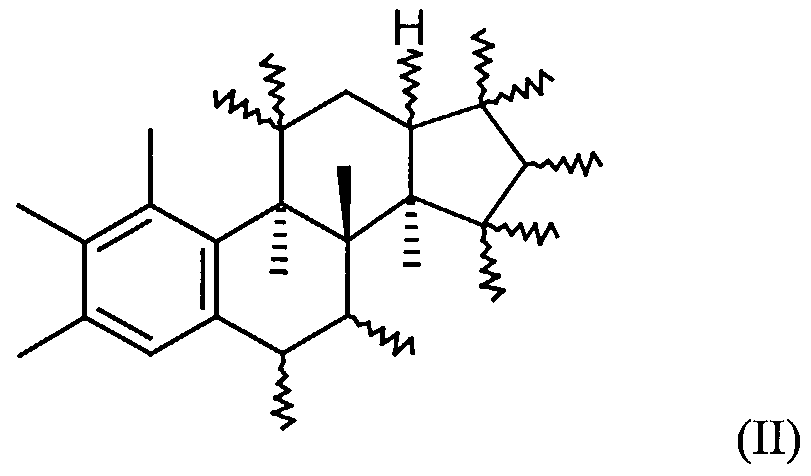
- Another aspect of the present invention relates to the use of the structural part of the formula II (Gona-l, 3.5 (10) structural part)
- the B, C and / or D ring in positions 6, 7; 7, 8; 9, 11; 11, 12; 14, 15 and 15, 16 one or more, optionally conjugated, double bonds are present.
- the possible substituents on the carbon atoms 6, 7, 11, 15, 16 and 17 and the hydrogen atom on the carbon atom 13 can each be in the ⁇ or ⁇ position.
- the present invention preferably relates to structural parts of the general formula IF
- these structural parts can also have one or more, optionally conjugated, double bonds in the B, C and / or D ring.
- the possible substituents on the carbon atoms 6, 7, 11, 15, 16 and 17 can again in each case be in the ⁇ or ⁇ position and the hydrogen atom on the carbon atom 13 preferably in the ⁇ position.
- esters of the 18-nor steroids according to the invention have advantages over the unesterified active compounds with regard to their mode of application, their mode of action, potency and duration of action.
- the 18-nor steroid sulfamates according to the invention also have pharmacokinetic and pharmacodynamic advantages. Effects in this regard have already been described for sulfamates which are derived from estrogens with a 13-methyl group (J. Steroid Biochem. Molec. Biol, 55, 395-403 (1995); Exp. Opinion Invest. Drugs 7, 575-589 (1998 )).
- the substances also have an estrogen-like effect on the vascular system and brain functions.
- Substances with higher binding to the rat prostate compared to the rat uterus estrogen receptor are more potent in increasing the expression of the serotonin receptor and transporter compared to their positive effect on LH release. Therefore, processes in the regulation of which the neurotransmitter serotonin is involved are favorably influenced and the compounds according to the invention have a favorable influence, in particular on mood and cognition.
- estrogens can be used as estrogens in the sense described in WO 97/45125 for the manufacture of medicaments for influencing the levels of serotonin or of serotonin mRNA in humans.
- the nor steroids according to the invention are suitable as selective estrogens for the treatment of various conditions and diseases which are characterized by a higher content of estrogen receptor ⁇ than estrogen receptor ⁇ in the corresponding target tissue or organ.
- the invention also relates to pharmaceutical preparations which contain at least one compound of the general formula I (or physiologically tolerable addition salts with organic and inorganic acids thereof) and the use of the compounds of the general formula I 'for the production of medicaments, in particular for the following indications.
- the compounds can be used for the following indications, both after oral and parenteral administration.
- novel selective estrogens described in the present patent can be used as individual components in pharmaceutical preparations or in combination in particular with antiestrogens or gestagens.
- the substances and the pharmaceuticals containing them are particularly suitable for the treatment of peri- and postmenopausal complaints, in particular hot flashes, sleep disorders, irritability, mood swings, incontinence, vaginal atrophy, and hormone deficiency-related mood disorders.
- the substances are also suitable for hormone replacement and the therapy of hormone deficiency-related complaints in the case of surgical, medicinal or other-related ovarian dysfunction. This includes preventing bone loss in postmenopausal women, hysterectomized women, or women treated with LHRH agonists or antagonists.
- the compounds are also used to relieve symptoms of andropause and menopause, i.e. for male and female hormone replacement therapy (HRT), both for prevention and for treatment, also suitable for the treatment of symptoms associated with dysmenorrhea and for the treatment of acne.
- HRT hormone replacement therapy
- the substances are also used for the prophylaxis of hormone deficiency-related bone mass loss and osteoporosis, for the prevention of cardiovascular diseases, in particular vascular diseases such as atherosclerosis, for the inhibition of the proliferation of arterial smooth muscle cells, for the treatment of primary pulmonary hypertension and for the prevention of hormone-deficiency-related diseases and neurodeficiency-related diseases Impairment of memory and learning ability, applicable.
- the substances can be used for the treatment of inflammatory and diseases of the immune system, in particular autoimmune diseases, such as rheumatoid arthritis.
- autoimmune diseases such as rheumatoid arthritis.
- the compounds can also be used to treat male fertility disorders and prostatic disorders.
- the compounds can also be used in combination with the natural vitamin D3 or with calcitriol analogs for bone building or as supportive therapy for therapies which cause loss of bone mass (for example therapy with glucocorticoids, chemotherapy).
- the compounds of general formula F can be used in conjunction with progesterone receptor antagonists, in particular for use in hormone replacement therapy and for the treatment of gynecological disorders.
- the amount of a compound of general formula F to be administered varies within a wide range and can cover any effective amount. Depending on the condition to be treated and the type of administration, the amount of the compound administered can be 0.01 ⁇ g / kg - 10 mg kg body weight, preferably 0.04 ⁇ g / kg - 1 mgkg body weight, per day.
- this corresponds to a dose of 0.8 ⁇ g to 800 mg, preferably 3.2 ⁇ g to 80 mg, daily.
- a dose unit contains 1.6 ⁇ g to 200 mg of one or more compounds of the general formula I.
- the compounds according to the invention and the acid addition salts are suitable for the production of pharmaceutical compositions and preparations.
- the pharmaceutical compositions or medicaments contain one or more of the compounds according to the invention or their acid addition salts as the active ingredient, optionally in a mixture with other pharmacologically or pharmaceutically active substances.
- the pharmaceuticals are produced in a known manner, the known and customary pharmaceutical auxiliaries and other conventional carriers and diluents can be used.
- auxiliaries are, for example, those which are recommended or indicated in the following references as auxiliaries for pharmacy, cosmetics and related fields: Ullmans Encyklopadie der Technische Chemie, Volume 4 (1953), pages 1 to 39; Journal of Pharmaceutical Sciences, Volume 52 (1963), page 918 ff, H. v. Czetsch-Lindenwald, auxiliaries for pharmacy and neighboring areas; Pharm. Ind., Issue 2, 1961, page 72 u. ff: Dr. H. P. Fiedler, Lexicon of auxiliaries for pharmacy, cosmetics and related areas, Cantor KG. Aulendorf in practise 1971.
- the compounds can be administered orally or parenterally, for example intraperitoneally, intramuscularly, subcutaneously or percutaneously.
- the connections can also be implanted into the tissue.
- the dosage units can contain a pharmaceutically acceptable carrier, such as, for example, starch, sugar, sorbitol, gelatin, lubricant, silica, talc, etc.
- a pharmaceutically acceptable carrier such as, for example, starch, sugar, sorbitol, gelatin, lubricant, silica, talc, etc.
- the active ingredients can be dissolved or suspended in a physiologically acceptable diluent.
- Oils with or without the addition of a solubilizer, a surface-active agent, a suspending or emulsifying agent are very often used as diluents. Examples of oils used are olive oil, peanut oil, cottonseed oil, soybean oil, castor oil and sesame oil.
- the compounds can also be used in the form of a depot injection or an implant preparation, which can be formulated in such a way that a delayed release of the active substance is made possible.
- Implants can contain, for example, biodegradable polymers as inert materials or synthetic silicones such as silicone rubber.
- the active ingredients can also be incorporated into a plaster for percutaneous application, for example.
- intravaginal eg vaginal rings
- intrauterine systems eg pessaries, spirals, IUSs
- active compounds of the general formula F. Mirena® various polymers are suitable for local administration, such as silicone polymers, ethylene vinyl acetate, polyethylene or polypropylene.
- the compounds can also be formulated as cyclodextrin clathrates.
- the compounds are reacted with ⁇ -, ⁇ - or ⁇ -cyclodextrin or derivatives thereof (PCT / EP95 / 02656).
- the compounds of the general formula F can also be encapsulated with liposomes.
- the binding affinity of the new selective estrogens was tested in competition experiments using 3H-estradiol as a ligand on estrogen receptor preparations of rat prostate and rat uterus.
- the preparation of the prostatacytosol and the estrogen receptor test with the prostatacytosol was carried out as described by Testas et al. (1981). (Testas J. et al., 1981, Endocrinology 109: 1287-1289).
- the substances described in the present patent have higher binding affinity to estrogen receptor from rat prostate than to estrogen receptor from rat uterus. It is assumed that ERß outweighs ER ⁇ in the rat prostate, in rat uterus ER ⁇ outweighs ERß. Table 1 shows that the ratio of the binding to the prostate and uterine receptor corresponds qualitatively to the ratio of the relative binding affinity (RBA) to human ERß and ER ⁇ from rat (after Kuiper et al. (1996), Endocrinology 138: 863-870) ( Table 1).
- RBA relative binding affinity
- Table 2 shows the results for the compound to be used in the present invention
- the compounds A, B, C, D and E show a higher binding affinity to the estrogen receptor from rat prostate than to the estrogen receptor from rat uterus.
- 3 month old female rats are ovariectomized and treated with the test compound once daily for 28 days immediately after the operation.
- the application is subcutaneous in arachis oil / ethanol.
- the animals are sacrificed the day after the last application and the tibia and the uterus are removed.
- the uteri are weighed, fixed and processed for histological examinations. Bone density is determined ex vivo on prepared long bones using pQCT (quantitative computer tomography). The measurements are carried out at a distance of 4 - 6 mm from the articular head of the proximal tibia.
- the ovariectomy reduces the density of the trabecular bone in the measured
- the higher binding affinity to estrogen receptor from rat prostate than to estrogen receptor from rat uterus is reflected in significantly lower amounts of the compounds according to the invention, which bring about a 50% bone protection compared to that Amounts which cause 50% uterine stimulation, based on the loss of bone mass, which can be measured in ovariectomized, untreated female rats 28 days after the ovariectomy in contrast to sham-opinated, intact animals.
- the vascular effect of the estrogens according to the invention is determined in the ApoE knockout mouse model as described by R. Elhage et al., 1997 (Elhage R. et al. 1997, Arteriosclerosis, Thrombosis, and Vascular Biology 17: 2679-2684 ).
- the oxytozine receptor mRNA expression is used as a surrogate parameter (Hrabovszky E et al. 1998, Endocrinology 1339: 2600-2604).
- Ovariectomized rats are treated with the test substance or vehicle for 7 days (application: subcutaneously or orally, 6 times a day).
- application subcutaneously or orally, 6 times a day.
- the animals are decapitated, the uterine weight is determined and the oxytocin receptor mRNA level is examined by means of in situ hybridization on suitable brain sections. It is the ED 5 o values determined with respect to stimulation of uterus and induction of the oxytocin receptor mRNA.
- Another possibility of demonstrating the dissociated estrogen action of the substances according to the invention in vivo is to measure effects on the expression of 5HT2a receptor and serotonin transporter protein and mRNA levels in ERß-rich brain areas after single application of the substances in rats.
- the effect on LH secretion is measured.
- Substances with higher binding to the rat prostate compared to the rat uterine estrogen receptor are more potent in increasing the expression of the serotonin receptor and transporter, compared to their positive effect on the LH release.
- the density of the serotonin receptor and transporter is determined on brain sections using radioactive ligands, the corresponding mRNA using in situ hybridization. The method is described in the literature: G.
- This synthetic route is suitable for the construction of 11 ⁇ -substituted 18-nor steroids.
- Positions of the steroid framework can be gestagene 18-Nor-3- according to DE 195 35 851 AI obtained with a diverse substitution pattern on the steroid.
- This synthetic route is particularly suitable for the preparation of those compounds in which the 11 position is substituted.
- the 11-hydroxy group or the 11-keto group accessible therefrom by oxidation can be functionalized, e.g. through a Wittig
- Aromatization can also be carried out with microbiological agents known to the person skilled in the art
- a stem screening showed that the following microorganisms can carry out the reaction:
- Examples 12 to 14 are used for illustration.
- reaction steps for the introduction of functional groups on the steroid skeleton for example the introduction of a side chain on the carbon atom 17 by nucleophilic addition, and the aromatization can also be interchanged.
- Substituents which are possible according to general formula I can already be present in the final form or in the form of a precursor in the starting product, an estrone which is already substituted in accordance with the desired end product.
- substituents on the carbon atom 7 are known to those skilled in the art, for example in the field of antiestrogenic agents, by copper-catalyzed 1,6 addition of the substituent, or a reactive precursor thereof, to a 3-keto- ⁇ 4.
- Connection introduced and optionally further developed (EP 0 138 504 B, WO 98/07740, WO 99/33855).
- the introduction of a substituent or reactive precursor at carbon atom 7 is also possible by nucleophilic addition of the substituent or precursor to a 6-vinyl sulfone
- 17-substituents are introduced, likewise by known methods, by nucleophilic addition of the desired substituent or a reactive precursor thereof and, if appropriate, further developed.
- substituents according to general formula I can also be introduced at the 18-nor steroid level. This can be expedient or necessary, in particular in the case of multiple substitution of the desired end compound.
- a 1 l ⁇ -hydroxy group according to the Vorbrüggen et al. described method can be converted into a 1 l-fluorine atom.
- Functionalizations at carbon atom 2 are possible, for example, by electrophilic substitution after prior deprotonation of position 2 of the corresponding 3- (2-tetrahydropyranyl) - or 3-methyl ether with a lithium base (e.g. methyl lithium, butyllithium).
- a fluorine atom can be introduced by reacting the C-H-activated substrate with a fluorinating reagent such as N-fluoromethanesulfonimide (WO 94/24098).
- variable substituents into the rings B, C and D of the gonatrial framework can be carried out according to the same chemical teaching with which the corresponding estratria derivatives are produced (see, among others: steroids, LF Fieser, M. Fieser, Verlag Chemie, Weinheim / Bergstr ., 1961; Organic Reactions in Steroid Chemistry, J. Fried, JA Edwards, Van Nostrand Reinhold Company, New York, Cincinnati, Toronto, London, Melbourne, 1972; Medicinal Chemistry of Steroids, FJ Zeelen, Elsevier, Amsterdam, Oxford, New York, Tokyo, 1990).
- the 18-nor-steroid carboxylic acid esters according to the invention are produced in analogy to the esters derived from natural steroid active ingredients (see, for example, pharmaceutical active ingredients, syntheses, patents, applications; A. Kleemann, J. Engel ', Georg Thieme Verlag Stuttgart 1978. Medicines, progress 1972 to 1985; A. Kleemann, E. Lindner, J. Engel (ed.), VCH 1987, pp. 773-814).
- the 18-nor steroid sulfamates according to the invention are obtainable in a manner known per se from the corresponding hydroxy steroids by esterification with sulfamoyl chlorides in the presence of a base (Z. Chem. 15, 270-272 (1975); Steroids 61, 710-717 (1996)). Subsequent acylation of the sulfamide group leads to the 18-n-steroidal (N-acyl) sulfamates according to the invention, for which pharmacokinetic advantages have already been demonstrated in the 13-methyl series (cf. DE 195 40 233 AI).
- the preparation of the sulfamates according to the invention with one or more additional hydroxyl groups in the molecule is also possible by starting from suitable hydroxy steroid ketones. First, depending on the objective, one or more existing hydroxyl groups are subjected to sulfamoylation. Then the sulfamate groups can optionally be converted into the / N-acyl) sulfamates in question with a desired acyl chloride in the presence of a base.
- Sodium borohydride and the borane-dimethyl sulfide complex are suitable as suitable reducing agents.
- the compounds of general formula I according to the invention are prepared as described in the examples. An analogous procedure using homologous reagents to the reagents described in the examples allows further compounds of the general formula I to be obtained.
- Etherification and / or esterification of free hydroxyl groups takes place according to methods which are common to the person skilled in the art.
- the compounds according to the invention can be present on the carbon atoms 6, 7, 11, 13, 15, 16 and 17 as ⁇ , ⁇ -stereoisomers.
- the compounds are usually obtained as mixtures of the corresponding ⁇ , ⁇ isomers.
- the mixtures can be separated, for example, by chromatographic methods.
- This substance is suspended in 500 ml of ethanol, mixed with 20 g of hydroxylamine hydrochloride and 40 g of anhydrous sodium acetate and heated under reflux for 2.5 hours. After cooling, it is diluted with ethyl acetate, with water, saturated bicarbonate solution and Washed saline and dried the organic phase with sodium sulfate and evaporated. The residue crystallized from ethanol, yield 31.8 g (91% of theory), mp.
- reaction mixture is poured into ice water, shaken three times with dichloromethane, the organic phase washed with water, saturated bicarbonate solution and brine, dried with sodium sulfate and evaporated.
- the residue of 4.4 g is chromatographed on silica gel with a mixture of hexane and ethyl acetate, yield 0.79 g (36% of theory) as a colorless oil.
- the oxime is prepared as described in Example 1.3 in 89% yield (34.0 g), mp.
- the l ⁇ -ethyl-18-nor-estradiol is made from 11 ⁇ -ethyl-estra-1,3,5 (10) -trien-3-ol-17-one (Pomper, J.Med. Chem. 1990, 3143) in a total yield of 1.3%, mp.
- Example 4 II ß-phenyl-gona-1,3,5 (10) -triene-3,17-diol
- l 1-phenyl-estra-1,3,5 (10) -trien-3-ol-17-one becomes the corresponding 18-nor compound produced, overall yield 0.7%, mp.
- a mixture of 3 ml of thioanisole and 2 ml of trifluoroacetic acid is added to 0.30 g (0.79 mmol) of benzylated 7 ⁇ -fluoro-18-nor-estrone and the mixture is left overnight at room temperature under a protective gas and with the exclusion of moisture.
- the mixture is stirred into ice / potassium hydroxide solution, extracted with ethyl acetate, the organic phase is washed neutral and dried over sodium sulfate.
- the crude product is chromatographed on silica gel (toluene-ethyl acetate, gradient up to 4: 1), yield 0.200 g (87%).
- Lithium diisopropylamide (LDA) is prepared from 0.77 ml of a 1.6 molar solution of n-butyllithium in hexane (1.23 mmol) and 0.18 ml (1.28 mmol) of diisopropylamine in 10 ml of tetrahydrofuran at 0 ° C. The mixture is then cooled to -78 ° C. and a solution of 119 mg (0.41 mmol) of the compound described under 10.6 in 8 ml of tetrahydrofuran is added. The mixture is stirred at -78 ° C for one hour. Then 0.16 ml (0.42 mmol) of trimethylchlorosilane are added.
- Example 12 IIß-methyl-17 ⁇ - (l-propynyl) -gona-1,3,5 (10) -triene-3,17ß-diol
- Amount of substrate 6.0 mg of 17 ⁇ -hydroxy-1 ⁇ -methyl-17 ⁇ - (1-propynyl) -gon-4-en-3-one
- the title compound with the strain Bacillus lentus ATCC 13805 is prepared in a 20 ml fermentation flask.
- Pre-culture 100 ml sterile medium consisting of 0.5% glucose, 0.5% yeast extract,
- 0.1% peptone and 0.2% coorn steep liquor (pH 7.5) is inoculated with a slant culture of the strain Bacillus lentus ATCC 13805 and incubated for 24 hours at 28 ° C. and 165 rpm on a rotary shaker.
- Main culture For the biotransformation, 3 x 20 ml of the preculture are transferred to a sterile 100 ml shake flask. At the same time, the substrate 17 ⁇ -hydroxy-1 ⁇ -methyl-17 ⁇ - (1-propynyl) -gon-4-en-3-one is dissolved in an organic solvent and admitted. The concentration in the culture broth is 100 mg / 1. Ethanol is preferably used as the solvent, but other water-miscible solvents such as, for. B. Dimethylformamide can be used. The incubation is carried out at 28 ° C. and 165 rpm on a rotary shaker. The reaction is checked using methods such as thin layer chromatography or, preferably, HPLC. The reaction is complete after 28 hours. The culture broth of the three shake flasks is extracted once with 1 volume of methyl isobutyl ketone, the organic phases are combined and evaporated to dryness under vacuum.
Landscapes
- Health & Medical Sciences (AREA)
- Chemical & Material Sciences (AREA)
- Organic Chemistry (AREA)
- General Health & Medical Sciences (AREA)
- Animal Behavior & Ethology (AREA)
- Veterinary Medicine (AREA)
- Public Health (AREA)
- Life Sciences & Earth Sciences (AREA)
- Medicinal Chemistry (AREA)
- Pharmacology & Pharmacy (AREA)
- Chemical Kinetics & Catalysis (AREA)
- Nuclear Medicine, Radiotherapy & Molecular Imaging (AREA)
- General Chemical & Material Sciences (AREA)
- Bioinformatics & Cheminformatics (AREA)
- Engineering & Computer Science (AREA)
- Neurosurgery (AREA)
- Biomedical Technology (AREA)
- Neurology (AREA)
- Physical Education & Sports Medicine (AREA)
- Endocrinology (AREA)
- Urology & Nephrology (AREA)
- Epidemiology (AREA)
- Rheumatology (AREA)
- Orthopedic Medicine & Surgery (AREA)
- Reproductive Health (AREA)
- Heart & Thoracic Surgery (AREA)
- Cardiology (AREA)
- Psychiatry (AREA)
- Hospice & Palliative Care (AREA)
- Pain & Pain Management (AREA)
- Diabetes (AREA)
- Immunology (AREA)
- Vascular Medicine (AREA)
- Anesthesiology (AREA)
- Gynecology & Obstetrics (AREA)
- Pregnancy & Childbirth (AREA)
- Pharmaceuticals Containing Other Organic And Inorganic Compounds (AREA)
- Steroid Compounds (AREA)
Abstract
Description





Claims


Priority Applications (6)
| Application Number | Priority Date | Filing Date | Title |
|---|---|---|---|
| DE50014299T DE50014299D1 (de) | 1999-11-02 | 2000-11-02 | 18-nor-steroide als selektiv wirksame estrogene |
| JP2001535381A JP2003513102A (ja) | 1999-11-02 | 2000-11-02 | 選択的な作用を有するエストロゲンとしての18−ノル−ステロイド |
| US10/111,933 US6958327B1 (en) | 1999-11-02 | 2000-11-02 | 18 Norsteroids as selectively active estrogens |
| DK00981233T DK1226155T3 (da) | 1999-11-02 | 2000-11-02 | 18-nor-steroider som selektivt virksomme östrogener |
| EP00981233A EP1226155B1 (de) | 1999-11-02 | 2000-11-02 | 18-nor-steroide als selektiv wirksame estrogene |
| AU18552/01A AU1855201A (en) | 1999-11-02 | 2000-11-02 | 18-nor-steroids as selectively active estrogens |
Applications Claiming Priority (4)
| Application Number | Priority Date | Filing Date | Title |
|---|---|---|---|
| DE19954105.1 | 1999-11-02 | ||
| DE1999154105 DE19954105A1 (de) | 1999-11-02 | 1999-11-02 | 18-Nor-Steroide als selektiv wirksame Estrogene |
| US18819700P | 2000-03-10 | 2000-03-10 | |
| US60/188,197 | 2000-03-10 |
Publications (2)
| Publication Number | Publication Date |
|---|---|
| WO2001032680A2 true WO2001032680A2 (de) | 2001-05-10 |
| WO2001032680A3 WO2001032680A3 (de) | 2002-04-11 |
Family
ID=26055493
Family Applications (1)
| Application Number | Title | Priority Date | Filing Date |
|---|---|---|---|
| PCT/EP2000/010804 Ceased WO2001032680A2 (de) | 1999-11-02 | 2000-11-02 | 18-nor-steroide als selektiv wirksame estrogene |
Country Status (9)
| Country | Link |
|---|---|
| EP (1) | EP1226155B1 (de) |
| JP (1) | JP2003513102A (de) |
| AT (1) | ATE361309T1 (de) |
| AU (1) | AU1855201A (de) |
| DE (1) | DE50014299D1 (de) |
| DK (1) | DK1226155T3 (de) |
| ES (1) | ES2286042T3 (de) |
| PT (1) | PT1226155E (de) |
| WO (1) | WO2001032680A2 (de) |
Cited By (8)
| Publication number | Priority date | Publication date | Assignee | Title |
|---|---|---|---|---|
| WO2002000224A1 (en) * | 2000-06-29 | 2002-01-03 | Hunter-Fleming Limited | Neuroprotective 7-beta-hydroxysteroids |
| WO2002011765A1 (de) * | 2000-08-10 | 2002-02-14 | Schering Aktiengesellschaft | KOMBINATIONSPRÄPARATE AUS EINEM ERβ-SELEKTIVEN ESTROGEN UND EINEM SERM ODER ANTIESTROGEN |
| WO2001085154A3 (en) * | 2000-05-12 | 2002-08-29 | Univ Oregon Health Sciences | Method of treating immune pathologies with low dose estrogen |
| DE10318896A1 (de) * | 2003-04-22 | 2004-11-25 | Schering Ag | 8beta-Vinyl-11beta-(omega-substituierte)alkyl-estra-1,3,5(10)-triene |
| JP2005533053A (ja) * | 2002-06-11 | 2005-11-04 | シエーリング アクチエンゲゼルシャフト | 選択的活性エストロゲンとしての9−α置換のエストラトリエン |
| US7718639B2 (en) | 2000-06-29 | 2010-05-18 | Hunter-Fleming Limited | 7-hydroxyepiandrosterone having neuroprotective activity |
| RU2418000C1 (ru) * | 2009-11-26 | 2011-05-10 | Федеральное государственное образовательное учреждение высшего профессионального образования Санкт-Петербургский государственный университет | 3-МЕТОКСИ-2-ФТОР-18-ЭТИЛ-8α-ГОНА-1,3,5( 10 )-ТРИЕНЫ, ОБЛАДАЮЩИЕ ОСТЕОПРОТЕКТОРНОЙ И ГИПОХОЛЕСТЕРИНЕМИЧЕСКОЙ АКТИВНОСТЬЮ |
| US8053197B2 (en) | 2004-07-30 | 2011-11-08 | Oregon Health & Science University | Methods for detecting and treating autoimmune disorders |
Families Citing this family (2)
| Publication number | Priority date | Publication date | Assignee | Title |
|---|---|---|---|---|
| UA89964C2 (ru) * | 2004-09-08 | 2010-03-25 | Н.В. Органон | 15β-ЗАМЕЩЕННЫЕ СТЕРОИДЫ, КОТОРЫЕ ИМЕЮТ СЕЛЕКТИВНУЮ ЭСТРОГЕННУЮ АКТИВНОСТЬ |
| US20120071455A1 (en) * | 2010-09-14 | 2012-03-22 | Yarger James G | 6-substituted demethyl-estradiol derivatives as selective er-beta agonists |
Family Cites Families (9)
| Publication number | Priority date | Publication date | Assignee | Title |
|---|---|---|---|---|
| US3016389A (en) * | 1959-04-13 | 1962-01-09 | Searle & Co | 3, 17-bisoxygenated-18 nor-1, 3, 5(10)-estratrienes and intermediates |
| US3407219A (en) * | 1965-12-22 | 1968-10-22 | Searle & Co | 17alpha-alkyl-17beta-methyl-8xi, 9xi, 13xi, 14xi-gona-1,3,5(10)-trien-3-ols and conge |
| US3574197A (en) * | 1968-07-09 | 1971-04-06 | Schering Ag | Process of producing 1-hydroxy-7alpha-methyl-estradiol derivatives |
| US3576829A (en) * | 1969-07-11 | 1971-04-27 | American Home Prod | Novel 13alpha-lower alkylgona-1,3,5(10)-trienes |
| BE755689A (fr) * | 1969-09-03 | 1971-03-03 | Upjohn Co | Procede de fabrication de nouvelles 7 beta-alkyl-19- nortestosterones |
| US3755384A (en) * | 1971-04-07 | 1973-08-28 | Searle & Co | Trialkylsilyl ethers of 17alpha-alkynylestra - 1,3,5(10) - triene-3,17beta-diols and 11beta-alkyl derivatives thereof |
| US4605649A (en) * | 1983-02-22 | 1986-08-12 | Liehr Joachim G | Method of treatment of estrogen deficiency disease |
| US4705783A (en) * | 1985-06-25 | 1987-11-10 | Sri International | 9α, 11β-substituted and 11β-substituted estranes |
| DE19917930A1 (de) * | 1999-04-15 | 2000-10-19 | Schering Ag | Ent-Steroide als selektiv wirksame Estrogene |
-
2000
- 2000-11-02 PT PT00981233T patent/PT1226155E/pt unknown
- 2000-11-02 EP EP00981233A patent/EP1226155B1/de not_active Expired - Lifetime
- 2000-11-02 WO PCT/EP2000/010804 patent/WO2001032680A2/de not_active Ceased
- 2000-11-02 AT AT00981233T patent/ATE361309T1/de not_active IP Right Cessation
- 2000-11-02 ES ES00981233T patent/ES2286042T3/es not_active Expired - Lifetime
- 2000-11-02 DE DE50014299T patent/DE50014299D1/de not_active Expired - Fee Related
- 2000-11-02 AU AU18552/01A patent/AU1855201A/en not_active Abandoned
- 2000-11-02 DK DK00981233T patent/DK1226155T3/da active
- 2000-11-02 JP JP2001535381A patent/JP2003513102A/ja active Pending
Cited By (11)
| Publication number | Priority date | Publication date | Assignee | Title |
|---|---|---|---|---|
| WO2001085154A3 (en) * | 2000-05-12 | 2002-08-29 | Univ Oregon Health Sciences | Method of treating immune pathologies with low dose estrogen |
| US7579006B2 (en) | 2000-05-12 | 2009-08-25 | Oregon Health And Science University | Method of treating immune pathologies with low dose estrogen |
| US7731973B2 (en) | 2000-05-12 | 2010-06-08 | Oregon Health And Science University | Method of treating immune pathologies with low dose estrogen |
| WO2002000224A1 (en) * | 2000-06-29 | 2002-01-03 | Hunter-Fleming Limited | Neuroprotective 7-beta-hydroxysteroids |
| US7718639B2 (en) | 2000-06-29 | 2010-05-18 | Hunter-Fleming Limited | 7-hydroxyepiandrosterone having neuroprotective activity |
| CZ305306B6 (cs) * | 2000-06-29 | 2015-07-22 | Hunter-Fleming Limited | Použití 7β-hydroxysteroidu nebo jeho farmaceuticky přijatelného esteru nebo jeho jiného derivátu pro přípravu léčiva pro ochranu před poškozením nervových buněk |
| WO2002011765A1 (de) * | 2000-08-10 | 2002-02-14 | Schering Aktiengesellschaft | KOMBINATIONSPRÄPARATE AUS EINEM ERβ-SELEKTIVEN ESTROGEN UND EINEM SERM ODER ANTIESTROGEN |
| JP2005533053A (ja) * | 2002-06-11 | 2005-11-04 | シエーリング アクチエンゲゼルシャフト | 選択的活性エストロゲンとしての9−α置換のエストラトリエン |
| DE10318896A1 (de) * | 2003-04-22 | 2004-11-25 | Schering Ag | 8beta-Vinyl-11beta-(omega-substituierte)alkyl-estra-1,3,5(10)-triene |
| US8053197B2 (en) | 2004-07-30 | 2011-11-08 | Oregon Health & Science University | Methods for detecting and treating autoimmune disorders |
| RU2418000C1 (ru) * | 2009-11-26 | 2011-05-10 | Федеральное государственное образовательное учреждение высшего профессионального образования Санкт-Петербургский государственный университет | 3-МЕТОКСИ-2-ФТОР-18-ЭТИЛ-8α-ГОНА-1,3,5( 10 )-ТРИЕНЫ, ОБЛАДАЮЩИЕ ОСТЕОПРОТЕКТОРНОЙ И ГИПОХОЛЕСТЕРИНЕМИЧЕСКОЙ АКТИВНОСТЬЮ |
Also Published As
| Publication number | Publication date |
|---|---|
| WO2001032680A3 (de) | 2002-04-11 |
| DE50014299D1 (de) | 2007-06-14 |
| EP1226155A2 (de) | 2002-07-31 |
| AU1855201A (en) | 2001-05-14 |
| EP1226155B1 (de) | 2007-05-02 |
| JP2003513102A (ja) | 2003-04-08 |
| ES2286042T3 (es) | 2007-12-01 |
| DK1226155T3 (da) | 2007-09-10 |
| PT1226155E (pt) | 2007-07-26 |
| ATE361309T1 (de) | 2007-05-15 |
Similar Documents
| Publication | Publication Date | Title |
|---|---|---|
| EP1272504B1 (de) | 8.beta.-hydrocarbyl-substituierte estratriene als selektiv wirksame estrogene | |
| DE60025817T2 (de) | Ent-steroide als selektiv wirksame estrogene | |
| US6958327B1 (en) | 18 Norsteroids as selectively active estrogens | |
| DE19635525A1 (de) | 7alpha-(xi-Aminoalkyl)-estratriene, Verfahren zu deren Herstellung, pharmazeutische Präparate, die diese 7alpha(xi-Aminoalkyl-estratriene enthalten sowie deren Verwendung zur Herstellung von Arzneimitteln | |
| EP1144431B1 (de) | 16-hydroxyestratriene als selektiv wirksame estrogene | |
| EP1226155B1 (de) | 18-nor-steroide als selektiv wirksame estrogene | |
| EP0906332A1 (de) | 7$g(a)-(5-METHYLAMINOPENTYL)-ESTRATRIENE, VERFAHREN ZU DEREN HERSTELLUNG, PHARMAZEUTISCHE PRÄPARATE, DIE DIESE 7$g(a)-(5-METHYLAMINOPENTYL)-ESTRATRIENE ENTHALTEN SOWIE DEREN VERWENDUNG ZUR HERSTELLUNG VON ARZNEIMITTELN | |
| EP1599493B1 (de) | Antitumor wirksame 2-substituierte estra-1,3,5(10)-trien-3-yl sulfamate | |
| EP1517914B1 (de) | 9-alpha-substituierte estratriene als selektiv wirksame estrogene | |
| EP0642529B1 (de) | 11beta-substituierte 14,17-ethanoestratriene, verfahren zur herstellung dieser verbindungen, sowie ihre verwendung zur herstellung von arzneimitteln | |
| DE10019167A1 (de) | Substituierte Estratriene als selektiv wirksame Estrogene | |
| DE19954105A1 (de) | 18-Nor-Steroide als selektiv wirksame Estrogene | |
| EP1594886B1 (de) | Antitumor wirksame 2-substituierte d-homoestra-1,3,5(10)-trien-3-yl sulfamate | |
| DE10151365A1 (de) | 17-Chlor-D-Homosteroide als selektive Estrogenrezeptorantagonisten | |
| EP1322662A1 (de) | 19-nor-17 alpha-pregna-1,3,5 (10)-trien-17 beta-ole einem 21,16 alpha-laktonring | |
| WO2003033516A1 (de) | 8β -SUBSTITUIERTE-11β -ARYL-ESTRA-1,3,5(10)-TRIENDERIVATE | |
| US20050282791A1 (en) | 18-nor steroids as selectively active estrogens | |
| DE102004019406A1 (de) | 17α-Fluorsteroide | |
| EP1418921A1 (de) | Antitumor wirksame 2-alkoxyestradiolsulfamate | |
| AU2004201405A1 (en) | Ent-Steroids as selectively active estrogens |
Legal Events
| Date | Code | Title | Description |
|---|---|---|---|
| AK | Designated states |
Kind code of ref document: A2 Designated state(s): AE AG AL AM AT AU AZ BA BB BG BR BY BZ CA CH CN CR CU CZ DK DM DZ EE ES FI GB GD GE GH GM HR HU ID IL IN IS JP KE KG KP KR KZ LC LK LR LS LT LU LV MA MD MG MK MN MW MX MZ NO NZ PL PT RO RU SD SE SG SI SK SL TJ TM TR TT TZ UA UG US UZ VN YU ZA ZW |
|
| AL | Designated countries for regional patents |
Kind code of ref document: A2 Designated state(s): GH GM KE LS MW MZ SD SL SZ TZ UG ZW AM AZ BY KG KZ MD RU TJ TM AT BE CH CY DE DK ES FI FR GB GR IE IT LU MC NL PT SE TR BF BJ CF CG CI CM GA GN GW ML MR NE SN TD TG |
|
| 121 | Ep: the epo has been informed by wipo that ep was designated in this application | ||
| DFPE | Request for preliminary examination filed prior to expiration of 19th month from priority date (pct application filed before 20040101) | ||
| AK | Designated states |
Kind code of ref document: A3 Designated state(s): AE AG AL AM AT AU AZ BA BB BG BR BY BZ CA CH CN CR CU CZ DK DM DZ EE ES FI GB GD GE GH GM HR HU ID IL IN IS JP KE KG KP KR KZ LC LK LR LS LT LU LV MA MD MG MK MN MW MX MZ NO NZ PL PT RO RU SD SE SG SI SK SL TJ TM TR TT TZ UA UG US UZ VN YU ZA ZW |
|
| AL | Designated countries for regional patents |
Kind code of ref document: A3 Designated state(s): GH GM KE LS MW MZ SD SL SZ TZ UG ZW AM AZ BY KG KZ MD RU TJ TM AT BE CH CY DE DK ES FI FR GB GR IE IT LU MC NL PT SE TR BF BJ CF CG CI CM GA GN GW ML MR NE SN TD TG |
|
| ENP | Entry into the national phase |
Ref country code: JP Ref document number: 2001 535381 Kind code of ref document: A Format of ref document f/p: F |
|
| WWE | Wipo information: entry into national phase |
Ref document number: 2000981233 Country of ref document: EP |
|
| WWP | Wipo information: published in national office |
Ref document number: 2000981233 Country of ref document: EP |
|
| WWE | Wipo information: entry into national phase |
Ref document number: 10111933 Country of ref document: US |
|
| WWG | Wipo information: grant in national office |
Ref document number: 2000981233 Country of ref document: EP |