WO2001038291A2 - Procede de preparation d'un compose polyaromatique - Google Patents
Procede de preparation d'un compose polyaromatique Download PDFInfo
- Publication number
- WO2001038291A2 WO2001038291A2 PCT/FR2000/003289 FR0003289W WO0138291A2 WO 2001038291 A2 WO2001038291 A2 WO 2001038291A2 FR 0003289 W FR0003289 W FR 0003289W WO 0138291 A2 WO0138291 A2 WO 0138291A2
- Authority
- WO
- WIPO (PCT)
- Prior art keywords
- group
- acid
- aromatic
- formula
- carbon atoms
- Prior art date
- Legal status (The legal status is an assumption and is not a legal conclusion. Google has not performed a legal analysis and makes no representation as to the accuracy of the status listed.)
- Ceased
Links
- FTNJQNQLEGKTGD-UHFFFAOYSA-N C1Oc2ccccc2O1 Chemical compound C1Oc2ccccc2O1 FTNJQNQLEGKTGD-UHFFFAOYSA-N 0.000 description 1
- DGCOGZQDAXUUBY-UHFFFAOYSA-N FC1(Oc2ccccc2O1)F Chemical compound FC1(Oc2ccccc2O1)F DGCOGZQDAXUUBY-UHFFFAOYSA-N 0.000 description 1
Classifications
-
- C—CHEMISTRY; METALLURGY
- C07—ORGANIC CHEMISTRY
- C07C—ACYCLIC OR CARBOCYCLIC COMPOUNDS
- C07C211/00—Compounds containing amino groups bound to a carbon skeleton
- C07C211/43—Compounds containing amino groups bound to a carbon skeleton having amino groups bound to carbon atoms of six-membered aromatic rings of the carbon skeleton
- C07C211/44—Compounds containing amino groups bound to a carbon skeleton having amino groups bound to carbon atoms of six-membered aromatic rings of the carbon skeleton having amino groups bound to only one six-membered aromatic ring
- C07C211/45—Monoamines
-
- C—CHEMISTRY; METALLURGY
- C07—ORGANIC CHEMISTRY
- C07C—ACYCLIC OR CARBOCYCLIC COMPOUNDS
- C07C209/00—Preparation of compounds containing amino groups bound to a carbon skeleton
- C07C209/68—Preparation of compounds containing amino groups bound to a carbon skeleton from amines, by reactions not involving amino groups, e.g. reduction of unsaturated amines, aromatisation, or substitution of the carbon skeleton
Definitions
- the present invention relates to a process for the preparation of a polyaromatic compound comprising a chain of two aromatic rings and carrying at least one amino group on one of the aromatic rings
- the invention relates in particular to a biphenyl type compound in which one of the benzene rings carries an amino group
- polycylic aromatic compound carrying an amino group means a compound resulting from the chain of two aromatic rings and one of the hydrogen atoms of one of the aromatic ring is replaced by NH 2
- aromatic means the conventional notion of aromaticity as defined in the literature, in particular by Jerry March, Advanced Organic Chemistry, 4th edition, John Wiley and Sons, 1992 pp 40 and following
- aryl will denote all the aromatic compounds whether they are carbocyclic aromatic compounds or heterocyclic aromatic compounds
- Biphenyl type structures are found in many molecules used in the pharmaceutical field.
- a process is sought for the preparation of N- (b ⁇ aryl) -amine type compounds, in particular N- (b ⁇ phenyl) -amine type.
- a process for the preparation of a polycyclic aromatic compound comprising at least one chain of two aromatic rings and carrying at least one amino group on the '' one of the aromatic rings characterized in that it consists in reacting an aromatic compound carrying at least one amino group and one leaving group and an arylboronic acid and / or its derivatives, in an aqueous medium and in the presence of 'an effective amount of a palladium catalyst.
- an aromatic compound carrying at least one amino group and one leaving group and an arylboronic acid is reacted: the reaction taking place in an aqueous medium and in the presence of a palladium catalyst for give a biphenyl carrying an amino group.
- a palladium catalyst for give a biphenyl carrying an amino group is obtained without deamination which is quite surprising compared to what is described in the literature.
- aminoaromatic compound corresponds to the general formula (I):
- - R identical or different, represent substituents on the cycle
- - Y represents a leaving group, preferably, a halogen atom or a sulfo ⁇ ic ester group of formula - OSO 2 - in which ⁇ is a hydrocarbon group
- ⁇ is a hydrocarbon group of any kind, having from 1 to 20 carbon atoms.
- Y is a leaving group, it is advantageous from an economic point of view for ⁇ to be of a simple nature, and more particularly represents a linear or branched alkyl group having from 1 to 4 carbon atoms, preferably a methyl or ethyl group, but it can also represent, for example, a phenyl or tolyl group or a trifluoromethyl group.
- the preferred group is a triflate group which corresponds to a group representing a trifluoromethyl group.
- a bromine or chlorine atom is preferably chosen.
- the invention applies in particular to aminoaromatic compounds corresponding to formula (I) in which A is the residue of a cyclic compound, preferably having at least 4 atoms in the ring, preferably 5 or 6, optionally substituted , and representing at least one of the following cycles: an aromatic, monocyclic or polycyclic carbocycle, an aromatic, monocyclic or polycyclic heterocycle comprising at least one of the heteroatoms O, N and S.
- residue A optionally substituted represents, the remainder: 1 ° - of an aromatic, monocyclic or polycyclic carbocyclic compound.
- polycyclic carbocyclic compound is meant:. a compound consisting of at least 2 aromatic carbocycles and forming between them ortho- or ortho- and pericondensed systems,. a compound consisting of at least 2 carbocycles of which only one of them is aromatic and forming between them ortho- or ortho- and pericondensed systems. 2 ° - of an aromatic, monocyclic or polycyclic heterocyclic compound.
- polycyclic heterocyclic compound we define:.
- the optionally substituted residue A represents one of the following cycles: an aromatic carbocycle:
- an aminoaromatic compound of formula (I) is preferably used in which A represents an aromatic ring, preferably a benzene or naphthalene ring.
- the aromatic compound of formula (I) can carry one or more substituents.
- the nature of the substituent can be arbitrary as long as it does not interfere with the reaction.
- the number of substituents present on a cycle depends on the carbon condensation of the cycle and on the presence or not of unsaturation on the cycle.
- the group or groups R which are identical or different, preferably represent one of the following groups: . an alkyl group, linear or branched, having from 1 to 6 carbon atoms, preferably from 1 to 4 carbon atoms, such as methyl, ethyl, propyl, isopropyl, butyl, isobutyl, sec-butyl, tert-butyl,
- a linear or branched alkenyl or alkynyl group having from 2 to 6 carbon atoms, preferably from 2 to 4 carbon atoms, such as vinyl, allyl,
- a linear or branched alkoxy group having from 1 to 6 carbon atoms, preferably from 1 to 4 carbon atoms such as methoxy, ethoxy, propoxy, isopropoxy, butoxy groups, an alkenyloxy group, preferably an allyloxy group or a phenoxy group,
- R-] represents a valential bond or a divalent, linear or branched, saturated or unsaturated hydrocarbon group having from 1 to 6 carbon atoms such as, for example, methylene, ethylene, propylene , isopropylene, isopropylidene;
- the identical or different R2 groups represent a hydrogen atom or a linear or branched alkyl group having from 1 to 6 carbon atoms or phenyl;
- M represents a hydrogen atom, an alkali metal preferably, sodium or a group R 2 ;
- X symbolizes a halogen atom, preferably a chlorine, bromine or fluorine atom.
- the present invention is particularly applicable to aminoaromatic compounds corresponding to formula (I) in which the group or groups R represent:
- an alkyl group linear or branched, having from 1 to 6 carbon atoms, preferably from 1 to 4 carbon atoms, such as methyl, ethyl, propyl, isopropyl, butyl, isobutyl, sec-butyl, tert-butyl,.
- a linear or branched alkenyl group having from 2 to 6 carbon atoms, preferably from 2 to 4 carbon atoms, such as vinyl, allyl,.
- a linear or branched alkoxy group having from 1 to 6 carbon atoms, preferably from 1 to 4 carbon atoms such as methoxy, ethoxy, propoxy, isopropoxy, butoxy groups, an alkenyloxy group, preferably an allyloxy group or a phenoxy group,. a group of formula:
- R-j represents a valential bond or a divalent hydrocarbon group.
- linear or branched, saturated or unsaturated, having from 1 to 6 carbon atoms such as, for example, methylene, ethylene, propylene, isopropylene, isopropylidene
- the groups R2, which are identical or different, represent a hydrogen atom or a linear or branched alkyl group having from 1 to 6 carbon atoms or phenyl
- M represents a hydrogen atom or a sodium atom.
- R represents an alkyl group, linear or branched, having from 1 to 4 carbon atoms, and more particularly a methyl group.
- n is a number less than or equal to 4, preferably equal to 1 or 2.
- aminoaromatic compound of formula (I) reacts with arylboronic acid which corresponds to the formula:
- R 3 represents a carbocyclic or heterocyclic, aromatic, monocyclic or polycyclic group
- Q identical or different, represent a hydrogen atom, a saturated or unsaturated, linear or branched aliphatic group having from 1 to 20 carbon atoms or a group R 3 ,
- Q can be linked together by an alkylene or alkylenedioxy group having from 1 to 4 carbon atoms,
- arylboronic acid corresponds to formula (II) or (III) in which the group R 3 represents an aromatic carbocyclic or heterocyclic group.
- R 3 can take the meanings given above for A.
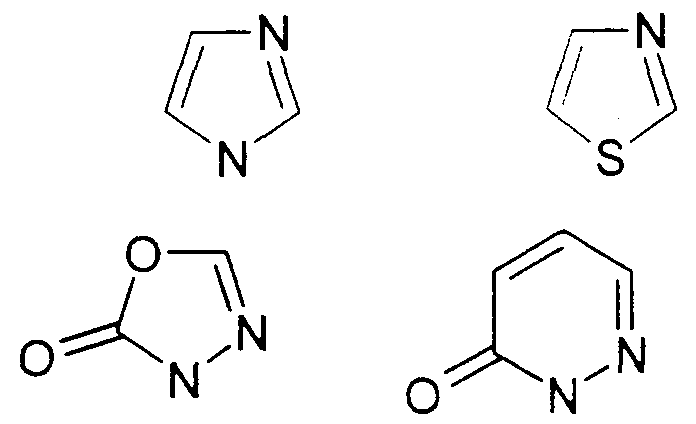
- R 3 more particularly represents a carbocyclic group such as a phenyl, naphthyl group or a heterocyclic group such as a pyrrolyl, pyridyl, pyrimidinyl, pyridazinyl, pyrazinyl group, 1, 3-thiazolyle, 1, 3.4-thiadiazolyle or thienyl.
- the aromatic cycle can also be substituted.
- the number of substituents is generally at most 4 per cycle but most often equal to 1 or 2. We can refer to the definition of R for examples of substituents.
- Preferred substituents are alkyl or alkoxy groups having 1 to 4 carbon atoms, an amino group, a nitro group, a cyano group, a halogen atom or a trifluoromethyl group.
- , Q 2 identical or different, they represent more particularly a hydrogen atom or an acyclic aliphatic group, linear or branched, having from 1 to 20 carbon atoms, saturated or comprising one or more unsaturations on the chain, preferably 1 with 3 unsaturations which are preferably single or conjugated double bonds.
- Q 2 can take the meanings given for R 3 and in particular any ring can also carry a substituent as described above
- R 3 preferably represents a phenyl group
- arylboronic acids such as anhydrides and esters and more particularly alkyl esters having from 1 to 4 carbon atoms
- arylboronic acids there may be mentioned in particular benzeneboronic acid, 2-th ⁇ opheneboronic acid, l 3- thiopheneboronic acid, 4-methylbenzeneboron ⁇ que acid, 3- methylth ⁇ ophene-2-boron ⁇ que acid, 3-am ⁇ nobenzèneboron ⁇ que acid, 3-am ⁇ nobenzèneboron ⁇ que hemisulfate acid, 3-fluorobenzeneboron ⁇ que acid, 4 acid -fluorobenzeneboron ⁇ que, 2-formylbenzeneboron ⁇ que acid, 3- formylbenzeneboromque acid, 4-formylbenzeneboron ⁇ que, 2-formylbenzeneboron ⁇ que acid
- a palladium catalyst used in the process of the invention, a palladium catalyst
- the palladium may be provided in the form of a finely divided metal or in the form of an inorganic derivative such as an oxide or hydroxide
- a mineral salt preferably, nitrate, sulfate oxysulfate, halide, oxyhalide, silicate, carbonate, or to an organic derivative preferably, cyanide, oxalate, acetylacetonate, alcoholate and even more preferably methylate or ethylate, carboxylate and even more preferably acetate
- compounds capable of being used for the preparation of the catalysts of the invention there may be mentioned in particular:
- the catalyst is a palladium compound
- it can be introduced in solid form or in aqueous solution.
- the palladium chloride which is preferably chosen, can be introduced in solid form or in solution in an aqueous solution of hydrochloric acid, (for example at 5 or 10%).
- the compound in solution can be deposited on a support.
- Palladium in metallic form can also be deposited on a support.
- the support is chosen so that it is inert under the reaction conditions.
- an inorganic or organic support such as in particular carbon, activated carbon, acetylene black, silica, alumina, clays and more particularly, montmorillonite or equivalent materials.
- organic polymers for example polyvinyl polymers PVC (polyvinyl chloride), PVDC (polychloride vinyene) or polystyrenics which can be functionalized with nitrin functions or polyacrylic (and in particular polyacrylonitrile)
- the metal is deposited at a rate of 0.5% to 10%, preferably from 1% to 5% of the weight of the catalyst.
- the preferred catalyst is palladium chloride, palladium acetate or palladium deposited on carbon
- the catalyst can be used in the form of a powder, pellets or else granules
- alkali metal hydroxides preferably sodium or potassium, alkaline earth metal hydroxides, preferably calcium, or ammonium hydroxide
- alkali metal carbonates or hydrogen carbonates preferably sodium or potassium carbonate
- metal phosphates preferably sodium or potassium phosphate
- an amine preferably a secondary or tertiary amine
- Mention may in particular be made of dusopropylamine, pyrrolidine , morpholine, t ⁇ ethylamine, t ⁇ ethanolamine, dusopropylamine
- the aminoaromatic compound, arylboronic acid is advantageously reacted in an aqueous medium and in the presence of a palladium catalyst and a base
- the amount of reagents used is such that the arylboronic acid / aromatic compound molar ratio is advantageously greater than or equal to 1 and preferably varies between 1 and 1, 2
- the amount of catalyst employed expressed as the mole ratio of the metal to the arylboronic acid varies between 5 ⁇ 10 "7 and 0.2
- the amount of base used expressed by the ratio between the number of moles of OH ⁇ and the number of moles of arylboronic acid is preferably chosen between 2 and 4 and more preferably around 2
- the amount of water added is such that the medium is capable of being agitated. It is advantageously between 10 and 200% of the weight of the reaction medium.
- the water is generally supplied by the base.
- the reaction temperature is advantageously between ambient temperature. (most often between 15 and 25 ° C) and 130 ° C, and preferably between 50 ° C and 100 ° C Generally, the reaction is carried out under autogenous pressure of the reactants.
- the process of the invention is carried out under a controlled atmosphere of inert gases.
- a controlled atmosphere of inert gases One can establish an atmosphere of rare gases, preferably argon, but it is more economical to use nitrogen.
- the method is simple to implement. All the reagents are loaded and heated for the time necessary for the reaction to be complete.
- the polycyclic aromatic compound is recovered in a conventional manner, for example by extraction using an organic solvent, and mention may be made of ethers-oxides, preferably isopropyl ether; aliphatic or aromatic hydrocarbons, halogenated or not, preferably toluene.
- a polyaromatic compound is obtained which can be represented by formula (IV):
- the invention applies more particularly to the preparation of 4-phenyl-3-methylaniline.
- a yield is defined corresponding to the ratio between the number of moles of product formed and the number of moles of substrate transformed.
- reaction is terminated after 1 h 30 min.
- Isopropyl ether (100 ml) extraction is carried out.
- a rapid decantation is carried out.
- the organic phase is washed with 2 times 30 ml of water. Drying is carried out on magnesium sulfate and then concentration is carried out by evaporation.
- reaction is finished after 3 h.
- Isopropyl ether (200 ml) extraction is carried out.
- a rapid decantation is carried out.
- the organic phase is washed with twice 60 ml of water.
- Drying is carried out on magnesium sulfate and then concentration is carried out by evaporation.
Landscapes
- Chemical & Material Sciences (AREA)
- Organic Chemistry (AREA)
- Chemical Kinetics & Catalysis (AREA)
- Organic Low-Molecular-Weight Compounds And Preparation Thereof (AREA)
- Pyridine Compounds (AREA)
- Low-Molecular Organic Synthesis Reactions Using Catalysts (AREA)
- Macromolecular Compounds Obtained By Forming Nitrogen-Containing Linkages In General (AREA)
Abstract
Description




Claims


Priority Applications (5)
| Application Number | Priority Date | Filing Date | Title |
|---|---|---|---|
| CA002392838A CA2392838A1 (fr) | 1999-11-26 | 2000-11-24 | Procede de preparation d'un compose polyaromatique |
| AU21778/01A AU2177801A (en) | 1999-11-26 | 2000-11-24 | Method for preparing a polyaromatic compound |
| US10/130,656 US6800784B1 (en) | 1999-11-26 | 2000-11-24 | Process for preparing a polyaromatic compound |
| JP2001539848A JP2003514887A (ja) | 1999-11-26 | 2000-11-24 | ポリ芳香族化合物を調製するための方法 |
| EP00985322A EP1232140A2 (fr) | 1999-11-26 | 2000-11-24 | Procede de preparation d'un compose polyaromatique |
Applications Claiming Priority (2)
| Application Number | Priority Date | Filing Date | Title |
|---|---|---|---|
| FR99/14912 | 1999-11-26 | ||
| FR9914912A FR2801584B1 (fr) | 1999-11-26 | 1999-11-26 | Procede de preparation d'un compose polyaromatique |
Publications (2)
| Publication Number | Publication Date |
|---|---|
| WO2001038291A2 true WO2001038291A2 (fr) | 2001-05-31 |
| WO2001038291A3 WO2001038291A3 (fr) | 2001-12-27 |
Family
ID=9552580
Family Applications (1)
| Application Number | Title | Priority Date | Filing Date |
|---|---|---|---|
| PCT/FR2000/003289 Ceased WO2001038291A2 (fr) | 1999-11-26 | 2000-11-24 | Procede de preparation d'un compose polyaromatique |
Country Status (7)
| Country | Link |
|---|---|
| US (1) | US6800784B1 (fr) |
| EP (1) | EP1232140A2 (fr) |
| JP (1) | JP2003514887A (fr) |
| AU (1) | AU2177801A (fr) |
| CA (1) | CA2392838A1 (fr) |
| FR (1) | FR2801584B1 (fr) |
| WO (1) | WO2001038291A2 (fr) |
Cited By (1)
| Publication number | Priority date | Publication date | Assignee | Title |
|---|---|---|---|---|
| EP1233009A3 (fr) * | 2001-02-16 | 2004-01-21 | Clariant GmbH | Procédé de fabrication de 2-alkylbiphényls et 2-alcoxybiphényls substitués |
Families Citing this family (4)
| Publication number | Priority date | Publication date | Assignee | Title |
|---|---|---|---|---|
| US20030220646A1 (en) * | 2002-05-23 | 2003-11-27 | Thelen Sarah L. | Method and apparatus for reducing femoral fractures |
| US7465795B2 (en) * | 2005-12-20 | 2008-12-16 | Astrazeneca Ab | Compounds and uses thereof |
| US7425556B2 (en) * | 2005-12-20 | 2008-09-16 | Astrazeneca Ab | Compounds and uses thereof |
| AR067028A1 (es) * | 2007-06-19 | 2009-09-30 | Astrazeneca Ab | Compuestos y usos de los mismos 849 |
-
1999
- 1999-11-26 FR FR9914912A patent/FR2801584B1/fr not_active Expired - Fee Related
-
2000
- 2000-11-24 EP EP00985322A patent/EP1232140A2/fr not_active Withdrawn
- 2000-11-24 AU AU21778/01A patent/AU2177801A/en not_active Abandoned
- 2000-11-24 JP JP2001539848A patent/JP2003514887A/ja not_active Withdrawn
- 2000-11-24 CA CA002392838A patent/CA2392838A1/fr not_active Abandoned
- 2000-11-24 US US10/130,656 patent/US6800784B1/en not_active Expired - Fee Related
- 2000-11-24 WO PCT/FR2000/003289 patent/WO2001038291A2/fr not_active Ceased
Non-Patent Citations (2)
| Title |
|---|
| W.J. THOMSON ET AL.: "An efficient synthesis of arylpyrazines in bipyridines" JOURNAL OF ORGANIC CHEMISTRY, vol. 53, 1988, pages 2052-2055, XP002143541 EASTON US * |
| YOZO MIURA AT AL. : "A convenient and efficient synthesis of polyphenylmona-, -di-, and -triaminobenzenes" SYNTHESIS, 1995, pages 1419-1322, XP002170142 STUTTGART DE * |
Cited By (1)
| Publication number | Priority date | Publication date | Assignee | Title |
|---|---|---|---|---|
| EP1233009A3 (fr) * | 2001-02-16 | 2004-01-21 | Clariant GmbH | Procédé de fabrication de 2-alkylbiphényls et 2-alcoxybiphényls substitués |
Also Published As
| Publication number | Publication date |
|---|---|
| AU2177801A (en) | 2001-06-04 |
| FR2801584B1 (fr) | 2003-05-30 |
| FR2801584A1 (fr) | 2001-06-01 |
| EP1232140A2 (fr) | 2002-08-21 |
| WO2001038291A3 (fr) | 2001-12-27 |
| JP2003514887A (ja) | 2003-04-22 |
| CA2392838A1 (fr) | 2001-05-31 |
| US6800784B1 (en) | 2004-10-05 |
Similar Documents
| Publication | Publication Date | Title |
|---|---|---|
| CN113348163B (zh) | 方法和化合物 | |
| JP5266499B2 (ja) | 炭素−ヘテロ原子間及び炭素−炭素間結合の銅を触媒とした形成 | |
| Yoshida et al. | Oxidative carboxylation of arylaldehydes with water by a sulfoxylalkyl-substituted N-heterocyclic carbene catalyst | |
| FR2840303A1 (fr) | Procede d'arylation ou de vinylation ou d'alcylynation d'un compose nucleophile | |
| Abid et al. | Synthesis of trifluoromethyl-imines by solid acid/superacid catalyzed microwave assisted approach | |
| EP1713750A1 (fr) | Procédé de preparation d'un compose fluoroaromatique a partir d'un compose aminoaromatique | |
| U Tekale et al. | Application progress of recent advances in some copper catalyzed coupling reactions | |
| JP2006501159A (ja) | 炭素−炭素結合又は炭素−ヘテロ原子結合の形成方法 | |
| EP1232140A2 (fr) | Procede de preparation d'un compose polyaromatique | |
| EP1456151A1 (fr) | Procede de formation d'une liaison carbone-carbone ou carbone-heteroatome. | |
| US20070244336A1 (en) | Process for the Synthesis of Terbinafine and Derivatives Thereof | |
| WO2005095307A1 (fr) | Procede de formation d'une liaison carbone-carbone comprenant une reaction d’un arenediazoether | |
| WO2001058834A1 (fr) | Procede de preparation d'un compose polyaromatique | |
| EP2726515B1 (fr) | Reactif organostannique alcoxyle supporte, preparation et utilisation pour la synthese de tetrazoles en phase heterogene | |
| WO2002006187A1 (fr) | Procede de preparation d'un compose polyaromatique | |
| CN1442403A (zh) | 手性氨基醇配体及其在端炔对亚氨的不对称加成中的应用 | |
| FR2801884A1 (fr) | Procede de preparation d'un compose polyaromatique | |
| EP1663914A2 (fr) | Procede de formation d une liaison carbone-carbone ou carbon e-heteroatome. | |
| EP0931059B1 (fr) | Procede pour la preparation d'un cyanobiphenyle | |
| US20190185428A1 (en) | Method for producing chiral aminonitriles | |
| JP3511699B2 (ja) | ニトロアニリン誘導体の製造方法 | |
| Kurandina et al. | Effect of the structural factors on reactivity of aryl halides in the copper-catalyzed arylation of aniline in aqueous medium | |
| JP3569428B2 (ja) | ホモアリルアミン類の製造方法 | |
| EP1590331A1 (fr) | Procede de preparation d un reactif de type acylimidazolium | |
| EP2536682A1 (fr) | Procede de preparation de composes chimiques d'interet par substitution nucleophile aromatique de derives d'acides carboxyliques aromatiques portant au moins un groupement electroattracteur |
Legal Events
| Date | Code | Title | Description |
|---|---|---|---|
| AK | Designated states |
Kind code of ref document: A2 Designated state(s): AE AG AL AM AT AU AZ BA BB BG BR BY BZ CA CH CN CR CU CZ DE DK DM DZ EE ES FI GB GD GE GH GM HR HU ID IL IN IS JP KE KG KP KR KZ LC LK LR LS LT LU LV MA MD MG MK MN MW MX MZ NO NZ PL PT RO RU SD SE SG SI SK SL TJ TM TR TT TZ UA UG US UZ VN YU ZA ZW |
|
| AL | Designated countries for regional patents |
Kind code of ref document: A2 Designated state(s): GH GM KE LS MW MZ SD SL SZ TZ UG ZW AM AZ BY KG KZ MD RU TJ TM AT BE CH CY DE DK ES FI FR GB GR IE IT LU MC NL PT SE TR BF BJ CF CG CI CM GA GN GW ML MR NE SN TD TG |
|
| 121 | Ep: the epo has been informed by wipo that ep was designated in this application | ||
| DFPE | Request for preliminary examination filed prior to expiration of 19th month from priority date (pct application filed before 20040101) | ||
| AK | Designated states |
Kind code of ref document: A3 Designated state(s): AE AG AL AM AT AU AZ BA BB BG BR BY BZ CA CH CN CR CU CZ DE DK DM DZ EE ES FI GB GD GE GH GM HR HU ID IL IN IS JP KE KG KP KR KZ LC LK LR LS LT LU LV MA MD MG MK MN MW MX MZ NO NZ PL PT RO RU SD SE SG SI SK SL TJ TM TR TT TZ UA UG US UZ VN YU ZA ZW |
|
| AL | Designated countries for regional patents |
Kind code of ref document: A3 Designated state(s): GH GM KE LS MW MZ SD SL SZ TZ UG ZW AM AZ BY KG KZ MD RU TJ TM AT BE CH CY DE DK ES FI FR GB GR IE IT LU MC NL PT SE TR BF BJ CF CG CI CM GA GN GW ML MR NE SN TD TG |
|
| WWE | Wipo information: entry into national phase |
Ref document number: 2000985322 Country of ref document: EP |
|
| ENP | Entry into the national phase |
Ref country code: JP Ref document number: 2001 539848 Kind code of ref document: A Format of ref document f/p: F |
|
| WWE | Wipo information: entry into national phase |
Ref document number: 2392838 Country of ref document: CA |
|
| WWP | Wipo information: published in national office |
Ref document number: 2000985322 Country of ref document: EP |
|
| WWE | Wipo information: entry into national phase |
Ref document number: 10130656 Country of ref document: US |
|
| REG | Reference to national code |
Ref country code: DE Ref legal event code: 8642 |
|
| WWW | Wipo information: withdrawn in national office |
Ref document number: 2000985322 Country of ref document: EP |