WO2003009689A1 - Methods and compositions for treating fungal infections - Google Patents
Methods and compositions for treating fungal infections Download PDFInfo
- Publication number
- WO2003009689A1 WO2003009689A1 PCT/US2002/023252 US0223252W WO03009689A1 WO 2003009689 A1 WO2003009689 A1 WO 2003009689A1 US 0223252 W US0223252 W US 0223252W WO 03009689 A1 WO03009689 A1 WO 03009689A1
- Authority
- WO
- WIPO (PCT)
- Prior art keywords
- acid
- cbr
- substituted
- cooh
- compounds
- Prior art date
- Legal status (The legal status is an assumption and is not a legal conclusion. Google has not performed a legal analysis and makes no representation as to the accuracy of the status listed.)
- Ceased
Links
Classifications
-
- A—HUMAN NECESSITIES
- A61—MEDICAL OR VETERINARY SCIENCE; HYGIENE
- A61K—PREPARATIONS FOR MEDICAL, DENTAL OR TOILETRY PURPOSES
- A61K31/00—Medicinal preparations containing organic active ingredients
- A61K31/69—Boron compounds
-
- A—HUMAN NECESSITIES
- A01—AGRICULTURE; FORESTRY; ANIMAL HUSBANDRY; HUNTING; TRAPPING; FISHING
- A01N—PRESERVATION OF BODIES OF HUMANS OR ANIMALS OR PLANTS OR PARTS THEREOF; BIOCIDES, e.g. AS DISINFECTANTS, AS PESTICIDES OR AS HERBICIDES; PEST REPELLANTS OR ATTRACTANTS; PLANT GROWTH REGULATORS
- A01N55/00—Biocides, pest repellants or attractants, or plant growth regulators, containing organic compounds containing elements other than carbon, hydrogen, halogen, oxygen, nitrogen and sulfur
-
- A—HUMAN NECESSITIES
- A01—AGRICULTURE; FORESTRY; ANIMAL HUSBANDRY; HUNTING; TRAPPING; FISHING
- A01N—PRESERVATION OF BODIES OF HUMANS OR ANIMALS OR PLANTS OR PARTS THEREOF; BIOCIDES, e.g. AS DISINFECTANTS, AS PESTICIDES OR AS HERBICIDES; PEST REPELLANTS OR ATTRACTANTS; PLANT GROWTH REGULATORS
- A01N55/00—Biocides, pest repellants or attractants, or plant growth regulators, containing organic compounds containing elements other than carbon, hydrogen, halogen, oxygen, nitrogen and sulfur
- A01N55/08—Biocides, pest repellants or attractants, or plant growth regulators, containing organic compounds containing elements other than carbon, hydrogen, halogen, oxygen, nitrogen and sulfur containing boron
-
- A—HUMAN NECESSITIES
- A61—MEDICAL OR VETERINARY SCIENCE; HYGIENE
- A61P—SPECIFIC THERAPEUTIC ACTIVITY OF CHEMICAL COMPOUNDS OR MEDICINAL PREPARATIONS
- A61P17/00—Drugs for dermatological disorders
-
- A—HUMAN NECESSITIES
- A61—MEDICAL OR VETERINARY SCIENCE; HYGIENE
- A61P—SPECIFIC THERAPEUTIC ACTIVITY OF CHEMICAL COMPOUNDS OR MEDICINAL PREPARATIONS
- A61P31/00—Antiinfectives, i.e. antibiotics, antiseptics, chemotherapeutics
- A61P31/10—Antimycotics
Definitions
- the present invention relates to methods and compositions for treating fungal infections, and more particularly, dermatophytoses or onchomycosis of the fingernail and the toenail, as well as fungal infections in plants .
- Onychomycosis has traditionally referred to a non- dermatophytic infection of the nail. Onychomycosis is now used as a general term to denote any fungal nail infection. Tinea unguium specifically describes a dermatophytic invasion of the nail plate. Despite the clearly diseased appearance associated with this condition, onychomycosis is all too often regarded as merely a cosmetic problem of relatively minor importance that is hardly worth treating. This belief may have been fostered by the adverse effects and long courses of medication associated with some of the earlier antifungal agents .
- onychomycosis can have significant negative effects on patients' emotional, social, and occupational functioning. Affected patients may be embarrassed in social and work situations, where they may feel unclean, and are unwilling to permit their hands and feet to be seen. Patients may fear that they will transmit their infection to family members, friends, or coworkers, fears that can lead to diminished self-esteem and avoidance of close relationships. Some patients experience discomfort that prevents them from carrying out tasks such as prolonged standing, writing, or typing.
- the dermatophyte species that most often causes onychomycosis in North America and parts of Europe are T. rubrum, T. metagrophytes , and Epidermophyton fl occos ⁇ m. The first two are much more often implicated than E. floccosum. Both dermatophytes and non-dermatophytes, especially Candida Sp . , have been identified as etiologic agents of onychomycosis .
- Botrytis bunch rot has long been a problem in vineyards. High nitrogen fertilization predisposed grapevines to infection by Botri tis cinerea and increased disease severity.
- Vinchlozoline, Chlorothalonil, and Dichlofluanide were effective in completely terminating conidia. Iprodione and Procymedone were apparently confronted with the problem of fungal resistance.
- Folpel, copper and 'chlorothalonil were not able to control mycelial growth as effectively as conidial germination.
- the main groups of Fusarium toxins commonly recognized in grains are trichothecenes : including T-2 toxin (T2) , diacetoxyscirpenol, deoxynivalenol, fusarenone X, and nivalenol; zearalenones, primarily zaearalenone; and fumonisins, in particular fumonisin Bi . Additionally, moniliformin, beauvericine, and fusaproliferin were also found in Fusari um infected cereal ears.
- phenyl boronic acid and derivatives thereof as well as related boronic acid compounds have fungicidal properties, and that these compounds are particularly useful in treating fungal infections. These compounds have been found to be particularly useful in treating nail fungal infections.
- phenyl boronic acid and derivatives thereof have inhibitory activity toward proteases and lactamases, and it has been reported that it is a substrate for cytochrome p.450. ⁇ cf. Koehler et al., (1971); Koehler et (1974); Lindquist et al . , (1974); and Matthews et al., (1975) ) .
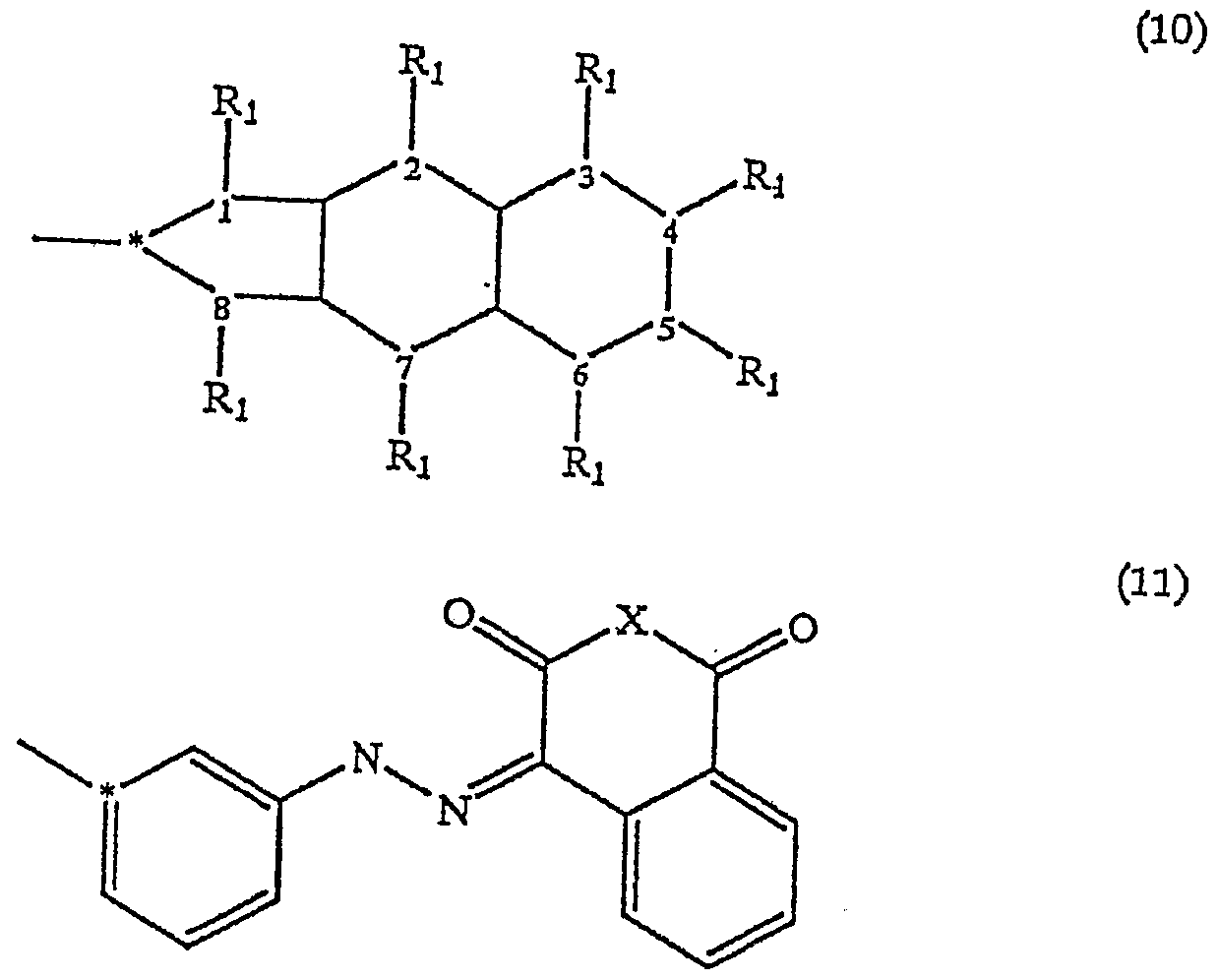
- R is substituted or unsubstituted phenyl, naphthalene, phenanthrene, or has one of the following formulas:
- ring system (2), (3), (4), (5), (6), (7), (8), (9), (10) , (13) or (14) is aromatic or nonaromatic;
- the atom center * is (R) or (S) in the case of chiral compounds; positions 1, 2, 3, 4, 5, 6, 7 and 8 each independently is C, N, 0 or S;
- Ri through R s each independently is a lone pair, H, B(OH) 2 , a halogen atom, CF 3 , CH 2 CF 3 , CC1 3 , CH 2 CC1 3 , CBr 3 , CH 2 CBr 3 , N0 2 , lower alkyl, C0 2 H, CHCHCOOH, CH 2 CH 2 CH 2 COOH, S0 3 H, P0 3 H, OS0 3 H, OP0 3 H, OH, NH 2 , C0NH 2 , COCH 3 , OCH 3 , or phenyl boronic acid.
- R 7 is H, CF 3 , CC1 3 , CBr 3 , CH 2 CF 3 , CH 2 CC1 3 , CH 2 CBr 3 , N0 2 , COCH 3 , OCH 3 , lower alkyl, cyclic alkene, cyclic alkene substituted with one or more substituents R 8 , heterocyclic alkene, or heterocyclic alkene substituted with one or more substituent R 8 ; each R 8 is independently H, B(OH) 2 , a halogen atom, CF 3 , CCL 3 , CBr 3 , CH 2 CF 3 , CH 2 CCl 3 , CH 2 CBr 3 , N0 2 , lower alkyl, OH, NH 2 , N(CH 3 ) 2 , N(CH 3 )CH 2 CH 3 , NHCOCH 3 , COOH, CHCHCOOH, CH 2 CH 2 CH 2 COOH, COCH 3 , OCH 3 , pheny
- X is 0, NH, NCH 3 or
- Y is OH, NH 2 , NCH 3 , N(C ⁇ 3 ) 2 , NHCOCH 3 or NHCOCH 2 COOH;
- R 9 is H, a halogen atom, CH 3 , CC1 3 , CBr 3 , CH 2 CF 3 , CH 2 CC1 3 , CH 2 CBr 3 , N0 2 , C0 2 H, CHCHCOOH, CH 2 CH 2 CH 2 COOH, S0 3 H, P0 3 H, 0S0 3 H, OP0 3 H, OH, NH 2 , CONH 2 , COCH 3 , OCH 3 , phenyl boronic acid, lower alkyl, or a side chain of a standard amino acid; and
- a Alone pair@ refers to an unshared pair of electrons (not involved in an actual covalent chemical bond to another atom) that may have important interactions in receptor-ligand (e.g., enzyme-inhibitor) complexes.
- AAlkyl ⁇ means a straight-chain or branched-chain alkyl containing 1-25 carbon atoms.
- ALower alkyl@ means a straight-chain or branched-chain alkyl containing 1-4 carbon atoms. Both of these terms include the R and S isomers.
- ACyclic alkene ⁇ means a structure containing from 1 to 3 rings, each ring containing from 5 to 6 carbon atoms and at least one double bond. One, two, or all three of the rings may be aromatic.
- AHeterocyclic alkene@ means a cyclic alkene as defined above wherein at least one of the ring(s) contains one or more atoms of S, N, or 0.
- the Astandard amino acids ⁇ are alanine, arginine, asparagine, aspartic acid, cysteine, glutamic acid, glutamine, glycine, histidine, homoserine, hydroxyproline, isoleucine, leucine, lysine, methionine, norleucine, norvaline, ornithine, glutamic acid, serine, threonine, tryptophan, tyrosine, and valine. Both the D and L isomers can be used.
- the side chains of these amino acids are well known and are the portions of the amino acids attached to the NH 2 -CH 2 -COOH backbone. For instance, the side chain of alanine is CH 3 , and the side chain or asparagine is CH 2 CONH 2 . [0027]
- the most useful of these compounds for topical antifungal activity are those which are the most water soluble .
- Phenyl boronic acid is a commercially available synthetic organic compound which has previously been used for complex formation with diols, sugars, and nucleotides (Singhal et al., Advances on Chromatography 31:293-335, Marcel Dekker, NY, 1990) or as a synthetic reagent for Suzuki ether synthesis (Theil, Angew. Chem, . Int . Ed. 38:2345-2347 1999). Phenyl boronic acid has inhibitory activity towards a series of proteases and lactamases (Philipp et al; Proceedings of the Natl . Acad. Sci . USA,, 68: 1911 , (1976).
- Phenyl boronic acid is reasonably soluble in water as well as in several organic solvents. Many of its derivatives are also water soluble. Data on its toxicity are incomplete. PBA is considered harmful if swallowed (ORL-RAT LD 50 : 740 mg/kg) .
- Additional methods for synthesizing phenyl boronic acids according to the present invention are provided in Shoichet et al . , U.S. Patent No. 6,184,363, the entire contents of which are hereby incorporated.
- the water-soluble PBA or derivatives thereof are administered topically in the form of a buffered solution, lotion, or ointment.
- the compounds are effective over a wide pH range, although a pH of from about 6.0 to about 9.0 is preferred.
- the compositions are applied topically once daily until cure.
- the following table shows the fungicidal and inhibitory effect of PBA and three derivatives thereof, 3- nitro PBA, 3-amino PBA, and pentafluoro PBA at varying concentrations against a variety of bacteria and fungi. It should be noted that none of these compounds was either fungicidal or inhibitory against Saccharmoyces cerevisiae .
- the pharmacologically active compounds of this invention can be processed in accordance with conventional methods of pharmacy to produce medicinal agents for administration to patients, e.g., mammals including human beings.
- the compounds of formula (I) can be employed in admixtures with conventional excipients, e.g., pharmaceutically acceptable carrier substances suitable for topical application which do not deleteriously react with the active compounds.
- Suitable pharmaceutically acceptable carriers include but are not limited to water, salt solutions, alcohols, gum arable, vegetable oils (e.g., corn oil, cottonseed oil, peanut oil, olive oil, coconut oil) , fish liver oils, oily esters such as Polysorbate 80, polyethylene glycols, gelatine, carbohydrates (e.g., lactose, amylose or starch) , magnesium stearate, talc, silicic acid, viscous paraffin, fatty acid onoglycerides and diglycerides, pentaerythritol fatty acid esters, hydroxy methylcellulose, polyvinyl pyrrolidone, etc.
- vegetable oils e.g., corn oil, cottonseed oil, peanut oil, olive oil, coconut oil
- oily esters such as Polysorbate 80
- polyethylene glycols gelatine
- carbohydrates e.g., lactose, amylose or starch
- silicic acid e.g., stearate, tal
- the pharmaceutical preparations can be sterilized and, if desired, be mixed with auxiliary agents, e.g., lubricants, preservatives, stabilizers, wetting agents, emulsifiers, salts for influencing osmotic pressure, buffers, coloring, and/or one or more other active compounds, for example, other antifungal agents, etc.
- auxiliary agents e.g., lubricants, preservatives, stabilizers, wetting agents, emulsifiers, salts for influencing osmotic pressure, buffers, coloring, and/or one or more other active compounds, for example, other antifungal agents, etc.
- the compositions are applied topically.
- the compositions can be applied, formulated or unformulated, directly to the foliage of a plant, to seeds or to other medium in which plants are growing or are to be planted. They can be sprayed on, dusted on or applied as a cream or paste formulation; or they can be applied as a vapor or as controlled-release gran
- Application can be to any part of the plant including the foliage, stems, branches or roots, or to soil surrounding the roots, or to the seed before it is planted; or to the soil generally, or to hydroponic culture systems.
- the invention compounds may also be injected into plants or sprayed onto vegetation using electrodynamic spraying techniques or other low volume methods .
- plant as used herein includes seedlings, bushes and trees. Furthermore, the fungicidal method of the invention includes preventative, protectant, prophylactic and eradicant treatment.
- the compounds are preferably used for agricultural and horticultural purposes in the form of a composition.
- the type of composition used in any instance will depend upon the particular purpose envisaged.
- compositions may be in the form of dustable powders or granules comprising the active ingredient (invention compound) and a solid diluent or carrier, for example fillers such as kaolin, bentonite, kieselguhr, dolomite, calcium carbonate, talc, powdered magnesia, Fuller's earth, gypsum, diatomaceous earth and China clay.
- a solid diluent or carrier for example fillers such as kaolin, bentonite, kieselguhr, dolomite, calcium carbonate, talc, powdered magnesia, Fuller's earth, gypsum, diatomaceous earth and China clay.
- Such granules can be preformed granules suitable for application to the soil without further treatment.
- These granules can be made either by impregnating pellets of filler with the active ingredient or by pelleting a mixture of the active ingredient and powdered filler.
- compositions for dressing seed may include an agent (for example a mineral oil) for assisting the adhesion of the composition to the seed; alternatively the active ingredient can be formulated for seed dressing purposes using an organic solvent (for example N-methylpyrrolidone, propylene glycol or dimethylformamide) .
- the compositions may also be in the form of wettable powders or water dispersible granules comprising wetting or dispersing agents to facilitate their dispersion in liquids.
- the powders and granules may also contain fillers and suspending agents.
- Suspension concentrates of largely insoluble solids may be prepared by ball or bead milling with a dispersing agent and including a suspending agent to stop the solid settling.
- compositions to be used as sprays may be in the form of aerosols wherein the formulation is held in a container under pressure in the presence of a propellant, e.g., fluorotrichloromethane or dichlorodifluoromethane .
- a propellant e.g., fluorotrichloromethane or dichlorodifluoromethane .
- the invention compounds can be mixed in the dry state with a pyrotechnic mixture to form a composition suitable for generating in enclosed spaces a smoke containing the compounds. Alternatively, the compounds may be used in a microencapsulated form.
- compositions may also be formulated in biodegradable polymeric formulations to obtain a slow, controlled release of the active substance.
- suitable additives for example additives for improving the distribution, adhesive power and resistance to rain on treated surfaces, the different compositions can be better adapted for various utilities.
- the dosage administered depends upon the age, health, and weight of the recipient, nature of concurrent treatment, if any, and the nature of the effect desired.
- compositions within the scope of the present invention include all compositions wherein the active ingredient is contained in an amount effective to achieve its intended purpose. While individual needs vary, determination of optimal ranges of effective amounts of each compound is within the skill of the art.
- compositions for administering the active ingredients of the present invention preferably contain, in addition to the pharmacologically active compound, suitable pharmaceutically acceptable carriers comprising excipients and auxiliaries which facilitate processing of the active compounds into preparations which can be used pharmaceutically.
- suitable pharmaceutically acceptable carriers comprising excipients and auxiliaries which facilitate processing of the active compounds into preparations which can be used pharmaceutically.
- the preparations contain from about 0.01 to about 99 percent by weight, preferably from about 20 to 75 percent by weight, active compound(s), together with the excipients.
- all percentages are by weight unless otherwise indicated.
- the compounds of the present invention can be formulated as inclusion complexes, such as cyclodextrin inclusion complexes.
- the pharmaceutically acceptable carriers include vehicles, adjuvants, excipients, or diluents that are well known to those skilled in the art and which are readily available. It is preferred that the pharmaceutically acceptable carrier be one which is chemically inert to the active compounds and which has no detrimental side effects or toxicity under the conditions of use.
- compositions of the present invention are prepared for topical or mucosal administration.
- any number of assays well known in the art may be used to test whether a particular compound suspected of being a fungicide, can be used. These assays are conventional and can be readily adapted to the compounds of the present invention by one skilled in the art without undue experimentation. Examples of assays for fungicidal activity on plants can be found in Wagner et al . , U.S. Patent No. 6,262,091, and Schelberger et al . , U.S. Patent No. 6,258,801, the entire contents of which are hereby incorporated by reference. Examples of assays for fungicidal activity on skin infections can be found in Coury et al . , U.S. Patent No. 6,261,544, the entire contents of which are hereby incorporated by reference.
- the dosage and frequency of administration is selected in relation to the pharmacological properties of the specific active ingredients. Normally, at least three dosage levels should be used. In toxicity studies in general, the highest dose should reach a toxic level but be sublethal for most animals in the group. If possible, the lowest dose should induce a biologically demonstrable effect.
- the dose-response relationship when different doses are given, or when several types of conjugates or combinations of conjugates and free compounds are given, should be studied in order to elucidate the dose-response relationship, the therapeutic range, and the optimum dose interval .
- the compounds of the present invention are then ready for clinical trials to compare the efficacy of the compounds to existing therapy.
- a dose-response relationship to therapeutic effect and for side effects can be more finely established at this point.
- compositions for use as aqueous dispersions or emulsions are generally supplied in the form of a concentrate containing a high proportion of the active ingredient, the concentrate being diluted with water before use.
- concentrates should preferably be able to withstand storage for prolonged periods and after such storage be capable of dilution with water in order to form aqueous preparations which remain homogeneous for a sufficient time to enable them to be applied by conventional spray equipment .
- the concentrates may conveniently contain up to 95% , typically 10-85% , and preferably 25-60%, by weight of the active ingredient .
- After dilution to form aqueous preparations such preparations may contain varying amounts of the active ingredient depending upon the intended purpose, but an aqueous preparation containing 0. 0005% or 0 . 01% to 10% by weight of active ingredient may be used .
- compositions of this invention may contain other compounds having biological activity, e . g . , compounds having similar or complementary fungicidal activity or which possess plant growth regulating, herbicidal or insecticidal activity, or which can be used in treating skin or nails , including Magnoliaturizers, skin softeners, etc .
- the other fungicide can have a synergistic effect on the fungicidal activity of the compound of the invention .
- fungicidal compounds which may be included in the composition of the invention are carbendazim, benomyl , thiophanate-methyl , thiabendazole, fuberidazole , etridazole, dichlof luanid, cymoxanil , oxadixyl , ofurace , metalaxyl , furalaxyl,
- phenyl boronic acid includes, for example, compounds having the following formula:
- Ri , R 2 , R 3 , R , and R 5 are individually selected from the group consisting of hydrogen, fluoro , chloro, bromo, nitro, amino, methanesulfonyl, methoxycarbonyl , substituted or unsubstituted lower alkyl (C ⁇ -C 6 carbon atoms ) , substituted or unsubstituted lower alkoxy (C ⁇ -C 6 carbon atoms ) , substituted or unsubstituted aryl (C 6 -C ⁇ 2 carbon atoms ) , substituted or unsubstituted aryloxy (C 6 -C ⁇ 2 carbon atoms ) , cyano, or cycloalkyl .
- Nonlimiting examples of phenyl boronic acids that can be used in the present invention include 2 , 6- dichlorophenylboronic acid, 2- ( 4-dihydroxyborane) phenyl carboxylquinoline , 4- (methanesulfonyl) phenyl boronic acid; 4- methoxycarbonylphenyl boronic acid, 4-phenoxyphenylboronic acid, 3-acetylphenylboronic acid; benzothiophene-2-boronic acid, biphenyl-3-boronic acid, 2 , 4 , bis (benzyloxy) pyrimidine- 5-boronic acid, 1 , 5, bis (hexyl ) 1 , 4-benzenebis (boronic acid) , 4-bromomethylphenylboronic acid, 4-bromophenylboronic acid, 4- bromophenylboronic acid, 1- (t-butoxycarbonyl ) pyrrole-2-boronic acid, 3-carboxyphenylboronic acids
- (methanesulfonyl) phenylboronic acid 4-methylthiophene-2- boronic acid, 5-methylthiophene-2-boronic acid, naphthalene-1- boronic acid, naphthalene-2-boronic acid 97+%, phenoxathiin-4- boronic acid, 4-phenoxyphenylboronic acid, phenylboronic acid, pyridine-3-boronic acid, 8-quinoline boronic acid, thianthrene-1-boronic acid, 4-thioanisoleboronic acid, thiophene-2-boronic acid, thiophene-3-boronic acid, 2- tolylboronic acid 97%, 3-tolylboronic acid, 4-tolylboronic acid 97%, 2, 4, 6-trichlorophenylboronic acid, 2- trifluoromethylphenylboronic acid, 3- trifluoromethylphenylboronic acid, 4- trifluoromethylphenylboronic acid, 4- trifluoromethylphenyl
- the phenylboronic acid derivative or related compound will be dispersed in a cosmetic or therapeutic vehicle.
- topical cosmetic compositions include an effective amount of the active compound and a cosmetic agent in a cosmetically acceptable vehicle.
- the requisite amounts of PBA compound will depend on the type of application, the duration desired for the effect, and on any compensation required ' for penetration into the upper layers of the skin, or the degree of abrasion and shedding of the skin.
- the PBA compound will be present in the overall formulation in amounts ranging rom about 0.1% to about 100% by weight, depending upon the use of the formulation.
- a pharmaceutically or cosmetically acceptable vehicle can include a powder, lotion, gel, spray, stick, cream, ointment, liquid, emulsion, foam or aerosol.
- the active PBA compound can be incorporated into a liquid in dissolved form or colloidal form.
- the liquid can be a solvent, partial solvent, or non-solvent. Since the active PBA compounds are water-soluble, water is a preferred solvent.
- the PBA compound can be applied as a powder. It can be applied as a dry powder to moist skin or mails, or as a premoistened powder to dry skin or nails. Preferably, the resultant paste or solution is allowed to dry to form an essentially invisible skin or nail coating.
- the compositions can include any solid, semi-solid or liquid cosmetically and/or pharmaceutically acceptable vehicle to enable the active ingredient to be conveyed to the affected skin or nail area at an appropriate dilution. The nature of the vehicle will depend upon the method chosen for topical administration of the composition. The vehicle itself can be inert, or it can possess physiological or pharmaceutical benefits of its own. The selection of a vehicle depends on the required product form of the composition.
- Examples of cosmetic agents include emollients, humectants, colorants, pigments, fragrances, moisturizers, viscosity modifiers, and any other conventional cosmetic forming agent.
- One or more cosmetic agents can be included in the cosmetic composition.
- the form of the cosmetic composition can be a powder, lotion, gel, spray, stick, cream, ointment, liquid, emulsion, foam or aerosol. Lists of such materials, and formulations for the creation of particular types of lotions, creams, sunscreens, lipsticks, and other such forms are widely available in the patent literature and in commercial handbooks, and can be used by those skilled in the preparation of such formations to incorporate the active ingredient .
Landscapes
- Life Sciences & Earth Sciences (AREA)
- Health & Medical Sciences (AREA)
- General Health & Medical Sciences (AREA)
- Engineering & Computer Science (AREA)
- Zoology (AREA)
- Wood Science & Technology (AREA)
- Medicinal Chemistry (AREA)
- Environmental Sciences (AREA)
- Dentistry (AREA)
- Pharmacology & Pharmacy (AREA)
- Plant Pathology (AREA)
- Animal Behavior & Ethology (AREA)
- Chemical & Material Sciences (AREA)
- Public Health (AREA)
- Veterinary Medicine (AREA)
- Agronomy & Crop Science (AREA)
- Pest Control & Pesticides (AREA)
- Chemical Kinetics & Catalysis (AREA)
- Organic Chemistry (AREA)
- General Chemical & Material Sciences (AREA)
- Nuclear Medicine, Radiotherapy & Molecular Imaging (AREA)
- Epidemiology (AREA)
- Oncology (AREA)
- Communicable Diseases (AREA)
- Bioinformatics & Cheminformatics (AREA)
- Dermatology (AREA)
- Pharmaceuticals Containing Other Organic And Inorganic Compounds (AREA)
- Agricultural Chemicals And Associated Chemicals (AREA)
Abstract
Description


Claims




Priority Applications (5)
| Application Number | Priority Date | Filing Date | Title |
|---|---|---|---|
| JP2003515091A JP2004536135A (en) | 2001-07-23 | 2002-07-23 | Methods and compositions for treating fungal infections |
| US10/484,623 US7825104B2 (en) | 2001-07-23 | 2002-07-23 | Methods and compositions for treating fungal infections |
| EP02752507A EP1416799A4 (en) | 2001-07-23 | 2002-07-23 | METHODS AND COMPOSITIONS FOR TREATING FUNGAL INFECTIONS |
| IL16001002A IL160010A0 (en) | 2001-07-23 | 2002-07-23 | Methods and compositions for treating fungal infections |
| CA002454656A CA2454656A1 (en) | 2001-07-23 | 2002-07-23 | Methods and compositions for treating fungal infections |
Applications Claiming Priority (2)
| Application Number | Priority Date | Filing Date | Title |
|---|---|---|---|
| US30685701P | 2001-07-23 | 2001-07-23 | |
| US60/306,857 | 2001-07-23 |
Publications (1)
| Publication Number | Publication Date |
|---|---|
| WO2003009689A1 true WO2003009689A1 (en) | 2003-02-06 |
Family
ID=23187171
Family Applications (1)
| Application Number | Title | Priority Date | Filing Date |
|---|---|---|---|
| PCT/US2002/023252 Ceased WO2003009689A1 (en) | 2001-07-23 | 2002-07-23 | Methods and compositions for treating fungal infections |
Country Status (6)
| Country | Link |
|---|---|
| US (1) | US7825104B2 (en) |
| EP (1) | EP1416799A4 (en) |
| JP (1) | JP2004536135A (en) |
| CA (1) | CA2454656A1 (en) |
| IL (1) | IL160010A0 (en) |
| WO (1) | WO2003009689A1 (en) |
Cited By (5)
| Publication number | Priority date | Publication date | Assignee | Title |
|---|---|---|---|---|
| EP1418923A4 (en) * | 2001-08-24 | 2005-03-23 | Quorex Pharmaceuticals Inc | Anti-bacterial agents based upon oxoanion binding |
| US7800241B2 (en) | 2005-06-20 | 2010-09-21 | Infineon Technologies Ag | Semiconductor device with semiconductor device components embedded in a plastics composition |
| WO2012137166A1 (en) | 2011-04-07 | 2012-10-11 | Yissum Research Development Company Of The Hebrew University Of Jerusalem Ltd. | An oxoborolidine compound and uses thereof |
| WO2012137164A1 (en) | 2011-04-07 | 2012-10-11 | Biolinerx Ltd. | Antimicrobial compositions, antibiofilm compositions and uses thereof |
| US9549938B2 (en) | 2005-02-16 | 2017-01-24 | Anacor Pharmaceuticals, Inc. | Boron-containing small molecules |
Families Citing this family (15)
| Publication number | Priority date | Publication date | Assignee | Title |
|---|---|---|---|---|
| WO2005118551A2 (en) * | 2004-05-28 | 2005-12-15 | Ligand Pharmaceuticals Inc. | Thrombopoietin activity modulating compounds and methods |
| JP4728340B2 (en) * | 2004-10-25 | 2011-07-20 | リガンド・ファーマシューティカルズ・インコーポレイテッド | Compounds that modulate thrombopoietin activity and methods of modulation |
| EP2155705A4 (en) * | 2007-06-08 | 2012-02-15 | Univ Georgia State Res Found | Compositions for regulating or modulating quorum sensing in bacteria, methods of using the compounds, and methods of regulating or modulating quorum sensing in bacteria |
| CN101861325A (en) * | 2007-09-05 | 2010-10-13 | 阿尔伯塔大学理事会 | Process for organocatalytic activation of carboxylic acids in chemical reactions using ortho-substituted arylboronic acids |
| WO2010019718A2 (en) | 2008-08-13 | 2010-02-18 | California Institute Of Technology | Carrier nanoparticles and related compositions, methods and systems |
| US9468681B2 (en) | 2013-03-01 | 2016-10-18 | California Institute Of Technology | Targeted nanoparticles |
| US9132097B2 (en) | 2013-03-01 | 2015-09-15 | California Institute Of Technology | Nanoparticles stabilized with nitrophenylboronic acid compositions |
| ES2737800T3 (en) * | 2013-03-01 | 2020-01-16 | California Inst Of Techn | Nanoparticles stabilized with nitrophenylboronic acid compositions |
| US10493263B2 (en) | 2014-12-10 | 2019-12-03 | Devicefarm, Inc. | Onychomycosis treatment system and method |
| US10039723B2 (en) | 2014-12-10 | 2018-08-07 | Devicefarm, Inc. | Onychomycosis treatment system and method |
| KR20170093205A (en) | 2014-12-10 | 2017-08-14 | 디바이스팜 인크. | Onychomycosis treatment apparatus and method |
| JP6914860B2 (en) | 2015-07-01 | 2021-08-04 | カリフォルニア インスティチュート オブ テクノロジー | Cationic mucic acid polymer delivery system |
| CN110312424A (en) * | 2017-01-09 | 2019-10-08 | 澳大利亚国立大学 | Synergists for improved insecticides |
| WO2019241327A1 (en) | 2018-06-13 | 2019-12-19 | California Institute Of Technology | Nanoparticles for crossing the blood brain barrier and methods of treatment using the same |
| CN115298189B (en) | 2019-12-04 | 2024-08-30 | 丹塔里股份有限公司 | Methods and compositions for synthesizing therapeutic nanoparticles |
Citations (1)
| Publication number | Priority date | Publication date | Assignee | Title |
|---|---|---|---|---|
| US6075014A (en) * | 1997-06-13 | 2000-06-13 | Northwestern University | Inhibitors of β-lactamases and uses therefor |
Family Cites Families (10)
| Publication number | Priority date | Publication date | Assignee | Title |
|---|---|---|---|---|
| US2970032A (en) * | 1957-05-27 | 1961-01-31 | Otto C Jekel | Stable solutions of compounds of tannins with boric acid |
| US3646098A (en) * | 1965-05-25 | 1972-02-29 | Universal Oil Prod Co | Boron acid esters |
| GB2281210A (en) | 1993-08-19 | 1995-03-01 | United States Borax Inc | Biocidal compositions containing organoboron compounds |
| DK0861242T3 (en) * | 1995-10-13 | 2001-08-06 | Aventis Cropscience Uk Ltd | Heterocyclic fungicides |
| GB2307177A (en) * | 1995-11-15 | 1997-05-21 | Agrevo Uk Ltd | Fungicidal pyridopyrimidines |
| WO1998017253A1 (en) * | 1996-10-23 | 1998-04-30 | The Regents Of The University Of California | Method and compositions for disrupting the epithelial barrier function |
| WO1998027080A1 (en) * | 1996-12-19 | 1998-06-25 | Agrevo Uk Limited | Chromones useful as fungicides |
| US6423519B1 (en) | 1998-07-15 | 2002-07-23 | Gpc Biotech Inc. | Compositions and methods for inhibiting fungal growth |
| DE19917979A1 (en) * | 1999-04-21 | 2000-10-26 | Clariant Gmbh | Process for the preparation of substituted phenylboronic acids |
| US6878365B2 (en) * | 2001-03-10 | 2005-04-12 | James Edward Brehove | Topical application for treating toenail fungus |
-
2002
- 2002-07-23 EP EP02752507A patent/EP1416799A4/en not_active Withdrawn
- 2002-07-23 CA CA002454656A patent/CA2454656A1/en not_active Abandoned
- 2002-07-23 US US10/484,623 patent/US7825104B2/en not_active Expired - Fee Related
- 2002-07-23 JP JP2003515091A patent/JP2004536135A/en active Pending
- 2002-07-23 WO PCT/US2002/023252 patent/WO2003009689A1/en not_active Ceased
- 2002-07-23 IL IL16001002A patent/IL160010A0/en unknown
Patent Citations (1)
| Publication number | Priority date | Publication date | Assignee | Title |
|---|---|---|---|---|
| US6075014A (en) * | 1997-06-13 | 2000-06-13 | Northwestern University | Inhibitors of β-lactamases and uses therefor |
Non-Patent Citations (5)
| Title |
|---|
| BEESLEY ET AL.: "The inhibition of class C B-lactamases by boronic acids", BIOCHEM. J., vol. 209, 1983, pages 229 - 233, XP000917545 * |
| DATABASE AGRICOLA [online] LIU ET AL., XP002977305, Database accession no. 1995:17644 * |
| FOREST PRODUCTS JOURNAL, vol. 44, no. 6, June 1994 (1994-06-01), pages 46 - 48 * |
| KIENER ET AL.: "Reversible inhibitors of penicillinases", BIOCHEM. J., vol. 169, 1978, pages 197 - 204, XP002958734 * |
| See also references of EP1416799A4 * |
Cited By (8)
| Publication number | Priority date | Publication date | Assignee | Title |
|---|---|---|---|---|
| EP1418923A4 (en) * | 2001-08-24 | 2005-03-23 | Quorex Pharmaceuticals Inc | Anti-bacterial agents based upon oxoanion binding |
| US9549938B2 (en) | 2005-02-16 | 2017-01-24 | Anacor Pharmaceuticals, Inc. | Boron-containing small molecules |
| US9566289B2 (en) | 2005-02-16 | 2017-02-14 | Anacor Pharmaceuticals, Inc. | Boron-containing small molecules |
| US9566290B2 (en) | 2005-02-16 | 2017-02-14 | Anacor Pharmaceuticals, Inc. | Boron-containing small molecules |
| US9572823B2 (en) | 2005-02-16 | 2017-02-21 | Anacor Pharmaceuticals, Inc. | Boron-containing small molecules |
| US7800241B2 (en) | 2005-06-20 | 2010-09-21 | Infineon Technologies Ag | Semiconductor device with semiconductor device components embedded in a plastics composition |
| WO2012137166A1 (en) | 2011-04-07 | 2012-10-11 | Yissum Research Development Company Of The Hebrew University Of Jerusalem Ltd. | An oxoborolidine compound and uses thereof |
| WO2012137164A1 (en) | 2011-04-07 | 2012-10-11 | Biolinerx Ltd. | Antimicrobial compositions, antibiofilm compositions and uses thereof |
Also Published As
| Publication number | Publication date |
|---|---|
| CA2454656A1 (en) | 2003-02-06 |
| JP2004536135A (en) | 2004-12-02 |
| EP1416799A1 (en) | 2004-05-12 |
| EP1416799A4 (en) | 2004-11-10 |
| IL160010A0 (en) | 2004-06-20 |
| US7825104B2 (en) | 2010-11-02 |
| US20040220146A1 (en) | 2004-11-04 |
Similar Documents
| Publication | Publication Date | Title |
|---|---|---|
| US7825104B2 (en) | Methods and compositions for treating fungal infections | |
| EP0059074A1 (en) | Anthelmintic composition and the use thereof | |
| JPH02500436A (en) | Compositions containing N,N-dialkylalkanamides and their uses | |
| JPS62407A (en) | Synergistic herbicide compositions containing microbial herbicide and chemical herbicide or plant growth regulator | |
| US20150023914A1 (en) | Use of tellurium compounds for the treatment actinic keratosis | |
| JP3454999B2 (en) | Termite control agent and termite control method using the same | |
| CN115768517B (en) | Antimicrobial agent for non-human animals | |
| EP0049593A1 (en) | 1-Ethyl-6-fluoro-1,4-dihydro-4-oxo-7-(1-piperazinyl)-3-quinoline carboxylic acid and metal salts thereof useful in burn therapy | |
| US7288533B2 (en) | Topical application for treating toenail fungus | |
| US2799613A (en) | Fungicides and bactericides and process of applying | |
| EP0154622A1 (en) | Antimicrobial compositions containing 1-ethyl-6-fluoro-1,4-dihydro-4-oxo-7-(1-piperazinyl)-3-quinoline carboxylic acid or metal salts thereof and silver sulfadiazine | |
| EP0815727B1 (en) | Use of N-acetonylbenzamides for controlling resistant fungi | |
| JP2004035411A (en) | External antifungal agent | |
| CN107980793A (en) | A kind of bactericidal composition containing metconazole, benzo alkene fluorine bacterium azoles and pyraclostrobin | |
| JPS6025402B2 (en) | Fungicide for agriculture and horticulture | |
| SU661992A3 (en) | Antimicrobic composition | |
| CA1174169A (en) | Orally active tolciclate and tolnaftate | |
| CN109776545A (en) | A kind of triazolo pyrimidine antibacterial agent and its composition pesticide | |
| JOHNSON et al. | Glyceryl triacetate (triacetin) as a fungicide | |
| CN108782579A (en) | A kind of bactericidal composition including captan and biphenyl pyrrole bacterium amine | |
| JPH0215010A (en) | Controlling agent of harmful microorganism of mushrooms | |
| HK40067673B (en) | Novel therapeutic agent for prototheca disease | |
| HK40067673A (en) | Novel therapeutic agent for prototheca disease | |
| JPS6032602B2 (en) | Treatment for livestock skin mycosis | |
| JPH045203A (en) | Insecticidal or insecticidal and bactericidal composition |
Legal Events
| Date | Code | Title | Description |
|---|---|---|---|
| AK | Designated states |
Kind code of ref document: A1 Designated state(s): AE AG AL AM AT AU AZ BA BB BG BY BZ CA CH CN CO CR CU CZ DE DM DZ EC EE ES FI GB GD GE GH HR HU ID IL IN IS JP KE KG KP KR LC LK LR LS LT LU LV MA MD MG MN MW MX MZ NO NZ OM PH PL PT RU SD SE SG SI SK SL TJ TM TN TR TZ UA UG US UZ VN YU ZA ZM Kind code of ref document: A1 Designated state(s): AE AG AL AM AT AU AZ BA BB BG BR BY BZ CA CH CN CO CR CU CZ DE DK DM DZ EC EE ES FI GB GD GE GH GM HR HU ID IL IN IS JP KE KG KP KR KZ LC LK LR LS LT LU LV MA MD MG MK MN MW MX MZ NO NZ OM PH PL PT RO RU SD SE SG SI SK SL TJ TM TN TR TT TZ UA UG US UZ VN YU ZA ZM ZW |
|
| AL | Designated countries for regional patents |
Kind code of ref document: A1 Designated state(s): GH GM KE LS MW MZ SD SL SZ UG ZM ZW AM AZ BY KG KZ RU TJ TM AT BE BG CH CY CZ DK EE ES FI FR GB GR IE IT LU MC PT SE SK TR BF BJ CF CG CI GA GN GQ GW ML MR NE SN TD TG Kind code of ref document: A1 Designated state(s): GH GM KE LS MW MZ SD SL SZ TZ UG ZM ZW AM AZ BY KG KZ MD RU TJ TM AT BE BG CH CY CZ DE DK EE ES FI FR GB GR IE IT LU MC NL PT SE SK TR BF BJ CF CG CI CM GA GN GQ GW ML MR NE SN TD TG |
|
| 121 | Ep: the epo has been informed by wipo that ep was designated in this application | ||
| WWE | Wipo information: entry into national phase |
Ref document number: 160010 Country of ref document: IL Ref document number: 2454656 Country of ref document: CA |
|
| WWE | Wipo information: entry into national phase |
Ref document number: 2003515091 Country of ref document: JP |
|
| WWE | Wipo information: entry into national phase |
Ref document number: 2002752507 Country of ref document: EP |
|
| WWP | Wipo information: published in national office |
Ref document number: 2002752507 Country of ref document: EP |
|
| REG | Reference to national code |
Ref country code: DE Ref legal event code: 8642 |
|
| WWE | Wipo information: entry into national phase |
Ref document number: 10484623 Country of ref document: US |