WO2003091216A1 - Novel piperidine derivative - Google Patents

Novel piperidine derivative Download PDF

Info

Publication number
WO2003091216A1
WO2003091216A1 PCT/JP2003/005124 JP0305124W WO03091216A1 WO 2003091216 A1 WO2003091216 A1 WO 2003091216A1 JP 0305124 W JP0305124 W JP 0305124W WO 03091216 A1 WO03091216 A1 WO 03091216A1
Authority
WO
WIPO (PCT)
Prior art keywords
group
substituted
formula
pharmaceutically acceptable
prodrug
Prior art date
Legal status (The legal status is an assumption and is not a legal conclusion. Google has not performed a legal analysis and makes no representation as to the accuracy of the status listed.)
Ceased
Application number
PCT/JP2003/005124
Other languages
English (en)
French (fr)
Inventor
Hitoshi Ban
Masami Muraoka
Current Assignee (The listed assignees may be inaccurate. Google has not performed a legal analysis and makes no representation or warranty as to the accuracy of the list.)
Sumitomo Pharma Co Ltd
Original Assignee
Sumitomo Pharmaceuticals Co Ltd
Priority date (The priority date is an assumption and is not a legal conclusion. Google has not performed a legal analysis and makes no representation as to the accuracy of the date listed.)
Filing date
Publication date
Application filed by Sumitomo Pharmaceuticals Co Ltd filed Critical Sumitomo Pharmaceuticals Co Ltd
Priority to AU2003231388A priority Critical patent/AU2003231388A1/en
Priority to EP03725627A priority patent/EP1500648A4/en
Priority to US10/511,319 priority patent/US20050165057A1/en
Priority to JP2003587781A priority patent/JPWO2003091216A1/ja
Publication of WO2003091216A1 publication Critical patent/WO2003091216A1/ja
Anticipated expiration legal-status Critical
Ceased legal-status Critical Current

Links

Classifications

    • C—CHEMISTRY; METALLURGY
    • C07—ORGANIC CHEMISTRY
    • C07D—HETEROCYCLIC COMPOUNDS
    • C07D211/00—Heterocyclic compounds containing hydrogenated pyridine rings, not condensed with other rings
    • C07D211/04—Heterocyclic compounds containing hydrogenated pyridine rings, not condensed with other rings with only hydrogen or carbon atoms directly attached to the ring nitrogen atom
    • C07D211/06—Heterocyclic compounds containing hydrogenated pyridine rings, not condensed with other rings with only hydrogen or carbon atoms directly attached to the ring nitrogen atom having no double bonds between ring members or between ring members and non-ring members
    • C07D211/08—Heterocyclic compounds containing hydrogenated pyridine rings, not condensed with other rings with only hydrogen or carbon atoms directly attached to the ring nitrogen atom having no double bonds between ring members or between ring members and non-ring members with hydrocarbon or substituted hydrocarbon radicals directly attached to ring carbon atoms
    • C07D211/18—Heterocyclic compounds containing hydrogenated pyridine rings, not condensed with other rings with only hydrogen or carbon atoms directly attached to the ring nitrogen atom having no double bonds between ring members or between ring members and non-ring members with hydrocarbon or substituted hydrocarbon radicals directly attached to ring carbon atoms with substituted hydrocarbon radicals attached to ring carbon atoms
    • C07D211/26—Heterocyclic compounds containing hydrogenated pyridine rings, not condensed with other rings with only hydrogen or carbon atoms directly attached to the ring nitrogen atom having no double bonds between ring members or between ring members and non-ring members with hydrocarbon or substituted hydrocarbon radicals directly attached to ring carbon atoms with substituted hydrocarbon radicals attached to ring carbon atoms with hydrocarbon radicals, substituted by nitrogen atoms
    • A—HUMAN NECESSITIES
    • A61—MEDICAL OR VETERINARY SCIENCE; HYGIENE
    • A61P—SPECIFIC THERAPEUTIC ACTIVITY OF CHEMICAL COMPOUNDS OR MEDICINAL PREPARATIONS
    • A61P3/00—Drugs for disorders of the metabolism
    • A61P3/06—Antihyperlipidemics
    • A—HUMAN NECESSITIES
    • A61—MEDICAL OR VETERINARY SCIENCE; HYGIENE
    • A61P—SPECIFIC THERAPEUTIC ACTIVITY OF CHEMICAL COMPOUNDS OR MEDICINAL PREPARATIONS
    • A61P43/00—Drugs for specific purposes, not provided for in groups A61P1/00-A61P41/00
    • A—HUMAN NECESSITIES
    • A61—MEDICAL OR VETERINARY SCIENCE; HYGIENE
    • A61P—SPECIFIC THERAPEUTIC ACTIVITY OF CHEMICAL COMPOUNDS OR MEDICINAL PREPARATIONS
    • A61P9/00—Drugs for disorders of the cardiovascular system
    • A61P9/10—Drugs for disorders of the cardiovascular system for treating ischaemic or atherosclerotic diseases, e.g. antianginal drugs, coronary vasodilators, drugs for myocardial infarction, retinopathy, cerebrovascula insufficiency, renal arteriosclerosis
    • C—CHEMISTRY; METALLURGY
    • C07—ORGANIC CHEMISTRY
    • C07D—HETEROCYCLIC COMPOUNDS
    • C07D211/00—Heterocyclic compounds containing hydrogenated pyridine rings, not condensed with other rings
    • C07D211/04—Heterocyclic compounds containing hydrogenated pyridine rings, not condensed with other rings with only hydrogen or carbon atoms directly attached to the ring nitrogen atom
    • C07D211/06—Heterocyclic compounds containing hydrogenated pyridine rings, not condensed with other rings with only hydrogen or carbon atoms directly attached to the ring nitrogen atom having no double bonds between ring members or between ring members and non-ring members
    • C07D211/36—Heterocyclic compounds containing hydrogenated pyridine rings, not condensed with other rings with only hydrogen or carbon atoms directly attached to the ring nitrogen atom having no double bonds between ring members or between ring members and non-ring members with hetero atoms or with carbon atoms having three bonds to hetero atoms with at the most one bond to halogen, e.g. ester or nitrile radicals, directly attached to ring carbon atoms
    • C07D211/60—Carbon atoms having three bonds to hetero atoms with at the most one bond to halogen, e.g. ester or nitrile radicals
    • C07D211/62—Carbon atoms having three bonds to hetero atoms with at the most one bond to halogen, e.g. ester or nitrile radicals attached in position 4
    • C07D211/64—Carbon atoms having three bonds to hetero atoms with at the most one bond to halogen, e.g. ester or nitrile radicals attached in position 4 having an aryl radical as the second substituent in position 4
    • C—CHEMISTRY; METALLURGY
    • C07—ORGANIC CHEMISTRY
    • C07D—HETEROCYCLIC COMPOUNDS
    • C07D401/00—Heterocyclic compounds containing two or more hetero rings, having nitrogen atoms as the only ring hetero atoms, at least one ring being a six-membered ring with only one nitrogen atom
    • C07D401/02—Heterocyclic compounds containing two or more hetero rings, having nitrogen atoms as the only ring hetero atoms, at least one ring being a six-membered ring with only one nitrogen atom containing two hetero rings
    • C07D401/04—Heterocyclic compounds containing two or more hetero rings, having nitrogen atoms as the only ring hetero atoms, at least one ring being a six-membered ring with only one nitrogen atom containing two hetero rings directly linked by a ring-member-to-ring-member bond
    • C—CHEMISTRY; METALLURGY
    • C07—ORGANIC CHEMISTRY
    • C07D—HETEROCYCLIC COMPOUNDS
    • C07D401/00—Heterocyclic compounds containing two or more hetero rings, having nitrogen atoms as the only ring hetero atoms, at least one ring being a six-membered ring with only one nitrogen atom
    • C07D401/02—Heterocyclic compounds containing two or more hetero rings, having nitrogen atoms as the only ring hetero atoms, at least one ring being a six-membered ring with only one nitrogen atom containing two hetero rings
    • C07D401/12—Heterocyclic compounds containing two or more hetero rings, having nitrogen atoms as the only ring hetero atoms, at least one ring being a six-membered ring with only one nitrogen atom containing two hetero rings linked by a chain containing hetero atoms as chain links

Definitions

  • the present invention relates to a compound or a prodrug thereof or a pharmaceutically acceptable compound thereof, which has an inhibitory action of acyl-CoA: cholesterol acyltransferase (ACAT) and is useful as a therapeutic agent for hyperlipidemia and arteriosclerosis.
  • ACAT cholesterol acyltransferase
  • arteriosclerosis In advanced countries, cerebrovascular disorders such as stroke and myocardial infarction, which are the top causes of death, all develop arteriosclerosis as a basic disease. Epidemiological studies indicate that hypercholesterolemia is one of the risk factors for arteriosclerosis, and the prevention and treatment of this disease is currently mainly based on anti-lipidemia, which lowers blood cholesterol. Symptoms are used, but there is no definitive effect. In recent years, it has been observed that macrophage-derived cells accumulate cholesterol esters as lipid droplets in cells at the lesion of arteriosclerosis and foam, which has been revealed to be deeply involved in the development of lesions (Arteriosclerosis 10, 1 ⁇ 4 ⁇ 177, 19 9 0).
  • ACAT activity of the vascular wall at the site of atherosclerotic lesions is increased, and that cholesterol esters are accumulated on the vascular wall (Biochera. Biophys. Acta 617, 458-471, 1980). Therefore, an inhibitor of ACAT, which is a cholesterol esterifying enzyme, suppresses macrophage foaming and suppresses accumulation of cholesterol ester at the lesion site, thereby inhibiting the formation or progression of atherosclerotic lesions. it can.
  • An object of the present invention is to provide a compound having ACAT inhibitory activity and useful as a therapeutic agent for hyperlipidemia, arteriosclerosis, and the like.
  • the present inventors have intensively studied to solve the above-mentioned problems, and have found that a compound represented by the following formula (1) which is a piperidine derivative, a prodrug thereof, or a pharmaceutically acceptable salt thereof has a strong AC They have found that they have AT inhibitory activity, and have completed the present invention.
  • the compound of the present invention is a novel compound having a different structure from the known compounds disclosed above.
  • the present invention relates to the following.
  • n 4
  • L represents a cycloalkyl group, a substituted cycloalkyl group, an aromatic group, or a substituted aromatic group.
  • Y represents an aryl group or a substituted aryl group.
  • R 31 , R 32 , R 33 and R 34 are the same or different, and when there are a plurality of them, each independently represents a hydrogen atom, an alkyl group, a substituted alkyl group, a hydroxyl group, an alkoxy group or an aralkyloxy group. Or either or both of R 31 and R 32 or R 33 and R 34 together represent an oxo group.
  • R 35 and R 36 are the same or different, and when there are a plurality of groups, each independently represents a hydrogen atom, an alkyl group, or a substituted alkyl group, or R 35 and R 36 together represent an oxo group . Or a prodrug thereof, or a pharmaceutically acceptable salt thereof.
  • R 3 and R 4 each independently represent a substituted or unsubstituted lower alkyl group.
  • Z represents a hydrogen atom, a hydroxyl group, a lower alkylsulfonamide group, a lower alkoxyl-reportamino group, an amino group, a lower alkylamino group, or a di-lower alkylamino group.
  • Y is a substituted phenyl group or a substituted pyridyl group, wherein one or more substituents of the phenyl group or the pyridyl group are the same or different, and a hydroxyl group or a formula: E—A ⁇ wherein, O represents an oxygen atom, E represents a divalent hydrocarbon group having 1 to 8 carbon atoms which may contain an unsaturated bond, and A represents a hydrogen atom, a hydroxyl group, Rupoxyl group, lower alkoxycarbonyl group, benzyloxycarbonyl group, halogen atom, cyano group, trifluoromethyl group, aralkyloxy group, aryloxy group, lower alkoxy group, lower alkanoyloxy group, lower alkylthio group, lower alkyl Sulfinyl group, lower alkylsulfonyl group, alkyl-substituted or unsubstituted benzenesulfon
  • R is a substituted phenyl group or a substituted pyridyl group, wherein one or more substituents of the phenyl group or the pyridyl group are the same or different, and a hydroxyl group or a group represented by the formula: O—E—A ⁇ wherein ⁇ represents an oxygen atom, E represents a divalent hydrocarbon group having 1 to 8 carbon atoms which may contain an unsaturated bond, A represents a hydrogen atom, water Acid group, carboxyl group, lower alkoxycarbonyl group, benzyloxycarbonyl group, halogen atom, cyano group, trifluoromethyl group, aralkyloxy group, atrooxy group, lower alkoxy group, lower alkanoyloxy group, lower Alkylthio group, lower alkylsulfinyl group, lower alkylsulfonyl group, alkyl-substituted or unsubstituted benzenesulfon
  • A is a hydrogen atom, a hydroxyl group, a lower alkoxy group, or a formula: NR 6 R 7 (R 6 And R 7 each independently represent a hydrogen atom or a lower alkyl group).
  • R 6 And R 7 each independently represent a hydrogen atom or a lower alkyl group.
  • a medicament comprising, as an active ingredient, the compound according to any one of [1] to [17], a prodrug thereof, or a pharmaceutically acceptable salt thereof.
  • An acyl COa cholesterol acyltransferase (ACAT) containing the compound according to any one of [1] to [17] or a prodrug thereof or a pharmaceutically acceptable salt thereof as an active ingredient. ) Inhibitors.
  • ACAT cholesterol acyltransferase
  • alkyl group of the alkyl group or the substituted alkyl group include straight-chain or branched.
  • Alkyl groups having 1 to 15 carbon atoms specifically, for example, methyl, ethinole, propyl, 2-propynole, butynole, 2-pentinole, 2-methinolepropynole, 1,1-dimethinole Echinole, pentinole, 3-pentinole, 3-methyl petit / re, hexinole, 3-hexinole, 4-methylpentyl, 41-heptin / re, octinole, 4-octinole, decyl and the like.
  • Preferable examples include straight-chain or branched alkyl groups having 1 to 6 carbon atoms.
  • alkenyl group or the alkenyl group portion of the substituted alkenyl group examples include straight-chain or branched alkenyl groups having 2 to 15 carbon atoms, and specific examples include vinyl, Arinole, 2-Prop-Nore, 2-Methinole 2-Propenyl, 2-buteninole, 3-Butur, 3-Methyl-2-butur, 4-Pentur, 3-Hexenyl, 3-Ethynyl 2-Pentinole , 4-ethyl-3-hexenyl and the like.
  • alkynyl group or the alkyl group portion of the substituted alkyl group include a straight-chain or branched alkyl group having 3 to 15 carbon atoms. Propiel, 3-Petinole, 4-Pentenole, 3-Hexinole, 5-Methyl-2-hexyl, 6-Methyl-41-Heptiel and the like. 5124
  • the substituted alkyl group, substituted alkenyl group, and substituted alkynyl group may have one substituent or a plurality of substituents which are the same or different.
  • substituents include a substituted or unsubstituted aromatic group, a substituted or unsubstituted cyclo group.
  • halogen atom examples include fluorine, chlorine, bromine, and iodine. Preferred is a fluorine atom as the nodogen atom.
  • Examples of the cycloalkyl group portion of the cycloalkyl group or the substituted cycloalkyl group include a cycloalkyl group having 3 to 8 carbon atoms.
  • the substituted cycloalkyl group may have one or a plurality of the same or different substituents.
  • substituents include a lower alkyl group, a halogen atom, a cyano group, a hydroxyl group, a lower alkoxy group, and a lower alkanoyloxy group.
  • halogen atoms include fluorine atoms.
  • lower in the present invention means that the alkyl portion of the group is a lower alkyl group.
  • a lower alkyl group include carbon such as methyl, ethyl, propyl, 2-propyl, butyl, pentyl, and hexyl.
  • Examples thereof include lower alkyl groups having 1 to 6 atoms.
  • Examples of the substituent of the lower alkyl group include a halogen atom, And an alkoxy group and a lower alkoxy group.
  • Preferred halogen atoms include fluorine atoms.
  • aromatic group examples include an aryl group and a heteroaryl group.
  • aryl group examples include aryl groups having 10 or less carbon atoms, such as a fuel group and a naphthyl group.
  • heteroaryl group examples include a 5- to 6-membered monocyclic group containing 1 to 2 nitrogen atoms, and a 5- to 6-membered monocyclic group containing 1 to 2 nitrogen atoms and one oxygen atom or one sulfur atom.
  • Formula group, 5-membered monocyclic group containing 1 oxygen atom or 1 sulfur atom, Bicyclic group containing 1 to 4 nitrogen atoms and fused with a 6-membered ring and a 5- or 6-membered ring Specific examples thereof include, for example, 2-pyridyl, 3-pyridyl, 4-pyridyl, 2-phenyl, 3-phenyl, 3-oxenylazolyl, 1-imidazolyl, 2-imidazolyl, 2-thiazoli ⁇ ⁇ , Examples thereof include 3-isothiazolyl, 2-oxazolyl, 3-isoxazolyl, 2-furyl, 3-furyl, 3-pyrrolyl, 2-quinolyl, 8-quinolyl, 2-quinazolin
  • the substituted aromatic group may have one or a plurality of the same or different substituents, for example, a halogen atom, a cyano group, a trifluoromethyl group, a nitro group, a hydroxyl group, a methylenedioxy group, a lower alkyl group, Lower alkoxy group, lower alkoxy group substituted by a hydroxyl group, lower alkoxy group substituted by one or more halogen atoms, benzyloxy group, lower alkanoyloxy group, amino group, mono-lower alkylamino group, di-lower group Alkylamino group, lower alkoxycarbonylamino group, rubamoyl group, lower alkylaminocarbonyl group, di-lower alkylaminocarbyl group, lower oxypoxyl group, lower alkoxy propyl group, lower alkylthio group, lower alkylsulfur Fier group, lower alkylsulfonyl group, lower group Power
  • A represents a hydrocarbon group
  • A represents a hydrogen atom, a hydroxyl group, a carboxyl group, a lower alkoxycarbol group, a benzyloxycarbonyl group, a halogen atom, a cyano group, a benzyloxy group, a lower alkoxy group, a lower alkanoyloxy group.
  • R 6 and R 7 are each independently a hydrogen atom, a lower alkyl group, a lower alkoxy-substituted lower alkyl group, Represents an alkyl group, a lower alkoxycarbonyl group, a heteroarylmethyl group, or an aralkyl group, or R 6 and R 7 are bonded to each other, and together with the nitrogen atom to which
  • Examples of the divalent hydrocarbon group having 1 to 8 carbon atoms which may contain an unsaturated bond include alkylene groups such as methylene, ethylene, trimethylene, tetramethylene, pentamethylene, and hexamethylene, Examples include alkenylene groups such as nylene and butenylene, and alkynylene groups such as ethinylene, propynylene, and petinylene. These groups may be straight-chain or branched.
  • aralkyl group examples include an alkyl group substituted by the aralkyl group.
  • R 6 and R 7 are bonded to each other, and may further contain one NR 8 — or one oxygen atom in the ring together with the nitrogen atom to which they are bonded, and the ring has 3 carbon atoms.
  • Specific examples of 1 to 8 saturated cyclic amino groups include 1-pyrrolidinyl, 1-piperidino, 1-piperadiel, monoreholino, and 1- (4-methyl) piperazinyl.
  • acryl group examples include a formyl group, for example, an alkanoinole group having 2 to 6 carbon atoms such as acetyl and propanoyl, and a carbon atom such as cyclopropane carbonyl, cyclobutanecarbonyl, cyclopentane carbonyl, and cyclohexanecarbonyl.
  • a formyl group for example, an alkanoinole group having 2 to 6 carbon atoms such as acetyl and propanoyl, and a carbon atom such as cyclopropane carbonyl, cyclobutanecarbonyl, cyclopentane carbonyl, and cyclohexanecarbonyl.
  • cycloanolecan carbonyl groups for example cyclopentenecarboni / re, cyclo C3-C6 cycloalkenecarbon groups such as hexenecarbonyl, etc., C6-C10 aroyl groups such as benzoyl, t / leoyl, naphthoyl, etc., for example, 2-piperidinecarbyl, (3)
  • a saturated heterocyclic monocyclic ponyl group having a 5- or 6-membered saturated heterocyclic ring containing one or two heteroatoms selected from nitrogen, oxygen, and sulfur such as monomorpholine carbon, such as floyl, tenyl, and the like.
  • a heteroaromatic acyl group having a 5- or 6-membered heteroaromatic ring containing 1 to 2 heteroatoms selected from nitrogen, oxygen and sulfur, such as nicotinol and isonicotinoyl;
  • Preferred groups for Y include, for example, substituted fuel groups, and more preferred groups include lower alkoxy-substituted phenyl groups.
  • Preferred groups for R include a substituted or unsubstituted phenyl group, a benzyl group, a pyridyl group, and a 2,2,2-trifluoroethyl group. More preferred groups include substituted phenyl groups.
  • Preferred groups in L include the formula (2):
  • Preferred groups for R 3 and R 4 include unsubstituted lower alkyl groups, and more preferred groups include an isopropynole group.
  • Preferred groups for Z include a hydrogen atom, a hydroxyl group and an amino group, and more preferred groups are an amino group. .
  • the “prodrug” includes one that is easily hydrolyzed in a living body and regenerates the compound represented by the formula (1). For example, in the case of a compound having a carboxyl group, the carboxyl group is replaced with an alkoxycarboyl group. Compound, alkylthio And a compound having an alkylaminocarboxy group.
  • a compound having an amino group a compound in which the amino group is substituted with an alkanol group to form an alkanolamino group, and a compound in which the amino group is substituted with an alkoxycarbol group to form an alkoxycarbonylamino group And a compound converted to an acyloxymethylamino group or a compound converted to hydroxyamine.
  • a compound having a hydroxyl group a compound in which the hydroxyl group has been substituted with the above-mentioned acyl group to form an acyloxy group, a compound which has become a phosphoric ester, or a compound which has become an acyloxymethoxy group can be mentioned.
  • the alkyl portion of the group used for these prodrugs include the aforementioned alkyl groups, and the alkyl group may be substituted (for example, with an alkoxy group having 1 to 6 carbon atoms).
  • Preferable examples include, for example, a compound in which a carboxyl group has become an alkoxycarbol group, such as methoxycarbonyl, methoxymethoxycarbonyl, ethoxymethoxycarbonyl, 2-methoxyethoxycanoleponinole, and 2-methoxycarbonyl.
  • a lower (for example, 1 to 6 carbon atoms) alkoxycarbol group substituted by an alkoxy group such as toxicethoxymethoxypropyl or bivaloylmethoxycarbonyl is exemplified.
  • Pharmaceutically acceptable salts include acid addition salts.
  • the acid forming an acid addition salt include inorganic acids such as hydrochloric acid, hydrobromic acid, hydroiodic acid, nitric acid, and sulfuric acid.
  • examples thereof include organic acids such as formic acid, acetic acid, oxalic acid, citric acid, malic acid, tartaric acid, fumaric acid, maleic acid, methanesulfonic acid, and benzenesulfonic acid.
  • the compounds of the present invention contain asymmetric carbon atoms and exist in stereoisomers.
  • the compounds of the present invention include a mixture of each isomer and an isolated one.
  • the above compounds may be in any form such as a free form, a salt and a hydrate.
  • the compound represented by the formula (1), a prodrug thereof, or a pharmaceutically acceptable salt thereof can be administered parenterally or orally. That is, a solution such as a solution, an emulsion, and a suspension can be administered as an injection, and a buffer, a solubilizing agent, an isotonic agent, and the like can be added as necessary. It can also be administered rectally in the form of suppositories. Further commonly used dosage forms such as tablets (sugar-coated tablets, It can be orally administered in the form of powders, granules, capsules (including soft capsules), syrups, suspensions, and the like.
  • Such a dosage form can be produced according to a general method by mixing the active ingredient with a usual carrier, excipient, binder, lubricant, disintegrant, stabilizer and the like. If necessary, additives such as P-preservatives, antioxidants, coloring agents and sweeteners can also be used.
  • the dose and frequency of administration vary depending on symptoms, age, body weight, dosage form, etc., but when administered as an injection, 0.1 to 10 Omg is usually administered once or several times to an adult ( For example, it can be administered in 2 to 4 doses. When administered orally, 0.1 to 100 mg / day (preferably 1 to 40 mg / day) can be administered once or several times a day (eg, 2 to 4 times) .
  • the compound of the present invention can be synthesized, for example, by the following method.
  • the raw material compound has a reactive group such as an amino group as a substituent, these may be added as necessary, even if the use of the protective group is not explicitly specified below.
  • the reaction can be suitably carried out by protecting and deprotecting after completion of the reaction or after performing a series of reactions.
  • the protection and deprotection can be performed by the method described in the literature (eg, PROTECTIVE GROUPS IN ORGANIC SYN THESIS, 3rd ed., JOHN WILEY & SONS, INC .: New York (1999)).
  • R 12 represents an alkyl group, a substituted alkyl group, an alkenyl group, a substituted alkenyl group, an alkoxy group, a substituted alkyl group, a cycloalkyl group, a substituted cycloalkyl group, an aromatic group, or a substituted aromatic group. Represent.
  • Examples of the substituent of the substituted alkyl group, the substituted alkenyl group and the substituted alkyl group include a substituted or unsubstituted aromatic group, a substituted or unsubstituted cycloalkyl group, a fluorine atom, a trifluoromethyl group, And lower alkoxy groups and di-lower alkylamino groups.
  • Examples of the substituent of the substituted cycloalkyl include a lower alkyl group, Elemental atom, trifluoromethyl group, lower alkoxy group, di-lower alkylamino group and the like.
  • substituent of the substituted aromatic group examples include a fluorine atom, a trifluoromethyl group, a methylenedioxy group, a lower alkyl group, a lower alkoxy group, a lower alkoxy group substituted with one or more fluorine atoms, a benzyloxy group, and a di-lower alkyl group. And a killamino group.
  • Y 1 represents an aryl group or a substituted aryl group; examples of the substituent include a fluorine atom, a trifluoromethyl group, a methylenedioxy group, a lower alkyl group, a lower alkoxy group, and one or more fluorine atoms. Examples include an atom-substituted lower alkoxy group, a benzyloxy group, a di-lower alkylamino group, etc.
  • G 1 and G 2 represent a leaving group W 1 and W 2 represent a hydroxyl-protecting group.
  • m ′ and ⁇ ′ each represent an integer of 1 to 3
  • m ′ + ⁇ ′ 4.m
  • n, R 31 , R 32 , R 33 , and R 34 , And R 12 represent the same meaning as described above.
  • Y 1 is substituted at position 4 of the piperidine ring
  • routes for synthesizing the compounds represented by formula (5) include routes for synthesizing the compounds represented by formula (5).
  • a compound represented by the formula (3) and 1 to 1.5 molar equivalents of the compound represented by the formula (4) are present in an amount of 1 to 1.5 molar equivalents or more in the presence of a base such as sodium hydride.
  • the reaction is carried out at a temperature ranging from room temperature to the boiling point of the solvent, and then the compound represented by the formula (4 ') is reacted in the presence of 1 to 1.5 molar equivalents or more of a base such as sodium hydride.
  • the compound represented by the formula (5) can be obtained by reacting at a temperature up to and then deprotecting the hydroxyl-protecting group.
  • a compound represented by the formula (4) is hydrogenated with 2 to 3 molar equivalents of the compound represented by the formula (4) in an amount of 2 to 3 molar equivalents or more.
  • the reaction may be performed in the presence of a base such as sodium.
  • the above reaction is usually carried out in a solvent, but any solvent may be used as long as it does not hinder the reaction.
  • ether solvents such as ethyl ether, dimethoxyethane, isopropyl ether, tetrahydrofuran and dioxane, and dimethyl sulfoxide. Can be.
  • a route for synthesizing a compound represented by the formula (55) is first mentioned. Specifically, for example, the hydroxyl group of the compound represented by the formula (51) is protected to give a compound represented by the formula (52), and then, for example, in an ether-based solvent such as THF, from 1 to 1.5.
  • a chlorine atom, a bromine atom and the like are used as the leaving group represented by G 1 and G 2 .
  • Any hydroxyl-protecting group may be used as long as it does not hinder the reaction, but a silyl group such as a tert-butyldimethylsilyl group is suitable.
  • Deprotection can be performed, for example, by the method described in PROTECTIVE GROUPS IN ORGANIC SYNTHESIS, 3rd ed., JOHN WILEY & SONS, INC .: New York (1999).
  • the compound represented by the formula (5) or the formula (55) obtained in the above manner is dissolved in a solvent at ⁇ 30 ° C. to 110 ° C. in the presence of 2 to 5 molar equivalents of a base.
  • the compound represented by the formula (8) can be obtained by adding about 1 to 3 mol equivalent of a base.
  • the solvent may be any solvent as long as it does not hinder the reaction, for example, ethyl ether, dimethoxetane, isopropyl ether Ether solvents such as tetrahydrofuran and dioxane, and nitrile solvents such as acetoetrile and isopyronitrile are used.
  • a tertiary amine such as triethylamine is suitable.
  • Piperidine nitrile with unsubstituted 1-position and piperidine carbonitrile substituted with an aromatic group or a substituted aromatic group represented by R 13 in position 1 are as follows, for example: Can be synthesized.
  • substituent for the substituted aromatic group represented by R 13 include a fluorine atom, a trifluoromethyl group, a methylenedioxy group, a lower alkyl group, a lower alkoxy group, and one or more fluorine atoms. Substituted lower alkoxy, benzyloxy, di-lower alkylamino, etc.
  • Ar 1 is substituted or unsubstituted
  • Ar 2 represents a hydrogen atom or a substituted or unsubstituted phenyl group, and examples of the substituent include a lower alkyl group and a lower alkoxy group.
  • the compound represented by the formula (9) obtained by the above-mentioned synthesis method (A) is subjected to a hydrogenation reaction according to a conventional method for the compound represented by the formula (9), whereby the compound represented by the formula (10) is obtained.
  • the compound represented by the formula (12) can be synthesized by a coupling reaction using the compound represented by the formula (11) and a palladium catalyst.
  • the force coupling reaction is carried out in the presence of sodium tert-butylate in the presence of a zero-valent palladium catalyst such as tris (dibenzylideneacetone) dipalladium or tetrakis (tripheninolephosphine) palladium, and 2,2,1-bis (diphenii / refosfuino) -1, 1, -binaphtinole, 1,1'-bis (diphenolenofosfuino)
  • a zero-valent palladium catalyst such as tris (dibenzylideneacetone) dipalladium or tetrakis (tripheninolephosphine) palladium, and 2,2,1-bis (diphenii / refosfuino) -1, 1, -binaphtinole, 1,1'-bis (diphenolenofosfuino)
  • a phosphorus rooster such as Hueguchi Sen.
  • the solvent may be any solvent as long as it does not hinder the reaction, but it can be suitably carried out by using an ether-based solvent such as tetrahydrofuran.
  • Iodine as the leaving group G 3 a bromine atom are preferred.
  • m, n, R 31 , R 32 , R 33 , R 34 , R 35 , R 36 , L, Y, Y 1 , R 12 , and R 13 represent the same meaning as described above.
  • 15 represents an alkyl group, a substituted alkyl group, an alkenyl group, a substituted alkenyl group, an alkynyl group, a substituted alkynyl group, a cycloalkyl group, a substituted cycloalkyl group, an aromatic group, or a substituted aromatic group; Examples of the group include the groups exemplified for R 12 above.)
  • the compound represented by the formula (13) is reacted with the compound represented by the formula (14) usually in a solvent at a temperature of from 0 ° C to 120 ° C, preferably from room temperature to the boiling point of the solvent.
  • the compound of the present invention represented by the formula (15) can be suitably obtained by converting a substituent and removing a protecting group as necessary.
  • the solvent may be any solvent as long as it does not hinder the reaction, for example, ether solvents such as ethyl ether, dimethoxetane, isopropyl ether, tetrahydrofuran, and dioxane; aromatic hydrocarbon solvents such as benzene, toluene, and xylene; methyl acetate, ethyl acetate; Ester solvents such as propyl acetate, halogenated hydrocarbon solvents such as dichloromethane, chloroform, dichloroethane, chlorobenzene, and dichlorobenzene; ketone solvents such as acetone and methylethylketone; and ditrinole solvents such as acetonitrile and isopyronitrile , N, N-dimethylformamide, dimethylsulfoxide and the like are used.
  • ether solvents such as ethyl ether, dimethoxetane, is
  • R 37 and R 38 are the same or different, and when there are two or more, each independently represents a hydrogen atom, an alkyl group, or a substituted alkyl group
  • the compound represented by the formula (8) or (12) obtained by the above-mentioned synthesis method (A) or (C) is mixed in a halogenated hydrocarbon solvent such as methylene chloride under ice-cooling to room temperature for 1 hour. Reduction with 1.5 equivalents of diisobutylaluminum hydride (DI BAL) leads to the compound represented by the formula (56).
  • DI BAL diisobutylaluminum hydride
  • the compound represented by the formula (58) can be obtained by reacting a halogenated hydrocarbon solvent such as methylene chloride with a 1: 1 mixture of trifluoroacetic acid under water cooling to room temperature.
  • the compound represented by the formula (62) can be obtained by hydrolysis with, for example, 1 to 3 equivalents of sodium hydroxide in a mixed solvent of water and ethanol in a ratio of 1: 4 at room temperature to heating under reflux.
  • a compound represented by the above formula (66) is represented by the above formula (14) in a halogenated hydrocarbon solvent such as methylene chloride at room temperature to heating under reflux, in the presence of 1 to 3 equivalents of a base such as triethylamine.
  • the compound represented by the formula (68) can be obtained by reacting with a compound and, if necessary, converting a substituent and removing a protecting group.
  • X represents a chlorine atom or a bromine atom
  • R 10 represents a lower alkyl group or an optionally substituted phenyl group.
  • the compound represented by the formula (13 ′) is reacted with the compound represented by the formula (16) at 0 ° C. to 80 ° C. to give a rubbamate, and further represented by the formula (17)
  • the compound of the present invention represented by the formula (15,) by reacting the compound with the compound at a temperature from room temperature to the boiling point of the solvent or at a temperature from room temperature to 100 ° C. A compound can be obtained.
  • methyl methyl carbonate for example, methyl methyl carbonate, carbonic acid carbonate Butyl, isobutyl chlorocarbonate, phenyl chlorocarbonate, carbonic chlorocarbonate] p-trophenyl, and the like.
  • the reaction is usually performed in a solvent, and any solvent may be used as long as it does not hinder the reaction.
  • ether solvents such as ethyl ether, isopropyl ether, tetrahydrofuran, and dioxane
  • aromatic hydrocarbon solvents such as benzene, toluene, and xylene
  • Estenole solvents such as methyl acetate, ethyl acetate, and propyl acetate
  • ketone solvents such as acetone, methyl ethyl ketone, acetone, and methylacetone
  • a nitrile solvent such as disoptyronitrile, N, N-dimethylformamide, dimethyl sulfoxide and the like are used.
  • the compound represented by the formula (17) is first reacted with the compound represented by the formula (16), and then the compound represented by the formula (13 ′) is reacted.
  • the compound of the present invention represented by the formula (15 ′) can be obtained by converting a substituent and removing a protecting group as required.
  • the compound of the present invention can be synthesized, for example, by the following method.
  • R 16 represents an alkyl group, a substituted alkyl group, an alkenyl group, a substituted alkyl group, an alkyl group, a substituted alkyl group, a cycloalkyl group, a substituted cycloalkyl group, an aromatic group, or a substituted aromatic group; Examples of the substituent of these groups include those exemplified above for R 1 2.
  • the compound represented by the formula (3) and 1 to 2 molar equivalents of the compound represented by the formula (18) are reacted at room temperature to the boiling point of the solvent in the presence of 2 to 3 molar equivalents or more of a base such as sodium hydride.
  • the compound represented by the formula (19) can be obtained by reacting at the same temperature.
  • As the leaving group represented by G 1 and G 2 a chlorine atom, a bromine atom and the like are used.
  • the reaction is usually performed in a solvent, but the solvent may be any solvent as long as the reaction is not hindered.
  • ether solvents such as ethyl ether, dimethoxetane, isopropyl ether, tetrahydrofuran and dioxane, and dimethyl sulfoxide can be used.
  • the compound represented by the formula (20) is obtained by reducing the -tolyl group and the amide group with lithium aluminum hydride or the like according to a conventional method to obtain the compound represented by the formula (19). Obtainable.
  • a compound represented by the formula (15) or (15,) is synthesized from the compound represented by the formula (13) or (13,).
  • the compound of the present invention represented by the formula (21) can be synthesized from the compound represented by the formula (20).
  • a compound represented by the formula (69) is synthesized from a compound represented by the formula (19) in the same manner as in the synthesis method (D), and then represented by the formula (14) as described above.
  • a compound or with a compound represented by the formula (16) and a compound represented by the formula (17) conversion of a substituent and removal of a protecting group are performed as necessary,
  • the compound of the present invention represented by the formula (70) can be synthesized.
  • R 19 Is an alkyl group, a substituted alkyl group, Represents a kenyl group, a substituted anolykenyl group, an alkynyl group, a substituted alkynyl group, a cycloalkyl group, or a substituted cycloalkyl group.
  • R 2 1 represents an aromatic group or substituted aromatic group.
  • the compound represented by the formula (23) and the compound represented by the formula (24) are condensed in a solvent at 0 ° C to 100 ° C, preferably 0 ° C to 60 ° C using a condensing agent,
  • the compound represented by the formula (25) can be obtained by converting the substituent and Z or deprotecting as necessary.
  • condensing agent examples include dicyclohexyl carbodiimide (DCC), 1,1'-luponyldiimidazole, gentinole cyanophosphate (DEPC), 1-ethyl-3- (3-dimethylaminopropyl) monocarbodiimide hydrochloride (WSC) etc. are used.
  • DCC dicyclohexyl carbodiimide
  • DEPC gentinole cyanophosphate
  • WSC 1-ethyl-3- (3-dimethylaminopropyl) monocarbodiimide hydrochloride
  • this reaction can be suitably carried out by adding 1 to 5 molar equivalents, preferably 1 to 3 molar equivalents of a base to the compound represented by the formula (23).
  • Suitable tertiary amines such as triethylamine and diisopropylethylamine, and pyridine are suitable as the base.
  • the solvent may be any solvent as long as it does not hinder the reaction.
  • ether solvents such as getyl ether, dimethoxyethane, tetrahydrofuran, and dioxane
  • aromatic hydrocarbon solvents such as benzene, toluene, and xylene
  • ethyl acetate and propyl acetate examples include ether solvents such as getyl ether, dimethoxyethane, tetrahydrofuran, and dioxane.
  • aromatic hydrocarbon solvents such as benzene, toluene, and xylene; and ethyl acetate and propyl acetate.
  • Estenole solvents halogenated hydrocarbon solvents such as dichloromethane, chlorophosolem, dichloroethane, dichlorobenzene, dichlorobenzene, ketone solvents such as acetone and methyl ethyl ketone, nitriles such as acetonitrile and isobutyrate-tolyl, N Amides such as N, N-dimethylformamide and N, N-dimethylacetamide are used.
  • the compound represented by the formula (24) is converted into a reactive derivative
  • the compound represented by the formula (23) is mixed with a compound represented by the formula (23) in a solvent at a temperature of 10 to 120 ° (preferably 0 to 60 °).
  • the compound represented by the formula (25) can also be obtained by reacting at C and, if necessary, converting and / or deprotecting a substituent.
  • Examples of the reactive derivative of the compound represented by the formula (24) include acid chloride, acid promide, acid anhydride, or a mixed acid anhydride with methyl carbonate, ethyl carbonate and the like.
  • the reaction can be suitably carried out by adding 1 to 5 molar equivalents, preferably 1 to 3 molar equivalents of a base.
  • Examples of the base include tertiary amines such as triethylamine, pyridine, alkali metal carbonates such as sodium carbonate and potassium carbonate, and alkali metal bicarbonates such as sodium hydrogen carbonate.
  • the solvent may be any solvent as long as it does not hinder the reaction, for example, ether solvents such as getyl ether, dimethoxetane, tetrahydrofuran, and dioxane; aromatic hydrocarbon solvents such as benzene, tonolene, and xylene; ethyl acetate; and propyl acetate.
  • ether solvents such as getyl ether, dimethoxetane, tetrahydrofuran, and dioxane
  • aromatic hydrocarbon solvents such as benzene, tonolene, and xylene
  • ethyl acetate ethyl acetate
  • propyl acetate propyl acetate
  • Ester solvents halogenated hydrocarbon solvents such as dichloromethane, chlorophonolem, dichloroethane, benzene, and dichlorobenzene; ketone solvents such as acetone and methylethyl ketone; nitriles such as acetonitrile and isopti-tolyl; N, Amides such as N-dimethylhonolem amide and N, N-dimethylacetamide are used.
  • halogenated hydrocarbon solvents such as dichloromethane, chlorophonolem, dichloroethane, benzene, and dichlorobenzene
  • ketone solvents such as acetone and methylethyl ketone
  • nitriles such as acetonitrile and isopti-tolyl
  • N Amides such as N-dimethylhonolem amide and N, N-dimethylacetamide are used.
  • the compound represented by the formula (23) is combined with the compound represented by the formula (26) in 1 to 5 molar equivalents in a lower alcohol such as methanol or ethanol in an amount of 1 to 5 moles in 0 to 50.
  • the compound represented by the formula (27) can be synthesized by treating with an equivalent of a reducing agent, converting the substituent and Z or deprotecting as necessary.
  • a reducing agent sodium borohydride (N a BH 4), Shiano sodium borohydride (N a BH 3 CN), Toriasetokishi sodium borohydride (N a B (0 2 CCH 3) 3 H) It can be suitably performed by using
  • the reaction can be carried out usually in a solvent at 0 ° C. to 100 ° C., preferably at room temperature to 70 ° C., if necessary, in the presence of a base.
  • the solvent examples include ether solvents such as tetrahydrofuran and dioxane, aromatic hydrocarbon solvents such as benzene and toluene, ketone solvents such as acetone and 2-butanone, and dimethylformamide.
  • ether solvents such as tetrahydrofuran and dioxane
  • aromatic hydrocarbon solvents such as benzene and toluene
  • ketone solvents such as acetone and 2-butanone
  • dimethylformamide dimethylformamide.
  • the base used is sodium hydride, carbonate Potassium, sodium carbonate, triethylamine and the like can be used.
  • the yield may be improved by adding a solvent.
  • chlorine as the leaving group for G 1, bromine, halogen atom such as iodine, benzene sulfonyl O alkoxy group, an aromatic Suruhoniruo alkoxy group or methanesulfonyl O alkoxy group such as a p- toluenesulfonyl O alkoxy group Used.
  • halogen atom such as iodine, benzene sulfonyl O alkoxy group, an aromatic Suruhoniruo alkoxy group or methanesulfonyl O alkoxy group such as a p- toluenesulfonyl O alkoxy group Used.
  • the compound represented by the formula (23) is combined with the compound represented by the formula (30).
  • the compound represented by the formula (31) can be obtained by subjecting to a rig reaction and, if necessary, converting the substituent and Z or deprotecting.
  • the compound represented by the formula (35) can be synthesized from the compound represented by the following formula (32) among the compounds obtained by each of the above synthesis methods by the following reaction.
  • R 22 is a methyl group or benzyl
  • R 1 represents a group other than a hydrogen atom in the definition of R above.
  • the R 2 2 is a protecting group of the compound represented by the formula (32), are described in the literature (e.g. PR0TECTIV E GROUPS IN ORGANIC SYNTHESIS, 3rd ed., JOHN WILEY & SONS, INC .: New York (1999))
  • the compound represented by the formula (33) can be obtained by removing the compound by the above-mentioned method.
  • the compound represented by the formula (34) is reacted with a compound represented by the formula (34) in a solvent, and if necessary, the substituent is converted and Z or deprotected to obtain a compound represented by the formula (35).
  • the reaction can be carried out usually in a solvent at 0 ° C to 100 ° C, preferably at room temperature to 70 ° C, in the presence of a base.
  • the solvent examples include ether solvents such as tetrahydrofuran and dioxane, aromatic hydrocarbon solvents such as benzene and toluene, ketone solvents such as acetone and 2-butanone, and dimethylformamide.
  • ether solvents such as tetrahydrofuran and dioxane
  • aromatic hydrocarbon solvents such as benzene and toluene
  • ketone solvents such as acetone and 2-butanone
  • dimethylformamide dimethylformamide
  • sodium hydride, potassium carbonate, sodium carbonate, triethylamine and the like can be used.
  • the yield may be improved by adding potassium iodide or sodium iodide.
  • the leaving group represented by G 2 chlorine, bromine, ® ⁇ arsenide halogen atoms, base down Zen sulfonyl O alkoxy group, an aromatic sulfonyl Okishi group or methanesulfonyl such p- toluenesulfonyl O alkoxy group O Xy groups are used.
  • the raw materials for each of the above-described reactions are known compounds, or can be synthesized from known compounds by a method known to those skilled in the art or according to the method.
  • Each compound obtained by the above production method can be isolated and purified by a conventional separation means such as a recrystallization method, a purification method using chromatography, a solvent extraction method, or a reprecipitation method.
  • the product obtained in any of the production methods takes the form of an acid addition salt or a free base depending on the reaction conditions. These products can be converted into the desired acid addition salts or free bases by conventional methods.
  • reaction mixture was dissolved in tetrahydrofuran (THF, 100 ml), tetrabutylammonium fluoride (TBAF, 12.2 g, 46.5 mmol) was added, and the mixture was stirred at room temperature at room temperature. After adding water, the mixture was extracted twice with ethyl acetate, and the organic layer was washed twice with water. After drying over anhydrous magnesium sulfate, the solvent was distilled off under reduced pressure. Purification by silica gel chromatography gave 2.91 g of the title compound as a colorless oil.
  • THF tetrahydrofuran
  • TBAF tetrabutylammonium fluoride
  • ⁇ - Orchid RS (CDC1 3): 1.07 ( 12H, brd), 1.97-2.14 (2H, brd), 2. 0-2.56 (5H, brd), 2.83 (2 ⁇ , brd), 3.05-3.14 (2 ⁇ , ra ), 3.35 (2 ⁇ , brd), 3.77 (3 ⁇ , s), 5.90 (lH, brd), 6.54-6.74 (3H, brdm), 7.07-7.28 (5H, m).
  • Example 11 In the same manner as in Example 6-1, the title compound was synthesized from [1-phenyl-41- (3-hydroxyphenyl) piperidine-14-yl] methylamine.
  • DMF dimethylformamide
  • N- ⁇ [11-phenylenoleyl 4- (3-hydroxyphenyl) piperidin-4-ynole] methyl ⁇ -N '-(4-1-tert-butoxycarbonylamino 2,2,6-diisopropylpropenyl) perrea (1.82 g, 2.96) mmol
  • potassium carbonate (1.23 g, 8.88 mraol) in dimethylformamide (F, 100 ml) were stirred at room temperature for 30 minutes, and then N- (3-bromopropyl) phthalimide (1.19 g, 4.44 (mmol) and the mixture was heated to 60 ° C and stirred for 4 hours.
  • N- (3-bromopropyl) phthalimide (793 mg, 2.96 ramol) was added at room temperature, heated to 70 ° C, and stirred for 4 hours. After adding water, the mixture was extracted once with ethyl acetate, and the organic layer was washed twice with water. After drying with anhydrous magnesium sulfate, the solvent was distilled off under reduced pressure. Purification by silica gel chromatography gave 2.76 g of the title compound as amorphous.
  • Example 11 In the same manner as in Example 11, the hydrochloride of the title compound was synthesized.
  • M-Anisidine (0.043 ml, 0.387 mmol) and triethylamine (0.066 ra 1, 0.387 mmol) were added at 130 to 120 ° C, and the mixture was slowly heated to room temperature and stirred for 2 hours. . After terminating the reaction by adding water, the mixture was extracted with ether, and the organic layer was washed twice with water. After drying with anhydrous magnesium sulfate, it was distilled off under reduced pressure.
  • Example 12-13 N- ⁇ [1- (2-Methoxyphenyl) -1-41- (4-methoxyphenyl) piberidin-4-yl] methyl ⁇ -1-N '— (4-Amino-2,6-diisopropylphenyl) perylene
  • Example 15 The title compound was synthesized in the same manner as in 5-1.
  • ODS octadecyl group chemically bonded silica
  • pore size 5 ⁇ m pore size 5 ⁇ m
  • particle size 12 ⁇ m column length 50 mm
  • column inner diameter 4.6 mm trade name YMC CorabiScreen ODS-A (S-5 ⁇ m, 12nm) 50x4.6mm (Imushi Corporation)
  • the ACAT inhibitory activity of the present compound is evaluated by the following method.
  • Test compound A CAT inhibition rate (%)
  • Macrophages derived from rat intraperitoneal cavity were prepared according to the method described in the literature (Biochimica et Biophysics Acta, 1126, 73-80, 1992).
  • a CAT activity, supra (Bi inraica et Biophysica Acta, 1126 , 73-80, 1992) in a way conforming to the method described in, and [9, 1 0- 3 H] Orein acid radioactive substance
  • Enzymatic activity by radioactivity of labeled cholesteryl oleate generated using exogenous cholesterol contained in ribosomes reconstituted according to the method described in the literature (Biochimica et Biophysica Acta, 1213, 127-134, 1994) was calculated. Table 2 shows the obtained results.
  • the piperidine derivative or an acid addition salt thereof of the present invention strongly inhibits ACAT activity in Caco-2 cells derived from human colon adenocarcinoma and macrophages derived from rat intraperitoneal cavity. Therefore, not only as a blood lipid lowering agent, but also arteriosclerosis itself or various diseases related to arteriosclerosis, such as cerebral infarction, cerebral thrombosis, transient cerebral hemorrhage, angina pectoris, myocardial infarction, peripheral thrombosis and It is useful for prevention and treatment of obstruction.

Landscapes

  • Chemical & Material Sciences (AREA)
  • Organic Chemistry (AREA)
  • Health & Medical Sciences (AREA)
  • Engineering & Computer Science (AREA)
  • Bioinformatics & Cheminformatics (AREA)
  • General Health & Medical Sciences (AREA)
  • Animal Behavior & Ethology (AREA)
  • Chemical Kinetics & Catalysis (AREA)
  • General Chemical & Material Sciences (AREA)
  • Medicinal Chemistry (AREA)
  • Nuclear Medicine, Radiotherapy & Molecular Imaging (AREA)
  • Veterinary Medicine (AREA)
  • Pharmacology & Pharmacy (AREA)
  • Life Sciences & Earth Sciences (AREA)
  • Public Health (AREA)
  • Diabetes (AREA)
  • Obesity (AREA)
  • Hematology (AREA)
  • Urology & Nephrology (AREA)
  • Vascular Medicine (AREA)
  • Cardiology (AREA)
  • Heart & Thoracic Surgery (AREA)
  • Pharmaceuticals Containing Other Organic And Inorganic Compounds (AREA)

Description

新規ピぺリジン誘導体 技術分野
本発明は、 ァシルー C o A: コレステロールァシルトランスフェラーゼ (A C A T) 阻害作用を有し、 高脂血症治療薬および動脈硬化治療薬として有用な化合物も しくはそのプロドラッグまたはそれらの薬学的に許容される塩及びそれらの用途に 関する。 背景技術
先進国における死因の上位を占める脳卒中等の脳血管障害、 心筋梗塞などは、 い ずれも動脈硬化を基礎疾患として発症する。 疫学調査の結果から、 高コレステロ一 ル血症が動脈硬化の危険因子の一つであることが指摘され、 同疾患の予防 ·治療に は、 現在主に血中コレステロールを低下させる抗高脂血症薬が用いられているが、 効果の点で決定的なものはない。 近年、 動脈硬化症の病巣においてマクロファージ 由来の細胞がコレステロールエステルを脂肪滴として細胞内に蓄積し、 泡沫化して いることが観察され、 病変の進展に深くかかわつていることが明らかとなつて来た (Arteriosclerosis 10, 1δ4〜177, 1990)。 また、 動脈硬化病変部位の血管壁の A C A T活性が高くなつており、 血管壁にコレステロールエステルが蓄積しているこ とが報告されている (Biochera. Biophys. Acta 617, 458-471, 1980)。 従って、 コレステロールのエステル化酵素である A C A Tの阻害剤は、 マクロファージの泡 沫化を抑制し、 病変部位でのコレステロールエステルの蓄積を抑制することにより 、 動脈硬化病変の形成あるいは進展を抑制することができる。
一方、 食物中のコレステロールは腸上皮細胞において遊離の型で吸収された後、 A C A Tによりエステ/レイヒされカイロミクロンの形で血液中に放出される。 従って 、 A C A Tの阻害剤は、 食物中コレステロールの腸管吸収を抑制し、 さらに腸管へ 放出されたコレステロ一ルの再吸収をも抑制し、 血中コレステロールを低下させる (J. Lipid. Research, 34, 279-294, 1993) 。 公開特許公報平成 2年第 6456号、 公開特許公報平成 2年第 6457号、 および EP029 3880は、 AC AT阻害活性のあるフエニルゥレア誘導体を開示しているが、 いずれ も本発明化合物とはその化学構造を異にする。 発明の開示
本発明の課題は、 ACAT阻害活性を有し、 高脂血症や動脈硬化等の治療薬とし て有用な化合物を提供することにある。 本発明者らは上記課題を解決すべく鋭意検討を重ね、 ピペリジン誘導体である下 記式 (1) で表される化合物もしくはそのプロドラッグまたはそれらの薬学的に許 容される塩が強力な AC AT阻害作用を有していることを見出し、 本発明を完成す るに至った。 本発明の化合物は、 上記に開示されている公知の化合物とは構造を異 にする新規化合物である。
即ち、 本発明は以下のものに関する。
〔1〕 式 (1) :
Figure imgf000004_0001
〔式中、 mおよび nはそれぞれ 0〜4の整数を表し、 m+n = 4である。
. Lはシクロアルキル基、 置換シクロアルキル基、 芳香族基、 または置換芳香族基 を表す。
Yはァリール基または置換ァリ一ル基を表す。
Rは、 水素原子、 アルキル基、 置換アルキル基、 ァルケエル基、 置換アルケ-ル 基、 アルキニル基、 置換アルキニル基、 シクロアルキル基、 置換シクロアルキル基 、 芳香族基、 置換芳香族基、 または式:一 C (=0) R2 (R2 は、 アルキル基、 置換アルキル基、 アルケュル基、 置換アルケニル基、 アルキニル基、 置換アルキニ ル基、 シクロアルキル基、 置換シクロアルキル基、 芳香族基、 または置換芳香族基 を表す。 ) で表される基を表す。
R31、 R32、 R33、 および R34は、 同一または異なって、 複数ある場合にはそ れぞれ独立して、 水素原子、 アルキル基、 置換アルキル基、 水酸基、 アルコキシ基 、 ァラルキルォキシ基を表すか、 R31と R32、 または R33と R34のいずれかまた は両方が一緒になつてォキソ基を表す。
R35および R36は、 同一または異なって、 複数ある場合にはそれぞれ独立して 、 水素原子、 アルキル基、 または置換アルキル基を表すか、 R35と R36が一緒に なってォキソ基を表す。 〕 で表される化合物もしくはそのプロドラッグまたはそれ らの薬学的に許容される塩。
〔2〕 Yがフエエル基または置換フエニル基である、 〔1〕 記載の化合物もし くはそのプロドラッグまたはそれらの薬学的に許容される塩。
〔3] Lが置換フエ-ル基である、 〔2〕 記載の化合物もしくはそのプロドラ ッグまたはそれらの薬学的に許容される塩。
〔4〕 Lが式 (2) :
Figure imgf000005_0001
〔式中、 R3および R4はそれぞれ独立して置換もしくは無置換の低級アルキル基 を表す。
Zは水素原子、 水酸基、 低級アルキルスルホンアミド基、 低級アルコキシ力ルポ -ルァミノ基、 アミノ基、 低級アルキルアミノ基、 またはジ低級アルキルアミノ基 を表す。 〕
で表される基である、 〔3〕 記載の化合物もしくはそのプロドラッグまたはそれら の薬学的に許容される塩。 〔5〕 Rが芳香族基または置換芳香族基である、 〔4〕 記載の化合物もしくは そのプロドラッグまたはそれらの薬学的に許容される塩。
〔6〕 Rが置換フエニル基である、 〔5〕 記載の化合物もしくはそのプロドラ ッグまたはそれらの薬学的に許容される塩。
〔7〕 Yが置換されたフエニル基または置換されたピリジル基であって、 該フ ェニル基またはピリジル基の置換基が、 1または複数、 同一または異なって、 水酸 基または式:一◦— E— A {式中、 Oは酸素原子を表し、 Eは不飽和結合を含んで いてもよい炭素原子数 1〜8の 2価の炭化水素基を表し、 Aは、 水素原子、 水酸基 、 力ルポキシル基、 低級アルコキシカルボニル基、 ベンジルォキシカルボニル基、 ハロゲン原子、 シァノ基、 トリフルォロメチル基、 ァラルキルォキシ基、 ァリール ォキシ基、 低級アルコキシ基、 低級アルカノィルォキシ基、 低級アルキルチオ基、 低級アルキルスルフィニル基、 低級アルキルスルホニル基、 アルキル置換もしくは 無置換のベンゼンスルホニルォキシ基、 低級アルカノィルァミノ基、 低級アルコキ シカルポニルァミノ基、 低級アルキルスルホンアミ ド基、 フタルイミ ド基、 シクロ アルキル基、 ァリール基、 置換ァリール基、 ヘテロァリール基、 置換へテロアリー ル基を表すか、 または式:一 N R 6 R 7 (R 6 および R 7 は互いに独立して、 水素 原子、 低級アルキル基、 低級アルコキシ基置換低級アルキル基、 シクロアルキル基 、 低級アルコキシカルボニル基、 へテロアリールメチル基、 もしくはァラルキル基 を表すか、 または R 6 および R 7 が互いに結合して、 それらが結合する窒素原子と ともに、 環中にさらに一 N R 8 - (R 8 は水素原子、 低級アルキル基、 フエニル基 、 低級アルコキシカルボニル基、 またはベンジル基を表す。 ) を 1個、 または酸素 原子 1個を含んでもよい、 環を構成する炭素原子数が 3から 8個の飽和環状ァミノ 基を表す。 ) 、 式:一 C ( = 0) N R 6 R 7 (R 6 および R 7 は前記と同じ意味を 表す。 ) 、 または式:一 NH C (=〇) R 9 (R 9 はアルキル基、 置換アルキル基 、 シクロアルキル基、 または置換シクロアルキル基を表す。 ) で表される基を表す 。 } で表される基である、 〔6〕 記載の化合物もしくはそのプロドラッグまたはそ れらの薬学的に許容される塩。
〔8〕 Y上の式:一 O— E— Aで表される置換基の少なくとも一つに於いて、 Eが炭素原子数 1 ~ 4のアルキレン基である、 〔7〕 記載の化合物もしくはそのプ 口ドラッグまたはそれらの薬学的に許容される塩。
〔9〕 Y上の式:一O— E— Aで表される置換基の少なくとも一つに於いて、 Aが水素原子もしくは水酸基である、 〔8〕 記載の化合物もしくはそのプロドラッ グまたはそれらの薬学的に許容される塩。
〔1 0 ] Zが水素原子もしくはアミノ基である、 〔9〕 記載の化合物もしくは そのプロドラッグまたはそれらの薬学的に許容される塩。
〔1 1〕 R 3 および R 4 がそれぞれ独立して無置換の低級アルキル基である、 〔1 0〕 記載の化合物もしくはそのプロドラッグまたはそれらの薬学的に許容され る塩。
〔1 2〕 Rが置換されたフエ -ル基または置換されたピリジル基であって、 該 フエニル基またはピリジル基の置換基が、 1または複数、 同一または異なって、 水 酸基または式:一 O— E— A {式中、 ◦は酸素原子を表し、 Eは不飽和結合を含ん でいてもよい炭素原子数 1〜8の 2価の炭化水素基を表し、 Aは、 水素原子、 水酸 基、 カルボキシル基、 低級アルコキシカルボ二ル基、 ベンジルォキシカルボニル基 、 ハロゲン原子、 シァノ基、 トリフルォロメチル基、 ァラルキルォキシ基、 アト ルォキシ基、 低級アルコキシ基、 低級アルカノィルォキシ基、 低級アルキルチオ基 、 低級アルキルスルフィニル基、 低級アルキルスルホニル基、 アルキル置換もしく は無置換のベンゼンスルホニルォキシ基、 低級アルカノィルァミノ基、 低級アルコ キシカルポニルァミノ基、 低級アルキルスルホンアミ ド基、 フタルイミド基、 シク 口アルキル基、 ァリール基、 置換ァリール基、 ヘテロァリール基、 置換へテロァリ ール基、 または式:一 N R 6 R 7 (R 6 および R 7 は互いに独立して、 水素原子、 低級アルキル基、 低級アルコキシ基置換低級アルキル基、 シクロアルキル基、 低級 アルコキシ力ルポ-ル基、 ヘテロァリールメチル基、 もしくはァラルキル基を表す か、 または R 6 および R 7 が互いに結合して、 それらが結合する窒素原子とともに 、 環中にさらに一 N R 8 — (R 8 は水素原子、 低級アルキル基、 フエエノレ基、 低級 アルコキシカルボニル基、 またはベンジル基を表す。 ) を 1個、 または酸素原子 1 個を含んでもよい、 環を構成する炭素原子数が 3力 ら 8個の飽和環状ァミノ基を表 す。 ) もしくは式:一 C ( = 0) NR6 R7 (R6 および R 7 は前記と同じ意味を 表す。 ) で表される基を表す。 } で表される基である、 〔1 1〕 記載の化合物もし くはそのプロドラッグまたはそれらの薬学的に許容される塩。
〔13〕 R上の式:一 O— E— Aで表される置換基の少なくとも一つに於いて 、 Eが炭素原子数 1〜4のアルキレン基である、 〔12〕 記載の化合物もしくはそ のプロドラッグまたはそれらの薬学的に許容される塩。
〔14〕 R上の式:一 O— E— Aで表される置換基の少なくとも一つに於いて 、 Aが水素原子、 水酸基、 低級アルコキシ基、 低級アルカノィルォキシ基、 低級ァ ルカノィルァミノ基、 低級アルコキシカルボ-ルァミノ基、 または式:一 NR6 R 7 もしくは式:一 C (=0) NR6 R7 で表される基である、 〔13〕 記載の化合 物もしくはそのプロドラッグまたはそれらの薬学的に許容される塩。
〔15〕 R上の式:一 O— E— Aで表される置換基の少なくとも一つに於いて 、 Aが水素原子、 水酸基、 低級アルコキシ基、 または式:一 NR6 R7 (R6 およ び R 7 はそれぞれ独立して水素原子もしくは低級アルキル基を表す) で表される基 である、 〔14〕 記載の化合物もしくはそのプロドラッグまたはそれらの薬学的に 許容される塩。
〔16〕 R3および R4がイソプロピル基である、 〔15〕 記載の化合物もし くはそのプロドラッグまたはそれらの薬学的に許容される塩。
〔17〕 mが 2であり、 nが 2であり、 R31、 R32、 R3 R34、 R35、 お よび R36が全て水素原子である、 〔1〕 から 〔16〕 のいずれかに記載の化合物 もしくはそのプロドラッグまたはそれらの薬学的に許容される塩。
〔18〕 〔1〕 から 〔17〕 のいずれかに記載の化合物もしくはそのプロドラ ッグまたはそれらの薬学的に許容される塩を有効成分として含有する医薬。
〔18〕 〔1〕 から 〔17〕 のいずれかに記載の化合物もしくはそのプロドラ ッグまたはそれらの薬学的に許容される塩を有効成分として含有するァシル C o A : コレステロールァシルトランスフェラーゼ (AC AT) 阻害剤。
〔20〕 〔1〕 から 〔17〕 のいずれかに記載の化合物もしくはそのプロドラ ッグまたはそれらの薬学的に許容される塩を有効成分として含有する高脂血症また は動脈硬化治療剤。
〔2 1〕 治療を必要とする患者に、 〔1〕 力 ら 〔1 7〕 のいずれかに記載の化 合物もしくはそのプロドラッグまたはそれらの薬学的に許容される塩の有効量を投 与することからなる、 高脂血症または動脈硬化の治療方法。
〔2 2〕 〔1〕 から 〔1 7〕 のいずれかに記載の化合物もしくはそのプロドラ ッグまたはそれらの薬学的に許容される塩の、 高脂血症または動脈硬化治療剤の製 造のための使用。 発明を実施するための最良の形態
本発明における各種の基を詳細に説明すると次の通りである。 なお、 特に指示し た場合を除き、 各々の基の説明はその基が他の基の一部分である場合にも該当する アルキル基または置換アルキル基のアルキル基部分としては、 例えば直鎖または 分枝した炭素原子数 1〜 1 5個のアルキル基が挙げられ、 具体的には例えばメチル 、 ェチノレ、 プロピル、 2—プロピノレ、 ブチノレ、 2 _プチノレ、 2—メチノレプロピノレ、 1, 1ージメチノレエチノレ、 ペンチノレ、 3—ペンチノレ、 3—メチルプチ/レ、 へキシノレ 、 3一へキシノレ、 4ーメチルペンチル、 4一へプチ/レ、 ォクチノレ、 4—ォクチノレ、 デシル等が挙げられる。 好ましくは直鎖または分枝した炭素原子数 1 ~ 6個のアル キル基が挙げられる。
アルケニル基、 または置換ァルケ-ル基のアルケ-ル基部分としては、 例えば直 鎖または分枝した炭素原子数 2〜 1 5個のァルケ-ル基が挙げられ、 具体的には例 えばビニル、 ァリノレ、 2—プロぺ-ノレ、 2—メチノレー 2一プロぺニル、 2—ブテニ ノレ、 3—ブテュル、 3—メチルー 2—ブテュル、 4一ペンテュル、 3—へキセニル 、 3ーェチルー 2—ペンテ二ノレ、 4ーェチルー 3—へキセニル等が挙げられる。 アルキニル基、 または置換アルキ-ル基のアルキ-ル基部分としては、 例えば直 鎖または分枝した炭素原子数 3〜 1 5個のアルキ-ル基が挙げられ、 具体的には例 えば 2—プロピエル、 3一プチ二ノレ、 4一ペンチェノレ、 3一へキシニノレ、 5—メチ ルー 2—へキシュル、 6〜メチルー 4一へプチエル等が挙げられる。 5124
8
置換アルキル基、 置換アルケニル基、 置換アルキニル基の置換基は一個または同 一もしくは異なって複数個あってもよく、 置換基としては、 例えば置換もしくは無 置換の芳香族基、 置換もしくは無置換のシクロアルキル基、 ハロゲン原子、 シァノ 基、 水酸基、 低級アルコキシ基、 低級アルカノィルォキシ基、 アミノ基、 モノ低級 アルキルアミノ基、 ジ低級アルキルアミノ基、 力ルバモイル基、 低級アルキルアミ ノカルボニル基、 ジ低級アルキルァミノカルボ二ル基、 低級アルコキシカルボ二ノレ アミノ基、 力ルポキシル基、 低級アルコキシカルボニル基、 低級アルキルチオ基、 低級アルキルスルフィュル基、 低級アルキルスルホニル基、 低級アルカノィルアミ ノ基、 低級アルキルスルホンアミド基等が挙げられる。
ハロゲン原子としては例えばフッ素、 塩素、 臭素、 ヨウ素が挙げられる。 好まし ぃノヽロゲン原子としてフッ素原子が挙げられる。
シク口アルキル基または置換シク口アルキル基のシク口アルキル基部分としては 、 例えば炭素原子数 3〜 8個のシクロアルキル基が挙げられ、 具体的には例えばシ クロプロピゾレ、 シクロプチノレ、 シクロペンチ/レ、 シクロへキシノレ、 シクロへプチノレ 、 シクロォクチル等が挙げられる。
置換シクロアルキル基の置換基は一個または同一もしくは異なって複数個あって もよく、 置換基としては、 例えば低級アルキル基、 ハロゲン原子、 シァノ基、 水酸 基、 低級アルコキシ基、 低級アルカノィルォキシ基、 アミノ基、 モノ低級アルキル アミノ基、 ジ低級アルキルアミノ基、 力ルバモイル基、 低級アルキルアミノカルボ ュル基、 ジ低級アルキルァミノカルボニル基、 低級アルコキシカルボュルァミノ基 、 カルボキシル基、 低級アルコキシカルボエル基、 低級アルキルチオ基、 低級アル キルスルフィエル基、 低級アルキルスルホニル基、 低級アルカノィルァミノ基、 低 級アルキルスルホンアミド基等が挙げられる。 好ましいハロゲン原子としてフッ素 原子が挙げられる。
本発明でいう低級とは当該基のアルキル部分が低級アルキル基であることを意味 し、 そのような低級アルキル基としてはメチル、 ェチル、 プロピル、 2—プロピル 、 ブチル、 ペンチル、 へキシル等の炭素原子数が 1〜 6個の低級アルキル基を挙げ ることができる。 低級アルキル基部分の置換基としては、 例えばハロゲン原子、 シ ァノ基、 低級アルコキシ基等が挙げられる。 好ましいハロゲン原子としてフッ素原 子が挙げられる。
芳香族基としてはァリール基、 ヘテロァリール基が挙げられる。
ァリール基としては、 例えばフエエル基、 ナフチル基等の炭素原子数 1 0個以下 のァリール基が挙げられる。
ヘテロァリール基としては、 例えば窒素原子を 1〜 2個含む 5〜 6員単環式の基 、 窒素原子を 1〜 2個と酸素原子を 1個もしくは硫黄原子を 1個含む 5〜 6員単環 式の基、 酸素原子を 1個もしくは硫黄原子を 1個含む 5員単環式の基、 窒素原子 1 〜4個を含み、 6員環と 5または 6員環が縮合した二環式の基等が挙げられ、 具体 的には、 例えば、 2—ピリジル、 3—ピリジル、 4—ピリジル、 2—チェニル、 3 一チェニル、 3—ォキサジァゾリル、 1一イミダゾリル、 2—ィミダゾリル、 2 - チアゾリ Λ^、 3—イソチアゾリル、 2—ォキサゾリル、 3—イソォキサゾリル、 2 一フリル、 3—フリル、 3—ピロリル、 2—キノリル、 8—キノリル、 2—キナゾ リニル、 8一プリ-ル等が挙げられる。
置換芳香族基の置換基としては、 一個または同一もしくは異なって複数個あって もよく、 例えばハロゲン原子、 シァノ基、 トリフルォロメチル基、 ニトロ基、 水酸 基、 メチレンジォキシ基、 低級アルキル基、 低級アルコキシ基、 水酸基で置換され た低級アルコキシ基、 一個もしくは複数個のハロゲン原子で置換された低級アルコ キシ基、 ベンジルォキシ基、 低級アルカノィルォキシ基、 アミノ基、 モノ低級アル キルァミノ基、 ジ低級アルキルァミノ基、 低級アルコキシカルボニルァミノ基、 力 ルバモイル基、 低級アルキルァミノカルボニル基、 ジ低級アルキルァミノカルボ- ル基、 力ルポキシル基、 低級アルコキシ力ルポ-ル基、 低級アルキルチオ基、 低級 アルキルスルフィエル基、 低級アルキルスルホニル基、 低級アル力ノィルァミノ基 、 低級アルキルスルホンアミド基、 式:一 Ο— Ε— A {式中、 Oは酸素原子を表し 、 Eは不飽和結合を含んでいてもよい炭素原子数 1〜8の 2価の炭化水素基を表し 、 Aは、 水素原子、 水酸基、 カルボキシル基、 低級アルコキシカルボ-ル基、 ベン ジルォキシカルボニル基、 ハロゲン原子、 シァノ基、 ベンジルォキシ基、 低級アル コキシ基、 低級アルカノィルォキシ基、 低級アルキルチオ基、 低級アルキルスルフ ィュル基、 低級アルキルスルホ-ル基、 アルキル置換もしくは無置換のベンゼンス ルホニルォキシ基、 低級アルカノィルァミノ基、 低級アルコキシカルボニルァミノ 基、 低級アルキルスルホンアミド基、 フタルイミ ド基、 シクロアルキル基、 ァリー ル基、 置換ァリール基、 ヘテロァリール基、 置換へテロアリール基、 または式: 一 N R 6 R 7 ( R 6 および R 7 は互いに独立して、 水素原子、 低級アルキル基、 低級 アルコキシ基置換低級アルキル基、 シクロアルキル基、 低級アルコキシカルボニル 基、 ヘテロァリールメチル基、 もしくはァラルキル基を表すか、 または R 6 および R 7 が互いに結合して、 それらが結合する窒素原子とともに、 環中にさらに一 N R 8 — (R 8 は水素原子、 低級アルキル基、 フエ-ル基、 低級アルコキシカルボ-ル 基、 またはベンジル基を表す。 ) を 1個、 または酸素原子 1個を含んでもよい、 環 を構成する炭素原子数が 3力 ら 8個の飽和環状ァミノ基を表す。 ) もしくは式:一 C (= 0) N R 6 R 7 (R 6 および R 7 は前記と同じ意味を表す。 ) で表される基 を表す。 } で表される基等が挙げられる。
不飽和結合を含んでいてもよい炭素原子数 1〜8の 2価の炭化水素基としては、 例えばメチレン、 エチレン、 トリメチレン、 テトラメチレン、 ペンタメチレン、 ま たはへキサメチレン等のアルキレン基、 プロぺニレン、 ブテニレン等のアルケニレ ン基、 ェチニレン、 プロピニレン、 プチ二レン等のアルキニレン基が挙げられる。 これらの基は直鎖であっても分枝していてもよい。
ァラルキル基としては、 前記ァリール基が置換したアルキル基が挙げられる。 R 6 および R 7 が互いに結合して、 それらが結合する窒素原子とともに、 環中に さらに一 N R 8 —を 1個、 または酸素原子 1個を含んでもよい、 環を構成する炭素 原子数が 3から 8個の飽和環状アミノ基として具体的には、 1一ピロリジニル、 1 ーピペリジノ、 1ーピペラジエル、 モノレホリノ、 1一 (4ーメチル) ピペラジニル 等が挙げられる。
ァシル基としては、 ホルミル基、 例えばァセチル、 プロパノィルなどの炭素原子 数 2〜 6のアルカノイノレ基、 例えばシクロプロパン力ルポニル、 シクロブタンカル ボニル、 シクロペンタン力ルポ-ル、 シク口へキサンカルボニルなどの炭素原子数 :〜 7のシクロアノレカンカルボニル基、 例えばシクロペンテンカルボ二/レ、 シクロ へキセンカルポニルなどの炭素原子数 3〜 6のシクロアルケンカルボ-ル基、 例え ばべンゾィル、 ト /レオィル、 ナフトイルなどの炭素原子数 6〜 1 0のァロイル基、 例えば 2—ピペリジンカルボュル、 3一モルホリンカルボエルなどの窒素原子、 酸 素原子、 硫黄原子から選ばれる複素原子 1〜 2個を含む 5又は 6員の飽和複素環を 有する飽和複素環一力ルポニル基、 例えばフロイル、 テノィル、 ニコチノィル、 ィ ソニコチノィルなどの窒素原子、 酸素原子、 硫黄原子から選ばれる複素原子 1〜2 個を含む 5又は 6員の複素芳香族環を有する複素芳香族ァシル基などが挙げられる
Yにおける好ましい基としては、 例えば、 置換フエエル基が挙げられ、 更に好ま しい基としては、 低級アルコキシ基置換フエニル基が挙げられる。
Rにおける好ましい基としては、 置換もしくは無置換のフエ二ノレ基、 ベンジル基 、 ピリジル基、 2, 2, 2—トリフルォロェチル基が挙げられる。 更に好ましい基 としては置換フエニル基が挙げられる。
Lにおける好ましい基としては、 式 (2 ) :
Figure imgf000013_0001
で表される基が挙げられる。
R 3 および R 4 の好ましい基としては無置換の低級アルキル基が挙げられ、 更に 好ましい基としてはィソプロピノレ基が挙げられる。
Zの好ましい基としては、 水素原子、 水酸基、 およぴァミノ基が挙げられ、 更に 好ましい基としてはァミノ基が挙げられる。 .
「プロドラッグ」 としては、 生体内で容易に加水分解され、 式 (1 ) で表される 化合物を再生するものが挙げられ、 例えばカルボキシル基を有する化合物であれば カルボキシル基がアルコキシカルボエル基となった化合物、 アルキルチオ力ルポ二 ル基となった化合物、 またはアルキルアミノカルボ-ル基となった化合物が挙げら れる。 また、 例えばアミノ基を有する化合物であれば、 そのアミノ基がアルカノィ ル基で置換されアルカノィルァミノ基となった化合物、 アルコキシカルボ-ル基に より置換されアルコキシカルポニルァミノ基となつた化合物、 ァシロキシメチルァ ミノ基となった化合物、 またはヒドロキシァミンになった化合物が挙げられる。 ま た、 例えば水酸基を有する化合物であれば、 その水酸基が前記ァシル基により置換 されてァシロキシ基となった化合物、 リン酸エステルとなった化合物、 またはァシ ロキシメチ ォキシ基となった化合物が挙げられる。 これらのプロドラッグ化に用 いる基のアルキル部分としては前記アルキル基が挙げられ、 そのアルキル基は置換 (例えば炭素原子数 1〜 6のアルコキシ基等により) されていてもよい。 好ましい 例としては、 例えばカルボキシル基がアルコキシカルボ-ル基となった化合物を例 にとれば、 メ トキシカルボニル、 メ トキシメ トキシカルボニル、 エトキシメ トキシ カルボニル、 2—メ トキシェトキシカノレポ二ノレ、 2—メ トキシエトキシメ トキシカ ルポ-ルまたはビバロイルメトキシカルボニルなどのアルコキシ基により置換され た低級 (例えば炭素原子数 1 〜 6 ) アルコキシカルボ-ル基が挙げられる。
薬学的に許容される塩としては、 酸付加塩が挙げられ、 酸付加塩を形成する酸と しては、 例えば塩酸、 臭化水素酸、 ヨウ化水素酸、 硝酸、 硫酸などの無機酸または 、 例えばギ酸、 酢酸、 シユウ酸、 クェン酸、 リンゴ酸、 酒石酸、 フマール酸、 マレ イン酸、 メタンスルホン酸、 ベンゼンスルホン酸などの有機酸が挙げられる。 本発明化合物は不斉炭素原子を含み立体異性体が存在するが、 本発明化合物には 各異性体の混合物や単離されたものを含む。
また、 上記の化合物は遊離体、 塩、 水和物など何れであってもよい。 前記式 (1 ) で表される化合物もしくはそのプロドラッグまたはそれらの薬学的 に許容される塩は、 非経口的または経口的に投与することができる。 すなわち溶液 、 乳剤、 懸濁液等の液剤にしたものを注射剤として投与することができ、 必要に応 じて緩衝剤、 溶解補助剤、 等張剤等を添加することもできる。 また、 坐剤の型で直 腸投与することもできる。 更に通常用いられる投与形態、 例えば錠剤 (糖衣錠、 フ イルムコーティング錠を含む) 、 散剤、 顆粒剤、 カプセル剤 (ソフトカプセルを含 む) 、 シロップ剤、 懸濁液等の型で経口的に投与することができる。 このような投 与剤型は通常の担体、 賦形剤、 結合剤、 滑沢剤、 崩壌剤、 安定剤などと有効成分を 配合することにより、 一般的方法に従って製造することができる。 また、 必要に応 じて、 P方腐剤、 抗酸化剤、 着色剤、 甘味剤などの添加物を用いることもできる。 投 与量、 投与回数は症状、 年令、 体重、 投与形態等によって異なるが、 注射剤として 投与する場合には、 通常は成人に対し 0 . 1〜1 0 O m gを 1回または数回 (例え ば 2 ~ 4回) に分けて投与することができる。 経口投与する場合は、 1日 0 . 1〜 1 0 0 O m g (好ましくは 1〜4 0 O m g ) を 1日 1回または数回 (例えば 2〜4 回) に分けて投与することができる。 本発明化合物は例えば以下の方法で合成できる。 なお、 以下の各反応に於いて原 料化合物が置換基としてアミノ基などの反応性基を有する場合は、 以下に具体的に 保護基の使用を明示した場合以外でも、 これらを必要に応じて保護し、 反応終了後 または一連の反応を行った後に脱保護することにより好適に反応を実施できる。 保 護および脱保護の方法としては、 文献 (例えば PROTECTIVE GROUPS IN ORGANIC SYN THESIS, 3rd ed. , JOHN WILEY & SONS, INC.: New York (1999) ) に記載されてい る方法で行うことができる。 (A) 1位に R 1 2で表されるアルキル基等が置換したピぺリジンカルボ二トリル である式 (8 ) で表される化合物は、 例えば以下のようにして合成することができ る。 ここで、 R 1 2はアルキル基、 置換アルキル基、 アルケニル基、 置換アルケニ ル基、 アルキュル基、 置換アルキ-ル基、 シクロアルキル基、 置換シクロアルキル 基、 芳香族基、 または置換芳香族基を表す。
置換アルキル基、 置換アルケニル基、 置換アルキ-ル基の置換基としては、 例え ば置換もしくは無置換の芳香族基、 置換もしくは無置換のシク口アルキル基、 フッ 素原子、 トリフルォロメチル基、 低級アルコキシ基、 ジ低級アルキルァミノ基等が 挙げられる。 置換シクロアルキルの置換基としては、 例えば低級アルキル基、 フッ 素原子、 トリフルォロメチル基、 低級アルコキシ基、 ジ低級アルキルァミノ基等が 挙げられる。 置換芳香族基の置換基としては例えばフッ素原子、 トリフルォロメチ ル基、 メチレンジォキシ基、 低級アルキル基、 低級アルコキシ基、 一個もしくは複 数個のフッ素原子で置換された低級アルコキシ基、 ベンジルォキシ基、 ジ低級アル キルアミノ基等が挙げられる。
Figure imgf000016_0001
HO ヽ CN WO ヽ CN
(51) (52)
(5
Figure imgf000016_0002
R12-NH2 (7)
R12— N (式中、 Y1 はァリール基または置换ァリール基を表し、 置換基としては例えばフ ッ素原子、 トリフルォロメチル基、 メチレンジォキシ基、 低級アルキル基、 低級ァ ルコキシ基、 一個もしくは複数個のフッ素原子で置換された低級アルコキシ基、 ベ ンジルォキシ基、 ジ低級アルキルアミノ基等が挙げられる。 G1 および G2 は脱離 基を表す。 W1 および W2 は水酸基の保護基を表す。 Τ ίはトリフルォロメタンス ルホニル基を表す。 m' および η' はそれぞれ 1〜 3の整数を表し、 m' +η' = 4である。 m、 n、 R31、 R32、 R33、 R34、 および R1 2 は前記と同じ意味を 表す。 )
ピぺリジン環の 3位または 4位にシァノ基および Y 1が置換した化合物を合成す るには、 まず式 (5) で表される化合物を合成するルートが挙げられる。 具体的に は例えば、 式 (3) で表される化合物と 1〜1. 5モル当量の式 (4) で表される 化合物を 1〜 1. 5モル当量以上の水素化ナトリゥム等の塩基存在下、 室温〜溶媒 の沸点までの温度にて反応させ、 次いで式 (4' ) で表される化合物を 1〜1. 5 モル当量以上の水素化ナトリゥム等の塩基存在下、 室温〜溶媒の沸点までの温度に て反応させ、 次いで水酸基の保護基を脱保護することにより、 式 (5) で表される 化合物を得ることができる。 なお、 m, -n' =2である場合には、 式 (4) で表 される化合物を 2〜 3モル当量の式 (4) で表される化合物を 2〜 3モル当量以上 の水素化ナトリゥム等の塩基存在下で反応させればよい。
上記反応は通常溶媒中で行うが、 溶媒は反応を妨げない限りいかなる溶媒でもよ く、 例えばェチルエーテル、 ジメトキシェタン、 イソプロピルエーテル、 テトラヒ ドロフラン、 ジォキサン等のエーテル系溶媒、 ジメチルスルホキド等を用いること ができる。
一方、 ピペリジン環の 2位にシァノ基および Y1が置換した化合物を合成するに は、 まず式 (55) で表される化合物を合成するルートが挙げられる。 具体的には 例えば、 式 (51) で表される化合物の水酸基を保護して式 (52) で表される化 合物とし、 次いで例えば、 THFなどのエーテル系溶媒中、 1〜1. 5モル当量の リチウムジィソプロピルァミド存在下— 78°C〜室温、 または 1〜 1. 5モル当量 のナトリゥムへキサメチルジシラジド存在下 0°C〜加熱還流下などの塩基性条件下 で 1 ~ 1 . 5モル当量の式 (5 3 ) で表される化合物と反応させた後、 脱保護させ ればよい。
G 1 および G 2 で表される脱離基としては塩素原子、 臭素原子等が用いられる。 水酸基の保護基としては反応を妨げない限り、 何れの保護基でも良いが、 tert- ブチルジメチルシリル基等のシリル基が適している。
脱保護は例えば PROTECTIVE GROUPS IN ORGANIC SYNTHESIS, 3rd ed. , JOHN WILE Y & SONS, INC. : New York (1999)に記載されている方法で行うことができる。 このようにして得られる式 (5 ) または式 (5 5 ) で表される化合物を溶媒中、 ― 3 0 °C〜一 1 0 °Cにて 2 ~ 5モル当量の塩基存在下、 2 ~ 5モル当量の無水トリ フロォロメタンスルホン酸を反応させ、 式 (6 ) で表される化合物とし、 ついで通 常単離することなく、 1〜3モル当量の式 (7 ) で表される化合物おょぴ 1〜3モ ル当量の塩基を加えることにより、 式 (8 ) で表される化合物を得ることができる 溶媒は反応を妨げない限りいかなる溶媒でもよく、 例えばェチルエーテル、 ジメ トキシェタン、 イソプロピルエーテル、 テトラヒドロフラン、 ジォキサン等のエー テル溶媒、 ァセトエトリル、 イソプチロニトリル等の二トリル溶媒が用いられる。 塩基としては、 トリェチルァミン等の 3級アミンが好適である。
(B) 1位が無置換のピぺリジン力ルポ二トリル、 および 1位に R 1 3 で表される 芳香族基または置換芳香族基が置換したピペリジンカルボ二トリルは、 例えば以下 のようにして合成することができる。 ここで、 R 1 3 で表される置換芳香族基の置 換基としては、 例えばフッ素原子、 トリフルォロメチル基、 メチレンジォキシ基、 低級アルキル基、 低級アルコキシ基、 一個もしくは複数個のフッ素原子で置換され た低級アルコキシ基、 ベンジルォキシ基、 ジ低級アルキルァミノ基等が挙げられる
Figure imgf000019_0001
(式中、 m、 n、 R31、 R32、 R33、 R34、 Y1 および R1 3 は前記と同じ意味 を表す。 G3 は脱離基を表す。 Ar 1 は置換もしくは無置換のフエュル基を、 Ar 2 は水素原子、 または置換もしくは無置換のフエ二ル基を表し、 置換基としては低 級ァルキル基または低級ァルコキシ基等が挙げられる。 )
上記合成方法 (A) により得られる式 (8) で表される化合物のうち式 (9) で 表される化合物について、 常法に従い水素添加反応を行うことにより、 式 (10) で表される化合物に導くことができる。
次いで、 式 (1 1) で表される化合物とパラジウム触媒を用いたカップリング反 応により式 (1 2) で表される化合物を合成することができる。
力ップリング反応は、 ナトリウム tert—プチラート存在下、 トリス (ジベンジ リデンアセトン) ジパラジウム、 またはテトラキス (トリフエ二ノレフォスフィン) パラジウム等の 0価パラジウム触媒と 2, 2, 一ビス (ジフエ二/レフォスフイノ) - 1 , 1, ービナフチノレ、 1, 1' —ビス (ジフエエノレフォスフイノ) フエ口セン 等のリン酉己位子を用いることにより、 行うことができる。
溶媒は反応を妨げない限りいかなる溶媒でも良いが、 テトラヒドロフラン等のェ 一テル系溶媒を用いることにより、 好適に行い得る。
脱離基 G3 としてはヨウ素原子、 臭素原子が好適である。
(C) 上記合成法 (A) および (B) により得られる式 (8) および (12) で表 される化合物から、 例えば次の方法により式 (15) で表される本発明の化合物を 合成することができる。
Figure imgf000020_0001
(式中、 m、 n、 R31、 R32、 R33、 R34、 R35、 R36、 L、 Y、 Y1、 R1 2 、 および R1 3 は前記と同じ意味を表す。 R1 5 はアルキル基、 置換アルキル基、 アルケニル基、 置換アルケニル基、 アルキニル基、 置換アルキニル基、 シクロアル キル基、 置換シクロアルキル基、 芳香族基、 または置換芳香族基を表し、 これらの 基の置換基としては、 上記 R1 2 について例示した基が挙げられる。 )
上記の合成方法 (A) または (C) により得られた式 (8) または (12) で表 される化合物を、 常法に従い水素化リチウムアルミニウムで還元することにより、 式 (13) で表される化合物に導くことができる。
次いで式 (13) で表される化合物を、 通常は溶媒中で、 式 (14) で表される 化合物と、 0 °C〜 120 °C、 好ましくは室温〜溶媒の沸点までの温度にて反応させ 、 必要に応じて置換基の変換、 保護基の除去を行うことにより式 (15) で表され る本発明化合物を好適に得ることができる。 溶媒は反応を妨げない限りいかなる溶媒でもよく、 例えばェチルエーテル、 ジメ トキシェタン、 イソプロピルエーテル、 テトラヒ ドロフラン、 ジォキサン等のエー テル溶媒、 ベンゼン、 トルエン、 キシレン等の芳香族炭化水素溶媒、 酢酸メチル、 酢酸ェチル、 酢酸プロピル等のエステル溶媒、 ジクロロメタン、 クロ口ホルム、 ジ クロロェタン、 クロ口ベンゼン、 ジクロロベンゼン等のハロゲン化炭化水素溶媒、 アセトン、 メチルェチルケトン等のケトン溶媒、 ァセトニトリル、 イソプチロニト リル等の二トリノレ溶媒、 N, N—ジメチルホルムアミ ド、 ジメチルスルホキシド等 が用いられる。
(D) また、 上記合成法 (A) および (B ) により得られる式 (8 ) および (1 2 ) で表される化合物から、 例えば次の方法によりァミノ基の結合する炭素原子上に ォキソ基以外の置換基を有する式 (6 4 ) で表される本発明の化合物を合成するこ とができる。
Figure imgf000021_0001
Figure imgf000021_0002
Figure imgf000022_0001
(式中、 m、 n、 R31、 R32、 R33、 R34、 R35、 R36、 L、 Y、 Y1 、 R1 2 、 R1 3 、 および R1 5 は前記と同じ意味を表す。 R37および R38は、 同一また は異なって、 複数ある場合にはそれぞれ独立して、 水素原子、 アルキル基、 または 置換アルキル基を表す)
上記の合成方法 (A) または (C) により得られた式 (8) または (12) で表 される化合物を、 例えば塩化メチレンなどのハロゲン化炭化水素系溶媒中氷冷〜室 温下、 1〜1. 5当量のジイソプチルアルミニウムハイドライド (D I BAL) で 還元することにより、 式 (56) で表される化合物に導くことができる。
次に、 例えばテトラヒドロフランなどのエーテル系溶媒中一 78 °C〜室温下、 1 ~1. 5当量のナトリウムアミド (NaNH2) などの強塩基の存在下、 ;!〜 1. 5当量の塩化 (メトキシメチル) トリフエニルホスホニゥム((methoxymethyl)trip henylphosphoniura chloride)などのゥイツティッヒ (Wi t t i g) 試薬と反応さ せることにより、 式 (57) で表される化合物に導くことができる。 次に、 例えば塩化メチレンなどのハロゲン化炭化水素系溶媒とトリフルォロ酢酸 の 1 : 1混合液中、 水冷〜室温下で反応させることにより、 式 (58) で表される 化合物に導くことができる。
次に、 例えば塩化メチレンゃクロロホルムなどのハロゲン化炭化水素系溶媒中室 温〜 40°C下、 1〜3当量の過マンガン酸カリウム (KMn〇4) などの酸化剤で 酸ィ匕することにより、 式 (59) で表される化合物に導くことができる。
次に、 例えばジメチルホルムアミド中室温〜加熱還流下、 約 3当量の炭酸力リウ ムなどの塩基の存在下で 1〜 1. 5当量のヨウ化メチルと反応させる方法などによ り、 式 (60) で表される化合物に導くことができる。
次に、 例えばテトラヒドロフランなどのエーテル系溶媒中一 78 °C〜室温下、 1 〜1. 5当量のリチウムジイソプロピルアミドなどの強塩基の存在下、 1〜1. 5 当量の式: R37— G1で表される化合物と反応させ、 次いで 1〜1. 5当量のリチ ゥムジイソプロピルアミドなどの強塩基の存在下、 1~1. 5当量の式: R38— G2で表される化合物と反応させることにより、 式 (61) で表される化合物に導 くことができる (G G2、 R 37および R 38は前記と同じ意味を表す) 。
次に、 例えば水一エタノール 1 : 4混合溶媒中室温〜加熱還流下、 1〜3当量の 水酸化ナトリゥムで加水分解することで、 式 (62) で表される化合物に導くこと ができる。
次に、 例えばジメチルホルムアミド中氷冷〜 60°C下、 1〜1. 5当量のジフエ ニルホスホリルアジドおよび 1〜1. 5当量のトリェチルァミンと反応させてクル チウス (c u r t i u s) 転移させることで、 式 (63) で表される化合物に導く ことができる。
このようにして得られた式 (63) で表される化合物を、 例えば上記 (C) と同 様にして式 (14) で表される化合物と反応させ、 必要に応じて置換基の変換、 保 護基の除去を行うことにより、 式 (64) で表される化合物に導くことができる。
(E) また、 上記合成法 (A) および (B) により得られる式 (8) および (12 ) で表される化合物から、 例えば次の方法によりアミノ基の結合する炭素原子上に ォキソ基を有する式 (68) で表される本発明の化合物を合成することができる。
Figure imgf000024_0001
(式中、 m、 n、 R31、 R32、 R33、 R34、 L、 Y、 Y1 、 R 1 2、 R 1 3 、 お よび R1 5 は前記と同じ意味を表す。 )
上記の合成方法 (A) または (C) により得られた式 (8) または (12) で表 される化合物を、 例えば 48%臭化水素酸水溶液中室温〜加熱還流下反応させるこ とにより、 式 (65) で表される化合物に導くことができる。
次に、 例えば塩化メチレンなどのハロゲン化炭化水素系溶媒中 0°C〜室温下、 1 . 2〜3当量の塩化ォキザリル (COC 1) 2と反応させることにより、 式 (66 ) で表される化合物に導くことができる。 一方、 例えば式 (14) で表される化合物を例えば 28%アンモ ア水溶液: 1 , 4一ジォキサン =1 : 4混合液中で 0°C〜室温下反応させることにより、 式 (6 7) で表される化合物に導くことができる。
上記式 (66) で表される化合物を、 例えば塩化メチレンなどのハロゲン化炭化 水素系溶媒中室温〜加熱還流下、 1〜 3当量のトリェチルァミンなどの塩基存在下 上記式 (14) で表される化合物と反応させ、 必要に応じて置換基の変換、 保護基 の除去を行うことにより、 式 (68) で表される化合物に導くことができる。 ことがで
Figure imgf000025_0001
(式中、 m、 n、 R31、 R32、 R33、 R34 R 37 R38、 L、 Y、 Υ1 、 および R1 5 は前記と同じ意味を表す。 Xは塩素原子または臭素原子を表す。 R1 0 は低 級アルキル基もしくは置換されていてもよいフエ-ル基を表す。 )
式 (13' ) で表される化合物に、 式 (16) で表される化合物を 0°C〜80°C にて反応させ力ルバミン酸エステルとしたのち、 更に式 (17) で表される化合物 と室温〜溶媒の沸点までの温度、 または室温〜 100°Cにて反応させ、 必要に応じ て置換基の変換、 保護基の除去をすることによって式 (15, ) で表される本発明 化合物を得ることができる。
式 (16) で表される化合物としては、 例えばクロ口炭酸メチル、 クロ口炭酸ェ チル、 クロ口炭酸イソプチル、 クロ口炭酸フエニル、 クロ口炭酸] p—-トロフエ二 ル等を用いることができる。
反応は通常溶媒中で行い、 溶媒としては反応を妨げない限りいかなる溶媒でもよ く、 例えばェチルエーテル、 イソプロピルエーテル、 テトラヒドロフラン、 ジォキ サン等のエーテル溶媒、 ベンゼン、 トルエン、 キシレン等の芳香族炭化水素溶媒、 酢酸メチル、 酢酸ェチル、 酢酸プロピル等のエステノレ溶媒、 ジクロロメタン、 クロ ロホノレム、 ジクロロェタン、 クロ口ベンゼン、 ジクロロベンゼン等のノ、ロゲンィ匕炭 化水素溶媒、 ァセトン、 メチルェチルケトン等のケトン溶媒、 ァセトニトリル、 ィ ソプチロニトリル等の二トリル溶媒、 N , N—ジメチルホルムァミ ド、 ジメチルス ルホキシド等が用いられる。
また、 同様な方法で、 先に式 ( 1 7 ) で表される化合物と式 ( 1 6 ) で表される 化合物を反応させた後、 式 (1 3 ' ) で表される化合物と反応させ、 必要に応じて 置換基の変換、 保護基の除去をすることによつても式 (1 5 ' ) で表される本発明 の化合物を得ることができる。
(G) 上記 (A) 〜 (D) に記載した方法とは別の方法として、 例えば次の方法に よっても本発明化合物を合成することができる。
Figure imgf000027_0001
Figure imgf000027_0002
(式中、 m n R R 32 R 33 R 34 R 37 R 38 レ Y、 Y1 、 G
1 、 X、 および R1 ° は前記と同じ意味を表す。 R1 6 はアルキル基、 置換アルキ ル基、 アルケニル基、 置換アルケエル基、 アルキ-ル基、 置換アルキエル基、 シク 口アルキル基、 置換シクロアルキル基、 芳香族基、 または置換芳香族基を表し、 こ れらの基の置換基としては、 上記 R1 2 について例示した基が挙げられる。 ) 式 (3) で表される化合物と 1〜2モル当量の式 (18) で表される化合物を 2 〜 3モル当量以上の水素化ナトリゥム等の塩基存在下、 室温〜溶媒の沸点までの温 度にて反応させることにより式 (19) で表される化合物を得ることができる。 G1 および G2で表される脱離基としては塩素原子、 臭素原子等が用いられる。 反応は通常、 溶媒中で行うが、 溶媒は反応を妨げない限りいかなる溶媒でもよく
、 例えばェチルエーテル、 ジメ トキシェタン、 イソプロピルエーテル、 テトラヒド 口フラン、 ジォキサン等のエーテル系溶媒、 ジメチルスルホキド等を用いることが できる。
このようにして得られる式 (19) で表される化合物を、 常法に従い水素化リチ ゥムアルミニウム等で-トリル基とアミド基を還元することにより、 式 (20) で 表される化合物を得ることができる。 次いで、 前記合成法 (C) または (F) に於 いて式 (13) または (13, ) で表される化合物から式 (15) または (15, ) で表される化合物を合成する方法と同様にして、 式 (20) で表される化合物か ら式 (21) で表される本発明化合物を合成することができる。
また、 前記合成法 (D) と同様にして、 式 (19) で表される化合物から式 (6 9) で表される化合物を合成した後、 上記のように式 (14) で表される化合物と 反応させるか、 または式 (16) で表される化合物および式 (17) で表される化 合物と反応させ、 必要に応じて置換基の変換、 保護基の除去を行うことにより、 式 (70) で表される本発明化合物を合成することができる。
(H) 上記の方法で得られた式 (15) または (15' ) で表される化合物のうち 、 式 (22) で表される化合物は、 常法に従い水素添加反応を行うことにより、 式 (23) で表される化合物に導くことができる。
Figure imgf000029_0001
(式中、 m、 n、 R31、 R32、 R33、 R3' R35 R 36 LN Y、 Ar 、 およ ぴ Ar 2 は前記と同じ意味を表す。 ) (I) このようにして得られる式 (23) で表される化合物から、 以下の誘導体が できる。
Figure imgf000029_0002
Figure imgf000030_0001
(式中、 m、 n、 R31、 R32、 R33、 R34、 R35、 R36、 L、 G1、 G2、 Y、 および R2 は前記と同じ意味を表す。 R1 9 はアルキル基、 置換アルキル基、 アル ケニル基、 置換ァノレケニル基、 アルキニル基、 置換アルキニル基、 シクロアルキル 基、 または置換シクロアルキル基を表す。 R2 1 は芳香族基または置換芳香族基を 表す。 )
式 (23) で表される化合物と式 (24) で表される化合物を溶媒中、 縮合剤を 用いて 0°C〜100°C、 好ましくは 0°C〜60°Cにて縮合させ、 必要に応じて置換 基の変換および Zまたは脱保護することにより式 (25) で表される化合物を得る ことができる。
縮合剤としては、 例えばジシクロへキシルカルポジイミド (DCC) 、 1, 1' 一力ルポニルジイミダゾール、 シァノリン酸ジェチノレ (DEPC) 、 1ーェチルー 3— ( 3, ージメチルァミノプロピル) 一カルポジィミド塩酸塩 (WSC) 等が用 いられる。
また本反応は、 式 (23) で表される化合物に対して 1〜 5モル当量、 好ましく は 1〜 3モル当量の塩基を添加することにより反応を好適に行うこともできる。 塩 基としては、 トリェチルァミン、 ジイソプロピルェチルァミン等の 3級ァミン類ま たはピリジン等が適当である。
溶媒は反応を妨げない限りいかなる溶媒でもよく、 例えば、 ジェチルエーテル、 ジメトキシェタン、 テトラヒドロフラン、 ジォキサン等のエーテル溶媒、 ベンゼン 、 トルエン、 キシレン等の芳香族炭化水素溶媒、 酢酸ェチル、 酢酸プロピル等のェ ステノレ溶媒、 ジクロロメタン、 クロロホゾレム、 ジクロロェタン、 クロ口ベンゼン、 ジク口口ベンゼン等のハロゲン化炭化水素溶媒、 アセトン、 メチルェチルケトン等 のケトン溶媒、 ァセトニトリル、 イソブチ口-トリル等の二トリル類、 N, N—ジ メチルホルムアミド、 N, N—ジメチルァセトアミド等のアミド類が用いられる。 また式 (24) で表される化合物を一旦反応性誘導体に導いた後、 溶媒中式 (2 3) で表される化合物と、 一 10°C〜120° (、 好ましくは 0°C~60°Cにて反応 させ、 必要に応じて置換基の変換および/または脱保護することにより式 (25) で表される化合物を得ることもできる。
式 (24) で表される化合物の反応性誘導体としては、 例えば酸クロライド、 酸 プロマイド、 酸無水物、 若しくはメチル炭酸、 ェチル炭酸等との混合酸無水物など が用いられ、 1〜5モル当量、 好ましくは 1〜3モル当量の塩基を添カ卩することよ り反応を好適に行うこともできる。 塩基としては、 トリェチルァミン等の 3級アミ ン類、 ピリジンや、 炭酸ナトリウム、 炭酸カリウム等のアルカリ金属の炭酸塩類、 炭酸水素ナトリゥム等のアル力リ金属炭酸水素塩類などが用いられる。 溶媒は反応 を妨げない限りいかなる溶媒でもよく、 例えば、 ジェチルエーテル、 ジメ トキシェ タン、 テトラヒドロフラン、 ジォキサン等のエーテル溶媒、 ベンゼン、 トノレェン、 キシレン等の芳香族炭化水素溶媒、 酢酸ェチル、 酢酸プロピル等のエステル溶媒、 ジクロロメタン、 クロロホノレム、 ジクロロェタン、 ク口口ベンゼン、 ジクロロベン ゼン等のハロゲン化炭化水素溶媒、 アセトン、 メチルェチルケトン等のケトン溶媒 、 ァセトニトリル、 イソプチ口-トリル等の二トリル類、 N, N—ジメチルホノレム アミ ド、 N, N—ジメチルァセトアミ ド等のアミ ド類が用いられる。
また、 式 (2 3 ) で表される化合物を、 1〜5モル当量の式 (2 6 ) で表される 化合物とメタノール、 エタノール等の低級アルコール中、 0〜5 0 にて1〜5モ ル当量の還元剤で処理し、 必要に応じて置換基の変換および Zまたは脱保護するこ とにより、 式 (2 7 ) で表される化合物を合成することができる。 還元剤としては 、 水素化ほう素ナトリウム (N a B H4 ) 、 シァノ水素化ほう素ナトリウム (N a B H 3 C N) 、 トリァセトキシ水素化ほう素ナトリウム (N a B (0 2 C C H 3 ) 3 H) 等を用いることで好適に行うことができる
また、 式 (2 3 ) で表される化合物を溶媒中、 式 (2 8 ) で表される化合物と反 応させ必要に応じて置換基の変換および/または脱保護することにより、 式 (2 9 ) で表される化合物を得ることができる。
反応は通常溶媒中 0 °C〜1 0 0 °C、 好ましくは室温〜 7 0 °Cにて、 必要に応じて 塩基の存在下行うことができる。
溶媒としてはテトラヒドロフラン、 ジォキサン等のエーテル溶媒、 ベンゼン、 ト ルェン等の芳香族炭化水素溶媒、 アセトン、 2ープタノン等のケトン溶媒、 ジメチ ルホルムアミ ド等を用いることができ、 塩基としては水素化ナトリウム、 炭酸カリ ゥム、 炭酸ナトリウム、 トリェチルアミン等を用いることができる。
炭酸カリウム、 炭酸ナトリウムを用いる場合、 ヨウ化ナトリウム、 ヨウ化力リウ ムを加えることにより収率が向上することがある。
G1 で表される脱離基としては通常塩素、 臭素、 ヨウ素等のハロゲン原子、 ベン ゼンスルホニルォキシ基、 p-トルエンスルホニルォキシ基等の芳香族スルホニルォ キシ基またはメタンスルホニルォキシ基が用いられる。
更に、 式 (10) で表される化合物から式 (12) で表される化合物への変換と 同様にして、 式 (23) で表される化合物を式 (30) で表される化合物とカップ リグ反応させ、 必要に応じて置換基の変換および Zまたは脱保護することにより、 式 (31) で表される化合物を得ることができる。
(J) 基 Yが置換されたフエニル基であって、 当該置換基が式:一 O— E— Aで表 される基である化合物は、 例えば以下のようにして合成できる。
上記各合成法により得られた化合物の内下記式 (32) で表される化合物から、 下記の反応により式 (35) で表される化合物を合成することができる。
Figure imgf000034_0001
(式中、 m、 n、 R31、 R32、 R33、 R34、 R35、 R36、 L、 G2、 E、 および Aは前記と同じ意味を表す。 R 22はメチル基またはベンジル基を表す。 R1 は前 記 Rの定義のうち水素原子以外の基を表す。 )
式 (32) で表される化合物の保護基である R2 2 を、 文献 (例えば PR0TECTIV E GROUPS IN ORGANIC SYNTHESIS, 3rd ed., JOHN WILEY & SONS, INC.: New York (1999)) に記載されている方法で除去することにより式 (33) で表される化合物 を得ることができる。
次いで、 溶媒中式 (34) で表される化合物と反応させ、 必要に応じて置換基の 変換および Zまたは脱保護を行うことにより、 式 (35) で表される化合物を得る ことができる。 反応は通常溶媒中 0 °C〜 1 0 0 °C、 好ましくは室温〜 7 0 °Cにて塩基の存在下行 うことができる。
溶媒としてはテトラヒドロフラン、 ジォキサン等のエーテノレ溶媒、 ベンゼン、 ト ルェン等の芳香族炭化水素溶媒、 アセトン、 2—ブタノン等のケトン溶媒、 ジメチ ルホルムアミド等を用いることができる。 塩基としては水素化ナトリウム、 炭酸力 リウム、 炭酸ナトリウム、 トリェチルアミン等を用いることができる。
炭酸カリウム、 炭酸ナトリウムを用いる場合、 ヨウ化カリウム、 ヨウ化ナトリウ ムを加えることにより、 収率が向上することがある。
G 2 で表される脱離基としては通常、 塩素、 臭素、 ョゥ素等のハロゲン原子、 ベ ンゼンスルホニルォキシ基、 p-トルエンスルホニルォキシ基等の芳香族スルホニル ォキシ基またはメタンスルホニルォキシ基が用いられる。 以上説明した各々の反応の原料は、 公知化合物であるか、 または公知化合物から 当業者に公知の方法によりもしくはそれに準じて合成することができる。
前記製造方法により得られる各化合物は、 慣用の分離手段である再結晶法、 クロ マトグラフィーを用いた精製方法、 溶媒抽出法、 再沈殿等により単離精製すること ができる。
またいずれの製法においても得られる生成物は、 反応条件により酸付加塩または 遊離塩基の形をとる。 これらの生成物は常法により所望の酸付加塩または遊離塩基 の形に変換することができる。 実施例
以下に参考例、 実施例により本発明特許を更に詳細に説明するが本発明を何ら限 定するものではない。
1一べンゾィルー 4— ( 3—メトキシフエ二ノレ) ピぺリジン一 4一力 ポニトリノレ の合成 水素化ナトリウム (1.36 g, 34 ramol) のジメチルスルホキシド (DMS0, 30 ml) 溶液に (3—メトキシフエ-ル) ァセトニトリル (1.90 ml, 13.6 ramol) と Ν,Ν 一ビス (2—クロロェチル) ベンズアミ ド (3.17 g, 13.6 mmol) のエーテル溶液( 10 ml)を室温下加えて一晚攪拌した。 水を加えたのち酢酸ェチルにより二回抽出し 、 有機層を水で二回洗浄した。 無水硫酸マグネシゥムにより乾燥した後、 減圧下溶 媒を留去した。 次いでシリカゲルクロマトグラフィーにより精製した後、 へキサン より晶析し表題ィヒ合物 2.26 gを白色結晶として得た。
'H- MR δ (CDC13) : 1.95-2.21 (4H, brd), 3.28 (1H, brd), 3.54 (1H, brd), 3.8 5 (3H, s), 3.93 (1H, brd), 4.94 (1H, brd), 6.87—6.91 (1H, ra), 7.01-7.07 (2 H, m), 7.32-7.39 (1H, m), 7. 3 (5H, s). 参考例 2
[ 1—ベンジノレ一 4一 (3—メ トキシフエ二ノレ) ピぺリジン一 4一ィル] メチルァ ミンの合成
水素化リチウムアルミニウム (1.18 g, 31.2 mmol)のエーテル(50 ml)懸濁液に 氷冷濃硫酸 (1.73 ml, 31.2 ramol)を加えた。 1一ベンゾィル一4一 (3—メ トキ シフエニル) ピぺリジン一 4—カルボェトリル (2.00 g, 6.24 mmol)のエーテル溶 液(10 ml)を室温下加えて 15分間攪抨した後 2時間加熱還流した。 アンモニア水を加 えたのちセライト濾過後、 減圧下溶媒を留去し、 表題化合物 1.94 gを無色油状物と して得た。
蘭 R δ (CDC13) : 1.76-1.84 (2H, m), 2.16-2.25 (4H, m), 2.60-2.62 (2H, m), 2.74 (2H, s), 3.41 (2H, s), 3.82 (3H, s), 6.75-6.79 (1H, m), 6.86-6.91 (2 H, m), 7.23-7.31 (6H, ra). 参考例 3
[1—フエニノレー 4— (3—ヒ ドロキシフエ-ノレ) ピぺリジン一 4—ィノレ] メチノレ 了ミンの合成
[1一フエ-ルー 4一 (3—メ トキシフエ-ル) ピぺリジン一 4—ィル Ί メチル ァミン (200 rag, 0.675 mmol) の塩化メチレン (20 ml) 溶液に三臭素化ホウ素 (0 .058 ml, 0.609 mmol)を氷冷下 10分間かけて滴下し、 室温まで昇温したのちー晚攪 拌した。 反応液に氷冷下メタノールを加えたのち減圧留去した。 エーテルを加えた のち、 3N塩酸水で 2回抽出し、 水層をアンモニア水でアルカリ性にした。 無水硫酸 マグネシウムにより乾燥した後、 減圧下溶媒を留去し、 表題化合物 144 mgを油状物 として得た。
1 H- MR δ (DMS0-d6 ) : 1.80-1.88 (2H, m), 2.08-2.13 (2H, ra), 2.59 (2H, s),2.81 - 2.88 (2H, m), 3.32—3.37 (4H, ra), 6.57-6.60 (1H, m), 6.66—6.79 (3H, m), 6.8 6-6.89 (2H, m), 7.10-7.17 (3H, m), 9.24 (1H, brdra) . 参考例 4
4ーヒ ドロキシ一 2— (2—ヒ ドロキシェチノレ) - (3—メトキシフエ-ノレ) ブタ ンニトリルの合成
水素化ナトリウム (1.79 g, 44.8 mmol)のジメチ/レスルホキシド (DMS0, 60 ml) 溶液に (3—メトキシフエ二ル) ァセトニトリノレ (2.50 ml, 17.9 mmol)及び 2— ブロモェチル tert—ブチルジメチルシリルエーテル (9.22 ml, 43.0 mmol) のェ 一テル溶液 (20 ml) を室温下加えて一晚攪拌した。 水を加えたのちエーテルによ り二回抽出し、 有機層を水で三回洗浄した。 無水硫酸マグネシゥムにより乾燥した 後、 減圧下溶媒を留去した。 次いで反応混合物をテトラヒドロフラン (THF, 100 m 1) に溶解し、 ふつ化テトラプチルアンモニゥム (TBAF, 12.2 g, 46.5 mmol) を加 え室温下ー晚攪拌した。 水を加えたのち酢酸ェチルにより二回抽出し、 有機層を水 で二回洗浄した。 無水硫酸マグネシウムにより乾燥した後、 減圧下溶媒を留去した 。 シリカゲルクロマトグラフィーにより精製して表題化合物 2.91 gを無色油状物と して得た。
'H-NMRS (DMS0-d6) ; 1.97-2.02 (4H, m), 3.12-3.22 (2H, ra), 3.32-3.45 (2H, m) , 3.76 (3H, s), 4.59 (2H, t, J = 5.13), 6.87-7.03 (3H, m), 7.31-7.36 (1H, m). 参考例 5— 1
1 - (4ーフノレオロフェニノレ) 一 4— (3—メ トキシフエ二ノレ) ピぺリジン一 4一 カルボ二トリルの合成
4—ヒ ドロキシ一 2— (2—ヒ ドロキシェチノレ) 一 (3—メ トキシフエ二ノレ) ブ タンニトリル (70 mg, 0.195 ramol) のァセトニトリノレ (6 ml) 溶液に無水トリフ ルォロメタンスルホン酸 (0.11 ml, 0.626 mmol) およびトリェチルァミン (0.080 ml, 0.626 mmol) を一 30 20°C下順次加えそのまま 15分間攪拌した。 一 30〜一 2
0°C下 4—フルォロア二リン (0.037 ml, 0.387 mmol) およびトリェチルァニリン (0.066 ral, 0.387 mmol) を加えて室温までゆっくり昇温し 2時間攪拌した。 水を加 えて反応を終了した後、 エーテルにより抽出し、 有機層を水で 2回洗浄した。 無水 硫酸マグネシウムにより乾燥したのち、 減圧下留去した。 分取薄層クロマトグラフ ィ一 (分取 TLC)により精製し表題化合物 53.5 mgを無色油状物として得た。
^-NMR δ (DMS0 - d6) : 2.12—2.27 (4H, m), 2.88-2.97 (2H, m), 3.72-3.78 (5H, m ), 6.93-6.97 (1H, m), 7.03-7.15 (6H, m), 7.35-7.40 (1H, ra). 参考例 5— 2
1一べンズヒ ドリノレ一 4一 (3—メ トキシフエニル) ピぺリジン一 4 _力ノレボニト リルの合成
参考例 5— 1と同様にして表題化合物を合成した。
1 H-NMR δ (DMS0— d6 ): 2.08 (4H, m) , 2.18-2.26 (2Η, m) , 2.88—2.93 (2H, m), 3. 78 (3H, s), 4.45 (1H, s), 6.91-6.94 (1H, m), 7.03-7.05 (1H, m), 7.09-7.12 (1H, m), 7.16-7.21 (2H, m), 7.27-7.37 (5H, m) , 7.44-7.47 (4H, m). 参考例 6
4— (3—メ トキシフエ二ル) ピぺリジン一 4一カルボ二トリルの合成
1—ベンズヒ ドリル一 4一 (3—メ トキシフエ-ル) ピぺリジンー4一カルボェ トリル (34.3 rag, 0.090 mmol) , 酢酸 (0.005 ml, 0.090 mmol)と 10%水酸化パラジ ゥム (3.4 mg) のメタノール (20 ml) 懸濁液を水素雰囲気下 3時間攪拌した。 セラ ィトろ過したのち溶媒を留去し、 飽和炭酸水素ナトリゥム水溶液を加えたのち酢酸 ェチルにより抽出し、 飽和炭酸水素ナトリゥム水溶液で 1回洗浄した。 無水硫酸マ グネシゥムにより乾燥した後、 減圧下溶媒を留去した。 分取 TLCを用いて精製し表 題化合物 12.9 ragを油状物として得た。
^-NMRa (DMS0-d6) : 1.86—2.06 (4H, m), 2.79-2.87 (2H, m), 3.07-3.11 (2H, m) , 3.77 (3H, s), 6.92-6.96 (1H, m), 7.00-7.08 (2H, m), 7.33-7.39 (1H, m). 参考例 7-1
1一 ( 3—ピリジノレ) —4— (3—メ トキシフエエル) ピぺリジン一 4一カルボ二 トリルの合成
トリス (ジベンジリデンァセトン) ジパラジウム (Pd2 (dba)3, 14.0 mg, 10 mol %) と 2, 2, 一ビス (ジフエニルホスフイノ) 一 1 , 1 ' ービナフチノレ (BINAP, 17.0 mg, 20 raol%) のテトラヒドロフラン (THF, 100 ml) 溶液に 3—ョードピリ ジン (34 mg, 0.166 mmol)、 4一 (3ーメ トキシフエエノレ) ピペリジン一 4一力ノレ ボニトリノレ (30 mg, 0.139 mmol) N ナトリウム tert—プチラート (47 mg, 0.417 mmol) を室温下加えた後、 5時間加熱還流した。 飽和食塩水を加えて反応を終了し た後、 酢酸ェチルにより抽出し、 有機層を飽和食塩水で 2回洗浄した。 無水硫酸マ グネシゥムにより乾燥したのち減圧留去した。 分取 TLCを用いて精製し、 表題化合 物 28.0 mgを油状物として得た。
高速液体ク口マトグラフィ一/質量分析
ra/z 294.1 (M+H)
保持時間: 0.22分, 2.86分 参考例 7-2
1一 [3— (ベンジルォキシ) ピリジン一 2—ィノレ] -4 - (3—メ トキシフエ二 ル) ピぺリジン一 4一カルボ二トリル
参考例 7— 1と同様にして表題化合物を合成した。
高速液体ク口マトグラフィ一/質量分析 m/z 400.3 (M+H)
保持時間: 3.17 分 参考例 8
3— (ベンジルォキシ) 一 2—ブロモピリジンの合成
2—ブロモー 3—ピリジノーノレ (1.74 g, 10.0 mmol) と炭酸カリウム (4.15 g, 30.0 raraol) のジメチルホルムアミ ド (DMF, 150 ml) 溶液にベンジルプロマイ ド (1.49 ml, 12.5 mmol) を室温下加えて 55 °Cまで昇温したのち 3時間攪拌した。 水 を加えて反応を終了した後、 酢酸ェチルにより抽出し、 有機層を水で 2回洗浄した 。 無水硫酸マグネシウムにより乾燥したのち、 減圧留去し、 シリカゲルクロマトグ ラフィ一により精製した。 表題化合物を 2.61 g 油状物として得た。
¾-NMR 6 (DMS0-d6) : 7.33-7.49 (6H, m), 7.58-7.61 (1H, m), 7.95-7.98 (1H, m). 実施例 1一 1
N- { [1一べンジル一4一 (3—メ トキシフエ二ル) ピぺリジン一 4一ィル] メ チル } 一 N, ― (2, 6—ジイソプロピルフエエル) ゥレアの合成
2, 6—ジィソプロピルイソシァネート (1.27 g, 6.25 mmol)のテトラヒ ドロフ ラン (THF, 100 ml)溶液に室温下 [ 1一ベンジル一 4一 (3—メ トキシフエニル) ピぺリジン一 4一ィル] メチルァミン (1.94 g, 6.25 mmol)を加えた。 減圧下溶媒 を留去した後、 シリカゲルクロマトグラフィーを用いて精製し表題化合物 3.02 g をアモルファスとして得た。
1 H-NMR δ (CDC13) : 1.05 (12H, brd), 1.78-1.81 (211, ra), 1.95 (2H, m), 2.26 (2 H, m), 2.53 (2H, m), 3.05-3.15 (2H, m), 3.31 (2H, d, J = 5.49), 3.40 (2H, s), 3.71 (3H, s), 5.63 (1H, s), 6.53-6.62 (3H, m), 6.99 (1H, t, J = 7.32), 7.07 (2H, d, J = 7.86) , 7.23—7.28 (7H, ra) . 実施例 1一 2
N— { [1一フエニノレー 4一 (3—メ トキシフエ二ノレ) ピぺリジン一 4一^ ル] メ チル } -Ν' 一 (2, 6—ジイソプロピルフエニル) ゥレアの合成
実施例 1一 1と同様にして表題化合物を合成した。
1 H- MR 8 (CDC13 ) : 1.06-1.14 (12H, brd), 1.85-1.94 (2H, m), 2.10-2.15 (2H, m ), 2.94-3.02 (2H, m), 3.09-3.18 (2H, m), 3.30-3.36 (4H, m), 3.70-3.79 (4H, m), 5.83 (1H, s), 6.55-6.63 (3H, m), 6.76-6.88 (3H, m), 6.99-7.30 (7H, m)
実施例 2
N— { [4 - (3—メ トキシフエニル) ピペリジン一 4一ィル] メチル } 一 N, 一 ( 2, 6—ジイソプロピルフエニル) ゥレアの合成
50% (w/w)パラジゥム/炭素 (200 mg) と N— { [1一べンジルー 4一 (3—メ ト キシフエニル) ピペリジン一 4一^ fル] メチル } — N, 一 (2, 6ージィソプロピ ルフエ二ノレ) ゥレア (2.02 g, 3.93 mmol) のメタノール (30 ml) 懸濁液を水素雰 囲気下室温で 4時間攪拌した。 10%塩酸 /メタノール (2 ml) を加えたのちセライト 濾過後、 減圧下溶媒を留去し、 エーテルより晶析し、 表題化合物の塩酸塩 1.93gを 白色結晶として得た。
-腿 δ (DMS0 - d6) : 1.06 (12H, d, J = 6.75), 1.90-2.04 (4H, brd), 2.74 (2H, brd), 2.97-3.06 (4H, brdra), 3.33 (2H, brd), 3.77 (3H, s), 5.87 (1H, brd), 6.83-6.96 (3H, brdm), 7.04-7.31 (4H, brdm) , 7.47 (1H, brd). 実施例 3
N- { [1一ァセチノレ一 4一 (3—メ トキシフエニル) ピぺリジン一 4一ィル] メ チル } 一 N, ― (2, 6—ジイソプロピルフエ-ル) ゥレアの合成
N— { [4一 (3—メ トキシフエニル) ピぺリジン一 4—ィル] メチノレ } 一 N, 一 (2, 6—ジイソプロピルフエニル) ゥレア塩酸塩 (500 mg, 1.09 mmol) にァセ チルク口ライド (1.20 ml, 0.085 mmol)を氷冷下加えた後、 トリェチルァミン (2. 40 ml, 0.334 mmol) を加えて室温下 2時間攪抨した。 水を加えたのち酢酸ェチルに より二回抽出し、 有機層を水で二回洗浄した。 無水硫酸マグネシウムにより乾燥し た後、 減圧下溶媒を留去した。 次いで、 エーテル/へキサン-から晶析し表題化合 物 399 mgを白色結晶として得た。
1 H-NMR 5 (CDC13 ) : 1.08 (12H, brd), 1.65-1.76 (2H, brdm), 1.88—1.99 (2H, brd m), 2.03 (3H, s), 3.08-3.31 (6H, m), 3.54-3.91 (5H, m), 6.00 (1H, s), 6.5 7-6.67 (4H, m), 7.04-7.11 (3H, m), 7.25—7.30 (1H, m). 実施例 4
N- { [1ーェチノレー 4一 (3—メ トキシフエニル) ピぺリジン一 4ーィノレ] メチ ル} — N, 一 (2, 6—ジイソプロピルフエュル) ゥレアの合成
水素化リチウムアルミニウム (16 rag, 0.430 ramol) のテトラハイ ドロフラン (丁 HF, 10 ml) 懸濁液に N— { [1一ァセチルー 4一 (3—メ トキシフエ-ル) ピペリ ジン一 4—ィル] メチル } 一 N' 一 (2, 6—ジイソプロピルフエニル) ゥレア (2 00 rag, 0.430 ramol) を室温下加えてー晚攪拌した。 アンモニア水を加えたのちセ ライト濾過後、 減圧下溶媒を留去し、 分取用 TLCにより精製し表題化合物を 45 mg 白色結晶として得た。
高速液体ク口マトグラフィ一 Z質量分析
m/z 452.1 (M+H)
保持時間: 3.63 分 実施例 5— 1
N— { [1—メチルー 4一 (3—メ トキシフエュル) ピペリジン一 4一^ fノレ] メチ ル} — N' — (2, 6—ジイソプロピノレフェ -ル) ゥレアの合成
N— { [4— (3—メ トキシフエ-ル) ピぺリジン一 4—ィル] メチル } 一 N, 一 (2, 6—ジイソプロピルフエ-ノレ) ゥレア (500 mg, 1.09 mmol) のメタノーノレ (10 ml) 溶液に 37/。ホルムアルデヒド水溶液 (176 mg, 2.17 mmol)とシァノ水素化 ホウ素ナトリウム (NaBH3CN, 103 rag, 1.64 ramol) を氷冷下加えた後、 室温まで昇 温し 3時間攪拌した。 水を加えたのち酢酸ェチルにより二回抽出し、 有機層を水で 二回洗浄した。 無水硫酸マグネシウムにより乾燥した後、 減圧下溶媒を留去し、 表 題化合物 481 mgを白色結晶として得た。
^ -蘭 RS (CDC13) : 1.07 (12H, brd), 1.97-2.14 (2H, brd), 2. 0-2.56 (5H, brd) , 2.83 (2Η, brd), 3.05-3.14 (2Η, ra), 3.35 (2Η, brd), 3.77 (3Η, s), 5.90 (l H, brd), 6.54-6.74 (3H, brdm), 7.07-7.28 (5H, m). 実施例 5— 2
N— { [1—ブチル— 4一 (3—メ トキシフエエル) ピペリジン一 4—ィル] メチ ノレ } 一 N, 一 (2, 6—ジイソプロピルフエエル) ゥレアの合成
実施例 5— 1と同様にして表題化合物を合成した。
1 H-NMR 6 (DMS0-d6 ) : 0.839 (3H, t, J = 7.14), 1.06 (12H, d, J = 6.78), 1.82 (2H, brd) , 1.98 (2H, brd) , 2.19 (4H, brd), 2.30 (2H, brd) , 2.50 (2H, brd) , 2.97-3.06 (2H, m), 3.75 (3H, s), 5.67 (1H, brd), 6.80-7.33 (8H, brdm) . 実施例 6— 1
N— { [1一フエニノレー 4一 (3—メ トキシフエニル) ピペリジン一 4一^ fノレ] メ チル } — N' — (4— tert—ブトキシカルボニルァミノー 2, 6ージィソプロピル フエニル) ゥレアの合成
[ 1—フエエル一 4一 (3—メ トキシフエニル) ピぺリジン一 4_ィル] メチル ァミン (300 g, 1.01 mraol) のテトラヒ ドロフラン (THF, 10 ml) 溶液に tert— プチノレ 3, 5—ジイソプロピル一 4一 ( { [ (4ーュトロフエニル) 才キシ] 力 ルボニル} ァミノ) フエ二ルカ/レバメート (486 mg, 1.06 mraol) を加え一晚攪拌 した。 水を加えたのち酢酸ェチルにより二回抽出し、 有機層を水で二回洗浄した。 無水硫酸マグネシウムにより乾燥した後、 減圧下溶媒を留去した。 次いでシリカゲ ルクロマトグラフィーにより精製し表題化合物 522 mgを無色ァモルファスとして得 た。
^- MRS (CDC13) : 1.02—1.13 (12H, m), 1.55 (9H, s), 1.86-1.93 (2H, m), 2.0 5-2.16 (2H, m), 2.93-3.00 (2H, m), 3.05-3.14 (2H, m), 3.31-3.38 (4H, m), 3 .71 (3H, s), 5.76 (1H, s), 6.59-6.87 (7H, m), 7.04-7.26 (5H, ra). 実施例 6— 2
N— { [1一フエニノレー 4一 (3—ヒ ドロキシフエ二ノレ) ピぺリジン一 4—ィノレ] メチル } -N' 一 (4一 tert—ブトキシカルボニルァミノ一 2, 6—ジイソプロピ ルフエニル) ゥレアの合成
実施例例 6— 1と同様にして [1一フエ二ルー 4一 (3—ヒ ドロキシフエニル) ピぺリジン一 4 _ィル] メチルァミンから表題化合物を合成した。
-藤 RS (DMS0 - d6) : 1.04 (12H, d, J = 6.78), 1.45 (9H, s), 1.89-2.01 (4H, b rd), 2.95-3.04 (4H, m), 3.31 (2H, brd), 5.69 (IH, brd), 6.61-6.89 (6H, m), 7.13-7.24 (6H, m), 9.09 (IH, brd), 9.28 (1H, s). 実施例 7— 1
N— { [1一フエ二ルー 4一 (3—メ トキシフエニル) ピぺリジン一 4ーィノレ] メ チル } 一 N, 一 (4一アミノー 2, 6—ジイソプロピノレフェニノレ) ゥレアの合成 N— { [1一フエニノレー 4一 (3—メ トキシフエ二ノレ) ピペリジン一 4一ィル] メチル } — N, 一 (4—tert—ブトキシカルボニルァミノ _ 2, 6—ジイソプロピ ルフエニル) ゥレア (188 rag, 0.306 mmol) のメタノール(4 ml)溶液に 10%塩酸 メタノール (0.40 ml)を加え、 室温下一晩攪拌した。 減圧下溶媒を留去した後、 へ キサンノエ一テルより晶析し表題化合物の塩酸塩 155 mgを白色結晶として得た。 ^-NMRa (DMS0-d6) : 1.05 (12H, d, J = 6.78), 2.28-2.32 (2H, brdm) , 2.49—2.5 8 (2H, brdm) , 2.98-3.07 (2H, ra), 3.36—3.79 (9H, brdm), 6.17 (1H, brd), 6.7 8-7.11 (5H, m), 7.30-7.53 (3H, m), 7.73-7.83 (3H, ra). 実施例 7— 2
N— { [1— (2—メ トキシフエ-ル) -4- (3—ヒ ドロキシフエニル) ピペリ ジン一 4—ィル] メチル } — N, 一 (4一アミノー 2, 6—ジイソプロピルフエェ ル) ゥレアの合成
実施例 7— 1と同様にして表題化合物の塩酸塩を合成した。 融点: 238- 240°C 実施例 7— 3
N— { [1 - (2—べンジルォキシフエエル) 一 4一 (3—メ トキシフエニル) ピ ペリジン一 4ーィノレ] メチル } — N, ― (4一アミノー 2, 6—ジィソプロピルフ ェエル) ゥレアの合成
実施例 7— 1と同様にして表題化合物の塩酸塩を合成した。
融点: 201- 202°C 実施例 7— 4
N— { [1― (2—ヒ ドロキシフエニル) 一4一 (3—メ トキシフエニル) ピペリ ジン一 4一ィル] メチル } — N' 一 (4一アミノー 2, 6—ジイソプロピルフエ- ル) ゥレアの合成
実施例 7— 1と同様にして表題化合物の塩酸塩を合成した。
融点: 207-208°C 実施例 8
N— { [1一フエニノレー 4一 (3—ヒ ドロキシフエ二ノレ) ピペリジン— 4—ィル] メチル } -N' 一 (4一アミノー 2, 6—ジイソプロピルフエニル) ゥレアの合成 N— { [1一フエ二ルー 4一 (3—メ トキシフエ二ル) ピぺリジン一 4一ィル] メチル } — N, 一 (4一 tert—ブトキシカル'ボニノレアミノー 2, 6—ジイソプロピ ノレフヱニル) ゥレア (309 mg, 0.503 mraol) の塩化メチレン(10 ml)溶液に三臭化 ホウ素 (0.143 ml, 1.51 mmol)を水冷下加え室温下 3時間攪拌した。 メタノ一ルを加 え反応を終了させた。 次いで重曹水を加え反応溶液を中和したのち齚酸ェチルによ り二回抽出し、 有機層を水で二回洗浄した。 無水硫酸マグネシウムにより乾燥した 後、 減圧下溶媒を留去した。 へキサン/エーテルより晶析し表題ィ匕合物 180 mgを白 色結晶として得た。
LH- NMRS (DMS0 - d6) : 1.02 (12H, brd), 1.90-2.00 (4H, brd), 2.87—2.40 (8H, m) , 4. 90 (2H, brd) , 5. 61 (1H, brd) , 6. 28 (2H, s), 6. 61-7. 18 (10H, brdm) , 9. 2 3 (1H, s) . 実施例 9
N— ( { 1一フエ二ルー 4一 [ 3 - ( 3—ヒ ドロキシプロポキシ) フエニル] ピぺ リジン一 4ーィル } メチノレ) 一 N' — (4一アミノー 2 , 6—ジイソプロピルフエ ニル) ゥレアの合成
N- { [ 1一フエニノレー 4一 (3—ヒ ドロキシフエ二ノレ) ピぺリジン一 4—ィノレ ] メチル } -N' 一 (4一 tert—ブトキシカルボニルアミノー 2, 6—ジイソプロ ピルフエ二ノレ) ゥレア (46. 5 mg, 0. 078 mraol) と炭酸カリウム (31. 3 mg, 0. 227 mmol) のジメチルホルムアミド (DMF, 10 ml) 懸濁液を室温下 30分間攪禅した後、 3—プロモプロピルべンジル エーテル(0. 020 ml, 0. 113 mmol)を加えて 60°Cまで 昇温したのち 4時間攪拌した。 さらに 3—プロモプロピルべンジルエーテル (0. 01 3 ml, 0. 078 mmol)を室温下加えて 60°Cまで昇温したのち 3時間攪拌した。 水を加え たのち酢酸ェチルにより 1回抽出し、 有機層を水で二回洗浄した。 無水硫酸マグネ シゥムにより乾燥した後、 減圧下溶媒を留去した。 その反応混合物を 10%塩酸ノメ タノール (20 ml)に溶解させ、 50%(w/V)パラジウム Z炭素 (10 mg)を加え、 水素雰 囲気下 2日間攪拌した。 飽和炭酸水素ナトリウム水溶液を加えて弱アル力リ性にし た後、 酢酸ェチルにより抽出し、 有機層を飽和炭酸水素ナトリウム水溶液で二回洗 浄した。 無水硫酸マグネシウムにより乾燥した後、 減圧下溶媒を留去した。 分取 TL Cにより精製し表題化合物 6. 5 mg (15%)をアモルファスとして得た。
高速液体クロマトグラフィ一ノ質量分析
m/z 559. 4 (M+H)
保持時間: 2. 84分 実施例 1 0
N— [ ( 1一フエニル一 4ー { 3— [ 3— ( 1 , 3—ジォキソー 1 , 3—ジヒ ドロ 一 2 H—イソインド ルー 2—ィル) プロポキシ] フエ二ノレ } ピぺリジン一 4ーィ ノレ) メチル] 一 N, 一 (4— tert—ブトキシカルボニルァミノー 2, 6—ジィソプ 口ピルフエニル) ゥレアの合成
N- { [1一フエニノレー 4一 (3—ヒ ドロキシフエ二ノレ) ピぺリジンー4ーィノレ ] メチル } -N' 一 (4一 tert—ブトキシカルボニルァミノー 2, 6ージィソプロ ピルフエニル) ゥレア (1.82 g, 2.96 mmol) と炭酸カリウム (1.23 g, 8.88 mraol ) のジメチルホルムアミ ド (謹 F, 100 ml) 懸濁液を室温下 30分間攪拌した後、 N 一 (3—プロモプロピル) フタルイミド(1.19 g, 4.44 mmol)を加えて 60°Cまで昇 温したのち 4時間攪拌した。 さらに N— (3—ブロモプロピル) フタルイミド (793 mg, 2.96 ramol)を室温下カ卩えて 70°Cまで昇温したのち 4時間攪拌した。 水を加えた のち酢酸ェチルにより 1回抽出し、 有機層を水で二回洗浄した。 無水硫酸マグネシ ゥムにより乾燥した後、 減圧下溶媒を留去した。 シリカゲルクロマトグラフィーに より精製し表題化合物 2.76 gをァモルファスとして得た。
^-NMR δ (DMS0 - d6): 1.03 (12H, d, J = 6.39), 1.45 (9H, s), 1.87-2.10 (6H, m), 2.94-3.03 (4H, m) , 3.30-3.32 (2H, brd) , 3.77 (2H, t, J = 6.60) , 5.67 ( 1H, brd), 6.68-6.73 (3H, m), 6.87-6.97 (3H, m), 7.13—7.25 (6H, m), 7.79-7. 86 (4H, m), 9.09 (1H, s). 実施例 1 1- 1
N— { (1一フエ二ルー 4一 {3— [3 - (2, 2, 2—トリフルォロェチル) 力 ノレボニノレアミノプロポキシ] フエ二ル} ピぺリジン一 4一ィル) メチル } - ' 一 (4一アミノー 2, 6—ジイソプロピルフエニル) ゥレアの合成
N— [ (1一フエニノレー 4一 {3- [3— (1, 3—ジォキソー 1, 3—ジヒ ド 口一 2H—ィソインドーノレ一 2—ィノレ) プロボキシ] フエ二ノレ } ピぺリジン一 4一 ィル) メチル] -N' 一 (4一 tert—プトキシカルボニルアミノー 2, 6—ジイソ プロピルフエニル) ゥレア (2.76 g, 3.50 ramol) を 30°/。メチルァミン /エタノール 溶液 (50 ml) に溶解させ、 室温下一 B¾攪拌した。 減圧下溶媒を留去した後、 反応 混合物 (250 mg, 0.380 mmol)を分け取りその反応混合物をジメチルホルムアミ ド (DMF, 10 ml)に溶解させた。 3, 3, 3—トリフルォロプロピオン酸 (34.6 mg, 0 . 270 mmol)、 1—ェチルー 3— ( 3 ' ージメチルァミノプロピル) 一カルボジィミ ド塩酸塩 (WSC, 31. 0 mg, 0, 162 mmol)、 1ーヒ ドロキシベンゾトリァゾーノレ水和 物 (HOBt, 22. 0 mg, 0. 162 mmol) 、 トリェチルァミン (0. 045 ml, 0. 324 mmol) のジメチルホルムアミド (DMF, 10 ml) 溶液を室温下ー晚攪拌した。 水を加えたの ち酢酸ェチルにより抽出し、 有機層を水で二回、 飽和炭酸水素ナトリゥム水溶液で 一回洗浄した。 無水硫酸マグネシウムにより乾燥した後、 減圧下溶媒を留去した。 分取 TLCにより精製し精製物 (179rag, 61%) をアモルファスとして得た。 精製物を 1 0%塩酸 Zメタノール溶液に溶解し、 一晩攪拌した。 溶液を濃縮し、 クロ口ホルム一 酢酸ェチルより晶析し、 表題化合物の塩酸塩 143 mgを白色結晶として得た。
融点: 197-198 °C 実施例 1 1一 2
N— ( { 1一フエ二ルー 4— [ 3 - ( 3—シクロプロピル力ルポニルァミノプロボ キシ) フエ-ノレ] ピぺリジン一 4—イノレ} メチノレ) 一 N, 一 ( 4一アミノー 2 , 6 —ジイソプロピルフェニル) ゥレアの合成
実施例 1 1一 1と同様にして表題化合物の塩酸塩を合成した。
融点: 197-199°C 実施例 1 2— 1
N— { [ 1— ( 3—メ トキシフエニル) 一 4— ( 3—メ トキシフエ二ル) ピペリジ ン一 4一ィル] メチル } 一 N, 一 ( 4—アミノー 2, 6—ジイソプロピルフエニル ) ゥレアの合成
( a ) N— { [ 1— ( 3—メ トキシフエ-ル) 一4一 (3—メ トキシフエニル) ピ ペリジン一 4ーィノレ] メチル } 一 N' — (4— tert—プトキシ力/レポニノレアミノー 2 , 6—ジイソプロピルフエニル) ゥレアの合成
4ーヒ ドロキシー 2— ( 2—ヒ ドロキシェチル) - 2 - ( 3—メ トキシフエニル ) ブタンニトリル (70 mg, 0. 195 mmol) ァセトニトリル (6 ml)溶液に無水トリフ ルォロメタンスルホン酸 (0, 11 ml, 0. 626 mmol) およびトリェチルァミン (0. 080 ml, 0. 626 mmol) を一 30〜一 20°C下順次加えそのまま 15分間攪拌した。 一 30〜一 2 0°C下 m—ァニシジン (0. 043 ml, 0. 387 mmol) およびトリェチルァミン (0. 066 ra 1, 0. 387 mmol) を加えて室温までゆっくり昇温し 2時間攪拌した。 水を加えて反応 を終了した後、 エーテルにより抽出し、 有機層を水で 2回洗浄した。 無水硫酸マグ ネシゥムにより乾燥したのち、 減圧留去した。 水素化リチウムアルミニウム (24 ra g, 0. 639 mmol) のテトラヒドロフラン (THF, 5 ml) 懸濁液に氷冷下濃硫酸 (0. 01 8 ml, 0. 639 mmol) を加え室温まで昇温し 30分間攪拌した。 ついで反応混合物の TH F (1 ml)溶液を室温下カ卩ぇ 3時間攪拌した。 室温下ゆっくりアンモニア水を加え反 応を終了した後、 セラ'イトろ過した。 反応溶液を留去した後、 テトラヒドロフラン (THF, 6 ml) に溶解し、 tert—ブチル 3 , 5—ジイソプロピル一 4一 ( { [ ( 4 一二トロフエニル) 才キシ] カノレポ二ノレ } ァミノ) フエ二ルカルバメート (93 rag, 0. 204 mmol) を室温下加えて一 B免攪拌した。 水を加えて反応を終了した後、 酢酸 ェチルにより抽出し、 有機層を 0. 1N水酸化ナトリウム水溶液で 3回洗浄した。 硫酸 マグネシウムにより乾燥したのち、 減圧留去した。 分取 TLCにより精製し表題化合 物 50. 1 mgをァモノレファスとして得た。
高速液体ク口マトグラフィ一 Z質量分析
m/z 645. 4 (M+H)
保持時間: 3. 99分
( b ) N- { [ 1一 (3—メ トキシフエ-ル) 一4— ( 3—メ トキシフエ-ル) ピ ペリジン一 4一ィル] メチル } — N, 一 (4一アミノー 2, 6—ジイソプロピルフ ユエル) ゥレアの合成
N— { [ 1一 ( 3—メ トキシフエニル) —4一 (3—メ トキシフエ二ル) ピペリ ジン一 4 ル] メチル } 一 N, 一 ( 4一 tert—ブトキシカルボニルアミノー 2, 6—ジイソプロピルフエニル) ゥレア(50. 6 mg, 0. 0785 mmol) を 10%塩酸/メタ ノール (10 ml) に溶解し、 ー晚攪拌した。 溶液を濃縮し、 酢酸ェチルより晶析し 、 表題化合物の塩酸塩 31. 8 mgを白色結晶として得た。
融点: 194-195 °C 実施例 12— 1と同様にして以下の化合物を合成した。
実施例 12— 2
N- { [1一 (3—メチルフエニル) 一4一 (3—メ トキシフエ-ル) ピぺリジン —4一ィル] メチル } 一 N, ― (4一アミノー 2, 6—ジィソプロピルフエニル) ゥレアの合成
融点: 204-205。C
実施例 12— 3
N— { [1— (3—フルオロフェュル) -4- (3—メ トキシフエエル) ピベリジ ンー 4一ィル] メチル } -N' 一 (4一アミノー 2, 6—ジイソプロピノレフェニノレ ) ゥレアの合成
融点: 182-183 °C
実施例 12— 4
N- { [ 1一 (3 _トリフルォロメチルフエニル) 一 4— (3—メ トキシフエ二ノレ ) ピぺリジン一 4—ィル] メチル } 一 N, 一 (4一アミノー 2, 6—ジイソプロピ ルフエ-ル) ゥレアの合成
融点: 184-185 °C
実施例 12— 5
N— { [1— (2, 5—ジメ トキシフエ-ル) 一 4一 (3—メ トキシフエ-ノレ) ピ ペリジン一 4一ィル] メチル } — N, 一 (4一アミノー 2, 6—ジイソプロピルフ ェニル) ゥレアの合成
融点: 210-212 °C
実施例 12— 6
N- { [1 - (4—フルオロフェニル) 一 4— (3—メ トキシフエニル) ピペリジ ン一 4—ィル] メチル } 一 N, 一 (4ーァミノ _ 2, 6—ジイソプロピルフエニル ) ゥレアの合成
融点: 200-201 °C
実施例 1 2-7
N- { [1— (2—メ トキシフエニル) 一 4一 (3—メ トキシフエ-ル) ピぺリジ ン一 4 ル] メチル } 一 N, 一 (3—アミノー 2, 6—ジイソプロピルフエエル ) ゥレアの合成
融点: 200-201 °C
実施例 12—8
N— { [1— (2—メ トキシフエニル) 一4— (3—トリフルォロメチルフエニル ) ピぺリジン一 4ーィ/レ] メチル } -N' 一 (4—ァミノ— 2, 6ージィソプロピ ノレフエ二ノレ) ゥレアの合成
融点: 199-200 °C
実施例 12— 9
N- { [ 1一 (2—メ トキシフエニル) 一 4一フエ二ルビペリジン一 4一ィル] メ チル } -N' - (4—アミノー 2, 6—ジイソプロピルフエニル) ゥレアの合成 融点: 209-210 °C
実施例 12 - 10
N— { [ 1 - (2—メ トキシフエ二ノレ) 一4— (3—フノレオロフェニル) ピベリジ ン一 4一ィル] メチル } 一 N, 一 (4一アミノー 2, 6ニジイソプロピルフエニル ) ゥレアの合成
融点: 214-215 。C
実施例 12— 1 1
N— { [ 1一 (2—メ トキシフエニル) 一 4一 (3—べンジルォキシフエニル) ピ ペリジン一 4一ィル] メチル } -N' 一 (4一アミノー 2, 6—ジィソプロピルフ ェ -/レ) ゥレアの合成
融点: m 198-200 °C
実施例 12— 12
N— { [1— (2—メ トキシフエ二ル) ー4一 (2—メ トキシフエニル) ピペリジ ンー 4一ィル] メチル } -N' 一 (4一アミノー 2, 6—ジイソプロピノレフェニル ) ゥレアの合成
融点: 114-116 °C
実施例 12—13 N- { [1一 (2—メ トキシフエニル) 一 4一 (4ーメ トキシフエニル) ピベリジ ンー 4一ィル] メチル } 一 N' — (4一アミノー 2, 6—ジイソプロピルフエ-ル ) ゥレアの合成
融点: 207-209
実施例 12—14
N— { [1一 (5—クロロー 2—メ トキシフエニル) 一4一 (3—メ トキシフエ二 ル) ピペリジン一 4一ィル] メチル } 一 N, ― (4一アミノー 2, 6ージィソプロ ピルフユニル) ゥレアの合成
融点: 202 - 203。C
実施例 12— 15
N— { [1一 (5—メチルー 2—メ トキシフエニル) 一 4— (3—メ トキシフエ二 ル) ピぺリジン一 4一ィル] メチル } 一 N' 一 (4一アミノー 2, 6—ジイソプロ ピノレフェニル) ゥレアの合成
融点: 216- 217°C 実施例 13
N— { [1 - (3—ピリジル) —4— (3—メ トキシフエ-ル) ピぺリジン一 4一 ィル] メチル } -N' 一 (4ーァミノー 2, 6—ジイソプロピルフエニル) ゥレア の合成
参考例 2— 2、 実施例 6、 実施例 7と同様にして表題化合物の塩酸塩を合成した 融点: 184-185 °C 実施例 14
参考例 7、 実施例 13と同様にして以下の化合物を合成した。
実施例 14一 1
N— { [1一 (4一ピリジル) 一 4一 (3—メ トキシフエニル) ピぺリジン一 4— ィル] メチル } 一 N' — (4—アミノー 2, 6—ジイソプロピルフエニル) ゥレア の合成
融点: 197- 198°C
実施例 14—2
N- { [1一 (2—ピリジル) 一4一 (3—メ トキシフエニル) ピぺリジンー4一 ィル] メチル } -N' 一 (4—アミノー 2, 6—ジイソプロピルフエエル) ゥレア の合成
融点: 197- 198°C 実施例 15 - 1
N- { [1 - (2—メトキシフエ二ノレ) —4一 (3—ヒドロキシフエ二ノレ) ピペリ ジン一 4ーィノレ] メチノレ) -N' 一 (4一 tert—プトキシカルボュノレアミノ一 2,
6—ジイソプロピノレフェニノレ) ゥレアの合成
N— { [1一 (2—メ トキシフエニル) 一4一 (3—ベンジノレォキシフエ二ズレ) ピぺリジン一 4—ィル〕 メチル } -N' 一 (4—tert—ブトキシカルポニルァミノ -2, 6—ジイソプロピルフエニル) ゥレア (405 mg, 0.562 mmol) とパラジウム
/炭素 (40 mg) のメタノール (20 ml) 懸濁液を水素雰囲気下室温で 6時間攪拌し た。 セライトろ過したのち溶媒を減圧留去し、 シリカゲルクロマトグラフィーによ り精製して表題化合物 293 mgをアモルファスとして得た。
高速液体ク口マトグラフィ一 Z質量分析
m/z 631.7 (M+H)
保持時間: 3.12 分 実施例 15-2
N— { [1 - (2—ヒドロキシフエニル) 一4— (3—メ トキシフエニル) ピペリ ジン一 4一ィル] メチノレ } — N, 一 (4一 tert—プトキシカノレボニノレアミノー 2, 6—ジイソプロピルフエニル) ゥレアの合成
実施例 15— 1と同様にして、 表題化合物を合成した。
高速液体ク口マトグラフィー 質量分析 m/z 721. 3 (M+H)
保持時間: 4. 15 分 実施例 1 5 - 3
tert—プチノレ (4一 { [ ( { [ 1一( 3—ヒ ドロキシピリジン一 2—^ fル)一 4一 ( 3 ーメ トキシフエニル) ピぺリジン一 4一ィル] メチル }ァミノ) カルボニル] アミ ノ}— 3, 5—ジイソプロピル) 力ルバメート
実施例 1 5— 1と同様にして表題化合物を合成した。
高速液体ク口マトグラフィ一/質量分析
m/z 632. 5 (M+H)
保持時間: 3. 15分 実施例 1 6— 1
N— { [ 1 - ( 2—メ トキシフエニル) 一 4一 (3—ブトキシフエニル) ピペリジ ン一 4— fル] メチル } -N' 一 ( 4一アミノー 2 , 6—ジイソプロピノレフェニノレ ) ゥレアの合成
N— { [ 1— ( 2—メ トキシフエニル) —4一 ( 3—ヒ ドロキシフエ二ノレ) ピぺ リジン一 4ーィノレ] メチル } 一 N, 一 ( 4一 tert—ブトキシカルボニルァミノー 2 ' 6—ジイソプロピルフエニル) ゥレア (50 mg, 0. 0793 ramol) と炭酸セシウム ( 32. 9 mg, 0. 238 ramol) のジメチルホルムアミ ド (DMF, 10 ral) 溶液に 1一ョード ブタン (0. 014 ml, 0. 119 mraol) を室温下加えて 50 °Cまで昇温したのち 3時間攪拌 した。 更に、 炭酸カリウム (87. 0 mg, 0. 63 mmol) と 1一ョードブタン (0. 028 ml , 0. 238 ramol) を加えたのち 3時間攪拌した。 水を加えて反応を終了した後、 酢酸 ェチルにより抽出し、 有機層を水で 2回洗浄した。 無水硫酸マグネシウムにより乾 燥した後、 減圧下溶媒を留去した。 反応混合物を 4N塩酸 Zジォキサン (5 ml)に溶 解させ室温下ー晚攪拌した。 減圧下溶媒を留去したのち、 酢酸ェチルより晶析し表 題化合物の塩酸塩 35. 2 mgを白色結晶として得た。
融点: 192- 193。C 実施例 16—2
N— { [1— (2—プトキシフエニル) 一 4一 (3—メ トキシフエニル) ピペリジ ンー 4—ィル] メチノレ } -N' 一 (4一アミノー 2, 6—ジイソプロピルフエニル ) ゥレア
実施例 16— 1と同様にして表題化合物の塩酸塩を合成した。
融点: 193- 194°C 実施例 16—3 - N— (4—アミノー 2, 6—ジイソプロピルフエニル) 一 N' — { [1— (3—メ ト キシピリジン一 2—ィル) 一4— (3—メ トキシフエニル) ピぺリジンー4ーィル ] メチノレ }ゥレア
実施例 16— 1と同様にして表題化合物の塩酸塩を合成した。
融点: 188- 189°C 実施例 16— 4
N— (4—ァミノ一 2, 6—ジイソプロピルフエ-ル) 一 N' — { [1 - [ (3—プ 口ポキシピリジン _ 2—ィル) ー4一 (3—メ トキシフエ二ル) ピぺリジン一 4一 ィル] メチル] ゥレア
実施例 16— 1と同様にして表題化合物の塩酸塩を合成した。
融点: 186_188°C 実施例 16— 5
N— (4ーァミノ一 2, 6—ジイソプロピルフエニル) 一 N, 一 { [1 - [ (3 -is o—プロポキシピリジン一 2—ィル) 一 4一 (3—メ トキシフエ二ノレ) ピぺリジン 一 4一ィル] メチル] ゥレア
実施例 16— 1と同様にして表題化合物の塩酸塩を合成した。
融点: 190-191°C 実施例 16—6
N- (4—ァミノ一 2, 6—ジイソプロピルフエニル) 一N' — { [1— [3— (2 , 2, 2—トリフルォロエトキシ) ピリジン一 2—ィル] ピぺリジン一 4一^ fル] 実施例 16— 1と同様にして表題化合物の塩酸塩を合成した。
融点: 189- 191°C 実施例 16— 7- N- (4ーァミノ一 2, 6—ジイソプロピルフエニル) 一 N' — { [1— [3— (2 ーメ トキシェトキシ) ピリジン一 2—ィノレ] - 4 - (3—メ トキシフエ-ノレ) ピぺ リジン一 4—ィル] メチル }ゥレア
実施例 16— 1と同様にして表題化合物の塩酸塩を合成した。
融点: 196- 197°C 実施例 16— 8
N— (4—アミノー 2, 6—ジイソプロピルフエニル) 一 N, — { [1一 [3— (2 ーェトキシェトキシ) ピリジン一 2 fノレ] —4一 (3—メ トキシフエ二ノレ) ピぺ リジン一 4—ィル] メチル }ゥレア
実施例 16— 1と同様にして表題化合物の塩酸塩を合成した。
融点: 197- 198°C 実施例 16— 9
N— (4ーァミノ一 2, 6—ジイソプロピルフェニル) — N' — { [1一 [3— (2 一フエノキシエトキシ) ピリジン一 2—ィノレ] —4— (3—メ トキシフエ二ノレ) ピ ペリジン一 4一ィル] メチル }ゥレア
実施例 16— 1と同様にして表題化合物の塩酸塩を合成した。
融点: 190- 191°C 実施例 16— 10
N— (4—アミノー 2, 6—ジイソプロピノレフェニル) 一 N, - ({4- (3—メ ト キシフエニル) 一 1一 [3— (3—メ トキシプロボキシ) ピリジン— 2—ィル] ピ ペリジン一 4ーィル }メチル) ゥレア
実施例 16— 1と同様にして表題ィヒ合物の塩酸塩を合成した。
融点: 174-175°C 実施例 17
N— { [1— (2—べンジルォキシフエニル) 一 4— (3—メ トキシフエニル) ピ ペリジン一 4一ィル] メチル } — N, 一 (4一 tert—ブトキシ力/レポニノレアミノ一 2, 6—ジイソプロピルフエニル) ゥレアの合成
水素化リチウムアルミニウム (52.0 mg, 1.39 ramol) の エーテル (20 ml) 懸濁 液に 1一 (2—べンジルォキシフエニル) 一4— (3—メ トキシフエ二ル) ピぺ リジン一 4一カルボ二トリル (184 mg, 0.462 ramol) のエーテル (15 ml) 溶液を 室温下加えた後、 3時間加熱還流した。 室温下ゆっくりアンモニア水を加え反応を 終了した後、 セライトろ過した。 反応溶液を留去した後、 テトラヒドロフラン (TH F, 10 ml) に溶解し tert—プチル 3, 5—ジイソプロピル一 4一 ( { [ (4—ュ トロフエニル) ォキシ] 力ルポ-ル} ァミノ) フエエル力ルバメート (196 mg, 0. 426 mmol) を室温下加えた 3時間攪拌した後、 飽和炭酸カリウム水溶液を加えて反 応を終了した後、 酢酸ェチルにより抽出し、 有機層を飽和炭酸カリウム水溶液で 4 回洗浄した。 無水硫酸マグネシウムにより乾燥したのち、 減圧留去し、 シリカゲル クロマトグラフィーにより精製した。 表題化合物 246 mgをアモルファスとして得た ^-NMRS (DMS0-d6) : 1.02(12H, d, J = 6.60) , 1.98-2.07 (4H, m), 2.94-2.99 (4 H, m), 3.16 (2H, brdm), 3.76(3H, s), 5.09 (2H, s), 5.63 (1H, brd. ) , 6.84-7. 45 (17H, ra ), 9.09 (1H, brd.). 実施例 1 8 - 1
N— ( { 1 - [ 2— (3—ヒドロキシプロポキシ) フエュル] - 4 - ( 3—メ トキ シフエ-ル) ピぺリジン一 4—ィル } メチル) 一 N, 一 ( 4一アミノー 2 , 6—ジ イソプロピルフエニル) ゥレアの合成
N— { [ 1— ( 2—ヒドロキシフエニル) 一4一 ( 3—メ トキシフエニル) ピぺ リジン一 4一ィル] メチル } — N' 一 (4—tert—プトキシカルボニルァミノ一 2 , 6—ジイソプロピルフエニル) ゥレア (30 trig, 0. 0476 mraol) と炭酸カリウム ( 33 mg, 0. 238 mmol) のジメチルホルムアミド (DMF, 10 ml) 溶液に 3—プロモプ 口ピル ァセテ一ト (34 rag, 0. 190 ramol)を室温下加えて 55 °Cまで昇温したのち 5 時間攪拌した。 水を加えて反応を終了した後、 酢酸ェチルにより抽出し、 有機層を 水で二回洗浄した。 無水硫酸マグネシウムにより乾燥した後、 減圧下溶媒を留去し た。 反応混合物をメタノール (5 ml)Z水 (1 ml)に溶解させ炭酸カリウム (80 rag, 0. 579 ramol) を室温下加えそのまま 3時間攪拌した。 水を加えて反応を終了した後 、 酢酸ェチルにより抽出し、 有機層を飽和塩化アンモニゥム水溶液で 2回、 飽和炭 酸水素ナトリゥム水溶液で 1回洗浄した。 無水硫酸マグネシウムにより乾燥した後 、 減圧下溶媒を留去した。 反応混合物を 4N塩酸 Zジォキサン (5 ml)に溶解し一晩 攪拌した。 溶媒を留去した後、 酢酸ェチルから晶析し、 表題化合物の塩酸塩 14. 3 m gを白色結晶として得た。
融点: 188- 189°C 実施例 1 8— 2
N— ( { 1 - ( 2—メ トキシフエニル) 一 4— [ 3— ( 3—ヒドロキシプロポキシ ) フエニル] ピぺリジン一 4ーィル } メチル) 一 N, 一 (4一アミノー 2, 6—ジ イソプロピルフエニル) ゥレアの合成
実施例 1 8— 1と同様にして表題化合物を得た。
融点: 203- 205°C 実施例 1 8— 3 N— (4一アミノー 2, 6—ジイソプロピルフエ二ノレ) — N, 一 { [1 - [3— (2 ーヒ ドロキシエトキシ) ピリジン一 2—ィノレ] —4— (3—メ トキシフエ二ノレ) ピ ペリジン— 4—ィル] メチノレ }ゥレア
実施例 18— 1と同様にして表題化合物の塩酸塩を合成した。
融点: 174- 176°C 実施例 19
tert—ブチル (4 -{ [ ({ [1- [3 - (ベンジルォキシ) ピリジン一 2—ィル] 一 4一 (3—メ トキシフエニル) ピぺリジン一 4一ィル] メチル }ァミノ) カルボ エル] アミノト 3, 5—ジイソプロピノレフェニノレ) 力ルバメート
参考例 2、 実施例 6— 1と同様にして表題化合物を合成した。
高速液体ク口マトグラフィ一 Z質量分析
ra/z 722.4 (M+H)
保持時間: 3.57分 実施例 20- 1
N- (4一アミノー 2, 6—ジイソプロピルフエ二ノレ) 一 N, 一 { [ 1一 (3—ヒ ド ロキシピリジン一 2一^ fル) 一 4— (3—メ トキシフエ二ル) ピぺリジン一 4ーィ ル〕 メチル }ゥレア
tert—プチル (4一 { [ ({ [ 1—( 3—ヒ ドロキシピリジン一 2—ィル)一 4一 ( 3—メ トキシフエエル) ピぺリジン一 4一ィル] メチノレ}ァミノ) カルボエル] ァ ミノ }一 3, 5—ジイソプロピノレフェニル) 力ルバメート(6.80 mg, 0.0108 mmol) を 4N塩酸のジォキサン (5 ml) に溶解し、 一晚攪拌した。 溶液を濃縮し、 酢酸ェチ ルより晶析し、 表題化合物の塩酸塩を 5.60 mg白色結晶として得た。
融点: 199- 201°C 実施例 20— 2
N- (4一アミノー 2, 6—ジイソプロピルフエニル) 一 N' -{ 「1一 「 (3—ベ ンジノレオキシ) ピリジン一 2—ィル] —4— (3—メ トキシフエニル) ピぺリジン —4一ィル] メチル }ゥレア
実施例 20— 1と同様にして表題ィヒ合物の塩酸塩を合成した。
融点: 171-172°C 以上の実施例、 参考例の項に保持時間を記載した高速液体クロマトグラフィー分 祈の実施条件は以下の通りである。
カラム:ォクタデシル基化学結合型シリカ (OD S) 、 孔径 5 μ m、 粒径 1 2 η m、 カラム長 5 0mm、 カラム内径 4. 6mm (商品名 YMC CorabiScreen ODS - A ( S-5 μ m, 12nm) 50x4.6mm (株式会社ヮイエムシィ) )
流速: 3.5ml /mi n
測定波長: 220nm
移動層: A液; 0.05%トリフルォロ酢酸水溶液
B液; 0.035%トリフルォロ酢酸ァセトェトリル溶液
タイムプログラム:
ステップ 時間 (分) A液: B液
1 0.0 ― 0.5 90: 10
2 0.5 - 4.2 90: 10 → 1: 99
3 4.2 - 4.4 1: 99 → 99: 1 前記式 (1) に該当する本発明の化合物として、 以上の実施例に記載された化合 物のほかに以下の化合物を挙げることができる。
N— (4—ァミノ一 2, 6—ジイソプロピルフエ-ル) 一 N, 一 { [1— [2— ( 2—メ トキシエトキシ) フエ二ノレ] — 2— (3—メ トキシフエ二ノレ) ピぺリジン一 2—ィル] メチル } ゥレア
N— (4ーァミノ一 2, 6—ジイソプロピルフエ-ル) 一N' — { [1— [2— (
2—メ トキシエトキシ) フエエル] 一 3— (3—メ トキシフエニル) ピぺリジン一
3—ィル] メチル } ゥレア N— { [ (4一アミノー 2, 6—ジイソプロピルフエニル) ァミノ] 力ルポ二ル} — 1一 [2— (2—メ トキシエトキシ) フエニル] 一 4一 (3—メ トキシフエ二ノレ ) ピぺリジン一 4—カルボキサミド
N- (4—アミノー 2, 6—ジイソプロピルフエ-ル) 一 N, 一 { [1— [2— ( 2—メ トキシエトキシ) フエニル] —4一 (3—メ トキシフエニル) 一 2, 6—ジ メチルビペリジン一 4—ィル] メチル } ゥレア
N— (4—アミノー 2, 6—ジイソプロピルフエニル) 一 N' — { [1— [2— ( 2ーメ トキシェトキシ) フエエル] -4- (3—メ トキシフエニル) -2, 6—ジ ォキソピペリジン一 4一ィル] メチル } ゥレア 試験例
本宪明化合物の A C A T阻害活性の評価は以下の方法で実施される。
1. ヒ ト結腸腺癌由来 C a c ο - 2細胞を用いた ACAT阻害活性の測定
C a c o— 2細胞を用いた ACAT活性の測定は文献 (J. Lipid.. Research, 2 8, 1057— 1066, 1987, Jpn. J. Pharmacol. , 68, 191—199, 1995)に準じた方法で 、 放射活性体の 〔1—3Η〕 ォレイン酸を基質として、 生成したラベル化コレステロ ールオリエイトの放射活性より酵素活性を算出した。 得られた結果を表 1に示す。
被験化合物 A CAT阻害率 (%)
(実施例 Ν ) 化合物濃度 500ηΜ
1 1 - 1 5 7
1 2- 2 5 9
1 2- 3 6 3 2. ラット腹腔内由来マクロファージにおける A C A T阻害活性の測定
ラット腹腔内由来マクロファージは文献 (Biochimica et Biophysics Acta, 112 6, 73-80, 1992) に記載の方法に従って調製した。 A CAT活性は、 上記文献 (Bi ochiraica et Biophysica Acta, 1126, 73-80, 1992) に記載された方法に準じた方 法で、 放射活性体の [9、 1 0— 3 H] ォレイン酸と文献 (Biochimica et Biophy sica Acta, 1213, 127-134, 1994) に記載の方法に従って再構成したリボソーム中 に含まれる外因性のコレステロールを用いて生成したラベル化コレステリルオリエ ィトの放射活性により酵素活性を算出した。 得られた結果を表 2に示す。 表 2 被験化合物 ACAT阻害率 (%)
(実施例 No. ) 化合物濃度 500nM
1 1 - 1 9 9
1 2- 2 99
1 2- 3 9 9
産業上の利用可能性
本発明のピペリジン誘導体またはその酸付加塩はヒト結腸腺癌由来 C a c o -2 細胞およびラット腹腔内由来マクロファージにおいて ACAT活性を強力に阻害す る。 従って、 血中脂質低下剤としてのみならず、 動脈硬化それ自体、 あるいは動脈 硬化に関連する諸疾患、 例えば、 脳梗塞、 脳血栓、 一過性脳溢血、 狭心症、 心筋梗 塞、 末梢性血栓及び閉塞等の予防、 治療に有用である。

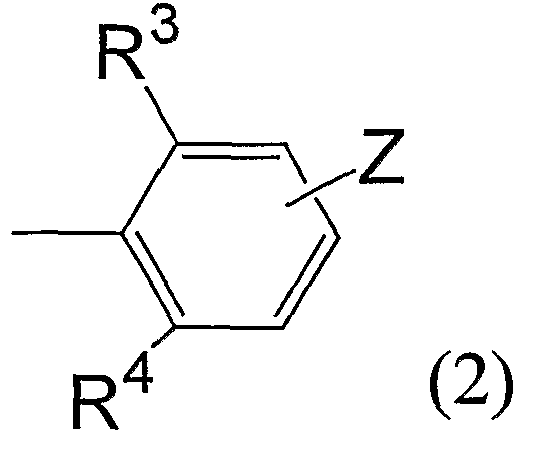
Claims

6 請求の範囲
1. 式 (1)
Figure imgf000063_0001
〔式中、 mおよび nはそれぞれ 0〜 4の整数を表し、 m+n = 4である。
Lはシクロアルキル基、 置換シクロアルキル基、 芳香族基、 または置換芳香族基 を表す。
Yはァリール基または置換ァリ一ル基を表す。
Rは、 水素原子、 アルキル基、 置換アルキル基、 アルケニル基、 置換アルケ-ル 基、 アルキニル基、 置換アルキニル基、 シクロアルキル基、 置換シクロアルキル基 、 芳香族基、 置換芳香族基、 または式:— C (=〇) R2 (R2 は、 アルキル基、 置換アルキル基、 ァルケ-ル基、 置換アルケニル基、 アルキ-ル基、 置換アルキニ ル基、 シクロアルキル基、 置換シクロアルキル基、 芳香族基、 または置換芳香族基 を表す。 ) で表される基を表す。
R31、 R32、 R33、 および R34は、 同一または異なって、 複数ある場合にはそ れぞれ独立して、 水素原子、 アルキル基、 置換アルキル基、 水酸基、 アルコキシ基 、 ァラルキルォキシ基を表すか、 R31と R32、 または R33と R 34のいずれかまた は両方が一緒になってォキソ基を表す。
R 35および R 36は、 同一または異なって、 複数ある場合にはそれぞれ独立して 、 水素原子、 アルキル基、 または置換アルキル基を表すか、 R 35と R36が一緒に なってォキソ基を表す。 〕 で表される化合物もしくはそのプロドラッグまたはそれ らの薬学的に許容される塩。
2. Yがフエ-ル基または置換フエエル基である、 請求項 1記載の化合物もし くはそのプロドラッグまたはそれらの薬学的に許容される塩。
3 . Lが置換フエニル基である、 請求項 2記載の化合物もしくはそのプロドラ ッグまたはそれらの薬学的に許容される塩。
4 . Lが式 (2 ) :
Figure imgf000064_0001
〔式中、 R 3 および R 4 はそれぞれ独立して置換もしくは無置換の低級アルキル基 を表す。
Zは水素原子、 水酸基、 低級アルキルスルホンアミ ド基、 低級アルコキシカルボ エルアミノ基、 アミノ基、 低級アルキルアミノ基、 またはジ低級アルキルアミノ基 を表す。 〕
で表される基である、 請求項 3記載の化合物もしくはそのプロドラッグまたはそれ らの薬学的に許容される塩。
5 . Rが芳香族基または置換芳香族基である、 請求項 4記載の化合物もしくは そのプロドラッグまたはそれらの薬学的に許容される塩。
6 . Rが置換フエニル基である、 請求項 5記載の化合物もしくはそのプロドラ ッグまたはそれらの薬学的に許容される塩。
7 . · Yが置換されたフエニル基または置換されたピリジ^/基であって、 該フエ ニル基またはピリジル基の置換基が、 1または複数、 同一または異なって、 水酸基 または式:一 O— E— A {式中、 Oは酸素原子を表し、 Eは不飽和結合を含んでい てもよい炭素原子数 1〜8の 2価の炭化水素基を表し、 Aは、 水素原子、 水酸基、 カルボキシル基、 低級アルコキシカルボエル基、 ベンジルォキシカルポニル基、 ハ ロゲン原子、 シァノ基、 トリフルォロメチル基、 ァラルキルォキシ基、 ァリ一ルォ キシ基、 低級アルコキシ基、 低級アルカノィルォキシ基、 低級アルキルチオ基、 低 級アルキルスルフィエル基、 低級アルキルスルホニル基、 アルキル置換もしくは無 置換のベンゼンスルホニルォキシ基、 低級アルカノィルァミノ基、 低級アルコキシ カルボニルァミノ基、 低級アルキルスルホンアミ ド基、 フタルイミ ド基、 シクロア ルキル基、 ァリール基、 置換ァリール基、 ヘテロァリール基、 置換へテロアリール 基を表すか、 または式:一 NR6 R7 (R6 および R7 は互いに独立して、 水素原 子、 低級アルキル基、 低級アルコキシ基置換低級アルキル基、 シクロアルキル基、 低級アルコキシカルボエル基、 ヘテロァリールメチル基、 もしくはァラルキル基を 表すか、 または Rs および R7が互いに結合して、 それらが結合する窒素原子とと もに、 環中にさらに一 NR8 — (R8 は水素原子、 低級アルキル基、 フエュル基、 低級アルコキシカルボエル基、 またはベンジル基を表す。 ) を 1個、 または酸素原 子 1個を含んでもよい、 環を構成する炭素原子数が 3カゝら 8個の飽和環状ァミノ基 を表す。 ) 、 式:一 C (=0) NR6 R7 (R6および R7 は前記と同じ意味を表 す。 ) 、 または式:一 NHC (=0) R9 (R9 はアルキル基、 置換アルキル基、 シクロアルキル基、 または置換シクロアルキル基を表す。 ) で表される基を表す。 } で表される基である、 請求項 6記載の化合物もしくはそのプロドラッグまたはそ れらの薬学的に許容される塩。
8. Y上の式:一O— E— Aで表される置換基の少なくとも一つに於いて、 E が炭素原子数 1〜4のアルキレン基である、 請求項 7記載の化合物もしくはそのプ 口ドラッグまたはそれらの薬学的に許容される塩。
9. Y上の式:一 O— E— Aで表される置換基の少なくとも一つに於いて、 A が水素原子もしくは水酸基である、 請求項 8記載の化合物もしくはそのプロドラッ グまたはそれらの薬学的に許容される塩。
10. Zが水素原子もしくはアミノ基である、 請求項 9記載の化合物もしくは そのプロドラッグまたはそれらの薬学的に許容される塩。
11. R3 および R4がそれぞれ独立して無置換の低級アルキル基である、 請 求項 10記載の化合物もしくはそのプロドラッグまたはそれらの薬学的に許容され る塩。
12. Rが置換されたフエニル基または置換されたピリジル基であって、 該フ ェエル基またはピリジル基の置換基が、 1または複数、 同一または異なって、 水酸 基または式:一 O— E— A (式中、 Oは酸素原子を表し、 Eは不飽和結合を含んで いてもよい炭素原子数 1〜8の 2価の炭化水素基を表し、 Aは、 水素原子、 水酸基 、 カルボキシル基、 低級アルコキシカルボニル基、 ベンジルォキシカルボ-ル基、 ハロゲン原子、 シァノ基、 トリフルォロメチル基、 ァラルキルォキシ基、 ァリール ' ォキシ基、 低級アルコキシ基、 低級アルカノィルォキシ基、 低級アルキルチオ基、 低級アルキルスルフィエル基、 低級アルキルスルホ-ル基、 アルキル置換もしくは 無置換のベンゼンスルホニルォキシ基、 低級アル力ノィルァミノ基、 低級アルコキ シカルボニノレアミノ基、 低級アルキルスルホンアミ ド基、 フタノレイミ ド基、 シクロ アルキル基、 ァリール基、 置換ァリール基、 ヘテロァリール基、 置換へテロアリー ル基、 または式:一 NR6 R7 (R6 および R7 は互いに独立して、 水素原子、 低 級アルキル基、 低級アルコキシ基置換低級アルキル基、 シクロアルキル基、 低級ァ ルコキシカノレポニル基、 ヘテロァリールメチル基、 もしくはァラルキル基を表すか
、 または R6 および R7 が互いに結合して、 それらが結合する窒素原子とともに、 環中にさらに一 NR8 ― (R8 は水素原子、 低級アルキル基、 フエニル基、 低級ァ ルコキシカルボニル基、 またはベンジル基を表す。 ;) を 1個、 または酸素原子 1個 を含んでもよい、 環を構成する炭素原子数が 3から 8個の飽和環状アミノ基を表す 。 ) もしくは式:一 C (=0) NR6 R7 (R6 および R7 は前記と同じ意味を表 す。 ) で表される基を表す。 } で表される基である、 請求項 1 1記載の化合物もし くはそのプロドラッグまたはそれらの薬学的に許容される塩。
13. R上の式:一 O— E— Aで表される置換基の少なくとも一つに於いて、 Eが炭素原子数 1〜4のアルキレン基である、 請求項 12記載の化合物もしくはそ のプロドラッグまたはそれらの薬学的に許容される塩。
14. ' R上の式:一O— E— Aで表される置換基の少なくとも一つに於いて、 Aが水素原子、 水酸基、 低級アルコキシ基、 低級アルカノィルォキシ基、 低級アル カノィルァミノ基、 低級アルコキシカルボニルァミノ基、 または式:一NR6 R7 もしくは式:一 C (=θ) NR6 R7 で表される基である、 請求項 13記載の化合 物もしくはそのプロドラッグまたはそれらの薬学的に許容される塩。
15. · R上の式:一O— E— Aで表される置換基の少なくとも一つに於いて、 Aが水素原子、 水酸基、 低級アルコキシ基、 または式:一 NR6 R7 (R6 および R7 はそれぞれ独立して水素原子もしくは低級アルキル基を表す) で表される基で ある、 請求項 14記載の化合物もしくはそのプロドラッグまたはそれらの薬学的に 許容される塩。
16. R3および R4がイソプロピル基である、 請求項 15記載の化合物もし くはそのプロドラッグまたはそれらの薬学的に許容される塩。
17. mが 2であり、 nが 2であり、 R31、 R32、 R33、 R34、 R35、 およ び R36が全て水素原子である、 請求項 1から 16のいずれかに記載の化合物もし くはそのプロドラッグまたはそれらの薬学的に許容される塩。
18. 請求項 1力 ら 17のいずれか一項に記載の化合物もしくはそのプロドラッ グまたはそれらの薬学的に許容される塩を有効成分として含有する医薬。
19. 請求項 1から 1 7のいずれか一項に記載の化合物もしくはそのプロドラ ッグまたはそれらの薬学的に許容される塩を有効成分として含有するァシル C o A : コレステロールァシルトランスフェラーゼ (ACAT) 阻害剤。
20. 請求項 1から 1 7のいずれか一項に記載の化合物もしくはそのプロドラ ッグまたはそれらの薬学的に許容される塩を有効成分として含有する高脂血症また は動脈硬化治療剤。
21. 治療を必要とする患者に、 請求項 1カゝら 17のいずれか一項に記載の化 合物もしくはそのプロドラッグまたはそれらの薬学的に許容される塩の有効量を投 与することからなる、 高脂血症または動脈硬化の治療方法。
22. 請求項 1から 17のいずれか一項に記載の化合物もしくはそのプロドラ ッグまたはそれらの薬学的に許容される塩の、 高脂血症または動脈硬化治療剤の製 造のための使用。
PCT/JP2003/005124 2002-04-25 2003-04-22 Novel piperidine derivative Ceased WO2003091216A1 (en)

Priority Applications (4)

Application Number Priority Date Filing Date Title
AU2003231388A AU2003231388A1 (en) 2002-04-25 2003-04-22 Novel piperidine derivative
EP03725627A EP1500648A4 (en) 2002-04-25 2003-04-22 NEW PIPERIDINE DERIVATIVE
US10/511,319 US20050165057A1 (en) 2002-04-25 2003-04-22 Novel piperidine derivative
JP2003587781A JPWO2003091216A1 (ja) 2002-04-25 2003-04-22 新規ピペリジン誘導体

Applications Claiming Priority (2)

Application Number Priority Date Filing Date Title
JP2002-124311 2002-04-25
JP2002124311 2002-04-25

Publications (1)

Publication Number Publication Date
WO2003091216A1 true WO2003091216A1 (en) 2003-11-06

Family

ID=29267526

Family Applications (1)

Application Number Title Priority Date Filing Date
PCT/JP2003/005124 Ceased WO2003091216A1 (en) 2002-04-25 2003-04-22 Novel piperidine derivative

Country Status (5)

Country Link
US (1) US20050165057A1 (ja)
EP (1) EP1500648A4 (ja)
JP (1) JPWO2003091216A1 (ja)
AU (1) AU2003231388A1 (ja)
WO (1) WO2003091216A1 (ja)

Cited By (12)

* Cited by examiner, † Cited by third party
Publication number Priority date Publication date Assignee Title
WO2005037269A1 (ja) * 2003-10-21 2005-04-28 Dainippon Sumitomo Pharma Co., Ltd. 新規ピペリジン誘導体
WO2005097738A1 (ja) * 2004-04-06 2005-10-20 Dainippon Sumitomo Pharma Co., Ltd. 新規スルホンアミド誘導体
WO2010047982A1 (en) 2008-10-22 2010-04-29 Merck Sharp & Dohme Corp. Novel cyclic benzimidazole derivatives useful anti-diabetic agents
WO2010051206A1 (en) 2008-10-31 2010-05-06 Merck Sharp & Dohme Corp. Novel cyclic benzimidazole derivatives useful anti-diabetic agents
WO2011106273A1 (en) 2010-02-25 2011-09-01 Merck Sharp & Dohme Corp. Novel cyclic benzimidazole derivatives useful anti-diabetic agents
WO2012116145A1 (en) 2011-02-25 2012-08-30 Merck Sharp & Dohme Corp. Novel cyclic azabenzimidazole derivatives useful as anti-diabetic agents
WO2014022528A1 (en) 2012-08-02 2014-02-06 Merck Sharp & Dohme Corp. Antidiabetic tricyclic compounds
WO2014130608A1 (en) 2013-02-22 2014-08-28 Merck Sharp & Dohme Corp. Antidiabetic bicyclic compounds
WO2014139388A1 (en) 2013-03-14 2014-09-18 Merck Sharp & Dohme Corp. Novel indole derivatives useful as anti-diabetic agents
WO2015051725A1 (en) 2013-10-08 2015-04-16 Merck Sharp & Dohme Corp. Antidiabetic tricyclic compounds
WO2018106518A1 (en) 2016-12-06 2018-06-14 Merck Sharp & Dohme Corp. Antidiabetic heterocyclic compounds
WO2018118670A1 (en) 2016-12-20 2018-06-28 Merck Sharp & Dohme Corp. Antidiabetic spirochroman compounds

Families Citing this family (6)

* Cited by examiner, † Cited by third party
Publication number Priority date Publication date Assignee Title
US7638541B2 (en) 2006-12-28 2009-12-29 Metabolex Inc. 5-ethyl-2-{4-[4-(4-tetrazol-1-yl-phenoxymethyl)-thiazol-2-yl]-piperidin-1-yl}-pyrimidine
JP5489997B2 (ja) 2007-07-19 2014-05-14 シマベイ セラピューティクス, インコーポレーテッド 糖尿病および代謝疾患の治療のためのRUP3またはGPRl19受容体のアゴニストとしてのN−アザ環状置換ピロール、ピラゾール、イミダゾール、トリアゾールおよびテトラゾール誘導体
CN102203074A (zh) * 2008-06-20 2011-09-28 麦它波莱克斯股份有限公司 芳基gpr119激动剂及其用途
WO2011041154A1 (en) 2009-10-01 2011-04-07 Metabolex, Inc. Substituted tetrazol-1-yl-phenoxymethyl-thiazol-2-yl-piperidinyl-pyrimidine salts
EP2585048B1 (en) 2010-06-23 2018-04-11 CymaBay Therapeutics, Inc. Compositions of 5-ethyl-2-{4-[4-(4-tetrazol-1-yl-phenoxymethyl)-thiazol-2-yl]-piperidin-1-yl}-pyrimidine
EP3493807A1 (en) 2016-08-03 2019-06-12 CymaBay Therapeutics, Inc. Oxymethylene aryl compounds for treating inflammatory gastrointestinal diseases or gastrointestinal conditions

Citations (3)

* Cited by examiner, † Cited by third party
Publication number Priority date Publication date Assignee Title
EP0432442A1 (en) * 1989-11-06 1991-06-19 Warner-Lambert Company ACAT inhibitors
EP0790240A1 (en) * 1996-02-15 1997-08-20 Tanabe Seiyaku Co., Ltd. Phenol-derivatives having pharmaceutical activity and process for preparing the same
WO2002083134A1 (en) * 2001-04-12 2002-10-24 Pharmacopeia, Inc. Aryl and biaryl piperidines used as mch antagonists

Family Cites Families (5)

* Cited by examiner, † Cited by third party
Publication number Priority date Publication date Assignee Title
US5420164A (en) * 1991-04-04 1995-05-30 Yoshitomi Pharmaceutical Industries, Ltd. Cycloalkylurea compounds
CA2123728A1 (en) * 1993-05-21 1994-11-22 Noriyoshi Sueda Urea derivatives and their use as acat inhibitors
US5576335A (en) * 1994-02-01 1996-11-19 Nisshin Flour Milling Co., Ltd. Urea derivatives and their use as ACAT inhibitors
EP0742208A1 (en) * 1995-05-05 1996-11-13 Grelan Pharmaceutical Co., Ltd. 2-Ureido-benzamide derivatives
GB0203994D0 (en) * 2002-02-20 2002-04-03 Celltech R&D Ltd Chemical compounds

Patent Citations (3)

* Cited by examiner, † Cited by third party
Publication number Priority date Publication date Assignee Title
EP0432442A1 (en) * 1989-11-06 1991-06-19 Warner-Lambert Company ACAT inhibitors
EP0790240A1 (en) * 1996-02-15 1997-08-20 Tanabe Seiyaku Co., Ltd. Phenol-derivatives having pharmaceutical activity and process for preparing the same
WO2002083134A1 (en) * 2001-04-12 2002-10-24 Pharmacopeia, Inc. Aryl and biaryl piperidines used as mch antagonists

Non-Patent Citations (1)

* Cited by examiner, † Cited by third party
Title
See also references of EP1500648A4 *

Cited By (13)

* Cited by examiner, † Cited by third party
Publication number Priority date Publication date Assignee Title
WO2005037269A1 (ja) * 2003-10-21 2005-04-28 Dainippon Sumitomo Pharma Co., Ltd. 新規ピペリジン誘導体
WO2005097738A1 (ja) * 2004-04-06 2005-10-20 Dainippon Sumitomo Pharma Co., Ltd. 新規スルホンアミド誘導体
WO2010047982A1 (en) 2008-10-22 2010-04-29 Merck Sharp & Dohme Corp. Novel cyclic benzimidazole derivatives useful anti-diabetic agents
WO2010051206A1 (en) 2008-10-31 2010-05-06 Merck Sharp & Dohme Corp. Novel cyclic benzimidazole derivatives useful anti-diabetic agents
WO2011106273A1 (en) 2010-02-25 2011-09-01 Merck Sharp & Dohme Corp. Novel cyclic benzimidazole derivatives useful anti-diabetic agents
EP3243385A1 (en) 2011-02-25 2017-11-15 Merck Sharp & Dohme Corp. Novel cyclic azabenzimidazole derivatives useful as anti-diabetic agents
WO2012116145A1 (en) 2011-02-25 2012-08-30 Merck Sharp & Dohme Corp. Novel cyclic azabenzimidazole derivatives useful as anti-diabetic agents
WO2014022528A1 (en) 2012-08-02 2014-02-06 Merck Sharp & Dohme Corp. Antidiabetic tricyclic compounds
WO2014130608A1 (en) 2013-02-22 2014-08-28 Merck Sharp & Dohme Corp. Antidiabetic bicyclic compounds
WO2014139388A1 (en) 2013-03-14 2014-09-18 Merck Sharp & Dohme Corp. Novel indole derivatives useful as anti-diabetic agents
WO2015051725A1 (en) 2013-10-08 2015-04-16 Merck Sharp & Dohme Corp. Antidiabetic tricyclic compounds
WO2018106518A1 (en) 2016-12-06 2018-06-14 Merck Sharp & Dohme Corp. Antidiabetic heterocyclic compounds
WO2018118670A1 (en) 2016-12-20 2018-06-28 Merck Sharp & Dohme Corp. Antidiabetic spirochroman compounds

Also Published As

Publication number Publication date
US20050165057A1 (en) 2005-07-28
AU2003231388A1 (en) 2003-11-10
EP1500648A1 (en) 2005-01-26
EP1500648A4 (en) 2005-12-21
JPWO2003091216A1 (ja) 2005-09-02

Similar Documents

Publication Publication Date Title
US6506901B2 (en) Substituted 2-(S)-hydroxy-3-(piperidin-4-yl-methylamino)-propyl ethers and substituted 2-aryl-2-(R)-hydroxy-1-(piperidin-4-yl-methyl)-ethylamine β-3 adrenergic receptor agonists
US8003642B2 (en) Nitrogenated heterocyclic derivative, and pharmaceutical agent comprising the derivative as active ingredient
US4670447A (en) Antipsychotic 3-(piperidinyl)- and 3-(pyrrolidinyl)-1H-indazoles
US20050165057A1 (en) Novel piperidine derivative
US20080096922A1 (en) Novel Sulfonamide derivative
US6790854B2 (en) Diphenylalkylamine derivatives useful as opioid receptor agonists
SK17312001A3 (sk) Inhibítory metaloproteázy
JP2004520347A (ja) Ldl−受容体発現のインデューサーとしてのアリールピペリジンおよびピペラジン誘導体
SK109399A3 (en) 3-piperidyl-4-oxoquinazoline derivatives and medicincal compositions containing the same
US6878707B2 (en) Carboxamides useful as inhibitors of microsomal triglyceride transfer protein and of apolipoprotein b secretion
KR20110034020A (ko) 알킬 티아졸 카르바메이트 유도체, 그의 제조법, 및 faah 효소 억제제로서의 그의 용도
KR101052204B1 (ko) 아포리포프로테인 b 분비 저해제로서의 n-아릴 피페리딘치환된 바이페닐카복스아미드
KR20100131007A (ko) 레닌 억제제로서의 3,4-치환된 피페리딘 유도체
KR20030094293A (ko) 지질 저하성 바이페닐카복스아미드
US4775761A (en) 3-(piperidinyl)- and 3-(pyrrolidinyl)-1H-indazoles
WO2000009505A9 (fr) Derives de naphthyridine
WO2006051826A1 (ja) 含窒素複素環化合物およびその医薬用途
US20050148583A1 (en) Phenoxyalkylamine derivatives useful as opioid delta receptor ligands
NO309813B1 (no) Nye 1-acylpiperidinforbindelser, farmasøytiske preparater inneholdende disse, samt anvendelse derav til behandling av sykdommer som viser respons pÕ antagonisering av NK1-reseptoren
US20100029647A1 (en) 3,4,(5)-substituted tetrahydrophyridines
AU2006243393A1 (en) 3 -mono- and 3 , 5-disubstituted piperidine derivatives as renin inhibitors
JP4484368B2 (ja) キナゾリノン誘導体
ES2301979T3 (es) Derivados de 4-(2-fenilsulfanil-fenil)-1,2,3,6-tetrahidropiridina como inhibidores de la reabsorcion de serotonina.
CN1323074C (zh) 哌啶衍生物以及包含哌啶衍生物作为活性成分的药物组合物
US4806649A (en) 3-(piperidinyl)- and 3- (pyrrolidinyl)-1H-indazoles

Legal Events

Date Code Title Description
WWE Wipo information: entry into national phase

Ref document number: 2003587781

Country of ref document: JP

AK Designated states

Kind code of ref document: A1

Designated state(s): AE AG AL AM AT AU AZ BA BB BG BR BY BZ CA CH CN CO CR CU CZ DE DK DM DZ EC EE ES FI GB GD GE GH GM HR HU ID IL IN IS JP KE KG KR KZ LC LK LR LS LT LU LV MA MD MG MK MN MW MX MZ NI NO NZ OM PH PL PT RO RU SC SD SE SG SK SL TJ TM TN TR TT TZ UA UG US UZ VC VN YU ZA ZM ZW

AL Designated countries for regional patents

Kind code of ref document: A1

Designated state(s): GH GM KE LS MW MZ SD SL SZ TZ UG ZM ZW AM AZ BY KG KZ MD RU TJ TM AT BE BG CH CY CZ DE DK EE ES FI FR GB GR HU IE IT LU MC NL PT RO SE SI SK TR BF BJ CF CG CI CM GA GN GQ GW ML MR NE SN TD TG

121 Ep: the epo has been informed by wipo that ep was designated in this application
WWE Wipo information: entry into national phase

Ref document number: 10511319

Country of ref document: US

WWE Wipo information: entry into national phase

Ref document number: 2003725627

Country of ref document: EP

WWP Wipo information: published in national office

Ref document number: 2003725627

Country of ref document: EP