WO2003101964A1 - Piperidine derivative, process for producing the same, and use - Google Patents
Piperidine derivative, process for producing the same, and use Download PDFInfo
- Publication number
- WO2003101964A1 WO2003101964A1 PCT/JP2003/006754 JP0306754W WO03101964A1 WO 2003101964 A1 WO2003101964 A1 WO 2003101964A1 JP 0306754 W JP0306754 W JP 0306754W WO 03101964 A1 WO03101964 A1 WO 03101964A1
- Authority
- WO
- WIPO (PCT)
- Prior art keywords
- group
- compound
- substituent
- reaction
- benzyl
- Prior art date
- Legal status (The legal status is an assumption and is not a legal conclusion. Google has not performed a legal analysis and makes no representation as to the accuracy of the status listed.)
- Ceased
Links
Classifications
-
- C—CHEMISTRY; METALLURGY
- C07—ORGANIC CHEMISTRY
- C07D—HETEROCYCLIC COMPOUNDS
- C07D211/00—Heterocyclic compounds containing hydrogenated pyridine rings, not condensed with other rings
- C07D211/04—Heterocyclic compounds containing hydrogenated pyridine rings, not condensed with other rings with only hydrogen or carbon atoms directly attached to the ring nitrogen atom
- C07D211/06—Heterocyclic compounds containing hydrogenated pyridine rings, not condensed with other rings with only hydrogen or carbon atoms directly attached to the ring nitrogen atom having no double bonds between ring members or between ring members and non-ring members
- C07D211/36—Heterocyclic compounds containing hydrogenated pyridine rings, not condensed with other rings with only hydrogen or carbon atoms directly attached to the ring nitrogen atom having no double bonds between ring members or between ring members and non-ring members with hetero atoms or with carbon atoms having three bonds to hetero atoms with at the most one bond to halogen, e.g. ester or nitrile radicals, directly attached to ring carbon atoms
- C07D211/40—Oxygen atoms
- C07D211/44—Oxygen atoms attached in position 4
-
- C—CHEMISTRY; METALLURGY
- C07—ORGANIC CHEMISTRY
- C07D—HETEROCYCLIC COMPOUNDS
- C07D405/00—Heterocyclic compounds containing both one or more hetero rings having oxygen atoms as the only ring hetero atoms, and one or more rings having nitrogen as the only ring hetero atom
- C07D405/14—Heterocyclic compounds containing both one or more hetero rings having oxygen atoms as the only ring hetero atoms, and one or more rings having nitrogen as the only ring hetero atom containing three or more hetero rings
-
- A—HUMAN NECESSITIES
- A61—MEDICAL OR VETERINARY SCIENCE; HYGIENE
- A61P—SPECIFIC THERAPEUTIC ACTIVITY OF CHEMICAL COMPOUNDS OR MEDICINAL PREPARATIONS
- A61P1/00—Drugs for disorders of the alimentary tract or the digestive system
-
- A—HUMAN NECESSITIES
- A61—MEDICAL OR VETERINARY SCIENCE; HYGIENE
- A61P—SPECIFIC THERAPEUTIC ACTIVITY OF CHEMICAL COMPOUNDS OR MEDICINAL PREPARATIONS
- A61P1/00—Drugs for disorders of the alimentary tract or the digestive system
- A61P1/08—Drugs for disorders of the alimentary tract or the digestive system for nausea, cinetosis or vertigo; Antiemetics
-
- A—HUMAN NECESSITIES
- A61—MEDICAL OR VETERINARY SCIENCE; HYGIENE
- A61P—SPECIFIC THERAPEUTIC ACTIVITY OF CHEMICAL COMPOUNDS OR MEDICINAL PREPARATIONS
- A61P1/00—Drugs for disorders of the alimentary tract or the digestive system
- A61P1/16—Drugs for disorders of the alimentary tract or the digestive system for liver or gallbladder disorders, e.g. hepatoprotective agents, cholagogues, litholytics
-
- A—HUMAN NECESSITIES
- A61—MEDICAL OR VETERINARY SCIENCE; HYGIENE
- A61P—SPECIFIC THERAPEUTIC ACTIVITY OF CHEMICAL COMPOUNDS OR MEDICINAL PREPARATIONS
- A61P1/00—Drugs for disorders of the alimentary tract or the digestive system
- A61P1/18—Drugs for disorders of the alimentary tract or the digestive system for pancreatic disorders, e.g. pancreatic enzymes
-
- A—HUMAN NECESSITIES
- A61—MEDICAL OR VETERINARY SCIENCE; HYGIENE
- A61P—SPECIFIC THERAPEUTIC ACTIVITY OF CHEMICAL COMPOUNDS OR MEDICINAL PREPARATIONS
- A61P11/00—Drugs for disorders of the respiratory system
-
- A—HUMAN NECESSITIES
- A61—MEDICAL OR VETERINARY SCIENCE; HYGIENE
- A61P—SPECIFIC THERAPEUTIC ACTIVITY OF CHEMICAL COMPOUNDS OR MEDICINAL PREPARATIONS
- A61P11/00—Drugs for disorders of the respiratory system
- A61P11/06—Antiasthmatics
-
- A—HUMAN NECESSITIES
- A61—MEDICAL OR VETERINARY SCIENCE; HYGIENE
- A61P—SPECIFIC THERAPEUTIC ACTIVITY OF CHEMICAL COMPOUNDS OR MEDICINAL PREPARATIONS
- A61P11/00—Drugs for disorders of the respiratory system
- A61P11/14—Antitussive agents
-
- A—HUMAN NECESSITIES
- A61—MEDICAL OR VETERINARY SCIENCE; HYGIENE
- A61P—SPECIFIC THERAPEUTIC ACTIVITY OF CHEMICAL COMPOUNDS OR MEDICINAL PREPARATIONS
- A61P13/00—Drugs for disorders of the urinary system
- A61P13/02—Drugs for disorders of the urinary system of urine or of the urinary tract, e.g. urine acidifiers
-
- A—HUMAN NECESSITIES
- A61—MEDICAL OR VETERINARY SCIENCE; HYGIENE
- A61P—SPECIFIC THERAPEUTIC ACTIVITY OF CHEMICAL COMPOUNDS OR MEDICINAL PREPARATIONS
- A61P13/00—Drugs for disorders of the urinary system
- A61P13/08—Drugs for disorders of the urinary system of the prostate
-
- A—HUMAN NECESSITIES
- A61—MEDICAL OR VETERINARY SCIENCE; HYGIENE
- A61P—SPECIFIC THERAPEUTIC ACTIVITY OF CHEMICAL COMPOUNDS OR MEDICINAL PREPARATIONS
- A61P13/00—Drugs for disorders of the urinary system
- A61P13/12—Drugs for disorders of the urinary system of the kidneys
-
- A—HUMAN NECESSITIES
- A61—MEDICAL OR VETERINARY SCIENCE; HYGIENE
- A61P—SPECIFIC THERAPEUTIC ACTIVITY OF CHEMICAL COMPOUNDS OR MEDICINAL PREPARATIONS
- A61P17/00—Drugs for dermatological disorders
-
- A—HUMAN NECESSITIES
- A61—MEDICAL OR VETERINARY SCIENCE; HYGIENE
- A61P—SPECIFIC THERAPEUTIC ACTIVITY OF CHEMICAL COMPOUNDS OR MEDICINAL PREPARATIONS
- A61P19/00—Drugs for skeletal disorders
- A61P19/02—Drugs for skeletal disorders for joint disorders, e.g. arthritis, arthrosis
-
- A—HUMAN NECESSITIES
- A61—MEDICAL OR VETERINARY SCIENCE; HYGIENE
- A61P—SPECIFIC THERAPEUTIC ACTIVITY OF CHEMICAL COMPOUNDS OR MEDICINAL PREPARATIONS
- A61P25/00—Drugs for disorders of the nervous system
-
- A—HUMAN NECESSITIES
- A61—MEDICAL OR VETERINARY SCIENCE; HYGIENE
- A61P—SPECIFIC THERAPEUTIC ACTIVITY OF CHEMICAL COMPOUNDS OR MEDICINAL PREPARATIONS
- A61P25/00—Drugs for disorders of the nervous system
- A61P25/04—Centrally acting analgesics, e.g. opioids
-
- A—HUMAN NECESSITIES
- A61—MEDICAL OR VETERINARY SCIENCE; HYGIENE
- A61P—SPECIFIC THERAPEUTIC ACTIVITY OF CHEMICAL COMPOUNDS OR MEDICINAL PREPARATIONS
- A61P25/00—Drugs for disorders of the nervous system
- A61P25/18—Antipsychotics, i.e. neuroleptics; Drugs for mania or schizophrenia
-
- A—HUMAN NECESSITIES
- A61—MEDICAL OR VETERINARY SCIENCE; HYGIENE
- A61P—SPECIFIC THERAPEUTIC ACTIVITY OF CHEMICAL COMPOUNDS OR MEDICINAL PREPARATIONS
- A61P25/00—Drugs for disorders of the nervous system
- A61P25/22—Anxiolytics
-
- A—HUMAN NECESSITIES
- A61—MEDICAL OR VETERINARY SCIENCE; HYGIENE
- A61P—SPECIFIC THERAPEUTIC ACTIVITY OF CHEMICAL COMPOUNDS OR MEDICINAL PREPARATIONS
- A61P25/00—Drugs for disorders of the nervous system
- A61P25/24—Antidepressants
-
- A—HUMAN NECESSITIES
- A61—MEDICAL OR VETERINARY SCIENCE; HYGIENE
- A61P—SPECIFIC THERAPEUTIC ACTIVITY OF CHEMICAL COMPOUNDS OR MEDICINAL PREPARATIONS
- A61P29/00—Non-central analgesic, antipyretic or antiinflammatory agents, e.g. antirheumatic agents; Non-steroidal antiinflammatory drugs [NSAID]
-
- A—HUMAN NECESSITIES
- A61—MEDICAL OR VETERINARY SCIENCE; HYGIENE
- A61P—SPECIFIC THERAPEUTIC ACTIVITY OF CHEMICAL COMPOUNDS OR MEDICINAL PREPARATIONS
- A61P3/00—Drugs for disorders of the metabolism
-
- A—HUMAN NECESSITIES
- A61—MEDICAL OR VETERINARY SCIENCE; HYGIENE
- A61P—SPECIFIC THERAPEUTIC ACTIVITY OF CHEMICAL COMPOUNDS OR MEDICINAL PREPARATIONS
- A61P31/00—Antiinfectives, i.e. antibiotics, antiseptics, chemotherapeutics
-
- A—HUMAN NECESSITIES
- A61—MEDICAL OR VETERINARY SCIENCE; HYGIENE
- A61P—SPECIFIC THERAPEUTIC ACTIVITY OF CHEMICAL COMPOUNDS OR MEDICINAL PREPARATIONS
- A61P37/00—Drugs for immunological or allergic disorders
- A61P37/08—Antiallergic agents
-
- A—HUMAN NECESSITIES
- A61—MEDICAL OR VETERINARY SCIENCE; HYGIENE
- A61P—SPECIFIC THERAPEUTIC ACTIVITY OF CHEMICAL COMPOUNDS OR MEDICINAL PREPARATIONS
- A61P43/00—Drugs for specific purposes, not provided for in groups A61P1/00-A61P41/00
-
- C—CHEMISTRY; METALLURGY
- C07—ORGANIC CHEMISTRY
- C07D—HETEROCYCLIC COMPOUNDS
- C07D211/00—Heterocyclic compounds containing hydrogenated pyridine rings, not condensed with other rings
- C07D211/04—Heterocyclic compounds containing hydrogenated pyridine rings, not condensed with other rings with only hydrogen or carbon atoms directly attached to the ring nitrogen atom
- C07D211/06—Heterocyclic compounds containing hydrogenated pyridine rings, not condensed with other rings with only hydrogen or carbon atoms directly attached to the ring nitrogen atom having no double bonds between ring members or between ring members and non-ring members
- C07D211/36—Heterocyclic compounds containing hydrogenated pyridine rings, not condensed with other rings with only hydrogen or carbon atoms directly attached to the ring nitrogen atom having no double bonds between ring members or between ring members and non-ring members with hetero atoms or with carbon atoms having three bonds to hetero atoms with at the most one bond to halogen, e.g. ester or nitrile radicals, directly attached to ring carbon atoms
- C07D211/40—Oxygen atoms
- C07D211/44—Oxygen atoms attached in position 4
- C07D211/46—Oxygen atoms attached in position 4 having a hydrogen atom as the second substituent in position 4
-
- C—CHEMISTRY; METALLURGY
- C07—ORGANIC CHEMISTRY
- C07D—HETEROCYCLIC COMPOUNDS
- C07D401/00—Heterocyclic compounds containing two or more hetero rings, having nitrogen atoms as the only ring hetero atoms, at least one ring being a six-membered ring with only one nitrogen atom
- C07D401/02—Heterocyclic compounds containing two or more hetero rings, having nitrogen atoms as the only ring hetero atoms, at least one ring being a six-membered ring with only one nitrogen atom containing two hetero rings
- C07D401/06—Heterocyclic compounds containing two or more hetero rings, having nitrogen atoms as the only ring hetero atoms, at least one ring being a six-membered ring with only one nitrogen atom containing two hetero rings linked by a carbon chain containing only aliphatic carbon atoms
-
- C—CHEMISTRY; METALLURGY
- C07—ORGANIC CHEMISTRY
- C07D—HETEROCYCLIC COMPOUNDS
- C07D401/00—Heterocyclic compounds containing two or more hetero rings, having nitrogen atoms as the only ring hetero atoms, at least one ring being a six-membered ring with only one nitrogen atom
- C07D401/02—Heterocyclic compounds containing two or more hetero rings, having nitrogen atoms as the only ring hetero atoms, at least one ring being a six-membered ring with only one nitrogen atom containing two hetero rings
- C07D401/10—Heterocyclic compounds containing two or more hetero rings, having nitrogen atoms as the only ring hetero atoms, at least one ring being a six-membered ring with only one nitrogen atom containing two hetero rings linked by a carbon chain containing aromatic rings
-
- C—CHEMISTRY; METALLURGY
- C07—ORGANIC CHEMISTRY
- C07D—HETEROCYCLIC COMPOUNDS
- C07D401/00—Heterocyclic compounds containing two or more hetero rings, having nitrogen atoms as the only ring hetero atoms, at least one ring being a six-membered ring with only one nitrogen atom
- C07D401/02—Heterocyclic compounds containing two or more hetero rings, having nitrogen atoms as the only ring hetero atoms, at least one ring being a six-membered ring with only one nitrogen atom containing two hetero rings
- C07D401/12—Heterocyclic compounds containing two or more hetero rings, having nitrogen atoms as the only ring hetero atoms, at least one ring being a six-membered ring with only one nitrogen atom containing two hetero rings linked by a chain containing hetero atoms as chain links
-
- C—CHEMISTRY; METALLURGY
- C07—ORGANIC CHEMISTRY
- C07D—HETEROCYCLIC COMPOUNDS
- C07D401/00—Heterocyclic compounds containing two or more hetero rings, having nitrogen atoms as the only ring hetero atoms, at least one ring being a six-membered ring with only one nitrogen atom
- C07D401/14—Heterocyclic compounds containing two or more hetero rings, having nitrogen atoms as the only ring hetero atoms, at least one ring being a six-membered ring with only one nitrogen atom containing three or more hetero rings
-
- C—CHEMISTRY; METALLURGY
- C07—ORGANIC CHEMISTRY
- C07D—HETEROCYCLIC COMPOUNDS
- C07D405/00—Heterocyclic compounds containing both one or more hetero rings having oxygen atoms as the only ring hetero atoms, and one or more rings having nitrogen as the only ring hetero atom
- C07D405/02—Heterocyclic compounds containing both one or more hetero rings having oxygen atoms as the only ring hetero atoms, and one or more rings having nitrogen as the only ring hetero atom containing two hetero rings
- C07D405/06—Heterocyclic compounds containing both one or more hetero rings having oxygen atoms as the only ring hetero atoms, and one or more rings having nitrogen as the only ring hetero atom containing two hetero rings linked by a carbon chain containing only aliphatic carbon atoms
-
- C—CHEMISTRY; METALLURGY
- C07—ORGANIC CHEMISTRY
- C07D—HETEROCYCLIC COMPOUNDS
- C07D405/00—Heterocyclic compounds containing both one or more hetero rings having oxygen atoms as the only ring hetero atoms, and one or more rings having nitrogen as the only ring hetero atom
- C07D405/02—Heterocyclic compounds containing both one or more hetero rings having oxygen atoms as the only ring hetero atoms, and one or more rings having nitrogen as the only ring hetero atom containing two hetero rings
- C07D405/10—Heterocyclic compounds containing both one or more hetero rings having oxygen atoms as the only ring hetero atoms, and one or more rings having nitrogen as the only ring hetero atom containing two hetero rings linked by a carbon chain containing aromatic rings
-
- C—CHEMISTRY; METALLURGY
- C07—ORGANIC CHEMISTRY
- C07D—HETEROCYCLIC COMPOUNDS
- C07D409/00—Heterocyclic compounds containing two or more hetero rings, at least one ring having sulfur atoms as the only ring hetero atoms
- C07D409/02—Heterocyclic compounds containing two or more hetero rings, at least one ring having sulfur atoms as the only ring hetero atoms containing two hetero rings
- C07D409/06—Heterocyclic compounds containing two or more hetero rings, at least one ring having sulfur atoms as the only ring hetero atoms containing two hetero rings linked by a carbon chain containing only aliphatic carbon atoms
-
- C—CHEMISTRY; METALLURGY
- C07—ORGANIC CHEMISTRY
- C07D—HETEROCYCLIC COMPOUNDS
- C07D409/00—Heterocyclic compounds containing two or more hetero rings, at least one ring having sulfur atoms as the only ring hetero atoms
- C07D409/02—Heterocyclic compounds containing two or more hetero rings, at least one ring having sulfur atoms as the only ring hetero atoms containing two hetero rings
- C07D409/10—Heterocyclic compounds containing two or more hetero rings, at least one ring having sulfur atoms as the only ring hetero atoms containing two hetero rings linked by a carbon chain containing aromatic rings
-
- C—CHEMISTRY; METALLURGY
- C07—ORGANIC CHEMISTRY
- C07D—HETEROCYCLIC COMPOUNDS
- C07D413/00—Heterocyclic compounds containing two or more hetero rings, at least one ring having nitrogen and oxygen atoms as the only ring hetero atoms
- C07D413/02—Heterocyclic compounds containing two or more hetero rings, at least one ring having nitrogen and oxygen atoms as the only ring hetero atoms containing two hetero rings
- C07D413/06—Heterocyclic compounds containing two or more hetero rings, at least one ring having nitrogen and oxygen atoms as the only ring hetero atoms containing two hetero rings linked by a carbon chain containing only aliphatic carbon atoms
-
- C—CHEMISTRY; METALLURGY
- C07—ORGANIC CHEMISTRY
- C07D—HETEROCYCLIC COMPOUNDS
- C07D413/00—Heterocyclic compounds containing two or more hetero rings, at least one ring having nitrogen and oxygen atoms as the only ring hetero atoms
- C07D413/02—Heterocyclic compounds containing two or more hetero rings, at least one ring having nitrogen and oxygen atoms as the only ring hetero atoms containing two hetero rings
- C07D413/10—Heterocyclic compounds containing two or more hetero rings, at least one ring having nitrogen and oxygen atoms as the only ring hetero atoms containing two hetero rings linked by a carbon chain containing aromatic rings
-
- C—CHEMISTRY; METALLURGY
- C07—ORGANIC CHEMISTRY
- C07D—HETEROCYCLIC COMPOUNDS
- C07D413/00—Heterocyclic compounds containing two or more hetero rings, at least one ring having nitrogen and oxygen atoms as the only ring hetero atoms
- C07D413/14—Heterocyclic compounds containing two or more hetero rings, at least one ring having nitrogen and oxygen atoms as the only ring hetero atoms containing three or more hetero rings
-
- C—CHEMISTRY; METALLURGY
- C07—ORGANIC CHEMISTRY
- C07D—HETEROCYCLIC COMPOUNDS
- C07D417/00—Heterocyclic compounds containing two or more hetero rings, at least one ring having nitrogen and sulfur atoms as the only ring hetero atoms, not provided for by group C07D415/00
- C07D417/02—Heterocyclic compounds containing two or more hetero rings, at least one ring having nitrogen and sulfur atoms as the only ring hetero atoms, not provided for by group C07D415/00 containing two hetero rings
- C07D417/06—Heterocyclic compounds containing two or more hetero rings, at least one ring having nitrogen and sulfur atoms as the only ring hetero atoms, not provided for by group C07D415/00 containing two hetero rings linked by a carbon chain containing only aliphatic carbon atoms
-
- C—CHEMISTRY; METALLURGY
- C07—ORGANIC CHEMISTRY
- C07D—HETEROCYCLIC COMPOUNDS
- C07D417/00—Heterocyclic compounds containing two or more hetero rings, at least one ring having nitrogen and sulfur atoms as the only ring hetero atoms, not provided for by group C07D415/00
- C07D417/14—Heterocyclic compounds containing two or more hetero rings, at least one ring having nitrogen and sulfur atoms as the only ring hetero atoms, not provided for by group C07D415/00 containing three or more hetero rings
Definitions
- the present invention relates to a novel piperidine derivative having excellent evening kinkinin receptor antagonism, its production method and use.
- Tachykinin is a general term for a group of neuropeptides.
- substance P substance P
- neurokinin-1A and neurokinin-1B are known, and these peptides are the respective receptors present in the body.
- Neurokinin-11, Neurokinin-12, Neurokinin-13 are known to exert various physiological actions by binding to them.
- SP is one of the longest-established and well-studied neuropeptides, and it was confirmed in peanut intestinal extract in 1931, and It is a peptide consisting of 11 amino acids whose structure has been determined.
- SP is widely distributed in the central and peripheral nervous systems.In addition to its function as a transmitter of primary sensory neurons, vasodilator action, vascular permeability enhancement action, smooth muscle contraction action, nerve cell excitability action, salivary secretion It has physiological effects such as an action, a diuretic enhancement action, and an immunity action.
- SP released from the terminal of the dorsal horn of the spinal cord by pain pulse transmits pain information to the secondary nucleus, and that SP released from the peripheral terminal causes an inflammatory response to its receptor. ing.
- SP may be used for various conditions (eg, pain, headache, especially migraine, Alzheimer's disease, multiple sclerosis, cardiovascular modulation, chronic inflammatory diseases such as chronic rheumatoid arthritis, asthma or allergy).
- Respiratory illness including nasitis, inflammatory diseases of the intestines including ulcerative colitis and Crohn's disease, eye damage and inflammatory diseases of the eye, proliferative vitreoretinopathy, irritable bowel syndrome, pollakiuria, psychosis, vomiting, etc.
- EP-A-436 334 describes the formula
- WO 92/1 7449 pamphlet has the formula
- JP-A-9-1263585 discloses that the formula
- a heterocycle having —N C ⁇ , —CO—N ⁇ or —CS—N; where R a and R b are linked together to form a ring A, or A hydrogen atom or a substituent on the M ring; ring A and ring B may each have a substituent, and may be a homo- or heterocyclic ring, at least one of which may have a substituent; Ring C is a homo- or heterocyclic ring which may have a substituent; ring Z is a nitrogen-containing heterocyclic ring which may be substituted; and n is an integer of 1 to 6. And a salt thereof.
- An object of the present invention is to provide a piperidine derivative having a chemical activity different from that of a known compound containing the above-mentioned compound and having an inhibitory activity on a quinkinin receptor, a method for producing the same, and an agent for improving abnormal urination including the compound. I do.
- a piperidine derivative represented by the following formula (I) or a salt thereof has an unexpectedly strong tachykinin receptor antagonist based on its unique chemical structure. It has been found that the compound has an action (particularly, an SP receptor antagonistic action) and the like and is sufficiently satisfactory as a medicament, and has completed the present invention based on these findings.
- Ar is an aryl group, an aralkyl group or an aromatic heterocyclic group each of which may have a substituent
- R 1 is a hydrogen atom, a hydrocarbon group which may have a substituent
- X represents an oxygen atom or an imino group optionally having a substituent
- Z represents an methylene group optionally having a substituent
- ring A represents a piperidine ring which may further have a substituent
- ring B represents an aromatic ring which may have a substituent.
- Z is (i) a lower alkyl group which may have a substituent or (ii) a methylene group which may be substituted with any of an oxo group, and ring B has a substituent.
- Ar is a phenyl group, a benzhydryl group or a benzyl group, each of which may have 1 to 4 substituents selected from 1 halogen atom, 2 alkyl group, and 3 heterocyclic group,
- R 1 is (1) a hydrogen atom
- XXV a heterocyclic group optionally having one or two substituents selected from alkanoyl and alkoxy-alkanoyl May have one or two substituents selected from
- Ra 'is hydrogen atom or (- substituted with ⁇ 6 represents an alkyl group Ashiru a group represented by or (4,) C, 1 or 2 substituents selected from _ 6 alkyl group and Okiso group.
- a heterocyclic group which may be
- X is O or NH
- Z is a methylene group
- Ring B (i) an optionally halogenated C, _ 6 alkyl or C, which may have as a substituent _ 6 alkylthio group heterocyclic group, be (ii) halogenated Good 6 alkyl groups, (iii) optionally halogenated alkoxy group, (iv) halogen atom, (V) nitro, (vi) optionally halogenated alkyl ⁇ 6 _ 14 Ariru group, optionally (vii) halogenated (: preparative 6 alkylamino group, (viii) Shiano groups, and (ix) C 3 - 1 or 2 selected from 6 cycloalkyl O alkoxy group
- a non-aromatic heterocyclic ring or a benzene ring may be condensed, the compound according to the above (1), which is a benzene ring, (6)
- Ar is a phenyl group
- Rb is (i) hydroxy, (ii) alkoxy, (iii) alkanoyl, (iv) 6- alkylsulfonyl, ( V) amino, (vi) mono- or di-( ⁇ -6 alkylamino, (vii) Ci-e-alkanoylamino or (viii) a heterocyclic group optionally substituted by one or two oxo groups may have a substituent, (1) a hydrocarbon radical or (2) a heterocyclic group, Rb 'is a hydrogen atom or a C, _ 6 alkyl group.),
- X is ⁇ or NH
- Z is a methylene group
- B ring is (i) halogenated good CH alkyl group which may be heterocyclic group as a substituent, (ii) an optionally halogenated C, _ 6 alkyl group and (iii)
- the benzene ring which may have one or two substituents selected from an alkoxy group which may be halogenated and is a benzene ring which may be condensed with a non-aromatic heterocyclic ring.
- a compound of C 7] cis-4-((3,5-bis (trifluoromethyl) benzyl) oxy) -N-methyl-3-phenyl-topiperidine lipoxamide;
- c is-4-((2-methoxy-5- (5- (trifluoromethyl) -1H-tetrazol-toyl) benzyl) amino) -N-methyl-3-phenyl-topiperidine
- R 1 a may optionally substituted hydrocarbon group, an Ashiru group or optionally substituted heterocyclic group. Wherein the compound or a salt thereof or a reactive derivative thereof is reacted, and if desired, subjected to a deacylation reaction or a dealkylation reaction.
- R 1 ′ represents an acyl group or a heterocyclic group which may have a substituent
- X ′ ′′ represents a hydroxy group or an amino group
- other symbols have the same meanings as described above.
- X ′ ′ is a hydroxy group
- R 1 ′ is not an ethoxycarbonyl group or a cyclopropylcarbonyl group.
- Examples of the substituent of the "aryl group”, “aralkyl group” and “aromatic heterocyclic group” include (1) a halogen atom (eg, fluorine, chlorine, bromine, iodine, etc.), and (2) 0 ⁇ alk Renjiokishi (eg, Mechirenjiokishi, Echirenjiokishi etc.), (3) nitro, (4) Shiano, (5) optionally halogenated alkyl, (6) optionally halogenated optionally C 2 _ 6 alkenyl, (7) optionally halogenated C 2 _ 6 alkynyl, (8) optionally halogenated C 3 _ 6 cycloalkyl, (9) C 6 _ 14 aryl (eg, phenyl, 1-naphthyl) , 2-naphthyl, biphenylyl, 2-anthryl, etc.), (10) It may be halogenated.
- a halogen atom eg, fluorine
- Good alkylthio eg, methylthio, ethylthio, propylthio, isopropylthio, butylthio, sec-butylthio, tert-butylthio, etc.
- Specific examples include methylthio, difluoromethylthio, trifluoromethylthio, ethylthio, propylthio, isopropylthio, butylthio, 4,4,4-trifluorofluorothio, pentylthio, and hexylthio.
- the “hydroxy group optionally having a substituent” includes, for example, (i) a hydroxy group, ( ii) an alkoxy group (e.g., methoxy, ethoxy, Purobokishi, Isopurobokishi, butoxy, t one butoxy group), (iii) C 6 - 14 Ariruokishi group (e.g., full Eniruokishi, etc.
- the “optionally substituted amino group” represented by R 3 is a cyclic amino group (for example, containing 1 to 3 heteroatoms such as an oxygen atom and a sulfur atom in addition to a nitrogen atom. May form a 5- to 9-membered cyclic amino group (eg, pyrrolidino, piperidino, morpholino group, etc.).
- Examples of the “optionally substituted heterocyclic group” represented by R 3 include the same as the “optionally substituted heterocyclic group” represented by R 1 described below. No.
- Ar is most preferably a phenyl group.
- R 1 represents a hydrogen atom, a hydrocarbon group which may have a substituent, an acyl group or a heterocyclic group which may have a substituent.
- Cycloalkyl group for example, a lower cycloalkyl group and the like are preferable, for example, cyclo-propyl, cyclobutyl, etc.
- c 3 _ 6 consequent opening alkyl cyclohexyl such as cyclopentyl and cyclohexane are commonly used.
- Ariru carbamoyl such as - force Rubamoiru group
- Ariru group e.g., phenyl, etc. C 6 _ 1Q 7 aryl group of naphthyl
- ⁇ Riruokishi group e.g., Fueniruokishi, C 6 Ariruo such Nafuchiruokishi
- An optionally substituted halogenated lower alkylcarbonylamino group eg, acetylamino, trifluoroacetylamino, etc.
- an oxo group etc.
- a 5- or 6-membered heterocyclic group e.g., a 5- or 6-membered heterocyclic group.
- the “5- or 6-membered aromatic heterocyclic group” includes, for example, furyl, phenyl, pyrrolyl, oxazolyl, isoxazolyl, thiazolyl, isothiazolyl, imidazolyl, pyrazolyl, 1,2,3-oxaziazolyl, 1,2,4 —Oxadiazolyl, 1,3,4—oxadiazolyl, furazanil, 1,2,3-thiadiazolyl, 1,2,4-thiadiazolyl, 1,3,4-thiadiazolyl, 1,2,3-triazolyl, 1,2,4 — Triazolyl, tetrazolyl, pyridyl, pyridazinyl, pyrimidinyl, pyrazinyl, triazinyl and the like.
- Examples of the above “5- or 6-membered non-aromatic heterocyclic group” include pyrrolidinyl, tetrahydrofuryl, tetrahydrophenyl, piperidyl, tetrahydroviranyl, morpholinyl, thiomorpholinyl, piperazinyl and the like.
- non-aromatic heterocyclic groups may be further condensed with another aromatic / non-aromatic homocyclic or heterocyclic ring.
- pentyl,, _ 6 alkyl group a cycloalkyl group (e.g., cyclo propyl, cyclobutyl, cyclopentyl Le, 3 _ 6 cycloalkyl group Flip a cyclohexyl such as cyclohexane, etc.), lower alkynyl group (e.g., Echiniru, Bok propynyl, etc. C 2-6 alkynyl group propargyl, etc.), lower alkenyl Le group (e.g., vinyl, Ariru, isoproterenol base alkenyl, butenyl, etc.
- a cycloalkyl group e.g., cyclo propyl, cyclobutyl, cyclopentyl Le, 3 _ 6 cycloalkyl group Flip a cyclohexyl such as cyclohexane, etc.
- lower alkynyl group e.g
- Ariruokishi group e.g., C 6 _ l such phenoxy () Ariruokishi group
- a lower Arukanoiru Groups eg, formyl; acetyl, propionyl, butyryl, isop C Lil etc., _ 6 alkyl one local Poniru group
- ⁇ Li one Rukaruponiru e.g., Benzoiru group, C such naphthoyl group
- alkylsulfamoyl group such dibutylsulfamoyl, etc. _ 6 alkylsulfamoyl group), alkylthio O groups (e.g., methylthio, Echiruchio, propylthio, isopropylthio, Petit Lucio, sec - Puchiruchio, etc.
- C 1-6 alkylthio group such as ter t-Puchiruchio
- Ari thio group e.g., phenylene Lucio, such naphthylthio C 6 -1 () arylthio group, etc.
- lower alkylsulfinyl group for example, C, 6 alkylsulfinyl group such as methylsulfiel, ethylsulfinyl, propylsulfinyl, butylsulfinyl, etc.
- arylsulfinyl group for example, d Nils sulfinyl, C 6 such as naphthylsulfinyl.
- lower alkylsulfonyl group e.g., main Chirusuruhoniru, Echirusuruhoniru, propylsulfonyl, etc. C 1-6 alkylsulfonyl group such Puchirusuruhoniru
- ⁇ Li one Rusuruhoniru group (e.g., Fuenirusuruho sulfonyl, naphthylsulfonyl, etc.
- An arylsulfonyl group and the like are used.
- heterocyclic group of the “heterocyclic group optionally having substituent (s)" has 1 to 5, preferably 1 to 3 of the above substituents at substitutable positions of the heterocyclic group. When the number of substituents is 2 or more, each substituent may be the same or different.
- a heterocyclic group which may be substituted with a benzene ring (for example, a nitrogen atom, an oxygen atom and a sulfur atom in addition to a carbon atom such as triazolyl) Containing 1 to 4 heteroatoms selected from the group consisting of 1 or 2 heteroatoms, which may be substituted with 1 or 2 oxo groups, and further condensed with a benzene ring, 5 or 6 membered aromatic heterocyclic, 1 to substituents selected from the group) three have hydrocarbon group which may be substituted (C, - 6 alkyl group, C 7 _ 19 Ararukiru group (benzyl group) or a C 6 — 14 aryl group (phenyl group, etc.)),
- R a is a hydrogen atom
- a heterocyclic group for example, a 5- or 6-membered aromatic or non-aromatic containing 1 to 4 one or two heteroatoms selected from nitrogen, oxygen and sulfur atoms in addition to carbon atoms
- a heterocyclic monocarbonyl group for example, a 5- or 6-membered group containing 1 to 4 heteroatoms selected from nitrogen, oxygen and sulfur atoms in addition to carbon atoms
- An aromatic or non-aromatic heterocyclic ring-carboxy group for example,
- Ru substituents from Arukanoiru e.g., nitrogen atom in addition to carbon atom, an oxygen atom 5- or 6-membered aromatic or non-aromatic heterocyclic group containing 1 or 4 heteroatoms selected from 1 and 2 selected from sulfur and sulfur
- heterocyclic group for example, a 5- or 6-membered aromatic or 4-membered group containing 1 to 4 one or two hetero atoms selected from nitrogen, oxygen and sulfur atoms in addition to carbon atoms
- heterocyclic group for example, a 5- or 6-membered aromatic or 4-membered group containing 1 to 4 one or two hetero atoms selected from nitrogen, oxygen and sulfur atoms in addition to carbon atoms
- 6-membered non-aromatic heterocyclic group for example, a 5- or 6-membered aromatic or 4-membered group containing 1 to 4 one or two hetero atoms selected from nitrogen, oxygen and sulfur atoms in addition to carbon atoms
- Ra ' represents a hydrogen atom or CI_ 6 alkyl group.
- a heterocyclic group which may be substituted with one or two substituents selected from an alkyl group and an oxo group (for example, a nitrogen atom, an oxygen atom other than a carbon atom And a 5- or 6-membered aromatic heterocyclic group containing 1 to 4 one or two hetero atoms selected from sulfur atoms.
- R 1 is more preferably a hydrogen atom or an acyl group.
- Rb is each (i) hydroxy, (ii) C, _ 6 alkoxy, (iii) Arukanoiru, (iv) alkylsulfonyl, (V) Amino, (vi) mono one or di- C, _ 6 Arukiruamino, (vi i) C, _ 6 Arukanoi Ruamino or ( vi ii)
- a heterocyclic group which may be substituted with one or two oxo groups (for example, one or two heteroatoms selected from nitrogen, oxygen and sulfur atoms in addition to carbon atoms such as tetrazolyl and pyrrolidinyl)
- a 5- or 6-membered aromatic or non-aromatic heterocyclic group which contains 1 to 4 telo atoms and which may be substituted
- R b Represents a hydrogen atom or a C, _ 6 alkyl group.
- X represents an oxygen atom or an imino group which may have a substituent.
- hydrocarbon group optionally having a substituent examples include the same as the “hydrocarbon group optionally having a substituent” represented by R 1 above.
- acyl group examples include those similar to “acyl” as a substituent of the “aryl group”, “aralkyl group” and “aromatic heterocyclic group” represented by Ar.
- X is preferably O or NH.
- Z represents a methylene group which may have a substituent.
- substituted in the “methylene group optionally having substituent (s)” represented by Z one or two substituents selected from a hydrocarbon group optionally having a substituent and an acyl group And oxo groups.
- hydrocarbon group optionally having a substituent examples include the same as the “hydrocarbon group optionally having a substituent” represented by R 1 above.
- acyl group examples include those similar to “acyl” as a substituent of the “aryl group”, the “aralkyl group” and the “aromatic heterocyclic group” represented by Ar.
- Z is preferably (i) a lower alkyl group which may have a substituent or (ii) a methylene group which may be substituted with any of an oxo group. That is, in the formula (I), ⁇ z is ⁇ Y
- [ ⁇ represents a hydrogen atom, a lower alkyl group which may have a substituent or an oxo group. ] Is preferred.
- Examples of the “lower alkyl group” of the “optionally substituted lower alkyl group” represented by ⁇ include methyl, ethyl, propyl, isopropyl, butyl, isoptyl, sec-butyl and tert-butyl, And C 6 alkyl groups such as pentyl and hexyl.
- Z is preferably a methylene group.
- Ring A represents a piperidine ring which may further have a substituent. That is, the ring A may further have 1 to 8 substituents other than X and Ar.
- substituted piperidine ring examples include substituents of the “aryl group”, “aralkyl group” and “aromatic heterocyclic group” represented by Ar above. Similar ones can be mentioned.
- Ring A preferably has no substituent other than R X and Ar.
- Ring B represents an aromatic ring which may have a substituent.
- the “aromatic ring” of the “aromatic ring which may have a substituent” the “aromatic heterocyclic group” represented by the above Ar, a benzene ring or a condensed ring thereof is used.
- substituted of the “aromatic ring optionally having substituent (s)” is the same as the substituent of the “aryl group”, the “aralkyl group” and the “aromatic heterocyclic group” represented by Ar above. One of them is mentioned. The number of substituents is one to five.
- a heterocyclic group which may have a halogenated _ 6 alkyl group or a C, ⁇ alkylthio group as a substituent (a nitrogen atom, an oxygen atom and a A 5- or 6-membered aromatic heterocyclic group containing 1 to 4 one or two hetero atoms selected from sulfur atoms, etc.), (ii) an optionally halogenated C, _ 6 alkyl group (Iii) an optionally halogenated C, _ 6 alkoxy group, (iv) Halogen atoms (fluorine, chlorine, bromine, etc.), (V) nitro, (vi) optionally halogenated substituted also a good C i_ 6 alkyl optionally C 6 _ 14 Ariru group, (vi i) halo Gen a C be of, - 6 alkylamino group, optionally having 1 or 2 substituents selected from (vi ii) Shiano groups, and (ix) C 3 _
- the B ring (i) an optionally halogenated C, - 6 alkyl group Hajime Tamaki optionally having as a substituent (Torifuruoro methyl, etc.) (e.g., nitrogen in addition to carbon atoms of tetrazolyl, etc.
- a non-aromatic heterocyclic ring (a 5- or 6-membered compound containing 1 to 4 heteroatoms selected from nitrogen, oxygen and sulfur atoms in addition to carbon atoms such as furan) Non-aromatic heterocyclic group) is condensed There, a benzene ring is more preferable.
- the ring B is a benzene ring substituted with methoxy at the 2-position and substituted with 5- (trifluoromethyl) -11H-tetrazo-1-yl-1-yl at the 5-position.
- Ar is (1) a halogen atom (a chlorine atom, a fluorine atom, etc.), (2) a CH alkyl group, and (3) a heterocyclic group (for example, one or more selected from a nitrogen atom, an oxygen atom, and a sulfur atom in addition to a carbon atom) 1 to 4 (preferably 1 or 2) substituents selected from a 5- or 6-membered aromatic heterocyclic group containing 1 to 4 heteroatoms (pyridyl, etc.) Phenyl group, benzhydryl group Or a benzyl group,
- R 1 is (1) a hydrogen atom
- R a is a hydrogen atom
- Heterocyclic group for example, a 5- or 6-membered aromatic or non-aromatic containing one to four one or two hetero atoms selected from nitrogen, oxygen and sulfur atoms in addition to carbon atoms
- Heterocyclic groups 6 alkanols or C 6 , 4 aryl-C, _ 6 alkyl groups optionally substituted with carbonyl
- a heterocyclic monovalent ponyl group e.g., containing 1 to 4 or 1 or 4 hetero atoms selected from nitrogen, oxygen and sulfur atoms in addition to carbon atoms 5 or 6 Membered aromatic or non-aromatic heterocyclic monocarbonyl group
- (XXV) C, _ 6 Al force Noiru and C, _ 6 alkoxy _ a substituent Ru is selected from Arukanoiru one or two Hajime Tamaki which may have (e.g., nitrogen atom in addition to carbon atom, an oxygen atom 5- or 6-membered aromatic or non-aromatic heterocyclic group containing 1 or 4 heteroatoms selected from 1 and 2 selected from sulfur and sulfur)
- hydrocarbon group C, _ 6 alkyl, C 2 _ 6 alkenyl, C 2 _ 6 alkynyl, C 3 _ 6 cycloalkyl, C 7 _ 19
- Ararukiru group (benzyl, 2_ Fueniruechiru etc.) also the ⁇ 3 6 _
- 4 Ariru group (5 or 6-membered aromatic heterocyclic ring a phenyl group which may be condensed such), or
- a heterocyclic group for example, a 5- or 6-membered aromatic or 4-membered group containing 1 to 4 heteroatoms selected from nitrogen, oxygen and sulfur atoms in addition to carbon atoms; Or 6-membered non-aromatic heterocyclic group
- X is O or NH
- Z is a methylene group
- Ring B (i) optionally halogenated and C, _ 6 alkyl group or a C, _ 6 alkylthio O Hajime Tamaki which may have as a substituent (nitrogen atom besides carbon atom, an oxygen A 5- or 6-membered aromatic heterocyclic group containing 1 to 4 heteroatoms selected from 1 or 2 atoms selected from an atom and a sulfur atom, etc.), (ii) optionally halogenated C, _ 6 alkyl group, (iii) optionally halogenated alkoxy group, (iv) halogen atom (fluorine, chlorine, bromine, etc.), (V) nitro, (vi) optionally halogenated C , _ 6 alkyl optionally substituted C 6 _ 14 Ariru group, (vii) optionally halogenated alkyl amino group, (viii) Shiano groups and, (ix) C 3 a cycloalkyl O alkoxy May have one or two substituents selected from the group consist
- Ar is a phenyl group
- R b is (i) hydroxy, (iDCw alkoxy, (iii) alkanoyl, (iv) alkylsulfonyl, (V) (Vi) mono- or di-alkylamino, (vii) 6- alkanoylamino or (viii) a heterocyclic group which may be substituted with one or two oxo groups. in may also be, (1) a hydrocarbon radical or (2) a heterocyclic group, Rb 'is a hydrogen atom or a C, _ 6 alkyl group.),
- X is O or NH
- Z is a methylene group
- B ring is (i) an optionally halogenated C, _ 6 alkyl group a heterocyclic group which may have a substituent, (ii) optionally halogenated or 6 alkyl groups and also (iii) an optionally halogenated C, may have one or two substituents selected from _ 6 alkoxy group, non-aromatic heterocyclic ring may be condensed, those which are benzene rings More preferred.
- R ''' is a hydrogen atom or a C, - 6 alkyl group is preferable.
- Shi Le group such as, ring B halogen atom, an optionally halogenated alkyl optionally, halogen of which may be optionally ⁇ 3 _ 6 alkoxy, oxygen atom in addition to carbon atom, sulfur atom and nitrogen
- the heterocyclic group may be halogenated.
- a substituent _ 6 alkyl such as Re ⁇
- forces may have al 1 or 2 substituents selected oxygen atom in addition to carbon atom, sulfur atom and Preferred is a benzene ring (for example, phenyl, benzofuranyl, etc.) which may be condensed with a 5- or 6-membered ring which may contain 1 to 4 heteroatoms selected from nitrogen atoms.
- the salt of compound (I) include a metal salt, an ammonium salt, a salt with an organic base, a salt with an inorganic acid, a salt with an organic acid, and a salt with a basic or acidic amino acid.
- the metal salt include alkali metal salts such as sodium salt and potassium salt; alkaline earth metal salts such as calcium salt, magnesium salt and barium salt; aluminum salt and the like.
- Preferred examples of salts with organic bases include, for example, trimethylamine, triethylamine, pyridine, picoline, 2,6-lutidine, ethanolamine, diethanolamine, triethanolamine, cyclohexylamine, dicyclohexylamine, N , N'-dibenzylethylenediamine and the like.
- salts with inorganic acids include, for example, salts with hydrochloric acid, hydrobromic acid, nitric acid, sulfuric acid, phosphoric acid and the like.
- Preferred examples of salts with organic acids include, for example, formic acid, acetic acid, trifluoroacetic acid, fumaric acid, fumaric acid, oxalic acid, tartaric acid, maleic acid, citric acid, kono, citric acid, malic acid, Salts with methanesulfonic acid, benzenesulfonic acid, p-toluenesulfonic acid and the like can be mentioned.
- Preferred examples of the salt with a basic amino acid include, for example, salts with arginine, lysine, orditin and the like.
- Preferred examples of the salt with an acidic amino acid include, for example, salts with aspartic acid, glutamic acid, etc. Is mentioned.
- an inorganic salt such as an alkali metal salt (eg, sodium salt, potassium salt, etc.), an alkaline earth metal salt (eg, calcium salt, magnesium salt, barium salt, etc.)
- an inorganic acid such as hydrochloric acid, hydrobromic acid, nitric acid, sulfuric acid, phosphoric acid, or acetic acid, phthalic acid, fumaric acid
- organic acids such as oxalic acid, tartaric acid, maleic acid, citric acid, succinic acid, methanesulfonic acid and p-toluenesulfonic acid.
- a prodrug of the compound (I) of the present invention or a salt thereof is a compound that is converted into the compound (I) of the present invention by a reaction with an enzyme, gastric acid, or the like under physiological conditions in a living body. It refers to a compound that undergoes reduction, hydrolysis, or the like to be converted into the compound (I) of the present invention, or a compound that undergoes hydrolysis, etc., due to stomach acid or the like to be converted into the compound (I) of the present invention.
- a compound in which the amino group of the compound (I) of the present invention is acylated, alkylated or phosphorylated (for example, the compound (I) of the present invention) Eaminosanylation, alanylation, pentylaminocarponylation, (5-methyl-12-oxo-1,3-dioxolen-14-yl) methoxycarbonylation, tetrahydrofurerylation, pyrrolidylmethylation, Viva
- the hydroxyl group of the compound (I) of the present invention is acylated, alkylated, phosphorylated or borated (for example, a compound of the present invention (for example, a compound of the present invention)
- a compound in which the hydroxyl group of I) is acetylated, palmitoylated, propanoylated, bivaloylated, succinylated, fumarylated, alanylated
- the prodrug of the compound (I) of the present invention can be prepared under physiological conditions as described in Hirokawa Shoten, 1990, “Development of Drugs,” Volume 7, Molecular Design, pp. 163 to 198. May be changed to the compound (I) of the present invention.
- the present invention includes within its scope solvates of the compounds of formula (I) and salts thereof, for example, hydrates. Further, the compound represented by the formula (I) may be labeled with an isotope (eg, 3 ⁇ 4, 14 C, 35 S, 125 I, etc.).
- an isotope eg, 3 ⁇ 4, 14 C, 35 S, 125 I, etc.
- compound (I) according to the present invention has an asymmetric center
- isomers such as enantiomers or diastereomers may exist. All such isomers and mixtures thereof are included within the scope of the present invention. In some cases, isomers due to conformation are formed, and such isomers or a mixture thereof are also included in the compound (I) of the present invention or a salt thereof.
- Compound (I) is preferably a cis form from the viewpoint of activity. '
- the compound (I) of the present invention or a salt thereof is produced by the following Method A, Method B or Method C. Can be built.
- the compound (I) of the present invention or a salt thereof has the formula
- each symbol is as defined above. (Hereinafter, referred to as compound (Ia)) or a salt thereof, and an alkylating agent or an acylating agent.
- R la represents a hydrocarbon group which may have a substituent, an acyl group or a heterocyclic group which may have a substituent. Or a salt thereof or a reactive derivative thereof.
- R represented by 1 a as the "optionally substituted hydrocarbon group, Ashiru group or heterocyclic group which may have a substituent", those similar to those represented by R 1 Used.
- L represents a leaving group
- R 13 has the same meaning as described above. (Hereinafter simply referred to as a reactive derivative) or a salt thereof.
- Examples of the leaving group represented by L include a hydroxyl group, a halogen atom (eg, a chlorine atom, a bromine atom, an iodine atom, etc.), a substituted sulfonyloxy group (eg, methanesulfonyloxy, ethanesulfonyloxy, etc.) Alkylsulfonyloxy group; C 6 ⁇ such as benzenesulfonyloxy and p-toluenesulfonyloxy
- the reaction using the above reactive derivative as an alkylating agent can be usually performed by reacting the reactive derivative in a solvent in the presence of a base.
- the solvent include alcohols such as methanol, ethanol, and propanol; ethers such as dimethoxyethane, dioxane, and tetrahydrofuran; ketones such as acetone; nitriles such as acetonitrile; and amides such as N, N-dimethylformamide.
- Sulfoxides such as dimethyl sulfoxide, water, and the like, and may be used by being appropriately mixed.
- Bases include, for example, organic bases such as trimethylamine, triethylamine, N-methylmorpholine, pyridine, picoline, N, N-dimethylaniline, carbonated sodium, sodium carbonate, hydroxylated sodium hydroxide, sodium hydroxide and the like. Inorganic bases are included.
- the amount of the base used is, for example, about 1 to about 100 molar equivalents, preferably about 1 to about 10 molar equivalents, per 1 mol of the substrate.
- the reactive derivative for example, halides (eg, chloride, bromide, thio-dide, etc.), sulfates, or sulfonic esters (eg, methanesulfonate, p-toluenesulfonate, benzenesulfonate, etc.) are used. In particular, octlides are preferably used.
- the amount of the reactive derivative to be used is, for example, about 1 to 5 molar equivalents, preferably about 1 to 3 molar equivalents, per 1 mol of the substrate. If necessary, additives can be added to accelerate the reaction.
- Such additives include, for example, iodide salts such as sodium iodide and potassium iodide, and are used in an amount of about 0.1 to 10 molar equivalents, preferably about It is about 0.1 to 5 molar equivalents.
- the reaction temperature is usually about _10: ⁇ 200, preferably about 0 to about 110, and the reaction time is usually 0.5 to 48 hours, preferably 0.5. The time is about 16 hours.
- the organic phosphorus compound is reacted in the presence of a base according to a method described in, for example, JP-A-58-43979. It can also be done by acting.
- the organic phosphorus compound used here include alkyl phenylene phosphate such as methyl phenylene phosphate and ethyl 0-phenylene phosphate (EPPA), and phenyl.
- alkyl phenylene phosphate such as methyl phenylene phosphate and ethyl 0-phenylene phosphate (EPPA), and phenyl.
- EPPA ethyl 0-phenylene phosphate
- Aaryl 0-phenylene phosphate such as o-phenylene phosphate and p-chlorophenyl phenyl 0-phenylene phosphate is used, and EPPA is particularly preferred.
- alkylamines such as trimethylamine, triethylamine, diisopyrupyrethylamine, tri (n-butyl) amine, di (n-butyl) amine, disobutylamine, dicyclohexylamine, pyridine, 2,6-lutidine Cyclic amines and the like are used, and among them, organic tertiary amines such as diisopropylethylamine are preferable.
- the amount of the above-mentioned reactive derivative, base and organophosphorus compound used depends on the compound (Ia) used, the type of the above-mentioned reactive derivative, base and solvent, and other reaction conditions, and is usually 1 mole of the compound (la).
- the reaction is usually performed in a solvent inert to the reaction.
- the solvent include halogenated hydrocarbons such as dichloromethane, dichloroethane, and chloroform; nitriles such as acetonitrile; esters such as ethyl acetate; ethers such as dimethoxyethane, tetrahydrofuran, and dioxane; Hydrocarbons such as benzene and toluene; amides such as dimethylformamide and hexamethylphosphoramide; aprotic solvents such as sulfoxides such as dimethylsulfoxide; and mixtures thereof.
- halogenated hydrocarbons such as dichloroethane.
- the reaction temperature ranges, for example, from about 180 to about 200: preferably about 120 to about 150, and the reaction time ranges from the compound (Ia) used, The time varies depending on the type of the derivative, the base and the solvent, and other reaction conditions.
- the reaction using the above reactive derivative as a acylating agent varies depending on the type of the reactive derivative or the substrate, but is usually performed in a solvent, and a convenient base may be added to promote the reaction.
- the solvent include hydrocarbons such as benzene and toluene; ethers such as ethyl ether, dioxane and tetrahydrofuran; esters such as ethyl acetate; halogenated hydrocarbons such as chloroform and dichloromethane; and esters such as ethyl acetate.
- amides such as N, N-dimethylformamide; aromatic amines such as pyridine; water; and the like, and may be used by being appropriately mixed.
- the base examples include alkali metal hydroxides such as sodium hydroxide and potassium hydroxide, hydrogen carbonates such as sodium hydrogen carbonate and potassium hydrogen carbonate, carbonates such as sodium carbonate and carbonated carbonate, and the like.
- examples include acetates such as sodium acetate, tertiary amines such as trimethylamine, triethylamine and N-methylmorpholine, and aromatic amines such as pyridine, picoline, and N, N-dimethylaniline.
- the amount of the base to be used is, for example, about 1 to about 100 molar equivalents, preferably about 1 to about 10 molar equivalents, per 1 mol of the substrate.
- acylating agent examples include carboxylic acid, sulfonic acid, phosphoric acid, carbonic acid or a reactive derivative thereof (eg, acid halide, acid anhydride, mixed acid anhydride, active ester, etc.), isocyanate ester, And isothiocyanates.
- the amount of these acylating agents to be used is generally 1 to 10 molar equivalents, preferably 1 to 3 molar equivalents, per 1 mol of the substrate.
- the reaction temperature is usually —1 Ot: up to 150, preferably about 0: up to about 100, and the reaction time is usually 15 minutes to 24 hours, preferably 30 minutes. Minutes to about 16 hours.
- Compound (I) or a salt thereof can also be produced by reacting compound (la) with an aldehyde and subjecting the resulting imine or iminium ion to a reduction reaction.
- the reaction for producing imine or immine ion is usually carried out in a solvent that does not adversely influence the reaction.
- a solvent include aromatic hydrocarbons such as toluene and xylene, aliphatic hydrocarbons such as heptane and hexane, halogenated hydrocarbons such as chloroform, dichloromethane and the like, getyl ether and tetrahydrofuran.
- Ethers such as benzene and dioxane; alcohols such as methanol, ethanol, 2-propanol, butanol and benzyl alcohol; nitriles such as acetonitrile; dimethylformamide and dimethylsulfoxide.
- aldehyde examples include formalin, an optionally substituted alkyl-aldehyde (eg, acetoaldehyde), and an optionally substituted aromatic aldehyde (eg, benzaldehyde).
- the amount used is, for example, about 1 to 100 molar equivalents, preferably about 1 to 20 molar equivalents, per 1 mol of the substrate. If necessary, the reaction can be advantageously promoted by adding a catalyst.
- Such catalysts include mineral acids (eg, hydrochloric acid, hydrobromic acid, sulfuric acid, etc.), carboxylic acids (eg, formic acid, acetic acid, propionic acid, trifluoroacetic acid, etc.), sulfonic acids (eg, methanesulfonic acid, p-toluenesulfonic acid, etc., Lewis acids (eg, aluminum chloride, zinc chloride, zinc bromide, boron trifluoride, titanium chloride, etc.), acetates (sodium acetate, potassium acetate, etc.), molecular sieves (molecular weight) 3A, 4A, 5A etc.).
- the amount of the catalyst to be used is, for example, about 0.01 to 50 molar equivalents, preferably about 0.1 to 10 molar equivalents, per 1 mol of compound (Ia).
- the reaction temperature is usually about 0 to 200, preferably about 20 to 150, and the reaction time is usually 0.5 to 48 hours, preferably 0.5 hour. About 24 hours.
- the reduction reaction of imine or imminedium ion can be performed by a method known per se, and examples thereof include a method using a metal hydride and a method by a catalytic hydrogenation reaction.
- Examples of the metal hydride as the reducing agent include sodium borohydride, lithium borohydride, zinc borohydride, sodium cyanoborohydride, sodium triacetoxyborohydride, lithium cyanoborohydride, dibutyl aluminum hydride.
- Examples include aluminum, aluminum hydride, lithium aluminum hydride, and borane complexes (such as polane-THF complex and catecholborane).
- Preferred metal hydrides include sodium borohydride, sodium cyanoborohydride, sodium triacetoxyborohydride and the like.
- the amount of the reducing agent to be used is, for example, about 1 to 50 molar equivalents, preferably about 1 to 10 molar equivalents, per 1 mol of the substrate.
- reaction solvent examples include, for example, aromatic hydrocarbons such as toluene and xylene, aliphatic hydrocarbons such as heptane and hexane, halogenated hydrocarbons such as chloroform and dichloromethane, dimethyl ether, Ethers such as tetrahydrofuran and dioxane, alcohols such as methanol, ethanol, 2-propanol, butanol and benzyl alcohol, nitriles such as acetonitrile, dimethylformamide, dimethyl sulfoxide and the like are used. These solvents are used by mixing at an appropriate ratio. Is also good.
- the reaction temperature is usually about -80: to 80, preferably about 140 to about 40 ° C
- the reaction time is usually 5 minutes to 48 hours, preferably 1 hour to 2 hours. It takes about 4 hours.
- the catalytic hydrogenation reaction can be performed in a hydrogen atmosphere in the presence of a catalyst.
- a catalyst examples include palladium such as palladium carbon, palladium hydroxide and palladium oxide, nickels such as Raney nickel, platinum such as platinum oxide and platinum carbon, and rhodium such as rhodium acetate.
- the amount used is about 0.001 to 1 equivalent, preferably about 0.01 to 0.5 equivalent.
- the catalytic hydrogenation reaction is usually performed in a solvent inert to the reaction.
- Examples of such a solvent include alcohols such as methanol, ethanol, propanol, and butanol; hydrocarbons such as benzene, toluene, and xylene; halogenated hydrocarbons such as dichloromethane and chloroform; Ethers such as dioxane and tetrahydrofuran; esters such as ethyl acetate; amides such as N, N-dimethylformamide; carboxylic acids such as acetic acid; and water or mixtures thereof.
- the hydrogen pressure at which the reaction is carried out is usually about 1 to 50 atm, preferably about 1 to 10 atm.
- the reaction temperature is usually about 0 to 150, preferably about 20 to 100, and the reaction time is usually 5 minutes to 72 hours, preferably 0.5 hours to 40 hours. Degree.
- the production reaction and the reduction reaction of the imine or iminium ion can be carried out simultaneously without isolating the imine or iminium ion as an intermediate, and the compound (I) can be directly obtained from the compound (Ia).
- the pH of the reaction mixture is preferably from about 4 to about 5.
- the compound (Ia) used as a starting compound in the method A can be produced by subjecting the compound (I) or a salt thereof obtained by the following method B or C to a deacylation reaction or a dealkylation reaction.
- Such a deacylation reaction can be performed according to a known method.
- the reaction is usually performed in the presence of an acid or a base, if necessary, in a solvent that does not adversely influence the reaction, depending on the type of the substrate.
- Acids include mineral acids (eg, hydrochloric acid, hydrobromic acid, sulfuric acid, etc.), carboxylic acids (eg, For example, acetic acid, trifluoroacetic acid, trichloroacetic acid, etc.), sulfonic acids (eg, methanesulfonic acid, toluenesulfonic acid, etc.), Lewis acids (aluminum chloride, tin chloride, zinc bromide, etc.) are used. Two or more kinds may be used as a mixture. The amount of the acid used varies depending on the type of the solvent and other reaction conditions, but is usually about 0.1 molar equivalent or more per 1 mol of the compound (I), and the acid can be used as a solvent.
- mineral acids eg, hydrochloric acid, hydrobromic acid, sulfuric acid, etc.
- carboxylic acids eg, For example, acetic acid, trifluoroacetic acid, trichloroacetic acid, etc.
- the base examples include inorganic bases (eg, alkali metal hydroxides such as sodium hydroxide and potassium hydroxide, alkali metal bicarbonates such as sodium hydrogen carbonate and potassium hydrogen carbonate, alkali metal carbonates such as sodium carbonate and potassium carbonate, Alkoxides such as sodium methoxide and sodium methoxide, etc.) or organic bases (amines such as trimethyltilamine, triethylamine, diisopropylethylamine, cyclic amines such as pyridine, 4-dimethylaminopyridine, etc.) etc.
- inorganic bases eg, alkali metal hydroxides such as sodium hydroxide and potassium hydroxide, alkali metal bicarbonates such as sodium hydrogen carbonate and potassium hydrogen carbonate, alkali metal carbonates such as sodium carbonate and potassium carbonate, Alkoxides such as sodium methoxide and sodium methoxide, etc.
- organic bases amines such as trimethyltilamine, triethylamine,
- the amount of the base to be used varies depending on the type of the solvent and other reaction conditions, and is usually about 0.1 to about 10 mol equivalent, preferably about 0.1 to about 5 mol equivalent, per 1 mol of compound (I). It is about quantity.
- Solvents that do not adversely affect the reaction include, for example, alcohols such as methanol, ethanol, propanol, 2-propanol, butanol, isobutanol and tert-butanol; aromatic hydrocarbons such as benzene, toluene and xylene; Aliphatic hydrocarbons such as hexane and heptane; halogenated hydrocarbons such as dichloromethane and chloroform; acetyl ether, diisopropyl ether, tert-butyl methyl ether, tetrahydrofuran, dioxane, dimethoxyethane, etc.
- alcohols such as methanol, ethanol, propanol, 2-propanol, butanol, isobutanol and tert-butanol
- aromatic hydrocarbons such as benzene, toluene and xylene
- Aliphatic hydrocarbons such as hex
- Ethers such as acetonitrile
- esters such as ethyl acetate
- carboxylic acids such as acetic acid
- amides such as dimethylformamide and dimethylacetamide
- sulfoxides such as dimethylsulfoxide
- water these solvents may be used as a mixture of two or more kinds at an appropriate ratio.
- the reaction temperature ranges, for example, from about 150 to about 200, preferably from about O: to about 100, and the reaction time depends on the type of compound (I) or a salt thereof, the reaction temperature, and the like. Therefore, for example, about 0.5 to about 100 hours, preferably about 0.5 to about 24 hours.
- Dealkylation reaction may be carried out by known methods, for example, Wiley-Interscience, 1999, "Protective Groups in Organic Synthesis, 3 rd Ed. " (Theodara W. Greene, Peter GM Wuts Author) methods are described in, for example, or it This can be done by a similar method. For example, a method of treating with an acid, a base, ultraviolet light, a transition metal catalyst, or the like, a method of oxidation reaction, reduction reaction, hydrolysis after acylation reaction, or a combination thereof can be used.
- Compound (Vc), in which Ar is an aryl group or an aromatic heterocyclic group which may have a substituent, among the compounds (Va) or (Vb) or a salt thereof, is prepared by the method D shown below. It can be produced according to a method known per se, for example, the method described in JP-A-56-118062.
- Compound (Vd) in which Ar is a benzhydryl group can be produced by the following Method E.
- the compound (Ve) in which Ar is a benzyl group can be prepared by a method known per se, for example, the method described in Bioorganic & Medicinal Chemistry Letters, Vol. 4, pp. 525-530 (1994). It can be manufactured according to.
- compound (Va) or a salt thereof is combined with an alkylating agent or an acylating agent.
- R la is as defined above.
- This step is a step of subjecting the compound (Vb) to a reduction reaction to give an alcohol form (IIa).
- This reaction can be carried out according to a method known per se, and is usually carried out in a solvent inert to the reaction using various reducing agents.
- Examples of the reducing agent used include sodium borohydride, lithium borohydride, zinc borohydride, sodium cyanoborohydride, sodium triacetoxyborohydride, lithium cyanoborohydride, and L-selectride (lithium hydride).
- Metal hydrides such as mu-tri-sec-butylpollohydride, K-selectride (potassium mono-sec-butylpollohydride), diisobutylaluminum hydride; lithium aluminum hydride; L_selectride ( Preferred are lithium-tree sec-butylpollohydride and K-selectride (potassium-tree sec-butylpollohydride).
- the amount of the reducing agent to be used is, for example, about 1 to 50 molar equivalents, preferably about 1 to 2 molar equivalents, per 1 mol of the substrate.
- the solvent inert to the reaction include aromatic hydrocarbons such as toluene and xylene, aliphatic hydrocarbons such as heptane and hexane, halogenated hydrocarbons such as chloroform and dichloromethane, and dimethyl ether.
- the reaction temperature is usually about 180 to 40, preferably about 150 to 25, and the reaction time is usually 5 minutes to 48 hours, preferably 1 hour to 24 hours. It is about.
- the alcohol compound (IIa) is converted to an alkylating agent or an acylating agent by the formula
- the reaction using the above reactive derivative as an alkylating agent can be usually performed by reacting the reactive derivative in a solvent in the presence of a base.
- the solvent include alcohols such as methanol, ethanol, and propanol; hydrocarbons such as benzene, toluene, and xylene; halogenated hydrocarbons such as dichloromethane and chloroform; dimethoxyethane, dioxane, and tetrahydrofuran.
- Ethers ketones such as acetone, nitriles such as acetonitrile, amides such as N, N-dimethylformamide, sulfoxides such as dimethylsulfoxide, and water. May be.
- the base examples include, for example, organic amines (eg, trimethylamine, triethylamine, diisopropylethylamine, N-methylmorpholine, 1,8-diazabicyclo [5.4.0] Amines, pyridine, aromatic amines such as N, N-dimethylaniline, etc., alkali metal salts (eg, sodium bicarbonate, lithium bicarbonate, sodium carbonate, potassium carbonate, sodium hydroxide, hydroxide) Potassium hydride), metal hydrides (eg, potassium hydride, sodium hydride, etc.), alkali metal alkoxides (eg, sodium methoxide, sodium ethoxide, sodium t-butoxide, potassium t-butoxide, etc.) , Especially sodium hydroxide Metal salts such as aluminum and metal hydrides such as sodium hydride are preferred.
- the amount of the base to be used is, for example, about 1 to about 100 molar equivalents, preferably about 1 to about
- the reactive derivative examples include octlides (eg, chloride, bromide, iodide, etc.), sulfates, or sulfonates (eg, methanesulfonate, p-toluenesulfonate, benzenesulfonate, etc.).
- octlides are preferably used.
- the amount of the reactive derivative to be used is, for example, about 1 to 10 molar equivalents, preferably about 1 to 5 molar equivalents, per 1 mol of the substrate. If necessary, additives can be added to accelerate the reaction.
- Such additives include, for example, iodide salts such as sodium iodide and potassium iodide, and phase transfer catalysts such as tetra-n-butylammonium hydrogen sulfate and benzyltriethylammonium chloride.
- the amount is about 0.1 to 10 molar equivalents, preferably about 0.1 to 5 molar equivalents, per 1 mol of the substrate.
- the reaction temperature is usually about 110 T: 2200, preferably about O: 1110 ° C.
- the reaction time is usually 0.5 to 48 hours, preferably 0 to 48 hours. 5 hours to 16 hours.
- the reaction using the above reactive derivative as a acylating agent varies depending on the type of the reactive derivative or the substrate, but is usually performed in a solvent, and a convenient base may be added to promote the reaction.
- the solvent include hydrocarbons such as benzene and toluene; ethers such as ethyl ether, dioxane and tetrahydrofuran; esters such as ethyl acetate; halogenated hydrocarbons such as chloroform and dichloromethane; and esters such as ethyl acetate.
- amides such as N, N-dimethylformamide; aromatic amines such as pyridine; water; and the like, and may be used by appropriately mixing.
- Examples of the base include, for example, alkali metal hydroxides such as sodium hydroxide and potassium hydroxide, sodium hydrogen carbonate, hydrogen carbonate such as sodium hydrogen carbonate, sodium carbonate, potassium carbonate and other carbonates, and the like.
- Examples thereof include acetates such as sodium acetate, tertiary amines such as trimethylamine, triethylamine and N-methylmorpholine, and aromatic amines such as pyridine, picoline and N, N-dimethylaniline.
- the amount of the base used is, for example, about 1 to about 100 molar equivalents, preferably Is about 1 to about 10 molar equivalents.
- acylating agent examples include carboxylic acids and their reactive derivatives (for example, acid halides, acid anhydrides, mixed acid anhydrides, active esters, and the like).
- the amount of these acylating agents to be used is generally 1 to 10 molar equivalents, preferably 1 to 3 molar equivalents, per 1 mol of the substrate.
- the reaction temperature is usually about —10: to 150, preferably about 0 T: to about 10 O :, and the reaction time is usually about 15 minutes to 24 hours, preferably 3 0 minutes to 16 hours.
- R 5 represents a hydrocarbon group which may have a substituent or a heterocyclic group which may have a substituent, and other symbols have the same meanings as described above.
- the ketone of the compound (V b) is converted into an imine or an oxime, and then subjected to a reduction reaction to convert the ketone into an amine (I lb).
- Conversion of compound (V b) to imine or oxime can be carried out using a known method, for example, using various amines in a solvent inert to the reaction.
- the amines include ammonia such as aqueous ammonia, ammonium chloride, and ammonium acetate; and hydroxylamines such as hydroxylamine, O-methylhydroxylamine, and benzylhydroxylamine. It may be used in the form of a salt such as sulfate, or an aqueous solution thereof may be used.
- a The amount of the amines to be used is, for example, about 1 to 50 molar equivalents, preferably about 1 to 10 molar equivalents, per 1 mol of the compound (Vb).
- solvent inert to the reaction examples include aromatic hydrocarbons such as toluene and xylene, aliphatic hydrocarbons such as heptane and hexane, halogenated hydrocarbons such as chloroform and dichloromethane, and dimethyl ether. And ethers such as tetrahydrofuran and dioxane; alcohols such as methanol, ethanol, 2-propanol, butanol and benzyl alcohol; nitriles such as acetonitrile; dimethylformamide and dimethylsulfoxide. These solvents may be used in a mixture at an appropriate ratio.
- the reaction can be advantageously advanced by adding a catalyst.
- catalysts include mineral acids (eg, hydrochloric acid, hydrobromic acid, sulfuric acid, etc.), carboxylic acids (eg, formic acid, acetic acid, propionic acid, trifluoroacetic acid, etc.), sulfonic acids (eg, methanesulfonic acid, P-toluenesulfonic acid, etc.), Lewis acids (eg, aluminum chloride, zinc chloride, zinc bromide, boron trifluoride, titanium chloride, etc.), acetates (eg, sodium acetate, potassium acetate, etc.), molecular sieves Buses (eg, molecular sieves 3 A, 4 A, 5 A, etc.).
- the amount of the catalyst to be used is, for example, about 0.01 to 50 molar equivalents, preferably about 0.1 to 10 molar equivalents, per 1 mol of compound (Vb).
- the reaction temperature is usually about Ot: to 200 t :, preferably about 20 T: to 150, and the reaction time is usually 0.5 to 48 hours, preferably Is about 0.5 to 24 hours.
- the conversion of the imine or oxime to the amide (lib) can be carried out by various reduction reactions in a solvent inert to the reaction.
- a reduction reaction can be performed by a method known per se, and examples thereof include a method using a metal hydride and a method using a catalytic hydrogenation reaction.
- metal hydride examples include sodium borohydride, lithium borohydride, zinc borohydride, sodium cyanoborohydride, sodium triacetoxyborohydride, lithium cyanoborohydride, dibutyl aluminum hydride.
- Preferred metal hydrides include sodium borohydride, sodium cyanoborohydride, sodium triacetoxyborohydride and the like.
- the amount of the reducing agent to be used is, for example, about 1 to 50 molar equivalents, preferably about 1 to 10 molar equivalents, per 1 mol of the substrate.
- the reduction reaction with a metal hydride is usually performed in a solvent inert to the reaction.
- a solvent include aromatic hydrocarbons such as toluene and xylene, aliphatic hydrocarbons such as heptane and hexane, halogenated hydrocarbons such as chloroform and dichloromethane, and getyl.
- Ethers such as ether, tetrahydrofuran and dioxane; alcohols such as methanol, ethanol, 2-propanol, butanol, and benzyl alcohol; nitriles such as acetonitrile; dimethylformamide and dimethyl sulfoxide; and the like.
- the solvent may be used by mixing at an appropriate ratio.
- the reaction temperature is usually about -8O: ⁇ 80, preferably about 140t: ⁇ 40. Is usually about 5 minutes to 48 hours, preferably about 1 hour to 24 hours.
- the catalytic hydrogenation reaction can be performed in a hydrogen atmosphere in the presence of a catalyst.
- a catalyst examples include palladium such as palladium carbon, palladium hydroxide and palladium oxide, nickels such as Raney nickel, platinum oxide and platinum such as platinum carbon, and rhodium such as rhodium acetate.
- the amount used is about 0.01 to 1 equivalent, preferably about 0.01 to 0.5 equivalent.
- the catalytic hydrogenation reaction is usually performed in a solvent inert to the reaction.
- Such a solvent examples include alcohols such as methanol, ethanol, propanol, and butyl alcohol; hydrocarbons such as benzene, toluene, and xylene; and halogenated carbons such as dichloromethane and chloroform. Hydrogens; ethers such as diethyl ether, dioxane, and tetrahydrofuran; esters such as ethyl acetate; amides such as N, N-dimethylformamide; carboxylic acids such as acetic acid; water or a mixture thereof.
- the hydrogen pressure at which the reaction is carried out is usually about 1 to 50 atm, preferably about 1 to 10 atm.
- the reaction temperature is usually about 0: to 15 Ot: preferably about 20 to 100, and the reaction time is usually 5 minutes to 72 hours, preferably 0.5 hours to 4 hours. It takes about 0 hours.
- the above-mentioned imine or oxime formation reaction and reduction reaction can be carried out simultaneously without isolation of the intermediate imine or oxime to directly obtain compound (IIb) from compound (Vb).
- the pH of the reaction mixture is preferably about 4 to about 5.
- the amine compound (lib) is subjected to an alkylation reaction, an acylation reaction or a reductive alkylation reaction to convert it into the compound (Id).
- the alkylation reaction or the acylation reaction is performed by converting the amine compound (lib) into an alkylating agent or an acylating agent.
- the reductive alkylation reaction can be carried out by a method known per se.
- R 2 represents a hydrogen atom or a hydrocarbon group which may have a substituent
- ring B has the same meaning as described above.
- a salt thereof or a reactive derivative thereof and subjecting the resulting imine or iminium ion to a reduction reaction.
- the reaction for the formation of imine or immine ion usually does not adversely affect the reaction. It is carried out in a different solvent.
- a solvent include aromatic hydrocarbons such as toluene and xylene, aliphatic hydrocarbons such as heptane and hexane, halogenated hydrocarbons such as chloroform, dichloromethane and the like, getyl ether and tetrahydrofuran.
- Ethers such as benzene and dioxane; alcohols such as methanol, ethanol, 2-propanol, butanol and benzyl alcohol; nitriles such as acetonitrile; dimethylformamide and dimethylsulfoxide.
- solvents may be used in a mixture at an appropriate ratio.
- the reaction can be advantageously promoted by adding a catalyst.
- catalysts include mineral acids (eg, hydrochloric acid, hydrobromic acid, sulfuric acid, etc.), carboxylic acids (eg, formic acid, acetic acid, propionic acid, trifluoroacetic acid, etc.), sulfonic acids (eg, methanesulfonic acid, P-toluenesulfonic acid, etc.), Lewis acids (eg, aluminum chloride, zinc chloride, zinc bromide, boron trifluoride, titanium chloride, etc.), acetates (sodium acetate, potassium acetate, etc.), molecular sieves (molecular sieves) 3 A, 4 A, 5 A, etc.).
- the amount of the catalyst to be used is, for example, about 0.01 to 50 molar equivalents, preferably about 0.1 to about 0 molar equivalents, per 1 mol of compound (Ilb).
- the reaction temperature is usually about 0 to 200, preferably about 20 to 150, and the reaction time is usually 0.5 to 48 hours, preferably 0.5 to 48 hours. It takes about 24 hours.
- the reduction reaction of imine or imminedium ion can be performed by a method known per se, and examples thereof include a method using a metal hydride and a method by a catalytic hydrogenation reaction.
- metal hydride examples include sodium borohydride, lithium borohydride, zinc borohydride, sodium cyanoborohydride, sodium triacetoxyborohydride, lithium cyanoborohydride, dibutyl aluminum hydride.
- Preferred metal hydrides include sodium borohydride, sodium cyanoborohydride, sodium triacetoxyborohydride and the like.
- the amount of reducing agent used is, for example, substrate 1 It is about 1 to 50 molar equivalents, preferably about 1 to 10 molar equivalents, per mol.
- reaction solvent examples include, for example, aromatic hydrocarbons such as toluene and xylene, aliphatic hydrocarbons such as heptane and hexane, halogenated hydrocarbons such as chloroform and dichloromethane, dimethyl ether, Ethers such as tetrahydrofuran and dioxane, alcohols such as methanol, ethanol, 2-propanol, butanol and benzyl alcohol, nitriles such as acetonitrile, dimethylformamide, dimethyl sulfoxide and the like are used. These solvents may be used by mixing at an appropriate ratio.
- the reaction temperature is usually about -80: to 80 t, preferably about 140 to 40 Ot :, and the reaction time is usually 5 minutes to 48 hours, preferably 1 hour to 2 hours. It takes about 4 hours.
- the catalytic hydrogenation reaction can be performed in a hydrogen atmosphere in the presence of a catalyst.
- a catalyst examples include palladium such as palladium carbon, palladium hydroxide and palladium oxide, nickels such as Raney nickel, platinum such as platinum oxide and platinum carbon, and rhodium such as rhodium acetate.
- the amount used is about 0.001 to 1 equivalent, preferably about 0.01 to 0.5 equivalent.
- the catalytic hydrogenation reaction is usually performed in a solvent inert to the reaction.
- Examples of such a solvent include alcohols such as methanol, ethanol, propanol and butanol; hydrocarbons such as benzene, toluene and xylene; halogenated hydrocarbons such as dichloromethane and chloroform; Ethers such as dioxane and tetrahydrofuran; esters such as ethyl acetate; amides such as N, N-dimethylformamide; carboxylic acids such as acetic acid; and water or a mixture thereof.
- the hydrogen pressure at which the reaction is carried out is usually about 1 to 50 atm, preferably about 1 to 10 atm.
- the reaction temperature is usually about 0 to 150, preferably about 20 to 100, and the reaction time is usually 5 minutes to 72 hours, preferably 0.5 hours to 40 hours. Degree.
- the production reaction and the reduction reaction of the above imine or iminium ion can be carried out simultaneously without isolating the imine or iminium ion as an intermediate, and the compound (Id) can be directly obtained from the compound (lib).
- the pH of the reaction mixture is preferably about 4 to about 5.
- This reaction is a step of converting compound (Vb) to compound (Id) by subjecting it to a reductive amination reaction.
- This reaction can be carried out by a method known per se.
- the compound (Vb) is converted to a compound represented by the formula
- the imine or imminium ion formation reaction and its reduction reaction can be carried out by the same method as described in the reduction amination reaction in step 5.
- the production reaction and reduction reaction of the imine or iminium ion can be carried out simultaneously without isolating the imine or iminium ion as an intermediate, and the compound (Id) can be directly obtained from the compound (Vb).
- the pH of the reaction mixture is preferably about 4 to about 5.
- the compound (Vc) in which Ar is an aryl group or an aromatic heterocyclic group which may have a substituent is, for example, It can be manufactured by the D method.
- This reaction is a reaction in which ketone (VIII) is converted to compound (Vc) by subjecting it to an arylation reaction.
- This reaction can be carried out by a method known per se. For example, compound (VIII) is reacted with a compound represented by the formula
- aryl group or aromatic complex ring group each of which may have a substituent” represented by ring C, those similar to those represented by Ar are used.
- the starting compound (VIII) is commercially available or can be produced by a known method.
- examples of the leaving group represented by L 1 include a halogen atom (for example, a chlorine atom, a bromine atom, an iodine atom, etc.), a substituted sulfonyloxy group (for example, methanesulfonyloxy, C 6 such as benzenesulfonyl O carboxymethyl, p- toluenesulfonyl O carboxymethyl - 14 ⁇ reel sulfonyl O dimethylvinylsiloxy groups; ethanesulfonyl O carboxymethyl, alkyl sulfonyl optionally substituted, such as triflate Ruo Lome chest Ruhoniruokishi O carboxymethyl group benzylsulfonyl such as C 7 _ 16 Araruki Le sulfonyl O alkoxy groups such Okishi group), Ashiruokishi (Asetokishi, etc. Benzoiru
- Examples of the base used include, for example, organic amines (eg, trimethylamine, triethylamine, diisopropylethylamine, N-methylmorpholine, 1,8-diazabicyclo [5.4.0] ndecaene, etc.).
- organic amines eg, trimethylamine, triethylamine, diisopropylethylamine, N-methylmorpholine, 1,8-diazabicyclo [5.4.0] ndecaene, etc.
- alkali metal salts eg, sodium hydrogen carbonate, potassium hydrogen carbonate, sodium carbonate, potassium carbonate, cesium carbonate Aluminum, sodium hydroxide, potassium hydroxide, etc.
- metal hydrides eg, potassium hydride, sodium hydride, etc.
- metal salts of alkali metal such as cesium carbonate, potassium —Alkoxy metal alkoxides such as butoxide are preferred.
- the amount of the compound (IX) to be used is, for example, about 1 to about 10 molar equivalents, preferably about 1 to about 5 molar equivalents per 1 mol of the substrate, and the amount of the base used is, for example, 1 mol of the substrate.
- transition metal catalyst examples include palladium catalysts such as palladium acetate, palladium chloride and tetrakistriphenylphosphine palladium; nickel catalysts such as nickel chloride and the like; and, if necessary, triphenylphosphine and trit-butyl.
- Ligands such as phosphines can be used.
- the amount of the catalyst used varies depending on the type of the catalyst, and is usually about 0.0001 to about 1 molar equivalent, preferably about 0.01 to about 0.5 molar equivalent, per 1 mol of compound (VIII).
- the amount of the ligand to be used is generally about 1 mol of the compound (VIII).
- reaction conditions (solvent, temperature, time, etc.) vary depending on the type of compound (V I I), compound (I X), base and catalyst used.
- the reaction is usually performed in a solvent inert to the reaction.
- the solvent examples include hydrocarbons such as benzene, toluene and xylene; halogenated hydrocarbons such as dichloromethane and chloroform; nitriles such as acetonitrile; ethers such as dimethoxyethane and tetrahydrofuran; Aprotic polar solvents such as dimethylformamide, dimethylsulfoxide and hexamethylphosphoramide; water or a mixture thereof.
- hydrocarbons such as benzene, toluene and xylene
- halogenated hydrocarbons such as dichloromethane and chloroform
- nitriles such as acetonitrile
- ethers such as dimethoxyethane and tetrahydrofuran
- Aprotic polar solvents such as dimethylformamide, dimethylsulfoxide and hexamethylphosphoramide
- water or a mixture thereof examples include hydrocarbons such as benzene, toluene and x
- the compound (Vd) in which Ar is a benzhydryl group which may have a substituent may be produced, for example, by the following method E. Can be. [Method E]
- ring D and ring E each represent a benzene ring which may have a substituent, and other symbols have the same meanings as described above. ]
- the compound (VIII) as a starting compound is commercially available or can be produced by a known method.
- x ′ and Y ′ each represent a hydrogen atom, a hydroxy group or a halogen atom, and the other symbols have the same meanings as described above.
- X ′ is a hydrogen atom
- Y ′ represents a hydroxy group or a halogen atom
- Y ′ represents a halogen atom.
- trialkylsilyl triflate is not particularly limited, but trimethylsilyl trifluorene sulfoneate is preferred.
- Trialkyl silyl reflower The amount of the compound used is 1 to 10 molar equivalents, preferably 1 to 4 molar equivalents, per 1 mol of compound (VIII) or a salt thereof.
- the reaction can be advantageously advanced by adding an acid catalyst.
- the acid catalyst may be a mineral acid, a Lewis acid, or the like, and is not particularly limited.
- zinc salts such as zinc chloride, zinc bromide, and zinc iodide
- aluminum salts such as aluminum chloride
- iron salts such as iron chloride.
- boron halides such as boron trifluoride, and zinc salts such as zinc bromide.
- the amount of the catalyst to be used is 0.001-1 mol equivalent, preferably 0.1-1 mol equivalent, per 1 mol of compound (VIII) or a salt thereof.
- a benzhydrol derivative in the case of compound (X), where X 'is a hydrogen atom and Y' is a hydroxy group
- addition of a catalyst is not particularly necessary. May be added.
- the benzohydrol derivative used in this step is known or can be easily produced from the corresponding benzophenone derivative according to a known method (for example, Chem. Ber. 103, 2041-2051 (1970)).
- the amount of compound (X) to be used is 1 to 5 molar equivalents, preferably 1 to 3 molar equivalents, per 1 mol of compound (VIII) or a salt thereof.
- the reaction is usually performed in a solvent inert to the reaction.
- halogenated hydrocarbons such as dichloromethane, dichloroethane, and chloroform
- nitriles such as acetonitrile
- esters such as ethyl acetate
- ethers such as dimethoxyethane, tetrahydrofuran, and dioxane
- benzene Hydrocarbons such as toluene
- amides such as dimethylformamide and hexamethylphosphoramide
- aprotic solvents such as sulfoxides such as dimethylsulfoxide
- halogenated hydrocarbons such as dichloromethane and dichloroethane; Is preferred.
- the reaction temperature is usually from ⁇ 78 to the boiling temperature of the solvent, and particularly preferably from 150 to room temperature.
- the time required for the reaction varies depending on the type of compound (VIII) or a salt thereof used, the type of compound (X), the reaction temperature and other reaction conditions, but is usually 1 to 96 hours, preferably 1 to 16 hours. It is.
- optically active form of the compound (I) or a salt thereof of the present invention can be obtained by converting an alcohol form (lie) or an amine form (IId) obtained by the following Method F or G into the following A to (: It can be produced by reacting according to the method.
- R represents an optionally substituted hydrocarbon group or an optionally substituted heterocyclic group
- * represents an asymmetric center
- other symbols have the same meanings as above. Show. O H and R have a cis coordination relationship.
- hydrocarbon group which may have a substituent or the heterocyclic group which may have a substituent represented by R, those similar to those in R 1 are used.
- the ketone (V) is hydrogenated in the presence of an optically active ruthenium-phosphine-amine derivative and a base to form an optically active alcohol derivative (lie) in which ⁇ H and R are cis-coordinated. Can be obtained.
- Compound (V) used as a starting material in this reaction can be produced according to the above-mentioned Method D, Method E or a known method.
- the optically active ruthenium-phosphine-amine complex used in this reaction can be prepared by subjecting phosphine or a salt thereof, an amine or a salt thereof, and a ruthenium complex to a method known per se, for example, J. Am. Chem. Soc, 120, 13529 ( Angew. Chem. Int. Ed., 37, 1703 (1998); JP-A-11-189600 or the like or a method analogous thereto and can be produced by a reaction.
- the timing and order of addition of the phosphine, amine and ruthenium complex to the reaction system are not particularly limited, and they may be added simultaneously to the reaction system, or they may be added separately at different times. Is also good.
- the optically active ruthenium-phosphine-amine complex thus obtained is isolated by known means, for example, concentration, solvent extraction, fractionation, crystallization, recrystallization, chromatography, etc., and preferably after purification, Used in the production method of the present invention. '
- phosphine examples include trimethylphosphine, triethylphosphine, tributylphosphine, triphenylphosphine, tricyclohexylphosphine, tri (p-tolyl) phosphine, diphenylmethylphosphine, and dimethyl.
- Phenylphosphine bis (diphenylphosphino) methane, bis (diphenylphosphino) ethane, bis (diphenylphosphino) propane, bis (diphenylphosphine, 2,2'-bis- (diphenylphosphino) -1, ⁇ -binaphthyl (hereinafter sometimes abbreviated as BINAP), BINAP derivative having a substituent such as an alkyl group or a aryl group on the naphthyl ring of BINAP (2,2'-bis- (diphenylphosphino)) -6,6'-dimethyl-1, --pinaphthyl), BINAP derivatives in which the naphthyl ring of BINAP is partially hydrogenated, such as H8 BINAP (2,2'-bis- (diphenylphosphino) -5, 6,7,8,5 ', 6', 7 ', 8' 1-octahydr
- the phosphine is preferably an optically active phosphine, and among them, optically active phosphines such as ⁇ , ⁇ 8 BINAP, Tol-BINAP, Xy BINAP, BICHEP, CHIRAPHOS, CYCPH0S, DIPAMP, PR0PH0S, and SKEWPHOS are preferred. In particular, BINAP, Xyto BINAP, etc. are preferred.
- amine examples include methylamine, ethylamine, and propylamine.
- Butyramine pentylamine, hexylamine, cyclopentylamine, cyclohexylamine, benzylamine, dimethylamine, getylamine, dipropylamine, dihexylamine, dicyclopentylamine, dicyclohexylamine, dibenzylamine, diphenylamine, phenylethylamine
- Monoamines such as min, piperidine, piperazine, phenylethylamine, naphthylethylamine, cyclohexylethylamine, cycloheptylethylamine, methylenediamine, ethylenediamine, 1,2-diaminopropane, 1,3-Diaminopropane, 1,4-Diaminobutane, 2,3-Diaminobutane, 1,2-Cyclopentanediamine, 1,2-Cyclohex
- Diamines such as 1-isobutyl-2,2-dinaphthylethylenediamine, triisopropyl-2,2-dinaphthylethylenediamine, propanediamine derivative, butanediamine derivative, phenylenediamine derivative and cyclohexanediamine derivative. You.
- the amine is preferably an optically active amine, among which phenylethylamine, naphthylethylamine, cyclohexylethylamine, cycloheptylethylamine, 1,2-diphenylethylenediamine. Min, 1,2-cyclohexanediamine, 1,
- Optically active amines such as diamine, triisobutyl-2,2-dinaphthylethylenediamine and triisopropyl-2,2-dinaphthylethylenediamine are preferred.
- ruthenium complex examples include inorganic ruthenium compounds such as ruthenium (III) chloride hydrate, ruthenium (III) bromide hydrate, and ruthenium (III) iodide hydrate; [ruthenium dichloride (norpolnadiene) polynuclear Compounds], [ruthenium dichloride (cyclooctane) polynuclear], ruthenium compounds coordinated by a gen such as bis (methylaryl) ruthenium (cyclooctane); [ruthenium dichloride (benzene) dinuclear], Coordination of aromatic compounds such as [ruthenium dichloride (p-cymene) binuclear], [ruthenium dichloride (trimethylbenzene) binuclear], and [ruthenium dichloride (hexamethylbenzene) binuclear] Ruthenium complexes; ruthenium complexes coordinated with phosphines such as dichlorotris (tri
- the amount of the optically active ruthenium-phosphine-amine complex used varies depending on the reaction vessel, the type of reaction, and the like, but is, for example, 0.0001 to 0.001 mol per mol of the ketone (V) as the reaction substrate. It is 1 molar equivalent, preferably 0.0001 to 0.02 molar equivalent.
- Examples of the base used in this step include alkali metal hydroxides such as potassium hydroxide, sodium hydroxide, and cesium hydroxide; Alkali metals such as dimethyl potassium, methoxy potassium, ethoxy lithium, ethoxy sodium, ethoxy potassium, propoxy lithium, propoxy sodium, propoxy potassium, isopropoxy lithium, isopropoxy sodium, isopropoxy potassium, tert-butoxy potassium Alkoxides; alkylthioalkali metals such as methylthiosodium; and the like. Alkali metal hydroxides and alkoxide metal alkoxides are preferred, with sodium hydroxide, potassium hydroxide, potassium isopropoxy, potassium tert-butoxide and the like being particularly preferred. In particular, hydroxylic lime and tert-butoxy potassium are preferred.
- the amount of the base to be used is, for example, 0.5 to 100 molar equivalents, preferably 2 to 40 molar equivalents, per 1 mol of the optically active ruthenium-phosphine-amine complex.
- the compound represented by the ketone (V) or a salt thereof is usually hydrogenated in an appropriate solvent.
- Such a solvent is not particularly limited as long as it does not adversely affect the reaction and solubilizes the starting compound and the catalyst.
- aromatic hydrocarbons such as toluene and xylene; and aliphatic hydrocarbons such as heptane and hexane.
- These solvents may be used in a mixture at an appropriate ratio.
- the solvent is preferably alcohol, especially 2-propanol.
- the above-mentioned solvent is preferably used for the reaction after drying and degassing.
- the amount of the solvent used is appropriately determined depending on the solubility of the compound (V) and the like.
- an alcohol preferably 2-propanol
- the reaction can be carried out in a solvent more than 100 times the weight of the compound (V) from a state close to no solvent.
- Hydrogenation can be carried out by either batch or continuous reaction. Also, the hydrogenation is performed in the presence of hydrogen, and the hydrogen pressure is, for example, 1 to 200 atm. ⁇ 10 atm.
- the reaction temperature is preferably from ⁇ 30 to 10 O: more preferably from 10 to 50 ° C. And preferably 20 to 50.
- the reaction time is preferably 0.5 to 48 hours, more preferably 2 to 24 hours.
- optically active alcohol (I Ic) thus obtained is subjected to the reaction described in the above-mentioned Methods A to C to produce an optically active compound (I) or a salt thereof.
- the F ring may have a substituent, a benzene ring which may be condensed, R 2 ′ is a hydrocarbon group which may have a substituent, and other symbols are those described above.
- R 2 ′ is a hydrocarbon group which may have a substituent
- other symbols are those described above.
- hydrogenation and hydrogenolysis can be carried out to obtain an optically active amine (II d) in which NH 2 and R are cis-coordinated. it can.
- Compound (V) used as a starting compound in this method can be produced according to the method described in the above-mentioned Method D or Method E, or according to a known method.
- the "optionally substituted and optionally condensed benzene ring” represented by ring F As the "substituent" of the "optionally substituted and optionally condensed benzene ring” represented by ring F, the "optionally substituted aromatic ring” represented by ring B The same ones as those described in “Replacement group” of ") are used.
- the benzene ring may be condensed with a “heterocycle” represented by R 1 or a benzene ring.
- This step is a step of reacting the compound (V) with an optically active amine (VI) to convert it into an imine.
- the conversion of the compound (V) into an imine can be carried out by a method known per se.
- an optically active amine (VI) is used in a solvent inert to the reaction, and a catalyst is optionally used. It can be performed using.
- the optically active amine (VI) used in this step is an optionally substituted optically active 1-phenylethylamine derivative, for example, 1-phenylethylamine, 1-phenylpropylamine, 1-naphthylethylamine, 2-naphthylethylamine, 1_ (4_tolyl) ethylamine and the like. Particularly, optically active 1-phenylethylamine is preferred.
- the amount of the optically active amine (VI) to be used is about 0.9 to about 10 molar equivalents, preferably about 1 to about 2 molar equivalents, per 1 mol of compound (V).
- the solvent used in this step is not particularly limited as long as it does not adversely affect the reaction and solubilizes the raw material compounds.
- examples include aromatic hydrocarbons such as toluene and xylene, heptane, hexane and the like.
- Aliphatic hydrocarbons, halogenated hydrocarbons such as chloroform, dichloromethane, etc., ethers such as getyl ether, tetrahydrofuran, and dioxane; alcohols such as methanol, ethanol, 2-propanol, butanol, benzyl alcohol And nitriles such as acetonitrile, dimethylformamide and dimethylsulfoxide.
- aromatic hydrocarbons such as toluene and xylene, heptane, hexane and the like.
- Aliphatic hydrocarbons such as chloroform, dichloromethane, etc.
- ethers such as getyl ether, tetrahydr
- toluene is preferable.
- the amount of the solvent used is appropriately determined depending on the solubility of the compounds (V) and (VI) and the like.
- the reaction can be carried out in a solvent more than 100 times the weight of the compound (V) from a state near no solvent, but it is preferably used in an amount of 5 to 30 times the weight of the compound (V).
- the reaction can be advantageously promoted by adding a catalyst.
- catalysts include mineral acids (eg, hydrochloric acid, hydrobromic acid, sulfuric acid, etc.), carboxylic acids (eg, formic acid, acetic acid, propionic acid, trifluoroacetic acid, etc.), sulfonic acid (Eg, methanesulfonic acid, P-toluenesulfonic acid, etc.), Lewis acids (eg, aluminum chloride, zinc chloride, zinc bromide, boron trifluoride, titanium chloride, etc.), acetates (sodium acetate, potassium acetate) And molecular sieves (molecular sieves 3A, 4A, 5A, etc.).
- Preferred are Lewis acids, and particularly preferred is aluminum chloride.
- the amount of the catalyst to be used is, for example, about 0.01 to 10 molar equivalents, preferably about 0.02 to 1 molar equivalent, per 1 mol of compound (V).
- the reaction temperature varies depending on the solvent used, but is usually about 3 ot: to 20 o, preferably about 50 to 15 ot: and the reaction time is usually 0.1 to 48 hours. Preferably, it is about 0.1 to 24 hours.
- reaction can be promoted by an azeotropic dehydration operation known per se.
- This step is a step of hydrogenating the imine obtained in Step 7 by various reduction reactions in a solvent inert to the reaction.
- a reduction reaction can be performed by a method known per se, and examples thereof include a method using a metal hydride and a method using a catalytic hydrogenation reaction.
- Examples of the metal hydride as the reducing agent include sodium borohydride, lithium borohydride, zinc borohydride, sodium cyanoborohydride, sodium triacetoxyborohydride, lithium cyanoborohydride, and dibutyl aluminum hydride. And aluminum hydride, lithium aluminum hydride, and porane complexes (such as borane-THF complex and potassium porolane). Among them, sodium borohydride, sodium cyanoborohydride, sodium triacetoxyborohydride and the like are preferable.
- the amount of the reducing agent to be used is, for example, about 1 to 50 molar equivalents, preferably about 1 to 10 molar equivalents, per 1 mol of the substrate.
- the solvent used at this time is not particularly limited as long as it does not adversely affect the reaction and solubilizes the starting compound.
- aromatic hydrocarbons such as toluene and xylene, and aliphatic hydrocarbons such as heptane and hexane.
- Halogenated hydrocarbons such as hydrocarbons, chloroform, and dichloromethane; ethers such as ethyl ether, tetrahydrofuran, and dioxane; alcohols such as methanol, ethanol, 2-propanol, butanol, and benzyl alcohol; Nitriles such as cetonitrile, dimethylformamide, dimethylsulfoxide and the like are used.
- the reaction can be carried out in a solvent having a solvent usage of at least 100 times by weight of the substrate from a state of almost no solvent, but it is usually preferable to use 5 to 30 times by weight of the substrate.
- the reaction temperature is usually on the order of about 180 to 200, preferably on the order of about -500 x: 100, and the reaction time is usually from 5 minutes to 72 hours, preferably from 0 to 72 hours. 5 hours to 12 hours.
- the catalytic hydrogenation reaction can be performed in a hydrogen atmosphere in the presence of a catalyst.
- a catalyst examples include palladium such as palladium carbon, palladium hydroxide carbon and palladium oxide, nickels such as Raney nickel, platinums such as platinum oxide and platinum carbon, and rhodiums such as rhodium acetate. .
- a heterogeneous catalyst supporting nickel is preferable, and Raney nickel is particularly preferable.
- the amount used is about 0.001 to 10 equivalents, preferably about 0.1 to 5 equivalents.
- the catalytic hydrogenation reaction is usually performed in a solvent inert to the reaction.
- Such a solvent examples include alcohols such as methanol, ethanol, propanol, butanol and benzyl alcohol; aliphatic hydrocarbons such as heptane and hexane; and aromatic hydrocarbons such as benzene, toluene and xylene. Hydrocarbons; halogenated hydrocarbons such as dichloromethane and chloroform; ethers such as getyl ether, dimethoxyethane, dioxane, tetrahydrofuran; esters such as ethyl acetate; N, N-dimethylformamide And carboxylic acids such as acetic acid; water or a mixture thereof.
- alcohols such as methanol, ethanol, propanol, butanol and benzyl alcohol
- aliphatic hydrocarbons such as heptane and hexane
- aromatic hydrocarbons such as benzene, toluene and xylene.
- the preferred solvent is an alcohol, and particularly preferred is ethanol.
- the amount of the solvent used can be from 100% by weight or more of the solvent from a state close to no solvent. It is preferable to use 5 to 30 times by weight.
- the hydrogenation can be carried out by either a batch type reaction or a continuous type reaction.
- the hydrogen pressure at which the reaction is carried out is usually about 0.1-5 MPa, preferably about 0.1-IMPa.
- the reaction temperature is usually about 0: 150: preferably about 20-50, and the reaction time is usually about 5 minutes-120 hours. (Step 9)
- step 8 the compound obtained in step 8 is subjected to hydrogenolysis to obtain NH 2 and R Is a step of obtaining an optically active amine compound (II d) having a cis configuration.
- a hydrogenolysis reaction can be carried out by a method known per se, for example, a method by a catalytic hydrogenation reaction.
- the catalytic hydrogenation reaction can be performed in a hydrogen atmosphere in the presence of a catalyst.
- a catalyst a heterogeneous catalyst in which a transition metal is supported on a carrier is used.
- the heterogeneous catalyst include palladium such as palladium carbon, palladium hydroxide carbon, and palladium oxide; nickels such as Raney nickel; platinums such as platinum oxide and platinum carbon; and rhodiums such as rhodium acetate. .
- heterogeneous catalysts supporting palladium are preferable, and palladium carbon and palladium hydroxide carbon are particularly preferable.
- the amount used is about 0.001 to 1 equivalent, preferably about 0.001 to 0.5 equivalent.
- Halogenated hydrocarbons such as dichloromethane, chloroform, etc .; ethers such as getyl ether, dimethoxetane, dioxane and tetrahydrofuran; esters such as ethyl acetate; nitriles such as acetonitrile; N, N-dimethyl Amides such as formamide, carboxylic acids such as acetic acid; water or a mixture thereof are used.
- Preferred solvents are alcohols, especially ethanol.
- the reaction can be carried out in a solvent having a solvent usage of at least 100 times the weight of the substrate from a state of almost no solvent. Hydrogenation can be carried out by either batch or continuous reactions.
- the hydrogen pressure at which the reaction is carried out is, for example, usually about 0.1 to 5 MPa, preferably about 0.1 to IMPa.
- the reaction temperature is usually about 0: 200, preferably about 20 to about 60, and the reaction time is usually about 5 minutes to 120 hours.
- optically active amine compound (II d) thus obtained is described in the above A to (: method By subjecting the compound to the above reaction, an optically active compound (I) or a salt thereof can be produced.
- R 1 ′ represents an acyl group or a heterocyclic group which may have a substituent
- X ′ ′′ represents a hydroxy group or an amino group
- other symbols have the same meanings as described above.
- X ′ ′ is a hydroxy group
- R 1 ′ is not an ethoxycarbonyl group or a cyclopropylcarbonyl group.
- a salt thereof is a novel compound.
- aryl group or a heterocyclic group optionally having substituent (s)” for R 1 ′ those similar to those for R 1 can be used.
- the starting compound has an amino group, a carboxyl group, or a hydroxyl group as a substituent in each reaction of the target compound and the starting material synthesis, these groups are protected with a protecting group generally used in peptide chemistry and the like. You may. In this case, after the reaction, the desired compound can be obtained by removing the protecting group, if necessary. Examples of such a protecting group include, for example, published in Wiley-Interscience, 1989
- Examples of the protecting group for an amino group include a formyl group, an alkyl-carbonyl group (for example, acetyl, propionyl group, etc.), a phenylcarbonyl group, a C 1-6 alkyloxycarbonyl group (for example, methoxycarbonyl, ethoxycarbonyl).
- An aryloxy group such as a phenyloxycarbonyl group, and C 7 _i.
- Examples thereof include an aralkyl monoalkyl group (for example, a benzyloxycarbonyl group), a benzyl group, a benzhydryl group, a trityl group, a phthaloyl group, and the like.
- These protecting groups may have a substituent.
- substituents such as halo gen atom (e.g., fluorine, chlorine, bromine, iodine), C, _ 6 alkyl one carbonylation Le group (e.g., Asechiru, propionyl, etc. Puchirukaruponiru group), a nitro group What And the number of substituents is about 1 to 3.
- carboxyl-protecting group examples include an alkyl group (eg, methyl, ethyl, n-propyl, i-propyl, n-butyl, tert-butyl group, etc.), a phenyl group, a trityl group, a silyl group, and the like.
- alkyl group eg, methyl, ethyl, n-propyl, i-propyl, n-butyl, tert-butyl group, etc.
- a phenyl group e.g, methyl, ethyl, n-propyl, i-propyl, n-butyl, tert-butyl group, etc.
- a phenyl group e.g, methyl, ethyl, n-propyl, i-propyl, n-butyl, tert-butyl group, etc.
- substituents for example, a halogen atom (fluorine, chlorine, bromine, iodine), formyl group, C, _ 6 alkyl Ichiriki Ruponiru group (e.g., Asechi Le, propionyl, butyl group), a nitro group
- the number of substituents is about 1 to 3.
- C, _ 6 alkyl group e.g., methyl, Echiru, n- propyl, i- propyl, n- heptyl, tert - and butyl group
- phenyl group C 7 _ 1 ( )
- Ararukiru group e.g., benzyl group
- a formyl group C, _ 6 alkyl Ichiriki Ruponiru group (e.g., Asechiru, etc. propionyl group)
- Ariruo alkoxycarbonyl group e.g., phenylalanine O alkoxycarbonyl group.
- Examples include an arylalkyl group (for example, a benzyloxycarbonyl group), a vinyl group, a furanyl group, a silyl group, and the like. These protecting groups may have a substituent. These substituents, for example, a halogen atom (fluorine, chlorine, bromine, iodine MotoHara child), c, _ 6 alkyl group, phenyl group, c 7 _,. Examples include an aralkyl group and a nitro group, and the number of substituents is about 1 to 4.
- an inorganic acid for example, hydrochloric acid, sulfuric acid, hydrobromic acid, etc.
- an organic acid for example, methanesulfonic acid, Benzene sulfonic acid, toluene sulfonic acid, oxalic acid, fumaric acid, maleic acid, tartaric acid, etc.
- inorganic bases eg, alkali metals such as sodium and potassium, alkaline earth metals such as calcium and magnesium, aluminum
- organic bases eg, trimethylamine, triethylamine, pyridine, picoline, ethanolamine, diethanolamine, triethanolamine, dicyclohexylamine or N, N'-dibenzylethylenediamine
- compound (I) When compound (I) is obtained in the form of a salt, it can be converted to a free compound or another salt according to a conventional method. In each of the above reactions, when the raw material compound can form a salt, the compound may be used as a salt. As such a salt, for example, those exemplified as the salt of compound (I) are used.
- the compound (I) of the present invention produced by such a method can be isolated and purified by ordinary separation means such as recrystallization, distillation, chromatography and the like.
- ordinary separation means such as recrystallization, distillation, chromatography and the like.
- the compound (I) contains an optical isomer, a stereoisomer, a positional isomer, and a rotamer, these are also contained as the compound (I), and a synthesis method and a separation method known per se (for example, , Concentration, solvent extraction, column chromatography, recrystallization, etc.).
- a synthesis method and a separation method known per se for example, Concentration, solvent extraction, column chromatography, recrystallization, etc.
- the optical isomer resolved from the compound is also included in compound (I).
- the optical isomer can be produced by a method known per se. Specifically, an optical isomer is obtained by using an optically active synthetic intermediate or by optically resolving the final racemate according to a conventional method.
- optical resolution method a method known per se, for example, a fractional recrystallization method, a chiral column method, a diastereomer method and the like are used.
- Racemic and optically active compounds eg, (+)-mandelic acid, (-)-mandelic acid, (+)-tartaric acid, (-)-tartaric acid, (+)-1-phenethylamine, (1-)-1-
- a method of forming a salt with phenethylamine, cinchonine, (-)-cinchonidine, brucine, etc. separating the salt by a fractional recrystallization method, and optionally obtaining a free optical isomer through a neutralization step.
- Racemic or its salts are separated by chiral column for optical isomer separation how to.
- a mixture of optical isomers is added to a chiral column such as ENANT IO-OVM (manufactured by Toso Corporation) or Daicel CHIRAL series, and water, various buffer solutions (eg, The optical isomers are separated by developing a solution of a phosphate buffer) and an organic solvent (eg, ethanol, methanol, isopropanol, acetonitrile, trifluoroacetic acid, getylamine) alone or as a mixture.
- an organic solvent eg, ethanol, methanol, isopropanol, acetonitrile, trifluoroacetic acid, getylamine
- separation is performed using a chiral column such as CP-Chirasil-DeX CB (manufactured by GL Sciences).
- a racemic mixture is formed into a mixture of diastereomers by a chemical reaction with an optically active reagent, which is converted into a single substance through ordinary separation means (eg, fractional recrystallization, chromatography, etc.) and then hydrolyzed.
- a method of obtaining optical isomers by separating optically active reagent sites by chemical treatment such as reaction.
- the compound (I) when the compound (I) has a hydroxy or a primary or secondary amino in the molecule, the compound and an optically active organic acid (for example, MTPA [ ⁇ -methoxy-hi- (trifluoromethyl) phenyl) Acetic acid], (-)-menthoxyacetic acid, etc.) to give a diastereomer of an ester form or an amide form, respectively.
- an optically active organic acid for example, MTPA [ ⁇ -methoxy-hi- (trifluoromethyl) phenyl) Acetic acid], (-)-menthoxyacetic acid, etc.
- diamides of amide or ester are obtained by subjecting the compound and an optically active amine or alcohol reagent to a condensation reaction.
- the separated diastereomer is converted into an optical isomer of the original compound by subjecting it to acid hydrolysis or basic hydrolysis reaction.
- Compound (I) or a salt thereof may be a crystal.
- Crystals of compound (I) or a salt thereof are produced by subjecting compound (I) or a salt thereof to crystallization by applying a known crystallization method. can do.
- examples of the crystallization method include a crystallization method from a solution, a crystallization method from steam, and a crystallization method from a melt.
- the “crystallization method from solution” includes changing the factors related to the solubility of the compound (solvent composition, ⁇ , temperature, ionic strength, redox state, etc.) or the amount of the solvent.
- a method of shifting from a non-saturated state to a supersaturated state is common. Specifically, for example, a concentration method, a cooling method, a reaction method (diffusion method, an electrolytic method), a hydrothermal growth method, a flux Law.
- solvent used examples include aromatic hydrocarbons (eg, benzene, toluene, xylene, etc.), halogenated hydrocarbons (eg, dichloromethane, chloroform, etc.), and saturated hydrocarbons (eg, hexane, heptane, etc.).
- aromatic hydrocarbons eg, benzene, toluene, xylene, etc.
- halogenated hydrocarbons eg, dichloromethane, chloroform, etc.
- saturated hydrocarbons eg, hexane, heptane, etc.
- Ethers eg, getyl ether, diisopropyl ether, tetrahydrofuran, dioxane, etc.
- nitriles eg, acetonitrile, etc.
- ketones eg, acetone, etc.
- Sulfoxides eg, dimethyl sulfoxide, etc.
- acid amides eg, N, N-dimethylformamide, etc.
- esters eg, ethyl acetate, etc.
- alcohols eg, methanol, ethanol, isopropyl alcohol, etc.
- water Etc. are used.
- solvents may be used alone or as a mixture of two or more kinds in an appropriate ratio (eg, 1: 1 to 1: 100 (volume ratio)).
- Examples of the “crystallization method from vapor” include a vaporization method (sealed tube method, gas flow method), a gas phase reaction method, a chemical transport method, and the like.
- crystallization method from a melt examples include a normal freezing method (pulling method, temperature gradient method, Bridgman method), a zone melting method (zone leveling method, float zone method), and a special growth method (VLS Method, liquid phase epitaxy method).
- a suitable solvent eg, alcohols such as methanol, ethanol, etc.
- a method of cooling the obtained solution to a temperature equal to or lower than the temperature at the time of dissolution for example, 0 to 50 ⁇ , preferably 0 to 20 a C), and the like can be mentioned.
- crystals of the present invention can be isolated, for example, by filtration.
- the melting point is measured using, for example, a trace melting point measuring instrument (Janaco, MP-500D type) or a DSC (differential scanning calorimetry) apparatus (SEI KO, EXSTAR 600). Mean melting point.
- the peaks obtained by powder X-ray diffraction are, for example, those using Cu-K 1 line (tube voltage: 40 KV; tube current: 50 mA) as a radiation source, such as RINT210 type (Rigaku Denki), etc.
- Means the peak measured using the melting point and the peak due to powder X-ray diffraction may fluctuate depending on the measurement equipment and measurement conditions.
- the crystal in the present specification may be a crystal having a melting point or a value different from a peak by powder X-ray diffraction described in the present specification within a normal error range.
- the crystals of the present invention have excellent physicochemical properties (eg, melting point, solubility, stability, etc.) and biological properties (eg, pharmacokinetics (absorptivity, distribution, metabolism, excretion), drug efficacy, etc.), Is extremely useful.
- the compound (I) of the present invention or a salt or a prodrug thereof (hereinafter, sometimes abbreviated as the compound of the present invention) has an effect of suppressing capsaicin-induced increase in tracheal vascular permeability and excellent tachykinin. It has receptor antagonism, especially substance P receptor antagonism, and neurokinin A receptor antagonism.
- the compounds of the present invention have low toxicity and are safe.
- the compounds of the present invention having excellent substance P receptor antagonism, neurokinin A receptor antagonism, etc. can be used for mammals (for example, mice, rats, eight mussters, rabbits, cats, dogs, dogs, It can be used as a safe prophylactic / therapeutic agent for the following P-related diseases against limbs, monkeys, and humans).
- Lower urinary tract dysfunction for example, abnormal urination such as frequent urination or urinary incontinence
- Gastrointestinal disorders eg abnormalities caused by irritable bowel disease, ulcerative colitis, Crohn's disease, urease-positive, helical gram-negative bacteria (eg, Helicopauc-Yuichi pylori, etc.) Gastritis, gastric ulcers, etc.), gastric cancer, post-stomach surgery disorders, dyspepsia, esophageal ulcers, hepatitis, colon polyps, cholelithiasis, hemorrhoids, peptic ulcers, localized ileitis, vomiting, etc.)
- Gastrointestinal disorders eg abnormalities caused by irritable bowel disease, ulcerative colitis, Crohn's disease, urease-positive, helical gram-negative bacteria (eg, Helicopauc-Yuichi pylori, etc.) Gastritis, gastric ulcers, etc.), gastric cancer, post-stomach surgery disorders, dyspepsia, esophage
- Inflammatory or allergic diseases e.g., allergic rhinitis, conjunctivitis, gastrointestinal tract allergy, hay fever, anaphylaxis, dermatitis, herpes, psoriasis, bronchitis, sputum, retinopathy, surgery, after trauma Inflammation, remission of swelling, pharyngitis, cystitis, meningitis, inflammatory eye disease, etc.
- Bone and joint diseases For example, rheumatoid arthritis (rheumatoid arthritis), osteoarthritis, rheumatoid myelitis, osteoporosis, abnormal proliferation of cells, fractures, refractures, osteomalacia, osteopenia, bone behcet Disease, ankylosing myelitis, osteoarthritis of the knee and similar disorders, etc.
- Respiratory disease e.g., cold syndrome, pneumonia, asthma, pulmonary hypertension, pulmonary thrombosis / pulmonary embolism, pulmonary sarcoidosis, pulmonary tuberculosis, interstitial pneumonia, silicosis, adult respiratory distress syndrome, chronic obstructive pulmonary disease, Cough etc.
- Infectious diseases HIV infection, cytomegal virus, influenza virus, virus virus, etc., rickettsial infection, bacterial infection, sexually transmitted disease, carinii pneumonia, helicobacter pylori infection Infections, systemic fungal infections, tuberculosis, invasive buds Streptococcus pyogenes infections, acute viral encephalitis, acute patella meningitis, AIDS encephalopathy, sepsis, sepsis, severe sepsis, septic shock, endotoxin shock, toxin shock Ku syndrome etc.
- Cancer eg, primary, metastatic or recurrent, breast, prostate, cancer, stomach, lung, colon (colon, rectum, anal), esophagus, duodenum, heads Head cancer (lingual cancer, pharyngeal cancer, laryngeal cancer), brain tumor, schwannoma, non-small cell lung cancer, small cell lung cancer, liver cancer, kidney cancer, bile duct cancer, uterine cancer (uterine body cancer, cervical cancer), Ovarian cancer, bladder cancer, skin cancer, hemangiomas, malignant lymphomas, malignant melanomas, thyroid cancer, bone tumors, hemangiomas, angiofibromas, retinal sarcomas, penile cancers, pediatric solid carcinomas, cystic sarcomas, AIDS Cystic sarcoma, maxillary sinus tumor, fibrous histiocytoma, leiomyosarcoma, rhabdomyosarcoma, liposarcoma, uterine fibroi
- Central nervous system diseases eg, neurodegenerative diseases (eg, Aruhaimai disease, Down syndrome, Parkinson's disease, Creutzfeld-Jakob disease, amyotrophic lateral cord sclerosis (ALS), Huntington's chorea, diabetic Neuropathy, multiple sclerosis, etc.), psychiatric disorders (eg, schizophrenia (schizophrenia), depression, mania, anxiety neurosis, threatening neurosis, panic disorder, epilepsy, alcoholism, anxiety, discomfort Mental state), central and peripheral neuropathy (eg, head trauma, spinal cord injury, cerebral edema, sensory dysfunction, sensory dysfunction, autonomic dysfunction, autonomic dysfunction, whiplash, etc.), memory impairment (Eg, senile dementia, amnesia, cerebrovascular dementia, etc.), cerebrovascular disorders (eg, cerebral hemorrhage, cerebral infarction, etc.
- neurodegenerative diseases eg, Aruhaimai disease, Down syndrome, Parkinson's disease, Creutzfeld-Jakob disease, amy
- Cardiovascular diseases eg, acute coronary syndrome (eg, acute myocardial infarction, unstable angina), peripheral arterial occlusion, Reino's disease, Baja's disease, coronary intervention
- PTCA percutaneous coronary angioplasty
- DCA percutaneous coronary angioplasty
- stent placement etc.
- restenosis after coronary artery bypass surgery and other interventions in peripheral arteries (angioplasty, atherectomy, stent placement)
- ischemic heart disease eg, myocardial infarction, angina pectoris, etc.
- myocarditis e.g., myocardial infarction, angina pectoris, etc.
- myocarditis myocarditis
- intermittent claudication claudication
- Rachne infarction arteriosclerosis (eg, atherosclerosis, etc.)
- Heart failure acute heart failure, chronic heart failure including congestive
- arrhythmia development of atherosclerotic lesions
- thrombosis hypertension
- hypertensive tinnitus hypotension, etc.
- Pain for example, migraine, neuralgia, etc.
- Liver disease e.g., chronic hepatitis, cirrhosis, interstitial liver disease, etc.
- Kidney disease e.g., nephritis, glomerulonephritis, glomerulosclerosis, renal failure, thrombotic microvascular disease, complications of dialysis, organ damage including nephropathy due to radiation, diabetic nephropathy, etc.
- metabolic diseases e.g., diabetes (insulin-dependent diabetes, diabetic complications, diabetic retinopathy, diabetic microangiopathy, diabetic neuropathy, etc.), impaired glucose tolerance, obesity, prostatic hypertrophy, sexual dysfunction, etc.)
- Endocrine diseases e.g., Addison's disease, Cushing's syndrome, brown cell types, primary aldosteronism, etc.
- Gynecological diseases eg, menopause, pregnancy poisoning, endometriosis, uterine fibroids, ovarian disease, mammary disease, etc.
- 4Skin disease eg, keloids, blood vessels, tumors, psoriasis, pruritus, etc.
- 6Otorhinolaryngological disorders eg, Menuel's syndrome, tinnitus, taste disorder, dizziness, imbalance, dysphagia, etc.
- the compound of the present invention is useful as a tachykinin receptor antagonist, an agent for improving lower urinary tract dysfunction such as pollakiuria and urinary incontinence, and a therapeutic agent for these lower urinary tract abnormalities.
- the pharmaceutical preparation containing the compound of the present invention may be any of solid preparations such as powders, granules, tablets, capsules and suppositories, and liquid preparations such as syrups, emulsions, injections and suspensions.
- the pharmaceutical preparation of the present invention can be produced by a conventional method such as mixing, kneading, granulation, tableting, coating, sterilizing treatment, emulsification, etc., depending on the form of the preparation.
- a conventional method such as mixing, kneading, granulation, tableting, coating, sterilizing treatment, emulsification, etc.
- each section of the Japanese Pharmacopoeia Act general rules for drug products can be referred to.
- the pharmaceutical preparation of the present invention may be formed into a sustained-release preparation containing an active ingredient and a biodegradable polymer compound.
- the preparation of the sustained-release agent can be in accordance with the method described in JP-A No. 9-265355.
- the content of the compound of the present invention or a salt thereof varies depending on the form of the preparation, but is usually about 0.01 to 100% by weight, preferably about 0.01 to 100% by weight, based on the whole preparation. It is about 0.1 to 50% by weight, more preferably about 0.5 to 20% by weight.
- the compound of the present invention when used as the above-mentioned pharmaceutical preparation, it may be used as such or as a suitable pharmaceutically acceptable carrier, for example, an excipient (eg, starch, lactose, sucrose, calcium carbonate, calcium phosphate, etc.), a binder (Eg, starch, gum arabic, carboxymethylcellulose, hydroxypropylcellulose, crystalline cellulose, alginic acid, gelatin, polyvinylpyrrolidone, etc.), lubricants (eg, stearic acid, magnesium stearate, calcium talc stearate), disintegrants (eg, For example, calcium carboxymethylcellulose, talc, etc., diluents (eg, water for injection, physiological saline, etc.), and additives (stabilizers, preservatives, coloring agents, fragrances, dissolution aids, emulsifiers, Buffer, tonicity agent, etc.) and orally or parenterally in the form of solids such
- the dose varies depending on the type of the compound of the present invention or a pharmaceutically acceptable salt thereof, the route of administration, symptoms, age of the patient, and the like.
- About 0.005 to 5 Omg, preferably about 0.05 to 1 Omg, and more preferably about 0.2 to 4 mg, of the compound of the present invention per kg of body weight per day can be administered in 1 to 3 divided doses.
- the dose may be determined according to the type and content of compound (I) or a salt thereof, the dosage form, the duration of drug release, the animal to be administered (eg, human, rat, etc.). Mammals such as cats, mice, cats, dogs, canines, cattle, cattle, pigs, etc.), depending on the purpose of administration. For example, when applied by parenteral administration, about 0.1 to about 10 Omg / week Compound (I) or a salt thereof may be released from the administration preparation.
- the compound of the present invention can also be used in appropriate amounts or in combination with other pharmaceutically active ingredients, as appropriate.
- the dose of the compound of the present invention or another pharmaceutically active ingredient can be reduced as compared with the case where the compound is administered alone. More specifically, when the compound of the present invention and an anticholinergic agent or an NK-2 receptor antagonist are used in combination, the administration of the anticholinergic agent or the NK-2 receptor antagonist is lower than when the anticholinergic agent or the NK-2 receptor antagonist is administered alone. Since the amount can be reduced, for example, side effects such as roasting can be reduced.
- the drug used in combination with the compound of the present invention can be selected according to the patient's symptoms (mild, severe, etc.)
- the treatment period can be set longer by selecting another pharmaceutically active ingredient having a different mechanism of action from the compound of the present invention.
- concomitant drug As the drug which can be compounded or used in combination with the compound of the present invention (hereinafter abbreviated as concomitant drug), for example, the following are used.
- Insulin preparations eg, animal insulin preparations extracted from the stomach of the mouse and bush; human insulin preparations genetically engineered using E. coli and yeast; insulin zinc; Fragments or derivatives (eg, NS-1) etc.), insulin sensitizers (eg, piodarizin hydrochloride, troglitazone, rosiglitazone or its maleate, JTT-501, MCC-555, YM-440, GI-262570, KRP-297, FK-614, CS-011, etc.), hi-darcosidase inhibitor (eg, pogliose, acarpoise, miglitol, emidalitate, etc.), biguanide (eg, phenformin, metformin, buformin, etc.) ), Sulfonylurea agent (eg, torpeduamide, dalipenclamide, daliclazide, black Lepropamide, tolazamide, acetohexamide, daliclopyr
- Aldose reductase inhibitors eg, tolless evening, epalles evening, zenarestat, zopolrestat, fidalestat (SNK-860), minalless evening (AR1-509), CT-112, etc.
- nerve Nutrition factors eg, NGF, NT-3, etc.
- AGE inhibitors eg, ALT—945, pimagedin, pyrato'xatin, N— Phenacyl thiazolium bromide (ALT-7766), EXO-226, etc.
- active oxygen scavenger eg, thioctic acid, etc.
- cerebral vasodilator eg, thiopride, etc.
- Suppletin compounds which are cholesterol synthesis inhibitors (eg, pravathine, simvathine, mouth bath, atorvastatin, fluvathine, cerivastatin or their salts (eg, sodium salt)), squalene Synthase inhibitors or fibrate compounds having a triglyceride lowering action (eg, bezafibrate, clofibrate, simfibrate, clinofibrate, etc.) and the like.
- cholesterol synthesis inhibitors eg, pravathine, simvathine, mouth bath, atorvastatin, fluvathine, cerivastatin or their salts (eg, sodium salt)
- squalene Synthase inhibitors or fibrate compounds having a triglyceride lowering action eg, bezafibrate, clofibrate, simfibrate, clinofibrate, etc.
- Angiotensin converting enzyme inhibitors eg, captopril, enalapril, delapril, etc.
- angiotensin II antagonists eg, oral sultan, candesartan cilexetil, etc.
- calcium antagonists eg, manidipine, difezine, amlodipine, Fonidipine, nicardipine etc.
- clonidine e.g, captopril, enalapril, delapril, etc.
- angiotensin II antagonists eg, oral sultan, candesartan cilexetil, etc.
- calcium antagonists eg, manidipine, difezine, amlodipine, Fonidipine, nicardipine etc.
- Central anti-obesity drugs eg, dexfenfluamine, fenfluramine, phentermine, sibutramine, ampuepramone, dexphenuemin, mazindol, phenylpropanolamine, clovenzolex, etc.
- Teng lipase inhibitors eg, o Luristat, etc.
- ⁇ 3 agonist eg, CL_31624, SR-58611A, UL-TG-307, AJ-96677, AZ40140, etc.
- peptide-based appetite suppression Drugs eg, lebutin, CNTF (ciliary neurotrophic factor), etc.
- cholecystokinin agonists eg, lynch tribute, FPL-158549, etc.
- Diuretics Xanthine derivatives (eg, sodium salicylate theopromine, calcium citampiopromine salicylate, etc.), thiazide-based preparations (eg, ethiazide, cyclopentiazide, trichlormethiazide, hydroclothiazide, hydroflumethiazide, benzyl hydroclothiazide) Penflutide, polythiazide, methyclothiazide, etc.), anti-aldosterone preparations (eg, spironolactone, triamterene, etc.), carbonic anhydrase inhibitors (eg, acetazolamide, etc.), chlorobenzenesulfonamide preparations (eg, chlorthalidone, mefurside, indapamide, etc.) , Azosemide, isosorbide, ethacrynic acid, pyrethroid, boumedinide, furosemide,
- Alkylating agents eg, cyclophosphamide, ifosfamide, etc.
- antimetabolites eg, methotrexet, 5-fluorouracil, etc.
- anticancer antibiotics eg, mitomycin, adriamycin, etc.
- plant-derived anticancer agents eg, mitomycin, adriamycin
- 5-fluorouracil derivatives such as fluron or neoflururon.
- Microbial or bacterial components eg, muramyl dipeptide derivatives, picibanil, etc.
- polysaccharides with immuno-enhancing activity eg, lentinan, schizophyllan, krestin, etc.
- cytokines obtained by genetic engineering techniques (eg, Ferron, interleukin (IL), etc.
- colony stimulating factor eg, granulocyte colony stimulating factor, erythropoietin, etc.
- IL-1, IL-2, IL-12 etc.
- Progesterone derivatives eg, megestrol acetate
- metoclopramide drugs e.g., megestrol acetate
- tetrahydrocannabinol drugs e.g., metoclopramide drugs
- Fat metabolism improvers eg, eicosapentaenoic acid, etc.
- Antibodies to growth hormone, IGF-1, or TNF which is a factor that induces cachexia, LIF, IL_6, and oncostatin M.
- Steroids eg, dexamethasone, etc.
- sodium hyaluronate e.g., sodium hyaluronate
- cyclooxygenase inhibitors eg, indomethacin, ketoprofen, loxoprofen, meloxicam, amploxicam, celecoxib, oral fuecoxib, etc.
- Glycation inhibitors eg, ALT-711, etc.
- nerve regeneration promoters eg, Y-128, VX853, prosaptide, etc.
- central nervous system drugs eg, desibramine, amitriptyline, imibramine, floxetine, paroxetine, doxepin, etc.
- Antidepressants antiepileptic drugs (eg, Lamotrigine, carbamazepine), antiarrhythmic drugs (eg, mexiletine), acetylcholine receptor ligands (eg, ABT-594), endothelin receptor antagonists (eg, ABT-627), monoamine uptake inhibitors (eg, tramadol), indole ⁇ Min uptake inhibitors (e.g., fluoxetine, paroxetine), narcotic analgesics (e.g., morphine), GA BA receptor agonists (eg, Giyabapenchin), GA BA uptake inhibitors (e.g., tiagabine), shed 2 receptor Body agonists (eg, clonidine), local analgesics (eg, capsaicin), protein kinase C inhibitors (eg, LY-3333531), anxiolytics (eg, benzodiazepines), phosphodiesterases Inhibitors (eg,
- Anticholinergic agents include, for example, atopin, scopolamine, homatropine, tropicamide, cyclobentrato, butyl scopolamine bromide, propantheline bromide, methyl penactidium bromide, mepenzolate bromide, flapoxate, pyrensebine, odor Ipratopium, trihexyphenidyl, oxiptinin, propiverine, darifenacin, tolterodine, temiverine, salted trospium or a salt thereof (eg, atopine sulfate, scopolamine hydrobromide, fomatopine hydrobromide, hydrochloric acid omatopine, hydrochloric acid) Cyclobentrato, flavoxate hydrochloride, pyrensebine hydrochloride, trihexyphenidene hydrochloride , Oxyptinin chloride, tolterodine tartrate, etc.), among which oxyp
- NK-2 receptor antagonists examples include GR 159897, GR 14 9861, SR48968 (saredutant), SR 144190, YM 35375, YM 38336, ZD 7944, L—743986, MDL 105212A, ZD
- Piperidine derivatives such as 6021, MDL 105172 A, SCH205528, SCH62373, R_113281, perhydroisoindole derivatives such as RPR-106145, quinoline derivatives such as SB-414240, ZM-2532
- Pyromidine derivatives such as 70, PEPs such as MEN 11420 (nepadutant), S CH2 17048, L-659877, PD-147714 (CAM-2291), PEN peptide derivatives such as MEN 10376, S 16474, etc., GR 100679, D NK333, GR94800, UK—224671, MEN 10376, MEN 10627, or salts thereof.
- the pharmaceutical composition comprising the compound of the present invention and a concomitant drug is compounded or used in combination.
- the concomitant drug of the present invention is a pharmaceutical preparation containing the compound of the present invention described above, which comprises separately or simultaneously mixing the active ingredient of the compound of the present invention and the concomitant drug with a pharmaceutically acceptable carrier or the like. It can be formulated by the same method as described above.
- the daily dose of the concomitant drug of the present invention depends on the degree of symptoms, age, sex, weight, susceptibility difference of administration subject, timing of administration, interval, properties of pharmaceutical preparation, preparation, type, type of active ingredient, etc. Therefore, they are different and are not particularly limited.
- the dose of the compound of the present invention is not particularly limited as long as it does not cause side effects, but is usually about 0.005 to 100 mg, preferably about 0.05 to 50 mg per kg body weight of a mammal by oral administration. Is preferably about 0.2 to 30 mg, which is usually administered once to three times a day. You.
- the compound of the present invention or the concomitant drug can be used in any amount as long as side effects do not become a problem.
- the daily dose of the compound of the present invention or the concomitant drug may include the degree of symptoms, age, sex, weight, sensitivity difference of administration subject, timing of administration, interval, nature of pharmaceutical preparation, preparation, type, and active ingredient.
- the amount of the active ingredient varies depending on the type and the like, but is not particularly limited. Usually, the amount of the active ingredient is, for example, about 0.01 to 2000 mg, preferably about 0.01 to 500 mg, more preferably about 0.1 to 10 Omg per kg body weight of a mammal by oral administration. This is usually administered in 1 to 4 divided doses per day.
- the compound of the present invention and the concomitant drug may be administered at the same time, but the compound of the present invention may be administered after the concomitant drug is administered first.
- the compound of the present invention may be administered first, and then the concomitant drug may be administered.
- the time difference varies depending on the active ingredient, dosage form, and administration method to be administered.
- the concomitant drug is administered first, it is preferable within 1 minute to 3 days after administration of the concomitant drug.
- a method of administering the compound of the present invention within 10 minutes to 1 day, more preferably within 15 minutes to 1 hour.
- the concomitant drug is administered within 1 minute to 1 day, preferably within 10 minutes to 6 hours, more preferably within 15 minutes to 1 hour after administration of the compound of the present invention.
- the content of the compound of the present invention in the whole preparation varies depending on the form of the preparation, but is usually 0.01 to 100% by weight, preferably 0.1 to 50% by weight, based on the whole preparation. %, More preferably about 0.5 to 20% by weight.
- Injection volume 2 wL
- flow rate 0.5 mL / min
- detection method UV220 nm MS condition
- Solvent Solution A; water containing 0.05% trifluoroacetic acid, solution B; acetonitrile containing 0.04% trifluoroacetic acid
- step 1 To a solution of the compound obtained in step 1 (1.30 g) in ethanol (1.4 mL) was added a solution of sodium hydride (60% oil, 0.27 g) in benzene (6.1 mL), and the solution was added at 70 ° C. For 1 hour. After cooling the reaction mixture, concentrated hydrochloric acid (1.7 mL) was added and the mixture was concentrated under reduced pressure. Acetic acid (4 mL) and concentrated hydrochloric acid (4 mL) were added to the obtained residue, and the mixture was stirred at 120 for 3 hours. After the reaction mixture was concentrated under reduced pressure, water and ethyl acetate were poured into the obtained residue, and the organic layer was washed with brine, dried, and the solvent was removed.
- sodium hydride 60% oil, 0.27 g
- benzene 6.1 mL
- step 3 A solution of the compound obtained in step 3 (2.00 g), hydrochloric acid (0.2 mL), and palladium carbon (10 wt%, 0.30 g) in ethanol (3 OmL) was placed in a 0.5 MPa hydrogen atmosphere. The mixture was stirred at 40 for 3 hours. After filtering off the catalyst, the reaction solution was concentrated under reduced pressure to obtain crude 3-phenyl-2-piperidone as a pale yellow powder. The obtained product was used for the next step without further purification.
- Di-tert-butyl dicarbonate (6.55 g) was added to a solution of the compound obtained in step 4 (3.47 g) and Et 3 N (2.76 mL) in acetonitrile (5 OmL), and the mixture was stirred at room temperature. For 14 hours. After pouring the reaction mixture into water, the product was extracted with ethyl acetate. The organic layer was washed with a 10% aqueous solution of citric acid and saturated saline, dried, and then the solvent was removed. Distilled off under reduced pressure.
- step 5 To a solution of the compound obtained in step 5 (9.70 g) in THF (10 OmL) was added a 1M-se 1 ectride / THF (78 mL) solution at -78, and the mixture was stirred at 0 "C for 1 hour. To the mixture was added a saturated aqueous solution of sodium bicarbonate, and the product was extracted with ethyl acetate. The organic layer was washed with a 10% aqueous solution of citric acid and saturated saline, dried, and the solvent was distilled off under reduced pressure.
- IR (KB r) 3060, 3025, 2900, 2860, 1715,, 1640, 1490, 1450, 1420, 1250, 980, 745, 705, 695 cm — 1 .
- step 3 To a solution of the compound obtained in step 3 (4.50 g) in THF (8 OmL) was added IM-1se ecttrid eZTHF (18.5 mL) solution at —8, and the mixture was stirred at 0 for 3 hours. After adding a saturated aqueous solution of sodium hydrogen carbonate to the reaction mixture, the product was extracted with ethyl acetate. The organic layer was washed with a 10% aqueous solution of citric acid and saturated saline, dried, and the solvent was distilled off under reduced pressure to give crude 3_benzhydryl-4-hydroxypiperidine-1_carboxylic acid tert-butyl ester (4. (50 g, 99%) was obtained as a colorless amorphous. The obtained product was used for the next step without further purification.
- step 4 To a solution of the compound obtained in step 4 (1.66 g) in DMF (3 OmL) was added sodium hydride (60% oil, 0.90 g), and the mixture was stirred at room temperature for 30 minutes. To the reaction mixture were added 3,5_bis (trifluoromethyl) benzylbromide (6.89 g) and sodium iodide (3.37 g) at room temperature, and the mixture was further stirred for 3 hours. After pouring the reaction solution into water, the product was extracted with ethyl acetate. The organic layer was washed with a 10% aqueous solution of citric acid and saturated saline, dried, and the solvent was distilled off under reduced pressure to obtain the crude title compound as a yellow oil. The obtained compound was used for the next step without purification.
- step 1 A mixture of the compound obtained in step 1 (6.0 g), methanol (100 ml) and 6 N hydrochloric acid (250 ml) was stirred at 11 Ot for 24 hours. Add concentrated hydrochloric acid (10 0m 1) was added, and the mixture was further stirred at 11 Ot for 24 hours. After evaporating the solvent under reduced pressure, the residue was made basic by adding 4 N aqueous sodium hydroxide and ice, and the mixture was extracted with methylene chloride. The extract was washed with saturated saline, dried, and the solvent was distilled off under reduced pressure. The obtained residue was dissolved in THF (60 ml), cooled to 0, di-tert-butyl dicarbonate (5. Oml) was added, and the mixture was stirred at room temperature for 1 hour.
- THF 60 ml
- di-tert-butyl dicarbonate 5. Oml
- step 3 To a solution of the compound obtained in step 3 (3.82 g) in DMF (3 OmL) was added sodium hydride (60% oil, 0.84 g), and the mixture was stirred at room temperature for 30 minutes. After cooling the reaction solution to 0, 3,5-bis (trifluoromethyl) benzylbromide (6.03 g) was added, and the resulting mixture was stirred at room temperature for 2 hours. Dilute the reaction solution with ethyl acetate After diluting, it was washed sequentially with water and saturated saline. After drying the organic layer, the solvent was distilled off under reduced pressure.
- Example 2 Using the compound obtained in Example 1 (0.15 g) and benzoyl chloride (0.060 mL), the reaction was carried out in the same manner as in Example 2, and the title compound was converted to a colorless oil (0.1%). 16 g, 91%).
- Example 2 Using the compound obtained in Example 1 (0.15 g) and methylsulfonyl chloride (0.04 OmL), the reaction was carried out in the same manner as in Example 2, and the title compound was colorless. Obtained as an oil (0.093 g, 57%).
- Example 2 Using the compound obtained in Example 1 (0.15 g) and methyl chloroformate (0.04 OmL), the reaction was carried out in the same manner as described in Example 2, and the title compound was obtained. Obtained as a colorless oil (0.1 g, 67%).
- Example compound obtained in 1 (0. 20 g) and E t 3 N (0. 19mL) in ⁇ acetonitrile (5 mL) was added methyl isobutyl Xia sulfonate (0. 050mL) was added, followed by stirring at room temperature for 14 hours . After pouring the reaction mixture into water, the product was extracted with ethyl acetate. The organic layer was washed with a 10% aqueous solution of citric acid and saturated saline, dried, and the solvent was distilled off under reduced pressure. The obtained residue was separated and purified by silica gel column chromatography (ethyl acetate: methanol 20: 1) to give the title compound as a colorless oil (0.20 g, 95%).
- Example 7 Using the compound obtained in Example 1 (0.21 g) and ethyl bromoacetate (0.17 g), the reaction was carried out in the same manner as in Example 7, and the title compound was converted to a colorless oil. (0.10 g, 42%).
- Example 7 Using the compound obtained in Example 1 (0.15 g) and bromoacetamide (0.094 g), the reaction was carried out in the same manner as in Example 7, and the title compound was converted to a colorless prism. This was obtained as crystals (0.083 g, 52%).
- Example 2 The compound obtained in Example 1 (0.15 g) and bromoacetonitrile (0.082 g) were reacted and treated in the same manner as in Example 7, and the title compound was converted to a colorless oil. (0.13 g, 86%).
- Example 2 Using the compound obtained in Example 1 (0.15 g) and N, N-dimethylcarbamic acid chloride (0.074 g), the reaction was carried out in the same manner as in Example 6, and the reaction was carried out. The compound was obtained as a colorless oil (0.13g, 80%).
- Example 6 Using the compound obtained in Example 1 (0.20 g) and ethyl isocyanate (0.047 g), the reaction was carried out in the same manner as in Example 6, and the title compound was obtained. Obtained as a colorless oil (0.12 g, 74%).
- Methyl iodide (0.085 mL) was added to a solution of the compound (0.17 g) obtained in Example 14 in acetonitrile (0.6 mL), and the mixture was stirred at room temperature for 14 hours. The reaction mixture is concentrated under reduced pressure to give iodide 1-[[4-[[3,5_bis (trifluoromethyl) benzyl] oxy]] — 3_phenylpiperidine-11-yl] ] — 3-Methyl-1H-imidazole-3-dimethyl was obtained as a pale yellow amorphous. The obtained product was used for the next step without further purification.
- Example 16 Using the compound obtained in Example 1 (0.20 g) and 2,5_dimethoxybenzyl alcohol (0.12 g), the reaction was carried out in the same manner as described in Example 16 and the reaction was carried out. The title compound was obtained as a colorless oil (0.060 g, 23%).
- Example 15 The compound (0.20 g) obtained in Step 1 of Step 5 and phenethylamine (0.2%) were obtained.
- Example 15 Using the compound obtained in Step 1 of Step 5 (0.20 g) and propargylamine (0.052 g), the reaction was carried out in the same manner as in the method described in Step 2 of Example 15. The title compound was obtained as a colorless oil (0.1 g, 71%).
- the organic layer was washed with a 10% aqueous solution of citric acid and saturated saline, dried, the solvent was distilled off under reduced pressure, and the residue was purified by preparative HPLC. Further, a 4 N hydrochloric acid / ethyl acetate solution was added, and the mixture was stirred for 1 hour, and then the solvent was distilled off. The obtained residue was dissolved in ethyl acetate, washed with a saturated aqueous solution of sodium hydrogen carbonate and brine, dried, and the solvent was distilled off under reduced pressure to obtain the title compound.
- Example 26 To a solution of the compound obtained in Example 26 (28.8 mg) in THF (2. OmL) was added Et 3 (25.1 L), and methylsulfonyl chloride (9.3 L) was added at 0. The reaction was performed for 24 hours. After pouring the reaction mixture into water, the product was extracted with ethyl acetate. The organic layer was washed with a 10% aqueous solution of citric acid and saturated saline, dried, and the solvent was distilled off under reduced pressure. The residue was purified by preparative HPLC to obtain the title compound.
- Methyl isocyanate (6.8 mg) was added to a solution of the compound obtained in Example 25 (31.8 mg) and Et 3 N (8.4 ⁇ D in THF (3 mL)), and the mixture was stirred at room temperature for 24 hours. After pouring the reaction mixture into water, the product was extracted with ethyl acetate. The layer was washed with a 10% aqueous solution of citric acid and saturated brine, dried, the solvent was distilled off under reduced pressure, and the residue was purified by preparative HPLC to obtain the title compound.
- the organic layer was washed with a 10% aqueous solution of citric acid and saturated saline, dried, the solvent was distilled off under reduced pressure, and the residue was purified by preparative HP LC.
- the obtained compound was dissolved in ethyl acetate, washed with a saturated aqueous solution of sodium hydrogen carbonate and brine, dried, and the solvent was distilled off under reduced pressure to obtain the title compound.
- Example 25 To a solution of the compound obtained in Example 25 (31.8 mg) in DMF (2. OmL) was added Et 3 N (8.4 L), and acetic acid (6.9 L), WS C ⁇ HC 1 (23 mg) were added. ) was added and the mixture was stirred at room temperature for 24 hours. After pouring the reaction mixture into water, the product was extracted with ethyl acetate. The organic layer was washed with a 10% aqueous solution of citric acid and saturated saline, dried, and the solvent was distilled off under reduced pressure. The residue was purified by preparative HPLC to obtain the title compound.
- Example 25 Using the compound obtained in Example 25 (31.8 mg) and methoxyacetic acid (9.2 ⁇ L), the reaction was carried out in the same manner as in Example 33, followed by treatment to obtain the title compound.
Landscapes
- Chemical & Material Sciences (AREA)
- Organic Chemistry (AREA)
- Health & Medical Sciences (AREA)
- Nuclear Medicine, Radiotherapy & Molecular Imaging (AREA)
- Veterinary Medicine (AREA)
- Chemical Kinetics & Catalysis (AREA)
- General Chemical & Material Sciences (AREA)
- Medicinal Chemistry (AREA)
- Public Health (AREA)
- Pharmacology & Pharmacy (AREA)
- Life Sciences & Earth Sciences (AREA)
- Animal Behavior & Ethology (AREA)
- General Health & Medical Sciences (AREA)
- Bioinformatics & Cheminformatics (AREA)
- Engineering & Computer Science (AREA)
- Neurology (AREA)
- Biomedical Technology (AREA)
- Pulmonology (AREA)
- Neurosurgery (AREA)
- Pain & Pain Management (AREA)
- Urology & Nephrology (AREA)
- Psychiatry (AREA)
- Rheumatology (AREA)
- Immunology (AREA)
- Hematology (AREA)
- Physical Education & Sports Medicine (AREA)
- Oncology (AREA)
- Obesity (AREA)
- Communicable Diseases (AREA)
- Gastroenterology & Hepatology (AREA)
- Orthopedic Medicine & Surgery (AREA)
- Diabetes (AREA)
- Hospice & Palliative Care (AREA)
- Otolaryngology (AREA)
- Dermatology (AREA)
- Pharmaceuticals Containing Other Organic And Inorganic Compounds (AREA)
- Plural Heterocyclic Compounds (AREA)
- Hydrogenated Pyridines (AREA)
Description


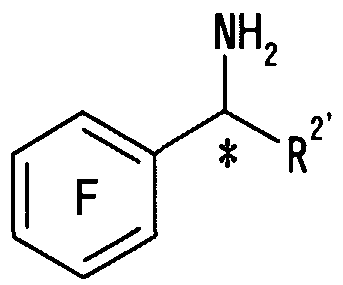





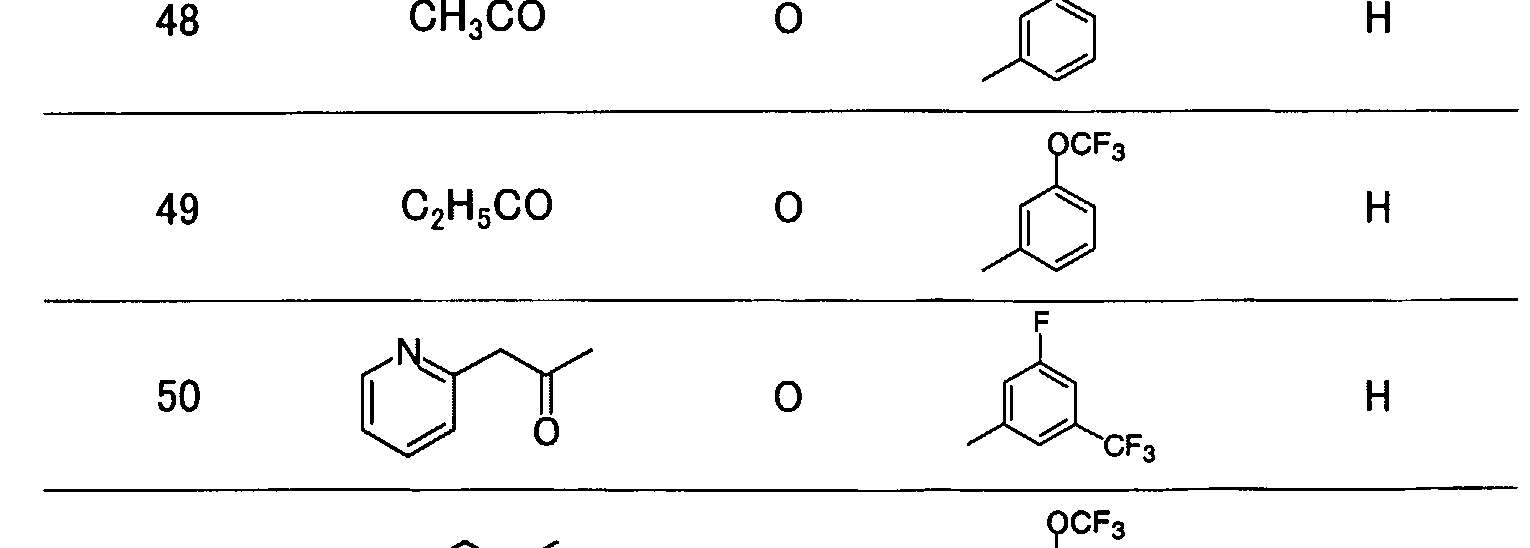


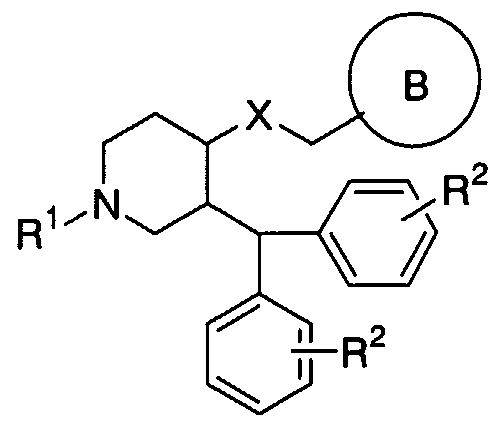
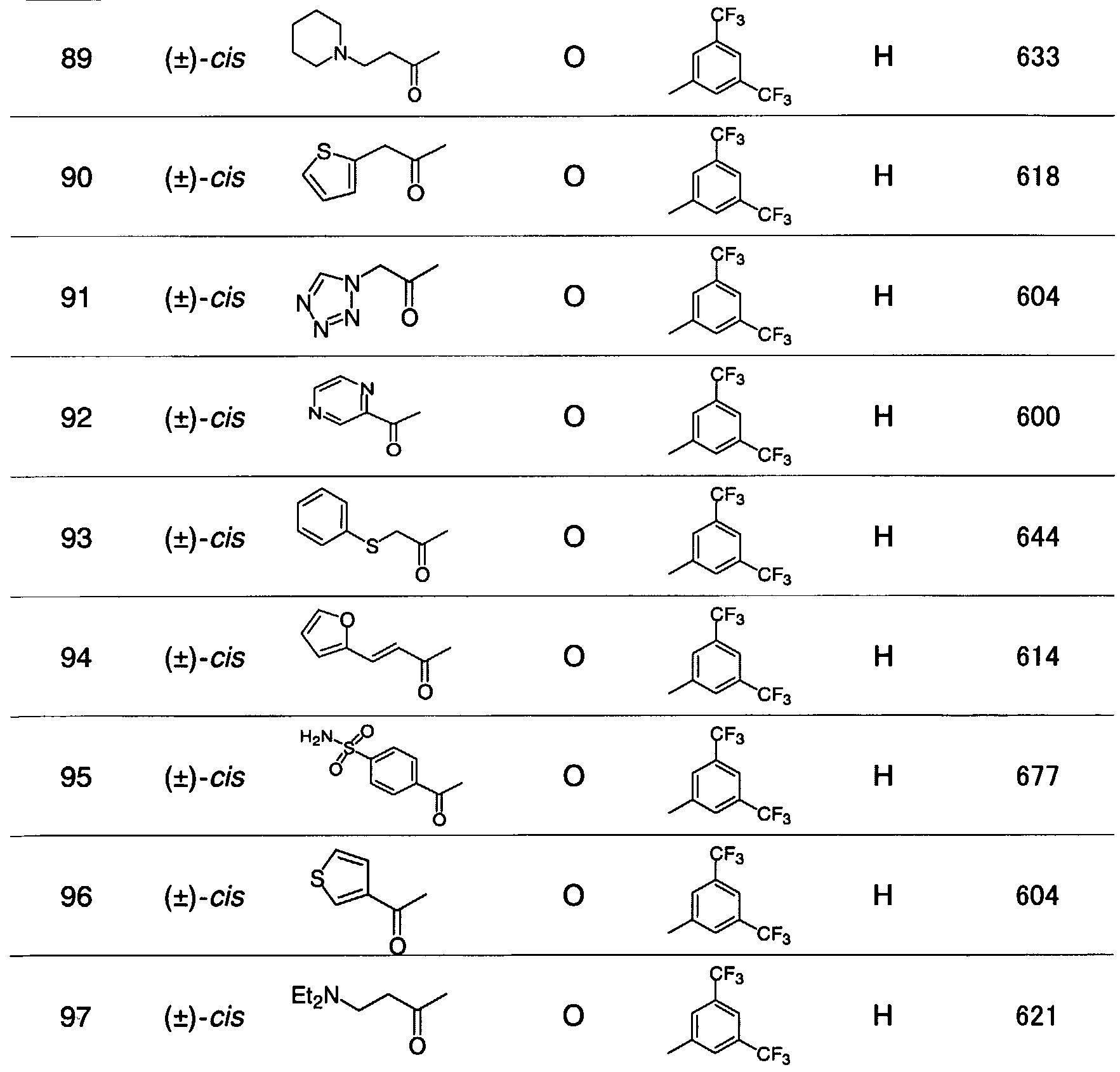


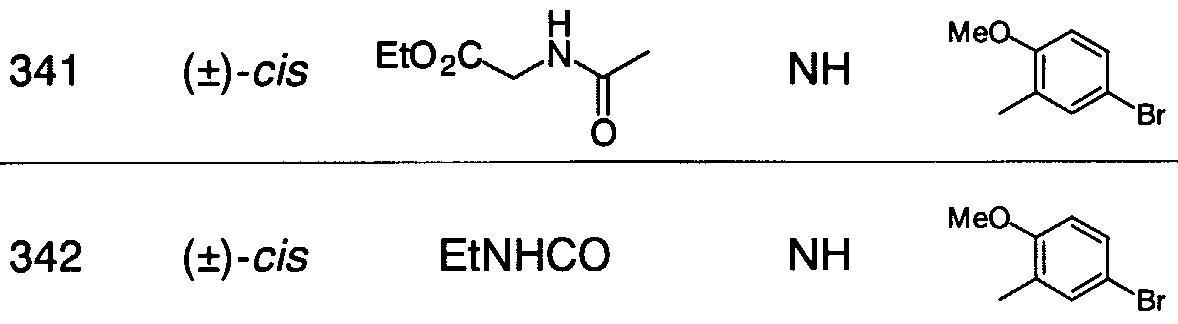








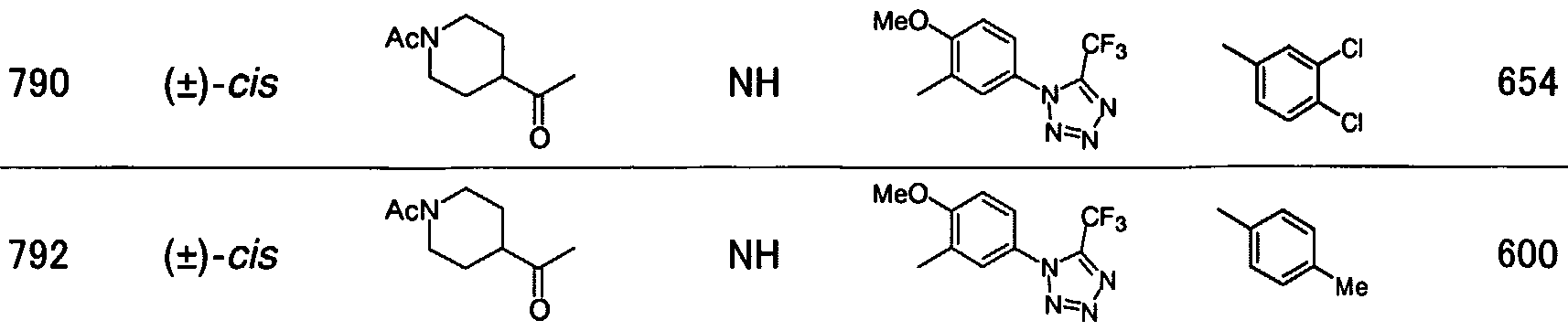


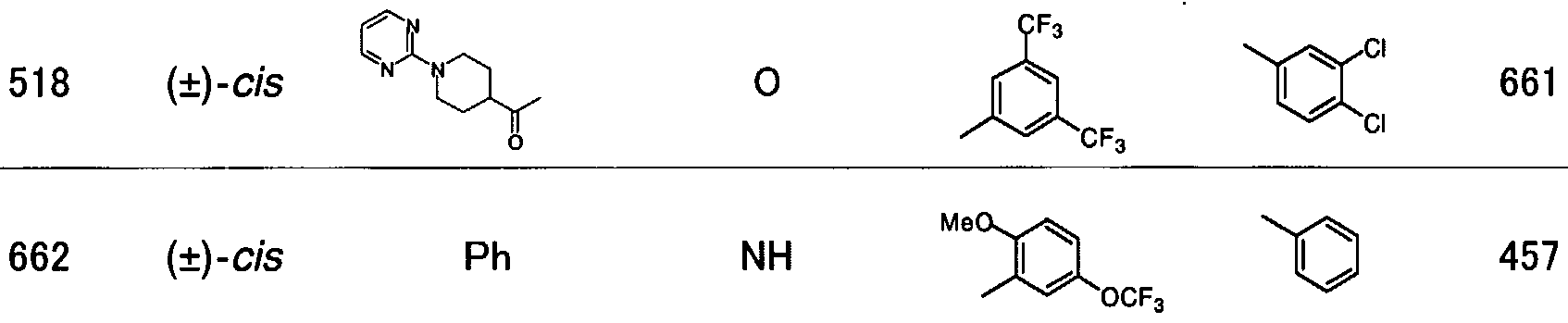


Claims


Priority Applications (10)
| Application Number | Priority Date | Filing Date | Title |
|---|---|---|---|
| NZ537330A NZ537330A (en) | 2002-05-31 | 2003-05-29 | Piperidine derivative, process for producing the same, and use |
| BR0311425-2A BR0311425A (pt) | 2002-05-31 | 2003-05-29 | Composto, pró-droga, método para preparar o composto, álcool oticamente ativo, e amina oticamemte ativa, e para prevenir e/ou tratar anormalidades ou doenças, medicamento, e, uso do composto ou de uma pró-droga deste |
| KR10-2004-7019499A KR20050010018A (ko) | 2002-05-31 | 2003-05-29 | 피페리딘 유도체, 이의 제조 방법 및 용도 |
| EP03733151A EP1553084A4 (en) | 2002-05-31 | 2003-05-29 | Piperidin derivative, process for its preparation and use |
| US10/516,252 US7622487B2 (en) | 2002-05-31 | 2003-05-29 | Piperidine derivative, process for producing the same, and use |
| CA002487688A CA2487688A1 (en) | 2002-05-31 | 2003-05-29 | Piperidine derivative, process for producing the same, and use |
| HK06100291.0A HK1085462A1 (en) | 2002-05-31 | 2003-05-29 | Piperidine derivative, process for producing the same, and use |
| MXPA04011730A MXPA04011730A (es) | 2002-05-31 | 2003-05-29 | Derivados de piperidina, proceso para producir el mismo, y uso. |
| AU2003241903A AU2003241903A1 (en) | 2002-05-31 | 2003-05-29 | Piperidine derivative, process for producing the same, and use |
| NO20045701A NO20045701L (no) | 2002-05-31 | 2004-12-29 | Piperidinderivat, dets fremstilling og bruk |
Applications Claiming Priority (4)
| Application Number | Priority Date | Filing Date | Title |
|---|---|---|---|
| JP2002159338 | 2002-05-31 | ||
| JP2002-159338 | 2002-05-31 | ||
| JP2003017885 | 2003-01-27 | ||
| JP2003-17885 | 2003-01-27 |
Publications (1)
| Publication Number | Publication Date |
|---|---|
| WO2003101964A1 true WO2003101964A1 (en) | 2003-12-11 |
Family
ID=29714305
Family Applications (1)
| Application Number | Title | Priority Date | Filing Date |
|---|---|---|---|
| PCT/JP2003/006754 Ceased WO2003101964A1 (en) | 2002-05-31 | 2003-05-29 | Piperidine derivative, process for producing the same, and use |
Country Status (13)
| Country | Link |
|---|---|
| US (1) | US7622487B2 (ja) |
| EP (1) | EP1553084A4 (ja) |
| KR (1) | KR20050010018A (ja) |
| CN (1) | CN1671662A (ja) |
| AU (1) | AU2003241903A1 (ja) |
| BR (1) | BR0311425A (ja) |
| CA (1) | CA2487688A1 (ja) |
| HK (1) | HK1085462A1 (ja) |
| MA (1) | MA27284A1 (ja) |
| MX (1) | MXPA04011730A (ja) |
| NO (1) | NO20045701L (ja) |
| NZ (1) | NZ537330A (ja) |
| WO (1) | WO2003101964A1 (ja) |
Cited By (17)
| Publication number | Priority date | Publication date | Assignee | Title |
|---|---|---|---|---|
| WO2005068427A1 (ja) * | 2004-01-14 | 2005-07-28 | Takeda Pharmaceutical Company Limited | カルボキサミド誘導体およびその用途 |
| WO2005110987A1 (en) * | 2004-05-12 | 2005-11-24 | Pfizer Products Inc. | Piperidine derivatives as nk1 and nk3 antagonists |
| WO2006004195A1 (en) * | 2004-07-02 | 2006-01-12 | Tanabe Seiyaku Co., Ltd. | Piperidine compound and process for preparing the same |
| WO2006030975A1 (ja) * | 2004-09-17 | 2006-03-23 | Takeda Pharmaceutical Company Limited | ピペリジン誘導体およびその用途 |
| WO2006030984A1 (en) * | 2004-09-17 | 2006-03-23 | Tanabe Seiyaku Co., Ltd. | Piperidine compound and process for preparing the same |
| WO2006115285A1 (ja) * | 2005-04-21 | 2006-11-02 | Takeda Pharmaceutical Company Limited | 医薬組成物 |
| WO2006057977A3 (en) * | 2004-11-22 | 2006-12-07 | Merck & Co Inc | Cycloalkyl piperidine tachykinin receptor antagonists |
| WO2006057921A3 (en) * | 2004-11-22 | 2006-12-21 | Merck & Co Inc | Piperidinyl piperidine tachykinin receptor antagonists |
| WO2007089031A1 (en) * | 2006-02-01 | 2007-08-09 | Takeda Pharmaceutical Company Limited | Piperidine derivatives as tachykinin receptor antagonists |
| WO2007111323A1 (ja) * | 2006-03-27 | 2007-10-04 | Toray Industries, Inc. | ウレイド誘導体およびその医薬用途 |
| JP2007530672A (ja) * | 2004-03-30 | 2007-11-01 | アストラゼネカ・アクチエボラーグ | 喘息およびcopdの処置のためのmmp阻害剤としてのトリアゾロン誘導体 |
| WO2008059854A1 (en) | 2006-11-16 | 2008-05-22 | Astellas Pharma Inc. | Piperidine derivatives or salts thereof |
| WO2009072643A1 (en) * | 2007-12-03 | 2009-06-11 | Takeda Pharmaceutical Company Limited | Nitrogen-containing heterocyclic compound and use thereof |
| WO2010032856A1 (ja) | 2008-09-19 | 2010-03-25 | 武田薬品工業株式会社 | 含窒素複素環化合物およびその用途 |
| JP2010535733A (ja) * | 2007-08-07 | 2010-11-25 | エフ.ホフマン−ラ ロシュ アーゲー | Nk3受容体アンタゴニストとしてのピロリジンアリールエーテル |
| JP2012505173A (ja) * | 2008-10-09 | 2012-03-01 | エフ.ホフマン−ラ ロシュ アーゲー | ピロリジンn−ベンジル誘導体 |
| US8455520B2 (en) | 2007-07-17 | 2013-06-04 | Merck Sharp & Dohme Corp. | Soluble epoxide hydrolase inhibitors, compositions containing such compounds and methods of treatment |
Families Citing this family (8)
| Publication number | Priority date | Publication date | Assignee | Title |
|---|---|---|---|---|
| WO2006073589A2 (en) * | 2004-11-22 | 2006-07-13 | Merck & Co., Inc. | Cycloalkyl keto piperidine tachykinin receptor antagonists |
| TW200716603A (en) * | 2005-04-21 | 2007-05-01 | Takeda Pharmaceuticals Co | Piperidine derivative crystal, process for producing the same, and use |
| BRPI0614692A2 (pt) * | 2005-07-29 | 2009-05-19 | Hoffmann La Roche | derivados de indol-3-il-carbonil-piperidina e piperazina |
| EP1910292A1 (en) * | 2005-08-04 | 2008-04-16 | Takeda Pharmaceutical Company Limited | Piperidine derivative as tachykinin receptor antagonist |
| PE20090277A1 (es) * | 2007-04-24 | 2009-04-06 | Takeda Pharmaceutical | Derivados de piperidina como antagonistas de taquiquininas |
| US8022099B2 (en) | 2008-11-03 | 2011-09-20 | Hoffmann-La Roche Inc. | N-benzyl pyrrolidine derivatives |
| WO2012154194A1 (en) | 2011-05-09 | 2012-11-15 | Forma Tm, Llc | Piperidine derivatives and compositions for the inhibition of nicotinamide phosphoribosyltransferase (nampt) |
| CN102701992B (zh) * | 2012-07-03 | 2014-01-15 | 重庆医科大学 | 一种抗肿瘤化合物及其药学上可接受的盐、及制备方法和应用 |
Citations (4)
| Publication number | Priority date | Publication date | Assignee | Title |
|---|---|---|---|---|
| WO1993001170A1 (en) * | 1991-07-01 | 1993-01-21 | Pfizer Inc. | 3-aminopiperidine derivatives and related nitrogen containing heterocycles |
| WO1993009780A1 (de) * | 1991-11-15 | 1993-05-27 | Byk Gulden Lomberg Chemische Fabrik Gmbh | Verwendung von sulfonylverbindungen |
| WO1999047511A1 (en) * | 1998-03-17 | 1999-09-23 | Merck Sharp & Dohme Limited | Indole derivatives as 5-ht2a receptor antagonists |
| WO2002026710A1 (en) * | 2000-09-26 | 2002-04-04 | Tanabe Seiyaku Co., Ltd. | 5-phenylbenzylamine compounds, process for their production and intermediates for their synthesis |
Family Cites Families (8)
| Publication number | Priority date | Publication date | Assignee | Title |
|---|---|---|---|---|
| DE4217401A1 (de) | 1991-06-07 | 1993-01-28 | Byk Gulden Lomberg Chem Fab | Verfahren zur herstellung von 4-aminopiperidinen |
| JPH05155853A (ja) * | 1991-12-03 | 1993-06-22 | Mitsubishi Petrochem Co Ltd | 芳香族カルボン酸誘導体 |
| JPH06157539A (ja) * | 1992-11-27 | 1994-06-03 | Mitsubishi Petrochem Co Ltd | 芳香族アルデヒドスピロアセタール化合物 |
| FR2735127B1 (fr) * | 1995-06-09 | 1997-08-22 | Pf Medicament | Nouvelles piperazines heteroaromatiques utiles comme medicaments. |
| JP2001514640A (ja) * | 1997-03-07 | 2001-09-11 | ビイク グルデン ロンベルク ヒエーミツシエ フアブリーク ゲゼルシヤフト ミツト ベシユレンクテル ハフツング | 新規のテトラゾール |
| AU5970199A (en) * | 1998-08-31 | 2000-03-21 | Byk Gulden Lomberg Chemische Fabrik Gmbh | Benzonaphthyridine-n-oxides comprising a pde3 and pde4 inhibiting activity |
| AU7866701A (en) * | 2000-05-08 | 2001-11-20 | Shiv Kumar Agarwal | Antibacterial chiral 8-(substituted piperidino)-benzo (i, j) quinolizines, processes, compositions and methods of treatment |
| WO2003057668A1 (en) | 2001-12-28 | 2003-07-17 | Takeda Chemical Industries, Ltd. | Nitrogenous cyclic ketone derivative, process for producing the same, and use |
-
2003
- 2003-05-29 MX MXPA04011730A patent/MXPA04011730A/es unknown
- 2003-05-29 CA CA002487688A patent/CA2487688A1/en not_active Abandoned
- 2003-05-29 AU AU2003241903A patent/AU2003241903A1/en not_active Abandoned
- 2003-05-29 BR BR0311425-2A patent/BR0311425A/pt not_active IP Right Cessation
- 2003-05-29 HK HK06100291.0A patent/HK1085462A1/en unknown
- 2003-05-29 WO PCT/JP2003/006754 patent/WO2003101964A1/ja not_active Ceased
- 2003-05-29 US US10/516,252 patent/US7622487B2/en not_active Expired - Fee Related
- 2003-05-29 EP EP03733151A patent/EP1553084A4/en not_active Withdrawn
- 2003-05-29 NZ NZ537330A patent/NZ537330A/en unknown
- 2003-05-29 KR KR10-2004-7019499A patent/KR20050010018A/ko not_active Ceased
- 2003-05-29 CN CNA038183544A patent/CN1671662A/zh active Pending
-
2004
- 2004-12-29 NO NO20045701A patent/NO20045701L/no not_active Application Discontinuation
- 2004-12-30 MA MA28024A patent/MA27284A1/fr unknown
Patent Citations (4)
| Publication number | Priority date | Publication date | Assignee | Title |
|---|---|---|---|---|
| WO1993001170A1 (en) * | 1991-07-01 | 1993-01-21 | Pfizer Inc. | 3-aminopiperidine derivatives and related nitrogen containing heterocycles |
| WO1993009780A1 (de) * | 1991-11-15 | 1993-05-27 | Byk Gulden Lomberg Chemische Fabrik Gmbh | Verwendung von sulfonylverbindungen |
| WO1999047511A1 (en) * | 1998-03-17 | 1999-09-23 | Merck Sharp & Dohme Limited | Indole derivatives as 5-ht2a receptor antagonists |
| WO2002026710A1 (en) * | 2000-09-26 | 2002-04-04 | Tanabe Seiyaku Co., Ltd. | 5-phenylbenzylamine compounds, process for their production and intermediates for their synthesis |
Non-Patent Citations (2)
| Title |
|---|
| HALLETT DAVID J. ET AL.: "Neighboring group participation of the indole nucleus: an unusual DAST-mediated rearrangement reaction", J. ORG. CHEM., vol. 65, no. 16, 2000, pages 4984 - 4993, XP002972314 * |
| See also references of EP1553084A4 * |
Cited By (22)
| Publication number | Priority date | Publication date | Assignee | Title |
|---|---|---|---|---|
| WO2005068427A1 (ja) * | 2004-01-14 | 2005-07-28 | Takeda Pharmaceutical Company Limited | カルボキサミド誘導体およびその用途 |
| JPWO2005068427A1 (ja) * | 2004-01-14 | 2007-09-06 | 武田薬品工業株式会社 | カルボキサミド誘導体およびその用途 |
| JP2007530672A (ja) * | 2004-03-30 | 2007-11-01 | アストラゼネカ・アクチエボラーグ | 喘息およびcopdの処置のためのmmp阻害剤としてのトリアゾロン誘導体 |
| WO2005110987A1 (en) * | 2004-05-12 | 2005-11-24 | Pfizer Products Inc. | Piperidine derivatives as nk1 and nk3 antagonists |
| WO2006004195A1 (en) * | 2004-07-02 | 2006-01-12 | Tanabe Seiyaku Co., Ltd. | Piperidine compound and process for preparing the same |
| WO2006030975A1 (ja) * | 2004-09-17 | 2006-03-23 | Takeda Pharmaceutical Company Limited | ピペリジン誘導体およびその用途 |
| WO2006030984A1 (en) * | 2004-09-17 | 2006-03-23 | Tanabe Seiyaku Co., Ltd. | Piperidine compound and process for preparing the same |
| WO2006057977A3 (en) * | 2004-11-22 | 2006-12-07 | Merck & Co Inc | Cycloalkyl piperidine tachykinin receptor antagonists |
| WO2006057921A3 (en) * | 2004-11-22 | 2006-12-21 | Merck & Co Inc | Piperidinyl piperidine tachykinin receptor antagonists |
| EP1817284A4 (en) * | 2004-11-22 | 2009-07-01 | Merck & Co Inc | Cycloalkyl PIPERIDINE tachykinin receptor Antagonist |
| EP1817302A4 (en) * | 2004-11-22 | 2009-07-01 | Merck & Co Inc | PIPERIDINYLPIPERIDIN-tachykinin receptor Antagonist |
| WO2006115285A1 (ja) * | 2005-04-21 | 2006-11-02 | Takeda Pharmaceutical Company Limited | 医薬組成物 |
| WO2007089031A1 (en) * | 2006-02-01 | 2007-08-09 | Takeda Pharmaceutical Company Limited | Piperidine derivatives as tachykinin receptor antagonists |
| WO2007111323A1 (ja) * | 2006-03-27 | 2007-10-04 | Toray Industries, Inc. | ウレイド誘導体およびその医薬用途 |
| WO2008059854A1 (en) | 2006-11-16 | 2008-05-22 | Astellas Pharma Inc. | Piperidine derivatives or salts thereof |
| US8153658B2 (en) | 2006-11-16 | 2012-04-10 | Astellas Pharma, Inc. | Piperidine derivative or salt thereof |
| US8455520B2 (en) | 2007-07-17 | 2013-06-04 | Merck Sharp & Dohme Corp. | Soluble epoxide hydrolase inhibitors, compositions containing such compounds and methods of treatment |
| JP2010535733A (ja) * | 2007-08-07 | 2010-11-25 | エフ.ホフマン−ラ ロシュ アーゲー | Nk3受容体アンタゴニストとしてのピロリジンアリールエーテル |
| WO2009072643A1 (en) * | 2007-12-03 | 2009-06-11 | Takeda Pharmaceutical Company Limited | Nitrogen-containing heterocyclic compound and use thereof |
| US8470816B2 (en) | 2007-12-03 | 2013-06-25 | Takeda Pharmaceutical Company Limited | Nitrogen-containing heterocyclic compound and use thereof |
| WO2010032856A1 (ja) | 2008-09-19 | 2010-03-25 | 武田薬品工業株式会社 | 含窒素複素環化合物およびその用途 |
| JP2012505173A (ja) * | 2008-10-09 | 2012-03-01 | エフ.ホフマン−ラ ロシュ アーゲー | ピロリジンn−ベンジル誘導体 |
Also Published As
| Publication number | Publication date |
|---|---|
| CN1671662A (zh) | 2005-09-21 |
| MA27284A1 (fr) | 2005-04-01 |
| CA2487688A1 (en) | 2003-12-11 |
| EP1553084A4 (en) | 2007-03-28 |
| BR0311425A (pt) | 2005-03-15 |
| MXPA04011730A (es) | 2005-07-14 |
| NZ537330A (en) | 2007-04-27 |
| EP1553084A1 (en) | 2005-07-13 |
| HK1085462A1 (en) | 2006-08-25 |
| AU2003241903A1 (en) | 2003-12-19 |
| KR20050010018A (ko) | 2005-01-26 |
| US7622487B2 (en) | 2009-11-24 |
| US20060167052A1 (en) | 2006-07-27 |
| NO20045701L (no) | 2005-02-16 |
Similar Documents
| Publication | Publication Date | Title |
|---|---|---|
| WO2003101964A1 (en) | Piperidine derivative, process for producing the same, and use | |
| CN105980370B (zh) | 稠合的杂环化合物 | |
| JP5580741B2 (ja) | 含窒素複素環化合物およびその用途 | |
| CN103524392B (zh) | 作为用于治疗增生性疾病的mek 抑制剂的吖丁啶 | |
| CN106170487A (zh) | 杂环化合物 | |
| WO2006030975A1 (ja) | ピペリジン誘導体およびその用途 | |
| JPH09508376A (ja) | アラルキル置換アザシクロ系の治療薬 | |
| AU4076593A (en) | Azacyclic compounds | |
| US20060223826A1 (en) | Indole derivatives as somatostatin agonists or antagonists | |
| TW200906408A (en) | Piperidine derivative and use thereof | |
| WO2005068427A1 (ja) | カルボキサミド誘導体およびその用途 | |
| US7795267B2 (en) | Bicyclic piperazine compound having TGR23 antagonistic activity | |
| WO2009128262A1 (ja) | キノロン誘導体およびその用途 | |
| JP2004285038A (ja) | ピペリジン誘導体、その製造法および用途 | |
| EP1910292A1 (en) | Piperidine derivative as tachykinin receptor antagonist | |
| WO2006115285A1 (ja) | 医薬組成物 | |
| US20060241145A1 (en) | Piperidine derivative crystal, process for producing the same, and use | |
| JP2004300133A (ja) | アミン誘導体 | |
| JP2005306839A (ja) | 二環性ピペラジン化合物およびその用途 | |
| TW201627301A (zh) | 具有抗疼痛之多重模式活性的哌啶化合物 | |
| MXPA06004271A (en) | Derivatives of n-[heteroaryl(piperidine-2-yl)methyl]benzamide, preparation method thereof and application of same in therapeutics | |
| TW200808724A (en) | Piperidine derivative and use thereof |
Legal Events
| Date | Code | Title | Description |
|---|---|---|---|
| AK | Designated states |
Kind code of ref document: A1 Designated state(s): AE AG AL AM AT AU AZ BA BB BG BR BY BZ CA CH CN CO CR CU CZ DE DK DM DZ EC EE ES FI GB GD GE GH GM HR HU ID IL IN IS JP KE KG KR KZ LC LK LR LS LT LU LV MA MD MG MK MN MW MX MZ NI NO NZ OM PH PL PT RO RU SC SD SE SG SK SL TJ TM TN TR TT TZ UA UG US UZ VC VN YU ZA ZM ZW |
|
| AL | Designated countries for regional patents |
Kind code of ref document: A1 Designated state(s): GH GM KE LS MW MZ SD SL SZ TZ UG ZM ZW AM AZ BY KG KZ MD RU TJ TM AT BE BG CH CY CZ DE DK EE ES FI FR GB GR HU IE IT LU MC NL PT RO SE SI SK TR BF BJ CF CG CI CM GA GN GQ GW ML MR NE SN TD TG |
|
| DFPE | Request for preliminary examination filed prior to expiration of 19th month from priority date (pct application filed before 20040101) | ||
| 121 | Ep: the epo has been informed by wipo that ep was designated in this application | ||
| WWE | Wipo information: entry into national phase |
Ref document number: PA/a/2004/011730 Country of ref document: MX |
|
| WWE | Wipo information: entry into national phase |
Ref document number: 2003733151 Country of ref document: EP |
|
| ENP | Entry into the national phase |
Ref document number: 2006167052 Country of ref document: US Kind code of ref document: A1 |
|
| WWE | Wipo information: entry into national phase |
Ref document number: 2487688 Country of ref document: CA Ref document number: 10516252 Country of ref document: US |
|
| WWE | Wipo information: entry into national phase |
Ref document number: 1020047019499 Country of ref document: KR Ref document number: 1-2004-501958 Country of ref document: PH |
|
| WWE | Wipo information: entry into national phase |
Ref document number: 2004/10085 Country of ref document: ZA Ref document number: 200410085 Country of ref document: ZA |
|
| WWE | Wipo information: entry into national phase |
Ref document number: 1942/KOLNP/2004 Country of ref document: IN |
|
| WWE | Wipo information: entry into national phase |
Ref document number: 537330 Country of ref document: NZ Ref document number: 2003241903 Country of ref document: AU |
|
| WWP | Wipo information: published in national office |
Ref document number: 1020047019499 Country of ref document: KR |
|
| WWE | Wipo information: entry into national phase |
Ref document number: 20038183544 Country of ref document: CN |
|
| WWP | Wipo information: published in national office |
Ref document number: 2003733151 Country of ref document: EP |
|
| NENP | Non-entry into the national phase |
Ref country code: JP |
|
| WWP | Wipo information: published in national office |
Ref document number: 10516252 Country of ref document: US |