WO2004003012A2 - Variants du polypeptide papm de bacteries du genre streptomyces. - Google Patents
Variants du polypeptide papm de bacteries du genre streptomyces. Download PDFInfo
- Publication number
- WO2004003012A2 WO2004003012A2 PCT/FR2003/001926 FR0301926W WO2004003012A2 WO 2004003012 A2 WO2004003012 A2 WO 2004003012A2 FR 0301926 W FR0301926 W FR 0301926W WO 2004003012 A2 WO2004003012 A2 WO 2004003012A2
- Authority
- WO
- WIPO (PCT)
- Prior art keywords
- strain
- papm
- nucleic acid
- gene
- polypeptide
- Prior art date
- Legal status (The legal status is an assumption and is not a legal conclusion. Google has not performed a legal analysis and makes no representation as to the accuracy of the status listed.)
- Ceased
Links
Classifications
-
- C—CHEMISTRY; METALLURGY
- C07—ORGANIC CHEMISTRY
- C07K—PEPTIDES
- C07K5/00—Peptides containing up to four amino acids in a fully defined sequence; Derivatives thereof
- C07K5/02—Peptides containing up to four amino acids in a fully defined sequence; Derivatives thereof containing at least one abnormal peptide link
- C07K5/021—Peptides containing up to four amino acids in a fully defined sequence; Derivatives thereof containing at least one abnormal peptide link containing the structure -NH-(X)n-C(=0)-, n being 5 or 6; for n > 6, classification in C07K5/06 - C07K5/10, according to the moiety having normal peptide bonds
-
- C—CHEMISTRY; METALLURGY
- C12—BIOCHEMISTRY; BEER; SPIRITS; WINE; VINEGAR; MICROBIOLOGY; ENZYMOLOGY; MUTATION OR GENETIC ENGINEERING
- C12N—MICROORGANISMS OR ENZYMES; COMPOSITIONS THEREOF; PROPAGATING, PRESERVING, OR MAINTAINING MICROORGANISMS; MUTATION OR GENETIC ENGINEERING; CULTURE MEDIA
- C12N9/00—Enzymes; Proenzymes; Compositions thereof; Processes for preparing, activating, inhibiting, separating or purifying enzymes
- C12N9/10—Transferases (2.)
- C12N9/1003—Transferases (2.) transferring one-carbon groups (2.1)
- C12N9/1007—Methyltransferases (general) (2.1.1.)
-
- A—HUMAN NECESSITIES
- A61—MEDICAL OR VETERINARY SCIENCE; HYGIENE
- A61K—PREPARATIONS FOR MEDICAL, DENTAL OR TOILETRY PURPOSES
- A61K38/00—Medicinal preparations containing peptides
Definitions
- the present invention relates to new variants of the PapM polypeptide of bacteria of the genus Streptomyces having a substrate selectivity and / or an improved efficiency compared to the wild-type polypeptide. It also relates to the nucleic acids coding for these variants, to the microorganisms incorporating these nucleic acids and their use for the production of B components of Streptogramins.
- Pristinamycin is an antibiotic which belongs to the family of streptogramins to which virginiamycin and mikamycin also belong. Streptogramins form a small, homogeneous and original group of antibiotics made up of an association of two types of chemically very different molecules: streptogramins A are polyunsaturated macrolactones and streptogramins B are depsipeptides (Cocito CG (1979) Microbiol. Rev. , 43: 145-198) (Cocito CG (1983) In Antibiotics, 6: (Ed. FE Hahn), 296-332.).
- the compounds A and B are respectively called pristmamycins II (P1T) and pristinamycins I (PI) and their structures are shown in Figures 1 and 2.
- Compounds A and B have a synergistic antibacterial and bactericidal activity particularly directed against Gram-positive bacteria such as Staphylococci and Enterococci (Cocito, 1979). These compounds act by binding to the 50S subunit of the ribosomes of target cells, which causes inhibition of protein synthesis (Cocito, 1979); (Di Giambattista M., Chinali G. and Cocito C. G. (1989) J. Antim. Chemother., 24: 485-507).
- Streptogramins are mainly produced by Actinomycetes. More particularly, pristinamycin is produced by the filamentous bacterium Streptomyces pristinaespiralis in the form of a natural mixture consisting of 30% PI and 70% PII (Blanc et al, (1995), J. Bacteriol. 177 (18) : 5206-14). For each type of molecule, several isoforms are co-produced as is frequently observed for natural metabolites.
- PIA components B of pristinamycins
- Figure 2 3-hydroxypicolinic acid, L-threonine, D-arninobutyric acid, L-proline, A-dimé ylamino-L-phenylalanine, 4-oxo-L- acid pipecolic and L-phenylglycine.
- PINH2 Another PIA analog, which is differentiated by the presence of a 4-amino-L-phenylalanine in position 4 (see FIG. 2) is of interest for developing original hemisynthesis products.
- PLNH2 has so far been obtained only in a process in which 4-amino-L-phenylalanine is added to the culture medium of S. pristinaespirais (WO 96/01901).
- a first approach described in application WO93 / 20182 consists in the selection of microorganisms capable of specifically producing the A or B components of streptogramins. These microorganisms are obtained by conventional selection techniques comprising an optional first step of mutagenesis on a microorganism producing streptogramins and a second step of identifying microorganisms selectively producing one or the other of the components A or B of streptogramins.
- This technique makes it possible in particular to obtain strains of S. pristinaespirais selectively producing Pristinamycins PU (component A) or pristinamycins PI (component B).
- this document does not describe strains selectively producing pristinamycins PI with a proportion of isoforms modified in favor of the PIB form compared to PIA which still remains the majority.
- Application WO 94/08014 describes the isolation and identification of genes coding for enzymes involved in the pathway for biosynthesis of the A components and in the pathway for the biosynthesis of the B components of streptogramins. It also describes the expression of these genes with the aim of increasing the production rates of the A or B components and the use of these genes for the construction of mutants blocked at different stages of the biosynthetic pathways of the A or B components and thus leading to the accumulation of certain intermediaries in these biosynthetic pathways.
- WO94 / 08014 describes the isolation and characterization of twelve genes snaA, snaB, sna ⁇ , snaD, papA, papM, samS, snbA, snb ⁇ , snbD, snbE and snbR isolated from a DNA library genomics of S.
- pristinaespiraîis and highlights the involvement of the snaA, snaB, sna ⁇ snaD genes in the pathway of biosynthesis of the A components and that of the papA, papM, samS, snbA, snb-C, snbD, snbE and snbR genes in the biosynthetic pathway of the B components.
- Application WO 96/01901 describes an original process for the preparation of new compounds related to the B components of streptogramins but different from the B components produced naturally by microorganisms producing streptogramins.
- a strain of microorganism mutated is used so as to alter the biosynthesis of the precursors of the B components of the streptogramins.
- As a mutant strain it is possible to use in particular strains of S. pristinaespirais whose biosynthesis pathway for the precursors of the B components is altered by disruption of the papA or pipA or hpaA genes. These strains no longer produce PI pristinamycins (components B) and produce PII pristinamycins (components A).
- the mutant strain is cultivated in a medium supplemented with an original precursor, different from the precursor whose synthesis is impaired.
- the incorporation of original precursors within the depsipeptide and in place of the natural precursors leads to the production of new compounds related to the B components of streptogramins and which have interesting therapeutic properties.
- L-MMPAPA a biosynthetic intermediate of L-DMPAPA which is incorporated into the macrocycle of PIA (Blanc et al., Mol. Microbiol (1997), 23 (2) -.191-202); Thibaut et al, J. Bacteriol. (1997), 179 (3): 697-704).
- Four genes have been identified involved in the biosynthesis of L-MMPAPA and L-DMPAPA from chorismate papA, papB, papC and papM (Blanc et al., 1997).
- the papM gene codes for a protein catalyzing the two successive methylation reactions which make it possible to produce L-DMPAPA from 4-amino-L-phenylalanine via L-MMPAPA according to the diagram described in FIG. 3. These two reactions of methylation are catalyzed by PapM with very similar kinetic parameters (affinity constants and reaction rates) (Blanc et al., 1997).
- the sequence of the papM gene of S. pristinaespirais and that of the corresponding polypeptide (4-amino-L-phenylalanine (phenyl N) - methyltransferase) are presented in the sequence SEQ ID No. 1.
- the present invention is based on the discovery that it is possible to improve the production of certain minority isoforms of the B components of streptogramins by modifying the errzymatic activity of the product of the papM gene.
- the invention is based on the identification of new variants of the PapM polypeptide having a substrate selectivity and / or an improved efficiency compared to the wild-type polypeptide.
- the inventors have in fact shown that it is possible to mutagenize the papM gene so that the corresponding protein is no longer capable of catalyzing the second methylation reaction while retaining sufficient activity for the first methylation reaction, or, all at least, such that the second methylation reaction is strongly inhibited compared to the first reaction.
- the presence of such enzymes in microorganisms producing Streptogramins such as strains of S. pristinaespira ⁇ is leads to the accumulation of L-MMPAPA and therefore to the preferential production of PLB (FIG. 3).
- the invention is also based on the discovery that the microorganisms producing an inactive form of the PapM polypeptide or the mutants no longer expressing the papM gene allow the accumulation of B components of the streptogramins that wild microorganisms are capable of synthesizing naturally but in quantities too weak to be isolated.
- the present invention describes the construction of recombinant strains of S. pristinaespira ⁇ is mainly producing a compound of the PI family, called PINH2, which many wild strains of S. pristinaespira ⁇ is are not capable of synthesizing and which corresponds to the incorporation of 'a 4-amino-L-phenylalanine in position 4 of the macrocycle ( Figure 2).
- a first subject of the invention relates to a variant of the PapM polypeptide, characterized in that it has a methylation efficiency with respect to different methylation substrates (increased or reduced) compared to the methylation efficiency of the wild PapM polypeptide with with respect to these same substrates.
- the variant of the PapM polypeptide characterized in that it has a methylation efficiency 1 defined by the Kcati / Kmi ratio with respect to the methylation substrate 1 and / or a methylation efficiency 2 defined by the Kcat / Km ratio with against the methylation substrate 2 different from the wild PapM polypeptide.
- the PapM variant according to the invention has an efficiency of methylation 1 of L-PAPA to L-MMPAPA defined by the ratio Kcat PAPA / Km APA and / or the methylation efficiency 2 of L-MMPAPA into L-DMPAPA defined by the Kcat ratio MMPAPA / Km MMPA P A different from the methylation efficiency of the PapM polypeptide presented in SEQ LD No. 1.
- the PapM variant according to the invention exhibits a methylation efficiency 1 of L-PAPA into L-MMPAPA at least 2 times greater, preferably at least 5 times greater and more preferably at least 10 times greater than the methylation efficiency 2 of L-MMPAPA into L-DMPAPA.
- a variant is more particularly advantageous for the production of P B.
- the variant according to the invention derives from the sequence of the wild PapM polypeptide by replacement of one or more amino acids chosen from: the residue Gly 249 (a) , residue Thr 192 (b) or a residue equivalent to (a) or (b) in a homologous polypeptide.
- PapM homologous polypeptide within the meaning of the present invention is intended to denote polypeptides derived from or derived from bacteria of the genus Streptomyces such as in particular Streptomyces olivaceus, Sfreptomyces ostreogriseus, Streptomyces mitakaensis, Streptomyces lo ⁇ densis, Streptomyces gi'aminofaciens, Streptomyces diatic microorganisms whose amino acid sequence differs from the amino acid sequence SEQ ID No. 1 by substitution, deletion and / or insertion of one or more amino acids and whose biological function is similar to that of the PapM polypeptide.
- Such a homologous polypeptide sequence may be similar to at least 60% of the sequence SEQ ID NO: 1, preferably similar to at least 70% and more preferably similar to at least 80% of the sequence SEQ ÎD N 0 Î .
- the variant according to the invention derives from the polypeptide sequence SEQ ID No. 1 and has at least one substitution at position 249 of a Glycine with a Serine.
- the variant according to the invention derives from the polypeptide sequence SEQ LD No. 1 and has at least one substitution in position 192 of a Threonine by an Isoleucine.
- the variant according to the invention derives from SEQ LD No. 1 and has at least one substitution in position 249 of a Glycine with a Serine and a substitution in position 192 of a Threonine with an Isoleucine.
- the PapM variant according to the invention exhibits a methylation efficiency 2 of L-MMPAPA into L-DMPAPA at least 2 times greater, preferably at least 5 times greater and more preferably at least 10 times the methylation efficiency 1 of L-PAPA to L-MMPAPA.
- Such a variant is more particularly advantageous for increasing the production of PIA.
- the invention also relates to a nucleic acid encoding a variant of the polypeptide as defined above. It is preferably a nucleic acid derived by mutation of the nucleotide sequence presented in SEQ ID No. 1 or the sequences derived due to the degeneracy of the genetic code.
- the nucleic acid according to the invention comprises at least one missense mutation upstream of the NPPY motif located at positions 193 to 196, and preferably this missense mutation results in a non-conservative change of acid. amino, such as for example the substitution of a cytosine in position 658 by a thymine (C658T) (mutated allele 66).
- nucleic acid characterized in that it comprises at least one substitution of a guanine in position 828 with an adenine (G828A) (mutated allele 49).
- G828A adenine
- C658T thymine
- the subject of the invention is also the use of a nucleic acid as defined above to modify the proportion of the isoforms of the B components in a strain producing Streptogramins.
- strains producing Streptogramins which can be used in the context of the invention, mention may in particular be made of the strains Streptomyces olivaceus, Streptomyces ostreogriseus, Streptomyces mitakaensis, Streptomyces lo ⁇ densis, Streptomyces graminofaciens, Streptomyces diastaticus, etc.
- Nucleic acids encoding a variant of PapM which exhibits a methylation efficiency 1 of PAPA to MMPAPA at least 2 times greater, preferably at least 5 times greater and more preferably at least 10 times greater than the methylation efficiency 2 of MMPAPA to DMPAPA are more particularly useful for the production of PLB when expressed in a strain of S. pristinaespiraîis.
- the nucleic acids coding for a variant of PapM which has a methylation efficiency 2 of MMPAPA to DMPAPA at least 2 times greater, preferably at least 5 times greater and more preferably at least 10 times greater than the methylation efficiency 1 of the PAPA to MMPAPA are more particularly useful for the production of PIA when they are expressed in a strain of S. pristinaespira ⁇ is.
- the subject of the invention is also any recombinant DNA comprising a nucleic acid as defined above.
- the invention also relates to any expression vector with autonomous and / or integrative replication comprising a nucleic acid or a recombinant DNA as defined above, such as in particular a vector comprising all or part of the vector pVRC1306 represented in FIG. 11.
- a subject of the invention is also host cells containing a nucleic acid and / or a recombinant DNA and / or an expression vector as defined above.
- the host cells according to the invention can be both eukaryotic and prokaryotic cells.
- eukaryotic cells which are suitable, mention may be made of animal cells, yeasts, or fungi.
- yeasts of the genus Saccharomyces, Kluyveromyces, Pichia, Schwanniomyces, or Hansenula.
- animal cells mention may be made of COS cells, CHO, C127, Xenopus eggs, etc.
- the fungi there may be mentioned more particularly Micromonospora, Aspergillus ssp. or Trichoderma ssp.
- prokaryotic cells it is preferred to use the following bacteria Actinomycetes, and in particular Streptomyces, E. coli (Example 7), Bacillus.
- the recombinant cells of the invention are chosen from cells producing Streptogramins and in particular Streptomyces olivaceus, Streptomyces osti-eogriseus, Streptomyces mitakaensis, Streptomyces lo ⁇ densis, Sti'eptomyces graminofaciens, Streptomyces diastaticus.
- the recombinant cells of the invention can be obtained by any method which makes it possible to introduce a nucleotide sequence stranger in a cell. It may especially be transformation, electroporation, conjugation, fusion of protoplasts, or any other technique known to those skilled in the art.
- the subject of the invention is also a method for producing a variant of the PapM polypeptide according to the invention, characterized in that a host cell is cultured as defined above and the polypeptide produced is recovered.
- the invention also relates to the use of a host cell as defined above and expressing a variant of the PapM polypeptide according to the invention in a bioconversion reaction.
- these cells can make it possible to transform aromatic amines into monomethylated amines, in particular 4-amino-L-phenylalanine into 4-memylamino-L-phenylalanine.
- bioconversions can be carried out either using whole cells, or using acellular extracts of said cells.
- Another subject of the invention relates to a process for producing a component B of Streptogramins, characterized in that:
- the papM gene is inactivated in a strain producing Streptogramins or potentially producing Streptogramins and introducing one or more copies of a nucleic acid coding for a variant of papM as defined above,
- the Streptogramins producing strain is a pristinamycin producing strain derived from S. pristinaespiraitis and more preferably it is derived from the S. pristinaespiraitis SP92 strain or from S. pristinaespiraitis ATCC25486. It can also be chosen from the following strains: Streptomyces olivaceus ATCC12019, Streptomyces ostreogriseus ATCC27455, Streptomyces mitakaensis ATCC 15297, Streptomyces lo ⁇ densis ATCC11415, Streptomyces graminofaciens, Streptomyces diastaticus.
- the Streptogramins producing strain is a strain which produces a reduced or non-detectable amount of A components of Streptogramins.
- strains which do not produce components A of streptogramins mention may in particular be made of the strain S. osteogriseus Pr4Q031 / CBS
- strains of S. pristinaespira ⁇ are which do not produce A components
- the introduction of the nucleic acid coding for a variant of PapM according to the invention is done in replacement of the wild form of the papM gene.
- the variant expressed by the nucleic acid introduced it is possible to promote the production of different B components of streptogramins.
- a strain of S. pristinaespirais expressing a variant with a Kcat P AP A • Km MM PA PA Kcat M MP A P A • Km PAPA increased relative to the wild-type polypeptide leads to preferential production of PIB.
- a variant exhibiting a reduction in this ratio must make it possible to obtain increased production of PIA.
- the strain of S. pristinaespira ⁇ comprises a papM gene having at least the mutation (G828A) or the mutation (C658T) or the double mutation (G828A) (C658T).
- the invention also relates to a process for the production of PLNH2, characterized in that a strain is used in which the wild form of the papM gene of S. pristinaespirais is inactivated and / or replaced by a nucleic acid encoding an inactive form of the PapM polypeptide.
- the subject of the invention is also a mutant strain of S. pristinaespirais characterized in that it comprises a nucleic acid coding for a variant of the PapM polypeptide according to the invention.
- a strain may be obtained in particular by transformation of a recombinant strain whose wild papM gene has been disrupted and replaced by an ⁇ -Km cassette (see example 8) by a suicide plasmid allowing the exchange of this cassette with one of the mutated papM alleles.
- the invention describes the strain S. pristinaespiraitis SP217 comprising a nucleic acid carrying the mutation C658T (mutant allele 66) or the strain S.
- pristinaespiraitis SP218 comprising the double mutation C658T and G828A (mutant allele 49/66) . These mutations were introduced into the strain S. pristinaespira ⁇ is SP213 previously disrupted in the papM gene and replaced by an ⁇ -Km casette. An identical approach allowed the construction of the S strain. pristinaespiraîis SP101 with the introduction of the mutant allele 66 in the strain SP92.
- the invention also relates to the use of a strain of S. pristinaespirais for the production of PLNH2.
- a strain of S. pristinaespirais for the production of PLNH2.
- Such a strain is illustrated in particular by the strain SP216 which derives from the strain SP213 after inactivation of the papM gene and which mainly produces PLNH2.
- the invention also relates to a method for selecting variants of the PapM polypeptide or of a polypeptide encoded by a homologous gene according to which:
- a bank is produced by transforming a receptor strain with the mutagenized plasmids in step (a),
- the present invention shows how it is possible to carry out in vitro chemical mutagenesis with hydroxylamine on the papM gene cloned into a plasmid to constitute a library of mutants and to select from this library, from a screening miniaturized enzymatic, the clones of Escherichia coli which express the mutated papM genes whose corresponding proteins have the catalytic properties described above and which have a ratio "r" as defined above greater than or equal to 0.6.
- FIG. 1 example of the structure of pristinamycins H
- Figure 3 biosynthetic pathway of MMPAPA and DMPAPA, respective precursors of GDP and PIA.
- Figure 4 principle of the enzymatic test used for the screening of PapM mutants: labeling by simultaneous methylation of MMPAPA and DMPAPA from PAPA and MMPAPA respectively, in the presence of [ 14 C-Me] -SAM.
- Figure 5 representation of the plasmid pVRC706
- Figure 6 representation of the plasmid pUC4K
- Figure 7 sequence and translation of the wild papM gene. Positions of mutations identified for mutated clones 49 and 66.
- Figure 8 representation of the plasmid pVRC721
- Figure 10 representation of the case of double crossing over between the plasmid pVRC1303 and the chromosome of S. pristinaespira ⁇ is. Chromosome structure of recombinant strains.
- Figure 12 representation of the case of single crossing over selected between the plasmid pVRC 1306 and the chromosome of the recombinant strain SP216
- Figure 13 representation of the case of a second recombination event leading to a recombinant strain carrying one of the mutated alleles of the papM gene BIBLIOGRAPHY
- Example 1 Methodology and protocol of the enzymatic screening This example illustrates the screening of mutated forms of the PapM enzyme exhibiting new kinetic characteristics, from a population of enzymes resulting from mutagenic treatment with hydroxylamine (cf. examples 2 and 3).
- this example illustrates the obtaining of mutated forms of PapM having a modified selectivity for the two natural substrates of this enzyme.
- PapM methylase was previously cloned, purified and characterized (Blanc et al. 1994; Blanc et al. 1997). PapM is a bifunctional enzyme catalyzing both the N-methylation of L-PAPA into L-MMPAPA and that of L-MMPAPA into L-DMPAPA (see Figure 4).
- L-PAPA and L-MMPAPA are two competitive PapM substrates, having Michaelis constants (Km) of 240 and 530 ⁇ M respectively, and for which the maximum PapM velocity (Vmax) is 55 and 71 ⁇ moles respectively hour and per mg of PapM (Blanc et al. 1997).
- L-MMPAPA is dependent on the kinetic parameters of PapM (Kml and Vmaxl for L-PAPA, Km2 and Vmax2 for L-MMPAPA), and also dependent on the respective concentrations SI and S2 of L-PAPA and L-MMPAPA according to the formula:
- Vl / V2 (Vmaxl / Kml) [Sl] / (Vmax2 / Km2) [S2]
- Example 7.1 The simultaneous assay of the two PapM methylation activities is described in Example 7.1.
- This PapM methylase activity assay is carried out in the presence of 1.5 M L-PAPA, 3 mM L-MMPAPA and 70 ⁇ M SAM.
- the 96-well plates from the bank of E. coli clones producing the mutated PapM enzymes, prepared as described in Example 3, are thawed at 27 ° C. Then, to the 200 ⁇ l of the culture on LB medium contained in each well are added 25 ⁇ l of the mixture A.
- the mixture A is obtained by successively adding (1) 3 ml of 50 mM Bis-Tris-Propane buffer pH 10 in which have were dissolved 12 mg of L-PAPA, and 71 mg of (DL) -MMPAPA in the form of di-hydrochloride and prepared as described in WO 9601901 -Al, (2) 0.7 ml of 4 mM SAM in water , (3) 0.7 ml of [ 14 C-Me] -SAM at 25 ⁇ Ci / ml and 60 mCi / mmol (AMERSHAM) (4) 0.6 ml of 100 mM Bis-Tris-Propane buffer pH 6.8 , (5) 56 mg EDTA, di-sodium salt.
- the quantities are given for the preparation of a volume of 5 ml of mixture A.
- the plate is then sealed with an adhesive film, then incubated at 27 ° C for 2 hours.
- the reaction is stopped with 40 ⁇ l of a stop solution.
- the stop solution (for a volume of 4 ml) is obtained by mixing 2.2 ml of a 24 mg / ml solution of sodium heptane sulfonate in water with 1.8 ml of hydrochloric acid. concentrated. After centrifugation of the plates at 3000 g for 5 min, approximately 100 ⁇ l of the supernatant from each well is analyzed by HPLC in the system described in Example 7.1.
- r 0.50 ⁇ 0.05.
- the threshold for the ratio r fixed for a mutated PapM enzyme significantly more active for methylation 1 than methylation 2 is approximately 0.60.
- This example illustrates the mutagenesis of the papM gene from a plasmid DNA from Streptomyces clone in a plasmid which can replicate in E. coll.
- Chemical mutagenesis has been carried out using hydroxylamine (NH2OH) which specifically binds to cytosine residues to form N4-hydroxycytosines which are then able to pair with adenine residues. Hydroxylamine therefore causes G: C> A: T transitions.
- NH2OH hydroxylamine
- G C> A: T transitions.
- the choice of this mutagenic agent is particularly advantageous for carrying out mutations of DNAs rich in GC such as the DNA of Streptomyces which contains 70 to 75% of GC residues.
- Mutagenesis was carried out simultaneously on two different plasmids, the plasmid pVRC706 and the plasmid pUC4K.
- the plasmid pVRC706 ( Figure 5) is a derivative of pMTL23 (Chambers et al., 1988) in which was cloned between the unique sites MM and BamHI (the end cut by BamHI having been made blunt by the action of the Kleenow enzyme according to the protocol of Sambrook et al. (1989)), the 1.7 kb MM-StuI fragment derived from the plasmid pVRC409 carrying the papM gene to be mutagenized (Blanc et al., 1994; Blanc et al, 1997).
- Cloning the SM endpoint in the BamHI site of pMTL23 filled with the enzyme Kleenow makes it possible to reconstitute the BamHI site which can be reused in subsequent cloning.
- Cloning at the MM site makes it possible to obtain a phase fusion between the first 32 amino acids of ⁇ -galactosidase encoded by the lacZ gene of the plasmid pMTL23 and the last 11 amino acids of the papB gene located upstream of the papM gene, this preserves the coupling translational which seems to exist between these two genes in view of the nucleotide sequence (Blanc et al., 1994).
- the expression of the papM gene is controlled by the Plac promoter of the lacZ gene inducible by the addition of ImM from LPTG. It has previously been shown that such an expression system makes it possible to produce, in E. coli, the PapM methylase in the form of an active and soluble protein representing approximately 0.5% of the total proteins (Blanc et al., 1994 ).
- Plasmid pUC4K ( Figure 6) is a derivative of the vector pUC4 carrying the two genes conferring resistance to ampicillin and kanamycin (Vieira and Messing, 1982). This plasmid was chosen as a mutagenesis control for the following reasons: (1) its size (3.9 kb) is close to the plasmid pVRC706 (4.4 kb), (2) the two plasmids pUC4K and pVRC706 have a structure and very similar properties since they both derive from the vectors of the pUC series and (3) the presence of two resistance genes ampR and kanR carried by pUC4K makes it easy to calculate the percentage of clones having undergone mutagenesis in one of these genes by counting the clones sensitive to the antibiotic chosen.
- Two mutagenesis with hydroxylamine were carried out according to the protocol of Humprey et al (1976) by varying the incubation temperature: 80 ° C and 85 ° C: 5 mg of purified plasmid DNA on a cesium chloride gradient are brought to light. contact of 0.4 M of hydroxylamine (pH 6) in a final volume of 100 ml for 35 minutes at the desired temperature (80 ° C or 85 ° C) in a buffer containing 0.05 M of sodium phosphate and 0 , 5 mM EDTA.
- the mutagenesis reaction is stopped by adding 100 ml of buffer containing 0.1 M sodium phosphate and 1 mM EDTA and the hydroxylamine is eliminated by eight successive dialysis baths against 2 liters of TES buffer (10 mM Tris pH 7.5, 1 mM EDTA and 100 mM NaCl).
- the DNA thus treated is precipitated by the addition of 1/10 volume of 3M sodium acetate (pH 8) and 2.5 volumes of 95% ethanol.
- the DNA pellet is rinsed, dried and then taken up in 100 ⁇ l of TE buffer (10 mM Tris-HCl and 1 mM EDTA, pH 7.5).
- the mutagenesis reaction is checked at the temperature studied in the absence of hydroxylamine. 2.4. Preparation of the E. coli strain receiving the mutagenized plasmids
- the E. coli DH5 strain (supE44 DlacU169 (f801acZDM15) hsdR17 recAl endAl gyrA96 thi-1 relAl), (Hanahan, 1990) was used to evaluate the mutagenesis after transformation with the plasmids pVRC706 and pUCK4 mutagenized according to the protocol described above .
- the E. coli DH5 ⁇ cells competent for the transformation by electroporation were prepared according to the following protocol: a culture of 1 liter in LB medium is carried out at 37 ° C. until the D.O (at 600 nm) reaches 0.5 to 0.8. The cells are then placed on ice for 30 minutes to stop their growth and then centrifuged at 4 ° C at 4000 g for 15 minutes. The cell pellet is successively rinsed with 1 liter of sterile cold water, 0.5 liters of cold water and 20 ml of a cold solution containing 10% glycerol. After each rinse, the cells are centrifuged at 4 ° C at 4000 g for 15 min.
- the cell pellet is taken up in 2 ml of 10% glycerol.
- the cells thus prepared can be immediately electroporated or else frozen and stored at -80 ° C. in the form of 40 ml aliquots for later use.
- the transformation efficiency of electrocompetent cells is of the order of 10 9 colonies / ⁇ g of plasmid DNA from pUC18.
- the E.coli DH5 ⁇ cells thus prepared were electroporated with the equivalent of 5 ng of plasmid to be tested. To do this, 40 ⁇ l of electrocompetent cells are brought into contact for 1 min. at 4 ° C with 1 to 2 ⁇ l of a solution containing 5 ng of plasmid DNA.
- the electroporator (Bio-Rad) is set for a 25 mF and 2500 V well. The resistance of the well controller is fixed at
- the cell / DNA mixture is placed in an electroporation cuvette with a width of 0.2 cm and the electrical well is applied. We typically obtain a tap time of 4.5 to 5 ms. After drawing, quickly add to the cells 1 ml of SOC medium (2% bactero-agar, 10 mM NaCl, 2.5 mM KC1, 10 mM MgC12, 10 mM Mg SO4, 20 mM glucose) and the whole is transferred into a tube. of 5 ml polypropylene which is incubated for 1 hour at 37 ° C. This step allows the cells to recover and begin to express the resistance gene (s) present on the plasmids that have entered the cells.
- SOC medium 2% bactero-agar, 10 mM NaCl, 2.5 mM KC1, 10 mM MgC12, 10 mM Mg SO4, 20 mM glucose
- the cell culture is diluted appropriately (the dilution are conventionally from 10 _I to 10 A ) and the transformed colonies are selected on solid LB medium containing the selection antibiotic (50 ⁇ g / ml of ampicillin or 50 ⁇ g / ml of kanamycin).
- the selection antibiotic 50 ⁇ g / ml of ampicillin or 50 ⁇ g / ml of kanamycin.
- the two mutagenesis temperature conditions tested were evaluated according to the following two criteria: on the one hand, the capacity of the mutagenized plasmids to transform an E. coli strain and, on the other hand, the percentage of E. coli clones transformed with mutagenized pUC4K plasmids having lost one of the two resistances encoded by the plasmids.
- the capacity of the mutagenized plasmids with hydroxylamine was measured to transform the E. coli DH5 ⁇ strain. This capacity was compared with that of the non-mutagenized plasmids produced as a control of the incubation temperature in the absence of hydroxylamine. Indeed, the action of hydroxylamine must generate lethal mutations in the plasmids, and more particularly at the level of the resistance genes allowing the selection of the recombinant clones as well as in the regions carrying the origin of replication. It can therefore be considered that the loss of the ability to transform a plasmid is all the more important when the mutagenesis treatment has been effective.
- the capacities to transform of the two mutagenized plasmids expressed in% of the capacity of the non-mutagenized control plasmids are indicated in the table below.
- the second evaluation criterion consisted in calculating, for the mutagenized plasmids pUC4K, the% of clones sensitive to kanamycin (Kana s ) among the clones resistant to ampicillin (Ampi R ) and vice versa. These percentages reflect the frequency of mutations which have occurred, under the effect of hydroxylamine, at the level of the resistance genes considered (ampR or kanR) and which have disturbed their expression either by complete blocking (stopping transcription or translation ), or by leading to the synthesis of a truncated and / or inactive protein.
- Example 3 constitution and exploitation of an E. coli DH5 ⁇ bank hosting plasmids pVRC706 ;
- This example illustrates the construction and operation of a library of 6000 clones of the E. coli DH5 ⁇ strain hosting plasmids which have undergone chemical mutagenesis with hydroxylamine carried out at 85 ° C.
- 6000 clones selected from boxes of LB medium containing 50 mg / ml of ampicillin after transformation of electrocompetent cells of the E. coli DH5 ⁇ strain are subcultured individually in wells of 96-cell microtiter plates containing 200 ml Hogness culture and storage medium (Sambrook et al. 1989) supplemented with 100 ⁇ g / ml of ampicillin.
- the mother plates thus formed are incubated at 37 ° C with moderate shaking of 160 rpm for 24 hours so that the clones multiply and form saturated suspensions of bacteria having reached the stationary growth phase.
- the mother plates, once replicated in duplicate, are stored at -80 ° C. and constitute a form of long-term storage of the 6000 clones to be analyzed.
- Example 4 results of the screening of the E. coli DH5 ⁇ bank harboring mutagenized pVRC706 plasmids. This example illustrates the rapid analysis of a bank of 6000 clones from an mMaturized activity test in order to select the clones harboring mutated genes coding for enzymes having interesting properties.
- the methylation activities of all the clones selected during the first screening are systematically re-assayed from the replica plates prepared as in Example 3, and following the same protocol so as to confirm the results of the first assays. It appears that for the vast majority of clones, the assay results are confirmed.
- the plasmid DNA of these clones is isolated using standard techniques (Sambrook et al., 1989) and reintroduced into fresh electrocompetent cells of the E. coli DH5 ⁇ strain. This step makes it possible to verify that the alteration of the ratio r of the methylation activities observed in the 8 clones is not linked to the chromosomal context of the clones but depends solely on the plasmids originating from the selected clones.
- the next verification step consists in recloning the papM genes present in the selected clones into fresh expression vectors pMTL23.
- the 1.7 kb MluI-BamHI fragments carrying the papM genes are isolated from the plasmid DNA extracted from the selected clones which are recloned between the unique MM and BamHI sites of pMTL23.
- the steps necessary for these cloning (isolation of plasmid DNA, digestion of plasmid DNA by restriction enzyme, migration and analysis of enzymatic digestions by electrophoresis in agarose gels, preparation of DNA fragments after electrophoretic migration, ligation reactions ) were made according to the standard protocols described by Sambrook et al. (1989).
- the resulting plasmids have a structure analogous to that of pVRC706 (FIG. 5) except that they carry one of the 8 mutated alleles of the papM gene. They are called pVRC710 to pVRC717, each number being assigned to one of the 8 mutated alleles and are reintroduced into fresh electrocompetent cells of the E. coli DH5 ⁇ strain. The methylation activities of the resulting clones are re-assayed as described above.
- This step makes it possible to verify that the alteration of the ratio r of the methylation activities observed in these clones is not linked to one (or more) mutation (s) which would have occurred in a region of pVRC706 external to the papM gene but depends solely on one (or more) mutation (s) localized in the papM gene.
- This example illustrates the genetic characterization of genes that have undergone chemical mutagenesis. Genetic characterization is carried out by cloning and sequencing the mutated genes in order to compare their sequence with that of the wild-type gene and highlight the mutation (s) accounting for the phenotypes observed. This genetic characterization is carried out in parallel with a biochemical characterization of the proteins coded by the mutated genes (cf. example 7) in order to correlate the (or the) changes of amino acids observed with the modifications of the catalytic properties noted for these enzymes.
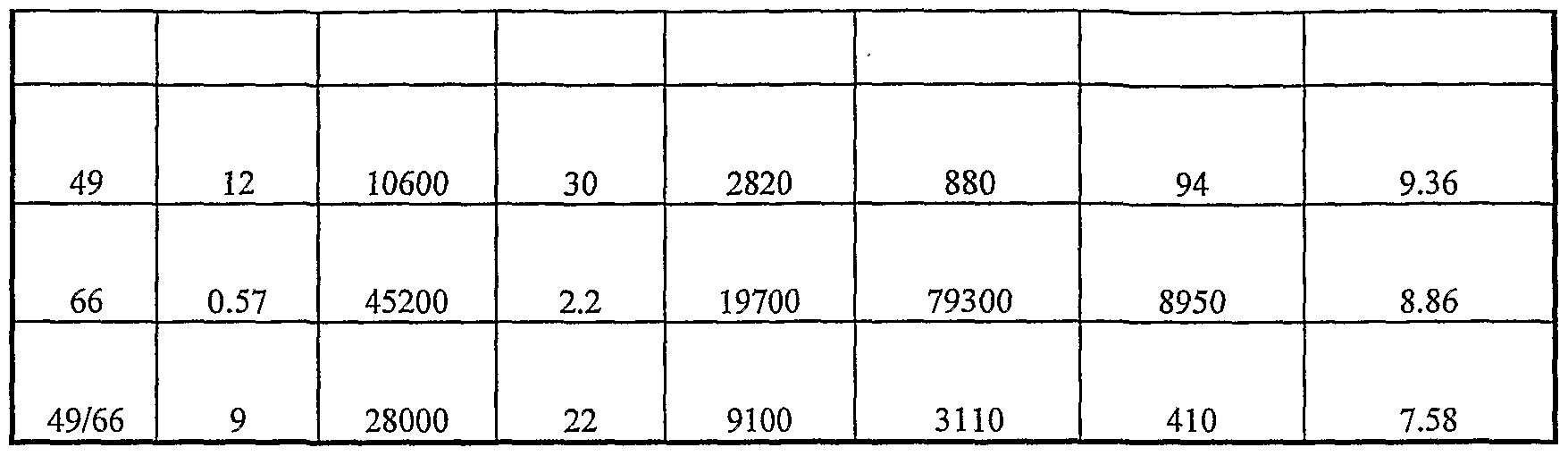
- mutant 66 In this table, only the mutations which cause a change in amino acids of the corresponding protein are indicated. For certain clones, and in particular for the clone 66A9 named mutant 66, other mutations said to be silent have been observed which do not lead to a change in the amino acid sequence due to the degeneration of the genetic code.
- the biochemical characterization of the proteins coded by the mutated genes as described in example 7, made it possible to observe a change in the catalytic properties of these enzymes compared to the protein coded by the wild-type papM gene.
- the modified amino acid is threonine located in position 192 just before the NPPY motif located in positions 193 to 196 (FIG. 7).
- This motif is conserved in all N-methylases and more particularly DNA N-methylases (methylating the positions 6 of adenines and 4 of cytosines) and is said to be part of the catalytic domain of these enzymes (Schluckebier et al., 1995).
- the modification of the threonine residue, a polar amino acid, to an isoleucine residue which is hydrophobic, is therefore probably important for the catalytic properties of the corresponding protein.
- a significant change has been observed in the catalytic properties of the enzyme encoded by the mutated gene 66 and more particularly for the second methylation reaction (cf. example 7).
- This example illustrates the construction by genetic engineering of genes doubly mutated from genes having simple mutations obtained after a mutagenesis carried out with hydroxylamine on plasmid DNA (see example 2), selected by enzymatic screening (see example 4) and characterized by sequencing (see example 5). Surprisingly, this strategy has enabled to obtain more interesting mutated genes combining the properties observed in simple mutants.
- a chimeric gene was produced by joining the 5 ′ part of the mutated papM 66 gene with the 3 ′ part of the mutated papM 49 gene. To do this, the following DNA fragments are isolated:
- the Mlul-Xhol fragment of 0.65 kb is isolated from the plasmid pVRC713 carrying the mutated papM 66 gene (see example 4). This fragment contains the beginning of the allele 66 including the ATC codon which has been mutated and which codes for the isoleucine which is found in position 192 of the modified methylase 66 (see FIG. 7).
- the 1.05 kb XhoI-BarnHI fragment is isolated from the plasmid pVRC711 carrying the mutated papM 49 gene (see example 4). This fragment contains the end of allele 49 including the codon AGC which has been mutated and which codes for the serine which is found at position 249 of the modified methylase 49 (see FIG. 7).
- the doubly mutated allele 49/66 is then transferred into a second expression vector pET11c (Novagen) using the strong PT7 promoter recognized by the phage T7 RNA polymerase.
- pVRC7108 the 1.8 kb BglI-BamHI fragment carrying the papM 49/66 gene is isolated from the plasmid pVRC718, which is cloned at the unique BamHI site of pET11c.
- pVRC 721 described in Figure 8 corresponding to the direction of insertion so as to achieve a translational fusion between the gene 10 of phage T7 and the papB gene located upstream of the papM gene.
- This plasmid is then introduced into the E. coli B121 (DE3) expression strain allowing the expression of the RNA polymerase of phage T7 and therefore of the papM 49/66 gene transcribed from the T7 promoter.
- Example 7 Biochemical characterization of the product of the papM gene (wild or mutated) of S. pristinaespiraisis expressed in strains of E. coli.
- This example illustrates the determination of the kinetic constants of the reactions catalyzed by the PapM protein (mutated or wild-type).
- the PapM protein catalyzes two reactions, on the one hand the methylation of 4-amino-L-phenylalanine (L-PAPA) to 4-methylamino-L-phenylalanine (L-MMPAPA) and on the other hand, the methylation of 4-methylamino-L-phenylalanme into 4-dimethylamino-L-phenylalanine (L-DMPAPA).
- This example illustrates the assay of two terminal activities of the biosynthesis of 4-dimethylamino-L-phenylalanine, component of pristinamycin IA. These are the methylation of 4-amino-L-phenylalanine to 4-methylamino-L-phenylalanine (methylation 1) on the one hand, and the methylation of 4-methylamino-L-phenylalanine to 4-dimethylamino -L-phenylalanine (methylation 2) on the other hand; these two activities using SAM as a methyl group donor (FIG. 4).
- the enzymatic fractions to be assayed (1 to 20 units) are incubated for 30 min at 27 ° C in a total volume of 200 ⁇ l of pH 6.8 bis-tris-propane buffer. 50mM containing SAM (200 ⁇ M) whose methyl group is radioactively labeled with the isotope 14 of the carbon atom (2 Ci / mol), in the presence of 4-amino-L-phenylalanine (1 mM) for the Methylation 1 or 4-memylamino-L-alamne assay (2.5 mM) for the methylation 2 assay.
- the reaction is stopped by adding 16 ⁇ l of 37% hydrochloric acid and then 20 ⁇ l of sodium heptanesulfonate at 240 g / 1. After centrifugation, 150 ⁇ l of supernatant are injected into the HPLC system in the following gradient mode:
- the substrates and products of the enzymatic reaction are quantified by absorption at 254 nm.
- This detection is coupled to an online radiochemical detection by means of a Berthold LB506 detector fitted with a GT400-U4 type solid scintillation cell. This makes it possible to specifically monitor the incorporation of radioactive methyl groups into the reaction products.
- the unit of enzymatic activity for methylation 1 (as well as for methylation 2) is defined as the quantity of enzyme necessary to incorporate 1 nmole of methyl group in 4-amino-L-phenylalanine (or in 4- methylamino-L-phenylalanine).
- This example illustrates the purification of an enzyme of S. pristinaespirais SP92, involved in the biosynthesis pathway of pristinamycin IA, expressed in E. coli by cloning of the modified papM gene.
- the pellet of a culture of E. coli BL21 (DE3):: pVRC721 (cf. example 6) overproducing the PapM variant 49/66 after induction with IPTG is washed with a pH 7.2 phosphate 100 mM buffer, 1 mM PMSF, 5 mM EDTA, 5 mM EGTA, 0.5 M KC1, 10% v / v glycerol.
- the extract is centrifuged for 1 hour at 50,000 g.
- the supernatant is desalted, in 2.5 ml aliquots, by gel permeation on PD-10 columns (Pharmacia) balanced in a pH 6.8 bis-tris 20 mM buffer containing 4 mM DTE, 5 mM benzarnidine, 0, 2 mM Pefabloc, 100 ⁇ g / 1 E-64, 2 mg / 1 leupeptin, 1 mM EDTA, ImM EGTA, 2 mg / 1 STI ,. 2 mg / 1 aprotinin, 20% v / v glycerol.
- Part of the protein eluate is then chromatographed (34 mg of protein) on a MonoQ HR® 10/10 column at a flow rate of 3 ml / min with an increasing linear gradient of sodium chloride (0 to 0.3 M) in a pH 6.8 bis tris 20mM buffer, containing 4 mM DTE, 2mM benzarnidine, 100 ⁇ g / 1 E-64, 2 mg / 1 leupeptine, 20% v / v glycerol.
- the fractions are completed with 10% v / v of buffer pH 6.8 bis-tris 20 mM, containing 4 mM DTE, 30 mM benzarnidine, 2 mM Pefabloc, 100 ⁇ g / 1 E-64, 2 mg / 1 leupeptin, 5 mM EDTA, 5 mM EGTA, 10 mg / 1 STI, 10 mg / L aprotinin, 20% v / v glycerol. Under these conditions, the two methylation activities (1 and 2) are detected identically in the exclusion fractions and the first elution fractions. These fractions are combined, concentrated by ultrafiltration on Centriprep ® 10 then on Centricon ® 10.
- This concentrate is brought to 0.85 M ammonium sulphate then chromatographed (20 to 80 mg each cycle) on a Phenyl-Superose HR column ®5 / 5 at a flow rate of 0.5 ml / min with a decreasing linear gradient of ammonium sulfate (0.85 to 0 M) in a pH 6.8 bis tris 50mM buffer, containing 4 mM DTE, 2 mM benzarnidine, 100 ⁇ g / 1 E-64, 2 mg / ml leupeptine, 1 mM EDTA, ImM EGTA, 10% v / v glycerol.
- the fractions are completed with 10% v / v of buffer pH 6.8 bis-tris 50 mM, containing 4 mM DTE, 30 mM benzarnidine, 2 mM Pefabloc, 100 ⁇ g / 1 E-64, 2 mg / 1 leupeptin, 1 mM EDTA, ImM EGTA, 10 mg / 1 STI, 10 mg / 1 aprotinin, 10% glycerol. Under these conditions, the two methylation activities (1 and 2) are detected identically in the elution fractions corresponding to approximately 0.15 M ammonium sulphate.
- the enzyme is pure. It presents in SDS-PAGE electrophoresis, a single band centered at a molecular weight around 32,000.
- Table 4 Purification of the enzyme 4-amino-L-phenylalanine (phenyl N) - methyltransferase mutant 49/66 from the strain E. coli BL21 (DE3) :: pVRC 721.
- the purification factor is calculated from after the increase in the specific activity of the fractions during the purification.
- the enzymes PapM wt, papM 49 and papM 66 are purified from cultures of E. coli DH5 ⁇ transformed respectively with the plasmids pVRC706, pVRC711 and pVRC713 (cf. example 4) and induced by IPTG.
- the purification protocol used is the same as that described in Example 7.2. at
- the methylation activity assay conditions are identical to those described in Example 7-1 with the exception of the SAM concentration of 2 mM, the methyl group of which is radioactively labeled with the isotope 14 of the atom. carbon (2 Ci / mol).
- Concentration ranges from 0.1 to 60 mM for each of the 4-amino-L-phenylalanine substrates for methylation 1 and 4-methylamino-L-phenylalanine for methylation 2 were produced. For each concentration of each substrate, the reaction speed is measured and expressed in nmol transformed per hour and per mg of protein.
- the ratio obtained for the wild-type Pap M enzyme is 1.1.
- the mutants of Pap M were selected in such a way that the ratio of the enzymatic efficiencies is greater than 2.5.
- the best mutants showed ratios greater than 7 and preferably close to 10.
- This example illustrates how we were able to discriminate the most efficient methylase for the production of PIB, that is to say the one that best catalyzes the first methylation reaction of p-amino-L-phenylalanine to p-methyl-L- phenylalanine compared to the second methylation reaction of p-methyl-L-aminophenylalanine to p-dimethylamino-L-phenylalanine.
- Vl / V2 (Kcatl / Kml) [Sl] / (Kcat2 / Km2) [S2]
- Kcat being the "turn over" of the enzyme or the number of moles of methyl substrate per number of moles of enzyme and per unit of time.
- the enzymatic reaction is the sum of two components, as if it were catalyzed by two separate enzymes, one acting on SI and competitively inhibited by S2, the other acting on S2 and competitively inhibited by SI
- the doubly mutated methylase 49/66 appears to be the most selective, it catalyzes the first methylation reaction 7 times better than the second, while the native enzyme catalyzes the two reactions similarly.
- EXAMPLE 8 Construction of recombinant strains of S. pristinaespirais disrupted in the papM gene
- This example illustrates the construction of recombinant strains of S. pristinaespirais disrupted in the papM gene.
- Such strains constitute the first step in the construction of recombinant strains whose wild papM gene is replaced by one of the mutated alleles obtained and characterized as described in the previous examples.
- these strains mainly produce a compound from the PI family, PLNH2 ( Figure 3) which is not naturally synthesized by strains having the wild-type papM gene.
- These strains therefore represent an access pathway to PLNH2 which it would be impossible to isolate from undisrupted strains in the papM gene.
- This construction was carried out using the plasmid pVRC1303 (cf. FIG. 9) derived from the suicide vector pDH5 capable of replicating only in E. coli and carrying a resistance gene expressed in Streptomyces (Hillemann et al., 1991) .
- the plasmid pVRC1303 was constructed after 4 main cloning steps described in FIG. 9 from:
- the recombinant strains were isolated after transformation of the strain SP213 with the plasmid pVRC1303.
- the ⁇ -Km cassette is transferred to the chromosome of the recombinant strain and gives it resistance to kanamycin.
- the gene present in the plasmid pVRC1303 (FIG. 9) is transferred to the chromosome of the recombinant strain and gives it resistance to thiostrepton or and to the nosiheptide (Hillemann and al., 1991).
- the two cases of crossing overs can therefore be distinguished by analyzing the phenotype of resistance or sensitivity to the nosiheptide.
- the recombinant clones resulting from the 5 transformations with pVRC1303 and selected for their resistance to 10 ⁇ g / ml of kanamycin as described above were subcultured in the form of patches on HT medium (Hopwood et al., 1985) containing 10 ⁇ g / M of kanamycin then tested on HT medium containing 400 ⁇ g / ml of nosiheptide. Only the clones presenting the phenotype (Kana, Nosi) were selected because they correspond to the case of double crossing over sought. These recombinant clones were then purified as follows: a stock of spores of these clones is prepared according to the method of Hopwood et al.
- SP216 This clone was selected for the analysis of its production and to continue the genetic constructions with a view to obtaining recombinant strains whose wild papM gene has been replaced by one of the mutated or doubly mutated alleles of papM as described in the examples. precedents.
- the mutant SP216 and the wild-type control strain SP213 were cultured in a liquid production medium.
- the fermentation was carried out as follows: 0.5 of a suspension of spores of the aforementioned strain are added under sterile conditions to 40 ml of inoculum medium in a 300 ml baffled Erlenmeyer flask.
- the inoculum medium consists of 10 g / 1 of Corn Steep, 15 g / 1 of sucrose, 10 g / 1 of (NH aSO ⁇ 1 g / 1 of K 2 HPO 4 , 3 g / 1 of NaCl, 0.2 g / 1 of MgSO 4 -7H 2 0 and 1.25 g / 1 of CaC0 3.
- the pH is adjusted to 6.9 with sodium hydroxide before the introduction of calcium carbonate.
- the Erlenmeyer flasks are stirred for 44 h at 27 ° C. on a rotary shaker at a speed of 325 rpm 2.5 ml of the preceding culture aged 44 h is added sterile to 30 ml of production medium in a 300 ml Erlenmeyer flask.
- the production medium consists of 25 g / 1 soy flour, 7.5 g / 1 starch, 22.5 g / 1 glucose, 3.5 g / 1 feed yeast, 0.5 g / 1 zinc sulfate and 6 g / 1 of calcium carbonate
- the pH is adjusted to 6.0 with hydrochloric acid before the introduction of calcium carbonate.
- the Erlenmeyer flasks are agitated for 50 h at 27 ° C. As soon as the fermentation is complete, the volume of must is measured and two volumes of mobile phase are added, consisting of 34% acetonitrile and 66% of a solution of 0.1 M KH 2 PO 4 (adjusted to pH 2.9 with H 3 Concentrated PO) allowing the extraction of pristinamycins. After stirring, the whole is filtered, the pristinamycins are contained in the supernatant.
- Example 9 Construction of recombinant strains of S. pristinaespirais comprising the papM allele 49/66 gene or the papM allele 66 gene.
- the introduction of the mutated papM gene 49/66 was carried out in the strain S. pristinaespiraitis SP92 previously described which produces a mixture of PI and Pu (Blanc et al, 1994) and in the strain SP213 derived from SP92 after chemical mutagenesis; strain SP213 specifically produces PL
- the introduction of the mutated papM gene 66 was carried out in the strain SP213 derived from SP92.
- the strategy for constructing recombinant strains carrying one of the mutated alleles of the papM gene is the same whatever the type of mutation of the allele of the papM gene (49/66 or 66) and whatever the strain chosen. It consists in transforming the recombinant strains whose wild papM gene has been disrupted and replaced by an ⁇ -Km cassette (see example 8) by a suicide plasmid allowing the exchange of this cassette by one of the mutated papM alleles.
- plasmid p VRC 1306 The plasmid pVRC1306 comprising carrying the papM gene allele 49/66 was constructed from the plasmid pVRC1303 carrying a deletion of the papM gene. This construction is carried out in three stages as described in FIG. 11. For these cloning, the following plasmids were used:
- the plasmid pBR322 is a cloning vector in E. coli which served as an intermediate vector for transferring the EcoRI fragment of 8.9 kb from pVRC1303 described in example 8.1.1 and containing, inter alia, the papM gene deleted by the cassette W-Km carrying the kanamycin resistance gene. Cloning was carried out at the EcoRI site of pBR322 and the plasmid obtained was named p VRC 1304.
- the plasmid pVRC 721 described in Example 6 ( Figure 6) was used to prepare the Mlul / Agel insert of 1 kb containing the papM allele 49/66 gene. This insert was then exchanged with the 4 kb Mlul / Agel fragment of pVRC1304 and the plasmid obtained was named pVRC1305.
- the plasmid pVRC1303 made it possible to exchange the EcoRI fragment of 8.9 kb with the EcoRI fragment of 5.83 kb of pVRC1305 containing the papM gene allele 49/66.
- the final plasmid pVRC1306 (FIG. 11) therefore comprises the papM gene allele 49/66 as well as an upstream and downstream part of this gene, the whole being cloned in the vector pDH5 described in example 8.1.1.
- the recombinant strains were isolated after transformation of the strain SP216 described in Example 8 with the plasmid pVRC1306. For this two steps were necessary.
- the first step consisted in selecting by phenotype analysis (Kana R , Nosi R ) a strain resulting from a simple homologous recombination event between the chromosomal and plasmid regions located upstream of the papM gene ( Figure 12).
- the second step consisted in selecting, from the strain (Kana R , Nosi R ), the second homologous recombination event by analysis of the phenotype (Kana s , Nosi s ) of the clones obtained (FIG. 13).
- the 7 recombinant clones were therefore subcultured on HT medium with 10 ⁇ g / ml of kanamycin and on HT medium with 400 ⁇ g / ml of nosiheptide. All of the clones have the expected phenotype (Kana R , Nosi R ). These clones were purified twice according to the following method: a stock of spores of these clones a is prepared according to the method of Hopwood et al. (1985) and isolated colonies are obtained after spreading different dilutions of the stock on HT medium containing 400 ⁇ g / ml of nosih ⁇ ptide i These colonies constitute pure subclones of the selected clones. The chromosomal structure of two subclones from two clones was analyzed by Southern Blot.
- the genomic DNA was extracted after culture in a YEME liquid medium containing 4 ⁇ g / ml of nosiheptide.
- the DNA was extracted by lyzozyme treatment and phenol / chloroform extraction according to the technique described by Hopwood et al. (1985).
- Several Southerns were carried out with the total DNA of these different subclones digested with the restriction enzymes EcoRI and Asel.
- the 8.9 kb fragment derived from pVRC1303 digested with EcoRI was used as a probe after labeling by random priming obtained with the (-32P) dCTP and the labeling kit (Random primed DNA labeling kit) marketed by Amersham.
- the techniques used are those described by Sambrook et al. (1989).
- the second step consists in selecting a second homologous recombination event between the chromosomal and plasmid regions located downstream of the papM gene from the strain SP216 :: pVRC1306 (cf. FIG. 13).
- This step leads to the selection of recombinant clones having exchanged the papM gene deleted by the ⁇ -Km cassette with the papM allele 49/66 gene; the expected phenotype of the recombinant clones is (Kana, Nosi).
- the second culture was centrifuged for 15 min at 3500 rpm, the pellet was taken up in 600 ⁇ l of water + 0.01% Tween and this suspension was spread on HT medium to obtain spore mats.
- the spores were harvested and dilute suspensions of these spores were spread on HT medium to obtain isolated colonies.
- the chromosomal analysis of the recombinant subclones is carried out in two stages: the first stage consists in verifying that the papM gene allele 49/66 is present and that the chromosomal regions upstream and downstream of this gene have not been modified .
- the second step consists in verifying the absence of DNA fragment corresponding to the W-Km cassette and to the plasmid pDH5.
- genomic DNA preparations of the recombinant clones and total DNA analyzes in Southern Blot were carried out according to the methods mentioned above.
- the total DNA was digested with the restriction enzymes EcoRI and Asel.
- the plasmid pVRC721 was digested with M (1.7 kb insert containing the papM allele 49/66 gene). This labeled fragment served as a probe which hybridized with a fragment corresponding to a 6.83 kb band.
- the total DNA was digested by Sali.
- Labeled fragments from pVRC409 and pVRC803 (containing the upstream and downstream regions of the papM gene of the strain SP213, Blanc et al., 1994; Blanc et al., 1997) were used as a probe. These fragments made it possible to reveal, after hybridization, 7 bands (2.45, 0.190, 2.150, 0.725, 1.55, 0.4 and 0.55 kb).
- the second step was to check that there were no more fragments of
- the three recombinant clones have a chromosomal profile (FIG. 13) which confirms the presence of the papM allele 49/66 gene and the absence of the gene. resistance to kanamycin as well as the fragment corresponding to the plasmid pDH5. These elements indicate that the genomic environment of the papM allele 49/66 gene is intact. A clone was retained and was named strain SP217.
- This example shows the production of pristinamycins with the different mutants. It illustrates in particular the increase in GDP production of the mutant papM mutants allele 49/66 (strain SP217) and of the papM mutants allele 66 (strain SP218) compared to the control strain papM wt (strain SP213).
- the effect of the mutated papM gene allele 49/66 (strain SP101) was also compared with the control strain papM wt (strain SP92).
- Table 9 production of PI pristinamycins for different S. pristinaespirait strains. The PI values produced are given in mg / liter
Landscapes
- Chemical & Material Sciences (AREA)
- Life Sciences & Earth Sciences (AREA)
- Organic Chemistry (AREA)
- Health & Medical Sciences (AREA)
- Genetics & Genomics (AREA)
- Zoology (AREA)
- Biochemistry (AREA)
- Medicinal Chemistry (AREA)
- General Health & Medical Sciences (AREA)
- Engineering & Computer Science (AREA)
- Bioinformatics & Cheminformatics (AREA)
- Wood Science & Technology (AREA)
- Molecular Biology (AREA)
- General Engineering & Computer Science (AREA)
- Microbiology (AREA)
- Biotechnology (AREA)
- Biomedical Technology (AREA)
- Crystallography & Structural Chemistry (AREA)
- Biophysics (AREA)
- Proteomics, Peptides & Aminoacids (AREA)
- Micro-Organisms Or Cultivation Processes Thereof (AREA)
- Preparation Of Compounds By Using Micro-Organisms (AREA)
- Peptides Or Proteins (AREA)
- Enzymes And Modification Thereof (AREA)
- Measuring Or Testing Involving Enzymes Or Micro-Organisms (AREA)
Abstract
Description




Claims
Priority Applications (10)
| Application Number | Priority Date | Filing Date | Title |
|---|---|---|---|
| BR0312267-0A BR0312267A (pt) | 2002-06-28 | 2003-06-23 | Variantes do polipepìdeo papm de bactérias do gênero streptomices |
| MXPA04011498A MXPA04011498A (es) | 2002-06-28 | 2003-06-23 | Nuevas variantes del polipeptido papm de bacterias del genero streptomyces. |
| AU2003260619A AU2003260619B8 (en) | 2002-06-28 | 2003-06-23 | Novel variants of the PapM polypeptide of bacteria of genus Streptomyces |
| AT03761628T ATE466021T1 (de) | 2002-06-28 | 2003-06-23 | Neue varianten des papm-polypeptids von bakterien der gattung streptomyces |
| JP2004516853A JP4491343B2 (ja) | 2002-06-28 | 2003-06-23 | ストレプトミセス属細菌のPapMポリペプチドの新規な変異体 |
| DE60332349T DE60332349D1 (de) | 2002-06-28 | 2003-06-23 | Neue varianten des papm-polypeptids von bakterien der gattung streptomyces |
| CA002490256A CA2490256A1 (fr) | 2002-06-28 | 2003-06-23 | Variants du polypeptide papm de bacteries du genre streptomyces |
| EP03761628A EP1519946B1 (fr) | 2002-06-28 | 2003-06-23 | Nouveaux variants du polypeptide papm de bacteries du genre streptomyces. |
| IL16593604A IL165936A0 (en) | 2002-06-28 | 2004-12-22 | Novel variants of the papm polypeptide of bacteriaof genus streptomyces |
| NO20050489A NO20050489L (no) | 2002-06-28 | 2005-01-27 | Nye varianter av PapM-polypeptider fra bakterieslekten Streptomyces |
Applications Claiming Priority (2)
| Application Number | Priority Date | Filing Date | Title |
|---|---|---|---|
| FR02/08057 | 2002-06-28 | ||
| FR0208057A FR2841563B1 (fr) | 2002-06-28 | 2002-06-28 | Nouveaux variants du polypeptide papm de bacteries du genre streptomyces |
Publications (2)
| Publication Number | Publication Date |
|---|---|
| WO2004003012A2 true WO2004003012A2 (fr) | 2004-01-08 |
| WO2004003012A3 WO2004003012A3 (fr) | 2004-04-15 |
Family
ID=29724962
Family Applications (1)
| Application Number | Title | Priority Date | Filing Date |
|---|---|---|---|
| PCT/FR2003/001926 Ceased WO2004003012A2 (fr) | 2002-06-28 | 2003-06-23 | Variants du polypeptide papm de bacteries du genre streptomyces. |
Country Status (16)
| Country | Link |
|---|---|
| US (1) | US7604970B2 (fr) |
| EP (1) | EP1519946B1 (fr) |
| JP (1) | JP4491343B2 (fr) |
| CN (1) | CN1665833A (fr) |
| AT (1) | ATE466021T1 (fr) |
| AU (1) | AU2003260619B8 (fr) |
| BR (1) | BR0312267A (fr) |
| CA (1) | CA2490256A1 (fr) |
| DE (1) | DE60332349D1 (fr) |
| FR (1) | FR2841563B1 (fr) |
| IL (1) | IL165936A0 (fr) |
| MX (1) | MXPA04011498A (fr) |
| NO (1) | NO20050489L (fr) |
| RU (1) | RU2351608C2 (fr) |
| WO (1) | WO2004003012A2 (fr) |
| ZA (1) | ZA200409594B (fr) |
Family Cites Families (5)
| Publication number | Priority date | Publication date | Assignee | Title |
|---|---|---|---|---|
| FR2696189B1 (fr) * | 1992-09-25 | 1994-11-10 | Rhone Poulenc Rorer Sa | Polypeptides impliqués dans la biosynthèse des streptogramines, séquences nucléotidiques codant pour ces polypeptides et leur utilisation. |
| US6077699A (en) * | 1992-09-25 | 2000-06-20 | Blanc; Veronique | Polypeptides involved in the biosynthesis of streptogramins, nucleotide sequences coding for these polypeptides and their use |
| IL121821A (en) * | 1993-02-17 | 2000-02-17 | Rhone Poulenc Rorer Sa | Process for purifying a group A minority component of streptogramin some such purified components and their uses |
| FR2701709B1 (fr) * | 1993-02-17 | 1995-04-07 | Rhone Poulenc Rorer Sa | Forme purifiée de streptograminés, sa préparation et les compositions pharmaceutiques qui la contiennent. |
| FR2722210B1 (fr) * | 1994-07-08 | 1996-08-14 | Rhone Poulenc Rorer Sa | Nouvelles streptogramines et procede de preparation de streptogramines par mutasynthese |
-
2002
- 2002-06-28 FR FR0208057A patent/FR2841563B1/fr not_active Expired - Fee Related
-
2003
- 2003-06-23 RU RU2005102075/13A patent/RU2351608C2/ru not_active IP Right Cessation
- 2003-06-23 MX MXPA04011498A patent/MXPA04011498A/es active IP Right Grant
- 2003-06-23 WO PCT/FR2003/001926 patent/WO2004003012A2/fr not_active Ceased
- 2003-06-23 EP EP03761628A patent/EP1519946B1/fr not_active Expired - Lifetime
- 2003-06-23 AU AU2003260619A patent/AU2003260619B8/en not_active Ceased
- 2003-06-23 JP JP2004516853A patent/JP4491343B2/ja not_active Expired - Fee Related
- 2003-06-23 CA CA002490256A patent/CA2490256A1/fr not_active Abandoned
- 2003-06-23 CN CN03815348.3A patent/CN1665833A/zh active Pending
- 2003-06-23 DE DE60332349T patent/DE60332349D1/de not_active Expired - Fee Related
- 2003-06-23 AT AT03761628T patent/ATE466021T1/de not_active IP Right Cessation
- 2003-06-23 BR BR0312267-0A patent/BR0312267A/pt not_active Application Discontinuation
- 2003-06-25 US US10/603,282 patent/US7604970B2/en not_active Expired - Fee Related
-
2004
- 2004-11-26 ZA ZA200409594A patent/ZA200409594B/en unknown
- 2004-12-22 IL IL16593604A patent/IL165936A0/xx unknown
-
2005
- 2005-01-27 NO NO20050489A patent/NO20050489L/no not_active Application Discontinuation
Also Published As
| Publication number | Publication date |
|---|---|
| EP1519946B1 (fr) | 2010-04-28 |
| MXPA04011498A (es) | 2005-02-14 |
| CA2490256A1 (fr) | 2004-01-08 |
| JP4491343B2 (ja) | 2010-06-30 |
| JP2006506048A (ja) | 2006-02-23 |
| AU2003260619B8 (en) | 2010-08-12 |
| IL165936A0 (en) | 2006-01-15 |
| AU2003260619A1 (en) | 2004-01-19 |
| RU2005102075A (ru) | 2005-09-20 |
| FR2841563B1 (fr) | 2006-09-01 |
| DE60332349D1 (de) | 2010-06-10 |
| FR2841563A1 (fr) | 2004-01-02 |
| NO20050489L (no) | 2005-03-21 |
| US20080188378A1 (en) | 2008-08-07 |
| US7604970B2 (en) | 2009-10-20 |
| RU2351608C2 (ru) | 2009-04-10 |
| CN1665833A (zh) | 2005-09-07 |
| ZA200409594B (en) | 2006-02-22 |
| EP1519946A2 (fr) | 2005-04-06 |
| WO2004003012A3 (fr) | 2004-04-15 |
| ATE466021T1 (de) | 2010-05-15 |
| BR0312267A (pt) | 2005-04-26 |
| AU2003260619B2 (en) | 2010-07-08 |
Similar Documents
| Publication | Publication Date | Title |
|---|---|---|
| FR2770854A1 (fr) | Sequence adn d'un gene de l'hydroxy-phenyl pyruvate dioxygenase et obtention de plantes contenant un tel gene, tolerantes aux herbicides | |
| CN101466830A (zh) | 用于生成莫纳甜异构体及其前体的多肽和生物合成途径 | |
| MX2007001195A (es) | Alanina 2,3-aminomutasas. | |
| EP0662134B1 (fr) | Polypeptides impliques dans la biosynthese des streptogramines, sequences nucleotidiques codant pour ces polypeptides et leur utilisation | |
| EP0516647B1 (fr) | Polypeptides impliques dans la biosynthese des cobalamines et/ou des cobamides, sequences d'adn codant pour ces polypeptides, procede de preparation, et leur utilisation | |
| CA2944826A1 (fr) | Synthetases de la colistine et cluster de genes correspondants | |
| EP1519946B1 (fr) | Nouveaux variants du polypeptide papm de bacteries du genre streptomyces. | |
| JP2003093069A (ja) | リゾビトキシン生産遺伝子rtxC | |
| JP2009534048A (ja) | シクロジペプチド合成酵素及びシクロ(Leu−Leu)シクロジペプチドの合成のためのその使用 | |
| US6429003B1 (en) | Genes encoding denitrification enzymes | |
| KR20050019808A (ko) | 스트렙토마이세스 속 세균의 PapM 폴리펩타이드의신규 변이체 | |
| WO2026017657A1 (fr) | Production d'acide p-aminobenzoïque par un microorganisme recombinant | |
| Barber | Genomics-guided specialized metabolite discovery from cariogenic Streptococcus mutans | |
| CN116034157A (zh) | 用于治疗尼古丁依赖的产品和方法 | |
| JP2009534049A (ja) | シクロジペプチド合成酵素及びシクロ(TYR−Xaa)シクロジペプチドの合成のためのその使用 | |
| Jans | Assembly and Mechanism of the Energy-transducing Adenosine Triphosphatase | |
| JP2001046069A (ja) | 好塩性古細菌由来のFKBP型PPIaseをコードする遺伝子 | |
| WO2002036756A2 (fr) | Souche de lactobacillus sakei, et plasmide heberge par ladite souche |
Legal Events
| Date | Code | Title | Description |
|---|---|---|---|
| AK | Designated states |
Kind code of ref document: A2 Designated state(s): AE AG AL AM AT AU AZ BA BB BG BR BY BZ CA CH CN CO CR CU CZ DE DK DM DZ EC EE ES FI GB GD GE GH GM HR HU ID IL IN IS JP KE KG KP KR KZ LC LK LR LS LT LU LV MA MD MG MK MN MW MX MZ NI NO NZ OM PG PH PL PT RO RU SC SD SE SG SK SL TJ TM TN TR TT TZ UA UG US UZ VC VN YU ZA ZM ZW |
|
| AL | Designated countries for regional patents |
Kind code of ref document: A2 Designated state(s): GH GM KE LS MW MZ SD SL SZ TZ UG ZM ZW AM AZ BY KG KZ MD RU TJ TM AT BE BG CH CY CZ DE DK EE ES FI FR GB GR HU IE IT LU MC NL PT RO SE SI SK TR BF BJ CF CG CI CM GA GN GQ GW ML MR NE SN TD TG |
|
| 121 | Ep: the epo has been informed by wipo that ep was designated in this application | ||
| DFPE | Request for preliminary examination filed prior to expiration of 19th month from priority date (pct application filed before 20040101) | ||
| WWE | Wipo information: entry into national phase |
Ref document number: PA/a/2004/011498 Country of ref document: MX |
|
| WWE | Wipo information: entry into national phase |
Ref document number: 2004/09594 Country of ref document: ZA Ref document number: 200409594 Country of ref document: ZA |
|
| WWE | Wipo information: entry into national phase |
Ref document number: 2003761628 Country of ref document: EP |
|
| WWE | Wipo information: entry into national phase |
Ref document number: 2490256 Country of ref document: CA |
|
| WWE | Wipo information: entry into national phase |
Ref document number: 2003260619 Country of ref document: AU |
|
| WWE | Wipo information: entry into national phase |
Ref document number: 2920/CHENP/2004 Country of ref document: IN |
|
| WWE | Wipo information: entry into national phase |
Ref document number: 2004516853 Country of ref document: JP |
|
| WWE | Wipo information: entry into national phase |
Ref document number: 1020047021459 Country of ref document: KR Ref document number: 20038153483 Country of ref document: CN |
|
| ENP | Entry into the national phase |
Ref document number: 2005102075 Country of ref document: RU Kind code of ref document: A |
|
| WWP | Wipo information: published in national office |
Ref document number: 1020047021459 Country of ref document: KR |
|
| WWP | Wipo information: published in national office |
Ref document number: 2003761628 Country of ref document: EP |
|
| DPE2 | Request for preliminary examination filed before expiration of 19th month from priority date (pct application filed from 20040101) |