WO2005032275A1 - Antioxidant of bamboo leaves and its use - Google Patents
Antioxidant of bamboo leaves and its use Download PDFInfo
- Publication number
- WO2005032275A1 WO2005032275A1 PCT/CN2004/001133 CN2004001133W WO2005032275A1 WO 2005032275 A1 WO2005032275 A1 WO 2005032275A1 CN 2004001133 W CN2004001133 W CN 2004001133W WO 2005032275 A1 WO2005032275 A1 WO 2005032275A1
- Authority
- WO
- WIPO (PCT)
- Prior art keywords
- antioxidant
- bamboo leaf
- aob
- bamboo
- antioxidants
- Prior art date
- Legal status (The legal status is an assumption and is not a legal conclusion. Google has not performed a legal analysis and makes no representation as to the accuracy of the status listed.)
- Ceased
Links
Classifications
-
- C—CHEMISTRY; METALLURGY
- C07—ORGANIC CHEMISTRY
- C07C—ACYCLIC OR CARBOCYCLIC COMPOUNDS
- C07C69/00—Esters of carboxylic acids; Esters of carbonic or haloformic acids
- C07C69/66—Esters of carboxylic acids having esterified carboxylic groups bound to acyclic carbon atoms and having any of the groups OH, O—metal, —CHO, keto, ether, acyloxy, groups, groups, or in the acid moiety
- C07C69/73—Esters of carboxylic acids having esterified carboxylic groups bound to acyclic carbon atoms and having any of the groups OH, O—metal, —CHO, keto, ether, acyloxy, groups, groups, or in the acid moiety of unsaturated acids
- C07C69/734—Ethers
-
- A—HUMAN NECESSITIES
- A23—FOODS OR FOODSTUFFS; TREATMENT THEREOF, NOT COVERED BY OTHER CLASSES
- A23B—PRESERVATION OF FOODS, FOODSTUFFS OR NON-ALCOHOLIC BEVERAGES; CHEMICAL RIPENING OF FRUIT OR VEGETABLES
- A23B70/00—Preservation of non-alcoholic beverages
- A23B70/10—Preservation of non-alcoholic beverages by addition of preservatives
-
- A—HUMAN NECESSITIES
- A23—FOODS OR FOODSTUFFS; TREATMENT THEREOF, NOT COVERED BY OTHER CLASSES
- A23L—FOODS, FOODSTUFFS OR NON-ALCOHOLIC BEVERAGES, NOT OTHERWISE PROVIDED FOR; PREPARATION OR TREATMENT THEREOF
- A23L2/00—Non-alcoholic beverages; Dry compositions or concentrates therefor; Preparation or treatment thereof
- A23L2/52—Adding ingredients
-
- A—HUMAN NECESSITIES
- A23—FOODS OR FOODSTUFFS; TREATMENT THEREOF, NOT COVERED BY OTHER CLASSES
- A23L—FOODS, FOODSTUFFS OR NON-ALCOHOLIC BEVERAGES, NOT OTHERWISE PROVIDED FOR; PREPARATION OR TREATMENT THEREOF
- A23L33/00—Modifying nutritive qualities of foods; Dietetic products; Preparation or treatment thereof
- A23L33/10—Modifying nutritive qualities of foods; Dietetic products; Preparation or treatment thereof using additives
-
- A—HUMAN NECESSITIES
- A23—FOODS OR FOODSTUFFS; TREATMENT THEREOF, NOT COVERED BY OTHER CLASSES
- A23L—FOODS, FOODSTUFFS OR NON-ALCOHOLIC BEVERAGES, NOT OTHERWISE PROVIDED FOR; PREPARATION OR TREATMENT THEREOF
- A23L33/00—Modifying nutritive qualities of foods; Dietetic products; Preparation or treatment thereof
- A23L33/10—Modifying nutritive qualities of foods; Dietetic products; Preparation or treatment thereof using additives
- A23L33/105—Plant extracts, their artificial duplicates or their derivatives
-
- A—HUMAN NECESSITIES
- A61—MEDICAL OR VETERINARY SCIENCE; HYGIENE
- A61P—SPECIFIC THERAPEUTIC ACTIVITY OF CHEMICAL COMPOUNDS OR MEDICINAL PREPARATIONS
- A61P17/00—Drugs for dermatological disorders
- A61P17/18—Antioxidants, e.g. antiradicals
-
- A—HUMAN NECESSITIES
- A61—MEDICAL OR VETERINARY SCIENCE; HYGIENE
- A61P—SPECIFIC THERAPEUTIC ACTIVITY OF CHEMICAL COMPOUNDS OR MEDICINAL PREPARATIONS
- A61P31/00—Antiinfectives, i.e. antibiotics, antiseptics, chemotherapeutics
- A61P31/04—Antibacterial agents
-
- C—CHEMISTRY; METALLURGY
- C07—ORGANIC CHEMISTRY
- C07C—ACYCLIC OR CARBOCYCLIC COMPOUNDS
- C07C59/00—Compounds having carboxyl groups bound to acyclic carbon atoms and containing any of the groups OH, O—metal, —CHO, keto, ether, groups, groups, or groups
- C07C59/40—Unsaturated compounds
- C07C59/42—Unsaturated compounds containing hydroxy or O-metal groups
- C07C59/52—Unsaturated compounds containing hydroxy or O-metal groups a hydroxy or O-metal group being bound to a carbon atom of a six-membered aromatic ring
-
- C—CHEMISTRY; METALLURGY
- C07—ORGANIC CHEMISTRY
- C07C—ACYCLIC OR CARBOCYCLIC COMPOUNDS
- C07C59/00—Compounds having carboxyl groups bound to acyclic carbon atoms and containing any of the groups OH, O—metal, —CHO, keto, ether, groups, groups, or groups
- C07C59/40—Unsaturated compounds
- C07C59/58—Unsaturated compounds containing ether groups, groups, groups, or groups
- C07C59/64—Unsaturated compounds containing ether groups, groups, groups, or groups containing six-membered aromatic rings
-
- C—CHEMISTRY; METALLURGY
- C07—ORGANIC CHEMISTRY
- C07D—HETEROCYCLIC COMPOUNDS
- C07D311/00—Heterocyclic compounds containing six-membered rings having one oxygen atom as the only hetero atom, condensed with other rings
- C07D311/02—Heterocyclic compounds containing six-membered rings having one oxygen atom as the only hetero atom, condensed with other rings ortho- or peri-condensed with carbocyclic rings or ring systems
- C07D311/04—Benzo[b]pyrans, not hydrogenated in the carbocyclic ring
- C07D311/06—Benzo[b]pyrans, not hydrogenated in the carbocyclic ring with oxygen or sulfur atoms directly attached in position 2
- C07D311/08—Benzo[b]pyrans, not hydrogenated in the carbocyclic ring with oxygen or sulfur atoms directly attached in position 2 not hydrogenated in the hetero ring
-
- C—CHEMISTRY; METALLURGY
- C07—ORGANIC CHEMISTRY
- C07D—HETEROCYCLIC COMPOUNDS
- C07D311/00—Heterocyclic compounds containing six-membered rings having one oxygen atom as the only hetero atom, condensed with other rings
- C07D311/02—Heterocyclic compounds containing six-membered rings having one oxygen atom as the only hetero atom, condensed with other rings ortho- or peri-condensed with carbocyclic rings or ring systems
- C07D311/04—Benzo[b]pyrans, not hydrogenated in the carbocyclic ring
- C07D311/22—Benzo[b]pyrans, not hydrogenated in the carbocyclic ring with oxygen or sulfur atoms directly attached in position 4
- C07D311/26—Benzo[b]pyrans, not hydrogenated in the carbocyclic ring with oxygen or sulfur atoms directly attached in position 4 with aromatic rings attached in position 2 or 3
- C07D311/28—Benzo[b]pyrans, not hydrogenated in the carbocyclic ring with oxygen or sulfur atoms directly attached in position 4 with aromatic rings attached in position 2 or 3 with aromatic rings attached in position 2 only
- C07D311/30—Benzo[b]pyrans, not hydrogenated in the carbocyclic ring with oxygen or sulfur atoms directly attached in position 4 with aromatic rings attached in position 2 or 3 with aromatic rings attached in position 2 only not hydrogenated in the hetero ring, e.g. flavones
-
- A—HUMAN NECESSITIES
- A23—FOODS OR FOODSTUFFS; TREATMENT THEREOF, NOT COVERED BY OTHER CLASSES
- A23V—INDEXING SCHEME RELATING TO FOODS, FOODSTUFFS OR NON-ALCOHOLIC BEVERAGES AND LACTIC OR PROPIONIC ACID BACTERIA USED IN FOODSTUFFS OR FOOD PREPARATION
- A23V2002/00—Food compositions, function of food ingredients or processes for food or foodstuffs
-
- C—CHEMISTRY; METALLURGY
- C07—ORGANIC CHEMISTRY
- C07C—ACYCLIC OR CARBOCYCLIC COMPOUNDS
- C07C2601/00—Systems containing only non-condensed rings
- C07C2601/12—Systems containing only non-condensed rings with a six-membered ring
- C07C2601/14—The ring being saturated
Definitions
- the invention relates to the field of food additives, in particular to a bamboo leaf antioxidant and use thereof.
- a bamboo leaf antioxidant Provide food industry with a rich resource, good safety, good quality, low cost, natural nutrition and multifunctional food supplement.
- AOB bamboo leaf antioxidants
- China's food additive industry has considerable differences in terms of quality, safety, and quantity, and has great development space and potential.
- China's additive industry has actively advocated the "natural, nutritional, and multifunctional" approach, which is consistent with the international trend of returning to nature.
- China's Green Food Development Center has stipulated in various standards on green foods promulgated in September 1999: In AA green food, only natural additives are allowed, and any chemical synthetic additives are prohibited in the production process. Chemically synthesized pesticides and synthetic food additives shall not be detected.
- China has a vast area and rich resources. It has a tradition of homogeneous medicine and food for thousands of years. It has unique advantages in developing natural, nutritious and multifunctional food additives. There are many types of food additives, and the focus of development should be on new varieties with good quality, high safety, no odor, and low price. The development of natural food additives has become an irreversible international trend.
- antioxidants are the weakest link.
- the use of antioxidants to prevent food oxidation is the most common and very effective means of storing food.
- Antioxidants are generally divided into two categories: oil-soluble and water-soluble.
- the former includes natural VE and synthetic propyl gallate (PG), ascorbates, butylated hydroxyanisole (BHA), dibutylhydroxytoluene (BHT), and tert-butylhydroquinone (TBHQ);
- PG propyl gallate
- BHA butylated hydroxyanisole
- BHT dibutylhydroxytoluene
- TBHQ tert-butylhydroquinone
- the latter includes VC, isoVC and its salts, phytic acid, tea polyphenols, and the like.
- synthetic antioxidants such as BHA and BHT are used more frequently. There are some problems with their safety.
- bamboo plants not only have high economic value, but also have extensive ecological and social benefits. With its unique biology, ecology, and multi-purpose characteristics, bamboo is increasingly being valued by people, and it is playing an increasingly important role in China's sustainable development strategy.
- bamboo leaf is widely used in our country. It has a long history of medicinal and edible food. It is a famous antipyretic and antidote for Chinese medicine. The light bamboo leaf was originally included in “Bei Lu” and was classified as a Chinese product. It was published in “Big cold, non-toxic. Indications of phlegm heat in the chest, cough and upset of qi.” According to the record of "Chinese Medicine Cihai”, light bamboo leaf functions: Indication of heat removal Annoying, diuretic. "Medicinal Herbal Medicine” states: “The main cough, thirst, phlegm, phlegm, numbness, and heat-relief.” The medical pharmacists of all ages have discussed the edible and medicinal effects of bamboo leaves.
- bamboo leaf extract is a botanical flavonoid formulation developed by Zhang Yingfang in the 1990s. Its invention patent "a health beer supplemented with bamboo leaf flavonoid extract (ZL 98 1 04563.4)” and “extracted from bamboo leaves The production method of flavonoid extracts or powders (ZL 98 1 04564.2) was authorized by the State Patent Office in 2000 and 2001, respectively. A large number of studies have shown that bamboo leaf flavonoids have excellent anti-free radical, anti-oxidation, anti-aging, antibacterial, Biological effects such as anti-virus, protection of cardiovascular and cerebrovascular, prevention and treatment of senile degenerative diseases.
- the functional components of bamboo leaf extract are mainly flavonoid glycosides, of which carbon glycosides are the main components.
- the four main bamboo leaf glucoside flavones are Orientin, Homoorientin, Vitexin. (Vitexin) and Isovitexin .
- glycoside flavonoids Compared with oxoflavones, glycoside flavonoids have the following outstanding advantages: (1) stable structure and difficult to be degraded; (2) can penetrate deep into the lesion site and directly exert its therapeutic effect; (3) enhanced hydrophilicity is beneficial to Development of food, medicine and cosmetics. The international academic community has been paying attention to flavonoids since the 1990s, and this field is the latest research front.
- bamboo leaf flavonoids are mainly used as pharmaceutical intermediates, raw materials for health foods, nutrition enhancers for beverages and alcohols, and the like.
- bamboo leaf flavonoids a potential large variety of plant extracts with local resource characteristics and independent intellectual property rights, it is not enough to be limited to the above application areas only. A solid foundation and capacity must be found for them. It is backed by the basic industries of the huge, stable and sustainable development of the national economy. In view of the unique background of bamboo leaf "drug and food" and the excellent endowment of bamboo leaf flavonoids, the application prospect in the food industry will be very broad. Summary of the invention
- the object of the present invention is to provide a bamboo leaf antioxidant and its use.
- bamboo leaf antioxidants as a natural, nutritive and multifunctional additive in the food industry.
- the advantages of the present invention are: providing a broad source, safe and efficient, peaceful flavor, stable performance, and economically applicable bamboo leaf antioxidant (A0B), which is a natural, nutritious, and multi-functional with characteristics of China's native resources New food additive. Its multifunctionality is reflected in: in addition to its highly effective anti-lipid oxidation performance, it also has antibacterial, bacteriostatic, deodorizing effects and certain nutritional and health care functions. Compared with similar products, its outstanding advantage is also manifested in the processing of meat products, which not only has an antioxidant effect comparable to VE, but also can significantly reduce the amount of nitrate or nitrite after being compounded with isoVc sodium.
- Figure 1 is the infrared spectrum of bamboo leaf antioxidant (A0B) (tablet with potassium bromide);
- Figure 2 is an ultraviolet spectrum of bamboo leaf antioxidant (A0B) (dissolved in spectrally pure methanol);
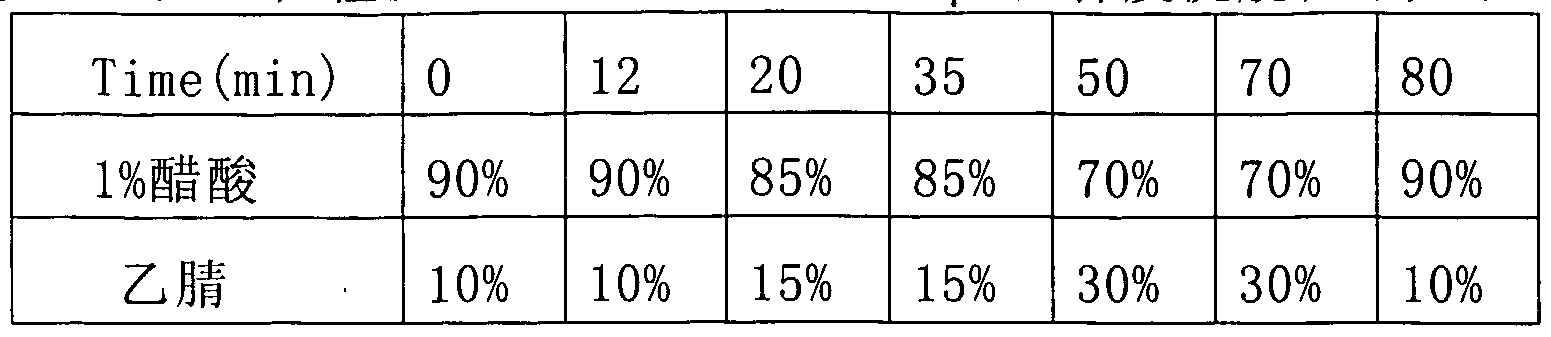
- Figure 3 is a HPLC chart of bamboo leaf antioxidants (A0B). Specific implementation method
- Antioxidant of bamboo Leaves referred to in the present invention (A0B) It is a general term for phenolic compounds obtained from the leaves of Graminae, Bambusoideae, and Phyl lostachys Sieb. Et Zucc varieties.
- the production process can be further crystallized on the basis of the original patented technology (patent number ZL 98 1 04564.2), the specific process is as follows: bamboo leaves ⁇ washing ⁇ drying ⁇ crushing ⁇ ethanol ⁇ aqueous solution hot reflux extraction ⁇ filtration ⁇ Decompression concentration ⁇ Static flocculation ⁇ Separation and decontamination ⁇ N-butanol stepwise extraction ⁇ Concentrated solvent recovery under reduced pressure ⁇ Incubation crystallization ⁇ Centrifugal separation of crystals ⁇ Crystal washing with 95% ethanol ⁇ Vacuum drying ⁇ A0B Based on the crude extract of bamboo leaf flavonoids, high-precision preparations obtained by further using adsorption-desorption, column chromatography, membrane separation, chromatographic separation, and other combined methods.
- the infrared spectrum of A0B after tabletting with potassium bromide showed characteristic absorption near 3400, 2935, 1626, and ⁇ ⁇ ⁇ 1 (see Figure 1). After dissolving it in spectrally pure methanol, scanning was performed in a wavelength range of 200 to 600 nm.
- the ultraviolet spectrum shows that there are two main absorption peaks in the 240 to 400 nm region, of which there is a strong absorption peak near 270 nm and near 330 nm. There was a strong absorption peak (see Figure 2).
- Identification of A0B's chemical reagents Take 0.5g of this product and dissolve it in 100mL of 95% ethanol, and identify by the following method: 1 Take 1mL of the above solution, add 2 ⁇ 3 drops of 1% FeCl 3 -ethanol solution, it should show dark blue or blue-violet . 2 Take 1mL of the above solution, add 2 ⁇ 3 drops of 1% A1C1 3 -ethanol solution, it should be bright yellow. Take 0.5g of this product, add 10mL of ether, ultrasonic-assisted extraction for 30s, and filter.
- the latest research involved in the present invention shows that the antioxidant effects of the components obtained after further separation by column chromatography and counter-current chromatography are close to or equivalent to this product, so A0B is a complex group with synergistic growth.
- the effective anti-oxidant mixture is mainly flavonoids, lactones and phenolic compounds.
- the main flavonoids are flavonoids from carbon, four representative compounds are: (I) Orientin (Orientin, C 21 H 20 O n, 448), ( ⁇ ) homoorientin (Homoori ent in, C 21 H 2.0 u , 448), (III) vitexin (Vitexin, C 21 H 20 0 10 , 432) and (IV) isovitetin (Isoriextin, C 21 H 20 0 10 , 432); lactones
- the compounds are mainly (V) Hydroxyl- Coumarin and its glycosides; phenolic compounds are mainly derivatives of cinnamic acid, including (VI) Chlorogenic acid (C 16 H 18 0 9 , 354 ); (VH) Caff eic acid (C 9 H 8 0 4 , 180); (WO Ferulic acid (C 10 H 10 0 4 , 194).
- A0B is characterized by being able to both block the chain reaction of fat auto-oxidation and chelate transition metal ions. It also acts as a primary and secondary antioxidant. Has strong anti-free radical activity, can scavenge a variety of reactive oxygen free radicals (0H, 0 2 ⁇ , R0, R00, etc.); has excellent antioxidant activity, effectively inhibits lipid peroxidation, and is effective for lipid peroxidation products MDA production has a significant inhibitory effect; it can effectively remove nitrite and block the synthesis of the strong carcinogen nitrosamine; meanwhile, it also has a strong antibacterial effect on Salmonella typhi, Gram-negative bacilli and positive cocci have some inhibitory effects. In addition, in some cases, A0B also exhibits good coloring, flavoring, flavoring, and deodorizing effects.
- A0B has a mild flavor and taste, no medicinal, bitter and pungent odor, good water solubility, stable quality, can effectively resist acid hydrolysis, pyrolysis and enzymatic hydrolysis, and is suitable for a variety of food systems. Its versatility is reflected in: In addition to its highly effective anti-lipid oxidation performance, it is also a natural yellow pigment, which has both antibacterial, bacteriostatic, deodorizing, and aroma-increasing effects.
- Nitrate or without reducing the amount, significantly reduce its residual amount, inhibit the formation of N-nitrosamines, and improve the safety of meat products; have anti-oxidant effects on monascus commonly used in meat products
- the role of color protection helps to improve its stability, improve the color of meat products, and improve product performance.
- due to the presence of rich polyhydroxy phenolic compounds in AOB it has good water retention and moisturizing properties, which helps The improvement of the quality of the meat is particularly important for Western-style products used after slicing.
- the AOB of the present invention can be used alone or in combination with other natural antioxidants (such as phospholipids, phytic acid), vitamins (such as VE, VC and their derivatives), metal ion chelating agents (such as EDTA, citric acid) in the food system. ), Surfactants (such as Span80, Span40), etc., and have significant synergistic effects.
- antioxidants such as phospholipids, phytic acid
- vitamins such as VE, VC and their derivatives
- metal ion chelating agents such as EDTA, citric acid
- Surfactants such as Span80, Span40
- the AOB of the present invention When the AOB of the present invention is added to various food systems at an appropriate ratio, it can play a role in removing active oxygen free radicals, resisting lipid peroxidation, extending shelf life, and reducing the amount of coloring agents (nitrate or nitrite). And residual amount, multiple functions such as antibacterial, bacteriostatic, preservation, color protection, deodorization, and flavor correction.
- the AOB of the present invention can be made into various forms according to actual needs, such as powder, water, microemulsion, microcapsule preparation, etc., or it can be enhanced by further structural modification (such as esterification of flavonoids with palmitoyl chloride). Oil performance.
- the invention will be illustrated by the following non-limiting examples.
- the amount of AOB added in the following examples is all by weight.
- A0B based on the weight percentage of meat filling, dissolved in water in advance
- tea polyphenols are used as a control.
- TSA modified thiobarbituric acid
- A0B was mixed with a 0.03% aqueous solution, and at the same time, a TBHQ (melted with ethanol in advance) control was set, and Jinhua ham slices with a thickness of about 1 cm were immersed for 2 minutes to compare the effects on the antioxidant performance and sensory quality of sliced ham.
- A0B has some concealed flavor of raw ham, but tasted after cooking, there is no difference in flavor and taste, and the color difference measurement shows no significant difference in ham color (P> 0.
- AOB bamboo leaf antioxidants
- Macrobrachium rosenbergii and Eriocheir sinensis After harvesting Macrobrachium rosenbergii and Eriocheir sinensis, put them in clear water tanks for 20 ⁇ 24h (aeration), and add 0.015% AOB to the temporary water, while feeding the residues in the digestive tract, the shrimp, The crab body ingested a certain amount of A0B antioxidants.
- Shrimp and crab can be processed into soft cans after the temporary storage.
- the normal temperature and low temperature storage and high temperature oxidation promotion tests were performed respectively.
- the addition of A0B in the temporary storage water significantly enhanced the product's oxidation resistance.
- the finished product's color retention was significantly better than the control. (P ⁇ 0.
- AOB bamboo leaf antioxidant
- Mayonnaise is an emulsified semi-solid food made with egg yolk and edible vegetable oil as the main raw materials and added with several auxiliary materials. It is a seasoning with high nutritional value. Based on the basic formula (70% of sunflower oil, 14% of fresh egg yolk, 12% of pure white vinegar, 2% of sugar, 1% of salt, and 1% of dry mustard), different ratios of A0B were added, and tea polyphenols (TP ) Control group and blank control group. The sensory evaluation, color difference analysis, peroxide value (POV) and total carbonyl compound content (TCC) were measured to compare the antioxidant properties of A0B and TP.
- POV peroxide value
- TCC total carbonyl compound content
- AOB bamboo leaf antioxidant
- AOB When AOB is used in soft drinks (including carbonated drinks, non-carbonated drinks, tea drinks, etc.), it is used as both an antioxidant and a nutrition enhancer.
- the amount of AOB is generally controlled at 150 ⁇ 210mg / L, and the amount of sucrose can be appropriately reduced.
- the main feature of the product is the fragrance of bamboo leaves, rich in flavonoid functional factors, low calories, clearing heat, quenching thirst, diphtheria, diuretic, and very stable quality. It is a new type of nutritional health drink.
- AOB When added in brewing wine (wine, rice wine, and beer), AOB plays the dual role of antioxidant and nutrition enhancement.
- the addition amount can generally be controlled between 60 ⁇ 500mg / L, and it is added before wine-based filtering and filling. Taking Shaoxing Tower brand rice wine as an example, when the added amount of AOB was 150mg / L, the ability of rice wine to remove OV ⁇ P OH was increased by 40.0% and 28.5%, respectively, as measured by chemiluminescence method.
- ⁇ has good compatibility with the wine body of the brewed wine, and is controlled within a certain range of added doses, which not only maintains the original quality of the wine body, but also gives the product a light bamboo flavor and mellow taste, which can be used as A natural and multi-functional biological antioxidant is used for nutrition enhancement and quality preservation of brewed wine.
- Dissolve 10 g of AOB in 40 g of Span 40 (heat if necessary), add 50 g of Span 80, mix well to prepare a fat-soluble AOB solution with a mass fraction of 0.10, and use it according to the actual amount of AOB in the oil.
- the addition amount of AOB in a pure oil and fat system is 0.01 to 0.05%.
Landscapes
- Chemical & Material Sciences (AREA)
- Organic Chemistry (AREA)
- Life Sciences & Earth Sciences (AREA)
- Health & Medical Sciences (AREA)
- Engineering & Computer Science (AREA)
- Polymers & Plastics (AREA)
- Food Science & Technology (AREA)
- Nutrition Science (AREA)
- Mycology (AREA)
- Veterinary Medicine (AREA)
- Botany (AREA)
- Animal Behavior & Ethology (AREA)
- General Health & Medical Sciences (AREA)
- Public Health (AREA)
- Nuclear Medicine, Radiotherapy & Molecular Imaging (AREA)
- Medicinal Chemistry (AREA)
- General Chemical & Material Sciences (AREA)
- Chemical Kinetics & Catalysis (AREA)
- Pharmacology & Pharmacy (AREA)
- Zoology (AREA)
- Wood Science & Technology (AREA)
- Oncology (AREA)
- Communicable Diseases (AREA)
- Dermatology (AREA)
- Bioinformatics & Cheminformatics (AREA)
- Biochemistry (AREA)
- Food Preservation Except Freezing, Refrigeration, And Drying (AREA)
- Coloring Foods And Improving Nutritive Qualities (AREA)
- Medicines Containing Plant Substances (AREA)
Description



Claims


Priority Applications (2)
| Application Number | Priority Date | Filing Date | Title |
|---|---|---|---|
| US10/575,007 US20080233242A1 (en) | 2003-10-08 | 2004-10-08 | Antioxidant of Bamboo Leaves and Its Uses |
| JP2006529563A JP2007507437A (ja) | 2003-10-08 | 2004-10-08 | 竹葉抗酸化物とその用途 |
Applications Claiming Priority (2)
| Application Number | Priority Date | Filing Date | Title |
|---|---|---|---|
| CN200310107871.5 | 2003-10-08 | ||
| CNA2003101078715A CN1528197A (zh) | 2003-10-08 | 2003-10-08 | 竹叶抗氧化物及其用途 |
Publications (1)
| Publication Number | Publication Date |
|---|---|
| WO2005032275A1 true WO2005032275A1 (en) | 2005-04-14 |
Family
ID=34304509
Family Applications (1)
| Application Number | Title | Priority Date | Filing Date |
|---|---|---|---|
| PCT/CN2004/001133 Ceased WO2005032275A1 (en) | 2003-10-08 | 2004-10-08 | Antioxidant of bamboo leaves and its use |
Country Status (4)
| Country | Link |
|---|---|
| US (1) | US20080233242A1 (zh) |
| JP (1) | JP2007507437A (zh) |
| CN (1) | CN1528197A (zh) |
| WO (1) | WO2005032275A1 (zh) |
Cited By (2)
| Publication number | Priority date | Publication date | Assignee | Title |
|---|---|---|---|---|
| EP2657326A1 (de) | 2012-04-24 | 2013-10-30 | Symrise AG | Verwendung von Metallionen-komplexierenden Verbindungen zur Aromastabilisierung |
| CN117441810A (zh) * | 2017-10-25 | 2024-01-26 | 森隆生物科技有限公司 | 抹竹及其制备方法和用途 |
Families Citing this family (40)
| Publication number | Priority date | Publication date | Assignee | Title |
|---|---|---|---|---|
| CN101112355B (zh) * | 2004-12-24 | 2010-09-29 | 上海家化联合股份有限公司 | 苦竹有效成分提取物的制备方法 |
| JP5097983B2 (ja) * | 2005-02-22 | 2012-12-12 | 学校法人東京農業大学 | 抗酸化活性を有する組成物の製造方法 |
| KR100720973B1 (ko) * | 2005-03-18 | 2007-05-22 | 주식회사 유니젠 | 천연물 유래 아이소오리엔틴을 포함하는 히스타민 억제용약학 조성물 |
| WO2006099798A1 (en) * | 2005-03-21 | 2006-09-28 | Zhejiang University (Hangzhou) Innoessen Bio-Technology Co., Ltd. | A method for using bamboo leaf extract as acrylamide inhibitor for heat processing food |
| CN100384349C (zh) * | 2005-03-21 | 2008-04-30 | 浙江大学 | 应用竹叶提取物作为热加工食品中丙烯酰胺抑制剂的方法 |
| US8466187B2 (en) | 2007-09-18 | 2013-06-18 | Thermolife International, Llc | Amino acid compositions |
| CN101167710B (zh) * | 2007-10-26 | 2010-04-21 | 张咏梅 | 保质期长的氯霉素滴眼液及其制备方法 |
| CN101531904B (zh) * | 2009-05-05 | 2012-06-20 | 国际竹藤网络中心 | 竹叶提取物及其制备方法和用途 |
| FR2956324A1 (fr) * | 2010-01-18 | 2011-08-19 | Valerie Baille | Complexe vegetal comprenant un extrait polyphenolique de bambou |
| CN101803787B (zh) * | 2010-04-15 | 2012-05-23 | 无锡欧晟生物农业科技发展有限公司 | 一种复合食品抗氧化剂 |
| JP5744471B2 (ja) * | 2010-10-22 | 2015-07-08 | 花王株式会社 | 苦味抑制剤 |
| JP5599381B2 (ja) * | 2010-12-29 | 2014-10-01 | ダウ グローバル テクノロジーズ エルエルシー | アニオン交換樹脂におけるニトロソアミン形成を抑制する方法 |
| US12612370B2 (en) | 2011-03-02 | 2026-04-28 | Thermolife International, Llc | Amino acid compositions |
| JP5830267B2 (ja) * | 2011-04-22 | 2015-12-09 | 花王株式会社 | 容器詰飲料 |
| CN102388954A (zh) * | 2011-11-15 | 2012-03-28 | 天津科技大学 | 肉制品用复合防腐剂 |
| CN102415516B (zh) * | 2011-12-11 | 2013-01-02 | 浙江大学 | 油炸马铃薯片专用的复合型丙烯酰胺抑制剂 |
| CN102860457B (zh) * | 2012-09-29 | 2013-06-26 | 上海韬鸿投资管理咨询有限公司 | 通便排毒营养粉 |
| CN102860566B (zh) * | 2012-09-29 | 2013-06-26 | 上海韬鸿投资管理咨询有限公司 | 食品生物防腐剂 |
| CN103005007B (zh) * | 2012-12-25 | 2015-07-29 | 浙江大学 | 脂溶性竹叶抗氧化物及其制备方法 |
| CN105076915B (zh) * | 2014-05-21 | 2020-04-10 | 杭州凝竹生物科技有限公司 | 一种酶法制备得到的脂溶性竹叶抗氧化物及其用途 |
| CN104256315A (zh) * | 2014-10-08 | 2015-01-07 | 邬德明 | Aob植物功能早餐粉及制备工艺 |
| CN104222788A (zh) * | 2014-10-08 | 2014-12-24 | 邬德明 | Aob植物功能米粉及制备工艺 |
| CN105054053A (zh) * | 2015-07-06 | 2015-11-18 | 江南大学 | 一种竹叶风味的燕窝罐头及其生产方法 |
| CN105767845A (zh) * | 2016-03-11 | 2016-07-20 | 浙江艾杰斯生物科技有限公司 | 一种含溶菌酶的天然食品防腐剂 |
| CN105707649A (zh) * | 2016-03-11 | 2016-06-29 | 浙江艾杰斯生物科技有限公司 | 含溶菌酶的食品防腐剂 |
| CN106309267A (zh) * | 2016-08-21 | 2017-01-11 | 陈爱梅 | 一种化妆品用竹叶组合物的制备方法 |
| CN106562437A (zh) * | 2016-11-15 | 2017-04-19 | 浙江汉篁生物技术有限公司 | 竹叶提取物制保健品及其制备方法 |
| US20180228189A1 (en) | 2017-02-14 | 2018-08-16 | Kraft Foods Group Brands Llc | Process for maintaining freshness of vegetable pieces |
| CN108514065A (zh) * | 2018-06-04 | 2018-09-11 | 李永华 | 一种竹叶提取物及其在食品中的应用 |
| US10918690B2 (en) * | 2018-09-06 | 2021-02-16 | Louise Wilkie | Apparatus and method for processing organic bamboo leaf extract products |
| CN109619386B (zh) * | 2018-11-06 | 2022-05-10 | 中国肉类食品综合研究中心 | 一种天然复配护色剂及其应用 |
| CN109293509B (zh) * | 2018-11-30 | 2021-08-03 | 浙江科技学院 | 一种从竹叶提取物中制备高纯度绿原酸的方法 |
| US20250000832A1 (en) * | 2019-02-01 | 2025-01-02 | Thermolife International, Llc | Enhanced nitrate, elemental metal, and amino acid compositions and methods of use |
| WO2020210140A1 (en) * | 2019-04-06 | 2020-10-15 | Banu Ip Llc | Apparatus and method for processing organic bamboo leaf extract products |
| AU2022220004A1 (en) | 2021-02-11 | 2023-08-17 | Thermolife International, Llc | A method of administering nitric oxide gas |
| JP2024508952A (ja) * | 2021-03-11 | 2024-02-28 | サーモライフ インターナショナル, エルエルシー | ニトレートと単体金属とアミノ酸との増強された組成物ならびに使用方法 |
| CN114190526A (zh) * | 2021-11-01 | 2022-03-18 | 中国肉类食品综合研究中心 | 一种调理肉制品品质改良剂及其应用 |
| CN114631561A (zh) * | 2022-03-23 | 2022-06-17 | 中洋鱼天下食品(上海)股份有限公司 | 一种大蒜素和竹叶抗氧化物复合天然保鲜剂及其应用 |
| CN115211564B (zh) * | 2022-07-27 | 2024-08-16 | 广州合诚三先生物科技有限公司 | 一种具有天然抗氧化以及防腐作用的组合物及制备方法 |
| CN115462419B (zh) * | 2022-09-20 | 2023-11-24 | 湖北海顺达食品科技有限公司 | 一种调味辣椒鸡油及其制备方法 |
Citations (4)
| Publication number | Priority date | Publication date | Assignee | Title |
|---|---|---|---|---|
| JPS4880710A (zh) * | 1972-01-27 | 1973-10-29 | ||
| JPH0398566A (ja) * | 1989-09-08 | 1991-04-24 | Isukura Sangyo Kk | 笹類抽出物からの食品保存料 |
| CN1059231C (zh) * | 1998-03-17 | 2000-12-06 | 浙江农业大学 | 一种添加竹叶黄酮提取物的保健啤酒 |
| CN1066055C (zh) * | 1998-03-17 | 2001-05-23 | 浙江农业大学 | 从竹叶中提取黄酮类化合物浸膏或粉剂的生产方法 |
Family Cites Families (3)
| Publication number | Priority date | Publication date | Assignee | Title |
|---|---|---|---|---|
| JPH02173183A (ja) * | 1988-12-27 | 1990-07-04 | Nippon Oil & Fats Co Ltd | 酸化防止剤 |
| EP1633379A4 (en) * | 2003-03-27 | 2009-09-02 | Unigen Inc | COMPOSITION OF BAMBOO EXTRACT AND CORROSIVE COMPOUNDS WITH TREATMENT AND PREVENTIVE EFFECT FOR INFLAMMATORY DISEASES AND BLEACHING DISEASES |
| WO2006099798A1 (en) * | 2005-03-21 | 2006-09-28 | Zhejiang University (Hangzhou) Innoessen Bio-Technology Co., Ltd. | A method for using bamboo leaf extract as acrylamide inhibitor for heat processing food |
-
2003
- 2003-10-08 CN CNA2003101078715A patent/CN1528197A/zh active Pending
-
2004
- 2004-10-08 WO PCT/CN2004/001133 patent/WO2005032275A1/zh not_active Ceased
- 2004-10-08 JP JP2006529563A patent/JP2007507437A/ja active Pending
- 2004-10-08 US US10/575,007 patent/US20080233242A1/en not_active Abandoned
Patent Citations (4)
| Publication number | Priority date | Publication date | Assignee | Title |
|---|---|---|---|---|
| JPS4880710A (zh) * | 1972-01-27 | 1973-10-29 | ||
| JPH0398566A (ja) * | 1989-09-08 | 1991-04-24 | Isukura Sangyo Kk | 笹類抽出物からの食品保存料 |
| CN1059231C (zh) * | 1998-03-17 | 2000-12-06 | 浙江农业大学 | 一种添加竹叶黄酮提取物的保健啤酒 |
| CN1066055C (zh) * | 1998-03-17 | 2001-05-23 | 浙江农业大学 | 从竹叶中提取黄酮类化合物浸膏或粉剂的生产方法 |
Non-Patent Citations (1)
| Title |
|---|
| "Natural functional extract of bamboo leaves - bamboo leaf anthoxanthin", CHINA FOOD ADDITIVES, no. 3, 2002, pages 54 - 58,66 * |
Cited By (3)
| Publication number | Priority date | Publication date | Assignee | Title |
|---|---|---|---|---|
| EP2657326A1 (de) | 2012-04-24 | 2013-10-30 | Symrise AG | Verwendung von Metallionen-komplexierenden Verbindungen zur Aromastabilisierung |
| EP3290498A1 (de) | 2012-04-24 | 2018-03-07 | Symrise AG | Verwendung von metallionen-komplexierenden verbindungen zur aromastabilisierung |
| CN117441810A (zh) * | 2017-10-25 | 2024-01-26 | 森隆生物科技有限公司 | 抹竹及其制备方法和用途 |
Also Published As
| Publication number | Publication date |
|---|---|
| CN1528197A (zh) | 2004-09-15 |
| US20080233242A1 (en) | 2008-09-25 |
| JP2007507437A (ja) | 2007-03-29 |
Similar Documents
| Publication | Publication Date | Title |
|---|---|---|
| WO2005032275A1 (en) | Antioxidant of bamboo leaves and its use | |
| Selani et al. | Wine industry residues extracts as natural antioxidants in raw and cooked chicken meat during frozen storage | |
| KR101906304B1 (ko) | 기능성 김치 및 이의 제조방법 | |
| Aliyari et al. | Production of Functional Sausage Using Pomegranate Peel and Pistachio Green Hull Extracts as Natural Preserva | |
| EP1790239B1 (en) | Gnetum extract | |
| Villalobos-Delgado et al. | Oxidative stability in raw, cooked, and frozen ground beef using Epazote (Chenopodium ambrosioides L.) | |
| KR100809911B1 (ko) | 마스킹제 | |
| KR102445657B1 (ko) | 갈치조림 양념 및 갈치조림의 제조방법 | |
| KR101647778B1 (ko) | 저염도 탄산수와 대추추출물을 이용한 고등어와 삼치의 비린내 제거 및 지방산화 방지 방법 | |
| JP2006129757A (ja) | 苦味やえぐ味を低減した緑茶抽出物、及び該抽出物を含有する飲食品 | |
| JP4742752B2 (ja) | 飲料の製造方法 | |
| JP6945282B2 (ja) | 不快臭の消臭方法、並びに、加工食品の製造方法 | |
| JP2026021626A (ja) | 桑葉エキス及びその製造方法 | |
| JP2002345433A (ja) | 食品、飲料又は調味料の製造方法 | |
| JP2010166876A (ja) | 醗酵黒ウコン及びその製造方法 | |
| CN1972603A (zh) | 淡白色的大花紫薇提取物的制备方法、淡白色的大花紫薇提取物、和含有淡白色的大花紫薇提取物的食品或饮料 | |
| Sakifar et al. | The Effect of Green Tea Extract on the Quality of Perch Fish Fillet During Storage in the Refrigerator | |
| JP4503235B2 (ja) | 香味劣化抑制剤 | |
| CN105076916B (zh) | 一种食品添加剂组合物及其应用 | |
| Allam et al. | Utilization of Chicory (Cichorium intybus L.) and Purslane (Portulaca oleracea L.) Leaf Extracts for the Preservation of Goat Meat Sausage | |
| Abd El Aziz et al. | Effect of Different Smoking Methods on Quality and Safety of Beef Meat | |
| Nageb | Using of natural antioxidants for improvement quality of meat products | |
| JP5155595B2 (ja) | ポリフェノール含有組成物の精製方法、及び該精製方法により精製されたポリフェノール含有組成物 | |
| JP2002051722A (ja) | 食品、飲料又は調味料 | |
| KR101793646B1 (ko) | 함초를 이용한 장어 추출액의 제조방법 및 그 장어 추출액 |
Legal Events
| Date | Code | Title | Description |
|---|---|---|---|
| AK | Designated states |
Kind code of ref document: A1 Designated state(s): AE AG AL AM AT AU AZ BA BB BG BR BW BY BZ CA CH CN CO CR CU CZ DE DK DM DZ EC EE EG ES FI GB GD GE GH GM HR HU ID IL IN IS JP KE KG KP KR KZ LC LK LR LS LT LU LV MA MD MG MK MN MW MX MZ NA NI NO NZ OM PG PH PL PT RO RU SC SD SE SG SK SL SY TJ TM TN TR TT TZ UA UG US UZ VC VN YU ZA ZM ZW |
|
| AL | Designated countries for regional patents |
Kind code of ref document: A1 Designated state(s): BW GH GM KE LS MW MZ NA SD SL SZ TZ UG ZM ZW AM AZ BY KG KZ MD RU TJ TM AT BE BG CH CY CZ DE DK EE ES FI FR GB GR HU IE IT LU MC NL PL PT RO SE SI SK TR BF BJ CF CG CI CM GA GN GQ GW ML MR NE SN TD TG |
|
| 121 | Ep: the epo has been informed by wipo that ep was designated in this application | ||
| WWE | Wipo information: entry into national phase |
Ref document number: 2006529563 Country of ref document: JP |
|
| 122 | Ep: pct application non-entry in european phase | ||
| WWE | Wipo information: entry into national phase |
Ref document number: 10575007 Country of ref document: US |