WO2005113885A1 - Verfahren zur herstellung von strukturierten oberflächen - Google Patents
Verfahren zur herstellung von strukturierten oberflächen Download PDFInfo
- Publication number
- WO2005113885A1 WO2005113885A1 PCT/EP2005/005348 EP2005005348W WO2005113885A1 WO 2005113885 A1 WO2005113885 A1 WO 2005113885A1 EP 2005005348 W EP2005005348 W EP 2005005348W WO 2005113885 A1 WO2005113885 A1 WO 2005113885A1
- Authority
- WO
- WIPO (PCT)
- Prior art keywords
- particles
- groups
- range
- textile
- aqueous
- Prior art date
- Legal status (The legal status is an assumption and is not a legal conclusion. Google has not performed a legal analysis and makes no representation as to the accuracy of the status listed.)
- Ceased
Links
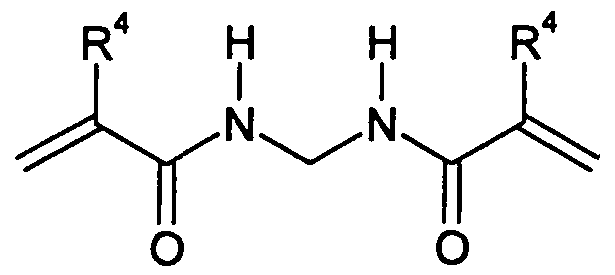
- 0 *C(C(NCNC(C(*)=C)=O)=O)=C Chemical compound *C(C(NCNC(C(*)=C)=O)=O)=C 0.000 description 1
Classifications
-
- D—TEXTILES; PAPER
- D06—TREATMENT OF TEXTILES OR THE LIKE; LAUNDERING; FLEXIBLE MATERIALS NOT OTHERWISE PROVIDED FOR
- D06M—TREATMENT, NOT PROVIDED FOR ELSEWHERE IN CLASS D06, OF FIBRES, THREADS, YARNS, FABRICS, FEATHERS OR FIBROUS GOODS MADE FROM SUCH MATERIALS
- D06M23/00—Treatment of fibres, threads, yarns, fabrics or fibrous goods made from such materials, characterised by the process
- D06M23/08—Processes in which the treating agent is applied in powder or granular form
-
- Y—GENERAL TAGGING OF NEW TECHNOLOGICAL DEVELOPMENTS; GENERAL TAGGING OF CROSS-SECTIONAL TECHNOLOGIES SPANNING OVER SEVERAL SECTIONS OF THE IPC; TECHNICAL SUBJECTS COVERED BY FORMER USPC CROSS-REFERENCE ART COLLECTIONS [XRACs] AND DIGESTS
- Y10—TECHNICAL SUBJECTS COVERED BY FORMER USPC
- Y10T—TECHNICAL SUBJECTS COVERED BY FORMER US CLASSIFICATION
- Y10T428/00—Stock material or miscellaneous articles
- Y10T428/25—Web or sheet containing structurally defined element or component and including a second component containing structurally defined particles
Definitions
- the present invention relates to a process for the production of structured surfaces with great hydrophilicity, characterized in that the surfaces with great hydrophilicity.
- the present invention further relates to surfaces obtainable by the process according to the invention.
- Modern methods often use the Lotus Effect® to produce surfaces with a low tendency to become dirty, for example WO 96/04123 and EP-B 1 171 529.
- a Lotus effect In order to equip a surface with a Lotus effect, one can proceed, for example, in such a way that surfaces are modeled after the lotus plant with a micro-rough surface, for example with elevations and depressions in dimensions, that the distance of the elevations is in the range from 5 to 200 ⁇ m and the height of the elevations is in the range from 5 to 100 ⁇ m and at least the elevations consist of, for example, hydrophobic polymers and cannot be removed by water or water with detergents.
- a disadvantage of textile surfaces equipped with a lotus effect is, however, that they are not permeable to perspiration.
- perspiration permeability is desirable in many cases, particularly in the case of clothing. It is also desirable that diapers hold urine and do not give rise to urine drops. This applies, for example, to diapers that are manufactured using polypropylene and superabsorbents.
- Another method of making surfaces dirt-repellent is to make them very hydrophilic. Water then forms a film and easily removes dirt particles, see. for example WO 03/66710.
- the task was therefore to provide a process by which surfaces can be treated, which repel dirt and have good durability. Furthermore, there was the task of providing coated surfaces with great hydrophilicity. Finally, the task was to provide uses for coated surfaces.
- surfaces with great hydrophilicity are those surfaces which have a non-measurable contact angle with water. Water does not form droplets on the surfaces according to the invention, but spreads to form a film.
- Objects with at least one surface are used to produce structured surfaces according to the invention.
- such objects are also called substrates, which can consist of a large number of materials, for example
- textile or textile substrates are to be understood as meaning textile fibers, textile semifinished and finished products and finished goods made therefrom which, in addition to textiles for the clothing industry, also include carpets and other home textiles and textile structures serving technical purposes.
- This also includes unshaped structures such as flakes, line-shaped structures such as twine, threads, yarns, linen, cords, ropes, twists and body structures such as felts, fabrics, nonwovens and wadding.
- the textiles can be of natural origin, for example cotton, wool or flax, or synthetic, for example polyamide, polyester, modified polyester, polyester blend fabric, polyamide blend fabric, polyacrylonitrile, triacetate, acetate, polycarbonate, polypropylene, polyvinyl chloride, polyester microfiber and glass fiber fabric.
- surfaces are structured, namely by using them
- Particles (a) can be materials which can optionally be hydrophilic or hydrophobic.
- Particles (b) have a surface energy greater than or equal to 100 mN / m to about 1000 mN / m, determined, for example, by determining contact angles.
- hydrophobic is understood to mean that they have a surface energy in the range from 10 mN / m to 70 mN / m, preferably 20 mN / m to 60 mN / m, determined, for example, by determining the contact angle ,
- Hydrophilic and hydrophobic materials can be selected from inorganic materials and organic polymers and copolymers.
- Hydrophobic materials include hydrophobic organic polymers, for example polyethylene, polypropylene, polyisobutylene and polystyrene, and copolymers thereof with one another or with one or more further olefins, such as for example styrene, methyl acrylate, ethyl acrylate, methyl methacrylate, butyl acrylate, butyl methacrylate, 2-ethylhexyl acrylate, 2-ethylhexyl methacrylate, maleic anhydride or N-methylmaleinimide.
- a preferred polyethylene or polypropylene is described for example in EP-A 0 761 696.
- silicones which are solid at room temperature are also considered to be hydrophobic organic polymers.
- the molecular weight (weight average) M w of the hydrophobic organic polymer used according to the invention as the hydrophobic material (a) can be in the range from 1000 to 10,000,000 g / mol, preferably in the range from 2500 to 5,000,000 g / mol, determined according to at least one of the following methods: light scattering, gel permeation chromatography (GPC), viscometry. If a polymer from the group of the polyolefins is used, for example polyethylene, polypropylene or polyisobutene and copolymers of ethylene with propylene, butylene or 1-hexene, the molecular weight M w is advantageously in the range from 30,000 to 5,000,000 g / mol. Hydrophobic organic polymers can, for example, have wax-like properties or be thermoplastic.
- hydrophobic organic polymer used according to the invention as hydrophobic material (a) is not critical per se and can be in the range from 1.1 to 20. It is usually in the range from 2 to 10.
- Hydrophobic inorganic materials are hydrophobic inorganic materials, in particular solid inorganic oxides, carbonates, carbides, phosphates, silicates or sulfates from groups 3 to 14 of the periodic table of the elements, for example calcium oxide, silicon dioxide or aluminum oxide, calcium carbonate, calcium sulfate or calcium silicate, with aluminum oxide and silicon dioxide being preferred. Silicon dioxide in its modification as silica gel is particularly preferred. Fumed silica gels are very particularly preferred. Solid inorganic oxides and silicate can be made hydrophobic thermally by heating to 400 to 800 ° C or preferably by physisorbed or chemisorbed organic or organometallic compounds.
- particles are reacted before the coating step, for example with organometallic compounds which contain at least one functional group, for example alkyl-lithium compounds such as methyl lithium, n-butyl lithium or n-hexyl lithium; or silanes such as hexamethyldisilazane, octyltrimethoxysilane and in particular halogenated silanes such as trimethylchlorosilane or dichlorodimethylsilane.
- organometallic compounds which contain at least one functional group, for example alkyl-lithium compounds such as methyl lithium, n-butyl lithium or n-hexyl lithium; or silanes such as hexamethyldisilazane, octyltrimethoxysilane and in particular halogenated silanes such as trimethylchlorosilane or dichlorodimethylsilane.
- solid inorganic oxides, carbonates, phosphates, silicates or sulfates of groups 3 to 14 can be used as hydrophilic inorganic materials (a) Use periodic table of the elements that have not been made hydrophobic, for example calcium oxide, silicon dioxide or aluminum oxide, calcium carbonate, calcium sulfate or calcium silicate, aluminum oxide and silicon dioxide being preferred, quartz and boehmite, colloidal silica gel and diatomaceous earth. Pyrogenic silicic acid, pyrogenic titanium dioxide and pyrogenic aluminum oxide are preferred.
- Particles (b) can be composed, for example, of hydrophilic inorganic materials and of hydrophilic polymers.
- Solid inorganic oxides, carbonates, phosphates, silicates or sulfates from groups 3 to 14 of the periodic table of the elements which have not been rendered hydrophobic, for example calcium oxide, silicon dioxide or aluminum oxide, calcium carbonate, calcium sulfate or calcium silicate, can be mentioned as hydrophilic inorganic materials (b).
- alumina and silicon dioxide are preferred, quartz and boehmite, colloidal silica gel and diatomaceous earth. Pyrogenic silica, pyrogenic titanium dioxide and pyrogenic aluminum oxide are preferred.
- particles (a) and particles (b) do not differ in their composition, but only in their mean particle diameter.
- the particle diameter distribution of a mixture of particles (a) and (b) is then bimodal.
- particles (a) and particles (b) differ not only in their average particle diameter, but also in their composition.
- (a) or (b) is selected from the above-mentioned organic polymers or copolymers.
- particles (a) and (b) are coated in a weight ratio in the range from 1:99 to 99: 1, preferably 1: 9 to 9: 1, particularly preferably 3: 7 to 7: 3.
- particles (a) and (b) are each used in an aqueous liquor, preferably in a common aqueous liquor.
- aqueous liquors are understood not only to mean fleets which have water as the only medium which is liquid at room temperature, but also those which have a mixture of water and one or more non-aqueous medium which is liquid at room temperature, for example
- Alcohols such as ethanol, isopropanol, butanol, tert-butanol, 3-octanol, 1-decanol, 2-decanol, 2-dodecanol, 2-hexadecanol, Ketones such as acetone, methyl ethyl ketone, methyl isobutyl ketone, diethyl ketone, ethers such as THF, di n-propyl ether, dioxanes such as 1,4-dioxane.
- one or more aqueous liquors are used to carry out the process according to the invention, each in the range from 0.1 to 500 g / l particles, preferably 1 to 250 g / l and particularly preferably 10 to 100 g / l Contain particles, calculated from the sum of particles (a) and (b).
- the application is followed by a fixing step, which can be thermal, for example at 80 to 250 ° C., preferably 100 to 210 ° C. Preferred times are 10 to 24 minutes.
- a fixing step which can be thermal, for example at 80 to 250 ° C., preferably 100 to 210 ° C. Preferred times are 10 to 24 minutes.
- Other variants of the fixing step are the addition of a crosslinking agent, especially when working with binder (c), or fixing using actinic radiation.
- the process according to the invention is carried out with one or more aqueous liquors, of which at least one contains one or more emulsifiers, selected, for example, from the group of the ionic and nonionic emulsifiers.
- Suitable nonionic emulsifiers are, for example, ethoxylated mono-, di- and tri-alkylphenols (degree of ethoxylation: 3 to 50, alkyl radical: C 4 -C 12 ) and ethoxylated fatty alcohols (degree of ethoxylation: 3 to 80; alkyl radical: C 8 -C 36 ).
- Examples include the Lutensol ® brands from BASF Aktiengesellschaft or the Triton ® brands from Union Carbide.
- Alcohols to be ethoxylated can be of synthetic or natural origin, for example coconut oil alcohol, palm oil alcohol, tallow oil alcohol and oleyl alcohol.
- Suitable anionic emulsifiers are, for example, alkali metal and ammonium salts of alkyl sulfates (alkyl radical: C 8 to C 12 ), of sulfuric acid semiesters of ethoxylated alkanols (degree of ethoxylation: 4 to 30, alkyl radical: C 1 -C 18 ) and ethoxylated alkylphenols (ethoxylation Grade: 3 to 50, alkyl radical: C 4 -C 12 ), of alkyl sulfonic acids (alkyl radical: C 12 -C 18 ), CC 10 mono- or dialkyl esters of sulfosuccinic acid and of alkyl aryl sulfonic acids (alkyl radical: C ⁇ -C ⁇ 8 ) ,
- Suitable cationic emulsifiers are generally a primary, secondary, tertiary or quaternary C 6 -C 18 alkyl, aralkyl or heterocyclic radical Ammonium salts, alkanolammonium salts, pyridinium salts, imidazolinium salts, oxazolinium salts, morpholinium salts, thiazolinium salts and salts of amine oxides, quinolinium salts, isoquinolinium salts, tropylium salts, sulfonium salts and phosphonium salts. Examples include dodecylammonium acetate or the corresponding hydrochloride, the chlorides or acetates of the various
- cationic emulsifiers are C 10 -C 0 -alkyl amines mono- to ten-fold alkoxylated, preferably mono- to quadruple-ethoxylated.
- Very particularly suitable emulsifiers are, for example, copolymers of ethylene and at least one ⁇ , ⁇ -unsaturated mono- or dicarboxylic acid or at least one anhydride of an ⁇ , ⁇ -unsaturated mono- or dicarboxylic acid, for example acrylic acid, methacrylic acid, crotonic acid, maleic acid, fumaric acid, methylene malonic acid, maleic anhydride , Itaconic anhydride.
- the carboxyl groups can be partially or preferably completely neutralized, for example with alkali metal ions, alkaline earth metal ions, ammonium or amines, for example amines such as triethylamine, diethylamine, ethylamine, trimethylamine, dimethylamine, methylamine, ethyldiisopropylamine, ethanolamine, diethanolamine, triethanolamine, N, methyldiethanolamine N- (n-butyl) diethanolamine or N, N-dimethylethanolamine.
- alkali metal ions alkaline earth metal ions
- ammonium or amines for example amines such as triethylamine, diethylamine, ethylamine, trimethylamine, dimethylamine, methylamine, ethyldiisopropylamine, ethanolamine, diethanolamine, triethanolamine, N, methyldiethanolamine N- (n-butyl) diethanolamine or N, N-dimethyl
- the proportion of emulsifier can be selected within wide limits and can be 0.1 to 200 g / l aqueous liquor, preferably 0.2 to 100 g / l, particularly preferably 1 to 50 g / l.
- the process according to the invention is preferably carried out by treating substrate with (a) and (b), for example in an aqueous liquor.
- Suitable procedures are spraying, dipping, roller application, foam application and knife application and in particular application using one or more foulards.
- the process according to the invention can be carried out by treating substrates and in particular textile substrates with at least one aqueous liquor. It is also possible to carry out several treatment steps with the same or different liquors.
- the process according to the invention is carried out by treating substrates and in particular textiles Substrates are first treated with a liquor which contains (b) and, if appropriate, at least one emulsifier, and then a further treatment with a new liquor which (a) and optionally contains at least one emulsifier. In one embodiment of the present invention, the process according to the invention is carried out by first treating substrates to be treated and in particular textile substrates with a liquor which contains (a) and, if appropriate, at least one emulsifier, and then a further treatment with a new liquor , which (b) and optionally contains at least one emulsifier.
- the temperature for carrying out the method according to the invention is not critical per se.
- the liquor temperature can be in the range from 10 to 100 ° C., preferably 15 to 60 ° C.
- the method according to the invention can be carried out in conventional machines which are used for finishing substrates and in particular textiles, for example foulards.
- Foulards with vertical textile feed are preferred, which contain two pressed rollers as an essential element, through which the textile is guided.
- the liquid is filled in above the rollers and wets the textile.
- the textile is squeezed off by the pressure and a constant application is guaranteed.
- a foulard is used which is operated with a textile feed in the range from 1 to 40 m / min, preferably up to 30 m / min.
- the liquor absorption can be selected so that the process according to the invention results in a liquor absorption of 25% by weight to 85% by weight, preferably 40 to 70% by weight.
- the treated substrate and, in particular, textile can be dried by conventional methods or by methods customary in the textile industry.
- annealing can be carried out continuously or discontinuously.
- the duration of the annealing can be chosen within wide limits. Usually one can anneal over a period of about 10 seconds to about 30 minutes, in particular 30 seconds to 5 minutes.
- the mixture is heated to temperatures of up to 180 ° C., preferably up to 150 ° C. Of course, it is necessary to adapt the temperature of the tempering to the sensitivity of the substrate.
- a suitable method for tempering is, for example, hot air drying. If one wishes to coat textile, in one embodiment of the present invention the textile material can be provided with an adhesive layer before the actual coating. One or more so-called primers can be used for this. The application of primers is preferred if you want to finish synthetic fibers.
- one or more polymers can be applied as an adhesive layer to the textile material to be treated, wherein the polymer synthesis can also be carried out on the textile material.
- Polymers which are particularly suitable are those which have crosslinked or crosslinkable groups, for example natural or synthetic polymers with free hydroxyl groups, carbonyl groups, primary or secondary amino groups or thiol groups.
- suitable polymers are lignin, polysaccharides, polyvinyl alcohol and polyethyleneimine.
- Crosslinking can be achieved, for example, by subsequent reaction with, for example, isocyanates, dimethyl urea or N, N-dimethylol-4,5-dihydroxyethylene urea (DMDHEU).
- Other particularly preferred crosslinkers are melamine-formaldehyde resins, which can be etherified with alcohols such as methanol, n-butanol or ethylene glycol.
- 0.01 to 1% by weight, preferably 0.1 to 0.5% by weight, of the textile is saponified by partial saponification with strong alkalis such as aqueous sodium hydroxide solution or potassium hydroxide solution.
- At least one aqueous liquor used in the process according to the invention contains at least one binder (c).
- So-called self-crosslinking binders are particularly suitable for textile substrates.
- these include polymers, preferably in the form of aqueous polymer dispersions, which undergo intra- and / or intermolecular crosslinking reactions when the coating produced according to the invention is dried.
- Crosslinking reactions are brought about by the fact that the polymers used as binders either have different functional groups which react with one another to form ionic or covalent bonds, or by adding one or more crosslinkers to the polymers used which have functional groups as binders can be, for example, low molecular weight, ie its molecular weight M w can be, for example, 500 g / mol or lower.
- the crosslinker (s) have at least two functional groups per molecule, each of which can be the same or different and which can be linked to the radio tional groups of the polymer can react. Suitable reactive groups in polymers are, for example
- Carboxyl groups which can react, for example, with hydroxyl groups, amino groups, epoxy groups or aziridine groups or with polyvalent metal ions such as Ca 2+ , Al 3+ , Mg 2+ , Mn 2+ and Zn 2+ ,
- Hydroxyl groups which can react, for example, with carboxyl groups, isocyanate, epoxy, carboxylic anhydride groups, epoxy groups or aldehyde groups,
- the theoretical crosslinking density of suitable self-crosslinking binders expressed in mol of crosslinking points per kg of binder which arise on complete reaction on the polymer which serves as the binder, is preferably in the range from 0.1 to 1 mol / kg of binder.
- crosslinking agents are diols and polyols such as, for example, ethylene glycol, propylene glycol, glycerol, diethylene glycol, triethylene glycol, dipropylene glycol, tripropylene glycol, tetraethylene glycol, propane-1, 3-diol, butane-1, 4-diol, hexane-1, 6- diol, secondary or preferably primary diamines such as C 2 -C 12 alkylene diamines, in which up to 5 non-adjacent C atoms can be replaced by oxygen, for example hexamethylene diamine, diethylene triamine, triethylene tetramine, tetraethylene pentamine, N, N bis- (aminopropyl) aminoethane, 3,6-dioxaoctane-1,8-diamine, 3,7-dioxanonane-1,9-diamine, 3,6,9-trioxaundecane-1,11-d
- Amino alcohols such as B. ethanolamine, 3-hydroxypropylamine, mono- and poly-ethoxylated di- and oligoamines, dihydrazides of aliphatic and aromatic dicarboxylic acids such as adipic acid dihydrazide, dialdehydes such as glyoxal, partially or completely O-methylolated melamines, salts of divalent metals, especially magnesium chloride, for example as hydrate (MgCl 2 6 H 2 O), and also compounds which have an average (number average) of 2 or more, preferably 3 or more isocyanate groups or blocked isocyanate groups per molecule.
- dihydrazides of aliphatic and aromatic dicarboxylic acids such as adipic acid dihydrazide
- dialdehydes such as glyoxal
- glyoxal partially or completely O-methylolated melamines
- salts of divalent metals especially magnesium chloride, for example as hydrate (M
- aqueous liquors used in the process according to the invention contain 100 to 800 g / l of binder, preferably 200 to 500 g / l.
- one or more adhesion promoters (d) can be added.
- Hydrophilic organic polymers are very particularly preferably used as adhesion promoters (d).
- hydrophilic organic polymers used as adhesion promoters (d) are polymers or copolymers which have structural elements 1.1 to I.4
- the sum of nitrogen atoms and oxygen atoms to the carbon atoms in hydrophilic organic polymers or copolymers is in the range from 2: 1 to 1: 5, in particular from 3: 2 to 1: 3.
- the adhesion promoter (d) chosen is a hydrophilic organic polymer which, at pH values from 3 to 12, contains non-ionizable polar structural elements, for example polyurethane units. ten, polyethylene glycol units, polyvinylpyrrolidone units, polyvinyl alcohol units, polyvinylformamide units or polysaccharide units.
- copolymers are also suitable which have different structural elements 1.1 to I.4.
- hydrophilic polymers or copolymers examples include those with the following polar groups A 1 or A 1 ':
- X represents ü, Na, K, Rb, Cs or ammonium ions of the formula N (R 3 ) 4 ;
- R 1 to R 2 are in each case identical or different and stand for H, C 1 -C 4 alkyl, selected from methyl, ethyl, n-propyl, iso-propyl, n-butyl, iso-butyl, sec-butyl and tert-butyl;
- n is an integer in the range of 8 to 80,000, preferably 10 to 16,000.
- R 3 are each the same or different and selected from
- -CC 4 alkyl selected from methyl, ethyl, n-propyl, iso-propyl, n-butyl, iso-butyl, sec-butyl and tert-butyl;
- ammonium ions may be mentioned as examples: NH + , CH 3 NH 3 + ,
- Groups 1.1.1 to 1.1.9 can be in the polymer main chain or copolymer main chain or - for example, a branched or crosslinked polymer or copolymer - in the polymer side chains of hydrophilic organic polymer or copolymer.
- Groups 1.1.1 to 1.1.9 can be uniformly, ie statistically or alternately, distributed over the polymer molecule of hydrophilic organic polymer or copolymer, or non-uniformly, as is the case, for example, with block copolymers and in particular with graft copolymers.
- Polymers or copolymers used according to the invention can also be groups 1.1.1a and / or 1.1.2a
- polymers or copolymers used according to the invention preferably form branched or crosslinked structures via these groups.
- Groups 1.1.1a and 1.1.2a can be in the main polymer chain or main copolymer chain or - for example, a branched or crosslinked polymer or copolymer - in the polymer side chains.
- Groups 1.1.1a and 1.1.2a can be uniform over the polymer molecule, i.e. random or alternating, distributed or uneven, as is the case with block copolymers, for example.
- 1 to 150 g / l of adhesion promoter is added to the aqueous liquor, preferably at least 4 g / l and particularly preferably at least 5 g / l.
- Aqueous liquors used in the process according to the invention can be added to adjust the viscosity, one or more thickeners, which can be of natural or synthetic origin, for example.
- suitable synthetic thickeners are poly (meth) acrylic compounds, polycarboxylic acids, polyethers, polyimines, polyamides and polyurethanes, in particular copolymers with 85 to 95% by weight of acrylic acid, 4 to 14% by weight of acrylamide and about 0.01 to 1% by weight.
- M w molecular weights in the range from 100,000 to 200,000 g / mol, in which R 4 represents methyl or preferably hydrogen.
- natural thickeners Origin are: agar-agar, carrageenan, modified starch and modified cellulose.
- thickeners 0 to 10% by weight, based on the liquor used in the process according to the invention, of thickeners can be used, preferably 0.05 to 5% by weight and particularly preferably 0.1 to 3% by weight.
- Aqueous liquors used in the process according to the invention preferably have a dynamic viscosity in the range from 10 to 5000 mPa-s, preferably 20 to 4000 mPa-s and particularly preferably 50 to 2000 mPa-s, measured at room temperature, for example using a Brookfield viscometer according to DI 51562 -1 to 4.
- one or more pigments can be added to the aqueous liquors used in the process according to the invention, for example inorganic or organic pigments, preferably in the form of pigment preparations containing surfactants.
- the present invention further relates to surfaces, for example surfaces of substrates, obtainable by the process according to the invention.
- the surfaces according to the invention are preferably textile surfaces.
- Surfaces according to the invention are distinguished by good cleaning behavior with respect to dirt, wherein dirt can be selected, for example, from solid and liquid substances.
- solid substances are earth, mud, soot, dust, pollen;
- liquid substances are urine, oil such as olive oil and coffee, tea, fruit juices, beer and red wine. Dirt can be easily removed from surfaces according to the invention.
- good durability of surfaces according to the invention is observed. Textile surfaces according to the invention can be washed more than 5 times in conventional washing machines without their advantageous properties being lost. Surfaces according to the invention also have very good optical properties, for example high transparency.
- the contact angle of water is usually less than 10 °, preferably less than 5 °; ideally they are not measurable. It is therefore easy to dry wet surfaces according to the invention. Dry surfaces according to the invention show little tendency towards fogging.
- the present invention further provides articles of clothing with surfaces according to the invention and in particular articles of clothing with outer surfaces which have been produced by the method according to the invention.
- Another object of the present invention are diapers with surfaces according to the invention. They hold urine particularly well.
- the invention is illustrated by working examples.
- the absorbency was determined in accordance with DIN 53924. A 0.5% by weight aqueous solution of the substantive dye lurant turquoise blue GL was used as the rising liquid. The climbing height was 1 cm in each case and was determined in the warp direction in the case of fabrics. With a stamp standardized according to DIN 53924, a marking was applied to a sample of coated or uncoated textile fabric (fabric) that had a size of at least
- the drip test was carried out as a TEGEWA drip test in accordance with Melliand Textile Reports 1987, 68, 581-3.
- (d.1) 60 g of a 10% by weight aqueous solution of polyvinylpyrrolidone with M w of 50,000 g / mol, determined by gel permeation chromatography, and a K value according to Fikentscher of 30, measured according to H. Fikentscher at 25 ° C in water and a polyvinylpyrrolidone concentration of 1% by weight.
- Aqueous liquor 1 was obtained.
- Aqueous liquor 9 was obtained. 1.2. Coating of surfaces
- Polyester fabric with a weight per unit area of 220 g / m 2 was treated with a liquor in accordance with Table 1 or 2 on a padder (manufacturer Mathis, type no. HVF12085).
- the application speed was 1 m / min.
- the contact pressure was 10 bar. This resulted in an occupancy rate in the range of 1.8 to 2.7 g / m 2 .
- the treated polyester fabric was then dried at 120 ° C. on a tenter. The final tempering was carried out over a period of 3 minutes at 150 ° C. under circulating air. Coated polyester fabric according to Table 2 was obtained.
- Table 2 Coated polyester fabrics 1.2.1 to 1.2.3 and comparative fabrics V1.2.4 to V1.2.5 according to the invention
- Polypropylene nonwoven with a weight per unit area of 10 g / m 2 was treated with a liquor according to Tables 1 and 3 on a padder (manufacturer Mathis, type no. HVF12085).
- the application speed was 1 m / min.
- the contact pressure was 10 bar. This resulted in an occupancy rate in the range of 0.08 to 0.12 g / m 2 .
- the treated polypropylene fleece was dried at 80 ° C. on a tenter. Coated polypropylene fleece according to Table 3 was obtained.
- Polypropylene nonwovens were tested according to the Edana RUN-OFF test (152.0-99), a test recommended by the EDANA (European Nonwoven Association).
- Coated fleece was fixed on an inclined plane (inclination: 25 °). An absorbent cardboard was fixed underneath the fleece to absorb the liquid that passed through. 25 g of artificial urine (aqueous NaCl solution, 0.9% by weight) were then passed in 4x (1st surge, 2nd surge, 3rd surge, 4th surge) over the fleece, the carton in each case between two Swell was exchanged. The amount of water that ran over the fleece was collected at the foot of the inclined plane and its volume was determined in each case. The less artificial urine ran over the fleece, the better the hydrophilicity.
- the surface tension relates to the trapped artificial urine.
Landscapes
- Engineering & Computer Science (AREA)
- Textile Engineering (AREA)
- Treatments For Attaching Organic Compounds To Fibrous Goods (AREA)
- Absorbent Articles And Supports Therefor (AREA)
- Chemical Or Physical Treatment Of Fibers (AREA)
- Paints Or Removers (AREA)
Abstract
Description




Claims
Priority Applications (3)
| Application Number | Priority Date | Filing Date | Title |
|---|---|---|---|
| JP2007517073A JP4937909B2 (ja) | 2004-05-19 | 2005-05-17 | 構造化面の製造方法 |
| EP05750552A EP1751346A1 (de) | 2004-05-19 | 2005-05-17 | Verfahren zur herstellung von strukturierten oberflächen |
| US11/568,858 US7727583B2 (en) | 2004-05-19 | 2005-05-17 | Method for the production of structured surfaces |
Applications Claiming Priority (2)
| Application Number | Priority Date | Filing Date | Title |
|---|---|---|---|
| DE102004025368A DE102004025368A1 (de) | 2004-05-19 | 2004-05-19 | Verfahren zur Herstellung von strukturierten Oberflächen |
| DE102004025368.4 | 2004-05-19 |
Publications (1)
| Publication Number | Publication Date |
|---|---|
| WO2005113885A1 true WO2005113885A1 (de) | 2005-12-01 |
Family
ID=34969987
Family Applications (1)
| Application Number | Title | Priority Date | Filing Date |
|---|---|---|---|
| PCT/EP2005/005348 Ceased WO2005113885A1 (de) | 2004-05-19 | 2005-05-17 | Verfahren zur herstellung von strukturierten oberflächen |
Country Status (6)
| Country | Link |
|---|---|
| US (1) | US7727583B2 (de) |
| EP (1) | EP1751346A1 (de) |
| JP (1) | JP4937909B2 (de) |
| CN (1) | CN100567625C (de) |
| DE (1) | DE102004025368A1 (de) |
| WO (1) | WO2005113885A1 (de) |
Cited By (2)
| Publication number | Priority date | Publication date | Assignee | Title |
|---|---|---|---|---|
| EP1947233A1 (de) * | 2007-01-19 | 2008-07-23 | Basf Se | Verfahren zur Herstellung eines beschichteten Textils |
| WO2008087108A1 (de) * | 2007-01-19 | 2008-07-24 | Basf Se | Verfahren zur herstellung eines beschichteten textils |
Families Citing this family (6)
| Publication number | Priority date | Publication date | Assignee | Title |
|---|---|---|---|---|
| US10334735B2 (en) * | 2008-02-14 | 2019-06-25 | Metrospec Technology, L.L.C. | LED lighting systems and methods |
| WO2015129638A1 (ja) * | 2014-02-28 | 2015-09-03 | 出光興産株式会社 | ポリカーボネート樹脂及びポリカーボネート樹脂組成物 |
| WO2015129639A1 (ja) * | 2014-02-28 | 2015-09-03 | 出光興産株式会社 | ポリカーボネート樹脂及びポリカーボネート樹脂組成物 |
| JP2020168058A (ja) * | 2019-04-01 | 2020-10-15 | 花王株式会社 | 積層体 |
| CN110903740A (zh) * | 2019-10-23 | 2020-03-24 | 安徽启东热能科技有限公司 | 一种液态轻烃气化装置用耐高温涂料制备方法 |
| EP4323192A4 (de) * | 2021-04-15 | 2024-12-18 | Dow Global Technologies LLC | Mit polyisobutylen-polyolefin-film beschichteter artikel |
Citations (2)
| Publication number | Priority date | Publication date | Assignee | Title |
|---|---|---|---|---|
| WO2002031080A1 (de) * | 2000-10-13 | 2002-04-18 | Basf Aktiengesellschaft | Zusammensetzung zur herstellung schwerbenetzbarer oberflächen |
| WO2002103105A2 (de) * | 2001-06-15 | 2002-12-27 | Basf Aktiengesellschaft | Verfahren zur schmutzablösungsfördernden behandlung von oberflächen textiler und nicht-textiler materialien |
Family Cites Families (25)
| Publication number | Priority date | Publication date | Assignee | Title |
|---|---|---|---|---|
| US3354022A (en) * | 1964-03-31 | 1967-11-21 | Du Pont | Water-repellant surface |
| DE3939918A1 (de) * | 1989-12-02 | 1991-06-06 | Henkel Kgaa | Polymere stabilisatoren fuer die emulsionspolymerisation |
| US6660363B1 (en) | 1994-07-29 | 2003-12-09 | Wilhelm Barthlott | Self-cleaning surfaces of objects and process for producing same |
| JPH08259851A (ja) * | 1995-03-24 | 1996-10-08 | Mitsubishi Alum Co Ltd | 撥水性塗膜、撥水性塗料及び熱交換器用フィン |
| ES2114335T3 (es) | 1995-08-09 | 1998-05-16 | Basf Ag | Sistemas catalizadores del tipo de los catalizadores de ziegler-natta. |
| RU2161091C2 (ru) * | 1995-11-24 | 2000-12-27 | Хорселл Грэфик Индастриз Лимитед | Гидрофилизованная основа печатных форм для плоской печати и ее получение |
| JP3752713B2 (ja) * | 1995-11-29 | 2006-03-08 | 旭硝子株式会社 | 摩擦耐久性の高い繊維処理方法 |
| KR100740055B1 (ko) * | 1997-12-25 | 2007-10-18 | 산젠 가꼬 가부시키가이샤 | 흐림방지성적층체 |
| US6017998A (en) * | 1998-06-17 | 2000-01-25 | H.B. Fuller Licensing & Financing,Inc. | Stable aqueous polyurethane dispersions |
| HRP20010699A2 (en) | 1999-03-25 | 2002-12-31 | Wilhelm Barthlott | Method of producing self-cleaning detachable surfaces |
| JP2001089967A (ja) * | 1999-09-20 | 2001-04-03 | Nippon Sheet Glass Co Ltd | 不織布およびその製造方法、ならびにそれを用いた電池セパレータおよびアルカリ二次電池 |
| TW574353B (en) * | 2000-01-17 | 2004-02-01 | Nihon Parkerizing | Agents, liquid compositions and process for hydrophilization |
| JP2001303434A (ja) * | 2000-04-24 | 2001-10-31 | Lion Corp | 光触媒含有スラリー |
| DE10021726A1 (de) | 2000-05-04 | 2001-11-15 | Henkel Kgaa | Verwendung von nanoskaligen Teilchen zur Verbesserung der Schmutzablösung |
| DE10022246A1 (de) * | 2000-05-08 | 2001-11-15 | Basf Ag | Beschichtungsmittel für die Herstellung schwer benetzbarer Oberflächen |
| US20040047997A1 (en) * | 2001-01-12 | 2004-03-11 | Harald Keller | Method for rendering surfaces resistant to soiling |
| DE10116200A1 (de) | 2001-03-30 | 2002-10-10 | Nanogate Gmbh | Hydrophile Beschichtung |
| DE10134477A1 (de) * | 2001-07-16 | 2003-02-06 | Creavis Tech & Innovation Gmbh | Selbstreinigende Oberflächen durch hydrophobe Strukturen und Verfahren zu deren Herstellung |
| DE10158437A1 (de) * | 2001-11-29 | 2003-06-12 | Nano X Gmbh | Beschichtung zur dauerhaften Hydrophilierung von Oberflächen und deren Verwendung |
| DE10205442A1 (de) | 2002-02-08 | 2003-08-21 | Basf Ag | Hydrophiles Compositmaterial |
| DE10210027A1 (de) | 2002-03-07 | 2003-09-18 | Creavis Tech & Innovation Gmbh | Hydrophile Oberflächen |
| JP3922437B2 (ja) * | 2002-03-13 | 2007-05-30 | 住江織物株式会社 | 防汚性に優れたカーペット |
| DE10231757A1 (de) * | 2002-07-13 | 2004-01-22 | Creavis Gesellschaft Für Technologie Und Innovation Mbh | Verfahren zur Herstellung einer tensidfreien Suspension auf wässriger basis von nanostrukturierten, hydrophoben Partikeln und deren Verwendung |
| JP3681000B2 (ja) * | 2003-01-20 | 2005-08-10 | 東洋紡績株式会社 | 撥水撥油性繊維構造物 |
| DE10306893A1 (de) * | 2003-02-18 | 2004-08-26 | Basf Ag | Verfahren zur Hydrophobierung von textilen Materialien |
-
2004
- 2004-05-19 DE DE102004025368A patent/DE102004025368A1/de not_active Withdrawn
-
2005
- 2005-05-17 CN CNB200580016177XA patent/CN100567625C/zh not_active Expired - Fee Related
- 2005-05-17 WO PCT/EP2005/005348 patent/WO2005113885A1/de not_active Ceased
- 2005-05-17 US US11/568,858 patent/US7727583B2/en not_active Expired - Fee Related
- 2005-05-17 JP JP2007517073A patent/JP4937909B2/ja not_active Expired - Fee Related
- 2005-05-17 EP EP05750552A patent/EP1751346A1/de not_active Withdrawn
Patent Citations (2)
| Publication number | Priority date | Publication date | Assignee | Title |
|---|---|---|---|---|
| WO2002031080A1 (de) * | 2000-10-13 | 2002-04-18 | Basf Aktiengesellschaft | Zusammensetzung zur herstellung schwerbenetzbarer oberflächen |
| WO2002103105A2 (de) * | 2001-06-15 | 2002-12-27 | Basf Aktiengesellschaft | Verfahren zur schmutzablösungsfördernden behandlung von oberflächen textiler und nicht-textiler materialien |
Cited By (2)
| Publication number | Priority date | Publication date | Assignee | Title |
|---|---|---|---|---|
| EP1947233A1 (de) * | 2007-01-19 | 2008-07-23 | Basf Se | Verfahren zur Herstellung eines beschichteten Textils |
| WO2008087108A1 (de) * | 2007-01-19 | 2008-07-24 | Basf Se | Verfahren zur herstellung eines beschichteten textils |
Also Published As
| Publication number | Publication date |
|---|---|
| US7727583B2 (en) | 2010-06-01 |
| CN1957135A (zh) | 2007-05-02 |
| CN100567625C (zh) | 2009-12-09 |
| DE102004025368A1 (de) | 2005-12-08 |
| JP2007538166A (ja) | 2007-12-27 |
| JP4937909B2 (ja) | 2012-05-23 |
| EP1751346A1 (de) | 2007-02-14 |
| US20080014432A1 (en) | 2008-01-17 |
Similar Documents
| Publication | Publication Date | Title |
|---|---|---|
| EP2071072B1 (de) | Bearbeitungszusammensetzung für textilprodukte | |
| EP2185662B1 (de) | Photoaktives tio2 in beschichtungsmaterialien | |
| CN105556028B (zh) | 作为纺织品整理阻燃剂制剂的溴化环氧聚合物 | |
| EP3481887B1 (de) | Zubereitungen als hydrophobierungsmittel | |
| KR20090035118A (ko) | 폴리올레핀 섬유 및 그 제조 방법 | |
| EP1751346A1 (de) | Verfahren zur herstellung von strukturierten oberflächen | |
| EP1597425B1 (de) | Verfahren zur hydrophobierung von textilen materialien | |
| EP3291986B1 (de) | Verfahren zur herstellung von verbundmaterialien | |
| EP2092110A2 (de) | Wässrige formulierungen und ihre verwendung | |
| EP2152956A1 (de) | Verfahren zur behandlung von oberflächen | |
| EP1776501B1 (de) | Verfahren zur ausrüstung von saugfähigen materialien | |
| EP1751345B1 (de) | Verfahren zur ausrüstung von saugfähigen materialien | |
| EP2132374A2 (de) | Verfahren zur behandlung von textil | |
| DE102005044521A1 (de) | Verfahren zur Beschichtung von Oberflächen und dafür geeignete Partikel | |
| WO2007031491A2 (de) | Verfahren zur behandlung von oberflächen | |
| EP2122042A1 (de) | Verfahren zur herstellung eines beschichteten textils | |
| TW202500713A (zh) | 含氟化合物 | |
| DE102004035654A1 (de) | Verfahren zur Ausrüstung von saugfähigen Materialien | |
| DE102004025367A1 (de) | Verfahren zur Hydrophobierung von saugfähigen Materialien | |
| EP1947233A1 (de) | Verfahren zur Herstellung eines beschichteten Textils | |
| TW202428839A (zh) | 耐油劑 | |
| JP2026067929A (ja) | 含フッ素化合物 |
Legal Events
| Date | Code | Title | Description |
|---|---|---|---|
| AK | Designated states |
Kind code of ref document: A1 Designated state(s): AE AG AL AM AT AU AZ BA BB BG BR BW BY BZ CA CH CN CO CR CU CZ DE DK DM DZ EC EE EG ES FI GB GD GE GH GM HR HU ID IL IN IS JP KE KG KM KP KR KZ LC LK LR LS LT LU LV MA MD MG MK MN MW MX MZ NA NG NI NO NZ OM PG PH PL PT RO RU SC SD SE SG SK SL SM SY TJ TM TN TR TT TZ UA UG US UZ VC VN YU ZA ZM ZW |
|
| AL | Designated countries for regional patents |
Kind code of ref document: A1 Designated state(s): GM KE LS MW MZ NA SD SL SZ TZ UG ZM ZW AM AZ BY KG KZ MD RU TJ TM AT BE BG CH CY CZ DE DK EE ES FI FR GB GR HU IE IS IT LT LU MC NL PL PT RO SE SI SK TR BF BJ CF CG CI CM GA GN GQ GW ML MR NE SN TD TG |
|
| 121 | Ep: the epo has been informed by wipo that ep was designated in this application | ||
| WWE | Wipo information: entry into national phase |
Ref document number: 2005750552 Country of ref document: EP |
|
| WWE | Wipo information: entry into national phase |
Ref document number: 11568858 Country of ref document: US |
|
| WWE | Wipo information: entry into national phase |
Ref document number: 2007517073 Country of ref document: JP |
|
| WWE | Wipo information: entry into national phase |
Ref document number: 200580016177.X Country of ref document: CN |
|
| NENP | Non-entry into the national phase |
Ref country code: DE |
|
| WWW | Wipo information: withdrawn in national office |
Country of ref document: DE |
|
| WWP | Wipo information: published in national office |
Ref document number: 2005750552 Country of ref document: EP |
|
| WWP | Wipo information: published in national office |
Ref document number: 11568858 Country of ref document: US |