WO2006087968A1 - 眼科用固形外用薬剤 - Google Patents
眼科用固形外用薬剤 Download PDFInfo
- Publication number
- WO2006087968A1 WO2006087968A1 PCT/JP2006/302321 JP2006302321W WO2006087968A1 WO 2006087968 A1 WO2006087968 A1 WO 2006087968A1 JP 2006302321 W JP2006302321 W JP 2006302321W WO 2006087968 A1 WO2006087968 A1 WO 2006087968A1
- Authority
- WO
- WIPO (PCT)
- Prior art keywords
- solid
- drug
- ophthalmic
- active ingredient
- pharmacologically active
- Prior art date
- Legal status (The legal status is an assumption and is not a legal conclusion. Google has not performed a legal analysis and makes no representation as to the accuracy of the status listed.)
- Ceased
Links
Classifications
-
- A—HUMAN NECESSITIES
- A61—MEDICAL OR VETERINARY SCIENCE; HYGIENE
- A61K—PREPARATIONS FOR MEDICAL, DENTAL OR TOILETRY PURPOSES
- A61K9/00—Medicinal preparations characterised by special physical form
- A61K9/0012—Galenical forms characterised by the site of application
- A61K9/0048—Eye, e.g. artificial tears
-
- A—HUMAN NECESSITIES
- A61—MEDICAL OR VETERINARY SCIENCE; HYGIENE
- A61K—PREPARATIONS FOR MEDICAL, DENTAL OR TOILETRY PURPOSES
- A61K47/00—Medicinal preparations characterised by the non-active ingredients used, e.g. carriers or inert additives; Targeting or modifying agents chemically bound to the active ingredient
- A61K47/06—Organic compounds, e.g. natural or synthetic hydrocarbons, polyolefins, mineral oil, petrolatum or ozokerite
-
- A—HUMAN NECESSITIES
- A61—MEDICAL OR VETERINARY SCIENCE; HYGIENE
- A61K—PREPARATIONS FOR MEDICAL, DENTAL OR TOILETRY PURPOSES
- A61K47/00—Medicinal preparations characterised by the non-active ingredients used, e.g. carriers or inert additives; Targeting or modifying agents chemically bound to the active ingredient
- A61K47/06—Organic compounds, e.g. natural or synthetic hydrocarbons, polyolefins, mineral oil, petrolatum or ozokerite
- A61K47/08—Organic compounds, e.g. natural or synthetic hydrocarbons, polyolefins, mineral oil, petrolatum or ozokerite containing oxygen, e.g. ethers, acetals, ketones, quinones, aldehydes, peroxides
- A61K47/14—Esters of carboxylic acids, e.g. fatty acid monoglycerides, medium-chain triglycerides, parabens or PEG fatty acid esters
-
- A—HUMAN NECESSITIES
- A61—MEDICAL OR VETERINARY SCIENCE; HYGIENE
- A61K—PREPARATIONS FOR MEDICAL, DENTAL OR TOILETRY PURPOSES
- A61K47/00—Medicinal preparations characterised by the non-active ingredients used, e.g. carriers or inert additives; Targeting or modifying agents chemically bound to the active ingredient
- A61K47/44—Oils, fats or waxes according to two or more groups of A61K47/02-A61K47/42; Natural or modified natural oils, fats or waxes, e.g. castor oil, polyethoxylated castor oil, montan wax, lignite, shellac, rosin, beeswax or lanolin
-
- A—HUMAN NECESSITIES
- A61—MEDICAL OR VETERINARY SCIENCE; HYGIENE
- A61K—PREPARATIONS FOR MEDICAL, DENTAL OR TOILETRY PURPOSES
- A61K9/00—Medicinal preparations characterised by special physical form
- A61K9/0012—Galenical forms characterised by the site of application
- A61K9/0014—Skin, i.e. galenical aspects of topical compositions
-
- A—HUMAN NECESSITIES
- A61—MEDICAL OR VETERINARY SCIENCE; HYGIENE
- A61K—PREPARATIONS FOR MEDICAL, DENTAL OR TOILETRY PURPOSES
- A61K9/00—Medicinal preparations characterised by special physical form
- A61K9/06—Ointments; Bases therefor; Other semi-solid forms, e.g. creams, sticks, gels
-
- A—HUMAN NECESSITIES
- A61—MEDICAL OR VETERINARY SCIENCE; HYGIENE
- A61P—SPECIFIC THERAPEUTIC ACTIVITY OF CHEMICAL COMPOUNDS OR MEDICINAL PREPARATIONS
- A61P27/00—Drugs for disorders of the senses
- A61P27/02—Ophthalmic agents
Definitions
- the present invention relates to a new form of external medicine for ophthalmology, and more specifically, an ophthalmic solid external medicine, more specifically, rubbing the solid medicine itself as it is on the skin surface including the front surface of the eyelid.
- the present invention relates to a solid external medicine for ophthalmology in which a part of the drug is applied to the skin surface and the pharmacologically active component is transferred to the local ocular tissue such as conjunctiva and cornea through the skin.
- an eye drop is the most common, and in addition, an eye ointment is used.
- the drug is directly brought into contact with the cornea or conjunctiva of the eye to transfer the pharmacologically active ingredient to those sites.
- eye drops are easy to administer and have excellent immediate effects, they are easily washed away by tears, so frequent eye drops may be required when trying to maintain local pharmacologically active ingredient concentrations for a long time.
- most eye drops contain preservatives to prevent the growth of microorganisms, but preservatives tend to cause irritation to the conjunctiva and cornea, and tear fluid during sleep.
- eye drops containing preservatives cannot be used immediately before going to bed because the eye drops are not washed away.
- ophthalmic ointments are as effective as eye drops and the duration of effect is generally increased somewhat compared to eye drops, but it is difficult for the patient to administer for some time after administration. Since the eye ointment covers the tear film, the objects appear blurred and the edges of the eyelids are sticky.
- a transdermal therapeutic system comprising a support layer and a pressure-sensitive adhesive storage layer made of a polymer material containing pilocarpine has been proposed as one of the new attempts regarding the form of an external medicine for ophthalmology.
- Patent Document 1 In this system, this is applied to the skin surface, and pilocarpine is absorbed through the skin and placed on the bloodstream of the whole body, and then transferred to the eye through this.
- drug delivery to the posterior ocular tissue such as the lens, vitreous body, choroid, retina, etc., which is generally difficult to reach pharmacologically active components by instillation or subconjunctival injection, and ensuring patient compliance.
- an ophthalmic transdermal absorption patch characterized by having a drug-containing layer comprising a drug and a transdermal absorption accelerator homogeneously contained in a base matrix has been proposed (patented) Reference 2).
- Patent Document 3 a method using a transdermal patch or pad has been proposed.
- the therapeutic agent for ophthalmic diseases can be transcutaneously transferred to the external ocular tissue such as the conjunctiva, tear tissue, cornea, etc. in a relatively short time, and the drug effect can be exerted continuously.
- a transdermal preparation for treatment of eye diseases has been proposed in which a plaster layer containing a drug is provided on a support and is applied to the skin surface including the front surface of the eyelid (Patent Document 4).
- Patent Document 4 a plaster layer containing a drug is provided on a support and is applied to the skin surface including the front surface of the eyelid.
- a cloth or some other support is indispensable for supporting the drug-containing layer and is supported throughout the administration of the drug.
- the body must be left on the skin.
- Patent Document 1 Japanese Patent Publication No. 8-509716
- Patent Document 2 WO 01Z26648
- Patent Document 3 US Pat. No. 6,277,855
- Patent Document 4 WO 2004Z064817
- the topical ocular feature is characterized by the ability to administer a pharmacologically active ingredient to the local ocular tissue in a continuous and extremely simple manner, without causing the user to feel uncomfortable with the eyelid or obstructing eyelid movement. It is an object of the present invention to provide a novel form of pharmacologically active ingredient supply method to a tissue and a novel form of an ophthalmic external medicine.
- the present inventor contains a pharmacologically active ingredient using a material capable of forming a solid material having a softness that can be applied by rubbing on the skin surface. It was found that once the solid drug was prepared, it could be held by hand and rubbed onto the skin surface including the front surface of the eyelid to apply the drug, thereby allowing continuous administration to the anterior segment through the eyelid skin. . That is, the present invention provides the following:
- a solid ophthalmic preparation for ophthalmology which is supplied to the local ocular tissue existing on the back side of the eyelid.
- the base comprises an oily solid base, and the content of the oily solid base in the drug is 1 to 8 ophthalmic solid topical medicine as described above, which is 15 to 60% by weight.
- the pharmacologically active ingredient is a non-steroidal anti-inflammatory drug, anti-allergic drug, anti-glaucoma drug, anti-cataract drug, antibacterial drug, antiviral drug, antifungal drug, antibiotic, sulfa drug, steroidal anti-inflammatory drug, Any one of the above ophthalmic solid ophthalmic preparations selected from the group consisting of miotics, mydriatics, local astringents, vasoconstrictors, anticholinesterases, surface anesthetics, and vitamins .
- An overall cylindrical container body having one end that can be opened, a movable bottom member that is fitted inside the container body and is movable toward the one end that can be opened, and the movable bottom member is opened.
- a driving means for moving in the direction of one end, and the one of the above-mentioned 1 and V 11 ophthalmic solid external medicines can be opened in the container body and the open end.
- a stick-like material which is accommodated between the movable floor member and allows the container body force and the ophthalmic solid external medicine to protrude by the advance of the movable floor member by the driving means. Ophthalmic agent.
- a method for supplying a pharmacologically active ingredient to a local ocular tissue present on the back side of the eyelid, wherein an ophthalmic solid external medicine containing the pharmacologically active ingredient in a base is applied to the surface of the eyelid A method comprising rubbing and applying to a skin surface comprising
- the ophthalmic solid preparation for external use of the present invention can be applied to the skin surface together with the base by holding it in hand and rubbing it against the skin surface including the front surface of the eyelid.
- the pharmacologically active ingredient in the applied drug penetrates the eyelid skin and effectively transfers to the conjunctiva, cornea, and other local ocular tissues on the administration side without substantially interfering with systemic distribution and metabolism due to blood circulation. .
- the supply of the pharmacologically active ingredient to the local ocular tissue is achieved, and the pharmacologically active ingredient is supplied extremely continuously while preventing the risk of side effects in the case of systemic administration of the pharmacologically active ingredient. It will be possible to demonstrate.
- the present invention does not require a support such as an adhesive patch, the user feels uncomfortable when applied to the skin surface including the front surface of the eyelid, and the movement of the eyelid. Can be used anywhere on a daily basis, increasing patient compliance and helping to fully exploit the efficacy of the drug.
- the duration of medicinal effect can be controlled by adjusting the number of times of drug application to 1 to: LO times.
- a high concentration of physiologically active substance is gradually permeated through the skin of the eyelid where contact with the cornea and conjunctiva is not possible at the same time. Therefore, even a physiologically active substance that exhibits eye irritation at a high concentration can be used.
- FIG. 1 is an elevation view of a vertical diffusion cell.
- FIG. 2 is a graph showing the results of in vitro skin permeation test 1.
- FIG. 3 is a graph showing the results of in vitro skin permeation test 2.
- FIG. 4 is a graph showing the results of in vitro skin permeation test 3.
- FIG. 5 is a graph showing the results of in vitro skin permeation test 4.
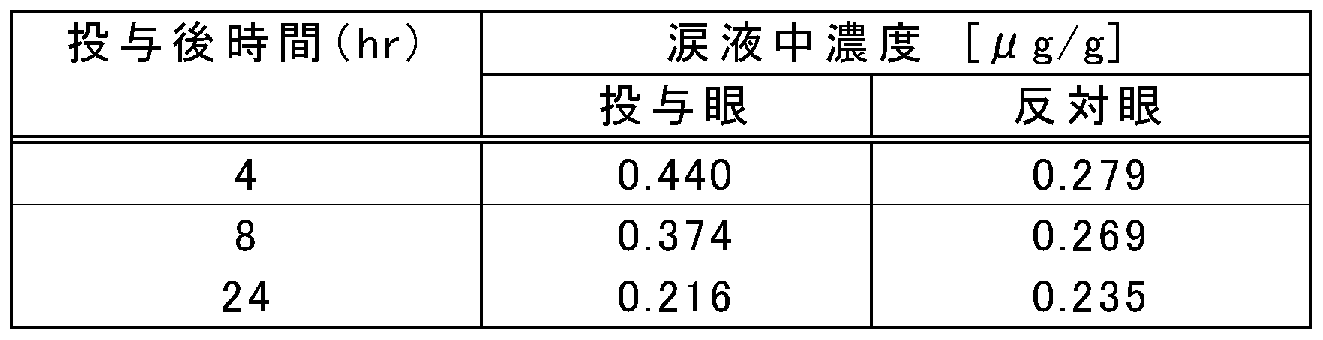
- FIG. 6 is a graph showing changes in drug concentration in tears after application of a drug.
- FIG. 7 is a graph showing changes in drug concentration in the conjunctiva after drug application.
- FIG. 8 is a graph showing changes in plasma drug concentration after drug application.
- FIG. 9 is a graph comparing changes in drug concentration in the conjunctiva between solid drug application and eye drop application. Explanation of symbols
- the “skin surface including the surface of the eyelid” means the skin surface forming the surface (front surface) of the upper and lower eyelids and the skin surface in the vicinity thereof.
- a particularly preferred region for applying the drug of the present invention is the force that is the skin surface itself that forms the surface of the upper and lower eyelids. Even if it is applied to the nearby skin surface, the amount of permeation of the physiologically active substance is reduced. It is preferable for further enhancement.
- local ocular tissue existing on the back side of the eyelid means cornea, bulbar conjunctiva, sclera
- Aqueous humor Aqueous humor, iris, lens, ciliary body, choroid, retina and vitreous tissue including the vitreous, as well as the conjunctiva and tears.
- solid means that the drug (composition) having substantially no fluidity is retained and has a hardness that can rub the exposed portion against the skin.
- the base component of the drug of the present invention since the base component of the drug of the present invention does not directly touch the anterior ocular tissue (conjunctiva, cornea, etc.), it is a component that cannot be used in eye drops due to eye irritation and the like. However, any substance that does not affect the skin surface can be used.
- Such components include, for example, various compounds that promote the transdermal absorbability of the pharmacologically active ingredient, and by appropriately using them, the pharmaceutical agent of the present invention can be used to absorb the transdermally absorbable pharmacologically active ingredient. This facilitates the transfer of the necessary amount of the component to the extraocular tissue relatively quickly and continuously.
- the drug of the present invention is applied to the skin surface (originally contains many bacteria) Therefore, it may not contain preservatives unless it is selected as a composition that does not need to be sterile and allows for the growth of germs.
- various oleaginous or aqueous substances containing a pharmacologically active ingredient and capable of forming a solid having a degree of softness that can be applied by rubbing on the skin surface can be used.
- Various percutaneous absorption enhancers are well known to those skilled in the art. The percutaneous absorption enhancer appropriately selected from them is to be supplied to the ocular local tissue through the skin permeability and the efficacy in the ocular local tissue. Depending on the expression concentration and the like, it can be contained in the base at a desired concentration.
- examples of the base include waxes, that is, plant waxes that are natural waxes (eg, carnauba wax, tree wax, candelilla wax), animal waxes (eg, beeswax, whale wax, Wool wax), petroleum wax (paraffin wax, microcrystalline wax, etc.), mineral wax (for example, montan wax, ozokerite), synthetic wax (carbo wax, etc.), petrolatum, lanolin, hydrogenated rosin Z diisostearate) glyceryl, water Polyisobutene, polyethylene, fatty acid cholesteryl, higher fatty acid esters (for example, isopropyl myristate, isopropyl palmitate, propylene glycol oleate, hexyl laurate, decyl oleate, glyceryl monostearate), higher aliphatic alcohols (for example, Cetyl alcohol Les, isostearyl alcohol, lauryl alcohol, oleyl
- natural waxes e
- bases particularly preferable examples include waxes, petrolatum, squalane, which are oily solid bases, and combinations thereof with higher fatty acid esters such as isopropyl myristate or isopropyl palmitate. It is done.
- higher fatty acid esters such as isopropyl myristate and isopropyl palmitate are bases for forming a solid drug in the present invention, and at the same time, skin for enhancing skin permeability of pharmacologically active ingredients. It is preferable because it functions as a permeation enhancer.
- the base other various components are used for the purpose of adjusting the properties of the solid drug. can do.
- these components are plastibase, carboxyvinyl polymer, polyacrylic acid, sodium polyacrylate, cellulose derivatives (methylcellulose, propinoresenorelose, hydroxyethinoresenorelose, hydroxypropinoremethinoresenorose, etc. ), Polybulal alcohol, polybulurpyrrolidone, polyacrylamide, alginic acid, sodium alginate, gelatin, thickening polysaccharides (eg gum arabic, tragacanth gum, guar gum, xanthan gum), glycerol, recbitol, ethylene glycol, propylene glycol, etc. Can be mentioned.
- plastibase carboxyvinyl polymer
- polyacrylic acid sodium polyacrylate
- cellulose derivatives methylcellulose, propinoresenorelose, hydroxyethinoresenorelose, hydroxypropinoremethinoresenorose, etc
- the content of the oily solid base in the drug of the present invention is preferably 15 to 60% by weight, more preferably 20 to 60% by weight, and even more preferably 35 to 55% by weight. Is more preferable.
- the wax content in the drug is 15 to It is preferably 60% by weight, more preferably 20 to 60% by weight, and even more preferably 35 to 55% by weight.
- the content of the higher fatty acid ester is preferably 35 to 55% by weight, more preferably 30 to 60% by weight.
- the drug of the present invention may further contain a skin permeation enhancer.
- skin permeation enhancers include aliphatic alcohols, fatty acids and salts thereof, fatty acid esters, polyhydric alcohol alkyl ethers, glycerides, polyhydric alcohol medium chain fatty acid esters, lactate alkyl esters, dibasic alkyl esters, and acylation. Examples include, but are not limited to, amino acids, pyrrolidones, hydroxydicarboxylic acids or dicarboxylic acids, monoterpenes, and various surfactants. These skin permeation enhancers may be used alone or in combination of two or more. Some of these are also components that can be used to adjust the physical properties (hardness, viscosity, plasticity, etc.) of the base.
- Examples of the aliphatic alcohol include polyhydric alcohols such as ethanol, glycerol, diethylene glycol, propylene glycol and polyethylene glycol, and higher fatty alcohols.
- the higher fatty alcohols particularly preferred are saturated or unsaturated higher fatty alcohols having 12 to 22 carbon atoms such as oleyl alcohol and lauryl alcohol.
- Examples of the fatty acids and salts thereof include force puric acid, myristic acid, palmitic acid, lauric acid, stearic acid, isostearic acid, palmitoleic acid, oleic acid, butacenoic acid, linoleic acid, linolenic acid and the like. Examples include, but are not limited to, salts (sodium salt, potassium salt, magnesium salt, calcium salt, aluminum salt, etc.).
- fatty acid esters examples include fatty acids having 10 or more carbon atoms such as force puric acid, lauric acid, palmitic acid, stearic acid, and the like, and methanol, ethanol, propanol, isopropanol, butanol, and hexanol.
- Force including, but not limited to, esters with lower aliphatic alcohols having less than 12 carbon atoms, such as pentanol, heptanol and the like.
- Specific examples include isopropyl myristate, diisopropyl adipate, isopropyl normitate, and the like.
- polyhydric alcohol alkyl ether examples include glycerol, ethylene glycol, propylene glycol, 1,3-butylene glycol, diglycerin, polyglycerin, diethylene glycol, polyethylene glycol, dipropylene glycol, polypropylene glycol, The ability to include ethers of polyhydric alcohols such as sorbitan, sorbitol, isosorbide, methyl darcoside, oligosaccharides, reducing oligosaccharides, and alkyl alcohols (for example, polyoxyethylene alkyl ethers), but are not limited to these.
- the alkyl alcohol moiety preferably has 6 to 20 carbon atoms.
- the polyoxyethylene alkyl ether has 6 to 20 carbon atoms in the alkyl moiety and 1 to 9 polyoxyethylene chain repeating units (—O—CH 2 CH 1).
- polyoxyethylene alkyl ethers are preferred. Specific examples of such polyoxyethylene alkyl ethers include polyoxyethylene oleyl ether, polyoxyethylene lauryl ether, polyoxyethylene cetyl ether, polyoxyethylene stearyl ether and the like.
- glyceride any of monoglyceride, diglyceride and triglyceride can be used, and they can be used in combination.
- Fatty acids that are constituents of glycerides preferably have 6 to 18 carbon atoms. Examples of such fatty acids include octanoic acid, decanoic acid, dodecanoic acid, tetradecanoic acid, hexadecanoic acid, stearic acid, and oleic acid.
- lactic acid, tartaric acid, 1, 2, 6-hexanetriol, benzyl alcohol, lanolin, Potassium hydroxide and tris (hydroxymethyl) aminomethane can also be used as skin permeation enhancers.
- Examples of the monoterpenes include d-limonene and 1 menthol.
- an anionic surfactant an anionic surfactant, a cationic surfactant, a nonionic surfactant, or an amphoteric surfactant can be used.
- cationic surfactant examples include fatty acid salts, alkyl sulfates, polyoxyethylene alkyl sulfates, alkyl sulfocarboxylates, alkyl ether carboxylates, N-lauroyl sarcosine and the like.
- cationic surfactants include amine salts and quaternary ammonium salts.
- nonionic surfactant examples include polyoxyethylene hydrogenated castor oil, polyoxyethylene fatty acid ester, polyoxyethylene alkyl ether, polyoxyethylene sorbitan fatty acid ester and the like.
- amphoteric surface activity examples include alkylbetaines, dimethylalkylglycines, lecithins and the like.
- aliphatic higher alcohols such as lauryl alcohol, fatty acids such as isostearic acid, higher fatty acid esters such as isopropyl myristate and isopropyl palmitate, and polyoxyethylene oleyl ether It is particularly preferable to use oxyethylene alkyl ether, potassium hydroxide, tris (hydroxymethyl) aminoethane, etc., and a mixture of two or more thereof.
- the skin permeation enhancer can be included in the solid drug in an appropriate weight ratio as long as it does not adversely affect the physical properties of the solid drug. Usually, it is contained in an amount of 1 to 60% by weight, preferably 10 to 60% by weight, more preferably 30 to 60% by weight, based on the whole solid drug.
- the Isopropyl myristate when using higher fatty acid esters of isopropyl palmitate as a skin permeation enhancer, esters thereof with respect to the total solid drug, preferably that is contained in an amount of 30 to 60 wt 0/0 device 35 more preferably, that is contained in an amount of 55 weight 0/0.
- the polyoxyethylene oleyl ether that can be used in the present invention has an average addition number force of ethylene oxide to the oleyl moiety, preferably 4.5 to 5.5, in particular Preferably about 5.
- reaction of ethylene oxide with oleyl alcohol having a hydroxyl value of 4.5 to 5.5 as measured by the method described in the “Hydroxyl value” section of the 13th revised Japanese Pharmacopoeia, Oil Testing Method can be obtained.
- a polyoxyethylene ether for example, NOON E-205S manufactured by NOF Corporation is suitably used.
- a drug that is conventionally used locally or known to be usable for eye diseases can also be used in the present invention.
- drugs include non-steroidal anti-inflammatory drugs, antiallergic drugs (HI blockers, etc.), antiglaucoma drugs (1 blockers, ⁇ 1 blockers, carbonic anhydrase inhibitors, etc.), anticataract drugs , Antibacterial drugs, antiviral drugs, antifungal drugs, antibiotics, sulfa drugs, steroidal anti-inflammatory drugs, miotic drugs, mydriatic drugs, local astringents, vasoconstrictors, anticholinesterase drugs, surface anesthetics, vitamins (Vitamin ⁇ ,
- Coenzyme-type vitamin eg, vitamin
- Specific compounds include the following. Acyclovir, azulene, anthralic acid, ascorbic acid, amlexanox, isopropyl unoprostone, idtasuridine, ibudilast, indomethacin, epinephrine, erythromycin, lysozyme chloride, apraclondidine hydrochloride, oxybuproin hydrochloride, carteolol hydrochloride, Cyclopentato hydrochloride, dipivefrin hydrochloride, cefmenoxime hydrochloride, dorzolamide hydrochloride, pilocarpine hydrochloride, fenirefrin hydrochloride, bunazosin hydrochloride, betaxolol hydrochloride, befnolol hydrochloride, levocabastine hydrochloride, levobanolol hydrochloride, romefloxacin hydrochloride, ofloxacin, force rub
- the viewpoint power of percutaneous absorption and skin permeability is preferred, and those having a molecular weight of 1000 or less are preferred, and drugs having a molecular weight of 1000 or less are more preferred. A molecular weight of 600 or less is more preferred, and a molecular weight of 500 or less is particularly preferred.
- antibacterial drugs, antiallergic drugs, anti-inflammatory drugs (steroidal and nonsteroidal drugs), antiglaucoma drugs, and anticataract drugs are preferred, especially antiallergic drugs and nonsteroidal antiinflammatory drugs are preferred.
- examples include ketotifen fumarate (antiallergic drug, antihistamine; molecular weight 425.51) and diclofenac sodium (nonsteroid anti-inflammatory drug; molecular weight 318.13).
- the shape of the drug of the present invention is arbitrary such as a short rod shape, a rectangular parallelepiped shape, a disc shape or the like. It is preferable that the drug is stored in a container so that it can be applied without touching the drug directly.
- a particularly preferred form is a generally cylindrical container whose front end can be opened, the bottom of which is composed of a movable bottom member that can be slid forward and backward in the direction of the front end, and the solid medicine is the container body.
- a movable bottom member may be formed by any appropriate method, and may have the same structure as that commonly used for lipsticks, stick glues, and the like.
- the movable bottom member is attached by being screwed through a bolt extending along the central axis of the container in the cylindrical container body, and is rotated with respect to the container body. Impossibly engaged with the inner wall shape of the side wall of the container body, the bolt at its root end, around the axis of the container body at the root end of the container body.
- the rotary knob member is fixed to the center of the rotary knob member so as to be rotatable from the outside, and constitutes a moving means of the movable bottom together with the rotary knob member.
- the movable bottom which is prevented from rotating by engagement with the container body
- ketotifen fumarate SIGMA C HEMICAL
- beeswax Wako Pure Chemical Industries, Ltd.
- myristic acid that also acts as a skin permeation enhancer Isopropyl (Wako Pure Chemical Industries, Ltd.) was used.
- Candidate skin penetration enhancers to be added to these ingredients include lauric acid, oleic acid, L-menthol, limonene, polyoxyethylene lauryl ether, sodium lauryl sulfate (all of which are Wako Pure Chemical Industries, Ltd.), poly Oxyethylene oleyl ether (NOFABLE EAO-9905; Nippon Oil & Fats Co., Ltd.) and glyceryl monooleate (Nippon Oil & Fats Co., Ltd.) were selected to prepare solid chemicals of each formulation shown in Table 1. That is, according to each formulation, the beaker into which ketotifen fumarate was weighed was charged with isopropyl myristate and an additional skin permeation enhancer and stirred thoroughly. After adding beeswax and mixing well at about 75 ° C, quickly pour it into the compartment 3 on the donor side (donor cell 2) of the vertical diffusion cell (Modified Franz Cell) 1 shown in Fig. 1. Used as a mold and solidified in it
- IPM isopropyl myristate
- POEL polyoxyethylene lauryl ether
- SDS sodium lauryl sulfate
- POEO polyoxyethylene oleyl ether
- GO glyceryl monooleate
- the receptor side (receptor cell 4) compartment 5 of the vertical diffusion cell 1 was filled with about 10 ml of a phosphate buffer solution (pH 7.4) containing no drug.
- a phosphate buffer solution pH 7.4
- the skin of the abdomen of the hairless mouse was cut intact and pasted with the front side facing up and covering the mouth of the receptor cell 4 (effective diffusion area 1.72 cm 2 ). In contact with the phosphate buffer.
- Each of the solid drugs of the above-mentioned formulations A1 to A10 made with the donor cell side compartment 3 as a bowl shape, protrudes about 1 mm below the mouth force of the donor cell 2, and the mouth of the receptor cell 4
- the donor cell 2 was placed on the skin stretched on the skin, fixed with the clamp 7, and the skin permeation experiment was started. While constantly stirring the buffer solution with the magnetic stirrer tip 6, sampling of 2001 from the receptor cell 4 side at a predetermined time interval keeps the volume of the receptor solution constant.
- the phosphate buffer was replenished. During the experiment, the temperature was maintained at 37 ° C. Quantitative analysis of ketotifen fumarate in the sample was performed using HPLC under the following conditions. The results are shown in FIG.
- UV absorptiometer (measurement wavelength 300nm)
- the vertical axis represents the accumulated permeation amount (Q) per unit area
- the horizontal axis represents time (t).
- the time delay (td [hour]) is the time intercept when the straight line part of the Qt time curve in Fig. 2 is extended.
- DQZdt is the amount of pharmacologically active ingredient permeation ( ⁇ g) per unit area (lcm 2 ) and per unit time (lhr).
- n 3
- the numerical value is the average soil standard deviation
- the numerical value is the average soil standard deviation [0055]
- the skin permeation rate was in the case of the 1 wt% concentration formulation. is a relative to the, 1.76 times 2 weight 0/0, 3. 24X at 4 weight 0/0, and 22 times 6. 8 weight 0/0, is approximately proportional to the concentration of Fumanore ketotifen In form increased its skin permeation rate.
- Figure 5 shows that the permeation rate of ketotifen fumarate when the solid drug is applied to the skin surface is equal to or greater than the permeation rate of ketotifen fumarate when the solid drug is placed on the skin surface. Show that there is.
- the skin permeation rate was compared for two types of solid drugs with different bases. That is, according to the prescription in Table 7, a solid drug was prepared in a lip tube (capacity: 5 ml, H68. Omm X ⁇ 16. Omm), applied to the cut skin of the mouse, and then applied to the receptor cell. The permeation rate of ketotifen fumarate was measured and compared. The results are shown in Table 8.
- the tears were collected at 1 and after blood collection, the rabbits were euthanized with an excessive amount of pentobarbital sodium solution.
- the collected blood was centrifuged for about 5 minutes, and the plasma was transferred to an Eppendorf tube. After washing the anterior eye with physiological saline, the drug was wiped from the lower eyelid skin, and the eyeball was removed with the conjunctiva attached. Thereafter, the conjunctiva was collected from the removed eye on a filter paper. The collected conjunctiva was stored frozen at minus 80 °.
- Tear concentration The wet weight of tears collected in an Eppendorf tube was measured. A total of about 160 ⁇ 1 was collected by ultracentrifugation at 14000 rpm for 5 minutes. 150 ⁇ 1 of the supernatant was transferred to a vial, and 50 ⁇ 1 was injected by HPLC and quantified.
- Plasma concentration measurement lml of plasma collected in an Eppendorf tube was transferred to a test tube, and 1 ml of 1 OmM sodium dihydrogen phosphate buffer (pH 7.0) was added and stirred. Furthermore, 4 ml of acetonitrile was added and stirred again, followed by shaking at 300 rpm for 10 minutes. 10 minutes at 3000 rpm The heart was separated, and 4 ml of the supernatant was collected in a test tube for concentration, and then reduced to dryness with a centrifugal evaporator for about 18 hours (finally concentrating three samples into one). Thereafter, the mobile phase was added and dissolved again, and the entire amount was transferred to an Eppendorf tube. Centrifugation was performed at 14000 rpm for 5 minutes, and the supernatant was filtered through a membrane filter (0.22 m). The filtrate was transferred to a vial and quantified by injecting 50 ⁇ l by HPLC.
- the drug concentration in the conjunctiva (lower eyelid conjunctiva) is 4 hours later in tears applied to solid drug-coated eyes.
- the concentration reached 0.353 / z gZg, which was slightly lower than the drug concentration, and reached a high concentration of 0.598 / z gZg after 8 hours of application, and remained at a value of 0.447 / z gZg even after 24 hours.
- the drug concentration in the conjunctiva of the contralateral eye was consistently on the order of 0.:gZg, and there was no significant fluctuation.
- the plasma drug concentration dropped from 0.046 / z gZml after 4 hours of application to 0.017 g / ml after 24 hours and 0.030 ⁇ g / m after 8 hours.
- Table 13 is data showing the concentration of ketotifen fumarate in the conjunctiva when ketotifen fumarate (0.967WZV%) is applied to rabbit eyes (source: 14C ketotifen fumarate instillation). It shows the ability to migrate to the rabbit eye tissue after administration (Shinichi Ota, Clinical Medicine No. 4-11 (1988)).
- Figure 9 shows that the drug concentration in the conjunctiva can be maintained over a very long period of more than 24 hours when administered a solid drug (10 applications), as opposed to ophthalmic administration. Yes.
- the simulation graph for a single application of the solid preparation shows a sustained drug concentration in the conjunctiva that is significantly longer than that for instillation even when the solid preparation is applied only once. It shows that it is obtained.
- ketotifen fumarate is weighed, isopropyl myristate and polyoxyethylene ether are mixed and stirred thoroughly. Add beeswax to this and add about 75
- ketotifen fumarate In a beaker in which ketotifen fumarate is weighed, add isopropyl palmitate and polyoxyethylene glycol ether, stir well, add lauryl alcohol and mix well. Add petrolatum to this and mix well at about 60 ° C. Then, it is poured into a predetermined mold little by little and solidified to obtain a solid medicine.
- the present invention can be used to provide a novel form of an external ophthalmic drug having excellent characteristics when a physiologically active substance can be continuously supplied to ocular tissue for a long time. be able to.
Landscapes
- Health & Medical Sciences (AREA)
- Chemical & Material Sciences (AREA)
- Medicinal Chemistry (AREA)
- Pharmacology & Pharmacy (AREA)
- Life Sciences & Earth Sciences (AREA)
- Animal Behavior & Ethology (AREA)
- General Health & Medical Sciences (AREA)
- Public Health (AREA)
- Veterinary Medicine (AREA)
- Epidemiology (AREA)
- Oil, Petroleum & Natural Gas (AREA)
- Engineering & Computer Science (AREA)
- General Chemical & Material Sciences (AREA)
- Chemical Kinetics & Catalysis (AREA)
- Ophthalmology & Optometry (AREA)
- Dermatology (AREA)
- Bioinformatics & Cheminformatics (AREA)
- Nuclear Medicine, Radiotherapy & Molecular Imaging (AREA)
- Organic Chemistry (AREA)
- Medicinal Preparation (AREA)
- Pharmaceuticals Containing Other Organic And Inorganic Compounds (AREA)
Abstract
Description




Claims
Priority Applications (4)
| Application Number | Priority Date | Filing Date | Title |
|---|---|---|---|
| US11/884,392 US20100160293A1 (en) | 2005-02-17 | 2006-02-10 | Solid Ophthalmic Drug for External Use |
| CA002597525A CA2597525A1 (en) | 2005-02-17 | 2006-02-10 | Solid ophthalmic drug for external use |
| JP2007503633A JPWO2006087968A1 (ja) | 2005-02-17 | 2006-02-10 | 眼科用固形外用薬剤 |
| EP06713464A EP1852106A4 (en) | 2005-02-17 | 2006-02-10 | SOLID OPHTHALMIC MEDICINE FOR EXTERNAL USE |
Applications Claiming Priority (2)
| Application Number | Priority Date | Filing Date | Title |
|---|---|---|---|
| JP2005-041368 | 2005-02-17 | ||
| JP2005041368 | 2005-02-17 |
Publications (1)
| Publication Number | Publication Date |
|---|---|
| WO2006087968A1 true WO2006087968A1 (ja) | 2006-08-24 |
Family
ID=36916376
Family Applications (1)
| Application Number | Title | Priority Date | Filing Date |
|---|---|---|---|
| PCT/JP2006/302321 Ceased WO2006087968A1 (ja) | 2005-02-17 | 2006-02-10 | 眼科用固形外用薬剤 |
Country Status (7)
| Country | Link |
|---|---|
| US (1) | US20100160293A1 (ja) |
| EP (1) | EP1852106A4 (ja) |
| JP (1) | JPWO2006087968A1 (ja) |
| KR (1) | KR20070104912A (ja) |
| CN (1) | CN101123948A (ja) |
| CA (1) | CA2597525A1 (ja) |
| WO (1) | WO2006087968A1 (ja) |
Cited By (6)
| Publication number | Priority date | Publication date | Assignee | Title |
|---|---|---|---|---|
| WO2008026756A1 (en) * | 2006-08-28 | 2008-03-06 | Senju Pharmaceutical Co., Ltd. | Ophthalmic percutaneous absorption type preparation |
| JP2016513134A (ja) * | 2013-02-27 | 2016-05-12 | ロバート バット ローリー | 経皮製剤 |
| WO2016182032A1 (ja) * | 2015-05-12 | 2016-11-17 | 参天製薬株式会社 | アゾール系抗真菌薬の眼瞼皮膚への投与 |
| JP2019500366A (ja) * | 2015-12-15 | 2019-01-10 | ザ・ユニバーシティ・オブ・マンチェスターThe University Of Manchester | 組成物とそれに関連する使用および方法 |
| US10420756B2 (en) | 2015-03-26 | 2019-09-24 | Sen-Jam Pharmaceutical Llc. | Methods and compositions to inhibit symptoms associated with veisalgia |
| US11419886B2 (en) | 2020-11-23 | 2022-08-23 | Sight Sciences, Inc. | Formulations and methods for treating conditions of the eye |
Families Citing this family (4)
| Publication number | Priority date | Publication date | Assignee | Title |
|---|---|---|---|---|
| LT2493474T (lt) * | 2009-10-30 | 2019-10-10 | Intratus, Inc. | Būdai ir kompozicijos prolonguotam vaistų įvedimui |
| US8900626B2 (en) | 2011-06-20 | 2014-12-02 | Senju Usa, Inc. | Transdermal drug delivery system and method of using the same |
| EP3362096B1 (en) | 2015-10-14 | 2023-12-13 | Paul Gavaris | Ophthalmic treatment composition and vehicle for delivery of pharmaceutical substances or therapeutic agents |
| JP2018532753A (ja) * | 2015-10-30 | 2018-11-08 | クロマ−ファーマ ゲゼルシャフト エム.ベー.ハー. | 滅菌水性点眼液の治療的使用 |
Citations (7)
| Publication number | Priority date | Publication date | Assignee | Title |
|---|---|---|---|---|
| JPS5379020A (en) * | 1976-12-23 | 1978-07-13 | Squibb & Sons Inc | Isosorbido containing medicine |
| JPS60155111A (ja) * | 1983-10-20 | 1985-08-15 | Hisamitsu Pharmaceut Co Inc | 安定なケトプロフェン含有外用経皮製剤 |
| JPH0378549U (ja) * | 1989-12-01 | 1991-08-08 | ||
| JPH08509716A (ja) * | 1993-04-28 | 1996-10-15 | エルテーエス・ローマン・テラピー−ジステーメ・ゲーエムベーハー・ウント・ツェーオー.カーゲー | ピロカルピンの制御放出システム |
| WO2000033814A2 (en) * | 1998-12-09 | 2000-06-15 | Chiron Corporation | Method for administering agents to the central nervous system |
| WO2001026648A1 (en) * | 1999-10-13 | 2001-04-19 | Senju Pharmaceutical Co., Ltd. | Ophthalmic adhesive preparations for percutaneous absorption |
| WO2004064817A1 (ja) * | 2003-01-22 | 2004-08-05 | Nichiban Co., Ltd. | 眼疾患治療用経皮吸収型製剤、その使用、及び眼疾患治療薬の眼の局所組織への移行方法 |
Family Cites Families (14)
| Publication number | Priority date | Publication date | Assignee | Title |
|---|---|---|---|---|
| SE375007B (ja) * | 1972-11-30 | 1975-04-07 | Pharmacia Ab | |
| JP2739501B2 (ja) * | 1989-08-21 | 1998-04-15 | トヨタ自動車株式会社 | 変速時のエンジントルク変更のタイミング決定装置 |
| WO1992003133A1 (en) * | 1990-08-16 | 1992-03-05 | Bloom, Leonard | Topical treatment of blepharitis |
| US5830508A (en) * | 1992-08-06 | 1998-11-03 | Deo Corporation | Composition for treating dry eye |
| IT1287114B1 (it) * | 1996-10-31 | 1998-08-04 | Recordati Chem Pharm | Composizioni farmaceutiche antierpetiche per applicatori topici, contenenti aciclovir |
| JPH10182500A (ja) * | 1996-12-24 | 1998-07-07 | Nippon Nachiyuraru Prod:Kk | 外用医薬品及び化粧料 |
| NZ517556A (en) * | 1999-09-06 | 2003-08-29 | Ono Pharmaceutical Co | N-[o-(p-pivaloyloxybenzenesulphonyl-amino)benzoyl]glycine as preventive and therapeutic agents for eye diseases |
| US6573299B1 (en) * | 1999-09-20 | 2003-06-03 | Advanced Medical Instruments | Method and compositions for treatment of the aging eye |
| CA2355814C (en) * | 2000-09-14 | 2010-06-29 | Kabushiki Kaisha Hayashibara Seibutsu Kagaku Kenkyujo | Pharmaceutical composition for ophthalmic use |
| JP2002241280A (ja) * | 2001-02-13 | 2002-08-28 | Shiseido Co Ltd | 水溶性生理活性成分含有外用剤 |
| EP1531793A1 (en) * | 2002-07-23 | 2005-05-25 | Novartis AG | Ophtalmic ointment composition comprising a drug, an ointment base and a solubiling/dispersing agent |
| US20040091539A1 (en) * | 2002-11-13 | 2004-05-13 | Ake Lindahl | Dermastick thickened ointment |
| US7348329B2 (en) * | 2003-10-29 | 2008-03-25 | Santen Pharmaceutical Co., Ltd. | Therapeutic agent for keratoconjunctival disorder |
| PL1754491T3 (pl) * | 2004-05-21 | 2010-08-31 | Senju Pharma Co | Preparat do oczu do wchłaniania przezskórnego zawierający agonistę receptora muskarynowego |
-
2006
- 2006-02-10 EP EP06713464A patent/EP1852106A4/en not_active Withdrawn
- 2006-02-10 JP JP2007503633A patent/JPWO2006087968A1/ja active Pending
- 2006-02-10 CA CA002597525A patent/CA2597525A1/en not_active Abandoned
- 2006-02-10 CN CNA2006800047942A patent/CN101123948A/zh active Pending
- 2006-02-10 WO PCT/JP2006/302321 patent/WO2006087968A1/ja not_active Ceased
- 2006-02-10 KR KR1020077018854A patent/KR20070104912A/ko not_active Ceased
- 2006-02-10 US US11/884,392 patent/US20100160293A1/en not_active Abandoned
Patent Citations (7)
| Publication number | Priority date | Publication date | Assignee | Title |
|---|---|---|---|---|
| JPS5379020A (en) * | 1976-12-23 | 1978-07-13 | Squibb & Sons Inc | Isosorbido containing medicine |
| JPS60155111A (ja) * | 1983-10-20 | 1985-08-15 | Hisamitsu Pharmaceut Co Inc | 安定なケトプロフェン含有外用経皮製剤 |
| JPH0378549U (ja) * | 1989-12-01 | 1991-08-08 | ||
| JPH08509716A (ja) * | 1993-04-28 | 1996-10-15 | エルテーエス・ローマン・テラピー−ジステーメ・ゲーエムベーハー・ウント・ツェーオー.カーゲー | ピロカルピンの制御放出システム |
| WO2000033814A2 (en) * | 1998-12-09 | 2000-06-15 | Chiron Corporation | Method for administering agents to the central nervous system |
| WO2001026648A1 (en) * | 1999-10-13 | 2001-04-19 | Senju Pharmaceutical Co., Ltd. | Ophthalmic adhesive preparations for percutaneous absorption |
| WO2004064817A1 (ja) * | 2003-01-22 | 2004-08-05 | Nichiban Co., Ltd. | 眼疾患治療用経皮吸収型製剤、その使用、及び眼疾患治療薬の眼の局所組織への移行方法 |
Non-Patent Citations (2)
| Title |
|---|
| NAKAGAWA A. ET AL.: "Ganken Hifu kara Ketsumaku eno Yakubutsu Iko ni Kansuru Kenkyu", THE 18TH APSTJ ANNUAL MEETING KOEN YOSHISHU (KOENBI, 04-06 APRIL, 2003), vol. 63, no. SUPPLEMENT, 5 March 2003 (2003-03-05), pages 81, XP003001568 * |
| See also references of EP1852106A4 * |
Cited By (13)
| Publication number | Priority date | Publication date | Assignee | Title |
|---|---|---|---|---|
| JP2010502564A (ja) * | 2006-08-28 | 2010-01-28 | 千寿製薬株式会社 | 眼科用経皮吸収型製剤 |
| WO2008026756A1 (en) * | 2006-08-28 | 2008-03-06 | Senju Pharmaceutical Co., Ltd. | Ophthalmic percutaneous absorption type preparation |
| JP7032037B2 (ja) | 2013-02-27 | 2022-03-08 | ロバート バット ローリー | 経皮製剤 |
| JP2016513134A (ja) * | 2013-02-27 | 2016-05-12 | ロバート バット ローリー | 経皮製剤 |
| JP2019178141A (ja) * | 2013-02-27 | 2019-10-17 | ロバート バット ローリー | 経皮製剤 |
| JP2022001575A (ja) * | 2013-02-27 | 2022-01-06 | ロバート バット ローリー | 経皮製剤 |
| US11464766B2 (en) | 2015-03-26 | 2022-10-11 | SEN-JAM Pharmaceutical LLC | Methods and compositions to inhibit symptoms associated with veisalgia |
| US10420756B2 (en) | 2015-03-26 | 2019-09-24 | Sen-Jam Pharmaceutical Llc. | Methods and compositions to inhibit symptoms associated with veisalgia |
| WO2016182032A1 (ja) * | 2015-05-12 | 2016-11-17 | 参天製薬株式会社 | アゾール系抗真菌薬の眼瞼皮膚への投与 |
| JP2019500366A (ja) * | 2015-12-15 | 2019-01-10 | ザ・ユニバーシティ・オブ・マンチェスターThe University Of Manchester | 組成物とそれに関連する使用および方法 |
| US11419886B2 (en) | 2020-11-23 | 2022-08-23 | Sight Sciences, Inc. | Formulations and methods for treating conditions of the eye |
| US11554134B2 (en) | 2020-11-23 | 2023-01-17 | Sight Sciences, Inc. | Formulations and methods for treating conditions of the eye |
| US11925657B2 (en) | 2020-11-23 | 2024-03-12 | Sight Sciences, Inc. | Formulations and methods for treating conditions of the eye |
Also Published As
| Publication number | Publication date |
|---|---|
| JPWO2006087968A1 (ja) | 2008-07-03 |
| US20100160293A1 (en) | 2010-06-24 |
| CA2597525A1 (en) | 2006-08-24 |
| CN101123948A (zh) | 2008-02-13 |
| EP1852106A1 (en) | 2007-11-07 |
| EP1852106A4 (en) | 2009-08-26 |
| KR20070104912A (ko) | 2007-10-29 |
Similar Documents
| Publication | Publication Date | Title |
|---|---|---|
| KR101773225B1 (ko) | 활성 성분 전달을 위한 액체 약학 조성물 | |
| JP6545137B2 (ja) | 後眼部疾患の治療のための液体医薬組成物 | |
| Tangri et al. | Basics of ocular drug delivery systems | |
| JP5885244B2 (ja) | 1つまたは複数の薬剤の徐放性送達 | |
| ES2752008T3 (es) | Métodos y composiciones para la liberación sostenida de fármacos | |
| EP2187743B1 (en) | Rapamycin formulations for treatment of age related macular degeneration | |
| JP6296977B2 (ja) | 経皮薬物送達システムおよびその使用方法 | |
| MX2007003789A (es) | Suministro ocular de formulaciones polimericas para suministro. | |
| JP2023120431A (ja) | 眼の症状の治療のための硝子体内薬物送達システム | |
| JP2008533204A (ja) | 病気又は症状の治療のためのドラッグ送達システム | |
| BRPI0607606B1 (pt) | Formulação líquida | |
| JPWO2004064817A1 (ja) | 眼疾患治療用経皮吸収型製剤、その使用、及び眼疾患治療薬の眼の局所組織への移行方法 | |
| EP2056809A1 (en) | Ophthalmic percutaneous absorption type preparation | |
| KR20100072333A (ko) | 약물 전달을 위한 비히클로서의 비-수성 수혼화성 물질 | |
| WO2006087968A1 (ja) | 眼科用固形外用薬剤 | |
| EP1754491B1 (en) | Ophthalmic percutaneously absorbed preparation containing muscarinic receptor agonist | |
| WO2025131038A1 (en) | Compositions and methods for delivery of pharmaceutical actives | |
| Hajare et al. | A rational approach to ocular drug delivery systems: A overview | |
| JP2021508523A (ja) | 経皮薬物送達システムおよびその使用方法 | |
| Chablani et al. | Nanovesicular carrier systems for ophthalmic drug delivery | |
| MX2007009984A (es) | Farmaco oftalmico solido para uso externo. | |
| Ara et al. | Occular Drug Delivery System: An Overview | |
| CN120227380A (zh) | 含有黄体酮的药物组合物及应用 | |
| HK40046692B (zh) | 用於将药剂无创地持续递送至眼部的液体储库 | |
| JPWO2001026648A1 (ja) | 眼科用経皮吸収貼付剤 |
Legal Events
| Date | Code | Title | Description |
|---|---|---|---|
| 121 | Ep: the epo has been informed by wipo that ep was designated in this application | ||
| WWE | Wipo information: entry into national phase |
Ref document number: 2007503633 Country of ref document: JP |
|
| WWE | Wipo information: entry into national phase |
Ref document number: 2597525 Country of ref document: CA |
|
| WWE | Wipo information: entry into national phase |
Ref document number: 200680004794.2 Country of ref document: CN |
|
| WWE | Wipo information: entry into national phase |
Ref document number: 11884392 Country of ref document: US |
|
| WWE | Wipo information: entry into national phase |
Ref document number: MX/a/2007/009984 Country of ref document: MX |
|
| WWE | Wipo information: entry into national phase |
Ref document number: 1020077018854 Country of ref document: KR |
|
| NENP | Non-entry into the national phase |
Ref country code: DE |
|
| WWE | Wipo information: entry into national phase |
Ref document number: 2006713464 Country of ref document: EP |
|
| WWE | Wipo information: entry into national phase |
Ref document number: 3425/KOLNP/2007 Country of ref document: IN |
|
| WWP | Wipo information: published in national office |
Ref document number: 2006713464 Country of ref document: EP |