WO2006094602A1 - Indane - Google Patents
Indane Download PDFInfo
- Publication number
- WO2006094602A1 WO2006094602A1 PCT/EP2006/001283 EP2006001283W WO2006094602A1 WO 2006094602 A1 WO2006094602 A1 WO 2006094602A1 EP 2006001283 W EP2006001283 W EP 2006001283W WO 2006094602 A1 WO2006094602 A1 WO 2006094602A1
- Authority
- WO
- WIPO (PCT)
- Prior art keywords
- methyl
- formula
- compounds
- phenyl
- bis
- Prior art date
- Legal status (The legal status is an assumption and is not a legal conclusion. Google has not performed a legal analysis and makes no representation as to the accuracy of the status listed.)
- Ceased
Links
- 0 CC(C)(C)c1ccc(C(C)(Cc2c3cc(*)cc2)C3=C2CCN(C)CC2)cc1 Chemical compound CC(C)(C)c1ccc(C(C)(Cc2c3cc(*)cc2)C3=C2CCN(C)CC2)cc1 0.000 description 1
- PDMPGADZNYKNJN-UHFFFAOYSA-N CC(Cc(c1ccc2C)c2F)(C1=C(CC1)CCN1C(CCN1CCCCC1)=O)c(cccc1)c1F Chemical compound CC(Cc(c1ccc2C)c2F)(C1=C(CC1)CCN1C(CCN1CCCCC1)=O)c(cccc1)c1F PDMPGADZNYKNJN-UHFFFAOYSA-N 0.000 description 1
- MFYPIIGDPPJXMJ-UHFFFAOYSA-N CC(Cc(c1ccc2C)c2F)(C1=C(CC1)CCN1S(CCCN(C)C)(=O)=O)c(cccc1)c1F Chemical compound CC(Cc(c1ccc2C)c2F)(C1=C(CC1)CCN1S(CCCN(C)C)(=O)=O)c(cccc1)c1F MFYPIIGDPPJXMJ-UHFFFAOYSA-N 0.000 description 1
- KTAVJMMYSIJYKB-UHFFFAOYSA-N CC(Cc(c1ccc2C)c2F)(C1=C(CC1)CCN1S(CCN(C)C)(=O)=O)c(cccc1)c1F Chemical compound CC(Cc(c1ccc2C)c2F)(C1=C(CC1)CCN1S(CCN(C)C)(=O)=O)c(cccc1)c1F KTAVJMMYSIJYKB-UHFFFAOYSA-N 0.000 description 1
- YYSRZNXWUHKKOS-UHFFFAOYSA-N CC(Cc1c2cc(C)cc1)(C2=C1CCN(C)CC1)c1cc(OC)ccc1 Chemical compound CC(Cc1c2cc(C)cc1)(C2=C1CCN(C)CC1)c1cc(OC)ccc1 YYSRZNXWUHKKOS-UHFFFAOYSA-N 0.000 description 1
- MDVCSVBWEWOHEE-UHFFFAOYSA-N CC(Cc1cc(C)c(C)cc11)(C1=C(CC1)CCN1S(CCN(C)C)(=O)=O)c1ccccc1 Chemical compound CC(Cc1cc(C)c(C)cc11)(C1=C(CC1)CCN1S(CCN(C)C)(=O)=O)c1ccccc1 MDVCSVBWEWOHEE-UHFFFAOYSA-N 0.000 description 1
- JZGSBMSQAGAAKP-UHFFFAOYSA-N CC(Cc1ccc(C)cc11)(C1=C1CCN(C)CC1)c(cc1)ccc1F Chemical compound CC(Cc1ccc(C)cc11)(C1=C1CCN(C)CC1)c(cc1)ccc1F JZGSBMSQAGAAKP-UHFFFAOYSA-N 0.000 description 1
- XKQNHHYWNHGOMW-UHFFFAOYSA-N CC(Cc1ccc(C)cc11)(C1=C1CCN(C)CC1)c1cc(F)ccc1 Chemical compound CC(Cc1ccc(C)cc11)(C1=C1CCN(C)CC1)c1cc(F)ccc1 XKQNHHYWNHGOMW-UHFFFAOYSA-N 0.000 description 1
- JJXGUFNAROSHRA-UHFFFAOYSA-N CC(Cc1ccccc11)(C1=C1CCN(CCO)CC1)c1ccccc1 Chemical compound CC(Cc1ccccc11)(C1=C1CCN(CCO)CC1)c1ccccc1 JJXGUFNAROSHRA-UHFFFAOYSA-N 0.000 description 1
- FSNFMMKNHZPSHJ-UHFFFAOYSA-N CC(Cc1ccccc11)(C1=C1CCNCC1)c1ccccc1 Chemical compound CC(Cc1ccccc11)(C1=C1CCNCC1)c1ccccc1 FSNFMMKNHZPSHJ-UHFFFAOYSA-N 0.000 description 1
- IPZRAJYKNTWJGH-UHFFFAOYSA-N CC(Cc1ccccc11)(C1=O)c1cccc(C)c1 Chemical compound CC(Cc1ccccc11)(C1=O)c1cccc(C)c1 IPZRAJYKNTWJGH-UHFFFAOYSA-N 0.000 description 1
- VWSLLSXLURJCDF-UHFFFAOYSA-N CC1=NCCN1 Chemical compound CC1=NCCN1 VWSLLSXLURJCDF-UHFFFAOYSA-N 0.000 description 1
- QEIHVTKMBYEXPZ-UHFFFAOYSA-N CC1=NCCN1C Chemical compound CC1=NCCN1C QEIHVTKMBYEXPZ-UHFFFAOYSA-N 0.000 description 1
- KHNTUNGPDFJXMR-UHFFFAOYSA-N CCCCN(CC1)CCC1=C1c2ccccc2CC1(C)c1ccccc1 Chemical compound CCCCN(CC1)CCC1=C1c2ccccc2CC1(C)c1ccccc1 KHNTUNGPDFJXMR-UHFFFAOYSA-N 0.000 description 1
- HMFGMPJOBOALLY-UHFFFAOYSA-N CCc1ccc(C2(C)C(C3CCN(C)CC3)c3cc(C)ccc3C2)cc1 Chemical compound CCc1ccc(C2(C)C(C3CCN(C)CC3)c3cc(C)ccc3C2)cc1 HMFGMPJOBOALLY-UHFFFAOYSA-N 0.000 description 1
- XOLRMKKIFJFIOV-UHFFFAOYSA-N CN(CC1)CCC1=C Chemical compound CN(CC1)CCC1=C XOLRMKKIFJFIOV-UHFFFAOYSA-N 0.000 description 1
- XZGLNCKSNVGDNX-UHFFFAOYSA-N Cc1nnn[nH]1 Chemical compound Cc1nnn[nH]1 XZGLNCKSNVGDNX-UHFFFAOYSA-N 0.000 description 1
Classifications
-
- C—CHEMISTRY; METALLURGY
- C07—ORGANIC CHEMISTRY
- C07D—HETEROCYCLIC COMPOUNDS
- C07D405/00—Heterocyclic compounds containing both one or more hetero rings having oxygen atoms as the only ring hetero atoms, and one or more rings having nitrogen as the only ring hetero atom
- C07D405/02—Heterocyclic compounds containing both one or more hetero rings having oxygen atoms as the only ring hetero atoms, and one or more rings having nitrogen as the only ring hetero atom containing two hetero rings
- C07D405/08—Heterocyclic compounds containing both one or more hetero rings having oxygen atoms as the only ring hetero atoms, and one or more rings having nitrogen as the only ring hetero atom containing two hetero rings linked by a carbon chain containing alicyclic rings
-
- A—HUMAN NECESSITIES
- A61—MEDICAL OR VETERINARY SCIENCE; HYGIENE
- A61P—SPECIFIC THERAPEUTIC ACTIVITY OF CHEMICAL COMPOUNDS OR MEDICINAL PREPARATIONS
- A61P35/00—Antineoplastic agents
-
- A—HUMAN NECESSITIES
- A61—MEDICAL OR VETERINARY SCIENCE; HYGIENE
- A61P—SPECIFIC THERAPEUTIC ACTIVITY OF CHEMICAL COMPOUNDS OR MEDICINAL PREPARATIONS
- A61P35/00—Antineoplastic agents
- A61P35/02—Antineoplastic agents specific for leukemia
-
- A—HUMAN NECESSITIES
- A61—MEDICAL OR VETERINARY SCIENCE; HYGIENE
- A61P—SPECIFIC THERAPEUTIC ACTIVITY OF CHEMICAL COMPOUNDS OR MEDICINAL PREPARATIONS
- A61P43/00—Drugs for specific purposes, not provided for in groups A61P1/00-A61P41/00
-
- C—CHEMISTRY; METALLURGY
- C07—ORGANIC CHEMISTRY
- C07C—ACYCLIC OR CARBOCYCLIC COMPOUNDS
- C07C225/00—Compounds containing amino groups and doubly—bound oxygen atoms bound to the same carbon skeleton, at least one of the doubly—bound oxygen atoms not being part of a —CHO group, e.g. amino ketones
- C07C225/22—Compounds containing amino groups and doubly—bound oxygen atoms bound to the same carbon skeleton, at least one of the doubly—bound oxygen atoms not being part of a —CHO group, e.g. amino ketones having amino groups bound to carbon atoms of six-membered aromatic rings of the carbon skeleton
-
- C—CHEMISTRY; METALLURGY
- C07—ORGANIC CHEMISTRY
- C07C—ACYCLIC OR CARBOCYCLIC COMPOUNDS
- C07C255/00—Carboxylic acid nitriles
- C07C255/49—Carboxylic acid nitriles having cyano groups bound to carbon atoms of six-membered aromatic rings of a carbon skeleton
- C07C255/56—Carboxylic acid nitriles having cyano groups bound to carbon atoms of six-membered aromatic rings of a carbon skeleton containing cyano groups and doubly-bound oxygen atoms bound to the carbon skeleton
-
- C—CHEMISTRY; METALLURGY
- C07—ORGANIC CHEMISTRY
- C07C—ACYCLIC OR CARBOCYCLIC COMPOUNDS
- C07C45/00—Preparation of compounds having >C = O groups bound only to carbon or hydrogen atoms; Preparation of chelates of such compounds
- C07C45/45—Preparation of compounds having >C = O groups bound only to carbon or hydrogen atoms; Preparation of chelates of such compounds by condensation
- C07C45/46—Friedel-Crafts reactions
-
- C—CHEMISTRY; METALLURGY
- C07—ORGANIC CHEMISTRY
- C07C—ACYCLIC OR CARBOCYCLIC COMPOUNDS
- C07C49/00—Ketones; Ketenes; Dimeric ketenes; Ketonic chelates
- C07C49/587—Unsaturated compounds containing a keto groups being part of a ring
- C07C49/657—Unsaturated compounds containing a keto groups being part of a ring containing six-membered aromatic rings
- C07C49/665—Unsaturated compounds containing a keto groups being part of a ring containing six-membered aromatic rings a keto group being part of a condensed ring system
- C07C49/67—Unsaturated compounds containing a keto groups being part of a ring containing six-membered aromatic rings a keto group being part of a condensed ring system having two rings, e.g. tetralones
-
- C—CHEMISTRY; METALLURGY
- C07—ORGANIC CHEMISTRY
- C07C—ACYCLIC OR CARBOCYCLIC COMPOUNDS
- C07C49/00—Ketones; Ketenes; Dimeric ketenes; Ketonic chelates
- C07C49/587—Unsaturated compounds containing a keto groups being part of a ring
- C07C49/703—Unsaturated compounds containing a keto groups being part of a ring containing hydroxy groups
- C07C49/747—Unsaturated compounds containing a keto groups being part of a ring containing hydroxy groups containing six-membered aromatic rings
-
- C—CHEMISTRY; METALLURGY
- C07—ORGANIC CHEMISTRY
- C07C—ACYCLIC OR CARBOCYCLIC COMPOUNDS
- C07C49/00—Ketones; Ketenes; Dimeric ketenes; Ketonic chelates
- C07C49/587—Unsaturated compounds containing a keto groups being part of a ring
- C07C49/753—Unsaturated compounds containing a keto groups being part of a ring containing ether groups, groups, groups, or groups
- C07C49/755—Unsaturated compounds containing a keto groups being part of a ring containing ether groups, groups, groups, or groups a keto group being part of a condensed ring system with two or three rings, at least one ring being a six-membered aromatic ring
-
- C—CHEMISTRY; METALLURGY
- C07—ORGANIC CHEMISTRY
- C07D—HETEROCYCLIC COMPOUNDS
- C07D211/00—Heterocyclic compounds containing hydrogenated pyridine rings, not condensed with other rings
- C07D211/04—Heterocyclic compounds containing hydrogenated pyridine rings, not condensed with other rings with only hydrogen or carbon atoms directly attached to the ring nitrogen atom
- C07D211/06—Heterocyclic compounds containing hydrogenated pyridine rings, not condensed with other rings with only hydrogen or carbon atoms directly attached to the ring nitrogen atom having no double bonds between ring members or between ring members and non-ring members
- C07D211/08—Heterocyclic compounds containing hydrogenated pyridine rings, not condensed with other rings with only hydrogen or carbon atoms directly attached to the ring nitrogen atom having no double bonds between ring members or between ring members and non-ring members with hydrocarbon or substituted hydrocarbon radicals directly attached to ring carbon atoms
- C07D211/10—Heterocyclic compounds containing hydrogenated pyridine rings, not condensed with other rings with only hydrogen or carbon atoms directly attached to the ring nitrogen atom having no double bonds between ring members or between ring members and non-ring members with hydrocarbon or substituted hydrocarbon radicals directly attached to ring carbon atoms with radicals containing only carbon and hydrogen atoms attached to ring carbon atoms
- C07D211/14—Heterocyclic compounds containing hydrogenated pyridine rings, not condensed with other rings with only hydrogen or carbon atoms directly attached to the ring nitrogen atom having no double bonds between ring members or between ring members and non-ring members with hydrocarbon or substituted hydrocarbon radicals directly attached to ring carbon atoms with radicals containing only carbon and hydrogen atoms attached to ring carbon atoms with hydrocarbon or substituted hydrocarbon radicals attached to the ring nitrogen atom
-
- C—CHEMISTRY; METALLURGY
- C07—ORGANIC CHEMISTRY
- C07D—HETEROCYCLIC COMPOUNDS
- C07D211/00—Heterocyclic compounds containing hydrogenated pyridine rings, not condensed with other rings
- C07D211/04—Heterocyclic compounds containing hydrogenated pyridine rings, not condensed with other rings with only hydrogen or carbon atoms directly attached to the ring nitrogen atom
- C07D211/68—Heterocyclic compounds containing hydrogenated pyridine rings, not condensed with other rings with only hydrogen or carbon atoms directly attached to the ring nitrogen atom having one double bond between ring members or between a ring member and a non-ring member
- C07D211/70—Heterocyclic compounds containing hydrogenated pyridine rings, not condensed with other rings with only hydrogen or carbon atoms directly attached to the ring nitrogen atom having one double bond between ring members or between a ring member and a non-ring member with only hydrogen atoms, hydrocarbon or substituted hydrocarbon radicals, directly attached to ring carbon atoms
-
- C—CHEMISTRY; METALLURGY
- C07—ORGANIC CHEMISTRY
- C07D—HETEROCYCLIC COMPOUNDS
- C07D221/00—Heterocyclic compounds containing six-membered rings having one nitrogen atom as the only ring hetero atom, not provided for by groups C07D211/00 - C07D219/00
- C07D221/02—Heterocyclic compounds containing six-membered rings having one nitrogen atom as the only ring hetero atom, not provided for by groups C07D211/00 - C07D219/00 condensed with carbocyclic rings or ring systems
- C07D221/04—Ortho- or peri-condensed ring systems
- C07D221/06—Ring systems of three rings
- C07D221/16—Ring systems of three rings containing carbocyclic rings other than six-membered
-
- C—CHEMISTRY; METALLURGY
- C07—ORGANIC CHEMISTRY
- C07D—HETEROCYCLIC COMPOUNDS
- C07D295/00—Heterocyclic compounds containing polymethylene-imine rings with at least five ring members, 3-azabicyclo [3.2.2] nonane, piperazine, morpholine or thiomorpholine rings, having only hydrogen atoms directly attached to the ring carbon atoms
- C07D295/02—Heterocyclic compounds containing polymethylene-imine rings with at least five ring members, 3-azabicyclo [3.2.2] nonane, piperazine, morpholine or thiomorpholine rings, having only hydrogen atoms directly attached to the ring carbon atoms containing only hydrogen and carbon atoms in addition to the ring hetero elements
- C07D295/027—Heterocyclic compounds containing polymethylene-imine rings with at least five ring members, 3-azabicyclo [3.2.2] nonane, piperazine, morpholine or thiomorpholine rings, having only hydrogen atoms directly attached to the ring carbon atoms containing only hydrogen and carbon atoms in addition to the ring hetero elements containing only one hetero ring
- C07D295/03—Heterocyclic compounds containing polymethylene-imine rings with at least five ring members, 3-azabicyclo [3.2.2] nonane, piperazine, morpholine or thiomorpholine rings, having only hydrogen atoms directly attached to the ring carbon atoms containing only hydrogen and carbon atoms in addition to the ring hetero elements containing only one hetero ring with the ring nitrogen atoms directly attached to acyclic carbon atoms
Definitions
- the invention had the object of finding new compounds with valuable properties, in particular those that can be used for the production of medicaments.
- the present invention relates to compounds and to the use of compounds of diseases in which the inhibition, regulation and / or modulation of mitotic motor proteins, in particular of the mitotic motor protein Eg5, also relates to pharmaceutical compositions containing these compounds.
- the present invention relates to compounds of formula I which preferentially inhibit, regulate and / or modulate one or more mitotic motor proteins, compositions containing these compounds, and methods for their use in the treatment of diseases and conditions such as angiogenesis, cancer , Tumorigenesis, growth and spread, arteriosclerosis, ocular disorders, choroidal neovascularization and diabetic retinopathy, inflammatory diseases, arthritis, neurodegeneration, restenosis, wound healing or graft rejection.
- diseases and conditions such as angiogenesis, cancer , Tumorigenesis, growth and spread, arteriosclerosis, ocular disorders, choroidal neovascularization and diabetic retinopathy, inflammatory diseases, arthritis, neurodegeneration, restenosis, wound healing or graft rejection.
- the compounds according to the invention are suitable for the therapy or prophylaxis of cancerous diseases.
- Eg5 Alignment and separation of the chromosomes is responsible. It has been observed that specific inhibition of a mitotic motor protein - Eg5 - leads to collapse of the spindle fibers. As a result, the chromosomes can no longer be correctly distributed to the daughter cells. This leads to mitotic arrest and can thus the Cause death of the cell. Upregulation of the motor protein Eg5 has been described, for example, in tissues of breast, lung and colon tumors. Since Eg5 occupies a function specific to mitosis, mainly rapidly dividing cells and not fully differentiated cells are affected by Eg5 inhibition. In addition, Eg5 regulates exclusively the movement of mitotic microtubules (spindle apparatus) and not those of the cytoskeleton. This is crucial for the side effect profile, since eg neuropathies, as they are observed in Taxol 10, do not occur or only weakened. Therefore, the inhibition of Eg5 by organic molecules is a relevant therapeutic concept for the treatment of malignant tumors.
- Monocytic leukemia brain, urogenital, lymphatic, gastric, laryngeal and lung carcinomas, including lung adenocarcinoma and small cell lung carcinoma.
- Other examples include prostate, 2Q pancreatic and breast carcinoma.
- the compounds according to the invention bring about a specific inhibition of the mitotic motor proteins, in particular Eg5.
- Show the compounds of the invention o _ preferably exhibit an advantageous biological activity which can, for example, described in the herein assays is readily detectable.
- the compounds of the invention preferably exhibit and effect an inhibiting effect, usually by IC 50 values in a suitable range, preferably in the micromolar range, and more preferably
- compounds of the invention are useful in the prophylaxis 35 and / or the treatment of diseases characterized by inhibition of one or several mitotic engine proteins, in particular Eg5.
- the present invention therefore relates to compounds according to the invention as medicaments and / or active pharmaceutical ingredients in the
- the compounds according to the invention have a beneficial effect in a xenograft tumor model.
- the host or patient may belong to any mammalian species, e.g. a primate species, especially humans; Rodents, including mice, rats and hamsters; Rabbits; Horses, cattle, dogs, cats, etc. Animal models are of interest for experimental studies, providing a model for the treatment of human disease.
- mammalian species e.g. a primate species, especially humans; Rodents, including mice, rats and hamsters; Rabbits; Horses, cattle, dogs, cats, etc. Animal models are of interest for experimental studies, providing a model for the treatment of human disease.
- the sensitivity of a particular cell to treatment with the compounds of the invention can be determined by testing in vitro.
- a culture of the cell is combined with a compound of the invention at various concentrations for a period of time sufficient to allow the active agents to induce cell death or inhibit migration, usually between about one hour and one week.
- cultured cells from a biopsy sample can be used.
- the viable cells remaining after treatment are then counted.
- the dose will vary depending on the specific compound used, the specific disease, the patient status, etc.
- a therapeutic dose will be sufficient to substantially reduce the unwanted cell population in the target tissue while maintaining patient viability.
- the treatment is generally continued until there is a significant reduction, eg, at least about 50% reduction in cell load and can be continued until essentially no more unwanted cells can be detected in the body.
- the invention relates to compounds of the formula I:
- R 1 is H, A, Ar, Het, phenyl, methyl, OR 4 , SR 4 , OAr, SAr, N (R 4 ) 2 , NR 4 Ar, Hal, NO 2 , CN, (CH 2 ) m COOR 4 , (CH 2 ) m COOAr, (CH 2 ) m CON (R 4 ) 2 , (CH 2 ) m CONHAr, COR 4 , COAr, S (O) n AS (O) m Ar, NHCOA, NHCOAr, NHSO 2 A, NHSO 2 Ar or SO 2 N (R 4 ) 2 , R 2 , R 3 are each independently A, Het, H, -OH, -OA, -OAr, Ar, -O-CO-A, -OSO 3 R 5 , -OSO 2 R 5 , -OAr 2 R 5 , SO 2 R 5 , Hal, COOR 5 , CON (R 5 ) 2 , NHSO 2 A
- R 4 O CH- (CH 2 ) n N (R 5 ) 2l or
- R 5 is H or A
- (CH 2 ) o-COOR 5 - (CH 2 ) o-CONR 5 , - (CH 2 ) O -NHCOA, NHCONR 5 , - (CH 2 ) o -NHSO 2 A, CHO, COA, SO 2 NH 2 and or S (O) may be substituted 0 A /
- Ar is aryl, unsubstituted or mono-, di- or trisubstituted by Hal, A, OR 5 , N (R 5 ) 2 , NO 2 , CN, COOR 5 , CONR 5 , NHCOA, NHCON (R 5 ) 2 , NHSO 2 A , CHO, COA, SO 2 N (R 5) 2 or S (O) 0 A substituted
- Phenyl, naphthyl or biphenyl Phenyl, naphthyl or biphenyl
- A is unbranched or branched alkyl having 1-10 C atoms, where one or more H atoms may be replaced by Hal, in particular F or Ar,
- Hal is F, Cl, Br or I, o is O, 1, 2, 3, 4, 5 or 6, m is O, 1, 2, 3, 4, 5 or 6, n is 0, 1, 2, 3, 4, 5 or 6, k, p 1, 2, 3, 4 or 5,
- q 1, 2, 3 or 4
- the invention also relates to the optically active forms (stereoisomers), the enantiomers, the racemates, the diastereomers and the hydrates and solvates of these compounds. Under Solvate the optically active forms (stereoisomers), the enantiomers, the racemates, the diastereomers and the hydrates and solvates of these compounds. Under Solvate the optically active forms (stereoisomers), the enantiomers, the racemates, the diastereomers and the hydrates and solvates of these compounds. Under Solvate the optically active forms (stereoisomers), the enantiomers, the racemates, the diastereomers and the hydrates and solvates of these compounds. Under Solvate the optically active forms (stereoisomers), the enantiomers, the racemates, the diastereomers and the hydrates and solvates of these compounds. Under Solvate the optically active forms (stereoisomers),
- Solvates are, for example, mono- or dihydrate or alcoholates.
- Pharmaceutically usable derivatives are understood as meaning, for example
- Salts of the compounds of the invention as well as so-called prodrug compounds are salts of the compounds of the invention as well as so-called prodrug compounds.
- prodrug derivatives is meant by e.g. Alkyl or acyl groups, sugars or oligopeptides modified compounds of formula I, which are rapidly cleaved in the organism to the active compounds of the invention.
- biodegradable polymer derivatives of the compounds of the invention such as e.g. in Int. J. Pharm. 115, 61-67 (1995).
- the term "effective amount” means the amount of a drug or pharmaceutical active ingredient which causes a biological or medical response in a tissue, system, animal or human y, for example, is sought or desired by a researcher or physician.
- terapéuticaally effective amount means an amount that, compared to a corresponding subject, this
- Quantity has not resulted in: improved treatment, cure, prevention or elimination of a disease, a disease, a disease state, a
- the term "therapeutically effective amount” also includes those amounts effective to enhance normal physiological function.
- the invention also provides the use of mixtures of the compounds of the formula I, for example mixtures of two diastereomers, for example in the ratio of about 1: 1, 1: 2, 1: 3, 1: 4, 1: 5, 1: 10, 1: 100 or 1: 1000. Particularly preferred are mixtures of stereoisomeric compounds of the formula I, for example mixtures of two diastereomers, for example in the ratio of about 1: 1, 1: 2, 1: 3, 1: 4, 1: 5, 1: 10, 1: 100 or 1: 1000. Particularly preferred are mixtures of stereoisomeric compounds of the formula I, for example mixtures of two diastereomers, for example in the ratio of about 1: 1, 1: 2, 1: 3, 1: 4, 1: 5, 1: 10, 1: 100 or 1: 1000. Particularly preferred are mixtures of stereoisomeric compounds of the formula I, for example mixtures of two diastereomers, for example in the ratio of about 1: 1, 1: 2, 1: 3, 1:
- the invention relates to the compounds of the formula I and their salts and to a process for the preparation of compounds of the formula I according to the patent claims and their pharmaceutically usable
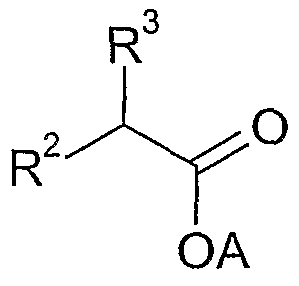
- R 1 , R 2 , R 3 , A and q have the meanings given above, is preferably converted by saponification in the free acid Va.
- the compounds of the formula Ia are preferred by reaction with a compound of the formula XZ in which X is Li, MgBr, MgI or MgCl and Z is -CH 2 - (CH 2 ) n N (R 5 ) 2 or
- Compound I can be prepared from the compounds of formula VIa by elimination of water by known methods, e.g. acid-catalyzed elimination.
- Compounds of the formula I in which R 2 and / or R 3 are H can, for example, be converted by reaction with a base such as, for example, sodium hydride and an alkylating reagent into the other compounds of the formula I where R 2 and / or R 3 have a meaning other than H have to be converted.
- a base such as, for example, sodium hydride
- an alkylating reagent such as iodoalkane, alkyl sulfate, benzyl halides, sulfates, mesylates or tosylates, especially iodomethane, methyl sulfate or benzyl chloride.
- R 2 and / or R 3 are preferred for R 2 and / or R 3 :
- Q and W is Cl, Br, A, in particular methyl and ethyl or SA, and in particular SMethyl and SEthyl and wherein R 3 is preferably H or alkyl.
- R 2 is preferably p- or m-hydroxyphenyl.
- radicals R 1 , R 2 , R 3 , R 4 , R 5 , X, m, n, y, t, k, p and q have the meanings given for the formula I, unless expressly otherwise is specified.
- the radicals independently of one another assume the meanings indicated.
- Alkyl is preferably unbranched (linear) or branched, and has 1, 2, 3, 4, 5, 6, 7, 8, 9 or 10 C atoms.
- Alkyl is preferably methyl, furthermore ethyl, propyl, isopropyl, butyl, isobutyl, sec-butyl or tert-butyl, furthermore also pentyl, 1-, 2- or 3-methylbutyl, 1, 1, 1, 2 or 2,2-dimethylpropyl, 1-ethylpropyl, hexyl, 1-, 2-, 3- or 4-methylpentyl, 1, 1-, 1, 2-, 1, 3-, 2,2-, 2,3- or 3,3-dimethylbutyl, 1- or 2-ethylbutyl, 1-ethyl-i-methylpropyl, 1-ethyl-2-methylpropyl, 1, 1, 2- or 1, 2,2-trimethylpropyl, more preferably, for example Trifluoromethyl.
- Alkyl very particularly preferably denotes alkyl having 1, 2, 3, 4, 5 or 6 C atoms, preferably methyl, ethyl, propyl, isopropyl, butyl, isobutyl, sec-butyl, tert-butyl, pentyl, hexyl, trifluoromethyl , Pentafluoroethyl or 1,1,1-trifluoroethyl.
- Alkyl also means cycloalkyl. Cycloalkyl is preferably cyclopropyl, cyclobutyl, cyclopentyl, cyclohexyl or cycloheptyl.
- R 1 is preferably A, SR 5 , OR 5 , Hal, CN, NO 2 , N (R 5 ) 2 .
- R 1 is methyl, ethyl, iso-propyl, tert-butyl, F, Cl, CN, or OH.
- R 2 is preferably H, A, such as, for example, ethyl, phenyl, methyl, aryl or het.
- R 2 is A or Ar.
- R 3 is preferably H, A, Ar or - (C (R 5 ) 2 ) 0 Ar, especially 10 R 3 H.
- R 4 is preferably cyclo [-C (CH 2 ) k (NY) - (CH 2 ) P -], in particular
- Ar is preferably phenyl, o-, m- or p-tolyl, o-, m- or p-ethyl- ? J -phenyl, o-, m- or p-propylphenyl, o-, m- or p-isopropylphenyl, o-, m- or p-tert-butylphenyl, o-, m- or p-hydroxyphenyl, o-, m- or p-methoxyphenyl, o-, m- or p-nitrophenyl, o-, m- or p -Aminophenyl, o-, n> or p- (N-methylamino) -phenyl, o-, m- or p- (N-methylaminocarbonyl) -phenyl, o-, m- or p-acetamidophenyl, o-,
- 2-amino-6-chlorophenyl 2-nitro-4-N, N-dimethylamino or 3-nitro-4-N, N-dimethylaminophenyl, 2,3-diaminophenyl, 2,3,4-, 2,3, 5-, 2,3,6-, 2,4,6- or 3,4,5-trichlorophenyl, 2,4,6-trimethoxyphenyl, 2-hydroxy-3,5-dichlorophenyl, p-iodophenyl, 3,6 Dichloro-4-aminophenyl, 4-fluoro-3-chlorophenyl, 2-fluoro-4-bromophenyl, 2,5-difluoro-4-bromophenyl, 3-bromo-6-methoxyphenyl, 3-chloro-6-methoxyphenyl, 3 Chloro-4-acetamidophenyl, 3-fluoro-4-methoxyphenyl, 3-amino-6-methylphenyl, 3-chloro-4-acet
- Het is preferably a mono- or binuclear aromatic heterocycle having one or more N, O and / or S atoms, which is unsubstituted or mono-, di- or trisubstituted by Hal, methyl, NO 2 , NHA, NA 2 , OA , COOA or CN.
- unsubstituted heteroaryl means, for example, 2- or 3-furyl, 2- or 3-thienyl, 1-, 2- or 3-pyrrolyl, 1-, 2-, 4- or 5-imidazolyl, 1-, 3-, 4- or 5-pyrazolyl, 2-, 4- or 5-oxazolyl, 3-, 4- or 5-isoxazolyl, 2-, 4- or 5-thiazolyl, 3-, 4- or 5-isothiazolyl, 2-, 3- or 4-pyridyl, 2-, 4-, 5- or 6-pyrimidinyl, furthermore preferably 1, 2,3-triazole-1-, 4- or -5-yl, 1, 2,4-triazoM- , -3- or 5-yl, 1- or 5-tetrazolyl, 1, 2,3-oxadiazol-4 or -5-yl, 1, 2,4-oxadiazol-3 or -5-yl, 1, 3,4-thiadiazol-2 or -5-yl, 1, 2,4-thiadiazol-3 or -5-yl, 1, 2,3-
- Benzopyrazolyl 2-, 4-, 5-, 6- or 7-benzoxazolyl, 3-, 4-, 5-, 6- or 7- benzisoxazolyl, 2-, 4-, 5-, 6- or 7-benzothiazolyl, 2-, 4-, 5-, 6- or 7- benzisothiazolyl, 4-, 5-, 6- or 7-benz-2,1,3-oxadiazolyl, 2-, 3-, 4-, 5-, 6 -, 7- or 8-quinolyl, 1-, 3-, 4-, 5-, 6-, 7- or 8-isoquinolyl, 3-, 4-, 5-, 6-, 7- or 8-cinnolinyl, 2-, 4-, 5-, 6-, 7- or 8-quinazolinyl, 5- or 6-quinoxaline yl, 2-, 3-, 5-, 6-, 7- or 8-2H-benzo [1,4] oxazinyl, more preferably 1,3-benzodioxol-5-yl, 1,4-benzodioxan-6-
- the compounds of the formula I can possess one or more chiral centers and therefore occur in different stereoisomeric forms.
- Formula I encompasses all these forms. Accordingly, the invention relates in particular to those compounds of the formula I in which at least one of the radicals mentioned has one of the preferred meanings given above.
- the starting materials may, if desired, also be formed in situ, so that they are not isolated from the reaction mixture, but immediately further reacted to the compounds of formula I.
- Suitable inert solvents are e.g. Hydrocarbons such as hexane, petroleum ether, benzene, toluene or xylene; chlorinated hydrocarbons such as
- dichloromethane Nitriles such as acetonitrile; Carbon disulphide; Carboxylic acids such as formic acid or acetic acid; Nitro compounds such as nitromethane or nitrobenzene or mixtures of said solvents.
- a functionally modified amino and / or hydroxyl group can be liberated by solvolysis or hydrogenolysis by customary methods. This can e.g. with NaOH or KOH in water, water-THF or water-dioxane at temperatures between 0 and 100 °. The reduction of an ester to the aldehyde or the alcohol, or the
- Such bases include, for example, alkali metal hydroxides, including potassium hydroxide, sodium hydroxide and lithium hydroxide; Alkaline earth metal hydroxides such as barium hydroxide and calcium hydroxide; Alkali metal alcoholates, e.g. Potassium ethanolate and sodium propanolate; such as
- N-methyl-glutamine N-methyl-glutamine.
- the aluminum salts of the compounds of formula I are also included.
- acid addition salts can be formed by reacting these compounds with
- c pharmaceutically acceptable organic and inorganic acids for example hydrogen halides such as hydrogen chloride, hydrogen bromide or hydrogen iodide, other mineral acids and their corresponding salts such as sulfate, nitrate or phosphate and the like, and alkyl and
- Monoarylsulfonates such as ethanesulfonate, toluenesulfonate and benzenesulfonate,
- pharmaceutically acceptable acid addition salts of the compounds of formula I include the following: acetate, adipate, alginate, arginate, aspartate, benzoate, benzenesulfonate (besylate), bisulfate, bisulfite, bromide, butyrate, camphorate, camphorsulfonate, caprylate, chloride, chlorobenzoate , Citrate, cyclopentane propionate, digluconate, dihydrogen phosphate, dinitrobenzoate,
- 2-naphthalenesulfonate nicotinate, nitrate, oxalate, oleate, pamoate, pectinate, Persulfate, phenyl acetate, 3-phenylpropionate, phosphate, phosphonate, phthalate, but this is not limiting.
- base salts of the compounds according to the invention include aluminum, ammonium, calcium, copper, iron (III) -,
- Preferred among the above salts are ammonium; the
- Alkali metal salts sodium and potassium, as well as the alkaline earth metal salts sodium and potassium, as well as the alkaline earth metal salts
- Salts of compounds of formula I derived from pharmaceutically acceptable organic non-toxic bases include salts of primary, secondary and tertiary amines, substituted amines, including naturally occurring substituted amines, cyclic amines, and basic ion exchange resins, e.g.
- Arginine betaine, caffeine, chloroprocaine, choline, N, N'-dibenzylethylenediamine (benzathine), dicyclohexylamine, diethanolamine, diethylamine, 2-diethylaminoethanol, 2-dimethylaminoethanol, ethanolamine, ethylenediamine, N-ethylmorpholine, N-ethylpiperidine, glucamine, Glucosamine, histidine,
- Tromethamine Hydrabamine, iso-propylamine, lidocaine, lysine, meglumine, N-methyl-D-glucamine, morpholine, piperazine, piperidine, polyamine resins, procaine, purines, theobromine, triethanolamine, triethylamine, trimethylamine, tripropylamine and tris- (hydroxymethyl) -methylamine ( Tromethamine), which is not
- Compounds of the present invention containing basic nitrogen-containing groups can be reacted with agents such as (C 1 -C 4 ) alkyl halides, eg, methyl, ethyl, isopropyl, and tert-butyl chloride, bromide, and iodide; Di (C 1 -C 4 ) alkyl sulfates, eg dimethyl, diethyl and diamylsulfate; (Ci 0 - Ci 8 ) alkyl halides, eg decyl, dodecyl, lauryl, myristyl and stearyl chloride, bromide and iodide; and aryl- (C 1 -C 4 ) alkyl halides, eg benzyl chloride and phenethyl bromide, quaternize.
- agents such as (C 1 -C 4 ) alkyl halides, eg, methyl, e
- Preferred pharmaceutical salts include acetate, trifluoroacetate, besylate, citrate, fumarate, gluconate, hemisuccinate, hippurate, hydrochloride, hydrobromide, isethionate, mandelate,
- the amount of the desired acid brings into contact, whereby one on usual
- the free base can be regenerated by contacting the salt form with a base and isolating the free base in a conventional manner.
- the free base forms differ in some sense from their corresponding salt forms in terms of certain physical properties such as solubility in polar solvents; however, in the context of the invention, the salts otherwise correspond to their respective free base forms.
- the pharmaceutically acceptable base addition salts of the compounds of the formula I are formed with metals or amines such as alkali metals and alkaline earth metals or organic amines.
- metals or amines such as alkali metals and alkaline earth metals or organic amines.
- Preferred metals are sodium, potassium, magnesium and calcium.
- PREFERRED o _ ferred organic amines are N, N'-dibenzylethylenediamine, chloroprocaine, Zo
- the base addition salts of acidic compounds of the invention are prepared by contacting the free acid form with a sufficient amount of the desired base to form the salt in a conventional manner.
- the free acid can be regenerated by contacting the salt form with an acid and isolating the free acid in a conventional manner.
- the free acid forms differ in some sense from their corresponding salt forms in terms of certain physical properties, such as solubility in polar Nahsmitt ⁇ ln; However, in the context of the invention, the salts otherwise correspond to their respective free acid forms.
- Invention also multiple salts.
- Typical multiple salt forms include, for example, bitartrate, diacetate, difumarate, dimeglumine, diphosphate, disodium and trihydrochloride, but this is not intended to be limiting.
- pharmaceutically acceptable salt in the present context, an active ingredient is to be understood, which contains a compound of formula I in the form of one of its salts, especially if this salt form the
- Drug provides improved pharmacokinetic properties compared to the free form of the drug or any other salt form of the drug previously used.
- the pharmaceutically acceptable salt form of the active substance may also first impart a desired pharmacokinetic property to this active ingredient which it has not previously possessed, and may even positively influence the pharmacodynamics of this active ingredient in terms of its therapeutic efficacy in the body.
- the invention furthermore relates to medicaments comprising at least one compound of the formula I and / or pharmaceutically usable derivatives, solvates and stereoisomers thereof, including mixtures thereof in all ratios, and optionally excipients and / or adjuvants.
- Pharmaceutical formulations may be presented in the form of dosage units containing a predetermined amount of active ingredient per unit dose.
- Such a moiety may contain, for example, from 0.5 mg to 1 g, preferably from 1 mg to 700 mg, more preferably from 5 mg to 100 mg of a compound of the invention, depending on the condition being treated, the route of administration and age, weight and Condition of the patient, or pharmaceutical formulations, may be presented in the form of dosage units containing a predetermined amount of active ingredient per unit dose.
- Preferred dosage unit formulations are those containing a daily or partial dose as indicated above or a corresponding fraction thereof
- Active ingredient included can be prepared by any of the methods well known in the pharmaceutical art.
- compositions may be administered by any suitable route, for example, oral (including buccal or sublingual), rectal, nasal, topical (including buccal, sublingual or transdermal), vaginal or parenteral (including subcutaneous, intramuscular, intravenous or intradermal). Ways, adapt.
- Such formulations can be prepared by any method known in the pharmaceutical art, for example, by bringing the active ingredient together with the carrier (s) or excipient (s).
- compositions adapted for oral administration may be administered as separate units, e.g. Capsules or tablets; Powder or granules; Solutions or suspensions in aqueous or non-aqueous liquids; edible foams or foam foods; or oil-in-water liquid emulsions or water-in-oil liquid emulsions.
- the active ingredient component in the case of oral administration in the form of a tablet or capsule, can be combined with an oral, non-toxic and pharmaceutically acceptable inert carrier, such as, for example, ethanol, glycerol, water and the like.
- an oral, non-toxic and pharmaceutically acceptable inert carrier such as, for example, ethanol, glycerol, water and the like.
- Powders are prepared by comminuting the compound to a suitable fine size and using a similarly comminuted pharmaceutical carrier such as an edible carbohydrate such as starch or mannitol is mixed.
- a flavor, preservative, dispersant and dye may also be present.
- Capsules are made by preparing a powder mix as described above and filling shaped gelatin casings therewith.
- Lubricants such as e.g. fumed silica, talc, magnesium stearate, calcium stearate or polyethylene glycol in solid form can be added to the powder mixture before the filling process.
- Disintegrants or solubilizers e.g. Agar-agar, calcium carbonate or sodium carbonate may also be added to improve the availability of the drug after ingestion of the capsule.
- Lubricants and disintegrants as well as dyes are also incorporated into the mixture.
- Suitable binders include starch,
- Gelatin natural sugars, e.g. Glucose or beta-lactose, corn sweeteners, natural and synthetic gums, e.g. Acacia, tragacanth or sodium alginate, carboxymethyl cellulose, polyethylene glycol, waxes, and the like.
- the lubricants used in these dosage forms include sodium oleate, sodium stearate, magnesium stearate, sodium benzoate, sodium acetate, sodium chloride and the like.
- the disintegrating agents include, but are not limited to, starch, methyl cellulose, agar, bentonite, xanthan gum and the like.
- the tablets are formulated by, for example, preparing a powder mixture, granulating or dry-pressing, adding a lubricant and a disintegrant, and pressing the whole into tablets.
- a powder mixture is prepared by treating the appropriately comminuted compound with a diluent or a base as described above, and optionally with a
- Binders such as carboxymethyl cellulose, an alginate, gelatin or polyvinylpyrrolidone, a Wegsverlangsamer such as paraffin, a absorption accelerator such as a quaternary salt and / or an absorbent, such as bentonite, kaolin or dicalcium phosphate.
- the powder mixture can be granulated by using a binder, such as syrup, starch paste, Acadia-Schieim or solutions of cellulose or polymer materials wetted and pressed through a sieve.
- a binder such as syrup, starch paste, Acadia-Schieim or solutions of cellulose or polymer materials wetted and pressed through a sieve.
- the invention may be greased by the addition of stearic acid, a stearate salt, talc or mineral oil to prevent sticking to the tablet molds. The greased mixture is then compressed into tablets.
- Compounds may also be combined with a free-flowing inert carrier and then compressed directly into tablets without performing the granulation or dry-pressing steps.
- a transparent or opaque protective layer consisting of a shellac sealant, a layer of sugar or polymer material and a glossy layer of wax may be present. Dyes can be added to these coatings in order to differentiate between different dosage units.
- Oral fluids such as solution, syrups and elixirs may be prepared in unit dosage form such that a given quantity contains a predetermined amount of the compound.
- Syrups can be prepared by dissolving the compound in an appropriate taste aqueous solution while preparing elixirs using a non-toxic alcoholic vehicle.
- Suspensions can be formulated by dispersing the compound in a non-toxic vehicle.
- Solubilizers and emulsifiers such as ethoxylated isostearyl alcohols and polyoxyethylene sorbitol ethers, preservatives, flavoring additives such as peppermint oil or natural sweeteners or saccharin or other artificial sweeteners, among others, may also be added.
- the unit dosage formulations for oral administration may optionally be encapsulated in microcapsules. The formulation can also be prepared so that the release is prolonged or retarded, such as by coating or embedding of particulate material in polymers, wax, etc.
- the compounds of the formula I as well as salts, solvates and physiologically functional derivatives thereof can also be prepared in the form of liposome delivery systems, such as e.g. small unilamellar vesicles, large unilamellar vesicles and multilamellar vesicles.
- Liposomes can be prepared from various phospholipids, such as e.g.
- Cholesterol, stearylamine or phosphatidylcholines Cholesterol, stearylamine or phosphatidylcholines.
- the compounds can also be coupled with soluble polymers as targeted drug carriers.
- soluble polymers may include polyvinylpyrrolidone, pyran copolymer, polyhydroxypropylmethacrylamidephenol, polyhydroxyethylaspartamidephenol 20 or polyethyleneoxidepolylysine substituted with palmitoyl radicals.
- the compounds can be attached to a class of biodegradable polymers suitable for the controlled release of a drug, e.g. Polylactic acid, polyepsilon-caprolactone, polyhydroxybutyric acid, polyorthoesters, polyacetals, polydihydroxypyrans, polycyanoacrylates, and crosslinked or amphipathic block copolymers of hydrogels.
- compositions adapted for transdermal administration may be used as stand-alone patches for longer, narrower patches
- the drug may be delivered from the patch by iontophoresis as generally described in Pharmaceutical Research, 3 (6), 318 (1986).
- Pharmaceutical compounds adapted for topical administration may be formulated as ointments, creams, suspensions, lotions, powders, solutions, pastes, gums, sprays, aerosols or oils.
- the formulations are preferably applied as a topical ointment or cream.
- the active ingredient may be either paraffinic or water-miscible
- Cream base can be used.
- the active ingredient may become a
- Cream can be formulated with an oil-in-water cream base or a water-in-oil base.
- the pharmaceutical formulations adapted for topical application to the eye include eye drops wherein the active ingredient is dissolved or suspended in a suitable carrier, especially an aqueous solvent.
- Formulations include lozenges, lozenges and mouthwashes.
- compositions adapted for rectal administration may be presented in the form of suppositories or enemas.
- compositions adapted for nasal administration in which the vehicle is a solid contain a coarse powder having a particle size, for example, in the range of 20-500 microns, which is administered in the manner in which snuff is received, i. by rapid inhalation via the nasal passages from a container held close to the nose with the powder.
- Suitable formulations for administration as a nasal spray or nasal drops with a liquid carrier include drug solutions in water or oil.
- Fine particulate dusts or mists which may be delivered by inhalation various types of pressurized dispensers with aerosols, nebulizers or insufflators can be produced.
- compositions adapted for vaginal administration may be used as pessaries, tampons, creams, gels, pastes,
- Foams or spray formulations are presented.
- compositions adapted for parenteral administration include aqueous and nonaqueous sterile injection solutions containing antioxidants, buffers, bacteriostats and solutes which render the formulation isotonic with the blood of the recipient to be treated; and aqueous and non-aqueous sterile suspensions which may contain suspending agents and thickeners.
- the formulations may be administered in single or multiple dose containers, e.g. sealed vials and vials, and stored in the freeze-dried (lyophilized) state so that only the addition of the sterile carrier liquid, e.g. Water for injections, needed immediately before use.
- Injection solutions and suspensions prepared by formulation can be prepared from sterile powders, granules and tablets.
- formulations may include other means conventional in the art with respect to the particular type of formulation; for example, formulations suitable for oral administration may contain flavorings.
- a therapeutically effective amount of a compound of formula I will depend on a number of factors, including, but not limited to, the age and weight of the animal, the exact disease state requiring treatment, as well as its severity, the nature of the formulation, and the route of administration determined by the attending physician or veterinarian.
- an effective amount of a compound of the invention is for the treatment of neoplastic Growth, eg, colon or mammary carcinoma, generally in the range of 0.1 to 100 mg / kg body weight of the recipient (mammal) per day and more typically in the range of 1 to 10 mg / kg body weight per
- the 5 actual amount per day would usually be between 70 and 700 mg, this amount as a single dose per day or more commonly in a number of divided doses (such as two, three, four, five or six). can be given per day, so that the total daily dose is the same.
- the amount of a salt or solvate or a physiologically functional derivative thereof can be determined as the proportion of the effective amount of the compound according to the invention per se. It can be assumed that similar dosages for the treatment of the other, mentioned above
- ⁇ g disease states are suitable.
- the invention furthermore relates to medicaments comprising at least one compound of the formula I and / or pharmaceutically usable derivatives, solvates and stereoisomers thereof, including mixtures thereof in P 0 in all ratios, and at least one further active pharmaceutical ingredient.
- the invention is also a set (kit), consisting of separate packages of
- the kit contains suitable containers, such as boxes or boxes, individual bottles, bags or ampoules.
- suitable containers such as boxes or boxes, individual bottles, bags or ampoules.
- the kit may contain separate ampoules, each containing an effective amount of a compound of formula I and / or its pharmaceutically acceptable derivatives, solvates and stereoisomers, including mixtures thereof all ratios, and an effective amount of another drug substance is dissolved or in lyophilized form.
- the medicaments of Table 1 are combined with the compounds of the formula I.
- a combination of Formula I and Drugs of Table 1 may also be combined with compounds of Formula VI.
- Rhizoxin (Fujisawa) LU 223651 (BASF)
- TXD 258 (Aventis) (PharmaMar) Epothilone B (Novartis) ZD 6126 (AstraZeneca)
- Auristatin PE (Teikoku NeuroPharma)
- Taxoprexin (Protarga) CA-4 (OXiGENE)
- Thymidylate pemetrexed (EIi Lilly) Nolatrexed (Eximias) synthase ZD-9331 (BTG) CoFactor TM (BioKeys)
- Metalloproteinase neovastat (Aeterna CMT -3 (CoilaGenex)
- TNF-alpha-virulizine (Lorus Revimid (Celgene)
- CapCell TM CYP450-N-acetylcysteine
- Antagonist kappaB inhibitor, Encore
- Efaproxiral oxygenator, receptor agonist, Leo
- AIlos Therapeutics 131-I-TM-601 (DNA PI-88 (heparanase antagonist,
- SRL-172 T-cell doranidazole (apoptosis
- TLK-286 glutthione-S-CHS-828 (cytotoxic)
- PT-100 growth factor (differentiator, NIH)
- Point MX6 apoptosis promoter
- CDA-il apoptosis-Ro-31-7453 (apoptosis
- SDX-101 apoptosis-brostallicin (apoptosis)
- Rhizoxin (Fujisawa) LU 223651 (BASF)
- Epothilone B Novartis
- ZD 6126 AstraZeneca
- Auristatin PE (Teikoku NeuroPharma)
- Taxoprexin Protarga
- CA-4 OXiGENE
- Retinoic Acid Fenretinide Johnson & Alitretinoin (Ligand) R-agonist Johnson
- SRL-172 T-cell (differentiator, NIH)
- TLK-286 (glutathione-S-MAXIA)
- PLC-brostallicin apoptosis
- the compounds of the formula I are combined with those with known anticancer agents:
- anticancer agents include the following: p-estrogen receptor modulators, androgen receptor modulators, retinoid receptor modulators, cytotoxic agents, antiproliferative agents, prenyl protein transferase inhibitors, HMG-CoA reductase inhibitors, HIV protease inhibitors, reverse transcriptase inhibitors and other angiogenesis inhibitors. inhibitors.
- the present compounds are particularly suitable for
- Estrogen receptor modulators refers to compounds that
- Estrogen receptor modulators include, for example, tamoxifen, raloxifene, idoxifen, LY353381, LY 117081, toremifene, fulvestrant, 4- [7- (2,2-dimethyl-1-oxopropoxy-4-methyl-2- [4- [2- (1-piperidinyl) ethoxy] phenyl] -2H-1-benzopyran-3-yl] phenyl-2,2-dimethylpropanoate, 4,4'-dihydroxybenzophenone-2,4-dinitrophenylhydrazone and SH646, but these are not limiting should.
- Androgen receptor modulators refers to compounds that interfere with or inhibit the binding of androgens to the receptor, regardless of how this occurs.
- Androgen receptor modulators include, for example, finasteride and other 5 ⁇ -reductase inhibitors, nilutamide, flutamide. Bicalutamide, Liarozole and
- Retinoid receptor modulators refers to compounds that interfere with or inhibit the binding of retinoids to the receptor, regardless of how this occurs
- retinoid receptor modulators include, for example, bexarotene, tretinoin, 13-cis-retinoic acid, 9-cis-retinoic acid, ⁇ -difluoromethylornithine, ILX23-7553, trans-N- (4'-hydroxyphenyl) -retinamide and N-4-carboxyphenylretinamide.
- Cytotoxic agents refers to compounds which result in primarily through direct action on the cellular function 5 to cell death or inhibit cell myosis or interfere with, including alkylating agents, tumor necrosis factors, intercalators, microtubulin inhibitors and topoisomerase inhibitors.
- the cytotoxic agents include, for example, tirapazimine, sertenef, cachectin, ifosfamide, tasonermine, lonidamine, carboplatin, altretamine, prednimustine, dibromodulcite, ranimustine, fotemustine, nedaplatin, oxaliplatin, temozolomide, heptaplatin, estramustine, improvisulfan-tosylate, trofosfamide,
- microtubulin inhibitors include, for example, paclitaxel, vindesine sulfate, S '' '- didehydro' '- deoxy- ⁇ '-norvincaleukoblastin, docetaxol, oU
- Topoisomerase inhibitors are, for example, topotecan, hycaptamine, irinotecan, rubitecane, 6-ethoxypropionyl-3 ', 4'-O-exo-benzylidene-chartreusine, 9-methoxy-N, N-dimethyl-5-nitropyrazolo [3,4; 5-kl] acridine-2- (6H) propanamine, 1-amino-9-ethyl-5-fluoro-2,3-dihydro-9-hydroxy-4-methyl
- a c dioxy) -5-methyl-7-hydroxy-8-methoxybenzo [c] phenanthridinium, 6,9-bis [(2-aminoethyl) amino] benzo [g] isoquinoline-5,10-dione, 5- (3 Aminopropylamino) - 7,10-dihydroxy-2- (2-hydroxyethylaminomethyl) ⁇ 6H-pyrazolo [4,5,1-de] acridin-6-one, N- [1- [2 (diethylamino) ethylamino] ⁇ 7-methoxy-9-oxo-9H-thioxanthen-4-ylmethyl] formamide, N- (2- (dimethylamino) ethyl) acridine-4-
- Antiproliferative agents include antisense RNA and DNA
- Oligonucleotides such as G3139, ODN698, RVASKRAS, GEM231 and INX3001,
- antimetabolites such as enocitabine, carmofur, tegafur, pentostatin,
- Doxifluridine trimetrexate, fludarabine, capecitabine, galocitabine, cytarabine ocfosfate, fosteabin sodium hydrate, raltitrexed, paltitrexide, emitefur, tiazo- furin, decitabine, nolatrexed, pemetrexed, nelzarabine, 2'-deoxy-2 ', 30 methylidenecytidine, 2 I - Fluoromethylene-2'-deoxycytidine, N- [5- (2,3-
- antiproliferative agents also include other monoclonal antibodies to growth factors than those already listed under the “angiogenesis inhibitors”, such as trastuzumab, as well as tumor suppressor genes, such as p53, which can be delivered via recombinant virus-mediated gene transfer (see, eg, US Patent No. 6,069,134 ).
- Particularly preferred is the use of the compound according to the invention for the treatment and prophylaxis of tumor diseases.
- the tumor is preferably selected from the group of tumors of the
- the tumor is furthermore preferably selected from the group lung adenocarcinoma, small cell lung carcinomas, pancreatic cancer, glioblastomas, colon carcinoma and breast carcinoma. Further preferred is the use for the treatment of a tumor of the blood and immune system, preferably for the treatment of a tumor selected from the group of acute myeloid leukemia, chronic myelogenous leukemia, acute lymphoblastic leukemia and / or chronic lymphocytic leukemia.
- the invention also encompasses a method of treating a patient having a neoplasm, such as a cancer, by administering a) one or more of the compound of formula I:
- Y and Z are each independently O or N
- R 6 and R 7 are each independently H, OH, halogen, OC 1-10 alkyl, OCF 3 , NO 2 or NH 2
- n is an integer between 2 and 6 each including
- R 8 and R 9 are each independently of one another at the meta or para position and from the group:
- first and second compounds are administered simultaneously or within 14 days of each other in amounts sufficient to inhibit the growth of the neoplasm.
- Suitable pentamidine analogs include stilbamidine (G-1) and hydroxystilbamidine (G-2) and their indole analogs (eg G-3):
- Each amidineinethite can be independently replaced by one of the units shown above as D-2, D-3, D-4, D-5 or D-6.
- salts of stilbamidine, hydroxystilbamidine and their indole derivatives are also useful in the process of the present invention.
- Preferred salts include, for example, dihydrochloride and methanesulfonate salts.
- Exemplary analogs include 1, 5-bis (4 '- (N-hydroxyamidino) phenoxy) pentane, 1, 3-bis (4' - (N-hydroxyamidino) phenoxy) propane, 1, 3-bis (2 I -methoxy-4 I - (N-hydroxyamidino) phenoxy) - propane, 1, 4-bis (4 I - (N-hydroxyamidino) phenoxy) butane, 1, 5-bis- (4 '- (N- hydroxyamidino) phenoxy) pentane, 1,4-bis (4 '- (N-hydroxyamidino) phenoxy) butane, 1, 3-bis- (4' - (4-hydroxyamidino) phenoxy) propane, 1, 3-bis - (2'-methoxy-4 '- (N-hydroxyamidino) phenoxy) propane, 2,5-bis [4-amidinophenyl] furan, 2,5-bis- [4-amidinophenyl] furan-bis-amidoxime, 2 , 5-Bis- [4-
- Pentamidine metabolites are also useful in the antiproliferative combination of this invention. Pentamidine is rapidly metabolized in the body to at least seven primary metabolites. Some of these metabolites share one or more effects with pentamidine. It is likely that some pentamidine metabolites show antiproliferative activity when combined with a benzimidazole or analogue thereof.
- Combination therapy may be performed alone or in conjunction with another therapy (eg surgery, radiation, chemotherapy, biological therapy).
- another therapy eg surgery, radiation, chemotherapy, biological therapy.
- a person whose risk of developing a neoplasm is greater eg, someone who is genetically predisposed or someone who previously had a neoplasm
- the dosage and frequency of administration of each compound of the combination can be independently controlled. For example, one compound may be administered orally three times a day while the second
- Compound once a day can be administered intramuscularly.
- Compounds may also be formulated together so that administration will deliver to both compounds.
- antiproliferative combinations according to the invention can also be described as
- Components of a pharmaceutical package can be provided.
- the two drugs can be taken together or separately and in single
- Dosage amounts are formulated.
- the invention includes a method of treating a patient having a neoplasm, such as a cancer
- Administering a compound of formula (I), and (VI) in combination with an antiproliferative agent Administering a compound of formula (I), and (VI) in combination with an antiproliferative agent.
- Suitable antiproliferative agents include those provided in Table 1.
- “usual workup” means adding water if necessary, adjusting to pH values between 2 and 10, if necessary, depending on the constitution of the final product, extracted with ethyl acetate or dichloromethane, separating, drying organic phase over sodium sulfate, evaporated and purified by chromatography
- APCI-MS atmospheric pressure chemical ionization - mass spectrometry
- the determination of the activity of the compounds of the formula I according to the invention can e.g. via the Eg5-ATPase activity, which is measured by enzymatic regeneration of the product ADP to ATP by means of pyruvate kinase (PK) and subsequent coupling to an NADH-dependent lactate dehydrogenase (LDH) reaction.
- PK pyruvate kinase
- LDH lactate dehydrogenase
- the reaction can be monitored by changing the absorbance at 340 nm.
- the regeneration of the ATP simultaneously ensures that the substrate concentration remains constant.
- the absorbance change per unit time is analyzed graphically and a linear regression is performed in the vusually linear region of the reaction.
- 10 3 to 10 4 cells of a defined cell line (HCT116, CoIo 205, MDA-MB 231, etc.) are seeded per well in a 96-well microtiter plate and cultured overnight under standard conditions.
- 10-50 mM stock solutions in DMSO were prepared. Dilution series (usually 3-fold dilution steps) of the individual substances were in the form of a pipetting scheme (see scheme below), while maintaining a DMSO final concentration of 0.5%
- Example C Injection glasses
- a solution of 100 g of an active compound of the formula I and 5 g of disodium hydrogen phosphate is adjusted to pH 6.5 in 2 l of bidistilled water with 2N hydrochloric acid, filtered sterile, filled into injection jars, lyophilized under sterile conditions and closed under sterile conditions. Each injection jar contains 5 mg of active ingredient.
- Example D Suppositories
- each suppository contains 20 mg of active ingredient.
- a solution of 1 g of an active compound of the formula I, 9.38 g of NaH 2 PO 4 • 2H 2 O, 28.48 g of Na 2 HPO 4 • 12H 2 O and 0.1 g of benzalkonium chloride in 940 is prepared ml of double distilled water. Adjust to pH 6.8, make up to 1 liter and sterilize by irradiation. This solution can be used in the form of eye drops.
- Example F ointment
- 500 mg of an active compound of the formula I are mixed with 99.5 g of Vaseline under aseptic conditions.
- a mixture of 1 kg of active ingredient of the formula I, 4 kg of lactose, 1, 2 kg of potato starch, 0.2 kg of talc and 0.1 kg of magnesium stearate is compressed in the usual way into tablets, such that each tablet contains 10 mg of active ingredient.
- Example E tablets are pressed, which are then in the usual
- a solution of 1 kg of active compound of the formula I in 60 l of bidistilled water is sterile filtered, filled into ampoules, lyophilized under sterile conditions and sealed sterile. Each vial contains 10 mg of active ingredient.
Landscapes
- Chemical & Material Sciences (AREA)
- Organic Chemistry (AREA)
- Health & Medical Sciences (AREA)
- Chemical Kinetics & Catalysis (AREA)
- General Health & Medical Sciences (AREA)
- Public Health (AREA)
- General Chemical & Material Sciences (AREA)
- Medicinal Chemistry (AREA)
- Nuclear Medicine, Radiotherapy & Molecular Imaging (AREA)
- Pharmacology & Pharmacy (AREA)
- Life Sciences & Earth Sciences (AREA)
- Animal Behavior & Ethology (AREA)
- Veterinary Medicine (AREA)
- Bioinformatics & Cheminformatics (AREA)
- Engineering & Computer Science (AREA)
- Hematology (AREA)
- Oncology (AREA)
- Pharmaceuticals Containing Other Organic And Inorganic Compounds (AREA)
- Acyclic And Carbocyclic Compounds In Medicinal Compositions (AREA)
- Hydrogenated Pyridines (AREA)
- Plural Heterocyclic Compounds (AREA)
- Medicines That Contain Protein Lipid Enzymes And Other Medicines (AREA)
- Organic Low-Molecular-Weight Compounds And Preparation Thereof (AREA)
- Low-Molecular Organic Synthesis Reactions Using Catalysts (AREA)
Abstract
Description




Claims






Priority Applications (6)
| Application Number | Priority Date | Filing Date | Title |
|---|---|---|---|
| JP2007557356A JP2008531612A (ja) | 2005-03-04 | 2006-02-13 | インダン |
| EP06706895A EP1853550A1 (de) | 2005-03-04 | 2006-02-13 | Indane |
| CA2600606A CA2600606C (en) | 2005-03-04 | 2006-02-13 | Indanes |
| US11/817,757 US20090118267A1 (en) | 2005-03-04 | 2006-02-13 | Indanes |
| AU2006222341A AU2006222341B2 (en) | 2005-03-04 | 2006-02-13 | Indane |
| US13/358,191 US20120130147A1 (en) | 2005-03-04 | 2012-01-25 | Methods for the treatment of tumors with indane compounds |
Applications Claiming Priority (2)
| Application Number | Priority Date | Filing Date | Title |
|---|---|---|---|
| DE102005010000A DE102005010000A1 (de) | 2005-03-04 | 2005-03-04 | Indane |
| DE102005010000.7 | 2005-03-04 |
Related Child Applications (1)
| Application Number | Title | Priority Date | Filing Date |
|---|---|---|---|
| US13/358,191 Division US20120130147A1 (en) | 2005-03-04 | 2012-01-25 | Methods for the treatment of tumors with indane compounds |
Publications (1)
| Publication Number | Publication Date |
|---|---|
| WO2006094602A1 true WO2006094602A1 (de) | 2006-09-14 |
Family
ID=36572071
Family Applications (1)
| Application Number | Title | Priority Date | Filing Date |
|---|---|---|---|
| PCT/EP2006/001283 Ceased WO2006094602A1 (de) | 2005-03-04 | 2006-02-13 | Indane |
Country Status (8)
| Country | Link |
|---|---|
| US (2) | US20090118267A1 (de) |
| EP (1) | EP1853550A1 (de) |
| JP (1) | JP2008531612A (de) |
| AR (1) | AR053156A1 (de) |
| AU (1) | AU2006222341B2 (de) |
| CA (1) | CA2600606C (de) |
| DE (1) | DE102005010000A1 (de) |
| WO (1) | WO2006094602A1 (de) |
Cited By (2)
| Publication number | Priority date | Publication date | Assignee | Title |
|---|---|---|---|---|
| WO2009069610A1 (ja) | 2007-11-28 | 2009-06-04 | Astellas Pharma Inc. | 縮合インダン化合物 |
| US8796460B2 (en) | 2007-10-19 | 2014-08-05 | Mercky Sharp & Dohme Corp. | Compounds for inhibiting KSP kinesin activity |
Families Citing this family (4)
| Publication number | Priority date | Publication date | Assignee | Title |
|---|---|---|---|---|
| EP2647622B1 (de) * | 2010-12-03 | 2017-04-19 | Fujitsu Limited | Kinesinspindelproteinhemmer sowie ihre verwendung |
| UY39129A (es) * | 2020-03-16 | 2021-10-29 | Novartis Ag | Derivados de biarilo como inhibidores de la interacción proteína-proteína de yap/taz-tead |
| US20230355804A1 (en) * | 2020-06-29 | 2023-11-09 | Flagship Pioneering Innovations V, Inc. | Viruses engineered to promote thanotransmission and their use in treating cancer |
| KR20250004633A (ko) * | 2022-02-21 | 2025-01-08 | 이턴 바이오파마 (상하이) 코., 엘티디. | Yap/taz와 tead의 상호작용 억제제, 이의 제조, 약학 조성물 및 용도 |
Citations (4)
| Publication number | Priority date | Publication date | Assignee | Title |
|---|---|---|---|---|
| US2820817A (en) * | 1954-02-04 | 1958-01-21 | Mcneilab Inc | Oxygenated indan compounds and method of making the same |
| US3328441A (en) * | 1963-12-10 | 1967-06-27 | Stauffer Chemical Co | Preparing organotin mercaptides by reacting diorganotin oxides with esters of thiocarboxylic acids |
| US3419560A (en) * | 1965-03-19 | 1968-12-31 | Squibb & Sons Inc | 1-aminoalkyl 2-aryl indanes and tetrahydronaphthalenes |
| DE2337120A1 (de) * | 1972-07-21 | 1974-02-07 | Merck & Co Inc | 4,5,6 oder 7-indenylsaeuren |
Family Cites Families (2)
| Publication number | Priority date | Publication date | Assignee | Title |
|---|---|---|---|---|
| DE1470055A1 (de) * | 1963-12-07 | 1969-07-17 | Merck Ag E | Verfahren zur Herstellung von Piperidinderivaten |
| CH647235A5 (de) * | 1980-02-13 | 1985-01-15 | Sandoz Ag | 4-(2,2-dialkylindan-1-yliden)piperidin derivate, ihre herstellung und verwendung. |
-
2005
- 2005-03-04 DE DE102005010000A patent/DE102005010000A1/de not_active Withdrawn
-
2006
- 2006-02-13 JP JP2007557356A patent/JP2008531612A/ja active Pending
- 2006-02-13 US US11/817,757 patent/US20090118267A1/en not_active Abandoned
- 2006-02-13 EP EP06706895A patent/EP1853550A1/de not_active Withdrawn
- 2006-02-13 CA CA2600606A patent/CA2600606C/en not_active Expired - Fee Related
- 2006-02-13 WO PCT/EP2006/001283 patent/WO2006094602A1/de not_active Ceased
- 2006-02-13 AU AU2006222341A patent/AU2006222341B2/en not_active Ceased
- 2006-03-03 AR ARP060100803A patent/AR053156A1/es unknown
-
2012
- 2012-01-25 US US13/358,191 patent/US20120130147A1/en not_active Abandoned
Patent Citations (5)
| Publication number | Priority date | Publication date | Assignee | Title |
|---|---|---|---|---|
| US2820817A (en) * | 1954-02-04 | 1958-01-21 | Mcneilab Inc | Oxygenated indan compounds and method of making the same |
| US3328441A (en) * | 1963-12-10 | 1967-06-27 | Stauffer Chemical Co | Preparing organotin mercaptides by reacting diorganotin oxides with esters of thiocarboxylic acids |
| US3419560A (en) * | 1965-03-19 | 1968-12-31 | Squibb & Sons Inc | 1-aminoalkyl 2-aryl indanes and tetrahydronaphthalenes |
| GB1149615A (en) * | 1965-03-19 | 1969-04-23 | Squibb & Sons Inc | Analgesic amines |
| DE2337120A1 (de) * | 1972-07-21 | 1974-02-07 | Merck & Co Inc | 4,5,6 oder 7-indenylsaeuren |
Non-Patent Citations (9)
Cited By (6)
| Publication number | Priority date | Publication date | Assignee | Title |
|---|---|---|---|---|
| US8796460B2 (en) | 2007-10-19 | 2014-08-05 | Mercky Sharp & Dohme Corp. | Compounds for inhibiting KSP kinesin activity |
| WO2009069610A1 (ja) | 2007-11-28 | 2009-06-04 | Astellas Pharma Inc. | 縮合インダン化合物 |
| US8211907B2 (en) | 2007-11-28 | 2012-07-03 | Astellas Pharma Inc. | Fused indane compound |
| CN101878201B (zh) * | 2007-11-28 | 2012-09-05 | 安斯泰来制药株式会社 | 稠合茚满化合物 |
| JP5251885B2 (ja) * | 2007-11-28 | 2013-07-31 | アステラス製薬株式会社 | 縮合インダン化合物 |
| TWI422578B (zh) * | 2007-11-28 | 2014-01-11 | Astellas Pharma Inc | 縮合茚滿化合物 |
Also Published As
| Publication number | Publication date |
|---|---|
| JP2008531612A (ja) | 2008-08-14 |
| US20120130147A1 (en) | 2012-05-24 |
| AU2006222341B2 (en) | 2012-08-02 |
| EP1853550A1 (de) | 2007-11-14 |
| CA2600606C (en) | 2013-12-24 |
| AR053156A1 (es) | 2007-04-25 |
| DE102005010000A1 (de) | 2006-09-07 |
| CA2600606A1 (en) | 2006-09-14 |
| US20090118267A1 (en) | 2009-05-07 |
| AU2006222341A1 (en) | 2006-09-14 |
Similar Documents
| Publication | Publication Date | Title |
|---|---|---|
| EP2193118B1 (de) | Piperidin- und piperazinderivate zur behandlung von tumoren | |
| EP2033959B1 (de) | Tetrahydropyranochinolinderivate | |
| EP2104664A1 (de) | Tetrahydrobenzoisoxazole- und tetrahydroindazole-derivate als modulatoren der mitotische motor-protein | |
| EP2352733A1 (de) | Benzo-naphtyridin verbindungen als inhibitoren von autotaxin | |
| EP2193122A1 (de) | Imidazolderivate | |
| DE102007047735A1 (de) | Thiazolderivate | |
| EP1885702A2 (de) | Chinazolinone | |
| EP2121700B1 (de) | Substituierte tetrahydrochinoline | |
| DE102007013854A1 (de) | Tetrahydrochinoline | |
| EP1891011B1 (de) | Tetrahydrochinoline zur verwendung als modulatoren des mitotischen motor- protein eg5 | |
| EP1891076B1 (de) | Substituierte tetrahydrochinoline | |
| EP1891013B1 (de) | Tetrahydrochinolinderivate | |
| EP2121684A1 (de) | Substituierte tetrahydropyrrolochinoline | |
| EP1858860A1 (de) | Phthalazinone | |
| EP1853550A1 (de) | Indane | |
| EP1778694A1 (de) | Tetrahydrochinoline | |
| EP1747214A2 (de) | Dihydrobenzothiophene |
Legal Events
| Date | Code | Title | Description |
|---|---|---|---|
| 121 | Ep: the epo has been informed by wipo that ep was designated in this application | ||
| WWE | Wipo information: entry into national phase |
Ref document number: 2006706895 Country of ref document: EP |
|
| WWE | Wipo information: entry into national phase |
Ref document number: 2600606 Country of ref document: CA |
|
| WWE | Wipo information: entry into national phase |
Ref document number: 2007557356 Country of ref document: JP |
|
| WWE | Wipo information: entry into national phase |
Ref document number: 11817757 Country of ref document: US |
|
| NENP | Non-entry into the national phase |
Ref country code: DE |
|
| NENP | Non-entry into the national phase |
Ref country code: RU |
|
| WWE | Wipo information: entry into national phase |
Ref document number: 2006222341 Country of ref document: AU |
|
| WWW | Wipo information: withdrawn in national office |
Country of ref document: RU |
|
| ENP | Entry into the national phase |
Ref document number: 2006222341 Country of ref document: AU Date of ref document: 20060213 Kind code of ref document: A |
|
| WWP | Wipo information: published in national office |
Ref document number: 2006222341 Country of ref document: AU |
|
| WWP | Wipo information: published in national office |
Ref document number: 2006706895 Country of ref document: EP |