WO2006118329A1 - 安定な乳化組成物 - Google Patents
安定な乳化組成物 Download PDFInfo
- Publication number
- WO2006118329A1 WO2006118329A1 PCT/JP2006/309213 JP2006309213W WO2006118329A1 WO 2006118329 A1 WO2006118329 A1 WO 2006118329A1 JP 2006309213 W JP2006309213 W JP 2006309213W WO 2006118329 A1 WO2006118329 A1 WO 2006118329A1
- Authority
- WO
- WIPO (PCT)
- Prior art keywords
- group
- composition
- substituent
- compound
- formula
- Prior art date
- Legal status (The legal status is an assumption and is not a legal conclusion. Google has not performed a legal analysis and makes no representation as to the accuracy of the status listed.)
- Ceased
Links
Classifications
-
- A—HUMAN NECESSITIES
- A61—MEDICAL OR VETERINARY SCIENCE; HYGIENE
- A61K—PREPARATIONS FOR MEDICAL, DENTAL OR TOILETRY PURPOSES
- A61K9/00—Medicinal preparations characterised by special physical form
- A61K9/10—Dispersions; Emulsions
-
- A—HUMAN NECESSITIES
- A61—MEDICAL OR VETERINARY SCIENCE; HYGIENE
- A61K—PREPARATIONS FOR MEDICAL, DENTAL OR TOILETRY PURPOSES
- A61K9/00—Medicinal preparations characterised by special physical form
- A61K9/10—Dispersions; Emulsions
- A61K9/107—Emulsions ; Emulsion preconcentrates; Micelles
- A61K9/1075—Microemulsions or submicron emulsions; Preconcentrates or solids thereof; Micelles, e.g. made of phospholipids or block copolymers
-
- A—HUMAN NECESSITIES
- A61—MEDICAL OR VETERINARY SCIENCE; HYGIENE
- A61K—PREPARATIONS FOR MEDICAL, DENTAL OR TOILETRY PURPOSES
- A61K31/00—Medicinal preparations containing organic active ingredients
- A61K31/21—Esters, e.g. nitroglycerine, selenocyanates
- A61K31/215—Esters, e.g. nitroglycerine, selenocyanates of carboxylic acids
- A61K31/216—Esters, e.g. nitroglycerine, selenocyanates of carboxylic acids of acids having aromatic rings, e.g. benactizyne, clofibrate
-
- A—HUMAN NECESSITIES
- A61—MEDICAL OR VETERINARY SCIENCE; HYGIENE
- A61K—PREPARATIONS FOR MEDICAL, DENTAL OR TOILETRY PURPOSES
- A61K47/00—Medicinal preparations characterised by the non-active ingredients used, e.g. carriers or inert additives; Targeting or modifying agents chemically bound to the active ingredient
- A61K47/06—Organic compounds, e.g. natural or synthetic hydrocarbons, polyolefins, mineral oil, petrolatum or ozokerite
- A61K47/20—Organic compounds, e.g. natural or synthetic hydrocarbons, polyolefins, mineral oil, petrolatum or ozokerite containing sulfur, e.g. dimethyl sulfoxide [DMSO], docusate, sodium lauryl sulfate or aminosulfonic acids
-
- A—HUMAN NECESSITIES
- A61—MEDICAL OR VETERINARY SCIENCE; HYGIENE
- A61K—PREPARATIONS FOR MEDICAL, DENTAL OR TOILETRY PURPOSES
- A61K9/00—Medicinal preparations characterised by special physical form
- A61K9/20—Pills, tablets, discs, rods
-
- A—HUMAN NECESSITIES
- A61—MEDICAL OR VETERINARY SCIENCE; HYGIENE
- A61P—SPECIFIC THERAPEUTIC ACTIVITY OF CHEMICAL COMPOUNDS OR MEDICINAL PREPARATIONS
- A61P25/00—Drugs for disorders of the nervous system
-
- A—HUMAN NECESSITIES
- A61—MEDICAL OR VETERINARY SCIENCE; HYGIENE
- A61P—SPECIFIC THERAPEUTIC ACTIVITY OF CHEMICAL COMPOUNDS OR MEDICINAL PREPARATIONS
- A61P25/00—Drugs for disorders of the nervous system
- A61P25/28—Drugs for disorders of the nervous system for treating neurodegenerative disorders of the central nervous system, e.g. nootropic agents, cognition enhancers, drugs for treating Alzheimer's disease or other forms of dementia
-
- A—HUMAN NECESSITIES
- A61—MEDICAL OR VETERINARY SCIENCE; HYGIENE
- A61P—SPECIFIC THERAPEUTIC ACTIVITY OF CHEMICAL COMPOUNDS OR MEDICINAL PREPARATIONS
- A61P29/00—Non-central analgesic, antipyretic or antiinflammatory agents, e.g. antirheumatic agents; Non-steroidal antiinflammatory drugs [NSAID]
-
- A—HUMAN NECESSITIES
- A61—MEDICAL OR VETERINARY SCIENCE; HYGIENE
- A61P—SPECIFIC THERAPEUTIC ACTIVITY OF CHEMICAL COMPOUNDS OR MEDICINAL PREPARATIONS
- A61P31/00—Antiinfectives, i.e. antibiotics, antiseptics, chemotherapeutics
-
- A—HUMAN NECESSITIES
- A61—MEDICAL OR VETERINARY SCIENCE; HYGIENE
- A61P—SPECIFIC THERAPEUTIC ACTIVITY OF CHEMICAL COMPOUNDS OR MEDICINAL PREPARATIONS
- A61P31/00—Antiinfectives, i.e. antibiotics, antiseptics, chemotherapeutics
- A61P31/04—Antibacterial agents
-
- A—HUMAN NECESSITIES
- A61—MEDICAL OR VETERINARY SCIENCE; HYGIENE
- A61P—SPECIFIC THERAPEUTIC ACTIVITY OF CHEMICAL COMPOUNDS OR MEDICINAL PREPARATIONS
- A61P37/00—Drugs for immunological or allergic disorders
- A61P37/02—Immunomodulators
-
- A—HUMAN NECESSITIES
- A61—MEDICAL OR VETERINARY SCIENCE; HYGIENE
- A61P—SPECIFIC THERAPEUTIC ACTIVITY OF CHEMICAL COMPOUNDS OR MEDICINAL PREPARATIONS
- A61P9/00—Drugs for disorders of the cardiovascular system
-
- Y—GENERAL TAGGING OF NEW TECHNOLOGICAL DEVELOPMENTS; GENERAL TAGGING OF CROSS-SECTIONAL TECHNOLOGIES SPANNING OVER SEVERAL SECTIONS OF THE IPC; TECHNICAL SUBJECTS COVERED BY FORMER USPC CROSS-REFERENCE ART COLLECTIONS [XRACs] AND DIGESTS
- Y02—TECHNOLOGIES OR APPLICATIONS FOR MITIGATION OR ADAPTATION AGAINST CLIMATE CHANGE
- Y02A—TECHNOLOGIES FOR ADAPTATION TO CLIMATE CHANGE
- Y02A50/00—TECHNOLOGIES FOR ADAPTATION TO CLIMATE CHANGE in human health protection, e.g. against extreme weather
- Y02A50/30—Against vector-borne diseases, e.g. mosquito-borne, fly-borne, tick-borne or waterborne diseases whose impact is exacerbated by climate change
Definitions
- the present invention relates to an emulsion composition having improved stability
- WO 99/46242 includes the formula (i):
- R represents an aliphatic hydrocarbon group which may have a substituent, an aromatic hydrocarbon group which may have a substituent, a heterocyclic group which may have a substituent, :
- R 1 represents a hydrogen atom or an aliphatic hydrocarbon group which may have a substituent.
- R 1 b represents a hydrogen atom or an aliphatic hydrocarbon group which may have a substituent
- R 1 is the same as or different from R lb, and may have a hydrogen atom or a substituent.
- R ° is a hydrogen atom or an aliphatic hydrocarbon group, or R and R ° are joined together to form a bond, and ring A is (1) a substituent.
- Formula: 1 OR 1 (wherein R 1 is as defined above) (4) Cycloalkene substituted with 1 to 4 substituents selected from halogen atoms, Ar is an aromatic hydrocarbon which may have a substituent Group
- Ra is an aliphatic hydrocarbon group which may have a substituent, an aromatic hydrocarbon group which may have a substituent, a heterocyclic group which may have a substituent, Formula: One OR 1 a (wherein R la represents a hydrogen atom or an aliphatic hydrocarbon group which may have a substituent) or a group represented by the formula:
- R la is as defined above, and R lb is the same as or different from R la and represents a hydrogen atom or an aliphatic hydrocarbon group which may have a substituent.
- R 0 a represents a hydrogen atom or an aliphatic hydrocarbon group, or R a and R ° a together represent a bond, and Ar a represents an optionally substituted aromatic hydrocarbon group.
- the formula: The group represented by Or N represents an integer of 1 to 4.
- Or a salt or prodrug thereof has an inhibitory effect on the production of inflammatory sites such as TNF-, IL-1, and IL-6. It is described as being useful as a preventive / therapeutic agent for diseases such as heart disease, autoimmune disease, inflammatory disease, central nervous system disease, infectious disease, sepsis, septic shock and the like.
- the publication discloses that the compound is dissolved, suspended or emulsified in a vegetable oil or propylene glycol to produce an oily injection (International Publication No. 9 9 4 6 2 4 2 Pamphlet). )
- R 1 is an aliphatic hydrocarbon group which may have a substituent, or a substituent.
- R lb and R le are the same or different and each represents a hydrogen atom or an aliphatic hydrocarbon group which may have a substituent.
- X represents a methylene group
- Y is an optionally substituted methylene group or an optionally substituted nitrogen atom
- ring A is (1) has a substituent.
- An aliphatic hydrocarbon group that may be substituted (2) an aromatic hydrocarbon group that may have a substituent, (3) Formula: one OR 2 (wherein R 2 represents a hydrogen atom, or a substituent) And an aliphatic hydrocarbon group which may have a 5- to 8-membered ring which may be further substituted with a group represented by) and (4) 1 to 4 substituents selected from a halogen atom.
- a r represents an aromatic hydrocarbon group which may have a substituent, the formula:
- M represents an integer of 0 to 2
- n Represents an integer of 1 to 3
- m and n The sum is 4 or less.
- X is a methylene group
- Y represents a methylene group which may have a substituent.
- a salt or prodrug thereof has an inhibitory effect on nitric oxide (NO) production, and has an inhibitory effect on the production of inflammatory site forces such as TNF-, IL-1, IL-6, etc. It is described as being useful as a preventive / therapeutic agent for diseases such as heart disease, autoimmune disease, inflammatory disease, central nervous system disease, infectious disease, sepsis, and sebino shock (International publication) No. 0 1/1 0 8 2 6 Panflate).
- An object of the present invention is to provide an emulsified composition containing a compound which is stable in the acidic region typified by the above compound with further improved stability.
- a compound that is stable in the acidic region means that in the neutral or basic region where the pH exceeds about 6, the compound is likely to be decomposed or an analog is generated. 6 or less) is a general term for a group of compounds with high compound stability, with little degradation of the above-mentioned compounds and generation of analogs. More specifically, a compound that is stable in the acidic region refers to the compound in the acidic region and the compound in the neutral or basic region after storage under the same storage conditions (temperature, humidity, duration, etc.). Investigate the quality of the compound, and it means a compound that decomposes less in the acidic region and produces less analogue.
- the present inventors have conducted extensive research, and as a result, the pH containing a compound that is stable in the acidic region and a buffering agent is adjusted to about 3.7 to about 5.5. Unexpectedly, it was found that pH does not change during high-pressure steam sterilization or long-term storage, shows extremely good stability, and exhibits excellent medicinal effects. As a result of further studies based on this finding, the present inventors have completed the present invention.
- the present invention is as follows.
- R represents an aliphatic hydrocarbon group which may have a substituent, an aromatic hydrocarbon group which may have a substituent, a heterocyclic group which may have a substituent, :
- R 1 represents a hydrogen atom or an aliphatic hydrocarbon group which may have a substituent.
- R lb represents an aliphatic hydrocarbon group which may have a hydrogen atom or a substituent
- R 1 may be the same as or different from R lb and may have a hydrogen atom or a substituent.
- ring A 1 is (1) an aliphatic hydrocarbon group that may have a substituent
- An aromatic hydrocarbon group which may have a substituent (3) a group represented by the formula: one OR 1 (wherein R 1 is as defined above) (4) A cycloalkene which may be substituted with 1 to 4 substituents selected from halogen atoms
- Ar represents an aromatic hydrocarbon group which may have a substituent
- N represents an integer of 1 to 4.
- R 1 ′ may be an aliphatic hydrocarbon group which may have a substituent, an aromatic hydrocarbon group which may have a substituent, or a heterocyclic group which may have a substituent.
- Formula: — OR la ′ (wherein R la ′ represents a hydrogen atom or an aliphatic hydrocarbon group which may have a substituent), or a group represented by the formula:
- R lb ′ and R le ′ are the same or different and each represents a hydrogen atom or an aliphatic hydrocarbon group which may have a substituent.
- X is methylene A group, a nitrogen atom, a sulfur atom or an oxygen atom
- Y is an optionally substituted methylene group or an optionally substituted nitrogen atom
- ring A is (1) has a substituent.
- An aliphatic hydrocarbon group that may be substituted (2) an aromatic hydrocarbon group that may have a substituent, (3) Formula: one OR 2 ′ (wherein R 2 ′ is a hydrogen atom, Or an aliphatic hydrocarbon group which may have a substituent, which may be further substituted with 1 to 4 substituents selected from a group represented by (4) and (4) a halogen atom; ⁇ 8-membered ring, Ar 'represents an optionally substituted aromatic hydrocarbon group represented by the formula:
- M represents an integer of 0 to 2
- n ′ represents an integer of 1 to 3
- the sum of m and n ′ is 4 or less.
- X is a methylene group
- Y represents a methylene group which may have a substituent.
- a salt thereof or a prodo thereof The composition according to any one of [1] or [2] above, which is a lag.
- the compound represented by the formula (I) is ethyl (6R) -6- [N— (2—kuroguchi, 4-1). Force Ruboxylate, d—Ethyl 6— [N— (2,4-Difluorophenyl) sulfamoinole] Cyclohexane 1—Enol 1—Canolepoxylate, Ethinole 6— [N- (2—Black mouth ) / Hexafa hexene 1-1-canolepoxylate, or ethinole 6-[N-(2-black mouth 4-methino refenoyl) Sunolefamoinole] cyclohexa 1-hen [1]
- the buffer is one or more buffers selected from the group consisting of an acetate buffer, a lactate buffer, a citrate buffer, and a phosphate buffer
- composition according to the above [8] which is an oil-in-water type.
- composition according to any one of the above [1] or [2], comprising a dispersed phase particle containing a compound stable in an acidic region, an oil component and an emulsifier, and water in which the dispersed phase particle is dispersed. object.
- composition according to the above [8] » wherein the oil component is vegetable oil.
- composition according to the above [14], wherein the vegetable oil is soybean oil.
- composition according to [16] above, wherein the phospholipid is egg yolk lecithin or phosphatidylglycerol.
- composition described in [8] above comprising soybean oil, egg yolk lecithin, glycerin and water.
- composition according to any one of [1] or [2] above which contains about 0.001 to about 95% by weight of a compound which is stable in the acidic region relative to the whole composition.
- a method for producing an emulsified composition comprising (A) a compound that is stable in an acidic region and (B) a buffer, characterized in that the pH is adjusted to about 3.7 to about 5.5.
- a method for producing the composition comprising (A) a compound that is stable in an acidic region and (B) a buffer, characterized in that the pH is adjusted to about 3.7 to about 5.5.
- a method for long-term stabilization of an emulsion composition wherein the emulsion composition contains (A) a compound that is stable in an acidic region and (B) a buffer, and the pH of the emulsion composition is adjusted to: Long-term stabilization method, including adjusting to about 3.7 to about 5.5.
- the long-term stabilization method according to [28] further comprising adding an anionic synthetic phospholipid as an emulsifier to the emulsified composition.
- the present invention further provides the following.
- [3 2] A heart disease or autoimmune disease characterized by administering a pharmacologically effective amount of the composition according to any one of the above [1] or [2] to a mammal in need thereof , Sepsis, sebino shock, severe sepsis, organ damage, sepsis, endotoxin shock, shock, inflammatory disease, central nervous system disease or infectious disease treatment method.
- [3 3] Prophylaxis / treatment of heart disease, autoimmune disease, sepsis, sebino shock, severe sepsis, organ damage, sepsis, endotoxin shock, shock, inflammatory disease, central nervous system disease or infectious disease
- R is (1) (1) Optionally substituted with 1 to 3 substituents selected from alkyl, hydroxy, oxo and Ci 4 alkoxy, selected from nitrogen atom (which may be oxidized), oxygen atom and sulfur atom 1-4 comprises 5-8 membered ring group or its condensed ring group heteroatoms, (ii) Okiso group, (iii) hydroxy group, (iv Ci 6 alkoxy group, (v) C 3 _ 10 consequent opening Arukiruokishi group , (vi) C 6.
- Arylthio group (the sulfur atom may be oxidized), (xi i) C 7 _ i 9 aralkylthio group (the sulfur atom may be oxidized), (xi ii) C Optionally substituted with 1 to 3 substituents selected from 4 alkyl, hydroxy, oxo and C 4 alkoxy, nitrogen atom (which may be oxidized), oxygen atom and sulfur atom 5- to 8-membered ring containing 1 to 4 heteroatoms selected from or a condensed ring thereof-thio group, (xiv) 1 to 3 substituents selected from Ci 4 alkyl, hydroxy, oxo and —4 alkoxy A 5- to 8-membered ring or 1-sulfinyl group containing 1 to 4 heteroatoms selected from a nitrogen atom (which may be oxidized), an oxygen atom and a sulfur atom, which may be substituted with a group , (XV) C alkyl, hydroxy, o Seo and C
- Aryloxy monocarbonyl group (xxi ii) C 7 9 aralkyloxycarbonyl group, (xxiv) C — 4 alkyl, hydroxy, oxo and C substituted with 1 to 3 substituents selected from alkoxy A nitrogen atom (which may be oxidized), a 5- to 8-membered ring containing 1 to 4 heteroatoms selected from an oxygen atom and a sulfur atom, or a condensed ring monooxycarbonyl group thereof (XXV ) C si. Ariru one carbonylation Honoré group, (xxvi) C i 6 Arukanoiru group, (xxvi i) C 3 _ 5 Arukenoiru group, (xxviii) C 6.
- Aryloxy group (xxix) C 2 6 alkanoyloxy group, (XXX) C 3 5 alkenyloxy group, (xxxi) C 4 alkyl, phenol Cycloalkenyl, C - 7 Ashiru and C alkoxy one 1 or selected from Fueyuru the two may be substituted with a substituent force Rubamoiru group 'or cyclic Amino force Ruponiru group, (xxxii) C i - 4 alkyl and A thiocarbamoyl group optionally substituted with 1 or 2 substituents selected from phenyl, (xxxiii) C — optionally substituted with 1 or 2 substituents selected from 4 alkyl and fuel Good power ruberamoyloxy group, (xxxiv) C — 6 alkanoylamino group, (XXXV) C 6 — 1 0 aryl carbonylamino group, (xxxv C i —.
- a urea group optionally substituted with 1 to 3 selected substituents (xxxxiv) having 1 to 4 substituents selected from the group consisting of the above (i) to (xxxxiii) C 6 — i which may have 1 to 4 substituents selected from the group consisting of aryl groups (hereinafter referred to as substituent group A), ⁇ 1> linear or branched carbon
- substituent group A aryl groups
- a lower alkenyl group or a ⁇ 5> lower alkyl group having 3 to 6 carbon atoms (wherein the substituent selected from the substituent group A is ⁇ 1> straight-chain or Branched alkyl group having 1 to 20 carbon atoms, ⁇ 2> Cyclic alkyl group having 3 to 10 carbon atoms, ⁇ 3> Cycloalkylalkyl group having 4 to 12 carbon atoms, ⁇ 4> Carbon number 3 Together with a lower alkenyl group of ⁇ 6 or a ⁇ 5> lower alkenyl group of 3 to 6 carbon atoms, an indanyl group optionally having 1 to 4 substituents selected from the substituent group A or 1, 2, 3, 4-may form a tetrahydronaphthyl group),
- a nitrogen atom (which may be oxidized) which may have 1 to 3 substituents selected from the group consisting of Ci- 4 alkyl, hydroxyl, oxo and C alkoxy ), A 5- to 8-membered cyclic group containing 1 to 4 heteroatoms selected from an oxygen atom and a sulfur atom or a condensed ring group thereof,
- R 1 may have 1 to 4 substituents selected from (i) a hydrogen atom or (ii) substituent group A ⁇ 1> linear) Or a branched alkyl group having 1 to 20 carbon atoms, ⁇ 2> a cycloalkyl group having 3 to 10 carbon atoms, ⁇ 3> an alkylalkyl group having 4 to 12 carbon atoms, and 4> carbon number.
- a lower alkenyl group having 3 to 6 carbon atoms, or a ⁇ 5> lower alkynyl group having 3 to 6 carbon atoms (wherein the substituent selected from the substituent group A is ⁇ 1> a linear or branched carbon atom having 1 to ⁇ 2> a cycloalkyl group having 3 to 10 carbon atoms, ⁇ 3> a cycloalkylalkyl group having 4 to 12 carbon atoms, ⁇ 4> a lower alkenyl group having 3 to 6 carbon atoms, or 5 > Indanyl group or 1, 2, 3, 4-tetra which may have 1 to 4 substituents selected from Substituent group A together with lower alkynyl group having 3 to 6 carbon atoms Forming a Doronafuchiru radical are also may) be.
- R 1 b may have 1 to 4 substituents selected from (i) a hydrogen atom or (ii) a substituent group A ⁇ 1> linear or branched carbon number) 1 to 20 alkyl groups, 2> C3 to C3; L0 cycloalkyl groups, 3> C4 to C12 cycloalkylalkyl groups, ⁇ 4> C3 to C6 lower alkenyls Group 5> lower alkynyl group having 3 to 6 carbon atoms (wherein substituent group selected from substituent group A 1> linear or branched alkyl group having 1 to 20 carbon atoms, ⁇ 2> Cyclic alkyl group having 3 to 10 carbon atoms, ⁇ 3> Cycloalkylalkyl group having 4 to 12 carbon atoms, ⁇ 4> Lower alkenyl group having 3 to 6 carbon atoms, or ⁇ 5> Carbon number 3 to 3 Together with 6 lower alkynyl groups, an indanyl group which may have 1 to 4 substituents selected from (
- R lc may be the same as or different from R lb, and may have (i) a hydrogen atom or (ii) 1 to 4 substituents selected from the substituent group A.
- R 0 is a hydrogen atom, a straight-chain or branched alkyl group having 1 to 20 carbon atoms, a cycloalkyl group having 3 to 10 carbon atoms, an alkyl alkyl group having 4 to 12 carbon atoms, carbon.
- Substituents may have 1 to 4 substituents selected from group A 1> linear or branched alkyl group having 1 to 20 carbon atoms, ⁇ 2> carbon number 3 to 10 alkyl group, 3> 4 to 12 carbon alkyl group, ⁇ 4> lower alkenyl group having 3 to 6 carbon atoms, or 5> lower alkyl group having 3 to 6 carbon atoms.
- the substituent selected from the substituent group A is ⁇ 1> a linear or branched alkyl group having 1 to 20 carbon atoms, ⁇ 2> an alkyl group having 3 to 10 carbon atoms, ⁇ Together with a cycloalkylalkyl group having 3 to 4 to 12 carbon atoms, 4> a lower alkenyl group having 3 to 6 carbon atoms, or 5> a lower alkynyl group having 3 to 6 carbon atoms, from the substituent group A
- An indanyl group which may have 1 to 4 substituents or a 1, 2, 3, 4-tetrahydronaphthyl group which may be selected.
- a r represents a halogen atom, alkyl group, CI- 4 alkoxy, C - 4 Al Kokishikarubo group, a carboxyl group, a nitro group, Shiano group, hydroxyl group, alkanoyloxy noisy Rua amino group having 1 to 4 carbon atoms, carbon atoms 3 to 6 cycloalkyl groups, 6 to carbon atoms: L 0 aryl group, Noguchi Mino C i- 4 alkyl group, halogeno C — 4 alkoxy group, Ci- 4 alkylthio group, C i- 4 alkylsulfonyl group , 4 Al Kanoiru group, 5-membered aromatic heterocyclic group, the force Rubamoiru group, an alkyl - force Rubamoiru group, C i_ 4 Anorekokishi Ichiriki Ruponiru one C _ 4 alkyl one Karubamo I le group Contact Yopi 1, 3- Jiashirugua [3] The above [
- R represents an aliphatic hydrocarbon group which may have a substituent, an aromatic hydrocarbon group which may have a substituent, a heterocyclic group which may have a substituent, :
- R 1 represents a hydrogen atom or an aliphatic hydrocarbon group which may have a substituent
- R 1 represents a hydrogen atom or an aliphatic hydrocarbon group which may have a substituent
- R lb is an aliphatic hydrocarbon group which may have a hydrogen atom or a substituent
- R le is the same as or different from R lb
- R represents a hydrogen atom or an aliphatic hydrocarbon group, or R and R.
- ring A 2 is (1) an aliphatic hydrocarbon group which may have a substituent, (2) an aromatic hydrocarbon group which may have a substituent, (3) Formula: — OR 1 (where R 1 Represents a synonym with the above, and (4) a cycloalkene substituted with 1 to 4 substituents selected from halogen atoms, Ar may have a substituent.
- R a is an optionally substituted aliphatic hydrocarbon group, an optionally substituted aromatic hydrocarbon group, an optionally substituted heterocyclic group, A group represented by the formula: -OR la (wherein R la represents a hydrogen atom or an aliphatic hydrocarbon group which may have a substituent), or a group represented by the formula: A
- R la is as defined above, and R lb is the same as or different from R la and represents a hydrogen atom or an aliphatic hydrocarbon group which may have a substituent.
- R ° a is a hydrogen atom or an aliphatic hydrocarbon group, or R a and R Q a is a connexion bond such together, a r a good aromatic substituted hydrocarbon group.
- Ring A 2 is a cycloalkene substituted with lower alkyl, phenyl or halogen, R 1 is a lower alkyl group, Ar is a phenyl group which may have a substituent, and n is 2.
- R represents an aliphatic hydrocarbon group which may have a substituent, an aromatic hydrocarbon group which may have a substituent, a heterocyclic group which may have a substituent, : OR 1 (wherein R 1 represents a hydrogen atom or an aliphatic hydrocarbon group which may have a substituent) or a group represented by the formula:
- R lb represents a hydrogen atom or an aliphatic hydrocarbon group which may have a substituent
- R lc may be the same as or different from R lb, and may have a hydrogen atom or a substituent.
- R represents an aliphatic hydrocarbon group
- R represents a hydrogen atom or an aliphatic hydrocarbon group
- R and R are bonded together
- Ar is an aromatic hydrocarbon group which may have a substituent
- N represents an integer of 1 to 4. Hesitating, n is 1 or 2,
- R 1 is a hydrogen atom or an ethyl group
- Ar is a phenyl group, a 2-methylphenyl group, a 4-bromophenyl group, a 4- When it is a methoxyphenyl group or a 2,6-dimethylphenyl group, the formula: The group represented by the formula It is group represented by these. ]
- R 2 represents a hydrogen atom or an aliphatic hydrocarbon group, I 1 , A r, n and the formula:
- composition according R 2 is a hydrogen atom or a lower alkyl group.
- R 4 and R 5 are the same or different and each represents a halogen atom or a lower alkyl group, and n represents an integer of 0 to 2.
- R 1 is a lower alkyl group which may have a substituent
- R 2 is a hydrogen atom or a lower alkyl group
- Ar is a phenyl group which may have a substituent.
- R 1 is an optionally substituted lower alkyl group
- R 2 is a hydrogen atom
- Ar is a phenyl group substituted with a halogen atom
- n is 2.
- Ar is an optionally substituted phenyl group, and n is 2.
- n is 2.
- a compound represented by the formula (Ie) is represented by the formula:
- R la, R 2 a and A r a is the [5 5], wherein as defined above, wherein The group represented by the formula Or The group represented by these is shown. ] The composition of the said [3 5] description which is a compound represented by these.
- the vegetable oil is selected from the group consisting of soybean oil, cottonseed oil, rapeseed oil, peanut oil, safflower oil, sesame oil, rice bran oil, corn germ oil, castor oil, poppy oil and olive oil [8 ] The composition as described.
- Phospholipids are egg yolk lecithin, soy lecithin, hydrogenated products thereof, phosphatidyl / choline, phosphatidylethanolamines, phosphatidic acid, phosphatidylserine, phosphatidylinositol or The composition according to the above [8], which is phosphatidylglycerol.
- An anionic emulsifier and an anionic phospholipid are added to the composition in an amount of about 0.00.
- the pH is adjusted to about 3.7 to about 5.5 by adding a buffering agent. Therefore, even after sterilization with an autoclave or the like, and after storage for a long time, The pH of the emulsified composition and the average particle diameter of the dispersed phase particles hardly change and are stable. Therefore, the emulsified composition of the present invention, the compound that is the main component of the emulsified composition, or a salt thereof, or a prodrug thereof is excellent. It has stability.
- the emulsion composition of the present invention is sterilized with an autoclave or the like and stored for a long period of time, no visible oil droplets are formed, that is, the dispersed phase particles and the dispersed phase particles It is stable without phase separation from the dispersed water.
- the emulsified composition of the present invention can be adjusted to a pH of about 3.7 to about 5.5 by adding a buffering agent to form a stable emulsion composition.
- a buffering agent such as the stability of the: H can be selected. Therefore, even if there are other conditions that can be overcome by adjusting the pH in the range of about 3.7 to about 5.5, such as when affecting the stability of the emulsified composition, the pH adjustment is not necessary. By selecting, it is possible to make an emulsified composition suitable for various conditions.
- the emulsified composition of the present invention exhibits a long-term stability of 24 months, which is over 18 months of the typical use period of an emulsion formulation.
- the compound used in the emulsified composition of the present invention is a compound that is stable in the acidic region described above. Specifically, the compound represented by the formula (I) or the formula (II), a salt thereof, a prodrug thereof, or the like It is.
- R is an aliphatic hydrocarbon group which may have a substituent, an aromatic hydrocarbon group which may have a substituent, a heterocyclic group which may have a substituent, A group represented by the formula: —OR 1 (wherein R 1 represents a hydrogen atom or an aliphatic hydrocarbon group which may have a substituent), or a formula:
- R lb is a hydrogen atom or an aliphatic hydrocarbon group which may have a substituent
- R is the same as or different from R lb
- Ra is an aliphatic hydrocarbon group which may have a substituent, an aromatic hydrocarbon group which may have a substituent, a heterocyclic group which may have a substituent, a formula: — A group represented by OR 1 a (wherein R la represents a hydrogen atom or an aliphatic hydrocarbon group which may have a substituent), or a formula:
- R la is as defined above, and R lb is the same as or different from R la and represents a hydrogen atom or an optionally substituted aliphatic hydrocarbon group.
- R lb is the same as or different from R la and represents a hydrogen atom or an optionally substituted aliphatic hydrocarbon group.
- R is represented by the formula: 1 OR 1 [wherein R 1 is as defined above. ] Is a group represented by the formula (Iaa):
- the compound represented by the formula (Iaa) is preferably a compound represented by the formula (Ice) or the formula (Inn), and the compound represented by the formula (la) is a compound represented by the formula (Ic) or the formula (In).
- the compound represented by the formula (Ie) is preferred, and the compound represented by the formula (Ik) or the formula (Ip) is preferred.
- the compound represented by the formula (Id) is preferably a compound represented by the formula (Ir), and the compound represented by the formula (Ig) is preferably a compound represented by the formula (It).
- R 1 is a hydrogen atom or an ethyl group
- R ° is a methyl group
- Ar is a phenyl group
- R and R together represent a bond
- a r is a phenyl group, a 2-methinorefinole group, a 4-bromophenenole group, a 4-methoxyphenolate group, or a 26-dimethylphenolate group, formula:
- R 1 is a hydrogen atom or a lower alkyl group which may have a substituent
- R. I is a lower alkyl group that may have a substituent
- Ar is a phenyl group that may have a substituent.
- R and R ° together represent a bond
- Ar is a phenyl group which may have a substituent
- n is 1 to 4
- R 1 is a hydrogen atom or a lower alkyl group which may have a substituent
- R ° is a lower alkyl group which may have a substituent
- Ar is When it is a phenyl group which may have a substituent, the formula: The group represented by the formula: The group represented by these may be sufficient.
- R 2a for example, an alkyl group, a cycloalkyl group, a cycloalkylalkyl group, an alkenyl group, an alkynyl group and the like are preferable.
- alkyl group examples include a linear or branched alkyl group having 1 to 20 carbon atoms (eg, a methyl group, an ethyl group, an n-propyl group, an isopropyl group, an n-butynole group, an isoptinole group).
- a lower alkyl group eg, methyl group, ethyl group, n-propyl group, isopropyl group, n-butyl group, isobutyl group, sec-butyl group, tert-butyl group, etc. is preferred.
- cycloalkyl group for example, a cycloalkyl group having 3 to 10 carbon atoms (eg, cyclopropyl group, cyclobutyl group, cyclopentyl group, cyclohexyl group, cycloheptyl group, cyclooctyl group, etc.) is preferable.
- a cycloalkyl group having 3 to 6 carbon atoms eg, cyclopropyl group, cyclobutyl group, cyclopentyl group, cyclohexyl group, etc.
- the cycloalkylalkyl group is preferably, for example, a cycloalkylalkyl group having 4 to 12 carbon atoms (eg, cyclopropylmethyl group, cyclopentylmethyl group, cyclohexylmethyl group, cycloheptylmethyl group, etc.).
- a cycloalkylalkyl group having 4 to 8 carbon atoms (particularly 4 to 7 carbon atoms) is preferred.
- alkenyl group examples include lower alkenyl groups having 3 to 6 carbon atoms (eg, And the like, and particularly preferred are lower alkenyl groups having 3 or 4 carbon atoms (eg, propenyl group, butyr group, etc.).
- the alkynyl group is preferably, for example, a lower alkynyl group having 3 to 6 carbon atoms (eg, propynyl group, butur group, pentur group, etc.), and particularly, for example, a lower alkynyl group having 3 or 4 carbon atoms (eg, Probule group, pynyl group, etc.) are preferred.
- a lower alkynyl group having 3 to 6 carbon atoms eg, propynyl group, butur group, pentur group, etc.
- a lower alkynyl group having 3 or 4 carbon atoms eg, Probule group, pynyl group, etc.
- Examples of the “substituent” of the “optionally substituted aliphatic hydrocarbon group” include a heterocyclic group, an oxo group, a hydroxyl group, an alkoxy group, C 3 _ 1 () (in particular, C 3 _ 6 ) cycloalkyloxy group, C 6 — 1 () aryloxy group, C 7 _ 19 (especially C 7 _ 12 ) aralkyloxy group, heterocyclic oxy group, — 6 alkylthio group (the sulfur atom is oxidized) and may be), C 3 - 1 () ( among others C 3 _ 6) cyclo alkylthio group (the sulfur atom may be Okishido reduction), C 6 _ 10 ⁇ Riruchio group (the sulfur atom May be oxidized), C 7 _ 19 (among others C 7 — 12 ) aralkylthio group (the sulfur atom may be oxidized), heterocyclic thio group, heterocyclic
- the force may have a substituent group Rubamoiru group which may have a substituent Chiokarubamoiru group, which may have a substituent ...
- substituents are substituted at substitutable sites of the “aliphatic hydrocarbon group”, and the number of the substituents is not limited to one, and the same or different plural (2 to 4). Also good.
- Examples of the “dioxy- 6 alkoxy group” include a methoxy group, an ethoxy group, an n-propyloxy group, an isopropoxy group, an n-butoxy group, a tert-ptoxy group, an n-pentyloxy group, and an n-hexyloxy group.
- such group is, as the "C 3 _ 10 cycloalkyl O alkoxy group J, for example, cyclopropyl O alkoxy group, as such 1" C 6 10 Ariruokishi group "Kishiruokishi group cycloheteroalkyl, for example, phenoxy group, a naphthyl Okishi group etc., as the "C 7 _ 19 Ararukiruokishi group", for example, benzyl Okishi group, 1-Hue Nino les ethyl Honoré group, 2-Hue Nino les ethyl Honoré group, benz Hidoriruokishi group, 1-naphthylmethyl O alkoxy group such as but as "Ji Bok 6 alkylthio group (the sulfur atom may be Okishido of)", for example, Mechiruchi O group, E Thio group, n- propylthio group, n- Puchiruchio group, Mechirusurufi group,
- cycloalkylthio group (the sulfur atom may be Okishido of) j, for example, A cyclopropylthio group, a cyclohexylthio group, a cyclopentylsulfuryl group, a cyclohexylsulfonyl group, etc. are “.6 ⁇ .
- An arylthio group (the sulfur atom may be oxidized)”.
- Examples of the “C 7 _i 9 aralkylthio group (the sulfur atom may be oxidized)” include a benzylthio group, a phenyl group, a phenthio group, a sulfonyl group, a sulfonyl group, and the like.
- 2- / Reethylthio group, Benzhydrylthio group, Benzylsulfier group Benzylsulfur
- Such cycloalkenyl group, "halogen Hara, child” for example, a fluorine atom Chlorine atom, bromine atom, iodine atom, etc.
- alkoxy-carbonyl group for example, methoxycarbonyl group, ethoxycarbonyl group, n-polyoxycarbonyl group, isopropoxy carbonyl group. , n- Putokishikarupo two Honoré group, isobutoxycarbonyl group, tert- etc. hept alkoxycarbonyl group, - a "C 3 6 cycloalkyl O carboxymethyl Ichiriki Ruponiru group", for example, cyclopropyl O key Shikarubo group, Cyclopentyloxycarbonyl group, cyclohexyloxy group ruponyl group, norbornyloxycarbonyl group, etc., “C 6 — j.
- Aryloxycarbonyl group includes, for example, phenoxycarbonyl group, naphthyloxycarbonyl such group, - a "C 7 1 9 Ararukiruokishi one carbonyl group”
- a benzyloxycarbonyl group, a benzhydrylcarbonyl group, a 2-phenethyloxycarbonyl group, and the like are referred to as “C 6- .
- Aryl-carbonyl group for example, a benzoyl group, a naphthoyl group, and the like. , Phenylacetyl groups, etc.
- Arukanoiru group is, for example, a formyl group, Asechiru group, propyl Oniru group, Puchiriru group, a valeryl group, and pivaloyl group, as "C 3 _ 5 Arukenoi Le group” is, for example, Atariroiru group, such as black Tonoiru group, as the "C 6 _ 1 0 Ariru one carbonyl O alkoxy group", for example, Benzoiruokishi group, naphthyl Toiruokishi group, such as phenylene Ruasetokishi group, as "C 2 _ 6 alkanoyloxymethyl noisy Ruo alkoxy group” is, for example, Asetokishi group, a propionyloxy Ruo alkoxy group, Puchiriruokishi group, Bareriruokishi group, etc. Bibaroiruokishi group, - as the "C 3 5 Arukenoiruoki sheet group",
- Examples of the “optionally substituted rubamoyl group” include, for example, 4 -alkyl (eg, methyl, ethyl, etc.), phenyl, C i- 7- acyl (eg, acetyl, pionyl, benzoyl), benzoyl. Etc.), C-4 alkoxy monophenyl (eg, methoxyphenyl, etc.), etc., which may be substituted with one or two substituents, such as a rubamoyl group or a cyclic aminocarbonyl group, etc.
- strong rubermoyl group N-methylcarno 5-moyl group, N-ethylcarbamoinole Group, N, N-dimethylcarbamoyl group, N, N-jetylcarbamoyl group, N-phenylcarbamoyl group, N-acetylcarbamoyl group, N-benzoylcarbamoyl group, N- (p-methoxypheninole) Canolemomoire group, 1-pyrrolidininole group, piperidinocarbonyl group, 1-piperadulylcarbonyl group, morpholinocarbonyl group, etc. are used.
- thiocarbamoyl group examples include: —substituted with 1 or 2 substituents selected from —4 alkyl (eg, methyl, ethyl, etc.), phenyl, etc.
- An optional thiocarbamoyl group is used, and specifically, for example, a thiocarbamoyl group, an N-methylthiocarbamoyl group, an N-phenylthio rubamoyl group, and the like are used.
- the “optionally substituted ruberamoyloxy group” may be substituted with 1 or 2 substituents selected from alkynole (eg, methyl, ethyl, etc.), phenyl, etc.
- alkynole eg, methyl, ethyl, etc.
- phenyl e.g., phenyl, etc.
- strong rubamoyloxy groups are used, such as strong rubamoyloxy groups, N-methylcarbamoyloxy groups, N, N-dimethylcarbamoyloxy groups, N-ethylcarbamoyl / reoxy groups, N-phenylcarbamoyloxy groups, etc. Is used.
- the " ⁇ 6 alk noisy Rua amino group” for example, Asetoami de group, propylidene On'ami de group, Petit port Ami de group, Bareroami de group, etc.
- Pibaroami de group "C 6 - 10 Ariru one carbonyl ⁇ amino group
- Examples of the “benzamide group, naphthamide group, phthalimide group” and the like, and “the 10 alkoxy monocarboxamide group” include, for example, a methoxycarboxamide (CH 3 OCONH—) group, butoxy carboxamido mi de group, tert- etc.
- hept carboxymethyl carboxamide mi de group as the "C 6 _ 10 Ariruokishi one Karubokisami de group", for example, phenoxyethanol carboxaldehyde mi de (C 6 H 5 OCONH-) group, etc.
- an carbonylation Ruoki sheet group for example, phenoxyethanol carbonyl O alkoxy group, such as naphthyl O carboxymethyl Cal Poniruokishi group," C 7 - to 1 9 Ararukiruokishi one carbonyl O alkoxy group "
- phenoxyethanol carbonyl O alkoxy group such as naphthyl O carboxymethyl Cal Poniruokishi group
- Ararukiruokishi one carbonyl O alkoxy group For example, benzyloxycarbonyloxy group, 1-phenylethylenoleoxycanoreponinoreoxy group, 2-phenenoreethinoreoxycanolepoxy / reoxy group, benzhydryloxycarbonyloxy group such that, - as a "C 3 1 0 cycloalkyl O carboxymethyl one carbonyl O alkoxy group", for example, Shikuropuropi Okishikarubo two Ruoki sheet group
- ureido group which may have a substituent examples include, for example, 1 to 3 (among others, 1 or 2) selected from an alkyl group (eg, methyl group, ethyl group, etc.), a phenyl group, etc.
- the ureido group which may be substituted with a substituent of) is used, for example, ureido group, 1-methylureido group, 3-methylureido group, 3,3-dimethylureido group, 1,3-dimethylureido Group, 3-phenylureido group, etc. are used.
- the heterocyclic group represents a group formed by removing one hydrogen atom bonded to the heterocyclic ring, such as a nitrogen atom (which may be oxidized), oxygen
- heterocyclic groups include pyrrolyl, pyrazolyl, imidazolyl, 1,2,3-triazolyl, 1,2,4-triazolyl, tetrazolyl, furyl, chenyl, oxazolyl, isoxazolyl Group, 1, 2, 3-oxadiazolyl group, 1, 2, 4 monooxadiazolyl group, 1, 2, 5 — oxadiazolyl group, 1, 3, 4-oxadiazolyl group, thiazolyl group, i Sothiazolyl group, 1,2,3-thiadiazolyl group, 1,2,4-thiadiazolyl group, 1,2,5-thiadiazolyl group, 1,3,4-thiadiazolyl group, pyridyl group, pyridazinyl group, pyrimidinyl group, pyraduryl group, Indolyl group, biranyl group, thiopyranyl group, dioxol group, dioxolyl group, quinolyl group,
- heterocyclic groups are alkyl (eg, methyl, ethyl, etc.), hydroxy, oxo,. It may be substituted at a substitutable site by 1 to 3 substituents selected from ⁇ 4 alkoxy (eg, methoxy, ethoxy, etc.).
- C 6 _ 10 Ariru group of the “substituents optionally C 6 10 Ariru group optionally having a” is, for example, phenyl group, a naphthyl group, etc. are used.
- the C 6 — 10 aryl group is the “substituent” (optionally substituted Ce-i of the “optionally substituted aliphatic hydrocarbon group”).
- the substitutable portion may be substituted with a substituent selected from: These substituents are substituted at the substitutable site of the C 6 10 aryl group, and the number of the substituents is not limited to one, and may be the same or different and may be plural (2 to 4). .
- the “aliphatic hydrocarbon group optionally having substituent (s)” may form a condensed ring group in which the substituent may be substituted together with the aliphatic hydrocarbon group.
- a condensed ring group an indanyl group, a 1, 2, 3, 4-tetrahydronaphthyl group or the like is used.
- This fused ring group may be substituted at a substitutable site with a substituent selected from the “substituent” of the “aliphatic hydrocarbon group optionally having substituent (s)”.
- substituents are substituted at substitutable sites of the fused ring group, and the number of substituents is not limited to one, and a plurality of (2 to 4) may be the same or different.
- R, R ⁇ RR la , R lb , and R lc include, for example, a substituent.
- Good lower alkyl group having 1 to 6 carbon atoms eg, methyl group, ethyl group, n-propyl group, isopropylinole group, n-butyl group, isoptyl group, tert-butoxycarboninoremethyl group, hydroxychetyl group, etc.
- a methyl group, an ethyl group, an n-propyl group, an isopropyl group, an n-butyl group, an isobutyl group, and the like are preferably used.
- methyl group, ethyl group, n-propyl group and the like are preferable, and ethyl group and the like are particularly preferable.
- RR 2 a examples include a hydrogen atom, a lower alkyl group having 1 to 6 carbon atoms (eg, methyl group, ethyl group, n-propyl group, isopropyl group, n-butyl group, isobutyl group, tert-butoxycarbonyl group). Methyl group, hydroxychetyl group, etc.) are preferably used. In particular, a hydrogen atom, a methyl group, and the like are preferably used, and a hydrogen atom and the like are particularly preferably used.
- R Q and R ° a include, for example, a hydrogen atom, a lower alkyl group having 1 to 6 carbon atoms (eg, methyl group, ethyl group, n-propyl group, isopropyl group, n-butyl group, isobutyl group, tert —Ptoxycarbonylmethyl group, hydroxychetyl group, etc.) are preferably used, and in particular, a hydrogen atom, a methyl group, etc. are preferably used.
- a hydrogen atom, a methyl group, etc. are preferably used.
- aromatic hydrocarbon group in the “aromatic hydrocarbon group optionally having substituents” represented by R and R a is an aromatic hydrocarbon group having 6 to 14 carbon atoms (eg, A phenyl group, a naphthinole group, a biphenyl group, an anthryl group, an indur group, etc.), among others, an aryl group having 6 to 10 carbon atoms (eg, a phenyl group, a naphthyl group, etc.) is preferred. Especially preferred are phenyl groups.
- Examples of the “substituent” in the “aromatic hydrocarbon group which may have a substituent” represented by R and R a include, for example, a halogen atom (eg, fluorine, chlorine, bromine, iodine, etc.), lower ( ⁇ 4 ) Alkyl group (eg, methyl group, ethyl group, propyl group, butyl group, etc.), lower (dialkoxy group (eg, methoxy group, ethoxy group, poxy group, ptoxy group, etc.) (C i-J alkoxy monocarbonyl group (eg, methoxycarbonyl group, ethoxycarbonyl group, propoxycarbonyl group, butoxycarbonyl group, etc.), carboxyl group, .nitro group, cyano group, hydroxyl group, Lamino groups (eg, acetylamino groups, propionylamino groups, propyllylamino groups, etc., C1-C4
- Alkyl groups eg, 1,3-diacetyl danidinomethyl, 1,3-bis-tert-butoxycarbonyl danidinomethyl, etc.
- Halogen atoms eg, fluorine atoms, chlorine atoms, bromine atoms, iodine atoms, etc.
- lower (C ⁇ 4 ) alkyl groups eg, methyl groups, ethyl groups, propyl groups, ptyl groups, etc.
- Fluorine atom, chlorine atom, methyl group is used.
- substituents are substituted at substitutable sites of the aromatic hydrocarbon group, and the number of substituents is preferably 1 to 5, more preferably 1 to 3, and 1 to 2 It is preferable. When two or more substituents are present, the substituents are the same. May be different or different.
- heterocyclic group in the “heterocyclic group which may have a substituent” represented by R, R a is, for example, a nitrogen atom (which may be oxidized), an oxygen atom, a sulfur atom, etc.
- a 5- to 8-membered ring group in particular, a 5- to 6-membered ring) group containing 1 to several, preferably 1 to 4 heteroatoms, or a condensed ring group thereof.
- heterocyclic groups include pyrrolyl, pyrazolyl, imidazolyl, 1,2,3-triazolyl, 1,2,4-triazolyl, tetrazolyl, furyl, chenyl, oxazolyl, Isoxazolyl group, 1, 2, 3-oxadiazolyl group, 1, 2, 4-oxadiazolyl group, 1, 2, 5-oxadiazolyl group, 1, 3, 4-oxadiazolyl group, thiazolyl group, isothiazolyl group, 1, 2, 3 —Thiadiazolyl group, 1, 2, 4—thiadiazolyl group, 1,2,5-thiadiazolyl group, 1,3,4-thiadiazolyl group, pyridyl group, pyridazinyl group, pyrimidinyl group, pyrazinyl group, indolyl group, pyrael group, Thiopyranyl group, dioxol group, dioxolyl group, quinolyl
- heterocyclic groups are substituted with 1 to 3 substituents selected from 4 alkyl (eg, methyl, ethyl, etc.), hydroxy, oxo, alkoxy (eg, methoxy, ethoxy, etc.), etc. May be.
- a r, A r is expressed by a Keru Contact "have a substituent an aromatic hydrocarbon group" in the "aromatic hydrocarbon group", an aromatic hydrocarbon having a carbon number of 6-1 4 Groups (eg, phenyl groups, naphthyl groups, biphenyl groups, anthryl groups, indur groups, etc.) are preferred, and in particular, aryl groups having 6 to 10 carbon atoms (eg, phenyl groups, naphthyl groups, etc.) are preferred. Among them, a phenyl group and the like are particularly preferable.
- a r, Keru Contact the "optionally substituted aromatic hydrocarbon group" represented by A r a "substituent", for example, a halogen. Atom e.g., fluorine, chlorine, bromine, ®
- Lower (C ⁇ 4 ) alkyl groups eg, methyl, ethyl, propyl, butyl, etc.
- lower (C ⁇ 4 ) alkoxy groups eg, methoxy, ethoxy, propoxy
- Butoxy group, etc. lower (C ⁇ J alkoxy group sulfonyl group (eg, methoxycarbonyl group, ethoxycarbonyl group, propoxycarbonyl group, butoxycarbonyl group, etc.)
- carboxyl group nitro group, cyano group, hydroxyl group
- Silamino groups eg, acetylamino groups, propionylamino groups, propyllylamino groups, etc., C1-C4 alkan
- alkyl-powered rubermoyl groups eg, butoxycarbonylmethylcarbamoyl group, ethoxycarbonylmethylcarbamoyl group, etc.
- 1,3-diacylguanidino-lower Alkyl groups eg, 1,3-diacetyl danidinomethyl, 1,3-bis-tert-butoxycarbonyl danidinomethyl, etc.
- halogen atoms eg, fluorine atoms, Chlorine atom, bromine atom, iodine atom, etc.
- lower alkyl group Eg, a methyl group, an ethyl group, a propyl group, a ptyl group, etc.
- a fluorine atom e.ethoxycarbonylmethylcarbamoyl group, etc.
- 1,3-diacylguanidino-lower Alkyl groups eg, 1,3-diacetyl
- substituents are substituted at substitutable sites of the aromatic hydrocarbon group, and the number of substituents is preferably 1 to 5, more preferably 1 to 3, and particularly preferably 1 to 2 . When two or more substituents are present, these substituents may be the same or different.
- Ar and Ar a include, for example, a phenyl group, a halognophenyl group, a lower (di- 4 ) alkylfuryl group, a lower (Ci-J alkoxyphenyl group, and a lower (Ci- 4 ) alkoxy group.
- phenyl group carboxyphenyl group, a nitro port phenyl group, Shianofueniru group, a halogeno-lower (Ci-J ⁇ Honoré Kino les phenyl group, a halogeno-lower one 4) alkoxy-phenylalanine group, a lower one 4) Arukanoirufu Eniru group, 5-membered aromatic A phenyl group substituted with an aromatic heterocycle, lower (C ⁇ J alkoxy-carbonyl-lower-alkyl-alkyl rubamoyl-phenyl, 1,3--diacylguanidino-lower (dialkyl ⁇ alkylphenyl) group, halogen and lower class (C preparative 4) alkyl-substituted phenyl group, halogen and lower (.
- phenyl group substituted by alkoxycarbonyl phenyl group substituted by halogen and cyan
- phenyl group substituted by halogen and 5-membered aromatic heterocycle halogen and lower (di) 4 alkoxy
- a monophenyl-lower (phenyl 4 ) alkyl group substituted with alkyl rubamoyl is used.
- the A r, Ar a, Harogu Roh phenyl group, a lower (Ci-J Arukirufue two group, halogen and lower (4) alkoxy Hue substituted with carbonyl -. Etc. Le group is preferably used.
- R 4 and R 5 are the same or different and are halogen atoms or lower alkyl
- n represents an integer of 0 to 2. And more preferably those in which at least one of R 4 and R 5 is a halogen atom.
- the halogen atom represented by R 4 and R 5 is preferably a fluorine atom or a chlorine atom.
- halognophenyl group examples include 2,3-difluorophenyl group, 23-dichlorodiphenyl group, 2,4-diphenylorophenyl group, 2,4-dichlorophenyl group, 2,5 —Diphenolorenophenol group, 2,5-Dichlorophenolate group, 2,6-Diphenolorenophenol group, 2,6-Dichlorophenolinole group, 3,4-Diphenoleophenol group, 3, 4-dichlorophenyl group, 3,5-difluorophenyl group, 3 5-dichroic phenolate group, 2-fluoro / leo-enzymatic phenolic group, 2-cyclodiethylphenolate group, 3-fluorophenyl group, 3 —Black mouth phenyl group, 4—Fluorophenyl group, 4—Black mouth phenyl group, 2—Fonole group, 4—Black mouth phenol group, 2—Black mouth 4—Noroforeo Group
- dialkylphenyl group for example, 2-ethylphenyl group, 2,6-diisopropylphenyl group and the like are preferably used, and as the lower- 4 ) alkoxyphenyl group, for example, 4-methoxyphenyl group is used. Are preferably used.
- the lower (C i -J alkoxycarbophenyl group is preferably, for example, 2-ethoxycarbophenyl group, 2-methoxycarbophenyl group, 4-methoxycarbophenyl group, etc.
- the halogeno lower (diphenyl 4 ) alkylphenyl group for example, 2-trifluoromethylphenyl group and the like are preferably used.
- the halogeno lower (dialkoxyphenyl group) for example, 2-trifluoromethoxyphenyl And 4- (2,2,3,3,3-pentafluoropropoxy) phenyl group and the like are preferably used.
- Examples of the lower (dialkanoyl phenyl group) include 2-acetylyl
- An phenyl group is preferably used, and examples of the phenyl group substituted with the 5-membered aromatic heterocycle include, for example, 4 ((2H-1,2,3-triazol-2-yl) phenyl group, 4 1 (2 H-tetrazol 1-yl) phenylol group, 4 1 (1 H-tetrazol 1-yl) phenyl group, 4— (1 H- 1, 2, 3-triazole 1 1 R) phenyl group and the like are preferably used.
- Examples of the lower (one alkoxy one-strand ruponyl-lower (one ⁇ alkyl one-strand ruberamoyl phenyl group) include 4- (N-ethoxycarbonylmethylcarbamoyl) phenyl group, etc. Is preferably used, and the 1,3-diacylguanidino-lower (Ci-J alkylphenyl group includes, for example, 4- (1,3-bis-tert-ptoxycarbonyldanidinomethyl) phenyl group, etc. Is preferably used
- phenyl group substituted with the halogen and lower (dJ alkyl) for example, 2-funoleoro 4-methylenophenyl group, 2-chloro-4-methylolphenyl group, 4-fluoro-2-methylphenyl group and the like are preferably used.
- the halogen and the lower (C ⁇ J alkoxy group substituted with a phenyl group for example, a 2-chloro-4-methoxycarbonylphenyl group is preferably used, and the halogen and cyano groups are substituted.
- phenyl group a 2-chloro-4-cyanophenyl group or the like is preferably used.
- Examples of the phenyl group substituted with the halogen and a 5-membered aromatic heterocyclic ring include 2-fluoro-4- (1 H- 1, 2, 4 - Toriazoru one 1-I le) phenyl and the like are preferably used, the halogen Oyo Pi lower (Ji 4) alkoxy - Ca
- Examples of phenyl groups substituted with rubonyl-lower (Ci- 4 ) monoalkyl rubamoyl include, for example, 2-chloro-phenyl (N-tert-ptoxycanoleponinoremethinorecanolevacinore)
- a 2-nole group, a 2-chloro group, 4- (N-ethoxycarbonylmethylol rubamoyl) phenyl group and the like are preferably used.
- examples of A r, A r a especially phenyl groups, halogen substituted phenyl group (examples of 1-3 (1-2 in greens or), 2, 3 Jifuruoro phenylene Honoré Group, 2,3-dichlorophenol group, 2,4-difunoleolophenol group, 2, 4-Dichlorophenol group, 2,5-Diph / Lenophylene z group, 2,5-Dichlorophenyl group, 2,6-Difluorophenyl group, 2,6-Dichlorophenyl group, 3, 4- Difunoleorheninore group, 3,4-Dichlorophenenole group, 3,5-Difunoleore port Fueninore group, 3,5-Dichlorophenenole group, 4Promo 1-Funoleolofeninore group, 2 , Fu / Leo mouth phenyl group, 2—Chlo mouth phenyl group, 3—Fn
- 1 to 2 phenyl substituted with halogen.
- Groups eg, 2,3-dichlorophenyl group, 2,4-difluorophenyl group, 2,4-dichlorodiphenyl group, 2,6-dichlorodiphenyl group, 2-funoleolophene group, 2- Chlo-mouth fenenole group, 3--Chloro-fenenole group, 2-Chloro-4-funole olofenore group, 2, 4, 5-trifno-rerofenino ole group), halogen and lower (C j- 4 ) Preferred are alkyl-substituted phenyl groups (eg, 2-chloro-1, 4-methylphenyl, 4-fluoro-2-methylphenyl, etc.) In particular, 2,4-diphenylolene phenyl, 2-chloro Mouth fenenore group, 2-chloro 1-Funoleo
- Ring A 1 is (1) an aliphatic hydrocarbon group which may have a substituent, (2) an aromatic hydrocarbon group which may have a substituent, (3) Formula: one OR 1 (formula Wherein R 1 is as defined above, and (4) represents a cycloalkene optionally substituted with 1 to 4 substituents selected from a halogen atom, (1) An aliphatic hydrocarbon group which may have a substituent, (2) an aromatic hydrocarbon group which may have a substituent, and (4) 1 to 4 substituents selected from a halogen atom.
- ring A 2 is (1) an aliphatic hydrocarbon group which may have a substituent, (2) an aromatic hydrocarbon group which may have a substituent, (3) formula: OR 1 (wherein R 1 is as defined above) and (4) a cycloalkene substituted with 1 to 4 substituents selected from a halogen atom, An aliphatic hydrocarbon group which may have a substituent, (2) an aromatic hydrocarbon group which may have a substituent, and (4) 1 to 4 substituents selected from a halogen atom. Substituted cycloalkenes are preferred.
- substituents are substituted on ring A 1 Oyopi substitutable carbon atoms in the ring A 2, wherein ring A 1 and ring A 2 is substituted by a plurality of substituents, they
- the type of the substituents may be the same or different.
- two substituents may be substituted on the same carbon atom, and a plurality of substituents may be substituted on different carbon atoms.
- Examples of the “aliphatic hydrocarbon group which may have a substituent” as the substituents of ring A 1 and ring A 2 include, for example, the aforementioned R, R a , R 1 , R la , R The same “aliphatic hydrocarbon group optionally having substituents” represented by lb and R le can be used.
- As the "aromatic hydrocarbon group which may have a substituent” is a substituent of the ring A 1 and ring A 2, for example, "substituted represented by the foregoing Ar, A r a
- the same thing as the “aromatic hydrocarbon group which may have a group” can be used.
- the substituents on ring A 1 and ring A 2 include 1 or 2 alkyl groups (eg, —4 alkyl groups such as methyl and tert-butyl groups), phenyl groups, and halogen atoms (eg, fluorine, chlorine). , Bromine, iodine, etc.) are preferably used.
- n is as defined above. Is preferably a group represented by the formula:
- n is as defined above. It is preferable that it is group represented by these. Also the formula: The group represented by the formula: Or Is a group represented by the formula It is preferable that it is group represented by these.
- n As the integer of 1 to 4 represented by n, 3 is preferable, and 2 is particularly preferable.
- a compound represented by the formula (laa) is preferable, and as the compound represented by the formula (la), a compound represented by the formula (lb) is preferable.
- a compound represented by the formula (Ibb) a compound represented by the formula (Inn) is preferable, and as the compound represented by the formula (lb), a compound represented by the formula (In) is preferable.
- R 1 is a lower alkyl group which may have a substituent
- R 2 is a hydrogen atom or a lower alkyl group
- a r is substituted.
- R 1 is a lower alkyl group which may have a substituent
- R 2 is hydrogen. More preferably, it is an atom
- Ar is a phenyl group substituted with a halogen atom
- n is 2.
- a halogen atom eg, chlorine, bromine, iodine, etc.
- a chlorine atom is particularly preferable.
- the compound represented by the formula (Iaa) is a compound represented by the formula (Ice) or (Inn)
- the compound represented by the formula (la) is represented by the formula (Ic) or (In).
- the compound represented by the formula (Ie) is a compound represented by the formula (Ik) or (Ip)
- the compound represented by the formula (Id) is represented by the formula (Ir).
- each is based on an asymmetric carbon in the cycloalkene or cyclohexene ring.
- optical isomers and each optical isomer and a mixture of these optical isomers are included in the present invention.
- Compounds (I), (Iaa), (la), (lb), (Ic), (Id), (Ie), (If), (Ig), (Ibb), (I) used in the composition of the present invention Ice) (hereinafter abbreviated as the compound of the present invention) includes, for example, a salt with an inorganic base, a salt with an organic base, a salt with an inorganic acid, a salt with an organic acid, a salt with a basic or acidic amino acid, etc. Can be.
- salts with inorganic bases include: alkali metal salts such as sodium salt and potassium salt; alkaline earth metal salts such as lucium salt and magnesium salt; aluminum salt and ammonium salt;
- salts include salts with trimethylamine, tritinoleamine, pyridine, picoline, ethanolanolamine, diethanoleamine, triethanolamine, dicyclohexylamine, N, N'-dibenzylethylenediamine, and the like. Is used.
- salts with inorganic acids include salts with hydrochloric acid, hydrobromic acid, nitric acid, sulfuric acid, and phosphoric acid.
- salts with organic acids include formic acid, acetic acid, trifluoroacetic acid, and fumaric acid. Salts with oxalic acid, tartaric acid, maleic acid, succinic acid, succinic acid, malic acid, methanesulfonic acid, benzenesulfonic acid, p-toluenesulfonic acid and the like are used.
- Examples of the salt with basic amino acid include salts with arginine, lysine, ornithine, and examples of the salt with acidic amino acid include salts with aspartic acid, glutamic acid and the like.
- the above compound can be produced, for example, by the method disclosed in WO 99/46 2 42.
- R 1 ′ is an aliphatic hydrocarbon group that may have a substituent, an aromatic hydrocarbon group that may have a substituent, or a heterocycle that may have a substituent.
- Examples of the “aliphatic hydrocarbon group” of the “optionally substituted aliphatic hydrocarbon group” represented by R 1 ′ include an alkyl group, a cycloalkyl group, a cycloalkylalkyl group, an alkenyl group, Alkynyl groups and the like are preferable.
- alkyl group examples include straight-chain or branched alkyl groups having 1 to 20 carbon atoms (eg, methyl group, ethyl group, n-propyl group, isopropyl group, n-butynole group, isobutynole group). , Sec-butynole group, tert-butylene group, pentinole group, hexyl group, heptyl group, octyl group, nonyl group, decyl group, dodecyl group, etc.), among others.
- Alkyl groups eg, methyl group, ethyl group, n-propinole group, isopropyl group, n-butyl group, isobutyl group, sec-butyl group, tert-butyl group, etc. are preferred.
- a cycloalkyl group having 3 to 10 carbon atoms eg, a cyclopropinole group, a cyclopentinole group, a cyclopentinole group, a cyclohexinole group, a cycloheptyl group, a cyclooctyl group, etc.
- a cycloalkyl group having 3 to 6 carbon atoms eg, cyclopropyl group, cyclopropyl group, cyclopentyl group, cyclohexyl group, etc.
- the cycloalkylalkyl group includes, for example, a C 4 to C 12 cycloa
- An alkyl group such as a cyclopropylmethyl group, a cyclopentylmethyl group, a cyclohexylmethyl group, a cyclohexylmethyl group, etc. is preferable, and examples thereof include 4 to 8 carbon atoms (4 to 7 carbon atoms in particular).
- ) (Eg, cyclopropylmethyl group, cyclopentylmethyl group, cyclohexylmethyl group, etc.).
- the alkenyl group is preferably, for example, a lower alkenyl group having 3 to 6 carbon atoms (eg, propenyl group, ptur group, penture group, etc.), and particularly, for example, a lower alkenyl group having 3 or 4 carbon atoms. (For example, propenyl group, ptur group, etc.) are preferred.
- alkynyl group for example, a lower alkynyl group having 3 to 6 carbon atoms (eg, a vinyl group, a ptynyl group, a pentynyl group, etc.) and the like are preferable, and in particular, for example, a lower alkynyl group having 3 or 4 carbon atoms ( For example, a probule group, a ptynyl group, etc.) are preferable.
- a lower alkynyl group having 3 to 6 carbon atoms eg, a vinyl group, a ptynyl group, a pentynyl group, etc.
- a lower alkynyl group having 3 or 4 carbon atoms for example, a probule group, a ptynyl group, etc.
- Examples of the “substituent” of the “optionally substituted aliphatic hydrocarbon group” include a heterocyclic group, an oxo group, a hydroxyl group, an alkoxy group, C 3 _ 10 (among others, C 3 — 6) cycloalkyl O alkoxy group, C 6 - 10 Ariruokishi group.
- substituents are substituted at substitutable sites of the “aliphatic hydrocarbon group”, and the number of the substituents is not limited to one, and there are a plurality (2 to 4) of the same or different. Also good.
- Cycloalkylthio group (the sulfur atom may be oxidized)” , Cyclopropylthio group, cyclohexylthio group, cyclopentyl, sulfinyl group, cyclohexyls
- the sulfonyl group examples include “C 6 — i.
- Arylothio group (the sulfur atom may be oxidized)”, for example, phenylthio group, naphthylthio group, phenylsulfuryl group, phenylsulfonyl group, and the like.
- the sulfur atom may be oxidized includes, for example, a benzylthio group, a phenethylthio group, a benzhydrylthio group, a benzylsulfier group, a benzylsulfonyl group, etc.
- a fluorine atom a chlorine atom, a bromine atom, an iodine atom, etc.
- An alkoxy-powered sulfonyl group includes, for example, a methoxycarbonyl group, an ethoxycarbonyl group, an n-propyloxycarbonyl group, an isopropoxy group.
- E Ariruoki Sea carbonyl group include, for example, phenoxyethanol carbonyl group, such as Nafuchiruoki aryloxycarbonyl group, "C 7 - 1 9 Ararukiruokishi one Examples of the carbonyl group ", for example, benzyl O carboxymethyl Cal Poni group, Benzuhi drill O alkoxycarbonyl group, such as 2 one Hue phenethyl Ruo alkoxycarbonyl group," C 6 - 0 Ariru one carboxyalkyl group "is, for example, Benzoiru group, naphthoyl group, etc. Fueniruasechiru group, as ".
- Bok 6 Arukanoiru group for example, a formyl group, Asechiru group, propylidene Oniru group, Puchiriru group, Pareriru group and pivaloyl group, "C 3 _ 5 Arukenoi Le the group ", for example, Atariroiru group, such as black Tonoiru group," C 6 1 0 Ariru one as Karuponiruokishi group ", for example, Benzoiruokishi group, naphthyl Toiruokishi group, and phenylene Ruasetokishi group," C 2 - as 6 Arca noisy Ruo alkoxy group ", for example, Asetokishi group, a propionyloxy Ruo alkoxy group, Puchiriruokishi group, Bareriruokishi group, etc.
- Bibaroiruokishi group - as the "C 3 5 Arukenoiruoki sheet group", for example, Atari Roy Ruo alkoxy group, such as black Tonoiruokishi group are used.
- Al kill e.g., methyl, etc. Echiru
- phenyl e.g., phenyl
- Ji 7 Ashiru e.g, Asechiru, flop port Pioniru, etc.
- C i Forced rubamoyl group or cyclic aminocarbonyl group, which may be substituted with 1 or 2 substituents selected from 4 alkoxy monophenyl (eg, methoxyphenyl), etc., specifically, For example, rubamoyl group, N-methylcarbamoyl group, N-ethylcarbamoyl group, N, N-dimethylcarbamoinol group, ⁇ , ⁇ —jeti force ⁇ / pamoinole group, ⁇ -phenylcarbamoyl group, ⁇ -acetyl Carbamoyl group, ⁇ -Benzoylcarbamoinole group, ⁇ -( ⁇ -Methoxypheninole) Canolevamoinole group, 1 pyrrolidininole power report Nyl group, piperidinocarbonyl group, 1-piperadylcarbonyl group, morpholinocarbonyl group, etc.
- thiocarbamoyl group optionally having substituent (s) include those substituted with 1 or 2 substituents selected from alkyl (eg, methyl, ethyl, etc.), phenyl, etc.
- a good thiocarbamoyl group is used, and specifically, for example, a thiocarbamoyl group, an N-methylthiocarbamoyl group, an N-phenylthio rubamoyl group and the like are used.
- the “optionally substituted ruberamoyloxy group” may be substituted with 1 or 2 substituents selected from, for example, alkyl (eg, methyl, ethyl, etc.), phenyl, etc.
- a strong rubamoyloxy group is used, for example, a strong rubamoyloxy group, an N-methylcarbamoyloxy group, an N, N-dimethylcarbamoyloxy group, an N-ethylcarbamoyloxy group, an N-phenyl A nolecarbamoyloxy group is used.
- E butoxy carboxamido mi de group such as tert- Butokishika Repokisami de group, "C 6 _ 1 0 Ariruokishi One Karupokisami de group ", for example, phenoxyethanol carboxaldehyde mi de (C 6 H 5 OCONH-) group," C 7 - As 19 Ararukiruokishi Ichiriki Rupoki Sami de group ", for example, Benjiruo A xycarboxamide (C 6 H 5 CH 2 0 CONH-) group, a benzhydryloxycarboxamide group, etc.
- ureido group which may have a substituent examples include 1 to 3 (among others, 1) selected from Ci- 4 alkyl groups (eg, methyl group, ethyl group, etc.), phenyl groups, etc. Or a ureido group which may be substituted with 2 substituents), for example, ureido group, 1-methylureido group, 3-methylureido group, 3,3-dimethylureido group, 1,3-dimethyl Ureido groups, 3-phenylureido groups, etc. are used.
- the heterocyclic group represents a group formed by removing one hydrogen atom bonded to the heterocyclic ring, such as a nitrogen atom (which may be oxidized), oxygen 1 to several heteroatoms such as atoms and sulfur atoms, Preferably, it is a 5- to 8-membered ring group (particularly a 5- to 6-membered ring) group containing 1 to 4 or a condensed ring group thereof.
- heterocyclic group examples include a pyrrolyl group, a virazolyl group, an imidazolinole group, a 1,2,3-triazolyl group, a 1,2,4-triazolyl group, a tetrazolyl group, a furyl group, a chenyl group, and an oxazolyl group.
- heterocyclic groups can be substituted by 1 to 3 substituents selected from alkyl (eg, methyl, ethyl, etc.), hydroxyoxo, C-4 alkoxy (eg, methoxy, ethoxy, etc.), etc. It may be substituted at the site.
- C 6 _ 10 Ariru group which may have a" - is a "C 6 10 Ariru group", for example, phenyl group, a naphthyl group, etc. are used.
- the C 6 - 10 Ari le group, a "substituent” (which may have a location substituent C 6 _ 10 Ariru group of the "optionally substituted aliphatic hydrocarbon group”
- the substitutable site may be substituted with a substituent selected from Those substituents are the C 6 —i.
- the aryl group is substituted at a substitutable site, and the number of the substituents is not limited to one, and a plurality (2 to 4) may be the same or different.
- the “aliphatic hydrocarbon group optionally having substituent (s)” may form a condensed ring group in which the substituent may be substituted together with the aliphatic hydrocarbon group.
- Such fused ring groups include indanyl groups, .1, 2, 3, 4-tetrahydronaphth A til group or the like is used.
- a substitutable portion may be substituted with a substituent selected from “substituents” of the “aliphatic hydrocarbon group optionally having substituent (s)”. These substituents are substituted at substitutable sites of the fused ring group, and the number of substituents is not limited to one, and a plurality (2 to 4) may be the same or different.
- aromatic hydrocarbon group in the “aromatic hydrocarbon group optionally having substituents” represented by R 1 ′ is an aromatic hydrocarbon group having 6 to 14 carbon atoms (eg, phenyl Group, naphthyl group, biphenyl group, anthryl group, indul group, etc.) are preferable, and in particular, aryl groups having 6 to 10 carbon atoms (eg, phenyl group, naphthyl group, etc.) are preferable. Particularly preferred is a phenyl group.
- Examples of the “substituent” in the “aromatic hydrocarbon group which may have a substituent” represented by R 1 ′ include, for example, a halogen atom (eg, fluorine, chlorine, bromine, iodine, etc.), lower (C ⁇ J alkyl group (eg, methyl group, ethyl group, propyl group, butyl group, etc.), lower alkoxy group (eg, methoxy group, ethoxy group, poxyoxy group, ptoxy group, etc.), lower (C ⁇ J Alkoxy-carbonyl group (eg, methoxycarbonyl group, ethoxycarbonyl group, propoxycananol group, butoxycarbonyl group, etc.), carboxyl group, nitro group, cyano group, hydroxyl group, acylamino group (eg, acetylylamino group, propionyl group) An alkanoylamino group having 1 to 4 carbon atom
- Kill group eg, cyclopropyl group, cyclopentyl group, etc.
- aryl group having 6 to 10 carbon atoms eg, phenyl group, naphthyl group, indul group, etc.
- halogeno lower (C i _ 4 ) alkyl group eg, Trifluoromethyl group, trifluoroethyl group, etc.
- halogeno lower (dialkoxy group eg, trifluoromethoxy group, 1, 1, 2, 2 —tetrafluoroethoxy group, 2, 2, 3, 3, 3-pentafluororeoxypropoxy group, etc.
- alkylthio groups eg, methylthio group, ethylthio group, propionylthio group, etc.
- alkylsulfonyl groups eg, methanesulfonyl group, ethanesulfonyl group, propanesulfonyl
- alkanoyl group eg, formyl group, acetyl group, propionyl group, etc.
- 5-membered aromatic heterocyclic group eg, 1, 2, 3-triazolyl group, 1, 2, 4-triazolyl group, tetrazolyl group, thiazolyl group, isothiazolyl group, oxazolyl group, isoxazolyl group, thiadiazolyl group, chenyl group, furyl group, etc.
- carpamoyl group lower (C i- 4 ) alkyl rubamoyl group (eg, methyl) Rucarbamoyl group, dimethylcarbamoyl group, propionylcarbamoyl group, etc.
- lower ( 4 ) alkoxy-strength sulfonyl-lower (C — 4 ) alkyl-carbamoyl group eg, butoxycarbonylmethylcarbamoyl group, e
- substituents are substituted at substitutable sites of the aromatic hydrocarbon group, and the number of substituents is preferably 1 to 5, more preferably 1 to 3, and 1 to 2 It is preferable. When two or more substituents are present, these substituents may be the same or different.
- heterocyclic group in the “optionally substituted heterocyclic group” represented by R 1 ′ is, for example, a hetero atom such as a nitrogen atom (which may be oxidized), an oxygen atom, a sulfur atom, etc.
- heterocyclic groups include pyrrolyl, pyrazolyl, imidazolyl, 1,2,3-triazolyl, 1,2,4-triazolyl, tetrazolyl, furyl, chenyl, oxazolyl, isoxazolyl Group, 1,2,3-oxadiazolyl group, 1,2,4-oxadiazolyl group, 1,2,5-oxadiazolyl group, 1,3,4-oxadiazolyl group, thiazolyl group, isothiaso: ryl group, 1, 2, 3—Chiasia Zori Group, 1, 2, 4--thiadiazolyl group, 1, 2, 5-thiadiazolyl group, 1, 3, 4-thiadiazolyl group, pyridyl group, pyridazinyl group, pyrimidinyl group, pyrazinyl group, indolyl group, biranyl group, thiopyranyl Group, dioxel group, dioxolyl group, quino
- heterocyclic groups are substituted by 1 to 3 substituents selected from alkyl (eg, methyl, ethyl, etc.), hydroxy, oxo, C ⁇ 4 alkoxy (eg, methoxy, ethoxy, etc.), etc. It may be substituted at a possible site.
- R la ′ examples include, for example, the above-mentioned “optionally substituted aliphatic hydrocarbon represented by R 1 ′”. Those similar to the “group” can be used.
- R la ' for example, a lower alkyl group having 1 to 6 carbon atoms which may have a substituent (eg, methyl group, ethyl group, n-propyl group, isopropyl group, n-butyl group, isoptyl group) Tert-butoxycarbonylmethyl group, hydroxychetyl group, etc.) are preferably used.
- a methyl group, an ethyl group, an n-propyl group, an isopropyl group, an n-butyl group, an isobutyl group, etc. are preferably used. It is done.
- methyl group, ethyl group, n-propyl group and the like are preferable, and ethyl group and the like are particularly preferable.
- R lb ′ and R le ′ examples include, for example, the above-described “having a substituent” represented by R 1 ′.
- R lb ′ and R lc ′ include, for example, a lower alkyl group having 1 to 6 carbon atoms which may have a substituent (eg, methyl group, ethyl group, n-propyl group, isopropyl group, n— Butyl group, isobutyl group, tert-butoxycarbonylmethyl group, hydroxychetyl group, etc.) are preferably used.
- Etc. are preferably used.
- a methyl group, an ethyl group, an n-propyl group and the like are preferable, and an ethyl group and the like are particularly preferable.
- R 1 ′ for example, a lower alkyl group having 1 to 6 carbon atoms which may have a substituent (eg, methyl group, ethyl group, n-propyl group, isopropyl group, n-butyl group, Isoptyl group, tert-ptoxycarbonylmethyl group, hydroxychetyl group, etc.).
- a substituent eg, methyl group, ethyl group, n-propyl group, isopropyl group, n-butyl group, Isoptyl group, tert-ptoxycarbonylmethyl group, hydroxychetyl group, etc.
- methyl group, ethyl group, n-propyl group and the like are preferable, and ethyl group and the like are
- Examples of the substituent in the methylene group which may have a substituent represented by Y include a methyl group, an ethyl group, an n-propyl group, an isopropyl group, an n-butyl group, and an isoptyl group.
- D Hydroxy substitution such as an alkyl group, such as a hydroxymethyl group or a hydroxyethyl group.
- 6- alkyl groups such as methoxycarbonylmethyl group, ethoxycanoleponinoremethinole group, tert-butoxynoreponinoremethinore group, methoxycanoleponinoreethinore group, ethoxy force / reponinoreethinore group, tert- Butokishika such ci- 4 alkoxy one carbonyl one C i _ 4 alkyl group such as Ruponiruechiru group.
- a hydrogen atom a methyl group, especially arbitrary preferable is a hydrogen atom.
- Examples of the substituent on the nitrogen atom which may have a substituent represented by Y include, for example, an alkyl group such as a methyl group, an ethynole group, an n-propyl group, an isopropyl group, an n-butyl group, and an isobutyl group,
- an alkyl group such as a methyl group, an ethynole group, an n-propyl group, an isopropyl group, an n-butyl group, and an isobutyl group
- a hydroxy-substituted group such as a hydroxymethyl group and a hydroxyethyl group—Ci- 6 alkyl group, such as a methoxycarbonylmethyl group, a ethoxycanolenylmethyl group, a tert-butoxycarbonyl methinore group, and a methoxycarboninoleethyl group , ethoxy Cal Poni Honor
- a methyl group is preferable, especially arbitrary preferable is a hydrogen atom.
- the “aromatic hydrocarbon group” in the “aromatic hydrocarbon group which may have a substituent” represented by A r ′ is an aromatic hydrocarbon group having 6 to 14 carbon atoms (eg, Phenyl group, naphthyl group, biphenyl group, anthryl group, indur group, etc.) are preferable, and in particular, aryl groups having 6 to 10 carbon atoms (eg, phenyl group, naphthyl group, etc.) are preferable. Groups and the like are particularly preferred.
- Examples of the “substituent” in the “aromatic hydrocarbon group which may have a substituent” represented by A r ′ include a halogen atom (eg, fluorine, chlorine, bromine, iodine, etc.), lower ( Alkyl group (eg, methyl group, ethyl group, propyl group, butyl group, etc.), lower ( ⁇ ⁇ 4 ) alkoxy group (eg, methoxy group, ethoxy group, propyloxy group, ptoxy group, etc.), lower (Alkoxy monocarbonyl group (eg, methoxycarbonyl group, ethoxycarbonyl group, propoxy group, phenyloxy group, butoxycarbonyl group, etc.), carboxyl group, nitro group, cyano group, hydroxyl group, acylamino group (eg, An alkanoylamino group having 1 to 4 carbon atoms such as an acetylylamino group, a
- Alkyl group eg, cyclopropyl group, cyclopentyl group, etc.
- aryl group having 6 to 10 carbon atoms eg, phenyl group, naphthyl group, indur group, etc.
- halogeno lower (C -4) alkyl group eg, trifluor) Oromechiru group, such as triflate Ruo Roe butyl group
- halogeno-lower one alkoxy group (e.g., Torifuruorome butoxy group, 1, 1, 2, 2-tetrafluoropropoxy O b ethoxy, 2, 2, 3, 3, 3-pentafluoropropoxy group, etc.
- lower (O 4 ) alkylthio group eg, methylthio group, ethylthio group, propionylthio group, etc.
- lower (C i-J alkylsulfonyl group eg, methanesulphoninole group, ethane
- substituents are substituted at substitutable sites of the aromatic hydrocarbon group, and the number of substituents is preferably 1 to 5, more preferably 1 to 3, and 1 to 2 It is preferable. When two or more substituents are present, these substituents may be the same or different.
- a Te as, specifically, for example, phenyl group, Harogu Roh phenyl group, a lower alkyl - phenyl group, a lower - alkoxy - phenyl group, low grade (. Preparative 4) alkoxy Ichiriki Lupo loose phenyl group, a carboxyl phenyl Group, ditrophenyl group, cyanophyl group, halogeno lower 1 4 ) alkyl monophenyl group, halogeno lower (0) 4 ) alkoxy-furyl group, lower (1 4 ) al force nyl-phenyl group, 5-membered Fuunyl group substituted with an aromatic heterocycle, lower — 4 ) Alkoxy monocarboroyl lower (di ⁇ alkyl—force rubamoylphenyl, 1,3-diacylguanidino lower (Ci-J alkyl mono) Phenyl groups, halogen and lower (Ci-J alkyl substituted phen
- halognophenyl group examples include, 2,3-difluorophenyl group, 2 3-Dichlorophenenole group, 2,4-Difunoleorhophenylenole group, 2,4-Dichlorophenyl group, 2,5-Difluorophenyl group, 2,5-Dichlorophenyl group, 2,6-Difunoleolofeninore group 2,6-Dichlorophlocene phenolic group, 3,4-Dibutanolphenolinole group, 3,4-Dichlorophenolinole group, 3,5-Diphenoleolophenenole group, 3,5-Dichlorophenyl group, 2 —Fluorophenyl group, 2—Chronophenyl group, 3—Punoleo-Phenol group, 3-Clo-Pinenol group, 4-Funoleolophenol group, 4-Chrono-Phenol group, 2—Funoleo
- the lower (C ⁇ J alkyl monophenyl group) for example, 2-ethyl phenyl group, 2,6-diisopropyl phenyl group and the like are preferably used, and as the lower (C x — 4 ) alkoxy monophenyl group, For example, 4-methoxyphenyl is preferably used.
- alkoxy monocarbonylphenyl group for example, 2-ethoxycarbophenyl group, 2-methoxycarbonyl / repuorphenyl group, 4-methoxycarbophenyl group and the like are preferably used.
- halogeno-lower one alkyl one phenyl group, for example, etc.
- 2-triflate Ruo Russia methyl phenylalanine group are preferably used, in the said halogeno-lower (Ji ⁇ alkoxy one phenyl group, e.g., 2- Trifluoromethoxyphenyl group, 4- (2, 2, 3, 3, 3 monopentafluoropropoxy) phenyl group and the like are preferably used.
- a 2-acetyl phenyl group is preferably used, and as the phenyl group substituted with the 5-membered aromatic heterocyclic ring, for example, 4- (2 H-1,2,3,3-triazole-2-yl) phenyl group, 4- (2H-tetrazol-2-yl) phenyl group, 4-((1H-tetrazol-1-yl) phenyl group, 4 1 (1 H-1, 2, 3 -triazole 1 -yl) phenyl group and the like are preferably used,
- 4- (N-ethoxycarbonylmethylcarbamoyl) phenyl group is preferably used as the carbonyl mono-lower (C ⁇ 4 ) alkyl rubamoyl phenyl group.
- diacylguanidino mono-lower . ⁇ ⁇ alkyl monophenyl group
- Examples of the phenyl group substituted with halogen and lower (alkyl) include 2-fluoro-4-methylphenyl group, 2-chloromethyl group, 4-methyl-2-methylphenyl group, 4-fluoro-2-methylphenyl group and the like.
- the halogen and lower (C ⁇ J alkoxy monocarbonyl substituted phenyl groups for example, 2-chloro 4-methoxy carbonyl phenyl group are preferably used, and the halogen and cyan are substituted.
- As the substituted phenyl group a 2-chloro-4-cyanophenyl group or the like is preferably used.
- phenyl group substituted with the halogen and a 5-membered aromatic heterocyclic ring for example, 2-fluoro-4- (1 H-1 , 2, 4 etc. Toriazoru one 1 one I le) phenyl are preferably used, the halogen Contact and lower (Ji 4) alkoxy - Cal Boniru - lower (4.) - alkyl - as is phenyl group substituted by Cal Pamoiru, for example, 2-black port one 4-(N-tert Butokishikarupo two Le methylcarbamoyl) phenyl group, 2-black port one 4 One (N-ethoxycarbonylmethylcarbamoyl) phenyl group is preferably used.
- the A r ', Harogenofueniru group, a lower ( ⁇ one 4) alkyl one phenyl group, halogen and lower (C i - J alkoxy - such as phenyl group substituted with Karuboeru is preferably used.
- a r includes, among others, a phenyl group, a phenyl group substituted with 1 to 3 (among others 1 to 2) halogens (eg, 2,3-difluorophenylene group, 2, 3 —Dichlorophenenole group, 2,4-Difunoleorhophenylol group, 2,4-Dichlorophenyl group, 2,5-Difluorophenyl group, 2,5-Dichlorophenyl group, 2,6-Difluorophenyl group,.
- halogens eg, 2,3-difluorophenylene group, 2, 3 —Dichlorophenenole group, 2,4-Difunoleorhophenylol group, 2,4-Dichlorophenyl group, 2,5-Difluorophenyl group, 2,5-Dichlorophenyl group, 2,6-Difluorophenyl group,.
- the halogen atom represented by R 3 in the formula (c ′) and the substituent of ring B and the halogen atom represented by R 3 a and R 3 b in the formula (c 1 ′) include a fluorine atom or chlorine. Atoms are preferred.
- the lower alkyl group represented by R 3 examples thereof include Ci- 4 alkyl groups such as methyl, ethyl and propyl.
- the groups represented by the formula (c ′) 2,4-difluorophenyl group, 2-chloro-one 4-funoleolophenole group, 2-methinole 4-chloro-phenolate group and the like are preferable.
- 2,4-difluorophenyl group, 2-chloro-norenophenyl group and the like are preferable.
- X represents a methylene group, a nitrogen atom, a sulfur atom or an oxygen atom, and among them, a nitrogen atom, a sulfur atom or an oxygen atom is preferable.
- Ring A has the formula: A CO- R 1 '(in the formula, R 1' is as defined above.) Groups represented by the Contact Yopi formula: - S 0 2 - Y- A r, ( where , Y and Ar ′ have the same meaning as described above.) And are further substituted by (1) an aliphatic hydrocarbon group which may have a substituent, (2) a substituent (3) Formula: One OR 2 ′ (wherein R 2 ′ represents a hydrogen atom or an aliphatic hydrocarbon group which may have a substituent) (4) represents a 5- to 8-membered ring which may be substituted with 1 to 4 substituents selected from halogen atoms, but (1) has a substituent. An aliphatic hydrocarbon group that may be substituted, (2) an optionally substituted aromatic hydrocarbon group, and (4) optionally substituted by 1 to 4 substituents selected from a halogen atom. 5- to 8-membered rings are preferred.
- Examples of the “aliphatic hydrocarbon group optionally having substituent (s)” represented by R 2 ′ include, for example, the “aliphatic carbon optionally having substituent (s)” represented by R 1 ′ described above.
- the same “hydrogen group” can be used.
- substituents can be substituted at substitutable positions on ring A.
- X constituting the ring is a nitrogen atom or a methylene group
- the nitrogen atom or the methylene group can be substituted.
- ring A is substituted with a plurality of substituents, the types of the substituents may be the same or different. In addition, two substituents may be substituted on the same carbon atom.
- Examples of the “aliphatic hydrocarbon group optionally having substituent (s)” and the “aromatic hydrocarbon group optionally having substituent (s)” which are substituents of ring A include, for example, the aforementioned R And the same as the “aliphatic hydrocarbon group optionally having substituents” and “aromatic hydrocarbon group optionally having substituents” represented by 11 .
- Ring A substituents include 1 or 2 alkyl groups (eg, C- 4 alkyl groups such as methyl and tert-butyl groups), phenyl groups, and halogen atoms (eg, fluorine, chlorine, bromine, Iodine etc.) are preferably used.
- n represents an integer of 0 to 2
- n ′ represents an integer of 1 to 3
- the sum of m and n is 4 or less.
- m is 1 and n ′ is 1.
- R 1 ' has the formula:
- X is a methylene or oxygen atom
- Y is methylene or one NH—
- Ar is a halogen atom and 6 or more alkoxy groups selected from 6 alkoxy groups
- Compound (II) which is a phenyl group which may have
- R 1 ' is the formula: One OR la ''(R la ''represents — 6 alkyl group)
- the group represented by X represents methylene and Y represents methylene, or X represents an oxygen atom and Y represents one NH—, and A and, may have two halogen atoms.
- Compound (II) showing an example, 2-chloro-4-fluorophenyl group, etc.).
- salts with organic bases include alkali metal salts such as sodium salt and potassium salt, alkaline earth metal salts such as calcium salt and magnesium salt, aluminum salt and ammonium salt as salts with organic bases.
- alkali metal salts such as sodium salt and potassium salt
- alkaline earth metal salts such as calcium salt and magnesium salt
- aluminum salt and ammonium salt as salts with organic bases.
- salts with hydrochloric acid, hydrobromic acid, nitric acid, sulfuric acid, phosphoric acid and the like examples include formic acid, acetic acid, trifluoroacetic acid, fumaric acid, oxalic acid, and tartaric acid.
- each of the stereoisomers and a mixture of these stereoisomers are included in the present invention.
- optical isomers exist in the compound represented by the formula (II) or a salt thereof, and any of these optical isomers and a mixture of these optical isomers are included in the present invention.
- the above-mentioned compound can be produced, for example, by the method disclosed in WO O 1/10 8 26.
- the prodrug of the compound of the present invention or a salt thereof is a compound that is converted into the compound of the present invention by a reaction with an enzyme, gastric acid or the like under physiological conditions in vivo, that is, enzymatically oxidized, reduced, hydrolyzed, etc.
- an enzyme, gastric acid or the like under physiological conditions in vivo, that is, enzymatically oxidized, reduced, hydrolyzed, etc.
- the prodrug of the compound of the present invention includes a compound in which the amino group of the compound of the present invention is acylated, alkylated or phosphorylated (eg, the amino group of the compound of the present invention is eicosa Nylation, alanylation, pentylaminocarbonylation, (5-methyl-2-oxo-1,3-dioxolene-4-yl) methoxycarbonylation, tetrahydrofranylation, pyrrolidylmethylation, bivaloyl Oxymethylated, tert-butylated compounds, etc.); compounds in which the hydroxyl group of the compound of the present invention is acylated, alkylated, phosphorylated, or borated (eg, the hydroxyl group of the compound of the present invention is acetylated, Mitoylation, propanoylation, bivalloyation, succinylation, fumarylation, valanylation, dimethylaminomethylcarbonylation, etc.
- prodrugs of the compounds of the present invention can be obtained under physiological conditions as described in Hirokawa Shoten, 1990, “Development of Drugs”, Volume 7, Molecular Design, pages 16 3 to 1 998. It may be changed to the compound of the present invention.
- the compound of the present invention or a salt thereof or a prodrug thereof can be produced according to a method known per se, for example, the production method described in WO 99 Z 4 6 2 4 2 or a method analogous thereto.
- the compound of the present invention or a salt thereof or a prodrug thereof may be hydrated or non-hydrated.
- the compound of the present invention or a salt thereof or a prodrug thereof may be labeled with an isotope (eg, 3 H, 14 C, 35 S, 12 25 I, etc.).
- an isotope eg, 3 H, 14 C, 35 S, 12 25 I, etc.
- composition of the present invention a composition comprising an emulsifier, a compound that is stable in an acidic region such as a compound of the present invention having poor water solubility or a salt thereof or a prodrug thereof. It can be used effectively as a component of products.
- a compound which is stable in the acidic region specifically, the compound of the present invention or a salt thereof or a prodrug thereof may be present in the oil phase in a liquid state or a solid state, and the composition of the present invention is in water.
- the composition of the present invention can be produced using, for example, an emulsifier.
- the composition of the present invention specifically includes dispersed phase particles containing an oil component, an emulsifier, and a compound stable in the acidic region (specifically, the compound of the present invention or a salt thereof or a prodrug thereof).
- the dispersed phase particles are composed of water containing a buffering agent dispersed therein.
- Dispersed phase particles are dispersed phases in which one of two liquids that do not mix with each other exists as fine particles in the other.
- oils and oils that are usually used for preparing fat emulsions in the pharmaceutical technical field can be used.
- fats and oils include vegetable oils, partially hydrogenated oils of vegetable oils, fats and oils obtained by transesterification (simple glyceride or mixed glyceride), and medium-chain fatty acid glycerin esters. Is mentioned.
- the fats and oils include glycerin esters of fatty acids having about 6 to 30 carbon atoms (preferably about 6 to 22 carbon atoms).
- the fatty acid include caproic acid, strong prillic acid, strong purine acid, lauric acid, myristic acid, palmitic acid, stearic acid, and behenic acid, and other saturated fatty acids, palmitoleic acid, oleic acid, linoleic acid, arachidonic acid, and eicodonic acid.
- unsaturated fatty acids such as sapentanoic acid and docosahexaenoic acid.
- Preferred vegetable oil components include vegetable oils such as soybean oil, cottonseed oil, rapeseed oil, peanut oil, safflower oil, sesame oil, rice bran oil, corn germ oil, castor oil, poppy oil, olive oil and the like. included. Of these vegetable oils, soybean oil and the like are preferably used.
- triglycerides of medium chain fatty acids having about 6 to 14 carbon atoms can also be used.
- examples of steal are caprylic acid triglycerides (such as “Miglyol 8 10” and “Miglyol 8 1 2” (both from Huls, available from Mitsuba Trading Co., Ltd.)).
- Caprylic / Capric triglycerides for example, caprylic acid triglycerides (glycerin tri-powered prillic acid ester) such as “Panasate 800” (manufactured by NOF Corporation).
- the amount of the oil component used in the composition of the present invention is, for example, about 1 to about 30% by weight, preferably about 2 to about 25% by weight, more preferably about 2.5 to About 22.5% by weight.
- any pharmaceutically acceptable emulsifier can be used.
- pharmaceutically acceptable phospholipids and nonionic surfactants are preferred.
- the emulsifiers can be used alone or as a mixture of two or more.
- Phospholipids include, for example, naturally-occurring phospholipids (eg, egg yolk lecithin, soybean lecithin, etc.), hydrogenated products thereof, or synthetically added phospholipids (eg, phosphatidylcholine, phosphati Diethanolamines, phosphatidic acid, phosphatidylserine, phosphatidylinositol, phosphatidylglycerol, etc.).
- phospholipids eg, egg yolk lecithin, soybean lecithin, and phosphatidylcholine derived from egg yolk and soybean are preferable.
- a particularly preferred phospholipid is lecithin.
- anionic phospholipids are preferable, and specific examples of the anionic synthetic phospholipids include dimyristoylphosphatidylglycerol, dipalmitoylphosphatidylglyceose, distearoylphosphine.
- anionic synthetic phospholipids can be chemically synthesized using a method known per se, or can be obtained by purification.
- Nonionic surfactants include high molecular weight surfactants having a molecular weight of about 800 to 200, for example, polyoxyethylene-polyoxypropylene copolymer, polyoxyethylene alkyl ether, polyoxyethylene.
- examples include alkyl aryl ether, hydrogenated castor oil polyoxyethylene derivative, polyoxyethylene sorbitan derivative, polyoxyethylene sorbitol derivative, polyoxyethylene alkyl ether sulfate and the like.
- the emulsifiers for the phospholipid and the nonionic surfactant can be used alone or as a mixture of two or more. Commercially available phospholipids may also be used.
- the total amount of emulsifier used in the composition of the present invention is generally about 0.1 to about 10% (W / V), preferably about 0.2 to about 7% (W / V), based on the total composition. ), More preferably about 0.5 to about 5% (W / V). Of these, the anionic synthetic phospholipid is about 0.001 to about 5% (W / V) of the whole composition.
- the ratio of the emulsifier to the oil component is, for example, from about 0.1 to about 1550% by weight, preferably from about 0.5 to about 125% by weight, more preferably from about 1 to about 1%. It is about 100% by weight.
- the emulsifier is usually about 1 to about 15 weight per oil component. / 0 , especially about 1 to about 10% by weight is often used.
- the water used in the present invention is not particularly limited as long as it is acceptable as a pharmaceutical product. Examples thereof include purified water and water for injection (distilled water for injection). There are no particular restrictions when manufacturing non-pharmaceutical products.
- the amount of water used in the composition of the present invention is generally about 40 to about 99% (W / V), preferably about 55 to about 98.8% (W / V), based on the total composition. ) About.
- the composition of the present invention can be prepared by mixing and emulsifying a dispersed phase component composed of the compound of the present invention or a salt thereof or a prodrug (main drug), an oil component and an emulsifier with water, and a buffering agent is emulsified.
- a stabilizer for improving the stability of the active ingredient may be added to the aqueous phase before, or may be added to the emulsified composition after emulsification. If necessary, a stabilizer for improving the stability of the active ingredient, an isotonic agent for adjusting the osmotic pressure, an emulsifying aid for improving emulsifying power, and improving the stability of the emulsifying agent Additives such as an emulsion stabilizer may be added.
- the stabilizer examples include antioxidants (for example, ascorbic acid, tocopherol, sorbic acid, retinol, etc.), chelating agents (for example, edetic acid, citrate, tartaric acid, and salts thereof). It is done.
- the amount of the stabilizer used is usually about 0.000 to 1 to 10% (W / V), preferably about 0.00 0 1 with respect to the entire composition of the present invention. About 5% (W / V).
- Isotonic agents include, for example, glycerin, sugar alcohols, monosaccharides, disaccharides, amino acids, dextran, albumin and the like. These tonicity agents can be used singly or in combination.
- Examples of the emulsification aid include fatty acids having about 6 to 30 carbon atoms, salts of these fatty acids, and monodalides of the fatty acids.
- Examples of the fatty acids include cabronic acid, strong puric acid, strong prillic acid, lauric acid, myristic acid, palmitic acid, stearic acid, behenic acid, palmitoleic acid, oleic acid, linoleic acid, arachidonic acid, eicosapentanoic acid , Docosahexaenoic acid and the like
- fatty acid salts include, for example, alkali metal salts such as sodium salt and potassium salt, calcium salt and the like.
- emulsion stabilizer for example, cholesterol, cholesterol ester, tocofurol, albumin, fatty acid amide derivative, polysaccharide, polysaccharide fatty acid ester derivative and the like can be used.
- the compound of the present invention is stable in the acidic region. Is abbreviated as a salt or a prodrug thereof), and the concentration varies depending on the pharmacological activity or blood kinetics of the compound, but is usually about 0.001 to about 5% (W / V), preferably about 0.01 to about It is about 2% (W / V), more preferably about 0.1 to about 1.5% (W / V). Further, the content of the compound of the present invention or a salt or prodrug thereof in the composition of the present invention is about 1 to about 500 Omg, preferably about 10 to about 2000 mg, preferably about 10 mg in composition 10 Om 1. It can also be set to about 100 to about 1500 mg. The content of the compound of the present invention or a salt or prodrug thereof is about 0.001 to about 95% by weight, preferably about 0.01 to about 30% by weight, more preferably about 0.1 to about 3% by weight can be adjusted.
- the ratio (% by weight) of the compound of the present invention or a salt or prodrug thereof to the dispersed phase composed of the oil component and the emulsifier is usually about 0.0032 to about 24%, preferably about 0. 047 to about 9.4%.
- compositions of the present invention have a pH adjusted to about 3.7 to about 5.5, preferably about 3.7 to about 5.0, more preferably about 4.0 to about 5.0.
- pH adjusting agent examples include phosphoric acid, carbonic acid, citrate, hydrochloric acid, sodium hydroxide, and the like, and hydrochloric acid, sodium hydroxide and the like are particularly preferable.
- any pharmaceutically acceptable buffer can be used.
- a buffering agent containing hydrochloric acid or sodium hydroxide as a constituent component is preferable.
- each buffer may be used in combination.
- a buffer a combination of acetic acid or hydroacetic acid and sodium acetate (acetic acid buffer or glacial acetic acid buffer) or (ii) a combination of lactic acid and sodium lactate (lactic acid buffer) is preferably used.
- the concentration of the buffer is usually about 100 mM or less, specifically about 0.1 mM to about 10 OmM, preferably about 0.2 to about 50 mM, more preferably about 5 mM. ⁇ 4 O mM.
- a pH adjusting agent is an acid or an alkaline compound that is added to adjust the pH of a solution to a target pH.
- the amount of the pH adjusting agent to be added to the injection is very small, and the amount of sodium hydroxide as the pH adjusting agent in the fat emulsion commercially available in Japan is about 0. There are many less than 5 mM.
- the pH can be adjusted to the target pH at the time of adjusting the solution, the pH of the solution is likely to change due to the addition of acid or alkali, and it is difficult to maintain the pH.
- the buffering agent is a compound having an action of relaxing the change in pH when an acid or an alkaline solution is added, that is, a buffering action. In many cases, it is a mixed solution of a weak acid and its salt, or a weak base and its salt.
- the pH of the emulsified composition of the present invention can be kept constant during high-pressure steam sterilization and long-term storage without being affected by the generation of free fatty acids. Is possible.
- the amount of buffer used in general injections is large for the purpose of buffering.
- the amount of acetate buffer in solution injections marketed in Japan is about 0. It is about 2 mM to about 10 O mM.
- composition of the present invention is preferably used, for example, as an injectable composition.
- the composition of the present invention can basically be produced according to a known method or a method analogous thereto.
- a conventional emulsification technique can be used for emulsification, but it is preferable to dissolve or disperse the compound of the present invention or a salt or prodrug thereof in advance in an oil component. That is, a component containing an oil component and an emulsifier, a dispersed phase (1), a compound of the present invention or Is a mixture of its salt or prodrug (2) in water,
- compositions composed of O ZW type or S O W type emulsions can be produced.
- the buffer may be added to the aqueous phase before emulsification or added to the emulsion after emulsification.
- the liquid mixture to be emulsified can be produced by mixing the water phase with the oil phase or mixing the oil phase with the water phase. Additives such as stabilizers and tonicity agents can be added to either the aqueous phase or the oil phase.
- Further preferred methods include, for example, a heterogeneous mixture of a liquid mixture containing an additive such as an active ingredient, an oil component, an emulsifier and, if necessary, an isotonic agent, and water containing a buffer, using an emulsifier. Homogenize to prepare a crude emulsion, add water if necessary, and then homogenize using the above-mentioned emulsifier, and then remove large particles with a filtering means such as a filter if necessary.
- a method of preparing an oil-in-water composition is included. In many cases, the mixture is heated or heated to a temperature of about 30 to about 90 ° C., preferably about 40 to about 80 ° C. to dissolve or disperse the active ingredient.
- a conventional device for example, a homogenizer such as a pressure injection type homogenizer or an ultrasonic homogenizer, or a homogenizer such as a high-speed rotation type mixer may be used.
- a mixer can be used.
- the homogenized emulsion can be used for filtration means such as a filter.
- the pore size of the filter used is, for example, about 0.8 to about 20 m, preferably about 1 to about 10 / m.
- the particle size distribution of the dispersed phase in which the compound of the present invention or a salt thereof or prodrug thereof is dissolved is, for example, about 0.01 to about 7 / im, preferably about 0.02 to Often about 5 ⁇ .
- the average particle size of the dispersed phase particles in which the compound of the present invention or a salt thereof or a prodrug thereof is dissolved is, for example, about 0.02 It is about 5 to about 0.7 / m, preferably about 0.05 to about 0.5.
- the average particle size used in the present specification means an average particle size based on volume distribution, and the average particle size measured by a laser diffraction type particle size distribution measuring device based on the laser diffraction Is the diameter.
- the composition of the present invention can remove pyrogen using a method known per se.
- the composition of the present invention is sterilized and sealed after substituting with nitrogen gas as necessary. Since the composition of the present invention has a pH adjusted to about 3.7 to about 5.5 by adding a buffering agent, the composition can be obtained after sterilization by autoclaving or after storage for a long time. The pH of the material and the average particle size of the dispersed phase particles are almost unchanged and stable. Therefore, the composition of the present invention is excellent in stability of the compound (especially the compound in the present invention or a salt thereof or a prodrug thereof) which is stable in the acidic region.
- composition of the present invention is sterilized with an autoclave or the like and stored for a long period of time, no visible oil droplets are observed, that is, the dispersed phase particles and the dispersed phase particles are not It is stable without phase separation from the dispersed water.
- the emulsified composition of the present invention can be adjusted to a pH of about 3.5 to 5.5 by adding a buffering agent to form a stable emulsified composition.
- the optimum pH can be selected according to other conditions such as the stability of. Therefore, even if there are other conditions that can be overcome by adjusting the pH in the range of about 3.7 to about 5.5, such as when affecting the stability of the emulsified composition, the pH adjustment is not necessary. By selecting, it is possible to make an emulsified composition suitable for various conditions.
- the emulsified composition of the present invention exhibits a long-term stability of 24 months, which is over 18 months of the typical use period of an emulsion formulation.
- the emulsified composition of the present invention can increase the concentration of a compound that is stable in the acidic region (particularly the compound of the present invention, a salt thereof, or a prodrug thereof), and an optimal formulation.
- Optimum selection of oil components and emulsifiers, addition of nonionic surfactants such as polyoxyethylene compounds (polyethylene dallicol, polysorbate, etc.), modification to the surface of dispersed phase particles, and particle size of dispersed phase particles By combining controls, etc., retention in blood, vascular permeability, and migration to inflammatory sites can be improved. Therefore, the pharmacokinetics / biodistribution of the compound of the present invention or a salt or prodrug thereof can be improved and targeting is possible. It becomes possible to administer drugs that are more effective and have reduced side effects. Therefore, the emulsion composition of the present invention is particularly useful for treating a target disease by intravenous administration.
- the compound of the present invention or a salt thereof or a prodrug thereof has a low toxicity and an inhibitory effect on nitric oxide (NO) production and TNF— :, IL-1 and IL-16, etc., so that the composition of the present invention can be used not only for sepsis including severe sepsis, but also for mammals (for example, cats, tusks, Inju, horse, goat, monkey, human, etc.) diseases such as heart disease, autoimmune disease, inflammatory disease, central nervous system disease, infectious disease, boutique shock, hypoimmune disease, eg sepsis Endotoxin shock, exotoxin shock, systemic inflammatory response syndrome (SIRS), compensatory anti-inflammatory response syndrome (CARS), burns, trauma, postoperative complications Heart failure, shock, hypotension, rheumatoid arthritis, osteoarthritis, gastritis, ulcerative colitis
- composition of the present invention is also useful as a TLR signal inhibitor.
- TLR signal refers to signal transduction that allows any Toll-like receptor to recognize the bacterial components of a microorganism and induce a host defense reaction, for example, via the known TLR 1 to TLR 10 Signal transduction.
- the compound or a salt thereof or a prodrug thereof in the present invention has a low toxicity and a TLR signal inhibitory action, and suppresses inflammatory mediators such as production of NO and NO or cytokines. This is useful for the prevention and treatment of diseases caused by changes in organs, such as organ damage.
- organ refers to various organs of the central nervous system, circulatory system, respiratory system, bone, joint system, digestive system, or renal / urinary system.
- composition of the present invention is a TLR signal inhibitor, resulting from a change in TLR signal.
- Central nervous system diseases eg, Neurodegenerative diseases (eg, senile dementia, Alzheimer's disease, Down's syndrome, Parkinson's disease, Creutzfeld's Jacob's disease, amyotrophic spinal cord sclerosis, diabetic neuropathy, etc.)
- Neurodegenerative diseases eg, senile dementia, Alzheimer's disease, Down's syndrome, Parkinson's disease, Creutzfeld's Jacob's disease, amyotrophic spinal cord sclerosis, diabetic neuropathy, etc.
- Cerebral cardiovascular disorders eg, cerebral infarction, cerebral hemorrhage, cerebral circulatory failure associated with cerebral arteriosclerosis, etc.
- head injury / spinal cord injury eg. senile dementia, amnesia, etc.
- Memory impairment eg, senile dementia, amnesia, etc.
- Cardiovascular disease (i) Acute coronary syndrome such as acute myocardial infarction and unstable angina, (ii) Peripheral artery occlusion, (iii) Coronary artery interpension (Percutaneous coronary angioplasty
- PTCA restenosis after atherectomy
- DCA restenosis after atherectomy
- stent placement etc.
- Ischemic heart disease such as myocardial infarction, angina
- Stroke cerebral infarction, cerebral embolism, cerebral hemorrhage Etc.
- Ratan infarction (X) cerebrovascular dementia, (xi) arteriosclerosis (eg, atherosclerosis, etc.) and diseases caused by these (eg, myocardial infarction, etc.)
- Respiratory system diseases respiratory distress syndrome, respiratory failure, emphysema, pneumonia, bronchitis, bronchiolitis, etc.
- Bone and joint diseases such as rheumatoid arthritis, osteoporosis, osteomalacia, osteopenia, bone Behcet's disease
- rheumatoid arthritis rheumatoid arthritis, osteoporosis, osteomalacia, osteopenia, bone Behcet's disease
- Kidney, urinary tract disease [nephritis, renal failure, cystitis, etc.]
- composition of the present invention is also useful as a TLR signal inhibitor for the prevention / treatment of infectious diseases caused by changes in TLR signal, particularly sepsis (severe sepsis) associated with organ damage.
- the dose of the composition of the present invention is the kind of compound (especially the compound of the present invention or a salt thereof or a prodrug thereof), age, weight, symptom, dosage form, administration method, administration period, etc.
- compound (Iaa) or (Ie) of the present invention from about 0.0 1 to about l OO Omg Zkg, preferably from about 0.0 1 to about 100 mg Z kg, Preferably, about 0.1 to about 100 mg / kg, especially about 0.1 to about 5 OmgZkg, especially about 1.0 to about 3 Omg kg is administered intravenously in one to several doses per day. Is done. It may also be administered continuously by infusion.
- the dosage varies depending on various conditions, so an amount smaller than the above dosage may be sufficient, and it may be necessary to administer beyond the range.
- composition of the present invention can be used, for example, in combination with a drug other than the compound of the present invention or a salt thereof or a prodrug thereof.
- Examples of the drug that can be used in combination with the compound of the present invention or a salt thereof or a prodrug thereof include, for example, antibacterial drugs, antifungal drugs, non-steroidal anti-inflammatory drugs, steroid drugs Anticoagulant, Antiplatelet aggregation agent, Thrombolytic agent, Immunomodulator agent, Antiprotozoal agent, Antibiotic, Antitussive and expectorant agent, Sedative agent, Anesthetic agent, Antiulcer agent, Arrhythmia drug, Antihypertensive diuretic agent, Tranquilizer, antipsychotic agent, antitumor agent, antihyperlipidemic agent, muscle relaxant, antiepileptic agent, antidepressant, antiallergic agent, cardiotonic agent, antiarrhythmic agent, vasodilator, vasoconstrictor, Antihypertensive diuretics, antidiabetics, narcotic antagonists, vitamins, vitamin derivatives, arthritis drugs,
- Naliditasic acid pipemidic acid trihydrate, enoxacin, norfloxacin, ofloxacin, tosufloxacin tosylate, ciprofloxacin hydrochloride, romefloxacin hydrochloride, spafloxacin, 'floxacin, etc.
- Isodiazide etampitol (etampotol hydrochloride), paraaminosalicylic acid (calcium paraaminosalicylate), pyrazinamide, etionamid, protamide, rifampicin, streptomycin sulfate, kanamycin sulfate, cycloserine, etc.
- Zidovudine didanosine, zarcitabine, indinavir sulfate ethanol adduct, ritonavir, etc.
- Tetracycline hydrochloride ampicillin, piperacillin, gentamicin, dibekacin, cannendomycin, rividomycin, tobramycin, amikacin, fradiomycin, sisomycin, tetracycline, oxytetracycline, loritetracycline, doxycycline, ampicillin, piperacillin, tica Noresilin, cephalothin, cefapirin, cephaloridine, cefaclonole, cephalexin, cefuroxazine, cefaxoxinole, cefamandonole, cephoam, cefuroxime, cefothium, cefothium hexetinore, cefuroxime xefifine, ceftifildi Cefrosin, cefmenoxime, cefpodoxime proxe Le, cefpirome, Se Fazoplan, Cefepime, Cefthrosin, Cefmenoxime, Cefmeta
- cytosine antimetabolite eg, flucytosine
- Imidazole derivatives eg econazole, clotrimazole, micona nitrate, bifonazore, croconazo mono
- Triazole derivatives eg, fluconazole, itraconazole, azonor compounds [2— [(1 R, 2 R) —2— (2, 4-difluorophenyl) 1 2-hydroxy 1 1-methyl 1 3 — (1 H— 1, 2, 4 monotriazol 1-yl) propyl] 1— 4— [4 1, (2, 2, 3, 3-tetrafluoropropoxy) phenyl] 1 3 (2H, 4H ) 1, 2, 4—Triazolone)
- Echinocandin derivatives eg, caspofandine, micafungin, ani durafungin, etc.
- Cyclosporine tacrolimus, gusperimus, azathioprine, anti-lymphocrine serum, dried sulfonated immunoglobulin, erythropoietin, colony stimulating factor, interleukin, interferon, etc.
- Ephedrine hydrochloride nossine pin hydrochloride, codin phosphate, dihydrocodine phosphate, isoproterenol hydrochloride, ephedrine hydrochloride, methyl ephedrine hydrochloride, noss force hydrochloride, aloclamide, chlore fedanol / les, picoperidamine, chloro Perastine, protokilonole, isoproterenol, sanorebutamore, tereptaline, oxypetebanol, morphine hydrochloride, dextropetorphan hydrobromide, oxycodone hydrochloride, dimorphane phosphate, tipipedin hibenzate, pentoxyberine citrate, hydrochloric acid Clophedanol, Benzonate, Guifenesin, Bromohexine hydrochloride, Amproxol hydrochloride, Acetylcystine, Ethy
- inhalation anesthetics eg, ether, halothane, nitrous oxide, influrane, chennolelan
- Intravenous anesthetics eg, ketamine hydrochloride, droperidol, thiopental sodium, thiamylal sodium, pentobarbital.
- Sodium channel blockers eg, quinidine, pro-inamide, disopyramide, azimarin, lidocaine, mexiletine, phenytoin
- 3 blockers eg, propranolol, alprenolol, bufetrol, oxprenolol, watenol, aceceptol, metoprolol, pisopro ronole, pindrono ol, force no teorono olole, arochin ol nore
- blockers eg, propranolol, alprenolol, bufetrol, oxprenolol, watenol, aceceptol, metoprolol, pisopro ronole, pindrono ol, force no teorono olole, arochin ol nore
- ⁇ 4> calcium channel blockers eg, verapamil, diltiazem.
- Transbioxocamphor terephthalo ⁇ , aminophylline, ethylephrine, dopamine, dobutamine, denopamine, aminophylline, vesnarin, amrinone, pimobendan, ubidecarenone, digitoxin, digoxin, methyldigoxin, lanatosidtin Such.
- vitamin A vitamin have vitamin eight 2 and palmitic acid Retino one Norre
- vitamin D have D 2, D 3, D 4 and D 5
- Vitamin E ⁇ -tocopheronole, / 3-tocopheronole, y-tocopherone, ⁇ -tocopheronole, nicotinic acid dl- ⁇ -tocopheronole
- Vitamins ⁇ Vitamins ⁇ 2 , ⁇ 3 and ⁇ 4
- vitamin D 3 derivatives such as 5, 6-trans-cholecalciferol, 2, 5-hydroxycholenoreciferone, 1- ⁇ -hydroxycholereciferone, 5 , 6—Vitamin D 2 derivatives such as trans-enoregocalciferol.
- Isoprenaline hydrochloride salbutamol sulfate, proterol hydrochloride, terbutaline sulfate, trimethoquinol hydrochloride, lobbuterol hydrochloride, orciprenaline sulfate, fenoterol hydrobromide, ephedrine hydrochloride, iprotropium bromide, oxytropium bromide, fluophorin bromide, theophylline bromide , Aminophylline, sodium cromoglycate, tranilast, levirinast, amlexanone, ibudilast, ketotifen, terfenadine, mequitazine, azelastine, epinastine, ozadarel hydrochloride, pranlukast hydrate, serratrodust, dexamethasone, predazoionone Clopetazone.
- Such as sodium cromoglycate Such as sodium cromoglycate.
- Hydroxycam diacerine, megestrol acetic acid, fake logoline, prostaglandins, etc.
- the dose of the compound of the present invention, a salt thereof or a prodrug thereof can be reduced as compared with the case where the compound of the present invention or a salt thereof or a prodrug thereof is administered alone.
- the administration time of the compound of the present invention or a salt thereof or a prodrug thereof and the concomitant drug is not limited, and the compound of the present invention or The salt or prodrug thereof and the concomitant drug may be administered simultaneously to the administration subject, or may be administered with a time difference.
- the dose of the concomitant drug should be based on the clinically used dose. In addition, it can be appropriately selected depending on the administration subject, administration route, disease, combination and the like.
- the administration form of the compound of the present invention or a salt thereof or a prodrug thereof and the concomitant drug is not particularly limited, as long as the compound of the present invention or a salt thereof or a prodrug thereof and the concomitant drug are combined.
- Such administration forms vary depending on the type of concomitant drug, etc.
- (1) The composition of the present invention obtained by simultaneously blending a concomitant drug with the compound of the present invention or a salt thereof or a prodrug thereof.
- the pharmaceutical composition of the concomitant drug has low toxicity.
- the concomitant drug is mixed with a pharmacologically acceptable carrier to prepare a pharmaceutical composition such as a tablet (including sugar-coated tablets and film-coated tablets). ), Powders, granules, capsules (including soft capsules), liquids, injections, suppositories, sustained release, etc., orally or parenterally (eg, local, rectal, intravenous administration, etc.) Can be administered.
- Injections can be administered intravenously, intramuscularly, subcutaneously or intraorganically, or directly to the lesion.
- Examples of pharmacologically acceptable carriers that may be used in the manufacture of a pharmaceutical composition of a concomitant drug include various organic or inorganic carrier substances that are commonly used as pharmaceutical materials, such as excipients in solid formulations. , Lubricants, binders and disintegrants, solvents in liquid preparations, solubilizers, suspending agents, tonicity agents and soothing agents. If necessary, add conventional preservatives, antioxidants, colorants, sweeteners, adsorbents, wetting agents, etc. Appropriate amounts of additives can be used as appropriate.
- excipient examples include lactose, sucrose, D-mannitol, starch, corn starch, crystalline cellulose, and light anhydrous key acid.
- lubricant examples include magnesium stearate, calcium stearate, talc, colloidal silica and the like.
- binders include crystalline cellulose, sucrose, D-mannitol, dextrin, hydroxypropinoresenorelose, hydroxypropinoremethy / resenorelose, polybulurpyrrolidone, starch, sucrose, gelatin, methylcellulose, Examples thereof include carboxymethyl cellulose sodium.
- disintegrating agent examples include starch, carboxymethylcellulose, carboxymethenoresenorelose calcium, canolepoxymethinorestatinatrium, and L-hydroxypropylcellulose.
- solvent examples include water for injection, alcohol, propylene glycol, macrogol, sesame oil, corn oil, olive oil and the like.
- solubilizers examples include polyethylene dallicol, propylene dallicol, D-mannitol, benzoyl benzoate, ethanol, trisaminomethane, cholesterol, triethanolamine, sodium carbonate, sodium citrate and the like.
- suspending agents examples include surfactants such as stearyl triethanolamine, sodium lauryl sulfate, laurylaminopropionic acid, lecithin, benzalkonium chloride, benzethonium chloride, and glyceryl monostearate; Highly hydrophilic such as Polyvinylenopyrrolidone, Force / Repoxymethinoresenorelose sodium, Methinoresenorelose, Hydroxymethinoresenorelose, Hydroxichenoresenoreose, Hydroxypropylcellulose, etc. Molecule and the like.
- surfactants such as stearyl triethanolamine, sodium lauryl sulfate, laurylaminopropionic acid, lecithin, benzalkonium chloride, benzethonium chloride, and glyceryl monostearate
- Highly hydrophilic such as Polyvinylenopyrrolidone, Force / Repoxymethinoresenorelose sodium, Methin
- isotonic agent examples include pudou sugar, D-sorbitol, sodium chloride, glycerin, D-mannitol and the like.
- Examples of soothing agents include benzil alcohol.
- Examples of the preservative include paraoxybenzoates, chlorobutanol, benzyl alcohol, phenethyl alcohol, dehydroacetic acid, sorbic acid and the like.
- antioxidant examples include sulfite, ascorbic acid, and tocopherol.
- the amount of the concomitant drug can be appropriately selected depending on the administration subject, administration route, disease, etc.
- the compound of the present invention or a salt thereof or a prodrug thereof It can adjust similarly to a compounding quantity.
- the content of the concomitant drug in the pharmaceutical composition of the concomitant drug should be appropriately selected depending on the administration subject, administration route, disease, etc. However, it is usually about 0.1 to 100% by weight, preferably about 0.1 to 50% by weight, more preferably about 0.5 to 20% by weight based on the whole preparation. .
- the content of additives such as carriers in the pharmaceutical composition of the concomitant drug varies depending on the form of the preparation, but is usually about 1 to 99.99% by weight, preferably about 10%, based on the whole preparation. Or about 90% by weight.
- the pharmaceutical composition of the concomitant drug can be produced by a method known per se that is generally used in the preparation process.
- concomitant drugs include dispersants (eg, Tween 80 (manufactured by Atlas Spauder, USA), HCO 60 (manufactured by Nikko Chemicals), polyethylene glycol, carboxymethylol cellulose, sodium alginate, hydroxy Propinolemethylcellulose, dextrin, etc.) Stabilizers (eg, ascorbic acid, sodium pyrosulfite, etc.), surfactants (eg, polysorbate 80, macrogol, etc.), solubilizers (eg, glycerin, ethanol) ), Isotonic agents (eg, sodium chloride, potassium chloride, mannitol, sorbitol, pudou sugar, etc.), pH regulators (eg, hydrochloric acid, sodium hydroxide, etc.), preservatives (eg, parabenzoic acid, etc.) Ethyl, benzoic acid, methyl paraben, propyl paraben, benzil alcohol, etc.),
- a solubilizing agent such as vegetable oil or propylene glycol
- the injectable emulsion composition of the present invention can be prepared by using a concomitant drug instead of the compound of the present invention or a salt thereof or a prodrug thereof.
- Preparations for oral administration are in accordance with methods known per se, such as excipients (eg, lactose, sucrose, starch, etc.), disintegrating agents (eg, starch, calcium carbonate, etc.), binders (eg, starch) , Gum arabic, carboxymethylcellulose, polyvinylpyrrolidone, hydroxypropylcellulose, etc.) or lubricant (eg, Tanolec, magnesium stearate, polyethylene glycol 600, etc.), etc. If necessary, it can be obtained by coating by a method known per se for the purpose of taste masking, enteric properties or sustainability.
- excipients eg, lactose, sucrose, starch, etc.
- disintegrating agents eg, starch, calcium carbonate, etc.
- binders eg, starch
- Gum arabic carboxymethylcellulose
- polyvinylpyrrolidone hydroxypropylcellulose
- lubricant eg, Tanolec,
- the coating agents include, for example, hydroxypropyl methylcellulose, ethenoresenorelose, hydroxymethy / resenellose, hydroxypropino resellose, polyoxyethylene glycol, tween 80, pull nick F 68, senole.
- the preparation for oral administration may be either a rapid release preparation or a sustained release preparation.
- the concomitant drug can be made into an oily or aqueous solid, semisolid or liquid suppository.
- the oily base used in the above composition include glycerides of higher fatty acids (eg, cacao butter, witepsols (manufactured by Dynamite Nobel, Germany), etc.), intermediate fatty acids (eg, miglyols (manufactured by Dynamite Nobel) , Germany)), or vegetable oil (eg, sesame oil, soybean oil, cottonseed Oil).
- the aqueous base include polyethylene dallics, propylene glycol
- examples of the aqueous gel base include natural gums, cellulose derivatives, vinyl polymers, and acrylic acid polymers.
- sustained-release preparation examples include sustained-release microcapsules.
- sustained-release type microcapsule In order to obtain a sustained-release type microcapsule, a method known per se can be adopted. For example, it is preferable to form and administer a sustained-release preparation shown in the following [2].
- concomitant drugs should be molded into oral dosage forms such as solid dosage forms (eg, powders, granules, tablets, capsules), or rectal dosage forms such as suppositories. Can do.
- solid dosage forms eg, powders, granules, tablets, capsules
- rectal dosage forms such as suppositories. Can do.
- An injection prepared by dissolving the concomitant drug in water is preferred.
- the injection may contain benzoate or salicylate.
- the injection can be obtained by dissolving both the concomitant drug and, if desired, benzoate or salicylate in water.
- benzoic acid and salicylic acid salts examples include alkali metal salts such as sodium and potassium, alkaline earth metal salts such as calcium and magnesium, ammonium salts, medamine salts, and other organic acid salts such as trometamol. .
- the concentration of the concomitant drug in the injection is about 0.5 to 5 OZ, preferably about 3 to 2 OwZ v ° / o.
- the concentration of benzoate or salicylate is 0.5 to 5 O w / v%, preferably 3 to 20 w / v%.
- this drug contains additives generally used in injections, such as stabilizers (ascorbic acid, sodium pyrosulfite, etc.), surfactants (polysorbate 80, macrogol, etc.), solubilizers (glycerin, ethanol) Etc.), tonicity agent (sodium chloride, Potassium chloride, etc.), dispersants (hydroxypropylmethylcellulose, dextrins), pH regulators (hydrochloric acid, sodium hydroxide, etc.), preservatives (ethyl oxybenzoate, benzoic acid, etc.), solubilizers (concentrated glycerin, meglumine, etc.) ), Solubilizers (propylene glycol, sucrose, etc.), soothing agents (pudo sugar, benzyl alcohol, etc.) and the like can be appropriately blended. These additives are generally blended in the proportions usually used for injections.
- An injection is obtained by dissolving the concomitant drug and, if desired, both benzoate or Z and salicylate, and if necessary, the above additives in water. These dissolutions may be performed in any order, and can be appropriately performed in the same manner as in the conventional method for producing an injection.
- the aqueous solution for injection is preferably warmed, and can be used as an injection by sterilization by filtration, high-pressure heat sterilization, or the like, as in a normal injection.
- the aqueous solution for injection is preferably sterilized by heating at high pressure for 5 minutes to 30 minutes under conditions of 100 ° C. to 12 1 ° C., for example.
- it may be a preparation imparted with antibacterial properties of a solution so that it can be used as a multi-dose preparation.
- a sustained-release preparation is preferred in which the core containing the concomitant drug is optionally coated with a film-forming agent such as a water-insoluble substance or a swellable polymer.
- a film-forming agent such as a water-insoluble substance or a swellable polymer.
- a once-daily administration type sustained release preparation for oral administration is preferred.
- water-insoluble substances used in the coating agents include cetyl cellulose, cetyl senorelose and other senorelose etheroles, senorelose acetate, selerose ester / sole such as senorelose mouthpiece pionate, polyvinylenoacetate, and polyvinino reptilate.
- Polybutyl esters acrylic acid / methacrylic acid copolymer, methyl methacrylate copolymer, ethoxyethyl methacrylate, cinnamoyl methacrylate, aminoalkyl methacrylate copolymer, polyacrylic acid, polymethacrylic acid, alkyl methacrylate methacrylate Copolymer, poly (methacrylic acid Methyl), polymethacrylate, polymethacrylamide, aminoalkyl methacrylate copolymer, poly (methacrylic anhydride), glycidyl methacrylate copolymer, especially Eudragit RS-100, RL-100, R S-30OD, RL—30D, RL—PO, RS—PO (Ethyl acrylate 'Methyl methacrylate ”' Ethyl methacrylate” ⁇ Eudragit NE— 30D (Methyl acrylate) (Ethyl copolymers), Eudra
- a polymer having an acidic dissociation group and exhibiting pH-dependent swelling is preferable.
- the swelling is small, and the swelling is large in the neutral region such as the small intestine and the large intestine.
- a polymer having an acidic dissociative group is preferable.
- polymer having such an acidic dissociative group and exhibiting pH-dependent swelling examples include, for example, Carbomer 934 P, 940, 941, 974 P, 980, 1 342, etc., polycarbophil, Cross-linked polyacrylic acid polymers such as calcium polycarbophil (all of which are manufactured by BF Goodrich) and Hibisko 103, 104, 105, 304 (all of which are manufactured by Wako Pure Chemical Industries, Ltd.) Can be mentioned.
- the film agent used for the sustained release preparation may further contain a hydrophilic substance.
- hydrophilic substance examples include hydroxyalkyl groups such as polysaccharides that may have a sulfate group such as pullulan, dextrin, and alkali metal alginate, hydroxypropylcellulose, hydroxypropylmethy / resenellose, and sodium carboxymethylcellulose.
- hydroxyalkyl groups such as polysaccharides that may have a sulfate group such as pullulan, dextrin, and alkali metal alginate, hydroxypropylcellulose, hydroxypropylmethy / resenellose, and sodium carboxymethylcellulose.
- a polysaccharide having a carboxyalkyl group, methyl cellulose, polybutyl pyrrolidone, polybut alcohol, polyethylene glycol and the like can be mentioned.
- the content of water-insoluble substances in the coating of sustained-release preparations is about 30 to about 90% (w / w), preferably about 35 to about 80% (w / w), more preferably about 40 to 75% (w / w), and the swellable polymer content is about 3 to about 30% (w / w), preferably about 3 to about 15% (w / w).
- the coating agent may further contain a hydrophilic substance, in which case the content of the hydrophilic substance in the coating agent is not more than about 50% (w / w), preferably about 5 to about 40% (w / w). ), More preferably about 5 to about 35% (w / w).
- the above% (w / w) represents the weight% with respect to the coating composition obtained by removing a solvent (eg, water, lower alcohol such as methanol, ethanol, etc.) from the coating solution. '
- a solvent eg, water, lower alcohol such as methanol, ethanol, etc.
- the sustained-release preparation is prepared by preparing a core containing a drug as exemplified below, and then the obtained core is dissolved in a water-insoluble substance or a swellable polymer by heating or dissolved or dispersed in a solvent. It is manufactured by coating with.
- the form of the core containing the drug coated with the coating agent (hereinafter sometimes simply referred to as the core) is not particularly limited, but is preferably formed in the form of particles such as granules or fine granules.
- the average particle size is preferably about 1550 to 2,00 ⁇ , more preferably about 500 to about 1,400 / x m.
- the preparation of the nucleus can be carried out by a usual production method.
- appropriate excipients, binders, disintegrants, lubricants, stabilizers, etc. are mixed with the drug and prepared by wet extrusion granulation, fluidized bed granulation, etc .:
- the drug content of the nucleus is about 0.5 to about 95% (w / w), preferably about 5.0 to about 80% (w / w), more preferably about 30 to about 70% (w / w).
- excipients contained in the core include sugars such as sucrose, lactose, mannitol, and glucose, starch, crystalline cellulose, calcium phosphate, and corn starch. Of these, crystalline cellulose and corn starch are preferred.
- binders include polybutyl alcohol, hydroxypropyl cell mouthpiece, polyethylene glycol ⁇ ⁇ , polyvinyli / pi-loridone, puffic F 6 8, a Labia gum, gelatin, starch, etc. are used.
- Disintegrants include, for example, carboxymethylcellulose canoleum (ECG 50 5), cross-strength normellose sodium (Ac-Di-Sol), cross-linked polybutyropyrrolidone (crospovidone), low substitution degree Hydroxypropylcellulose (L-HPC) is used. Of these, hydroxypropyl cellulose, polypyrrole pyrrolidone, and low-substituted hydroxypropyl cellulose are preferable.
- talc, magnesium stearate and inorganic salts thereof are used as lubricants and anti-aggregation agents, and polyethylene glycol is used as a lubricant.
- Acids such as tartaric acid, succinic acid, succinic acid, fumaric acid and maleic acid are used as stabilizers.
- the core is prepared by spraying a binder dissolved in an appropriate solvent such as water, lower alcohol (eg, methanol, ethanol, etc.) on an inert carrier particle that is the center of the nucleus, It can also be prepared by a rolling granulation method, a pan coating method, a fluidized bed coating method or a melt granulation method in which a small amount of a mixture of this and an excipient, a lubricant, etc. is added.
- the inert carrier particles for example, those made of sucrose, lactose, starch, crystalline cellulose, waxes can be used, and the average particle size is about 100 / X m to about 1,500 ⁇ m. Are preferred.
- the surface of the nucleus may be coated with a protective agent.
- a protective agent for example, the above-mentioned hydrophilic substances and water-insoluble substances are used.
- the protective agent is preferably a polyethylene glycol or a polysaccharide having a hydroxyalkyl group or a carboxyalkyl group, more preferably hydroxypropyl methylcellulose or hydroxypropyl cellulose.
- the protective agent may contain, as a stabilizer, acids such as tartaric acid, succinic acid, succinic acid, fumaric acid and maleic acid, and lubricants such as talc. If a protective agent is used, the coverage is about 1 to about 15% (w / w), preferably about 1 to about 10% (w / w), more preferably about 2 to about 8% (w / w).
- the protective agent can be coated by a normal coating method. Specifically, the protective agent is spray coated on the core by, for example, a fluidized bed coating method or a pan coating method. It is possible to cover by one-time.
- a sustained-release preparation can be obtained by coating the core obtained in I with a coating solution obtained by dissolving the water-insoluble substance, the pH-dependent swellable polymer, and the hydrophilic substance with heating or dissolving or dispersing in a solvent. Manufactured.
- Examples of the method for coating the core with the coating agent solution include a spray coating method.
- composition ratio of the water-insoluble substance, the swellable polymer or the hydrophilic substance in the film agent solution is appropriately selected so that the content of each component in the film becomes the above-mentioned content.
- the coating amount of the coating agent is about 1 to about 90% (w / w), preferably about 5 to about 50% (w / w) with respect to the core (excluding the protective agent coating amount), Preferably, it is about 5 to 35% (w / w).
- water or an organic solvent can be used alone or a mixture of both can be used.
- the mixing ratio of water and organic solvent (water-organic solvent: weight ratio) in the case of using the mixed liquid can be varied in the range of 1 to 100%, preferably 1 to about 30%.
- the organic solvent is not particularly limited as long as it dissolves water-insoluble substances.
- lower alcohols such as methyl alcohol, ethyl alcohol, isopropyl alcohol and n-butyl alcohol, lower alkanones such as acetone, acetonitrile, Black mouth form, methylene chloride, etc. are used. Of these, lower alcohols are preferable, and ethyl alcohol and isopropyl alcohol are particularly preferable.
- Water or a mixed solution of water and an organic solvent is preferably used as a solvent for the coating agent.
- an acid such as tartaric acid, succinic acid, succinic acid, fumaric acid, and maleic acid may be added to the film solution to stabilize the film solution.
- the operation in the case of coating by spray coating can be performed by an ordinary coating method.
- the coating solution is spray coated on the core by a fluidized bed coating method, a pan coating method or the like. be able to.
- Tanorek, titanium oxide, magnesium stearate, Calcium stearate, light anhydrous key acid, etc. may be used as a lubricant, and glycerin fatty acid ester, hydrogenated castor oil, triethyl taenoate, cetyl alcohol, stearic alcohol, etc. may be added as a plasticizer.
- an antistatic agent such as talc may be mixed.
- the immediate release preparation may be liquid (solution, suspension, emulsion, etc.) or solid (particulate, pill, tablet, etc.).
- Oral administration agents and parenteral administration agents such as injections are used, and oral administration agents are preferred.
- Immediate release formulations usually contain carriers, additives and excipients (hereinafter sometimes abbreviated as excipients) commonly used in the pharmaceutical field in addition to the active ingredient drug. Good.
- the formulation excipient used is not particularly limited as long as it is an excipient commonly used as a formulation excipient.
- excipients for oral solid preparations include lactose, starch, corn starch, crystalline cellulose (Asahi Kasei Co., Ltd., Avicel PH 1001, etc.), powdered sugar, granulated sugar, mannitol, light anhydrous kelic acid, carbonate Magnesium, calcium carbonate, L-cysteine and the like are preferable, and corn starch and mannitol are preferable.
- These excipients can be used alone or in combination of two or more.
- the content of the excipient is, for example, about 4.5 to about 99.4 w / w%, preferably about 20 to about 98.5 w / w%, more preferably based on the total amount of the immediate-release preparation Is about 30 to about 97 w / w%.
- the content of the drug in the immediate release preparation can be appropriately selected from the range of about 0.5 to about 95%, preferably about 1 to about 60%, based on the total amount of the immediate release preparation.
- the immediate-release preparation When the immediate-release preparation is an oral solid preparation, it usually contains a disintegrant in addition to the above components.
- a disintegrant include, for example, carboxymethylcellulose calcium (manufactured by Gotoku Pharmaceutical Co., Ltd., ECG-5505), croscarmellose sodium (eg, Asahi Kasei Co., Ltd., Acjisol), crospovidone (eg, BASF Corporation) Ltd., coli Don CL), low-substituted hydroxypropyl cellulose (Shin-Etsu chemical Co.), carboxymethyl Chirusutachi (Matsutani chemical Co.), sodium carboxymethyl starch (Exprotab, manufactured by Kimura Sangyo), partially ⁇ starch (Asahi Kasei Corporation, PCS) etc.
- carboxymethylcellulose calcium manufactured by Gotoku Pharmaceutical Co., Ltd., ECG-5505
- croscarmellose sodium eg, Asahi Kasei Co., Ltd.,
- disintegrating agents can be used alone or in combination of two or more.
- the amount of the disintegrant is appropriately selected according to the type and amount of the concomitant drug to be used, the design of the releasable preparation, etc. For example, about 0.05 to 30 w / w ° / 0 , preferably about 0.5 to about 15 w / w ° / 0 .
- an additive commonly used in the solid preparation may be further included as desired.
- additives include binders (for example, sucrose, gelatin, arabic gum powder, methylcellulose, hydroxypropylcellulose, hydroxypropylmethylcellulose, carboxymethylcellulose, polybutylpyrrolidone, pullulan, and dextrin.
- Lubricants for example, polyethylene glycol, magnesium stearate, talc, light anhydrous caustic acid (for example, Aerosil (Japan Aerosil)
- surfactants for example, anionic surfactants such as sodium alkyl sulfate, poly Non-ionic surfactants such as oxyethylene fatty acid esters and polyoxyethylene sorbitan fatty acid esters, polyoxyethylene castor oil derivatives, etc.
- coloring agents eg tar dyes, caramel, benga) , Titan oxide, riboflavin
- bridging agents for example, sweeteners, fragrances, etc.
- adsorbents preservatives, wetting agents, antistatic agents, etc. Stabilizers are used.
- Organic acids such as tartaric acid, succinic acid, succinic acid and fumaric acid may be added.
- hydroxypropylcellulose polyethylene glycol, polybulurpyrrolidone and the like are preferably used.
- the immediate-release preparation can be prepared by mixing the above-mentioned components, further kneading and molding according to necessity, based on a normal preparation manufacturing technique.
- the above mixing is performed by a commonly used method such as mixing and kneading.
- an immediate-release preparation when an immediate-release preparation is formed into particles, a vertical granulator, a universal kneader (manufactured by Hata Iron Works), by the same method as the core preparation method of the sustained-release preparation, flow It can be prepared by mixing using a layer granulator FD-5 S (manufactured by Pahlec Co., Ltd.) or the like and then granulating by wet extrusion granulation method, fluidized bed granulation method or the like.
- the immediate-release preparation and the sustained-release preparation thus obtained are administered as they are or separately as appropriate, together with preparation excipients, etc., by a conventional method, and then combined at the same time or with an arbitrary administration interval.
- both of them may be formulated into one orally administered preparation (eg, granules, fine granules, tablets, capsules, etc.) together with preparation excipients or the like as they are or appropriately. Both preparations may be made into granules or fine granules and filled in the same capsule or the like to prepare preparations for oral administration.
- preparations eg, granules, fine granules, tablets, capsules, etc.
- the sublingual tablet, buccal preparation, and intraoral quick disintegrating agent may be a solid preparation such as a tablet, or an oral mucosa patch (film).
- a preparation containing a concomitant drug and an excipient is preferable. Further, it may contain auxiliary agents such as a lubricant, an isotonic agent, a hydrophilic carrier, a water-dispersible polymer, and a stabilizer. Further, in order to facilitate absorption and increase the in-vivo utilization rate, it may contain 3-cyclodextrin or j3-cyclodextrin derivatives (eg, hydroxypropyl mono-J3-cyclodextrin, etc.).
- excipient examples include lactose, sucrose, D-mannitol, starch, crystalline cellulose, and light anhydrous caustic acid.
- lubricant examples include magnesium stearate, calcium stearate, talc, colloidal silica, and the like, and particularly magnesium stearate is preferably colloidal silica.
- tonicity agents include sodium chloride, gnolecose, funolectose, mannitole, sonorebitonore, lactose, saccharose, glycerin, and urea, with mannitol being particularly preferred.
- hydrophilic carriers examples include swellable hydrophilic carriers such as crystalline cellulose, ethyl cellulose, cross-linkable polyvinyl pyrrolidone, light anhydrous silicic acid, silicic acid, dicalcium phosphate, and calcium carbonate, especially crystalline cellulose (eg, microcrystals). Cellulose and the like) are preferred. As a water dispersible polymer.
- polyacrylic acid for example, carbomer
- polymethacrylic acid for example, polybulal alcohol
- polyethylene glycol polypyrrole pyrrolidone
- polycarbophil ascorbate, palmitate, etc.
- hydroxypropylmethyl senololose Preferred are hydroxypropylmethyl senololose, polyacrylic acid, anolenoate, gelatin, carboxymethylcellulose, polyvinylpyrrolidone, and polyethylene glycol.
- hydroxypropylmethylcellulose is preferred.
- the stabilizer include cysteine, thiosorbitol, tartaric acid, citrate, sodium carbonate, ascorbic acid, glycine, sodium sulfite and the like, and particularly, ascorbic acid is preferred.
- the sublingual tablet, buccal or intraoral quick disintegrating agent can be produced by mixing the concomitant drug and the excipient by a method known per se. Further, if desired, auxiliary agents such as the above-mentioned lubricants, tonicity agents, hydrophilic carriers, water-dispersible polymers, stabilizers, colorants, sweeteners, preservatives may be mixed. After mixing the above ingredients simultaneously or with a time lag, press tableting to obtain sublingual, buccal, or intraoral quick disintegrating tablets. In order to obtain an appropriate hardness, it may be produced by humidifying and moistening with a solvent such as water or alcohol as necessary before and after the tableting molding process, and drying after molding.
- a solvent such as water or alcohol
- the concomitant drug and the above-mentioned water-dispersible polymer are used in a solvent such as water. Dissolve and cast the resulting solution into a film.
- additives such as plasticizers, stabilizers, antioxidants, preservatives, colorants, and sweeteners may be added.
- it may contain glycols such as polyethylene glycol and propylene glycol, and bioadhesive polymer to enhance the adhesion of the film to the oral mucosal lining.
- ком ⁇ онент eg, polycarbophil, carbopol
- Casting is performed by pouring the solution onto a non-adhesive surface, spreading it to a uniform thickness (preferably around 10 to 100 microns) with an application tool such as a doctor blade, then drying the solution This is accomplished by forming a rum.
- the film thus formed may be dried at room temperature or under heating and cut to a desired surface area.
- a preferred intraoral quick disintegrating agent includes a solid rapid diffusion agent comprising a network of a concomitant drug and a water-soluble or water-diffusible carrier that is inactive with the concomitant drug.
- the network can be obtained by evaporating the solvent from a solid composition composed of a solution in which the concomitant drug is dissolved in an appropriate solvent and the carrier.
- composition of the intraoral quick disintegrating agent preferably contains a matrix forming agent and a secondary component in addition to the concomitant drug.
- matrix forming agents include gelatins, dextrins, and animal or plant proteins such as soybean, barley, psyllium seed protein; gum arabic such as gum arabic, gar gum, agar, and xanthan. Including polysaccharides; alginic acids; carboxymethylcelluloses; force ragenans; dextrans; pectins; synthetic polymers such as polybulurpyrrolidone; and materials derived from gelatin and gum arabic complex.
- saccharides such as mannitol, dextrose, ratatoose, galactose and trehalose; cyclic saccharides such as cyclodextrin; inorganic salts such as sodium phosphate, sodium chloride and aluminum silicate; glycine, L-alanine, L-aspartic acid , L monoglutamic acid, L-hydroxyproline, L 1 ⁇ f soleucine, L nitric acid and L-phenylalanine and other amino acids having 2 to 12 carbon atoms.
- One or more matrix forming agents can be introduced into the solution or suspension prior to solidification.
- a matrix forming agent may be present in addition to the surfactant, or may be present with the surface activity ' ⁇ ⁇ excluded.
- the matrix-forming agent can help maintain the diffusion state of the compound or concomitant drug of the invention in the solution or suspension.
- the composition may contain secondary components such as preservatives, antioxidants, surfactants, thickeners, colorants, pH adjusting agents, flavoring agents, sweetening agents, or taste masking agents.
- Appropriate colorants include red, black, yellow iron oxides, and Ellis Ando.
- Suitable flavors include mint, raspberry, licorice, orange, lemon, grape funole, caramelore, vanilla, cherry and grape flavors and combinations thereof.
- Suitable pH modifiers include taenoic acid, tartaric acid, phosphoric acid, hydrochloric acid and maleic acid.
- Suitable sweeteners include aspartame, acesulfame K and thaumatin.
- Suitable taste masking agents include sodium bicarbonate, ion exchange resins, cyclodextrin inclusion compounds, adsorbate materials and microencapsulated apomorphine.
- the formulation usually contains from about 0.1 to about 50% by weight, preferably from about 0.1 to about 30% by weight of the concomitant drug, between about 1 minute to about 60 minutes, preferably about 1 minute to Formulations that can dissolve 90% or more of the concomitant drugs (in water) for about 15 minutes, more preferably about 2 to about 5 minutes (in the above, sublingual tablets, packs, etc.)
- Oral rapid disintegrating agents that disintegrate within 1 to 60 seconds, preferably within 1 to 30 seconds, and more preferably within 1 to 10 seconds when placed in the oral cavity are preferred.
- Content relative to the whole preparation of the excipient is from about 1 0 to about 9 9 wt%, preferably about 3 0 to about 9 0 wt 0/0.
- the content of ⁇ -cyclodextrin or j3-cyclodextrin derivative in the whole preparation is 0 to about 30% by weight.
- the content of the lubricant in the whole preparation is about 0. 0 1 to about 1 0 wt ° / 0, preferably from about 1 to about 5 by weight%.
- the content of the tonicity agent in the whole preparation is about 0.1 to about 90% by weight, preferably about 10 to about 70% by weight.
- Inclusion of hydrophilic carrier in the whole preparation The amount is from about 0.1 to about 50% by weight, preferably from about 10 to about 30%.
- the content of the water-dispersible polymer in the whole preparation is about 0.1 to about 30% by weight, preferably about 10 to about 25% by weight.
- the content of the stabilizer relative to the whole preparation is about 0.1 to about 10% by weight, preferably about 1 to about 5% by weight.
- the above preparation may further contain additives such as coloring agents, sweetening agents, preservatives and the like as necessary.
- the dose of the pharmaceutical composition of the concomitant drug varies depending on the type of concomitant drug, age, weight, symptoms, dosage form, administration method, administration period, etc. For example, patient (adult, weight approximately 6 O kg) per person
- a concomitant drug about 0.01 to about 1000 mg / kg each day, preferably about 0.01 to about 100 mgkg, more preferably about 0.1 to about 100 mg, kg, especially about 0.1 to About 50 mgkg, especially about 1.5 to about 3 Omg / kg, is administered intravenously in one to several doses a day.
- the dose varies depending on various conditions, so that a dose smaller than the above dose may be sufficient, or it may be necessary to administer beyond the range.
- the concomitant drug can be set in any amount as long as side effects do not become a problem.
- the dose of 1S as a concomitant drug varies depending on the degree of symptoms, age of subject, sex, weight, sensitivity difference, timing of administration, interval, nature of pharmaceutical preparation, formulation, type, type of active ingredient, etc.
- the amount of the drug is usually about 0.001 to 200 Omg, preferably about 0.01 to 500 mg, more preferably about 0.1 to 10 Omg per kg body weight of the mammal by oral administration, for example. Yes, usually in 1 to 4 divided doses per day.
- composition of the present invention and the pharmaceutical composition of the concomitant drug are administered in combination, they may be administered at the same time, but after the pharmaceutical composition of the concomitant drug is administered first, the composition of the present invention Or the pharmaceutical composition of the concomitant drug may be administered afterwards.
- the time difference varies depending on the active ingredient to be administered, dosage form, and administration method.For example, when administering the pharmaceutical composition of the concomitant drug first, after administering the pharmaceutical composition of the concomitant drug Within 1 minute to 3 days, preferably 10 minutes to 1 day, more preferably 15 minutes to 1. within 1 hour Method.
- composition of the present invention When the composition of the present invention is administered first, 1 minute to 1 S or less, preferably 10 minutes to 6 hours, more preferably 15 minutes to 1 hour after administration of the composition of the present invention.
- the method of administering the pharmaceutical composition of a concomitant drug is mentioned.
- NMR spectra were measured with a Varian Gemini 2 0 0 (2 0 MHz) type spectrometer using tetramethylsilane as an internal standard, and all ⁇ values were expressed in ppm.
- the numerical value shown in parentheses is the volume mixing ratio of each solvent. % Means weight percent unless otherwise specified.
- the solvent ratio in the silica gel chromatography is the volume ratio of the solvent to be mixed.
- a high-polar diastereomer is one that has the smaller R f value when compared with the R f value of normal phase thin-layer chromatography under the same conditions (for example, ethyl acetate and hexane can be used as a solvent).
- a diastereomer is a diastereomer with a higher R ⁇ value.
- Reference Example A can be produced according to the reference example of WO 9 9/4 6 2 4 2 and Reference Example B can be produced according to the example of WO 9 9/4 6 2 4 2.
- Reference Example A 9 4—Benzyloxycarbonylamino-1-chlorobenzoic acid Reference Example A10 t rt t-Pintinole N— (4-Penzinoreoxycanoleboninoremino 1-Black benzoinole) Glycinate
- Reference Example B 1 Ethyl 6- [N— (4-Chloro-2-fluorophenyl) sulfamoyl] 1 1-Cyclohexene 1 1-carboxylate (Compound 1)
- Reference Example B 2 Ethynole 6-[N— (4 1 1-cyclohexene 1-strength loxylate (compound 2) -N-methylsulfamoyl]
- Ethinole 2 (N—Pheninoles Nolefamoinole) 1 1-Cyclohexene 1 1 Noble Boxoxylate (Compound 7)
- Ethinole 6 [N— (4-Fonorerofeninole) Snorefamoinole] 1 1-Cyclohexene 1 1-Carboxylate (Compound 1 2)
- Reference Example B 57 [6-[N- (2, 4-Difluorophenyl) sulfamoinole] — 1-cyclohexene 1-ynole] Canoleponinoreoxyacetic acid (Compound 60)
- Reference Example B 58 Ethinole 7-[N— (2,4-Difunoleolophenole) snolefamol] 1-cycloheptene 1 1 force loxylate (compound 6 1)
- Reference Example B 63 Famoyl] 1-cycloheptene-1 1-carboxylate (compound 65)
- Reference Example B 64 2-(2, 4-Difluorophenyl) 1 5, 6, 7, 7 a-tetrahydro 1,2-benzoisothiazole ⁇ 3 (2H) —ON 1,1 dioxoside (compound 70)
- Reference example C 3 Reference Example C Using the same procedure as in C 1, ethyl 6— [N— (2,4-difluo-furaninole) snorefamoinole] 1 1-cyclohexene 1—force noreboxylate (45 5 mg) and (2 , 4-Difluorophenyl) methanethiolene (42 1 mg) reacts with ethyl 6- [(2, 4-difluorobenzyl) sulfanyl] 1-cyclohexene-1 monocarboxylate (1 85 mg) Obtained as an oil.
- Ethyl 5-hydroxyl 3, 6-dihydro 2 H-pyran 4-carboxylate (1 2.9 g) is similar to the method described in T etrahedron, 1 974, 30 ⁇ , 3 75 page 3.
- ethyl 5-sulfanyl-1,3,6-dihydro-1,2 H-pyran-1,4-carboxylate (12.0 g) was obtained as a pale blue oil.
- the reaction solution was diluted with ethyl acetate and washed successively with water (50 ml), 0.5N hydrochloric acid (50 ml), water (50 ml X 2) and saturated brine (50 ml).
- the ethyl acetate layer was dried over magnesium sulfate, and the solvent was distilled off under reduced pressure.
- Ethyl 3- [(2, 4-difluorophenol) sulfamoyl] — 3, 6-dihydro 1 2 H-pyran 1-carboxylate (compound 9 2; 0.57 g) was obtained as white crystals.
- the obtained emulsion composition is filled with 2 OmL in a 2 OmL vial, purged with nitrogen, sealed with a rubber stopper and a plastic cap, and autoclaved at 121 ° C or higher for 15 minutes or longer.
- An emulsified composition having the following composition was obtained.
- the emulsion compositions of Formula 1 and Control Formula 2 obtained in Example 1 were stored at 25 ° C., and properties, pH, and average particle diameter were measured over time.
- the particle size was determined by Ma l ver n M a s t e r s i ze er S.
- Formula 1 with acetate buffer before and after sterilization; pH does not change, and pH does not change even during long-term storage at 25 ° C.
- Formula 1 is stable in terms of properties, pH, and average particle size. there were.
- Control Formula 2 the pH dropped from 4.6 to 4.0 before and after sterilization, and the pH dropped to 3.6 after storage for 3 months at 25 ° C. ; Degradation of pH causes destabilization of emulsified composition, and storage for 6 months at 25 ° C causes phase separation between dispersed phase particles and water in which dispersed phase particles are dispersed. The average particle size increased to 0.8 / zm.
- Table 8 shows that by adding an acetic acid buffer to the emulsified composition containing Compound 72, it became possible to improve the pH drop during sterilization and the pH drop during long-term storage.
- Dissolve 600 g of compound 72 in 12 kg of soybean oil dissolve 720 g of purified egg yolk lecithin and 120 g of dipimyristoylphosphatidylglycerol at 50-60 ° C. I understood.
- 20 kg of distilled water 13.5 g of glycerin was dissolved, and 40.35 g of glacial acetic acid and 7 1.85 g of sodium acetate 'trihydrate were mixed and dissolved at 50-60 ° C. These were mixed, made up to a total volume of 60 L with distilled water, and coarsely emulsified for 5 minutes using a homogenizer polytron.
- the emulsion compositions of Formulation 3 and Control Formulation 4 obtained in Example 3 were stored at 25 ° C., and properties, pH, and average particle diameter were measured over time.
- the average particle size of Formula 3 was measured by Ma 1 V rn Ma s ter s i ze er 2000, and Control Formula 4 was measured by Ma 1 vert Ma s ter s i ze rs S.
- each buffer is: acetic acid buffer: acetic acid and sodium acetate; lactate buffer: lactic acid and sodium lactate; taenoic acid buffer: citrate and sodium taenoate; Acid 1 hydrogen 2 sodium and citrate, Phosphate buffer is phosphoric acid 2 hydrogen 1 sodium and phosphate 1 hydrogen 2 sodium, carbonate buffer is sodium carbonate and sodium hydrogen carbonate, listed in Tables 10-13 Combined by concentration.
- Compound 72 egg yolk lecithin and dimyristoyl phosphatidylglycerol were dissolved in soybean oil. These were mixed, roughly emulsified with a homogenizer, and then an emulsified composition was prepared with a sonicator. The obtained emulsified composition was filtered with a membrane filter having a pore size of 5 ⁇ , filled with 2 O mL in a 2 O mL vial, purged with nitrogen, and sealed with a rubber cap and a plastic cap. The mixture was sterilized by autoclaving at C or higher for 15 minutes or longer to obtain an emulsified composition containing various buffers. The pH of each emulsified composition was investigated before and after autoclaving.
- Compound 72 500 g was dissolved in 10 kg of soybean oil, and 600 g of purified egg yolk lecithin and 100 g of dimyristoylphosphatidylglycerol were dissolved at 50 to 55 ° C. 1125 g of glycerin was dissolved in about 10 kg of distilled water, and 33.63 g of glacial acetic acid and 59.88 g of sodium acetate 'trihydrate were mixed and dissolved at 50 to 55 ° C. These were mixed, made up to 50 L with distilled water, coarsely emulsified, and then finely emulsified using a high-pressure homogenizer at 8000 psi and 8 passes.
- Compound 72 was dissolved and emulsified under a nitrogen stream.
- the obtained emulsified composition was filtered through a membrane filter having a pore size of 4.5 ⁇ .
- the filtered emulsion composition was filled in 2 OmL vials with 2 OmL, purged with nitrogen, and sealed with a rubber stopper and a plastic cap.
- use the same filtered emulsified composition to prepare a 2 OmL vial filled with 1 OmL, 2 01111 filled with 51111 ⁇ , 1 OmL filled with 1 OmL, and 5 mL filled with 5 mL Thereafter, the atmosphere was replaced with nitrogen, and the cap was sealed with a rubber stopper and a plastic cap.
- These were autoclaved at 121 ° C or higher for 15 minutes or longer to obtain an emulsion composition formulation 5 having the above composition and different vial size and filling amount.
- each emulsion composition of Formulation 5 obtained in Example 6 were investigated before and after the autoclave treatment.
- the average particle diameter was measured by Ma l ver n Ma s t er s i ze er 2000.
- the obtained emulsified composition was filtered through a membrane filter having a pore size of 4.5 / im.
- the filtered emulsified composition was filled in 1 OmL pail with 1 mL and 1 OmL vial in 5 mL, purged with nitrogen, and sealed with a rubber stopper and a plastic cap. These were subjected to autoclave sterilization at 121 ° C. or higher for 15 minutes or longer to obtain an emulsion composition formulation 6 in which the filling amount was different from the above composition.
- the final concentration of sodium hydroxide was added to the aqueous phase consisting of glycerin and distilled water to prepare a total 25 mL formulation containing sodium hydroxide in various concentrations as a pH adjuster in the same ratio as control formulation 2. Were dissolved to be 0, 0.5, 0.75, 1, 1.5, and 2. OmM, respectively.
- Compound 72, egg yolk lecithin and dimyristoyl phosphatidylglycerol were dissolved in soybean oil. These were mixed, coarsely emulsified with a homogenizer, and an emulsified composition was prepared with a sonicator.
- the obtained emulsified composition is filtered through a membrane filter with a pore size of 5; um, filled with 2 OmL in a 20 mL vial, purged with nitrogen, sealed with a rubber stopper and plastic cap, and 1 at 21 ° C or higher.
- the mixture was sterilized by autoclaving for 5 minutes or longer to obtain an emulsified composition containing various concentrations of sodium hydroxide as a pH adjuster.
- the pH of each emulsified composition was investigated before and after autoclaving.
- the pH of the emulsion composition of the present invention is adjusted to about 3.7 to about 5.5 by adding a buffering agent, it is sterilized by autoclaving or the like. also, also after long-term storage, the average particle size of P H and the dispersed phase particles of the emulsion composition is stable with little fluctuation. Therefore, the emulsified composition of the present invention, the compound that is the main component of the emulsified composition, its salt, or its prodrug has excellent stability.
- the emulsified composition of the present invention can be adjusted to a pH of about 3.7 to about 5.5 by adding a buffering agent to form a stable emulsion composition.
- the optimum pH can be selected according to other conditions such as the stability of. Therefore, even if there are other conditions that can be overcome by adjusting the pH in the range of about 3.7 to about 5.5, such as when affecting the stability of the emulsified composition, the pH adjustment is not necessary.
- the emulsified composition suitable for various conditions By selecting, it is possible to obtain an emulsified composition suitable for various conditions.
- the emulsified composition of the present invention exhibits a long-term stability of 24 months, which exceeds 18 months of the typical use period of an emulsion formulation.
Landscapes
- Health & Medical Sciences (AREA)
- Chemical & Material Sciences (AREA)
- Life Sciences & Earth Sciences (AREA)
- Veterinary Medicine (AREA)
- Public Health (AREA)
- Medicinal Chemistry (AREA)
- General Health & Medical Sciences (AREA)
- Animal Behavior & Ethology (AREA)
- Pharmacology & Pharmacy (AREA)
- Chemical Kinetics & Catalysis (AREA)
- General Chemical & Material Sciences (AREA)
- Epidemiology (AREA)
- Organic Chemistry (AREA)
- Nuclear Medicine, Radiotherapy & Molecular Imaging (AREA)
- Engineering & Computer Science (AREA)
- Bioinformatics & Cheminformatics (AREA)
- Dispersion Chemistry (AREA)
- Biomedical Technology (AREA)
- Neurology (AREA)
- Neurosurgery (AREA)
- Immunology (AREA)
- Communicable Diseases (AREA)
- Oncology (AREA)
- Emergency Medicine (AREA)
- Molecular Biology (AREA)
- Biophysics (AREA)
- Rheumatology (AREA)
- Pain & Pain Management (AREA)
- Psychiatry (AREA)
- Hospice & Palliative Care (AREA)
- Heart & Thoracic Surgery (AREA)
- Cardiology (AREA)
- Oil, Petroleum & Natural Gas (AREA)
- Pharmaceuticals Containing Other Organic And Inorganic Compounds (AREA)
- Acyclic And Carbocyclic Compounds In Medicinal Compositions (AREA)
- Cosmetics (AREA)
- Medicinal Preparation (AREA)
- Agricultural Chemicals And Associated Chemicals (AREA)
- Detergent Compositions (AREA)
- Emulsifying, Dispersing, Foam-Producing Or Wetting Agents (AREA)
Abstract
Description


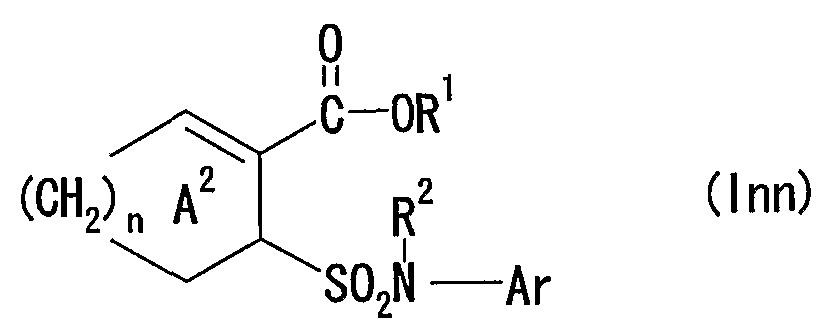


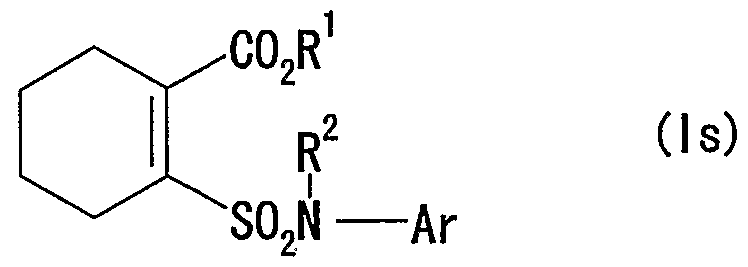


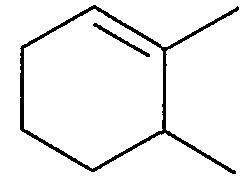


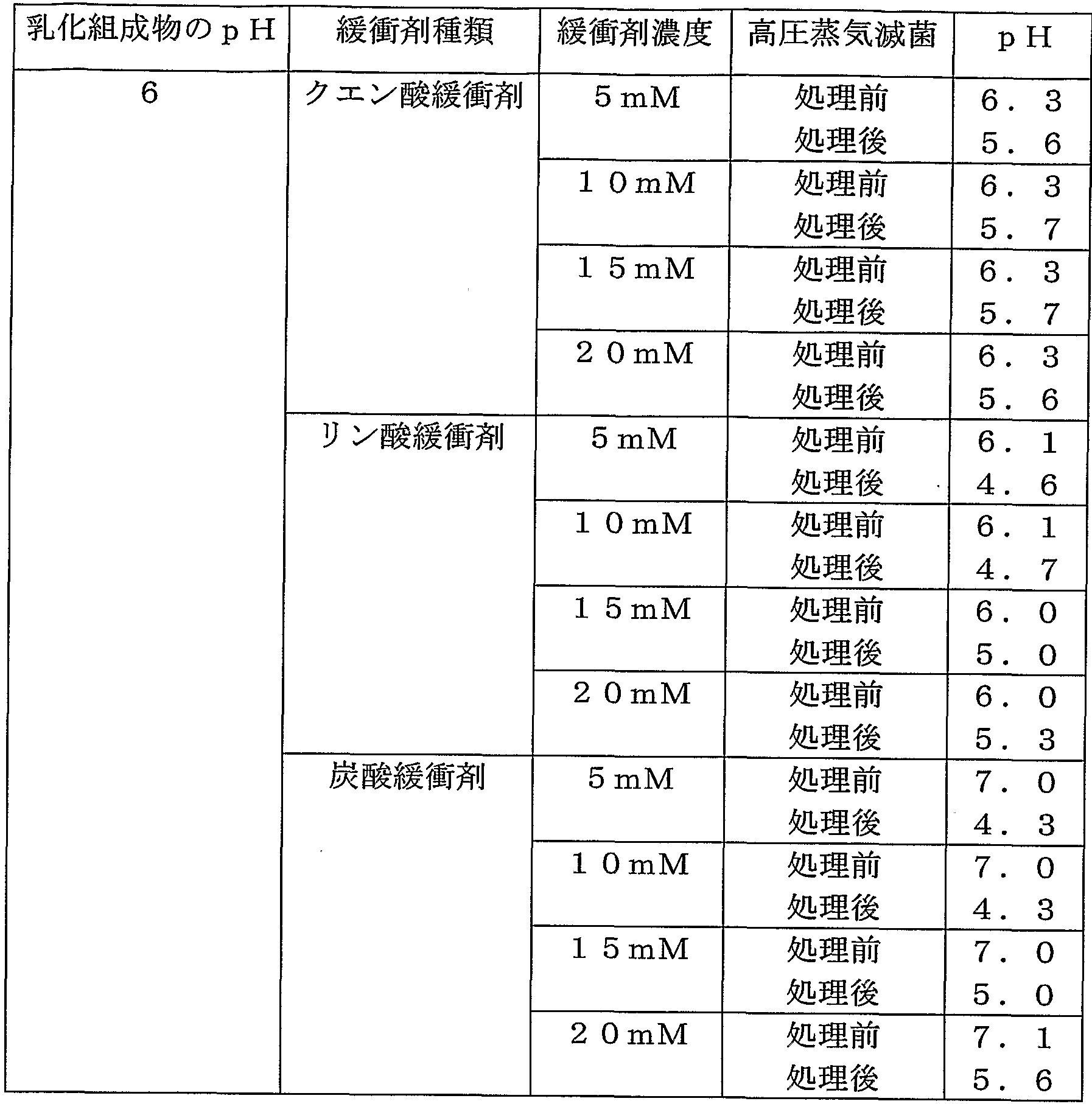


Claims


Priority Applications (13)
| Application Number | Priority Date | Filing Date | Title |
|---|---|---|---|
| MEP-102/09A MEP10209A (en) | 2005-04-28 | 2006-04-27 | Stable emulsion composition |
| AU2006241671A AU2006241671B2 (en) | 2005-04-28 | 2006-04-27 | Stable emulsion composition |
| UAA200713277A UA97346C2 (ru) | 2005-04-28 | 2006-04-27 | Стабильная эмульсионная композиция |
| US11/919,373 US20100016381A1 (en) | 2005-04-28 | 2006-04-27 | Stable emulsion composition |
| CN200680023521.2A CN101212986B (zh) | 2005-04-28 | 2006-04-27 | 稳定的乳化组合物 |
| EP06746045A EP1875926A4 (en) | 2005-04-28 | 2006-04-27 | Stable emulsion composition |
| KR1020077027773A KR101321633B1 (ko) | 2005-04-28 | 2006-04-27 | 안정한 유화 조성물 |
| CA2605773A CA2605773C (en) | 2005-04-28 | 2006-04-27 | Stable emulsion composition |
| BRPI0610029-5A BRPI0610029A2 (pt) | 2005-04-28 | 2006-04-27 | composição em emulsão, e, métodos de preparação da mesma e para a estabilização a longo prazo de uma composição em emulsão |
| NZ563225A NZ563225A (en) | 2005-04-28 | 2006-04-27 | Stable emulsion composition comprising a drug, a buffer, and a further component |
| JP2007514873A JP5236287B2 (ja) | 2005-04-28 | 2006-04-27 | 安定な乳化組成物 |
| IL186673A IL186673A (en) | 2005-04-28 | 2007-10-15 | Stable emulsion composition |
| NO20075985A NO20075985L (no) | 2005-04-28 | 2007-11-21 | Stabil emulsjonsforbindelse |
Applications Claiming Priority (2)
| Application Number | Priority Date | Filing Date | Title |
|---|---|---|---|
| JP2005131807 | 2005-04-28 | ||
| JP2005-131807 | 2005-04-28 |
Publications (1)
| Publication Number | Publication Date |
|---|---|
| WO2006118329A1 true WO2006118329A1 (ja) | 2006-11-09 |
Family
ID=37308111
Family Applications (1)
| Application Number | Title | Priority Date | Filing Date |
|---|---|---|---|
| PCT/JP2006/309213 Ceased WO2006118329A1 (ja) | 2005-04-28 | 2006-04-27 | 安定な乳化組成物 |
Country Status (24)
| Country | Link |
|---|---|
| US (1) | US20100016381A1 (ja) |
| EP (2) | EP2255785A3 (ja) |
| JP (2) | JP5236287B2 (ja) |
| KR (1) | KR101321633B1 (ja) |
| CN (2) | CN101212986B (ja) |
| AR (1) | AR054264A1 (ja) |
| AU (1) | AU2006241671B2 (ja) |
| BR (1) | BRPI0610029A2 (ja) |
| CA (1) | CA2605773C (ja) |
| CR (2) | CR9495A (ja) |
| GE (1) | GEP20105031B (ja) |
| IL (1) | IL186673A (ja) |
| MA (1) | MA29487B1 (ja) |
| ME (1) | MEP10209A (ja) |
| MX (1) | MX2007013407A (ja) |
| MY (1) | MY147790A (ja) |
| NO (1) | NO20075985L (ja) |
| NZ (1) | NZ563225A (ja) |
| PE (1) | PE20061437A1 (ja) |
| RU (1) | RU2428204C2 (ja) |
| TW (1) | TWI462745B (ja) |
| UA (1) | UA97346C2 (ja) |
| WO (1) | WO2006118329A1 (ja) |
| ZA (1) | ZA200710193B (ja) |
Cited By (7)
| Publication number | Priority date | Publication date | Assignee | Title |
|---|---|---|---|---|
| WO2007132825A1 (ja) * | 2006-05-15 | 2007-11-22 | Takeda Pharmaceutical Company Limited | 医薬 |
| EP1972334A1 (en) * | 2007-03-21 | 2008-09-24 | Taiwan Liposome Co., Ltd. | Emulsion Composition Comprising Prostaglandin E1 |
| US7829513B2 (en) * | 2009-03-12 | 2010-11-09 | Greenology Products, Inc. | Organic cleaning composition |
| WO2011093512A1 (en) | 2010-01-27 | 2011-08-04 | Takeda Pharmaceutical Company Limited | Compounds for suppressing a peripheral nerve disorder induced by an anti - cancer agent |
| WO2012133554A1 (ja) * | 2011-03-31 | 2012-10-04 | 富士フイルム株式会社 | プロスタグランジン含有脂肪乳剤 |
| JP2012214431A (ja) * | 2011-03-31 | 2012-11-08 | Fujifilm Corp | プロスタグランジン含有脂肪乳剤 |
| JP2012214430A (ja) * | 2011-03-31 | 2012-11-08 | Fujifilm Corp | プロスタグランジン含有脂肪乳剤 |
Families Citing this family (7)
| Publication number | Priority date | Publication date | Assignee | Title |
|---|---|---|---|---|
| WO2008060934A2 (en) * | 2006-11-14 | 2008-05-22 | Acusphere, Inc. | Formulations of tetrahydropyridine antiplatelet agents for parenteral or oral administration |
| CN101229174B (zh) * | 2008-01-25 | 2010-12-15 | 广东一品红药业有限公司 | 一种含有盐酸依匹斯汀的抗过敏组合物 |
| WO2013169939A2 (en) | 2012-05-08 | 2013-11-14 | Aeromics, Llc | New methods |
| US20160279155A1 (en) | 2013-11-06 | 2016-09-29 | Aeromics, Inc. | Novel formulations |
| US20170246136A1 (en) * | 2014-09-24 | 2017-08-31 | OliVentures, Inc. | Pharmaceutical product, medical food or dietary supplement for preventing cancer and inflammatory diseases |
| US12076397B2 (en) | 2016-05-10 | 2024-09-03 | The Regents Of The University Of Michigan | Emulsion adjuvant for intramuscular, intradermal and subcutaneous administration |
| WO2021252449A1 (en) * | 2020-06-08 | 2021-12-16 | Harm Reduction Therapeutics, Inc. | Sterilized formulations |
Citations (3)
| Publication number | Priority date | Publication date | Assignee | Title |
|---|---|---|---|---|
| WO1999046242A1 (en) * | 1998-03-09 | 1999-09-16 | Takeda Chemical Industries, Ltd. | Cycloalkene derivatives, process for producing the same, and use |
| WO2001010826A1 (en) * | 1999-08-06 | 2001-02-15 | Takeda Chemical Industries, Ltd. | Substituted aromatic-ring compounds, process for producing the same, and use |
| WO2003013513A1 (en) * | 2001-08-03 | 2003-02-20 | Takeda Chemical Industries, Ltd. | Stable emulsion composition |
Family Cites Families (17)
| Publication number | Priority date | Publication date | Assignee | Title |
|---|---|---|---|---|
| US5236917A (en) * | 1989-05-04 | 1993-08-17 | Sterling Winthrop Inc. | Saccharin derivatives useful as proteolytic enzyme inhibitors and compositions and method of use thereof |
| US5380737A (en) * | 1989-05-04 | 1995-01-10 | Sterling Winthrop Inc. | Saccharin derivative proteolytic enzyme inhibitors |
| US5128339A (en) * | 1990-11-01 | 1992-07-07 | Sterling Winthrop Inc. | Proteolytic enzyme inhibition method |
| US5306818A (en) * | 1990-11-01 | 1994-04-26 | Sterling Winthrop Inc. | Tetrahydro 2-saccharinylmerthyl aryl carboxylates |
| US5250696A (en) * | 1990-11-01 | 1993-10-05 | Sterling Winthrop Inc. | 2-saccharinylmethyl aryl carboxylate |
| AU642537B2 (en) * | 1990-11-01 | 1993-10-21 | Sanofi | 2-saccharinylmethyl aryl carboxylates useful as proteolytic enzyme inhibitors and compositions and method of use thereof |
| US5512589A (en) * | 1990-11-01 | 1996-04-30 | Sterling Winthrop Inc. | 2-saccharinylmethyl aryl carboxylates useful as proteolytic enzyme inhibitors and compositions and method of use thereof |
| JP2836599B2 (ja) | 1996-08-09 | 1998-12-14 | 日本電気株式会社 | 通信制御装置 |
| CH693846A5 (de) | 1998-03-11 | 2004-03-15 | Mitsubishi Electric Corp | Gronlingelektrode zur Oberflachenbehandlung durch Funkenerosion. |
| US6532316B1 (en) * | 1999-11-10 | 2003-03-11 | Avanex Corporation | Bi-directional polarization-independent optical isolator |
| JP4863553B2 (ja) * | 2000-02-04 | 2012-01-25 | 武田薬品工業株式会社 | 安定な乳化組成物 |
| KR100784752B1 (ko) * | 2000-02-04 | 2007-12-13 | 다케다 야쿠힌 고교 가부시키가이샤 | 안정한 에멀젼 조성물 |
| JP2003033195A (ja) * | 2001-07-24 | 2003-02-04 | Kyowa Hakko Kogyo Co Ltd | テトラヒドロクルクミン類の製造方法 |
| US20030220284A1 (en) * | 2002-02-22 | 2003-11-27 | Patricia Yotnda | Delivery of adenoviral DNA in a liposomal formulation for treatment of disease |
| WO2004052354A1 (ja) * | 2002-12-06 | 2004-06-24 | Otsuka Pharmaceutical Factory, Inc. | プロポフォール含有脂肪乳剤 |
| US8053599B2 (en) * | 2003-10-03 | 2011-11-08 | Ono Pharmaceutical Co., Ltd. | Drug containing (2R)-2-propyloctanoic acid as the active ingredient |
| US20090062355A1 (en) * | 2006-04-20 | 2009-03-05 | Takeda Pharmaceutical Company Limited | Pharmaceutical Product |
-
2006
- 2006-04-26 MY MYPI20061928A patent/MY147790A/en unknown
- 2006-04-26 TW TW095114843A patent/TWI462745B/zh not_active IP Right Cessation
- 2006-04-27 UA UAA200713277A patent/UA97346C2/ru unknown
- 2006-04-27 RU RU2007144071/04A patent/RU2428204C2/ru not_active IP Right Cessation
- 2006-04-27 GE GEAP200610396A patent/GEP20105031B/en unknown
- 2006-04-27 BR BRPI0610029-5A patent/BRPI0610029A2/pt not_active IP Right Cessation
- 2006-04-27 CA CA2605773A patent/CA2605773C/en not_active Expired - Fee Related
- 2006-04-27 JP JP2007514873A patent/JP5236287B2/ja not_active Expired - Fee Related
- 2006-04-27 KR KR1020077027773A patent/KR101321633B1/ko not_active Expired - Fee Related
- 2006-04-27 AR AR20060101689A patent/AR054264A1/es unknown
- 2006-04-27 AU AU2006241671A patent/AU2006241671B2/en not_active Ceased
- 2006-04-27 EP EP10172992A patent/EP2255785A3/en not_active Withdrawn
- 2006-04-27 MX MX2007013407A patent/MX2007013407A/es active IP Right Grant
- 2006-04-27 ZA ZA200710193A patent/ZA200710193B/xx unknown
- 2006-04-27 WO PCT/JP2006/309213 patent/WO2006118329A1/ja not_active Ceased
- 2006-04-27 CN CN200680023521.2A patent/CN101212986B/zh not_active Expired - Fee Related
- 2006-04-27 NZ NZ563225A patent/NZ563225A/en not_active IP Right Cessation
- 2006-04-27 PE PE2006000447A patent/PE20061437A1/es not_active Application Discontinuation
- 2006-04-27 CN CN2012101563870A patent/CN102670503A/zh active Pending
- 2006-04-27 ME MEP-102/09A patent/MEP10209A/xx unknown
- 2006-04-27 EP EP06746045A patent/EP1875926A4/en not_active Withdrawn
- 2006-04-27 US US11/919,373 patent/US20100016381A1/en not_active Abandoned
-
2007
- 2007-10-15 IL IL186673A patent/IL186673A/en not_active IP Right Cessation
- 2007-11-02 CR CR9495A patent/CR9495A/es unknown
- 2007-11-21 NO NO20075985A patent/NO20075985L/no not_active Application Discontinuation
- 2007-11-26 MA MA30421A patent/MA29487B1/fr unknown
-
2012
- 2012-11-27 JP JP2012259121A patent/JP2013040215A/ja active Pending
-
2013
- 2013-12-17 CR CR20130666A patent/CR20130666A/es unknown
Patent Citations (3)
| Publication number | Priority date | Publication date | Assignee | Title |
|---|---|---|---|---|
| WO1999046242A1 (en) * | 1998-03-09 | 1999-09-16 | Takeda Chemical Industries, Ltd. | Cycloalkene derivatives, process for producing the same, and use |
| WO2001010826A1 (en) * | 1999-08-06 | 2001-02-15 | Takeda Chemical Industries, Ltd. | Substituted aromatic-ring compounds, process for producing the same, and use |
| WO2003013513A1 (en) * | 2001-08-03 | 2003-02-20 | Takeda Chemical Industries, Ltd. | Stable emulsion composition |
Non-Patent Citations (2)
| Title |
|---|
| See also references of EP1875926A4 * |
| WASHINGTON C.: "Stability of lipid emulsions for drug delivery", ADVANCED DRUG DELIVERY REVIEWS, vol. 20, no. 2-3, 1996, pages 131 - 145, XP009067104 * |
Cited By (9)
| Publication number | Priority date | Publication date | Assignee | Title |
|---|---|---|---|---|
| WO2007132825A1 (ja) * | 2006-05-15 | 2007-11-22 | Takeda Pharmaceutical Company Limited | 医薬 |
| EP1972334A1 (en) * | 2007-03-21 | 2008-09-24 | Taiwan Liposome Co., Ltd. | Emulsion Composition Comprising Prostaglandin E1 |
| TWI386209B (zh) * | 2007-03-21 | 2013-02-21 | 台灣微脂體股份有限公司 | 前列腺素e1之乳化組成物 |
| US7829513B2 (en) * | 2009-03-12 | 2010-11-09 | Greenology Products, Inc. | Organic cleaning composition |
| WO2011093512A1 (en) | 2010-01-27 | 2011-08-04 | Takeda Pharmaceutical Company Limited | Compounds for suppressing a peripheral nerve disorder induced by an anti - cancer agent |
| US8901171B2 (en) | 2010-01-27 | 2014-12-02 | Takeda Pharmaceutical Company Limited | Compounds for suppressing a peripheral nerve disorder induced by an anti-cancer agent |
| WO2012133554A1 (ja) * | 2011-03-31 | 2012-10-04 | 富士フイルム株式会社 | プロスタグランジン含有脂肪乳剤 |
| JP2012214431A (ja) * | 2011-03-31 | 2012-11-08 | Fujifilm Corp | プロスタグランジン含有脂肪乳剤 |
| JP2012214430A (ja) * | 2011-03-31 | 2012-11-08 | Fujifilm Corp | プロスタグランジン含有脂肪乳剤 |
Also Published As
Similar Documents
| Publication | Publication Date | Title |
|---|---|---|
| JP5137289B2 (ja) | 安定な乳化組成物 | |
| KR100784752B1 (ko) | 안정한 에멀젼 조성물 | |
| JP2013040215A (ja) | 安定な乳化組成物 | |
| AU2020380926A1 (en) | MrgprX2 antagonists and uses thereof | |
| WO2017153958A1 (en) | Novel polymorphic forms and amorphous form of olaparib | |
| WO2002045750A1 (en) | Combination drugs | |
| KR20170061493A (ko) | 피마살탄의 신규 염 | |
| KR102276281B1 (ko) | 의약으로 사용하기 위한 펄린돌 광학이성질체의 약학적으로 허용가능한 염 | |
| JP4863553B2 (ja) | 安定な乳化組成物 | |
| JP4145042B2 (ja) | 併用薬 | |
| CN109651253B (zh) | 苯丙烯酸酯衍生物及其作为神经保护药物的应用 | |
| HK1116061A (en) | Stable emulsion composition | |
| HK1151234A (en) | Stable emulsion composition |
Legal Events
| Date | Code | Title | Description |
|---|---|---|---|
| WWE | Wipo information: entry into national phase |
Ref document number: 200680023521.2 Country of ref document: CN |
|
| 121 | Ep: the epo has been informed by wipo that ep was designated in this application | ||
| WWE | Wipo information: entry into national phase |
Ref document number: 2007514873 Country of ref document: JP |
|
| WWE | Wipo information: entry into national phase |
Ref document number: 186673 Country of ref document: IL |
|
| WWE | Wipo information: entry into national phase |
Ref document number: 2605773 Country of ref document: CA |
|
| WWE | Wipo information: entry into national phase |
Ref document number: 2006746045 Country of ref document: EP |
|
| WWE | Wipo information: entry into national phase |
Ref document number: MX/a/2007/013407 Country of ref document: MX Ref document number: 12007502405 Country of ref document: PH |
|
| NENP | Non-entry into the national phase |
Ref country code: DE |
|
| WWE | Wipo information: entry into national phase |
Ref document number: CR2007-009495 Country of ref document: CR |
|
| WWE | Wipo information: entry into national phase |
Ref document number: 2006241671 Country of ref document: AU Ref document number: 563225 Country of ref document: NZ |
|
| WWE | Wipo information: entry into national phase |
Ref document number: 4380/KOLNP/2007 Country of ref document: IN |
|
| WWE | Wipo information: entry into national phase |
Ref document number: 07125573 Country of ref document: CO |
|
| WWE | Wipo information: entry into national phase |
Ref document number: 2007144071 Country of ref document: RU Ref document number: 10396 Country of ref document: GE Ref document number: 1200702533 Country of ref document: VN Ref document number: 1020077027773 Country of ref document: KR Ref document number: A20071444 Country of ref document: BY |
|
| ENP | Entry into the national phase |
Ref document number: 2006241671 Country of ref document: AU Date of ref document: 20060427 Kind code of ref document: A |
|
| WWP | Wipo information: published in national office |
Ref document number: 2006241671 Country of ref document: AU |
|
| WWP | Wipo information: published in national office |
Ref document number: 2006746045 Country of ref document: EP |
|
| WWE | Wipo information: entry into national phase |
Ref document number: 11919373 Country of ref document: US |
|
| ENP | Entry into the national phase |
Ref document number: PI0610029 Country of ref document: BR Kind code of ref document: A2 Effective date: 20071026 |
|
| WWE | Wipo information: entry into national phase |
Ref document number: CR2013-000666 Country of ref document: CR |