WO2008001883A1 - α-AMINO ACID DERIVATIVE AND PHARMACEUTICAL COMPRISING THE SAME AS ACTIVE INGREDIENT - Google Patents

α-AMINO ACID DERIVATIVE AND PHARMACEUTICAL COMPRISING THE SAME AS ACTIVE INGREDIENT Download PDF

Info

Publication number
WO2008001883A1
WO2008001883A1 PCT/JP2007/063092 JP2007063092W WO2008001883A1 WO 2008001883 A1 WO2008001883 A1 WO 2008001883A1 JP 2007063092 W JP2007063092 W JP 2007063092W WO 2008001883 A1 WO2008001883 A1 WO 2008001883A1
Authority
WO
WIPO (PCT)
Prior art keywords
benzo
group
methyl
trifluoromethyl
mouth
Prior art date
Legal status (The legal status is an assumption and is not a legal conclusion. Google has not performed a legal analysis and makes no representation as to the accuracy of the status listed.)
Ceased
Application number
PCT/JP2007/063092
Other languages
English (en)
French (fr)
Inventor
Kazuhiko Ohrai
Michiaki Adachi
Koji Toyama
Takanori Shimizu
Keishi Hayashi
Masataka Minami
Yoshiyuki Suzuki
Masakazu Sugiyama
Masateru Ohta
Shojiro Kadono
Takuya Shiraishi
Haruhiko Sato
Yoshiaki Watanabe
Nobuya Ishii
Masahiro Sakaitani
Masami Hasegawa
Current Assignee (The listed assignees may be inaccurate. Google has not performed a legal analysis and makes no representation or warranty as to the accuracy of the list.)
Chugai Pharmaceutical Co Ltd
Nissan Chemical Corp
Original Assignee
Chugai Pharmaceutical Co Ltd
Nissan Chemical Corp
Priority date (The priority date is an assumption and is not a legal conclusion. Google has not performed a legal analysis and makes no representation as to the accuracy of the date listed.)
Filing date
Publication date
Application filed by Chugai Pharmaceutical Co Ltd, Nissan Chemical Corp filed Critical Chugai Pharmaceutical Co Ltd
Priority to JP2008522646A priority Critical patent/JP5258563B2/ja
Priority to EP07767879A priority patent/EP2045253A4/en
Priority to US12/306,901 priority patent/US7879887B2/en
Publication of WO2008001883A1 publication Critical patent/WO2008001883A1/ja
Anticipated expiration legal-status Critical
Ceased legal-status Critical Current

Links

Classifications

    • CCHEMISTRY; METALLURGY
    • C07ORGANIC CHEMISTRY
    • C07DHETEROCYCLIC COMPOUNDS
    • C07D513/00Heterocyclic compounds containing in the condensed system at least one hetero ring having nitrogen and sulfur atoms as the only ring hetero atoms, not provided for in groups C07D463/00, C07D477/00 or C07D499/00 - C07D507/00
    • C07D513/02Heterocyclic compounds containing in the condensed system at least one hetero ring having nitrogen and sulfur atoms as the only ring hetero atoms, not provided for in groups C07D463/00, C07D477/00 or C07D499/00 - C07D507/00 in which the condensed system contains two hetero rings
    • C07D513/04Ortho-condensed systems
    • AHUMAN NECESSITIES
    • A61MEDICAL OR VETERINARY SCIENCE; HYGIENE
    • A61PSPECIFIC THERAPEUTIC ACTIVITY OF CHEMICAL COMPOUNDS OR MEDICINAL PREPARATIONS
    • A61P35/00Antineoplastic agents
    • AHUMAN NECESSITIES
    • A61MEDICAL OR VETERINARY SCIENCE; HYGIENE
    • A61PSPECIFIC THERAPEUTIC ACTIVITY OF CHEMICAL COMPOUNDS OR MEDICINAL PREPARATIONS
    • A61P35/00Antineoplastic agents
    • A61P35/02Antineoplastic agents specific for leukemia
    • AHUMAN NECESSITIES
    • A61MEDICAL OR VETERINARY SCIENCE; HYGIENE
    • A61PSPECIFIC THERAPEUTIC ACTIVITY OF CHEMICAL COMPOUNDS OR MEDICINAL PREPARATIONS
    • A61P43/00Drugs for specific purposes, not provided for in groups A61P1/00-A61P41/00
    • AHUMAN NECESSITIES
    • A61MEDICAL OR VETERINARY SCIENCE; HYGIENE
    • A61PSPECIFIC THERAPEUTIC ACTIVITY OF CHEMICAL COMPOUNDS OR MEDICINAL PREPARATIONS
    • A61P9/00Drugs for disorders of the cardiovascular system
    • A61P9/04Inotropic agents, i.e. stimulants of cardiac contraction; Drugs for heart failure

Definitions

  • the present invention relates to a novel ex-amino acid derivative.
  • Powerful derivatives have ⁇ ARK1 inhibitory action and are useful for the prevention or treatment of heart failure. Furthermore, it has anti-tumor activity, particularly dual inhibitory action of Aurora kinase and CDK, and is also useful for cell proliferative diseases such as cancer.
  • G protein-coupled receptor kinase is an antigen-activated G protein-coupled receptor kinase (GPCR). It is an enzyme that phosphorylates and desensitizates.
  • GPCR G protein-coupled receptor kinase
  • the focus is on the agonistic receptor [ ⁇ Adrenergic Receptor ( ⁇ AR)].
  • ⁇ AR Adrenergic Receptor
  • ⁇ ARK1 is activated by translocating to the cell membrane through the binding of its C terminus and G ⁇ y, the ⁇ ARK1 C terminus (j8 ARKct: amino acid force 495)
  • the peptide consisting of the 2nd amino acid is expressed as dominant negative ⁇ ARK1 in the heart of various heart failure animal models, and / 3 ARK1 inhibition can be used to examine the therapeutic effect of heart failure.
  • Non-Patent Document 6 Suppresses cardiac dysfunction and death in CSQ transgenic mice (for example, see Non-Patent Document 6), and ⁇ ARKct transgenic mice suppress death due to heart failure after myocardial infarction (for example, (See Patent Document 1). Therefore, ⁇ ARK1 inhibitors are considered promising as preventive or therapeutic agents for heart failure.
  • Aurora kinase one of serine 'threonine' kinases, is known to have three subtypes (Aurora A, B, C) with high homology to the C-terminal kinase domain. They are called Aurora family. Previous studies have shown that the Aurora family is essential for precise control of mitosis, such as separation of centrosomes in the mitotic phase and formation of bipolar spindles (eg, non-patented). (Ref. 8).
  • Aurora kinase The relationship between Aurora kinase and tumor begins with a report that Aurora_A and B are overexpressed in colon cancer (see, for example, Non-Patent Document 9), and then breast cancer, ovarian cancer, liver cancer, stomach cancer, spleen It has been reported that Aurora A is highly expressed in many tumors such as cancer. In addition, it has been reported that Aurora kinase is expressed at a high level and the prognosis is worse in cancer patients (see, for example, Non-Patent Document 10), and is currently an Aurora kinase inhibitor under clinical evaluation. There are also some known.
  • Cyrin-dependent kinase (CDK), a serine 'threonine' kinase, also plays an extremely important role in cell cycle regulation.
  • CDK # Z cyclin * a complex that also has a catalytic subunit, CDK #, and an activity-regulating subunit, cyclin *
  • the cell cycle is strictly controlled by expressing the function (see, for example, Non-Patent Document 11).
  • the CDK1Z cyclin B complex is necessary for the transition from the G2 phase force to the M phase of the cell cycle, and is also necessary for the completion of mitosis (see, for example, Non-Patent Document 12).
  • the CDK2Z cyclin E complex controls the transition from the G1 phase to the S phase (see Non-Patent Document 13, for example).
  • CDK3 is thought to function in the progression of G1 phase, and was thought to be important in G1-S transition (see, for example, Non-Patent Document 14). ) Is said to function when entering the G1 phase to initiate cell proliferation (see, for example, Non-Patent Document 15).
  • CDK inhibitors Similar to the Aurora family, high expression of CDK and cyclin gene mutations in many tumor cells has been reported. As a result, CDK is also an important target in cancer treatment. It is attracting attention as a get molecule, and many pharmaceutical companies are pursuing research and development of small molecules that target the ATP-binding domain of CDK. These CDK inhibitors also inhibit tumor cell growth both in vitro and in vivo (see, for example, Non-Patent Document 16). Many CDK inhibitors are currently under clinical evaluation.
  • Aurora kinase inhibitor and cyclin-dependent kinase (CDK) inhibitor are V, which in both human tumor cell lines and xenograft mouse systems carrying human tumor cells. Inhibits growth.
  • human cancer is composed of genetically and biologically heterogeneous cell cells, it is known that the sensitivity to individual anti-tumor agents varies from cell to cell, The Therefore, in order to develop highly effective antitumor agents, rather than developing individual Aurora kinase inhibitors and CDK inhibitors, develop drugs that simultaneously inhibit multiple targets related to cell proliferation. I like it.
  • multi-kinase inhibitors such as maleate tubes (SU 11248 malate: VEGFR—1,2,3, PDGFR, KIT, Flt3, CSF1R, etc.), imatinib mesylate ( Gleevec: Bcr-Abl kinase, C-KIT, PDGFR, etc.), rapatib (EGFR, HER2), etc. show strong clinical effects and are also supported by this.
  • Non-Patent Document 1 Ungerer M et al., Circulation 1993; 87: 454-463
  • Non-Patent Document 2 Ungerer M et al., Cir Res 1994; 74: 206-213
  • Non-Patent Document 3 White DC et al., Proc Natl Acad Sci USA 2000; 97: 5428-5433
  • Non-Patent Document 4 Shah AS et al., Circulation 2001; 103: 1311-1316
  • Non-patent literature 5 Rockman HA et al., Proc Natl Acad Sci USA 1998; 95: 7000-7005
  • Non-patent literature 6 Harding VB et al., Proc Natl Acad Sci USA 2001; 98: 5809-5814
  • Non-patent literature 7 lino M et al. , J Med Chem. 2002; 45: 2150-2159
  • Non-Patent Document 8 Crane, Richard; Gadea, Beanck; Littlepage, Why; Wu, Hua; Ruder man, Joan V. Biology of the Cell (2004), 96 (3), 215-229
  • Non-Patent Document 9 BISCHOFF JR, ANDERSON L, ZHU Y et al., EMBO J. (1998) 17 (11): 30 52-3065
  • Non-Patent Document 10 Fancelli, Daniele; Moll, Juergen. Expert Opinion on Therapeutic Patents (2005), 15 (9), 1169-1182
  • Non-Patent Document 11 Sanchez, Irma; Dynlacht, Brian David. Seminars in Cell & Development ental Biology (2005), 16 (3), 311-321
  • Non-Patent Document 12 Saya, Hideyuki; Hirota, Toru. Jikken Igaku (2004), 22 (9), 1237-1241
  • Non-Patent Document 13 Sherr CJ. Cell 1994; 79: 551-5
  • Non-Patent Document 14 Zariwala, Maimoona; Liu, Jidong; Xiong, Yue. Oncogene (1998), 17 (21), 2787-2798
  • Non-Patent Document 15 Ren, Shengjun; Rollins, Barrett J. Cell (2004), 117 (2), 239-251
  • Non-Patent Document 16 Pevarello, Paolo; Villa, Manuela. Expert Opinion on Therapeutic Patents (2005), 15 (6), 675-703
  • Non-Patent Document 17 Cancer Research 2005; 65 (19), 9038-9046
  • Patent Document 1 Pamphlet of International Publication No. 03Z20312
  • Patent Document 2 Pamphlet of International Publication No. 02Z27314
  • Patent Document 3 Pamphlet of International Publication No. 02Z18350
  • Patent Document 4 Japanese Patent Laid-Open No. 2003-321472
  • Patent Document 5 Pamphlet of International Publication No. 02Z57240
  • a novel ⁇ -amino acid derivative represented by the following general formula (1) has a strong
  • the present inventors show that the novel ⁇ -amino acid derivative represented by the following formula (1) has Aurora / CDK dual inhibitory action and is useful for cell proliferative diseases such as cancer.
  • the present invention was completed by finding the compound group having excellent antitumor effects on tumor cells and also exhibiting high antitumor effects in animal models by oral administration. .
  • the present invention provides:
  • R 1 means a hydrogen atom
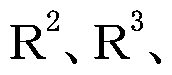
  • R 2 and R 3 are each independently a hydrogen atom; a hydroxyl group, a C alkoxy group, a benzylo
  • a good C alkyl group or a force meaning a phenyl group, or
  • R 2 and R 3 together form one (CH 3) —, where n is 2, 3, 4 or 5
  • R 4 represents a hydrogen atom
  • R 4 and R 2 together form one (CH 3) —, where m is 1, 2, 3 or 4
  • Y is a C aryl group or C heterocyclyl optionally substituted with substituents R 5 , R 6 and R 7.
  • R 11 is a hydrogen atom, C alkyl group, C cycloalkyl group, amino group, C
  • C means an alkoxy group
  • R 12 and R 13 each independently represent a C alkyl group
  • N-C canolecoxy C canrequinoleaminocanoleboninole group
  • these groups include a halogen atom, a hydroxyl group, one CONH, one SO NH, and one C.
  • O H force optionally substituted with selected substituents may be;
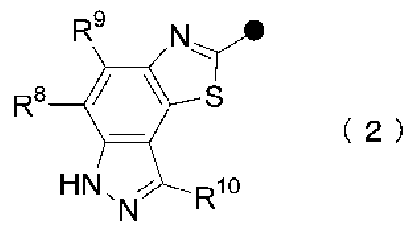
  • X is the formula (2):
  • R 8 , R 9 and R 1Q are each independently
  • Halogen atom hydroxyl group, C alkoxy group, C alkoxycarbonyl group and CO
  • H force optionally substituted with a selected substituent may be a C alkyl group
  • the compound of the present invention has a strong iS ARKl inhibitory action and can be used as a preventive or therapeutic agent for heart failure.
  • the compound of the present invention has a dual inhibitory action of Aurora kinase and CDK, and is composed of a genetically and biologically heterogeneous cell force compared to the conventionally known inhibition of only CDK and only Aurora kinase. It can be expected to act more effectively on the tumors of people who have cancer, and to show tumor shrinkage and recurrence prevention.
  • the compound of the present invention was orally effective in a xenograft mouse model carrying a human tumor, it was compared with JNJ-7706621 in clinical application. Will be easier and more realistic.
  • Fig. 1 shows the results of an anti-tumor test using nude mice transplanted with human prostate cancer cells DU 145. Indicates. This shows the time course of tumor volume in Synthesis Example 35 ( ⁇ ), 60 ( ⁇ ), 99 (*), 126 (country) administration group and control group ( ⁇ ).
  • FIG. 2 shows the results of an antitumor test using nude mice transplanted with human colon cancer cell SW620. This shows the time course of tumor volume in Synthesis Example 35 ( ⁇ ), 126 (country) administration group and control group ( ⁇ ).
  • n is normal, “i” is iso, “sec” is secondary, “t” is tertiary, “c” is cyclo, “Me” is methyl, “ “Et” means ethyl, “Pr” means propyl, “Ac” means acetyl, “: Bn” means benzyl, “: Bz” means benzoyl.
  • the C alkyl group means a linear or branched alkyl group having 1 to 4 carbon atoms
  • methyl, ethyl, n-propyl, i-propyl, n-butyl, i-butyl, sec-butyl and t-butyl can be mentioned.
  • Preferred are methyl, ethyl and i-butyl.
  • the C alkoxy group means a group in which an oxygen atom is bonded to the C alkyl group.
  • Examples include methoxy, ethoxy, n-propoxy, i-propoxy, n-butoxy, i-butoxy, sec-butoxy, and t-butoxy.
  • methoxy and ethoxy are mentioned.
  • C aryl group means an aromatic hydrocarbon group having 6 to 10 carbon atoms, for example
  • Examples thereof include a phenyl group, a 1-naphthyl group, and a 2-naphthyl group.
  • a phenol group is preferred.
  • the C heterocyclyl group is selected from the group consisting of 4 to 9 carbon atoms and 0, N and S
  • halogen atom means a fluorine atom, a chlorine atom, a bromine atom or an iodine atom. Preferred are fluorine atom and chlorine atom.
  • the C cycloalkyl group is a saturated hydrocarbon having a cyclic structure having 3 to 6 carbon atoms.
  • the C alkylamino group means an amino group substituted with the C alkyl group.
  • Examples include methylamino, ethylamino, n-propylamino-containing i-propylami-containing n-butylami-containing i-butylami-containing sec butylami-containing t-butylamino. Preferred are methylamino, ethylamino, n-propylamino and i-propylamino.
  • the di-C alkylamino group is the same or different and is di-substituted by the C alkyl group.
  • dimethylamino and jetylamino are preferred.
  • the C alkylaminocarbo group is an aminocarbo substituted with the C alkyl group.
  • -Methyl group for example, methylaminocarbole, ethylaminocarbole, n-propylaminocarbonyl, i-propylaminocarbonyl, n-butylaminocarbonyl, i-butylaminocarbonyl, sec Butylaminocarbonyl, t-butylaminocarbonyl.
  • Preferable examples include methylaminocarbol, ethylaminocarbol, n- propylaminocarbol and n-butylaminocarbol.
  • the di-C alkylaminocarboyl group is the same or different
  • 1-4 1-4 means a disubstituted aminocarbonyl group, such as dimethylaminocarbole, dimethylaminocarbonyl, di-n-propylaminocarbonyl, di-i-propylaminocarbonyl, di n —Butylaminocarbonyl, G i-Butylaminocarbonyl, N, N— Ethylmethylaminocarbol. Among them, dimethylaminocarbol and jetilaminocarbol are preferable.
  • the C alkoxycarbonyl group is a carbo group substituted with the C alkoxy group.
  • methoxycarbol includes, for example, methoxycarbol, ethoxycarbol, n-propoxycarbonyl, i-propoxycarbonyl, n-butoxycarbonyl, i-butoxycarbonyl, sec-butoxycarbol, and t-butoxycarbole.
  • Preferable examples include methoxycarbol and ethoxycarbol.
  • the C cycloalkylaminocarbol group is substituted with the C cycloalkyl group.
  • aminocarbonyl group for example, C propylaminocarbol, C-butylaminocarbonyl, 2-methyl-c propylaminocarbonyl, c-pentylaminocarbonyl, 2-methyl-c-butylaminocarbonyl, 3-methyl- c-Butylaminocarbonyl, 2,2 dimethyl-c-propylaminocarbonyl, 2,3 dimethyl-c-propylaminocarbol, 2-ethyl-c-propylaminocarbole, c-hexylamino carbonyl, 2- Methyl-c-pentylaminocarbonyl, 3-methyl-c-pentylaminocarbonyl, 2-ethyl-c-butylaminocarbonyl, 3-ethyl-c-butylaminocarbonyl, 2,2 dimethyl-c-butylaminocarbonyl, 2,3 dimethyl-c butyl Aminocarbonyl, 2, 4 Dimethyl-c-Butyl,
  • the C alkoxyaminocarbo group is an amino force substituted with the C alkoxy group.
  • Lupo - means group, for example, methoxy ⁇ amino carbo - le, ethoxy ⁇ amino carbo - le, n propoxycarbonyl ⁇ amino carbonyl, i- propoxycarbonyl ⁇ amino carbonyl, n- Butokishiamino force carbonyl, i- butoxy ⁇ amino carbonyl, sec Butoxyaminocarbonyl, t-butoxyaminocarbonyl.
  • Preferable examples include methoxyaminocarbol and ethoxyaminocarbol.
  • N—C alkoxy C alkylaminocarbo yl group is the above C
  • 1-4 1-4 1-4 refers to the C alkylaminocarbo yl group substituted by a alkoxy group, for example, N
  • N-Methoxy-methylaminocarbonyl, N-methoxyethylaminocarbonyl, N et examples thereof include xythymethylaminocarbol and N ethoxyethylaminocarbol.
  • Preferred examples include N-methoxy-methylaminocarbonyl and N-methoxy-ethylaminocarbonyl.
  • a 5- to 6-membered monocyclic heterocyclyl group containing 1 to 3 nitrogen atoms may be partially or fully saturated, and may be modified with oxo. Specific examples include 2oxo-2,3 dihydroimidazole-1-yl group, pyrrolidyl group, imidazolidyl group, piperazinyl group, piperidyl group, 1 pyrazolyl group, 1 imidazolyl group, 1 triazolyl group, imidazolinyl group.
  • a pyridyl group, a 2-oxo-pyridyl group, a pyradyl group, a triazyl group, and the like, and a 2-oxo-2,3-dihydroimidazole-1-yl group is preferable.
  • n means an integer of 2, 3, 4 or 5
  • R 2 and R 3 together with the carbon atom to which they are attached, a cyclopropane ring, cyclobutane ring, cyclopentane ring or cycl It means forming an oral hexane ring, preferably a cyclopropane ring.
  • R 4 and R 2 together form one (CH 3) 2-
  • R 4 and R 2 together with the atom to which they are attached are aziridine, azetidine, pyrrolidine or piperidine rings. Preferably, it means forming a pyrrolidine ring.
  • substituents in addition to the case where the substituent is unsubstituted, at least one, preferably 1 to 3 given This includes the case where it is substituted by a group.
  • substituents may be substituted with the same or different given groups. For example, “a group selected from a hydroxyl group, a c alkoxy group, a benzyloxy group, —CONH and a phenyl group”.
  • ⁇ C alkyl group optionally substituted with a substituent '' means an unsubstituted C alkyl group.
  • R 1 means a hydrogen atom
  • R 2 and R 3 are each independently a hydrogen atom; a hydroxyl group, a C alkoxy group, a benzylo
  • a good C alkyl group or a force meaning a phenyl group, or
  • R 2 and R 3 together form one (CH 3) —, where n is 2, 3, 4 or 5
  • R 4 represents a hydrogen atom
  • R 4 and R 2 together form one (CH 3) —, where m is 1, 2, 3 or 4
  • Y is a C aryl group or C heterocyclyl optionally substituted with substituents R 5 , R 6 and R 7.
  • R 11 is a hydrogen atom, C alkyl group, C cycloalkyl group, amino group, C
  • C means an alkoxy group
  • R 12 and R 13 each independently represent a C alkyl group
  • N-C canolecoxy C canrequinoleaminocanoleboninole group
  • these groups include a halogen atom, a hydroxyl group, one CONH, one SO NH, and one C.
  • O H force optionally substituted with selected substituents may be;
  • X is the formula (2):
  • R 8 , R 9 and R 1Q are each independently
  • Halogen atom hydroxyl group, C alkoxy group, C alkoxycarbonyl group and CO
  • H force optionally substituted with a selected substituent may be a C alkyl group
  • one of R 2 and R 3 is a hydrogen atom, and the other is independently a hydroxyl group, a C alkoxy group, a benzyloxy group, CONH and F
  • Group R 2 and R 3 are both hydrogen atoms, or both are C alkyl groups
  • R 2 and R 3 are both hydrogen atoms, or both are methyl groups, or R 2 and R 3 are carbon atoms to which they are bonded. It is selected from those that together form a cyclopropane.
  • R 5 , R 6 and R 7 are a hydrogen atom, and the remaining two are each independently a halogen atom; a hydroxyl group; NHCOR u , where R 11 is C alkyl group,
  • aminocarbole groups are CONH, -SO NH, -CO H, and -CO (CH) OH.
  • 2 2 2 2 2 2 2 2 2 2 2 2 p may be optionally substituted with a substituent selected from the above, p means an integer of 1, 2 or 3; C cycloalkylaminocarbo carbonyl group; benzyl Oxyamino Carbon
  • 1-4 1-4 1-4 1-alkoxycarbol group is a halogen atom, a hydroxyl group, CONH, mono-SO NH and
  • R 1 is a hydrogen atom
  • R 2 and R 3 are each independently
  • Hydrogen atom methyl group, ethyl group, n-propyl group, i-propyl group, n-butyl group, i-butyl group, s-butyl group, t-butyl group, hydroxymethyl group, 2-hydroxyethyl group, 1-hydroxyethyl group , A methoxymethyl group, a 2-methoxyethyl group, a 1-methoxyethyl group, a benzyloxymethyl group, a benzyloxycetyl group, a rubamoylmethyl group, a 2-force rubamoylethyl group, a benzyl group or a phenyl group, or
  • R 2 and R 3 together with the carbon atom to which they are attached to form a cyclopropane, cyclobutane, cyclopentane, or cyclohexane ring, or
  • R 2 and R 3 are each independently a hydrogen atom, a methyl group, an i-butyl group, a hydroxymethyl group, a 2-hydroxyethyl group, a strong rubamoylmethyl group or a phenyl group. Or R 2 and R 3 forces together with the carbon atom to which they are attached form a cyclopropane ring, cyclobutane ring, cyclopentane ring, or cyclohexane ring of formula (1) above.
  • R 2 and R 3 are both hydrogen atoms or a force that is both a methyl group, one of R 2 and R 3 is a hydrogen atom, and the other is a acetyl group, a hydroxymethyl group, Forces that are carbamoylmethyl groups or phenyl groups, or R 2 and R 3 forces.
  • R 2 and R 3 are compounds of the above formula (1) that form a cyclopropane ring together with the carbon atoms to which they are bonded.
  • R 4 is a hydrogen atom, or R 2 and R 4 together with the atoms to which they are bonded are aziridine ring, azetidine ring, pyrrolidine ring, piperidine ring, preferably pyrrolidine ring. Compounds of the above formula (1) that form are preferred. More preferably, R 4 is a hydrogen atom.
  • Y is the formula (3 '):
  • R 5 , R 6 and R 7 are each independently as defined above.
  • a compound represented by the above formula (1) is preferred.
  • R 5 , R 6 and R 7 forces each independently
  • Hydrogen atom Fluorine atom, Chlorine atom, Bromine atom, Iodine atom; Hydroxyl group; Nitro group; Acetylamino group, Propio-lamino group, Bivaloylamino group, Cyclopropylcarboamino group, NHCONHMe, Methoxycarbo-lumino group, Ethoxycarbo group -Luamino group, t -Butoxycarbo-Luamino group, NHCO (CH) OH;-SO NH, -SO NHMe
  • X is the formula (2):
  • R 8 , R 9 and R 1Q are each independently
  • Hydrogen atom fluorine atom, chlorine atom, bromine atom, iodine atom, methyl group, ethyl group, n-propyl group, i-propyl group, trifluoromethyl group, nitro group, methoxycarbol group, ethoxycarbol Group,
  • R 8 and R 1Q are hydrogen atoms
  • R 9 is a hydrogen atom, a methyl group, a trifluoromethyl group, a nitro group, and a methoxycarbol group
  • R 8 and R 1Q are hydrogen atoms
  • R 9 is a hydrogen atom and a trifluoromethyl group.
  • X represented by the formula (2) can be tautomerized as represented below, and in the present invention, Groups are also included.
  • Specific compounds provided by the present invention preferably include the following.
  • a pharmaceutically acceptable salt thereof can also be used as an active ingredient.
  • Pharmaceutically acceptable salts include hydrochloride, hydrobromide, hydroiodide, sulfate, sulfonate, methanesulfonate, benzenesulfonic acid, p-toluenesulfonic acid, and phosphorus.
  • Preferable examples include hydrochloride, methanesulfonate, sodium salt and potassium salt.
  • the compound represented by the general formula (1) and the salt thereof of the present invention may be a solvate containing a certain solvent, and the solvate is also encompassed in the present invention. .
  • the compound represented by the general formula (1) and the salt thereof of the present invention may be hydrated, and the hydrate is also included in the present invention.
  • a solvate refers to a compound containing a solvent in a constant stoichiometric ratio in a crystal.
  • the case where the solvent being solvated is water is called a hydrate.
  • solvents examples include sulfoxide solvents represented by dimethyl sulfoxide, amide solvents represented by dimethylformamide or dimethylacetamide, ethyl ether, diisopropyl ether, dimethoxyethane, tetrahydrofuran, or cyclopentyl.
  • the compound represented by the general formula (1) of the present invention can exist in any crystalline form depending on the production conditions. These crystal forms are also included within the scope of the present invention. Further, a glass state (amorphous form) is also included in the scope of the present invention.
  • a prodrug is a derivative of the present invention having a group that can be chemically or metabolically degraded, and forms the present invention that is pharmacologically active in vivo by solvolysis or under physiological conditions. It is a compound which becomes a compound to be. Methods for selecting and producing suitable prodrug derivatives are described, for example, in Design of Prodrugs, E1. sevier.Amsterdam 1985).
  • a prodrug such as an acyloxy derivative produced by reacting the compound with an appropriate acyl halide or an appropriate acid anhydride is exemplified.
  • One particularly preferred acyloxy as a prodrug is OCOC H OCO (t—Bu),-
  • a prodrug such as an amide derivative produced by reacting a compound having an amino group with an appropriate acid halide or an appropriate mixed acid anhydride is exemplified.
  • Particularly preferred amides as prodrugs include NHCO (CH) OC
  • a carboxylic acid ester synthesized with the compound and an aliphatic alcohol, or a carboxylic acid ester reacted with a free alcoholic hydroxyl group of 1, 2 or 1, 3 diglyceride is exemplified as a prodrug.
  • the Particularly preferred carboxylic acid esters as prodrugs are methyl esters, ethyl esters and the like.
  • the defined group is not suitable for carrying out the ability to change the reaction conditions or the method, a method commonly used in synthetic organic chemistry, for example, protection or removal of functional groups.
  • Protective, etc. e.g., Protective uroups in Organic Synthesis, Tnird edition, by T.W.Greene, John Waily Manufactured easily by subjecting it to the means of 'Sands Incorporated (see John Wiley & Sons Inc.) (1999). You can also change the order.
  • the compound represented by the general formula (la) is a compound represented by the general formula (4) as shown by the following reaction formula, for example. It can be obtained by reacting the compound represented by the general formula (5) in an inert solvent in the presence of a dehydrating condensing agent.
  • R 2 , R 7 , R 8 , R 9 and R 1Q are as defined above.
  • Step 1 Examples of the solvent used for the reaction between the compound represented by the general formula (4) and the compound represented by the general formula (5) include the following.
  • Sulfoxide solvents typified by dimethyl sulfoxide, amide solvents typified by dimethylformamide or dimethylacetamide, ether solvents typified by ethyl ether, dimethychetane, tetrahydrofuran or cyclopentyl methyl ether, dichloromethane, black mouth form Or halogen-based solvents represented by dichloroethane, -tolyl-based solvents represented by acetonitrile or propio-tolyl, ketone-based solvents represented by acetone, methylethylketone or methylisobutylketone, represented by benzene or toluene Aromatic hydrocarbon solvents, hydrocarbon solvents typified by hexane or heptane, and ester solvents typified by ethyl acetate.
  • the reaction can also be carried out under solvent-free conditions.
  • an amide solvent or an ether solvent is used.
  • the reaction temperature is usually from 80 ° C to the reflux temperature of the reaction solvent used, and preferably from -10 ° C to 80 ° C.
  • the molar ratio of the reaction raw materials is in the range of 0.5 to 20.0 for the compound Z of the general formula (5) to the compound of the general formula (4), preferably 1.0 to L0. It is a range.
  • Examples of the dehydrating condensing agent include dicyclohexylcarbodiimide (DCC), diisopropylcarbodiimide (DIPC), N-ethyl N, -3-dimethylaminopropylcarbodiimide (ED).
  • DCC dicyclohexylcarbodiimide
  • DIPC diisopropylcarbodiimide
  • ED N-ethyl N
  • ED -3-dimethylaminopropylcarbodiimide
  • C WSCI) and its hydrochloride (WSCI ⁇ HC1), benzotriazole-1-yl-tris (dimethylamino) phospho-hexafluorophosphate (BOP), diphenylphosphoryl azide (DPPA), etc.
  • HONSu N-hydroxysuccinimide
  • HOBt 1-hydroxybenzotriazole
  • HObt 3-hydroxy-1,4-oxo3,4-dihydrone 1,2,3 benzotriazine
  • the dehydrating condensing agent is not limited to the above, and generally known dehydrating condensing agents can be used.
  • the additive is not limited to the above, and a reagent generally recognized as effective can be used.
  • a combination of WSCI ⁇ HC1 and HOBt is preferable.
  • the compound represented by general formula (6) may be produced together with the compound represented by general formula (la).
  • the compound can be converted to a compound represented by the general formula (la) by reacting in a solvent in the presence of a base as necessary.
  • Step 2 Solvents used for the reaction of the compound represented by the general formula (6) include the following.
  • Sulfoxide solvents typified by dimethyl sulfoxide, amide solvents typified by dimethylformamide or dimethylacetamide, ether solvents typified by ethyl ether, dimethoxyethane, tetrahydrofuran or cyclopentyl methyl ether, dichloromethane, black mouth form Or halogen-based solvents represented by dichloroethane, -tolyl-based solvents represented by acetonitrile or propio-tolyl, ketone-based solvents represented by acetone, methylethylketone or methylisobutylketone, represented by benzene or toluene Aromatic hydrocarbon solvents, hydrocarbon solvents represented by hexane or heptane, ester solvents represented by ethyl acetate, methanol, ethanol Or alcohol solvents such as ethylene glycol.
  • the reaction can also be carried out under solvent-free conditions.
  • an alcohol solvent
  • pyridine amine, t-butoxyca Inorganic bases represented by metal alcoholates such as lithium and sodium methoxide, sodium hydroxide, potassium hydroxide and potassium carbonate are preferable, and trialkylamine is preferable.
  • the reaction temperature is usually from 80 ° C to the reflux temperature of the reaction solvent used, and preferably from -10 ° C to 80 ° C.
  • the molar ratio of the reaction raw materials is in the range of 0.5-20. 0, preferably 1.0-10.0.0, for the compound of the basic Z-general formula (6).
  • the compound represented by the general formula (4) can be synthesized from the compound represented by the general formula (7), for example, as shown by the following reaction formula.
  • R ⁇ R 'and R1Q are as defined above.
  • Step 3 The compound represented by the general formula (8) is reacted with a compound represented by the general formula (7) and a nitrous acid compound (Phamazie, 40 ⁇ , page 105 ( 1985))).
  • nitrite compound examples include nitrites such as sodium nitrite and potassium nitrite, and organic nitrites such as isoamyl nitrite.
  • the compounds represented by the general formula (7) which are raw materials, are commercially available products such as orthotoluidine, 2,5 xylidine (product of Aldrich), 3 amino-1-methylbenzotrifluoride (product of Fluorochem), etc. Is available. Or it is generally known in synthetic organic chemistry!
  • the compound represented by the general formula (8) is obtained by reacting the compound represented by the general formula (7) with nitrate and concentrated nitric acid in a mixed solvent of acetic acid and anhydrous acetic acid (Organi (Organi c Synthesis), 42, 69, etc. (1962)).
  • Step 4 The compound represented by the general formula (9) can be obtained by subjecting the compound represented by the general formula (8) to a nitration reaction.
  • the compound represented by the general formula (8) is used in a solvent such as acetic acid, acetic anhydride, sulfuric acid and the like at a temperature between 1 to 5 equivalents of the -trolating agent and the boiling point of the solvent used from 0 ° C.
  • a compound represented by the formula (9) is obtained.
  • nitrating agent examples include concentrated nitric acid (60 to 80% aqueous solution), nitrate (for example, sodium nitrate salt), and acetyl nitrite.
  • Step 5 The compound represented by the general formula (10) can be obtained by subjecting the compound represented by the general formula (9) to a reduction reaction.
  • the compound represented by the formula (10) is obtained by the reaction.
  • Examples of the hydrogenation catalyst include palladium carbon, platinum oxide, rhodium, platinum carbon and the like.
  • the compound represented by the general formula (9) is reacted at a temperature between 1 to 5 equivalents of a reducing agent and the boiling point of the solvent to be used at 0 ° C. in a solvent such as ethanol and methanol.
  • a solvent such as ethanol and methanol.
  • reducing agents include reducing metals such as iron powder, zinc powder, and tin powder, and NaBH.
  • Step 6 The compound represented by the general formula (4) is reacted with a compound represented by the general formula (10) and isothiocyanate in the presence of a halogenating agent (Synthesis Stuttgart (Synt hesisi-stutgard), 970 (2000), Synthetic Communication, 256 (1986), etc.).
  • a halogenating agent Synthetic Stuttgart (Synt hesisi-stutgard), 970 (2000), Synthetic Communication, 256 (1986), etc.
  • a compound represented by the general formula (10) is mixed between 1 to 5 equivalents of a halogenating agent, 1 to 5 equivalents of isothiocyanate in a solvent such as acetic acid, and the boiling point of the solvent used from 0 ° C.
  • the compound represented by the formula (4) is obtained by reacting at a temperature of
  • Examples of the rogenating agent include iodine and bromine.
  • Examples of the isothiocyanate include sodium isothiocyanate and lead isothiocyanate.
  • the compound represented by the general formula (9) can also be synthesized from the compound represented by the general formula (7) as shown by the following reaction formula.
  • R 8 R 9 and R 1Q are as defined above.
  • Step 7 The compound represented by the general formula (11) can be obtained by subjecting the compound represented by the general formula (7) to a nitration reaction in the same manner as in Step 4.
  • Step 8 The compound represented by the general formula (9) can be obtained by performing the same operation as in the step 3 on the compound represented by the general formula (11) and the nitrous acid compound.
  • the compound represented by the general formula (5) is represented by the compound represented by the general formula (12) and the general formula (13) as shown by the following reaction formula (step 9).
  • the compound can be obtained by reacting in an inert solvent in the presence of a copper catalyst and a base (see Organic Letters, page 3, 2583 (2001), etc.).
  • Hal represents a halogen atom such as a chlorine atom, a bromine atom or an iodine atom.
  • Examples of the solvent used for the reaction of the compound represented by the general formula (12) and the compound represented by the general formula (13) include the following.
  • a sulfoxide solvent typified by dimethyl sulfoxide
  • an amide solvent typified by dimethylformamide or dimethylacetamide
  • an ethyl ether typified by dimethylformamide or dimethylacetamide
  • an ethyl ether typified by dimethylformamide or dimethylacetamide
  • an ethyl ether typified by dimethylformamide or dimethylacetamide
  • an ethyl ether typified by dimethylformamide or dimethylacetamide
  • an ethyl ether a dimethiketane, tetrahydrofuran or a cyclopentyl methyl ether
  • Monotelluric solvent halogen solvent represented by dichloromethane, chloroform or dichloroethane
  • tolyl solvent represented by acetonitrile or propio-tolyl
  • ketone represented by acetone
  • Examples of the copper catalyst include the following. Examples include copper iodide, copper chloride, copper bromide, copper acetate, and copper sulfate. Preferably, copper iodide is used.
  • Examples of the base include triethylamine, trialkylamine represented by ethyldiisopropylamine, pyridine, 2,6-lutidine, 2,6-di-t-butylpyridine, 2,6-di-t-butyl-4-methylpyridine.
  • Examples include pyridine-based amines, metal alcoholates such as t-butoxy potassium and sodium methoxide, and inorganic bases represented by sodium hydroxide, potassium hydroxide, potassium carbonate, potassium acetate and cesium acetate. Examples include potassium and cesium acetate.
  • the reaction temperature is usually from 80 ° C to the reflux temperature of the reaction solvent used, and preferably 0 ° C to 120 ° C.
  • the molar ratio of the reaction raw materials is in the range of 0.5 to 20.0 for the compound Z of the general formula (13) to the compound of the general formula (12), preferably 1.0 to: LO. It is a range.
  • the compound represented by the general formula (5) is also obtained by converting the compound represented by the general formula (14) and the compound represented by the general formula (15) into a base in an inert solvent as necessary. Obtained by reacting in the presence (see Journal of Organic Chemistry, 19 ⁇ , p. 1802, etc. (1954), etc.) and then deprotecting the protecting groups as necessary. (Step 10).
  • Hal is a halogen atom such as a chlorine atom, a bromine atom or an iodine atom
  • PG is a methyl group, an ethyl group, a t-butyl group or a benzyl group.
  • a functional group generally known as a protecting group for carboxylic acid in organic synthesis reaction such as a group.
  • Examples of the solvent used for the reaction between the compound represented by the general formula (14) and the compound represented by the general formula (15) include the following.
  • Sulfoxide solvents typified by dimethyl sulfoxide, amide solvents typified by dimethylformamide or dimethylacetamide, ether solvents typified by ethyl ether, dimethoxyethane, tetrahydrofuran or cyclopentyl methyl ether, dichloromethane, black mouth form Or halogen-based solvents represented by dichloroethane, -tolyl-based solvents represented by acetonitrile or propio-tolyl, ketone-based solvents represented by acetone, methylethylketone or methylisobutylketone, represented by benzene or toluene Aromatic hydrocarbon solvents, hydrocarbon solvents represented by hexane or heptane, ester solvents represented by ethyl acetate, methanol, ethanol Or alcohol solvents such as ethylene glycol.
  • a mixture of each solvent and water, or a two-phase solvent can be used.
  • the reaction can also be carried out under solvent-free conditions.
  • Preferred are alcohol solvents, halogen solvents, and two-phase mixed solvents of halogen solvents and water.
  • bases added as necessary include triethylamine, trialkylamine represented by ethyldiisopropylamine, pyridine, 2, 6 lutidine, 2, Represented by metal alcoholates such as 6-di-t-butylpyridine, 2,6-di-t-butyl-4-methylpyridine, pyridine-type amines, t-butoxypotassium, sodium methoxide, sodium hydroxide, potassium hydroxide, potassium carbonate Inorganic bases are preferable, and preferably, they are not added, or t-butoxy potassium and trialkylamine are used.
  • the reaction temperature is usually from 80 ° C to the reflux temperature of the reaction solvent used, and is preferably -10 ° C to 150 ° C.
  • the molar ratio of the reaction raw materials is 0.5 to 20 for the compound of the general formula (14) Z-the compound of the general formula (15).
  • phase transfer catalyst such as tetraptyl ammonium bromide, sodium iodide or the like may be added as an additive for the purpose of increasing the reactivity of halogen.
  • Deprotection reactions are generally known for the corresponding protecting groups (eg, Protective Group in Organic Synthesis, Protective Group in Organic Synthesis, 3rd edition), arrival to TWGreene, and Nyung ' ⁇ Iri ⁇ &' Sands' Incorporated (see John Wiley & Sons Inc.) (1999) etc.) it can.
  • protecting groups eg, Protective Group in Organic Synthesis, Protective Group in Organic Synthesis, 3rd edition
  • arrival to TWGreene and Nyung ' ⁇ Iri ⁇ &' Sands' Incorporated (see John Wiley & Sons Inc.) (1999) etc.
  • the compound represented by the general formula (la) can be synthesized from the compound represented by the general formula (4) as shown by the following reaction formula.
  • Hal is a halogen atom such as chlorine atom, bromine atom, iodine atom, etc.
  • PG is generally organic synthesis Indicates a functional group known as a protecting group for amine in the reaction.
  • the protecting group represented by PG is generally known as, for example, a protecting group for an amino group.
  • an acyl protecting group such as a acetyl group, a Boc group or a Cbz group, or an alkyl protecting group such as a methyl group, preferably an acyl protecting group.
  • Step 11 The compound represented by the general formula (16) is obtained by subjecting the compound represented by the general formula (4) and the compound represented by the general formula (18) to a dehydration condensation reaction in an inert solvent. And then deprotecting the protecting group as necessary.
  • Examples of the solvent used for the reaction of the compound represented by the general formula (4) and the compound represented by the general formula (18) include the following.
  • Sulfoxide solvents typified by dimethyl sulfoxide, amide solvents typified by dimethylformamide or dimethylacetamide, ether solvents typified by ethyl ether, dimethoxyethane, tetrahydrofuran or cyclopentyl methyl ether, dichloromethane, black mouth form Or halogen-based solvents represented by dichloroethane, -tolyl-based solvents represented by acetonitrile or propio-tolyl, ketone-based solvents represented by acetone, methylethylketone or methylisobutylketone, represented by benzene or toluene Aromatic hydrocarbon solvents, hydrocarbon solvents typified by hexane or heptane, and ester solvents typified by ethyl acetate. The reaction can also be carried out under solvent-free conditions. Preferable examples include amide solvents.
  • the reaction temperature is usually from 80 ° C to the reflux temperature of the reaction solvent used, and preferably from -10 ° C to 80 ° C.
  • the molar ratio of the reaction raw materials is 0.5 to 20 for the compound Z of the general formula (18)-the compound of the general formula (4).
  • the range is 0, and preferably 1.0 to: L0.
  • dehydrating condensing agents examples include dicyclohexylcarbodiimide (DCC), diisopropylcarbodiimide (DIPC), N-ethyl N, -3-dimethylaminopropylcarbodiimide (ED).
  • DCC dicyclohexylcarbodiimide
  • DIPC diisopropylcarbodiimide
  • ED N-ethyl N, -3-dimethylaminopropylcarbodiimide
  • WSCI WSCI
  • WSCI ⁇ HC1 hydrochloride
  • benzotriazole- 1-yl-tris Dimethylamino) phospho-hexafluorophosphate (BOP), diphenylphosphoryl azide (DPPA), etc. alone, or N-hydroxysuccinimide (HONSu), 1-hydroxybenzotriazole (HOBt) or 3-hydroxy mono 4-oxo 3, 4-Dihydride 1, 2, 3
  • the condensing agent is not limited to the above, and generally known condensing agents can be used. Even if it is an additive, it is not limited above, The reagent generally recognized effect can be used. A combination of WSCI 'HCl and HOBt is preferred.
  • Deprotection reactions are generally known for the corresponding protecting groups (eg, Protective Group in Organic Synthesis, Protective Group in Organic Synthesis, 3rd edition), TWGreene, and Nyon Yung 'Iriichi' and 'Sands' Incorporated (see John Wiley & Sons Inc. (1999), etc.).
  • protecting groups eg, Protective Group in Organic Synthesis, Protective Group in Organic Synthesis, 3rd edition
  • TWGreene and Nyon Yung 'Iriichi' and 'Sands' Incorporated (see John Wiley & Sons Inc. (1999), etc.).
  • Step 12 the compound represented by the general formula (16) is obtained by combining the compound represented by the general formula (4) and the compound represented by the general formula (19) with a base as necessary. React in an inert solvent in the presence (see Bioorganic & Medicinal Chemistry Letters, 15 ⁇ , p. 1417 (2005), etc.), then as required And obtained by deprotection reaction.
  • Examples of the solvent used in the reaction of the compound represented by the general formula (4) and the compound represented by the general formula (19) include the following.
  • Sulfoxide solvents typified by dimethyl sulfoxide, amide solvents typified by dimethylformamide or dimethylacetamide, ether solvents typified by ethyl ether, dimethoxyethane, tetrahydrofuran or cyclopentyl methyl ether, dichloromethane, black mouth form Or halogen-based solvents represented by dichloroethane, -tolyl-based solvents represented by acetonitrile or propio-tolyl, ketone-based solvents represented by acetone, methylethylketone or methylisobutylketone, represented by benzene or toluene Aromatic hydrocarbon solvents, hydrocarbon solvents represented by hexane or heptane, ester solvents represented by ethyl acetate, methanol, ethanol Al or ethylene glycol Examples include coal solvents. The reaction can also be carried out under solvent-free conditions. Preferred examples include ether
  • triethylamine represented by triethylamine, ethyldiisopropylamine, pyridine, 2,6-lutidine, 2,6-di-tert-butylpyridine, 2,6-di-tert-butyl-4-methylpyridine
  • Representative examples include pyridine-based amines, metal alcoholates such as t-butoxycalium and sodium methoxide, inorganic bases represented by sodium hydroxide, potassium hydroxide and potassium carbonate, preferably trialkylamines. .
  • the reaction temperature is usually up to the reflux temperature of the reaction solvent used at 80 ° C, and is preferably -10 ° C to 80 ° C.
  • the molar ratio of the reaction raw materials is 0.5 to 20 for the compound Z of the general formula (19)-the compound of the general formula (4).
  • the compound represented by the general formula (17) may be produced together with the compound represented by the general formula (16).
  • the compound can be converted to the compound represented by the general formula (16) by reacting in a solvent in the presence of a base as necessary.
  • Step 13 The compound represented by the general formula (16) can be synthesized according to the procedure of Step 2 described above.
  • Step 14 The compound represented by the general formula (la) is obtained by inactivating the compound represented by the general formula (16) and the compound represented by the general formula (13) in the presence of a copper catalyst and a base. It can be obtained by reacting in a solvent.
  • Sulfoxide solvents typified by dimethyl sulfoxide, amide solvents typified by dimethylformamide or dimethylacetamide, ether solvents typified by ethyl ether, dimethoxyethane, tetrahydrofuran or cyclopentyl methyl ether, dichloromethane, black mouth form Or halogen-based solvents represented by dichloroethane, -tolyl-based solvents represented by acetonitrile or propio-tolyl, ketone-based solvents represented by acetone, methylethylketone or methylisobutylketone, represented by benzene or toluene Aromatic hydrocarbon solvents, hydrocarbon solvents typified by hexane or heptane, and ester solvents typified by ethyl acetate. The reaction can also be carried out under solvent-free conditions. Preferable examples include amide solvents.
  • Examples of the copper catalyst include the following. Examples include copper iodide, copper chloride, copper bromide, copper acetate, and copper sulfate.
  • triethylamine represented by triethylamine, ethyldiisopropylamine, pyridine, 2,6-lutidine, 2,6-di-t-butylpyridine, 2,6-di-tert-butyl-4-methylpyridine
  • examples include pyridine-based amines, metal alcoholates such as t-butoxy potassium and sodium methoxide, and inorganic bases represented by sodium hydroxide, potassium hydroxide, potassium carbonate, potassium acetate and cesium acetate. Examples include potassium and cesium acetate.
  • the reaction temperature is usually from 80 ° C to the reflux temperature of the reaction solvent used, and is preferably -10 ° C to 120 ° C.
  • the molar ratio of the reaction raw materials is in the range of 0.5 to 20.0 for the compound Z of the general formula (13) to the compound of the general formula (16), preferably 1.0 to: LO. It is a range.
  • the compound represented by the general formula (la) can be synthesized from the compound represented by the general formula (4) as shown by the following reaction formula.
  • Hal represents a halogen atom such as a chlorine atom, a bromine atom or an iodine atom.
  • Step 15 The compound represented by the general formula (20) is represented by the compound represented by the general formula (4) and the general formula (22) as shown by the above reaction formula, for example. Can be obtained by reacting the compound in an inert solvent in the presence of a dehydrating condensing agent.
  • Examples of the solvent used for the reaction of the compound represented by the general formula (4) with the compound represented by the general formula (22) include the following.
  • Sulfoxide solvents typified by dimethyl sulfoxide, amide solvents typified by dimethylformamide or dimethylacetamide, ether solvents typified by ethyl ether, dimethoxysilane, tetrahydrofuran or cyclopentyl methyl ether, dichloromethane, black mouth form or Halogen solvents represented by dichloroethane, -tolyl solvents represented by acetonitrile or propio-tolyl, ketone solvents represented by acetone, methyl ethyl ketone or methyl isobutyl ketone, aroma represented by benzene or toluene Group hydrocarbon solvent, hexa Hydrocarbon solvents typified by ethylene or heptane, and ester solvents typified by ethyl acetate.
  • the reaction can also be carried out under solvent-free conditions.
  • Preferable examples include amide solvents.
  • the reaction temperature is usually from 80 ° C to the reflux temperature of the reaction solvent used, and preferably from -10 ° C to 80 ° C.
  • the molar ratio of the reaction raw materials is 0.5 to 20 for the compound of the general formula (22) Z-the compound of the general formula (4).
  • DCC dicyclohexylcarbodiimide
  • DIPC diisopropylcarbodiimide
  • ED C WSCI
  • the condensing agent is not limited to the above, and generally known condensing agents can be used. Even if it is an additive, it is not limited above, The reagent generally recognized effect can be used. A combination of WSCI'HCl and HOBt is preferred.
  • Step 16 The compound represented by the general formula (20) is obtained by combining the compound represented by the general formula (4) and the compound represented by the general formula (23) in an inert solvent. It can be obtained by reacting in the presence of a base as necessary.
  • Examples of the solvent used for the reaction of the compound represented by the general formula (4) and the compound represented by the general formula (23) include the following.
  • Sulfoxide solvents typified by dimethyl sulfoxide, amide solvents typified by dimethylformamide or dimethylacetamide, ether solvents typified by ethyl ether, dimethoxyethane, tetrahydrofuran or cyclopentyl methyl ether, dichloromethane, black mouth form Or a halogen-based solvent represented by dichloroethane, a tolyl-based solvent represented by acetonitrile or propio-tolyl
  • Examples include ester solvents represented by alcohols, alcohol solvents represented by methanol, ethanol, and ethylene glycol. The reaction can also be carried out under solvent-free
  • trialkylamine represented by triethylamine, ethyldiisopropylamine, pyridine, 2,6-lutidine, 2,6-di-tert-butylpyridine, 2,6-di-tert-butyl-4-methylpyridine
  • examples thereof include inorganic bases represented by pyridine-based amines, sodium hydroxide, potassium hydroxide, potassium carbonate, and preferably trialkylamines.
  • the reaction temperature is usually from 80 ° C to the reflux temperature of the reaction solvent used, and preferably from -10 ° C to 80 ° C.
  • the molar ratio of the reaction raw materials is 0.5 to 20 for the compound Z of the general formula (23)-the compound of the general formula (4).
  • the compound represented by general formula (21) may be produced together with the compound represented by general formula (20).
  • the compound can be converted to the compound represented by the general formula (20) by reacting in a solvent in the presence of a base as necessary.
  • Step 17 The compound represented by the general formula (20) can be synthesized according to the procedure of Step 2 described above.
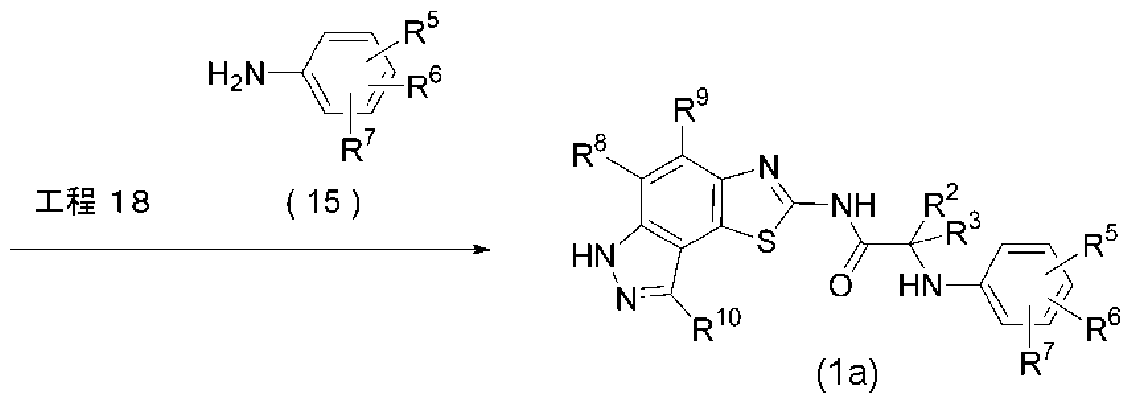
  • Step 18 The compound represented by the general formula (la) is also obtained by combining a compound represented by the general formula (20) and a compound represented by the general formula (15) in an inert solvent. If necessary, the reaction is carried out in the presence of a base (see Journal “Orb Organic” Chemistry, Journal of Organic Chemistry, 19: 1802 (1954), etc.).
  • Examples of the solvent used in the reaction of the compound represented by the general formula (20) and the compound represented by the general formula (15) include the following. Sulfoxide solvents typified by dimethyl sulfoxide, amide solvents typified by dimethylformamide or dimethylacetamide, ether solvents typified by ethyl ether, dimethoxyethane, tetrahydrofuran or cyclopentyl methyl ether, dichloromethane, black mouth form Or halogen-based solvents represented by dichloroethane, -tolyl-based solvents represented by acetonitrile or propio-tolyl, ketone-based solvents represented by acetone, methylethylketone or methylisobutylketone, represented by benzene or toluene Aromatic hydrocarbon solvents, hydrocarbon solvents represented by hexane or heptane, ester solvents represented by ethyl acetate, m
  • triethylamine represented by triethylamine, ethyldiisopropylamine, pyridine, 2,6-lutidine, 2,6-di-t-butylpyridine, 2,6-di-tert-butyl-4-methylpyridine
  • pyridine-based amines metal alcoholates such as t-butoxycalium and sodium methoxide
  • inorganic bases represented by sodium hydroxide, potassium hydroxide and potassium carbonate, preferably trialkylamines.
  • the reaction temperature is usually from 80 ° C to the reflux temperature of the reaction solvent used, and preferably from -10 ° C to 150 ° C.
  • the molar ratio of the reaction raw materials is 0.5 to 20 for the compound of the general formula (15) Z-the compound of the general formula (20).
  • LO. 0 range preferably 1.0 to: LO. 0 range.
  • the compound represented by the general formula (20) can be synthesized from the compound represented by the general formula (4) as shown by the following reaction formula.
  • Hal is a halogen atom such as chlorine atom, bromine atom and iodine atom
  • PG is generally an organic synthetic reaction
  • Step 19 The compound represented by the general formula (24) is converted from the compound represented by the general formula (4) to a protective group introduction reaction (for example, protective group 'in' organic synthesis second See te (Protective Groups in Organic synthesis, Third edition), Dari ' ⁇ n (TWGreene), John Wiley & Sons Inc. (l 999), etc. ) And, if necessary, by deprotecting the primary amino group at the 2-position
  • a protective group introduction reaction for example, protective group 'in' organic synthesis second See te (Protective Groups in Organic synthesis, Third edition), Dari ' ⁇ n (TWGreene), John Wiley & Sons Inc. (l 999), etc.
  • the protecting group represented by PG is generally known as a protecting group for an amino group, for example.
  • an acyl protecting group such as a acetyl group, a Boc group or a Cbz group, or an alkyl protecting group such as a methyl group, preferably an acyl protecting group.
  • Step 20 The compound represented by the general formula (20) is prepared by combining the compound represented by the general formula (24) and the compound represented by the general formula (22) in the presence of a dehydrating condensing agent. After reacting in, it can be obtained by deprotecting the 6-position protecting group.
  • Examples of the solvent used for the reaction of the compound represented by the general formula (24) and the compound represented by the general formula (22) include the following.
  • Sulfoxide solvents typified by dimethyl sulfoxide, amide solvents typified by dimethylformamide or dimethylacetamide, ether solvents typified by ethyl ether, dimethoxyethane, tetrahydrofuran or cyclopentyl methyl ether, dichloromethane, black mouth form Or halogen-based solvents represented by dichloroethane, -tolyl-based solvents represented by acetonitrile or propio-tolyl, ketone-based solvents represented by acetone, methylethylketone or methylisobutylketone, represented by benzene or toluene Aromatic hydrocarbon solvents, hydrocarbon solvents typified by hexane or heptane, and ester solvents typified by ethyl acetate. The reaction can also be carried out under solvent-free conditions. Like Alternatively, an amide solvent can be used.
  • the reaction temperature is usually from 80 ° C to the reflux temperature of the reaction solvent used, and preferably from -10 ° C to 80 ° C.
  • the molar ratio of the reaction raw materials is in the range of 0.5 to 20.0 for the compound Z of the general formula (22) to the compound of the general formula (24), preferably in the range of 1.0 to 10.0. It is.
  • DCC dicyclohexylcarbodiimide
  • DIPC diisopropylcarbodiimide
  • ED C WSCI
  • the condensing agent is not limited to the above, and generally known condensing agents can be used. Even if it is an additive, it is not limited above, The reagent generally recognized effect can be used. A combination of WSCI'HCl and HOBt is preferred.
  • Deprotection reactions are generally known for the corresponding protecting groups (eg, Protective Group in Organic Synthesis, Protective Group in Organic Synthesis, 3rd edition), TWGreene, and Nyon Yung 'Iriichi' and 'Sands' Incorporated (see John Wiley & Sons Inc. (1999), etc.).
  • protecting groups eg, Protective Group in Organic Synthesis, Protective Group in Organic Synthesis, 3rd edition
  • TWGreene and Nyon Yung 'Iriichi' and 'Sands' Incorporated (see John Wiley & Sons Inc. (1999), etc.).
  • Step 21 Further, the compound represented by the general formula (20) is obtained by inactivating the compound represented by the general formula (24) and the compound represented by the general formula (23) in the presence of a base. After reacting in a solvent, it can be obtained by deprotecting the amino group at position 6 as necessary.
  • Examples of the solvent used for the reaction of the compound represented by the general formula (24) and the compound represented by the general formula (23) include the following.
  • Dimethylformamide a sulfoxide solvent represented by dimethylsulfoxide Or an amide solvent represented by dimethylacetamide, an ether solvent represented by ethyl ether, dimethoxytethane, tetrahydrofuran or cyclopentylmethyl ether, a halogen solvent represented by dichloromethane, chloroform or dichloroethane, and acetonitrile.
  • -tolyl solvent represented by propio-tolyl ketone solvent represented by acetone, methyl ethyl ketone or methyl isobutyl ketone, aromatic hydrocarbon solvent represented by benzene or toluene, hexane or heptane
  • hydrocarbon solvents represented by ethyl acetate, ester solvents represented by ethyl acetate, alcohol solvents represented by methanol, ethanol or ethylene glycol The reaction can also be carried out under solvent-free conditions.
  • Preferred examples include ether solvents.
  • examples thereof include inorganic bases represented by pyridine-based amines, sodium hydroxide, potassium hydroxide, potassium carbonate, and preferably trialkylamines.
  • the reaction temperature is usually from 80 ° C to the reflux temperature of the reaction solvent used, and preferably from -10 ° C to 80 ° C.
  • the molar ratio of the reaction raw materials is in the range of 0.5 to 20.0 for the compound Z of the general formula (23) to the compound of the general formula (24), preferably 1.0 to: LO. It is a range.
  • Deprotection reactions are generally known for the corresponding protecting groups (eg, Protective Group in Organic Synthesis, Protective Group in Organic Synthesis, 3rd edition), TWGreene, and Nyon Yung 'Iriichi' and 'Sands' Incorporated (see John Wiley & Sons Inc. (1999), etc.).
  • protecting groups eg, Protective Group in Organic Synthesis, Protective Group in Organic Synthesis, 3rd edition
  • TWGreene and Nyon Yung 'Iriichi' and 'Sands' Incorporated (see John Wiley & Sons Inc. (1999), etc.).
  • the compound represented by the general formula (4) can also be obtained from the compound represented by the general formula (25) and hydrazine according to the method described in the literature (for example, journal 'Ob' medical 'chemistry (Jo urnal of Medicinal Chemistry), 47 ⁇ , page 6435 (2004))
  • R 8 , R 9 and R 1Q are as defined above, and Hal represents a halogen atom such as a chlorine atom, a bromine atom or an iodine atom.
  • the compound represented by the general formula (4) is also prepared according to a method described in literatures such as the compound represented by the general formula (26) and ammonia (for example, Tetrahedron Letters, 45 ⁇ , page 6295 (2004)).
  • R 8 , R 9 and R 1Q are as defined above, and PG is generally an organic synthesis reaction.
  • a functional group known as a protecting group for amine is shown.
  • the protecting group represented by PG is generally known as a protecting group for an amino group, for example.
  • an acyl protecting group such as a acetyl group, Boc group, Cbz group or the like, an alkyl protecting group such as a methyl group, and the like, preferably an acyl protecting group.
  • the compound represented by the general formula (4) is also obtained from the compound represented by the general formula (27) according to a method described in the literature (for example, Tetrahedron, 54 ⁇ , page 3197). (See 1998) Can be synthesized.
  • R 8 , R 9 and R 1Q are as defined above.
  • the compound represented by the general formula (4) is also obtained from the compound represented by the general formula (28) according to the method described in the literature (for example, journal 'Ob' heterocyclic 'chemistry (Journal of Heterocyclic Chemistry) l ⁇ , page 239 (1964)).
  • R 8 , R 9 and R 1Q are as defined above.
  • the compound represented by the general formula (4) can also be obtained from the compound represented by the general formula (29) according to the method described in the literature (for example, Justus 'Liebigs ⁇ Annalenen' del Hemmy). (Justus Liebigs Annalen der Chemie), 681 ⁇ , p. 45 (1965)).
  • R 8 , R 9 and R 1U are as defined above.
  • the compound represented by the general formula (4) is obtained from the compound represented by the general formula (30) and ammonia in accordance with a method described in the literature (for example, Yoichi Bian'Journal of Med Medicinal). ⁇ See Chemistry (European Journal of Medicinal Chemistry), 13 ⁇ , 171 (1978)).
  • R 1U are as defined above, and PG is generally an organic synthesis reaction
  • the protecting group represented by PG is, for example, generally known as a protecting group for an amino group.
  • an acyl protecting group such as a acetyl group, Boc group, Cbz group or the like, an alkyl protecting group such as a methyl group, and the like, preferably an acyl protecting group.
  • the compound represented by the general formula (4) can also be obtained from the compound represented by the general formula (31) according to the method described in the literature (for example, Journal ⁇ Ob ⁇ Chemical ⁇ Research ⁇ Synops (Journal of Chemical Research Synopses), 1986, p. 136).
  • R 8 , R 9 and R 1Q are as defined above.
  • the compound represented by the general formula (4) can also be synthesized from the compound represented by the general formula (32) by performing a photoreaction.
  • R 8 , R 9 and R 1U are as defined above.
  • the compound represented by the general formula (4) can also be synthesized from the compound represented by the general formula (33) by treating with a base after the reduction reaction.
  • R 8 , R 9 and R 1U are as defined above.
  • the compound represented by the general formula (la) can also be obtained from the compound represented by the general formula (34) and hydrazine according to the method described in the literature (for example, Journal of Ob Medicinal Chemistry (J ournal of Medicinal Chemistry), 47 ⁇ , page 6435 (2004)).
  • Hal represents a halogen atom such as a chlorine atom, a bromine atom or an iodine atom.
  • the compound represented by the general formula (la) is also obtained from the compound represented by the general formula (35) according to a method described in the literature (for example, Synthetic Communications 23 ⁇ , 2347). Page (1993)).
  • Hal represents a halogen atom such as a chlorine atom, a bromine atom or an iodine atom.
  • the compound represented by the general formula (la) is also obtained from the compound represented by the general formula (36) and the compound represented by the general formula (37) according to the method described in the literature (for example, Ruby'Rumeinu de Kemi (see Revue Roumaine de Chemie) 24 ⁇ , page 393 (1988)).
  • R 2 , R 9 and R 1Q are as defined above.
  • the compound represented by the general formula (la) is prepared by reacting the compound represented by the general formula (38) with the compound represented by the general formula (39) in the presence of a base. Accordingly, the compound can be further synthesized by reacting the compound represented by the general formula (39 ′) in the presence of a base.
  • R 2 , R 9 and R 1Q are as defined above.
  • the compound represented by the general formula (la) can also be synthesized by reacting the compound represented by the general formula (40) in the presence of a Grubs catalyst.
  • R 2 , R 9 and R 1Q are as defined above.
  • the compound represented by the general formula (la) can also be synthesized by subjecting the compound represented by the general formula (41) and the compound represented by the general formula (42) to Diels-Alder reaction.
  • R 2 , R 9 and R 1Q are as defined above.
  • R 2 and R 3 are as defined above, Hal represents a halogen atom such as a chlorine atom, a bromine atom, and an iodine atom, and Heterocyclyl represents a C heterocyclyl group.
  • R 5, R 6 and R 7 are as defined above definition.
  • the present invention also provides a pharmaceutical composition
  • a pharmaceutical composition comprising as an active ingredient at least one a-amino acid derivative represented by the above formula (1), or a medically acceptable salt, prodrug or solvate thereof. About.
  • the present inventors have found that the compound represented by the general formula (1) has a strong iS ARKl inhibitory activity. It is well known that the mRNA expression level of j8 ARK1 is markedly increased in the heart of heart failure patients, and the heart j8 AR is desensitized (for example, see Non-Patent Documents 1 and 2 described above). Similar results were obtained with various heart failure animal models. It is considered that ⁇ 13 ARK1-induced phosphorylation and desensitization of the heart 13 AR may be a cause of exacerbation of heart failure.
  • the present inventors have conducted a search for a compound having ⁇ ARK1 inhibitory activity and found that the compound represented by the general formula (1) has a strong
  • This technology is useful for the prevention of heart failure, in which heart ⁇ AR phosphorylation and desensitization by ⁇ ARK1 may be exacerbating factors, and for the prevention of worsening life prognosis based on heart failure pathology.
  • the present invention contains at least one a-amino acid derivative represented by the above formula (1), or a medically acceptable salt, prodrug or solvate thereof as an active ingredient.
  • the present invention relates to a ⁇ ARK1 inhibitor or a drug for preventing or treating heart failure. It also relates to methods for preventing or treating heart failure by administering potent inhibitors / drugs to mammals, including humans. Furthermore, the present invention relates to the use of an ⁇ -amino acid derivative represented by the above formula (1) for the manufacture of a medicament for preventing or treating heart failure.
  • a amino acid derivative represented by the above formula (1) particularly suitable as an active ingredient of an ARK1 inhibitor or a drug for the prevention or treatment of heart failure is represented by the formula (3):
  • At least one of R 5 R 7 is a hydrogen atom, and the other two are each independently a fluorine atom, a chlorine atom, a hydroxyl group, a methoxy group, a methyl group, 0 (CH) SO NH O
  • R 5 At least one of R 7 is a hydrogen atom, and the remaining two forces are independently fluorine atom, chlorine atom, hydroxyl group, methoxy group, NHCOMe, -NHCOEt, one COOMe, one COOEt, -CONH, -CONHMe, -CONHEt,
  • Basic power A compound of the above formula (3) which is a selected group.
  • the following compounds are preferable as the / 3 ARK1 inhibitor of the present invention or a drug for preventing or treating heart failure.
  • the present inventors have shown that the compound represented by the formula (1) of the present invention has an antitumor activity other than
  • the present invention includes a step of administering an antitumor agent containing an ex amino acid derivative as an active ingredient to a mammal in need of cancer prevention or treatment.
  • the present invention provides a method for preventing or treating cancer in a mammal by administering a selective Aurora / CDK dual inhibitor.
  • Selective Aurora / CDK dual inhibitor.
  • CDK dual inhibitors are those that do not substantially inhibit other cell growth enzymes It contains a compound that simultaneously inhibits urora and CDK as an active ingredient.
  • the antitumor agent of the present invention is particularly effective for patients who highly express Aurora and CDK.
  • Cancers to which the antitumor agent of the present invention can be preferably used include lung cancer, NSCLC (non-small cell lung cancer), bone cancer, spleen cancer, skin cancer, head and neck cancer, skin or eye.
  • thyroid cancer parathyroid cancer or adrenal cancer
  • soft tissue cancer urethral cancer
  • penile cancer prostate cancer
  • chronic or acute Leukemia lymphocytic lymphosarcoma
  • childhood tumor central nervous system malignant tumor (eg primary CNS lymphoma), spinal cord cancer, brainstem tumor or lower Pituitary adenoma, Barrett's esophagus (precancer syndrome), skin neoplasm, psoriasis, mycosis, iungoides, benign prostatic hyperplasia, pa
  • diseases of mammals such as Roman virus (HPV), in particular, colon cancer, rectal cancer, lung cancer, breast cancer, is preferably used for the treatment of ovarian cancer, prostate cancer and leukemia.
  • HPV Roman virus
  • the antitumor agent of the present invention contains an effective amount of the compound represented by the formula (1), a salt thereof, a prodrug or a solvate, and a pharmaceutically acceptable carrier.
  • a pharmaceutically acceptable carrier for example, other chemotherapeutic agents may be included.
  • chemotherapeutic agents include cell division inhibitors, alkylating agents, metabolic inhibitors, interacting antibiotics, growth factor inhibitors, cell cycle inhibitors, enzymes, enzyme inhibitors, aromatase inhibitors
  • a group force consisting of drugs, topoisomerase inhibitors, biological res ponse modifiers, antihormonal agents, antiestrogens and antiandrogens, and angiogenesis inhibitors is also chosen! /.
  • At least one of R 5 and R 7 is a hydrogen atom, and the other two are independently , Fluorine atom, chlorine atom, methyl group, hydroxyl group, methoxy group, hydroxymethyl group, -o (c
  • Preferred compounds from [0248] is, R 5, At least one of R 7 is a hydrogen atom, and the remaining two forces are each independently a fluorine atom, a chlorine atom, a hydroxyl group, a methoxy group, —OCH CH (0
  • the most preferred compounds include the following.
  • the present invention provides a pharmaceutical composition or veterinary pharmaceutical composition comprising an effective amount of the compound represented by formula (1) for these treatments.
  • the administration method is oral, rectal, parenteral (intravenous, intramuscular, subcutaneous), intravesical. , Intravaginal, intraperitoneal, intravesical, topical (infusion, powder, ointment, gel or cream) administration and inhalation (oral or nasal spray).
  • the dosage forms include, for example, tablets, capsules, granules, powders, fine granules, pills, aqueous and non-aqueous oral solutions, suspensions, and containers adapted for subdividing into individual doses. And parenteral solution filled in.
  • the dosage form can also be adapted to various administration methods including controlled release formulations such as subcutaneous implantation.
  • the compounds represented by the formula (1) of the present invention, salts, prodrugs and solvates thereof are pharmaceutically acceptable carriers such as excipients, binders, diluents, stabilizers, Lubricants, flavoring agents, disintegrating agents, coating agents, coloring agents, antioxidants, buffers, aqueous solvents, oil-based solvents, tonicity agents, dispersants, preservatives, solubilizers, fluidizing agents, soothing agents It can be administered orally or parenterally as a pharmaceutical composition containing additive components such as an agent, PH adjuster, preservative, and base.
  • pharmaceutically acceptable carriers such as excipients, binders, diluents, stabilizers, Lubricants, flavoring agents, disintegrating agents, coating agents, coloring agents, antioxidants, buffers, aqueous solvents, oil-based solvents, tonicity agents, dispersants, preservatives, solubilizers, fluidizing agents, soothing agents It can be administered orally or parenterally as a pharmaceutical
  • oral preparations of the above pharmaceutical composition include granules, powders, tablets, hard capsules, soft capsules, syrups, emulsions, suspensions, etc.
  • parenterals include Injections such as subcutaneous injections, intravenous injections, intramuscular injections, intraperitoneal injections; transdermal agents such as ointments, creams, and lotions; rectal suppositories, vaginal suppositories, etc. Agents; intranasal preparations and the like. These preparations can be produced by known methods usually used in the preparation process.
  • excipient used in the pharmaceutical composition of the present invention examples include saccharides such as lactose, sucrose, glucose, D-manntol, and sorbit; crystalline cellulose, hydroxypropyl cellulose, hydroxypropiate Senolerose and its derivatives such as Noremeino Resenorelose and Methino Resenorelose; starch such as corn starch, potato starch, OC-starch, dextrin, ⁇ -cyclodextrin, sodium carboxymethyl starch, hydroxypropyl starch and derivatives thereof Synthetic aluminum silicate, magnesium silicate, calcium silicate, calcium silicate, etc .; phosphates such as calcium phosphate; carbonates such as calcium carbonate; sulfates such as calcium sulfate; tartaric acid, liquor stone Potassium hydrogen, and the like Mizusani ⁇ magnesium.
  • saccharides such as lactose, sucrose, glucose, D-manntol, and sorbit
  • crystalline cellulose hydroxypropyl
  • binder examples include agar, stearyl alcohol, gelatin, tragacanth, polyvinylino oleconole, polybyl pyrrolidone; crystalline cellulose, hydroxypropyl cellulose, hydroxypropinoremethinoresolerose, methinore Senolerose and its derivatives, such as senolose; starch and its derivatives such as corn starch, potato starch, OC-starch, dextrin, ⁇ -cyclodextrin, sodium carboxymethyl starch, hydroxypropyl starch; lactose, sucrose, glucose, D —Saccharides such as mannitol and sorbit.
  • Stabilizers include, for example, hydrogenated oil, sesame oil, sodium chondroitin sulfate, dibutyl hydroxytoluene, adipic acid, ascorbic acid, L-ascorbic acid, stearic acid ester, sodium L-ascorbate, L-aspartic acid , L-aspartate sodium, acetiltriptophan sodium, aceto-lide, aprotune solution, aminoethyl sulfonic acid, aminoacetic acid, DL-alanine, L-alanine; para-benzoic acid esters such as methylparaben and propylparaben; chloro Alcohols such as butanol, benzyl alcohol, and phenol ethyl alcohol; Benzalkol chloride; phenols such as phenol and talesol; sorbic acid; sulfites such as sodium bisulfite and sodium sulfite; Sodium DOO acid, Edeto acid salt
  • Examples of the lubricant include gum arabic powder, cacao butter, carmellose calcium, carmellose sodium, caropeptide, hydrous silicon dioxide, hydrous amorphous silicon oxide, and dry hydroxyaluminum gel. , Glycerin, light liquid paraffin, crystalline cellulose, hydrogenated oil, synthetic aluminum silicate, sesame oil, wheat starch, talc, macrogol, phosphoric acid; stearic acids such as stearic acid, calcium stearate, magnesium stearate; Waxes such as sodium sulfate; sulfates such as sodium sulfate; kainates such as magnesium silicate and light anhydrous caustic acid; and lauryl sulfate such as sodium lauryl sulfate.
  • Examples of the corrigent include ascorbic acid, L-aspartic acid, sodium L-aspartate, magnesium L-aspartate, aspartame, amatya, amatyakis, amatya powder, aminoethylsulfonic acid, aminoacetic acid, DL alanine, saccharin sodium Lithium, dl-menthol, 1 menthol; lactose, sucrose, glucose, sugars such as D-mannthol.
  • Examples of the disintegrant include agar, gelatin, tragacanth, adipic acid, anoleic acid, sodium alginate; cellulose such as crystalline cellulose, hydroxypropylcellulose, hydroxypropylmethylcellulose, methylcellulose and derivatives thereof; Examples thereof include carbonates such as sodium hydrogen and magnesium carbonate; starch such as corn starch, potato starch, at-starch, dextrin, 13-cyclodextrin, sodium canoloxymethyl starch, hydroxypropyl starch, and derivatives thereof.
  • Coating agents include, for example, shellac, polybulurpyrrolidones, polyethylene dallicol, macrogol, methacrylic acid copolymers, liquid paraffin, Eudragit; cellulose acetate, hydroxypropyl cellulose, cellulose acetate phthalate, hydroxypropyl Examples thereof include cellulose derivatives such as methylcelluloses.
  • Examples of the colorant include indicocarmine, caramel, riboflavin and the like.
  • Buffering agents include, for example, aminoacetic acid, L-arginine, benzoic acid, sodium benzoate, salty ammonium, salty potassium, salty sodium, dry sodium sulfite, dry charcoal Sodium phosphate, dilute hydrochloric acid, succinic acid, calcium succinate, sodium succinate, disodium succinate, calcium dalconate, L-glutamic acid, sodium L-glutamate, sauce tune, chlorobutanol, crystalline sodium dihydrogen phosphate, succinic acid Disodium, acetic acid, potassium acetate, sodium acetate, tartaric acid, sodium bicarbonate, sodium carbonate, triethanolamine, lactic acid, sodium lactate solution, glacial acetic acid, boric acid, maleic acid, anhydrous citrate, anhydrous sodium citrate, anhydrous sodium acetate , Anhydrous sodium carbonate, anhydrous sodium monohydrogen phosphate, anhydrous trisodium phosphate, anhydrous sodium dihydrogen
  • aqueous solvent examples include distilled water, physiological saline, Ringer's solution, and the like.
  • oily solvent examples include propylene glycol; vegetable oils such as olive oil, sesame oil, cottonseed oil, and corn oil.
  • Examples of the isotonic agent include potassium chloride, sodium chloride, sodium glycerin, sodium bromide, D-sorbitol, nicotinamide, glucose, boric acid and the like.
  • dispersant examples include gum arabic, propylene glycol alginate, sorbitan sesquioleate, D-sorbitol, tragacanth, methylcellulose, aluminum monostearate, aminoalkyl methacrylate copolymer RS, lactose, concentrated glycerin, propylene glycol, Macrogols, sodium lauryl sulfate; stearic acid such as zinc stearate and magnesium stearate and salts thereof.
  • Preservatives include, for example, salt benzalkonium, salt benzenton, dry sodium sulfite, dry sodium sulfate, cresol, black mouth cresol, dibutylhydroxytoluene, potassium sorbate, sodium dehydroacetate, phenol , Formalin, phosphoric acid, ansokko, thimerosal, thymol, sodium dehydroacetate; alcohols such as chlorobutanol, phenethyl alcohol, propylene glycol and benzyl alcohol; And para-benzoic acid esters such as
  • solubilizers include sodium benzoate, ethylenediamine, citrate, sodium citrate, glycerin, sodium acetate, sodium salicylate, and sesquioleic acid.
  • solubilizers include sorbitan, nicotinamide, glucose, benzyl alcohol, polybutylpyrrolidones, acetone, ethanol, isopropanol, D-sorbitol, sodium bicarbonate, sodium carbonate, lactose, urea, and sucrose.
  • Examples of the fluidizing agent include hydrous silicon dioxide, talc, anhydrous ethanol, crystalline cellulose, synthetic aluminum silicate, calcium hydrogen phosphate; stearic acid such as calcium stearate and magnesium stearate, and salts thereof. Can be mentioned.
  • Examples of the soothing agent include salt benzalkonium, pro-in hydrochloride, mepril hydrochloride, lidocaine, lidocaine and the like.
  • Examples of the pH adjuster include hydrochloric acid, succinic acid, succinic acid, acetic acid, boric acid, maleic acid, sodium hydroxide and the like.
  • Examples of the preservative include benzoic acid, sodium benzoate, salt cetyl pyridinium, salicylic acid, sodium salicylate, sorbic acid, potassium sorbate, thymol, methyl paraoxybenzoate, and butyl nonoxybenzoate. Etc.
  • Examples of the base include glycerin, stearyl alcohol, polyethylene glycols, propylene glycol, cetanol, lard, white petrolatum, paraffin, bentonite, lanolin fatty acid isopropyl, petrolatum, polysorbates, macrogol, lauryl al Examples include coal, sodium lauryl sulfate, ethyl linoleate, sodium hydrogen phosphate, rosin; vegetable oils such as olive oil, sesame oil, and wheat germ oil.
  • the amount of the compound represented by the formula (1) contained in the pharmaceutical composition of the present invention varies depending on the dosage form, but is preferably about 0.1 to: LOO based on the total amount of the pharmaceutical composition. % By weight.
  • the dosage of the pharmaceutical composition of the present invention depends on the type of administration control (such as warm-blooded animals including humans), the type of disease to be treated, the severity of symptoms, age, sex, administration method, doctor's diagnosis
  • the dose of the compound represented by the formula (1) to an adult is about 0.1 or more per day even if it is administered orally or parenterally. It is preferably ⁇ 2000 mgZkg.
  • the above dose is a value per unit weight of the administration subject. In the present invention, depending on the severity of symptoms, the judgment of the doctor, etc., the above dose may be divided into several doses, which may be administered once in 1 to 7 days. A little.
  • Example 1 Example 1
  • the reaction mixture was poured into 70 g of ice and 50 ml of water, stirred for 1 hour under ice cooling, and the mixture was filtered. The obtained solid was washed with water, dried under reduced pressure, added to 50 ml of benzene, and stirred at room temperature for 24 hours.
  • the reaction mixture was ice-cooled, 20 ml of 2M hydrochloric acid was added, the organic layer was separated, and the organic layer was extracted with 5M hydrochloric acid.
  • 6-methylindazole was synthesized from 2,5-dimethylaline. (Yield 30%, 2 steps)
  • ⁇ 8 ⁇ "'' ⁇ 2) 0 ⁇ '(s' ⁇ ) ⁇ ⁇ ' ⁇ ) ⁇ 8 (d) g (.SW.' Z 00S) ⁇ -H T
  • ⁇ 8 ⁇ "' ⁇ ) 0 ⁇ ' (s 'HT) 20"8' ( s 'HI) IS'8 (d) 9 (.SW.' Z 00S) ⁇ -H T

Landscapes

  • Health & Medical Sciences (AREA)
  • Chemical & Material Sciences (AREA)
  • Organic Chemistry (AREA)
  • Life Sciences & Earth Sciences (AREA)
  • Public Health (AREA)
  • General Chemical & Material Sciences (AREA)
  • Medicinal Chemistry (AREA)
  • Nuclear Medicine, Radiotherapy & Molecular Imaging (AREA)
  • Chemical Kinetics & Catalysis (AREA)
  • Pharmacology & Pharmacy (AREA)
  • Veterinary Medicine (AREA)
  • Animal Behavior & Ethology (AREA)
  • General Health & Medical Sciences (AREA)
  • Bioinformatics & Cheminformatics (AREA)
  • Engineering & Computer Science (AREA)
  • Cardiology (AREA)
  • Hematology (AREA)
  • Oncology (AREA)
  • Hospice & Palliative Care (AREA)
  • Heart & Thoracic Surgery (AREA)
  • Pharmaceuticals Containing Other Organic And Inorganic Compounds (AREA)
  • Nitrogen And Oxygen Or Sulfur-Condensed Heterocyclic Ring Systems (AREA)

Description

明 細 書
aアミノ酸誘導体及びそれを有効成分として含む医薬
技術分野
[0001] 本発明は、新規 ex—アミノ酸誘導体に関する。力かる誘導体は、 β ARK1阻害作 用を有し、心不全の予防又は治療に有用である。更には、抗腫瘍活性、特に Aurora キナーゼ及び CDKのデュアル阻害作用を有し、癌などの細胞増殖性疾患にも有用 である。
背景技術
[0002] Gタンパク質共役型受容体キナーゼ [G protein-coupled receptor kinase (GRK) ] は、ァゴ-ストによって活性化された Gタンパク質共役型受容体 [G protein-coupled r eceptor (GPCR) ]をリン酸化し、脱感作(desensitization)する酵素である。 GRKファ ミリ一の生理機能に関する研究は、その一つである /3アドレナリン作動性受容体キナ ーゼ 1 [ j8 Adrenergic Receptor Kinase 1 ( β ARK1 = GRK2) ]と、 GPCRの一つで ある βアドレナリン作動性受容体 [ β Adrenergic Receptor( β AR) ]を中心に進めら れている。 GRKが種々の疾患の病態形成に関与することを示唆する報告はあるが、 β ARK1による心臓 /3 ARリン酸ィ匕及び脱感作と心不全病態との関係が最もよく研 究されている。
[0003] 心不全患者の心臓では j8 ARK1の mRNA発現量が著明に増カロし、心臓 13 ARは 脱感作していることが良く知られている(例えば、非特許文献 1及び 2参照)。同様の 結果は、種々の心不全動物モデルでも得られており、 β ARK1による心臓 β ARリン 酸ィ匕及び脱感作が心不全病態の悪ィ匕因子である可能性が考えられる。
[0004] β ARK1はその C末と G β yの結合により細胞膜にトランスロケート(translocate)さ れることで活性化されることから、 β ARK1の C末( j8 ARKct : 495番目のアミノ酸力 ら 689番目のアミノ酸からなるペプチド)を優性陰性(dominant negative) β ARK1と して種々の心不全動物モデルの心臓に発現させ、 /3 ARK1阻害による心不全病態 の予防 '治療効果を検討することが出来る。これまでに、ゥサギ心筋梗塞後心不全モ デルの心臓に 13 ARKctを導入することで心機能が改善すること (例えば、非特許文 献 3及び 4参照)、拡張型心筋症モデルの一つである筋 LIMプロテインノックアウト [m uscle LIM protein knockout (MLP ) ]マウスと j8 ARKctトランスジエニックマウ スとの交配により、 MLP Z マウスの心不全発症が抑制されること (例えば、非特 許文献 5参照)、拡張型心筋症モデルの一つであるカルセクエストリン [calsequestrin (CSQ) ]トランスジエニックマウスと j8 ARKctトランスジエニックマウスとの交配により、 CSQトランスジエニックマウスの心機能低下及び死亡が抑制されること (例えば、非特 許文献 6参照)、 β ARKctトランスジエニックマウスでは心筋梗塞後心不全による死 亡が抑制されること (例えば、特許文献 1参照)などが報告されている。したがって、 β ARK1阻害薬は、心不全の予防 '治療薬として有望であると考えられる。
[0005] しかし、これまでに β ARK1阻害作用を有する化合物に関する報告は数報あるも のの(例えば、非特許文献 7及び特許文献 2〜4参照)、 |8 ARK1阻害作用を有する a アミノ酸誘導体に関する報告は未だなされて 、な 、。
[0006] 現在、強心薬、 β—遮断薬、アンジォテンシン変換酵素阻害薬、アンジォテンシン I I拮抗薬、カルシウム拮抗薬などが心不全の治療に用いられているが、強心薬は長 期投与により死亡率が上昇、アンジォテンシン変換酵素阻害薬、アンジォテンシン II 拮抗薬は効果が不十分、 β 遮断薬は陰性変力作用のため入院管理が必要など の問題を抱えており、より安全で効果の高い薬剤が望まれている。
[0007] 一方、我々の体の中の細胞の大部分は、糸且織の損傷などで細胞の再生が必要な 場合を除いて、細胞分裂をしていない。しかしながら、腫瘍細胞などある限られた細 胞は一定の頻度で増殖する。このような細胞を"細胞周期にある"という。細胞周期に は 4つの決まった順番の期が存在し、これらは G1期、 S期、 G2期、 Μ期と呼ばれる。 細胞周期の進行はサイクリン依存性キナーゼ(CDK)やオーロラ (Aurora)キナーゼ などの種々のキナーゼにより厳密にコントロールされている。細胞周期の破綻と腫瘍 発生 ·増殖との関係が明らかになるにしたカ^、、腫瘍の本質に深く関与するものとし て細胞周期研究の重要性が高まった。このような経緯から、従来は腫瘍の機構解明 と医薬品開発のために、細胞周期進行のしくみ、細胞周期の制御機構、細胞周期の 阻害方法の研究が進められてきたが、近年では、細胞死、老化、再生などの分野で も細胞周期解析は重要な解析手法のひとつとなって 、る。 [0008] セリン 'スレオ-ン'キナーゼのひとつである Auroraキナーゼは C末端のキナーゼド メインに高い相同性を持っている 3種類のサブタイプ (Aurora A、 B、 C)の存在が知ら れており、それらは Aurora familyと呼ばれている。これまでの研究から Aurora family は分裂期における中心体の分離、双極紡錘体の形成等、有糸分裂を正確にコント口 ールするのに必須であることが分力つている(例えば、非特許文献 8参照)。 Auroraキ ナーゼと腫瘍の関係は、 Aurora _A及び Bが結腸癌に過剰発現されているという報告 から始まり(例えば、非特許文献 9参照)、その後、乳癌、卵巣癌、肝臓癌、胃癌、脾 臓癌などの多くの腫瘍において Aurora Aが高発現していることが報告された。また、 Auroraキナーゼが高レベルに発現して 、る癌患者ほど予後が悪 、と!/、う結果も報告 されており(例えば、非特許文献 10参照)、現在臨床評価中の Auroraキナーゼ阻害 剤もいくつか知られている。
[0009] セリン 'スレオ-ン'キナーゼであるサイクリン依存性キナーゼ (CDK)もまた細胞周 期調節においては、極めて重要な役割を果たしている。キナーゼ活性を持つ触媒サ ブユニットである CDK1、 CDK2、 CDK3、 CDK4あるいは CDK6と、細胞周期特異 的に発現される活性調節サブユニットであるサイクリン A、 B、 Dl、 D2、 D3及び Eが、 細胞周期特異的に複合体を形成する (本明細書において、触媒サブユニットである CDK #と活性調節サブユニットであるサイクリン *力もなる複合体を、「CDK # Zサ イクリン *」複合体と表現する)ことにより機能を発現することで細胞周期を厳密にコン トロールして 、る(例えば、非特許文献 11参照)。
[0010] 例えば CDK1Zサイクリン B複合体は細胞周期の G2期力 M期への移行に必要 であり、さらに有糸分裂の完了のためにも必要である (例えば、非特許文献 12参照) 。 CDK2Zサイクリン E複合体は、 G1期から S期への移行をコントロールしている(例 えば、非特許文献 13参照)。 CDK3は、 G1期の進行において機能すると考えられ、 G1— S移行において重要である(例えば、非特許文献 14参照)と考えられていたが 、最近の報告では細胞周期にな 、細胞 (GO期)が細胞増殖を開始するために G1期 に移行する際に機能しているともいわれている (例えば、非特許文献 15参照)。
[0011] Aurora familyと同様に多くの腫瘍細胞における、 CDK及びサイクリンの遺伝子変 異ゃ高発現は数多く報告されている。その結果、 CDKも癌治療における重要なター ゲット分子として注目されており、多くの製薬会社が CDKの ATP結合領域を標的に する低分子の研究開発を進めている。これらの CDK阻害剤も、 in vitroにおいても in vivoにおいても腫瘍細胞の増殖を阻害する (例えば、非特許文献 16参照)。現在臨 床評価中の CDK阻害剤は、多数知られている。
[0012] Auroraキナーゼ阻害剤及びサイクリン依存性キナーゼ (CDK)阻害剤は、 V、ずれも ヒト腫瘍細胞系(human tumor cell lines)においてもヒト腫瘍細胞を担持した xenograft mouseの系においても腫瘍細胞の増殖を阻害する。しかし、ヒトの癌は遺伝学的、生 物学的にヘテロな細胞カゝら構成されているため、個々の抗腫瘍剤に対する感受性も 個々の細胞毎に異なって 、ることが知られて 、る。それ故に効果の高 、抗腫瘍剤を 開発するためには、 Auroraキナーゼ阻害剤や CDK阻害剤などを個々に開発するよ りも、細胞増殖に関係する複数の標的を同時に阻害する薬剤を開発することが好ま しい。このことは、多くのマルチ'キナーゼ阻害剤、例えば、マレイン酸ス-チ-ブ(SU 11248 malate: VEGFR— 1,2,3, PDGFR, KIT, Flt3, CSF1Rなど)、メシル酸ィマチ-ブ (Gleevec: Bcr- Abl kinase, C- KIT, PDGFRなど)、ラパチ-ブ(EGFR, HER2)などが 強い臨床効果を示して 、ることからも支持されて 、る。
[0013] Auroraキナーゼ及び CDKのデュアル阻害剤(本明細書にぉ 、て「Aurora/CDKデ ュアル阻害剤」と呼ぶ。)として実際に販売されるに至った抗腫瘍剤は現在のところ存 在しない。唯一、前臨床段階のもので JNJ-7706621が知られているものの、この薬剤 の最大効果を引き出すためには毎日連続でかつ皮下注射であることが必要なため、 患者の QOLを考えれば臨床への応用は困難と予想される(例えば、特許文献 5又は 非特許文献 17参照)。すなわち、 Aurora/CDKデュアル阻害作用を有する癌に対す る予防又は治療薬として実用的な治療薬は、現在のところ存在して 、な 、。
[0014] この他、現在研究段階にある Auroraキナーゼ及び CDKを同時に阻害するものは多 数知られている。し力し、これまでに Auroraキナーゼ及び CDKを同時に阻害する化 合物として、ピラゾ口べンゾチアゾール骨格を有するものは知られて 、な!/、。
[0015] 非特許文献 1 : Ungerer Mら, Circulation 1993; 87: 454-463
非特許文献 2 : Ungerer Mら, Cir Res 1994; 74: 206-213
非特許文献 3 : White DCら, Proc Natl Acad Sci USA 2000; 97: 5428-5433 非特許文献 4 : Shah ASら, Circulation 2001; 103: 1311-1316
非特許文献 5 : Rockman HAら, Proc Natl Acad Sci USA 1998; 95: 7000-7005 非特許文献 6 : Harding VBら, Proc Natl Acad Sci USA 2001; 98: 5809-5814 非特許文献 7 : lino Mら, J Med Chem. 2002; 45: 2150-2159
非特許文献 8 : Crane, Richard; Gadea, Beanck; Littlepage, Laurie; Wu, Hua; Ruder man, Joan V. Biology of the Cell (2004), 96(3), 215-229
非特許文献 9 : BISCHOFF JR, ANDERSON L, ZHU Yら, EMBO J. (1998) 17(11):30 52-3065
非特許文献 10 : Fancelli, Daniele; Moll, Juergen. Expert Opinion on Therapeutic Pat ents (2005), 15(9), 1169-1182
非特許文献 11 : Sanchez, Irma; Dynlacht, Brian David. Seminars in Cell & Developm ental Biology (2005), 16(3), 311-321
非特許文献 12 : Saya, Hideyuki; Hirota, Toru. Jikken Igaku (2004), 22(9), 1237-1241 非特許文献 13 : Sherr CJ. Cell 1994; 79: 551-5
非特許文献 14 : Zariwala, Maimoona; Liu, Jidong; Xiong, Yue. Oncogene (1998), 17( 21), 2787-2798
非特許文献 15 : Ren, Shengjun; Rollins, Barrett J. Cell (2004), 117(2), 239-251 非特許文献 16 : Pevarello, Paolo; Villa, Manuela. Expert Opinion on Therapeutic Pat ents (2005), 15(6), 675-703
非特許文献 17 : Cancer Research 2005; 65(19), 9038-9046
特許文献 1:国際公開第 03Z20312号パンフレット
特許文献 2 :国際公開第 02Z27314号パンフレット
特許文献 3:国際公開第 02Z18350号パンフレット
特許文献 4 :特開 2003— 321472号公報
特許文献 5:国際公開第 02Z57240号パンフレット
発明の開示
発明が解決しょうとする課題
本発明者らはこれらの課題を解決するために、化合物の探索研究を実施した結果 、下記一般式(1)で表される新規 α アミノ酸誘導体が、強い |8 ARK1阻害作用を 有し、心不全の予防又は治療に有用であることを見出し、本発明を完成させた。
[0017] さらに、本発明者らは、下記式(1)で表される新規 α—アミノ酸誘導体が、 Aurora/ CDKデュアル阻害作用を有し、癌などの細胞増殖性疾患にも有用であること、即ち 、優れた腫瘍細胞への抗腫瘍効果をも有し、また経口投与によって動物モデルにお いても高い抗腫瘍効果を示すィ匕合物群であることを見出し、本発明を完成させた。 課題を解決するための手段
[0018] 即ち、本発明は、
式 (1)
[0019] R1 R2 R3
>r Y い)
O R4
[0020] 式中、
R1は、水素原子を意味し、
R2及び R3は、それぞれ独立して、水素原子;水酸基、 C アルコキシ基、ベンジルォ
1-4
キシ基、 CONH及びフエ-ル基力 選択される置換基で任意に置換されていても
2
よい C アルキル基;又はフエ二ル基を意味する力、あるいは
1-4
R2及び R3は、一緒になつて一(CH ) —を形成し、ここで、該 nは、 2、 3、 4若しくは 5
2 n
の整数を意味するか、又は
R2及び R3は、それらが結合する炭素原子と共に C=0を形成し、
R4は、水素原子を意味するか、又は
R4及び R2は、一緒になつて一(CH ) —を形成し、ここで、該 mは、 1、 2、 3若しくは 4
2 m
の整数を意味し、
Yは、置換基 R5、 R6及び R7で任意に置換された C ァリール基又は C ヘテロシクリ
6-10 4-9
ル基であり、
ここで、該置換基 R5、 R6及び R7は、それぞれ独立して、
水素原子;
ハロゲン原子; 水酸基;
ニトロ基;
シァノ基;
ホルミル基;
NHCORU
ここで、 R11は、水素原子、 C アルキル基、 C シクロアルキル基、アミノ基、 C 了
1-4 3-6 1-4 ルキルアミノ基、ジ C アルキルアミノ基、又は水酸基で任意に置換されて!ヽてもよ!/、
1-4
C アルコキシ基を意味する;
1-4
-SO NH、 -SO NHR12、—SO NR12R13又は— NHSO R12
2 2 2 2 2
ここで、 R12及び R13は、それぞれ独立して、 C アルキル基を意味する;
1-4
アミノ基;
-CONH ;
2
CO H ;
2
C アルキルアミノ基、ジ C アルキルアミノ基、 C アルキルアミノカルボ-ル基又
1-4 1-4 1-4
はジ C アルキルアミノカルボ-ル基、
1-4
ここで、これらの基は、 -CONH、 -SO NH、 -CO H、及び水酸基で任意に
2 2 2 2
置換されて ヽてもよ ヽ C アルコキシカルボ-ル基カゝら選択される置換基で任意に置
1-4
換されていてもよい;
C シクロアルキルアミノカルボ-ル基;
3-6
ベンジルォキシァミノカルボ-ル基;
C アルコキシァミノカルボ-ル基;
1-4
N-C ァノレコキシ C ァノレキノレアミノカノレボニノレ基;
1-4 1-4
C アルキル基、 C アルコキシ基又は C アルコキシカルボ-ル基、
1-4 1-4 1-4
ここで、これらの基は、ハロゲン原子、水酸基、一 CONH 、 一 SO NH及び一 C
2 2 2
O H力 選択される置換基で任意に置換されて 、てもよ 、;ある 、は
2
1〜3個の窒素原子を含む 5〜6員の単環式へテロシクリル基
を意味し、
Xは、式(2) :
Figure imgf000010_0001
[0023] 式中、
R8、 R9及び R1Qは、それぞれ独立して、
水素原子;
ハロゲン原子;
C アルコキシカルボ-ル基;
1-4
CO H ;
2
ニトロ基;又は
ハロゲン原子、水酸基、 C アルコキシ基、 C アルコキシカルボ-ル基及び CO
1-4 1-4 2
H力 選択される置換基で任意に置換されて 、てもよ 、C アルキル基、
1-4
を意味する
の基ある!、はその互変異性体の基を意味する
で表される a アミノ酸誘導体、あるいはその医学的に許容される塩、プロドラッグ又 は溶媒和物に関する。
発明の効果
[0024] 本発明化合物は、強い iS ARKl阻害作用を有し、心不全の予防'治療薬として用 いることがでさる。
[0025] 本発明化合物は、 Auroraキナーゼ及び CDKのデュアル阻害作用を有し、従来知 られている CDKのみ、 Auroraキナーゼのみの阻害に比べ、遺伝学的、生物学的に ヘテロな細胞力 構成されている人の腫瘍に対してより効果的に作用し、腫瘍の縮 小効果及び再発予防効果を示すことが期待できる。
[0026] また、本発明化合物は、ヒト腫瘍を担持させた xenograft mouse modelにお!/、て経口 で効果を示したことから、臨床での応用において JNJ-7706621に比べ、患者への QO Lが良ぐより容易に、かつ現実的になると考えられる。
図面の簡単な説明
[0027] [図 1]図 1は、ヒト前立腺癌細胞 DU 145移植ヌードマウスを用いた抗腫瘍試験の結果 を示す。合成例 35 (▲)、 60 (♦)、 99 ( * )、 126 (國)投与群及び対照群 (參)にお ける、腫瘍体積の経時的推移を示す。
[図 2]図 2は、ヒト大腸癌細胞 SW620移植ヌードマウスを用いた抗腫瘍試験の結果を 示す。合成例 35 (▲)、 126 (國)投与群及び対照群 (參)における、腫瘍体積の経時 的推移を示す。
発明を実施するための最良の形態
[0028] 次に、本発明の式(1)で表される化合物の各置換基を具体的に説明する。
なお、本明細書中「n」はノルマルを、「i」はイソを、「sec」はセカンダリーを、「t」はタ ーシャリーを、「c」はシクロを、「Me」はメチルを、「Et」はェチルを、「Pr」はプロピルを 、「Ac」はァセチルを、「: Bn」はべンジルを、「: Bz」はベンゾィルを意味する。
[0029] C アルキル基は、炭素原子を 1〜4個有する直鎖又は分枝アルキル基を意味し、
1-4
例えば、メチル、ェチル、 n—プロピル、 i—プロピル、 n—ブチル、 iーブチル、 sec— ブチル、 t ブチルが挙げられる。好ましくはメチル、ェチル及び i ブチルが挙げら れる。
[0030] C アルコキシ基は、前記 C アルキル基に酸素原子が結合した基を意味し、例え
1-4 1-4
ば、メトキシ、エトキシ、 n プロポキシ、 i プロポキシ、 n ブトキシ、 i ブトキシ、 sec ブトキシ、 t—ブトキシが挙げられる。好ましくはメトキシ及びエトキシが挙げられる。
[0031] C ァリール基は、炭素原子を 6〜10個有する芳香族炭化水素基を意味し、例え
6-10
ばフエニル基、 1 ナフチル基、 2—ナフチル基が挙げられる。好ましくはフエ-ル基 である。
[0032] C ヘテロシクリル基は、炭素原子 4〜9個と、 0、 N及び Sからなる群より選択される
4-9
ヘテロ原子 1、 2又は 3個とを含有する、飽和若しくは不飽和の、単環式若しくは 2環 式基を意味する。例えば、 2 ピリジル基、 3 ピリジル基、 4 ピリジル基、 1 インダ ゾリル基、 3—インダゾリル基、 4 インダゾリル基、 5—インダゾリル基、 6—インダゾリ ル基、 7 インダゾリル基、 2 ォキソ 1一べンズイミダゾリ-ル基、 2 ォキソー4 ベンズイミダゾリ-ル基、 2 ォキソ 5 べンズイミダゾリ-ル基、 2 チェ-ル基又 は 3—チェ-ル基が挙げられる。好ましくは 5—インダゾリル基及び 6—インダゾリル 基が挙げられる。 [0033] ハロゲン原子は、フッ素原子、塩素原子、臭素原子又はヨウ素原子を意味する。好 ましくはフッ素原子及び塩素原子が挙げられる。
[0034] C シクロアルキル基は、炭素原子を 3〜6個有する、環式構造をもつ飽和炭化水
3-6
素基を意味する。例えば、 c プロピル、 cーブチル、 2—メチルー c プロピル、 c ペンチル、 2—メチルー cーブチル、 3—メチルー cーブチル、 2, 2 ジメチルー c プロピル、 2, 3 ジメチルー c プロピル、 2 ェチル—c プロピル、 c へキシル、 2—メチルー c ペンチル、 3—メチルー c ペンチル、 2 ェチルー cーブチル、 3— ェチルー cーブチル、 2, 2 ジメチルー cーブチル、 2, 3 ジメチルー cーブチル、 2 , 4 ジメチルー cーブチル、 3, 3—ジメチルー c ブチルなどが挙げられる。好ましく は c—プロピル、 cーブチル、 c—ペンチル及び c一へキシルが挙げられる。
[0035] C アルキルアミノ基は、前記 C アルキル基で置換されたアミノ基を意味し、例え
1-4 1-4
ば、メチルァミノ、ェチルァミノ、 n—プロピルアミ入 i—プロピルアミ入 n—ブチルアミ 入 i—ブチルアミ入 sec ブチルアミ入 t—ブチルァミノが挙げられる。好ましくはメ チルァミノ、ェチルァミノ、 n—プロピルアミノ及び i—プロピルァミノが挙げられる。
[0036] ジ C アルキルアミノ基は、同一又は異なった、前記 C アルキル基で二置換され
1-4 1-4
たアミノ基を意味し、例えば、ジメチルアミ入ジェチルアミ入ジ— n—プロピルアミ入 ジ— i—プロピルアミ入ジ— n—ブチルアミ入ジ— i—ブチルアミ入 N, N ェチルメ チルァミノが挙げられる。好ましくはジメチルァミノ及びジェチルァミノが挙げられる。
[0037] C アルキルアミノカルボ-ル基は、前記 C アルキル基で置換されたァミノカルボ
1-4 1-4
-ル基を意味し、例えば、メチルァミノカルボ-ル、ェチルァミノカルボ-ル、 n—プロ ピルアミノカルボニル、 i プロピルアミノカルボニル、 n—ブチルァミノカルボニル、 i ーブチルァミノカルボニル、 sec ブチルァミノカルボニル、 tーブチルァミノカルボ二 ルが挙げられる。好ましくはメチルァミノカルボ-ル、ェチルァミノカルボ-ル、 n—プ 口ピルアミノカルボ-ル及び n—ブチルァミノカルボ-ルが挙げられる。
[0038] ジ C アルキルアミノカルボ-ル基は、同一又は異なった、前記 C アルキル基で
1-4 1-4 二置換されたァミノカルボ-ル基を意味し、例えば、ジメチルァミノカルボ-ル、ジェ チルァミノカルボニル、ジ n—プロピルアミノカルボニル、ジ—i—プロピルアミノカル ボニル、ジー n—ブチルァミノカルボニル、ジー iーブチルァミノカルボニル、 N, N— ェチルメチルァミノカルボ-ルが挙げられる。好ましくはジメチルァミノカルボ-ル及 びジェチルァミノカルボ-ルが挙げられる。
[0039] C アルコキシカルボ-ル基は、前記 C アルコキシ基で置換されたカルボ-ル基
1-4 1-4
を意味し、例えば、メトキシカルボ-ル、エトキシカルボ-ル、 n プロポキシカルボ- ル、 i プロポキシカルボニル、 n ブトキシカルボニル、 i ブトキシカルボニル、 sec ブトキシカルボ-ル、 t—ブトキシカルボ-ルが挙げられる。好ましくはメトキシカル ボ-ル及びエトキシカルボ-ルが挙げられる。
[0040] C シクロアルキルアミノカルボ-ル基は、前記 C シクロアルキル基で置換された
3-6 3-6
ァミノカルボ-ル基を意味し、例えば、 C プロピルアミノカルボ-ル、 Cーブチルァミノ カルボニル、 2—メチルー c プロピルアミノカルボニル、 c ペンチルァミノカルボ二 ル、 2—メチルー cーブチルァミノカルボニル、 3—メチルー cーブチルァミノカルボ二 ル、 2, 2 ジメチルー c—プロピルアミノカルボニル、 2, 3 ジメチルー c—プロピル ァミノカルボ-ル、 2—ェチルー c—プロピルアミノカルボ-ル、 c一へキシルァミノ力 ルボニル、 2—メチルー c—ペンチルァミノカルボニル、 3—メチルー c—ペンチルアミ ノカルボニル、 2 ェチルー cーブチルァミノカルボニル、 3 ェチルー c ブチルアミ ノカルボニル、 2, 2 ジメチルー cーブチルァミノカルボニル、 2, 3 ジメチルー c ブチルァミノカルボニル、 2, 4 ジメチルー cーブチルァミノカルボニル、 3, 3 ジメ チルー c ブチルァミノカルボ-ルなどが挙げられる。好ましくは c プロピルアミノカ ルボニル及び c ブチルァミノカルボ-ルが挙げられる。
[0041] C アルコキシァミノカルボ-ル基は、前記 C アルコキシ基で置換されたァミノ力
1-4 1-4
ルポ-ル基を意味し、例えば、メトキシァミノカルボ-ル、エトキシァミノカルボ-ル、 n プロポキシァミノカルボニル、 i—プロポキシァミノカルボニル、 n—ブトキシァミノ力 ルボニル、 i—ブトキシァミノカルボニル、 sec ブトキシァミノカルボニル、 t—ブトキシ ァミノカルボ-ルが挙げられる。好ましくはメトキシァミノカルボ-ル及びエトキシァミノ カルボ-ルが挙げられる。
[0042] N— C アルコキシ C アルキルアミノカルボ-ル基は、 N原子上で、前記 C ァ
1-4 1-4 1-4 ルコキシ基で置換された前記 C アルキルアミノカルボ-ル基を意味し、例えば、 N
1-4
ーメトキシーメチルァミノカルボニル、 N—メトキシーェチルァミノカルボニル、 N エト キシーメチルァミノカルボ-ル、 N エトキシ ェチルァミノカルボ-ルなどが挙げら れる。好ましくは N—メトキシ―メチルァミノカルボニル及び N—メトキシ—ェチルアミ ノカルボ-ルが挙げられる。
[0043] 1〜3個の窒素原子を含む 5〜6員の単環式へテロシクリル基は、部分的に若しくは 完全に飽和されていてもよぐまたォキソで修飾されていてもよい。具体例としては、 2 ォキソ—2, 3 ジヒドローイミダゾールー 1ーィル基、ピロリジ -ル基、イミダゾリジ -ル基、ピペラジニル基、ピペリジル基、 1 ピラゾリル基、 1 イミダゾリル基、 1 トリ ァゾリル基、イミダゾリニル基、ピリジル基、 2—ォキソ—ピリジル基、ピラジュル基、トリ アジ-ル基などが挙げられ、好ましくは 2 ォキソ 2, 3 ジヒドローイミダゾールー 1 ーィル基である。
[0044] 本明細書において、「R2及び R3は、一緒になつて—(CH ) —を形成し、ここで、該
2 n
nは、 2、 3、 4若しくは 5の整数を意味する」場合、 R2及び R3は、それらが結合する炭 素原子と一緒になつて、シクロプロパン環、シクロブタン環、シクロペンタン環又はシク 口へキサン環、好ましくは、シクロプロパン環を形成することを意味する。
[0045] 本明細書において、「R4及び R2は、一緒になつて一(CH ) —を形成し、ここで、該
2 m
mは、 1、 2、 3若しくは 4の整数を意味する」場合、 R4及び R2は、それらが結合する原 子と一緒になつて、アジリジン環、ァゼチジン環、ピロリジン環又はピぺリジン環、好ま しくはピロリジン環を形成することを意味する。
[0046] 本明細書において、「任意に置換されていてもよい」とは、当該置換基が、非置換で ある場合に加え、さらに少なくとも 1個の、好ましくは 1〜3個の所与の基により置換さ れている場合を含むことを意味する。 2種以上の所与の基が存在する場合、当該置 換基は、同一又は異なった所与の基により置換されていてもよい。例えば、「水酸基 、 c アルコキシ基、ベンジルォキシ基、—CONH及びフエ-ル基から選択される置
1-4 2
換基で任意に置換されていてもよい C アルキル基」とは、非置換の前記 C アルキ
1-4 1-4 ル基と共に、少なくとも 1個の、好ましくは 1〜3個の、同一又は異なった、水酸基、 C
1- アルコキシ基、ベンジルォキシ基、—CONH及びフエニル基から選択される置換基
4 2
で置換されている前記 c アルキル基を意味する。
1-4
[0047] したがって、本発明は、式(1) : [0048] Ri R2 r3
>rNY Y い)
O R4
[0049] 式中、
R1は、水素原子を意味し、
R2及び R3は、それぞれ独立して、水素原子;水酸基、 C アルコキシ基、ベンジルォ
1-4
キシ基、 CONH及びフエ-ル基力 選択される置換基で任意に置換されていても
2
よい C アルキル基;又はフエ二ル基を意味する力、あるいは
1-4
R2及び R3は、一緒になつて一(CH ) —を形成し、ここで、該 nは、 2、 3、 4若しくは 5
2 n
の整数を意味するか、又は
R2及び R3は、それらが結合する炭素原子と共に C=0を形成し、
R4は、水素原子を意味するか、又は
R4及び R2は、一緒になつて一(CH ) —を形成し、ここで、該 mは、 1、 2、 3若しくは 4
2 m
の整数を意味し、
Yは、置換基 R5、 R6及び R7で任意に置換された C ァリール基又は C ヘテロシクリ
6-10 4-9
ル基であり、
ここで、該置換基 R5、 R6及び R7は、それぞれ独立して、
水素原子;
ハロゲン原子;
水酸基;
ニトロ基;
シァノ基;
ホルミル基;
NHCORU
ここで、 R11は、水素原子、 C アルキル基、 C シクロアルキル基、アミノ基、 C 了
1-4 3-6 1-4 ルキルアミノ基、ジ C アルキルアミノ基、又は水酸基で任意に置換されて!ヽてもよ!/、
1-4
C アルコキシ基を意味する;
1-4
-SO NH、 -SO NHR12、—SO NR12R13又は— NHSO R12、 ここで、 R12及び R13は、それぞれ独立して、 C アルキル基を意味する;
1-4
アミノ基;
-CONH ;
2
CO H ;
2
C アルキルアミノ基、ジ C アルキルアミノ基、 C アルキルアミノカルボ-ル基又
1-4 1-4 1-4
はジ C アルキルアミノカルボ-ル基、
1-4
ここで、これらの基は、 -CONH、 -SO NH、 -CO H、及び水酸基で任意に
2 2 2 2
置換されて ヽてもよ ヽ C アルコキシカルボ-ル基カゝら選択される置換基で任意に置
1-4
換されていてもよい;
C シクロアルキルアミノカルボ-ル基;
3-6
ベンジルォキシァミノカルボ-ル基;
C アルコキシァミノカルボ-ル基;
1-4
N-C ァノレコキシ C ァノレキノレアミノカノレボニノレ基;
1-4 1-4
C アルキル基、 C アルコキシ基又は C アルコキシカルボ-ル基、
1-4 1-4 1-4
ここで、これらの基は、ハロゲン原子、水酸基、一 CONH 、 一 SO NH及び一 C
2 2 2
O H力 選択される置換基で任意に置換されて 、てもよ 、;ある 、は
2
1〜3個の窒素原子を含む 5〜6員の単環式へテロシクリル基
を意味し、
Xは、式(2) :
Figure imgf000016_0001
[0051] 式中、
R8、 R9及び R1Qは、それぞれ独立して、
水素原子;
ハロゲン原子;
C アルコキシカルボ-ル基;
1-4
CO H ; ニトロ基;又は
ハロゲン原子、水酸基、 C アルコキシ基、 C アルコキシカルボ-ル基及び CO
1-4 1-4 2
H力 選択される置換基で任意に置換されて 、てもよ 、C アルキル基、
1-4
を意味する
の基ある!、はその互変異性体の基を意味する
で表される a アミノ酸誘導体、あるいはその医学的に許容される塩、プロドラッグ又 は溶媒和物に関する。
[0052] 式(1)の化合物は、好ましくは、 R2又は R3の一方が水素原子であり、もう一方が、そ れぞれ独立して、水酸基、 C アルコキシ基、ベンジルォキシ基、 CONH及びフ
1-4 2 ヱ-ル基力 選択される置換基で置換されていてもよい c アルキル基、又はフエ-
1-4
ル基である力 R2及び R3が共に水素原子である力、又は共に C アルキル基である
1-4
力 あるいは R2及び R3力 一緒になつて一(CH ) —を形成し、ここで、該 nは、 2、 3、
2 n
4若しくは 5の整数を意味するものより選択される。
[0053] さらに好ましくは、式(1)の化合物は、 R2及び R3が、共に水素原子、若しくは共にメ チル基であるか、又は R2及び R3が、それらが結合する炭素原子と一緒になつて、シク 口プロパンを形成するものより選択される。
[0054] Y力 置換基 R5、 R6及び R7で任意に置換されたフエ-ル基であり、 R5、 R6及び R7
、前記定義のとおりである、式(1)の化合物もまた好ましい。
[0055] そのような化合物の中でも、式(3) :
Figure imgf000017_0001
(式中、 R2
Figure imgf000017_0002
R'及び Xは、前記定義のとおりである)で表される化合物が 好ましい。
[0056] 特には、 R5、 R6及び R7のうち少なくとも一つが水素原子であり、残り二つが、それぞ れ独立して、ハロゲン原子;水酸基; NHCORu、ここで、 R11は、 C アルキル基、
1-4
C シクロアルキル基、 C アルキルアミノ基、又は水酸基で任意に置換されていても
3-6 1-4
よい C アルコキシ基を意味する;— SO NH、 -NHSO R12、ここで、 R12は、 C ァ ルキル基を意味する;—CONH ;C アルキルアミノカルボ-ル基、ジ C アルキル
2 1-4 1-4 ァミノカルボ-ル基、ここで、該 C アルキルアミノカルボ-ル基又はジ C アルキル
1-4 1-4 ァミノカルボ-ル基は、 CONH 、― SO NH 、― CO H、及び— CO (CH ) OH
2 2 2 2 2 2 p カゝら選択される置換基で任意に置換されていてもよぐ該 pは、 1、 2若しくは 3の整数 を意味する; C シクロアルキルアミノカルボ-ル基;ベンジルォキシァミノカルボ-ル
3-6
基; C アルコキシァミノカルボ-ル基;あるいは C アルキル基、 C アルコキシ基又
1-4 1-4 1-4 はじ アルコキシカルボ-ル基、ここで、該 C アルキル基、 C アルコキシ基又は C
1-4 1-4 1-4 1- アルコキシカルボ-ル基は、ハロゲン原子、水酸基、 CONH 、 一 SO NH及び
4 2 2 2
— COOH力も選択される置換基で任意に置換されていてもよい、である、式(1)の化 合物が好ましい。
[0057] また、各置換基の具体的な組み合わせによる好ま 、化合物は、式(1):
[0058] R1 R2 R3
> Y い)
O R4
[0059] 式中、
R1が、水素原子であり;
R2及び R3が、それぞれ独立して、
水素原子、メチル基、ェチル基、 n プロピル基、 i プロピル基、 n ブチル基、 i ブチル基、 s ブチル基、 t ブチル基、ヒドロキシメチル基、 2—ヒドロキシェチル基、 1ーヒドロキシェチル基、メトキシメチル基、 2—メトキシェチル基、 1ーメトキシェチル 基、ベンジルォキシメチル基、ベンジルォキシェチル基、力ルバモイルメチル基、 2— 力ルバモイルェチル基、ベンジル基又はフエ-ル基である力 あるいは
R2及び R3が、それらが結合する炭素原子と一緒になつて、シクロプロパン環、シクロ ブタン環、シクロペンタン環、若しくはシクロへキサン環を形成する力、又は
R2及び R3が、それらが結合する炭素原子と共に、ォキソ (C = 0)を形成する の化合物である。
[0060] より好ましくは、 R2及び R3が、それぞれ独立して、水素原子、メチル基、 i—ブチル基 、ヒドロキシメチル基、 2—ヒドロキシェチル基、力ルバモイルメチル基又はフエ-ル基 であるか、あるいは R2及び R3力 それらが結合する炭素原子と一緒になつて、シクロ プロパン環、シクロブタン環、シクロペンタン環、又はシクロへキサン環を形成する、上 記式(1)の化合物である。
[0061] さらに好ましくは、 R2及び R3が、共に水素原子又は共にメチル基である力、 R2及び R3のどちらか一方が水素原子であり、もう一方カ チル基、ヒドロキシメチル基、カル バモイルメチル基又はフエ-ル基である力、あるいは R2及び R3力 それらが結合する 炭素原子と一緒になつてシクロプロパン環を形成する、上記式(1)の化合物である。
[0062] R4が、水素原子であるか、また R2及び R4が、それらが結合する原子と一緒になつて 、アジリジン環、ァゼチジン環、ピロリジン環、ピぺリジン環、好ましくはピロリジン環を 形成する、上記式(1)の化合物が好ましい。より好ましくは、 R4が水素原子の場合で ある。
[0063] また、 Yが、式(3' ):
Figure imgf000019_0001
[0065] 式中、 R5、 R6及び R7は、それぞれ独立して、前記定義のとおりである
で表される、上記式(1)の化合物が好ましい。
[0066] Y力 式(3' )で表される場合に関する本発明の一つの実施態様において、
R5、 R6及び R7力 それぞれ独立して、
水素原子;フッ素原子、塩素原子、臭素原子、ヨウ素原子;水酸基;ニトロ基;ァセチ ルァミノ基、プロピオ-ルァミノ基、ビバロイルァミノ基、シクロプロピルカルボ-ルアミ ノ基、 NHCONHMe、メトキシカルボ-ルァミノ基、エトキシカルボ-ルァミノ基、 t —ブトキシカルボ-ルァミノ基、 NHCO (CH ) OH ;— SO NH 、—SO NHMe
2 2 k 2 2 2
、 一 NHSO Me ;アミノ基;力ルバモイル基;カルボキシル基;メチルァミノ基、ジメチ
2
ルァミノ基、ェチルァミノ基、ジェチルァミノ基、ェチルメチルァミノ基、メチルカルバ モイル基、ェチルカルバモイル基、ェチルメチルカルバモイル基、ジメチルカルバモ ィル基、ジェチルカルバモイル基、 i—プロピル力ルバモイル基、—CONH (CH ) C
2 k
ONH 、 一 CONH (CH ) SO NH 、 一 CONH (CH ) COOH、 一 CONHCH CO
2 2 k 2 2 2 k 2
O (CH ) OH;シクロプロピル力ルバモイル基;ベンジルォキシァミノカルボ-ル基;メ トキシァミノカルボ-ル基、エトキシァミノカルボ-ル基; CON (Me) OMe ;メチル 基、ェチル基、 n—プロピル基、 i プロピル基、 n ブチル基、 sec ブチル基、 i ブチル基、 t—ブチル基、トリフルォロメチル基、ヒドロキシメチル基、メトキシ基、ェトキ シ基、 n—プロポキシ基、 i—プロポキシ基、 n—ブトキシ基、 sec ブトキシ基、 i—ブト キシ基、 t ブトキシ基、トリフルォロメトキシ基、 OCH CH (OH) CH OH、— 0 (C
2 2
H ) SO NH , 一 0 (CH ) CONH 、 一 0 (CH ) COOH、 一 COOMe、 一 COOEt
2 k 2 2 2 k 2 2 k
、— COO (n— Pr)、 COO (i—Pr) ; 2—ォキソ—1—イミダゾリル基であり(前記記 載において、 kは 1, 2, 3又は 4の整数を表す)から選ばれる基である。
また、 Xは、式(2):
Figure imgf000020_0001
[0069] で表され、式(2)に関する本発明の一つの実施態様において、
R8、 R9、 R1Qはそれぞれ独立して、
水素原子、フッ素原子、塩素原子、臭素原子、ヨウ素原子、メチル基、ェチル基、 n— プロピル基、 i—プロピル基、トリフルォロメチル基、ニトロ基、メトキシカルボ-ル基、 エトキシカルボ-ル基であり、
より好ましくは、 R8、 R1Qが水素原子であり、 R9が水素原子、メチル基、トリフルォロメ チル基、ニトロ基、メトキシカルボ-ル基であり、
さらに好ましくは、 R8、 R1Qが水素原子であり、 R9が水素原子、トリフルォロメチル基 である。
[0070] また、式(2)で表される Xにお 、ては、以下で表されるように互変異性ィ匕が可能であ り、本発明にお 、ては互変異性体の基も包含される。
[0071]
Figure imgf000020_0002
[0072] 本発明によって提供される特定の化合物として、好ましくは以下のものがある。
[0073] 〔表 1〕
Figure imgf000021_0001
/:/ O1£ iiiiAV
§0
Figure imgf000022_0001
//:/ O ε60ε90/-00ί1£ ε88ϊοο80AV ^
〔uoosz
Figure imgf000023_0001
Figure imgf000024_0001
Z60C90/.00Zdf/X3d ζζ C88T00/800Z OAV //:/ O ε60ε90/-00ί1£ iiiiAV
皇 c
Figure imgf000025_0001
Figure imgf000026_0001
Z60C90/.00Zdf/X3d ζ C88T00/800Z OAV
H H H εΗ0 εΗ0 Η
— N
0
H c」0 H H εΗ0 Η Oi
GH0-0
H 0 H H εΗ0 εΗ0 Η 69
H H μ εΗ0 εΗ0 Η 89
H EdO H H εΗ0 εΗ0 Η L9
H CJ0 H H £Η0 Η 99
0
H 0 H H εΗ0 εΗ0 Η ζ9
H H μ εΗ0 εΗ0 Η f9
10
H H μ εΗ0 £Η0 Η Ζ9
H H H εΗ0 ΕΗ0 Η Ζ9
a o
Z60C90/ .00Zdf/X3d 93 C88T00/800Z OAV
Figure imgf000028_0002
Figure imgf000028_0001
Figure imgf000029_0001
Z60£90/L00ZdT/13d LZ C88T00/800Z OAV
Figure imgf000030_0001
Figure imgf000031_0001
Figure imgf000032_0001
Figure imgf000033_0001
Figure imgf000034_0001
Figure imgf000035_0001
[0088] 以下に、本発明に用いることができる特に好ましい化合物の具体例を示す力 本発 明はこれらに制限されるものではない。
[0089] 2- (4 クロ口一 3 ヒドロキシフエ-ルァミノ) N— (6H ピラゾ口 [4,, 3,:3, 4] ベンゾ [1, 2— d]チアゾールー 2—ィル) ァセトアミド、
2- (3 ヒドロキシフエ-ルァミノ) 2—メチル N— (6H ピラゾ口 [4,, 3,:3, 4 ]べンゾ [1, 2— d]チアゾールー 2—ィル) プロピオンアミド、
2— (4 クロ口フエ-ルァミノ)一 3 ヒドロキシ一 N—(6H ピラゾ口 [4,, 3,:3, 4] ベンゾ [1, 2— d]チアゾールー 2—ィル) プロピオンアミド、
2—(4ークロロフェ-ルァミノ)ー2—メチルー?^ー(611—ピラゾロ[4,, 3,:3, 4]ベ ンゾ [1, 2— d]チアゾールー 2—ィル) プロピオンアミド、
2—(4ークロロフェ-ルァミノ)ー?^ー(611—ピラゾロ[4,, 3,:3, 4]ベンゾ [1, 2— d]チアゾーノレ 2—ィノレ) プロピオンアミド、
2- (3—ァセチルァミノ一 4—クロ口フエ-ルァミノ) N— (6H—ピラゾ口 [4, , 3,: 3, 4]ベンゾ [1, 2— d]チアゾールー 2 ィル) ァセトアミド、
1一(4一クロ口フエ-ルァミノ)一 N一(6H ピラゾ口 [4,, 3,:3, 4]ベンゾ [1, 2— d]チアゾール 2—ィル) シクロプロパンカルボキサミド、
2 クロ口一 5— [1— (6H—ピラゾ口 [4,, 3,:3, 4]ベンゾ [1, 2— d]チアゾーノレ一 2—ィルカルバモイル)ーシクロプロピルァミノ] 安息香酸ェチルエステル、
2- (3—ァセチルァミノ一 4—クロ口フエ-ルァミノ) 2—メチル N— (6H—ビラ ゾロ [4,, 3,:3, 4]ベンゾ [1, 2— d]チアゾールー 2 ィル) プロピオンアミド、
1— (3—ァセチルァミノ一 4—フルオロフェ-ルァミノ) N— (6H—ピラゾ口 [4,, 3 ' : 3, 4]ベンゾ [1, 2— d]チアゾールー 2 ィル)ーシクロプロパンカルボキサミド、
1— (4—フルオロー 3 プロピオ-ルァミノ一フエ-ルァミノ) N— (6H—ピラゾ口 [4' , 3,:3, 4]ベンゾ [1, 2— d]チアゾールー 2 ィル)シクロプロパンカルボキサミ ド、
2- (4—クロ口一 3—プロピオ-ルァミノ一フエ-ルァミノ) 2—メチル N— (6H ピラゾ口 [4,, 3,:3, 4]ベンゾ [1, 2— d]チアゾールー 2 ィル) プロピオンアミド
2- (3 ァセチルァミノ一 4 クロ口フエ-ルァミノ) 2—メチル N— (4 トリフル ォロメチル一 6H ピラゾ口 [4,, 3,:3, 4]ベンゾ [1, 2— d]チアゾール 2—ィル) —プロピオンアミド、
2 クロ口一 N—メチル 5— [1— (6H—ピラゾ口 [4,, 3,:3, 4]ベンゾ [1, 2— d] チアゾール—2—ィルカルバモイル)—シクロプロピルァミノ]—ベンズアミド、
2 クロロー N メチル 5— [ 1 メチル 1 4 トリフルォロメチル 6H ピラ ゾロ [4' , 3' : 3, 4]ベンゾ [1, 2— d]チアゾールー 2—ィルカルバモイル) ェチル ァミノ]—ベンズアミド、
2- (4—クロ口一 3—プロピオ-ノレアミノーフエ-ノレァミノ) 2—メチノレ一 N— (4— トリフルォロメチル一 6H ピラゾ口 [4,, 3,:3, 4]ベンゾ [1, 2— d]チアゾール 2— ィル) プロピオンアミド 2 クロ口一 5— [1—メチル 1— (4 トリフルォロメチル 6H ピラゾ口 [4,, 3,: 3, 4]ベンゾ [1, 2— d]チアゾールー 2—ィルカルバモイル)ーェチルァミノ] ベン ズアミド、
1 (4 クロ口フエ-ルァミノ) N— (4—メチルー 6H ピラゾ口 [4,, 3,:3, 4]ベ ンゾ [1, 2— d]チアゾールー 2—ィル)ーシクロプロパンカルボキサミド、
N -ェチル 2 フルォロ 5— [ 1 メチル 1— (4 トリフルォロメチル 6H— ピラゾ口 [4,, 3,:3, 4]ベンゾ [1, 2— d]チアゾールー 2—ィルカルバモイル)ーェチ ルァミノ]一べンズアミド、
2 クロロー N ェチル一 5— [ 1一メチル一 1一(4一トリフルォロメチル一 6H—ピラ ゾロ [4' , 3' : 3, 4]ベンゾ [1, 2— d]チアゾールー 2—ィルカルバモイル) ェチル ァミノ]—ベンズアミド、
2- (3 ァセチルァミノ一 4 クロ口フエ-ルァミノ) 2 フエ-ル一 N— (4 トリフ ルォロメチルー 6H ピラゾ口 [4,, 3,:3, 4]ベンゾ [1, 2— d]チアゾールー 2—ィル )一ァセトアミド、
2 クロ口一 N—シクロプロピル 5— [ 1 メチル 1— (4 トリフルォロメチル 6 H ピラゾ口 [4,, 3,:3, 4]ベンゾ [1, 2— d]チアゾールー 2—ィルカルバモイル) ェチルァミノ]—ベンズアミド、
2- (4—フルオロー 3—プロピオ-ルァミノ一フエ-ルァミノ) 2—メチル N— (4 —トリフルォロメチル一 6H ピラゾ口 [4' , 3' : 3, 4]ベンゾ [1, 2— d]チアゾール 2 —ィル)—プロピオンアミド、
2- (3—ァセチルァミノ— 4—フルオロフェ-ルァミノ)— 2—メチル N— (4—トリ フルォロメチルー 6H ピラゾ口 [4' , 3' : 3, 4]ベンゾ [1, 2— d]チアゾールー 2—ィ ル) プロピオンアミド、
2—メチルー 2—(3—スルファモイルフエ-ルァミノ) N— (4 トリフルォロメチル — 6H ピラゾ口 [4,, 3,:3, 4]ベンゾ [1, 2— d]チアゾールー 2 ィル) プロピオ ンアミド、
N—力ルバモイルメチルー 2 クロロー 5—[1ーメチルー 1 (4 トリフルォロメチ ルー 6H—ピラゾ口 [4,, 3,:3, 4]ベンゾ [1, 2— d]チアゾールー 2—ィルカルバモイ ル)ーェチルァミノ]一べンズアミド、
3— {2 クロ口一 5— [1—メチル 1— (4 トリフルォロメチル 6H ピラゾ口 [4, , 3,:3, 4]ベンゾ [1, 2— d]チアゾールー 2—ィルカルバモイル)ーェチルァミノ] ベンゾィルアミノ}—プロピオン酸、
2- (4—クロ口一 3 ヒドロキシフエ-ルァミノ) 2—メチル N— (4—トリフルォロ メチルー 6H ピラゾ口 [4,, 3,:3, 4]ベンゾ [1, 2— d]チアゾールー 2 ィル)ープ 口ピオンアミド、
4— {2 クロ口一 5— [1—メチル 1— (4 トリフルォロメチル 6H ピラゾ口 [4, , 3,:3, 4]ベンゾ [1, 2— d]チアゾールー 2—ィルカルバモイル)ーェチルァミノ] ベンゾィルアミノ}—酪酸、
{2 クロ口一 5— [1—メチル 1— (4 トリフルォロメチル 6H ピラゾ口 [4,, 3, : 3, 4]ベンゾ [1, 2— d]チアゾールー 2—ィルカルバモイル)ーェチルァミノ] ベン ゾィルアミノ} 酢酸、
2— [4 クロ口一 3— (2—ォキソ 2, 3 ジヒドロイミダゾール 1—ィル) -フエ-ル ァミノ]— 2—メチル N— (4—トリフルォロメチル一 6H—ピラゾ口 [4,, 3,:3, 4]ベ ンゾ [1, 2 d]チアゾール—2—ィル)—プロピオンアミド CAN 1388、
2— [4 クロロー 3—(2, 3 ジヒドロキシ プロポキシ) フエ-ノレァミノ] 2—メ チル一 N— (4 トリフルォロメチル一 6H ピラゾ口 [4,, 3,:3, 4]ベンゾ [1, 2— d] チアゾールー 2—ィル) プロピオンアミド、及び
2—(3—メトキシフェ-ルァミノ)ー?^ー(611—ピラゾロ[4,, 3,:3, 4]ベンゾ [1, 2 —d]チアゾールー 2—ィル) プロピオンアミド。
[0090] また、塩の形成可能な化合物であるときはその医薬的に許容し得る塩も有効成分と して用いることができる。
[0091] 医薬的に許容し得る塩としては塩酸塩、臭化水素酸塩、ヨウ化水素酸塩、硫酸塩、 スルホン酸塩、メタンスルホン酸塩、ベンゼンスルホン酸、 p トルエンスルホン酸、リ ン酸塩、ホスホン酸塩、酢酸塩、クェン酸塩、安息香酸塩、酒石酸塩、リン酸塩、乳 酸塩、マレイン酸塩、フマル酸塩、リンゴ酸塩、ダルコン酸塩及びサリチル酸塩、ナト リウム塩、カリウム塩、カルシウム塩、アンモ-ゥム塩、アルキルアンモ-ゥム塩、ジァ ルキルアンモ-ゥム塩、トリアルキルアンモ-ゥム塩、テトラアルキルアンモ-ゥム塩な どが挙げられる。
[0092] 好ましくは、塩酸塩、メタンスルホン酸塩、ナトリウム塩、カリウム塩が挙げられる。
[0093] また、本発明の一般式(1)で示される化合物及びその塩は、ある種の溶媒を含む 溶媒和物となったりする場合があるが、溶媒和物も本発明に包含される。
[0094] さらに、本発明の一般式(1)で示される化合物及びその塩は、水和物になる場合が あるが、水和物も本発明に包含される。
[0095] 溶媒和物とは、結晶中に溶媒を一定の化学量論比で含有する化合物を言う。また 、溶媒和している溶媒が水の場合を水和物という。
[0096] ある種の溶媒としては、ジメチルスルホキシドによって代表されるスルホキシド系溶 媒、ジメチルホルムアミド又はジメチルァセトアミドによって代表されるアミド系溶媒、 ェチルエーテル、ジイソプロピルエーテル、ジメトキシェタン、テトラヒドロフラン又はシ クロペンチルメチルエーテルによって代表されるエーテル系溶媒、ジクロロメタン、ク ロロホルム又はジクロロェタンによって代表されるハロゲン系溶媒、ァセトニトリル又は プロピオ-トリルによって代表される-トリル系溶媒、アセトン、メチルェチルケトン又 はメチルイソブチルケトンによって代表されるケトン系溶媒、ベンゼン又はトルエンに よって代表される芳香族炭化水素系溶媒、へキサン、ヘプタン又はペンタンによって 代表される炭化水素系溶媒、酢酸ェチルによって代表されるエステル系溶媒、メタノ ール、エタノール、プロパノール又はイソプロパノールによって代表されるアルコール 系溶媒が挙げられる。
[0097] また、本発明の一般式(1)で示される化合物、あるいはその医薬的に許容し得る塩 、水和物又は溶媒和物は製造条件により任意の結晶形として存在することができる 力 これらの結晶形も本発明の範囲に含有される。また、ガラス状態 (非晶質形)も本 発明の範囲に含有される。
[0098] プロドラッグとは、化学的又は代謝的に分解できる基を有する本発明の誘導体であ り、加溶媒分解により又は生理的条件下のインビボにおいて薬理学的に活性な本発 明を形成する化合物となる化合物である。適切なプロドラッグ誘導体を選択する方法 及び製造する方法は、例えばデザイン ォブ プロドラッグス(Design of Prodrugs、 E1 sevier.Amsterdam 1985)に記載されている。本発明を構成する化合物が水酸基を有 する場合は、その化合物と適切なァシルハライド又は適切な酸無水物とを反応させる ことによって製造されるァシルォキシ誘導体のようなプロドラッグが例示される。プロド ラッグとして特に好ましいァシルォキシとしては一 OCOC H OCO (t— Bu)、 -
2 5
OCOC H -OCO (m-CO Na— Ph)、 -OCOCH CH CO Na -OCOCH
15 31 2 2 2 2
(NH ) CH — OCOCH N (CH )などが挙げられる。本発明を形成する化合物が
2 3 2 3 2
アミノ基を有する場合は、アミノ基を有する化合物と適切な酸ハロゲン化物又は適切 な混合酸無水物とを反応させることにより製造されるアミド誘導体のようなプロドラッグ が例示される。プロドラッグとして特に好ましいアミドとしては、 NHCO (CH ) OC
2 20
H NHCOCH (NH ) CHなどが挙げられる。本発明を形成する化合物がカルボ
3 2 3
キシル基を有する場合は、その化合物と脂肪族アルコールとによって合成されるカル ボン酸エステルや 1, 2 又は 1, 3 ジグリセリドの遊離アルコール性水酸基と反応さ せたカルボン酸エステルがプロドラッグとして例示される。プロドラッグとして特に好ま しいカルボン酸エステルは、メチルエステル、ェチルエステルなどである。
[0099] 次に本発明化合物の製造法を説明する。
なお、以下に示した製造法において、定義した基が反応条件下変化する力 また は方法を実施するのに不適切な場合、有機合成化学で常用される方法、例えば官 能基の保護、脱保護など (例えば、プロテクティブ'グループス'イン'オーガニック'シ ンセンス弟二版 (Protective uroups in Organic Synthesis, Tnird editionノ、グリ ~~ン (T .W.Greene)著、ジョン'ワイリ^ ~ ·アンド'サンズ 'インコーポレイテッド(John Wiley & So ns Inc.) (1999年)参照)の手段に付すことにより容易に製造を実施することができる 。また、必要に応じて置換基導入などの反応工程の順序を変えることもできる。
[0100] 〔製造例 1〕
本発明の式(1)で表される化合物のうち、例えば一般式(la)により表される化合物 は、例えば以下の反応式によって示されるように、一般式 (4)により表される化合物と 、一般式 (5)により表される化合物を脱水縮合剤存在下、不活性溶媒中で反応させ ることにより得ることがでさる。
Figure imgf000041_0001
式中、 R2
Figure imgf000041_0002
R7, R8、 R9及び R1Qは、前記定義のとおりである。
[0102] 工程 1:一般式 (4)により表される化合物と、一般式 (5)により表される化合物との反 応に用いる溶媒としては下記のものが挙げられる。
ジメチルスルホキシドによって代表されるスルホキシド系溶媒、ジメチルホルムアミド 又はジメチルァセトアミドによって代表されるアミド系溶媒、ェチルエーテル、ジメトキ シェタン、テトラヒドロフラン又はシクロペンチルメチルエーテルによって代表されるェ 一テル系溶媒、ジクロロメタン、クロ口ホルム又はジクロロェタンによって代表されるハ ロゲン系溶媒、ァセトニトリル又はプロピオ-トリルによって代表される-トリル系溶媒 、アセトン、メチルェチルケトン又はメチルイソブチルケトンによって代表されるケトン 系溶媒、ベンゼン又はトルエンによって代表される芳香族炭化水素系溶媒、へキサ ン又はヘプタンによって代表される炭化水素系溶媒、酢酸ェチルによって代表され るエステル系溶媒が挙げられる。また、無溶媒の条件で反応を行うこともできる。好ま しくはアミド系溶媒、又はエーテル系溶媒が挙げられる。
[0103] 反応温度は、通常 80°Cから用いられる反応溶媒の還流温度までであり、好ましく は、—10°C〜80°Cである。
[0104] 反応原料のモル比は、一般式(5)の化合物 Z—般式 (4)の化合物が 0. 5〜20. 0 の範囲であり、好ましくは 1. 0〜: L0. 0の範囲である。
[0105] 脱水縮合剤としては、ジシクロへキシルカルボジイミド (DCC)、ジイソプロピルカル ボジイミド(DIPC)、 N ェチル N,—3—ジメチルァミノプロピルカルボジイミド(ED C=WSCI)及びその塩酸塩 (WSCI · HC1)、ベンゾトリァゾール— 1—ィル—トリス( ジメチルァミノ)ホスホ-ゥムへキサフルォロリン化物塩(BOP)、ジフエ-ルホスホリル アジド(DPPA)などを単独で、あるいは N ヒドロキシスクシンイミド(HONSu)、 1 - ヒドロキシベンゾトリアゾール(HOBt)又は 3—ヒドロキシ一 4—ォキソ 3, 4—ジヒド 口一 1, 2, 3 ベンゾトリアジン (HOObt)と組み合わせて用いることができる。脱水 縮合剤としては上記に限定されず、一般的に知られている脱水縮合剤が使用できる 。添加剤としても上記に限定されず、一般的に効果の認められている試剤を使用で きる。好ましくは WSCI · HC1と HOBtの組み合わせが挙げられる。
[0106] 反応条件や置換基の種類によっては、一般式(la)で表される化合物と共に一般 式 (6)で表される化合物が生成する場合があるが、一般式 (6)で表される化合物は、 溶媒中、必要に応じて塩基存在下反応させることにより一般式(la)で表される化合 物に変換することができる。
[0107] 工程 2:一般式 (6)で表される化合物の反応に用いる溶媒としては下記のものが挙 げられる。
ジメチルスルホキシドによって代表されるスルホキシド系溶媒、ジメチルホルムアミド 又はジメチルァセトアミドによって代表されるアミド系溶媒、ェチルエーテル、ジメトキ シェタン、テトラヒドロフラン又はシクロペンチルメチルエーテルによって代表されるェ 一テル系溶媒、ジクロロメタン、クロ口ホルム又はジクロロェタンによって代表されるハ ロゲン系溶媒、ァセトニトリル又はプロピオ-トリルによって代表される-トリル系溶媒 、アセトン、メチルェチルケトン又はメチルイソブチルケトンによって代表されるケトン 系溶媒、ベンゼン又はトルエンによって代表される芳香族炭化水素系溶媒、へキサ ン又はヘプタンによって代表される炭化水素系溶媒、酢酸ェチルによって代表され るエステル系溶媒、メタノール、エタノール又はエチレングリコールに代表されるアル コール系溶媒などが挙げられる。また、無溶媒の条件で反応を行うこともできる。好ま しくはアルコール系溶媒が挙げられる。
[0108] 塩基としては、トリェチルァミン、ェチルジイソプロピルァミンによって代表されるトリ アルキルァミン、ピリジン、 2, 6—ルチジン、 2, 6 ジー t—ブチルピリジン、 2, 6 ジ —t ブチル 4—メチルピリジンによって代表されるピリジン系ァミン、 t—ブトキシカ リウム、ナトリウムメトキシドなどの金属アルコラート、水酸化ナトリウム、水酸化カリウム 、炭酸カリウムによって代表される無機塩基が挙げられ、好ましくは、トリアルキルアミ ンが挙げられる。
[0109] 反応温度は、通常 80°Cから用いられる反応溶媒の還流温度までであり、好ましく は、—10°C〜80°Cである。
[0110] 反応原料のモル比は、塩基 Z—般式(6)の化合物が 0. 5-20. 0の範囲であり、 好ましくは 1. 0-10. 0の範囲である。
[0111] 一般式 (4)で表される化合物は、例えば下記の反応式によって示されるように、一 般式 (7)で表される化合物より合成することができる。
Figure imgf000043_0001
( 7 ) ( 8 ) ( 9 ) ( 10 ) ( 4 ) 式中、 R\ R'及び R1Qは、前記定義のとおりである。
[0113] 工程 3 :—般式 (8)で表される化合物は、一般式(7)で表される化合物と、亜硝酸 化合物を反応させる(フアルマジ一(Phamazie)、 40卷、 105頁(1985年)など参照 )ことにより得ることができる。
例えば、一般式(7)で表される化合物を酢酸などの溶媒中、 1〜5当量の亜硝酸化 合物と、 0°Cから溶媒の沸点の温度で反応させることで、一般式 (8)で表される化合 物を得ることができる。
亜硝酸ィ匕合物としては、例えば亜硝酸ナトリウム、亜硝酸カリウムなどの亜硝酸塩、 例えば亜硝酸イソァミルなどの有機亜硝酸エステルなどを用いることができる。
なお、原料である一般式(7)で表される化合物は、市販品として、例えばオルトトル ィジン、 2, 5 キシリジン(アルドリッチ社製品) 3 ァミノ一 4—メチルベンゾトリフルォ リド (フルォロケム社製品)などが入手可能である。または一般的に有機合成化学で 知られて!/ヽる方法で得ることができる。
また、一般式 (8)で表される化合物は、一般式 (7)で表される化合物を、酢酸、無 水酢酸混合溶媒中、硝酸塩と濃硝酸で反応させる (オーガニック 'シンセシス (Organi c Synthesis), 42卷、 69頁など(1962年)など参照)ことによつても得ることができる。
[0114] 工程 4:一般式 (9)で表される化合物は、一般式 (8)で表される化合物をニトロ化反 応に付すことにより得ることができる。
例えば、一般式 (8)で表される化合物を、酢酸、無水酢酸、硫酸などの溶媒中、 1 〜5当量の-トロ化剤と、 0°Cから用いる溶媒の沸点の間の温度で、反応させることに より式(9)で表わされる化合物が得られる。
ニトロ化剤としては、例えば濃硝酸 (60〜80%含有水溶液)、硝酸塩 (例えば、硝 酸ナトリウム塩が挙げられる)、硝酸ァセチルなどが挙げられる。
[0115] 工程 5 :—般式(10)で表される化合物は、一般式(9)で表される化合物を還元反 応に付すことにより得ることができる。
例えば、一般式(9)で表される化合物を、エタノール、メタノールなどの溶媒中、水 素添加触媒、常圧〜 120気圧の水素存在下、 0°C力も用いる溶媒の沸点の間の温 度で、反応させることにより式(10)で表わされる化合物が得られる。
水素添加触媒としては、例えばパラジウム炭素、酸化白金、ロジウム、白金炭素な どが挙げられる。
また、例えば、一般式(9)で表される化合物を、例えばエタノール、メタノールなど の溶媒中、 1〜5当量の還元剤と、 0°C力 用いる溶媒の沸点の間の温度で、反応さ せることにより式(10)で表される化合物が得られる。
還元剤としては、例えば鉄粉、亜鉛粉末、錫粉末などの還元性金属や、 NaBHな
4 どの金属水素化物などが挙げられる。
[0116] 工程 6 :—般式 (4)で表される化合物は、ハロゲン化剤の存在下、一般式(10)で表 される化合物と、イソチォシアン酸塩を反応させる(シンセシシ 'シュツットガルト(Synt hesisi- stutgard)、 970頁(2000年)、シンセティック'コミュニケーション(Synthetic Co mmunication)、 256頁(1986年)など参照)ことにより得ることができる。
例えば、一般式(10)で表される化合物を、酢酸などの溶媒中、 1〜5当量のハロゲ ン化剤、 1〜5当量のイソチォシアン酸塩と、 0°Cから用いる溶媒の沸点の間の温度 で、反応させることにより式 (4)で表される化合物が得られる。
ノ、ロゲン化剤としては例えばヨウ素や臭素などが挙げられる。 イソチォシアン酸塩としては、例えばイソチォシアン酸ナトリウム、イソチォシアン酸 鉛などが挙げられる。
[0117] 一般式(9)で表される化合物はまた、下記の反応式によって示されるように、一般 式(7)で表される化合物より合成できる。
Figure imgf000045_0001
式中、 R8 R9及び R1Qは、前記定義のとおりである。
[0119] 工程 7 :—般式(11)で表される化合物は、一般式 (7)で表される化合物を、工程 4 と同様に、ニトロ化反応に付すことで得ることができる。
工程 8 :—般式 (9)で表される化合物は、一般式(11)で表される化合物と、亜硝酸 化合物を、工程 3と同様の操作をすることにより得ることができる。
[0120] 一般式(5)で表される化合物は、下記の反応式(工程 9)によって示されるように、 一般式(12)で表される化合物と、一般式(13)で表される化合物を、銅触媒、塩基 存在下、不活性溶媒中で反応させる(オーガニック 'レター(Organic Letters), 3卷、 2583頁(2001年)など参照)ことにより得ることができる。
Figure imgf000045_0002
式中、
Figure imgf000045_0003
R5 R6及び R7は、前記定義のとおりであり、 Halは、塩素原子、臭素原 子、ヨウ素原子などのハロゲン原子を示す。
[0122] 一般式( 12)で表される化合物と、一般式( 13)で表される化合物との反応に用 、る 溶媒としては下記のものが挙げられる。
ジメチルスルホキシドによって代表されるスルホキシド系溶媒、ジメチルホルムアミド 又はジメチルァセトアミドによって代表されるアミド系溶媒、ェチルエーテル、ジメトキ シェタン、テトラヒドロフラン又はシクロペンチルメチルエーテルによって代表されるェ 一テル系溶媒、ジクロロメタン、クロ口ホルム又はジクロロェタンによって代表されるハ ロゲン系溶媒、ァセトニトリル又はプロピオ-トリルによって代表される-トリル系溶媒 、アセトン、メチルェチルケトン又はメチルイソブチルケトンによって代表されるケトン 系溶媒、ベンゼン又はトルエンによって代表される芳香族炭化水素系溶媒、へキサ ン又はヘプタンによって代表される炭化水素系溶媒、酢酸ェチルによって代表され るエステル系溶媒が挙げられる。また、無溶媒の条件で反応を行うこともできる。好ま しくはアミド系溶媒が挙げられる。
[0123] 銅触媒としては下記のものが挙げられる。ヨウ化銅、塩化銅、臭化銅、酢酸銅、硫 酸銅などが挙げられる。好ましくはヨウ化銅が挙げられる。
[0124] 塩基としては、トリェチルァミン、ェチルジイソプロピルァミンによって代表されるトリ アルキルァミン、ピリジン、 2, 6—ルチジン、 2, 6 ジー t—ブチルピリジン、 2, 6 ジ —t ブチル 4—メチルピリジンによって代表されるピリジン系ァミン、 t—ブトキシカ リウム、ナトリウムメトキシドなどの金属アルコラート、水酸化ナトリウム、水酸化カリウム 、炭酸カリウム、酢酸カリウム、酢酸セシウムによって代表される無機塩基が挙げられ 、好ましくは、酢酸カリウム、酢酸セシウムが挙げられる。
[0125] 反応温度は、通常 80°Cから用いられる反応溶媒の還流温度までであり、好ましく は、 0°C〜120°Cである。
[0126] 反応原料のモル比は、一般式(13)の化合物 Z—般式(12)の化合物が 0. 5〜20 . 0の範囲であり、好ましくは 1. 0〜: LO. 0の範囲である。
[0127] 一般式 (5)で表される化合物はまた、一般式(14)で表される化合物と、一般式(15 )で表される化合物を、不活性溶媒中、必要に応じて塩基存在下反応させ (ジャーナ ル 'ォブ 'オーガニック 'ケミストリー(Journal of Organic Chemistry), 19卷、 1802頁 など(1954年)など参照)、その後、必要に応じて保護基を脱保護することによって得 られる(工程 10)。
Figure imgf000046_0001
( 14 ) ( 15: ( 5 ) 式中、
Figure imgf000047_0001
R5、 R6及び R7は、前記定義のとおりであり、 Halは、塩素原子、臭素原 子、ヨウ素原子などのハロゲン原子であり、 PGは、メチル基、ェチル基、 t ブチル基 、ベンジル基などの一般的に有機合成反応でカルボン酸の保護基として知られる官 能基を示す。
[0129] 一般式(14)によって表される化合物と、一般式(15)により表される化合物との反 応に用いる溶媒としては下記のものが挙げられる。
ジメチルスルホキシドによって代表されるスルホキシド系溶媒、ジメチルホルムアミド 又はジメチルァセトアミドによって代表されるアミド系溶媒、ェチルエーテル、ジメトキ シェタン、テトラヒドロフラン又はシクロペンチルメチルエーテルによって代表されるェ 一テル系溶媒、ジクロロメタン、クロ口ホルム又はジクロロェタンによって代表されるハ ロゲン系溶媒、ァセトニトリル又はプロピオ-トリルによって代表される-トリル系溶媒 、アセトン、メチルェチルケトン又はメチルイソブチルケトンによって代表されるケトン 系溶媒、ベンゼン又はトルエンによって代表される芳香族炭化水素系溶媒、へキサ ン又はヘプタンによって代表される炭化水素系溶媒、酢酸ェチルによって代表され るエステル系溶媒、メタノール、エタノール又はエチレングリコールに代表されるアル コール系溶媒などが挙げられる。さらに、各溶媒と水との混合、または 2相系の溶媒も 使用することができる。また、無溶媒の条件で反応を行うこともできる。好ましくはアル コール系溶媒、又はハロゲン系溶媒、ハロゲン系溶媒と水との 2相系混合溶媒が挙 げられる。
[0130] 塩基は添加しなくても良いが、必要に応じて添加される塩基としては、トリェチルアミ ン、ェチルジイソプロピルァミンによって代表されるトリアルキルァミン、ピリジン、 2, 6 ールチジン、 2, 6 ジー t ブチルピリジン、 2, 6 ジー tーブチルー 4 メチルピリ ジンによって代表されるピリジン系ァミン、 t—ブトキシカリウム、ナトリウムメトキシドなど の金属アルコラート、水酸化ナトリウム、水酸ィ匕カリウム、炭酸カリウムによって代表さ れる無機塩基が挙げられ、好ましくは、添加しないか、 t—ブトキシカリウム、トリアルキ ルァミンが挙げられる。
[0131] 反応温度は、通常 80°Cから用いられる反応溶媒の還流温度までであり、好ましく は、—10°C〜150°Cである。 [0132] 反応原料のモル比は、一般式(14)の化合物 Z—般式(15)の化合物が 0. 5〜20
. 0の範囲であり、好ましくは 1. 0-10. 0の範囲である。
[0133] 上記反応には、必要に応じて、テトラプチルアンモ-ゥムブロミドなどの相間移動触 媒ゃ、ハロゲンの反応性を高める目的でヨウ化ナトリウムなどを添加剤としてカ卩えても 良い。
[0134] 脱保護反応は、対応する保護基に対して一般的に知られている脱保護反応 (例え ば、プロテクティブ'グループス'イン'オーガニック 'シンセシス第三版(Protective Gr oups in Organic synthesis, Third edition)、グリ ~~ン (T.W.Greene)着、ンヨン 'ヮイリ ~ ·アンド'サンズ 'インコーポレイテッド(John Wiley & Sons Inc.)ゝ(1999年)など参 照)を行うことにより実施することができる。
[0135] 〔製造例 2〕
また、一般式(la)で表される化合物は、下記の反応式によって示されるように、一 般式 (4)で表される化合物より合成できる。
Figure imgf000048_0001
(17 )
工程 1 4
Figure imgf000048_0002
式中、 R2
Figure imgf000048_0003
R9及び R1Qは、前記定義のとおりであり、 Halは、塩素 原子、臭素原子、ヨウ素原子などのハロゲン原子であり、 PGは、一般的に有機合成 反応でァミンの保護基として知られる官能基を示す。
[0137] PGで表される保護基としては、例えばァミノ基の保護基として一般的に知られてい
2
るァセチル基、 Boc基、 Cbz基などのァシル系保護基、メチル基などのアルキル系保 護基などが用いられ、望ましくはァシル系保護基が挙げられる。
[0138] 工程 11 :一般式(16)で表される化合物は、一般式 (4)で表される化合物と、一般 式(18)で表される化合物を、不活性溶媒中、脱水縮合反応させ、その後必要に応じ て保護基を脱保護することにより得ることができる。
(先に記述した工程 1の操作に準じてアミドを合成した後に、必要に応じて保護基を 脱保護すること〖こより得ることができる。)
[0139] 一般式 (4)で表される化合物と、一般式(18)で表される化合物との反応に用いる 溶媒としては下記のものが挙げられる。
ジメチルスルホキシドによって代表されるスルホキシド系溶媒、ジメチルホルムアミド 又はジメチルァセトアミドによって代表されるアミド系溶媒、ェチルエーテル、ジメトキ シェタン、テトラヒドロフラン又はシクロペンチルメチルエーテルによって代表されるェ 一テル系溶媒、ジクロロメタン、クロ口ホルム又はジクロロェタンによって代表されるハ ロゲン系溶媒、ァセトニトリル又はプロピオ-トリルによって代表される-トリル系溶媒 、アセトン、メチルェチルケトン又はメチルイソブチルケトンによって代表されるケトン 系溶媒、ベンゼン又はトルエンによって代表される芳香族炭化水素系溶媒、へキサ ン又はヘプタンによって代表される炭化水素系溶媒、酢酸ェチルによって代表され るエステル系溶媒が挙げられる。また、無溶媒の条件で反応を行うこともできる。好ま しくはアミド系溶媒が挙げられる。
[0140] 反応温度は、通常 80°Cから用いられる反応溶媒の還流温度までであり、好ましく は、—10°C〜80°Cである。
[0141] 反応原料のモル比は、一般式(18)の化合物 Z—般式 (4)の化合物が 0. 5〜20.
0の範囲であり、好ましくは 1. 0〜: L0. 0の範囲である。
[0142] 脱水縮合剤としては、ジシクロへキシルカルボジイミド (DCC)、ジイソプロピルカル ボジイミド(DIPC)、 N ェチル N,—3—ジメチルァミノプロピルカルボジイミド(ED
C=WSCI)及びその塩酸塩 (WSCI · HC1)、ベンゾトリァゾール— 1—ィル—トリス( ジメチルァミノ)ホスホ-ゥムへキサフルォロリン化物塩(BOP)、ジフエ-ルホスホリル アジド(DPPA)などを単独で、あるいは N ヒドロキシスクシンイミド(HONSu)、 1 - ヒドロキシベンゾトリアゾール(HOBt)又は 3—ヒドロキシ一 4—ォキソ 3, 4—ジヒド 口 1, 2, 3 ベンゾトリアジン (HOObt)と組み合わせて用いることができる。縮合 剤としては上記に限定されず、一般的に知られている縮合剤が使用できる。添加剤と しても上記に限定されず、一般的に効果の認められている試剤を使用できる。好まし くは WSCI 'HClと HOBtの組み合わせが挙げられる。
[0143] 脱保護反応は、対応する保護基に対して一般的に知られている脱保護反応 (例え ば、プロテクティブ'グループス'イン'オーガニック 'シンセシス第三版(Protective Gr oups in Organic synthesis, Third edition)、グリ ~~ン (T.W.Greene)着、ンヨン 'ヮイリ 一'アンド'サンズ'インコーポレイテッド (John Wiley & Sons Inc.) (1999年)など参照 )を行うことにより実施することができる。
[0144] 工程 12 :また、一般式(16)で表される化合物は、一般式 (4)で表される化合物と、 一般式(19)で表される化合物を、必要に応じて、塩基存在下、不活性溶媒中で反 応させ(バイオオーガニック ·アンド'メディシナル ·ケミストリ^ ~ ·レターズ(Bioorganic & Medicinal Chemistry Letters), 15卷、 1417頁(2005年)など参照)、その後、必要 に応じて脱保護反応することによって得られる。
[0145] 一般式 (4)で表される化合物と、一般式(19)で表される化合物との反応に用いる 溶媒としては下記のものが挙げられる。
ジメチルスルホキシドによって代表されるスルホキシド系溶媒、ジメチルホルムアミド 又はジメチルァセトアミドによって代表されるアミド系溶媒、ェチルエーテル、ジメトキ シェタン、テトラヒドロフラン又はシクロペンチルメチルエーテルによって代表されるェ 一テル系溶媒、ジクロロメタン、クロ口ホルム又はジクロロェタンによって代表されるハ ロゲン系溶媒、ァセトニトリル又はプロピオ-トリルによって代表される-トリル系溶媒 、アセトン、メチルェチルケトン又はメチルイソブチルケトンによって代表されるケトン 系溶媒、ベンゼン又はトルエンによって代表される芳香族炭化水素系溶媒、へキサ ン又はヘプタンによって代表される炭化水素系溶媒、酢酸ェチルによって代表され るエステル系溶媒、メタノール、エタノール又はエチレングリコールに代表されるアル コール系溶媒などが挙げられる。また、無溶媒の条件で反応を行うこともできる。好ま しくはエーテル系溶媒が挙げられる。
[0146] 塩基としては、トリェチルァミン、ェチルジイソプロピルァミンによって代表されるトリ アルキルァミン、ピリジン、 2, 6—ルチジン、 2, 6 ジー t—ブチルピリジン、 2, 6 ジ —t ブチル 4—メチルピリジンによって代表されるピリジン系ァミン、 t—ブトキシカ リウム、ナトリウムメトキシドなどの金属アルコラート、水酸化ナトリウム、水酸化カリウム 、炭酸カリウムによって代表される無機塩基が挙げられ、好ましくは、トリアルキルアミ ンが挙げられる。
[0147] 反応温度は、通常 80°C力 用いられる反応溶媒の還流温度までであり、好ましく は、—10°C〜80°Cである。
[0148] 反応原料のモル比は、一般式(19)の化合物 Z—般式 (4)の化合物が 0. 5〜20.
0の範囲であり、好ましくは 1. 0-10. 0の範囲である。
[0149] 脱保護反応は、対応する保護基に対して一般的に知られている脱保護反応 (例え ば、プロテクティブ'グループス'イン'オーガニック 'シンセシス第三版(Protective Gr oups in Organic synthesis, Third edition)、グリ ~~ン (T.W.Greene)着、ンヨン 'ヮイリ 一'アンド'サンズ'インコーポレイテッド (John Wiley & Sons Inc.) (1999年)など参照
)を行うことにより実施することができる。
[0150] 反応条件や置換基の種類によっては、一般式(16)で表される化合物と共に一般 式(17)で表される化合物が生成する場合があるが、一般式(17)で表される化合物 は、溶媒中、必要に応じて塩基存在下反応させることにより一般式(16)で表される 化合物に変換することができる。
[0151] 工程 13 :先に記述した工程 2の操作に準じて一般式(16)で表される化合物を合成 することができる。
[0152] 工程 14 :一般式(la)で表される化合物は、一般式(16)で表される化合物と、一般 式(13)で表される化合物を銅触媒、塩基存在下、不活性溶媒中で反応させることに より得られる。
(工程 9に準じた方法で合成することができる。 )
[0153] 一般式(16)で表される化合物と、一般式(13)で表される化合物との反応に用いる 溶媒としては下記のものが挙げられる。
ジメチルスルホキシドによって代表されるスルホキシド系溶媒、ジメチルホルムアミド 又はジメチルァセトアミドによって代表されるアミド系溶媒、ェチルエーテル、ジメトキ シェタン、テトラヒドロフラン又はシクロペンチルメチルエーテルによって代表されるェ 一テル系溶媒、ジクロロメタン、クロ口ホルム又はジクロロェタンによって代表されるハ ロゲン系溶媒、ァセトニトリル又はプロピオ-トリルによって代表される-トリル系溶媒 、アセトン、メチルェチルケトン又はメチルイソブチルケトンによって代表されるケトン 系溶媒、ベンゼン又はトルエンによって代表される芳香族炭化水素系溶媒、へキサ ン又はヘプタンによって代表される炭化水素系溶媒、酢酸ェチルによって代表され るエステル系溶媒が挙げられる。また、無溶媒の条件で反応を行うこともできる。好ま しくはアミド系溶媒が挙げられる。
[0154] 銅触媒としては下記のものが挙げられる。ヨウ化銅、塩化銅、臭化銅、酢酸銅、硫 酸銅などが挙げられる。
[0155] 塩基としては、トリェチルァミン、ェチルジイソプロピルァミンによって代表されるトリ アルキルァミン、ピリジン、 2, 6—ルチジン、 2, 6 ジー t—ブチルピリジン、 2, 6 ジ —t ブチル 4—メチルピリジンによって代表されるピリジン系ァミン、 t—ブトキシカ リウム、ナトリウムメトキシドなどの金属アルコラート、水酸化ナトリウム、水酸化カリウム 、炭酸カリウム、酢酸カリウム、酢酸セシウムによって代表される無機塩基が挙げられ 、好ましくは、酢酸カリウム、酢酸セシウムが挙げられる。
[0156] 反応温度は、通常 80°Cから用いられる反応溶媒の還流温度までであり、好ましく は、—10°C〜120°Cである。
[0157] 反応原料のモル比は、一般式(13)の化合物 Z—般式(16)の化合物が 0. 5〜20 . 0の範囲であり、好ましくは 1. 0〜: LO. 0の範囲である。
[0158] 〔製造例 3〕
さらに、一般式(la)で表される化合物は、下記の反応式によって示されるように、 一般式 (4)で表される化合物より合成できる。
Figure imgf000053_0001
(21 )
Figure imgf000053_0002
式中、 R2
Figure imgf000053_0003
R9及び R1Qは、前記定義のとおりであり、 Halは、塩素 原子、臭素原子、ヨウ素原子などのハロゲン原子を示す。
[0160] 工程 15 :—般式(20)で表される化合物は、例えば上記の反応式によって示されるよ うに、一般式 (4)で表される化合物と、一般式 (22)で表される化合物を脱水縮合剤 存在下、不活性溶媒中で反応させることにより得ることができる。
(工程 1に準じた操作を行うことにより、合成することができる。 )
[0161] 一般式 (4)で表される化合物と、一般式(22)で表される化合物との反応に用いる 溶媒としては下記のものが挙げられる。
ジメチルスルホキシドによって代表されるスルホキシド系溶媒、ジメチルホルムアミド 又はジメチルァセトアミドによって代表されるアミド系溶媒、ェチルエーテル、ジメトキ シェタン、テトラヒドロフラン又はシクロペンチルメチルエーテルによって代表されるェ テル系溶媒、ジクロロメタン、クロ口ホルム又はジクロロェタンによって代表されるハ ロゲン系溶媒、ァセトニトリル又はプロピオ-トリルによって代表される-トリル系溶媒 、アセトン、メチルェチルケトン又はメチルイソブチルケトンによって代表されるケトン 系溶媒、ベンゼン又はトルエンによって代表される芳香族炭化水素系溶媒、へキサ ン又はヘプタンによって代表される炭化水素系溶媒、酢酸ェチルによって代表され るエステル系溶媒が挙げられる。また、無溶媒の条件で反応を行うこともできる。好ま しくはアミド系溶媒が挙げられる。
[0162] 反応温度は、通常 80°Cから用いられる反応溶媒の還流温度までであり、好ましく は、—10°C〜80°Cである。
[0163] 反応原料のモル比は、一般式(22)の化合物 Z—般式 (4)の化合物が 0. 5〜20.
0の範囲であり、好ましくは 1. 0-10. 0の範囲である。
[0164] 脱水縮合剤としては、ジシクロへキシルカルボジイミド (DCC)、ジイソプロピルカル ボジイミド(DIPC)、 N ェチル N,—3—ジメチルァミノプロピルカルボジイミド(ED C=WSCI)及びその塩酸塩 (WSCI · HC1)、ベンゾトリァゾール— 1—ィル—トリス( ジメチルァミノ)ホスホ-ゥムへキサフルォロリン化物塩(BOP)、ジフエ-ルホスホリル アジド(DPPA)などを単独で、あるいは N ヒドロキシスクシンイミド(HONSu)、 1 - ヒドロキシベンゾトリアゾール(HOBt)又は 3—ヒドロキシ一 4—ォキソ 3, 4—ジヒド 口 1, 2, 3 ベンゾトリアジン (HOObt)と組み合わせて用いることができる。縮合 剤としては上記に限定されず、一般的に知られている縮合剤が使用できる。添加剤と しても上記に限定されず、一般的に効果の認められている試剤を使用できる。好まし くは WSCI'HClと HOBtの組み合わせが挙げられる。
[0165] 工程 16 :また、一般式(20)で表される化合物は、一般式 (4)で表される化合物と、 一般式 (23)で表される化合物を、不活性溶媒中で、必要に応じて塩基存在下、反 応させること〖こよって得られる。
(工程 12に準じた操作を行うことにより合成できる。 )
[0166] 一般式 (4)で表される化合物と、一般式(23)で表される化合物との反応に用いる 溶媒としては下記のものが挙げられる。
ジメチルスルホキシドによって代表されるスルホキシド系溶媒、ジメチルホルムアミド 又はジメチルァセトアミドによって代表されるアミド系溶媒、ェチルエーテル、ジメトキ シェタン、テトラヒドロフラン又はシクロペンチルメチルエーテルによって代表されるェ 一テル系溶媒、ジクロロメタン、クロ口ホルム又はジクロロェタンによって代表されるハ ロゲン系溶媒、ァセトニトリル又はプロピオ-トリルによって代表される-トリル系溶媒 、アセトン、メチルェチルケトン又はメチルイソブチルケトンによって代表されるケトン 系溶媒、ベンゼン又はトルエンによって代表される芳香族炭化水素系溶媒、へキサ ン又はヘプタンによって代表される炭化水素系溶媒、酢酸ェチルによって代表され るエステル系溶媒、メタノール、エタノール又はエチレングリコールに代表されるアル コール系溶媒などが挙げられる。また、無溶媒の条件で反応を行うこともできる。好ま しくはエーテル系溶媒、又はアミド系溶媒が挙げられる。
[0167] 塩基としては、トリェチルァミン、ェチルジイソプロピルァミンによって代表されるトリ アルキルァミン、ピリジン、 2, 6—ルチジン、 2, 6 ジー t—ブチルピリジン、 2, 6 ジ —t ブチル 4—メチルピリジンによって代表されるピリジン系ァミン、水酸化ナトリ ゥム、水酸ィ匕カリウム、炭酸カリウムによって代表される無機塩基が挙げられ、好ましく は、トリアルキルァミンが挙げられる。
[0168] 反応温度は、通常 80°Cから用いられる反応溶媒の還流温度までであり、好ましく は、—10°C〜80°Cである。
[0169] 反応原料のモル比は、一般式(23)の化合物 Z—般式 (4)の化合物が 0. 5〜20.
0の範囲であり、好ましくは 1. 0-10. 0の範囲である。
[0170] 反応条件や置換基の種類によっては、一般式 (20)で表される化合物と共に一般 式 (21)で表される化合物が生成する場合があるが、一般式 (21)で表される化合物 は、溶媒中、必要に応じて塩基存在下反応させることにより一般式(20)で表される 化合物に変換することができる。
[0171] 工程 17 :先に記述した工程 2の操作に準じて一般式 (20)で表される化合物を合成 することができる。
[0172] 工程 18 :—般式(la)で表される化合物はまた、一般式(20)で表される化合物と、一 般式(15)で表される化合物を、不活性溶媒中、必要に応じて塩基存在下反応させ る(ジャーナル'ォブ'オーガニック 'ケミストリー(Journal of Organic Chemistry), 19卷 、 1802頁(1954年)など参照)ことによって得られる。
(工程 10に準じた操作をすることにより合成できる。 )
[0173] 一般式(20)で表される化合物と、一般式(15)で表される化合物との反応に用いる 溶媒としては下記のものが挙げられる。 ジメチルスルホキシドによって代表されるスルホキシド系溶媒、ジメチルホルムアミド 又はジメチルァセトアミドによって代表されるアミド系溶媒、ェチルエーテル、ジメトキ シェタン、テトラヒドロフラン又はシクロペンチルメチルエーテルによって代表されるェ 一テル系溶媒、ジクロロメタン、クロ口ホルム又はジクロロェタンによって代表されるハ ロゲン系溶媒、ァセトニトリル又はプロピオ-トリルによって代表される-トリル系溶媒 、アセトン、メチルェチルケトン又はメチルイソブチルケトンによって代表されるケトン 系溶媒、ベンゼン又はトルエンによって代表される芳香族炭化水素系溶媒、へキサ ン又はヘプタンによって代表される炭化水素系溶媒、酢酸ェチルによって代表され るエステル系溶媒、メタノール、エタノール又はエチレングリコールに代表されるアル コール系溶媒などが挙げられる。また、無溶媒の条件で反応を行うこともできる。好ま しくはアルコール系溶媒が挙げられる。
[0174] 塩基としては、トリェチルァミン、ェチルジイソプロピルァミンによって代表されるトリ アルキルァミン、ピリジン、 2, 6—ルチジン、 2, 6 ジー t—ブチルピリジン、 2, 6 ジ —t ブチル 4—メチルピリジンによって代表されるピリジン系ァミン、 t—ブトキシカ リウム、ナトリウムメトキシドなどの金属アルコラート、水酸化ナトリウム、水酸化カリウム 、炭酸カリウムによって代表される無機塩基が挙げられ、好ましくは、トリアルキルアミ ンが挙げられる。
[0175] 反応温度は、通常 80°Cから用いられる反応溶媒の還流温度までであり、好ましく は、—10°C〜150°Cである。
[0176] 反応原料のモル比は、一般式(15)の化合物 Z—般式(20)の化合物が 0. 5〜20
. 0の範囲であり、好ましくは 1. 0〜: LO. 0の範囲である。
[0177] さらに、一般式(20)で表される化合物は、下記の反応式によって示されるように、 一般式 (4)で表される化合物より合成できる。
Figure imgf000056_0001
式中、 R2
Figure imgf000057_0001
R9及び R1Qは、前記定義のとおりであり、 Halは、塩素 原子、臭素原子、ヨウ素原子などのハロゲン原子を、 PGは、一般的に有機合成反応
3
でァミンの保護基として知られる官能基を示す。
[0179] 工程 19 :一般式 (24)で表される化合物は、一般式 (4)で表される化合物から、保 護基導入反応 (例えば、プロテクティブ ·グループス 'イン'オーガニック ·シンセシス第 二 te (Protective Groups in Organic synthesis, Third edition)、ダリ' ~~ン (T.W.Greene )著、ジョン'ワイリ^ ~ ·アンド'サンズ 'インコーポレイテッド(John Wiley & Sons Inc.) (l 999年)など参照)と、さらに必要に応じて 2位の一級アミノ基の脱保護反応を行うこと により合成することができる
[0180] PGで表される保護基としては、例えばァミノ基の保護基として一般的に知られてい
3
るァセチル基、 Boc基、 Cbz基などのァシル系保護基、メチル基などのアルキル系保 護基などが用いられ、望ましくはァシル系保護基が挙げられる。
[0181] 工程 20:一般式(20)で表される化合物は、一般式(24)で表される化合物と、一般 式 (22)で表される化合物を脱水縮合剤存在下、不活性溶媒中で反応させた後、 6 位の保護基を脱保護することにより得ることができる。
(工程 1に準じた方法でアミドを合成した後、 6位の保護基を脱保護することにより得る ことができる。 )
[0182] 一般式(24)で表される化合物と、一般式(22)で表される化合物との反応に用いる 溶媒としては下記のものが挙げられる。
ジメチルスルホキシドによって代表されるスルホキシド系溶媒、ジメチルホルムアミド 又はジメチルァセトアミドによって代表されるアミド系溶媒、ェチルエーテル、ジメトキ シェタン、テトラヒドロフラン又はシクロペンチルメチルエーテルによって代表されるェ 一テル系溶媒、ジクロロメタン、クロ口ホルム又はジクロロェタンによって代表されるハ ロゲン系溶媒、ァセトニトリル又はプロピオ-トリルによって代表される-トリル系溶媒 、アセトン、メチルェチルケトン又はメチルイソブチルケトンによって代表されるケトン 系溶媒、ベンゼン又はトルエンによって代表される芳香族炭化水素系溶媒、へキサ ン又はヘプタンによって代表される炭化水素系溶媒、酢酸ェチルによって代表され るエステル系溶媒が挙げられる。また、無溶媒の条件で反応を行うこともできる。好ま しくはアミド系溶媒が挙げられる。
[0183] 反応温度は、通常 80°Cから用いられる反応溶媒の還流温度までであり、好ましく は、—10°C〜80°Cである。
[0184] 反応原料のモル比は、一般式(22)の化合物 Z—般式(24)の化合物が 0. 5〜20 . 0の範囲であり、好ましくは 1. 0-10. 0の範囲である。
[0185] 脱水縮合剤としては、ジシクロへキシルカルボジイミド (DCC)、ジイソプロピルカル ボジイミド(DIPC)、 N ェチル N,—3—ジメチルァミノプロピルカルボジイミド(ED C=WSCI)及びその塩酸塩 (WSCI · HC1)、ベンゾトリァゾール— 1—ィル—トリス( ジメチルァミノ)ホスホ-ゥムへキサフルォロリン化物塩(BOP)、ジフエ-ルホスホリル アジド(DPPA)などを単独で、あるいは N ヒドロキシスクシンイミド(HONSu)、 1 - ヒドロキシベンゾトリアゾール(HOBt)又は 3—ヒドロキシ一 4—ォキソ 3, 4—ジヒド 口 1, 2, 3 ベンゾトリアジン (HOObt)と組み合わせて用いることができる。縮合 剤としては上記に限定されず、一般的に知られている縮合剤が使用できる。添加剤と しても上記に限定されず、一般的に効果の認められている試剤を使用できる。好まし くは WSCI'HClと HOBtの組み合わせが挙げられる。
[0186] 脱保護反応は、対応する保護基に対して一般的に知られている脱保護反応 (例え ば、プロテクティブ'グループス'イン'オーガニック 'シンセシス第三版(Protective Gr oups in Organic synthesis, Third edition)、グリ ~~ン (T.W.Greene)着、ンヨン 'ヮイリ 一'アンド'サンズ'インコーポレイテッド (John Wiley & Sons Inc.) (1999年)など参照 )を行うことにより実施することができる。
[0187] 工程 21 :また、一般式(20)で表される化合物は、一般式(24)で表される化合物と 、一般式 (23)で表される化合物を、塩基存在下、不活性溶媒中で反応させた後に、 必要に応じて 6位のアミノ基の脱保護反応を行うことによって得られる。
(工程 12に準じた方法でアミドを合成した後、必要に応じて 6位のアミノ基の脱保護 反応を行うことによって得られる。)
[0188] 一般式(24)で表される化合物と、一般式(23)で表される化合物との反応に用いる 溶媒としては下記のものが挙げられる。
ジメチルスルホキシドによって代表されるスルホキシド系溶媒、ジメチルホルムアミド 又はジメチルァセトアミドによって代表されるアミド系溶媒、ェチルエーテル、ジメトキ シェタン、テトラヒドロフラン又はシクロペンチルメチルエーテルによって代表されるェ 一テル系溶媒、ジクロロメタン、クロ口ホルム又はジクロロェタンによって代表されるハ ロゲン系溶媒、ァセトニトリル又はプロピオ-トリルによって代表される-トリル系溶媒 、アセトン、メチルェチルケトン又はメチルイソブチルケトンによって代表されるケトン 系溶媒、ベンゼン又はトルエンによって代表される芳香族炭化水素系溶媒、へキサ ン又はヘプタンによって代表される炭化水素系溶媒、酢酸ェチルによって代表され るエステル系溶媒、メタノール、エタノール又はエチレングリコールに代表されるアル コール系溶媒などが挙げられる。また、無溶媒の条件で反応を行うこともできる。好ま しくはエーテル系溶媒が挙げられる。
[0189] 塩基としては、トリェチルァミン、ェチルジイソプロピルァミンによって代表されるトリ アルキルァミン、ピリジン、 2, 6—ルチジン、 2, 6 ジー t—ブチルピリジン、 2, 6 ジ —t ブチル 4—メチルピリジンによって代表されるピリジン系ァミン、水酸化ナトリ ゥム、水酸ィ匕カリウム、炭酸カリウムによって代表される無機塩基が挙げられ、好ましく は、トリアルキルァミンが挙げられる。
[0190] 反応温度は、通常 80°Cから用いられる反応溶媒の還流温度までであり、好ましく は、—10°C〜80°Cである。
[0191] 反応原料のモル比は、一般式(23)の化合物 Z—般式(24)の化合物が 0. 5〜20 . 0の範囲であり、好ましくは 1. 0〜: LO. 0の範囲である。
[0192] 脱保護反応は、対応する保護基に対して一般的に知られている脱保護反応 (例え ば、プロテクティブ'グループス'イン'オーガニック 'シンセシス第三版(Protective Gr oups in Organic synthesis, Third edition)、グリ ~~ン (T.W.Greene)着、ンヨン 'ヮイリ 一'アンド'サンズ'インコーポレイテッド (John Wiley & Sons Inc.) (1999年)など参照 )を行うことにより実施することができる。
[0193] 以下、一般式 (4)で表される化合物の合成方法につ!、て、他の方法につ!ヽても例 示する。
一般式 (4)で表される化合物はまた、一般式 (25)で表される化合物と、ヒドラジン から文献記載の方法に準じて (例えばジャーナル'ォブ 'メデイシナル 'ケミストリー (Jo urnal of Medicinal Chemistry), 47卷、 6435頁(2004年)参照)合成できる
[0194]
Figure imgf000060_0001
式中、 R8、 R9及び R1Qは、前記定義のとおりであり、 Halは、塩素原子、臭素原子、ヨウ 素原子などのハロゲン原子を表す。
[0195] 一般式 (4)で表される化合物はまた、一般式(26)で表される化合物とアンモニア 力ら文献記載の方法に準じて(例えばテトラへドロン'レターズ (Tetrahedron Letters) 、 45卷、 6295頁(2004年)参照)合成できる。
Figure imgf000060_0002
( 26 ) 4 ) 式中、 R8、 R9及び R1Qは、前記定義のとおりであり、 PGは一般的に有機合成反応で
4
ァミンの保護基として知られる官能基を示す。
[0197] PGで表される保護基としては、例えばァミノ基の保護基として一般的に知られてい
4
るァセチル基、 Boc基、 Cbz基などのァシル系保護基、メチル基などのアルキル系保 護基、などが用いられ、望ましくはァシル系保護基が挙げられる。
[0198] 一般式 (4)で表される化合物はまた、一般式(27)で表される化合物から、文献記 載の方法に準じて(例えばテトラへドロン (Tetrahedron)、 54卷、 3197頁(1998年)な ど参照)合成できる。
[0199]
Figure imgf000060_0003
式中、 R8、 R9及び R1Qは、前記定義のとおりである。
[0200] 一般式 (4)で表される化合物はまた、一般式(28)で表される化合物から、文献記 載の方法に準じて(例えばジャーナル'ォブ 'ヘテロサイクリック 'ケミストリー (Journal of Heterocyclic Chemistry)l卷、 239頁(1964年)など参照)合成できる。
[0201]
Figure imgf000061_0001
( 28 ) ( 4 ) 式中、 R8、 R9及び R1Qは、前記定義のとおりである。
[0202] 一般式 (4)で表される化合物はまた、一般式(29)で表される化合物から、文献記 載の方法に準じて(例えばジャスタス 'リービッヒス ·アンナ一レン'デル ·へミー(Justus Liebigs Annalen der Chemie))、 681卷、 45頁(1965年)など参照)合成できる。
Figure imgf000061_0002
式中、 R8、 R9及び R1Uは、前記定義のとおりである。
[0204] 一般式 (4)で表される化合物はまた、一般式(30)で表される化合物と、アンモニア より、文献記載の方法に準じて(例えばョ一口ビアン'ジャーナル ·ォブ ·メデイシナル · ケミストリー(European Journal of Medicinal Chemistry), 13卷、 171頁(1978年)参 照)合成できる。
Figure imgf000061_0003
式中、 、 及び R1Uは、前記定義のとおりであり、 PGは、一般的に有機合成反応
5 でァミンの保護基として知られる官能基を示す。
[0206] PGで表される保護基としては、例えばァミノ基の保護基として一般的に知られてい
5
るァセチル基、 Boc基、 Cbz基などのァシル系保護基、メチル基などのアルキル系保 護基、などが用いられ、望ましくはァシル系保護基が挙げられる。
[0207] 一般式 (4)で表される化合物はまた、一般式(31)で表される化合物から、文献記 載の方法に準じて(例えばジャーナル ·ォブ ·ケミカル ·リサーチ ·シノップス (Journal o f Chemical Reserch Synopses), 1986年、 136頁など参照)合成できる。
Figure imgf000062_0001
式中、 R8、 R9及び R1Qは、前記定義のとおりである。
[0209] 一般式 (4)で表される化合物はまた、一般式 (32)で表される化合物から、光反応 を行うことにより合成できる。
Figure imgf000062_0002
式中、 R8、 R9及び R1Uは、前記定義のとおりである。
[0211] 一般式 (4)で表される化合物はまた、一般式(33)で表される化合物から、還元反 応の後に塩基で処理することにより合成できる。
Figure imgf000062_0003
式中、 R8、 R9及び R1Uは、前記定義のとおりである。 [0213] 以下、一般式(1)で表される化合物の他の合成方法についても、参考として例示す る。
一般式(la)で表される化合物はまた、一般式 (34)で表される化合物と、ヒドラジン より、文献記載の方法に準じて (例えばジャーナル ·ォブ ·メデイシナル ·ケミストリ一 (J ournal of Medicinal Chemistry), 47卷、 6435頁(2004年)参照)合成できる。
Figure imgf000063_0001
式中、 R2
Figure imgf000063_0002
R9及び R1Qは、前記定義のとおりであり、 Halは塩素原 子、臭素原子、ヨウ素原子などのハロゲン原子を示す。
[0215] 一般式(la)で表される化合物はまた、一般式(35)で表される化合物から、文献記 載の方法に準じて(例えばシンセティック ·コミュニケーションズ (Synthetic Communica tions)23卷、 2347頁(1993年)参照)合成できる。
Figure imgf000063_0003
式中、 R2
Figure imgf000063_0004
R9及び R1Qは、前記定義のとおりであり、 Halは塩素原 子、臭素原子、ヨウ素原子などのハロゲン原子を示す。
[0217] 一般式(la)で表される化合物はまた、一般式 (36)で表される化合物と、一般式 (3 7)で表される化合物から、文献記載の方法に準じて (例えばルビ'ルーメイヌ ·ド ·ケミ 一(Revue Roumaine de Chemie)24卷、 393頁 (1988年)参照)合成できる。
Figure imgf000064_0001
式中、 R2
Figure imgf000064_0002
R9及び R1Qは、前記定義のとおりである。
[0219] 一般式(la)で表される化合物はまた、一般式(38)で表される化合物と、一般式(3 9)で表される化合物を塩基存在下で反応させ、また必要に応じて、さらに一般式 (3 9 ' )で表される化合物を塩基存在下で反応させることにより合成できる。
Figure imgf000064_0003
式中、 R2
Figure imgf000064_0004
R9及び R1Qは、前記定義のとおりである。
一般式(la)で表される化合物はまた、一般式 (40)で表される化合物をグラブス (G rubbs)触媒存在下で反応させることにより合成できる。
Figure imgf000064_0005
式中、 R2
Figure imgf000064_0006
R9及び R1Qは、前記定義のとおりである。
一般式(la)で表される化合物はまた、一般式 (41)で表される化合物と、一般式 (4 2)で表される化合物を Diels-Alder反応させることにより合成できる。
Figure imgf000065_0001
式中、 R2
Figure imgf000065_0002
R9及び R1Qは、前記定義のとおりである。
[0225] また、上記製法工程において、工程 1の一般式(5)の化合物のかわりに以下の一 般式 (43)の化合物、工程 9の一般式( 13)の化合物のかわりに以下の一般式 (44) の化合物、工程 10の一般式(15)の化合物のかわりに以下の一般式 (45)の化合物 を用いることによつても、それぞれの工程に準じた方法で、本発明の一般式(1)で表 される化合物を合成することができる。
Figure imgf000065_0003
式中、 R2及び R3は、前記定義のとおりであり、 Halは、塩素原子、臭素原子、ヨウ素原 子などのハロゲン原子を示し、 Heterocyclylは、 C ヘテロシクリル基を示す。また、 C
4-9 4 ヘテロシクリル基は、前記定義のとおりであり、 C ヘテロシクリル上の置換可能な
-9 4-9
位置で、置換基 R5、 R6及び R7で任意に置換されており、該 R5、 R6及び R7は、前記定 義のとおりである。
[0227] これらの化合物はまた、上記の方法以外でも一般的に知られている有機化学反応 を駆使することで得ることができる。
[0228] 本発明はまた、少なくとも一種の、上記式(1)で表される a アミノ酸誘導体、又は その医学的に許容される塩、プロドラッグ若しくは溶媒和物を有効成分として含む医 薬組成物に関する。
[0229] 前述したように、本発明者らは一般式(1)で表される化合物には強い iS ARKl阻 害活性を有して 、ることを見い出した。心不全患者の心臓では j8 ARK1の mRNA発 現量が著明に増加し、心臓 j8 ARは脱感作していることが良く知られている(例えば、 前述の非特許文献 1及び 2参照)。同様の結果は、種々の心不全動物モデルでも得 られており、 β ARK1による心臓 13 ARリン酸化及び脱感作が心不全病態の悪化因 子である可能性が考えられる。
強心薬、 β—遮断薬、アンジォテンシン変換酵素阻害薬、アンジォテンシン II拮抗 薬、カルシウム拮抗薬に代表される従来の心不全治療薬は、強心薬は長期投与によ り死亡率が上昇、アンジォテンシン変換酵素阻害薬、アンジォテンシン II拮抗薬は効 果が不十分、 β 遮断薬は陰性変力作用のため入院管理が必要などの問題を抱え ており、より安全で効果の高い薬剤が望まれている。
この課題を解決するために本発明者らは、 β ARK1阻害活性を有する化合物の探 索研究を実施し、一般式(1)で表される化合物に、強い |8 ARK1阻害活性があるこ とを見出した。
この技術は、 β ARK1による心臓 β ARリン酸化及び脱感作が悪化因子である可 能性が考えられる心不全の予防 '治療及び心不全病態に基づく生命予後悪化の予 防の目的として有用である。
[0230] したがって、本発明は、少なくとも一種の、上記式(1)で表される a アミノ酸誘導 体、又はその医学的に許容される塩、プロドラッグ若しくは溶媒和物を有効成分とし て含む、 β ARK1阻害剤あるいは心不全の予防又は治療のための薬剤に関する。 また力かる阻害剤/薬剤をヒトを含む哺乳類に投与することによる、心不全の予防又 は治療方法にも関する。さらに本発明は、心不全の予防又は治療のための薬剤の製 造のための、上記式(1)で表される α アミノ酸誘導体の使用に関する。
[0231] |8 ARK1阻害剤、あるいは心不全の予防又は治療のための薬剤の有効成分として 、特に好適な上記式(1)で表される a アミノ酸誘導体は、式(3):
Figure imgf000066_0001
[0233] 式中、
R5 R7のうち少なくとも 1つが水素原子であり、残りの 2つが、それぞれ独立して 、フッ素原子、塩素原子、水酸基、メトキシ基、メチル基、 0 (CH ) SO NH O
2 3 2 2
(CH ) CONH 0 (CH ) COOH COOH COOMe COOEt CO 0(i— Pr)、 一 CONH、 一 CONHMeゝ 一 CONHEtゝ 一 CONMe、 一 CONEtMe
2 2
、 一CONH(i— Pr)、 一CONH(c— Pr)、 一SO NH、 一 NHSO Meゝ 一CONHC
2 2 2
H CONH、 -CONH(CH ) CONH、 一 CONH(CH ) CONH、 一 CONHCH
2 2 2 2 2 2 3 2
COOH、 -CONH(CH ) COOH、 一 CONH(CH ) COOH、 -CONHCH CO
2 2 2 2 3 2
0(CH ) OH、 2—ォキソ一1—イミダゾリル基、一 NHCOMeゝ 一 NHCOEtゝ 一 NH
2 2
CO(c— Pr)、 一 NHCOt— Buゝ 一 NHCOOMeゝ 一 NHCOOEtゝ 一 NHCOO(t— Bu)、 一 NHCOO(c— Pr)、 一 NHCO CH OH、 一 NHCO (CH ) OH、 一 NHC
2 2 2 2 2
O (CH ) OH、ニトロ基、 NHCONHMeから選ばれる基である
2 2 3
で表される化合物である。
[0234] より好適な化合物は、 R5
Figure imgf000067_0001
R7のうち少なくとも 1つが水素原子であり、残りの 2つ 力 それぞれ独立して、フッ素原子、塩素原子、水酸基、メトキシ基、 NHCOMe、 -NHCOEt, 一 COOMe、 一 COOEt、 -CONH、 -CONHMe, -CONHEt,
2
一 CONH(c— Pr)、 一 SO NH、 -CONHCH CONH、 -CONHCH COOH、
2 2 2 2 2
— CONH(CH ) COOH、 — CONH(CH ) COOH、 2—ォキソ— 1—イミダゾリル
2 2 2 3
基力 選ばれる基である、上記式(3)の化合物である。
[0235] さらに、本発明の /3 ARK1阻害剤、あるいは心不全の予防又は治療のための薬剤 に好適であるものとして、以下の化合物が挙げられる。
表 1のィ匕合物番号: 1〜10、 13、 15、 19、 21〜24、 26、 29, 30、 32〜35、 38、 4 2、 43、 46、 48〜59、 65、 67、 69〜71、 73〜75、 78〜81、 83〜96、 103〜105 、 108〜110、 112〜123、 125〜131、 133〜144のィ匕合物。
[0236] 以下に、本発明の j8 ARK1阻害剤、あるいは心不全の予防又は治療のための薬 剤に、特に好適に用いることができる化合物の具体例を示すが、本発明はこれら〖こ 制限されるものではない。
[0237] 2- (4 クロ口一 3 ヒドロキシフエ-ルァミノ) N— (6H ピラゾ口 [4,, 3, :3, 4] ベンゾ [1, 2— d]チアゾールー 2—ィル) ァセトアミド、
2- (3—ヒドロキシフエ-ルァミノ) 2—メチル N— (6H—ピラゾ口 [4,, 3, :3, 4 ]べンゾ [1, 2— d]チアゾールー 2—ィル) プロピオンアミド、
2— (4 クロ口フエ-ルァミノ)一 3 ヒドロキシ一 N—(6H ピラゾ口 [4,, 3, :3, 4] ベンゾ [1, 2— d]チアゾールー 2—ィル) プロピオンアミド、
2—(4ークロロフェ-ルァミノ)ー2—メチルー?^ー(611—ピラゾロ[4,, 3,:3, 4]ベ ンゾ [1, 2— d]チアゾールー 2—ィル) プロピオンアミド、
2—(4ークロロフェ-ルァミノ)ー?^ー(611—ピラゾロ[4,, 3,:3, 4]ベンゾ [1, 2— d]チアゾーノレ 2—ィノレ) プロピオンアミド、
2- (3—ァセチルァミノ一 4—クロ口フエ-ルァミノ) N— (6H—ピラゾ口 [4, , 3,: 3, 4]ベンゾ [1, 2— d]チアゾールー 2 ィル) ァセトアミド、
1一(4一クロ口フエ-ルァミノ)一 N一(6H ピラゾ口 [4,, 3,:3, 4]ベンゾ [1, 2— d]チアゾール 2—ィル) シクロプロパンカルボキサミド、
2 クロ口一 5— [1— (6H—ピラゾ口 [4,, 3,:3, 4]ベンゾ [1, 2— d]チアゾーノレ一 2—ィルカルバモイル)ーシクロプロピルァミノ] 安息香酸ェチルエステル、
2- (3—ァセチルァミノ一 4—クロ口フエ-ルァミノ) 2—メチル N— (6H—ビラ ゾロ [4,, 3,:3, 4]ベンゾ [1, 2— d]チアゾールー 2 ィル) プロピオンアミド、
1— (3—ァセチルァミノ一 4—フルオロフェ-ルァミノ) N— (6H—ピラゾ口 [4,, 3 ' : 3, 4]ベンゾ [1, 2— d]チアゾールー 2 ィル)ーシクロプロパンカルボキサミド、
1— (4—フルオロー 3 プロピオ-ルァミノ一フエ-ルァミノ) N— (6H—ピラゾ口 [4' , 3,:3, 4]ベンゾ [1, 2— d]チアゾールー 2 ィル)シクロプロパンカルボキサミ ド、
2- (4—クロ口一 3—プロピオ-ルァミノ一フエ-ルァミノ) 2—メチル N— (6H ピラゾ口 [4,, 3,:3, 4]ベンゾ [1, 2— d]チアゾールー 2 ィル) プロピオンアミド
2- (3 ァセチルァミノ一 4 クロ口フエ-ルァミノ) 2—メチル N— (4 トリフル ォロメチル一 6H ピラゾ口 [4,, 3,:3, 4]ベンゾ [1, 2— d]チアゾール 2—ィル) —プロピオンアミド、
2 クロ口一 N—メチル 5— [1— (6H—ピラゾ口 [4,, 3,:3, 4]ベンゾ [1, 2— d] チアゾール—2—ィルカルバモイル)—シクロプロピルァミノ]—ベンズアミド、
2 クロロー N メチル 5— [ 1 メチル 1一(4 トリフルォロメチル 6H ピラ ゾロ [4' , 3' : 3, 4]ベンゾ [1, 2— d]チアゾールー 2—ィルカルバモイル) ェチル ァミノ]—ベンズアミド、
2- (4—クロ口一 3 プロピオ-ノレアミノーフエ-ノレァミノ) 2—メチノレ一 N— (4— トリフルォロメチル一 6H ピラゾ口 [4,, 3,:3, 4]ベンゾ [1, 2— d]チアゾール 2— ィル) プロピオンアミド
2 クロ口一 5— [1—メチル 1— (4 トリフルォロメチル 6H ピラゾ口 [4,, 3,: 3, 4]ベンゾ [1, 2— d]チアゾールー 2—ィルカルバモイル)ーェチルァミノ] ベン ズアミド、
1 (4 クロ口フエ-ルァミノ) N— (4—メチルー 6H ピラゾ口 [4,, 3,:3, 4]ベ ンゾ [1, 2— d]チアゾールー 2—ィル)ーシクロプロパンカルボキサミド、
N -ェチル 2 フルォロ 5— [ 1 メチル 1— (4 トリフルォロメチル 6H— ピラゾ口 [4,, 3,:3, 4]ベンゾ [1, 2— d]チアゾールー 2—ィルカルバモイル)ーェチ ルァミノ]一べンズアミド、
2 クロ N ェチル 5— [ 1 メチル 1 4 トリフルォロメチル 6H—ピラ ゾロ [4' , 3' : 3, 4]ベンゾ [1, 2— d]チアゾールー 2—ィルカルバモイル) ェチル ァミノ]—ベンズアミド、
2- (3 ァセチルァミノ一 4 クロ口フエ-ルァミノ) 2 フエ-ル一 N— (4 トリフ ルォロメチルー 6H ピラゾ口 [4,, 3,:3, 4]ベンゾ [1, 2— d]チアゾールー 2—ィル )一ァセトアミド、
2 クロ口一 N—シクロプロピル 5— [ 1 メチル 1— (4 トリフルォロメチル 6 H ピラゾ口 [4,, 3,:3, 4]ベンゾ [1, 2— d]チアゾールー 2—ィルカルバモイル) ェチルァミノ]—ベンズアミド、
2- (4—フルオロー 3—プロピオ-ルァミノ一フエ-ルァミノ) 2—メチル N— (4 —トリフルォロメチル一 6H ピラゾ口 [4' , 3' : 3, 4]ベンゾ [1, 2— d]チアゾール 2 —ィル)—プロピオンアミド、
2- (3—ァセチルァミノ— 4—フルオロフェ-ルァミノ)— 2—メチル N— (4—トリ フルォロメチルー 6H ピラゾ口 [4' , 3' : 3, 4]ベンゾ [1, 2— d]チアゾールー 2—ィ ル) プロピオンアミド、
2—メチルー 2—(3—スルファモイルフエ-ルァミノ) N— (4 トリフルォロメチル — 6H ピラゾ口 [4,, 3,:3, 4]ベンゾ [1, 2— d]チアゾールー 2 ィル) プロピオ ンアミド、
N—力ルバモイルメチルー 2 クロロー 5—[1ーメチルー 1 (4 トリフルォロメチ ルー 6H—ピラゾ口 [4,, 3,:3, 4]ベンゾ [1, 2— d]チアゾールー 2—ィルカルバモイ ル)ーェチルァミノ]一べンズアミド、
3— {2 クロ口一 5— [1—メチル 1— (4 トリフルォロメチル 6H ピラゾ口 [4, , 3,:3, 4]ベンゾ [1, 2— d]チアゾールー 2—ィルカルバモイル)ーェチルァミノ] ベンゾィルアミノ}—プロピオン酸、
2- (4—クロ口一 3 ヒドロキシフエ-ルァミノ) 2—メチル N— (4—トリフルォロ メチルー 6H ピラゾ口 [4,, 3,:3, 4]ベンゾ [1, 2— d]チアゾールー 2 ィル)ープ 口ピオンアミド、
4— {2 クロ口一 5— [1—メチル 1— (4 トリフルォロメチル 6H ピラゾ口 [4, , 3,:3, 4]ベンゾ [1, 2— d]チアゾールー 2—ィルカルバモイル)ーェチルァミノ] ベンゾィルアミノ}—酪酸、
{2 クロ口一 5— [1—メチル 1— (4 トリフルォロメチル 6H ピラゾ口 [4,, 3, :3, 4]ベンゾ [1, 2— d]チアゾールー 2—ィルカルバモイル)ーェチルァミノ] ベン ゾィルアミノ} 酢酸、及び
2— [4 クロ口一 3— (2—ォキソ 2, 3 ジヒドロイミダゾール 1—ィル) -フエ-ル ァミノ]— 2—メチル N— (4—トリフルォロメチル一 6H—ピラゾ口 [4,, 3,:3, 4]ベ ンゾ [1, 2— d]チアゾールー 2—ィル) プロピオンアミド。
[0238] さらに本発明者らは、本発明の式(1)で表される化合物が、 |8 ARK1阻害活性以 外にも抗腫瘍活性、特に Auroraキナーゼ及び CDKのデュアル阻害作用を有し、癌 などの細胞増殖性疾患にも有用であることを見出した。
[0239] したがって、本発明は、 ex アミノ酸誘導体を有効成分とする抗腫瘍剤を、癌の予 防又は治療の必要な哺乳類に投与する工程を包含する。
[0240] 好ま 、実施態様にぉ ヽては、本発明は選択的 Aurora/CDKデュアル阻害剤を投 与することによる哺乳類における癌の予防又は治療方法を提供する。選択的 Aurora
/CDKデュアル阻害剤とは、他の細胞増殖に係る酵素を実質的に阻害することなく A urora及び CDKを同時に阻害する化合物を有効成分として含有するものである。
[0241] 本発明の抗腫瘍剤は、特に Aurora及び CDKが高発現した患者に有効である。
[0242] 本発明の抗腫瘍剤を好適に用いることができる癌としては、肺癌、 NSCLC (非小 細胞肺癌)、骨癌、脾臓癌、皮膚癌、頭部及び頸部の癌、皮膚又は眼内のメラノーマ 、子宮癌、卵巣癌、直腸癌、肛門部位の癌、胃癌、大腸癌、乳癌、婦人科系癌 (例え ば、子宮肉腫、卵管癌、子宮内膜癌、子宮頸部癌、膣癌、又は外陰癌)、ホジキンス 氏病、食道癌、小腸癌、内分泌系癌 (例えば甲状腺癌、副甲状腺癌又は副腎癌)軟 部組織癌、尿道癌、陰茎癌、前立腺癌、慢性又は急性白血病、リンパ球性リンパ肉 腫、膀胱癌、腎臓及び尿管癌 (例えば腎細胞癌、腎盂癌)、小児腫瘍、中枢神経系 悪性腫瘍 (例えば原発性 CNSリンパ腫)、脊髄癌、脳幹腫瘍又は下垂体腺腫、バレ ット食道 (前癌症候群)、皮膚新生物、乾癬、真菌症、 iungoides,前立腺肥大症、パ ピローマウィルス (HPV)などの哺乳類の疾病が挙げられ、特に、大腸癌、直腸癌、肺 癌、乳癌、卵巣癌、前立腺癌及び白血病の処置に好適に用いられる。
[0243] また、本発明の抗腫瘍剤は、有効量の式(1)で表される化合物、その塩、プロドラッ グ又は溶媒和物、及び医薬上許容される担体を含むが、必要であれば、他の化学療 法剤を含んでもよい。
[0244] 化学療法剤としては、例えば、細胞分裂抑制剤、アルキル化剤、代謝阻害剤、イン ター力レートする抗生物質、成長因子阻害剤、細胞周期阻害剤、酵素、酵素阻害剤 、ァロマターゼ阻害剤、トポイソメラーゼ阻害剤、生物学的応答調節剤 (biological res ponse modifier)、抗ホルモン剤、抗エストロゲン剤及び抗アンドロゲン剤、血管新生 阻害剤からなる群力も選ばれる 、ずれかであってもよ!/、。
[0245] そのような Aurora/CDKデュアル阻害剤、又は抗腫瘍剤の有効成分として、特に好 適な上記式(1)で表される a アミノ酸誘導体は、式(3):
Figure imgf000071_0001
[0247] 式中、
R5、 R7のうち少なくとも 1つが水素原子であり、残りの 2つが、それぞれ独立して 、フッ素原子、塩素原子、メチル基、水酸基、メトキシ基、ヒドロキシメチル基、 - o (c
H ) SO NH , 一 OCH CH (OH) CH OH、 一 COOH、 一 COOMe、 一 COOEtゝ
2 k 2 2 2 2
一 COO (i Pr)ゝ 一 CONHOBn、 一 CONH 、 一 CONHMeゝ 一 CONHEtゝ 一 C
2
ONMe 、 -CONEt 、 一CONH (c— Pr)、 一NH 、 一 NHCOMeゝ 一 NHCOEtゝ
2 2 2
-NHCO (c-Pr) , -NHCO (t~Bu) , -NHCOOMe, 一 NHSO Me、 一SO N
2 2
H 、 一 SO NHMeゝ 一 NO 、 一 CONHCH COOH、 -NHCO (CH ) OH、 一 C
2 2 2 2 2 2 2
ONH (CH ) COOH、 -CONH (CH ) COOH、 -CONHCH CONH 、 一 CO
2 2 2 3 2 2
NH (CH ) CONH 、 -CONH (CH ) SO NH 、 -CONHCH CO (CH ) OH、
2 2 2 2 3 2 2 2 2 2 2
— NHCONHMe、— CON (Me) OMe、 2—ォキソ— 1—イミダゾリル基から選ばれ る基である、
で表される化合物である。
[0248] より好適な化合物は、 R5
Figure imgf000072_0001
R7のうち少なくとも 1つが水素原子であり、残りの 2つ 力 それぞれ独立して、フッ素原子、塩素原子、水酸基、メトキシ基、—OCH CH (0
2
H) CH OH、 一 CONHMeゝ 一 CONHEtゝ 一 CONH (c— Pr)、 一 NHCOMeゝ 一
2
NHCOEtゝ 一 SO NH 、 -CONHCH COOH、 一 CONH (CH ) COOH、 一 CO
2 2 2 2 3
NHCH CONH力 選ばれる基である、上記式(3)の化合物である。
2 2
[0249] さらに、本発明の Aurora/CDKデュアル阻害剤、又は抗腫瘍剤に好適であるものと して、以下の化合物が挙げられる。
表 1のィ匕合物番号: 2、 6、 16、 22、 23、 33、 35、 53、 55, 60、 75、 81、 82、 84〜
86、 95、 98、 99、 101、 102、 109、 117、 120、 122、 126、 128、 129、 131、 135
〜139、 144、 145のィ匕合物。
[0250] 以下に、本発明の Aurora/CDKデュアル阻害剤、又は抗腫瘍剤に、特に好適に用 いることができる化合物の具体例を示すが、本発明はこれらに制限されるものではな い。
[0251] 2- (3 ァセチルァミノ一 4 クロ口フエ-ルァミノ) 2—メチル N— (6H—ビラ ゾロ [4,, 3, : 3, 4]ベンゾ [1, 2— d]チアゾールー 2 ィル) プロピオンアミド、
2— [4 クロロー 3—(2, 3 ジヒドロキシ プロポキシ) フエ-ノレァミノ] 2—メ チル一 N— (4 トリフルォロメチル一 6H ピラゾ口 [4,, 3, : 3, 4]ベンゾ [1, 2— d] チアゾールー 2—ィル) プロピオンアミド、
2—(3—メトキシフェ-ルァミノ)ー?^ー(611—ピラゾロ[4,, 3,:3, 4]ベンゾ [1, 2 —d]チアゾールー 2—ィル) プロピオンアミド、
2—(4ークロロフェ-ルァミノ)ー2—メチルー?^ー(611—ピラゾロ[4,, 3,:3, 4]ベ ンゾ [1, 2— d]チアゾールー 2—ィル) プロピオンアミド、
2- (3—ァセチルァミノ一 4—クロ口フエ-ルァミノ) N— (6H—ピラゾ口 [4, , 3,: 3, 4]ベンゾ [1, 2— d]チアゾールー 2 ィル) ァセトアミド、
1— (3—ァセチルァミノ一 4—フルオロフェ-ルァミノ) N— (6H—ピラゾ口 [4,, 3 ' : 3, 4]ベンゾ [1, 2— d]チアゾールー 2 ィル)ーシクロプロパンカルボキサミド、
2 クロ口一 N—メチル 5— [1— (6H—ピラゾ口 [4,, 3,:3, 4]ベンゾ [1, 2— d] チアゾール—2—ィルカルバモイル)—シクロプロピルァミノ]—ベンズアミド、
2 クロロー N メチル一 5— [ 1一メチル一 1一(4一トリフルォロメチル一 6H ピラ ゾロ [4' , 3' : 3, 4]ベンゾ [1, 2— d]チアゾールー 2—ィルカルバモイル) ェチル ァミノ]—ベンズアミド、
2 クロロー N ェチル一 5— [ 1一メチル一 1一(4一トリフルォロメチル一 6H—ピラ ゾロ [4' , 3' : 3, 4]ベンゾ [1, 2— d]チアゾールー 2—ィルカルバモイル) ェチル ァミノ]—ベンズアミド、
2—メチルー 2—(3—スルファモイルフエ-ルァミノ) N— (4 トリフルォロメチル — 6H ピラゾ口 [4,, 3,:3, 4]ベンゾ [1, 2— d]チアゾールー 2 ィル) プロピオ ンアミド、
N—力ルバモイルメチルー 2 クロロー 5—[1ーメチルー 1 (4 トリフルォロメチ ルー 6H—ピラゾ口 [4,, 3,:3, 4]ベンゾ [1, 2— d]チアゾールー 2—ィルカルバモイ ル)ーェチルァミノ]一べンズアミド、
4— {2 クロ口一 5— [1—メチル 1— (4 トリフルォロメチル 6H ピラゾ口 [4, , 3,:3, 4]ベンゾ [1, 2— d]チアゾールー 2—ィルカルバモイル)ーェチルァミノ] ベンゾィルアミノ}—酪酸。
最も好ましい化合物としては、以下が挙げられる。
2— [4 クロロー 3—(2, 3 ジヒドロキシ プロポキシ) フエ-ノレァミノ] 2—メ チル一 N— (4 トリフルォロメチル一 6H ピラゾ口 [4,, 3,:3, 4]ベンゾ [1, 2— d] チアゾールー 2—ィル) プロピオンアミド、
2—(4ークロロフェ-ルァミノ)ー2—メチルー?^ー(611—ピラゾロ[4,, 3,:3, 4]ベ ンゾ [1, 2— d]チアゾールー 2—ィル) プロピオンアミド、
2 クロ口一 N—メチル 5— [1— (6H—ピラゾ口 [4,, 3,:3, 4]ベンゾ [1, 2— d] チアゾール—2—ィルカルバモイル)—シクロプロピルァミノ]—ベンズアミド、
2 クロロー N ェチル一 5— [ 1一メチル一 1一 (4一トリフルォロメチル一 6H—ピラ ゾロ [4' , 3' : 3, 4]ベンゾ [1, 2— d]チアゾールー 2—ィルカルバモイル) ェチル ァミノ]一べンズアミド。
[0253] 本発明は、これらの治療に式(1)で表される化合物の有効な量を含む医薬組成物 又は獣医薬組成物を提供する。
[0254] 本発明に係る化合物を、それらの治療剤として使用する場合、その投与方法は、経 口的、直腸的、非経口的 (静脈内的、筋肉内的、皮下的)、槽内的、膣内的、腹腔内 的、膀胱内的、局所的 (点滴、散剤、軟膏、ゲル又はクリーム)投与及び吸入(口腔内 又は鼻スプレー)などが挙げられる。その投与形態としては、例えば錠剤、カプセル 剤、顆粒剤、散剤、細粒剤、丸剤、水性及び非水性の経口用溶液、懸濁液、並びに 個々の投与量に小分けするのに適応した容器に充填した非経口用溶液が挙げられ る。また投与形態は、皮下移植のような調節された放出処方物を包含する種々の投 与方法に適応させることもできる。
[0255] 本発明の式(1)で表される化合物、その塩、プロドラッグ及び溶媒和物は、医薬的 に許容される担体、例えば賦形剤、結合剤、希釈剤、安定化剤、滑沢剤、矯味剤、 崩壊剤、コーティング剤、着色剤、抗酸化剤、緩衝剤、水性溶剤、油性溶剤、等張化 剤、分散剤、保存剤、溶解補助剤、流動化剤、無痛化剤、 PH調整剤、防腐剤、基剤 などの添加成分をともに含む医薬組成物として経口又は非経口的に投与することが できる。上記医薬組成物の、経口剤としては、例えば、顆粒剤、散剤、錠剤、硬カブ セル剤、軟カプセル剤、シロップ剤、乳剤、懸濁剤などが挙げられ、非経口剤として は、例えば、皮下注射剤、静脈内注射剤、筋肉内注射剤、腹腔内注射剤などの注射 剤;軟膏剤、クリーム剤、ローション剤などの経皮投与剤;直腸坐剤、膣坐剤などの坐 剤;経鼻投与製剤などが挙げられる。これらの製剤は、製剤工程において通常用い られる公知の方法により製造することができる。
[0256] 本発明の医薬組成物に使用される賦形剤としては、例えば、乳糖、白糖、ブドウ糖 、 D—マン-トール、ソルビットなどの糖類;結晶セルロース、ヒドロキシプロピルセル口 ース、ヒドロキシプロピノレメチノレセノレロース、メチノレセノレロースなどのセノレロース及び その誘導体;トウモロコシデンプン、バレイショデンプン、 OC—デンプン、デキストリン、 β—シクロデキストリン、カルボキシメチルスターチナトリウム、ヒドロキシプロピルスタ ーチなどのデンプン及びその誘導体;合成ケィ酸アルミニウム、ケィ酸アルミン酸マグ ネシゥム、ケィ酸カルシウム、ケィ酸マグネシウムなどのケィ酸塩類;リン酸カルシウム などのリン酸塩類;炭酸カルシウムなどの炭酸塩類;硫酸カルシウムなどの硫酸塩類; 酒石酸、酒石酸水素カリウム、水酸ィ匕マグネシウムなどが挙げられる。
[0257] 結合剤としては、例えば、カンテン、ステアリルアルコール、ゼラチン、トラガント、ポ リビニノレアノレコーノレ、ポリビュルピロリドン;結晶セルロース、ヒドロキシプロピルセル口 ース、ヒドロキシプロピノレメチノレセノレロース、メチノレセノレロースなどのセノレロース及び その誘導体;トウモロコシデンプン、バレイショデンプン、 OC—デンプン、デキストリン、 β—シクロデキストリン、カルボキシメチルスターチナトリウム、ヒドロキシプロピルスタ ーチなどのデンプン及びその誘導体;乳糖、白糖、ブドウ糖、 D—マン-トール、ソル ビットなどの糖類などが挙げられる。
[0258] 安定化剤としては、例えば、硬化油、ゴマ油、コンドロイチン硫酸ナトリウム、ジブチ ルヒドロキシトルエン、アジピン酸、ァスコルビン酸、 L—ァスコルビン酸、ステアリン酸 エステル、 L—ァスコルビン酸ナトリウム、 L—ァスパラギン酸、 L—ァスパラギン酸ナト リウム、ァセチルトリプトファンナトリウム、ァセトァ-リド、ァプロチュン液、アミノエチル スルホン酸、ァミノ酢酸、 DL—ァラニン、 L—ァラニン;メチルパラベン、プロピルパラ ベンなどのパラォキシ安息香酸エステル類;クロロブタノール、ベンジルアルコール、 フエ-ルエチルアルコールなどのアルコール類;塩化ベンザルコ-ゥム;フエノール、 タレゾールなどのフエノール類;ソルビン酸;亜硫酸水素ナトリウム、亜硫酸ナトリウム などの亜硫酸塩類;ェデト酸ナトリウム、ェデト酸四ナトリウムなどのェデト酸塩類など が挙げられる。 [0259] 滑沢剤としては、例えば、アラビアゴム末、カカオ脂、カルメロースカルシウム、カル メロースナトリウム、カロぺプタイド、含水二酸化ケイ素、含水無晶形酸化ケィ素、乾 燥水酸ィ匕アルミニウムゲル、グリセリン、軽質流動パラフィン、結晶セルロース、硬化 油、合成ケィ酸アルミニウム、ゴマ油、コムギデンプン、タルク、マクロゴール類、リン 酸;ステアリン酸、ステアリン酸カルシウム、ステアリン酸マグネシウムなどのステアリン 酸類;サラシミツロウ、カルナウパロウなどのワックス類;硫酸ナトリウムなどの硫酸塩; ケィ酸マグネシウム、軽質無水ケィ酸などのケィ酸類;ラウリル硫酸ナトリウムなどのラ ゥリル硫酸塩などが挙げられる。
[0260] 矯味剤としては、例えば、ァスコルビン酸、 Lーァスパラギン酸、 Lーァスパラギン酸 ナトリウム、 Lーァスパラギン酸マグネシウム、アスパルテーム、アマチヤ、アマチヤェ キス、アマチヤ末、アミノエチルスルホン酸、ァミノ酢酸、 DL ァラニン、サッカリンナト リウム、 dl—メントール、 1 メントール類;乳糖、白糖、ブドウ糖、 D—マン-トールなど の糖類などが挙げられる。
[0261] 崩壊剤としては、例えば、カンテン、ゼラチン、トラガント、アジピン酸、ァノレギン酸、 アルギン酸ナトリウム;結晶セルロース、ヒドロキシプロピルセルロース、ヒドロキシプロ ピルメチルセルロース、メチルセルロースなどのセルロース及びその誘導体;炭酸力 ルシゥム、炭酸水素ナトリウム、炭酸マグネシウムなどの炭酸塩類;トウモロコシデンプ ン、ノ レイショデンプン、 at—デンプン、デキストリン、 13—シクロデキストリン、カノレボ キシメチルスターチナトリウム、ヒドロキシプロピルスターチなどのデンプン及びその誘 導体などが挙げられる。
[0262] コーティング剤としては、例えば、セラック、ポリビュルピロリドン類、ポリエチレンダリ コール、マクロゴール類、メタアクリル酸コポリマー類、流動パラフィン、オイドラギット; 酢酸セルロース、ヒドロキシプロピルセルロース、酢酸フタル酸セルロース、ヒドロキシ プロピルメチルセルロース類などのセルロース誘導体などが挙げられる。
[0263] 着色剤としては、例えば、インジコカルミン、カラメル、リボフラビンなどが挙げられる
[0264] 緩衝剤としては、例えば、ァミノ酢酸、 L—アルギニン、安息香酸、安息香酸ナトリウ ム、塩ィ匕アンモ-ゥム、塩ィ匕カリウム、塩ィ匕ナトリウム、乾燥亜硫酸ナトリウム、乾燥炭 酸ナトリウム、希塩酸、クェン酸、クェン酸カルシウム、クェン酸ナトリウム、クェン酸二 ナトリウム、ダルコン酸カルシウム、 L—グルタミン酸、 L—グルタミン酸ナトリウム、タレ 了チュン、クロロブタノール、結晶リン酸二水素ナトリウム、コハク酸ニナトリウム、酢酸 、酢酸カリウム、酢酸ナトリウム、酒石酸、炭酸水素ナトリウム、炭酸ナトリウム、トリエタ ノールァミン、乳酸、乳酸ナトリウム液、氷酢酸、ホウ酸、マレイン酸、無水クェン酸、 無水クェン酸ナトリウム、無水酢酸ナトリウム、無水炭酸ナトリウム、無水リン酸一水素 ナトリウム、無水リン酸三ナトリウム、無水リン酸二水素ナトリウム、 dl—リンゴ酸、リン酸 、リン酸三ナトリウム、リン酸水素ナトリウム、リン酸二カリウム、リン酸二水素カリウム、リ ン酸ニ水素ナトリウム、リン酸二水素ナトリウム一水和物などが挙げられる。
[0265] 水性溶剤としては、例えば、蒸留水、生理食塩水、リンゲル液などが挙げられる。
[0266] 油性溶剤としては、例えば、プロピレングリコール;ォリーブ油、ゴマ油、綿実油、コ ーン油などの植物油などが挙げられる。
[0267] 等張化剤としては、例えば、塩ィ匕カリウム、塩ィ匕ナトリウム、グリセリン、臭化ナトリウム 、 D—ソルビトール、ニコチン酸アミド、ブドウ糖、ホウ酸などが挙げられる。
[0268] 分散剤としては、例えば、アラビアゴム、アルギン酸プロピレングリコールエステル、 セスキォレイン酸ソルビタン、 D—ソルビトール、トラガント、メチルセルロース、モノス テアリン酸アルミニウム、アミノアルキルメタクリレートコポリマー RS、乳糖、濃グリセリ ン、プロピレングリコール、マクロゴール類、ラウリル硫酸ナトリウム;ステアリン酸亜鉛、 ステアリン酸マグネシウムなどのステアリン酸及びその塩類などが挙げられる。
[0269] 保存剤としては、例えば、塩ィ匕ベンザルコニゥム、塩ィ匕べンゼトニゥム、乾燥亜硫酸 ナトリウム、乾燥硫酸ナトリウム、クレゾール、クロ口クレゾール、ジブチルヒドロキシトル ェン、ソルビン酸カリウム、デヒドロ酢酸ナトリウム、フエノール、ホルマリン、リン酸、ァ ンソッコゥ、チメロサール、チモール、デヒドロ酢酸ナトリウム;クロロブタノール、フエネ チルアルコール、プロピレングリコール、ベンジルアルコールなどのアルコール類;パ ラオキシ安息香酸イソプチル、ノラオキシ安息香酸ェチル、ノ ラオキシ安息香酸メチ ルなどのパラォキシ安息香酸エステル類などが挙げられる。
[0270] 溶解補助剤としては、例えば、安息香酸ナトリウム、エチレンジァミン、クェン酸、ク ェン酸ナトリウム、グリセリン、酢酸ナトリウム、サリチル酸ナトリウム、セスキォレイン酸 ソルビタン、ニコチン酸アミド、ブドウ糖、ベンジルアルコール、ポリビュルピロリドン類 、アセトン、エタノール、イソプロパノール、 D—ソルビトール、炭酸水素ナトリウム、炭 酸ナトリウム、乳糖、尿素、白糖などが挙げられる。
[0271] 流動化剤としては、例えば、含水二酸化ケイ素、タルク、無水エタノール、結晶セル ロース、合成ケィ酸アルミニウム、リン酸水素カルシウム;ステアリン酸カルシウム、ステ アリン酸マグネシウムなどのステアリン酸及びその塩類などが挙げられる。
[0272] 無痛化剤としては、例えば、塩ィ匕ベンザルコ-ゥム、塩酸プロ力イン、塩酸メプリル 力イン、塩酸リドカイン、リドカインなどが挙げられる。
[0273] pH調整剤としては、例えば、塩酸、クェン酸、コハク酸、酢酸、ホウ酸、マレイン酸、 水酸ィ匕ナトリウムなどが挙げられる。
[0274] 防腐剤としては、例えば、安息香酸、安息香酸ナトリウム、塩ィ匕セチルピリジ-ゥム、 サリチル酸、サリチル酸ナトリウム、ソルビン酸、ソルビン酸カリウム、チモール、パラオ キシ安息香酸メチル、ノ ォキシ安息香酸ブチルなどが挙げられる。
[0275] 基剤としては、例えば、グリセリン、ステアリルアルコール、ポリエチレングリコール類 、プロピレングリコール、セタノール、豚脂、白色ワセリン、パラフィン、ベントナイト、ラ ノリン脂肪酸イソプロピル、ワセリン、ポリソルベート類、マクロゴール類、ラウリルアル コール、ラウリル硫酸ナトリウム、リノール酸ェチル、リン酸水素ナトリウム、ロジン;オリ ーブ油、ゴマ油、小麦胚芽油などの植物油などが挙げられる。
[0276] 本発明の医薬組成物中に含まれる式(1)で表される化合物の量は、その剤型によ つて異なるが、医薬組成物全量基準で好ましくは約 0. 1〜: LOO重量%である。また、 本発明の医薬組成物の投与量は、投与対照 (人をはじめとする温血動物など)の種 類、処置する疾患の種類、症状の軽重、年齢、性別、投与方法、医師の診断などに 応じて広範囲に変えることが可能である力 例えば式(1)で表される化合物の成人に 対する投与量としては、経口投与又は非経口投与 、ずれ場合も、一日あたり約 0. 1 〜2000mgZkgであることが好ましい。なお、上記の投与量は投与対象の単位重量 あたりの値である。また、本発明においては、症状の軽重、医師の判断などに応じて 、上記投与量を 1〜7日間のうちに 1回にまとめて投与してもよぐ数回以上に分けて 投与してちょい。 実施例
[0277] 以下、本発明を実施例にて詳述するが、本発明は、これらの実施例に何ら限定さ れるものではない。
[0278] 〔合成例〕
参考例 A
Figure imgf000079_0001
5 ァミノインダゾール 2. Og (15mmol)とチオシアン酸ナトリウム 4. 9g (60. 5mmol) を酢酸 10mlに懸濁し、氷で冷やしながら臭素 2. 4g (15mmol)を滴下した。反応液を 室温まで昇温し、一晩攪拌した。反応液を水にあけ、得られた結晶を濾取し 6H—ピ ラゾロ [4,, 3,:3, 4]ベンゾ [1, 2— d]チアゾール 2—ィルァミン 3. lgを得た。
[0279] MASS(ESI+) m/z= 191 [M+H]+
1H-NMR (300 MHz, DMSO— d ) δ (ppm) 8.07(1H, s), 7.45(1H, d, J=8.8Hz), 7.36(1H
6
, d, J=9.0Hz), 7.30(2H, brs)
[0280] 参考例 B
Figure imgf000079_0002
氷冷下、 611—ピラゾロ[4,, 3,:3, 4]ベンゾ [1, 2— d]チアゾールー 2—ィルアミ ン 191mg (l. Olmmol)、濃硫酸 3mlの混合物に硝酸ナトリウム 184mg (2. 17mmol) を加え、 0. 5時間撹拌した。反応混合物を氷に注ぎ、析出した固体を濾取し、水,メ タノールで洗浄して 4 -トロー 6H ピラゾ口 [4,, 3,:3, 4]ベンゾ [1, 2— d]チアゾ 一ルー 2 ィルァミン 160mg (収率 68%)を得た。
[0281] MASS(ESI+) m/z= 236 (M+H)+
JH-NMR (300 MHz, DMSO— d ) δ (ppm) 8.48(1H, s), 8.26(1H, s)
6
[0282] 参考例 C
Figure imgf000080_0001
氷冷下、 3—アミノー 4—メチノレ一ベンゾトリフノレ才リド 4. 97g (28. 8mmol)、ピリジ ン 10mlの混合物に塩化ベンゾィル 4. Oml (34. 5mmol)を滴下した。室温にて 1時間 撹拌した後、減圧下溶媒を除去し、残渣に水を加えた。析出した固体を濾取し、水、 50%メタノール水溶液で洗浄し、 3 -ベンゾィルァミノ— 4—メチル—ベンゾトリフル オリド 8. 04gを得た。
3—ベンゾィルアミノー 4ーメチルーベンゾトリフルオリド 8. 04g、酢酸 40ml、無水酢 酸 20mlの混合物を氷冷し、オーガニック 'シンセシス(Organic Synthesis), 42卷、 69 頁(1962年)記載の方法に従い N Oガスをパブリングしつつ 14時間撹拌した。 HP
2 3
LCにより反応の終了を確認した後、氷 70g,水 50mlの中に反応混合物を注ぎ、氷冷 下 1時間撹拌し、混合物を濾過した。得られた固体を水で洗浄し、減圧下乾燥させた 後、ベンゼン 50mlに加え、室温下 24時間撹拌した。反応混合物を氷冷し、 2M塩酸 20mlを加え、有機層を分離した後、有機層を 5M塩酸で抽出した。集めた水層に p H10以上になるまで濃アンモニア水をカ卩え、析出した固体を濾取し、水で洗浄し、 6 —トリフルォロメチルインダゾール 1. 18g (収率 22%、 2工程)を得た。
[0283] MASS(ESI+) m/z= 187 (M+H)+
JH-NMR (300 MHz, CDC1 ) δ (ppm) 8.19(1H, s), 7.90(1H, d, J=8.5Hz), 7.84(1H, s)
3
, 7.42(1H, d, J=8.5Hz), 7.30(2H, brs)
[0284] 参考例 D
Figure imgf000080_0002
氷冷下、 6—トリフルォロメチルインダゾール 1. 54g (8. 29mmol)、濃硫酸 5mlの混 合物に硝酸ナトリウム 1. 01g (12. Ommol)を加え、 1時間撹拌した。反応混合物を氷 に注ぎ、更に氷冷下 pHIO以上になるまでアンモニア水を滴下した後、析出した固体 を濾取し、水で洗浄、乾燥させた。得られた粗生成物をメタノール 50mlに溶解させ、 活性炭を加え、濾過した。濾液に 5%パラジウム—炭素 0. 20gを加え、水素雰囲気 下、室温で 14時間撹拌した。混合物をセライト濾過し、濾液を減圧濃縮して 5—ァミノ —6—トリフルォロメチルインダゾール 1. 57g (収率 94%、 2工程)を得た。
[0285] MASS(ESI+) m/z= 202 (M+H)+
1H-NMR (300 MHz, CD OD) δ (ppm) 7.89(1H, s), 7.72(1H, s), 7.20(1H, s)
3
[0286] 参考例 E
Figure imgf000081_0001
参考例 A記載の合成法に準じて、 5 -ァミノ— 6—トリフルォロメチルインダゾールょ り 4—トリフルォロメチル一 6H—ピラゾ口 [4' , 3' : 3, 4]ベンゾ [1, 2— d]チアゾール —2—ィルァミンを合成した。(収率 88%)
[0287] MASS(ESI+) m/z= 259 (M+H)+
JH-NMR (300 MHz, DMSO- d ) δ (ppm) 8.24(1H, s), 7.78(1H, s), 7.73(2H, s)
6
[0288] 参考例 F
Figure imgf000081_0002
参考例 C記載の合成法に準じ、 2, 5—ジメチルァ-リンより 6—メチルインダゾール 合成した。(収率 30%、 2工程)
[0289] MASS(ESI+) m/z= 133 (M+H)+
1H-NMR (300 MHz, CDCl ) δ (ppm) 8.02(1H, s), 7.64(1H, d, J=8.2Hz), 7.28(1H, s)
3
, 7.01(1H, d, J=8.2Hz), 2.49(3H, s)
[0290] 参考例 G [9620]
(ζΗ8·ΐ '8·8=ί" 'Ρ; 'Ηΐ)96·9 '(zHS"8=f 'Ηΐ
) 9ΓΖ '(ZHS'S '8·8=ί" 'ΡΡ 'Ηΐ)ΐΓΖ 'Ηΐ)60·8 ( d) g ( 3Q0 'z OOS) 顺- HT
+(um) ζετ
Figure imgf000082_0001
(+IS3)SSV [S620] 。 ( ェ2 % s*¾i)。 一、^ベ
Figure imgf000082_0002
0]
(s Ήε
)ZS '(s ΉΙ)£ΖΊ '(s ΉΙ)Ζ£Ί '(s Ήΐ)Ζ6"Ζ (^dd) Q ( p-OS O ^HVi 00S) H N-HT
+0Λ+η) 0Z
Figure imgf000082_0003
(+IS3)SSV [S620]
(%6Ζ*¾ί)。 ·Π
Figure imgf000082_0004
'ΐ] [ 'ε:'ε ' ]∑ ½ —Η9—
Figure imgf000082_0005
[2620]
+(um) sn =ζ/ω (+IS3)SSV [Ϊ620] (¾ s、%68 ¾ί)。 一 ^ベ
- - s C)T /— ^ベ — 9 Q¾^)¾^o)*3iap}%
Figure imgf000082_0006
Z60C90/.00Zdf/X3d 08 C88T00/800Z OAV
Figure imgf000083_0001
参考例 D記載の合成法に準じ、硝酸ナトリウムに替わり濃硝酸を用いて、 6—フルォ ロインダゾールより 5 アミノー 6 フルォロインダゾールを合成した。(収率 93%、 2 工程)
[0297] MASS(ESI+) m/z= 152 (M+H)+
[0298] 参考例 K
Figure imgf000083_0002
参考例 Α記載の合成法に準じて、 5 ァミノ 6—フルォロインダゾールより 4 フル オロー 6H ピラゾ口 [4,, 3,:3, 4]ベンゾ [1, 2— d]チアゾールー 2 ィルァミンを 合成した。(収率 26%)
[0299] MASS(ESI+) m/z= 209 (M+H)+
JH-NMR (300 MHz, DMSO— d ) δ (ppm) 8.09(1H, s), 7.54(2H, s), 7.26(1H, d, J=10.
6
7Hz)
[0300] 参考例 L
Figure imgf000083_0003
亜硝酸ナトリウム 2. 47g (34. 5mmol)を水 3. 8mlに溶解させて、 3 ァミノ一 4—メ チルー安息香酸メチル 5. 64g (34. lmmol)、酢酸 140mlの混合物に氷冷下滴下し た。反応混合物を室温まで昇温し、一晩攪拌した後、水を加え、酢酸ェチルで抽出 した。有機層を水、飽和食塩水で洗浄し、硫酸マグネシウムで乾燥させ、ろ過し、溶 媒を留去してインダゾールー 6—力ルボン酸メチルエステル 4. 83g (収率 80%)を得 [0301] MASS(ESI+) m/z= 177 (M+H)
[0302] 参考例 M
Figure imgf000084_0001
参考例 D記載の合成法に準じ、硝酸ナトリウムに替わり濃硝酸を用いて、インダゾ ール 6—カルボン酸メチルエステルより 5—ァミノインダゾール 6—カルボン酸メ チルエステルを合成した。(収率 92%、 2工程)
[0303] MASS(ESI+) m/z= 192 (M+H)+, 160
JH-NMR (400 MHz, DMSO— d ) δ (ppm) 8.00(1H, s), 7.85(1H, s), 6.99(1H, s), 6.03(
6
2H, brs), 3.85(3H, s)
[0304] 参考例 N
Figure imgf000084_0002
参考例 A記載の合成法に準じ、 5 -ァミノインダゾール— 6—カルボン酸メチルエス テルより 2 アミノー 6H ピラゾ口 [4,, 3,:3, 4]ベンゾ [1, 2— d]チアゾール 4— カルボン酸メチルエステルを合成した。(収率 30%)
[0305] MASS(ESI+) m/z= 249 (M+H)+
1H-NMR (300 MHz, DMSO— d ) δ (ppm) 8.18(1H, s), 7.85(1H, s), 7.68 (2H, brs), 3.
6
86(3H, s)
[0306] 参考例 P
Figure imgf000084_0003
6H ピラゾ口 [4,, 3,:3, 4]ベンゾ [1, 2 d]チアゾール 2—ィルァミン 0. 5g (2 . 6mmol)とクロ口酢酸クロリド 0. 36g (3. 2mmol)をテトラヒドロフラン 5mlに溶解し、氷 冷下トリエチルァミン 0. 4g (4. Ommol)を滴下した。室温に昇温し、一晩攪拌後水 4m 1を加えて反応を停止した。酢酸ェチル 4mlで 2回抽出し、無水硫酸マグネシウム 3g で乾燥後、減圧濃縮し、粗生成物をシリカゲルカラムクロマトグラフィー(へキサン Z 酢酸ェチル = 1Z1)で精製し、中間体として 2—クロロー N— [6— (2—クロローァセ チル) 6H ピラゾ口 [4,, 3,:3, 4]ベンゾ [1, 2— d]チアゾールー 2 ィル]ーァ セトアミド 0. 3g (収率 33%)を得た。
[0307] MASS(ESI+) m/z= 343, 345, 347 [M+H]+
[0308] 参考例 Q
Figure imgf000085_0001
6H ピラゾ口 [4,, 3,:3, 4」ベンゾ [1, 2— d]チアゾール 2—ィル一アミン 0. 49 g (2. 6mmol)と 2 クロ口プロピオン酸クロリド 0. 33g (2. 6mmol)をテトラヒドロフラン 5mlに溶解し、氷冷下トリエチルァミン 0. 39g (4. Ommol)を滴下した。室温に昇温し 、一晩攪拌後水 4mlを加えて反応を停止した。酢酸ェチル 4mlで 2回抽出し、無水硫 酸マグネシウム 3gで乾燥後、減圧濃縮し、粗生成物をシリカゲルカラムクロマトグラフ ィー(へキサン Z酢酸ェチル = lZl)で精製し、 2—クロ口— N— [6— (2—クロ口プロ ピオ-ル) 6H ピラゾ口 [4,, 3,:3, 4]ベンゾ [1, 2— d]チアゾールー 2 ィル] —プロピオンアミド 0. 37g (収率 38. 7%)を得た。
[0309] MASS(ESI+) m/z= 370, 372, 374 [M+H]+
[0310] 参考例 R
Figure imgf000085_0002
2 クロ口— 4—メチル—n—吉草酸 1. 0g (6. 7mmol)をトルエン 5ml還流下、塩化 チォニル 2. 5ml (34mmol)と反応させて対応する酸クロリドを調製した。溶媒を減圧 留去した後、 6H ピラゾ口 [4,, 3,:3, 4]ベンゾ [1, 2— d]チアゾールー 2—ィルー ァミン 1. 3g (6. 8mmol)とテトラヒドロフラン 10mlをカ卩え、氷冷下トリエチルァミン 1. 0 g (9. 9mmol)を滴下した。室温に昇温し、一晩攪拌後水 10mlをカ卩えて反応を停止し た。酢酸ェチル 20mlで 2回抽出し、無水硫酸マグネシウム 5gで乾燥後、減圧濃縮し 、粗生成物をシリカゲルカラムクロマトグラフィー(へキサン Z酢酸ェチル = 1/1)で 精製し、 2 クロロー 4 メチル一吉草酸 [6—(2 クロロー 4ーメチルーペンタノィル )—6H ピラゾ口 [4,, 3,:3, 4]ベンゾ [1, 2— d]チアゾールー 2 ィル] アミド 0. 42g (収率 13. 5%)を得た。
[0311] MASS(ESI+)m/z= 454, 456, 457 [M+H]+
[0312] 参考例 S
Figure imgf000086_0001
6H ピラゾ口 [4,, 3,:3, 4」ベンゾ [1, 2— d]チアゾール 2—ィルァミン 0. 50 g (2. 6mmol)と α クロ口フエ二ノレ酢酸クロリド 1. 5g (7. 9mmol)をテトラヒドロフラン 1 Omlに溶解し、氷冷下トリエチルァミン 1. 3g (12. 9mmol)を滴下した。室温に昇温し 、一晩攪拌後水 10mlを加えて反応を停止した。酢酸ェチル 20mlで 2回抽出し、無水 硫酸マグネシウム 5gで乾燥後、減圧濃縮し、粗生成物をシリカゲルカラムクロマトダラ フィー(へキサン Z酢酸ェチル = 1Z 1)で精製し、 2—クロロー N— [6— (2—クロ口 2 フエ-ルァセチル) 6H ピラゾ口 [4,, 3,:3, 4]ベンゾ [1, 2— d]チアゾー ルー 2—ィル ]ー2—フエ-ル酢酸アミド 1. 3g (収率 100%)を得た。
[0313] 参考例 T
Figure imgf000086_0002
6H ピラゾ口 [4,, 3,:3, 4]ベンゾ [1, 2 d]チアゾール 2—ィル一アミン 0. 5g (2. 6mmol)とブロモイソ酪酸ブロミド 1. 82g (7. 9mmol)をテトラヒドロフラン 5mlに溶 解し、氷冷下トリエチルァミン 1. lg (10. 9mmol)を滴下した。室温に昇温し、ー晚攪 拌後水 4mlを加えて反応を停止した。酢酸ェチル 4mlで 2回抽出し、無水硫酸マグネ シゥム 3gで乾燥後、減圧濃縮し、粗生成物をメタノールで洗浄し、 2 ブロモ N— [ 6—(2 ブロモー 2—メチループ口ピオ-ル)一6H ピラゾ口 [4,, 3,:3, 4]ベンゾ[ 1, 2 d]チアゾール—2—ィル]—2—メチル—プロピオンアミド 0. 43g (収率 33%) を得た。
[0314] MASS(ESI+) m/z= 487, 489, 491 [M+H]+
[0315] 参考例 U
Figure imgf000087_0001
4 -トロ一 6H ピラゾ口 [4,, 3,:3, 4」ベンゾ [1, 2— d]チアゾール 2—ィルァ ミン 0. 15g (0. 65mmol)、クロ口酢酸クロリド 0. 15ml (l. 88mmol)、テ卜ラヒドロフラン 8mlの混合物に氷冷下トリエチルァミン 0. 45ml (3. 23mmol)を滴下した。 70°Cで 1 晚撹拌し、 HPLCにより反応の終了を確認した後、室温まで冷却し、水をカ卩えた。析 出した固体を水、メタノールで洗浄し、クロ口一 N— (4— -トロ一 6H—ピラゾ口 [4,, 3 ' : 3, 4]ベンゾ [1, 2 d]チアゾール—2—ィル)—ァセトアミド 0. 15g (収率 73%) を得た。
[0316] MASS(ESI+) m/z= 312, 314 (M+H)+
[0317] 参考例 V
Figure imgf000087_0002
4 トリフルォロメチル一 6H ピラゾ口 [4,, 3,:3, 4」ベンゾ [1, 2— d]チアゾール —2—ィルァミン 0. 26g (l. OOmmol)、クロ口酢酸クロリド 1. Oml (12. 6mmol)、 1, 4 ジォキサン 4mlの混合物を 3時間加熱還流した。 HPLCにより反応の終了を確認し た後、反応混合物を室温まで冷却し、氷水に注いだ。析出した固体を濾取し、水で 洗浄して 2 クロ口— N— [6- (2 クロ口—ァセチル)—4—トリフルォロメチル— 6H —ビラゾロ [4,, 3,:3, 4]ベンゾ [1, 2— d]チアゾール 2—ィル]—ァセトアミド 0. 3 4g (収率 77%)を得た。
[0318] MASS(ESI+) m/z= 411, 413, 415 (M+H)+
[0319] 参考例 W
Figure imgf000088_0001
参考例 U記載の合成法に準じて、 4ーメチルー 6H—ピラゾ口 [4' , 3' : 3, 4]ベンゾ [1, 2— d]チアゾール—2—ィルァミンより 2 クロ口— N— [6— (2 クロ口—ァセチ ル)ー4ーメチルー 6H ピラゾ口 [4,, 3,:3, 4]ベンゾ [1, 2— d]チアゾールー 2— ィル]—ァセトアミドを合成した。(収率 90%)
[0320] MASS(ESI+) m/z= 357, 359, 361 (M+H)+
[0321] 参考例 X
Figure imgf000088_0002
参考例 U記載の合成法に準じて、 4 フルオロー 6H—ピラゾ口 [4,, 3,:3, 4]ベン ゾ [1, 2— d]チアゾーノレ一 2—イノレアミンより 2 クロ口一 N— [6— (2 クロ口一ァセ チル)ー4 フルオロー 6H ピラゾ口 [4,, 3,:3, 4]ベンゾ [1, 2— d]チアゾールー 2—ィル]—ァセトアミドを合成した。
[0322] MASS(ESI+) m/z= 361, 363, 365 (M+H)+
[0323] 参考例 Y
Figure imgf000089_0001
参考例 U記載の合成法に準じて 2 アミノー 6H ピラゾ口 [4,, 3,:3, 4]ベンゾ [1 , 2— d]チアゾール—4—カルボン酸メチルエステルより 6— (2—クロ口—ァセチル) —2— (2 クロ口一ァセチノレアミノ)一 6H ピラゾ口 [4,, 3,:3, 4]ベンゾ [1, 2— d] チアゾール 4 カルボン酸メチルエステルを合成した。(収率 83 %)
[0324] MASS(ESI+) m/z= 401, 403, 405 (M+H)+
[0325] 参考例 Z
Figure imgf000089_0002
4 トリフルォロメチル一 6H ピラゾ口 [4,, 3,:3, 4]ベンゾ [1, 2— d]チアゾール —2—ィルァミン 1. 01g (3. 91mmol)、クロ口フエ-ル酢酸クロリド 2. 21g (l l. 7mmo 1)、 1, 4 ジォキサン 30mlの混合物を 3時間加熱還流した。 HPLCにより反応の終 了を確認した後、反応混合物を室温まで冷却し、氷水に注いだ。混合物に飽和炭酸 水素ナトリウム水溶液、酢酸ェチルを加え、撹拌した後、 2層を分離した。水層を酢酸 ェチルで抽出し、集めた有機層を水、飽和食塩水で洗浄し、硫酸マグネシウムで乾 燥させ、濾過し、濃縮した。得られた粗生成物をシリカゲルクロマトグラフィー(へキサ ン Z酢酸ェチル =10Zl〜2Zl)で精製して 2—クロロー N— [6 (2—クロロー 2— フエ-ルァセチル)—4 トリフルォロメチル— 6Η ピラゾ口 [4,, 3,:3, 4]ベンゾ [1 , 2 d]チアゾール—2—ィル]—2 フエ-ルァセトアミド 2. 15g (収率 98%)を得た
[0326] MASS(ESI+) m/z= 563, 565, 567 [M+H]+
[0327] 参考例 AA
Figure imgf000090_0001
4 トリフルォロメチル一 6H ピラゾ口 [4,, 3,:3, 4]ベンゾ [1, 2— d]チアゾール 2—ィルーアミン 5. 6g,ジメチルァセトアミド 50mlの混合物に 2 ブロモイソ酪酸ブ ロミド 8. 1mlを滴下し、 40°Cにて 2時間加熱した。 HPLCにより反応の終了を確認し た後、氷冷下混合物に水 150mlをカ卩え、濾過した。濾取した固体を水、メタノールで 洗浄し、淡黄色固体として 2 ブロモー N— [6—(2 ブロモー 2—メチループ口ピオ -ル) 4 トリフルォロメチル一 6H ピラゾ口 [4,, 3,:3, 4]ベンゾ [1, 2— d]チア ゾールー 2—ィル ] 2—メチループロピオンアミド 10. 7g (収率 88%)を得た。
[0328] MASS(ESI+) m/z= 555, 557, 559 [M+H]+
JH-NMR (300 MHz, CDC1 ) δ (ppm) 8.94(1H, s), 8.40(1H, s), 2.33(6H, s), 2.12(6H,
3
s)
[0329] 参考例 AB
Figure imgf000090_0002
2 ブロモ—N— [6— (2 ブロモ—2—メチル—プロピオ-ル)—4 トリフルォロメ チルー 6H ピラゾ口 [4,, 3,:3, 4]ベンゾ [1, 2— d]チアゾールー 2—ィル ]ー2— メチループロピオンアミド 4. 32g、テトラヒドロフラン 25ml、エチレングリコール 10ml、 トリェチルァミン 1. 30mlの混合物を室温にて 14時間撹拌した。 HPLCにより反応の 終了を確認した後、水、酢酸ェチルをカ卩えて分液した。酢酸ェチル層を 1M塩酸、水 、飽和食塩水で洗浄、硫酸マグネシウムで乾燥し、濾過後減圧下に濃縮乾固した。 残渣にへキサンをカ卩え、固体を濾取し、淡黄色固体として 2—ブロモ—2—メチル— N— (4 トリフルォロメチル一 6H ピラゾ口 [4,, 3,:3, 4]ベンゾ [1, 2— d]チアゾ (zH9"9=f 'p Ή¾ε
0 '(ω 'HW9-T0"9 '(ZW8 '8"Ζ=Γ 'ΡΡ Ήΐ)Ζ8"9 '(zH "8=f 'Ρ Ήΐ)ΐ9"Ζ '(ΖΗΖ·8=1" 'Ρ 'HT)SZ"Z '(sjq 'HT)20"6 '(sjq 'HI)8S ΐ ( d) g ( 。SW。 'z OOS) 顺- HT
zz\ 'ΐβΐ 'zzz =Z/^ (+IS3)SSV
%Z ¾T [esso]
Figure imgf000091_0001
[ εεο]
。 呦^ 止 翁^ヽ ¾f¾ベ ίί- 2 · [εεεο]
(s Ήε)99·ε '(zHS=f 'Ρ Ή
80· '(ω 'Η )ε^9- 8Γ9 '(ΖΗΓ8 8=1" 'ΡΡ 'HT)00"Z '(ΖΗ0·6=1" 'Ρ 'HZ)WL '(ΖΗΖ·8
=f 'ρ 'H2)e " '(s Ήΐ)ιε·8 '(sjq Ήΐ)ε ΐ ( a) 9 (9p-os^a 'ζ οοε) Η顺— Ητ
ΐ6ΐ 'ΙΖΖ '+[Η+ ] ½ε
Figure imgf000091_0002
(+IS3)SSV βεεο]
°^ ¾(%6 ·ι*¾ί)§ω ·ε呦 目 攝慰 ( ι/ι =^^m 4-^)— ム マ / f 、 呦^^ ¾、っ ιι /—, ΰ — U¾(IOUII¾9 Ό)§1 Ό «ίί4^½Ε (louiuieg ·χ)§2 -Q ^
- l-ui ^(louiuigg ·ο)§2Ι '0、^ 4^ —[ — /— 、 ^ [P— S
^ 'ε: tS '^]ci ^-H9- -9Ί -Κ- ^-Ζ
Figure imgf000091_0003
[τεεο]
(s 'Η9)0Γ2 '(s 'Ηΐ) 0·8 '(s 'HT)SS"8 ( d) g ( 。SW。 'z 00S) 顺- HT
+[H+ ] 60f 'LOf =ζ/ω (+IS3)SSV [οεεο] 。 ¾¾(%I6 ¾T) 8
Figure imgf000091_0004
Z60C90/.00Zdf/X3d 68 C88T00/800Z OAV
Figure imgf000092_0001
ΐ6ΐ '362 '+[Η+ ] 09S =ζ/ω (+IS3)SSV
%6 ·ο ¾τ [ΐ^εο]
Figure imgf000092_0002
(s Ήε)8 ·ε '(ΖΗ0·9=1" 'Ρ 'HZ)ZV '{ VZ ·Γ8=ί" 'ΡΡ Ήΐ)8Γ9 '(zH9"9=f ' 'Ηΐ) Γ9 'WZ=[ 'Ρ 'HI)S '9 '(ΖΗΖ·8=1" 'Ρ Ήΐ)0ΓΖ '(ΖΗ0·6=1" 'Ρ 'HT)29"Z '(ΖΗ0 •6=1" 'Ρ 'Ηΐ)9ΓΖ '(s'HI) 8 Ή'Ηΐ)8 ΐ ( d) g ( p-OS O 'z 00S) 顺- HT
Ϊ6Ϊ '362 '+[H+ ]88S =ζ/ω (+IS3)SSV
% ·τ ¾τ [6εεο]
Figure imgf000092_0003
[8εεο]
(s'H
Ζ)\Ζ' '(ω 'HW9-SS"9 '(ω 'HT)SrZ-Z0"Z '(zHZ"8=f 'Ρ Ήΐ)29"Ζ '(ΖΗΖ·8=1" 'Ρ Ή
T)SZ"Z '(zH2"T=f'P'HT)2S"8 Ή'Ηΐ)8 ΐ ( d) 9 ( 。SW。 'z 00S) 顺— HT
ΐ6ΐ 'ΙΖΖ '+[Η+ ] Z =ζ/ω (+IS3)SSV
%ε ¾τ [ζεεο]
Figure imgf000092_0004
£\ ^ [9εεο]
Z60C90/.00Zdf/X3d 06 C88T00/800Z OAV •8=1" 'P 'Hl)fL'L '(s 'Ηΐ)0ε·8 '(s 'HDWZl (^dd) g ( p-os^a 'ZH οοε) H N-HT
ΐ6ΐ 'ΙΖΖ '+[Η+ ] 8SS
Figure imgf000093_0001
(+IS3)SSV
%9 ·ΐ揭 [6^S0]
Figure imgf000093_0002
0]
(zHS"9=f 'P ΉΖ)ΖΖ^ '(zH9"9=f ' Ήΐ)63 •9 '(ZH8"Z '6·9=ί" 'PP 'Η 69·9 '(s 'Ηΐ)ΖΖ·9 '(ZH8"Z 'Γ8=Γ 'PP 'H\)WL '(ΖΗ0·6=1" 'P
'HDZL'L '(ΖΗΖ·8 'P Ήΐ)98"Ζ '(s Ή\)ΖΥ (^dd) Q ( p-OS^a ^HVi 00S) H N-HT
ΐ6ΐ 'ΙΖΖ '+[Η+ ] 8SS
Figure imgf000093_0003
(+IS3)SSV
Figure imgf000093_0004
[9^εο] ΐ6ΐ'+[Η+ ] ZLZ
Figure imgf000093_0005
(+IS3)SSV
%z ·ε ¾T [e^so]
Figure imgf000093_0006
[^εο]
(sjq 'Ηΐ)8 ·ε '(s 'HZ)W '(ZHZ O"6=f 'PP Ήΐ)ΐΓ9
'(ZHZ =1" 'P 'HT)S2"9 '(ΖΗ ·8=ί" 'P Ήΐ)00"Ζ
Figure imgf000093_0007
'P Ή
T)SZ"Z '(s'HI)SS'8 '(s'HT)2 "6 ^Η\)ΖΥΖ\ (^dd) Q ( p-OS^a 'ZH OOS) H N-HT
Figure imgf000093_0008
%8 ·0 ¾T [ε^εο]
Z60C90/.00Zdf/X3d 1-6 C88T00/800Z OAV 9fl 'ΐ6ΐ 'fZZ '+[Η+ ] f9£ =ζ/ω (+IS3)SSV
%Z ¾ί [ SSO]
Figure imgf000094_0001
ε·9 '(zH0"8=f 'P-i 'Ηΐ)8·9 '(ω 'HS)92" -Sr '(ΖΗ0·8=1" ' ' )ZVL '(zH0"8=f 'P ' Ηΐ)29"Ζ
Figure imgf000094_0002
00S) H N-HT
% ¾1 [eeso]
Figure imgf000094_0003
ΐ6ΐ '+[Η+ ] 6SS =ζ/ω (+IS3)SSV
% ¾τ [seso]
Figure imgf000094_0004
xiP}^ [seso]
[H+ ] 96S =ζ/ω (+IS3)SSV
%os ¾τ [ΐδεο]
Figure imgf000094_0005
oxp}¾^^ [oeso]
(zHS'9=f 'P 'HZ)60-f '(ω
Ηΐ) Γ9 '(ΖΗΖ·8=1" 'P 'H2)29"9 '(zH0"6=f 'P 'Η2)2ΓΖ '(ΖΗΖ·8=1" 'P Ήΐ)09"Ζ '(^H
Z60C90/.OOZdf/X3d 36 C88T00/800Z OAV 8"8=f 'P 'Ηΐ) Z '(s Ήΐ)0ε·8 '(s Ήΐ)92"6 ( d) g ( 。SW。 'z OOS) 顺- HT
+[H+ ] Llf ' lf
Figure imgf000095_0001
(+IS3)SSV
%ε*¾τ [S9so]
Figure imgf000095_0002
(zHF9=f 'P-iq '(ω 'H2)SS"9
- S '9 '(ΖΗΟ·ΐ '0·6=ί" 'PP 'HT)S9"9
Figure imgf000095_0003
0"6=f 'P 'HDfL'L '(s 'HT)9Z"Z '(s 'Ηΐ)εε·8 (^dd) Q ( p-OS O ^HVi 00S) H N-HT
+[H+ ] 9S =ζ/ω (+IS3)SSV
%ε*¾τ [ΐθεο]
Figure imgf000095_0004
(s Ήε) 0·ε 'P-iq 'Η Ζ0· '(ΖΗΪ·9=1" ' 'HI)ZS"9 '(zH0'8=f 'P 'HT)eS"9 '(ζ
Figure imgf000095_0005
8"8=f 'P 'HDfL'L '(s 'Ηΐ)ΐε·8 '(s 'HI)IS'6 ( d) g ( 。SW。 'z 00S) 顺- HT
Figure imgf000095_0006
%1 ¾1 [6SS0]
Figure imgf000095_0007
(s 'm)ivf '
(s 'Ηΐ) 9·9
Figure imgf000095_0008
S"6=f 'P 'HDfL'L '(s 'HT)8Z"Z '(s 'Ηΐ)0ε·8 ( d) 9 (V-OS Q 'z 00S) 顺- HT
Z60£90/L00ZdT/13d 86 C88T00/800Z OAV
Figure imgf000096_0001
(s Ήε)Ζ9"2 '(ζΗε·9=ί" 'Ρ 'Ηζ)80· '(ω 'HS)SS"9-S9"9 '(ΖΗ
·8=ί" ' 'Η2)0ΓΖ '(s 'Ηΐ) ·Ζ 'Ηΐ) ·8 ( d) g ( 。SW。 'z 00S) 顺- HT
+[H+ ] 8εε =ζ/ω (+IS3)SSV
% ¾1 [69S0]
Figure imgf000096_0002
6ΐ, [89S0]
(s 'Η εΐ·1^ '(ω Ήε) SS"9-S9"9 '(ΖΗ
·8=ί" ' Ήΐ)0ΓΖ '(s 'HT)20"8 '(s 'HI)IS'8 ( d) 9 ( 。SW。 'z 00S) 顺- HT
+[H+ ] Z6Z= ζ/ω (+IS3)SSV
[Z9S0]
Figure imgf000096_0003
81, [99S0] [H+ ] 69S =ζ/ω (+IS3)SSV
% 揭 [S9S0]
Figure imgf000096_0004
9S0]
(S 'HS)WTS '(ΖΗΓ9=Γ 'p 'm)so-f
(ω 'H2)TS-9-8^"9 '( q ' )WL '(zH8"8=f 'P Ήΐ)9ΓΖ '(ΖΗ8·8=1" 'P 'HT)S9"Z '(^H
Z60C90/ .00Zdf/X3d ャ6 C88T00/800Z OAV (zH9"9=f 'P Ή£) νΐ '(s
'HS)S9"S '(ω 'Ηΐ)8 '(ω 'H )W9— 60·9 '(ZH8"Z '8"Ζ=Γ 'ΡΡ 'Ηΐ)86·9 '(ΖΗΖ·8=1" 'Ρ ' Ηΐ)ΐ9"Ζ
Figure imgf000097_0001
00S) Η Ν-ΗΤ
03ΐ 'ΐ6ΐ '+[Η+ ] 89S =ζ/ω (+IS3)SSV
%8 ¾ί
。 呦 W目 Ο)翁^;
Figure imgf000097_0002
Figure imgf000097_0003
—[ / — S— /— 、 ^ [P— S
-^l^ 'ε:'ε '^]ci ^-H9- ( -^do^cm^-2) -9] -Κ- ^-Ζ
Figure imgf000097_0004
(s 'HS)26"S '(s 'HZ)lVf '(ω 'HS)SS'9- 99·9 '(ΖΗ
0·8=ί" ' Ή2)60"Ζ '(s 'Ηΐ)90·8 '(s 'Ηΐ) ·8 ( d) g ( 。SW。 'z 00S) 顺- HT
+[H+ ] ZSZ =ζ/ω (+IS3)SSV
%z ¾ί [εζεο]
Figure imgf000097_0005
(s 'HS)0I' '(ω 'HS)SS'9- 9·9
Figure imgf000097_0006
Ή
2)0r '(ζΗ9·ΐΐ=ί" 'P 'HDLVL '(s 'Ηΐ)0 ·8 ( d) g ( 。SW。 'z 00S) 顺- HT
+[H+ ] Z =ζ/ω (+IS3)SSV
%ss ¾ί [τζεο]
Figure imgf000097_0007
Z60C90/.00Zdf/X3d 96 C88T00/800Z OAV 。 呦 目、^^
Ό)¾
Figure imgf000098_0001
'ΐ] [ 'ε:'ε ' ] 一
Η9- {Λ^ ^ ·^-Λ^ →- ^-Ζ)—9]邈毐旱一 /^ ー —crn^— S
Figure imgf000098_0002
(zH6'9=f 'P 'HS
)9 ·ΐ '(ω 'H\) -ZZ^ '(zH8"8=f 'P 'H2)29"9 '(zH8"8=f 'P 'HZ)ZVL '(zH0"6=f 'P ' HT)6S"Z
Figure imgf000098_0003
00S) H N-HT
Ϊ6Ϊ 'ZZZ '+[Η+ ] ZIZ =ζ/ω (+IS3)SSV
[08S0]
Figure imgf000098_0004
[6ζεο]
(zH0"9=f 'P Ήε)Μ)·ΐ '(ω 'Ηΐ) ト '(ω
'HS)96'S— 0Γ9 '(ΖΗ8"Ζ '8"Ζ=Γ 'ΡΡ 'HT)S8"9 '(zH0"6=f 'Ρ Ήΐ)ΐ9"Ζ '(zH0"6=f 'Ρ 'Ηΐ) sz'z '(s Ήΐ)ιε·8 '(s Ήΐ)εο·6 '(s Ήΐ)ε ΐ ( a) 9 (9p-os^a 'ζ οοε) Η顺— ΗΤ
9ST 'ΐ6ΐ '+[Η+ ] ½ε
Figure imgf000098_0005
(+IS3)SSV
%ε ¾τ [8ζεο]
Figure imgf000098_0006
呦^ 止 翁^ヽ ¾f¾ベ ίί- 2 · [9ζεο]
Z60C90/.00Zdf/X3d 96 C88T00/800Z OAV ΐ6ΐ '+[Η+ ] 9lf =ζ/ω (+IS3)SSV
%6 ·9" [ ¾ί [Z8S0] 。 呦 W目^ Ό)¾ '^ ^iM ^—^ -z- [ / -z - v-z 'ΐ] [ 'ε:
'
Figure imgf000099_0001
[98S0]
(ZHS'9 'S'6I=f 'PP Ή9)
96 '(ω Ήε)ΐ8·ΐ- 9S'I '(s 'HS)S9"S '(ω Ή\)ΖΖ^-0Ζ^ '(zH0"6=f 'Ρ 'HT)S0"9 '(ζΗΐ •Ζ 'Γ8=Γ 'ΡΡ Ήΐ)3Γ9 '(ω 'H2)62"9-92"9 '(ZH8"Z 'Γ8=Γ 'PP 'Ηΐ)86·9 '(ΖΗΖ·8=1" 'Ρ ' Ηΐ)29"Ζ '(ΖΗε·6=ί" 'Ρ 'HT)SZ" 'Ηΐ)ΐε·8 (^dd) Q ( p-OS O '^Η 00S) Η Ν-ΗΤ
Ζ61 '+[Η+ ] 0ΐ =ζ/ω (+IS3)SSV
%8 ·ΐ揭 [S8S0]
Figure imgf000099_0002
[ 8S0]
。 呦^ 止 翁^ヽ ¾f¾ベ ίί- 2 · [S8S0]
(ζΗε·9 'ε·8ΐ=ί" 'ΡΡ Ή2)36 '(zH0"9=f 'Ρ 'Η9) 0·ΐ '(ω
'Ηΐ)6Ζ·ΐ— 09·ΐ '(ω Ήΐ)39·ε- 3·ε '(ω 'Ηΐ)6Γ
Figure imgf000099_0003
'Ηΐ)ΐΟ·9 '(ω 'Η2)3Γ9-0Γ9 '(ΖΗΓ8 '8"Ζ=Γ 'PP 'HT)S8"9 '(ΖΗΖ·8=1" 'Ρ 'HT)29"Z '(ΖΗ
0·6=ί" 'Ρ 'HT)SZ"Z '(s Ήΐ)ΐε·8 '(s 'HI)S0'6 ( d) g (9p-OS^a ^HVi 00S) H N-HT
8ΖΪ '+[Η+ ] 96S =ζ/ω (+IS3)SSV
%9 ¾ί [28S0]
Z60C90/.00Zdf/X3d Z6 C88T00/800Z OAV [S6S0]
Figure imgf000100_0001
%9 ¾T 6S0]
Figure imgf000100_0002
οε, [S6S0] 洲 109 =ζ/ω (+IS3)SSV
%6 ·ε ¾τ [26S0]
Figure imgf000100_0003
[T6S0]
Figure imgf000100_0004
%0 ·9 ¾ί [06S0]
Figure imgf000100_0005
[68S0]
。 呦^ 止 翁^ヽ ¾f¾ベ ίί- 2 · [88S0]
(ZHS
Figure imgf000100_0006
'Ρ 'Ηΐ)Ζε·9 '(ZHS" T8=f 'PP 'HT)S8"9 '(ω ΉΖ)ΖΥ L-ZZ' L '(ω 'HS)^9"Z-6S"Z '(^H
0"6=f 'P 'HD L'L '(s Ήΐ)62"8 '(s 'Ηΐ)Μ)·6 (^dd) g ( p-OS Q ^HVi 00S) H N-HT
Z60£90/L00ZdT/13d 86 C88T00/800Z OAV
Figure imgf000101_0001
[0396] 収率 1. 3%
MASS(ESI+) m/z= 573 [M+H]
[0397] 合成例 32
Figure imgf000101_0002
[0398] 収率 1. 5%
MASS(ESI+) m/z= 464 [M+H]+, 308, 232, 191
[0399] 合成例 33
Figure imgf000101_0003
2 ブロモー N— [6—(2 ブロモー 2—メチノレープ口ピオ-ノレ) 6H ピラゾ口 [4 ' , 3,:3, 4]ベンゾ [1, 2— d]チアゾール—2—ィル]—2—メチル—プロピオンアミド 0. 2g (0. 4mmol)、 3 ヒドロキシァ二リン 0. 26g (2. 4mmol)、ョウイ匕ナトリウム 0. lg (0. 7mmol)をエチレングリコール 4ml中 130°Cでカ卩熱した。 HPLCで反応の終了を 確認し、室温まで冷却し、水 4mlをカ卩え、酢酸ェチル 4mlで 2回抽出し、無水硫酸マグ ネシゥム 3gで乾燥後、減圧濃縮し、粗生成物をシリカゲルカラムクロマトグラフィー( へキサン Z酢酸ェチル = 1Z1)で精製し、 目的物 4. 6mg (収率 3. 1%)を得た。
[0400] MASS(ESI+) m/z= 368 [M+H]+, 259, 191, 150
1H-NMR (300 MHz, DMSO— d ) δ (ppm) 11.94(1H, s), 9.02(1H, s), 8.31(1H, s), 7.67
6
(1H, d, J=9.0Hz), 7.59(1H, d, J=8.7Hz), 6.82(1H, dd, J=7.5, 8.7Hz), 5.95— 6.01(3H, m), 5.73(1H, brs), 3.32(6H, s)
[0401] 対応するァニリンを用い、同様の方法で以下の化合物を得た。
Figure imgf000102_0001
0]
[Η+η] 99S =ζ/ω (+IS3)SSV
[湯 0]
Figure imgf000102_0002
9S, [■0]
(s 'Η9)½·ΐ '(s Ήΐ)ΐΐ·9 '(zH8"8=f 'Ρ 'H2)8^"9 '(zH8"8=f 'Ρ 'H2)60"Z '(ΖΗ8·8=1" 'Ρ ' HT)6S"Z
Figure imgf000102_0003
00S) Η Ν-ΗΤ
89ΐ 'ΙΖΖ '632 '+[Η+ ] 98S =ζ/ω (+IS3)SSV
%0 ¾ί [30^0]
Figure imgf000102_0004
(s Ή9) τ '(s '
HS)09'S '(ω 'Η )9ΐ·9- 90·9 '(ΖΗΓ8 '8"Ζ=Γ 'ΡΡ 'Ηΐ)96·9 '(zH0"6=f 'Ρ 'HI)6S'Z '(ΖΗΖ •8=1" 'Ρ Ήΐ)89"Ζ '(s Ήΐ)Ζ£·8 '(s 'Ηΐ)90 ΐ (^dd) Q ( p-OS O '^Η 00S) Η Ν-ΗΤ
f9l 'ΐ6ΐ '632 '+[Η+ ] 28S =ζ/ω (+IS3)SSV
%0 ·Ζ ¾ί [SOW)]
Figure imgf000102_0005
Εί ^ί·^ [SOW)]
Z60C90/.00Zdf/X3d 001· C88T00/800Z OAV [0409] 収率: 5%
MASS(ESI+) m/z= 382 [M+H]
[0410] 合成例 38
Figure imgf000103_0001
[0411] 収率: 3%
MASS(ESI+) m/z= 370 [M+H]+, 191 [0412] 合成例 39
Figure imgf000103_0002
[0413] 収率 10. 4%
MASS(ESI+) m/z= 366 [M+H]+, 231 [0414] 合成例 40
Figure imgf000103_0003
[0415] 収率 4. 7%
MASS(ESI+) m/z= 382 [M+H]+, 231
[0416] 合成例 41
Figure imgf000103_0004
[0417] 収率 1. 1%
MASS(ESI+) m/z= 436 [M+H]+, 259, 231
[0418] 合成例 42
Figure imgf000104_0001
[0419] 収率 1. 3%
MASS(ESI+) m/z= 370 [M+H]+, 259, 231, 152 [0420] 合成例 43
Figure imgf000104_0002
[0421] 収率 2%
MASS(ESI+) m/z= 416, 418 [M+H]
[0422] 合成例 44
Figure imgf000104_0003
[0423] 収率 2%
MASS(ESI+) m/z= 458, 460 [M+H]
[0424] 合成例 45
Figure imgf000104_0004
[0425] 収率: 3%
MASS(ESI+) m/z= 410 [M+H]+, 191
[0426] 合成例 46
Figure imgf000105_0001
[0427] 収率 5. 2%
MASS(ESI+) m/z= 382 [M+H]+, 341, 231 [0428] 合成例 47
Figure imgf000105_0002
[0429] 収率 3. 5%
MASS(ESI+) m/z= 472 [M+H]+, 259, 231
[0430] 合成例 48
Figure imgf000105_0003
[0431] 収率 2. 6%
ASS(ESI+) m/z= 386 [M+H]+, 259, 231, 130
[0432] 合成例 49
Figure imgf000105_0004
[0433] 収率 4. 9%
MASS(ESI+) m/z= 442 [M+H]+, 259, 196, 155
[0434] 合成例 50
Figure imgf000106_0001
[0435] 収率: 3%
MASS(ESI+) m/z= 459 [M+H]+, 191
[0436] 合成例 51
Figure imgf000106_0002
2 -ブロモ一 N— [6—(2—ブロモ一 2—メチル一プロピオニル) -4-トリフノレオロメ チルー 6H—ピラゾ口 [4' , 3 ' : 3, 4]ベンゾ [1, 2— d]チアゾールー 2—ィル]一 2— メチル一プロピオンアミド 181mg、 4—クロ口一 3—メトキシァ-リン 211mg、ヨウィ匕ナト リウム 100mg、エチレングリコール 4. Omlの混合物を 130°Cにて 6時間加熱した。混 合物を室温まで冷却し、水を加え、析出した固体を濾取した。粗生成物をシリカゲル カラムクロマトグラフィー(クロ口ホルム:メタノール = 100 ::!〜 10 : 1)で精製し、 目的 物 12mg (収率 8%)を得た。
[0437] MASS(ESI+) m/z= 484, 486 [M+H]+
[0438] 対応するァ-リンを用い、同様の方法で以下の化合物を得た。
[0439] 合成例 52
Figure imgf000106_0003
[0440] 収率 14%
MASS(ESI+) m/z= 526, 528 [M+H]
[0441] 合成例 53
Figure imgf000107_0001
%11*¾1 [8^0]
Figure imgf000107_0002
9S, [LffO
(s 'H9)ZS"T '(ZH9
-f=i 'P 'HS)89 '(s 'HI ·9 '(zH6"8=f 'P 'HI)S '9 '(s 'HI)SS'9 '(zH6"8=f 'P 'HI)
VL '(s Ήΐ)66"Ζ '(sjq 'Ηΐ) ·8 '(s 'HI)IS'8 ( d) g ( 。SW。 'z OOS) 顺- HT
+[H+ ] SIS 'US
Figure imgf000107_0003
(+IS3)SSV
[9^0]
Figure imgf000107_0004
Figure imgf000107_0005
%(H ¾T [WW)]
Figure imgf000107_0006
+[H+ ] SIS 'US
Figure imgf000107_0007
(+IS3)SSV
%11*¾1 [2^0]
Figure imgf000107_0008
Z60£90/L00ZdT/13d 90V C88T00/800Z OAV [0449] 合成例 57
Figure imgf000108_0001
[0450] 収率 13%
MASS(ESI+) m/z= 527 [M+H]+, 327
[0451] 合成例 58
Figure imgf000108_0002
[0452] 収率 6%
MASS(ESI+) m/z= 509 [M+H]+, 327
[0453] 合成例 59
Figure imgf000108_0003
[0454] 収率 5. 3%
MASS(ESI+) m/z= 454 [M+H]+, 327, 299, 168
1H-NMR (300 MHz, DMSO-d ) δ (ppm) 8.50(1H, s), 7.99(1H, s), 7.10(2H, d, J=8.8
6
Hz), 6.49(2H, d, J=8.8Hz), 1.56(6H, s)
[0455] 合成例 60
Figure imgf000108_0004
[0456] 収率 1. 5%
MASS(ESI+) m/z= 525 [M+H] Ή-NMR (500 MHz, DMSO— d ) δ (ppm) 8.49(1H, s), 8.26(1H, t, J=5.5Hz), 7.80(1H
6
s), 7.12(1H, d, J=8.9Hz), 6.56(1H, s), 6.42(1H, d, J=8.9Hz), 6.20(1H, s), 3.16(2H, m), 1.56(6H, s), 1.02(3H, t, J=5.9Hz)
[0457] 合成例 61
Figure imgf000109_0001
2—ブロモー 2—メチルー N— (4—トリフルォロメチルー 6H—ピラゾ口 [4,, 3,:3, 4]ベンゾ [1, 2— d]チアゾール—2—ィル)—プロピオンアミド 0. lg (0. 25mmol)、 2 —クロ口一 5—ァミノ安息香酸イソプロピル 0. 13g (0. 89mmol)をエチレングリコール 4ml中 100°Cで加熱した。 HPLCで反応の終了を確認し、室温まで冷却し、水 4mlを 加え、酢酸ェチル 4mlで 2回抽出し、無水硫酸マグネシウム 3gで乾燥後、減圧濃縮し 、粗生成物をシリカゲルカラムクロマトグラフィー(へキサン Z酢酸ェチル = 1/1)で 精製し、 目的物 5. 4mg (収率 4. 1%)を得た。
[0459] MASS(ESI+) m/z= 540 [M+H]+, 470, 327, 254
[0460] 対応するァニリンを用い、同様の方法で以下の化合物を得た。
[0461] 合成例 62
Figure imgf000109_0002
[0462] 収率 4. 1%
MASS(ESI+) m/z= 492 [M+H]+, 206
[0463] 合成例 63
Figure imgf000109_0003
/ O iiiiAV
〕0SW3 0
)SSV
〔9S
/〔〕c¾99寸 0 0
+〔S)v ∞9ΐ662寸寸SSVH S+ =s - -
/ ¾〔〕c¾寸S9寸 0i 0.
+〔s) 0922ε 9寸SSVH S+ *
ί〔 s69寸
Figure imgf000110_0001
/¾〔〕0∞ Έ0寸0ί卜 0
+〔s) S寸 9寸SSVH+ ,
〔¾ w
/ K〕09卜 0 +〔S)v SI66s2ε∞ε寸SSVH+ =s - - [0473] 合成例 68
Figure imgf000111_0001
[0474] 収率 5. 9%
MASS(ESI+) m/z= 434 [M+H]+, 327, 148 [0475] 合成例 69
Figure imgf000111_0002
[0476] 収率 1. 9%
MASS(ESI+) m/z= 456 [M+H]+, 299, 170
[0477] 合成例 70
Figure imgf000111_0003
[0478] 収率 3. 7%
MASS(ESI+) m/z= 450 [M+H]+, 259, 192, 164
[0479] 合成例 71
Figure imgf000111_0004
[0480] 収率 3. 6%
MASS(ESI+) m/z= 465 [M+H]+, 299
[0481] 合成例 72
Figure imgf000112_0001
[0482] 収率 3. 7%
MASS(ESI+) m/z= 456 [M+H]+, 299, 259, 170
[0483] 合成例 73
Figure imgf000112_0002
[0484] 収率 3. 7%
MASS(ESI+) m/z= 488 [M]+, 328, 299, 259
[0485] 合成例 74
Figure imgf000112_0003
[0486] 収率 3. 9%
MASS(ESI+) m/z= 438 [M+H]+, 299, 259, 152 [0487] 合成例 75
Figure imgf000112_0004
[0488] 収率 3. 4%
MASS(ESI+) m/z= 537 [M+H]+, 327, 240 [0489] 合成例 76
Figure imgf000113_0001
[0490] 収率 3. 5%
MASS(ESI+) m/z= 509 [M+H]+, 223
[0491] 合成例 77
Figure imgf000113_0002
[0492] 収率 3. 7%
MASS(ESI+) m/z= 553 [M]+, 267
[0493] 合成例 78
Figure imgf000113_0003
[0494] 収率 4. 5%
MASS(ESI+) m/z= 491 [M+H]+, 389, 259, 205 [0495] 合成例 79
Figure imgf000113_0004
[0496] 収率 3. 5%
MASS(ESI+) m/z= 513 [M+H]+, 327, 227 [0497] 合成例 80 06 ΐ '+[Η+ ] 9Lf =ζ/ω (+IS3)SSV
%Ι ·ε ¾ί [W)S0]
Figure imgf000114_0001
[soeo]
(s 'H9)9S'I '(sjq 'Ηΐ)0ε·9 '(ΖΗ0· Z O"8=f 'PP 'HT)2S"9 '(zH0"8=f 'P 'Ηΐ)86·9 '(zH0"2=f 'P 'HT)S0"Z '(s Ή ΖΓΖ '(^H
0"8=f ' Ήΐ)6ΓΖ '(s 'HT)S6"Z '(s 'Ηΐ)Ζ ·8 ( d) 9 ( p-OS O 'z 00,) 顺- HT
LZZ '+[Η+ ] 66f =ζ/ω (+IS3)SSV
%8 ·ε ¾T [soeo]
Figure imgf000114_0002
z \ ^^ [Toeo]
60S '+[Η+ ] 6f =ζ/ω (+IS3)SSV
% ¾i [ooeo]
Figure imgf000114_0003
TS2 '+[Η+ ] ZSS
Figure imgf000114_0004
(+IS3)SSV
%Z ·ε ¾T [86W)]
Figure imgf000114_0005
Z60C90/.00Zdf/X3d s C88T00/800Z OAV [neo]
Figure imgf000115_0001
%8 ·0 ¾T [01 so]
Figure imgf000115_0002
98, [60S0] (s 'H9)8S'I '
(ω 'H SZ'S— ΐε·ε
Figure imgf000115_0003
'P 'HDS T Ή 'HW9 '(ZHZ 'Ζ·8=ί" 'PP 'Ηΐ)ΐ ·9
'(ΖΗΟ·ε=ί" 'P 'Ηΐ) 9 '(ω 'HZ)SVL-ZVL
Figure imgf000115_0004
'P Ήΐ)3ΓΖ '(s 'Ηΐ)00·8 '(ZHZ'S
=f ^ Ήΐ)ΐ^·8 '(s 'HI)IS'8 '(sjq Ήΐ)ε^2ΐ mdd) 9 ( P— OSW I '^H 00S) H N-HT
OfZ 'LZ£ 'OSf 'ZSS '+[Η+ ] SS
Figure imgf000115_0005
(+IS3)SSV
%z ·ε ¾ί [80S0]
Figure imgf000115_0006
S8, [zoeo]
092 '+[Η+ ] Lf
Figure imgf000115_0007
(+IS3)SSV
%9 ·ε ¾T [90S0]
Figure imgf000115_0008
Z60C90/.00Zdf/X3d ε C88T00/800Z OAV
Figure imgf000116_0001
[0512] 収率 3. 9%
MASS(ESI+) m/z= 568 [M+H]
[0513] 合成例 88
Figure imgf000116_0002
[0514] 収率 3. 1%
MASS(ESI+) m/z= 554 [M+H]
[0515] 合成例 89
Figure imgf000116_0003
[0516] 収率 3. 1%
MASS(ESI+) m/z= 557 [M+H]+, 495, 328, 271
[0517] 合成例 90
Figure imgf000116_0004
[0518] 収率 3. 8%
MASS(ESI+) m/z= 526 [M+H]+, 328, 240 [0519] 合成例 91
Figure imgf000117_0001
[0520] 収率 5. 9%
MASS(ESI+) m/z= 555 [M+H]+, 470, 327, 299 [0521] 合成例 92
Figure imgf000117_0002
[0522] 収率 5. 1%
MASS(ESI+) m/z= 555 [M+H]+, 328
[0523] 合成例 93
Figure imgf000117_0003
[0524] 収率 6. 1%
MASS(ESI+) m/z= 591 [M]+, 409, 328, 264 [0525] 合成例 94
/ O iiiiAV
/〔〕09S0 0
寸∞ΐ Ϊ6SSV3
覆〕0
〔〕0寸sso 0
)SSV s
覆〕 960
Figure imgf000118_0001
zί¾ 〔〕uosoίs 。 ·
)SSV
覆 s〕卜 6os
§〕0
+〔S) OS66s 9SSSVSHS+ - - 覆 〔〕 ∞6εε03 ΙΟΙΪ ·^ [6SS0]
SS2 ΊΖ£ 'βΛ+ν] lf
Figure imgf000119_0001
(+IS3)SSV
%I 'S ¾ί [8SS0]
Figure imgf000119_0002
ooip}^^ [zseo] (s 'H9)6s'i '(ω Ήΐ)6ΐ·ε- εε·ε '(^ )8 ·ε- ·ε
'(ω Ήζ)ζ8τ-8∑τ '(^ Ήΐ)06·ε— 98·ε '(zH -e=f 'ΗΪ)9· 'Wf=i 'ρ 'ΗΪ)6· '(
VZ ' ·8=Γ 'PP 'HT)20"9 '( q 'Ηΐ)80·9 'WZ=[ 'Ρ 'Ηΐ)εε·9 '(ΖΗΖ·8=Γ 'Ρ Ήΐ)90
"Ζ '(s 'Ηΐ)00·8 '(s Ήΐ)ΐ3·8 '(sjq 'HWST (^dd) Q ( p-OS O '^H 00S) H N-HT
832 'SZZ '+[Η+ ]
Figure imgf000119_0003
(+IS3)SSV
%I,S ¾T [9SS0]
Figure imgf000119_0004
66P}¾^^ [eseo]
LZZ LZZ 60f OSf 洲 S09 =ζ/ω (+IS3)SSV
%o ·ε ¾ί [^seo]
Figure imgf000119_0005
Z60£90/L00ZdT/13d III C88T00/800Z OAV
Figure imgf000120_0001
[0540] 収率 4. 8%
MASS(ESI+) m/z= 534 [M+H]+, 517, 446, 299, 223
[0541] 合成例 102
Figure imgf000120_0002
[0542] 収率 2. 9%
MASS(ESI+) m/z= 618 [M] 299
[0543] 合成例 103
Figure imgf000120_0003
[0544] 3 (ベンジルォキシ) 2—(4 クロ口フエ-ルァミノ)プロピオン酸 0. 3g、 6H ピ ラゾロ [4,, 3,:3, 4]ベンゾ [1, 2 d]チアゾール—2—ィル—アミン 0. 2g、 HOBt 0. 2g及びジメチルホルムアミド 8mlの混合物に WSCI 0. 28gを加え室温下 12時 間攪拌した。水 100mlを加え酢酸ェチルで抽出した。抽出液を飽和食塩水で洗浄し た後、減圧下に濃縮乾固した。残渣をシリカゲルカラムクロマトグラフィー(クロ口ホル ム:メタノール = 10 : 1)で精製し、 目的物 0. l lg (収率 24%)を得た。
[0545] MASS(ESI+) m/z= 478 [M+H]+, 191
[0546] 同様の方法で以下の化合物を得た。
[0547] 合成例 104
Figure imgf000120_0004
90ΐ ' ΖΖ '392 '+[Η+ ] 8SS
Figure imgf000121_0001
(+IS3)SSV
%6 ·0 ¾ί [9SS0]
Figure imgf000121_0002
[Η+ ] 96S '½ε 'Ζ6Ζ =ζ/ω (+IS3)SSV
%1 ¾1 [ so]
Figure imgf000121_0003
ΐ6ΐ '+[Η+ ] T8S =ζ/ω (+IS3)SSV
%1 ¾1 [seeo]
Figure imgf000121_0004
% ¾1 [oeeo]
Figure imgf000121_0005
Figure imgf000121_0006
Ήΐ)ΐΓ9 '(ω 'HS)S
·9— 9S'9 '(ZHS" T8=f 'PP 'Η2)0ΓΖ '(ΖΗΖ·8=ί" 'P Ήΐ)ΐ9"Ζ '(ΖΗΖ·8=ί" 'P 'HT)SZ"Z ' 'Ηΐ)0ε·8 '(sjq 'Ηΐ)0 ΐ '(sjq 'HI)8S'SI ( d) g ( 。SW。 'z 00S) 顺— HT
ΐ6ΐ '+[Η+ ] ZZ =ζ/ω (+IS3)SSV
%9 ·ΐ ¾T [8 WO]
Z60C90/.00Zdf/X3d 6 C88T00/800Z OAV [0557] 2- (3 ヒドロキシフエ-ルァミノ)ースクシン酸を用いて合成例 103と同様の方法 で以下の化合物を得た。
[0558] 合成例 109
Figure imgf000122_0001
[0559] 収率 17%
MASS(ESI+) m/z= 397 [M+H]+, 191
[0560] 対応するカルボン酸を用い同様の方法で以下の化合物を得た。
[0561] 合成例 110
Figure imgf000122_0002
[0562] 収率 16%
MASS(ESI+) m/z= 411 [M+H]+, 191
[0563] 1 4 クロ口フエ-ル) ピロリジン 2—力ルボン酸を用いて合成例 103と同様 の方法で以下の化合物を得た。
[0564] 合成例 111
Figure imgf000122_0003
[0565] 収率 28. 9%
MASS(ESI+) m/z= 398 [M+H]+
[0566] 2- (4 クロ口フエ-ルァミノ)ー4ーメトキシ酪酸を用いて合成例 103と同様の方法 で以下の化合物を得た。 [0567] 合成例 112
Figure imgf000123_0001
[0568] 収率 96. 4%
MASS(ESI+) m/z= 416 [M+H]+
[0569] 2- (4 クロ口フエ-ルァミノ)ー4ーヒドロキシ酪酸を用いて合成例 103と同様の方 法で以下の化合物を得た。
[0570] 合成例 113
Figure imgf000123_0002
[0571] 収率 4. 9%
MASS(ESI+) m/z= 402 [M+H]+
[0572] 1一(4 クロ口フエ-ルァミノ)ーシクロブタンカルボン酸を用いて合成例 103と同様 の方法で以下の化合物を得た。
[0573] 合成例 114
Figure imgf000123_0003
[0574] 収率 1%
MASS(ESI+) m/z= 398 [M+H]+, 191
[0575] 1一(4 クロ口フエ-ルァミノ)ーシクロペンタンカルボン酸を用いて合成例 103と同 様の方法で以下の化合物を得た。
[0576] 合成例 115
Figure imgf000123_0004
[0577] 収率 49%
MASS(ESI+) m/z= 412 [M+H]+
[0578] 1— (4 クロ口フエ-ルァミノ)ーシクロへキサンカルボン酸を用いて合成例 103と 同様の方法で以下の化合物を得た。
[0579] 合成例 116
Figure imgf000124_0001
[0580] 収率 40%
MASS(ESI+) m/z= 426 [M+H]+
[0581] 1一(4 クロ口フエ-ルァミノ)ーシクロプロパンカルボン酸を用いて合成例 103と同 様の方法で以下の化合物を得た。
[0582] 合成例 117
Figure imgf000124_0002
[0583] 収率 15%
MASS(ESI+) m/z= 384 [M+H]+, 191
[0584] 対応するカルボン酸を用い同様の方法で以下の化合物を得た。
[0585] 合成例 118
Figure imgf000124_0003
[0586] 収率 20%
MASS(ESI+) m/z= 456 [M+H]+, 191
[0587] 合成例 119 9|/\|-^ Ο Ν
Figure imgf000125_0001
ΐ6ΐ '+[Η+ ] 99S =ζ/ω (+IS3)SSV
%9 ¾ί [^630]
Figure imgf000125_0002
ΖΖΙΙ^ ^ [S6S0] ΐ6ΐ '+[Η+ ] 6S =ζ/ω (+IS3)SSV
%9 ¾ί [26S0]
Figure imgf000125_0003
ISIP^^- [T6S0] ΐ6ΐ '+[Η+ ] SS =ζ/ω (+IS3)SSV
% ¾1 [06S0]
Figure imgf000125_0004
ΟΖΙΙ^ ^ [68S0] ΐ6ΐ '+[Η+ ] 08S =ζ/ω (+IS3)SSV
%OS ¾ί [88S0]
Figure imgf000125_0005
Z60C90/.00Zdf/X3d 831 C88T00/800Z OAV
Figure imgf000126_0001
'Η2)0Γΐ
'(ω 'H2)09"T
Figure imgf000126_0002
'Ρ 'Ηΐ)09·9 '(ZH9"2 '9·8=ί" 'PP Ήΐ)ε9 •9 '(sjq 'HT)SZ"9
Figure imgf000126_0003
'Ρ Ήΐ)8ΓΖ '(ΖΗΟ·ΐ '8·8=ί" 'PP 'HI)9S'Z 'Ρ Ή
\)WL '(ΖΗΟ· =ί" 'b Ήΐ)6Γ8 '(sjq 'HI)9S'8 ( d) g ( 。SW。 'z 00,) 顺- HT
Ϊ6Ϊ ' [H+ ] Iff
Figure imgf000126_0004
(+IS3)SSV
Figure imgf000126_0005
9ΖΙ\ -^ [Ϊ090] ΐ6ΐ '+[Η+ ] ZSf =ζ/ω (+IS3)SSV
%8 ¾ί [0090]
Figure imgf000126_0006
9ΖΙ\ -^ [66S0] ΐ6ΐ '+[Η+ ] f
Figure imgf000126_0007
(+IS3)SSV
%6 ¾ί [86S0]
Figure imgf000126_0008
^ΖΙΪ ·^ [Z6S0] ΐ6ΐ '+[Η+ ] OLf
Figure imgf000126_0009
(+IS3)SSV
%9S ? φ [96S0]
Z60£90/L00ZdT/13d C88T00/800Z OAV [0604] 収率 23%
MASS(ESI+) m/z= 398, 400 [M+H]+
[0605] 2- (3 ァセチルアミノー 4 クロ口フエ-ルァミノ) 2 メチルプロピオン酸を用 いて合成例 103と同様の方法で以下の化合物を得た。
[0606] 合成例 128
Figure imgf000127_0001
[0607] 収率 11%
MASS(ESI+) m/z= 443 [M+H]+, 191
1H-NMR (400 MHz, DMSO— d ) δ (ppm) 9.19(1H, s), 8.31(1H, s), 7.67(1H, d, J=8.8
6
Hz), 7.59(1H, d, J=8.8Hz), 7.12(1H, d, J=8.2Hz), 7.01(1H, brs), 6.25(1H, brd, J=8.
2Hz), 6.11(1H, s), 2.02(3H, s), 1.54(6H, s)
[0608] 対応するカルボン酸を用い同様の方法で以下の化合物を得た。
[0609] 合成例 129
Figure imgf000127_0002
[0610] 収率 14. 8%
MASS(ESI+) m/z= 457 [M+H]+
[0611] 合成例 130
Figure imgf000127_0003
[0612] 収率 1. 5%
MASS(ESI+) m/z= 486 [M+H]+
[0613] (3 ァセチルアミノー 4 クロ口フエ-エルァミノ) フエ-ル酢酸を用いて合成例 1
03と同様の方法で以下の化合物を得た。 [0614] 合成例 131
Figure imgf000128_0001
[0615] 収率 1. 1%
MASS(ESI+) m/z=491 [M+H]+, 308, 149
[0616] 合成例 132
Figure imgf000128_0002
[0617] 合成例 103の化合物 50mg及びジクロロメタン 5mlの混合物を 45°Cに冷却後、窒 素雰囲気下、トリブロモボランのジクロロメタン溶液(1M) 0. 3mlを滴下した。室温に 昇温後、 2時間攪拌した。氷冷下、水 50mlを滴下し、酢酸ェチルで抽出した。抽出液 を飽和食塩水で洗浄した後、減圧下に濃縮乾固した。残渣にジェチルエーテルを加 え、析出した結晶を濾取して目的物 16mg (収率 39%)を得た。
[0618] MASS(ESI+) m/z= 388 [M+H]+, 191
[0619] 合成例 133
Figure imgf000128_0003
[0620] 合成例 104の化合物(20mg)、メタクロ口過安息香酸 (m— CPBA) (20mg)及びジ クロロメタン 5mlの混合物を室温にて 3時間攪拌した。氷冷下、飽和炭酸水素ナトリウ ムを加え、分液を行なった。有機層を飽和炭酸水素ナトリウム、飽和食塩水で洗浄し た後、減圧下に濃縮乾固した。残渣にジェチルエーテルを加え、析出した結晶を濾 取して目的物 lOmg (収率 50%)を得た。
[0621] MASS(ESI+) m/z= 338 [M+H]+
1H-NMR(300MHz, DMSO— d ) δ (ppm) 8.51(s, 1H) ,8.41(s, 1H), 7.97— 8.00(m, 2H),
6
7.83(d, J=9.0Hz, 1H) ,7.61— 7.69(m, 4H) [0622] 合成例 134
Figure imgf000129_0001
[0623] 合成例 10の化合物 30mg、メタノール lml、 1M水酸化ナトリウム水溶液 0. 1mlの混 合物を室温にて 2日間撹拌した。 HPLCにより反応の終了を確認した後、反応混合 物を減圧下濃縮し、酸性になるまで 1M塩酸を加え、濾過した。濾取した固体を水で 洗浄し、 目的物 5. lmg (収率 17%)を得た。
[0624] MASS(ESI+) m/z= 382 [M+H]+
[0625] 合成例 135
Figure imgf000129_0002
[0626] 合成例 52の化合物 20mg、 1, 4 ジォキサン lml、 28%アンモニア水 2mlの混合物 を室温にて 3日間撹拌した。 HPLCにより反応の終了を確認した後、反応混合物を 減圧下濃縮し、水を加えた。析出した固体を水、ジェチルエーテルで洗浄し、灰色固 体として目的物 3. 9mg (収率 21%)を得た。
[0627] MASS(ESI+) m/z= 497, 499 [M+H]+
JH-NMR (400 MHz, DMSO— d ) δ (ppm) 8.51(1H, s), 8.00(1H, s), 7.75(1H, s), 7.44(
6
1H, s), 7.12(1H, d, J=8.6Hz), 6.59(1H, d, J=2.6Hz), 6.44(1H, dd, J=8.6, 2.6Hz), 6.2 2(1H, s), 1.58(6H, s)
[0628] 合成例 136
Figure imgf000129_0003
[0629] 合成例 135の化合物の合成時に副生成物として目的物(収率 11%)を得た。
MASS(ESI+) m/z= 498, 500 [M+H]+ [0630] 合成例 137
Figure imgf000130_0001
[0631] 合成例 54の化合物 53mg、メタノール lml、 40%メチルァミン メタノール溶液 10ml の混合物を室温にて 14時間撹拌した。 HPLCにより反応の終了を確認した後、反応 混合物を減圧下濃縮し、エタノールを加えた。析出した固体をエタノールで洗浄し、 目的物 28mg (収率 55%)を得た。
[0632] MASS(ESI+) m/z= 495 [M+H]+
[0633] 合成例 138
Figure imgf000130_0002
[0634] 合成例 54の化合物 53mg、エタノール 2ml、 28%アンモニア水 10mlの混合物を室 温にて 2日間撹拌した。 HPLCにより反応の終了を確認した後、反応混合物を減圧 下濃縮し、エタノールをカ卩えた。析出した固体をエタノールで洗浄し、 目的物 28mg( 収率 56%)を得た。
[0635] MASS(ESI+) m/z= 481 [M+H]+
1H-NMR (300 MHz, DMSO— d ) δ (ppm) 8.50(1H, s), 7.99(1H, s), 7.52-7.41(2H, m)
6
7.00(1H, t, J=9.4Hz), 6.85— 6.80(1H, m), 6.60— 6.50(1H, m), 1.56(6H, s)
[0636] 合成例 139
Figure imgf000131_0001
2 ブロモー 2—メチルー N— (4 トリフルォロメチルー 6H ピラゾ口 [4,, 3,:3, 4]ベンゾ [1, 2 d]チアゾール—2—ィル)—プロピオンアミド 0. lg (0. 25mmol)、 3 一(5 アミノー 2 クロ口べンゾィルァミノ) プロピオン酸ェチルエステル 0. 23g (0 . 85mmol)をエチレングリコール 4ml中 100°Cでカ卩熱した。 HPLCで反応の終了を確 認し、室温まで冷却し、水 4mlをカ卩え、酢酸ェチル 4mlで 2回抽出し、無水硫酸マグネ シゥム 3gで乾燥後、減圧濃縮し、粗生成物をシリカゲルカラムクロマトグラフィー(へ キサン Z酢酸ェチル = 1Z1)で精製し、 3—{2 クロロー 5—[1ーメチルー 1ー(4 トリフルォロメチルー 6H ピラゾ口 [4,, 3,:3, 4]ベンゾ [1, 2— d]チアゾールー 2— ィルカルバモイル)—ェチルァミノ]—ベンゾィルアミノ}—プロピオン酸ェチルエステ ノレ 20mgを得た。
得られたエステル体 20mgをメタノール 4mlZ水 lmlの混合溶媒に懸濁し、水酸化ナ トリウム 10mg (0. 25mmol)をカ卩えて室温で一晩攪拌した。反応液を希塩酸で酸性に し、酢酸ェチル 4mlで 2回抽出し、無水硫酸マグネシウム 3gで乾燥後、減圧濃縮し、 粗結晶をシリカゲルカラムクロマトグラフィー(へキサン Z酢酸ェチル = 1/1)に供し 、 目的物 4. 9mg (収率 3. 5%)を得た。
[0637] MASS(ESI+) m/z= 569 [M+H]+, 327
[0638] 対応するエステル保護されたァニリンを用い、前述の方法に従!、対応するエステル 中間体を得た後、前述の方法に従い加水分解を行なって下記の化合物を得た。
[0639] 合成例 140
Figure imgf000132_0001
[0640] 収率 3. 5%
MASS(ESI+) m/z= 549 [M+H]+, 446, 224 [0641] 合成例 141
Figure imgf000132_0002
[0642] 収率 0. 9%
MASS(ESI+) m/z= 555 [M+H]+, 327 [0643] 合成例 142
Figure imgf000132_0003
[0644] 収率 3. 1%
MASS(ESI+) m/z= 583 [M+H]
[0645] 合成例 143
Figure imgf000132_0004
§09ε 一 γ:ぺ一 ϊ=
§009 一 EH/ 鎩
S09S m
§01
画 呦^ 面 ェ τコ) 、《2暴止
\w [lego]
LZZ '+[Η+ ] See
Figure imgf000133_0001
(+IS3)SSV
%I ·9 ¾T [0S90]
Figure imgf000133_0002
(s
'H9)8S'I '(ω 'H2)2 -T-S9"T '(zH8"Z=f '; 'ΗΖ)^Ζ '(ω 'Η ·ε― ΐ·ε Ή 'ΗΙ) Ζ'9
'(ΖΗΖ
Figure imgf000133_0003
Ήΐ)00 •8 '(s 'Ηΐ) Γ8 '(s Ήΐ)ΐ3·8 '(sjq 'Η ( d) g ( p-OS O 'z 00S) 顺- HT
IfZ 'LZZ 'OSf '+[Η+ ] S8S
Figure imgf000133_0004
(+IS3)SSV
%9 ·ΐ ¾T [8^90]
Figure imgf000133_0005
^lp}^^ [ 90]
Figure imgf000133_0006
%8 ·ε ¾T [9^90]
Z60£90/L00ZdT/13d C88T00/800Z OAV ヒドロキシプロピノレセノレロース lOOg
CMC-Ca 150g
ステアリン酸マグネシウム 30g
全 量 1, 500g
上記成分を常法により混合したのち 1錠中に lmgの活性成分を含有する糖衣錠 10 , 000錠を製造する。
[0652] 製剤例 2
カプセル剤
本発明化合物 10g
乳 糖 440g
微結晶セルロース 1, OOOg
ステアリン酸マグネシウム 50g
全 量 1, 500g
上記成分を常法により混合したのちゼラチンカプセルに充填し、 1カプセル中に lm gの活性成分を含有するカプセル剤 10, 000カプセルを製造する。
[0653] 製剤例 3
軟カプセル剤
本発明化合物 10g
PEG400 479g
飽和脂肪酸トリダリセライド 1, 500g
ハツ力油 lg
ポリソルベート (Polysorbate) 80 10g
全 量 2, 000g
上記成分を混合したのち常法により 3号軟ゼラチンカプセルに充填し、 1カプセル 中に lmgの活性成分を含有する軟カプセル剤 10, 000カプセルを製造する。
[0654] 製剤例 4 本発明化合物 -. 0g 流動パラフィン 10. Og
セタノール 20. Og
白色ワセリン 68. 4g
ェチルパラベン 0. lg
1—メントーノレ 0. 5g
全 量 100. Og
上記成分を常法により混合し、 1%軟膏とする。
製剤例 5
坐剤
本発明化合物 lg
ゥイツテツブゾール H15 * 478g
ゥイツテツブゾール W35 * 520g
ポリソルベート (Polysorbate) 80 lg
全 量 1, 000g
「* トリグリセライド系化合物の商標名
ゥイツテツブゾーノレ =Witepsol」
上記成分を常法により溶融混合し、坐剤コンテナーに注ぎ冷却固化して lmgの活 性成分を含有する lg坐剤 1, 000個を製造する。
製剤例 6
注射剤
本発明化合物 lmg
注射用蒸留水 5mL
用時、溶解して用いる。
〔薬理試験例〕
薬理試験例 1
( β ARK1に対する阻害活性)
(1)リコンビナント ヒト(Recombinant human) jS ARKlの作製
ヒト j8 ARK1は、ヒト白血球由来 cDNAライブラリー(GIBCO BRL CAT# 10421-022 )を铸型として、 GenBankに登録されたヒト j8 ARK1 mRNA(Accession No.M80776) の塩基配列を基に PCR法にて増幅した。増幅した cDNA断片を、 pBacPAK8ベクタ 一(Clontech)に挿入し、プラスミドを構築した。
[0657] リコンビナント ヒト 13 ARK1の発現は、 BacPAK Baculovirus Expression System (CI ontech、 Cat# K1601- 1)を用いて行った。 1 X 10⁶cellsの Sf— 9を 2. 5mLの lOvol % FBS添加- TMN- FH Insect Medium (Pharmingen CAT# PM- 21227M)中で 35mmデ イツシュに接着させ、一晩 27°Cで培養した。翌日、培地を除き、 500ngの上記プラスミ ド、 Bsu36 Iにて切断した BacPAK6ウィルス DNA(5 μ Ο 4 μ Lの Bacfectinを混合し た同培地 1. 5mLを加え 5時間培養し、さらに培地 1. 5mLを加えた後 5日間培養した 。このコトランスフエクシヨンにより相同組換えが起こり、 Sf— 9に jS ARKlを発現させ るための組換えウィルスが構築される。 5日後の培養上清を回収し、プラークアツセィ を行い、シングルプラークを単離した。これを Sf— 9に感染させ、得られた培養上清を Passage 1 (1-3 X 10" pfo/mL)とした。 3 X lO cellsの Sf— 9に感染多重度(M.0丄) = 0. 1 (plu/cell)となるように Passage 1を添カロし、スピナ一フラスコを用いて 5日間懸濁 培養を行い、得られた培養上清を Passage 2 (4 X 10¹⁰ plu/mL)とし大量発現用のウイ ノレス液とした。
[0658] 3 X 10⁹cells/200mLの Sf— 9に M.0丄 = 100となるように Passage 2を添カ卩して感 染させ、培地を添加して液量を 2Lとし、更に 3日間培養した。遠心により細胞を回収 し、 PBSで 3回洗った後、 lOOmLの Lysis Buffer (20mmol/L HEPES-HCl pH7.2, 5m mol/L EDTA, 3mmol/Lフエ-ルメチルスルホ -ルフルオリド (PMSF))に懸濁した。低 温下で超音波処理にて細胞を破壊後、遠心 (45,000 X g, 15分)して上清を回収した (supl)。得られた上清に終濃度 250mmol/Lとなるように NaClをカ卩え、超遠心(300, 000 X g, 60分)し、その後の上清を細胞粗抽出液とした (sup2)。
精製の方法は、文献(Benovic Jし Methods Enzymol 1991; 200: 351- 362.; Kim C M, et al. Receptor 1993; 3: 39—55.; Sohlemann P, et al. FEBS Letters 1993; 324: 5 9-62.)を参考にして行った。細胞粗抽出液を Buffer C (20mmol/L HEPES-HCl pH7. 2, 5mmol/L EDTA, 0.02 vol % Triton X- 100)で 400mLにメスアップし、これを Buffer Cで平衡化した 50mLの SP- Sepharose FF (Amersham Pharmacia Biotech)カラムに口 ードした。 Wash Buffer (50mmol/L NaCl I Buffer C)でカラムを洗浄後、 NaClの濃度 勾配で溶出した(50 - 300mmol/L NaCl for 125分,流速 4mLZ分)。各フラクションに ついて抗 GRK2抗体(Santa-Cruz Cat# SC- 562)を用いた EIAを行い、陽性フラクシ ヨンを回収した(GRK2= j8 ARK1)。これを Buffer Cで 3倍に希釈し、 Buffer Cで平 衡 1匕した 5mLの HiTrap Heparin/フム (Amersham Pharmacia Biotech)に口 ~~ドした。 Wash Buffer (100mmol/L NaCl I Buffer C)でカラムを洗浄後、 NaClの濃度勾配で 溶出した(100 - 600mmol/L NaCl for 100分,流速 lmLZ分)。 EIAでの陽性フラクシ ヨンを回収し、 80°C冷凍庫にて保存した。
(2) iS ARKl阻害活性測定
既報(Chen CY, et al. J Biol Chem 1993; 268: 7825-7831)に従い、ピオチン化 R RREEEEESAAAと!、うアミノ酸配列の合成ペプチドを用いた。この合成ペプチドは 、公知の合成方法(例えば、 Chen CY, et al. J Biol Chem 1993; 268: 7825-7831、 Bi ochemistry 1991; 30: 5118-5125)を参考に合成することもできる。被験化合物を最終 濃度の 26倍となるように希釈した DMSO溶液 2 Lを 96- well plate (丸底)(FALCON 351190)に分注した(final 4 vol % DMSO)。 9.25 kBq/well相当の [ γ -33ρ]ΑΤΡ (Amer sham Pharmacia Biotech CAT# AH9968)を添カ卩した基質液(lmmol/L ペプチド、 20 mmol/L Tris— HC1 pH7.5、 2mmol/L EDTA、 7.5mmol/L MgCl、 80 μ mol/L ATP、 0.
2
005 vol % Triton X- 100)を調製し、化合物を分注した plateにこの基質液 25 μ Lをカロ え、 3分間振とうした。 j8 ARK1を混合した酵素液(20mmol/L Tris-HCl pH7.5、 2mm ol/L EDTA、 7.5mmol/L MgCl、 19〜38nmol/L j8 ARK1、 0.005 vol % Triton X— 100)
2
25 /z Lを加え、更に 3分間振とうし、リン酸化反応を室温にて開始させた。 60分後、 1 00 μ Lの 0.01 vol % Triton X- 100添加 100mmol/Lリン酸水溶液でプレウエットし、同 溶液 150 μ Lで満たした Multiscreen MA-PH plate (Millipore CAT# MAPH N0B10) に、反応液 40 Lを添加し、室温で 10分間振とうした。振とう 10分後に Multiscreen V acuum Manifoldを用いて吸引ろ過を行ない、 180 μ Lの 0.01 vol % Triton X- 100添加 100mmol/L リン酸水溶液で 3回洗浄して遊離の [ γ -33P] ATPと被験化合物を除去 した。 PH plateの underdrainを取り外して、 PH plateを 50°Cオーブン内で乾燥させ、 S uperMix liquid scintillation cocktail (Wallac) 30 μ Lをカ卩え、ホスホセルロース膜に浸 透する 2時間後に放射活性を MicroBeta 1450 PLUS (Wallac)を用いて測定した。
[0660] IC 値の算出には、 GraphPad PRISM Ver.3.0 (Graphpad Software Inc.)を用いた。
50
酵素非添カ卩のデータあるいは、基質に酵素を添カ卩する前に termination bufferをカロえ たデータ、を阻害率 100%として、非直線回帰分析〃 Sigmoidal dose response"の計 算式を選択して IC 値を算出した。その結果を表 2に示した。表 2の結果から、本発
50
明化合物は非常に優れた iS ARKl阻害活性を有していることが認められる。よって、 心不全の予防又は治療薬として有用であることが示唆される。 661]
Figure imgf000138_0001
薬理試験例 2
(Aurora A、 CDK1/サイクリン B複合体、 CDK2/サイクリン E複合体、 CDK3/サイタリ ン E複合体に対する阻害活性)
Aurora A、 CDK1/サイクリン B複合体、 CDK2/サイクリン E複合体、 CDK3/サイク リン E複合体に対する阻害活性は、組換え蛋白質を用いた in vitroキナーゼアツセィ にて測定した。 Aurora A、 CDK1/サイクリン B複合体、 CDK2/サイクリン E複合体、 CDK3/サイクリン E複合体はアップステート社製の組換え蛋白質 (各々カタログ番号 # 14— 511、 # 14—450、 # 14 448、 # 14— 487)を用い、製品添付書類に記 載の方法に準じてアツセィを行った。被験物質を含まな!、場合の測定値を 0%阻害、 被験物質及び酵素を含まな ヽ場合の測定値を 100%阻害として、 50%阻害濃度 IC
5
0を算出した。
[0663] 本発明化合物の Aurora Aに対する IC 値を表 3、 CDK1/サイクリン B複合体に対
50
する IC 値を表 4、 CDK2/サイクリン E複合体に対する IC 値を表 5、 CDK3/サイク
50 50
リン E複合体に対する IC 値を表 6に示す。
50
[0664] 本発明化合物は Aurora A、 CDK1/サイクリン B複合体、 CDK2/サイクリン E複合 体、 CDK3/サイクリン E複合体に活性を阻害した。このことから本発明化合物は腫瘍 細胞の増殖を抑制することが期待される。
[0665] 〔表 3— 1〕
Aurora Aに対する阻害活性
AuroraA 合成例番号
に 50 (nM)
2 148
6 257
16 278
22 387
23 47
25 137
27 115
33 29
34 332
35 428
43 347
44 107
47 148
49 265
50 426
53 227
55 185
60 163
66 294
75 472
81 444
82 14
84 247
85 71
86 66
95 340
98 65
99 142
101 118
102 39
109 364
117 317
118 236
120 164
121 307
122 168
126 58
128 39
129 113
131 94
135 40
136 19 [0666] 〔表 3— 2〕
Figure imgf000141_0001
[0667] 〔表 4〕
CDK1/サイクリン Bに対する阻害活性
Figure imgf000141_0002
[0668] 〔表 5— 1〕 CDK2/サイクリン Eに対する阻害活性
CDK2 / 合成例番号 cyclinE
に 50 (nM)
2 82
3 199
4 335
6 26
8 171
9 40
11 192
13 417
14 224
15 40
16 37
19 190
23 30
24 50
25 366
30 172
31 372
33 33
35 45
39 143
40 340
42 434
44 160
47 260
50 435
53 51
55 44
56 390
58 107
60 37
72 335
74 302
75 131
76 294
79 171
80 154
81 93
82 15
83 343
84 44
85 2.4
86 274
88 449
Figure imgf000143_0001
Figure imgf000143_0002
^0669521 CDK3/サイクリン Eに対する阻害活性
CDK3 / 合成例番号 cyclinE
IC50 (n )
2 128
3 391
4 468
6 28
9 81
11 355
14 410
15 88
16 50
18 380
19 242
23 47
24 75
25 448
30 128
31 353
33 33
35 80
39 367
44 157
47 343
53 45
55 23
56 304
58 47
60 16
66 333
67 371
72 180
74 163
75 41
76 124
79 266
80 165
81 55
82 5.9
84 44
85 0.60
86 85
88 386
89 105
90 70
95 22 〔表 6— 2〕
Figure imgf000145_0001
薬理試験例 3
(細胞増殖阻害活性/ SW620, MIAPaCa-2, DU 145, NCI- H460, MDA- MB- 231, K G-la, IGROV1)
ATCCより購入した大腸癌細胞株 SW620 (カタログ番号: CCL-227)、肺癌株 NCI-H 460 (カタログ番号: HTB-177)、前立腺癌細胞株 DU 145 (カタログ番号: HTB-81)、 乳癌細胞株 MDA-MB-231 (カタログ番号: HTB26)、白血病細胞株 KG_la (カタログ 番号: CCL- 246.1)、大日本製薬より購入した脾臓癌細胞株 MIAPaCa- 2 (カタログ番 号: CRL- 1420)、 The Netherlands Cancer Instituteより分与された卵巣癌細胞株 IGR OV1を用いて評価を行った。細胞の培養は、おのおのの細胞株の供給元の推奨条 件、 IGROV1に関しては Cancer Res 59: 4559-4563, 1999に記載の方法にて行った。 各種濃度の被験物質を含む溶液に、培地に懸濁した細胞を加え、 37°C、 5%COィ
2 ンキュベータ一にて培養した。 4日後、 Cell Counting Kit-8にて細胞数を測定した。 被験物質を含まな!/ヽ場合の測定値を 0%阻害、被験物質及び細胞を含まな!/ヽ場合 の測定値を 100%阻害として、 IC を算出した。
50
[0673] 本発明化合物の 7種類の細胞株に対する IC 値を表 7〜13に示す。
50
[0674] 〔表 7— 1〕
SW620に対する増殖阻害活性
SW620 合成例番号
に 50 (μ Μ)
1 1.6
2 1.2
3 1.7
4 2.0
6 1.5
11 1.6
16 1.2
19 2.9
20 1.3
22 1.7
23 0.5
24 0.9
25 1.6
30 1.8
31 2.7
33 0.4
35 0.7
39 2.0
40 2.3
42 2.2
50 2.5
53 1.3
55 0.3
56 1.1
58 0.5
59 2.2
60 0.3
67 3.0
72 2.4
74 2.7
75 0.5
76 0.9
79 2.4
80 2.3
81 0.8
82 0.2
84 1.6
85 0.3
88 2.9
89 2.2
90 1.3
94 1.8
95 0.4
96 2.3
i [9Z90]
Figure imgf000148_0001
[Z-LW] [SZ90]
Z60C90/.00Zdf/X3d C88T00/800Z OAV MIAPaCa-2に対する増殖阻害活性
Figure imgf000149_0001
9〕
DU145に対する増殖阻害活性
DU 145 合成例番号
Figure imgf000150_0001
16 3.2
23 1.6
24 3.2
30 2.7
33 1.7
35 2.5
44 4.5
53 1.5
55 0.9
56 2.5
58 0.9
59 4.2
60 0.9
72 3.5
74 3.9
75 1.1
76 1.8
79 3.1
80 4.1
81 1.1
82 0.4
84 3.4
85 1.3
89 4.5
90 1.9
94 4.2
95 1.1
96 3.6
98 4.4
99 1.7
101 4.4
115 3.2
116 3.4
117 2.2
120 3.3
121 3.4
122 4.5
126 3.7
127 3.0
128 1.7
129 2.6
132 1.4
135 0.5
137 0.4
138 2.3 [0678] 〔表 10〕
NCI-H460に対する増殖阻害活性
Figure imgf000151_0001
[0679] 〔表 11〕 MDA-MB-231に対する増殖阻害活性
Figure imgf000152_0001
12〕
IGROV1に対する増殖阻害活性
Figure imgf000153_0001
13— 1〕
KG-1aに対する増殖阻害活性
KG-1 a 合成例番号
Figure imgf000154_0001
1 <0.1
2 <0.1
3 0.1
4 0.1
5 <0.1
6 <0.1
9 <0.1
11 <0.1
14 0.2
16 <0.1
20 0.1
22 <0.1
23 <0.1
24 <0.1
25 <0.1
26 0.2
27 0.1
33 <0.1
34 0.1
35 <0.1
39 <0.1
40 0.2
42 <0.1
43 0.2
44 <0.1
47 <0.1
49 <0.1
50 <0.1
53 0.3
55 <0.1
56 0.4
58 0.3
60 0.3
75 <0.1
76 0.3
81 <0.1
82 <0.1
84 0.2
85 <0.1
95 0.1
98 0.3
99 0.3
100 0.3
104 <0.1 [0682] 〔表 13— 2〕
Figure imgf000155_0001
[0683] 各表の結果から、本発明化合物は大腸癌、肺癌、前立腺癌、乳癌、卵巣癌、脾臓 癌、白血病の細胞株の試験管内での増殖を抑制した。このことから本発明化合物は 生体内においても抗腫瘍効果を示すことが期待される。また、本発明化合物が大腸 癌、肺癌、前立腺癌、乳癌、卵巣癌、脾臓癌、白血病治療剤となることも期待される。
[0684] 薬理試験例 4
(抗腫瘍活性評価 Zマウス ·ゼノグラフトモデル)
ATCCより購入したヒト前立腺癌細胞 DU 145 (カタログ番号: HTB-81)及びヒト大腸 癌細胞 SW620 (カタログ番号: CCL-227)を用いて評価を行った。細胞の維持は、 AT CCの推奨条件にて行った。培養細胞をトリプシン処理にて回収し、ハンクス液の細 胞懸濁液とした後、 DU 145では雄性の、 SW620では雌性の Balb/cヌードマウス(日本 チャールズリバ一)をそれぞれ用い、右鼠頸部皮下に移植した。各群の平均腫瘍体 積力 200〜250mm3に達したときより、被験化合物(DU 145では合成例 35、 60、 99、 126のィ匕合物、 SW620では合成例 35、 126のィ匕合物)を 1日 1回、 DU 145では 14日 間、 SW620では 17日間、ゾンデを用い経口投与した。 1週間に 2回、及び最終投与 の翌日に、腫瘍体積を測定した。腫瘍体積 (TV)は腫瘍の長径 (A)と短径 (B)から 次の計算式より求めた。
TV: 1/2χΑχΒχΒ
考文献 Thomas し orbett et. al. In ivo Methods for screening and Preclinical T esting. Anticancer Drug Development Guide. Humana Press. 1997: 75-99)
[0685] 図 1及び図 2で示されるとおり、ヒト前立腺癌細胞 DU 145ゼノグラフトモデル及びヒト 大腸癌細胞 SW620ゼノグラフトモデルにぉ 、て、本発明化合物は経口投与によって 腫瘍増殖を抑制した。このことから本発明化合物は臨床においても経口投与によつ て抗腫瘍効果を示すことが期待される。
産業上の利用可能性
[0686] 本発明化合物は、 |8 ARK1阻害活性を示すため、心不全の予防'治療薬として用 いることができ、医薬品として有用である。更には、抗腫瘍活性、特に Auroraキナー ゼ及び CDKのデュアル阻害作用を有し、癌などの細胞増殖性疾患にも有用である。

Claims

請求の範囲
式 (1) :
Figure imgf000157_0001
式中、
R1は、水素原子を意味し、
R2及び R3は、それぞれ独立して、水素原子;水酸基、 C アルコキシ基、ベンジルォ
1-4
キシ基、 CONH及びフエ-ル基力 選択される置換基で任意に置換されていても
2
よい C アルキル基;又はフエ二ル基を意味する力、あるいは
1-4
R2及び R3は、一緒になつて一(CH ) —を形成し、ここで、該 nは、 2、 3、 4若しくは 5
2 n
の整数を意味するか、又は
R2及び R3は、それらが結合する炭素原子と共に C=0を形成し、
R4は、水素原子を意味するか、又は
R4及び R2は、一緒になつて一(CH ) —を形成し、ここで、該 mは、 1、 2、 3若しくは 4
2 m
の整数を意味し、
Yは、置換基 R5、 R6及び R7で任意に置換された C ァリール基又は C ヘテロシクリ
6-10 4-9
ル基であり、
ここで、該置換基 R5、 R6及び R7は、それぞれ独立して、
水素原子;
ハロゲン原子;
水酸基;
ニトロ基;
シァノ基;
ホルミル基;
NHCORU
ここで、 R11は、水素原子、 C アルキル基、 C シクロアルキル基、アミノ基、 C 了
1-4 3-6 1-4 ルキルアミノ基、ジ C アルキルアミノ基、又は水酸基で任意に置換されて!ヽてもよ!/、 C アルコキシ基を意味する;
-SO NH、 -SO NHR"、—SO NR"R"又は— NHSO R
2 2 2 2 2
ここで、 R12及び R13は、それぞれ独立して、 C アルキル基を意味する;
1-4
アミノ基;
-CONH ;
2
CO H ;
2
C アルキルアミノ基、ジ C アルキルアミノ基、 C アルキルアミノカルボ-ル基又
1-4 1-4 1-4
はジ C アルキルアミノカルボ-ル基、
1-4
ここで、これらの基は、 -CONH、 -SO NH、 -CO H、及び水酸基で任意に
2 2 2 2
置換されて ヽてもよ ヽ C アルコキシカルボ-ル基カゝら選択される置換基で任意に置
1-4
換されていてもよい;
C シクロアルキルアミノカルボ-ル基;
3-6
ベンジルォキシァミノカルボ-ル基;
C アルコキシァミノカルボ-ル基;
1-4
N-C ァノレコキシ C ァノレキノレアミノカノレボニノレ基;
1-4 1-4
C アルキル基、 C アルコキシ基又は C アルコキシカルボ-ル基、
1-4 1-4 1-4
ここで、これらの基は、ハロゲン原子、水酸基、一 CONH 、 一 SO NH及び一 C
2 2 2
O H力 選択される置換基で任意に置換されて 、てもよ 、;ある 、は
2
1〜3個の窒素原子を含む 5〜6員の単環式へテロシクリル基
を意味し、
Xは、式(2) :
Figure imgf000158_0001
式中、
R8、 R9及び R1Qは、それぞれ独立して、
水素原子;
ハロゲン原子; c アルコキシカルボ-ル基;
1-4
CO H ;
2
ニトロ基;又は
ハロゲン原子、水酸基、 C アルコキシ基、 C アルコキシカルボ-ル基及び CO
1-4 1-4 5
H力 選択される置換基で任意に置換されて 、てもよ 、C アルキル基、
1-4
を意味する
の基ある!、はその互変異性体の基を意味する
で表される a アミノ酸誘導体、あるいはその医学的に許容される塩、プロドラッグ又 は溶媒和物。
[2] R2又は R3の一方が水素原子であり、もう一方が水酸基、 C アルコキシ基、ベンジ
1-4
ルォキシ基、 CONH及びフヱニル基から選択される置換基で置換されていてもよ
2
い C アルキル基、又はフエニル基であるか、
1-4
R2及び R3が共に水素原子である力、又は共に C アルキル基である力、あるいは
1-4
R2及び R3が、一緒になつて一(CH ) —を形成し、ここで、該 nは、 2、 3、 4若しくは
2 n
5の整数を意味する、請求項 1に記載の α アミノ酸誘導体、あるいはその医学的に 許容される塩、プロドラッグ又は溶媒和物。
[3] R2及び R3が、共に水素原子、若しくは共にメチル基である力、又は
R2及び R3が、それらが結合する炭素原子と一緒になつて、シクロプロパンを形成する 、請求項 2に記載の oc アミノ酸誘導体、あるいはその医学的に許容される塩、プロ ドラッグ又は溶媒和物。
[4] Υ力 置換基 R5、 R6及び R7で任意に置換されたフエ-ル基であり、 R5、 R6及び R7
、前記定義のとおりである、請求項 1に記載の α アミノ酸誘導体、あるいはその医 学的に許容される塩、プロドラッグ又は溶媒和物。
[5] 式 (3) :
Figure imgf000159_0001
式中、 R2
Figure imgf000159_0002
R7及び Xは、前記定義のとおりである、 で表される、請求項 1に記載の α アミノ酸誘導体、あるいはその医学的に許容され る塩、プロドラッグ又は溶媒和物。
[6] R5、 R6及び R7のうち少なくとも一つが水素原子であり、
残り二つが、それぞれ独立して、ハロゲン原子;水酸基; NHCORU、ここで、 R11 は、 C アルキル基、 C シクロアルキル基、 C アルキルアミノ基、又は水酸基で任
1-4 3-6 1-4
意に置換されていてもよい C アルコキシ基を意味する; SO NH、 -NHSO R12
1-4 2 2 2
、ここで、 R12は、 C アルキル基を意味する;— CONH; C アルキルアミノカルボ-
1-4 2 1-4
ル基、ジ C アルキルアミノカルボ-ル基、ここで、該 C アルキルアミノカルボ-ル基
1-4 1-4
又はジ C アルキルアミノカルボ-ル基は、—CONH 、 一 SO NH 、 一 CO H、及び
1-4 2 2 2 2 CO (CH ) OH力 選択される置換基で任意に置換されていてもよぐ該 pは、 1、
2 2 p
2若しくは 3の整数を意味する; C シクロアルキルアミノカルボニル基;ベンジルォキ
3-6
シァミノカルボニル基; C アルコキシァミノカルボニル基; C アルキル基、 C アル
1-4 1-4 1-4 コキシ基又は C アルコキシカルボニル基、ここで、該 C アルキル基、 C アルコキ
1-4 1-4 1-4 シ基又は C アルコキシカルボニル基は、ハロゲン原子、水酸基、 CONH 、 一 SO
1-4 2
NH及び COOH力 選択される置換基で任意に置換されて 、てもよ 、、
2 2
である、請求項 5に記載の α—アミノ酸誘導体、あるいはその医学的に許容される塩 、プロドラッグ又は溶媒和物。
[7] R9が、水素原子又はトリフルォロメチル基であり、 R8及び R1Qが水素原子である、請 求項 1記載の アミノ酸誘導体、あるいはその医学的に許容される塩、プロドラッグ 又は溶媒和物。
[8] 2— (4 クロ口一 3 ヒドロキシフエ-ルァミノ)一 N—(6H ピラゾ口 [4,, 3,:3, 4] ベンゾ [1, 2— d]チアゾールー 2—ィル) ァセトアミド、
2- (3 ヒドロキシフエ-ルァミノ) 2—メチル N— (6H ピラゾ口 [4,, 3,:3, 4 ]べンゾ [1, 2— d]チアゾールー 2—ィル) プロピオンアミド、
2— (4 クロ口フエ-ルァミノ)一 3 ヒドロキシ一 N—(6H ピラゾ口 [4,, 3,:3, 4] ベンゾ [1, 2— d]チアゾールー 2—ィル) プロピオンアミド、
2—(4ークロロフェ-ルァミノ)ー2—メチルー?^ー(611—ピラゾロ[4,, 3,:3, 4]ベ ンゾ [1, 2— d]チアゾールー 2—ィル) プロピオンアミド、 2ー(4ークロロフェ-ルァミノ)ー^^ー(611—ピラゾロ[4,, 3,:3, 4]ベンゾ [1, 2— d]チアゾーノレ 2—ィノレ) プロピオンアミド、
2- (3—ァセチルァミノ一 4—クロ口フエ-ルァミノ) N— (6H—ピラゾ口 [4, , 3,: 3, 4]ベンゾ [1, 2— d]チアゾールー 2 ィル) ァセトアミド、
1一(4一クロ口フエ-ルァミノ)一 N一(6H ピラゾ口 [4,, 3,:3, 4]ベンゾ [1, 2— d]チアゾール 2—ィル) シクロプロパンカルボキサミド、
2 クロ口一 5— [1— (6H—ピラゾ口 [4,, 3,:3, 4]ベンゾ [1, 2— d]チアゾーノレ一 2—ィルカルバモイル)ーシクロプロピルァミノ] 安息香酸ェチルエステル、
2- (3—ァセチルァミノ一 4—クロ口フエ-ルァミノ) 2—メチル N— (6H—ビラ ゾロ [4,, 3,:3, 4]ベンゾ [1, 2— d]チアゾールー 2 ィル) プロピオンアミド、
1— (3—ァセチルァミノ一 4—フルオロフェ-ルァミノ) N— (6H—ピラゾ口 [4,, 3 ' : 3, 4]ベンゾ [1, 2— d]チアゾールー 2 ィル)ーシクロプロパンカルボキサミド、
1— (4—フルオロー 3 プロピオ-ルァミノ一フエ-ルァミノ) N— (6H—ピラゾ口 [4' , 3,:3, 4]ベンゾ [1, 2— d]チアゾールー 2 ィル)シクロプロパンカルボキサミ ド、
2- (4—クロ口一 3—プロピオ-ルァミノ一フエ-ルァミノ) 2—メチル N— (6H ピラゾ口 [4,, 3,:3, 4]ベンゾ [1, 2— d]チアゾールー 2 ィル) プロピオンアミド
2- (3 ァセチルァミノ一 4 クロ口フエ-ルァミノ) 2—メチル N— (4 トリフル ォロメチル一 6H ピラゾ口 [4,, 3,:3, 4]ベンゾ [1, 2— d]チアゾール 2—ィル) —プロピオンアミド、
2 クロ口一 N—メチル 5— [1— (6H—ピラゾ口 [4,, 3,:3, 4]ベンゾ [1, 2— d] チアゾール—2—ィルカルバモイル)—シクロプロピルァミノ]—ベンズアミド、
2 クロロー N メチル 5— [ 1 メチル 1 4 トリフルォロメチル 6H ピラ ゾロ [4' , 3' : 3, 4]ベンゾ [1, 2— d]チアゾールー 2—ィルカルバモイル) ェチル ァミノ]—ベンズアミド、
2- (4—クロ口一 3—プロピオ-ノレアミノーフエ-ノレァミノ) 2—メチノレ一 N— (4— トリフルォロメチル一 6H ピラゾ口 [4,, 3,:3, 4]ベンゾ [1, 2— d]チアゾール 2— ィル) プロピオンアミド、
2 クロ口一 5— [1—メチル 1— (4 トリフルォロメチル 6H ピラゾ口 [4,, 3,: 3, 4]ベンゾ [1, 2— d]チアゾールー 2—ィルカルバモイル)ーェチルァミノ] ベン ズアミド、
1 (4 クロ口フエ-ルァミノ) N— (4—メチルー 6H ピラゾ口 [4,, 3,:3, 4]ベ ンゾ [1, 2— d]チアゾールー 2—ィル)ーシクロプロパンカルボキサミド、
N -ェチル 2 フルォロ 5— [ 1 メチル 1— (4 トリフルォロメチル 6H— ピラゾ口 [4,, 3,:3, 4]ベンゾ [1, 2— d]チアゾールー 2—ィルカルバモイル)ーェチ ルァミノ]一べンズアミド、
2 クロロー N ェチル一 5— [ 1一メチル一 1一(4一トリフルォロメチル一 6H—ピラ ゾロ [4' , 3' : 3, 4]ベンゾ [1, 2— d]チアゾールー 2—ィルカルバモイル) ェチル ァミノ]—ベンズアミド、
2- (3 ァセチルァミノ一 4 クロ口フエ-ルァミノ) 2 フエ-ル一 N— (4 トリフ ルォロメチルー 6H ピラゾ口 [4,, 3,:3, 4]ベンゾ [1, 2— d]チアゾールー 2—ィル )一ァセトアミド、
2 クロ口一 N—シクロプロピル 5— [ 1 メチル 1— (4 トリフルォロメチル 6 H ピラゾ口 [4,, 3,:3, 4]ベンゾ [1, 2— d]チアゾールー 2—ィルカルバモイル) ェチルァミノ]—ベンズアミド、
2- (4—フルオロー 3—プロピオ-ルァミノ一フエ-ルァミノ) 2—メチル N— (4 —トリフルォロメチル一 6H ピラゾ口 [4' , 3' : 3, 4]ベンゾ [1, 2— d]チアゾール 2 —ィル)—プロピオンアミド、
2- (3—ァセチルァミノ— 4—フルオロフェ-ルァミノ)— 2—メチル N— (4—トリ フルォロメチルー 6H ピラゾ口 [4' , 3' : 3, 4]ベンゾ [1, 2— d]チアゾールー 2—ィ ル) プロピオンアミド、
2—メチルー 2—(3—スルファモイルフエ-ルァミノ) N— (4 トリフルォロメチル — 6H ピラゾ口 [4,, 3,:3, 4]ベンゾ [1, 2— d]チアゾールー 2 ィル) プロピオ ンアミド、
N—力ルバモイルメチルー 2 クロロー 5—[1ーメチルー 1 (4 トリフルォロメチ ルー 6H—ピラゾ口 [4,, 3,:3, 4]ベンゾ [1, 2— d]チアゾールー 2—ィルカルバモイ ル)ーェチルァミノ]一べンズアミド、
3— {2 クロ口一 5— [1—メチル 1— (4 トリフルォロメチル 6H ピラゾ口 [4, , 3,:3, 4]ベンゾ [1, 2— d]チアゾールー 2—ィルカルバモイル)ーェチルァミノ] ベンゾィルアミノ}—プロピオン酸、
2- (4—クロ口一 3 ヒドロキシフエ-ルァミノ) 2—メチル N— (4—トリフルォロ メチルー 6H ピラゾ口 [4,, 3,:3, 4]ベンゾ [1, 2— d]チアゾールー 2 ィル)ープ 口ピオンアミド、
4— {2 クロ口一 5— [1—メチル 1— (4 トリフルォロメチル 6H ピラゾ口 [4, , 3,:3, 4]ベンゾ [1, 2— d]チアゾールー 2—ィルカルバモイル)ーェチルァミノ] ベンゾィルアミノ}—酪酸、
{2 クロ口一 5— [1—メチル 1— (4 トリフルォロメチル 6H ピラゾ口 [4,, 3, : 3, 4]ベンゾ [1, 2— d]チアゾールー 2—ィルカルバモイル)ーェチルァミノ] ベン ゾィルアミノ} 酢酸、
2— [4 クロ口一 3— (2—ォキソ 2, 3 ジヒドロイミダゾール 1—ィル) -フエ- ルァミノ]— 2—メチル—N— (4—トリフルォロメチル— 6H—ピラゾ口 [4,, 3,:3, 4] ベンゾ [1, 2— d]チアゾールー 2—ィル) プロピオンアミド、
2— [4 クロロー 3—(2, 3 ジヒドロキシ プロポキシ) フエ-ノレァミノ] 2—メ チル一 N— (4 トリフルォロメチル一 6H ピラゾ口 [4,, 3,:3, 4]ベンゾ [1, 2— d] チアゾールー 2—ィル) プロピオンアミド、及び
2—(3—メトキシフェ-ルァミノ)ー?^ー(611—ピラゾロ[4,, 3,:3, 4]ベンゾ [1, 2 —d]チアゾールー 2—ィル) プロピオンアミド
からなる群から選択される請求項 1に記載の OC アミノ酸誘導体、あるいはその医学 的に許容される塩、プロドラッグ又は溶媒和物。
2— (4 クロ口一 3 ヒドロキシフエ-ルァミノ)一 N—(6H ピラゾ口 [4,, 3,:3, 4] ベンゾ [1, 2— d]チアゾールー 2—ィル) ァセトアミド、
2- (3 ヒドロキシフエ-ルァミノ) 2—メチル N— (6H ピラゾ口 [4,, 3,:3, 4 ]べンゾ [1, 2— d]チアゾールー 2—ィル) プロピオンアミド、 2— (4 クロ口フエ-ルァミノ)一 3 ヒドロキシ一 N—(6H ピラゾ口 [4,, 3,:3, 4] ベンゾ [1, 2— d]チアゾールー 2—ィル) プロピオンアミド、
2—(4ークロロフェ-ルァミノ)ー2—メチルー?^ー(611—ピラゾロ[4,, 3,:3, 4]ベ ンゾ [1, 2— d]チアゾールー 2—ィル) プロピオンアミド、
2—(4ークロロフェ-ルァミノ)ー?^ー(611—ピラゾロ[4,, 3,:3, 4]ベンゾ [1, 2— d]チアゾーノレ 2—ィノレ) プロピオンアミド、
2- (3—ァセチルァミノ一 4—クロ口フエ-ルァミノ) N— (6H—ピラゾ口 [4, , 3,: 3, 4]ベンゾ [1, 2— d]チアゾールー 2 ィル) ァセトアミド、
1一(4一クロ口フエ-ルァミノ)一 N一(6H ピラゾ口 [4,, 3,:3, 4]ベンゾ [1, 2— d]チアゾール 2—ィル) シクロプロパンカルボキサミド、
2 クロ口一 5— [1— (6H—ピラゾ口 [4,, 3,:3, 4]ベンゾ [1, 2— d]チアゾーノレ一 2—ィルカルバモイル)ーシクロプロピルァミノ] 安息香酸ェチルエステル、
2- (3—ァセチルァミノ一 4—クロ口フエ-ルァミノ) 2—メチル N— (6H—ビラ ゾロ [4,, 3,:3, 4]ベンゾ [1, 2— d]チアゾールー 2 ィル) プロピオンアミド、
1— (3—ァセチルァミノ一 4—フルオロフェ-ルァミノ) N— (6H—ピラゾ口 [4,, 3 ' : 3, 4]ベンゾ [1, 2— d]チアゾールー 2 ィル)ーシクロプロパンカルボキサミド、
1— (4—フルオロー 3 プロピオ-ルァミノ一フエ-ルァミノ) N— (6H—ピラゾ口 [4' , 3,:3, 4]ベンゾ [1, 2— d]チアゾールー 2 ィル)シクロプロパンカルボキサミ ド、
2- (4—クロ口一 3—プロピオ-ルァミノ一フエ-ルァミノ) 2—メチル N— (6H ピラゾ口 [4,, 3,:3, 4]ベンゾ [1, 2— d]チアゾールー 2 ィル) プロピオンアミド
2- (3 ァセチルァミノ一 4 クロ口フエ-ルァミノ) 2—メチル N— (4 トリフル ォロメチル一 6H ピラゾ口 [4,, 3,:3, 4]ベンゾ [1, 2— d]チアゾール 2—ィル) —プロピオンアミド、
2 クロ口一 N—メチル 5— [1— (6H—ピラゾ口 [4,, 3,:3, 4]ベンゾ [1, 2— d] チアゾール—2—ィルカルバモイル)—シクロプロピルァミノ]—ベンズアミド、
2 クロロー N メチル 5— [ 1 メチル 1一(4 トリフルォロメチル 6H ピラ ゾロ [4' , 3' : 3, 4]ベンゾ [1, 2— d]チアゾールー 2—ィルカルバモイル) ェチル ァミノ]—ベンズアミド、
2- (4—クロ口一 3 プロピオ-ノレアミノーフエ-ノレァミノ) 2—メチノレ一 N— (4— トリフルォロメチル一 6H ピラゾ口 [4,, 3,:3, 4]ベンゾ [1, 2— d]チアゾール 2— ィル) プロピオンアミド、
2 クロ口一 5— [1—メチル 1— (4 トリフルォロメチル 6H ピラゾ口 [4,, 3,: 3, 4]ベンゾ [1, 2— d]チアゾールー 2—ィルカルバモイル)ーェチルァミノ] ベン ズアミド、
1 (4 クロ口フエ-ルァミノ) N— (4—メチルー 6H ピラゾ口 [4,, 3,:3, 4]ベ ンゾ [1, 2— d]チアゾールー 2—ィル)ーシクロプロパンカルボキサミド、
N -ェチル 2 フルォロ 5— [ 1 メチル 1— (4 トリフルォロメチル 6H— ピラゾ口 [4,, 3,:3, 4]ベンゾ [1, 2— d]チアゾールー 2—ィルカルバモイル)ーェチ ルァミノ]一べンズアミド、
2 クロ N ェチル 5— [ 1 メチル 1 4 トリフルォロメチル 6H—ピラ ゾロ [4' , 3' : 3, 4]ベンゾ [1, 2— d]チアゾールー 2—ィルカルバモイル) ェチル ァミノ]—ベンズアミド、
2- (3 ァセチルァミノ一 4 クロ口フエ-ルァミノ) 2 フエ-ル一 N— (4 トリフ ルォロメチルー 6H ピラゾ口 [4,, 3,:3, 4]ベンゾ [1, 2— d]チアゾールー 2—ィル )一ァセトアミド、
2 クロ口一 N—シクロプロピル 5— [ 1 メチル 1— (4 トリフルォロメチル 6 H ピラゾ口 [4,, 3,:3, 4]ベンゾ [1, 2— d]チアゾールー 2—ィルカルバモイル) ェチルァミノ]—ベンズアミド、
2- (4—フルオロー 3—プロピオ-ルァミノ一フエ-ルァミノ) 2—メチル N— (4 —トリフルォロメチル一 6H ピラゾ口 [4' , 3' : 3, 4]ベンゾ [1, 2— d]チアゾール 2 —ィル)—プロピオンアミド、
2- (3—ァセチルァミノ— 4—フルオロフェ-ルァミノ)— 2—メチル N— (4—トリ フルォロメチルー 6H ピラゾ口 [4' , 3' : 3, 4]ベンゾ [1, 2— d]チアゾールー 2—ィ ル) プロピオンアミド、 2 メチルー 2—(3—スルファモイルフエ-ルァミノ) N— (4 トリフルォロメチル — 6H ピラゾ口 [4,, 3,:3, 4]ベンゾ [1, 2— d]チアゾールー 2 ィル) プロピオ ンアミド、
N—力ルバモイルメチルー 2 クロロー 5—[1ーメチルー 1 (4 トリフルォロメチ ルー 6H—ピラゾ口 [4,, 3,:3, 4]ベンゾ [1, 2— d]チアゾールー 2—ィルカルバモイ ル)ーェチルァミノ]一べンズアミド、
3— {2 クロ口一 5— [1—メチル 1— (4 トリフルォロメチル 6H ピラゾ口 [4, , 3,:3, 4]ベンゾ [1, 2— d]チアゾールー 2—ィルカルバモイル)ーェチルァミノ] ベンゾィルアミノ}—プロピオン酸、
2- (4—クロ口一 3 ヒドロキシフエ-ルァミノ) 2—メチル N— (4—トリフルォロ メチルー 6H ピラゾ口 [4,, 3,:3, 4]ベンゾ [1, 2— d]チアゾールー 2 ィル)ープ 口ピオンアミド、
4— {2 クロ口一 5— [1—メチル 1— (4 トリフルォロメチル 6H ピラゾ口 [4, , 3,:3, 4]ベンゾ [1, 2— d]チアゾールー 2—ィルカルバモイル)ーェチルァミノ] ベンゾィルアミノ}—酪酸、
{2 クロ口一 5— [1—メチル 1— (4 トリフルォロメチル 6H ピラゾ口 [4,, 3, : 3, 4]ベンゾ [1, 2— d]チアゾールー 2—ィルカルバモイル)ーェチルァミノ] ベン ゾィルアミノ} 酢酸、及び
2— [4 クロ口一 3— (2—ォキソ 2, 3 ジヒドロイミダゾール 1—ィル) -フエ- ルァミノ]— 2—メチル—N— (4—トリフルォロメチル— 6H—ピラゾ口 [4,, 3,:3, 4] ベンゾ [1, 2— d]チアゾールー 2—ィル) プロピオンアミド
からなる群から選択される請求項 1に記載の OC アミノ酸誘導体、あるいはその医学 的に許容される塩、プロドラッグ又は溶媒和物。
2- (3—ァセチルァミノ一 4—クロ口フエ-ルァミノ) 2—メチル N— (6H—ビラ ゾロ [4,, 3,:3, 4]ベンゾ [1, 2— d]チアゾールー 2 ィル) プロピオンアミド、
2— [4 クロロー 3—(2, 3 ジヒドロキシ プロポキシ) フエ-ノレァミノ] 2—メ チル一 N— (4 トリフルォロメチル一 6H ピラゾ口 [4,, 3,:3, 4]ベンゾ [1, 2— d] チアゾールー 2—ィル) プロピオンアミド、 2—(3—メトキシフェ-ルァミノ)ー?^ー(611—ピラゾロ[4,, 3,:3, 4]ベンゾ [1, 2 —d]チアゾールー 2—ィル) プロピオンアミド、
2—(4ークロロフェ-ルァミノ)ー2—メチルー?^ー(611—ピラゾロ[4,, 3,:3, 4]ベ ンゾ [1, 2— d]チアゾールー 2—ィル) プロピオンアミド、
2- (3—ァセチルァミノ一 4—クロ口フエ-ルァミノ) N— (6H—ピラゾ口 [4, , 3,: 3, 4]ベンゾ [1, 2— d]チアゾールー 2 ィル) ァセトアミド、
1— (3—ァセチルァミノ一 4—フルオロフェ-ルァミノ) N— (6H—ピラゾ口 [4,, 3 ' : 3, 4]ベンゾ [1, 2— d]チアゾールー 2 ィル)ーシクロプロパンカルボキサミド、
2 クロ口一 N—メチル 5— [1— (6H—ピラゾ口 [4,, 3,:3, 4]ベンゾ [1, 2— d] チアゾール—2—ィルカルバモイル)—シクロプロピルァミノ]—ベンズアミド、
2 クロロー N メチル一 5— [ 1一メチル一 1一 (4一トリフルォロメチル一 6H ピラ ゾロ [4' , 3' : 3, 4]ベンゾ [1, 2— d]チアゾールー 2—ィルカルバモイル) ェチル ァミノ]—ベンズアミド、
2 クロロー N ェチル一 5— [ 1一メチル一 1一 (4一トリフルォロメチル一 6H—ピラ ゾロ [4' , 3' : 3, 4]ベンゾ [1, 2— d]チアゾールー 2—ィルカルバモイル) ェチル ァミノ]—ベンズアミド、
2—メチルー 2—(3—スルファモイルフエ-ルァミノ) N— (4 トリフルォロメチル — 6H ピラゾ口 [4,, 3,:3, 4]ベンゾ [1, 2— d]チアゾールー 2 ィル) プロピオ ンアミド、
N—力ルバモイルメチルー 2 クロロー 5—[1ーメチルー 1 (4 トリフルォロメチ ルー 6H—ピラゾ口 [4,, 3,:3, 4]ベンゾ [1, 2— d]チアゾールー 2—ィルカルバモイ ル)ーェチルァミノ]一べンズアミド、
4— {2 クロ口一 5— [1—メチル 1— (4 トリフルォロメチル 6H ピラゾ口 [4, , 3,:3, 4]ベンゾ [1, 2— d]チアゾールー 2—ィルカルバモイル)ーェチルァミノ] ベンゾィルアミノ} 酪酸
からなる群から選択される請求項 1に記載の OC アミノ酸誘導体、あるいはその医学 的に許容される塩、プロドラッグ又は溶媒和物。
請求項 1〜10のいずれか 1項に記載の α アミノ酸誘導体、あるいはその医学的 に許容される塩、プロドラッグ又は溶媒和物を有効成分として含む医薬組成物。
[12] 請求項 1〜9のいずれか 1項に記載の α—アミノ酸誘導体、あるいはその医学的に 許容される塩、プロドラッグ又は溶媒和物を有効成分として含む β ARK1阻害剤。
[13] 請求項 1〜9のいずれか 1項に記載の α—アミノ酸誘導体、あるいはその医学的に 許容される塩、プロドラッグ又は溶媒和物を有効成分として含む、心不全の予防又は 治療のための薬剤。
[14] 請求項 1〜8及び 10のいずれか 1項に記載の α—アミノ酸誘導体、あるいはその医 学的に許容される塩、プロドラッグ又は溶媒和物を有効成分として含む抗腫瘍剤。
[15] 腫瘍が、大腸癌、直腸癌、肺癌、乳癌、卵巣癌、前立腺癌、又は白血病から選択さ れる、請求項 14記載の抗腫瘍剤。
[16] 請求項 1〜8及び 10のいずれか 1項に記載の α—アミノ酸誘導体、あるいはその医 学的に許容される塩、プロドラッグ又は溶媒和物を有効成分として含むオーロラキナ ーゼ Ζサイクリン依存性キナーゼデュアル阻害剤。
PCT/JP2007/063092 2006-06-29 2007-06-29 α-AMINO ACID DERIVATIVE AND PHARMACEUTICAL COMPRISING THE SAME AS ACTIVE INGREDIENT Ceased WO2008001883A1 (en)

Priority Applications (3)

Application Number Priority Date Filing Date Title
JP2008522646A JP5258563B2 (ja) 2006-06-29 2007-06-29 αアミノ酸誘導体及びそれを有効成分として含む医薬
EP07767879A EP2045253A4 (en) 2006-06-29 2007-06-29 alpha-amino acid derivative and pharmaceutical agent containing it as an active ingredient
US12/306,901 US7879887B2 (en) 2006-06-29 2007-06-29 α-amino acid derivatives and medicaments containing the same as an active ingredient

Applications Claiming Priority (4)

Application Number Priority Date Filing Date Title
JP2006-179704 2006-06-29
JP2006179704 2006-06-29
JP2006265957 2006-09-28
JP2006-265957 2006-09-28

Publications (1)

Publication Number Publication Date
WO2008001883A1 true WO2008001883A1 (en) 2008-01-03

Family

ID=38845646

Family Applications (1)

Application Number Title Priority Date Filing Date
PCT/JP2007/063092 Ceased WO2008001883A1 (en) 2006-06-29 2007-06-29 α-AMINO ACID DERIVATIVE AND PHARMACEUTICAL COMPRISING THE SAME AS ACTIVE INGREDIENT

Country Status (4)

Country Link
US (1) US7879887B2 (ja)
EP (1) EP2045253A4 (ja)
JP (1) JP5258563B2 (ja)
WO (1) WO2008001883A1 (ja)

Cited By (11)

* Cited by examiner, † Cited by third party
Publication number Priority date Publication date Assignee Title
WO2014073904A1 (en) 2012-11-09 2014-05-15 Lg Life Sciences Ltd. Gpr40 receptor agonist, methods of preparing the same, and pharmaceutical compositions containing the same as an active ingredient
US8907103B2 (en) 2008-08-13 2014-12-09 Metabasis Therapeutics, Inc. Glucagon antagonists
US9169201B2 (en) 2007-02-09 2015-10-27 Metabasis Therapeutics, Inc. Antagonists of the glucagon receptor
WO2016174183A1 (en) 2015-04-30 2016-11-03 Bayer Pharma Aktiengesellschaft Combinations of inhibitors of irak4 with inhibitors of btk
EP3195865A1 (de) 2016-01-25 2017-07-26 Bayer Pharma Aktiengesellschaft Kombinationen von irak4 inhibitoren und btk inhibitoren
EP3219329A1 (en) 2016-03-17 2017-09-20 Bayer Pharma Aktiengesellschaft Combinations of copanlisib
WO2017207386A1 (de) 2016-06-01 2017-12-07 Bayer Pharma Aktiengesellschaft Verwendung von 2-substituierten indazolen zur behandlung und prophylaxe von autoimmunerkrankungen
WO2017207481A1 (en) 2016-06-01 2017-12-07 Bayer Animal Health Gmbh Substituted indazoles ueful for treatment and prevention of allergic and/or inflammatory diseases in animals
US10076504B2 (en) 2014-06-12 2018-09-18 Ligand Pharmaceuticals, Inc. Glucagon antagonists
EP3674298A1 (de) 2014-11-26 2020-07-01 Bayer Pharma Aktiengesellschaft Substituierte indazole, verfahren zu ihrer herstellung, pharmazeutische präparate, die diese enthalten, sowie deren verwendung zur herstellung von arzneimitteln
US12208071B2 (en) 2018-02-13 2025-01-28 Ligand Pharmaceuticals Incorporated Glucagon receptor antagonists

Families Citing this family (5)

* Cited by examiner, † Cited by third party
Publication number Priority date Publication date Assignee Title
ES2714874T3 (es) 2013-11-25 2019-05-30 Shenyang Sinochem Agrochemicals R & D Co Ltd Compuesto de pirazol amida y aplicación del mismo
TWI667233B (zh) 2013-12-19 2019-08-01 德商拜耳製藥公司 新穎吲唑羧醯胺,其製備方法、含彼等之醫藥製劑及其製造醫藥之用途
WO2017186689A1 (en) 2016-04-29 2017-11-02 Bayer Pharma Aktiengesellschaft Synthesis of indazoles
EP3448849B1 (en) 2016-04-29 2020-05-13 Bayer Pharma Aktiengesellschaft Synthesis of indazoles
WO2021102410A1 (en) * 2019-11-22 2021-05-27 Reverie Labs, Inc. Naphtho[2,1 -d]thiazole derivatives, compositions thereof and methods of treating disorders

Citations (12)

* Cited by examiner, † Cited by third party
Publication number Priority date Publication date Assignee Title
JPS6210090A (ja) * 1985-07-05 1987-01-19 ベ−リンガ−・マンハイム・ゲゼルシヤフト・ミツト・ベシユレンクテル・ハフツング 新規ベンズイミダゾ−ル、その製造法、ならびに該化合物を含有する、心臓疾患および循環器系疾患を予防しかつ治療するための医薬調剤
JPH09505029A (ja) * 1993-07-19 1997-05-20 藤沢薬品工業株式会社 ドパミン受容体作動薬、5−HT受容体拮抗薬あるいはα▲下1▼受容体拮抗薬として有用なベンズイミダゾール誘導体
JPH11130761A (ja) * 1997-10-24 1999-05-18 Otsuka Pharmaceut Co Ltd ベンゾチアゾール誘導体
WO2002018350A1 (en) 2000-08-29 2002-03-07 Takeda Chemical Industries, Ltd. Grk inhibitor
WO2002027314A1 (fr) 2000-09-26 2002-04-04 Takeda Chemical Industries, Ltd. Procede de criblage
WO2002057240A1 (en) 2000-12-22 2002-07-25 Ortho Mc Neil Pharmaceutical, Inc. Substituted triazole diamine derivatives as kinase inhibitors
WO2003020312A1 (fr) 2001-09-03 2003-03-13 Chugai Seiyaku Kabushiki Kaisha Traitement de l'insuffisance cardiaque ischémique
JP2003321472A (ja) 2002-02-26 2003-11-11 Takeda Chem Ind Ltd Grk阻害剤
JP2004524277A (ja) * 2000-10-20 2004-08-12 ブリストル−マイヤーズ スクイブ ファーマ カンパニー アシルセミカルバジド及びサイクリン依存性キナーゼ(cdk)阻害剤としてのその使用
WO2005011693A1 (en) * 2003-08-01 2005-02-10 Chugai Seiyaku Kabushiki Kaisha Piperidine compounds useful as malonyl-coa decarboxylase inhibitors
WO2005019190A2 (en) * 2003-08-20 2005-03-03 Vertex Pharmaceuticals Incorporated (4 -amino -1,2, 5-oxadiazol-4-yl) -hetξroaromatic compounds useful as protein kinase inhibitors
JP2006502133A (ja) * 2002-08-10 2006-01-19 アステックス、セラピューティックス、リミテッド サイクリン依存キナーゼ(cdk)インヒビターとしての3−(カルボニル)1h−インダゾール化合物

Family Cites Families (7)

* Cited by examiner, † Cited by third party
Publication number Priority date Publication date Assignee Title
JPH10287634A (ja) * 1997-04-11 1998-10-27 Otsuka Pharmaceut Co Ltd ベンゼン誘導体
US6291504B1 (en) 1999-10-20 2001-09-18 Dupont Pharmaceuticals Company Acylsemicarbazides and their uses
KR20020084116A (ko) * 2000-02-07 2002-11-04 애보트 게엠베하 운트 콤파니 카게 2-벤조티아졸릴 우레아 유도체 및 이의 단백질 키나제억제제로서의 용도
JP2008506776A (ja) * 2004-07-19 2008-03-06 メルク エンド カムパニー インコーポレーテッド ヒストン脱アセチル化酵素阻害剤
EP2343303A1 (de) * 2004-10-07 2011-07-13 Boehringer Ingelheim International GmbH PI3-Kinase Inhibitoren
UY29149A1 (es) * 2004-10-07 2006-05-31 Boehringer Ingelheim Int Tiazolil-dihidro-indazoles
US20070259855A1 (en) * 2006-04-06 2007-11-08 Udo Maier Thiazolyl-dihydro-indazole

Patent Citations (12)

* Cited by examiner, † Cited by third party
Publication number Priority date Publication date Assignee Title
JPS6210090A (ja) * 1985-07-05 1987-01-19 ベ−リンガ−・マンハイム・ゲゼルシヤフト・ミツト・ベシユレンクテル・ハフツング 新規ベンズイミダゾ−ル、その製造法、ならびに該化合物を含有する、心臓疾患および循環器系疾患を予防しかつ治療するための医薬調剤
JPH09505029A (ja) * 1993-07-19 1997-05-20 藤沢薬品工業株式会社 ドパミン受容体作動薬、5−HT受容体拮抗薬あるいはα▲下1▼受容体拮抗薬として有用なベンズイミダゾール誘導体
JPH11130761A (ja) * 1997-10-24 1999-05-18 Otsuka Pharmaceut Co Ltd ベンゾチアゾール誘導体
WO2002018350A1 (en) 2000-08-29 2002-03-07 Takeda Chemical Industries, Ltd. Grk inhibitor
WO2002027314A1 (fr) 2000-09-26 2002-04-04 Takeda Chemical Industries, Ltd. Procede de criblage
JP2004524277A (ja) * 2000-10-20 2004-08-12 ブリストル−マイヤーズ スクイブ ファーマ カンパニー アシルセミカルバジド及びサイクリン依存性キナーゼ(cdk)阻害剤としてのその使用
WO2002057240A1 (en) 2000-12-22 2002-07-25 Ortho Mc Neil Pharmaceutical, Inc. Substituted triazole diamine derivatives as kinase inhibitors
WO2003020312A1 (fr) 2001-09-03 2003-03-13 Chugai Seiyaku Kabushiki Kaisha Traitement de l'insuffisance cardiaque ischémique
JP2003321472A (ja) 2002-02-26 2003-11-11 Takeda Chem Ind Ltd Grk阻害剤
JP2006502133A (ja) * 2002-08-10 2006-01-19 アステックス、セラピューティックス、リミテッド サイクリン依存キナーゼ(cdk)インヒビターとしての3−(カルボニル)1h−インダゾール化合物
WO2005011693A1 (en) * 2003-08-01 2005-02-10 Chugai Seiyaku Kabushiki Kaisha Piperidine compounds useful as malonyl-coa decarboxylase inhibitors
WO2005019190A2 (en) * 2003-08-20 2005-03-03 Vertex Pharmaceuticals Incorporated (4 -amino -1,2, 5-oxadiazol-4-yl) -hetξroaromatic compounds useful as protein kinase inhibitors

Non-Patent Citations (45)

* Cited by examiner, † Cited by third party
Title
"Bioorganic & Medicinal Chemistry Letters", vol. 15, 2005, pages: 1417
"Design of Prodrugs", 1985, ELSEVIER
"Protective Groups in Organic Synthesis", 1999, JOHN WILEY & SONS INC.
"Protective Groups in Organic Synthesis", JOHN WILEY & SONS INC.
BENOVIC, J.L., METHODS ENZYMOL., vol. 200, 1991, pages 351 - 362
BIOCHEMISTRY, vol. 30, 1991, pages 5118 - 5125
BISCHOFF, J.R.; ANDERSON, L.; ZHU, Y. ET AL., EMBO. J., vol. 17, no. 11, 1998, pages 3052 - 3065
CANCER RES., vol. 59, 1999, pages 4559 - 4563
CANCER RESEARCH, vol. 65, no. 19, 2005, pages 9038 - 9046
CHEN, C.Y. ET AL., J. BIOL. CHEM., vol. 268, 1993, pages 7825 - 7831
CRANE, RICHARD ET AL., BIOLOGY OF THE CELL, vol. 96, no. 3, 2004, pages 215 - 229
EMANUEL S. ET AL.: "The In Vitro and In vivo Effects of JNJ-7706621: A Dual Inhibitor of Cyclin-Dependent Kinases and Aurora Kinases", CANCER RES., vol. 65, no. 19, 1 October 2005 (2005-10-01), pages 9038 - 9046, XP003020332 *
EUROPEAN JOURNAL OF MEDICINAL CHEMISTRY, vol. 13, 1978, pages 171
FANCELLI, DANIELE; MOLL, JUERGEN, EXPERT OPINION ON THERAPEUTIC PATENTS, vol. 15, no. 9, 2005, pages 1169 - 1182
HARDING, V.B. ET AL., PROC. NATL. ACAD. SCI. USA, vol. 98, 2001, pages 5809 - 5814
IINO M. ET AL.: "Rational Design and Evaluation of New Lead Compound Structures for Selective betaARK1 Inhibitors", J. MED. CHEM., vol. 45, no. 11, 23 May 2002 (2002-05-23), pages 2150 - 2159, XP002977128 *
IINO, M. ET AL., J. MED. CHEM., vol. 45, 2002, pages 2150 - 2159
JOURNAL OF CHEMICAL RESEARCH SYNOPSES, 1986, pages 136
JOURNAL OF HETEROCYCLIC CHEMISTRY, vol. 1, 1964, pages 239
JOURNAL OF MEDICINAL CHEMISTRY, vol. 47, 2004, pages 6435
JOURNAL OF ORGANIC CHEMISTRY, vol. 19, 1954, pages 1802
JUSTUS; LIEBIGS, ANNALEN DER CHEMIE, vol. 681, 1965, pages 45
KIM, C.M. ET AL., RECEPTOR, vol. 3, 1993, pages 39 - 55
ORGANIC LETTERS, vol. 3, 2001, pages 2583
ORGANIC SYNTHESIS, vol. 42, 1962, pages 69
PEVARELLO, PAOLO; VILLA, MANUELA, EXPERT OPINION ON THERAPEUTIC PATENTS, vol. 15, no. 6, 2005, pages 675 - 703
PHARMAZIE, vol. 40, 1985, pages 105
REN, SHENGJUN; ROLLINS, BARRETT, J. CELL, vol. 117, no. 2, 2004, pages 239 - 251
REVUE ROUMAINE DE CHEMIE, vol. 24, 1988, pages 393
ROCKMAN, H.A. ET AL., PROC. NATL. ACAD. SCI. USA, vol. 95, 1998, pages 7000 - 7005
SANCHEZ, IRMA; DYNLACHT, BRIAN DAVID, SEMINARS IN CELL & DEVELOPMENTAL BIOLOGY, vol. 16, no. 3, 2005, pages 311 - 321
See also references of EP2045253A4 *
SHAH, A.S. ET AL., CIRCULATION, vol. 103, 2001, pages 1311 - 1316
SHERR, C.J., CELL, vol. 79, 1994, pages 551 - 5
SOHLEMANN, P. ET AL., FEBS LETTERS, vol. 324, 1993, pages 59 - 62
SYNTHESISI-STUGARD, 2000, pages 970
SYNTHETIC COMMUNICATION, 1986, pages 256
SYNTHETIC COMMUNICATIONS, vol. 23, 1993, pages 2347
TETRAHEDRON LETTERS, vol. 45, 2004, pages 6295
TETRAHEDRON, vol. 54, 1998, pages 3197
THOMAS CORBETT ET AL.: "Anticancer Drug Development Guide", 1997, HUMANA PRESS, article "In Vivo Methods for Screening and Preclinical Testing", pages: 75 - 99
UNGERER, M. ET AL., CIR. RES., vol. 74, 1994, pages 206 - 213
UNGERER, M. ET AL., CIRCULATION, vol. 87, 1993, pages 454 - 463
WHITE, D.C. ET AL., PROC. NATL. ACAD. SCI. USA, vol. 97, 2000, pages 5428 - 5433
ZARIWALA, MAIMOONA; LIU, JIDONG; XIONG, YUE, ONCOGENE, vol. 17, no. 21, 1998, pages 2787 - 2798

Cited By (22)

* Cited by examiner, † Cited by third party
Publication number Priority date Publication date Assignee Title
AU2014204420B2 (en) * 2007-02-09 2017-08-31 Metabasis Therapeutics, Inc. Novel antagonists of the glucagon receptor
US10807946B2 (en) 2007-02-09 2020-10-20 Metabasis Therapeutics, Inc. Antagonists of the glucagon receptor
US9169201B2 (en) 2007-02-09 2015-10-27 Metabasis Therapeutics, Inc. Antagonists of the glucagon receptor
US10239829B2 (en) 2007-02-09 2019-03-26 Metabasis Therapeutics, Inc. Antagonists of the glucagon receptor
US9701626B2 (en) 2007-02-09 2017-07-11 Metabasis Therapeutics, Inc. Antagonists of the glucagon receptor
US9783494B2 (en) 2008-08-13 2017-10-10 Metabasis Therapeutics, Inc. Glucagon antagonists
US11352321B2 (en) 2008-08-13 2022-06-07 Metabasis Therapeutics, Inc. Glucagon antagonists
US8907103B2 (en) 2008-08-13 2014-12-09 Metabasis Therapeutics, Inc. Glucagon antagonists
US10221130B2 (en) 2008-08-13 2019-03-05 Metabasis Therapeutics, Inc. Glucagon antagonists
WO2014073904A1 (en) 2012-11-09 2014-05-15 Lg Life Sciences Ltd. Gpr40 receptor agonist, methods of preparing the same, and pharmaceutical compositions containing the same as an active ingredient
US10076504B2 (en) 2014-06-12 2018-09-18 Ligand Pharmaceuticals, Inc. Glucagon antagonists
EP4260909A2 (de) 2014-11-26 2023-10-18 Bayer Pharma Aktiengesellschaft Substituierte indazole, verfahren zu ihrer herstellung, pharmazeutische präparate, die diese enthalten, sowie deren verwendung zur herstellung von arzneimitteln
EP3674298A1 (de) 2014-11-26 2020-07-01 Bayer Pharma Aktiengesellschaft Substituierte indazole, verfahren zu ihrer herstellung, pharmazeutische präparate, die diese enthalten, sowie deren verwendung zur herstellung von arzneimitteln
WO2016174183A1 (en) 2015-04-30 2016-11-03 Bayer Pharma Aktiengesellschaft Combinations of inhibitors of irak4 with inhibitors of btk
EP3195865A1 (de) 2016-01-25 2017-07-26 Bayer Pharma Aktiengesellschaft Kombinationen von irak4 inhibitoren und btk inhibitoren
WO2017157792A1 (en) 2016-03-17 2017-09-21 Bayer Pharma Aktiengesellschaft Combinations of copanlisib
EP3219329A1 (en) 2016-03-17 2017-09-20 Bayer Pharma Aktiengesellschaft Combinations of copanlisib
WO2017207481A1 (en) 2016-06-01 2017-12-07 Bayer Animal Health Gmbh Substituted indazoles ueful for treatment and prevention of allergic and/or inflammatory diseases in animals
WO2017207386A1 (de) 2016-06-01 2017-12-07 Bayer Pharma Aktiengesellschaft Verwendung von 2-substituierten indazolen zur behandlung und prophylaxe von autoimmunerkrankungen
US11992481B2 (en) 2016-06-01 2024-05-28 Bayer Pharma Aktiengesellschaft Use of 2-substituted indazoles for the treatment and prophylaxis of autoimmune diseases
US12459916B2 (en) 2016-06-01 2025-11-04 Bayer Pharma Aktiengesellschaft Substituted indazoles useful for treatment and prevention of allergic and/or inflammatory diseases in animals
US12208071B2 (en) 2018-02-13 2025-01-28 Ligand Pharmaceuticals Incorporated Glucagon receptor antagonists

Also Published As

Publication number Publication date
JP5258563B2 (ja) 2013-08-07
EP2045253A1 (en) 2009-04-08
US20090275623A1 (en) 2009-11-05
EP2045253A4 (en) 2013-01-23
JPWO2008001883A1 (ja) 2009-11-26
US7879887B2 (en) 2011-02-01

Similar Documents

Publication Publication Date Title
WO2008001883A1 (en) α-AMINO ACID DERIVATIVE AND PHARMACEUTICAL COMPRISING THE SAME AS ACTIVE INGREDIENT
US6653320B2 (en) Imidazopyridine derivatives
US7037915B2 (en) Fused heteroaryl derivatives
KR100774855B1 (ko) 축합 헤테로아릴 유도체
KR100830859B1 (ko) 이미다조피리딘 유도체 및 이를 함유하는 의약 조성물
US9890168B2 (en) 2,4-disubstituted 7H-pyrrolo[2,3-d]pyrimidine derivative, preparation method and medicinal use thereof
JP4795237B2 (ja) N−置換ピラゾリル−アミジル−ベンズイミダゾリルc−Kit阻害剤
CN102245612B (zh) 新型三环衍生物或其药物可接受的盐、其制备方法和含有它们的药物组合物
US20230133169A1 (en) Egfr inhibitor, composition, and method for preparation thereof
JP7026787B2 (ja) ヒストン脱アセチル化酵素1および/または2(hdac1-2)の選択的阻害剤としての新規なヘテロアリールアミド誘導体
JP2018016661A (ja) ヒストン脱メチル化酵素の阻害剤
CN109475528A (zh) 用于egfr降解的双功能分子和使用方法
TW200922564A (en) CDK inhibitors containing a zinc binding moiety
TW201625620A (zh) 作為蛋白去乙醯酶抑制劑及雙蛋白去乙醯酶蛋白激酶抑制劑之雜環氧肟酸及其使用方法
BR112016003247B1 (pt) Composto substituído por quinolina, composição farmacêutica compreendendo o referido composto e seu uso
JP2004067629A (ja) ミトコンドリア機能活性化剤及び新規なベンゾイミダゾール誘導体
TWI585087B (zh) Novel tetrahydropyridine pyrimidine compounds or salts thereof
CN109641908B (zh) 五元杂环并[3,4-d]哒嗪酮类化合物、其制备方法、药物组合物及其应用
WO2018153293A1 (zh) 二噁烷并喹唑啉与二噁烷并喹啉类化合物及其制备方法与应用
KR20160127838A (ko) Wnt 신호전달 경로 억제제
JP3810017B2 (ja) 縮合ヘテロアリール誘導体
JP2023518299A (ja) 小分子エナンチオマーによるアンドロゲン受容体調節
WO2012121168A1 (ja) キナーゼ阻害剤
CN101423513B (zh) 胺基嘧啶衍生物、及其制法和药物组合物与用途
WO2006132438A1 (ja) 1,3-ベンゾチアジノン誘導体およびその用途

Legal Events

Date Code Title Description
121 Ep: the epo has been informed by wipo that ep was designated in this application

Ref document number: 07767879

Country of ref document: EP

Kind code of ref document: A1

ENP Entry into the national phase

Ref document number: 2008522646

Country of ref document: JP

Kind code of ref document: A

WWE Wipo information: entry into national phase

Ref document number: 12306901

Country of ref document: US

NENP Non-entry into the national phase

Ref country code: DE

WWE Wipo information: entry into national phase

Ref document number: 2007767879

Country of ref document: EP

NENP Non-entry into the national phase

Ref country code: RU