WO2008065754A1 - Substituted carbinol compound - Google Patents
Substituted carbinol compound Download PDFInfo
- Publication number
- WO2008065754A1 WO2008065754A1 PCT/JP2007/001318 JP2007001318W WO2008065754A1 WO 2008065754 A1 WO2008065754 A1 WO 2008065754A1 JP 2007001318 W JP2007001318 W JP 2007001318W WO 2008065754 A1 WO2008065754 A1 WO 2008065754A1
- Authority
- WO
- WIPO (PCT)
- Prior art keywords
- group
- dione
- hexafluoro
- title compound
- reaction
- Prior art date
- Legal status (The legal status is an assumption and is not a legal conclusion. Google has not performed a legal analysis and makes no representation as to the accuracy of the status listed.)
- Ceased
Links
Classifications
-
- C—CHEMISTRY; METALLURGY
- C07—ORGANIC CHEMISTRY
- C07D—HETEROCYCLIC COMPOUNDS
- C07D233/00—Heterocyclic compounds containing 1,3-diazole or hydrogenated 1,3-diazole rings, not condensed with other rings
- C07D233/54—Heterocyclic compounds containing 1,3-diazole or hydrogenated 1,3-diazole rings, not condensed with other rings having two double bonds between ring members or between ring members and non-ring members
- C07D233/66—Heterocyclic compounds containing 1,3-diazole or hydrogenated 1,3-diazole rings, not condensed with other rings having two double bonds between ring members or between ring members and non-ring members with hetero atoms or with carbon atoms having three bonds to hetero atoms with at the most one bond to halogen, e.g. ester or nitrile radicals, directly attached to ring carbon atoms
- C07D233/72—Two oxygen atoms, e.g. hydantoin
-
- A—HUMAN NECESSITIES
- A61—MEDICAL OR VETERINARY SCIENCE; HYGIENE
- A61K—PREPARATIONS FOR MEDICAL, DENTAL OR TOILETRY PURPOSES
- A61K31/00—Medicinal preparations containing organic active ingredients
- A61K31/33—Heterocyclic compounds
- A61K31/395—Heterocyclic compounds having nitrogen as a ring hetero atom, e.g. guanethidine or rifamycins
- A61K31/41—Heterocyclic compounds having nitrogen as a ring hetero atom, e.g. guanethidine or rifamycins having five-membered rings with two or more ring hetero atoms, at least one of which being nitrogen, e.g. tetrazole
- A61K31/4164—1,3-Diazoles
- A61K31/4166—1,3-Diazoles having oxo groups directly attached to the heterocyclic ring, e.g. phenytoin
-
- A—HUMAN NECESSITIES
- A61—MEDICAL OR VETERINARY SCIENCE; HYGIENE
- A61P—SPECIFIC THERAPEUTIC ACTIVITY OF CHEMICAL COMPOUNDS OR MEDICINAL PREPARATIONS
- A61P1/00—Drugs for disorders of the alimentary tract or the digestive system
- A61P1/04—Drugs for disorders of the alimentary tract or the digestive system for ulcers, gastritis or reflux esophagitis, e.g. antacids, inhibitors of acid secretion, mucosal protectants
-
- A—HUMAN NECESSITIES
- A61—MEDICAL OR VETERINARY SCIENCE; HYGIENE
- A61P—SPECIFIC THERAPEUTIC ACTIVITY OF CHEMICAL COMPOUNDS OR MEDICINAL PREPARATIONS
- A61P11/00—Drugs for disorders of the respiratory system
- A61P11/06—Antiasthmatics
-
- A—HUMAN NECESSITIES
- A61—MEDICAL OR VETERINARY SCIENCE; HYGIENE
- A61P—SPECIFIC THERAPEUTIC ACTIVITY OF CHEMICAL COMPOUNDS OR MEDICINAL PREPARATIONS
- A61P13/00—Drugs for disorders of the urinary system
- A61P13/12—Drugs for disorders of the urinary system of the kidneys
-
- A—HUMAN NECESSITIES
- A61—MEDICAL OR VETERINARY SCIENCE; HYGIENE
- A61P—SPECIFIC THERAPEUTIC ACTIVITY OF CHEMICAL COMPOUNDS OR MEDICINAL PREPARATIONS
- A61P17/00—Drugs for dermatological disorders
-
- A—HUMAN NECESSITIES
- A61—MEDICAL OR VETERINARY SCIENCE; HYGIENE
- A61P—SPECIFIC THERAPEUTIC ACTIVITY OF CHEMICAL COMPOUNDS OR MEDICINAL PREPARATIONS
- A61P17/00—Drugs for dermatological disorders
- A61P17/06—Antipsoriatics
-
- A—HUMAN NECESSITIES
- A61—MEDICAL OR VETERINARY SCIENCE; HYGIENE
- A61P—SPECIFIC THERAPEUTIC ACTIVITY OF CHEMICAL COMPOUNDS OR MEDICINAL PREPARATIONS
- A61P19/00—Drugs for skeletal disorders
- A61P19/02—Drugs for skeletal disorders for joint disorders, e.g. arthritis, arthrosis
-
- A—HUMAN NECESSITIES
- A61—MEDICAL OR VETERINARY SCIENCE; HYGIENE
- A61P—SPECIFIC THERAPEUTIC ACTIVITY OF CHEMICAL COMPOUNDS OR MEDICINAL PREPARATIONS
- A61P19/00—Drugs for skeletal disorders
- A61P19/08—Drugs for skeletal disorders for bone diseases, e.g. rachitism, Paget's disease
- A61P19/10—Drugs for skeletal disorders for bone diseases, e.g. rachitism, Paget's disease for osteoporosis
-
- A—HUMAN NECESSITIES
- A61—MEDICAL OR VETERINARY SCIENCE; HYGIENE
- A61P—SPECIFIC THERAPEUTIC ACTIVITY OF CHEMICAL COMPOUNDS OR MEDICINAL PREPARATIONS
- A61P25/00—Drugs for disorders of the nervous system
- A61P25/28—Drugs for disorders of the nervous system for treating neurodegenerative disorders of the central nervous system, e.g. nootropic agents, cognition enhancers, drugs for treating Alzheimer's disease or other forms of dementia
-
- A—HUMAN NECESSITIES
- A61—MEDICAL OR VETERINARY SCIENCE; HYGIENE
- A61P—SPECIFIC THERAPEUTIC ACTIVITY OF CHEMICAL COMPOUNDS OR MEDICINAL PREPARATIONS
- A61P27/00—Drugs for disorders of the senses
- A61P27/02—Ophthalmic agents
-
- A—HUMAN NECESSITIES
- A61—MEDICAL OR VETERINARY SCIENCE; HYGIENE
- A61P—SPECIFIC THERAPEUTIC ACTIVITY OF CHEMICAL COMPOUNDS OR MEDICINAL PREPARATIONS
- A61P29/00—Non-central analgesic, antipyretic or antiinflammatory agents, e.g. antirheumatic agents; Non-steroidal antiinflammatory drugs [NSAID]
-
- A—HUMAN NECESSITIES
- A61—MEDICAL OR VETERINARY SCIENCE; HYGIENE
- A61P—SPECIFIC THERAPEUTIC ACTIVITY OF CHEMICAL COMPOUNDS OR MEDICINAL PREPARATIONS
- A61P3/00—Drugs for disorders of the metabolism
- A61P3/06—Antihyperlipidemics
-
- A—HUMAN NECESSITIES
- A61—MEDICAL OR VETERINARY SCIENCE; HYGIENE
- A61P—SPECIFIC THERAPEUTIC ACTIVITY OF CHEMICAL COMPOUNDS OR MEDICINAL PREPARATIONS
- A61P3/00—Drugs for disorders of the metabolism
- A61P3/08—Drugs for disorders of the metabolism for glucose homeostasis
- A61P3/10—Drugs for disorders of the metabolism for glucose homeostasis for hyperglycaemia, e.g. antidiabetics
-
- A—HUMAN NECESSITIES
- A61—MEDICAL OR VETERINARY SCIENCE; HYGIENE
- A61P—SPECIFIC THERAPEUTIC ACTIVITY OF CHEMICAL COMPOUNDS OR MEDICINAL PREPARATIONS
- A61P35/00—Antineoplastic agents
-
- A—HUMAN NECESSITIES
- A61—MEDICAL OR VETERINARY SCIENCE; HYGIENE
- A61P—SPECIFIC THERAPEUTIC ACTIVITY OF CHEMICAL COMPOUNDS OR MEDICINAL PREPARATIONS
- A61P37/00—Drugs for immunological or allergic disorders
- A61P37/08—Antiallergic agents
-
- A—HUMAN NECESSITIES
- A61—MEDICAL OR VETERINARY SCIENCE; HYGIENE
- A61P—SPECIFIC THERAPEUTIC ACTIVITY OF CHEMICAL COMPOUNDS OR MEDICINAL PREPARATIONS
- A61P43/00—Drugs for specific purposes, not provided for in groups A61P1/00-A61P41/00
-
- A—HUMAN NECESSITIES
- A61—MEDICAL OR VETERINARY SCIENCE; HYGIENE
- A61P—SPECIFIC THERAPEUTIC ACTIVITY OF CHEMICAL COMPOUNDS OR MEDICINAL PREPARATIONS
- A61P9/00—Drugs for disorders of the cardiovascular system
- A61P9/10—Drugs for disorders of the cardiovascular system for treating ischaemic or atherosclerotic diseases, e.g. antianginal drugs, coronary vasodilators, drugs for myocardial infarction, retinopathy, cerebrovascula insufficiency, renal arteriosclerosis
-
- C—CHEMISTRY; METALLURGY
- C07—ORGANIC CHEMISTRY
- C07D—HETEROCYCLIC COMPOUNDS
- C07D233/00—Heterocyclic compounds containing 1,3-diazole or hydrogenated 1,3-diazole rings, not condensed with other rings
- C07D233/54—Heterocyclic compounds containing 1,3-diazole or hydrogenated 1,3-diazole rings, not condensed with other rings having two double bonds between ring members or between ring members and non-ring members
- C07D233/66—Heterocyclic compounds containing 1,3-diazole or hydrogenated 1,3-diazole rings, not condensed with other rings having two double bonds between ring members or between ring members and non-ring members with hetero atoms or with carbon atoms having three bonds to hetero atoms with at the most one bond to halogen, e.g. ester or nitrile radicals, directly attached to ring carbon atoms
- C07D233/72—Two oxygen atoms, e.g. hydantoin
- C07D233/76—Two oxygen atoms, e.g. hydantoin with substituted hydrocarbon radicals attached to the third ring carbon atom
-
- C—CHEMISTRY; METALLURGY
- C07—ORGANIC CHEMISTRY
- C07D—HETEROCYCLIC COMPOUNDS
- C07D233/00—Heterocyclic compounds containing 1,3-diazole or hydrogenated 1,3-diazole rings, not condensed with other rings
- C07D233/54—Heterocyclic compounds containing 1,3-diazole or hydrogenated 1,3-diazole rings, not condensed with other rings having two double bonds between ring members or between ring members and non-ring members
- C07D233/66—Heterocyclic compounds containing 1,3-diazole or hydrogenated 1,3-diazole rings, not condensed with other rings having two double bonds between ring members or between ring members and non-ring members with hetero atoms or with carbon atoms having three bonds to hetero atoms with at the most one bond to halogen, e.g. ester or nitrile radicals, directly attached to ring carbon atoms
- C07D233/72—Two oxygen atoms, e.g. hydantoin
- C07D233/76—Two oxygen atoms, e.g. hydantoin with substituted hydrocarbon radicals attached to the third ring carbon atom
- C07D233/78—Radicals substituted by oxygen atoms
-
- C—CHEMISTRY; METALLURGY
- C07—ORGANIC CHEMISTRY
- C07D—HETEROCYCLIC COMPOUNDS
- C07D235/00—Heterocyclic compounds containing 1,3-diazole or hydrogenated 1,3-diazole rings, condensed with other rings
- C07D235/02—Heterocyclic compounds containing 1,3-diazole or hydrogenated 1,3-diazole rings, condensed with other rings condensed with carbocyclic rings or ring systems
-
- C—CHEMISTRY; METALLURGY
- C07—ORGANIC CHEMISTRY
- C07D—HETEROCYCLIC COMPOUNDS
- C07D401/00—Heterocyclic compounds containing two or more hetero rings, having nitrogen atoms as the only ring hetero atoms, at least one ring being a six-membered ring with only one nitrogen atom
- C07D401/02—Heterocyclic compounds containing two or more hetero rings, having nitrogen atoms as the only ring hetero atoms, at least one ring being a six-membered ring with only one nitrogen atom containing two hetero rings
- C07D401/04—Heterocyclic compounds containing two or more hetero rings, having nitrogen atoms as the only ring hetero atoms, at least one ring being a six-membered ring with only one nitrogen atom containing two hetero rings directly linked by a ring-member-to-ring-member bond
-
- C—CHEMISTRY; METALLURGY
- C07—ORGANIC CHEMISTRY
- C07D—HETEROCYCLIC COMPOUNDS
- C07D403/00—Heterocyclic compounds containing two or more hetero rings, having nitrogen atoms as the only ring hetero atoms, not provided for by group C07D401/00
- C07D403/02—Heterocyclic compounds containing two or more hetero rings, having nitrogen atoms as the only ring hetero atoms, not provided for by group C07D401/00 containing two hetero rings
- C07D403/04—Heterocyclic compounds containing two or more hetero rings, having nitrogen atoms as the only ring hetero atoms, not provided for by group C07D401/00 containing two hetero rings directly linked by a ring-member-to-ring-member bond
-
- C—CHEMISTRY; METALLURGY
- C07—ORGANIC CHEMISTRY
- C07D—HETEROCYCLIC COMPOUNDS
- C07D405/00—Heterocyclic compounds containing both one or more hetero rings having oxygen atoms as the only ring hetero atoms, and one or more rings having nitrogen as the only ring hetero atom
- C07D405/02—Heterocyclic compounds containing both one or more hetero rings having oxygen atoms as the only ring hetero atoms, and one or more rings having nitrogen as the only ring hetero atom containing two hetero rings
- C07D405/04—Heterocyclic compounds containing both one or more hetero rings having oxygen atoms as the only ring hetero atoms, and one or more rings having nitrogen as the only ring hetero atom containing two hetero rings directly linked by a ring-member-to-ring-member bond
-
- C—CHEMISTRY; METALLURGY
- C07—ORGANIC CHEMISTRY
- C07D—HETEROCYCLIC COMPOUNDS
- C07D409/00—Heterocyclic compounds containing two or more hetero rings, at least one ring having sulfur atoms as the only ring hetero atoms
- C07D409/02—Heterocyclic compounds containing two or more hetero rings, at least one ring having sulfur atoms as the only ring hetero atoms containing two hetero rings
- C07D409/04—Heterocyclic compounds containing two or more hetero rings, at least one ring having sulfur atoms as the only ring hetero atoms containing two hetero rings directly linked by a ring-member-to-ring-member bond
Definitions
- the present invention is caused by atherosclerosis, arteriosclerosis such as arteriosclerosis caused by diabetes, hyperlipidemia, hypercholesterolemia, lipid-related disease, inflammatory site force-in
- arteriosclerosis such as arteriosclerosis caused by diabetes
- hyperlipidemia hypercholesterolemia
- lipid-related disease inflammatory site force-in
- the present invention relates to a substituted carbinol compound which is a novel LX RyS agonist useful as an agent for preventing and / or treating skin diseases such as inflammatory diseases, allergic skin diseases, diabetes, and Alzheimer's disease.
- liver X receptor (LXR) has been cloned as a receptor with unknown ligand and function. From subsequent studies, liver X receptor (22)-(R) -hydroxyoxycholesterol and other oxygen It is a nuclear receptor in which a part of sterols has been reported to act as a ligand (Non-Patent Documents 1 to 3).
- L X R forms heterodimers with other nuclear receptors, retinoic X receptor (RX R), and regulates transcription of target genes in a ligand-dependent manner.
- LX R As a subtype of L X R, the existence of two L X R genes (H and S) is known in mammals. 1_ ⁇ and 1_ ⁇ ⁇ recognize similar sequences on DNA and activate transcription of nearby target genes, but their expression distribution varies greatly between the two genes. LXRs are liver and small intestine. LXR; 3 is ubiquitously expressed in almost all tissues examined, whereas it is specifically expressed in tissues involved in cholesterol metabolism such as adipose tissue (Non-Patent Document 4, Five) .
- LXR target genes are reverse cholesterol transport (RCT), including ABC transposers (ABCA 1, ABCG 1, ABCG 5, ABCG 8).
- RCT reverse cholesterol transport
- Related genes A po E, CETP, and LPL. Therefore, activation of LXR increases the expression of these genes, activates the reverse cholesterol transport pathway, thereby increasing peripheral cholesterol efflux and increasing HDL cholesterol. In both cases, it is expected to reduce the cholesterol content of atherosclerotic lesions (Non-patent Document 6).
- LXR is important in regulating the expression of inflammatory mediators such as NO synthase, cyclooxygenase _2 (COX-2) and interleukin _6 (IL-6) through the suppression of NF_iB.
- inflammatory mediators such as NO synthase, cyclooxygenase _2 (COX-2) and interleukin _6 (IL-6)
- COX-2 cyclooxygenase _2
- IL-6 interleukin _6
- Non-patent Documents 1 and 2 As an application of the L X R modulator or L X R agonistis disclosed in the prior art, application to diseases such as hypercholesterolemia and atherosclerosis has been reported (Patent Documents 1 and 2). In addition, in high fat diet-loaded LDL receptor-deficient mice administered with LXR ligands, it has been reported that HL cholesterol increased, VLDL and LLDL cholesterol decreased, and atherosclerotic lesion area decreased (Non-patent Documents 12).
- LXR ligands or LXR agonists are sugars in the liver and adipose tissue. It is expected to control metabolism and improve diabetes (Non-Patent Documents 6 and 8). In recent years, it has been reported that administration of LXR agonists to diabetes model animals improves insulin sensitivity and blood glucose levels (Non-Patent Documents 13 and 14). In addition, it has been pointed out as a possible therapeutic agent for Alzheimer's disease, inflammatory diseases, and skin diseases (Non-patent Document 15).
- L L Ragonist increases L D L cholesterol in animal species having cholesterol ester transfer protein (CETP) (Non-patent Document 16).
- CETP cholesterol ester transfer protein
- LXR enzymes important for fatty acid synthesis, such as fatty acid synthase (FAS) or stearyl-CoA desaturase (SC D-)
- FOS fatty acid synthase
- SC D- stearyl-CoA desaturase
- fatty acid and triglyceride synthesis is enhanced through the transcriptional activation of 1) (Non-patent Document 17).
- L X R modulators L X R ligands, L X R agonists, etc. disclosed in the prior art, there is no disclosure of the selectivity of L X R // 5.
- Non-Patent Documents 6, 8, 15 5, 18 and 19 Because of the high homology of the ligand binding site of L X R human; S, it is considered that it is not easy to create a compound having a difference in action on L X R human; S.
- Patent Document 1 Japanese Translation of Special Publication 2002-539155
- Patent Document 2 Special Table 2004-509161
- Patent document 3 International publication W02003 / 82192
- Patent Document 4 International Publication W02004 / 24161
- Patent Document 5 International Publication W02004 / 72046
- Patent Document 6 US Patent Publication No. 2005/215577
- Patent Document 7 International Publication W02004 / 58717
- Patent Document 8 International Publication W02005 / 23188
- Patent Document 9 International Publication W02002 / 24632
- Patent Document 10 International Publication W02000 / 54759 Pamphlet
- Non-Patent Document 1 Janowski et al., Nature, 383, pp.728-731, 1996
- Non-Patent Document 2 Lehmann et al., J. Biol. Chem., 272, pp. 3137-3140, 1997
- Non-Patent Document 3 Fu et al., J. Biol. Chem., 276, pp. 38378-38387, 2001
- Non-Patent Document 4 Auboeuf et al., Diabetes, 46, pp.1319-1327, 1997
- Non-Patent Document 5 Lu et al., J. Biol. Chem., 276, pp. 37735-37738, 2001
- Non-patent literature 6 Zelcer et al., J. CI in. Invest., 116, pp. 607-614, 2006
- Non-patent literature 7 Mangelsdorf et al., Nat. Med., 9, pp. 213-219, 2003
- Non-patent literature 9 Peet et al., Cel l, 93, pp.693-704, 1998
- Non-Patent Document 10 Alberti et al., CI in. Invest., 107, pp. 565-573, 2001
- Non-Patent Document 11 Tangirala et al., Proc. Natl. Acad. Sci. USA, 99, pp. 11896-11 901, 2002
- Non-Patent Document 12 Terasaka et al., FEBSLett., 536, pp. 6-11, 2003
- Non-Patent Document 13 Gao et al., J. Biol. Chem., 278, pp.1131-1136, 2003
- Non-Patent Document 14 Laff itte et al., Proc. Natl. Acad. Sci. USA, 100, pp. 5419-542
- Non-patent document 15 Lala et al., Gurr. Op in. Investig. Drugs, 6, pp.934-943, 2005
- Non-patent document 16 Pieter et al., J. LipidRes., 46, pp.2182-2191, 2005
- Non-Patent Document 17 SchiHtz et al., Genes Dev., 14, pp.2831-2838, 2000
- Non-Patent Document 18 Lund et al., Arterioscler. Thromb. Vase. Biol., 23, pp. 1169-117
- Non-Patent Document 19 Bradley et al., DrugDiscov. Today Ther. Strateg. 2, pp.97-10 3, 2005
- an object of the present invention is to create a novel compound exhibiting highly selective agonist activity for L X RyS.
- R 1 represents a hydrogen atom, an alkyl group, d_ 6 alkoxy d_ 8 alkyl or d-8 Ashiru group
- R 2 R 3 R 4 and R 5 are each independently a hydrogen atom, a halogen atom , alkyl group, C 3 _ 8 cycloalkyl group, C 2 -8 alkenyl group, C 3 _ 8 cycloalkenyl group, C 3 _ 8 cycloalkenyl - d - 8 alkyl group, an alkoxy group,. Ariel group,. Areal C
- R 6 R 7 having 1 to 3 selected from A are each independently a hydrogen atom, Ji alkyl group, ⁇ 3 _ 8 cycloalkyl group, C 6 _ 10 A 7-reel group or a 5_ 1 1-membered heterocycle group (wherein the aryl and 5_ 1 1-membered heterocycles are substituted with 1 to 3 identical or different substituents selected from Group A below) may also be) force ,, or R 6 R to form a 5- 7-membered carbocyclic ring together, R 8 is a hydrogen atom, Ji ⁇ alkyl group, a haloalkyl group or a C 3 _ 8 cycloalkyl group R 9 R
- L is a 5 alkyl chain, 5 alkenyl Chain, 5 alkynyl chain.
- a medicament comprising as an active ingredient the carbinol derivative described in [1] above, or a salt thereof or a solvent thereof,
- L X R regulator comprising as an active ingredient the carbinol derivative described in [1] above, or a salt thereof, or a solvent thereof,
- a pharmaceutical composition comprising the carbinol derivative according to the above [1], or a salt thereof or a solvent thereof, and a pharmaceutically acceptable carrier,
- a patient in need of treatment characterized by administering an effective amount of the carbinol derivative described in [1] above, or a salt thereof, or a solvate thereof, to atherosclerosis, diabetes
- an effective amount of the carbinol derivative described in [1] above, or a salt thereof, or a solvate thereof to atherosclerosis, diabetes
- Atherosclerosis arteriosclerosis due to diabetes, hyperlipidemia, hypercholesterolemia, lipid-related diseases, inflammatory diseases that are caused by inflammatory cytokines, skin diseases, Predicting diabetes or Alzheimer's disease
- carbinol derivative according to the above [1], or a salt thereof, or a solvate thereof for the manufacture of a preparation for prevention and / or treatment
- the carbinol derivative represented by the general formula (1) of the present invention has an LXR yS agonist action, and is associated with arteriosclerosis such as atherosclerosis and arteriosclerosis caused by diabetes; Lipidemia; Hypercholesterolemia; Lipid related diseases; Rheumatoid arthritis, osteoarthritis, allergic diseases, asthma, sepsis, psoriasis, osteoporosis, etc.
- Inflammatory diseases caused by inflammatory cytokines Autoimmune diseases such as tomatoes, ulcerative colitis, Crohn's disease; cardiovascular diseases such as ischemic heart disease, heart failure; cerebrovascular disease; kidney disease; diabetes; retinopathy, nephropathy, neurosis, Diabetes complications such as coronary artery disease; skin diseases such as allergic skin disease; obesity; nephritis; hepatitis; cancer; or preventive and / or therapeutic agent for Alzheimer's disease; Arteriosclerosis, arteriosclerosis such as arteriosclerosis caused by diabetes, hyperlipidemia, hypercholesterolemia, lipid-related disease, inflammatory disease that is caused by inflammatory site force-in It is useful as an agent for preventing and / or treating skin diseases such as allergic skin diseases, diabetes or Alzheimer's disease.
- dialkyl group means a linear or branched alkyl group having 1 to 8 carbon atoms.
- Examples include propyl group, n-hexyl group, isohexyl group, n-heptyl group, n-octyl group and the like.
- “O 3 — 8 cycloalkyl group” means a cyclic alkyl group having 3 to 8 carbon atoms.
- a "C 3 _ 6 cycloalkyl group” having 3 6 carbon atoms.
- C 3 _ 8 cycloalkyl group means the above C 3 -8 cycloalkyl group and the alkyl group and is bonded groups.
- a cyclopropylmethyl group, a cyclobutylethyl group, a cyclohexylmethyl group, a cyclohexylethyl group, a cyclohexyl_n_butyl group, and the like can be given.
- dialkoxy d-8 alkyl group means the following
- a methoxymethyl group, an ethoxymethyl group, a methoxyxyl group, an ethoxyethyl group, and the like can be given.
- the "C 6 _ 10 Ariru d_ 8 alkyl group” means a group in which the following C 6 _ 10 Ariru group and the alkyl group attached. Examples include benzyl, phenyl, 3-phenyl_n-propyl, 4-phenyl_n—butyl, 5_phenyl_n-pentyl, 8_phenyl_n-octyl, naphthylmethyl, etc. It is done.
- a "C 2 _ 8 alkenyl group” refers to any one straight chain carbon number of 2 8 more force plants to carbon one-carbon double bond, or a branched alkenyl group .
- ⁇ 3 _ 8 cycloalkyl C 2 _ 8 alkenyl group of the invention means the above C 3 _ 8 consequent opening alkyl group and the C 2 _ 8 alkenyl group and is bonded groups.
- C 6 _ 10 Ariru C 2 _ 6 alkenyl group the number 2 _ 6 alkenyl groups having a carbon of the following C 6 _ 10 ⁇ Li one Le group and the C 2 _ 8 alkenyl group of the invention Means a bonded group.
- styryl group 3_phenylpropylene 1-ene _ 1 —yl group, 3 _phenylpropylene 2-ene _1-yl group, 4_phenylbuta 1-ene 1— 1-yl group, 5-phenylpenta _ 1-en _ 1-yl group, 5 _phenylpenta _ 4 _en 1
- Examples include —yl group, 8_phenylocta_ 1—enyl group, 8_phenylocta_7_enyl group, and naphthylethenyl group.
- C 3 _ 8 cycloalkyl C 2 _ 8 alkynyl group means the above C 3 _ 8 cycloalkyl Le group and the C 2 _ 8 alkynyl group is bonded group.
- C 3 _ 8 cycloalkenyl group any one has more power plants to carbon one-carbon double bond, and Aruke alkenyl carbon number 3-8 having a cyclic moiety Means group.
- a "C 3 _ 6 cycloalkenyl group” having 3 to 6 carbon atoms.
- C 3 _ 8 cycloalkenyl -d-8 alkyl group have Zureka 1 or more force plants to have a carbon one-carbon double bond, and 3 carbon atoms and having a cyclic moiety means an alkenyl group and the C _ 8 alkyl group is bonded group of 1-8.
- 1-cyclopentene_1-ylmethyl group 1-cyclopentene-1-ylethyl group, 2-cyclopentene_1-ylmethyl group, 2-cyclopentene-1-ylethyl group, 1-cyclohexene-1-ylmethyl group
- 1-Cyclohexene 1-ylethyl 2-cyclohexene 1-ylmethyl
- 2-cyclohexene 1-ylethyl 3-cyclohexene 1-ylmethyl
- 3-cyclo And a hexene-1-ylethyl group 3-cyclo And a hexene-1-ylethyl group.
- the "dialkoxy group" of the present invention specifically includes a methoxy group, ethoxy group, n-propoxy group, isopropoxy group, n-butoxy group, isobutoxy group, sec-butoxy group, tert —Butoxy, n-pentoxy group, isopentoxy group, neopentoxy group, 4_methylbutoxy group, 1-ethylbutoxy group, n_hexyloxy group, isohexyloxy group, 4-methylpentoxy group, 3-methylpentene Toxyl group, 2-methylpentoxy group, 1-methylpentoxy group, 3,3-dimethylbutoxy group, 2,2-dimethylbutoxy group, 1,1-dimethylbutoxy group, 1,2-dimethylbutoxy group, 1, Examples include 3-dimethylbutoxy group, 2,3-dimethylbutoxy group, 1_ethylbutoxy group, and 2_ethylbutoxy group.
- C 6 _ 10 Ariru d-6 alkoxy group in the present invention means a group in which the following C 6 _ 10 ⁇ Li one Le and alkoxy groups attached.
- dialkylthio group specifically, a methylthio group, an ethylthio group, an n_propylthio group, an isopropylthio group, an n-butylthio group, an isoptylthio group, a sec_butylthio group, a tert-butylthio group.
- n-pentylthio group isopentylthio group, neopentylthio group, 4_methyl butylthio group, 1_ethylpropylthio group, n_hexylthio group, isohexylthio group, 4_methylpentylthio group, 3_methylpentylthio group, 2_methylpentylthio group, 1_methylpentylthio group, 3, 3_dimethylbutythio group, 2,2_dimethylbutylthio group, 1,1_dimethylbutylthio group 1,2_dimethyl Butylthio group, 1,3-dimethylbutylthio group, 2,3-dimethyldimethylthio group, 1-ethylbutylthio group, 2-ethylbutylthio group, etc. .
- the "dialkylsulfinyl group" of the present invention specifically includes a methylsulfinyl group, an ethylsulfinyl group, an n-propylsulfinyl group, an isopropylsulfinyl group, an n-butylsulfinyl group, and an isobutylsulfinyl group.
- examples of the “diacyl group” include a formyl group, an acetyl group, a propionyl group, a petityl group, an isoptylyl group, a valeryl group, an isovaleryl group, and a bivaloyl group.
- the "C 2 _ 8 Ashiruokishi group” for example Asechiruoki shea group, a propionyloxy Ruo alkoxy group, Puchiriruokishi group, isopropoxy dust Ruo alkoxy group, Bareriruokishi group, isovaleryl Ruo alkoxy group, Bibaroiruokishi group is Is mentioned.
- aryl group in the case of a polycyclic aryl group, a partially saturated group is also included in addition to the fully unsaturated group. Therefore,.
- aryl groups include phenyl, naphthyl, indenyl, indanyl, and tetralinyl groups.
- examples of the “halogen” atom in the halogen atom, halo 6 alkyl group, and halo d- 6 alkoxy group include a fluorine atom, a chlorine atom, a bromine atom, and an iodine atom.
- the "haloalkyl group" of the present invention includes trifluoromethyl group, 2_fluoroethyl group, 2_chloroethyl group, 2_bromoethyl group, 3_fluoropropyl group, 3_chloropropyl group, 4_fluorobutyl group, 4_chlorobutyl group, 2, 2, 2_trifluoroethyl group, 3, 3, 3_trifluoropropyl group, pentafluoroethyl group, 2, 2, 2_trifluoro- 1 —Trifluoromethylethyl group and the like can be mentioned.
- haloalkoxy group of the present invention includes a trifluoromethoxy group
- 3_fluoropropoxy group 3_black propoxy group, 4_fluorobutoxy group, 4_chlorobutoxy group, 2, 2, 2_trifluoroethoxy group, 3, 3, 3_trifluoropropoxy group , Pentafluoroethoxy group, 2, 2, 2_trifluoro-1_ (trifluoromethyl) ethoxy group, etc.
- dialkylsulfonyl group specifically includes methylsulfonyl group, ethylsulfonyl group, n_propylsulfonyl group, isopropylsulfonyl group, n-butylsulfonyl group, isobutylsulfonyl group, sec — Butylsulfonyl group, tert-butylsulfonyl group, n-pentylsulfonyl group, isopentylsulfonyl group, neopentylsulfonyl group, 4-methylbutylsulfonyl group, 1_ethylpropylsulfonyl group, n-xylsulfonyl group, isohexyl Sulfonyl group, 4_methylpentylsulfonyl group, 3_methylpentylsulfonyl group
- dialkoxycarbonyl group specifically, a methoxycarbonyl group, an ethoxycarbonyl group, an n_propoxycarbonyl group, an isopropoxycarbonyl group, an n -butoxycarbonyl group, an isobutoxycarbonyl group.
- the "monoalkylamino group" of the present invention specifically includes a methylamino group, an ethylamino group, an n-propylamino group, an isopropylamino group, an n-butylamino group, a sec-butylamino group, and a tert-butylamino group.
- N-pentylamino group isopentylamino group, neopentylamino group, 4-methylbutylamino group, 1_ethylpropylamino group, n-hexylamino group, isohexylamino group, 4-methylpentyl group Amino group, 3-methylpentylamino group, 2-methylpentylamino group, 1-methylpentylamino group, 3,3-dimethylbutylamino group, 2,2-dimethylbutylamino group, 1, 1 —Dimethylbutylamino group, 1,2-dimethylbutylamino group, 1,3-dimethylbutylamino group, 2,3-dimethylbutylamino group, 1-ethyl group
- Examples thereof include a butyramino group and a 2_ethylptylamino group.
- the "diC ⁇ 6 alkylamino group" of the present invention specifically includes a dimethylamino group, a methylethylamino group, a jetylamino group, a methyl _n-propylamino group, an ethyl_n-propylamino group.
- Di-n-propylamino group methylisopropylamino group, ethylisopropylamino group, diisopropylamino group, methyl _n _ptylamino group, ethyl _n _ptylamino group, n-propyl yn n_ptylamino group, di _n_ptylamino group, di-see-butylamino group, di-tert_ptylamino group, dipentylamino group, dihexylamino group and the like.
- the “5 — 1 1-membered heterocycle” includes 1 to 3 heteroatoms selected from a nitrogen atom, an oxygen atom, and a sulfur atom in addition to a carbon atom as an atom constituting the ring. It means a 5- to 7-membered aromatic heterocycle, a saturated heterocycle, an unsaturated heterocycle, or a condensed heterocycle obtained by condensing these heterocycles with a benzene ring.
- 2 furyl group, 3_furyl group, 2_chenyl group, 3_chenyl group, pyrrole— 1-yl group, pyrrole-2-yl group, pyrrole-3-yl group, pyridine-2-yl group, pyridine _ 3-yl group, pyridine 4-yl group, pyrazine _2_ Group, pyrazine 1-3 ⁇ group, pyrimidine _ 2—yl group, pyrimidine _ 4 —yl group, pyrimidine _ 5—yl group, pyridazine 1-3-yl group, pyridazine _4—yl group, 1,3_Benzodioxol-4-yl group, 1,3_Benzodioxol-5-yl group, 1,4_Benzodioxane-5-yl group, 1,4_Benzodioxane_6- Group, 3, 4-dihydro-2H—1,5
- R 6 R 7 together may form a 5 7-membered carbocyclic ring.
- Examples of the 5- to 7-membered carbocycle include a cyclopentane ring, a cyclohexane ring, and a cyclohexane ring.
- the “substituent” in the “C 6 — 10 aryl group or 5 — 1 1-membered heterocycle” includes halogen atom, alkyl group, halo d — 6 alkyl group, cyan group, nitro group, hydroxy group group, amino group, mono-d-6 alkylamino amino group, current events alkylamino group, an alkoxy group, halo d-6 an alkoxy group, a force Rupokishiru group, C 2 _ 8 Ashiruokishi group, d_ 6 alkoxy Cal Poni Le group, C 6 _ 10 7 reel group (may be substituted with 1 to 3 identical or different substituents selected from C ⁇ s alkyl group, halogen atom or alkoxy group) C 6 _ 10 7 reel d-6 alkoxy group, an alkylthio group, d-6 Al Kirusurufiniru group, C _ 6 alkylsulfonyl group or a C 6
- C 3 _ 15 alkyl chain means a divalent hydrocarbon chain having a linear or branched C 3 1 5 carbon atoms, e.g., propylene chain, Mechirue styrene chain, butylene Chain, 1,2-dimethylethylene chain, pentylene chain, 1-methylbutylene chain, 2-methylbutylene chain, hexylene chain, heptylene chain, octylene chain, nonylene chain, decalene chain, undecalene chain, dodecalene chain, tridecalene chain, Examples include tetradecalene chains and pentadecalene chains.
- C 3 _ 15 alkenyl chain any one carbon or force offices in the subsumed 5 alkyl chain of the - 3 1 carbon atoms having a carbon-carbon double bond 5 linear or branched divalent hydrocarbon chains, for example, a polypropylene chain, a methylbinylene chain, a butenylene chain (for example, 1_butenylene chain, 2_butenylene chain, etc.), 1, 2_dimethyl vinylene chain, pentenylene chain, 1-methylbutenylene chain, 2_methylbutenylene chain, hexenylene chain, heptene dilene chain, octenylene chain, noneneylene chain, dekenylene chain, isoprenylene chain, etc. Can be mentioned.
- C 3 _ 15 alkynyl chain carbon or one or more power plants "C n 5 alkyl chain” encompassed in 5 alkyl chain of the - C 3 1 5 carbon triple bond
- a linear or branched divalent hydrocarbon chain for example, propylene chain, methylethynylene chain, petitylene chain (for example, 1-petitylene chain 2-petitylene chain, etc.), 1 , 2_dimethylethynylene chain, pentyleneylene chain 1_methylpetitylene chain, 2_methylpetitylene chain, hexynylene chain, heptylene chain, octylene chain, noninylene chain, decynylene chain, etc.
- a linear or branched divalent hydrocarbon chain for example, propylene chain,
- Preferred embodiments of the present invention include the following.
- R 1 is hydrogen atom, an alkyl group, ⁇ Arukokishi ⁇ - indicates an 8 alkyl or C _ 8 Ashiru group.
- R 1 is preferably a hydrogen atom, a methoxymethyl group, a methyl group, an ethyl group or a propyl group, more preferably a hydrogen atom.
- R 2 R 3 R 4 and R 5 are each independently a hydrogen atom, a halogen atom, an alkyl group, C 3 _ 8 cycloalkyl group, C 2 _ 8 alkenyl group, C 3 _ 8 cycloalkenyl group, an alkoxy group, C 6 _ 10 7 aryl group 6 10 Li _ zone les C 1 7 Zorekizore fe C 6 _ -I 0 ⁇ Li Ichiru C 2-6 alkenyl group, d- 6 alkylthio group, alkylsulfinyl group, d-6 alkylsulfonyl group,.
- preferable rather is a hydrogen atom, a halogen atom such as a chlorine atom, an alkyl group, ⁇ 3 _ 8 cycloalkyl group, C 2 _ 8 alkenyl group, an alkoxy group,.
- the halogen atom in R 2 , R 3 , R 4 and R 5 is preferably a chlorine atom or an iodine atom.
- the alkyl group in R 2 , R 3 , R 4 and R 5 includes a methyl group, an ethyl group, an n_propyl group, an isopropyl group, an n_butyl group, an isobutyl group, a t_butyl group, an n— Pentyl group, isopentyl group, neopentyl group, 2-methylbutyl group, 2,2-dimethylpropyl group, n-hexyl group, isohexyl group, n_heptyl group, n-octyl group, etc.
- a methyl group, an n-propyl group, an isopropyl group, an isobutyl group, an n-pentyl group, and an n-octyl group are preferable.
- R 2, R 3 , C in R 4 and R 5 3 _ 8 cycloalkyl group, cyclopropyl group, cyclobutyl group, cyclopentyl group, cyclohexyl group, heptyl group consequent opening, Shikurookuchiru group is Of these, a cyclohexyl group is preferable.
- R 2 R 3, C in R 4 and R 5 2 _ 8 alkenyl group, Eparu group, proper 1-E down _ 1 I group, proper 2-E down _ 1 I le radical , Propa _ 1—en _2—yl group, buta _ 1—en _ 1—yl group, buta 2_en
- R 2 R 3, R 4 and R 5 in ⁇ 6 alkoxy group, main butoxy group, an ethoxy group, n- propoxy group, isopropoxy group, n- butoxy group, I Sobutokishi group, sec- butoxy Group, tert-butoxy group, n-pentoxy group, isopentoxy group, neopentoxy group, 4_methylbutoxy group, 1_ethylpropoxy group, n_hexyloxy group, isohexyloxy group, 4_methylpentoxy group, 3 —Methylpentoxy group, 2-methylpentoxy group,
- Examples thereof include 1,3-dimethylbutoxy group, 2,3-dimethylbutoxy group, 1-ethylbutoxy group, 2_ethylbutoxy group, and the like, and among these, methoxy group is preferable.
- R 2 R 3, R 4 and C 6 _ 10 Ariru group in R 5, phenyl group, naphthyl group, indenyl group, indanyl group, tetralin group and the like, among these, phenyl Groups are preferred.
- Benzyl group phenyl group and the like.
- Aryl alkyl groups are preferred.
- C 6 _ 10 7 reel C 2 _ 6 alkenyl group in R 2 , R 3 , R 4 and R 5 is C 6 ⁇ such as a styryl group. ⁇ Li Ichiru C 2 _ 4 alkenyl group.
- R 2 R 3 , R 4 and C 3 _ 8 cycloalkyl ds alkyl group in R 5, is set to, C 3 _ 6 cycloalkyl d_ 4 alkyl group or the like Kishiruechiru group cyclohexylene is preferred.
- R 6, R 7 each independently represent a hydrogen atom, d-8 alkyl or C 3 _ 8 cycloalkyl group, which may have 1 to 3 substituents Good.
- An aryl group or optionally having 1 to 3 substituents 5 to 1 a force indicating a 1-membered heterocyclic group, or R 6 and R 7 together form a 5 to 7-membered carbocyclic ring May be.
- C 3 _ 8 cycloalkyl group may have 1 to 3 substituents.
- An aryl group or a 5- to 1-membered heterocyclic group which may have 1 to 3 substituents, particularly preferably an alkyl group or 1 to 3 substituents. This is the case of a 5- to 1-membered heterocycle which may have an aryl group or 1 to 3 substituents.
- alkyl group in R 6 and R 7 a methyl group, an ethyl group, an n_propyl group, an isopropyl group, an n_butyl group, an isobutyl group, a t-butyl group, an n-pentyl group, an isopentyl group, Neopentyl group, 2_methylbutyl group, 2,2-dimethylpropyl group, n-hexyl group, isohexyl group, n-heptyl group, n-octyl group, and the like.
- methyl group, ethyl group An alkyl group having 1 to 4 carbon atoms such as a group, n_propyl group, isopropyl group, n_butyl group and t_butyl group is preferable.
- R 6 and R 7 a cycloalkyl group having a carbon number of 3 _ 6 such Shikuropuro propyl group, consequent opening butyl group Preferred C 3 _ 8 cycloalkyl group
- preferred aryl groups that may have 1 to 3 substituents include phenyl groups that may have 1 to 3 substituents, for example, Phenyl group, 4-methylphenyl group, 4-ethylphenyl group, 4_ (1-methylethyl) phenyl group, 4_ (1,1-dimethylethyl) phenyl group, 4_fluorophenyl group, 3,4-difluorophenyl group, 4_chloro Oral phenyl group, 4-bromophenyl group, 4_trifluoromethylphenyl group, 4_ Cyanophenyl group, 4_Nitrophenyl group, 4-Dimethylaminophenyl group, 4_Trifluoromethoxyphenyl group, 3_Bromo_4_Fluorophenyl group, 3,4-Dichlorophenyl group, 2, 3, 4_Trichrome port Phenyl group,
- Phenyl group 4-methylphenyl group, 4-e
- preferred 5- to 1-membered heterocycles optionally having 1 to 3 substituents include 2_furyl group, 3_chenyl group, 1,3_benzodioxol _ 5—yl group, 1, 4 _benzodioxane— 6—yl group, 3, 4 -dihydro-1 H—1,5 _benzodioxepin _ 7—yl group, 2, 3—dihydro Benzofuran 6-yl group, benzofuran 4-yl group, benzofuran _5--yl group, benzothiophene 4-yl group, benzothiophene 5-yl group, indole _ 4-yl group, indole _ 5—yl group, indole _ 6 —yl group, indole _ 7—yl group, isoindole _ 4—yl group, isoindole _ 5—yl group, isoindole _ 6
- R 6 and R7 as a preferred correct substituent of the heterocyclic group C 6 _ 10 7 aryl group and 5-1 1 membered, fluorine atom, chlorine atom, a halogen atom, a methyl group such as a bromine atom, Echiru group, an isopropyl group, d_ 6 alkyl group such as t _ butyl group, Shiano group, a nitro group, di-alkylamino groups such as Jimechiruamino group, halo d-6 alkyl group such as a tri Furuoromechiru group, main butoxy group, an ethoxy group N_plutoxy group, isopropoxy group, n-butoxy group, isobutoxy group, t_butoxy group and other alkoxy groups, trifluoromethyloxy group and other halo C-6 alkoxy groups, phenyl group and the like.
- C ⁇ 6 alkoxycarbonyl groups such as aryl groups and
- R 6 and R 7 together form a 5- to 7-membered carbocyclic ring, a cyclopentane ring, a cyclohexane ring, and a cycloheptane ring are preferable.
- R 8 is a hydrogen atom, an alkyl group, a halo-d_ 6 alkyl or C 3 _ 8 cycloalkyl group.
- R 8 is preferably an alkyl group such as a hydrogen atom or a methyl group.
- R 9 and R 1 Each independently represents a hydrogen atom, a hydroxy group or an alkoxy group, or R 9 and R 1Q together represent a strong hydroxyl group.
- R 9 and R 10 a hydrogen atom, a hydroxy group, or a case where R 9 and R 10 are joined together to form a force-bonded group.
- L represents C 3 _ 15 alkyl chains, 5 alkenyl chain, a C 3 _ 15 alkynyl chain.
- the C 3 — 15 alkyl chain in L is preferably a butylene chain, a pentylene chain, a 1 — methylbutylene chain, a hexylene chain, a heptylene chain, an octylene chain, a nonylene chain, or a decalene chain.
- the C 3 — 15 alkenyl chain in L is preferably a butenylene chain (eg, 1-butenylene chain, 2 — butenylene chain, etc.).
- Petit two alkylene chain e.g., 1-Bed Tinylene chain, 2-petitylene chain, etc. are preferred.
- Addition salts of the carbinol derivative represented by the general formula (1) include alkali metal salts such as sodium salts and potassium salts, alkaline earth metal salts such as calcium salts and magnesium salts, ammonium salts, and trialkyls.
- alkali metal salts such as sodium salts and potassium salts
- alkaline earth metal salts such as calcium salts and magnesium salts
- ammonium salts and trialkyls.
- organic base salts such as amine salts, mineral acid salts such as hydrochlorides and sulfates
- organic acid salts such as acetates, but are not particularly limited as long as they are pharmaceutically acceptable salts.
- Examples of the solvate of the carbinol derivative represented by the general formula (1) include hydrates and the like.
- Compound (I) can be produced by various known methods, and is not particularly limited. For example, it can be produced according to the following reaction steps.
- R 1 A represents a protecting group or the above R 1 , R 2 to R 1 ° and L represent the same as above, and W 1 and W 2 represent a halogen atom.
- [0087] Reacting 4-hydroxyphenylhexafluoropropyl derivative represented by the general formula (II) with an excess amount of dihalide (III) in a solvent in the presence or absence of a base.
- the solvent is not particularly limited, but for example, tetrahydrofuran, toluene, dioxane, N, N-dimethylformamide, N-methylpyrrolidone, dimethyl sulfoxide, acetonitrile, propionitryl, acetone, methyl ethyl ketone, water, etc. alone Or they can be used in combination.
- dihalide (III) may be used as a solvent.
- the base is not particularly limited, but for example, alkali metal hydrides such as lithium hydride, sodium hydride and potassium hydride, alkali metal hydroxides such as lithium hydroxide, sodium hydroxide and potassium hydroxide, lithium carbonate Alcohol carbonates such as sodium carbonate, potassium carbonate, cesium carbonate, sodium methoxide, potassium methoxide, sodium ethoxide, potassium ethoxide, metal salts of alcohols such as t_butoxy sodium, t_butoxy potassium, lithium diiso Propylamide, sodium lysopropylamide, strength lymisopropyl Organometallics such as amide, lithium hexamethyldisilazide, sodium hexamethyldisilazide, potassium hexamethyldisilazide, n_butyllithium, s_methyllithium, t-butyllithium, and the like can be used.
- the target compound (I) can be produced by reacting the halogenated derivative (IV) obtained by the above reaction with an imide compound (V) in a solvent in the presence or absence of a base.
- the solvent is not particularly limited.
- tetrahydrofuran, toluene, dioxane, N, N-dimethylformamide, N-methylpyrrolidone, dimethylsulfoxide, acetonitrile, propionitrile, acetone, methyl ethyl ketone, Water or the like can be used alone or in combination.
- Dihalides (I I I) may be used as a solvent.
- the base is not particularly limited.
- alkali metal hydrides such as lithium hydride, sodium hydride, and hydrogen hydride
- alkali metal hydroxides such as lithium hydroxide, sodium hydroxide, and potassium hydroxide
- carbonate Alkali metal carbonates such as lithium, sodium carbonate, potassium carbonate, cesium carbonate, metal salts of alcohols such as sodium methoxide, strength rummetoxide, sodium triumphoxide, strength ryumetoxide, t-butoxysodium, t-butoxypotassium , Lithium diisopropyl amide, sodium diisopropyl amide, strong rhidium diisopropyl amide, lithium hexamethyl disilazide, sodium hexamethyl disilazide, potassium hexamethyl disilazide, n-butyl lithium, s _ Butyl lithium, t _ It can be used organic metals such as butyllithium.
- the desired product is obtained by reacting at -80 to 150
- the 4-hydroxyphenylhexafluoropropyl derivative represented by the general formula (II) can be produced by various methods, and is not particularly limited. For example, it can be produced according to the following reaction process.
- R 1 A represents a protecting group or the above R 1 , R 2 to R 5 represent the same as above, W 3 represents a protecting group, and X represents a halogen or a leaving residue. Indicates a group.
- (trifluoromethyl) trimethylsilane is used as a trifluoromethyl source, but is not limited to this.
- Triethyl (trifluoromethyl) silane, triisopropyl (trifluoromethyl) silane, methyldiphenyl (Trifluoromethyl) Silane, Dimethyl (Diphenyl) ) Trifluoromethylsilane or the like may be used.
- perfluorinated alkyl silanes such as (pentafluoroethyl) trimethylsilane and (heptafluoropropyl) trimethylsilane can be used for perfluorinated alkylation.
- Tetramethylammonium fluoride is used as the fluorine compound. It is not limited to this, and tetraalkylammonium salts such as tetraethylammonium fluoride, tetraptylammonium fluoride, etc. Metal salts such as lithium fluoride, sodium fluoride, potassium fluoride, and cesium fluoride may be used.
- dimethoxetane tetrahydrofuran, toluene, dioxane, N, N-dimethylformamide, N-methylpyrrolidone, tetramethylurea, dimethylsulfoxide, acetonitrile, propionitrile, acetone, methylethyl A ketone or the like can be used alone or in combination.
- the resulting hexafluorocarbinol compound (IX) can be reacted with a halide of R 1 A in a solvent in the presence or absence of a base to produce the target product (X).
- the solvent is not particularly limited.
- tetrahydrofuran, toluene, dioxane, N, N-dimethylformamide, N-methylpyrrolidone, tetramethylurea, dimethylsulfoxide, acetonitryl, propionitol, acetone, methyl Ethyl ketone, water, etc. can be used alone or in combination.
- R 1 A halide may be used as a solvent.
- the base is not particularly limited.
- alkali metal hydroxides such as lithium hydride, sodium hydride and lithium hydride
- alkali metal hydroxides such as lithium hydroxide, sodium hydroxide and potassium hydroxide
- Alcohol carbonates such as lithium carbonate, sodium carbonate, potassium carbonate, cesium carbonate
- alcohols such as sodium methoxide, strong rummetoxide, sodium methoxide, potassium ethoxide, t-butoxy sodium, t-butoxy potassium, etc.
- Metal salts of lithium diisopropyl amide, sodium diisopropyl amide, potassium diisopropyl amide, lithium hexamethyldi Organic metals such as silazide, sodium hexamethyldisilazide, potassium hexamethyldisilazide, n_butyllithium, s_butyllithium, and t_butyllithium can be used.
- R 1A can also be introduced as a protecting group into the hexafluorocarbinol compound (IX). Methods commonly used as protecting conditions for protecting groups (Protect Ive Groups in Organic Synthesis Third Edition, John Wiley & Sons, Inc.
- Deprotection of the protecting group W 3 of the compound obtained by the above method (X) is particularly limited free Iga, general methods used (Protective Gr oups in Organic Synthesis as a deprotection condition of the protective group Third Edition, John Wiley & Sons, Inc.) 3 ⁇ 4: Can be done for reference.
- the 4-hydroxyphenylhexafluoropropyl derivative represented by the general formula (I I) can be produced by the following method.
- R 1 A represents a protecting group or R 1 described above, and R 2 to R 5 represent the same as described above.
- Compound (XI I) can be synthesized by reacting aniline derivative (XI) with hexafluoroacetone in the presence or absence of an acid in a solvent or without solvent.
- the solvent is not particularly limited.
- Lan, toluene, dioxane, N, N-dimethylformamide, N-methylpyrrolidone, tetramethylurea, dimethyl sulfoxide, water, etc. can be used alone or in combination.
- the acid is not particularly limited, but p_toluene sulfonic acid, benzene sulfonic acid, methane sulfonic acid, trifluoromethane sulfonic acid, acetic acid, formic acid, sulfuric acid, trifluoroacetic acid, etc. can be used, but not limited to this.
- the desired product is obtained by reacting at 0 to 250 ° C, preferably 100 to 200 ° C for 1 minute to 5 days, preferably 1 hour to 3 days.
- the method for converting the amino group of compound (XI I) to a hydroxyl group can be carried out by referring to a generally used method (Comprehensive Organic Transformations Second Edition, John Wiley & Sons, Inc.). That is, a diazonium salt obtained by diazotizing compound (XI I) can be thermally decomposed in an acidic aqueous solution to obtain a phenol derivative (XI I I).
- R 1A can be introduced into the phenol derivative (XI I) as a protecting group.
- a method generally used as a protecting condition of a protecting group (Protective Groups in Organic Synthesis, Third Edition, John Wiley & Sons, Inc.) can be used as a reference.
- the 4-hydroxyphenyl hexafluoro pill derivative represented by the general formula (II) is produced by a known method (International Publication W02006 / 037480 Pamphlet, US Patent Publication No. 3396 1 59). can do
- R 1 A represents a protecting group or R 1 as defined above, and R 2 to R 5 represent the same as defined above.
- X represents halogen.
- the general formula (XV) is a target compound obtained by reacting a 4-hydroxyphenylhexafluoropropyl derivative in the presence or absence of a base with a halogenating agent in a solvent. A derivative of (XV I) is obtained.
- the solvent is not particularly limited, but for example, tetrahydrofuran, toluene, dioxane, N, N-dimethylformamide, N-methylpyrrolidone, dimethyl sulfoxide, acetonitrile, propionitryl, acetone, methyl ethyl ketone, methanol, Ethanol, isopropanol, water, etc. can be used alone or in combination.
- a halide agent or a base may be used as a solvent.
- the base is not particularly limited.
- alkali metal hydrides such as lithium hydride, sodium hydride and potassium hydride
- alkali hydroxides such as lithium hydroxide, sodium hydroxide and potassium hydroxide
- carbonic acid Alcohol carbonates such as lithium, sodium carbonate, potassium carbonate, cesium carbonate, sodium methoxide, strength rummetoxide, sodium triumphoxide, strength remedy methoxide, gold of alcohol such as t-butoxy sodium, t-butoxypotassium Genus salts, lithium disopropylamide, sodium disopropylamide, potassium diisopropylamide, lithium hexamethyldisilazide, sodium hexamethyldisilazide, potassium hexamethyldisilazide , N-Butyllithium, s_Butyllithium, t_Butyl Organic metals such as butyllithium, pyridine,
- the halogenating agent is not particularly limited, but for example, chlorine, bromine, iodine, tetraptyl ammonium chloride, tetraptyl ammonium chloride, tetraptyl ammonium chloride, N-chlorosuccinic acid imide, N-bromo Succinic acid imide, N_ succinic acid imide, carbon tetrabromide and the like can be used.
- halogenated salts such as potassium bromide, potassium iodide, sodium bromide, and sodium iodide are oxidized with an oxidizing agent such as aqueous hydrogen peroxide or aqueous sodium hypochlorite solution. Can also be generated and reacted.
- the reaction conditions are _80 to 1550 ° C, preferably 0 to 100 ° C for 1 minute to 5 days, preferably
- the derivative of general formula (XVI), which is the target product is preferably obtained by reacting for 1 hour to 3 days.
- the target compound is obtained by reacting a 4-hydroxyphenylhexafluoropropyl derivative represented by the general formula (XVI) with an organometallic compound in a solvent in the presence or absence of a base in the presence of a catalyst.
- a derivative of general formula (II) is obtained.
- the solvent is not particularly limited, but for example, tetrahydrofuran, toluene, dioxane, N, N-dimethylformamide, N-methylpyrrolidone, dimethyl sulfoxide, acetonitrile, propionitrile, acetone, methyl ethyl ketone, methanol, ethanol Isopropanol, water, etc. can be used alone or in combination.
- the base is not particularly limited.
- lithium metal hydrides such as lithium hydride, sodium hydride, and hydrogenated lithium
- metal hydroxides such as lithium hydroxide, sodium hydroxide, and lithium hydroxide.
- Li-metals Lithium carbonate, Sodium carbonate, Potassium carbonate, Cesium carbonate, etc.
- Alcohol carbonates Natrium methoxide, Forced rummetoxide, Sodium ethoxide, Potassium ethoxide, t_Butoxy sodium, t_Butoxy potassium, etc.
- the catalyst is not particularly limited.
- the organometallic compound is not particularly limited, but an organoboron compound having R 3 , An organic zinc compound, an organic tin compound, etc. can be used. Copper bromide
- the reaction can be carried out after adding a metal halide such as (I) or copper iodide (I) and conducting a metal exchange reaction.
- the reaction conditions are as follows. The reaction is carried out at _80 to 150 ° C, preferably 0 to 100 ° C for 1 minute to 5 days, preferably 1 hour to 3 days. II) derivatives are obtained.
- the carbinol derivative represented by the general formula (1) of the present invention can be obtained by the above-mentioned method, and further, if necessary, using a normal purification means such as a recrystallization method or column chromatography. And can be purified. If necessary, the desired salt or solvate can be obtained by a conventional method.
- the carbinol derivative represented by the general formula (1) thus obtained, its salt or a solvate thereof (hereinafter collectively referred to as "compound represented by the general formula (1)”) ) Shows excellent LXR; 3 agonist action as shown in the following test examples, diseases caused by abnormal cholesterol metabolism in animals including humans, such as atherosclerosis, arteriosclerosis caused by diabetes, etc. Arteriosclerosis, hyperlipidemia, hypercholesterolemia, lipid-related diseases, inflammatory diseases caused by inflammatory cytokines, skin diseases such as allergic skin diseases, diabetes or Alzheimer's disease, etc. It is useful as an active ingredient of prophylactic and / or therapeutic agents.
- the pharmaceutical composition of the present invention contains a carbinol derivative represented by the general formula (1), a salt thereof, or a solvate thereof, and may be used alone. Used in combination with pharmaceutically acceptable carriers and additives.
- the administration form of the pharmaceutical composition is not particularly limited and can be appropriately selected depending on the purpose of treatment. For example, any of oral preparations, injections, suppositories, ointments, inhalants, eye drops, nasal drops, patches and the like may be used. Pharmaceutical compositions suitable for these dosage forms can be produced by known formulation methods.
- the compound represented by the general formula (1) is used as an excipient, and if necessary, a binder, a disintegrant, a lubricant, a coloring agent, a corrigent, After adding flavoring agents, etc., manufacture tablets, coated tablets, granules, powders, capsules, etc. by conventional methods. Can be built.
- the additive may be one commonly used in the field. Examples of excipients include lactose, sucrose, sodium chloride, glucose, starch, calcium carbonate, kaolin, microcrystalline cellulose, and silicic acid.
- Binders include water, ethanol, propanol, simple syrup, glucose solution, starch solution, gelatin solution, carboxymethyl cellulose, hydroxypropyl cellulose, hydroxypropyl starch, methylcellulose, ethylcellulose, shellac, calcium phosphate, polyvinylpyrrolidone, etc.
- disintegrant include dry starch, sodium alginate, agar powder, sodium bicarbonate, calcium carbonate, sodium lauryl sulfate, monoglyceride stearate, and lactose.
- lubricants include refined tar, stearate, borax, and polyethylene glycol.
- the corrigent include sucrose, orange peel, citrate, and tartaric acid.
- An elixir or the like can be produced.
- the flavoring agent include those listed above
- examples of the buffer include sodium quenate
- examples of the stabilizer include tragacanth, gum arabic, and gelatin.
- pH regulator When preparing an injection, add a pH regulator, buffer, stabilizer, isotonic agent, local anesthetic, etc. to the compound represented by the general formula (1).
- pH adjusting agents and buffering agents include sodium citrate, sodium acetate, sodium phosphate and the like.
- stabilizer include sodium pyrosulfite, EDTA, thioglycolic acid, and thiolactic acid.
- local anesthetics include pro-in hydrochloride and lidocaine hydrochloride.
- isotonic agents include sodium chloride and glucose.
- a known suppository carrier for the compound represented by the general formula (1) such as polyethylene glycol, lanolin, cocoa butter, fatty acid triglyceride, etc.
- Surfactant such as Tween (registered trademark) After the addition, it can be produced by a conventional method.
- a base When preparing an ointment, a base, a stabilizer, a wetting agent, a preservative, etc., which are usually used in the compound represented by the general formula (1) are blended as necessary. Mixed and formulated.
- the base include liquid paraffin, white petrolatum, white beeswax, octyldodecyl alcohol, paraffin and the like.
- the preservative include methyl p-hydroxybenzoate, ethyl p-hydroxybenzoate, propyl p-hydroxybenzoate, and the like.
- inhalants inhalants, eye drops, and nasal drops can be prepared by conventional methods.
- the dose of the compound represented by the general formula (1) varies depending on age, body weight, symptom, dosage form, number of administrations, etc., but usually carbinol represented by the general formula (1) for adults. It is preferable to administer 1 to 1 000 mg per day as a derivative orally or parenterally in one or several divided doses.
- Example 3 The compound of Example 3 was reacted and treated in the same manner as in Example 2 to obtain the title compound as a colorless oil.
- Example 1 using 5_ [4- (1,1-dimethylethyl) phenyl] _5-methylimidazolidine-1,2,4-dione instead of 1,5,5_trimethylimidazolidine-1,2,4-dione
- the reaction was treated in the same manner as in Example 2 to give the title compound as a colorless oil.
- Example 1 Example 2 using 5 _methyl _5_ (4-trifluoromethylphenyl) imidazolidine 1,2,4-dione instead of 1,5,5_trimethylimidazolidine-1,4-dione The reaction was treated in the same manner as in to give the title compound as a colorless oil.
- Example 1 Example 2 using 5 _ (2-methoxyphenyl) _5_methyl monoimidazolidine 1,2,4-dione instead of 1,5,5_trimethylimidazolidine-1,2,4-dione The product was treated in the same manner as in the above to give the title compound as a colorless oil.
- Example 1 Example 2 using 5_methyl_5_ [4_ (1-methylethoxy) phenyl] imidazolidine-1,2,4-dione instead of 1,5,5_trimethylimidazolidine-1,2,4-dione The reaction was treated in the same manner as in to give the title compound as a colorless oil.
- Example 1 Example 2 using 5 _ (3, 4-difluorophenyl) _5_ methyl imidazolidine 1, 2, 4-dione instead of 1, 5, 5_trimethylimidazolidine 1, 2, 4-dione The reaction was treated in the same manner as in to give the title compound as a colorless oil.
- Example 1 Example 2 using 5 _ (3-fluoro-4-methoxyphenyl) _5-methylimidazolidine _2,4-dione instead of 1,5,5_trimethylimidazolidine-1,4-dione The reaction was treated in the same manner as in the above to give the title compound as a colorless oil.
- Example 1 Example 2 using 5_methyl_5_ (3,4,5-trimethoxyphenyl) imidazolidine-1,2,4-dione instead of 1,5,5_trimethylimidazolidine-1,4-dione The reaction was treated in the same manner as in to give the title compound as a colorless oil.
- Example 42 5-(1, 1-Dimethylethyl) 1 3- [4— [4— (1, 1, 1, 1, 3, 3, 3-Hexafluoro-2-hydroxypropane 1-yl) 1 2 _propyl phenyloxy] butyl ] _ 5 _Manufacturing of phenylimidazolidine 1,4-dione:
- Nonane 1,2,4-dione was used in the same manner as Example 1 and Example 2 instead of 1,4-dione. (2) The title compound was obtained as a colorless oil by treatment.
- Example 44 3,5-Dichloro mouth_4-hydroxyphenyl 1 1,1,1,3,3,3_hexafluoro-2_propanol obtained in Example 44 was converted to 1,4_dibromo in Preparation Example 4. The reaction was treated with 1,5-dibromopentane instead of butane, and then the same reaction as in Example 1 to give the title compound as a colorless oil.
- Production Example 3 the reaction was carried out using 2 _chloroaniline instead of 2_propylaniline, and 2_ (3-clogous _4-hydroxyphenyl) _ 1, 1, 1, 3, 3, 3_Hexafluoro-2-propanol was obtained.
- Production Example 4 reaction was performed using 1,3_dibromopropane instead of 1,4_dibromobutane, followed by reaction in the same manner as in Example 1 to obtain the title compound as a colorless oil. .
- Example 52 3-Black_4_Hydroxyphenyl 1 1,1,1,3,3,3_Hexafluoro-2_propanol obtained in Example 52 was prepared in the same manner as in Preparation Example 4 except for 1,4_dibromobutane. Instead, 1,5_dibromopentane was used for the reaction-treatment, and then the reaction was conducted in the same manner as in Example 1 to obtain the title compound as a colorless oil.
- Example 55 3- [3- [4- (1, 1, 1, 1, 3, 3, 3 _Hexafluoro-2-hydroxypropane_2 _yl) _3_ (1-methylethyl) phenyloxy] propyl] — 1, 5, 5 _Production of trimethylimidazolidine-1,4-dione:
- the reaction was performed using 3 _ isopropylaniline instead of 2 _propylaniline, and 2 _ [4-hydroxy-1 2 _ ( 1-methylethyl) phenyl] —1,1,1,1,3,3,3_hexafluoro-2-propanol was obtained.
- Example 58 (3-Benzyl_4-hydroxyphenyl) 1 1,1,1,3,3,3_hexafluoro-2_propanol obtained in Example 58 was used instead of 1,4_dibromobutane in Preparation Example 4. The product was treated with 1,5_dibromopentane and treated in the same manner as in Example 1 to give the title compound as a colorless oil.
- Example 66 instead of 1,5,5_trimethylimidazolidine-1,4-dione, 5_ (1,3_benzodioxol_5_yl) _5-methyl imidazolidine-1,2,4- The reaction was treated in the same manner as in Example 1 and Example 2 using dione to give the title compound as a colorless oil.
- Example 67 instead of 1,5,5_trimethylimidazolidine-1,4-dione, 5_ (1,3_benzodioxol_5_yl) _5—methylimidazolidine-1,2,4- The reaction was treated in the same manner as in Example 1 and Example 2 using dione to give the title compound as a colorless oil.
- Example 48 instead of 1,5,5_trimethylimidazolidine-1,4-dione, 5_methyl_5_ (4-methylphenyl) imidazolidine-2,4-dione was used. The reaction was treated in the same manner as in Example 2 to obtain the title compound as a colorless oil.
- Example 48 instead of 1,5,5_trimethylimidazolidine-1,4-dione, 5_ (4-ethylphenyl) _5-methylimidazolidine-2,4-dione was used instead of Example 1, Example 2 The reaction was treated in the same manner as in to give the title compound as a colorless oil.
- Example 48 instead of 1,5,5_trimethylimidazolidine-1,4-dione, 5_methyl_5_ [4_ (1-methylethyl) phenyl] midimidazolidine-1,2,4-dione was used. The reaction was treated in the same manner as in Example 2 to obtain the title compound as a colorless oil.
- Example 48 instead of 1,5,5_trimethylimidazolidine-1,4-dione, 5_ [4_ (1,1-dimethylethyl) phenyl] -5-methylimidazolidine-1,2,4-dione was used in the same manner as in Example 1 and Example 2 to give the title compound as a colorless oil.
- Example 48 instead of 1,5,5_trimethylimidazolidine-1,4-dione, 5_ (4-fluorophenyl) _5-methylimidazolidine-2,4-dione was used. The reaction was treated in the same manner as in Example 2 to obtain the title compound as a colorless oil.
- Example 48 instead of 1,5,5_trimethylimidazolidine-1,4-dione, 5_ (4-chlorophenyl) _5-methylimidazolidine-2,4-dione was used. The reaction was treated in the same manner as in Example 2 to obtain the title compound as a colorless oil.
- Example 48 instead of 1,5,5_trimethylimidazolidine-1,4-dione, 5_ (4-bromophenyl) _5-methylimidazolidine-2,4-dione was used. The reaction was treated in the same manner as in Example 2 to obtain the title compound as a colorless oil.
- Example 48 instead of 1,5,5_trimethylimidazolidine-1,4-dione, 5_methyl_5_ (4-trifluoromethylphenyl) imidazolidine-1,2,4-dione was used.
- Example 1 The reaction was treated in the same manner as in Example 2 to obtain the title compound as a colorless oil.
- Example 48 instead of 1, 5, 5_trimethylimidazolidine 1,4-dione, 5 _ methyl _ 5 _ (4-nitrophenyl) imidazolidine The reaction (2) was carried out in the same manner as in Example 1 and Example 2 using -2, 4-dione to obtain the title compound as a colorless oil.
- Example 48 instead of 1,5,5_trimethylimidazolidine-1,4-dione, 5_ (4-methoxyphenyl) _5-methylimidazolidine-2,4-dione was used. The reaction was treated in the same manner as in Example 2 to obtain the title compound as a colorless oil.
- Example 48 instead of 1,5,5_trimethylimidazolidine-1,4-dione, 5_ (2-methoxyphenyl) _5-methylimidazolidine-2,4-dione was used. The reaction was treated in the same manner as in Example 2 to obtain the title compound as a colorless oil.
- Example 48 1, 5, 5_trimethylimidazolidine 1, 2, 4- Using 5_ (4-ethoxyphenyl) _5-methylimidazolidine-2, 4-dione instead of dione, the reaction was carried out in the same manner as in Example 1 and Example 2 to give the title compound as a colorless oil. Obtained.
- Example 48 instead of 1,5,5_trimethylimidazolidine-1,4-dione, 5_methyl_5_ (4-propoxyphenyl) imidazolidine-1,2,4-dione was used. The reaction was treated in the same manner as in Example 2 to obtain the title compound as a colorless oil.
- Example 48 instead of 1,5,5_trimethylimidazolidine-1,4-dione, 5_methyl_5_ [4_ (1-methylethoxy) phenyl] imidazolidine-1,2,4-dione was used. 1 Reaction and treatment as in Example 2 gave the title compound as a colorless oil.
- Example 48 instead of 1,5,5_trimethylimidazolidine-1,4-dione, 5 _ (4-butoxyphenyl) _5-methylimidazolidine The reaction was treated in the same manner as in Example 1 and Example 2 using 2-, 4-dione to give the title compound as a colorless oil.
- Example 48 instead of 1,5,5_trimethylimidazolidine-1,4-dione, 5-methyl-1-5_ [4_ (1-methylpropoxy) phenyl] imidazolidine-2-2,4-dione was used.
- Example 1 The reaction and treatment were conducted in the same manner as in Example 2 to obtain the title compound as a colorless oil.
- Example 48 instead of 1,5,5_trimethylimidazolidine-1,4-dione, 5_methyl_5_ (4-trifluoromethoxyphenyl) imidazolidine-1,2,4-dione was used. Reaction and treatment as in Example 2 gave the title compound as a colorless oil.
- Example 1 01 5-(4-Biphenylyl) 1- 3— [4— [2, 6-Dipropyl 1- 4 — (1, 1, 1, 1, 3, 3, 3 _Hexafluoro-2-hydroxypropane _ 2 _yl) phenyloxy ] Butyl] _ Production of 5-methylimidazolidine 1,4-dione:
- Example 48 instead of 1,5,5_trimethylimidazolidine-1,4-dione, 5_ (4-biphenylyl) _5-methylimidazolidine-1,2,4-dione was used. The reaction was treated in the same manner as in Example 2 to give the title compound as a colorless oil.
- Example 48 instead of 1,5,5_trimethylimidazolidine-1,4-dione, 5_ (3,4-difluorophenyl) _5-methylimidazolidine-2,4-dione was used. The reaction was treated in the same manner as in Example 2 to obtain the title compound as a colorless oil.
- Example 48 instead of 1,5,5_trimethylimidazolidine-1,4-dione, 5_ (3-bromo_4_fluorophenyl) _5_methylimidazolidine-2,4-dione was used. The reaction and treatment were conducted in the same manner as in Example 2 to obtain the title compound as a colorless oil.
- Example 48 instead of 1,5,5_trimethylimidazolidine-1,4-dione, 5_ (3,4-dichlorodiphenyl) _5-methylimidazolidine 1,2,4-dione was used. The reaction and treatment were conducted in the same manner as in Example 1 and Example 2 to obtain the title compound as a colorless oil.
- Example 48 instead of 1,5,5_trimethylimidazolidine-1,4-dione, 5_methyl_5_ (2,3,4-trichlorophenyl) diimidazolidine-1,2,4-dione was used.
- Example 1 The reaction was treated in the same manner as in Example 2 to obtain the title compound as a colorless oil.
- Example 48 instead of 1,5,5_trimethylimidazolidine-1,4-dione, 5_ (3-Fluoro-4-methoxyphenyl) _5-methylimidazolidine-1,2,4-dione was used. 1, reaction-treated in the same manner as in Example 2 to obtain the title compound as a colorless oil.
- Example 48 instead of 1,5,5_trimethylimidazolidine-1,4-dione, 5_ (3,4-dimethoxyphenyl) _5-methylimidazolidine-2,4-dione was used. The reaction and treatment were conducted in the same manner as in Example 2 to obtain the title compound as a colorless oil.
- Example 48 instead of 1,5,5_trimethylimidazolidine-1,4-dione, 5 _ (1,3 _benzodioxol _5 _yl) _5—methylimidazolidine 1,2,4— The reaction was treated in the same manner as in Example 1 and Example 2 using dione to give the title compound as a colorless oil.
- Example 48 instead of 1, 5, 5_trimethylimidazolidine-1,4-dione, 5_ (2,3-dihydro-1,4_benzodioxan-6-yl) 5-methylimidazolidine-1,2, The reaction was conducted in the same manner as in Example 1 and Example 2 using 4-dione to obtain the title compound as a colorless oil.
- Example 48 instead of 1,5,5_trimethylimidazolidine-1,4-dione, 5_methyl_5_ (naphthalene-1_yl) imidazolidine-2,4-dione was used. 1 and the same reaction (2) as in Example 2 to obtain the title compound as a colorless oil.
- Example 48 instead of 1,5,5_trimethylimidazolidine-1,4-dione, 5_methyl_5_ (naphthalene-2-yl) imidazolidine-2,4-dione was used. 1 and the same reaction (2) as in Example 2 to obtain the title compound as a colorless oil.
- Example 48 instead of 1,5,5_trimethylimidazolidine-1,4-dione, 5_ (furan_2_yl) _5-methylimidazolidine-1,2,4-dione was used. 1 and the reaction 2 in the same manner as in Example 2 to obtain the title compound as a colorless oil.
- Example 48 1, 5, 5_ React the same procedure as in Example 1 and Example 2 using 5_cyclopropyl-1-5-methylimidazolidine-1-2,4-dione instead of trimethylimidazolidine-1,4-dione to give the title compound. Obtained as a colorless oil.
- Example 48 instead of 1,5,5_trimethylimidazolidine-1,4-dione, 5_ethyl _5_ (4-methoxyphenyl) imidazolidine-2,4-dione was used. Reaction as in Example 2 The title compound was obtained as a colorless oil.
- Example 48 instead of 1,5,5_trimethylimidazolidine-1,4-dione, 5_ (1,3_benzodioxol_5_yl) _5—ethylimidazolidine-1,2,4- The reaction was treated in the same manner as in Example 1 and Example 2 using dione to give the title compound as a colorless oil.
- Example 48 instead of 1,5,5_trimethylimidazolidine-1,4-dione, 5_ (1,1-dimethylethyl) _5_phenylimidazolidine 1,2,4-dione was used. 1 and the same treatment as in Example 2 gave the title compound as a colorless oil.
- Example 48 instead of 1,5,5_trimethylimidazolidine-1,4-dione, 1,3-diazaspiro [4,4] nonane-1,2,4-dione was used.
- Example 1 Example 2 The product was treated in the same manner as in Example 1 to give the title compound as a colorless oil.
- Example 1 20 5-(2,3-Dihydrobenzofuran _ 5 _yl) _3_ [4_ [4_ (1, 1, 1, 3, 3, 3 _Hexafluoro-2-hydroxypropane-2-yl) _2_propyl Enyloxy] butyl] _ 5-Methylimidazolidine _ 2, 4-Dione Production:
- Example 59 instead of 1,5,5_trimethylimidazolidine-1,4-dione, 5_methyl_5_ [4_ (1-methylethoxy) phenyl] imidazolidine-2-2,4-dione was used. 1 Reaction and treatment as in Example 2 gave the title compound as a colorless oil.
- Example 59 instead of 1,5,5_trimethylimidazolidine-1,4-dione, 5_ (1,3_benzodioxol_5_yl) _5-methylimidazolidine-1,2,4- The reaction was treated in the same manner as in Example 1 and Example 2 using dione to give the title compound as a colorless oil.
- Example 59 instead of 1,5,5_trimethylimidazolidine-1,4-dione, 5_ (2,3-dihydro-1,4_benzodioxane-6-yl) _5-methylimidazolidine-2 , 4-Dione was used in the same manner as in Example 1 and Example 2 to give the title compound as a colorless oil.
- Example 48 instead of 1,5,5_trimethylimidazolidine-1,4-dione, 5_ (2,3-dihydro-1,4_benzodioxane-6-yl) _5-ethylimidazolidine The reaction and treatment were conducted in the same manner as in Example 1 and Example 2 using 2,4-dione to obtain the title compound as a colorless oil.
- reaction-treatment was carried out using aniline instead of 2_propylaniline, and 4_ [1, 1, 1, 3, 3, 3_hexafluoro-2_ (methoxymethyl) oxypropane_2_i Le] Phenols were obtained.
- Reaction 4 was carried out in the same manner as in Production Example 4, Example 1 and Example 2 to give the title compound as a colorless oil.
- Example 1 In Example 1 31, 5 _ (1, 3 _benzodioxol _ 5 _yl) _5_ instead of 1, 5, 5_trimethylimidazolidine 1,4 —dione The reaction was performed in the same manner as in Example 1 and Example 2 using methylimidazolidine — 2,4-dione to obtain the title compound as a colorless oil.
- reaction was performed using 3-methylaniline instead of 2_propylaniline, and 4_ [1, 1, 1, 3, 3, 3 _hexafluoro-2 _ (methoxymethyl) oxypropane _ 2 _Il] _3 _ Obtained methylphenol.
- Reaction 4 was carried out in the same manner as in Production Example 4, Example 1 and Example 2 to give the title compound as a colorless oil.
- Example 1 33 1,5,5_trimethylimidazolidine-1,2,4-dione instead of 5_ (1,3_benzodioxol_5_yl) _5_ methylimidazolidine-1,2,4-dione was used in the same manner as in Example 1 and Example 2 to give the title compound as a colorless oil.
- Example 1 35 instead of 1, 5, 5_trimethylimidazolidine 1,2,4-dione, 5_ (1,3_benzodioxol_5_yl) _5_methylimidazolidine-1,2,4-dione was used in the same manner as in Example 1 and Example 2 to give the title compound as a colorless oil.
- Example 1 37 instead of 1, 5, 5_trimethylimidazolidine 1,2,4-dione, 5 _ (1, 3 _benzodioxol _ 5 _yl) _5_ The reaction was performed in the same manner as in Example 1 and Example 2 using methylimidazolidine — 2,4-dione to obtain the title compound as a colorless oil.
- Example 1 37 instead of 1,5,5_trimethylimidazolidine-1,2,4-dione, 5_ (2,3-dihydro-1,4_benzodioxan-6_yl) _5-ethylimidazolidine The reaction was treated in the same manner as in Example 1 and Example 2 using 1,2-dione to obtain the title compound as a colorless oil.
- Example 59 instead of 1,5,5_trimethylimidazolidine-1,4-dione, 5_ (2,3-dihydro-1,4_benzodioxane-6-yl) _5-ethylimidazolidine The reaction and treatment were conducted in the same manner as in Example 1 and Example 2 using 2,4-dione to obtain the title compound as a colorless oil.
- Example 59 instead of 1, 5, 5_trimethylimidazolidine-1,4-dione, 5 _ (1, 3 _benzodioxol _ 5 _yl) _5—ethylimidazolidine 1, 2, 4— Similar to Example 1 and Example 2 using dione Reaction ⁇ Treatment gave the title compound as a colorless oil.
- Example 1 42 instead of 1, 5, 5_trimethylimidazolidine 1,2,4-dione, 5_ (1,3_benzodioxol_5_yl) _5_methylimidazolidine-1,2,4-dione was used in the same manner as in Example 1 and Example 2 to give the title compound as a colorless oil.
- Example 1 42 instead of 1, 5, 5_trimethylimidazolidine-1,2,4-dione, 5_ (2,3-dihydro-1,4_benzodioxan-6_yl) _5-ethylimidazolidine
- Example 1 using 1,2,4-dione The reaction was treated in the same manner as in Example 2 to obtain the title compound as a colorless oil.
- Example 48 instead of 1, 5, 5_trimethylimidazolidine-1,4-dione, 5_ (2,3-dihydro-1,4_benzodioxane-6-yl) _5_ (1-methylethyl) imidazolidine The reaction was treated in the same manner as in Example 1 and Example 2 using 1,4-dione to obtain the title compound as a colorless oil.
- Example 1 1, 5, 5_ trimethylimidazolidine 1, 4- 4-dione instead of 5 _ (2, 3-dihydro 1, 4 _ benzodioxane 1 6 _yl) _5_ (1, 1-dimethylethyl) imidazolidine 1 2 , 4-dione, Example 1, The reaction and treatment were conducted in the same manner as in Example 2 to obtain the title compound as a colorless oil.
- Example 48 instead of 1,5,5_trimethylimidazolidine-1,4-dione, 5_ (2,3-dihydro-1,4_benzodioxane-6-yl) _5_ (1,1-dimethylethyl) The reaction was performed in the same manner as in Example 1 and Example 2 using imidazolidine 1,4-dione to obtain the title compound as a colorless oil.
- Example 48 instead of 1,5,5_trimethylimidazolidine-1,4-dione, 5_ (2,3-dihydro-1,4_benzodioxane-6-yl) _5_propylimidazolidine-2 , 4-Dione Example 1 The reaction was treated in the same manner as in Example 2 to obtain the title compound as a colorless oil.
- Example 48 instead of 1,5,5_trimethylimidazolidine-1,4-dione, 5_ (4-benzyloxyphenyl) _5-methylimidazolidine-2,4-dione was used. 1 and the same treatment as in Example 2 to give the title compound as a colorless oil.
- Example 1 54 Trimethylimidazolidine 1,2- 4-one instead of 5 _ (4-methoxybenzyl) _5-methylimidazolidine 1,4-dione as in Example 1 and Example 2 The title compound was obtained as a colorless oil. [0347] Example 1 54
- Example 48 instead of 1,5,5_trimethylimidazolidine-1,4-dione, 5_ (4-methoxybenzyl) _5-methylimidazolidine-2,4-dione was used instead of Example 1, The reaction and treatment were conducted in the same manner as in Example 2 to obtain the title compound as a colorless oil.
- Example 1 using 5_methyl_5_ [4_ (4-methylbenzyloxy)] phenylimidazolidine-2,4-dione instead of 1,5,5_trimethylimidazolidine-1,4-dione The reaction was treated in the same manner as in Example 2 to give the title compound as a colorless oil.
- Example 48 instead of 1,5,5_trimethylimidazolidine-1,4-dione, 5_methyl_5_ [4_ (4-methylbenzyloxy)] phenylimidazolidine-1,2,4-dione was used. In the same manner as in Example 1 and Example 2, the reaction was conducted to give the title compound as a colorless oil.
- Example 1 57 5- [4- (4_Chronobenzyloxy)] phenyl 1_ [4_ [4_ (1,1,1,1,3,3,3_Hexafluoro-2-hydroxypropane-2-yl]
- Example 48 instead of 1,5,5_trimethylimidazolidine-1,4-dione, 5_ [4_ (4-cyclobenzyloxy)] phenyl-5_methylimidazolidine-1,2,4-dione was used. The reaction and treatment were conducted in the same manner as in Example 1 and Example 2 to obtain the title compound as a colorless oil.
- the title compound was obtained as a colorless oil.
- Example 48 instead of 1, 5, 5_trimethylimidazolidine-1,4-dione, 5_ [4_ (3,5-dimethoxybenzyloxy)] phenyl-5-methylimidazolidine-2 The reaction was conducted in the same manner as in Example 1 and Example 2 using 4-dione to obtain the title compound as a colorless oil.
- Example 1 61 5_ (1,3_benzodioxol_5_yl) _ in place of 5_methyl_5_ [4_ (1-methylethoxy) phenyl] imidazolidine-1,2,4-dione Reaction was carried out in the same manner as in Example 1 and Example 2 using 5-methylimidazolidine-1,4-dione to give the title compound as a colorless oil. I got it.
- Example 1 61 5_ (1,3_benzodioxol_5_yl) _ in place of 5_methyl_5_ [4_ (1-methylethoxy) phenyl] imidazolidine-1,2,4-dione
- the reaction was conducted in the same manner as in Example 1 and Example 2 using 5-ethylimidazolidine 1,4-dione to obtain the title compound as a colorless oil.
- Example 1 65 instead of 5_methyl_5_ [4_ (1-methylethoxy) phenyl] imidazolidine-1,4-dione, 5_ (1,3_benzodioxol_5_yl) _ The reaction was conducted in the same manner as in Example 1 and Example 2 using 5-methylimidazolidine-1,4-dione to obtain the title compound as a colorless oil.
- Example 1 65 instead of 5_methyl_5_ [4_ (1-methylethoxy) phenyl] imidazolidine-1,4-dione, 5_ (1,3_benzodioxol_5_yl) _ The reaction was conducted in the same manner as in Example 1 and Example 2 using 5-ethylimidazolidine 1,4-dione to obtain the title compound as a colorless oil.
- trans 1-octene 1-ylpolonic acid was used instead of cispropenylporonic acid, and 4- [1, 1, 1, 3, 3, 3-hexafluoro-2_ (methoxymethyl) Oxypropane _2_yl] _2_ [(1 E) _ 1 _octenyl] _6_propyl phenol was obtained.
- Example 1 69 instead of 5_methyl_5_ [4_ (1-methylethoxy) phenyl] imidazolidine 1,2,4-dione, 5_ (1,3_benzodi (Oxol _ 5 _yl) _ Reaction was carried out in the same manner as in Example 1 and Example 2 using 5-methylimidazolidine-1,4-dione to obtain the title compound as a colorless oil. .
- Example 1 69 instead of 5_methyl_5_ [4_ (1-methylethoxy) phenyl] imidazolidine-1,4-dione, 5_ (1,3_benzodioxol_5_yl) _ The reaction was conducted in the same manner as in Example 1 and Example 2 using 5-ethylimidazolidine 1,4-dione to obtain the title compound as a colorless oil.
- Example 1 73 instead of 5_methyl_5_ [4_ (1-methylethoxy) phenyl] imidazolidine-1,2,4-dione, 5_ (1,3_benzodioxol_5_yl) _ The reaction was conducted in the same manner as in Example 1 and Example 2 using 5-methylimidazolidine-1,4-dione to obtain the title compound as a colorless oil.
- Example 1 73 instead of 5_methyl_5_ [4_ (1-methylethoxy) phenyl] imidazolidine-1,2,4-dione, 5_ (1,3_benzodioxol_5_yl) _ The reaction was conducted in the same manner as in Example 1 and Example 2 using 5-ethylimidazolidine 1,4-dione to obtain the title compound as a colorless oil. [0369]
- Example 1 73 instead of 5_methyl_5_ [4_ (1-methylethoxy) phenyl] imidazolidine-1,2,4-dione, 5_ (2,3-dihydro-1,4_benzodioxane-6_ The reaction was treated in the same manner as in Example 1 and Example 2 using _5-ethylimidazolidine_2,4-dione to obtain the title compound as a colorless oil.
- Example 1 77 instead of 5_methyl_5_ [4_ (1-methylethoxy) phenyl] imidazolidine-1,2,4-dione, 5_ (1,3_benzodioxol_5_yl) _ The reaction was conducted in the same manner as in Example 1 and Example 2 using 5-methylimidazolidine-1,4-dione to obtain the title compound as a colorless oil.
- Example 1 77 instead of 5_methyl_5_ [4_ (1-methylethoxy) phenyl] imidazolidine-1,2,4-dione, 5_ (1,3_benzodioxol_5_yl) _ The reaction was conducted in the same manner as in Example 1 and Example 2 using 5-ethylimidazolidine 1,4-dione to obtain the title compound as a colorless oil.
- Example 1 77 instead of 5_methyl_5_ [4_ (1-methylethoxy) phenyl] imidazolidine-1,2,4-dione, 5_ (2,3-dihydro-1,4_benzodioxane-6_ The reaction was treated in the same manner as in Example 1 and Example 2 using _5-ethylimidazolidine_2,4-dione to obtain the title compound as a colorless oil.
- Example 1 The compound of 69 was reacted in the same manner as in Production Example 5 c) to give the title compound as a colorless oil.
- Example 1 The compound of 70 was reacted in the same manner as in Production Example 5 c) to give the title compound as a colorless oil.
- Example 1 71 The compound of 1 was reacted in the same manner as in Production Example 5 c) to give the title compound as a colorless oil. .
- Example 1 72 was reacted in the same manner as in Production Example 5 c) to give the title compound as a colorless oil.
- Example 1 73 was reacted in the same manner as in Production Example 5 c) to give the title compound as a colorless oil.
- Example 1 74 was reacted in the same manner as in Production Example 5 c) to give the title compound as a colorless oil.
- Example 1 75 was reacted in the same manner as in Production Example 5 c) to give the title compound as a colorless oil.
- Example 1 The compound of 77 was reacted in the same manner as in Production Example 5 c) to give the title compound as a colorless oil.
- Example 1 78 was treated in the same manner as in Production Example 5 c) to give the title compound as a colorless oil.
- Example 1 The compound of 79 was reacted in the same manner as in Production Example 5 c) to give the title compound as a colorless oil.
- Example 1 The compound of 80 was reacted in the same manner as in Production Example 5 c) to give the title compound as a colorless oil.
- Example 1 93 instead of 5_methyl_5_ [4_ (1-methylethoxy) phenyl] imidazolidine-1,2,4-dione, 5_ (1,3_benzodioxol_5_yl) _ The reaction was conducted in the same manner as in Example 1 and Example 2 using 5-methylimidazolidine-1,4-dione to obtain the title compound as a colorless oil.
- Example 1 93 instead of 5_methyl_5_ [4_ (1-methylethoxy) phenyl] imidazolidine 1,2,4-dione, 5_ (1,3_benzodi Oxol _ 5 _yl) _ Reaction was performed in the same manner as in Example 1 and Example 2 using 5-ethylimidazolidine-1,4-dione to obtain the title compound as a colorless oil. It was.
- Example 1 93 instead of 5_methyl_5_ [4_ (1-methylethoxy) phenyl] imidazolidine-1,2,4-dione, 5_ (2,3-dihydro-1,4_benzodioxane-6_ The reaction was treated in the same manner as in Example 1 and Example 2 using _5-ethylimidazolidine_2,4-dione to obtain the title compound as a colorless oil.
- Example 1 97 instead of 5_methyl_5_ [4_ (1-methylethoxy) phenyl] imidazolidine-1,4-dione, 5_ (1,3_benzodioxol_5_yl) _ The reaction was conducted in the same manner as in Example 1 and Example 2 using 5-methylimidazolidine-1,4-dione to obtain the title compound as a colorless oil.
- Example 1 97 instead of 5_methyl_5_ [4_ (1-methylethoxy) phenyl] imidazolidine-1,4-dione, 5_ (1,3_benzodioxol_5_yl) _ The reaction was conducted in the same manner as in Example 1 and Example 2 using 5-ethylimidazolidine 1,4-dione to obtain the title compound as a colorless oil.
- Example 1 97 instead of 5_methyl_5_ [4_ (1-methylethoxy) phenyl] imidazolidine-1,2,4-dione, 5_ (2,3-dihydro-1,4_benzodioxane-6_ The reaction was treated in the same manner as in Example 1 and Example 2 using _5-ethylimidazolidine_2,4-dione to obtain the title compound as a colorless oil.
- Example 201 3- [4- [4- (1, 1, 1, 1, 3, 3, 3 _Hexafluoro-2-hydroxypropane_2 _yl) _2_phenyl_6_propylphenyloxy] propyl] _5_ Preparation of methyl _5_ [4_ (1-methylethoxy) phenyl] imidazolidine 1, 2, 4-dione:
- Example 201 5_ (2,3-dihydro-1,4_benzodioxane-6_yl instead of 5_methyl_5_ [4_ (1-methylethoxy) phenyl] imidazolidine-1,2,4-dione ) Reaction was carried out in the same manner as in Example 1 and Example 2 using _5-ethylimidazolidine_2,4-dione to obtain the title compound as a colorless oil.
- Example 203 The compound of Example 203 was reacted in the same manner as in Production Example 5 c) to give the title compound as a colorless oil.
- Example 204 The compound of Example 204 was reacted and treated in the same manner as in Production Example 5 c) to give the title compound as a colorless oil.
- Example 1 5 The compound of 1 was reacted in the same manner as in Production Example 5 c) to give the title compound as a colorless oil.
- Example 1 52 was reacted in the same manner as in Production Example 5 c) to give the title compound as a colorless oil.
- Example 1 Example 2 using 5_ethyl _5_ [4_ (1-methylethoxy) phenyl] imidazolidine-1,2,4-dione instead of 1,5,5_trimethylimidazolidine-1,4-dione The reaction was treated in the same manner as in to give the title compound as a colorless oil.
- Example 48 instead of 1,5,5_trimethylimidazolidine-1,4-dione, 5_ethyl_5_ [4_ (1-methylethoxy) phenyl] imidazolidine-1,2,4-dione was used. 1 Reaction and treatment as in Example 2 gave the title compound as a colorless oil.
- Example 48 instead of 1,5,5_trimethylimidazolidine-1,4-dione, 5_ethyl _5_ (4-propoxyphenyl) imidazolidine 1,2,4-dione was used. The reaction and treatment were conducted in the same manner as in Example 2 to obtain the title compound as a colorless oil.
- Example 48 instead of 1,5,5_trimethylimidazolidine-1,4-dione, 5_ (indan_5_yl) _5-methylimidazolidine-2,4-dione was used. 1, reaction 2 was carried out in the same manner as in Example 2 to obtain the title compound as a colorless oil.
- Example 1 using 5_methyl_5_ [3-methoxy_4_ (1-methylethoxy) phenyl] imidazolidine-2,4-dione instead of 1,5,5_trimethylimidazolidine-1,4-dione
- the reaction was treated in the same manner as in Example 2 to obtain the title compound as a colorless oil.
- Example 48 instead of 1,5,5_trimethylimidazolidine_2,4-dione, 5_methyl_5_ [3-methoxy_4_ (1-methylethoxy) phenyl] imidazolidine-2,4- The reaction was performed in the same manner as in Example 1 and Example 2 using dione to give the title compound as a colorless oil.
- Example 48 instead of 1,5,5_trimethylimidazolidine-1,4-dione, 5_ (4-propoxy_3-methoxy) phenyl_5-methylimidazolidine-1,4-dione was used. The reaction and treatment were conducted in the same manner as in Example 1 and Example 2 to obtain the title compound as a colorless oil.
- Example 48 instead of 1,5,5_trimethylimidazolidine-1,4-dione, 5_ (3-benzyloxy) phenyl_5-methylimidazolidine-2,4-dione was used. Reaction as in Example 2 Treatment The title compound was obtained as a colorless oil.
- Example 22 1 The compound of Example 22 1 was reacted in the same manner as in Production Example 5 c) to give the title compound as a colorless oil.
- Example 222 The compound of Example 222 was reacted and treated in the same manner as in Production Example 5 c) to give the title compound as a colorless oil.
- reaction was performed using 2-methylaniline instead of 2_propylaniline, and 4_ [1, 1, 1, 3, 3, 3 _hexafluoro-2 _ (methoxymethyl) oxypropane _ 2 _Il] _ 2 _ Obtained methylphenol.
- 4_ [1, 1, 1, 3, 3, 3 _hexafluoro-2 _ (methoxymethyl) oxypropane _ 2 _Il] _ 2 _ Obtained methylphenol.
- 5_trimethylimidazolidine_2,4-dione instead of 1, 5, 5_trimethylimidazolidine_2,4-dione, 5_methyl_5_ [4_ (1-methylethoxy) phenyl] imidazolidine-1,2,4-
- the reaction was treated in the same manner as in Example 1 and Example 2 using dione to give the title compound as a colorless oil.
- Example 225 instead of 5_methyl_5_ [4_ (1-methylethoxy) phenyl] imidazolidine-1,4-dione, 5_ (1,3_benzodioxol_5_yl) _5 Reaction was performed in the same manner as in Example 1 and Example 2 using —methylimidazolidine 1,4-dione to obtain the title compound as a colorless oil.
Landscapes
- Chemical & Material Sciences (AREA)
- Organic Chemistry (AREA)
- Health & Medical Sciences (AREA)
- General Health & Medical Sciences (AREA)
- Veterinary Medicine (AREA)
- Public Health (AREA)
- Medicinal Chemistry (AREA)
- Pharmacology & Pharmacy (AREA)
- Life Sciences & Earth Sciences (AREA)
- Animal Behavior & Ethology (AREA)
- Bioinformatics & Cheminformatics (AREA)
- Chemical Kinetics & Catalysis (AREA)
- General Chemical & Material Sciences (AREA)
- Nuclear Medicine, Radiotherapy & Molecular Imaging (AREA)
- Engineering & Computer Science (AREA)
- Rheumatology (AREA)
- Physical Education & Sports Medicine (AREA)
- Diabetes (AREA)
- Orthopedic Medicine & Surgery (AREA)
- Pulmonology (AREA)
- Neurology (AREA)
- Hematology (AREA)
- Dermatology (AREA)
- Urology & Nephrology (AREA)
- Obesity (AREA)
- Immunology (AREA)
- Neurosurgery (AREA)
- Biomedical Technology (AREA)
- Heart & Thoracic Surgery (AREA)
- Endocrinology (AREA)
- Ophthalmology & Optometry (AREA)
- Psychiatry (AREA)
- Pain & Pain Management (AREA)
- Cardiology (AREA)
- Vascular Medicine (AREA)
- Hospice & Palliative Care (AREA)
- Emergency Medicine (AREA)
- Epidemiology (AREA)
- Pharmaceuticals Containing Other Organic And Inorganic Compounds (AREA)
- Plural Heterocyclic Compounds (AREA)
Description


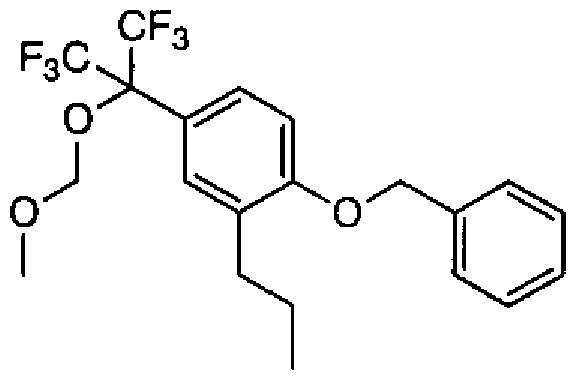
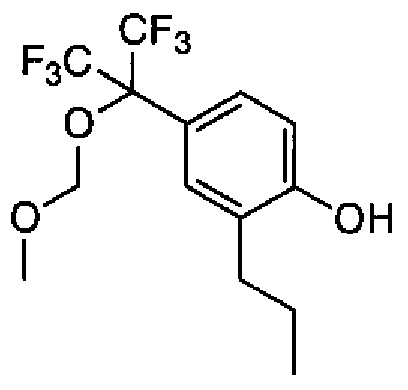


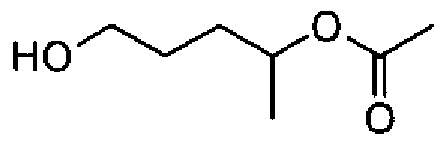


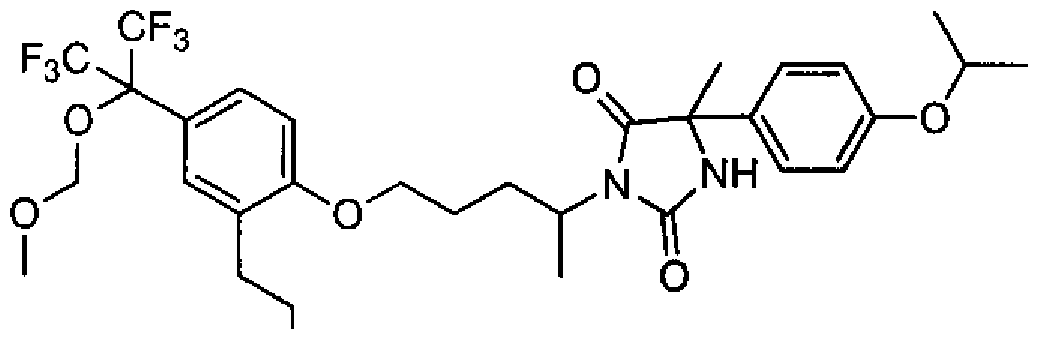

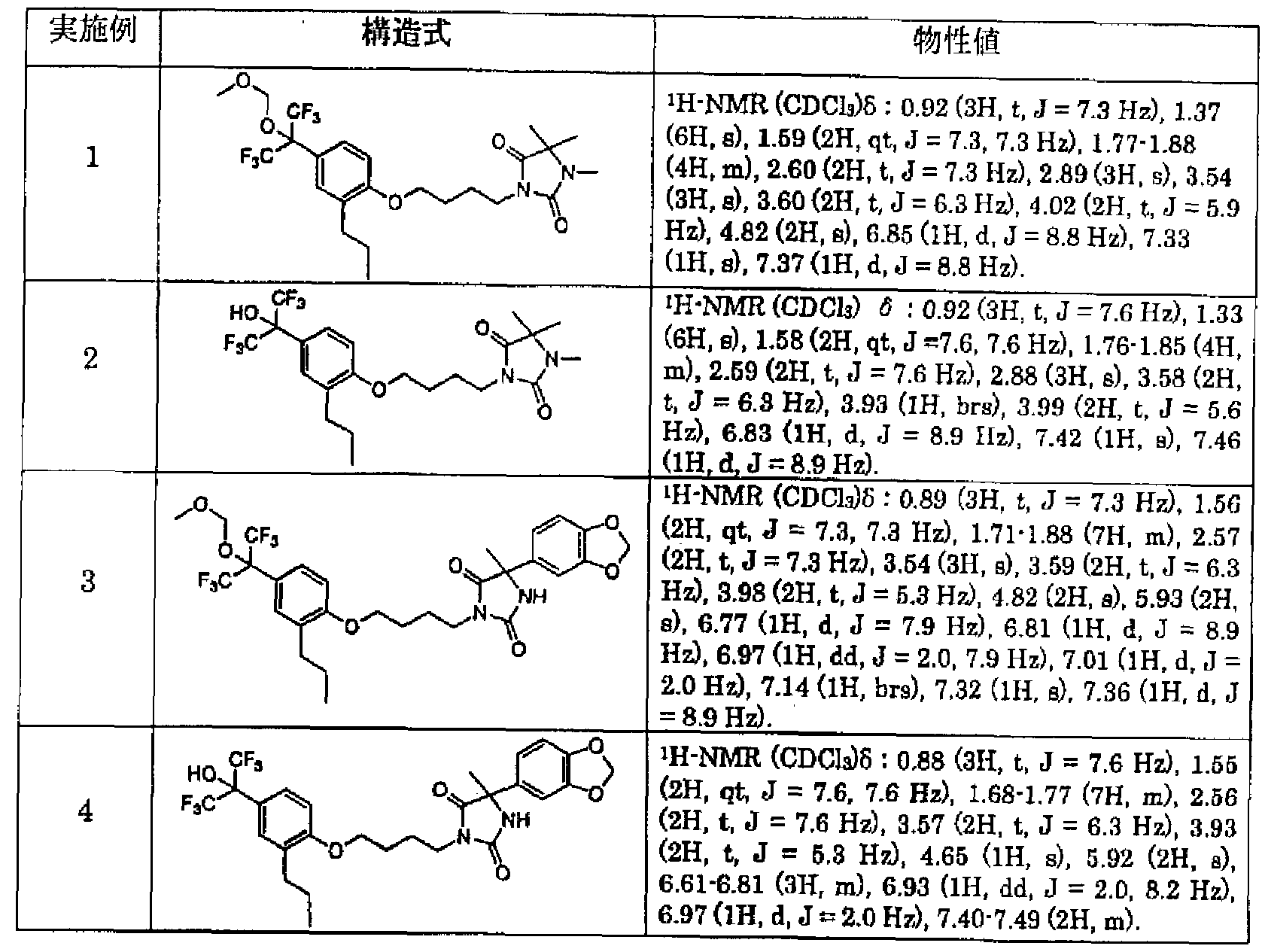


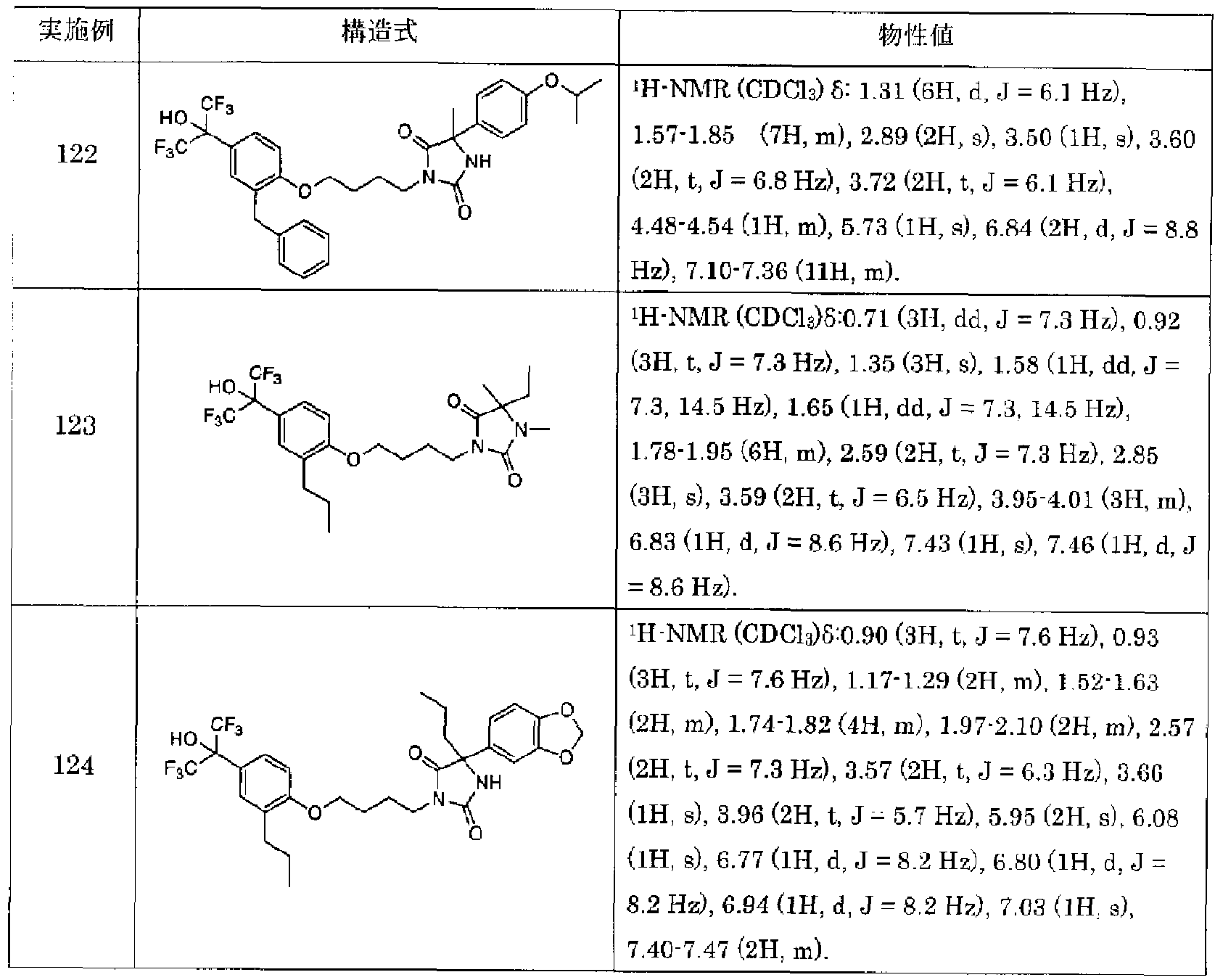


Claims

Priority Applications (6)
| Application Number | Priority Date | Filing Date | Title |
|---|---|---|---|
| JP2008546878A JP5159633B2 (ja) | 2006-11-30 | 2007-11-29 | 置換カルビノール化合物 |
| CN2007800506026A CN101595096B (zh) | 2006-11-30 | 2007-11-29 | 取代甲醇化合物 |
| US12/516,944 US8168666B2 (en) | 2006-11-30 | 2007-11-29 | Substituted carbinol compound |
| ES07828095T ES2380499T3 (es) | 2006-11-30 | 2007-11-29 | Compuesto de Carbinol sustituido |
| AT07828095T ATE544756T1 (de) | 2006-11-30 | 2007-11-29 | Substituierte carbinolverbindungen |
| EP07828095A EP2098515B1 (en) | 2006-11-30 | 2007-11-29 | Substituted carbinol compound |
Applications Claiming Priority (2)
| Application Number | Priority Date | Filing Date | Title |
|---|---|---|---|
| JP2006322963 | 2006-11-30 | ||
| JP2006-322963 | 2006-11-30 |
Publications (1)
| Publication Number | Publication Date |
|---|---|
| WO2008065754A1 true WO2008065754A1 (en) | 2008-06-05 |
Family
ID=39467554
Family Applications (1)
| Application Number | Title | Priority Date | Filing Date |
|---|---|---|---|
| PCT/JP2007/001318 Ceased WO2008065754A1 (en) | 2006-11-30 | 2007-11-29 | Substituted carbinol compound |
Country Status (9)
| Country | Link |
|---|---|
| US (1) | US8168666B2 (ja) |
| EP (1) | EP2098515B1 (ja) |
| JP (1) | JP5159633B2 (ja) |
| KR (1) | KR20090086084A (ja) |
| CN (1) | CN101595096B (ja) |
| AT (1) | ATE544756T1 (ja) |
| ES (1) | ES2380499T3 (ja) |
| TW (1) | TW200838854A (ja) |
| WO (1) | WO2008065754A1 (ja) |
Cited By (12)
| Publication number | Priority date | Publication date | Assignee | Title |
|---|---|---|---|---|
| WO2009107387A1 (ja) * | 2008-02-29 | 2009-09-03 | 興和株式会社 | 2-オキソクロメン誘導体 |
| WO2009122707A1 (ja) * | 2008-03-31 | 2009-10-08 | 興和株式会社 | 1,3-ジヒドロイソベンゾフラン誘導体 |
| WO2009133692A1 (ja) * | 2008-04-30 | 2009-11-05 | 興和株式会社 | キノリン化合物 |
| WO2009144961A1 (ja) * | 2008-05-29 | 2009-12-03 | 興和株式会社 | 環状リンカーを有する置換カルビノール化合物 |
| WO2010125811A1 (ja) * | 2009-04-29 | 2010-11-04 | 興和株式会社 | ヘテロ環リンカーを有するカルビノール化合物 |
| JP2011522854A (ja) * | 2008-06-11 | 2011-08-04 | エフ.ホフマン−ラ ロシュ アーゲー | イミダゾリジン誘導体 |
| WO2011107494A1 (de) | 2010-03-03 | 2011-09-09 | Sanofi | Neue aromatische glykosidderivate, diese verbindungen enthaltende arzneimittel und deren verwendung |
| WO2011157827A1 (de) | 2010-06-18 | 2011-12-22 | Sanofi | Azolopyridin-3-on-derivate als inhibitoren von lipasen und phospholipasen |
| WO2014028461A2 (en) | 2012-08-13 | 2014-02-20 | The Rockefeller University | Treatment and diagnosis of melanoma |
| WO2017123568A2 (en) | 2016-01-11 | 2017-07-20 | The Rockefeller University | Methods for the treatment of myeloid derived suppressor cells related disorders |
| US11174220B2 (en) | 2019-12-13 | 2021-11-16 | Inspirna, Inc. | Metal salts and uses thereof |
| US11214536B2 (en) | 2017-11-21 | 2022-01-04 | Inspirna, Inc. | Polymorphs and uses thereof |
Families Citing this family (2)
| Publication number | Priority date | Publication date | Assignee | Title |
|---|---|---|---|---|
| US8445979B2 (en) | 2009-09-11 | 2013-05-21 | Samsung Electronics Co., Ltd. | Magnetic memory devices including magnetic layers separated by tunnel barriers |
| WO2021155253A1 (en) * | 2020-01-31 | 2021-08-05 | Atomwise Inc. | Anat inhibitors and methods of use thereof |
Citations (14)
| Publication number | Priority date | Publication date | Assignee | Title |
|---|---|---|---|---|
| US3396159A (en) | 1965-06-15 | 1968-08-06 | Squibb & Sons Inc | Penicillin and cephalosporin derivatives |
| WO2000054759A2 (en) | 1999-03-15 | 2000-09-21 | Tularik Inc. | Lxr modulators |
| WO2002024632A2 (en) | 2000-09-18 | 2002-03-28 | Glaxo Group Limited | Substituted aminopropoxyaryl derivatives useful as agonists for lxr |
| WO2003082192A2 (en) | 2002-03-27 | 2003-10-09 | Smithkline Beecham Corporation | Certain pharmaceutically useful substituted aminoalkyl heterocycles |
| WO2003106435A1 (en) * | 2002-06-18 | 2003-12-24 | Sankyo Company, Limited | Fused-ring pyrimidin-4(3h)-one derivatives, processes for the preparation and uses thereof |
| WO2004011448A1 (en) * | 2002-07-25 | 2004-02-05 | Merck & Co., Inc. | Therapeutic compounds for treating dyslipidemic conditions |
| WO2004024161A1 (en) | 2002-09-10 | 2004-03-25 | Phenex Pharmaceuticals Ag | Novel 2-amino-4-oxoquinazolones as lxr nuclear receptor binding compounds with partial agonistic properites |
| WO2004058717A1 (en) | 2002-12-20 | 2004-07-15 | X-Ceptor Therapeutics, Inc. | Isoquinolinone derivatives and their use as therapeutic agents |
| WO2004072046A2 (en) | 2003-02-12 | 2004-08-26 | Carex S.A. | Quinoline derivatives and their use for modulation of lxr activity |
| WO2005023782A1 (ja) * | 2003-09-05 | 2005-03-17 | Sankyo Company, Limited | 置換された縮環ピリミジン-4(3h)-オン化合物 |
| WO2005023188A2 (en) | 2003-09-03 | 2005-03-17 | Smithkline Beecham Corporation | Compounds and methods |
| US20050215577A1 (en) | 2004-03-26 | 2005-09-29 | Henrietta Dehmlow | Tetrahydrocarbazoles and derivatives |
| WO2006010643A1 (en) * | 2004-07-27 | 2006-02-02 | Aventis Pharma S.A. | Substituted cyclic urea derivatives, preparation thereof and pharmaceutical use thereof as kinase inhibitors |
| WO2006037480A1 (en) | 2004-10-01 | 2006-04-13 | F.Hoffmann-La Roche Ag | Hexafluoroisopropanol substituted ether derivatives |
-
2007
- 2007-11-29 EP EP07828095A patent/EP2098515B1/en not_active Not-in-force
- 2007-11-29 KR KR1020097010977A patent/KR20090086084A/ko not_active Ceased
- 2007-11-29 AT AT07828095T patent/ATE544756T1/de active
- 2007-11-29 WO PCT/JP2007/001318 patent/WO2008065754A1/ja not_active Ceased
- 2007-11-29 ES ES07828095T patent/ES2380499T3/es active Active
- 2007-11-29 CN CN2007800506026A patent/CN101595096B/zh not_active Expired - Fee Related
- 2007-11-29 US US12/516,944 patent/US8168666B2/en not_active Expired - Fee Related
- 2007-11-29 JP JP2008546878A patent/JP5159633B2/ja not_active Expired - Fee Related
- 2007-11-30 TW TW096145857A patent/TW200838854A/zh unknown
Patent Citations (16)
| Publication number | Priority date | Publication date | Assignee | Title |
|---|---|---|---|---|
| US3396159A (en) | 1965-06-15 | 1968-08-06 | Squibb & Sons Inc | Penicillin and cephalosporin derivatives |
| WO2000054759A2 (en) | 1999-03-15 | 2000-09-21 | Tularik Inc. | Lxr modulators |
| JP2002539155A (ja) | 1999-03-15 | 2002-11-19 | テュラリク インコーポレイテッド | Lxr調節剤 |
| JP2004509161A (ja) | 2000-09-18 | 2004-03-25 | グラクソ グループ リミテッド | Lxrのアゴニストとして有用な置換アミノプロポキシアリール誘導体 |
| WO2002024632A2 (en) | 2000-09-18 | 2002-03-28 | Glaxo Group Limited | Substituted aminopropoxyaryl derivatives useful as agonists for lxr |
| WO2003082192A2 (en) | 2002-03-27 | 2003-10-09 | Smithkline Beecham Corporation | Certain pharmaceutically useful substituted aminoalkyl heterocycles |
| WO2003106435A1 (en) * | 2002-06-18 | 2003-12-24 | Sankyo Company, Limited | Fused-ring pyrimidin-4(3h)-one derivatives, processes for the preparation and uses thereof |
| WO2004011448A1 (en) * | 2002-07-25 | 2004-02-05 | Merck & Co., Inc. | Therapeutic compounds for treating dyslipidemic conditions |
| WO2004024161A1 (en) | 2002-09-10 | 2004-03-25 | Phenex Pharmaceuticals Ag | Novel 2-amino-4-oxoquinazolones as lxr nuclear receptor binding compounds with partial agonistic properites |
| WO2004058717A1 (en) | 2002-12-20 | 2004-07-15 | X-Ceptor Therapeutics, Inc. | Isoquinolinone derivatives and their use as therapeutic agents |
| WO2004072046A2 (en) | 2003-02-12 | 2004-08-26 | Carex S.A. | Quinoline derivatives and their use for modulation of lxr activity |
| WO2005023188A2 (en) | 2003-09-03 | 2005-03-17 | Smithkline Beecham Corporation | Compounds and methods |
| WO2005023782A1 (ja) * | 2003-09-05 | 2005-03-17 | Sankyo Company, Limited | 置換された縮環ピリミジン-4(3h)-オン化合物 |
| US20050215577A1 (en) | 2004-03-26 | 2005-09-29 | Henrietta Dehmlow | Tetrahydrocarbazoles and derivatives |
| WO2006010643A1 (en) * | 2004-07-27 | 2006-02-02 | Aventis Pharma S.A. | Substituted cyclic urea derivatives, preparation thereof and pharmaceutical use thereof as kinase inhibitors |
| WO2006037480A1 (en) | 2004-10-01 | 2006-04-13 | F.Hoffmann-La Roche Ag | Hexafluoroisopropanol substituted ether derivatives |
Non-Patent Citations (23)
| Title |
|---|
| "Comprehensive Organic Transformations", JOHN WILEY & SONS, INC. |
| "Comprehensive Organic Transformations", JOHN WILEY& SONS, INC. |
| "Protective Groups in Organic Synthesis", JOHN WILEY & SONS, INC. |
| ALBERTI ET AL., J. CLIN. INVEST., vol. 107, 2001, pages 565 - 573 |
| AUBOEUF ET AL., DIABETES, vol. 46, 1997, pages 1319 - 1327 |
| BRADLEY ET AL., DRUG DISCOV. TODAY THER. STRATEG., vol. 2, 2005, pages 97 - 103 |
| CAO ET AL., J. BIOL. CHEM., vol. 278, 2003, pages 1131 - 1136 |
| FU ET AL., J. BIOL. CHEM., vol. 276, 2001, pages 38378 - 38387 |
| GEYEREGGER ET AL., CELL. MOL. LIFE SCI., vol. 63, 2006, pages 524 - 539 |
| JANOWSKI ET AL., NATURE, vol. 383, 1996, pages 728 - 731 |
| LAFFITTE ET AL., PROC. NATL. ACAD. SCI. USA, vol. 100, 2003, pages 5419 - 5424 |
| LALA ET AL., CURR. OPIN. INVESTIG. DRUGS, vol. 6, 2005, pages 934 - 943 |
| LEHMANN ET AL., J. BIOL. CHEM., vol. 272, 1997, pages 3137 - 3140 |
| LU ET AL., J. BIOL. CHEM., vol. 276, 2001, pages 37735 - 37738 |
| LUND ET AL., ARTERIOSCLER.THROMB.VASC.BIOL., vol. 23, 2003, pages 1169 - 1177 |
| MANGELSDORF ET AL., NAT. MED., vol. 9, 2003, pages 213 - 219 |
| PEET ET AL., CELL, vol. 93, 1998, pages 693 - 704 |
| PIETER ET AL., J.LIPID RES., vol. 46, 2005, pages 2182 - 2191 |
| SCHULTZ ET AL., GENES DEV., vol. 14, 2000, pages 2831 - 2838 |
| TANGIRALA ET AL., PROC. NATL. ACAD. SCI. USA, vol. 99, 2002, pages 11896 - 11901 |
| TERASAKA ET AL., FEBS LETT., vol. 536, 2003, pages 6 - 11 |
| TETRAHEDRON, vol. 61, 2006, pages 1813 - 1819 |
| ZELCER ET AL., J. CLIN. INVEST., vol. 116, 2006, pages 607 - 614 |
Cited By (31)
| Publication number | Priority date | Publication date | Assignee | Title |
|---|---|---|---|---|
| JP5511079B2 (ja) * | 2008-02-29 | 2014-06-04 | 興和株式会社 | 2−オキソクロメン誘導体 |
| WO2009107387A1 (ja) * | 2008-02-29 | 2009-09-03 | 興和株式会社 | 2-オキソクロメン誘導体 |
| WO2009122707A1 (ja) * | 2008-03-31 | 2009-10-08 | 興和株式会社 | 1,3-ジヒドロイソベンゾフラン誘導体 |
| JP5511080B2 (ja) * | 2008-03-31 | 2014-06-04 | 興和株式会社 | 1,3−ジヒドロイソベンゾフラン誘導体 |
| WO2009133692A1 (ja) * | 2008-04-30 | 2009-11-05 | 興和株式会社 | キノリン化合物 |
| JP5371118B2 (ja) * | 2008-04-30 | 2013-12-18 | 興和株式会社 | キノリン化合物 |
| EA018584B1 (ru) * | 2008-05-29 | 2013-09-30 | Кова Компани, Лтд. | Замещённое карбинольное соединение, содержащее циклический линкер |
| WO2009144961A1 (ja) * | 2008-05-29 | 2009-12-03 | 興和株式会社 | 環状リンカーを有する置換カルビノール化合物 |
| JP5541803B2 (ja) * | 2008-05-29 | 2014-07-09 | 興和株式会社 | 環状リンカーを有する置換カルビノール化合物 |
| US8153634B2 (en) | 2008-05-29 | 2012-04-10 | Kowa Company, Ltd. | Carbinol derivatives having cyclic linker |
| JP2011522854A (ja) * | 2008-06-11 | 2011-08-04 | エフ.ホフマン−ラ ロシュ アーゲー | イミダゾリジン誘導体 |
| EP2426113A4 (en) * | 2009-04-29 | 2012-11-07 | Kowa Co | CARBINOL COMPOUND WITH A HETEROCYCLIC BINDER |
| US8551985B2 (en) | 2009-04-29 | 2013-10-08 | Kowa Company, Ltd. | Carbinol derivatives having heterocyclic linker |
| CN102438991A (zh) * | 2009-04-29 | 2012-05-02 | 兴和株式会社 | 具有杂环连接基的甲醇化合物 |
| AU2010243044C1 (en) * | 2009-04-29 | 2016-08-25 | Kowa Company, Ltd. | Carbinol compound having heterocyclic linker |
| JP5774984B2 (ja) * | 2009-04-29 | 2015-09-09 | 興和株式会社 | ヘテロ環リンカーを有するカルビノール化合物 |
| WO2010125811A1 (ja) * | 2009-04-29 | 2010-11-04 | 興和株式会社 | ヘテロ環リンカーを有するカルビノール化合物 |
| AU2010243044B2 (en) * | 2009-04-29 | 2015-07-30 | Kowa Company, Ltd. | Carbinol compound having heterocyclic linker |
| AU2010243044A8 (en) * | 2009-04-29 | 2015-08-13 | Kowa Company, Ltd. | Carbinol compound having heterocyclic linker |
| CN102438991B (zh) * | 2009-04-29 | 2015-08-26 | 兴和株式会社 | 具有杂环连接基的甲醇化合物 |
| WO2011107494A1 (de) | 2010-03-03 | 2011-09-09 | Sanofi | Neue aromatische glykosidderivate, diese verbindungen enthaltende arzneimittel und deren verwendung |
| WO2011157827A1 (de) | 2010-06-18 | 2011-12-22 | Sanofi | Azolopyridin-3-on-derivate als inhibitoren von lipasen und phospholipasen |
| WO2014028461A2 (en) | 2012-08-13 | 2014-02-20 | The Rockefeller University | Treatment and diagnosis of melanoma |
| EP3626309A1 (en) | 2012-08-13 | 2020-03-25 | The Rockefeller University | Lxrbeta agonist for the treatment of cancer |
| EP4218935A1 (en) | 2012-08-13 | 2023-08-02 | The Rockefeller University | Lxrbeta agonist for the treatment of cancer |
| WO2017123568A2 (en) | 2016-01-11 | 2017-07-20 | The Rockefeller University | Methods for the treatment of myeloid derived suppressor cells related disorders |
| US11214536B2 (en) | 2017-11-21 | 2022-01-04 | Inspirna, Inc. | Polymorphs and uses thereof |
| US11174220B2 (en) | 2019-12-13 | 2021-11-16 | Inspirna, Inc. | Metal salts and uses thereof |
| US11459292B2 (en) | 2019-12-13 | 2022-10-04 | Inspirna, Inc. | Metal salts and uses thereof |
| US11878956B2 (en) | 2019-12-13 | 2024-01-23 | Inspirna, Inc. | Metal salts and uses thereof |
| US12258303B2 (en) | 2019-12-13 | 2025-03-25 | Inspirna, Inc. | Metal salts and uses thereof |
Also Published As
| Publication number | Publication date |
|---|---|
| EP2098515A1 (en) | 2009-09-09 |
| JP5159633B2 (ja) | 2013-03-06 |
| EP2098515B1 (en) | 2012-02-08 |
| CN101595096A (zh) | 2009-12-02 |
| US20100063119A1 (en) | 2010-03-11 |
| TW200838854A (en) | 2008-10-01 |
| CN101595096B (zh) | 2012-06-27 |
| ES2380499T3 (es) | 2012-05-14 |
| ATE544756T1 (de) | 2012-02-15 |
| JPWO2008065754A1 (ja) | 2010-03-04 |
| KR20090086084A (ko) | 2009-08-10 |
| US8168666B2 (en) | 2012-05-01 |
| EP2098515A4 (en) | 2010-12-01 |
Similar Documents
| Publication | Publication Date | Title |
|---|---|---|
| JP5159633B2 (ja) | 置換カルビノール化合物 | |
| US9895355B2 (en) | Methods of treating androgen receptor-mediated disorders with imidazoline derivatives | |
| JP5541803B2 (ja) | 環状リンカーを有する置換カルビノール化合物 | |
| JP5774984B2 (ja) | ヘテロ環リンカーを有するカルビノール化合物 | |
| US11345690B2 (en) | Methods of synthesizing a difluorolactam analog | |
| US20210040052A1 (en) | Probucol derivative, preparation method therefor and use thereof | |
| JPWO2009107387A1 (ja) | 2−オキソクロメン誘導体 | |
| JP6371915B2 (ja) | 4−(4−ホルミルチアゾリル)ピペリジン化合物の製造方法 | |
| HK1166498A (en) | Carbinol compound having heterocyclic linker |
Legal Events
| Date | Code | Title | Description |
|---|---|---|---|
| WWE | Wipo information: entry into national phase |
Ref document number: 200780050602.6 Country of ref document: CN |
|
| 121 | Ep: the epo has been informed by wipo that ep was designated in this application |
Ref document number: 07828095 Country of ref document: EP Kind code of ref document: A1 |
|
| WWE | Wipo information: entry into national phase |
Ref document number: 2008546878 Country of ref document: JP |
|
| WWE | Wipo information: entry into national phase |
Ref document number: 1020097010977 Country of ref document: KR |
|
| WWE | Wipo information: entry into national phase |
Ref document number: 12516944 Country of ref document: US Ref document number: 2007828095 Country of ref document: EP |
|
| NENP | Non-entry into the national phase |
Ref country code: DE |