WO2009018974A2 - Neue kosmetische emulgatorkombination - Google Patents
Neue kosmetische emulgatorkombination Download PDFInfo
- Publication number
- WO2009018974A2 WO2009018974A2 PCT/EP2008/006366 EP2008006366W WO2009018974A2 WO 2009018974 A2 WO2009018974 A2 WO 2009018974A2 EP 2008006366 W EP2008006366 W EP 2008006366W WO 2009018974 A2 WO2009018974 A2 WO 2009018974A2
- Authority
- WO
- WIPO (PCT)
- Prior art keywords
- preparation
- ethylhexyl
- acid
- preparation according
- cosmetic preparation
- Prior art date
- Legal status (The legal status is an assumption and is not a legal conclusion. Google has not performed a legal analysis and makes no representation as to the accuracy of the status listed.)
- Ceased
Links
- IVQLSQJMQLZYJE-UHFFFAOYSA-N CCN(CC)c1ccc(C(c(cccc2)c2C(N(CC2)CCN2C(c(cccc2)c2C(c(c(O)c2)ccc2N(CC)CC)=O)=O)=O)=O)c(O)c1 Chemical compound CCN(CC)c1ccc(C(c(cccc2)c2C(N(CC2)CCN2C(c(cccc2)c2C(c(c(O)c2)ccc2N(CC)CC)=O)=O)=O)=O)c(O)c1 IVQLSQJMQLZYJE-UHFFFAOYSA-N 0.000 description 1
Classifications
-
- A—HUMAN NECESSITIES
- A61—MEDICAL OR VETERINARY SCIENCE; HYGIENE
- A61K—PREPARATIONS FOR MEDICAL, DENTAL OR TOILETRY PURPOSES
- A61K8/00—Cosmetics or similar toiletry preparations
- A61K8/18—Cosmetics or similar toiletry preparations characterised by the composition
- A61K8/30—Cosmetics or similar toiletry preparations characterised by the composition containing organic compounds
- A61K8/40—Cosmetics or similar toiletry preparations characterised by the composition containing organic compounds containing nitrogen
- A61K8/44—Aminocarboxylic acids or derivatives thereof, e.g. aminocarboxylic acids containing sulfur; Salts; Esters or N-acylated derivatives thereof
- A61K8/442—Aminocarboxylic acids or derivatives thereof, e.g. aminocarboxylic acids containing sulfur; Salts; Esters or N-acylated derivatives thereof substituted by amido group(s)
-
- A—HUMAN NECESSITIES
- A61—MEDICAL OR VETERINARY SCIENCE; HYGIENE
- A61K—PREPARATIONS FOR MEDICAL, DENTAL OR TOILETRY PURPOSES
- A61K8/00—Cosmetics or similar toiletry preparations
- A61K8/02—Cosmetics or similar toiletry preparations characterised by special physical form
- A61K8/04—Dispersions; Emulsions
- A61K8/06—Emulsions
-
- A—HUMAN NECESSITIES
- A61—MEDICAL OR VETERINARY SCIENCE; HYGIENE
- A61K—PREPARATIONS FOR MEDICAL, DENTAL OR TOILETRY PURPOSES
- A61K8/00—Cosmetics or similar toiletry preparations
- A61K8/02—Cosmetics or similar toiletry preparations characterised by special physical form
- A61K8/04—Dispersions; Emulsions
- A61K8/06—Emulsions
- A61K8/062—Oil-in-water emulsions
-
- A—HUMAN NECESSITIES
- A61—MEDICAL OR VETERINARY SCIENCE; HYGIENE
- A61K—PREPARATIONS FOR MEDICAL, DENTAL OR TOILETRY PURPOSES
- A61K8/00—Cosmetics or similar toiletry preparations
- A61K8/18—Cosmetics or similar toiletry preparations characterised by the composition
- A61K8/30—Cosmetics or similar toiletry preparations characterised by the composition containing organic compounds
- A61K8/60—Sugars; Derivatives thereof
- A61K8/604—Alkylpolyglycosides; Derivatives thereof, e.g. esters
-
- A—HUMAN NECESSITIES
- A61—MEDICAL OR VETERINARY SCIENCE; HYGIENE
- A61Q—SPECIFIC USE OF COSMETICS OR SIMILAR TOILETRY PREPARATIONS
- A61Q17/00—Barrier preparations; Preparations brought into direct contact with the skin for affording protection against external influences, e.g. sunlight, X-rays or other harmful rays, corrosive materials, bacteria or insect stings
- A61Q17/04—Topical preparations for affording protection against sunlight or other radiation; Topical sun tanning preparations
Definitions
- the present invention relates to a cosmetic emulsion.
- Cleansing of the skin serves to remove dirt, sweat and remnants of dead skin particles, which form an ideal breeding ground for pathogens and parasites of all kinds.
- Skin care products are usually used to moisten and restore the skin. Often, agents that regenerate the skin and, for example, prevent and reduce their premature aging (e.g., wrinkles, wrinkles) are added to them.
- Emulsions are generally understood to mean heterogeneous systems which consist of two liquids which are immiscible or only to a limited extent miscible with one another, which are usually referred to as phases and in which one of the two liquids is dispersed in the form of very fine droplets in the other liquid. Viewed externally and with the naked eye, emulsions appear homogeneous.
- Emulsifiers are usually molecules with a polar, hydrophilic structural element and a nonpolar, lipophilic structural element.
- HLB value a dimensionless number between 0 and 20
- Numbers below 9 indicate oil-soluble, hydrophobic emulsifiers, numbers over 11 water-soluble, hydrophilic.
- Emulsifiers with a particularly high HLB value can also be used as detergent surfactants.
- the total HLB value of the emulsifier system must not be selected too high. Otherwise, as the total HLB increases, the emulsions become increasingly unstable (especially in the case of thermal and mechanical loads and with increasing storage time). The emulsions then tend to oil separation, phase separation and possibly also to precipitation of solids.
- preparations with a high total HLB value are particularly sensory because they have a particularly low greasiness on the skin.
- a cosmetic preparation comprising a combination of a) sodium stearylglutamate, b) decylglucoside.
- the combination of the invention, the use concentration of emulsifiers in the preparations can be surprisingly significantly reduced overall. This aspect is particularly important for preparations that are suitable for people with sensitive skin or
- the preparation according to the invention advantageously contains sodium stearylglutamate in a concentration of 0.05 to 2% by weight and, according to the invention, preferably in a concentration of 0.1 to 1% by weight, in each case based on the total weight of the preparation.
- the sodium stearylglutamate according to the invention can be purchased, for example, under the name Eumulgin SG from Cognis.
- the preparation according to the invention advantageously contains decylglucoside in a concentration of 0.05 to 1% by weight and preferably in one according to the invention
- the preparation contains the UV filter 2,4,6-tris (biphenyl) -1,3,5-triazine.
- 2,4,6-tris- (biphenyl) -1, 3,5-triazine is inventively used advantageously in an amount of 0.2 to 10% by weight and preferably in an amount of 0.5 to 5% by weight, used based on the total weight of the preparation.
- the preparation contains the UV filter 2,2'-methylene-bis (6- (2H-benzotriazol-2-yl) -4- (1, 1, 3,3-tetramethylbutyl) -phenol) contains.
- 2,2'-methylene-bis- (6- (2H-benzotriazol-2-yl) -4- (1,1,3,3-tetramethylbutyl) -phenol) is inventively advantageous in an amount of 0.2 to 10% by weight and preferably in an amount of 0.5 to 5% by weight, based on the total weight of the preparation.
- This hydroxyphenyl benzophenone is used according to the invention advantageously in an amount of 0.2 to 10% by weight and preferably in an amount of 0.5 to 5% by weight, based on the total weight of the preparation.
- Embodiments of the present invention which are advantageous according to the invention are characterized in that the preparation contains UV filters selected from the group of the compounds phenylene-1,4-bis (2-benzimidazyl) -3,3'-5,5'-tetrasulfonic acid salts; 2-phenylbenzimidazole-5-sulfonic acid salts; 1,4-di (2-oxo-10-sulfo-3-bomylidenemethyl) benzene and its salts; 4- (2-oxo-3-bornylidenemethyl) benzenesulfonic acid; 2-methyl-5- (2-oxo-3-bornylidenemethyl) sulfonic acid salts; 2- (2H-Benzotriazol-2-yl) -4-methyl-6- [2-
- UV filters may be contained in individual concentrations of 0.1 to 30% by weight, based on the total weight of the preparation. It is advantageous according to the invention if the preparation according to the invention is free of p-methylbenzylidene camphor.
- Embodiments of the present invention which are advantageous according to the invention are characterized in that the preparation contains sucrose polystearate.
- Sucrose polystearate can be purchased, for example, under the name Emulgade Sucro from Cognis.
- Sucrose polystearate is used according to the invention advantageously in an amount of 0.1 to 6% by weight and preferably in an amount of 0.2 to 4% by weight, based on the total weight of the preparation.
- the preparation according to the invention contains hydrogenated polyisobutene.
- Hydrogenated polyisobutene is used according to the invention advantageously in an amount of 0.05 to 2% by weight and preferably in an amount of 0.1 to 1% by weight, based on the total weight of the preparation.
- the preparation contains crosslinked polymer of vinylpyrrolidone and acrylic acid.
- crosslinked polymer of vinylpyrrolidone and acrylic acid the compound with the CAS No: 527685-31-0 is used.
- the crosslinked polymer of vinylpyrrolidone and acrylic acid is used according to the invention advantageously in an amount of 0.05 to 4% by weight and preferably in an amount of 0.1 to 3% by weight, based on the total weight of the preparation.
- Embodiments of the present invention that are advantageous according to the invention are characterized in that the preparation contains as further ingredients one or more compounds selected from the group of the compounds alpha-lipoic acid, folic acid, phytoene, D-biotin, coenzyme Q10, alpha-glucosylrutin, carnitine, carnosine, natural and / or synthetic isoflavonoids, flavonoids, creatine, creatinine, taurine, ⁇ -alanine, tocopheryl acetate, dihydroxyacetone; 8-hexadecene-1, 16-dicarboxylic acid, glycerylglycose, (2-hydroxyethyl) urea, vitamin E or its derivatives and / or licochalcone A contains.
- active ingredients are advantageously present in a concentration of from 0.01 to 10% by weight and preferably in a concentration of from 0.5 to 5% by weight, based on the total weight of the preparation.
- the preparation one or more diols selected from the group of compounds 2-methyl-1, 3-propanediol, pentane-1, 2-diol, hexane-1, 2-diol, heptane 1,2-diol, octane-1,2-diol, nonane-1,2-diol, decane-1,2-diol, ethylhexylglycerol.
- such diols may advantageously be present in this concentration in a concentration of from 0.1 to 20% by weight, based on the total weight of the preparation.
- such diols may preferably be present in this concentration in a concentration of 0.5 to 10% by weight, based on the total weight of the preparation.
- the preparation contains one or more parabens (for example methylparaben, ethylparaben, propylparaben, butylparaben).
- parabens for example methylparaben, ethylparaben, propylparaben, butylparaben.
- a total paraben content of 0.05 to 1% by weight, based on the total weight of the preparation according to the invention is advantageous.
- the preparation according to the invention is preferably free of polyethylene glycols, i. PEG-free.
- the preparation according to the invention is sprayable. It can also be used to impregnate substrates (eg towels, pads, etc.).
- the preparations according to the invention may also advantageously contain self-tanning substances, for example dihydroxyacetone and / or melanin derivatives in concentrations of from 1% by weight to 10% by weight, based on the total weight of the preparation.
- self-tanning substances for example dihydroxyacetone and / or melanin derivatives in concentrations of from 1% by weight to 10% by weight, based on the total weight of the preparation.
- preparations according to the invention may also advantageously contain repellents for protection against mosquitoes, ticks and spiders and the like.
- repellents for protection against mosquitoes, ticks and spiders and the like.
- Advantageous z. N, N-diethyl-3-methylbenzamide (trade name: meta-delphphene, "DEET"), dimethyl phthalate
- Moisturizers are substances or mixtures of substances which give cosmetic preparations the property of reducing the moisture release of the hom layer (also called transepidermal water loss (TEWL) after application or spreading on the skin surface) and / or hydrating the hom harsh positively influence.
- TEWL transepidermal water loss
- humectants for the purposes of the present invention are, for example, glycerol, lactic acid and / or lactates, in particular sodium lactate, butylene glycol, propylene glycol, biosaccharide gum-1, glycine soya, ethylhexyloxyglycerol, pyrrolidonecarboxylic acid and urea.
- polymeric moisturizers from the group of water-soluble and / or water-swellable and / or water-gellable polysaccharides.
- the inventive preparation one or more humectants in a total concentration of 0.1 to 20% by weight and preferably in a total concentration of 0.5 to 10% by weight, each based on the total weight of Preparation containing.
- the cosmetic preparations according to the invention may also advantageously, although not necessarily, contain fillers which are e.g. B. further improve the sensory and cosmetic properties of the formulations and, for example, cause or enhance a velvety or silky feel on the skin.
- Advantageous fillers for the purposes of the present invention are starch and starch derivatives (such as, for example, tapioca starch, distarch phosphate, aluminum or sodium starch, octenylsuccinate and the like), pigments which have neither mainly UV filter nor coloring action (such as, for example, US Pat. B. boron nitride etc.) and / or Aerosils ® (CAS no. 7631-86-9) and / or talc.
- the aqueous phase of the preparations according to the invention may advantageously contain customary cosmetic auxiliaries, for example alcohols, in particular those of low C number, preferably ethanol and / or isopropanol or polyols of low C number and their ethers, preferably propylene glycol, glycerol, ethylene glycol, ethylene glycol monoethyl or monobutyl ether, propylene glycol monomethyl, monoethyl or monobutyl ether, diethylene glycol monomethyl or monoethyl ether and analogous products, polymers, foam stabilizers, electrolytes, self-tanning agents and in particular one or more thickening agents , which or which can be advantageously selected from the group of silica, aluminum silicates, polysaccharides or their derivatives, for.
- customary cosmetic auxiliaries for example alcohols, in particular those of low C number, preferably ethanol and / or isopropanol or polyols of low C number and their ether
- xanthan gum As hyaluronic acid, xanthan gum, hydroxypropylmethylcellulose, particularly advantageous from the group of polyacrylates, preferably a polyacrylate from the group of so-called carbopols, for example Carbopols types 980, 981, 1382, 2984, 5984, each individually or in combination.
- Further thickeners which are advantageous according to the invention are those with the INCI name Acrylates / C10-30 alkyl acrylate crosspolymer (eg Pemulen TR 1, Pemulen TR 2, Carbopol 1328 from the company NOVEON) and Aristoflex AVC (INCI: ammonium acryloyldimethyltaurate / VP copolymer).
- the preparation according to the invention advantageously contains film formers.
- Film formers for the purposes of the present invention are substances of different composition, which are characterized by the following property: If a film former is dissolved in water or other suitable solvents and the solution is then applied to the skin, it forms a film after the solvent has evaporated which essentially serves to fix the light filters on the skin and thus to increase the water resistance of the product.
- copolymers of polyvinylpyrrolidone for example, the PVP hexadecene copolymer and the PVP eicosene copolymer, which are among the
- polystyrene sulfonate sold under the tradename Flexan 130 at National Starch and Chemical Corp. and / or polyisobutene, available from Rewo under the tradename Rewopal PIB1000.
- suitable polymers are, for example, polyacrylamides (Seppigel 305), polyvinyl alcohols, PVP, PVP / VA copolymers, polyglycols, acrylate / octylacralylide copolymer (Dermacryl 79).
- hydrogenated castor oil dimerdilinoleate (CAS 646054-62-8, INCI Hydrogenated Castor OiI Dimer Dilinoleate), which can be purchased from Kokyu Alcohol Kogyo under the name Risocast DA-H or PPG-3 benzyl ether myristate (CAS 403517-45-3), which can be obtained under the trade name Crodamol STS from Croda Chemicals ,
- the oil phase of the preparation according to the invention is advantageously selected from the group of polar oils, for example from the group of lecithins and fatty acid triglycerides, namely the triglycerol esters of saturated and / or unsaturated, branched and / or unbranched alkanecarboxylic acids having a chain length of 8 to 24, in particular 12 to 18 C atoms.
- the fatty acid triglycerides can be selected, for example, advantageously from the group of synthetic, semi-synthetic and natural oils, such as.
- Cocoglyceride olive oil, sunflower oil, jojoba oil, soybean oil, peanut oil, rapeseed oil, almond oil, palm oil, coconut oil, castor oil, wheat germ oil, grape seed oil, thistle oil, evening primrose oil, macadamia nut oil and the like.
- Also advantageous according to the invention are z.
- natural waxes of animal and vegetable origin such as beeswax and other insect waxes and berry wax, shea butter and / or lanolin (wool wax).
- further advantageous polar oil components can furthermore be selected from the group of esters of saturated and / or unsaturated, branched and / or unbranched alkanecarboxylic acids having a chain length of 3 to 30 carbon atoms and saturated and / or unsaturated, branched and / or or unbranched alcohols having a chain length of 3 to 30 carbon atoms and from the group of esters of aromatic carboxylic acids and saturated and / or unsaturated, branched and / or unbranched alcohols having a chain length of 3 to 30 carbon atoms.
- ester oils can then advantageously be selected from the group consisting of phenethyl benzoate, 2-phenylethyl benzoate, isopropyl lauroyl sarcosinate, phenyl trimethicone, cyclomethicone, dibutyl adipate, octyl palmitate, octyl cocoate, octyl isostearate, octyldodeceyl myristate, octyldodecanol, cetearyl isononanoate, isopropyl myristate, isopropyl palmitate, isopropyl stearate, isopropyl oleate, n Butyl stearate, n-hexyl laurate, n-decyl oleate, isooctyl stearate, isononyl stearate, isononyl isononanoate, 2-
- oil phase can be advantageously selected from the group of dialkyl ethers and
- Dialkyl advantageous are z.
- the oil component (s) is selected from the group isoeicosane, neopentyl glycol diheptanoate, propylene glycol dicaprylate / dicaprate, caprylic / capric / diglyceryl succinate, butylene glycol dicaprylate / dicaprate, Ci 2- i- 3- alkyl lactate, di-Ci 2- i 3 -alkyl tartrate , Triisostearin, dipentaerythrityl hexacaprylate / hexacaprate, propylene glycol monoisostearate, tricaprylin, dimethylisorboride. It is particularly advantageous if the oil phase of the formulations according to the invention has a content of C 12
- Advantageous oil components are also z.
- B. Butyloctylsalicylat for example, that available under the trade name Hallbrite BHB at the company. CP Hall
- tridecyl salicylate which is available under the trade name Cosmacol ESI from Fa. Sasol
- C12-C15 alkyl salicylate under the trade name Dermol NS in the Fa Alzo available
- hexadecyl benzoate and butyl octyl benzoate and mixtures thereof Hallstar AB
- Hallbrite TQ or Corapan TQ from Symrise Butyloctylsalicylat
- tridecyl salicylate which is available under the trade name Cosmacol ESI from Fa. Sasol
- C12-C15 alkyl salicylate under the trade name Dermol NS in the Fa Alzo available
- Hallstar AB hexadecyl benzoate and butyl octyl be
- the oil phase may also advantageously contain non-polar oils, for example those selected from the group of branched and unbranched hydrocarbons and hydroxides, in particular mineral oil, Vaseline (petrolatum), paraffin oil, squalane and squalene, polyolefins, hydrogenated polyisobutenes, C13-16 isoparaffin and isohexadecane.
- non-polar oils for example those selected from the group of branched and unbranched hydrocarbons and hydroxides, in particular mineral oil, Vaseline (petrolatum), paraffin oil, squalane and squalene, polyolefins, hydrogenated polyisobutenes, C13-16 isoparaffin and isohexadecane.
- non-polar oils for example those selected from the group of branched and unbranched hydrocarbons and hydroxides, in particular mineral oil, Vaseline (petrolatum), paraffin oil, squalane and squalene, polyolefin
- the preparation according to the invention contains no fatty alcohols.
- the preparations according to the invention can furthermore advantageously comprise one or more substances from the following group of siloxane elastomers, for example in order to increase the water resistance and / or the sun protection factor of the products: (a) siloxane elastomers which contain the units R 2 SiO and RSiO 1, and / or R 3 SiO 15 and / or SiO 2 , wherein the individual radicals R are each independently hydrogen, C 1-24 alkyl (such as methyl, ethyl, propyl) or aryl (such as phenyl or ToIyI), alkenyl (such as vinyl ) and the weight ratio of the units R 2 SiO to RSiO 115 a ⁇ j s the range of 1: 1 to 30: 1 is selected;
- Siloxane elastomers which are insoluble and swellable in silicone oil by the addition reaction of an organopolysiloxane (1), the silicon-bonded hydrogen containing an organopolysiloxane (2) containing unsaturated aliphatic groups, the amounts used being such that the amount of hydrogen of the organopolysiloxane (1) or the unsaturated aliphatic groups of the organopolysiloxane (2)
- the siloxane elastomer (s) are in the form of spherical powders or in the form of gels.
- siloxane elastomers are those with the INCI name dimethicone / vinyl dimethicone crosspolymer, for example that available from DOW CORNING under the trade names DOW CORNING 9506 Powder available.
- siloxane elastomer is used in combination with oils of hydrocarbons of animal and / or vegetable origin, synthetic oils, synthetic esters, synthetic ethers or mixtures thereof.
- compositions are also obtained when antioxidants are used as additives or active ingredients.
- the preparations advantageously contain one or more antioxidants.
- antioxidants all suitable or common for cosmetic applications antioxidants can be used.
- the amount of the antioxidants (one or more compounds) in the preparations is preferably 0.001 to 30 wt .-%, particularly preferably 0.05 to 20 wt .-%, in particular 0.1 to 10 wt .-%, based on the total weight the preparation.
- the cosmetic preparations according to the invention may contain cosmetic adjuvants, such as are commonly used in such preparations, for.
- cosmetic adjuvants such as are commonly used in such preparations, for.
- Fillers that improve the feel on the skin, fats, oils, waxes or other common ingredients of a cosmetic or dermatological formulation such as alcohols, polyols, polymers, foam stabilizers, electrolytes, organic solvents or silicone derivatives.
- a cosmetic or dermatological formulation such as alcohols, polyols, polymers, foam stabilizers, electrolytes, organic solvents or silicone derivatives.
- preparations for the care of the skin they can serve the cosmetic sunscreen, as well as make-up product in decorative cosmetics.
- cosmetic compositions according to the present invention for example, be used as a skin protection cream, day or night cream, etc. It may be possible and advantageous to use the compositions of the invention as a basis for pharmaceutical formulations.
- the use of the preparation according to the invention for protection against aging of the skin in particular for protection against UV-related aging of the skin
- a sunscreen agent for protection against UV-related aging of the skin
- the preparation according to the invention advantageously has a pH of 5 to 8. This can be adjusted by the conventional acids, bases and buffer systems.
- the use of the preparation in cosmetic sprays in particular sunscreens.
- the process for the preparation of the cosmetic preparation is also the process for the preparation of the cosmetic preparation, which is characterized in that the decyl glycoside initially together with the organic UV filter from the group of 2,4,6-tris (biphenyl) -1,3,5-triazine; 2,2'-methylenebis (6- (2H-benzotriazol-2-yl) -4- (1,1,3,3-tetramethylbutyl) -phenol) and / or the hydroxyphenyl benzophenone of compound 1 to an aqueous one Pre-dispersion is combined, which is added with stirring after homogenization in the cooled finished emulsion (containing the remaining ingredients of the preparation).
- the decyl glycoside initially together with the organic UV filter from the group of 2,4,6-tris (biphenyl) -1,3,5-triazine; 2,2'-methylenebis (6- (2H-benzotriazol-2-yl) -4- (1,1,3,3-tetramethylbutyl)
Landscapes
- Health & Medical Sciences (AREA)
- Life Sciences & Earth Sciences (AREA)
- Veterinary Medicine (AREA)
- Animal Behavior & Ethology (AREA)
- General Health & Medical Sciences (AREA)
- Public Health (AREA)
- Birds (AREA)
- Epidemiology (AREA)
- Chemical & Material Sciences (AREA)
- Dispersion Chemistry (AREA)
- Dermatology (AREA)
- Oil, Petroleum & Natural Gas (AREA)
- Cosmetics (AREA)
Abstract
Kosmetische Zubereitung enthaltend eine Kombination aus a) Natriumstearylglutamat, b) Decylglucosid.
Description
Neue kosmetische Emulgatorkombination
Die vorliegende Erfindung betrifft eine kosmetische Emulsion.
Der Wunsch, schön und attraktiv auszusehen, ist von Natur aus im Menschen verwurzelt. Auch wenn das Schönheitsideal im Laufe der Zeit Wandlungen erfahren hat, so ist das Streben nach einem makellosen Äußeren immer das Ziel der Menschen gewesen. Einen wesentlichen Anteil an einem schönen und attraktiven Äußeren hat dabei der Zustand und das Aussehen der Haut.
Damit die Haut ihre biologischen Funktionen im vollen Umfang erfüllen kann, bedarf sie der regelmäßigen Reinigung und Pflege. Die Reinigung der Haut dient dabei der Entfernung von Schmutz, Schweiß und Resten abgestorbener Hautpartikel, die einen idealen Nährboden für Krankheitserreger und Parasiten aller Art bilden. Hautpflegeprodukte dienen meist der Befeuchtung und Rückfettung der Haut. Häufig sind ihnen Wirkstoffe zugesetzt, welche die Haut regenerieren und beispielsweise ihre vorzeitige Alterung (z.B. das Entstehen von Fältchen, Falten) verhindern und vermindern sollen.
Hautpflegeprodukte bestehen in der Regel aus Emulsionen. Unter Emulsionen versteht man im allgemeinen heterogene Systeme, die aus zwei nicht oder nur begrenzt miteinander mischbaren Flüssigkeiten bestehen, die üblicherweise als Phasen bezeichnet werden und bei denen eine der beiden Flüssigkeiten in Form feinster Tröpfchen in der anderen Flüssigkeit dispergiert ist. Äußerlich und mit bloßem Auge betrachtet erscheinen Emulsionen homogen.
Um Emulsionen über einen längeren Zeitraum stabil zu halten und eine Entmischung der Phasen zu verhindern, werden den Emulsionen sogenannte Emulgatoren zugesetzt. Bei Emulgatoren handelt es sich in der Regel um Moleküle mit einem polaren, hydrophilen Strukturelement und einem unpolaren, lipophilen Strukturelement. Ende der vierziger Jahre wurde ein System entwickelt, das die Auswahl von Emulgatoren erleichtern sollte. Jedem Emulgator wird ein sogenannter HLB-Wert (eine dimensionslose Zahl zwischen 0 und 20) zugeschrieben, der angibt, ob eine bevorzugte Wasser- oder Öllöslichkeit vorliegt. Zahlen unter 9 kennzeichnen öllösliche, hydrophobe Emulgatoren, Zahlen über 11 wasserlösliche, hydro- phile. Emulgatoren mit einem besonders hohen HLB-Wert (größer 13) können auch als waschaktive Tenside eingesetzt werden.
Um stark unpolare Öle und hydrophobe Feststoffe, beispielsweise partikuläre organische Lichtschutzfilter, stabil in Emulsionen einarbeiten zu können, darf der Gesamt-HLB-Wert des Emulgatorsystems nicht zu hoch gewählt werden. Mit steigendem Gesamt-HLB werden die Emulsionen sonst zunehmend instabil (insbesondere bei thermischen und mechanischen Belastungen und mit zunehmender Lagerdauer). Die Emulsionen neigen dann zur Ölabscheidung, Phasentrennung und ggf. auch zu Ausfällungen von Feststoffen.
Andererseits sind Zubereitungen mit hohem Gesamt-HLB-Wert sensorisch besonders attraktiv, da sie besonders wenig fettig auf der Haut wirken.
Es war daher die Aufgabe der vorliegenden Erfindung, ein besonders stabiles und sensorisch attraktives Emulgatorsystem zu entwickeln, in welches auch unpolare Öle und partikuläre organische Lichtschutzfilter stabil eingearbeitet werden können.
Nicht zuletzt war es die Aufgabe der vorliegenden Erfindung ein besonders einfaches und kostengünstiges Emulgatorsystem (sowie ein Herstellungsverfahren desselben) zu entwickeln.
Überraschend gelöst werden die Aufgaben durch eine kosmetische Zubereitung enthaltend eine Kombination aus a) Natriumstearylglutamat, b) Decylglucosid.
Zwar kennt der Fachmann die EP 0 766 959, doch konnte diese Schrift nicht den Weg zur vorliegenden Erfindung weisen.
Durch die erfindungsgemäße Kombination kann die Einsatzkonzentration an Emulgatoren in den Zubereitungen insgesamt überraschend deutlich reduziert werden. Dieser Aspekt ist besonders für Zubereitungen von Bedeutung, die für Menschen mit empfindlicher Haut oder
Mallorca-Akne entwickelt werden.
Es ist erfindungsgemäß vorteilhaft, wenn die erfindungsgemäße Zubereitung in Form einer
O/W-Emulsion vorliegt.
Erfindungsgemäß vorteilhaft enthält die erfindungsgemäße Zubereitung Natriumstearylglutamat in einer Konzentration von 0,05 bis 2 Gewichts-% und erfindungsgemäß bevorzugt in einer Konzentration von 0,1 bis 1 Gewichts-%, jeweils bezogen auf das Gesamtgewicht der Zubereitung.
Das erfindungsgemäße Natriumstearylglutamat kann beispielsweise unter dem Namen Eumulgin SG bei der Firma Cognis erworben werden.
Erfindungsgemäß vorteilhaft enthält die erfindungsgemäße Zubereitung Decylglucosid in einer Konzentration von 0,05 bis 1 Gewichts-% und erfindungsgemäß bevorzugt in einer
Konzentration von 0,075 bis 0,5 Gewichts-%, jeweils bezogen auf das Gesamtgewicht der Zubereitung.
Es ist erfindungsgemäß vorteilhaft, wenn die Zubereitung den UV-Filter 2,4,6-Tris-(biphenyl)- 1 ,3,5-triazin enthält.
2,4,6-Tris-(biphenyl)-1 ,3,5-triazin wird dabei erfindungsgemäß vorteilhaft in einer Menge von 0,2 bis 10 Gewichts-% und bevorzugt in einer Menge von 0,5 bis 5 Gewichts-%, bezogen auf das Gesamtgewicht der Zubereitung eingesetzt.
Es ist erfindungsgemäß vorteilhaft, wenn die Zubereitung den UV-Filter 2,2'-Methylen-bis-(6- (2H-benzotriazol-2-yl)-4-(1 ,1 ,3,3-tetramethylbutyl)-phenol) enthält.
2,2'-Methylen-bis-(6-(2H-benzotriazol-2-yl)-4-(1,1,3,3-tetramethylbutyl)-phenol) wird dabei erfindungsgemäß vorteilhaft in einer Menge von 0,2 bis 10 Gewichts-% und bevorzugt in einer Menge von 0,5 bis 5 Gewichts-%, bezogen auf das Gesamtgewicht der Zubereitung eingesetzt.
Es ist erfindungsgemäß vorteilhaft, wenn die Zubereitung das Hydroxyphenyl Benzophenon (Verbindung 1) mit der folgenden Struktur enthält:

Verbindung 1.
Dieses Hydroxyphenyl Benzophenon wird dabei erfindungsgemäß vorteilhaft in einer Menge von 0,2 bis 10 Gewichts-% und bevorzugt in einer Menge von 0,5 bis 5 Gewichts-%, bezogen auf das Gesamtgewicht der Zubereitung eingesetzt.
Erfindungsgemäß vorteilhafte Ausführungsformen der vorliegenden Erfindung sind dadurch gekennzeichnet, dass die Zubereitung UV-Filter enthält, gewählt aus der Gruppe der Verbindungen Phenylen-1 ,4-bis-(2-benzimidazyl)-3,3'-5,5'-tetrasulfonsäuresalze; 2- Phenylbenzimidazol-5-sulfonsäuresalze; 1 ,4-di(2-oxo-10-Sulfo-3-bornylidenmethyl)-Benzol und dessen Salze; 4-(2-Oxo-3-bornylidenmethyl)benzolsulfonsäuresalze; 2-Methyl-5-(2-oxo-3- bornylidenmethyl)sulfonsäuresalze; 2-(2H-benzotriazol-2-yl)-4-methyl-6-[2-methyl-3-[1 , 3,3,3- tetramethyl-1-[(trimethylsilyl)oxy]disiloxanyl]propyl]-phenol; 3-(4-Methylbenzyliden)campher; 3- Benzylidencampher; Ethylhexylsalicylat; Terephthalidendicamphersulfonsäure; 4- (Dimethylamino)-benzoesäure(2-ethylhexyl)ester; 4-(Dimethylamino)benzoesäure-amylester; 4- Methoxybenzalmalon-säuredi(2-ethylhexyl)ester; 4-Methoxyzimtsäure(2-ethylhexyl)ester; 4- Methoxyzimtsäureisoamylester; 2-Hydroxy-4-methoxybenzophenon, 2-Hydroxy-4-methoxy-41- methylbenzophenon; 2,2'-Dihydroxy-4-methoxybenzophenon; 2-(4'-Diethylamino-2'- hydoxybenzoyl)-benzoesäurehexylester, 4-(tert.-Butyl)-4'-methoxydibenzoylmethan; Homomenthylsalicylat; 2-Ethylhexyl-2-hydroxybenzoat; 2-Ethylhexyl-2-cyano-3,3-diphenyl- acrylat; Dimethicodiethylbenzalmalonat; 2-Ethylhexyl-2-cyano-3,3-diphenylacrylat; 3-(4-(2,2-bis Ethoxycarbonylvinyl)-phenoxy)propenyl)-methoxysiloxan / Dimethylsiloxan - Copolymer; Dioctylbutylamidotriazon (INCI: Diethylhexyl-Butamidotriazone); 2,4-bis-[5-1(dimethyl- propyl)benzoxazol-2-yl-(4-phenyl)-imino]-6-(2-ethylhexyl)-imino-1 ,3,5-triazin mit der (CAS Nr. 288254-16-0); 4,4',4"-(1 ,3,5-Triazin-2,4,6-triyltnimino)-tris-benzoesäure-tris(2-ethylhexylester) (auch: 2,4,6-Tris-[anilino-(p-carbo-2l-ethyl-1'-hexyloxy)]-1,3,5-triazin (INCI: Ethylhexyl Triazone); 2,4-Bis-{[4-(2-ethyl-hexyloxy)-2-hydroxy]-phenyl}-6-(4-methoxyphenyl)-1 ,3,5-triazin; 4-(tert.- Butyl)-4'-methoxydibenzoylmethan; 4-Dicyanomethylen-2,6-dimethyl-1 ,4-dihydropyridin-N- (ethyloxysulfatestersalze), Titandioxid; Zinkoxid; Polysiloxancopolymer mit einer statistischen Verteilung gemäß der Formel:

Diese UV-Filter können in Einzelkonzentrationen von 0,1 bis 30 Gewichts-%, bezogen auf das Gesamtgewicht der Zubereitung, in dieser enthalten sein.
Es ist erfindungsgemäß vorteilhaft, wenn die erfindungsgemäße Zubereitung frei ist von p- Methylbenzylidencampher.
Erfindungsgemäß vorteilhafte Ausführungsformen der vorliegenden Erfindung sind dadurch gekennzeichnet, dass die Zubereitung Sucrosepolystearat enthält.
Sucrosepolystearat kann beispielsweise unter dem Namen Emulgade Sucro bei der Firma Cognis erworben werden.
Sucrosepolystearat wird erfindungsgemäß vorteilhaft in einer Menge von 0,1 bis 6 Gewichts-% und bevorzugt in einer Menge von 0,2 bis 4 Gewichts-%, bezogen auf das Gesamtgewicht der Zubereitung eingesetzt.
Es ist vorteilhaft im Sinne der vorliegenden Erfindung, wenn die erfindungsgemäße Zubereitung hydriertes Polyisobuten enthält.
Hydriertes Polyisobuten wird erfindungsgemäß vorteilhaft in einer Menge von 0,05 bis 2 Gewichts-% und bevorzugt in einer Menge von 0,1 bis 1 Gewichts-%, bezogen auf das Gesamtgewicht der Zubereitung eingesetzt.
Es ist erfindungsgemäß vorteilhaft, wenn die Zubereitung vernetztes Polymer aus Vinylpyrrolidon und Acrylsäure enthält.
Dabei ist es erfindungsgemäß bevorzugt, wenn als vernetztes Polymer aus Vinylpyrrolidon und Acrylsäure die Verbindung mit der CAS No : 527685-31-0 eingesetzt wird.
Das vernetzte Polymer aus Vinylpyrrolidon und Acrylsäure wird erfindungsgemäß vorteilhaft in einer Menge von 0,05 bis 4 Gewichts-% und bevorzugt in einer Menge von 0,1 bis 3 Gewichts- %, bezogen auf das Gesamtgewicht der Zubereitung eingesetzt.
Erfindungsgemäß vorteilhafte Ausführungsformen der vorliegenden Erfindung sind dadurch gekennzeichnet, dass die Zubereitung als weitere Inhaltsstoffe eine oder mehrere Verbindungen gewählt aus der Gruppe der Verbindungen alpha-Liponsäure, Folsäure, Phytoen, D-Biotin, Coenzym Q10, alpha-Glucosylrutin, Carnitin, Carnosin, natürliche und/oder synthetische Isoflavonoide, Flavonoide, Kreatin, Kreatinin, Taurin, ß-Alanin, Tocopherylacetat, Dihydroxyaceton; 8-Hexadecen-1 ,16-dicarbonsäure, Glycerylglycose, (2- Hydroxyethyl)hamstoff, Vitamin E bzw. seine Derivate und/oder Licochalcon A enthält.
Derartige Wirkstoffe sind erfindungsgemäß vorteilhaft in einer Konzentration von 0,01 bis 10 Gewichts-% und bevorzugt in einer Konzentration von 0,5 bis 5 Gewichts-%, bezogen auf das Gesamtgewicht der Zubereitung, in dieser enthalten.
Es ist vorteilhaft im Sinne der vorliegenden Erfindung, wenn die Zubereitung ein oder mehrere Diole gewählt aus der Gruppe der Verbindungen 2-Methyl-1 ,3-propandiol, Pentan-1 ,2-diol, Hexan-1 ,2-diol, Heptan-1,2-diol, Octan-1,2-diol, Nonan-1 ,2-diol, Decan-1 ,2-diol, Ethylhexylglycerin enthält.
Derartige Diole können erfindungsgemäß vorteilhaft in einer Konzentration von 0,1 bis 20 Gewichts-%, bezogen auf das Gesamtgewicht der Zubereitung, in dieser enthalten sein.
Derartige Diole können erfindungsgemäß bevorzugt in einer Konzentration von 0,5 bis 10 Gewichts-%, bezogen auf das Gesamtgewicht der Zubereitung, in dieser enthalten sein.
Es ist erfindungsgemäß vorteilhaft, wenn die Zubereitung ein oder mehrere Parabene (z.B. Methylparaben, Ethylparaben, Propylparaben, Butylparaben) enthält.
Dabei ist ein Gesamt-Paraben-Gehalt von 0,05 bis 1 Gewichts-%, bezogen auf das Gesamtgewicht der Zubereitung erfindungsgemäß vorteilhaft.
Erfindungsgemäß bevorzugt ist die erfindungsgemäße Zubereitung frei von Polyethylenglycolen, d.h. PEG-frei.
Erfindungsgemäß vorteilhaft ist die erfindungsgemäße Zubereitung sprühbar. Sie kann auch zur Tränkung von Substraten (z.B.: Tüchern, Pads etc.) verwendet werden.
Die erfindungsgemäßen Zubereitungen können ferner vorteilhaft auch Selbstbräunungssubstanzen enthalten, wie beispielsweise Dihydroxyaceton und/oder Melaninderivate in Konzentrationen von 1 Gew.-% bis zu 10 Gew.-%, bezogen auf das Gesamtgewicht der Zubereitung.
Ferner vorteilhaft können die erfindungsgemäßen Zubereitungen auch Repellenten zum Schutz vor Mücken, Zecken und Spinnen und dergleichen enthalten. Vorteilhaft sind z. B. N,N-Diethyl- 3-methylbenzamid (Handelsbezeichnung: Meta-delphene, „DEET"), Dimethylphtalat
(Handelsbezeichnung: Palatinol M, DMP), 1-Piperidincarbonsäure-2-(2-hydroxyethyl)-1- methylpropylester sowie insbesondere 3-(N-n-Butyl-N-acetyl-amino)-propionsäureethylester
(unter dem Handelsnamen Insekt Repellent® 3535 bei der Fa. Merck erhältlich). Die Repellenten können sowohl einzeln als auch in Kombination eingesetzt werden.
Als Feuchthaltemittel (Moisturizer) werden Stoffe oder Stoffgemische bezeichnet, welche kosmetischen Zubereitungen die Eigenschaft verleihen, nach dem Auftragen bzw. Verteilen auf der Hautoberfläche die Feuchtigkeitsabgabe der Homschicht (auch transepidermal water loss (TEWL) genannt) zu reduzieren und/oder die Hydratation der Homschicht positiv zu beeinflussen.
Vorteilhafte Feuchthaltemittel (Moisturizer) im Sinne der vorliegenden Erfindung sind beispielsweise Glycerin, Milchsäure und/oder Lactate, insbesondere Natriumlactat, Butylenglykol, Propylenglykol, Biosaccaride Gum-1 , Glycine Soja, Ethylhexyloxyglycerin, Pyrrolidoncarbonsäure und Harnstoff. Ferner ist es insbesondere von Vorteil, polymere Moisturizer aus der Gruppe der wasserlöslichen und/oder in Wasser quellbaren und/oder mit Hilfe von Wasser gelierbaren Polysaccharide zu verwenden. Insbesondere vorteilhaft sind beispielsweise Hyaluronsäure, Chitosan und/oder ein fucosereiches Polysaccharid, welches in den Chemical Abstracts unter der Registraturnummer 178463-23-5 abgelegt und z. B. unter der Bezeichnung Fucogel®1000 von der Gesellschaft SOLABIA S.A. erhältlich ist. Moisturizer können vorteilhaft auch als Antifaltenwirkstoffe zum Schutz vor Hautveränderungen, wie sie z. B. bei der Hautalterung auftreten, verwendet werden.
Es ist vorteilhaft im Sinne der vorliegenden Erfindung, wenn die erfindungsgemäße Zubereitung ein oder mehrere Feuchthaltemittel in einer Gesamtkonzentration von 0,1 bis 20 Gewichts-% und bevorzugt in einer Gesamtkonzentration von 0,5 bis 10 Gewichts-%, jeweils bezogen auf das Gesamtgewicht der Zubereitung, enthält.
Die erfindungsgemäßen kosmetischen Zubereitungen können ferner vorteilhaft, wenngleich nicht zwingend, Füllstoffe enthalten, welche z. B. die sensorischen und kosmetischen Eigenschaften der Formulierungen weiter verbessern und beispielsweise ein samtiges oder seidiges Hautgefühl hervorrufen oder verstärken. Vorteilhafte Füllstoffe im Sinne der vorliegenden Erfindung sind Stärke und Stärkederivate (wie z. B. Tapiocastärke, Distärkephosphat, Aluminium- bzw. Natrium-Stärke Octenylsuccinat und dergleichen), Pigmente, die weder hauptsächlich UV-Filter- noch färbende Wirkung haben (wie z. B. Bornitrid etc.) und/oder Aerosile® (CAS-Nr. 7631-86-9) und /oder Talkum.
Die Wasserphase der erfindungsgemäßen Zubereitungen kann vorteilhaft übliche kosmetische Hilfsstoffe enthalten, wie beispielsweise Alkohole, insbesondere solche niedriger C-Zahl, vorzugsweise Ethanol und/oder Isopropanol oder Polyole niedriger C-Zahl sowie deren Ether,
vorzugsweise Propylenglykol, Glycerin, Ethylenglykol, Ethylenglykolmonoethyl- oder -mo- nobutylether, Propylenglykolmonomethyl, -monoethyl- oder -monobutylether, Diethy- lenglykolmonomethyl- oder -monoethylether und analoge Produkte, Polymere, Schaumstabilisatoren, Elektrolyte, Selbstbräuner sowie insbesondere ein oder mehrere Verdickungsmit- tel, welches oder welche vorteilhaft gewählt werden können aus der Gruppe Siliciumdioxid, Aluminiumsilikate, Polysaccharide bzw. deren Derivate, z. B. Hyaluronsäure, Xanthangummi, Hydroxypropylmethylcellulose, besonders vorteilhaft aus der Gruppe der Polyacrylate, bevorzugt ein Polyacrylat aus der Gruppe der sogenannten Carbopole, beispielsweise Carbopole der Typen 980, 981 , 1382, 2984, 5984, jeweils einzeln oder in Kombination. Weitere erfindungsgemäß vorteilhafte Verdicker sind solche mit der INCI-Bezeichnuπg Acrylates/C10-30 Alkyl Acrylate Crosspolymer (z. B. Pemulen TR 1, Pemulen TR 2, Carbopol 1328 von der Fa. NOVEON) sowie Aristoflex AVC (INCI: Ammonium Acryloyldimethyltaurate/VP Copolymer).
Erfindungsgemäß vorteilhaft enthält die erfindungsgemäße Zubereitung Filmbildner. Filmbildner im Sinne der vorliegenden Erfindung sind Stoffe unterschiedlicher Zusammensetzung, die durch die folgende Eigenschaft charakterisiert sind: Löst man einen Filmbildner in Wasser oder anderen geeigneten Lösungsmitteln und trägt die Lösung dann auf die Haut auf, so bildet er nach dem Verdunsten des Lösemittels einen Film aus, der im wesentlichen dazu dient, die Lichtfilter auf der Haut zu fixieren und so die Wasserfestigkeit des Produktes zu steigern.
Es ist insbesondere von Vorteil, die Filmbildner aus der Gruppe der Polymere auf Basis von Polyvinylpyrrolidon (PVP)
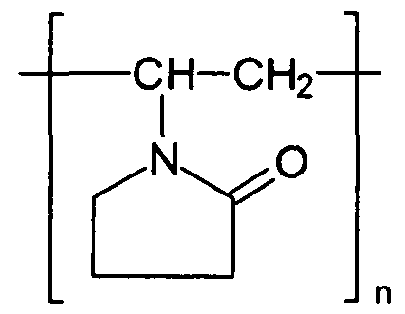
Handelsbezeichnungen Antaron V216 und Antaron V220 bei der GAF Chemicals Cooperation erhältlich sind.
Ebenfalls vorteilhaft sind weitere polymere Filmbildner, wie beispielsweise Natriumpoly- stryrensulfonat, welches unter der Handelsbezeichnung Flexan 130 bei der National Starch and Chemical Corp. erhältlich ist, und/oder Polyisobuten, erhältlich bei Rewo unter der Handelsbezeichnung Rewopal PIB1000. Weitere geeignete Polymere sind z.B. Polyacrylamide (Seppigel 305), Polyvinylalkohole, PVP, PVP / VA Copolymere, Polyglycole, Acry- lat/Octylacralymid Copolymer (Dermacryl 79). Ebenfalls vorteilhaft ist die Verwendung von Hydriertem Rizinusöl Dimerdilinoleat (CAS 646054-62-8, INCI Hydrogenated Castor OiI Dimer
Dilinoleate), das bei der Firma Kokyu Alcohol Kogyo unter dem Namen Risocast DA-H erworben werden kann oder aber auch PPG-3 Benzylethermyristat (CAS 403517-45-3), das unter dem Handelsnamen Crodamol STS bei der Firma Croda Chemicals erworben werden kann.
Die Ölphase der erfindungsgemäßen Zubereitung wird vorteilhaft gewählt aus der Gruppe der polaren Öle, beispielsweise aus der Gruppe der Lecithine und der Fettsäuretriglyceride, namentlich der Triglycerinester gesättigter und/oder ungesättigter, verzweigter und/oder unverzweigter Alkancarbonsäuren einer Kettenlänge von 8 bis 24, insbesondere 12 bis 18 C-Atomen. Die Fettsäuretriglyceride können beispielsweise vorteilhaft gewählt werden aus der Gruppe der synthetischen, halbsynthetischen und natürlichen Öle, wie z. B. Cocoglycerid, Olivenöl, Sonnenblumenöl, Jojobaöl, Sojaöl, Erdnußöl, Rapsöl, Mandelöl, Palmöl, Kokosöl, Rizinusöl, Weizenkeimöl, Traubenkemöl, Distelöl, Nachtkerzenöl, Macadamianußöl und dergleichen mehr.
Erfindungsgemäß vorteilhaft sind ferner z. B. natürliche Wachse tierischen und pflanzlichen Ursprungs, wie beispielsweise Bienenwachs und andere Insektenwachse sowie Beerenwachs, Sheabutter und/oder Lanolin (Wollwachs).
Weitere vorteilhafte polare Ölkomponenten können im Sinne der vorliegenden Erfindung ferner gewählt werden aus der Gruppe der Ester aus gesättigten und/oder ungesättigten, verzweigten und/oder unverzweigten Alkancarbonsäuren einer Kettenlänge von 3 bis 30 C-Atomen und gesättigten und/oder ungesättigten, verzweigten und/oder unverzweigten Alkoholen einer Kettenlänge von 3 bis 30 C-Atomen sowie aus der Gruppe der Ester aus aromatischen Carbonsäuren und gesättigten und/oder ungesättigten, verzweigten und/oder unverzweigten Alkoholen einer Kettenlänge von 3 bis 30 C-Atomen. Solche Esteröle können dann vorteilhaft gewählt werden aus der Gruppe Phenethylbenzoat, 2-Phenylethylbenzoat, Isopropyl Lauroyl Sarkosinat, Phenyl Trimethicon, Cyclomethicon, Dibutyladipat, Octylpalmitat, Octylcocoat, Octylisostearat, Octyldodeceylmyristat, Octyldodekanol, Cetearylisononanoat, Isopropylmyristat, Isopropylpalmi- tat, Isopropylstearat, Isopropyloleat, n-Butylstearat, n-Hexyllaurat, n-Decyloleat, Isooctylstearat, Isononylstearat, Isononylisononanoat, 2-Ethylhexylpalmitat, 2-Ethylhexyllaurat, 2-Hexyldecyl- stearat, 2-Octyldodecylpalmitat, Stearylheptanoat, Oleyloleat, Oleylerucat, Erucyloleat, Eru- cylerucat, Tridecylstearat, Tridecyltrimellitat, sowie synthetische, halbsynthetische und natürliche Gemische solcher Ester, wie z. B. Jojobaöl.
Ferner kann die Ölphase vorteilhaft gewählt werden aus der Gruppe der Dialkylether und
Dialkylcarbonate, vorteilhaft sind z. B. Dicaprylylether (Cetiol OE) und/oder Dicaprylylcarbonat, beispielsweise das unter der Handelsbezeichnung Cetiol CC bei der Fa. Cognis erhältliche.
Es ist ferner bevorzugt, das oder die Ölkomponenten aus der Gruppe Isoeikosan, Neopen- tylglykoldiheptanoat, Propylenglykoldicaprylat/dicaprat, Caprylic/Capric/Diglycerylsuccinat, Butylenglykol Dicaprylat/Dicaprat, Ci2-i3-Alkyllactat, Di-Ci2-i3-Alkyltartrat, Triisostearin, Dipenta- erythrityl Hexacaprylat/Hexacaprat, Propylenglykolmonoisostearat, Tricaprylin, Dimethyliso- sorbid. Es ist insbesondere vorteilhaft, wenn die Ölphase der erfindungsgemäßen Formulierungen einen Gehalt an C12-i5-Alkylbenzoat aufweist oder vollständig aus diesem besteht.
Vorteilhafte Ölkomponenten sind ferner z. B. Butyloctylsalicylat (beispielsweise das unter der Handelsbezeichnung Hallbrite BHB bei der Fa. CP Hall erhältliche), Tridecylsalicylat (welches unter der Handelsbezeichnung Cosmacol ESI bei der Fa. Sasol erhältlich ist), C12-C15 Alkylsalicylat (unter der Handelsbezeichnung Dermol NS bei der Fa. Alzo erhältlich), Hexa- decylbenzoat und Butyloctylbenzoat und Gemische davon (Hallstar AB) und/oder Diethylhexyl- naphthalat (Hallbrite TQ oder Corapan TQ von Symrise).
Auch beliebige Abmischungen solcher Öl- und Wachskomponenten sind vorteilhaft im Sinne der vorliegenden Erfindung einzusetzen.
Ferner kann die Ölphase ebenfalls vorteilhaft auch unpolare Öle enthalten, beispielsweise solche, welche gewählt werden aus der Gruppe der verzweigten und unverzweigten Kohlen- Wasserstoffe und -wachse, insbesondere Mineralöl, Vaseline (Petrolatum), Paraffinöl, Squalan und Squalen, Polyolefine, hydrogenierte Polyisobutene, C13-16 Isoparaffin und Isohexadecan. Unter den Polyolefinen sind Polydecene die bevorzugten Substanzen.
Es ist erfindungsgemäß bevorzugt, wenn die erfindungsgemäße Zubereitung keine Fettalkohole enthält.
Die erfindungsgemäßen Zubereitungen können ferner vorteilhaft eine oder mehrere Substanzen aus der folgenden Gruppe der Siloxanelastomere enthalten, beispielsweise um die Wasserfestigkeit und/oder den Lichtschutzfaktor der Produkte zu steigern: (a) Siloxanelastomere, welche die Einheiten R2SiO und RSiO1ι5 und/oder R3SiOo15 und/oder SiO2 enthalten, wobei die einzelnen Reste R jeweils unabhängig voneinander Wasserstoff, C1-24-Alkyl (wie beispielsweise Methyl, Ethyl, Propyl) oder Aryl (wie beispielsweise Phenyl oder ToIyI), Alkenyl (wie beispielsweise Vinyl) bedeuten und das Gewichtsverhältnis der Einheiten R2SiO zu RSiO115 aιjs dem Bereich von 1 : 1 bis 30 : 1 gewählt wird;
(b) Siloxanelastomere, welche in Silikonöl unlöslich und quellfähig sind, die durch die Additionsreaktion eines Organopolysiloxans (1 ), das siliciumbebuπdenen Wasserstoff
enthält, mit einem Organopolysiloxan (2), das ungesättigte aliphatische Gruppen enthält, erhältlich sind, wobei die verwendeten Mengenateile so gewählt werden, dass die Menge des Wasserstoffes des Organopolysiloxans (1) oder der ungesättigten aliphatischen Gruppen des Organopolysiloxans (2)
• im Bereich von 1 bis 20 mol-% liegt, wenn das Organopolysiloxan nicht zyklisch ist und
• im Bereich von 1 bis 50 mol-% liegt, wenn das Organopolysiloxan zyklisch ist.
Vorteilhaft im Sinne der vorliegenden Erfindung liegen das oder die Siloxanelastomere in Form sphärischer Puder oder in Form von Gelen vor.
Erfindungsgemäß vorteilhafte in Form sphärischer Puder vorliegende Siloxanelastomere sind die mit der INCI-Bezeichnung Dimethicone / Vinyl Dimethicone Crosspolymer, beispielsweise das von DOW CORNING unter der Handelsbezeichnungen DOW CORNING 9506 Powder erhältliche.
Besonders bevorzugt ist es, wenn das Siloxanelastomer in Kombination mit Ölen aus Kohlenwasserstoffen tierischer und/oder pflanzlicher Herkunft, synthetischen Ölen, synthetischen Estern, synthetischen Ethern oder deren Gemischen verwendet wird.
Besonders vorteilhafte Zubereitungen werden ferner erhalten, wenn als Zusatz- oder Wirkstoffe Antioxidantien eingesetzt werden. Erfindungsgemäß enthalten die Zubereitungen vorteilhaft eines oder mehrere Antioxidantien. Als günstige, aber dennoch fakultativ zu verwendende Antioxidantien können alle für kosmetische Anwendungen geeigneten oder gebräuchlichen Antioxidantien verwendet werden.
Die Menge der Antioxidantien (eine oder mehrere Verbindungen) in den Zubereitungen beträgt vorzugsweise 0,001 bis 30 Gew.-%, besonders bevorzugt 0,05 bis 20 Gew.-%, insbesondere 0,1 bis 10 Gew.-%, bezogen auf das Gesamtgewicht der Zubereitung.
Die kosmetischen Zubereitungen gemäß der Erfindung können kosmetische Hilfsstoffe enthalten, wie sie üblicherweise in solchen Zubereitungen verwendet werden, z. B. Konservierungsmittel, Konservierungshelfer, Komplexbildner, Bakterizide, Parfüme, Substanzen zum Verhindern oder Steigern des Schäumens, Farbstoffe, Pigmente, die eine färbende Wirkung haben, Verdickungsmittel, anfeuchtende und/oder feuchhaltende Substanzen,
Füllstoffe, die das Hautgefühl verbessern, Fette, Öle, Wachse oder andere übliche Bestandteile einer kosmetischen oder dermatologischen Formulierung wie Alkohole, Polyole, Polymere, Schaumstabilisatoren, Elektrolyte, organische Lösungsmittel oder Silikonderivate.
Vorteilhaft im Sinne der vorliegenden Erfindung sind Zubereitungen zur Pflege der Haut: sie können dem kosmetischen Lichtschutz, ferner als Schminkprodukt in der dekorativen Kosmetik dienen.
Entsprechend ihrem Aufbau können kosmetische Zusammensetzungen im Sinne der vorliegenden Erfindung, beispielsweise verwendet werden als Hautschutzcreme, Tages- oder Nachtcreme usw. Es ist gegebenenfalls möglich und vorteilhaft, die erfindungsgemäßen Zusammensetzungen als Grundlage für pharmazeutische Formulierungen zu verwenden.
Erfindungsgemäß ist insbesondere die Verwendung der erfindungsgemäßen Zubereitung zum Schutz vor Hautalterung (insbesondere zum Schutz vor UV-bedingter Hautalterung) sowie als Sonnenschutzmittel.
Erfindungsgemäß vorteilhaft weist die erfindungsgemäße Zubereitung einen pH-Wert von 5 bis 8 auf. Dieser kann durch die herkömmlichen Säuren, Basen und Puffersysteme eingestellt werden.
Erfindungsgemäß ist die Verwendung der Zubereitung in kosmetischen Sprays (insbesondere Sonnenschutzmitteln).
Erfindungsgemäß ist die Verwendung für die Tränkung kosmetischer Tücher.
Erfindungsgemäß ist auch das Verfahren zur Herstellung der kosmetischen Zubereitung, welches dadurch gekennzeichnet ist, dass das Decylglycosid zunächst zusammen mit dem organischen UV-Filter aus der Gruppe 2,4,6-Tris-(biphenyl)-1,3,5-triazin; 2,2'-Methylen-bis-(6- (2H-benzotriazol-2-yl)-4-(1 ,1 ,3,3-tetramethylbutyl)-phenol) und/oder dem Hydroxyphenyl Benzophenon der Verbindung 1 zu einer wässrigen Vor-Dispersion vereinigt wird, die nach der Homogenisation in die abgekühlte fertige Emulsion (welche die restlichen Bestandteile der Zubereitung enthält) unter Rühren zugegeben wird.
Die Stabilität der kosmetischen Emulsionen, die nach diesem Verfahren hergestellt wird, ist besonders gut.
Vergleichsversuch

Beispiele
Die nachfolgenden Beispiele sollen die vorliegende Erfindung verdeutlichen, ohne sie einzuschränken. Alle Mengenangaben, Anteile und Prozentanteile sind, soweit nicht anders angegeben, auf das Gewicht und die Gesamtmenge bzw. auf das Gesamtgewicht der Zube- reitungen bezogen.


Claims
1. Kosmetische Zubereitung enthaltend eine Kombination aus a) Natriumstearylglutamat, b) Decylglucosid. 2. Kosmetische Zubereitung nach Anspruch 1 , dadurch gekennzeichnet, dass die
Zubereitung den UV-Filter 2,4,6-Tris-(biphenyl)-1, 3, 5-triazin enthält. 3. Kosmetische Zubereitung nach einem der vorhergehenden Ansprüche, dadurch gekennzeichnet, dass die Zubereitung den UV-Filter 2,
2'-Methylen-bis-(6-(2H- benzotriazol-2-yl)-4-(1 ,1 ,3,
3-tetramethylbutyl)-phenol) enthält.
4. Kosmetische Zubereitung nach einem der vorhergehenden Ansprüche, dadurch gekennzeichnet, dass die Zubereitung das Hydroxyphenyl Benzophenon mit der folgenden Struktur enthält:

5. Kosmetische Zubereitung nach einem der vorhergehenden Ansprüche, dadurch gekennzeichnet, dass die Zubereitung UV-Filter enthält, gewählt aus der Gruppe der
Verbindungen Phenylen-1 ,4-bis-(2-benzimidazyl)-3,3'-5,5'-tetrasulfonsäuresalze; 2- Phenylbenzimidazol-5-sulfonsäuresalze; 1 ,4-di(2-oxo-10-Sulfo-3-bornylidenmethyl)- Benzol und dessen Salze; 4-(2-Oxo-3-bornylidenmethyl)benzolsulfonsäuresalze; 2- Methyl-5-(2-oxo-3-bornylidenmethyl)sulfonsäuresalze; 2-(2H-benzotriazol-2-yl)-4-methyl- 6-[2-methyl-3-[1,3,3,3-tetramethyl-1-[(trimethylsilyl)oxy]disiloxanyl]propyl]-phenol; 3-(4-
Methylbenzyliden)campher; 3-Benzylidencampher; Ethylhexylsalicylat; Terephthalidendicamphersulfonsäure; 4-(Dimethylamino)-benzoesäure(2-ethylhexyl)- ester; 4-(Dimethylamino)benzoesäure-amylester; 4-Methoxybenzalmalon-säuredi(2- ethylhexyl)ester; 4-Methoxyzimtsäure(2-ethylhexyl)ester; 4-Methoxyzimtsäureiso- amylester; 2-Hydroxy-4-methoxybenzophenon, 2-Hydroxy-4-methoxy-4'- methylbenzophenon; 2,2'-Dihydroxy-4-methoxybenzophenon; 2-(4'-Diethylamino-2'- hydoxybenzoyl)-benzoesäurehexylester, 4-(tert.-Butyl)-4'-methoxydibenzoylmethan; Homomenthylsalicylat; 2-Ethylhexyl-2-hydroxybenzoat; 2-Ethylhexyl-2-cyano-3,3-di- phenylacrylat; Dimethicodiethylbenzalmalonat; 2-Ethylhexyl-2-cyano-3,3-diphenylacrylat; 3-(4-(2,2-bis Ethoxycarbonylvinyl)-phenoxy)propenyl)-methoxysiloxan / Dimethylsiloxan
- Copolymer; Dioctylbutylamidotriazon (INCI: Diethylhexyl-Butamidotriazone); 2,4-bis-[5- 1(dimethylpropyl)benzoxazol-2-yl-(4-phenyl)-imino]-6-(2-ethylhexyl)-imino-1 ,3,5-triazin mit der (CAS Nr. 288254-16-0); 4,4l,4"-(1 ,3,5-Triazin-2l4,6-triyltriimino)-tris-benzoe- säure-tris(2-ethylhexylester) (auch: 2,4,6-Tris-[anilino-(p-carbo-2'-ethyl-1 '-hexyloxy)]- 1 ,3,5-triazin (INCI: Ethylhexyl Triazone); 2,4-Bis-{[4-(2-ethyl-hexyloxy)-2-hydroxy]- phenyl}-6-(4-methoxyphenyl)-1 ,3,5-triazin; 4-(tert.-Butyl)-4'-methoxydibenzoylmethan; 4- Dicyanomethylen-2,6-dimethyl-1 ,4-dihydropyridin-N-(ethyloxysulfatestersalze), Titandioxid; Zinkoxid; Polysiloxancopolymer mit einer statistischen Verteilung gemäß der Formel:

6. Kosmetische Zubereitung nach einem der vorhergehenden Ansprüche, dadurch gekennzeichnet, dass die Zubereitung Sucrosepolystearat enthält.
7. Kosmetische Zubereitung nach einem der vorhergehenden Ansprüche, dadurch gekennzeichnet, dass die Zubereitung vernetztes Polymer aus Vinylpyrrolidon und Acrylsäure enthält.
8. Kosmetische Zubereitung nach einem der vorhergehenden Ansprüche, dadurch gekennzeichnet, dass die Zubereitung hydriertes Polyisobuten enthält.
9. Kosmetische Zubereitung nach einem der vorhergehenden Ansprüche, dadurch gekennzeichnet, dass die Zubereitung Natriumstearylglutamat in einer Konzentration von 0,05 bis 2 Gewichts-%, bezogen auf das Gesamtgewicht der Zubereitung, enthält.
10. Kosmetische Zubereitung nach einem der vorhergehenden Ansprüche, dadurch gekennzeichnet, dass die Zubereitung eine oder mehrere Verbindungen gewählt aus der Gruppe der Verbindungen alpha-Liponsäure, Folsäure, Phytoen, D-Biotin, Coenzym
Q10, alpha-Glucosylrutin, Carnitin, Carnosin, natürliche und/oder synthetische Isoflavo- noide, Flavonoide, Kreatin, Kreatinin, Taurin, ß-Alanin, Tocopherylacetat, Dihydroxyaceton; 8-Hexadecen-1 ,16-dicarbonsäure, Glycerylglycose, (2- Hydroxyethyl)harnstoff, Vitamin E bzw. seine Derivate und/oder Licochalcon A enthält.
11. Verfahren zur Herstellung einer kosmetischen Zubereitung nach einem der vorhergehenden Ansprüche, welches dadurch gekennzeichnet ist, dass das Decylglycosid zunächst zusammen mit dem organischen UV-Filter aus der Gruppe 2,4,6-Tris-(biphenyl)-1 ,3,5-triazin; 2,2'-Methylen-bis-(6-(2H-benzotriazol-2-yl)-4-(1.1.3,3- tetramethylbutyl)-phenol) und/oder dem Hydroxyphenyl Benzophenon der Verbindung 1 zu einer wässrigen Vor-Dispersion vereinigt wird, die nach der Homogenisation in die abgekühlte fertige Emulsion (welche die restlichen Bestandteile der Zubereitung enthält) unter Rühren zugegeben wird.
Priority Applications (2)
| Application Number | Priority Date | Filing Date | Title |
|---|---|---|---|
| EP08801506.0A EP2185123B2 (de) | 2007-08-09 | 2008-08-01 | Neue kosmetische emulgatorkombination |
| ES08801506T ES2562079T5 (es) | 2007-08-09 | 2008-08-01 | Nueva combinación emulsionante cosmética |
Applications Claiming Priority (2)
| Application Number | Priority Date | Filing Date | Title |
|---|---|---|---|
| DE102007038414A DE102007038414A1 (de) | 2007-08-09 | 2007-08-09 | Neue kosmetische Emulgatorkombination |
| DE102007038414.0 | 2007-08-09 |
Publications (2)
| Publication Number | Publication Date |
|---|---|
| WO2009018974A2 true WO2009018974A2 (de) | 2009-02-12 |
| WO2009018974A3 WO2009018974A3 (de) | 2010-05-27 |
Family
ID=39968140
Family Applications (1)
| Application Number | Title | Priority Date | Filing Date |
|---|---|---|---|
| PCT/EP2008/006366 Ceased WO2009018974A2 (de) | 2007-08-09 | 2008-08-01 | Neue kosmetische emulgatorkombination |
Country Status (4)
| Country | Link |
|---|---|
| EP (1) | EP2185123B2 (de) |
| DE (1) | DE102007038414A1 (de) |
| ES (1) | ES2562079T5 (de) |
| WO (1) | WO2009018974A2 (de) |
Cited By (3)
| Publication number | Priority date | Publication date | Assignee | Title |
|---|---|---|---|---|
| DE102010044682A1 (de) * | 2010-09-08 | 2012-03-08 | Beiersdorf Ag | Emulsion mit UV-Schutz |
| EP2907497A2 (de) | 2014-02-18 | 2015-08-19 | Beiersdorf AG | Kosmetische Emulgatorkombination |
| US9453172B2 (en) | 2007-09-12 | 2016-09-27 | Dsm Ip Assets B.V. | Biological oils and production and uses thereof |
Families Citing this family (1)
| Publication number | Priority date | Publication date | Assignee | Title |
|---|---|---|---|---|
| DE102014220456A1 (de) * | 2014-10-09 | 2016-04-14 | Beiersdorf Ag | Emulsionsspray |
Citations (5)
| Publication number | Priority date | Publication date | Assignee | Title |
|---|---|---|---|---|
| EP0766959A1 (de) | 1995-10-04 | 1997-04-09 | L'oreal | Kosmetische Sonnenschutzmittel enthaltend TiO2 Nanopigmenten und eine Acylaminosäure |
| US20020054861A1 (en) | 1999-12-16 | 2002-05-09 | Robert Schmucker | Method of preparing particularly skin-compatible cosmetic or dematological cleansing preparations |
| DE10246160A1 (de) | 2002-10-02 | 2004-04-15 | Beiersdorf Ag | Mit Befeuchtungsmitteln getränkte Tücher, welche Zinkoxid einer Partikelgröße von 20 bis 100 mm enthalten |
| US20050201967A1 (en) | 2003-12-03 | 2005-09-15 | Beiersdorf Ag | Surfactant-containing preparation with licochalcone A |
| DE102004031668A1 (de) | 2004-06-25 | 2006-02-09 | Beiersdorf Ag | Produkte zur Reinigung der Intimregion |
Family Cites Families (13)
| Publication number | Priority date | Publication date | Assignee | Title |
|---|---|---|---|---|
| DE19960766A1 (de) * | 1999-12-16 | 2001-06-21 | Beiersdorf Ag | Verfahren zur Herstellung besonders hautverträglicher kosmetischer oder dermatologischer Reinigungszubereitungen |
| FR2819245B1 (fr) † | 2001-01-09 | 2004-11-26 | Clariant | Nouvelles suspensions aqueuses de silice colloidale anionique de ph neutre et leur procede de preparation, et leurs applications |
| EP1569893B1 (de) † | 2002-12-12 | 2012-04-11 | Basf Se | Aminosubstituierte hydroxyphenylbenzophenonderivate |
| FR2872034B1 (fr) † | 2004-06-28 | 2006-09-01 | Oreal | Emulsion huile-dans-eau fine contenant un filtre hydrophile |
| DE102004047288B4 (de) † | 2004-09-27 | 2006-11-30 | Beiersdorf Ag | Lichtschutzemulsion mit hohem Anteil an Lichtschutzfilterpigmenten |
| DE102004050239A1 (de) * | 2004-10-15 | 2005-05-12 | Clariant Gmbh | Kosmetische, pharmazeutische und dermatologische Mittel |
| DE102005052173A1 (de) † | 2005-11-02 | 2007-05-03 | Cognis Ip Management Gmbh | Kosmetische Ölkörper |
| EP1764080A1 (de) † | 2005-09-15 | 2007-03-21 | Cognis IP Management GmbH | Kosmetische Ölkörper |
| DE102005063062A1 (de) * | 2005-12-29 | 2007-07-05 | Henkel Kgaa | Synergistische Proteinhydrolysat-Kombinationen zur Behandlung reifer Haut |
| DE102006004955A1 (de) * | 2006-01-25 | 2007-07-26 | Henkel Kgaa | Kosmetischer Stift auf Basis einer Öl-in-Wasser-Dispersion/Emulsion |
| DE102006020380A1 (de) * | 2006-04-28 | 2007-10-31 | Henkel Kgaa | Verfahren zur Herstellung von Öl-in-Wasser-Emulsionen zur Roll-on-Applikation |
| DE102007005186A1 (de) † | 2007-01-29 | 2008-07-31 | Merck Patent Gmbh | Partikuläres UV-Schutzmittel |
| DE102007027781A1 (de) † | 2007-06-16 | 2008-12-18 | Cognis Ip Management Gmbh | Kosmetische und/oder pharmazeutische Emulsionen mit verbesserten sensorischen Eigenschaften |
-
2007
- 2007-08-09 DE DE102007038414A patent/DE102007038414A1/de not_active Withdrawn
-
2008
- 2008-08-01 WO PCT/EP2008/006366 patent/WO2009018974A2/de not_active Ceased
- 2008-08-01 EP EP08801506.0A patent/EP2185123B2/de active Active
- 2008-08-01 ES ES08801506T patent/ES2562079T5/es active Active
Patent Citations (5)
| Publication number | Priority date | Publication date | Assignee | Title |
|---|---|---|---|---|
| EP0766959A1 (de) | 1995-10-04 | 1997-04-09 | L'oreal | Kosmetische Sonnenschutzmittel enthaltend TiO2 Nanopigmenten und eine Acylaminosäure |
| US20020054861A1 (en) | 1999-12-16 | 2002-05-09 | Robert Schmucker | Method of preparing particularly skin-compatible cosmetic or dematological cleansing preparations |
| DE10246160A1 (de) | 2002-10-02 | 2004-04-15 | Beiersdorf Ag | Mit Befeuchtungsmitteln getränkte Tücher, welche Zinkoxid einer Partikelgröße von 20 bis 100 mm enthalten |
| US20050201967A1 (en) | 2003-12-03 | 2005-09-15 | Beiersdorf Ag | Surfactant-containing preparation with licochalcone A |
| DE102004031668A1 (de) | 2004-06-25 | 2006-02-09 | Beiersdorf Ag | Produkte zur Reinigung der Intimregion |
Cited By (6)
| Publication number | Priority date | Publication date | Assignee | Title |
|---|---|---|---|---|
| US9453172B2 (en) | 2007-09-12 | 2016-09-27 | Dsm Ip Assets B.V. | Biological oils and production and uses thereof |
| DE102010044682A1 (de) * | 2010-09-08 | 2012-03-08 | Beiersdorf Ag | Emulsion mit UV-Schutz |
| EP2907497A2 (de) | 2014-02-18 | 2015-08-19 | Beiersdorf AG | Kosmetische Emulgatorkombination |
| DE102014202956A1 (de) | 2014-02-18 | 2015-08-20 | Beiersdorf Ag | Kosmetische Emulgatorkombination |
| EP2907497A3 (de) * | 2014-02-18 | 2015-09-09 | Beiersdorf AG | Kosmetische Emulgatorkombination |
| EP2907497B1 (de) | 2014-02-18 | 2019-07-03 | Beiersdorf AG | Kosmetische Emulgatorkombination |
Also Published As
| Publication number | Publication date |
|---|---|
| ES2562079T5 (es) | 2019-11-08 |
| ES2562079T3 (es) | 2016-03-02 |
| EP2185123A2 (de) | 2010-05-19 |
| WO2009018974A3 (de) | 2010-05-27 |
| EP2185123B1 (de) | 2015-11-18 |
| EP2185123B2 (de) | 2019-03-20 |
| DE102007038414A1 (de) | 2009-02-12 |
Similar Documents
| Publication | Publication Date | Title |
|---|---|---|
| EP2185125B1 (de) | Kosmetische emulgatorkombination | |
| EP1923045B1 (de) | Kosmetische Formulierung mit Glucosylglyceriden und Puderrohstoffen | |
| EP2907497B1 (de) | Kosmetische Emulgatorkombination | |
| WO2009124631A2 (de) | Zubereitung für die tagespflege | |
| EP2276452B1 (de) | Parfümierte kosmetische zubereitung mit citronellol | |
| EP2094234B1 (de) | Kosmetische formulierung mit glucosylglyceriden und harnstoff | |
| EP1857096B1 (de) | Sprühbares Sonnenschutzmittel | |
| WO2008058680A1 (de) | Kosmetische formulierung mit glucosylglyceriden und hautaufhellern | |
| EP2276450B1 (de) | Getönte zubereitung für die tagespflege | |
| EP2185123B2 (de) | Neue kosmetische emulgatorkombination | |
| DE202006011472U1 (de) | Kosmetische Formulierung mit (2-Hydroxyethyl)harnstoff und einem Wirkstoffkomplex | |
| WO2008058715A1 (de) | Kosmetische formulierung mit glucosylglyceriden und kationischen emulgatoren | |
| DE102007017434A1 (de) | Emulsion mit Octanoat | |
| EP2099426A1 (de) | Kosmetische formulierung mit glucosylglyceriden und parfümstoffen | |
| DE102007017536B4 (de) | Octanoat-haltige Emulsion | |
| WO2008058717A2 (de) | Kosmetische zubereitungen mit hohem glyceringehalt | |
| DE102006034530A1 (de) | Kosmetische Formulierung mit (2-Hydroxyethyl)harnstoff und Glucosylglyceriden | |
| DE102006034531A1 (de) | Kosmetische Zubereitung mit (2-Hydroxyethyl)harnstoff und Myristylmyristat | |
| DE202006011833U1 (de) | Kosmetische Formulierung mit Alpha-Benzoylzimtsäurenitril und polaren Ölen | |
| WO2008058720A1 (de) | Kosmetische zubereitungen mit guerbetalkoholen | |
| DE102006034529A1 (de) | Kosmetische Formulierung mit (2-Hydroxyethyl)harnstoff und Hyaluronsäure | |
| DE202006011832U1 (de) | Kosmetische Emulsion mit Alpha-Benzoylzimtsäurenitril | |
| WO2008058718A1 (de) | Emulsion mit dimethyldioctadecylammoniumchlorid |
Legal Events
| Date | Code | Title | Description |
|---|---|---|---|
| 121 | Ep: the epo has been informed by wipo that ep was designated in this application |
Ref document number: 08801506 Country of ref document: EP Kind code of ref document: A2 |
|
| WWE | Wipo information: entry into national phase |
Ref document number: 2008801506 Country of ref document: EP |
|
| NENP | Non-entry into the national phase |
Ref country code: DE |