WO2009102143A2 - Lactobacillus plantarum bls41 issu du kimchi et son utilisation - Google Patents
Lactobacillus plantarum bls41 issu du kimchi et son utilisation Download PDFInfo
- Publication number
- WO2009102143A2 WO2009102143A2 PCT/KR2009/000636 KR2009000636W WO2009102143A2 WO 2009102143 A2 WO2009102143 A2 WO 2009102143A2 KR 2009000636 W KR2009000636 W KR 2009000636W WO 2009102143 A2 WO2009102143 A2 WO 2009102143A2
- Authority
- WO
- WIPO (PCT)
- Prior art keywords
- bls41
- lactobacillus plantarum
- culture
- present
- kctc
- Prior art date
- Legal status (The legal status is an assumption and is not a legal conclusion. Google has not performed a legal analysis and makes no representation as to the accuracy of the status listed.)
- Ceased
Links
Images

Classifications
-
- A—HUMAN NECESSITIES
- A23—FOODS OR FOODSTUFFS; TREATMENT THEREOF, NOT COVERED BY OTHER CLASSES
- A23K—FODDER
- A23K10/00—Animal feeding-stuffs
- A23K10/10—Animal feeding-stuffs obtained by microbiological or biochemical processes
- A23K10/16—Addition of microorganisms or extracts thereof, e.g. single-cell proteins, to feeding-stuff compositions
- A23K10/18—Addition of microorganisms or extracts thereof, e.g. single-cell proteins, to feeding-stuff compositions of live microorganisms
-
- C—CHEMISTRY; METALLURGY
- C12—BIOCHEMISTRY; BEER; SPIRITS; WINE; VINEGAR; MICROBIOLOGY; ENZYMOLOGY; MUTATION OR GENETIC ENGINEERING
- C12N—MICROORGANISMS OR ENZYMES; COMPOSITIONS THEREOF; PROPAGATING, PRESERVING, OR MAINTAINING MICROORGANISMS; MUTATION OR GENETIC ENGINEERING; CULTURE MEDIA
- C12N1/00—Microorganisms; Compositions thereof; Processes of propagating, maintaining or preserving microorganisms or compositions thereof; Processes of preparing or isolating a composition containing a microorganism; Culture media therefor
- C12N1/20—Bacteria; Culture media therefor
- C12N1/205—Bacterial isolates
-
- C—CHEMISTRY; METALLURGY
- C12—BIOCHEMISTRY; BEER; SPIRITS; WINE; VINEGAR; MICROBIOLOGY; ENZYMOLOGY; MUTATION OR GENETIC ENGINEERING
- C12N—MICROORGANISMS OR ENZYMES; COMPOSITIONS THEREOF; PROPAGATING, PRESERVING, OR MAINTAINING MICROORGANISMS; MUTATION OR GENETIC ENGINEERING; CULTURE MEDIA
- C12N1/00—Microorganisms; Compositions thereof; Processes of propagating, maintaining or preserving microorganisms or compositions thereof; Processes of preparing or isolating a composition containing a microorganism; Culture media therefor
- C12N1/20—Bacteria; Culture media therefor
-
- A—HUMAN NECESSITIES
- A01—AGRICULTURE; FORESTRY; ANIMAL HUSBANDRY; HUNTING; TRAPPING; FISHING
- A01N—PRESERVATION OF BODIES OF HUMANS OR ANIMALS OR PLANTS OR PARTS THEREOF; BIOCIDES, e.g. AS DISINFECTANTS, AS PESTICIDES OR AS HERBICIDES; PEST REPELLANTS OR ATTRACTANTS; PLANT GROWTH REGULATORS
- A01N63/00—Biocides, pest repellants or attractants, or plant growth regulators containing microorganisms, viruses, microbial fungi, animals or substances produced by, or obtained from, microorganisms, viruses, microbial fungi or animals, e.g. enzymes or fermentates
- A01N63/20—Bacteria; Substances produced thereby or obtained therefrom
-
- C—CHEMISTRY; METALLURGY
- C12—BIOCHEMISTRY; BEER; SPIRITS; WINE; VINEGAR; MICROBIOLOGY; ENZYMOLOGY; MUTATION OR GENETIC ENGINEERING
- C12N—MICROORGANISMS OR ENZYMES; COMPOSITIONS THEREOF; PROPAGATING, PRESERVING, OR MAINTAINING MICROORGANISMS; MUTATION OR GENETIC ENGINEERING; CULTURE MEDIA
- C12N1/00—Microorganisms; Compositions thereof; Processes of propagating, maintaining or preserving microorganisms or compositions thereof; Processes of preparing or isolating a composition containing a microorganism; Culture media therefor
-
- C—CHEMISTRY; METALLURGY
- C12—BIOCHEMISTRY; BEER; SPIRITS; WINE; VINEGAR; MICROBIOLOGY; ENZYMOLOGY; MUTATION OR GENETIC ENGINEERING
- C12R—INDEXING SCHEME ASSOCIATED WITH SUBCLASSES C12C - C12Q, RELATING TO MICROORGANISMS
- C12R2001/00—Microorganisms ; Processes using microorganisms
- C12R2001/01—Bacteria or Actinomycetales ; using bacteria or Actinomycetales
- C12R2001/225—Lactobacillus
- C12R2001/25—Lactobacillus plantarum
Definitions
- the present invention provides a novel Lactobacillus Planta room (Lactobacillus plantarum) relates to BLS41, more specifically, kimchi origin having antifungal and antibacterial activity of new Lactobacillus Planta room (Lactobacillus plantarum) BLS41 and uses thereof identified from Kimchi It is about.
- Fusarium sp. is parasitic on various host crops (vegetables, flowers, field crops, etc.), causing catheterization and root rot. It is also accompanied by corruption. Fuzium's transmission forms thick-film spores, which are durable survival organs, and are contaminated with other crops or fields through crops, management devices, and soil. In the case of airborne terrestrial pests, by spraying chemicals that inhibit pathogens on the surface of the host crop, the pathogens can be killed or prevented by controlling the infection. However, after infection, the infection site is the root, and since all infectious agents are present in the soil, it is difficult to stop the root infection because it is difficult to reach the deep soil area even if the toffee is applied to the toffee.
- strains that are highly antagonistic against Fujurium are selected from microorganisms that have high affinity with the roots of crops. After seeding, the seed or young seedlings are inoculated into the root of the host crop, or the same species of microflora, such as Fuzium, which has no pathogenicity, is inoculated into the cut or root of the host crop as a vaccine. It is to suppress the infection of Fujurium by creating a resistant material.
- pesticides In order to prevent the development of plant diseases, pesticides should be sprayed in a wide space, unlike the method of administering drugs such as injections or doses applied to animals, so if the toxicity is strong, it will adversely affect not only the sprayer but also people and plants and animals exposed to the spreading environment. Can cause. In order to prevent this, it is required to develop an eco-friendly biological agent that is harmless to animals and plants and has an effect of preventing plant diseases.
- Lactobacillus can grow rapidly at 20 ⁇ 40 °C regardless of anaerobic or aerobic conditions, produce lactic acid to increase acidity, produce hydrogen peroxide, and inhibit the growth of pathogenic microorganisms. It is known to prevent. It also improves the self-defense ability of plants by producing various bioactive substances, antibacterial substances and anticancer substances, and in the case of livestock, it shows the effect of stabilizing intestinal microorganisms, increasing feed efficiency and increasing disease resistance.
- lactic acid bacteria in order to industrially use lactic acid bacteria correctly, it is generally necessary to go through a procedure to clearly understand and evaluate from a scientific standpoint what the use is and what characteristics are suitable for use, rather than judging by a list of positive effects. Only with such a procedure can you ensure the uniformity of the product and the reproducibility of the effects.
- the present inventors have made intensive efforts to separate lactic acid bacteria that can be used to treat and prevent ornamental plant diseases against 150 species of lactic acid bacteria derived from kimchi.
- Lactobacillus plantarum BLS41 was screened and phytopathogenic fungi and Salmonella containing fuzium by the strain and cultures of the strain ( Samonella The present invention was completed by confirming that the growth of pathogenic bacteria containing c.
- Another object of the present invention is to provide an antifungal agent comprising Lactobacillus plantarum or its culture.
- Still another object of the present invention is to provide a composition for inhibiting infection of pathogenic bacteria comprising Lactobacillus plantarum or its culture.
- Still another object of the present invention is to provide a food having an infection suppression effect of a pathogenic bacterium comprising Lactobacillus plantarum or its culture.
- Still another object of the present invention is to provide a feed additive having an inhibitory effect on infection of pathogenic bacteria including Lactobacillus plantarum or its culture.
- Another object of the present invention is to provide a use of Lactobacillus plantarum to inhibit the infection of fungi or pathogenic bacteria.
- the present invention provides a kimchi-derived Lactobacillus plantarum BLS41 KCTC 11056BP having the activity of antifungal and antipathogenic bacteria.
- the present invention also provides an antifungal agent comprising Lactobacillus plantarum BLS41 KCTC 11056BP or a culture thereof.
- the present invention also provides a composition for inhibiting infection of pathogenic bacteria comprising Lactobacillus plantarum BLS41 KCTC11056BP or a culture thereof.
- the present invention also provides a food having an infection suppression effect of a pathogenic bacterium comprising Lactobacillus plantarum BLS41 KCTC11056BP or a culture thereof.
- the present invention also provides a feed additive having an infection inhibitory effect of a pathogenic bacterium comprising Lactobacillus plantarum BLS41 KCTC11056BP or a culture thereof.
- the present invention also provides a method for treating or preventing fungal or pathogenic fungal infections using Kimchi-derived Lactobacillus plantarum BLS41 KCTC 11056BP.
- the present invention also provides the use of Kimchi-derived Lactobacillus plantarum BLS41 KCTC 11056BP to inhibit the infection of fungi or pathogens.
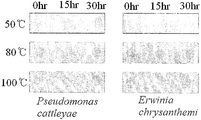
- Lactobacillus plantarum The antimicrobial activity of BLS41 culture supernatant is shown by temperature and heat treatment time.
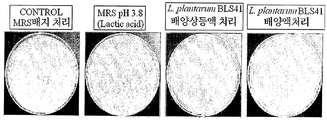
- Lactobacillus plantarum BLS41 culture stock solution Lactobacillus plantarum BLS41 culture stock solution, supernatant culture solution and heat-treated culture solution were shown to be antimicrobial effect on the plant disease obtained after spraying the phalaenopsis egg is observed.
- Figure 3 shows the antimicrobial activity against Fusarium of Lactobacillus plantarum BLS41 and its culture.
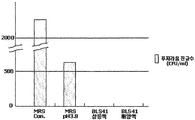
- FIG. 4 is a graph showing the antimicrobial activity of Lactobacillus plantarum BLS41 against Fusarium .
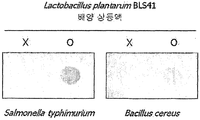
- 5 is other pathogenic bacteria in addition to phalaenopsis pathogenic bacteria ( Salmonella typhimurium, Bacillus cereus Lactobacillus plantarum for It shows the antibacterial effect of BLS41.
- the present invention relates to kimchi-derived Lactobacillus plantarum BLS41 (KCTC 11056BP) having antifungal and antipathogenic fungal activity.
- Lactobacillus plantarum Lactobacillus ( Lactobacillus Gram-positive bacteria belonging to the genus) are commonly found in kimchi or sauerkraut, pickles, pickled olives, and lactic acid bacteria found in plant fermented foods and some cheeses. .
- microorganism of the present invention is known as a bacterium which is usually identified as a lactic acid bacterium isolated from kimchi, it is obvious to those skilled in the art that it is harmless to the human body even when ingested as live bacteria.
- the microorganisms of the present invention have antibacterial and antifungal effects on pathogenic bacteria and fungi, as well as their growth inhibitory activity.
- the antibacterial and antifungal activity is characterized by stable under high temperature, and inhibiting the growth of the Phalaenopsis causative agents of ewiniah causing galbanbyeong and yeonbubyeong (Erwinia) and Pseudomonas (Pseudomonas), and further causative agents of Puja causing conduit disease and root rot Fusarium also exhibits growth inhibition.
- the action was found to be better than the therapeutic effect preventive effect.
- the present invention relates to an antifungal agent having the effect of inhibiting the growth or killing of pathogenic bacteria or fungi containing Lactobacillus plantarum BLS41 (KCTC 11056BP) or its culture.
- the antifungal agent of the present invention exhibits antifungal action against the genus Fusarium , which causes catheter diseases and root rot, Erwinia genus and Pseudomonas genus, which cause branching and soft disease in phalaenopsis.
- antifungal agent refers to an agent having an effect that helps plant cultivation when used in soil or plants as a microbial agent due to the effect of the activity of certain useful microorganisms contained in the agent.
- the antifungal agent of the present invention contains live bacteria, and may optionally further include a carrier which adsorbs the cells, an organonutrient for activating the cells, and other auxiliary agents.
- the benefits of antifungal preparations include promoting organic degradation, suppressing disruption, improving soil physicochemical properties, improving soil microbiality, improving crop productivity, improving crop quality, cleaning up pollutants, and preventing pests.
- the microbial preparation using the Lactobacillus plantarum BLS41 of the present invention has the effect of strengthening the growth of plants and preventing pests.
- Antifungal formulations containing the Lactobacillus plantarum BLS41 culture of the present invention are liquid suspensions, stabilized liquid suspensions, emulsified concentrated formulations, capsules, water or hydrous powders, aqueous flowables, dry flowables ), Hydrate granules, and hydrate dispersed granules, and the like, and the state of the microbial agent is well known to those skilled in the art.
- the strains or cultures of the present invention can be used with fertilizers, nutrient soils or side sprays, and other formulation states are apparent to those of ordinary skill in the art.
- Antifungal preparations containing Lactobacillus plantarum BLS41 of the present invention can be used to obtain an antimicrobial effect when cultivating rice, vegetables, fruit trees, flowers, grass, east and west eggs, more preferably antibacterial when cultivating east and west eggs Can be used to get the effect.
- the antifungal preparations of the present invention can be treated on soil, seeds, seedlings or plants, and can be applied by passive means or by mechanical means using injectors or tillage systems. Since it is difficult to predict when the cultivation may occur during the cultivation, in order to use the microorganism preparation containing the strain of the present invention to maintain the desired cultivation state, the spraying may be repeated several times depending on the cultivation time and the cultivation environment. desirable. Typically, the application time of lactic acid bacteria for plant growth and pest prevention is 5-20 days, and the more preferable application time is 7-15 days. If possible, it is very important to spray before exposure to pests. Methods used in plants to obtain the effect of antifungal agents can be readily performed by one of ordinary skill in the art.
- the antifungal and antipathogenic fungal activity of the present invention has the same efficacy in Lactobacillus plantarum BLS41 and cultures derived from the strain.
- culture may be a culture stock solution including the cells, and may also be a culture supernatant or a dilution of the culture medium from which the cells are removed.
- the composition of the culture may further include not only components necessary for normal lactic acid bacteria culture, but also components that synergistically act on the growth of lactic acid bacteria, and thus the composition may be easily selected by those skilled in the art. Can be.
- the strain and culture may be prepared as an antimicrobial composition having an antifungal agent for agriculture, a composition for inhibiting infection of pathogenic bacteria, a pathogenic bacterium and a fungus containing food and animal feed additives, but not limited thereto.
- the antifungal agent of the present invention may include only cultures from which microorganisms have been removed, and the cells may be mixed or manufactured to contain only cells.
- the Lactobacillus plantarum BLS41 of the present invention can be cultured in large quantities through conventional liquid or solid phase culture techniques.
- the antifungal agent and composition of the present invention may be composed of the feeder cells or spores of the strain, or a mixture of feeder cells and spores, and the cells are collected in the state of lyophilization, lyophilization, and hydration for preparation. can do.
- Lactobacillus Planta room BLS41 of the present invention exhibit antibacterial activity against pathogenic bacteria in the intestinal Salmonella (Salmonella) and in Bacillus (Bacillus) to cause food poisoning. Also, in addition to antibacterial activity against plant pathogenic fungi.
- the present invention relates to a composition for inhibiting infection of pathogenic bacteria containing Lactobacillus plantarum BLS41 (KCTC 11056BP) or a culture thereof.
- KCTC 11056BP Lactobacillus plantarum BLS41
- the microorganism may be administered orally, parenterally, or physically in contact with the skin or mucous membranes together with a pharmaceutically acceptable carrier substrate or nutrient, or directly to the intestine via a tube or catheter.
- the composition may be prepared in tablets, capsules, implants, suppositories, powders, solutions, gels, liquid strain suspensions, and the like.
- the dosage of the composition can be determined by one of ordinary skill in the art, and can be determined by a person skilled in the art, such as formulating method, mode of administration, age, weight, sex, morbidity, food, time of administration, route of administration, rate of excretion and response of the recipient. Various factors may also be prescribed.
- the present invention relates to a food (or health functional food) having an inhibitory effect on infection of pathogenic bacteria containing Lactobacillus plantarum BLS41 (KCTC 11056BP) or a culture thereof.
- KCTC 11056BP Lactobacillus plantarum BLS41
- Lactobacillus acts as a beneficial bacterium for the human body by lactic acid fermentation to prevent food spoilage, secrete antibacterial substances to suppress food poisoning bacteria.
- Food produced using lactic acid bacteria fermentation include cheese, buttermilk, yogurt, whey (whey), etc.
- functional yogurt by lactic acid bacteria fermentation is also widely marketed.
- lactic acid bacteria fermented foods are manufactured as tablets, granules, and the like as commercial preparations and are commercially available as food compositions and pharmaceuticals.
- the food is refrigerated, frozen or long-term dairy products, such as milk, milk powder, yogurt, kefir, ice cream, milkshake, cheese, cream, curd, fermented milk, and milk is added
- fermented foods may include soy milk, fermented grain products, patient diets and infant diets, etc.
- starch such as milk or cereals Substrates included are preferred for strain culture.
- the food may include one or more health functional compositions or nutritional components composed of fat, protein, carbohydrates, dietary fiber, minerals and vitamins, etc., together with the microorganism of the present invention.
- the dietary fiber is known as a prebiotic substrate that promotes the cleavage of lactic acid bacteria, so it may enter the body and play an important role in the formation and maintenance of colonies in the intestine. It may be included in the composition so that it can be administered later or simultaneously.
- the present invention relates to a feed additive having an inhibitory effect on infection of pathogenic bacteria containing Lactobacillus plantarum BLS41 (KCTC 11056BP) or a culture thereof.
- KCTC 11056BP Lactobacillus plantarum BLS41
- Feed composition of the present invention can be prepared in the form of fermented feed, compound feed, pellet form and silage and the like.
- the effective amount of Lactobacillus plantarum BLS41 added to the feed is at least 10 6 / g, preferably at least 10 8 / g.
- Fermented feed can be prepared by fermenting an organic material by adding various microorganisms or enzymes, compounded feed can be prepared by mixing a variety of general feed and microorganism of the present invention.
- Pellet-type feed may be prepared by applying heat and pressure to the blended feed and the like in a pellet machine, silage can be prepared by fermenting the green feed to the microorganism according to the present invention.
- Wet fermented feed collects and transports organic materials such as food waste, mixes excipients for sterilization process and moisture control at a certain ratio, and then ferments at a temperature suitable for fermentation for 24 hours or more to control about 70% water content.
- Fermented dry irrigated feed may be prepared by adjusting the wet fermented feed to contain about 30% to 40% of water by further drying.
- the antifungal agent of the present invention may additionally include a probiotic strain in addition to a pharmaceutically necessary composition or a composition suitable for food.
- the amount of Lactobacillus plantarum BLS41 included in the pharmaceutical carrier or food may be about 10 5 cfu / g to about 10 11 cfu / g, preferably 10 6 cfu / g to about 10 10 cfu / g, Most preferably from 10 7 cfu / g to about 10 9 cfu / g.
- it is preferable to administer in a viable state it may be killed before ingestion, or may be administered in an attenuation state.
- the sterilization process through heat treatment may be additionally performed.
- the amount of strain and the daily intake required to have the minimum efficacy may vary depending on the body or health of the intake user, but in general, 10 6 to 10 12 cfu / day is preferred, most preferably 10 7 to 10 10 cfu / It is day.
- the culture supernatant can be used to determine the degree of antimicrobial efficacy using techniques commonly used in the art, and thus the dosage can be determined.
- Pathogens causing phalaenopsis in plant diseases are cultivated from Korea Agricultural Microorganisms Preservation Center, incubated and spread evenly with smears on LB plates, and the culture supernatants of 150 kinds of lactic acid bacteria isolated from kimchi are dipped onto the plates. Incubated. After incubation, lactic acid bacteria having antimicrobial activity against branched and soft disease bacteria were selected for 1 week based on whether or not clear zones were generated on LB plates.
- PCR was performed using a pair of primers as a template with lysates of 10 9 lactic acid bacteria cells to obtain a DNA fragment of 1439 bp, which was cloned into a pGEM-Teasy vector (Promega) and analyzed for nucleotide sequence ( SEQ ID NO: 3).
- the selected lactic acid bacteria were confirmed to have a homology of 99% or more with Lactobacillus plantarum (Accession No DQ239696.1), Lactobacillus plantarum (Accession No AL935261.1).
- Lactobacillus Lactobacillus plantarum BLS41 having an antimicrobial activity against phalaenopsis pathogenic bacteria was named, and deposited on KCTC as of December 26, 2006 (KCTC 11056BP).
- Lactobacillus plantarum BLS41 culture supernatant inhibited the growth of pathogenic bacteria (FIG. 1).
- the Lactobacillus plantarum BLS41 culture solution had a heat-stable secretory component that inhibited the growth of two pathogenic bacteria of the phalaenopsis.
- Example 3 Inhibitory Effect of Lactobacillus Plantarum BLS41 on Plant Disease Symptoms
- Lactobacillus plantarum BLS41 culture stock solution the culture supernatant from which the cells were removed after the culture, and the heat treated culture supernatant were sprayed onto the spliced egg showing the disease and then sealed to observe the change.
- the experimental control group was dried and deciduous in the experimental control group, but in the group treated with the Lactobacillus plantarum BLS41 culture stock, the culture supernatant and the heat treated culture supernatant, the leaves showed deciduous leaves, but were no longer deciduous. It was confirmed that the disease was alleviated without progress (FIG. 2).
- Phytopathogenic Fuzarium (KACC 41090) was distributed from the Korea Agricultural Microbial Resources Center and the antifungal activity of Lactobacillus plantarum BLS41 was observed.
- Lactobacillus plantarum BLS41 culture supernatant was added to Salmonella typhimurium KCTC 1925 and Bacillus cereus KCTC 3624 on a solid medium smeared on the pathogen.
- the growth inhibition effect was observed.
- FIG. 5 it was confirmed that the growth inhibitory effect (FIG. 5).
- the novel Lactobacillus plantarum BLS41 (KCTC 11056BP) having kimchi-derived antifungal and antipathogenic bacterium activity according to the present invention is isolated from kimchi, so stability is ensured even when ingested live bacteria.
- KCTC 11056BP kimchi-derived antifungal and antipathogenic bacterium activity
Landscapes
- Life Sciences & Earth Sciences (AREA)
- Engineering & Computer Science (AREA)
- Health & Medical Sciences (AREA)
- Chemical & Material Sciences (AREA)
- Zoology (AREA)
- Biotechnology (AREA)
- Wood Science & Technology (AREA)
- Microbiology (AREA)
- Organic Chemistry (AREA)
- General Health & Medical Sciences (AREA)
- Bioinformatics & Cheminformatics (AREA)
- Genetics & Genomics (AREA)
- Virology (AREA)
- Biochemistry (AREA)
- Biomedical Technology (AREA)
- General Engineering & Computer Science (AREA)
- Tropical Medicine & Parasitology (AREA)
- Medicinal Chemistry (AREA)
- Pest Control & Pesticides (AREA)
- Environmental Sciences (AREA)
- Dentistry (AREA)
- Polymers & Plastics (AREA)
- Plant Pathology (AREA)
- Agronomy & Crop Science (AREA)
- Molecular Biology (AREA)
- Food Science & Technology (AREA)
- Animal Husbandry (AREA)
- Physiology (AREA)
- Agricultural Chemicals And Associated Chemicals (AREA)
- Fodder In General (AREA)
- Medicines Containing Material From Animals Or Micro-Organisms (AREA)
Abstract
La présente invention concerne un nouveau lactobacillus plantarum BLS41 issu du kimchi, et plus particulièrement, un lactobacillus plantarum BLS41 présentant des activités antifongique et antibactérienne, ainsi que son utilisation. Le lactobacillus plantarum BLS41 de la présente invention ou des substances inhibant la croissance d'agents pathogènes produites à partir de la bactérie d'acide lactique sont appropriés pour une utilisation dans un agent microbien inoffensif pour l'environnement et dans une alimentation sans antibiotique.
Applications Claiming Priority (2)
| Application Number | Priority Date | Filing Date | Title |
|---|---|---|---|
| KR1020080012264A KR100986306B1 (ko) | 2008-02-11 | 2008-02-11 | 김치유래 락토바실러스 플란타룸 bls41 및 그 용도 |
| KR10-2008-0012264 | 2008-02-11 |
Publications (2)
| Publication Number | Publication Date |
|---|---|
| WO2009102143A2 true WO2009102143A2 (fr) | 2009-08-20 |
| WO2009102143A3 WO2009102143A3 (fr) | 2009-11-05 |
Family
ID=40957373
Family Applications (1)
| Application Number | Title | Priority Date | Filing Date |
|---|---|---|---|
| PCT/KR2009/000636 Ceased WO2009102143A2 (fr) | 2008-02-11 | 2009-02-11 | Lactobacillus plantarum bls41 issu du kimchi et son utilisation |
Country Status (2)
| Country | Link |
|---|---|
| KR (1) | KR100986306B1 (fr) |
| WO (1) | WO2009102143A2 (fr) |
Cited By (5)
| Publication number | Priority date | Publication date | Assignee | Title |
|---|---|---|---|---|
| WO2013174792A1 (fr) * | 2012-05-21 | 2013-11-28 | Dupont Nutrition Biosciences Aps | Souches de lactobacillus aux propriétés antifongiques |
| KR101495309B1 (ko) * | 2012-12-31 | 2015-02-26 | 대상에프앤에프 주식회사 | 김치에서 분리한 신규 유산균 균주 락토바실러스 플란타륨 dsr kf12 및 이를 포함하는 조성물 |
| KR102021558B1 (ko) * | 2018-03-16 | 2019-09-16 | (주)네오리젠바이오텍 | 신규한 유산균, 이를 포함하는 조성물 및 건강기능식품 |
| WO2021040086A1 (fr) * | 2019-08-28 | 2021-03-04 | (주)네오리젠바이오텍 | Nouvelles bactéries d'acide lactique, et composition et aliment fonctionnel pour la santé, chacun d'eux les comprenant |
| CN118126906A (zh) * | 2024-05-06 | 2024-06-04 | 暨南大学 | 植物乳植杆菌培养基及其应用 |
Families Citing this family (6)
| Publication number | Priority date | Publication date | Assignee | Title |
|---|---|---|---|---|
| KR101215422B1 (ko) * | 2010-04-06 | 2013-01-09 | 우리생명과학(주) | 신균주 페디오코쿠스 에시딜락티시 wrl-1 및 이의 용도 |
| KR101348435B1 (ko) * | 2011-12-08 | 2014-01-09 | 영남대학교 산학협력단 | 항진균 활성을 가진 락토바실러스 플란타룸 yml007 및 이의 용도 |
| JP5921347B2 (ja) * | 2012-06-13 | 2016-05-24 | オリエンタル酵母工業株式会社 | ラクトバチルス・プランタラムの新菌株及びその用途 |
| KR101638984B1 (ko) * | 2013-05-29 | 2016-07-13 | 바이오제닉스코리아 주식회사 | 나노형 김치 유산균 |
| KR101500974B1 (ko) * | 2014-08-22 | 2015-03-13 | (주) 에이투젠 | 항염증 및 대사성질환 개선 효능을 가지는 락토바실러스 플란타룸 hac01 균주 및 이의 용도 |
| KR102444742B1 (ko) | 2020-10-13 | 2022-09-19 | 일동바이오사이언스(주) | 작물의 깨씨무늬병 완화를 위한 조성물 |
Family Cites Families (3)
| Publication number | Priority date | Publication date | Assignee | Title |
|---|---|---|---|---|
| KR100435505B1 (ko) * | 2002-03-27 | 2004-06-10 | (주) 피엘바이오 | 김치에서 분리된 헬리코박터 필로리의 부착과성장억제성능 락토바실러스 플란타룸 |
| KR100583836B1 (ko) * | 2004-07-20 | 2006-05-26 | 주식회사 콧데 | 천연 항균제 및 이를 포함하는 조성물 |
| KR100720815B1 (ko) * | 2005-01-04 | 2007-05-21 | 장해춘 | 김치에서 분리한 항진균 활성 락토바실러스 플란타룸 af1과상기균의 배양액을 이용한 제품 |
-
2008
- 2008-02-11 KR KR1020080012264A patent/KR100986306B1/ko not_active Expired - Fee Related
-
2009
- 2009-02-11 WO PCT/KR2009/000636 patent/WO2009102143A2/fr not_active Ceased
Cited By (6)
| Publication number | Priority date | Publication date | Assignee | Title |
|---|---|---|---|---|
| WO2013174792A1 (fr) * | 2012-05-21 | 2013-11-28 | Dupont Nutrition Biosciences Aps | Souches de lactobacillus aux propriétés antifongiques |
| US11224244B2 (en) | 2012-05-21 | 2022-01-18 | Dupont Nutrition Biosciences Aps | Strains of Lactobacillus with antifungal properties |
| KR101495309B1 (ko) * | 2012-12-31 | 2015-02-26 | 대상에프앤에프 주식회사 | 김치에서 분리한 신규 유산균 균주 락토바실러스 플란타륨 dsr kf12 및 이를 포함하는 조성물 |
| KR102021558B1 (ko) * | 2018-03-16 | 2019-09-16 | (주)네오리젠바이오텍 | 신규한 유산균, 이를 포함하는 조성물 및 건강기능식품 |
| WO2021040086A1 (fr) * | 2019-08-28 | 2021-03-04 | (주)네오리젠바이오텍 | Nouvelles bactéries d'acide lactique, et composition et aliment fonctionnel pour la santé, chacun d'eux les comprenant |
| CN118126906A (zh) * | 2024-05-06 | 2024-06-04 | 暨南大学 | 植物乳植杆菌培养基及其应用 |
Also Published As
| Publication number | Publication date |
|---|---|
| WO2009102143A3 (fr) | 2009-11-05 |
| KR20090086796A (ko) | 2009-08-14 |
| KR100986306B1 (ko) | 2010-10-07 |
Similar Documents
| Publication | Publication Date | Title |
|---|---|---|
| WO2009102143A2 (fr) | Lactobacillus plantarum bls41 issu du kimchi et son utilisation | |
| US9096836B2 (en) | Liquid microorganism consortia formulation | |
| US11406672B2 (en) | Probiotic composition and feed additive | |
| CN108603161B (zh) | 具有有益活性的芽孢杆菌菌株及制剂 | |
| US10251920B2 (en) | Bacteria isolated from fresh honey or the honey producing tract of honey bees | |
| KR20010031131A (ko) | 돼지의 경쟁적 독점 배양 | |
| KR20150132723A (ko) | 신규한 바실러스 벨레젠시스 cjbv 및 이를 포함하는 항균 조성물 | |
| CN103648285B (zh) | 抗菌剂及其制造方法 | |
| JP2019533009A (ja) | 非病原性の細菌を含む組成物並びに真菌性、細菌性及びウィルス性疾患から植物及び動物宿主を保護する方法 | |
| DE3873402T2 (de) | Antimikrobische zubereitungen. | |
| KR101819344B1 (ko) | 바실러스 사펜시스 균주 kacc 92124p 및 이를 포함하는 조성물 | |
| JP2010136668A (ja) | 新規シュウドモナス属細菌 | |
| KR101702499B1 (ko) | 신규한 유산균, 진균 및 세균을 포함하는 사료첨가용 조성물 | |
| CN109517759A (zh) | 一种适于肠道定植、提高消化率和免疫力的枯草芽孢杆菌制剂及其制备方法 | |
| JP3768694B2 (ja) | Bacillussp代謝物含有材の製造方法 | |
| KR100371503B1 (ko) | 양식어류의 사료첨가제용 미생물 제제 및 그 제조방법 | |
| KR101818859B1 (ko) | 슈도모나스 아조토포만스 균주 kacc 92125p 및 이를 포함하는 조성물 | |
| KR20180131948A (ko) | 슈도모나스 익스트리모리엔탈리스 균주 kacc 81047bp 및 이를 포함하는 조성물 | |
| CN100413958C (zh) | 具有抗肠道致病菌和抗氧化特性的双歧杆菌及其用途 | |
| CA2238559A1 (fr) | Bactericide selectif s'attaquant aux bacteries responsables des toxi-infections alimentaires | |
| CN107156546A (zh) | 一种捕食螨优质种源的伺料 | |
| CN112772658A (zh) | 一种粉红螺旋聚孢霉孢子与啶酰菌胺的杀菌组合物及应用 | |
| Benbelkhir et al. | New bioinsecticide based on Streptomyces griseoflavus PAL114 for biocontrol of black bean aphid Aphis fabae | |
| CN114601018A (zh) | 饲料添加剂、制备方法及其在预防畜禽肠道感染中的应用 | |
| KR101939080B1 (ko) | 슈도모나스 베로니 균주 kacc 81051bp 및 이를 포함하는 조성물 |
Legal Events
| Date | Code | Title | Description |
|---|---|---|---|
| 121 | Ep: the epo has been informed by wipo that ep was designated in this application |
Ref document number: 09711499 Country of ref document: EP Kind code of ref document: A2 |
|
| NENP | Non-entry into the national phase |
Ref country code: DE |
|
| 122 | Ep: pct application non-entry in european phase |
Ref document number: 09711499 Country of ref document: EP Kind code of ref document: A2 |