WO2009125819A1 - アミノ糖化合物及びその生産方法 - Google Patents
アミノ糖化合物及びその生産方法 Download PDFInfo
- Publication number
- WO2009125819A1 WO2009125819A1 PCT/JP2009/057292 JP2009057292W WO2009125819A1 WO 2009125819 A1 WO2009125819 A1 WO 2009125819A1 JP 2009057292 W JP2009057292 W JP 2009057292W WO 2009125819 A1 WO2009125819 A1 WO 2009125819A1
- Authority
- WO
- WIPO (PCT)
- Prior art keywords
- compound
- salt
- streptomyces
- formula
- amylase
- Prior art date
- Legal status (The legal status is an assumption and is not a legal conclusion. Google has not performed a legal analysis and makes no representation as to the accuracy of the status listed.)
- Ceased
Links
Images





Classifications
-
- C—CHEMISTRY; METALLURGY
- C07—ORGANIC CHEMISTRY
- C07H—SUGARS; DERIVATIVES THEREOF; NUCLEOSIDES; NUCLEOTIDES; NUCLEIC ACIDS
- C07H15/00—Compounds containing hydrocarbon or substituted hydrocarbon radicals directly attached to hetero atoms of saccharide radicals
- C07H15/20—Carbocyclic rings
- C07H15/203—Monocyclic carbocyclic rings other than cyclohexane rings; Bicyclic carbocyclic ring systems
-
- A—HUMAN NECESSITIES
- A61—MEDICAL OR VETERINARY SCIENCE; HYGIENE
- A61P—SPECIFIC THERAPEUTIC ACTIVITY OF CHEMICAL COMPOUNDS OR MEDICINAL PREPARATIONS
- A61P1/00—Drugs for disorders of the alimentary tract or the digestive system
- A61P1/16—Drugs for disorders of the alimentary tract or the digestive system for liver or gallbladder disorders, e.g. hepatoprotective agents, cholagogues, litholytics
-
- A—HUMAN NECESSITIES
- A61—MEDICAL OR VETERINARY SCIENCE; HYGIENE
- A61P—SPECIFIC THERAPEUTIC ACTIVITY OF CHEMICAL COMPOUNDS OR MEDICINAL PREPARATIONS
- A61P3/00—Drugs for disorders of the metabolism
- A61P3/04—Anorexiants; Antiobesity agents
-
- A—HUMAN NECESSITIES
- A61—MEDICAL OR VETERINARY SCIENCE; HYGIENE
- A61P—SPECIFIC THERAPEUTIC ACTIVITY OF CHEMICAL COMPOUNDS OR MEDICINAL PREPARATIONS
- A61P3/00—Drugs for disorders of the metabolism
- A61P3/08—Drugs for disorders of the metabolism for glucose homeostasis
- A61P3/10—Drugs for disorders of the metabolism for glucose homeostasis for hyperglycaemia, e.g. antidiabetics
-
- A—HUMAN NECESSITIES
- A61—MEDICAL OR VETERINARY SCIENCE; HYGIENE
- A61P—SPECIFIC THERAPEUTIC ACTIVITY OF CHEMICAL COMPOUNDS OR MEDICINAL PREPARATIONS
- A61P43/00—Drugs for specific purposes, not provided for in groups A61P1/00-A61P41/00
-
- C—CHEMISTRY; METALLURGY
- C08—ORGANIC MACROMOLECULAR COMPOUNDS; THEIR PREPARATION OR CHEMICAL WORKING-UP; COMPOSITIONS BASED THEREON
- C08B—POLYSACCHARIDES; DERIVATIVES THEREOF
- C08B37/00—Preparation of polysaccharides not provided for in groups C08B1/00 - C08B35/00; Derivatives thereof
- C08B37/006—Heteroglycans, i.e. polysaccharides having more than one sugar residue in the main chain in either alternating or less regular sequence; Gellans; Succinoglycans; Arabinogalactans; Tragacanth or gum tragacanth or traganth from Astragalus; Gum Karaya from Sterculia urens; Gum Ghatti from Anogeissus latifolia; Derivatives thereof
- C08B37/0063—Glycosaminoglycans or mucopolysaccharides, e.g. keratan sulfate; Derivatives thereof, e.g. fucoidan
-
- C—CHEMISTRY; METALLURGY
- C08—ORGANIC MACROMOLECULAR COMPOUNDS; THEIR PREPARATION OR CHEMICAL WORKING-UP; COMPOSITIONS BASED THEREON
- C08B—POLYSACCHARIDES; DERIVATIVES THEREOF
- C08B37/00—Preparation of polysaccharides not provided for in groups C08B1/00 - C08B35/00; Derivatives thereof
- C08B37/006—Heteroglycans, i.e. polysaccharides having more than one sugar residue in the main chain in either alternating or less regular sequence; Gellans; Succinoglycans; Arabinogalactans; Tragacanth or gum tragacanth or traganth from Astragalus; Gum Karaya from Sterculia urens; Gum Ghatti from Anogeissus latifolia; Derivatives thereof
- C08B37/0063—Glycosaminoglycans or mucopolysaccharides, e.g. keratan sulfate; Derivatives thereof, e.g. fucoidan
- C08B37/0066—Isolation or extraction of proteoglycans from organs
-
- C—CHEMISTRY; METALLURGY
- C12—BIOCHEMISTRY; BEER; SPIRITS; WINE; VINEGAR; MICROBIOLOGY; ENZYMOLOGY; MUTATION OR GENETIC ENGINEERING
- C12N—MICROORGANISMS OR ENZYMES; COMPOSITIONS THEREOF; PROPAGATING, PRESERVING, OR MAINTAINING MICROORGANISMS; MUTATION OR GENETIC ENGINEERING; CULTURE MEDIA
- C12N1/00—Microorganisms; Compositions thereof; Processes of propagating, maintaining or preserving microorganisms or compositions thereof; Processes of preparing or isolating a composition containing a microorganism; Culture media therefor
- C12N1/20—Bacteria; Culture media therefor
-
- C—CHEMISTRY; METALLURGY
- C12—BIOCHEMISTRY; BEER; SPIRITS; WINE; VINEGAR; MICROBIOLOGY; ENZYMOLOGY; MUTATION OR GENETIC ENGINEERING
- C12N—MICROORGANISMS OR ENZYMES; COMPOSITIONS THEREOF; PROPAGATING, PRESERVING, OR MAINTAINING MICROORGANISMS; MUTATION OR GENETIC ENGINEERING; CULTURE MEDIA
- C12N1/00—Microorganisms; Compositions thereof; Processes of propagating, maintaining or preserving microorganisms or compositions thereof; Processes of preparing or isolating a composition containing a microorganism; Culture media therefor
- C12N1/20—Bacteria; Culture media therefor
- C12N1/205—Bacterial isolates
-
- C—CHEMISTRY; METALLURGY
- C12—BIOCHEMISTRY; BEER; SPIRITS; WINE; VINEGAR; MICROBIOLOGY; ENZYMOLOGY; MUTATION OR GENETIC ENGINEERING
- C12P—FERMENTATION OR ENZYME-USING PROCESSES TO SYNTHESISE A DESIRED CHEMICAL COMPOUND OR COMPOSITION OR TO SEPARATE OPTICAL ISOMERS FROM A RACEMIC MIXTURE
- C12P19/00—Preparation of compounds containing saccharide radicals
- C12P19/26—Preparation of nitrogen-containing carbohydrates
-
- A—HUMAN NECESSITIES
- A61—MEDICAL OR VETERINARY SCIENCE; HYGIENE
- A61K—PREPARATIONS FOR MEDICAL, DENTAL OR TOILETRY PURPOSES
- A61K38/00—Medicinal preparations containing peptides
-
- C—CHEMISTRY; METALLURGY
- C12—BIOCHEMISTRY; BEER; SPIRITS; WINE; VINEGAR; MICROBIOLOGY; ENZYMOLOGY; MUTATION OR GENETIC ENGINEERING
- C12R—INDEXING SCHEME ASSOCIATED WITH SUBCLASSES C12C - C12Q, RELATING TO MICROORGANISMS
- C12R2001/00—Microorganisms ; Processes using microorganisms
- C12R2001/01—Bacteria or Actinomycetales ; using bacteria or Actinomycetales
- C12R2001/465—Streptomyces
Definitions
- the present invention relates to an amino sugar compound useful as an active ingredient of a pharmaceutical composition, particularly a pharmaceutical composition for treating diabetes.
- the polysaccharide ingested by the diet is partially digested by saliva-derived ⁇ -amylase in the oral cavity and stomach, and then mostly digested by pancreatic ⁇ -amylase in the duodenum and jejunum. It becomes sugar. These are hydrolyzed into monosaccharides by glucosidases typified by maltase and sucrase localized in the microintestinal microvillous membrane, and the monosaccharides are absorbed from the intestinal tract.
- the absorbed monosaccharide moves into the blood, and when the blood sugar level rises, insulin is secreted from the pancreas, which lowers the sugar release from the liver and increases the sugar uptake into muscle and adipose tissue The blood glucose level is lowered and its homeostasis is maintained.
- insulin secretion insufficiency
- insulin resistance insulin action deficiency
- postprandial hyperglycemia is important for the suppression of the onset and progression of diabetic complications.
- Postprandial hyperglycemia has been shown to be an independent risk factor for cardiovascular death, even if mild.
- the importance and necessity of pharmacotherapy for postprandial hyperglycemia for example, a state in which the blood glucose level at 2 hours after meal is 200 mg / dL or more has been recognized.
- glucosidase inhibitors that are digestive enzyme inhibitors are actually used in clinical practice (for example, acarbose and voglibose).
- side effects such as digestive symptoms (abdominal bloating, diarrhea, loose stool, flatulence, feces, etc.) due to glucosidase inhibition are a problem.
- ⁇ -amylase inhibitors may be mentioned as different postprandial hyperglycemia treatments (digestive enzyme inhibitors).
- glucosidase is inhibited, a large amount of undigested oligosaccharide (disaccharide) is produced as a by-product, but even when ⁇ -amylase is inhibited, the amount of undigested oligosaccharide (disaccharide) produced as a by-product is small. It is expected to inhibit sugar absorption without causing gastrointestinal symptoms.
- Patent Document 2 a malto-oligosaccharide compound having hexahydro-3,5,6-trihydroxy-1H-azepine as an essential skeleton has been reported (Patent Document 2).
- n 0 to 3
- X represents H or a hydrophobic group.
- Non-patent Document 1 a compound having a reducing sugar structure at the terminal where n is 0 to 3 in the following formula is known (Non-patent Document 1).
- a compound useful as an active ingredient of a pharmaceutical composition particularly a pharmaceutical composition for treating diabetes.
- the present invention relates to a compound comprising a compound of formula (I) or a salt thereof, a composition containing a compound of formula (I) or a salt thereof, a compound of formula (I) or a salt thereof, and an excipient. And a method for producing a compound of formula (I) or a salt thereof.
- n 4, 5 or 6.
- the present invention can also be obtained by culturing a microorganism belonging to the genus Streptomyces that produces a compound having an ⁇ -amylase inhibitory activity or a salt thereof in a medium and recovering the compound or the salt thereof from the culture solution. Further, a compound having an ⁇ -amylase inhibitory activity and a molecular formula of C 94 H 156 N 4 O 64 , C 113 H 187 N 5 O 76 , or C 132 H 218 N 6 O 88 (provided that a reducing sugar is present at the terminal) Except for compounds having a structure) or a salt thereof, and a composition containing these compounds or a salt thereof.
- the present invention relates to a pharmaceutical composition for preventing or treating diabetes containing a compound of formula (I) or a salt thereof, that is, a therapeutic agent for diabetes containing a compound of formula (I) or a salt thereof.
- the present invention also relates to the use of a compound of formula (I) or a salt thereof for the manufacture of a pharmaceutical composition for the prevention or treatment of diabetes, or a compound of formula (I) for the prevention or treatment of diabetes or
- the present invention relates to the use of a salt thereof, and a method for preventing or treating diabetes, which comprises administering to a patient an effective amount of a compound of formula (I) or a salt thereof.
- the compound of formula (I) or a salt thereof has an ⁇ -amylase inhibitory action and can be used as a preventive or therapeutic agent for diabetes, obesity, NASH (nonalcoholic steatohepatitis) and the like. Further, unlike glucosidase inhibitors, it is expected that sugar absorption inhibition can be exerted without causing digestive symptoms such as diarrhea.
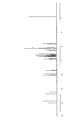
- FIG. 1 shows the 1 H-NMR spectrum of Compound A.
- FIG. 2 shows the 13 C-NMR spectrum of Compound A.
- FIG. 3 shows the 1 H-NMR spectrum of Compound B.
- FIG. 4 shows the 13 C-NMR spectrum of Compound B.
- FIG. 5 shows the 1 H-NMR spectrum of Compound C.
- FIG. 6 shows the 13 C-NMR spectrum of compound C.
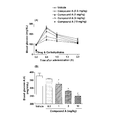
- FIG. 7 shows the blood glucose elevation inhibitory action of Compound A when loaded with carbohydrate.
- (A) shows changes over time in blood glucose level, and (B) shows AUC.
- FIG. 8 shows the insulin elevation inhibitory effect of Compound A upon carbohydrate loading.
- (A) shows time course of insulin level, and (B) shows AUC.
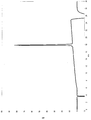
- FIG. 9 shows the HPLC chromatogram of Compound A.
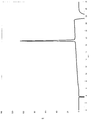
- FIG. 10 shows the HPLC chromatogram of Compound B.
- FIG. 11 shows the HPLC chromatogram of Compound C.
- Geometric isomers may exist in the compounds of formula (I).
- the compound of the formula (I) may be described in only one form of an isomer, but the present invention also includes other isomers, separated isomers, or those isomers. And mixtures thereof.
- the compound of formula (I) may have an optical isomer based on an asymmetric carbon atom.
- the present invention also includes separated optical isomers of the compound of formula (I) or a mixture thereof.
- the present invention includes a pharmaceutically acceptable prodrug of the compound represented by the formula (I).
- Pharmaceutically acceptable prodrugs are compounds having groups that can be converted to amino groups, hydroxyl groups, etc. by solvolysis or under physiological conditions. Examples of groups that form prodrugs include those described in Prog. Med., 5, 2157-2161 (1985) and ⁇ Development of pharmaceuticals '' (Yodogawa Shoten, 1990), Vol. 7, Molecular Design 163-198. Is mentioned.
- the salt of the compound of the formula (I) is a pharmaceutically acceptable salt of the compound of the formula (I) and may form an acid addition salt.
- inorganic acids such as hydrochloric acid, hydrobromic acid, hydroiodic acid, sulfuric acid, nitric acid, phosphoric acid, formic acid, acetic acid, propionic acid, oxalic acid, malonic acid, succinic acid, fumaric acid, maleic acid Acid addition with organic acids such as lactic acid, malic acid, mandelic acid, tartaric acid, dibenzoyltartaric acid, ditoluoyltartaric acid, citric acid, methanesulfonic acid, ethanesulfonic acid, benzenesulfonic acid, p-toluenesulfonic acid, aspartic acid, glutamic acid Salt.
- the present invention also includes various hydrates and solvates of the compound of formula (I) and salts thereof, and crystalline polymorphic substances.
- the present invention also includes compounds labeled with various radioactive or non-radioactive isotopes.
- the “compound having a reducing sugar at the terminal” is not particularly limited, but examples thereof include acarbose, acarbiostatin 103, acarbiostatin II03, acarbiostatin III03, and acarbiostatin IV03. And compounds such as natural products having a terminal saccharide having a free aldehyde group (or ketone group).
- the compound of the present invention can be produced using a microorganism belonging to the genus Streptomyces and having the ability to produce the compound or a pharmaceutically acceptable salt thereof.
- a microorganism is preferably Streptomyces sp.
- Streptomyces sp. 6982 was isolated from a soil sample collected in Iriomote Island, Okinawa Prefecture.
- the culture medium and method for investigating the morphology, culture properties and physiological properties of this strain are mainly Shirring, Gott Kunststoff (Shirling, E. B. and D. Gottlieb: Methods for characterization of Streptomyces species. Int. J. Syst. Bacteriol. 16, 313-340, 1966), and Waxman (Waksman, sS. A .: The actinomycetes Vol. 2: Classification, identification and description of genera and species: The Williams and Wilkins Co., Baltimore, 196)
- the culture temperature was 30 ° C., and the culture days were observed for 14 days after culturing.
- yeast extract-starch agar is a solution of 2.0 g powdered yeast extract S (manufactured by Wako Pure Chemical Industries, Ltd.), 10 g soluble starch and 16 g agar. Sterilized in an autoclave. The growth temperature was determined with yeast extract-starch agar. The availability of carbon sources is determined in the medium of Pridham Gott Kunststoff (Pridoham, TG and D. Gottlieb: lieThe utilization of carbon compounds by some Actinomycetales as an acid for species determination: J. Bacteriol. 56: 107-114, 1948). did.
- the base sequence of 16S rDNA was determined according to the method of Nakagawa et al. (Nakagawa Atsuyoshi, Kawasaki Hiroko, Classification and Identification of Actinomycetes pp.83-117. ).
- Homology search is FASTA search on the National Institute of Genetics website (a) http://www.ddbj.nig.ac.jp (b) DJ Lipman, WR Pearson: Rapid and sensitive protein similarity searches, Science, 227, 1435-1441 (1985) and (c) WR Pearson, DJ Lipman: Improved tools for biological sequence comparison, Proc. Natl. Acad. Sci USA, 85, 2444-2448 (1988)
- the 16S rDNA base sequence of the reference strain was obtained from the database of the National Institute of Genetics (http://www.ddbj.nig.ac.jp).
- the phylogenetic tree was created by using the Clustal W package by the neighbor join method (Clustal W Thompson, JD, Higgins, insDG and Gibson, TJ: CLUSTAL W: improving the sensitivity of progressive multiple sequence alighnment through sequence weighting, and weight matrix choice. Nucleic Acids Res. 22, 4673-4680,6801994).
- the “related strain” refers to a strain having a homologous value of 97% or more between the base sequences of Streptomyces sp. Strain 6982 and 16S rDNA. It is known that when the homology value of the base sequence of 16S rDNA is less than 97%, they are judged as different species. Stackebrandt, E. & Goebel, B. M., Int J Syst Bacteriol., 44, (1994) 846-849
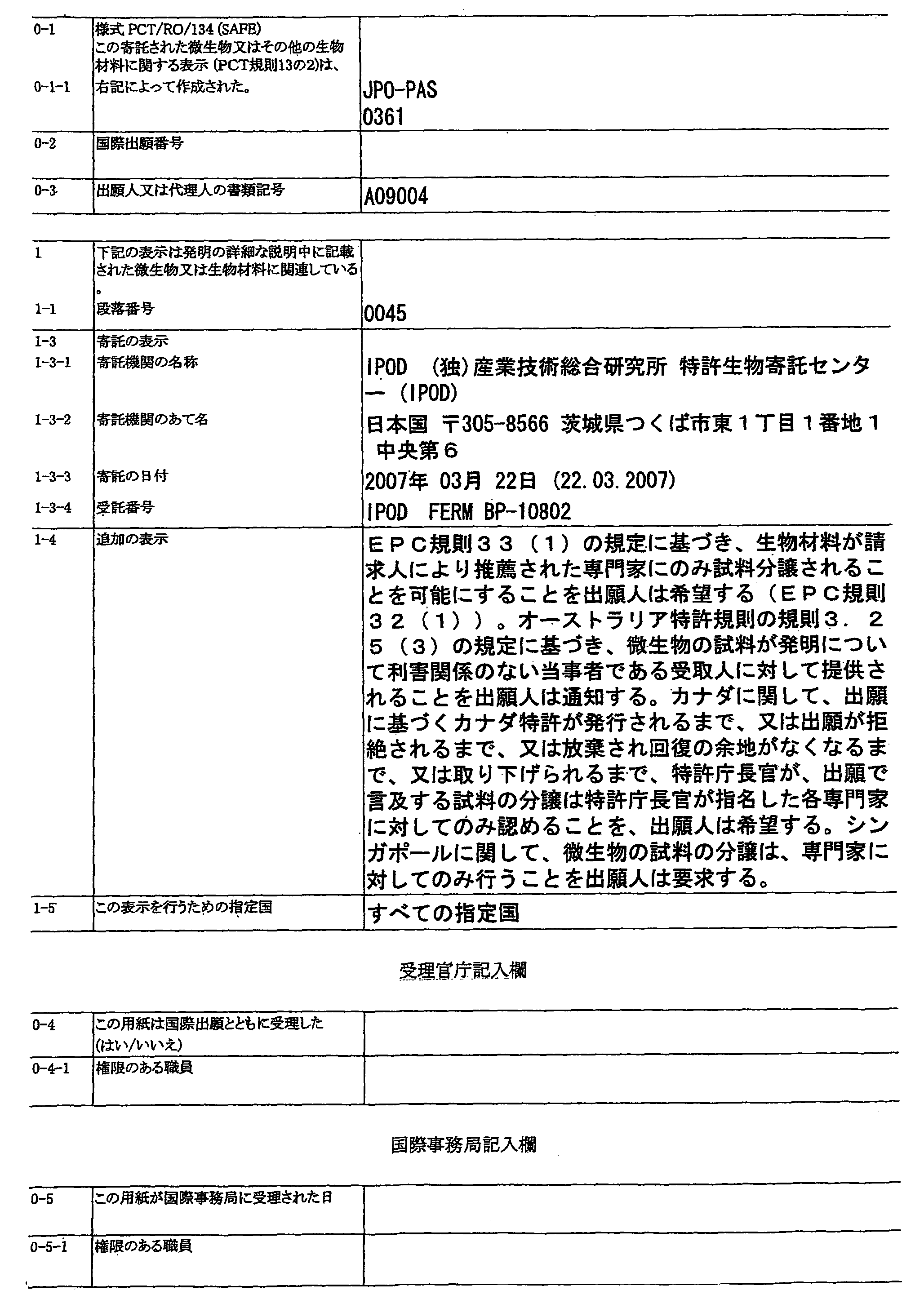
- Streptomyces sp This strain has been deposited internationally with the deposit number FERM BP-10802 (date of deposit March 22, 2007) at the National Institute of Advanced Industrial Science and Technology. Also, since microorganisms artificially or naturally mutate, the Streptomyces sp. 6982 strain of the present invention can be artificially mutated with ultraviolet rays, X-rays, chemical agents, etc. in addition to microorganisms isolated from nature. And the natural mutants thereof.
- the amino sugar derivative of the present invention is a microorganism having the ability to produce a compound belonging to the genus Streptomyces and having ⁇ -amylase activity, preferably a microorganism having the ability to produce the amino sugar derivative, more preferably Streptomyces sp.
- the strain can be obtained by inoculating a medium containing a nutrient source and growing it aerobically.
- the medium used for the culture may be any medium in which the microorganisms used can grow, and a synthetic medium, semi-synthetic medium, or natural medium can be used.
- nitrogen sources include kinako, defatted soybean flour, peptone, meat extract, corn steep liquor, cottonseed flour, peanut flour, soybean flour, yeast extract, dry yeast, NZ-amine, casein hydrolyzate, fish meal, nitric acid Inorganic or organic nitrogen sources such as sodium and ammonium nitrate can be used.
- carbon source examples include starch such as potato starch and corn starch, molasses, dextrin, sucrose, glucose, maltose, trehalose, fructose, xylose, rhamnose, mannitol, glycerin and other carbohydrates or fats, preferably starch and Kinako flour.
- starch such as potato starch and corn starch
- molasses dextrin
- sucrose glucose
- maltose trehalose
- fructose xylose
- rhamnose mannitol
- glycerin glycerin
- other carbohydrates or fats preferably starch and Kinako flour.
- metal salts such as Na, K, Mg, Ca, Zn, Fe, hydrochlorides, nitrates, phosphates, carbonates, etc. are added as necessary, preferably calcium carbonate and / or Sodium chloride.
- conventionally known amino acids, production promoting compounds such as methyl oleate, lard oil, silicone oil, surfactant and the like or an antifoaming agent are appropriately used.
- any microorganisms that can be used by the producing bacteria and useful for the production of the compound of the present invention can be used as desired.
- the culture may be performed in the same manner as the culture in general antibiotic production, and the culture method may be solid culture or liquid culture.
- the culture method may be solid culture or liquid culture.
- static culture, shaking culture, or stirring culture may be performed.
- aeration stirring culture may be performed.
- the culture temperature can be suitably applied within the range where the producing bacteria grow and can produce the compound of the present invention, that is, in the range of 15 to 42 ° C., preferably about 20 to 30 ° C., more preferably 23 to 27 ° C. .
- the pH can be appropriately applied in the range of 4 to 9, but 6 to 8 is preferable.
- the culture time varies depending on various conditions, and can be appropriately applied in the range of usually 1 to 30 days, preferably 4 to 10 days.
- the substance in the culture is obtained by filtering the culture solution as it is, or by centrifugation or adding a filter aid to the culture. At this time, an organic solvent such as acetone, MeOH, EtOH, or MeCN may be added to the culture solution, and hydrochloric acid or the like may be added to adjust pH if desired.
- the substance can be separated by bringing the filtrate into contact with an appropriate carrier, adsorbing the produced substance in the filtrate, and then eluting with a suitable solvent.
- the substance is adsorbed by contacting with a porous adsorption resin such as Amberlite (registered trademark) XAD2, Diaion (registered trademark) HP20, Diaion CHP20P, or Diaion SP850.
- a porous adsorption resin such as Amberlite (registered trademark) XAD2, Diaion (registered trademark) HP20, Diaion CHP20P, or Diaion SP850.
- the material is then eluted using a mixture of organic solvent such as acetone, MeOH, EtOH, MeCN and water.
- hydrochloric acid or the like may be added to adjust the pH.
- the fraction containing the substance can be efficiently obtained by increasing the mixing ratio of the organic solvent to a high concentration stepwise or continuously from a low concentration.
- the present compound was purified by adding a base in order to remove unstable and difficult-to-isolate compounds such as reducing sugar compounds. Moreover, in order to ensure the purity as a pharmaceutical, it refine
- the compound of formula (I) is isolated and purified as a free compound, its salt, hydrate, solvate, or crystalline polymorphic substance.
- the salt of the compound of the formula (I) can also be produced by subjecting it to a conventional salt formation reaction. Isolation and purification are performed by applying ordinary chemical operations such as extraction, fractional crystallization, and various fractional chromatography.
- recovery means an operation performed for obtaining the compound (I) of the present invention alone or as a composition, and includes “purification” and “isolation”.
- purification includes an operation performed for the purpose of “isolating” the compound of the present invention, and the compound of the present invention may be “isolated” by “purification”.
- Various isomers can be produced by selecting an appropriate raw material compound, or can be separated by utilizing a difference in physicochemical properties between isomers.
- optical isomers can be obtained by general optical resolution of racemates (for example, fractional crystallization leading to diastereomeric salts with optically active bases or acids, chromatography using chiral columns, etc.). You can also.
- chromatography means chromatography that is widely used in analytical chemistry, and is not particularly limited.
- gas chromatography GC
- liquid chromatography LC
- supercritical fluid chromatography Includes SFC
- liquid chromatography means a general term for chromatography using a liquid in a moving bed, and is not particularly limited, but includes, for example, medium speed liquid chromatography, high performance liquid chromatography (HPLC). Etc.
- the composition containing the compound of the formula (I) or a salt thereof refers to a composition obtained in the stage of purifying or isolating the compound of the formula (I), and can be used as a drug production base. Although it does not specifically limit, For example, it is a mixture of 1 type, or 2 or more types of compounds of formula (I), or its salt, and active ingredients, such as acarbiostatin IV03, or another component.
- the present composition is not limited to this, but the compound of formula (I) or a salt thereof is about 80% or more by area analysis, preferably 85% or more, more preferably, by chromatographic analysis. 90% or more, more preferably 95% or more, and still more preferably 98% or more.
- a pharmaceutical composition containing one or more compounds of the formula (I) or a salt thereof as an active ingredient is an excipient normally used in the art, that is, a pharmaceutical excipient or a pharmaceutical carrier.
- Administration is orally by tablets, pills, capsules, granules, powders, solutions, etc., or injections such as intra-articular, intravenous, intramuscular, suppositories, eye drops, ophthalmic ointments, transdermal solutions, Any form of parenteral administration such as an ointment, a transdermal patch, a transmucosal liquid, a transmucosal patch, and an inhalant may be used.
- Tablets, powders, granules, etc. are used as solid compositions for oral administration.
- one or more active ingredients are combined with at least one inert excipient such as lactose, mannitol, glucose, hydroxypropylcellulose, microcrystalline cellulose, starch, polyvinylpyrrolidone. And / or mixed with magnesium aluminate metasilicate.
- the composition may contain an inert additive, for example, a lubricant such as magnesium stearate, a disintegrant such as sodium carboxymethyl starch, a stabilizer, or a solubilizing agent according to a conventional method. .
- tablets or pills may be coated with a sugar coating or a film of a gastric or enteric substance.
- Liquid compositions for oral administration include pharmaceutically acceptable emulsions, solutions, suspensions, syrups or elixirs and the like, and commonly used inert diluents such as purified water. Or EtOH.
- the liquid composition may contain solubilizers, wetting agents, auxiliaries such as suspending agents, sweeteners, flavors, fragrances and preservatives in addition to the inert diluent.
- the injection for parenteral administration contains a sterile aqueous or non-aqueous solution, suspension or emulsion.
- aqueous solvent include distilled water for injection or physiological saline.
- Non-aqueous solvents include, for example, vegetable oils such as propylene glycol, polyethylene glycol or olive oil, alcohols such as EtOH, or polysorbate 80 (a pharmacopeia name).
- Such compositions may further contain isotonic agents, preservatives, wetting agents, emulsifiers, dispersants, stabilizers, or solubilizing agents. These are sterilized by, for example, filtration through a bacteria-retaining filter, blending of a bactericidal agent or irradiation. These can also be used by producing a sterile solid composition and dissolving or suspending it in sterile water or a sterile solvent for injection before use.
- External preparations include ointments, plasters, creams, jellies, poultices, sprays, lotions, eye drops, eye ointments and the like.
- ointment bases include commonly used ointment bases, lotion bases, aqueous or non-aqueous solutions, suspensions, emulsions, and the like.
- ointments or lotion bases include polyethylene glycol, propylene glycol, white petrolatum, honey beeswax, polyoxyethylene hydrogenated castor oil, glyceryl monostearate, stearyl alcohol, cetyl alcohol, lauromacrogol, sorbitan sesquioleate Etc.
- a transmucosal agent such as an inhalant or a nasal agent is used in a solid, liquid, or semi-solid state, and can be produced according to a conventionally known method.
- known excipients, and further pH adjusters, preservatives, surfactants, lubricants, stabilizers, thickeners and the like may be appropriately added.
- an appropriate device for inhalation or insufflation can be used.
- a known device such as a metered dose inhalation device or a nebulizer
- the compound is administered alone or as a powder in a formulated mixture or as a solution or suspension in combination with a pharmaceutically acceptable carrier. be able to.
- the dry powder inhaler or the like may be for single or multiple administration, and a dry powder or a powder-containing capsule can be used. Alternatively, it may be in the form of a pressurized aerosol spray using a suitable propellant, for example, a suitable gas such as chlorofluoroalkane, hydrofluoroalkane or carbon dioxide.
- a suitable propellant for example, a suitable gas such as chlorofluoroalkane, hydrofluoroalkane or carbon dioxide.
- the daily dose is about 0.01 to 100 mg / kg, preferably 0.1 to 10 mg / kg per body weight, which is divided into 1 or 2 to 4 times.
- As a transmucosal agent about 0.001 to 100 mg / kg per body weight is administered once to several times a day. The dose is appropriately determined according to individual cases in consideration of symptoms, age, sex, and the like.
- the compound of the formula (I) can be used in combination with various therapeutic agents or preventive agents for diseases for which the compound of the formula (I) is considered to be effective.
- the combination may be administered simultaneously, separately separately, or at desired time intervals.
- the simultaneous administration preparation may be a compounding agent or may be separately formulated.
- the manufacturing method of the compound of Formula (I) is demonstrated in detail.
- this invention is not limited to the compound as described in the following Example.
- the production method of the compound of the formula (I) is not limited to the production methods of the specific examples shown below.
- the compound of the formula (I) may be a combination of these production methods or a person skilled in the art. It can also be produced by methods that are self-evident.
- Example 1 (culture)
- the solution was dispensed one by one and sterilized by autoclaving at 121 ° C. for 30 minutes.
- This seed medium was inoculated with 1 platinum loop of a slope culture of Streptomyces sp. Strain 6982 and cultured with shaking at 30 ° C. for 3 days.
- This active fraction was washed with distilled water, 0.5M and 1M NaCl aqueous solution using DOWEX 50W X1 (made by The Dow Chemical Company) cation exchange resin (resin amount 550 mL), and then 3M NaCl. Elute with aqueous solution. Then, using Daiso gel SP-120-15 / 30-ODS-B (resin amount 1 L, manufactured by Daiso Corporation), by eluting with 10%, 15% aqueous MeOH, compounds A and B were obtained, Compound C was obtained by elution with 20% and 25% aqueous MeOH.
- DOWEX 50W X1 made by The Dow Chemical Company
- the eluate was concentrated under reduced pressure and lyophilized to obtain 1.14 g of powder.
- 200 mg of the above powder dissolved in water was eluted with 2% MeCN aqueous solution (containing 0.05% TFA) using Daiso Pack SP-120-5-ODS-BP (20 ⁇ 250 mm, manufactured by Daiso Corporation).
- the eluate was concentrated under reduced pressure and lyophilized to obtain 136 mg of powder.
- the eluate was concentrated under reduced pressure and then lyophilized to obtain 970 mg of powder.
- 450 mg of the above powder dissolved in water was eluted with 2.2% aqueous MeCN (containing 0.05% TFA) using Daiso Pack SP-120-5-ODS-BP (20 ⁇ 250 mm).
- the eluate was concentrated under reduced pressure and lyophilized to obtain 190 mg of powder.
- the eluate was concentrated under reduced pressure and lyophilized to obtain 1 g of powder.
- the above powder dissolved in water was eluted with 2.2% to 3.2% MeCN aqueous solution (containing 0.05% TFA) using Daiso Pack SP-120-5-ODS-BP (20 ⁇ 250 mm).
- the eluate was concentrated under reduced pressure and lyophilized to obtain 236 mg of powder.
- the area percentages (%) of the compounds A, B, and C were 99.0%, They were 98.2% and 98.3%.
- the area percentage (%) was obtained from the ratio of the peak areas of the respective components to the sum of the peak areas of the respective components obtained on the chromatogram during the retention time of 6 to 22 minutes. .
- the HPLC chromatograms of Compound A to Compound C are shown in FIGS.
- Example 2 The ⁇ -amylase inhibitory activity of the compound of the present invention was confirmed by the following method.
- Mouse, rat, dog and monkey pancreatic ⁇ -amylase solutions are ICR mice (male, 8 weeks old, purchased from Japan SLC), SD rats (male, 8 weeks old, purchased from Japan Charles River), beagle Prepared from the pancreas of dogs (male, 35 months old, purchased from Narku Co., Ltd.) and cynomolgus monkeys (male, 10 years old, purchased from Clea Japan).
- Human saliva and pancreatic ⁇ -amylase solution were prepared from enzymes purchased from Sigma-Aldrich Co.
- Various ⁇ -amylase solutions (20 U, 25 ⁇ L) and compounds (25 ⁇ L) prepared by dissolution in assay buffer were added to a 96-well microplate and incubated at 37 ° C. for 10 minutes. Thereafter, starch solution (5 mg / mL, 50 ⁇ L) was added and incubated at 37 ° C. for 10 minutes.
- the compounds of the present invention have inhibitory activity against ⁇ -amylases of all the species examined, and the inhibitory activities (IC 50 values) of mouse pancreatic ⁇ -amylase of compounds A, B and C are respectively 1.90 nM, 2.06 nM and 1.73 nM, and the inhibitory activity against rat pancreatic ⁇ -amylase (IC 50 value) was 2.01 nM, 2.12 nM and 1.95 nM, respectively, and the inhibitory activity against canine pancreatic ⁇ -amylase (IC 50 (Value) are 2.06 nM, 2.38 nM and 2.07 nM, respectively, and the inhibitory activity (IC 50 value) on monkey pancreatic ⁇ -amylase is 2.14 nM, 1.90 nM and 2.02 nM, respectively, and inhibition against human salivary ⁇ -amylase The activity (IC 50 value) was 2.20 nM, 1.87 nM and 1.99 nM, respectively, and the inhibitory activity (IC 50 value)
- Example 3 The oral activity of the compound of the present invention was confirmed by the following method.
- Male ICR (normal) mice (6 weeks old, purchased from Japan SLC) were used as animals.
- a solution was prepared using a 0.5% methylcellulose solution.
- Blood was collected from mice fasted overnight for blood glucose level and plasma insulin level measurement, and solvent or compound A (0.3, 1, 3, 10 mg / kg) was orally administered, and immediately a carbohydrate solution (75 mg / mL starch, 25 mg / mL sucrose, 20 mL / kg) was orally administered.
- a carbohydrate solution 75 mg / mL starch, 25 mg / mL sucrose, 20 mL / kg
- the blood glucose level was measured using Glucose CII-Test Wako reagent (Wako Pure Chemical Industries), and the plasma insulin concentration was measured using a mouse insulin ELISA kit (Shiba Goat Co., Ltd.). The test results are shown as mean ⁇ standard error. Calculate the area under the blood glucose level-time curve (AUC) from the blood glucose level up to 2 hours after compound administration, and the plasma insulin level-time AUC from the plasma insulin level up to 1 hour. The test was conducted using Dunnett's multiple range test, and a significance level of less than 5% was considered significant.
- Example 4 The disaccharide hydrolase inhibitory activity of the compound of the present invention was confirmed by the following method.
- (1) Experimental method Brush border samples prepared from ICR mice, SD rats, beagle dogs and cynomolgus monkey small intestine, and human small intestine microsome samples (BD Biosciences; Lot 36869) were used as various disaccharide hydrolase solutions. These disaccharide hydrolase solutions and compounds were all prepared using phosphate buffer (NaCl 48 mM, KCl 5.4 mM, Na 2 HPO 4 28 mM, NaH 2 PO 4 43 mM, mannitol 35 mM, pH 6.0).
- Disaccharide hydrolase solution 10 mg / mL, 40 ⁇ L
- compound solution 20 ⁇ L
- Incubation was performed for 10 minutes.
- a disaccharide hydrolase substrate sucrose: 100 mM sucrose, maltase: 100 mM maltose, isomaltase: 100 mM isomaltose, lactase: 100 mM lactose, trehalase: 100 mM trehalose, 40 ⁇ L
- a disaccharide hydrolase substrate sucrose: 100 mM sucrose, maltase: 100 mM maltose, isomaltase: 100 mM isomaltose, lactase: 100 mM lactose, trehalase: 100 mM trehalose, 40 ⁇ L
- a disaccharide hydrolase substrate sucrose: 100 mM sucrose, maltase: 100 mM maltose, isomaltase: 100 mM isomaltose, lactase: 100 mM lactose, trehalase: 100 mM trehalose, 20 ⁇ L
- Incubation was performed at 37 ° C. Stop the reaction by adding 0.04 M perchloric acid solution (100 ⁇ L), perform centrifugation (2,000 rpm, 15 minutes), and determine the glucose concentration in the supernatant as glucose GII-Test Wako reagent (Wako Pure Chemical) It measured using.
- the disaccharide hydrolase inhibitory activity was calculated from the absence of enzyme (0%) and the absence of compound (100%).
- Results The compounds of the present invention showed no inhibitory activity against all the disaccharide hydrolyzing enzymes (sucrose, maltase, isomaltase, lactase and trehalase) examined (IC 50 > 10 ⁇ M).
- the compound of the formula (I) has ⁇ -amylase inhibition, blood glucose level and plasma insulin level lowering action and can be used for the treatment of diabetes and the like.
- the compound of formula (I) or a salt thereof has an ⁇ -amylase inhibitory action and can be used as a preventive or therapeutic agent for diabetes, obesity, NASH (non-alcoholic steatohepatitis) and the like.
- NASH non-alcoholic steatohepatitis
- sugar absorption can be inhibited without causing gastrointestinal symptoms such as diarrhea.
Landscapes
- Health & Medical Sciences (AREA)
- Chemical & Material Sciences (AREA)
- Life Sciences & Earth Sciences (AREA)
- Engineering & Computer Science (AREA)
- Organic Chemistry (AREA)
- General Health & Medical Sciences (AREA)
- Bioinformatics & Cheminformatics (AREA)
- Medicinal Chemistry (AREA)
- Zoology (AREA)
- Genetics & Genomics (AREA)
- Wood Science & Technology (AREA)
- Biotechnology (AREA)
- Biochemistry (AREA)
- Chemical Kinetics & Catalysis (AREA)
- Molecular Biology (AREA)
- General Engineering & Computer Science (AREA)
- Microbiology (AREA)
- General Chemical & Material Sciences (AREA)
- Animal Behavior & Ethology (AREA)
- Pharmacology & Pharmacy (AREA)
- Biomedical Technology (AREA)
- Virology (AREA)
- Diabetes (AREA)
- Veterinary Medicine (AREA)
- Materials Engineering (AREA)
- Polymers & Plastics (AREA)
- Public Health (AREA)
- Nuclear Medicine, Radiotherapy & Molecular Imaging (AREA)
- Tropical Medicine & Parasitology (AREA)
- Hematology (AREA)
- Obesity (AREA)
- Emergency Medicine (AREA)
- Endocrinology (AREA)
- Gastroenterology & Hepatology (AREA)
- Child & Adolescent Psychology (AREA)
- Pharmaceuticals Containing Other Organic And Inorganic Compounds (AREA)
- Preparation Of Compounds By Using Micro-Organisms (AREA)
- Medicines Containing Material From Animals Or Micro-Organisms (AREA)
- Polysaccharides And Polysaccharide Derivatives (AREA)
- Micro-Organisms Or Cultivation Processes Thereof (AREA)
Abstract
Description
例えば、ストレプトマイセス属の放線菌から単離されたトレスタチン誘導体(下記式、但し、式中nは1~3を示す)が報告されている(特許文献1)。
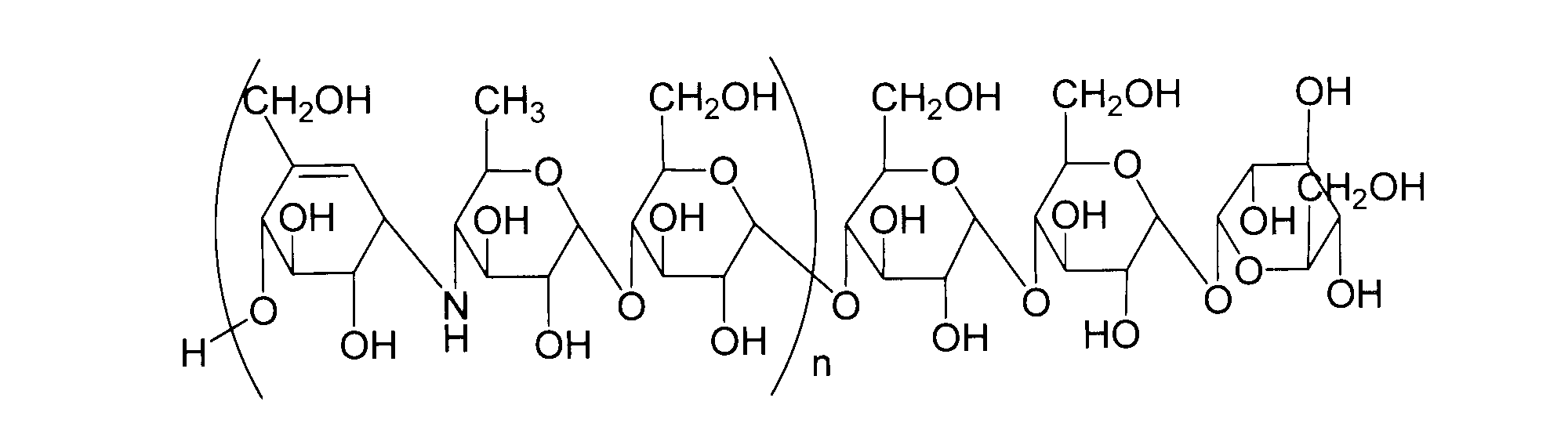


本発明者らは、医薬品の探索を目的として、微生物が産生する物質について鋭意検討した結果、ストレプトマイセス属の放線菌6982株が優れたα-アミラーゼ阻害活性を有する化合物を生産することを見い出して本発明を完成した。

さらに、本発明は、式(I)の化合物又はその塩を含有する糖尿病の予防用若しくは治療用医薬組成物、即ち、式(I)の化合物又はその塩を含有する糖尿病治療剤に関する。
また、本発明は、糖尿病の予防用若しくは治療用医薬組成物の製造のための式(I)の化合物又はその塩の使用、若しくは、糖尿病の予防若しくは治療のための式(I)の化合物又はその塩の使用、並びに、式(I)の化合物又はその塩の有効量を患者に投与することからなる糖尿病の予防用若しくは治療方法に関する。

また、式(I)の化合物には、不斉炭素原子に基づく光学異性体が存在しうる。本発明は、式(I)の化合物の光学異性体の分離されたもの、あるいはそれらの混合物も包含する。
本発明の化合物は、ストレプトマイセス属に属し、かつ該化合物又はその製薬学的に許容される塩の生産能を有する微生物を用いて製造することができる。このような微生物として好ましくは、沖縄県西表島で採取された土壌より分離されたストレプトマイセス属に属するストレプトマイセス エスピ-(Streptomyces sp.)6982株である。本菌株の菌学的性状は次の通りである。
(a) http://www. ddbj. nig.ac.jp
(b)D. J. Lipman, W. R. Pearson: Rapid and sensitive protein similarity searches, Science, 227, 1435-1441 (1985) 及び
(c) W. R. Pearson, D. J. Lipman: Improved tools for biological sequence comparison, Proc. Natl. Acad. Sci. USA, 85, 2444-2448 (1988)
を用い、基準株の16SrDNA塩基配列は国立遺伝学研究所のデータベース(http:// www.ddbj.nig.ac.jp)より入手した。
(a)Ezaki, T., Hashimoto, Y., Takeuchi, T., Yamamoto, H., Liu, S.-L., Matsui, K & Yabuuchi, E., J Clin Microbiol., 26, (1988) 1708-1713
(b)Ezaki, T., Hashimoto, Y. & Yabuuchi, E., Int J Syst Bacteriol., 39, (1989) 224-229
Stackebrandt, E. & Goebel, B. M., Int J Syst Bacteriol., 44, (1994) 846-849
基生菌糸はよく発達し、不規則に分枝した。気菌糸は不完全ならせん状を呈し、10個以上の分節胞子連鎖で形成されていた。胞子の表面は平滑、形状は楕円状、サイズは1.2 x 1.0μmであった。菌核、胞子嚢、基生菌糸の断裂、遊走子は観察されなかった。
気菌糸は、酵母エキス-デンプン寒天、酵母エキス-麦芽エキス寒天、オートミール寒天、無機塩-デンプン寒天、グリセリン-アスパラギン寒天上で、良好な着生を示し、チロシン寒天上ではかすかに着生が認められた。ペプトン-酵母エキス-鉄寒天上では気菌糸着生は認められなかった。気菌糸の色は灰色味褐色、褐色味灰色であった。生育裏面の色は黄色味褐色、褐色味ベージュ、灰色味黄色、淡黄色、褐色味橙色、淡橙色であった。トリプトン-酵母エキス培地及びペプトン-酵母エキス-鉄寒天上で、メラノイド色素の産生は認められなかった。可溶性色素の産生が認められなかった。菌体内色素はpHにより変化しなかった。

全菌体分解物を分析した結果、アミノ酸としてLL-ジアミノピメリン酸の存在が確認できた。
D-グルコース、シュークロース、D-キシロース、D-フルクトース、L-ラムノース、ラフィノース、L-アラビノース、イノシトール、D-マンニトールの利用性は陽性であった。表2に、ストレプトマイセス エスピー6982株の生理学的特徴を示す。

ストレプトマイセス エスピー6982株の16SrDNA部分塩基配列を、後記配列表に示した。相同性検索の結果、相同値が99.2 %であるストレプトマイセス グラウセセンス DSM40716株(Accession No:X79322)が最も近縁な株であった。また、ストレプトマイセス属の基準種の基準株であるストレプトマイセス アルブス NBRC 13014株(Accession No: AB184257)との相同値は、96.2 %であった。また、16SrDNA部分塩基配列により作成した系統樹では、ストレプトマイセス各種と同一のクラスターを形成した。
下記文献(a)~(d)を参考に、形態観察、化学分析および16SrDNA塩基配列による解析の結果から、本菌株はストレプトマイセス属に属すると考えられる。
(a)Euzeby, J.P.: List of Bacterial names with standing in nomenclature: a folder available on the internet. Int. J. Syst. Bacteriol., 1997, 47, pp.590-592.
(b) Waksman, S.A., et al.: The nomenclature and classification of the actinomycetes. Journal of Bacteriology, 1943, 46, pp.337-341.
(c) Williams, S. T: Bergey's Manual of Systematic Bacteriology, Vol. 4. 1989.
(d) Zhang, Z.et al.: A proposal to revive the genus Kitastospora Int. J. Syst. Bacteriol., 1997, 47, pp.1048-1054.
また、微生物は人工的に又は自然に変異を起こすので、本発明ストレプトマイセス エスピー6982株は、天然から分離された微生物の他に、これを紫外線、X線、化学薬剤などで人工的に変異させたもの及びそれらの天然変異株についても包含する。
投与は錠剤、丸剤、カプセル剤、顆粒剤、散剤、液剤等による経口投与、又は、関節内、静脈内、筋肉内等の注射剤、坐剤、点眼剤、眼軟膏、経皮用液剤、軟膏剤、経皮用貼付剤、経粘膜液剤、経粘膜貼付剤、吸入剤等による非経口投与のいずれの形態であってもよい。
EtOH:エタノール
MeCN:アセトニトリル
MeOH:メタノール
NaCl:塩化ナトリウム
NaOH:水酸化ナトリウム
TFA:トリフルオロ酢酸
(培養)
種培地は、100 mL容の三角フラスコに、可溶性デンプン 20 g、パインデックス#3(松谷化学社製) 10 g、きな粉 20 gおよび蒸留水1 Lを含む培地(pH=7.0)を、30 mLずつ分注し、121℃で30分間オートクレーブで滅菌することにより調製した。
この種培地に、ストレプトマイセス エスピー6982株の斜面培養物を、1白金耳分接種し、30℃で3日間、振とう培養した。
生産培地は、100 mL容の三角フラスコに、可溶性デンプン 100 g、きな粉 60 g、NaCl 2.5 g、CaCO3 2 gおよび蒸留水1 Lを含む培地(pH=7.0)を、30 mLずつ分注し、121℃で30分間オートクレーブで滅菌することにより調製した。
この生産培地に、前記の種培養液を、各フラスコに2 mLずつ接種し、25℃で7日間振とう培養した。
上記の培養方法により得られた培養液22 Lを6 M HCl水溶液でpH=3に調製した後、吸引ろ過した。ろ液を6 M NaOH水溶液でpH=7に調製した後、ダイヤイオンHP20(樹脂量1.2 L)を用いて、10% MeOH水溶液で洗浄した後、25% MeOH水溶液で溶出した。
次いで、ダイソーゲルSP-120-15/30-ODS-B(樹脂量1 L、ダイソー社製)を用いて、10%、15% MeOH水溶液で溶出することで、化合物A、Bをそれぞれ得、20% 及び25% MeOH水溶液で溶出することで、化合物Cを得た。
前記のODSカラムクロマトグラフィーで精製して得られた化合物Aを含む活性画分を、SP-120-15/30-ODS-B(樹脂量337 mL)を用いて、2%、3% MeOH水溶液(0.05% TFA含有)で溶出した。
この活性画分を6 M NaOH水溶液でpH=13に調製し、ダイヤイオンHP20SS(樹脂量500 mL)を用いて、12.5%、15% MeOH水溶液(0.05 M NaOH含有)で溶出した。
活性画分を6 M HCl水溶液でpH=7に調製し、ダイヤイオンHP20(樹脂量200 mL)を用いて、50% MeOH水溶液で溶出した。溶出区を減圧濃縮した後、凍結乾燥し、1.14gの粉末を得た。
水に溶解した200mgの上記粉末を、ダイソーパックSP-120-5-ODS-BP(20 x 250mm、ダイソー社製)を用いて、2% MeCN水溶液(0.05% TFA含有)で溶出した。
この活性画分を6 M NaOH水溶液でpH=7に調製し、ダイヤイオンHP20(樹脂量50 mL)に供し、50% MeOH水溶液で溶出した。溶出区を減圧濃縮した後、凍結乾燥し、136mgの粉末を得た。
水に溶解した上記粉末を再度ダイソーパックSP-120-5-ODS-BP(20 x 250mm)を用いて、2% MeCN水溶液(0.05% TFA含有)で溶出した。
この活性画分を6 M NaOH水溶液でpH=7に調製し、ダイヤイオンHP20(樹脂量30 mL)を用いて、50% MeOH水溶液で溶出した。
得られた活性画分を減圧濃縮した後、凍結乾燥して化合物A (65 mg)を得た。
前記のODSカラムクロマトグラフィーで粗精製することにより得られた画分を、SP-120-15/30-ODS-B(樹脂量337 mL)を用いて、3%から7%までのMeOH水溶液(0.05% TFA含有)で溶出した。
この活性画分を6 M NaOH水溶液でpH=13に調製し、ダイヤイオンHP20SS(樹脂量250 mL)を用いて、15%、17.5%、20% MeOH水溶液(0.05M NaOH含有)で溶出した。
この活性画分を6M HCl水溶液でpH=7に調製し、ダイヤイオンHP20(樹脂量150 mL)を用いて、50% MeOH水溶液で溶出した。溶出区を減圧濃縮した後、凍結乾燥し、970mgの粉末を得た。
水に溶解した450mgの上記粉末を、ダイソーパックSP-120-5-ODS-BP(20 x 250mm)を用いて、2.2% MeCN水溶液(0.05% TFA含有)で溶出した。
この活性画分を6 M NaOH水溶液でpH=7に調製し、ダイヤイオンHP20(樹脂量115 mL)を用いて、50% MeOH水溶液で溶出した。溶出区を減圧濃縮した後、凍結乾燥し、190mgの粉末を得た。
水に溶解した上記粉末を、再度ダイソーパックSP-120-5-ODS-BP(20 x 250mm)に供し、2.2% MeCN水溶液(0.05% TFA含有)で溶出した。
この活性画分を6 M NaOH水溶液でpH=7に調製し、ダイヤイオンHP20(樹脂量30 mL)を用いて、50% MeOH水溶液で溶出した。
この活性画分を減圧濃縮した後、凍結乾燥して化合物B(129 mg)を得た。
前記のODSカラムクロマトグラフィーで粗精製することにより得られた画分をSP-120-15/30-ODS-B(樹脂量80 mL)を用いて、2% MeOH水溶液(0.05% TFA含有)で溶出した。
この活性画分を6 M NaOH水溶液でpH=13に調製し、ダイヤイオンHP20SS(樹脂量200 mL)を用いて、15%、17.5%、20% MeOH水溶液(0.05 M NaOH含有)で溶出した。
この活性画分を6 M HCl水溶液でpH=7に調製し、ダイヤイオンHP20(樹脂量150 mL)を用いて、50% MeOH水溶液で溶出した。溶出区を減圧濃縮した後、凍結乾燥し、1gの粉末を得た。
水に溶解した上記粉末を、ダイソーパックSP-120-5-ODS-BP(20 x 250mm)を用いて、2.2%から3.2%までのMeCN水溶液(0.05% TFA含有)で溶出した。
この活性画分を6 M NaOH水溶液でpH=7に調製し、ダイヤイオンHP20(樹脂量30 mL)を用いて、50% MeOH水溶液で溶出した。溶出区を減圧濃縮した後、凍結乾燥し、236mgの粉末を得た。
水に溶解した184mgの上記粉末を、再度ダイソーパックSP-120-5-ODS-BP(20 x 250mm)を用いて、2.2% MeCN水溶液(0.05% TFA含有)で溶出した。
この活性画分を6 M NaOH水溶液でpH=7に調製し、ダイヤイオンHP20(樹脂量30 mL)を用いて、50% MeOH水溶液で溶出した。
得られた活性画分を減圧濃縮した後、凍結乾燥することにより化合物C(91 mg)を得た。
上記抽出、分離、精製された化合物A、BおよびCは、それぞれ以下の物理化学的性質を有した。
(1)化合物A
1)色及び形状:白色粉末。
2)酸性、中性、塩基性の区分:塩基性。
3)比旋光度:[α]23 D +157°(c=0.5、H2O)
4)分子式:C94H156 N4O64
5)高分解能TOF-マススペクトル:実測値 [M+2H]2+ 1183.4624
理論値 [M+2H]2+ 1183.4616
6)元素分析:C94H156 N4O64 14H2Oとして
計算値:C 43.12, H 7.08, N 2.14,
実測値:C 43.27, H 7.08, N 2.05
7)溶解性:水、DMF、DMSOにはよく溶けるが、アセトン、MeOH、EtOH、MeCNにはほとんど溶けない。
8)紫外部吸収スペクトル(溶剤:水):末端吸収を示す
9)赤外部吸収スペクトル(νmax (KBr)cm-1):3330, 2925, 1655, 1385, 1150, 1040, 935
10)1H-NMRスペクトル(500MHz,D2O):図1に示す。
11)13C-NMRスペクトル(125MHz,D2O):図2に示す。
1)色及び形状:白色粉末。
2)酸性、中性、塩基性の区分:塩基性。
3)比旋光度:[α]23 D +153°(c=0.5、H2O)
4)分子式:C113H187N5O76
5)高分解能TOF-マススペクトル:実測値 [M+2H]2+ 1416.0548
理論値 [M+2H]2+ 1416.0539
6)元素分析:C113H187 N5O76 16H2Oとして
計算値:C 43.50, H 7.08, N 2.24,
実測値:C 43.53, H 7.09, N 2.15
7)溶解性:水、DMF、DMSOにはよく溶けるがアセトン、MeOH、EtOH、MeCNにはほとんど溶けない。
8)紫外部吸収スペクトル(溶剤:水):末端吸収を示す。
9)赤外部吸収スペクトル(νmax(KBr)cm-1):3365, 2930, 1640, 1385, 1150, 1045, 935
10)1H-NMRスペクトル(500MHz,D2O):図3に示す。
11)13C-NMRスペクトル(125MHz,D2O):図4に示す。
1)色及び形状:白色粉末。
2)酸性、中性、塩基性の区分:塩基性。
3)比旋光度:[α]23 D +172°(c=0.5、H2O)
4)分子式:C132H218 N6O88
5)高分解能TOF-マススペクトル:実測値 [M+2H]2+ 1648.6467
理論値 [M+2H]2+ 1648.6462
6)元素分析:C132H218 N6O88 16H2Oとして
計算値:C 44.22, H 7.03, N 2.34,
実測値:C 44.23, H 7.09, N 2.35
7)溶解性:水、DMF、DMSOにはよく溶けるがアセトン、MeOH、EtOH、MeCNにはほとんど溶けない。
8)紫外部吸収スペクトル(溶剤:水):末端吸収を示す。
9)赤外部吸収スペクトル(νmax (KBr)cm-1):3365, 2925, 1635, 1340, 1150, 1040, 935
10)1H-NMRスペクトル(500MHz,D2O):図5に示す。
11)13C-NMRスペクトル(125MHz,D2O):図6に示す。
前記の物理化学的性質から化合物A、B及びCの化学構造を、下記のように決定した。

1)カラム:Unison US-C18 250-4.6mm (インタクト社製)
2)移動相:1-7 % MeCN水溶液(0.05% TFA含有)(0-20分)
3)流速:1.0 ml/分
4)検出:UV、210nm
5)カラム温度:50℃
6)保持時間:化合物A 16.3分、化合物B 17.9分、化合物C 19.2分
(参考文献:化学便覧 応用化学編 第六版(丸善)、第8章 分析・計測・管理、P.342~346)
本発明化合物のα-アミラーゼ阻害活性は以下の方法で確認した。
(1)実験方法
マウス、ラット、イヌ及びサル膵臓α-アミラーゼ溶液はICRマウス(雄、8週齢、日本SLCより購入)、SDラット(雄、8週齢、日本チャールスリバーより購入)、ビーグルイヌ(雄、35ヶ月齢、株式会社ナルクより購入)及びカニクイザル(雄、10歳、日本クレアより購入)膵臓より調製した。ヒト唾液及び膵臓α-アミラーゼ溶液はSigma-Aldrich Co.より購入した酵素より調製した。これらのα-アミラーゼ溶液は全てアッセイバッファー(48 mM NaCl, 5.4 mM KCl, 28 mM Na2HPO4, 43 mM NaH2PO4, 35 mM マンニトール, pH=7.0)を用いて800 U/mLになるように希釈調製した。96-wellマイクロプレートに各種α-アミラーゼ溶液 (20 U, 25 μL)及びアッセイバッファーで溶解調製した化合物 (25 μL)を添加して37℃、10分間インキュベーションした。その後,デンプン溶液 (5 mg/mL, 50 μL)を添加して10分間、37℃でインキュベーションした。0.33 M過塩素酸溶液 (50 μL)を添加して酵素反応を停止させた後、0.01 Mヨウ素溶液(50 μL)を添加して呈色させ、吸光度(660 nm)を測定した。α-アミラーゼ活性を50%阻害する化合物の濃度をIC50値として算出した。
(2)結果
本発明化合物は検討を行った全ての種のα-アミラーゼに対して阻害活性を有し,化合物A、B及びCのマウス膵臓α-アミラーゼに対する阻害活性(IC50値)はそれぞれ、1.90 nM、2.06 nMおよび1.73 nMであり、ラット膵臓α-アミラーゼに対する阻害活性(IC50値)はそれぞれ、2.01 nM、2.12 nM及び1.95 nMであり、イヌ膵臓α-アミラーゼに対する阻害活性(IC50値)はそれぞれ、2.06 nM、2.38 nMおよび2.07 nMであり、サル膵臓α-アミラーゼに対する阻害活性(IC50値)はそれぞれ、2.14 nM、1.90 nMおよび2.02 nMであり、ヒト唾液α-アミラーゼに対する阻害活性(IC50値)はそれぞれ、2.20 nM、1.87 nMおよび1.99 nMであり、ヒト膵臓α-アミラーゼに対する阻害活性(IC50値)はそれぞれ、2.02 nM,2.11 nMおよび2.21 nMであった。
本発明化合物の経口活性を以下の方法で確認した。
(1)実験方法
動物は雄性ICR(正常)マウス(6週齢、日本SLCより購入)を使用した。化合物は0.5% メチルセルロース溶液を用いて溶解液を調製した。一晩絶食させたマウスより血糖値及び血漿インスリン値測定用採血を行い、溶媒もしくは化合物A(0.3, 1, 3, 10 mg/kg)を経口投与し、直ちに炭水化物溶液(75 mg/mLデンプン,25 mg/mLスクロース,20 mL/kg)を経口投与した。次いで、0.25、0.5及び1時間後に血漿インスリン値測定用採血を、0.5、1及び2時間後に血糖値測定用採血を行った。
血糖値はグルコースCII-テストワコー試薬(和光純薬)を用いて、血漿インスリン濃度はマウスインスリンELISAキット(株式会社シバヤギ)を用いてそれぞれ測定した。試験結果は平均値±標準誤差で示した。
化合物投与後2時間までの血糖値より血糖値-時間曲線下面積 (AUC)を、1時間までの血漿インスリン値より血漿インスリン値-時間AUCを算出して、溶媒投与群と化合物A投与群間でDunnett's multiple range testを用いて検定を行い、危険率5% 未満を有意とした。
(2)結果
化合物A (0.3から10 mg/kg)の経口投与により用量依存的な血糖上昇抑制作用が認められ、その作用は1 mg/kg以上の用量において有意であった(図7)。この時、用量依存的かつ有意な血漿インスリン値の低下作用も併せて認められた(図8)。
本発明化合物の二糖類水解酵素阻害活性を以下の方法で確認した。
(1)実験方法
ICRマウス、SDラット、ビーグルイヌ及びカニクイザル小腸より作製した刷子縁標本、ヒト小腸マイクロソーム標本 (BD Biosciences; Lot 36869)を各種の二糖類水解酵素液とした。これらの二糖類水解酵素液及び化合物は全てphosphate buffer (NaCl 48 mM, KCl 5.4 mM, Na2HPO4 28 mM, NaH2PO4 43 mM, mannitol 35 mM, pH=6.0)を用いて調製した。
マウス、ラット、イヌ及びサル二糖類水解酵素阻害活性評価:96-wellマイクロプレ-トに二糖類水解酵素液(10 mg/mL, 40 μL)及び化合物溶液 (20 μL)を添加して37℃,10分間インキュベ-ションを行った。その後、二糖類水解酵素基質(スクラーゼ:100 mM スクロース,マルターゼ:100 mM マルトース,イソマルターゼ:100 mM イソマルトース,ラクターゼ:100 mM ラクトース,トレハラーゼ:100 mM トレハロース, 40 μL)を添加して30分間、37℃でインキュベ-ションを行った。0.04 M過塩素酸溶液 (100 μL)を添加して反応停止後、遠心分離 (2,000 rpm, 15分)を行い、上清中のグルコース濃度をグルコ-スCII-テストワコ-試薬(和光純薬)を用いて測定した。酵素非添加 (0%)及び化合物非添加 (100%)より二糖類水解酵素阻害活性を算出した。
ヒト二糖類水解酵素阻害活性評価:96-wellマイクロプレ-トに二糖類水解酵素液 (0.1 mg/mL, 20 μL)及び化合物溶液 (10 μL)を添加して37℃、10分間インキュベ-ションを行った。その後,二糖類水解酵素基質(スクラーゼ:100 mM スクロース,マルターゼ:100 mM マルトース,イソマルターゼ:100 mM イソマルトース,ラクターゼ:100 mM ラクトース,トレハラーゼ:100 mM トレハロース, 20 μL)を添加して30分間、37℃でインキュベ-ションを行った。0.04 M過塩素酸溶液 (100 μL)を添加して反応停止後、遠心分離 (2,000 rpm, 15分)を行い、上清中のグルコース濃度をグルコ-スCII-テストワコ-試薬(和光純薬)を用いて測定した。酵素非添加 (0%)及び化合物非添加 (100%)より二糖類水解酵素阻害活性を算出した。
(2)結果
本発明化合物は検討を行った全ての種の二糖類水解酵素(スクラーゼ,マルターゼ,イソマルターゼ,ラクターゼ及びトレハラーゼ)に対して阻害活性を示さなかった (IC50>10 μM)。
Claims (18)
- 式(I)の化合物又はその塩。

- 培地中で、α-アミラーゼ阻害活性を有する化合物又はその塩を産生するストレプトマイセス属の微生物を培養し、その培養液から当該化合物又はその塩を回収することにより得られた、α-アミラーゼ阻害活性を有し、分子式がC94H156 N4O64、C113H187N5O76、又は、C132H218 N6O88の化合物(ただし、末端に還元糖構造を有する化合物を除く)又はその塩。
- ストレプトマイセス属の微生物が、ストレプトマイセス エスピー6982株(FERM BP-10802号)である請求項2記載の化合物(ただし、末端に還元糖構造を有する化合物を除く)又はその塩。
- 寄託番号がFERM BP-10802号であるストレプトマイセス(Streptomyces)属の放線菌、ストレプトマイセス エスピー(Streptomyces sp.)6982株およびその変異株。
- ストレプトマイセス属の微生物の培養液から、精製若しくは単離された式(I)の化合物又はその塩を含有する組成物。
- ストレプトマイセス属の微生物が、ストレプトマイセス エスピー6982株(FERM BP-10802号)である請求項5記載の組成物。
- クロマトグラフィーによる分析で、式(I)の化合物又はその塩を面積百分率で約80%以上含有することを特徴とする組成物。
- クロマトグラフィーによる分析で、式(I)の化合物又はその塩を面積百分率で約80%以上含有することを特徴とする請求項5記載の組成物。
- クロマトグラフィーによる分析で、式(I)の化合物又はその塩を面積百分率で約80%以上含有することを特徴とする請求項記6載の組成物。
- 培地中で、α-アミラーゼ阻害活性を有する化合物を産生するストレプトマイセス属の微生物を培養し、その培養液から当該化合物を回収することを含む、α-アミラーゼ阻害活性を有し、分子式がC94H156 N4O64、C113H187N5O76、又は、C132H218 N6O88の化合物(ただし、末端に還元糖構造を有する化合物を除く)又はその塩の生産方法。
- ストレプトマイセス属の微生物が、ストレプトマイセス エスピー6982株(FERM BP-10802号)である請求項10記載の生産方法。
- ストレプトマイセス属の微生物の培養液から、精製若しくは単離することを特徴とする式(I)の化合物又はその塩の生産方法。
- ストレプトマイセス属の微生物が、ストレプトマイセス エスピー6982株(FERM BP-10802号)である請求項12記載の生産方法。
- 請求項1に記載の化合物又はその塩、及び製薬学的に許容される賦形剤を含有する医薬組成物。
- 請求項1に記載の化合物又はその塩を含有する糖尿病の予防用若しくは治療用医薬組成物。
- 糖尿病の予防若しくは治療用医薬組成物の製造のための請求項1に記載の化合物又はその塩の使用。
- 糖尿病の予防若しくは治療のための請求項1に記載の化合物又はその塩の使用。
- 請求項1に記載の化合物又はその塩の有効量を患者に投与することからなる糖尿病の予防若しくは治療方法。
Priority Applications (10)
| Application Number | Priority Date | Filing Date | Title |
|---|---|---|---|
| AU2009234757A AU2009234757A1 (en) | 2008-04-11 | 2009-04-09 | Aminosugar compound and process for production thereof |
| EP09730818A EP2264179A1 (en) | 2008-04-11 | 2009-04-09 | Aminosugar compound and process for production thereof |
| MX2010011183A MX2010011183A (es) | 2008-04-11 | 2009-04-09 | Compuesto de aminoazucar y proceso para su produccion. |
| BRPI0911063A BRPI0911063A2 (pt) | 2008-04-11 | 2009-04-09 | composto aminoaçúcar e processo para produção do mesmo |
| CA2721051A CA2721051A1 (en) | 2008-04-11 | 2009-04-09 | Aminosugar compound and process for production thereof |
| JP2010507272A JP5115623B2 (ja) | 2008-04-11 | 2009-04-09 | アミノ糖化合物及びその生産方法 |
| US12/936,932 US20110105420A1 (en) | 2008-04-11 | 2009-04-09 | Aminosugar compound and process for production thereof |
| CN2009801127187A CN101998998A (zh) | 2008-04-11 | 2009-04-09 | 氨基糖化合物及其生产方法 |
| IL208490A IL208490A0 (en) | 2008-04-11 | 2010-10-05 | Aminosugar compound and process for production thereof |
| ZA2010/07168A ZA201007168B (en) | 2008-04-11 | 2010-10-07 | Aminosugar compound and process for production thereof |
Applications Claiming Priority (2)
| Application Number | Priority Date | Filing Date | Title |
|---|---|---|---|
| JP2008-102983 | 2008-04-11 | ||
| JP2008102983 | 2008-04-11 |
Publications (1)
| Publication Number | Publication Date |
|---|---|
| WO2009125819A1 true WO2009125819A1 (ja) | 2009-10-15 |
Family
ID=41161951
Family Applications (1)
| Application Number | Title | Priority Date | Filing Date |
|---|---|---|---|
| PCT/JP2009/057292 Ceased WO2009125819A1 (ja) | 2008-04-11 | 2009-04-09 | アミノ糖化合物及びその生産方法 |
Country Status (14)
| Country | Link |
|---|---|
| US (1) | US20110105420A1 (ja) |
| EP (1) | EP2264179A1 (ja) |
| JP (1) | JP5115623B2 (ja) |
| KR (1) | KR20100130993A (ja) |
| CN (1) | CN101998998A (ja) |
| AU (1) | AU2009234757A1 (ja) |
| BR (1) | BRPI0911063A2 (ja) |
| CA (1) | CA2721051A1 (ja) |
| IL (1) | IL208490A0 (ja) |
| MX (1) | MX2010011183A (ja) |
| RU (1) | RU2010145944A (ja) |
| TW (1) | TW200946678A (ja) |
| WO (1) | WO2009125819A1 (ja) |
| ZA (1) | ZA201007168B (ja) |
Cited By (2)
| Publication number | Priority date | Publication date | Assignee | Title |
|---|---|---|---|---|
| EP2567959A1 (en) | 2011-09-12 | 2013-03-13 | Sanofi | 6-(4-Hydroxy-phenyl)-3-styryl-1H-pyrazolo[3,4-b]pyridine-4-carboxylic acid amide derivatives as kinase inhibitors |
| JP2015515864A (ja) * | 2012-05-10 | 2015-06-04 | コリア ハイドロ アンド ニュークリア パワー カンパニー リミティッド | 低レベル電離放射線に敏感な遺伝子の検出方法及び該方法により検出された遺伝子 |
Families Citing this family (1)
| Publication number | Priority date | Publication date | Assignee | Title |
|---|---|---|---|---|
| CN116731091A (zh) * | 2022-03-01 | 2023-09-12 | 王勇 | 具有脂肪酶抑制活性的酰基他定类化合物、其制备方法及应用 |
Citations (2)
| Publication number | Priority date | Publication date | Assignee | Title |
|---|---|---|---|---|
| JPS54163511A (en) | 1978-02-14 | 1979-12-26 | Hoffmann La Roche | Aminosugar derivative |
| JP2000239293A (ja) * | 1999-02-22 | 2000-09-05 | Kikkoman Corp | マルトオリゴ糖誘導体及びその用途 |
-
2009
- 2009-04-09 BR BRPI0911063A patent/BRPI0911063A2/pt not_active IP Right Cessation
- 2009-04-09 US US12/936,932 patent/US20110105420A1/en not_active Abandoned
- 2009-04-09 WO PCT/JP2009/057292 patent/WO2009125819A1/ja not_active Ceased
- 2009-04-09 RU RU2010145944/10A patent/RU2010145944A/ru not_active Application Discontinuation
- 2009-04-09 KR KR1020107022666A patent/KR20100130993A/ko not_active Withdrawn
- 2009-04-09 EP EP09730818A patent/EP2264179A1/en not_active Withdrawn
- 2009-04-09 CN CN2009801127187A patent/CN101998998A/zh active Pending
- 2009-04-09 JP JP2010507272A patent/JP5115623B2/ja not_active Expired - Fee Related
- 2009-04-09 MX MX2010011183A patent/MX2010011183A/es not_active Application Discontinuation
- 2009-04-09 AU AU2009234757A patent/AU2009234757A1/en not_active Abandoned
- 2009-04-09 CA CA2721051A patent/CA2721051A1/en not_active Abandoned
- 2009-04-10 TW TW098112061A patent/TW200946678A/zh unknown
-
2010
- 2010-10-05 IL IL208490A patent/IL208490A0/en unknown
- 2010-10-07 ZA ZA2010/07168A patent/ZA201007168B/en unknown
Patent Citations (3)
| Publication number | Priority date | Publication date | Assignee | Title |
|---|---|---|---|---|
| JPS54163511A (en) | 1978-02-14 | 1979-12-26 | Hoffmann La Roche | Aminosugar derivative |
| JP2000239293A (ja) * | 1999-02-22 | 2000-09-05 | Kikkoman Corp | マルトオリゴ糖誘導体及びその用途 |
| US6596696B1 (en) | 1999-02-22 | 2003-07-22 | Kikkoman Corporation | Malto-oligosaccharide derivatives and uses thereof |
Non-Patent Citations (22)
| Title |
|---|
| "Chemistry Handbook: Applied Chemistry, 6th Edition", MARUZEN CORP., pages: 342 - 346 |
| "Drug Design", vol. 7, 1990, HIROKAWA PUBLISHING COMPANY, article "Pharmaceutical Research and Development", pages: 163 - 198 |
| BECKER, B.; M.P. LECHEVALIER; R.E. GORDON; H.A. LECHEVALIER: "Rapid differentiation between Nocardia and Streptomyces by paper chromatography of whole-cell hydrolysates", APPL. MICROBIOL., vol. 12, 1964, pages 421 - 423 |
| CARBOHYDRATE RESEARCH, vol. 343, 2008, pages 882 - 892 |
| CLUSTAL W THOMPSON, J.D.; HIGGINS, D.G.; GIBSON, T.J.; CLUSTAL W: "improving the sensitivity of progressive multiple sequence alignment through sequence weighting, position-specific gap penalties and weight matrix choice", NUCLEIC ACIDS RES., vol. 22, 1994, pages 4673 - 4680 |
| D.J. LIPMAN; W.R. PEARSON: "Rapid and sensitive protein similarity searches", SCIENCE, vol. 227, 1985, pages 1435 - 1441 |
| EUZEBY, J.P.: "List of bacterial names with standing in nomenclature: a folder available on the internet", INT. J. SYST. BACTERIOL., vol. 47, 1997, pages 590 - 592 |
| EZAKI, T.; HASHIMOTO, Y.; TAKEUCHI, T; YAMAMOTO, H.; LIU, S.-L.; MATSUI, K; YABUUCHI, E., J. CLIN. MICROBIOL., vol. 26, 1988, pages 1708 - 1713 |
| EZAKI, T.; HASHIMOTO, Y.; YABUUCHI, E., INT. J. SYST. BACTERIOL., vol. 39, 1989, pages 224 - 229 |
| GENG, P. ET AL.: "Four acarviosin-containing oligosaccharides identified from Streptomyces coelicoflavus ZG0656 are potent inhibitors of alpha-amylase", CARBOHYDR RES., vol. 343, no. 5, 7 April 2008 (2008-04-07), pages 882 - 892, XP022509915 * |
| KOMERUP, A.; J.H. WANSCHER: "Methuen Handbook of Colour", 1978, METHUEN |
| NAKAGAWA YASUYOSHI; KAWASAKI HIROKO: "Classification and Identification of Actinomycetes", 2001, BUSINESS CENTER FOR ACADEMIC SOCIETIES, pages: 83 - 117 |
| PRIDOHAM, T.G.; D. GOTTLIEB: "The utilization of carbon compounds by some Actinomycetales as an acid for species determination", J. BACTERIOL., vol. 56, 1948, pages 107 - 114 |
| PROG. MED., vol. 5, 1985, pages 2157 - 2161 |
| SHIRLING, E.B.; D. GOTTLIEB: "Methods for characterization of Streptomyces species", INT. J. SYST. BACTERIOL., vol. 16, 1966, pages 313 - 340 |
| STACKEBRANDT, E.; GOEBEL, B.M., INT. J SYST BACTERIOL., vol. 44, 1994, pages 846 - 849 |
| W.R. PEARSON; D.J. LIPMAN: "Improved tools for biological sequence comparison", PROC. NATL. ACAD. SCI. USA, vol. 85, 1988, pages 2444 - 2448 |
| WAKSMAN, S.A. ET AL.: "The nomenclature and classification of the actinomycetes", JOURNAL OF BACTERIOLOGY, vol. 46, 1943, pages 337 - 341 |
| WAKSMAN, S.A.: "The Actinomycetes", vol. 2, 1961, WILLIAMS AND WILKINS CO., article "Classification, identification and description of genera and species" |
| WILLIAMS, S.T., BERGEY'S MANUAL OF SYSTEMATIC BACTERIOLOGY, vol. 4, 1989 |
| YOKOSE, K. ET AL.: "New alpha-amylase inhibitor, trestatins. III. Structure determination of new trestatin components Ro 09-0766, Ro 09-0767 and Ro 09-0768", J.ANTIBIOT., vol. 37, no. 2, 1984, pages 182 - 186, XP008142055 * |
| ZHANG, Z. ET AL.: "A proposal to revive the genus Kitastospora", INT. J. SYST. BACTERIOL., vol. 47, 1997, pages 1048 - 1054 |
Cited By (2)
| Publication number | Priority date | Publication date | Assignee | Title |
|---|---|---|---|---|
| EP2567959A1 (en) | 2011-09-12 | 2013-03-13 | Sanofi | 6-(4-Hydroxy-phenyl)-3-styryl-1H-pyrazolo[3,4-b]pyridine-4-carboxylic acid amide derivatives as kinase inhibitors |
| JP2015515864A (ja) * | 2012-05-10 | 2015-06-04 | コリア ハイドロ アンド ニュークリア パワー カンパニー リミティッド | 低レベル電離放射線に敏感な遺伝子の検出方法及び該方法により検出された遺伝子 |
Also Published As
| Publication number | Publication date |
|---|---|
| US20110105420A1 (en) | 2011-05-05 |
| AU2009234757A1 (en) | 2009-10-15 |
| MX2010011183A (es) | 2010-12-15 |
| CN101998998A (zh) | 2011-03-30 |
| BRPI0911063A2 (pt) | 2016-11-01 |
| IL208490A0 (en) | 2010-12-30 |
| ZA201007168B (en) | 2011-12-28 |
| EP2264179A1 (en) | 2010-12-22 |
| JPWO2009125819A1 (ja) | 2011-08-04 |
| RU2010145944A (ru) | 2012-05-20 |
| JP5115623B2 (ja) | 2013-01-09 |
| KR20100130993A (ko) | 2010-12-14 |
| CA2721051A1 (en) | 2009-10-15 |
| TW200946678A (en) | 2009-11-16 |
Similar Documents
| Publication | Publication Date | Title |
|---|---|---|
| EP2699584B1 (en) | Cyclic peptide from nonomuraea sp., process for the production thereof, and pharmaceutical composition for the prevention or treatment of mycobacteria related disease comprising the same | |
| WO2009113660A1 (ja) | 環状化合物を生産する微生物 | |
| JP5115623B2 (ja) | アミノ糖化合物及びその生産方法 | |
| KR100226305B1 (ko) | 폴리히드록시 시클로펜탄유도체, 그의 제조방법 및 그의 치료적용도 | |
| EP1285928B1 (en) | Antibiotics tripropeptins and process for producing the same | |
| WO2009113661A1 (ja) | 環状化合物およびその塩 | |
| EP2423319B1 (en) | Amycolamicin, method for production thereof, and use thereof | |
| CN106905414B (zh) | 新放线菌素a及其制备方法和用途 | |
| EP0192828A2 (en) | Novel, immunosuppressive compounds, a microbiological method for their preparation and their use as medicaments | |
| JP2011084614A (ja) | アミノ糖化合物及びその生産方法 | |
| KR19990007955A (ko) | Fa-70d물질, 이를 생산하기 위한 방법 및 그 용도 | |
| HK1150861A (en) | Aminosugar compound and process for production thereof | |
| JP2011211997A (ja) | アントラサイクリン化合物を生産する微生物 | |
| JP3687929B2 (ja) | 新規化合物a−76202及びその製造法 | |
| JP2011213697A (ja) | アントラサイクリン化合物 | |
| JP4608651B2 (ja) | 抗ガン作用を有する化合物、その製造方法及び抗ガン剤 | |
| WO2011136174A1 (ja) | デプシペプチド化合物 | |
| JPH07173186A (ja) | Ws8242物質 | |
| JPH09221494A (ja) | Ws72545物質 | |
| JP2006213703A (ja) | 新規発酵生産物 | |
| JPH08208475A (ja) | 新用途 | |
| JP2008007454A (ja) | 医薬組成物 | |
| JP2006213704A (ja) | 新規発酵生産物 |
Legal Events
| Date | Code | Title | Description |
|---|---|---|---|
| WWE | Wipo information: entry into national phase |
Ref document number: 200980112718.7 Country of ref document: CN |
|
| 121 | Ep: the epo has been informed by wipo that ep was designated in this application |
Ref document number: 09730818 Country of ref document: EP Kind code of ref document: A1 |
|
| WWE | Wipo information: entry into national phase |
Ref document number: 2010507272 Country of ref document: JP Ref document number: 2009234757 Country of ref document: AU |
|
| WWE | Wipo information: entry into national phase |
Ref document number: 12010502269 Country of ref document: PH |
|
| WWE | Wipo information: entry into national phase |
Ref document number: 12936932 Country of ref document: US Ref document number: 2721051 Country of ref document: CA Ref document number: 2009730818 Country of ref document: EP |
|
| ENP | Entry into the national phase |
Ref document number: 20107022666 Country of ref document: KR Kind code of ref document: A |
|
| WWE | Wipo information: entry into national phase |
Ref document number: 6469/CHENP/2010 Country of ref document: IN Ref document number: MX/A/2010/011183 Country of ref document: MX |
|
| NENP | Non-entry into the national phase |
Ref country code: DE |
|
| ENP | Entry into the national phase |
Ref document number: 2009234757 Country of ref document: AU Date of ref document: 20090409 Kind code of ref document: A |
|
| WWE | Wipo information: entry into national phase |
Ref document number: 2010145944 Country of ref document: RU |
|
| ENP | Entry into the national phase |
Ref document number: PI0911063 Country of ref document: BR Kind code of ref document: A2 Effective date: 20101008 |