WO2009128258A1 - 水中油型乳化組成物 - Google Patents
水中油型乳化組成物 Download PDFInfo
- Publication number
- WO2009128258A1 WO2009128258A1 PCT/JP2009/001721 JP2009001721W WO2009128258A1 WO 2009128258 A1 WO2009128258 A1 WO 2009128258A1 JP 2009001721 W JP2009001721 W JP 2009001721W WO 2009128258 A1 WO2009128258 A1 WO 2009128258A1
- Authority
- WO
- WIPO (PCT)
- Prior art keywords
- phase
- ultrafine
- oil
- dispersion
- diamond
- Prior art date
- Legal status (The legal status is an assumption and is not a legal conclusion. Google has not performed a legal analysis and makes no representation as to the accuracy of the status listed.)
- Ceased
Links
Images









Classifications
-
- C—CHEMISTRY; METALLURGY
- C10—PETROLEUM, GAS OR COKE INDUSTRIES; TECHNICAL GASES CONTAINING CARBON MONOXIDE; FUELS; LUBRICANTS; PEAT
- C10M—LUBRICATING COMPOSITIONS; USE OF CHEMICAL SUBSTANCES EITHER ALONE OR AS LUBRICATING INGREDIENTS IN A LUBRICATING COMPOSITION
- C10M173/00—Lubricating compositions containing more than 10% water
- C10M173/02—Lubricating compositions containing more than 10% water not containing mineral or fatty oils
-
- C—CHEMISTRY; METALLURGY
- C10—PETROLEUM, GAS OR COKE INDUSTRIES; TECHNICAL GASES CONTAINING CARBON MONOXIDE; FUELS; LUBRICANTS; PEAT
- C10M—LUBRICATING COMPOSITIONS; USE OF CHEMICAL SUBSTANCES EITHER ALONE OR AS LUBRICATING INGREDIENTS IN A LUBRICATING COMPOSITION
- C10M2201/00—Inorganic compounds or elements as ingredients in lubricant compositions
- C10M2201/02—Water
-
- C—CHEMISTRY; METALLURGY
- C10—PETROLEUM, GAS OR COKE INDUSTRIES; TECHNICAL GASES CONTAINING CARBON MONOXIDE; FUELS; LUBRICANTS; PEAT
- C10M—LUBRICATING COMPOSITIONS; USE OF CHEMICAL SUBSTANCES EITHER ALONE OR AS LUBRICATING INGREDIENTS IN A LUBRICATING COMPOSITION
- C10M2201/00—Inorganic compounds or elements as ingredients in lubricant compositions
- C10M2201/04—Elements
- C10M2201/041—Carbon; Graphite; Carbon black
-
- C—CHEMISTRY; METALLURGY
- C10—PETROLEUM, GAS OR COKE INDUSTRIES; TECHNICAL GASES CONTAINING CARBON MONOXIDE; FUELS; LUBRICANTS; PEAT
- C10M—LUBRICATING COMPOSITIONS; USE OF CHEMICAL SUBSTANCES EITHER ALONE OR AS LUBRICATING INGREDIENTS IN A LUBRICATING COMPOSITION
- C10M2207/00—Organic non-macromolecular hydrocarbon compounds containing hydrogen, carbon and oxygen as ingredients in lubricant compositions
- C10M2207/02—Hydroxy compounds
- C10M2207/021—Hydroxy compounds having hydroxy groups bound to acyclic or cycloaliphatic carbon atoms
- C10M2207/022—Hydroxy compounds having hydroxy groups bound to acyclic or cycloaliphatic carbon atoms containing at least two hydroxy groups
- C10M2207/0225—Hydroxy compounds having hydroxy groups bound to acyclic or cycloaliphatic carbon atoms containing at least two hydroxy groups used as base material
-
- C—CHEMISTRY; METALLURGY
- C10—PETROLEUM, GAS OR COKE INDUSTRIES; TECHNICAL GASES CONTAINING CARBON MONOXIDE; FUELS; LUBRICANTS; PEAT
- C10M—LUBRICATING COMPOSITIONS; USE OF CHEMICAL SUBSTANCES EITHER ALONE OR AS LUBRICATING INGREDIENTS IN A LUBRICATING COMPOSITION
- C10M2207/00—Organic non-macromolecular hydrocarbon compounds containing hydrogen, carbon and oxygen as ingredients in lubricant compositions
- C10M2207/10—Carboxylix acids; Neutral salts thereof
- C10M2207/12—Carboxylix acids; Neutral salts thereof having carboxyl groups bound to acyclic or cycloaliphatic carbon atoms
- C10M2207/125—Carboxylix acids; Neutral salts thereof having carboxyl groups bound to acyclic or cycloaliphatic carbon atoms having hydrocarbon chains of eight up to twenty-nine carbon atoms, i.e. fatty acids
-
- C—CHEMISTRY; METALLURGY
- C10—PETROLEUM, GAS OR COKE INDUSTRIES; TECHNICAL GASES CONTAINING CARBON MONOXIDE; FUELS; LUBRICANTS; PEAT
- C10M—LUBRICATING COMPOSITIONS; USE OF CHEMICAL SUBSTANCES EITHER ALONE OR AS LUBRICATING INGREDIENTS IN A LUBRICATING COMPOSITION
- C10M2207/00—Organic non-macromolecular hydrocarbon compounds containing hydrogen, carbon and oxygen as ingredients in lubricant compositions
- C10M2207/10—Carboxylix acids; Neutral salts thereof
- C10M2207/12—Carboxylix acids; Neutral salts thereof having carboxyl groups bound to acyclic or cycloaliphatic carbon atoms
- C10M2207/125—Carboxylix acids; Neutral salts thereof having carboxyl groups bound to acyclic or cycloaliphatic carbon atoms having hydrocarbon chains of eight up to twenty-nine carbon atoms, i.e. fatty acids
- C10M2207/126—Carboxylix acids; Neutral salts thereof having carboxyl groups bound to acyclic or cycloaliphatic carbon atoms having hydrocarbon chains of eight up to twenty-nine carbon atoms, i.e. fatty acids monocarboxylic
-
- C—CHEMISTRY; METALLURGY
- C10—PETROLEUM, GAS OR COKE INDUSTRIES; TECHNICAL GASES CONTAINING CARBON MONOXIDE; FUELS; LUBRICANTS; PEAT
- C10M—LUBRICATING COMPOSITIONS; USE OF CHEMICAL SUBSTANCES EITHER ALONE OR AS LUBRICATING INGREDIENTS IN A LUBRICATING COMPOSITION
- C10M2209/00—Organic macromolecular compounds containing oxygen as ingredients in lubricant compositions
- C10M2209/10—Macromolecular compoundss obtained otherwise than by reactions only involving carbon-to-carbon unsaturated bonds
- C10M2209/103—Polyethers, i.e. containing di- or higher polyoxyalkylene groups
- C10M2209/104—Polyethers, i.e. containing di- or higher polyoxyalkylene groups of alkylene oxides containing two carbon atoms only
-
- C—CHEMISTRY; METALLURGY
- C10—PETROLEUM, GAS OR COKE INDUSTRIES; TECHNICAL GASES CONTAINING CARBON MONOXIDE; FUELS; LUBRICANTS; PEAT
- C10M—LUBRICATING COMPOSITIONS; USE OF CHEMICAL SUBSTANCES EITHER ALONE OR AS LUBRICATING INGREDIENTS IN A LUBRICATING COMPOSITION
- C10M2209/00—Organic macromolecular compounds containing oxygen as ingredients in lubricant compositions
- C10M2209/10—Macromolecular compoundss obtained otherwise than by reactions only involving carbon-to-carbon unsaturated bonds
- C10M2209/103—Polyethers, i.e. containing di- or higher polyoxyalkylene groups
- C10M2209/109—Polyethers, i.e. containing di- or higher polyoxyalkylene groups esterified
-
- C—CHEMISTRY; METALLURGY
- C10—PETROLEUM, GAS OR COKE INDUSTRIES; TECHNICAL GASES CONTAINING CARBON MONOXIDE; FUELS; LUBRICANTS; PEAT
- C10M—LUBRICATING COMPOSITIONS; USE OF CHEMICAL SUBSTANCES EITHER ALONE OR AS LUBRICATING INGREDIENTS IN A LUBRICATING COMPOSITION
- C10M2213/00—Organic macromolecular compounds containing halogen as ingredients in lubricant compositions
- C10M2213/06—Perfluoro polymers
- C10M2213/062—Polytetrafluoroethylene [PTFE]
-
- C—CHEMISTRY; METALLURGY
- C10—PETROLEUM, GAS OR COKE INDUSTRIES; TECHNICAL GASES CONTAINING CARBON MONOXIDE; FUELS; LUBRICANTS; PEAT
- C10M—LUBRICATING COMPOSITIONS; USE OF CHEMICAL SUBSTANCES EITHER ALONE OR AS LUBRICATING INGREDIENTS IN A LUBRICATING COMPOSITION
- C10M2217/00—Organic macromolecular compounds containing nitrogen as ingredients in lubricant compositions
- C10M2217/04—Macromolecular compounds from nitrogen-containing monomers obtained otherwise than by reactions only involving carbon-to-carbon unsaturated bonds
- C10M2217/045—Polyureas; Polyurethanes
-
- C—CHEMISTRY; METALLURGY
- C10—PETROLEUM, GAS OR COKE INDUSTRIES; TECHNICAL GASES CONTAINING CARBON MONOXIDE; FUELS; LUBRICANTS; PEAT
- C10M—LUBRICATING COMPOSITIONS; USE OF CHEMICAL SUBSTANCES EITHER ALONE OR AS LUBRICATING INGREDIENTS IN A LUBRICATING COMPOSITION
- C10M2219/00—Organic non-macromolecular compounds containing sulfur, selenium or tellurium as ingredients in lubricant compositions
- C10M2219/04—Organic non-macromolecular compounds containing sulfur, selenium or tellurium as ingredients in lubricant compositions containing sulfur-to-oxygen bonds, i.e. sulfones, sulfoxides
- C10M2219/044—Sulfonic acids, Derivatives thereof, e.g. neutral salts
-
- C—CHEMISTRY; METALLURGY
- C10—PETROLEUM, GAS OR COKE INDUSTRIES; TECHNICAL GASES CONTAINING CARBON MONOXIDE; FUELS; LUBRICANTS; PEAT
- C10M—LUBRICATING COMPOSITIONS; USE OF CHEMICAL SUBSTANCES EITHER ALONE OR AS LUBRICATING INGREDIENTS IN A LUBRICATING COMPOSITION
- C10M2219/00—Organic non-macromolecular compounds containing sulfur, selenium or tellurium as ingredients in lubricant compositions
- C10M2219/06—Thio-acids; Thiocyanates; Derivatives thereof
- C10M2219/062—Thio-acids; Thiocyanates; Derivatives thereof having carbon-to-sulfur double bonds
- C10M2219/066—Thiocarbamic type compounds
- C10M2219/068—Thiocarbamate metal salts
-
- C—CHEMISTRY; METALLURGY
- C10—PETROLEUM, GAS OR COKE INDUSTRIES; TECHNICAL GASES CONTAINING CARBON MONOXIDE; FUELS; LUBRICANTS; PEAT
- C10M—LUBRICATING COMPOSITIONS; USE OF CHEMICAL SUBSTANCES EITHER ALONE OR AS LUBRICATING INGREDIENTS IN A LUBRICATING COMPOSITION
- C10M2223/00—Organic non-macromolecular compounds containing phosphorus as ingredients in lubricant compositions
- C10M2223/02—Organic non-macromolecular compounds containing phosphorus as ingredients in lubricant compositions having no phosphorus-to-carbon bonds
- C10M2223/04—Phosphate esters
- C10M2223/045—Metal containing thio derivatives
-
- C—CHEMISTRY; METALLURGY
- C10—PETROLEUM, GAS OR COKE INDUSTRIES; TECHNICAL GASES CONTAINING CARBON MONOXIDE; FUELS; LUBRICANTS; PEAT
- C10M—LUBRICATING COMPOSITIONS; USE OF CHEMICAL SUBSTANCES EITHER ALONE OR AS LUBRICATING INGREDIENTS IN A LUBRICATING COMPOSITION
- C10M2229/00—Organic macromolecular compounds containing atoms of elements not provided for in groups C10M2205/00, C10M2209/00, C10M2213/00, C10M2217/00, C10M2221/00 or C10M2225/00 as ingredients in lubricant compositions
- C10M2229/02—Unspecified siloxanes; Silicones
-
- C—CHEMISTRY; METALLURGY
- C10—PETROLEUM, GAS OR COKE INDUSTRIES; TECHNICAL GASES CONTAINING CARBON MONOXIDE; FUELS; LUBRICANTS; PEAT
- C10N—INDEXING SCHEME ASSOCIATED WITH SUBCLASS C10M RELATING TO LUBRICATING COMPOSITIONS
- C10N2020/00—Specified physical or chemical properties or characteristics, i.e. function, of component of lubricating compositions
- C10N2020/01—Physico-chemical properties
- C10N2020/055—Particles related characteristics
- C10N2020/06—Particles of special shape or size
-
- C—CHEMISTRY; METALLURGY
- C10—PETROLEUM, GAS OR COKE INDUSTRIES; TECHNICAL GASES CONTAINING CARBON MONOXIDE; FUELS; LUBRICANTS; PEAT
- C10N—INDEXING SCHEME ASSOCIATED WITH SUBCLASS C10M RELATING TO LUBRICATING COMPOSITIONS
- C10N2030/00—Specified physical or chemical properties which is improved by the additive characterising the lubricating composition, e.g. multifunctional additives
- C10N2030/06—Oiliness; Film-strength; Anti-wear; Resistance to extreme pressure
-
- C—CHEMISTRY; METALLURGY
- C10—PETROLEUM, GAS OR COKE INDUSTRIES; TECHNICAL GASES CONTAINING CARBON MONOXIDE; FUELS; LUBRICANTS; PEAT
- C10N—INDEXING SCHEME ASSOCIATED WITH SUBCLASS C10M RELATING TO LUBRICATING COMPOSITIONS
- C10N2030/00—Specified physical or chemical properties which is improved by the additive characterising the lubricating composition, e.g. multifunctional additives
- C10N2030/64—Environmental friendly compositions
-
- C—CHEMISTRY; METALLURGY
- C10—PETROLEUM, GAS OR COKE INDUSTRIES; TECHNICAL GASES CONTAINING CARBON MONOXIDE; FUELS; LUBRICANTS; PEAT
- C10N—INDEXING SCHEME ASSOCIATED WITH SUBCLASS C10M RELATING TO LUBRICATING COMPOSITIONS
- C10N2050/00—Form in which the lubricant is applied to the material being lubricated
- C10N2050/01—Emulsions, colloids, or micelles
- C10N2050/011—Oil-in-water
-
- C—CHEMISTRY; METALLURGY
- C10—PETROLEUM, GAS OR COKE INDUSTRIES; TECHNICAL GASES CONTAINING CARBON MONOXIDE; FUELS; LUBRICANTS; PEAT
- C10N—INDEXING SCHEME ASSOCIATED WITH SUBCLASS C10M RELATING TO LUBRICATING COMPOSITIONS
- C10N2050/00—Form in which the lubricant is applied to the material being lubricated
- C10N2050/10—Form in which the lubricant is applied to the material being lubricated semi-solid; greasy
Definitions
- the present invention relates to an oil-in-water emulsion composition to which ultrafine particles are added, a lubricant composition and a coating agent using the same, a method for producing an oil-in-water emulsion composition, and solid particles.
- oil-in-water emulsion composition (1) a large amount of emulsifier is added to stabilize the dispersion, and the particle size of oil droplets that self-emulsify without forced stirring is 0.1 to 1 Microemulsion size (solubilization type) type (transparent), (2) Emulsion with a small amount of emulsifier and an oil droplet size of 1 to 10 microns that must be forcibly phase-inverted There are types (milky ones), but in this specification, unless otherwise specified, all of these are included and “oil-in-water emulsion composition (hereinafter referred to as O / W emulsion composition)” is included. I will call it.
- O / W emulsion composition oil-in-water emulsion composition
- the emulsion type (2) is also referred to as “oil-in-water emulsion”.
- the emulsion type (2) is also referred to as “oil-in-water emulsion”.
- the “O / W type emulsion composition” includes those composed of at least one kind of base oil constituting the oil phase (O phase), one or more kinds of emulsifiers, water and the like. In this specification, it is also referred to as “basic emulsion (A)”. In addition to the constituent components, various additives can be added to the O / W emulsion composition as appropriate.
- a lubricant composed of an oil-in-water emulsion O / W emulsion
- a high-viscosity lubricant containing an aqueous composition and a thickener capable of stabilizing an oil-in-water emulsion and a method for producing the same are known.
- Patent Document 1 in an oil-in-water emulsion having a specific viscosity measured with a Brookfield viscometer, the main water is a water-insoluble oil-soluble EP agent (extreme pressure agent) and an EP agent dissolved in EP.
- a lubricant containing a water-soluble liquid organic dispersant for stably dispersing the agent, wherein the oil in the discontinuous dispersed phase is a synthetic oil, and a method for producing the same are disclosed.
- Sulfur, chlorosulfur, chlorinated aliphatic hydrocarbons, and phosphorus EP agents which are the main constituents of the patent, produce corrosion products such as sulfides, chlorides, and phosphides on the sliding friction surface. It has a function of improving the lubricating characteristics by forming a solid lubricating layer.
- the lubricant in order to supplement the lubricating action of the EP agent, a solid lubricant selected from graphite, molybdenum disulfide, and powdered polytetrafluoroethylene is used as a corrosion inhibitor, friction modifier (friction reducing agent), film forming agent. It is described that it can be contained in a small amount as other substances.
- the inventor of the present application has also developed a method for producing a diamond ultrafine particle dispersion that can be used in the production of a lubricant.
- the ultrafine diamond particle dispersion is disclosed (see Patent Document 2).
- the “diamond ultrafine particles” are diamond ultrafine particles produced by the explosion method, diamond fine particles having an average particle diameter of 100 nm or less obtained by a conventional static ultrahigh pressure method or gas phase synthesis method, and at least a part of them. It may be a bonded non-diamond or quasi-diamond (amorphous) carbon or a mixture of isolated particulate non-diamond or quasi-diamond carbon. Unless otherwise noted, all of these are included.
- Patent Documents 3, 4, 5, and 6 Conventionally, lubricants containing ultrafine diamond particles dispersed in lubricating oil are known (see, for example, Patent Documents 3, 4, 5, and 6). More specifically, in Patent Document 3, lubrication for rolling bearings in which ultrafine diamond particles having an average particle size of 0.1 ⁇ m or less are added to the lubricating oil in a proportion of 0.05 wt% or more and 15 wt% or less. Agents are described.
- Patent Document 4 describes a nanoparticle-containing lubricating oil composition containing a base oil, an additive having a hydroxyl group, and diamond nanoparticles having a particle diameter of 10 nm or less.
- Patent Document 5 a solid friction modifier composed of 2 to 99% by mass of wear-resistant diamond and 1 to 98% by mass of graphite having a cluster size of 1 to 10 nm and 0.01 to 1% based on oil is used. A lubricant composition added with 0.0 mass% is described. Patent Document 6 describes a lubricant containing dispersed ultrafine diamond particles having a particle diameter of 10 nm or less in a lubricating oil base.
- Non-Patent Document 1 a lubricant that adds ultrafine diamond particles to lithium soap grease is known (see Non-Patent Document 1, for example).
- Non-Patent Document 1 describes that the addition of ultrafine diamond particles is effective in improving wear resistance and seizure resistance as a result of the Falex test.
- the rolling oil having good lubrication characteristics is greatly related to the oil film thickness, “plate-out characteristics”, that is, the fact that the emulsion is broken on the processed surface and the surface is wet only with the oil is the friction coefficient.
- plate-out characteristics that is, the fact that the emulsion is broken on the processed surface and the surface is wet only with the oil is the friction coefficient.
- the lubrication performance is said to be good.
- the emulsion form is good in the order of (O / W) ⁇ (W / O) ⁇ (W / O / W), and the final emulsion form on the workpiece surface is the W / O type. It is desirable.
- a metal sliding member provided with a layer containing molybdenum disulfide, which is a solid lubricant, on a surface layer within a depth of 20 ⁇ m from the surface by colliding fine powder of molybdenum disulfide with the surface, its surface treatment method, And its projection material.
- Patent Documents 7 and 8 Further, a composition for a multilayer lubricant film capable of forming a dry film excellent in adhesion to a substrate such as a piston skirt and a sliding property, a multilayer lubricant film, and a piston having the film are provided. It is disclosed. (Patent Document 9)
- the present invention pays attention to an unexplained lubricating behavior of an O / W emulsion that has been used as a cutting oil or a plastic oil, and added ultrafine diamond particles to the O / W emulsion composition.
- the result was obtained by examining the lubrication behavior in detail and by controlling the dispersion of ultrafine diamond particles in the constituent phase of the O / W emulsion to exhibit unprecedented superior properties in lubrication performance. Is.
- the selection of a dispersant that simply disperses ultrafine diamond particles in water does not improve the frictional properties and frictional fatigue properties due to the addition of the ultrafine particles. It is essential to elucidate the combined effects of dispersants, and the selection of dispersants for dispersion in oil and similar selection of emulsion emulsifiers. As a result of diligent examination of the optimization method and manufacturing method, etc., it has been clarified that the O / W emulsion lubricant composition containing ultrafine diamond particles has much better lubricating performance than conventional products. It has come.
- Examples of the dispersion form in which ultrafine diamond particles are dispersed in an O / W emulsion composition are, for example, those in which ultrafine diamond particles are stably dispersed in water which is a continuous phase (O / (W + diamond ultrafine particles) type.
- Emulsions those stably dispersed in oil as a dispersed phase ((O + ultrafine diamond particles) / W emulsion), those in which ultrafine diamond particles are dispersed in water and oil ((O + ultrafine diamond particles)) / (W + diamond ultrafine particles) type emulsion), and further, individual oil particles include a large number of water droplets containing ultrafine diamond particles, but there is no notice in this specification. In the case, all of these shall be included.
- Patent Document 1 there is a description only for supplementing the lubricating action of the EP agent with respect to a specific problem and its effect in the addition of the solid lubricant to the oil-in-water emulsion (O / W emulsion).
- the dispersion of ultrafine diamond particles with an average particle size specified and the effect on the friction characteristics by specifying and adding a dispersant, the dispersion form of the ultrafine particles, and the unprecedented excellent lubricating performance obtained by the present invention The use of oil having both biodegradability and non-environmental hormonal properties, the proper combination in relation to the dispersant of ultrafine diamond particles and the emulsion emulsifier, and the production method of these lubricant compositions have not been clarified at all.
- Prior arts of Patent Documents 3, 4, 5, and 6 also specify the particle size range and its addition concentration, the graphite content rate in the ultrafine particles, the ashless friction adjusting additive, and the like in the assumed lubrication mechanism.
- diamond ultrafine particles are simply added as a solid lubricant to a mineral oil or a synthetic oil-based lubricating oil.
- the addition of such ultrafine particles alone cannot achieve a very good friction coefficient and stable friction fatigue characteristics. It has not been clarified at all about the technical idea, the production method, etc. of how to achieve the excellent lubricating performance by optimally adding a dispersant and an emulsion emulsifier to the O / W emulsion dispersion system.
- Non-Patent Document 1 partially discloses the improvement of seizure resistance, but the composition of a lubricant comprising an O / W emulsion containing ultrafine diamond particles, a method for producing the same, and friction characteristics.
- the importance of the dispersant that governs the dispersion and the selection thereof and the unprecedented excellent lubricating performance obtained in the present invention are not clarified at all.
- fine blanking which is the highest level of processing difficulty
- fine blanking is a typical example of lubrication under high load
- the mold surface is constantly exposed to seizure and loses processing accuracy.
- oiliness improvers oiliness improvers, extreme pressure agents (EP agents), or solid lubricants are used as additives for the purpose of high accuracy and high efficiency.
- EP agents extreme pressure agents
- solid lubricants solid lubricants are used as additives for the purpose of high accuracy and high efficiency.
- problems such as the limitation of the improvement mechanism, lack of consideration for depleted resources, poor biodegradability, and inclusion of components corresponding to PRTR, PoHS and the like.
- a water-soluble lubricant that has high performance comparable to that of an oil-soluble lubricant including an extreme pressure agent (EP agent) and safety is not yet developed.
- EP agent extreme pressure agent
- Non-Patent Document 3 states that it is desirable that the final emulsion form on the workpiece surface is a (W / O) type, but the W / O / W type emulsion form is poor in emulsion stability and is always used in actual use. It is difficult to maintain and stabilize the workability and particle diameter, such as a special method for forcedly stirring and supplying the spray and adjusting the amount of emulsifier.
- Patent Documents 1 to 6 describe that lubricating properties are improved by adding an oiliness improver or a solid lubricant to a base oil in a lubricant composition.
- many inorganic solid lubricants have a high specific gravity, and there is a problem of stable dispersibility in a low-viscosity system regardless of whether it is non-aqueous or aqueous.
- the means for solving these problems is to physically stabilize the dispersion by using a high-viscosity grease or a thickened water-soluble polymer.
- the oil phase (O phase) or water phase (W phase) of the emulsion Furthermore, there is no example in which the dispersion stabilization and lubrication performance are effectively extracted by adding to both phases.
- Patent Documents 7 to 8 molybdenum disulfide fine particles having an average particle diameter of 1 ⁇ m or more are used as the solid lubricant, and shot peening technology is applied to cause the fine particles to collide with the sliding surface of the sliding member.
- a method for forming a solid solid lubricant layer by injecting fine particles onto the surface and a projection material for the method, and a piston having the solid lubricant layer are disclosed, and it is described that the sliding resistance reduction effect can be maintained over a long period of time. Yes.
- Patent Document 9 discloses a multilayer lubricant composition having excellent adhesion, wear resistance, and seizure resistance, and a low friction coefficient, which is obtained by improving a dry film lubricant by blending solid lubricant fine particles with a binder resin or a solvent. And a multilayer lubricating film.
- the former technique can improve the problem of peeling and the short life of the solid lubricant layer or coating (or coating layer)
- the lubrication performance is of course due to the characteristics of the formation method of fine particle implantation by collision energy. It is clear that there are certain restrictions on the specific gravity and particle diameter of the fine particles to ensure the collision energy necessary for implantation, and the specific gravity is about 1/2 and contains nano-sized ultrafine diamond particles of the present invention.
- the present invention relates to a dispersant imparting excellent lubricating properties to ultrafine diamond particles in an O / W emulsion composition containing ultrafine diamond particles, a dispersion configuration of the ultrafine particles, the obtained lubricating properties,
- the first object of the present invention is to clarify the production method and to provide a lubricant composition having excellent lubrication performance that has not been obtained from the above prior art.
- the second object of the present invention is to provide a lubricant composition having both improved lubrication characteristics and high biodegradability.
- each aspect of the present invention is as follows.
- a basic aspect of the present invention is an O / W emulsion composition, characterized by containing ultrafine diamond particles having an average particle diameter of 100 nm or less and treated with a dispersant. It is an O / W type emulsion composition.
- This basic mode can be used as a lubricant or a coating agent as described later.
- the following first to ninth aspects relate to a lubricant composition as a typical application example of an emulsion composition, but the “lubricant composition” is replaced with “emulsion composition”. Can be used. That is, the following aspect as a lubricant composition is in common with the aspect as an emulsion composition.
- a first aspect of the present invention is an O / W emulsion composition containing an emulsifier, comprising ultrafine diamond particles having an average particle diameter of 100 nm or less and treated with a dispersant.
- a lubricant composition is provided.
- the diamond ultrafine particles are preferably dispersed in an aqueous phase (W phase) and / or an oil phase (O phase). It is particularly preferable that the ultrafine diamond particles are dispersed in both the water phase (W phase) and the oil phase (O phase).
- the ultrafine diamond particles dispersed in the aqueous phase are ultrafine diamond particles treated with a dispersing agent for water dispersion, and the treatment is performed after the ultrafine diamond particles are dispersed in water or simultaneously with the dispersion.
- a treatment for adding a dispersing agent for dispersion is preferred.
- the dispersant for water dispersion is composed of one or more kinds of dispersants among anionic, amphoteric and nonionic types. More preferably, the dispersant for water dispersion is a combination of an anionic dispersant and a nonionic dispersant.
- the dispersant for dispersing the ultrafine diamond particles in water is particularly referred to as “dispersant of ultradispersed diamond ultrafine particles (WS)”.
- Examples of the water-dispersed diamond ultrafine particle dispersant (WS) include, as an anionic type group, higher fatty acid / polyoxyethylene (additional mole number (n) of ethylene oxide other than 3 unless otherwise specified).
- alkyl chain (Cn (alkyl chain R 8 to 24 is referred to as Cn)), alkyl chain (Cn) fatty acid bonded to hydroxyl group of ether carboxylic acid / castor oil fatty acid Dimer / ⁇ -olefin (Cn) / sulfuric acid ester / higher fatty acid (Cn) methyl ester / ⁇ monosulfate / petroleum (molecular weight 400 to 1000) sulfonate, sulfate / higher fatty acid / sulfuric acid ester and alkali metals thereof Salts, alkaline earth metal salts, heavy metal salts, mono-, di-, triethanolamine salts, etc.
- the amphoteric type group includes hydroxyalkyl- ⁇ or ⁇ -alanine type and its alkali metal salts, heavy metal salts, mono-, di-, triethanolamine salts, and their alkyl groups with ethylene oxide (EO) n And those having 1 mol or more bonded thereto / alkylcarboxybetaine type / quaternary ammonium, sulfonium, phosphonium salt / lecithin and the like.
- EO ethylene oxide
- the nonionic group includes polyoxyethylene higher fatty acid (Cn) ester / higher fatty acid (Cn) .mono, di, triethanolamide / polyoxyethylene higher alcohol (Cn) ether / polyoxyethylene higher amine.
- the ultrafine diamond particles dispersed in the oil phase are ultrafine diamond particles treated with a dispersing agent for water dispersion and a dispersing agent for oil dispersion, and the treatment comprises converting the ultrafine diamond particles into water. It is preferable that after the dispersion or at the same time as the dispersion, a water-dispersing dispersant is added, water is removed, and an oil-dispersing dispersant is further added.
- the dispersant for oil dispersion contains a surfactant in one or both of a polar group and a nonpolar group. More preferably, the surfactant has an HLB value of 8 or less.
- the dispersant for oil dispersion of ultrafine diamond particles is particularly referred to herein as “oil-dispersed ultrafine diamond particle dispersant (OS)”.
- the oil-dispersed ultrafine diamond particle dispersant (OS) has a role of making the ultrafine diamond particle surface hydrophobic and stably dispersing it in the oil phase (O phase).
- these dispersants surfactants having a hydrophilicity / hydrophobicity balance (HLB) smaller than that of water-soluble ones, in which the surfactant activity is not lost, weak surfactants, for example, interfaces having an HLB value of 8 or less.
- polyoxyethylene (n 3 or more), alkyl chain (Cn), ether carboxylic acid calcium salt / higher (Cn) fatty acid calcium salt / fatty acid sulfonate and calcium salt of sulfate / Petroleum (molecular weight 400 to 1000) sulfonate calcium salt and alkaline earth metals other than these calcium salts, heavy metal salt / higher (Cn) fatty acid amide / hydroxyalkyl (alkyl chain having C12 to 18) ⁇ one or ⁇ position -Alanine calcium salt / alkyl carboxybetaine type, alkaline earth metal, heavy metal salt / lecithin / higher (Cn) fatty acid, higher (Cn) alcohol amide / higher (Cn) fatty acid, higher (Cn) alcohol ester / sorbitan, fatty acid (Cn) ester / pentaerythrito And fatty acid (Cn) ester / higher (C
- oil-dispersed diamond ultrafine particle dispersant P-1: hydrocarbon oil type, V: animal and vegetable oil type, S: synthetic oil type, WS
- HLB hydrophilic / hydrophobic balance
- EM ultrafine diamond particle dispersing agent
- OS ultrafine diamond particle dispersing agent
- an alkyl chain (Cn), a quaternary ammonium salt and the like can be mentioned.
- the amphoteric type group includes hydroxyalkyl- ⁇ or ⁇ -alanine type and its alkali metal salts, heavy metal salts, and mono-, di-, triethanolamine salts, and ethylene oxide (EO) in their alkyl chains. Examples include those in which 1 mol or more of n is bonded / alkylcarboxybetaine type / quaternary ammonium, sulfonium, phosphonium salt / lecithin and the like.
- Examples include amide / polyoxyethylene / polypropylene oxide block copolymer (pluronic series) / alkyl chain (Cn) fatty acid / pluronic ether and ester / polyoxyethylene higher fatty acid / sucrose ester.
- a dispersing agent for water dispersion that disperses ultrafine diamond particles described later in water and The present invention is not limited to this as long as it does not interfere with the dispersion of the ultrafine diamond particles by interfering with the oil dispersing agent dispersed in the oil. In this specification, unless otherwise specified, all of them are included.
- the emulsifier produced in the basic emulsion (A) is composed of one or more kinds of emulsifiers of anionic, cationic, amphoteric and nonionic types.
- the ultrafine diamond particles are preferably 10 wt% or less in composition ratio.
- the effective base oil component concentration is preferably 1 wt% or more.
- the base oil component effective concentration is obtained by dividing the base oil component (including emulsifier (EM)) by all the components of the “basic emulsion (A)” composed of the sum of the base oil component and the water component.
- the oil phase ratio (weight percent: wt%) is expressed.
- the base oil constituting the emulsion composition is preferably insoluble in water.
- the composition of the O / W emulsion composition is mainly composed of four components: base oil, emulsifier, dispersant, and water, and the components include PoHS (Norwegian Hazardous Substances Control Law) and PRTR (Chemical Emissions). It is preferable that the composition does not correspond to the grasp management promotion law.
- a second aspect of the present invention is a method for producing an emulsion composition containing ultrafine diamond particles in an aqueous phase (W phase), wherein diamond ultrafine particles having an average particle size of 100 nm or less are dispersed in water.
- a process for preparing a dispersion-treated diamond ultrafine particle water dispersion by dispersing a fine ultrafine particle water dispersion raw material in water with a water dispersing agent, or adding a water dispersing dispersant and simultaneously dispersing aggregated fine particles
- a step of producing a dispersion-treated diamond ultrafine particle water-respected body by treating with a dispersant a step of producing an emulsion base oil by adding an emulsifier to the base oil, and adding water to the emulsion base oil to make an O / W type
- “Diamond ultrafine particle X dispersion” (X: water, oil (base oil), etc.) is a dispersion treatment of ultrafine diamond particles that are dispersoids and disperses them in water or oil as a dispersion medium
- the dispersion is generally referred to as “dispersant-treated diamond ultrafine particle X dispersion”.
- the ultrafine diamond particle is dispersed in an emulsion dispersion medium (continuous phase). It shows which side of the water phase (W phase) side or the oil phase (O phase) side of the emulsion dispersoid (dispersed phase) is subjected to dispersion treatment.
- the ultrafine diamond particle X dispersion is distinguished and used as follows.
- “Diamond ultrafine water dispersion raw material” In the production process of the emulsion composition of the present invention, a starting material having fine particle surfaces already hydrophilized is simply mechanically dispersed in water.
- additive fine particles oil dispersing agent (OS)
- OS oil dispersing agent
- a dispersion medium such as n-hexane
- solid lubricant solid lubricant fine particles of ultrafine diamond particles for oil dispersion
- the base oil component used includes ultrafine diamond particles treated with the specified dispersant, and an aqueous phase
- the ultrafine diamond particles treated with the specified dispersant are contained in water having an effective concentration of the desired base oil component, and / or the phase-inverted water. In the present specification, unless otherwise specified, all of these are included.
- the dispersant-treated diamond ultrafine particle aqueous dispersion is mixed with the emulsion base oil, and water is added to add an aqueous phase (W phase) and an oil phase (O
- O / W type emulsion when the basic emulsion (A) contains ultrafine diamond particles can be referred to as, for example, an “O / (W + ultrafine diamond particle) emulsion composition”.
- a method for producing an O / W emulsion composition containing ultrafine diamond particles in an oil phase (O phase), wherein the ultrafine diamond particles are dispersed in water Dispersing the fine particle water dispersion raw material in water with a water dispersion dispersant to produce a dispersion-treated diamond ultrafine particle water dispersion, or adding a water dispersion dispersant and dispersing the coagulated fine particles simultaneously
- a step of preparing a dispersion-treated diamond ultrafine particle aqueous dispersion, a step of removing water from the dispersant-treated diamond ultrafine particle aqueous dispersion to produce hydrophilic ultrafine diamond particles, a base oil A process for preparing a dispersant-treated diamond ultrafine particle oil dispersion by adding a dispersant for oil dispersion or further an emulsifier and dispersing the hydrophilic diamond ultrafine particles in a base oil.
- a method for producing a lubricant composition comprising the step of phase inversion emulsification to W type, and further the step of adjusting the ratio of the water phase (W phase) to the oil phase (O phase) by adding water. To do.
- the dispersant-treated diamond ultrafine particle aqueous dispersion is added in place of water in either or both of the steps, and the ultrafine diamond fine particles are also contained in the aqueous phase (W phase).
- the step of adjusting the ratio of water phase (W phase) and oil phase (O phase) by adding water to other base oils with added emulsifier It also includes a step of preparing a microemulsion that self-emulsifies by mixing the dispersant-treated diamond ultrafine particle oil dispersion and adding water to adjust the ratio of the water phase (W phase) to the oil phase (O phase).
- the fourth aspect of the present invention provides solid fine particles obtained by removing moisture after dispersing ultrafine diamond particles in water or adding a water dispersing dispersant simultaneously with the dispersion. Further, it may be one having ultrafine diamond particles as a core and a water dispersing agent or oil dispersing dispersant on the surface.
- the dispersing agent for water dispersion is composed of one or more kinds of dispersing agents among anionic type, amphoteric type and nonionic type. More preferably, the dispersant for water dispersion is a combination of an anionic dispersant and a nonionic dispersant.
- the present inventors added an oiliness improver to the aqueous phase (W phase) of the O / W emulsion containing the ultrafine diamond particles, and A newly formed O / W emulsion and a composite composition in a multiple emulsion state, or a solid lubricant other than ultrafine diamond particles in the water phase (W phase) of the O / W emulsion
- the present inventors have found a structure and a manufacturing method having both improved lubrication characteristics and high biodegradability by adding one or more kinds to form a composite structure of two or more solids.
- another aspect of the present invention is as follows.
- emulsions are the oil-in-water type (O / W), water-in-oil type (W / O), water-in-oil-in-water type (W / O / W), oil-in-water-in-oil type in the same system where emulsification is completed. It means a state in which emulsion forms such as (O / W / O) are the same, or emulsions of different forms are newly compounded and mixed (coexist).
- a multiphase emulsion is also called a composite emulsion, and refers to a water-in-oil-in-water type (W / O / W) or an oil-in-water-in-oil type (O / W / O) composed of a plurality of phases.
- the multiple emulsion composition is composed of two kinds of O / W emulsions obtained by adding for the purpose of emphasizing the properties of the additive substance after the formation of the O / W emulsion obtained by phase inversion emulsification, Or it is the structure of several O / W type emulsion in which more O / W type emulsions coexist. Coexistence with multiphase emulsions such as oil-in-water-in-oil (O / W / O) or water-in-oil-in-water (W / O / W) is also included.
- Compounding is a state in which two or more of the same mode (for example, emulsion) or different types coexist in the same system, and compound means that two or more types of different substances coexist in the same system.
- a composition in which an oiliness improver is dispersed is referred to as a composite dispersion composition
- a composition in which a solid lubricant is dispersed is distinguished as a composite dispersion composition.
- the oiliness improver is emulsified and dispersed, and the solid lubricant is given a different name in order to express the difference in dispersion state that it is simply stably dispersed, but it is not intended to limit the dispersion.
- a lubricant composition comprising at least one oiliness improver in the aqueous phase (W phase) of the lubricant composition according to the first aspect of the present invention. is there.
- Such a lubricant composition is obtained by adding one or more oiliness improvers to the aqueous phase (W phase) in the O / W emulsion composition containing the ultrafine diamond particles, and adding a new O / W in the same system. It is preferable to form a composite dispersion composition in the form of multiple emulsions by compounding a type emulsion.
- an O / W emulsion composition containing the ultrafine diamond particles and oil-in-water type (O / W), water-in-oil type (W / O), water-in-oil-in-water type (W / O / W) or one or more emulsions of oil-in-oil-in-oil type (O / W / O) may be used as a multiple emulsion.
- Oleness improver is a substance having a property of forming a film on the friction surface by adsorption or chemical reaction and reducing friction.
- the film is preferably an organometallic complex, an organometallic compound, or an inorganic substance, and these are collectively referred to as “oiliness improver” (Y).
- Typical examples of these types include alkyl chain (Cn) fatty acid / alkyl chain (Cn) alcohol / alkyl chain (Cn) fatty acid ester / alkyl chain (Cn) amine / polyhydric alcohol partial ester, full ester, and the like.
- one or more composites, composite reactants, polymers, oxides, condensates, metal salts, and the like thereof are preferable, and the invention is not limited thereto as long as it has a friction reducing property in the boundary lubrication region.
- the above-described base oil component hydrocarbon-based (P-1), animal and vegetable oils and fats (V), synthetic oils (S) and the like having no polar group also good.
- EP agent zinc dialkyldithiophosphate
- ZnDTP zinc dialkyldithiophosphate
- molybdenum dithiocarbamate organic molybdenum
- paraffin wax chlorinated paraffin not corresponding to PRTR paraffin wax chlorinated paraffin not corresponding to PRTR
- PoHS paraffin wax chlorinated paraffin not corresponding to PRTR
- sulfur compounds include base oils (P-1), animal and vegetable fats and oils (V), synthetic oils (S), oil-dispersed diamond-like ultrafine particle dispersants (OS), alkyl chain or functional group partial sulfides
- any water-dispersed diamond ultrafine particle dispersant (WS) that can be dissolved in an oil-dispersed diamond ultrafine particle dispersant (OS) can be used.
- the phosphorus compound the above-described base oil (P-1), animal and vegetable oils and fats (V), synthetic oil (S), oil-dispersed diamond-like ultrafine particle dispersant (OS) alkyl chain or partial ester on the functional group
- Representative examples are ether-bonded ones, and one or more composites, composite reactants, polymers, oxides, condensates, metal salts and the like thereof are preferable.
- PRTR laws and regulations of environmental conservation
- molybdenum dithiocarbamate organic molybdenum
- the sixth aspect of the present invention is characterized in that one or more solid lubricants other than ultrafine diamond particles are added to the aqueous phase (W phase) of the lubricant composition of the first aspect of the present invention described above.
- a lubricant composition is provided.
- Such a lubricant composition is a composite state in which the ultrafine diamond particles dispersed in the O / W emulsion composition and the solid lubricant other than the ultrafine diamond particles coexist in the O / W emulsion composition. It is preferable that it is a composite dispersion composition.
- the ultrafine diamond particles in the O / W emulsion composition containing the ultrafine diamond particles, and solid lubrication other than the ultrafine diamond particles in the aqueous phase (W phase) in the O / W emulsion composition.
- the solid lubricant other than ultrafine diamond particles added to the aqueous phase (W phase) is composed of at least one selected from organic and inorganic materials, each having an average particle size of 5.0 ⁇ m or less, diamond
- the sum of the ultrafine particle concentration and the solid lubricant concentration other than the ultrafine diamond particle is preferably 50 wt% or less.
- solid lubricant other than the ultrafine diamond particles is referred to as “solid lubricant (Z) other than ultrafine diamond particles”.
- the types of solid lubricant (Z) other than ultrafine diamond particles include, for example, amino acid polyimide resin, polyamideimide resin, epoxy resin, alkyd resin, phenol resin, polyacetal resin, polyethersulfone resin, fluororesin, monoacyl, amino Carboxylic acid, basic amino acid, polyimide, amideimide, polyamide, alkyd resin, hydroxybenzene, urea (urea), polyacetal, polyurethane, ethersulfone, polyether, polyethersulfone, polysulfone, melamine cyanurate, polytetrafluoroethylene, polyethylene Typical examples are organic solid lubricants such as terephthalate and organometallic complexes.
- inorganic solid lubricants include metal oxides such as mica, silicon dioxide and zirconia, and tungsten disulfide. Emissions, molybdenum disulfide, graphite, graphite fluoride, ceramic inorganic fine particles such as fullerene, etc., are all fine particles can be used to exhibit a solid lubricating function, but is not limited thereto. Furthermore, the products obtained by reacting with each other in a friction environment may exhibit a solid lubricating function. Further, one or more of these solid lubricants (Z) are preferable, and those having an average particle diameter of 5.0 microns or less are preferable, and all of them are included unless otherwise specified.
- the above-mentioned average particle diameter is a restriction to be added / dispersed in the water phase (W phase) of the O / W emulsion composition containing ultrafine diamond particles, but is added / dispersed in the oil phase (O phase).
- W phase water phase
- O phase oil phase
- the average particle size is limited by the oil droplet size.
- the oil droplet diameter is 1 to 10 microns, and in the case of the microemulsion type, it is 0.1 to 1 micron. Accordingly, when a solid lubricant (Z) other than ultrafine diamond particles is added and dispersed in the oil phase (O phase), for example, the emulsion type oil droplet diameter is 1/2 to 1/100 or less.
- the average particle size is preferred.
- the solid lubricant other than ultrafine diamond particles added to the aqueous phase (W phase) is composed of at least one selected from organic and inorganic materials, each having an average particle size of 5.0 ⁇ m or less, diamond
- the sum of the ultrafine particle concentration and the solid lubricant concentration other than the ultrafine diamond particle is preferably 50 wt% or less.
- At least one oiliness improver is added to the aqueous phase (W phase) of the lubricant composition of the first aspect of the present invention described above, and other than ultrafine diamond particles.
- a lubricant composition to which one or more solid lubricants are added.
- both the 0 / W type emulsion state containing the oiliness improver and the O / W type emulsion state containing the ultrafine diamond particles coexist in one O / W type emulsion composition system.
- the composite dispersion composition is in a multiple emulsion state, and the diamond ultrafine particles dispersed in the O / W emulsion composition and the solid lubricant other than the diamond ultrafine particles are one O / W.
- a composite / composite dispersion composition that is also a composite dispersion composition that coexists in a W-type emulsion composition to form a composite state is preferable.
- Solid lubrication by adding a solid lubricant other than ultrafine diamond particles to the multiple emulsion state in which the O / W emulsion is present and in the aqueous phase (W phase) in the O / W emulsion composition
- a solid lubricant other than ultrafine diamond particles added to the multiple emulsion state in which the O / W emulsion is present and in the aqueous phase (W phase) in the O / W emulsion composition
- the eighth aspect of the present invention is a lubrication containing the ultrafine diamond particles treated with a dispersant, adding one or more oiliness improvers and / or adding one or more solid lubricants other than ultrafine diamond particles. It is preferable that the composition does not contain a water component in the agent composition. Further, in the lubricant composition according to the first aspect of the present invention described above, wherein at least one oiliness improver is added and / or at least one solid lubricant other than ultrafine diamond particles is added. It may be characterized by comprising a structure that does not contain any water component.
- a ninth aspect of the present invention is the above-described method for producing a lubricant composition according to the third aspect of the present invention, and further includes an aqueous phase (W phase) of an O / W emulsion composition containing ultrafine diamond particles.
- a method for producing a lubricant composition comprising a step of adding one or more solid lubricants other than oiliness improvers and / or ultrafine diamond particles.
- an O / W emulsion composition containing ultrafine diamond particles which is a basic aspect of the present invention, is used as a coating agent.
- the coating agent of the present invention may be the emulsion composition itself of the present invention, or may include other components that are usually included as appropriate coating agents depending on the intended coating conditions.
- all the aspects of the said lubricant composition can be utilized.
- An eleventh aspect of the present invention is a substrate with a modified surface, which is obtained by drying or water drying after a coating treatment using the emulsion composition which is the basic aspect of the present invention.
- the base material include lubrication members such as a power transmission mechanism and a power absorption mechanism.
- Specific examples of the power transmission mechanism include a link, a cam, a gear, a traction drive, a feed screw, and a guide.
- Specific examples include cutting tools and plastic working tools.
- These lubricating members were basically modified by supplying the coating agent comprising the emulsion composition of the present invention to the surface of the base material, coating it by a break-in operation or other methods, and then drying it. Lubricating members can be manufactured.
- a twelfth aspect of the present invention is an emulsion composition in which a part of an aqueous phase (W phase) of an O / W emulsion composition containing ultrafine diamond particles is composed of a hydrophilic solvent.
- a hydrophilic solvent include glycerin and oligosaccharides / polysaccharides. If a hydrophilic solvent is used, it can be used in a low temperature environment, and the application range is expanded.
- the emulsion composition of the present invention is configured as described above, and a lubricant using the emulsion composition has an excellent lubricating performance, and a coating agent using the same has an excellent protective function or lubricating function.
- a lubricant having excellent lubrication performance can be produced.
- a lubricant having excellent lubricating performance can be obtained.
- the lubricant composition of the present invention can have a friction coefficient and a wear resistance that are significantly lower than those of conventional products in terms of friction fatigue characteristics and wear characteristics. Moreover, the following remarkable effects are acquired. 1. Since it exhibits a remarkably low coefficient of friction and good wear resistance, its application range can be greatly expanded in the field of friction application under severe environments involving friction and wear phenomena. 2. Combined with dispersants and emulsifiers, and the dispersion form of ultrafine diamond particles can be controlled, and even with the addition of a very small amount, a remarkable effect can be obtained on the friction characteristics. Even if expensive nano ultrafine particles are used, the product cost is significantly reduced. it can. 3.
- a very small amount of diamond-like fine particles which have been conventionally considered to be expensive, can be added by being dispersed and added to each constituent phase of the O / W emulsion.
- This contributes to a significant reduction in the price of the lubricant composition as well as the unprecedented excellent friction characteristics, and also uses renewable energy resources that do not rely on depleted resources, biodegradability, and non-environment. By having hormonal properties, it can contribute to the effective use of energy resources and a significant reduction in environmental impact.
- the excellent lubricant composition as described above can be obtained.
- an arbitrary lubricant composition can be obtained by adding an arbitrary additive at a free concentration.
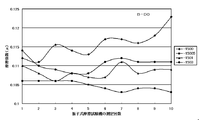
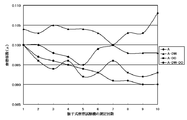
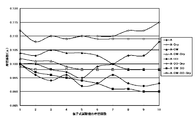
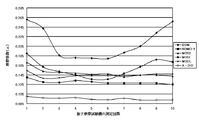
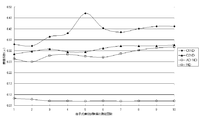
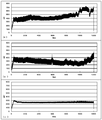
- FIG. 3 is a diagram showing the friction fatigue properties of the lubricant compositions of Examples 1-3 and Comparative Example 1 of the present invention and the friction fatigue properties by a lubricant depletion test.
- the inventors conducted a production verification test of an O / W emulsion composition containing ultrafine diamond particles, and dispersed the ultrafine particles in each of the water phase (W phase) and the oil phase (O phase) constituting the emulsion.
- the best embodiment of the composition of the diamond lubricant composition in the present invention is roughly divided into base oils (P-1: hydrocarbon type, V: one or more of animal and vegetable oils, S: synthetic oils, etc.), emulsifiers,
- the main component is a five-component system of a dispersant, water, and ultrafine diamond particles.
- an antifoaming agent As an additive as an auxiliary agent for maintaining the effect over a long period of time, an antifoaming agent, A sequestering agent, a rust inhibitor, an antioxidant, a disinfectant, and the like can be optionally added.
- antifoaming agents include lower fatty acids, higher alcohols, dimethylpolysiloxanes, dimethylpolysiloxane emulsions, alkylene oxides, etc.
- sequestering agents include alkali metal salts of edetic acid and mono, di, and triethanolamines.
- the component is preferably composed of a composition that does not fall under the environmentally-friendly “PoHS (Norwegian Hazardous Chemical Substances Control Law), PRTR (Chemical Emission Control Management Promotion Law)”.
- the oil phase (O phase) as the dispersed phase is at least one oil selected from mineral oil, animal and vegetable oils and fats, synthetic oils, polymers, and higher alcohols that do not become environmental hormones. Consists of. Ultrafine diamond particles dispersed stably in water as a continuous phase (O / (W + diamond ultrafine particles) type emulsion), stable dispersion in oil as a dispersed phase ((O + ultrafine diamond particles) / W Type emulsions) and those stably dispersed in water and oil ((O + diamond ultrafine particles) / (W + diamond ultrafine particles) type emulsions) are possible, among them, in water and oil Those stably dispersed are the best modes for obtaining the lowest friction coefficient and stable friction fatigue characteristics.
- the production method of the embodiment of the present invention described later is a method for producing an unprecedented lubricant in which the ultrafine diamond particles are formed in each phase of an O / W emulsion.
- the obtained lubricant composition has extremely high biodegradability, is non-environmental hormonal, and can be washed with water, and therefore has an extremely low environmental load and washing burden.
- the embodiment of the present invention disperses ultrafine diamond particles in the O / W emulsion composition, which has the highest hardness among substances and is extremely active and thus inevitably causes strong particle aggregation.
- a novel lubricant composition added by controlling the form and dispersion, and a method for producing the same, and by controlling the dispersion of ultrafine diamond particles in each phase of the basic emulsion (A) It is a completely new invention that can provide an excellent lubricant composition with extremely high industrial value.
- a representative example of using the above W / O / W type emulsion form is rolling oil.
- W / O is dispersed in the aqueous phase (W phase) with low agitation, so the emulsion particle size is 2 to 20 ⁇ m.
- W phase aqueous phase
- the emulsion particle size is 2 to 20 ⁇ m.
- the emulsion in a coarsely emulsified state with poor stability is obtained, and it is extremely difficult to adjust the amount of the emulsifier and to maintain and stabilize the emulsion particle diameter, and the practical application such as spraying with constant forced stirring is poor.
- the present inventors have added a base oil, an oiliness improver, and a solid lubricant into the aqueous phase (W phase) of an O / W type emulsion containing ultrafine diamond particles.
- a base oil an oiliness improver
- a solid lubricant into the aqueous phase (W phase) of an O / W type emulsion containing ultrafine diamond particles.
- the lubricant composition of the present invention the production method thereof, and the solid lubricant fine particles will be specifically described with reference to examples, but the present invention is not limited thereto.
- Example 1 O / (W + diamond ultrafine particle) type emulsion composition
- diamond ultrafine particles those obtained by the explosion method were used.
- the primary particle diameter of the ultrafine diamond particles evaluated by X-ray analysis by the Forth Moment method is 4 to 6 nm, and the purity is 99 wt% or more.
- the diamond ultrafine particle dry powder was subjected to water dispersion treatment by a wet dispersion method to prepare a diamond ultrafine particle water dispersion raw material having an average particle diameter of 40 nm and a solid concentration of 5 wt%.
- the zeta potential of the ultrafine diamond particles in the water dispersion raw material of the ultrafine diamond particles was measured and found to be around -50 mV, and the water dispersion stability has been achieved. The value of the zeta potential in this dispersion system.
- Table 1 shows the results of evaluating the friction characteristics of the diamond ultrafine particle water-dispersed raw material body by changing the solid concentration. That is, Table 1 shows the solid concentration dependency on the friction coefficient of the aqueous dispersion containing ultrafine diamond particles.
- “ND” means ultrafine diamond particles.
- a Kamata pendulum tester was used to measure the friction coefficient.
- the measurement conditions are 20 ° C. and a load of 2.94 N (Hertz pressure: 1,090 N / mm 2 ).
- Hertz pressure 1,090 N / mm 2
- the effect of adding ultrafine diamond particles is hardly present even when the concentration is varied.
- the value of the friction coefficient is 1/2 or less of the friction coefficient 0.45 at the time of drying, and the lubricating effect is recognized.
- a dispersant-treated diamond ultrafine particle aqueous dispersion was prepared by adding various dispersants when the solid concentration of the ultrafine diamond particles was 1.0 wt% and the dispersant addition concentration was kept constant at 0.5 wt%.
- the dispersant-treated diamond ultrafine particle aqueous dispersion in which the dispersant is a fatty acid ester type nonionic dispersant is designated as “Sample ND”.
- sample AD indicates that the dispersant is an anionic dispersant composed of polyoxyethylene alkyl ether carboxylate
- “Sample” indicates that the dispersant is an amphoteric dispersant composed of an alanine type polyoxyethylene adduct.
- RD "Sample CD” which is a cationic dispersant composed of a higher amine / lower fatty acid salt
- sample BD which is a nonionic dispersant composed of a polyoxyethylene-polyoxypropylene copolymer
- Table 2 shows the dispersion state of the water-dispersed ultrafine diamond particles by adding the ion-specific dispersant in Sample ND, Sample AD, Sample RD, Sample CD, and Sample BD.
- These dispersants are a specific group of dispersants selected as test subjects in consideration of the interaction due to their complex addition and the interaction with the emulsifier when the aqueous dispersion is made into an O / W emulsion. is there.
- Table 3 shows the evaluation results of the zeta potential and dispersion stability of the dispersant-treated ultrafine diamond particle water dispersion.
- the zeta potential of the emulsion type as well as the microemulsion type basic emulsion (A) is also shown as a comparison. That is, Table 3 shows the influence of the addition of a ionic dispersant on the water dispersion stability of ultrafine diamond particles. (Diamond ultrafine particle solid concentration: 1 wt%, dispersant added concentration: 0.5 wt%)
- the measured zeta potential was -37.2 mV, and higher fatty acid using ester type as the hydrophilic group raw material.
- the zeta potential was ⁇ 47, 2 mV.
- an amphoteric dispersant composed of an alanine type polyoxyethylene adduct was used (sample RD), the zeta potential was ⁇ 49.3 mV.
- Table 4 shows the results of the friction coefficient evaluation of the dispersant-treated diamond ultrafine particle water dispersion, which was evaluated in Table 3 for the water dispersion stability of the ultrafine diamond particle, using a Kamata pendulum friction tester. Indicated. That is, Table 4 shows the friction coefficient evaluation results of the dispersant-treated diamond ultrafine particle aqueous dispersion (solid concentration: 1 wt%) to which 0.5 wt% of various dispersants are added. (By Iwata-type pendulum friction tester)
- the friction coefficient of the five dispersion-treated diamond ultrafine particle aqueous dispersions was the lowest at 0.116 treated with an anionic dispersant of polyoxyethylene / alkyl ether carboxylate (sample AD), and then , 0.161 treated with an amphoteric dispersant composed of an alanine-type polyoxyethylene adduct (sample RD), non-ionic dispersant treated (sample BD) composed of a polyoxyethylene-polyoxypropylene copolymer
- 0.236 fatty acid ester type nonionic dispersant treatment
- cationic dispersant treatment consisting of higher amine / lower fatty acid salt (sample CD).
- ND is defined as ultrafine diamond particles, but the nonionic dispersant-treated ultrafine diamond particle water dispersion is used as a sample ND.
- E emulsion type
- ME microemulsion type
- the dispersion of a cationic dispersant composed of a higher amine / lower fatty acid salt is inferior in dispersion stability.
- the dispersion stability of ultrafine diamond particles is improved by using a quaternary amine salt type cation type dispersant in which the pH of the aqueous solution is adjusted to the high alkali (pH 12) side.
- the friction coefficient of the agent-treated diamond ultrafine particle aqueous dispersion is higher than the friction coefficient without the addition of a dispersant, and it is possible to simultaneously reduce the friction coefficient by adding a cationic dispersant and ensure the dispersion stability of the ultrafine diamond particles. It became clear that it was impossible.
- the type of dispersant (WS) used in the dispersion-treated diamond ultrafine particle aqueous dispersion is an important factor for maintaining the water dispersion stability and lubricating properties of the O / (W + diamond ultrafine particle) type emulsion composition. It is. Therefore, anionic dispersants, amphoteric dispersants, and nonionic dispersants are more O / (W + diamond-based dispersants) than cationic dispersants composed of higher amine / lower fatty acid salts and other cationic dispersants. It is suitable as a dispersant for the ultrafine particles in the aqueous phase (W phase) as a constituent of the fine particle) type emulsion composition.
- the dispersing agent for water dispersion of ultrafine diamond particles ie WS
- As an anion type group Higher Fatty Acid / Polyoxyethylene / Alkyl Chain (Cn) / Ether Carboxylic Acid / Chemical Dimer of Alkyl Chain (Cn) Fatty Acid Bonded to Castor Oil
- Non-ionic group Polyoxyethylene higher fatty acid (Cn) ester / higher fatty acid (Cn) mono, di, triethanolamide / polyoxyethylene higher alcohol (Cn) ether / polyoxyethylene higher amine (Cn) ether / polyoxyethylene fatty acid (Cn ) Amide / polyoxyethylene / polypropylene oxide block copolymer (pluronic) / alkyl chain (Cn) fatty acid / pluronic ether and ester / polyoxyethylene higher fatty acid / sucrose ester, etc.
- a dispersant selected from is suitable. Of course, these are not limited to these as long as they do not interfere with the emulsifier (EM) for the basic emulsion (A) described below and do not inhibit the dispersion of the ultrafine diamond particles.
- Table 5 shows an example of the result of investigating the composite effect due to the complex interaction between the dispersants.
- Dispersion stability is slightly inferior in terms of zeta potential, but the friction of dispersant-treated diamond ultrafine particle water dispersion treated with an anionic dispersant of polyoxyethylene alkyl ether carboxylate with excellent friction properties
- a pendulum friction fatigue test was performed using the same pendulum tester to increase the number of measurements (number of reciprocating frictions). As a result, the coefficient of friction increased to the right from about 5 measurements, and the friction characteristics deteriorated.
- Table 5 shows an example of the combined effect of a dispersant on the coefficient of friction, an anionic dispersant of polyoxyethylene / alkyl ether carboxylate (corresponding to sample AD) and a non-ionic dispersant of fatty acid ester type (sample) This is a summary of the change in the coefficient of friction due to the composite addition process of ND.
- the addition concentrations of the anionic dispersant and the nonionic dispersant were 0.5 wt% and 0.5 wt%, respectively.
- the solid concentration of ultrafine diamond particles is 1 wt%. That is, Table 5 shows the composite additive effect of the dispersant on the friction coefficient of the ultrafine diamond particle aqueous dispersion.
- Friction fatigue properties were investigated using the same pendulum friction fatigue test method. Friction fatigue properties as confirmed by single addition treatment of polyoxyethylene / alkyl ether carboxylate anionic dispersant (corresponding to sample AD) No deterioration or aggregation that caused the deterioration was observed.
- the composite additive treatment of the dispersant was extremely effective for further reducing the friction coefficient and improving the friction fatigue properties of the ultrafine diamond particle aqueous dispersion.
- the addition of at least one dispersant selected from anionic, amphoteric, and nonionic types is diamond as a constituent of an O / (W + diamond ultrafine particle) type emulsion. It has been clarified that the ultrafine particle water dispersion has extremely great effects both in reducing the friction coefficient and improving the friction fatigue properties.
- the above-described dispersant-treated diamond ultrafine particle aqueous dispersion (DW: main dispersion) is contained in the aqueous phase (W phase) of the basic emulsion (A) in which oil droplets are emulsified and dispersed.
- the body will be diluted with water, but the water phase (W phase) component of the emulsion composition will be added to the water).
- the dispersion stability and friction characteristics are adversely affected. Matching combinations that do not reach are preferred. More preferably, in this example, on the premise that the biodegradability is excellent and the substance is a non-environmental hormone substance, the compatibility with the dispersant selected in the aqueous dispersion treatment of the ultrafine diamond particles has been studied earnestly.
- the most important criteria in the selection of the emulsifier are the stable dispersion of the ultrafine diamond particles, the stability of the oil droplets, and the friction characteristics of the emulsion composition containing the ultrafine diamond particles treated with the dispersant in the aqueous phase (W phase). It is.
- EM emulsifier
- Cation type groups include alkyl chains (Cn), quaternary ammonium salts, etc.
- Cn alkyl chains
- quaternary ammonium salts etc.
- As a bisexual group Hydroxyalkyl- ⁇ or ⁇ -alanine type and alkali metal salts, heavy metal salts thereof, mono-, di-, triethanolamine salts, and those having 1 mol or more of ethylene oxide (EO) n bonded to the alkyl chain thereof // Alkylcarboxybetaine type, quaternary ammonium, sulfonium, phosphonium salt / lecithin, etc.
- EO ethylene oxide
- emulsifiers selected from amide / polyoxyethylene / polypropylene oxide block copolymer (pluronic) / alkyl chain (Cn) fatty acid / pluronic ether and ester / polyoxyethylene higher fatty acid / sucrose ester It was clarified that is suitable, but not limited to this.
- lubricant compositions which are O / (W + diamond ultrafine particle) type emulsion compositions using the above emulsifier and dispersant-treated diamond ultrafine particle aqueous dispersion, are shown below by type.
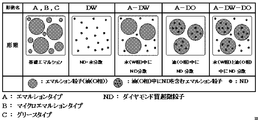
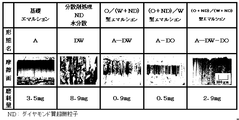
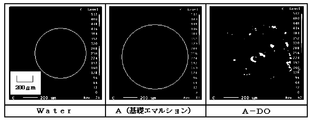
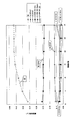
- Emulsion (milky color) type (A), microemulsion (solubilization type) type (B), and paste-like (grease-like) type (C) (corresponding to the schematic diagram of the embodiment in FIG. 4).
- Emulsion (milky color) type (A) is used on behalf of the basic emulsion, but part (A) is used in the same manner for classification of the embodiment as described above.
- Emulsion (milky color) type (A), microemulsion (solubilization type) type (B), and paste-like (grease-like) type (C) (corresponding to the schematic diagram of the embodiment in FIG. 4).
- the (DO) identification symbol is used in the state where These distinctions in use are timely noted in the specification.
- an O / (W + diamond ultrafine particle) emulsion composition A-DW
- an (O + diamond ultrafine particle) / (W + diamond ultrafine particle) emulsion composition and a composite dispersion composition described later.
- anhydrous lubricant compositions and in base oil (solid) / composite dispersion compositions and in base oil (oil) / composite oil dispersion compositions, etc.
- the dispersant for water dispersion added for the purpose of stabilizing dispersion and reducing the friction coefficient is other than ultrafine diamond particles and ultrafine diamond particles added and dispersed in the aqueous phase (W phase).
- solid concentration of solid lubricants not included in the solid concentration of solid lubricants.
- solids other than the diamond ultrafine particles and diamond ultrafine particles are also included. It is not included in the blended solid concentration of the lubricant, and other components are handled as water, base oil, etc.
- ⁇ Emulsion (milky color) type ⁇ Oleic acid-based oil (rapeseed oil) 6 wt% and oleic acid methyl ester 3 wt% are mixed, and polyoxyethylene (n 6 mol) oleic acid ester 2 wt% and oleic acid potassium salt 4 wt% are mixed as an emulsifier
- the emulsion base oil component was produced by stirring. Add 6wt% of water and knead well when the ratio of oil phase (O phase) to water phase (W phase) is 7: 3, and phase inversion emulsification from W / O to O / W Upon completion, a basic emulsion (A) was produced.
- a kneader was used to produce this type of composition.
- a dispersion-treated diamond ultrafine particle aqueous dispersion (with a solid concentration of 2 wt%, an anionic dispersant of polyoxyethylene alkyl ether carboxylate as a dispersant, a nonionic dispersant of fatty acid ester type)
- 15 wt% of each ultrafine diamond particle dispersion (combined with 1 wt% each) is added and stirred, and finally the remaining adjustment water is added by 64 wt%.
- the effective base oil component concentration was 15 wt%
- the ultrafine diamond particle content (solid concentration) was 0.3 wt%.
- an emulsion of dimethylpolysiloxane was added as an antifoaming agent.
- Solid lubricant fine particles diamond ultrafine solid lubricant fine particles for water dispersion
- solid lubricant particles of diamond ultrafine particles having a hydrophilic surface obtained by removing water from the dispersant-treated diamond ultrafine particle water dispersion produced by this method, and further, anionic type, amphoteric type, Solid lubricant fine particles having at least one kind of water-dispersing dispersant among nonionic types as a core, and particularly solids comprising a combination of an anionic type dispersant and a nonionic type dispersant.
- the lubricant fine particles are extremely good in dispersibility in water and various water-soluble solvents including reproducibility, and are useful as solid lubricant fine particles of water-dispersed diamond ultrafine particles.
- the solid lubricant fine particles comprising a combination of an anionic dispersant and a nonionic dispersant are dispersed in an aqueous solvent to reduce the friction coefficient, as shown in this embodiment. It is an optimal solid lubricant fine particle.
- These solid lubricant fine particles are also advantageous in that the storage volume can be reduced and the change over time during storage of the dispersion (such as the occurrence of agglomeration (including Brownian motion agglomeration) due to alteration of the surface of the dispersed particles) can be prevented. Further, examples of applying the present invention to the production of an O / W emulsion composition containing ultrafine diamond particles and confirming the friction characteristics will be described.
- Example of solid lubricant fine particles The solid lubricant fine particles having a dispersant for water dispersion on the surface are added and stirred in the aqueous phase (W phase) of the basic emulsion (A) described above in an amount of 0.15 wt% (solid composition as a total concentration).
- W phase aqueous phase
- a form similar to the (A-DW) composition having an effective base oil component concentration of 15 wt% described in Example 1 was prepared.
- the friction coefficient was 0.110, which was a good value.
- the solid lubricant fine particles having a water dispersion dispersant on the surface thereof exhibit the same easy dispersibility in water as the dispersion-treated diamond ultrafine particle water dispersion used in Example 1, and can be easily reconstituted in water. Because it can be dispersed, it proved to be extremely useful as an unprecedented solid lubricant with excellent safety. According to this example, it is possible to provide an ultrafine diamond solid lubricant for water dispersion that has both water dispersion stability and safety that are not conventionally provided.
- n-paraffin viscosity: 10cSt
- An emulsion base oil component was produced by mixing and stirring 10 wt% oleyl alcohol ether and 12 wt% potassium oleate.
- the same dispersant-treated diamond ultrafine particle aqueous dispersion 50 wt% as in the case of the emulsion (milky color) type described above was added.
- the average particle diameter and solid concentration of the ultrafine diamond particles of the dispersant-treated diamond ultrafine particle water dispersion used, the anionic dispersant of the polyoxyethylene / alkyl ether carboxylate of the dispersant, and the fatty acid ester type are the same as in the case of the emulsion (milky color) type described above.
- a dimethylpolysiloxane emulsion was added as an antifoaming agent. Since this type of composition has a high viscosity (consistency: about 230), a kneader was used for its production, as in the emulsion type.
- the effective base oil component concentration is 50 wt%
- the ultrafine diamond particle content (solid concentration) is 1.0 wt%.
- the friction coefficient was measured using a Kamata pendulum tester.
- This method is used to measure the friction phenomenon in the boundary lubrication region where the transition from static to dynamic occurs when friction starts between two sliding surfaces. It is characterized by being able to capture.
- the evaluation is performed with the average value of three times, but when the measured values are plotted ten times continuously without changing the test piece, the coefficient of friction increases to the right, or reaches the equilibrium and does not change. It has been confirmed that it is related to the persistence of the lubricating effect. In other words, it is judged that this repeated friction can be applied as a method for evaluating friction fatigue characteristics.
- This test method is hereinafter referred to as a “pendulum friction fatigue test method” and adopted as a method for evaluating the effect of maintaining friction characteristics (friction fatigue properties). did.
- the friction coefficient evaluation methods disclosed in the prior art are not unified, and there are many disclosures of more practical measurement methods of the ball-on-disk type. In these methods, the load that can be normally applied is small, and it is difficult to evaluate the lubrication capability at the limit of the lubricant, that is, the friction characteristics under a high load (high hertz pressure) (boundary lubrication region).
- the Kamata-type pendulum friction tester used in the present invention can perform a test under a high load, and the measurement conditions were set to 20 ° C. and a load of 2.94 N (Hertz pressure: 1,090 N / mm 2 ) as described above.
- Table 6 shows the friction coefficient results of the present O / (W + diamond ultrafine particle) type emulsion composition.
- the effective base oil component concentration was set to 15 wt%. That is, Table 6 shows the friction coefficient of the O / (W + diamond ultrafine particle) type emulsion composition.
- D means ultrafine diamond particles
- A means an emulsion (milky color) type
- the first two digits of the numbers are effective base oil component concentrations.
- the remaining numbers relate to the weight percent of the ultrafine diamond particle content (solid concentration) in the lubricant composition.
- A-DW-1503 is an emulsion (milky color) type lubricant composition, an O / (W + diamond ultrafine particle) type emulsion composition, and the effective base oil component concentration is 15 wt%. It shows that the ultrafine diamond particle concentration (solid concentration) in the product is 0.3 wt%. In A-DW-15005, the concentration of ultrafine diamond particles in the lubricant composition is 0.05 wt%.
- the dispersant-treated diamond ultrafine particle is obtained.
- the amount of ultrafine diamond particles can be reduced by an order of magnitude.
- an O / (W + diamond ultrafine particle) type emulsion composition using an ⁇ -olefin oligomer as a synthetic oil was also prepared, and the coefficient of friction was determined. As a result of evaluation, the same low value as that of oleic acid-based fats and oils was obtained.
- the friction coefficient is similarly evaluated for diamond lubricant compositions composed of the above-mentioned O / (W + diamond ultrafine particle) type emulsion (BDW or C-DW) type of microemulsion (solubilization type) or paste type. did. It was found that the pasty type (C-DW) described later can provide a lower friction coefficient than that obtained by adding ultrafine diamond particles to conventional mineral oil type grease. In the evaluation, in the pasty type, water was further added from about 5: 5 described above to adjust to 4: 6 to obtain an effective base oil component concentration of 40 wt%. The diamond ultrafine particle solid concentration is 0.8 wt%. This adjustment is for ensuring fluidity in the Kamata pendulum friction test.
- a conventional mineral oil grease (Li grease) prepared by the following method was used. That is, diamond ultrafine oil dispersion (base oil P-2: diamond ultrafine particle solid concentration: 10 wt%) described later: 8 wt% is mixed with conventional straight oil (machine oil # 68): 42 wt% to obtain mineral oil grease. (Li grease): Mixable with 50 wt% to obtain a fluid grease. Both viscosities are 120 cSt (40 ° C.).
- the friction coefficient of the paste-type O / (W + diamond ultrafine particle) type emulsion composition (C-DW) of the present invention is 0.116, and the conventional mineral oil to which the ultrafine diamond particle of the comparative sample is added The lubrication performance was better than the friction coefficient of 0.143.
- this diamond lubricant composition For the production evaluation of this diamond lubricant composition, high-purity diamond ultrafine particles with a purity of 99 wt% or more were used, but ultrafine particles with a purity of 90 wt% or less and a large amount of residual carbonaceous matter, and further carbonaceous fine particles were dispersed. Coexistence was possible, and excellent lubrication performance was confirmed according to the friction test environment.
- the carbonaceous material including graphite
- the carbonaceous material that is controlled / residual during the manufacturing / refining process of ultrafine diamond particles and the carbonaceous material in a broad sense to be dispersed and coexisted have the above-mentioned O / (W + diamond quality).
- the ultrafine particle type emulsion composition there is an advantage of exhibiting an antiseptic action having a high aqueous phase even when no preservative is added.
- the O / (W + diamond ultrafine particle) type emulsion composition of the above-mentioned Example 1 was hermetically stored at 20 ° C. for 2 years was tested for the presence or absence of bacteria using an agar medium biochecker (manufactured by Sanai Petroleum). As a result, it was confirmed that there was no color development based on the presence, so that it did not rot for a long time.
- Example 2 (O + ultrafine diamond particles) / W emulsion composition] (Dispersant-treated diamond ultrafine particle water dispersion)
- the lubricant composition of Example 2 of the present invention uses the dispersant-treated diamond ultrafine particle aqueous dispersion detailed in Example 1 as a starting material.
- the ultrafine diamond particles produced by the explosion method and the conventional static ultra-high pressure method are usually wet and high-purity acid treatment, so that the surface of the fine particles is hydrophilic.
- the surface of the microparticles having the hydrophilic surface can be modified with a highly uniform hydrophobized surface.
- the dispersion for water dispersion is performed simultaneously with the water dispersion. Water is removed after the treatment of adding the agent to obtain a hydrophilic “water-dispersible diamond ultrafine particle solid lubricant”, or directly, the following oil-dispersed diamond ultrafine particle dispersant (OS): Even when used, an oil dispersion can be produced.
- OS oil-dispersed diamond ultrafine particle dispersant
- a hydrophilic “diamond ultrafine particle solid lubricant for water dispersion” is added to the oil phase (O phase) to form an oil dispersion.
- an oil-dispersed diamond ultrafine particle dispersant (OS) is dispersed in a dissolved base oil component to obtain a diamond ultrafine particle oil dispersion.
- the oil dispersion previously dispersed in the base oil base oil P-2 described later
- the oil dispersing agent for ultrafine diamond particles ie, the oil-dispersed ultrafine diamond particle dispersant (OS) has a role of making the ultrafine diamond particle surface hydrophobic and stably dispersing it in the oil phase (O phase). is there.
- these dispersants surfactants having a weak surface activity are suitable as long as the surface activity is not lost and the hydrophilic / hydrophobic balance (HLB) is smaller than that of water-soluble ones.
- HLB hydrophilic / hydrophobic balance
- the surface of the ultrafine diamond particles is made hydrophobic and stably dispersed in the oil phase (O phase), which is suitable for an oil-dispersed ultrafine diamond particle dispersant (OS).
- the present invention is not limited to this as long as it does not inhibit the dispersion of the fine particles. It is also appropriate that the oil-soluble dispersant is selected from the above-mentioned oil-soluble dispersants after careful consideration so as not to be an obstacle to frictional properties as in the case of the ultrafine diamond particle dispersant for water dispersion. In the (O + diamond ultrafine particle) / W type emulsion composition, the use of an oil-dispersed diamond ultrafine particle dispersant (OS) is indispensable.
- OS oil-dispersed diamond ultrafine particle dispersant
- a diamond ultrafine particle solid lubricant for oil dispersion which will be described later, may be directly added to the base oil of the oil phase (O phase). Since the addition amount is very small, it is preferable to produce a dispersant-treated diamond ultrafine particle oil dispersion in which a prescribed amount of diamond ultrafine particles is dispersed in advance in the base oil and blend it as part of the base oil component.
- Diamond ultrafine particles added / dispersed in oil basically have an oil-dispersed diamond-based ultrafine particle dispersant (on the surface of the above-mentioned diamond ultrafine particle solid lubricant for water dispersion) OS) to be hydrophobized. Desired amount of the oil-dispersed diamond ultrafine particle dispersant (OS) in the base oil component (P-1) and the like which affect the viscosity and lubricating performance of the intended composition for the water-dispersed diamond ultrafine particle solid lubricant Is added and dispersed to produce a base oil P-2 containing ultrafine diamond particles for oil dispersion.
- OS oil-dispersed diamond-based ultrafine particle dispersant
- the water-dispersed diamond ultrafine particle solid lubricant is added with the water-dispersed diamond ultrafine particle dispersant (WS) at the same time.
- the dispersant (WS) is a base oil component. In other words, in this example, it is included in the composition of n-paraffin, and unless otherwise specified, it will be handled in the same manner, and the composition of the oil dispersion is not specified.
- a water-dispersed diamond ultrafine particle dispersant (WS) having a weight ratio of 0.6 to the ultrafine diamond particle is used.
- the water-dispersed diamond ultrafine particle dispersant is a composite dispersant composed of 50 wt% of an anionic dispersant of polyoxyethylene / alkyl ether carboxylate and 50 wt% of a fatty acid ester type nonionic dispersant.
- a water-dispersed diamond ultrafine particle solid lubricant treated with the composite dispersant was used.
- the combination of the dispersing agent in the production of the ultrafine diamond particle oil dispersion in this example is an example, and it is a combination that can disperse the ultrafine diamond particle in the base oil, and does not interfere with the emulsifier and dispersion described later. If it is, it is clear that it is not limited to a present Example.
- the oil-dispersing diamond ultrafine solid lubricant fine particles having the ultrafine diamond particles as the core and the oil-dispersing dispersant on the surface can be produced as follows. For example, instead of the 84 wt% n-paraffin, a 6 wt% higher fatty acid amide alkylol sulfate ester salt is diluted and dissolved in n-hexane, and the water is removed. After adding 10 wt% (in solid concentration) and reliably performing oil (hydrophobic) dispersion with ultrasonic waves, n-hexane may be evaporated.
- the dispersion state of the dispersion being dispersed in n-hexane is confirmed by a particle size distribution measuring device.
- Solid lubricant particles that have ultrafine diamond particles produced by this method as the core and have a dispersant for oil dispersion on the surface can be re-dispersed reproducibly in various oils and hydrophobic solvents. It is useful as solid lubricant fine particles of ultrafine diamond particles for dispersion. Further, like the solid lubricant fine particles of the ultrafine diamond particles for water dispersion, it is also advantageous that the storage volume can be reduced and the change over time during storage of the dispersion (increase in the dispersed particle size due to Brownian aggregation or the like) can be minimized.
- This example is an example of an embodiment, and it is clear that the dispersant (OS) for dispersing oil is not limited to this example. Further, examples of applying the present invention to the production of an O / W emulsion composition containing ultrafine diamond particles and confirming the friction characteristics will be described.
- the solid lubricant fine particles having the oil dispersing dispersant (OS) on the surface show the same dispersion behavior as the base oil (P-2) containing the oil dispersant-treated ultrafine diamond particles used in Example 2. Since it is easily redispersed in nonpolar solvents and oils, it has been demonstrated that its utility value is high, and in particular, it is extremely useful as an unprecedented oil-soluble solid lubricant with excellent safety. According to this embodiment, it is possible to provide a diamond ultrafine particle solid lubricant for oil dispersion having both unprecedented oil dispersion stability and safety.
- A O / W emulsion type basic emulsion
- base oil P-2 ultrafine diamond solid concentration 10 wt%
- the additive concentration of ultrafine diamond particles on the friction coefficient solid concentration range of ultrafine diamond particles with respect to the total amount of the lubricant composition: 0.05 to 0.5 wt%), ultrafine diamond particles, emulsifier, etc.
- the evaluation sample was adjusted by changing the blending ratio.
- the ultrafine diamond particles are added and dispersed in the oil phase (O phase) (for example, the above base oil P-2), the ultrafine particles are always included in the effective base oil component concentration.
- Table 7 summarizes the friction coefficient results associated with changes in the ultrafine diamond particle addition concentration (solid concentration) and effective base oil component concentration of the emulsion type composition.
- Table 8 summarizes similar results for the microemulsion (solubilized) type.
- Table 7 shows the influence of the effective base oil component concentration and the solid ultrafine diamond particle concentration on the friction coefficient of the emulsion type of the (O + diamond ultrafine particles) / W emulsion composition.
- DO means having an (O + diamond ultrafine particle) phase.
- no ultrafine diamond particles are added.
- Table 8 shows the influence of the effective concentration of the base oil component and the ultrafine diamond solids concentration on the microemulsion type friction coefficient of the (O + diamond ultrafine particles) / W type emulsion composition.
- B means a microemulsion type.
- FIG. 1 is a graph showing the emulsion type friction fatigue properties of the lubricant composition of Example 2 of the present invention.
- FIG. 2 is a graph showing microemulsion type friction fatigue characteristics of the lubricant composition of Example 2 of the present invention.
- the diamond ultrafine particle concentration was 0.05 to 0.3 wt%, and the base oil component effective concentration including the emulsifier was 15 wt%.
- the friction coefficient increases as the number of repetitions increases.
- the friction coefficient decreases asymptotically as the number of repetitions increases, and the friction coefficient is as low as 0.09 (emulsion type) even when the additive concentration is 0.1 wt% or less. It showed excellent friction fatigue properties.
- Example 3 (O + diamond ultrafine particles) / (W + diamond ultrafine particles) type emulsion composition] (Manufacture of lubricant composition) Next, mixing and adjusting both the above-described diamond ultrafine particle aqueous dispersion subjected to the composite dispersion treatment and the one manufactured in Example 2 (emulsion type) with the above-described dispersant for dispersing ultrafine diamond particles (WS). Production examples of the (O + diamond ultrafine particles) / (W + diamond ultrafine particles) type emulsion composition thus obtained are shown below.
- oleic acid-based oil rapeseed oil
- base oil P-2 diamond ultrafine particle solid concentration 10 wt%
- a diamond-treated ultrafine particle aqueous dispersion polyoxyethylene alkyl ether carboxylate anionic dispersant, fatty acid ester-type aqueous dispersion having a diamond-treated ultrafine particle concentration (solid concentration) of 0.19 wt%.
- Add 79 wt% of nonionic dispersant (combined 0.075 wt% and 0.075 wt% respectively) and stir.
- the total solid concentration of the ultrafine diamond particles was 0.3 wt%, and the effective base oil component concentration was 15 wt%.
- an emulsion of dimethylpolysiloxane was finally added as an antifoaming agent.
- Table 9 similarly shows the friction coefficient results associated with changes in the ultrafine diamond particle concentration and effective base oil component concentration of the emulsion type lubricant composition of this example.
- the effect of the effective base oil component concentration and the ultrafine diamond particle concentration on the friction characteristics is not clear, but the friction coefficient is the same as that of the (O + ultrafine diamond particle) / W emulsion composition. An extremely small value was obtained by adding a very small amount. That is, Table 9 shows the effect of effective base oil component concentration and diamond ultrafine particle solid concentration on the friction characteristics of the emulsion type of the (O + diamond ultrafine particle) / (W + diamond ultrafine particle) type emulsion composition. It is. In the chart below, A-DW-DO means an emulsion type (O + diamond ultrafine particle) / (W + diamond ultrafine particle) type emulsion composition.
- FIG. 3 is a graph showing the emulsion type friction fatigue properties of the lubricant compositions of Examples 1-3 and Comparative Example 1 of the present invention.
- A is a basic emulsion (A) sample containing neither diamond ultrafine particles in the water phase (W phase) nor the oil phase (O phase), ie, sample A in Table 7 This is referred to as Comparative Example 1.
- Example 1 the dispersion form of the ultrafine diamond particles was controlled in each constituent phase of the O / W emulsion composition, that is, in the water phase (W phase) and in the oil phase (O phase).
- FIG. 3 shows a comparison of the friction fatigue characteristics of these lubricant compositions.
- This lubricant composition is an emulsion type, and the effective base oil component concentration was 15 wt%, and the ultrafine diamond particle concentration (solid concentration) was 0.3 wt%.
- the friction coefficient increases as the number of repetitions increases, whereas the W phase (A-DW), O phase (A-DO), W
- the lubricant composition of the present invention in which ultrafine diamond particles are dispersed and added to both the phase and the O phase (A-DW-DO) is stabilized by gradually decreasing the friction coefficient by repeated friction.
- the type in which ultrafine diamond particles were added to both the W phase and the O phase (A-DW-DO) showed the characteristic of convergence to the lowest friction coefficient.
- the selection of the base oil, the emulsifier, the dispersant and the like specifically shown in the present example is an example constituting the diamond lubricant composition, and is obviously not limited to the present example.
- Example 1-3 Friction surface lubrication behavior by Falex test
- a Falex test (ASTM D 2670) was performed, and the characteristics of the friction surface due to the difference in the lubricant composition were observed.
- the test conditions are 20 ° C., 290 rpm, load 1334N, 45 min.
- FIG. 4 is a schematic diagram showing various dispersion forms of ultrafine diamond particles.
- Example 1 corresponds to A-DW
- Example 2 corresponds to A-DO
- Example 3 corresponds to A-DW-DO
- Comparative Example 1 corresponds to A.
- Modified example 1 (modified example of example 1) is a dispersion in the middle of producing example 1, and is a dispersant-treated diamond ultrafine particle aqueous dispersion, and corresponds to DW in the figure.
- the schematic diagram shown by A is a schematic diagram applicable also to a microemulsion type (B) and a grease type (C).
- FIG. 5 is a photomicrograph of the friction surface in the Falex test of the lubricant compositions of Example 1-3, Modification 1, and Comparative Example 1. Correspondences between form names and examples, modifications, and comparative examples are the same as those in FIG. 4 and 5, “ND” means ultrafine diamond particles.
- FIG. 5 shows an optical micrograph of the sliding Falex block friction surface.
- the friction surface of the O / W type basic emulsion (A) not containing ultrafine diamond particles (A) is in a state in which the sliding width with which the pin comes into contact with the progress of frictional wear is widened.
- O / (W + diamond ultrafine particle) type emulsion in which ultrafine diamond particles are added to and dispersed in the W phase of the O / W basic emulsion (A), frictional wear is greatly reduced and the wear scar width is also reduced. You can see that it is getting smaller. Further, ultrafine diamond fine particles were added and dispersed in the O phase of the O / W basic emulsion (A) (the wear scar width was significantly reduced in the O + ultrafine diamond fine particles / W type emulsion).
- FIG. 6 is an EPMA analysis result of a Falex test block friction surface of the lubricant composition of Example 2 of the present invention.
- FIG. 6 shows the results of further detailed investigation of the Falex test block friction surface of the (O + diamond ultrafine particles) / W type emulsion composition by EPMA analysis.
- a) is a reflected electron composition image in the vicinity of the friction surface, and shows that an element having a small atomic number is concentrated in the friction site.
- b) to e) take into account the material of the sliding member (free-cutting steel) and discriminate the wear scar concentration element, so that it corresponds to carbon (b)), iron (c)), manganese (d )) And sulfur (e)) are mapped by the intensity of each characteristic X-ray.
- the result of b) shows that the carbonaceous matter is concentrated in the wear scar.
- diffraction peaks such as (111) and (220) of diamond were detected, and the carbonaceous matter concentrated in the wear scar was added to the O phase. It became clear that they were dispersed ultrafine diamond particles. Similar results were obtained for other emulsions containing the ultrafine diamond particles.
- the formed ultrafine diamond particle layer is closely related to the wear scar width in the Falex test and the friction coefficient result of the pendulum friction fatigue test.
- Table 10 shows a comparison of the results of the respective lubricant compositions with respect to the amount of pin wear in the Falex test. That is, Table 10 shows a comparison result of the amount of pin wear in the Falex test (ASTM D 2670) of the lubricant composition of the present invention.
- ASTM D 2670 emulsion type, solid ultrafine diamond particle concentration: 0.3 wt%, effective base oil component concentration: 15 wt%, test conditions: 20 ° C., 290 rpm, load 1334 N, 45 min
- FIG. 7 shows the ball in the underwater test (Water), basic emulsion (A) test not containing ultrafine diamond particles, and (O + ultrafine diamond particles) / W emulsion composition (A-DO) test used in this verification.
- the ball means the fixed sphere side.
- the carbon characteristic X-ray intensity distribution result of the friction surface is shown.
- the concentration of carbon on the friction surface of the ball that was rubbed with distilled water containing no organic matter and the surface layer was forcibly peeled was examined. Similarly to the above, it was at the background level and carbon concentration could not be confirmed. That is, it was found that there was no carbon enrichment derived from the trace carbon of the ball (corresponding to Water in the figure).
- the organic substance is kneaded into the ball during friction and that the organic reactant is derived from a friction polymer (polymer / carbide) generated by frictional heat.
- FIG. 8 shows a high-magnification (30,000 times) reflected electron composition image of the carbon-concentrated portion of the ball friction surface of the (O + diamond ultrafine particle) / W emulsion composition (A-DO) shown in FIG. Indicated. It can be seen that diamond ultrafine particles of 100 nm or less are scattered (arrows in the figure). Through this verification, the ultrafine diamond particles added and dispersed in the basic emulsion (A) are concentrated on the friction surface regardless of the friction test methods such as Falex test (line contact) and shell type high-speed four-ball test (point contact). It was found that a so-called diamond ultrafine particle coating layer (coating layer) was formed.
- the present emulsion composition (A-DW, A-DO, A-DW-DO) containing ultrafine diamond particles is extremely useful industrially as a coating agent for ultrafine diamond particles.
- various sliding members having a diamond ultrafine particle coated concentrated layer (diamond ultrafine particle coating layer), a forming method thereof, and a diamond ultrafine particle coated concentrated layer (same coating layer) can be realized at low cost and relatively easily. Since it was possible, it turned out that it is very useful also as a coating layer with high lubricating performance, its formation technique, etc. Further, in this verification, free carbon other than diamond ultrafine particles could not be detected in the diamond ultrafine particle concentrated layer.
- Example 1-3 Lubrication reliability
- excellent lubricating performance such as a low coefficient of friction, a stable friction fatigue characteristic for a long time, and a small amount of friction and wear can be given.
- the danger of seizure as the worst situation even when trouble occurs in a non-lubricated state (lubricant depletion) due to leakage of the lubricant composition from the friction / sliding part It can be said that the reliability of the lubricant performance is highly reliable.
- the lubricant composition of the present invention is an emulsion composition comprising an aqueous phase (W phase) and an oil phase (O phase)
- W phase aqueous phase
- O phase oil phase
- the most severe friction condition is the friction / sliding during the pendulum friction fatigue test.
- a so-called lubricant depletion test was conducted to examine the friction fatigue behavior when the lubricant composition was removed from the moving part by washing with water.
- the test conditions are the same as in the friction fatigue test described above, but after 10 times of repeated friction in the lubricant of the present invention, the lubricant composition of the friction / sliding part is ultrasonically washed away with water and dried. Again, the pendulum friction fatigue test is performed 10 times under the same conditions.
- FIG. 9 is a diagram showing the friction fatigue characteristics of the lubricant compositions of Examples 1-3 and Comparative Example 1 of the present invention and the friction fatigue characteristics by the lubricant depletion test.
- FIG. 9 shows the results of the friction fatigue characteristics of the lubricant depletion test according to the present invention, together with the friction fatigue characteristics of various dispersion forms of ultrafine diamond particles for the lubricant compositions of the examples of the present invention.
- the result of the friction fatigue property by the lubricant depletion test is shown by adding “-Dry” to the sample data indicating the dispersion form of each ultrafine diamond particle in the figure.
- the depletion test result of (O + diamond ultrafine particles) / (W + diamond ultrafine particles) type emulsion type (A-DW-DO) (ie, Example 3) is indicated by A-DW-DO-Dry.
- the lubrication reliability characteristic in the above lubricant depletion test is that the lubricant composition can be washed with water if a diamond ultrafine particle coating concentrated layer is formed in advance at the site where lubrication is required, for example during running-in. Even if it is removed, it shows that it exhibits a stable lubrication function. Therefore, for example, to the processing and manufacturing processes of paper products and the like (for example, Japanese paper and polymer-treated paper products (new materials for thin-screen TVs, etc.)) that adhesion of lubricant (oil) is judged to impair product quality specifications.
- the present invention provides a new and useful lubrication means that can eliminate the problem of oil contamination.
- Example 4 to 7 In Examples 1 to 3, the average particle size of ultrafine diamond particles dispersed and added to the lubricant composition was 40 nm. Examples 4 to 7 describe the influence of the average particle size on the friction properties. Unless otherwise specified, the conditions other than the average particle diameter were prepared under the same conditions as in Example 2 and Examples 6 and 7 as in Example 3.
- the ultrafine diamond particles used in this example are relatively rounded particles whose primary particle size produced by the explosion method itself does not show a self-shape of several nanometers level, but these primary particles are cohesive.
- the 40 nm average particle diameter described above is an agglomerated average diameter.
- the average particle size of the ultrafine diamond particles that can be used in the present invention is not limited to the aggregated average particle size disclosed in the examples, and at least a primary particle size (for example, 4 nm) that has been subjected to a dispersion treatment can be used.
- ultrafine diamond particles having an average particle diameter of 10 nm and 4 nm were used, and an (O + ultrafine diamond particle) / W emulsion composition (10 nm: Example 4, 4 nm: Example 5), (O + Ultrafine diamond particles / (W + ultrafine diamond particles) type emulsion composition (10 nm: Example 6, 4 nm: Example 7) was produced, and the friction coefficient was compared with the case of an average particle diameter of 40 nm.
- each obtained coefficient of friction was much lower than 0.1, and showed better friction characteristics than Examples 1 to 3 using an average particle size of 40 nm. It became clear that the addition concentration of ultrafine diamond particles can be further reduced as the average particle size decreases. Incidentally, in this example, the above-mentioned friction performance could be sufficiently achieved by adding 0.02 wt%.
- the effective base oil component concentration is 20 wt%.
- the average particle size of the ultrafine diamond particles is 100 nm or less.
- the same phenomenon was confirmed for the ultrafine diamond particles obtained by the static ultra-high pressure method, the shock wave synthesis method, and the vapor phase synthesis method, other than the explosion method.
- those sharp fine edge cutting edges are miniaturized and further modified by wet dispersion treatment or heat treatment.
- the dispersion state changes from a dispersion state with relatively small interparticle constraints to an aggregate.
- concentration range in which such behavior clearly appears is a concentration exceeding 10 wt% (same for all blending composition concentrations), and the friction characteristics of the lubricants of Examples 1 to 3 described above were evaluated in this concentration range. The coefficient rose considerably.
- the upper limit of the weight concentration of addition / dispersion in the oil phase (O phase) and the aqueous phase (W phase) of the ultrafine diamond particles is 10 wt%.
- the additive concentration does not necessarily have a lower limit, but as described above, when the average particle size is reduced to primary particles, the additive concentration that exerts an effect on the friction coefficient and friction fatigue characteristics can be reduced to 0.01 wt% or less. Was confirmed.
- the effective base oil component concentration constituting the emulsion and microemulsion was explained in the range of 5 wt% to 25 wt%, and the paste type was explained as 50 wt%.
- the upper limit of the base oil component effective concentration when it exceeds 90 wt%, it becomes difficult to maintain the form as an O / W emulsion, and when the lower limit is 1 wt% or less, the effect of the base oil component cannot be expected. . Accordingly, it is appropriate that the effective base oil component concentration constituting the oil phase (O phase) is 1 wt% or more and 90 wt% or less.
- OECD Organization for Economic Co-operation and Development
- Modification 2 As Modification 2 (Modification of Example 1), a conventional lubricant (straight type) containing ultrafine diamond particles was produced. A machine oil # 68, a conventional straight oil, was used as the base oil, and a comparative lubricant was produced with the composition shown in Table 11. At this time, when adding additives such as solid fine particles or extreme pressure agents, as in the production of the ultrafine diamond oil dispersion, n-paraffin is used as the base oil, and higher amide / alkylol is used as the dispersant. After mixing and stirring various additives such as sulfonate salt and ultrafine diamond particles, machine oil # 68 is mixed to produce a straight type conventional lubricant having a desired solid particle concentration, did.
- additives such as solid fine particles or extreme pressure agents
- FIG. 10 is a diagram showing the friction fatigue properties of the lubricant compositions of Example 2, Modification 2 and Comparative Example 2 of the present invention.
- FIG. 10 shows a comparison of the friction coefficient and friction fatigue characteristics of the straight type conventional lubricant produced by the above method and the diamond lubricant composition of Example 2 of the present invention.
- the results indicated by A-DO are the results of the emulsion type of the (O + ultrafine diamond particles) / W emulsion composition detailed above as the results of Example 2 (diamond ultrafine particle added solid concentration: 0. 0). 05 wt%).
- the straight type conventional lubricant NDMO-1
- the oil phase (O phase) of the present invention The result was far less than the emulsion type composition (friction coefficient: 0.09) in which a very small amount of ultrafine diamond particles treated with an OS group oil-soluble dispersant was added.
- FIG. 11 is a microscopic view of the friction surface in the Falex abrasion test of the lubricant composition of each aspect of Modification 2 and Comparative Example 2.
- Comparative Example 2 that is, the friction of the straight type conventional lubricant obtained by adding SiO 2 , MoS 2 and chlorinated paraffin to the conventional straight oil It was revealed that the wear scar width of the surface increased greatly with the progress of frictional wear.
- FIG. 11 is accompanied by the evaluation results of the coefficient of friction by the Kamata pendulum friction tester. When the results shown in FIG. 11 are compared with FIG. 5, the excellent lubricating properties of the lubricant compositions of the examples of the present invention are evident.
- FIG. 12 is a diagram showing the friction fatigue properties of the lubricant composition depending on the presence / absence / type of the dispersant.
- FIG. 12 shows a cation type dispersant (C2ND) composed of a higher amine / lower fatty acid salt and a quaternary amine salt / RN (CH 2 ) 3.
- FIG. 12 shows, as a comparative standard, the friction fatigue characteristics of a diamond ultrafine particle water-dispersed raw material without addition of a dispersant (WD: diamond ultrafine particle concentration (solid concentration) is 1.0 wt%).
- WD diamond ultrafine particle concentration (solid concentration) is 1.0 wt%).
- the polyoxyethylene / alkyl ether carboxylate anionic dispersant shown in Example 1 corresponding to the sample AD
- a fatty acid ester-type nonionic dispersant corresponding to the sample ND
- the effect of processing AD / ND
- the friction coefficient of the ultrafine diamond particle aqueous dispersion treated with the cation-type dispersant described above is almost unchanged compared to the case where no additive is added, or rather tends to increase. No tendency to stabilize by treatment was confirmed. This result is in contrast to the effects of anionic, amphoteric and nonionic dispersants.
- the effect of the dispersant treatment with a dispersant other than the cationic dispersant in the O / W emulsion composition containing ultrafine diamond particles was in improving the friction characteristics.
- the ultrafine diamond particles can be dispersed in the oil, so that the cost can be reduced.
- Examples 8 to 10 Advanced emulsion composition
- the most important components such as the best dispersant that draws the frictional characteristics of the lubricant composition comprising the O / W emulsion composition containing ultrafine diamond particles and the emulsifier for producing the composition, etc. Found the element.
- the present inventors have further developed an O / W emulsion lubricant composition containing ultrafine diamond particles on the water phase (W phase) side of the O / W emulsion composition containing ultrafine diamond particles.
- a composite state, a composite state, or both states formed in the system by post-adding a solid lubricant other than an oil improver or ultrafine diamond particles are O / W containing ultrafine diamond particles.
- the present invention has been completed by finding out that it is superior to the lubricating performance of the type emulsion composition (A-DO, A-DW, A-DW-DO). Examples of these forms will be described below.
- post-addition means that the O / W emulsion composition containing the ultrafine diamond particles produced by the above-described “phase inversion emulsification method” is the oil production improver (Y ) Or a solid lubricant (Z) other than ultrafine diamond particles, or both (in this specification, the symbol is shown as (YZ)) and adding a desired weight to the aqueous phase (W phase) It refers to a method for producing a lubricant composition obtained through a second production process in which the mixture is dispersed in the same system by stirring. This production method will be referred to as “post-addition method”.
- the compound, composite, and both obtained in the second production process are collectively referred to as a state in which they are dispersed in the aqueous phase (W phase) of the O / W emulsion composition containing ultrafine diamond particles (T ).
- W phase aqueous phase
- T ultrafine diamond particles
- TY solid lubricants other than ultrafine diamond particles
- TZ composite dispersion composition
- TY-TZ both are referred to as “composite / composite dispersion composition”
- the timing of the post-addition is the stage of phase transition from the water-in-oil type (W / O) to the oil-in-water type (O / W) by the phase inversion emulsification method. For example, a desired amount of oiliness improver is added and stirred. , Dispersed as new oil droplets in the aqueous phase (W phase) of the O / W type emulsion containing the ultrafine diamond particles, and finally added water to make the effective concentration of the desired base oil component complete. . In addition, after the O / W emulsion is completed, it may be gradually added and stirred at a low speed. In the embodiments described later, any timing may be used unless otherwise specified. For the purpose of emphasizing the characteristics of the additive substance, for example, it is an effective method to add a fragrance, an astringent, a preservative or the like after the emulsification of the O / W type emulsion is completed.
- An “oil improver” (Y) is added to the aqueous phase (W phase) of an O / W emulsion (A-DO) containing the above-mentioned ultrafine diamond particles in the oil phase (O phase) to obtain a composite state.
- A-DO-TY O / W emulsion
- Z solid lubricants
- A-DO-TZ solid lubricants
- Embodiments of the lubricant compositions of Examples 8 to 12 are obtained by post-adding the oiliness improver (Y) into the aqueous phase (W phase) of the O / W emulsion composition containing ultrafine diamond particles.
- Example 8 Compound dispersion composition (A-DO-TY)]
- W phase aqueous phase
- W type emulsion composition emulsion (milky color) type
- Y oil improver
- (O + diamond ultrafine particles) / W type emulsion composition (A-DO) as an advanced type (O + diamond ultrafine particles) / W type emulsion composition in the aqueous phase (W phase)
- a compound dispersion composition (TY), a compound dispersion composition (TZ), and a compound / composite dispersion composition (Y) in which a solid lubricant (Z) other than the diamond ultrafine particles is added and dispersed was studied.
- the friction tester When evaluating the friction characteristics, the friction tester varies depending on the frictional state and the appearance of the lubricant composition.
- a low-viscosity oil-based agent is evaluated using a Kamata-type pendulum friction tester, and a relatively low-viscosity lubricant containing an extreme pressure (EP) agent is evaluated using a high-speed four-ball tester.
- System testing machine On the other hand, since the Falex testing machine is a line contact type testing machine, it is important to select a friction testing machine that is most suitable for evaluation, such as being suitable for the evaluation of lubricants containing extreme pressure agents (EP agents) and high-viscosity greases. is there. Information obtained by combining the results of friction testers with different frictional contact surfaces can predict a wider range of friction behavior, and corresponds to the actual machine actually used. Table 12 shows the friction characteristics, types of test machines, and execution conditions evaluated in each example and comparative example.
- the lubricating property evaluated with the high-speed four-ball tester of the lubricant composition is a specific wear amount calculated from the wear amount under a certain condition.
- the working concentration is the effective concentration of the base oil component when measured with various friction test machines.
- the oil phase (O phase) contains ultrafine diamond particles, the oil-dispersed diamond quality It is the density
- OS ultrafine particle dispersing agent
- the effective base oil component concentration for evaluating the lubrication performance is 15 wt.
- the effective concentration of the base oil component when used in the depletion test of the Falex test is a paste-like grease that adheres to the rotating pin in the friction test related to the friction torque stability. There is a problem of falling without sticking to. Therefore, the target sample used in the depletion test of the Falex test was determined to be performed at a base oil component effective concentration of 50 wt% in a paste form.
- Table 13 shows dispersions contained in the lubricant composition to be subjected to the following friction test, that is, diamond-based ultrafine particles (ND), oiliness improver (Y), solid lubricants other than diamond-based ultrafine particles (Z).
- concentration (wt%) of each additive to be added and dispersed is shown for each form.
- the effective base oil component concentration (wt%) for each sample is also indicated by symbol AI.
- A-DW-DO-TY-TZ the added amount of ultrafine diamond particles (ND) is shown by dividing into the water (DW) content and the oil (DO) content in the entire lubricant composition.
- the dispersant for water dispersion is the ultrafine diamond particle or diamond. It is not included in the blended solid concentration (wt%) of solid lubricants other than fine ultrafine particles.
- the “base oil component effective concentration” in the O / W type emulsion does not include components added and dispersed in the aqueous phase (W phase).
- the same oiliness improver (Y) as the oil-soluble base oil component is added, and the aqueous phase ( Since another type of O / W emulsion (TY) is formed on the (W phase) side to form a multiple emulsion, the oiliness improver (Y) component can be included in the “base oil component effective concentration”.
- the dispersant-treated diamond ultrafine particles dispersed in the water phase (W phase) and solid lubricants (Z) other than diamond ultrafine particles do not form an O / W emulsion, and therefore “effective base oil component concentration”.
- the ultrafine diamond oil dispersion (base oil P-2: ultrafine diamond solid) blended in the manufacture of the (O + diamond ultrafine particles) / W emulsion composition (A-DO) of Example 2 The concentration of 10 wt%) is included in the “base oil component effective concentration” because it is treated as a part of the base oil component.
- Example 15 base oil (solid) / dispersed composition (A-DW- (D, Z) O)
- Example 16 base oil (oil)
- composite oil which will be described later, is also understood.
- the solid lubricant (Z) and the oiliness improver (Y) other than the ultrafine diamond particles added to the oil phase (O phase) are the same. Included in “effective base oil component concentration”.
- FIG. 13 is a schematic diagram showing various dispersion forms of solid lubricants other than ultrafine diamond particles, oil improvers, and ultrafine diamond particles.
- FIG. 13 shows, as an example, a solid lubricant (Z) other than an oil improver (Y) and ultrafine diamond particles (O + ultrafine diamond particles) / water phase (W-DO) of a W-type emulsion composition (A-DO).
- Z solid lubricant
- Y oil improver
- W-DO water phase
- A-DO W-type emulsion composition
- the preparation of this composition is roughly divided into two steps.
- the first step is the mixing of base oil components such as base oil, emulsifier, surfactant (oil-dispersed diamond ultrafine particle dispersant (OS)), and diamond ultrafine particles added and dispersed in the oil phase (O phase).
- base oil components such as base oil, emulsifier, surfactant (oil-dispersed diamond ultrafine particle dispersant (OS)), and diamond ultrafine particles added and dispersed in the oil phase (O phase).
- Step phase inversion emulsification step, a series of steps for preparing an emulsion having a desired base oil component effective concentration by gradually adding water
- the second step is, for example, to the composition obtained in the first step, (O + diamond ultrafine particles) / W type emulsion composition (A-DO), oiliness improver (Y), solid lubricant other than diamond ultrafine particles (Z), or both, and further described in Example 1 O / (W + diamond ultrafine particles) type emulsion composition (A-DW) used in the preparation of the dispersion-treated diamond ultrafine particle aqueous dispersion or (O + diamond ultrafine particles) / W described in Example 2
- Type emal ® emission composition comprises also a base oil P-2 for use in (A-DO), and to divide a step of post-addition disperse them, the second step is referred to as a "post-addition method".
- the components and the composition thereof are the same up to the phase inversion emulsification step.
- the ratio of oil to water was changed to 7: 3 in the process of producing the (O + diamond ultrafine particles) / W-type emulsion composition (A-DO) obtained in the first step.
- an oiliness improver (Y) or a solid lubricant (Z) other than ultrafine diamond particles is added, and finally water is added to obtain an effective concentration of the desired base oil component.
- the addition amount of the antifoaming agent is an addition amount with respect to the composite dispersion composition, and is not included in the composition of the composite dispersion composition itself. The same applies to other embodiments of the present invention.
- Table 13 shows the amount of each additive added in the effective base oil component concentration of 15 wt% used in the friction test.
- a lubricant composition of this type was produced using a kneader as an emulsifying device, the emulsifying temperature was 50 ° C., the emulsifying time was 20 min, the stirring speed was 200 rpm, and the mixture was allowed to stand until it reached room temperature (25 ° C.). did.
- Plate-out characteristics A method for confirming “plate-out characteristics” obtained by adding a base oil or an oiliness improver to (O + diamond ultrafine particles) / W-type emulsion composition (A-DO) is described in Non-Patent Document 3 described above. The test was conducted in a manner similar to that described. Specifically, a lubricant composition for comparison was applied with a 50 mm 2 platinum hill standing vertically, and the amount of oil film deposited after drying was measured. The additive-free (A-DO) was 0.24 g / m 2 , the post-added composite dispersion composition (A-DO-TY) was 1.72 g / m 2, and the oil film adhesion after coating increased by about 7.2 times.
- FIG. 14 is a photomicrograph of emulsion particles of the basic emulsion (A) and the composite dispersion composition (A-DO-TY).
- FIG. 14 is a photomicrograph comparing the emulsion state of oil droplets newly generated by the phase inversion emulsification method and the post-addition method.
- the basic emulsion (A) in FIG. 14 is produced by a phase inversion emulsification method.
- the composite dispersion composition (A-DO-TY) in FIG. 14 is produced by the phase inversion emulsification method as in the case of the basic emulsion (A) (O + diamond ultrafine particles) / W type emulsion composition (A-DO). ) And an oiliness improver (Y) added thereto.
- the post-added oiliness improver emulsion particles (TY) were clearly larger compared to the (A-DO) emulsion particles produced by phase inversion emulsification.
- the inventor evaluates a lubricant used under severe conditions such as oil-soluble additives, greases, extreme pressure additives (EP agents), etc., and the shell-type high-speed four-ball tester is composed of a fat / soap system.
- a lubricant used under severe conditions such as oil-soluble additives, greases, extreme pressure additives (EP agents), etc.
- the shell-type high-speed four-ball tester is composed of a fat / soap system.
- the peak equivalent to the seizure-based load capacity is the initial or middle stage. Occurs. This phenomenon is also observed in the Falex wear test, and the wear scar has characteristics of so-called adhesive wear and abrasive wear. This means that after seizure, the end seizure is knowingly reached, and it is difficult to compare and evaluate the final seizure load itself as a highly reliable lubrication characteristic.
- the specific wear amount (mm 2 / N) is a value obtained by dividing the wear volume (mm 3 ) obtained by measuring the width of the wear scar and calculating geometrically by load (N) ⁇ friction distance (mm). (Wear volume (mm 3 ) / Load (N) ⁇ Friction distance (mm)), which is characterized in that relative evaluation can be performed even when the friction conditions using the load and the friction distance as variables are different.
- this evaluation method has the advantage of being able to visually observe the frictional surface of adhesive wear and abrasive wear that occurs under high load conditions. It can be said that it is most suitable for property evaluation in the micromachine and ultraprecision machining fields that directly affect the lubrication function and properties.
- the measurement of the wear scar width was a constant magnification, the wear scar width was measured in a direction perpendicular to the friction direction of the fixed sphere, and the average value of the two spheres with little difference in the measured values was taken as the wear scar width.
- the width of the reference line of a glass micrometer (0.1 mm) image having the same scale was measured with calipers, and the wear scar width was calculated by proportional calculation.
- the test conditions of the shell type high-speed four-ball tester are as follows. Hard ball diameter: 0.5 inch Material: SUJ2 Hardness: 62-63HRC Surface roughness: 0.02-0.04 ⁇ m Rmax Load: 490N (constant) Rotation speed: 1000rpm (constant) Time: 1800 seconds (constant)
- Table 15 shows the effect of adding an oiliness improver to the basic emulsion (A) containing no ultrafine diamond particles in the oil phase (O phase) for comparison with the present example.
- the table also shows the effect of adding a solid lubricant other than the ultrafine diamond particles described later.
- the specific wear amount is also greatly reduced.
- the composite dispersion composition (A-DO- TY) was much better.
- Table 15 shows the influence on the specific wear amount when a solid lubricant other than the oiliness improver and the ultrafine diamond particles is added to the aqueous phase (W phase) of the basic emulsion (A).
- the types of oiliness improvers (Y) to be added later to the composite dispersion composition (A-DO-TY) include alkyl chain (Cn) fatty acid / alkyl chain (Cn) alcohol / alkyl chain (Cn) fatty acid ester. / Alkyl chain (Cn) amine / polyhydric alcohol partial ester, full ester, etc. are typical examples, and one or more of these complexes, complex reactants, polymers, oxides, condensates, metal salts, etc. Preferably, it is not limited to this as long as it has the property of reducing friction in the boundary lubrication region.
- the above-described base oil component hydrocarbon-based (P-1), animal and vegetable oils and fats (V), synthetic oils (S) and the like having no polar group Also good.
- EP agent extreme pressure agent
- ZnDTP zinc dialkyldithiophosphate
- molybdenum dithiocarbamate organic molybdenum
- paraffin wax chlorinated paraffin not corresponding to PRTR paraffin wax chlorinated paraffin not corresponding to PRTR
- PoHS paraffin wax chlorinated paraffin not corresponding to PRTR
- sulfur compounds include base oils (P-1), animal and vegetable fats and oils (V), synthetic oils (S), oil-dispersed diamond-like ultrafine particle dispersants (OS), alkyl chain or functional group partial sulfides, Furthermore, any water-dispersed diamond ultrafine particle dispersant (WS) that can be dissolved in an oil-dispersed diamond ultrafine particle dispersant (OS) can be used.
- the phosphorus compound the above-described base oil (P-1), animal and vegetable oils and fats (V), synthetic oil (S), oil-dispersed diamond-like ultrafine particle dispersant (OS) alkyl chain or partial ester on the functional group
- Representative examples are ether-bonded ones, and one or more composites, composite reactants, polymers, oxides, condensates, metal salts and the like thereof are preferable.
- PRTR laws and regulations of environmental conservation
- molybdenum dithiocarbamate organic molybdenum
- the oiliness improver (Y) is not limited to these.
- the weight concentration of the oil improver (Y) is as follows: base oil components contained in the O / W emulsion: P-1, P-2, oil-dispersed diamond ultrafine particle dispersant (OS), basic emulsion ( A) Emulsifier (EM), etc.
- water-dispersed diamond ultrafine particle dispersant is a base oil component blended as described in the production of diamond ultrafine particle oil dispersion: base oil P-2 in Example 2)
- the sum of the weight concentrations of the oiliness improver (Y) to be added later and the oiliness improver (Y) newly added exceeds 75 wt%, a so-called (O / W / O) form is formed and the water-soluble composition is not obtained. Therefore, the sum of the weight concentration of the oiliness improver (Y) and the effective base oil component concentration contained in the O / W emulsion composition is preferably 75 wt% or less. However, even if the dispersion in water is insufficient, it may be 75 wt% or more for the purpose of use, for example, for the purpose of extremely improving the lubrication performance and secondary characteristics.
- Example 9 Composite dispersion composition (A-DO-TZ)] (Production of composite dispersion composition (A-DO-TZ))
- water is gradually added after phase inversion emulsification in the same manner as in the production of the composite dispersion composition described above, and the desired base oil component is obtained.
- Use effective concentration The amount of water to make the desired base oil component effective concentration is obtained by subtracting the weight percent of the solid lubricant (Z) to be added later.
- Hydrophilic solid lubricant fine particles such as those obtained by treating the solid lubricant (Z) with a hydrophilic dispersant and removing water, or untreated if the surface of the fine particles is hydrophilic can be used in the same manner.
- the dispersant for water dispersion is not included in the solid concentration of the solid lubricant (Z) other than the ultrafine diamond particles added and dispersed in the water phase (W phase).
- This hydrophilic solid lubricant fine particle is O / W containing the ultrafine diamond fine particles described above in the oil phase (O phase) by post-addition according to the same production process as in the case of the composite dispersion composition of Example 8.
- a composite dispersion composition (A-DO-TZ) is produced by adding it to the aqueous phase (W phase) of the type emulsion (A-DO).
- (O ++ ultrafine diamond particle) / (W + ultrafine diamond particle) type emulsion composition (A-DW-DO) was produced by phase inversion emulsification in the same manner as in the production process example (A + DW-DO).
- It can also be produced by adding a dispersion of the above-mentioned hydrophilic solid lubricant fine particles in water to a (diamond ultrafine particle) / W-type emulsion composition (A-DO), followed by stirring.
- A-DO a (diamond ultrafine particle) / W-type emulsion composition
- Second step / remaining water After adding 28.5 wt%, melamine cyanurate (Z1): 0.5 wt% is gradually added to make a desired composite base oil component dispersion having a desired base oil component concentration of 50 wt% A composition (A-DO-TZ) is obtained. Finally, 0.01 wt% of a dimethylpolysiloxane emulsion was added as an antifoaming agent. Table 13 shows the amount of each additive added in the effective base oil component concentration of 15 wt% used in the friction test.
- polytetrafluoroethylene results in less than 1/2 of the specific wear amount of (O + ultrafine diamond particles) / W emulsion composition (A-DO). It was.
- Table 16 shows the specific wear amount of the composite dispersion composition (A-DO-TZ) in comparison with (O + diamond ultrafine particles) / W emulsion composition (A-DO).
- organic solid lubricants include amino acid polyimide resins and polyamideimide resins.
- Representative examples include polyurethane, ether sulfone, polyether, polyether sulfone, polysulfone, melamine cyanurate, polytetrafluoroethylene, polyethylene terephthalate, and organometallic complexes.
- inorganic solid lubricants All fine particles that exhibit a solid lubricating function such as metal oxides such as mica, silicon dioxide and zirconia, ceramic inorganic fine particles such as tungsten disulfide, molybdenum disulfide, graphite, fluorinated graphite and fullerene can be used. It is not limited to. Furthermore, the products obtained by reacting with each other in a friction environment may exhibit a solid lubricating function. One or more of these solid lubricants (Z) are preferred, and those having an average particle size of 5.0 microns or less are preferred, and all of these are included unless otherwise specified.
- the above-mentioned average particle diameter is a restriction to be added / dispersed in the water phase (W phase) of the O / W emulsion composition containing ultrafine diamond particles, but is added / dispersed in the oil phase (O phase).
- W phase water phase
- O phase oil phase
- the oil droplet size is limited.
- the oil droplet diameter is 1 to 10 microns as described above, and in the case of the microemulsion type, it is 0.1 to 1 micron. Therefore, when solid lubricant (Z) other than ultrafine diamond particles is added and dispersed in the oil phase (O phase), for example, an average of 1/2 to 1/100 or less of each emulsion type oil droplet The particle size is preferred.
- the average particle size is an important factor in improving the lubrication performance.
- the average particle size of the solid lubricant other than the ultrafine diamond particles in the aqueous phase (W phase) exceeds 5.0 microns, the action of the ultrafine diamond particles (100 nm or less) in the oil phase (O phase) is locally affected.
- the solid lubricant other than the ultrafine diamond particles added to the aqueous phase (W phase) is preferably 5.0 microns or less, and more preferably 0.5 to 1.0 microns or less.
- This example is an example of constituting a composite dispersion composition (A-DO-TZ), and simultaneous addition to the ultrafine diamond particles described in Example 1 and Example 3 and the addition of a plurality of solid lubricants are also possible
- the present embodiment is not limited to this example.
- a basic emulsion (A) having a base oil component effective concentration of 50 wt% was produced with the same blending ratio as the O / (W + diamond ultrafine particle) type emulsion composition (A-DW) of Example 1, and the basic emulsion (A): In a 50 wt% aqueous phase (W phase), 10 wt% of solid ultrafine diamond particles are gradually added and kneaded well in the form of a solid lubricant for ultradispersed diamond ultrafine particles.
- a solid lubricant other than ultrafine diamond particles (polytetrafluoroethylene: Z2) is added in a solid concentration of 40 wt%, and gradually added into the aqueous phase (W phase) and kneaded well, and then the aqueous phase (W phase).
- a paste-like composite dispersion composition (C-DW-TZ (50)) in which the total solid concentration of the two kinds added therein is 50 wt% and the total of all components other than water is 75 wt% is obtained.
- the appearance is light gray near white, and the consistency is No. 4 or more (conforming to JIS standard).
- the emulsion base oil component in which ultrafine diamond particles are dispersed in the form of an ultrafine solid lubricant is produced.
- 29 wt% of adjusted water is gradually added to obtain a composition in the form of (A-DO).
- the effective base oil component concentration at this time is 50 wt%.
- (A-DO) embodiment composition obtained in the second step / first step 50 wt% of solid lubricant other than ultrafine diamond particles (polytetrafluoroethylene: Z2): 47.5 wt% gradually Finally, 2.5 wt% distilled water is gradually added and stirred, and the total dispersion of all components other than water is 72.5 wt%, and the total of the two solids concentrations is 50 wt%.
- A-DO-TZ (50) is obtained.
- the appearance is a paste with a consistency of No. 4 or more, and it does not spread easily on the friction surface and is restricted in use, but its color tone is light gray near white, and it was confirmed that the favorable sensitivity is high.
- the sum of the diamond particles and the ultrafine diamond particles in the product is preferably 50 wt% or less.
- FIG. 15 is a diagram showing the lubricating stability characteristics of the lubricant compositions of Example 9 and Comparative Examples 3 and 4 of the present invention.
- FIG. 15 shows a commercial Li grease (Comparative Example 3), a commercial product in which diamond ultrafine particles are dispersed in Li grease (Comparative Example 4), and solid lubricant other than diamond ultrafine particles as an example.
- Lubricating stability was tested from the friction torque of the composite dispersion composition (A-DO-TZ) (Example 9) in which tungsten disulfide was added as an agent in the aqueous phase (W phase) (post-addition in this example). The results are shown.
- the Falex test is a general test method in which a lubricant sample is put in an oil cup attached to a testing machine, and a wear test is performed with the test piece immersed therein.
- the present inventors measured the coefficient of friction repeatedly 10 times in a state where the test piece was immersed in the oil cup in the Kamata type pendulum tester, and then completely removed the lubricant sample of the cup.
- the pendulum test was repeated 10 times in the state close to the removed dry, and the friction behavior under the depletion condition was examined.
- FIG. 15 is a graph of friction torque by comparing the friction torque stability of the lubricant composition of the present invention and a commercially available grease by the Falex test.
- the vertical axis of this graph is the raw output (mv) of the Falex test, but corresponds to the friction torque (N ⁇ m) derived from the equation.
- FIG. 15A is a commercially available Li grease, and a friction torque width: 0.41 N ⁇ m, which will be described in detail later.
- FIG. 15B is a commercially available product in which diamond ultrafine particles are dispersed in Li grease. Width: 0.46 N ⁇ m, FIG. 15C shows the above-mentioned composite dispersion composition (A-DO-TZ), and the friction torque width: 0.07 N ⁇ m.
- Test conditions are 20 ° C., rotation speed: 290 rpm, load: 1334 N, time: 20 min.
- the friction torque becomes extremely unstable with the test time (horizontal axis), and peaks suggesting seizure occur everywhere.
- the time change of the friction torque is similarly lacking in stability.
- tungsten disulfide (WS 2 : average particle size 0.5 micron) in the aqueous phase (W phase) of (O + diamond ultrafine particles: solid concentration 0.5 wt%) / W type emulsion composition (A-DO) ) Is added in an amount of 0.5 wt% (A-DO-TZ: effective base oil component concentration is 50 wt%).
- A-DO-TZ effective base oil component concentration is 50 wt%).
- the unit time fluctuation (friction torque width) of the friction torque of this composite dispersion composition (A-DO-TZ) is remarkably reduced. It was.
- the above-mentioned friction torque width is the friction torque width of each sample calculated from the maximum / minimum raw output width (mV) after 5 minutes from the start of the Falex test.
- the composite dispersion composition (A-DO-TZ) The friction torque width was about 1/6 as compared with the commercially available product, which was an extremely low value of 0.07 N ⁇ m.
- the present composite dispersion composition is in the form of a lubricant composition with extremely high stability in lubricating performance that can minimize rotational torque fluctuations and processing tolerances.
- the behavior of water-soluble lubricants is usually baked when water nucleates and boiles due to frictional heat.
- the water-soluble lubricant composition behaved like oil even when water was immediately evaporated by frictional heat, and was not baked stably. This proved that the present composite dispersion composition (A-DO-TZ) has excellent lubricating performance even in an environment where water evaporates.
- Example 10 Compound / composite dispersion composition (A-DO-TY-TZ)] (Outline of production of compound / composite dispersed material (A-DO-TY-TZ))
- the manufacturing process of this composition is as follows. First, (O + diamond ultrafine particles) / W-type emulsion composition (A-DO) is prepared in the same manner as in Example 2, and then the composite dispersion composition of Example 9 is prepared. After the product (A-DO-TZ) is produced, the oiliness improver (Y) is added to complete the product. Specifically, it is as follows.
- First step / oleic acid-based fat / oil 15.0 wt%, oleic acid methyl ester: 6.0 wt%, ultrafine diamond particle oil dispersion described in Example 2 (base extraction P-2: ultrafine diamond particle solid)
- Concentration: 10 wt%): 5.0 wt%, polyoxyethylene (n 6 mol) / oleic acid ester: 6.0 wt%, oleic acid potassium salt: 8.0 wt% mixed and stirred to form an emulsified composition, and phase inversion Water: 17.0 wt% is added to complete phase inversion emulsification (O + diamond ultrafine particles) / W emulsion composition (A-DO).
- Second step / 1 The remaining water: 32.5 wt% was added, then melamine cyanurate (Z1): 0.5 wt% was gradually added, mixed and stirred, and the same paste-like (A-DO-TZ as in Example 9) ) An intermediate composition is obtained. 2. Further, an oiliness improver (Y1): higher amide / alkylolated sulfonate / calcium salt: 10.0 wt% is added to the above (A-DO-TZ) intermediate composition and stirred to obtain a composite / composite dispersion composition. The manufacture of (A-DO-TY-TZ) is completed. Finally, 0.01 wt% of a dimethylpolysiloxane emulsion was added as an antifoaming agent. The effective base oil component concentration is 50 wt%.
- Table 13 shows the amount of each additive added in the effective base oil component concentration of 15 wt% used in the friction test.
- a compound / composite dispersion composition (A-DO-TY1-TZ2) using a higher amide / alkylolated sulfonate / calcium salt as the oil improver (Y1) and polytetrafluoroethylene as the solid lubricant (Z2). ),
- the specific wear amount is 0.42 ⁇ 10 ⁇ 9 (mm 2 / N), which is reduced to about 1/3 or less of the specific wear amount of each of the above-mentioned composite dispersion composition and composite dispersion composition, Further excellent properties were shown.
- Table 17 shows the specific wear amount of the composite / composite dispersion composition (A-DO-TY-TZ) in comparison with (O + diamond ultrafine particles) / W emulsion composition.
- This example is an example of constituting a composite / composite dispersion composition (A-DO-TY-TZ), and ultrafine diamond particles are contained in the aqueous phase (W phase) described in Example 1 or Example 3.
- O / (W + diamond ultrafine particles) type emulsion composition (A-DW) and (O + diamond ultrafine particles) / (W + diamond ultrafine particles) type emulsion composition (A-DW-DO) It is obvious that simultaneous addition and addition of a plurality of solid lubricants are possible and are not limited to this example. This case will be described later.
- FIG. 16 shows a shell according to each aspect (Comparative Example 5) of adding an oiliness improver (Y) and a solid lubricant (Z) other than ultrafine diamond particles into the aqueous phase (W phase) of the basic emulsion (A). It is a figure which shows the comparison of the wear trace and specific wear amount of a type
- Comparative Example 5 is the same as Example 8 and Example 9 described above, respectively, except that the basic emulsion (A) containing no ultrafine diamond particles is used in the oil phase (O phase).
- the oiliness improver (Y1) is a higher amide / alkylolated sulfonate / calcium salt
- the solid lubricant (Z2) other than ultrafine diamond particles is polytetrafluoroethylene having an average particle size of 0.5 microns.
- the oil phase (O phase) other than oil improvers and diamond ultrafine particles that affect the specific wear amount of the basic emulsion (A) that does not contain diamond ultrafine particles. This is shown as the effect of adding the solid lubricant (Z) into the aqueous phase (W phase).
- FIG. 17 is a diagram showing wear marks and specific wear amounts of the shell type high-speed four-ball friction test for the lubricant compositions of Examples 8 and 9 of the present invention.
- the state of wear marks and the specific wear amount in the shell type high-speed four-ball test of the composite dispersion compositions and composite dispersion compositions described in Examples 8 and 9 are shown in comparison.
- Z solid lubricant
- Y oil improver
- Z phase ultrafine diamond particles
- W phase aqueous phase
- FIG. 18 is a diagram showing wear marks and specific wear amounts of the shell type high-speed four-ball friction test for the lubricant composition of Example 10 of the present invention. The appearance of wear marks and the specific wear amount by the shell type high-speed four-ball test of the composite / composite dispersion composition of Example 10 are shown.
- Example 10 is an example of the optimum configuration, and (O + diamond ultrafine particles) / solid lubricant other than the oily improver (Y) and the diamond ultrafine particles into the aqueous phase (W phase) of the W emulsion composition ( By simultaneously adding Z), the wear scar size was minimized in this example.
- FIG. 19 is an EPMA analysis result of a ball friction surface of a shell type high-speed four-ball friction test of the composite dispersion composition (A-DO-TY2) of Example 8 of the present invention.
- a) is a reflection electron composition image of the ball friction surface, and the concentration of elements having a small atomic number is observed on the contact surfaces of the balls (black portion).
- b) to e) correspond to iron (b) and carbon (c)) in order to discriminate the concentrated elements in the wear scar part of the ball material (SUJ2) and the constituent elements of the composite dispersion composition), molybdenum (Corresponding to (d)), and corresponding to sulfur (e)).
- the result of c) is that carbon is clearly concentrated in the wear scar, and molybdenum (d) and sulfur (e)) are also less uniform than carbon, but are concentrated in the wear scar.
- the detected molybdenum and sulfur are derived from molybdenum dithiocarbamate (organic molybdenum) which is an oiliness improver (Y2) in the composite dispersion composition.
- the carbon enrichment layer (coating layer) of the composite dispersion composition of Example 8 is composed of ultrafine diamond particles / iron / a trace amount of Mo / a trace amount of S, whereas the carbon enrichment layer of Example 9 It is understood that is mainly composed of ultrafine diamond particles / a composition derived from polytetrafluoroethylene.
- FIG. 21 shows a secondary electron image of the above-described carbon enriched layer (coating layer) part of the composite dispersion composition (A-DO-TZ2) of Example 9.
- composite dispersion composition in addition to the ultrafine diamond particles, the product from the oiliness improver simultaneously added and dispersed in the aqueous phase (W phase).
- Solid lubricants other than diamond and ultrafine diamond particles are also concentrated in the same manner at the friction site, and the so-called composite coating layer is formed with the passage of friction conditions and friction time including break-in operation to improve the lubrication performance. Clarified that it contributes to These concentrated layers do not fall off even when subjected to strong ultrasonic irradiation as a pretreatment for cleaning treatment or EPMA analysis, and exist as a strong coating layer at the friction site.
- the ultrafine diamond particles are nanoparticles having an average particle diameter of 100 nm or less and improved friction characteristics by the treatment with a dispersant. Therefore, even if it falls off from the friction part during friction / sliding, the new friction part is not damaged, but rather a new coating concentrated layer is formed. This feature can be called a self-healing function.
- Conventional surface treatment techniques represented by CVD, PVD, plating, and other coating techniques for example, when a crack or microfracture occurs in a part of a hard coating layer, The debris has a completely different property (a new concept for constructing a lubricating film) from the coating layer formed by causing a fatal fracture on the friction surface.
- the base material (coating friction surface material) selectivity (usually intermediate) that contributes to troubles such as reduced adhesion and increased fracture susceptibility (microcracks caused by tensile strain) in conventional hard coating layers It is compatible with almost all base materials such as metal, ceramics, glass, polymer, rubber, etc., and it is very easy and inexpensive to form a coating layer on a complex-shaped friction part. It is. Therefore, the lubricant composition of the present invention can be used in various application fields that require wear resistance, lubrication performance, cooling characteristics, chemical stability of the lubricating component, etc., such as cutting tools (as cutting oils).
- Embodiments of the lubricant compositions of Examples 8 to 10 are oily improvers (Y) and solids other than ultrafine diamond particles in the aqueous phase (W phase) of the O / W emulsion composition containing ultrafine diamond particles.
- a composite dispersion composition (TY) obtained by post-adding a lubricant (Z), a composite dispersion composition (TZ), or a composite / composite dispersion composition (TY-TZ) in which both are mixed, Lubricating performance that stabilizes rotational torque fluctuation, which has been impossible with water-soluble lubricants, minimizes processing tolerances, and has excellent wear resistance even in a friction environment under high load conditions.
- An agent composition can be provided.
- Example 11 Different form of composite / composite dispersion composition (A-DW-DO-TY-TZ)] Regarding the friction behavior of the emulsion composition (A + DW-DO) of Example 3 (O + diamond fine particles) / (W + diamond ultrafine particles) type emulsion composition, Table 10 shows the Falex test of each aspect of Example 1-3. The pin wear amount was compared and evaluated. When the average particle size of the ultrafine diamond particles is 40 nm, the (O + ultrafine diamond particles) / (W + ultrafine diamond particle) emulsion composition (A-DW-DO) is O / (W + diamond ultrafine particles).
- Type emulsion composition (A-DW), (O + ultrafine diamond particles) / W type emulsion composition (A-DO) has a problem that the pin wear amount is large.
- the friction coefficient decreases most with the progress of fatigue, and in the friction fatigue test (A-DW-DO-Dry) by the depletion test, the friction coefficient is the lowest and highly reliable. It was described as a lubricant. If the cause of the frictional properties being in phase with each other or having an inverse correlation is derived from the average particle diameter, the amount of wear is reduced by reducing the average particle diameter of the ultrafine diamond particles to 40 nm or less.
- (O + Diamond ultrafine particles) / (W + Diamond ultrafine particles) type emulsion composition in which ultrafine diamond particles having an average particle size of 40 nm are dispersed in an oil phase (O phase) and an aqueous phase (W phase) (A- DW-DO) is added to the aqueous phase (W phase) and solid lubricants other than oiliness improvers and ultrafine diamond particles are added to form a composite / composite dispersion composition (A-DW-DO-TY-TZ). : Paste type) and the effect of reducing pin wear in the Falex test was examined.
- an (O + diamond ultrafine particle) / W emulsion composition is prepared according to Example 2.
- the effective base oil component concentration is 50 wt%.
- Second step / 1 0.15 wt% of polytetrafluoroethylene (Z2) as a solid lubricant other than ultrafine diamond particles is gradually added and stirred into the above (A-DO) composition, and the composite dispersion composition (A-DO) -TZ). 2. Further, in order to prepare a composite / composite dispersion composition (A-DO-TY-TZ) containing no ultrafine diamond particles in the aqueous phase (W phase), the composite dispersion composition (A-DO-TZ) is used.
- Z2 polytetrafluoroethylene
- Dispersant-treated diamond with a solid concentration of 5 wt% in the composite / composite dispersion composition (A-DO-TY-TZ) containing no ultrafine diamond particles in the aqueous phase (W phase 2) of (second step 2) A composite / composite dispersion composition (A-) containing 1.5 wt% of ultrafine particle water dispersion (second step 3) and containing ultrafine diamond particles and polytetrafluoroethylene in the aqueous phase (W phase) DW-DO-TY-TZ) is obtained. 5).
- Table 13 shows the amount of each additive added in the effective base oil component concentration of 50 wt% used in the friction test.
- Example 12 Different form of composite dispersion composition (A-DW-TY)] Similar to Example 11, in this example, in order to confirm the effect of reducing the pin wear amount in the Falex test, O / (W + Diamond ultrafine particles) in which ultrafine diamond particles were dispersed in the aqueous phase (W phase). An oiliness improver was further added to the aqueous phase (W phase) of the emulsion type emulsion composition (A-DW) to prepare another composite dispersion composition (A-DW-TY). For the depletion test in the Falex test, the base oil component effective concentration was set to 50 wt% as in Example 11.
- the specific (A-DW-TY) manufacturing process of the present embodiment is as follows.
- Second step / 1 a higher amide / alkylolated sulfonate / calcium salt (Y1): 3.0 wt% as an oiliness improver is gradually added to the basic emulsion (A) and stirred, and diamond is added to the water phase (W phase).
- ultrafine diamond particles 5 wt%
- polyoxyethylene / alkyl ether carboxylate anionic dispersant 2.5 wt%
- fatty acid ester type nonionic dispersant 2
- a dispersion-treated diamond ultrafine particle aqueous dispersion composed of 5 wt% and water 90 wt% is prepared.
- a dispersion-treated diamond ultrafine water having a solid concentration of 5 wt% is added to the composite dispersion composition (A-TY) corresponding to the basic emulsion (A) not containing ultrafine diamond fine particles in the aqueous phase (W phase).
- the dispersion is added at 6.0 wt% to obtain a composite dispersion composition (A-DW-TY) containing ultrafine diamond particles and an oil improver in the aqueous phase (W phase). 4). Finally, 24.0 wt% of water is added to the composite dispersion composition (A-DW-TY) containing ultrafine diamond particles and an oiliness improver in the water phase (W phase), and the mixture is stirred to obtain a base oil component.
- a different composite dispersion composition (A-DW-TY) having an effective concentration of 50 wt% was obtained.
- an antifoaming agent an emulsion of dimethylpolysiloxane was similarly added. Table 13 shows the amount of each additive added in the effective base oil component concentration of 50 wt% used in the friction test.
- the result of the Falex test is that, as in Example 11, the pin wear amount was obtained by adding an oiliness improver to the main phase (W phase) of the O / (W + diamond ultrafine particle) type emulsion composition (A-DW). Was reduced to about 1 ⁇ 2 compared to no addition.
- Examples 8 to 12 diamond-like ultrafine particles having an average particle diameter of 40 nm were used as in Examples 1 to 3. As described in Examples 4 to 7, the friction coefficient of the composite dispersion composition, the composite dispersion composition, and the composite / composite dispersion composition is further reduced due to the decrease in the average particle diameter of the ultrafine diamond particles.
- the specific wear amount, the size of the wear scar, the friction torque value, and the fluctuation range thereof can be obtained in Examples 8 to 12 even with the same blending composition, and in the case of using an oiliness improver or a solid lubricant other than the Examples. Even better results were obtained. It was confirmed that the reduction in the average particle diameter of the solid lubricant other than the ultrafine diamond particles added to the aqueous phase (W phase) was similar to the effect of reducing the average particle diameter of the ultrafine diamond particles.
- Example 8 to 12 an emulsion (milky color) type composite dispersion composition, composite dispersion composition, composite / composite dispersion composition, and further different forms thereof were described. As shown in Examples 1 and 2, a microemulsion (solubilization type) type and a paste (grease-like) type (described in Examples 11 and 12) can obtain the same lubricating performance.
- This example is an example constituting a diamond lubricant composition, and it is clear that the present example is not limited to this example.
- Example 13 Anhydrous lubricant composition not containing a water component in the components of the lubricant composition
- Examples 1 to 3, 8 to 12, and the phase inversion water described in 15 and 16 described later and the water to be added at the end in order to obtain an effective concentration of the desired base oil component are the emulsion compositions of each embodiment.
- the emulsion compositions of each embodiment was one of the constituent components.
- there is an anhydrous lubricant composition comprising a component structure that does not contain a water component in the O / W emulsion composition containing the ultrafine diamond particles.
- the present anhydrous lubricant composition can be used in an O / W emulsion state as a so-called desired base oil component effective concentration by adding an arbitrary amount of water depending on the use, or by adding arbitrary water.
- the composition of the anhydrous lubricant composition is as follows: base oil component of the above-mentioned basic emulsion (A), emulsifier, ultrafine diamond particles treated with water and oil dispersant, oiliness improver (Y), oil phase (O phase) It comprises a solid lubricant (Z) other than ultrafine diamond particles added and dispersed on the side and / or water phase (W phase) side, a dispersant for water dispersion, a secondary property improver, and the like. From the present anhydrous lubricant composition, an O / W emulsion composition containing all the ultrafine diamond particles of the present invention can be produced, and unless otherwise specified, can be applied to all of these embodiments. .
- the base oil of the sum total of diamond-like ultrafine particles added to the oil phase (O phase) and / or water phase (W-phase) side of the anhydrous lubricant composition and solid lubricant (Z) other than diamond ultrafine particles If the ratio to the component (based on the definition of the effective base oil component concentration described above) exceeds 50 wt%, a stable O / W emulsion cannot be obtained.
- the total sum of the base oil components (based on the definition of the effective base oil component concentration described above) including the oiliness improver (Y) is similarly blended to be 50 wt% or more. Is desirable.
- an important factor in the component composition of the anhydrous lubricant composition is dispersion in water by self-emulsification, which greatly depends on the amount of emulsifier contained in the base oil component. Therefore, in order to promote dispersibility in water, it is preferable that the ratio of the emulsifier contained in the base oil component (based on the definition of the effective concentration of the base oil component described above) is high. It is desirable that the ratio is twice or more. By satisfying these conditions, the present anhydrous lubricant composition having good water dispersibility can be obtained.
- a nonionic surfactant is used as an emulsifier for the anhydrous lubricant composition, current does not flow. It can be provided as a lubricating oil for electrical systems where leakage current is a concern. On the other hand, if it is made into the component structure which gave electroconductivity with the organic electroconductive substance, the non-or quasi-diamond carbon and the ultrafine diamond particle
- the anhydrous lubricant composition is excellent in biodegradability and easily emulsified and dispersed in water, and is therefore suitable for leaking from a closed lubrication system.
- a composition characterized by extremely high safety at the time of operation such as application to a lubricating oil of a ship's propeller shaft having a high risk of marine pollution and easy washing even when adhering to a human body It is.
- the present anhydrous lubricant composition has sufficient safety even in the present example, but it is used in the food field by having a so-called food additive designation substance (food additive grade) component structure. Can also be used with machines and devices.
- the ratio of the emulsifier component to the sum of the base oil P-2 and the oiliness improver ((P-2) + Y1) is about 7 times.
- the viscosity at this time was 62.3 cSt (40 degreeC).
- the solid lubricant settled within 1 hour at 40 cSt (40 ° C.) or less. Therefore, the viscosity necessary for maintaining stable dispersion of the solid lubricant having a large specific gravity and a large average particle diameter is preferably 40 cSt (40) or more.
- the components of the anhydrous lubricant composition ((D, Y, Z) O) are classified by the self-emulsifying type (emulsified in Example 1), which is easily emulsified and dispersed when water is added.
- the absolute condition is the microemulsion type (B) or the paste-like (grease-like) type (C)). Therefore, the amount of the emulsifier (EM) for the basic emulsion (A) to be constituted is about 7 times or more of the sum of the base oil P-2 and the oiliness improver. Since this composition has all the components and various form factors, in addition to the forms of Examples 1 to 3 and Examples 8 to 12, the oil phase (O phase) described later in Examples 15 to 16 is used.
- the oil improver (Y), diamond ultrafine particles (or diamond ultrafine solid lubricant for oil dispersion), and solid lubricants (Z) other than diamond ultrafine particles are compounded and compounded (for example, BY- (D, Z) O) and solid lubricant (Z) and ultrafine diamond particles other than ultrafine diamond particles (or ultrafine diamond solid lubricant for water dispersion) in the aqueous phase (W phase)
- BY- (D, Z) O solid lubricant
- ultrafine diamond particles other than ultrafine diamond particles or ultrafine diamond solid lubricant for water dispersion
- W phase aqueous phase
- B-DW-DO-TZ distributed
- a microemulsion type (B) in which solid lubricant (Z) other than ultrafine diamond particles or ultrafine diamond particles (or ultrafine diamond solid lubricant for water dispersion) other than ultrafine diamond particles is dispersed in the aqueous phase (W phase) is produced.
- the self-emulsification is carried out with the dispersion-treated diamond ultrafine particle water dispersion (DW) of Example 1 and the water dispersion in which a solid lubricant (Z) other than diamond ultrafine particles is dispersed, and water is further added.
- the desired base oil component effective concentration can be used, or the post-addition method of the solid lubricant as described above can be used.
- anhydrous lubricant composition having a total component concentration of 100 wt% and a diamond material prepared by adding water to the anhydrous lubricant composition Both compositions were prepared as in the case of an O / W type emulsion composition containing ultrafine particles.
- the form of the latter composition prepared by adding water is an oiliness improver on the oil phase (O phase) side of the O / W type emulsion composition containing ultrafine diamond particles described later in Example 16, except for ultrafine diamond particles.
- BY- (D, Z) O diamond-like ultrafine particles similar to (AY- (D, Z) O) to which the solid lubricant is added.
- 85 wt% of the water component was gradually added to 15 wt% of the above-described anhydrous lubricant composition and stirred well until uniform.
- the concentration of ultrafine diamond particles is 0.15 wt%
- the solid lubricant (Z1) other than ultrafine diamond particles is also 0.15 wt%
- the total solid lubricant fine particle concentration is 0.3 wt%
- the improver (Y1) is 0.45 wt%.
- a part of the aqueous phase (W phase) may be a hydrophilic solvent.
- the hydrophilic solvent include commercially available antifreeze, glycerin, oligosaccharides and polysaccharides.
- the water phase (W phase) of the O / W emulsion composition is not limited to water.
- other hydrophilic solvents can be similarly used for water diluted to a desired concentration in each of the above-described embodiments.
- the specific wear amount (mm 2 / N) of the O / W type emulsion composition containing ultrafine diamond particles obtained by adding water to the anhydrous lubricant composition is 2.985 ⁇ 10 ⁇ 9 , ( (A-DO) It was confirmed that excellent lubrication performance similar to the form was exhibited.
- the anhydrous lubricant composition is expected to have excellent lubrication performance as it is. Therefore, when the same composition was similarly subjected to a friction test using a high-speed four-ball friction tester, the specific wear amount (mm 2 / N) of the anhydrous lubricant composition of this example was 7.42 ⁇ 10 ⁇ . It was 9 .
- This lubrication performance is equivalent to the lubrication performance when a solid lubricant other than ultrafine diamond particles is added to the aqueous phase (W phase) of the basic emulsion (A) described above.
- Example 14 Verification as Lubricant Performance Improvement Treatment Agent or Coating Agent Utilizing Coating Function of Lubricant Composition of the Present Invention
- the replacement of the conventional lubricant with the present lubricant composition is the best method.
- the lubricant composition of the present invention slides on ultrafine diamond particles, solid lubricants other than ultrafine diamond particles, etc.
- the function to coat the friction surface as a coating layer is a pre-treatment agent in fields where importance is placed on improving lubrication performance even in the face of environmental conservation, and biodegradable lubricants that have not been widely used because of insufficient lubrication.
- the lubrication effect can be exhibited (for example, in a running-in operation).
- Examples of applications include vehicular lubricating oils categorized in so-called lubricant categories, represented by mineral oil-based conventional straight oils shown in Comparative Example 2 (FIG. 11) and greases shown in Comparative Example 3 (FIG. 15), It can be realized with a wide range of lubricants such as marine engine oils, various industrial lubricants, solid lubricants, synthetic lubricants, greases, machine oils, rust prevention oils, heat transfer oils and rubber processing oils.
- the coating treatment method can be performed by performing a break-in operation with the lubricant composition of the present invention in a timely manner, and then removing the lubricant composition by washing with water and drying (no water washing, and can be dried as it is).
- FIG. 22 shows the effect of the lubricant composition of the present invention described above as a lubricating performance improving treatment agent or a coating agent as friction fatigue characteristics by the Kamata pendulum test shown in Example 1-3.
- Soda pendulum test applied to the pin side of the test piece at the lubricant composition of the present invention, for comparison, diamond-like carbon film dove the Si (D iamond L ike C arbon film (DLC Similarly, for the film)), a film was formed on the pin side and a friction fatigue test was conducted.
- the lubricant composition of the present invention as a lubricant for improving lubricating performance or a coating agent includes an (O + diamond ultrafine particle) / (W + diamond ultrafine particle) type emulsion composition (A-DW-) detailed in Example 3. DO) was used.
- the effective concentration of the base oil component is 15 wt%
- the average particle diameter of the ultrafine diamond particles added and dispersed in the water phase (W phase) and the oil phase (O phase) is 40 nm
- the total concentration is 1 wt%.
- Lubrication performance improvement treatment or coating treatment was carried out by the following procedure, and the friction fatigue characteristics were measured. In the test of the conventional straight oil (corresponding to Oi1) in FIG.
- the DLC film has good lubrication performance in the oil, so an untreated pin (normal specification) is used as a reference, and sample oil is used.
- Second Step (Drying of Coating Test Specimen Pin) / Next, it is a step of taking out the pin after the above ten friction tests and fixing the lubricant composition on the pin as a coating coating layer. After washing, there are a method of drying with a dryer and a method of drying the pin after friction with the lubricant composition attached. In the present embodiment, only the moisture is removed by the latter method, and the coating coating pin is completed.
- the coated pin is subjected to the following (1) non-lubricated (-Dry) test, (2) in oil (-Oil) test, and (3) in-water (-Water) test.
- the measurement conditions of the pendulum friction fatigue test after the lubrication performance improving process or the coating process are the same as described above.
- the measurement conditions are the same as above.
- the pendulum friction fatigue test samples in different friction environments after the lubrication performance improvement treatment or coating treatment are in a non-lubricated state (A-DW-DO-Dry) after the coating treatment, and the friction in oil after the lubrication performance improvement treatment ( A-DW-DO-Oil) and friction in water after coating treatment (A-DW-DO-one water).
- the friction fatigue characteristics in the non-lubricated state (A-DW-DO-Dry) after the coating treatment are in good agreement with the results in the lubricant depletion test of Example 3, and the reproducibility of coating layer formation, It was found that reproducibility was extremely high.
- test piece pin and ball of the Kamata pendulum test of this example were made of a general inexpensive chrome steel as a hard wear-resistant material. This can be replaced with expensive gun metal, sintered alloy, cemented carbide, etc., which have been used in bearings and the like, and has an extremely high economic effect.
- DLC non-lubricated state
- DLC (Oil) friction in the isoparaffin oil
- Both fatigue properties could not surpass the results of the present invention. Incidentally, considerable damage and partial peeling were observed in the DLC film after this friction fatigue test.
- gear rails and gear spalling, chipping countermeasures such as railway rail shelling countermeasures, anti-smearing that is a collection of micro seizures in rolling bearings, ship screw cavitation countermeasures, solid particle erosion wear countermeasures, fretting wear countermeasures Can also be used.
- low shear strength solid is intended to transform significantly (MoS 2, graphite, PTFE, polyimide, silver, lead, CaF 2, etc.) in the form of conventional solid lubrication by a viscosity index which is a temperature characteristic of the lubricating oil It is not necessary to consider the viscosity change due to pressure.
- Examples 15 to 16 Differently developed emulsion composition
- the oil phase (O phase) side of the O / W type emulsion composition containing ultrafine diamond particles is added to further control the interior of the oil phase (O phase).
- An O / W emulsion composition containing ultrafine diamond particles A- The present invention has been found to be superior to the lubricating performance of DO, A-DW, and A-DW-DO), and has led to the completion of another invention.
- an “oil property improver” (Y) is contained in the oil phase (O phase) of an O / W emulsion (A-DO) containing ultrafine diamond particles in the oil phase (O phase).
- A-DO O / W emulsion
- AY-DO base oil (oil) / oil dispersion composition
- solid lubricant Z
- A- (D, Z) ) O In base oil (solid) / oil dispersion composition, both added (AY- (D, Z) O): In base oil (oil / solid) / oil dispersion composition
- the description will be simplified as in the case of the form added and added to the aqueous phase (W phase).
- the oil of the oil dispersion composition which is the name, indicates that the phase in which the ultrafine diamond particles are added and dispersed is on the oil phase (O phase) side, and is on the water phase (W phase) side
- (Z) is added to (AY-DO-TZ): base oil (oil) / composite oil dispersion composition
- (A -(D, Z) O-TZ) Base oil (solid) / composite oil dispersion composition
- (AY- (D, Z) O-TZ) Base oil (oil / solid) / composite oil dispersion composition
- (AY-DW-TY) base oil Inner (oil) / composite water dispersion composition
- (AY-DW-TZ) Base oil (oil) / combined water dispersion composition
- (AY-DW-TY-TZ) with both added :
- the symbol “inside base oil (oil-based) / composite / composite water dispersion composition” is given, and other combinations may also be referred to in the same manner as described above.
- Embodiments of the lubricant compositions of Examples 15 to 16 are obtained by adding an oil improver (Y) into the oil phase (O phase) of an O / W emulsion composition containing ultrafine diamond particles.
- Internal (oil-based) composition group, base oil internal (solid) composition group obtained by adding solid lubricant (Z) other than ultrafine diamond particles, or base oil (oil-based / solid) with both added This is a group of compositions, in which the oiliness improver (Y) is added afterwards in the aqueous phase (W phase) of the developed composition, and solid lubricants (Z) other than ultrafine diamond particles are added afterwards.
- a composite, a composite, a composite / composite water dispersion composition, an oil dispersion composition, or a composition in which both of them are combined, both of which are added.
- a lubricant composition having a lubricating performance that simultaneously satisfies an excellent specific wear amount and a low coefficient of friction, which have been conventionally impossible with water-soluble lubricants.
- the oiliness improver (Y), the solid lubricant other than the ultrafine diamond particles (Z), or both are contained in the aqueous phase (W phase) of the O / W type emulsion composition containing the ultrafine diamond particles.
- the oiliness improver (Y), the solid lubricant other than the ultrafine diamond particles (Z) are contained.
- the same excellent effects as those of the composite dispersion composition, composite dispersion composition, and composite / composite dispersion composition added in a hybrid manner can be provided.
- Example 15 Base oil containing solid ultrafine diamond particles in O phase and W phase (solid) / dispersion composition (A-DW- (D, Z) O)] As described above, added to the oil phase (O phase) side of the O / W emulsion composition as another developed type of lubricant composition comprising an O / W emulsion composition containing ultrafine diamond particles. ⁇ Diamond ultrafine particles and water phase in the same phase as the solid lubricant other than the ultrafine diamond particles in the oil phase (O phase) in which a part of the dispersed ultrafine diamond particles are replaced with fullerenes of the same stable carbon allotrope.
- Solid lubricants other than ultrafine diamond particles added together with ultrafine diamond particles in the oil phase (O phase) form a composite coating layer, and ultrafine diamond particles (also diamond in a harsh friction environment). Suppresses the concentration of frictional load on the ultrafine particle coating layer fine particles) and disperses the frictional load to stabilize the coating layer for a long period of time (suppression of reverse transformation to carbonaceous material, graphite, etc. and solid solution in the friction material) To prevent absorption).
- the average particle size is preferably 1/10 to 1/100 or less of the emulsion type oil droplet size.
- one selected from the group of A-DW-ZO-TY, A-DW-ZO-TZ, and A-DW-ZO-TY-TZ may be used.
- Example 16 In base oil (oil-based) / composite oil dispersion composition (AY-DO-TZ)]
- the forms of the O / (W + diamond ultrafine particle) type emulsion composition (A-DW) and (O + ultrafine diamond particle) / W type emulsion composition (A-DO) In the form of (O + Diamond ultrafine particles) / (W + Diamond ultrafine particles) type emulsion composition (A-DW-DO), other than oiliness improver (Y) or ultrafine diamond particles in the aqueous phase (W phase)
- a solid lubricant (Z) and a composition to which both of them were added were prepared, and the lubricating performance was evaluated.
- Example 13 the lubricating performance of the anhydrous lubricating composition (Y, D, Z) O) was examined (form of an O / W emulsion composition containing ultrafine diamond particles that were self-emulsified by adding water).
- a microemulsion type BY- (D, Z) O).
- solids other than ultrafine diamond particles were included in the oil phase (O phase) of the (O + ultrafine diamond particles) / (W + ultrafine diamond particles) emulsion composition (A-DW-DO).
- A-DW- (D, Z) O) (not shown in the schematic diagram of FIG.
- 2nd step / Remaining water Polytetrafluoroethylene: 0.25 wt% is gradually added to 28.75 wt%, and stirred to a paste-like base oil with an effective base oil component concentration of 50 wt% (oil) / A composite oil dispersion composition (CY-DO-TZ) was obtained. Similarly, 0.01 wt% of a dimethylpolysiloxane emulsion was added as an antifoaming agent.
- the base oil component effective concentration in the base oil (oil) / composite oil dispersion composition (AY-DO-TZ) used in the shell type high-speed four-ball friction test is 15 wt%, and the ultrafine diamond particle concentration is 0.075 wt%.
- the solid lubricant (Z) concentration other than the ultrafine diamond particles was also 0.075 wt%, and the total solid concentration of the oil phase (O phase) and aqueous phase (W phase) was 0.15 wt%. Moreover, the density
- ZnDTP Zinc dialkyldithiophosphate
- AY-DO-TZ composite oil dispersion composition
- the friction surface has ultrafine diamond particles added in the oil phase (O phase), zinc dialkyldithiophosphate (ZnDTP) as oil improver (Y)
- ZnDTP zinc dialkyldithiophosphate
- Y oil improver
- an oiliness improver (Y) is added in the oil phase (O phase) of (A-DO), and a solid lubricant (Z) other than ultrafine diamond particles is added in the aqueous phase (W phase).
- a solid lubricant (Z) other than ultrafine diamond particles is added in the aqueous phase (W phase).
- Base oil (oil) / oil dispersion composition: (AY-DO) Base oil (oil) / oil dispersion composition: (AY-DO), base oil (oil) / composite oil dispersion composition: (AY-DO-TY), base oil (oil) / compound Complex oil dispersion composition: (AY-DO-TY-TZ) group, in base oil (oil / solid) / oil dispersion composition: (AY- (D, Z) O), in base oil (oil / solid) / Composite oil dispersion composition: (AY- (D, Z) O-TZ), in base oil (oil-based / solid) / Composite oil dispersion composition:
- Table 18 summarizes the results of specific wear obtained including the case of comparative water and commercially available mineral oil.
- FIG. 24 is a diagram showing wear marks and specific wear amounts of a shell-type high-speed four-ball friction test for the lubricant composition of each aspect of Comparative Example 9.
- chlorinated paraffin alone Y3
- higher amide / alkylolated sulfonate / calcium salt was added as an oiliness improver in Example 10
- polytetrafluoroethylene was added as a solid lubricant other than ultrafine diamond particles.
- Example 17 Characteristic evaluation with lubricating coating member provided with coating layer: 1
- an O / W emulsion composition containing ultrafine diamond particles was used as a coating agent, coating layers were formed on various members, and the effect on friction characteristics was verified.
- a coating layer is formed on a ball screw representing a screw mechanism, a bearing portion (bearing or the like) of a linear guide as a guide element, a screw, a rail, or the like.
- a device that uses a ball screw or linear guide mechanism we have prepared a high-rigidity electric single-axis positioning device that integrates a ball screw structure / linear guide structure. Bearings and screws due to friction torque and rolling fatigue of the ball screw and linear guide are integrated. The effect of the diamond ultrafine particle coating layer on the occurrence of micro-peeling on metal surfaces such as rails was investigated.
- the ball screw has a screw diameter of 20 mm made of chrome steel manufactured by Nippon Seiko Co., Ltd., a lead of 10 mm, a stroke of 600 mm, and the nut portion is an angular type ball bearing mechanism. (Precision ball screw).
- the diameter of the bearing (chrome steel ball) is about ⁇ 15 mm.
- a high-load precision type was selected for the linear guide.
- the mounting load on the positioning table (weight: 19 kg) in the rolling fatigue evaluation is 30 kg, which is directly connected to the AC servo motor via the blanket and coupling, and is controlled by a personal computer via the controller or controller.
- the friction torque was evaluated with respect to the dynamic friction torque with the ball screw, the linear guide and the positioning table mounted, and the static friction torque at the start corresponding to the lost motion (evaluated from the motor start torque as a substitute characteristic).
- the friction torque characteristics of the respective members were measured in advance in an unlubricated state, and it was confirmed that the variations were within 10%.
- the coating effect was compared with the same conditions for conventional lubricants in the positioning device configuration prepared by a plurality of units.
- the comparative sample is Li soap grease having a consistency of 207, and the coating agent used in this example is a grease type (C-diamond ultrafine particles) / (W + diamond ultrafine particles) type emulsion composition (C- DW-DO) was used, but the base oil component effective concentration with a consistency comparable to that of the comparative grease was 50 wt%, and was unified.
- the solid concentration of the ultrafine diamond particles is 1 wt%.
- the rolling fatigue test is a horizontal reciprocation of 10,000 hours with an applied load of 30 kg on the positioning stage and acceleration / deceleration (acceleration time: 0.05 sec, deceleration time: 0.05 sec, moving speed: 2.0 m / sec).
- acceleration time 0.05 sec
- deceleration time moving speed: 2.0 m / sec
- the bearings, screws, linear guide bearings, etc. of the nut part after the movement were washed, and the degree of surface damage was observed with an optical microscope and an electron microscope.
- the running-in conditions in this embodiment are: load on the positioning stage: 20 kg, horizontal reciprocating motion, acceleration time: 0.1 sec, deceleration time: 0.1 sec, moving speed: 20 min at 1.0 m / sec. did.
- the dynamic friction torque was compared with the load removed.
- a result of 3.8 N ⁇ cm was obtained for the conventional lubricant with respect to 6.0 N ⁇ cm.
- the motor starting torque decreased by 30% or more when the coating process was performed.
- Example 18 Characteristic evaluation with lubricating coating member provided with coating layer: 2
- a coating layer was formed on members not classified as various power transmission mechanisms capable of running-in described in Example 17, and the effect on the friction characteristics was similarly verified.
- This example focuses on the frictional force generated between the opposing surface and the frictional surface of the cubic moving body that moves on the plane, and the friction coefficient of the maximum static frictional force when the moving body starts moving from a stationary state. The lubrication performance improvement effect by the coating layer formation was verified.
- the measurement of the static frictional force was calculated as the simplest method from the inclination angle at which the above-mentioned cubic moving body starts moving on an inclined surface (100 mm, 100 mm, 10 mm plane) whose inclination angle can be freely adjusted.
- the method for forming the coating layer is not limited to a specific means as long as it is a means capable of applying a frictional force to the friction surface, and can be appropriately selected depending on the shape of the friction surface on which the coating layer is formed.
- the inclined surface (plane) made of chromium steel is coated will be described.
- a polyurethane cylindrical friction tool with a diameter of 10 mm is attached to the main spindle of the CNC machining center, and a chrome steel plate fixed in parallel to the friction tool axis or a cubic moving body (material: similarly chromium steel) is placed oppositely on the XY table. .
- the rotational speed of the friction tool was 300 rpm, the depth of cut into the coating material (X axis) was 1-5 microns, and the feed rate in the Y axis direction was 150 mm / min.
- (O + diamond ultrafine particles) / (W + diamond ultrafine particles) type emulsion composition ((A-DW-DO) coating agent base oil component effective concentration: 20 wt%, diamond ultrafine particle solid concentration: 1 wt%)
- the chrome steel surface was rubbed with a friction tool a plurality of times while being supplied in a mist form to form a coating layer.
- the friction conditions for forming the coating layer, the shape and material of the friction tool are examples, and are not limited to the present embodiment, and can be selected as appropriate.
- the same processed 30 mm square cubic moving body is placed on the inclined surface subjected to the coating process, and the friction coefficient evaluated by the above method is 0.01. Similarly, the friction coefficient when the DLC film is formed is It was far surpassing.
- the inclined surface was investigated by EPMA analysis, a coating layer enriched with carbon derived from ultrafine diamond particles was confirmed. In this embodiment, the coating layer is formed on the friction surfaces of both the inclined surface and the moving body. However, even if only one of the friction surface on the cube side or the inclined surface side, which is the moving body, is coated, the same excellent friction characteristics.
- a coating method after forming a coating layer, it may be dried as it is, or may be washed with water and dried (refer to lubricant depletion test and Example 14). Further, since a similar coating layer can be formed on a specific trajectory including three dimensions and repair is easy, various excellent lubricating coating members that have not been available in the past can be provided.
- the (A-DW-DO) coating agent was described. However, it is of course possible to use the composition for forming the composite coating layer and the composition of the embodiment shown in the other embodiments. It is obvious that a lubricating coating member having the following can be manufactured and is not limited to this example.
- this lubricated coating member with a coating layer during break-in operation shows extremely excellent lubrication characteristics even under no lubrication, and the lubricant (oil, grease, etc.) Ideal for applications where use is restricted.
- Example 19 Lubrication characteristics under low temperature conditions
- the dilution component for concentration adjustment was an antifreeze composed of non-toxic glycerin, oligosaccharides, etc. The lubrication performance of the lubricant composition that can be used at low temperatures is examined.
- the lubricant sample to be evaluated includes the above-described microemulsion (solubilization type) basic emulsion composition (B), (O + ultrafine diamond particles) / W emulsion composition (B-DO) as a reference, The composite dispersion composition (B-DO-TY) and the composite dispersion composition (B-DO-TZ) were used, and the effective base oil component concentration was 50 wt% (paste-like (grease-like) type (C)).
- each paste-like (grease-like) type composition having an effective base oil component concentration of 50 wt% is diluted with glycerin instead of water in the same manner as described above.
- each composition having an effective base oil component concentration of 15 wt% was prepared.
- the main component concentrations are glycerin: 70 wt%, base oil component effective concentration (AI): 15 wt%, water component: 15 wt%, and the solid concentration of the ultrafine diamond particles at this time is 0.3 wt%, B-DO-TY) oiliness improver (Y) is zinc dialkyldithiophosphate (ZnDTP), and (B-DO-TZ) solid lubricant other than ultrafine diamond particles (Z) is polytetrafluoro. Ethylene (PTFE) was used, and all were set to the addition amount according to Table 13.
- Table 19 shows the coefficient of friction results of each emulsion composition as well as the blending composition of each emulsion composition and the measurement environment temperature, including the case of the microemulsion (solubilization type) type of the basic emulsion composition (B) as a comparison.
- This example is an example of constituting an O / W type emulsion lubricant composition containing ultrafine diamond particles that maintain an excellent lubricating function even at low temperatures, and each aspect and composition described in the other examples It is obvious that an excellent lubricating function can be exhibited, and the present invention is not limited to this example.
- the lubricant composition of the present invention can be used, for example, as a lubricant for nuclear power, micromachines, and foods. Further, the coating effect can be provided at a lower cost than surface treatment by CVD, sputtering, etc., and a conventional expensive composite sliding member becomes unnecessary.
- the present invention makes it possible to replace the water system with a less environmental load in the field of applications such as space shuttles and space stations, which are required to be maintenance-free, and in the fields of electric vehicles and the like.
- this high-performance lubricant composition can be used for fine blanking, drawing, deep drawing, etc.
- Productivity can be greatly improved as the machining accuracy is maintained. From the results of this example, the stabilization of the low friction torque and the friction torque will solve the problem of energy loss due to the lack of torque, which is a problem of the spindle rotation small motor of the drive transmission system to be used more frequently in the future. Any reduction of friction energy is expected.
- the demand for nano-level positioning accuracy and positioning mechanisms in the micromachine field has increased, and the development of various devices and robots has been accelerated.
- the greatest challenge is to reduce static frictional force by fine positioning of 50 nm or less, and by using the lubricant composition of this development, Single digit nano positioning accuracy can be realized.
- the lubricant composition of the present invention is extremely useful for other high-precision positioning applications (such as impact drive cameras).
Landscapes
- Chemical & Material Sciences (AREA)
- Chemical Kinetics & Catalysis (AREA)
- General Chemical & Material Sciences (AREA)
- Oil, Petroleum & Natural Gas (AREA)
- Organic Chemistry (AREA)
- Lubricants (AREA)
- Paints Or Removers (AREA)
Priority Applications (3)
| Application Number | Priority Date | Filing Date | Title |
|---|---|---|---|
| US12/937,670 US8507414B2 (en) | 2008-04-14 | 2009-04-14 | Oil-in-water emulsion composition |
| EP09732424.8A EP2270121A4 (de) | 2008-04-14 | 2009-04-14 | Öl-in-wasser-emulsionszusammensetzung |
| JP2010508111A JP5613889B2 (ja) | 2008-04-14 | 2009-04-14 | 水中油型乳化組成物 |
Applications Claiming Priority (4)
| Application Number | Priority Date | Filing Date | Title |
|---|---|---|---|
| JP2008105196 | 2008-04-14 | ||
| JP2008-105196 | 2008-04-14 | ||
| JP2009069128 | 2009-03-19 | ||
| JP2009-069128 | 2009-03-19 |
Publications (1)
| Publication Number | Publication Date |
|---|---|
| WO2009128258A1 true WO2009128258A1 (ja) | 2009-10-22 |
Family
ID=41198963
Family Applications (1)
| Application Number | Title | Priority Date | Filing Date |
|---|---|---|---|
| PCT/JP2009/001721 Ceased WO2009128258A1 (ja) | 2008-04-14 | 2009-04-14 | 水中油型乳化組成物 |
Country Status (4)
| Country | Link |
|---|---|
| US (1) | US8507414B2 (de) |
| EP (1) | EP2270121A4 (de) |
| JP (1) | JP5613889B2 (de) |
| WO (1) | WO2009128258A1 (de) |
Cited By (8)
| Publication number | Priority date | Publication date | Assignee | Title |
|---|---|---|---|---|
| WO2012029191A1 (en) * | 2010-09-03 | 2012-03-08 | Nanocarbon Research Institute, Ltd. | Nanospacer lubrication |
| JP2015532318A (ja) * | 2012-09-28 | 2015-11-09 | カルボデオン リミティド オサケユイチア | フルオロポリマーコーティング |
| JP2017128482A (ja) * | 2016-01-21 | 2017-07-27 | 株式会社ダイセル | 表面修飾ナノダイヤモンドおよびナノダイヤモンド分散液 |
| CN111019745A (zh) * | 2019-12-01 | 2020-04-17 | 苏州福瑞斯德新材料科技有限公司 | 一种含MoS2的非水溶性微量润滑液 |
| WO2020095581A1 (ja) * | 2018-11-05 | 2020-05-14 | 株式会社ダイセル | ナノダイヤモンド分散組成物 |
| CN111378520A (zh) * | 2019-12-01 | 2020-07-07 | 苏州福瑞斯德新材料科技有限公司 | 一种含MoS2的水溶性微量润滑液 |
| WO2020241404A1 (ja) * | 2019-05-30 | 2020-12-03 | 株式会社ダイセル | ナノダイヤモンド分散組成物 |
| JPWO2022091725A1 (de) * | 2020-10-30 | 2022-05-05 |
Families Citing this family (18)
| Publication number | Priority date | Publication date | Assignee | Title |
|---|---|---|---|---|
| US8342241B2 (en) * | 2009-12-18 | 2013-01-01 | Schlumberger Technology Corporation | Delivery of nanodispersions below ground |
| US9205531B2 (en) | 2011-09-16 | 2015-12-08 | Baker Hughes Incorporated | Methods of fabricating polycrystalline diamond, and cutting elements and earth-boring tools comprising polycrystalline diamond |
| SA111320374B1 (ar) * | 2010-04-14 | 2015-08-10 | بيكر هوغيس انكوبوريتد | طريقة تشكيل الماسة متعدد البلورات من الماس المستخرج بحجم النانو |
| US10005672B2 (en) | 2010-04-14 | 2018-06-26 | Baker Hughes, A Ge Company, Llc | Method of forming particles comprising carbon and articles therefrom |
| MX347071B (es) * | 2011-07-25 | 2017-04-10 | Mccreery David | Lubricante inhibidor de la corrosión y métodos para ello. |
| BR112014006306A2 (pt) | 2011-09-16 | 2017-04-11 | Baker Hughes Inc | métodos de fabricação de diamante policristalino, e elementos de corte e ferramentas de perfuração terrestre compreendendo diamante policristalino |
| US8486870B1 (en) * | 2012-07-02 | 2013-07-16 | Ajay P. Malshe | Textured surfaces to enhance nano-lubrication |
| EP4151323B1 (de) | 2013-01-07 | 2025-04-02 | The Whitmore Manufacturing Company | Positive reibungssteuerungszusammensetzung für schienenfahrzeuge |
| US10960907B2 (en) | 2013-01-07 | 2021-03-30 | Whitmore Manufacturing, Llc | Top of rail applicator |
| US10173700B2 (en) | 2013-01-07 | 2019-01-08 | Whitmore Manufacturing, Llc | Top of rail applicator and method of using the same |
| US9840679B2 (en) * | 2013-03-14 | 2017-12-12 | Howard University | Gelling nanofluids for dispersion stability |
| US20150065398A1 (en) * | 2013-08-30 | 2015-03-05 | KMP Holdings, LLC | Nanoparticle lubricity and anti-corrosion agent |
| EP3218444B1 (de) * | 2014-11-12 | 2023-06-07 | Lamberti SPA | Verfahren zur erhöhung der schmierfähigkeit von bohrlochflüssigkeiten |
| GB2567087A (en) * | 2016-09-20 | 2019-04-03 | Halliburton Energy Services Inc | Determining timing for lubricating fluid change |
| CN107446673B (zh) * | 2017-08-04 | 2020-09-29 | 江苏云瀚股份有限公司 | 一种自动启停专用保护剂及其制备方法 |
| EP3708642B1 (de) * | 2017-11-09 | 2023-08-30 | Daicel Corporation | Anfängliches einlaufsystem mit einer anfängliche einlaufmittelzusammensetzung |
| CN111704952B (zh) * | 2020-06-10 | 2022-04-19 | 中国航发北京航空材料研究院 | 一种孔挤压用润滑剂及其强化方法 |
| JP7571771B2 (ja) * | 2022-09-16 | 2024-10-23 | トヨタ自動車株式会社 | 冷却液組成物 |
Citations (14)
| Publication number | Priority date | Publication date | Assignee | Title |
|---|---|---|---|---|
| JPH0292096A (ja) | 1988-09-29 | 1990-03-30 | Mitsubishi Electric Corp | 信号伝送装置 |
| JPH04502930A (ja) | 1989-09-21 | 1992-05-28 | シェバリン,アレクサンドル イバノビチ | 固体摩擦改質剤を導入した潤滑化合物 |
| JPH05171169A (ja) | 1991-12-25 | 1993-07-09 | Tokyo Daiyamondo Kogu Seisakusho:Kk | 潤滑剤 |
| JPH07118683A (ja) | 1993-09-22 | 1995-05-09 | Nippon Seiko Kk | 転がり軸受用潤滑剤 |
| JP2000119674A (ja) * | 1998-10-16 | 2000-04-25 | Nippon Shokubai Co Ltd | 不燃性潤滑剤 |
| WO2002040743A1 (en) | 2000-11-16 | 2002-05-23 | Honda Giken Kogyo Kabushiki Kaisha | Metallic sliding member, piston for internal combustion engine, method of surface-treating these, and apparatus therefor |
| JP2002339083A (ja) | 2001-05-16 | 2002-11-27 | Honda Motor Co Ltd | 二硫化モリブデン投射用材料 |
| WO2004039483A1 (ja) * | 2002-10-30 | 2004-05-13 | Ajinomoto Co., Inc. | カリックスアレーン化合物含有分散剤または可溶化剤 |
| JP2004182879A (ja) * | 2002-12-04 | 2004-07-02 | Osamu Yamamoto | 高性能水溶性金属加工油剤 |
| JP2005343778A (ja) * | 2004-06-03 | 2005-12-15 | Tadamasa Fujimura | クラスターダイヤモンドの有機溶媒への分散方法 |
| JP2006241443A (ja) | 2005-02-02 | 2006-09-14 | Nissan Motor Co Ltd | ナノ粒子含有潤滑油組成物 |
| WO2007019125A1 (en) * | 2005-08-03 | 2007-02-15 | 3M Innovative Properties Company | Thermally conductive grease |
| JP3936724B1 (ja) | 2006-06-16 | 2007-06-27 | 有限会社アプライドダイヤモンド | ダイヤモンド質超微粒子分散体の製造方法 |
| JP2008056750A (ja) | 2006-08-30 | 2008-03-13 | Sumikou Junkatsuzai Kk | 複層潤滑被膜用組成物と複層潤滑被膜及び該被膜を有するピストン |
Family Cites Families (7)
| Publication number | Priority date | Publication date | Assignee | Title |
|---|---|---|---|---|
| WO1993001261A1 (fr) * | 1991-07-03 | 1993-01-21 | Novosibirsky Zavod Iskusstvennogo Volokna | Composition lubrifiante |
| JPH07179873A (ja) * | 1993-12-22 | 1995-07-18 | Sumitomo Electric Ind Ltd | セラミックス系摺動部材 |
| DE19852203A1 (de) * | 1998-11-12 | 2000-05-18 | Henkel Kgaa | Schmiermittel mit Feststoffpartikeln einer Teilchengröße unter 500 nm |
| CN100395319C (zh) * | 2005-05-25 | 2008-06-18 | 李家诚 | 超分散纳米球金刚石乳化液及其制备方法 |
| US7749947B2 (en) * | 2006-05-01 | 2010-07-06 | Smith International, Inc. | High performance rock bit grease |
| JP5168446B2 (ja) * | 2007-01-26 | 2013-03-21 | 日産自動車株式会社 | 潤滑油組成物 |
| CN101144045B (zh) * | 2007-09-03 | 2010-06-02 | 北京亿城均科技有限公司 | 纳米润滑油添加剂、其制备方法及其应用 |
-
2009
- 2009-04-14 JP JP2010508111A patent/JP5613889B2/ja active Active
- 2009-04-14 WO PCT/JP2009/001721 patent/WO2009128258A1/ja not_active Ceased
- 2009-04-14 EP EP09732424.8A patent/EP2270121A4/de not_active Withdrawn
- 2009-04-14 US US12/937,670 patent/US8507414B2/en not_active Expired - Fee Related
Patent Citations (15)
| Publication number | Priority date | Publication date | Assignee | Title |
|---|---|---|---|---|
| JPH0292096A (ja) | 1988-09-29 | 1990-03-30 | Mitsubishi Electric Corp | 信号伝送装置 |
| JPH04502930A (ja) | 1989-09-21 | 1992-05-28 | シェバリン,アレクサンドル イバノビチ | 固体摩擦改質剤を導入した潤滑化合物 |
| JPH05171169A (ja) | 1991-12-25 | 1993-07-09 | Tokyo Daiyamondo Kogu Seisakusho:Kk | 潤滑剤 |
| JPH07118683A (ja) | 1993-09-22 | 1995-05-09 | Nippon Seiko Kk | 転がり軸受用潤滑剤 |
| JP2000119674A (ja) * | 1998-10-16 | 2000-04-25 | Nippon Shokubai Co Ltd | 不燃性潤滑剤 |
| WO2002040743A1 (en) | 2000-11-16 | 2002-05-23 | Honda Giken Kogyo Kabushiki Kaisha | Metallic sliding member, piston for internal combustion engine, method of surface-treating these, and apparatus therefor |
| JP2002339083A (ja) | 2001-05-16 | 2002-11-27 | Honda Motor Co Ltd | 二硫化モリブデン投射用材料 |
| WO2004039483A1 (ja) * | 2002-10-30 | 2004-05-13 | Ajinomoto Co., Inc. | カリックスアレーン化合物含有分散剤または可溶化剤 |
| JP2004182879A (ja) * | 2002-12-04 | 2004-07-02 | Osamu Yamamoto | 高性能水溶性金属加工油剤 |
| JP2005343778A (ja) * | 2004-06-03 | 2005-12-15 | Tadamasa Fujimura | クラスターダイヤモンドの有機溶媒への分散方法 |
| JP2006241443A (ja) | 2005-02-02 | 2006-09-14 | Nissan Motor Co Ltd | ナノ粒子含有潤滑油組成物 |
| WO2007019125A1 (en) * | 2005-08-03 | 2007-02-15 | 3M Innovative Properties Company | Thermally conductive grease |
| JP3936724B1 (ja) | 2006-06-16 | 2007-06-27 | 有限会社アプライドダイヤモンド | ダイヤモンド質超微粒子分散体の製造方法 |
| JP2007331990A (ja) * | 2006-06-16 | 2007-12-27 | Applied Diamond:Kk | ダイヤモンド質超微粒子分散体の製造方法 |
| JP2008056750A (ja) | 2006-08-30 | 2008-03-13 | Sumikou Junkatsuzai Kk | 複層潤滑被膜用組成物と複層潤滑被膜及び該被膜を有するピストン |
Non-Patent Citations (5)
| Title |
|---|
| JOURNAL OF OLEO SCIENCE, vol. 5, no. 10, 2005 |
| JOURNAL OF THE JAPAN PETROLEUM INSTITUTE, vol. 25, no. 6, November 1982 (1982-11-01), pages 376 - 379 |
| MASATAKA SHIROTA; KENJI SAKAI, JUNKATSU, vol. 27, no. 8, 1982, pages 594 - 599 |
| See also references of EP2270121A4 * |
| SEIICHIRO HIRONAKA: "Ceramics as Solid Lubricant", PROCEEDING, KOGYO SEIHIN GIJUTSU KYOKAI, 1 July 1998 (1998-07-01), pages 18 - 21 |
Cited By (16)
| Publication number | Priority date | Publication date | Assignee | Title |
|---|---|---|---|---|
| JP2013538274A (ja) * | 2010-09-03 | 2013-10-10 | 株式会社ナノ炭素研究所 | ナノころ潤滑 |
| WO2012029191A1 (en) * | 2010-09-03 | 2012-03-08 | Nanocarbon Research Institute, Ltd. | Nanospacer lubrication |
| JP2015532318A (ja) * | 2012-09-28 | 2015-11-09 | カルボデオン リミティド オサケユイチア | フルオロポリマーコーティング |
| JP2017128482A (ja) * | 2016-01-21 | 2017-07-27 | 株式会社ダイセル | 表面修飾ナノダイヤモンドおよびナノダイヤモンド分散液 |
| WO2020095581A1 (ja) * | 2018-11-05 | 2020-05-14 | 株式会社ダイセル | ナノダイヤモンド分散組成物 |
| JP7539875B2 (ja) | 2019-05-30 | 2024-08-26 | 株式会社ダイセル | ナノダイヤモンド分散組成物 |
| US12351464B2 (en) | 2019-05-30 | 2025-07-08 | Daicel Corporation | Nanodiamond dispersion composition |
| WO2020241404A1 (ja) * | 2019-05-30 | 2020-12-03 | 株式会社ダイセル | ナノダイヤモンド分散組成物 |
| JPWO2020241404A1 (de) * | 2019-05-30 | 2020-12-03 | ||
| CN113891914A (zh) * | 2019-05-30 | 2022-01-04 | 株式会社大赛璐 | 纳米金刚石分散组合物 |
| CN111019745A (zh) * | 2019-12-01 | 2020-04-17 | 苏州福瑞斯德新材料科技有限公司 | 一种含MoS2的非水溶性微量润滑液 |
| CN111019745B (zh) * | 2019-12-01 | 2022-08-26 | 苏州福瑞斯德新材料科技有限公司 | 一种含MoS2的非水溶性微量润滑液 |
| CN111378520A (zh) * | 2019-12-01 | 2020-07-07 | 苏州福瑞斯德新材料科技有限公司 | 一种含MoS2的水溶性微量润滑液 |
| WO2022091725A1 (ja) * | 2020-10-30 | 2022-05-05 | 株式会社ダイセル | ナノダイヤモンド分散組成物 |
| JPWO2022091725A1 (de) * | 2020-10-30 | 2022-05-05 | ||
| JP7794755B2 (ja) | 2020-10-30 | 2026-01-06 | 株式会社ダイセル | ナノダイヤモンド分散組成物 |
Also Published As
| Publication number | Publication date |
|---|---|
| EP2270121A4 (de) | 2014-09-10 |
| US20110059876A1 (en) | 2011-03-10 |
| EP2270121A1 (de) | 2011-01-05 |
| JP5613889B2 (ja) | 2014-10-29 |
| JPWO2009128258A1 (ja) | 2011-08-04 |
| US8507414B2 (en) | 2013-08-13 |
Similar Documents
| Publication | Publication Date | Title |
|---|---|---|
| JP5613889B2 (ja) | 水中油型乳化組成物 | |
| Srivyas et al. | A Review on Tribological Characterization of Lubricants with Nano Additives for Automotive Applications. | |
| US9902918B2 (en) | Nano-tribology compositions and related methods including hard particles | |
| Jatti et al. | Copper oxide nano-particles as friction-reduction and anti-wear additives in lubricating oil | |
| Azman et al. | Study of tribological properties of lubricating oil blend added with graphene nanoplatelets | |
| EP3155080B1 (de) | Nanotribologiezusammensetzungen und zugehörige verfahren mit harten partikeln | |
| Sunqing et al. | A review of ultrafine particles as antiwear additives and friction modifiers in lubricating oils | |
| Patil et al. | A review on effect of addition of nano particles on tribological properties of lubricants | |
| JP5517238B2 (ja) | エマルション組成物 | |
| Abere | Improved performance of bio-lubricant by nanoparticles additives | |
| Maheswaran et al. | Relative anti-wear property evaluation of nano garnet gear lubricant | |
| Srinivas et al. | Extreme pressure properties of 600 N base oil dispersed with molybdenum disulphide nano particles | |
| US20160053193A1 (en) | Novel water based metal working fluid composition | |
| Kumari et al. | Nanostructured layered materials as novel lubricant additives for tribological applications | |
| Muaz et al. | Enhancing tribo-rheological performance of solid lubricants mixed bio-based emulsions applied through minimum quantity cooling lubrication technique | |
| Zhang et al. | Study on the Interaction Mechanism Between Oil Soluble Lanthanum Borate Nanosheets and Traditional Lubricating Additive in Different Base Oil | |
| Kumari et al. | Additives for Tribological Applications | |
| Raza et al. | Bio-Based Lubricant in the Presence of Additives: Classification to Tribological Behaviour | |
| Singh | Aqueous Lubrication | |
| Upadhyay et al. | Boundary Lubrication Properties | |
| Mungse et al. | Fundamentals of lubricants and lubrication | |
| Savrık | Enhancement of Tribological Properties of Mineral Oil by Addition of Sorbitan Monostearate and Borate | |
| Kant et al. | Role of nanomaterials as engine oil additives to minimize friction, wear, and fuel consumption and increase the working life of interacting components in IC engines: a review | |
| Xiao et al. | Exploration of the synthesis of water-soluble phosphate metal complexes and the synergistic mechanism of lubrication and corrosion inhibition | |
| Choudhury et al. | Improvement in the Properties of Biodegradable Nanolubricants |
Legal Events
| Date | Code | Title | Description |
|---|---|---|---|
| 121 | Ep: the epo has been informed by wipo that ep was designated in this application |
Ref document number: 09732424 Country of ref document: EP Kind code of ref document: A1 |
|
| WWE | Wipo information: entry into national phase |
Ref document number: 2010508111 Country of ref document: JP |
|
| NENP | Non-entry into the national phase |
Ref country code: DE |
|
| WWE | Wipo information: entry into national phase |
Ref document number: 2009732424 Country of ref document: EP |
|
| WWE | Wipo information: entry into national phase |
Ref document number: 12937670 Country of ref document: US |