WO2009157353A1 - 核酸分析装置、自動分析装置、及び分析方法 - Google Patents
核酸分析装置、自動分析装置、及び分析方法 Download PDFInfo
- Publication number
- WO2009157353A1 WO2009157353A1 PCT/JP2009/061004 JP2009061004W WO2009157353A1 WO 2009157353 A1 WO2009157353 A1 WO 2009157353A1 JP 2009061004 W JP2009061004 W JP 2009061004W WO 2009157353 A1 WO2009157353 A1 WO 2009157353A1
- Authority
- WO
- WIPO (PCT)
- Prior art keywords
- sample
- reaction
- temperature
- reaction vessel
- nucleic acid
- Prior art date
- Legal status (The legal status is an assumption and is not a legal conclusion. Google has not performed a legal analysis and makes no representation as to the accuracy of the status listed.)
- Ceased
Links
Images

Classifications
-
- G—PHYSICS
- G01—MEASURING; TESTING
- G01N—INVESTIGATING OR ANALYSING MATERIALS BY DETERMINING THEIR CHEMICAL OR PHYSICAL PROPERTIES
- G01N35/00—Automatic analysis not limited to methods or materials provided for in any single one of groups G01N1/00 - G01N33/00; Handling materials therefor
- G01N35/02—Automatic analysis not limited to methods or materials provided for in any single one of groups G01N1/00 - G01N33/00; Handling materials therefor using a plurality of sample containers moved by a conveyor system past one or more treatment or analysis stations
- G01N35/025—Automatic analysis not limited to methods or materials provided for in any single one of groups G01N1/00 - G01N33/00; Handling materials therefor using a plurality of sample containers moved by a conveyor system past one or more treatment or analysis stations having a carousel or turntable for reaction cells or cuvettes
-
- G—PHYSICS
- G01—MEASURING; TESTING
- G01N—INVESTIGATING OR ANALYSING MATERIALS BY DETERMINING THEIR CHEMICAL OR PHYSICAL PROPERTIES
- G01N35/00—Automatic analysis not limited to methods or materials provided for in any single one of groups G01N1/00 - G01N33/00; Handling materials therefor
- G01N35/02—Automatic analysis not limited to methods or materials provided for in any single one of groups G01N1/00 - G01N33/00; Handling materials therefor using a plurality of sample containers moved by a conveyor system past one or more treatment or analysis stations
- G01N35/04—Details of the conveyor system
- G01N2035/046—General conveyor features
- G01N2035/0462—Buffers [FIFO] or stacks [LIFO] for holding carriers between operations
- G01N2035/0463—Buffers [FIFO] or stacks [LIFO] for holding carriers between operations in incubators
-
- G—PHYSICS
- G01—MEASURING; TESTING
- G01N—INVESTIGATING OR ANALYSING MATERIALS BY DETERMINING THEIR CHEMICAL OR PHYSICAL PROPERTIES
- G01N35/00—Automatic analysis not limited to methods or materials provided for in any single one of groups G01N1/00 - G01N33/00; Handling materials therefor
- G01N35/10—Devices for transferring samples or any liquids to, in, or from, the analysis apparatus, e.g. suction devices, injection devices
- G01N2035/1027—General features of the devices
- G01N2035/103—General features of the devices using disposable tips
Definitions
- the present invention relates to an analysis method for qualitative analysis or quantitative analysis of a target nucleic acid contained in a biological sample such as blood or urine, and relates to a technique that requires a temperature change in the sample preparation process.
- Analytical methods that require temperature changes in the sample preparation process include isothermal gene amplification methods such as NASBA, LAMP, and TMA, which are gene amplification methods. Any of these gene amplification methods requires a step of changing the three-dimensional structure of the nucleic acid by heating before the amplification reaction in order to obtain a stable analysis result. Furthermore, since the nucleic acid amplification enzyme tends to lose its activity at a high temperature, a step of cooling the heated reaction solution to at least the amplification reaction temperature of the enzyme is required. Moreover, since the speed of this temperature change is related to the analysis time and the efficiency of changing the nucleic acid three-dimensional structure, it is desirable that the temperature change be quicker.
- isothermal gene amplification methods such as NASBA, LAMP, and TMA, which are gene amplification methods. Any of these gene amplification methods requires a step of changing the three-dimensional structure of the nucleic acid by heating before the amplification reaction in order to obtain a stable analysis result. Furthermore, since the nu
- Japanese Patent Application Laid-Open Nos. 6-281655 and 8-271524 disclose automatic analyzers for analyzing blood and the like using an antigen-antibody reaction, which are equipped with a plurality of thermostats.
- Japanese Patent Application Laid-Open No. 6-277036 discloses an incubator for controlling the temperature of a nucleic acid sample, in which a reaction block holding a plurality of tubes is transferred between a heating block and a cooling block. Or a contact with the cooling block is disclosed.
- Patent Document 1 JP-A-6-281655
- Patent Document 2 JP-A-8-271524
- Patent Document 3 JP-A-6-277036
- Analytical methods that require a temperature change of two or more temperatures in the sample preparation process conventionally use a Peltier element to quickly perform heating and cooling, and realize a rapid temperature change by changing the voltage.
- the conventional analysis method collectively processes a plurality of samples. Since it is necessary to process multiple samples at the same time in all analysis steps, if the temperature change in the sample preparation process varies depending on the assay, or if the reaction time or detection time varies depending on the assay, the different assays cannot be processed simultaneously. It was.
- An object of the present invention is to provide a nucleic acid analyzer that can process different assays on a plurality of samples.
- the present invention relates to a reaction container capable of holding a nucleic acid-containing sample and a reagent, a thermostatic mechanism capable of controlling the temperature of the reaction container set to different temperatures, an analysis mechanism for analyzing the sample held in the reaction container, and a reaction container
- the present invention relates to a nucleic acid analyzer comprising a transfer mechanism that transfers Depending on the assay to be performed on the nucleic acid-containing sample, the transfer mechanism transfers the reaction vessel to the predetermined thermostat in a predetermined order. Thereby, the temperature change according to each assay can be implemented to each sample. Then, the reaction vessel that has undergone the sample preparation process is transferred to the analysis mechanism at a predetermined timing, and the sample is analyzed.
- the reaction vessel can be continuously analyzed even in assays with different temperature changes in the sample liquid preparation process, and assays with different reaction / detection times and detection intervals.
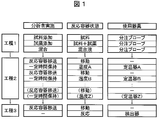
- movement in an Example The schematic flowchart explaining operation
- BRIEF DESCRIPTION OF THE DRAWINGS Schematic explaining the basic composition of the automatic analyzer in an Example. Schematic explaining the reaction container transfer mechanism etc. in an Example. Schematic which shows the relationship between the automatic analyzer and peripheral device in an Example.
- an analysis method that requires a temperature change of two or more temperatures in the sample preparation process (reaction liquid preparation process)
- two or more different incubators set at the temperature required for the assay.
- an analysis using at least the following three steps using a dispensing probe for adjustment and a detector for detecting a target substance.
- Step of adjusting the reaction solution by mixing sample and reagent using a dispensing probe 2) Reaction solution adjustment by moving the reaction vessel between two or more incubators set to the temperature required for the assay Step of performing temperature change in process 3) Step of detecting target substance (target nucleic acid)
- the execution of the reaction solution adjusting step of the above step 1) is not limited to before the above step 2). Any time can be used as long as it is before the target nucleic acid detection step in step 3), and it can be performed before and after step 2), both in the middle of step 2).
- an automatic analyzer that realizes an analysis method that requires a temperature change of two or more temperatures in the reaction solution adjustment process, which includes two or more different incubators set to the temperature required for the assay
- An automatic analyzer comprising a dispensing probe for adjusting a sample, a mechanism for moving a reaction container, and a detector for detecting a target nucleic acid and analyzing the sample by at least the following three functions is disclosed.
- reaction liquid adjustment function 1) A function to mix a sample and a reagent using a dispensing probe and adjust a reaction solution 2) A function to move a reaction vessel between incubators set to a temperature required for an assay by a mechanism for moving the reaction vessel 3) Function for detecting target nucleic acid by detector
- the execution of the reaction liquid adjustment function of function 1) above is not limited to before the temperature change, and any function before the function 3) target substance detection function is executed. It may be the time. It can be implemented before and after function 2), both, or during function 2).
- the detector for detecting the target nucleic acid may be any detector as long as the reaction vessel can be continuously charged and the analytical reaction in the reaction vessel can be detected.
- it is a detector that can continuously put reaction vessels from a certain position by a rotating disk system. More preferably, the detector can detect the reaction process with time and can automatically discard the reaction container after the detection is completed.
- the detection method and detection mechanism of the detector differ depending on the analysis method, and any method and mechanism may be used as long as the target nucleic acid can be quantitatively or qualitatively detected.
- a plurality of reaction containers capable of holding a nucleic acid-containing sample and a reagent
- a plurality of thermostatic mechanisms capable of controlling the temperature of the reaction container set to different temperatures, and the sample held in the reaction container
- An analysis mechanism for analyzing the reaction vessel a transfer mechanism for transferring the reaction container to a predetermined constant temperature mechanism, and a control mechanism for controlling the transfer mechanism.
- a nucleic acid analyzer that transfers reaction vessels to a thermostat in a predetermined order.
- a plurality of thermostatic mechanisms each of which is set at a different temperature and capable of controlling the temperature of the reaction vessel, and a reaction vessel holding the nucleic acid-containing sample and the reagent should be prepared and used as the nucleic acid-containing sample.
- the reaction vessel is transferred to a desired thermostat, the thermostat controls the temperature of the reaction vessel, the reaction vessel is transferred to a different desired thermostat, and the thermostat is Nucleic acid that controls the reaction vessel to a different temperature, performs the desired temperature change on the sample in a desired order by transferring to the constant temperature mechanism, and then transfers the reaction vessel to the analysis mechanism to analyze the sample
- An analysis method for an analysis apparatus is disclosed.
- the analysis mechanism can detect the analysis reaction of the sample over time.
- the analysis mechanism has a rotating disk capable of holding a plurality of reaction vessels.
- the transfer mechanism transfers the reaction container to a desired constant temperature mechanism and analysis mechanism.
- the sample and the reagent are agitated after the temperature of the reaction vessel is controlled by a constant temperature mechanism.
- the time for which the reaction container holding the sample is controlled by the constant temperature mechanism is changed according to the sample temperature before being transferred to the constant temperature mechanism.
- the transfer time from the constant temperature mechanism to the analysis mechanism is changed according to the constant temperature mechanism to which the reaction container has been transferred before being transferred to the analysis mechanism.
- Example 1 In this embodiment, a dispensing probe for adjusting a sample, two or more different incubators set to a temperature necessary for the assay, and a detector for detecting a target substance are used.
- any dispensing probe may be used as long as the sample and the reagent can be accurately dispensed.
- a replaceable detachable dispensing tip is used to prevent sample contamination.
- pipetteman manufactured by Gilson
- electronic pipetter manufactured by Biohit
- the like can be mentioned.
- any incubator may be used as long as the reaction liquid part of the reaction vessel can be in close contact and the temperature required for the assay can be set. If the temperature to be set is higher than room temperature, it is a heating type incubator, and if it is lower than room temperature, it is a cooling type incubator.
- the detector for detecting the target substance may be any detector as long as it can detect the target substance, and the detection method and detection mechanism vary depending on the analysis method. More preferably, it is desirable that the analytical reaction in the reaction vessel can be detected over time.
- this detector includes an excitation light irradiator for exciting fluorescence emission and a detector for detecting excitation light, and detects fluorescence emission. It becomes.
- the target substance is analyzed by performing the following three steps using the above-described three instruments.
- step 1) a sample container containing a sample derived from a biological sample is used as a test sample.
- a dispensing probe a sample is taken from the sample container and dispensed into the reaction container.
- the reagent is dispensed from the reagent container and dispensed into the reaction container.
- the sample and the reagent are mixed by repeating suction and discharge of the dispensing probe. More preferably, in order to prevent contamination of the sample or reagent, the dispensing tip is exchanged for each sample dispensing or reagent dispensing.
- the sample container can be used as a reaction container. In this case, the operation of taking a sample from the sample container and dispensing it into the reaction container can be omitted. Moreover, you may use a mixing stirrer for mixing of reaction container.
- the biological sample in this example is a screening sample such as group screening, health checkup, dock screening, or postal screening, biological sample containing target substances in blood, tissue, urine of outpatients and hospitalized patients in hospitals, or It means a sample to which a biological sample is attached.
- a screening sample such as group screening, health checkup, dock screening, or postal screening, biological sample containing target substances in blood, tissue, urine of outpatients and hospitalized patients in hospitals, or It means a sample to which a biological sample is attached.
- the target substance in the present example means a component derived from an organism including a virus and a microorganism, more preferably a protein, a peptide, an amino acid, and a nucleic acid.
- the test sample may be a sample obtained by performing a pretreatment such as purification on a biological sample.
- a specific example of the pretreatment is a method of purifying a nucleic acid from a biological sample when the target substance is a viral nucleic acid.
- a method of separating and purifying nucleic acid and protein components using phenol and chloroform is a nucleic acid purification method in which nucleic acid is adsorbed on a silica column, washed, and then nucleic acid is eluted from the silica column using a nucleic acid solution.
- any container may be used as long as the container components do not elute into the sample, reagent, and reaction solution.
- a transparent polypropylene container is used. Specific examples include a 1.5 ml Eppendorf tube (manufactured by Eppendorf), a 0.2 ml PCR tube, and the like.
- Step 2) is a step of rapidly changing the temperature of the reaction solution by moving the reaction vessel between two or more incubators according to the temperature condition required as an analysis method. More specifically, when the temperature conditions are 37 ° C. for 15 minutes, 95 ° C. for 5 minutes, and 41 ° C. for 2 minutes, three types of incubators of 37 ° C., 95 ° C., and 41 ° C. are prepared. First, place the reaction vessel in a 37 ° C. incubator and hold for 15 minutes. The reaction vessel is then transferred to a 95 ° C. incubator and held for 5 minutes. Finally, move to 41 ° C and hold for 2 minutes. Preferably, the retention time is increased in consideration of the time for the solution temperature to reach the target temperature after transfer.
- the actual arrival time varies depending on the difference in temperature change, and according to experiments by the inventors of the present application, the arrival time to the target temperature is as shown in Table 1.
- the reaction solution may evaporate due to this temperature change.
- a known method such as a method of adding oil or a method of covering the reaction vessel with a lid and heating the lid can be used.
- Step 3) is a step of detecting a reaction with a detector.
- This method may be any method as long as the target substance can be detected according to the analysis method.
- the reaction vessel is rotated using a rotating disk and detected by a detector in accordance with the rotation period. More preferably, the reaction is detected over time.
- the reaction vessel can be continuously analyzed even in assays with different temperature changes in the sample liquid preparation process or assays with different reaction / detection times and detection intervals.
- the adjustment process of each sample can be perfectly matched. Furthermore, it is possible to change the temperature more rapidly than in the conventional method.
- Example 2 In the present embodiment, an automatic analyzer that automatically performs the analysis described in the first embodiment will be described.
- the automatic analyzer of this embodiment is an apparatus for automatically analyzing an analysis method that requires a temperature change of two or more temperatures in the reaction liquid adjustment process.
- the apparatus operation shown in FIG. 2 and the apparatus shown in FIGS. This is realized by the configuration.
- the difference from the first embodiment will be mainly described with reference to FIGS.
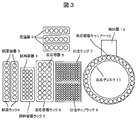
- FIG. 3 shows the basic configuration of the automatic analyzer of this embodiment, excluding the dispensing probe and the reaction container transfer mechanism.
- This apparatus includes a sample container rack 2 in which a sample container 1 in which a test sample is stored can be set, a reagent rack 4 in which a plurality of reagent containers 3 in which reagents that react with various components of the sample are stored, a sample and a reagent A reaction vessel rack 6 containing a reaction vessel 5 for mixing, a dispensing tip rack 8 containing dispensing tips 7, a plurality of incubators 9 set at two or more different temperatures, and a circumference It has the reaction disk 11 which has arrange
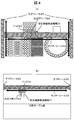
- FIG. 4A and 4B show a dispensing probe 20 for dispensing a sample or a reagent between racks, a reaction container transfer mechanism 21 for transferring a reaction container, and a head 22 for connecting them.
- FIG. 6 is a schematic diagram for explaining a side rail 23 and a center rail 24 for moving the head in the X-axis direction and the Y-axis direction.
- the automatic analyzer of this embodiment automatically analyzes a sample by the operation shown in FIG. That is, the dispensing probe 20 is moved to the position of the dispensing tip rack 8 by the operation of the side rail 23 and the center rail 24, and the dispensing tip 7 is attached.
- the dispensing probe 20 to which the dispensing tip 7 is attached dispenses a sample from the sample container 1 and discharges it to the reaction container 5.
- the dispensing tip 7 is replaced, the reagent is dispensed from the reagent container 3 and discharged to the reaction container 5, and the dispensing probe 20 mixes the reaction solution by repeated suction and discharge.
- the reaction vessel 5 containing the reaction solution is transferred to one of the incubators 9 by the reaction vessel transfer mechanism 21 to change the temperature of the reaction solution.
- the incubator After being held for a predetermined time by the incubator, it is transferred to another incubator 9 by the reaction container transfer mechanism, the temperature of the reaction solution is changed, and similarly held by the incubator for a predetermined time. Transfer between the incubators is performed under the conditions specified in the analysis method.
- the dispensing probe 20 to which the dispensing tip 7 is attached dispenses the reagent from the reagent container 3 and puts the reagent in the reaction container 5. May be discharged.
- the reaction container transfer mechanism 21 places the reaction container 5 on the reaction container carrier 10 disposed on the reaction disk 11.
- the reaction vessel carrier 10 is maintained at a temperature at which the reaction proceeds most effectively.
- the reaction is detected by the detector 12. More preferably, the detector 12 detects the reaction over time in accordance with the rotation period of the reaction disk 11.
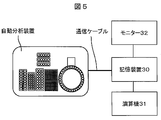
- Fig. 5 shows the relationship between this automatic analyzer and peripheral equipment.
- the automatic analyzer is connected to a storage device 30 that stores detection data, a calculator 31 that performs arithmetic processing on the stored detection data, and a monitor 32 that outputs calculation results.
- These peripheral devices may be connected to the automatic analyzer via the connection cable 33 and function independently, or may be incorporated in the automatic analyzer.
- the detection data detected by the detector 12 is sent to the storage device 30, processed by the calculator 31, and the detection result is output to the monitor 32.
- a mechanism for transferring both the dispensing probe and the reaction vessel is disclosed as a transfer mechanism for transferring the reaction vessel, but the dispensing probe and the reaction vessel may be handled by different transfer mechanisms.
- there is only one transfer mechanism but a plurality of transfer mechanisms may be arranged corresponding to a plurality of constant temperature mechanisms and analysis mechanisms.
Landscapes
- Chemical & Material Sciences (AREA)
- Chemical Kinetics & Catalysis (AREA)
- Physics & Mathematics (AREA)
- Health & Medical Sciences (AREA)
- Life Sciences & Earth Sciences (AREA)
- Analytical Chemistry (AREA)
- Biochemistry (AREA)
- General Health & Medical Sciences (AREA)
- General Physics & Mathematics (AREA)
- Immunology (AREA)
- Pathology (AREA)
- Automatic Analysis And Handling Materials Therefor (AREA)
- Apparatus Associated With Microorganisms And Enzymes (AREA)
- Measuring Or Testing Involving Enzymes Or Micro-Organisms (AREA)
- Investigating Or Analysing Biological Materials (AREA)
Abstract
本発明は、核酸含有試料と試薬を保持できる反応容器と、異なる温度に設定された反応容器の温度を制御できる恒温機構と、反応容器に保持された該試料を分析する分析機構と、反応容器を移送する移送機構とを備える核酸分析装置に関する。核酸含有試料に実施すべきアッセイに応じて、移送機構が、所定の恒温機構に、所定の順序で、反応容器を移送する。試料調整過程を経た反応容器は、所定のタイミングで分析機構に移送され、試料は分析される。
Description
本発明は、血液や尿等の生体試料中に含まれる標的核酸を定性分析や定量分析する分析法に係り、試料調整過程にて温度変化を必要とする技術に関する。
試料調整過程に温度変化を必要とする分析法としては、遺伝子増幅法であるNASBA法,LAMP法,TMA法等の等温遺伝子増幅法が挙げられる。これらの遺伝子増幅法は、何れも、安定した分析結果を得るために、増幅反応前の加熱によって核酸の立体構造を変化させる工程を必要とする。さらに、核酸増幅酵素が高温で活性を失い易いため、加熱した反応液を、少なくとも酵素の増幅反応温度まで冷却する工程を必要とする。また、この温度変化の速度は、分析時間や、核酸立体構造の変化効率に関わるため、より迅速であることが望ましい。
このため、これらの分析法は迅速な温度変化を実現するために、通常、ペルティエ素子を用い、電圧の変化により迅速な温度変化を実現している。さらに、複数の試料に対して当該温度変化を効率的に実現するために、複数の試料を一括で処理するバッチ処理による調整が一般的であった。
また、特開平6-281655号や特開平8-271524号には、血液等を抗原抗体反応を用いて分析する自動分析装置であって、複数の恒温槽を備えるものが開示されている。
また、特開平6-277036号には、核酸試料を温度制御するインキュベータであって、複数のチューブを保持した反応ブロックを加熱ブロックと冷却ブロックの間で移送し、反応ブロックの下面を、加熱ブロック、又は冷却ブロックに接触させるものが開示されている。
特許文献1:特開平6-281655号公報
特許文献2:特開平8-271524号公報
特許文献3:特開平6-277036号公報
特許文献2:特開平8-271524号公報
特許文献3:特開平6-277036号公報
試料調整過程に2温度以上の温度変化を必要とする分析法は、従来、加熱や冷却を迅速に実施するために、ペルティエ素子を用い、電圧の変化により迅速な温度変化を実現している。しかし、当該温度変化を効率的に実現するために、従来の分析法では、複数の試料を一括処理していた。全ての分析工程において、複数の試料を一括処理する必要がある為、試料調整過程の温度変化がアッセイによって異なる場合や、反応時間や検出時間がアッセイによって異なる場合、当該異なるアッセイを同時に処理できなかった。
また、複数の試料を一括処理しているため、試薬添加から温度変化までの時間や、温度変化から酵素添加までの時間を、各試料に対して完全に一致させることが困難であった。これは、検査結果のバラツキが増大する要因の1つとなっていた。
本発明の目的は、複数の試料に対して、異なるアッセイを処理できる核酸分析装置を提供することである。
本発明は、核酸含有試料と試薬を保持できる反応容器と、異なる温度に設定された反応容器の温度を制御できる恒温機構と、反応容器に保持された該試料を分析する分析機構と、反応容器を移送する移送機構と、を備えた核酸分析装置に関する。核酸含有試料に実施すべきアッセイに応じて、移送機構が、所定の恒温機構に、所定の順序で、反応容器を移送する。これにより、各アッセイに応じた温度変化を各試料に実施できる。そして、試料調整過程を経た反応容器は、所定のタイミングで分析機構に移送され、試料は分析される。
本発明によれば、試料液調整過程における温度変化が異なるアッセイや、反応・検出時間や検出間隔が異なるアッセイでも、反応容器を連続的に分析することができる。
実施例では、試料調整過程(反応液調整過程)に2温度以上の温度変化を必要とする分析法に対して、アッセイに必要な温度に設定された2つ以上の異なる定温器と、試料を調整するための分注プローブと、標的物質を検出する検出器と、を用い、少なくとも以下の3つの工程により分析するものを開示する。
1)分注プローブを用いて試料と試薬を混合し反応液を調整する工程
2)アッセイに必要な温度に設定された2つ以上の定温器間で反応容器を移動させることにより、反応液調整過程の温度変化を実施する工程
3)標的物質(標的核酸)を検出する工程
尚、上記工程1)の反応液調整工程の実施は、上記工程2)の前に限定されない。工程3)の標的核酸検出工程の前であればどの時点でもよく、工程2)の前後、両方、工程2)の途中においても実施可能である。
2)アッセイに必要な温度に設定された2つ以上の定温器間で反応容器を移動させることにより、反応液調整過程の温度変化を実施する工程
3)標的物質(標的核酸)を検出する工程
尚、上記工程1)の反応液調整工程の実施は、上記工程2)の前に限定されない。工程3)の標的核酸検出工程の前であればどの時点でもよく、工程2)の前後、両方、工程2)の途中においても実施可能である。
また、実施例では、反応液調整過程に2温度以上の温度変化を必要とする分析法を実現する自動分析装置であって、アッセイに必要な温度に設定された2つ以上の異なる定温器と、試料を調整するための分注プローブと、反応容器を移動させる機構と、標的核酸を検出する検出器と、を備え、少なくとも以下の3つの機能により試料を分析する自動分析装置を開示する。
1)分注プローブを用いて、試料と試薬を混合し反応液を調整する機能
2)反応容器を移動させる機構により、アッセイに必要な温度に設定された定温器間で反応容器を移動させる機能
3)検出器により標的核酸を検出する機能
尚、上記機能1)の反応液調整機能の実施は、温度変化の前に限定されず、機能3)の標的物質検出機能の実施前であればどの時点でもよい。機能2)の前後,両方、または機能2)の途中においても実施可能である。
2)反応容器を移動させる機構により、アッセイに必要な温度に設定された定温器間で反応容器を移動させる機能
3)検出器により標的核酸を検出する機能
尚、上記機能1)の反応液調整機能の実施は、温度変化の前に限定されず、機能3)の標的物質検出機能の実施前であればどの時点でもよい。機能2)の前後,両方、または機能2)の途中においても実施可能である。
標的核酸を検出する検出器は、連続的に反応容器を投入でき、反応容器内の分析反応を検出できればいかなる検出器でもよい。好ましくは、回転ディスク方式で、一定の位置から連続的に反応容器を投入できる検出器である。より好ましくは、反応過程を経時的に検出でき、検出完了後、反応容器を自動的に廃棄できる検出器である。当該検出器の検出方法及び検出機構は分析方法により異なり、標的核酸を定量又は定性検出できれば、いかなる方法および機構を用いてもよい。
また、実施例では、核酸含有試料と試薬を保持できる複数の反応容器と、それぞれ異なる温度に設定された、反応容器の温度を制御できる、複数の恒温機構と、反応容器に保持された該試料を分析する分析機構と、反応容器を所定の恒温機構に移送する移送機構と、移送機構を制御する制御機構と、を備え、核酸含有試料にすべきアッセイに応じて、移送機構が、所定の恒温機構に、所定の順序で、反応容器を移送する核酸分析装置を開示する。
また、実施例では、それぞれ異なる温度に設定された、反応容器の温度を制御できる、複数の恒温機構と、核酸含有試料と試薬を保持した反応容器と、を準備し、核酸含有試料にすべきアッセイに応じて、当該反応容器を所望の恒温機構へ移送し、当該恒温機構が、当該反応容器の温度を制御し、当該反応容器を異なる所望の恒温機構へ移送し、当該恒温機構が、当該反応容器を異なる温度に制御し、この恒温機構への移送を所望の順序でして当該試料に所望の温度変化を施し、その後、当該反応容器を分析機構へ移送し、当該試料を分析する核酸分析装置の分析方法を開示する。
また、実施例では、分析機構が、試料の分析反応を経時的に検出可能であることを開示する。
また、実施例では、分析機構が、複数の反応容器を保持できる回転ディスクを有することを開示する。
また、実施例では、移送機構が、所望の恒温機構及び分析機構に反応容器を移送することを開示する。
また、実施例では、反応容器に保持された試料と試薬を攪拌することを開示する。
また、実施例では、反応容器を恒温機構で温度制御した後に、試料と試薬を攪拌することを開示する。
また、実施例では、恒温機構に移送される前の試料温度に応じて、当該試料を保持する反応容器が当該恒温機構により制御される時間を変化させることを開示する。
また、実施例では、分析機構に移送される前に反応容器が移送された恒温機構に応じて、恒温機構から分析機構へ移送される時間を変化させることを開示する。
以下、上記およびその他の本発明の新規な特徴と効果について、図面を用いて詳細に説明するが、以下に記述する具体例に限定されるものではない。
実施例1
本実施例では、試料を調整するための分注プローブ,アッセイに必要な温度に設定された2つ以上の異なる定温器、及び標的物質を検出する検出器、を用いる。
本実施例では、試料を調整するための分注プローブ,アッセイに必要な温度に設定された2つ以上の異なる定温器、及び標的物質を検出する検出器、を用いる。
試料を調整するための分注プローブとしては、試料および試薬を正確に分注可能であれば、いかなる分注プローブを用いても良い。好ましくは、試料のコンタミネーションを防ぐために、交換可能な着脱式の分注チップを用いるのがよい。具体的には、ピペットマン(ギルソン社製),電子ピペッター(バイオヒット社製)等が挙げられる。
アッセイに必要な温度に設定された2つ以上の異なる定温器としては、反応容器の反応液部分が密着可能で、アッセイに必要な温度に設定可能な定温器であればいかなる定温器でもよい。設定すべき温度が室温より高ければ加熱型の定温器、室温より低ければ冷却型の定温器である。
標的物質を検出する検出器としては、標的物質を検出可能であればいかなる検出器でもよく、検出方法および検出機構は分析法によって異なる。より好ましくは、反応容器内の分析反応を経時的に検出できるのが望ましい。具体的には、分析方法が蛍光発光を分析する場合、本検出器は蛍光発光を励起するための励起光照射機と、励起光を検出するための検知器を備え、蛍光発光を検出する構成となる。
本実施例は、上述の3つの器具を用いて、以下3つの工程を実施することにより、標的物質を分析する。
1)分注プローブを用いて試料と試薬を混合し、反応液を調整する工程
2)アッセイに必要な温度に設定された2つ以上の定温器間で反応容器を移動させることにより、反応液調整過程の温度変化を実施する工程
3)標的物質を検出する工程
以下、図1を用いて、各工程について具体例を用いて詳細に記述する。
2)アッセイに必要な温度に設定された2つ以上の定温器間で反応容器を移動させることにより、反応液調整過程の温度変化を実施する工程
3)標的物質を検出する工程
以下、図1を用いて、各工程について具体例を用いて詳細に記述する。
工程1)では、被検試料として生体試料に由来する試料の入った試料容器を用いる。分注プローブを用いて、試料容器から試料を分取し、反応容器に分注する。次に、試薬容器から試薬を分取し、反応容器に分注する。次に、反応容器内において、試料と試薬を分注プローブの吸引と吐出の繰返しにより混合する。より好ましくは、試料または試薬のコンタミネーションを防ぐために、試料分注又は試薬分注毎に、分注チップを交換する。本工程では、試料容器中の試料量が検査に必要な量であれば、試料容器を反応容器として使用することもできる。この場合、試料容器から試料を分取して、反応容器に分注する操作を省略できる。また、反応容器の混合には、混合攪拌機を用いてもよい。
本実施例における生体試料とは、集団検診,健康診断,ドック検診、又は郵送検診等の検診試料や、病院における外来・入院患者の血液,組織,尿中の標的物質を含む生物試料、若しくは当該生物試料の付着した試料を意味する。
また、本実施例における標的物質とは、ウイルス,微生物を含む生物由来の成分、より好ましくはタンパク質,ペプチド,アミノ酸,核酸を意味する。また、被検試料は、生体試料に対して精製等の前処理を実施した試料でもよい。当該前処理の具体例としては、標的物質がウイルス核酸の場合、生体試料より該核酸を精製処理する方法である。例えば、フェノールとクロロホルムを用いて核酸と蛋白成分を分離し、精製する方法である。また、シリカカラムに核酸を吸着させ、洗浄した後、核酸溶解液を用いてシリカカラムから核酸を溶出させる核酸精製方法である。
また、本実施例に用いる試料容器,反応容器、及び試薬容器としては、容器成分が試料,試薬,反応液中に溶出しなければいかなる容器を用いてもよい。好ましくは、透明なポリプロピレン製の容器を用いる。具体的には、例えば、1.5mlエッペンドルフチューブ(エッペンドル社製),0.2mlPCRチューブ等が挙げられる。
工程2)は、分析方法として要求される温度条件に従い、2つ以上の定温器間で反応容器を移動させることによって反応液の温度を迅速に変化させる工程である。より具体的には、温度条件が、37℃で15分間,95℃で5分間,41℃で2分間である場合、定温器として37℃,95℃,41℃の3種類を用意する。最初に反応容器を37℃の定温器に置き、15分間保持する。次に反応容器を95℃の定温器に移し、5分間保持する。最後に41℃に移し、2分間保持する。好ましくは、移送後溶液の温度が目的の温度へ到達する時間を加味して、保持時間を増やすのがよい。本到達時間は温度変化の差により異なり、本願発明者等の実験によれば、目的温度への到達時間は、表1に示す通りである。また、本温度変化により、反応液の蒸発が起こる場合がある。本蒸発を防ぐ方法としては、オイルを添加する方法や、反応容器に蓋をして蓋を加熱する等の公知の方法を使用することができる。

工程3)は、検出器で反応を検出する工程である。本工程は、分析法に従い標的物質を検出できればいかなる方法でもよい。好ましくは、複数の反応容器を連続的に分析するために回転ディスクを用いて、反応容器を回転させ、回転周期に合わせて検出器で検出する。より好ましくは、反応を経時的に検出する。
本実施例によれば、試料液調整過程における温度変化が異なるアッセイや、反応・検出時間や検出間隔が異なるアッセイでも、反応容器を連続的に分析することができる。また、各サンプルの調整プロセスを完全に一致させることが可能となる。さらに、従来法と比較して、より迅速に温度を変化させることが可能となる。
実施例2
本実施例では、実施例1で説明した分析を自動的に実施する自動分析装置を説明する。本実施例の自動分析装置は、反応液調整過程に2温度以上の温度変化を必要とする分析法を自動分析する装置であり、図2に示す装置動作と、図3,図4に示す装置構成により、実現するものである。以下、実施例1との相違点を中心に、図2~図5を用いて詳細に説明する。
本実施例では、実施例1で説明した分析を自動的に実施する自動分析装置を説明する。本実施例の自動分析装置は、反応液調整過程に2温度以上の温度変化を必要とする分析法を自動分析する装置であり、図2に示す装置動作と、図3,図4に示す装置構成により、実現するものである。以下、実施例1との相違点を中心に、図2~図5を用いて詳細に説明する。
図3は、分注プローブと反応容器移送機構を除く、本実施例の自動分析装置の基本構成である。本装置は、被検試料が納められた試料容器1がセットできる試料容器ラック2と、試料の各種成分と反応する試薬を納めた複数の試薬容器3を収納した試薬ラック4と、試料と試薬を混ぜる反応容器5を収納した反応容器ラック6と、分注チップ7が収められた分注チップラック8と、2つ以上の異なる温度に設定された複数の定温器9と、円周上に複数の反応容器キャリアー10を配置した反応ディスク11と、反応を検出する検出器12とを有する。
図4(a)及び(b)は、各ラック間で試料または試薬を分注するための分注プローブ20と、反応容器を移送するための反応容器移送機構21と、これらを接続するヘッド22と、当該ヘッドをX軸方向およびY軸方向に動かすためのサイドレール23とセンターレール24と、を説明するための概略図である。
本実施例の自動分析装置は、図2に示す動作により、試料を自動分析する。すなわち、分注プローブ20は、サイドレール23とセンターレール24の動作により分注チップラック8の位置に移動し、分注チップ7を取り付ける。分注チップ7が取り付けられた分注プローブ20は、試料容器1から試料を分取し、反応容器5に排出する。次に、分注チップ7を交換し、試薬容器3から試薬を分取し、反応容器5に排出し、分注プローブ20は吸引と排出の繰返しにより反応液を混合する。反応液の入った反応容器5は、反応容器移送機構21により定温器9の1つに移送され、反応液の温度を変化させる。定温器で所定の時間保持した後、反応容器移送機構により別の定温器9に移送し、反応液の温度を変化させ、同様に定温器で所定の時間保持する。当該定温器間の移送を分析方法に定められた条件で実施する。定められた分析法に従い、当該定温器間の温度変化の後、又は途中で、分注チップ7が取り付けられた分注プローブ20が、試薬容器3から試薬を分取し、反応容器5に試薬を排出してもよい。当該温度変化の後、反応容器移送機構21は、反応容器を反応ディスク11に配置された反応容器キャリアー10に反応容器5を置く。当該反応容器キャリアー10は反応が最も効果的に進む温度に保持される。当該反応は検出器12により検出される。より好ましくは、検出器12は反応ディスク11の回転周期に合わせて、反応を経時的に検出する。
図5に、本自動分析装置と周辺機器との関連を示す。本自動分析装置には、検出データを記憶する記憶装置30,記憶された検出データを演算処理する演算機31、及び演算結果を出力するモニター32が接続される。これら周辺機器は、自動分析装置と接続ケーブル33で接続され独立して機能してもよいし、自動分析装置に内蔵されてもよい。
本後工程を含めた装置動作として、検出器12で検出された検出データは記憶装置30に送られ、演算機31により演算処理され、検出結果はモニター32に出力される。
上記実施例では、反応容器を移送する移送機構として、分注プローブと反応容器の双方を移送するものを開示しているが、分注プローブと反応容器を別の移送機構で取り扱ってもよい。また、上記実施例では移送機構は一つだけだが、複数の恒温機構や分析機構に対応して、複数の移送機構を配置してもよい。
1 試料容器
2 試料容器ラック
3 試薬容器
4 試薬ラック
5 反応容器
6 反応容器ラック
7 分注チップ
8 分注チップラック
9 定温器
10 反応容器キャリアー
11 反応ディスク
12 検出器
20 分注プローブ
21 反応容器移送機構
22 ヘッド
23 サイドレール
24 センターレール
30 記憶装置
31 演算機
32 モニター
33 接続ケーブル
2 試料容器ラック
3 試薬容器
4 試薬ラック
5 反応容器
6 反応容器ラック
7 分注チップ
8 分注チップラック
9 定温器
10 反応容器キャリアー
11 反応ディスク
12 検出器
20 分注プローブ
21 反応容器移送機構
22 ヘッド
23 サイドレール
24 センターレール
30 記憶装置
31 演算機
32 モニター
33 接続ケーブル
Claims (20)
- 核酸含有試料と試薬を保持できる複数の反応容器と、
それぞれ異なる温度に設定された、反応容器の温度を制御できる、複数の恒温機構と、
反応容器に保持された該試料を分析する分析機構と、
反応容器を所定の恒温機構に移送する移送機構と、
移送機構を制御する制御機構と、
を備え、
核酸含有試料に実施すべきアッセイに応じて、移送機構が、所定の恒温機構に、所定の順序で、反応容器を移送する核酸分析装置。 - 請求項1記載の核酸分析装置であって、
前記分析機構が、前記試料の分析反応を経時的に検出可能であることを特徴とする装置。 - 請求項1記載の核酸分析装置であって、
前記分析機構が、複数の反応容器を保持できる回転ディスクを有することを特徴とする装置。 - 請求項1記載の核酸分析装置であって、
前記移送機構が、所望の恒温機構及び分析機構に反応容器を移送することを特徴とする装置。 - 請求項1記載の核酸分析装置であって、
反応容器に保持された前記試料と前記試薬を攪拌することを特徴とする装置。 - 請求項5記載の核酸分析装置であって、
反応容器を恒温機構で温度制御した後に、前記試料と前記試薬を攪拌することを特徴とする装置。 - 請求項1記載の核酸分析装置であって、
前記恒温機構に移送される前の試料温度に応じて、当該試料を保持する反応容器が当該恒温機構により制御される時間を変化させることを特徴とする装置。 - 請求項1記載の核酸分析装置であって、
前記分析機構に移送される前に前記反応容器が移送された恒温機構に応じて、恒温機構から分析機構へ移送される時間を変化させることを特徴とする装置。 - 核酸分析装置の分析方法であって、
それぞれ異なる温度に設定された、反応容器の温度を制御できる、複数の恒温機構と、
核酸含有試料と試薬を保持した反応容器と、を準備し、
前記核酸含有試料に実施すべきアッセイに応じて、当該反応容器を所望の恒温機構へ移送し、当該恒温機構が、当該反応容器の温度を制御し、当該反応容器を異なる所望の恒温機構へ移送し、当該恒温機構が、当該反応容器を異なる温度に制御し、この恒温機構への移送を所望の順序で実施して当該試料に所望の温度変化を施し、
その後、当該反応容器を分析機構へ移送し、当該試料を分析する方法。 - 請求項9記載の分析方法であって、
前記分析機構が、前記試料の分析反応を経時的に検出することを特徴とする方法。 - 請求項9記載の分析方法であって、
前記分析機構が、複数の反応容器を保持できる回転ディスクを有することを特徴とする方法。 - 請求項9記載の分析方法であって、
反応容器に保持された前記試料と前記試薬を攪拌することを特徴とする方法。 - 請求項12記載の分析方法であって、
反応容器を恒温機構で温度制御した後に、前記試料と前記試薬を攪拌することを特徴とする方法。 - 請求項9記載の分析方法であって、
前記恒温機構に移送される前の試料温度に応じて、当該試料を保持する反応容器が当該恒温機構により制御される時間を変化させることを特徴とする方法。 - 請求項9記載の分析方法であって、
前記分析機構に移送される前に前記反応容器が移送された恒温機構に応じて、恒温機構から分析機構へ移送される時間を変化させることを特徴とする方法。 - 反応液調整過程に2温度以上の温度変化を必要とする分析方法であって、
アッセイに必要な温度に設定された2つ以上の異なる定温器と、試料を調整するための分注プローブと、標的物質を検出する検出器を準備し、
分注プローブを用いて試料と試薬を混合し反応液を調整し、
アッセイに必要な温度に設定された2つ以上の定温器間で反応容器を移動させ、反応液調整過程の温度変化を実施し、
標的物質を検出する方法。 - 請求項16記載の分析方法であって、
試料と試薬の混合を、温度変化の実施前後に実施することを特徴とする方法。 - 反応液調整過程に2温度以上の温度変化を必要とする分析法を実施する自動分析装置であって、
アッセイに必要な温度に設定された2つ以上の異なる定温器と、
試料を調整するための分注プローブと、
反応容器を移動させる機構と、
標的物質を検出する検出器を備え、
分注プローブを用いて、試料と試薬を混合し反応液を調整する機能と、
反応容器を移動させる機構により、アッセイに必要な温度に設定された定温器間で反応容器を移動させる機能と、
検出器により標的物質を検出する機能と、を有する装置。 - 請求項18記載の自動分析装置であって、
回転ディスクと組合せた検出器により、反応容器を連続的に投入可能であることを特徴とする装置。 - 請求項18の自動分析装置であって、
分析反応を経時的に検出可能であることを特徴とする装置。
Priority Applications (3)
| Application Number | Priority Date | Filing Date | Title |
|---|---|---|---|
| EP09770063.7A EP2306204B1 (en) | 2008-06-23 | 2009-06-17 | Nucleic acid analyzer, automatic analyzer, and analysis method |
| CN200980123709.8A CN102066950B (zh) | 2008-06-23 | 2009-06-17 | 核酸分析装置、自动分析装置以及分析方法 |
| US13/000,579 US8574891B2 (en) | 2008-06-23 | 2009-06-17 | Nucleic acid analyzer, automatic analyzer, and analysis method |
Applications Claiming Priority (2)
| Application Number | Priority Date | Filing Date | Title |
|---|---|---|---|
| JP2008162669A JP5372418B2 (ja) | 2008-06-23 | 2008-06-23 | 核酸分析装置,自動分析装置、及び分析方法 |
| JP2008-162669 | 2008-06-23 |
Publications (1)
| Publication Number | Publication Date |
|---|---|
| WO2009157353A1 true WO2009157353A1 (ja) | 2009-12-30 |
Family
ID=41444421
Family Applications (1)
| Application Number | Title | Priority Date | Filing Date |
|---|---|---|---|
| PCT/JP2009/061004 Ceased WO2009157353A1 (ja) | 2008-06-23 | 2009-06-17 | 核酸分析装置、自動分析装置、及び分析方法 |
Country Status (5)
| Country | Link |
|---|---|
| US (1) | US8574891B2 (ja) |
| EP (1) | EP2306204B1 (ja) |
| JP (1) | JP5372418B2 (ja) |
| CN (1) | CN102066950B (ja) |
| WO (1) | WO2009157353A1 (ja) |
Cited By (4)
| Publication number | Priority date | Publication date | Assignee | Title |
|---|---|---|---|---|
| WO2012063736A1 (ja) * | 2010-11-10 | 2012-05-18 | 株式会社日立ハイテクノロジーズ | 遺伝子検査方法及び検査装置 |
| CN102884169A (zh) * | 2010-05-07 | 2013-01-16 | 株式会社日立高新技术 | 核酸增幅装置及使用了该核酸增幅装置的核酸检查装置 |
| CN103026238A (zh) * | 2010-07-28 | 2013-04-03 | 株式会社日立高新技术 | 核酸分析装置 |
| EP2597143A4 (en) * | 2010-07-21 | 2014-05-14 | Hitachi High Tech Corp | METHOD FOR DETECTING NUCLEIC ACID AMPLIFICATION IN A SAMPLE AND DEVICE THEREFOR |
Families Citing this family (9)
| Publication number | Priority date | Publication date | Assignee | Title |
|---|---|---|---|---|
| KR101368463B1 (ko) * | 2010-04-23 | 2014-03-03 | 나노바이오시스 주식회사 | 2개의 열 블록을 포함하는 pcr 장치 |
| JP5662055B2 (ja) * | 2010-05-14 | 2015-01-28 | 株式会社日立ハイテクノロジーズ | 核酸増幅装置及び核酸増幅方法 |
| JP5689274B2 (ja) * | 2010-10-05 | 2015-03-25 | 株式会社日立ハイテクノロジーズ | 核酸検査装置及び容器搬送方法 |
| JP5789441B2 (ja) * | 2011-08-01 | 2015-10-07 | 株式会社日立ハイテクノロジーズ | 遺伝子検査システム |
| EP3080582B1 (en) | 2013-12-13 | 2021-07-07 | Sotax Ag | Apparatus for dissolution testing |
| EP3447116A4 (en) * | 2016-04-20 | 2019-12-11 | Sysmex Corporation | NUCLEIC ACID ANALYSIS DEVICE AND NUCLEIC ACID ANALYSIS METHOD |
| JP6857176B2 (ja) | 2016-05-25 | 2021-04-14 | ユニバーサル・バイオ・リサーチ株式会社 | 検体処理測定システム |
| CN106967585B (zh) * | 2017-05-23 | 2024-03-12 | 湖州师范学院 | 用于核酸提取与检测的一体化设备 |
| CN113930331A (zh) * | 2021-10-09 | 2022-01-14 | 苏州国科均豪生物科技有限公司 | 荧光免疫检测分析仪温育温度控制方法、介质、pcr检测系统 |
Citations (11)
| Publication number | Priority date | Publication date | Assignee | Title |
|---|---|---|---|---|
| JPS62240862A (ja) * | 1986-02-25 | 1987-10-21 | ザ パーキン―エルマー コーポレイション | 少なくとも1つの核酸配列を増幅する方法及び装置 |
| JPH03262499A (ja) * | 1990-03-12 | 1991-11-22 | Kosumitsuku:Kk | ポリヌクレオチド検出方法およびpcr反応装置 |
| JPH06277036A (ja) | 1993-03-26 | 1994-10-04 | Sanyo Electric Co Ltd | インキュベータ |
| JPH06281655A (ja) | 1993-03-25 | 1994-10-07 | Olympus Optical Co Ltd | 自動分析装置 |
| JPH08196299A (ja) * | 1995-01-26 | 1996-08-06 | Tosoh Corp | サーマルサイクリング反応装置及びこれに用いる反応容器 |
| JPH08271524A (ja) | 1995-03-31 | 1996-10-18 | Suzuki Motor Corp | 酵素免疫反応測定装置 |
| JPH10127268A (ja) * | 1996-09-26 | 1998-05-19 | Becton Dickinson & Co | 液体試料アッセイ用装置、並びにdna増幅・アッセイ用装置及び同方法 |
| JP2003050242A (ja) * | 2001-08-08 | 2003-02-21 | Hitachi Ltd | 生体試料処理装置 |
| JP2003522322A (ja) * | 1998-10-14 | 2003-07-22 | アボット・ラボラトリーズ | サンプルの自動分析のための構造および方法 |
| JP2004504828A (ja) * | 2000-07-28 | 2004-02-19 | ジェネシステム | 標的核酸配列の熱依存性連鎖増幅のための装置 |
| JP2005125311A (ja) * | 2003-09-30 | 2005-05-19 | Japan Science & Technology Agency | 化学反応装置 |
Family Cites Families (5)
| Publication number | Priority date | Publication date | Assignee | Title |
|---|---|---|---|---|
| US5038852A (en) * | 1986-02-25 | 1991-08-13 | Cetus Corporation | Apparatus and method for performing automated amplification of nucleic acid sequences and assays using heating and cooling steps |
| JPS6385361A (ja) * | 1986-09-30 | 1988-04-15 | Toshiba Corp | 自動化学分析装置 |
| JP2005069902A (ja) * | 2003-08-26 | 2005-03-17 | Hitachi Instruments Service Co Ltd | 前処理装置 |
| CA2842402C (en) * | 2005-03-10 | 2016-02-23 | Gen-Probe Incorporated | Systems and methods to perform assays for detecting or quantifying analytes within samples |
| US8895267B2 (en) * | 2006-11-03 | 2014-11-25 | Siemens Healthcare Diagnostics Inc. | Random access system and method for polymerase chain reaction testing |
-
2008
- 2008-06-23 JP JP2008162669A patent/JP5372418B2/ja active Active
-
2009
- 2009-06-17 US US13/000,579 patent/US8574891B2/en not_active Expired - Fee Related
- 2009-06-17 WO PCT/JP2009/061004 patent/WO2009157353A1/ja not_active Ceased
- 2009-06-17 EP EP09770063.7A patent/EP2306204B1/en active Active
- 2009-06-17 CN CN200980123709.8A patent/CN102066950B/zh active Active
Patent Citations (11)
| Publication number | Priority date | Publication date | Assignee | Title |
|---|---|---|---|---|
| JPS62240862A (ja) * | 1986-02-25 | 1987-10-21 | ザ パーキン―エルマー コーポレイション | 少なくとも1つの核酸配列を増幅する方法及び装置 |
| JPH03262499A (ja) * | 1990-03-12 | 1991-11-22 | Kosumitsuku:Kk | ポリヌクレオチド検出方法およびpcr反応装置 |
| JPH06281655A (ja) | 1993-03-25 | 1994-10-07 | Olympus Optical Co Ltd | 自動分析装置 |
| JPH06277036A (ja) | 1993-03-26 | 1994-10-04 | Sanyo Electric Co Ltd | インキュベータ |
| JPH08196299A (ja) * | 1995-01-26 | 1996-08-06 | Tosoh Corp | サーマルサイクリング反応装置及びこれに用いる反応容器 |
| JPH08271524A (ja) | 1995-03-31 | 1996-10-18 | Suzuki Motor Corp | 酵素免疫反応測定装置 |
| JPH10127268A (ja) * | 1996-09-26 | 1998-05-19 | Becton Dickinson & Co | 液体試料アッセイ用装置、並びにdna増幅・アッセイ用装置及び同方法 |
| JP2003522322A (ja) * | 1998-10-14 | 2003-07-22 | アボット・ラボラトリーズ | サンプルの自動分析のための構造および方法 |
| JP2004504828A (ja) * | 2000-07-28 | 2004-02-19 | ジェネシステム | 標的核酸配列の熱依存性連鎖増幅のための装置 |
| JP2003050242A (ja) * | 2001-08-08 | 2003-02-21 | Hitachi Ltd | 生体試料処理装置 |
| JP2005125311A (ja) * | 2003-09-30 | 2005-05-19 | Japan Science & Technology Agency | 化学反応装置 |
Cited By (9)
| Publication number | Priority date | Publication date | Assignee | Title |
|---|---|---|---|---|
| CN102884169A (zh) * | 2010-05-07 | 2013-01-16 | 株式会社日立高新技术 | 核酸增幅装置及使用了该核酸增幅装置的核酸检查装置 |
| EP2597143A4 (en) * | 2010-07-21 | 2014-05-14 | Hitachi High Tech Corp | METHOD FOR DETECTING NUCLEIC ACID AMPLIFICATION IN A SAMPLE AND DEVICE THEREFOR |
| US9714455B2 (en) | 2010-07-21 | 2017-07-25 | Hitachi High-Technologies Corporation | Method for detecting nucleic acid amplification in sample and device therefor |
| CN103026238A (zh) * | 2010-07-28 | 2013-04-03 | 株式会社日立高新技术 | 核酸分析装置 |
| CN103026238B (zh) * | 2010-07-28 | 2015-11-25 | 株式会社日立高新技术 | 核酸分析装置 |
| WO2012063736A1 (ja) * | 2010-11-10 | 2012-05-18 | 株式会社日立ハイテクノロジーズ | 遺伝子検査方法及び検査装置 |
| JP2012100582A (ja) * | 2010-11-10 | 2012-05-31 | Hitachi High-Technologies Corp | 遺伝子検査方法及び検査装置 |
| EP2639311A4 (en) * | 2010-11-10 | 2014-04-30 | Hitachi High Tech Corp | GENTEST PROCEDURE AND TESTING DEVICE |
| US9440235B2 (en) | 2010-11-10 | 2016-09-13 | Hitachi High-Technologies Corporation | Genetic testing method and testing apparatus |
Also Published As
| Publication number | Publication date |
|---|---|
| EP2306204A1 (en) | 2011-04-06 |
| US8574891B2 (en) | 2013-11-05 |
| CN102066950B (zh) | 2014-12-17 |
| CN102066950A (zh) | 2011-05-18 |
| US20110104703A1 (en) | 2011-05-05 |
| EP2306204A4 (en) | 2017-11-29 |
| JP2010002353A (ja) | 2010-01-07 |
| EP2306204B1 (en) | 2021-08-11 |
| JP5372418B2 (ja) | 2013-12-18 |
Similar Documents
| Publication | Publication Date | Title |
|---|---|---|
| JP5372418B2 (ja) | 核酸分析装置,自動分析装置、及び分析方法 | |
| Thurow | Strategies for automating analytical and bioanalytical laboratories | |
| JP5393610B2 (ja) | 核酸分析装置 | |
| KR20180051433A (ko) | 소모성 진탕 장치를 포함하는, 전기화학발광을 이용하여 검정법을 수행하기 위한 고처리율 시스템 | |
| US20210033503A1 (en) | Apparatus for automated analysis | |
| JP5063623B2 (ja) | 分析装置、及び円盤ディスクの回転制御方法 | |
| US10876939B2 (en) | Apparatus for automated analysis | |
| CN103733071B (zh) | 遗传测试系统 | |
| JP2009139245A (ja) | 自動分析装置 | |
| CN110470852A (zh) | 用于分离试验样品中包含的干扰物质的实验室系统和方法 | |
| KR20060058682A (ko) | 모듈형 시약 전달 수단을 이용한 자동 임상 분석기의 용량증가 방법 | |
| JP6087138B2 (ja) | 遺伝子検査装置、遺伝子検査方法及びプログラム | |
| EP3149475B1 (en) | Method and apparatus for reducing carryover of reagents and samples in analytical testing | |
| Li et al. | Recent advances in high-throughput automated sample preparation technologies in bioanalysis | |
| JP6184806B2 (ja) | 自動化処理モジュール内でチップを廃棄する自動化される方法および処理モジュールを備える処理システム | |
| EP2677321A1 (en) | Integrated device for nucleic acid hybridizations and immuno-assays | |
| US20170227565A1 (en) | Method for operating an automated analysis machine | |
| WO2025224859A1 (ja) | 遺伝子検査装置 |
Legal Events
| Date | Code | Title | Description |
|---|---|---|---|
| WWE | Wipo information: entry into national phase |
Ref document number: 200980123709.8 Country of ref document: CN |
|
| 121 | Ep: the epo has been informed by wipo that ep was designated in this application |
Ref document number: 09770063 Country of ref document: EP Kind code of ref document: A1 |
|
| WWE | Wipo information: entry into national phase |
Ref document number: 2009770063 Country of ref document: EP |
|
| WWE | Wipo information: entry into national phase |
Ref document number: 13000579 Country of ref document: US |
|
| NENP | Non-entry into the national phase |
Ref country code: DE |