WO2010070829A1 - ガスケット用鋼板の製造方法及びガスケット - Google Patents
ガスケット用鋼板の製造方法及びガスケット Download PDFInfo
- Publication number
- WO2010070829A1 WO2010070829A1 PCT/JP2009/006541 JP2009006541W WO2010070829A1 WO 2010070829 A1 WO2010070829 A1 WO 2010070829A1 JP 2009006541 W JP2009006541 W JP 2009006541W WO 2010070829 A1 WO2010070829 A1 WO 2010070829A1
- Authority
- WO
- WIPO (PCT)
- Prior art keywords
- gasket
- steel
- less
- steel sheet
- steel plate
- Prior art date
- Legal status (The legal status is an assumption and is not a legal conclusion. Google has not performed a legal analysis and makes no representation as to the accuracy of the status listed.)
- Ceased
Links
Images

Classifications
-
- F—MECHANICAL ENGINEERING; LIGHTING; HEATING; WEAPONS; BLASTING
- F16—ENGINEERING ELEMENTS AND UNITS; GENERAL MEASURES FOR PRODUCING AND MAINTAINING EFFECTIVE FUNCTIONING OF MACHINES OR INSTALLATIONS; THERMAL INSULATION IN GENERAL
- F16J—PISTONS; CYLINDERS; SEALINGS
- F16J15/00—Sealings
- F16J15/02—Sealings between relatively-stationary surfaces
- F16J15/06—Sealings between relatively-stationary surfaces with solid packing compressed between sealing surfaces
- F16J15/08—Sealings between relatively-stationary surfaces with solid packing compressed between sealing surfaces with exclusively metal packing
- F16J15/0806—Sealings between relatively-stationary surfaces with solid packing compressed between sealing surfaces with exclusively metal packing characterised by material or surface treatment
-
- C—CHEMISTRY; METALLURGY
- C21—METALLURGY OF IRON
- C21D—MODIFYING THE PHYSICAL STRUCTURE OF FERROUS METALS; GENERAL DEVICES FOR HEAT TREATMENT OF FERROUS OR NON-FERROUS METALS OR ALLOYS; MAKING METAL MALLEABLE, e.g. BY DECARBURISATION OR TEMPERING
- C21D8/00—Modifying the physical properties of ferrous metals or ferrous alloys by deformation combined with, or followed by, heat treatment
- C21D8/02—Modifying the physical properties of ferrous metals or ferrous alloys by deformation combined with, or followed by, heat treatment during manufacturing of plates or strips
- C21D8/0221—Modifying the physical properties of ferrous metals or ferrous alloys by deformation combined with, or followed by, heat treatment during manufacturing of plates or strips characterised by the working steps
- C21D8/0226—Hot rolling
-
- C—CHEMISTRY; METALLURGY
- C21—METALLURGY OF IRON
- C21D—MODIFYING THE PHYSICAL STRUCTURE OF FERROUS METALS; GENERAL DEVICES FOR HEAT TREATMENT OF FERROUS OR NON-FERROUS METALS OR ALLOYS; MAKING METAL MALLEABLE, e.g. BY DECARBURISATION OR TEMPERING
- C21D8/00—Modifying the physical properties of ferrous metals or ferrous alloys by deformation combined with, or followed by, heat treatment
- C21D8/02—Modifying the physical properties of ferrous metals or ferrous alloys by deformation combined with, or followed by, heat treatment during manufacturing of plates or strips
- C21D8/0221—Modifying the physical properties of ferrous metals or ferrous alloys by deformation combined with, or followed by, heat treatment during manufacturing of plates or strips characterised by the working steps
- C21D8/0236—Cold rolling
-
- C—CHEMISTRY; METALLURGY
- C21—METALLURGY OF IRON
- C21D—MODIFYING THE PHYSICAL STRUCTURE OF FERROUS METALS; GENERAL DEVICES FOR HEAT TREATMENT OF FERROUS OR NON-FERROUS METALS OR ALLOYS; MAKING METAL MALLEABLE, e.g. BY DECARBURISATION OR TEMPERING
- C21D8/00—Modifying the physical properties of ferrous metals or ferrous alloys by deformation combined with, or followed by, heat treatment
- C21D8/02—Modifying the physical properties of ferrous metals or ferrous alloys by deformation combined with, or followed by, heat treatment during manufacturing of plates or strips
- C21D8/0247—Modifying the physical properties of ferrous metals or ferrous alloys by deformation combined with, or followed by, heat treatment during manufacturing of plates or strips characterised by the heat treatment
- C21D8/0273—Final recrystallisation annealing
-
- C—CHEMISTRY; METALLURGY
- C21—METALLURGY OF IRON
- C21D—MODIFYING THE PHYSICAL STRUCTURE OF FERROUS METALS; GENERAL DEVICES FOR HEAT TREATMENT OF FERROUS OR NON-FERROUS METALS OR ALLOYS; MAKING METAL MALLEABLE, e.g. BY DECARBURISATION OR TEMPERING
- C21D9/00—Heat treatment, e.g. annealing, hardening, quenching or tempering, adapted for particular articles; Furnaces therefor
- C21D9/0068—Heat treatment, e.g. annealing, hardening, quenching or tempering, adapted for particular articles; Furnaces therefor for particular articles not mentioned below
-
- C—CHEMISTRY; METALLURGY
- C22—METALLURGY; FERROUS OR NON-FERROUS ALLOYS; TREATMENT OF ALLOYS OR NON-FERROUS METALS
- C22C—ALLOYS
- C22C38/00—Ferrous alloys, e.g. steel alloys
- C22C38/04—Ferrous alloys, e.g. steel alloys containing manganese
-
- C—CHEMISTRY; METALLURGY
- C22—METALLURGY; FERROUS OR NON-FERROUS ALLOYS; TREATMENT OF ALLOYS OR NON-FERROUS METALS
- C22C—ALLOYS
- C22C38/00—Ferrous alloys, e.g. steel alloys
- C22C38/18—Ferrous alloys, e.g. steel alloys containing chromium
- C22C38/40—Ferrous alloys, e.g. steel alloys containing chromium with nickel
Definitions
- the present invention relates to a method of manufacturing a steel plate for gaskets used in car cooler compressors and the like, and more specifically to a gasket manufactured by the method, and more specifically, can manufacture a steel plate for gaskets that is excellent in elasticity and formability. It is related with the gasket which bears.
- FIG. 1 a rubber coating metal having a structure shown in FIG. 1 is known as a sealing part for oil and gas used at high temperatures in the automobile field.
- 1 is a steel plate
- 2 is an adhesive layer
- 3 is a rubber layer
- 4 is a surface coating material layer.
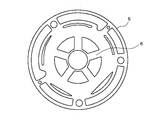
- the rubber coating metal shown in FIG. 1 is molded as shown in FIG. 2, and is widely used as a car cooler compressor gasket.
- 5 is a bead and 6 is a retainer.
- the gasket functions include a basic shape retention function and a fluid sealing function using beads on the embossment provided in the product.
- a car cooler uses CFCs as a refrigerant and exchanges heat energy through a cycle of compression, liquefaction, and vaporization of CFCs.
- the compressed chlorofluorocarbon is carried to the next process by opening and closing the discharge valve.
- a retainer processed into a gasket controls the opening / closing amount of the discharge valve. Since the discharge valve contacts the gasket about 4000 to 9000 times / minute, the retainer needs to maintain high strength and high elasticity.
- JIS G 3141 equivalent material which is available for general use by steel plate manufacturers, has good formability but is inferior in elasticity, cannot withstand the stress of the discharge valve, and a phenomenon in which the retainer breaks is observed.
- Patent Document 1 discloses a method for producing a stainless steel plate for a flapper valve. In particular, it has a high fatigue property, a high hardness and a small occurrence of burr after punching, and a cold rolling rate of 5% or more. A method of rolling and manufacturing a stainless steel plate for a flapper valve is disclosed. The point of being a stainless steel plate is apparent from the fact that it contains Ni 2.0 to 6.0 mass% and Cr 12.0 to 20.0 mass%.
- Patent Document 1 since it is a stainless steel plate, there is no disclosure about cold rolled steel plate (SPCC).
- SPCC cold rolled steel plate
- Patent Document 2 Mn: 0.5 to 3.0%, Ni: ⁇ 1.2%, a continuous cast slab made of the remaining Fe and inevitable impurities is hot-rolled, pickled, A method for producing a cold-rolled steel sheet for gasket material that is subjected to cold rolling with a rolling rate of 30 to 90% is described.
- Mn is a component necessary for preventing red heat embrittlement during hot rolling due to the impurity S, and at the same time, a high tempering degree is imparted to the original plate. It has been clarified that it is more than%.
- the present invention is excellent in so-called elasticity and moldability, which can improve the formability (punchability) by reducing the elongation at break while improving the yield strength against the repeated stress of the discharge valve and maintaining high elasticity. It is an object of the present invention to provide a gasket that can manufacture a steel sheet for gaskets that can withstand repeated stress of a discharge valve.
- the rolling rate is 10% or more. It is a manufacturing method of the steel plate for gaskets characterized by performing temper rolling.
- the invention according to claim 2 is the method for producing a steel sheet for gaskets according to claim 1, wherein a hot rolling step, a pickling step, and a cold rolling step are sequentially performed before annealing.
- Invention of Claim 3 is a manufacturing method of the steel plate for gaskets of Claim 1 or 2 characterized by Mn being 0.3% or less.
- the invention described in claim 4 is a gasket characterized in that it is formed by using the gasket steel plate obtained by the method for manufacturing a gasket steel plate according to any one of claims 1 to 3.
- the present invention it is possible to improve the formability (punchability) by reducing the elongation at break while improving the yield strength against the repeated stress of the discharge valve and maintaining high elasticity. It is possible to produce a gasket steel plate that can withstand the repeated stress of the discharge valve.
- the steel raw material for producing the steel plate for gaskets in the present invention is a general-purpose product such as SPCC, SPCD, SPCE, SPCF, SPCG specified in JIS G 3141 (cold rolled steel plate and steel strip) with chemical components.
- a certain Mn is prepared to be less than 0.5%.
- the steel raw material contains 0.15% or less of carbon as other components, P, S, etc., and Fe as the remaining component.
- Ni is less than 2.0%, preferably less than 1.5%
- Cr is less than 12.0%, preferably less than 10%. Therefore, since Ni and Cr are contained in a small amount as described above, it cannot be a stainless steel plate as disclosed in JP-A-2005-36266 (Patent Document 2).
- the following effects are exhibited when Mn in the steel raw material is less than 0.5%.
- Mn in the steel raw material is less than 0.5%.
- the strength of the steel is remarkably improved, and a special die using high-speed steel or super steel as the press material is required at the time of product punching, which causes the problem of punching.
- it is less than 0.5% there is an advantage that molding can be performed with SKD11 which is a general-purpose material.
- the method for producing a steel sheet for gaskets according to the present invention is characterized in that after annealing the above steel raw material, a temper rolling treatment with a rolling rate of 10% or more is performed.
- the process before annealing is not limited, but for example, a hot rolling process, a pickling process, and a cold rolling process can be sequentially performed.
- the molten steel prepared with the above-described chemical components is melted by a generally known melting method using a converter or the like, and then rolled into a rolled material by a commonly used casting method such as a continuous casting method.
- the rolled material is stretched with a roll in a hot state, and hot-rolled to a thickness of about 2 to 4 mm at about 600 ° C.
- various steel materials can be obtained by adjusting the processing temperature, cooling speed, and the like.
- the hot-rolled sheet hot-rolled to a thickness of about 2 to 4 mm is pickled.
- the method of pickling is not particularly limited, and various organic acids or inorganic acids can be used as the acid.
- cold-roll to a thickness of about 0.1 to several millimeters with a roll at room temperature.
- Cold means that no heat is applied.
- annealing can also be performed after cold rolling.
- temper rolling is performed after annealing.
- it is important that the rolling rate is 10% or more.
- the rolling rate is also referred to as a temper rolling rate.
- the temper rolling ratio is less than 10%, strain hardening is insufficient, so that an appropriate proof stress (290 MPa or more, preferably 315 MPa or more) cannot be obtained, the stress of the discharge valve cannot be endured, and the steel plate is damaged. Arise.
- the temper rolling ratio is 10% or more
- a strain hardening phenomenon that can withstand the repeated stress of the discharge valve occurs in the steel sheet, thereby improving the yield strength and maintaining high elasticity, while increasing the breaking elongation.
- the gasket of the present invention can be obtained by molding a steel sheet for gaskets manufactured as described above into a rubber coating metal.
- the shape can illustrate the shape shown in FIG.
- the obtained gasket exhibits the effect of withstanding the repeated stress of the discharge valve due to the steel plate characteristics of the material.
- the component analysis of the reinforcing component was obtained from the molten steel analysis value.
- Example 1 The steel plates of Examples 1 to 3 could be punched with SKD11, had a small amount of burrs, and had a uniform cross-sectional state. In addition, the gaskets formed from Examples 1 to 3 did not cause retainer cracks. Example 2 is more suitable for mass production.
- Comparative Example 1 rolling rate 2%
- Comparative Example 2 rolling rate 2%, manganese content 0.7%)
- the yield strength was improved because the manganese content increased, but the elongation at break was higher than the appropriate range.
- Comparative Examples 1 and 2 the amount of burrs was larger than in Examples 1 to 3, and the cross-sectional state was not uniform. Retainer cracking was observed in the gaskets formed from Comparative Examples 1 and 2.
- Comparative Example 3 (rolling rate 2%, manganese content 1.2%) was remarkably improved in strength and could not be overcome with SKD11.
- Comparative Example 4 (rolling rate 5%), the elongation at break was higher than the appropriate range, and the cross-sectional state was not uniform. In addition, the gasket formed from Comparative Example 4 showed a retainer crack.
Landscapes
- Chemical & Material Sciences (AREA)
- Engineering & Computer Science (AREA)
- Mechanical Engineering (AREA)
- Materials Engineering (AREA)
- Metallurgy (AREA)
- Organic Chemistry (AREA)
- Physics & Mathematics (AREA)
- Thermal Sciences (AREA)
- Crystallography & Structural Chemistry (AREA)
- General Engineering & Computer Science (AREA)
- Heat Treatment Of Sheet Steel (AREA)
Abstract
Description
2:接着剤層
3:ゴム層
4:表面コート材層
5:ビード
6:リテーナ
表1に示す各鋼板をラバーコーティングメタルに成形し、下記の評価を実施した。
(機械特性)
JIS Z 2201規定の5号試験片を使用し、試験方向を鋼板圧延方向として、下記測定により、耐力(MPa)、引っ張り強度(MPa)、破断伸び(%)を、いずれもJIS Z 2241に準拠し、測定した。
型:SKD11を使用した。SKD11で打ち抜けない場合はハイス鋼を使用した。
バリ量:バリ量=パンチ/ダイクリアランス(0.06mm)として、打ち抜き後、形状測定機にて測定した。
断面状態:打ち抜き後のせん断面または破断面の状態を目視観察し、均一か不均一か評価した。
各ラバーコーティングメタルをガスケットに成形し、吐出弁の繰り返し荷重によるリテーナ割れの有無を評価した。
評価結果を表1に示す。

Claims (4)
- Mnが0.5%未満、Niが2.0%未満、Crが12.0%未満の組成を有する鋼原材を、焼鈍した後、圧延率10%以上の調質圧延を行うことを特徴とするガスケット用鋼板の製造方法。
- 焼鈍の前に、熱間圧延工程、酸洗い工程、及び冷間圧延工程を順次経ることを特徴とする請求項1記載のガスケット用鋼板の製造方法。
- Mnが0.3%以下であることを特徴とする請求項1又は2記載のガスケット用鋼板の製造方法。
- 請求項1~3の何れかに記載のガスケット用鋼板の製造方法によって得られるガスケット用鋼板を用いて形成されることを特徴とするガスケット。
Priority Applications (5)
| Application Number | Priority Date | Filing Date | Title |
|---|---|---|---|
| JP2010542830A JP5321599B2 (ja) | 2008-12-19 | 2009-12-02 | ガスケット用鋼板の製造方法及びガスケット |
| CN2009801292305A CN102105606A (zh) | 2008-12-19 | 2009-12-02 | 垫片用钢板的制造方法以及垫片 |
| US13/054,666 US20110114232A1 (en) | 2008-12-19 | 2009-12-02 | Method for Producing Steel Sheet for Gasket, and Gasket |
| EP09833139A EP2377954A1 (en) | 2008-12-19 | 2009-12-02 | Method for producing steel sheet for gasket, and gasket |
| US13/565,208 US20130025337A1 (en) | 2008-12-19 | 2012-08-02 | Gasket-Oriented Steel Plate Manufacturing Method, and Gasket |
Applications Claiming Priority (2)
| Application Number | Priority Date | Filing Date | Title |
|---|---|---|---|
| JP2008324346 | 2008-12-19 | ||
| JP2008-324346 | 2008-12-19 |
Related Child Applications (1)
| Application Number | Title | Priority Date | Filing Date |
|---|---|---|---|
| US13/565,208 Continuation US20130025337A1 (en) | 2008-12-19 | 2012-08-02 | Gasket-Oriented Steel Plate Manufacturing Method, and Gasket |
Publications (1)
| Publication Number | Publication Date |
|---|---|
| WO2010070829A1 true WO2010070829A1 (ja) | 2010-06-24 |
Family
ID=42268512
Family Applications (1)
| Application Number | Title | Priority Date | Filing Date |
|---|---|---|---|
| PCT/JP2009/006541 Ceased WO2010070829A1 (ja) | 2008-12-19 | 2009-12-02 | ガスケット用鋼板の製造方法及びガスケット |
Country Status (6)
| Country | Link |
|---|---|
| US (2) | US20110114232A1 (ja) |
| EP (1) | EP2377954A1 (ja) |
| JP (1) | JP5321599B2 (ja) |
| KR (1) | KR20110126519A (ja) |
| CN (1) | CN102105606A (ja) |
| WO (1) | WO2010070829A1 (ja) |
Families Citing this family (3)
| Publication number | Priority date | Publication date | Assignee | Title |
|---|---|---|---|---|
| WO2015130187A1 (ru) * | 2014-02-27 | 2015-09-03 | Иван Тимофеевич ТОЦКИЙ | Способ подготовки горячекатаного стального подката к холодной прокатке |
| DE112020002503T5 (de) * | 2019-05-21 | 2022-05-19 | Nok Corporation | Dichtung |
| CN116426729A (zh) * | 2023-02-24 | 2023-07-14 | 首钢集团有限公司 | 一种钢及其制备方法 |
Citations (6)
| Publication number | Priority date | Publication date | Assignee | Title |
|---|---|---|---|---|
| JPS59129733A (ja) * | 1983-01-17 | 1984-07-26 | Kawasaki Steel Corp | ストレツチヤ−ストレインの発生しない硬質ぶりき用めつき原板の製造方法 |
| JPH04120242A (ja) * | 1990-09-11 | 1992-04-21 | Nippon Steel Corp | プレス成形時の耐バリ性、絞り性に優れた冷延鋼板およびその製造方法 |
| JP2000256802A (ja) * | 1999-03-03 | 2000-09-19 | Nisshin Steel Co Ltd | 耐へたり性に優れたメタルガスケット用ステンレス鋼材およびその製造法 |
| JP2003041350A (ja) | 2001-08-01 | 2003-02-13 | Nisshin Steel Co Ltd | フラッパーバルブ用マルテンサイト系ステンレス鋼板およびその製造方法 |
| JP2005036266A (ja) | 2003-07-18 | 2005-02-10 | Toyo Kohan Co Ltd | ガスケット材用冷延鋼板、その製造法およびガスケット材 |
| JP2007270329A (ja) * | 2006-03-31 | 2007-10-18 | Jfe Steel Kk | ファインブランキング加工性に優れた鋼板の製造方法 |
Family Cites Families (2)
| Publication number | Priority date | Publication date | Assignee | Title |
|---|---|---|---|---|
| JPS60262918A (ja) * | 1984-06-08 | 1985-12-26 | Kawasaki Steel Corp | ストレツチヤ−ストレインの発生しない表面処理原板の製造方法 |
| JP2003105502A (ja) * | 2001-09-25 | 2003-04-09 | Nisshin Steel Co Ltd | 高温耐へたり性に優れたメタルガスケット用ステンレス鋼およびメタルガスケット |
-
2009
- 2009-12-02 US US13/054,666 patent/US20110114232A1/en not_active Abandoned
- 2009-12-02 KR KR1020107027541A patent/KR20110126519A/ko not_active Withdrawn
- 2009-12-02 EP EP09833139A patent/EP2377954A1/en not_active Withdrawn
- 2009-12-02 CN CN2009801292305A patent/CN102105606A/zh active Pending
- 2009-12-02 WO PCT/JP2009/006541 patent/WO2010070829A1/ja not_active Ceased
- 2009-12-02 JP JP2010542830A patent/JP5321599B2/ja active Active
-
2012
- 2012-08-02 US US13/565,208 patent/US20130025337A1/en not_active Abandoned
Patent Citations (6)
| Publication number | Priority date | Publication date | Assignee | Title |
|---|---|---|---|---|
| JPS59129733A (ja) * | 1983-01-17 | 1984-07-26 | Kawasaki Steel Corp | ストレツチヤ−ストレインの発生しない硬質ぶりき用めつき原板の製造方法 |
| JPH04120242A (ja) * | 1990-09-11 | 1992-04-21 | Nippon Steel Corp | プレス成形時の耐バリ性、絞り性に優れた冷延鋼板およびその製造方法 |
| JP2000256802A (ja) * | 1999-03-03 | 2000-09-19 | Nisshin Steel Co Ltd | 耐へたり性に優れたメタルガスケット用ステンレス鋼材およびその製造法 |
| JP2003041350A (ja) | 2001-08-01 | 2003-02-13 | Nisshin Steel Co Ltd | フラッパーバルブ用マルテンサイト系ステンレス鋼板およびその製造方法 |
| JP2005036266A (ja) | 2003-07-18 | 2005-02-10 | Toyo Kohan Co Ltd | ガスケット材用冷延鋼板、その製造法およびガスケット材 |
| JP2007270329A (ja) * | 2006-03-31 | 2007-10-18 | Jfe Steel Kk | ファインブランキング加工性に優れた鋼板の製造方法 |
Also Published As
| Publication number | Publication date |
|---|---|
| CN102105606A (zh) | 2011-06-22 |
| KR20110126519A (ko) | 2011-11-23 |
| US20130025337A1 (en) | 2013-01-31 |
| US20110114232A1 (en) | 2011-05-19 |
| EP2377954A1 (en) | 2011-10-19 |
| JP5321599B2 (ja) | 2013-10-23 |
| JPWO2010070829A1 (ja) | 2012-05-24 |
Similar Documents
| Publication | Publication Date | Title |
|---|---|---|
| JP4321066B2 (ja) | 金属ガスケットとその素材およびそれらの製造方法 | |
| CN101622080B (zh) | 高张力冷轧钢板及其制造方法 | |
| CN105401073B (zh) | 一种汽车离合器膜片合金弹簧冷轧钢带51CrV4 热处理工艺 | |
| CA2957391C (en) | Austenitic stainless steel sheet and metal gasket | |
| KR100385342B1 (ko) | 가스킷용 스테인레스 강, 그의 제조방법 및 그에 따른 가스킷 | |
| TW201444985A (zh) | 不鏽鋼鋼板 | |
| CN110438312A (zh) | 一种提高冷轧深冲钢伸长率和应变硬化指数n值的方法 | |
| JP5321599B2 (ja) | ガスケット用鋼板の製造方法及びガスケット | |
| WO2011068231A1 (ja) | 缶用鋼板およびその製造方法 | |
| KR20150123860A (ko) | 프레스 성형품 및 그 제조 방법 | |
| KR20250042170A (ko) | 에너지 절약형 냉간 단조강 및 그 제조 방법 | |
| CN110100022A (zh) | 加工性优异的冷轧钢板及其制造方法 | |
| EP2671962A1 (en) | Steel sheet for aerosol can bottom having high pressure resistance and excellent workability and method for producing same | |
| JP2011202211A (ja) | 窒化特性及び耐再結晶軟化特性に優れた窒化処理用冷延鋼板およびその製造方法 | |
| CN102471821B (zh) | 压制成型性优异的冷轧钢板的制造方法及冷轧钢板 | |
| JP5612992B2 (ja) | 熱間成形品の製造方法 | |
| WO2004050931A1 (ja) | ガスケット材用冷延鋼板、その製造方法およびその製造方法により製造されたガスケット材 | |
| JP2004238700A (ja) | 表面平滑性の良好なプレス成形品に適したオーステナイト系ステンレス鋼板 | |
| TW202321479A (zh) | 肥粒鐵系不鏽鋼板 | |
| RU2858008C2 (ru) | Энергосберегающая сталь для холодной штамповки и способ её изготовления | |
| CN117778888A (zh) | 具有优良冲裁性能的400MPa级垫片钢及其制备方法 | |
| WO2005083140A1 (ja) | 高強度極薄冷延鋼板、その製造方法、それを用いたガスケット用材料およびそれを用いたガスケット材 | |
| JP2005240184A (ja) | 精密打抜き性に優れたオーステナイト系ステンレス鋼板の製造方法 | |
| JP2004176168A (ja) | ばね性に優れたガスケット材用冷延鋼板、その製造方法およびばね性に優れたガスケット材 | |
| CN113718172A (zh) | 一种1200MPa级低碳马氏体钢带及其生产方法 |
Legal Events
| Date | Code | Title | Description |
|---|---|---|---|
| WWE | Wipo information: entry into national phase |
Ref document number: 200980129230.5 Country of ref document: CN |
|
| 121 | Ep: the epo has been informed by wipo that ep was designated in this application |
Ref document number: 09833139 Country of ref document: EP Kind code of ref document: A1 |
|
| ENP | Entry into the national phase |
Ref document number: 20107027541 Country of ref document: KR Kind code of ref document: A |
|
| WWE | Wipo information: entry into national phase |
Ref document number: 13054666 Country of ref document: US |
|
| WWE | Wipo information: entry into national phase |
Ref document number: 2010542830 Country of ref document: JP |
|
| WWE | Wipo information: entry into national phase |
Ref document number: 2009833139 Country of ref document: EP |
|
| NENP | Non-entry into the national phase |
Ref country code: DE |