WO2010086918A1 - 動画像表示装置 - Google Patents
動画像表示装置 Download PDFInfo
- Publication number
- WO2010086918A1 WO2010086918A1 PCT/JP2009/003649 JP2009003649W WO2010086918A1 WO 2010086918 A1 WO2010086918 A1 WO 2010086918A1 JP 2009003649 W JP2009003649 W JP 2009003649W WO 2010086918 A1 WO2010086918 A1 WO 2010086918A1
- Authority
- WO
- WIPO (PCT)
- Prior art keywords
- moving image
- image data
- data
- unit
- switching control
- Prior art date
- Legal status (The legal status is an assumption and is not a legal conclusion. Google has not performed a legal analysis and makes no representation as to the accuracy of the status listed.)
- Ceased
Links
Images




Classifications
-
- H—ELECTRICITY
- H04—ELECTRIC COMMUNICATION TECHNIQUE
- H04N—PICTORIAL COMMUNICATION, e.g. TELEVISION
- H04N19/00—Methods or arrangements for coding, decoding, compressing or decompressing digital video signals
- H04N19/85—Methods or arrangements for coding, decoding, compressing or decompressing digital video signals using pre-processing or post-processing specially adapted for video compression
- H04N19/89—Methods or arrangements for coding, decoding, compressing or decompressing digital video signals using pre-processing or post-processing specially adapted for video compression involving methods or arrangements for detection of transmission errors at the decoder
- H04N19/895—Methods or arrangements for coding, decoding, compressing or decompressing digital video signals using pre-processing or post-processing specially adapted for video compression involving methods or arrangements for detection of transmission errors at the decoder in combination with error concealment
-
- H—ELECTRICITY
- H04—ELECTRIC COMMUNICATION TECHNIQUE
- H04N—PICTORIAL COMMUNICATION, e.g. TELEVISION
- H04N19/00—Methods or arrangements for coding, decoding, compressing or decompressing digital video signals
- H04N19/44—Decoders specially adapted therefor, e.g. video decoders which are asymmetric with respect to the encoder
-
- G—PHYSICS
- G09—EDUCATION; CRYPTOGRAPHY; DISPLAY; ADVERTISING; SEALS
- G09G—ARRANGEMENTS OR CIRCUITS FOR CONTROL OF INDICATING DEVICES USING STATIC MEANS TO PRESENT VARIABLE INFORMATION
- G09G2320/00—Control of display operating conditions
- G09G2320/10—Special adaptations of display systems for operation with variable images
- G09G2320/103—Detection of image changes, e.g. determination of an index representative of the image change
-
- G—PHYSICS
- G09—EDUCATION; CRYPTOGRAPHY; DISPLAY; ADVERTISING; SEALS
- G09G—ARRANGEMENTS OR CIRCUITS FOR CONTROL OF INDICATING DEVICES USING STATIC MEANS TO PRESENT VARIABLE INFORMATION
- G09G5/00—Control arrangements or circuits for visual indicators common to cathode-ray tube indicators and other visual indicators
- G09G5/36—Control arrangements or circuits for visual indicators common to cathode-ray tube indicators and other visual indicators characterised by the display of a graphic pattern, e.g. using an all-points-addressable [APA] memory
Definitions
- the present invention relates to a moving image display device that switches screens when an error occurs due to deterioration of radio wave conditions or the like.
- Patent Document 1 discloses a technique for switching from a moving image to a still image when received encoded data cannot be decoded at an appropriate timing.
- a timer is provided, and when the control is not performed at an appropriate timing with respect to the timer, the selector automatically selects the output of the still image and outputs the high-quality still image.
- Patent Document 2 an error is detected from digital data and compared with a threshold determined according to the genre of the program corresponding to the video data, the video size, and the type of the digital data, and the number of unit blocks having an error is the threshold.
- a technique for switching to a still image when there is more than a value is disclosed.
- the screen display is uniquely switched by comparing the time required for decoding, the number of errors, and a threshold value.
- this method does not take into account human visual characteristics, and handles large and small scenes equally and switches the screen display.
- it is not worrisome to notice that it is moving, but in a scene with small movements such as landscapes, even if the same image is disturbed, there is no big change in the image, so the viewer recognizes the disorder of the image There was a problem.
- the screen display is switched equally, so you are aware of the image disturbance. There has been a problem of causing a non-viewer to recognize image disturbance.
- the present invention has been made to solve the above-described problems, and when an error occurs due to deterioration in radio wave conditions, the viewer can change the switching between moving images and still images appropriately. It is an object of the present invention to provide a moving image display apparatus capable of minimizing the recognition of image disturbance.
- a moving image display device detects a piece of error information at the time of decoding by decoding a moving image data from a data generation unit that extracts encoded data from received data, and the encoded data extracted by the data generation unit
- a decoding unit that detects visual characteristic information indicating the characteristics of the screen to be displayed; a storage unit that stores moving image data decoded by the decoding unit as still image data; and error information and visual characteristics detected by the decoding unit According to the information, there is provided a switching control unit that outputs moving image data decoded by the decoding unit or still image data stored in the storage unit as display data.
- the present invention since it is configured as described above, when an error occurs due to deterioration of radio wave conditions or the like, switching between a moving image and a still image is appropriately changed according to the amount of movement of the screen and the error position. By doing so, it is possible to minimize the viewer's perception of image disturbance.
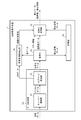
- FIG. 1 is a block diagram showing an outline of a moving image display apparatus 1 according to Embodiment 1 of the present invention.
- the moving image display device 1 includes a data generation unit 10, a decoding unit 13, a storage unit 14, and a switching control unit 15.
- the data generation unit 10 extracts encoded data from the reception data received by the antenna, and includes a tuner / demodulation unit 11 and a TS (Transport Stream) decoding processing unit 12.
- the tuner / demodulator 11 includes a tuner and a demodulator.
- the tuner tunes and amplifies the broadcast wave desired by the user from the received data received by the antenna.
- the demodulator demodulates the reception data tuned by the tuner and outputs digital data (TS).
- the digital data output from the tuner / demodulator 11 is sent to the TS decode processor 12.
- the TS decode processing unit 12 decodes the digital data output from the tuner / demodulation unit 11 and extracts encoded data (moving image).
- the encoded data output by the TS decode processing unit 12 is sent to the decoding unit 13.
- the decoding unit 13 decodes moving image data from the encoded data output from the TS decoding processing unit 12. Further, simultaneously with the decoding process of the encoded data, the decoding unit 13 detects whether or not there is an error in the decoded moving image data, and outputs it as error information at the time of decoding.
- the error detected from the moving image data is a decoding error such as a syntax error.
- the error information output by the decoding unit 13 includes information on whether or not there is an error and position information if there is an error.
- the decoding unit 13 detects the amount of motion of the screen based on the decoded frame and the preceding and succeeding frames as visual characteristic information indicating the characteristics of the screen to be displayed. The decoding unit 13 holds the previous and subsequent frames.
- the amount of motion of the screen is determined according to the correlation between the motion vector and the image with the previous and next frames, the relationship with the data amount with the previous and next frames, and the like.
- the correlation as an image is a difference such as a hue and luminance constituting each frame. If the motion vector is large or the difference is large, the amount of motion is assumed to be large, and if the motion vector is small or the difference is small, the amount of motion is assumed to be small. Further, when the data amount of the frame increases, it is assumed that the amount of motion is large because the difference from the previous frame is large.
- the data amount in the I frame increases because the reference to the preceding and following frames is not performed. Therefore, an increase in the data amount in the I frame is not considered.
- the moving image data, error information, and screen motion amount output by the decoding unit 13 are sent to the switching control unit 15.
- the decoding unit 13 sends the decoded moving image data to the storage unit 14 as still image data.
- a threshold value to be compared with the number of errors included in the decoded moving image data a value of the number of errors is set in advance so that the viewer does not care even if it is included in the still image data.
- the storage unit 14 stores the moving image data decoded by the decoding unit 13 as still image data.
- the still image data is stored as the moving image data is output to the storage unit 14 as still image data. This is stored in the unit 14. Further, the storage unit 14 outputs still image data to the switching control unit 15 when the switching control unit 15 displays still image data.
- the switching control unit 15 outputs the moving image data decoded by the decoding unit 13 or the still image data stored in the storage unit 14 as display data based on the error information output by the decoding unit 13 and the motion amount of the screen. To do.
- the number of errors included in the moving image data is counted from the error information acquired from the decoding unit 13, the counted number of errors is equal to or greater than a predetermined threshold, and the amount of motion of the screen acquired from the decoding unit 13 is equal to or less than the predetermined threshold.
- still image data stored in the storage unit 14 is output as display data, and switching to a still image is performed.
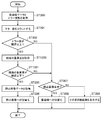
- FIG. 2 is a flowchart showing switching control processing of the moving image display apparatus 1 according to Embodiment 1 of the present invention.
- the switching control unit 15 acquires moving image data and error information (step ST200). That is, the switching control unit 15 acquires moving image data output from the decoding unit 13 and error information indicating whether or not there is an error in the moving image data.
- step ST201 the switching control unit 15 counts the number of errors (step ST201). That is, in step ST200, the switching control unit 15 counts the number of errors existing in one frame of moving image data acquired from the decoding unit 13 based on the error information acquired from the decoding unit 13.
- the switching control unit 15 determines whether the number of errors is equal to or greater than a threshold (step ST202). That is, in step ST201, the switching control unit 15 determines whether the number of errors existing in the counted moving image data is equal to or greater than a preset threshold value.
- the threshold value set in advance is set to the value of the number of errors so that the viewer is not concerned.
- step ST202 when the switching control unit 15 determines that the number of errors included in the moving image data is equal to or greater than the threshold value, the switching control unit 15 then acquires the amount of motion on the screen (step ST203). That is, the switching control unit 15 acquires the amount of screen motion detected by the decoding unit 13.
- the switching control unit 15 determines whether the screen motion amount is equal to or less than the threshold (step ST204). That is, in step ST203, the switching control unit 15 determines whether the screen motion amount acquired from the decoding unit 13 is equal to or less than a preset threshold value.
- step ST204 when the switching control unit 15 determines that the amount of motion on the screen is equal to or less than the threshold value, it acquires still image data (step ST205). That is, the switching control unit 15 acquires still image data to be output as display data from the storage unit 14.
- step ST206 the switching control unit 15 performs switching to a still image. That is, in step ST205, the switching control unit 15 outputs the still image data acquired from the storage unit 14 as display data. Thereafter, the sequence ends.
- step ST202 determines in step ST202 that the number of errors included in the moving image data is not greater than or equal to the threshold, or in step ST204.
- the switching control unit 15 determines that the screen motion amount is not less than or equal to the threshold.
- step ST207 it is determined whether a still image is displayed. That is, the switching control unit 15 determines whether or not a still image is displayed on the display screen.
- step ST207 when the switching control unit 15 determines that a still image is displayed, it next switches to a moving image (step ST208). That is, the switching control unit 15 performs a switching process from the still image displayed on the display screen to the moving image. Thereafter, the sequence ends.
- step ST207 when the switching control unit 15 determines in step ST207 that a still image is not displayed, the moving image is displayed as it is (step ST209). That is, the switching control unit 15 continues to display the moving image displayed on the display screen as it is. Thereafter, the sequence ends.
- the switching control unit 15 determines from the error information received from the decoding unit 13 that the moving image data includes an error, from the decoding unit 13, Since the screen movement amount is received as visual characteristic information indicating the characteristics of the screen to be displayed, and it is configured to determine whether to switch to the still image according to the size, the detected screen movement at the time of error detection If the amount is larger than the set threshold, the viewer is paying attention to the movement, so even if some disturbance of the image occurs, the moving image is not changed without switching to the still image.
- the viewer If the amount of movement of the screen is smaller than the threshold, the viewer is looking carefully at a certain video, so the screen is likely to be disturbed, so switch to a still image, Depending on the amount of motion of the surface, by appropriately changing the switching of moving images and still images, viewers can minimize to recognize the disturbance of the screen.
- the threshold value to be compared with the number of errors existing in the moving image data is set in advance, but this threshold value is set according to the amount of motion of the screen.
- this threshold value is set according to the amount of motion of the screen.
- switching to a still image may be performed, and if the number of errors is equal to or less than the threshold, a moving image may be displayed.
- the processing in step ST203 and step ST204 shown in FIG. 2 is not necessary.
- FIG. FIG. 3 is a block diagram showing an outline of the moving image display apparatus 1 according to Embodiment 2 of the present invention.
- the same or similar components as those in the first embodiment of the present invention shown in FIG.
- the difference between the second embodiment of the present invention and the first embodiment of the present invention is that the amount of motion of the screen is not output from the decoding unit 13 to the switching control unit 15, but as visual characteristic information indicating the characteristics of the screen to be displayed.
- the point of interest information on the screen is output from the decoding unit 13 to the switching control unit 15.
- the difference from the first embodiment of the present invention will be mainly described.
- the decoding unit 13 performs a process of decoding the encoded data of the decoding unit 13 according to Embodiment 1 of the present invention and outputting moving image data, and a process of detecting an error in the decoded moving image data and outputting error information.
- a region of interest is extracted using a motion vector as visual characteristic information indicating the characteristics of the screen to be displayed.
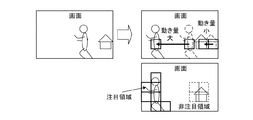
- the attention area is an area that the viewer pays attention to when viewing the screen, such as a moving part on the screen or the face of a talking person.
- the decoding unit 13 obtains a motion vector of the moving image data based on the decoded frame and the held previous and subsequent frame information, and extracts a set including all unit blocks whose motion vector is a certain value or more as a region of interest.
- the moving image data, error information, and attention area information output by the decoding unit 13 are sent to the switching control unit 15.
- the decoding unit 13 sends the decoded moving image data to the storage unit 14 as still image data.
- FIG. 4 is a diagram showing an example of a region of interest extracted by the moving image display apparatus 1 according to Embodiment 2 of the present invention.
- the decoding unit 13 obtains a motion vector of moving image data from the decoded frame and the previous and subsequent frames that are held, and operates with a small movement portion such as a building as a non-attention area. A part that moves like a human being is extracted as a region of interest.
- an area having a motion vector may be detected as the attention area.
- the switching control unit 15 acquires the attention area information extracted by the decoding unit 13 and compares it with the error position of the moving image data to determine whether an error exists in the attention area of the moving image data. When the number of errors in the attention area of the moving image data is greater than or equal to the threshold, the still image data stored in the storage unit 14 is output as display data, and switching to the still image is performed.
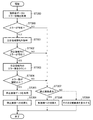
- FIG. 5 is a flowchart showing switching control processing of the moving image display apparatus 1 according to Embodiment 2 of the present invention.
- the switching control unit 15 acquires moving image data and error information from the decoding unit 13 (step ST200).
- the switching control unit 15 determines whether an error exists (step ST500). That is, in step ST200, the switching control unit 15 determines whether an error exists in the acquired moving image data based on the error information acquired from the decoding unit 13.
- step ST500 if the switching control unit 15 determines that the acquired moving image data includes an error, it next acquires attention area information (step ST501). That is, the switching control unit 15 acquires the attention area information of the moving image data that the viewer pays attention extracted by the decoding unit 13.
- the switching control unit 15 determines whether an error exists in the attention area (step ST502). That is, the switching control unit 15 determines whether an error existing in the moving image data acquired from the decoding unit 13 in step ST200 is located in the attention area acquired from the decoding unit 13 in step ST501.
- step ST502 if the switching control unit 15 determines that there is an error in the attention area of the moving image data, then it counts the number of errors in the attention area (step ST503). That is, the switching control unit 15 counts the number of errors existing in the attention area in one frame of moving image data.
- the switching control unit 15 determines whether the number of errors is equal to or greater than a threshold value (step ST504). That is, in step ST503, the switching control unit 15 determines whether the number of errors in the attention area of the moving image data counted is equal to or greater than a preset threshold value.
- the threshold value set in advance is set to the value of the number of errors so that the viewer is not concerned.
- step ST504 when the switching control unit 15 determines that the number of errors in the attention area of the moving image data is equal to or greater than the threshold value, it acquires still image data from the storage unit 14 (step ST205). Next, the switching control unit 15 performs switching to a still image (step ST206). Thereafter, the sequence ends.
- the switching control unit 15 determines that there is no error in the moving image data in step ST500, or determines that there is no error in the attention area of the moving image data in step ST502, or If it is determined in step ST504 that the number of errors in the attention area of the moving image data is not greater than or equal to the threshold value, it is then determined whether a still image is displayed (step ST207).
- step ST207 when the switching control unit 15 determines that a still image is displayed, it switches to a moving image (step ST208). Thereafter, the sequence ends.
- the switching control unit 15 determines in step ST207 that no still image is displayed, the moving image is displayed as it is (step ST209). Thereafter, the sequence ends.
- the switching control unit 15 acquires the attention area information of the screen from the decoding unit 13 as the visual characteristic information indicating the characteristics of the screen to be displayed. Since it is configured to switch between a moving image and a still image according to an error existing in the image, if there is a moving part, the human visual characteristic of paying attention to the region is used, for example, a talk program If so, the face of the person who is talking is set as the attention area, and if an error occurs in this attention area, the viewer is observing the attention area, and the screen is likely to be disturbed.
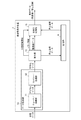
- FIG. FIG. 6 is a block diagram showing an outline of the moving image display apparatus 1 according to Embodiment 3 of the present invention.
- the same or similar components as those in the first embodiment shown in FIG. The difference between the third embodiment of the present invention and the first embodiment of the present invention is that the amount of screen motion is not output from the decoding unit 13 to the switching control unit 15 but displayed on an OSD (On Screen Display).
- An OSD screen control unit 17 that generates position information of an image and a position information holding unit 18 that holds the position information of the OSD image are added. From the position information holding unit 18 as visual characteristic information indicating the characteristics of the screen to be displayed. The point is that the position information of the OSD image is output to the switching control unit 15.
- the difference from the first embodiment of the present invention will be mainly described.
- the OSD screen controller 17 controls the display of the OSD image such as a clock, subtitles, and channel information displayed on the OSD.
- the OSD image such as a clock, subtitles, and channel information displayed on the OSD.
- data generated from the received data is received from the TS decoding processing unit 12, and data stored in the moving image display device 1 in advance is received from the moving image display device 1. From these data, position information of an OSD image to be displayed on the OSD is generated.
- the position information of the OSD image generated by the OSD screen control unit 17 is sent to the position information holding unit 18.
- the position information holding unit 18 holds the position information of the OSD image generated by the OSD screen control unit 17.
- the position information of the OSD image displayed on the OSD stored by the position information holding unit 18 is sent to the switching control unit 15 as necessary.
- the switching control unit 15 acquires the position information of the OSD image to be displayed on the OSD such as subtitles, clock, channel display, program title, etc. as visual characteristic information indicating the characteristics of the screen to be displayed, and the error information included in the error information.
- the number of errors existing at positions other than the display position of the OSD image is counted from the position information and the position information of the OSD image, and the still image data stored in the storage unit 14 when the counted number of errors is equal to or greater than a predetermined threshold. Is displayed as display data, and switching to a still image is performed. As shown in FIG. 7, the OSD image is displayed on a graphic plane different from the moving image plane on which moving image data is displayed, and the OSD image is displayed superimposed on the moving image data.
- FIG. 8 is a flowchart showing switching control processing of the moving image display apparatus 1 according to Embodiment 3 of the present invention.
- the switching control unit 15 acquires moving image data and error information from the decoding unit 13 (step ST200), and determines whether an error exists (step ST500). .
- step ST500 when the switching control unit 15 determines that there is an error in the moving image data acquired from the decoding unit 13, it then acquires the position information of the OSD image (step ST800). That is, the switching control unit 15 acquires the position information of the OSD image to be displayed on the OSD from the position information holding unit 18.
- the switching control unit 15 determines whether there is an error other than the display position of the OSD image (step ST801). That is, in step ST200, the switching control unit 15 has an error existing in the moving image data acquired from the decoding unit 13 at a position other than the display position of the OSD image acquired from the position information holding unit 18 in step ST800. Determine whether.
- step ST801 when the switching control unit 15 determines that there is an error at a position other than the display position of the OSD image, it next counts the number of errors that exist outside the display position of the OSD image (step ST802). In other words, the switching control unit 15 counts the number of errors for an error in one frame that exists at a position other than the display position of the OSD image.
- the switching control unit 15 determines whether the number of errors is equal to or greater than a threshold value (step ST803). That is, in step ST802, the switching control unit 15 determines whether the number of errors existing at a position other than the counted display position of the OSD image is equal to or greater than a preset threshold value.
- the threshold value set in advance is set to the value of the number of errors so that the viewer is not concerned.
- step ST803 when the switching control unit 15 determines that the number of errors existing at a position other than the display position of the OSD image displayed on the OSD is equal to or greater than the threshold value, the switch control unit 15 then acquires still image data from the storage unit 14 ( Next, switching to a still image is performed (step ST206). Thereafter, the sequence ends.
- step ST500 determines that there is no error in the moving image data
- step ST801 determines that there is no error in a position other than the display position of the OSD image, or If it is determined in step ST803 that the number of errors existing at a position other than the display position of the OSD image is not greater than or equal to the threshold value, it is then determined whether a still image is displayed (step ST207).
- step ST207 when the switching control unit 15 determines that a still image is displayed, it next switches to a moving image (step ST208). Thereafter, the sequence ends.
- step ST209 determines in step ST209 that no still image is displayed.
- the switching control unit 15 uses the positional information of the OSD image displayed on the OSD from the positional information holding unit 18 as the visual characteristic information indicating the characteristics of the screen to be displayed. Since the moving image and the still image are switched according to an error that exists outside the display range of the OSD image, the error is detected under the display position of the OSD image on the OSD. The error portion is hidden by the OSD image and the viewer does not notice the error, and in the case of the translucent OSD image, the viewer pays attention to the OSD image, so the error is difficult to notice.
- the moving image is displayed as it is, and the viewer can change the image by appropriately changing the switching between the moving image and the still image according to the error outside the display range of the OSD image. It can be minimized to recognize the disorder.
- FIG. 9 is a block diagram showing an outline of the moving image display apparatus 1 according to Embodiment 4 of the present invention.
- the same or similar components as those in the first embodiment of the present invention shown in FIG.
- the difference between the fourth embodiment of the present invention and the first embodiment of the present invention is that the amount of motion of the screen is not output from the decoding unit 13 to the switching control unit 15, but as visual characteristic information indicating the characteristics of the screen to be displayed.
- the flat area information of the screen is output from the decoding unit 13 to the switching control unit 15.
- the difference from the first embodiment of the present invention will be mainly described.
- the decoding unit 13 performs a process of decoding the encoded data of the decoding unit 13 according to Embodiment 1 of the present invention and outputting moving image data, and a process of detecting errors in the decoded moving image data and outputting error information.
- a flat area is extracted as visual characteristic information indicating the characteristics of the screen to be displayed.
- the flat region is a region where there is no significant change in color or brightness, such as the sky or the sea.
- the decoding unit 13 obtains a spatial frequency for each fixed region, and extracts a set including all regions where the obtained spatial frequency is equal to or less than a predetermined threshold as a flat region.
- the moving image data, error information, and flat area information output by the decoding unit 13 are sent to the switching control unit 15.
- the decoding unit 13 sends the decoded moving image data to the storage unit 14 as still image data.
- the switching control unit 15 acquires the flat area information extracted by the decoding unit 13 and compares it with the error position of the moving image data to determine whether an error exists in the flat area of the moving image data. If there is an error in the flat area of the moving image data, the difference between the error and the surrounding luminance is calculated from the moving image data decoded by the decoding unit 13 as the luminance of the error position and the surrounding luminance adjacent to the error. A difference from the average value is obtained, and the number of errors for which the difference in luminance is equal to or greater than a predetermined threshold is counted. When the counted number of errors is equal to or greater than a predetermined threshold, the still image data stored in the storage unit 14 is output as display data, and switching to a still image is performed.
- the switching control unit 15 calculates the difference between the error and the surrounding hue as the average value of the hue at the position of the error and the surrounding hue that touches the error.
- the number of errors for which the calculated hue difference is equal to or greater than a predetermined threshold value may be counted, and switching to a still image may be determined according to the counted number of errors.
- the error in the flat area to be counted may be determined by combining the difference in luminance and the difference in hue.
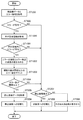
- FIG. 10 is a flowchart showing switching control processing of the moving image display apparatus 1 according to Embodiment 4 of the present invention.
- the same or similar components as those in the flowcharts in the first and second embodiments shown in FIGS.
- the switching control unit 15 acquires moving image data and error information from the decoding unit 13 (step ST200), and determines whether an error exists (step ST500). .
- step ST500 when the switching control unit 15 determines that there is an error in the moving image data acquired from the decoding unit 13, it next acquires flat area information (step ST1000). That is, the switching control unit 15 acquires flat region information indicating a region with little change in color and brightness extracted by the decoding unit 13.
- the switching control unit 15 determines whether an error exists in the flat region (step ST1001). That is, the switching control unit 15 determines whether an error existing in the moving image data acquired from the decoding unit 13 in step ST200 is located in the flat area acquired from the decoding unit 13 in step ST1000.
- step ST1001 when the switching control unit 15 determines that an error exists in the flat area of the moving image data, it next obtains the difference between the luminance of the error and the luminance around the error (step ST1002). That is, the switching control unit 15 obtains an average value of the luminance at the error position and the luminance around the error based on the moving image data acquired from the decoding unit 13, and obtains the difference in luminance.
- the switching control unit 15 counts the number of errors whose luminance difference from the surroundings is equal to or greater than a threshold (step ST1003). That is, the switching control unit 15 counts the number of errors that exist in a flat region within one frame of moving image data and that have a luminance difference equal to or greater than a threshold value.
- the switching control unit 15 determines whether the number of errors is equal to or greater than a threshold (step ST1004). That is, in step ST1003, the switching control unit 15 determines whether the number of errors whose luminance difference with the surroundings existing in the flat area of the counted moving image data is equal to or greater than a threshold is equal to or greater than a preset threshold. To do.
- the threshold value set in advance is set to the value of the number of errors so that the viewer is not concerned.
- step ST1004 when the switching control unit 15 determines that the number of errors whose luminance difference with the surroundings existing in the flat region of the moving image data is equal to or greater than the threshold value is equal to or greater than the threshold value, then, from the storage unit 14, the still image Data is acquired (step ST205), and then switching to a still image is performed (step ST206). Thereafter, the sequence ends.
- the switching control unit 15 determines that there is no error in the moving image data in step ST500, or determines that there is no error in the flat area of the moving image data in step ST1001, or In Step ST1004, when it is determined that the number of errors whose luminance difference with the surrounding area existing in the flat area of the moving image data is equal to or greater than the threshold is not equal to or greater than the threshold, it is determined whether a still image is displayed. (Step ST207). In step ST207, when the switching control unit 15 determines that a still image is displayed, the switching control unit 15 performs switching to a moving image (step ST208). Thereafter, the sequence ends. On the other hand, when the switching control unit 15 determines in step ST207 that no still image is displayed, the moving image is displayed as it is (step ST209). Thereafter, the sequence ends.
- step ST1002 and step ST1003 the same switching control processing can be performed by performing processing using a difference in hue instead of a difference in luminance or a combination of a difference in luminance and a difference in hue.
- the switching control unit 15 acquires the flat area information of the screen from the decoding unit 13 as the visual characteristic information indicating the characteristics of the screen to be displayed.
- a flat screen with little change in color and brightness.
- the human visual characteristics that it is easy to recognize screen disturbance
- a still image Since it is easy to perceive as a screen disturbance, a still image is displayed.Errors in uneven areas and errors with small differences in brightness and color even in flat areas are difficult to feel the difference with the surroundings.
- the moving image is displayed as it is, and the switching between the moving image and the still image is appropriately performed according to the error that exists in the flat area of the screen and the difference in brightness and hue from the surroundings is more than the threshold value. By changing, it is possible to minimize the viewer's perception of screen disturbance.
- FIG. FIG. 11 is a block diagram showing an outline of the moving image display apparatus 1 according to the fifth embodiment of the present invention.
- the difference between the fifth embodiment of the present invention and the first embodiment of the present invention is that importance level information extraction for extracting the importance level of the screen without outputting the screen motion amount from the decoding unit 13 to the switching control unit 15
- the point 19 is added, and the importance level of the screen is output from the importance level information extraction unit 19 to the switching control unit 15 as information indicating the characteristics of the screen to be displayed.
- the difference from the first embodiment of the present invention will be mainly described.
- the decoding unit 13 in Embodiment 1 of the present invention In addition to the process of decoding the encoded data of the decoder 13 and outputting moving image data and the process of detecting errors in the decoded moving image data and outputting error information, the decoding unit 13 in Embodiment 1 of the present invention Then, the encoded data is decoded and sound data is output. The moving image data and error information output by the decoding unit 13 are sent to the switching control unit 15, and the sound data are sent to the importance level information extracting unit 19.
- the importance level information extraction unit 19 determines whether the moving image data decoded by the decoding unit 13 from the metadata output by the TS decoding processing unit 12 or the sound data output by the decoding unit 13 is an important scene. And the importance of the screen is extracted.
- an example of an important scene is a sports scoring scene. In such a case, attention is paid to the motion of the video, and it is considered that the user wants to continue to watch the motion of the video even if there is a disturbance rather than to see a still image with little disturbance.
- the importance level extracted by the importance level information extraction unit 19 is sent to the switching control unit 15 as necessary.
- the importance level information extraction unit 19 when the sound data decoded by the decoding unit 13 is used to determine the importance level of the screen, for example, in the scoring scene that is an important scene of sports, the cheering of the audience occurs. There are features. Therefore, when this sound data is analyzed and a feature such as a cheer is detected, it is determined that the screen is important, and the importance of the screen is increased. In addition, dramas and movies have the feature that music increases in important scenes. From this feature, the scene where music flows is judged to be important, and the importance of the screen is increased. Also, when the importance level information extraction unit 19 acquires the metadata output by the TS decode processing unit 12, if the metadata indicates the level of importance of the moving image data, it is displayed on the screen. It can also be used as importance. Furthermore, if multiple pieces of sound data and metadata can be acquired, the importance of the screen may be set by combining them.
- the switching control unit 15 acquires the importance level of the screen extracted by the importance level information extraction unit 19 and counts the number of errors included in the moving image data based on the error information output by the decoding unit 13. When the number of errors is equal to or greater than a predetermined threshold and the importance of the screen is equal to or less than the predetermined threshold, the still image data stored in the storage unit 14 is output as display data and switched to a still image.
- FIG. 12 is a flowchart showing switching control processing of the moving image display apparatus 1 according to the fifth embodiment of the present invention.
- the switching control unit 15 acquires moving image data and error information from the decoding unit 13 (step ST200), and counts the number of errors (step ST201). Next, the switching control unit 15 determines whether the number of errors is greater than or equal to a threshold value (step ST202).
- step ST202 if the switching control unit 15 determines that the number of errors included in the moving image data is equal to or greater than the threshold value, then it acquires the importance of the screen (step ST1200). That is, the switching control unit 15 acquires the importance level of the screen extracted by the importance level information extraction unit 19.
- the switching control unit 15 determines whether the importance of the screen is equal to or less than a threshold (step ST1201). That is, in step ST1200, the switching control unit 15 determines whether the importance level of the screen acquired from the importance level information extraction unit 19 is equal to or less than a preset threshold value.
- step ST1201 when the switching control unit 15 determines that the importance level of the screen is equal to or less than the threshold value, it next acquires still image data from the storage unit 14 (step ST205), and then performs switching to a still image (step ST205). Step ST206). Thereafter, the sequence ends.
- step ST207 when the switching control unit 15 determines that a still image is displayed, the switching control unit 15 performs switching to a moving image (step ST208). Thereafter, the sequence ends.
- step ST208 when the switching control unit 15 determines in step ST207 that no still image is displayed, the moving image is displayed as it is (step ST209). Thereafter, the sequence ends.
- the importance level information extraction unit 19 is configured to receive the importance of the screen as information indicating the characteristics of the screen to be displayed, and to determine whether or not to switch to a still image according to the importance. If the importance of the screen is greater than the set threshold, we are paying attention to the movement of the video and we want to keep watching the movement, so we do not mind even if there is some disturbance in the video, so we do not switch to a still image If the importance of the screen is less than or equal to the threshold value, the video is not focused on and the screen is likely to be disturbed. Heavy Depending on the time, by appropriately changing the switching of moving images and still images, viewers can minimize to recognize image disturbance.
- the threshold value to be compared with the number of errors existing in the moving image data is set in advance, but this threshold value is set according to the importance of the screen. It may be configured to switch to a still image when there is an error above the set threshold and to display a moving image if the number of errors is below the threshold. At this time, the threshold is set to be larger as the importance of the screen is higher, and the threshold is set to be smaller as the importance of the screen is lower. Further, when the threshold is set according to the importance level of the screen, the processes of step ST1200 and step ST1201 shown in FIG. 12 are not necessary.
- the moving image display device minimizes the viewer's perception of the image disturbance by appropriately changing the switching between the moving image and the still image according to the amount of movement of the screen and the error position. It can be suppressed, and is suitable for use in a moving image display device or the like that switches from a moving image to a still image when an error occurs due to deterioration of radio wave conditions or the like.
Landscapes
- Engineering & Computer Science (AREA)
- Multimedia (AREA)
- Signal Processing (AREA)
- Controls And Circuits For Display Device (AREA)
- Two-Way Televisions, Distribution Of Moving Picture Or The Like (AREA)
- Compression Or Coding Systems Of Tv Signals (AREA)
- Control Of Indicators Other Than Cathode Ray Tubes (AREA)
- Television Systems (AREA)
Abstract
Description
しかし、この方法では人間の視覚特性を考慮しておらず、動きの大きい場面も小さい場面も同等に扱い画面の表示の切替えを行うため、動きが大きい場面であれば、多少画像が乱れていても、動いていることに注目するため気にならないが、風景などのように動きが小さい場面では同じ画像の乱れでも、映像に大きな変化がないため、視聴者が画像の乱れを認識してしまうという課題があった。
また、人が注目しないような画面の隅に画像の乱れが発生した場合も、画面中央に画像の乱れが発生した場合も同等に扱い画面の表示の切り替えを行うため、画像の乱れに気づいていない視聴者に画像の乱れを認識させてしまうという課題があった。
実施の形態1.
図1は、この発明の実施の形態1に係る動画像表示装置1の概要を示すブロック図である。図1に示すように、動画像表示装置1は、データ生成部10、復号部13、記憶部14及び切替え制御部15から構成されている。
このチュ-ナ/復調部11により出力されるデジタルデータはTSデコード処理部12に送られる。
このTSデコード処理部12により出力される符号化データは復号部13に送られる。
また、復号部13は、符号化データの復号化処理と同時に、復号した動画像データにエラーが存在するかどうかの検出を行い、復号時のエラー情報として出力する。この動画像データから検出されるエラーは、シンタックスエラーなどのデコードエラーである。復号部13により出力されるエラー情報には、エラーがあるか否かの情報及びエラーがある場合にはその位置情報が含まれる。
また、復号部13は、表示する画面の特徴を示す視覚特性情報として、復号したフレームとその前後フレームに基づいて画面の動き量を検出する。前後フレームは、復号部13が保持している。画面の動き量は、動きベクトルや前後フレームとの画像としての相関関係、前後フレームとのデータ量の関係等に応じて決定する。ここでの画像としての相関関係とは、各フレームを構成する色合いや輝度などの差分である。動きベクトルが大きい場合や差分が大きい場合には、動き量が大きいとし、動きベクトルが小さい場合や差分が小さい場合には、動き量が小さいとする。また、フレームのデータ量が増加する場合は、前フレームとの差分が大きいため動き量が大きいとする。しかし、例えばMPEG2の様な前後フレームを参照しないIフレームの場合、前後フレームの参照を行わないため、Iフレームにおけるデータ量は多くなる。そのため、Iフレームにおけるデータ量の増加は考慮しない。
この復号部13により出力される動画像データ、エラー情報及び画面の動き量は、切替え制御部15に送られる。
図2は、この発明の実施の形態1に係る動画像表示装置1の切替え制御処理を示すフローチャートである。
図3は、この発明の実施の形態2に係る動画像表示装置1の概要を示すブロック図である。同図において、図1に示した、この発明の実施の形態1と同一または同様の構成要素には同一符号を付し、その説明を省略する。
この発明の実施の形態2とこの発明の実施の形態1との相違点は、復号部13から切替え制御部15に画面の動き量は出力せず、表示する画面の特徴を示す視覚特性情報として、復号部13から切替え制御部15に画面の注目領域情報を出力する点である。以下、この発明の実施の形態1との相違点を中心に説明する。
この復号部13により出力される動画像データ、エラー情報及び注目領域情報は切替え制御部15に送られる。
また、復号部13は、復号した動画像データに含まれるエラー数が所定の閾値以下である場合に、この復号した動画像データを静止画像データとして記憶部14に送る。
図5は、この発明の実施の形態2に係る動画像表示装置1の切替え制御処理を示すフローチャートである。同図において、図2に示した、実施の形態1におけるフローチャートと同一または同様の構成については同一符号を付し、その説明を省略する。
図6は、この発明の実施の形態3に係る動画像表示装置1の概要を示すブロック図である。同図において、図1に示した、実施の形態1と同一または同様な構成要素には同一符号を付し、その説明を省略する。
この発明の実施の形態3とこの発明の実施の形態1との相違点は、復号部13から切替え制御部15に画面の動き量は出力せず、OSD(On Screen Display)上に表示するOSD画像の位置情報を生成するOSD画面制御部17と、そのOSD画像の位置情報を保持する位置情報保持部18を付加し、表示する画面の特徴を示す視覚特性情報として、位置情報保持部18から切替え制御部15にOSD画像の位置情報を出力する点である。以下、この発明の実施の形態1との相違点を中心に説明する。
このOSD画面制御部17により生成されるOSD画像の位置情報は位置情報保持部18に送られる。
この位置情報保持部18により記憶されるOSD上に表示するOSD画像の位置情報は、必要に応じて切替え制御部15に送られる。
図8は、この発明の実施の形態3に係る動画像表示装置1の切替え制御処理を示すフローチャートである。同図において、図2,5に示した、実施の形態1,2におけるフローチャートと同一または同様の処理には同一符号を付し、その説明を省略する。
図9は、この発明の実施の形態4に係る動画像表示装置1の概要を示すブロック図である。同図において、図1に示した、この発明の実施の形態1と同一または同様の構成要素には同一符号を付し、その説明を省略する。
この発明の実施の形態4とこの発明の実施の形態1との相違点は、復号部13から切替え制御部15に画面の動き量は出力せず、表示する画面の特徴を示す視覚特性情報として、復号部13から切替え制御部15に画面の平坦領域情報を出力する点である。以下、この発明の実施の形態1との相違点を中心に説明する。
この復号部13により出力される動画像データ、エラー情報及び平坦領域情報は切替え制御部15に送られる。
また、復号部13は、復号した動画像データに含まれるエラー数が所定の閾値以下である場合に、この復号した動画像データを静止画像データとして記憶部14に送る。
図10は、この発明の実施の形態4に係る動画像表示装置1の切替え制御処理を示すフローチャートである。同図において、図2,5に示した、実施の形態1,2におけるフローチャートと同一または同様の構成においては同一符号を付し、その説明を省略する。
図11は、この発明の実施の形態5に係る動画像表示装置1の概要を示すブロック図である。同図において、図1に示した、この発明の実施の形態1と同一または同様の構成要素には同一符号を付し、その説明を省略する。
この発明の実施の形態5とこの発明の実施の形態1との相違点は、復号部13から切替え制御部15に画面の動き量は出力せず、画面の重要度を抽出する重要度情報抽出部19を付加し、表示する画面の特徴を示す情報として、重要度情報抽出部19から切替え制御部15に画面の重要度を出力する点である。以下、この発明の実施の形態1との相違点を中心に説明する。
この復号部13により出力される動画像データ及びエラー情報は切替え制御部15に送られ、音データは重要度情報抽出部19に送られる。
また、重要度情報抽出部19において、TSデコード処理部12により出力されたメタデータを取得した際に、このメタデータに動画像データの重要度が示されている場合には、それを画面の重要度として利用することも可能である。
さらに、音データ、メタデータの複数データを取得可能であれば、それらを組み合わせて画面の重要度を設定してもよい。
図12は、この発明の実施の形態5に係る動画像表示装置1の切替え制御処理を示すフローチャートである。同図において、図2に示した、実施の形態1におけるフローチャートと同一または同様の構成においては同一符号を付し、その説明を省略する。
Claims (10)
- 受信データから符号化データを抽出するデータ生成部と、
前記データ生成部により抽出された符号化データから動画像データを復号し、復号時のエラー情報を検出すると共に、表示する画面の特徴を示す視覚特性情報を検出する復号部と、
前記復号部により復号された動画像データを静止画像データとして記憶する記憶部と、
前記復号部により検出されたエラー情報及び視覚特性情報に応じて、前記復号部により復号された動画像データ又は前記記憶部に記憶された静止画像データを表示データとして出力する切替え制御部とを有する動画像表示装置。 - 前記復号部は、視覚特性情報として、動画像データ及びその前後の動画像データに基づいて画面の動き量を検出し、
前記切替え制御部は、前記エラー情報からエラー数をカウントし、カウントしたエラー数が所定の閾値以上で、かつ、前記画面の動き量が所定の閾値以下である場合に、前記記憶部に記憶された静止画像データを表示データとして出力することを特徴とする請求項1記載の動画像表示装置。 - 前記復号部は、視覚特性情報として、動画像データ及びその前後の動画像データに基づいて注目領域を抽出し、
前記切替え制御部は、前記エラー情報に含まれるエラーの位置情報から前記注目領域に存在するエラー数をカウントし、カウントしたエラー数が所定の閾値以上である場合に、前記記憶部に記憶された静止画像データを表示データとして出力することを特徴とする請求項1記載の動画像表示装置。 - 受信データから符号化データを抽出するデータ生成部と、
前記データ生成部により抽出された符号化データから動画像データを復号し、復号時のエラー情報を検出する復号部と、
前記復号部により復号された動画像データを静止画像データとして記憶する記憶部と、
OSD上に表示するOSD画像の位置情報を生成するOSD画面制御部と、
前記OSD画面制御部により生成されたOSD画像の位置情報を保持する位置情報保持部と、
前記復号部により検出されたエラー情報及び前記位置情報保持部に保持されたOSD画像の位置情報に応じて、前記復号部により復号された動画像データ又は前記記憶部に記憶された静止画像データを表示データとして出力する切替え制御部とを有する動画像表示装置。 - 前記切替え制御部は、前記エラー情報に含まれるエラーの位置情報及び前記OSD画像の位置情報から前記OSD画像の表示位置以外の位置に存在するエラー数をカウントし、カウントしたエラー数が所定の閾値以上である場合に、前記記憶部に記憶された静止画像データを表示データとして出力することを特徴とする請求項4記載の動画像表示装置。
- 前記復号部は、視覚特性情報として、動画像データに基づいて平坦領域を抽出し、
前記切替え制御部は、前記エラー情報に含まれるエラーの位置情報から前記平坦領域に存在し、かつ、周辺との輝度の差が閾値以上であるエラー数をカウントし、カウントしたエラー数が所定の閾値以上である場合に、前記記憶部に記載された静止画像データを表示データとして出力することを特徴とする請求項1記載の動画像表示装置。 - 前記復号部は、視覚特性情報として、動画像データに基づいて平坦領域を抽出し、
前記切替え制御部は、前記エラー情報に含まれるエラーの位置情報から前記平坦領域に存在し、かつ、周辺との色合いの差が閾値以上であるエラー数をカウントし、カウントしたエラー数が所定の閾値以上である場合に、前記記憶部に記載された静止画像データを表示データとして出力することを特徴とする請求項1記載の動画像表示装置。 - 受信データから符号化データを抽出するデータ生成部と、
前記データ生成部により抽出された符号化データから動画像データを復号し、復号時のエラー情報を検出する復号部と、
前記復号部により復号された動画像データを静止画像データとして記憶する記憶部と、
前記復号部により復号された動画像データの画面の重要度を抽出する重要度情報抽出部と、
前記復号部により検出されたエラー情報及び前記重要度情報抽出部により抽出された画面の重要度に応じて、前記復号部により復号された動画像データ又は前記記憶部に記憶された静止画像データを表示データとして出力する切替え制御部とを有する動画像表示装置。 - 前記復号部は、符号化データから音データを復号し、
前記重要度情報抽出部は、前記復号部により復号された音データに基づいて画面の重要度を抽出し、
前記切替え制御部は、前記エラー情報からエラー数をカウントし、カウントしたエラー数が所定の閾値以上で、かつ、前記画面の重要度が所定の閾値以下である場合に、前記記憶部に記憶された静止画像データを表示データとして出力することを特徴とする請求項8記載の動画像表示装置。 - 前記データ生成部は、受信データからメタデータを抽出し、
前記重要度情報抽出部は、前記データ生成部により抽出されたメタデータに基づいて画面の重要度を抽出し、
前記切替え制御部は、前記エラー情報からエラー数をカウントし、カウントしたエラー数が所定の閾値以上で、かつ、前記画面の重要度が所定の閾値以下である場合に、前記記憶部に記憶された静止画像データを表示データとして出力することを特徴とする請求項8記載の動画像表示装置。
Priority Applications (4)
| Application Number | Priority Date | Filing Date | Title |
|---|---|---|---|
| CN2009801504510A CN102257807B (zh) | 2009-01-29 | 2009-07-31 | 运动图像显示装置 |
| JP2010548264A JP5230756B2 (ja) | 2009-01-29 | 2009-07-31 | 動画像表示装置 |
| US13/126,180 US20110199535A1 (en) | 2009-01-29 | 2009-07-31 | Moving image display |
| EP09839110.5A EP2383997A4 (en) | 2009-01-29 | 2009-07-31 | DEVICE FOR DISPLAYING DYNAMIC IMAGES |
Applications Claiming Priority (2)
| Application Number | Priority Date | Filing Date | Title |
|---|---|---|---|
| JP2009-018516 | 2009-01-29 | ||
| JP2009018516 | 2009-01-29 |
Publications (1)
| Publication Number | Publication Date |
|---|---|
| WO2010086918A1 true WO2010086918A1 (ja) | 2010-08-05 |
Family
ID=42395188
Family Applications (1)
| Application Number | Title | Priority Date | Filing Date |
|---|---|---|---|
| PCT/JP2009/003649 Ceased WO2010086918A1 (ja) | 2009-01-29 | 2009-07-31 | 動画像表示装置 |
Country Status (5)
| Country | Link |
|---|---|
| US (1) | US20110199535A1 (ja) |
| EP (1) | EP2383997A4 (ja) |
| JP (1) | JP5230756B2 (ja) |
| CN (1) | CN102257807B (ja) |
| WO (1) | WO2010086918A1 (ja) |
Cited By (2)
| Publication number | Priority date | Publication date | Assignee | Title |
|---|---|---|---|---|
| JP2014136004A (ja) * | 2013-01-16 | 2014-07-28 | Universal Entertainment Corp | 遊技機および遊技機の管理方法 |
| JP2015157100A (ja) * | 2015-04-28 | 2015-09-03 | 株式会社ユニバーサルエンターテインメント | 遊技機 |
Families Citing this family (15)
| Publication number | Priority date | Publication date | Assignee | Title |
|---|---|---|---|---|
| US9996501B1 (en) * | 2012-06-28 | 2018-06-12 | Amazon Technologies, Inc. | Validating document content prior to format conversion based on a calculated threshold as a function of document size |
| JP6074750B2 (ja) * | 2014-05-23 | 2017-02-08 | パナソニックIpマネジメント株式会社 | 画像切替装置、画像切替システム、及び画像切替方法 |
| US9544636B2 (en) | 2014-07-07 | 2017-01-10 | Google Inc. | Method and system for editing event categories |
| US10140827B2 (en) * | 2014-07-07 | 2018-11-27 | Google Llc | Method and system for processing motion event notifications |
| USD782495S1 (en) | 2014-10-07 | 2017-03-28 | Google Inc. | Display screen or portion thereof with graphical user interface |
| US9361011B1 (en) | 2015-06-14 | 2016-06-07 | Google Inc. | Methods and systems for presenting multiple live video feeds in a user interface |
| US10506237B1 (en) | 2016-05-27 | 2019-12-10 | Google Llc | Methods and devices for dynamic adaptation of encoding bitrate for video streaming |
| US10380429B2 (en) | 2016-07-11 | 2019-08-13 | Google Llc | Methods and systems for person detection in a video feed |
| US10957171B2 (en) | 2016-07-11 | 2021-03-23 | Google Llc | Methods and systems for providing event alerts |
| US10410086B2 (en) | 2017-05-30 | 2019-09-10 | Google Llc | Systems and methods of person recognition in video streams |
| US11783010B2 (en) | 2017-05-30 | 2023-10-10 | Google Llc | Systems and methods of person recognition in video streams |
| US11134227B2 (en) | 2017-09-20 | 2021-09-28 | Google Llc | Systems and methods of presenting appropriate actions for responding to a visitor to a smart home environment |
| US10664688B2 (en) | 2017-09-20 | 2020-05-26 | Google Llc | Systems and methods of detecting and responding to a visitor to a smart home environment |
| US10880604B2 (en) * | 2018-09-20 | 2020-12-29 | International Business Machines Corporation | Filter and prevent sharing of videos |
| US11893795B2 (en) | 2019-12-09 | 2024-02-06 | Google Llc | Interacting with visitors of a connected home environment |
Citations (4)
| Publication number | Priority date | Publication date | Assignee | Title |
|---|---|---|---|---|
| JPH08140084A (ja) * | 1994-11-07 | 1996-05-31 | Fujitsu Ten Ltd | 衛星放送用フリーズ回路 |
| JP2002152743A (ja) | 2000-11-10 | 2002-05-24 | Sharp Corp | 動画像復号装置 |
| JP2006186787A (ja) | 2004-12-28 | 2006-07-13 | Fujitsu Ten Ltd | デジタルデータ受信機 |
| JP2006238149A (ja) * | 2005-02-25 | 2006-09-07 | Fujitsu Ten Ltd | デジタルデータ受信機 |
Family Cites Families (10)
| Publication number | Priority date | Publication date | Assignee | Title |
|---|---|---|---|---|
| US6798834B1 (en) * | 1996-08-15 | 2004-09-28 | Mitsubishi Denki Kabushiki Kaisha | Image coding apparatus with segment classification and segmentation-type motion prediction circuit |
| JPH07283798A (ja) * | 1994-04-08 | 1995-10-27 | Matsushita Electric Ind Co Ltd | 衛星放送移動体受信装置 |
| US6128339A (en) * | 1997-02-13 | 2000-10-03 | Samsung Electronics Co., Ltd. | Apparatus and method for masking video data errors |
| EP1018840A3 (en) * | 1998-12-08 | 2005-12-21 | Canon Kabushiki Kaisha | Digital receiving apparatus and method |
| WO2006046476A1 (ja) * | 2004-10-29 | 2006-05-04 | Sharp Kabushiki Kaisha | 動画像復号装置および動画像復号方法 |
| US8204364B2 (en) * | 2004-12-16 | 2012-06-19 | Sharp Kabushiki Kaisha | Moving picture image reproduction method and moving picture image reproduction apparatus |
| JP4734168B2 (ja) * | 2006-05-09 | 2011-07-27 | 株式会社東芝 | 画像復号化装置及び画像復号化方法 |
| JP2007336211A (ja) * | 2006-06-14 | 2007-12-27 | Mitsubishi Electric Corp | 車載用放送受信装置 |
| JP2008236329A (ja) * | 2007-03-20 | 2008-10-02 | Toshiba Corp | 映像復号装置 |
| US8565310B2 (en) * | 2008-01-08 | 2013-10-22 | Broadcom Corporation | Hybrid memory compression scheme for decoder bandwidth reduction |
-
2009
- 2009-07-31 US US13/126,180 patent/US20110199535A1/en not_active Abandoned
- 2009-07-31 JP JP2010548264A patent/JP5230756B2/ja active Active
- 2009-07-31 CN CN2009801504510A patent/CN102257807B/zh not_active Expired - Fee Related
- 2009-07-31 WO PCT/JP2009/003649 patent/WO2010086918A1/ja not_active Ceased
- 2009-07-31 EP EP09839110.5A patent/EP2383997A4/en not_active Withdrawn
Patent Citations (4)
| Publication number | Priority date | Publication date | Assignee | Title |
|---|---|---|---|---|
| JPH08140084A (ja) * | 1994-11-07 | 1996-05-31 | Fujitsu Ten Ltd | 衛星放送用フリーズ回路 |
| JP2002152743A (ja) | 2000-11-10 | 2002-05-24 | Sharp Corp | 動画像復号装置 |
| JP2006186787A (ja) | 2004-12-28 | 2006-07-13 | Fujitsu Ten Ltd | デジタルデータ受信機 |
| JP2006238149A (ja) * | 2005-02-25 | 2006-09-07 | Fujitsu Ten Ltd | デジタルデータ受信機 |
Non-Patent Citations (1)
| Title |
|---|
| See also references of EP2383997A4 * |
Cited By (2)
| Publication number | Priority date | Publication date | Assignee | Title |
|---|---|---|---|---|
| JP2014136004A (ja) * | 2013-01-16 | 2014-07-28 | Universal Entertainment Corp | 遊技機および遊技機の管理方法 |
| JP2015157100A (ja) * | 2015-04-28 | 2015-09-03 | 株式会社ユニバーサルエンターテインメント | 遊技機 |
Also Published As
| Publication number | Publication date |
|---|---|
| JP5230756B2 (ja) | 2013-07-10 |
| EP2383997A1 (en) | 2011-11-02 |
| US20110199535A1 (en) | 2011-08-18 |
| JPWO2010086918A1 (ja) | 2012-07-26 |
| CN102257807B (zh) | 2013-12-25 |
| EP2383997A4 (en) | 2015-11-11 |
| CN102257807A (zh) | 2011-11-23 |
Similar Documents
| Publication | Publication Date | Title |
|---|---|---|
| JP5230756B2 (ja) | 動画像表示装置 | |
| US8265426B2 (en) | Image processor and image processing method for increasing video resolution | |
| US20120320265A1 (en) | Methods and systems for improving low-resolution video | |
| US20100201870A1 (en) | System and method for frame interpolation for a compressed video bitstream | |
| CN100380921C (zh) | 图像显示装置 | |
| CN105993172A (zh) | 克服用户损伤的媒体内容的操纵 | |
| JP3664251B2 (ja) | 映像出力装置 | |
| JP4747917B2 (ja) | デジタル放送受信装置 | |
| US20110243474A1 (en) | Video image processing apparatus and video image processing method | |
| JP2020508611A (ja) | デジタルtv画面の黒色境界領域を再使用する方法及び装置 | |
| JP4693546B2 (ja) | デジタルノイズ低減装置及び方法及び映像信号処理装置 | |
| JP6045405B2 (ja) | 映像処理装置、表示装置、テレビジョン受信機及び映像処理方法 | |
| JP4714039B2 (ja) | 映像再生装置及び映像再生方法 | |
| US20080159388A1 (en) | Method for generating reduced image of original image comprising blocks encoded by intra prediction and image apparatus thereof | |
| JP4965980B2 (ja) | 字幕検出装置 | |
| KR101042352B1 (ko) | 멀티미디어 방송 시스템에서의 방송신호 수신장치 및 그 방법 | |
| KR101537613B1 (ko) | 방송 수신 장치 및 채널 전환 표시 방법 | |
| JP2015056019A (ja) | 表示装置および表示方法 | |
| US8284313B2 (en) | Apparatus and method for determining noise | |
| KR102835270B1 (ko) | 디스플레이 장치 및 그의 동작 방법 | |
| KR100647954B1 (ko) | 화질 개선부가 구비된 이동 단말기 및 이동 단말기표시장치 화질 개선 방법 | |
| JP2006180179A (ja) | テレビジョンセット | |
| JP2005197931A (ja) | 静止画キャプチャ装置及びこれを備えたデジタル/アナログチューナ装置 | |
| JP4374048B2 (ja) | 補間フレーム生成装置、補間フレーム生成方法及び放送受信装置 | |
| US20080079850A1 (en) | Broadcast receiving apparatus for providing commerce broadcast without modifying broadcast picture and broadcast providing method thereof |
Legal Events
| Date | Code | Title | Description |
|---|---|---|---|
| WWE | Wipo information: entry into national phase |
Ref document number: 200980150451.0 Country of ref document: CN |
|
| 121 | Ep: the epo has been informed by wipo that ep was designated in this application |
Ref document number: 09839110 Country of ref document: EP Kind code of ref document: A1 |
|
| WWE | Wipo information: entry into national phase |
Ref document number: 2010548264 Country of ref document: JP |
|
| WWE | Wipo information: entry into national phase |
Ref document number: 13126180 Country of ref document: US |
|
| WWE | Wipo information: entry into national phase |
Ref document number: 2009839110 Country of ref document: EP |
|
| NENP | Non-entry into the national phase |
Ref country code: DE |