WO2010106879A1 - Système et procédé de communications mobiles - Google Patents
Système et procédé de communications mobiles Download PDFInfo
- Publication number
- WO2010106879A1 WO2010106879A1 PCT/JP2010/052678 JP2010052678W WO2010106879A1 WO 2010106879 A1 WO2010106879 A1 WO 2010106879A1 JP 2010052678 W JP2010052678 W JP 2010052678W WO 2010106879 A1 WO2010106879 A1 WO 2010106879A1
- Authority
- WO
- WIPO (PCT)
- Prior art keywords
- base station
- station
- downlink signal
- relay
- scrambling code
- Prior art date
- Legal status (The legal status is an assumption and is not a legal conclusion. Google has not performed a legal analysis and makes no representation as to the accuracy of the status listed.)
- Ceased
Links
Images



Classifications
-
- H—ELECTRICITY
- H04—ELECTRIC COMMUNICATION TECHNIQUE
- H04B—TRANSMISSION
- H04B7/00—Radio transmission systems, i.e. using radiation field
- H04B7/24—Radio transmission systems, i.e. using radiation field for communication between two or more posts
- H04B7/26—Radio transmission systems, i.e. using radiation field for communication between two or more posts at least one of which is mobile
- H04B7/2603—Arrangements for wireless physical layer control
- H04B7/2606—Arrangements for base station coverage control, e.g. by using relays in tunnels
-
- H—ELECTRICITY
- H04—ELECTRIC COMMUNICATION TECHNIQUE
- H04W—WIRELESS COMMUNICATION NETWORKS
- H04W48/00—Access restriction; Network selection; Access point selection
- H04W48/08—Access restriction or access information delivery, e.g. discovery data delivery
-
- H—ELECTRICITY
- H04—ELECTRIC COMMUNICATION TECHNIQUE
- H04W—WIRELESS COMMUNICATION NETWORKS
- H04W84/00—Network topologies
- H04W84/02—Hierarchically pre-organised networks, e.g. paging networks, cellular networks, WLAN [Wireless Local Area Network] or WLL [Wireless Local Loop]
- H04W84/04—Large scale networks; Deep hierarchical networks
- H04W84/042—Public Land Mobile systems, e.g. cellular systems
- H04W84/047—Public Land Mobile systems, e.g. cellular systems using dedicated repeater stations
Definitions
- the present invention relates to a mobile communication system and a mobile communication method.
- a mobile station In a mobile communication system, a mobile station is wirelessly connected to a radio base station apparatus (hereinafter referred to as a base station).
- the mobile station transmits / receives voice data, image data, electronic mail, and the like to / from the counterpart device via the base station.
- the mobile station In order for a mobile station to be able to communicate, the mobile station needs to be within a range where radio waves from the base station can reach. With the progress of system maintenance in mobile communication systems, the communicable area is expanded, and mobile stations can communicate in a wide area.
- Patent Document 1 Japanese Patent Laid-Open No. 2000-278755
- a base station forms a radio wave area in a radio wave area of another base station and spreads with a specific spreading code different from the spreading code used by the other base station. It is described that, when a broadcast signal is transmitted, the mobile station restricts the operation of a predetermined function when receiving a broadcast signal from a base station spread with a specific spreading code.
- Patent Document 2 Japanese Patent Laid-Open No. 2008-17105 describes a CDMA (Code Division Multiple Access) type mobile communication system capable of communication within a cell covered by a radio base station apparatus. This mobile communication system converts a scrambling code of a downlink signal received from a radio base station apparatus into a specific code, and transmits a downlink signal of the specific code to a restricted area that restricts communication.
- CDMA Code Division Multiple Access
- a mobile device that, when receiving a downlink signal with a specific code transmitted from the relay mobile device, restricts communication of a predetermined service and notifies that it is in a state of restricting communication of the predetermined service by an uplink signal;
- a control device that restricts communication of the predetermined service to the mobile device upon receiving a notification from the mobile device via the radio base station device via an uplink signal that the communication of the predetermined service is restricted.
- Patent Document 3 Japanese Patent Laid-Open No. 11-220764
- Patent Document 4 Japanese Patent Laid-Open No. 2006-140829
- a relay mobile device includes a receiving circuit that receives a downlink signal from a base station, and a transmission circuit that only allows a downlink signal to reach a restricted area.
- the relay mobile station since the relay mobile station does not participate in the uplink signal, it is not necessary to have a special configuration for receiving the uplink signal. Therefore, the relay mobile device can be configured in a small size and at a low cost.
- the uplink signal when an uplink signal (uplink signal) indicating that communication is restricted is transmitted from the mobile station to the base station, the uplink signal needs to be transmitted at a timing synchronized with the base station.
- the relay mobile station transmits a downlink signal with a specific code at the same timing as the downlink signal received from the base station. In this case, if the mobile station detects the timing of the downlink signal of the received specific code, it can transmit the uplink signal at a timing synchronized with the base station.
- the relay mobile device needs a configuration for synchronizing with the base station with high accuracy.
- an object of the present invention is to provide a mobile communication system in which a mobile station receives a downlink signal from a base station via a relay station that forms a function restriction area, and the function from the mobile station is restricted at low cost. It is an object of the present invention to provide a mobile communication system and a mobile communication method that can synchronize an uplink signal indicating that the transmission is performed with a base station.
- a mobile communication system includes a mobile station that is wirelessly connected to the base station and communicates with a counterpart device via the base station when located in a cell formed by the base station. And a relay station forming a restricted area.
- the relay station receives a downlink signal from the base station, and transmits a restricted downlink signal in which information indicating that it is a restricted area is added to the downlink signal in the restricted area.
- the mobile station transmits an uplink signal indicating that the function is restricted to the base station in synchronization with the downlink channel received by the mobile station from the base station.
- the mobile station when a mobile station is located in a cell formed by a base station, the mobile station is wirelessly connected to the base station, and communicates with a counterpart device via the base station.
- a step in which the relay station forms a restricted area, and the relay station receives a downlink signal from the base station and adds a restricted downlink signal to which information indicating that the area is a restricted area is added to the downlink signal.
- the mobile station in the mobile communication system according to the present invention When the mobile station in the mobile communication system according to the present invention is located in a cell formed by a base station, the mobile station is wirelessly connected to the base station and communicates with a counterpart device via the base station.
- a step of performing communication; a step of receiving a restricted downlink signal from a relay station that forms a restricted area; and an uplink signal indicating that the function is restricted when the restricted downlink signal is received from the base station Transmitting to the base station in synchronization with the received downlink signal.
- An operation method of a relay station in a mobile communication system includes a step of forming a restricted area, a step of receiving a downlink signal spread by a downlink scrambling code from a base station, and a restricted area for the downlink signal.
- the downlink signal includes broadcast information including information indicating the downlink scrambling code used by the base station and information indicating a peripheral downlink scrambling code used in a peripheral base station provided around the base station. include.
- the step of transmitting in the restricted area includes a step of determining a scrambling code to be used as the specific scrambling code based on the broadcast information.
- the function from the mobile station is restricted at low cost.
- a mobile communication system and a mobile communication method that can synchronize an uplink signal indicating the presence of a signal with a base station.
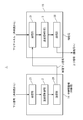
- FIG. 1 is a schematic configuration diagram of a mobile communication system 1 according to the present embodiment.
- the mobile communication system 1 includes a relay mobile device 14 (relay station) that forms a restricted area, and a mobile station 15.
- the relay mobile device 14 includes a reception unit 21, a transmission / reception control unit 2, and a transmission unit 29.
- the mobile station 15 includes a reception unit 31, a transmission / reception control unit 3, and a transmission unit 39.
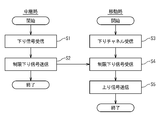
- FIG. 2 is a sequence diagram showing an operation method of the mobile communication system 1.
- the relay mobile device 14 receives a downlink signal from the base station by the receiving unit 21 (step S1).
- the transmission / reception control unit 2 In the relay mobile device 14, the transmission / reception control unit 2 generates a restricted downlink signal with information indicating that it is a restricted area for the downlink signal, and transmits it within the restricted area by the transmitting unit 29 (step S2).
- the mobile station 15 receives the downlink channel from the base station by the receiving unit 31 (step S3).
- the receiving unit 31 receives the restricted downlink signal (step S4).
- the transmission / reception control unit 3 In the mobile station 15, when the restricted downlink signal is received, the transmission / reception control unit 3 generates an uplink signal indicating that the function is restricted.
- the transmission / reception control unit 3 transmits the generated uplink signal to the base station by the transmission unit 39 in synchronization with the downlink channel received from the base station (step S5).
- FIG. 3 is a block diagram showing a configuration of the mobile communication system 1 according to the present embodiment.
- a W-CDMA (Wideband Code Multiple Access) system will be described as an example of a mobile communication system.
- the mobile communication system 1 includes a base station controller 12 (RNC; Radio Network Controller), a plurality of base stations 13 (BTS; Base Transceiver Station), a relay mobile station 14, and a plurality of mobile stations 15.
- RNC Radio Network Controller
- BTS Base Transceiver Station
- relay mobile station 14 and a plurality of mobile stations 15.
- FIG. 3 one of the plurality of base stations is depicted as the base station 13 for ease of explanation.
- only one mobile station 15 is depicted as the mobile station 15.
- UTRAN UMTS Terrestrial Radio Access Network
- the base station 13 is provided to enable the mobile station 15 to communicate with the counterpart device.
- the base station 13 forms a cell 16 and can communicate with the mobile station 15 located in the cell 16.
- the interface between the base station 13 and the mobile station 15 is, for example, a wireless line called Uu.
- the range of the cell 16 is a range according to the transmission power of the base station 13 and the uplink signal search capability from the mobile station 15.
- the base station control device 12 is a device that controls the base station 13.
- the base station control device 12 is connected to the base station 13 through a wired line interface called Iub.
- the base station control device 12 communicates with the mobile station 15 via the base station 13.
- the base station control device 12 is also connected to a mobile switching center 11 (CN; Core Network: described as a mobile switching center including a higher level network in this specification).
- the mobile switching center 11 is communicably connected to a mobile station (partner device) possessed by another user. Thereby, the base station control device 12 relays communication between the mobile station 15 and the counterpart device.
- the base station control device 12 transmits and receives a call processing control signal to and from the mobile station 15 and performs call setting for communication to the mobile station 15.
- the mobile station 15 is owned by the user and is exemplified by a mobile phone terminal.
- the mobile station 15 can communicate with the counterpart device via the base station 13, the base station control device 12, and the mobile switching center 11. Examples of this communication include a telephone call, data communication, and e-mail transmission / reception.
- the mobile station 15 transmits and receives a call processing control signal to and from the base station controller 12.
- the relay mobile device 14 is provided to notify the mobile station 15 that the area is a function-restricted area.
- the relay mobile device 14 forms a restricted area 17.
- the relay mobile device 14 is arranged in the cell 16.
- the relay mobile device 14 transmits a signal indicating that it is a restricted area in the restricted area 17.
- the mobile station 15 that has received this signal recognizes that it is within the restricted area 17 and restricts its function.
- the relay mobile device 14 is installed in places where calls and communication should be restricted, such as hospitals, trains, and concert venues. In the present embodiment, a case where the relay mobile station 14 is used as a relay station that forms the restricted area 17 will be described. However, the relay mobile station 14 is not necessarily used as the relay station. Instead of the relay mobile device 14, a fixedly installed device may be used as the relay station.
- FIG. 4 shows an operation in the case where the restricted area 17 is an area in which the call of the mobile station 15 is to be restricted.
- Step S101 Transmission of DL common CH
- the base station 13 transmits a downlink signal in a cell using a downlink common channel (DL common CH) common to a plurality of mobile stations.
- the downlink signal transmitted on the DL common CH is spread with the downlink scrambling code.
- a plurality of adjacent base stations 13 communicate with the mobile station 15 by using different scrambling codes in the same frequency band.
- the DL common CH is a channel for transmitting information necessary for communication to the mobile station 15. For example, information indicating the scrambling code used by the base station 13 and information for identifying the base station 13 are transmitted by the DL common CH.
- the mobile station 15 that has received the downlink signal on the DL common CH can identify the base station 13 and communicate with the base station 13 at an appropriate timing.
- the first synchronization channel (Primary Synchronization Channel; PSCH), the second synchronization channel (Secondary Synchronization Channel; SSCH), and the first common pilot channel (PrimaryChronom CommonCombo).
- P-CPICH the first common control physical channel
- P-CCPCH Primary Common Control Physical Channel
- PSCH and SSCH are channels for synchronizing with the base station 13.
- the P-CPICH is a channel used for specifying a scrambling code and measuring a reception level.
- the P-CCPCH includes a BCH (Broadcast Channel) in which broadcast information is transmitted. This broadcast information includes information (a base station neighboring cell list) indicating downlink scrambling codes used in other base stations located around the base station 13.
- Step S102 BCH editing and scrambling code conversion
- the relay mobile station 14 uses the DL common CH from the base station 13 when notifying the restriction area 17 that it is a restriction area. That is, the relay mobile station 14 receives the downlink signal of the DL common CH and specifies the downlink scrambling code. Then, the broadcast information included in the BCH of the DL common CH is edited. Further, the edited downstream signal is spread with a specific scrambling code different from the downstream scrambling code.
- Step S103 Transmission of Relay DL Common CH
- the relay mobile station 14 relays the downlink signal spread with the specific downlink scrambling code into the restricted area 17. That is, the DL common CH is relayed within the restricted area.
- a channel used in this case (a channel through which a signal spread with a specific downlink scrambling code is transmitted) is hereinafter referred to as a relay DL common CH and is distinguished from a DL common CH.
- Step S104 Call restriction setting
- the mobile station 15 that has received the relay DL common CH recognizes that it is in the restricted area 17 itself.
- the mobile station 15 performs a predetermined call restriction setting.
- Step S105 Call processing restriction state notification
- the mobile station 15 generates an uplink signal indicating that the call restriction is set, and notifies the base station 13 via the uplink channel.
- the uplink signal is sent to the base station control device 12 via the base station 13.
- the mobile station 15 transmits the uplink signal in synchronization with the DL common CH directly received from the base station 13 instead of the relay DL common CH from the relay mobile device 14.
- This operation eliminates the need to accurately synchronize the relay DL common CH with the DL common CH. Thereby, it is not necessary to provide the relay mobile station 14 with a high-functional device for synchronizing the relay DL common CH with the DL common CH with high accuracy. As a result, the relay mobile device can be configured at low cost and can be reduced in size.
- Steps S106 to S111 Restriction Setting
- the base station controller 12 that has received the notification that the call restriction is set by the uplink signal sets the call processing restriction for the mobile station 15 (step S106).
- the base station controller 12 transmits a notification to the mobile station 15 that there is an incoming call.
- the mobile switching center 11 issues an incoming call failure notification (Step S111).
- the mobile station 15 that has received the notification that there is an incoming call performs an incoming call history setting such as displaying that the incoming call has been received (step S110).
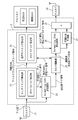
- the relay mobile device 14 will be described in detail with reference to FIG. FIG. 5 is a block diagram showing the relay mobile device 14.
- the relay mobile device 14 includes a radio reception unit (RXRF) 21, a transmission / reception control unit 2, and a radio transmission unit (TXRF) 29.
- the transmission / reception control unit 2 includes a downlink signal processing unit 22, a scrambling code despreading unit 23, a BCH editing unit 24, a transmission condition setting unit 25, a scrambling code respreading unit 26, and a synchronization channel generating unit 27. And an adder 28.
- the relay mobile device 14 stores a scrambling code number used in a cell formed in the vicinity of the relay mobile device 14 as a cell list.
- the radio reception unit 21 receives a DL common CH downlink signal from the base station 13 and performs frequency conversion and analog-digital conversion on the downlink signal.
- the converted downlink signal is supplied to the downlink signal processing unit 22 and the scrambling code despreading unit 23.
- the downlink signal processing unit 22 includes a DL timing detection unit and a scrambling code specifying unit.
- the DL timing detection unit acquires the downlink signal from the radio reception unit 21, it detects slot synchronization and frame synchronization using PSCH, SSCH, and P-CPICH, and generates a synchronization signal.
- the scrambling code specifying unit specifies the downlink scrambling code number using these channels.
- the downlink signal processing unit 22 notifies the generated synchronization signal and the specified downlink scrambling code number to the scrambling code despreading unit 23 and the transmission condition setting unit 25.
- the functions of the wireless receiver 21 and the downlink signal processor 22 described above can be the same as some of the functions provided in the mobile station in the existing W-CDMA system. As described above, since it is not necessary to accurately synchronize the relay DL common CH with the DL common CH, there is no need to provide a highly functional device as a timing detection unit. That is, it is not necessary to add a new configuration as the wireless reception unit 21 and the downlink signal processing unit 22.
- the scrambling code despreading unit 23 despreads the downlink signal acquired from the radio reception unit 21 using the synchronization signal and the downlink scrambling code number. Then, the despread downlink signal (hereinafter, despread downlink signal) is sent to the BCH editing unit 24.
- the BCH editing unit 24 acquires broadcast information included in the BCH of the P-CCPCH from the despread downlink signal. As described above, this broadcast information includes a base station neighboring cell list. Therefore, the BCH editing unit 24 acquires this base station neighboring cell list and sends it to the transmission condition setting unit 25.
- the transmission condition setting unit 25 has a transmission timing setting unit and a scrambling code setting unit.
- the scrambling code setting unit adds the downlink scrambling code number to the cell list.
- the base station neighboring cell list acquired from the BCH editing unit 24 is also added to the cell list.
- the specific scrambling code used for relay DL common CH is determined so that it may not overlap with the cell list memorize
- the transmission condition setting unit 25 notifies the determined specific scrambling code number to the BCH editing unit 24 and the scrambling code respreading unit 26.
- the transmission timing setting unit determines the transmission timing of the relay downlink signal based on the synchronization signal acquired from the downlink signal processing unit 22.
- the transmission timing setting unit sends information regarding the determined transmission timing to the scrambling code respreading unit 26.
- the BCH editing unit 24 adds information indicating that the function is an area and a specific scrambling code number to the broadcast information of the despread downlink signal. As a result, a post-edit despread downlink signal is generated. The edited despread downlink signal is sent from the BCH editing unit 24 to the scrambling code respreading unit 26.
- the scrambling code respreading unit 26 respreads the edited despread downlink signal with the specific downlink scrambling code. As a result, a respread downlink signal is generated.
- the respread downlink signal includes P-CPICH and P-CCPCH patterns for relay.
- the scrambling code respreading unit 26 sends the respread downlink signal to the adder 28.
- the scrambling code respreading unit 26 sends the specific scrambling code number and information indicating the transmission timing to the synchronization channel generating unit 27.
- the synchronization channel generation unit 27 generates a PSCH fixed pattern and an SSCH transmission pattern based on the specific scrambling code number and information indicating the transmission timing, and sends these to the adder 28.
- the adder 28 adds the pattern acquired from the synchronization channel generation unit 27 to the respread downlink signal acquired from the scrambling code respreading unit 26 to generate a relay downlink signal.
- the relay downlink signal is sent to the wireless transmission unit 29.
- the wireless transmission unit 29 performs digital / analog conversion on the relay downstream signal and frequency conversion. Then, the relay downlink signal is transmitted into the restricted area 17 as the relay DL common CH.
- the relay mobile station 14 edits the broadcast signal notification information received from the base station 13, converts the scrambling code into a specific scrambling code, and uses the converted signal as a relay downlink signal in the restricted area 17 Relay to.
- FIG. 6 is a block diagram showing the configuration of the mobile station 15. Here, only necessary portions of the configuration of the mobile station 15 will be described.
- a function for limiting its own function when a relay downlink signal is received is added.
- the mobile station 15 includes a radio reception unit 31 (RXRF), a transmission / reception control unit 3, a radio transmission unit 39, a control unit 36, and a display 37.
- the transmission / reception control unit 3 includes a relay mobile device baseband reception processing unit 32, a relay mobile device downlink timing detection unit 33, a baseband reception processing unit 34, a downlink timing detection unit 35, and a baseband transmission processing unit 38.
- RXRF radio reception unit
- the transmission / reception control unit 3 includes a relay mobile device baseband reception processing unit 32, a relay mobile device downlink timing detection unit 33, a baseband reception processing unit 34, a downlink timing detection unit 35, and a baseband transmission processing unit 38.
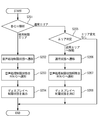
- FIG. 7 is a flowchart showing the operation of the mobile station 15 when the call restriction process is performed.
- Step S201 Analysis of Broadcast Information (BCH)
- BCH Broadcast Information
- the mobile station 15 is constantly analyzing the broadcast information of the received signal. That is, the radio reception unit 31 receives the DL common CH from the base station 13 and the relay DL common CH from the relay mobile device 14. Then, frequency conversion is performed on signals received through these channels, and analog-digital conversion is further performed for digitization.
- the radio reception unit 31 sends these digitized signals to the relay mobile device baseband reception processing unit 32, the relay mobile device downlink timing detection unit 33, the baseband reception processing unit 34, and the downlink timing detection unit 35.
- the relay mobile station downlink timing detection unit 33 detects slot synchronization and frame synchronization for the relay downlink signal included in the relay DL common CH among the signals received from the radio reception unit 31, and generates a synchronization signal.
- the synchronization signal is sent to the relay mobile device baseband reception processing unit 32.
- the relay mobile station downlink timing detection unit 33 specifies a scrambling code group from the relay downlink signal, and further specifies a specific scrambling code number.
- the specific scrambling code number is sent from the relay mobile device downlink timing detection unit 33 to the relay mobile device baseband reception processing unit 32 and the control unit 36.
- the relay mobile station baseband reception processing unit 32 despreads the synchronous downlink signal based on the acquired synchronization signal and the specific scrambling code number, and performs synchronous detection. Further, decoding is performed to generate a demodulated signal, and the demodulated signal is notified to the control unit 36.
- the downlink timing detection unit 35 detects slot synchronization and frame synchronization for the downlink signal included in the DL common CH among the signals received from the radio reception unit 31, and generates a synchronization signal. This synchronization signal is sent to the baseband reception processing unit 34 and the baseband transmission processing unit 38. Further, the downlink timing detection unit 35 specifies a scrambling code group from the downlink signal, and further specifies a downlink scrambling code number. The downlink scrambling code number is sent from the downlink timing detection unit 35 to the baseband reception processing unit 34 and the control unit 36.
- the baseband reception processing unit 32 despreads the downlink signal based on the acquired synchronization signal and the downlink scrambling code number, and performs synchronous detection. Further, decoding is performed to generate a demodulated signal, and the demodulated signal is notified to the control unit 36.
- the control unit 36 is a part that performs call processing and application processing with the base station control device 12. Based on the specific downlink scrambling code number acquired from the relay mobile station downlink timing detection unit 33 and the demodulated signal acquired from the relay mobile station baseband reception processing unit 32, the control unit 36 provides broadcast downlink signal notification information. Decrypt. Similarly, the broadcast signal broadcast information is similarly decoded. And based on these alerting
- Step S202 Transition to the voice processing restricted state
- the controller 36 recognizes that it is in the restricted area 17 based on the decoded notification information, it restricts its function.
- Step S203 Notification of voice processing restriction state Thereafter, the control unit generates uplink data for notifying the base station controller 12 (RNC) that the function is restricted, and sends the uplink data to the baseband transmission processing unit 38.
- RNC base station controller 12
- the baseband transmission processing unit 38 sets the transmission timing of the uplink signal based on the synchronization signal from the downlink timing detection unit 35.
- the baseband transmission processing unit 38 performs modulation processing by encoding and spreading on the uplink data acquired from the control unit 36 at the set transmission timing, and sends the uplink data to the wireless transmission unit 39 as an uplink signal. That is, the uplink signal is transmitted in synchronization with the downlink signal (DL common CH) from the base station 13.
- the wireless transmission unit 39 performs digital / analog conversion and frequency conversion on the uplink signal acquired from the baseband transmission processing unit 38 and sends the resultant signal to the base station 13.
- the mobile station 15 has a plurality of baseband reception processing units and downlink timing detection units for the softer handover and diversity handover functions. Therefore, one of the plurality can be assigned to the relay mobile device baseband reception processing unit 32 and the relay mobile device downlink timing detection unit 33. That is, it is not necessary to add a new configuration to the mobile station 15 in order to provide the relay mobile device baseband reception processing unit 32 and the relay mobile device downlink timing detection unit 33.
- Step S204 Display on the display that it is in a restricted state. Then, the control unit 36 displays on the display 37 that it is in a call processing restricted state.
- Step S205 Area Determination On the other hand, if it is confirmed in step S201 that the user is in the normal area, it is originally determined whether the control unit 36 has moved from the restricted area 17 to the normal area in the cell 16. It is determined whether the area is normal and the area has not changed. If the area in which the user is present has not changed, the process ends.
- Step S206 Transition to the normal state When it is determined that the mobile station 15 has moved from the restricted area 17 to the normal area 16, the state of the mobile station 15 is transitioned from the call restricted state to the normal state.
- Step S207 Notification of restriction state release Further, the control unit 36 generates an uplink signal indicating that the call restriction state is released, and notifies the base station 13 via the baseband transmission processing unit 38 and the wireless transmission unit 39. Notice.
- Step S208 Cancellation of Restricted State Thereafter, the control unit 36 cancels (turns off) the display 37 indicating that the call is in a restricted state.
- the mobile station 15 synchronizes the downlink signal (DL common CH) from the base station 13 instead of the relay downlink signal (relay DL common CH) from the relay mobile device 14. Based on the timing, an uplink signal indicating that the function is restricted is transmitted. Therefore, the relay mobile station 14 does not need a high-performance function for accurately synchronizing the relay DL common CH with the DL common CH. Thereby, the configuration of the relay mobile device 14 can be simplified.
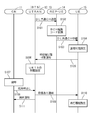
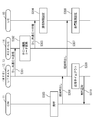
- FIG. 8 is a time chart showing the overall operation of the mobile communication system 1 at this time.
- the base station 13 wirelessly transmits a DL common CH (PSCH, SSCH, P-CPICH, P-CCPCH, etc.) signal to the cell 16 (step S301).
- the relay mobile device 14 identifies the downlink scrambling code of the cell 16 and edits the BCH broadcast information. Then, the downlink scrambling code of the DL common CH is converted into a specific scrambling code (step S302).
- the relay mobile station 14 relays the DL common CH to the restricted area 17 as the relay DL common CH spread by the specific scrambling code (step S303).
- the mobile station 15 receives the relay DL common CH from the relay mobile station 14 and recognizes from the BCH broadcast information that the mobile station 15 is in the restricted area 17 where communication restriction (uplink output prohibition) is implemented. .
- the mobile station 15 performs a predetermined communication restriction setting (step S304). At this time, unlike the communication restricted area described above, an uplink signal indicating that the call processing is restricted is not transmitted to the base station 13.
- step S305 When the mobile station 15 is in a communication restricted state, for example, it is assumed that the mobile station 15 is called by another mobile station via the mobile switching center 11 (step S305) (step S306). At this time, if the location registration of the mobile station 15 is valid, the base station control device 12 performs a terminal call to the mobile station 15 (step S307). The mobile station 15 that has received the paging signal from the base station control device 12 performs incoming call history setting such as displaying an incoming call on the display 17 (step S308). When the response from the mobile station 15 has passed the specified time (step S309), the base station control device 12 performs out-of-service notification to the mobile switching center 11 (step S310).
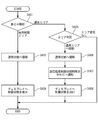
- FIG. 9 is a flowchart showing the operation of the mobile station 15.
- the mobile station 15 always analyzes the BCH of the downlink signal (step S401).
- the control unit 36 of the mobile station 15 transitions to the communication processing restricted state (step S402).
- the mobile station 15 displays on the display 37 that it is in the communication restriction processing state (step S404).
- the mobile station 15 located in the restricted area 17 is in a state where communication processing is restricted.
- it is confirmed in step S401 that the area is a normal area it is determined whether the area has moved from the restricted area 17 to the normal area in the cell 16 or whether the area is originally in the normal area and the area has not changed.
- step S405 When it is determined that the mobile station 15 has moved from the restricted area 17 to the normal area, the mobile station 15 transitions from the communication restricted state to the normal state (step S406). Thereafter, the mobile station 15 notifies the base station control device 12 that the communication processing restriction state is released (step S407), and further turns off the restriction state display on the display 37 (step S408).
- the scrambling code is a code used to distinguish cells.
- the number of scrambling codes is not infinite, and only 512 types are defined in the W-CDMA cellular system.
- the same type of scrambling code is set not to be used at a short distance.
- the radio wave arrival area for each base station has been estimated by computer simulation based on the position of the base station and the device / antenna configuration.
- the scrambling code of each cell was set so that the same kind of scrambling code may not be set between base stations having overlapping coverage areas. For this reason, when a relay mobile device is installed or when a base station is newly installed, the designer has to perform the setting again.
- the scrambling code is set using computer simulation, an error may occur between the simulation result and the actual radio wave arrival area. In such a case, interference occurred and it was necessary to redo the design. Therefore, the effort of the designer was great. Further, when the relay mobile device 14 is used as in the present embodiment, the relay mobile device 14 may be installed in an unspecified number of places. Therefore, it is difficult for the communication carrier to grasp the installation position of the relay mobile device 14 and the specific scrambling code.
- a base station transmits a provisional downlink scrambling code before determining a downlink scrambling code. Then, the final downlink scrambling code is determined based on the reception report from the mobile station located in the area and the neighboring cell list from the base station controller.
- the restricted area 17 is formed by the relay mobile station 14, it is difficult to use a provisional downlink scrambling code. That is, the relay mobile device 14 is installed in a large number of unspecified places, and the relay mobile device 14 cannot be connected to the base station control device 12 via a wired line. Therefore, it is difficult to automatically set the specific scrambling code of the relay mobile device 14 using the information from the base station control device 12. Further, when the temporary scrambling code is used, the specific scrambling code cannot be determined indefinitely unless the mobile station 15 is in the restricted area 17.
- the relay mobile station 14 acquires the downlink scrambling code used by the base station 13 by receiving the DL common CH.
- the relay mobile device 14 receives the relay DL common CH from the other relay mobile devices.
- a scrambling code used by another relay mobile device and a scrambling code used by a cell in the vicinity of the other relay mobile device are acquired.
- the relay mobile station 14 determines a specific scrambling code to be used for the relay DL common CH based on these acquired scrambling codes. Thereby, a mobile communication system can be made maintenance-free. This point will be described in detail below.
- the cell list stored in the relay mobile device 14 includes a neighboring cell list and an adjacent cell list.
- the neighbor cell list shows a list of scrambling code numbers used in cells formed around the relay mobile station 14.
- the adjacent cell list a list of scrambling code numbers used in the DL common CH received by the relay mobile station 14 is shown. That is, a list of scrambling code numbers used in cells adjacent to the relay mobile device 14 is shown.
- the relay mobile station 14 creates a relay cell list based on the cell list stored by itself when transmitting the relay DL common CH. Then, the relay cell list is transmitted on the relay DL common CH.
- the relay cell list includes a relay neighboring cell list and a relay neighboring cell list. How the neighboring cell list for relay and the neighboring cell list for relay are determined will be described later.
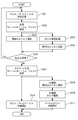
- FIG. 10 is a flowchart showing an operation method of the relay mobile device 14.
- the relay mobile station 14 first performs a cell search in the same manner as the operation of a conventional mobile station, and receives a DL common CH from the base station 13 or a relay DL common CH from another relay mobile station. Then, the synchronization channel and the first common pilot channel included in these channels are received (step S501). Next, the relay mobile device 14 specifies the scrambling code being used based on the synchronization channel and the first common pilot channel (step S502). Next, the relay mobile device 14 adds the identified scrambling code number to the cell list stored therein as an adjacent cell (step S503). Further, the relay mobile device 14 performs BCH reception processing (step S504). Then, the cell list included in the BCH broadcast information is acquired.
- the BCH When the BCH is from the base station 13, the BCH includes a scrambling code used in the base stations around the base station 13 as a base station peripheral cell list.
- the BCH when the BCH is from another relay mobile device, the BCH includes a scrambling code used in cells around the other relay mobile device as a relay cell list. Therefore, the relay mobile station 14 acquires the base station neighboring cell list or the relay cell list. The relay mobile device 14 adds the scrambling code number included in the acquired cell list to the cell list in the own relay mobile device 14 as a neighboring cell. At this time, the relay mobile station 14 distinguishes whether the added scrambling code number is acquired from the base station 13 or acquired from another relay mobile station, and records this. .
- the scrambling code number included in the relay cell list is discriminated whether it is a neighboring cell list for relay or an adjacent cell list for relay (step S505).
- the processes of steps S501 to S505 are repeated (step S506).
- FIG. 11A is a conceptual diagram showing an example of a cell list stored in the relay mobile device 14 by the processing up to step S506.
- 1 to 6 scrambling codes are stored as the cell list.
- the first to fourth scrambling codes are stored as a neighbor cell list.
- the fifth and sixth scrambling codes are stored as a neighbor cell list.
- the first and fourth scrambling codes are scrambling codes described in the neighboring cell list of the base station controller 12 (RNC).
- the second scrambling code is a scrambling code written in the relay neighboring cell list of another adjacent relay mobile station.
- the third scrambling code is a scrambling code described in the adjacent cell list for relay of another adjacent relay mobile station.
- the relay mobile station 14 determines a specific scrambling code (REP-UE scrambling code) (step S507). At this time, the relay mobile device 14 determines the specific scrambling code so that the scrambling code included in the cell list stored in the own device is not used.
- the first to sixth scrambling codes are not selected as specific scrambling codes. That is, the specific scrambling code is selected according to the following conditions (1) to (3).
- the scrambling code described in the adjacent cell list of the own mobile station is not used. That is, the scrambling code used in the base station adjacent to the relay mobile station 14 and other adjacent relay mobile stations is not used. In the example shown in FIG. 11A, the fifth and sixth scrambling codes are not used.
- the scrambling code included in the cell list (base station neighboring cell list and relay cell list) received from the base station and other relay mobile devices is not used. That is, the scrambling code existing in the cell list collected in step 204 is not used. In the example shown in FIG. 11A, the first to fourth scrambling codes are not used.
- a specific scrambling code is randomly selected from the unused scrambling code group under the conditions (1) and (2).
- the relay mobile station 14 After determining the specific scrambling code, the relay mobile station 14 creates a relay cell list to be inserted into the BCH broadcast information so that the following conditions (4) to (6) are satisfied (step S508). ).
- FIG. 11B shows an example of the relay cell list.
- the scrambling code received by the relay mobile device 14 itself is added to the relay cell list. That is, the scrambling code existing in the adjacent cell list is added. At this time, the fact that the code is included in the adjacent cell list is added to the scrambling code, and is added as a relay adjacent cell list. That is, as shown in FIG. 11B, the fifth and sixth scrambling codes are added as the neighboring cell list for relay.
- the scrambling code included in the base station peripheral cell list from the base station control device 13 in the peripheral cell list is added as a relay peripheral cell list. That is, as shown in FIG. 11B, the first and fourth scrambling codes are added as the relay neighboring cell list.
- the scrambling code described in the neighboring cell list of the other relay mobile device is used as the neighboring cell for relay. Add as a list. That is, as shown in FIG. 11B, the third scrambling code is added as a relay neighboring cell list.
- the second scrambling code is not selected because it is a code included in the neighboring cell list of another adjacent relay mobile station.
- the mobile repeater 14 edits the BCH so that the broadcast cell list and the restriction area are included in the broadcast information (step S509). Thereafter, the mobile repeater 14 starts relay processing for SCH, P-CPICH, and P-CCPCH (steps S510 and S511).
- the relay mobile station 14 in determining the specific scrambling code, only needs to receive the DL common CH from the base station and the relay DL common CH from other relay mobile stations.
- the mobile station 15 and the base station control device 12 are not required to perform a special operation for determining a specific scrambling code. That is, the relay mobile device 14 can automatically determine the specific scrambling code without the cooperation of the mobile station 15 or the base station control device 12. Therefore, the mobile communication system can be made maintenance-free.
- Appendix 3 A mobile communication system according to appendix 1 or 2, The mobile communication system in which the function is restricted means that the call is restricted.
- Appendix 4 A mobile communication system according to any one of appendices 1 to 3, The mobile communication system, wherein the relay station detects a synchronization timing of the downlink signal based on a reception result of the downlink signal, and determines a transmission timing of the limited downlink signal based on a detection result of the synchronization timing.
- the downlink signal is spread with a downlink scrambling code and transmitted in the cell, The mobile communication system, wherein the relay station transmits the downlink signal as the restricted downlink signal by spreading the downlink signal with a specific scrambling code different from the downlink scrambling code.
- the downlink signal includes broadcast information including information indicating the downlink scrambling code used by the base station and information indicating a scrambling code used in a peripheral base station provided around the base station. And The mobile communication system, wherein the relay station determines a scrambling code used as the specific scrambling code based on the broadcast information.
- (Appendix 7) A mobile communication system according to appendix 6, wherein The relay station further determines a scrambling code to be used as the specific scrambling code based on broadcast information included in the received restricted downlink signal when the restricted downlink signal is received from another relay station.
- Mobile communication system. A mobile communication system according to appendix 7, The limited downlink signal is used in a downlink scrambling code used in the base station, a specific scrambling code used in the other relay station, and a cell adjacent to the other relay station.
- a mobile communication system including information for identifying a downlink sprangling code.
- (Appendix 9) A relay station used in the mobile communication system according to any one of appendices 1 to 8.
- Appendix 10 A mobile station used in the mobile communication system according to any one of appendices 1 to 8.
- Appendix 11 When a mobile station is located in a cell formed by a base station, the mobile station is wirelessly connected to the base station and communicates with a counterpart device via the base station; A relay station forming a restricted area; The relay station receives a downlink signal from the base station, and transmits a restricted downlink signal with information indicating that the downlink signal is a restricted area in the restricted area; When the mobile station receives the restricted downlink signal, the uplink signal indicating that the function is restricted is transmitted to the base station in synchronization with the downlink channel received by the mobile station from the base station.
- a mobile communication method comprising: (Appendix 12) A mobile communication method described in appendix 11, Furthermore, A mobile communication method comprising a step of restricting its function when the mobile station receives the restricted downlink signal. (Appendix 13) A mobile communication method described in appendix 11 or 12, The mobile communication method in which the function is restricted is that the call is restricted.
- the base station comprising spreading the downlink signal with a downlink scrambling code and transmitting it in the cell;
- the step of transmitting the restricted downlink signal in the restricted area comprises the step of transmitting the restricted downlink signal as the restricted downlink signal by spreading the restricted downlink signal with a specific scrambling code different from the downlink scrambling code.
- Mobile communication method. A mobile communication method according to any one of appendices 11 to 14,
- the downlink signal includes broadcast information including information indicating the downlink scrambling code used by the base station and information indicating a peripheral downlink scrambling code used in a peripheral base station provided around the base station.
- the step of transmitting as the restricted downlink signal comprises a step of determining a scrambling code to be used as the specific scrambling code based on the broadcast information.
- Appendix 16 When located in a cell formed by a base station, wirelessly connected to the base station and communicating with a counterpart device via the base station; Receiving a restricted downlink signal from a relay station forming a restricted area; When receiving the restricted downlink signal, synchronizing the uplink signal indicating that the function is restricted to the downlink channel received from the base station, and transmitting to the base station; A method for operating a mobile station in a mobile communication system.
- (Appendix 17) Forming a restricted area; Receiving a downlink signal spread by a downlink scrambling code from the base station; Adding the information indicating that it is a restricted area to the downlink signal to generate a restricted downlink signal; Spreading the restricted downlink signal with a specific scrambling code different from the downlink scrambling code, and transmitting it within the restricted area;
- the downlink signal includes broadcast information including information indicating the downlink scrambling code used by the base station and information indicating a peripheral downlink scrambling code used in a peripheral base station provided around the base station.
- the method of operating a relay station in a mobile communication system, wherein the step of transmitting in the restricted area comprises a step of determining a scrambling code to be used as the specific scrambling code based on the broadcast information.
Landscapes
- Engineering & Computer Science (AREA)
- Computer Networks & Wireless Communication (AREA)
- Signal Processing (AREA)
- Mobile Radio Communication Systems (AREA)
- Telephonic Communication Services (AREA)
Abstract
Priority Applications (3)
| Application Number | Priority Date | Filing Date | Title |
|---|---|---|---|
| JP2011504790A JPWO2010106879A1 (ja) | 2009-03-16 | 2010-02-23 | 移動体通信システム及び移動体通信方法 |
| US13/256,663 US8989076B2 (en) | 2009-03-16 | 2010-02-23 | Mobile communication system and mobile communication method |
| CN201080012448.5A CN102356677B (zh) | 2009-03-16 | 2010-02-23 | 移动通信系统和移动通信方法 |
Applications Claiming Priority (2)
| Application Number | Priority Date | Filing Date | Title |
|---|---|---|---|
| JP2009-063269 | 2009-03-16 | ||
| JP2009063269 | 2009-03-16 |
Publications (1)
| Publication Number | Publication Date |
|---|---|
| WO2010106879A1 true WO2010106879A1 (fr) | 2010-09-23 |
Family
ID=42739544
Family Applications (1)
| Application Number | Title | Priority Date | Filing Date |
|---|---|---|---|
| PCT/JP2010/052678 Ceased WO2010106879A1 (fr) | 2009-03-16 | 2010-02-23 | Système et procédé de communications mobiles |
Country Status (4)
| Country | Link |
|---|---|
| US (1) | US8989076B2 (fr) |
| JP (1) | JPWO2010106879A1 (fr) |
| CN (1) | CN102356677B (fr) |
| WO (1) | WO2010106879A1 (fr) |
Families Citing this family (4)
| Publication number | Priority date | Publication date | Assignee | Title |
|---|---|---|---|---|
| CN102098723B (zh) * | 2011-02-12 | 2014-01-29 | 大唐移动通信设备有限公司 | 为移动中继节点配置施主基站或施主小区的方法和设备 |
| US20150078405A1 (en) * | 2013-09-18 | 2015-03-19 | Alcatel Lucent Canada Inc. | Monitoring clock accuracy in asynchronous traffic environments |
| WO2018205059A1 (fr) * | 2017-05-08 | 2018-11-15 | 深圳市卓希科技有限公司 | Procédé et système de communication |
| US12389220B2 (en) * | 2023-09-15 | 2025-08-12 | Cisco Technology, Inc. | Opportunistic relay among mobile communication devices |
Citations (3)
| Publication number | Priority date | Publication date | Assignee | Title |
|---|---|---|---|---|
| JP2000324549A (ja) * | 1999-05-13 | 2000-11-24 | Hitachi Ltd | 規制用無線基地局及び移動体通信システム |
| JP2002191072A (ja) * | 2000-12-20 | 2002-07-05 | Nec Access Technica Ltd | 移動電話システム、このシステムの着信動作制御方法、接続装置及び移動電話機 |
| JP2008017105A (ja) * | 2006-07-05 | 2008-01-24 | Nec Corp | 移動体通信システム、中継移動機、および通信制限方法 |
Family Cites Families (11)
| Publication number | Priority date | Publication date | Assignee | Title |
|---|---|---|---|---|
| US3628147A (en) * | 1969-12-09 | 1971-12-14 | Tokyo Shibaura Electric Co | Time-division multiplex mobile communication system |
| JPS58131829A (ja) * | 1982-02-01 | 1983-08-05 | Nec Corp | 無線中継方式 |
| JP3161700B2 (ja) | 1998-02-02 | 2001-04-25 | 株式会社ディーディーアイ | 移動体通信系における擬似基地局装置 |
| JP2000278755A (ja) | 1999-03-25 | 2000-10-06 | Matsushita Electric Ind Co Ltd | 移動体通信システム及び方法 |
| JP4184969B2 (ja) * | 2001-11-17 | 2008-11-19 | サムスン エレクトロニクス カンパニー リミテッド | 移動通信システムにおけるハンドオーバーのための信号測定装置及び方法 |
| ATE548878T1 (de) * | 2004-10-20 | 2012-03-15 | T mobile int ag | Zellular-grossflächen-funkkommunikationssystem mit relay-erweiterten zellen |
| JP4451286B2 (ja) | 2004-11-12 | 2010-04-14 | 株式会社エヌ・ティ・ティ・ドコモ | 基地局、基地局制御局および移動通信システム並びにスクランブリングコード設定方法 |
| US8089938B2 (en) | 2005-12-28 | 2012-01-03 | Alcatel Lucent | Method of synchronizing with an uplink channel and a method of determining a propagation delay in a wireless communications system |
| EP1804442A1 (fr) * | 2006-01-03 | 2007-07-04 | Samsung Electronics Co., Ltd. | Dispositif et procédé pour relais transparent dans un réseau cellulaire à relais multi-saut |
| CN1905410A (zh) | 2006-08-03 | 2007-01-31 | 倪明 | 一种cdma蜂窝系统的主动式上行同步方法 |
| US8682331B2 (en) * | 2009-02-10 | 2014-03-25 | Qualcomm Incorporated | System and method for interference beacon transmission |
-
2010
- 2010-02-23 WO PCT/JP2010/052678 patent/WO2010106879A1/fr not_active Ceased
- 2010-02-23 JP JP2011504790A patent/JPWO2010106879A1/ja active Pending
- 2010-02-23 US US13/256,663 patent/US8989076B2/en not_active Expired - Fee Related
- 2010-02-23 CN CN201080012448.5A patent/CN102356677B/zh not_active Expired - Fee Related
Patent Citations (3)
| Publication number | Priority date | Publication date | Assignee | Title |
|---|---|---|---|---|
| JP2000324549A (ja) * | 1999-05-13 | 2000-11-24 | Hitachi Ltd | 規制用無線基地局及び移動体通信システム |
| JP2002191072A (ja) * | 2000-12-20 | 2002-07-05 | Nec Access Technica Ltd | 移動電話システム、このシステムの着信動作制御方法、接続装置及び移動電話機 |
| JP2008017105A (ja) * | 2006-07-05 | 2008-01-24 | Nec Corp | 移動体通信システム、中継移動機、および通信制限方法 |
Also Published As
| Publication number | Publication date |
|---|---|
| CN102356677A (zh) | 2012-02-15 |
| US8989076B2 (en) | 2015-03-24 |
| CN102356677B (zh) | 2016-11-02 |
| JPWO2010106879A1 (ja) | 2012-09-20 |
| US20120003971A1 (en) | 2012-01-05 |
Similar Documents
| Publication | Publication Date | Title |
|---|---|---|
| KR100468187B1 (ko) | 옥내씨디엠에이(cdma)원거리통신시스템의동작방법및장치 | |
| Tolstrup | Indoor radio planning: a practical guide for GSM, DCS, UMTS, HSPA and LTE | |
| EP1099357B1 (fr) | Procede et systeme permettant d'assurer les communications personnelles a l'echelle des stations de base | |
| JP5158204B2 (ja) | フェムト基地局、無線通信システム、通信方法、通信プログラム、通信回路、及び集積回路 | |
| US6438379B1 (en) | Power control and cell site location technique for CDMA systems with hierarchical architecture | |
| JP5569527B2 (ja) | 移動体通信システム、移動局装置、基地局装置及び電波干渉低減方法 | |
| JP2007329758A (ja) | 無線基地局装置 | |
| CN102356677B (zh) | 移动通信系统和移动通信方法 | |
| JP2001086566A (ja) | 端末使用制限装置 | |
| JP5177600B2 (ja) | 移動体通信システム及び移動体通信の動作方法 | |
| JP2010118986A (ja) | 小型基地局、設定方法 | |
| JP5432278B2 (ja) | 無線通信システム、高電力基地局、低電力基地局、無線端末及び無線通信方法 | |
| JP4826768B2 (ja) | 移動体通信システム、中継移動機、および通信制限方法 | |
| CN104660298A (zh) | 新型在单播和广播多播复用模式下映射导频信号的方法和装置 | |
| JP2004242077A (ja) | 基地局装置及び中継装置及び通信システム | |
| JP2009218766A (ja) | 基地局装置、無線通信システムの運用方法、無線通信システム、及び基地局の制御方法 | |
| JP2003189356A (ja) | 移動無線装置及びそれを用いた無線システム並びにそれらに用いる動作モード切替方法 | |
| GB2496585A (en) | A network element receives a message indicating a forthcoming interference event | |
| WO2005122624A1 (fr) | Telephone mobile, station de base de telephone mobile et systeme de telephonie mobile |
Legal Events
| Date | Code | Title | Description |
|---|---|---|---|
| WWE | Wipo information: entry into national phase |
Ref document number: 201080012448.5 Country of ref document: CN |
|
| 121 | Ep: the epo has been informed by wipo that ep was designated in this application |
Ref document number: 10753374 Country of ref document: EP Kind code of ref document: A1 |
|
| WWE | Wipo information: entry into national phase |
Ref document number: 13256663 Country of ref document: US |
|
| NENP | Non-entry into the national phase |
Ref country code: DE |
|
| WWE | Wipo information: entry into national phase |
Ref document number: 2011504790 Country of ref document: JP |
|
| 122 | Ep: pct application non-entry in european phase |
Ref document number: 10753374 Country of ref document: EP Kind code of ref document: A1 |