WO2010137878A2 - 은행나무과의 형성층 유래 식물줄기세포 및 이의 분리방법 - Google Patents
은행나무과의 형성층 유래 식물줄기세포 및 이의 분리방법 Download PDFInfo
- Publication number
- WO2010137878A2 WO2010137878A2 PCT/KR2010/003341 KR2010003341W WO2010137878A2 WO 2010137878 A2 WO2010137878 A2 WO 2010137878A2 KR 2010003341 W KR2010003341 W KR 2010003341W WO 2010137878 A2 WO2010137878 A2 WO 2010137878A2
- Authority
- WO
- WIPO (PCT)
- Prior art keywords
- cambium
- derived
- stem cells
- ginkgo biloba
- culture
- Prior art date
- Legal status (The legal status is an assumption and is not a legal conclusion. Google has not performed a legal analysis and makes no representation as to the accuracy of the status listed.)
- Ceased
Links
Images


Classifications
-
- A—HUMAN NECESSITIES
- A01—AGRICULTURE; FORESTRY; ANIMAL HUSBANDRY; HUNTING; TRAPPING; FISHING
- A01H—NEW PLANTS OR NON-TRANSGENIC PROCESSES FOR OBTAINING THEM; PLANT REPRODUCTION BY TISSUE CULTURE TECHNIQUES
- A01H4/00—Plant reproduction by tissue culture techniques ; Tissue culture techniques therefor
- A01H4/005—Methods for micropropagation; Vegetative plant propagation using cell or tissue culture techniques
-
- A—HUMAN NECESSITIES
- A01—AGRICULTURE; FORESTRY; ANIMAL HUSBANDRY; HUNTING; TRAPPING; FISHING
- A01H—NEW PLANTS OR NON-TRANSGENIC PROCESSES FOR OBTAINING THEM; PLANT REPRODUCTION BY TISSUE CULTURE TECHNIQUES
- A01H7/00—Gymnosperms, e.g. conifers
-
- A—HUMAN NECESSITIES
- A61—MEDICAL OR VETERINARY SCIENCE; HYGIENE
- A61P—SPECIFIC THERAPEUTIC ACTIVITY OF CHEMICAL COMPOUNDS OR MEDICINAL PREPARATIONS
- A61P39/00—General protective or antinoxious agents
- A61P39/06—Free radical scavengers or antioxidants
Definitions
- the present invention relates to a stem cell derived from the cambium of the family Gingkoaceae and to a method of separating the same.
- plant-derived useful substances have physiological activities such as antiviral, antibacterial, anticancer and antioxidant ability, they are attracting attention as an ideal resource for development as a new drug, and the relationship between the chemical structure and activity of many plant-derived substances Researches are actively underway to identify the problem.
- bioactive substances are difficult to develop as pharmaceuticals, and the main reasons thereof are as follows.
- dedifferentiation process is essentially preceded to convert them into cell lines having dividing ability.
- the dedifferentiation process means dismantling a state in which a tissue or cell has already been differentiated to perform a specific function when cultured using a tissue or organ of a plant.
- severe variations in cell lines can occur due to chromosomal variations.
- the production of useful substances through plant cell culture can be industrialized only if the rapid cell proliferation and high metabolite production capacity are maintained stably for a long period of culture, but most cell lines undergo numerous mutations different from the original by passage culture. You will come across. Therefore, in order to overcome such a mutation problem, a method for obtaining a genetically stable cell line in the production of useful substances through plant cell culture was urgently needed.
- Some of the present inventors have developed a method of inducing callus using only the layer formed from the stem of the plant (Korean Patent No. 0533120), but this patent simply uses a stem forming layer of a tree plant to callus. I just induced. Callus is a tissue formed by dedifferentiation, and thus, the registered patent still has a problem of variation due to dedifferentiation.
- some of the inventors of the present invention have developed the invention of International Patent Application No. PCT / KR2006 / 001544 as a method of providing a genetically stable cell line capable of reliably proliferating and solving the problem of mutation by dedifferentiation.
- Ginkgo biloba belonging to the deciduous tree is widely known as a useful plant, and it is still required to obtain a genetically stable cell line capable of solving the problem of mutation by dedifferentiation and stably proliferating.
- the present inventors have made efforts to provide useful plant cell lines by separating stem cells derived from cambium-derived stem cells, and thus, stem cell-derived stem cells derived from ginkgo biloba plants are separated, and the stem cells are stably proliferated, and variance is observed in culture. It confirmed that there was no, and completed this invention.
- the present invention provides a stem cell derived from the cambium of the ginkgo family, which is derived from the cambium of the family Gingkoaceae , and is a natural undifferentiated cell that has not undergone dedifferentiation.
- the present invention also provides a method for isolating stem cells derived from cambium of the family Gingkoaceae comprising the following steps:
- the present invention also provides an antioxidant composition containing any one or more of the stem cells derived from the cambium of the Ginkgoaceae, its extract, its lysate and its culture.
- the present invention also provides a functional food for antioxidant containing any one or more of the stem cells derived from the cambium of the Ginkgoaceae, its extract, its lysate and its culture.
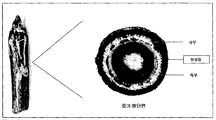
- Figure 1 is a photograph of the formation layer in the cross section of the material plant (Ginkgo biloba).
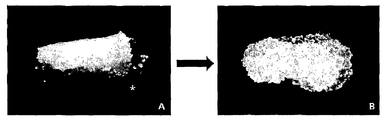
- Figure 2 is a picture of the induction and separation of stem cells according to the present invention
- 2A is a picture showing an extremely different form of stem cells (arrows) and phloem cells (star)
- 2B is cultured after separating the stem cells Three weeks later.
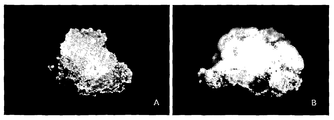
- Figure 3 is a photograph of the solid culture of the stem cells (A) and bark sections derived callus (B) of the ginkgo biloba according to the present invention.
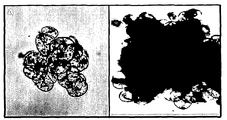
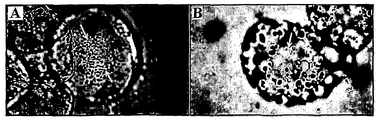
- Figure 4 is a micrograph observing the degree of cell aggregation of the callus (B) induced in the stem cells (A) and bark tissue of the ginkgo biloba of the present culture process ( ⁇ 100).
- FIG. 5 is a micrograph of a stem cell (B) and a ginkgo somatic cell (B) according to the present invention.
- the scale bar at the bottom left is 25 ⁇ m.
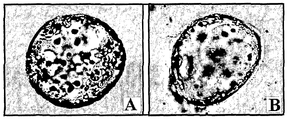
- Figure 6 is a micrograph of the stem cells (A) and the callus (B) derived from the ginkgo bark tissue according to the present invention observed after staining the vacuole using Neutral red, scale bar of the lower right is 25 ⁇ m.
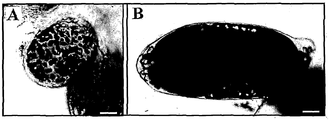
- Figure 7 is a photograph of the mitochondria of the stem cells (A) and callus (B) induced in the ginkgo bark tissue according to the present invention.
- FIG. 8 is a graph showing the cell growth curve of the stem cell bioreactor according to the present invention.
- Figure 9 is a graph showing the growth rate ratio of the callus (callus) derived from stem cells and stems of ginkgo bark tissue according to the present invention.
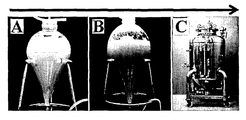
- 10 is a photograph showing the results of incubation for 10 days in a 3L air rich bioreactor (A), a 20L air rich bioreactor (B) and a 250L air rich bioreactor (C).
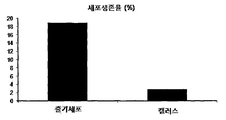
- FIG. 11 is a graph showing the cell survival rate after cryopreservation of callus induced in stem cells and ginkgo bark tissues according to the present invention.
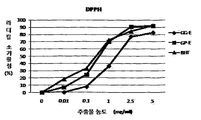
- FIG. 12 is a graph showing the radical scavenging ability according to the concentration of the extract (GP-E) of the culture cultured by treating the stem cell extract (GG-E) and the eliminator according to the present invention.
- the vascular "forming layer” is a lateral meristem located in the vascular tissue of the plant and is located in the stem and root.
- the activity of the cambium causes hypertrophy of the plant, resulting in the presence of large vegetation with more than 11,000 years of age.
- the vascular forming layer originates from the procambium, so that it can be conveniently divided into gradually divided mitotic tissues while maintaining mitotic continuity (Phytomorphology, co-author of Lee Jae-du et al., Academy Book, Chapter 10, 1993), Bonn
- the formation layer is interpreted to include a formation layer. It is obvious that such a formation layer and a typical formation layer are the same primary fission structure, and the same effect will be acquired by using a formation layer and a typical formation structure in this invention.
- Plant “stem cells” as used herein refer to innate undifferentiated cells that are genetically more stable without undergoing dedifferentiation.
- crushed material refers to a cell lysate obtained by crushing a cell by a chemical method or a physical method using a detergent or the like.
- the “extract” of a cell line is a substance obtained by dissolving cells in a solvent and using distillation or evaporation. Can be concentrated.
- the cell line "culture medium” means a cell culture solution remaining after culturing the cells, excluding the cells.
- the term "culture” is a substance containing a culture medium and / or a cultured cell line, wherein the cultured cell line is a concept including all cell lines that are differentiated by culture conditions or have improved production and / or secretion capacity of useful materials. .
- innately undifferentiated refers to maintaining a pre-differentiation state, rather than being present in an undifferentiated state through a dedifferentiation process.
- callus refers to cells or cell masses (PNAS, 99 (25): 15843, 2002) that have not been differentiated through dedifferentiation.
- the present invention relates to a stem cell derived from the cambium of Ginkgoaceae, in one aspect, which is a congenital undifferentiated cell derived from the ginkgo cambium and not undergoing dedifferentiation.
- (c) has mitochondria with increased activity compared to dedifferentiated callus of Ginkgo biloba;
- having a large number of vacuoles refers to having a plurality of vacuoles two times or more as compared to dedifferentiated callus and the like.
- the stem cells according to the present invention has a small vacuole in size compared with the callus of the ginkgo family.
- having "a large number of advanced forms of mitochondria” refers to having more than twice the number of mitochondria that actively move under a microscope compared to the dedifferentiated callus of Ginkgo biloba.
- the stem cells may be characterized by having at least two or more of the properties of (a) to (e), preferably at least three of the properties of (a) to (e) It may be characterized by having at least four characteristics, more preferably at least four of the characteristics of the above (a) to (e). In addition, in the present invention, the stem cells may be characterized by having all the properties of (a) to (e).
- stem cells derived from the Ginkgo Formation layer had a differentiation ability to differentiate into tracheary elements (tracheary elements). Characterizing the plant stem cells has a differentiation ability (pluripotency) in addition to the self renewal ability (self renewal), thereby confirming that the stem cells derived from the ginkgo biloba forming layer according to the present invention.
- the stem cells according to the present invention comprises the steps of (a) obtaining a cambium-containing tissue from the Ginkgoaceae; (b) culturing the obtained cambium-containing tissue in a medium; And (c) obtaining the cambium-derived stem cells by separating the cells from the cambium, wherein step (b) is a step of culturing the cambium-containing tissue to grow from the cambium. It may be characterized by inducing the formed layer, the step (c) may be characterized in that to obtain a cambium-derived stem cells by separating the cultured cambium.
- the step (b) may be characterized by culturing in a medium containing auxin (auxin), wherein, as the auxin is used NAA ( ⁇ -Naphtalene acetic acid) or IAA (Indole-3-acetic acid)
- the auxin may be characterized in that it is included at a concentration of 1 ⁇ 5mg / l.
- the step (c) may be characterized in that to obtain a cambium-derived stem cells by separating the cultured cambium layer from the callus layer that is amorphously proliferated from portions other than the cambium.
- the stem cells derived from the ginkgo biloba from the ginkgo biloba and ginkgo biloba were isolated, and the present invention is preferably characterized in that the stem cells derived from the cambium of the ginkgo plant, more preferably It may be characterized in that the stem cell derived from the cambium of the ginkgo.
- the antioxidant effect of the stem cells derived from the cambium of the ginkgo obtained in the above was confirmed, and in another aspect, the present invention, stem cells derived from the cambium of the ginkgo family, its extract, its lysate and its culture It relates to an antioxidant composition containing any one or more of the above.
- the culture in the present invention the stem cells as an eliminator 3 to 5% by weight of raw sugar or sugar; Or further culturing in a medium containing any one or more of methyl jasmonate, chitosan, phenylalanine, benzoic acid, ABA, salicylic acid, and sodium acetate. It can be characterized in that obtained by performing.
- the medium is 3 to 5% by weight of raw sugar or sugar; And methyl jasmonate, fungal extract, bacterial extract, yeast extract, chitosan, glucomanan, glucan, phenylalanine, benzoic acid, salicylic acid ), Arachonic acid, STS, mevalonalonate N-benzolyglycine, ABA, SNP, IPP, BHT, CCC, ethephon, hipuic acid, ammonium ceric nitrate, A substance selected from the group consisting of AgNO 3 , vanadyl sulfate, p-aminobenzoic acid, brassinosteroids, sodium alginate, sodium acetate It may be characterized in that the medium containing.
- the present invention it is also possible to use a culture obtained by applying physical and chemical stress to the stem cells by treating ultraviolet rays, heat, ethylene, antifungal agents, antibiotics, heavy metal salts and high salt concentrations as an eliminator.
- the extract may be characterized in that it is extracted using a solvent selected from the group consisting of alcohol, such as distilled water, ethanol, acetone, DMSO (dimethyl sulfoxide) and a mixed solvent thereof.
- a solvent selected from the group consisting of alcohol, such as distilled water, ethanol, acetone, DMSO (dimethyl sulfoxide) and a mixed solvent thereof.
- the stem cell extract and extracts of the culture according to the present invention have similar scavenging ability to radicals initiated by the oxidizing agent DPPH, which is similar to or better than BHT widely used as a synthetic antioxidant. Therefore, the stem cell extract according to the present invention can be usefully used as a very excellent antioxidant composition.
- the composition containing the stem cell or its lysate exhibits antioxidant activity, as described above, it was confirmed that the extract of the stem cell and its culture has antioxidant activity.
- the stem cell itself or a composition containing the lysate according to the present invention it will be apparent to those skilled in the art that it can exhibit antioxidant activity and inhibit oxidation.
- pharmaceutically acceptable refers to a composition that is physiologically acceptable and that, when administered to a human, typically does not cause an allergic reaction such as gastrointestinal disorders, dizziness, or the like.
- carriers, excipients and diluents include lactose, dextrose, sucrose, sorbitol, mannitol, xylitol, erythritol, maltitol, starch, acacia rubber, alginate, gelatin, calcium phosphate, calcium silicate, cellulose, methyl cellulose, Polyvinylpyrrolidone, water, methylhydroxybenzoate, propylhydroxybenzoate, talc, magnesium stearate and mineral oil.
- the pharmaceutical composition may further include fillers, anti-coagulants, lubricants, wetting agents, fragrances, emulsifiers and preservatives.
- Pharmaceutical compositions of the invention can also be formulated using methods known in the art to provide rapid, sustained or delayed release of the active ingredient after administration to a mammal.
- the formulations may be in the form of powders, granules, tablets, emulsions, syrups, aerosols, soft or hard gelatin capsules, sterile injectable solutions, sterile powders.
- the present invention relates to a functional food for antioxidant containing any one or more of stem cells, extracts thereof, lysates thereof, and cultures thereof according to the present invention.
- the term "functional food” means that the functionality of the food is improved by adding any one or more of the stem cells or the extract thereof, the lysate, and the culture according to the present invention to a general food.
- the following examples confirmed the antioxidant effect of the stem cell extract and its culture derived from the cambium-derived layer of ginkgo biloba, but similar results can be obtained by using the stem cells themselves or their lysates. It will be obvious to him.
- Ginkgo biloba and Ginkgo biloba can observe the xylem and phloem fibers through Phloroglycinol staining, as shown in Figure 1, between which the cambium is formed. You can see that it exists.
- the stems of the ginkgo biloba were first collected, and immediately immersed in a 100 mg / L ascorbic acid (L-ascorbic acid, DUCHEFA, The Netherlands) solution for transportation. Stored. At this time, in order to obtain the same stem cells using the typical layer, the twigs are collected instead of the stems.
- the neck which is the central part of the stem (twig when using the typical layer), which had undergone the sterilization process of Example 1-1, was easily peeled off the xylem when the bark tissue containing the formation layer was lifted by the tweezers. Peeled tissues constitute sections that include the formation layer, phloem, cortex, and epidermis.
- the fragment comprising the formation layer prepared in Example 1-2 was cultured by denture on the stem cell induction medium (media 1) of Table 1.
- Auxins such as NAA and IAA as growth regulators may be added to the medium at a concentration of 1 to 5 mg / L, preferably at a concentration of 2 mg / L. Cultivation was carried out in a dark room controlled at 25 ⁇ 1 °C.
- FIG. 2A stem cells (arrows), pholem cells (asterisk)), and the two layers naturally separated. Wait until the complete separation was separated and incubated in different petridish (petridish). After separation, the white and soft parts with good growth rate were passaged every 14 days with the same fresh medium as the induced medium.
- Figure 2B is a photograph after incubation for 3 weeks by separating the cambium-derived stem cells.
- the stem cell-derived stem cells isolated in Example 1 were placed in a flask containing the liquid medium of the following ⁇ Table 2> and cultured in a rotary shaker of 100 rpm at 25 ⁇ 1 °C under dark conditions.
- the subculture period was fixed at 2 weeks so that the cultured cells could always maintain high vitality in the algebraic state.
- stem cells according to the present invention contains a large number of single cells in suspension culture, some of them as a small size cell aggregate It was confirmed that the presence, but in the case of somatic cells (callus derived from the bark tissue) of the control ginkgo, it was observed that the aggregation as shown in Figure 4B.
- stem cells according to the present invention was able to observe the morphological characteristics having a plurality of vacuole (vacuole).
- This feature is a feature that appears due to causes such as pressure in the undifferentiated cells present in the plant, it was confirmed that the stem cells according to the present invention is in an undifferentiated state.
- somatic cells callus derived from bark tissue
- somatic cells called derived from bark tissue
- FIG. 5B stem cells according to the present invention were able to identify a number of small vacuoles of red as shown in FIG. 6A, and the somatic cells of the common ginkgo (bark)
- FIG. 6B one large central vacuole was found.
- stem cells according to the present invention was observed through the optical microscope BX41TF, as a result, it was able to observe a large number of mitochondria very active in terms of movement.
- 7A shows that stem cells according to the present invention have a plurality of mitochondria, and arrows indicate mitochondria.
- somatic cells callus derived from the bark tissue
- FIG. 7B such characteristics could not be confirmed.
- the cambium-derived stem cells according to the present invention had a growth rate of 3.1 times and a GI of 2.27, which was higher than that of callus induced from ginkgo bark tissue.
- cell viability decreases rapidly due to the formation of growth rings in the reactor and the cohesiveness of the cell cultures in the culture and the rigidity of the cell walls, and the sensitivity to shear, but the stem cell culture derived from the cambium.
- the growth ring area in the bioreactor was made very small, and a simple stimulus was applied to the incubator to move the medium, the ring of the inner wall was easily resolved.
- the aggregation was small and had many vacuoles, so the sensitivity to shear was low, so that cell viability was hardly reduced.
- the cambium-derived stem cells according to the present invention have low sensitivity to shear stress in the bioreactor for mass culture, and thus, it was confirmed that rapid mass growth is possible in the bioreactor. Therefore, it was found that the cambium-derived stem cells according to the present invention had low sensitivity to shear stress as compared to the dedifferentiated callus-derived cell line of Ginkgo biloba.
- cryopreservation was performed on the callus derived from the ginkgo bark tissue and the stem cells derived from the ginkgo biloba forming layer according to the present invention.
- Suspension culture is used for 6 to 8 days of culture, cryopreservative is a medium containing 0.5M glycerol (DUCHEFA, The Netherlands) and 0.5M DMSO (DUCHEFA, The Netherlands) and 1M sucrose (DUCHEFA, The Netherlands) , 5 ml cryovial (Duran, USA).
- the amount of cell inoculation treated with cryopreservative is 200 mg / ml.
- the cryopreservative treated suspension cells were kept in a freezer for 30 minutes and then stored in a deep freezer for 3 hours and then frozen by immersion in liquid nitrogen.
- the cultured cells kept in liquid nitrogen for 20 minutes or more were taken out for thawing and thawed in a 40 ° C. constant temperature water bath for 1 to 2 minutes.
- the cell suspension was used aseptic funnel and filter paper. The filtered cells were applied on solid growth media containing filter paper, stabilized at room temperature for 30 minutes, and then transferred back to fresh solid growth media.
- the characteristics that characterize the plant stem cells have a pluripotency in addition to self renewal (self renewal).
- self renewal self renewal
- Stem cells suspended in culture for 14 days were collected as in Example 2, and the experiment was performed by dividing into two treatment groups. That is, (1) the cell phase suspended in culture for 14 days (growth phase), (2) 3 to 5% by weight (g / L) of methyl jasmonate and 100 ⁇ M of methyl jasmonate were added to sterile water in the cell line suspended in culture for 14 days Cancer cells were used for 14 days in the elicitation phase (elicitation phase).
- Each of the two cell lines was removed from the culture solution and then lyophilized in 2 g of lyophilized lyophilized cell line (Dry) with 50 ml of 80% ethanol at 15 ° C. for 48 hours. After the lysis, the extract powder obtained by lyophilization of the supernatant by centrifugation at 3,000 rpm for 20 minutes was dissolved in PBS, and ethanol extracts of the two cell lines were obtained and used, respectively.
- the oxidation was initiated by the oxidizing agent DPPH and then the scavenging ability of the ethanol extract of Example 3-2 was measured.
- GG-E growth phase ethanol extract (GG-E) obtained from a cell line suspended for 14 days without treatment with an eliminator was shown to increase the antioxidant power as the concentration increases At 2.5 mg / ml, it was found to have similar antioxidant capacity as BHT, which is widely used as a synthetic antioxidant.
- BHT ethanol extract
- GP-E ethanol extract obtained from cell lines treated with raw sugar and methyljasmonate as an eliminator increased antioxidative activity with increasing concentration, and BHT at a concentration of 2.5 mg / ml. It showed higher antioxidant activity.
- 100 mg of the stem cell extract prepared in Example 3 was mixed according to the conventional tablet preparation method by mixing corn starch 100 mg, lactose 100 mg and magnesium stearate 2 mg.
- 500 mg of the stem cell extract prepared in Example 3 was filled into a soft gelatin capsule to prepare a capsule.
- 100 ml of syrup was prepared according to a conventional method of preparing a liquid formulation with the content of 1 g of stem cells obtained in Example 1, 10 g of isomerized sugar, 5 g of mannitol, and an appropriate amount of purified water.
- Example 2 After dissolving 200 mg of the stem cells obtained in Example 1 in 96 ml of water, 500 mg of vitamin C as an adjuvant, 1 g of citric acid and oligosaccharides as coppers were added, and 0.05 g of sodium benzoate as a preservative, followed by purified water. The amount was added to 100ml to prepare a functional beverage.
- the stem cell derived from the cambium of the Ginkgoaceae according to the present invention is separated into an undifferentiated state without dedifferentiation process, and thus it is useful because it can be stably maintained in cell growth rate and growth pattern without long-term cultivation, thereby allowing mass culture.
- the stem cell derived from the cambium of the ginkgo biloba according to the present invention as a result of measuring the radical scavenging ability generated by the oxidizing agent, was found to have a similar or higher antioxidant effect than the existing synthetic antioxidants. It can be usefully used.
Landscapes
- Life Sciences & Earth Sciences (AREA)
- Health & Medical Sciences (AREA)
- Developmental Biology & Embryology (AREA)
- Engineering & Computer Science (AREA)
- Biotechnology (AREA)
- Cell Biology (AREA)
- Botany (AREA)
- Environmental Sciences (AREA)
- Chemical & Material Sciences (AREA)
- General Chemical & Material Sciences (AREA)
- General Health & Medical Sciences (AREA)
- Chemical Kinetics & Catalysis (AREA)
- Biochemistry (AREA)
- Medicinal Chemistry (AREA)
- Nuclear Medicine, Radiotherapy & Molecular Imaging (AREA)
- Organic Chemistry (AREA)
- Pharmacology & Pharmacy (AREA)
- Animal Behavior & Ethology (AREA)
- Toxicology (AREA)
- Public Health (AREA)
- Veterinary Medicine (AREA)
- Natural Medicines & Medicinal Plants (AREA)
- Micro-Organisms Or Cultivation Processes Thereof (AREA)
- Medicines Containing Plant Substances (AREA)
- Coloring Foods And Improving Nutritive Qualities (AREA)
- Breeding Of Plants And Reproduction By Means Of Culturing (AREA)
Abstract
Description


Claims (23)
- 은행나무과 (family Gingkoaceae)의 형성층에서 유래되고, 탈분화를 거치지 않은 선천적 미분화세포인 것을 특징으로 하는 은행나무과의 형성층 유래 줄기세포.
- 제1항에 있어서, 다음 중 적어도 하나의 특성을 추가로 가지는 것을 특징으로 하는 은행나무과의 형성층 유래 줄기세포:(a) 현탁배양 시 은행나무과의 탈분화된 캘러스에 비하여 많은 수의 단세포를 포함하거나 작은 사이즈의 세포 집합체를 포함함;(b) 다수의 액포(vacuole)를 가지는 형태학적 특징을 나타냄;(c) 은행나무과의 탈분화된 캘러스에 비하여 활성이 증가된 미토콘드리아를 가짐;(d) 은행나무과의 탈분화된 캘러스에 비하여 생장속도가 빠르고 오랫동안 성장할 수 있음; 및(e) 은행나무과의 탈분화된 캘러스에 비하여 생물반응기에서 전단 스트레스(shear stress)에 대해 낮은 민감성을 가짐.
- 제2항에 있어서, 상기 (a) 내지 (e)의 특성 중 적어도 두 개의 특성을 가지는 것을 특징으로 하는 은행나무과의 형성층 유래 줄기세포.
- 제2항에 있어서, 상기 (a) 내지 (e)의 특성 중 적어도 세 개의 특성을 가지는 것을 특징으로 하는 은행나무과의 형성층 유래 줄기세포.
- 제2항에 있어서, 상기 (a) 내지 (e)의 특성 중 적어도 네 개의 특성을 가지는 것을 특징으로 하는 은행나무과의 형성층 유래 줄기세포.
- 제2항에 있어서, 상기 (a) 내지 (e)의 특성을 모두 가지는 것을 특징으로 하는 은행나무과의 형성층 유래 줄기세포.
- 제1항에 있어서, 상기 은행나무과의 형성층 유래 줄기세포는 다음의 단계를 포함하는 분리방법에 의하여 분리된 것을 특징으로 하는 은행나무과의 형성층 유래 줄기세포:(a) 은행나무과 식물로부터 형성층 함유 조직을 수득하는 단계;(b) 상기 수득된 형성층 함유 조직을 배지에서 배양하는 단계; 및(c) 상기 형성층으로부터 세포들을 분리함으로써 형성층 유래 줄기세포를 수득하는 단계.
- 제1항 내지 제7항 중 어느 한 항에 있어서, 상기 은행나무과는 은행나무속(genus Gingko)인 것을 특징으로 하는 은행나무과의 형성층 유래 줄기세포.
- 제1항 내지 제7항 중 어느 한 항에 있어서, 상기 은행나무과는 은행나무(Gingko biloba)인 것을 특징으로 하는 은행나무과의 형성층 유래 줄기세포.
- 다음의 단계를 포함하는 은행나무과(family Gingkoaceae)의 형성층 유래 줄기세포의 분리방법:(a) 은행나무과 식물로부터 형성층 함유 조직을 수득하는 단계;(b) 상기 수득된 형성층 함유 조직을 배지에서 배양하는 단계; 및(c) 상기 형성층으로부터 세포들을 분리함으로써 형성층 유래 줄기세포를 수득하는 단계.
- 제10항에 있어서, 상기 (b)단계는 옥신(auxin)을 포함한 배지에서 배양하는 것을 특징으로 하는 방법.
- 제11항에 있어서, 상기 옥신은 1~5㎎/ℓ의 농도로 포함되는 것을 특징으로 하는 방법.
- 제10항에 있어서, 상기 (c)단계는 배양된 형성층을 형성층 이외 부분으로부터 유래된 무정형으로 증식되는 캘러스층으로부터 나누어지게 한 다음, 형성층으로부터 세포들을 분리하여 형성층 유래 줄기세포를 수득하는 것을 특징으로 하는 방법.
- 제10항에 있어서, 상기 은행나무과는 은행나무속(genus Gingko)인 것을 특징으로 하는 방법.
- 제10항에 있어서, 상기 은행나무과는 은행나무인 것을 특징으로 하는 방법.
- 제1항 내지 제7항 중 어느 한 항의 은행나무과의 형성층 유래 줄기세포, 그 추출물, 그 파쇄물 및 그 배양물 중 어느 하나 이상을 함유하는 항산화용 조성물.
- 제16항에 있어서, 상기 배양물은 상기 줄기세포를 3~5중량%의 원당 또는 설탕; 또는 메틸 자스모네이트(methyl jasmonate), 진균류 추출물, 세균류 추출물, 효모(yeast) 추출물, 키토산, 글루코마난(glucomanan), 글루칸(glucan), 페닐알라닌(phenylalanine), 벤조산(benzoic acid), 살리실산(salicylic acid), 아라키돈산(arachonic acid), STS, mevalonalonate N-benzolyglycine, ABA, SNP, IPP, BHT, CCC, 에테폰(ethephon), 히푸익산(hippuic acid), 암모니움 세릭 니트레이트(amminoium ceric nitrate), AgNO3, 바나딜 설페이트(vanadyl sulfate), p-아미노벤조익산(p-aminobenzoic acid), 브라시노스테로이드(brassinosteroids), 소디움 알지네이트(sodium alginate) 및 아세트산 나트륨 (sodium acteate) 중 어느 하나 이상을 포함하는 배지에서 추가로 배양하여 수득된 것임을 특징으로 하는 항산화용 조성물.
- 제16항에 있어서, 상기 은행나무과는 은행나무속(genus Gingko)인 것을 특징으로 하는 항산화용 조성물.
- 제16항에 있어서, 상기 은행나무과는 은행나무인 것을 특징으로 하는 항산화용 조성물.
- 제1항 내지 제7항 중 어느 한 항의 은행나무과의 형성층 유래 줄기세포, 그 추출물, 그 파쇄물 및 그 배양물 중 어느 하나 이상을 함유하는 항산화용 기능성 식품.
- 제20항에 있어서, 상기 배양물은 상기 줄기세포를 3~5중량%의 원당 또는 설탕; 또는 메틸 자스모네이트(methyl jasmonate), 진균류 추출물, 세균류 추출물, 효모(yeast) 추출물, 키토산, 글루코마난(glucomanan), 글루칸(glucan), 페닐알라닌(phenylalanine), 벤조산(benzoic acid), 살리실산(salicylic acid), 아라키돈산(arachonic acid), STS, mevalonalonate N-benzolyglycine, ABA, SNP, IPP, BHT, CCC, 에테폰(ethephon), 히푸익산(hippuic acid), 암모니움 세릭 니트레이트(amminoium ceric nitrate), AgNO3, 바나딜 설페이트(vanadyl sulfate), p-아미노벤조익산(p-aminobenzoic acid), 브라시노스테로이드(brassinosteroids), 소디움 알지네이트(sodium alginate) 및 아세트산 나트륨 (sodium acteate) 중 어느 하나 이상을 포함하는 배지에서 추가로 배양하여 수득된 것임을 특징으로 하는 항산화용 기능성 식품.
- 제20항에 있어서, 상기 은행나무과는 은행나무속(genus Gingko)인 것을 특징으로 하는 항산화용 기능성 식품.
- 제20항에 있어서, 상기 은행나무과는 은행나무인 것을 특징으로 하는 항산화용 기능성 식품.
Priority Applications (4)
| Application Number | Priority Date | Filing Date | Title |
|---|---|---|---|
| CN201080028922.3A CN102459572B (zh) | 2009-05-26 | 2010-05-26 | 银杏科的形成层来源的植物干细胞及其分离方法 |
| JP2012512970A JP2012527889A (ja) | 2009-05-26 | 2010-05-26 | イチョウ科の形成層由来植物幹細胞及びその分離方法 |
| RU2011152868/10A RU2011152868A (ru) | 2009-05-26 | 2010-05-26 | Линия растительных стволовых клеток, происходящих из камбия растения семейства ginkgoaceae, и способ ее выделения |
| EP10780789A EP2436758A2 (en) | 2009-05-26 | 2010-05-26 | Plant stem cell derived from cambium of family gingkoaceae and method for the isolation thereof |
Applications Claiming Priority (2)
| Application Number | Priority Date | Filing Date | Title |
|---|---|---|---|
| KR10-2009-0045954 | 2009-05-26 | ||
| KR20090045954 | 2009-05-26 |
Publications (3)
| Publication Number | Publication Date |
|---|---|
| WO2010137878A2 true WO2010137878A2 (ko) | 2010-12-02 |
| WO2010137878A9 WO2010137878A9 (ko) | 2011-02-03 |
| WO2010137878A3 WO2010137878A3 (ko) | 2011-04-14 |
Family
ID=43223246
Family Applications (1)
| Application Number | Title | Priority Date | Filing Date |
|---|---|---|---|
| PCT/KR2010/003341 Ceased WO2010137878A2 (ko) | 2009-05-26 | 2010-05-26 | 은행나무과의 형성층 유래 식물줄기세포 및 이의 분리방법 |
Country Status (6)
| Country | Link |
|---|---|
| EP (1) | EP2436758A2 (ko) |
| JP (1) | JP2012527889A (ko) |
| KR (1) | KR101141166B1 (ko) |
| CN (1) | CN102459572B (ko) |
| RU (1) | RU2011152868A (ko) |
| WO (1) | WO2010137878A2 (ko) |
Cited By (2)
| Publication number | Priority date | Publication date | Assignee | Title |
|---|---|---|---|---|
| CN107119007A (zh) * | 2017-05-03 | 2017-09-01 | 于荣敏 | 银杏根部形成层干细胞的诱导及鉴定 |
| CN108849529A (zh) * | 2018-08-29 | 2018-11-23 | 南京林业大学 | 一种银杏胚乳诱导胚性愈伤组织的方法 |
Families Citing this family (14)
| Publication number | Priority date | Publication date | Assignee | Title |
|---|---|---|---|---|
| KR101321011B1 (ko) * | 2011-11-30 | 2013-10-23 | 주식회사 엘지생활건강 | 피부결 개선용 조성물 |
| US10463603B2 (en) | 2012-01-05 | 2019-11-05 | L'oreal | Cosmetic use of dedifferentiated plant cells |
| CN103667171A (zh) * | 2012-09-12 | 2014-03-26 | 鹭港生物药业有限公司 | 西红柿干细胞分离及培养方法 |
| US20140087026A1 (en) * | 2012-09-26 | 2014-03-27 | Dianaplantsciences, S.A.S. | Novel food composition of whole plant cells |
| RU2636462C2 (ru) | 2013-02-28 | 2017-11-23 | Вэллкей Холдингз Лимитед | Рекомбинантные клетки растений, способ их получения и способ получения белка-мишени с их использованием |
| CN103320378A (zh) * | 2013-07-01 | 2013-09-25 | 林树芳 | 虎眼万年青干细胞系形成层与抗癌组合物的提取制备方法 |
| CN103320379A (zh) * | 2013-07-01 | 2013-09-25 | 林树芳 | 番茄植物干细胞分离培养提取与口服液、饮料和白酒的制备方法 |
| CN104531606B (zh) * | 2014-12-24 | 2017-07-28 | 广东药科大学 | 当归属植物贮藏根形成层的植物干细胞及其制备和培养方法 |
| CN104719914B (zh) * | 2015-04-09 | 2017-08-29 | 广州康琪莱生物科技有限公司 | 一种改善胃肠道功能的组合物及其制备方法 |
| CN104711215A (zh) * | 2015-04-09 | 2015-06-17 | 广州赛莱拉干细胞科技股份有限公司 | 一种苹果干细胞的培养方法及培养的苹果干细胞 |
| CN104783182B (zh) * | 2015-04-13 | 2018-01-26 | 广州康琪莱生物科技有限公司 | 一种提高免疫力的组合物及其制备方法 |
| CN104738635B (zh) * | 2015-04-13 | 2017-08-29 | 广州赛莱拉干细胞科技股份有限公司 | 一种抗氧化的组合物及其制备方法 |
| CN105962367A (zh) * | 2016-04-27 | 2016-09-28 | 深圳爱生再生医学科技有限公司 | 芦荟干细胞提取物及其制备方法和应用 |
| CN108782239A (zh) * | 2018-05-14 | 2018-11-13 | 山东组培农业发展有限公司 | 一种银杏脱毒组织培养方法 |
Citations (3)
| Publication number | Priority date | Publication date | Assignee | Title |
|---|---|---|---|---|
| KR950000870B1 (ko) | 1985-10-31 | 1995-02-02 | 알 씨에이 코오포레이숀 | 이온 주입 방법 및 장치 |
| KR100533120B1 (ko) | 2003-06-16 | 2005-12-14 | 주식회사 운화 바이오텍 | 형성층을 이용한 식물세포배양 방법 |
| KR20060001544A (ko) | 2004-06-30 | 2006-01-06 | 삼성에스디아이 주식회사 | 플라즈마 디스플레이 패널 |
Family Cites Families (5)
| Publication number | Priority date | Publication date | Assignee | Title |
|---|---|---|---|---|
| KR930002507A (ko) * | 1991-07-18 | 1993-02-23 | 김영중 | 식물세포 배양법에 의한 징콜라이드류의 제조방법 |
| ES2546108T3 (es) * | 2005-10-31 | 2015-09-18 | Unhwa Corporation | Estabilidad de la producción masiva de metabolitos secundarios mediante cultivos sincronizados de células vegetales |
| KR101064518B1 (ko) * | 2007-09-21 | 2011-09-19 | 주식회사 운화 | 저장근을 가지는 초본식물의 형성층 유래 식물줄기세포주 및 이의 분리방법 |
| KR101100867B1 (ko) * | 2008-05-14 | 2012-01-02 | 주식회사 운화 | 주목의 형성층 또는 전형성층 유래 식물줄기세포주를 유효성분으로 함유하는 항산화, 항염증 또는 항노화용 조성물 |
| CA2732058C (en) * | 2008-06-13 | 2014-09-23 | Unhwa Corporation | Anti-aging or antioxidant composition containing plant stem cell line derived from cambium of panax ginseng |
-
2010
- 2010-05-26 RU RU2011152868/10A patent/RU2011152868A/ru not_active Application Discontinuation
- 2010-05-26 JP JP2012512970A patent/JP2012527889A/ja active Pending
- 2010-05-26 EP EP10780789A patent/EP2436758A2/en not_active Withdrawn
- 2010-05-26 WO PCT/KR2010/003341 patent/WO2010137878A2/ko not_active Ceased
- 2010-05-26 CN CN201080028922.3A patent/CN102459572B/zh active Active
- 2010-05-26 KR KR1020100049023A patent/KR101141166B1/ko active Active
Patent Citations (3)
| Publication number | Priority date | Publication date | Assignee | Title |
|---|---|---|---|---|
| KR950000870B1 (ko) | 1985-10-31 | 1995-02-02 | 알 씨에이 코오포레이숀 | 이온 주입 방법 및 장치 |
| KR100533120B1 (ko) | 2003-06-16 | 2005-12-14 | 주식회사 운화 바이오텍 | 형성층을 이용한 식물세포배양 방법 |
| KR20060001544A (ko) | 2004-06-30 | 2006-01-06 | 삼성에스디아이 주식회사 | 플라즈마 디스플레이 패널 |
Non-Patent Citations (2)
| Title |
|---|
| JAE-DOO LEE: "Plant Morphology", 1993, ACADEMY BOOK PUBLISHING CO |
| PNAS, vol. 99, no. 25, 2002, pages 15843 |
Cited By (3)
| Publication number | Priority date | Publication date | Assignee | Title |
|---|---|---|---|---|
| CN107119007A (zh) * | 2017-05-03 | 2017-09-01 | 于荣敏 | 银杏根部形成层干细胞的诱导及鉴定 |
| CN108849529A (zh) * | 2018-08-29 | 2018-11-23 | 南京林业大学 | 一种银杏胚乳诱导胚性愈伤组织的方法 |
| CN108849529B (zh) * | 2018-08-29 | 2021-07-30 | 南京林业大学 | 一种银杏胚乳诱导胚性愈伤组织的方法 |
Also Published As
| Publication number | Publication date |
|---|---|
| WO2010137878A9 (ko) | 2011-02-03 |
| CN102459572A (zh) | 2012-05-16 |
| RU2011152868A (ru) | 2013-07-10 |
| KR20100127724A (ko) | 2010-12-06 |
| CN102459572B (zh) | 2014-11-19 |
| JP2012527889A (ja) | 2012-11-12 |
| WO2010137878A3 (ko) | 2011-04-14 |
| EP2436758A2 (en) | 2012-04-04 |
| KR101141166B1 (ko) | 2012-05-02 |
Similar Documents
| Publication | Publication Date | Title |
|---|---|---|
| WO2010137878A9 (ko) | 은행나무과의 형성층 유래 식물줄기세포 및 이의 분리방법 | |
| WO2010137918A2 (ko) | 가지과의 형성층 유래 식물줄기세포 및 이의 분리배양방법 | |
| US8329471B2 (en) | Isolated population of plant single cells and method of preparing same | |
| AU2008202078B2 (en) | Stability of secondary metabolite mass production through synchronized plant cell cultures | |
| WO2009151302A2 (ko) | 산삼 또는 인삼을 포함한 인삼류의 형성층 유래 식물줄기세포주를 유효성분으로 함유하는 노화방지 또는 항산화용 조성물 | |
| KR101020689B1 (ko) | 식물의 동조적인 세포주 배양을 통한 2차 대사 산물의 대량생산 안정화 | |
| WO2009139581A2 (ko) | 주목의 형성층 또는 전형성층 유래 식물줄기세포주를 유효성분으로 함유하는 항산화, 항염증 또는 항노화용 조성물 | |
| WO2010005260A2 (ko) | 돼지 액상정액 장기보존을 위한 희석제 | |
| WO2010095911A2 (ko) | 산삼 또는 인삼을 포함한 인삼류의 형성층 유래 식물줄기세포주를 유효성분으로 함유하는 면역증강용 조성물 | |
| WO2010137877A2 (ko) | 국화과의 형성층 유래 식물줄기세포 및 이의 분리배양방법 | |
| Pan et al. | In vitro conservation of native Chinese wild grape (Vitis heyneana Roem. & Schult) by slow growth culture | |
| WO2010137879A2 (ko) | 버드나무과의 형성층 유래 식물줄기세포 및 이의 분리배양방법 | |
| KR101777836B1 (ko) | 은행나무과의 형성층 유래 식물줄기세포를 유효성분으로 함유하는 항노화용 조성물 | |
| Stanilova et al. | Influence of nutrient medium composition on in vitro growth, polyphenolic content and antioxidant activity of Alchemilla mollis | |
| Srinivasakumar et al. | In vitro studies on bactericidal activity and sensitivity pattern of isolated marine microalgae against selective human bacterial pathogens | |
| Simoes et al. | New approaches for shoot production and establishment of in vitro root cultures of Cleome rosea Vahl. | |
| Dewir et al. | Micropropagation and detection of important triterpenes in in vitro and field grown plants of Syzygium cordatum | |
| Halaweish et al. | Production of cucurbitacins by cucurbit cell cultures | |
| Soares et al. | Effect of extracts from field and in vitro plants of Petiveria alliacea L. on plasmidial DNA | |
| US12022786B2 (en) | Method of isolating secondary metabolites from cambium derived callus cultures | |
| Ebrahimi | Agrobacterium Rhizogenes-mediated Transformation of Peganum multisectum (Maxim) Bobrov and Harmine Production in Hairy Roots | |
| Reddy et al. | Efficient Shoot Regeneration via Indirect Organaogenesis of a Highly Recalcitrant Species of Cissampelos pareira (L.) | |
| KR970009147B1 (ko) | 꾸지뽕나무 모상근 배양에 의한 후라보노이드계 항암물질의 생산방법 | |
| CN1904039A (zh) | 一种含茶多酚的牛胚胎体外培养液及其培养方法 | |
| KR101064520B1 (ko) | 분열지연중심부 유래 식물줄기세포주 및 이의 분리방법 |
Legal Events
| Date | Code | Title | Description |
|---|---|---|---|
| WWE | Wipo information: entry into national phase |
Ref document number: 201080028922.3 Country of ref document: CN |
|
| 121 | Ep: the epo has been informed by wipo that ep was designated in this application |
Ref document number: 10780789 Country of ref document: EP Kind code of ref document: A2 |
|
| WWE | Wipo information: entry into national phase |
Ref document number: 2012512970 Country of ref document: JP |
|
| NENP | Non-entry into the national phase |
Ref country code: DE |
|
| WWE | Wipo information: entry into national phase |
Ref document number: 2010780789 Country of ref document: EP |
|
| ENP | Entry into the national phase |
Ref document number: 2011152868 Country of ref document: RU Kind code of ref document: A |