WO2010140602A1 - D-乳酸脱水素酵素活性を有するポリペプチド、該ポリペプチドをコードするポリヌクレオチドおよびd-乳酸の製造方法 - Google Patents
D-乳酸脱水素酵素活性を有するポリペプチド、該ポリペプチドをコードするポリヌクレオチドおよびd-乳酸の製造方法 Download PDFInfo
- Publication number
- WO2010140602A1 WO2010140602A1 PCT/JP2010/059306 JP2010059306W WO2010140602A1 WO 2010140602 A1 WO2010140602 A1 WO 2010140602A1 JP 2010059306 W JP2010059306 W JP 2010059306W WO 2010140602 A1 WO2010140602 A1 WO 2010140602A1
- Authority
- WO
- WIPO (PCT)
- Prior art keywords
- gene
- polynucleotide
- seq
- polypeptide
- lactic acid
- Prior art date
- Legal status (The legal status is an assumption and is not a legal conclusion. Google has not performed a legal analysis and makes no representation as to the accuracy of the status listed.)
- Ceased
Links
Images

Classifications
-
- C—CHEMISTRY; METALLURGY
- C12—BIOCHEMISTRY; BEER; SPIRITS; WINE; VINEGAR; MICROBIOLOGY; ENZYMOLOGY; MUTATION OR GENETIC ENGINEERING
- C12P—FERMENTATION OR ENZYME-USING PROCESSES TO SYNTHESISE A DESIRED CHEMICAL COMPOUND OR COMPOSITION OR TO SEPARATE OPTICAL ISOMERS FROM A RACEMIC MIXTURE
- C12P7/00—Preparation of oxygen-containing organic compounds
- C12P7/40—Preparation of oxygen-containing organic compounds containing a carboxyl group including Peroxycarboxylic acids
- C12P7/56—Lactic acid
-
- C—CHEMISTRY; METALLURGY
- C07—ORGANIC CHEMISTRY
- C07K—PEPTIDES
- C07K14/00—Peptides having more than 20 amino acids; Gastrins; Somatostatins; Melanotropins; Derivatives thereof
- C07K14/435—Peptides having more than 20 amino acids; Gastrins; Somatostatins; Melanotropins; Derivatives thereof from animals; from humans
-
- C—CHEMISTRY; METALLURGY
- C12—BIOCHEMISTRY; BEER; SPIRITS; WINE; VINEGAR; MICROBIOLOGY; ENZYMOLOGY; MUTATION OR GENETIC ENGINEERING
- C12N—MICROORGANISMS OR ENZYMES; COMPOSITIONS THEREOF; PROPAGATING, PRESERVING, OR MAINTAINING MICROORGANISMS; MUTATION OR GENETIC ENGINEERING; CULTURE MEDIA
- C12N15/00—Mutation or genetic engineering; DNA or RNA concerning genetic engineering, vectors, e.g. plasmids, or their isolation, preparation or purification; Use of hosts therefor
- C12N15/09—Recombinant DNA-technology
- C12N15/63—Introduction of foreign genetic material using vectors; Vectors; Use of hosts therefor; Regulation of expression
- C12N15/79—Vectors or expression systems specially adapted for eukaryotic hosts
- C12N15/80—Vectors or expression systems specially adapted for eukaryotic hosts for fungi
- C12N15/81—Vectors or expression systems specially adapted for eukaryotic hosts for fungi for yeasts
-
- C—CHEMISTRY; METALLURGY
- C12—BIOCHEMISTRY; BEER; SPIRITS; WINE; VINEGAR; MICROBIOLOGY; ENZYMOLOGY; MUTATION OR GENETIC ENGINEERING
- C12N—MICROORGANISMS OR ENZYMES; COMPOSITIONS THEREOF; PROPAGATING, PRESERVING, OR MAINTAINING MICROORGANISMS; MUTATION OR GENETIC ENGINEERING; CULTURE MEDIA
- C12N9/00—Enzymes; Proenzymes; Compositions thereof; Processes for preparing, activating, inhibiting, separating or purifying enzymes
- C12N9/0004—Oxidoreductases (1.)
- C12N9/0006—Oxidoreductases (1.) acting on CH-OH groups as donors (1.1)
Definitions
- the present invention relates to a novel polypeptide having D-lactate dehydrogenase activity for producing D-lactic acid, a polynucleotide encoding the polypeptide, and a transformant into which the polynucleotide has been introduced.
- the present invention relates to a method for producing D-lactic acid, comprising culturing a converter.
- PLA Polylactic acid
- PLA that uses biomass, which is a renewable resource, has received a lot of attention from the carbon neutral perspective.
- PLA is relatively inexpensive and has a heat resistance of about 170 ° C., and is expected as a biodegradable polymer that can be melt-molded.
- a polylactic acid stereocomplex can be obtained by mixing poly-L-lactic acid and poly-D-lactic acid (Patent Documents 1 to 3).
- Polylactic acid stereocomplex has a higher melting point and higher crystallinity than a single polymer, and is known to give a molded product useful as a fiber, film, or resin molded product.
- -A highly pure and highly efficient production method is required for both lactic acid.
- Lactobacillus delbrueckii is a bacterium that efficiently produces L-lactic acid.
- a microorganism of Sporolactobacillus laevolacticus is known (Patent Document 4). In either case, the amount of lactic acid accumulated in anaerobic culture has reached a high level, but in the case of L-lactic acid fermentation, D-lactic acid is produced as a by-product, and in the case of D-lactic acid fermentation, L-lactic acid is produced as a by-product. Bring about a decline. And it is very difficult to separate them.
- a gene encoding L-lactic acid or D-lactic acid dehydrogenase is introduced into a yeast that does not originally have lactic acid-producing ability, and L-lactic acid and D- using the yeast are introduced. Lactic acid fermentation has been studied (Patent Documents 4 to 6, Non-Patent Document 1). Regarding L-lactic acid fermentation using genetically modified yeast, highly efficient and high optical purity lactic acid fermentation is possible by introducing a gene encoding L-lactic acid dehydrogenase derived from highly active Xenopus laevis. (Patent Document 4). On the other hand, regarding D-lactic acid fermentation using genetically modified yeast, although high optical purity D-lactic acid was obtained as in L-lactic acid fermentation, there was a problem in D-lactic acid yield (Patent Documents 5 and 6, Non-patent document 1).
- An object of the present invention is to realize highly productive D-lactic acid fermentation using a polypeptide having higher D-lactate dehydrogenase activity and a polynucleotide encoding the polypeptide.
- the present inventors have found a polypeptide having a D-lactate dehydrogenase activity that increases the amount of D-lactate produced and at the same time produces little by-products, and the same.
- the encoding polynucleotide was found and the present invention was completed.
- the present invention comprises the following aspects.
- polynucleotide of any one of (a) to (e) below (A) A polynucleotide comprising the nucleotide sequence set forth in SEQ ID NO: 3 or 4 (b) In the nucleotide sequence set forth in SEQ ID NO: 3 or 4, one or several bases are substituted, deleted, inserted and / or added.
- a polynucleotide encoding the polypeptide having the D-lactate dehydrogenase activity (c) a polynucleotide comprising the nucleotide sequence set forth in SEQ ID NO: 3 or 4, or the entire or a part of its complementary strand; A polynucleotide that hybridizes under stringent conditions, the polynucleotide encoding a polypeptide having D-LDH activity (d) having at least 80% sequence identity with the base sequence set forth in SEQ ID NO: 3 or 4
- a polynucleotide encoding a polypeptide having the D-lactate dehydrogenase activity ( ) (1) a polynucleotide encoding a polypeptide according to.
- the promoter is a pyruvate decarboxylase 1 gene (PDC1 gene), a suppression of exponential defect 1 gene (SED1 gene) or a glyceraldehyde-3-phosphate dehydrogenase 3 gene (TDH3 gene)
- PDC1 gene pyruvate decarboxylase 1 gene
- SED1 gene suppression of exponential defect 1 gene
- TDH3 gene glyceraldehyde-3-phosphate dehydrogenase 3 gene
- the transformed yeast has its pyruvate decarboxylase 1 gene (PDC1 gene), suppression of exponential defect 1 gene (SED1 gene), and glyceraldehyde-3-phosphate dehydrogenase 3 gene. Transformation according to (7), wherein at least one gene of (TDH3 gene) is replaced with the polynucleotide according to (2) or the DNA construct according to any of (3) to (5) yeast.
- a transformant into which a polynucleotide encoding a D-lactate dehydrogenase derived from a horseshoe crab family or a DNA construct in which the polynucleotide and a promoter capable of expressing the polynucleotide are linked is introduced.
- a transformed yeast into which a polynucleotide encoding a D-lactate dehydrogenase derived from the horseshoe crab genus or a DNA construct in which the polynucleotide and a promoter capable of expressing the polynucleotide are linked is introduced.
- the transformed yeast has its pyruvate decarboxylase 1 gene (PDC1 gene), suppression of exponential defect 1 gene (SED1 gene), and glyceraldehyde-3-phosphate dehydrogenase 3 gene.
- PDC1 gene pyruvate decarboxylase 1 gene
- SED1 gene suppression of exponential defect 1 gene
- glyceraldehyde-3-phosphate dehydrogenase 3 gene at least one gene is replaced with a polynucleotide encoding the D-lactate dehydrogenase derived from the horseshoe crab family or a DNA construct in which the polynucleotide and a promoter capable of expressing the polynucleotide are linked.
- TDH3 gene at least one gene is replaced with a polynucleotide encoding the D-lactate dehydrogenase derived from the horseshoe crab family or a DNA construct in which the polynucleotide and a promoter capable of expressing
- a method for producing D-lactic acid comprising a step of culturing the transformant according to (11) or the transformed yeast according to (12) or (13).
- a polypeptide having D-lactic acid dehydrogenase activity suitable for D-lactic acid fermentation production and a polynucleotide encoding the same are provided.
- a transformant capable of producing D-lactic acid at a high yield can be easily obtained by using the polynucleotide of the present invention.
- D-lactic acid can be efficiently produced with high purity by culturing the transformant. Can do.
- FIG. 1 shows one production procedure of the yeast SU042 strain of the present invention.
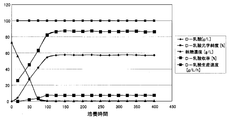
- FIG. 2 shows the results of continuous culture using the yeast SU042 strain of the present invention.
- D-Lactate dehydrogenase activity converts reduced nicotinamide adenine dinucleotide (NADH) and pyruvate into D-lactic acid and oxidized nicotinamide adenine dinucleotide (NAD +). Active.
- the present invention includes a polypeptide comprising the amino acid sequence set forth in SEQ ID NO: 1 or 2 or a homologue thereof, wherein the polypeptide has D-LDH activity.
- polypeptide consisting of the amino acid sequence described in SEQ ID NO: 1 or 2 is a polypeptide derived from the American horseshoe crab (Limulus polyphemus) belonging to the genus Lomulidae.
- Examples of the homologue of the polypeptide consisting of the amino acid sequence set forth in SEQ ID NO: 1 or 2 include, for example, one or several, preferably 1 to 10, more preferably 1 to 1 in the amino acid sequence set forth in SEQ ID NO: 1 or 2.
- a polypeptide having an amino acid sequence of substitution, deletion, insertion and / or addition of 5, more preferably 1 or 2 amino acids, and having D-LDH activity is exemplified.
- the homologue of the polypeptide represented by SEQ ID NO: 3 or 4 is an amino acid having at least 80% or more, preferably 90%, more preferably 95% or more sequence identity with the amino sequence represented by SEQ ID NO: 1 or 2. It may be a polypeptide having a sequence and having D-LDH activity.
- sequence identity of amino acid sequences can be easily examined using BLAST which is software widely used in this field. BLAST is available to anyone on the NCBI (National Center for Biotechnology Information) homepage and can be easily checked for identity using default parameters.
- the homologue of the polypeptide consisting of the amino acid sequence shown in SEQ ID NO: 1 or 2 is derived from an organism belonging to the family Crabidae, preferably from an organism belonging to the genus Astragalus or the genus Horseshoe crab, more preferably the American horseshoe crab ( It is a polypeptide H derived from Limulus polyphemus or a horseshoe crab (Tachypleus tridentatus), a southern horseshoe crab (Tachypleus gigas) or a marsh horseshoe crab (Tachypleus rotundicauda), which may be an LD-active H.
- a polypeptide consisting of the amino acid sequence set forth in SEQ ID NO: 1 or 2 can be extracted from American horseshoe crab by a known method, or can be prepared using a known method known as a peptide synthesis method, and SEQ ID NO: 1 or 2 It can also be prepared by a gene recombination technique using a polynucleotide encoding the amino acid sequence described in 1.
- the polypeptide comprising the amino acid sequence set forth in SEQ ID NO: 1 or 2 can be extracted from an organism belonging to the genus Horseshoe crab by a known method, or can be prepared using a known method known as a peptide synthesis method.
- the polynucleotide encoding the amino acid sequence of the peptide can also be used to adjust by gene recombination techniques.
- the homologue of the polypeptide consisting of the amino acid sequence shown in SEQ ID NO: 1 or 2 may have improved D-LDH activity and improved thermal stability as compared to the polypeptide consisting of the amino acid sequence shown in SEQ ID NO: 1 or 2. You may do it.
- D-LDH activity is improved means that the substrate affinity and molecular activity (Kcat) for pyruvate and NADH as substrates are improved, and that the optimum pH of the enzyme activity of the polypeptide is It means shifting closer to a pH suitable for the growth of cells expressing the polypeptide.
- Such a polypeptide may be artificially designed based on the polypeptide consisting of the amino acid sequence shown in SEQ ID NO: 1 or 2, or may be isolated from nature. Alternatively, mutation may be randomly introduced into the D-lactate dehydrogenase gene by molecular evolution engineering techniques, and a preferred polypeptide may be screened therefrom.
- the present invention includes a polynucleotide comprising the nucleotide sequence set forth in SEQ ID NO: 3 or 4 or a homologue thereof, wherein the polynucleotide encodes a polynucleotide having D-LDH activity.
- polynucleotide does not ask the origin such as cDNA, genomic DNA, synthetic DNA, mRNA, synthetic RNA, and replicon RNA, but is preferably DNA or RNA, and more preferably DNA. Further, it may be a single strand or a double strand having its complementary strand.
- natural or artificial nucleotide derivatives may be included.
- the polynucleotide comprising the nucleotide sequence set forth in SEQ ID NO: 3 or 4 is a polynucleotide derived from American horseshoe crab and is characterized in that it encodes the polypeptide having the D-LDH activity.
- Examples of the homologue of the polynucleotide described in SEQ ID NO: 3 or 4 include, for example, 1 or several, preferably 1 to 40, more preferably 1 to 30, in the base sequence described in SEQ ID NO: 3 or 4.
- a polynucleotide comprising a base sequence in which 1 to 20, particularly preferably 1 to 10, and most preferably 1 to 5 bases are substituted, deleted, inserted and / or added, Examples include those encoding a polypeptide having D-LDH activity.
- the homologue of the polynucleotide described in SEQ ID NO: 3 or 4 is hybridized under stringent conditions with the whole or a part of the polynucleotide consisting of the base sequence described in SEQ ID NO: 3 or 4 or its complementary strand.
- the polynucleotide include those encoding a polypeptide having D-LDH activity at the same time.
- the “polynucleotide that hybridizes under stringent conditions” refers to, for example, any one of a continuous sequence of at least 20, preferably 25, more preferably at least 30 of the original base sequence.
- hybridization is performed using a known hybridization technique (Current-Protocols-I-Molecular-Biology-edit.-Ausubel-et-al., (1987) -Publish-.John-Wily-> SonsSectoin-6.3-6.4).
- stringent conditions include, for example, a hybridization temperature of 37 ° C. in the presence of 50% formamide, 42 ° C. as a more severe condition, 65 ° C.
- composition of a 1-fold concentrated SSC solution 150 mM sodium chloride, 15 mM sodium citrate.
- the homologue of the polynucleotide described in SEQ ID NO: 3 or 4 is at least 80% or more, more preferably 90% or more, and still more preferably 95% or more of the base sequence described in SEQ ID NO: 3 or 4. It may be a polynucleotide consisting of a base sequence having identity, and a polynucleotide encoding a polypeptide having D-LDH activity at the same time.
- the sequence identity of the base sequence of the polynucleotide referred to here can be determined by the aforementioned gene analysis program BLAST or the like.
- polynucleotide homologue described in SEQ ID NO: 3 or 4 is derived from an organism belonging to the horseshoe crab family, preferably from an organism belonging to the genus Ameridae or the horseshoe crab, more preferably derived from an Astragalus crab, a horseshoe crab, a southern horseshoe crab, or a marsh horseshoe crab And a polynucleotide encoding a polypeptide having D-LDH activity.
- the polynucleotide can be prepared by cloning from an organism belonging to the family Scorpionidae, preferably the family Scorpionidae (hereinafter collectively referred to as horseshoe crab), but chemically synthesized or long-chain DNA. Synthesis by adopting the method of Fujimoto et al. (Fujimoto Hideya, Synthetic Gene Production Method, Plant Cell Engineering Series 7 Plant PCR Experiment Protocol, 1997, Shujunsha, p95-100) You can also. Cloning from horseshoe crabs can be isolated using commonly known methods, such as D-lactate dehydrogenation from cDNA prepared from polyA (+) RNA isolated from horseshoe crab blood cells.
- Amplification and sequencing of partial fragments are performed using primers synthesized based on highly conserved sequences in the enzyme, then the entire ORF sequence is determined by the 5′RACE and 3′RACE methods, and then amplified by PCR. Can be obtained. It can also be performed by functional complementation of D-lactate dehydrogenase. Details of the principle are described in (DOMINIQUE, G., Appl Environ Microbiol, United States (1995) 61 266-272). In this way, the polynucleotide of the present invention having the base sequence once determined can be obtained again from horseshoe crab hemocytes, but can also be chemically synthesized directly with a DNA synthesizer.
- the polypeptide or polynucleotide has an amino acid sequence or base sequence, site-specific displacement introduction method (Current-Protocols-I-Molecular-Biology-edit.-Ausubel-etal., (1987) -Publish-.John-Wily- & Sons-Sectoin-8.1-8.5), etc. Can be appropriately modified by introducing substitution, deletion, insertion and / or addition mutation as appropriate.
- the modification of the amino acid sequence of such a polypeptide or the base sequence of a polynucleotide is not limited to artificially introduced or synthesized mutations, but based on or not limited to artificial mutation treatment in nature. Those caused by amino acid mutations are also included.
- the polynucleotide can be used for producing D-lactic acid-producing cells by genetic recombination.
- a host cell into which the polynucleotide of the present invention has been introduced by genetic recombination (hereinafter also referred to as a transformant) to produce D-lactic acid
- the D- encoded by the polynucleotide in the transformant is required. It is necessary to express a polypeptide having LDH activity.
- a promoter capable of expressing the polynucleotide is linked, that is, It is useful to use a DNA construct in which the polynucleotide is linked to the 3 ′ end of the promoter, and the DNA construct is also included in the present invention.
- the polynucleotide (DNA) of the present invention and a promoter capable of expressing the polynucleotide are each cleaved with an appropriate restriction enzyme, and inserted into a restriction enzyme site or a multiple cloning site of vector DNA described below.
- the polynucleotide (DNA) of the present invention and the promoter can be prepared by PCR.
- the DNA construct is held on a vector such as a plasmid (DNA), bacteriophage (DNA), retrotransposon (DNA), artificial chromosome (YAC, PAC, BAC, MAC, etc.).
- a prokaryotic vector, eukaryotic vector, animal cell vector or plant cell vector known in the art may be used depending on the form of introduction of the DNA construct (inside or outside the host genome) and the type of host cell. It is selected appropriately.
- plasmids examples include YCp type E. coli-yeast shuttle vectors such as pRS413, pRS415, pRS416, YCp50, pAUR112 or pAUR123, YEp type E. coli-yeast shuttle vectors such as pYES32 or YEp13, pRS403, pRS404, pRS405, pRS406, YIp type E. coli-yeast shuttle vector such as pAUR101 or pAUR135, plasmid derived from E.
- YCp type E. coli-yeast shuttle vectors such as pRS413, pRS415, pRS416, YCp50, pAUR112 or pAUR123
- YEp type E. coli-yeast shuttle vectors such as pYES32 or YEp13, pRS403, pRS404, pRS405, pRS406, YIp type
- coli pBR322, pBR325, pUC18, pUC19, pUC119, pTV118N, pTV119N, pBluescript such as pBluescript, pHSG298, pHSG396, or pTrc99A, pCc17A, AC7 p1A-based plasmid, pMW1 8, pMW119, pMW218 or pSC101-based plasmids such as pMW219 and the like), plasmids derived from Bacillus subtilis (e.g., and the like pUB110, pTP5, etc.).
- Bacillus subtilis e.g., and the like pUB110, pTP5, etc.
- Examples of the bacteriophage include ⁇ phage (Charon 4A, Charon 21A, EMBL3, EMBL4, ⁇ gt100, gt11, zap), ⁇ X174, M13mp18, and M13mp19.
- Examples of the retrotransposon include Ty factor.
- Examples of YAC include pYACC2.
- the “promoter” in the DNA construct means a base sequence involved in the initiation of transcription of mRNA from a gene, and usually refers to an upstream sequence on the 5-terminal side of a gene present in a chromosome.
- the length of the base sequence of the promoter is preferably 1 to 3000 bp, more preferably 1 to 1000 bp, but there is no particular limitation as long as it is a base sequence capable of initiating transcription of mRNA of a gene existing downstream.
- mutations and manipulations that improve the transcriptional activity of the promoter are known, and “promoter” includes those modified by a known technique.
- the promoter in the DNA construct is not particularly limited as long as it has promoter activity in the transformant into which the DNA construct has been introduced. However, as described later, the DNA construct of the present invention is preferably introduced into yeast. Therefore, a promoter that functions in yeast is preferable.
- promoters that function in yeast include acid phosphatase gene (PHO5), glyceraldehyde-3-phosphate dehydrogenase gene (TDH1, 2, 3), alcohol dehydrogenase gene (ADH1, 2, 3, 4, 5, 6,7) gene, galactose metabolic system gene (GAL1,7,10), cytochrome c gene (CYC1), triose phosphate isomerase gene (TPI1), phosphoglycerate kinase gene (PGK1), phosphofructose kinase gene (PFK1), Examples include the promoter of the pyruvine decarboxylase gene (PDC1, 5, 6), and are described and used in the international application PCT / JP2008 / 072129.
- a promoter is more than five times the average relative expression amount, enolase 1 gene (ENO1), cell wall-associated protein 2 gene (CWP2), include the promoter of suppression-of-exponential-defect 1 gene (SEDl).
- promoters that function in yeast include the PDC1 promoter or TDH3 promoter that is highly expressed in the yeast ethanol fermentation pathway, or the SED1 promoter that is highly expressed during long-term yeast culture. Include the PDC1 promoter described in SEQ ID NO: 5, the SED1 promoter described in SEQ ID NO: 6, or the TDH3 promoter described in SEQ ID NO: 7.
- the PDC1 promoter, SED1 promoter or TDH3 promoter has one or several, preferably 1 to 40, more preferably 1 to 4 base sequences as shown in any one of SEQ ID NOs: 5 to 7 within the range having the promoter activity. It may be a base sequence in which 1 to 30, more preferably 1 to 20, particularly preferably 1 to 10, and most preferably 1 to 5 base sequences are deleted, substituted and / or added. .
- the PDC1 promoter, TDH3 promoter or SED1 promoter hybridizes under stringent conditions with the base sequence described in any one of SEQ ID NOS: 5 to 7 or a part thereof, as long as the promoter activity exists. It may be a base sequence.
- “hybridizes under stringent conditions” means, for example, one or a plurality of continuous sequences of at least 20, preferably 25, more preferably at least 30 of the original base sequence.
- hybridization using a well-known hybridization technique Current Protocols I Molecular Biology edit. Ausubel et al., (1987) Publish. John Wily & SonsSectoin 6.3-6.4), etc.
- stringent conditions include, for example, a hybridization temperature of 37 ° C. in the presence of 50% formamide, 42 ° C. as a more severe condition, 65 ° C. as a more severe condition, and 0.1 to 2 times the concentration of SSC ( This can be achieved by washing with a saline-sodium citrate) solution (composition of a 1-fold concentrated SSC solution: 150 mM sodium chloride, 15 mM sodium citrate).
- a transformant obtained by introducing the polynucleotide or DNA construct into a host cell is also included in the present invention.
- the host cell is not particularly limited as long as it stably holds the polynucleotide or DNA construct, and includes bacteria such as Escherichia coli, Bacillus subtilis, and lactic acid bacteria, yeast, insect cells, animal cells, or plant cells.
- Yeast is preferably used because it is acid-resistant and can grow even when D-lactic acid is highly produced by expressing a polypeptide having D-LDH activity.
- yeasts examples include Saccharomyces, Schizosaccharomyces, Kluyveromyces, Candida, Pichia, Hansenoura, and Hansenula.
- Candida sonorensis or Kluyveromyces lactis, Kluyveromyces marxianus examples include Saccharomyces, Schizosaccharomyces, Kluyveromyces, Candida, Pichia, Hansenoura, and Hansenula.
- the yeast is a high-order polyploid yeast, it is possible to stably maintain high productivity of D-lactic acid over a long period of time under simple operating conditions, and stably produce D-lactic acid at low cost. Therefore, it is preferably used in the present invention.
- the “high order polyploid yeast” is a yeast having two or more pairs of chromosomes in a cell. There is no particular restriction on the number of chromosomes of higher order polyploid yeast, but diploid yeast having two sets of chromosomes is preferred. Examples of the higher polyploid yeast include baker's yeast, sake yeast, wine yeast, beer yeast and the like often used in the fermentation industry. The higher-order multiple versus yeast used may be isolated from the natural environment, or may be partially modified in nature by mutation or genetic recombination.
- yeast is non-nutrient-requiring, a medium with less nutrients than conventional ones, that is, a low-cost medium can be used, and high production of D-lactic acid can be stably performed over a long period of time under simple operation conditions. Therefore, lactic acid can be stably produced at low cost, and is preferably used in the present invention.
- auxotrophic means that the nutrient synthesis gene of wild-type yeast is mutated for some reason and, as a result, lacks the ability to synthesize the nutrient. That is, the “nutrient-requiring yeast” is a yeast that does not have a genotype exhibiting auxotrophy or is complemented.
- auxotrophy of auxotrophic yeast and produce non-nutrient auxotrophic yeast
- a method for determining whether or not the yeast is non-nutrient-requiring yeast it can be used as a criterion for judgment based on whether or not the yeast can grow on an SD medium that is a minimum yeast culture medium.
- Yeast is a microorganism that vigorously performs ethanol fermentation, and its metabolic pathway is that pyruvate, a glycolytic product, is converted to acetaldehyde by pyruvate decarboxylase, and the acetaldehyde is converted to ethanol by alcohol dehydrogenase. To do. Therefore, using a yeast strain in which the pyruvate decarboxylase gene, which is the starting point of the ethanol metabolic pathway, is disrupted as a host, the pyruvate that should be metabolized in the ethanol metabolic pathway is used in the D-lactic acid metabolic pathway. Therefore, it is preferable.
- the genes encoding pyruvate decarboxylase include pyruvate decarboxylase 1 (PDC1) gene, pyruvate decarboxylase 5 (PDC5) gene, and pyruvate decarboxylase 6 (PDC6). Since there are three types of genes, and only PDC1 and PDC5 have pyruvate dehydrogenase activity in yeast cells, it is preferable to use a strain in which the PDC1 gene or the PDC5 gene is disrupted. More preferably, a strain in which the gene is disrupted is used.
- a strain having a mutant PDC5 gene having a mutation that reduces the activity of PDC5 is preferable, as described in JP-A-2008-048726.
- a strain having a mutant PDC5 gene is more preferred.
- “temperature-sensitive mutant PDC5” indicates pyruvate decarboxylase activity at a certain culture temperature compared to wild-type PDC5, but the culture temperature is changed to a specific culture temperature or higher. Then, it is a mutant PDC5 having the property of losing or decreasing the PDC5 activity.
- the normal culture temperature of Saccharomyces cerevisiae is 28-30 ° C, and the closer the temperature showing temperature sensitivity is to the normal culture temperature, the smaller the amount of heat required to change the culture temperature, and the lower the cost of culture. Since it can reduce, it is preferable.
- the temperature sensitive mutant PDC5 preferably exhibits temperature sensitivity at 34 ° C. or higher.
- a method for introducing the polynucleotide or DNA construct into yeast and expressing a polypeptide having D-LDH activity in transformed yeast a method comprising introducing the vector containing the DNA construct outside the yeast chromosome as described above. Examples of the method include introducing the polynucleotide or DNA construct into a yeast chromosome, and any method can be employed.
- a construct comprising the polynucleotide of the present invention having a DNA segment for homologous recombination that is a sequence homologous to the yeast chromosome (hereinafter also referred to as a DNA construct for homologous recombination). It can be used suitably.
- the DNA segment for homologous recombination is a DNA sequence that is homologous to the DNA sequence near the target site into which the polynucleotide of the present invention is to be introduced in the yeast chromosome. At least one, preferably two, DNA segments for homologous recombination are provided.
- the two DNA segments for homologous recombination are made DNA sequences homologous to the upstream and downstream DNA of the target site on the chromosome, and these DNA segments It is preferable to link the polynucleotide of the present invention between the two.
- the method of homologous recombination with the DNA construct for homologous recombination is not limitation on the method of homologous recombination with the DNA construct for homologous recombination, but the method of amplifying the DNA construct for homologous recombination by PCR, inserting the PCR fragment into a plasmid and introducing it into yeast, A method of introducing into yeast can be employed.
- the DNA construct for homologous recombination preferably contains a terminator for controlling the expression of the polynucleotide of the present invention.
- terminatator means a sequence that terminates transcription of mRNA from a gene, and usually refers to a downstream sequence on the 3 ′ end side of a gene present in a chromosome.
- the DNA construct for homologous recombination preferably contains a selection marker in order to facilitate the selection of transformed yeast.
- a selection marker include an auxotrophic complementary gene such as URA3 or TRP1, or a drug resistance gene such as a G418 resistance gene or a neomycin resistance gene.
- a method for preparing a DNA construct for homologous recombination containing the polynucleotide, terminator and selectable marker by PCR can be performed, for example, by the following steps 1 to 3.
- Step 1 Using a plasmid in which a terminator is connected downstream of a polynucleotide of the present invention as a template, a fragment containing the polynucleotide of the present invention and the terminator is amplified by PCR using primers 1 and 2 as a set.
- Primer 1 is designed so as to add a homologous sequence of 40 bp or more upstream of the target introduction site, and primer 2 is designed based on a sequence derived from a plasmid downstream from the terminator.
- Step 2 A fragment containing a selection marker is amplified by PCR using a plasmid having a selection marker, for example, pRS400, pRS424, pRS426, etc. as a template and primers 3 and 4 as a set.
- Primer 3 is designed so that a sequence homologous to the sequence downstream of the terminator of the PCR fragment of Step 1 adds 30 bp or more, and primer 4 has a sequence of 40 bp or more corresponding to the downstream side of the introduction target site. Design to add.
- Step 3 Sequence corresponding to the upstream and downstream sides of the introduction target site at both ends by performing PCR using the mixture of PCR fragments obtained in Steps 1 and 2 as a template and Primers 1 and 4 as a set
- a DNA construct for homologous recombination containing the polynucleotide of the present invention, a terminator, and a yeast selection marker to which is added is obtained.
- a method such as transfection, cotransfection or electroporation can be used.
- Specific examples include a method using lithium acetate and a protoplast method.
- the polynucleotide When the polynucleotide is introduced into the yeast chromosome by homologous recombination, the polynucleotide is introduced so that it can be controlled by a promoter of an endogenous gene on the yeast chromosome.
- the introduction of the polynucleotide may simultaneously destroy the endogenous gene that should be controlled by the promoter, and the foreign polynucleotide of the present invention may be expressed in place of the endogenous gene.
- This method is particularly useful when the promoter is a high-expression promoter in yeast as described above, or when an endogenous gene that functions to inhibit the D-lactic acid metabolic pathway of yeast is disrupted.
- the endogenous genes that are targets when the polynucleotide is introduced into the yeast chromosome include acid phosphatase gene (PHO5), glyceraldehyde-3-phosphate dehydrogenase gene (TDH1, 2, 3), alcohol dehydrogenase gene (ADH1, 2,3,4,5,6,7), galactose metabolism gene (GAL1,7,10), cytochrome c gene (CYC1), triosephosphate isomerase gene (TPI1), phosphoglycerate kinase gene (PGK1), phospho Preferable examples include a fructose kinase gene (PFK1) and a pyruvate decarboxylase gene (PDC1, 5, 6).
- PHO5 acid phosphatase gene
- TDH1 glyceraldehyde-3-phosphate dehydrogenase gene
- ADH1 alcohol dehydrogenase gene
- GAL1,7,10 galactose metabolism gene
- Preferred examples include promoters for cell wall-related protein 2 gene (CWP2) and suppression of exponential defect 1 gene (SED1 gene).
- CWP2 cell wall-related protein 2 gene
- SED1 gene suppression of exponential defect 1 gene
- the PDC1 gene or TDH3 gene that is highly expressed in the ethanol fermentation pathway of yeast, or the SED1 gene that is highly expressed during long-term yeast culture is a more preferable example.
- Pyruvate metabolized in the ethanol fermentation pathway can be used in the D-lactic acid metabolic pathway by introducing the polynucleotide so as to destroy the PDC1 gene or PDC5 gene, preferably the PDC1 gene. Therefore, it is more preferable.
- a DNA construct for homologous recombination is prepared in the same manner as in the case of introducing the polynucleotide into a yeast chromosome, and the DNA construct is placed at the target chromosome location by homologous recombination. Can be introduced. Since the DNA construct already contains a promoter capable of expressing the polynucleotide, it is not necessary to introduce the polynucleotide so that it can be controlled by the promoter of the endogenous gene on the yeast chromosome.
- DNA can be prepared from transformed yeast, PCR can be performed with an introduction site-specific primer, and the PCR product can be confirmed by detecting an expected band in electrophoresis. Alternatively, it can be confirmed by performing PCR with a primer labeled with a fluorescent dye or the like.
- a method for producing D-lactic acid including the step of culturing the transformant is also included in the present invention.
- the transformant When the transformant is cultured, the expression of a polypeptide having D-LDH activity is newly imparted or enhanced in the transformant, and a D-lactic acid metabolic pathway is newly imparted or enhanced.
- D-lactic acid can be obtained by carrying out the step of separating D-lactic acid from the mixture.
- the culture includes a transformant or a disrupted product of the transformant in addition to the culture supernatant.
- the method for culturing the transformant is not particularly limited, and a known method is employed.
- a method for culturing the transformed yeast a method described in “M.D. Rose al.,“ Methods In Yeast Genetics ”,“ Cold Spring Harbor Laboratory Press (1990) ”can be used.
- a selection marker is included in the plasmid containing the DNA construct or the DNA construct for homologous recombination, a desired transformant is selected by culturing in a nutrient-free medium or a drug-added medium according to the selection marker. Can do.
- the medium for culturing the transformant is a medium that contains a carbon source, a nitrogen source, inorganic salts, and the like that can be assimilated by the transformant and that can efficiently culture the transformant.
- a natural medium or a synthetic medium can be used.
- carbon sources include glucose, fructose, sucrose, galactose, maltose, raffinose, trehalose, sorbose, cellobiose, lactose, melibiose, melezitose, inulin, xylose, arabinose, ribose, rhamnose, glucosamine, erythritol.
- carbohydrates such as ribitol, mannitol, glucitol, salicin, starch and starch, organic acids such as acetic acid, propionic acid and citric acid, and alcohols such as ethanol and propanol can be used.
- ammonium salt of inorganic acid or organic acid such as ammonia, ammonium chloride, ammonium sulfate, ammonium acetate, ammonium phosphate or other nitrogen-containing compounds, peptone, meat extract, corn steep liquor, etc. may be used. it can.
- inorganic substances include potassium phosphate, magnesium phosphate, magnesium sulfate, sodium chloride, ferrous sulfate, manganese sulfate, copper sulfate, and calcium carbonate.
- the culture of the transformant should usually be performed under conditions where productivity of lactic acid is good, in a range from aerobic conditions such as shaking culture or aeration and agitation culture to anaerobic conditions in which aeration is not performed. However, conditions of slight aerobic to anaerobic are preferably used.
- the culture temperature can be 25 to 37 ° C., preferably 28 to 35 ° C. Since the pH of the culture decreases as D-lactic acid accumulates in the medium, it may be neutralized with an alkaline substance such as calcium hydroxide, calcium carbonate, sodium hydroxide, potassium hydroxide, aqueous ammonia, or ammonia gas. it can.
- the culture method is not particularly limited as long as the target D-lactic acid can be produced by fermentation, and batch culture, fed-batch culture, chemostat culture, continuous culture, and the like can be employed.
- the fermentation culture is separated into a filtrate and an unfiltered solution by a separation membrane using a batch culture or a membrane described in WO2007 / 097260, which hardly causes clogging, and a desired fermentation product is recovered from the filtrate.
- it is a membrane-based continuous culture in which the unfiltered liquid is retained or refluxed in the fermentation culture.
- the method for measuring D-lactic acid obtained in the culture is not particularly limited, and examples include a method using HPLC and a method using F-kit (Roche).
- Separation / purification of D-lactic acid contained in the fermentation culture can be performed by a combination of conventionally known methods such as concentration, distillation and crystallization.
- the pH of the filtered / separated fermentation broth is 1 Extraction with diethyl ether or ethyl acetate after the following, elution after adsorption washing on ion exchange resin, reaction with alcohol in the presence of acid catalyst, distillation as ester, calcium salt or lithium salt
- Examples thereof include a crystallization method, and a separation / purification method combining nanofiltration membrane and distillation disclosed in WO2009 / 004922.
- Example 1 Determination of nucleotide sequence of a polynucleotide encoding a polypeptide having D-LDH activity derived from American horseshoe crab (hereinafter, D-LDH gene derived from American horseshoe crab)
- D-LDH gene derived from American horseshoe crab
- polyA (+) RNA was purified.
- polyA (+) RNA was isolated from blood cells of American horseshoe crab.
- Total RNA was isolated from blood cells of American horseshoe crab (purchased from Marine Biological Laboratory (USA)) using the AGPC method (see Experimental Medicine Vol. 9 (1991), pages 1937-1940).
- polyA (+) RNA was isolated using “Oligotex-dT30 Super kit” (manufactured by Takara Bio Inc.).
- “SuperScript II Reverse Transcriptase” (manufactured by Invitrogen) was used to synthesize cDNA using Oligod (T) as a primer.
- PCR was carried out using the oligo DNAs of SEQ ID NO: 8 and SEQ ID NO: 9 designed by paying attention to the highly conserved DNA sequence in the D-LDH gene. A partial sequence of the D-LDH gene was amplified. PCR was performed under the following conditions. 95 ° C. (3 minutes): ⁇ 95 ° C.
- 5 'RACE was performed by the following method.
- cDNA was synthesized using the above phosphorylated oligo DNA as a primer using “SuperScript II II Reverse Transcriptase” (manufactured by Invitrogen Corporation) using polyA (+) RNA of American horseshoe crab as a template.
- concatemerization of single-stranded cDNA by ligation reaction is performed using “5′-Full®RACE®Core®Set” (manufactured by Takara Bio Inc.), and SEQ ID NO: 12 and SEQ ID NO: 13 are described using the generated concatemerized cDNA as a template (For D-LDH1) or the first PCR using oligo DNAs described in SEQ ID NOs: 14 and 15 (for D-LDH2) as primers, and further described in SEQ ID NOs: 16 and 17 using the reaction solution as a template ( A second PCR was carried out using oligo-DNA of SEQ ID NO: 18 and SEQ ID NO: 19 (for D-LDH2) as primers. Confirmation of the amplified fragment, purification, and determination of the base sequence were performed as described above.
- 3'RACE was performed by the following method. First, cDNA was synthesized using PolyA (+) RNA of American horseshoe crab as a template and “SuperScript II Reverse Cranscriptase” (manufactured by Invitrogen Corporation) using Oligo® (T) as a primer.
- PCR was performed for the first time using Oligo (T) and SEQ ID NO: 13 (for D-LDH1) or SEQ ID NO: 15 (for D-LDH2) as primers, using this reaction solution as a template, Furthermore, PCR was performed a second time using Oligo ⁇ ⁇ (T) and SEQ ID NO: 17 (for D-LDH1) or SEQ ID NO: 19 (for D-LDH2) as primers, using the reaction solution as a template. Confirmation of the amplified fragment, purification, and determination of the base sequence were performed as described above.
- the amino acid sequence of the D-LDH1 gene (SEQ ID NO: 1) and cDNA ORF sequence (SEQ ID NO: 3) derived from American horseshoe crab, or the amino acid sequence of D-LDH2 (SEQ ID NO: 2) and the ORF sequence of cDNA (SEQ ID NO: 4) are: The sequences obtained by the above method were joined together and determined. The sequence identity between the amino acid sequences described in SEQ ID NO: 1 and SEQ ID NO: 2 by BLAST was 93%, and the sequence identity between the base sequences described in SEQ ID NO: 3 and SEQ ID NO: 4 was 82%. .
- Example 2 Construction of D-LDH gene expression plasmid derived from American horseshoe crab D-LDH1 and D-LDH2 genes (hereinafter referred to as Lp.D-, respectively) that are considered to be D-LDH genes derived from American horseshoe crab determined in Example 1
- PCR was performed using cDNA synthesized from polyA (+) RNA of American horseshoe crab as a template, and the gene was cloned.
- the obtained DNA fragment was cleaved with restriction enzymes XhoI and NotI, and also equipped with a yeast expression vector pTRS11 (TDH3 promoter and selection marker URA3 gene, which was cleaved with restriction enzymes XhoI and NotI, see JP 2006-280368 A. , TDH3 promoter and terminator are expressed as GAPDH promoter and terminator), and the TDH3 promoter and Lp. D-LDH1 gene or Lp. A plasmid vector containing a DNA construct to which the D-LDH2 gene was linked was prepared.
- pTRS205 holding Lp.D-LDH1
- pTRS206 holding Lp.D-LDH2
- the pTRS11 vector was prepared by cleaving the pNV11 vector (see Nature, vol. 357, 25 JUNE 1992, p.700) with the restriction enzyme XhoI, removing the insert, and then self-ligating.
- Example 3 Introduction of D-LDH gene expression plasmid derived from American horseshoe crab into yeast Saccharomyces cerevisiae SW029-1B strain (genotype: MATa ura TRP) obtained from pTRS205 and pTRS206 obtained as in Example 2 ( ⁇ pdc1 :: TRP1) his a lys leu) (hereinafter referred to as SW029-1B strain).
- the plasmid was introduced by the lithium acetate method using “YEASTMAKER Yeast Transformation System” (Clontech) (refer to the attached protocol for details).
- the strain SW029-1B used as a host is a strain lacking the ability to synthesize uracil, and by the action of the selection marker URA3 gene of pTRS205 and 206, selection of transformed yeast introduced with pTRS205 and 206 on a uracil-free medium is possible. Is possible. Confirmation of introduction of the D-LDH gene expression vector into the transformant thus obtained was carried out by using a genomic DNA extraction kit “Gentori-kun” (Takara Bio Inc.) from a transformant cultured in a liquid medium without uracil. Genomic DNA containing plasmid DNA was extracted by the company) and PCR was performed using this as a template. As the primer, the primer used when the D-LDH gene derived from horseshoe crab was cloned was used. As a result, it was confirmed that the D-LDH gene derived from each horseshoe crab was introduced into all transformed yeasts.
- Example 4 D-lactic acid productivity test 1 Saccharomyces cerevisiae strain SW029-1B (hereinafter referred to as SW029-1B / pTRS205 strain, SW029-1B / pTRS206 strain) introduced with pTRS205 and 206 obtained as in Example 3 was used to produce D-lactic acid. Tested.
- the optical purity of D-lactic acid was calculated based on the following formula from the measurement results of the D-lactic acid and L-lactic acid concentrations measured by the HPLC method under the following conditions.
- Mobile phase 1 mM aqueous copper sulfate flow rate: 1.0 ml / min
- Detection method UV254nm Temperature: 30 ° C.
- Optical purity (% ee) 100 ⁇ (DL) / (D + L)
- Optical purity (%) 100 ⁇ D / (D + L)
- L represents the concentration of L-lactic acid
- D represents the concentration of D-lactic acid.
- the accumulated concentration of D-lactic acid was 13 g / L for the SW029-1B / pTRS205 strain and 12 g / L for the SW029-1B / pTRS206 strain. Further, only D-lactic acid was detected in the culture solution, and L-lactic acid was below the detection limit. It was confirmed that the transformed yeast produced D-lactic acid by introducing the D-LDH gene cloned from the horseshoe crab into yeast.
- Step 1 The Lp. PTRS205 carrying the D-LDH1 gene and Lp. About 1.1 kb containing each D-LDH gene was obtained by PCR using pTRS206 carrying the D-LDH2 gene as a template and the oligo DNAs of SEQ ID NOS: 24 and 25 or the oligo DNAs of SEQ ID NOs: 26 and 25 as primer sets. The DNA fragment was amplified.
- the oligo DNAs of SEQ ID NOs: 24 and 26 were designed so that a sequence having homology was added to the upstream 65 bp of the PDC1 gene.
- Step 2 a DNA fragment of about 1.4 kb containing the TRP1 gene as a yeast selection marker was amplified by PCR using the plasmid pRS424 (GenBank Accession Number: U03453) as a template and the oligo DNAs described in SEQ ID NOS: 27 and 28 as primer sets.
- the oligo DNA described in SEQ ID NO: 28 was designed so that a sequence having homology was added to 65 bp downstream of the PDC1 gene.
- Step 3 The DNA fragments were separated by 1% agarose gel electrophoresis and then purified using “QIA quick Gel extraction kit” (manufactured by Qiagen).
- a DNA construct for homologous recombination of about 2.5 kb in which each D-LDH gene, TDH3 terminator and TRP1 gene were linked was amplified by PCR using DNA as a primer set.
- SW092-2D which is a strain in which the lysine auxotrophy of Saccharomyces cerevisiae NBRC10505 strain (hereinafter referred to as NBRC10505 strain) is restored from the DNA construct for homologous recombination produced as described above. 2D strain).
- the method for preparing SW092-2D strain is as follows. A PCR fragment of about 2 kb in the first half of the LYS2 gene was amplified by PCR using the genomic DNA of Saccharomyces cerevisiae BY4741 strain manufactured by Funakoshi Co., Ltd. as a template and oligonucleotides (SEQ ID NOs: 29, 30) as primer sets. The above PCR fragment was separated by 1% agarose gel electrophoresis, purified according to a conventional method, and transformed into NBRC10505 strain to cancel the amber mutation of LYS2 gene.
- a transformant (NBRC10505 (LYS2) strain in which lysine synthesis ability was restored was selected.
- Confirmation that the transformed strain was a yeast from which the amber mutation of the LYS2 gene was released was performed as follows. First, the obtained transformant and Saccharomyces cerevisiae L0GY7 strain having a wild-type LYS2 gene were joined to obtain a diploid cell, and the diploid cell was formed as a cyst in a cyst forming medium. The ascites were dissected with a micromanipulator to obtain each haploid cell (Tetrad), and the auxotrophy of each haploid cell was examined.
- NBRC10505 (LYS2) strain and NBRC10506 strain were joined together to obtain SW092-2D (genotype: MATa ura3 leu2 trp1 his3 ade2 LYS2) strain by ascending dissection using a micromanipulator.
- Strain SW092-2D was transformed with the above DNA construct for homologous recombination, and transformed yeast was selected by culturing in a medium not containing tryptophan.
- the transformed yeast thus obtained is designated as strains SW092-2D ( ⁇ pdc1 :: Lp.D-LDH1-TRP1) and SW092-2D ( ⁇ pdc1 :: Lp.D-DLH2-TRP1).
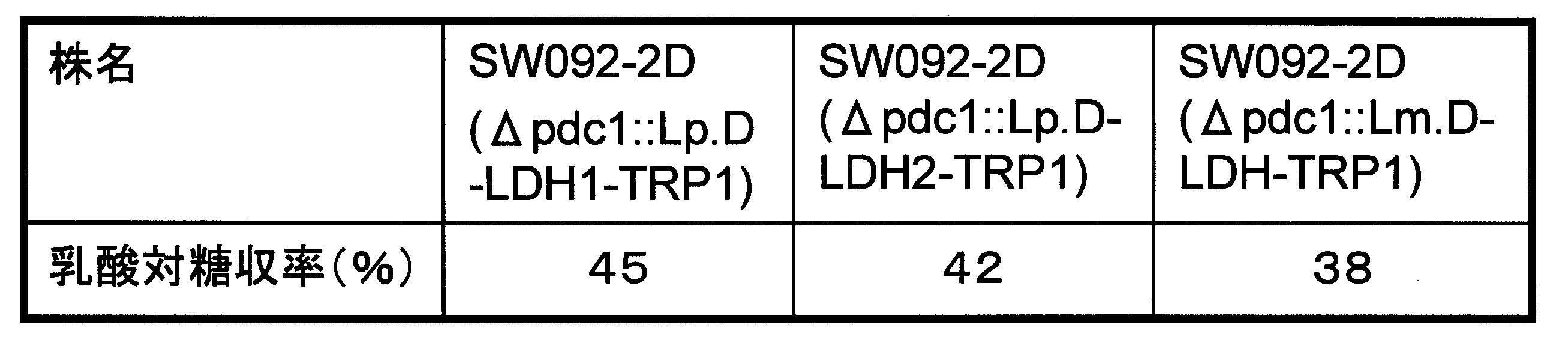
- Example 6 D-lactic acid productivity test 2 Using the SW092-2D ( ⁇ pdc1 :: Lp.D-LDH1-TRP1) strain and the SW092-2D ( ⁇ pdc1 :: Lp.D-LDH2-TRP1) strain prepared in Example 5, a mini jar fermenter (Maruhishi Bio Fermentation evaluation was performed using 5L) manufactured by Enji Co., Ltd.
- the amount of the culture solution at the end of the culture, the D-lactic acid concentration and the glucose concentration in the culture solution were measured with “Glucose Test Wako C” (registered trademark) (manufactured by Wako Pure Chemical Industries, Ltd.) and calculated from the lactic acid and glucose concentrations.
- the yield of lactic acid versus sugar calculated from the input glucose was determined.
- SW092-2D ⁇ pdc1 :: Lp.D-LDH1-TRP1
- SW092-2D ⁇ pdc1 :: Lp.D-LDH2-TRP1 had a sugar yield of 42%.
- Cloning of the D-LDH gene was performed using colony PCR (“KOD-Plus” manufactured by Toyobo Co., Ltd.) using a primer set (SEQ ID NOs: 31 and 32) designed with reference to the nucleotide sequence described in WO 2004/104202 and using the ATCC 9135 strain as a template. -polymerase ”was used).
- the PCR-amplified fragment was purified and phosphorylated with “T4 Polynucleotide Kinase” (manufactured by Takara Bio Inc.), and then ligated to the pUC118 vector (cleaved with the restriction enzyme HincII and the cut surface was dephosphorylated).
- Ligation was performed using "DNA Ligation Kit Ver.2" (manufactured by Takara Bio Inc.). By transforming E. coli DH5 ⁇ with the ligation plasmid product and recovering the plasmid DNA, Lm. A plasmid in which the D-LDH gene was subcloned was obtained. The obtained Lm. The pUC118 plasmid in which the D-LDH gene was inserted was digested with restriction enzymes XhoI and NotI, and the resulting DNA fragments were inserted into the XhoI / NotI cleavage sites of the yeast expression vector pTRS11. In this way, Lm. A D-LDH gene expression plasmid pTRS207 was obtained.
- Example 6 using pTRS207 as a template, the same procedure as in Example 5 was used except that the primer set shown in SEQ ID NO: 33 was used instead of the primer shown in SEQ ID NO: 24 or 26.
- the D-LDH gene was introduced into the PDC1 locus in the chromosome of Saccharomyces cerevisiae SW092-2D strain.
- the produced transformed yeast is designated SW092-2D ( ⁇ pdc1 :: Lm.D-LDH-TRP1).
- D-lactic acid productivity by batch culture was evaluated in the same manner as in Example 6.
- the yield with respect to sugar of SW092-2D ⁇ pdc1 :: Lm.D-LDH-TRP1 was 38%.
- the results are shown in Table 2 together with the results of Example 6.
- Xenopus L-LDH gene (X.L-LDH gene) is transformed into PDC1 gene.
- Yeast introduced into the locus was prepared.
- a strain (SU013-1D strain) in which the adenine auxotrophy of NBRC10506 strain was restored was used. The method for preparing the SU013-1D strain is shown below.
- PCR fragment of ADE2 gene was amplified by PCR using plasmid pRS422 as a template and oligonucleotide (SEQ ID NO: 34, 35) as a primer set.
- the PCR fragment was separated by 1% agarose gel electrophoresis, purified according to a conventional method, and then subjected to a transformation operation to release the mutation in the ADE2 gene. By culturing in a medium not added with adenine, a transformant having adenine synthesis ability restored was selected.
- the transformant obtained as described above was a yeast in which the mutation of the AED2 gene was released.
- the obtained transformant was joined to Saccharomyces cerevisiae L0GY77 strain having a wild-type ADE2 gene to obtain diploid cells.
- the diploid cells were allowed to form ascending with an ascending medium.
- the ascites were dissected with a micromanipulator to obtain each haploid cell (Tetrad), and the auxotrophy of each haploid cell was examined. It was confirmed that all of the obtained haploid cells had the ability to synthesize adenine.
- NBRC10506 (ADE2) strain and NBRC10505 strain were joined together, and SU013-1D strain (genotype: MAT ⁇ ura3 leu2 trp1 his3 ADE2 lys2) was obtained by dissection of ascending with a micromanipulator.
- the resulting transformed yeast is designated as SU013-1D ( ⁇ pdc1 :: XL-LDH-TRP1) strain.
- Example 7 (Example 7, Comparative Example 2) D-lactic acid productivity test 3
- the SU013-1D ( ⁇ pdc1 :: XL-LDH-TRP1) strain prepared as in Reference Example 1 and the SW092-2D ( ⁇ pdc1 :: Lp.D-LDH1-) prepared in Example 5 and Comparative Example 1 were used.
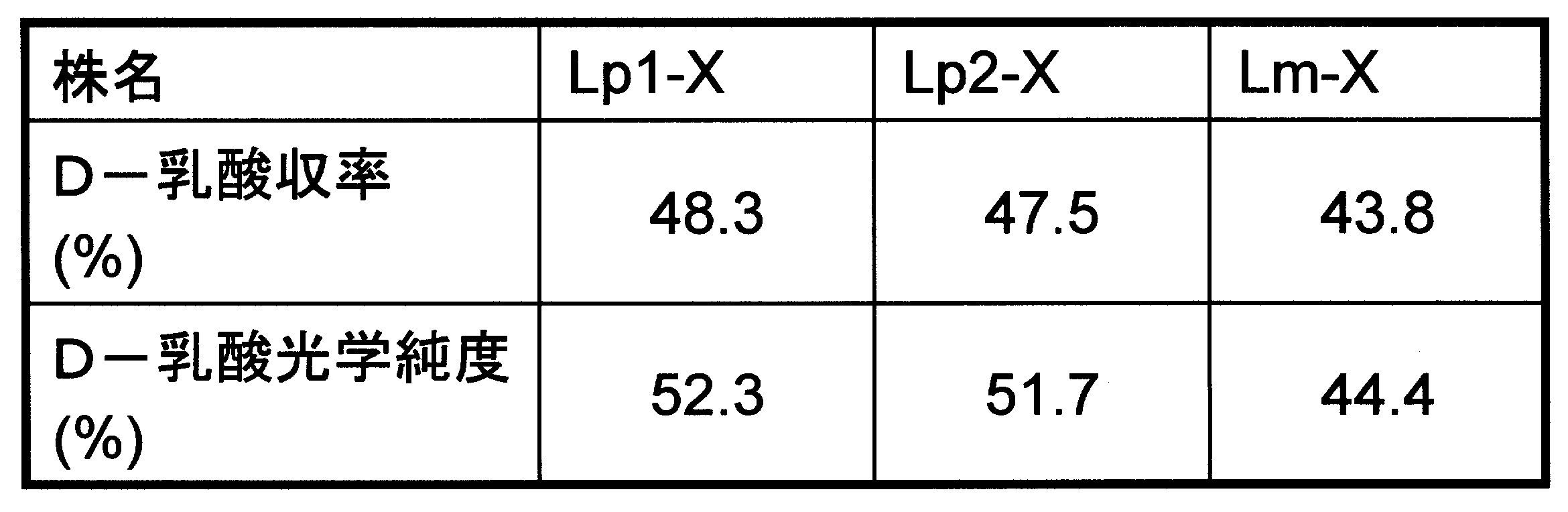
- TRP1) strain, SW092-2D ( ⁇ pdc1 :: Lp.D-LDH2-TRP1) strain and SW092-2D ( ⁇ pdc1 :: Lm.D-LDH-TRP1) strain were joined to each other, and the L-LDH gene at the PDC1 locus And a diploid yeast having the D-LDH gene heterozygously.
- the produced diploid yeast is designated as Lp1-X strain, Lp2-X strain, and Lm-X strain, respectively.
- yeast having D-LDH gene derived from American horseshoe crab produced D-lactic acid with an optical purity of 50% or higher, whereas D- produced by yeast having D-LDH gene derived from Leuconostoc mesenteroides.
- the optical purity of lactic acid was 44.4%. Since the yield of D-lactic acid with respect to sugar and the optical purity of D-lactic acid produced by each yeast are considered to be proportional to the D-LDH activity in the D-LDH gene-transformed yeast, Table 2 and Table 3 From the results, it was confirmed that the D-LDH gene derived from American horseshoe crab encodes a higher activity polypeptide when introduced into yeast than the D-LDH gene derived from Leuconostoc mesenteroides.
- Plasmid pTRS208 was prepared by substituting the TDH3 terminator of pTRS205 carrying the D-LDH1 gene with an ADH1 terminator.
- a DNA construct for homologous recombination for introduction of the TDH3 locus was obtained using pTRS208 as a template using the primer shown in SEQ ID NO: 36 instead of SEQ ID NO: 8 in JP-A-2008-029329.
- SW087-2C strain a leucine non-requiring strain of SU013-1D strain was used.
- a method for preparing the SW087-2C strain is shown below.
- About 2 kb of the PCR fragment of the LEU2 gene was amplified by PCR using the plasmid pRS425 as a template and the oligonucleotide (SEQ ID NO: 37, 38) as a primer set.
- the above PCR fragment was separated by 1% agarose gel electrophoresis and purified according to a conventional method, and then the transformation of SU013-1D strain was performed to cancel the mutation of LEU2 gene.
- a transformant in which the ability to synthesize leucine was restored was selected. It was confirmed as follows that the transformant thus obtained was a yeast in which the mutation of the LEU2 gene was released.
- the obtained transformant was joined to Saccharomyces cerevisiae L0GY77 strain having a wild type LEU2 gene to obtain diploid cells. The diploid cells were allowed to form ascending with an ascending medium. The ascites were dissected with a micromanipulator to obtain each haploid cell (Tetrad), and the auxotrophy of each haploid cell was examined. All of the obtained haploid cells were confirmed to have the ability to synthesize leucine.
- the obtained SU013-1D (LEU2) strain and NBRC10505 strain were joined together to obtain SW087-2C strain (genotype: MAT ⁇ ura3 LEU2 trp1 his3 ADE2 lys2) by ascending dissection using a micromanipulator.
- strain SW087-2C was transformed and selected in a medium not containing uracil, so that Lp.
- a transformed yeast introduced with the D-LDH1 gene was obtained.
- the obtained transformed yeast is designated as strain SW087-2C ( ⁇ TDH3 :: Lp.D-LDH-URA3).
- the method for introduction into the SED1 locus was performed by modifying the method described in Example 2 of the international application PCT / JP2008 / 072129. That is, a DNA construct for homologous recombination for SED1 locus introduction was amplified using pTRS205 instead of pTRS102 as a PCR template and using the primer shown in SEQ ID NO: 39 instead of SEQ ID NO: 14 in the above publication.
- the NBRC10505 (LYS2) strain prepared in Example 5 and the NBRC10506 (ADE2) strain prepared in Reference Example 1 were joined and separated by ascending anatomy using a micromanipulator.
- the strain SW092-7D (genotype: MATa ura3 leu2 trp1 his3 ADE2 LYS2) was used.
- strain SW092-7D was transformed and selected in a medium not containing histidine, so that Lp.
- a transformed yeast introduced with the D-LDH1 gene was obtained.
- the resulting transformed yeast is designated as strain SW092-7D ( ⁇ SED1 :: Lp.D-LDH-HIS3).
- yeast strain SW015 having a temperature-sensitive mutant PDC5 gene (pdc5ts-9) described in JP-A-2008-048726 was used as a yeast into which the temperature-sensitive mutant PDC5 gene was introduced.
- the SW015 strain and SW087-2C strain were joined and separated by ascending anatomy using a micromanipulator to obtain the SW095-4B strain (genotype: MAT ⁇ ura3 LEU2 trp1 his3 ADE2 lys2 pdc5ts-9 ⁇ pdc1 :: TRP1).
- SW095-4B strain and the SW092-2D strain were joined and separated by ascending anatomy using a micromanipulator to obtain the SW098-21B strain (genotype: MAT ⁇ ura3 LEU2 trp1 his3 ADE2 LYS2 pdc5ts-9).
- SW092-2D ⁇ PDC1 :: Lp.D-LDH1-TRP1 strain
- SW087-2C ⁇ TDH3 :: Lp.D-LDH1-URA3
- SW092-7D ⁇ TDH3 :: Lp.D-LDH1-HIS3
- SW098-21B diploid junctions, tetrad repeated at the PDC1, TDH3 and SED1 loci Lp.
- a SU042 strain having a D-LDH1 gene, having a temperature-sensitive mutant PDC5 (pdc5ts-9), and having no auxotrophy of adenine, leucine and lysine was obtained.
- the procedure for preparing the SU042 strain is shown in FIG.
- Example 9 Test 4 for D-lactic acid productivity The SU042 strain prepared as in Example 8 was used to test D-lactic acid productivity by batch culture.
- the SC3 medium shown in Table 1 or a raw sugar medium 100 g / L “Super Sugar” (manufactured by Muso Co., Ltd.), 1.5 g / L ammonium sulfate) was used.
- the SU042 strain was cultured in a test tube with shaking overnight in 5 ml of SC3 medium or raw sugar medium (pre-culture). The culture solution was inoculated into 50 ml of fresh SC3 medium or raw sugar medium and cultured with shaking in a 500 ml Sakaguchi flask for 24 hours (preculture).
- Example 10 D-lactic acid productivity test by continuous culture Using the SU042 strain, continuous culture using a separation membrane described in WO2007 / 097260 was examined.
- a raw sugar medium 75 g / L “Yoseisei” (manufactured by Muso Co., Ltd.), 1.5 g / L ammonium sulfate was used. The culture conditions are shown below.
- Fermenter capacity 2 (L) Culture solution volume: 1.5 (L) Separation membrane used: PVDF filtration membrane (described in Reference Example 2 of WO2007 / 097260) Membrane separation element effective filtration area: 120 cm 2 Temperature adjustment: 32 (°C) Aeration volume of fermentation reaction tank: air 0.02 (L / min), nitrogen gas 0.18 (L / min) Fermentation reactor stirring speed: 800 (rpm) pH adjustment: adjusted to pH 5 with 5N calcium hydroxide Sterilization: The culture tank containing the separation membrane element and the medium used are all autoclaved at 121 ° C. for 20 min in an autoclave.
- the SU042 strain was cultured in a test tube with shaking in a 10 ml raw material sugar medium at 30 ° C. overnight (pre-culture).
- the obtained culture broth was inoculated in 100 ml of a fresh raw sugar medium and cultured with shaking at 30 ° C. for 24 hours in a 500 ml Sakaguchi flask (pre-culture).
- the culture solution is inoculated into a membrane-integrated continuous culture device (device shown in FIG. 2 of WO2007 / 097260) into which 1.5 L of the raw sugar medium has been added, and the culture solution is extracted with a peristaltic pump from 50 hours after the start of the culture.
- the lactic acid production rate during continuous culture was calculated using the following formula 1.
- NBRC0988 a vector was constructed for introducing the D-LDH gene derived from horseshoe crab into the PDC1 locus in the Candida utilis chromosome.
- Candida utilis NBRC0988 strain (hereinafter referred to as NBRC0988) was inoculated in a YPD medium (1% Bacto Yeast Extract, 2% Bacto peptide, 2% glucose) and cultured at 30 ° C. overnight.
- Genomic DNA was extracted from the obtained cells in accordance with a conventional method and used as a template for subsequent PCR.
- a fragment containing the terminator region of the PDC1 gene was amplified using the oligo DNAs of SEQ ID NOs: 40 and 41 as primer sets.
- KOD-plus- manufactured by Toyobo Co., Ltd.
- the obtained fragment of about 1 kb was cleaved with the restriction enzyme BssHI, purified, and then ligated to pBluescriptIISK (+) previously cleaved with the restriction enzyme BssHI.
- the obtained plasmid is designated as pKS01.
- a fragment containing the PGK promoter was amplified by PCR using the genomic DNA of NBRC0988 as a template and the oligo DNAs of SEQ ID NOs: 42 and 43 as primer sets. The obtained approximately 1 kb fragment was purified and used in the subsequent experiments.
- PCR using the oligo DNAs of SEQ ID NOs: 44 and 45 as primer sets is performed. A fragment containing the gene was amplified and purified to obtain a fragment of about 1.1 kb.
- a fragment containing a GAP terminator was amplified and purified by PCR using the genomic DNA of NBRC0988 as a template and the oligo DNAs of SEQ ID NOs: 46 and 47 as a primer set to obtain a fragment of about 500 bp.
- the PGK promoter, the hph gene, and the fragment containing the PGK promoter obtained as described above, the fragment containing the hph gene, and the fragment containing the GAP terminator were mixed by PCR using the oligo DNAs of SEQ ID NOs: 48 and 49 as primer sets.
- the fragment to which the GAP terminator was ligated was amplified. After phosphorylating the end of the obtained about 2.6 kb fragment, it was ligated to pUC118 which had been cleaved with HincII and dephosphorylated.
- the obtained plasmid is designated as pKS02.
- a fragment containing a PGK terminator was amplified and purified by PCR using the genomic DNA of NBRC0988 as a template and the oligo DNAs of SEQ ID NOs: 50 and 51 as a primer set to obtain a fragment of about 500 bp. Further, by using the pKS02 obtained as described above as a template, a fragment in which the PGK promoter, the hph gene and the GAP terminator were ligated was amplified and purified by PCR using the oligo DNAs of SEQ ID NOs: 52 and 53 as primer sets, A fragment of about 2.6 kb was obtained.
- the PGK terminator PGK was obtained by PCR using the fragment containing the PGK terminator obtained above and a fragment to which the PGK promoter, hph gene and GAP terminator were linked, and using the oligo DNAs of SEQ ID NOs: 50 and 53 as primer sets. A fragment to which the promoter, hph gene and GAP terminator were linked was amplified. The obtained fragment of about 3 kb was cleaved with restriction enzymes BamHI and ClaI, purified, and then ligated to pKS02 that had been previously cleaved with restriction enzymes BamHI and ClaI. This is designated as plasmid pKS03.
- a fragment containing the PDC1 promoter region was amplified and purified by PCR using the genomic DNA of NBRC0988 as a template and the oligo DNAs of SEQ ID NOs: 54 and 55 as a primer set to obtain a fragment of about 2.1 kb. Further, a fragment containing D-LDH gene derived from horseshoe crab was amplified and purified by PCR using pTRS205 prepared in Example 2 as a template and the oligo DNAs of SEQ ID NOs: 56 and 57 as a primer set, and a fragment of about 1 kb was obtained. Obtained.
- the PDC1 promoter region was obtained by PCR using the oligo-DNAs of SEQ ID NOs: 54 and 57 as primer sets by mixing with the fragment containing the PDC1 promoter region and the fragment containing the D-LDH gene derived from the horseshoe crab obtained as described above.
- a fragment of about 3.1 kb obtained by amplifying a fragment in which the fragment and the fragment containing the D-LDH gene derived from American horseshoe crab were ligated was cleaved with restriction enzymes NotI and BglII, purified, and then the restriction enzymes NotI and Ligation was performed with pKS03 that had been previously cut with BamHI.
- the obtained plasmid is designated as pKS04.
- the bacterial cells and pKS04 cleaved with the restriction enzyme BglII were mixed, placed on ice for 5 minutes, then transferred to an electroporation cuvette, Capacitance (25 ⁇ F), voltage (0.75 kV) and resistance (800 ⁇ ) Electroporation was performed under the conditions of Thereafter, the mixture was transferred to a YPD medium containing 1 M sorbitol, cultured at 30 ° C. for about 4 hours, and applied to a YPD medium supplemented with 600 ⁇ g / L hygromycin B.
- Example 2 Introduction of D-LDH derived from lactic acid bacteria into Candida utilis
- a D-LDH gene derived from lactic acid bacteria Leuconostoc mesenteroides was introduced in the same manner as in Example 11.
- the oligo DNA of SEQ ID NO: 58 was used instead of SEQ ID NO: 55
- pTRS207 of Comparative Example 1 was used as a template instead of pTRS205 of Example 2
- sequences were used instead of SEQ ID NOs: 56 and 57.
- the oligo DNAs with numbers 59 and 60 were used.
- the obtained plasmid is designated as pKS05.
- the plasmid obtained as described above was introduced into the NBRC0988 strain in the same manner as in Example 11.
- a strain in which the D-LDH gene derived from the lactic acid bacterium Leuconostoc mesenteroide is introduced into the obtained PDC1 gene locus is referred to as CuLmLDH strain.
- Example 12 D-lactic acid productivity test of Candida utilis D-lactic acid productivity was evaluated using the CuLpLDH strain and the CuLmLDH strain prepared in Example 11 and Comparative Example 2.
- 50 ml of YPD medium was added to a 500 ml Sakaguchi flask, and a small amount of CuLpLDH strain and CuLmLDH strain were inoculated there and cultured overnight at 30 ° C. with shaking (preculture).
- the culture broth was collected and washed with fresh YPD medium, and then introduced into a mini jar fermenter to which 1 L of YPD10 medium (containing 10% glucose) was added for culturing.
- the culture conditions are shown below.
- Initial inoculation amount: OD 600 10 inoculation pH: pH 6
- Aeration 100 mL / min
- Stirring 120 rpm
- Neutralizing agent 1N calcium hydroxide culture temperature: 35 ° C.
- Example 13 Comparative Example 4 D-lactic acid productivity test 2 of Candida utilis
- D-lactic acid productivity was evaluated using xylose, which is a monosaccharide, as a sugar source.
- 50 ml of YPD medium was added to a 500 ml Sakaguchi flask, and a small amount of CuLpLDH strain and CuLmLDH strain were inoculated there and cultured overnight at 30 ° C. with shaking (preculture).
- the culture solution was collected, washed with fresh YPD medium, and then introduced into a mini jar fermenter supplemented with 1 L of YPX10 medium (1% yeast extract, 2% bactopeptone, 4% xylose) and cultured. .
- the culture conditions are shown below.
- Initial inoculation amount: OD 600 10 inoculation pH: pH 6
- Neutralizer 1N calcium hydroxide culture temperature: 30 ° C.
- the present invention it becomes possible to stably produce D-lactic acid at low cost, and the obtained D-lactic acid has high optical purity and is preferably used as a polymer raw material.
Landscapes
- Chemical & Material Sciences (AREA)
- Life Sciences & Earth Sciences (AREA)
- Organic Chemistry (AREA)
- Health & Medical Sciences (AREA)
- Zoology (AREA)
- Engineering & Computer Science (AREA)
- Wood Science & Technology (AREA)
- Genetics & Genomics (AREA)
- Bioinformatics & Cheminformatics (AREA)
- General Health & Medical Sciences (AREA)
- Biochemistry (AREA)
- General Engineering & Computer Science (AREA)
- Biotechnology (AREA)
- Microbiology (AREA)
- Molecular Biology (AREA)
- Biomedical Technology (AREA)
- Medicinal Chemistry (AREA)
- Chemical Kinetics & Catalysis (AREA)
- General Chemical & Material Sciences (AREA)
- Biophysics (AREA)
- Mycology (AREA)
- Toxicology (AREA)
- Gastroenterology & Hepatology (AREA)
- Proteomics, Peptides & Aminoacids (AREA)
- Physics & Mathematics (AREA)
- Plant Pathology (AREA)
- Micro-Organisms Or Cultivation Processes Thereof (AREA)
- Preparation Of Compounds By Using Micro-Organisms (AREA)
- Enzymes And Modification Thereof (AREA)
Abstract
Description
(A)配列番号1または2に記載のアミノ酸配列からなるポリペプチド
(B)配列番号1または2に記載のアミノ酸配列において、1もしくは数個のアミノ酸が置換、欠失、挿入および/または付加されたアミノ酸配列からなり、D-乳酸脱水素酵素活性を有するポリペプチド
(C)配列番号1または2に記載のアミノ酸配列との配列同一性が少なくとも80%以上のアミノ酸配列からなり、D-乳酸脱水素酵素活性を有するポリペプチド。
(a)配列番号3または4に記載の塩基配列からなるポリヌクレオチド
(b)配列番号3または4に記載の塩基配列において、1もしくは数個の塩基が置換、欠失、挿入および/または付加された塩基配列からなり、D-乳酸脱水素酵素活性を有するポリペプチドをコードするポリヌクレオチド
(c)配列番号3または4に記載の塩基配列からなるポリヌクレオチドもしくはその相補鎖の全体またはその一部とストリンジェントな条件でハイブリダイズするポリヌクレオチドであって、D-LDH活性を有するポリペプチドをコードするポリヌクレオチド
(d)配列番号3または4に記載の塩基配列との配列同一性が少なくとも80%以上の塩基配列からなり、D-乳酸脱水素酵素活性を有するポリペプチドをコードするポリヌクレオチド
(e)(1)に記載のポリペプチドをコードするポリヌクレオチド。
(I)配列番号5~7のいずれかに記載の塩基配列からなるプロモーター
(II)配列番号5~7のいずれかに記載の塩基配列もしくはその一部を含む塩基配列とストリンジェントな条件でハイブリダイズする塩基配列からなるプロモーター
(III)配列番号5~7いずれかに記載の塩基配列において、1もしくは数個の塩基が欠失、置換および/または付加された塩基配列からなるプロモーター。
アメリカカブトガニのcDNAを作製するために、polyA(+)RNAの精製を行った。polyA(+)RNAはアメリカカブトガニの血球より単離した。アメリカカブトガニ(Marine Biological Laboratory (USA)より購入)の血球より、AGPC法(実験医学Vol.9(1991)、1937-1940頁を参照)を用いて、全RNAを分離した。分離した全RNAを用いて、“Oligotex-dT30 Superキット”(タカラバイオ社製)を用いてpolyA(+)RNAを単離した。次に、“SuperScript II Reverse Transcriptase”(インビトロジェン社製)を用いOligo d(T)をプライマーとしてcDNAを合成した。次に、この反応液を鋳型として用い、D-LDH遺伝子において高く保存されているDNA配列に注目してデザインした配列番号8および配列番号9記載のオリゴDNAをプライマーとしてPCRを行い、アメリカカブトガニ由来D-LDH遺伝子の部分配列を増幅した。PCRは以下の条件で行った。95℃(3分間):{95℃(30秒間)-45℃(30秒間)-72℃(30秒間)}×35サイクル:72℃(5分間)。続いて1.0 %アガロースゲルを用いた電気泳動によって増幅DNA断片の確認をおこない、600bpの増幅断片を“QIA quick Gel extraction kit”(株式会社キアゲン製)を用いて精製した後、プラスミドベクター“pGEMt-easy”(プロメガ株式会社製)にクローニングし、DNA配列の決定を行った。塩基配列の決定は、“Taq DyeDeoxyTerminator Cycle Sequencing Kit”(アプライドバイオシステムズ社製)を用いてSangerの方法に従って行った。その結果、アメリカカブトガニ由来D-LDH遺伝子に相当すると思われる2種類の配列(D-LDH1、D-LDH2)の部分配列が得られた。
実施例1で決定したアメリカカブトガニ由来のD-LDH遺伝子と思われるD-LDH1遺伝子およびD-LDH2遺伝子(以下、それぞれLp.D-LDH1遺伝子、Lp.D-LDH2遺伝子という)のORF5’側とORF3’側に相当する配列番号20および配列番号21記載のオリゴDNAまたは配列番号22および配列番号23記載のオリゴDNAをプライマーセットとして、アメリカカブトガニのpolyA(+)RNAから合成したcDNAを鋳型にPCRを行ない、遺伝子のクローニングを行った。得られたDNA断片を制限酵素XhoIおよびNotIで切断し、同じく制限酵素XhoIおよびNotIで切断した酵母発現用ベクターpTRS11(TDH3プロモーターおよび選択マーカーURA3遺伝子を搭載、特開2006-280368号公報参照。なお、TDH3プロモーターおよびターミネーターがGAPDHプロモーターおよびターミネーターと表記してある。)の切断部位に導入し、TDH3プロモーターと、Lp.D-LDH1遺伝子またはLp.D-LDH2遺伝子が連結されたDNA構築物を含むプラスミドベクターを作製した。以後、これらのプラスミドベクターをpTRS205(Lp.D-LDH1を保持する)およびpTRS206(Lp.D-LDH2を保持する)とする。ここでpTRS11ベクターは、pNV11ベクター(Nature, vol. 357, 25 JUNE 1992, p.700参照)を制限酵素XhoIで切断し、インサートを除いた後にセルフライゲーションすることで作成した。
実施例2のようにして得られたpTRS205およびpTRS206を酵母であるサッカロミセス・セレビセSW029-1B株(遺伝子型:MATa ura TRP(Δpdc1::TRP1) his ade lys leu)(以下、SW029-1B株という)に導入した。プラスミドの導入は、“YEASTMAKER Yeast Transformation System”(クロンテック社製)を用いた酢酸リチウム法により行った(詳細は、付属のプロトコール参照)。宿主とするSW029-1B株はウラシル合成能を欠損した株であり、pTRS205および206の持つ選択マーカーURA3遺伝子の働きにより、ウラシル非添加培地上でpTRS205および206の導入された形質転換酵母の選択が可能である。このようにして得られた形質転換体へのD-LDH遺伝子発現ベクター導入の確認は、ウラシル非添加の液体培地で培養した形質転換株から、ゲノムDNA抽出キット“Genとるくん”(タカラバイオ株式会社製)によりプラスミドDNAを含むゲノムDNAを抽出し、これを鋳型として用いたPCRにより行った。プライマーには、アメリカカブトガニ由来D-LDH遺伝子をクローニングした際に用いたプライマーをそれぞれ使用した。その結果、全ての形質転換酵母において、各アメリカカブトガニ由来D-LDH遺伝子がそれぞれ導入されていることを確認した。
実施例3のようにして得られたpTRS205および206が導入されたサッカロミセス・セレビセSW029-1B株(以下、SW029-1B/pTRS205株、SW029-1B/pTRS206株という)を用いてD-乳酸生産性テストを行った。
カラム:“Shim-Pack SPR-H”(株式会社島津製作所製)
移動相:5mM p-トルエンスルホン酸(流速0.8mL/min)
反応液:5mM p-トルエンスルホン酸、20mMビストリス、0.1mM EDTA・2Na(流速0.8mL/min)
検出方法:電気伝導度
温度:45℃。
カラム:“TSK-gel Enantio LI”(登録商標:東ソー株式会社製)
移動相:1mM 硫酸銅水溶液
流速:1.0ml/min
検出方法:UV254nm
温度:30℃。
光学純度(%e.e.)=100×(D-L)/(D+L)
光学純度(%)=100×D/(D+L)
ここで、LはL-乳酸の濃度、DはD-乳酸の濃度を表す。

以下のステップ1~3により、アメリカカブトガニ由来D-LDH遺伝子を含む相同組換え用DNA構築物を作製した。
実施例2で得られたLp.D-LDH1遺伝子を保持するpTRS205およびLp.D-LDH2遺伝子を保持するpTRS206を鋳型として配列番号24および25記載のオリゴDNAまたは配列番号26および25記載のオリゴDNAをプライマーセットとしたPCRにより、各D-LDH遺伝子を含む約1.1kbのDNA断片を増幅した。ここで配列番号24,26記載のオリゴDNAはPDC1遺伝子の上流65bpに相同性のある配列が付加されるようにデザインした。
次にプラスミドpRS424(GenBank Accession Number:U03453)を鋳型として配列番号27および28記載のオリゴDNAをプライマーセットとしたPCRにより、酵母選択マーカーであるTRP1遺伝子を含む約1.4kbのDNA断片を増幅した。ここで配列番号28に記載のオリゴDNAはPDC1遺伝子の下流65bpに相同性のある配列が付加されるようにデザインした。
DNA断片を1%アガロースゲル電気泳動により分離した後、“QIA quick Gel extraction kit”(キアゲン株式会社製)を用いて精製した。ここで得られたD-LDH遺伝子を含む1.1kb断片、TRP1遺伝子を含む1.4kb断片をそれぞれ混合したものを鋳型として配列番号24および28記載のオリゴDNAまたは配列番号26および28記載のオリゴDNAをプライマーセットとしたPCRにより各D-LDH遺伝子、TDH3ターミネーターおよびTRP1遺伝子が連結された約2.5kbの相同組換え用DNA構築物を増幅した。
実施例5で作製したSW092-2D(Δpdc1::Lp.D-LDH1-TRP1)株、SW092-2D(Δpdc1::Lp.D-LDH2-TRP1)株を用いてミニジャーファメンター(丸菱バイオエンジ株式会社製、5L)を用いて発酵評価を行った。
pH:pH5
通気:100mL/min
攪拌:120rpm
中和剤:1N 水酸化ナトリウム。
形質転換酵母においてD-乳酸を効率よく発酵生産しうるD-LDH遺伝子としては、ロイコノストック・メセントロイデス(Leuconostoc mesenteroides)ATCC9135株由来のD-LDH遺伝子が公知であり(WO2004/104202参照)、該D-LDH遺伝子(以下、Lm.D-LDH遺伝子という)をクローニングして酵母に導入・発酵することでアメリカカブトガニ由来のLp.D-LDH1遺伝子またはLp.D-LDH2遺伝子とのD-LDH活性の比較検討を行った。
特開2008-029329号公報に記載されている方法により、アフリカツメガエル由来のL-LDH遺伝子(X.L-LDH遺伝子)をPDC1遺伝子座に導入した酵母を作製した。なお、染色体に導入する酵母としてNBRC10506株のアデニン栄養要求性を復帰させた株(SU013-1D株)を用いた。SU013-1D株の作成方法を以下に示す。プラスミドpRS422を鋳型とし、オリゴヌクレオチド(配列番号34,35)をプライマーセットとしたPCRにより、ADE2遺伝子のPCR断片約2kbを増幅させた。上記のPCR断片を1%アガロースゲル電気泳動により分離、常法に従い精製後、形質転換操作を行い、ADE2遺伝子の変異を解除した。アデニン非添加培地で培養することにより、アデニン合成能が復帰した形質転換株を選択した。
参考例1のようにして作製したSU013-1D(Δpdc1::X.L-LDH-TRP1)株と、実施例5および比較例1で作製したSW092-2D(Δpdc1::Lp.D-LDH1-TRP1)株、SW092-2D(Δpdc1::Lp.D-LDH2-TRP1)株およびSW092-2D(Δpdc1::Lm.D-LDH-TRP1)株をそれぞれ接合させ、PDC1遺伝子座にL-LDH遺伝子とD-LDH遺伝子をヘテロに有する2倍体酵母を作製した。作製した2倍体酵母をそれぞれLp1-X株、Lp2-X株、Lm-X株とする。
次に、更なるD-乳酸収率向上を目的としてPDC1遺伝子座以外の遺伝子座にもアメリカカブトガニ由来D-LDH遺伝子を導入した酵母の作製を検討し、特開2008-029329号公報に導入効果が記載されているTDH3遺伝子および国際出願PCT/JP2008/072129に導入効果が記載されているSED1遺伝子座に導入した。また、特開2008-048726号公報に記載されている温度感受性変異型PDC5遺伝子も導入した。
TDH3遺伝子座への導入のために、特開2008-029329号公報に記載されているpTRS150の作製方法と同様に、Lp.D-LDH1遺伝子を保持するpTRS205のTDH3ターミネーターをADH1ターミネーターに置換したプラスミドpTRS208を作製した。次に、特開2008-029329号公報中の配列番号8の代わりに配列番号36に示すプライマー用い、pTRS208を鋳型としてTDH3遺伝子座導入用の相同組換え用DNA構築物を得た。
SED1遺伝子座への導入法は、国際出願PCT/JP2008/072129の実施例2に記載されている方法を改変して行った。すなわち、PCRの鋳型としてpTRS102の代わりにpTRS205を用い、また上記公報中の配列番号14の代わりに配列番号39に示すプライマーを用いてSED1遺伝子座導入用の相同組換え用DNA構築物を増幅した。
温度感受性変異型PDC5遺伝子が導入された酵母として、特開2008-048726号公報に記載の、温度感受性変異型PDC5遺伝子(pdc5ts-9)を有する酵母SW015株を用いた。SW015株とSW087-2C株を接合させ、マイクロマニピュレーターによる子嚢解剖により分離することでSW095-4B株(遺伝子型:MATα ura3 LEU2 trp1 his3 ADE2 lys2 pdc5ts-9 Δpdc1::TRP1)を得た。さらに、SW095-4B株とSW092-2D株を接合させ、マイクロマニピュレーターによる子嚢解剖により分離することで、SW098-21B株(遺伝子型:MATα ura3 LEU2 trp1 his3 ADE2 LYS2 pdc5ts-9)を得た。
作製したSW092-2D(ΔPDC1::Lp.D-LDH1-TRP1)株、SW087-2C(ΔTDH3::Lp.D-LDH1-URA3)株、SW092-7D(ΔTDH3::Lp.D-LDH1-HIS3)およびSW098-21Bを用いて、2倍体接合、テトラッドを繰り返しPDC1、TDH3およびSED1遺伝子座にLp.D-LDH1遺伝子を有し、温度感受性変異型PDC5(pdc5ts-9)を有し、かつ、2倍体でアデニン・ロイシン・リジンの栄養要求性を有さないSU042株を得た。SU042株の作製手順を図1に示す。
実施例8のようにして作製したSU042株を用いて、バッチ培養によるD-乳酸生産性のテストを行った。培地には表1に示すSC3培地または原料糖培地(100g/L “優糖精”(ムソー株式会社製)、1.5g/L 硫酸アンモニウム)を用いた。まず、SU042株を試験管で5mlのSC3培地または原料糖培地で一晩振とう培養した(前々培養)。前々培養液を新鮮なSC3培地または原料糖培地50mlに植菌し500ml容坂口フラスコで24時間振とう培養した(前培養)。ミニジャーファメンター(Able社製、2L)に1LのSC3培地または原料糖培地を投入し、温度調整(32℃)、pH制御(pH5、5N 水酸化カルシウム)を行い、通気・攪拌(200mL/min,400rpm)させながら培養を行った。その結果SC3培地では培養は30時間で終了し、対糖収率は63%であった。また、原料糖培地では、培養は50時間で終了し、対糖収率は70%であった。この結果から、Lp.D-LDH1遺伝子のPDC1、TDH3、SED1遺伝子座への導入およびPDC5遺伝子への温度感受性変異の導入によりD-乳酸の発酵性能が向上することが確認できた。
SU042株を用いて、WO2007/097260に記載されている分離膜を用いた連続培養の検討を行った。培地には原料糖培地(75g/L “優糖精”(ムソー株式会社製)、1.5g/L 硫酸アンモニウム)を用いた。培養条件を下記に示す。
発酵槽容量:2(L)
培養液容量:1.5(L)
使用分離膜:PVDF濾過膜(WO2007/097260の参考例2に記載)
膜分離エレメント有効濾過面積:120cm2
温度調整:32(℃)
発酵反応槽通気量:空気0.02(L/min)、窒素ガス0.18(L/min)
発酵反応槽攪拌速度:800(rpm)
pH調整:5N 水酸化カルシウムによりpH5に調整
滅菌:分離膜エレメントを含む培養槽、および使用培地は総て121℃、20minのオートクレーブにより高圧蒸気滅菌。
次に、クラブツリー陰性酵母であるキャンディダ・ユーティリスを用いたD-乳酸の検討を行った。
まず、キャンディダ・ユーティリス染色体中のPDC1遺伝子座にアメリカカブトガニ由来D-LDH遺伝子を導入するためのベクター構築を行った。キャンディダ・ユーティリス NBRC0988株(以下、NBRC0988)をYPD培地(1% Bacto Yeast Extract,2% Bacto peptone、2% グルコース)に植菌し、30℃で一晩培養した。得られた菌体から定法に従い、ゲノムDNAを抽出して続くPCRの鋳型とした。まず、配列番号40,41のオリゴDNAをプライマーセットとしてPDC1遺伝子のターミネーター領域を含む断片を増幅した。なお、特に断りのない限り、DNAポリメラーゼにはKOD-plus-(東洋紡株式会社製)を用いて、付属のプロトコールに従って行った。得られた約1kbの断片を制限酵素BssHIで切断し、それを精製した後に、同じく制限酵素BssHIで予め切断しておいたpBluescriptIISK(+)にライゲーションした。得られたプラスミドをpKS01とする。
上記のようにして得られたpKS04を制限酵素BglIIで切断したものをエレクトロポレーション法によってNBRC0988に導入した。YPD培地に少量の菌体を植菌し、30℃で一晩培養した。遠心して上清を廃棄した後に、菌体を滅菌水および1M ソルビトールで洗浄し、最終的に1M ソルビトールに菌体を懸濁した。次に、菌体と制限酵素BglIIで切断したpKS04を混合し、氷上で5分置いた後に、エレクトロポレーション用のキュベットに移し、Capacitance(25μF)、電圧(0.75kV)と抵抗(800Ω)の条件でエレクトロポレーションを行った。その後、1M ソルビトール入りのYPD培地に移し、30℃で4時間程度培養し、600μg/LのハイグロマイシンBを添加したYPD培地に塗布した。得られたハイグロマイシンB耐性株からゲノムを抽出し、配列番号54,57および配列番号56,51のオリゴDNAをプライマーセットとしたPCRによって、それぞれ約3kbおよび2kbの断片の増幅を確認することにより、PDC1遺伝子座にアメリカカブトガニ由来のD-LDH遺伝子が導入された形質転換酵母が得られたことを確認した。得られた形質転換酵母をCuLpLDH株とする。
実施例11と同様の方法で乳酸菌ロイコノストック・メセンテロイデス由来のD-LDH遺伝子を導入した。なお、実施例11では配列番号55の代わりに配列番号58のオリゴDNAを用い、また実施例2のpTRS205の代わりに比較例1のpTRS207を鋳型とするとともに、配列番号56,57の代わりに配列番号59,60のオリゴDNAを用いた。得られたプラスミドをpKS05とする。
実施例11および比較例2で作製したCuLpLDH株、CuLmLDH株を用いて、D-乳酸生産性を評価した。500mlの坂口フラスコに50mlのYPD培地を加え、そこに少量のCuLpLDH株およびCuLmLDH株を植菌し、30℃で一晩振とう培養した(前培養)。培養液を集菌し、新鮮なYPD培地で洗浄した後、1LのYPD10培地(10% グルコース含有)を添加したミニジャーファメンターに投入し、培養を行った。培養条件を以下に示す。
初期植菌量:OD600=10になるように植菌
pH:pH6
通気:100mL/min
攪拌:120rpm
中和剤:1N 水酸化カルシウム
培養温度:35℃。
次に、CuLpLDH株、CuLmLDH株を用いて、5単糖であるキシロースを糖源としたD-乳酸生産性の評価を行った。500mlの坂口フラスコに50mlのYPD培地を加え、そこに少量のCuLpLDH株およびCuLmLDH株を植菌し、30℃で一晩振とう培養した(前培養)。培養液を集菌し、新鮮なYPD培地で洗浄した後、1LのYPX10培地(1% 酵母エキス、2% バクトペプトン、4% キシロース)を添加したミニジャーファメンターに投入し、培養を行った。培養条件を以下に示す。
初期植菌量:OD600=10になるように植菌
pH:pH6
通気:100mL/min
攪拌:120rpm
中和剤:1N 水酸化カルシウム
培養温度:30℃。
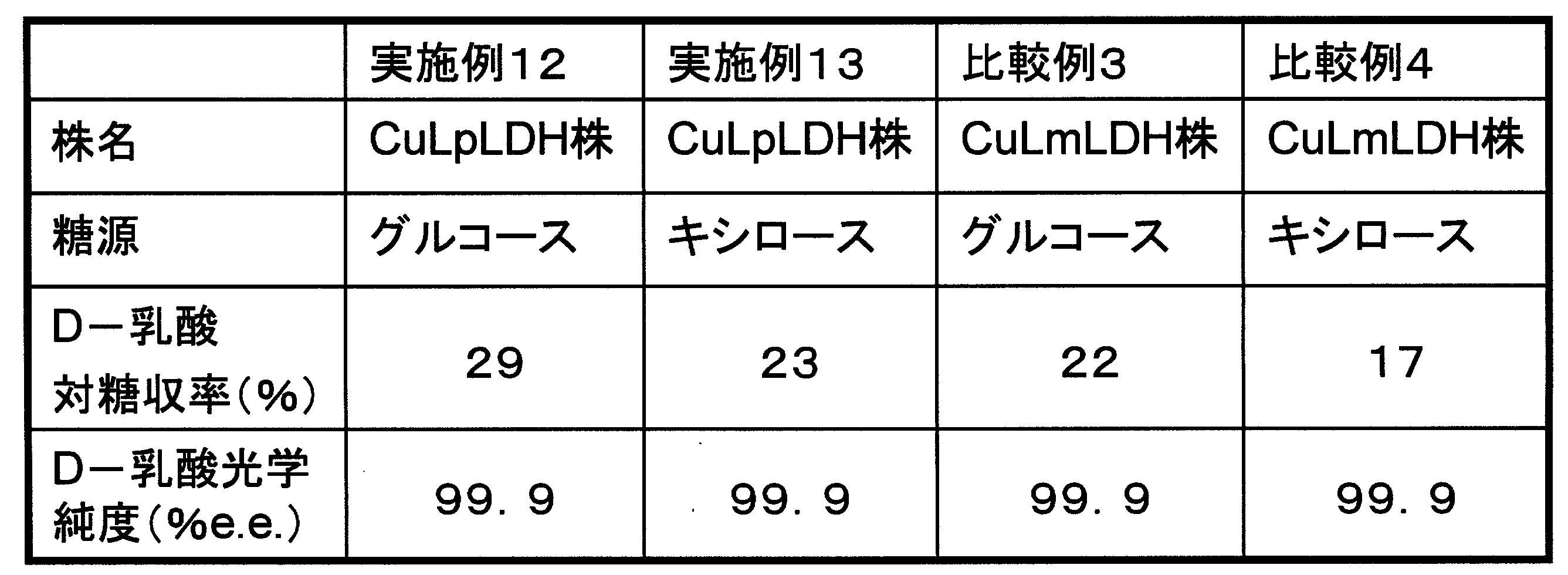
Claims (14)
- 下記(A)~(C)のいずれかのポリペプチド。
(A)配列番号1または2に記載のアミノ酸配列からなるポリペプチド
(B)配列番号1または2に記載のアミノ酸配列において、1もしくは数個のアミノ酸が置換、欠失、挿入および/または付加されたアミノ酸配列からなり、D-乳酸脱水素酵素活性を有するポリペプチド
(C)配列番号1または2に記載のアミノ酸配列との配列同一性が少なくとも80%以上のアミノ酸配列からなり、D-乳酸脱水素酵素活性を有するポリペプチド - 下記(a)~(e)のいずれかのポリヌクレオチド。
(a)配列番号3または4に記載の塩基配列からなるポリヌクレオチド
(b)配列番号3または4に記載の塩基配列において、1もしくは数個の塩基が置換、欠失、挿入および/または付加された塩基配列からなり、D-乳酸脱水素酵素活性を有するポリペプチドをコードするポリヌクレオチド
(c)配列番号3または4に記載の塩基配列からなるポリヌクレオチドもしくはその相補鎖の全体またはその一部とストリンジェントな条件でハイブリダイズするポリヌクレオチドであって、D-LDH活性を有するポリペプチドをコードするポリヌクレオチド
(d)配列番号3または4に記載の塩基配列との配列同一性が少なくとも80%以上の塩基配列からなり、D-乳酸脱水素酵素活性を有するポリペプチドをコードするポリヌクレオチド
(e)請求項1に記載のポリペプチドをコードするポリヌクレオチド - 請求項2に記載のポリヌクレオチドと、該ポリヌクレオチドを発現可能なプロモーターとを連結させた、DNA構築物。
- 前記プロモーターが、ピルビン酸脱炭酸酵素1遺伝子(PDC1遺伝子)、サプレッション・オブ・エクスポネンシャル・ディフェクト1遺伝子(SED1遺伝子)またはグリセルアルデヒド-3リン酸脱水素酵素3遺伝子(TDH3遺伝子)のプロモーターであることを特徴とする、請求項3に記載のDNA構築物。
- 前記プロモーターが、下記(I)~(III)のいずれかから選ばれる、請求項3または4に記載のDNA構築物。
(I)配列番号5~7のいずれかに記載の塩基配列からなるプロモーター
(II)配列番号5~7のいずれかに記載の塩基配列もしくはその一部を含む塩基配列とストリンジェントな条件でハイブリダイズする塩基配列からなるプロモーター
(III)配列番号5~7いずれかに記載の塩基配列において、1もしくは数個の塩基が欠失、置換および/または付加された塩基配列からなるプロモーター - 請求項2に記載のポリヌクレオチドまたは請求項3~5のいずれかに記載のDNA構築物が導入されている、形質転換体。
- 請求項2に記載のポリヌクレオチドまたは請求項3~5のいずれかに記載のDNA構築物が導入されている、形質転換酵母。
- 前記形質転換酵母は、そのピルビン酸脱炭酸酵素1遺伝子(PDC1遺伝子)、サプレッション・オブ・エクスポネンシャル・ディフェクト1遺伝子(SED1遺伝子)およびグリセルアルデヒド-3リン酸脱水素酵素3遺伝子(TDH3遺伝子)のうち少なくとも1種類の遺伝子が、請求項2に記載のポリヌクレオチドまたは請求項3~5いずれかに記載のDNA構築物に置換されている、請求項7に記載の形質転換酵母。
- 前記遺伝子のうち、少なくとも1種類はPDC1遺伝子である、請求項8に記載の形質転換酵母。
- 請求項6に記載の形質転換体または請求項7~9のいずれかに記載の形質転換酵母を培養する工程を含む、D-乳酸の製造方法。
- カブトガニ科由来のD-乳酸脱水素酵素をコードするポリヌクレオチドまたは該ポリヌクレオチドと該ポリヌクレオチドを発現可能なプロモーターが連結されたDNA構築物が導入されている、形質転換体。
- アメリカカブトガニ属由来のD-乳酸脱水素酵素をコードするポリヌクレオチドまたは該ポリヌクレオチドと該ポリヌクレオチドを発現可能なプロモーターが連結されたDNA構築物が導入されている、形質転換酵母。
- 前記形質転換酵母は、そのピルビン酸脱炭酸酵素1遺伝子(PDC1遺伝子)、サプレッション・オブ・エクスポネンシャル・ディフェクト1遺伝子(SED1遺伝子)およびグリセルアルデヒド-3リン酸脱水素酵素3遺伝子(TDH3遺伝子)のうち少なくとも1つの遺伝子が、前記カブトガニ科由来のD-乳酸脱水素酵素をコードするポリヌクレオチドまたは該ポリヌクレオチドと該ポリヌクレオチドを発現可能なプロモーターが連結されたDNA構築物に置換されている、請求項12に記載の形質転換酵母。
- 請求項11に記載の形質転換体あるいは請求項12または13に記載の形質転換酵母を培養する工程を含む、D-乳酸の製造方法。
Priority Applications (10)
| Application Number | Priority Date | Filing Date | Title |
|---|---|---|---|
| US13/375,882 US8822195B2 (en) | 2009-06-03 | 2010-06-02 | Polypeptide having D-lactate dehydrogenase activity, polynucleotide encoding the polypeptide, and process for production of D-lactic acid |
| CN201080034172.0A CN102459590B (zh) | 2009-06-03 | 2010-06-02 | 具有d-乳酸脱氢酶活性的多肽、编码该多肽的多核苷酸和d-乳酸的制造方法 |
| RU2011152925/10A RU2553563C2 (ru) | 2009-06-03 | 2010-06-02 | Полипептид, обладающий активностью d-лактатдегидрогеназы, полинуклеотид, кодирующий этот полипептид, и способ получения d-молочной кислоты |
| JP2010522119A JP5803106B2 (ja) | 2009-06-03 | 2010-06-02 | D−乳酸脱水素酵素活性を有するポリペプチド、該ポリペプチドをコードするポリヌクレオチドおよびd−乳酸の製造方法 |
| BRPI1008141A BRPI1008141A2 (pt) | 2009-06-03 | 2010-06-02 | polipeptideo polinucleotideo, construção de dna transformantes leveduras transformadas e metodos de produção de acido dlatico |
| AU2010255000A AU2010255000A1 (en) | 2009-06-03 | 2010-06-02 | Polypeptide having D-lactate dehydrogenase activity, polynucleotide encoding the polypeptide, and process for production of D-lactic acid |
| SG2011087707A SG176263A1 (en) | 2009-06-03 | 2010-06-02 | Polypeptide having d-lactate dehydrogenase activity, polynucleotide encoding the polypeptide, and process for production of d-lactic acid |
| EP10783384.0A EP2439271B1 (en) | 2009-06-03 | 2010-06-02 | Polypeptide having d-lactate dehydrogenase activity, polynucleotide encoding the polypeptide, and process for production of d-lactic acid |
| CA2764448A CA2764448A1 (en) | 2009-06-03 | 2010-06-02 | Polypeptide having d-lactate dehydrogenase activity, polynucleotide encoding the polypeptide, and process for production of d-lactic acid |
| ES10783384.0T ES2436567T3 (es) | 2009-06-03 | 2010-06-02 | Polipéptido que tiene actividad de D-lactato deshidrogenasa, un polinucleótido que codifica el polipéptido y procedimiento de preparación de ácido D-láctico |
Applications Claiming Priority (2)
| Application Number | Priority Date | Filing Date | Title |
|---|---|---|---|
| JP2009-134213 | 2009-06-03 | ||
| JP2009134213 | 2009-06-03 |
Publications (1)
| Publication Number | Publication Date |
|---|---|
| WO2010140602A1 true WO2010140602A1 (ja) | 2010-12-09 |
Family
ID=43297735
Family Applications (1)
| Application Number | Title | Priority Date | Filing Date |
|---|---|---|---|
| PCT/JP2010/059306 Ceased WO2010140602A1 (ja) | 2009-06-03 | 2010-06-02 | D-乳酸脱水素酵素活性を有するポリペプチド、該ポリペプチドをコードするポリヌクレオチドおよびd-乳酸の製造方法 |
Country Status (13)
| Country | Link |
|---|---|
| US (1) | US8822195B2 (ja) |
| EP (1) | EP2439271B1 (ja) |
| JP (1) | JP5803106B2 (ja) |
| KR (1) | KR20120027354A (ja) |
| CN (1) | CN102459590B (ja) |
| AU (1) | AU2010255000A1 (ja) |
| BR (1) | BRPI1008141A2 (ja) |
| CA (1) | CA2764448A1 (ja) |
| ES (1) | ES2436567T3 (ja) |
| MY (1) | MY159074A (ja) |
| RU (1) | RU2553563C2 (ja) |
| SG (1) | SG176263A1 (ja) |
| WO (1) | WO2010140602A1 (ja) |
Cited By (9)
| Publication number | Priority date | Publication date | Assignee | Title |
|---|---|---|---|---|
| US20100273225A1 (en) * | 2007-12-07 | 2010-10-28 | Toray Industries, Inc. | Expression cassette for lactase dehydrogenase, transformed yeast and method of producing lactic acid |
| WO2012147903A1 (ja) * | 2011-04-28 | 2012-11-01 | 東レ株式会社 | 乳酸生産酵母変異株および乳酸の製造方法 |
| WO2013015212A1 (ja) | 2011-07-22 | 2013-01-31 | 東レ株式会社 | 有機酸の製造方法 |
| WO2013105651A1 (ja) | 2012-01-13 | 2013-07-18 | 東レ株式会社 | 化学品の製造方法 |
| WO2013105652A1 (ja) | 2012-01-13 | 2013-07-18 | 東レ株式会社 | 化学品の製造方法 |
| WO2013146920A1 (ja) | 2012-03-30 | 2013-10-03 | 東レ株式会社 | 連続発酵による化学品の製造方法および連続発酵装置 |
| JP2014506477A (ja) * | 2011-02-23 | 2014-03-17 | マクロジェン・インコーポレーテッド | 高光学純度の乳酸生産用形質転換体およびそれを利用した乳酸生産方法 |
| US9909119B2 (en) | 2013-11-07 | 2018-03-06 | Toray Industries, Inc. | Method for producing purified soybean oligosaccharide liquid |
| WO2019004478A1 (ja) | 2017-06-30 | 2019-01-03 | 東レ株式会社 | 連続発酵による化学品の製造方法および製造装置 |
Families Citing this family (3)
| Publication number | Priority date | Publication date | Assignee | Title |
|---|---|---|---|---|
| KR102581464B1 (ko) | 2015-05-28 | 2023-09-21 | 삼성전자주식회사 | 락테이트 데히드로게나제 변이체를 스크리닝하는 방법, 락테이트 데히드로게나제 변이체, 상기 변이체를 포함하는 폴리뉴클레오티드, 벡터, 미생물, 및 상기 미생물을 이용하여 락테이트를 생산하는 방법 |
| KR102311681B1 (ko) * | 2015-07-28 | 2021-10-12 | 삼성전자주식회사 | 내산성을 갖는 효모 세포, 그를 이용하여 유기산을 생산하는 방법 및 상기 내산성 효모 세포를 생산하는 방법 |
| CN118813434B (zh) * | 2024-06-13 | 2025-05-20 | 陕西海斯夫生物工程有限公司 | 高产聚乳酸的重组酿酒酵母、其构建方法及其应用 |
Citations (11)
| Publication number | Priority date | Publication date | Assignee | Title |
|---|---|---|---|---|
| JPS6136321A (ja) | 1984-07-27 | 1986-02-21 | Daicel Chem Ind Ltd | 新規なポリマ−およびその樹脂組成物 |
| JPS63241024A (ja) | 1986-12-22 | 1988-10-06 | イー・アイ・デュポン・デ・ニモアス・アンド・カンパニー | ポリラクチド組成物 |
| JP2000017163A (ja) | 1998-06-30 | 2000-01-18 | Shimadzu Corp | ポリ乳酸ステレオコンプレックスポリマー組成物 |
| WO2004104202A1 (ja) | 2003-05-22 | 2004-12-02 | Kabushiki Kaisha Toyota Chuo Kenkyusho | D-乳酸脱水素酵素活性を有するタンパク質をコードするdna及びその利用 |
| JP2006280368A (ja) | 2005-03-11 | 2006-10-19 | Toray Ind Inc | 有機酸の製造法 |
| JP2007074939A (ja) | 2005-09-13 | 2007-03-29 | Toray Ind Inc | D−乳酸デヒドロゲナーゼ活性を有するポリペプチド、これをコードする遺伝子およびd−乳酸の製造方法 |
| WO2007043253A1 (ja) | 2005-10-14 | 2007-04-19 | Toray Industries, Inc. | 酵母及びl-乳酸の製造方法 |
| WO2007097260A1 (ja) | 2006-02-24 | 2007-08-30 | Toray Industries, Inc. | 化学品の製造方法、および、連続発酵装置 |
| JP2008029329A (ja) | 2006-06-28 | 2008-02-14 | Toray Ind Inc | 酵母及びl−乳酸の製造方法 |
| JP2008048726A (ja) | 2006-07-24 | 2008-03-06 | Toray Ind Inc | 変異型ピルビン酸脱炭酸酵素5遺伝子を有する酵母及び乳酸の製造方法 |
| WO2009004922A1 (ja) | 2007-06-29 | 2009-01-08 | Toray Industries, Inc. | 乳酸の製造方法 |
Family Cites Families (3)
| Publication number | Priority date | Publication date | Assignee | Title |
|---|---|---|---|---|
| PH31093A (en) * | 1993-08-06 | 1998-02-05 | Nestec Ltd | Lactobacillus bulgaricus having decreased acid production and/or improved aroma and flavor production and food composition comprising said lactobacillus. |
| ES2529254T3 (es) * | 2002-05-30 | 2015-02-18 | Cargill Inc. | Proceso de fermentación usando velocidades de incorporación de oxígeno específicas como un control del proceso |
| JP5532919B2 (ja) | 2007-12-07 | 2014-06-25 | 東レ株式会社 | 乳酸脱水素酵素発現カセット、形質転換酵母および乳酸の製造方法 |
-
2010
- 2010-06-02 SG SG2011087707A patent/SG176263A1/en unknown
- 2010-06-02 WO PCT/JP2010/059306 patent/WO2010140602A1/ja not_active Ceased
- 2010-06-02 ES ES10783384.0T patent/ES2436567T3/es active Active
- 2010-06-02 MY MYPI2011005828A patent/MY159074A/en unknown
- 2010-06-02 US US13/375,882 patent/US8822195B2/en not_active Expired - Fee Related
- 2010-06-02 KR KR1020117030018A patent/KR20120027354A/ko not_active Withdrawn
- 2010-06-02 JP JP2010522119A patent/JP5803106B2/ja not_active Expired - Fee Related
- 2010-06-02 BR BRPI1008141A patent/BRPI1008141A2/pt not_active Application Discontinuation
- 2010-06-02 AU AU2010255000A patent/AU2010255000A1/en not_active Abandoned
- 2010-06-02 CA CA2764448A patent/CA2764448A1/en not_active Abandoned
- 2010-06-02 EP EP10783384.0A patent/EP2439271B1/en not_active Not-in-force
- 2010-06-02 CN CN201080034172.0A patent/CN102459590B/zh not_active Expired - Fee Related
- 2010-06-02 RU RU2011152925/10A patent/RU2553563C2/ru active
Patent Citations (11)
| Publication number | Priority date | Publication date | Assignee | Title |
|---|---|---|---|---|
| JPS6136321A (ja) | 1984-07-27 | 1986-02-21 | Daicel Chem Ind Ltd | 新規なポリマ−およびその樹脂組成物 |
| JPS63241024A (ja) | 1986-12-22 | 1988-10-06 | イー・アイ・デュポン・デ・ニモアス・アンド・カンパニー | ポリラクチド組成物 |
| JP2000017163A (ja) | 1998-06-30 | 2000-01-18 | Shimadzu Corp | ポリ乳酸ステレオコンプレックスポリマー組成物 |
| WO2004104202A1 (ja) | 2003-05-22 | 2004-12-02 | Kabushiki Kaisha Toyota Chuo Kenkyusho | D-乳酸脱水素酵素活性を有するタンパク質をコードするdna及びその利用 |
| JP2006280368A (ja) | 2005-03-11 | 2006-10-19 | Toray Ind Inc | 有機酸の製造法 |
| JP2007074939A (ja) | 2005-09-13 | 2007-03-29 | Toray Ind Inc | D−乳酸デヒドロゲナーゼ活性を有するポリペプチド、これをコードする遺伝子およびd−乳酸の製造方法 |
| WO2007043253A1 (ja) | 2005-10-14 | 2007-04-19 | Toray Industries, Inc. | 酵母及びl-乳酸の製造方法 |
| WO2007097260A1 (ja) | 2006-02-24 | 2007-08-30 | Toray Industries, Inc. | 化学品の製造方法、および、連続発酵装置 |
| JP2008029329A (ja) | 2006-06-28 | 2008-02-14 | Toray Ind Inc | 酵母及びl−乳酸の製造方法 |
| JP2008048726A (ja) | 2006-07-24 | 2008-03-06 | Toray Ind Inc | 変異型ピルビン酸脱炭酸酵素5遺伝子を有する酵母及び乳酸の製造方法 |
| WO2009004922A1 (ja) | 2007-06-29 | 2009-01-08 | Toray Industries, Inc. | 乳酸の製造方法 |
Non-Patent Citations (15)
| Title |
|---|
| AUSUBEL ET AL.,: "Current Protocols I Molecular Biology", 1987, JOHN WILY & SONS |
| DOMINIQUE, G., APPL ENVIRON MICROBIOL, UNITED STATES, vol. 61, 1995, pages 266 - 272 |
| EXPERIMENTAL MEDICINE, vol. 9, 1991, pages 1937 - 1940 |
| GERL M. ET AL.: "Mechanism and specificity of reconstitution of dimeric lactate dehydrogenase from Limulus polyphemus.", BIOL. CHEM. HOPPE-SEYLER, vol. 366, no. 5, 1985, pages 447 - 454, XP008154528 * |
| HIDEYA FUJIMOTO: "Production Method of Synthetic Gene, Plant Cell Engineering Series 7, Plant PCR Experimental Protocol", 1997, SHUJUNSHA CO., LTD., pages: 95 - 100 |
| ISHIDA N ET AL., JOURNAL OF BIOSCIENCE AND BIOENGINEERING, vol. 101, 2006, pages 172 - 7 |
| LONG G.L. ET AL.: "Affinity chromatography of D-lactate dehydrogenases from Limulus polyphemus (horseshoe crab) and Haliotus sp. (abalone) voluntary muscle on 8-(6- aminohexyl)-amino-adenine nucleotide- Sepharose.", J. SOLID-PHASE BIOCHEM., vol. 1, no. 4, 1976, pages 307 - 317, XP008154529 * |
| LONG G.L. ET AL.: "Diphosphopyridine nucleotide-linked D-lactate dehydrogenases from the horseshoe crab, Limulus polyphemus, and the seaworm, Nereis virens. I. Physical and chemical properties", ARCH. BIOCHEM. BIOPHYS., vol. 154, 1973, pages 696 - 710, XP024754191 * |
| LONG G.L. ET AL.: "Diphosphopyridine nucleotide-linked D-lactate dehydrogenases from the horseshoe crab, Limulus polyphemus, and the seaworm, Nereis virens. II. Catalytic properties", ARCH. BIOCHEM. BIOPHYS., vol. 154, 1973, pages 711 - 725, XP024754192 * |
| LONG G.L. ET AL.: "D-Lactate dehydrogenase from the horseshoe crab", METHODS. ENZYMOL., vol. 41, 1975, pages 313 - 318, XP008154526 * |
| M.D. ROSE ET AL.: "Methods In Yeast Genetics", 1990, COLD SPRING HARBOR LABORATORY PRESS |
| NATURE, vol. 357, 25 June 1992 (1992-06-25), pages 700 |
| See also references of EP2439271A4 * |
| SIEBENALLER J.F. ET AL.: "Comparison of the D-lactate stereospecific dehydrogenase of Limulus polyphemus with active-site regions of L-lactate dehydrogenases.", BIOCHIM. BIOPHYS. ACTA, vol. 749, no. 2, 1983, pages 153 - 162, XP025441067 * |
| TUENGLER P. ET AL.: "Studies on the active center of D- and L-lactate dehydrogenases using oxamate-diaminohexyl-Sepharose affinity chromatography.", PROC. NATL. ACAD. SCI., vol. 77, no. 10, 1980, USA., pages 5832 - 5836, XP008154532 * |
Cited By (14)
| Publication number | Priority date | Publication date | Assignee | Title |
|---|---|---|---|---|
| US8859260B2 (en) * | 2007-12-07 | 2014-10-14 | Toray Industries, Inc. | Expression cassette for lactase dehydrogenase, transformed yeast and method of producing lactic acid |
| US20100273225A1 (en) * | 2007-12-07 | 2010-10-28 | Toray Industries, Inc. | Expression cassette for lactase dehydrogenase, transformed yeast and method of producing lactic acid |
| EP2679668A4 (en) * | 2011-02-23 | 2014-10-29 | Macrogen Inc | TRANSFORMANT FOR THE PREPARATION OF HIGH OPTICAL PURITY MILKY ACID AND METHOD FOR MILKIC ACID PRODUCTION THEREWITH |
| JP2014506477A (ja) * | 2011-02-23 | 2014-03-17 | マクロジェン・インコーポレーテッド | 高光学純度の乳酸生産用形質転換体およびそれを利用した乳酸生産方法 |
| US9428775B2 (en) | 2011-02-23 | 2016-08-30 | Macrogen Inc. | Transformant for production of lactic acid of high optical purity and method for producing lactic acid using the same |
| JPWO2012147903A1 (ja) * | 2011-04-28 | 2014-07-28 | 東レ株式会社 | 乳酸生産酵母変異株および乳酸の製造方法 |
| WO2012147903A1 (ja) * | 2011-04-28 | 2012-11-01 | 東レ株式会社 | 乳酸生産酵母変異株および乳酸の製造方法 |
| US9217165B2 (en) | 2011-04-28 | 2015-12-22 | Toray Industries, Inc. | Mutant strain of lactic acid producing yeast and process for producing lactic acid |
| WO2013015212A1 (ja) | 2011-07-22 | 2013-01-31 | 東レ株式会社 | 有機酸の製造方法 |
| WO2013105651A1 (ja) | 2012-01-13 | 2013-07-18 | 東レ株式会社 | 化学品の製造方法 |
| WO2013105652A1 (ja) | 2012-01-13 | 2013-07-18 | 東レ株式会社 | 化学品の製造方法 |
| WO2013146920A1 (ja) | 2012-03-30 | 2013-10-03 | 東レ株式会社 | 連続発酵による化学品の製造方法および連続発酵装置 |
| US9909119B2 (en) | 2013-11-07 | 2018-03-06 | Toray Industries, Inc. | Method for producing purified soybean oligosaccharide liquid |
| WO2019004478A1 (ja) | 2017-06-30 | 2019-01-03 | 東レ株式会社 | 連続発酵による化学品の製造方法および製造装置 |
Also Published As
| Publication number | Publication date |
|---|---|
| US8822195B2 (en) | 2014-09-02 |
| AU2010255000A1 (en) | 2011-12-15 |
| MY159074A (en) | 2016-12-15 |
| SG176263A1 (en) | 2012-01-30 |
| CN102459590A (zh) | 2012-05-16 |
| KR20120027354A (ko) | 2012-03-21 |
| US20120070871A1 (en) | 2012-03-22 |
| JP5803106B2 (ja) | 2015-11-04 |
| BRPI1008141A2 (pt) | 2020-04-07 |
| CA2764448A1 (en) | 2010-12-09 |
| EP2439271B1 (en) | 2013-11-20 |
| ES2436567T3 (es) | 2014-01-03 |
| EP2439271A1 (en) | 2012-04-11 |
| RU2553563C2 (ru) | 2015-06-20 |
| JPWO2010140602A1 (ja) | 2012-11-22 |
| EP2439271A4 (en) | 2012-11-07 |
| RU2011152925A (ru) | 2013-07-20 |
| CN102459590B (zh) | 2014-10-29 |
Similar Documents
| Publication | Publication Date | Title |
|---|---|---|
| JP5803106B2 (ja) | D−乳酸脱水素酵素活性を有するポリペプチド、該ポリペプチドをコードするポリヌクレオチドおよびd−乳酸の製造方法 | |
| CN1735683B (zh) | 在酵母中生产d-乳酸的方法与材料 | |
| US7109010B2 (en) | Methods and materials for the synthesis of organic products | |
| US7141410B2 (en) | Methods and materials for the production of organic products in cells of Candida species | |
| US7964382B2 (en) | DNA encoding a protein having D-lactate dehydrogenase activity and uses thereof | |
| JP4963488B2 (ja) | 変異体酵母及びこれを用いた物質生産方法 | |
| JP2022025108A (ja) | Fdcaの真菌による生産 | |
| EP2041264A2 (en) | Production of d-lactic acid with yeast | |
| JP5320692B2 (ja) | 酵母及びl−乳酸の製造方法 | |
| JP4806904B2 (ja) | 乳酸生産方法 | |
| JP2006006271A (ja) | 乳酸生産酵母および乳酸生産方法 | |
| JP2003093060A (ja) | 耐酸性微生物を用いた有機酸及びアルコールの製造方法 | |
| JP2009261262A (ja) | D−乳酸デヒドロゲナーゼ活性を有するポリペプチド、該ポリペプチドをコードするポリヌクレオチドおよびd−乳酸の製造方法 | |
| AU2008201598A1 (en) | Methods and materials for the production of D-lactic acid in yeast |
Legal Events
| Date | Code | Title | Description |
|---|---|---|---|
| WWE | Wipo information: entry into national phase |
Ref document number: 201080034172.0 Country of ref document: CN |
|
| ENP | Entry into the national phase |
Ref document number: 2010522119 Country of ref document: JP Kind code of ref document: A |
|
| 121 | Ep: the epo has been informed by wipo that ep was designated in this application |
Ref document number: 10783384 Country of ref document: EP Kind code of ref document: A1 |
|
| WWE | Wipo information: entry into national phase |
Ref document number: 2010255000 Country of ref document: AU |
|
| WWE | Wipo information: entry into national phase |
Ref document number: 2010783384 Country of ref document: EP |
|
| WWE | Wipo information: entry into national phase |
Ref document number: 2764448 Country of ref document: CA |
|
| NENP | Non-entry into the national phase |
Ref country code: DE |
|
| WWE | Wipo information: entry into national phase |
Ref document number: 13375882 Country of ref document: US |
|
| ENP | Entry into the national phase |
Ref document number: 2010255000 Country of ref document: AU Date of ref document: 20100602 Kind code of ref document: A Ref document number: 20117030018 Country of ref document: KR Kind code of ref document: A |
|
| WWE | Wipo information: entry into national phase |
Ref document number: 9944/CHENP/2011 Country of ref document: IN |
|
| WWE | Wipo information: entry into national phase |
Ref document number: 2011152925 Country of ref document: RU |
|
| REG | Reference to national code |
Ref country code: BR Ref legal event code: B01A Ref document number: PI1008141 Country of ref document: BR |
|
| ENP | Entry into the national phase |
Ref document number: PI1008141 Country of ref document: BR Kind code of ref document: A2 Effective date: 20111130 |