WO2010143904A2 - 유전물질용 소결물질 및 이의 제조 방법 - Google Patents
유전물질용 소결물질 및 이의 제조 방법 Download PDFInfo
- Publication number
- WO2010143904A2 WO2010143904A2 PCT/KR2010/003745 KR2010003745W WO2010143904A2 WO 2010143904 A2 WO2010143904 A2 WO 2010143904A2 KR 2010003745 W KR2010003745 W KR 2010003745W WO 2010143904 A2 WO2010143904 A2 WO 2010143904A2
- Authority
- WO
- WIPO (PCT)
- Prior art keywords
- core
- sintered
- shell
- sintered material
- dielectric
- Prior art date
- Legal status (The legal status is an assumption and is not a legal conclusion. Google has not performed a legal analysis and makes no representation as to the accuracy of the status listed.)
- Ceased
Links
Images


Classifications
-
- C—CHEMISTRY; METALLURGY
- C04—CEMENTS; CONCRETE; ARTIFICIAL STONE; CERAMICS; REFRACTORIES
- C04B—LIME, MAGNESIA; SLAG; CEMENTS; COMPOSITIONS THEREOF, e.g. MORTARS, CONCRETE OR LIKE BUILDING MATERIALS; ARTIFICIAL STONE; CERAMICS; REFRACTORIES; TREATMENT OF NATURAL STONE
- C04B35/00—Shaped ceramic products characterised by their composition; Ceramics compositions; Processing powders of inorganic compounds preparatory to the manufacturing of ceramic products
- C04B35/01—Shaped ceramic products characterised by their composition; Ceramics compositions; Processing powders of inorganic compounds preparatory to the manufacturing of ceramic products based on oxide ceramics
-
- C—CHEMISTRY; METALLURGY
- C04—CEMENTS; CONCRETE; ARTIFICIAL STONE; CERAMICS; REFRACTORIES
- C04B—LIME, MAGNESIA; SLAG; CEMENTS; COMPOSITIONS THEREOF, e.g. MORTARS, CONCRETE OR LIKE BUILDING MATERIALS; ARTIFICIAL STONE; CERAMICS; REFRACTORIES; TREATMENT OF NATURAL STONE
- C04B35/00—Shaped ceramic products characterised by their composition; Ceramics compositions; Processing powders of inorganic compounds preparatory to the manufacturing of ceramic products
- C04B35/01—Shaped ceramic products characterised by their composition; Ceramics compositions; Processing powders of inorganic compounds preparatory to the manufacturing of ceramic products based on oxide ceramics
- C04B35/45—Shaped ceramic products characterised by their composition; Ceramics compositions; Processing powders of inorganic compounds preparatory to the manufacturing of ceramic products based on oxide ceramics based on copper oxide or solid solutions thereof with other oxides
-
- C—CHEMISTRY; METALLURGY
- C04—CEMENTS; CONCRETE; ARTIFICIAL STONE; CERAMICS; REFRACTORIES
- C04B—LIME, MAGNESIA; SLAG; CEMENTS; COMPOSITIONS THEREOF, e.g. MORTARS, CONCRETE OR LIKE BUILDING MATERIALS; ARTIFICIAL STONE; CERAMICS; REFRACTORIES; TREATMENT OF NATURAL STONE
- C04B35/00—Shaped ceramic products characterised by their composition; Ceramics compositions; Processing powders of inorganic compounds preparatory to the manufacturing of ceramic products
- C04B35/01—Shaped ceramic products characterised by their composition; Ceramics compositions; Processing powders of inorganic compounds preparatory to the manufacturing of ceramic products based on oxide ceramics
- C04B35/46—Shaped ceramic products characterised by their composition; Ceramics compositions; Processing powders of inorganic compounds preparatory to the manufacturing of ceramic products based on oxide ceramics based on titanium oxides or titanates
- C04B35/462—Shaped ceramic products characterised by their composition; Ceramics compositions; Processing powders of inorganic compounds preparatory to the manufacturing of ceramic products based on oxide ceramics based on titanium oxides or titanates based on titanates
-
- C—CHEMISTRY; METALLURGY
- C04—CEMENTS; CONCRETE; ARTIFICIAL STONE; CERAMICS; REFRACTORIES
- C04B—LIME, MAGNESIA; SLAG; CEMENTS; COMPOSITIONS THEREOF, e.g. MORTARS, CONCRETE OR LIKE BUILDING MATERIALS; ARTIFICIAL STONE; CERAMICS; REFRACTORIES; TREATMENT OF NATURAL STONE
- C04B35/00—Shaped ceramic products characterised by their composition; Ceramics compositions; Processing powders of inorganic compounds preparatory to the manufacturing of ceramic products
- C04B35/622—Forming processes; Processing powders of inorganic compounds preparatory to the manufacturing of ceramic products
- C04B35/626—Preparing or treating the powders individually or as batches ; preparing or treating macroscopic reinforcing agents for ceramic products, e.g. fibres; mechanical aspects section B
- C04B35/62605—Treating the starting powders individually or as mixtures
- C04B35/62645—Thermal treatment of powders or mixtures thereof other than sintering
- C04B35/62655—Drying, e.g. freeze-drying, spray-drying, microwave or supercritical drying
-
- C—CHEMISTRY; METALLURGY
- C04—CEMENTS; CONCRETE; ARTIFICIAL STONE; CERAMICS; REFRACTORIES
- C04B—LIME, MAGNESIA; SLAG; CEMENTS; COMPOSITIONS THEREOF, e.g. MORTARS, CONCRETE OR LIKE BUILDING MATERIALS; ARTIFICIAL STONE; CERAMICS; REFRACTORIES; TREATMENT OF NATURAL STONE
- C04B35/00—Shaped ceramic products characterised by their composition; Ceramics compositions; Processing powders of inorganic compounds preparatory to the manufacturing of ceramic products
- C04B35/622—Forming processes; Processing powders of inorganic compounds preparatory to the manufacturing of ceramic products
- C04B35/626—Preparing or treating the powders individually or as batches ; preparing or treating macroscopic reinforcing agents for ceramic products, e.g. fibres; mechanical aspects section B
- C04B35/62605—Treating the starting powders individually or as mixtures
- C04B35/62645—Thermal treatment of powders or mixtures thereof other than sintering
- C04B35/62675—Thermal treatment of powders or mixtures thereof other than sintering characterised by the treatment temperature
-
- C—CHEMISTRY; METALLURGY
- C04—CEMENTS; CONCRETE; ARTIFICIAL STONE; CERAMICS; REFRACTORIES
- C04B—LIME, MAGNESIA; SLAG; CEMENTS; COMPOSITIONS THEREOF, e.g. MORTARS, CONCRETE OR LIKE BUILDING MATERIALS; ARTIFICIAL STONE; CERAMICS; REFRACTORIES; TREATMENT OF NATURAL STONE
- C04B35/00—Shaped ceramic products characterised by their composition; Ceramics compositions; Processing powders of inorganic compounds preparatory to the manufacturing of ceramic products
- C04B35/622—Forming processes; Processing powders of inorganic compounds preparatory to the manufacturing of ceramic products
- C04B35/626—Preparing or treating the powders individually or as batches ; preparing or treating macroscopic reinforcing agents for ceramic products, e.g. fibres; mechanical aspects section B
- C04B35/628—Coating the powders or the macroscopic reinforcing agents
- C04B35/62802—Powder coating materials
- C04B35/62805—Oxide ceramics
- C04B35/62807—Silica or silicates
-
- C—CHEMISTRY; METALLURGY
- C04—CEMENTS; CONCRETE; ARTIFICIAL STONE; CERAMICS; REFRACTORIES
- C04B—LIME, MAGNESIA; SLAG; CEMENTS; COMPOSITIONS THEREOF, e.g. MORTARS, CONCRETE OR LIKE BUILDING MATERIALS; ARTIFICIAL STONE; CERAMICS; REFRACTORIES; TREATMENT OF NATURAL STONE
- C04B35/00—Shaped ceramic products characterised by their composition; Ceramics compositions; Processing powders of inorganic compounds preparatory to the manufacturing of ceramic products
- C04B35/622—Forming processes; Processing powders of inorganic compounds preparatory to the manufacturing of ceramic products
- C04B35/626—Preparing or treating the powders individually or as batches ; preparing or treating macroscopic reinforcing agents for ceramic products, e.g. fibres; mechanical aspects section B
- C04B35/628—Coating the powders or the macroscopic reinforcing agents
- C04B35/62802—Powder coating materials
- C04B35/62805—Oxide ceramics
- C04B35/6281—Alkaline earth metal oxides
-
- C—CHEMISTRY; METALLURGY
- C04—CEMENTS; CONCRETE; ARTIFICIAL STONE; CERAMICS; REFRACTORIES
- C04B—LIME, MAGNESIA; SLAG; CEMENTS; COMPOSITIONS THEREOF, e.g. MORTARS, CONCRETE OR LIKE BUILDING MATERIALS; ARTIFICIAL STONE; CERAMICS; REFRACTORIES; TREATMENT OF NATURAL STONE
- C04B35/00—Shaped ceramic products characterised by their composition; Ceramics compositions; Processing powders of inorganic compounds preparatory to the manufacturing of ceramic products
- C04B35/622—Forming processes; Processing powders of inorganic compounds preparatory to the manufacturing of ceramic products
- C04B35/626—Preparing or treating the powders individually or as batches ; preparing or treating macroscopic reinforcing agents for ceramic products, e.g. fibres; mechanical aspects section B
- C04B35/628—Coating the powders or the macroscopic reinforcing agents
- C04B35/62802—Powder coating materials
- C04B35/62805—Oxide ceramics
- C04B35/62813—Alumina or aluminates
-
- C—CHEMISTRY; METALLURGY
- C04—CEMENTS; CONCRETE; ARTIFICIAL STONE; CERAMICS; REFRACTORIES
- C04B—LIME, MAGNESIA; SLAG; CEMENTS; COMPOSITIONS THEREOF, e.g. MORTARS, CONCRETE OR LIKE BUILDING MATERIALS; ARTIFICIAL STONE; CERAMICS; REFRACTORIES; TREATMENT OF NATURAL STONE
- C04B35/00—Shaped ceramic products characterised by their composition; Ceramics compositions; Processing powders of inorganic compounds preparatory to the manufacturing of ceramic products
- C04B35/622—Forming processes; Processing powders of inorganic compounds preparatory to the manufacturing of ceramic products
- C04B35/626—Preparing or treating the powders individually or as batches ; preparing or treating macroscopic reinforcing agents for ceramic products, e.g. fibres; mechanical aspects section B
- C04B35/628—Coating the powders or the macroscopic reinforcing agents
- C04B35/62802—Powder coating materials
- C04B35/62805—Oxide ceramics
- C04B35/62815—Rare earth metal oxides
-
- C—CHEMISTRY; METALLURGY
- C04—CEMENTS; CONCRETE; ARTIFICIAL STONE; CERAMICS; REFRACTORIES
- C04B—LIME, MAGNESIA; SLAG; CEMENTS; COMPOSITIONS THEREOF, e.g. MORTARS, CONCRETE OR LIKE BUILDING MATERIALS; ARTIFICIAL STONE; CERAMICS; REFRACTORIES; TREATMENT OF NATURAL STONE
- C04B35/00—Shaped ceramic products characterised by their composition; Ceramics compositions; Processing powders of inorganic compounds preparatory to the manufacturing of ceramic products
- C04B35/622—Forming processes; Processing powders of inorganic compounds preparatory to the manufacturing of ceramic products
- C04B35/626—Preparing or treating the powders individually or as batches ; preparing or treating macroscopic reinforcing agents for ceramic products, e.g. fibres; mechanical aspects section B
- C04B35/628—Coating the powders or the macroscopic reinforcing agents
- C04B35/62802—Powder coating materials
- C04B35/62805—Oxide ceramics
- C04B35/62818—Refractory metal oxides
- C04B35/62821—Titanium oxide
-
- C—CHEMISTRY; METALLURGY
- C04—CEMENTS; CONCRETE; ARTIFICIAL STONE; CERAMICS; REFRACTORIES
- C04B—LIME, MAGNESIA; SLAG; CEMENTS; COMPOSITIONS THEREOF, e.g. MORTARS, CONCRETE OR LIKE BUILDING MATERIALS; ARTIFICIAL STONE; CERAMICS; REFRACTORIES; TREATMENT OF NATURAL STONE
- C04B35/00—Shaped ceramic products characterised by their composition; Ceramics compositions; Processing powders of inorganic compounds preparatory to the manufacturing of ceramic products
- C04B35/622—Forming processes; Processing powders of inorganic compounds preparatory to the manufacturing of ceramic products
- C04B35/626—Preparing or treating the powders individually or as batches ; preparing or treating macroscopic reinforcing agents for ceramic products, e.g. fibres; mechanical aspects section B
- C04B35/628—Coating the powders or the macroscopic reinforcing agents
- C04B35/62802—Powder coating materials
- C04B35/62805—Oxide ceramics
- C04B35/62818—Refractory metal oxides
- C04B35/62823—Zirconium or hafnium oxide
-
- C—CHEMISTRY; METALLURGY
- C04—CEMENTS; CONCRETE; ARTIFICIAL STONE; CERAMICS; REFRACTORIES
- C04B—LIME, MAGNESIA; SLAG; CEMENTS; COMPOSITIONS THEREOF, e.g. MORTARS, CONCRETE OR LIKE BUILDING MATERIALS; ARTIFICIAL STONE; CERAMICS; REFRACTORIES; TREATMENT OF NATURAL STONE
- C04B35/00—Shaped ceramic products characterised by their composition; Ceramics compositions; Processing powders of inorganic compounds preparatory to the manufacturing of ceramic products
- C04B35/622—Forming processes; Processing powders of inorganic compounds preparatory to the manufacturing of ceramic products
- C04B35/626—Preparing or treating the powders individually or as batches ; preparing or treating macroscopic reinforcing agents for ceramic products, e.g. fibres; mechanical aspects section B
- C04B35/628—Coating the powders or the macroscopic reinforcing agents
- C04B35/62886—Coating the powders or the macroscopic reinforcing agents by wet chemical techniques
-
- H—ELECTRICITY
- H01—ELECTRIC ELEMENTS
- H01G—CAPACITORS; CAPACITORS, RECTIFIERS, DETECTORS, SWITCHING DEVICES, LIGHT-SENSITIVE OR TEMPERATURE-SENSITIVE DEVICES OF THE ELECTROLYTIC TYPE
- H01G4/00—Fixed capacitors; Processes of their manufacture
- H01G4/002—Details
- H01G4/018—Dielectrics
- H01G4/06—Solid dielectrics
- H01G4/08—Inorganic dielectrics
- H01G4/12—Ceramic dielectrics
- H01G4/1209—Ceramic dielectrics characterised by the ceramic dielectric material
- H01G4/1254—Ceramic dielectrics characterised by the ceramic dielectric material based on niobium or tungsteen, tantalum oxides or niobates, tantalates
-
- H—ELECTRICITY
- H01—ELECTRIC ELEMENTS
- H01G—CAPACITORS; CAPACITORS, RECTIFIERS, DETECTORS, SWITCHING DEVICES, LIGHT-SENSITIVE OR TEMPERATURE-SENSITIVE DEVICES OF THE ELECTROLYTIC TYPE
- H01G4/00—Fixed capacitors; Processes of their manufacture
- H01G4/30—Stacked capacitors
-
- C—CHEMISTRY; METALLURGY
- C04—CEMENTS; CONCRETE; ARTIFICIAL STONE; CERAMICS; REFRACTORIES
- C04B—LIME, MAGNESIA; SLAG; CEMENTS; COMPOSITIONS THEREOF, e.g. MORTARS, CONCRETE OR LIKE BUILDING MATERIALS; ARTIFICIAL STONE; CERAMICS; REFRACTORIES; TREATMENT OF NATURAL STONE
- C04B2235/00—Aspects relating to ceramic starting mixtures or sintered ceramic products
- C04B2235/02—Composition of constituents of the starting material or of secondary phases of the final product
- C04B2235/30—Constituents and secondary phases not being of a fibrous nature
- C04B2235/32—Metal oxides, mixed metal oxides, or oxide-forming salts thereof, e.g. carbonates, nitrates, (oxy)hydroxides, chlorides
- C04B2235/3201—Alkali metal oxides or oxide-forming salts thereof
-
- C—CHEMISTRY; METALLURGY
- C04—CEMENTS; CONCRETE; ARTIFICIAL STONE; CERAMICS; REFRACTORIES
- C04B—LIME, MAGNESIA; SLAG; CEMENTS; COMPOSITIONS THEREOF, e.g. MORTARS, CONCRETE OR LIKE BUILDING MATERIALS; ARTIFICIAL STONE; CERAMICS; REFRACTORIES; TREATMENT OF NATURAL STONE
- C04B2235/00—Aspects relating to ceramic starting mixtures or sintered ceramic products
- C04B2235/02—Composition of constituents of the starting material or of secondary phases of the final product
- C04B2235/30—Constituents and secondary phases not being of a fibrous nature
- C04B2235/32—Metal oxides, mixed metal oxides, or oxide-forming salts thereof, e.g. carbonates, nitrates, (oxy)hydroxides, chlorides
- C04B2235/3201—Alkali metal oxides or oxide-forming salts thereof
- C04B2235/3203—Lithium oxide or oxide-forming salts thereof
-
- C—CHEMISTRY; METALLURGY
- C04—CEMENTS; CONCRETE; ARTIFICIAL STONE; CERAMICS; REFRACTORIES
- C04B—LIME, MAGNESIA; SLAG; CEMENTS; COMPOSITIONS THEREOF, e.g. MORTARS, CONCRETE OR LIKE BUILDING MATERIALS; ARTIFICIAL STONE; CERAMICS; REFRACTORIES; TREATMENT OF NATURAL STONE
- C04B2235/00—Aspects relating to ceramic starting mixtures or sintered ceramic products
- C04B2235/02—Composition of constituents of the starting material or of secondary phases of the final product
- C04B2235/30—Constituents and secondary phases not being of a fibrous nature
- C04B2235/32—Metal oxides, mixed metal oxides, or oxide-forming salts thereof, e.g. carbonates, nitrates, (oxy)hydroxides, chlorides
- C04B2235/3205—Alkaline earth oxides or oxide forming salts thereof, e.g. beryllium oxide
- C04B2235/3206—Magnesium oxides or oxide-forming salts thereof
-
- C—CHEMISTRY; METALLURGY
- C04—CEMENTS; CONCRETE; ARTIFICIAL STONE; CERAMICS; REFRACTORIES
- C04B—LIME, MAGNESIA; SLAG; CEMENTS; COMPOSITIONS THEREOF, e.g. MORTARS, CONCRETE OR LIKE BUILDING MATERIALS; ARTIFICIAL STONE; CERAMICS; REFRACTORIES; TREATMENT OF NATURAL STONE
- C04B2235/00—Aspects relating to ceramic starting mixtures or sintered ceramic products
- C04B2235/02—Composition of constituents of the starting material or of secondary phases of the final product
- C04B2235/30—Constituents and secondary phases not being of a fibrous nature
- C04B2235/32—Metal oxides, mixed metal oxides, or oxide-forming salts thereof, e.g. carbonates, nitrates, (oxy)hydroxides, chlorides
- C04B2235/3205—Alkaline earth oxides or oxide forming salts thereof, e.g. beryllium oxide
- C04B2235/3208—Calcium oxide or oxide-forming salts thereof, e.g. lime
-
- C—CHEMISTRY; METALLURGY
- C04—CEMENTS; CONCRETE; ARTIFICIAL STONE; CERAMICS; REFRACTORIES
- C04B—LIME, MAGNESIA; SLAG; CEMENTS; COMPOSITIONS THEREOF, e.g. MORTARS, CONCRETE OR LIKE BUILDING MATERIALS; ARTIFICIAL STONE; CERAMICS; REFRACTORIES; TREATMENT OF NATURAL STONE
- C04B2235/00—Aspects relating to ceramic starting mixtures or sintered ceramic products
- C04B2235/02—Composition of constituents of the starting material or of secondary phases of the final product
- C04B2235/30—Constituents and secondary phases not being of a fibrous nature
- C04B2235/32—Metal oxides, mixed metal oxides, or oxide-forming salts thereof, e.g. carbonates, nitrates, (oxy)hydroxides, chlorides
- C04B2235/3205—Alkaline earth oxides or oxide forming salts thereof, e.g. beryllium oxide
- C04B2235/3213—Strontium oxides or oxide-forming salts thereof
-
- C—CHEMISTRY; METALLURGY
- C04—CEMENTS; CONCRETE; ARTIFICIAL STONE; CERAMICS; REFRACTORIES
- C04B—LIME, MAGNESIA; SLAG; CEMENTS; COMPOSITIONS THEREOF, e.g. MORTARS, CONCRETE OR LIKE BUILDING MATERIALS; ARTIFICIAL STONE; CERAMICS; REFRACTORIES; TREATMENT OF NATURAL STONE
- C04B2235/00—Aspects relating to ceramic starting mixtures or sintered ceramic products
- C04B2235/02—Composition of constituents of the starting material or of secondary phases of the final product
- C04B2235/30—Constituents and secondary phases not being of a fibrous nature
- C04B2235/32—Metal oxides, mixed metal oxides, or oxide-forming salts thereof, e.g. carbonates, nitrates, (oxy)hydroxides, chlorides
- C04B2235/3205—Alkaline earth oxides or oxide forming salts thereof, e.g. beryllium oxide
- C04B2235/3215—Barium oxides or oxide-forming salts thereof
-
- C—CHEMISTRY; METALLURGY
- C04—CEMENTS; CONCRETE; ARTIFICIAL STONE; CERAMICS; REFRACTORIES
- C04B—LIME, MAGNESIA; SLAG; CEMENTS; COMPOSITIONS THEREOF, e.g. MORTARS, CONCRETE OR LIKE BUILDING MATERIALS; ARTIFICIAL STONE; CERAMICS; REFRACTORIES; TREATMENT OF NATURAL STONE
- C04B2235/00—Aspects relating to ceramic starting mixtures or sintered ceramic products
- C04B2235/02—Composition of constituents of the starting material or of secondary phases of the final product
- C04B2235/30—Constituents and secondary phases not being of a fibrous nature
- C04B2235/32—Metal oxides, mixed metal oxides, or oxide-forming salts thereof, e.g. carbonates, nitrates, (oxy)hydroxides, chlorides
- C04B2235/3217—Aluminum oxide or oxide forming salts thereof, e.g. bauxite, alpha-alumina
-
- C—CHEMISTRY; METALLURGY
- C04—CEMENTS; CONCRETE; ARTIFICIAL STONE; CERAMICS; REFRACTORIES
- C04B—LIME, MAGNESIA; SLAG; CEMENTS; COMPOSITIONS THEREOF, e.g. MORTARS, CONCRETE OR LIKE BUILDING MATERIALS; ARTIFICIAL STONE; CERAMICS; REFRACTORIES; TREATMENT OF NATURAL STONE
- C04B2235/00—Aspects relating to ceramic starting mixtures or sintered ceramic products
- C04B2235/02—Composition of constituents of the starting material or of secondary phases of the final product
- C04B2235/30—Constituents and secondary phases not being of a fibrous nature
- C04B2235/32—Metal oxides, mixed metal oxides, or oxide-forming salts thereof, e.g. carbonates, nitrates, (oxy)hydroxides, chlorides
- C04B2235/3224—Rare earth oxide or oxide forming salts thereof, e.g. scandium oxide
-
- C—CHEMISTRY; METALLURGY
- C04—CEMENTS; CONCRETE; ARTIFICIAL STONE; CERAMICS; REFRACTORIES
- C04B—LIME, MAGNESIA; SLAG; CEMENTS; COMPOSITIONS THEREOF, e.g. MORTARS, CONCRETE OR LIKE BUILDING MATERIALS; ARTIFICIAL STONE; CERAMICS; REFRACTORIES; TREATMENT OF NATURAL STONE
- C04B2235/00—Aspects relating to ceramic starting mixtures or sintered ceramic products
- C04B2235/02—Composition of constituents of the starting material or of secondary phases of the final product
- C04B2235/30—Constituents and secondary phases not being of a fibrous nature
- C04B2235/32—Metal oxides, mixed metal oxides, or oxide-forming salts thereof, e.g. carbonates, nitrates, (oxy)hydroxides, chlorides
- C04B2235/3224—Rare earth oxide or oxide forming salts thereof, e.g. scandium oxide
- C04B2235/3225—Yttrium oxide or oxide-forming salts thereof
-
- C—CHEMISTRY; METALLURGY
- C04—CEMENTS; CONCRETE; ARTIFICIAL STONE; CERAMICS; REFRACTORIES
- C04B—LIME, MAGNESIA; SLAG; CEMENTS; COMPOSITIONS THEREOF, e.g. MORTARS, CONCRETE OR LIKE BUILDING MATERIALS; ARTIFICIAL STONE; CERAMICS; REFRACTORIES; TREATMENT OF NATURAL STONE
- C04B2235/00—Aspects relating to ceramic starting mixtures or sintered ceramic products
- C04B2235/02—Composition of constituents of the starting material or of secondary phases of the final product
- C04B2235/30—Constituents and secondary phases not being of a fibrous nature
- C04B2235/32—Metal oxides, mixed metal oxides, or oxide-forming salts thereof, e.g. carbonates, nitrates, (oxy)hydroxides, chlorides
- C04B2235/3224—Rare earth oxide or oxide forming salts thereof, e.g. scandium oxide
- C04B2235/3227—Lanthanum oxide or oxide-forming salts thereof
-
- C—CHEMISTRY; METALLURGY
- C04—CEMENTS; CONCRETE; ARTIFICIAL STONE; CERAMICS; REFRACTORIES
- C04B—LIME, MAGNESIA; SLAG; CEMENTS; COMPOSITIONS THEREOF, e.g. MORTARS, CONCRETE OR LIKE BUILDING MATERIALS; ARTIFICIAL STONE; CERAMICS; REFRACTORIES; TREATMENT OF NATURAL STONE
- C04B2235/00—Aspects relating to ceramic starting mixtures or sintered ceramic products
- C04B2235/02—Composition of constituents of the starting material or of secondary phases of the final product
- C04B2235/30—Constituents and secondary phases not being of a fibrous nature
- C04B2235/32—Metal oxides, mixed metal oxides, or oxide-forming salts thereof, e.g. carbonates, nitrates, (oxy)hydroxides, chlorides
- C04B2235/3224—Rare earth oxide or oxide forming salts thereof, e.g. scandium oxide
- C04B2235/3229—Cerium oxides or oxide-forming salts thereof
-
- C—CHEMISTRY; METALLURGY
- C04—CEMENTS; CONCRETE; ARTIFICIAL STONE; CERAMICS; REFRACTORIES
- C04B—LIME, MAGNESIA; SLAG; CEMENTS; COMPOSITIONS THEREOF, e.g. MORTARS, CONCRETE OR LIKE BUILDING MATERIALS; ARTIFICIAL STONE; CERAMICS; REFRACTORIES; TREATMENT OF NATURAL STONE
- C04B2235/00—Aspects relating to ceramic starting mixtures or sintered ceramic products
- C04B2235/02—Composition of constituents of the starting material or of secondary phases of the final product
- C04B2235/30—Constituents and secondary phases not being of a fibrous nature
- C04B2235/32—Metal oxides, mixed metal oxides, or oxide-forming salts thereof, e.g. carbonates, nitrates, (oxy)hydroxides, chlorides
- C04B2235/3231—Refractory metal oxides, their mixed metal oxides, or oxide-forming salts thereof
- C04B2235/3232—Titanium oxides or titanates, e.g. rutile or anatase
-
- C—CHEMISTRY; METALLURGY
- C04—CEMENTS; CONCRETE; ARTIFICIAL STONE; CERAMICS; REFRACTORIES
- C04B—LIME, MAGNESIA; SLAG; CEMENTS; COMPOSITIONS THEREOF, e.g. MORTARS, CONCRETE OR LIKE BUILDING MATERIALS; ARTIFICIAL STONE; CERAMICS; REFRACTORIES; TREATMENT OF NATURAL STONE
- C04B2235/00—Aspects relating to ceramic starting mixtures or sintered ceramic products
- C04B2235/02—Composition of constituents of the starting material or of secondary phases of the final product
- C04B2235/30—Constituents and secondary phases not being of a fibrous nature
- C04B2235/32—Metal oxides, mixed metal oxides, or oxide-forming salts thereof, e.g. carbonates, nitrates, (oxy)hydroxides, chlorides
- C04B2235/327—Iron group oxides, their mixed metal oxides, or oxide-forming salts thereof
- C04B2235/3279—Nickel oxides, nickalates, or oxide-forming salts thereof
-
- C—CHEMISTRY; METALLURGY
- C04—CEMENTS; CONCRETE; ARTIFICIAL STONE; CERAMICS; REFRACTORIES
- C04B—LIME, MAGNESIA; SLAG; CEMENTS; COMPOSITIONS THEREOF, e.g. MORTARS, CONCRETE OR LIKE BUILDING MATERIALS; ARTIFICIAL STONE; CERAMICS; REFRACTORIES; TREATMENT OF NATURAL STONE
- C04B2235/00—Aspects relating to ceramic starting mixtures or sintered ceramic products
- C04B2235/02—Composition of constituents of the starting material or of secondary phases of the final product
- C04B2235/30—Constituents and secondary phases not being of a fibrous nature
- C04B2235/32—Metal oxides, mixed metal oxides, or oxide-forming salts thereof, e.g. carbonates, nitrates, (oxy)hydroxides, chlorides
- C04B2235/3281—Copper oxides, cuprates or oxide-forming salts thereof, e.g. CuO or Cu2O
-
- C—CHEMISTRY; METALLURGY
- C04—CEMENTS; CONCRETE; ARTIFICIAL STONE; CERAMICS; REFRACTORIES
- C04B—LIME, MAGNESIA; SLAG; CEMENTS; COMPOSITIONS THEREOF, e.g. MORTARS, CONCRETE OR LIKE BUILDING MATERIALS; ARTIFICIAL STONE; CERAMICS; REFRACTORIES; TREATMENT OF NATURAL STONE
- C04B2235/00—Aspects relating to ceramic starting mixtures or sintered ceramic products
- C04B2235/02—Composition of constituents of the starting material or of secondary phases of the final product
- C04B2235/30—Constituents and secondary phases not being of a fibrous nature
- C04B2235/32—Metal oxides, mixed metal oxides, or oxide-forming salts thereof, e.g. carbonates, nitrates, (oxy)hydroxides, chlorides
- C04B2235/3298—Bismuth oxides, bismuthates or oxide forming salts thereof, e.g. zinc bismuthate
-
- C—CHEMISTRY; METALLURGY
- C04—CEMENTS; CONCRETE; ARTIFICIAL STONE; CERAMICS; REFRACTORIES
- C04B—LIME, MAGNESIA; SLAG; CEMENTS; COMPOSITIONS THEREOF, e.g. MORTARS, CONCRETE OR LIKE BUILDING MATERIALS; ARTIFICIAL STONE; CERAMICS; REFRACTORIES; TREATMENT OF NATURAL STONE
- C04B2235/00—Aspects relating to ceramic starting mixtures or sintered ceramic products
- C04B2235/02—Composition of constituents of the starting material or of secondary phases of the final product
- C04B2235/30—Constituents and secondary phases not being of a fibrous nature
- C04B2235/36—Glass starting materials for making ceramics, e.g. silica glass
- C04B2235/365—Borosilicate glass
-
- C—CHEMISTRY; METALLURGY
- C04—CEMENTS; CONCRETE; ARTIFICIAL STONE; CERAMICS; REFRACTORIES
- C04B—LIME, MAGNESIA; SLAG; CEMENTS; COMPOSITIONS THEREOF, e.g. MORTARS, CONCRETE OR LIKE BUILDING MATERIALS; ARTIFICIAL STONE; CERAMICS; REFRACTORIES; TREATMENT OF NATURAL STONE
- C04B2235/00—Aspects relating to ceramic starting mixtures or sintered ceramic products
- C04B2235/02—Composition of constituents of the starting material or of secondary phases of the final product
- C04B2235/30—Constituents and secondary phases not being of a fibrous nature
- C04B2235/44—Metal salt constituents or additives chosen for the nature of the anions, e.g. hydrides or acetylacetonate
- C04B2235/441—Alkoxides, e.g. methoxide, tert-butoxide
-
- C—CHEMISTRY; METALLURGY
- C04—CEMENTS; CONCRETE; ARTIFICIAL STONE; CERAMICS; REFRACTORIES
- C04B—LIME, MAGNESIA; SLAG; CEMENTS; COMPOSITIONS THEREOF, e.g. MORTARS, CONCRETE OR LIKE BUILDING MATERIALS; ARTIFICIAL STONE; CERAMICS; REFRACTORIES; TREATMENT OF NATURAL STONE
- C04B2235/00—Aspects relating to ceramic starting mixtures or sintered ceramic products
- C04B2235/65—Aspects relating to heat treatments of ceramic bodies such as green ceramics or pre-sintered ceramics, e.g. burning, sintering or melting processes
- C04B2235/656—Aspects relating to heat treatments of ceramic bodies such as green ceramics or pre-sintered ceramics, e.g. burning, sintering or melting processes characterised by specific heating conditions during heat treatment
-
- C—CHEMISTRY; METALLURGY
- C04—CEMENTS; CONCRETE; ARTIFICIAL STONE; CERAMICS; REFRACTORIES
- C04B—LIME, MAGNESIA; SLAG; CEMENTS; COMPOSITIONS THEREOF, e.g. MORTARS, CONCRETE OR LIKE BUILDING MATERIALS; ARTIFICIAL STONE; CERAMICS; REFRACTORIES; TREATMENT OF NATURAL STONE
- C04B2235/00—Aspects relating to ceramic starting mixtures or sintered ceramic products
- C04B2235/70—Aspects relating to sintered or melt-casted ceramic products
- C04B2235/74—Physical characteristics
- C04B2235/76—Crystal structural characteristics, e.g. symmetry
- C04B2235/768—Perovskite structure ABO3
Definitions
- the present invention relates to a sintered material for dielectric materials and a method of manufacturing the same. More specifically, the present invention has a core-shell microstructure comprising a core made of a first material and a shell made of a second material, wherein the relative dielectric constant of the first material is determined by the second material.
- the present invention relates to a sintered material for a dielectric material and a method of manufacturing the same, wherein the material is greater than the relative dielectric constant of the material.
- BaTiO 3 (hereinafter also referred to as BTO) powder having a perovskite structure is frequently used.
- BTO dielectric material has a drawback in that the relative dielectric constant of DC-bias is largely reduced.
- a technique for miniaturizing BTO crystal grains has been developed.
- a result of decreasing the dielectric constant and adversely affecting the characteristics of the capacity change with temperature occurs.
- the BTO dielectric material according to the prior art has a large dielectric constant of 4,000 or more due to atomic fluctuations caused by phase transition for each temperature.
- the BTO dielectric material according to the prior art has a characteristic that the relative dielectric constant of the DC bias is greatly changed by such atomic fluctuations.
- BCT dielectric material
- this prior art has a disadvantage in that the relative dielectric constant decreases due to the decrease of the overall volume as the Ca solid solution in the BCT increases, the relative dielectric constant is lowered.
- Ca calcium
- BaTiO 3 abnormal grain growth occurs due to the movement of calcium (Ca) in chip firing, resulting in a problem of deterioration of electrical characteristics. Therefore, to solve this problem, the plastic profile and the atmosphere are used. In order to do this, a lot of facility investment is newly required.
- the BTO dielectric material has an advantage of high dielectric constant, but has a disadvantage of large change in DC-bias characteristics.
- the BCT dielectric material is improved in the bias characteristics of DC, but has a disadvantage in that the relative dielectric constant is greatly reduced.
- Korean Patent Application No. 10-2005-0033009 discloses a magnetic material composition composed of BaTiO 3 crystal grains and (Ba 1-x Ca x ) TiO 3 crystal grains as main components, and a multilayer ceramic capacitor using the same.
- Bochu et al. also disclose the synthesis and structure of CaCu 3 Ti 4 O 12 and related titanates in J. Solid State Chem. 29,291 (1979) and report that the lattice constant is 0.7391 nm.
- US Patent No. 5,472,935 to Yandrofski et al. Discloses tunable microwave and millimeter wave devices incorporating tunable ferroelectric materials.
- CaCu 3 Ti 4 O 12 which is a high dielectric material having a relative dielectric constant ( ⁇ r > 10 5 ) of 10 5 or more at room temperature, are being actively conducted.
- the CaCu 3 Ti 4 O 12 has a dielectric constant value that is much better than that of common dielectric materials.
- the CaCu 3 Ti 4 O 12 may be used in fields such as MLCC (Multi Layered Ceramic Capacitor) requiring a high dielectric material.
- the conventional CaCu 3 Ti 4 O 12 dielectric material rapidly increases the dielectric loss (Dielectric Loss) at a frequency above 100KHz, it is not commercialized in a specific frequency band.
- DC-bias relative dielectric constant
- the present inventors for example, CaCu 3 Ti 4 O 12 , SrCu 3 Ti 4 O 12 , BaCu 3 Ti 4 O 12 NiO doped with Li, Ti, etc., NiO, CuO, or RE doped with Li, Al, etc.
- Another object of the present invention is LiO and Ti doped NiO, Li and Al doped NiO, CuO, Perovskite structure ACu 3 Ti 4 O 12 , or RE 2-y A ' y NiO 4 Sintering a mixture of a powder and a sintering aid of the material selected from the group consisting of, wherein A is Ca, Sr, Ca 1-x Sr x , Sr 1-x Ba x , Ca 1-x Ba x , Sc 2/3 , Y 2/3 , La 2/3 , Ce 2/3 , Pr 2/3 , Nd 2/3 , Pm 2/3 , Sm 2/3 , Eu 2/3 , Gd 2/3 , Tb 2/3 , Dy 2/3 , Ho 2/3 , Er 2/3 , Tm 2/3 , Yb 2/3 , Lu 2/3 , Na 1/2 La 1/2 , Na 1/2 Sm 1 / 2 , Na 1/2 Gd 1/2 , Na 1/2 Dy 1/2 , Na 1/2 Yb 1/2 , Na 1/2 Y 1/2
- Still another object of the present invention has a core-shell microstructure comprising a core made of a first material and a shell made of a second material, wherein the relative dielectric constant of the first material is the second material. It is to provide a sintered material for the dielectric material, characterized in that greater than the relative dielectric constant of.
- Still another object of the present invention is to provide a method for coating a powder of a first dielectric material comprising: i) mixing a powder of a first material and a coating composition; ii) drying the mixture of step i); iii) calcining the dried mixture of step ii) to form a shell layer of a second material on the core of the first material; And iv) sintering the mixture of the sintering precursor powder and the third material obtained in step iii) to provide a sintered material manufacturing method having a core-shell microstructure.
- the basic object of the present invention described above is that Li and Ti-doped NiO, Li and Al-doped NiO, CuO, perovskite (Perovskite) structure of ACu 3 Ti 4 O 12, or RE 2-y A 'y NiO It includes a dispersed phase consisting of a material selected from the group consisting of 4 and a continuous phase consisting of a sintering aid, wherein A is Ca, Sr, Ca 1-x Sr x , Sr 1-x Ba x , Ca 1-x Ba x , Sc 2/3 , Y 2/3 , La 2/3 , Ce 2/3 , Pr 2/3 , Nd 2/3 , Pm 2/3 , Sm 2/3 , Eu 2/3 , Gd 2/3 , Tb 2/3 , Dy 2/3 , Ho 2/3 , Er 2/3 , Tm 2/3 , Yb 2/3 , Lu 2/3 , Na 1/2 La 1/2 , Na 1/2 Sm 1 / 2 , Na 1/2 Gd 1/2
- the sintering aid may be glass, and the glass is preferably BaO—B 2 O 3 —SiO 2 .
- Another object of the present invention described above is LiO and Ti doped NiO, Li and Al doped NiO, CuO, Perovskite structure ACu 3 Ti 4 O 12 , or RE 2-y A ' y Sintering a mixture of a powder and a sintering aid of a material selected from the group consisting of NiO 4 , wherein A is Ca, Sr, Ca 1-x Sr x , Sr 1-x Ba x , Ca 1-x Ba x , Sc 2/3 , Y 2/3 , La 2/3 , Ce 2/3 , Pr 2/3 , Nd 2/3 , Pm 2/3 , Sm 2/3 , Eu 2/3 , Gd 2 / 3 , Tb 2/3 , Dy 2/3 , Ho 2/3 , Er 2/3 , Tm 2/3 , Yb 2/3 , Lu 2/3 , Na 1/2 La 1/2 , Na 1/2 Sm 1/2 , Na 1/2 Gd 1/2 , Na 1/2 Dy 1/2 , Na 1/2 Yb 1/2 , Na 1/2
- the sintering aid may be glass, and the glass is preferably BaO—B 2 O 3 —SiO 2 .
- the temperature of the sintering step in the sintered material manufacturing method for the dielectric material of the present invention is preferably 900 °C to 1,200 °C.
- Another object of the present invention described above has a core-shell microstructure comprising a core made of a first material and a shell made of a second material, wherein the relative dielectric constant of the first material is It can be achieved by providing a sintered material for dielectric material, characterized in that it is larger than the relative dielectric constant of the two materials.
- the difference between the relative dielectric constant of the first material and the relative dielectric constant of the second material included in the sintered material having the core-shell microstructure of the present invention is preferably 1,000 or more, more preferably 3,000 or more at 25 ° C. And most preferably 5,000 or more.
- the first material is NiO doped with Li and Ti, NiO doped with Li and Al, CuO, ACu 3 Ti 4 O 12 of Perovskite structure, or RE 2-y A ' y NiO 4 It may be selected from the group, wherein A is Ca, Sr, Ca 1-x Sr x , Sr 1-x Ba x , Ca 1-x Ba x , Sc 2/3 , Y 2/3 , La 2/3 , Ce 2/3 , Pr 2/3 , Nd 2/3 , Pm 2/3 , Sm 2/3 , Eu 2/3 , Gd 2/3 , Tb 2/3 , Dy 2/3 , Ho 2/3 , Er 2/3 , Tm 2/3 , Yb 2/3 , Lu 2/3 , Na 1/2 La 1/2 , Na 1/2 Sm 1/2 , Na 1/2 Gd 1/2 , Na 1 / 2 Dy 1/2 , Na 1/2 Yb 1/2 , Na 1/2 Y 1/2 or Na 1/2 Bi 1/2 , where 0 ⁇ x ⁇ 1, and RE is La, Pr,
- the second material may be selected from A'TiO 3 , Al 2 O 3 , HfO 2 , TiO 2 , MgO, SiO 2 or LaLuO 3 , wherein A ′ is Mg, Ca, Sr, Ba, Mg 1-x Ca x , Mg 1-x Sr x , Mg 1-x Ba x , Ca 1-x Sr x , Sr 1-x Ba x or Ca 1-x Ba x , where 0 ⁇ x ⁇ 1.
- a sintering aid may be further included in the shell of the sintered material having the core-shell microstructure of the present invention.
- the sintering aid may be glass, and the glass is preferably BaO—B 2 O 3 —SiO 2 .
- Still another object of the present invention as described above comprises the steps of: i) mixing the powder of the first material and the coating composition to coat the powder of the first dielectric material; ii) drying the mixture of step i); iii) calcining the dried mixture of step ii) to form a shell layer of a second material on the core of the first material; And iv) sintering the mixture of the sintering precursor powder and the third material obtained in step iii), thereby providing a sintered material manufacturing method having a core-shell microstructure.
- the first material is NiO doped with Li and Ti, NiO doped with Li and Al, CuO, ACu 3 Ti 4 O 12 of Perovskite structure, or RE 2-y A ' y NiO 4 It may be selected from the group, wherein A is Ca, Sr, Ca 1-x Sr x , Sr 1-x Ba x , Ca 1-x Ba x , Sc 2/3 , Y 2/3 , La 2/3 , Ce 2/3 , Pr 2/3 , Nd 2/3 , Pm 2/3 , Sm 2/3 , Eu 2/3 , Gd 2/3 , Tb 2/3 , Dy 2/3 , Ho 2/3 , Er 2/3 , Tm 2/3 , Yb 2/3 , Lu 2/3 , Na 1/2 La 1/2 , Na 1/2 Sm 1/2 , Na 1/2 Gd 1/2 , Na 1 / 2 Dy 1/2 , Na 1/2 Yb 1/2 , Na 1/2 Y 1/2 or Na 1/2 Bi 1/2 , where 0 ⁇ x ⁇ 1, and RE is La, Pr,
- the coating composition is Mg (CH 3 COO) 2 , Ca (CH 3 COO) 2 , Sr (CH 3 COO) 2 , Ba (CH 3 COO) 2 , Mg (C 5) One or two selected from the group consisting of H 7 O 2 ) 2 , Ca (C 5 H 7 O 2 ) 2 , Sr (C 5 H 7 O 2 ) 2, or Ba (C 5 H 7 O 2 ) 2 , And a mixture of titanium isopropoxide, wherein A ′ is Mg, Ca, Sr, Ba, Mg 1-x Ca x , Mg 1-x Sr x , Mg 1-x Ba x , Ca 1-x Sr x , Sr 1-x Ba x or Ca 1-x Ba x , where 0 ⁇ x ⁇ 1.
- the coating composition is Mg (C 2 H 3 O 2 ) 2 , Ca (CH 3 COO) 2 , Sr (CH 3 COO) 2 , Ba (CH 3 COO) 2 , HfCl 4 or Al (CH 3 COO) 2 It can be a mixture of ethanol and one selected from the group consisting of.
- the coating composition may be a mixture of titanium isopropoxide and ethanol.
- the shell may further include a sintering aid by sintering a mixture of the sintering aid and the sintering aid.
- the sintering aid may be glass, and the glass is preferably BaO—B 2 O 3 —SiO 2 .
- the drying step of step ii) may be performed by heating the mixture of step i) to 80 ° C to 100 ° C.
- the drying step of step ii) is preferably carried out by spray drying.
- the calcination temperature of step iii) is preferably 1,000 ° C to 1,150 ° C.
- the sintering temperature of step iv) is preferably 900 °C to 1,200 °C.
- the electrical characteristics according to the frequency of the sintered material for the dielectric material of the present invention, and the electrical characteristics when applying a DC current and an alternating current have improved characteristics compared to the electrical characteristics of the conventional dielectric material.
- the sintered material for the dielectric material of the present invention has an excellent permittivity compared to BaTiO 3 which is the most high dielectric constant material among the dielectric materials used to date.
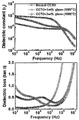
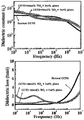
- Figure 1 shows the dielectric properties of the sintered materials prepared in Example 1 of the present invention.
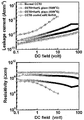
- Figure 2 shows the leakage current and the resistivity according to the DC voltage of the sintered materials prepared in Example 1 of the present invention.
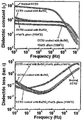
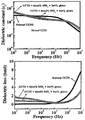
- Figure 3 shows the dielectric properties of the sintered materials prepared in Example 2 of the present invention.
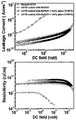
- Figure 4 shows the leakage current and the resistivity according to the DC voltage of the sintered materials prepared in Example 2 of the present invention.
- Figure 5 shows the relative dielectric constant and dielectric loss according to the frequency of the sintered materials prepared in Example 3 of the present invention.
- Figure 6 shows the relative dielectric constant and dielectric loss according to the frequency of the sintered materials prepared in Example 4 of the present invention.
- Figure 7 shows the relative dielectric constant and dielectric loss according to the frequency of the sintered materials prepared in Example 5 of the present invention.
- Example 8 shows the relative dielectric constant and dielectric loss according to the frequency of the sintered materials prepared in Example 6 of the present invention.
- Figure 9 shows the relative dielectric constant and dielectric loss according to the frequency of the sintered materials prepared in Example 7 of the present invention.
- Figure 10 shows the relative dielectric constant and dielectric loss according to the frequency of the sintered materials prepared in Example 8 of the present invention.
- Example 11 shows the relative dielectric constant and dielectric loss according to the frequency of the sintered materials prepared in Example 9 of the present invention.
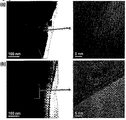
- Example 12 is a TEM photograph of the sintered material prepared in Example 2 of the present invention.
- CaCO 3 , CuO, TiO 2 powders in a molar ratio of 1: 3: 4 were added to a polyethylene vessel containing zirconia balls, mixed with anhydrous ethanol and ball milled. The solvent was volatilized from the slurry thus formed. The dried powder was ground to 950 ° C. at an elevated temperature rate of 5 ° C./min through grinding and sieving, and then calcined at this temperature for 24 hours.
- a ceramic was prepared by adding BBS (BaO-B 2 O 3 -SiO 2 ) glass as a sintering aid to improve the electrical properties of the grain boundaries.
- the glass was produced by ball milling for 6 hours after placing BaCO 3 , H 3 BO 3 and SiO 2 in a weight ratio of 30:60:10 in a polyethylene container with zirconia balls, respectively.
- the mixed powder was pulverized and sieved, and then placed in a platinum crucible and maintained at 1,300 ° C. for 3 hours, followed by quenching at room temperature.
- the glass obtained through the above process is again pulverized and sieved, and then added to pure CCTO powder at a ratio of 1 wt% and 3 wt%, uniaxial pressure formed into a disc shape, and then cold drawn to a pressure of 150 MPa.
- Cold isostatic presses were performed.
- the specimens thus prepared were charged to a heat treatment furnace, heated to 1,080 ° C. at a temperature increase rate of 5 ° C./min, and sintered at the temperature for 24 hours.
- the dielectric properties of the sintered materials are shown in FIG. 1, and the leakage current and resistivity according to DC voltage are shown in FIG. 2.
- the heat-treated powder was ground by pulverization and sieving, and then, the glass prepared in Example 1 was added at a ratio of 1 wt% and 3 wt%, and then sintered to measure electrical properties.
- the sintering process was performed by filling 1.2 g of the powder into a disk-shaped 15 ⁇ mold, followed by uniaxial pressure, and cold isostatic pressing at a pressure of 150 MPa.
- the molded body was heated to 1,100 ° C. at an elevated temperature rate of 5 ° C./min in an electric furnace, and then sintered at the temperature for 12 hours.
- a TEM photograph of the sintered material is shown in FIG. 12. 12, it can be seen that the CCTO core and the BTO shell are formed.
- the heat-treated powder was ground by pulverization and sieving, and then, the glass prepared in Example 1 was added at a ratio of 1 wt% and 3 wt%, and then sintered to measure electrical properties.
- the sintering process was performed by filling 1.2 g of the powder into a disk-shaped 15 ⁇ mold, followed by uniaxial pressure, and then cold isostatic pressing at a pressure of 150 MPa.
- the molded body was heated to 1,100 ° C. at a temperature increase rate of 5 ° C./min in an electric furnace, and then sintered at the temperature for 12 hours.
- the heat-treated powder was ground by pulverization and sieving, and then, the glass prepared in Example 1 was added at a ratio of 1 wt% and 3 wt%, and then sintered to measure electrical properties.
- the sintering process was performed by filling 1.2 g of powder in a disk-shaped 15 ⁇ mold, uniaxial pressure, and cold isostatic pressing at a pressure of 150 MPa.
- the molded body was heated to 1,100 ° C. at an elevated temperature rate of 5 ° C./min in an electric furnace, and then sintered at the temperature for 12 hours.
- silver paste was coated on both surfaces of the sintered material, and then heated up to 600 ° C. at a temperature increase rate of 5 ° C./min, followed by baking at the temperature.
- the heat-treated powder was ground by pulverization and sieving, and then, the glass prepared in Example 1 was added at a ratio of 1 wt% and 3 wt%, and then sintered to measure electrical properties.
- the sintering process was performed by filling 1.2 g of powder in a disk-shaped 15 ⁇ mold, uniaxial pressure, and cold isostatic pressing at a pressure of 150 MPa.
- the molded body was heated to 1,100 ° C. at a temperature increase rate of 5 ° C./min in an electric furnace, and then sintered at the temperature for 12 hours.
- silver paste was coated on both surfaces of the sintered material, and then heated up to 600 ° C. at a temperature increase rate of 5 ° C./min, followed by baking at the temperature.
- the heat-treated powder was ground by pulverization and sieving, and then, the glass prepared in Example 1 was added at a ratio of 1 wt% and 3 wt%, and then sintered to measure electrical properties.
- the sintering process was performed by filling 1.2 g of the powder into a disk-shaped 15 ⁇ mold, followed by uniaxial pressure, and cold isostatic pressing at a pressure of 150 MPa.
- the molded body was heated to 1,100 ° C. at a temperature increase rate of 5 ° C./min in an electric furnace, and then sintered at the temperature for 12 hours.
- silver paste was coated on both surfaces of the sintered material, and then heated up to 600 ° C. at a temperature increase rate of 5 ° C./min, followed by baking at the temperature.
- the relative dielectric constant and dielectric loss (FIG. 8) of the sintered material with frequency were measured.
- the heat-treated powder was ground by pulverization and sieving, and then, the glass prepared in Example 1 was added at a ratio of 1 wt% and 3 wt%, and then sintered to measure electrical properties.
- the sintering process was performed by filling 1.2 g of the powder into a disk-shaped 15 ⁇ mold, followed by uniaxial pressure, and cold isostatic pressing at a pressure of 150 MPa.
- the molded body was heated to 1,100 ° C. at a temperature increase rate of 5 ° C./min in an electric furnace, and then sintered at the temperature for 12 hours.
- silver paste was coated on both surfaces of the sintered material, and then heated up to 600 ° C. at a temperature increase rate of 5 ° C./min, followed by baking at the temperature.
- the heat-treated powder was ground by pulverization and sieving, and then, the glass prepared in Example 1 was added at a ratio of 1 wt% and 3 wt%, and then sintered to measure electrical properties.
- the sintering process was performed by filling 1.2 g of the powder into a disk-shaped 15 ⁇ mold, followed by uniaxial pressure, and cold isostatic pressing at a pressure of 150 MPa.
- the molded body was heated to 1,100 ° C. at a temperature increase rate of 5 ° C./min in an electric furnace, and then sintered at the temperature for 12 hours.
- silver paste was coated on both surfaces of the sintered material, and then heated up to 600 ° C. at a temperature increase rate of 5 ° C./min, followed by baking at the temperature.
- HfCl 4 0.191 g was added to the beaker, followed by addition of 100 ml of anhydrous ethanol, followed by stirring until HfCl 4 was completely dissolved.
- 10 g of CaCu 3 Ti 4 O 12 powder was placed in a beaker and stirred for about 1 hour. Thereafter, the mixed solution was stirred at about 80 rpm to 200 rpm until the anhydrous ethanol was completely volatilized.
- the dried powder was placed in an alumina crucible and heated to 1,100 ° C. at an elevated temperature rate of 1.5 ° C./min in an electric furnace, and then heat-treated at the temperature for 12 hours.
- the heat-treated powder was ground by pulverization and sieving, and then, the glass prepared in Example 1 was added at a ratio of 1 wt% and 3 wt%, and then sintered to measure electrical properties.
- the sintering process was performed by filling 1.2 g of the powder into a disk-shaped 15 ⁇ mold, followed by uniaxial pressure, and cold isostatic pressing at a pressure of 150 MPa.
- the molded body was heated to 1,100 ° C. at a temperature increase rate of 5 ° C./min in an electric furnace, and then sintered at the temperature for 12 hours.
- silver paste was coated on both surfaces of the sintered material, and then heated up to 600 ° C. at a temperature increase rate of 5 ° C./min, followed by baking at the temperature.
- the relative dielectric constant and dielectric loss (FIG. 11) of the sintered material with frequency were measured.
Landscapes
- Engineering & Computer Science (AREA)
- Chemical & Material Sciences (AREA)
- Ceramic Engineering (AREA)
- Manufacturing & Machinery (AREA)
- Materials Engineering (AREA)
- Organic Chemistry (AREA)
- Structural Engineering (AREA)
- Inorganic Chemistry (AREA)
- Power Engineering (AREA)
- Microelectronics & Electronic Packaging (AREA)
- Physics & Mathematics (AREA)
- Thermal Sciences (AREA)
- General Chemical & Material Sciences (AREA)
- Chemical Kinetics & Catalysis (AREA)
- Compositions Of Oxide Ceramics (AREA)
- Inorganic Insulating Materials (AREA)
- Inorganic Compounds Of Heavy Metals (AREA)
- Glass Compositions (AREA)
- Ceramic Capacitors (AREA)
Abstract
본 발명은 적층세라믹콘덴서 등에 사용될 수 있는 유전물질용 소결물질 및 이의 제조 방법에 관한 것이다. 보다 상세하게는, 본 발명은 제1 물질로 이루어진 코어(core)와 제2 물질로 이루어진 쉘을 포함하는 코어-쉘 미세구조(microstructure)를 가지고, 상기 제1 물질의 상대유전상수가 상기 제2 물질의 상대유전상수보다 큰 것임을 특징으로 하는 유전물질용 소결물질 및 이의 제조 방법에 대한 것이다.
Description
본 발명은 유전물질용 소결물질 및 이의 제조 방법에 관한 것이다. 보다 상세하게는, 본 발명은 제1 물질로 이루어진 코어(core)와 제2 물질로 이루어진 쉘을 포함하는 코어-쉘 미세구조(microstructure)를 가지고, 상기 제1 물질의 상대유전상수가 상기 제2 물질의 상대유전상수보다 큰 것임을 특징으로 하는 유전물질용 소결물질 및 이의 제조 방법에 대한 것이다.
최근, 전자기기의 소형화와 고성능화에 수반하여 적층세라믹 커패시터도 고용량화 및 박층화가 매우 급속하게 진행되고 있다. 이에 따라, 이에 사용되는 유전물질들의, 고전계에 따른 DC-바이어스(bias) 그리고 온도 변화에 따른 용량변화 등과 같은 특성의 신뢰성이 문제가 되고 있다.
고유전율의 유전물질로서 페로브스카이트 구조를 갖는 BaTiO3(이하에서 BTO라고도 약칭함)분말을 많이 사용하고 있다. 그런데 BTO 유전물질은 직류 전압 인가(DC-bias)에 의한 비유전율의 감소가 크다는 결점이 있다. 이러한 비유전율의 감소 문제를 해결하기 위해 BTO결정 입자를 미소화 시키는 기술이 개발되고 있으나, 오히려 유전율이 감소하고 온도에 따른 용량변화의 특성에 악영향을 미치는 결과가 발생하고 있다.
또한, 종래 기술에 따른 BTO 유전물질은 각 온도별 상전이에 의한 원자 요동에 의해 4,000 이상의 큰 유전율을 갖는다. 그러나 종래 기술에 따른 BTO 유전물질은 이러한 원자 요동에 의해 DC 바이어스 인가에 의한 비유전율이 크게 변하는 특성을 갖고 있다.
최근에는 BaTiO3의 DC-바이어스 특성을 향상시키기 위하여 BaTiO3의 A 자리에 일부 Ca을 고용시킨 (Ba1-xCax)TiO3(이하 BCT라고도 약칭함) 유전물질이 개발되었다(일본 공개특허공보 2003-277136호와 일본 공개특허공보 2004-079686호).
그러나, 이러한 선행기술에서는 BCT에서 Ca 고용량이 증가함에 따라 전체적인 체적의 감소에 따른 원자 요동이 감소되어 비유전률이 저하되는 단점을 갖고 있다. 또한, BaTiO3에 Ca이 고용됨에 따라 칩(chip) 소성에서 칼슘(Ca)의 이동으로 인하여 비정상 입성장이 발생하여 전기적 특성이 저하되는 문제가 발생한다. 따라서 이를 해결하고자 소성 프로파일 및 분위기를 이용하게 되며, 이렇게 하기 위해서는 많은 설비 투자가 새롭게 요구되는 문제가 발생하고 있다.
이와 같이, BTO 유전물질은 고유전율의 장점이 있으나, DC-바이어스 특성 변화가 크다는 단점이 있다. 또한, BCT 유전물질은 DC의 바이어스 특성은 개선되지만, 비유전율이 크게 감소하는 단점이 있다.
대한민국 특허출원 제10-2005-0033009호는 주성분으로서 BaTiO3 결정입자와 (Ba1-xCax)TiO3결정입자로 조성되는 유전물질 자기조성물과 이를 이용한 적층세라믹 커패시터를 개시하고 있다.
그러나 BaTiO3 의 경우 120℃ 부근에서 상전이를 일으키기 때문에, 온도 의존성이 매우 크며, 큰 결정격자 c축과 a축의 비인 c/a 축간 비율(tetragonality)을 유지해야 하기 때문에, Mg 화합물 또는 Ba 화합물, Y 화합물 또는 RE 화합물(RE:희토류원소), Mn 화합물 또는 Cr 화합물 또는 V 화합물, Si 화합물 등의 여러 부가적인 화합물이 포함되어야 한다. 따라서 상기 대한민국 특허출원 제10-2005-0033009호에 따른 커패시터를 제조하는 공정은 매우 복잡해진다. 그러므로 이들 보다 더 나은 특성을 가진 유전물질의 제조 방법의 개발 요구가 여전히 존재한다.
이러한 연구들로서, 데샨브레스(Deschanvres) 등은 문헌(Bull. Soc. Chim. Fr.4077 (1967))에서 페로브스카이트(perovskite) 구조이고 격자 상수가 0.7393 nm인 CaCu3Ti4O12의 제조를 보고하고 있다.
또한, 보슈(Bochu) 등은 문헌(J. Solid State Chem.29,291 (1979))에서 CaCu3Ti4O12 및 관련 티타네이트의 합성 및 구조를 개시하고, 격자 상수가 0.7391 nm이라고 보고하고 있다.
뿐만 아니라, 얀드로프스키(Yandrofski) 등의 미합중국특허 제5,472,935호는 동조가능한 강유전물질을 혼입한, 동조식 마이크로파 및 밀리미터파 소자를 개시하고 있다.
또한, 국제특허출원 PCT/US2001/014297호는 유전물질 CaCu3Ti4O12(CCTO)를 혼입한 동조식 소자를 개시한다. 그러나 상기 PCT/US2001/014297호에 따르면, CaCu3Ti4O12 유전물질 자체가 주파수 특성에 영향을 받지 않는 동조식 소자에 유용하다고 하였지만, 1KHz에서 1MHz까지 90,000 이상의 유전상수 값을 가지는 CaCu3Ti4O12의 경우에는 100KHz 이상에서 유전손실이 클 뿐만 아니라 직류 및 교류전압 하에서의 유전특성이 저하되는 문제점이 존재한다. 따라서 상기 PCT/US2001/014297호의 기술은 현재 상용화되지 못하고 있다.
이러한 선행기술들의 한계점을 극복하기 위하여, 상온 100Hz에서 105 이상의 상대유전상수(εr>105)를 가지는 고유전 물질인 CaCu3Ti4O12에 대한 연구가 활발하게 진행되고 있다. 상기 CaCu3Ti4O12는 일반적인 유전물질보다 월등히 우수한 유전상수 값을 갖는다. 상기 CaCu3Ti4O12는 고유전 물질이 필요한 MLCC(Multi Layered Ceramic Capacitor) 등과 같은 분야에서 이용될 수 있다.
그러나 종래의 CaCu3Ti4O12 유전물질은 주파수 100KHz 이상에서 유전손실 (Dielectric Loss)이 급격히 증가하기 때문에, 특정 주파수 대역에서는 상용화되지 못하고 있다. 그리고 직류 전압(DC field) 과 교류 전압(AC field) 인가에 의한 비유전율의 감소(DC-bias)가 크다는 결점이 있다.
이러한 문제점들을 해결하기 위하여, CaCu3Ti4O12에 MnO2, ZrO2, SiO2 등의 물질들을 첨가하거나, CaCu3Ti4O12에서 Cu의 조성을 조절하는 등 다양한 시도가 있었으며, 최근에는 고상 소결공정(solid-state sintering process) 이외에도 마이크로파 합성법(Microwave synthesis), 졸-겔 합성법(Sol-gel synthesis) 등과 같이 합성법을 다르게 하여 유전특성을 개선하려고 하였다.
그러나 아직까지 고유전 물질인 CaCu3Ti4O12의 높은 유전율을 유지하면서 넓은 주파수 대역에서 유전손실을 줄여주는 유전물질을 달성하는 결과를 얻지 못하였다.
본 발명자들은 전술한 선행기술들의 문제점을 극복하기 위하여, 예를 들면, CaCu3Ti4O12, SrCu3Ti4O12, BaCu3Ti4O12, Li와 Ti 등이 도핑된 NiO, Li와 Al 등이 도핑된 NiO, CuO, 또는 RE2-yA'yNiO4(RE = La, Pr, Nd, Sm, Eu, Gd, Ce; A' = Ca, Sr, Ba; 0<y<2) 등과 같은 제1 물질로 이루어진 코어와, 상기 제1 물질보다 유전율은 낮지만 고주파 영역에서 유전손실이 적은 CaTiO3, SrTiO3, BaTiO3, MgTiO3 등과 같은 페롭스카이트계(Perovskite-Type) 물질들 또는 Al2O3, TiO2, MgO, CaO, SrO, BaO, HfO2 등의 단일 금속산화물들(Single Metal Oxides)로 이루어진 쉘을 포함하는 코어-쉘 미세구조를 가지는 유전물질용 소결물질 및 이의 제조 방법을 발명하였다.
Li와 Ti가 도핑된 NiO, Li와 Al이 도핑된 NiO, CuO, 페롭스카이트(Perovskite) 구조의 ACu3Ti4O12, 또는 RE2-yA'yNiO4로 이루어진 군에서 선택되는 물질로 이루어진 분산상과 소결조제로 이루어진 연속상을 포함하고, 상기 A는 Ca, Sr, Ca1-xSrx, Sr1-xBax, Ca1-xBax, Sc2/3, Y2/3, La2/3, Ce2/3, Pr2/3, Nd2/3, Pm2/3, Sm2/3, Eu2/3, Gd2/3, Tb2/3, Dy2/3, Ho2/3, Er2/3, Tm2/3, Yb2/3, Lu2/3, Na1/2La1/2, Na1/2Sm1/2, Na1/2Gd1/2, Na1/2Dy1/2, Na1/2Yb1/2, Na1/2Y1/2 또는 Na1/2Bi1/2이며, 0<x<1이고, 상기 RE는 La, Pr, Nd, Sm, Eu, Gd 또는 Ce이며, 상기 A'은 Ca, Sr 또는 Ba이고, 0<y<2인 것인, 유전물질용 소결물질을 제공하는 것이다.
본 발명의 또 다른 목적은 Li와 Ti가 도핑된 NiO, Li와 Al이 도핑된 NiO, CuO, 페롭스카이트(Perovskite) 구조의 ACu3Ti4O12, 또는 RE2-yA'yNiO4로 이루어진 군에서 선택되는 물질의 분말과 소결조제의 혼합물을 소결하는 단계를 포함하고, 상기 A는 Ca, Sr, Ca1-xSrx, Sr1-xBax, Ca1-xBax, Sc2/3, Y2/3, La2/3, Ce2/3, Pr2/3, Nd2/3, Pm2/3, Sm2/3, Eu2/3, Gd2/3, Tb2/3, Dy2/3, Ho2/3, Er2/3, Tm2/3, Yb2/3, Lu2/3, Na1/2La1/2, Na1/2Sm1/2, Na1/2Gd1/2, Na1/2Dy1/2, Na1/2Yb1/2, Na1/2Y1/2 또는 Na1/2Bi1/2이며, 0<x<1이고, 상기 RE는 La, Pr, Nd, Sm, Eu, Gd 또는 Ce이며, 상기 A'은 Ca, Sr 또는 Ba이고, 0<y<2인 것인, 유전물질용 소결물질 제조 방법을 제공하는 것이다.
본 발명의 또 다른 목적은 제1 물질로 이루어진 코어(core)와 제2 물질로 이루어진 쉘을 포함하는 코어-쉘 미세구조(microstructure)를 가지고, 상기 제1 물질의 상대유전상수가 상기 제2 물질의 상대유전상수보다 큰 것임을 특징으로 하는 유전물질용 소결물질을 제공하는 것이다.
본 발명의 또 다른 목적은 i) 제1 물질의 분말과 피복 조성물을 혼합하여 상기 제1 유전물질의 분말을 피복하는 단계; ii) 상기 i)단계의 혼합물을 건조시키는 단계; iii) 상기 ii)단계의 건조된 혼합물을 하소하여 상기 제1 물질로 이루어진 코어 위에 제2 물질로 이루어진 쉘층을 형성시키는 단계; 그리고 iv) 상기 iii)단계에서 얻은 소결 전구체 분말과 제3 물질의 혼합물을 소결하는 단계를 포함하는, 코어-쉘 미세구조를 가지는 소결물질 제조 방법을 제공하는 것이다.
전술한 본 발명의 기본적인 목적은 Li와 Ti가 도핑된 NiO, Li와 Al이 도핑된 NiO, CuO, 페롭스카이트(Perovskite) 구조의 ACu3Ti4O12, 또는 RE2-yA'yNiO4로 이루어진 군에서 선택되는 물질로 이루어진 분산상과 소결조제로 이루어진 연속상을 포함하고, 상기 A는 Ca, Sr, Ca1-xSrx, Sr1-xBax, Ca1-xBax, Sc2/3, Y2/3, La2/3, Ce2/3, Pr2/3, Nd2/3, Pm2/3, Sm2/3, Eu2/3, Gd2/3, Tb2/3, Dy2/3, Ho2/3, Er2/3, Tm2/3, Yb2/3, Lu2/3, Na1/2La1/2, Na1/2Sm1/2, Na1/2Gd1/2, Na1/2Dy1/2, Na1/2Yb1/2, Na1/2Y1/2 또는 Na1/2Bi1/2이며, 0<x<1이고, 상기 RE는 La, Pr, Nd, Sm, Eu, Gd 또는 Ce이며, 상기 A'은 Ca, Sr 또는 Ba이고, 0<y<2인 것인, 유전물질용 소결물질을 제공함으로써 달성될 수 있다.
상기 소결조제는 유리일 수 있고, 상기 유리는 BaO-B2O3-SiO2인 것이 바람직하다.
전술한 본 발명의 또 다른 목적은 Li와 Ti가 도핑된 NiO, Li와 Al이 도핑된 NiO, CuO, 페롭스카이트(Perovskite) 구조의 ACu3Ti4O12, 또는 RE2-yA'yNiO4로 이루어진 군에서 선택되는 물질의 분말과 소결조제의 혼합물을 소결하는 단계를 포함하고, 상기 A는 Ca, Sr, Ca1-xSrx, Sr1-xBax, Ca1-xBax, Sc2/3, Y2/3, La2/3, Ce2/3, Pr2/3, Nd2/3, Pm2/3, Sm2/3, Eu2/3, Gd2/3, Tb2/3, Dy2/3, Ho2/3, Er2/3, Tm2/3, Yb2/3, Lu2/3, Na1/2La1/2, Na1/2Sm1/2, Na1/2Gd1/2, Na1/2Dy1/2, Na1/2Yb1/2, Na1/2Y1/2 또는 Na1/2Bi1/2이며, 0<x<1이고, 상기 RE는 La, Pr, Nd, Sm, Eu, Gd 또는 Ce이며, 상기 A'은 Ca, Sr 또는 Ba이고, 0<y<2인 것인, 유전물질용 소결물질 제조 방법을 제공함으로써 달성될 수 있다.
상기 소결조제는 유리일 수 있고, 상기 유리는 BaO-B2O3-SiO2인 것이 바람직하다.
또한, 본 발명의 유전물질용 소결물질 제조 방법에서 상기 소결단계의 온도는 900℃ 내지 1,200℃인 것이 바람직하다.
전술한 본 발명의 또 다른 목적은 제1 물질로 이루어진 코어(core)와 제2 물질로 이루어진 쉘을 포함하는 코어-쉘 미세구조(microstructure)를 가지고, 상기 제1 물질의 상대유전상수가 상기 제2 물질의 상대유전상수보다 큰 것임을 특징으로 하는 유전물질용 소결물질을 제공함으로써 달성될 수 있다.
본 발명의 코어-쉘 미세구조를 가지는 소결물질에 포함되는 상기 제1 물질의 상대유전상수와 상기 제2 물질의 상대유전상수의 차이는 25℃에서 바람직하게는 1,000 이상, 보다 바람직하게는 3,000 이상, 가장 바람직하게는 5,000 이상이다.
상기 제1 물질은 Li와 Ti가 도핑된 NiO, Li와 Al이 도핑된 NiO, CuO, 페롭스카이트(Perovskite) 구조의 ACu3Ti4O12, 또는 RE2-yA'yNiO4로 이루어진 군에서 선택될 수 있고, 상기 A는 Ca, Sr, Ca1-xSrx, Sr1-xBax, Ca1-xBax, Sc2/3, Y2/3, La2/3, Ce2/3, Pr2/3, Nd2/3, Pm2/3, Sm2/3, Eu2/3, Gd2/3, Tb2/3, Dy2/3, Ho2/3, Er2/3, Tm2/3, Yb2/3, Lu2/3, Na1/2La1/2, Na1/2Sm1/2, Na1/2Gd1/2, Na1/2Dy1/2, Na1/2Yb1/2, Na1/2Y1/2 또는 Na1/2Bi1/2이며, 0<x<1이고, 상기 RE는 La, Pr, Nd, Sm, Eu, Gd 또는 Ce이며, 상기 A'은 Ca, Sr 또는 Ba이고, 0<y<2이다.
상기 제2 물질은 A'TiO3, Al2O3, HfO2, TiO2, MgO, SiO2 또는 LaLuO3로부터 선택될 수 있고, 상기 A'는 Mg, Ca, Sr, Ba, Mg1-xCax, Mg1-xSrx, Mg1-xBax, Ca1-xSrx, Sr1-xBax 또는 Ca1-xBax이며, 0<x<1이다.
또한, 본 발명의 코어-쉘 미세구조를 가지는 소결물질의 쉘에 소결조제가 추가로 포함될 수 있다. 상기 소결조제는 유리일 수 있고, 상기 유리는 BaO-B2O3-SiO2인 것이 바람직하다.
전술한 본 발명의 또 다른 목적은 i) 제1 물질의 분말과 피복 조성물을 혼합하여 상기 제1 유전물질의 분말을 피복하는 단계; ii) 상기 i)단계의 혼합물을 건조시키는 단계; iii) 상기 ii)단계의 건조된 혼합물을 하소하여 상기 제1 물질로 이루어진 코어 위에 제2 물질로 이루어진 쉘층을 형성시키는 단계; 그리고 iv) 상기 iii)단계에서 얻은 소결 전구체 분말과 제3 물질의 혼합물을 소결하는 단계를 포함하는, 코어-쉘 미세구조를 가지는 소결물질 제조 방법을 제공함으로써 달성될 수 있다.
상기 제1 물질은 Li와 Ti가 도핑된 NiO, Li와 Al이 도핑된 NiO, CuO, 페롭스카이트(Perovskite) 구조의 ACu3Ti4O12, 또는 RE2-yA'yNiO4로 이루어진 군에서 선택될 수 있고, 상기 A는 Ca, Sr, Ca1-xSrx, Sr1-xBax, Ca1-xBax, Sc2/3, Y2/3, La2/3, Ce2/3, Pr2/3, Nd2/3, Pm2/3, Sm2/3, Eu2/3, Gd2/3, Tb2/3, Dy2/3, Ho2/3, Er2/3, Tm2/3, Yb2/3, Lu2/3, Na1/2La1/2, Na1/2Sm1/2, Na1/2Gd1/2, Na1/2Dy1/2, Na1/2Yb1/2, Na1/2Y1/2 또는 Na1/2Bi1/2이며, 0<x<1이고, 상기 RE는 La, Pr, Nd, Sm, Eu, Gd 또는 Ce이며, 상기 A'은 Ca, Sr 또는 Ba이고, 0<y<2이다.
상기 쉘층이 A'TiO3인 경우에는 상기 피복 조성물이 Mg(CH3COO)2, Ca(CH3COO)2, Sr(CH3COO)2, Ba(CH3COO)2, Mg(C5H7O2)2, Ca(C5H7O2)2, Sr(C5H7O2)2 또는 Ba(C5H7O2)2로 이루어진 군에서 선택되는 하나 또는 두 개, 그리고 티타늄 이소프로폭사이드의 혼합물일 수 있고, 상기 A'은 Mg, Ca, Sr, Ba, Mg1-xCax, Mg1-xSrx, Mg1-xBax, Ca1-xSrx, Sr1-xBax 또는 Ca1-xBax이며, 0<x<1이다.
또한, 상기 쉘층이 TiO2를 제외한 단일금속산화물인 경우에는 상기 피복 조성물이 Mg(C2H3O2)2, Ca(CH3COO)2, Sr(CH3COO)2, Ba(CH3COO)2, HfCl4 또는 Al(CH3COO)2로 이루어진 군에서 선택되는 하나 및 에탄올의 혼합물일 수 있다.
또한, 상기 쉘층이 TiO2인 경우에는 상기 피복 조성물이 티타늄 이소프로폭사이드 및 에탄올의 혼합물일 수 있다.
본 발명의 코어-쉘 미세구조를 가지는 유전물질용 소결물질 제조 방법의 iv)단계에서 상기 소결 전구체 분말에 추가로 소결조제를 혼합한 혼합물을 소결함으로써, 상기 쉘이 소결조제를 추가로 포함할 수 있다. 상기 소결조제는 유리일 수 있고, 상기 유리는 BaO-B2O3-SiO2인 것이 바람직하다.
본 발명의 코어-쉘 미세구조를 가지는 유전물질용 소결물질 제조 방법에 있어서, 상기 ii)단계의 건조 단계가 상기 i)단계의 혼합물을 80℃ 내지 100℃로 가열함으로써 수행될 수 있다. 또한, 상기 ii)단계의 건조 단계는 분무건조에 의하여 수행되는 것이 바람직하다.
본 발명의 코어-쉘 미세구조를 가지는 유전물질용 소결물질 제조 방법에 있어서, 상기 iii)단계의 하소 온도는 1,000℃ 내지 1,150℃인 것이 바람직하다. 또한, 상기 iv)단계의 소결 온도는 900℃ 내지 1,200℃인 것이 바람직하다.
전술한 바와 같이, 본 발명의 유전물질용 소결물질의 주파수에 따른 전기적 특성과, 직류전류 및 교류전류 인가시의 전기적 특성은 종래의 유전물질의 전기적 특성에 비하여 향상된 특성을 가진다.
또한, 본 발명의 유전물질용 소결물질은, 현재까지 사용되고 있는 유전물질 중 가장 고유전율 재료인 BaTiO3 비해 우수한 유전율을 가진다.
도 1은 본 발명의 실시예 1에서 제조된 소결물질들의 유전 특성을 나타낸다.
도 2는 본 발명의 실시예 1에서 제조된 소결물질들의 직류 전압에 따른 누설 전류와 저항률을 나타낸다.
도 3은 본 발명의 실시예 2에서 제조된 소결물질들의 유전 특성을 나타낸다.
도 4는 본 발명의 실시예 2에서 제조된 소결물질들의 직류 전압에 따른 누설 전류와 저항률을 나타낸다.
도 5는 본 발명의 실시예 3에서 제조된 소결물질들의 주파수에 따른 상대유전상수와 유전 손실을 나타낸다.
도 6은 본 발명의 실시예 4에서 제조된 소결물질들의 주파수에 따른 상대유전상수와 유전 손실을 나타낸다.
도 7은 본 발명의 실시예 5에서 제조된 소결물질들의 주파수에 따른 상대유전상수와 유전 손실을 나타낸다.
도 8은 본 발명의 실시예 6에서 제조된 소결물질들의 주파수에 따른 상대유전상수와 유전 손실을 나타낸다.
도 9는 본 발명의 실시예 7에서 제조된 소결물질들의 주파수에 따른 상대유전상수와 유전 손실을 나타낸다.
도 10은 본 발명의 실시예 8에서 제조된 소결물질들의 주파수에 따른 상대유전상수와 유전 손실을 나타낸다.
도 11은 본 발명의 실시예 9에서 제조된 소결물질들의 주파수에 따른 상대유전상수와 유전 손실을 나타낸다.
도 12는 본 발명의 실시예 2에서 제조된 소결물질에 대한 TEM 사진이다.
이하, 다음의 실시예를 들어 본 발명을 보다 구체적으로 설명하고자 한다. 그러나 다음의 실시예에 대한 설명은 본 발명의 구체적인 실시 태양을 특정하여 설명하고자 하는 것일 뿐이며, 본 발명의 권리범위를 이들에 기재된 내용으로 한정하거나 제한해석하고자 의도하는 것은 아니다.
실시예 1. CaCu3Ti4O12 분말 및 이에 유리상(glass phase)이 첨가된 소결물질 제조
1:3:4의 몰비의 CaCO3, CuO, TiO2 분말들을 지르코니아 볼(Zirconia ball)을 넣은 폴리에틸렌 용기에 첨가하고 무수에탄올을 사용하여 혼합한 후 볼 밀링(ball milling)하였다. 이렇게 형성된 슬러리(slurry)로부터 용매를 휘발시켰다. 건조된 분말에 대해 분쇄(grinding)와 여과(sieving)를 거쳐 공기 분위기에서 5℃/min의 승온 속도로 950℃까지 올린 후, 이 온도에서 24시간 동안 하소(calcination)하였다.
다음으로, 입계의 전기적 특성을 개선하기 위한 소결조제로서 BBS(BaO-B2O3-SiO2)유리를 첨가하여 세라믹을 제조하였다. 상기 유리는 중량비가 각각 30:60:10인 BaCO3, H3BO3 및 SiO2를 지르코니아 볼을 넣은 폴리에틸렌 용기에 넣은 후 6 시간 동안 볼 밀링(ball milling)함으로써 제조하였다. 혼합된 분말을 분쇄 및 체거름 과정을 거친 후 백금 도가니에 넣어 1,300℃에서 3시간 동안 유지한 후 상온으로 급랭(quenching)시켰다. 상기 과정을 거쳐 얻어진 유리는 다시 분쇄 및 체거름 과정을 거쳐 1 wt%와 3 wt%의 비율에 맞게 순수한 CCTO 분말에 첨가하여 디스크 형상으로 일축 가압 성형(uniaxial pressure)한 후, 150MPa의 압력으로 냉간 정수압 성형(cold isostatic press)을 하였다. 이렇게 제조된 시편들을 열처리로에 장입하고, 5℃/min의 승온 속도로 1,080℃까지 승온시킨 후 상기 온도에서 24시간 동안 소결(sintering)하였다.
도 1에 상기 소결물질들의 유전특성을 나타내었고, 도 2에 직류전압에 따른 누설전류와 저항률을 나타내었다.
실시예 2. CaCu3Ti4O12-BaTiO3 코어-쉘 및 이에 유리상이 첨가된 소결물질 제조
비커에 0.205ml의 Ti[OCH(CH3)2]4, 0.22ml의 아세틸아세톤(C5H8O2)를 첨가하였다. 그리고 0.175g의 (C2H3O2)2Ba 용액을 상기 비커에 첨가한 후, 100ml의 아세트산을 가하여 (C2H3O2)2Ba 용액이 완전히 용해될 때까지 교반하였다. 이어서, 10g의 CaCu3Ti4O12 분말을 비커에 넣어 1 시간 가량 교반하였다. 그 후, 혼합된 용액을 약 80 내지 200rpm으로 아세트산이 완전히 휘발될 때까지 교반하였다. 상기 건조된 분말을 알루미나 도가니에 넣어 전기로에서 1.5℃/min의 승온속도로 1,100℃까지 승온시킨 후 상기 온도에서 12시간 동안 열처리하였다.
상기 열처리 된 분말을 유발로 분쇄하고 체거름을 한 후 실시예 1에서 제조된 유리를 1 wt%, 3 wt% 비율로 첨가 후, 전기적 특성을 측정하기 위하여 소결 과정을 거쳤다. 상기 소결과정은 분말 1.2g을 디스크 형상의 15Φ 몰드(mold)에 채운 뒤 일축 가압성형(uniaxial pressure)한 후, 150MPa의 압력으로 냉간 정수압 성형(cold isostatic press)하는 과정으로 진행하였다. 상기 성형체를 전기로에서 5℃/min의 승온속도로 1,100℃까지 승온시킨 후 상기 온도에 12시간 동안 소결하였다. 상기 소결물질에 대한 TEM 사진을 도 12에 나타내었다. 도 12를 보면, CCTO 코어와 BTO 쉘이 형성되었음을 확인할 수 있다.
소결 후 상기 소결물질의 양면에 은전극(Silver paste)를 도포한 후 5℃/min의 승온 속도로 600℃까지 승온시킨 후 상기 온도에서 소부하였다. 상기 소결물질에 대하여 유전특성(도 3)과 직류 전압에 따른 누설 전류와 저항률(도 4)을 측정하였다.
실시예 3. CaCu3Ti4O12-CaTiO3 코어-쉘 및 이에 유리상이 첨가된 소결물질 제조
비커에 0.205ml의 Ti[OCH(CH3)2]4, 0.22ml의 아세틸아세톤(C5H8O2)를 첨가하였다. 그리고 0.212g의 (C2H3O2)2Ca 용액을 상기 비커에 첨가한 후, 100ml의 아세트산을 가하여 (C2H3O2)2Ca 용액이 완전히 용해될 때까지 교반하였다. 이어서, 10g의 CaCu3Ti4O12 분말을 비커에 넣어 1시간 가량 교반하였다. 그 후, 혼합된 용액을 약 80 내지 200rpm으로 아세트산이 완전히 휘발될 때까지 교반하였다. 상기 건조된 분말을 알루미나 도가니에 넣어 전기로에서 1.5℃/min의 승온속도로 1,100℃까지 승온시킨 후 상기 온도에서 12시간 열처리하였다.
상기 열처리 된 분말을 유발로 분쇄하고 체거름을 한 후 실시예 1에서 제조된 유리를 1 wt%, 3 wt% 비율로 첨가 후, 전기적 특성을 측정하기 위하여 소결 과정을 거쳤다. 소결과정은 분말 1.2g을 디스크 형상의 15Φ 몰드(mold)에 채운 뒤 일축 가압성형(uniaxial pressure)한 후, 150MPa의 압력으로 냉간 정수압 성형(cold isostatic press)하는 과정으로 진행하였다. 상기 성형체를 전기로에서 5℃/min의 승온속도로 1,100℃까지 승온시킨 후 상기 온도에서 12시간 동안 소결하였다.
소결 후 상기 소결물질의 양면에 은전극(Silver paste)를 도포한 후 5℃/min의 승온 속도로 600℃까지 승온시킨 후 상기 온도에서 소부하였다. 상기 소결물질에 대하여 주파수에 따른 상대유전상수와 유전 손실(도 5)을 측정하였다.
실시예 4. CaCu3Ti4O12-SrTiO3 코어-쉘 및 이에 유리상이 첨가된 소결물질 제조
비커에 0.205ml의 Ti[OCH(CH3)2]4, 0.22ml의 아세틸아세톤(C5H8O2)를 첨가하였다. 그리고 0.140g의 (C2H3O2)2Sr 용액을 상기 비커에 첨가한 후, 100ml의 아세트산을 가하여 (C2H3O2)2Sr 용액이 완전히 용해될 때까지 교반하였다. 이어서, 10g의 CaCu3Ti4O12 분말을 비커에 넣어 1시간 가량 교반하였다. 그 후, 혼합된 용액을 약 80 내지 200rpm으로 아세트산이 완전히 휘발될 때까지 교반하였다. 상기 건조된 분말을 알루미나 도가니에 넣어 전기로에서 1.5℃/min의 승온속도로 1,100℃까지 승온시킨 후 상기 온도에서 12시간 열처리하였다.
상기 열처리 된 분말을 유발로 분쇄하고 체거름을 한 후 실시예 1에서 제조된 유리를 1 wt%, 3 wt% 비율로 첨가 후, 전기적 특성을 측정하기 위하여 소결 과정을 거쳤다. 상기 소결과정은 분말 1.2g을 디스크 형상의 15Φ 몰드(mold)에 채운 뒤 일축 가압성형(uniaxial pressure)한 후, 150MPa의 압력으로 냉간 정수압 성형(cold isostatic press)하는 과정으로 진행하였다. 상기 성형체를 전기로에서 5℃/min의 승온속도로 1,100℃까지 승온시킨 후 상기 온도에서 12시간 동안 소결하였다. 소결 후 상기 소결물질의 양면에 은전극(Silver paste)를 도포한 후 5℃/min의 승온 속도로 600℃까지 승온시킨 후 상기 온도에서 소부하였다.
상기 소결물질에 대하여 주파수에 따른 상대유전상수와 유전 손실(도 6)을 측정하였다.
실시예 5. CaCu3Ti4O12-MgTiO3 코어-쉘 및 이에 유리상이 첨가된 소결물질 제조
비커에 0.205ml의 Ti[OCH(CH3)2]4, 0.22ml의 아세틸아세톤(C5H8O2)를 첨가하였다. 그리고 0.145g의 (C2H3O2)2·2Mg·4H2O 용액을 상기 비커에 첨가한 후, 100ml의 아세트산을 가하여 (C2H3O2)2·2Mg·4H2O 용액이 완전히 용해될 때까지 교반하였다. 이어서, 10g의 CaCu3Ti4O12 분말을 비커에 넣어 1시간 가량 교반하였다. 그 후, 혼합된 용액을 약 80 내지 200rpm으로 아세트산이 완전히 휘발될 때까지 교반하였다. 상기 건조된 분말을 알루미나 도가니에 넣어 전기로에서 1.5℃/min의 승온속도로 1,100℃까지 승온시킨 후 상기 온도에서 12시간 열처리하였다.
상기 열처리 된 분말을 유발로 분쇄하고 체거름을 한 후 실시예 1에서 제조된 유리를 1 wt%, 3 wt% 비율로 첨가 후, 전기적 특성을 측정하기 위하여 소결 과정을 거쳤다. 상기 소결과정은 분말 1.2g을 디스크 형상의 15Φ 몰드(mold)에 채운 뒤 일축 가압성형(uniaxial pressure)한 후, 150MPa의 압력으로 냉간 정수압 성형(cold isostatic press)하는 과정으로 진행하였다. 상기 성형체를 전기로에서 5℃/min의 승온속도로 1,100℃까지 승온시킨 후 상기 온도에서 12시간 동안 소결하였다. 소결 후 상기 소결물질의 양면에 은전극(Silver paste)를 도포한 후 5℃/min의 승온 속도로 600℃까지 승온시킨 후 상기 온도에서 소부하였다.
상기 소결물질에 대하여 주파수에 따른 상대유전상수와 유전 손실(도 7)을 측정하였다.
실시예 6. CaCu3Ti4O12-MgO 코어-쉘 및 이에 유리상이 첨가된 소결물질 제조
비커에 0.145g의 (C2H3O2)2Mg를 첨가한 후, 100ml의 무수에탄올을 가하여 (C2H3O2)2Mg가 완전히 용해될 때까지 교반하였다. 이어서, 10g의 CaCu3Ti4O12 분말을 비커에 넣어 1시간 가량 교반하였다. 그 후, 혼합된 용액을 약 80 내지 200rpm으로 상기 무수에탄올이 완전히 휘발될 때까지 교반하였다. 상기 건조된 분말을 알루미나 도가니에 넣어 전기로에서 1.5℃/min의 승온속도로 1,100℃까지 승온시킨 후 상기 온도에서 12시간 열처리하였다.
상기 열처리 된 분말을 유발로 분쇄하고 체거름을 한 후 실시예 1에서 제조된 유리를 1 wt%, 3 wt% 비율로 첨가 후, 전기적 특성을 측정하기 위하여 소결 과정을 거쳤다. 상기 소결과정은 분말 1.2g을 디스크 형상의 15Φ 몰드(mold)에 채운 뒤 일축 가압성형(uniaxial pressure)한 후, 150MPa의 압력으로 냉간 정수압 성형(cold isostatic press)하는 과정으로 진행하였다. 상기 성형체를 전기로에서 5℃/min의 승온속도로 1,100℃까지 승온시킨 후 상기 온도에서 12시간 동안 소결하였다. 소결 후 상기 소결물질의 양면에 은전극(Silver paste)를 도포한 후 5℃/min의 승온 속도로 600℃까지 승온시킨 후 상기 온도에서 소부하였다.
상기 소결물질에 대하여 주파수에 따른 상대유전상수와 유전 손실(도 8)을 측정하였다.
실시예 7. CaCu3Ti4O12-Al2O3 코어-쉘 및 이에 유리상이 첨가된 소결물질 제조
비커에 0.191g의 (C2H3O2)2Al를 상기 비커에 첨가한 후, 100ml의 무수에탄올을 가하여 (C2H3O2)2Al가 완전히 용해될 때까지 교반하였다. 이어서, 10g의 CaCu3Ti4O12 분말을 비커에 넣어 1시간 가량 교반하였다. 그 후, 혼합된 용액을 약 80 내지 200rpm으로 상기 무수에탄올이 완전히 휘발될 때까지 교반하였다. 상기 건조된 분말을 알루미나 도가니에 넣어 전기로에서 1.5℃/min의 승온속도로 1,100℃까지 승온시킨 후 상기 온도에서 12시간 열처리하였다.
상기 열처리 된 분말을 유발로 분쇄하고 체거름을 한 후 실시예 1에서 제조된 유리를 1 wt%, 3 wt% 비율로 첨가 후, 전기적 특성을 측정하기 위하여 소결 과정을 거쳤다. 상기 소결과정은 분말 1.2g을 디스크 형상의 15Φ 몰드(mold)에 채운 뒤 일축 가압성형(uniaxial pressure)한 후, 150MPa의 압력으로 냉간 정수압 성형(cold isostatic press)하는 과정으로 진행하였다. 상기 성형체를 전기로에서 5℃/min의 승온속도로 1,100℃까지 승온시킨 후 상기 온도에서 12시간 동안 소결하였다. 소결 후 상기 소결물질의 양면에 은전극(Silver paste)를 도포한 후 5℃/min의 승온 속도로 600℃까지 승온시킨 후 상기 온도에서 소부하였다.
상기 소결물질에 대하여 주파수에 따른 상대유전상수와 유전 손실(도 9)을 측정하였다.
실시예 8. CaCu3Ti4O12-TiO2 코어-쉘 및 이에 유리상이 첨가된 소결물질 제조
비커에 0.205ml의 Ti[OCH(CH3)2]4, 0.22ml의 아세틸아세톤(C5H8O2)를 첨가한 후, 100ml의 무수에탄올을 가하여 Ti[OCH(CH3)2]4 용액이 완전히 용해될 때까지 교반하였다. 이어서, 10g의 CaCu3Ti4O12 분말을 비커에 넣어 1시간 가량 교반하였다. 그 후, 혼합된 용액을 약 80 내지 200rpm으로 상기 무수에탄올이 완전히 휘발될 때까지 교반하였다. 상기 건조된 분말을 알루미나 도가니에 넣어 전기로에서 1.5℃/min의 승온속도로 1,100℃까지 승온시킨 후 상기 온도에서 12시간 열처리하였다.
상기 열처리 된 분말을 유발로 분쇄하고 체거름을 한 후 실시예 1에서 제조된 유리를 1 wt%, 3 wt% 비율로 첨가 후, 전기적 특성을 측정하기 위하여 소결 과정을 거쳤다. 상기 소결과정은 분말 1.2g을 디스크 형상의 15Φ 몰드(mold)에 채운 뒤 일축 가압성형(uniaxial pressure)한 후, 150MPa의 압력으로 냉간 정수압 성형(cold isostatic press)하는 과정으로 진행하였다. 상기 성형체를 전기로에서 5℃/min의 승온속도로 1,100℃까지 승온시킨 후 상기 온도에서 12시간 동안 소결하였다. 소결 후 상기 소결물질의 양면에 은전극(Silver paste)를 도포한 후 5℃/min의 승온 속도로 600℃까지 승온시킨 후 상기 온도에서 소부하였다.
상기 소결물질에 대하여 주파수에 따른 상대유전상수와 유전 손실(도 10)을 측정하였다.
실시예 9. CaCu3Ti4O12-HfO2 코어-쉘 및 이에 유리상이 첨가된 소결물질 제조
비커에 0.191g의 HfCl4를 첨가한 후, 100ml의 무수에탄올을 가하여 HfCl4가 완전히 용해될 때까지 교반하였다. 이어서, 10g의 CaCu3Ti4O12 분말을 비커에 넣어 1시간 가량 교반하였다. 그 후, 혼합된 용액을 약 80rpm 내지 200rpm으로 상기 무수에탄올이 완전히 휘발될 때까지 교반하였다. 이렇게 건조된 분말을 알루미나 도가니에 넣어 전기로에서 1.5℃/min의 승온 속도로 1,100℃까지 승온시킨 후 상기 온도에서 12시간 동안 열처리하였다.
상기 열처리 된 분말을 유발로 분쇄하고 체거름을 한 후 실시예 1에서 제조된 유리를 1 wt%, 3 wt% 비율로 첨가 후, 전기적 특성을 측정하기 위하여 소결 과정을 거쳤다. 상기 소결과정은 분말 1.2g을 디스크 형상의 15Φ 몰드(mold)에 채운 뒤 일축 가압성형(uniaxial pressure)한 후, 150MPa의 압력으로 냉간 정수압 성형(cold isostatic press)하는 과정으로 진행하였다. 상기 성형체를 전기로에서 5℃/min의 승온속도로 1,100℃까지 승온시킨 후 상기 온도에서 12시간 동안 소결하였다. 소결 후 상기 소결물질의 양면에 은전극(Silver paste)를 도포한 후 5℃/min의 승온 속도로 600℃까지 승온시킨 후 상기 온도에서 소부하였다.
상기 소결물질에 대하여 주파수에 따른 상대유전상수와 유전 손실(도 11)을 측정하였다.
Claims (28)
- Li와 Ti가 도핑된 NiO, Li와 Al이 도핑된 NiO, CuO, 페롭스카이트(Perovskite) 구조의 ACu3Ti4O12, 그리고 RE2-yA'yNiO4로 이루어진 군에서 선택되는 물질로 이루어진 분산상과 소결조제로 이루어진 연속상을 포함하고, 상기 A는 Ca, Sr, Ca1-xSrx, Sr1-xBax, Ca1-xBax, Sc2/3, Y2/3, La2/3, Ce2/3, Pr2/3, Nd2/3, Pm2/3, Sm2/3, Eu2/3, Gd2/3, Tb2/3, Dy2/3, Ho2/3, Er2/3, Tm2/3, Yb2/3, Lu2/3, Na1/2La1/2, Na1/2Sm1/2, Na1/2Gd1/2, Na1/2Dy1/2, Na1/2Yb1/2, Na1/2Y1/2 또는 Na1/2Bi1/2이며, 0<x<1이고, 상기 RE는 La, Pr, Nd, Sm, Eu, Gd 또는 Ce이며, 상기 A'은 Ca, Sr 또는 Ba이고, 0<y<2인 것인, 유전물질용 소결물질.
- 제1항에 있어서, 상기 소결조제가 유리인 것임을 특징으로 하는 유전물질용 소결물질.
- 제2항에 있어서, 상기 유리가 BaO-B2O3-SiO2인 것임을 특징으로 하는 유전물질용 소결물질.
- Li와 Ti가 도핑된 NiO, Li와 Al이 도핑된 NiO, CuO, 페롭스카이트(Perovskite) 구조의 ACu3Ti4O12, 그리고 RE2-yA'yNiO4로 이루어진 군에서 선택되는 물질의 분말과 소결조제의 혼합물을 소결하는 단계를 포함하고, 상기 A는 Ca, Sr, Ca1-xSrx, Sr1-xBax, Ca1-xBax, Sc2/3, Y2/3, La2/3, Ce2/3, Pr2/3, Nd2/3, Pm2/3, Sm2/3, Eu2/3, Gd2/3, Tb2/3, Dy2/3, Ho2/3, Er2/3, Tm2/3, Yb2/3, Lu2/3, Na1/2La1/2, Na1/2Sm1/2, Na1/2Gd1/2, Na1/2Dy1/2, Na1/2Yb1/2, Na1/2Y1/2 또는 Na1/2Bi1/2이며, 0<x<1이고, 상기 RE는 La, Pr, Nd, Sm, Eu, Gd 또는 Ce이며, 상기 A'은 Ca, Sr 또는 Ba이고, 0<y<2인 것인, 유전물질용 소결물질 제조 방법.
- 제4항에 있어서, 상기 소결조제가 유리인 것임을 특징으로 하는 유전물질용 소결물질 제조 방법.
- 제5항에 있어서, 상기 유리가 BaO-B2O3-SiO2인 것임을 특징으로 하는 유전물질용 소결물질 제조 방법.
- 제6항에 있어서, 상기 소결단계의 온도가 900℃ 내지 1,200℃인 것임을 특징으로 하는 유전물질용 소결물질 제조 방법.
- 제1 물질로 이루어진 코어(core)와 제2 물질로 이루어진 쉘을 포함하는 코어-쉘 미세구조(microstructure)를 가지고, 상기 제1 물질의 상대유전상수가 상기 제2 물질의 상대유전상수보다 큰 것임을 특징으로 하는 유전물질용 소결물질.
- 제8항에 있어서, 상기 제1 물질의 상대유전상수와 상기 제2 물질의 상대유전상수의 차이가 25℃에서 1,000 이상인 것임을 특징으로 하는 코어-쉘 미세구조를 가지는 유전물질용 소결물질.
- 제8항에 있어서, 상기 제1 물질의 상대유전상수와 상기 제2 물질의 상대유전상수의 차이가 25℃에서 3,000 이상인 것임을 특징으로 하는 코어-쉘 미세구조를 가지는 유전물질용 소결물질.
- 제8항에 있어서, 상기 제1 물질의 상대유전상수와 상기 제2 물질의 상대유전상수의 차이가 25℃에서 5,000 이상인 것임을 특징으로 하는 코어-쉘 미세구조를 가지는 유전물질용 소결물질.
- 제8항에 있어서, 상기 제1 물질이 Li와 Ti가 도핑된 NiO, Li와 Al이 도핑된 NiO, CuO, 페롭스카이트(Perovskite) 구조의 ACu3Ti4O12, 그리고 RE2-yA'yNiO4로 이루어진 군에서 선택되는 것임을 특징으로 하고, 상기 A는 Ca, Sr, Ca1-xSrx, Sr1-xBax, Ca1-xBax, Sc2/3, Y2/3, La2/3, Ce2/3, Pr2/3, Nd2/3, Pm2/3, Sm2/3, Eu2/3, Gd2/3, Tb2/3, Dy2/3, Ho2/3, Er2/3, Tm2/3, Yb2/3, Lu2/3, Na1/2La1/2, Na1/2Sm1/2, Na1/2Gd1/2, Na1/2Dy1/2, Na1/2Yb1/2, Na1/2Y1/2 또는 Na1/2Bi1/2이며, 0<x<1이고, 상기 RE는 La, Pr, Nd, Sm, Eu, Gd 또는 Ce이며, 상기 A'은 Ca, Sr 또는 Ba이고, 0<y<2인 것인, 코어-쉘 미세구조를 가지는 유전물질용 소결물질.
- 제8항에 있어서, 상기 제2 물질이 A'TiO3, Al2O3, HfO2, TiO2, MgO, SiO2 및 LaLuO3로 이루어진 군에서 선택되는 것임을 특징으로 하고, 상기 A'는 Mg, Ca, Sr, Ba, Mg1-xCax, Mg1-xSrx, Mg1-xBax, Ca1-xSrx, Sr1-xBax 또는 Ca1-xBax이고, 0<x<1인 것인, 코어-쉘 미세구조를 가지는 유전물질용 소결물질.
- 제8항에 있어서, 상기 쉘이 소결조제를 추가로 포함하는 것을 특징으로 하는 코어-쉘 미세구조를 가지는 유전물질용 소결물질.
- 제14항에 있어서, 상기 소결조제가 유리인 것임을 특징으로 하는 코어-쉘 미세구조를 가지는 유전물질용 소결물질.
- 제15항에 있어서, 상기 유리가 BaO-B2O3-SiO2인 것임을 특징으로 하는 코어-쉘 미세구조를 가지는 유전물질용 소결물질.
- i) 제1 물질의 분말과 피복 조성물을 혼합하여 상기 제1 물질의 분말을 피복하는 단계;ii) 상기 i)단계의 혼합물을 건조시키는 단계;iii) 상기 ii)단계의 건조된 혼합물을 하소하여 상기 제1 물질로 이루어진 코어 위에 제2 물질로 이루어진 쉘층을 형성시키는 단계; 그리고iv) 상기 iii)단계에서 얻은 소결 전구체 분말을 소결하는 단계를 포함하는, 코어-쉘 미세구조를 가지는 유전물질용 소결물질 제조 방법.
- 제17항에 있어서, 상기 제1 물질이 Li와 Ti가 도핑된 NiO, Li와 Al이 도핑된 NiO, CuO, 페롭스카이트(Perovskite) 구조의 ACu3Ti4O12, 그리고 RE2-yA'yNiO4로 이루어진 군에서 선택되는 것임을 특징으로 하고, 상기 A는 Ca, Sr, Ca1-xSrx, Sr1-xBax, Ca1-xBax, Sc2/3, Y2/3, La2/3, Ce2/3, Pr2/3, Nd2/3, Pm2/3, Sm2/3, Eu2/3, Gd2/3, Tb2/3, Dy2/3, Ho2/3, Er2/3, Tm2/3, Yb2/3, Lu2/3, Na1/2La1/2, Na1/2Sm1/2, Na1/2Gd1/2, Na1/2Dy1/2, Na1/2Yb1/2, Na1/2Y1/2 또는 Na1/2Bi1/2이며, 0<x<1이고, 상기 RE는 La, Pr, Nd, Sm, Eu, Gd 또는 Ce이며, 상기 A'은 Ca, Sr 또는 Ba이고, 0<y<2인 것인, 코어-쉘 미세구조를 가지는 유전물질용 소결물질 제조 방법.
- 제17항에 있어서, 상기 쉘층이 A'TiO3인 경우에는 상기 피복 조성물이 Mg(CH3COO)2, Ca(CH3COO)2, Sr(CH3COO)2, Ba(CH3COO)2, Mg(C5H7O2)2, Ca(C5H7O2)2, Sr(C5H7O2)2 및 Ba(C5H7O2)2로 이루어진 군에서 선택되는 하나 또는 두 개, 그리고 티타늄 이소프로폭사이드의 혼합물인 것임을 특징으로 하고, 상기 A'은 Mg, Ca, Sr, Ba, Mg1-xCax, Mg1-xSrx, Mg1-xBax, Ca1-xSrx, Sr1-xBax 또는 Ca1-xBax이고, 0<x<1인 것인, 코어-쉘 미세구조를 가지는 유전물질용 소결물질 제조 방법.
- 제17항에 있어서, 상기 쉘층이 TiO2를 제외한 단일금속산화물인 경우에는 상기 피복 조성물이 Mg(C2H3O2)2, Ca(CH3COO)2, Sr(CH3COO)2, Ba(CH3COO)2, HfCl4 및 Al(CH3COO)2로 이루어진 군에서 선택되는 하나 및 에탄올의 혼합물인 것임을 특징으로 하는 코어-쉘 미세구조를 가지는 유전물질용 소결물질 제조 방법.
- 제17항에 있어서, 상기 쉘층이 TiO2인 경우에는 상기 피복 조성물이 티타늄 이소프로폭사이드 및 에탄올의 혼합물인 것임을 특징으로 하는 코어-쉘 미세구조를 가지는 유전물질용 소결물질 제조 방법.
- 제17항에 있어서, 상기 iv)단계가 상기 소결 전구체 분말과 소결조제의 혼합물을 소결하는 것임을 특징으로 하는 코어-쉘 미세구조를 가지는 유전물질용 소결물질 제조 방법.
- 제22항에 있어서, 상기 소결조제가 유리인 것임을 특징으로 하는 코어-쉘 미세구조를 가지는 유전물질용 소결물질 제조 방법.
- 제23항에 있어서, 상기 유리가 BaO-B2O3-SiO2인 것임을 특징으로 하는 코어-쉘 미세구조를 가지는 유전물질용 소결물질 제조방법.
- 제17항에 있어서, 상기 ii)단계의 건조 단계가 상기 i)단계의 혼합물을 80℃ 내지 100℃로 가열함으로써 수행되는 것임을 특징으로 하는 코어-쉘 미세구조를 가지는 유전물질용 소결물질 제조 방법.
- 제17항에 있어서, 상기 ii)단계의 건조 단계가 분무건조에 의하여 수행되는 것임을 특징으로 하는 코어-쉘 미세구조를 가지는 유전물질용 소결물질 제조 방법.
- 제17항에 있어서, 상기 iii)단계의 하소 온도가 1,000℃ 내지 1,150℃인 것임을 특징으로 하는 코어-쉘 미세구조를 가지는 유전물질용 소결물질 제조 방법.
- 제17항에 있어서, 상기 iv)단계의 소결 온도가 900℃ 내지 1,200℃인 것임을 특징으로 하는 코어-쉘 미세구조를 가지는 유전물질용 소결물질 제조 방법.
Applications Claiming Priority (2)
| Application Number | Priority Date | Filing Date | Title |
|---|---|---|---|
| KR20090052239 | 2009-06-12 | ||
| KR10-2009-0052239 | 2009-06-12 |
Publications (2)
| Publication Number | Publication Date |
|---|---|
| WO2010143904A2 true WO2010143904A2 (ko) | 2010-12-16 |
| WO2010143904A3 WO2010143904A3 (ko) | 2011-03-31 |
Family
ID=42135900
Family Applications (1)
| Application Number | Title | Priority Date | Filing Date |
|---|---|---|---|
| PCT/KR2010/003745 Ceased WO2010143904A2 (ko) | 2009-06-12 | 2010-06-10 | 유전물질용 소결물질 및 이의 제조 방법 |
Country Status (5)
| Country | Link |
|---|---|
| US (1) | US20100317502A1 (ko) |
| EP (1) | EP2266933A1 (ko) |
| JP (1) | JP2010285336A (ko) |
| KR (1) | KR20100133905A (ko) |
| WO (1) | WO2010143904A2 (ko) |
Cited By (2)
| Publication number | Priority date | Publication date | Assignee | Title |
|---|---|---|---|---|
| US9906024B2 (en) | 2013-03-22 | 2018-02-27 | Philips Lighting Holding B.V. | Power management between sources and load |
| CN109133914A (zh) * | 2018-11-23 | 2019-01-04 | 陕西师范大学 | 一种高热稳定性的二氧化钛基陶瓷材料及其制备方法 |
Families Citing this family (9)
| Publication number | Priority date | Publication date | Assignee | Title |
|---|---|---|---|---|
| JPWO2014098163A1 (ja) * | 2012-12-21 | 2017-01-12 | 旭硝子株式会社 | コアシェル粒子の製造方法および中空粒子の製造方法 |
| CN109748584B (zh) * | 2017-11-08 | 2021-11-05 | 中国科学院福建物质结构研究所 | 一种钆钡掺杂镍酸盐陶瓷及其制备方法和应用 |
| CN112533880A (zh) | 2018-07-23 | 2021-03-19 | 康宁股份有限公司 | 铝硅酸镁盐玻璃陶瓷 |
| CN109608187A (zh) * | 2018-12-20 | 2019-04-12 | 无锡鑫圣慧龙纳米陶瓷技术有限公司 | 一种K2NiF4结构的低损耗温度稳定型微波介质陶瓷及制备方法 |
| CN109928748B (zh) * | 2019-04-18 | 2021-09-17 | 陕西科技大学 | 一种高温用高效率的La掺杂储能线性电介质陶瓷材料及其制备方法 |
| JP7780298B2 (ja) * | 2021-05-27 | 2025-12-04 | 太陽誘電株式会社 | セラミック電子部品およびセラミック電子部品の製造方法 |
| CN114988865B (zh) * | 2022-06-10 | 2023-03-21 | 深圳顺络电子股份有限公司 | 一种低温共烧的陶瓷材料及制备方法 |
| CN114956165A (zh) * | 2022-06-10 | 2022-08-30 | 浙江冠明电力新材股份有限公司 | 一种用于特种绝缘电缆的材料及其制备方法 |
| CN120574049B (zh) * | 2025-07-09 | 2025-11-21 | 成都旭瓷新材料有限公司 | 一种高抗弯强度氮化铝陶瓷烧结体及其制备方法 |
Family Cites Families (24)
| Publication number | Priority date | Publication date | Assignee | Title |
|---|---|---|---|---|
| US4719187A (en) * | 1985-10-10 | 1988-01-12 | Corning Glass Works | Dense sintered bodies of nitride materials |
| JPH07118431B2 (ja) * | 1991-03-16 | 1995-12-18 | 太陽誘電株式会社 | 磁器コンデンサ及びその製造方法 |
| JP2762427B2 (ja) * | 1992-07-13 | 1998-06-04 | ティーディーケイ株式会社 | 積層型セラミックチップコンデンサ |
| US5472935A (en) * | 1992-12-01 | 1995-12-05 | Yandrofski; Robert M. | Tuneable microwave devices incorporating high temperature superconducting and ferroelectric films |
| JPH07335474A (ja) * | 1994-06-03 | 1995-12-22 | Murata Mfg Co Ltd | セラミックコンデンサの製造方法 |
| US5691059A (en) * | 1995-11-21 | 1997-11-25 | Minnesota Mining And Manfacturing Company | Glass and glass-ceramic bubbles having an aluminum nitride coating |
| US7384680B2 (en) * | 1997-07-21 | 2008-06-10 | Nanogram Corporation | Nanoparticle-based power coatings and corresponding structures |
| US5984997A (en) * | 1997-08-29 | 1999-11-16 | Nanomaterials Research Corporation | Combustion of emulsions: A method and process for producing fine powders |
| JP3384350B2 (ja) * | 1999-03-01 | 2003-03-10 | 株式会社村田製作所 | 低温焼結セラミック組成物の製造方法 |
| JP2001220224A (ja) * | 2000-02-04 | 2001-08-14 | Taiyo Yuden Co Ltd | 誘電体磁器と積層セラミック電子部品 |
| KR100738760B1 (ko) * | 2000-02-16 | 2007-07-12 | 다이요 유덴 가부시키가이샤 | 적층 세라믹 콘덴서와 그 제조 방법 |
| JP3806580B2 (ja) * | 2000-04-28 | 2006-08-09 | 太陽誘電株式会社 | 磁器コンデンサ |
| DE60107834T2 (de) * | 2000-05-04 | 2006-01-05 | E.I. Du Pont De Nemours And Co., Wilmington | Cacu3ti4o12 enthaltende, abstimmbare elektrische geräte |
| JP2002080276A (ja) * | 2000-06-30 | 2002-03-19 | Taiyo Yuden Co Ltd | 誘電体磁器組成物及び磁器コンデンサ |
| JP2003124049A (ja) * | 2001-10-10 | 2003-04-25 | Taiyo Yuden Co Ltd | 積層セラミックコンデンサ |
| WO2003070810A2 (en) * | 2002-02-15 | 2003-08-28 | Nanophase Technologies Corporation | Composite nanoparticle materials and method of making the same |
| JP4048808B2 (ja) | 2002-03-25 | 2008-02-20 | 株式会社村田製作所 | 誘電体セラミック組成物および積層セラミック電子部品 |
| US20040009350A1 (en) * | 2002-07-12 | 2004-01-15 | Krause Stephen J. | Methods of heat treating barium titanate-based particles and compositions formed from the same |
| JP4114434B2 (ja) | 2002-08-13 | 2008-07-09 | 株式会社村田製作所 | 誘電体セラミックおよびこれを用いた積層セラミックコンデンサ |
| JP2005170692A (ja) * | 2003-12-08 | 2005-06-30 | Matsushita Electric Ind Co Ltd | 誘電体磁器組成物およびそれを用いた積層セラミックコンデンサとその製造方法 |
| JP2006008498A (ja) * | 2004-05-21 | 2006-01-12 | Tdk Corp | セラミック原料粉体、その製造方法、誘電体磁器組成物、電子部品及び積層セラミックコンデンサ |
| JP4653471B2 (ja) * | 2004-12-13 | 2011-03-16 | 京セラ株式会社 | 誘電体磁器組成物 |
| US7465497B2 (en) * | 2005-11-23 | 2008-12-16 | General Electric Company | High dielectric constant nanocomposites, methods of manufacture thereof, and articles comprising the same |
| WO2010088684A2 (en) * | 2009-02-02 | 2010-08-05 | Space Charge, LLC | Capacitor using carbon-based extensions |
-
2009
- 2009-11-12 JP JP2009259283A patent/JP2010285336A/ja active Pending
- 2009-11-12 US US12/617,122 patent/US20100317502A1/en not_active Abandoned
- 2009-11-13 EP EP09175940A patent/EP2266933A1/en not_active Withdrawn
-
2010
- 2010-06-10 KR KR1020100054913A patent/KR20100133905A/ko not_active Withdrawn
- 2010-06-10 WO PCT/KR2010/003745 patent/WO2010143904A2/ko not_active Ceased
Cited By (2)
| Publication number | Priority date | Publication date | Assignee | Title |
|---|---|---|---|---|
| US9906024B2 (en) | 2013-03-22 | 2018-02-27 | Philips Lighting Holding B.V. | Power management between sources and load |
| CN109133914A (zh) * | 2018-11-23 | 2019-01-04 | 陕西师范大学 | 一种高热稳定性的二氧化钛基陶瓷材料及其制备方法 |
Also Published As
| Publication number | Publication date |
|---|---|
| EP2266933A1 (en) | 2010-12-29 |
| WO2010143904A3 (ko) | 2011-03-31 |
| JP2010285336A (ja) | 2010-12-24 |
| US20100317502A1 (en) | 2010-12-16 |
| KR20100133905A (ko) | 2010-12-22 |
Similar Documents
| Publication | Publication Date | Title |
|---|---|---|
| WO2010143904A2 (ko) | 유전물질용 소결물질 및 이의 제조 방법 | |
| US6245433B1 (en) | Dielectric ceramic composition and laminated ceramic capacitor | |
| KR101156015B1 (ko) | 적층 세라믹 콘덴서 및 그 제조방법 | |
| KR100326951B1 (ko) | 유전체 세라믹 조성물 및 모놀리식 세라믹 커패시터 | |
| KR100259321B1 (ko) | 유전체 세라믹 조성물 및 이를 이용한 적층 세라믹 커패시터 | |
| CN101147216B (zh) | 层叠陶瓷电容器及其制造方法 | |
| US6746980B2 (en) | Dielectric ceramic composition and multilayer ceramic capacitor used the same | |
| JP3161278B2 (ja) | 誘電体磁器組成物 | |
| EP1767507B1 (en) | Dielectric ceramic composition and laminated ceramic capacitor | |
| JP4522025B2 (ja) | 誘電体磁器及び積層型電子部品並びに積層型電子部品の製法 | |
| KR100271727B1 (ko) | 모놀리식 세라믹 커패시터 | |
| WO2010095860A2 (ko) | 유전체 제조용 소결 전구체 분말 및 이의 제조 방법 | |
| CN116239378A (zh) | 一种低成本、低损耗和温度超稳定型介质材料及制备方法 | |
| KR102664215B1 (ko) | 고온 유전 특성이 안정한 무연 유전체 세라믹스 조성물 및 그의 제조방법 | |
| JPH10310469A (ja) | 誘電体セラミック原料粉末の製造方法および誘電体セラミック組成物 | |
| JP4511323B2 (ja) | 積層セラミックコンデンサおよびその製法 | |
| CN118239769A (zh) | 一种高储能密度、高介宽温稳定型BaTiO3基电介质材料及制备方法 | |
| CN100424038C (zh) | 一种低温烧结高频热稳定介质陶瓷及其制备方法 | |
| CN103319167A (zh) | 介电陶瓷材料及其所制成的积层陶瓷电容 | |
| KR100875288B1 (ko) | Y5v 특성이 우수한 mlcc용 유전체 조성물 및 그의제조방법 | |
| JP3435039B2 (ja) | 誘電体磁器および積層セラミックコンデンサ | |
| JP4463095B2 (ja) | 積層セラミックコンデンサおよびその製法 | |
| JPH11219844A (ja) | 誘電体磁器および積層セラミックコンデンサ | |
| JP3588210B2 (ja) | 誘電体磁器組成物 | |
| CN121159246A (zh) | 一种高介低损x7p型电介质陶瓷材料及制备方法和应用 |
Legal Events
| Date | Code | Title | Description |
|---|---|---|---|
| 121 | Ep: the epo has been informed by wipo that ep was designated in this application |
Ref document number: 10786387 Country of ref document: EP Kind code of ref document: A2 |
|
| NENP | Non-entry into the national phase |
Ref country code: DE |
|
| 122 | Ep: pct application non-entry in european phase |
Ref document number: 10786387 Country of ref document: EP Kind code of ref document: A2 |