WO2011027793A1 - フェノール系酸化防止剤の再生方法、オレフィン重合体の製造方法、ポリオレフィンパウダー、及び繊維 - Google Patents
フェノール系酸化防止剤の再生方法、オレフィン重合体の製造方法、ポリオレフィンパウダー、及び繊維 Download PDFInfo
- Publication number
- WO2011027793A1 WO2011027793A1 PCT/JP2010/064954 JP2010064954W WO2011027793A1 WO 2011027793 A1 WO2011027793 A1 WO 2011027793A1 JP 2010064954 W JP2010064954 W JP 2010064954W WO 2011027793 A1 WO2011027793 A1 WO 2011027793A1
- Authority
- WO
- WIPO (PCT)
- Prior art keywords
- olefin polymer
- polymerization
- phenolic antioxidant
- olefin
- group
- Prior art date
- Legal status (The legal status is an assumption and is not a legal conclusion. Google has not performed a legal analysis and makes no representation as to the accuracy of the status listed.)
- Ceased
Links
Classifications
-
- C—CHEMISTRY; METALLURGY
- C08—ORGANIC MACROMOLECULAR COMPOUNDS; THEIR PREPARATION OR CHEMICAL WORKING-UP; COMPOSITIONS BASED THEREON
- C08F—MACROMOLECULAR COMPOUNDS OBTAINED BY REACTIONS ONLY INVOLVING CARBON-TO-CARBON UNSATURATED BONDS
- C08F6/00—Post-polymerisation treatments
-
- C—CHEMISTRY; METALLURGY
- C08—ORGANIC MACROMOLECULAR COMPOUNDS; THEIR PREPARATION OR CHEMICAL WORKING-UP; COMPOSITIONS BASED THEREON
- C08K—Use of inorganic or non-macromolecular organic substances as compounding ingredients
- C08K5/00—Use of organic ingredients
- C08K5/16—Nitrogen-containing compounds
- C08K5/20—Carboxylic acid amides
-
- C—CHEMISTRY; METALLURGY
- C08—ORGANIC MACROMOLECULAR COMPOUNDS; THEIR PREPARATION OR CHEMICAL WORKING-UP; COMPOSITIONS BASED THEREON
- C08F—MACROMOLECULAR COMPOUNDS OBTAINED BY REACTIONS ONLY INVOLVING CARBON-TO-CARBON UNSATURATED BONDS
- C08F10/00—Homopolymers and copolymers of unsaturated aliphatic hydrocarbons having only one carbon-to-carbon double bond
-
- C—CHEMISTRY; METALLURGY
- C08—ORGANIC MACROMOLECULAR COMPOUNDS; THEIR PREPARATION OR CHEMICAL WORKING-UP; COMPOSITIONS BASED THEREON
- C08F—MACROMOLECULAR COMPOUNDS OBTAINED BY REACTIONS ONLY INVOLVING CARBON-TO-CARBON UNSATURATED BONDS
- C08F10/00—Homopolymers and copolymers of unsaturated aliphatic hydrocarbons having only one carbon-to-carbon double bond
- C08F10/04—Monomers containing three or four carbon atoms
- C08F10/06—Propene
-
- C—CHEMISTRY; METALLURGY
- C08—ORGANIC MACROMOLECULAR COMPOUNDS; THEIR PREPARATION OR CHEMICAL WORKING-UP; COMPOSITIONS BASED THEREON
- C08F—MACROMOLECULAR COMPOUNDS OBTAINED BY REACTIONS ONLY INVOLVING CARBON-TO-CARBON UNSATURATED BONDS
- C08F2/00—Processes of polymerisation
- C08F2/38—Polymerisation using regulators, e.g. chain terminating agents, e.g. telomerisation
-
- C—CHEMISTRY; METALLURGY
- C08—ORGANIC MACROMOLECULAR COMPOUNDS; THEIR PREPARATION OR CHEMICAL WORKING-UP; COMPOSITIONS BASED THEREON
- C08F—MACROMOLECULAR COMPOUNDS OBTAINED BY REACTIONS ONLY INVOLVING CARBON-TO-CARBON UNSATURATED BONDS
- C08F4/00—Polymerisation catalysts
- C08F4/42—Metals; Metal hydrides; Metallo-organic compounds; Use thereof as catalyst precursors
- C08F4/44—Metals; Metal hydrides; Metallo-organic compounds; Use thereof as catalyst precursors selected from light metals, zinc, cadmium, mercury, copper, silver, gold, boron, gallium, indium, thallium, rare earths or actinides
- C08F4/54—Metals; Metal hydrides; Metallo-organic compounds; Use thereof as catalyst precursors selected from light metals, zinc, cadmium, mercury, copper, silver, gold, boron, gallium, indium, thallium, rare earths or actinides together with other compounds thereof
- C08F4/545—Metals; Metal hydrides; Metallo-organic compounds; Use thereof as catalyst precursors selected from light metals, zinc, cadmium, mercury, copper, silver, gold, boron, gallium, indium, thallium, rare earths or actinides together with other compounds thereof rare earths being present, e.g. triethylaluminium + neodymium octanoate
-
- C—CHEMISTRY; METALLURGY
- C08—ORGANIC MACROMOLECULAR COMPOUNDS; THEIR PREPARATION OR CHEMICAL WORKING-UP; COMPOSITIONS BASED THEREON
- C08F—MACROMOLECULAR COMPOUNDS OBTAINED BY REACTIONS ONLY INVOLVING CARBON-TO-CARBON UNSATURATED BONDS
- C08F4/00—Polymerisation catalysts
- C08F4/42—Metals; Metal hydrides; Metallo-organic compounds; Use thereof as catalyst precursors
- C08F4/44—Metals; Metal hydrides; Metallo-organic compounds; Use thereof as catalyst precursors selected from light metals, zinc, cadmium, mercury, copper, silver, gold, boron, gallium, indium, thallium, rare earths or actinides
- C08F4/60—Metals; Metal hydrides; Metallo-organic compounds; Use thereof as catalyst precursors selected from light metals, zinc, cadmium, mercury, copper, silver, gold, boron, gallium, indium, thallium, rare earths or actinides together with refractory metals, iron group metals, platinum group metals, manganese, rhenium technetium or compounds thereof
- C08F4/62—Refractory metals or compounds thereof
- C08F4/64—Titanium, zirconium, hafnium or compounds thereof
-
- C—CHEMISTRY; METALLURGY
- C08—ORGANIC MACROMOLECULAR COMPOUNDS; THEIR PREPARATION OR CHEMICAL WORKING-UP; COMPOSITIONS BASED THEREON
- C08F—MACROMOLECULAR COMPOUNDS OBTAINED BY REACTIONS ONLY INVOLVING CARBON-TO-CARBON UNSATURATED BONDS
- C08F6/00—Post-polymerisation treatments
- C08F6/02—Neutralisation of the polymerisation mass, e.g. killing the catalyst also removal of catalyst residues
-
- C—CHEMISTRY; METALLURGY
- C08—ORGANIC MACROMOLECULAR COMPOUNDS; THEIR PREPARATION OR CHEMICAL WORKING-UP; COMPOSITIONS BASED THEREON
- C08F—MACROMOLECULAR COMPOUNDS OBTAINED BY REACTIONS ONLY INVOLVING CARBON-TO-CARBON UNSATURATED BONDS
- C08F6/00—Post-polymerisation treatments
- C08F6/26—Treatment of polymers prepared in bulk also solid polymers or polymer melts
- C08F6/28—Purification
-
- D—TEXTILES; PAPER
- D01—NATURAL OR MAN-MADE THREADS OR FIBRES; SPINNING
- D01F—CHEMICAL FEATURES IN THE MANUFACTURE OF ARTIFICIAL FILAMENTS, THREADS, FIBRES, BRISTLES OR RIBBONS; APPARATUS SPECIALLY ADAPTED FOR THE MANUFACTURE OF CARBON FILAMENTS
- D01F6/00—Monocomponent artificial filaments or the like of synthetic polymers; Manufacture thereof
- D01F6/02—Monocomponent artificial filaments or the like of synthetic polymers; Manufacture thereof from homopolymers obtained by reactions only involving carbon-to-carbon unsaturated bonds
- D01F6/04—Monocomponent artificial filaments or the like of synthetic polymers; Manufacture thereof from homopolymers obtained by reactions only involving carbon-to-carbon unsaturated bonds from polyolefins
- D01F6/06—Monocomponent artificial filaments or the like of synthetic polymers; Manufacture thereof from homopolymers obtained by reactions only involving carbon-to-carbon unsaturated bonds from polyolefins from polypropylene
-
- C—CHEMISTRY; METALLURGY
- C08—ORGANIC MACROMOLECULAR COMPOUNDS; THEIR PREPARATION OR CHEMICAL WORKING-UP; COMPOSITIONS BASED THEREON
- C08F—MACROMOLECULAR COMPOUNDS OBTAINED BY REACTIONS ONLY INVOLVING CARBON-TO-CARBON UNSATURATED BONDS
- C08F2410/00—Features related to the catalyst preparation, the catalyst use or to the deactivation of the catalyst
- C08F2410/01—Additive used together with the catalyst, excluding compounds containing Al or B
Definitions
- the present invention relates to a method for regenerating a phenolic antioxidant used for stabilizing a polymer material and an olefin polymer, and more specifically, obtained by supplying a phenolic antioxidant masked with an organoaluminum compound during polymerization.
- the present invention relates to a regeneration method for industrially and effectively regenerating a phenolic body from the masked phenolic antioxidant contained in the olefin polymer, and an olefin polymer obtained by the method.
- the present invention also relates to a method for producing an olefin polymer, and more specifically, in the polymerization, an olefin polymer contained in the olefin polymer is polymerized by supplying a phenolic antioxidant masked with an organoaluminum compound.
- the present invention relates to a method for producing a stabilized olefin polymer which enables industrially easily and effectively regenerating a phenolic antioxidant masked with aluminum into a phenolic body.
- the present invention relates to a method for producing a stabilized olefin polymer, and more specifically, improves the fluidity of the additive, reduces the non-uniform concentration of the slurry additive over time, and stabilizes the quality.
- the present invention relates to a method for producing a modified olefin polymer. Furthermore, the present invention relates to a polyolefin powder and a fiber obtained by using the polyolefin powder, and more specifically, a polyolefin powder capable of providing a polyolefin fiber having good thermal stability and excellent NOx gas resistance and using the same. It relates to the resulting fiber.
- Patent Document 1 proposes a method of polymerizing an olefin monomer in the presence of a phenolic antioxidant.
- the method of adding a phenolic antioxidant before or during the polymerization provides the advantage that the step of blending the stabilizer by melt kneading such as extrusion after the polymerization can be omitted, but tetrakis (3- (3,5- Phenolic antioxidants having ester bonds such as di-tert-butyl-4-hydroxyphenyl) propionyloxymethyl) methane reduce the catalytic activity of the polymerization catalyst, or interact with the stabilizer and the metal of the polymerization catalyst.
- the problem of coloring olefins has been pointed out, and the selection and management of polymerization conditions became complicated.
- Patent Document 2 Patent Document 3
- Patent Document 4 Patent Document 4
- the above problem can be solved by masking a specific phenolic antioxidant with an organoaluminum compound.
- the phenolic antioxidant masked with the organoaluminum compound suppresses the adverse effect on the polymerization catalyst, it cannot be used as it is as a stabilizer, so it is regenerated into a phenol after polymerization of the olefin monomer. A process is required.
- Patent Documents 2 to 4 propose a method of regenerating a phenolic antioxidant with alcohol, water, or water vapor used as a polymerization catalyst residue removal step after completion of the polymerization step.
- the polymerization catalyst deactivation treatment with alcohol, water or steam is sufficiently performed, so that the phenolic antioxidant that has been subjected to the masking treatment is regenerated into a phenolic body, and sufficient.
- a stabilizing effect can be shown.
- the melt blown method is a method of extruding molten resin into a fine resin flow, contacting the resin flow with high-speed heated gas to form discontinuous fibers with a fine fiber diameter, and collecting the fibers on a porous support. It is a method of obtaining a fiber by making it.
- the use of the meltblown process has improved the productivity of polyester resin fibers.
- the melt blown method has been studied for use in various other materials, and is also being used for polyolefins.
- Polyolefins have poor heat and light stability, and are easily oxidized / degraded at the stage of use that is exposed to high temperature molding and heat and light, and the life required for plastic products cannot be obtained. Therefore, to prevent oxidation / degradation, stabilizers such as phenolic antioxidants, phosphorus antioxidants, sulfur antioxidants, hydroxylamine compounds, hindered amine compounds, UV absorbers, acid scavengers, etc. are added. In general, various stabilizers are selected and blended depending on the application, and practical applications are being promoted.
- a method is generally used in which the polyolefin and the stabilizer are mixed and granulated using an extrusion machine or the like.
- Patent Document 5 and Patent Document 6 1 is added to the polyolefin resin.
- 3,5-tris- (4-t-butyl-3-hydroxy-2,6-dimethylbenzyl) isocyanurate is added to the polyolefin resin.
- 3,5-tris- (4-t-butyl-3-hydroxy-2,6-dimethylbenzyl) isocyanurate 3,5-tris- (4-t-butyl-3-hydroxy-2,6-dimethylbenzyl) isocyanurate, a polyolefin resin composition containing a phenolic antioxidant and a phosphorus antioxidant ing.
- Patent Document 7 discloses a production method in which an ⁇ -olefin is polymerized in the presence of a phosphorus-based antioxidant. Compared with the polymer obtained by polymerizing ⁇ -olefin without using a phosphorus antioxidant, the polymer obtained by polymerizing ⁇ -olefin in the presence of a phosphorus antioxidant is compared with the mixture obtained by mixing an antioxidant with a polymer obtained by polymerizing ⁇ -olefin. It is shown that an excellent stabilization effect can be obtained.
- the method of adding a stabilizer before or during the polymerization of an olefin monomer provides the advantage that the blending process of the stabilizer by melt kneading such as extrusion after polymerization can be omitted, but the catalytic activity of the polymerization catalyst is reduced. Or coloring the polyolefin resin due to the interaction between the stabilizer and the catalyst metal, and there is a problem that the selection and management of the polymerization conditions become complicated.
- Patent Document 1 a phenolic compound having an ester bond such as tetrakis [3- (3,5-ditert-butyl-4-hydroxyphenyl) propionyloxymethyl] methane is used.
- Antioxidants are stabilizers that are widely used for polyolefins, but have been shown to be unsuitable for addition before polymerization because they reduce the catalytic activity of the polymerization catalyst.
- Patent Document 3 and Patent Document 4 include a phenolic antioxidant that is masked with an organoaluminum compound before or during the polymerization of a monomer having an ethylenically unsaturated bond.
- a method for producing a stabilized polymer by adding an agent is described.
- the phenolic antioxidant alone has poor fluidity and needs to be slurried with a solvent, but the solution diffusibility is poor, and the phenolic antioxidant precipitates over time, resulting in uneven concentration.
- the olefin polymer polymerized by the batch polymerization method has a problem that the stabilizing effect is not constant.
- the deactivation treatment time of the polymerization catalyst is short compared to the batch polymerization method, so that the phenolic antioxidant cannot be sufficiently regenerated and a sufficient stabilization effect cannot be obtained.
- the method of decomposing the polymerization catalyst in the water treatment step is preferable to ensure the regeneration of the phenolic antioxidant if a large amount of water treatment is performed, but if the amount of treated water increases, the water content in the olefin polymer is increased.
- an object of the present invention is to provide an industrially simple and convenient masked phenolic antioxidant contained in an olefin polymer obtained by supplying a phenolic antioxidant masked with an organoaluminum compound during polymerization.
- An object of the present invention is to provide a regeneration method for effectively regenerating a phenolic body, and an olefin polymer obtained by the method.
- Another object of the present invention is to supply a phenolic antioxidant masked with an organoaluminum compound at the time of polymerization to polymerize an olefin monomer, and to perform phenolic masking with an organoaluminum contained in the olefin polymer.
- An object of the present invention is to provide a method for producing a stabilized olefin polymer that enables an antioxidant to be industrially easily and effectively regenerated into a phenolic product.
- Still another object of the present invention is to avoid the problems of poor fluidity and precipitation of the additive, and to stabilize the olefin polymer with a uniform quality with small non-uniform concentration of the additive over time. It is in providing the manufacturing method of.
- Another object of the present invention is to provide a polyolefin powder capable of suppressing the influence of NOx gas in the production process and providing a sufficiently stabilized polyolefin fiber and a polyolefin fiber using the same. is there.
- the present inventors have obtained water and / or olefin polymer obtained by supplying a phenolic antioxidant masked with an organoaluminum compound during polymerization.
- a nitrogen gas containing a proton donating substance in a specific ratio, the phenolic antioxidant masked with an organoaluminum compound contained in the olefin polymer is effectively regenerated into a phenolic body.
- the present inventors supply a phenolic antioxidant masked with an organoaluminum compound to polymerize an olefin monomer by applying steam or nitrogen gas containing moisture to the olefin polymer.
- the present inventors can solve the above-mentioned problems by including a step of pumping the slurry-like additive during polymerization of the olefin monomer, transferring it to the polymerization tank after mixing with the promoter component in the piping. I found. Furthermore, the present inventors polymerize an olefin monomer by adding a specific phenolic antioxidant masked with an organoaluminum compound and a phosphorus antioxidant before or during polymerization of the olefin monomer. Thus, the inventors have found that the above object can be achieved, and have reached the present invention.
- the method of the present invention includes the above masked phenol contained in an olefin polymer obtained by supplying a phenolic antioxidant represented by the following general formula (1) masked with an organoaluminum compound during polymerization.
- a phenolic antioxidant represented by the following general formula (1) masked with an organoaluminum compound during polymerization.
- a phenolic system characterized by contacting water and / or a nitrogen gas containing a proton donating substance in a volume ratio of 1.0 ⁇ 10 ⁇ 6 to 2.5 ⁇ 10 ⁇ 2 with respect to nitrogen 1 to the olefin polymer. This is a method for regenerating antioxidants.
- R is an optionally substituted alkyl group having 12 to 24 carbon atoms, an optionally substituted cycloalkyl group having 3 to 12 carbon atoms, and an optionally substituted carbon atom.
- R represents an aryl group of formula 6-18
- the method of the present invention is a method for producing an olefin polymer in which a phenolic antioxidant represented by the following general formula (1) masked with an organoaluminum compound is supplied during polymerization to polymerize an olefin monomer.
- a phenolic antioxidant represented by the following general formula (1) masked with an organoaluminum compound is supplied during polymerization to polymerize an olefin monomer.
- a nitrogen gas containing steam or moisture is pressed into the extruder, which is a method for producing an olefin polymer.
- R is an optionally substituted alkyl group having 12 to 24 carbon atoms, an optionally substituted cycloalkyl group having 3 to 12 carbon atoms, and an optionally substituted carbon atom. Represents an aryl group of formula 6-18.
- the method of the present invention is a method for producing a stabilized olefin polymer in which an additive and a promoter component are supplied to the olefin monomer during the polymerization of the olefin monomer.
- a method for producing a stabilized olefin polymer comprising a step of pumping a slurry-like additive, mixing it with a promoter component in a pipe, and then transferring the additive to a polymerization tank for olefin monomers.
- the polyolefin powder of the present invention is a polyolefin powder comprising a polyolefin resin composition obtained by polymerizing an olefin monomer, and is represented by the following general formula (2) with respect to 100 parts by mass of the olefin monomer.
- 0.001 to 0.5 parts by mass of an antioxidant based on a masking treatment with an organoaluminum compound and 0.001 to 0.5 parts by mass of a phosphorus antioxidant are added before or during the polymerization of the olefin monomer. It is characterized by being added to a catalyst system or a polymerization system.
- R is an optionally substituted alkyl group having 1 to 30 carbon atoms, an optionally substituted cycloalkyl group having 3 to 12 carbon atoms, and an optionally substituted carbon atom.
- the fiber of this invention is a fiber obtained using the said polyolefin powder.
- the masked phenolic antioxidant contained in the olefin polymer obtained by supplying a phenolic antioxidant masked with an organoaluminum compound at the time of polymerization is industrially simple and effective.
- the phenolic body can be regenerated.
- a phenolic antioxidant masked with an organoaluminum compound is supplied to polymerize an olefin monomer, whereby the phenolic antioxidant masked with an organoaluminum contained in the olefin polymer is used.
- the agent can be industrially easily and effectively regenerated into a phenol, and a stabilized olefin polymer can be produced.
- a method for producing a stabilized olefin polymer that avoids problems of poor fluidity and precipitation of the additive, has a small non-uniform concentration of the additive over time, and has a constant quality. It becomes possible to provide.
- the phenolic antioxidant used in the present invention is not particularly limited as long as it does not decompose even when masked with an organoaluminum compound, and stearyl-3- (3,5-ditert-butyl-4-hydroxy).
- Phenyl) propionic acid amide palmityl-3- (3,5-ditert-butyl-4-hydroxyphenyl) propionic acid amide, myristyl-3- (3,5-ditert-butyl-4-hydroxyphenyl) propionic acid Amide compounds of 3- (3,5-dialkyl-4-hydroxyphenyl) propionic acid such as amide, lauryl-3- (3,5-ditert-butyl-4-hydroxyphenyl) propionic acid amide, 5-Trimethyl-2,4,6-tris (3,5-ditert-butyl-4-hydroxybenzyl) benzene or the like is used.
- phenolic antioxidants in particular, stearyl-3- (3,5-ditert-butyl-4-hydroxyphenyl) propionic acid amide, palmityl-3- (3,5-ditert-butyl-4- Hydroxyphenyl) propionic acid amide, myristyl-3- (3,5-ditert-butyl-4-hydroxyphenyl) propionic acid amide, lauryl-3- (3,5-ditert-butyl-4-hydroxyphenyl) propion
- R is an optionally substituted alkyl group having 1 to 30 carbon atoms, an optionally substituted cycloalkyl group having 3 to 12 carbon atoms, and an optionally substituted carbon atom.
- the compound represented by the formula (6) to (18) is preferable because it is excellent in the stabilizing effect and color tone of the olefin polymer.
- alkyl group having 1 to 30 carbon atoms which may have a branch and represented by R in the general formula (1) include, for example, methyl group, ethyl group, propyl group, isopropyl group, butyl group, Secondary butyl, tertiary butyl, isobutyl, pentyl, isopentyl, tertiary pentyl, hexyl, heptyl, n-octyl, isooctyl, tertiary octyl, nonyl, isononyl, decyl Group, undecyl group, dodecyl group, tridecyl group, tetradecyl group, pentadecyl group, hexadecyl group, heptadecyl group, octadecyl group and the like.
- Phenol antioxidants with fewer than 12 carbon atoms in the alkyl group may easily volatilize, and if the alkyl group has more than 24 carbon atoms, the ratio of phenol to the molecular weight of the phenolic antioxidant will decrease. Therefore, the stabilization effect may be reduced.
- alkyl groups may be interrupted by an oxygen atom, a sulfur atom, or the following aryl group, and a hydrogen atom in the alkyl group is a chain fatty acid such as a hydroxy group, a cyano group, an alkenyl group, or an alkenyloxy group.
- Examples of the optionally substituted cycloalkyl group represented by R in the general formula (1) having 3 to 12 carbon atoms include cyclopropyl group, cyclopentyl group, cyclohexyl group, cycloheptyl group, cyclohexane
- An octyl group, a cyclononyl group, a cyclodecyl group, and the like, and a hydrogen atom in the cycloalkyl group may be substituted with an alkyl group, an alkenyl group, an alkenyloxy group, a hydroxy group, or a cyano group, It may be interrupted by an oxygen atom or a sulfur atom.
- Examples of the aryl group which may have a substituent having 6 to 18 carbon atoms and represented by R in the general formula (1) include a phenyl group, a methylphenyl group, a butylphenyl group, and an octylphenyl group. 4-hydroxyphenyl group, 3,4,5-trimethoxyphenyl group, 4-tert-butylphenyl group, biphenyl group, naphthyl group, methylnaphthyl group, anthracenyl group, phenanthryl group, benzyl, phenylethyl group, 1- And phenyl-1-methylethyl group.
- a hydrogen atom in the aryl group may be substituted with an alkyl group, an alkenyl group, an alkenyloxy group, a hydroxy group, or a cyano group, and the alkyl group may be interrupted with an oxygen atom or a sulfur atom. Good.
- the present invention is not limited by the following compounds.
- the phenolic antioxidant is used in an amount of preferably 0.001 to 0.5 parts by mass, more preferably 0.005 to 0.3 parts by mass with respect to 100 parts by mass of the olefin monomer.
- the slurry-like additive is pumped and mixed in the piping with the promoter component.
- the additive used in the method for producing a stabilized olefin polymer characterized by including a step of transferring it to the polymerization tank of the olefin monomer is not particularly limited as long as it can be added to the olefin polymer. Those containing a phenolic antioxidant are preferred. The phenolic antioxidant is not particularly limited as long as it does not decompose even when masked with an organoaluminum compound.
- the phenolic antioxidant used in the polyolefin powder of the present invention is a compound represented by the following general formula (2), preferably 0.001 to 0.5 parts by mass with respect to 100 parts by mass of the olefin monomer, More preferably, it is used in an amount of 0.005 to 0.3 parts by mass.
- R is an optionally substituted alkyl group having 1 to 30 carbon atoms, preferably 12 to 24 carbon atoms, and optionally substituted cyclohexane having 3 to 12 carbon atoms.
- An alkyl group and an aryl group having 6 to 18 carbon atoms which may have a substituent are represented.
- Examples of the alkyl group having 1 to 30 carbon atoms which may have a branch and represented by R in the general formula (2) include a methyl group, an ethyl group, a propyl group, an isopropyl group, a butyl group, a second group.
- alkyl groups may be interrupted by an oxygen atom, a sulfur atom, or the following aryl group, and a hydrogen atom in the alkyl group is a chain fatty acid such as a hydroxy group, a cyano group, an alkenyl group, or an alkenyloxy group.
- Examples of the optionally substituted cycloalkyl group having 3 to 12 carbon atoms represented by R in the general formula (2) include a cyclopropyl group, a cyclopentyl group, a cyclohexyl group, a cycloheptyl group, a cyclo An octyl group, a cyclononyl group, a cyclodecyl group, and the like, and a hydrogen atom in the cycloalkyl group may be substituted with an alkyl group, an alkenyl group, an alkenyloxy group, a hydroxy group, or a cyano group, It may be interrupted by an oxygen atom or a sulfur atom.
- Examples of the aryl group having 6 to 18 carbon atoms which may have a substituent represented by R in the general formula (2) include, for example, a phenyl group, a methylphenyl group, a butylphenyl group, and an octylphenyl group. 4-hydroxyphenyl group, 3,4,5-trimethoxyphenyl group, 4-tert-butylphenyl group, biphenyl group, naphthyl group, methylnaphthyl group, anthracenyl group, phenanthryl group, benzyl, phenylethyl group, 1- And phenyl-1-methylethyl group.
- a hydrogen atom in the aryl group may be substituted with an alkyl group, an alkenyl group, an alkenyloxy group, a hydroxy group, or a cyano group, and the alkyl group may be interrupted with an oxygen atom or a sulfur atom.
- the organoaluminum compound used for masking the phenolic antioxidant for example, alkylaluminum, alkylaluminum hydride and the like can be used.
- Alkylaluminum is preferable, and trialkylaluminum is particularly preferable. Examples include trimethylaluminum, triethylaluminum, tri-n-propylaluminum, triisobutylaluminum, tri-n-hexylaluminum, tri-n-octylaluminum and the like. Any of the above organoaluminum compounds can be used as a mixture.
- the aluminoxane obtained by reaction of alkylaluminum or alkylaluminum hydride and water can be used similarly.
- the masking of phenolic antioxidants with organoaluminum compounds means that the phenolic hydroxyl groups of phenolic antioxidants are replaced with organoaluminum compounds, and hydrogen-donating compounds such as water, alcohols and acids.
- a phenolic antioxidant that can regenerate the masked phenolic antioxidant into a phenolic form is used.
- those capable of regenerating phenol by reacting with a deactivator used in the catalyst deactivation treatment in the polymerization reaction are preferable, and organic aluminum which is usually present in a polymerization system using a polymerization catalyst of an olefin resin and does not inhibit the polymerization.
- Particularly preferred are phenolates (salts) obtained by reaction of a compound with a phenolic antioxidant.
- the masking method may be simply mixing and stirring the organoaluminum compound and the phenolic antioxidant in an inert solvent.
- the by-product compound when the by-product compound does not affect the polymer, it can be used as it is, but when the by-product compound inhibits the polymerization, it should be used after removing the compound by distillation under reduced pressure or the like. Is preferred.
- the above-mentioned inert solvent includes aliphatic and aromatic hydrocarbon compounds.
- the aliphatic hydrocarbon compound include saturated hydrocarbon compounds such as n-pentane, n-hexane, n-heptane, n-octane, isooctane and purified kerosene, and cyclic saturated hydrocarbons such as cyclopentane, cyclohexane and cycloheptane.
- the aromatic hydrocarbon compound include compounds such as benzene, toluene, ethylbenzene, and xylene. Of these compounds, n-hexane or n-heptane is preferably used.
- the concentration of the trialkylaluminum salt in the inert solvent is preferably in the range of 0.001 to 0.5 mol / L, particularly preferably 0.01 to 0.1 mol / L.
- Examples of the olefin monomer for obtaining the olefin polymer used in the present invention include ethylene, propylene, 1-butene, 1-hexene, 3-methyl-1-butene, 3-methyl-1-pentene, and 4-methyl. -1-pentene, vinylcycloalkane, styrene, or derivatives thereof.
- the olefin polymer is obtained by homopolymerization of the olefin monomer or copolymerization containing the olefin monomer, for example, propylene such as propylene homopolymer, ethylene-propylene copolymer, ethylene-propylene-butene copolymer.
- polypropylene such as a copolymer of olefin and ⁇ -olefin other than propylene, polyethylene such as high density polyethylene, linear low density polyethylene, and low density polyethylene, and cycloolefin.
- the polymerization of the olefin monomer needs to be performed in an inert gas atmosphere such as nitrogen in the presence of a polymerization catalyst, but may be performed in the above inert solvent.
- an active hydrogen compound, a particulate carrier, an organoaluminum compound, an ion exchange layered compound, and an inorganic silicate may be added as long as polymerization is not inhibited.
- the polymerization catalyst is not particularly limited, and a known polymerization catalyst can be used.
- transition metals of Groups 3 to 11 of the periodic table for example, titanium, zirconium, hafnium, vanadium
- Iron, nickel, lead, platinum, yttrium, samarium, etc. typical examples being Ziegler catalysts, Ziegler-Natta catalysts consisting of a titanium-containing solid transition metal component and an organometallic component, at least one A metallocene catalyst, a chromium catalyst, or the like comprising a transition metal compound of Groups 4 to 6 of the periodic table having a cyclopentadienyl skeleton and a promoter component can be used.
- Examples of the polymerization method of the olefin monomer include aliphatic hydrocarbons such as butane, pentane, hexane, heptane, and isooctane, alicyclic hydrocarbons such as cyclopentane, cyclohexane, and methylcyclohexane, and aromatics such as toluene, xylene, and ethylbenzene.
- aliphatic hydrocarbons such as butane, pentane, hexane, heptane, and isooctane
- alicyclic hydrocarbons such as cyclopentane, cyclohexane, and methylcyclohexane
- aromatics such as toluene, xylene, and ethylbenzene.
- Slurry polymerization which is polymerization in an inert solvent such as hydrocarbons, gasoline fractions, hydrogenated diesel fractions, gas phase polymerization methods in which polymerization is carried out in the gas phase, bulk weight using the olefin monomer itself as the solvent
- the polymerization process of a method for producing a copolymer to copolymer one olefin (except propylene) unit can be mentioned even without, also, there is a batch type, a continuous type production system.
- the present invention in a polymerization facility having a bulk polymerization method, a gas phase polymerization method, or a combination thereof, the present invention can be applied as it is with a conventional polymerization facility. This is preferable because it is advantageous. In the case of batch polymerization, the masked phenolic antioxidant may settle over time and solidify in the tank.
- the present invention can also be used in slurry polymerization methods, solution polymerization methods, etc., but these polymerization methods require an olefin polymer drying step and increase production energy, which is not preferable from the viewpoint of labor saving. .
- a continuous reaction tank in an existing polymerization facility may be used as it is, and the present invention is not particularly limited to conventional polymerization facilities in terms of size, shape, material, and the like.
- the volume ratio to nitrogen 1 is 1.0 ⁇ 10 ⁇ . 6 to 2.5 ⁇ 10 ⁇ 2 , preferably 1.0 ⁇ 10 ⁇ 3 to 1.5 ⁇ 10 ⁇ 2 of water and / or nitrogen gas containing a proton donating substance is brought into contact with the olefin polymer.
- the capacity ratio to nitrogen 1 is less than 1.0 ⁇ 10 ⁇ 6, it takes a long time to regenerate the masked phenolic antioxidant, and when the volume ratio is more than 2.5 ⁇ 10 ⁇ 2 , it is obtained.
- the water content of the olefin polymer is increased, and foaming may occur during the molding process.
- the olefin polymer can be brought into contact with the olefin polymer in a tank in which the olefin polymer is supplied intermittently or continuously.
- an olefin polymer is supplied intermittently or continuously from above the column, and nitrogen gas is supplied from the bottom of the column, or an olefin polymer is supplied from above the tank, What is necessary is just to be able to discharge
- the tank include a purge column and a steamer.
- the proton donating substance refers to an active substance that substitutes a hydroxyl group.
- an active substance that substitutes a hydroxyl group.
- alcohols such as phenolic substances, mineral acids such as phenolic substances, hydrochloric acid and sulfuric acid.
- methanol and ethanol are preferably used.
- the obtained olefin polymer is extruded.
- steam or moisture is injected into the extruder when melt-kneading in the machine.
- steam or moisture is added when the olefin polymer is melt-kneaded.
- the phenol-based antioxidant masked with the organoaluminum compound contained in the olefin polymer can be regenerated into a phenol body. If the above olefin polymer is mixed with other additives as necessary and an extruder is installed to melt and knead with an extruder, and steam is introduced into the extruder, there is no need for new equipment investment, preferable.
- the above-mentioned extruder can be used without any distinction between single-screw, twin-screw, and multi-screw extrusion methods, and may be any one that can melt and knead the olefin polymer and introduce steam into the extruder.
- the slurry-like additive is pumped and mixed in the piping with the promoter component.
- an additive is added to the pipe in the pipe for transferring the promoter from the cocatalyst supply tank to the polymerization tank. In order to supply, the additive must be in the form of a slurry.
- the additive is liquid, it can be transferred as it is, but if the additive is solid, it can be mixed with a solvent and supplied in a suspended state (slurry).
- the concentration of the additive in the slurry is preferably in the range of 1 to 80% by mass, and is preferably in a fluid state.
- the solvent examples include aliphatic hydrocarbons and alicyclic hydrocarbons.
- the aliphatic hydrocarbon include saturated hydrocarbon compounds such as n-pentane, n-hexane, n-heptane, n-octane, isooctane and purified kerosene, and alicyclic hydrocarbons such as cyclopentane, cyclohexane and cycloheptane. Is mentioned.
- n-hexane, n-heptane and paraffin are preferably used.
- the concentration of the promoter in the solvent is preferably in the range of 0.001 to 0.5 mol / L, particularly preferably 0.01 to 0.1 mol / L.
- the olefin monomer is not particularly limited, and examples thereof include those described above.
- the polymerization of the olefin monomer can be performed in the same manner as described above.
- the polymerization catalyst is not particularly limited, and the same catalyst as described above can be used.
- Examples of the polymerization method of the olefin monomer include the same methods as described above.
- the olefin polymer is obtained by homopolymerization of the olefin monomer or copolymerization containing the olefin monomer, for example, propylene such as propylene homopolymer, ethylene-propylene copolymer, ethylene-propylene-butene copolymer.
- polypropylene such as a copolymer of olefin and ⁇ -olefin other than propylene, polyethylene such as high density polyethylene, linear low density polyethylene, low density polyethylene, and cycloolefin polymer.
- the phenolic antioxidant masked with organoaluminum is obtained by replacing the hydrogen of the phenolic hydroxyl group of the phenolic antioxidant with an organoaluminum compound, water, alcohol, acid It represents a phenolic antioxidant that has been masked so that it can be regenerated to phenol by treatment with a hydrogen-donating compound such as.
- a deactivator used in the catalyst deactivation treatment in the polymerization reaction are preferable, and are usually present in a polymerization system using a polyolefin resin polymerization catalyst and do not inhibit the polymerization.
- Particularly preferred are phenolates (salts) obtained by the reaction of a phenolic antioxidant.
- organoaluminum compound examples include those described above.
- the masking of the above-mentioned phenolic antioxidant is only required by mixing and stirring a metal compound such as trialkylaluminum and a phenolic antioxidant in an inert solvent.
- a metal compound such as trialkylaluminum and a phenolic antioxidant in an inert solvent.
- the by-produced compound when the by-produced compound does not affect the polymer, it can be used as it is, but when the by-produced compound inhibits the polymerization, it is used after removing the compound by distillation under reduced pressure or the like. It is preferable.
- Examples of the inert solvent include the same ones as described above.
- Examples of the phosphorus antioxidant include triphenyl phosphite, trisnonylphenyl phosphite, tris (2,4-ditertiarybutylphenyl) phosphite, tris (2,4-ditertiarybutyl-5- Methylphenyl) phosphite, tris [2-tert-butyl-4- (3-tert-butyl-4-hydroxy-5-methylphenylthio) -5-methylphenyl] phosphite, tridecyl phosphite, octyldiphenylphos Phyto, di (decyl) monophenyl phosphite, di (tridecyl) pentaerythritol diphosphite, di (nonylphenyl) pentaerythritol diphosphite, bis (2,4-ditert-butylphenyl) pentaerythr
- Examples of the olefin monomer used in the polyolefin powder of the present invention include those described above.
- Examples of the polymerization catalyst used in the polyolefin powder of the present invention include those described above.
- the polymerization of the olefin monomer needs to be performed in an inert gas atmosphere such as nitrogen, but may be performed in the above inert solvent.
- an active hydrogen compound, a particulate carrier, an organoaluminum compound, an ion exchange layered compound, and an inorganic silicate may be added as long as polymerization is not inhibited.
- the polymerization of the olefin monomer is performed by, for example, polymerizing the olefin monomer by a slurry polymerization method, a gas phase polymerization method, a bulk polymerization method, a solution polymerization method, a polymerization method combining these, a single-stage polymerization method, or a multi-stage polymerization method.
- a method for producing a homopolymer, or a method for producing a copolymer by copolymerizing propylene and at least one olefin (excluding propylene) units selected from the group consisting of olefin units having 2 to 12 carbon atoms. Can be manufactured. Also, it can be produced without distinction between batch type and continuous type.
- the catalyst can be decomposed, for example by adding water (steam) or alcohol.
- the said olefin polymer can mix
- it can be added at the time of polymerization as long as the polymerization is not inhibited.
- molding is mentioned.
- the obtained olefin polymer is extruded.
- this molding process is performed simultaneously with the introduction of steam. It may be present or post-processed.
- additives include, for example, phosphorus antioxidants, ultraviolet absorbers, hindered amine compounds, heavy metal deactivators, nucleating agents, flame retardants, metal soaps, hydrotalcite, fillers, lubricants, antistatic agents. Pigments, dyes, plasticizers, and the like, and a phenolic antioxidant may be added.
- the polyolefin powder of the present invention can be further blended with other ordinary additives as required.
- a method for blending other additives there may be mentioned a method in which a slurry dissolved in a saturated carbon solvent is added at the time of polymerization of the olefin monomer so as not to hinder the polymerization of the olefin monomer.
- other additives may be mixed at a blending amount according to the purpose, and melt kneaded and granulated by a molding machine such as an extruder.
- additives include, for example, UV absorbers, hindered amine compounds, heavy metal deactivators, nucleating agents, flame retardants, metal soaps, hydrotalcite, fillers, lubricants, antistatic agents, pigments, dyes, plastics
- the phenolic antioxidant, phosphorus antioxidant, or other phenolic antioxidant used in the present invention may be added after polymerization to be processed.
- the amount of the phosphorus antioxidant used is 0.001 to 3 parts by weight, more preferably 0.005 to 0.5 parts by weight, based on 100 parts by weight of the olefin polymer.
- ultraviolet absorber examples include 2,4-dihydroxybenzophenone, 2-hydroxy-4-methoxybenzophenone, 2-hydroxy-4-octoxybenzophenone, and 5,5′-methylenebis (2-hydroxy-4-methoxybenzophenone).
- 2-hydroxybenzophenones such as 2-; 2- (2-hydroxy-5-methylphenyl) benzotriazole, 2- (2-hydroxy-5-tert-octylphenyl) benzotriazole, 2- (2-hydroxy-3, 5-di-tert-butylphenyl) -5-chlorobenzotriazole, 2- (2-hydroxy-3-tert-butyl-5-methylphenyl) -5-chlorobenzotriazole, 2- (2-hydroxy-3,5 -Dicumylphenyl) benzotriazole, 2,2'-methylenebis (4-tertiary Octyl-6-benzotriazolylphenol), polyethylene glycol ester of 2- (2-hydroxy-3-tert-butyl-5-carboxyphenyl) benzotriazole, 2- [2-hydroxy-3- (2-acryloyloxy) Ethyl) -5-methylphenyl] benzotriazole, 2- [2-hydroxy-3- (2-methacryloyloxyethyl) -5
- hindered amine light stabilizer examples include 2,2,6,6-tetramethyl-4-piperidyl stearate, 1,2,2,6,6-pentamethyl-4-piperidyl stearate, 2,2 , 6,6-tetramethyl-4-piperidylbenzoate, bis (2,2,6,6-tetramethyl-4-piperidyl) sebacate, tetrakis (2,2,6,6-tetramethyl-4-piperidyl)- 1,2,3,4-butanetetracarboxylate, tetrakis (1,2,2,6,6-pentamethyl-4-piperidyl) -1,2,3,4-butanetetracarboxylate, bis (2,2 , 6,6-tetramethyl-4-piperidyl) .di (tridecyl) -1,2,3,4-butanetetracarboxylate, bis (1,2,2,6,6-pentamethyl- -Piperidyl) -di (tridecyl
- nucleating agent examples include carboxylic acids such as sodium benzoate, aluminum 4-tert-butylbenzoate, sodium adipate and disodium bicyclo [2.2.1] heptane-2,3-dicarboxylate.
- Metal salts sodium bis (4-tert-butylphenyl) phosphate, sodium-2,2′-methylenebis (4,6-ditert-butylphenyl) phosphate and lithium-2,2′-methylenebis (4,6-di) Phosphoric acid ester metal salts such as tert-butylphenyl) phosphate, polyhydric alcohol derivatives such as dibenzylidene sorbitol, bis (methylbenzylidene) sorbitol, bis (p-ethylbenzylidene) sorbitol, and bis (dimethylbenzylidene) sorbitol, N, N ′, N ′′ -tris [2-methylcyclohexyl -1,2,3
- the flame retardant examples include aromatic phosphates such as triphenyl phosphate, tricresyl phosphate, trixylenyl phosphate, cresyl diphenyl phosphate, cresyl-2,6-xylenyl phosphate, and resorcinol bis (diphenyl phosphate).
- aromatic phosphates such as triphenyl phosphate, tricresyl phosphate, trixylenyl phosphate, cresyl diphenyl phosphate, cresyl-2,6-xylenyl phosphate, and resorcinol bis (diphenyl phosphate).
- Esters such as divinyl phenylphosphonate, diallyl phenylphosphonate and phenylphosphonic acid (1-butenyl), phenyl diphenylphosphinate, methyl diphenylphosphinate, 9,10-dihydro-9-oxa-10-phospha Phosphinic acid esters such as phenanthrene-10-oxide derivatives, phosphazene compounds such as bis (2-allylphenoxy) phosphazene and dicresyl phosphazene, melamine phosphate, melamine pyrophosphate, Melamine phosphate, melam polyphosphate, ammonium polyphosphate, phosphorus-containing vinylbenzyl compounds and phosphorus-based flame retardants such as red phosphorus, metal hydroxides such as magnesium hydroxide and aluminum hydroxide, brominated bisphenol A type epoxy resin, bromine Phenol novolac epoxy resin, hexabromobenzene
- antioxidants examples include 2,6-ditert-butyl-p-cresol, 2,6-diphenyl-4-octadecyloxyphenol, stearyl (3,5-ditert-butyl- 4-hydroxyphenyl) propionate, distearyl (3,5-ditert-butyl-4-hydroxybenzyl) phosphonate, tridecyl-3,5-ditert-butyl-4-hydroxybenzylthioacetate, thiodiethylenebis [(3 , 5-ditert-butyl-4-hydroxyphenyl) propionate], 4,4′-thiobis (6-tert-butyl-m-cresol), 2-octylthio-4,6-di (3,5-ditert Tributyl-4-hydroxyphenoxy) -s-triazine, 2,2′-methylenebis (4-methyl-6-tert-butylphenol), bis [ , 3-bis (4-hydroxy-3-tert-butylphen
- the fiber obtained by using the polyolefin powder of the present invention can be used for all the applications in which the polyolefin fiber has been conventionally used, for example, a printing substrate, a wallpaper substrate, a wiping material, various filter materials, and a compress.
- Can be used for industrial hygiene materials such as materials, sanitary products, clothing, clothing interlining, pillow covers, cosmetic base materials, automotive interior materials, sound absorbing materials, packaging materials, civil engineering, etc. .
- the production example is an example of a method for producing an olefin polymer obtained by polymerizing an olefin monomer, and the examples include a phenolic antioxidant masked with an organoaluminum compound contained in the olefin polymer.
- regenerating to a phenol body is represented.
- a catalyst slurry was prepared by adding heptane to the solid titanium catalyst component synthesized by the above production method so that the heptane slurry was 5 mg / mL.
- Olefin polymer 2 was obtained according to the following procedure ([1] Preparation of catalyst slurry, [2] Masking treatment of phenolic antioxidant, [3] Polymerization of olefin monomer).
- Example 1-1 Commercially available high-purity nitrogen was passed through water to obtain nitrogen gas having a water content of 1.2 ⁇ 10 ⁇ 3 in volume ratio with respect to nitrogen 1.
- the olefin polymer 1 obtained in Production Example 1 was transferred to a purge column while containing a solvent, and the solvent was transferred to a flare line in a nitrogen atmosphere to remove the solvent.
- the nitrogen gas was flowed from the bottom of the cylindrical container at a flow rate of 100 ml / min for 5 hours with respect to the solvent-removed olefin polymer to regenerate the masked phenolic antioxidant contained in the olefin polymer. .
- Example 1-1 nitrogen gas having a volume ratio of 1.2 ⁇ 10 ⁇ 3 to nitrogen 1 and a volume ratio of 1.0 to 10 ⁇ 2 ⁇ 2 with respect to nitrogen 1 was used. The same procedure as in Example 1-1 was performed, except that the nitrogen gas was changed.
- Example 1-1 nitrogen gas having a volume ratio of 1.2 ⁇ 10 ⁇ 3 with respect to nitrogen 1 and a volume ratio of 5.3 ⁇ 10 ⁇ 7 with respect to nitrogen 1 was used. This was carried out in the same manner as in Example 1 except that the nitrogen gas was changed.
- Example 1-1 nitrogen gas having a volume ratio of 1.2 ⁇ 10 ⁇ 3 with respect to nitrogen 1 and a volume ratio of 2.7 ⁇ 10 ⁇ 2 with respect to nitrogen 1 was used. This was carried out in the same manner as in Example 1 except that the nitrogen gas was changed.
- the weight average molecular weight was determined by gel permeation chromatograph (apparatus: GPC2000 manufactured by Waters, column: two Styragel HT 6E manufactured by Waters, one Styragel HT2, one measuring temperature 135 ° C., solvent: orthodichlorobenzene, concentration : 6 mg / 10 g).
- Reference Example 1 * After Comparative Example 1-3, a drying process at 40 ° C. for 5 hours was performed.
- the olefin polymer excellent in the stabilization effect was obtained by reproducing
- the drying process of the olefin polymer is introduced even if it is treated with steam, the foaming problem at the time of granulation can be solved, but a new drying device must be secured. As a result, the capital investment is increased, which is industrially disadvantageous as compared with the method of the present invention.
- Example 2-1 Commercially available high-purity nitrogen was passed through water to obtain nitrogen gas having a water content of 1.2 ⁇ 10 ⁇ 3 in volume ratio with respect to nitrogen 1.
- the olefin polymer 2 obtained in Production Example 2 was transferred from the upper part of the vertical cylindrical container in a nitrogen gas atmosphere while containing the solvent, and the moisture content was 1.2% from the lower part of the cylindrical container.
- a masked phenolic antioxidant contained in the olefin polymer 2 was regenerated by flowing nitrogen gas of ⁇ 10 ⁇ 3 (volume ratio to nitrogen) at a flow rate of 100 mL / min for 1 hour.
- Example 2-2 In Example 2-1, the nitrogen gas having a water content of 1.2 ⁇ 10 ⁇ 3 (volume ratio to nitrogen) was changed to a nitrogen gas having a water content of 1.0 ⁇ 10 ⁇ 2 (volume ratio to nitrogen). The procedure was the same except that.
- Example 2-3 The same operation as in Example 2-1 except that water was changed to methanol in Example 2-1.
- Example 2-4 The same operation as in Example 2-1 was performed except that water was changed to ethanol in Example 2-1.
- Example 2-1 nitrogen gas having a volume ratio of 1.2 ⁇ 10 ⁇ 4 with respect to nitrogen 1 was changed to a volume ratio of 5.3 ⁇ 10 ⁇ 7 with respect to nitrogen 1. The same procedure as in Example 2-1 was performed, except that the change was made.
- Example 2-1 the nitrogen gas having a volume ratio of 1.2 ⁇ 10 ⁇ 4 with respect to nitrogen 1 was changed to a volume ratio of 2.7 ⁇ 10 ⁇ 2 with respect to nitrogen 1. The same procedure as in Example 2-1 was performed, except that the change was made.
- the weight average molecular weight was determined by gel permeation chromatograph (apparatus: GPC2000, manufactured by Waters Co., Ltd., column: two Styragel HT 6E manufactured by Waters, one Styragel HT2, measuring temperature 145 ° C., solvent: orthodichlorobenzene, concentration : 4 mg / 10 g).
- the inside of the autoclave was replaced with a propylene atmosphere, and prepolymerization was performed at 35 ° C. for 10 minutes at a propylene pressure of 1 kgf / cm 2 G.
- propylene was purged, 150 ml of hydrogen (23 ° C.) was introduced, pressure was increased to 5 kgf / cm 2 G with propylene, the temperature was raised to 70 ° C., and the pressure was maintained as it was for 1 hour for polymerization.
- the inside of the autoclave was purged with nitrogen, and the solvent was distilled off to obtain an olefin polymer 3.
- Example 3-1 The olefin polymer 3 obtained in Production Example 3 was used to granulate with a twin screw extruder (equipment: PCM-30 manufactured by Ikegai Co., Ltd., extrusion temperature: 230 ° C., screw rotation speed: 50 rpm). Granulation is performed under nitrogen until the olefin polymer 3 is fed to the twin-screw extruder, and the olefin is drawn while venting is performed near the head of the twin-screw extruder and near the center of the screw. Between the feed port of the polymer 1 and the vent, steam was pressed into the barrel at a pressure of 15 kPa and a flow rate of 100 ml / min to obtain pellets.
- a twin screw extruder equipment: PCM-30 manufactured by Ikegai Co., Ltd., extrusion temperature: 230 ° C., screw rotation speed: 50 rpm.
- Granulation is performed under nitrogen until the olefin polymer 3 is fed to the twin
- Example 3-2 In place of introducing steam, the same procedure as in Example 3-1 was performed, except that 0.1% nitrogen gas in a volume ratio of water to nitrogen was introduced at a flow rate of 100 mL / min. A pellet was obtained.
- Example 3-1 In Example 3-1 above, pellets were obtained in the same manner as in Example 3-1 except that steam was not introduced and vent was not drawn during granulation of the olefin polymer.
- the introduction of propylene was performed continuously at 25 ° C. Prepolymerized for minutes. After pre-polymerization, the temperature was raised to 70 ° C. while maintaining the total pressure of propylene at 38.2 barG, and a polymerization reaction was performed for 1 hour. After completion of the reaction, the polymer containing the solvent was transferred to a cylindrical container in a nitrogen atmosphere. The solvent was transferred to a flare line under nitrogen to remove the solvent, and an olefin polymer 4 was obtained. The obtained olefin polymer was stored as it was under a nitrogen atmosphere.
- Example 4-1 The olefin polymer 4 obtained in Production Example 4 was used to granulate with a twin screw extruder (equipment: PCM-30 manufactured by Ikegai Co., Ltd., extrusion temperature: 230 ° C., screw rotation speed: 50 rpm). The granulation is performed under nitrogen until the olefin polymer 4 is fed to the twin-screw extruder, and further the olefin is drawn in near the head of the twin-screw extruder and near the center of the screw. Between the feed port of the polymer 4 and the vent, steam was pressed into the barrel at a pressure of 15 kPa and a flow rate of 100 ml / min to obtain pellets.
- a twin screw extruder equipment: PCM-30 manufactured by Ikegai Co., Ltd., extrusion temperature: 230 ° C., screw rotation speed: 50 rpm.
- the granulation is performed under nitrogen until the olefin polymer 4 is fed to the
- Example 4-2 In Example 4-1, in place of the introduction of steam, the same procedure as in Example 4-1 was performed, except that 0.1% of nitrogen gas in a volume ratio with respect to nitrogen was introduced at a flow rate of 100 mL / min. A pellet was obtained.
- Example 4-1 In Example 4-1 above, pellets were obtained in the same manner as in Example 4-1 except that steam was not introduced and vent was not drawn during granulation of the olefin polymer.
- Phenolic antioxidant masking treatment For 50 ml of heptane, 3 g of triethylaluminum and the above compound No. 1 as a phenolic antioxidant were used. 2 g of 4 was added and stirred for 2 hours to obtain a stabilizer solution in which the phenolic antioxidant was masked.
- olefin polymer 5 was obtained by performing the following purification twice.
- the target olefin polymer 5 was purified by raising the temperature to 0 ° C. and performing gas phase polymerization for 1 hour.
- Example 5-1 The olefin polymer 5 obtained in Production Example 5 was used to granulate with a twin screw extruder (apparatus: Nippon Steel Works TEX-30 ⁇ , extrusion temperature: 230 ° C., screw rotation speed: 100 rpm). In the granulation, the olefin polymer 5 is carried out under nitrogen until it is fed to the twin screw extruder. Further, while the vent is drawn near the head portion of the twin screw extruder and the central portion of the screw, Steam was pressed into the barrel at a pressure of 15 kPa and a flow rate of 100 ml / min between the feed port of the olefin polymer 5 of the shaft extruder and the vent to obtain pellets.
- a twin screw extruder apparatus: Nippon Steel Works TEX-30 ⁇ , extrusion temperature: 230 ° C., screw rotation speed: 100 rpm.
- the olefin polymer 5 is carried out under nitrogen until it is fed to the twin screw extruder
- Example 5-1 was carried out in the same manner as Example 5-1, except that 0.1% nitrogen gas in a volume ratio of water to nitrogen was introduced at a flow rate of 100 mL / min instead of introduction of steam. A pellet was obtained.
- Example 5-1 In Example 5-1 above, pellets were obtained in the same manner as in Example 5-1 except that when the olefin polymer 5 was granulated, steam was not introduced and vent was not drawn.
- the weight average molecular weight was determined by gel permeation chromatography (apparatus: GPC2000, manufactured by Waters, column: two Styragel HT 6Es manufactured by Waters, one Styragel HT2, one measuring temperature 145 ° C., solvent: orthodichlorobenzene, concentration: 4 mg / 10 g). These evaluation results are shown in Table 3 below.
- the present invention can obtain the effect of the present invention by press-fitting steam or moisture-containing nitrogen gas into the extruder. .
- Examples 6-1 to 6-5 In the supply tank A, as shown in Table 4 below, a slurry additive was prepared. To supply tank B, 33.3 mg (0.29 mmol) of triethylaluminum was supplied. In the polymerization tank C, 29.7 mg (0.13 mmol) of dicyclopentadimethoxysilane, 445 mg (3.9 mmol) of triethylaluminum, and 0.0026 mmol of the catalyst slurry as a titanium component were added.
- the olefin monomer was polymerized under the same conditions as described below except for the type of the slurry-like additive supplied to the supply tank.
- the propylene is purged, 150 ml of hydrogen (23 ° C.) is introduced, propylene is introduced into the polymerization tank C to maintain a total pressure of 5 kgf / cm 2 G, the temperature is raised to 70 ° C., 1 Polymerized for hours. After nitrogen substitution in the polymerization tank C, 5 ml of ethanol was added at 40 ° C., and the polymerization was stopped. Then, the solvent was removed under reduced pressure at 50 ° C., and the olefin polymer was dried at 40 ° C. for 5 hours in a vacuum state. Got. The breakdown of the slurry additives is shown in Table 4 below.
- Phenolic antioxidant Compound No. 4 10mg
- Phosphorous antioxidant Tris (2,4-ditert-butylphenyl) phosphite 30mg 3)
- Neutralizing agent calcium stearate 50mg The additives 1) to 3) and the solvent were mixed to obtain a slurry additive.
- a catalyst slurry was prepared by adding heptane to the solid titanium catalyst component synthesized by the above production method so that the heptane slurry was 5 mg / mL.
- Example 7-2 In preparing the [3] phosphite solution of Example 7-1 above, 0.90 g (1.4 mmol) of tris (2,4-ditert-butylphenyl) phosphite was added to 2,2′-methylenebis (4,6 A fiber and a sheet were produced in the same manner as in Example 7-1 except that 0.82 g (1.4 mmol) of -ditert-butylphenyl) -octadecyl phosphite was used.
- Example 7-1 The polymerization of [4] olefin monomer in Example 7-1 was carried out in the same manner as in Example 7-1 [4] except that 1.4 mL of phenoxide solution and 0.7 mL of phosphite solution were not used. A propylene polymer was obtained.
- the phosphite and calcium stearate were mixed with propylene polymer so that each 0.05 parts by mass, and a single screw extruder (equipment: Plastmill ⁇ manufactured by Toyo Seiki Seisakusho Co., Ltd., extrusion temperature: 230 ° C., screw rotation speed: (50 rpm) to obtain pellets.
- the pellets were supplied to a spinning machine (30 mm ⁇ , manufactured by Shimadzu Corporation), extruded into a nozzle (0.45 mm ⁇ , 230 ° C., 30 holes), and the fibers were taken up at a winding speed of 1000 m / min.
- the resulting fiber is a bundle of 30 6.8 denier filaments.
- pressing was performed at 230 ° C. and a load of 120 kgf / cm 2 for 5 minutes to prepare a sheet. The thickness of the sheet after pressing was 2 mm.
- Example 7-2 The polymerization of [4] olefin monomer in Example 7-1 was carried out in the same manner as [4] in Example 7-1 except that 1.4 mL of phenoxide solution and 0.7 mL of phosphite solution were not used. Thus, a propylene polymer was obtained.
- Per 100 parts by mass of propylene polymer Add 0.01 parts by mass of tributylphenyl) -octadecyl phosphite and 0.05 parts by mass of calcium stearate to the propylene polymer and mix well.
- Single screw extruder (Equipment: Toyo Seiki Co., Ltd.) Pellet was obtained by granulation with Plastmill ⁇ manufactured by Seisakusho, extrusion temperature: 230 ° C., screw rotation speed: 50 rpm.
- the pellets were supplied to a spinning machine (30 mm ⁇ , manufactured by Shimadzu Corporation), extruded into a nozzle (0.45 mm ⁇ , 230 ° C., 30 holes), and the fibers were taken up at a winding speed of 1000 m / min.
- the resulting fiber is a bundle of 30 6.8 denier filaments.
- pressing was performed at 230 ° C. and a load of 120 kgf / cm 2 for 5 minutes to prepare a sheet. The thickness of the sheet after pressing was 2 mm.
- Example 7-3 In the polymerization of [4] olefin monomer in Example 7-1 above, the same procedure as in Example 7-1 was performed except that 1.4 mL of the phenoxide solution was changed to 2.8 mL and 0.7 mL of the phosphite solution was not used. Performed to produce fibers and sheets.
- Example 7-4 In the polymerization of [4] olefin monomer in Example 7-1 above, except that 0.7 mL of the phosphite solution was changed to 1.4 mL and 1.4 mL of the phenoxide solution was not used, the same as Example 7-1 Performed to produce fibers and sheets.
- Example 7-5 The polymerization of [4] olefin monomer in Example 7-1 was carried out in the same manner as [4] in Example 7-1 except that 1.4 mL of phenoxide solution and 0.7 mL of phosphite solution were not used. Thus, a propylene polymer was obtained. With respect to 100 parts by mass of the obtained propylene polymer, compound No. 4. Add 0.01 parts by weight of tris (2,4-ditertiarybutylphenyl) phosphite and 0.05 parts by weight of calcium stearate to the propylene polymer and mix well.
- Pellet was obtained by granulation with (Apparatus: Plastmill ⁇ manufactured by Toyo Seiki Seisakusho Co., Ltd., extrusion temperature: 230 ° C., screw rotation speed: 50 rpm).
- the pellets were supplied to a spinning machine (30 mm ⁇ , manufactured by Shimadzu Corporation), extruded into a nozzle (0.45 mm ⁇ , 230 ° C., 30 holes), and the fibers were taken up at a winding speed of 1000 m / min.
- the resulting fiber is a bundle of 30 6.8 denier filaments.
- pressing was performed at 230 ° C. and a load of 120 kgf / cm 2 for 5 minutes to prepare a sheet. The thickness of the sheet after pressing was 2 mm.
- a single-screw extruder (equipment: Plastmill ⁇ manufactured by Toyo Seiki Seisakusho, extrusion temperature: 230 ° C., Pellet was obtained by granulation at a screw rotation speed of 50 rpm. The pellets were supplied to a spinning machine (30 mm ⁇ , manufactured by Shimadzu Corporation), extruded into a nozzle (0.45 mm ⁇ , 230 ° C., 30 holes), and the fibers were taken up at a winding speed of 1000 m / min. The resulting fiber is a bundle of 30 6.8 denier filaments. Further, using the above pellets, pressing was performed at 230 ° C. and a load of 120 kgf / cm 2 for 5 minutes to prepare a sheet. The thickness of the sheet after pressing was 2 mm.
- pellets were supplied to a spinning machine (30 mm ⁇ , manufactured by Shimadzu Corporation), extruded into a nozzle (0.45 mm ⁇ , 230 ° C., 30 holes), and the fibers were taken up at a winding speed of 1000 m / min. The resulting fiber is a bundle of 30 6.8 denier filaments. Further, using the above pellets, pressing was performed at 230 ° C. and a load of 120 kgf / cm 2 for 5 minutes to prepare a sheet. The thickness of the sheet after pressing was 2 mm.
- NOx gas discoloration test The NOx gas discoloration test was performed according to the following procedure. These results are shown in Table 5 below. Hang the sheet with a glass rod and place it in a glass desiccator. Add 9.52 g of 85% phosphoric acid and 38.10 g of distilled water to a glass beaker, dissolve it to make an aqueous phosphoric acid solution, and place the glass beaker in a glass desiccator. In another glass beaker, 0.786 g of 97% sodium nitrate and 9.52 g of distilled water are added and dissolved to make a sodium nitrate aqueous solution.
- the sodium nitrate aqueous solution is added to the phosphoric acid aqueous solution in the glass desiccator all at once, and the glass desiccator is immediately covered to generate 2% NOx gas. Close the joint of the glass desiccator body and lid with VALQUA tape, and then apply vinyl tape to prevent gas leakage. Place the glass desiccator in a gear oven at 40 ° C. and let stand for 140 hours. The yellowness (YI) of the sheet after standing for 140 hours was measured, and the yellowness (initial YI) of the sheet before exposure with NOx gas and the yellowness ( ⁇ YI) after the exposure test were determined.
- the fiber was allowed to stand in a 120 ° C. oven for 15 hours and pulled with a tensile tester at a speed of 10 mm / min.
- the case where the elongation percentage of the fiber exceeded 200% was evaluated as ⁇
- the case where the fiber elongation was 150% to 200% was evaluated as ⁇
- the case where it was less than 150% was evaluated as ⁇ .
- Comparative Examples 7-1 and 7-2 and Comparative Examples 7-5 to 7-7 when the stabilizer was added after the polymerization of the olefin monomer and granulated, the initial yellowness (YI) was higher. .
- Comparative Example 7-1 is yellowish compared to the fibers of the present invention of Examples 7-1 and 7-2, despite the fact that the blending amount is five times with a commonly used stabilizer. It was easily affected by NOx gas and the effect of adding a stabilizer was poor.
- Comparative Example 7-2 although the types of the phenolic antioxidant and the phosphorus antioxidant were changed, the stabilizing effect was still poor compared to the fiber of the present invention.
- Comparative Examples 7-3 and 7-4 when a phenol-based antioxidant or a phosphorus-based antioxidant was added alone during the polymerization of the olefin monomer, an initial yellowness suppressing effect was seen to some extent.
- the phenolic antioxidant alone in Comparative Example 7-3 is susceptible to NOx gas, and the phosphorous antioxidant alone in Comparative Example 7-4 is not easily affected by NOx gas, but the fiber Lacking its own stability, the fiber was easy to tear.
- the olefin powder according to the present invention was hardly affected by NOx gas and was excellent in the stability of the obtained fiber.
- the present invention is based on NOx gas by combining a specific phenolic antioxidant masked with an organoaluminum compound and a phosphorus antioxidant and adding them before or during polymerization of the olefin monomer. It was confirmed that the effect was suppressed and a fiber with little yellowing could be obtained.
Landscapes
- Chemical & Material Sciences (AREA)
- Chemical Kinetics & Catalysis (AREA)
- Health & Medical Sciences (AREA)
- Medicinal Chemistry (AREA)
- Polymers & Plastics (AREA)
- Organic Chemistry (AREA)
- Engineering & Computer Science (AREA)
- General Chemical & Material Sciences (AREA)
- Textile Engineering (AREA)
- Materials Engineering (AREA)
- Polymerisation Methods In General (AREA)
- Compositions Of Macromolecular Compounds (AREA)
- Addition Polymer Or Copolymer, Post-Treatments, Or Chemical Modifications (AREA)
- Transition And Organic Metals Composition Catalysts For Addition Polymerization (AREA)
Abstract
Description
また、本発明は、オレフィン重合体の製造方法に関し、詳しくは、重合時に、有機アルミニウム化合物によりマスキングされたフェノール系酸化防止剤を供給してオレフィンモノマーを重合するにあたり、オレフィン重合体に含まれる有機アルミニウムでマスキングされたフェノール系酸化防止剤を工業的に簡便かつ効果的にフェノール体に再生することを可能として、安定化されたオレフィン重合体を製造する方法に関する。
さらに、本発明は、安定化されたオレフィン重合体の製造方法に関し、詳しくは、添加剤の流動性を改善し、スラリー化添加剤の経時における濃度の不均一化が小さく、品質が一定した安定化されたオレフィン重合体を製造する方法に関する。
さらにまた、本発明は、ポリオレフィンパウダー及びそれを用いて得られる繊維に関し、詳しくは、熱安定性が良好で、NOxガス耐性に優れたポリオレフィン繊維を提供することができるポリオレフィンパウダー及びそれを用いて得られる繊維に関する。
ポリオレフィンは、熱や光に対する安定性が乏しく、高温となる成形加工や熱や光に曝される使用段階で容易に酸化/劣化し、プラスチック製品として必要な寿命が得られない問題がある。このため、酸化/劣化を防止するために、フェノール系酸化防止剤、リン系酸化防止剤、硫黄系酸化防止剤、ヒドロキシルアミン化合物、ヒンダードアミン化合物、紫外線吸収剤、酸捕捉剤などの安定剤を添加することが一般的に行われており、用途に応じて種々の安定剤を選定し、配合するなどして実用化が進められている。
また、本発明者等は、有機アルミニウム化合物によりマスキングされたフェノール系酸化防止剤を供給してオレフィンモノマーを重合するにあたり、オレフィン重合体に対しスチーム、又は水分を含んだ窒素ガスを適用することにより上記課題を解決できることを見出した。
さらに、本発明者等は、オレフィンモノマーの重合時にスラリー状の添加剤をポンプ輸送し、助触媒成分と配管内で混合したのちに重合槽へ移送する工程を含むことによって、上記課題を解決できることを見出した。
さらにまた、本発明者等は、オレフィンモノマーの重合前または重合時に、特定のフェノール系酸化防止剤を有機アルミニウム化合物でマスキング処理したもの及びリン系酸化防止剤を添加して、オレフィンモノマーを重合することにより、上記目的を達成できることを見出し、本発明に到達した。
窒素1に対する容積比1.0×10⁻⁶~2.5×10⁻²の水及び/又はプロトン供与性物質を含んでなる窒素ガスを上記オレフィン重合体に接触させることを特徴とするフェノール系酸化防止剤の再生方法である。

得られたオレフィン重合体を押出機で溶融混練する際に、スチーム、又は水分を含んだ窒素ガスを押出機内に圧入することを特徴とするオレフィン重合体の製造方法である。

スラリー状の添加剤を、ポンプ輸送して助触媒成分と配管内で混合した後にオレフィンモノマーの重合槽に移送する工程を含むことを特徴とする安定化されたオレフィン重合体の製造方法である。

また、本発明の繊維は、上記ポリオレフィンパウダーを用いて得られる繊維である。
また、本発明によれば、重合時に、有機アルミニウム化合物によりマスキングされたフェノール系酸化防止剤を供給してオレフィンモノマーを重合するにあたり、オレフィン重合体に含まれる有機アルミニウムでマスキングされたフェノール系酸化防止剤を工業的に簡便かつ効果的にフェノール体に再生することを可能とし、安定化されたオレフィン重合体を製造することができる。
また、本発明によれば、添加剤の流動性の悪さや沈殿の問題を回避し、添加剤の経時における濃度の不均一化が小さく、品質が一定した安定化されたオレフィン重合体の製造方法を提供することが可能になる。
また、本発明によれば、製造工程におけるNOxガスによる影響を抑制し、充分に安定化されたポリオレフィン繊維を提供することができるポリオレフィンパウダーおよびそれを用いたポリオレフィン繊維を提供することができる。
本発明に用いられるフェノール系酸化防止剤としては、有機アルミニウム化合物でマスキング処理しても分解しないものであれば特に限定されず、ステアリル-3-(3,5-ジ第三ブチル-4-ヒドロキシフェニル)プロピオン酸アミド、パルミチル-3-(3,5-ジ第三ブチル-4-ヒドロキシフェニル)プロピオン酸アミド、ミリスチル-3-(3,5-ジ第三ブチル-4-ヒドロキシフェニル)プロピオン酸アミド、ラウリル-3-(3,5-ジ第三ブチル-4-ヒドロキシフェニル)プロピオン酸アミドなどの3-(3,5-ジアルキル-4-ヒドロキシフェニル)プロピオン酸のアミド化合物や1,3,5-トリメチル-2,4,6-トリス(3,5-ジ第三ブチル-4-ヒドロキシベンジル)ベンゼンなどが用いられる。


特に一般式(1)、


上記オレフィン重合体とは、上記オレフィンモノマーの単独重合、又はオレフィンモノマーを含む共重合によって得られ、例えば、プロピレン単独重合体、エチレン-プロピレン共重合体、エチレン-プロピレン-ブテン共重合体等のプロピレンとプロピレン以外のα-オレフィンとの共重合体等のポリプロピレン、高密度ポリエチレン、直鎖状低密度ポリエチレン、低密度ポリエチレン等のポリエチレン、シクロオレフィンポリマー等が挙げられる。
上記リン系酸化防止剤の使用量は、上記ポリオレフィン樹脂100重量部に対して、0.001~3重量部、より好ましくは、0.005~0.5重量部である。
重合時に、有機アルミニウム化合物によりマスキングされた下記一般式(1)で表されるフェノール系酸化防止剤を供給してオレフィンモノマーを重合するオレフィン重合体の製造方法において、得られたオレフィン重合体を押出機で溶融混練する際に、スチーム、又は水分を含んだ窒素ガスを押出機内に圧入することを特徴とするオレフィン重合体の製造方法では、この成形加工は、スチーム導入時と同時に加工するものであってもよく、後加工であってもよい。
上記リン系酸化防止剤の使用量は、上記オレフィン重合体100重量部に対して、0.001~3重量部、より好ましくは、0.005~0.5重量部である。
上記紫外線吸収剤の使用量は、上記オレフィン重合体100質量部に対して、0.001~5質量部、より好ましくは0.005~0.5質量部である。
上記ヒンダードアミン系光安定剤の使用量は、上記オレフィン重合体100質量部に対して、0.001~5質量部、より好ましくは0.005~0.5質量部である。
上記造核剤の使用量は、上記オレフィン重合体100質量部に対して、0.001~10質量部、より好ましくは0.005~5質量部である。
上記難燃剤の使用量は、上記オレフィン重合体100質量部に対して、1~70質量部、より好ましくは、10~30質量部である。
上記その他のフェノール系酸化防止剤の使用量は、上記オレフィン重合体100質量部に対して、0.001~10質量部、より好ましくは0.01~5質量部である。
下記の手順([1]触媒スラリーの調製、[2]フェノール系酸化防止剤のマスキング処理、[3]オレフィンモノマーの重合)に従い、バルク重合法でオレフィン系重合体を得た。
無水塩化マグネシウム4.76g(50mmol)、デカン25mL及び2-エチルへキシルアルコール23.4mL(150mmol)を加えて、130℃で2時間加熱反応を行い均一溶液とした後、さらに無水フタル酸1.11g(7.5mmol)を添加し、130℃を維持しながら1時間撹拌して、無水フタル酸を該均一溶液に溶解させた。次に、均一溶液を室温に冷却し、-20℃に保持された四塩化チタン200mL(1.8mol)中に1時間にわたって全量滴下装入した。装入終了後、4時間かけて110℃まで昇温した。110℃に到達後、ジイソブチルフタレート2.68mL(12.5mmol)を加え、110℃を維持しながら2時間撹拌して反応させた。反応終了後、熱時ろ過にて残渣を採取し、該残渣を200mlの四塩化チタンにて再懸濁させた後、再び110℃まで加熱して2時間反応させた。反応終了後、再び熱時ろ過で残渣を採取し、110℃のデカン及びヘキサンにて、洗液中に遊離しているチタン化合物が検出されなくなるまで充分に洗浄して固体チタン触媒成分を得た。この固体チタン触媒成分の一部を乾燥して触媒組成を分析したところ、チタン3.1重量%、塩素56.0重量%、マグネシウム17.0重量%及びイソブチルフタレート20.9重量%であった。
以上の製造方法にて合成された固体チタン触媒成分に、ヘプタンスラリーとして5mg/mLとなるようにヘプタンを加えて触媒スラリーを調製した。
窒素置換した50mlの容器に、へプタン18g、トリエチルアルミニウム3g(0.026mol)、及びフェノール系酸化防止剤として上記化合物No.4を9g加えて、フェノール系酸化防止剤をマスキングした安定剤溶液を調製した。
窒素置換した1000ml耐圧反応器において、トリエチルアルミニウム35.4mg、上記[2]で調製した安定剤溶液33.3mg、リン系酸化防止剤:トリス(2,4-ジ第三ブチルフェニル)ホスファイト30mg、ジシクロペンタジメトキシシラン7.08mg(0.031mmol)及び上記[1]で調製した触媒スラリー(チタン成分として0.0021mmol)を加え、二分間撹拌した。
下記の手順([1]触媒スラリーの調製、[2]フェノール系酸化防止剤のマスキング処理、[3]オレフィンモノマーの重合)に従い、オレフィン重合体2を得た。
上記製造例1の[1]と同じように、触媒スラリーを調製した。
ヘプタン50mlに対して、トリエチルアルミニウム0.15g(1.3mmol)、及びフェノール系酸化防止剤として上記化合物No.4を10mg加えて、2時間撹拌し、フェノール系酸化防止剤のマスキング処理を実施した。
窒素置換した1000mlオートクレーブにヘプタン400mlを加え、トリエチルアルミニウム0.148g(1.3mmol)、ジシクロペンタジメトキシシラン29.7mg(0.13mmol)及び、上記[1]で調製した触媒スラリー(チタン成分として、0.12mg)を加えた。
オートクレーブ内をプロピレン雰囲気に置換し、プロピレンで1kgf/cm2Gの圧力をかけ、35℃で10分間プレ重合を行った。プレ重合後、プロピレンをパージし、落圧後、水素150ml(23℃)を導入し、60℃に昇温し、オートクレーブ内をプロピレンで5kgf/cm2Gとなるようにプロピレンを供給し、1時間重合した。得られた重合体において、下記の精製を二回行うことによりオレフィン重合体2を得た。
窒素置換して、重合体をオートクレーブ内に残し、上澄み液のヘプタンをデカンテーションした。重合体に含まれるヘプタンは、オートクレーブを真空に減圧して留去し、重合体を乾燥させた。乾燥した重合体10gをオートクレーブ内に残し、トリエチルアルミニウム44.5mg(3.9mmol)、ジシクロペンタジメトキシシラン89mg(0.39mmol)、[1]で調製した触媒スラリー(チタン成分として、0.37mg)及びリン系酸化防止剤:トリス(2,4-ジ第三ブチルフェニル)ホスファイト30mgを加えた。
プロピレンに置換後、プロピレンをパージして落圧後、水素150ml(23℃)を導入し、プロピレン圧を5kgf/cm2Gに維持したまま70℃に昇温して、1時間の気相重合を行って、重合体を精製した。
市販の高純度窒素を水に通し、水分量が窒素1に対して容積比で、1.2×10⁻³である窒素ガスを得た。
次に、上記製造例1で得たオレフィン重合体1を、溶媒を含んだまま、パージカラムに移送し、溶媒は窒素雰囲気下でフレアラインに移送し、脱溶剤した。脱溶剤したオレフィン重合体に対して、円筒容器の底部から上記窒素ガスを100ml/minの流量で5時間流し、オレフィン重合体に含有されるマスキングされたフェノール系酸化防止剤の再生処理を行った。
上記実施例1-1において、水分量が窒素1に対して容積比で1.2×10⁻³である窒素ガスを、水分量が窒素1に対して容積比で1.0×10⁻²である窒素ガスに変えた以外は、上記実施例1-1と同様に実施した。
上記実施例1-1において、水分量が窒素1に対して容積比で1.2×10⁻³である窒素ガスを、水分量が窒素1に対して容積比で5.3×10⁻⁷である窒素ガスに変えた以外は、上記実施例1と同様に実施した。
上記実施例1-1において、水分量が窒素1に対して容積比で1.2×10⁻³である窒素ガスを、水分量が窒素1に対して容積比で2.7×10⁻²である窒素ガスに変えた以外は、上記実施例1と同様に実施した。
上記製造例1で得たオレフィン重合体1を、溶媒を含んだままパージカラムに移送し、溶媒は窒素下でフレアラインに移送して脱溶剤した。次に、パージカラムの円筒上のカラム下方から、5kPaのスチームを100ml/minの流量で接触させた。
上記比較例1-3において、スチームを接触させたオレフィン重合体を40℃で5時間乾燥させた。
製造例1で得たオレフィン重合体に対し、上記実施例1-1、1-2及び比較例1-1~1-3の方法で得られたオレフィン重合体のそれぞれについて、単軸押出機(装置:株式会社東洋精機製作所製プラストミルμ、押出温度:230℃、スクリュー回転速度:50rpm)による造粒でペレットに加工した。造粒前後の重量平均分子量の変化によりオレフィン重合体の安定化効果について評価した。
重量平均分子量は、ゲルパーミエーションクロマトグラフ(装置:ウォーターズ社製GPC2000型、カラム:ウォーターズ社製Styragel HT 6Eを2本と、Styragel HT2を1本、測定温度135℃、溶媒:オルトジクロロベンゼン、濃度:6mg/10g)により、測定した。
以上、それぞれの結果について下記表1に示す。

それに対し、本発明の方法によりフェノール系酸化防止剤を再生することにより、安定化効果に優れたオレフィン重合体が得られた。
尚、参考例1より、スチームで処理をしてもオレフィン重合体の乾燥工程を導入すれば、造粒時の発泡の問題は解決可能であるが、乾燥機器を新たに確保しなければならず、設備投資が大きくなり本発明の方法と比べれば工業的に不利である。
市販の高純度窒素を水に通し、水分量が窒素1に対して容積比で、1.2×10⁻³である窒素ガスを得た。
次に、上記製造例2で得たオレフィン重合体2を、溶媒を含んだまま、窒素ガス雰囲気にした縦型の円筒容器の上部から移送し、円筒容器下部からは、水分量が1.2×10⁻³(窒素に対する容量比)の窒素ガスを100mL/minの流量で1時間流し、オレフィン重合体2に含有するマスキングされたフェノール系酸化防止剤の再生処理を行った。
上記実施例2-1において、水分量が1.2×10⁻³(窒素に対する容量比)の窒素ガスを、水分量が1.0×10⁻²(窒素に対する容量比)の窒素ガスに変えた以外は、同様に実施した。
上記実施例2-1において、水をメタノールに変えた以外は、上記実施例2-1と同様に実施した。
上記実施例2-1において、水をエタノールに変えた以外は、上記実施例2-1と同様に実施した。
上記実施例2-1において、水分量が窒素1に対して容積比で1.2×10⁻⁴である窒素ガスを、水分量が窒素1に対して容積比5.3×10⁻⁷に変えた以外は、上記実施例2-1と同様に実施した。
上記実施例2-1において、水分量が窒素1に対して容積比で1.2×10⁻⁴である窒素ガスを、水分量が窒素1に対して容積比2.7×10⁻²に変えた以外は、上記実施例2-1と同様に実施した。
上記製造例2で得たオレフィン重合体2を、溶媒を含んだままパージカラムに移送し、溶媒は窒素下でフレアラインに移送して脱溶剤した。次に、パージカラムの円筒上のカラム下方から、5kPa圧力のスチームを100ml/minの流量で接触させた。
上記比較例2-3において、スチームを接触させたオレフィン重合体を40℃で5時間乾燥させた。
上記の実施例および比較例で得られたオレフィン重合体のそれぞれについて、単軸押出機(装置:株式会社東洋精機製作所製プラストミルμ、押出温度:230℃、スクリュー回転速度:50rpm)による造粒を行い、ペレットに加工し、押出加工前後の重量平均分子量の変化によりオレフィン重合体の安定化効果について評価した。
重量平均分子量は、ゲルパーミエーションクロマトグラフ(装置:ウォーターズ社製GPC2000型、カラム:ウォーターズ社製Styragel HT 6Eを2本と、Styragel HT2を1本、測定温度145℃、溶媒:オルトジクロロベンゼン、濃度:4mg/10g)により、測定した。
以上、それぞれの結果について下記表2に示す。
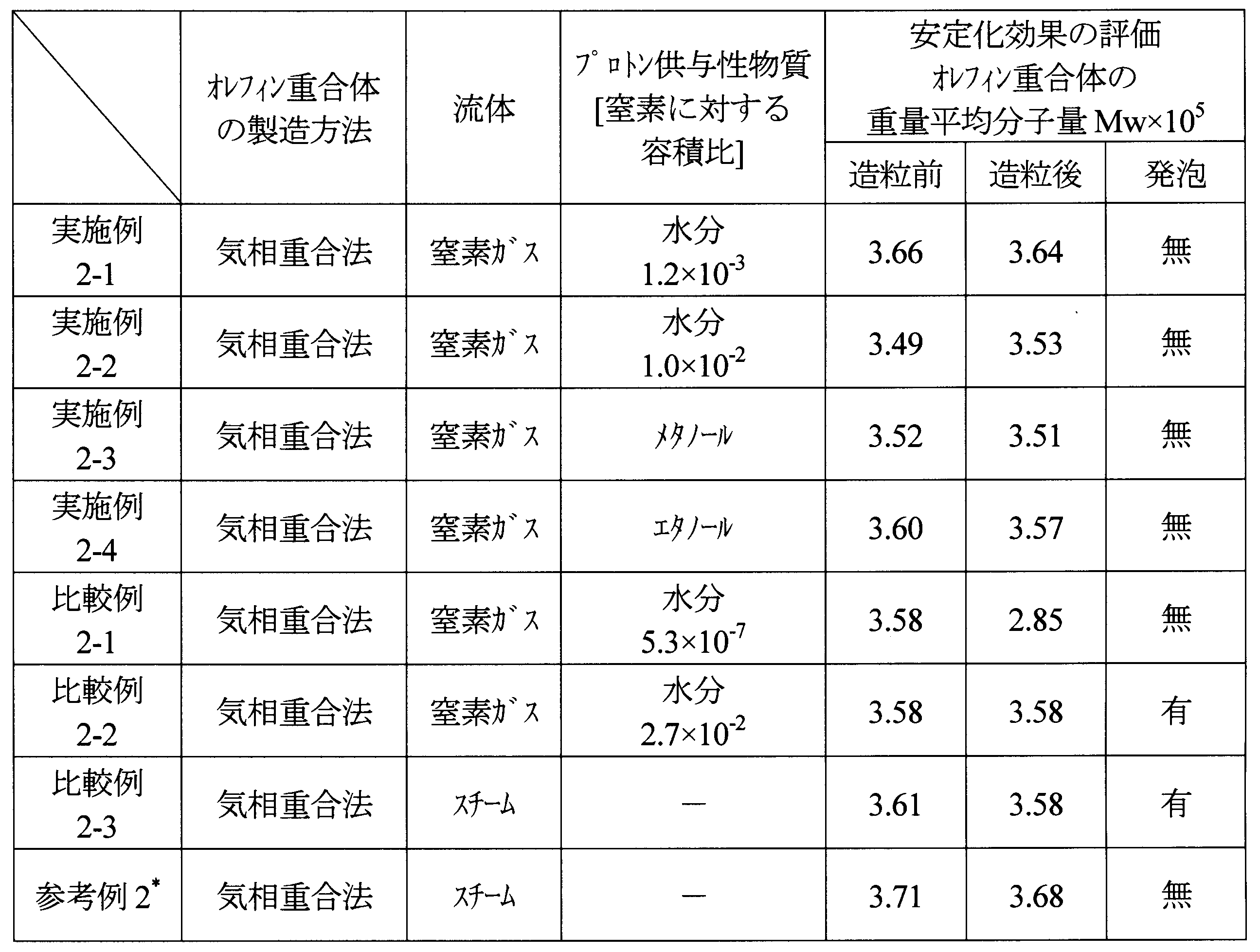
それに対し、本発明の方法でフェノール系酸化防止剤を再生することにより、安定化効果に優れたオレフィン重合体が得られた。
尚、参考例2より、スチームで処理をしてもオレフィン重合体の乾燥工程を導入すれば、造粒時の発泡の問題は解決可能であるが、乾燥工程を新たに導入するのは、設置場所に制約があったり、設備投資が大きくなる場合があり、本発明の方法と比べれば工業的に不利である。
下記の手順([1]触媒スラリーの調製、[2]フェノール系酸化防止剤のマスキング処理、[3]オレフィンモノマーの重合)に従い、スラリー重合法でオレフィン重合体3を得た。
無水塩化マグネシウム4.76g(50mmol)、デカン25mL及び2-エチルへキシルアルコール23.4mL(150mmol)を加えて、130℃で2時間加熱反応を行い均一溶液とした後、さらに無水フタル酸1.11g(7.5mmol)を添加し、130℃を維持しながら1時間撹拌して、無水フタル酸を該均一溶液に溶解させた。次に、均一溶液を室温に冷却し、―20℃に保持された四塩化チタン200mL(1.8mol)中に1時間にわたって全量滴下装入した。装入終了後、4時間かけて110℃まで昇温した。110℃に到達後、ジイソブチルフタレート2.68mL(12.5mmol)を加え、110℃を維持しながら2時間撹拌して反応させた。反応終了後、熱時ろ過にて残渣を採取し、該残渣を200mlの四塩化チタンにて再懸濁させた後、再び110℃まで加熱して2時間反応させた。反応終了後、再び熱時ろ過で残渣を採取し、110℃のデカン及びヘキサンにて、洗液中に遊離しているチタン化合物が検出されなくなるまで充分に洗浄して固体チタン触媒成分を得た。この固体チタン触媒成分の一部を乾燥して触媒組成を分析したところ、チタン3.1重量%、塩素56.0重量%、マグネシウム17.0重量%及びイソブチルフタレート20.9重量%であった。
以上の製造方法にて合成された固体チタン触媒成分において、ヘプタンスラリーとして5mg/mLとなるようにヘプタンを加えて触媒スラリーを調製した。
トルエン50mlに対して、トリイソブチルアルミニウム3g及びフェノール系酸化防止剤として上記化合物No.4を2g加えて、室温で2時間撹拌し、フェノール系酸化防止剤がマスキングされた安定剤溶液を得た。
窒素置換した1000mlオートクレーブにヘプタン400ml、リン系酸化防止剤:トリス(2,4-ジ第三ブチルフェニル)ホスファイト30mg、及び上記[2]フェノール系酸化防止剤のマスキング処理で得られた安定剤溶液50mlを加え、23℃で5分間撹拌した。さらに、ジシクロペンタジメトキシシラン1.14g(5.0mmol)及び上記[1]で調製した触媒スラリー(チタン成分として、5mmol)を加え、二分間撹拌した。
オートクレーブ内をプロピレン雰囲気に置換し、プロピレン圧1kgf/cm2Gの圧力で、35℃で10分間プレ重合した。プレ重合後、プロピレンをパージし、水素150ml(23℃)を導入し、プロピレンで5kgf/cm2Gに圧力をかけ、70℃に昇温し、そのまま圧力を維持して1時間重合した。
重合後、オートクレーブ内を窒素置換し、溶媒を留去してオレフィン重合体3を得た。
上記製造例3で得られたオレフィン重合体3を用いて、二軸押出機(装置:株式会社池貝製PCM-30、押出温度:230℃、スクリュー回転速度:50rpm)で造粒した。造粒の際は、オレフィン重合体3を二軸押出機にフィードするまで窒素下で行い、さらに二軸押出機のヘッド部付近と、スクリューの中央部付近で、ベントの引き込みを行いながら、オレフィン重合体1のフィード口からベントまでの間に、スチームを15kPaの圧力、100ml/minの流量でバレル内に圧入し、ペレットを得た。
実施例3-1において、スチームの導入の代りに、水分が窒素に対する容積比で0.1%の窒素ガスを100mL/minの流量で導入した以外は実施例3-1と同様に実施して、ペレットを得た。
上記実施例3―1において、オレフィン重合体の造粒の際、スチームの導入とベントの引き込みを行わなかった以外は、上記実施例3-1と同様に実施してペレットを得た。
下記の手順([1]触媒スラリーの調製、[2]フェノール系酸化防止剤のマスキング処理、[3]オレフィンモノマーの重合)に従い、バルク重合法でオレフィン重合体4を得た。
無水塩化マグネシウム4.76g(50mmol)、デカン25mL及び2-エチルへキシルアルコール23.4mL(150mmol)を加えて、130℃で2時間加熱反応を行い均一溶液とした後、さらに無水フタル酸1.11g(7.5mmol)を添加し、130℃を維持しながら1時間撹拌して、無水フタル酸を該均一溶液に溶解させた。次に、均一溶液を室温に冷却し、-20℃に保持された四塩化チタン200mL(1.8mol)中に1時間にわたって全量滴下装入した。装入終了後、4時間かけて110℃まで昇温した。110℃に到達後、ジイソブチルフタレート2.68mL(12.5mmol)を加え、110℃を維持しながら2時間撹拌して反応させた。反応終了後、熱時ろ過にて残渣を採取し、該残渣を200mlの四塩化チタンにて再懸濁させた後、再び110℃まで加熱して2時間反応させた。反応終了後、再び熱時ろ過で残渣を採取し、110℃のデカン及びヘキサンにて、洗液中に遊離しているチタン化合物が検出されなくなるまで充分に洗浄して固体チタン触媒成分を得た。この固体チタン触媒成分の一部を乾燥して触媒組成を分析したところ、チタン3.1重量%、塩素56.0重量%、マグネシウム17.0重量%及びイソブチルフタレート20.9重量%であった。
以上の製造方法にて合成された固体チタン触媒成分において、ヘプタンスラリーとして5mg/mLとなるようにヘプタンを加えて触媒スラリーを調製した。
トルエン50mlにトリイソブチルアルミニウム3g、フェノール系酸化防止剤として上記化合物No.4を2g加え、室温で2時間撹拌し、フェノール系酸化防止剤がマスキングされた安定剤溶液を得た。
窒素置換した2000ml耐圧反応器にトリエチルアルミニウム40mg(0.35mmol)、上記[2]フェノール系酸化防止剤のマスキング処理で得た安定剤溶液0.25ml、及びリン系酸化防止剤:トリス(2,4-ジ第三ブチルフェニル)ホスファイト30mg、ジシクロペンタジメトキシシラン7.08mg(0.031mmol)及び上記[1]で調製した触媒スラリー(チタン成分が0.021mmol)を加え、2分間撹拌した。
耐圧反応器をプロピレン雰囲気に置換してから、水素は、水素圧0.2barG、プロピレンは全圧が38.2barGとなるように維持しながら、プロピレンの導入を継続的に行い、25℃で3分間プレ重合した。プレ重合後、プロピレンの全圧を38.2barGに維持しながら、70℃に昇温し、1時間重合反応を行った。反応終了後、溶媒を含んだ重合体を窒素雰囲気の円筒容器に移送した。溶媒は、窒素下でフレアラインに移送して脱溶剤し、オレフィン重合体4を得た。得られたオレフィン重合体はそのまま窒素雰囲気下にて保存した。
上記製造例4で得られたオレフィン重合体4を用いて、二軸押出機(装置:株式会社池貝製PCM-30、押出温度:230℃、スクリュー回転速度:50rpm)で造粒した。造粒の際は、オレフィン重合体4を二軸押出機にフィードするまで窒素下で行い、さらに二軸押出機のヘッド部付近と、スクリューの中央部付近で、ベントの引き込みをしながら、オレフィン重合体4のフィード口からベントまでの間に、スチームを15kPaの圧力、100ml/minの流量でバレル内に圧入し、ペレットを得た。
実施例4-1において、スチームの導入の代りに、水分が窒素に対する容積比で0.1%の窒素ガスを100mL/minの流量で導入した以外は実施例4-1と同様に実施して、ペレットを得た。
上記実施例4-1において、オレフィン重合体の造粒の際、スチームの導入とベントの引き込みを行わなかった以外は、上記実施例4-1と同様に実施してペレットを得た。
下記の手順([1]触媒スラリーの調製、[2]フェノール系酸化防止剤のマスキング処理、[3]オレフィンモノマーの重合)に従い、気相重合法でオレフィン重合体5を得た。
上記製造例3の[1]と同様に実施して、固体チタン触媒成分5mg/mLのヘプタンスラリーである触媒スラリーを調製した。
ヘプタン50mlに対して、トリエチルアルミニウム3g及びフェノール系酸化防止剤として上記化合物No.4を2g加えて、2時間撹拌し、フェノール系酸化防止剤がマスキングされた安定剤溶液を得た。
窒素置換した1000mlオートクレーブにヘプタン400mlを加え、トリエチルアルミニウム148mg(1.3mmol)、ジシクロペンタジメトキシシラン29.7mg(0.13mmol)及び、上記[1]で調製した触媒スラリー(Ti成分として、0.0026mmol)を加えた。
オートクレーブ内をプロピレン雰囲気に置換し、プロピレンで1kgf/cm2Gの圧力をかけ、35℃で10分間プレ重合した。プレ重合後、プロピレンをパージし、落圧後、水素150ml(23℃)を導入し、60℃に昇温し、オートクレーブ内にプロピレンを供給して全圧を5kgf/cm2G圧に維持しながら、70℃に昇温して、1時間重合した。得られた重合体において、下記の精製を二回行うことによりオレフィン重合体5を得た。
オートクレーブ内を窒素置換して、重合体をオートクレーブ内に残し、上澄み液のヘプタンをデカンテーションした。重合体に含まれるヘプタンは、オートクレーブを減圧して留去し、重合体を乾燥させた。乾燥した重合体10gをオートクレーブ内に残し、トリエチルアルミニウム44.5mg(3.9mmol)、ジシクロペンタジメトキシシラン89mg(0.39mmol)、[1]で調製した触媒スラリー(チタン成分として、0.0078mmol)、[2]で調製した安定剤溶液0.25ml、及びリン系酸化防止剤としてトリス(2,4-ジ第三ブチルフェニル)ホスファイト30mgを加えた。
オートクレーブ内をプロピレンに置換し、プロピレンをパージして落圧後、水素150ml(23℃)を導入し、オートクレーブ内にプロピレンを供給して、全圧を5kgf/cm2Gに維持しながら、70℃に昇温して、1時間の気相重合を行い、目的のオレフィン重合体5を精製した。
上記製造例5で得られたオレフィン重合体5を用いて、二軸押出機(装置:株式会社日本製鋼所TEX-30α、押出温度:230℃、スクリュー回転速度:100rpm)で造粒した。造粒の際は、オレフィン重合体5を二軸押出機にフィードするまで窒素下で行い、さらに二軸押出機のヘッド部付近と、スクリューの中央部付近で、ベントの引き込みをしながら、二軸押出機のオレフィン重合体5のフィード口からベントまでの間にスチームを15kPaの圧力、100ml/minの流量でバレル内に圧入し、ペレットを得た。
実施例5-1において、スチームの導入の代りに、水分が窒素に対する容積比で0.1%の窒素ガスを100mL/minの流量で導入した以外は実施例5-1と同様に実施して、ペレットを得た。
上記実施例5-1において、オレフィン重合体5の造粒の際、スチームの導入とベントの引き込みを行わなかった以外は、上記実施例5-1と同様に実施してペレットを得た。
上記各実施例、比較例で得られたペレットについて、単軸押出機(装置:株式会社東洋精機製作所製プラストミルμ、押出温度:230℃、スクリュー回転速度:50rpm)による造粒をそれぞれ行い、押出加工前後の重量平均分子量の変化によりオレフィン重合体の安定化効果について評価した。
重量平均分子量は、ゲルパーミエーションクロマトグラフ(装置:ウォーターズ社製GPC2000型、カラム:ウォーターズ社製StyragelHT 6Eを2本と、Styragel HT2を1本、測定温度145℃、溶媒:オルトジクロロベンゼン、濃度:4mg/10g)により、測定した。
これらの評価結果について、下記表3に示す。

無水塩化マグネシウム4.76g(50mmol)、デカン25mL及び2-エチルへキシルアルコール23.4mL(150mmol)を加えて、130℃で2時間加熱反応を行い均一溶液とした後、さらに無水フタル酸1.11g(7.5mmol)を添加し、130℃を維持しながら1時間撹拌して、無水フタル酸を該均一溶液に溶解させた。次に、均一溶液を室温に冷却し、-20℃に保持された四塩化チタン200mL(1.8mol)中に1時間にわたって全量滴下装入した。装入終了後、4時間かけて110℃まで昇温した。110℃に到達後、ジイソブチルフタレート2.68mL(12.5mmol)を加え、110℃を維持しながら2時間撹拌して反応させた。反応終了後、熱時ろ過にて残渣を採取し、該残渣を200mlの四塩化チタンにて再懸濁させた後、再び110℃まで加熱して2時間反応させた。反応終了後、再び熱時ろ過で残渣を採取し、110℃のデカン及びヘキサンにて、洗液中に遊離しているチタン化合物が検出されなくなるまで充分に洗浄して固体チタン触媒成分を得た。この固体チタン触媒成分の一部を乾燥して触媒組成を分析したところ、チタン3.1重量%、塩素56.0重量%、マグネシウム17.0重量%及びイソブチルフタレート20.9重量%であった。
以上の製造方法にて合成された固体チタン触媒成分において、ヘプタンスラリーとして5mg/mLとなるようにヘプタンを加えて触媒スラリーを調製した。
フェノール系酸化防止剤を含むスラリー状の添加剤の供給槽A、助触媒であるトリエチルアルミニウムの供給槽B、重合槽C、からなる製造装置において、供給槽Bから重合槽Cへトリエチルアルミニウムを移送する配管1において、供給槽Aから配管1へ移送する配管を連結した。
以下、下記の方法でオレフィンモノマー重合を実施した。
供給槽Aには、下記表4に記載の通り、スラリー状添加剤を調整した。
供給槽Bには、トリエチルアルミニウム33.3mg(0.29mmol)を供給した。
重合槽Cには、ジシクロペンタジメトキシシラン29.7mg(0.13mmol)及び、トリエチルアルミニウム445mg(3.9mmol)、及び上記触媒スラリーをチタン成分として、0.0026mmolを添加した。
以下、供給槽に供給するスラリー状添加剤の種類以外は、下記の通り、同様の条件でオレフィンモノマーの重合を行った。
供給槽Bから重合槽Cへ配管1で移送すると同時に、供給槽Aからスラリー状溶液を配管1まで移送し、トリエチルアルミニウムとスラリー状添加剤を配管内で混合した。配管内での混合は瞬時に反応して均一な組成になり、重合槽Cに供給した。供給後、ただちに重合槽Cをプロピレン雰囲気に置換し、プロピレンで1kgf/cm2Gの圧力で、35℃で10分間プレ重合した。プレ重合後、プロピレンをパージし、水素150ml(23℃)を導入し、重合槽Cにプロピレンを導入して全圧5kgf/cm2Gの圧力を維持し、70℃に昇温して、1時間重合した。重合槽Cの窒素置換後、40℃でエタノール5mlを加え、重合を停止させた後、50℃で減圧脱溶媒し、真空状態のまま、40℃×5時間の乾燥処理をしてオレフィン重合体を得た。
スラリー状の添加剤の内訳については、下記表4に示す。
トリエチルアルミニウムの供給槽Bに、フェノール系酸化防止剤として上記化合物No.4を10mg、リン系酸化防止剤としてトリス(2,4-ジ第三ブチルフェニル)ホスファイト30mg、トリエチルアルミニウム3.33mg(0.029mmol)及びヘプタン60mgを予め槽内で混合して、スラリー状にした。しかし、24時間槽内で静置しておいたところ、槽全体にゲルが発生した。

2)リン系酸化防止剤:トリス(2,4-ジ第三ブチルフェニル)ホスファイト 30mg
3)中和剤:ステアリン酸カルシウム 50mg
上記1)~3)の添加剤と溶媒を混合して、スラリー状の添加剤にした。
下記の手順([1]触媒スラリーの調製、[2]フェノキシド溶液の調製、[3]ホスファイト溶液の調製、[4]オレフィンモノマー(プロピレンモノマー)の重合、[5]繊維の作製)に従い、繊維を得た。
無水塩化マグネシウム4.76g(50mmol)、デカン25mL及び2-エチルへキシルアルコール23.4mL(150mmol)を加えて、130℃で2時間加熱反応を行い均一溶液とした後、さらに無水フタル酸1.11g(7.5mmol)を添加し、130℃を維持しながら1時間撹拌して、無水フタル酸を該均一溶液に溶解させた。次に、均一溶液を室温に冷却し、-20℃に保持された四塩化チタン200mL(1.8mol)中に1時間にわたって全量滴下装入した。装入終了後、4時間かけて110℃まで昇温した。110℃に到達後、ジイソブチルフタレート2.68mL(12.5mmol)を加え、110℃を維持しながら2時間撹拌して反応させた。反応終了後、熱時ろ過にて残渣を採取し、該残渣を200mlの四塩化チタンにて再懸濁させた後、再び110℃まで加熱して2時間反応させた。反応終了後、再び熱時ろ過で残渣を採取し、110℃のデカン及びヘキサンにて、洗液中に遊離しているチタン化合物が検出されなくなるまで充分に洗浄して固体チタン触媒成分を得た。この固体チタン触媒成分の一部を乾燥して触媒組成を分析したところ、チタン3.1重量%、塩素56.0重量%、マグネシウム17.0重量%及びイソブチルフタレート20.9重量%であった。
以上の製造方法にて合成された固体チタン触媒成分に、ヘプタンスラリーとして5mg/mLとなるようにヘプタンを加えて触媒スラリーを調製した。
窒素置換したフラスコに、3-(3,5-ジ第三ブチル-4-ヒドロキシフェニル)-N-オクタデシルプロピオンアミド(上記化合物No.4)1.03g(1.94mmol)及び、乾燥ヘプタン65.5mLを加えた。撹拌しながら、トリエチルアルミニウム/ヘプタン溶液3.0mL(1mol/L)を滴下し、フェノキシド溶液を調製した。
窒素置換したフラスコに、トリス(2,4-ジ第三ブチルフェニル)ホスファイト0.9g(1.4mmol)及び乾燥ヘプタン30mLを加えて、ホスファイト溶液を調製した。
窒素置換したオートクレーブに、乾燥ヘプタン600mL及びトリエチルアルミニウム/ヘプタン溶液2.2mL(1mol/L)を加えた。さらに、上記[2]で調製したフェノキシド溶液1.4mL、上記[3]で調製したホスファイト溶液0.7mL、乾燥ヘプタン100mLにジシクロペンチルジメトキシシラン1.2g(5.3mmol)を撹拌して溶解させたヘプタン溶液4.1mL、及び上記[1]で調製した触媒スラリー4.0mLを順次加えた。
オートクレーブ内をプロピレン雰囲気に置換し、水素(7.0L;標準状態換算)を入れ、プロピレン圧1kgf/cm2G、50℃で5分間プレ重合(600rpm)を行った。その後、プロピレン圧6kgf/cm2、70℃で1時間重合反応を行った。気体をパージ後、反応液にエタノール5mlを加え5分間撹拌して重合反応を停止させた後、減圧脱溶媒を行い、次いで、真空中、40℃で10時間乾燥して、プロピレンモノマーを重合した、ポリプロピレンパウダーを得た。
得られたポリプロピレンパウダー100質量部に対して、ステアリン酸カルシウム0.05質量部を添加して混合し、単軸押出機(装置:株式会社東洋精機製作所製プラストミルμ、押出温度:230℃、スクリュー回転速度:50rpm)で造粒してペレットを得た。該ペレットについて、紡糸機(30mmφ、(株)島津製作所製)へ供給し、ノズル(0.45mmφ、230℃、30ホール)に押出して、巻き取り速度1000m/minで繊維を引き取った。得られた繊維は、6.8デニールのフィラメントを30本集束したものである。また、上記のペレットを用いて、230℃、120kgf/cm2の荷重で5分間プレスし、シートを作製した。プレス後のシートの厚みは2mmであった。
上記実施例7-1の[3]ホスファイト溶液の調製において、トリス(2,4-ジ第三ブチルフェニル)ホスファイト0.90g(1.4mmol)を2,2’-メチレンビス(4,6-ジ第三ブチルフェニル)-オクタデシルホスファイト0.82g(1.4mmol)に替えた以外は、実施例7-1と同様に実施して、繊維およびシートを作製した。
上記実施例7-1の[4]オレフィンモノマーの重合において、フェノキシド溶液1.4mL、及びホスファイト溶液0.7mLを用いなかった以外は、実施例7-1[4]と同様に実施して、プロピレン重合物を得た。
得られたプロピレン重合物100質量部に対して、テトラキス[3-(3,5-ジ第三ブチル-4-ヒドロキシフェニル)プロピオニルオキシメチル]メタン、トリス(2,4-ジ第三ブチルフェニル)ホスファイト及びステアリン酸カルシウムがそれぞれ0.05質量部ずつになるようにプロピレン重合物と混合し、単軸押出機(装置:株式会社東洋精機製作所製プラストミルμ、押出温度:230℃、スクリュー回転速度:50rpm)で造粒してペレットを得た。該ペレットについて、紡糸機(30mmφ、(株)島津製作所製)へ供給し、ノズル(0.45mmφ、230℃、30ホール)に押出して、巻き取り速度1000m/minで繊維を引き取った。得られた繊維は、6.8デニールのフィラメントを30本集束したものである。また、上記のペレットを用いて、230℃、120kgf/cm2の荷重で5分間プレスし、シートを作製した。プレス後のシートの厚みは2mmであった。
上記実施例7-1の[4]オレフィンモノマーの重合において、フェノキシド溶液1.4mL、及びホスファイト溶液0.7mLを用いなかった以外は、実施例7-1の[4]と同様に実施して、プロピレン重合物を得た。プロピレン重合物100質量部に対し、1,3,5-トリス(3-ヒドロキシ-4-第3ブチル-2,6-ジメチルベンジル)イソシアヌレート、2,2’-メチレンビス(4,6-ジ第三ブチルフェニル)-オクタデシルホスファイトをそれぞれ0.01質量部ずつ、及びステアリン酸カルシウムを0.05質量部をプロピレン重合物に添加して、よく混合し、単軸押出機(装置:株式会社東洋精機製作所製プラストミルμ、押出温度:230℃、スクリュー回転速度:50rpm)で造粒してペレットを得た。該ペレットについて、紡糸機(30mmφ、(株)島津製作所製)へ供給し、ノズル(0.45mmφ、230℃、30ホール)に押出して、巻き取り速度1000m/minで繊維を引き取った。得られた繊維は、6.8デニールのフィラメントを30本集束したものである。また、上記のペレットを用いて、230℃、120kgf/cm2の荷重で5分間プレスし、シートを作製した。プレス後のシートの厚みは2mmであった。
上記実施例7-1の[4]オレフィンモノマーの重合において、フェノキシド溶液1.4mLを2.8mLに変更し、ホスファイト溶液0.7mLを用いなかった以外は、実施例7-1と同様に実施して、繊維およびシートを製造した。
上記実施例7-1の[4]オレフィンモノマーの重合において、ホスファイト溶液0.7mLを1.4mLに変更し、フェノキシド溶液1.4mLを用いなかった以外は、実施例7-1と同様に実施して繊維およびシートを製造した。
上記実施例7-1の[4]オレフィンモノマーの重合において、フェノキシド溶液1.4mL、及びホスファイト溶液0.7mLを用いなかった以外は、実施例7-1の[4]と同様に実施して、プロピレン重合物を得た。得られたプロピレン重合物100質量部に対し、化合物No.4、トリス(2,4-ジ第三ブチルフェニル)ホスファイトをそれぞれ0.01質量部ずつ、及びステアリン酸カルシウム0.05質量部をプロピレン重合物に添加して、よく混合し、単軸押出機(装置:株式会社東洋精機製作所製プラストミルμ、押出温度:230℃、スクリュー回転速度:50rpm)で造粒してペレットを得た。該ペレットについて、紡糸機(30mmφ、(株)島津製作所製)へ供給し、ノズル(0.45mmφ、230℃、30ホール)に押出して、巻き取り速度1000m/minで繊維を引き取った。得られた繊維は、6.8デニールのフィラメントを30本集束したものである。また、上記のペレットを用いて、230℃、120kgf/cm2の荷重で5分間プレスし、シートを作製した。プレス後のシートの厚みは2mmであった。
上記実施例7-1の[4]オレフィンモノマーの重合において、フェノキシド溶液1.4mLを用いなかった以外は、実施例7-1の[4]と同様に実施して、プロピレン重合物を得た。得られたプロピレン重合物100質量部に対し、上記化合物No.4を0.01質量部及びステアリン酸カルシウム0.05質量部をプロピレン重合物に添加して、よく混合し、単軸押出機(装置:株式会社東洋精機製作所製プラストミルμ、押出温度:230℃、スクリュー回転速度:50rpm)で造粒してペレットを得た。該ペレットについて、紡糸機(30mmφ、(株)島津製作所製)へ供給し、ノズル(0.45mmφ、230℃、30ホール)に押出して、巻き取り速度1000m/minで繊維を引き取った。得られた繊維は、6.8デニールのフィラメントを30本集束したものである。また、上記のペレットを用いて、230℃、120kgf/cm2の荷重で5分間プレスし、シートを作製した。プレス後のシートの厚みは2mmであった。
上記実施例7-1の[4]オレフィン系モノマーの重合において、ホスファイト溶液0.7mLを用いなかった以外は、実施例7-1の[4]と同様に実施して、プロピレン重合物を得た。得られたプロピレン重合物100質量部に対し、トリス(2,4-ジ第三ブチルフェニル)ホスファイト0.01質量部及びステアリン酸カルシウム0.05質量部をプロピレン重合物に添加して、よく混合し、単軸押出機(装置:株式会社東洋精機製作所製プラストミルμ、押出温度:230℃、スクリュー回転速度:50rpm)で造粒してペレットを得た。該ペレットについて、紡糸機(30mmφ、(株)島津製作所製)へ供給し、ノズル(0.45mmφ、230℃、30ホール)に押出して、巻き取り速度1000m/minで繊維を引き取った。得られた繊維は、6.8デニールのフィラメントを30本集束したものである。また、上記のペレットを用いて、230℃、120kgf/cm2の荷重で5分間プレスし、シートを作製した。プレス後のシートの厚みは2mmであった。
下記手順によりNOxガス変色試験を行った。これらの結果について、下記表5に示す。
シートをガラス棒で吊し、ガラスデシケーター内に入れる。
ガラスビーカーに85%リン酸を9.52g、蒸留水38.10gを加え、溶解してリン酸水溶液を作り、ガラスデシケーター内にガラスビーカーを置く。
別のガラスビーカーに97%硝酸ナトリウム0.786g、蒸留水9.52gを加え、溶解して硝酸ナトリウム水溶液を作る。
上記硝酸ナトリウム水溶液をガラスデシケーター中のリン酸水溶液に一気に加えて、直ちにガラスデシケーターの蓋をし、2%のNOxガスを発生させる。
ガラスデシケーターの本体と蓋の結合部分をバルカーテープで塞ぎ、さらにビニルテープを貼って、ガス漏れがないようにする。
ガラスデシケーターを40℃のギヤーオーブンに入れ、140時間静置する。
140時間静地後のシートの黄色度(YI)を測定し、NOxガスで暴露する前のシートの黄色度(初期Y.I.)と暴露試験後の黄色度(ΔYI)を求めた。
繊維を120℃オーブンに15時間静置し、引張試験器で10mm/minの速度で引っ張った。
繊維の伸び率が、200%を超えた場合を○、150%以上~200%以下の場合は△、150%未満の場合は×として評価した。
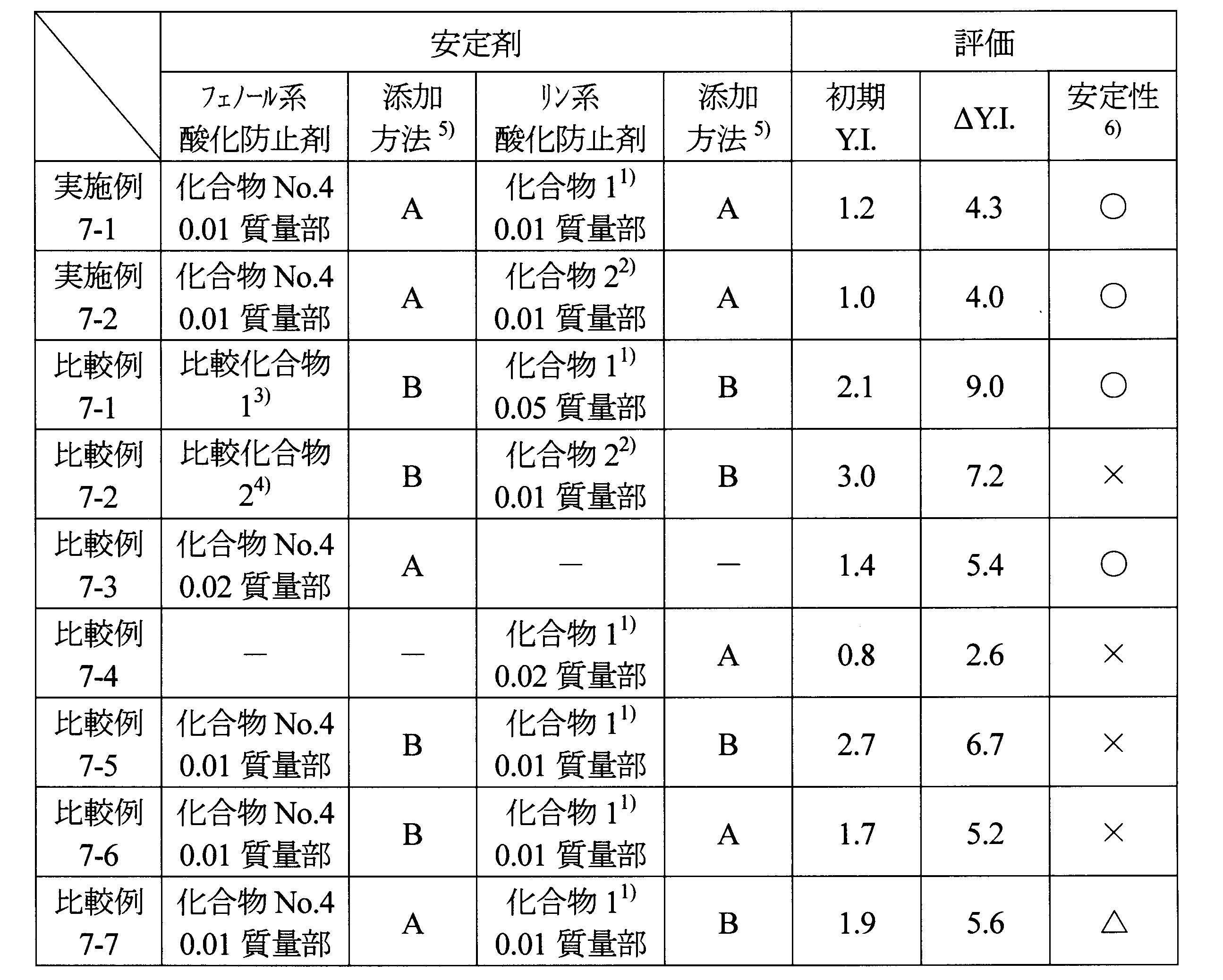
2)化合物2:2,2’-メチレンビス(4,6-ジ第三ブチルフェニル)-オクタデシルホスファイト
3)比較化合物1:テトラキス[3-(3,5-ジ第三ブチル-4-ヒドロキシフェニル)プロピオニルオキシメチル]メタン
4)比較化合物2:1,3,5-トリス(3-ヒドロキシ-4-第3ブチル-2,6-ジメチルベンジル)イソシアヌレート
5)添加方法
A:オレフィン系モノマーの重合時に安定剤を添加して重合後、ステアリン酸カルシウムを添加して、230℃の押出温度で造粒。
B:オレフィン系モノマーの重合後、安定剤とステアリン酸カルシウムを添加して混合し、押出機を用いて230℃の押出温度で造粒。
6)安定性:120℃オーブンに15時間静置後、引張試験
また、比較例7-2ではフェノール系酸化防止剤及びリン系酸化防止剤の種類を変えたものの、やはり本発明の繊維に比べて安定化効果は乏しかった。
また、比較例7-3及び7-4より、フェノール系酸化防止剤又はリン系酸化防止剤を単独でオレフィンモノマーの重合時に添加した場合、初期の黄色度の抑制効果はある程度見られた。しかしながら、比較例7-3のフェノール系酸化防止剤単独の場合、NOxガスの影響を受けやすく、比較例7-4のリン系酸化防止剤単独の場合、NOxガスの影響は受けにくいものの、繊維自体の安定性に欠け繊維が断裂し易かった。
Claims (24)
- 重合時に有機アルミニウム化合物によりマスキングされた下記一般式(1)で表されるフェノール系酸化防止剤を供給して得られるオレフィン重合体に含まれる、前記マスキングされたフェノール系酸化防止剤をフェノール体に再生するフェノール系酸化防止剤の再生方法において、
窒素1に対する容積比1.0×10⁻⁶~2.5×10⁻²の水及び/又はプロトン供与性物質を含んでなる窒素ガスを前記オレフィン重合体に接触させることを特徴とするフェノール系酸化防止剤の再生方法。
(式中、Rは分岐を有してもよい炭素原子数12~24のアルキル基、置換されていてもよい炭素原子数3~12のシクロアルキル基、置換基を有してもよい炭素原子数6~18のアリール基を表す)
- 前記有機アルミニウム化合物がトリアルキルアルミニウムである請求項1記載のフェノール系酸化防止剤の再生方法。
- 前記オレフィン重合体を得るための重合方法が、気相重合方法、バルク重合方法又はこれらの組合せである請求項1記載のフェノール系酸化防止剤の再生方法。
- 前記プロトン供与性物質がメタノールまたはエタノールである請求項1記載のフェノール系酸化防止剤の再生方法。
- 前記オレフィン重合体に前記窒素ガスを接触させる方法が、円筒状のカラムにおいて、間欠的または連続的に、カラムの上方からオレフィン重合体を供給し、カラムの底部から前記窒素ガスを供給することによりオレフィン重合体と前記窒素ガスとを接触させるものである請求項1記載のフェノール系酸化防止剤の再生方法。
- 前記オレフィン重合体に前記窒素ガスを接触させる方法が、間欠的または連続的に、槽の上部からオレフィン重合体を供給し、槽の下部から窒素ガスを供給することによりオレフィン重合体と前記窒素ガスとを接触させるものである請求項1記載の方法。
- 重合時に、有機アルミニウム化合物によりマスキングされた下記一般式(1)で表されるフェノール系酸化防止剤を供給してオレフィンモノマーを重合するオレフィン重合体の製造方法において、
得られたオレフィン重合体を押出機で溶融混練する際に、スチーム、又は水分を含んだ窒素ガスを押出機内に圧入することを特徴とするオレフィン重合体の製造方法。
(式中、Rは分岐を有してもよい炭素原子数12~24のアルキル基、置換されていてもよい炭素原子数3~12のシクロアルキル基、置換基を有してもよい炭素原子数6~18のアリール基を表す。)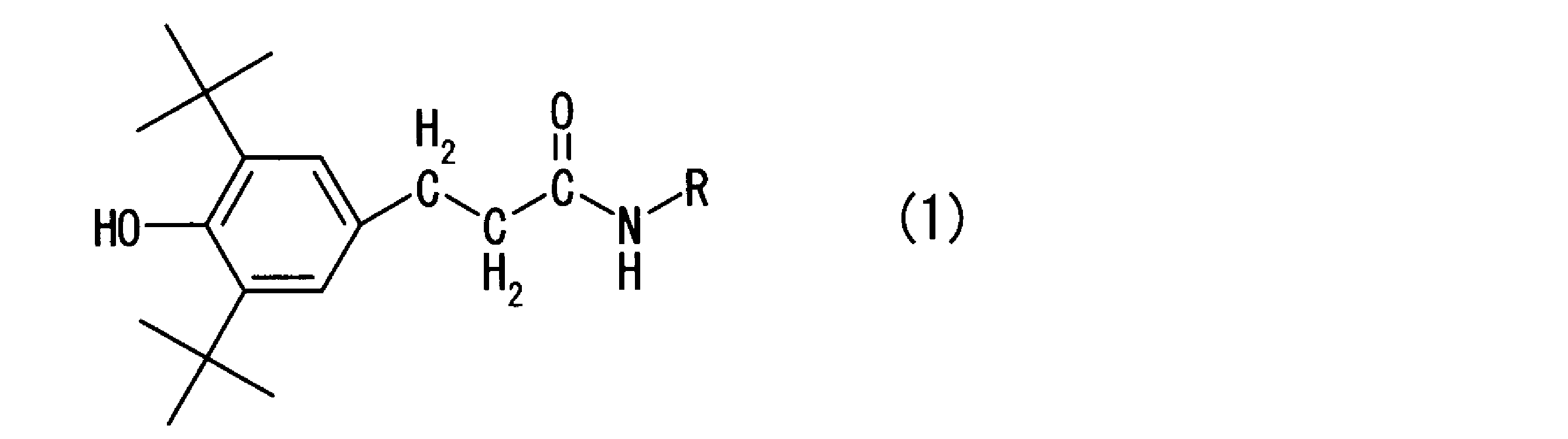
- 前記有機アルミニウム化合物が、トリアルキルアルミニウムである請求項7記載の製造方法。
- 前記オレフィン重合体が、ポリプロピレンである請求項7記載の製造方法。
- オレフィンモノマーの重合時に添加剤および助触媒成分をオレフィンモノマーに供給する、安定化されたオレフィン重合体の製造方法において、
スラリー状の添加剤を、ポンプ輸送して助触媒成分と配管内で混合した後にオレフィンモノマーの重合槽に移送する工程を含むことを特徴とする安定化されたオレフィン重合体の製造方法。 - 前記助触媒成分が、有機アルミニウム化合物である請求項10記載の安定化されたオレフィン重合体の製造方法。
- 前記助触媒成分が、トリアルキルアルミニウムである請求項10記載の安定化されたオレフィン重合体の製造方法。
- 前記添加剤が、下記一般式(1)で表されるフェノール系酸化防止剤を含むものであって、液状のフェノール系酸化防止剤、粉末のフェノール系酸化防止剤を溶剤に溶解させたもの、又は粉末のフェノール系添加剤を不活性な溶媒と混合しているものである請求項10記載の安定化されたオレフィン重合体の製造方法。
(式中、Rは分岐を有してもよい炭素原子数12~24のアルキル基、置換されていてもよい炭素原子数3~12のシクロアルキル基、置換基を有してもよい炭素原子数6~18のアリール基を表す。)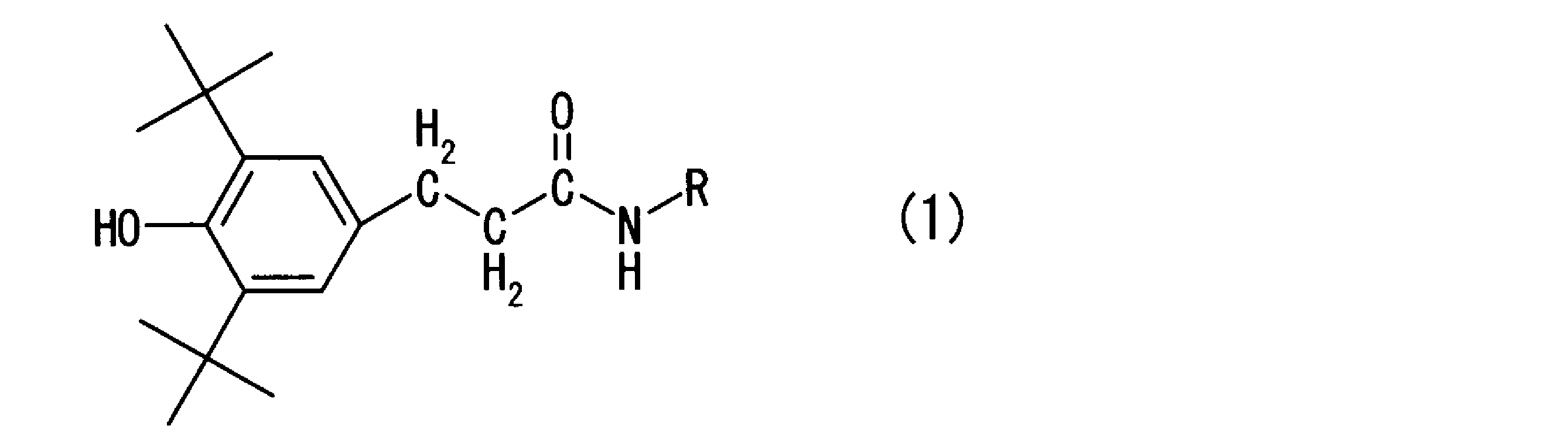
- 前記助触媒成分をオレフィンモノマーの重合槽に移送するための配管に、予め溶媒に溶解させた前記添加剤を供給することによって、前記助触媒成分と前記添加剤を配管内で混合する請求項10記載の安定化されたオレフィン重合体の製造方法。
- 前記溶媒が、脂肪族炭化水素又は脂環式炭化水素から選択されるものである請求項10記載の安定化されたオレフィン重合体の製造方法。
- 前記配管がラインミキサーを有する配管である請求項10記載の安定化されたオレフィン重合体の製造方法。
- 前記スラリー状の添加剤中、添加剤成分の濃度が1~80質量%の範囲内である請求項10記載の安定化されたオレフィン重合体の製造方法。
- オレフィンモノマーを重合することにより得られるポリオレフィン樹脂組成物からなるポリオレフィンパウダーであって、オレフィンモノマー100質量部に対して、下記一般式(2)で表されるフェノール系酸化防止剤を有機アルミニウム化合物でマスキング処理したもの0.001~0.5質量部、および、リン系酸化防止剤0.001~0.5質量部を、オレフィンモノマーの重合前又は重合中に触媒系又は重合系に添加してなることを特徴とするポリオレフィンパウダー。
(式中、Rは分岐を有してもよい炭素原子数1~30のアルキル基、置換されていてもよい炭素原子数3~12のシクロアルキル基、置換基を有してもよい炭素原子数6~18のアリール基を表す。)
- 前記リン系酸化防止剤が、トリス(2,4-ジ-t-ブチルフェニル)ホスファイトである請求項18記載のポリオレフィンパウダー。
- 前記有機アルミニウム化合物が、トリアルキルアルミニウムである請求項18記載のポリオレフィンパウダー。
- 前記オレフィンモノマーの重合触媒が、遷移金属触媒である請求項18記載のポリオレフィンパウダー。
- 前記オレフィンモノマーの重合触媒が、チーグラー・ナッタ触媒である請求項18記載のポリオレフィンパウダー。
- 請求項18記載のポリオレフィンパウダーを用いて得られる繊維。
- 請求項18記載のポリオレフィンパウダーを用いて、メルトブローン法で得られる繊維。
Priority Applications (5)
| Application Number | Priority Date | Filing Date | Title |
|---|---|---|---|
| EP10813742.3A EP2474561B1 (en) | 2009-09-04 | 2010-09-01 | Method for recycling of phenolic antioxidant agent, process for production of olefin polymer, polyolefin powder, and fibers |
| KR1020127008726A KR101739306B1 (ko) | 2009-09-04 | 2010-09-01 | 페놀계 산화 방지제의 재생 방법, 올레핀 중합체의 제조 방법, 폴리올레핀 파우더, 및 섬유 |
| CN201080039248.9A CN102482367B (zh) | 2009-09-04 | 2010-09-01 | 苯酚系抗氧化剂的再生方法、烯烃聚合物的制造方法、聚烯烃粉末、以及纤维 |
| US13/391,078 US8779015B2 (en) | 2009-09-04 | 2010-09-01 | Method for recycling of phenolic antioxidant agent, process for production of olefin polymer, polyolefin powder, and fibers |
| US14/293,296 US20140275414A1 (en) | 2009-09-04 | 2014-06-02 | Method for recycling of phenolic antioxidant agent, process for production of olefin polymer, polyolefin powder, and fibers |
Applications Claiming Priority (8)
| Application Number | Priority Date | Filing Date | Title |
|---|---|---|---|
| JP2009-204700 | 2009-09-04 | ||
| JP2009-204699 | 2009-09-04 | ||
| JP2009-204701 | 2009-09-04 | ||
| JP2009204699A JP2011052176A (ja) | 2009-09-04 | 2009-09-04 | フェノール系酸化防止剤の再生方法およびオレフィン重合体 |
| JP2009204700A JP5808885B2 (ja) | 2009-09-04 | 2009-09-04 | オレフィン重合体の製造方法 |
| JP2009204701A JP2011052178A (ja) | 2009-09-04 | 2009-09-04 | 安定化されたオレフィン重合体の製造方法 |
| JP2009-228981 | 2009-09-30 | ||
| JP2009228981A JP2011074294A (ja) | 2009-09-30 | 2009-09-30 | ポリオレフィンパウダー及びそれを用いて得られる繊維 |
Related Child Applications (2)
| Application Number | Title | Priority Date | Filing Date |
|---|---|---|---|
| US13/391,078 A-371-Of-International US8779015B2 (en) | 2009-09-04 | 2010-09-01 | Method for recycling of phenolic antioxidant agent, process for production of olefin polymer, polyolefin powder, and fibers |
| US14/293,296 Division US20140275414A1 (en) | 2009-09-04 | 2014-06-02 | Method for recycling of phenolic antioxidant agent, process for production of olefin polymer, polyolefin powder, and fibers |
Publications (1)
| Publication Number | Publication Date |
|---|---|
| WO2011027793A1 true WO2011027793A1 (ja) | 2011-03-10 |
Family
ID=43649328
Family Applications (1)
| Application Number | Title | Priority Date | Filing Date |
|---|---|---|---|
| PCT/JP2010/064954 Ceased WO2011027793A1 (ja) | 2009-09-04 | 2010-09-01 | フェノール系酸化防止剤の再生方法、オレフィン重合体の製造方法、ポリオレフィンパウダー、及び繊維 |
Country Status (6)
| Country | Link |
|---|---|
| US (2) | US8779015B2 (ja) |
| EP (1) | EP2474561B1 (ja) |
| KR (1) | KR101739306B1 (ja) |
| CN (1) | CN102482367B (ja) |
| TW (4) | TW201604214A (ja) |
| WO (1) | WO2011027793A1 (ja) |
Cited By (11)
| Publication number | Priority date | Publication date | Assignee | Title |
|---|---|---|---|---|
| JP2012210588A (ja) * | 2011-03-31 | 2012-11-01 | Toray Ind Inc | ろ材 |
| WO2013187240A1 (ja) * | 2012-06-14 | 2013-12-19 | 株式会社Adeka | 造核剤マスターバッチの製造方法 |
| JP2013256628A (ja) * | 2012-06-14 | 2013-12-26 | Adeka Corp | オレフィン系樹脂組成物の製造方法 |
| JP2014095046A (ja) * | 2012-11-09 | 2014-05-22 | Adeka Corp | オレフィン樹脂組成物の製造方法 |
| JP2014095044A (ja) * | 2012-11-09 | 2014-05-22 | Adeka Corp | 衛生材料用オレフィン樹脂組成物の製造方法 |
| JP2014095043A (ja) * | 2012-11-09 | 2014-05-22 | Adeka Corp | フィルム材料用及び繊維材料用オレフィン樹脂組成物の製造方法 |
| JP2014095045A (ja) * | 2012-11-09 | 2014-05-22 | Adeka Corp | オレフィン樹脂組成物の製造方法 |
| JP2014095042A (ja) * | 2012-11-09 | 2014-05-22 | Adeka Corp | 造核剤マスターバッチの製造方法 |
| CN104011129A (zh) * | 2011-12-20 | 2014-08-27 | 株式会社Adeka | 烯烃树脂组合物的制造方法 |
| EP2578606B1 (en) | 2011-10-04 | 2016-02-17 | Borealis AG | Process for the production of polyolefins wherein an antioxidant is fed to the reaction mixture during the process |
| CN104011129B (zh) * | 2011-12-20 | 2016-11-30 | 株式会社Adeka | 烯烃树脂组合物的制造方法 |
Families Citing this family (2)
| Publication number | Priority date | Publication date | Assignee | Title |
|---|---|---|---|---|
| BR112016008951B1 (pt) * | 2013-10-21 | 2021-11-03 | Adeka Corporation | Método para produção de polímero estabilizado |
| JP2024119514A (ja) | 2023-02-22 | 2024-09-03 | 住友化学株式会社 | 酸化防止剤混合液の保管方法 |
Citations (8)
| Publication number | Priority date | Publication date | Assignee | Title |
|---|---|---|---|---|
| JPS573842A (en) | 1980-06-10 | 1982-01-09 | Sumitomo Chem Co Ltd | Stabilized polyolefin composition |
| JPS6392613A (ja) | 1986-07-23 | 1988-04-23 | エニーケム・シンテシース・エセ・ピ・ア | 熱安定化α―オレフィン重合体又は共重合体の製法 |
| JPH05271335A (ja) | 1991-12-13 | 1993-10-19 | Himont Inc | 安定化したポリオレフィンの製造方法およびそれにより得られる生成物 |
| JPH10183423A (ja) | 1996-12-19 | 1998-07-14 | Grand Polymer:Kk | 繊維用ポリプロピレン樹脂組成物およびその用途 |
| JP2005206625A (ja) * | 2004-01-20 | 2005-08-04 | Asahi Denka Kogyo Kk | 安定化されたポリマーの製造方法 |
| JP2005255953A (ja) | 2004-03-15 | 2005-09-22 | Asahi Denka Kogyo Kk | 安定化されたポリマーの製造方法 |
| JP2006052241A (ja) | 2004-08-09 | 2006-02-23 | Asahi Denka Kogyo Kk | 安定化ポリマーの製造方法 |
| JP2006282985A (ja) | 2005-03-11 | 2006-10-19 | Adeka Corp | 安定化されたポリマーの製造方法 |
Family Cites Families (5)
| Publication number | Priority date | Publication date | Assignee | Title |
|---|---|---|---|---|
| FI990459L (fi) * | 1996-09-04 | 1999-03-30 | Dow Chemical Co | Alfa-olefiinin kopolymeeriä sisältäviä seoksia |
| CN100551986C (zh) * | 2007-03-28 | 2009-10-21 | 王成人 | 用再生pe料作部分原料的彩色接枝共聚物粘合剂及制法 |
| CN101250304A (zh) * | 2008-03-14 | 2008-08-27 | 珠海天威飞马打印耗材有限公司 | 注塑产品用聚丙烯再生料及其制备方法 |
| JP5596327B2 (ja) * | 2009-01-28 | 2014-09-24 | 株式会社Adeka | 食品・医療・水道用パイプ用途のポリオレフィン系樹脂組成物 |
| JP5322681B2 (ja) * | 2009-02-09 | 2013-10-23 | 株式会社Adeka | 安定化されたポリマーの製造方法 |
-
2010
- 2010-09-01 CN CN201080039248.9A patent/CN102482367B/zh not_active Expired - Fee Related
- 2010-09-01 WO PCT/JP2010/064954 patent/WO2011027793A1/ja not_active Ceased
- 2010-09-01 KR KR1020127008726A patent/KR101739306B1/ko not_active Expired - Fee Related
- 2010-09-01 US US13/391,078 patent/US8779015B2/en active Active
- 2010-09-01 EP EP10813742.3A patent/EP2474561B1/en not_active Not-in-force
- 2010-09-02 TW TW104135603A patent/TW201604214A/zh unknown
- 2010-09-02 TW TW099129689A patent/TWI518098B/zh not_active IP Right Cessation
- 2010-09-02 TW TW104135601A patent/TWI583703B/zh not_active IP Right Cessation
- 2010-09-02 TW TW104135599A patent/TWI582113B/zh not_active IP Right Cessation
-
2014
- 2014-06-02 US US14/293,296 patent/US20140275414A1/en not_active Abandoned
Patent Citations (8)
| Publication number | Priority date | Publication date | Assignee | Title |
|---|---|---|---|---|
| JPS573842A (en) | 1980-06-10 | 1982-01-09 | Sumitomo Chem Co Ltd | Stabilized polyolefin composition |
| JPS6392613A (ja) | 1986-07-23 | 1988-04-23 | エニーケム・シンテシース・エセ・ピ・ア | 熱安定化α―オレフィン重合体又は共重合体の製法 |
| JPH05271335A (ja) | 1991-12-13 | 1993-10-19 | Himont Inc | 安定化したポリオレフィンの製造方法およびそれにより得られる生成物 |
| JPH10183423A (ja) | 1996-12-19 | 1998-07-14 | Grand Polymer:Kk | 繊維用ポリプロピレン樹脂組成物およびその用途 |
| JP2005206625A (ja) * | 2004-01-20 | 2005-08-04 | Asahi Denka Kogyo Kk | 安定化されたポリマーの製造方法 |
| JP2005255953A (ja) | 2004-03-15 | 2005-09-22 | Asahi Denka Kogyo Kk | 安定化されたポリマーの製造方法 |
| JP2006052241A (ja) | 2004-08-09 | 2006-02-23 | Asahi Denka Kogyo Kk | 安定化ポリマーの製造方法 |
| JP2006282985A (ja) | 2005-03-11 | 2006-10-19 | Adeka Corp | 安定化されたポリマーの製造方法 |
Cited By (14)
| Publication number | Priority date | Publication date | Assignee | Title |
|---|---|---|---|---|
| JP2012210588A (ja) * | 2011-03-31 | 2012-11-01 | Toray Ind Inc | ろ材 |
| EP2578606B2 (en) † | 2011-10-04 | 2019-08-28 | Borealis AG | Process for the production of polyolefins wherein an antioxidant is fed to the reaction mixture during the process |
| EP2578606B1 (en) | 2011-10-04 | 2016-02-17 | Borealis AG | Process for the production of polyolefins wherein an antioxidant is fed to the reaction mixture during the process |
| EP2796495A4 (en) * | 2011-12-20 | 2015-07-29 | Adeka Corp | METHOD FOR PRODUCING AN OLEFIN RESIN COMPOSITION |
| CN104011129B (zh) * | 2011-12-20 | 2016-11-30 | 株式会社Adeka | 烯烃树脂组合物的制造方法 |
| CN104011129A (zh) * | 2011-12-20 | 2014-08-27 | 株式会社Adeka | 烯烃树脂组合物的制造方法 |
| WO2013187240A1 (ja) * | 2012-06-14 | 2013-12-19 | 株式会社Adeka | 造核剤マスターバッチの製造方法 |
| JP2013256628A (ja) * | 2012-06-14 | 2013-12-26 | Adeka Corp | オレフィン系樹脂組成物の製造方法 |
| US9243127B2 (en) | 2012-06-14 | 2016-01-26 | Adeka Corporation | Method for producing nucleator masterbatch |
| JP2014095046A (ja) * | 2012-11-09 | 2014-05-22 | Adeka Corp | オレフィン樹脂組成物の製造方法 |
| JP2014095042A (ja) * | 2012-11-09 | 2014-05-22 | Adeka Corp | 造核剤マスターバッチの製造方法 |
| JP2014095045A (ja) * | 2012-11-09 | 2014-05-22 | Adeka Corp | オレフィン樹脂組成物の製造方法 |
| JP2014095043A (ja) * | 2012-11-09 | 2014-05-22 | Adeka Corp | フィルム材料用及び繊維材料用オレフィン樹脂組成物の製造方法 |
| JP2014095044A (ja) * | 2012-11-09 | 2014-05-22 | Adeka Corp | 衛生材料用オレフィン樹脂組成物の製造方法 |
Also Published As
| Publication number | Publication date |
|---|---|
| US20120149838A1 (en) | 2012-06-14 |
| EP2474561B1 (en) | 2017-12-27 |
| CN102482367A (zh) | 2012-05-30 |
| KR20120083380A (ko) | 2012-07-25 |
| US20140275414A1 (en) | 2014-09-18 |
| TWI582113B (zh) | 2017-05-11 |
| CN102482367B (zh) | 2014-05-07 |
| EP2474561A1 (en) | 2012-07-11 |
| TW201604214A (zh) | 2016-02-01 |
| TW201124431A (en) | 2011-07-16 |
| TWI518098B (zh) | 2016-01-21 |
| US8779015B2 (en) | 2014-07-15 |
| TW201604212A (zh) | 2016-02-01 |
| TW201604213A (zh) | 2016-02-01 |
| EP2474561A4 (en) | 2015-04-29 |
| TWI583703B (zh) | 2017-05-21 |
| KR101739306B1 (ko) | 2017-05-24 |
Similar Documents
| Publication | Publication Date | Title |
|---|---|---|
| WO2011027793A1 (ja) | フェノール系酸化防止剤の再生方法、オレフィン重合体の製造方法、ポリオレフィンパウダー、及び繊維 | |
| EP2615118B1 (en) | Method for producing stabilized polymer | |
| EP3042990B1 (en) | Method for stabilizing polymer for long term, method for producing nonwoven fabric, and method for producing elastomer composition | |
| JP5596327B2 (ja) | 食品・医療・水道用パイプ用途のポリオレフィン系樹脂組成物 | |
| EP2392615B1 (en) | Polyolefin resin composition | |
| JP5808885B2 (ja) | オレフィン重合体の製造方法 | |
| JP5981312B2 (ja) | オレフィン樹脂組成物の製造方法 | |
| JP2011052178A (ja) | 安定化されたオレフィン重合体の製造方法 | |
| JP5808906B2 (ja) | ポリマーの製造方法 | |
| JP2011074294A (ja) | ポリオレフィンパウダー及びそれを用いて得られる繊維 | |
| JP2011052176A (ja) | フェノール系酸化防止剤の再生方法およびオレフィン重合体 | |
| JP2017125116A (ja) | ポリエチレン樹脂組成物の製造方法 |
Legal Events
| Date | Code | Title | Description |
|---|---|---|---|
| WWE | Wipo information: entry into national phase |
Ref document number: 201080039248.9 Country of ref document: CN |
|
| 121 | Ep: the epo has been informed by wipo that ep was designated in this application |
Ref document number: 10813742 Country of ref document: EP Kind code of ref document: A1 |
|
| WWE | Wipo information: entry into national phase |
Ref document number: 13391078 Country of ref document: US |
|
| NENP | Non-entry into the national phase |
Ref country code: DE |
|
| WWE | Wipo information: entry into national phase |
Ref document number: 2010813742 Country of ref document: EP |
|
| ENP | Entry into the national phase |
Ref document number: 20127008726 Country of ref document: KR Kind code of ref document: A |