WO2011099353A1 - 信号系列割当装置及び信号系列割当方法 - Google Patents
信号系列割当装置及び信号系列割当方法 Download PDFInfo
- Publication number
- WO2011099353A1 WO2011099353A1 PCT/JP2011/051208 JP2011051208W WO2011099353A1 WO 2011099353 A1 WO2011099353 A1 WO 2011099353A1 JP 2011051208 W JP2011051208 W JP 2011051208W WO 2011099353 A1 WO2011099353 A1 WO 2011099353A1
- Authority
- WO
- WIPO (PCT)
- Prior art keywords
- signal sequence
- signal
- base station
- area
- signals
- Prior art date
- Legal status (The legal status is an assumption and is not a legal conclusion. Google has not performed a legal analysis and makes no representation as to the accuracy of the status listed.)
- Ceased
Links
Images







Classifications
-
- H—ELECTRICITY
- H04—ELECTRIC COMMUNICATION TECHNIQUE
- H04W—WIRELESS COMMUNICATION NETWORKS
- H04W16/00—Network planning, e.g. coverage or traffic planning tools; Network deployment, e.g. resource partitioning or cells structures
- H04W16/02—Resource partitioning among network components, e.g. reuse partitioning
-
- H—ELECTRICITY
- H04—ELECTRIC COMMUNICATION TECHNIQUE
- H04L—TRANSMISSION OF DIGITAL INFORMATION, e.g. TELEGRAPHIC COMMUNICATION
- H04L1/00—Arrangements for detecting or preventing errors in the information received
- H04L2001/0092—Error control systems characterised by the topology of the transmission link
- H04L2001/0097—Relays
Definitions
- the present invention relates to a signal sequence allocating apparatus and a signal sequence allocating method for allocating a signal sequence of a random access control signal transmitted from a mobile station to a base station when connection is started.
- Non-Patent Document 1 describes that RACH Root Sequence is composed of 838 sequences.
- the absolute number of signals constituting the signal sequence is determined, and unless the necessary minimum number of allocations is calculated, there is a risk that the signals constituting the signal sequence will be insufficient. If there is a shortage of signals, the same signal will be assigned repeatedly, and as a result, there is a possibility that signals will be duplicated in the surrounding base station sectors, and the mobile station will not be able to communicate.
- an object of the present invention is to provide a signal sequence allocating apparatus and a signal sequence allocating method that allocate signal sequences efficiently and appropriately.
- a signal sequence allocation device allocates a signal sequence composed of one or more signals to a plurality of communication areas of a base station in a mobile communication system.
- An area radius calculation unit that calculates an area radius of an area to which a signal sequence is allocated among areas in the communication area, and a signal sequence that is allocated to the communication area based on the area radius calculated by the area radius calculation unit.
- Signal number calculating means for calculating the number of signals constituting the signal number
- signal sequence assigning means for assigning a signal sequence to the communication area based on the number of signals calculated by the signal number calculating means.
- the signal sequence allocating method of the present invention also includes a signal sequence allocating apparatus that allocates a signal sequence composed of one or more signals to a plurality of communication areas of a base station in a mobile communication system.
- a signal sequence allocating apparatus that allocates a signal sequence composed of one or more signals to a plurality of communication areas of a base station in a mobile communication system.
- an area radius calculation step for calculating an area radius of an area to which a signal sequence is allocated
- a signal sequence allocation apparatus configures a signal sequence to be allocated to a communication area based on the area radius calculated in the area radius calculation step.
- a signal number calculating step for calculating the number of signals, and a signal sequence allocating step in which the signal sequence allocating apparatus allocates a signal sequence to a communication area based on the number of signals calculated in the signal number calculating step.
- the area radius of the area to which the signal sequence is allocated among the areas in the communication area is calculated, the number of signals constituting the signal sequence to be allocated to the communication area is calculated based on the calculated area radius, A signal sequence is assigned to the communication area based on the calculated number of signals.
- one divided signal table is selected from a plurality of divided signal tables in which a signal table including assignable signals is divided into two or more in advance.
- a division signal table selection unit when the signal sequence allocation unit allocates a signal sequence to a communication area, the division signal table selected by the division signal table selection unit for the communication area, and the signal number calculation It is preferable to assign a signal series to the communication area based on the number of signals calculated by the means.
- one divided signal table is selected from a plurality of divided signal tables in which a signal table including assignable signals is divided into two or more in advance, and signals are transmitted to the communication area.
- a signal sequence is assigned to the communication area based on the divided signal table selected for the communication area and the number of signals calculated by the signal number calculation unit for the communication area.
- the divided signal table selecting means is a communication adjacent to a communication area of a base station managed by another management entity among communication areas of a base station managed by one management entity.
- a boundary area which is an area, it is preferable to select a divided signal table composed of signals different from signals constituting a signal sequence assigned to the boundary area in a base station managed by another management entity.
- a divided signal table different from the boundary area of another adjacent management entity is selected for the boundary area.
- the divided signal table selecting means selects a divided signal table different from the surrounding communication areas for a predetermined communication area.
- a divided signal table different from the surrounding communication areas is selected for a predetermined communication area.
- a communication area in which a mobile device moves at a high speed eg, along a Shinkansen line, etc., hereinafter referred to as a high-speed flow line
- the signal sequence interferes with surrounding signal sequences due to the Doppler shift, affecting the connection quality.
- the connection quality is not affected. That is, the minimum necessary signal sequence can be assigned to the communication area in consideration of the interference of surrounding signal sequences.
- the area radius calculating means calculates an area radius based on a height of an antenna that transmits a radio wave from a base station and a transmission direction of the radio wave.
- the area radius is calculated based on the height of the antenna that transmits radio waves from the base station and the transmission direction of the radio waves.
- the area radius setting is limited by the processing capability of the base station apparatus.
- a cell radius close to a service area where radio waves actually reach can be calculated. Then, by calculating the number of signals based on the cell radius and assigning a signal sequence, it is possible to assign the minimum necessary signal sequence to the communication area.
- the area radius calculation means calculates an area radius based on a propagation delay between a base station and an antenna that transmits radio waves from the base station.
- the area radius is calculated based on the propagation delay between the base station and the antenna that transmits radio waves from the base station.
- the area radius can be calculated in consideration of the propagation delay between the base station device connected to the base station connected to the antenna that transmits the radio wave, with the base station device as the transmission reference point, and the radio wave actually arrives.
- a cell radius close to the service area can be calculated. Then, by calculating the number of signals based on the cell radius and assigning a signal sequence, it is possible to assign the minimum necessary signal sequence to the communication area.
- the propagation delay can be obtained by actual measurement.
- the area radius calculation means calculates the area radius based on an in-device delay amount of the radio wave amplifying device that relays and amplifies the radio wave from the base station.
- the area radius is calculated based on the delay amount in the radio wave amplifying apparatus that relays and amplifies the radio wave from the base station.
- the cell radius close to the service area where radio waves actually reach can be calculated.
- the number of signals based on the cell radius and assigning a signal sequence it is possible to assign the minimum necessary signal sequence to the communication area.
- the area radius calculating means calculates the area radius based on the radio wave amplification degree of the radio wave amplifying device that relays and amplifies the radio wave from the base station.
- the area radius is calculated based on the radio wave amplification degree of the radio wave amplifying apparatus that relays and amplifies the radio wave from the base station.
- the cell radius close to the service area where radio waves actually reach can be calculated.
- the number of signals based on the cell radius and assigning a signal sequence it is possible to assign the minimum necessary signal sequence to the communication area.
- the signal sequence allocating unit allocates signal sequences in order from a communication area having a short distance from a predetermined base point.
- signal sequences are allocated in order from the communication area having a short distance from the predetermined base point. Thereby, it is possible to prevent signals from overlapping in surrounding communication areas.
- the signal sequence allocating unit when the signal sequence allocating unit allocates a signal sequence to a communication area, the signal sequence includes at least one of the communication area and the same signal as a signal constituting the signal sequence. If a signal sequence that can secure a separation distance from another communication area that has been assigned is allocated, and a predetermined separation distance cannot be secured for all assignable signals, a signal sequence composed of signals that can secure the longest separation distance is selected. It is preferable to assign.
- a separation distance between the communication area and another communication area to which a signal sequence including at least one signal that is the same as the signal constituting the signal sequence is assigned.
- a signal sequence that can be secured is assigned and a predetermined separation distance cannot be secured for all assignable signals, a signal sequence composed of signals that can secure the longest separation distance is assigned.
- the signal sequence allocating means includes a signal sequence including overlapping signals in communication areas having different transmission timings of the signal sequence to the base station among a plurality of communication areas of the base station. Is preferably assigned.
- signal sequences including overlapping signals are allocated to communication areas having different transmission timings of signal sequences for the base station.
- the mobile device since the transmission timings of the signal sequences to the base station are different from each other (does not collide) in the communication area, the mobile device can be connected for communication even if a signal sequence including overlapping signals is assigned. That is, the minimum necessary signal sequence can be allocated to the area to which the signal sequence is allocated without excessively allocating the signal sequence.
- the signal sequence allocating means is different from each other in transmission timing of the signal sequence to the base station among the plurality of communication areas of the base station, and is calculated by the signal number calculating means It is preferable to assign signal sequences including the same signal to communication areas having the same number of signals.
- the same transmission area is used for the communication areas in which the transmission timing of the signal sequence to the base station is different from each other and the number of signals calculated by the signal number calculation means is the same. Assign a signal sequence containing the signal. Thereby, it is possible to allocate the minimum necessary signal sequence to the area to which the signal sequence is allocated without excessively allocating the signal sequence.
- the signal sequence allocating unit allocates signal sequences in order of communication areas in which the number of signals calculated by the signal number calculating unit is large among the base stations.
- signal sequences are assigned in order of communication areas in which the number of signals calculated by the signal number calculating means is large.
- a process for allocating a signal sequence including overlapping signals to a communication area in which transmission timings of signal sequences to the base station are different from each other among a plurality of communication areas of the base station is realized, and a repetitive signal sequence is allocated. be able to.
- the signal sequence allocating unit when the signal sequence allocating unit allocates a signal sequence to one communication area, the signal sequence allocating unit has the same transmission timing of the signal sequence to the base station in the one communication area, and It is preferable to assign a signal sequence that can secure a separation distance between another communication area to which a signal sequence including at least one of the same signals as the signals constituting the signal sequence is assigned and one communication area.
- the present invention when assigning a signal sequence to one communication area, at least one signal that is the same as the signal sequence transmission timing to the base station in the one communication area and that is the same as the signal constituting the signal sequence is assigned.
- a signal sequence that can secure a separation distance between another communication area to which one signal sequence is allocated and one communication area is allocated.
- a repetitive signal sequence can be assigned so that a separation distance can be obtained.
- the transmission timing of the signal sequence to the base station in another communication area Is preferably changed to a different transmission timing.
- the transmission timing of the signal sequence for the base station in another communication area is changed to a different transmission timing.
- a repetitive signal sequence can be assigned so that a separation distance can be obtained.
- signal sequences can be allocated efficiently and appropriately.
- FIG. 2 is a hardware configuration diagram of a signal sequence assignment device 1.
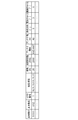
- FIG. It is a table which shows the example of the data which the base station specification management part 9 hold
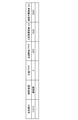
- 4 is a table showing an example of data held by a setting parameter management unit 10;
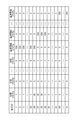
- 3 is a table showing an example of data held by a signal sequence management unit 11.
- It is a table which shows another example of the data which the signal series management part 11 hold
- FIG. 1 is a block diagram showing the configuration of the signal sequence allocating device of this embodiment.
- the signal sequence allocating device 1 includes a cell radius calculation unit 2 (area radius calculation unit), a cell radius correction unit 3, a required signal calculation unit 4, and a signal number calculation unit 5 (signal number calculation unit).
- Divided signal table selection unit 6 divided signal table selection unit
- signal sequence allocation unit 7 signal sequence allocation unit
- design database management unit 8 base station specification management unit 9, setting parameter management unit 10
- signal sequence The management unit 11 is included.
- the signal sequence allocating device 1 is composed of hardware such as a CPU.
- FIG. 2 is a hardware configuration diagram of the signal sequence allocation device 1.
- the signal sequence allocating device 1 shown in FIG. 1 physically includes a CPU 51, a RAM 52 and a ROM 53 that are main storage devices, an input device 54 such as a keyboard and a mouse that are input devices, a display, and the like.
- the functions of the functional blocks shown in FIG. 1 are such that predetermined computer software is loaded on hardware such as the CPU 51 and the RAM 52 shown in FIG.
- the design database management unit 8 includes a base station specification management unit 9, a setting parameter management unit 10, and a signal sequence management unit 11, and holds basic data required when the signal sequence allocation apparatus 1 allocates a signal sequence. is doing.
- the base station specification management unit 9 holds basic data used when the cell radius calculation unit 2 calculates the cell radius.
- One specific example of data held by the base station specification management unit 9 is shown in FIG.
- the base station specification management unit 9 includes, for example, a base station ID, a base station name, a base station sector number, a latitude / longitude, an altitude, a transmission frequency, an antenna type, an antenna height, a pointing direction, and an electric tilt angle shown in FIG. And the mechanical tilt angle and the like are maintained.
- the setting parameter management unit 10 holds data used when the cell radius correction unit 3 corrects the cell radius and when the required signal calculation unit 4 (or the divided signal table selection unit 6) selects the divided signal table. .
- the setting parameter management unit 10 includes, for example, the base station ID, opening / closing device (open space indicates outdoor type, closed space indicates indoor type), jurisdiction flag, high-speed flow line flag, antenna and base station shown in FIG.
- the optical section delay amount, which is the delay amount, and the in-device delay amount, which is the delay amount in the radio wave amplifying device, are held.
- the signal sequence management unit 11 holds data related to a signal table including assignable signals and data related to the divided signal table used by the required signal calculation unit 4 (or the divided signal table selection unit 6) and the signal sequence allocation unit 7.
- One specific example of data held by the signal sequence management unit 11 is shown in FIG.
- the signal sequence management unit 11 holds, for example, a signal ID, a jurisdiction flag, a high-speed flow line flag, and the like illustrated in FIG.
- Another specific example of data held by the signal sequence management unit 11 is shown in FIG.
- the difference between FIG. 6 and FIG. 5 is the difference between having or not having a plurality of high-speed flow line flag sequences (explanation will be described later).
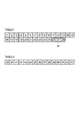
- the data in the jurisdiction flag A column in FIG. 5 indicates information of the divided signal table to be selected for a certain jurisdiction A. That is, the division signal table composed of signals having signal IDs 1 to 28 is selected as the jurisdiction A.
- the additional allocation reserve M including the signal IDs 26, 27, and 28 is retained as a reserve at the time of additional allocation of signals, and signals included in the additional allocation reserve M are not allocated at the time of normal signal allocation. . In this way, some signals included in the divided signal table can be retained as a reserve for additional allocation.
- Table 1 in FIG. 9 is a diagram showing the divided signal table indicated by the data in the jurisdiction flag A column in FIG. 5 in a different format.
- Table 2 in FIG. 9 is a diagram showing the divided signal table indicated by the data in the jurisdiction flag B column in FIG. 5 in different formats.
- the cell radius calculation unit 2 calculates the cell radius of the area to which the signal sequence is allocated among the areas in the base station sector based on the data of the base station specification management unit 9 and outputs it to the required signal calculation unit 4. Specifically, when calculating the cell radius, the cell radius calculation unit 2 determines the cell radius, the arrival direction of the radio wave from the base station, the height of the antenna that transmits the radio wave from the base station, and the altitude data of the antenna. Calculate based on Thereby, an area close to the actual radio wave arrival area can be handled as the cell radius.
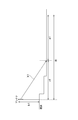
- FIG. 7 is a diagram showing the arrival area of radio waves from the base station.
- the cell radius R is a cell radius based on the conventional concept, and is a cell radius when the arrival area is up to the limit of the processing capability of the base station apparatus.
- the cell radius r1 is the cell radius calculated by the cell radius calculation unit 2, and the elevation difference between the radio wave arrival direction X1, the antenna height h1, the antenna from which the radio wave is transmitted, and the position at which the radio wave is received. From the cell radius when the arrival area is obtained.
- the difference distance e1 indicates a difference distance between the cell radius R and the cell radius r1, and can be handled as an unnecessary cell radius. Thus, by assigning a signal sequence based on the cell radius r1, it is not necessary to allocate signals excessively by the difference distance e1 compared to assigning a signal sequence based on the cell radius R based on the conventional concept.
- the cell radius correction unit 3 determines the area factor of the data held by the setting parameter management unit 10 (for example, the propagation delay between the base station apparatus main body and the antenna, The cell radius calculated by the cell radius calculation unit 2 is corrected based on the delay amount in the device of the amplifier and the degree of radio wave amplification by the radio amplifier.
- FIG. 8 is a diagram showing a configuration when the base station apparatus main body and the antenna are separated from each other and there is a radio wave amplifying apparatus that relays and amplifies radio waves from the base station.
- the base station apparatus main body and the antenna are connected by, for example, an optical fiber (lighting of a wireless section) and they are separated by a distance o2, the arrival area of the radio wave changes based on the distance o2.
- the cell radius correction unit 3 uses the base station device as a transmission specified point, and the propagation delay between the base stations connected to the antenna that transmits radio waves (the optical section delay amount held by the setting parameter management unit 10). The area radius is corrected based on.
- the propagation delay increases as the distance between the base station apparatus and the antenna increases.
- the area radius is corrected based on the in-device delay amount held by the setting parameter management unit 10. Furthermore, the arrival area of radio waves changes based on the amplification degree. For example, in the case of the configuration shown in FIG. 8, the arrival area further increases the distance a2. Therefore, the cell radius correction unit 3 may further correct the area radius based on the radio wave amplification degree by the radio wave amplification device.
- the required signal calculation unit 4 includes a signal number calculation unit 5 and a divided signal table selection unit 6.
- the required signal calculation unit 4 inputs the cell radius from the cell radius calculation unit 2.
- the signal number calculation unit 5 is included in the signal sequence assigned to the base station sector based on the cell radius input from the cell radius calculation unit 2 and the data held by the setting parameter management unit 10 and the signal sequence management unit 11. Calculate the number of signals. In mobile communication, in general, the larger the cell radius, the greater the number of signals required. Therefore, the signal number calculation unit 5 specifically calculates the number of signals proportional to the size of the cell radius. In addition, the signal number calculation unit 5 may hold, for example, a correspondence relationship between the cell radius and the signal number in advance, and may calculate the signal number from the cell radius based on the correspondence relationship. The signal number calculation unit 5 (or the required signal calculation unit 4) outputs the calculated signal number to the signal sequence allocation unit 7.
- the division signal table selection unit 6 is based on data held by the setting parameter management unit 10 and the signal sequence management unit 11 when a signal table including an assignable signal is divided into two or more division signal tables in advance. Thus, one divided signal table is selected for each base station sector. For example, in FIG. 4, when selecting the division signal table for the base station sector with the base station ID 111111, the division signal table selection unit 6 determines that the jurisdiction flag with the base station ID 111111 is A from the table of FIG. Then, the division signal table of the jurisdiction flag A is acquired from the table of FIG. 5, and the division signal table is selected for the base station sector.
- the divided signal table selection unit 6 selects the divided signal table indicated by the high-speed flow line flag. In this case, the divided signal table selection unit 6 may select the divided signal table indicated by the jurisdiction flag.
- a base station sector adjacent to a base station sector managed by another management entity is defined as a boundary sector. I will call it.
- FIG. 10 is a diagram showing a range of base station sectors including boundary sectors managed by the management entity A and the management entity B.
- Jurisdiction A indicates the range of base station sectors managed by management entity A
- jurisdiction B indicates the range of base station sectors managed by management entity B.
- the boundary sector A1 indicates the boundary sector range managed by the management entity A
- the boundary sector B1 indicates the boundary sector range managed by the management entity B.
- the divided signal table selection unit 6 uses a divided signal table different from the divided signal table of the boundary sector B1 for the boundary sector A1. You may choose. Similarly, when the signal sequence allocating apparatus 1 allocates the signal sequence of the jurisdiction B, the divided signal table selection unit 6 selects a divided signal table different from the divided signal table of the boundary sector A1 for the boundary sector B1. Also good. For example, the divided signal table selection unit 6 selects the divided signal table indicated by Table 1 in FIG. 9 for the boundary sector A1, and selects the divided signal table indicated by Table 2 in FIG. 9 for the boundary sector B1.
- the divided signal table selection unit 6 may select a divided signal table different from the surrounding base station sectors for a predetermined base station sector. For example, for base station sectors including the vicinity of high-speed rail tracks, the division signal table is used so that the signal sequence interferes with the signal sequence of the surrounding base station sector due to the effect of Doppler shift and does not affect the connection quality.
- the selection unit 6 selects a divided signal table different from the surrounding base station sectors. Specifically, the divided signal table selection unit 6 selects a divided signal table composed of signals whose high-speed flow line flag is ON in FIG. 5 for the base station sector including the vicinity of the high-speed railway track. . In FIG. 5, there is only one high-speed flow line flag sequence. However, as shown in FIG. 6, there are a plurality of types of high-speed flow line flag sequences, which are different for each base station sector including the vicinity of a high-speed rail line. A high-speed flow line flag string may be selected.
- the division signal table selection unit 6 (or the required signal calculation unit 4) outputs the selection relationship between the base station sector and the division signal table to the signal sequence allocation unit 7.
- the signal sequence allocating unit 7 allocates a signal sequence to the base station sector based on the number of signals input from the required signal calculating unit 4 (or the signal number calculating unit 5) and the data held by the signal sequence managing unit 11. Specifically, the signal sequence allocating unit 7 obtains the required signal calculating unit 4 (or the signal number calculating unit 5) from the signal table (or divided signal table) containing the assignable signals held by the signal sequence managing unit 11. A signal corresponding to the number of signals input from is selected, and a signal sequence composed of the selected signals is assigned to the base station sector. When selecting a signal, an arbitrary signal such as a continuous signal or a discrete signal may be selected. The signal sequence allocating unit 7 may output the signal sequence allocation result to the output device 55, the auxiliary storage device 57, an external device (eg, LTE NW System), and the like.
- an external device eg, LTE NW System
- the signal sequence allocating unit 7 may allocate signal sequences in order from a base station sector having a short distance from a predetermined base point.
- the signal sequence allocating unit 7 may further input the selection relationship between the base station sector and the divided signal table from the required signal calculating unit 4 (or the divided signal table selecting unit 6). In that case, when the signal sequence allocating unit 7 allocates the signal sequence to the base station sector, based on the divided signal table selected for the base station sector and the number of signals input by the signal sequence allocating unit 7, A signal sequence is assigned to the base station sector.
- the signal sequence allocating unit 7 allocates the base station sector and another base station sector to which a signal sequence including at least one signal that is the same as the signal constituting the signal sequence is allocated.
- a signal sequence that can secure a separation distance is assigned and a predetermined separation distance cannot be secured for all the assignable signals, a signal sequence that includes signals that can secure the longest separation distance may be assigned.
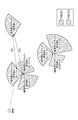
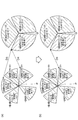
- FIG. 11 is an explanatory diagram showing allocation of signal sequences to base station sectors. As shown in FIG. 11, a predetermined base point serving as a reference point, base station sectors ⁇ 1 to ⁇ 6, ⁇ 1 are included.
- the signal number calculation unit 5 (or the required signal calculation unit 4), the number of signals in the base station sector ⁇ 1 is 4, the number of signals in the base station sector ⁇ 2 is 5, the number of signals in the base station sector ⁇ 3 is 3, Assume that the number of signals in sector ⁇ 4 is 4, the number of signals in base station sector ⁇ 5 is 9, the number of signals in base station sector ⁇ 6 is 3, and the number of signals in base station sector ⁇ is 3. Further, the divided signal table selecting unit 6 (or the required signal calculating unit 4) selects the divided signal table Table1 for the base station sectors ⁇ 1 to ⁇ 6 and selects the divided signal table Table2 for the base station sector ⁇ 1. Suppose that
- the signal sequence allocating unit 7 allocates signal sequences in order from the base station sector having the shortest distance to the base point to the base station sector for which the divided signal table Table1 is selected. That is, for the base station sector ⁇ 1 having the shortest distance from the base point, the signal sequence allocation unit 7 has four signal IDs 1 to 4 in the divided signal table Table1 because the number of signals in the base station sector ⁇ 1 is four. Assign a signal sequence composed of signals. At the same time, the signal sequence allocating unit 7 holds, in the signal sequence managing unit 11, allocation information indicating that the signal sequences having the signal IDs 1 to 4 are allocated to the base station sector ⁇ 1.
- the signal sequence allocating unit 7 when a signal sequence is allocated to a base station sector, the allocation information is held in the signal sequence management unit 11.
- the signal sequence allocating unit 7 has a signal ID obtained by removing the already allocated signal from the divided signal table Table1 because the number of signals of the base station sector ⁇ 2 is five. A signal sequence composed of 5 to 5 signals of 5 to 5 is allocated.
- the signal sequence allocating unit 7 allocates a signal sequence as shown in FIG. 11 in the same procedure for the base station sectors ⁇ 3 to ⁇ 5.
- the signal sequence allocating unit 7 allocates the signal sequence of the base station sector ⁇ 6.
- the signal sequence allocating unit 7 has allocated all the signals that can be allocated in the divided signal table Table1 to the base station sectors ⁇ 1 to ⁇ 5 so far. Therefore, the signal sequence allocating unit 7 returns to the beginning of the divided signal table Table1 for the base station sector ⁇ 6 and tries to allocate a signal sequence composed of signals having signal IDs 1 to 4. At that time, the signal sequence allocating unit 7 separates the base station sector ⁇ 6 from the base station sector ⁇ 1 to which the same signal has already been allocated (for example, the points in the sector of each of the base station sectors ⁇ 1 and ⁇ 6 in FIG. 11).
- the sector represents a service area.
- the signal sequence allocating unit 7 cannot secure a predetermined separation distance.
- the signal sequence allocating unit 7 similarly determines the separation distance for the base station sector ⁇ 2 to which the signal sequence composed of the signals of the signal IDs 5 to 9 is allocated. In this case, the signal sequence allocating unit 7 It is assumed that the separation distance of can be secured. Therefore, the signal sequence allocating unit 7 uses three signals 5 to 7 (number of signals in the base station sector ⁇ 6) out of the signal IDs 5 to 9 constituting the signal sequence allocated in the base station sector ⁇ 2.
- the configured signal sequence is assigned to the base station sector ⁇ 6.
- the signal sequence allocating unit 7 when the signal sequence allocating unit 7 cannot secure the separation distance for all of the base stations ⁇ 1 to ⁇ 5, the signal sequence allocating unit 7 includes the signal of the base station ⁇ 2 that can ensure the longest separation distance. Is assigned to the base station ⁇ 6.
- the signal sequence allocating unit 7 allocates signal sequences in order from the base station sector having the shortest distance to the base point to the base station sector for which the divided signal table Table2 is selected. That is, since the number of signals of the base station sector ⁇ 1 is 3 with respect to the base station sector ⁇ 1 having the shortest distance from the base point, the signal sequence is composed of three signals with signal IDs 29 to 31 in the divided signal table Table2. Assign. As described above, the signal sequence allocating unit 7 allocates a signal sequence to the base station sector based on the number of input signals and the selection relationship between the base station sector and the divided signal table.
- the signal sequence allocating unit 7 allocates a signal sequence including overlapping signals to base station sectors having different transmission timings of signal sequences to the base station among a plurality of base station sectors of the base station.
- the signal sequence allocating unit 7 has a number of signals calculated by the signal number calculating unit 5 (or the required signal calculating unit 4) that have different transmission timings of the signal sequences to the base station among the plurality of base station sectors of the base station.
- a signal sequence including the same signal may be assigned to base station sectors having the same value.
- the signal sequence allocating unit 7 may allocate signal sequences in the order of base station sectors in which the number of signals calculated by the signal number calculating unit 5 (or the required signal calculating unit 4) is large among the base stations.
- the signal sequence allocating unit 7 allocates a signal sequence including the same signal as much as possible to the base station sector when the transmission timing of the signal sequence to the base station is different among the plurality of base station sectors of the base station. May be.
- the transmission timing will be described below.
- OFDMA Orthogonal Frequency Division Multiple Access
- W-CDMA Wideband Code Division Multiple Access
- three group IDs identification information assigned to groups of base station sectors
- the three group IDs indicate a Local ID, a Cell Group ID, and a Hopping pattern.
- the transmission timing of the signal sequence in the base station sector is determined based on the Local ID assigned to the base station sector.
- the signal sequence transmission timing in the base station sector with Local ID 0 and the signal in the base station sector with Local ID 1 The transmission timing of the sequence is different from the transmission timing of the signal sequence in the base station sector whose Local ID is 2. That is, if the Local ID assigned to the base station sector is different, the transmission timing of the signal sequence in the base station sector is also different. Therefore, since the base station sectors in the same base station are synchronized, if the Local ID is different, the transmission timing of the signal sequence is different (does not collide), so it is possible to assign a signal sequence including the same signal. is there.
- the transmission timing of the signal sequence differs (does not collide) if the local ID is different between base station sectors between different base stations, so the same signal is included. It is possible to assign a signal sequence.
- the Local ID is composed of three IDs 0-2 as described above.
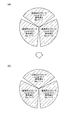
- FIG. 14 is an explanatory diagram showing allocation of overlapping signal sequences to base station sectors by the signal sequence allocating unit 7.
- FIG. 14A is a diagram showing assignment of non-overlapping signal sequences
- FIG. 14B is a diagram showing assignment of overlapping signal sequences.
- base station sectors ⁇ 1 to ⁇ 3 are included.
- 0 to 2 are assigned as Local IDs of the base station sectors ⁇ 1 to ⁇ 3, respectively, and the number of signals of the base station sectors ⁇ 1 to ⁇ 3 is set to 5 by the signal number calculation unit 5 (or the required signal calculation unit 4). Is assigned.
- the divided signal table selection unit 6 includes signals having signal IDs 1 to 50 for all base station sectors included in FIG. 14 and FIGS. 15 to 17 described later. Suppose that the divided signal table to be selected is selected.
- the signal sequence allocating unit 7 allocates a non-overlapping signal sequence to each base station sector. Specifically, the signal sequence allocating unit 7 first allocates a signal sequence composed of signals having signal IDs 1 to 5 to the base station sector ⁇ 1 because the number of signals is five. Next, the signal sequence allocating unit 7 allocates a signal sequence composed of signals having signal IDs 6 to 10, which are five signals that do not overlap with the signal sequence of the base station sector ⁇ 1, to the base station sector ⁇ 2. . Similarly, the signal sequence allocating unit 7 is a signal sequence composed of signals with signal IDs 11 to 15 that are five signals that do not overlap with the signal sequences of the base station sectors ⁇ 1 and ⁇ 2 for the base station sector ⁇ 3. Assign.
- the signal sequence allocating unit 7 is a base station sector in which the transmission timing of the signal sequence to the base station is different and the number of signals is the same among the plurality of base station sectors of the base station. Are assigned signal sequences containing the same signal. Specifically, the signal sequence allocating unit 7 is composed of signals having signal IDs 1 to 5 for base station sectors ⁇ 1 to ⁇ 3 having different local IDs and having the same number of signals of 5, respectively. Assigned signal sequences.
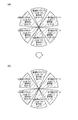
- FIG. 15 is an explanatory diagram showing allocation of duplicate signal sequences to base station sectors by the signal sequence allocation unit 7 when the number of signals of each base station sector is different.
- FIG. 15A is a diagram illustrating allocation of non-overlapping signal sequences
- FIG. 15B is a diagram illustrating allocation of overlapping signal sequences.
- base station sectors ⁇ 4 to ⁇ 6 are included.
- 0 to 2 are assigned as Local IDs of the base station sectors ⁇ 4 to ⁇ 6, respectively
- the number of signals of the base station sectors ⁇ 4 to ⁇ 6 is 3 by the signal number calculation unit 5 (or the required signal calculation unit 4).
- 5 are assigned.
- the signal sequence allocating unit 7 allocates a non-overlapping signal sequence to each base station sector. Specifically, the signal sequence allocating unit 7 first allocates a signal sequence composed of signals having signal IDs 1 to 3 to the base station sector ⁇ 4 because the number of signals is three. Next, the signal sequence allocating unit 7 allocates a signal sequence composed of signals having signal IDs 4 to 7, which are four signals that do not overlap with the signal sequence of the base station sector ⁇ 4, to the base station sector ⁇ 5. . Next, the signal sequence allocating unit 7 is a signal sequence composed of signals having signal IDs 8 to 12 that are five signals that do not overlap with the signal sequences of the base station sectors ⁇ 4 and ⁇ 5 for the base station sector ⁇ 6. Assign.
- the signal sequence allocating unit 7 calculates the signal calculated by the required signal calculating unit 4 for the base station sectors having different assigned local IDs among the plurality of base station sectors of the base station.
- a signal sequence including overlapping signals is assigned in order of the base station sector having the largest number.
- the signal sequence allocating unit 7 first has a signal ID of 1 to 5 because the number of signals is 5 for the base station sector ⁇ 6 having the largest number of signals among the base station sectors ⁇ 4 to 6. Assign a signal sequence composed of signals.
- the signal sequence allocating unit 7 allocates a signal sequence to the base station sector ⁇ 5 having the next largest number of signals after the base station sector ⁇ 6.
- the signal sequence allocating unit 7 since the local ID is different between the base station sector ⁇ 5 and the base station sector ⁇ 6 to which the signal sequence is allocated earlier, that is, the transmission timing of the signal sequence to the base station is different, the signal sequence allocating unit 7 has the base station sector ⁇ 5. On the other hand, it is possible to assign a signal sequence that overlaps with a signal included in the signal sequence assigned in the base station sector ⁇ 6. Specifically, the signal sequence allocating unit 7 allocates a signal sequence composed of signals with signal IDs 1 to 4 to the base station sector ⁇ 5 because the number of signals is four. Similarly, the signal sequence allocating unit 7 allocates a signal sequence composed of signals having signal IDs 1 to 3 to the base station sector ⁇ 4 having the next largest number of signals because the number of signals is 3.
- the signal sequence allocating unit 7 allocates a signal sequence composed of signals with signal IDs 1 to 4 to the base station sector ⁇ 5, but a signal composed of signals with signal IDs 2 to 5 A series may be assigned. Further, the signal sequence allocating unit 7 may allocate a signal sequence composed of signals having signal IDs 1 and 3 to 5 instead of serial numbers.
- FIG. 16 and FIG. 17 an arbitrary one signal ID allocation pattern is shown, but the present invention is not limited to this, as described above.
- FIG. 16 is an explanatory diagram showing the assignment of overlapping signal sequences to the base station sectors by the signal sequence assigning unit 7 when the number of signals of each base station sector is different, as in FIG. 16 differs from FIG. 15 in that overlapping Local IDs are assigned to a plurality of base station sectors of the base station.
- FIG. 16A is a diagram showing assignment of non-overlapping signal sequences
- FIG. 16B is a diagram showing assignment of overlapping signal sequences. As shown in FIGS. 16A and 16B, base station sectors ⁇ 7 to ⁇ 12 are included.
- 0, 1, 2, 0, 1 and 2 are assigned as Local IDs of the base station sectors ⁇ 7 to ⁇ 12, respectively, and the signal number calculation unit 5 (or the required signal calculation unit 4) performs the base station sectors ⁇ 7 to ⁇ 7.
- 3, 4, 5, 6, 7, and 8 are assigned as the number of signals of ⁇ 12, respectively.
- the signal sequence allocating unit 7 allocates a non-overlapping signal sequence to each base station sector. Specifically, the signal sequence allocating unit 7 first allocates a signal sequence composed of signals having signal IDs 1 to 3 to the base station sector ⁇ 7 because the number of signals is three. Next, the signal sequence allocating unit 7 allocates to the base station sector ⁇ 8 a signal sequence composed of signals having signal IDs 4 to 7, which are four signals that do not overlap with the signal sequence of the base station sector ⁇ 7. . Similarly, the signal sequence allocating unit 7 allocates a signal sequence composed of signals having signal IDs 8 to 12 to the base station sector ⁇ 9, and signal IDs 13 to 18 for the base station sector ⁇ 10. Is assigned to the base station sector ⁇ 11, and a signal ID of 26 to 33 is assigned to the base station sector ⁇ 12. A signal sequence composed of the signals is assigned.
- the signal sequence allocating unit 7 calculates the signal calculated by the required signal calculating unit 4 for the base station sectors having different allocated Local IDs among the plurality of base station sectors of the base station.
- a signal sequence including overlapping signals is assigned in order of the base station sector having the largest number. Specifically, the signal sequence allocating unit 7 first determines that the signal ID is 1 to 8 since the number of signals is 8 for the base station sector ⁇ 12 having the largest number of signals among the base station sectors ⁇ 7 to ⁇ 12. Assign a signal sequence composed of signals.
- the signal sequence allocating unit 7 assigns the base station sector ⁇ 11, which is the base station sector having the next largest number of signals to the base station sector ⁇ 12, among the base station sectors to which the Local ID different from the base station sector ⁇ 12 is allocated.
- the number of signals since the number of signals is 7, a signal sequence composed of signals having signal IDs 1 to 7 is assigned.
- the signal sequence allocating unit 7 assigns to the base station sector ⁇ 10, which is the base station sector having the next largest number of signals after the base station sector ⁇ 11, among the base station sectors to which the Local ID different from the base station sector ⁇ 12 is allocated.
- the number of signals is 6, a signal sequence composed of signals having signal IDs 1 to 6 is assigned.
- the signal sequence allocating unit 7 since the signal sequence allocating unit 7 allocates a signal sequence once to each base station sector to which a different Local ID is assigned from the base station sector ⁇ 12, the signal sequence allocating unit 7 finally assigns the signal sequence to the base station sector ⁇ 10. Next, a signal sequence is assigned to the base station sector ⁇ 9, which is the base station sector having the largest number of signals. At this time, the signal sequence allocating unit 7 bases a signal sequence including a signal different from the signal included in the signal sequence allocated to the base station sector ⁇ 12 to which the same Local ID is allocated among the base station sectors of the same base station. Assign to station sector ⁇ 9.
- the signal sequence allocating unit 7 A signal sequence composed of signals with signal IDs 9 to 13 is assigned. Next, the signal sequence allocating unit 7 assigns the base station sector ⁇ 8, which is the base station sector having the next largest number of signals to the base station sector ⁇ 9, among the base station sectors to which the local ID different from the base station sector ⁇ 9 is allocated. On the other hand, since the number of signals is 4, and the signal sequence of the base station sector ⁇ 11 to which the same Local ID is assigned is composed of signals ID1 to 7, the signal ID is composed of signals of 9 to 12. Assign a signal sequence.
- the signal sequence allocating unit 7 assigns to the base station sector ⁇ 7, which is the base station sector having the next largest number of signals after the base station sector ⁇ 8, among the base station sectors to which the Local ID different from the base station sector ⁇ 9 is allocated.
- the signal sequence of the base station sector ⁇ 10 to which the same Local ID is assigned is composed of signals ID1 to 6, the signal ID is composed of signals of 9 to 11. Assign a signal sequence.
- the signal sequence allocating unit 7 allocates signal sequences in the order of base station sectors having the largest number of signals. It is not a thing. For example, signal sequences may be assigned in the order of base station sectors with the smallest number of signals, or signal sequences may be randomly assigned to base station sectors regardless of the number of signals.
- the signal sequence allocating unit 7 When allocating a signal sequence to one base station sector, the signal sequence allocating unit 7 has the same signal sequence transmission timing as that of the signal sequence for the base station in the one base station sector and the signal constituting the signal sequence. A signal sequence that can secure a separation distance between one base station sector and another base station sector to which a signal sequence including at least one is allocated may be allocated. At that time, when the signal sequence allocating unit 7 cannot allocate a signal sequence that can secure a separation distance to one base station sector, the transmission timing of the signal sequence to the base station in another base station sector is different from the transmission timing. You may change to
- FIG. 17A shows that when the base stations (base station P and base station Q) are synchronized, the signal sequence allocating unit 7 assigns signal sequences to the base station sectors ⁇ 13 to ⁇ 17 of the base station P.
- FIG. 4 shows a diagram when the signal sequence allocating unit 7 allocates a signal sequence to the base station sector ⁇ 18 among the base station sectors ⁇ 18 to ⁇ 20 of the base station Q.
- 2, 1, 0, 1 and 0 are assigned as the local IDs of the base station sectors ⁇ 13 to ⁇ 17, respectively
- 0, 1 and 2 are assigned as the Local IDs of the base station sectors ⁇ 18 to ⁇ 20, respectively.
- the number calculation unit 5 assigns 3, 5, 6, 7, 8, and 7 as the number of signals of the base station sectors ⁇ 13 to ⁇ 18, respectively. It is assumed that a divided signal table composed of signals having signal IDs 1 to 20 is selected by the divided signal table selection unit 6 for the base station sector ⁇ 18.
- the signal sequence allocating unit 7 separates the distance D4 from the base station sector ⁇ 17 assigned with the same Local ID 0 as that of the base station sector ⁇ 18 (for example, each sector of the base station sectors ⁇ 18 and ⁇ 17 in FIG. 17A).
- the distance of the straight line that makes the distance of the straight lines connecting the respective points the shortest among the points is calculated.
- the sector represents a service area.
- the signal sequence allocating unit 7 cannot secure the separation distance D4 by a predetermined value (for example, 5 km) or more.
- the signal sequence allocating unit 7 obtains a separation distance D5 from the base station sector ⁇ 15 to which 0, which is the same Local ID as the base station sector ⁇ 18, is obtained, and the separation distance D5 is secured to a predetermined value (for example, 5 km) or more. Assume that it was not possible. In this case, the signal sequence allocating unit 7 needs to allocate a signal sequence including a signal different from the signals included in the signal sequences allocated to the base station sector ⁇ 17 and the base station sector ⁇ 15 to the base station sector ⁇ 18. is there. That is, the signal sequence allocating unit 7 needs to allocate a signal sequence including seven signal IDs having a signal ID of 15 or later to the base station sector ⁇ 18. However, the signal IDs included in the divided signal table selected for the base station sector ⁇ 18 are 1 to 20, and the signal sequence allocating unit 7 can allocate only six signal IDs 15 to 20.
- the signal sequence allocating unit 7 sets the Local ID of any one base station sector among the base station sectors that could not secure the separation distance from the base station sector ⁇ 18 to be adjacent in the same base station as the base station sector. Change to a local ID that does not overlap with the local ID of the base station sector as much as possible. Then, the signal sequence allocating unit 7 reassigns the signal sequence to all base station sectors in the base station including the base station sector whose Local ID has been changed. Note that the signal sequence allocating unit 7 does not reassign the signal sequence for all base station sectors, but reassigns the signal sequence only for the base station sector that has an effect on the base station sector whose Local ID has been changed. Good.
- the signal sequence allocating unit 7 assigns the Local ID of the base station sector ⁇ 15, which cannot secure the separation distance from the base station sector ⁇ 18, to the adjacent base station sector ⁇ 14 and Change to 2 which does not overlap with 1 which is Local ID of ⁇ 16. Then, the signal sequence allocating unit 7 reassigns the signal sequence for the base station sector ⁇ 15 and the base station sector ⁇ 13 assigned the same Local ID as the base station sector ⁇ 15, and the signal ID is 1 for the base station sector ⁇ 15. A signal sequence composed of signals of ⁇ 6 is allocated, and a signal sequence composed of signals of signal IDs 9-11 is allocated to the base station sector ⁇ 13.
- the signal sequence allocating unit 7 makes seven of the signals of the signal IDs 9 to 20 based on the separation distance D4 with respect to the base station sector ⁇ 18. Can be assigned. Therefore, the signal sequence allocating unit 7 allocates a signal sequence composed of signals with signal IDs 9 to 15 to the base station sector ⁇ 18.
- the adjustment related to the separation distance is performed. For example, the signal sequence is assigned to all the base station sectors without adjusting the separation distance. After that, an adjustment regarding the separation distance may be performed for each base station sector.
- the Local ID is changed in some base station sectors.
- a Local ID separation distance a separation distance between base station sectors to which the same Local ID is assigned. That is, a transmission distance of a signal sequence to a base station is the same, and a separation distance between base station sectors to which a signal sequence including at least one signal that is the same as a signal constituting the signal sequence is assigned (hereinafter, a signal sequence separation distance). )), As well as securing the Local ID separation distance.
- the Local ID separation distance cannot be secured, the downlink communication quality will be reduced.
- the signal sequence separation distance cannot be secured, the cell radius is reduced, and a sufficient base station area cannot be secured. Therefore, in operation, for example, securing the signal series separation distance has priority over securing the Local ID separation distance.
- the Local ID separation distance that needs to be secured is, for example, 1 km
- the signal series separation distance that needs to be secured is, for example, 5 km.
- FIG. 12 is a flowchart showing the processing of the signal sequence assignment apparatus 1.
- a target base station sector (target base station sector) to which a signal sequence is allocated is selected by the signal sequence allocation device 1 (S1).
- the cell radius calculation unit 2 calculates the cell radius of the target base station sector (S2, area radius calculation step).
- the cell radius is corrected by the cell radius correction unit 3 included in the cell radius calculation unit 2 (S3).
- the division signal table selection unit 6 included in the required signal calculation unit 4 selects a division signal table for the target base station sector (S4).
- the signal number calculation unit 5 included in the required signal calculation unit 4 calculates the signal number of the target base station sector based on the corrected cell radius (S5, signal number calculation step).
- the signal sequence allocating unit 7 allocates a signal sequence to the target base station sector based on the divided signal table selected for the target base station sector and the number of signals (S6, signal sequence allocation step). The above steps S1 to S6 are repeatedly applied to all base station sectors to which signal sequences are assigned.
- FIG. 13 is a flowchart showing processing related to securing a separation distance of the signal sequence allocating unit 7 included in the signal sequence allocating device 1.
- the destination to move to after the above-described S5 is S31 described later instead of the above-described S6.
- the signal sequence allocating unit 7 selects signals constituting the divided signal table selected for the target base station sector in S4 by the number of signals calculated in S5 (S31). ). Next, the signal sequence assignment unit 7 determines whether or not the same signal is assigned to another base station sector (S32).
- the signal sequence allocating unit 7 assigns a signal sequence composed of the selected signal to the target base station base station sector (S37). . If the signal is assigned to another base station sector (allocated base station sector) in S32, the signal sequence allocating unit 7 calculates the separation distance between the target base station sector and the allocated base station sector. (S33). If the separation distance can be secured in S33, the process proceeds to S37. In S33, if the separation distance cannot be secured, the signal sequence allocation unit 7 stores the signal for which the separation distance could not be secured in the signal sequence management unit 11 (S34).
- the signal sequence allocating unit 7 determines whether or not separation distances cannot be secured for all signals constituting the divided signal table (S35). If the separation distance can be secured for some signals, the process proceeds to S31, and the same procedure is performed for the some signals. In S35, when the separation distance cannot be secured for all the signals constituting the divided signal table, the signal sequence allocating unit 7 selects a signal that can secure the separation distance most among these signals (S36), and proceeds to S37.
- the cell radius calculation unit 2, the signal number calculation unit 5 (or the required signal calculation unit 4), and the signal sequence allocation unit 7 calculate and calculate the area radius of the area to which the signal sequence is allocated among the areas in the base station sector. Based on the area radius, the number of signals constituting the signal sequence to be allocated to the base station sector is calculated, and the signal sequence is allocated to the base station sector based on the calculated number of signals. As a result, the minimum necessary signal sequence can be efficiently and appropriately allocated to the area to which the signal sequence is allocated without excessively allocating the signal sequence.
- the cell radius correction unit 3 calculates the area radius based on the height of the antenna that transmits the radio wave from the base station and the transmission direction of the radio wave, so that the cell radius close to the service area where the radio wave actually reaches can be obtained. Can be calculated.
- the cell radius correction unit 3 calculates the area radius in consideration of the propagation delay between the base station and the antenna that transmits the radio wave from the base station, so that the cell radius close to the service area where the radio wave actually reaches can be obtained. Can be calculated.
- distance is mentioned, for example.
- the cell radius correction unit 3 calculates the area radius based on the in-device delay amount of the radio wave amplifying device that relays and amplifies the radio wave from the base station and the radio wave amplification level, so that the radio wave actually arrives. A cell radius close to the service area can be calculated. Then, by calculating the number of signals based on the cell radius and assigning a signal sequence, the necessary minimum signal sequence can be efficiently and appropriately assigned to the base station sector.
- the divided signal table selection unit 6 can assign an independent divided signal table to each base station sector (for example, Table 1 and Table 2 in FIG. 9), and a signal sequence can be assigned more flexibly. Further, the divided signal table selection unit 6 selects a divided signal table different from the boundary area of another adjacent management entity for the boundary area, such as the boundary sector A1 and the boundary sector B1 in FIG. Thus, it is possible to efficiently and appropriately assign the necessary minimum signal sequence to the base station sector in consideration of interference with jurisdiction managed by other management entities. Further, since the divided signal table selection unit 6 selects a divided signal table different from the surrounding base station sector, the divided signal table is not affected by surrounding signal sequences and does not affect the connection quality. That is, it is possible to efficiently and appropriately assign the minimum necessary signal sequence to the base station sector in consideration of interference of surrounding signal sequences.
- the signal sequence allocating unit 7 allocates signal sequences in order from a base station sector having a short distance to a predetermined base point, thereby preventing signals from overlapping in surrounding base station sectors. be able to. Further, by assigning signal sequences by the signal sequence assigning unit 7 as shown in the flowchart of FIG. 13, there is no duplication of signals in the neighboring base station sectors, or the base station sectors to which the same signals are assigned. Repetitive signal sequences can be allocated efficiently and appropriately so that the separation distance can be as much as possible.
- the signal sequence allocating unit 7 synchronizes between base station sectors in the same base station and among different base stations among the plurality of base station sectors of the base station, the assigned Local ID Assign signal sequences including overlapping signals to base station sectors different from each other.
- the mobile device since the transmission timing of signal sequences to the base station is different (no collision) in the base station sector, the mobile device can be connected for communication even if a signal sequence including overlapping signals is assigned. . That is, the minimum necessary signal sequence can be allocated to the area to which the signal sequence is allocated without excessively allocating the signal sequence.
- the allocated local IDs are different from each other, and the number of signals calculated by the signal number calculating unit 5 is the same as each other. Assign a signal sequence containing the same signal. Thereby, it is possible to allocate the minimum necessary signal sequence to the area to which the signal sequence is allocated without excessively allocating the signal sequence.
- the signal sequence allocating unit 7 allocates signal sequences in the order of base station sectors having the largest number of signals calculated by the signal number calculating unit 5 among the base stations. As a result, a process for allocating a signal sequence including overlapping signals to a base station sector having a different assigned Local ID among a plurality of base station sectors of the base station is materialized, and a repeated signal sequence is allocated. Can do.
- a signal sequence is allocated to one base station sector by the signal sequence allocating unit 7, the same signal as the local ID allocated in the one base station sector and the signal constituting the signal sequence is used.
- a signal sequence that can secure a separation distance between another base station sector to which at least one signal sequence is allocated and one base station sector is allocated. This ensures that there is no duplication of signals between base station sectors that have the same assigned Local ID, or a base station sector that has the same assigned Local ID and is assigned the same signal.
- a repetitive signal sequence can be assigned.
- the signal sequence allocating unit 7 cannot allocate a signal sequence that can secure a separation distance to one base station sector, the local ID of another base station sector is changed to a different local ID. This ensures that there is no duplication of signals between base station sectors that have the same assigned Local ID, or a base station sector that has the same assigned Local ID and is assigned the same signal. As described above, a repetitive signal sequence can be assigned.
- the signal sequence allocating unit 7 is described as allocating signals included in the divided signal table selected by the divided signal table selecting unit 6 for the base station sector. It is not limited. For example, when a predetermined condition is satisfied, a signal sequence composed of signals included in another divided signal table can be assigned.
- the signal sequence is assigned to each base station sector in turn, but the present invention is not limited to this.
- the signal sequence of the base station sector A (already assigned) is separated for securing the separation distance. Can be reassigned to other signal sequences. In this way, by reassigning signal sequences that have already been assigned, signal sequences can be assigned more efficiently and appropriately.
Landscapes
- Engineering & Computer Science (AREA)
- Computer Networks & Wireless Communication (AREA)
- Signal Processing (AREA)
- Mobile Radio Communication Systems (AREA)
Abstract
Description
Claims (16)
- 移動体通信システムにおける基地局の複数の通信エリアに対して1つ以上の信号から構成される信号系列を割り当てる信号系列割当装置であって、
通信エリア内のエリアのうち、信号系列を割り当てるエリアのエリア半径を算出するエリア半径算出手段と、
前記エリア半径算出手段により算出されたエリア半径に基づいて、通信エリアに割り当てる信号系列を構成する信号数を算出する信号数算出手段と、
前記信号数算出手段により算出された信号数に基づいて、通信エリアに信号系列を割り当てる信号系列割当手段と、
を備える信号系列割当装置。 - 各通信エリアに対して、割り当て可能な信号を含む信号テーブルが予め2つ以上に分割された複数の分割信号テーブルのうち1つの分割信号テーブルを選択する分割信号テーブル選択手段をさらに備え、
前記信号系列割当手段は、通信エリアに信号系列を割り当てる際、前記分割信号テーブル選択手段により当該通信エリアに対して選択された分割信号テーブルと、前記信号数算出手段により算出された信号数とに基づいて、当該通信エリアに信号系列を割り当てる、
ことを特徴とする、請求項1に記載の信号系列割当装置。 - 前記分割信号テーブル選択手段は、一の管理主体が管理する基地局の通信エリアのうち、他の管理主体が管理する基地局の通信エリアと隣接する通信エリアである境界エリアに対して、他の管理主体が管理する基地局における境界エリアに割り当てられている信号系列を構成する信号と異なる信号から構成される分割信号テーブルを選択することを特徴とする、請求項2に記載の信号系列割当装置。
- 前記分割信号テーブル選択手段は、予め定められた通信エリアに対して、周辺の通信エリアとは異なる分割信号テーブルを選択することを特徴とする、請求項2または3に記載の信号系列割当装置。
- 前記エリア半径算出手段は、基地局からの電波を送信するアンテナの高さと当該電波の送信方向とに基づいてエリア半径を算出することを特徴とする、請求項1~4の何れか一項に記載の信号系列割当装置。
- 前記エリア半径算出手段は、基地局と当該基地局からの電波を送信するアンテナとの伝搬遅延に基づいてエリア半径を算出することを特徴とする、請求項1~5の何れか一項に記載の信号系列割当装置。
- 前記エリア半径算出手段は、基地局からの電波を中継して増幅させる電波増幅装置の装置内遅延量に基づいてエリア半径を算出することを特徴とする、請求項1~6の何れか一項に記載の信号系列割当装置。
- 前記エリア半径算出手段は、基地局からの電波を中継して増幅させる電波増幅装置の電波の増幅度合いに基づいてエリア半径を算出することを特徴とする、請求項1~7の何れか一項に記載の信号系列割当装置。
- 前記信号系列割当手段は、所定の基点との距離が短い通信エリアから順に信号系列を割り当てることを特徴とする、請求項1~8の何れか一項に記載の信号系列割当装置。
- 前記信号系列割当手段は、信号系列を通信エリアに割り当てる際、当該通信エリアと、当該信号系列を構成する信号と同じ信号を少なくとも1つ含む信号系列を割り当てた別の通信エリアとの離隔距離を確保できる信号系列を割り当て、割り当て可能な信号すべてについて所定の離隔距離を確保できない場合は、最も長い離隔距離を確保できる信号から構成される信号系列を割り当てることを特徴とする、請求項1~9の何れか一項に記載の信号系列割当装置。
- 移動体通信システムにおける基地局の複数の通信エリアに対して1つ以上の信号から構成される信号系列を割り当てる信号系列割当装置が、通信エリア内のエリアのうち、信号系列を割り当てるエリアのエリア半径を算出するエリア半径算出ステップと、
信号系列割当装置が、前記エリア半径算出ステップにおいて算出されたエリア半径に基づいて、通信エリアに割り当てる信号系列を構成する信号数を算出する信号数算出ステップと、
信号系列割当装置が、前記信号数算出ステップにおいて算出された信号数に基づいて、通信エリアに信号系列を割り当てる信号系列割当ステップと、
を含む信号系列割当方法。 - 前記信号系列割当手段は、基地局の複数の通信エリアのうち、基地局に対する信号系列の送信タイミングが互いに異なる通信エリアに、重複する信号を含む信号系列を割り当てることを特徴とする、請求項1~10の何れか一項に記載の信号系列割当装置。
- 前記信号系列割当手段は、基地局の複数の通信エリアのうち、基地局に対する信号系列の送信タイミングが互いに異なり、かつ前記信号数算出手段により算出された信号数が互いに同じである通信エリアに、同じ信号を含む信号系列を割り当てることを特徴とする、請求項12に記載の信号系列割当装置。
- 前記信号系列割当手段は、当該基地局のうち、前記信号数算出手段により算出された信号数が大きい通信エリア順に信号系列を割り当てることを特徴とする、請求項12または13に記載の信号系列割当装置。
- 前記信号系列割当手段は、一の通信エリアに信号系列を割り当てる際、当該一の通信エリアにおける基地局に対する信号系列の送信タイミングと同じであり、かつ当該信号系列を構成する信号と同じ信号を少なくとも1つ含む信号系列を割り当てた他の通信エリアと、前記一の通信エリアとの離隔距離を確保できる信号系列を割り当てることを特徴とする、請求項12~14の何れか一項に記載の信号系列割当装置。
- 前記信号系列割当手段は、前記一の通信エリアに離隔距離を確保できる信号系列を割り当てることができない場合、前記他の通信エリアにおける基地局に対する信号系列の送信タイミングを異なる送信タイミングに変更することを特徴とする、請求項15に記載の信号系列割当装置。
Priority Applications (3)
| Application Number | Priority Date | Filing Date | Title |
|---|---|---|---|
| CN201180009105.8A CN102754463B (zh) | 2010-02-12 | 2011-01-24 | 信号序列分配装置以及信号序列分配方法 |
| US13/578,745 US8923230B2 (en) | 2010-02-12 | 2011-01-24 | Signal sequence allocating device and signal sequence allocating method |
| EP11742100.8A EP2536191B1 (en) | 2010-02-12 | 2011-01-24 | Signal sequence allocating device and signal sequence allocating method |
Applications Claiming Priority (4)
| Application Number | Priority Date | Filing Date | Title |
|---|---|---|---|
| JP2010-029068 | 2010-02-12 | ||
| JP2010029068 | 2010-02-12 | ||
| JP2011005254A JP5345160B2 (ja) | 2010-02-12 | 2011-01-13 | 信号系列割当装置及び信号系列割当方法 |
| JP2011-005254 | 2011-01-13 |
Publications (1)
| Publication Number | Publication Date |
|---|---|
| WO2011099353A1 true WO2011099353A1 (ja) | 2011-08-18 |
Family
ID=44367635
Family Applications (1)
| Application Number | Title | Priority Date | Filing Date |
|---|---|---|---|
| PCT/JP2011/051208 Ceased WO2011099353A1 (ja) | 2010-02-12 | 2011-01-24 | 信号系列割当装置及び信号系列割当方法 |
Country Status (5)
| Country | Link |
|---|---|
| US (1) | US8923230B2 (ja) |
| EP (1) | EP2536191B1 (ja) |
| JP (1) | JP5345160B2 (ja) |
| CN (1) | CN102754463B (ja) |
| WO (1) | WO2011099353A1 (ja) |
Families Citing this family (2)
| Publication number | Priority date | Publication date | Assignee | Title |
|---|---|---|---|---|
| KR102039065B1 (ko) | 2012-05-08 | 2019-10-31 | 한국전자통신연구원 | 큰 셀 반경을 가지는 이동 통신 시스템에서의 랜덤 액세스 방법 및 랜덤 액세스 채널 구조 |
| WO2013168870A1 (ko) * | 2012-05-08 | 2013-11-14 | 한국전자통신연구원 | 큰 셀 반경을 가지는 이동 통신 시스템에서의 랜덤 액세스 방법 및 랜덤 액세스 채널 구조 |
Citations (5)
| Publication number | Priority date | Publication date | Assignee | Title |
|---|---|---|---|---|
| JPH07162940A (ja) * | 1993-12-10 | 1995-06-23 | Hitachi Ltd | 無線通信方式 |
| JPH08214360A (ja) * | 1995-02-01 | 1996-08-20 | Nippon Telegr & Teleph Corp <Ntt> | チャネル割り当て方法 |
| JP2003116178A (ja) * | 2001-10-09 | 2003-04-18 | Hitachi Kokusai Electric Inc | W−cdma無線基地局 |
| JP2008099290A (ja) * | 2006-10-13 | 2008-04-24 | Samsung Electronics Co Ltd | 広域無線通信システムにおけるセグメント割当装置及び方法 |
| JP2008219409A (ja) * | 2007-03-02 | 2008-09-18 | Fujitsu Ltd | 移動通信システム及び移動通信制御方法 |
Family Cites Families (12)
| Publication number | Priority date | Publication date | Assignee | Title |
|---|---|---|---|---|
| US6490456B1 (en) * | 1999-10-12 | 2002-12-03 | Lucent Technologies Inc. | Locating a mobile unit in a wireless time division multiple access system |
| JP2003258702A (ja) * | 2002-02-28 | 2003-09-12 | Toshiba Corp | 提供情報配信方法、配信装置、および、中継装置 |
| JP4787544B2 (ja) * | 2005-05-30 | 2011-10-05 | 富士通株式会社 | 移動通信システム、同システムにおけるコンプレストモード制御方法並びに同システムにおける基地局及び移動局 |
| JP4827845B2 (ja) * | 2005-07-29 | 2011-11-30 | パナソニック株式会社 | マルチキャリア通信における無線通信基地局装置、無線通信移動局装置、および、パイロット信号系列割当方法 |
| JP4431176B2 (ja) * | 2006-02-10 | 2010-03-10 | パナソニック株式会社 | 無線送信装置及び無線送信方法 |
| WO2008018745A2 (en) * | 2006-08-08 | 2008-02-14 | Lg Electronics Inc. | Method and apparatus for transmitting signals according to the segmented access |
| US8345621B2 (en) * | 2006-08-08 | 2013-01-01 | Lg Electronics Inc. | Method and apparatus for transmitting signals according to the segmented access |
| KR100937422B1 (ko) * | 2006-09-11 | 2010-01-18 | 엘지전자 주식회사 | 임의접속채널용 시퀀스 세트, 이의 규정 방법과, 이 시퀀스 세트를 이용한 신호 송신 방법 및 장치 |
| WO2008044553A1 (en) * | 2006-10-02 | 2008-04-17 | Panasonic Corporation | Sequence allocation method in mobile communication system |
| WO2008081876A1 (ja) * | 2006-12-28 | 2008-07-10 | Sharp Kabushiki Kaisha | 無線送信装置、制御装置、無線通信システムおよび通信方法 |
| JP5024533B2 (ja) * | 2007-06-19 | 2012-09-12 | 日本電気株式会社 | 移動通信システムにおけるリファレンス信号系列の割当方法および装置 |
| JP2009047538A (ja) * | 2007-08-20 | 2009-03-05 | Rcs:Kk | 位置検知装置および位置検知プログラム |
-
2011
- 2011-01-13 JP JP2011005254A patent/JP5345160B2/ja active Active
- 2011-01-24 CN CN201180009105.8A patent/CN102754463B/zh not_active Expired - Fee Related
- 2011-01-24 US US13/578,745 patent/US8923230B2/en active Active
- 2011-01-24 WO PCT/JP2011/051208 patent/WO2011099353A1/ja not_active Ceased
- 2011-01-24 EP EP11742100.8A patent/EP2536191B1/en not_active Not-in-force
Patent Citations (5)
| Publication number | Priority date | Publication date | Assignee | Title |
|---|---|---|---|---|
| JPH07162940A (ja) * | 1993-12-10 | 1995-06-23 | Hitachi Ltd | 無線通信方式 |
| JPH08214360A (ja) * | 1995-02-01 | 1996-08-20 | Nippon Telegr & Teleph Corp <Ntt> | チャネル割り当て方法 |
| JP2003116178A (ja) * | 2001-10-09 | 2003-04-18 | Hitachi Kokusai Electric Inc | W−cdma無線基地局 |
| JP2008099290A (ja) * | 2006-10-13 | 2008-04-24 | Samsung Electronics Co Ltd | 広域無線通信システムにおけるセグメント割当装置及び方法 |
| JP2008219409A (ja) * | 2007-03-02 | 2008-09-18 | Fujitsu Ltd | 移動通信システム及び移動通信制御方法 |
Also Published As
| Publication number | Publication date |
|---|---|
| US8923230B2 (en) | 2014-12-30 |
| EP2536191B1 (en) | 2018-09-12 |
| EP2536191A4 (en) | 2017-07-12 |
| JP2011188475A (ja) | 2011-09-22 |
| CN102754463A (zh) | 2012-10-24 |
| JP5345160B2 (ja) | 2013-11-20 |
| EP2536191A1 (en) | 2012-12-19 |
| CN102754463B (zh) | 2015-04-01 |
| US20130028208A1 (en) | 2013-01-31 |
Similar Documents
| Publication | Publication Date | Title |
|---|---|---|
| US8204015B2 (en) | Method and apparatus for zone controller based dynamic spectrum allocation | |
| US8320910B2 (en) | Band masking of self organizing cellular networks | |
| CN102215534B (zh) | 一种tdd小区间子帧配置协调方法及其装置 | |
| US20200106577A1 (en) | Interference coordination in communication systems with dynamic spectrum management | |
| JP2019009784A (ja) | 非セルラーワイヤレスアクセスのためのシステムおよび方法 | |
| EP3639546B1 (en) | Multi-tier spectrum access channel assignment | |
| WO2010026857A1 (ja) | 配信装置、端末装置及びシステム並びに方法 | |
| JP5345160B2 (ja) | 信号系列割当装置及び信号系列割当方法 | |
| KR101951556B1 (ko) | 드론 기지국 및 이의 자원 할당 방법 | |
| CN105516966A (zh) | 无线通信系统中的装置和方法 | |
| CN107409101B (zh) | 下行链路物理层的天线缓冲管理 | |
| KR20160092391A (ko) | 이동 통신 시스템에서 pci의 충돌 해결 방법 | |
| JP5123963B2 (ja) | 識別情報割当装置及び識別情報割当方法 | |
| EP2866487B1 (en) | Mobile communication system, and mobile communication method | |
| KR101413843B1 (ko) | D2d 자원 할당 방법 및 이를 위한 기지국 | |
| JP2017103666A (ja) | 無線通信システムの制御装置とそのプロトコル切替制御方法およびプログラム | |
| US11659627B2 (en) | Systems and methods for splitting cells in a network for internet of things (IoT) | |
| CN101146330A (zh) | Td-scdma系统中多载频小区的信道分配系统 | |
| CN101145827A (zh) | Td-scdma系统中多载频小区的信道分配方法 | |
| EP3232700B1 (en) | Allocation of physical cell identifiers in cellular network | |
| US9497621B2 (en) | Communication system | |
| WO2023072074A1 (zh) | Pci的分配方法、基站、电子设备和计算机可读存储介质 | |
| CN107534479A (zh) | 基于主从型网络的管理帧天线选择方法及装置 | |
| CN104734830A (zh) | 一种配置频段的方法及设备 | |
| CN104284432A (zh) | 一种非对称频段资源的利用方法及装置 |
Legal Events
| Date | Code | Title | Description |
|---|---|---|---|
| WWE | Wipo information: entry into national phase |
Ref document number: 201180009105.8 Country of ref document: CN |
|
| 121 | Ep: the epo has been informed by wipo that ep was designated in this application |
Ref document number: 11742100 Country of ref document: EP Kind code of ref document: A1 |
|
| NENP | Non-entry into the national phase |
Ref country code: DE |
|
| WWE | Wipo information: entry into national phase |
Ref document number: 2011742100 Country of ref document: EP |
|
| WWE | Wipo information: entry into national phase |
Ref document number: 7507/DELNP/2012 Country of ref document: IN |
|
| WWE | Wipo information: entry into national phase |
Ref document number: 13578745 Country of ref document: US |