WO2011108762A1 - Agent de prévention et / ou de traitement de la résistance à l'insuline - Google Patents
Agent de prévention et / ou de traitement de la résistance à l'insuline Download PDFInfo
- Publication number
- WO2011108762A1 WO2011108762A1 PCT/JP2011/055441 JP2011055441W WO2011108762A1 WO 2011108762 A1 WO2011108762 A1 WO 2011108762A1 JP 2011055441 W JP2011055441 W JP 2011055441W WO 2011108762 A1 WO2011108762 A1 WO 2011108762A1
- Authority
- WO
- WIPO (PCT)
- Prior art keywords
- insulin resistance
- group
- trehalose
- mice
- fat
- Prior art date
- Legal status (The legal status is an assumption and is not a legal conclusion. Google has not performed a legal analysis and makes no representation as to the accuracy of the status listed.)
- Ceased
Links
Images
Classifications
-
- A—HUMAN NECESSITIES
- A61—MEDICAL OR VETERINARY SCIENCE; HYGIENE
- A61K—PREPARATIONS FOR MEDICAL, DENTAL OR TOILETRY PURPOSES
- A61K31/00—Medicinal preparations containing organic active ingredients
- A61K31/70—Carbohydrates; Sugars; Derivatives thereof
- A61K31/7016—Disaccharides, e.g. lactose, lactulose
-
- A—HUMAN NECESSITIES
- A23—FOODS OR FOODSTUFFS; TREATMENT THEREOF, NOT COVERED BY OTHER CLASSES
- A23L—FOODS, FOODSTUFFS OR NON-ALCOHOLIC BEVERAGES, NOT OTHERWISE PROVIDED FOR; PREPARATION OR TREATMENT THEREOF
- A23L27/00—Spices; Flavouring agents or condiments; Artificial sweetening agents; Table salts; Dietetic salt substitutes; Preparation or treatment thereof
- A23L27/30—Artificial sweetening agents
- A23L27/33—Artificial sweetening agents containing sugars or derivatives
-
- A—HUMAN NECESSITIES
- A23—FOODS OR FOODSTUFFS; TREATMENT THEREOF, NOT COVERED BY OTHER CLASSES
- A23L—FOODS, FOODSTUFFS OR NON-ALCOHOLIC BEVERAGES, NOT OTHERWISE PROVIDED FOR; PREPARATION OR TREATMENT THEREOF
- A23L33/00—Modifying nutritive qualities of foods; Dietetic products; Preparation or treatment thereof
- A23L33/10—Modifying nutritive qualities of foods; Dietetic products; Preparation or treatment thereof using additives
-
- A—HUMAN NECESSITIES
- A61—MEDICAL OR VETERINARY SCIENCE; HYGIENE
- A61P—SPECIFIC THERAPEUTIC ACTIVITY OF CHEMICAL COMPOUNDS OR MEDICINAL PREPARATIONS
- A61P3/00—Drugs for disorders of the metabolism
- A61P3/08—Drugs for disorders of the metabolism for glucose homeostasis
-
- A—HUMAN NECESSITIES
- A61—MEDICAL OR VETERINARY SCIENCE; HYGIENE
- A61P—SPECIFIC THERAPEUTIC ACTIVITY OF CHEMICAL COMPOUNDS OR MEDICINAL PREPARATIONS
- A61P3/00—Drugs for disorders of the metabolism
- A61P3/08—Drugs for disorders of the metabolism for glucose homeostasis
- A61P3/10—Drugs for disorders of the metabolism for glucose homeostasis for hyperglycaemia, e.g. antidiabetics
-
- A—HUMAN NECESSITIES
- A61—MEDICAL OR VETERINARY SCIENCE; HYGIENE
- A61P—SPECIFIC THERAPEUTIC ACTIVITY OF CHEMICAL COMPOUNDS OR MEDICINAL PREPARATIONS
- A61P43/00—Drugs for specific purposes, not provided for in groups A61P1/00-A61P41/00
-
- A—HUMAN NECESSITIES
- A61—MEDICAL OR VETERINARY SCIENCE; HYGIENE
- A61P—SPECIFIC THERAPEUTIC ACTIVITY OF CHEMICAL COMPOUNDS OR MEDICINAL PREPARATIONS
- A61P5/00—Drugs for disorders of the endocrine system
- A61P5/48—Drugs for disorders of the endocrine system of the pancreatic hormones
- A61P5/50—Drugs for disorders of the endocrine system of the pancreatic hormones for increasing or potentiating the activity of insulin
-
- C—CHEMISTRY; METALLURGY
- C07—ORGANIC CHEMISTRY
- C07H—SUGARS; DERIVATIVES THEREOF; NUCLEOSIDES; NUCLEOTIDES; NUCLEIC ACIDS
- C07H3/00—Compounds containing only hydrogen atoms and saccharide radicals having only carbon, hydrogen, and oxygen atoms
- C07H3/04—Disaccharides
Definitions
- the present invention provides an agent for preventing and / or improving insulin resistance comprising ⁇ , ⁇ -trehalose as an active ingredient, in particular, preventing and / or insulin resistance caused by high fat food / feed.
- the present invention relates to an agent for preventing and / or improving insulin resistance comprising ⁇ , ⁇ -trehalose as an active ingredient for improvement.
- insulin resistance is the “target even if insulin is present in the blood. It is defined as “a state in which sufficient action cannot be expressed in the liver, muscle, adipose tissue, etc.”.
- Insulin is a hormone that stimulates the absorption of sugar from blood by skeletal muscle, fat, and liver, and creates and stores energy.
- insulin resistance is induced, there is enough insulin. Nevertheless, the action becomes dull, and as a result, the blood sugar level is less likely to fall, and more insulin is needed to keep the blood sugar level normal.
- the expression of insulin resistance is closely related to the enlargement of adipocytes in adipose tissue in vivo.
- Adipocytes are classified into brown fat cells and white fat cells, and the latter white fat cells are said to cause insulin resistance by the following mechanism.
- white adipocytes become hypertrophic as neutral fat accumulates due to overnutrition and lack of exercise, resulting in a decrease in the production of adiponectin (a hormone that has a sugar uptake and fatty acid combustion enhancing action) Secretion of TNF- ⁇ , free fatty acid (FFA), resistin, and the like, which inhibit function, increases, and white adipocytes become hypertrophic with increased triglyceride accumulation, causing insulin resistance (“ New Food Industry, Vol. 48, No. 11, pages 1-14, 2006).
- the publication also describes the relationship between insulin resistance and the onset of various diseases such as metabolic syndrome, cancer, sleep apnea syndrome, diabetes, polycystic ovary syndrome, and Alzheimer.
- an insulin resistance improving agent comprising fats and oils containing a specific diglyceride and / or monoglyceride
- a specific diglyceride and / or monoglyceride see JP 2001-247473 A
- derived from lemon fruit Insulin resistance improving agent comprising a hydrophilic component (polyphenol) as an active ingredient see JP 2007-63221 A
- insulin resistance improving agent comprising ⁇ -aminobutyric acid as an active ingredient see JP 2008-74734 A
- various reports such as an insulin resistance improving agent comprising a carboxylic acid derivative or a salt thereof (see Japanese Patent No. 4484427).
- the insulin resistance improving agent described in JP-A-2001-247473, JP-A-2007-63221, and JP-A-2008-74734 contains a specific fat, polyphenol, or ⁇ -aminobutyric acid.
- the active ingredients are difficult to obtain and handle.
- the insulin resistance improving agent described in the above-mentioned Japanese Patent No. 4484427 is an insulin resistance improving agent containing a carboxylic acid derivative or a salt thereof as an active ingredient and is orally administered to a human adult (body weight 50 kg).
- the dose of the active ingredient is a drug that is prescribed to administer about 0.001 to 500 mg as a single dose once to three times a day. It is easy and safe for mammals including humans on a daily basis. And it was difficult to say that it was easy to ingest or administer.
- an insulin resistance preventing and / or ameliorating agent that can be easily or safely ingested or administered to mammals including humans on a daily basis, especially insulin provided by high-fat food / feed
- a new agent for preventing and / or improving insulin resistance for preventing and / or improving resistance has been crushed.
- diabetes is type 1 diabetes (insulin-dependent diabetes) and type 2 It is classified as diabetes (non-insulin dependent diabetes), and type 2 diabetes is diabetic due to low insulin secretion, and insulin is secreted and its insulin sensitivity is reduced despite its high concentration. It is divided into diabetes that does not cause a decrease in blood sugar level, and it is said that the latter diabetes is related to insulin resistance.
- an anti-endocrine disorder agent comprising ⁇ , ⁇ -trehalose as an active ingredient having an action of alleviating diabetes in JP-A-2000-7570. This is similar to JP-A-11-158075.
- STZ streptozotocin
- ⁇ , ⁇ -trehalose is decreased in Langerhans Islet ⁇ cells by STZ and It is reported that ⁇ , ⁇ -trehalose has an anti-endocrine disorder action based on its activity of suppressing nuclear concentration and atrophy of ⁇ cells themselves.
- JP 2000-7570 A does not disclose the relationship between ⁇ , ⁇ -trehalose and insulin resistance that is not causally related to Langerhans Islet ⁇ cells. Furthermore, although the same applicant as the present application discloses that ⁇ , ⁇ -trehalose is used as an energy sugar source in Japanese Patent No. 3877589, the content thereof is that ⁇ , ⁇ -trehalose itself is the energy of the living body. However, it does not disclose the relationship between ⁇ , ⁇ -trehalose and insulin resistance.
- the present invention relates to an agent for preventing and / or improving insulin resistance for preventing and / or improving insulin resistance, especially for preventing and / or improving insulin resistance caused by high fat food / feed. It is an object to provide an agent for preventing and / or improving insulin resistance and its use.
- the present inventors have developed a prophylactic and / or ameliorating agent for insulin resistance that can be easily and safely ingested or administered to mammals including humans on a daily basis, especially insulin resistance provided by high-fat foods / feeds.
- a prophylactic and / or ameliorating agent for insulin resistance that can be easily and safely ingested or administered to mammals including humans on a daily basis, especially insulin resistance provided by high-fat foods / feeds.
- preventive and / or ameliorating agents we have focused on the use of various carbohydrates and have been conducting intensive research.
- the present inventors have surprisingly found that insulin resistance is significantly prevented and / or improved by ⁇ , ⁇ -trehalose, which is a disaccharide, and completed the present invention.
- ⁇ , ⁇ -trehalose has the effect of preventing and / or improving insulin resistance, especially insulin resistance caused by high fat food / feed. .
- ⁇ , ⁇ -trehalose is used as a calorie source when it is ingested or administered to a living body, and as with D-glucose, blood glucose level and insulin Since it is a substance that causes an increase, the present inventors themselves were totally unexpected, such as that such ⁇ , ⁇ -trehalose has an action of preventing and / or improving insulin resistance.
- the present invention provides an agent for preventing and / or improving insulin resistance comprising ⁇ , ⁇ -trehalose as an active ingredient for preventing and / or improving insulin resistance caused by high fat food / feed. It is to provide.
- the present invention also provides an agent for preventing and / or improving insulin resistance having an action of significantly reducing the HOMA-IR value that is an index of insulin resistance.
- the present invention provides an agent for preventing and / or improving insulin resistance in a unit dosage form comprising 1 to 20 g of ⁇ , ⁇ -trehalose in terms of anhydride.
- the present invention provides an agent for preventing and / or improving insulin resistance comprising ⁇ , ⁇ -trehalose and a pharmaceutically acceptable carrier.
- the present invention provides an agent for preventing and / or improving insulin resistance having an action of suppressing the enlargement of mesenteric fat cells (adipocytes classified as “white fat cells”).
- the agent for preventing and / or improving insulin resistance referred to in the present invention means preventing and / or improving insulin resistance caused when a high-fat food / feed is ingested or administered daily to mammals including humans. Means a drug that can do.
- the ⁇ , ⁇ -trehalose used as an active ingredient in the agent for preventing and / or improving insulin resistance of the present invention is used without any particular limitation as long as it does not depart from the object of the present invention. be able to.
- ⁇ , ⁇ -trehalose obtained by a conventionally known production method
- an ⁇ , ⁇ -trehalose product currently in the form of powder, granule, syrup or the like is commercially available
- these can be used as appropriate by appropriately applying one or more known methods for purifying one or more carbohydrates to the desired purity.
- the purity of ⁇ , ⁇ -trehalose as an active ingredient of the agent for preventing and / or improving insulin resistance of the present invention depends on the use form, but the purity is 99% by mass unless departing from the object of the present invention. (Hereinafter, “% by mass” is simply abbreviated as “%” unless otherwise specified.)
- the present invention is not limited to those having a high purity.
- Examples of high-purity ⁇ , ⁇ -trehalose include crystalline ⁇ , ⁇ -trehalose such as ⁇ , ⁇ -trehalose dihydrate crystals and ⁇ , ⁇ -trehalose anhydrous crystals.
- the agent for preventing and / or improving insulin resistance of the present invention may consist essentially of ⁇ , ⁇ -trehalose, or ⁇ , ⁇ -trehalose and one or more other pharmaceutical agents.
- Acceptable carriers such as water, aqueous media, colorants, flavorings, pastes, extenders, pH adjusters, excipients, binders, disintegrants, lubricants, stabilizers, flavoring agents, It may be a composition containing a diluent and a carrier such as a solvent for injection.
- ⁇ -trehalose that can be blended in the agent for preventing and / or improving insulin resistance of the present invention
- ⁇ coexisting due to the production method of ⁇ , ⁇ -trehalose Saccharides other than ⁇ -trehalose, proteins, peptides (such as ghrelin), amino acids, saccharides, polyphenols (such as flavonoids and tannins), vitamins, minerals, antibacterial substances, enzymes, hormones (leptin, resistin, GLP-1) , Insulin, etc.), cytokines (such as adiponectin, TNF- ⁇ ), indigestible polysaccharides (such as pullulan, erucinan, carrageenan, cellulose, and derivatives thereof), and high intensity sweeteners (sucralose, aspartame, Saccharin, stevioside, etc.).
- ⁇ , ⁇ -trehalose one or two or more of these components are appropriately combined as necessary, and the total is usually 0 per agent for preventing and / or improving insulin resistance of the present invention.
- 0.01% or more and less than 99% preferably 0.1% or more and less than 98%, more preferably 0.1% or more and less than 90%, and even more preferably 0.1% or more and less than 80%. be able to.
- ⁇ , ⁇ -trehalose having an insulin resistance improving action and polyphenols known to have an action of reducing neutral fat that increases the degree of insulin resistance
- flavonoids such as naringin, hesperidin, rutin, soy isoflavones, tea catechins, and their enzyme-treated products or glycosyl derivatives can be more suitably used in the present invention.
- Examples of the form of the agent for preventing and / or improving insulin resistance of the present invention include tablets, capsules, troches, sublinguals, syrups, solutions, granules, powders, powders, emulsions, sprays, suppositories. , Injections, ointments, tapes, poultices and the like.
- the form of the agent for preventing and / or improving insulin resistance of the present invention is a liquid such as a syrup or liquid
- the pH of the agent for preventing and / or improving insulin resistance is usually 3 to 9, preferably Is in the range of 6 to 8.
- ⁇ , ⁇ -trehalose as an active ingredient of the agent for preventing and / or improving insulin resistance is usually 1 to 20 g, preferably 1 to 20 g per day, in terms of anhydride, for a human adult (weight 60 kg). Ingest or administer in the range of 3 to 18 g, more preferably 5 to 16 g.
- the effect of the effect of this invention will reduce remarkably or will not be exhibited.
- the upper limit of the above range is exceeded, the intended effect of the present invention does not change so much, or rather, an undesirable increase in blood glucose level or blood insulin concentration may occur due to ⁇ , ⁇ -trehalose. Not recommended because of
- the agent for preventing and / or improving insulin resistance of the present invention contains a desired amount of mammals including humans (dogs, cats, rabbits, mice, rats, hamsters, squirrels and other pets, horses, cows, pigs, sheep, Insulin resistance, especially insulin resistance provided by high-fat foods / feeds, is effective by ingesting or administering orally or parenterally to goats, poultry and other livestock and poultry, and even apes Can be prevented and / or improved.
- mammals including humans (dogs, cats, rabbits, mice, rats, hamsters, squirrels and other pets, horses, cows, pigs, sheep, Insulin resistance, especially insulin resistance provided by high-fat foods / feeds, is effective by ingesting or administering orally or parenterally to goats, poultry and other livestock and poultry, and even apes Can be prevented and / or improved.
- the agent for preventing and / or improving insulin resistance of the present invention when used for preventing and / or improving insulin resistance caused by high-fat food / feed, the insulin resistance can be prevented and / or ⁇ , ⁇ -trehalose, which is an active ingredient of the improver, is usually 1 to 50% by mass, preferably 5 to 40% by mass, based on the total mass of fatty acids contained in the high-fat food / feed, in terms of anhydride. %, More preferably 5 to 30% by mass, more preferably 5 to 20% by mass, and even more preferably 5 to 15% by mass, ingested by mammals including humans In other words, insulin resistance caused by the high-fat food / feed can be effectively prevented and / or improved.
- the high-fat food referred to in the present invention means so-called foods that contain a relatively large amount of fats and oils, and the total amount of fatty acids for each of these foods is usually 5% or more and less than 100%. % Or more and less than 100%, more narrowly, 15% or more and less than 100%, further narrowly meaning 20% or more and less than 100%, and more narrowly meaning food containing 30% or more and less than 100%.
- the fatty acid referred to in the present invention means a saturated fatty acid, an unsaturated monovalent fatty acid, and an unsaturated polyvalent fatty acid. Specific examples thereof include myristic acid, myristoleic acid, pentadecanoic acid, palmitic acid, palmitoleic acid, heptadecane.
- Examples include acid, heptadecenoic acid, stearic acid, oleic acid, linoleic acid, linolenic acid, arachidic acid, icosenic acid, behenic acid, docosahexaenoic acid, and the like.
- fatty acids palmitic acid, stearic acid, oleic acid, and linoleic acid are usually more contained in high fat foods / feeds compared to other fatty acids.
- the insulin resistance provided by high fat foods / feeds having a fatty acid composition and a high content of palmitic acid, stearic acid, oleic acid, and linoleic acid is an agent for preventing and / or improving insulin resistance according to the present invention.
- the fatty acid can be quantified by a method known in the art.
- a typical quantification method for example, an analysis method of nutritional components, etc. in “Nutrition Labeling Standards (May 1996 Ministry of Health and Welfare Notification No. 146)” (methods listed in the first column of the third by nutrition labeling standard)
- the method described on pages 6 to 9 of the attached material attached to (1) can be exemplified.
- high-fat food examples include beef, pork, horse meat, mutton, chicken, fish, fish eggs (tarako, number child, yellowtail, salmon roe), fish oil (sardine oil), which are themselves used as processed food materials.
- Herring oil tuna oil, bonito oil, saury oil, menhaden oil, etc.), liver oil, fish oil, fish carp, bone oil, beef tallow, pork fat, horse fat, shea fat, fish oil extract, poultry eggs (chicken eggs, eggs etc.) ), Milk, avocado oil, linseed oil, olive oil, cocoa butter, mustard oil, potato oil, rice bran oil, safflower oil, soybean oil, corn oil, rapeseed oil, palm oil, palm kernel oil, castor oil, grape seed oil , Jojoba oil, cottonseed oil, palm oil, peanut oil, kapok oil, sesame oil, poppy oil, sunflower oil, and other processed foods produced using the above processed food materials such as processed meat and fish meat products (ham) Sausage Con, fried chicken, etc.), dairy products (including fermented dairy products such as yogurt), bread, cakes, confectionery (chocolate, cookies, crackers, donuts, etc.), hamburger, hamburger, butter, margarine, mayonnaise, dressing
- the high-fat foods palmitic acid, stearic acid, oleic acid, and linoleic acid in total are usually 5% or more and less than 100%, strictly, 10% or more and less than 100% per the high-fat food. More specifically, the high-fat food containing 15% or more and less than 100%, more strictly 20% or more and less than 100%, and more strictly 30% or more and less than 100%, By the preventive and / or ameliorating agent, the insulin resistance caused by the food is effectively prevented and / or ameliorated.
- the high-fat feed referred to in the present invention is the same as the high-fat food described above, and the total fatty acids per high-fat feed is usually 5% or more and less than 100%, strictly 10% or more and less than 100%, More strictly, it means a high-fat feed containing 15% or more and less than 100%, more strictly 20% or more and less than 100%, and even more strictly 30% or more and less than 100%.
- the insulin resistance is contained in a container or a package with a sign indicating that it is used to improve insulin resistance, or insulin resistance is increased.
- the agent for preventing and / or improving insulin resistance of the present invention it is possible to effectively prevent and / or improve insulin resistance, particularly insulin resistance caused by high fat food / feed.
- insulin resistance since insulin resistance can be effectively prevented and / or improved, it has a relationship with insulin resistance, for example, metabolic syndrome, cancer, It may be possible to ameliorate diseases such as sleep apnea syndrome, multiple cystic ovary syndrome, and Alzheimer's.
- Group D mice are isomerized sugar (trade name “Hyfract M75”, fructose content: about 60%, D-glucose content: about 40%, manufactured by Nippon Corn Starch Co., Ltd.), and Group E mice In Using a saccharide-containing aqueous solution [see (2) below] in which fructose (purity 98%, manufactured by Hayashibara Co., Ltd.) was dissolved in distilled water so as to contain 2.5% (w / v) in terms of anhydride. Raised.
- a control 1 Group F
- control 2 instead of high-fat feed as a breeding feed, a standard feed (trade name “NMF”, manufactured by Oriental Yeast Co., Ltd.) (hereinafter simply referred to as “standard feed”) [ For general component values, see the following (3)], and provided drinking groups in the same manner as the mice in groups A to E, except that distilled water was used instead of the saccharide-containing aqueous solution as drinking water. .
- standard feed trade name “NMF”, manufactured by Oriental Yeast Co., Ltd.
- HOMA-IR value shows a high value, so that insulin resistance is high.
- mice in groups A to G blood was collected from the abdominal vena cava under ether anesthesia 8 weeks after the start of the breeding test, and mesenteric adipose tissue was collected.
- mesenteric adipose tissue was collected.
- the sample was stored frozen at ⁇ 80 ° C. until the test.
- a part of the remaining collected mesenteric adipose tissue was fixed in formalin according to a conventional method to prepare a hematoxylin-eosin (HE) specimen.
- HE hematoxylin-eosin
- photographs of 5 fields of view were randomly taken using an optical microscope (200 times magnification), and the number of mesenteric fat cells per 0.267 mm 2 (area of 1 field of view) was counted. The value obtained by dividing the area by the number of cells was defined as the mesenteric adipocyte area.
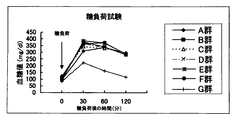
- D-glucose tolerance test (sugar tolerance test): 1. Fast from the evening before the glucose tolerance test and consume only distilled water. 2. Blood samples are collected from the fundus vein before glucose loading to check for fasting blood glucose levels. 3. A D-glucose solution (concentration 0.4 g / ml) is orally administered using a stomach tube so that the dose is 2 g / kg mouse body weight. 4). After 30, 60, and 120 minutes after administration of D-glucose, blood is collected from the fundus vein with a hematocrit tube, and the blood is transferred to a blood collection tube and cooled on ice until the serum is separated. 5. The blood is centrifuged (10,000 rpm) at 4 ° C., and the blood glucose level of the obtained serum is measured with “Glucose CII Test Wako” (manufactured by Wako Pure Chemical Industries, Ltd.).
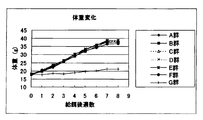
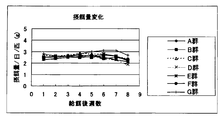
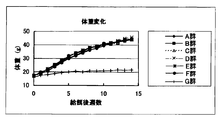
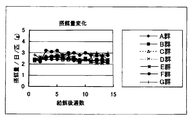
- mice in groups A to F ingested about 2 to 3 g / day / animal of a high fat diet (total amount of fatty acid 31.9%). 6 to 1 g / day / animal was found to have been ingested.
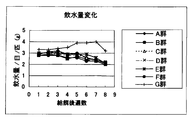
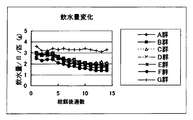
- FIG. 1 From the other hand, from the results shown in FIG.
- the mice in groups A to F receive about 2 to 2 water (D-glucose, ⁇ , ⁇ -trehalose, maltose, isomerized sugar, or fructose concentration 2.5% (w / v)). Since 3 g / day / animal was ingested, the mice ingested about 0.05 to 0.08 g / day / animal of D-glucose, ⁇ , ⁇ -trehalose, maltose, isomerized sugar, or fructose. I understand. That is, D-glucose, ⁇ , ⁇ -trehalose, maltose, isomerized sugar, or fructose means that about 5 to 13% of the total amount of fatty acid ingested by the mouse was administered.
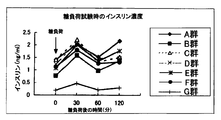
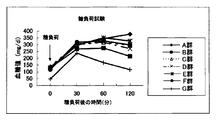
- FIG. 4 shows the results of D-glucose tolerance test (glucose tolerance test) (average value of mice in each group) conducted to evaluate glucose tolerance 7 weeks after the start of the breeding test.
- D-glucose tolerance test glucose tolerance test
- FIG. 5 shows the measurement results of insulin concentration (average value of each group of mice).
- the fasting insulin concentration of the mice in the ⁇ , ⁇ -trehalose administration group (Group B) was significantly lower than that of the mice in Group A and Group C (p ⁇ 0.05).
- the insulin concentration in the mice in group B was clearly lower than that in any of the mice in groups A and C to F for 0 to 60 minutes after the start of the glucose tolerance test.
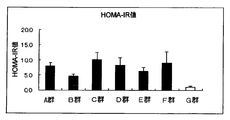
- FIG. 6 shows the measurement results (average value of each group of mice) of the HOMA-IR value, which is an index of insulin resistance, 7 weeks after the start of the breeding test.
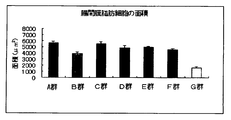
- FIG. 7 shows the measurement results of mesenteric adipocyte area (average value of each group of mice).
- the mesenteric adipocyte area of the mice in the ⁇ , ⁇ -trehalose administration group (Group B) is as follows: D-glucose administration group (Group A), maltose administration group (Group C), isomerized sugar administration group (Group D).
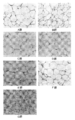
- FIG. 8 is a photomicrograph of mesenteric adipocytes (representative example of each group of mice).
- mice in the ⁇ , ⁇ -trehalose administration group (Group B) were somewhat enlarged compared to the mice in Control 2 (Group G), the A group and C to F Compared with the mice in the group, enlargement was remarkably suppressed.
- mice fed on high fat diet more insulin was required to reduce the increase in blood glucose levels caused by high fat diet compared to mice fed on standard diet. ing.
- the insulin concentration was Since the value was significantly or clearly low, mice administered with ⁇ , ⁇ -trehalose were required to lower blood glucose levels compared to mice administered with carbohydrates other than ⁇ , ⁇ -trehalose. It is determined that the amount of insulin to be consumed is low, that is, the insulin sensitivity is high. This experimental result indicates that ⁇ , ⁇ -trehalose has an action of effectively preventing or improving insulin resistance.
- mice in groups A to F ingested about 2.2 to 3.2 g / day / animal of high fat diet (total amount of fatty acid 31.9%). It can be seen that about 0.7 to 1 g / day / animal was ingested.
- mice in groups A to F were treated with water (D-glucose, ⁇ , ⁇ -trehalose, maltose, isomerized sugar, or fructose concentration 2.5% (w / v)) at about 1. Since they ingested 5 to 3 g / day / animal, they ingested about 0.04 to 0.08 g / day / animal of D-glucose, ⁇ , ⁇ -trehalose, maltose, isomerized sugar, or fructose.
- water D-glucose, ⁇ , ⁇ -trehalose, maltose, isomerized sugar, or fructose.
- D-glucose, ⁇ , ⁇ -trehalose, maltose, isomerized sugar, or fructose means that about 5 to 11% of the total amount of fatty acid ingested by the mouse was administered.
- FIG. 12 shows the results of D-glucose tolerance test (glucose tolerance test) conducted to evaluate glucose tolerance 14 weeks after the start of the breeding test (average value of each group of mice).
- D-glucose tolerance test glucose tolerance test
- the blood glucose level of the mice of Group B administered with ⁇ , ⁇ -trehalose is 30 to 120 minutes after the start of the glucose tolerance test.
- mice in Groups A and C to F were lower than those of the mice in Groups A and C to F.
- the blood glucose level of the B group mice after 120 minutes after the start of the glucose tolerance test was significantly lower than that of any of the A group and D to F mice (p ⁇ 0.05).
- RNA was extracted according to a conventional method using “RNeasy Lipid Tissue Mini Kit” (manufactured by Qiagen), and 2 ⁇ g of the total RNA was extracted with “Oligo dT 12-18 ”.
- “Primer” primary content 250 ng / ⁇ l, manufactured by Invitrogen
- 1 ⁇ l of 10 mM-dNTPs manufactured by GE Healthcare Japan
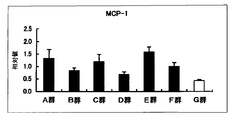
- Primers for the MCP-1 gene required for PCR analysis are in accordance with conventional methods, “Accession No. Based on NM 011333, using “Primer 3 software” (primer design support software developed by Steve Rosen and Helen Skaletsky, available from the official website “http://primer3.sourceforge.net/”) Designed and real-time PCR analysis was performed using “Light Cycler 480 System” (Roche Diagnostics Inc.). As an internal standard in the real-time PCR analysis, the cyclophilin A (CypA: the official gene symbol is “Ppia”) (Genbank “Accession No. NM008907”) gene was used.
- mice were bred using a high-fat diet, the insulin concentration and HOMA-IR were higher when ⁇ , ⁇ -trehalose was administered than when ⁇ , ⁇ -trehalose was not administered.
- MCP-1 gene which is known to significantly increase the level of glucose, improve glucose tolerance, significantly suppress mesenteric adipocyte hypertrophy, and induce insulin resistance There was a tendency to suppress the mRNA expression level. From these results, it is determined that ⁇ , ⁇ -trehalose has an action of effectively preventing or improving insulin resistance.
- the mouse 3T3-L1 cell line is suspended, and the cells are seeded at a rate of 3 ⁇ 10 4 cells / hole in a 24-well plate previously coated with atelocollagen (sales by Koken Co., Ltd.)
- the cells were cultured at 37 ° C. and 5% CO 2 for 3 days.
- the culture supernatant was used as a precursor for differentiation of adipose precursor cells (dexamethasone 0.1 ⁇ g / mL and insulin 10 ⁇ g / mL), and the same D-glucose, ⁇ , ⁇ -trehalose, maltose as used in Experiment 1 as a carbohydrate.
- the isomerized sugar or fructose was replaced with a D-MEM medium containing 4 mM, and the cells were cultured for 3 days according to a conventional method.
- sugar was made into A type
- group was made into A type
- group was made into A type
- control a system in which a differentiation inducer was added but no carbohydrate was added (control 1) and a system in which neither a differentiation inducer nor a carb
- the culture supernatants of the A to E systems and the controls 1 and 2 were replaced with a D-MEM medium containing insulin at a concentration of 5 ⁇ g / mL and D-glucose at a concentration of 4 mg / mL, and then the cells were cultured for 3 days. did. Thereafter, every two days, the culture supernatants of the A to E systems and the controls 1 and 2 were replaced with a D-MEM medium containing 4 mg / mL D-glucose and no differentiation inducer, respectively. On the 10th day after the start of stimulation with the inducer, the amount of triglyceride accumulated in the cultured cells was measured by the method shown below.
- D-PBS Dulbecco's phosphate buffered saline
- a solution containing “Oil Red O” as a staining dye was added to the solution, and the mixture was stirred at room temperature for 15 Cells were stained by holding for minutes.
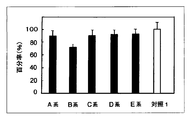
- the absorbance (A 490 ) of the B system among the A to E systems was about 70%, which was significantly lower than the control 1 (p ⁇ 0.05). This means that in the B system, accumulation of neutral fat caused by induction of differentiation of preadipocytes into adipocytes by a differentiation inducer was significantly suppressed by ⁇ , ⁇ -trehalose.
- the absorbance (A 490 ) in the A system and the C to E systems to which D-glucose, maltose, isomerized sugar, and fructose were added, respectively was about 90%, which was lower than that of the B system. There was no significant difference. This means that, in the A system and the C to E systems, the accumulation of neutral fat caused by the differentiation induction of the adipose precursor cells into the adipocytes by the differentiation inducer was not significantly suppressed.
- ⁇ , ⁇ -trehalose significantly suppressed neutral fat accumulation caused by induction of differentiation of preadipocytes into adipocytes. It is strongly suggested that it is a carbohydrate having an action of preventing or improving insulin resistance caused by fat accumulation.
- Experiment 5 ⁇ Clinical trial> In Experiments 1 to 3, animal experiments using mice confirmed that ⁇ , ⁇ -trehalose has an effect of effectively preventing or improving insulin resistance. Further, in Experiment 4, in the test using cultured cells, it was confirmed that ⁇ , ⁇ -trehalose significantly suppressed fat accumulation caused by induction of differentiation of preadipocytes into adipocytes. Based on these experimental results, in this experiment, a clinical study was conducted on the effect of ⁇ , ⁇ -trehalose on insulin resistance in human subjects. Menopausal women who were menopause were selected as subjects in this clinical trial.
- test group and “control group” consisting of 5 members in each group), and the insulin resistance improving action of ⁇ , ⁇ -trehalose was examined.
- each subject regularly eats a relatively large meal of beef and pork, such as beef and pork, rather than fish, as well as cakes, fat / Had a dietary habit of relatively high daily intake of fatty acids, such as eating oils and fats.
- Each subject in the test group was orally ingested with ⁇ , ⁇ -trehalose (purity 99% or more, manufactured by Hayashibara Biochemical Laboratories Co., Ltd.) for 6 months in the range of 5 to 20 g / day.
- the effect of ⁇ , ⁇ -trehalose on insulin resistance was examined.
- Each subject is allowed to take ⁇ , ⁇ -trehalose orally within the above range of intake, and the ⁇ , ⁇ -trehalose intake method and the intake time are not specified, and each subject has a favorite method. Then, ⁇ , ⁇ -trehalose was orally ingested at a desired time and was allowed to live according to their normal lifestyle without imposing special dietary restrictions.
- Each subject previously received 20 g of ⁇ , ⁇ -trehalose in terms of anhydride (corresponding to 4 g each in a portion-type polyethylene container in terms of anhydride) for 6 months.
- the ⁇ , ⁇ -trehalose was orally ingested every day within the above intake range.
- all unused ⁇ , ⁇ -trehalose was collected from each subject, and the amount of ⁇ , ⁇ -trehalose intake per day was calculated for each subject.
- each subject in the control group was allowed to live according to their normal lifestyle without imposing special dietary restrictions in the same manner as in the test group, except that they did not take ⁇ , ⁇ -trehalose. .
- all subjects in each group were measured for height using a commercially available height meter (trade name “YG-200”, manufactured by Yagami Co., Ltd.), and the body weight and body fat percentage were measured using commercially available body weight and body fat. Measurement was performed using a total (trade name “TBF-102”, manufactured by Tanita Co., Ltd.).
- BMI was calculated by a conventional method based on height and weight.
- the HOMA-IR value which is an index for judging insulin resistance, was determined by a conventional method. The results are shown in Table 5.
- Table 5 the height, weight, body fat percentage, BMI, and HOMA-IR values of each subject in each group, which were measured in advance using the above-described meter before the start of the test, are also shown.
- the height and weight were measured in both the test group and the control group. There was no significant difference.
- the body fat percentage and the BMI value were not significantly different in the control group, but the body fat percentage was significantly (p ⁇ 0.05) or significantly decreased in the test group.
- the HOMA-IR value was not significantly different in the control group, but was significantly (p ⁇ 0.05) lower in the test group.
- the HOMA-IR value in the test group was significantly lower (p ⁇ 0.05) than that in the control group.
- each subject in the test group is taking ⁇ , ⁇ -trehalose in an amount of about 5 to 16 g per day in terms of anhydride.
- ⁇ , ⁇ -trehalose in an amount of about 5 to 16 g per day in terms of anhydride.
- the ⁇ , ⁇ -trehalose oral intake taken by each subject in the test group per day was about 5 to 16 g. Therefore, ⁇ , ⁇ -trehalose was added to this amount or to this amount. Accordingly, when it is orally ingested or administered to humans, it is judged that insulin resistance in humans can be effectively prevented and / or improved.
- Experiment 6 ⁇ Acute toxicity test> A 7-week-old dd mouse was orally administered with the same ⁇ , ⁇ -trehalose (purity 99% or more, manufactured by Hayashibara Biochemical Laboratories) as used in Experiment 1, and an acute toxicity test was conducted. As a result, ⁇ , ⁇ -trehalose was a low-toxic substance, and no death was observed even at the maximum dose that could be administered. From this result, the LD 50 value of ⁇ , ⁇ -trehalose was determined to be 50 g / kg mouse body weight or more.
- the preventive and / or ameliorating agent for insulin resistance comprising ⁇ , ⁇ -trehalose of the present invention as an active ingredient can be safely ingested or administered daily to mammals including humans. It is a drug.
- ⁇ Insulin resistance preventive and / or ameliorating agent In terms of anhydride, 5 g of ⁇ , ⁇ -trehalose (purity 99% or more, manufactured by Hayashibara Biochemical Laboratories Co., Ltd.) is dissolved in 95 ml of ultrapure water, subjected to microfiltration according to a conventional method, and aseptically obtained in a 100 ml bottle. To prevent and / or improve insulin resistance in a liquid form.
- This product has good handling and storage stability and should be taken on a daily basis, usually about 1/5 to 4 of this product as a daily intake or dose for a human adult (60 kg body weight). Thus, it is possible to effectively prevent and / or improve insulin resistance caused by the high fat food. In addition, this product can effectively prevent and / or improve insulin resistance caused by high-fat diet by daily ingestion or administration to mammals.
- ⁇ Insulin resistance preventive and / or ameliorating agent 150 parts by mass of ⁇ , ⁇ -trehalose (purity 99% or more, manufactured by Hayashibara Biochemical Laboratories Co., Ltd.) was stirred with a mixer, and then pullulan (trade name “PI-20”, Hayashibara Co., Ltd.). 10 parts by mass of an aqueous solution containing 2% of commercial sales) was uniformly sprayed to obtain an agent for preventing and / or improving insulin resistance in powder form.
- This product has good handling properties, dispersibility / solubility in water, and storage stability, and can be taken or administered to mammals including humans on a daily basis.
- the resulting insulin resistance can be effectively prevented and / or ameliorated.
- ⁇ Insulin resistance preventive and / or ameliorating agent In terms of anhydride, 95 parts by mass of ⁇ , ⁇ -trehalose (purity 99% or more, manufactured by Hayashibara Biochemical Laboratories Co., Ltd.) and 5 mass of ⁇ -glucosyl hesperidin (trade name “Hayashibara Hesperidin S”, sold by Hayashibara Corporation) The mixture was stirred and mixed uniformly, and granulated by a granulating machine according to a conventional method, and filled into a hard capsule to obtain an insulin resistance preventing and / or improving agent in the form of a capsule.
- This product has good handleability and storage stability, combined with insulin resistance improving action by ⁇ , ⁇ -trehalose and neutral fat reducing action of ⁇ -glucosyl hesperidin. Ingestion or administration on a daily basis can effectively prevent and / or ameliorate insulin resistance caused by high fat food / feed.
- ⁇ Insulin resistance preventive and / or ameliorating agent 10 parts by mass of ⁇ , ⁇ -trehalose (purity 99% or more, manufactured by Hayashibara Biochemical Laboratories Co., Ltd.) and 1 part by mass of ⁇ -glucosylrutin (trade name “ ⁇ G rutin”, Hayashibara Corporation sales) Were uniformly mixed, and tableted according to a conventional method to obtain a preventive and / or ameliorating agent for insulin resistance in tablet form.
- This product has good handleability and storage stability, and can be effectively ingested or administered to mammals including humans to effectively prevent insulin resistance caused by high-fat foods / feeds. And / or can be improved.
- ⁇ Insulin resistance preventive and / or ameliorating agent In terms of anhydride, 5 parts by mass of ⁇ , ⁇ -trehalose (purity 99% or more, manufactured by Hayashibara Biochemical Laboratories Co., Ltd.), 2-O- ⁇ -D-glucosyl-L-ascorbic acid (trade name “AA2G”, Hayashibara Biochemical Laboratories Co., Ltd.) 0.3 parts by mass and ⁇ -glucosylrutin (trade name “ ⁇ G rutin”, Hayashibara Shoji Co., Ltd.) 1 part by mass are dissolved in 74 parts by mass of ultrapure water. And 100 ml bottle was aseptically filled to obtain a preventive and / or ameliorating agent for insulin resistance in liquid form.
- This product has good handling and storage stability, and as a human adult (body weight 60 kg), the daily intake or dose of this product is usually about 1/5 to 4 times daily, Insulin resistance caused by high-fat foods can be effectively prevented and / or improved.
- ⁇ Insulin resistance preventive and / or ameliorating agent In terms of anhydride, 2 parts by mass of ⁇ , ⁇ -trehalose (purity 99% or more, manufactured by Hayashibara Biochemical Laboratories Co., Ltd.), 2-O- ⁇ -D-glucosyl-L-ascorbic acid (trade name “AA2G”, 1 part by mass of Hayashibara Biochemical Laboratories Co., Ltd.) and 1 part by mass of ⁇ -glucosyl hesperidin (trade name “ ⁇ G Hesperidin”, Hayashibara Shoji Co., Ltd.) are dissolved in 79.5 parts by mass of ultrapure water. And then aseptically filled into a 50 ml bottle to obtain a preventive and / or ameliorating agent for insulin resistance in liquid form.
- This product has good handling and storage stability, and is usually high in fat by daily intake of 1 to 5 of this product as a daily intake or dosage for human adults (body weight 60 kg). Insulin resistance caused by food can be effectively prevented and / or improved. In addition, this product can effectively prevent and / or improve insulin resistance caused by high-fat diet by ingesting or administering to mammals on a daily basis.
- This product is an oil and fat-containing composition that has good handleability and storage stability and hardly induces insulin resistance itself.
- This product is an edible cream that has good handling and storage stability, melts smoothly in the mouth, has an elegant sweetness and a mellow flavor, and hardly induces insulin resistance.
- This product has good handling and storage stability, mild sweetness, good flavor, and can be used for seasoning fruits, coffee, cocoa, tea, etc. Cream.
- Reference example 4 A pork thigh of 1,000 parts by mass is uniformly rubbed with 15 parts by mass of sodium chloride and 3 parts by mass of potassium nitrate, and deposited overnight in a cold room. This was cooled in a salted solution comprising 100 parts by mass of the insulin resistance preventing and / or improving agent of the present invention obtained in Examples 1 to 6, 500 parts by mass of water, 100 parts by mass of sodium chloride, 3 parts by mass of potassium nitrate, and spices. The product was soaked in a room for 7 days, then washed with cold water, wound with string, smoked, cooked and cooled and packaged according to a conventional method.
- This product is a ham that has good color, good flavor, and hardly induces insulin resistance.
- Reference Example 5 Egg yolk prepared from raw eggs is sterilized at 60 to 64 ° C. with a plate-type heat sterilizer, and 1 part by mass of the liquid egg yolk thus obtained is used to prevent and / or prevent insulin resistance of the present invention obtained in Examples 2 to 4. After mixing at a ratio of 0.1 part by weight of the improving agent and 5 parts by weight of maltose, it was transferred to a vat, left to stand overnight, solidified, and powdered by a cutting machine to obtain a powdered egg yolk.
- This product is a powdered egg yolk that has good handleability and storage stability and hardly induces insulin resistance.
- the dough was divided into 40 g, rounded, treated with a bench time of 20 minutes, and then fermented with a proofer at 40 ° C. and 80% humidity for 50 minutes. After the completion of fermentation, the mixture was baked for 7 minutes in an oven at 230 ° C. and 200 ° C. to prepare a butter roll.
- This product is a butter roll that has good handleability and storage stability and hardly induces insulin resistance.
- This product is a chocolate bar that has good handling and storage stability and hardly induces insulin resistance.
- Reference Example 8 To 5 parts by weight of commercially available butter, 5 parts by weight of the insulin resistance preventing and / or improving agent of the present invention obtained in Examples 2 to 4 was added and mixed uniformly to prevent the insulin resistance of the present invention and Butter with / or improved agent was obtained.
- This product is a butter that has good handling and storage stability and hardly induces insulin resistance.
- Reference Example 9 Beef tallow> To 5 parts by weight of beef tallow, 5 parts by weight of the insulin resistance preventing and / or improving agent of the present invention obtained in Examples 2 to 4 is added and mixed uniformly to prevent and / or prevent insulin resistance of the present invention. Obtained beef tallow mixed with an improving agent.
- This product is beef tallow that has good handling and storage stability and hardly induces insulin resistance.
- Reference Example 10 ⁇ Fat emulsion> 1 part by mass of ⁇ , ⁇ -trehalose of the present invention (purity 99% or more, manufactured by Hayashibara Biochemical Laboratories Co., Ltd.), 10 parts by mass of purified soybean oil, 1.2 parts by mass of concentrated glycerin, 1.2 parts by mass of purified egg yolk lecithin And 250 parts by mass of ultrapure water are uniformly mixed, heat-sterilized according to a conventional method, and aseptically filled into a 300 ml polyethylene bag, the preventive and / or ameliorating agent for insulin resistance of the present invention was obtained.
- This product is a fat emulsion that has good handling and storage stability and hardly induces insulin resistance.
- Reference Example 11 10 parts by mass of the insulin resistance preventive and / or ameliorating agent of the present invention obtained in Examples 2 to 4 is housed and sealed in a first container made of light-shielding plastic, and 100 parts by mass of commercially available edible rapeseed oil ( Fatty acid composition: about 3% palmitic acid, about 1% stearic acid, about 16% oleic acid, about 16% linoleic acid) in a second light-shielding plastic container,
- the package assembly of the present invention was obtained by being housed in a plastic container.
- the amount of ⁇ , ⁇ -trehalose contained in the first container is the amount of ⁇ , ⁇ -trehalose that can effectively prevent and / or improve insulin resistance caused by the edible rapeseed oil contained in the second container. Is the amount.
- the first and second containers are taken out from the third container, and the total amount of ⁇ , ⁇ -trehalose and edible rapeseed oil respectively contained in the containers is taken out, and the first container
- the ⁇ , ⁇ -trehalose contained in the container is dissolved directly or in an appropriate amount of mineral water, etc., and added to a dish prepared using edible rapeseed oil contained in the second container, or before and after By taking in divided portions, the insulin resistance caused by the edible rapeseed oil can be effectively improved.
- the first and second containers are taken out from the third container, and the total amount of ⁇ , ⁇ -trehalose and edible rapeseed oil respectively contained in the containers is taken out and mixed, for example, it can also be suitably used as an edible oil for dressing.
- Reference Examples 12 to 55 The high-fat foods listed in Reference Examples 12 to 55 shown in Table 6 below are ⁇ , ⁇ -trehalose (purity 99% or more, manufactured by Hayashibara Biochemical Laboratories Co., Ltd.) with respect to the total mass of fatty acids contained in each food. Insulin resistance preventive and / or ameliorating agent of the present invention comprising the following components was added so as to have a blending amount shown in Table 6 in terms of anhydride.
- any of the high-fat foods shown in Reference Examples 12 to 55 themselves are foods that hardly cause insulin resistance even if a human being ingests a relatively large amount on a daily basis.
- the agent for preventing and / or improving insulin resistance according to the present invention has an insulin resistance which is the key to prevention and improvement of insulin dysfunction causing various diseases, which are also called so-called modern diseases / lifestyle diseases.
- An agent for preventing and / or improving in particular, an agent for effectively preventing and / or improving insulin resistance caused by high fat food / feed in mammals including humans, and It is a drug that can suppress hypertrophy of mesenteric fat cells and improve glucose tolerance.
- insulin resistance since insulin resistance can be effectively prevented and / or improved, for example, metabolic syndrome, cancer, Alzheimer's disease, sleep apnea syndrome, polymorphism It may be possible to improve diseases such as ovarian syndrome (PCOS).
- PCOS ovarian syndrome
- ⁇ , ⁇ -trehalose which is an active ingredient of the agent for preventing and / or improving insulin resistance
- the agent for preventing and / or improving insulin resistance containing this as an active ingredient can be taken or administered daily to mammals including humans with peace of mind from the viewpoint of economy and safety.
- it has an excellent practical advantage that it can be industrially inexpensively manufactured in large quantities.
- the present invention is an invention having such remarkable industrial utility, and it is a great invention to contribute to this field.
Landscapes
- Health & Medical Sciences (AREA)
- Life Sciences & Earth Sciences (AREA)
- Chemical & Material Sciences (AREA)
- Diabetes (AREA)
- Engineering & Computer Science (AREA)
- General Health & Medical Sciences (AREA)
- Organic Chemistry (AREA)
- Medicinal Chemistry (AREA)
- Pharmacology & Pharmacy (AREA)
- Veterinary Medicine (AREA)
- Public Health (AREA)
- Animal Behavior & Ethology (AREA)
- Chemical Kinetics & Catalysis (AREA)
- Nuclear Medicine, Radiotherapy & Molecular Imaging (AREA)
- General Chemical & Material Sciences (AREA)
- Bioinformatics & Cheminformatics (AREA)
- Endocrinology (AREA)
- Emergency Medicine (AREA)
- Nutrition Science (AREA)
- Hematology (AREA)
- Food Science & Technology (AREA)
- Molecular Biology (AREA)
- Polymers & Plastics (AREA)
- Obesity (AREA)
- Genetics & Genomics (AREA)
- Biotechnology (AREA)
- Biochemistry (AREA)
- Mycology (AREA)
- Proteomics, Peptides & Aminoacids (AREA)
- Epidemiology (AREA)
- Pharmaceuticals Containing Other Organic And Inorganic Compounds (AREA)
- Coloring Foods And Improving Nutritive Qualities (AREA)
- Medicinal Preparation (AREA)
- Fodder In General (AREA)
- Saccharide Compounds (AREA)
Abstract
L'invention a pour objectif de fournir un agent de prévention et / ou de traitement de la résistance à l'insuline, et plus précisément, un agent de prévention et / ou de traitement de la résistance à l'insuline destiné à prévenir et / ou à traiter la résistance à l'insuline provoquée par une alimentation riche en graisse chez les humains / chez les animaux. Pour atteindre cet objectif, l'invention fournit un agent de prévention et / ou de traitement de la résistance à l'insuline constitué à partir de a,a-tréhalose en tant qu'ingrédient actif, et plus précisément, un agent de prévention et / ou de traitement de la résistance à l'insuline qui est constitué à partir de a,a-tréhalose en tant qu'ingrédient actif, et qui est destiné à prévenir et / ou à traiter la résistance à l'insuline provoquée par une alimentation riche en graisse chez les humains / chez les animaux.
Priority Applications (1)
| Application Number | Priority Date | Filing Date | Title |
|---|---|---|---|
| JP2011525308A JP5869882B2 (ja) | 2010-03-05 | 2011-03-02 | インスリン抵抗性の予防及び/又は改善剤 |
Applications Claiming Priority (4)
| Application Number | Priority Date | Filing Date | Title |
|---|---|---|---|
| JP2010-049698 | 2010-03-05 | ||
| JP2010049698 | 2010-03-05 | ||
| JP2010-214191 | 2010-09-24 | ||
| JP2010214191 | 2010-09-24 |
Publications (1)
| Publication Number | Publication Date |
|---|---|
| WO2011108762A1 true WO2011108762A1 (fr) | 2011-09-09 |
Family
ID=44542391
Family Applications (1)
| Application Number | Title | Priority Date | Filing Date |
|---|---|---|---|
| PCT/JP2011/055441 Ceased WO2011108762A1 (fr) | 2010-03-05 | 2011-03-02 | Agent de prévention et / ou de traitement de la résistance à l'insuline |
Country Status (2)
| Country | Link |
|---|---|
| JP (3) | JP5869882B2 (fr) |
| WO (1) | WO2011108762A1 (fr) |
Cited By (5)
| Publication number | Priority date | Publication date | Assignee | Title |
|---|---|---|---|---|
| WO2015186910A1 (fr) * | 2014-06-03 | 2015-12-10 | 사회복지법인 삼성생명공익재단 | Composition permettant de prévenir ou de traiter une stéatose hépatique, un diabète ou le syndrome d'insulinorésistance, contenant du tréhalose comme principe actif |
| JP2016521686A (ja) * | 2013-05-30 | 2016-07-25 | 蘇州科景生物医薬科技有限公司 | 多機能組成物並びにその作製方法及び使用 |
| JP2019140952A (ja) * | 2018-02-19 | 2019-08-29 | 株式会社コンプ | 経口摂取用栄養調整食品 |
| CN111557273A (zh) * | 2020-07-02 | 2020-08-21 | 贵州中医药大学 | 一种低温及饮食节律调控诱导2型糖尿病动物模型的方法 |
| JP2020156521A (ja) * | 2020-07-03 | 2020-10-01 | 株式会社エーゼット | ブドウ種子抽出物を含む更年期障害改善剤 |
Families Citing this family (4)
| Publication number | Priority date | Publication date | Assignee | Title |
|---|---|---|---|---|
| SG11201509030TA (en) | 2013-05-07 | 2015-11-27 | Bio Blast Pharma Ltd | Treatment of protein aggregation myopathic and neurodegenerative diseases by parenteral administration of trehalose |
| US9084720B2 (en) | 2013-05-07 | 2015-07-21 | BioBlast Pharma Ltd. | Compositions and methods for treating oculopharyngeal muscular dystrophy |
| CN109818175B (zh) * | 2019-03-20 | 2024-09-27 | 上海品屹工业设计有限公司 | 模块化可扩展多功能电源插座 |
| IL291799A (en) | 2019-10-01 | 2022-06-01 | Seelos Therapeutics Inc | Trehalose formulations and uses thereof |
Citations (3)
| Publication number | Priority date | Publication date | Assignee | Title |
|---|---|---|---|---|
| GB2353934A (en) * | 1999-09-09 | 2001-03-14 | British Sugar Plc | Nutritional compositions comprising trehalose for persons suffering from diabetes |
| JP2007063221A (ja) * | 2005-09-01 | 2007-03-15 | Pokka Corp | インスリン抵抗性改善剤、血糖値低下剤及び糖尿病予防剤 |
| JP2009179622A (ja) * | 2008-02-01 | 2009-08-13 | Unitika Ltd | 経口投与組成物 |
Family Cites Families (1)
| Publication number | Priority date | Publication date | Assignee | Title |
|---|---|---|---|---|
| JPH11158075A (ja) * | 1997-11-25 | 1999-06-15 | Hayashibara Biochem Lab Inc | 膵機能調節剤 |
-
2011
- 2011-03-02 JP JP2011525308A patent/JP5869882B2/ja active Active
- 2011-03-02 WO PCT/JP2011/055441 patent/WO2011108762A1/fr not_active Ceased
- 2011-06-10 JP JP2011129982A patent/JP2013006773A/ja not_active Withdrawn
-
2016
- 2016-01-08 JP JP2016002823A patent/JP6037523B2/ja active Active
Patent Citations (3)
| Publication number | Priority date | Publication date | Assignee | Title |
|---|---|---|---|---|
| GB2353934A (en) * | 1999-09-09 | 2001-03-14 | British Sugar Plc | Nutritional compositions comprising trehalose for persons suffering from diabetes |
| JP2007063221A (ja) * | 2005-09-01 | 2007-03-15 | Pokka Corp | インスリン抵抗性改善剤、血糖値低下剤及び糖尿病予防剤 |
| JP2009179622A (ja) * | 2008-02-01 | 2009-08-13 | Unitika Ltd | 経口投与組成物 |
Cited By (7)
| Publication number | Priority date | Publication date | Assignee | Title |
|---|---|---|---|---|
| JP2016521686A (ja) * | 2013-05-30 | 2016-07-25 | 蘇州科景生物医薬科技有限公司 | 多機能組成物並びにその作製方法及び使用 |
| US9937198B2 (en) | 2013-05-30 | 2018-04-10 | Pinghu Sciscape Bio-Pharmaceutical Technology Co., Ltd. | Multi-functional composition and preparation method and application thereof |
| WO2015186910A1 (fr) * | 2014-06-03 | 2015-12-10 | 사회복지법인 삼성생명공익재단 | Composition permettant de prévenir ou de traiter une stéatose hépatique, un diabète ou le syndrome d'insulinorésistance, contenant du tréhalose comme principe actif |
| JP2019140952A (ja) * | 2018-02-19 | 2019-08-29 | 株式会社コンプ | 経口摂取用栄養調整食品 |
| CN111557273A (zh) * | 2020-07-02 | 2020-08-21 | 贵州中医药大学 | 一种低温及饮食节律调控诱导2型糖尿病动物模型的方法 |
| JP2020156521A (ja) * | 2020-07-03 | 2020-10-01 | 株式会社エーゼット | ブドウ種子抽出物を含む更年期障害改善剤 |
| JP7279943B2 (ja) | 2020-07-03 | 2023-05-23 | 株式会社エーゼット | ブドウ種子抽出物を含む更年期障害改善剤 |
Also Published As
| Publication number | Publication date |
|---|---|
| JP2013006773A (ja) | 2013-01-10 |
| JP2016128448A (ja) | 2016-07-14 |
| JPWO2011108762A1 (ja) | 2013-06-27 |
| JP5869882B2 (ja) | 2016-02-24 |
| JP6037523B2 (ja) | 2016-12-07 |
Similar Documents
| Publication | Publication Date | Title |
|---|---|---|
| JP6037523B2 (ja) | インスリン抵抗性の予防及び/又は改善剤 | |
| CA2417971C (fr) | Composition huile/matiere grasse | |
| TWI389697B (zh) | Improve the composition of lipid metabolism | |
| US20210260015A1 (en) | Composition for inhibiting fat accumulation | |
| JPWO2016013617A1 (ja) | 脳機能改善剤、及び認知機能障害の予防または治療剤 | |
| EP1481675A1 (fr) | Agents destines a elever la temperature corporelle | |
| WO2022176677A1 (fr) | Composition pour l'amélioration musculaire et son utilisation | |
| JP7032855B2 (ja) | 時計遺伝子の発現を変化させるための組成物 | |
| JP2011207776A (ja) | アディポネクチン産生促進剤 | |
| TW200812569A (en) | Bone density increasing agent | |
| EP3103457A1 (fr) | Agent destiné à maintenir la satiété et procédé servant à maintenir la sensation de rassasiement | |
| JP2007051136A (ja) | D−プシコースの血中d−フラクトース濃度上昇抑制への使用 | |
| JP6391959B2 (ja) | 非アルコール性脂肪性肝炎の改善剤および改善用栄養組成物 | |
| US20100028457A1 (en) | Agent for prevention or treatment of blood glucose level elevation | |
| JP6596185B2 (ja) | 総ケトン体濃度上昇剤、油脂組成物、医薬組成物、食品組成物 | |
| JP2011063552A (ja) | 身体活動促進剤 | |
| WO2007116980A1 (fr) | Suppresseur d'augmentation de la glycemie | |
| JP2018087172A (ja) | 脂質燃焼促進剤 | |
| JP7223193B1 (ja) | 内臓脂肪低減剤およびその用途 | |
| JP2007230954A (ja) | 睡眠誘導剤及びストレス性不眠症改善剤 | |
| JP7792645B2 (ja) | トランスサイレチン四量体安定化剤、及び、トランスサイレチンアミロイドーシス予防剤又は進行抑制剤 | |
| JP2015101583A (ja) | 育毛・発毛促進剤 | |
| TW200427410A (en) | Processed fat compositions for preventing and improving lifestyle-related diseases | |
| CN119365190A (zh) | 交感神经活化剂和交感神经活化用组合物 | |
| CN119173258A (zh) | 副交感神经活化剂和副交感神经活化用组合物 |
Legal Events
| Date | Code | Title | Description |
|---|---|---|---|
| WWE | Wipo information: entry into national phase |
Ref document number: 2011525308 Country of ref document: JP |
|
| 121 | Ep: the epo has been informed by wipo that ep was designated in this application |
Ref document number: 11750859 Country of ref document: EP Kind code of ref document: A1 |
|
| NENP | Non-entry into the national phase |
Ref country code: DE |
|
| 122 | Ep: pct application non-entry in european phase |
Ref document number: 11750859 Country of ref document: EP Kind code of ref document: A1 |