WO2011142425A1 - Matériau pour régénération de tissu contenant une couche épithéliale et procédé pour évaluer la régénération - Google Patents
Matériau pour régénération de tissu contenant une couche épithéliale et procédé pour évaluer la régénération Download PDFInfo
- Publication number
- WO2011142425A1 WO2011142425A1 PCT/JP2011/060952 JP2011060952W WO2011142425A1 WO 2011142425 A1 WO2011142425 A1 WO 2011142425A1 JP 2011060952 W JP2011060952 W JP 2011060952W WO 2011142425 A1 WO2011142425 A1 WO 2011142425A1
- Authority
- WO
- WIPO (PCT)
- Prior art keywords
- collagen
- density
- base material
- regeneration
- binding
- Prior art date
- Legal status (The legal status is an assumption and is not a legal conclusion. Google has not performed a legal analysis and makes no representation as to the accuracy of the status listed.)
- Ceased
Links
Images







Classifications
-
- A—HUMAN NECESSITIES
- A61—MEDICAL OR VETERINARY SCIENCE; HYGIENE
- A61L—METHODS OR APPARATUS FOR STERILISING MATERIALS OR OBJECTS IN GENERAL; DISINFECTION, STERILISATION OR DEODORISATION OF AIR; CHEMICAL ASPECTS OF BANDAGES, DRESSINGS, ABSORBENT PADS OR SURGICAL ARTICLES; MATERIALS FOR BANDAGES, DRESSINGS, ABSORBENT PADS OR SURGICAL ARTICLES
- A61L27/00—Materials for grafts or prostheses or for coating grafts or prostheses
- A61L27/14—Macromolecular materials
- A61L27/22—Polypeptides or derivatives thereof, e.g. degradation products
- A61L27/24—Collagen
-
- A—HUMAN NECESSITIES
- A61—MEDICAL OR VETERINARY SCIENCE; HYGIENE
- A61L—METHODS OR APPARATUS FOR STERILISING MATERIALS OR OBJECTS IN GENERAL; DISINFECTION, STERILISATION OR DEODORISATION OF AIR; CHEMICAL ASPECTS OF BANDAGES, DRESSINGS, ABSORBENT PADS OR SURGICAL ARTICLES; MATERIALS FOR BANDAGES, DRESSINGS, ABSORBENT PADS OR SURGICAL ARTICLES
- A61L2430/00—Materials or treatment for tissue regeneration
- A61L2430/14—Materials or treatment for tissue regeneration for ear reconstruction or ear implants, e.g. implantable hearing aids
Definitions
- the present invention relates to a regeneration material for an epithelial layer-containing tissue and a regeneration evaluation method.
- a three-dimensional culture method has been developed as a culture technique for organically arranging cells.
- an adhesion substrate (so-called scaffold material) is prepared in advance, cells are seeded thereon, and cultured in a culture solution (for example, Patent Documents 1 to 6).
- a method has been developed in which the adhesion substrate and cells are mixed and cultured on a Petri dish).
- the former requires cells to migrate into the adhesion matrix, and the latter requires densification of the adhesion matrix with the seeded cells to increase the density. For this reason, each method requires about 2 weeks of culture. However, such a long-term culture increases the risk that the three-dimensionally formed adhesion substrate is degraded by the degrading enzyme for the adhesion substrate secreted from the cells. Thus, the three-dimensionally formed adhesion substrate is expected to be useful in transplantation medicine, life sciences, new drug development, etc., but it is still widespread because of its long production period and short utilization period. Not done.
- tympanic membrane perforation there is a known symptom of perforation of the tympanic membrane that causes a defect such as a tear or perforation in the tympanic membrane due to chronic otitis media, trauma, and the like.
- Antibiotic administration is effective when the tympanic membrane perforation is mild.
- an eardrum formation technique, an eardrum closing technique, or the like is performed.
- the tympanic plasty is a method of accelerating the tympanic membrane regeneration by closing the perforation by transplanting subcutaneous tissue or the like. Since the tympanoplasty involves a surgical operation, hospitalization for one to two weeks and high medical costs are required, and reperforation may occur.
- the tympanic membrane closing method is a method of accelerating the tympanic membrane regeneration by closing the perforation using a shoji paper, a steristrip (registered trademark, manufactured by 3M), a chitin sheet or the like.
- the tympanic membrane closure has been reported as a treatment method in which the perforation is closed using a commercially available gelatin sponge, and bFGF (Basic fibroblast growth factor) is administered daily to this sheet (Patent Document 7).
- the gelatin sponge is brittle because it is sponge-like, and swells into a gel-like state due to water absorption, so it is difficult to handle.
- the bFGF has low storage stability and low in vivo stability. In this way, because of bFGF administration which is rapidly inactivated, it is necessary to go to the hospital every day for about 2 weeks, and the burden on the patient is great. On the other hand, active substances that regenerate tissues such as the eardrum are being searched, but there is currently no effective assay system.
- An object of the present invention is to provide a regenerative material for an epithelial layer-containing tissue such as mucous membrane, epithelium and eardrum, which is excellent in operability, effectiveness, certainty and safety and can be regenerated in a shorter time than before.
- Another object of the present invention is to provide an evaluation method capable of effectively evaluating the tissue regeneration ability of various candidate substances.
- the regenerating material for mucosa and epithelial layer-containing tissue of the present invention is a regenerating material for epithelial layer-containing tissue, A high-density collagen base material and a collagen-binding physiologically active substance,
- the collagen density in the high-density collagen base material is 20 mg / mL or more.
- recycled material of the present invention it is referred to as “recycled material of the present invention”.
- the evaluation method of the present invention is a method for evaluating tissue regeneration by a candidate substance, Including the following steps (X) and (Y):
- the collagen density in the following high-density collagen base material is 20 mg / mL or more.
- (X) A step of placing a high-density collagen substrate together with the candidate substance in a tympanic membrane defect part of a laboratory animal
- (Y) A step of evaluating tissue regeneration in the tympanic membrane defect part after the step (X)
- the evaluation kit of the present invention is an evaluation kit for evaluating tissue regeneration by a candidate substance, Including a high density collagen substrate,
- the collagen density in the high-density collagen base material is 20 mg / mL or more, and is used for the evaluation method of the present invention.
- the regenerated material of the present invention is superior in operability and locally promotes regeneration, so that side effects are unlikely to occur and is safe. Excellent in properties.
- the regenerated material of the present invention is less likely to be decomposed than a normal collagen base material, the form is maintained for a relatively long period of time, and thus the effectiveness and certainty are high.
- the regenerative material of the present invention can regenerate epithelial layer-containing tissues such as mucous membrane, epithelium or tympanic membrane in a shorter period of time than before, the burden on patients such as hospital visits and high costs can be reduced.
- the tissue regeneration by the candidate substance can be effectively evaluated by the evaluation method of the present invention.
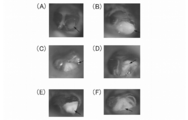
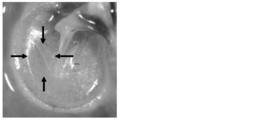
- FIG. 1 is a photograph showing the reproduction state of the eardrum in Example 1 and the control.
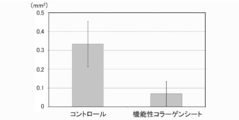
- FIG. 2 is a graph showing the residual perforation size in Example 2 and the control.
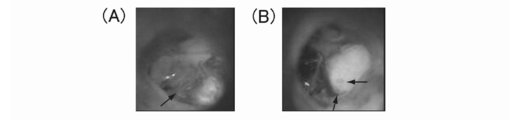
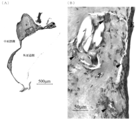
- FIG. 3 is a photograph showing the reproduction state of the eardrum on the outer ear side in Example 3 and the control.
- FIG. 4 is a photograph showing the reproduction status of the middle ear side in Example 3 and the control.
- FIG. 5 is a photograph showing the regeneration state of the eardrum in Example 4 (EGF-CBD fusion protein addition) and the control.
- FIG. 6 is a photograph showing the regeneration state of the eardrum in Example 4 (VEGF-A-CBD fusion protein addition) and the control.
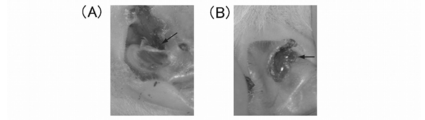
- FIG. 7 is a photograph of an outer ear skin defect in Example 5 and the control.
- FIG. 1 is a photograph showing the reproduction state of the eardrum in Example 1 and the control.
- FIG. 2 is a graph showing the residual perforation size in Example 2 and the control.
- FIG. 3 is
- FIG. 8 is a photograph of the tympanic surface mucosa in Example 6 and the control.
- FIG. 9 is a schematic view of an example of a manufacturing apparatus used for manufacturing the recycled material of the present invention.
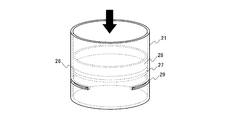
- FIG. 10 is a schematic view of an example of a forming container (reactor) used for producing the recycled material of the present invention.
- FIG. 11 is a schematic view showing the flow direction of the collagen-containing liquid in the forming container (reactor) used for the production of the recycled material of the present invention.
- FIG. 12 is a photograph showing the reproduction state of the eardrum in Example 7.
- FIG. 13 is a photograph showing the reproduction state of the eardrum in Example 8.
- FIG. 14 is a photograph showing the reproduction state of the eardrum in the control of Example 8.
- FIG. 15 is a photograph showing the reproduction state of the eardrum in Example 3.
- the regenerated material of the present invention is preferably used by adding the collagen-binding physiologically active substance to the high-density collagen base material.
- the high-density collagen base material is immersed in a liquid containing the collagen-binding physiologically active substance, and the collagen-binding physiologically active substance is added to the high-density collagen base material. preferable.
- the regenerated material of the present invention may further include a support, for example, and the high-density collagen base material may be laminated on the support.
- the collagen-binding physiologically active substance is preferably a collagen-binding cytokine.
- the collagen-binding cytokine is preferably at least one of a collagen-binding growth factor and a collagen-binding chemokine.
- the collagen-binding growth factor is at least one selected from the group consisting of collagen-binding epidermal growth factor, collagen-binding fibroblast growth factor, and collagen-binding vascular endothelial growth factor. Preferably there is.
- the collagen-binding chemokine is preferably a collagen-binding stromal cell-derived factor.
- the recycled material of the present invention further includes a gripping portion, and the gripping portion is disposed on the high-density collagen base material.
- the collagen-containing liquid may contain the collagen-binding physiologically active substance.
- the collagen-containing liquid does not contain cells.
- the high-density collagen base material is preferably disposed on the middle ear side of the tympanic membrane defect part.
- the high-density collagen base material is preferably manufactured by a manufacturing method including the following step (A).
- the regenerated material of the present invention comprises a high-density collagen base material and a collagen-binding physiologically active substance, wherein the collagen density in the high-density collagen base material is 20 mg / mL or more.
- the regenerated material is characterized by including the high-density collagen base material containing collagen in the above-described density range and the collagen-binding physiologically active substance, and other configurations and conditions are not particularly limited.
- the recycled material of the present invention can also be referred to as a scaffold material for regeneration, for example.
- the regenerated material of the present invention can be used for regenerating the epithelial layer-containing tissue as described above.
- the epithelial layer-containing tissue is not particularly limited, and examples thereof include mucous membrane, epithelium, and tympanic membrane.
- the regenerated material of the present invention can be said to be at least one regenerated material of mucosa, epithelium and tympanic membrane, for example.
- the use of the regenerated material of the present invention is not limited thereto, and for example, it can be used as a regenerated material for various organs, tissues, and the like in a living body.
- the collagen is not particularly limited, and examples thereof include collagens such as type I, type II, type III, type IV, and type V.
- the type of collagen can be selected, for example, according to the location to which the regenerated material of the present invention is applied. In the case of non-cartilage tissue, for example, type I, type III, type IV, type V, In this case, for example, type II and type V. From the viewpoint of simplicity, for example, type I is preferable.
- the collagen can be prepared, for example, by solubilizing a biological tissue containing collagen using an acid, an alkali, an enzyme, or the like.
- the biological tissue is not particularly limited, and examples thereof include animal skin, tendons such as Achilles tendon, nasal cartilage, and the like.
- the animal is not particularly limited, and examples thereof include livestock such as pigs and cows, seafood, and the like.
- the collagen may be, for example, genetically modified collagen.
- the collagen is preferably atelocollagen from which all or part of the telopeptide has been removed, for example, by enzymatic treatment. By removing the telopeptide, for example, biological incompatible reactions such as allergic reaction and rejection reaction caused by the collagen can be eliminated or suppressed.
- the collagen may be, for example, one type or a mixture of two or more types. In the latter case, the collagen may be, for example, a mixture of collagens different in the aforementioned collagen type, living tissue, treatment method, and the like. Examples of the collagen include soluble collagen and insoluble collagen, but insoluble collagen is preferred.
- the collagen density in the high-density collagen base material is 20 mg / mL or more.
- the “collagen density (mg / mL) in the high-density collagen base material” means the collagen weight (mg) per 1 mL of the high-density collagen base material in a wet state.
- the “collagen density (mg / mL) in the high-density collagen base material” can be said to be, for example, “collagen weight (g) per gram wet weight of the high-density collagen base material in a wet state”.
- the unit of “mg / mL” relating to the collagen density can be read as “collagen weight (mg) per 1 g wet weight of the high-density collagen base material in a wet state”.
- the high-density collagen base material can be brought into a wet state by, for example, being immersed in a wetting liquid.
- the degree of wetting is preferably saturated by immersion in a wetting liquid, for example.
- the wetting liquid is not particularly limited, and examples thereof include water, physiological saline, buffer solution, physiological buffer solution and the like as described later.
- the collagen density in the high-density collagen base material in a wet state is, for example, a commercially available reagent Sircol Collagen Assay kit (trade name, Biocolor, http://www.biocolor.co.uk/index.php / assay-kits / sircol-1 /) according to the manual (http://www.biocolor.co.uk/manuals/sircol.pdf).
- Sircol Collagen Assay kit trade name, Biocolor, http://www.biocolor.co.uk/index.php / assay-kits / sircol-1 /
- An example is shown below.
- a part of the high-density collagen base material in a wet state is collected, and its volume or weight is measured. The whole amount is dissolved in 1 mL of 0.5 mol / L acetic acid, and this solution is used as a collagen sample.
- a standard sample containing collagen at a predetermined concentration (5, 10, 25 and 50 ⁇ g / 100 ⁇ L) is prepared for preparing a calibration curve.
- the absorbance is measured in the same manner as the collagen sample, and a calibration curve between the collagen concentration and the absorbance is prepared.
- the collagen concentration in the collagen sample is obtained from the absorbance of the collagen sample and the calibration curve, and the collagen density in the high-density collagen base material is calculated.
- the amount of collagen per 1 g (wet weight) of the high-density collagen base material in a wet state is calculated.
- a weight can be converted as specific gravity 1, for example.
- the lower limit of the collagen density is 20 mg / mL, for example, preferably 25 mg / mL, 30 mg / mL, 34 mg / mL, more preferably 100 mg / mL or more, and further preferably 150 mg / mL. mL or more, particularly preferably 200 mg / mL or more, more particularly preferably 250 mg / mL or more, and most preferably 300 mg / mL or more.
- the collagen density can be appropriately determined according to, for example, the type of tissue to be used, but the upper limit is not particularly limited, and is, for example, 500 mg / mL, preferably 400 mg / mL. If it is the upper limit, the density is sufficient.
- the method for measuring the collagen density in the high-density collagen base material is not particularly limited.
- the measurement method include known methods such as a quantification method using sirius red and a hydroxyproline quantification method, and a quantification method using sirius red is preferable.
- the quantification method using Sirius Red can be performed using a commercially available kit such as Sircol Collagen Assay (manufactured by Biocolor).
- the high-density collagen base material may be composed of, for example, only the collagen, or may further contain components other than the collagen in addition to the collagen.
- the component include an extracellular matrix component.
- the extracellular matrix component include elastin, proteoglycan, fibrin, fibronectin, laminin, chitin, chitosan, and components thereof.
- the constituent components are not particularly limited, and examples thereof include glycosaminoglycans such as hyaluronic acid, chondroitin sulfate, dermatan sulfate, heparan sulfate, heparin, and keratan sulfate.
- the extracellular matrix component may be chemically modified, for example. The modification may be, for example, a modification usually found in a living body, or an artificial modification for imparting various activities or characteristics.
- One type of extracellular matrix component may be used, or two or more types may be used in combination.
- the high-density collagen base material may or may not further include cells, for example.
- the high-density collagen base material can produce a higher-density collagen base material due to, for example, the contracting action by the cells.
- a rejection reaction by the cell, infection with a virus, and the like can be avoided, so that a safer collagen base material can be produced.
- the high-density collagen base material preferably does not contain the cells, for example.
- the cells are not particularly limited, and examples thereof include fibroblasts, epithelial cells, keratinized epithelial cells, mucosal epithelial cells, endothelial cells, vascular endothelial cells, mesothelial cells, smooth muscle cells, skeletal muscle cells, chondrocytes, and smooth cells. Examples thereof include membrane cells and osteoblasts. One type of the cells may be used, or two or more types may be used in combination. When the high-density collagen base material contains the cells, for example, the high-density collagen base material is further densified by contraction.
- the origin of the cell may be, for example, the same animal species as the living organism to be arranged or a different animal species, and is preferably the same animal species as the living organism to be arranged.
- the animal species is not particularly limited, and examples thereof include mammals such as humans, cows, pigs, sheep, horses, dogs, cats, rabbits, rats, and mice.
- the cell may be, for example, a cell derived from a living body to be disposed or a cell derived from a living body other than the living body to be disposed. For example, in consideration of the rejection reaction, the cell derived from the living body is preferable.
- the high-density collagen base material may further contain, for example, salts, basic medium components, additives, and the like as components other than the collagen.
- the salt is not particularly limited, and examples thereof include sodium chloride.
- the basic medium include ⁇ -MEM, Eagle MEM, DMEM, RPMI 1640, CMRC, HAM, DME / F12, TCM199, MCDB, and the like.
- the basic medium is preferably a medium suitable for culturing the cells, for example, depending on the type of the cells.
- the additive include physiologically active substances such as growth factors and hormones, serum, and cell adhesion promoting substances.
- the growth factor is not particularly limited.
- epidermal growth factor EGF
- fibroblast growth factor FGF
- platelet-derived growth factor PDGF
- HGF hepatocyte growth factor
- TGF transforming growth factor
- NGF Neurotrophic factor
- VEGF vascular endothelial growth factor
- IGF insulin-like growth factor
- the VEGF family is not particularly limited, and examples thereof include VEGF-A, VEGF-B, VEGF-C, VEGF-D, and VEGF-E.
- VEGF-A is preferable.
- the growth factor include placental growth factors such as PlGF-1 and PlGF-2.
- the hormone is not particularly limited, and examples thereof include insulin, transferrin, dexamethasone, hydrocortisone, thyroxine, 3,3 ', 5-triiodotyrosine, 1-methyl-3-butylxanthine, progesterone and the like.
- the physiologically active substances include, for example, ascorbic acid, biotin, calcium pantothenate, ascorbic acid diphosphate, vitamins such as vitamin D, proteins such as serum albumin and transferrin, lipids, lipid acid sources, linole Examples include acids, cholesterol, pyruvic acid, nucleosides for DNA synthesis, nucleosides for RNA synthesis, glucocorticoids, retinoic acid, ⁇ -glycerophosphate, monothioglycerol, antibiotics and the like. Any one of these additives may be added alone, or two or more of these additives may be used in combination.
- the serum is not particularly limited, and examples thereof include fetal bovine serum (FBS) and human serum.
- the cell adhesion promoting substance is not particularly limited, and examples thereof include peptides, proteins, polysaccharides and derivatives thereof, and other polymers.
- the peptide include cell adhesion oligopeptide, polylysine, histone, gluten, gelatin, fibrin, fibroin and the like.
- the cell adhesion oligopeptide is not particularly limited, and examples thereof include amino acid sequences such as RGD, RGDS, GRGDS, YIGSR, and IKVAV, and examples include oligopeptides composed of these amino acid sequences or oligopeptides containing the amino acid sequences.
- Examples of the protein include a protein containing the aforementioned peptide, a recombinant protein incorporating the amino acid sequence of the aforementioned peptide, and the like.
- Examples of the polysaccharide include alginic acid, starch, and dextran.
- the other polymer is not particularly limited, and examples of the constituent component of the polymer include lactic acid, glycolic acid, caprolactone, and hydroxybutyrate.
- Examples of the other polymer include a biodegradable polymer.
- the other polymer may be, for example, the constituent polymer or copolymer.
- the other polymer may be, for example, a biodegradable polymer such as a block copolymer of the polymer or the copolymer and polyethylene glycol or polypropylene glycol.
- the shape and size of the high-density collagen base material are not particularly limited, and can be appropriately set according to the application, for example. Specific examples of the shape include a sheet shape and a film shape.
- the high-density collagen base material may be, for example, a dry type (dry type) or a wet type (wet type).
- the high-density collagen base material may be frozen or refrigerated.
- the method for producing the high-density collagen base material is not particularly limited, and examples thereof include a circulation method and a centrifugal method.
- Examples of the circulation method include a production method including the following step (A).
- the support may include a liquid flow control member, a mesh member, and the like, for example.
- the liquid flow control member is preferably a member that allows the collagen-containing liquid to pass therethrough and decelerates the liquid flow, for example.
- the liquid flow control member include a porous membrane, a woven fabric, and a non-woven fabric, and the porous membrane is preferable.
- the material of the porous membrane is not particularly limited, and examples thereof include porous polymer, paper, silk fibroin, and the like, and preferably the porous polymer.
- the liquid flow control member using the porous polymer can control, for example, local reflux. Thereby, for example, the configuration of the manufacturing apparatus can be further simplified, and a reflux failure due to clogging of the support can be further avoided.
- the porous polymer is not particularly limited, and a biodegradable polymer such as polylactic acid (PLA) is preferable.
- the liquid flow control member using the biodegradable polymer is decomposed over time after being placed in a living body, for example. For this reason, the recycled material excellent in safety
- the mesh or pore diameter of the liquid flow control member is not particularly limited, and is, for example, 10 to 500 ⁇ m, and preferably 50 to 250 ⁇ m.
- the mesh member is not particularly limited, and, for example, one that can support the high-density collagen base material is preferable.
- the mesh member preferably has, for example, holes or meshes that do not greatly hinder the flow of the collagen-containing liquid.
- the size of the hole or mesh is not particularly limited, and is, for example, 10 ⁇ m to 1 mm, preferably 0.25 to 0.5 mm.
- the material of the mesh member is not particularly limited, and examples thereof include metals such as stainless steel, synthetic resins such as polyester, ceramics, artificial materials, and the like, preferably the metal.
- the metal mesh member is excellent in sterilization and cleaning operability, for example.
- the material of the mesh member may be, for example, a biocompatible material.
- the mesh member made of the biocompatible material is excellent in, for example, safety and operability during treatment of the affected area.
- the support may include, for example, the liquid flow control member or the mesh member alone, or may include the liquid flow control member and the mesh member.
- the liquid flow control member may be included alone, and the high-density collagen base material is formed on the liquid flow control member, for example.
- the liquid flow control member and the mesh member are arranged in layers in contact with or in proximity to each other.
- the liquid flow control member is disposed on the upstream side of the liquid flow of the collagen-containing liquid, for example, rather than the mesh member.
- the distance between the liquid flow control member and the mesh member is not particularly limited, and is, for example, 2 mm or less, preferably 1 mm or less.
- the liquid flow control member may be disposed, for example, on the upstream side of the liquid flow of the collagen-containing liquid from the mesh member, or may be disposed on the opposite downstream side, and is preferably the former. . If it arrange
- the collagen-containing liquid is not particularly limited except that it contains the aforementioned collagen.
- the collagen concentration in the collagen-containing liquid is not particularly limited, and the lower limit is, for example, 0.1 mg / mL, preferably 0.25 mg / mL, and the upper limit is, for example, 1 mg / mL.
- the range is, for example, 0.1 to 1 mg / mL, and preferably 0.25 to 0.75 mg / mL.
- the collagen-containing liquid may further contain components other than the collagen, for example. Examples of the components include the salts described above, basic medium components, additives, and the like.
- the solvent of the collagen-containing liquid is not particularly limited, and examples thereof include water, buffer solution, physiological saline, buffered physiological saline, the basic medium, and the like.
- the collagen-containing liquid includes, for example, Examples thereof include a solution obtained by adding collagen to water, a buffer solution, physiological saline, the buffered physiological saline, the basic medium, or the like.
- the collagen-containing liquid may further contain the cells, for example.
- the density of the cells in the collagen-containing liquid is not particularly limited, and is, for example, 1 ⁇ 10 7 to 5 ⁇ 10 7 cells / mL, preferably 2 ⁇ 10 7 to 3 ⁇ 10 7 cells / mL. is there.
- the collagen-containing liquid is circulated to form the high-density collagen base material.
- the high-density collagen base material containing the said component and / or the said cell etc. can be formed more easily.
- the treatment time in the step (A) is not particularly limited, and is preferably performed until, for example, the high-density collagen base material is formed to a desired thickness.
- the high-density collagen base material can be formed by, for example, a conventionally known method.
- the flow rate of the collagen-containing liquid in the circulation channel is not particularly limited, and is, for example, 0.5 to 7 mL / min, and preferably 1 to 2 mL / min.
- the circulation time is not particularly limited, and is, for example, 3 to 72 hours, and preferably 12 to 24 hours.
- the thickness of the high-density collagen base material is not particularly limited, and is, for example, 0.5 to 3 mm, preferably 1 to 2 mm.
- the shape and size of the high-density collagen base material are not particularly limited, and can be appropriately set according to, for example, the shape and size of the defect portion.
- the high-density collagen base material can be processed into a desired shape and size using, for example, a cutting tool such as a scalpel after manufacture.
- the step (A) can be performed using, for example, a manufacturing apparatus shown in FIG.
- FIG. 9 is a schematic diagram illustrating an example of a manufacturing apparatus, and more specifically, an example of a closed circulation manufacturing apparatus.
- the production apparatus 1 includes a reactor 10, a liquid container 30, a circulation pump 40, a flow cell 50, pipe lines 100a to 100d, and an incubator 60.
- the reactor 10, the liquid container 30, the circulation pump 40, and the flow cell 50 are communicated with each other through pipe lines 100a to 100d, and these are arranged in an incubator 60.
- the manufacturing apparatus 1 may further include, for example, a sensor such as a dissolved oxygen sensor 70, a display device 80 for a measurement value by the sensor, and a stirrer 90.
- the stirrer 90 is a magnetic rotating device for rotating the magnetic stirrer in the liquid container 30 to stir the collagen-containing liquid, for example.
- the rotation speed of the magnetic rotating device is not particularly limited, and is preferably 100 rpm or less, and more preferably 50 to 60 rpm.
- FIG. 10 shows an exploded configuration diagram of an example of the forming container 2
- FIG. 11 shows a schematic diagram of the forming container 2.
- the forming container 2 has an outer cylinder 21, a silicone ring 22, a mesh member 23, a biodegradable sheet 24, and a silicone ring 25.
- the outer cylinder 21 is a cylindrical body.
- the outer cylinder 21 may or may not have a bottom. In the latter case, the bottom of the reactor 10 also serves as the bottom of the outer cylinder 21.
- a silicone ring 22, a mesh member 23, a biodegradable sheet 24, and a silicone ring 25 are stacked in the outer cylinder 21 so as to be substantially perpendicular to the axial direction of the cylindrical body.
- the laminated body 26 is disposed on the rib 27 formed on the inner peripheral surface of the outer cylinder 21 so that the silicone ring 25 is on the upper surface, and the spacer 28 that contacts the inner periphery of the outer cylinder 21 includes It is arranged on the silicone ring 25 side and is mounted in the outer cylinder 21.
- the upper end thereof is preferably the same height as the upper end of the outer cylinder 21.
- the outer cylinder 21 is formed with a slit 29 for discharging the collagen-containing liquid that has passed through the laminated body 26 below the rib 27.
- the number, size, shape, and the like of the slit 29 are not limited.
- the collagen-containing liquid in the liquid container 30 is introduced into the reactor 10 by the circulation pump 40, passes through the formation container 2, and further passes through the flow cell 50, and then into the liquid container 30. Reflux.
- the collagen-containing liquid is caused to flow from the silicone ring 25 side of the forming container 2 and to the silicone ring 22 side.
- the high-density collagen base material is formed on the biodegradable sheet 24.
- centrifugal method examples include a production method including the following steps (B1) and (B2).
- B1 A step of heating a collagen solution to form a collagen gel
- B2 A step of placing the collagen gel in a centrifuge tube and performing ultracentrifugation treatment
- the type of collagen is not particularly limited, and examples thereof include the aforementioned collagen.
- the heating temperature is not particularly limited, and is, for example, 30 to 40 ° C., preferably 35 to 40 ° C., and more preferably 37 ° C.
- the heating time is not particularly limited, and is, for example, 10 to 60 minutes, preferably 20 to 40 minutes, and more preferably 30 minutes.
- the rotation speed of the centrifugation is not particularly limited, and is, for example, 5000 to 20000 rpm, preferably 7500 to 15000 rpm, and more preferably 10,000 rpm.
- the collagen-binding physiologically active substance generally refers to a physiologically active substance having binding ability to collagen.
- the collagen-binding physiologically active substance may be, for example, a natural substance, a fusion protein (including the meaning of a fusion peptide) of the peptide having the collagen-binding property and the physiologically active substance, and the collagen-binding ability. It may also be a conjugate of a peptide having a bioactive substance and the like.
- the peptide having the collagen binding property is not particularly limited. For example, collagen recognition peptide derived from collagenase, collagen binding domain derived from collagen binding adhesin, collagen binding site of cell adhesion molecule, von Willebrand factor Examples include collagen binding sites.
- collagen recognition peptide examples include a collagen binding domain (CBD).
- collagen-binding physiologically active substance examples include, for example, a fusion protein of the collagen-binding domain (CBD), which is a peptide having the collagen-binding property, and the physiologically active substance.
- physiologically active substance contained in the collagen-binding physiologically active substance examples include substances that exhibit physiological action, pharmacological action, etc. directly or indirectly.
- the physiologically active substance is not particularly limited, and specific examples include cytokines, hormones, enzymes, vitamins and the like.
- the collagen-binding physiologically active substance may include, for example, all or part of the physiologically active substance.
- a part of the physiologically active substance is not particularly limited, and examples thereof include a minimum amino acid region that functions as a physiologically active substance and an amino acid region that has a high physiological activity.
- the collagen-binding physiologically active substance containing a part of the physiologically active substance is easily synthesized, for example, and can reduce side effects during use.
- the cytokine is not particularly limited, and examples thereof include growth factors, chemokines, interferons, interleukins, hematopoietic factors, cytotoxic factors, and neurotrophic factors.
- the growth factor is not particularly limited.
- epidermal growth factor EGF
- fibroblast growth factor FGF
- platelet-derived growth factor PDGF
- HGF hepatocyte growth factor
- TGF transforming growth factor
- VEGF Vascular endothelial growth factor
- IGF insulin-like growth factor
- EGF epidermal growth factor
- FGF fibroblast growth factor
- VEGF vascular endothelial growth factor
- the chemokine is not particularly limited, and examples thereof include CXCL12 (SDF-1, stromal cell-derived factor-1), CXC chemokines such as CXCL1 and CXCL8, CC chemokines such as CCL1 and CCL2, C chemokines such as XCL1, and CX3C chemokines.
- CXCL12 is preferable.
- the interferon is not particularly limited, and examples thereof include IFN- ⁇ , IFN- ⁇ , IFN- ⁇ , IFN- ⁇ , IFN- ⁇ , IFN- ⁇ , and IFN- ⁇ .
- the interleukin is not particularly limited, and for example, IL-1, IL-2, IL-3, IL-4, IL-5, IL-6, IL-7, IL-8, IL-9, IL- 10, IL-11, IL-12, IL-13, IL-14, IL-15, IL-16, IL-17, IL-18 and the like.
- the hematopoietic factor is not particularly limited, and examples thereof include colony stimulating factor (CSF), granulocyte colony stimulating factor (G-CSF), erythropoietin (EPO) and the like.
- CSF colony stimulating factor
- G-CSF granulocyte colony stimulating factor
- EPO erythropoietin
- the cytotoxic factor is not particularly limited, and examples thereof include TNF- ⁇ and TNF- ⁇ .
- the neurotrophic factor is not particularly limited, and examples thereof include nerve growth factor (NGF).
- NGF nerve growth factor
- the hormone contained in the collagen-binding physiologically active substance is not particularly limited, and examples thereof include parathyroid hormone and growth hormone.
- the enzyme contained in the collagen-binding physiologically active substance is not particularly limited, for example, protease such as factor X, thrombin, urokinase, plasmin, inflammatory mediator inactivating enzyme such as platelet activating factor acetylhydrolase, etc. Can be given.
- the fusion protein may be, for example, a commercially available product or a preparation.
- the method for preparing the fusion protein is not particularly limited, and includes conventionally known methods.
- the fusion protein can be produced, for example, by the following steps (P1) to (P3).
- the CBD is used as a domain showing collagen binding in the fusion protein, but the present invention is not limited by the following example.
- (P1) A step of inserting a gene fragment encoding a collagen binding domain (CBD) of bacterial collagenase into a vector (P2) A physiologically active substance to be fused to the CBD to the vector after the step (P1)
- a step of constructing an expression vector that inserts a gene fragment to be encoded and expresses a fusion protein of the physiologically active substance and the CBD P3 the expression vector of the step (P2) is introduced into a host and transformed; Culturing the transformant to produce and purify the fusion protein
- the vector into which the various fragments are inserted is not particularly limited, and a conventionally known vector can be used.
- a viral vector or a non-viral vector can be used as the vector, and examples of the latter include various plasmids.
- the step (P1) may be performed as follows, for example, by a conventional method. First, a gene fragment encoding the CBD is obtained by a nucleic acid amplification method such as a PCR method using a known structural gene of bacterial collagenase as a template. Then, the gene fragment is inserted into an arbitrary vector.
- a nucleic acid amplification method such as a PCR method using a known structural gene of bacterial collagenase as a template.
- the structural gene of bacterial collagenase is not particularly limited, and examples thereof include Clostridium histolyticum co1H gene (GenBank accession number D29981.1) shown in the base sequence of SEQ ID NO: 1.
- SEQ ID NO: 2 shows the amino acid sequence of collagenase encoded by the Clostridium histolyticum co1H gene (GenBank accession number BAA06251.1).
- the nucleotide sequence 3010 to 3366 from the 5 ′ end (SEQ ID NO: 3) encodes the CBD.
- the base sequence of the gene fragment encoding the CBD may be, for example, the base sequences represented by the following (Q1) to (Q4).
- (Q1) a base sequence represented by SEQ ID NO: 3 (Q2) consisting of a base sequence in which one or several bases are substituted, added, inserted or deleted in the base sequence represented by SEQ ID NO: 3, and A base sequence encoding a polypeptide having collagen binding activity (Q3) encoding a polypeptide having a base sequence having 60% or more homology with the base sequence represented by SEQ ID NO: 3 and having collagen binding activity
- Base sequence (Q4) consisting of a base sequence that hybridizes with the base sequence represented by SEQ ID NO: 3 under stringent conditions or a base sequence complementary thereto, and that encodes a polypeptide having collagen binding activity
- the step (P2) may be performed as follows using, for example, a conventional method. First, total RNA is collected from cells expressing the physiologically active substance, and a cDNA library is prepared. Then, using this cDNA as a template, a DNA fragment encoding the physiologically active substance is obtained by a gene amplification method such as PCR. The DNA fragment encoding the physiologically active substance may be, for example, the entire base sequence of the cDNA of the physiologically active substance or a partial sequence thereof. The DNA fragment is inserted into the vector after the step (P1). Thereby, a fusion gene encoding a fusion protein of the physiologically active substance and the CBD is inserted into the vector.
- the cells expressing the physiologically active substance are not particularly limited, and for example, immunocompetent cells such as macrophages, vascular endothelial cells, epithelial cells, keratinocytes, fibroblasts, synovial cells and the like are preferable.
- the base sequence of the DNA fragment is, for example, the base sequence of Rattus norvegicus epidermal growth factor gene (NCBI Reference Sequence Accession No. NM_12842.1) shown in SEQ ID NO: 4 Can be given.
- SEQ ID NO: 5 shows the amino acid sequence of the protein (EGF) encoded by the Rattus norvegicus epidermal growth factor gene (NCBI Reference Sequence accession number NP — 03674.1).
- the base sequence is, for example, the Homo sapiens fibroblast growth factor 2 (basic) gene (NCBI Reference Sequence Accession No. NM_002006.
- SEQ ID NO: 7 shows the amino acid sequence (NCBI Reference Sequence Accession Number NP — 001997.5) of the protein (bFGF) encoded by the Homo sapiens fibroblast growth factor 2 (basic) gene.
- the physiologically active substance is the vascular endothelial growth factor (VEGF)
- the base sequence is, for example, the base sequence of Mus musculus basic endowment factor A (NCBI Reference Sequence accession number NM_009505.3) shown in SEQ ID NO: 8.
- SEQ ID NO: 9 shows the amino acid sequence (NCBI Reference Sequence Accession No.
- the base sequence is, for example, the Mus musculus chemokin (CX-C motif) ligand 12 gene (GenBank accession number BC006640.1 shown in SEQ ID NO: 10). ) And the like.
- SEQ ID NO: 11 shows the amino acid sequence (GenBank accession number AAH06640.1) of the protein (CXCL12) encoded by the Mus musculus chemokin (CX-C motif) ligand 12 gene.
- the host is not particularly limited, and for example, a host corresponding to the vector used can be selected.
- the vector is a prokaryotic vector
- the host is, for example, a prokaryotic cell.
- the vector is an insect vector
- an insect cell is used.
- the introduction method is not particularly limited, and for example, conventional methods such as electroporation method and calcium method can be adopted.
- the culture of the transformant is not particularly limited and can be performed, for example, depending on the type of the host and the vector. Purification of the fusion protein is not particularly limited, and can be performed using a conventional method using, for example, a culture of the transformant.
- the fusion protein can be purified as follows.
- the vector expresses a fusion protein to which a tag peptide has been added
- the produced fusion protein to which the tag peptide has been added is separated by a known method such as an affinity purification method.
- the fusion protein is, for example, a collagen-binding physiologically active substance, and specific examples include a fusion protein of the CBD and the physiologically active substance.
- the method for separating the fusion protein to which the tag peptide has been added is not particularly limited, and can be appropriately set according to, for example, the type of the tag peptide.
- the fusion protein can be obtained by cutting out the fusion protein from the fusion protein to which the tag peptide has been added using a conventional method.
- the tag peptide is not particularly limited, and examples thereof include glutathione S transferase (GST) and histidine tag (His tag).
- the collagen-binding physiologically active substance is not particularly limited, for example, collagen-binding epidermal growth factor, collagen-binding fibroblast growth factor, collagen-binding platelet-derived growth factor, collagen-binding hepatocyte growth factor, collagen binding And the like, collagen-binding neurotrophic factor, collagen-binding vascular endothelial growth factor, collagen-binding insulin-like growth factor, etc., preferably collagen-binding epidermal growth factor, collagen-binding fibroblast Growth factor, collagen-binding vascular endothelial growth factor.
- Examples of the collagen-binding epidermal growth factor include a fusion protein of EGF and CBD (hereinafter referred to as “EGF-CBD”).
- Examples of the collagen-binding fibroblast growth factor include a fusion protein of bFGF and CBD (hereinafter referred to as “bFGF-CBD”).
- Examples of the collagen-binding platelet-derived growth factor include a fusion protein of PDGF and CBD (hereinafter referred to as “PDGF-CBD”).
- Examples of the collagen-binding hepatocyte growth factor include a fusion protein of HGF and CBD (hereinafter referred to as “HGF-CBD”).
- Examples of the collagen-binding transforming growth factor include a fusion protein of TGF and CBD (hereinafter referred to as “TGF-CBD”).
- collagen-binding neurotrophic factor examples include a fusion protein of NGF and CBD (hereinafter referred to as “NGF-CBD”).
- NGF-CBD examples of the collagen-binding vascular endothelial growth factor
- VEGF-A-CBD examples of the collagen-binding vascular endothelial growth factor
- IGF-CBD examples of the collagen-binding insulin-like growth factor
- the collagen-binding physiologically active substance may include an additional sequence such as a tag, for example.
- the EGF-CBD is known as described in, for example, Nishi et al. (Nishi N et al., Proc. Natl. Acad. Sci. USA, 1998, Vol. 95, p. 7018-7023). It is a substance.
- the regenerated material of the present invention can regenerate epithelial layer-containing tissues such as mucosa, epithelium and eardrum in a short time. That is, the aforementioned effects can be exhibited by combining the EGF-CBD and the high-density collagen base material.
- the regenerated material of the present invention includes the collagen-binding physiologically active substance and the high-density collagen base material as described above.
- the collagen-binding physiologically active substance only needs to coexist with the high-density collagen base material, and the surface and / or the inside of the high-density collagen base material. It is preferable that it exists in.
- the collagen-binding physiologically active substance may be included in the high-density collagen base material, for example, by being contained in the collagen-containing liquid, or by immersing the high-density collagen base material. It may be added to a preserving solution, or may be added to the high-density collagen base material before or after placement in a living body.
- the concentration of the collagen-binding physiologically active substance in the collagen-containing liquid is not particularly limited.
- the lower limit of the concentration is, for example, 0.1 ⁇ g / mL, preferably 0.5 ⁇ g / mL, and the upper limit thereof is, for example, 10 ⁇ g / mL, preferably 3 ⁇ g / mL.
- the collagen-containing liquid is not particularly limited, and is as described above, for example.
- the concentration of the collagen-binding physiologically active substance in the preservation solution is not particularly limited.
- the lower limit of the concentration is, for example, 0.1 ⁇ g / mL, preferably 0.5 ⁇ g / mL, and the upper limit thereof is, for example, 10 ⁇ g / mL, preferably 3 ⁇ g / mL.
- Is for example, 0.1 to 10 ⁇ g / mL, preferably 0.5 to 3 ⁇ g / mL.
- the preservation solution may further contain, for example, salts such as sodium chloride, antibiotics, antibacterial agents and the like.
- the collagen-binding physiologically active substance is, for example, the addition It is preferable to be included in the liquid for use.
- the concentration of the collagen-binding physiologically active substance in the liquid for addition is not particularly limited.
- the lower limit of the concentration is, for example, 0.1 ⁇ g / mL, preferably 0.5 ⁇ g / mL, and the upper limit thereof is, for example, 10 ⁇ g / mL, preferably 3 ⁇ g / mL.
- Is for example, 0.1 to 10 ⁇ g / mL, preferably 0.5 to 3 ⁇ g / mL.
- the regenerated material of the present invention can continuously promote tissue regeneration, for example, by including the high-density collagen base material and the collagen-binding physiologically active substance.
- the collagen-binding physiologically active substance since the collagen-binding physiologically active substance has a high binding property to the high-density collagen base material, the collagen-binding physiologically active substance acts locally to other sites. Side effects due to the action of can be prevented.
- the recycled material of the present invention may further include the support, for example.
- the recycled material has, for example, further improved physical strength and easier handling.
- the material of the support is not particularly limited, and examples thereof include plastic materials and biodegradable materials.
- the plastic material is not particularly limited, and examples thereof include silicone, polyethylene, vinyl, polyethylene terephthalate, and polyvinyl alcohol.
- the biodegradable material is not particularly limited, and examples thereof include the aforementioned biodegradable polymer.
- the regenerated material of the present invention when the regenerated material of the present invention is disposed, for example, on the middle ear side of the tympanic membrane, usually surgery is required.
- the recycled material of the present invention includes the support made of a biodegradable material, for example, the support is decomposed in vivo after a predetermined period of time has elapsed since the placement. For this reason, re-operation for removing the support is unnecessary. Therefore, when using it for the arrangement
- the support is preferably, for example, the liquid flow control member described above.
- the recycled material of the present invention may further include a gripping portion.
- the recycled material of the present invention is excellent in operability, for example, because it can be placed on the living body with the grip portion.
- the said holding part may be arrange
- the grip portion is preferably formed of, for example, a biodegradable material.
- the biodegradable material is not particularly limited, and examples thereof include the aforementioned biodegradable polymer.
- the shape and size of the grip portion are not particularly limited, and for example, a shape and size that are easy to hold and do not hinder the arrangement are preferable.
- Examples of the shape include a thread shape and a convex shape.
- the length of the grip portion is, for example, 0.5 to 10 mm, and preferably 1 to 5 mm.
- the diameter of the grip portion is, for example, 1 to 100 ⁇ m, and preferably 20 to 50 ⁇ m.
- the gripping part may be bonded or buried on the surface of the high-density collagen base material after being placed on a living body.
- the gripping part preferably has a shape in which the surface of the high-density collagen base becomes smooth during the bonding.
- Specific examples of the gripping part include an absorbent yarn having a diameter of 0.1 mm and a length of 5 mm.
- the formation position of the grip portion is not particularly limited, and for example, a position that is easy to hold is preferable.
- the said holding part may be formed in the center of the said high-density collagen base material, for example, and may be formed in an edge part.
- the gripping part is preferably formed at, for example, a substantially central part of the high-density collagen base material.
- the recycled material of the present invention may be, for example, a dry type (dry type) or a wet type (wet type).
- the regenerated material of the present invention may be, for example, a dosage form in which the high-density collagen base material contains the collagen-binding physiologically active substance in advance (hereinafter referred to as “one-part type”), or the collagen-binding physiologically active substance.
- a dosage form (hereinafter referred to as “kit type”) separately having the high-density collagen base material.
- the collagen-binding physiologically active substance and the high-density collagen base material may be accommodated in separate containers or in the same container.
- the collagen-binding physiologically active substance may be, for example, a reagent containing it.
- the recycled material of the present invention may be, for example, a dry type or a wet type.
- the one-part regenerated material is, for example, a regenerated material obtained by freeze-drying the high-density collagen base material containing the collagen-binding physiologically active substance, or the high-density collagen base material containing the collagen-binding physiologically active substance. Refrigerated material stored in a refrigerator, regenerated material obtained by cryopreserving the high-density collagen base material containing the collagen-binding physiologically active substance, and the like.
- the regenerated material of the present invention is, for example, a regenerated material containing the high-density collagen base material produced using the collagen-containing liquid containing the collagen-binding physiologically active substance as described above. can give.
- the freeze-drying method, the refrigerated storage method, and the freezing method are not particularly limited, and conventionally known methods can be employed.
- the method of using the one-part recycled material is not particularly limited.
- the lyophilized one-part recycled material can be placed in a living body after being immersed in a wetting liquid and returned to a moist state, for example.
- the wetting liquid is not particularly limited, and examples thereof include water, physiological saline, buffer solution, physiological buffer solution and the like.
- the one-part recycled material stored refrigerated can be placed in a living body as it is, for example.
- the one-pack type regenerated material stored frozen is preferably placed in a living body after thawing, for example.
- the thawing method is not particularly limited, and a conventionally known method can be adopted.
- one of the reagent containing the collagen-binding physiologically active substance and the high-density collagen base material may be a dry type, the other may be a wet type, or both may be a dry type. Both may be of a wet type.
- the regenerated material of the kit type includes, for example, a combination of the lyophilized high-density collagen base material and the liquid type reagent, a combination of the lyophilized high-density collagen base material and the lyophilized reagent, a wet type The combination of the high-density collagen base material and the liquid type reagent, the combination of the wet type high-density collagen base material and the lyophilized reagent, and the like.
- the wet type high-density collagen base material may be stored refrigerated or frozen, for example. In the latter case, the high-density collagen base material is preferably placed in a living body after thawing, for example.
- the freeze-drying method, refrigerated storage method, freezing method and thawing method are not particularly limited, and conventionally known methods can be employed.
- the method of using the kit-type recycled material is not particularly limited.
- the reagent is added to the high-density collagen base material, and the base material returned to the wet state is placed in the living body. May be.
- the reagent is dissolved using physiological saline, and this solution is added to the high-density collagen base material. You may arrange
- the reagent may be added to the high-density collagen base material and the base material may be placed in the living body.
- the reagent is dissolved using physiological saline, and this liquid is added to the high-density collagen base material. You may arrange
- the addition method is not particularly limited, and examples thereof include immersion, coating, and spraying methods.
- the high-density collagen base material may be immersed in a liquid for addition containing the collagen-binding physiologically active substance.
- the addition liquid may be applied or sprayed on the high-density collagen base material.
- the high-density collagen base material is a dry type
- the addition method is not particularly limited, and for example, immersion is preferable.
- the high-density collagen base material is a wet type
- the addition method is not particularly limited, and for example, application or spraying is preferable.
- the liquid for addition may be added to an arrangement site of a living body instead of the high-density collagen base material.
- the arrangement site may be immersed in the liquid for addition.
- the liquid for addition may be applied or sprayed on the placement site.
- the liquid for addition may contain, for example, salts such as sodium chloride, antibacterial agents such as antibiotics, antiviral agents, proteins, sugars, amino acids, vitamins and the like in addition to the collagen-binding physiologically active substance.
- concentration of the collagen-binding physiologically active substance in the liquid for addition is, for example, as described above.
- the regenerated material may be used by adding the collagen-binding physiologically active substance to the high-density collagen base material before being placed in the living body, or after being placed in the living body,
- the collagen-binding physiologically active substance may be added to a density collagen base material.
- the regenerated material may be used, for example, by adding the collagen-binding physiologically active substance to a living body site where the regenerated material is placed before being placed on the living body.
- the immersion time is not particularly limited.
- the immersion time is, for example, 1 minute to 16 hours, preferably 3 minutes to 3 hours, and more preferably 10 to 30 minutes.
- the collagen-binding physiologically active substance is bonded to the high-density collagen base material by, for example, the immersion for 10 minutes, and is sufficiently bonded by the immersion for 20 minutes. Combine the maximum amount.
- the reclaimed material of the present invention can be processed in a short time, for example, in the case of the immersion, pre-preparation is not necessary and can be used in an emergency. For this reason, the recycled material of the present invention is highly convenient.
- the immersion time may be, for example, 30 minutes or more.
- the regenerated material of the present invention can be placed in a living body in a state containing the maximum amount of the collagen-binding physiologically active substance.
- the recycled material of the present invention may be used without the addition treatment, or may be used after the addition treatment, for example.
- the one-part recycled material is preferably used without the addition treatment, for example, because of the ease of operation.
- the said regenerated material may remove and attach the said support body, for example, when arrange
- the recycled material of the present invention may be placed in a living body after other processing, for example.
- the other processing is not particularly limited, and examples thereof include cleaning and adhesive coating.
- the cleaning agent used for the cleaning include physiological saline.
- the adhesive is not particularly limited, and examples thereof include fibrin and cyanoacrylate.
- the adhesive may be a viscous substance such as hyaluronic acid.
- the recycled material of the present invention is used by being placed in a living body, for example.
- the living body is not particularly limited, and examples thereof include mammals. Specific examples include humans or non-human mammals such as monkeys, cows, pigs, dogs, cats, rabbits, rats, and mice.
- the organ in which the regenerative material is disposed is not particularly limited, and examples thereof include ears, mouths, noses, eyes, skin, viscera, blood vessels, lymph vessels, nerves, bones, muscles, meninges, lungs, and thoracic cavities.
- the tissue in which the regenerative material is disposed is not particularly limited, and examples thereof include epithelium, mucous membrane, tympanic membrane, endothelium, mesothelial tissue, subcutaneous tissue, connective tissue, smooth muscle, vascular smooth muscle, skeletal muscle, myocardium, and serosa. Preferred are mucosa, epithelium and tympanic membrane.
- the regenerated material is preferably disposed, for example, in a defect part of the organ or tissue, a peripheral part thereof, or the like.
- the method for arranging the recycled material is not particularly limited, and examples thereof include an Overlay method, an Underlay method, an Inlay method, and the like.
- the recycled material is disposed on the outer ear side of the tympanic membrane defect.
- the Overlay method is easy to operate because, for example, it is operated from the ear canal side and the regeneration material is arranged on the ear canal side of the eardrum.
- the Overlay method is excellent in safety because the recycled material can be removed immediately when an abnormality occurs.
- the recycled material is disposed on the middle ear side of the tympanic membrane defect part.
- the recycled material can be arranged more stably.
- the migration means that the epithelial layer of the eardrum moves to the ear canal side by metabolism.
- the Underlay method the eardrum deficient part can be observed from the ear canal side, so that it is easy to check the degree of regeneration.
- the recycled material is inserted into the intrinsic layer of the tympanic membrane defect.
- the Inlay method since the regenerated material is disposed between the epithelial layer and the mucous membrane layer of the eardrum, the regenerated material is more easily fixed.
- the sticking period of the recycled material is not particularly limited, and can be appropriately set according to, for example, the size of the defect region.
- the regeneration method of the present invention is a regeneration method for regenerating an epithelial layer-containing tissue, wherein the regeneration material of the present invention is disposed in a living body.
- the treatment method of the present invention is characterized in that the regenerated material of the present invention is disposed in a living body. More specifically, the treatment method of the present invention is a treatment method for regenerating an epithelial layer-containing tissue.
- the epithelial layer-containing tissue is not particularly limited and is as described above, and examples thereof include at least one of mucosa, epithelium, and tympanic membrane.
- the regeneration method and treatment method of the present invention are characterized in that the regenerative material of the present invention is placed in a living body, and other processes and conditions are not limited at all.
- the recycled material is, for example, as described above.
- the method for arranging the regenerated material in the living body is, for example, as described above.
- the regeneration method and treatment method of the present invention include, for example, a tympanic membrane, skin, middle ear mucosa, nasal mucosa, oral mucosa, a blood vessel, a lymphatic vessel, a nerve, a subcutaneous tissue, a connective tissue, or a site that requires renewal or growth, Can be used to treat stomatitis.
- the regeneration kit of the present invention is a kit for regenerating the epithelial layer-containing tissue, and is characterized by including the regeneration material of the present invention.
- the regeneration kit is characterized in that it includes the recycled material of the present invention, and other configurations and conditions are not limited at all.
- the recycled material is, for example, as described above, and the usage method is also as described above.
- the evaluation method of the present invention is a method for evaluating tissue regeneration by a candidate substance, which includes the following steps (X) and (Y), and the collagen density in the following high-density collagen substrate is 20 mg. / ML or more.
- (X) A step of placing a high-density collagen substrate together with the candidate substance in a tympanic membrane defect part of a laboratory animal
- (Y) A step of evaluating tissue regeneration in the tympanic membrane defect part after the step (X)
- the high-density collagen base material is placed in the tympanic membrane defect part of the experimental animal together with the candidate substance.
- the high-density collagen base material is, for example, as described above.
- the candidate substance is not particularly limited, and may be a naturally derived substance or a chemically synthesized substance, for example. Specific examples include, for example, growth factors, chemokines, interferons, interleukins, hematopoietic factors, cytotoxic factors, cytokines such as neurotrophic factors, physiologically active substances such as hormones, enzymes, vitamins, and chemically synthesized chemical substances. Etc.
- the candidate substance may be added to the high-density collagen base material, or may be included in the high-density collagen base material.
- the addition method is not particularly limited, and for example, is the same as the method of adding the above-described collagen-binding physiologically active substance to the high-density collagen base material.
- the encapsulation method is the same as, for example, the method of encapsulating the aforementioned collagen-binding physiologically active substance in the high-density collagen base material.
- the deficiency of the eardrum is not particularly limited, and examples thereof include laceration and perforation.
- the method for forming the tympanic membrane defect with respect to the tympanic membrane is not particularly limited, and for example, a knife, a punch, or the like may be used.
- the high-density collagen base material is preferably arranged so as to cover, for example, the tympanic membrane defect part and the periphery thereof.
- the arrangement method is not particularly limited, and examples thereof include the above-described Overlay method, Underlay method, Inlay method, and the like, and the Underlay method is preferable.
- the arrangement method by the Overlay method, Underlay method and Inlay method is as described above, for example.
- the experimental animal is not particularly limited, and examples thereof include non-human mammals such as mice, rats, rabbits, dogs and pigs.
- the experimental animal may be, for example, various disease model animals, aging model animals, and the like.
- step (Y) the regeneration of the tissue in the tympanic membrane defect part after the step (X) is evaluated.
- the regeneration of the tissue can be observed as follows, for example.
- the Overlay method for example, reproduction can be observed from the middle ear side.
- the Underlay method reproduction can be observed from the outer ear side.
- the Inlay method reproduction can be observed from both sides.
- the arrangement method in the evaluation method is preferably, for example, the Underlay method or the Inlay method.
- the index for the evaluation is not particularly limited, and for example, an index corresponding to the organization to be evaluated can be appropriately set.
- regeneration can be evaluated using, for example, a defect area or a regeneration area in the tympanic membrane defect portion as an index.
- the defect area after the end of the evaluation is compared between the candidate substance (A) and the control (B), and the difference or the ratio of the difference ((BA) / B) Etc. may be used as an index.
- the tissue is a blood vessel
- regeneration can be evaluated using the area of the regenerated blood vessel as an index.
- the evaluation kit of the present invention is an evaluation kit for evaluating tissue regeneration by a candidate substance as described above, It includes a high-density collagen base material, and the collagen density in the high-density collagen base material is 20 mg / mL or more, and is used for the evaluation method of the present invention.
- the evaluation kit of the present invention includes the high-density collagen base material, and is characterized by being used in the evaluation method of the present invention. Other configurations and conditions are not limited at all.
- the high-density collagen base material is, for example, as described above, and the evaluation method using the same is, for example, as described above.
- Example 1 In this example, an EGF-CBD fusion protein (collagen-binding epidermal growth factor) is used as a collagen-binding physiologically active substance, and a functional collagen sheet (regeneration material) containing this is pasted from the outer ear side to the tympanic membrane perforated part. The eardrum regeneration was evaluated.
- EGF-CBD fusion protein collagen-binding epidermal growth factor
- a functional collagen sheet regeneration material
- the “tympanic perforated part” refers to a defective part of the eardrum.
- “reduction of perforations” means that, for example, a part of the perforations is closed by the regenerated tissue, and as a result, the size of the perforations is reduced. This means that the entire perforation is closed by the regenerated tissue. Therefore, for example, occlusion of the tympanic membrane perforated part by a functional collagen sheet or the like does not correspond to “perforation closure” in the regeneration evaluation.
- rat EGF-CBD A DNA fragment (CBD gene) containing the 3010th to 3366th base sequence (SEQ ID NO: 3) of the Clostridium histolyticum co1H gene (GenBank accession number D29981.1) shown in SEQ ID NO: 1 was obtained by using the pGEX-4T-2 plasmid (GE The product was inserted into the SmaI site of Healthcare Japan, Inc. by a conventional method.
- a DNA fragment composed of the 3308th to 3448th base sequences of Rattus norvegicus epidermal growth factor (NCBI Reference Sequence Accession Number NM — 012842.1) shown in SEQ ID NO: 4 was amplified by the PCR method.
- the DNA fragment has a BamHI site on its 5 ′ end side, and 1 nucleotide (base G) and EcoRI site on its 3 ′ end side. And so on.
- the amplified DNA fragment (EGF gene) was inserted into the BamHI-EcoRI site of the plasmid into which the DNA fragment (CBD gene) was inserted by an ordinary method to prepare an expression plasmid.
- the expression plasmid has a reading frame (SEQ ID NO: 13) encoding a GST-EGF-CBD fusion protein (SEQ ID NO: 12).
- the expression plasmid was introduced into E. coli BL21 (manufactured by Stratagene) using an electroporation method to prepare a transformant.
- the transformant was pre-cultured overnight in 50 mL of 2 ⁇ YT-G medium containing 50 ⁇ g / mL ampicillin. 10 mL of the obtained preculture solution was added to 500 mL of the medium, and cultured with shaking at 37 ° C. until the turbidity (OD600) of the culture solution reached about 0.7. To the obtained culture broth, 5 mL of a 0.1 mol / L isopropyl- ⁇ -D-thiogalactopyranoside (IPTG) aqueous solution was added and cultured at 37 ° C. for 2 hours.
- IPTG isopropyl- ⁇ -D-thiogalactopyranoside
- the culture solution was centrifuged at 6000 ⁇ g (58,800 m / s 2 ) at 4 ° C. for 10 minutes to The converter was recovered.
- the transformant was suspended in 7.5 mL of phosphate buffered saline containing 1 mmol / L PMSF, and the cells were disrupted by a French press.
- One volume of 20% Triton (registered trademark) X-100 was added to 19 volumes of this suspension, followed by stirring at 4 ° C. for 30 minutes.
- the obtained suspension was centrifuged at 15,000 ⁇ g (147,000 m / s 2 ) at 4 ° C. for 30 minutes, and the supernatant was collected.
- the supernatant was further centrifuged at 15,000 ⁇ g (147,000 m / s 2 ) at 4 ° C. for 30 minutes, and the supernatant was further collected. This supernatant was used as a clear lysate.
- the clarified lysate was added to 2 mL of glutathione-Sepharose beads and stirred at 4 ° C. for 1 hour.
- the beads were washed 5 times with 12 mL of phosphate buffered saline (hereinafter referred to as “PBS”), and then the beads were suspended in a small amount of PBS and filled in a column.
- PBS phosphate buffered saline
- the GST-EGF-CBD fusion protein was eluted.
- the composition of the eluate was 50 mmol / L Tris-HCl (pH 8.0) and 10 mmol / L glutathione. 5 mg of thrombin was added per 1 mg of the fusion protein and reacted at 25 ° C. for 10 hours.
- This reaction solution was subjected to dialysis treatment at 4 ° C. for 12 hours against 300 mL of 50 mmol / L Tris-HCl (pH 7.5) four times.
- This dialyzate is added to a column packed with 2 mL of glutathione-Sepharose beads, and a non-adsorbed fraction containing EGF-CBD fusion protein (SEQ ID NO: 14) is obtained using 50 mmol / L Tris-HCl (pH 7.5). It was.
- the two N-terminal amino acid residues Gly-Ser are derived from a part of the recognition site of a restriction enzyme (thrombin protease).
- the base sequence encoding the EGF-CBD fusion protein is shown in SEQ ID NO: 15.
- the outer cylinder 21 of the forming container 2 is a cylinder having an inner diameter of 22 mm and a height of 17 mm.
- a silicone rubber ring 22 On the rib 27 formed on the inner peripheral surface of the outer cylinder 21, a silicone rubber ring 22, a stainless mesh 23, PLA
- the sheet 24, the silicone rubber ring 25, and the metal spacer 28 are laminated in this order from the bottom.
- the liquid flow direction of the circulating liquid mixture is the direction of the arrow shown in FIG.
- Type I atelocollagen (derived from pork skin) containing 5 mmol / L acetic acid solution (manufactured by Nippi Co., Ltd.) was added to DMEM to a concentration of 0.5 mg / mL to prepare a 50 mL collagen-containing solution.
- the collagen-containing liquid was circulated at 37 ° C. for 12 hours using the production apparatus 1 to form a high-density collagen base material on the PLA sheet 24.
- the EGF-CBD fusion protein was added to physiological saline so as to be 2.4 ⁇ g / mL to prepare an immersion liquid.
- a plastic cannula puncture needle 20G Protective IV catheter
- the laminate of the PLA sheet and the high-density collagen base material was immersed in the immersion liquid at 25 ° C. for 30 minutes, and then immersed in physiological saline at 25 ° C. for 5 minutes.
- the functional collagen sheet (regenerated material) was produced.
- the collagen density in the high-density collagen base material in the wet state formed in this example was measured using a collagen measurement kit (trade name Sircol Collagen Assay Kit, manufactured by Biocolor Co., Ltd.) below. It measured as follows. First, the high-density collagen base material having an average thickness of 0.15 cm was cut into a size of 1.7 cm in diameter and dissolved in 1 mL of 0.5 mol / L acetic acid. In addition, the cut
- the collagen sample (100 ⁇ L) and Sircol Dye Reagent (1 mL) were placed in a centrifuge tube and shaken for 30 minutes.
- the shaken centrifuge tube was centrifuged at 12,000 rpm for 10 minutes, the supernatant was removed, and a stained collagen pellet was obtained.
- the collagen pellet was shaken in 1 mL of Alkali reagent solution for 10 minutes to extract the pigment. The absorbance of this extract at a wavelength of 540 nm was measured.
- a standard sample containing collagen at predetermined concentrations (5, 10, 25, and 50 ⁇ g / 100 ⁇ L) was prepared.
- the standard sample was measured for absorbance in the same manner as the collagen sample, a calibration curve of collagen concentration and absorbance was prepared, and the collagen concentration of the collagen sample was calculated. From this result, the amount of collagen per 1 g (wet weight) of the high-density collagen base material in a wet state was calculated.
- FIG. 1 shows a photograph of the tympanic membrane 7 days after perforation.
- (A) shows the result of the control
- (B) shows the result of attaching a functional collagen sheet (regenerated material) containing the EGF-CBD fusion protein (collagen-binding epidermal growth factor).
- the perforation in the control partly regenerated tissue, but a part (arrow part) that had not yet been regenerated was observed and was not completely closed.
- FIG. 1 (B) the perforations to which the functional collagen sheet was attached were completely closed due to tissue regeneration (arrow part). Then, angiogenesis was observed in the tissue regenerated part, and it was confirmed that the functional collagen sheet was engrafted. All three animals used for evaluation had similar results.
- the PLA sheet 24 was removed from the laminate that was not immersed in the immersion liquid to obtain the high-density collagen base material. Then, the high-density collagen base material was immersed in an immersion liquid added to physiological saline so that the EGF-CBD fusion protein would be 1 ⁇ g / mL at 25 ° C. for 30 minutes, and then in physiological saline at 25 ° C. Was immersed for 5 minutes to prepare a functional collagen sheet. Evaluation was carried out in the same manner as described above except that this functional collagen sheet was used. As a result, the same result as that of the functional collagen sheet including the PLA sheet 24 was obtained.
- the collagen density in the wet high-density collagen base material used in this example was 34 mg / g, that is, the amount of collagen per 1 g (wet weight) of the high-density collagen base material was 34 mg. It was. In addition, when the collagen density was changed to 348 mg / mL ⁇ 119 mg (229 to 467 mg / g), the same excellent regeneration ability was confirmed.
- Example 2 In this example, a human bFGF-CBD fusion protein (collagen-binding basic fibroblast growth factor) is used as a collagen-binding physiologically active substance, and a functional collagen sheet (regeneration material) containing the same is applied to the eardrum from the outer ear side. Attached to the perforated part, the tympanic membrane regeneration was evaluated.
- a human bFGF-CBD fusion protein collagen-binding basic fibroblast growth factor
- the functional collagen sheet was prepared and pasted on the tympanic membrane perforated part in the same manner as in Example 1 except for the conditions described below.
- an immersion liquid added with human bFGF-CBD fusion protein shown below at 1 ⁇ g / mL was used in the same manner as in Example 1.
- a functional collagen sheet was prepared and affixed to the tympanic membrane perforated part and photographed. Then, the photograph was analyzed using ImageJ (developed by National Institutes of Health), and the size of the remaining perforations in the photograph was calculated.
- the bFGF-CBD fusion protein is a homo sapiens fibroblast growth factor 2 (basic) gene (NCBI Reference Sequence accession number NM_002006.4) No. 468-32 of SEQ ID NO: 6. It was prepared in the same manner as in Example 1 except that an expression plasmid into which a DNA fragment (bFGF gene) consisting of the second base sequence was inserted was used.
- the expression plasmid has a reading frame (SEQ ID NO: 17) encoding a GST-bFGF-CBD fusion protein (SEQ ID NO: 16).
- the amino acid sequence of the bFGF-CBD fusion protein is shown in SEQ ID NO: 18, and the base sequence encoding the bFGF-CBD fusion protein is shown in SEQ ID NO: 19.
- the two N-terminal amino acid residues Gly-Ser are derived from a part of the recognition site of a restriction enzyme (thrombin protease).
- FIG. 2 shows a graph of the remaining drilling size 7 days after drilling.
- the vertical axis represents the area of remaining perforations (mm 2 ), and each bar represents the results of the control and the functional collagen sheet in order from the left.
- the area was less than 0.1 mm 2 .
- the area exceeded 0.3 mm 2 .
- the collagen density in the high-density collagen base material used in this example was 34 mg / g, that is, the high-density collagen base material.
- the amount of collagen per 1 g (wet weight) was 34 mg.
- the collagen density was changed to 348 mg / mL ⁇ 119 mg (229 to 467 mg / g), the same excellent regeneration ability was confirmed.
- Example 3 a functional collagen sheet added with a candidate substance (without a PLA sheet) was applied to the tympanic membrane perforated part from the middle ear side, and tissue regeneration by the candidate substance was evaluated.
- the candidate substances include the rat EGF-CBD fusion protein (collagen-binding epidermal growth factor), the human bFGF-CBD fusion protein (collagen-binding basic fibroblast growth factor), and the mouse VEGF-A-CBD fusion protein. (Collagen-binding vascular epithelial cell growth factor) or mouse CXCL12-CBD fusion protein (collagen-binding stromal cell-derived factor) was used.
- the functional collagen sheet was produced in the same manner as in Example 1 except for the following conditions.
- Example 2 Examples except that the immersion liquid was replaced with the EGF-CBD fusion protein and the candidate substance was added to 1.6 ⁇ g / mL, and the PLA sheet was removed from the laminate.
- a functional collagen sheet was prepared.
- the EGF-CBD fusion protein was prepared in the same manner as in Example 1
- the bFGF-CBD fusion protein was prepared in the same manner as in Example 2.
- the VEGF-A-CBD fusion protein and the CXCL12-CBD fusion protein were prepared as follows.
- VEGF-A-CBD fusion protein As the VEGF-A-CBD fusion protein, a VEGF-A-CBD-6 ⁇ His fusion protein was prepared as follows.
- a DNA fragment (CBD gene) consisting of the nucleotide sequence 3010 to 3366 of the Clostridium histolyticum ColH gene (GenBank accession number D299981.1) shown in SEQ ID NO: 1 was amplified by the PCR method. The PCR was performed so that the DNA fragment had an EcoRI site on its 5 ′ end side and an XhoI site on its 3 ′ end side.
- a DNA fragment consisting of the 395th to 964th base sequences of Mus musculus vascular endowmental growth factor A (GenBank accession number NM_009505.3) was amplified by the PCR method.
- the PCR was performed so that the DNA fragment had a BamHI site on its 5 ′ end and an EcoRI site on its 3 ′ end. Both amplified DNA fragments were inserted into the BamHI-XhoI site of the pMCs-IG vector plasmid (Cosmo Bio) by a conventional method. Further, a 6 ⁇ His tag oligomer having an XhoI site on the 3 ′ end side was inserted into the XhoI site of the plasmid into which both the DNA fragments had been inserted to prepare an expression plasmid.
- the expression plasmid has a reading frame (SEQ ID NO: 21) encoding VEGF-A-CBD-6 ⁇ His fusion protein (SEQ ID NO: 20).
- SEQ ID NO: 21 encoding VEGF-A-CBD-6 ⁇ His fusion protein
- the transformant was cultured for 4 days in RPMI 1640 medium (RPMI (+) medium) containing 5% fetal calf serum, 50 ⁇ mol / L 2-mercaptoethanol, 100 U / mL penicillin and 100 ⁇ g / mL streptomycin sulfate.
- the obtained culture broth was centrifuged at 2000 rpm and 4 ° C. for 15 minutes, and the supernatant was collected.
- the RPMI (+) medium was newly added to the precipitate (transformant) obtained by the centrifugation, and further cultured for 4 days. The supernatant was recovered from the obtained culture solution in the same manner as described above.
- Lysis buffer was 500 mmol / L NaH 2 PO 4 , 1.5 mol / L NaCl and 100 mmol / L imidazole.
- the supernatant dilution was added to a 1 mL His Trap HP column and circulated at 4 ° C. for 4 hours. After circulation, the column was washed with a wash buffer. The composition of the washing buffer was 50 mmol / L NaH 2 PO 4 , 300 mmol / L NaCl and 20 mmol / L imidazole. After washing, the VEGF-A-CBD-6 ⁇ His fusion protein (SEQ ID NO: 20) was further eluted from the column using the eluate. The composition of the eluate was 50 mmol / L NaH 2 PO 4 , 300 mmol / L NaCl, and 250 mmol / L imidazole. The base sequence encoding the VEGF-A-CBD-6 ⁇ His fusion protein is shown in SEQ ID NO: 21.
- the CXCL12-CBD fusion protein replaces the DNA fragment (EGF gene) with the 133rd position of Mus musculus chemokin (CX-C motif) ligand 12 gene (GenBank accession number BC006640.1) shown in SEQ ID NO: 10. It was prepared in the same manner as in Example 1 except that an expression plasmid into which a DNA fragment (CXCL12 gene) consisting of the ⁇ 336th base sequence was inserted was used. The expression plasmid has a reading frame (SEQ ID NO: 23) encoding a GST-CXCL12-CBD fusion protein (SEQ ID NO: 22).
- the amino acid sequence of the CXCL12-CBD fusion protein is shown in SEQ ID NO: 24, and the base sequence encoding the CXCL12-CBD fusion protein is shown in SEQ ID NO: 25.
- the N-terminal two amino acid residues Gly-Ser are part of a recognition site for a restriction enzyme (thrombin protease).
- FIG. 3 and 4 show photographs of the tympanic membrane perforated part to which the functional collagen sheet containing the mouse VEGF-A-CBD fusion protein is attached.
- FIG. 3 is a photograph from the ear canal side of the eardrum perforation part
- FIG. 4 is a photograph from the middle ear side of the eardrum perforation part.
- FIG. 3A is a photograph of the tympanic membrane perforated portion immediately after perforation, and the portion indicated by the arrow is the formed perforation.
- FIG. 3B is a photograph of the eardrum portion immediately after the functional collagen sheet is pasted, and the white portion indicated by an arrow is the functional collagen sheet pasted.
- FIG. 3A is a photograph of the tympanic membrane perforated portion immediately after perforation, and the portion indicated by the arrow is the formed perforation.
- FIG. 3B is a photograph of the eardrum portion immediately after the functional collagen sheet is pasted, and the white portion
- FIG. 3C is a photograph of the control 4 days after perforation, and the part indicated by an arrow is the functional collagen sheet affixed.
- FIG. 3 (D) is a photograph of the tympanic membrane part to which the functional collagen sheet was pasted 4 days after perforation, and the part pointed by an arrow is a blood vessel newly born on the surface layer of the functional collagen sheet.
- FIG. 3 (E) is a photograph of the control 7 days after perforation, and the part indicated by an arrow is the functional collagen sheet affixed.
- FIG. 3 (F) is a photograph of the tympanic membrane part to which the functional collagen sheet was pasted 7 days after perforation, and the part indicated by an arrow is a blood vessel newly born on the functional collagen sheet.
- FIG. 3 (D) is a photograph of the tympanic membrane part to which the functional collagen sheet was pasted 4 days after perforation, and the part pointed by an arrow is a blood vessel newly born on the surface
- FIG. 4 (A) is a photograph of the control 7 days after perforation, and the part indicated by the arrow is a newly formed blood vessel around the ossicle. Almost no new blood vessels were observed on the surface layer of the functional collagen sheet affixed.
- FIG. 4 (B) is a photograph of the tympanic membrane part to which the functional collagen sheet was pasted 7 days after perforation, and the part indicated by the arrow is a blood vessel newly born in the surface layer part of the functional collagen sheet.
- FIG. 15 (A) is an optical micrograph of a tympanic membrane fragment repaired with a functional collagen sheet containing the VEGF-A-CBD fusion protein
- FIG. 15 (B) is an enlarged view in the rectangular frame of (A). It is a photograph.
- the area shown in gray is a stained area (*: actually reddish pink).
- the stained region includes a region where the functional collagen sheet containing the mouse VEGF-A-CBD fusion protein is disposed, the functional collagen sheet is organized (also referred to as organization) in vivo. ) Became clear.
- FIG. 15A it was confirmed that both surfaces of the eardrum, that is, the surfaces of the ear canal side and the middle ear cavity side were covered with the epidermis.
- FIG. 15B which is an enlarged photograph in the square frame of FIG. 15A, a layer (E region in the figure) is formed on the surface of the ear canal side, and this is the epidermis. Is clear.
- capillaries and fibroblasts were also confirmed. Specifically, in FIG.
- the functional collagen sheet added with the mouse CXCL12-CBD fusion protein (collagen-binding stromal cell-derived factor)
- the functional collagen sheet added with the VEGF-A-CBD fusion protein is used.
- angiogenesis was prominent in addition to promoting tympanic membrane regeneration.
- the functional collagen sheet containing the candidate substances corresponds to the regenerated material of the present invention. Therefore, it is shown that the regeneration material of the present invention regenerates the epithelial layer, mucosal layer and blood vessels of the tympanic membrane, and shortens the regeneration period of the tympanic membrane compared to the case where only the high-density collagen base material is disposed. It was.
- the collagen density in the high-density collagen base material used in this example was 34 mg / g, that is, the high-density collagen base material.
- the amount of collagen per 1 g (wet weight) was 34 mg.
- the collagen density was changed to 348 mg / ml ⁇ 119 mg (229 to 467 mg / g), the same excellent regeneration ability was confirmed.
- Example 4 the EGF-CBD fusion protein (collagen-binding epidermal growth factor) or the VEGF-A-CBD fusion protein (collagen-binding vascular epithelial cell growth factor) is used as the collagen-binding physiologically active substance.
- a functional collagen sheet (recycled material) containing this was affixed to the tympanic membrane perforated part from the middle ear side to evaluate tympanic membrane regeneration.
- the functional collagen sheet was compared with an existing material collagen sponge (Pernac (registered trademark), no silicone sheet, manufactured by Gunze Co., Ltd.).
- a commercially available collagen sponge Pernac (registered trademark), no silicone sheet, manufactured by Gunze Co., Ltd.) immersed in physiological saline was applied to the other eardrum perforated part from the middle ear side to the eardrum perforated part for 7 days. Affixed and photographed from the ear canal side.
- [Evaluation results] 5 and 6 show photographs of the tympanic membranes taken from the ear canal side 7 days after application.
- FIG. 5 shows the result of the collagen sponge
- FIG. 6 shows the result of the functional collagen sheet containing the VEGF-A-CBD fusion protein.
- the collagen sponge has a non-smooth surface and wrinkles formed.
- the collagen sponge is biased and contracts around the perforation to adhere. did.
- the functional collagen sheet as shown in FIGS.
- the collagen density in the high-density collagen base material used in this example was 34 mg / g, that is, the high-density collagen base material.
- the amount of collagen per 1 g (wet weight) was 34 mg.
- the collagen density was changed to 348 mg / ml ⁇ 119 mg (229 to 467 mg / g), the same excellent regeneration ability was confirmed.
- the EGF-CBD fusion protein (collagen-binding epidermal growth factor) is used as a collagen-binding physiologically active substance, and a functional collagen sheet (regenerated material) containing the EGF-CBD fusion protein is applied to the skin defect of the outer ear. And skin regeneration was evaluated.
- a functional collagen sheet was prepared in the same manner as in Example 1 except that the regenerated material was affixed to the skin defect part of one outer ear for 5 days, and the regeneration in the skin defect part was evaluated. Further, as a control, the other skin defect portion was not attached with the functional collagen sheet, and skin regeneration in the natural course of the skin defect portion was evaluated.
- FIG. 7 shows a photograph of the skin defect part 5 days after the defect.
- (A) is the result of the control
- (B) is the result of the functional collagen sheet.
- FIG. 7 (A) in the control, a large crust was formed on the surface of the skin defect part, an ulcer was exacerbated in the center part, and a perforation (part indicated by an arrow) was formed.
- the functional collagen sheet when the functional collagen sheet is applied, the high-density collagen base material shrinks small like a crust, and the defect is remarkably reduced and regenerated. Was promoted.
- the regeneration material of the present invention showed skin regeneration.
- the collagen density in the high-density collagen base material used in this example was 34 mg / g, that is, the high-density collagen base material.
- the amount of collagen per 1 g (wet weight) was 34 mg.
- the collagen density was changed to 348 mg / ml ⁇ 119 mg (229 to 467 mg / g), the same excellent regeneration ability was confirmed.
- the collagen-binding physiologically active substance the VEGF-A-CBD fusion protein (collagen-binding vascular epithelial cell growth factor) or the CXCL12-CBD fusion protein (collagen-binding stromal cell-derived factor) is used.
- a functional collagen sheet (regenerated material) containing either of them was attached to the tympanic chamber (middle ear) surrounded by the mucous membrane, and the neoplasia of the mucosa and blood vessels was evaluated.
- Example 2 As in Example 1, except that the VEGF-A-CBD fusion protein or the CXCL12-CBD fusion protein was used as the collagen-binding physiologically active substance, and the functional collagen sheet was affixed to the tympanic chamber of rats for 7 days. Thus, a functional collagen sheet was prepared and affixed to the tympanic chamber and photographed.
- FIG. 8 shows a photograph of the tympanum seven days later.
- FIG. 8A shows the result of the functional collagen sheet containing the VEGF-A-CBD fusion protein
- FIG. 8B shows the result of the functional collagen sheet containing the CXCL12-CBD fusion protein.
- mucosal and vascularization was observed on the surface of each functional collagen sheet (portion enclosed by an ellipse).
- the regenerated material of the present invention showed the formation of mucous membranes and blood vessels.
- the collagen density in the high-density collagen base material used in this example was 34 mg / g, that is, the high-density collagen base material.
- the amount of collagen per 1 g (wet weight) was 34 mg.
- the collagen density was changed to 348 mg / ml ⁇ 119 mg (229 to 467 mg / g), the same excellent regeneration ability was confirmed.
- Example 7 Except that the collagen-containing liquid volume is 100 mL, the circulation time is 24 hours, and a PET sheet is further disposed as the liquid flow control member between the PLA sheet 24 and the stainless mesh 23 in FIG.
- a high-density collagen base material was formed on the PLA sheet. Then, as the collagen-binding physiologically active substance, the rat EGF-CBD fusion protein and the human EGF-CBD fusion protein were used, and the PLA sheet was removed from the laminate.
- the functional collagen sheet was prepared and affixed to the tympanic membrane perforated part of the rat, and then observed over a long period of time to confirm the presence or absence of tympanic membrane regeneration and tumor formation (including tumor-like lesions).
- Rat EGF-CBD fusion protein was prepared in the same manner as in Example 1.
- the human EGF-CBD fusion protein was prepared in the same manner as the rat EGF-CBD fusion protein in Example 1, except that a DNA fragment of the human EGF gene was used instead of the DNA fragment of the rat EGF gene. .
- the DNA fragment is the 3347th to 3502nd base sequence of the human EGF gene (NCBI Reference Sequence Accession No. X04571.1), and is represented by SEQ ID NO: 26.
- the concentration of the rat EGF-CBD fusion protein or the human EGF-CBD fusion protein in the immersion liquid for immersing the functional collagen sheet was 1 ⁇ g / mL.
- SEQ ID NO: 26 aatagtgactctgaatgtcccctgtcccacgatgggtactgcctccatgatggtgtgtgcatgtatattgaagcattggacaagtatgcatgcaactgtgttgttggctacatcggggagcgatgtcagtaccgagacctgaagtggtgggaactg
- FIG. 12 shows a photograph of the tympanic membrane site after 8 months when the rat EGF-CBD fusion protein is used as the collagen-binding physiologically active substance.
- the tympanic membrane arrow part
- the human EGF-CBD fusion protein was used in place of the rat EGF-CBD fusion protein, similar results were obtained after 3 months.
- the collagen density of the high-density collagen base material in the functional collagen sheet used in this example was measured.
- the collagen weight per 1 g (wet weight) of the high-density collagen base material in a wet state was 348 mg.
- the same results were obtained by conducting the same experiment using a high-density collagen base material having a collagen weight in the range of 348 ⁇ 119 mg (229 to 467 mg) by the same method.
- Example 8 The above procedure was performed except that the volume of the collagen-containing liquid was 100 mL, the circulation time was 24 hours, EGF-CBD fusion protein was used as the collagen-binding physiologically active substance, and the PLA sheet 24 was removed from the laminate.
- the functional collagen sheet was prepared in the same manner as in Example 1, and regeneration of the tympanic membrane in rats was confirmed. In addition, as a control, the functional collagen sheet was not applied to the contralateral tympanic membrane perforated part.
- the functional collagen sheet was affixed to the tympanic membrane perforated part of the rat, and on the seventh day, the tympanic membrane was observed with a surgical microscope.
- 13 and 14 show photographs of the eardrum region on the seventh day.
- FIG. 13 is a result of applying a functional collagen sheet, and is a photograph from the mucosa side.
- FIG. 14 shows the results of the control and is a photograph from the mucosa side.
- regeneration of the eardrum and eardrum epithelium was confirmed in the portion indicated by the arrow.
- the control shown in FIG. 14 it was found that the perforation remained in the portion indicated by the arrow and was not cured.
- the collagen density of the high-density collagen base material in the functional collagen sheet used in this example was measured.
- the collagen weight per 1 g (wet weight) of the high-density collagen base material in a wet state was 348 mg.
- the same results were obtained by conducting the same experiment using a high-density collagen base material having a collagen weight in the range of 348 ⁇ 119 mg (229 to 467 mg) by the same method.
- the present invention can be used, for example, for tissue regeneration and its evaluation. Therefore, the present invention is particularly useful in the medical field and is applicable to other fields.
Landscapes
- Health & Medical Sciences (AREA)
- Life Sciences & Earth Sciences (AREA)
- Epidemiology (AREA)
- Animal Behavior & Ethology (AREA)
- Dermatology (AREA)
- Medicinal Chemistry (AREA)
- Oral & Maxillofacial Surgery (AREA)
- Transplantation (AREA)
- Biophysics (AREA)
- Chemical & Material Sciences (AREA)
- General Health & Medical Sciences (AREA)
- Public Health (AREA)
- Veterinary Medicine (AREA)
- Materials For Medical Uses (AREA)
- Medicinal Preparation (AREA)
- Medicines That Contain Protein Lipid Enzymes And Other Medicines (AREA)
- Peptides Or Proteins (AREA)
Abstract
La présente invention concerne un matériau de régénération qui a une excellente aptitude à la manipulation et qui permet la régénération en un temps plus court que les matériaux conventionnels sans nécessiter une opération chirurgicale. La présente invention concerne en outre un procédé d'évaluation avec lequel la régénération de tissu peut être évaluée efficacement. Le matériau décrit pour la régénération de tissu contenant une couche épithéliale comprend une matrice de collagène haute densité et une substance physiologiquement active sur le collagène conjonctif, et est caractérisé en ce que la densité de collagène dans la matrice de collagène haute densité est de 20 mg/ml ou plus. Le procédé d'évaluation décrit est destiné à l'évaluation de la régénération de tissu causée par une substance candidate, et met en oeuvre les étapes suivantes (X) et (Y) : l'étape (X) de placement d'une matrice de collagène haute densité conjointement avec ladite substance candidate sur une partie défectueuse dans la membrane tympanique d'un animal expérimental ; et l'étape (Y) d'évaluation de la régénération de tissu dans ladite partie défectueuse dans la membrane tympanique après ladite étape (X) ; où la densité de collagène dans la matrice de collagène haute densité est de 20 mg/ml ou plus.
Priority Applications (1)
| Application Number | Priority Date | Filing Date | Title |
|---|---|---|---|
| JP2012514831A JPWO2011142425A1 (ja) | 2010-05-12 | 2011-05-12 | 上皮層含有組織の再生材および再生評価方法 |
Applications Claiming Priority (2)
| Application Number | Priority Date | Filing Date | Title |
|---|---|---|---|
| JP2010-110694 | 2010-05-12 | ||
| JP2010110694 | 2010-05-12 |
Publications (1)
| Publication Number | Publication Date |
|---|---|
| WO2011142425A1 true WO2011142425A1 (fr) | 2011-11-17 |
Family
ID=44914477
Family Applications (1)
| Application Number | Title | Priority Date | Filing Date |
|---|---|---|---|
| PCT/JP2011/060952 Ceased WO2011142425A1 (fr) | 2010-05-12 | 2011-05-12 | Matériau pour régénération de tissu contenant une couche épithéliale et procédé pour évaluer la régénération |
Country Status (2)
| Country | Link |
|---|---|
| JP (1) | JPWO2011142425A1 (fr) |
| WO (1) | WO2011142425A1 (fr) |
Cited By (11)
| Publication number | Priority date | Publication date | Assignee | Title |
|---|---|---|---|---|
| WO2012157339A1 (fr) * | 2011-05-13 | 2012-11-22 | 学校法人北里研究所 | Matériau pour greffe osseuse de type à ancrage de facteur de croissance, procédé de production du matériau pour greffe osseuse de type à ancrage de facteur de croissance, kit de production du matériau pour greffe osseuse de type à ancrage de facteur de croissance, et procédé de formation d'os |
| US9528099B2 (en) | 2007-04-09 | 2016-12-27 | Ochsner Clinic Foundation | Fusion proteins of collagen-binding domain and parathyroid hormone |
| US9526765B2 (en) | 2012-02-09 | 2016-12-27 | The Kitasato Institute | Delivery of therapeutic agents by a collagen binding protein |
| US20170204390A1 (en) * | 2011-12-14 | 2017-07-20 | The Board Of Trustees Of The University Of Arkansas | Delivery of therapeutic agents by a collagen binding protein |
| JP2018512216A (ja) * | 2015-03-20 | 2018-05-17 | マサチューセッツ・アイ・アンド・イア・インファーマリー | 人工鼓膜デバイスおよびその使用 |
| CN111345851A (zh) * | 2020-03-13 | 2020-06-30 | 辽宁石油化工大学 | 一种超声评价生物多孔性材料引导组织修复过程的方法 |
| US10799341B2 (en) | 2016-09-16 | 2020-10-13 | Massachusetts Eye And Ear Infirmary | Ear canal grafts |
| WO2021090617A1 (fr) * | 2019-11-05 | 2021-05-14 | 国立研究開発法人農業・食品産業技術総合研究機構 | Produit séché à membrane d'hydrogel ou produit séché à membrane de vitrigel, appareil et procédé de fabrication de ceux-ci, et dispositif de traitement de membrane tympanique et dispositif de traitement de partie de lésion |
| US11624060B2 (en) | 2017-02-10 | 2023-04-11 | The Board Of Trustees Of The University Of Arkansas | Collagen-binding agent compositions and methods of using the same |
| US12403179B2 (en) | 2021-02-18 | 2025-09-02 | The Board Of Trustees Of The University Of Arkansas | Release of growth factors at wound healing stages |
| US12569334B2 (en) | 2019-05-02 | 2026-03-10 | Massachusetts Eye And Ear Infirmary | Winged grafts for tympanic membrane repair and augmentation |
Citations (7)
| Publication number | Priority date | Publication date | Assignee | Title |
|---|---|---|---|---|
| JPH034848A (ja) * | 1989-05-23 | 1991-01-10 | Minnesota Mining & Mfg Co <3M> | 植接用片として使用する膜の改良 |
| JPH04500954A (ja) * | 1988-06-30 | 1992-02-20 | コラーゲン コーポレイション | 創傷治癒のためのコラーゲンマトリックスおよびその生産方法 |
| JP2004210755A (ja) * | 2002-12-10 | 2004-07-29 | Cell Center Cologne Gmbh | マトリックスメタロプロテイナーゼの新規モジュレータ及びその使用 |
| WO2006088029A1 (fr) * | 2005-02-15 | 2006-08-24 | School Juridical Person Kitasato Gakuen | Procede destine a produire un tissu de culture de densite elevee et tissu de culture de densite elevee |
| JP2007075136A (ja) * | 2005-09-09 | 2007-03-29 | Kazuhide Yoshida | 鼓膜穿孔の組織培養再生閉塞用膜 |
| JP2007526017A (ja) * | 2003-06-25 | 2007-09-13 | エイセル インコーポレイテッド | 組織修復用に調整されたマトリクス組成物 |
| JP2008190914A (ja) * | 2007-02-01 | 2008-08-21 | Koken Co Ltd | 骨形成関連因子候補化合物のスクリーニング方法 |
-
2011
- 2011-05-12 JP JP2012514831A patent/JPWO2011142425A1/ja not_active Withdrawn
- 2011-05-12 WO PCT/JP2011/060952 patent/WO2011142425A1/fr not_active Ceased
Patent Citations (7)
| Publication number | Priority date | Publication date | Assignee | Title |
|---|---|---|---|---|
| JPH04500954A (ja) * | 1988-06-30 | 1992-02-20 | コラーゲン コーポレイション | 創傷治癒のためのコラーゲンマトリックスおよびその生産方法 |
| JPH034848A (ja) * | 1989-05-23 | 1991-01-10 | Minnesota Mining & Mfg Co <3M> | 植接用片として使用する膜の改良 |
| JP2004210755A (ja) * | 2002-12-10 | 2004-07-29 | Cell Center Cologne Gmbh | マトリックスメタロプロテイナーゼの新規モジュレータ及びその使用 |
| JP2007526017A (ja) * | 2003-06-25 | 2007-09-13 | エイセル インコーポレイテッド | 組織修復用に調整されたマトリクス組成物 |
| WO2006088029A1 (fr) * | 2005-02-15 | 2006-08-24 | School Juridical Person Kitasato Gakuen | Procede destine a produire un tissu de culture de densite elevee et tissu de culture de densite elevee |
| JP2007075136A (ja) * | 2005-09-09 | 2007-03-29 | Kazuhide Yoshida | 鼓膜穿孔の組織培養再生閉塞用膜 |
| JP2008190914A (ja) * | 2007-02-01 | 2008-08-21 | Koken Co Ltd | 骨形成関連因子候補化合物のスクリーニング方法 |
Cited By (22)
| Publication number | Priority date | Publication date | Assignee | Title |
|---|---|---|---|---|
| US10202434B2 (en) | 2007-04-09 | 2019-02-12 | The Board Of Trustees Of The University Of Arkansas | Fusion proteins of collagen-binding domain and parathyroid hormone |
| US9528099B2 (en) | 2007-04-09 | 2016-12-27 | Ochsner Clinic Foundation | Fusion proteins of collagen-binding domain and parathyroid hormone |
| US10519213B2 (en) | 2007-04-09 | 2019-12-31 | The Board Of Trustees Of The University Of Arkansas | Fusion proteins of collagen-binding domain and parathyroid hormone |
| US10358471B2 (en) | 2007-04-09 | 2019-07-23 | The Board Of Trustees Of The University Of Arkansas | Fusion proteins of collagen-binding domain and parathyroid hormone |
| US9248164B2 (en) | 2011-05-13 | 2016-02-02 | School Juridical Person Kitasato Institute | Growth factor anchoring type bone graft material, method for producing growth factor anchoring type bone graft material, kit for producing growth factor anchoring type bone graft material, and method for forming bone |
| WO2012157339A1 (fr) * | 2011-05-13 | 2012-11-22 | 学校法人北里研究所 | Matériau pour greffe osseuse de type à ancrage de facteur de croissance, procédé de production du matériau pour greffe osseuse de type à ancrage de facteur de croissance, kit de production du matériau pour greffe osseuse de type à ancrage de facteur de croissance, et procédé de formation d'os |
| US20170204390A1 (en) * | 2011-12-14 | 2017-07-20 | The Board Of Trustees Of The University Of Arkansas | Delivery of therapeutic agents by a collagen binding protein |
| US11001820B2 (en) | 2011-12-14 | 2021-05-11 | The Board Of Trustees Of The University Of Arkansas | Delivery of therapeutic agents by a collagen binding protein |
| US11279922B2 (en) | 2011-12-14 | 2022-03-22 | The Board Of Trustees Of The University Of Arkansas | Delivery of therapeutic agents by a collagen binding protein |
| US10213488B2 (en) | 2012-02-09 | 2019-02-26 | The Board Of Trustees Of The University Of Arkansas | Delivery of therapeutic agents by a collagen binding protein |
| US9526765B2 (en) | 2012-02-09 | 2016-12-27 | The Kitasato Institute | Delivery of therapeutic agents by a collagen binding protein |
| JP2018512216A (ja) * | 2015-03-20 | 2018-05-17 | マサチューセッツ・アイ・アンド・イア・インファーマリー | 人工鼓膜デバイスおよびその使用 |
| US10786349B2 (en) | 2015-03-20 | 2020-09-29 | Massachusetts Eye And Ear Infirmary | Artificial tympanic membrane devices and uses |
| US11648106B2 (en) | 2015-03-20 | 2023-05-16 | Massachusetts Eye And Ear Infirmary | Artificial tympanic membrane devices and uses |
| US10799341B2 (en) | 2016-09-16 | 2020-10-13 | Massachusetts Eye And Ear Infirmary | Ear canal grafts |
| US11624060B2 (en) | 2017-02-10 | 2023-04-11 | The Board Of Trustees Of The University Of Arkansas | Collagen-binding agent compositions and methods of using the same |
| US12569334B2 (en) | 2019-05-02 | 2026-03-10 | Massachusetts Eye And Ear Infirmary | Winged grafts for tympanic membrane repair and augmentation |
| JPWO2021090617A1 (fr) * | 2019-11-05 | 2021-05-14 | ||
| WO2021090617A1 (fr) * | 2019-11-05 | 2021-05-14 | 国立研究開発法人農業・食品産業技術総合研究機構 | Produit séché à membrane d'hydrogel ou produit séché à membrane de vitrigel, appareil et procédé de fabrication de ceux-ci, et dispositif de traitement de membrane tympanique et dispositif de traitement de partie de lésion |
| JP7350238B2 (ja) | 2019-11-05 | 2023-09-26 | 国立研究開発法人農業・食品産業技術総合研究機構 | ハイドロゲル膜乾燥体又はビトリゲル膜乾燥体、その製造装置及びその製造方法、並びに、鼓膜治療デバイス及び創部治療デバイス |
| CN111345851A (zh) * | 2020-03-13 | 2020-06-30 | 辽宁石油化工大学 | 一种超声评价生物多孔性材料引导组织修复过程的方法 |
| US12403179B2 (en) | 2021-02-18 | 2025-09-02 | The Board Of Trustees Of The University Of Arkansas | Release of growth factors at wound healing stages |
Also Published As
| Publication number | Publication date |
|---|---|
| JPWO2011142425A1 (ja) | 2013-07-22 |
Similar Documents
| Publication | Publication Date | Title |
|---|---|---|
| WO2011142425A1 (fr) | Matériau pour régénération de tissu contenant une couche épithéliale et procédé pour évaluer la régénération | |
| Hosseini et al. | Engineering bioactive scaffolds for skin regeneration | |
| Cao et al. | Tissue engineering applications of recombinant human collagen: a review of recent progress | |
| Tottoli et al. | Skin wound healing process and new emerging technologies for skin wound care and regeneration | |
| Metcalfe et al. | Bioengineering skin using mechanisms of regeneration and repair | |
| Zhao et al. | Functionalizing multi-component bioink with platelet-rich plasma for customized in-situ bilayer bioprinting for wound healing | |
| Lopes et al. | Vascularization approaches in tissue engineering: recent developments on evaluation tests and modulation | |
| Clark et al. | Tissue engineering for cutaneous wounds | |
| Hsu et al. | Self‐assembled adult adipose‐derived stem cell spheroids combined with biomaterials promote wound healing in a rat skin repair model | |
| JP5876787B2 (ja) | 細胞移植用細胞構造体および細胞移植用細胞集合体 | |
| Jones et al. | A guide to biological skin substitutes | |
| US6949625B2 (en) | Injectable implant of insoluble globin | |
| Piraino et al. | A current view of functional biomaterials for wound care, molecular and cellular therapies | |
| US20110281351A1 (en) | Process for producing laminated high-density cultured artificial tissue, and laminated high-density cultured artificial tissue | |
| US20240131222A1 (en) | Transdermal photocuring forming hydrogel with biological activity as well as a preparation method and an application thereof | |
| CN101361989A (zh) | 双层膜状组织修补材料及其制备方法 | |
| Nilforoushzadeh et al. | Tissue engineering in dermatology-from lab to market | |
| Banerjee et al. | Advancement of nanomaterials-and biomaterials-based technologies for wound healing and tissue regenerative applications | |
| Şeker et al. | Advances in regenerative medicine and biomaterials | |
| Li et al. | Cardiac regeneration and repair: Biomaterials and tissue engineering | |
| He et al. | Recent advances in the development and application of cell-loaded collagen scaffolds | |
| Singaravelu et al. | Three-dimensional bio-derived materials for biomedical applications: challenges and opportunities | |
| Katiyar et al. | Novel strategies for designing regenerative skin products for accelerated wound healing | |
| Sierra-Sánchez et al. | Blood plasma, fibrinogen or fibrin biomaterial for the manufacturing of skin tissue-engineered products and other dermatological treatments: a systematic review | |
| Feng et al. | Optimizing collagen-based biomaterials for periodontal regeneration: clinical opportunities and challenges |
Legal Events
| Date | Code | Title | Description |
|---|---|---|---|
| 121 | Ep: the epo has been informed by wipo that ep was designated in this application |
Ref document number: 11780682 Country of ref document: EP Kind code of ref document: A1 |
|
| DPE1 | Request for preliminary examination filed after expiration of 19th month from priority date (pct application filed from 20040101) | ||
| WWE | Wipo information: entry into national phase |
Ref document number: 2012514831 Country of ref document: JP |
|
| NENP | Non-entry into the national phase |
Ref country code: DE |
|
| 122 | Ep: pct application non-entry in european phase |
Ref document number: 11780682 Country of ref document: EP Kind code of ref document: A1 |