WO2011152009A1 - 銅系合金及びそれを用いた構造材 - Google Patents
銅系合金及びそれを用いた構造材 Download PDFInfo
- Publication number
- WO2011152009A1 WO2011152009A1 PCT/JP2011/002966 JP2011002966W WO2011152009A1 WO 2011152009 A1 WO2011152009 A1 WO 2011152009A1 JP 2011002966 W JP2011002966 W JP 2011002966W WO 2011152009 A1 WO2011152009 A1 WO 2011152009A1
- Authority
- WO
- WIPO (PCT)
- Prior art keywords
- copper
- shape memory
- based alloy
- mass
- alloy
- Prior art date
- Legal status (The legal status is an assumption and is not a legal conclusion. Google has not performed a legal analysis and makes no representation as to the accuracy of the status listed.)
- Ceased
Links
Images






Classifications
-
- C—CHEMISTRY; METALLURGY
- C22—METALLURGY; FERROUS OR NON-FERROUS ALLOYS; TREATMENT OF ALLOYS OR NON-FERROUS METALS
- C22F—CHANGING THE PHYSICAL STRUCTURE OF NON-FERROUS METALS AND NON-FERROUS ALLOYS
- C22F1/00—Changing the physical structure of non-ferrous metals or alloys by heat treatment or by hot or cold working
- C22F1/08—Changing the physical structure of non-ferrous metals or alloys by heat treatment or by hot or cold working of copper or alloys based thereon
-
- C—CHEMISTRY; METALLURGY
- C22—METALLURGY; FERROUS OR NON-FERROUS ALLOYS; TREATMENT OF ALLOYS OR NON-FERROUS METALS
- C22C—ALLOYS
- C22C9/00—Alloys based on copper
- C22C9/05—Alloys based on copper with manganese as the next major constituent
-
- E—FIXED CONSTRUCTIONS
- E04—BUILDING
- E04C—STRUCTURAL ELEMENTS; BUILDING MATERIALS
- E04C5/00—Reinforcing elements, e.g. for concrete; Auxiliary elements therefor
- E04C5/01—Reinforcing elements of metal, e.g. with non-structural coatings
- E04C5/02—Reinforcing elements of metal, e.g. with non-structural coatings of low bending resistance, i.e. of essentially one-dimensional [1D] or two-dimensional [2D] extent
-
- E—FIXED CONSTRUCTIONS
- E04—BUILDING
- E04C—STRUCTURAL ELEMENTS; BUILDING MATERIALS
- E04C5/00—Reinforcing elements, e.g. for concrete; Auxiliary elements therefor
- E04C5/08—Members specially adapted to be used in prestressed constructions
-
- E—FIXED CONSTRUCTIONS
- E04—BUILDING
- E04C—STRUCTURAL ELEMENTS; BUILDING MATERIALS
- E04C5/00—Reinforcing elements, e.g. for concrete; Auxiliary elements therefor
- E04C5/08—Members specially adapted to be used in prestressed constructions
- E04C5/12—Anchoring devices
-
- F—MECHANICAL ENGINEERING; LIGHTING; HEATING; WEAPONS; BLASTING
- F16—ENGINEERING ELEMENTS AND UNITS; GENERAL MEASURES FOR PRODUCING AND MAINTAINING EFFECTIVE FUNCTIONING OF MACHINES OR INSTALLATIONS; THERMAL INSULATION IN GENERAL
- F16B—DEVICES FOR FASTENING OR SECURING CONSTRUCTIONAL ELEMENTS OR MACHINE PARTS TOGETHER, e.g. NAILS, BOLTS, CIRCLIPS, CLAMPS, CLIPS OR WEDGES; JOINTS OR JOINTING
- F16B1/00—Devices for securing together, or preventing relative movement between, constructional elements or machine parts
-
- F—MECHANICAL ENGINEERING; LIGHTING; HEATING; WEAPONS; BLASTING
- F16—ENGINEERING ELEMENTS AND UNITS; GENERAL MEASURES FOR PRODUCING AND MAINTAINING EFFECTIVE FUNCTIONING OF MACHINES OR INSTALLATIONS; THERMAL INSULATION IN GENERAL
- F16B—DEVICES FOR FASTENING OR SECURING CONSTRUCTIONAL ELEMENTS OR MACHINE PARTS TOGETHER, e.g. NAILS, BOLTS, CIRCLIPS, CLAMPS, CLIPS OR WEDGES; JOINTS OR JOINTING
- F16B35/00—Screw-bolts; Stay-bolts; Screw-threaded studs; Screws; Set screws
-
- F—MECHANICAL ENGINEERING; LIGHTING; HEATING; WEAPONS; BLASTING
- F16—ENGINEERING ELEMENTS AND UNITS; GENERAL MEASURES FOR PRODUCING AND MAINTAINING EFFECTIVE FUNCTIONING OF MACHINES OR INSTALLATIONS; THERMAL INSULATION IN GENERAL
- F16M—FRAMES, CASINGS OR BEDS OF ENGINES, MACHINES OR APPARATUS, NOT SPECIFIC TO ENGINES, MACHINES OR APPARATUS PROVIDED FOR ELSEWHERE; STANDS; SUPPORTS
- F16M13/00—Other supports for positioning apparatus or articles; Means for steadying hand-held apparatus or articles
- F16M13/02—Other supports for positioning apparatus or articles; Means for steadying hand-held apparatus or articles for supporting on, or attaching to, an object, e.g. tree, gate, window-frame, cycle
-
- E—FIXED CONSTRUCTIONS
- E04—BUILDING
- E04B—GENERAL BUILDING CONSTRUCTIONS; WALLS, e.g. PARTITIONS; ROOFS; FLOORS; CEILINGS; INSULATION OR OTHER PROTECTION OF BUILDINGS
- E04B1/00—Constructions in general; Structures which are not restricted either to walls, e.g. partitions, or floors or ceilings or roofs
- E04B1/38—Connections for building structures in general
- E04B1/41—Connecting devices specially adapted for embedding in concrete or masonry
- E04B1/4157—Longitudinally-externally threaded elements extending from the concrete or masonry, e.g. anchoring bolt with embedded head
-
- E—FIXED CONSTRUCTIONS
- E04—BUILDING
- E04B—GENERAL BUILDING CONSTRUCTIONS; WALLS, e.g. PARTITIONS; ROOFS; FLOORS; CEILINGS; INSULATION OR OTHER PROTECTION OF BUILDINGS
- E04B1/00—Constructions in general; Structures which are not restricted either to walls, e.g. partitions, or floors or ceilings or roofs
- E04B1/18—Structures comprising elongated load-supporting parts, e.g. columns, girders, skeletons
- E04B1/24—Structures comprising elongated load-supporting parts, e.g. columns, girders, skeletons the supporting parts consisting of metal
- E04B1/2403—Connection details of the elongated load-supporting parts
- E04B2001/2415—Brackets, gussets, joining plates
-
- E—FIXED CONSTRUCTIONS
- E04—BUILDING
- E04B—GENERAL BUILDING CONSTRUCTIONS; WALLS, e.g. PARTITIONS; ROOFS; FLOORS; CEILINGS; INSULATION OR OTHER PROTECTION OF BUILDINGS
- E04B1/00—Constructions in general; Structures which are not restricted either to walls, e.g. partitions, or floors or ceilings or roofs
- E04B1/18—Structures comprising elongated load-supporting parts, e.g. columns, girders, skeletons
- E04B1/24—Structures comprising elongated load-supporting parts, e.g. columns, girders, skeletons the supporting parts consisting of metal
- E04B1/2403—Connection details of the elongated load-supporting parts
- E04B2001/2463—Connections to foundations
-
- E—FIXED CONSTRUCTIONS
- E04—BUILDING
- E04B—GENERAL BUILDING CONSTRUCTIONS; WALLS, e.g. PARTITIONS; ROOFS; FLOORS; CEILINGS; INSULATION OR OTHER PROTECTION OF BUILDINGS
- E04B1/00—Constructions in general; Structures which are not restricted either to walls, e.g. partitions, or floors or ceilings or roofs
- E04B1/18—Structures comprising elongated load-supporting parts, e.g. columns, girders, skeletons
- E04B1/24—Structures comprising elongated load-supporting parts, e.g. columns, girders, skeletons the supporting parts consisting of metal
- E04B2001/2496—Shear bracing therefor
Definitions
- Cu—Al—Mn type shape memory alloy by increasing the crystal grain size of the Cu—Al—Mn type shape memory alloy, it has good shape memory characteristics, and various structures, large machines, automobiles, aircraft, A structural material having a cross-sectional size applicable to a ship or the like is realized.
- Cu-Al-Mn type shape memory alloy becomes ⁇ phase (bcc structure) at high temperature, but by selecting appropriate components, ⁇ phase (fcc structure) precipitates at low temperature, resulting in a ⁇ + ⁇ phase two-phase structure. can do.
- ⁇ phase fcc structure
- the composition For coarsening the crystal grains, it is considered important that the composition has a ⁇ phase at a high temperature and a ⁇ + ⁇ phase at a low temperature.
- Ni, Co, Fe, Sn and Sb are effective elements for strengthening the base structure.
- the preferred contents of Ni and Fe are 0.001 to 3% by mass, respectively.
- Co also strengthens by precipitation due to the formation of CoAl, but when it is excessive, it reduces the toughness of the alloy.
- a preferable content of Co is 0.001 to 2% by mass.
- the preferred contents of Sn and Sb are each 0.001 to 1% by mass.
- Ti combines with N and O, which are elements that impede alloy properties, to form oxides and nitrides. When added together with B, boride is formed and contributes to precipitation strengthening.
- a preferable content of Ti is 0.001 to 2% by mass.
- Cr is an effective element for maintaining wear resistance and corrosion resistance.
- a preferable content of Cr is 0.001 to 2% by mass.
- Si has the effect of improving the corrosion resistance.
- a preferable content of Si is 0.001 to 2% by mass.
- Mg removes N and O, which are elements that hinder the alloy properties, and fixes S, which is an inhibitory element, as a sulfide, and is effective in improving hot workability and toughness. It causes segregation and causes embrittlement.
- a preferable content of Mg is 0.001 to 0.5% by mass.
- P acts as a deoxidizer and has the effect of improving toughness.
- a preferable content of P is 0.01 to 0.5% by mass.
- Be has the effect of strengthening the base organization.
- a preferable content of Be is 0.001 to 1% by mass.
- Zn has the effect of increasing the martensitic transformation temperature.
- a preferable content of Zn is 0.001 to 5% by mass.
- B and C segregate at the grain boundaries and have the effect of strengthening the grain boundaries. The preferred contents of B and C are each 0.001 to 0.5% by mass.
- S When S is added to the Cu—Al—Mn-based shape memory alloy, a small amount of sulfide such as MnS is formed inside the material, and excellent machinability is exhibited.
- a preferable content of S is 0.001 to 0.3% by mass.
- Ge has the effect of increasing the martensitic transformation temperature.
- a preferable content of Ge is 0.001 to 1% by mass.
- Bi is an element effective for improving the machinability.
- a preferable content of Bi is 0.001 to 1% by mass.
- Ag has the effect of improving cold workability.
- a preferable content of Ag is 0.001 to 2% by mass.
- Misch metal acts as a deoxidizer and has the effect of improving toughness.
- the preferred content of misch metal is 0.001 to 5% by mass.
- a Cu—Al—Mn type shape memory alloy composed of the above components is melted in a melting furnace such as a high frequency melting furnace and cast into a mold to produce an ingot.
- the ingot is formed into a predetermined shape by hot forging, hot rolling (600 to 900 ° C.), cold rolling or wire drawing.
- a Cu—Al—Mn shape memory alloy having a predetermined shape is heat-treated in a range of 400 to 950 ° C.
- the heat treatment is carried out again at the ⁇ single phase region temperature after maintaining the ⁇ single phase region temperature to the ⁇ + ⁇ two phase region temperature or by precipitating the ⁇ phase during cooling.
- This heat treatment is preferably performed once or twice or more.
- the ⁇ single-phase region temperature is 700 to 950 ° C.
- the ⁇ + ⁇ two-phase region temperature is 400 to 850 ° C.
- the Cu—Al—Mn shape memory alloy heat-treated in the ⁇ single phase region is poured into water and rapidly cooled.
- An aging treatment is performed on the water-cooled Cu—Al—Mn shape memory alloy at a temperature of 50 to 300 ° C. for 1 to 300 minutes.
- the Cu-Al-Mn type shape memory alloy may change the martensitic transformation temperature when it is left at room temperature after water cooling from the ⁇ single phase temperature, but by performing the aging treatment of (5), The martensitic transformation temperature can be stabilized and stable shape memory characteristics can be expressed.
- the present Cu-Al-Mn shape memory is applied only to a part of the main reinforcement such as a beam end where the bending moment increases. Alloys may be used. In that case, the reinforcing bar and the present Cu—Al—Mn shape memory alloy may be joined by a mechanical joint such as a long nut or a coupler. Further, in a prestressed concrete member, the present Cu—Al—Mn shape memory alloy may be used as a material for PC tendon.
- the present Cu—Al—Mn shape memory alloy may be used as a reinforcing material disposed inside a masonry wall in which bricks, stones, concrete blocks, etc. are stacked.
- inside the masonry wall means not only that the reinforcing material is placed along the joint, but also the case where the reinforcing material is placed perpendicular to the joint, or the reinforcing material is placed obliquely with respect to the joint. Including the case of doing.
- FIG. 2 shows a column beam joint of a steel structure.
- a splice plate 25 made of the present Cu-Al-Mn shape memory alloy includes a bracket 24 made of H-shaped steel protruding laterally from the steel column 23 and a steel beam 22 made of H-shaped steel. It is joined via.
- the flanges of the steel beam 22 and the bracket 24 are sandwiched between the splice plates 25 and friction-joined with high-strength bolts 20 (joint bolts) penetrating them.
- the high-strength bolt 20 may be formed of the present Cu—Al—Mn shape memory alloy.
- Anchor bolt FIG. 3 shows the foundation of a steel structure, and a steel column 32 is erected on a concrete foundation 31.
- the base plate 33 provided on the lower end surface of the steel column 32 and the concrete foundation 31 are joined by an anchor bolt 30 exposed from the concrete foundation 31, and the anchor bolt 30 is formed from the present Cu—Al—Mn shape memory alloy. Has been.
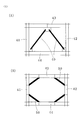
- the cane FIG.4 (B) shows the cane 50 installed in the construction surface which consists of the same structure as the above.
- the cane 50 is formed of the present Cu—Al—Mn shape memory alloy, and the cane 50 that supports the upper beam 43 has a corner portion composed of the upper beam 43 and the column 41, and a corner portion composed of the upper beam 43 and the column 42.
- the cane 50 that supports the lower beam 44 is installed in a corner portion composed of the lower beam 44 and the column 41 and a corner portion composed of the lower beam 44 and the column 42.
- Examples 1 to 9 all have a maximum crystal grain size of 8 mm or more and form a giant crystal grain structure.
- Comparative Example 1 and Comparative Example 2 have a small amount of Al, the crystal grains were not sufficiently coarsened, and Comparative Example 3 had a small amount of Mn, and thus the crystal grains were not sufficiently coarsened.
- Comparative Example 4, Comparative Example 5, and Comparative Example 6 had a large amount of Mn, Al, and Al, respectively, and the crystal grains were not sufficiently coarsened.
- Comparative Example 1 and Comparative Example 3 have a small amount of Al and Mn, respectively, and the ⁇ phase is precipitated in a high temperature region to form two phases of ⁇ + ⁇ .
- FIG. 5 shows a stereoscopic micrograph of Example 4, and FIG. 6 shows an optical micrograph of Comparative Example 5.
- FIG. 5 shows the result of preparing the same three alloy samples and performing the above treatment, and has an extremely large crystal grain structure.
- Comparative Example 5 with a large amount of Al has a crystal grain size of around 300 ⁇ m, which is within the range of the crystal grain size of a normal metal material.
- the sample was wound around a round bar having a diameter of 20 mm, and the curvature radius R of the sample after unloading was measured.
- the sample of the shape memory effect mode is a sample having a property of returning to its original shape when heated.
- the shape recovery characteristics of the samples were evaluated by the shape recovery rate shown in the following formula.
- a shape recovery rate of 80% to 100% was A, 50% to less than 80% was B, and less than 50% was C.
- Shape recovery rate (%) (R ⁇ 10) / R ⁇ 100
- Comparative Examples 1 to 6 had a lower shape recovery rate than Examples 1 to 9.
- Comparative Example 1 and Comparative Example 3 had a low shape recovery rate due to the ⁇ phase being precipitated at a high temperature to form two phases of ⁇ + ⁇ .
- the comparative example 5 and the comparative example 6 had low ductility, and the crack generate
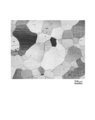
- Example 29 was obtained. An appearance photograph of Example 29 is shown in FIG. The triangular mark in the figure indicates the position of the crystal grain boundary. From the figure, it can be seen that there are a large number of crystal grains exceeding the diameter of the bar, and the size has reached a maximum of 150 mm. As described above, the Cu—Al—Mn shape memory alloy can obtain giant crystal grains by performing heat treatment even on a large diameter material.
- Comparative Example 7 is a Cu—Al—Be-based shape memory alloy, and the values in the table are shown in Reference 1 (Graesser EJ, Cozzarelli FA. Shape memory alloys as new material for aseismic isolation, Journal of Engineering Mechanics, ASCE 1991; 117: 2590-2608.) And Reference 2 (Dolce M, Cardone D, Marnetto R. Implementation and testing of passive control devices on shape memory alloys, Earthquake Engineering and Structural Dynamics 2000; 29: 945-968.) .
- Comparative Example 8 is a Ni—Ti shape memory alloy, and the values in the table are those of Reference 3 (Sepulveda A, Boroschek R, Herrera R, Moroni O, Sarrazin M, Steel beam-column connection using copper-based shape memory alloy). based on dampers, Journal of Constructional Steel Research 2008, 64: 429-435.)
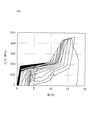
- FIG. 10 shows the equivalent attenuation rate h (i) calculated from the stress-strain curves of Examples 30 and 31.
- i is the number of repetitions
- ⁇ (i) is the amount of strain applied
- ⁇ (i) is the stress at the time of strain ⁇ (i)
- ⁇ W (i) is the dissipation calculated from the area in the loop of the stress-strain curve. Energy.
- the equivalent attenuation rate h (i) is about 2%, but in Example 31, the equivalent attenuation rate h (i) depends on the applied strain amount, and increases from 2% to 7 as the strain amount increases. It has increased to%.
Landscapes
- Engineering & Computer Science (AREA)
- Architecture (AREA)
- Chemical & Material Sciences (AREA)
- Mechanical Engineering (AREA)
- General Engineering & Computer Science (AREA)
- Civil Engineering (AREA)
- Structural Engineering (AREA)
- Organic Chemistry (AREA)
- Metallurgy (AREA)
- Materials Engineering (AREA)
- Physics & Mathematics (AREA)
- Thermal Sciences (AREA)
- Crystallography & Structural Chemistry (AREA)
- Joining Of Building Structures In Genera (AREA)
- Reinforcement Elements For Buildings (AREA)
- Conductive Materials (AREA)
- Powder Metallurgy (AREA)
Abstract
Al:7.8~8.8質量%、Mn:7.2~14.3質量%を含有し、残部がCu及び不可避的不純物からなり、最大結晶粒径が8mmを超え、良好な形状記憶特性を有し、構造物等に適用可能な断面サイズを有する構造材を実現することが可能な銅系合金及びそれを用いた構造材を提供する。また、本銅系合金は、さらに、Ni、Co、Fe、Ti、V、Cr、Si、Ge、Nb、Mo、W、Sn、Bi、Sb、Mg、P、Be、Zr、Zn、B、C、S、Ag及びミッシュメタルからなる群から選ばれた少なくとも一種の元素を合計で0.001~5質量%含有してもよい。
Description
本発明は、形状記憶特性を有する銅系合金及びそれを用いた構造材に関する。
近い将来発生すると予想されている関東南部地震などの直下型地震や南海、東南海、東海地震などの海溝型地震に対する対策が喫緊の課題となっている。なかでも構造物の安全性は重要な問題であり、構造物の耐震性のさらなる向上に加えて地震後における構造物の継続使用性が社会的に求められている。
そこで、例えば非特許文献1では、Ni-Ti形状記憶合金を土木建築構造物の応答制御に利用しようとする試みが幾つか紹介されている。形状記憶合金も通常の金属と同様、弾性域を超える変形によって発生する非線形歪は残留するが、形状記憶効果と呼ばれる特性を備えており、加熱することにより残留歪を除去することができる。また、形状記憶合金の場合、ある一定温度以上の温度域において、除荷するだけで残留歪がなくなる超弾性と呼ばれる特性も備えている。
なお、本明細書では、超弾性特性と形状記憶効果を総称して「形状記憶特性」と呼ぶ。
なお、本明細書では、超弾性特性と形状記憶効果を総称して「形状記憶特性」と呼ぶ。
超弾性特性を有する形状記憶合金を用いた部材は、大地震に対して残留変形が生じないか、生じても非常に僅かであるため、大地震後における部材の取り替えや、加熱による残留変形解消の必要がないといった利点がある。しかし、Ni-Ti形状記憶合金は素材が高価なうえ、冷間加工性に乏しく切削が困難であるため、土木建築用構造材に適用しようとした場合、コストが極めて高くなるという問題がある。
そのため、近年、コスト的に有利な銅系形状記憶合金が注目されるようになってきている。例えば、特許文献1には、Mn:5~20質量%、Al:3~10質量%を含有し、残部がCu及び不可避的不純物からなる、加工性に優れたCu-Al-Mn系形状記憶合金の製造方法が開示されている。また、特許文献2には、Cu-Al-Mn系形状記憶合金にSを添加することによって、高い切削加工性が付与された制振部材が開示されている。
ソン ジー(Song G),マー エン(Ma N),リー エイチ-エン(Li H-N)著「アプリケーションズ オブ シェイプ メモリ アロイズ イン シビル ストラクチュアズ(Applications of shape memory alloys in civil structures)」,エンジニアリング ストラクチャーズ (Engineering Structures),2006,Vol.28,pp.1266-1274
Cu-Al-Mn系形状記憶合金の場合、材料(部材)サイズに対する結晶粒径が粗大になるほど、形状記憶特性が向上することが知られており、断面積の小さな材料(部材)においては、材料サイズに対して結晶粒径を粗大にすることが可能であると考えられている。通常の多結晶金属材料の結晶粒径は数μmから数百μm程度であるが、例えば、特許文献3では、線径0.36mm程度の線材や幅10mm×厚さ0.2mmの板材において、1.5mm程度の結晶粒径を有するCu-Al-Mn系形状記憶合金を実現している。
しかし、土木建築構造物では、比較的大きな断面サイズを有する構造材が使用されるため、特許文献3において実現された部材は断面サイズが小さすぎ、土木建築構造物に適用できないという問題がある。また、土木建築構造物で使用される比較的大きな断面サイズにおいて良好な形状記憶特性を得るには、より粗大な結晶粒が必要となるが、これまでの技術では、そのような粗大結晶粒は実現できていなかった。
本発明はかかる事情に鑑みてなされたもので、良好な形状記憶特性を有し、構造物等に適用可能な断面サイズを有する構造材を実現することが可能な銅系合金及びそれを用いた構造材を提供することを目的とする。
本発明はかかる事情に鑑みてなされたもので、良好な形状記憶特性を有し、構造物等に適用可能な断面サイズを有する構造材を実現することが可能な銅系合金及びそれを用いた構造材を提供することを目的とする。
上記目的を達成するため、本発明では、Cu-Al-Mn系形状記憶合金の結晶粒径を大きくすることにより、良好な形状記憶特性を有し、各種構造物や大型機械、自動車、航空機、船舶等に適用可能な断面サイズを有する構造材を実現する。
Cu-Al-Mn系形状記憶合金は、高温でβ相(bcc構造)となるが、適切な成分を選択することによって低温でα相(fcc構造)が析出してβ+α相の2相組織にすることができる。結晶粒の粗大化には、高温でβ相かつ低温でβ+α相となるような組成であることが重要であると考えられる。なお、高温域においてα相が存在すると、結晶粒の成長がピン止めされ、結晶粒が微細になる。
本発明では、Al:7.8~8.8質量%、Mn:7.2~14.3質量%を含有し、残部がCu及び不可避的不純物からなる銅系合金において、最大結晶粒径を8mm超とする。
Cu-Al-Mn系形状記憶合金は、高温でβ相(bcc構造)となるが、適切な成分を選択することによって低温でα相(fcc構造)が析出してβ+α相の2相組織にすることができる。結晶粒の粗大化には、高温でβ相かつ低温でβ+α相となるような組成であることが重要であると考えられる。なお、高温域においてα相が存在すると、結晶粒の成長がピン止めされ、結晶粒が微細になる。
本発明では、Al:7.8~8.8質量%、Mn:7.2~14.3質量%を含有し、残部がCu及び不可避的不純物からなる銅系合金において、最大結晶粒径を8mm超とする。
また、本発明に係る銅系合金では、さらに、Ni、Co、Fe、Ti、V、Cr、Si、Ge、Nb、Mo、W、Sn、Bi、Sb、Mg、P、Be、Zr、Zn、B、C、S、Ag及びミッシュメタルからなる群から選ばれた少なくとも一種の元素を合計で0.001~5質量%含有していてもよい。
また、本発明は、構造物を構成する以下の構造材を含む。
(1)上記銅系合金からなる主筋を有するコンクリート部材。
(2)上記銅系合金からなるPCテンドンを有するプレストレストコンクリート部材。
(3)上記銅系合金から形成され、組積造壁の内部に配置される補強材。
(1)上記銅系合金からなる主筋を有するコンクリート部材。
(2)上記銅系合金からなるPCテンドンを有するプレストレストコンクリート部材。
(3)上記銅系合金から形成され、組積造壁の内部に配置される補強材。
(4)上記銅系合金から形成され、部材同士の接合に使用されるスプライスプレート。
(5)上記銅系合金から形成され、部材同士の接合に使用される接合ボルト。
(6)上記銅系合金から形成され、コンクリート基礎に埋設されるアンカーボルト。
(5)上記銅系合金から形成され、部材同士の接合に使用される接合ボルト。
(6)上記銅系合金から形成され、コンクリート基礎に埋設されるアンカーボルト。
(7)上記銅系合金から形成され、構造物の構面内に設置されるブレース。
(8)上記銅系合金から形成され、梁を支持する方杖。
(8)上記銅系合金から形成され、梁を支持する方杖。
本発明では、Al:7.8~8.8質量%、Mn:7.2~14.3質量%を含有し、残部がCu及び不可避的不純物からなる銅系合金において、8mmを超える最大結晶粒径とすることにより、良好な形状記憶特性を有し、構造物等に適用可能な断面サイズを有する構造材を実現することができる。
続いて、添付した図面を参照しつつ、本発明を具体化した実施の形態に付き説明し、本発明の理解に供する。
本発明の一実施の形態に係る銅系合金は、Al:7.8~8.8質量%、Mn:7.2~14.3質量%を含有し、残部がCu及び不可避的不純物からなり、8mmを超える最大結晶粒径を有している。
また、本実施の形態に係る銅系合金では、上記基本組成の元素以外に、さらにNi、Co、Fe、Ti、V、Cr、Si、Ge、Nb、Mo、W、Sn、Bi、Sb、Mg、P、Be、Zr、Zn、B、C、S、Ag及びミッシュメタルからなる群から選ばれた1種又は2種以上を合計で0.001~5質量%含有させてもよい。
以下の説明では、上記成分からなる銅系合金を「Cu-Al-Mn系形状記憶合金」と呼ぶことがある。
また、本実施の形態に係る銅系合金では、上記基本組成の元素以外に、さらにNi、Co、Fe、Ti、V、Cr、Si、Ge、Nb、Mo、W、Sn、Bi、Sb、Mg、P、Be、Zr、Zn、B、C、S、Ag及びミッシュメタルからなる群から選ばれた1種又は2種以上を合計で0.001~5質量%含有させてもよい。
以下の説明では、上記成分からなる銅系合金を「Cu-Al-Mn系形状記憶合金」と呼ぶことがある。
Cu-Al-Mn系形状記憶合金の最大結晶粒径が8mm以下の場合、除荷後における残留歪の回復が充分ではなく、良好な形状記憶特性が得られない。一方、Cu-Al-Mn系形状記憶合金の最大結晶粒径が大きい程、良好な形状記憶特性が得られるが、製造上の問題から結晶粒径の最大値は現時点において150mm程度である。
[結晶粒径の測定方法]
結晶粒の微細な試料は光学顕微鏡、結晶粒の粗大な試料は実体顕微鏡を用いて当該試料を撮像し、得られた像の試料長手方向に線を引く。そして、各結晶粒を横切る線分の長さを測定し、その最大値を当該試料の最大結晶粒径とする。
結晶粒の微細な試料は光学顕微鏡、結晶粒の粗大な試料は実体顕微鏡を用いて当該試料を撮像し、得られた像の試料長手方向に線を引く。そして、各結晶粒を横切る線分の長さを測定し、その最大値を当該試料の最大結晶粒径とする。
[Cu-Al-Mn系形状記憶合金の組成]
Alはβ相を安定化させる元素であり、低温におけるα相の析出を抑制する。そのため、Alの含有量が高くなると、結晶粒が粗大化しにくくなる。そこで、本実施の形態では、Alの含有量の上限を低く設定し、8.8質量%としている。一方、Al元素の含有量が7.8質量%未満では高温域においてβ単相を形成できない。Al元素のより好ましい含有量はMn元素の含有量により変化するが、8.0~8.5質量%である。
Alはβ相を安定化させる元素であり、低温におけるα相の析出を抑制する。そのため、Alの含有量が高くなると、結晶粒が粗大化しにくくなる。そこで、本実施の形態では、Alの含有量の上限を低く設定し、8.8質量%としている。一方、Al元素の含有量が7.8質量%未満では高温域においてβ単相を形成できない。Al元素のより好ましい含有量はMn元素の含有量により変化するが、8.0~8.5質量%である。
Mn元素を含有することによりβ相が存在し得る組成範囲が低Al側へ広がり、Cu-Al-Mn系形状記憶合金の冷間加工性が著しく向上する。Mn元素の含有量が7.2質量%未満では満足な冷間加工性が得られず、かつ高温域においてβ単相を形成することができない。またMn元素の含有量が14.3質量%を超えると、十分な形状記憶特性が得られない。好ましいMnの含有量は9.7~12.7質量%であり、この範囲においてMn量を調節することで、マルテンサイト変態温度を調整することができる。
Ni、Co、Fe、Sn及びSbは基地組織の強化に有効な元素である。Ni及びFeの好ましい含有量はそれぞれ0.001~3質量%である。Coは、またCoAlの形成により析出強化するが、過剰になると合金の靭性を低下させる。Coの好ましい含有量は0.001~2質量%である。Sn及びSbの好ましい含有量はそれぞれ0.001~1質量%である。
Tiは合金特性を阻害する元素であるN及びOと結合して、酸化物及び窒化物を形成する。またBと共に添加するとボライドを形成し、析出強化に寄与する。Tiの好ましい含有量は0.001~2質量%である。
W、V、Nb、Mo及びZrは硬さを向上させて耐摩耗性を向上させる効果を有する。またこれらの元素は、ほとんど合金基地に固溶しないので、bcc結晶として析出し、析出強化に有効である。W、V、Nb、Mo及びZrの好ましい含有量は、それぞれ0.001~1質量%である。
Crは耐摩耗性及び耐食性を維持するのに有効な元素である。Crの好ましい含有量は0.001~2質量%である。
Siは耐食性を向上させる効果を有する。Siの好ましい含有量は0.001~2質量%である。
Siは耐食性を向上させる効果を有する。Siの好ましい含有量は0.001~2質量%である。
Mgは合金特性を阻害する元素であるN及びOを除去すると共に、阻害元素であるSを硫化物として固定し、熱間加工性や靭性の向上に効果があるが、多量の添加は粒界偏析を招き、脆化の原因となる。Mgの好ましい含有量は0.001~0.5質量%である。
Pは脱酸剤として作用し、靭性向上の効果を有する。Pの好ましい含有量は0.01~0.5質量%である。
Pは脱酸剤として作用し、靭性向上の効果を有する。Pの好ましい含有量は0.01~0.5質量%である。
Beは基地組織を強化する効果を有する。Beの好ましい含有量は0.001~1質量%である。
Znはマルテンサイト変態温度を上昇させる効果を有する。Znの好ましい含有量は0.001~5質量%である。
B及びCは粒界に偏析し、粒界を強化する効果を有する。B及びCの好ましい含有量はそれぞれ0.001~0.5質量%である。
Znはマルテンサイト変態温度を上昇させる効果を有する。Znの好ましい含有量は0.001~5質量%である。
B及びCは粒界に偏析し、粒界を強化する効果を有する。B及びCの好ましい含有量はそれぞれ0.001~0.5質量%である。
Sは、Cu-Al-Mn系形状記憶合金にSを添加することでMnS等の硫化物が材料内部に微量に形成され、優れた切削加工性が発現される。Sの好ましい含有量は0.001~0.3質量%である。
Geはマルテンサイト変態温度を上昇させる効果を有する。Geの好ましい含有量は0.001~1質量%である。
Biは切削加工性の向上に有効な元素である。Biの好ましい含有量は0.001~1質量%である。
Geはマルテンサイト変態温度を上昇させる効果を有する。Geの好ましい含有量は0.001~1質量%である。
Biは切削加工性の向上に有効な元素である。Biの好ましい含有量は0.001~1質量%である。
Agは冷間加工性を向上させる効果を有する。Agの好ましい含有量は0.001~2質量%である。
ミッシュメタルは脱酸剤として作用し、靭性向上の効果を有する。ミッシュメタルの好ましい含有量は0.001~5質量%である。
ミッシュメタルは脱酸剤として作用し、靭性向上の効果を有する。ミッシュメタルの好ましい含有量は0.001~5質量%である。
[Cu-Al-Mn系形状記憶合金の製造方法]
8mmを超える最大結晶粒径を有するCu-Al-Mn系形状記憶合金の製造方法の概略を以下に示す。
(1)上記成分からなるCu-Al-Mn系形状記憶合金を高周波溶解炉などの溶解炉で溶解し、鋳型に鋳込んでインゴットを作製する。
(2)熱間鍛造や熱間圧延(600~900℃)と冷間圧延や伸線により上記インゴットを所定の形状に成形加工する。
(3)所定の形状とされたCu-Al-Mn系形状記憶合金に対して、400~950℃の範囲で熱処理する。熱処理は、β単相域温度からβ+αの2相域温度に保持したり、冷却中にα相を析出させたりした後に、再度、β単相域温度で熱処理を行う。この熱処理を一回又は二回以上行うことが好ましい。一般にβ単相域温度は700~950℃であり、β+αの2相域温度は400~850℃である。
(4)β単相域で熱処理されたCu-Al-Mn系形状記憶合金を水中に投入して急冷する。
(5)水冷されたCu-Al-Mn系形状記憶合金に対して、50~300℃の温度で1~300分間、時効処理を行う。
8mmを超える最大結晶粒径を有するCu-Al-Mn系形状記憶合金の製造方法の概略を以下に示す。
(1)上記成分からなるCu-Al-Mn系形状記憶合金を高周波溶解炉などの溶解炉で溶解し、鋳型に鋳込んでインゴットを作製する。
(2)熱間鍛造や熱間圧延(600~900℃)と冷間圧延や伸線により上記インゴットを所定の形状に成形加工する。
(3)所定の形状とされたCu-Al-Mn系形状記憶合金に対して、400~950℃の範囲で熱処理する。熱処理は、β単相域温度からβ+αの2相域温度に保持したり、冷却中にα相を析出させたりした後に、再度、β単相域温度で熱処理を行う。この熱処理を一回又は二回以上行うことが好ましい。一般にβ単相域温度は700~950℃であり、β+αの2相域温度は400~850℃である。
(4)β単相域で熱処理されたCu-Al-Mn系形状記憶合金を水中に投入して急冷する。
(5)水冷されたCu-Al-Mn系形状記憶合金に対して、50~300℃の温度で1~300分間、時効処理を行う。
Cu-Al-Mn系形状記憶合金に(3)及び(4)の熱処理を行うことにより、結晶粒が粗大化し、Cu-Al-Mn系形状記憶合金の超弾性特性及び形状記憶効果を向上させることができる。さらに、Cu-Al-Mn系形状記憶合金はβ単相域温度から水冷後、室温に放置しておくとマルテンサイト変態温度が変化することがあるが、(5)の時効処理を行うことでマルテンサイト変態温度を安定にすることができ、安定な形状記憶特性を発現させることができる。
[Cu-Al-Mn系形状記憶合金の構造材への適用例]
8mmを超える最大結晶粒径を有するCu-Al-Mn系形状記憶合金を適用することが可能な土木建築構造物用構造材について以下に幾つか例を示す。
(1)コンクリート部材
コンクリート部材の一例である梁10の断面を図1に示す。梁10は、矩形断面とされたコンクリート11内に、上端筋12及び下端筋13と、上端筋12及び下端筋13に一定のピッチで巻き付けられたスターラップ14とを有し、主筋である上端筋12及び下端筋13が本実施の形態に係るCu-Al-Mn系形状記憶合金から形成されている。
8mmを超える最大結晶粒径を有するCu-Al-Mn系形状記憶合金を適用することが可能な土木建築構造物用構造材について以下に幾つか例を示す。
(1)コンクリート部材
コンクリート部材の一例である梁10の断面を図1に示す。梁10は、矩形断面とされたコンクリート11内に、上端筋12及び下端筋13と、上端筋12及び下端筋13に一定のピッチで巻き付けられたスターラップ14とを有し、主筋である上端筋12及び下端筋13が本実施の形態に係るCu-Al-Mn系形状記憶合金から形成されている。
なお、主筋の全長に亘って本Cu-Al-Mn系形状記憶合金を使用するのではなく、曲げモーメントが大きくなる梁端部など、主筋の一部のみに本Cu-Al-Mn系形状記憶合金を使用してもよい。その場合、鉄筋と本Cu-Al-Mn系形状記憶合金とは、長ナットやカプラーなど機械式継手により接合すればよい。
また、プレストレストコンクリート部材において、PCテンドンの材料として本Cu-Al-Mn系形状記憶合金を使用してもよい。
また、プレストレストコンクリート部材において、PCテンドンの材料として本Cu-Al-Mn系形状記憶合金を使用してもよい。
あるいはまた、煉瓦や石、コンクリートブロックなどを積み上げた組積造壁の内部に配置される補強材として本Cu-Al-Mn系形状記憶合金を使用してもよい。ここで、「組石造壁の内部」とは、目地に沿って補強材を配置するのみならず、目地に直交するように補強材を配置する場合や、目地に対して斜めに補強材を配置する場合も含むものである。
(2)スプライスプレート
図2は、鉄骨構造物の柱梁接合部を示したものである。本鉄骨構造物では、鉄骨柱23から側方に突出するH形鋼からなるブラケット24と、H形鋼からなる鉄骨梁22とが、本Cu-Al-Mn系形状記憶合金からなるスプライスプレート25を介して接合されている。鉄骨梁22及びブラケット24の各フランジをスプライスプレート25で挟み、これらを貫通する高力ボルト20(接合ボルト)で摩擦接合する。
なお、高力ボルト20を本Cu-Al-Mn系形状記憶合金により形成してもよい。
図2は、鉄骨構造物の柱梁接合部を示したものである。本鉄骨構造物では、鉄骨柱23から側方に突出するH形鋼からなるブラケット24と、H形鋼からなる鉄骨梁22とが、本Cu-Al-Mn系形状記憶合金からなるスプライスプレート25を介して接合されている。鉄骨梁22及びブラケット24の各フランジをスプライスプレート25で挟み、これらを貫通する高力ボルト20(接合ボルト)で摩擦接合する。
なお、高力ボルト20を本Cu-Al-Mn系形状記憶合金により形成してもよい。
(3)アンカーボルト
図3は、鉄骨構造物の基礎部を示したものであり、コンクリート基礎31の上に鉄骨柱32が立設されている。鉄骨柱32の下端面に設けられたベースプレート33とコンクリート基礎31とは、コンクリート基礎31から露出するアンカーボルト30により接合されており、アンカーボルト30は本Cu-Al-Mn系形状記憶合金から形成されている。
図3は、鉄骨構造物の基礎部を示したものであり、コンクリート基礎31の上に鉄骨柱32が立設されている。鉄骨柱32の下端面に設けられたベースプレート33とコンクリート基礎31とは、コンクリート基礎31から露出するアンカーボルト30により接合されており、アンカーボルト30は本Cu-Al-Mn系形状記憶合金から形成されている。
(4)ブレース
図4(A)は、柱41、42と、柱41、42間に架設された上梁43及び下梁44によって画成された構面内に設置されたブレース40を示したものである。一対のブレース40は本Cu-Al-Mn系形状記憶合金から形成され、ブレース40の一端が上梁43の中央部に接合されると共に、他端部が下梁44の端部に接合され、K型ブレースを構成している。
なお、本Cu-Al-Mn系形状記憶合金を座屈拘束ブレースの芯材や、引張ブレースのターンバックルの一部として使用してもよい。
図4(A)は、柱41、42と、柱41、42間に架設された上梁43及び下梁44によって画成された構面内に設置されたブレース40を示したものである。一対のブレース40は本Cu-Al-Mn系形状記憶合金から形成され、ブレース40の一端が上梁43の中央部に接合されると共に、他端部が下梁44の端部に接合され、K型ブレースを構成している。
なお、本Cu-Al-Mn系形状記憶合金を座屈拘束ブレースの芯材や、引張ブレースのターンバックルの一部として使用してもよい。
(5)方杖
図4(B)は、上記と同じ構成からなる構面に設置された方杖50を示したものである。方杖50は本Cu-Al-Mn系形状記憶合金から形成され、上梁43を支持する方杖50は上梁43と柱41からなるコーナー部、及び上梁43と柱42からなるコーナー部に、下梁44を支持する方杖50は、下梁44と柱41からなるコーナー部、及び下梁44と柱42からなるコーナー部にそれぞれ設置されている。
図4(B)は、上記と同じ構成からなる構面に設置された方杖50を示したものである。方杖50は本Cu-Al-Mn系形状記憶合金から形成され、上梁43を支持する方杖50は上梁43と柱41からなるコーナー部、及び上梁43と柱42からなるコーナー部に、下梁44を支持する方杖50は、下梁44と柱41からなるコーナー部、及び下梁44と柱42からなるコーナー部にそれぞれ設置されている。
以上、本発明の実施の形態について説明してきたが、本発明は何ら上記した実施の形態に記載の構成に限定されるものではなく、特許請求の範囲に記載されている事項の範囲内で考えられるその他の実施の形態や変形例も含むものである。例えば、上記実施の形態では、コンクリート部材として梁について説明したが、柱や壁等にも本Cu-Al-Mn系形状記憶合金が適用できることは言うまでもない。また、上記実施の形態では、構面内に設置されるブレースをK型ブレースとしたが、X型ブレースなど他の配置方法でもよいことは言うまでもない。さらにまた、上記実施の形態では、本Cu-Al-Mn系形状記憶合金を土木建築構造物の構造材として利用した例について説明したが、その他の構造物や大型機械、自動車、航空機、船舶等の構造材としても利用することができる。
[試験1]
表1に示す成分を有するCu-Al-Mn系形状記憶合金を高周波溶解炉で溶解し、鋳型に鋳込んでインゴットを作製した。次いで、インゴットを800℃で2mmの厚さまで熱間圧延した後、600℃で15分間の熱処理と冷間圧延により厚さ1mmの板材とした。そして、板材から幅5mm、長さ25~30mmの試料を切り出し、当該試料について900℃で1時間、500℃で5分間、900℃で1時間の熱処理を行った後、水中へ投入して急冷し、さらに200℃で15分間の時効処理を行った。
表1に示す成分を有するCu-Al-Mn系形状記憶合金を高周波溶解炉で溶解し、鋳型に鋳込んでインゴットを作製した。次いで、インゴットを800℃で2mmの厚さまで熱間圧延した後、600℃で15分間の熱処理と冷間圧延により厚さ1mmの板材とした。そして、板材から幅5mm、長さ25~30mmの試料を切り出し、当該試料について900℃で1時間、500℃で5分間、900℃で1時間の熱処理を行った後、水中へ投入して急冷し、さらに200℃で15分間の時効処理を行った。
実施例1~9は全て最大結晶粒径が8mm以上であり、巨大結晶粒組織を形成している。一方、比較例1、比較例2はAl量が少ないため、結晶粒は十分に粗大化せず、比較例3はMn量が少ないため、結晶粒が十分に粗大化していなかった。また、比較例4、比較例5、比較例6はそれぞれMn量、Al量、Al量が多く、結晶粒の粗大化が十分でなかった。比較例の中で、特に比較例1、比較例3はそれぞれAl量、Mn量が少ないことに起因して高温域においてα相が析出してβ+αの2相となるため、結晶粒の成長が阻害されていた。
図5に実施例4の実体顕微鏡写真を、図6に比較例5の光学顕微鏡写真を示す。図5は同じ合金試料を3つ準備して上記の処理を行った結果を示したものであり、極めて巨大な結晶粒組織を有している。一方、Al量の多い比較例5は、結晶粒径が300μm前後と、通常の金属材料の結晶粒径の範囲内にある。
図5に実施例4の実体顕微鏡写真を、図6に比較例5の光学顕微鏡写真を示す。図5は同じ合金試料を3つ準備して上記の処理を行った結果を示したものであり、極めて巨大な結晶粒組織を有している。一方、Al量の多い比較例5は、結晶粒径が300μm前後と、通常の金属材料の結晶粒径の範囲内にある。
次に、Cu-Al-Mn系形状記憶合金の形状回復特性(形状記憶特性)を調査するため、試料を直径20mmの丸棒に巻き付け、除荷後における試料の曲率半径Rを測定した。形状記憶効果モードの試料である実施例2、6の形状回復特性は除荷後に200℃まで加熱を行ったときの曲率半径Rにより評価した。ここで、形状記憶効果モードの試料とは、加熱すると元の形状に戻る性質を有する試料のことである。試料の形状回復特性は次式に示す形状回復率で評価し、形状回復率が80%以上100%以下をA、50%以上80%未満をB、50%未満をCとした。
形状回復率(%)=(R-10)/R×100
形状回復率(%)=(R-10)/R×100
その結果、巨大結晶粒を有する実施例1~9の試料は非常に良好な形状記憶特性を示すことがわかった。一方、比較例1~6は実施例1~9に比べて形状回復率が低かった。特に比較例1及び比較例3は、高温においてα相が析出してβ+αの2相になっていることに起因して形状回復率が低かった。また、比較例5及び比較例6は延性が低く、曲げ変形を与えることでクラックが発生した。

[試験2]
表2に示す成分を有するCu-Al-Mn系形状記憶合金を準備し、熱処理後の組織観察と形状回復特性の評価を行った。なお、試料の製造方法は、実施例27の溶体化処理温度を950℃とした以外は実施例1~9と同様とした。形状記憶効果モードの試料である実施例17、22、26、27の形状回復特性は除荷後に200℃まで加熱を行ったときの曲率半径Rにより評価した。
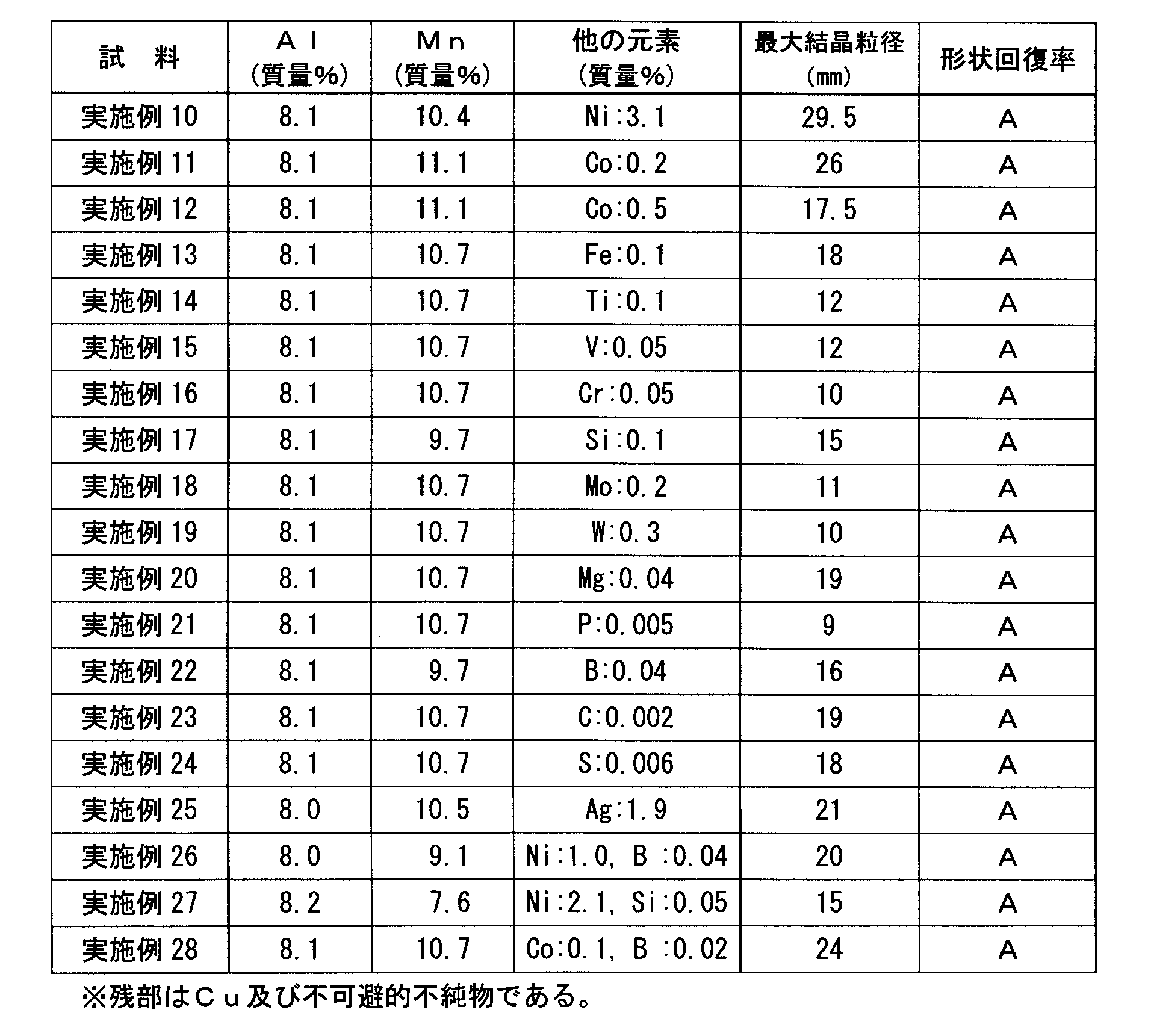
添加元素を加えた実施例10~28のいずれのCu-Al-Mn系形状記憶合金においても結晶粒は十分に粗大化していた。また、超弾性特性あるいは形状記憶効果による形状回復率も良好であることが確認できた。
表2に示す成分を有するCu-Al-Mn系形状記憶合金を準備し、熱処理後の組織観察と形状回復特性の評価を行った。なお、試料の製造方法は、実施例27の溶体化処理温度を950℃とした以外は実施例1~9と同様とした。形状記憶効果モードの試料である実施例17、22、26、27の形状回復特性は除荷後に200℃まで加熱を行ったときの曲率半径Rにより評価した。
添加元素を加えた実施例10~28のいずれのCu-Al-Mn系形状記憶合金においても結晶粒は十分に粗大化していた。また、超弾性特性あるいは形状記憶効果による形状回復率も良好であることが確認できた。
[試験3]
Alを8.1質量%、Mnを11.1質量%を含有するCu-Al-Mn系形状記憶合金について、高周波溶解と熱間鍛造によりφ20mmの棒材を形成した。そして、900℃で15分間、600℃で30分間のサイクルを2回行い、最後に900℃で15分間の熱処理を行った後、水冷し、さらに200℃で15分間の時効処理を行って実施例29を得た。
実施例29の外観写真を図7に示す。図中の三角印は結晶粒界の位置を示している。同図より、棒材の直径を超える結晶粒が多数存在しており、そのサイズは最大150mmにも達していることがわかる。以上のように、Cu-Al-Mn系形状記憶合金は太径材においても熱処理を行うことにより巨大結晶粒を得ることができる。
Alを8.1質量%、Mnを11.1質量%を含有するCu-Al-Mn系形状記憶合金について、高周波溶解と熱間鍛造によりφ20mmの棒材を形成した。そして、900℃で15分間、600℃で30分間のサイクルを2回行い、最後に900℃で15分間の熱処理を行った後、水冷し、さらに200℃で15分間の時効処理を行って実施例29を得た。
実施例29の外観写真を図7に示す。図中の三角印は結晶粒界の位置を示している。同図より、棒材の直径を超える結晶粒が多数存在しており、そのサイズは最大150mmにも達していることがわかる。以上のように、Cu-Al-Mn系形状記憶合金は太径材においても熱処理を行うことにより巨大結晶粒を得ることができる。
[試験4]
Alを8.1質量%、Mnを10.7質量%含有するCu-Al-Mn系形状記憶合金について、高周波溶解、熱間鍛造、及び冷間伸線によりφ4mmとφ8mmの棒材(全長150mm)を形成した。そして、900℃で15分間、600℃で30分間のサイクルを2回行い、最後に900℃で15分間の熱処理を行った後、水冷し、さらに200℃で15分間の時効処理を行って実施例30、31を得た。実施例30、31の結晶粒径の中間値は8mm超である。
一方、比較例7はCu-Al-Be系形状記憶合金であり、表中の値は文献1(Graesser EJ, Cozzarelli FA. Shape memory alloys as new material for aseismic isolation, Journal of Engineering Mechanics, ASCE 1991; 117: 2590-2608.)及び文献2(Dolce M, Cardone D, Marnetto R. Implementation and testing of passive control devices on shape memory alloys, Earthquake Engineering and Structural Dynamics 2000; 29:945-968.)に基づいている。また、比較例8はNi-Ti形状記憶合金であり、表中の値は文献3(Sepulveda A, Boroschek R, Herrera R, Moroni O, Sarrazin M, Steel beam-column connection using copper-based shape memory alloy dampers, Journal of Constructional Steel Research 2008, 64:429-435.)に基づいている。
Alを8.1質量%、Mnを10.7質量%含有するCu-Al-Mn系形状記憶合金について、高周波溶解、熱間鍛造、及び冷間伸線によりφ4mmとφ8mmの棒材(全長150mm)を形成した。そして、900℃で15分間、600℃で30分間のサイクルを2回行い、最後に900℃で15分間の熱処理を行った後、水冷し、さらに200℃で15分間の時効処理を行って実施例30、31を得た。実施例30、31の結晶粒径の中間値は8mm超である。
一方、比較例7はCu-Al-Be系形状記憶合金であり、表中の値は文献1(Graesser EJ, Cozzarelli FA. Shape memory alloys as new material for aseismic isolation, Journal of Engineering Mechanics, ASCE 1991; 117: 2590-2608.)及び文献2(Dolce M, Cardone D, Marnetto R. Implementation and testing of passive control devices on shape memory alloys, Earthquake Engineering and Structural Dynamics 2000; 29:945-968.)に基づいている。また、比較例8はNi-Ti形状記憶合金であり、表中の値は文献3(Sepulveda A, Boroschek R, Herrera R, Moroni O, Sarrazin M, Steel beam-column connection using copper-based shape memory alloy dampers, Journal of Constructional Steel Research 2008, 64:429-435.)に基づいている。
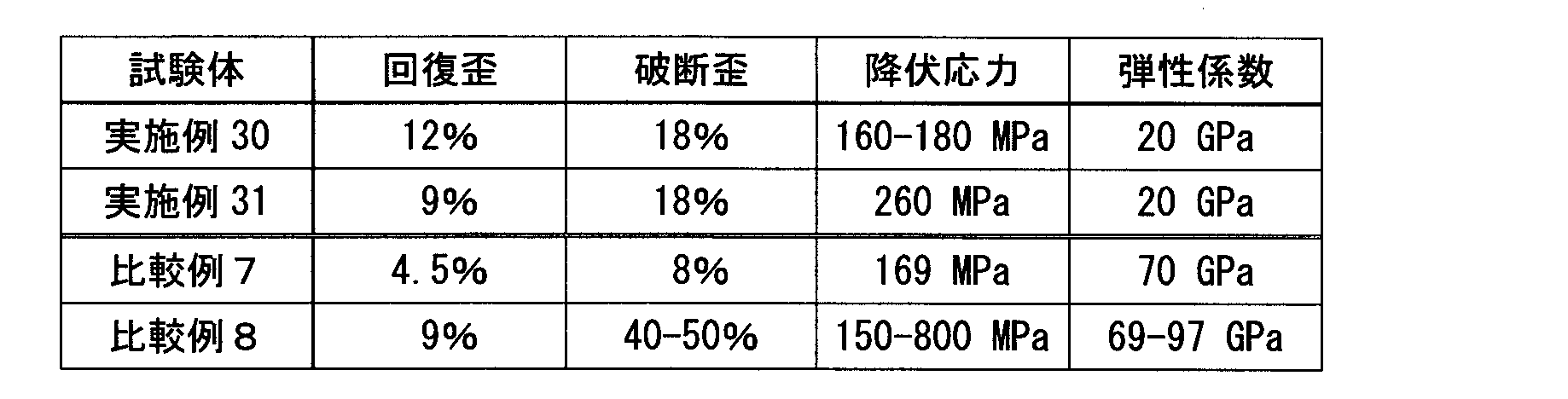
実施例30、31及び比較例7、8について準静的繰返し引張試験を室内環境下で実施した。実施例30の応力-歪曲線を図8に、実施例31の応力-歪曲線を図9に示す。また、実施例30、31及び比較例7、8の材料定数を表3に示す。なお、表3における回復歪は与えた歪量から残留歪量を控除した値、降伏応力は0.2%オフセット耐力である。
実施例30の回復歪は12%、実施例31の回復歪は9%、破断歪は実施例30、31とも18%であった。実施例30、31の回復歪量は、比較例7に比べて非常に大きく、比較例8とほぼ同等であった。また、実施例30、31の破断歪は、比較例7のほぼ2倍、比較例8のほぼ半分であった。
実施例30の回復歪は12%、実施例31の回復歪は9%、破断歪は実施例30、31とも18%であった。実施例30、31の回復歪量は、比較例7に比べて非常に大きく、比較例8とほぼ同等であった。また、実施例30、31の破断歪は、比較例7のほぼ2倍、比較例8のほぼ半分であった。
また、実施例30、31の応力-歪曲線から算出した等価減衰率h(i)を図10に示す。等価減衰率はh(i)(%)=ΔW(i)/2πσ(i)ε(i)で定義される。ここで、iは繰返し回数、ε(i)は与えた歪量、σ(i)は歪ε(i)の時の応力、ΔW(i)は応力-歪曲線のループ内面積から算出した散逸エネルギーである。
実施例30では等価減衰率h(i)は概ね2%前後であるが、実施例31では等価減衰率h(i)は与えた歪量に依存し、歪量の増加に伴い2%から7%へと増加している。
実施例30では等価減衰率h(i)は概ね2%前後であるが、実施例31では等価減衰率h(i)は与えた歪量に依存し、歪量の増加に伴い2%から7%へと増加している。
10:梁(コンクリート部材)、11:コンクリート、12:上端筋、13:下端筋、14:スターラップ、20:高力ボルト(接合ボルト)、22:鉄骨梁、23:鉄骨柱、24:ブラケット、25:スプライスプレート、30:アンカーボルト、31:コンクリート基礎、32:鉄骨柱、33:ベースプレート、40:ブレース、41、42:柱、43:上梁、44:下梁、50:方杖
Claims (10)
- 形状記憶特性を有し、構造材に用いられる銅系合金であって、
Al:7.8~8.8質量%、Mn:7.2~14.3質量%を含有し、残部がCu及び不可避的不純物からなり、最大結晶粒径が8mmを超えることを特徴とする銅系合金。 - 請求項1記載の銅系合金において、さらに、Ni、Co、Fe、Ti、V、Cr、Si、Ge、Nb、Mo、W、Sn、Bi、Sb、Mg、P、Be、Zr、Zn、B、C、S、Ag及びミッシュメタルからなる群から選ばれた少なくとも一種の元素を合計で0.001~5質量%含有することを特徴とする銅系合金。
- 請求項1又は2記載の銅系合金からなる主筋を有するコンクリート部材。
- 請求項1又は2記載の銅系合金からなるPCテンドンを有するプレストレストコンクリート部材。
- 請求項1又は2記載の銅系合金から形成され、組積造壁の内部に配置される補強材。
- 請求項1又は2記載の銅系合金から形成され、部材同士の接合に使用されるスプライスプレート。
- 請求項1又は2記載の銅系合金から形成され、部材同士の接合に使用される接合ボルト。
- 請求項1又は2記載の銅系合金から形成され、コンクリート基礎に埋設されるアンカーボルト。
- 請求項1又は2記載の銅系合金から形成され、構造物の構面内に設置されるブレース。
- 請求項1又は2記載の銅系合金から形成され、梁を支持する方杖。
Priority Applications (3)
| Application Number | Priority Date | Filing Date | Title |
|---|---|---|---|
| JP2012518235A JP5837487B2 (ja) | 2010-05-31 | 2011-05-27 | 銅系合金及びそれを用いた構造材 |
| EP20110789423 EP2578707A4 (en) | 2010-05-31 | 2011-05-27 | ALLOY ON COPPER BASE AND STRUCTURAL MATERIAL THEREWITH |
| US13/691,673 US20130087074A1 (en) | 2010-05-31 | 2012-11-30 | Copper-based alloy and structural material comprising same |
Applications Claiming Priority (2)
| Application Number | Priority Date | Filing Date | Title |
|---|---|---|---|
| JP2010124899 | 2010-05-31 | ||
| JP2010-124899 | 2010-05-31 |
Related Child Applications (1)
| Application Number | Title | Priority Date | Filing Date |
|---|---|---|---|
| US13/691,673 Continuation US20130087074A1 (en) | 2010-05-31 | 2012-11-30 | Copper-based alloy and structural material comprising same |
Publications (1)
| Publication Number | Publication Date |
|---|---|
| WO2011152009A1 true WO2011152009A1 (ja) | 2011-12-08 |
Family
ID=45066402
Family Applications (1)
| Application Number | Title | Priority Date | Filing Date |
|---|---|---|---|
| PCT/JP2011/002966 Ceased WO2011152009A1 (ja) | 2010-05-31 | 2011-05-27 | 銅系合金及びそれを用いた構造材 |
Country Status (4)
| Country | Link |
|---|---|
| US (1) | US20130087074A1 (ja) |
| EP (1) | EP2578707A4 (ja) |
| JP (1) | JP5837487B2 (ja) |
| WO (1) | WO2011152009A1 (ja) |
Cited By (10)
| Publication number | Priority date | Publication date | Assignee | Title |
|---|---|---|---|---|
| WO2014181642A1 (ja) | 2013-05-10 | 2014-11-13 | 国立大学法人東北大学 | 安定した超弾性を示すCu-Al-Mn系棒材及び板材、その製造方法、それを用いた制震部材、並びに制震部材を用いた制震構造体 |
| JP2015054977A (ja) * | 2013-09-10 | 2015-03-23 | 古河電気工業株式会社 | 破断伸びに優れたCu−Al−Mn系合金材及びそれを用いてなる制震部材 |
| WO2015137283A1 (ja) * | 2014-03-14 | 2015-09-17 | 古河電気工業株式会社 | Cu-Al-Mn系合金材とその製造方法、及びそれを用いた棒材または板材 |
| CN105821238A (zh) * | 2016-05-31 | 2016-08-03 | 黄河科技学院 | 一种铜合金材料及其制备方法 |
| JP2016153532A (ja) * | 2016-03-30 | 2016-08-25 | 国立大学法人東北大学 | 安定した超弾性を示すCu−Al−Mn系棒材及び板材、それを用いた制震部材、並びに制震部材を用いた制震構造体 |
| JP2017141491A (ja) * | 2016-02-10 | 2017-08-17 | 国立大学法人東北大学 | Cu−Al−Mn系合金材及び用途 |
| JP2020128687A (ja) * | 2019-02-06 | 2020-08-27 | 株式会社フジタ | 補強材 |
| JP2021050396A (ja) * | 2019-09-25 | 2021-04-01 | 国立大学法人東北大学 | Cu−Al−Mn系合金 |
| CN112639144A (zh) * | 2018-09-03 | 2021-04-09 | 古河科技材料株式会社 | 铜系合金材料及其制造方法以及由铜系合金材料构成的构件或部件 |
| JP2022520745A (ja) * | 2019-06-13 | 2022-04-01 | シャンドン ユニヴァーシティ | 楔形スライディングブロックを使用した摩擦エネルギーを消費するセルフリセットダンパー及びその製造方法 |
Families Citing this family (17)
| Publication number | Priority date | Publication date | Assignee | Title |
|---|---|---|---|---|
| JP6363611B2 (ja) | 2012-10-26 | 2018-07-25 | スローン バルブ カンパニー | 抗菌性を有する白色銅合金 |
| JP5795030B2 (ja) * | 2013-07-16 | 2015-10-14 | 株式会社古河テクノマテリアル | 耐応力腐食性に優れるCu−Al−Mn系合金材料からなる展伸材 |
| JP6764397B2 (ja) * | 2015-02-24 | 2020-09-30 | 三協オイルレス工業株式会社 | 高温耐摩耗性アルミニウム青銅系材料 |
| CN104911396B (zh) * | 2015-05-12 | 2017-11-14 | 重庆市龙泉汽车配件有限公司 | 一种铜基形状记忆合金及其制备方法和用途 |
| CN105171267B (zh) * | 2015-07-21 | 2017-12-01 | 重庆永林机械设备有限公司 | 无铅焊料及其制备方法和应用 |
| CN106191497B (zh) * | 2016-08-16 | 2018-06-05 | 泉州市鸿运生态农业发展有限公司 | 一种铜基受电弓滑板复合材料的制备方法 |
| JP7222244B2 (ja) * | 2017-08-08 | 2023-02-15 | 三菱ケミカル株式会社 | 医薬錠剤、およびその製造方法 |
| CN107893167A (zh) * | 2017-11-14 | 2018-04-10 | 浙江力博实业股份有限公司 | 一种电真空器件用铜镍合金及其制备方法 |
| CN108155154A (zh) * | 2017-11-29 | 2018-06-12 | 苏州诺纳可电子科技有限公司 | 一种三极管 |
| CN108172614A (zh) * | 2017-11-29 | 2018-06-15 | 苏州诺纳可电子科技有限公司 | 一种电子三极管 |
| US10840259B2 (en) | 2018-08-13 | 2020-11-17 | Sandisk Technologies Llc | Three-dimensional memory device including liner free molybdenum word lines and methods of making the same |
| JP7103588B2 (ja) * | 2019-01-31 | 2022-07-20 | 株式会社古河テクノマテリアル | ねじ部を有するCu-Al-Mn系形状記憶合金成形体及びその製造方法 |
| CN113718130B (zh) * | 2020-05-26 | 2023-03-31 | 沈阳铸造研究所有限公司 | 一种铸态高强度锰铝青铜合金及其制备方法 |
| CN113215436A (zh) * | 2021-04-14 | 2021-08-06 | 安徽绿能技术研究院有限公司 | 一种铜铝镍合金材料及其制备方法 |
| CN115012547B (zh) * | 2022-07-01 | 2023-06-27 | 郑州大学 | 一种基于sma螺栓的柔性约束型装配式防屈曲支撑结构 |
| CN117626049A (zh) * | 2024-01-09 | 2024-03-01 | 中铝科学技术研究院有限公司 | 铜锰合金材料及其制造方法 |
| CN119876684B (zh) * | 2024-12-30 | 2026-04-21 | 北京科技大学 | 一种高强高导自润滑弥散强化铜复合材料及制备方法 |
Citations (6)
| Publication number | Priority date | Publication date | Assignee | Title |
|---|---|---|---|---|
| JPH0762472A (ja) * | 1993-08-27 | 1995-03-07 | Kiyohito Ishida | 高加工性銅系形状記憶合金とその製造方法 |
| JP2000169920A (ja) * | 1998-12-03 | 2000-06-20 | Kiyohito Ishida | 形状記憶特性及び超弾性を有する銅系合金及びその製造方法 |
| JP2001020026A (ja) * | 1999-07-08 | 2001-01-23 | Kiyohito Ishida | 形状記憶特性及び超弾性を有する銅系合金、それからなる部材ならびにそれらの製造方法 |
| JP2006257765A (ja) * | 2005-03-17 | 2006-09-28 | Nippon Steel Corp | 形状記憶合金を用いたブレース構造 |
| JP2008138469A (ja) * | 2006-12-04 | 2008-06-19 | Takenaka Komuten Co Ltd | プレストレス導入用の自己収縮性横筋、この横筋を用いた外郭プレキャスト材、及びコンクリート構造物の製造方法 |
| JP2009052097A (ja) | 2007-08-28 | 2009-03-12 | Keiichi Araki | 制振部材 |
-
2011
- 2011-05-27 JP JP2012518235A patent/JP5837487B2/ja active Active
- 2011-05-27 EP EP20110789423 patent/EP2578707A4/en not_active Withdrawn
- 2011-05-27 WO PCT/JP2011/002966 patent/WO2011152009A1/ja not_active Ceased
-
2012
- 2012-11-30 US US13/691,673 patent/US20130087074A1/en not_active Abandoned
Patent Citations (8)
| Publication number | Priority date | Publication date | Assignee | Title |
|---|---|---|---|---|
| JPH0762472A (ja) * | 1993-08-27 | 1995-03-07 | Kiyohito Ishida | 高加工性銅系形状記憶合金とその製造方法 |
| JP3335224B2 (ja) | 1993-08-27 | 2002-10-15 | 清仁 石田 | 高加工性銅系形状記憶合金の製造方法 |
| JP2000169920A (ja) * | 1998-12-03 | 2000-06-20 | Kiyohito Ishida | 形状記憶特性及び超弾性を有する銅系合金及びその製造方法 |
| JP2001020026A (ja) * | 1999-07-08 | 2001-01-23 | Kiyohito Ishida | 形状記憶特性及び超弾性を有する銅系合金、それからなる部材ならびにそれらの製造方法 |
| JP3300684B2 (ja) | 1999-07-08 | 2002-07-08 | 清仁 石田 | 形状記憶特性及び超弾性を有する銅系合金、それからなる部材ならびにそれらの製造方法 |
| JP2006257765A (ja) * | 2005-03-17 | 2006-09-28 | Nippon Steel Corp | 形状記憶合金を用いたブレース構造 |
| JP2008138469A (ja) * | 2006-12-04 | 2008-06-19 | Takenaka Komuten Co Ltd | プレストレス導入用の自己収縮性横筋、この横筋を用いた外郭プレキャスト材、及びコンクリート構造物の製造方法 |
| JP2009052097A (ja) | 2007-08-28 | 2009-03-12 | Keiichi Araki | 制振部材 |
Non-Patent Citations (5)
| Title |
|---|
| DOLCE M; CARDONE D; MARNETTO R.: "Implementation and testing of passive control devices on shape memory alloys", EARTHQUAKE ENGINEERING AND STRUCTURAL DYNAMICS, vol. 29, 2000, pages 945 - 968 |
| GRAESSER EJ; COZZARELLI FA.: "Shape memory alloys as new material for aseismic isolation", JOURNAL OF ENGINEERING MECHANICS, ASCE, vol. 117, 1991, pages 2590 - 2608 |
| See also references of EP2578707A4 |
| SEPULVEDA A; BOROSCHEK R; HERRERA R; MORONI 0; SARRAZIN M: "Steel beam-column connection using copper-based shape memory alloy dampers", JOURNAL OF CONSTRUCTIONAL STEEL RESEARCH, vol. 64, 2008, pages 429 - 435 |
| SONG G; MA N; LI H-N: "Applications of shape memory alloys in civil structures", ENGINEERING STRUCTURES, vol. 28, 2006, pages 1266 - 1274 |
Cited By (17)
| Publication number | Priority date | Publication date | Assignee | Title |
|---|---|---|---|---|
| WO2014181642A1 (ja) | 2013-05-10 | 2014-11-13 | 国立大学法人東北大学 | 安定した超弾性を示すCu-Al-Mn系棒材及び板材、その製造方法、それを用いた制震部材、並びに制震部材を用いた制震構造体 |
| JP2015054977A (ja) * | 2013-09-10 | 2015-03-23 | 古河電気工業株式会社 | 破断伸びに優れたCu−Al−Mn系合金材及びそれを用いてなる制震部材 |
| US11118255B2 (en) | 2014-03-14 | 2021-09-14 | Furukawa Electric Co., Ltd. | Cu-Al-Mn-based alloy material, method of producing the same, and rod material or sheet material using the same |
| WO2015137283A1 (ja) * | 2014-03-14 | 2015-09-17 | 古河電気工業株式会社 | Cu-Al-Mn系合金材とその製造方法、及びそれを用いた棒材または板材 |
| JPWO2015137283A1 (ja) * | 2014-03-14 | 2017-04-06 | 古河電気工業株式会社 | Cu−Al−Mn系合金材とその製造方法、及びそれを用いた棒材または板材 |
| JP2017141491A (ja) * | 2016-02-10 | 2017-08-17 | 国立大学法人東北大学 | Cu−Al−Mn系合金材及び用途 |
| JP2016153532A (ja) * | 2016-03-30 | 2016-08-25 | 国立大学法人東北大学 | 安定した超弾性を示すCu−Al−Mn系棒材及び板材、それを用いた制震部材、並びに制震部材を用いた制震構造体 |
| CN105821238A (zh) * | 2016-05-31 | 2016-08-03 | 黄河科技学院 | 一种铜合金材料及其制备方法 |
| CN112639144B (zh) * | 2018-09-03 | 2022-05-03 | 古河科技材料株式会社 | 铜系合金材料及其制造方法以及由铜系合金材料构成的构件或部件 |
| CN112639144A (zh) * | 2018-09-03 | 2021-04-09 | 古河科技材料株式会社 | 铜系合金材料及其制造方法以及由铜系合金材料构成的构件或部件 |
| US11959161B2 (en) | 2018-09-03 | 2024-04-16 | Furukawa Techno Material Co., Ltd. | Copper-based alloy material, production method therefor, and members or parts made of copper-based alloy material |
| JP2020128687A (ja) * | 2019-02-06 | 2020-08-27 | 株式会社フジタ | 補強材 |
| JP7373419B2 (ja) | 2019-02-06 | 2023-11-02 | 株式会社フジタ | 補強材 |
| JP2022520745A (ja) * | 2019-06-13 | 2022-04-01 | シャンドン ユニヴァーシティ | 楔形スライディングブロックを使用した摩擦エネルギーを消費するセルフリセットダンパー及びその製造方法 |
| JP7133722B2 (ja) | 2019-06-13 | 2022-09-08 | シャンドン ユニヴァーシティ | 楔形スライディングブロックを使用した摩擦エネルギーを消費するセルフリセットダンパー及びその製造方法 |
| JP2021050396A (ja) * | 2019-09-25 | 2021-04-01 | 国立大学法人東北大学 | Cu−Al−Mn系合金 |
| JP7497007B2 (ja) | 2019-09-25 | 2024-06-10 | 国立大学法人東北大学 | Cu-Al-Mn系合金 |
Also Published As
| Publication number | Publication date |
|---|---|
| JP5837487B2 (ja) | 2015-12-24 |
| JPWO2011152009A1 (ja) | 2013-07-25 |
| US20130087074A1 (en) | 2013-04-11 |
| EP2578707A1 (en) | 2013-04-10 |
| EP2578707A4 (en) | 2013-12-25 |
Similar Documents
| Publication | Publication Date | Title |
|---|---|---|
| JP5837487B2 (ja) | 銅系合金及びそれを用いた構造材 | |
| Jiang et al. | Tensile deformation behavior and mechanical properties of a bulk cast Al0. 9CoFeNi2 eutectic high-entropy alloy | |
| Janke et al. | Applications of shape memory alloys in civil engineering structures—Overview, limits and new ideas | |
| US11118255B2 (en) | Cu-Al-Mn-based alloy material, method of producing the same, and rod material or sheet material using the same | |
| US10364487B2 (en) | High entropy alloy having TWIP/TRIP property and manufacturing method for the same | |
| KR102237789B1 (ko) | 내응력부식성이 우수한 Cu-Al-Mn계 합금재료로 이루어지는 전신재와 그 용도 | |
| CN101784687A (zh) | 奥氏体系不锈钢 | |
| WO2014181642A1 (ja) | 安定した超弾性を示すCu-Al-Mn系棒材及び板材、その製造方法、それを用いた制震部材、並びに制震部材を用いた制震構造体 | |
| WO1997003215A1 (en) | Iron-based shape memory and vibration damping alloys containing nitrogen | |
| KR20090132522A (ko) | 취성 균열 전파 정지 특성이 우수한 후강판 및 그 제조 방법 | |
| KR20130092612A (ko) | 냉간에서의 코일 취급성이 우수한 고강도 α+β형 티타늄 합금 열연판 및 그 제조 방법 | |
| US20210317557A1 (en) | Copper-based alloy material, production method therefor, and members or parts made of copper-based alloy material | |
| Fu et al. | Enhancement of superelasticity in Fe-Ni-Co-based shape memory alloys by microstructure and texture control | |
| KR20150117637A (ko) | 제진합금 | |
| JP3467767B2 (ja) | 脆性亀裂伝播停止特性に優れた鋼材およびその製造方法 | |
| JP6086090B2 (ja) | 溶接熱影響部靭性に優れた非調質低降伏比高張力厚鋼板およびその製造方法 | |
| JP3849244B2 (ja) | 繰返し大変形下での延性き裂進展抵抗の優れた鋼材及びその製造方法 | |
| Mishra et al. | A comparison of conventional and iron-based shape memory alloys and their potential in structural applications | |
| JP6421907B1 (ja) | 圧延h形鋼及びその製造方法 | |
| JP6258644B2 (ja) | 破断伸びに優れたCu−Al−Mn系合金材及びそれを用いてなる制震部材 | |
| JP2011214127A (ja) | 制振・免震ダンパー装置 | |
| KR102460872B1 (ko) | 저사이클 피로 특성이 우수한 Fe-Mn-Si계 합금 주조재 | |
| JP2020019995A (ja) | 厚鋼板およびその製造方法ならびに溶接構造物 | |
| JP2000096166A (ja) | 安定した変形抵抗を有するZn−Al合金部材およびその製造方法 | |
| JP3987813B2 (ja) | 常温降伏応力が455N/mm2超で800℃高温特性に優れる耐火建築構造用高強度鋼およびその厚鋼板の製造方法 |
Legal Events
| Date | Code | Title | Description |
|---|---|---|---|
| 121 | Ep: the epo has been informed by wipo that ep was designated in this application |
Ref document number: 11789423 Country of ref document: EP Kind code of ref document: A1 |
|
| DPE1 | Request for preliminary examination filed after expiration of 19th month from priority date (pct application filed from 20040101) | ||
| WWE | Wipo information: entry into national phase |
Ref document number: 2012518235 Country of ref document: JP |
|
| REEP | Request for entry into the european phase |
Ref document number: 2011789423 Country of ref document: EP |
|
| WWE | Wipo information: entry into national phase |
Ref document number: 2011789423 Country of ref document: EP |
|
| NENP | Non-entry into the national phase |
Ref country code: DE |