WO2012010675A2 - Protéines bhlh et leur utilisation en tant que médicaments - Google Patents
Protéines bhlh et leur utilisation en tant que médicaments Download PDFInfo
- Publication number
- WO2012010675A2 WO2012010675A2 PCT/EP2011/062581 EP2011062581W WO2012010675A2 WO 2012010675 A2 WO2012010675 A2 WO 2012010675A2 EP 2011062581 W EP2011062581 W EP 2011062581W WO 2012010675 A2 WO2012010675 A2 WO 2012010675A2
- Authority
- WO
- WIPO (PCT)
- Prior art keywords
- nucleic acid
- acid sequence
- ngn2
- protein
- amino acid
- Prior art date
- Legal status (The legal status is an assumption and is not a legal conclusion. Google has not performed a legal analysis and makes no representation as to the accuracy of the status listed.)
- Ceased
Links
Images





Classifications
-
- A—HUMAN NECESSITIES
- A61—MEDICAL OR VETERINARY SCIENCE; HYGIENE
- A61K—PREPARATIONS FOR MEDICAL, DENTAL OR TOILETRY PURPOSES
- A61K38/00—Medicinal preparations containing peptides
- A61K38/16—Peptides having more than 20 amino acids; Gastrins; Somatostatins; Melanotropins; Derivatives thereof
- A61K38/17—Peptides having more than 20 amino acids; Gastrins; Somatostatins; Melanotropins; Derivatives thereof from animals; from humans
- A61K38/1703—Peptides having more than 20 amino acids; Gastrins; Somatostatins; Melanotropins; Derivatives thereof from animals; from humans from vertebrates
- A61K38/1709—Peptides having more than 20 amino acids; Gastrins; Somatostatins; Melanotropins; Derivatives thereof from animals; from humans from vertebrates from mammals
-
- A—HUMAN NECESSITIES
- A61—MEDICAL OR VETERINARY SCIENCE; HYGIENE
- A61K—PREPARATIONS FOR MEDICAL, DENTAL OR TOILETRY PURPOSES
- A61K38/00—Medicinal preparations containing peptides
- A61K38/16—Peptides having more than 20 amino acids; Gastrins; Somatostatins; Melanotropins; Derivatives thereof
- A61K38/17—Peptides having more than 20 amino acids; Gastrins; Somatostatins; Melanotropins; Derivatives thereof from animals; from humans
-
- A—HUMAN NECESSITIES
- A61—MEDICAL OR VETERINARY SCIENCE; HYGIENE
- A61K—PREPARATIONS FOR MEDICAL, DENTAL OR TOILETRY PURPOSES
- A61K31/00—Medicinal preparations containing organic active ingredients
- A61K31/70—Carbohydrates; Sugars; Derivatives thereof
- A61K31/7088—Compounds having three or more nucleosides or nucleotides
-
- A—HUMAN NECESSITIES
- A61—MEDICAL OR VETERINARY SCIENCE; HYGIENE
- A61K—PREPARATIONS FOR MEDICAL, DENTAL OR TOILETRY PURPOSES
- A61K45/00—Medicinal preparations containing active ingredients not provided for in groups A61K31/00 - A61K41/00
- A61K45/06—Mixtures of active ingredients without chemical characterisation, e.g. antiphlogistics and cardiaca
-
- A—HUMAN NECESSITIES
- A61—MEDICAL OR VETERINARY SCIENCE; HYGIENE
- A61P—SPECIFIC THERAPEUTIC ACTIVITY OF CHEMICAL COMPOUNDS OR MEDICINAL PREPARATIONS
- A61P25/00—Drugs for disorders of the nervous system
-
- A—HUMAN NECESSITIES
- A61—MEDICAL OR VETERINARY SCIENCE; HYGIENE
- A61P—SPECIFIC THERAPEUTIC ACTIVITY OF CHEMICAL COMPOUNDS OR MEDICINAL PREPARATIONS
- A61P35/00—Antineoplastic agents
Definitions
- the present invention relates to bHLH proteins and their use as drugs.
- Cancer stem cells are cancer cells (found within solid tumors or haematological cancers) that possess characteristics associated with normal stem cells, specifically the ability to give rise to all cell types found in determined cancer sample.
- CSCs may generate tumors through the stem cell processes of self-renewal and differentiation into multiple cell types.
- CSCs have been identified initially in leukaemia sample wherein an isolated subpopulation of leukaemic cells that express a specific surface marker CD34, but lacks the CD38 marker are capable of initiating tumors in NOD/SCID mice that is histologically similar to the donor.
- CSCs have recently been identified in several solid tumors, including cancers of the breast, brain, colon, ovary, pancreas and prostate.
- CSCs form a small proportion of the tumor, they may not necessarily be targeted by the treatment.
- CSCs cells are proposed to persist in tumors as a distinct population and cause relapse and metastasis by giving rise to new tumors.
- Gliomas are primitive tumours of the CNS which are derived from tumorigenesis of cells of the glial lineage (astrocytes and oligodendrocytes) (Louis, 2006, Annu Rev Pathol 1 , 97-117; Behin, 2003, Lancet 361 , 323-331). They are the most frequent brain tumours with an incidence of 1/20 000/inhabitants/year (3000 new cases in France, 15 000 news cases in US per year) (Bondy, 2008, Cancer. 2008 Oct 1;113(7 Suppl):1953-68; Bauchet 2007, J Neurooncol. 2007 Sep;84(2):189-99). These tumors are aggressive, highly invasive and neurologically destructive.
- Glioma are divided in two main categories: -High grade gliomas (grade III-IV according to WHO classification, Louis, 2007, Acta Neuropathol. 2007 Aug;114(2):97-109), which are mostly represented by multiform glioblastomas (GBM). These tumours contain highly proliferating cells and are associated with a very poor prognosis. -Low grade gliomas (WHO grade II glioma, G2G), which growth slowly but which ineluctably evolves to anaplasia within 5-10 years.
- WHO grade II glioma, G2G which growth slowly but which ineluctably evolves to anaplasia within 5-10 years.
- gliomas One important feature of gliomas is their diffuse aspect due to migration and infiltration of the parenchyma from which deterioration will occur. There is currently no curative treatment for these tumors and despite maximum treatment efforts, median survival of patients diagnosed with GBM ranges from 9 to 12 months, a statistic that has changed very little in decades.
- GBM are the most common glioma in humans (Kleihues 2000, Cancer. 2000 Jun 15; Maher, 2001, Genes Dev. 2001 Jun 1;15(11):1311-33) and can evolve from low grade glioma (secondary GBM) or develop de novo (primary GBM). Like all cancers, GBM share a relatively restricted set of characteristics crucial to their phenotype: proliferation in the absence of external growth stimuli, avoidance of apoptosis and no limits to replication, escape from both external growth-suppressive forces and the immune response, formation of new blood vessels and the ability to invade normal tissues (Hanahan and Weinberg 2000, Cell. 100(1):57-70). Furthermore, despite their striking heterogeneity, common alterations in specific cellular signal transduction pathways occur within most GBMs (Louis, 2006, Annu Rev Pathol 1 , 97-117).
- GBM may be derived from transformation of differentiated cells or alternatively of adult stem/progenitor cells (Dai 2003, Cancer J 9 , 72-81; Holland, 2001, Curr Opin Neurol 14 , 683-688).
- GBMs contain 1-20 % of cancer stem cells which grow on non adherent substrates to generate clonal expansion called neurospheres.
- the latter are multipotential and generate astrocytes and neuronal-like cells upon differentiation on adhesive substrate.
- These cancer stem cells appear to be more tumorigenic than the rest of tumoral cells when grafted in immunocompromised animals. In addition, these cells seem to be more chemo- and radio-resistant than the other tumoral cells.
- Tumoral stem cells like the non tumoral stem cells, reside in special vascular niches (Gilbertson, 2007, Nat Rev Cancer 7 , 733-736) which provide high level of canonical stem cell signallings such as Wnt, Notch or SHH (Ischenko, 2008, Curr Med Chem. 2008;15(30):3171-84). These pathways maintain the cells in an undifferentiated state and contribute to their self-renewal.
- GBM cancer stem cells rely on a special set of genes (for instance Sox2, Olig2, Bmi1%) to maintain a high level of self-renewal. These genes could be considered as potential targets to specifically eliminate these cells.
- the number of new molecules specifically developed to cure gliomas is very low. Treatments of the proliferative tumoral cells transiently reduce tumor progression. However, a relapse occurs, due to the persistence of tumoral stem cells.
- APL Acute Promyelocytic leukemia
- NGN2 neuroepithelial stem cells
- Sugimori 2007 Development, 134(8):1617-29 double mutant animals for NGN1 and 2 present a marked reduction in neurogenesis (Scardigli, 2001, Neuron 31:203–217) .
- ASCL1 in cerebellum promotes cell-cycle exit and differentiation (Alvarez-Rodr ⁇ guez 2009 J Cell Sci. Mar 1;122, 595-9) while ASCL1 loss of function results in impaired neurogenesis of postnatal neural stem cells (EMBO J. 2004 Nov 10;23(22):4495-505.).
- WO 2004/016779 discloses pharmaceutical compositions comprising NGN2 or ASCL1 for their use in cell therapy of neurological diseases.
- compositions comprising NGN2 or ASCL1 for treating insulin associated disorders.
- WO 01/26643 discloses a method for inhibiting tumorigenic properties of melanoma cells by using bHLH proteins.
- one aim of the invention is to provide a new efficient drug for treating pathologies, including cancer.
- Another aim of the invention is to provide an efficient therapy for treating tumors, without risk of relapse.
- the present disclosure relates to a composition
- a composition comprising
- the present invention relates to a composition
- a composition comprising
- the invention relates to a composition
- a composition comprising
- Table 1 represents the 63 possibilities of the composition used according to the invention.
- P Protein; D:DNA; P+D: Protein + DNA.
- the invention is based on the unexpected observation made by the Inventors that the over-expression of NGN2, ASCL1 or NEUROD1 proteins induces cell death. Surprisingly, other bHLH proteins such as NGN1 and NGN3 are not able to induce cell death when their expression is enforced in cells.
- a tumor derived from central nervous system can be enforced to differentiate toward neurone that is electro-physiologically active (See example section).
- nucleic acid molecule coding for bHLH proteins refers to the NGN2, ASCL1 or NEUROD1 genes or the corresponding transcripts (RNA transcript of the NGN2, ASCL1, or NEUROD1 genes).
- NGN2 the name of proteins is capitalized (e.g.NGN2) and the corresponding gene coding for said protein is represented by slanting characters (e.g. NGN2).
- composition used according to the invention kills cells, in particular tumoral cells, more preferably cancer stem cells.
- Autophagy or autophagocytosis, is a catabolic process involving the degradation of a cellular own components through the lysosomal machinery. It is a tightly-regulated process that plays a normal part in cell growth, development, and homeostasis, helping to maintain a balance between the synthesis, degradation, and subsequent recycling of cellular products. It is a major mechanism by which a starving cell reallocates nutrients from unnecessary processes to more-essential processes.
- Apoptosis is the process of programmed cell death that may occur in multicellular organisms. Biochemical events lead to characteristic cell changes (morphology) and death. These changes include blebbing, loss of cell membrane asymmetry and attachment, cell shrinkage, nuclear fragmentation, chromatin condensation, and chromosomal DNA fragmentation.
- Necrosisis corresponds to the premature death of cells and living tissue. Necrosis is caused by factors external to the cell or tissue, such as infection, toxins, or trauma. This is in contrast to apoptosis, which is a naturally occurring cause of cellular death. While apoptosis often provides beneficial effects to the organism, necrosis is almost always detrimental and can be fatal.
- composition used according to the invention is able to kill cells rapidly and efficiently, as illustrated in the Example section.
- composition as defined above is used as apoptotic drug.
- Apoptotic drug defines a drug having properties to induce programmed cell death of cells treated with said drug.
- Apoptosis can be easily measured by general protocols known in the art. These protocols include, for instance:
- FACS flow cytometry
- the invention relates to a composition used as defined above, wherein said NGN2 protein comprises or consists of
- the invention relates to the composition used as defined above, wherein said ASCL1 protein comprises or consists of
- the invention relates to a composition used as defined above, wherein said NEUROD1 protein comprises or consists of
- the invention relates to a composition used as previously defined, wherein said nucleic acid molecule coding for NGN2 protein comprises or consists of
- the invention relates to a composition used as defined above, wherein said nucleic acid molecule coding for ASCL1 protein comprises or consists of
- the invention relates to a composition used as previously defined, wherein said nucleic acid molecule coding for NEUROD1 protein comprises or consists of
- Another embodiment according to the invention relates to a composition used as defined above, wherein each of said nucleic acid molecule is comprised, or contained, in at least one vector, said vector comprising nucleic acid sequences allowing the expression of said nucleic acid molecule.
- nucleic acid molecule coding for NGN2, ASCL1, or NEUROD1 proteins, or fragments thereof, as defined above, is contained in a vector containing specific sequences allowing :
- said vector contains any other sequences necessary for an expression in an host organism.
- nucleic acid sequences allowing the expression of said nucleic acid molecule refers to nucleic acid sequences allowing the initiation of transcription, i.e. promoter, and nucleic acid sequences allowing the termination of transcription.
- the nucleic acid sequence according to the invention can be placed under the control of promoter sequences such as Cytomegalovirus (CMV) promoter, Rous Sarcoma Virus (RSV) promoter, Elongation Factor 1 ⁇ (EF1- ⁇ ) promoter or Ubiquitin gene (Ub) promoter. All these promoters allow the expression whatsoever the cell.
- CMV Cytomegalovirus
- RSV Rous Sarcoma Virus
- EF1- ⁇ Elongation Factor 1 ⁇
- Ubiquitin gene Ubiquitin gene
- the nucleic acid molecule mentioned above can be also placed under the control of Long Terminal repeat (LTR) promoters derived from retroviruses or lentiviruses.
- LTR Long Terminal repeat
- vectors to deliver and express the nucleic acid molecule into tumoral stem cells are for instances, HIV-1 derived lentiviral vectors, either carrying a wild type or a mutant (D64V) integrase, leading respectively to integrating (Trip-PGK) and non-integrating (Ni-Trip-PGK) vectors (Sarky, 2008, Curr Gene Ther. 8(6):430-7).
- Non integrative lentivirus allows gene transfer to the nucleus and its expression without integration in the genome.
- the viral genomes remain as episomes which lack replication signals and are thus progressively diluted out. This allows a “hit and run” mode of gene expression and represents a significant safety benefits over their integrative counterparts.
- adenovirus vectors such as canine adenovirus vectors (Paul, 2008, Cancer Biol Ther. 2008 May;7(5):786-93), can be also used in the invention for targeting glioma cells.
- the invention relates to a composition used as mentioned above, comprising a vector comprising:
- both nucleic acid molecules are contained in the same vector and their expression is governed by one promoter.
- the above first and above second nucleic acid molecules are linked by an Internal Ribosomal Entry Site (IRES) sequence that allow the transcription in a unique transcript of 2 sequences, but will provide the transcription of two separated and independent proteins.
- IRS Internal Ribosomal Entry Site
- the invention relates to a composition used as mentioned above, comprising a vector comprising:
- both nucleic acid molecules are contained in the same vector and their expression is governed by one promoter.
- the above first and above second nucleic acid molecules are linked by an Internal Ribosomal Entry Site (IRES) sequence that allow the transcription in a unique transcript of 2 sequences, but will provide the translation of two separated and independent proteins.
- IRS Internal Ribosomal Entry Site
- the invention relates to a composition used as mentioned above, comprising a vector comprising:
- both nucleic acid molecules are contained in the same vector and their expression is governed by one promoter.
- the above first and above second nucleic acid molecules are linked by an Internal Ribosomal Entry Site (IRES) sequence that allow the transcription in a unique transcript of 2 sequences, but will provide the translation of two separated and independent proteins.
- IRS Internal Ribosomal Entry Site
- the invention relates to a composition used as mentioned above, wherein:
- the three nucleic acid molecules are contained in the same vector and their expression is governed by one promoter.
- the above first, second and third second nucleic acid molecules are linked by an Internal Ribosomal Entry Site (IRES) sequence that allow the transcription in a unique transcript of 3 sequences, but will provide the translation of three separated and independent proteins.
- IRS Internal Ribosomal Entry Site
- the invention relates to a composition used as defined above, wherein
- the invention relates to a composition used corresponding to one of the compositions disclosed above in table 1, wherein the component of said composition are used in a simultaneous, separate or sequential manner.
- the invention relates to a composition used as defined above, comprising the following components:
- the invention relates to the use as defined above of a composition corresponding to one of the compositions 10 to 63 disclosed above in table 1, wherein the component of said composition are used in a simultaneous, separate or sequential manner.
- the invention relates to a composition used as defined above, further comprising at least one antitumoral agent.
- agent it is defined in the invention a compound or a drug commonly used for treating cancer in the frame of chemotherapy.
- antitumoral agents can be divided into alkylating agents, antimetabolites, anthracyclines, plant alkaloids, topoisomerase inhibitors. These agents commonly interfere with cell division and DNA replication, and therefore limiting the multiplication of cancer cells.
- Some advantageous antitumoral agents used according to the invention are cisplatin, vincristin, vinblastin, taxanes compounds or ectoposides.
- the invention relates to a composition used as defined above, wherein
- the invention relates to a composition used as defined above, wherein said composition comprises: either
- nucleic acid molecule coding for said bHLH proteins means nucleic acid molecules coding for NGN2 and ASCL1 protein, nucleic acid molecules coding for NGN2 and NEUROD1 proteins, nucleic acid molecules coding for ASCL1 and NEUROD1 proteins and nucleic acid molecules coding for NGN2, ASCL1 and NEUROD1 proteins.
- Another embodiment according to the invention relates to a composition used as previously defined, in association with a pharmaceutically acceptable carrier.
- the appropriate pharmaceutically acceptable carrier is determined by the skilled person.
- composition used according to the invention contains proteins
- said composition can be in a form of liposome, microsphere carriers, or the protein can be in a form of fusion protein with VIH TAT protein or Protein Transduction Domain (PTD) of viral proteins.
- PTD Protein Transduction Domain
- the above mentioned carriers are such that they allow the delivery to, and the entry into, the target cell of the protein contained in the composition used according to the invention.
- pharmaceutically acceptable carrier allows crossing the blood brain barrier (BBB).
- BBB blood brain barrier
- nucleic acid molecules are encapsulated in a 100 nm pegylated liposome and conjugated with receptor specific targeting monoclonal antibodies can cross the BBB and target tumoral cells (Pardridge, 2007, Pharm Res.24(9):1733-44)
- carriers can be liposome, microsphere carriers or inactivated viral particles, that allow the penetration of the nucleic acid molecule into the target cell.
- Dosage of the active substance depends on the administration route, and can be easily determined by a skilled person.
- the pharmaceutical composition used according to the invention can be administered by intravenous route, sub-cutaneous route, systemic route, or can be administered locally by infiltration, or per os.
- the pharmaceutical composition used according to the invention can be administered at a dosage from about 0.001 g/kg/day to about 0.1 g/kg/day, according to the administration route.
- compositions according to the invention may be administered at a dosage from about 0.05 to about 5g/day in adults, or from about 0.01 to about 1g/day for children.
- the pharmaceutical composition used according to the invention contains at least a compound as previously defined in a form of the pharmaceutically acceptable salts known to a person skilled in the art, such as sodium salts, ammonium salts, calcium salts, magnesium salts, potassium salts, acetate salts, carbonate salts, citrate salts, chloride salts, sulphate salts, amino chlorhydate salts, borhydrate salts, phosphate salts, dihydrogenophosphate salts, succinate salts, citrate salts, tartrate salts, lactate salts, mandelate salts, methane sulfonate salts (mesylate) or p-toluene sulfonate salts (tosylate).
- the pharmaceutically acceptable salts known to a person skilled in the art, such as sodium salts, ammonium salts, calcium salts, magnesium salts, potassium salts, acetate salts, carbonate salts, citrate salts, chloride salts, sulphate salts,
- the invention also relates to a composition, preferably an apoptotic composition, as defined above, for its use for the treatment of central nervous system (CNS) tumors and neuroendocrine tumors.
- CNS central nervous system
- the invention relates to the use of a composition, preferably an apoptotic composition, as defined above, for the preparation of a drugs intended for the treatment of central nervous system (CNS) tumors and neuroendocrine tumors.
- a composition preferably an apoptotic composition, as defined above, for the preparation of a drugs intended for the treatment of central nervous system (CNS) tumors and neuroendocrine tumors.
- CNS central nervous system
- the invention also relates to a composition, preferably an apoptotic composition, as defined above, comprising
- NGN2 protein comprises or consists of
- composition used as defined above wherein said composition comprises
- each of said at least a nucleic acid molecule is comprised, or contained, in at least one vector, said vector comprising nucleic acid sequences allowing the expression of said nucleic acid molecule, or at least a vector comprising:
- the invention relates to the use of the above composition for the preparation of a drug in the frame of the treatment of central nervous system (CNS) tumors and neuroendocrine tumors, said composition comprising:
- the invention relates to a composition as defined above for its use for the treatment, or for the preparation of a drug in the frame of the treatment of central nervous system (CNS) tumors and neuroendocrine tumors.
- CNS central nervous system
- Grade II-IV glioma refer to grade II glioma, grade III glioma and grade IV glioma.
- the invention relates to a method for treating central nervous system (CNS) tumors and neuroendocrine tumors, in particular grade II-IV glioma according to the 2007 WHO classification of tumours of the central nervous system or primary or metastatic gastro-entero-pancreatic neuroendocrine tumors, comprising the administration to a patients in a need thereof of a pharmaceutically effective amount of a composition comprising
- NGN2 protein comprises or consists of
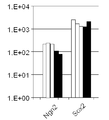
- Figure 1 represents the expression of NGN2 and SOX2 genes, measured by QPCR, in glioma tumors.
- Y axis represents arbitrary units on a logarithmic scale of QPCR quantification. This graph indicates that glioma expresses a low level of NGN2 and in contrast a high level of SOX2, a gene typically expressed by undifferentiated stem cells.
- Non parametric Kruskal and Wallis H tests were used to compare gene expression medians. Error bars represent standard error of mean (sem). Significances: *** (p ⁇ 0.001).
- Figure 2 represents the expression of NGN2 and SOX2 genes, measured by QPCR, in 5 different GBM stem cell primary cultures namely, Gli1 (white columns), Gli2 (light grey columns), Gli3 (middle grey columns), Gli4F11 (dark grey columns) and clonal Gli4F11 (black columns).
- Y axis represents arbitrary units on a logarithmic scale of QPCR quantification. This graph indicates that GBM stem cells express a low level of NGN2 and in contrast a higher level of SOX2, a gene typically expressed by undifferentiated stem cells.
- Figure 3 represents the number of cells remaining one week after infection of GBM stem cells (Gli4F11) cultured as neurospheres, with increasing amount of integrative or non integrative NGN2 or GFP expressing lentivirus. This graph indicates that either integrative or non integrative NGN2 lentiviruses eliminate the vast majority of GBM stem cells.
- X- axis represents ng of p24 protein per 10 4 cells and Y-axis the number of cell per well.
- Curve with black lozenges represents cells infected with integrative lentivirus expressing GFP
- curve with black triangles represents cells infected with non integrative lentivirus expressing GFP
- curve with black circles represents cells infected with integrative lentivirus expressing NGN2
- curve with black squares represents cells infected with non integrative lentivirus expressing NGN2.
- Figure 4A represents neurospheres obtained from cells infected with control lentivirus (GFP)
- Figure 4B represents neurospheres obtained from cells infected with lentivirus allowing the expression of NGN2.
- Figure 5 corresponds to a graph representing the effect of NGN2 or ASCL1 lentivirus infection on GBM stem cell number.
- First column represents the number of cells when non infected.
- Column 2 represents the number of cells when infected with integrative lentivirus expressing GFP.
- Column 3 represents the number of cells when infected with integrative lentivirus expressing NGN2.
- Column 4 represents the number of cells when infected with integrative lentivirus expressing ASCL1.
- Column 5 represents the number of cells when infected with non integrative lentivirus expressing GFP.
- Column 6 represents the number of cells when infected with non integrative lentivirus expressing NGN2.
- Column 7 represents the number of cells when infected with a non integrative lentivirus expressing ASCL1.
- Figure 6 represents the percentage of apoptotic cells (TUNEL positive cells) 24, 48 or 72h after viral infection using 100ng of p24 protein per 10 5 cells.
- first column black column
- second column dark grey column
- third column light grey column
- fourth column white column
- Figure 7 corresponds to a graph representing the percentage of proliferating cells, as measured by KI67 immunofluorescence, after infection with integrative lentivirus (using 100ng of p24 protein per 10 5 cells) expressing GFP (column 1) or expressing NGN2 (column 2).
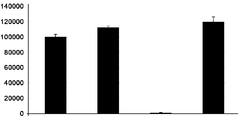
- Figure 8 illustrates the predominant action of NGN2 over that of NGN1 and NGN3.
- the graph represents the number of GBM stem cells remaining 20 days after the infection of integrative lentiviruses (using 100ng of p24 protein per 10 5 cells).
- Column 1 represents cells infected with GFP-expressing lentivirus;
- column 2 represents cells infected with NGN1- expressing lentivirus,
- column 3 represents cells infected with NGN2-expressing lentivirus and
- column 4 represents cells infected with NGN3-expressing lentivirus.
- FIGS 9 A and B represent photographs of remaining GBM stem cells (Gli4F11), grown on an adherent substrate (laminin), 10 days after infection.
- Figure 9 A represents cells infected with GFP-expressing lentivirus.
- Figure 9 B represents cells infected with NGN2-expressing lentivirus.
- NGN2 cells have a typical neuronal morphology.
- Figure 10 represents the detection, by immunofluorescence, of the expression of the typical neuronal protein Doublecortin (Dcx) in NGN2 infected cells (white cytoplasmic staining).
- Dcx Doublecortin
- FIGS 11 A and B illustrate the electrophysiological analysis of GFP and NGN2 infected cells.
- Figure 11 A shows a large inward current (arrow) detected in NGN2 infected cells, but not in control GFP infected cells.
- Figure 12 represents the percentage of cells from Gli4, Gli5, Gli7 polyclonal lines remaining 7 days after lentiviral infection using 100ng of p24 protein per 10 5 cells.
- first column dark grey column
- second column light grey column
- Y axis represents the percentage of cells.
- Stars indicate signifant Mann-Whitney test (p ⁇ 0,01).
- GBM stem cells The effect of surexpressing NGN2, ASCL1 and NEUROD1 cDNAs in GBM stem cells was investigated using four cancer stem cell lines (Gli4F11, Gli4, Gli5, Gli7) which was derived in the lab from patients diagnosed with a high grade glioma tumor (grade IV according to WHO classification).
- These lines express typical cancer stem cell markers (nestin, CD133, CD15) and contain a side population (Hoescht exclusion).
- Gli4F11, Gli4, Gli5, Gli7 cells are cultured in serum-free DMEM/F12 media supplemented with non vitamin A-B27 (2%) and N2 (1%) serum-replacement media (Invitrogen), FGF2, EGF2 (10 ng/ml, Peproteck,), Heparine (2 ⁇ g/ml, Sigma), Ciprofloxaxine (2 ⁇ g/ml, Euromedex), Gentamycine (10 ⁇ g/ml, Fisher), fungin (10 ⁇ g/ml, Cayla) and fungizone (0,25 ⁇ g/ml, Fisher).
- the cell are passaged classically using complete dissociation with trypsine/EDTA 0, 25% for 3’ followed by trypsin inactivation with trypsin inhibitor (Sigma, T9003).
- Cells are either grown free-floating on non-adherent substrate coated flasks (poly-2-hydroxyethylmethacrylate, poly HEMA from Sigma) or adherent substrate coated dishes (poly-D-lysine (25 ⁇ g/ml) and laminin (2 ⁇ g/cm2, Sigma)).
- the human NGN2, ASCL1 and NEUROD1 cDNAs were cloned between the house keeping promoter of the phosphoglycerate kinase gene (PGK) and the Woodchuck hepatitis virus post-transcriptional regulating papierment (WPRE) in the plasmid Trip-PGK-WPRE coding for a self inactivating HIV-1 derived vector containing a central cPPT sequence (Zennou V , et al. (2001) Nat Biotechnol 19(5):446-450).
- PGK phosphoglycerate kinase gene
- WPRE Woodchuck hepatitis virus post-transcriptional regulating papierment
- Stocks of vectors were prepared by transitory transfection of 293T cells with the p8.91 encapsidation plasmid ( ⁇ Vpr ⁇ Vif ⁇ Vpu ⁇ Nef) (Zufferey R, et al.
- Figure 1 and 2 illustrate that NGN2 is weakly expressed in glioma tumors (grade II to IV) and in five GBM stem cell cultures compared to SOX2 , a gene important for maintaining GBM stem cell undifferentiated. This shows the predominance of an undifferentiatied state in glioma and GBM stem cells.
- Non integrating or integrating lentiviruses expressing NGN2, ASCL1 or GFP were used to infect Gli4F11 GBM cells growing as neurospheres (non adherent condition).
- cells dissociated with trypsin were seeded at 10 000 cells per well in poly HEMA-coated 24 wells plate containing 1 ml of growth media and lentiviral particles (between 0 to 40 ng of p24 protein per well, 4 wells per conditions). After seven days, the cell number was determined by direct trypsinization of the cells by adding 300 ⁇ l of Trypsin 2,5% (sigma, 4799) into the well.
- FIG. 3 shows that compared to control GFP lentiviruses, NGN2 integrative or non integrative lentiviruses induce a massive reduction of the GBM stem cells number.
- Figure 4 A and B illustrates the aspect of cultures, 7 days after treatment with GFP or NGN2 lentiviruses. Note the almost complete disappearance of neurospheres on the right photograph (B).
- Figure 5 shows that ASCL1 is as efficient as NGN2 as reducing the cell number.
- NGN2 columnumn 3 for integrative virus and 6 for non integrative virus
- ASCL1 columnumn 4 for integrative virus and 7 for non integrative virus
- the cells were seeded at 150 000 cells per wells in a 24-wells plate (containing poly D-Lysine/Laminin coated coverslips) with 1 ml of media and lentiviral particles (150 ng of p24 protein). At 24h, 48 and 72h after the infection, the cells were fixed with an ethanol:acetic acid 2:1 (v:v) solution. Apoptotic cells were detected using the TUNEL method with an Apoptag red in situ apotosis detection kit (Millipore) according to the manufacturer’s protocol. Results are shown on figure 6.
- a massive apoptosis (up to 40 % of cells) is detected in cells infected with integrative or non integrative NGN2 lentiviruses compared to cells infected with GFP lentiviruses.
- the rate of apoptosis is further increased at 72 h post infection to reach 50-60 % of the cells.
- GBM stem cells were infected with the same amount of p24 protein of NGN1, NGN2 and NGN3 integrative lentiviruses, then the cell number was determined after 20 days.
- Figure 8 shows that NGN1 and NGN3 were not able to reduce the cell number compared to NGN2 lentiviruses. This illustrates the specific effect of the NGN2 sequence to induce GBM stem cell reduction.
- NGN2 lentivirus infection induces a striking cell morphology change. This is illustrated on figure 9 which shows that cells infected with GFP lentiviruses display a bipolar fusiform morphology (A) while those infected with NGN2 lentiviruses have a typical neuronal morphology (B).
- the neuronal phenotype of NGN2 infected cells is also demonstrated by the high expression of the neuronal specific marker Doublecortin (Dcx) detected by immunofluorescence (white cytoplasmic staining on figure 10).
- Dcx neuronal specific marker Doublecortin
- Example 2 Inhibitio n of polyclonal glioma cell growth by Ngn2 overexpression
Landscapes
- Health & Medical Sciences (AREA)
- Life Sciences & Earth Sciences (AREA)
- Veterinary Medicine (AREA)
- Chemical & Material Sciences (AREA)
- Medicinal Chemistry (AREA)
- Pharmacology & Pharmacy (AREA)
- Animal Behavior & Ethology (AREA)
- General Health & Medical Sciences (AREA)
- Public Health (AREA)
- Epidemiology (AREA)
- Bioinformatics & Cheminformatics (AREA)
- Engineering & Computer Science (AREA)
- Gastroenterology & Hepatology (AREA)
- Immunology (AREA)
- Zoology (AREA)
- Proteomics, Peptides & Aminoacids (AREA)
- Chemical Kinetics & Catalysis (AREA)
- General Chemical & Material Sciences (AREA)
- Nuclear Medicine, Radiotherapy & Molecular Imaging (AREA)
- Organic Chemistry (AREA)
- Marine Sciences & Fisheries (AREA)
- Molecular Biology (AREA)
- Biomedical Technology (AREA)
- Neurology (AREA)
- Neurosurgery (AREA)
- Medicines That Contain Protein Lipid Enzymes And Other Medicines (AREA)
- Pharmaceuticals Containing Other Organic And Inorganic Compounds (AREA)
- Peptides Or Proteins (AREA)
Abstract
Cette invention concerne au moins une protéine appartenant à la famille des bHLH et/ou au moins une molécule d'acide nucléique codant pour lesdites protéines bHLH en tant que médicaments.
Priority Applications (2)
| Application Number | Priority Date | Filing Date | Title |
|---|---|---|---|
| EP11734137.0A EP2595646B1 (fr) | 2010-07-21 | 2011-07-21 | Proteines bhlh et leur utilisation en tant que medicaments |
| US13/811,440 US20130210739A1 (en) | 2010-07-21 | 2011-07-21 | Bhlh proteins and their use as drugs |
Applications Claiming Priority (2)
| Application Number | Priority Date | Filing Date | Title |
|---|---|---|---|
| EP10305804.6 | 2010-07-21 | ||
| EP10305804 | 2010-07-21 |
Publications (2)
| Publication Number | Publication Date |
|---|---|
| WO2012010675A2 true WO2012010675A2 (fr) | 2012-01-26 |
| WO2012010675A3 WO2012010675A3 (fr) | 2012-03-08 |
Family
ID=42791076
Family Applications (1)
| Application Number | Title | Priority Date | Filing Date |
|---|---|---|---|
| PCT/EP2011/062581 Ceased WO2012010675A2 (fr) | 2010-07-21 | 2011-07-21 | Protéines bhlh et leur utilisation en tant que médicaments |
Country Status (3)
| Country | Link |
|---|---|
| US (1) | US20130210739A1 (fr) |
| EP (1) | EP2595646B1 (fr) |
| WO (1) | WO2012010675A2 (fr) |
Cited By (3)
| Publication number | Priority date | Publication date | Assignee | Title |
|---|---|---|---|---|
| US20140024599A1 (en) * | 2012-07-19 | 2014-01-23 | The Penn State Research Foundation | Methods and compositions for treatment of disease or injury of the nervous system |
| US9510318B2 (en) | 2013-06-27 | 2016-11-29 | Google Technology Holdings LLC | Method and apparatus for ascertaining a location of a personal portable wireless communication device |
| US10973930B2 (en) | 2016-02-18 | 2021-04-13 | The Penn State Research Foundation | Generating GABAergic neurons in brains |
Families Citing this family (1)
| Publication number | Priority date | Publication date | Assignee | Title |
|---|---|---|---|---|
| US20210228741A1 (en) * | 2018-04-27 | 2021-07-29 | University Of Washington | Methods and compositions to stimulate retinal regeneration |
Citations (3)
| Publication number | Priority date | Publication date | Assignee | Title |
|---|---|---|---|---|
| WO2001026643A1 (fr) | 1999-10-14 | 2001-04-19 | The Wistar Institute | Inhibition des proprietes oncogenes des cellules de melanomes |
| WO2004016779A1 (fr) | 2002-08-17 | 2004-02-26 | Hae-Young Suh | Methode de transdifferenciation de cellules souches mesenchymateuses en cellules neuronales |
| US20040152168A1 (en) | 1999-04-06 | 2004-08-05 | German Michael S. | Neurogenin 3 promoter |
Family Cites Families (11)
| Publication number | Priority date | Publication date | Assignee | Title |
|---|---|---|---|---|
| US6444463B1 (en) * | 1994-05-06 | 2002-09-03 | Fred Hutchinson Cancer Research Center | Neurogenic differentiation gene neurod3 and methods for inducing differentiation of cells |
| US6566496B1 (en) * | 1996-09-27 | 2003-05-20 | California Institute Of Technology | Neurogenin |
| US20020192665A1 (en) * | 1999-06-01 | 2002-12-19 | Zoghbi Huda Y. | Compositions and methods for the therapeutic use of an atonal-associated sequence for a gastrointestinal condition |
| US7053200B1 (en) * | 1999-06-01 | 2006-05-30 | Baylor College Of Medicine | Compositions and methods for the therapeutic use of an atonal-associated sequence for deafness, osteoarthritis, and abnormal cell proliferation |
| PT1471926E (pt) * | 1999-06-01 | 2011-03-11 | Baylor College Medicine | Composições e métodos para a utilização terapêutica de uma sequência associada a atonal |
| US20030092009A1 (en) * | 2000-11-16 | 2003-05-15 | Kaia Palm | Profiling tumor specific markers for the diagnosis and treatment of neoplastic disease |
| EP1430112A4 (fr) * | 2001-09-24 | 2005-06-15 | Nuvelo Inc | Nouveaux acides nucleiques et polypeptides |
| US8338482B2 (en) * | 2006-07-20 | 2012-12-25 | Wisconsin Alumni Research Foundation | Modulating notch1 signaling pathway for treating neuroendocrine tumors |
| US20080159999A1 (en) * | 2006-10-23 | 2008-07-03 | Konstantinos Stefanidis | Compositions and methods for identifying, isolating and enriching germline-like stem cells from amniotic fluid |
| WO2009097530A2 (fr) * | 2008-01-30 | 2009-08-06 | Baylor College Of Medicine | Peptides ciblant les neurones du ganglion de la racine dorsale |
| EP2531599A4 (fr) * | 2010-02-04 | 2014-01-08 | Vivoscript Inc | Compositions et procédés de reprogrammation de cellules sans modification génétique dans le cadre d'un traitement de troubles neurologiques |
-
2011
- 2011-07-21 WO PCT/EP2011/062581 patent/WO2012010675A2/fr not_active Ceased
- 2011-07-21 EP EP11734137.0A patent/EP2595646B1/fr not_active Not-in-force
- 2011-07-21 US US13/811,440 patent/US20130210739A1/en not_active Abandoned
Patent Citations (3)
| Publication number | Priority date | Publication date | Assignee | Title |
|---|---|---|---|---|
| US20040152168A1 (en) | 1999-04-06 | 2004-08-05 | German Michael S. | Neurogenin 3 promoter |
| WO2001026643A1 (fr) | 1999-10-14 | 2001-04-19 | The Wistar Institute | Inhibition des proprietes oncogenes des cellules de melanomes |
| WO2004016779A1 (fr) | 2002-08-17 | 2004-02-26 | Hae-Young Suh | Methode de transdifferenciation de cellules souches mesenchymateuses en cellules neuronales |
Non-Patent Citations (28)
| Title |
|---|
| "WHO classification", 2000, SPRINGER, pages: 56 - 70 |
| ACTA NEUROPATHOL., vol. 114, no. 2, August 2007 (2007-08-01), pages 97 - 109 |
| ALVAREZ-RODRIGUEZ, J CELL SCI., vol. 122, 1 March 2009 (2009-03-01), pages 595 - 9 |
| BAUCHET, J NEUROONCOL., vol. 84, no. 2, 2007, pages 189 - 99 |
| BEHIN, LANCET, vol. 361, 2003, pages 323 - 331 |
| BERTRAND, NAT REV NEUROSCI., vol. 3, no. 7, July 2002 (2002-07-01), pages 517 - 30 |
| BONDY, CANCER, vol. 113, no. 7, 2008, pages 1953 - 68 |
| DAI, CANCER J, vol. 9, 2003, pages 72 - 81 |
| EMBO J., vol. 23, no. 22, 10 November 2004 (2004-11-10), pages 4495 - 505 |
| GILBERTSON, NAT REV CANCER, vol. 7, 2007, pages 733 - 736 |
| HANAHAN, WEINBERG, CELL, vol. 100, no. 1, 2000, pages 57 - 70 |
| HOLLAND, CURR OPIN NEUROL, vol. 14, 2001, pages 683 - 688 |
| ISCHENKO, CURR MED CHEM., vol. 15, no. 30, 2008, pages 3171 - 84 |
| KLEIHUES, CANCER, 15 June 2000 (2000-06-15) |
| LOUIS, ACTA NEUROPATHOL., vol. 114, no. 2, 2007, pages 97 - 109 |
| LOUIS, ANNU REV PATHOL, vol. 1, 2006, pages 97 - 117 |
| LSCHENKO, CURR MED CHEM., vol. 15, no. 30, 2008, pages 3171 - 84 |
| MAHER, GENES DEV., vol. 15, no. 11, 1 June 2001 (2001-06-01), pages 1311 - 33 |
| MASSIRONI, WORLD J GASTROENTEROL., vol. 14, no. 35, 2008, pages 5377 - 84 |
| MIZUGUSHI, NEURON, vol. 31, 2001, pages 757 - 771 |
| PARDRIDGE, PHARM RES., vol. 24, no. 9, 2007, pages 1733 - 44 |
| PAUL, CANCER BIOL THER., vol. 7, no. 5, May 2008 (2008-05-01), pages 786 - 93 |
| SARKIS C ET AL., CURR GENE THER, vol. 8, no. 6, 2008, pages 430 - 437 |
| SARKY, CURR GENE THER., vol. 8, no. 6, 2008, pages 430 - 7 |
| SCARDIGLI, NEURON, vol. 31, 2001, pages 203 - 217 |
| SUGIMORI, DEVELOPMENT, vol. 134, no. 8, 2007, pages 1617 - 29 |
| ZENNOU V ET AL., NAT BIOTECHNOL, vol. 19, no. 5, 2001, pages 446 - 450 |
| ZUFFEREY R ET AL., NAT BIOTECHNOL, vol. 15, no. 9, 1997, pages 871 - 875 |
Cited By (7)
| Publication number | Priority date | Publication date | Assignee | Title |
|---|---|---|---|---|
| US20140024599A1 (en) * | 2012-07-19 | 2014-01-23 | The Penn State Research Foundation | Methods and compositions for treatment of disease or injury of the nervous system |
| US9717804B2 (en) | 2012-07-19 | 2017-08-01 | The Penn State Research Foundation | Regenerating functional neurons for treatment of disease and injury in the nervous system |
| US10201619B2 (en) | 2012-07-19 | 2019-02-12 | The Penn State Research Foundation | Regenerating functional neurons for treatment of disease and injury in the nervous system |
| US10561742B2 (en) * | 2012-07-19 | 2020-02-18 | The Penn State Research Foundation | Methods and compositions for treatment of disease or injury of the nervous system |
| US11167044B2 (en) | 2012-07-19 | 2021-11-09 | The Penn State Research Foundation | Regenerating functional neurons for treatment of disease in the nervous system |
| US9510318B2 (en) | 2013-06-27 | 2016-11-29 | Google Technology Holdings LLC | Method and apparatus for ascertaining a location of a personal portable wireless communication device |
| US10973930B2 (en) | 2016-02-18 | 2021-04-13 | The Penn State Research Foundation | Generating GABAergic neurons in brains |
Also Published As
| Publication number | Publication date |
|---|---|
| US20130210739A1 (en) | 2013-08-15 |
| EP2595646B1 (fr) | 2015-07-01 |
| EP2595646A2 (fr) | 2013-05-29 |
| WO2012010675A3 (fr) | 2012-03-08 |
Similar Documents
| Publication | Publication Date | Title |
|---|---|---|
| Liu et al. | Extracellular vesicles derived from melatonin‐preconditioned mesenchymal stem cells containing USP29 repair traumatic spinal cord injury by stabilizing NRF2 | |
| Harms et al. | Murine neural stem/progenitor cells protect neurons against ischemia by HIF-1α–regulated VEGF signaling | |
| Jiang et al. | Repurposing phenformin for the targeting of glioma stem cells and the treatment of glioblastoma | |
| Qin et al. | Astrocytic p75NTR expression provoked by ischemic stroke exacerbates the blood–brain barrier disruption | |
| Gong et al. | Lentiviral Vector-Mediated SHC3 Silencing Exacerbates Oxidative Stress Injury in Nigral Dopamine Neurons by Regulatingthe PI3K-AKT-FoxO Signaling Pathway in Rats with Parkinson's Disease. | |
| Du et al. | Decorin inhibits angiogenic potential of choroid-retinal endothelial cells by downregulating hypoxia-induced Met, Rac1, HIF-1α and VEGF expression in cocultured retinal pigment epithelial cells | |
| US12516318B2 (en) | Targeting glioblastoma stem cells through the TLX-TET3 axis | |
| JP2015529685A (ja) | 筋萎縮性側索硬化症の処置のための組成物および方法 | |
| Kunimi et al. | Inhibition of the HIF‐1α/BNIP3 pathway has a retinal neuroprotective effect | |
| EP2595646B1 (fr) | Proteines bhlh et leur utilisation en tant que medicaments | |
| Liu et al. | The homing and inhibiting effects of hNSCs-BMP4 on human glioma stem cells | |
| EP3515457B1 (fr) | Composition pharmaceutique comprenant mi-arn et ses utilisations thérapeutiques | |
| TWI486172B (zh) | 鼻咽癌治療的醫藥 | |
| EP3733212B1 (fr) | Composition pharmaceutique permettant de prévenir ou de traiter la métastase du cancer vers le poumon, contenant un petit arn interférent de chi3l1 à titre de principe actif | |
| Zhang et al. | Oleanolic acid inhibiting the differentiation of neural stem cells into astrocyte by down-regulating JAK/STAT signaling pathway | |
| Karsy et al. | The impact of arsenic trioxide and all-trans retinoic acid on p53 R273H-codon mutant glioblastoma | |
| Ni et al. | Parkin enhances sensitivity of paclitaxel to nasopharyngeal carcinoma by activating BNIP3/NIX-mediated mitochondrial autophagy | |
| Huang et al. | Autocrine protective mechanisms of human granulocyte colony-stimulating factor (G-CSF) on retinal ganglion cells after optic nerve crush | |
| Franzese et al. | hTERT transduction extends the lifespan of primary pediatric low-grade glioma cells while preserving the biological response to NGF | |
| WO2012010674A1 (fr) | Inhibiteurs de nkx2.2 utilisables en tant que médicaments | |
| CN107715103B (zh) | Clusterin在制备杀伤肿瘤干细胞的癌症治疗药物中的应用 | |
| Apostolico | Role of SHh modulation in neurogenesis and tumorigenesis | |
| Lu et al. | Norcantharidin nanocapsules inhibit the invasion and metastasis of esophageal cancer by inhibiting microRNA-206 via IGF1R-PI3K-AKT pathway | |
| Chernov et al. | Molecular mechanisms of drug resistance of glial tumor of brain. Part 2: Proliferation, angiogenesis, metastasis and recurrency | |
| CN110151778B (zh) | 一种抗前列腺癌侵袭转移的组合物 |
Legal Events
| Date | Code | Title | Description |
|---|---|---|---|
| 121 | Ep: the epo has been informed by wipo that ep was designated in this application |
Ref document number: 11734137 Country of ref document: EP Kind code of ref document: A2 |
|
| WWE | Wipo information: entry into national phase |
Ref document number: 2011734137 Country of ref document: EP |
|
| NENP | Non-entry into the national phase |
Ref country code: DE |
|
| WWE | Wipo information: entry into national phase |
Ref document number: 13811440 Country of ref document: US |