WO2012012809A2 - APPLICATION OF β-FUNCTIONALIZED DIHYDROXY-CHLORINS FOR PDT - Google Patents

APPLICATION OF β-FUNCTIONALIZED DIHYDROXY-CHLORINS FOR PDT Download PDF

Info

Publication number
WO2012012809A2
WO2012012809A2 PCT/US2011/047576 US2011047576W WO2012012809A2 WO 2012012809 A2 WO2012012809 A2 WO 2012012809A2 US 2011047576 W US2011047576 W US 2011047576W WO 2012012809 A2 WO2012012809 A2 WO 2012012809A2
Authority
WO
WIPO (PCT)
Prior art keywords
group
substituent
substituted
phenyl ring
carbon atoms
Prior art date
Legal status (The legal status is an assumption and is not a legal conclusion. Google has not performed a legal analysis and makes no representation as to the accuracy of the status listed.)
Ceased
Application number
PCT/US2011/047576
Other languages
French (fr)
Other versions
WO2012012809A3 (en
Inventor
Daniel Aicher
Arno Wiehe
Christian B. W. Stark
Volker Albrecht
Susanna Grafe
Current Assignee (The listed assignees may be inaccurate. Google has not performed a legal analysis and makes no representation or warranty as to the accuracy of the list.)
Ceramoptec GmbH
Ceramoptec Industries Inc
Original Assignee
Ceramoptec GmbH
Ceramoptec Industries Inc
Priority date (The priority date is an assumption and is not a legal conclusion. Google has not performed a legal analysis and makes no representation as to the accuracy of the date listed.)
Filing date
Publication date
Priority to JP2013520904A priority Critical patent/JP2013532664A/en
Priority to BR112013001576A priority patent/BR112013001576A2/en
Priority to PCT/US2011/047576 priority patent/WO2012012809A2/en
Priority to MX2013000877A priority patent/MX353394B/en
Priority to CN201180039522.7A priority patent/CN103097390B/en
Priority to EP11810524.6A priority patent/EP2870159B1/en
Application filed by Ceramoptec GmbH, Ceramoptec Industries Inc filed Critical Ceramoptec GmbH
Priority to PL11810524T priority patent/PL2870159T3/en
Publication of WO2012012809A2 publication Critical patent/WO2012012809A2/en
Publication of WO2012012809A3 publication Critical patent/WO2012012809A3/en
Anticipated expiration legal-status Critical
Priority to IL224381A priority patent/IL224381B/en
Ceased legal-status Critical Current

Links

Classifications

    • AHUMAN NECESSITIES
    • A61MEDICAL OR VETERINARY SCIENCE; HYGIENE
    • A61KPREPARATIONS FOR MEDICAL, DENTAL OR TOILETRY PURPOSES
    • A61K31/00Medicinal preparations containing organic active ingredients
    • A61K31/33Heterocyclic compounds
    • A61K31/395Heterocyclic compounds having nitrogen as a ring hetero atom, e.g. guanethidine or rifamycins
    • A61K31/40Heterocyclic compounds having nitrogen as a ring hetero atom, e.g. guanethidine or rifamycins having five-membered rings with one nitrogen as the only ring hetero atom, e.g. sulpiride, succinimide, tolmetin, buflomedil
    • A61K31/409Heterocyclic compounds having nitrogen as a ring hetero atom, e.g. guanethidine or rifamycins having five-membered rings with one nitrogen as the only ring hetero atom, e.g. sulpiride, succinimide, tolmetin, buflomedil having four such rings, e.g. porphine derivatives, bilirubin, biliverdine
    • AHUMAN NECESSITIES
    • A61MEDICAL OR VETERINARY SCIENCE; HYGIENE
    • A61PSPECIFIC THERAPEUTIC ACTIVITY OF CHEMICAL COMPOUNDS OR MEDICINAL PREPARATIONS
    • A61P17/00Drugs for dermatological disorders
    • AHUMAN NECESSITIES
    • A61MEDICAL OR VETERINARY SCIENCE; HYGIENE
    • A61PSPECIFIC THERAPEUTIC ACTIVITY OF CHEMICAL COMPOUNDS OR MEDICINAL PREPARATIONS
    • A61P19/00Drugs for skeletal disorders
    • A61P19/02Drugs for skeletal disorders for joint disorders, e.g. arthritis, arthrosis
    • AHUMAN NECESSITIES
    • A61MEDICAL OR VETERINARY SCIENCE; HYGIENE
    • A61PSPECIFIC THERAPEUTIC ACTIVITY OF CHEMICAL COMPOUNDS OR MEDICINAL PREPARATIONS
    • A61P27/00Drugs for disorders of the senses
    • A61P27/02Ophthalmic agents
    • AHUMAN NECESSITIES
    • A61MEDICAL OR VETERINARY SCIENCE; HYGIENE
    • A61PSPECIFIC THERAPEUTIC ACTIVITY OF CHEMICAL COMPOUNDS OR MEDICINAL PREPARATIONS
    • A61P31/00Antiinfectives, i.e. antibiotics, antiseptics, chemotherapeutics
    • A61P31/04Antibacterial agents
    • AHUMAN NECESSITIES
    • A61MEDICAL OR VETERINARY SCIENCE; HYGIENE
    • A61PSPECIFIC THERAPEUTIC ACTIVITY OF CHEMICAL COMPOUNDS OR MEDICINAL PREPARATIONS
    • A61P31/00Antiinfectives, i.e. antibiotics, antiseptics, chemotherapeutics
    • A61P31/12Antivirals
    • AHUMAN NECESSITIES
    • A61MEDICAL OR VETERINARY SCIENCE; HYGIENE
    • A61PSPECIFIC THERAPEUTIC ACTIVITY OF CHEMICAL COMPOUNDS OR MEDICINAL PREPARATIONS
    • A61P35/00Antineoplastic agents
    • CCHEMISTRY; METALLURGY
    • C07ORGANIC CHEMISTRY
    • C07DHETEROCYCLIC COMPOUNDS
    • C07D487/00Heterocyclic compounds containing nitrogen atoms as the only ring hetero atoms in the condensed system, not provided for by groups C07D451/00 - C07D477/00
    • C07D487/22Heterocyclic compounds containing nitrogen atoms as the only ring hetero atoms in the condensed system, not provided for by groups C07D451/00 - C07D477/00 in which the condensed system contains four or more hetero rings

Definitions

  • the invention relates to the chemistry of biologically active compounds. More particularly to ⁇ functionalized chlorin derivatives that can be used as
  • photosensitizers for a wide range of light irradiation treatments such as photodynamic therapy of cancer, infections and other diseases.
  • Photodynamic therapy is one of the most promising new techniques now being explored for use in a variety of medical applications and particularly is a well-recognized treatment for the destruction of tumors.
  • Photodynamic therapy uses light and a photosensitizer (a dye) to achieve its desired medical effect.
  • a large number of naturally occurring and synthetic dyes have been evaluated as potential photosensitizers for photodynamic therapy.
  • Perhaps the most widely studied class of photosensitizers are tetrapyrrolic macrocyclic compounds. Among them, especially porphyrins and chlorins have been tested for their PDT efficacy.
  • Porphyrins are macrocyclic compounds with bridges of one carbon atom joining pyrroles to form a
  • Patent Publication N° US 04656186 by Bommer et al. discloses fluorescent mono, di- or polyamide of an aminocarboxylic acid and tetrapyrrole containing at least three carboxyl groups. Patent N° US 04656186 by Bommer et al.
  • Chlorins possessing potential for PDT can either be derived from natural sources or from total synthesis.
  • chlorins are derived from natural compounds they are usually obtained by derivatizing chlorophylls or bacteriochlorophylls, as for example the
  • chlorins possesses a diketo-group in one of the four pyrrolic subunits.
  • these diketo-chlorins are not suitable for application in PDT e.g. due to their very weak absorption in the red region.
  • Some different ways can be found in the art to synthesize these kinds of chlorins.
  • a possible way is the direct oxidation of dihydroxychlorins obtained by dihydroxylation for example with 2,3-dichloro-5,6- dicyano-benzoquinone as oxidizing agent (H. W. Daniell, S. C. Williams, H. A.
  • photo sensitizers capable of efficiently destroying deep target tissues by intensively absorbing light in the red and near-infrared region of the electromagnetic spectrum.
  • formulations for the biologically active compounds of the present invention such as a liposomal formulation to be injected avoiding undesirable effects like precipitation at the injection site or delayed pharmacokinetics of the tetrapyrrole systems.
  • the present invention provides methods to obtain biologically active compounds that can be used as photo sensitizers for diagnostic and therapeutic applications, particularly for PDT of cancer, infections and other hyperproliferative diseases, fluorescence diagnosis and PDT treatment of a non-tumorous indication such as arthritis, inflammatory diseases, viral or bacterial infections, dermatological, ophthalmological or urological disorders.
  • An embodiment of the present invention consists of a method to synthesize hydroxy- or dihydroxy-chlorins, which possess additional substituents in the oxidized J-pyrrolic subunit by transformation of diketo- chlorins with nucleophilic or organometallic agents.
  • Another object of the present invention is to provide amphiphilic compounds with a higher membrane affinity and increased PDT-efficacy.
  • Another embodiment of the present invention consists of formulating the desired isomer into a liposomal formulation to be injected avoiding undesirable effects like precipitation at the injection site or delayed pharmacokinetics of the tetrapyrrole systems.
  • Figure 1.- shows the general formula of the embodiments of the tetrapyrrolic compounds of present invention.
  • Figure 2. shows chemical formulas 1 and 2 which are the basis for embodiments of the tetrapyrrolic compounds of present invention.
  • Figure 3. shows chemical formula 3, which is the basis for embodiments of the tetrapyrrolic compounds of present invention.
  • Figure 4.- shows chemical formula 4, which is the basis for embodiments of the tetrapyrrolic compounds of present invention.
  • Figure 5.- shows chemical formula 5, which is the basis for embodiments of the tetrapyrrolic compounds of present invention.
  • Figure 6. shows an embodiment of a tetrapyrrolic compound of present invention based on chemical formula 3.
  • Figure 7.- shows another embodiment of a tetrapyrrolic compound of present invention based on chemical formula 3
  • Figure 8.- shows another embodiment of a tetrapyrrolic compound of present invention based on chemical formula 3.
  • Figure 9. shows an embodiment of photodynamic activity of 5,10,15,20- tetrakis-(3-hydroxyphenyl)-7 ; 8-bis-(trifluoromethyl)-7,8-dihydroxy-7,8-cWorin against HT29 cell line.
  • Figure 10. shows an embodiment of photodynamic activity of 5,10,15,20- tetrakis-(3-hydroxyphenyI)-7,8-dihexy]-7 ! 8-dihydroxy-7,8-chlorin against HT29 cell line.
  • Figure 11. shows an embodiment of photodynamic activity of 5,10,15,20- tetraki s-(3 -hydroxypheny l)-7, 8 -bis- [3 , 5 -bis-(trifluoromethyl) -phenyl]-7 , 8 -dihydroxy- 7,8-chlorin against HT29 cell line.
  • Figure 12. shows an embodiment of photodynamic activity of 5,10,15,20- tetrakis-(3-hydroxyphenyl)-7,8-bis-(trifluoromethyl)-7,8-dihydroxy-7,8-chlorin against synoviocytes and macrophages.
  • Figure 13.- shows an embodiment of photodynamic activity of 5,10,15,20- tetrakis-(3-hydroxyphenyl)-7,8-dihexyl-7,8-dihydroxy-7,8-chJorin against synoviocytes and macrophages.
  • Figure 14.- shows an embodiment of photodynamic activity of 5, 10,15,20- tetrakis-(3-hydroxyphenyl)-7,8 ⁇ bis-[3,5-bis-(trifluoromethyl)-phenyl]-7,8-dihydroxy- 7,8-chlorin against synoviocytes and macrophages.
  • the present invention provides biologically active compounds that can be used as photosensitizers for a wide range of light irradiation treatments such as
  • the alternative photosensitizers provided by the present invention have the advantage that they are easily produced and characterized.
  • the present invention allows the further functionalization of effective photosensitizers to enhance their activity, stability or make new applications possible.
  • the present invention provides methods to tailor amphiphilic compounds for desired PDT applications, target tissue selectivity is increased and thus PDT efficacy.
  • the present invention enhances the effectiveness of prior art biologically active compounds offering a deeper tissue penetration due to their strong absorption at long wavelength of the red and near-infrared region of the electromagnetic spectrum, enhanced selectivity for target tissues over healthy surrounding tissues due to its tailored amphiphilicity and custom-made pharmacokinetic behavior depending on the particular PDT application.
  • the biologically active compounds of the present invention that can be used for different medical indications, particularly PDT, are meso-substituted and ⁇ - functionalized hydroxy- or dihydroxy-chlorin structures. Additionally, the invention extends their applications as the structures can be employed for fluorescence diagnosis and PDT treatment of non-tumorous indications such as arthritis and similar inflammatory diseases.
  • a tetrapyrrolic compound has the general formula depicted in figure 1.
  • a tetrapyrrolic compound is based on the formulas 1 or 2 depicted in figure 2, wherein R l , R 2 , R 3 or R 4 are independently a hydrogen, a substituted or unsubstituted alkyl, or fiuoroalkyl group consisting of 1-15 carbon atoms, a substituted or unsubstituted aromatic ring; and R 5 is a substituted or unsubstituted alkyl, aikenyl, alkinyl or fiuoroalkyl group consisting of 1-15 carbon atoms or a substituted or unsubstituted aromatic ring.
  • a tetrapyrrolic compound is based on the formulas 1 or 2 depicted in figure 2; and R 1 , R 2 , R 3 or R 4 are independently a hydrogen, a substituted or a unsubstituted alkyl, or a fiuoroalkyl group consisting of 1-15 carbon atoms, a phenyl ring or a phenyl ring with one or more substituents X either in the ortho-, meta- or /wra-position.
  • Substituent X is preferably OH, -COOH, -N3 ⁇ 4, -CF 3, - F, -COOY, -NHY, -OY, -NH-Z-COOH, or -CO-Z-NH 2 ;
  • substituent Y is a
  • R 5 is a substituted or unsubstituted alkyl, aikenyl, alkinyl or fiuoroalkyl group consisting of 1-15 carbon atoms, a phenyl ring or a phenyl ring with one or more substituents X either in the ortho-, meta- or ⁇ ara-position.
  • substituent X is OH, -COOH, -N3 ⁇ 4, -CF 3, -F, -COOY, -NHY, - OY, -NH-Z-COOH, or -CO-Z-NH 2 ;
  • substituent Z are peptides or oligopeptides.
  • R 5 is a substituted or unsubstituted alkyl, alkenyl, alkinyi or fluoroalkyl group consisting of 1-15 carbon atoms or a phenyl ring substituted with one or more CF 3 -groups either in the ortho-, meta- or para-position.
  • a tetrapyrrolic compound is based on the formulas 1 or 2, described in figure 2, wherein R 1 , R 2 , R 3 or R 4 are independently a substituted or unsubstituted alkyl or fluoroalkyl group consisting of 4-15 carbon atoms or a phenyl ring with one or more substituents X either in the meta- or para-position, and substituent X is OH, -COOH, -N3 ⁇ 4.
  • R 5 is a substituted or
  • alkyl unsubstituted alkyl, alkenyl, alkinyi or fluoroalkyl group consisting of 1-15 carbon atoms or a phenyl ring substituted with one or more CF 3 -groups either in the ortho-, meta- or para-position.
  • a tetrapyrrolic compound is based on the formula 3, as described in figure 3, wherein R is a substituted or unsubstituted alkyl, alkenyl, alkinyi or fluoroalkyl group consisting of 1-15 carbon atoms or a phenyl ring substituted with one or more CF 3 -groups either in the ortho-, meta- or para-position.
  • a tetrapyrrolic compound is based on the formula 4, depicted in figure 4, wherein R is a substituted or unsubstituted alkyl, alkenyl, alkinyi or fluoroalkyl group consisting of 1-15 carbon atoms or a phenyl ring substituted with one or more CF 3 -groups either in the ortho-, meta- or para-position.
  • a tetrapyrroHc compound is based on the formula 5, as described in figure 5, wherein Ris a substituted or unsubstituted alkyl, alkenyl, alkinyl or fluoroalkyl group consisting of 1-15 carbon atoms or a phenyl ring substituted with one or more CF 3 -groups either in the ortho-, meta- or para-position.
  • Ris a substituted or unsubstituted alkyl, alkenyl, alkinyl or fluoroalkyl group consisting of 1-15 carbon atoms or a phenyl ring substituted with one or more CF 3 -groups either in the ortho-, meta- or para-position.
  • a tetrapyrroHc compound is based on the formula 3, wherein R is a -CF 3 or a pharmaceutically acceptable derivative thereof.
  • a tetrapyrroHc compound is based on the formula 3, wherein R is a hex
  • a tetrapyrroHc compound is based on the formula 3 or a pharmaceutically acceptable derivative thereof.
  • the tetrapyrroHc compounds of all previous embodiments based on formulas 1, 2, 3, 4 and 5, or a pharmaceutically acceptable derivative thereof are used for the preparation of pharmaceutical compositions for diagnosis and photodynamic therapy.
  • a pharmaceutical composition comprises a
  • tetrapyrroHc compound according to previous embodiments, or a pharmaceutically acceptable derivative thereof, as an active ingredient.
  • the pharmaceutical composition in which any of the tetrapyrroHc compounds of previous embodiments is an active ingredient is a liposomal formulation.
  • a pharmaceutical composition in which a tetrapyrroHc compound according to all previous embodiments, or a pharmaceutically acceptable derivative thereof, is conjugated to a targeting agent.
  • the targeting agent of the pharmaceutical composition is an antibody, a fragment of an antibody, a peptide.
  • This pharmaceutical composition is preferably a liposomal formulation.
  • the tetrapyrrolic compounds of all previous embodiments based on formulas 1, 2, 3, 4 and 5, or a pharmaceutically acceptable derivative thereof are used in photodynamic therapy of tumors, dermatological disorders, viral or bacterial infections, ophthalmological disorders or urological disorders, arthritis and similar inflammatory diseases. Additionally, the mentioned compounds or pharmaceutically acceptable derivative thereof can be used in the diagnosis of arthritis and similar inflammatory diseases.
  • the tetrapyrrolic compounds depicted in previous embodiments are used in different therapeutic formulations according to the way of administration, comprising known carriers such as conventional liposomes, pegylated liposomes, nanoemulsions, nanocrystrals, nanoparticles, fatty emulsions, lipidic formulations, self-micro-emulsify ing-drug-deli very- systems, AIpha-Feto protein (AFP), Bovine-Seram-Albumin (BSA), poly(lactic-co-glycolic acid) (PLGA), fatty emulsions and organic or non-organic nanoparticles.
  • known carriers such as conventional liposomes, pegylated liposomes, nanoemulsions, nanocrystrals, nanoparticles, fatty emulsions, lipidic formulations, self-micro-emulsify ing-drug-deli very- systems, AIpha-Feto protein (AFP), Bovine-Seram-Album
  • the present invention uses chemically stable porphyrin derivatives and provides methods for preparation of the corresponding precursor diketo-chlorins.
  • An embodiment of the present invention consists of a method to synthesize hydroxy- or dihydroxy-chlorins from diketo-chlorins as precursors using nucleophilic agents like (trifluoromethyl)trimethylsilane or Grignard reagents e.g.
  • Another embodiment of the present invention consists of the steps of synthesizing a porphyrin with a defined arrangement of substituents, converting it to the diketo-chlorin and after that to the corresponding hydroxy- or dihydroxy-chlorins and then to formulate the desired compound into a liposomal formulation.
  • an Artype porphyrin with OT-methoxyphenyl substituents is synthesized and converted to the precursor diketo- chlorin which is converted to the corresponding ⁇ functionalized dihydroxy-chlorin. Then, the remaining methoxy groups are deprotected with BBr 3 to obtain the hydroxyl substituted derivative.
  • a porphyrin of the ' trans '-A 2 B 2 -type is synthesized, having hexyl chains as substituent A and methoxycarbonyl phenyl residues as substituent B.
  • This porphyrin is converted to the dihydroxychlorin and after that to the diketo-chlorin. Then, the precursor is converted to the / ⁇ functionalized dihydroxy-chlorin and the remaining methyl esters are hydrolyzed to receive the corresponding carboxylic acids.
  • Acceptable starting materials for the synthesis of the porphyrins which are the subject of the present invention are pyrrole and aldehydes. They are subjected to a condensation reaction. Suitable methods for this condensation have long been known in the art (J. S. Lindsey, I. C. Schreiman, H. C. Hsu, P. C. Kearney and A. M.
  • the unsymmetrically substituted porphyrins can also be synthesized using dipyrrom ethanes and aldehydes, as is also known in the art (C.-H. Lee, J. S. Lindsey, One-Flask Synthesis of Meso- Substituted Dipyrromethanes and Their Application in the Synthesis of Trans- Substituted Porphyrin Building Blocks, Tetrahedron 1994, 50, 11427-11440). After condensation and purification of the desired porphyrins these are converted to the diketo-chlorins by two different methods.
  • the first method is exemplified with examples 1.1, 1.3 and 1.5 and proceeds over 3 steps.
  • the first step is an osmiu tetroxide mediated dihydroxylation as it is known in the art.
  • the second step is the quantitative dehydration of the diol to form the corresponding 2-hydroxyporphyrin in refluxing trifluoroacetic acid.
  • another embodiment of the present invention provides a simple method for the dehydration of the dihydroxychlorins.
  • the Dess-Martin periodinane mediated oxidation of the 2- hydroxyporphyrin to the diketo-chlorin is the last step of the synthesis.
  • the second method is also known in the art and exemplified with examples 1.2 and 1.4. It is an alternative route to obtain 2-hydroxypo ⁇ hyrins avoiding the use of osmium tetroxide.
  • the porphyrin is converted to the corresponding Cu (II) mtro-porphyrin derivative using Cu(N0 3 ) 2 and in the second step the 2- hydroxyporphyrin is obtained by treating the nitro substituted porphyrin derivative with the sodium salt of E-benzaldehyde oxime in dimethyl sulfoxide in the presence of sodium hydride.
  • Example 2 shows the synthesis of trifluoromethyl substituted hydroxy- and dihydroxy- chlorins using (trifluoromethyl)trimethylsilane as nucleophilic agent.
  • Example 3 shows the synthesis of alkyl, alkenyl, alkynyl and aryl substituted hydroxy- and dihydroxy-chlorins using organometallic, more precisely Grignard reagents.
  • the specifically substituted amphiphilic chlorin derivatives produced according to the present invention are suitable to be used for photodynamic therapy of cancer and other (hyper) proliferative diseases and infections.
  • PDT is accomplished by first incorporating the derivatives into a
  • one of the main advantages is that convenient pharmaceutical formulations can be created for the biologically active compounds of the present invention such as liposomal formulation to be injected avoiding
  • amphiphilic compounds are formulated into liposomes. This liposomal formulation can then be injected avoiding undesirable effects such as precipitation at the injection site or delayed pharmacokinetics of the tetrapyrrole systems.
  • the disclosed porphyrin and chlorin derivatives in the diagnosis and treatment of arthritis and similar inflammatory diseases
  • the data presented in examples 6.1, 6.2 and 6.3 show the remarkable results of the photodynamic treatment of two cell lines especially relevant for arthritis (HIG82 and J774A.1, a rabbit synoviocyte and a mouse macrophage cell line) with three compounds of the present invention.
  • Tetrahexylporphyrin, tetraphenylporphynn and tetrakis-(3-methoxyphenyl)-porphyrin were prepared using Lindsey's conditions (J. S. Lindsey, I. C. Schreiman, H. C. Hsu, P. C. Kearney and A. M. Marguerettaz, J. Org. Chem. 1987, 52, 827-836).
  • Dichloromethane was purified by distillation over K 2 C0 3 prior to use. Thin layer chromatography (TLC) was performed using Merck silica gel 60 (without
  • dichloromethane (1.6 g, 1.8 mmol) was added drop wise to a stirred solution of 5, 10, 15,20-tetrahexyl-7-dmydro-8-oxo-7,8-chlorm (250 mg, 0.37 mmol) in dichloromethane (15 ml), until the starting material was consumed. Then water (50 ml) was added, the organic layer was separated, washed with water (50 ml), dried over anhydrous sodium sulfate and the solvent was removed.
  • osmium tetroxide 1000 mg, 3.9 mmol was added to a stirred solution of 5 J 10,15,20-tetrakis-(3-methoxyphenyl)-porphyrin (2500 mg, 3.4 mmol) in dichloromethane/pyridine 1 :1 (340 ml). After stirring for 4 days, a saturated solution of sodium bisulfite in water/methanol 1 :1 (150 ml) was added and the mixture was stirred for 18 h. The reaction mixture was filtered through Celite and dried over anhydrous sodium sulfate.
  • the solvent was evaporated and the residue was purified by flash chromatography with dichloromethane/ethyl acetate 9: 1 as eluent, followed by recrystallization from dichloromethane/aqueous methanol.
  • the first band from the column contained starting material (793 mg, 32 %) and the second band the title compound 5,10,15,20-tetrakis-(3-methoxyphenyl)-7,8-dihydroxy-7,8-chlorin (954 mg, 36 %).
  • dichloromethane (1 g, 1.1 mmol) was added drop wise within 2 h to a stirred solution of 5,10,15,20-tetrakis-(3-methoxyphenyl)-7-dihydro-8-oxo-7,8-chlorin (160 mg, 0.21 mmol) in dichloromethane (20 ml) and stirred for further 3 h. Then water (50 ml) was added, the organic layer was separated, washed with water (50 ml), dried over anhydrous sodium sulfate and the solvent was removed.
  • the photosensitizing activity was determined in the human colon adenocarcinoma cell line HT29.
  • the HT29 cell lines were grown in DMEM (cc- pro GmbH) supplemented with 10 % heat-inactivated fetal calf serum (FCS, cc- pro GmbH), 1 % penicillin (10000 IU) and streptomycin (10000 //g/ml, cc-pro GmbH).
  • FCS heat-inactivated fetal calf serum
  • streptomycin 10000 //g/ml, cc-pro GmbH.
  • Cells were kept as a monolayer culture in a humidified incubator (5 % C0 2 in air at 37 °C).
  • a photosensitizer stock solution (2 mM) was performed in DMSO and was kept in the dark at 4 °C. Further dilution was performed in RPMI 1640 medium, without phenol red supplemented with 10 % FCS to reach a final photosensitizer concentration of 2 or 10
  • the cell viability was assessed by the XTT assay.
  • 500 mg XTT sodium 3 '- [phenylaminocarbonyl)-3,4-tetrazolium]-bis(4-methoxy-6-nitro)benzene sulfonic acid, Applichem GmbH
  • 500 ml PBS-buffer without Ca and Mg 2
  • PMS N-methyl dibenzopyrazine methyl sulfate, Applichem GmbH
  • the solution should be stored frozen and should not be exposed to light.
  • the XTT reagent solution was thawed in a 37 °C water bath and the activation solution (PMS) was added immediately prior to use.
  • PMS activation solution
  • the medium in the micro plate was exchanged with fresh RPMI without phenol red and 10 % FCS (100 ⁇ ) prior adding 50 ⁇ XTT reaction solution per well.
  • the micro plate was incubated for 2-3 hours at 37 °C and 5 % C0 until an orange dye is to be formed. The micro plate has been shaken gently to evenly distribute the dye in the wells.
  • mice monocytes-macrophages cell line J774A.1 and the rabbit synoviocyte cell line HIG-82 were grown in DMEM (cc-pro GmbH) supplemented with 10 % heat-inactivated fetal calf serum (FCS, cc-pro GmbH), 1 % penicillin (10000 IU) and streptomycin (10 000 g/ml, cc-pro GmbH). Cells were kept as a monolayer culture in a humidified incubator (5 % C0 2 in air at 37 °C).
  • a photosensitizer stock solution (2 mM) was performed in DMSO and was kept in the dark at 4 °C. Further dilution was performed in RPMI 1640 medium without phenol red supplemented with 10 % FCS, to reach a final photosensitizer concentration of 2 or 10 ⁇ , respectively.
  • the cell viability was assessed by the XTT assay.
  • 500 mg XTT sodium 3'- [phenylaminocarbonyl)-3,4-tetrazolium]-bis(4-methoxy-6-nitro)benzene sulfonic acid, Applichem GmbH
  • 500 ml PBS-buffer without Ca + and Mg 2
  • PMS N-methyl dibenzopyrazine methyl sulfate, Applichem GmbH
  • the solution was stored frozen and was not exposed to light.
  • the XTT reagent solution was thawed in a 37 °C water bath and the activation solution (PMS) was added immediately prior to use.
  • PMS activation solution
  • the medium in the micro plate was exchanged with fresh RPMI without phenol red and 10 % FCS (100 ⁇ ), prior adding 50 ⁇ XTT reaction solution per well.
  • the micro plate was incubated for 2- 3 hours at 37 °C and 5 % C0 2 until an orange dye was formed. The micro plate was shaken gently to evenly distribute the dye in the wells.
  • the absorbance of the samples was measured with a spectrophotometer (Bio- Kinetics Reader EL312 e; Bio-Tek Instruments Inc.) at a wavelength of 490 run.
  • a spectrophotometer Bio- Kinetics Reader EL312 e; Bio-Tek Instruments Inc.
  • reference absorbance to measure non-specific readings
  • a wavelength of 630-690 nm was used.
  • FIG. 12 to 14 illustrate the photodynamic activity of selected
  • photosensitizers against synoviocytes and macrophages, cell types which are especially relevant for the treatment of arthritis and similar inflammatory diseases are especially relevant for the treatment of arthritis and similar inflammatory diseases.

Landscapes

  • Health & Medical Sciences (AREA)
  • Chemical & Material Sciences (AREA)
  • Organic Chemistry (AREA)
  • Life Sciences & Earth Sciences (AREA)
  • General Health & Medical Sciences (AREA)
  • Medicinal Chemistry (AREA)
  • Pharmacology & Pharmacy (AREA)
  • Animal Behavior & Ethology (AREA)
  • Public Health (AREA)
  • Veterinary Medicine (AREA)
  • General Chemical & Material Sciences (AREA)
  • Nuclear Medicine, Radiotherapy & Molecular Imaging (AREA)
  • Chemical Kinetics & Catalysis (AREA)
  • Engineering & Computer Science (AREA)
  • Bioinformatics & Cheminformatics (AREA)
  • Oncology (AREA)
  • Communicable Diseases (AREA)
  • Ophthalmology & Optometry (AREA)
  • Gastroenterology & Hepatology (AREA)
  • Immunology (AREA)
  • Orthopedic Medicine & Surgery (AREA)
  • Rheumatology (AREA)
  • Physical Education & Sports Medicine (AREA)
  • Dermatology (AREA)
  • Virology (AREA)
  • Epidemiology (AREA)
  • Pharmaceuticals Containing Other Organic And Inorganic Compounds (AREA)
  • Medicines That Contain Protein Lipid Enzymes And Other Medicines (AREA)
  • Acyclic And Carbocyclic Compounds In Medicinal Compositions (AREA)
  • Medicinal Preparation (AREA)
  • Medicines Containing Antibodies Or Antigens For Use As Internal Diagnostic Agents (AREA)
  • Nitrogen Condensed Heterocyclic Rings (AREA)

Abstract

The present invention provides methods to obtain biologically active compounds that can be used as photosensitizers for diagnostic and therapeutic applications, particularly for PDT of cancer, infections and other hyperproliferative diseases, fluorescence diagnosis and PDT treatment of a non-tumorous indication such as arthritis, inflammatory diseases, viral or bacterial infections, dermatological, ophthalmological or urological disorders. An embodiment of the present invention consists of a method to synthesize diketo-chlorins as precursors. In yet another embodiment these precursors are converted to β-unctionalized hydroxy- and dihydroxy-chlorins. Another embodiment is to provide amphiphilic compounds with a higher membrane affinity and increased PDT-efficacy. Another embodiment consists of the formulation of the desired isomer into a liposomal formulation to be injected avoiding undesirable effects like precipitation at the injection site or delayed pharmacokinetics of the tetrapyrrole systems.

Description

APPLICATION OF β-FUNCTIONALIZED DIHYDROXY-CHLORINS FOR
PDT
Inventors: Daniel Aicher, Arno Wiehe, Christian B. W. Stark,
Volker Albrecht and Susanna Grafe.
Assignees: CeramOptec GmbH and CeramOptec industries, Inc.
Background of the Invention
1. Related Case Information.
This application claims the benefit and priority of U.S. Provisional
Application Serial No. 61/366,707 filed July 22, 2010, entitled "Application of β- functionalized Dihydroxy-Chlorins for Photodynamic Therapy" by Daniel Aicher, Volker Albrecht, Susanna Grafe, Christian B. W. Stark and Arno Wiehe, which is incorporated by reference herein.
2. Field of the invention
The invention relates to the chemistry of biologically active compounds. More particularly to ^functionalized chlorin derivatives that can be used as
photosensitizers for a wide range of light irradiation treatments such as photodynamic therapy of cancer, infections and other diseases.
3. State of the Art
Photodynamic therapy (PDT) is one of the most promising new techniques now being explored for use in a variety of medical applications and particularly is a well-recognized treatment for the destruction of tumors. Photodynamic therapy uses light and a photosensitizer (a dye) to achieve its desired medical effect. A large number of naturally occurring and synthetic dyes have been evaluated as potential photosensitizers for photodynamic therapy. Perhaps the most widely studied class of photosensitizers are tetrapyrrolic macrocyclic compounds. Among them, especially porphyrins and chlorins have been tested for their PDT efficacy. Porphyrins are macrocyclic compounds with bridges of one carbon atom joining pyrroles to form a
I characteristic tetrapyrrole ring structure. There are many different classes of porphyrin derivatives including those containing dihydro-pyrrole units. Chlorins, as referred to in the present invention, are porphyrin derivatives, in which one double bond of the aromatic system in /J-position is absent. As examples of tetrapyrrolic macrocyclic compounds used as photo sensitizers, Patent Publication N° US 04656186 by Bommer et al. discloses fluorescent mono, di- or polyamide of an aminocarboxylic acid and tetrapyrrole containing at least three carboxyl groups. Patent N° US
7,022,843B1 by MacAlpine et al. provides β, ?-dihydroxy mew-substituted chlorins as photosensitizers, and Patent N° US 7,166,719B2 by Pandey et al. discloses tetrapyrrole compounds containing a fluorinated substituent where the compound is a chlorin or a bacteriochlorin for PDT diagnostic and therapeutic application.
There are several properties that an effective photosensitizer should accomplish. Among them, a desirable characteristic in order to efficiently destroy deep target tissues is a strong absorption at long wavelength. Many current photosensitizers are not efficient enough as they have low absorption in the red region of the spectrum. Chlorins have the advantage that they possess an intense absorption in the red and near-infrared region of the electromagnetic spectrum. As light of longer wavelength penetrates deeper into the tissue, it is thus possible to treat e.g. more expanded tumors, if the PDT is employed for tumor therapy. Chlorins possessing potential for PDT can either be derived from natural sources or from total synthesis.
If the chlorins are derived from natural compounds they are usually obtained by derivatizing chlorophylls or bacteriochlorophylls, as for example the
photosensitizers derived from chlorophyll a of photosynthetic plants and algae disclosed in Patent No. US 5,330,741 by Smith. Due to the sensibility of the natural compounds this is often difficult and requires vast resources. So, the synthesis of chlorins by total synthesis is an appealing alternative. Methods to prepare chlorins and bacteriochlorins by total synthesis are known in the art. Generally these compounds are prepared by first synthesizing the porphyrin and then converting the porphyrin system to a chlorin or bacteriochlorin system. This step can e.g. be performed by the reduction with in situ generated di-imine or by cw-dihydroxylation with osmium tetroxide (patent EP 00337601B1 ; patent application WO 09613504A1, patent application WO 00061 84A1; C. Briickner, D. Dolphin, 2,3-vic-Dihydroxy-meso- tetraphenylchlorins from the Osmium Tetroxide Oxidation of meso- Tetraphenylporphyrin, Tetrahedron Lett. 1995, 36, 3295-3298; C. Bruckner. D. Dolphin, /?,/?'-Dihydroxylation of meso-Tetraphenylchlorins, Tetrahedron Lett. 1995, 36, 9425-9428; F. Rancan, A. Wiehe, M. Nobel, M. O. Senge, S. Al Omari, F. Bohm, M. John, B. Roder, Influence of substitutions on asymmetric dihydroxychlorins with regard to intracellular uptake, subcellular localization and photosensitization in Jurkat cells, J. Photochem. Photobiol. B: Biology 2005, 78, 17-28; I. Laville, T. Figueiredo, B. Loock, S. Pigaglio, Ph. Maillard, D. S. Grierson, D. Carrez, A. Croisy, J. Blais, Synthesis, Cellular Internalization and Photodynamic Activity of Glucoconjugated Derivatives of Tri and Tetra(/tte/a-hydroxyphenyi) chlorines, Bioorg. Med. Chem. 2003, 11, 1643-1652).
Another class of chlorins possesses a diketo-group in one of the four pyrrolic subunits. However, these diketo-chlorins are not suitable for application in PDT e.g. due to their very weak absorption in the red region. Some different ways can be found in the art to synthesize these kinds of chlorins. A possible way is the direct oxidation of dihydroxychlorins obtained by dihydroxylation for example with 2,3-dichloro-5,6- dicyano-benzoquinone as oxidizing agent (H. W. Daniell, S. C. Williams, H. A.
Jenkins, C. Bruckner, Oxidation of ?MeiO-tetra-phenyl-2,3-dihydroxychlorin:
Figure imgf000005_0001
Tetrahedron Lett. 2003, 44, 4045-4049). An alternative method is the oxidation of 2-hydroxyporphyrins to the corresponding diketo-chlorins. This conversion can be accomplished by several oxidizing agents (R. Beavington, P. A. Rees, P. L. Burn; A study on the oxidation of 2-hydroxyporphyrins to porphyrin-a-diones, J. Chem. Soc, Perkin Trans. 1998, 1, 2847-2851).
Interestingly, 2-hydroxyporphyrins show in solution tautomerism depending on the solvent and can exist in the keto or the enol form (M. J. Crossley, M. M. Harding, S. Sternhell, Tautomerism in 2-Hydroxy-5,10,15,20-tetra henyIpo hyri : An
Equilibrium between Enol, Keto and Aromatic Hydroxyl Tautomers, J. Org. Chem. 1988, 53, 1 132-1137). They can be synthesized either by dehydration of the corresponding dihydroxy-chlorins or by conversion of 2-nitroporphyrins (M. J.
Crossley, L. G. King, S. M. Pyke, A new and highly efficient synthesis of
hydroxyporphyrins, Tetrahedron 1987, 43, 4569-4577). A mild and selective method for ^-nitration of porphyrins using Cu(N03)2 in a mixture of acetic anhydride and acetic acid allows the nitration and metailation with copper in one step for a variety of porphyrins (A. Giraudeau, H. J. Callot, J. Jordan, I. Ezhar, M. Gross, Substituent effects in the electro reduction of porphyrins and metalloporphyrins, J. Am. Chem. Soc. 1979, 101, 3857-3862; J. P. C. Tome, A. M. V. M. Pereira, C. M. A. Alonso, M. G. P. M. S. Neves, A. C Tome, A. M. S. Silva, J. A. S. Cavaleiro, M. V. Martinez- Diaz, T. Torres, G. M. A. Rahman, J. Ramey, D. M. Guldi, Synthesis and
Photoph sical Studies of New Porphyrin-Phthalocyanine Dyads with Hindered Rotation, Eur. J. Org. Chem. 2006, 257-267). Some further functionalizations of diketo-chlorins are known in the art, for example oxidative transformations (M. J. Crossley, L. G. King, Novel Heterocyclic Systems from Selective Oxidation at the β- Pyrrolic Position of Porphyrins, Chem. Commun. 1984, 920-922) or the synthesis of annulated heterocyclic systems (M. J. Crossley, P. L. Burn, S. J. Langford, S. M. Pyke, A. G. Stark, A New Method for the Synthesis of Porphyrin- or-diones that is Applicable to the Synthesis of Trans-annular extended Porphyrin Systems, Chem. Commun. 1991 , 1567-1568). However, these compounds have no relevance with regard to an application in PDT. Thus, there is a need to have effective
photo sensitizers capable of efficiently destroying deep target tissues by intensively absorbing light in the red and near-infrared region of the electromagnetic spectrum.
Objectives and Brief Summary of the Invention
It is an aim of the present invention to provide biologically active compounds that can be used as photosensitizers for a wide range of applications including light irradiation treatments such as photodynamic therapy of cancer, infections and other diseases.
It is an objective of the present invention to use the chemically stable chlorin derivatives for various medical applications such as photodynamic therapy.
It is yet an objective of the present invention to provide Wunctionalized hydroxy- and dihydroxy-chlorin structures that can be used in the photodynamic therapy of tumors and other hyperproliferative diseases, dermatological disorders, viral or bacterial infections, ophthalmological disorders or urological disorders.
It is a further objective of the present invention to provide ?-functionalized hydroxy- and dihydroxy-chlorin structures that can be used for the fluorescence diagnosis and PDT treatment of a non-tumorous indication such as arthritis and similar inflammatory diseases.
It is another objective of the present invention to provide a method to prepare diketo-chlorins as precursors.
It is yet another objective of the present invention to provide a method to convert the diketo-chlorin precursors to /^functionalized hydroxy- and dihydroxy- chlorins.
It is yet a further objective of the present invention to provide highly amphiphilic compounds to be used in the PDT-treatraent of tumors, dermatological disorders, viral or bacterial infections, ophthalmological disorders or urological disorders.
It is still another objective to provide pharmaceutically acceptable
formulations for the biologically active compounds of the present invention such as a liposomal formulation to be injected avoiding undesirable effects like precipitation at the injection site or delayed pharmacokinetics of the tetrapyrrole systems.
Briefly stated, the present invention provides methods to obtain biologically active compounds that can be used as photo sensitizers for diagnostic and therapeutic applications, particularly for PDT of cancer, infections and other hyperproliferative diseases, fluorescence diagnosis and PDT treatment of a non-tumorous indication such as arthritis, inflammatory diseases, viral or bacterial infections, dermatological, ophthalmological or urological disorders. An embodiment of the present invention consists of a method to synthesize hydroxy- or dihydroxy-chlorins, which possess additional substituents in the oxidized J-pyrrolic subunit by transformation of diketo- chlorins with nucleophilic or organometallic agents. Another object of the present invention is to provide amphiphilic compounds with a higher membrane affinity and increased PDT-efficacy. Another embodiment of the present invention consists of formulating the desired isomer into a liposomal formulation to be injected avoiding undesirable effects like precipitation at the injection site or delayed pharmacokinetics of the tetrapyrrole systems. The above and other objects, features and advantages of the present invention will become apparent from the following description read in conjunction with the accompanying drawings.
Brief Description of Figures
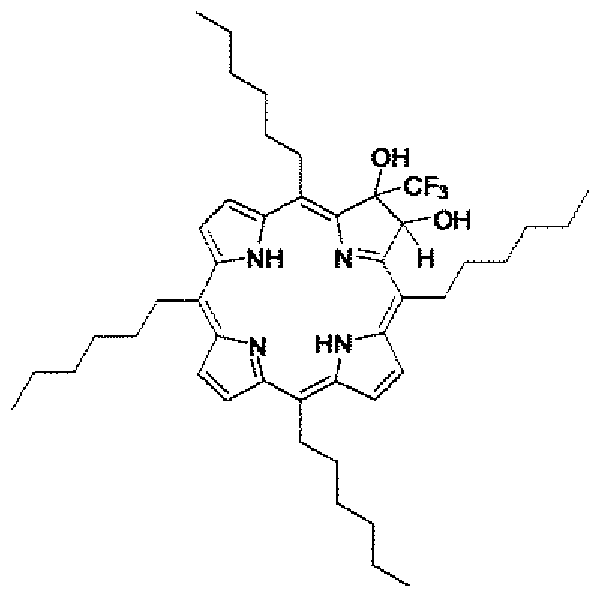
Figure 1.- shows the general formula of the embodiments of the tetrapyrrolic compounds of present invention.
Figure 2.-shows chemical formulas 1 and 2 which are the basis for embodiments of the tetrapyrrolic compounds of present invention.
Figure 3.-shows chemical formula 3, which is the basis for embodiments of the tetrapyrrolic compounds of present invention.
Figure 4.- shows chemical formula 4, which is the basis for embodiments of the tetrapyrrolic compounds of present invention.
Figure 5.- shows chemical formula 5, which is the basis for embodiments of the tetrapyrrolic compounds of present invention.
Figure 6.-shows an embodiment of a tetrapyrrolic compound of present invention based on chemical formula 3.
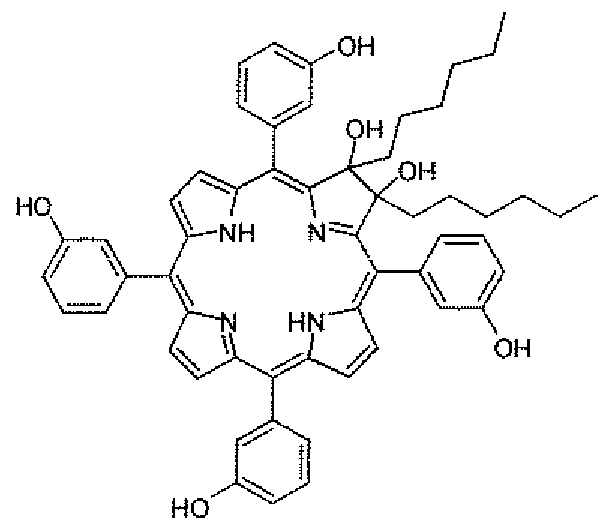
Figure 7.- shows another embodiment of a tetrapyrrolic compound of present invention based on chemical formula 3
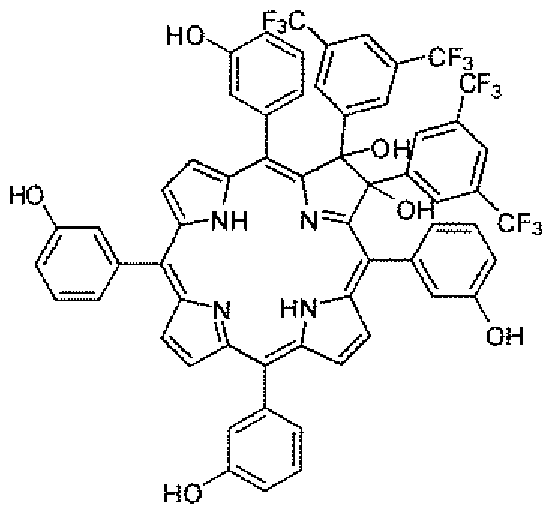
Figure 8.- shows another embodiment of a tetrapyrrolic compound of present invention based on chemical formula 3.
Figure 9.~shows an embodiment of photodynamic activity of 5,10,15,20- tetrakis-(3-hydroxyphenyl)-7;8-bis-(trifluoromethyl)-7,8-dihydroxy-7,8-cWorin against HT29 cell line.
Figure 10.- shows an embodiment of photodynamic activity of 5,10,15,20- tetrakis-(3-hydroxyphenyI)-7,8-dihexy]-7!8-dihydroxy-7,8-chlorin against HT29 cell line.
Figure 11.- shows an embodiment of photodynamic activity of 5,10,15,20- tetraki s-(3 -hydroxypheny l)-7, 8 -bis- [3 , 5 -bis-(trifluoromethyl) -phenyl]-7 , 8 -dihydroxy- 7,8-chlorin against HT29 cell line. Figure 12.- shows an embodiment of photodynamic activity of 5,10,15,20- tetrakis-(3-hydroxyphenyl)-7,8-bis-(trifluoromethyl)-7,8-dihydroxy-7,8-chlorin against synoviocytes and macrophages.
Figure 13.- shows an embodiment of photodynamic activity of 5,10,15,20- tetrakis-(3-hydroxyphenyl)-7,8-dihexyl-7,8-dihydroxy-7,8-chJorin against synoviocytes and macrophages.
Figure 14.- shows an embodiment of photodynamic activity of 5, 10,15,20- tetrakis-(3-hydroxyphenyl)-7,8~bis-[3,5-bis-(trifluoromethyl)-phenyl]-7,8-dihydroxy- 7,8-chlorin against synoviocytes and macrophages.
Detailed Description of Preferred Embodiments
The present invention provides biologically active compounds that can be used as photosensitizers for a wide range of light irradiation treatments such as
photodynamic therapy of cancer, hyperproliferative diseases, dermatological disorders, viral or bacterial infectious diseases, ophthalmological disorders and/or urological disorders. The alternative photosensitizers provided by the present invention have the advantage that they are easily produced and characterized. The present invention allows the further functionalization of effective photosensitizers to enhance their activity, stability or make new applications possible. Moreover, as the present invention provides methods to tailor amphiphilic compounds for desired PDT applications, target tissue selectivity is increased and thus PDT efficacy. The present invention enhances the effectiveness of prior art biologically active compounds offering a deeper tissue penetration due to their strong absorption at long wavelength of the red and near-infrared region of the electromagnetic spectrum, enhanced selectivity for target tissues over healthy surrounding tissues due to its tailored amphiphilicity and custom-made pharmacokinetic behavior depending on the particular PDT application.
The biologically active compounds of the present invention that can be used for different medical indications, particularly PDT, are meso-substituted and β- functionalized hydroxy- or dihydroxy-chlorin structures. Additionally, the invention extends their applications as the structures can be employed for fluorescence diagnosis and PDT treatment of non-tumorous indications such as arthritis and similar inflammatory diseases.
In a preferred embodiment, a tetrapyrrolic compound has the general formula depicted in figure 1.
Each of the following embodiments represents an example of this general structure.
In another embodiment, a tetrapyrrolic compound is based on the formulas 1 or 2 depicted in figure 2, wherein Rl, R2, R3 or R4 are independently a hydrogen, a substituted or unsubstituted alkyl, or fiuoroalkyl group consisting of 1-15 carbon atoms, a substituted or unsubstituted aromatic ring; and R5 is a substituted or unsubstituted alkyl, aikenyl, alkinyl or fiuoroalkyl group consisting of 1-15 carbon atoms or a substituted or unsubstituted aromatic ring.
In another embodiment, a tetrapyrrolic compound is based on the formulas 1 or 2 depicted in figure 2; and R1, R2, R3 or R4 are independently a hydrogen, a substituted or a unsubstituted alkyl, or a fiuoroalkyl group consisting of 1-15 carbon atoms, a phenyl ring or a phenyl ring with one or more substituents X either in the ortho-, meta- or /wra-position. Substituent X is preferably OH, -COOH, -N¾, -CF3, - F, -COOY, -NHY, -OY, -NH-Z-COOH, or -CO-Z-NH2; substituent Y is a
polyethylene glycol residue containing a (CH2CH20)n moiety with n = 1-30; and substituent in Z are peptides or oligopeptides. R5 is a substituted or unsubstituted alkyl, aikenyl, alkinyl or fiuoroalkyl group consisting of 1-15 carbon atoms, a phenyl ring or a phenyl ring with one or more substituents X either in the ortho-, meta- or ^ara-position. For R5 substituent X is OH, -COOH, -N¾, -CF3, -F, -COOY, -NHY, - OY, -NH-Z-COOH, or -CO-Z-NH2; substituent Y is a polyethylene glycol residue containing a (CH2CH20)n moiety with n = 1-30 or a carbohydrate moiety; and substituent Z are peptides or oligopeptides.
In another embodiment, a tetrapyrrolic compound is based on the formulas 1 or 2, described in figure 2, wherein R1 , R2, R3 or R4 are independently a hydrogen, a substituted or unsubstituted alkyl, or fiuoroalkyl group consisting of 1-15 carbon atoms, a phenyl ring or a phenyl ring with one or more substituents X either in the ortho-, meta- or ora-position; substituent X is OH, -COOH, -N¾, -CF3, -F, -COOY, -NHY, -OY, -NH-Z-COOH, or -CO-Z-NH2; substituent Y is a polyethylene glycol residue containing a (CH2CH20)n moiety with n = 1-30; and substituent Z are peptides or oligopeptides. R5 is a substituted or unsubstituted alkyl, alkenyl, alkinyi or fluoroalkyl group consisting of 1-15 carbon atoms or a phenyl ring substituted with one or more CF3-groups either in the ortho-, meta- or para-position.
In another embodiment, a tetrapyrrolic compound is based on the formulas 1 or 2, described in figure 2, wherein R1, R2, R3 or R4 are independently a substituted or unsubstituted alkyl or fluoroalkyl group consisting of 4-15 carbon atoms or a phenyl ring with one or more substituents X either in the meta- or para-position, and substituent X is OH, -COOH, -N¾. In this formula R5 is a substituted or
unsubstituted alkyl, alkenyl, alkinyi or fluoroalkyl group consisting of 1-15 carbon atoms or a phenyl ring substituted with one or more CF3-groups either in the ortho-, meta- or para-position.
In another embodiment, a tetrapyrrolic compound is based on the formula 3 as shown in figure 3,wherein R is a substituted or unsubstituted alkyl, alkenyl, alkinyl or fluoroalkyl group consisting of 1-15 carbon atoms, a phenyl ring or a phenyl ring with one or more substituents X either in the ortho-, meta- or para-position; substituent X is OH, -COOH, -NH2, -CF3, -F, -COOY, -NHY, -OY, -NH-Z-COOH, or -CO-Z-N¾; substituent Y is a polyethylene glycol residue containing a (CH2CH20)n moiety with n = 1-30 or a carbohydrate moiety; and substituent Z are peptides or oligopeptides.
In another embodiment, a tetrapyrrolic compound is based on the formula 3, as described in figure 3, wherein R is a substituted or unsubstituted alkyl, alkenyl, alkinyi or fluoroalkyl group consisting of 1-15 carbon atoms or a phenyl ring substituted with one or more CF3-groups either in the ortho-, meta- or para-position.
In another embodiment, a tetrapyrrolic compound is based on the formula 4, shown in figure 4, wherein R is a substituted or unsubstituted alkyl, alkenyl, alkinyi or fluoroalkyl group consisting of 1-15 carbon atoms, a phenyl ring or a phenyl ring with one or more substituents X either in the ortho-, meta- or para-position; substituent X is OH, -COOH, -NH2, -CF3, -F, -COOY, -NHY, -OY, -NH-Z-COOH, or -CO-Z-N¾; substituent Y is a polyethylene glycol residue containing a (CH2CH20)n moiety with n = 1-30 or a carbohydrate moiety; and substituent Z are peptides or oligopeptides.
In another embodiment, a tetrapyrrolic compound is based on the formula 4, depicted in figure 4, wherein R is a substituted or unsubstituted alkyl, alkenyl, alkinyi or fluoroalkyl group consisting of 1-15 carbon atoms or a phenyl ring substituted with one or more CF3 -groups either in the ortho-, meta- or para-position.
In another embodiment, a tetrapyrroHc compound is based on the formula 5, shown in figure 5, wherein R is a substituted or unsubstituted alkyl, alkenyl, alkinyl or fluoroalkyl group consisting of 1 - 15 carbon atoms, a phenyl ring or a phenyl ring with one or more substituents X either in the ortho-, meta- or para-position; substituent X is OH, -COOH, -N¾, -CF3, -F, -COOY, -NHY, -OY, -NH-Z-COOH, or -CO-Z-NH2; substituent Y is a polyethylene glycol residue containing a (CH2C¾0)n moiety with n = 1-30 or a carbohydrate moiety; and substituent Z are peptides or oligopeptides.
In another embodiment, a tetrapyrroHc compound is based on the formula 5, as described in figure 5, wherein Ris a substituted or unsubstituted alkyl, alkenyl, alkinyl or fluoroalkyl group consisting of 1-15 carbon atoms or a phenyl ring substituted with one or more CF3-groups either in the ortho-, meta- or para-position. In another embodiment, shown in figure 6, a tetrapyrroHc compound is based on the formula 3, wherein R is a -CF3 or a pharmaceutically acceptable derivative thereof. In yet another embodiment shown in figure 7, a tetrapyrroHc compound is based on the formula 3, wherein R is a hexane or a pharmaceutically acceptable derivative thereof.
In another embodiment, shown in figure 8, a tetrapyrroHc compound is based on the formula 3 or a pharmaceutically acceptable derivative thereof.
In another embodiment, the tetrapyrroHc compounds of all previous embodiments based on formulas 1, 2, 3, 4 and 5, or a pharmaceutically acceptable derivative thereof , are used for the preparation of pharmaceutical compositions for diagnosis and photodynamic therapy.
In another embodiment, a pharmaceutical composition comprises a
tetrapyrroHc compound according to previous embodiments, or a pharmaceutically acceptable derivative thereof, as an active ingredient.
In another embodiment, the pharmaceutical composition in which any of the tetrapyrroHc compounds of previous embodiments is an active ingredient is a liposomal formulation.
In another embodiment, a pharmaceutical composition in which a tetrapyrroHc compound according to all previous embodiments, or a pharmaceutically acceptable derivative thereof, is conjugated to a targeting agent. Preferably, the targeting agent of the pharmaceutical composition is an antibody, a fragment of an antibody, a peptide. This pharmaceutical composition is preferably a liposomal formulation.
In another embodiment, the tetrapyrrolic compounds of all previous embodiments based on formulas 1, 2, 3, 4 and 5, or a pharmaceutically acceptable derivative thereof, are used in photodynamic therapy of tumors, dermatological disorders, viral or bacterial infections, ophthalmological disorders or urological disorders, arthritis and similar inflammatory diseases. Additionally, the mentioned compounds or pharmaceutically acceptable derivative thereof can be used in the diagnosis of arthritis and similar inflammatory diseases.
In another embodiment, the tetrapyrrolic compounds depicted in previous embodiments are used in different therapeutic formulations according to the way of administration, comprising known carriers such as conventional liposomes, pegylated liposomes, nanoemulsions, nanocrystrals, nanoparticles, fatty emulsions, lipidic formulations, self-micro-emulsify ing-drug-deli very- systems, AIpha-Feto protein (AFP), Bovine-Seram-Albumin (BSA), poly(lactic-co-glycolic acid) (PLGA), fatty emulsions and organic or non-organic nanoparticles.
In order to obtain the novel photosensitizers the present invention uses chemically stable porphyrin derivatives and provides methods for preparation of the corresponding precursor diketo-chlorins.
An embodiment of the present invention consists of a method to synthesize hydroxy- or dihydroxy-chlorins from diketo-chlorins as precursors using nucleophilic agents like (trifluoromethyl)trimethylsilane or Grignard reagents e.g.
methylmagnesium bromide, hexylmagnesium bromide, 3,5- (bistrifluoromethyl)phenylmagnesium bromide or allylmagnesium chloride.
Another embodiment of the present invention consists of the steps of synthesizing a porphyrin with a defined arrangement of substituents, converting it to the diketo-chlorin and after that to the corresponding hydroxy- or dihydroxy-chlorins and then to formulate the desired compound into a liposomal formulation.
In yet another embodiment of the present invention an Artype porphyrin with OT-methoxyphenyl substituents is synthesized and converted to the precursor diketo- chlorin which is converted to the corresponding ^functionalized dihydroxy-chlorin. Then, the remaining methoxy groups are deprotected with BBr3 to obtain the hydroxyl substituted derivative.
In yet another specifically preferred embodiment of the present invention a porphyrin of the ' trans '-A2B2-type is synthesized, having hexyl chains as substituent A and methoxycarbonyl phenyl residues as substituent B. This porphyrin is converted to the dihydroxychlorin and after that to the diketo-chlorin. Then, the precursor is converted to the /^functionalized dihydroxy-chlorin and the remaining methyl esters are hydrolyzed to receive the corresponding carboxylic acids.
Acceptable starting materials for the synthesis of the porphyrins which are the subject of the present invention are pyrrole and aldehydes. They are subjected to a condensation reaction. Suitable methods for this condensation have long been known in the art (J. S. Lindsey, I. C. Schreiman, H. C. Hsu, P. C. Kearney and A. M.
Marguerettaz, J. Org. Chem. 1987, 52, 827-836). Alternatively, the unsymmetrically substituted porphyrins can also be synthesized using dipyrrom ethanes and aldehydes, as is also known in the art (C.-H. Lee, J. S. Lindsey, One-Flask Synthesis of Meso- Substituted Dipyrromethanes and Their Application in the Synthesis of Trans- Substituted Porphyrin Building Blocks, Tetrahedron 1994, 50, 11427-11440). After condensation and purification of the desired porphyrins these are converted to the diketo-chlorins by two different methods.
The first method is exemplified with examples 1.1, 1.3 and 1.5 and proceeds over 3 steps. The first step is an osmiu tetroxide mediated dihydroxylation as it is known in the art. The second step is the quantitative dehydration of the diol to form the corresponding 2-hydroxyporphyrin in refluxing trifluoroacetic acid. Thus, another embodiment of the present invention provides a simple method for the dehydration of the dihydroxychlorins. The Dess-Martin periodinane mediated oxidation of the 2- hydroxyporphyrin to the diketo-chlorin is the last step of the synthesis.
The second method is also known in the art and exemplified with examples 1.2 and 1.4. It is an alternative route to obtain 2-hydroxypoφhyrins avoiding the use of osmium tetroxide. In the first step the porphyrin is converted to the corresponding Cu (II) mtro-porphyrin derivative using Cu(N03)2 and in the second step the 2- hydroxyporphyrin is obtained by treating the nitro substituted porphyrin derivative with the sodium salt of E-benzaldehyde oxime in dimethyl sulfoxide in the presence of sodium hydride.
The ^functionalization of the diketo-chlorins is exemplified with examples 2 and 3. Example 2 shows the synthesis of trifluoromethyl substituted hydroxy- and dihydroxy- chlorins using (trifluoromethyl)trimethylsilane as nucleophilic agent. Example 3 shows the synthesis of alkyl, alkenyl, alkynyl and aryl substituted hydroxy- and dihydroxy-chlorins using organometallic, more precisely Grignard reagents.
The specifically substituted amphiphilic chlorin derivatives produced according to the present invention are suitable to be used for photodynamic therapy of cancer and other (hyper) proliferative diseases and infections.
PDT is accomplished by first incorporating the derivatives into a
pharmaceutically acceptable application vehicle (e.g. ethanolic solution or liposomal formulation) for delivery of the derivatives to a specific treatment site. After administering the derivatives in the vehicle to a treatment area, sufficient time is allowed so that the chlorin derivatives preferentially accumulate in the diseased tissue. Lastly, the treatment area is irradiated with light of a proper wavelength and sufficient power to activate the porphyrin derivatives to induce necrosis or apoptosis in the cells of said diseased tissue. Thus, one of the main advantages is that convenient pharmaceutical formulations can be created for the biologically active compounds of the present invention such as liposomal formulation to be injected avoiding
undesirable effects like precipitation at the injection site or delayed pharmacokinetics of the tetrapyrrole systems. Due to their amphiphilic nature, the chemically stable chlorin derivatives of the present invention can be prepared in various
pharmaceutically acceptable and active preparations for different administration methods, e.g. injections. In a specifically preferred embodiment such amphiphilic compounds are formulated into liposomes. This liposomal formulation can then be injected avoiding undesirable effects such as precipitation at the injection site or delayed pharmacokinetics of the tetrapyrrole systems.
Determination of dark toxicity (DT) and phototoxicity (examples 5.1, 5.2 and 5.3) of three specific chlorin derivative of the present invention in cell culture experiments with a HT 29 cell line showed the excellent properties of the compounds for use in PDT.
As another object of the present invention is to use the disclosed porphyrin and chlorin derivatives in the diagnosis and treatment of arthritis and similar inflammatory diseases, the data presented in examples 6.1, 6.2 and 6.3 show the remarkable results of the photodynamic treatment of two cell lines especially relevant for arthritis (HIG82 and J774A.1, a rabbit synoviocyte and a mouse macrophage cell line) with three compounds of the present invention.
The following examples are presented to provide those of ordinary skill in the art with a full and illustrative disclosure and description of how to make the chlorin derivatives of the invention and show their photodynamic activity and are not intended to limit the scope of what the inventor regards as the invention. Efforts have been made to ensure accuracy with respect to numbers used (e.g. amounts, temperature etc.), but some experimental errors and deviations should be accounted for. Also, best measures have been taken to name the compounds with their systematic IUPAC name, nevertheless the basic reference are the given structural formulas based on the experimental spectroscopic data.
Examples
All reagents were used as purchased from commercial suppliers.
Tetrahexylporphyrin, tetraphenylporphynn and tetrakis-(3-methoxyphenyl)-porphyrin were prepared using Lindsey's conditions (J. S. Lindsey, I. C. Schreiman, H. C. Hsu, P. C. Kearney and A. M. Marguerettaz, J. Org. Chem. 1987, 52, 827-836).
Dichloromethane was purified by distillation over K2C03 prior to use. Thin layer chromatography (TLC) was performed using Merck silica gel 60 (without
fluorescence indicator) pre-coated on aluminum sheets. Flash chromatography was carried out using Fluka silica gel 60, 0.040-0.063 mm (230-400 mesh). 1H and S3C NM spectra were recorded in CDC13, (CD3)2CO, CD3OD or (CD3)2SO on Bruker AC 250, AC 500, ECX 400 or AMX 500 instruments. Chemical shifts are given in ppm relative to TMS as internal standard or relative to the resonance of the residual solvent peak, J values are given in Hz. Mass spectra were recorded on Varian MAT 771, Varian IonSpec QFT-7 or Agilent 6210 ESI-TOF instruments. Electronic absorption spectra were recorded on a Specord S300 (Analytik Jena) spectrophotometer using dichloromethane or acetone as solvent.
Example 1
Preparation of diketo-chlorins
1.1 Preparation of 5,10,15,20-tetrahexyl~7,8-dioxo-7,8-chlorin
1.1.1 Preparation of 5,10,15,20-tetrahexyl-7,8-dihydroxy-7,8-chiorin
In a typical experiment, osmium tetroxide (3 g, 3.9 mmol) was added to a stirred solution of 5,10,15,20-tetrahexylporphyrin (2.5 g, 3.9 mmol) in
dichloromethane/pyridine 1 : 1 (195 ml). After stirring for 6 h, a saturated solution of sodium bisulfite in water/methanol 1 :1 (100 ml) was added and the mixture was stirred for 18 h. The reaction mixture was filtered through Celite and dried over anhydrous sodium sulfate. The solvent was evaporated and the residue was purified by flash chromatography with dichloromethane/ethyl acetate 95:5 as eluent, followed by recrystallization from dichloromethane/aqueous methanol. The first band from the column contained starting material (591 mg, 24 %) and the second band the title compound 5,10,15,20-tetrahexyl-7,8-dihydroxy-7,8-chlorin (1709 mg, 65 %).
5,10,15,20-TetrahexyI-7,8-dihydroxy-7,8-chlorin
Figure imgf000017_0001
violet solid; mp: 109 °C; max(CH2Cl2)/nm 409 (ε/drn3 mol"1 cm4 219300), 431
(163500), 532 (21200), 559 (28500), 597 (12800) and 651 (22000); ¾(500 MHz; CDCI3) 9.03 (s, 2 H, β-Η), 8.67 (d, J= 4.7 Hz, 2 H, β-Ά), 8.48 (d, J= 4.7 Hz, 2 H, β· H), 5.72 (s, 2 H, β-Κ), 4.30-4.37 (m, 2 H, CH2), 4.14-4.20 (m, 2 H, CH2), 3.73-3.86 (m, 4 H, 2 x CH3), 2.23-2.39 (m, 4 H. 2 CH2), 1.78-1.96 (m, 4 H, 2 χ CH2), 1.69- 1.75 (m, 4 H, 2 C¾), 1.40-1.60 (m, 12 H, 6 C¾), 1.35-1.39 (m, 8 H, 4 χ CH2), 1.00 (t, J= 7.2 Hz, 6 H 2 x CH3), 0.94-0.96 (m, 6 H, 2 χ CH3), -2.12 (br s, 2 H, NH); <5b(125 MHz; CDC13) 159.74 (or-C), 152.09 (a-C), 139.59 (a-C), 133.99 (<z-C), 129.69 C^C), 124.75 (β-C), 121.43 ( -C), 121.29 (β-C), 1 10.90 (/mwo-C), 73.01 C), 38.10 (CH2), 36.27 (C¾), 35.01 (C¾), 32.91 (CH2)9 32.03 (C¾), 32.01 (CH2), 30.44 (CH2), 30.23 (CH2), 22.95 (CH2), 22.91 (CH2), 14.35 ( H3), 14.31 (CH3); m/z (EI) 680.5023 (N . C44HMN402 requires 680.5029), 662 (100%), 646 (21), 609 (21 ), 591 (45).
1.1.2 Preparation of 5,10,15,20-tetrahexyI-7-dihydro-8-oxo-7,8-chIorin
In a typical experiment, trifluoroacetic acid (35 ml) was added to
5, 10, 15,20-tetrahexyl-7,8-dihydroxy-7,8-chIorin (548 mg, 0.80 mmol) and heated at 65 °C for 8 h. The reaction mixture was allowed to cool and poured into 300 ml ice/water. A sodium hydroxide solution (30 %) was added until neutral. Then ethyl acetate (200 ml) was added, the organic layer was separated, washed with water (3 1 00 ml), dried over anhydrous sodium sulfate and the solvent was removed. The title compound 5, 10, 15,20-tetrahexyl-7-dihydro-8-oxo-7,8-chlorin was obtained after recrystallization from dichloromethane/methanol (524 mg, 98 %).
5,10,15,20-Tetrahexyl-7-dihydro-8-oxo-7,8-chlorm
Figure imgf000018_0001
violet solid; x(CH2Cl2)/nm 419 (sfdm3 mol"1 cm'1 245000), 433 (193900), 534 (15900), 570 (19500), 604 (10100) and 659 (5800); <¾(250 MHz; CDC13) 9.26-9.12 (m, 5 H, β~Ά), 8.88-8.83 (m, 1 H, β-R), 4.74-4.60 (m, 6 H, 3 χ CJ¾), 4.53 (s, 2 H, β- H), 3.85-3.78 (m, 2 H, CH2), 2.56-2.33 (m, 4 H, 2 x CH2\ 2.17-1.98 (m, 4 Η, 2 χ CH2), 1.85-1.31 (m, 24 Η, 12 χ CH2), 0.99-0.91 (m, 12 Η, 4 χ C¾), -2.23 (s, 1 Η, NH), -2.46 (s, 1 Η, NH); m/z (ESI) 663.4937 ([M + H]+, C44H63N40+ requires 663.4996).
1.1.3 Preparation of 5,1 ,15,20-tetrahexyl-7,8-dioxo-7,8-chlorin
In a typical experiment, Dess-Martin periodinane 15 % solution in
dichloromethane (1.6 g, 1.8 mmol) was added drop wise to a stirred solution of 5, 10, 15,20-tetrahexyl-7-dmydro-8-oxo-7,8-chlorm (250 mg, 0.37 mmol) in dichloromethane (15 ml), until the starting material was consumed. Then water (50 ml) was added, the organic layer was separated, washed with water (50 ml), dried over anhydrous sodium sulfate and the solvent was removed. The residue was purified by flash chromatography with dichloromethane/hexane 2: 1 as eluent to yield the title compound 5, 10, 15,20-tetrahexyl-7,8-dioxo-7,8-chlorin (133 mg, 53 %).
5,10,15,20-Tetrahexyl-7,8-dioxo-7,8-chlorin
Figure imgf000019_0001
violet solid; / „(CH2Cl2)/nin 407 (£/dm3 mof1 cm'1 205600), 491 (16900), 715
(5300); <¾(500 MHz; CDC13) 9.13-9.1 1 (m, 4 H, β-Η), 9.02-9.00 (m, 2 H, β-Η), 4.63- 4.58 (m, 4 H, 2 CH2), 4.41-4.35 (m, 4 H, 2 CH2), 2.41 -2.34 (m, 4 H, 2 χ G¾), 2.03-1.95 (m, 4 H, 2 χ CH2), 1.80-1.69 (m, 8 H, 4 χ CH2), 1.53-1.36 (m, 16 H, 8 χ G¾), 0.97-0.94 (m, 12 H, 4 CH3), -2.60 (s, 2 H, NH); <¼(126 MHz; CDC13) 189.22 (a-CO), 154.41 (a-C), 139.48 (a-C), 138.47 (a-C), 136.78 (a-C), 131.66 0#-C), 125.28 Gff-C). 124.76 (β-C), 122.80 (JWIMO-C), 1 14.35 (meso-C), 38.35 (CH2), 36.44 (CH2), 35.56 (CH2), 32.01 ( H2), 31.97 (CH2), 31.15 (CH2), 30.41 (C¾), 30.22
(C¾), 22.94 ( H2), 22.89 (CH2), 14.34 (CH3), 14.30 (CH3); m/z (ESI) 677.4793 ([M + H]+, C44H6i 402 + requires 677.4789); m/z (ESI) 675.4621 ([M - H]", C44H59N402* requires 675.4644). 1.2 Preparation of 5,10,15,20-tetrakis-(3-methoxyphenyl)-7,8-dioxo-7,8- chlorin (method A)
1.2.1 Preparation of 5,10,15,20-tetraltis-(3-niethoxyphenyl)-7,8-dihydroxy-7,8- chl rin
In a typical experiment, osmium tetroxide (1000 mg, 3.9 mmol) was added to a stirred solution of 5J10,15,20-tetrakis-(3-methoxyphenyl)-porphyrin (2500 mg, 3.4 mmol) in dichloromethane/pyridine 1 :1 (340 ml). After stirring for 4 days, a saturated solution of sodium bisulfite in water/methanol 1 :1 (150 ml) was added and the mixture was stirred for 18 h. The reaction mixture was filtered through Celite and dried over anhydrous sodium sulfate. The solvent was evaporated and the residue was purified by flash chromatography with dichloromethane/ethyl acetate 9: 1 as eluent, followed by recrystallization from dichloromethane/aqueous methanol. The first band from the column contained starting material (793 mg, 32 %) and the second band the title compound 5,10,15,20-tetrakis-(3-methoxyphenyl)-7,8-dihydroxy-7,8-chlorin (954 mg, 36 %).
5 0 5,20-Tetrakis-(3-methoxyphenyl)-7,8-dihydroxy-7,8-chlorin
Figure imgf000021_0001
violet solid; <¾(400 MHz; CDC13) 8.69-8.66 (m, 2 H, β-Η), 8.51 (s, 2 H, β-Η), 8.40- 8.32 (m, 2 H, β-Η , 7.77-7.44 (m, 12 H, Ar), 7.31-7.21 (ra, 4 H, Ar), 6.44-6.34 (m, 2
H, fi-R), 3.97-3.91 (m, 12 H, OCH3) 3.26-3.19 (m, 2 H, β-OW), -1.84 (s, 2 H, NH).
I.2.2 Preparation of 5,1 ,15,20-tetrakis-(3-methoxyphenyl)-7-dihydro-8-oxo- 7,8-chIorin
In a typical experiment, trifluoroacetic acid (100 ml) was added to 5,10,15,20- tetrakis-(3-methoxyphenyl)-7,8-dihydroxy-7,8-chlorin (937 mg, 1.22 mn ol) and heated at 65 °C for 8 h. The reaction mixture was allowed to cool and poured into 500 ml ice/water. A sodium hydroxide solution (30 %) was added until neutral. Then ethyl acetate (300 ml) was added, the organic layer was separated, washed with water (3 x 150 ml), dried over anhydrous sodium sulfate and the solvent was removed. The title compound 5,10,15,20-tetrakis-(3-methoxyphenyl)-7-dihydro-8- oxo-7,8-chlorin was obtained after recrystallization from
dichloromethane/methanol (899 mg, 98 %).
5,10,15,20-Tetrakis-(3-methoxyphenyl)-7-dihydro-8-oxo-7,8-chlorin
Figure imgf000021_0002
violet solid; mp: > 300 °C; mJz (ESI) 751.2936 ([M + Hf , C48H39N4Os + requires 751.2915); no NMR spectroscopy was carried out, because of keto-enol tautomeric mixtures.
1.2.3 Preparation of 5,10,15,20-tetrakis-(3-methoxyphenyl)-7,8-dioxo-7,8- chlorin
In a typical experiment, Dess-Martin periodinane 15 % solution in
dichloromethane (1 g, 1.1 mmol) was added drop wise within 2 h to a stirred solution of 5,10,15,20-tetrakis-(3-methoxyphenyl)-7-dihydro-8-oxo-7,8-chlorin (160 mg, 0.21 mmol) in dichloromethane (20 ml) and stirred for further 3 h. Then water (50 ml) was added, the organic layer was separated, washed with water (50 ml), dried over anhydrous sodium sulfate and the solvent was removed. The residue was purified by flash chromatography with dichloromethane/ethyl acetate 99:1 as eluent to yield the title compound 5,10,15,20-tetrakis-(3-methoxyphenyl)-7,8-dioxo-7,8- chlorin (123 mg, 75 %).
5,10,15,20-Tetrakis-(3-methoxyphenyl)-7,8-dioxo-7,8-chlorin
Figure imgf000022_0001
violet solid; ylmax(CH2Cl2)/nm 406 (i/dm3 mol"1 cm'1 104600); <¾(250 MHz; CDC13) 8.81 (dd, 4J= 1.0 Hz, 3J= 5.0 Hz, 2 H, β-Ή), 8.68 (dd, 4J= 1.4 Hz, 3J= 5.0 Hz, 2 H, β~Ή , 8.62 (s, 2 H, β-Η , 7.77-7.45 (m, 12 H, Ar), 7.35-7.27 (m, 4 H, Ar), 3.97 (s, 6 H, OCH3), 3.94 (s, 6 H, OCH3), -2.04 (br m, 2 H, NH); m/z (ESI) 765.2729 ([M + Hf, C48H37N 06 + requires 765.2708). 1.3 Preparation of 5,10,15,20-tetrakis-(3-raethoxyphenyl)-7,8-dioxo-7,8- chlorin (method B)
1.3.1 Preparation of Cu(H)-5,10,15,20-tetrakis-(3-methoxyphenyl)-7-nitro- porphyrin
In a typical experiment, Cu(N03)2 2.5 H20 (500 mg, 2.2 mmol) dissolved in a mixture of acetic anhydride (50 ml) and acetic acid (10 ml) was added to a solution of 5,10,15,20-tetrakis-(3-methoxyphenyl)-porphyrin (600 mg, 0.8 mmol) in dichloromethane (500 ml) and the mixture was refluxed for 10 h. Then, the solvents were removed and the residue was purified by flash chromatography with dichloromethane/ethyl acetate 99:1. The title compound Cu(II)-5,10,15,20-tetrakis- (3-methoxyphenyl)-7-nitro~porphyrin was obtained after recrystallization from dichloromethane/methanol (610 mg, 91 %).
Cu(II)-5,10,lS,20-tetrakis-(3-methoxyphenyl)-7-nitro-porphyrin
Figure imgf000023_0001
grey solid; mp: 200 °C; m/z (ESI) 840.1970 ([M]+, C48H35CuN506+ requires 840.1878.
1.3.2 Preparation of 5,10,15,20-tetrakis-(3-methoxyphenyl)-7-dihydro-8-oxo- 7,8-chlorin
In a typical experiment, sodium hydride (200 mg, 5 mmol) was added to dry dimethyl sulfoxide (250 ml). The mixture was heated under argon at 75 °C for 30 min and then E-benzaldehyde oxime (1.5 ml, 1 1 mmol) was added. To the resultant yellow mixture solid Cu(II)-5,10,15,20-tetrakis-(3-methoxyphenyl)-7- nitro-porphyrin (1.1 g, 1.3 mmol) was added. After 120 min the mixture was cooled in an ice bath and diluted with dichloromethane (300 ml). The organic layer was washed with water (5 χ 200 ml), dried over anhydrous sodium sulfate and the solvent was removed.
The crude product was dissolved in a mixture of trifluoroacetic acid/cone . sulfuric acid 10: 1 (44 ml), and after 8 min ethyl acetate (200 ml) and water (200 ml) were added as well as sodium hydroxide 30 % solution until neutral. The organic layer was washed with water (4 χ 200 ml), dried over anhydrous sodium sulfate and the solvent was removed. The residue was purified by flash chromatography with dichloromethane/ethyl acetate 99:1 as eluent The title compound 5,10,15,20-tetrakis-(3-methoxyphenyl)-7-dihydro-8-oxo-7,8-chlorin was obtained after recrystallization from dichloromethane/methanol (501 mg, 50 % over 2 steps).
Spectroscopic data given in 1.2.2
1.3.3 Preparation of 5,10,15,20-tetrakis-(3-methoxyphenyl)-7,8-dioxo-7,8- chlorin
compare 1.2.3
Example 2
Preparation of trifluoromethyl ^substituted chlorins
2.1. Preparation of 5,10,15,20-tetrahexyi-7-trifluoromethyl-7,8-dihydroxy-7,8- chlorin
In a typical experiment, a solution of 5,10,15,20-tetrahexyl-7,8-dioxo-7,8- chlorin (50 mg, 0.07 mmol) in dry tetrahydrofuran (3 ml) under argon atmosphere was cooled to -35 °C. (Trifluoromethyl)trimethylsilane (50 μΐ, 0.38 mmol) and tetrabutylammonium fluoride trihydrate (10 mg, 0.03 mmol) were added and the mixture was stirred for 20 min. In order to remove the trimethylsilyl group more tetrabutylammonium fluoride trihydrate (50 mg, 0.3 mmol) was added and the reaction mixture was stirred until complete conversion. Then, water (25 ml) and dichloromethane (25 ml) were added, the organic layer was separated, washed with water (25 ml), dried over anhydrous sodium sulfate and the solvent was removed. The residue was purified by flash chromatography with dichloromethane hexane 1 :1 as eluent to yield 5,10,15,20-tetrahexyl-7- trifl uourome thyl-7-hydroxy- 8 -oxo-7 , 8-chlorin. 5,10,15 ,20-tetrahexy 1- 7- trifluouromethyl-7-hydroxy-8-oxo-7,8-chlorin (25 mg, 0.03 mmol) was dissolved in dichloromethane/methanol 9: 1 (3 ml) and cooled to 0 °C. Sodium borohydride was added (5 mg, 0.13 mmol) and the mixture was stirred until the starting material was consumed. Then, water (10 ml) and dichloromethane (10 ml) were added, the organic layer was separated, washed with water (10 ml), dried over anhydrous sodium sulfate and the solvent was removed. The title compound 5,10,15,20-tetrahexyl-7-trifluoromethyl-7,8-dihydroxy-7,8-chlorin was obtained after recrystallization from dichloromethane/methanol (21 mg, 60 % over 2 steps).
5,10,15i20-Tetrahexyl-7-trifluoromethyl-7,8-dihydroxy-7,8-chlorin
Figure imgf000025_0001
violet solid; mp: 120-125 °C; Lax(CH2CI2)/nm 410 (sfdm3 mof' cm"' 220300), 432 (149100), 533 (16600), 562 (25100), 599 (12100), 653 (17400); 4(500 MHz; CDC13) 9.22-9.20 (m, 2 H, β-Κ), 9.13 (d, J - 4.6 Hz, 1 H, β-Κ), 9.09 (d, J= 4.6 Hz, 1 H, β- H), 9.03 (d, J= 5.0 Hz, 1 H, β-Κ), 8.97 (d, J= 5.1 Hz, 1 H β-Η\ 6.96-6.93 (m, 1 H, β-Η), 4.72-4.56 (m, 4 H, 2 C¾), 4.46-4.35 (m, 3 H, CH2, CHA), 4.28-4.20 (m, 1 H, G¾), 3.93 (br s, 1 H, β-ΟΗ), 2.93-2.84 (m, 1 H, β-ΟΗ), 2.44-2.36 (m, 4 H, 2 CH2), 2.33-2.16 (m, 2 H, CH2), 2.02-1.95 (m, 2 H, CH2), 1.82-1.71 (m, 6 Η, 3 x CH2), 1.61- 1.26 (m, 18 Η, 9 CH2), 0.99-0.88 (m, 12 Η, 4 * CH3), -1.51 (br s, 2 Η, NH), ^(126 MHz; CDC13) 155.25 (a-Q, 153.25 (a-C), 153.15 ( -C), 149.30 ( -C), 140.58 (a-C), 140.30 ( -C), 135.02 ( -C), 134.24 ( -C 130.41 (β-C), 129.88 (^C), 125.80 (β-C), 124.95 (β-C), 123.30 (meso-C), 122.85 (fi-C 122.52 G#-C), 121.49 (^.?o-C), 1 13.78 (meso-C), 109.89 (meso-C), 89.18 (β-C), 38.15 ( H2), 38.09 (CH2), 38.04 (CH2), 36.47 (CH2), 35.55 (0¼), 35.12 (C¾). 33.04 ( H2), 32.87 (CR2), 32.04 ( H2), 31.96 (CH2), 30.62 (CH2), 30.44 (CH2), 30.39 ( H2), 30.21 ( H2), 23.00 (CH2), 22.89 (CH2), 14.30 (CH3), 14.25 (CH3); 4(471 MHz; CDC13) -72.65 (CF3); m/z (EST) 749.4955 ([M + H]+, C45H64F3N402+ requires 749.4976).
2.2 Preparation of 5,10,lS,20-tetrakis-(3-methoxyphenyl)-7,8-dihydroxy-7,8-bis- (trifluorom ethyl)-7,8-chlo rin
In a typical experiment, a solution of 5,10,15,20-tetrakis-(3-methoxyphenyl)- 7,8-dioxo-7,8-chlorin (100 mg, 0.13 mmol), in dry tetrahydrofuran (7 ml), under argon atmosphere, was cooled to -40 °C. (Trifluoromethyl)trimethylsilane (350 μΐ, 2.66 mmol) and tetrabutyl ammoniumfiuoride trihydrate (10 mg, 0.03 mmol) were added and the mixture was stirred for 8 h. In order to remove the trimethylsilyl groups, more tetrabutylammonium fluoride trihydrate (100 mg, 0.3 mmol) was added and the reaction mixture was stirred until complete conversion. Then, water (40 ml) and dichioromethane (50 ml) were added, the organic layer was separated, washed with water (40 ml), dried over anhydrous sodium sulfate and the solvent was removed. The residue was purified by flash chromatography with
dichloromethane/ethyl acetate 99:1 as eluent. The title compound 5,10,15,20-tetrakis- (3-methoxyphenyl)-7,8-dihydroxy-738-bis-(txifluoromethyl)-7,8-chlorin was obtained after recrystallization from dichloromethane/methanol. (92 mg, 78 %).
5,10,15,20-Tetrakis-(3-methoxyphenyl)-7,8-dihydroxy-7,8-bis-(trifluoro- raethyI)-7,8-chloriii
Figure imgf000027_0001
violet solid; mp: 177 °C, / x(CH2CI2)/nm 409 (s dm3 mol"1 cm-1 135300), 518 (9300), 548 (9200), 599 (4200), 653 (17300); <¾(500 MHz; CDC13) 8.63-8.61 (m, 2 H, β-Η), 8.47 (s, 2 H, J3-U), 8.03-8.00 (m, 2 H, ^-H), 7.89-7.77 (m, 4 H, Ar), 7.68- 7.43 (m, 6 H, Ar), 7.35-7.26 (m, 6 H, Ar), 4.13-4.11 (m, 1 H, β-ΟΗ), 4.02-4.01 (m, 1 H, β-Ο ), 4.00-3.98 (br m, 3 H, OC/¾), 3.98-3.97 (m, 3 H, OCH3), 3.91-3.89 (br m, 3 H, OCH3) 3.87-3.85 (m, 3 H, OC/fc), -1.48-1.52 (br m, 2 H, NH); <¼(126 MHz; CDC13) 159.02 (Ar), 158.20 (Ar), 153.63 { -C), 149.54 (a-C), 149.17 { -C), 142.55 (Ar), 141.55 {a-C), 138.98 (Ar), 138.82 (Ar), 136.03 ( -C), 133.24 (β-C), 128.97 (Ar), 128.48 {β-C), 128.38 (Ar), 127.80 (Ar), 127.46 (Ar), 126.91 (Ar), 125.87 (Ar), 125.09 (β-C), 124.53 (β-C), 124.46 (β-C), 120.63 (Ar), 119.81 (Ar), 119.29 (Ar), 1 15.40 (Ar), 1 13.84 (Ar), 11 1.57 (meso-C), 11 1.45 (meso-C), 55.61 (OCH3), 55.50 (OCH3); 4(471 MHz; CDCI3) -73.92 (CF3), -73.94 (C 3), -74.12 (C 3), -74.15 (CF3); m/z (ESI) 905.2774 ([M + H]+, C5oH39F6N406 + requires 905.2768).
2.3 Preparation of 5,10,15,20-tetrakis-(3-hydroxyphenyl)-7,8-dihydroxy-7,8-bis- (trifluoromethyl)-7,8-chlorin
In a typical experiment, a solution of 5,10,15,20-tetrakis-(3-methoxyphenyl)- 7,8-dihydroxy-7,8-bis-(trifluoromethyl)-7,8-chlorin (80 mg, 0.09 mmol), in dry dichloromethane (30 ml), under argon atmosphere, was cooled to -50 °C. A boron tribromide solution (1 M, 1.6 ml) in dichloromethane was added dropwise over a period of 10 min. The reaction mixture was allowed to warm up slowly to room temperature and stirred for 18 h. Then, water (100 ml) and ethyl acetate (100 ml) were added as well as sodium hydroxide solution 30 % until neutral. The organic layer was separated, washed with water (2 χ 100 ml), dried over anhydrous sodium sulfate and the solvent was removed. The residue was purified by flash chromatography with dichloromethane/methanol 95:5 as eluent. Further purification was achieved by column chromatography with CJ g reversed phase silica gel using methanol/water 95:5 as eluent. The title compound 5,10,15,20-tetrakis-(3- hydroxyphenyl)-7,8-dihydroxy-7,8-bis-(trifluoromethyl)-7,8-chlorin was obtained after recrystallization from dichloromethane/aqueous methanol. (65 mg, 87 %).
5,10,15 ,20-Tetrakis-(3-hy d roxy ph eny I)- 7,8-dihydroxy-7,8-bis-(trifl uoro- m ethy l)-7,8-ch lorin
Figure imgf000028_0001
violet solid; mp: > 300 °C; , a3[((CH3)2CO)/nm 407 (i/dm3 moF1 cm'1 166900), 518 (15200), 547 (15600), 599 (7700), 653 (27600); <¾(700 MHz; (CD3)2CO) 8.82-8.66 (m, 6 H, 2 x β-Η, 4 Ar-OH), 8.50 (s, 2 H, β-Η), 8.14-8.12 (m, 2 H, β-Η), 7.81-7.1 1 (m, 16 H, Ar), 5.75-5.57 (m, 2 H, β-ΟΉ , -1.38-1.42 (m, 2 H, N/7); <¼{176 MHz; (CD3)2CO) 156.35 (Ar), 156.30 (Ar), 156.05 (Ar), 155.99 (Ar), 155.46 (Ar), 155.41 (Ar), 153.44 (a-C), 150.47 ( -C), 150.39 (a-C), 150.28 (a-C), 150.19 (a-C), 142.42 (Ar), 142.39 (Ar), 141.68 a-C), 141.61 (a-C), 141.58 (a-C), 141.51 (a-C), 139.91 (Ar), 139.87 (Ar), 135.75 (a-C), 132.86 (β-C), 128.15 (Ar), 128.12 (β-C), 128.02 (Ar), 127.96 (Ar), 127.90 (Ar), 127.52 (Ar), 127.45 (Ar), 126.21 (Ar), 126.00 (Ar), 125.53 (β-C), 125.48 (Ar), 125.43 (Ar), 125.38 (Ar), 125.33 (Ar), 125.28 (Ar), 125.23 (Ar), 124.37 (meso-C), 124.30 (meso-C), 121.95 (Ar), 121.39 (Ar), 121.35 (Ar), 121.16 (Ar), 115.58 (Ar), 1 15.52 (Ar), 115.47 (Ar), 115.40 (Ar), 115.14 (meso-C), 1 12.52 (Ar), 112.44 (Ar), 1 12.28 (Ar), 1 12.22 (Ar), 90.4-89.8 (m, β-C); #(471 MHz; CD3OD) -75.02 (C/¾, -75.05 (C 3); mJz (ESI) 849.2163 ([M + Hf , C46H31F6N406 requires 849.2142).
Example 3
Preparation of alkyl, alkenyl and alkynyl /^substituted chlorins
3.1 Preparation of 5,10il5,20-tetrakis-(3-met oxyphenyl)-7,8-alIyl-7,8- dihy droxy-7,8-chlo rin
In a typical experiment, a solution of 5,10,1 5, 20-tetrakis-(3-methoxyphenyl)- 7,8-dioxo-7,8-chlorin (102 mg, 0.13 mmol), in dry tetrahydrofuran (10 ml), under argon atmosphere, was cooled to -50 °C. Allylmagnesium chloride (2 M, 300 μΐ) in tetrahydrofuran was added and the mixture was stirred for 1 min. Then, water (80 ml) and dichloromethane (100 ml) were added, the organic layer was separated, washed with water (80 ml), dried over anhydrous sodium sulfate and the solvent was removed. The residue was purified by flash chromatography with dichloromethane/ethyl acetate 99:1 as eluent. The title compound 5,10,15,20-tetrakis- (3-methoxyphenyl)-7,8-allyl-7,8-dihydroxy-7,8-chlorin was obtained after
recrystallization from dichloromethane/methanol (24 mg, 21 %).
5,10,15,20-Tetrakis-(3-methoxyphenyI)-7,8-allyI-7,8-dihydroxy-7,8-chlorin
Figure imgf000029_0001
violet solid; mp: 175 °C; yL«(CH2Cl2)/nm 418 (^dm3 moF1 cm'1 187700), 518
(15500), 546 (10700), 600 (5900), 654 (26400); <¾(500 MHz; CDC13) 8.61-8.59 (m, 2 H, β-Ή), 8.46 (s, 2 H, β-Η), 8.09-8.06 (m, 2 H, 3-H), 7.94-7.77 (m, 4 H, Ar), 7.67- 7.45 (m, 6 H, Ar), 7.28-7.11 (m, 6 H, Ar), 4.94-4.80 (m, 2 H, alkyl), 4.65-4.53 (m, 2 H, alkyl), 4.18-4.09 (m, 2 H, alkyl), 4.00 (s, 3 H, OCH3), 3.97 (s, 3 Η, OC¾), 3.91 (s, 3 Η, OCH3), 3.86 (s, 3 Η, OCH3), 3.21-3.09 (m, 2 Η, alkyl), 2.83-2.75 (m, 2 Η, alkyl), 2.69-2.67 (m, 1 Η, β-ΟΗ), 2.60-2.58 (m, 1 Η, β-ΟΗ), -1.57 (s, 2 H, NH); m/z (ESI) 849.3671 ([M + H]+, ¾4Η49Ν406 + requires 849.3647).
3.2 Preparation of 5,10,15,20-tetrakis-(3-methoxyphenyl)-7,8-diethinyl-7,8- dihydroxy-7,8-chk>rin
In a typical experiment, a solution of 5,10,15,20-tetrakis-(3-methoxyphenyl)- 7,8-dioxo-7,8-chlorin (200 mg, 0.26 mmol) in dry tetrahydrofuran (10 ml) under argon atmosphere was cooled to -45 °C. Ethinylmagnesium chlorid (0.6 M, 2 ml) in tetrahydrofuran was added and the mixture was stirred for 2.5 h. Then, water (80 ml) and dichloromethane (100 ml) were added, the organic layer was separated, washed with water (80 ml), dried over anhydrous sodium sulfate and the solvent was removed. The residue was purified by flash chromatography with dichloromethane/ethyl acetate 99:1 as eluent. The title compound 5,10,15,20-tetrakis- (3-methoxyphenyl)-7,8-diethinyl-7,8-dihydroxy-7,8-chlorin was obtained after recrystallization from dichloromethane/methanol (120 mg, 56 %).
5,10,15,20-Tetrak!s-(3~methoxyphenyl)-7,8-diethinyl-7,8-dihydroxy-7,8- chlorin
Figure imgf000030_0001
violet solid; mp: 240 °C; „(CH2Cl2)/nm 415 (s/dm3 mof1 cm"1 194200), 518
(13700), 545 (13600), 594 (7700), 645 (15800); <¾(250 MHz; CDC13) 8.77-8.46 (m, 6
H, β-Ή), 7.83-7.17 (m, 16 H, Ar), 4.01-3.86 (m, 12 H, OC¾), 3.61-3.52 (m, 2 H, C≡CH), 2.62-2.46 (m, 2 H, β-ΟΗ), -2.02--2.19 (s, 2 H, NH); m/z (ESI) 817.3007 ([M + H]+, C52H4iN406+ requires 817.3021).
3.3 Preparation of 5,10,15,20-tetrakis-(3-methoxyphenyl)-7,8-dihexyl-7,8- dihydroxy-7,8-chlorin
In a typical experiment, a solution of 5,10515,20-tetrakis-(3-methoxyphenyl)- 7,8-dioxo-7,8-chlorin (50 mg, 0.07 mmol) in dry tetrahydrofuran (5 ml) under argon atmosphere was cooled to -45 °C. Hexylmagnesium bromide in diethyl ether (2 M, 500 μΐ) was added and the mixture was stirred for 3 h. Then, water (40 ml) and dichloromethane (50 ml) were added, the organic layer was separated, washed with water (40 ml), dried over anhydrous sodium sulfate and the solvent was removed. The residue was purified by flash chromatography with dichloromethane as eluent. The title compound 5,10,15,20-tetrakis-(3-methoxyphenyl)-7,8-dihexyl-7,8- dihydroxy-7,8-chlorin was obtained after recrystallization from
dichloromethane/methanol (32 mg, 53 %).
5,10,15,20-Tetrakis-(3-methoxypheiiyI)-7,8-dihexyl-7,8-dihydroxy-7,8- chlorin
Figure imgf000031_0001
violet solid; mp: 205 °C; Araax(CH2Cl2)/nm 418 (s'dm3 mof1 cm"1 176100), 518
(14600), 546 (9900), 601 (5300), 655 (26900); ¾(500 MHz; CDC13) 8.60-8.58 (m, 2 H, β-Ή , 8.45 (s, 2 H, β-Ά~ \ 8.05-8.01 (m, 2 H, β~Η), 7.94-7.91 (m, 1 H, Ar), 7.88- 7.85 (m, 1 H, Ar), 7.82-7.75 (m, 2 H, Ar), 7.67-7.63 (m, 1 H, Ar), 7.62-7.50 (m, 4 H, Ar), 7.49-7.44 (m, 1 H, Ar), 7.28-7.20 (m, 4 H, Ar), 7.15-7.13 (m, 1 H, Ar), 7.08-7.05 (m, 1 H, Ar), 4.00-3.99 (m, 3 H, OCH3), 3.98-3.95 (br m, 3 Η, OCH3), 3.92-3.89 (br m, 3 H, OC%), 3.84-3.83 (m, 3 H, OCH3), 2.52-2.41 (m5 2 H, CH2), 2.32-2.31 (m, 1 H, y^OH), 2.22-2.20 (m, 1 H, β-ΟΗ), 1.88-1.77 (m, 2 H, G¾), 1.25-1.10 (m, 2 H G¾), 0.90-0.75 (m, 7 H, 3 CH2, CHA), 0.74-0.58 (m, 6 H, 3 χ CH2), 0.53-0.48 (m, 6 H, 2 CH3), -0.40-0.60 (m, 1 H, CHB), -1 -51 (s, 2 H, NH); <¾(126 MHz; CDC13) 158.27 (AT), 152.60 (cr-C), 143.14 (AT), 142.01 (a-C), 141.25 (Ar), 135.34 (cr-C), 132.31 (β-C), 128.06 (β-C), UI .99 (Ar), 126.93 (Ar), 126.48 (Ar), 124.31 (β-C), 122.89 (meso-C), 120.24 (Ar), 119.79 (Ar), 119.72 (Ar), 1 19.53 (Ar), 1 14.43 (Ar), 113.83 (Ar), 1133.62 (Ar), 1 1 1.36 (meso-C), 90.37 (β-C), 55.54 (O H3), 55.36 (OCH3), 41.84 (CH2), 41.80 (CH3), 31.26 (CH2), 31.20 (CH2), 29.56 (CH2), 29.44 (CH2), 24.30 (CH2), 24.24 (CH2), 22.38 (C¾), 22.37 (CH2), 13.84 (CH3), 13.81 ( H3); m/z (ESI) 937.4870 ([M + Hf , C6oH65N406 + requires 937.4899).
3.4 Preparation of 5,10,15,20-tetrakis-(3-hydroxyphenyI)-7,8-dihexyl-7,8- dihydroxy-7,8-chIo rin
In a typical experiment, a solution of 5,10,15,20-tetrakis-(3-methoxyphenyl)- 7,8-dihexyl-7,8-dihydroxy-7,8-chlorin (15 mg, 0.02 mmol), in dry dichloromethane (5 ml) under argon atmosphere, was cooled to -60 °C. A boron tribromide solution (1 M, 300 μΐ) in dichloromethane was added dropwise over a period of 10 min. The reaction mixture was allowed to warm up slowly to room temperature and stirred for 18 h. Then, water (20 ml) and ethyl acetate (50 ml) were added as well as sodium hydroxide solution 30 % until neutral. The organic layer was separated, washed with water (2 χ 50 ml), dried over anhydrous sodium sulfate and the solvent was removed. The residue was purified by flash chromatography with dichloromethane/methanol 95:5 as eluent. Further purification was achieved by column chromatography with C18 reversed phase silica gel, using methanol/ water 95:5 as eluent. The title compound 5,10,15,20-tetrakis-(3-hydroxyphenyl)-7,8-dihexyl-7,8- dihydroxy-7,8-chlorin was obtained after recrystallization from
dichloromethane/aqueous methanol (12 mg, 85 %). 5,10,15,20-Tetrakis-(3-hydroxyphenyl)-7,8-dihexyI-7,8-dihydroxy-7,8- chlorin
Figure imgf000033_0001
violet solid; mp: 180 °C; s((CH3)2CO)/nm 418 (sidm3 mol"1 cm"1 1 16800), 518 (10800), 544 (7400), 600 (4600), 653 (21900); <¾(250 MHz; (CD3)2CO) 8.80-8.72 (m, 3 H, Ar-OH), 8.64 (d, J= 5.0 Hz, 2 H, β-Ή), 8.64 (s, 1 H, Ar-OH), 8.43 (s, 2 H, β- H), 8.10 (d, J= 5.0 Hz, 2 H, β-W), 7.90-6.99 (m, 16 H, Ar), 3.32-3.29 (m, 1 H, / )H), 3.25-3.23 (m, 1 H, β~ΟΗ), 2.62-2.45 (m, 2 H, CH2), 1.98-1.90 (m, 2 H, CH2), 0.90-
0.57 (m, 14 H, 7 x G¾), 0.50-0.41 (m, 6 H, 2 CH3), -0.43-0.57 (m, 2 H, G¾), - 1.45 (s, 2 H, NH); m/z (ESI) 881.4264 ([M + H]+, ¾6Η5406 + requires 881.4273).
Example 4
Preparation of 3 , 5 -bi s-(tri fluoromethyl)-phenyl /^-substituted chlorins
4.1 Preparation of 5,10,15,20-tetrakis-(3-methoxyphenyl)-7,8-bis-[3,5-bis- (trifluoro-methyl)-phenyl]-7,8-dihydroxy-7,8-chIorin
In a typical experiment, a solution of 5,10,15,20-tetrakis-(3-methoxyphenyl)- 7,8-dioxo-7,8-chlorin (300 mg, 0.39 mmol), in dry tetrahydrofuran (30 ml) under argon atmosphere, was cooled to -50 °C. 3,5-Bis-(trifluoromethyI)- phenylmagnesium bromide in tetrahydrofuran (0.5 M, 3.9 ml) was added and the mixture was stirred for 3 h. Then, water (200 ml) and ethyl acetate (200 ml) were added, the organic layer was separated, washed with water (200 ml), dried over anhydrous sodium sulfate and the solvent was removed. The residue was purified by flash chromatography with dichloromethane as eluent. The title compound 5, 10, 15,20-tetrakis-(3-methoxyphenyl)-7,8-bis-[3 ,5-bis-(trifluoromethyl)-phenyl]-7,8- dihydroxy-7,8-chlorin was obtained after recr stall ization from
dic loromethane/aqueous methanol (203 mg, 44 %).
S^O^S^O-Tetrakis-iS-methox phen ^-TjS- is-ES^-bis-itrifluoromethyl)- phenyi]-7,8-dihydroxy-7,8-chlorin
Figure imgf000034_0001
violet solid; mp: 170 °C; nax(CH2Cl2)/nm 414 (s drn3 mol"1 cm"1 206300), 514
(14500), 543 (13600), 593 (6600), 645 (24800), <¾(500 MHz; CDC13) 8.73-8.71 (m, 2 H, β-Ή , 8.59 (2 s, 2 H, β-Ή), 8.13 (d, J- 4.6 Hz, 2 H, β-Ή), 7.81-6.95 (m, 20 H, Ar), 5.98-5.87 (m, 2 H, Ar), 3.97 (s, 3 H, OCH3), 3.95 (s, 3 H, OCH3), 3.87 (s, 3 H,
OCH3), 3.73, 3.71 (2 s, 1 H, β-ΟΆ 3.62, 3.60 (2 s, 1 H, β-ΟΗ), 3.44, 3.42 (2 s, 3 H, OC¾), -1.70 (s, 2 H, NH); m/z (ESI) 1193.3120 ([M + H ,
Figure imgf000034_0002
requires
1 193.3142).
4.2 Preparation of 5,10,15,20-tetrakis-(3-hydroxyphenyl)-7,8-bis-[3,5-bis- (trifluoro-methyl)-phenyl]-7,8-dihydroxy-7,8-chIorin
In a typical experiment, a solution of 5, 10, 15,20-tetrakis-(3-methoxyphenyl)-
7,8-bis-[3,5-bis-(trifluoromethyl)-pheny]]-7,8-dihydroxy-7,8-chlorin (50 mg, 0.04 mmol) in dry dichloromethane (15 ml), under argon atmosphere, was cooled to -60 °C. A boron tribromide solution (1 M, 800 μΐ) in dichloromethane was added dropwise over a period of 10 min. The reaction mixture was allowed to warm up slowly to room temperature and stirred for 18 h. Then, water (20 ml) and ethyl acetate (50 ml) were added as well as sodium hydroxide solution 30 % until neutral. The organic layer was separated, washed with water (2 χ 50 ml), dried over anhydrous sodium sulfate and the solvent was removed. The residue was purified by flash chromatography with dichloromethane/methanol 95:5 as eluent. Further purification was achieved by column chromatography with Cig reversed phase silica gel using methanol/water 95:5 as eluent. The title compound 5,10,15,20- tetrakis-(3-hydroxyphenyl)-7,8-bis-[3,5-bis-(trifluoromemyl)-phenyl]-7,8-dihydroxy- 7,8-chlorin was obtained after recrystallization from dichloromethane/aqueous methanol (27 mg, 57 %).
5,1 ,15,20-Tetrakis-(3-hydroxyphenyl)-7,8-bis-[3,5-bis-(trifluoromethyl)- phenyl]-7,8-dihydroxy-7,8-chIorin
violet solid; mp: 235 °C;
Figure imgf000035_0001
mof! cm'1 213300), 514 (18300), 543 (17800), 592 (9000), 644 (25000); ^(376 MHz; (CD3)2CO) -63.14, - 63.17 (2 s , 6 F, 2 C 3), -63.27, -63.28 (2 s , 6 F, 2 Ci¾ ; m/z (ESI) 1 193.3120 ([M + H]+, C64H4sFi2N406 + requires Π 93.3142).
Example 5
Cell tests of selected compounds in the HT 29 cell line
The photosensitizing activity was determined in the human colon adenocarcinoma cell line HT29. The HT29 cell lines were grown in DMEM (cc- pro GmbH) supplemented with 10 % heat-inactivated fetal calf serum (FCS, cc- pro GmbH), 1 % penicillin (10000 IU) and streptomycin (10000 //g/ml, cc-pro GmbH). Cells were kept as a monolayer culture in a humidified incubator (5 % C02 in air at 37 °C). A photosensitizer stock solution (2 mM) was performed in DMSO and was kept in the dark at 4 °C. Further dilution was performed in RPMI 1640 medium, without phenol red supplemented with 10 % FCS to reach a final photosensitizer concentration of 2 or 10 μΜ, respectively.
2 103 cells/ml were seeded in micro plates (2 · 104 cells/well). Cells were incubated with fresh medium (RPMI without phenol red) containing 10 % FCS with 2 or 10 μΜ of the photosensitizer, for 24 h before light exposure. Before photosensitization, cells were washed, incubated with RPMI without phenol red and 10 % FCS, then irradiated at room temperature with a 652 nm diode laser (Ceralas PDT 652, biolitec AG) at a fixed fluence rate of 100 mW/cm2 (50 J/cm2). Following irradiation, cells were incubated in a humidified incubator (5 % C02 in air at 37 °C) for 24 h until cell viability assay.
The cell viability was assessed by the XTT assay. 500 mg XTT (sodium 3 '- [phenylaminocarbonyl)-3,4-tetrazolium]-bis(4-methoxy-6-nitro)benzene sulfonic acid, Applichem GmbH) is dissolved in 500 ml PBS-buffer (without Ca and Mg2) and sterile filtered. Solution was stored in the dark at -20 °C until use. A sterile solution containing PMS (N-methyl dibenzopyrazine methyl sulfate, Applichem GmbH) was needed as an activation reagent for the XTT. 0.383 mg PMS were dissolved in 1 ml PBS-buffer. The solution should be stored frozen and should not be exposed to light. The XTT reagent solution was thawed in a 37 °C water bath and the activation solution (PMS) was added immediately prior to use. To prepare a reaction solution sufficient for one micro plate (96 wells), 0.1 ml activation solution (PMS) was given to 5 ml XTT reagent. The medium in the micro plate was exchanged with fresh RPMI without phenol red and 10 % FCS (100 μ\) prior adding 50 μ\ XTT reaction solution per well. The micro plate was incubated for 2-3 hours at 37 °C and 5 % C0 until an orange dye is to be formed. The micro plate has been shaken gently to evenly distribute the dye in the wells. The absorbance of the samples was measured with a spectrophotometer (Bio-Kinetics Reader EL312 e; Bio-Tek Instruments Inc.) at a wavelength of 490 nm. In order to measure reference absorbance (to measure non-specific readings) a wavelength of 630-690 nm was used. Figures 9 to 11 illustrate the photodynamic activity (DT means dark toxicity and Laser means phototoxicity) of selected photosensitizers against HT29 cell line, which is known to be very resistant against cell-toxic agents and PDT as well.
Example 6
Cell tests of selected compounds in a rabbit synoviocyte and a mouse macrophage cell line, HIG82 and J774A.l
The mouse monocytes-macrophages cell line J774A.1 and the rabbit synoviocyte cell line HIG-82 were grown in DMEM (cc-pro GmbH) supplemented with 10 % heat-inactivated fetal calf serum (FCS, cc-pro GmbH), 1 % penicillin (10000 IU) and streptomycin (10 000 g/ml, cc-pro GmbH). Cells were kept as a monolayer culture in a humidified incubator (5 % C02 in air at 37 °C).
A photosensitizer stock solution (2 mM) was performed in DMSO and was kept in the dark at 4 °C. Further dilution was performed in RPMI 1640 medium without phenol red supplemented with 10 % FCS, to reach a final photosensitizer concentration of 2 or 10 μΜ, respectively.
2 105 cells/ml were seeded in micro plates (2 · 104 cells/well). Cells were incubated with fresh medium (RPMI without phenol red) containing 10 % FCS with 2 or 10 μΜ of the photosensitizer, for 24 h before light exposure. Before photosensitization, cells were washed, incubated with RPMI without phenol red and 10 % FCS, then irradiated at room temperature with a 652 nm diode laser (Ceralas PDT 652, biolitec AG) at a fixed fluence rate of 100 mW/cm2 (50 J/cm2). Following irradiation, cells were incubated in a humidified incubator (5 % C02 in air at 37 °C) for 24 h until cell viability assay.
The cell viability was assessed by the XTT assay. 500 mg XTT (sodium 3'- [phenylaminocarbonyl)-3,4-tetrazolium]-bis(4-methoxy-6-nitro)benzene sulfonic acid, Applichem GmbH) was dissolved in 500 ml PBS-buffer (without Ca + and Mg2) and sterile filtered. Solution was stored in the dark at -20 °C until use. A sterile solution containing PMS (N-methyl dibenzopyrazine methyl sulfate, Applichem GmbH) was needed as an activation reagent for the XTT. 0.383 mg PMS were dissolved in 1 ml PBS-buffer. The solution was stored frozen and was not exposed to light. The XTT reagent solution was thawed in a 37 °C water bath and the activation solution (PMS) was added immediately prior to use. To prepare a reaction solution sufficient for one micro plate (96 wells), 0.1 ml activation solution (PMS) was given to 5 ml XTT reagent. The medium in the micro plate was exchanged with fresh RPMI without phenol red and 10 % FCS (100 μΐ), prior adding 50 μ\ XTT reaction solution per well. The micro plate was incubated for 2- 3 hours at 37 °C and 5 % C02 until an orange dye was formed. The micro plate was shaken gently to evenly distribute the dye in the wells.
The absorbance of the samples was measured with a spectrophotometer (Bio- Kinetics Reader EL312 e; Bio-Tek Instruments Inc.) at a wavelength of 490 run. In order to measure reference absorbance (to measure non-specific readings), a wavelength of 630-690 nm was used.
Figures 12 to 14 illustrate the photodynamic activity of selected
photosensitizers against synoviocytes and macrophages, cell types which are especially relevant for the treatment of arthritis and similar inflammatory diseases.
Having described preferred embodiments of the invention with reference to the accompanying examples, it is to be understood that the invention is not limited to the precise embodiments, and that various changes and modifications may be effected therein by skilled in the art without departing from the scope of the invention as defined in the appended claims.

Claims

What is claimed is:
1. A tetrapyrrolic compound having the formula:
Figure imgf000039_0001
wherein B is selected from the group consisting of:
Figure imgf000039_0002
wherein R1, R2, R3 and R4 are selected from the group consisting of a hydrogen, a substituted or unsubstituted alkyl group or fluoroalkyl group consisting of 1-15 carbon atoms, and a substituted or unsubstituted aromatic ring;
wherein R3 is selected from the group of a substituted or unsubstituted alkyl, alkenyl, alkinyl or fluoroalkyl group consisting of 1-15 carbon atoms, and a substituted or unsubstituted aromatic ring.
2. The tetrapyrrolic compound according to claim 1 , wherein R1, R2, R3 and R4 are selected from the group consisting of a hydrogen, a substituted or unsubstituted alkyl group or fluoroalkyl group consisting of 1-15 carbon atoms, a phenyl ring, and a phenyl ring with one or more substituent X;
wherein R3 is selected from the group of a substituted or unsubstituted alkyl, alkenyl, alkinyl or fluoroalkyl group consisting of 1-15 carbon atoms, a phenyl ring or a phenyl ring with one or more substituents X;
wherein said substituent X of the phenyl ring is either in the ortho-, meta- or jPara-position;
wherein said substituent X is selected from the group consisting of OH, - COOH, -NH2; -CF3s -F, -COOY, -NHY, -OY, -NH-Z-COOH, and -CO-Z-N¾; wherein the substituent Y of said substituent X is a polyethylene glycol residue containing a (CH2CH20)n moiety with n = 1-30;
wherein the substituent Z of said substituent X is selected from the group of peptides and oligopeptides.
3. The tetrapyrrolic compound according to claim 1, wherein R1, R2, R3 and R4 are selected from the group consisting of a hydrogen, a substituted or unsubstituted alkyl group or fluoroalkyl group consisting of 1-15 carbon atoms, a phenyl ring, and a phenyl ring with one or more substituents X;
wherein said substituent X of the phenyl ring is either in the ortho-, meta- or ara-position;
wherein said substituent X is selected from the group of OH, -COOH, -N¾, - CF3, -F, -COOY, -NHY, -OY, -NH-Z-COOH, and -CO-Z-NH2;
wherein said substituent Y of said substituent X is a polyethylene glycol residue containing a (ΟΗ2ΟΗ20)η moiety with n = 1-30;
wherein said substituent Z of said substituent X is selected from the group of peptides and oligopeptides.
wherein R5 is selected from the group consisting of a substituted or unsubstituted alkyl, alkenyl, alkinyl or fluoroalkyl group consisting of 3 -15 carbon atoms, and a phenyl ring substituted with one or more CF3-groups;
wherein said CF3-groups are either in the ortho-, meta- or para-position.
4. The tetrapyrrolic compound according to claim 1, wherein R1, R2, R3 and R4 are selected from the group consisting of a substituted or unsubstituted alkyl or fluoroalkyl group consisting of 4-15 carbon atoms, and a phenyl ring with one or more substituents X;
wherein said substituent X is either in the meta- or para-position;
wherein said substituent X is selected from the group consisting of OH, - COOH, -NH2;
wherein R5 is selected from the group consisting of a substituted or unsubstituted alkyl, alkenyl, alkinyl or fluoroalkyl group consisting of 1-15 carbon atoms, and a phenyl ring substituted with one or more CF3-groups; wherein said CF3-groups are either in the ortho-, meta- or para-position.
5. The tetrapyrrolic compound according to claim 1 , based specifically on the
formula:
wherein B is
Figure imgf000041_0001
wherein R is selected from the group of a substituted or unsubstituted alkyl, alkenyl, alkinyl or fluoroalkyl group consisting of 1-15 carbon atoms, a phenyl ring, and a phenyl ring with one or more substituents X;
wherein said substituent X is either in the ortho-, meta- or ara-position; wherein said substituent X is selected from the group of OH, -COOH, -NH2, - CF3, ~F, -COOY, -NHY, -OY, -NH-Z-COOH, and -CO-2-NH2;
wherein the substituent Y of said substituent X is selected from the group of a polyethylene glycol residue containing a (CH2CH20)n moiety with n = 1-30, and a carbohydrate moiety;
wherein the substituent Z of said substituent X is selected from the group consisting of peptides and oligopeptides.
6. The tetrapyrrolic compound according to claim 5, wherein R is selected from the group consisting of a substituted or unsubstituted alkyl, alkenyl, alkinyl or fluoroalkyl group consisting of 1-15 carbon atoms, and a phenyl ring substituted with one or more CF3- groups; wherein said CF3-groups are either in the ortho-, meta- or para-position.
7. The tetrapyrrolic compound according to claim 1, based specifically on the
formula:
wherein B is
Figure imgf000042_0001
wherein R is selected from the group consisting of a substituted or unsubstituted alkyl, alkenyl, alkinyl or fluoroalkyl group consisting of 1-15 carbon atoms, a phenyl ring, and a phenyl ring with one or more substituents X;
wherein said substituent X is either in the ortho-, meta- or para-position; wherein said substituent X is selected from the group consisting of OH, - COOH, -NH2, -CF3j -F, -COOY, -NHY, -OY, -NH-Z-COOH, and -CO-Z-NH2; wherein the substituent Y of said substituent X is selected from the groups consisting of a polyethylene glycol residue containing a (CH2CH20)n moiety with n = 1-30, and a carbohydrate moiety;
wherein the substituent Z of said substituent X is selected from the group of peptides and oligopeptides.
8. The tetrapyrrolic compound according to claim 7, wherein R is selected from the group consisting of a substituted or unsubstituted alkyl, alkenyl, alkinyl or fluoroalkyl group consisting of 1-15 carbon atoms, and a phenyl ring substituted with one or more CF3-groups; wherein said CF3-groups are either in the ortho-, meta- or ara-position.
9. The tetrapyrrolic compound according to claim 1, based specifically on the
formula:
Figure imgf000043_0001
Figure imgf000043_0002
wherein R is selected from the group of a substituted or unsubstituted alkyl, alkenyl, alkinyl or fluoroalkyl group consisting of 1-15 carbon atoms, a phenyl ring, and a phenyl ring with one or more substituents X;
wherein said substituent X is either in the ortho-, meta- or para-position; wherein said substituent X is selected from the group consisting of OH, - COOH, -NH2, -CF3, -F, -COOY, -NHY, -OY, -NH-Z-COOH, and -CO-Z-NH2; wherein the substituent Y of said substituent X is selected from the group consisting of a polyethylene glycol residue containing a (CH2CH20)n moiety with n = 1-30, and a carbohydrate moiety;
wherein the substituent Z of said substituent X is selected from the group consisting of peptides and oligopeptides.
10. The tetrapyrrolic compound according to claim 7, wherein R is selected from the group consisting of a substituted or unsubstituted alkyl, alkenyl, alkinyl or fluoroalkyl group consisting of 1-15 carbon atoms, and a phenyl ring substituted with one or more CF3-groups; wherein said CF3-groups are either in the ortho-, meta- or para-position.
1 1. The tetrapyrrolic compound according to claim 1, based specifically on the
formula:
Figure imgf000044_0001
or a pharmaceutically acceptable derivative thereof.
12. The tetrapyrrolic compound according to claim 1, based specifically
formula:
Figure imgf000045_0001
or a pharmaceutically acceptable derivative thereof.
13. The tetrapyrrolic compound according to claim 1, based specifically
formula:
Figure imgf000045_0002
or a pharmaceutically acceptable derivative thereof.
14. A method of photodynamic therapy comprising administering to a patient a
predetermined amount of a compound of claim 1 or a pharmaceutically acceptable derivative thereof, pausing a predetermined time and exposing said patient to light of a predetermined intensity and wavelength.
15. The method according to claim 14, for treating diseases selected from the group of tumors, dermatological disorders, viral infections, bacterial infections,
ophthalmological disorders and urological disorders.
16. A method for diagnosing and treating arthritis and similar inflammatory diseases comprising administering to a patient an effective amount of the compound of claim 1 or a pharmaceutically acceptable derivative thereof.
17. A pharmaceutical composition comprising a compound according to claim 1, or a pharmaceutically acceptable derivative thereof, as an active ingredient.
18. The pharmaceutical composition according to claim 17, wherein said
pharmaceutical composition is a liposomal formulation.
19. The pharmaceutical composition according to claim 17, wherein said active
ingredient is formulated in carriers selected from the group consisting of conventional liposomes, pegyiated liposomes, nanoemulsions, nanocrystrals, nanoparticles, fatty emulsions, lipidic formulations, self-micro-emulsifying-drug- delivery-systems, Alpha-Feto protein (AFP), Bovine-Serum-Albumin (BSA), poly(lactic-co-glycolic acid) (PLGA), fatty emulsions, organic nanoparticles, and non-organic nanoparticles.
20. The pharmaceutical composition according to claim 17, or a pharmaceutically acceptable derivative thereof, for photodynamic therapy treatments.
21. The pharmaceutical composition according to claim 17, wherein said compound or said pharmaceutically acceptable derivative thereof is conjugated to a targeting agent.
22. The pharmaceutical composition according to claim 21, in which said
pharmaceutical composition is a liposomal formulation.
23. The pharmaceutical composition according to claim 21, wherein said targeting agent is selected from a group consisting of an antibody, a fragment of an antibody and a peptide.
PCT/US2011/047576 2010-07-22 2011-08-12 APPLICATION OF β-FUNCTIONALIZED DIHYDROXY-CHLORINS FOR PDT Ceased WO2012012809A2 (en)

Priority Applications (8)

Application Number Priority Date Filing Date Title
BR112013001576A BR112013001576A2 (en) 2010-07-22 2011-08-12 tetrapyrrolic compound and pharmaceutically acceptable pharmaceutical composition thereof and their uses and methods of photodynamic therapy and diagnosis and treatment of arthritis and similar inflammatory diseases.
PCT/US2011/047576 WO2012012809A2 (en) 2010-07-22 2011-08-12 APPLICATION OF β-FUNCTIONALIZED DIHYDROXY-CHLORINS FOR PDT
MX2013000877A MX353394B (en) 2010-07-22 2011-08-12 APPLICATION OF ß-FUNCTIONALIZED DIHYDROXY-CHLORINS FOR PDT.
CN201180039522.7A CN103097390B (en) 2010-07-22 2011-08-12 β functionalization dihydroxy chlorin is used for the application of PDT
EP11810524.6A EP2870159B1 (en) 2010-07-22 2011-08-12 APPLICATION OF ß-FUNCTIONALIZED DIHYDROXY-CHLORINS FOR PDT
JP2013520904A JP2013532664A (en) 2010-07-22 2011-08-12 Use of β-functionalized dihydroxy-chlorin for PDT
PL11810524T PL2870159T3 (en) 2010-07-22 2011-08-12 APPLICATION OF ß-FUNCTIONALIZED DIHYDROXY-CHLORINS FOR PDT
IL224381A IL224381B (en) 2010-07-22 2013-01-23 Application of b-functionalized dihydroxy-chlorins for pdt

Applications Claiming Priority (3)

Application Number Priority Date Filing Date Title
US36670710P 2010-07-22 2010-07-22
US61/366,707 2010-07-22
PCT/US2011/047576 WO2012012809A2 (en) 2010-07-22 2011-08-12 APPLICATION OF β-FUNCTIONALIZED DIHYDROXY-CHLORINS FOR PDT

Publications (2)

Publication Number Publication Date
WO2012012809A2 true WO2012012809A2 (en) 2012-01-26
WO2012012809A3 WO2012012809A3 (en) 2012-05-18

Family

ID=45497505

Family Applications (1)

Application Number Title Priority Date Filing Date
PCT/US2011/047576 Ceased WO2012012809A2 (en) 2010-07-22 2011-08-12 APPLICATION OF β-FUNCTIONALIZED DIHYDROXY-CHLORINS FOR PDT

Country Status (8)

Country Link
EP (1) EP2870159B1 (en)
JP (1) JP2013532664A (en)
CN (1) CN103097390B (en)
BR (1) BR112013001576A2 (en)
IL (1) IL224381B (en)
MX (1) MX353394B (en)
PL (1) PL2870159T3 (en)
WO (1) WO2012012809A2 (en)

Cited By (3)

* Cited by examiner, † Cited by third party
Publication number Priority date Publication date Assignee Title
WO2013015774A1 (en) 2011-07-22 2013-01-31 Biolitec Pharma Marketing Ltd Glyco-substituted dihydroxy-chlorins and b-functionalized chlorins for anti-microbial photodynamic therapy
EP2616065A4 (en) * 2010-07-22 2014-05-14 Biolitec Pharma Marketing Ltd GLYCO-SUBSTITUTED DIHYDROXY-CHLORINES AND BETA-FUNCTIONALIZED CHLORINES FOR PHOTODYNAMIC ANTIMICROBIAL THERAPY
US9722103B2 (en) 2015-06-26 2017-08-01 Sunpower Corporation Thermal compression bonding approaches for foil-based metallization of solar cells

Families Citing this family (4)

* Cited by examiner, † Cited by third party
Publication number Priority date Publication date Assignee Title
CN103995045A (en) * 2014-05-29 2014-08-20 武汉矽感科技有限公司 Application and method for detecting dimethoate and malathion residues by ionic migration spectrometer
CA2985187C (en) * 2015-05-07 2024-01-02 Luzitin, S.A. Low molecular weight derivatives of carboxamide halogenated porphyrins, namely chlorins and bacteriochlorins, and their applications thereof
CN104940950B (en) * 2015-07-09 2017-11-28 武汉大学 A kind of cancer target polypeptide sensitising agent key compound
CN111196819B (en) * 2018-11-16 2023-03-28 中国科学院上海药物研究所 D-A-D type benzopyrazines compound, preparation method and application thereof

Family Cites Families (4)

* Cited by examiner, † Cited by third party
Publication number Priority date Publication date Assignee Title
US5648485A (en) * 1994-10-26 1997-07-15 University Of British Columbia β, β-dihydroxy meso-substituted chlorins, isobacteriochlorins, and bacteriochlorins
FR2877943B1 (en) * 2004-11-16 2008-09-05 Univ De Coimbra NOVEL PORPHYRINE DERIVATIVES, IN PARTICULAR CHLORINES AND / OR BACTERIOCHLORIN, AND THEIR PHOTODYNAMIC THERAPY APPLICATIONS
ES2707228T3 (en) * 2008-09-18 2019-04-03 Biolitec Unternehmensbeteiligungs Ii Ag New method and application of porphyrins and asymmetrically meso-substituted chlorins for PDT
JP6041360B2 (en) * 2011-07-22 2016-12-07 バイオリテック ウンターネーメンスベタイリグンクス ツヴァイ アクツィエンゲゼルシャフト Sugar-substituted dihydroxy-chlorins and β-functionalized chlorins for antibacterial photodynamic therapy

Non-Patent Citations (2)

* Cited by examiner, † Cited by third party
Title
None
See also references of EP2870159A4

Cited By (3)

* Cited by examiner, † Cited by third party
Publication number Priority date Publication date Assignee Title
EP2616065A4 (en) * 2010-07-22 2014-05-14 Biolitec Pharma Marketing Ltd GLYCO-SUBSTITUTED DIHYDROXY-CHLORINES AND BETA-FUNCTIONALIZED CHLORINES FOR PHOTODYNAMIC ANTIMICROBIAL THERAPY
WO2013015774A1 (en) 2011-07-22 2013-01-31 Biolitec Pharma Marketing Ltd Glyco-substituted dihydroxy-chlorins and b-functionalized chlorins for anti-microbial photodynamic therapy
US9722103B2 (en) 2015-06-26 2017-08-01 Sunpower Corporation Thermal compression bonding approaches for foil-based metallization of solar cells

Also Published As

Publication number Publication date
WO2012012809A3 (en) 2012-05-18
JP2013532664A (en) 2013-08-19
PL2870159T3 (en) 2018-01-31
BR112013001576A2 (en) 2016-07-19
EP2870159A2 (en) 2015-05-13
CN103097390A (en) 2013-05-08
EP2870159A4 (en) 2015-08-12
IL224381B (en) 2018-03-29
EP2870159B1 (en) 2017-06-28
MX2013000877A (en) 2013-07-03
MX353394B (en) 2018-01-11
CN103097390B (en) 2017-03-08

Similar Documents

Publication Publication Date Title
JP5955559B2 (en) Application of asymmetric meso-substituted porphyrins and chlorins to PDT and a new method
EP2870159B1 (en) APPLICATION OF ß-FUNCTIONALIZED DIHYDROXY-CHLORINS FOR PDT
DK2346874T3 (en) Process for the preparation of chlorines and their pharmaceutical applications
Ruzié et al. Tailoring a bacteriochlorin building block with cationic, amphipathic, or lipophilic substituents
Král et al. Synthesis and biolocalization of water-soluble sapphyrins
CA2985187C (en) Low molecular weight derivatives of carboxamide halogenated porphyrins, namely chlorins and bacteriochlorins, and their applications thereof
Gryshuk et al. Structure− activity relationship among purpurinimides and bacteriopurpurinimides: trifluoromethyl substituent enhanced the photosensitizing efficacy
Liao et al. Tetraphenylporphyrin derivatives possessing piperidine group as potential agents for photodynamic therapy
JP5290142B2 (en) Novel sugar-linked chlorin derivatives
US9156849B2 (en) Application of β-functionalized dihydroxy-chlorins for PDT
Aicher et al. Synthesis of β-functionalized Temoporfin derivatives for an application in photodynamic therapy
Peng et al. The synthesis and photodynamic properties of meso-substituted, cationic porphyrin derivatives in HeLa cells
ES2333006T3 (en) TETRAPIRROLIC MACROCICLES AS PHOTODYNAMIC AGENTS.
JPWO2013187069A1 (en) PDT effect enhancer
Aulakh SPECIFICALLY meso-SUBSTITUTED PORPHYRINS AND CHLORINS FOR PHOTODYNAMIC THERAPY
JP4214784B2 (en) Photosensitizer for photodynamic therapy comprising double N-confused porphyrin metal complex
KR100484206B1 (en) Porphyrin derivatives
RU2340615C1 (en) Alkylthiosubstituted phtalocyanides, their medicinal forms and method of photodynamic therapy
Gonsalves et al. Photodynamic therapy on bladder cancer cells: further studies on the performance of Coimbra sensitizers
Xiao Novel Phenoxazine-based Photosensitizers for Photodynamic Therapy
BRPI0802649A2 (en) porphyric derivatives, process for obtaining and pharmaceutical composition comprising the same

Legal Events

Date Code Title Description
WWE Wipo information: entry into national phase

Ref document number: 201180039522.7

Country of ref document: CN

121 Ep: the epo has been informed by wipo that ep was designated in this application

Ref document number: 11810524

Country of ref document: EP

Kind code of ref document: A2

ENP Entry into the national phase

Ref document number: 2013520904

Country of ref document: JP

Kind code of ref document: A

NENP Non-entry into the national phase

Ref country code: DE

WWE Wipo information: entry into national phase

Ref document number: MX/A/2013/000877

Country of ref document: MX

WWE Wipo information: entry into national phase

Ref document number: 224381

Country of ref document: IL

REEP Request for entry into the european phase

Ref document number: 2011810524

Country of ref document: EP

WWE Wipo information: entry into national phase

Ref document number: 2011810524

Country of ref document: EP

REG Reference to national code

Ref country code: BR

Ref legal event code: B01A

Ref document number: 112013001576

Country of ref document: BR

ENP Entry into the national phase

Ref document number: 112013001576

Country of ref document: BR

Kind code of ref document: A2

Effective date: 20130122