WO2012014694A1 - Procédé pour la synthèse d'acide nucléique dérivé de fèces - Google Patents
Procédé pour la synthèse d'acide nucléique dérivé de fèces Download PDFInfo
- Publication number
- WO2012014694A1 WO2012014694A1 PCT/JP2011/066082 JP2011066082W WO2012014694A1 WO 2012014694 A1 WO2012014694 A1 WO 2012014694A1 JP 2011066082 W JP2011066082 W JP 2011066082W WO 2012014694 A1 WO2012014694 A1 WO 2012014694A1
- Authority
- WO
- WIPO (PCT)
- Prior art keywords
- rna
- stool
- nucleic acid
- alcohol
- suspension
- Prior art date
- Legal status (The legal status is an assumption and is not a legal conclusion. Google has not performed a legal analysis and makes no representation as to the accuracy of the status listed.)
- Ceased
Links
Images




Classifications
-
- C—CHEMISTRY; METALLURGY
- C12—BIOCHEMISTRY; BEER; SPIRITS; WINE; VINEGAR; MICROBIOLOGY; ENZYMOLOGY; MUTATION OR GENETIC ENGINEERING
- C12N—MICROORGANISMS OR ENZYMES; COMPOSITIONS THEREOF; PROPAGATING, PRESERVING, OR MAINTAINING MICROORGANISMS; MUTATION OR GENETIC ENGINEERING; CULTURE MEDIA
- C12N15/00—Mutation or genetic engineering; DNA or RNA concerning genetic engineering, vectors, e.g. plasmids, or their isolation, preparation or purification; Use of hosts therefor
- C12N15/09—Recombinant DNA-technology
- C12N15/10—Processes for the isolation, preparation or purification of DNA or RNA
- C12N15/1003—Extracting or separating nucleic acids from biological samples, e.g. pure separation or isolation methods; Conditions, buffers or apparatuses therefor
-
- C—CHEMISTRY; METALLURGY
- C12—BIOCHEMISTRY; BEER; SPIRITS; WINE; VINEGAR; MICROBIOLOGY; ENZYMOLOGY; MUTATION OR GENETIC ENGINEERING
- C12N—MICROORGANISMS OR ENZYMES; COMPOSITIONS THEREOF; PROPAGATING, PRESERVING, OR MAINTAINING MICROORGANISMS; MUTATION OR GENETIC ENGINEERING; CULTURE MEDIA
- C12N15/00—Mutation or genetic engineering; DNA or RNA concerning genetic engineering, vectors, e.g. plasmids, or their isolation, preparation or purification; Use of hosts therefor
- C12N15/09—Recombinant DNA-technology
- C12N15/10—Processes for the isolation, preparation or purification of DNA or RNA
- C12N15/1096—Processes for the isolation, preparation or purification of DNA or RNA cDNA Synthesis; Subtracted cDNA library construction, e.g. RT, RT-PCR
Definitions
- the present invention relates to a method for efficiently synthesizing cDNA from RNA contained in feces by reverse transcription reaction.
- Patent Document 1 and Non-Patent Document 1 include a method for examining colon cancer by detecting non-apoptotic DNA frequently observed in nucleic acids derived from cancer cells, in particular, Alu repeat region and alphoid repeat region, A method for examining colorectal cancer based on the difference in fragment length of cancer-related genes such as p53 has been disclosed.
- nucleic acid such as nucleic acid derived from cancer cells in stool
- feces contain a large amount of digest residue and bacteria
- nucleic acids are very easily degraded.
- the analysis accuracy is impaired by introducing foreign substances in the stool into the nucleic acid collected from the stool. For this reason, in order to obtain a more reliable nucleic acid analysis result, a method for recovering highly purified nucleic acid from feces while preventing decomposition or the like has been developed.
- Patent Document 2 discloses a method of stabilizing the stool structure by cooling the stool to a temperature below the gel freezing point, separating cells from the stool in this state, and analyzing the DNA extracted therefrom. ing.
- Non-Patent Document 2 discloses that after removing contaminants such as proteins from a stool sample, RNA is extracted using phenol and chaotropic salt, and the extracted RNA is further extracted.
- a method of recovering by adsorbing on a silica-containing solid support is disclosed.
- Patent Document 3 discloses a method for preparing a stool sample for analyzing an oncogene in stool. This is a method in which a stool sample is homogenized at a solvent ratio of at least 5 with respect to stool mass 1, and then DNA derived from mammalian cells is collected including bacterial DNA.
- the collected stool is homogenized in the presence of an RNase inhibitor, RNA is extracted directly from the prepared suspension, and the COX2 (cyclooxygenase-2) gene, which is an oncogene, is extracted.
- a method for detecting transcripts is disclosed.
- JP 2005-514073 A Japanese National Patent Publication No. 11-511982 Special Table 2002-539765 Japanese Patent No. 4134047
- feces contain substances having an inhibitory action on nucleic acid synthesis reactions such as PCR (Polymerase Chain Reaction) such as bile acids and salts thereof (see Non-patent Document 3, for example).
- PCR Polymerase Chain Reaction
- the average amount of feces excreted by an adult is about 200 to 400 g / day, but there is a report that 200 to 650 mg / day of bile acid is excreted in feces of healthy people. That is, when converted to 1 g of stool, a healthy person contains about 0.5 mg to 3.25 mg, and a patient contains 10 times as much bile acid.
- nucleic acid synthesis reaction inhibitors such as bile salts inhibit not only PCR but also reverse transcription reactions. Therefore, when nucleic acids are extracted from stool and used for amplification reactions such as reverse transcription and PCR, it is preferable to reduce the effects of these nucleic acid synthesis reaction inhibitors in order to improve reaction efficiency. .
- An object of the present invention is to provide a method for efficiently synthesizing cDNA from RNA contained in feces by reverse transcription reaction.
- the present inventor washed RNA extracted and collected from stool with a chaotropic salt and alcohol in advance before performing a reverse transcription reaction, and using the washed RNA as a template.
- the present inventors have found that the reaction efficiency can be improved by performing a reaction in the presence of a single-stranded nucleic acid binding protein using a reverse transcriptase having heat resistance and low RNase H activity, and the present invention has been completed.
- the present invention (1) (a) a washing step of washing RNA extracted from stool with a chaotropic salt and alcohol; and (b) using a reverse transcriptase having heat resistance and low RNase H activity using the washed RNA as a template.
- the washing step (a) includes a step of first adding a chaotropic salt solution to RNA extracted from stool, then adding an alcohol solution, and then recovering RNA from the obtained RNA solution, (1) or the method for synthesizing a stool-derived nucleic acid according to (2), (4)
- the washing step (a) includes a step of adding an alcohol solution containing a chaotropic salt to RNA extracted from stool and recovering RNA from the obtained RNA solution (1) or ( 2)
- RNA from the suspension after adding A method for synthesizing a stool-derived nucleic acid according to (1) or (2), (8)
- the washing step (a) (A-3) adding an alcohol solution to feces to prepare a suspension; (A-4) recovering solid components from the suspension; (A-5) adding a chaotropic agent to the recovered solid component to prepare a suspension, and extracting RNA from the suspension; and (a-6) further adding an alcohol solution to the suspension.
- RNA obtained from the suspension after adding an alcohol solution containing a chaotropic salt
- the method for synthesizing stool-derived nucleic acid according to (1) or (2), (9) A kit for synthesis of stool-derived nucleic acid having a chaotropic salt, alcohol, a reverse transcriptase having heat resistance and low RNase H activity, and a single-stranded nucleic acid binding protein, Is to provide.
- a larger amount of cDNA can be synthesized when cDNA is synthesized by reverse transcription reaction from RNA collected from stool containing a large amount of contaminants.
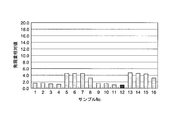
- Example 1 it is the figure which showed the expression level relative value of the COX2 gene in each sample at the time of using pseudo-feces origin RNA as a template. In Example 1, it is the figure which showed the relative expression level value of the COX2 gene in each sample at the time of using MKN45 cell sample origin RNA as a template. In Example 1, it is the figure which showed the expression level relative value of the COX2 gene in each sample at the time of using as a template RNA from E. coli containing MKN45 cell sample. In Example 1, it is the figure which showed the relative expression level value of the COX2 gene in each sample at the time of using bilirubin containing MKN45 cell sample origin RNA as a template.
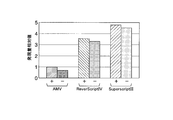
- Example 2 it is the figure which showed the expression level relative value of the COX2 gene at the time of using each reverse transcriptase.
- Comparative example 1 it is the figure which showed the expression level relative value of the COX2 gene at the time of using each reverse transcriptase.
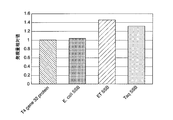
- Example 3 it is the figure which showed the expression level relative value of the COX2 gene at the time of adding various SSB in a reaction liquid.
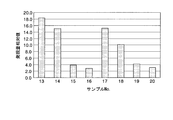
- Example 4 it is the figure which showed the expression level relative value of the COX2 gene in each sample.
- an inhibitory substance means a substance that acts in an inhibitory manner on an enzymatic reaction using a nucleic acid as a substrate.
- the enzyme reaction is not particularly limited as long as it is an enzyme reaction using a nucleic acid as a substrate, and also includes a nucleic acid synthesis reaction such as reverse transcription reaction and PCR.
- Specific examples include bile acids, bile salts, bilirubin, mucopolysaccharides and the like.
- the method for synthesizing stool-derived nucleic acid of the present invention comprises a washing step of washing RNA extracted from stool with a chaotropic salt and alcohol, and a RNA after washing. And a reaction step of performing a reverse transcription reaction in a reaction solution containing a single-stranded nucleic acid binding protein using a reverse transcriptase having heat resistance and low RNase H activity as a template.
- RNA extracted from stool is washed with a chaotropic salt and alcohol in advance, and then the RNA after washing is used as a template, using a reverse transcriptase having specific properties, and then single-stranded.
- a reverse transcriptase having specific properties, and then single-stranded.
- RNA extracted from stool inhibitors contained in stool are brought in.
- a solution containing a chaotropic salt or an alcohol solution By washing the extracted RNA with a solution containing a chaotropic salt or an alcohol solution, the introduced inhibitory substance can be efficiently washed away.
- reverse transcriptase with higher reverse transcription efficiency can be used, but even if a highly active enzyme is selected, a reaction product may be obtained depending on the amount of inhibitor brought in. It may not be possible.
- proteins such as BSA (bovine serum albumin) are generally used as mitigating agents for PCR reaction inhibitors, but when stool-derived RNA is used, conventionally used mitigating agents are used. In many cases, the reverse transcription reaction efficiency is not improved only by adding an agent to the reaction solution.
- the effect of an inhibitory substance in stool is conventionally achieved by performing a reverse transcription reaction in a reaction solution containing a single-stranded nucleic acid binding protein using a reverse transcriptase having heat resistance and low RNase H activity. It can be significantly reduced.
- the combined use of a heat-resistant and low RNase H reverse transcriptase and a single-stranded nucleic acid binding protein is particularly effective in reducing the influence of stool-derived inhibitors and improving the reaction efficiency.
- RNA extracted from stool is washed with a chaotropic salt and alcohol.
- an RNA solution is prepared by adding chaotropic salt and alcohol to RNA extracted from stool, and then RNA is recovered from the RNA solution to obtain RNA washed with chaotropic salt and alcohol. be able to.
- chaotropic salt and alcohol may be added to RNA, respectively, or an alcohol solution containing chaotropic salt may be prepared in advance and added thereto.
- chaotropic salt and the alcohol are added separately, which one is added first can be appropriately determined in consideration of the RNA extraction method from feces.
- the chaotropic salt added to RNA extracted from feces in the washing step is not particularly limited, and any chaotropic salt used in the technical field may be used.
- chaotropic salts for example, guanidine salts such as guanidine hydrochloride, guanidine thiocyanate, and guanidine isothiocyanate are preferable.
- One type of chaotropic salt may be used, or two or more types of chaotropic salts may be used in combination.
- the chaotropic salt is preferably added as a chaotropic salt solution dissolved in an appropriate solvent.
- an appropriate solvent for example, water, citrate buffer, phosphate buffer, Tris buffer, or the like can be used.
- RNA is a substance that is very easily degraded, it is preferable to use a buffer containing an RNase inhibitor such as guanidine thiocyanate or guanidine hydrochloride.
- a chaotropic salt-containing alcohol solution (alcohol solution containing a chaotropic salt) can be prepared by using alcohol as the solvent.
- the concentration of the chaotropic salt solution added to the RNA extracted from stool is not particularly limited as long as it is a concentration that can exert the inhibitor cleaning effect, and the type of chaotropic salt and the RNA solution obtained after the addition
- the concentration can be determined as appropriate in consideration of the concentration of the chaotropic salt, alcohol, the type of alcohol, and the like.
- alcohol having a linear structure and being liquid at room temperature for example, 15 to 40 ° C.
- an alcohol having a solubility in water of 12% by weight or more is preferable, an alcohol having a solubility in water of 20% by weight or more is more preferable, and an alcohol having a solubility in water of 90% by weight or more.
- More preferred is an alcohol that can be mixed with water in any proportion. Examples of alcohols that can be mixed with water at an arbitrary ratio include methanol, ethanol, n-propanol, and 2-propanol.
- methanol, ethanol, propanol, butanol, mercaptoethanol and the like which are water-soluble alcohols.
- the propanol may be n-propanol or 2-propanol.
- the butanol may be 1-butanol (water solubility 20% by weight) or 2-butanol (water solubility 12.5% by weight).
- the alcohol used in the present invention is more preferably ethanol, propanol, or methanol from the viewpoints of availability, handleability, safety, and the like.
- ethanol is particularly useful in screening tests such as periodic medical checkups because it has the highest safety and can be easily handled at home.
- alcohol added to RNA extracted from feces only 1 type may be sufficient and you may add in combination of 2 or more types.
- the RNA extracted from stool may be added directly as alcohol, or may be added as an alcohol solution diluted with an appropriate solvent.
- the amount of alcohol to be added and the concentration and amount of the alcohol solution are particularly limited as long as they are added so as to have a concentration capable of exhibiting an inhibitor cleaning effect in the RNA solution obtained after the addition. Instead, it can be appropriately determined in consideration of the type of alcohol, the amount of RNA solution obtained after the addition, the type of chaotropic salt added, and the like.
- the alcohol concentration in the chaotropic salt-containing alcohol solution is preferably 25% or more, and more preferably 35% or more.
- “%” means “volume%” unless otherwise specified.
- the RNA used for the washing step may be RNA extracted from the collected cells after separating and collecting desired cells from the stool, but may be directly extracted from the stool without performing the cell separation operation. RNA is preferred. This is because when RNA is extracted directly from stool, the amount of the stool-derived inhibitor is increased compared to when extracted from separated and collected cells, and thus the effects of the present invention are more remarkably exhibited. .
- nucleic acids of all species contained in the stool mainly nucleic acids derived from animals excreting the stool, and intestinal resident Nucleic acids derived from bacteria such as fungi are simultaneously extracted and recovered from feces.
- the nucleic acid contained in the stool includes, in addition to animal-derived nucleic acids and bacteria-derived nucleic acids, food-derived nucleic acids ingested by the animals.
- the RNA extracted from the stool subjected to the washing step may be RNA extracted from solid components such as cells in the stool.
- it may be a suspension in which RNA is extracted into a liquid phase from cells or the like contained in stool by adding and mixing a nucleic acid extraction solution to stool, and a solid component from the suspension.
- It may be a relatively clear extract from which RNA has been removed, or an RNA solution recovered and purified from these suspensions or crude extracts.
- nucleic acid extraction solution added to feces to prepare a suspension in which RNA is extracted in the liquid phase, proteins in the solid component are denatured, and mammalian cells and intestinal resident bacteria in the solid component
- the solution is not particularly limited as long as the nucleic acid can be eluted from a cell such as a nucleic acid extraction solution, and any solution used in the technical field may be used.
- a solution obtained by adding a compound usually used as a protein denaturant such as a chaotropic salt, an organic solvent, or a surfactant as an active ingredient to an appropriate solvent can be used as a solution for nucleic acid extraction.
- active ingredients may be a combination of two or more.
- Phenol may be neutral, but is preferably acidic.
- acidic phenol is used, RNA can be selectively extracted into the aqueous layer rather than DNA.
- a solvent for preparing a nucleic acid extraction solution by adding these active ingredients for example, water, citrate buffer, phosphate buffer, Tris buffer, or the like can be used.
- RNA is also preferable to treat stool with alcohol before extracting RNA from the solid component.
- the inhibitory substance contained in the solid component of stool is eluted in alcohol.
- the liquid phase of the suspension is removed, and RNA is extracted and collected from the remaining solid component. More reduced RNA can be recovered.
- alcohol has not only an effect of removing and eluting inhibitory substances, but also an effect of stably storing nucleic acids in stool.
- the same alcohols listed as those that can be added in the washing step can be used. Further, it may be added directly to feces as alcohol, or may be added as an alcohol solution diluted with an appropriate solvent. If the amount of alcohol added to the stool, or the concentration or amount of the alcohol solution is such that the suspension can be added at a concentration that can achieve the nucleic acid stabilization effect and the inhibitory substance elution removal effect, It is not particularly limited, and can be determined appropriately in consideration of the type of alcohol, the amount of stool (solid component amount) and the mixing ratio of the added chaotropic salt solution or liquid component such as alcohol. In addition, when the alcohol concentration in the suspension is sufficiently high, the alcohol component quickly penetrates into the whole stool, so that the inhibitory substance elution removal effect and the nucleic acid stabilization effect can be quickly achieved.
- RNA A lot of inhibitory substances are eluted in the liquid phase of the suspension obtained by mixing the stool with alcohol or an alcohol solution. For this reason, it is preferable to extract RNA by removing the liquid phase from the suspension and adding a nucleic acid extract to the collected solid components.
- the method for recovering the solid component can be appropriately selected from separation methods usually used when separating the liquid component and the solid component. For example, the suspension may be centrifuged, and then the supernatant may be removed to remove the solid component derived from stool, which is a precipitate. The suspension may be filtered and filtered on the filter surface. You may carry out by the filtration method which collect
- the recovered solid component may be washed with an appropriate buffer or the like before adding the nucleic acid extract.
- the buffer include the aforementioned chaotropic salt-containing alcohol solution and a buffer solution whose pH is maintained within the range of 2 to 7.5.
- the suspension obtained by mixing the stool with alcohol or an alcohol solution is stored for a predetermined time before collecting the solid components.
- the time for storing the suspension can be appropriately determined in consideration of the type and concentration of the alcohol, the ratio of the stool-derived component in the suspension, the storage temperature, and the like.
- storage for 1 hour or longer is preferable, storage for 12 hours or longer is more preferable, storage for 24 hours or longer is further preferable, and storage for 72 hours or longer is particularly preferable.
- the inhibitory substance elution removal effect by alcohol is higher when the temperature is higher than when the temperature at which the suspension is stored is low.
- the storage temperature of the suspension obtained by mixing stool with alcohol or an alcohol solution is preferably 4 ° C. or higher, and more preferably 20 ° C. or higher.
- the storage temperature is preferably 50 ° C. or lower. This is because if the alcohol is stored for a long time under a high temperature condition of 50 ° C. or more, the concentration of the alcohol in the suspension may be lower than a concentration sufficient for the effect due to volatilization or the like.
- RNA in the liquid phase of a suspension containing a solid component derived from stool is subjected to a washing step as RNA extracted from stool, specifically, a chaotropic salt or alcohol was added to the suspension. Thereafter, the RNA that has been washed can be recovered by recovering the RNA present in the liquid phase of the obtained RNA solution in a suspended state.
- the denatured protein Before recovering the RNA in the liquid phase, the denatured protein may be removed from the suspension.
- the quality of the recovered RNA can be improved by removing the previously denatured protein before recovering the RNA.
- the protein can be removed from the suspension by a known method.
- the denatured protein can be removed by precipitating the denatured protein by centrifugation and collecting only the supernatant.
- centrifugation is performed, and the denatured protein is precipitated and only the supernatant is recovered. Protein can be removed.
- the method for recovering RNA in the liquid phase can be performed by a known method such as ethanol precipitation or cesium chloride ultracentrifugation.
- the nucleic acid can be recovered by eluting the adsorbed nucleic acid from the inorganic support using a certain volume of solvent.
- RNA can be recovered from the liquid phase of the suspension after the addition of chaotropic salt or alcohol using a commercially available kit such as a nucleic acid extraction kit.
- the inorganic support for adsorbing nucleic acid a known inorganic support capable of adsorbing nucleic acid can be used.
- the shape of the inorganic support is not particularly limited, and may be in the form of particles or a film.
- examples of the inorganic support include silica-containing particles (beads) such as silica gel, siliceous oxide, glass, and diatomaceous earth, and porous membranes such as nylon, polycarbonate, polyacrylate, and nitrocellulose.
- Solvents for eluting adsorbed nucleic acids from inorganic supports are usually used to elute nucleic acids from these known inorganic supports in consideration of the type of nucleic acid to be recovered, the subsequent nucleic acid analysis method, and the like.
- a solvent can be appropriately used.
- the elution solvent is particularly preferably purified water.
- the inorganic support on which the nucleic acid has been adsorbed is preferably washed with an appropriate washing buffer before the nucleic acid is eluted.
- RNA when recovering RNA from a liquid phase, it is also preferable to selectively recover RNA over DNA. For example, by eluting RNA into the aqueous layer preferentially over DNA by the phenol / chloroform method using acidic phenol, the amount of DNA contamination can be reduced by performing a precipitation method using ethanol precipitation or an inorganic support. Reduced RNA can be recovered. In addition, RNA can be selectively recovered by cesium chloride ultracentrifugation. In addition, for example, in US Pat. No. 5,155,018, Gillespie et al. Isolated and biologically active RNA from biological sources including RNA, DNA and other cellular contents. A method of purification is disclosed.
- the raw material containing RNA is brought into contact with particles made of silica gel containing a material such as finely crushed glass.
- the binding buffer from which RNA is adsorbed to the particles is an acidified solution containing a chaotropic salt.
- RNA binds to the silica material, but not DNA, so that RNA can be selectively recovered.
- Japanese Patent No. 04036625 describes that RNA can be selectively adsorbed and recovered by changing the concentration of guanidine salt and ethanol.
- a chaotropic salt solution, an alcohol solution, or a chaotropic salt-containing alcohol solution is added, and then RNA is recovered to obtain DNA. Washed RNA with a reduced amount of contamination can be recovered.
- the solid extract was removed from the suspension obtained by adding the nucleic acid extraction solution to the stool by centrifugation or the like, and the crude extract containing only the liquid phase containing RNA was used as RNA extracted from the stool. It can also be subjected to a washing process. Specifically, the washed RNA can be recovered by adding chaotropic salt or alcohol to the crude extract and then recovering the RNA in the liquid phase. Similarly, washed RNA can be recovered by adding a chaotropic salt solution, alcohol solution, or chaotropic salt-containing alcohol solution to RNA purified by a conventional method, and then recovering RNA in the liquid phase. In addition, the recovery method of RNA in a liquid phase can use the method similar to the method quoted when a chaotropic salt or alcohol is added to the suspension.
- the RNA extracted from stool may already contain chaotropic salt or alcohol.
- chaotropic salt or alcohol remains in the extracted RNA. May have. Also in this case, the inhibitor can be washed and removed more effectively by washing with a chaotropic salt or alcohol.
- the washing treatment in the washing step is a treatment of recovering RNA from a liquid phase containing chaotropic salt or alcohol after directly contacting chaotropic salt or alcohol with RNA extracted from the solid component of stool. For this reason, in the process of extracting RNA from stool, when chaotropic salt or alcohol is used, and when RNA extracted from a solid component is subjected to a treatment that contacts chaotropic salt or alcohol, the treatment is performed. Can be the cleaning treatment in the cleaning step of the present invention.
- RNA when RNA is extracted from a solid component using a chaotropic salt solution as a nucleic acid extraction solution, the extracted RNA directly contacts the chaotropic salt in the liquid phase, and thus RNA is recovered from the liquid phase. As a result, the RNA washed with the chaotropic salt can be recovered without adding a new chaotropic salt.
- a chaotropic salt solution is added to feces to prepare a suspension, RNA is extracted, and then an alcohol solution or an alcohol solution containing a chaotropic salt is added to the suspension containing the chaotropic salt. After that, RNA is recovered from the suspension. Thereby, RNA washed with chaotropic salt and alcohol can be recovered.
- RNA washed with alcohol can be recovered.
- the stool from which RNA to be subjected to the synthesis method of the present invention is extracted is not particularly limited as long as it is an animal, but is preferably derived from a mammal, preferably from a human. More preferably.
- human feces collected for periodic medical examinations and diagnosis are preferable, but feces such as livestock and wild animals may be used.
- feces such as livestock and wild animals may be used.
- the collected feces are preferably those immediately after excretion, but may be those that have passed time after excretion.
- the RNA washed with the chaotropic salt and alcohol is preferably RNA extracted from 10 mg to 1 g of stool as a weight, for example. If the amount of stool becomes too large, the handleability and the like may be reduced. On the other hand, when the amount of stool is too small, the number of mammalian cells such as large intestine exfoliated cells contained in the stool becomes too small, and thus the necessary RNA amount may not be recovered. Moreover, since feces are heterogeneous, it is preferable to collect from a wide range of feces when collecting feces in order to avoid the influence of the localization of mammalian cells.
- a reaction step in a reaction solution containing a single-stranded nucleic acid binding protein using a reverse transcriptase having heat-resistant and low RNase H activity using the washed RNA collected in the washing step as a template Perform reverse transcription reaction with.
- a reverse transcriptase with specific properties and a single-stranded nucleic acid-binding protein, both the template RNA and reverse transcriptase are sufficiently stabilized, so the reduction in reaction efficiency due to inhibitors can be suppressed. it is conceivable that.
- the reverse transcription reaction can be performed by a conventional method except that a reverse transcriptase having heat resistance and low RNase H activity is used and a single-stranded nucleic acid binding protein is added to the reaction solution.
- the reverse transcriptase used in the present invention is an enzyme having heat resistance.
- heat-resistant reverse transcriptase means a reverse transcriptase having resistance to heat inactivation. Specifically, it is an enzyme that retains at least 50% or more of its enzyme activity even when heated at 90 ° C. for 30 seconds.
- the reverse transcriptase used in the present invention is an enzyme having a low RNase H activity.
- “reverse transcriptase having low RNase H activity” means that the RNase H activity of the enzyme is wild type or wild type Moloney murine leukemia virus (M-MLV), avian myeloblastosis virus (AMV) or It refers to a reverse transcriptase that is less than about 20% of the RNase H activity of an RNase H + enzyme such as Rous sarcoma virus (RSV) reverse transcriptase.
- M-MLV Moloney murine leukemia virus
- AMV avian myeloblastosis virus
- RSV Rous sarcoma virus
- the reverse transcriptase having heat resistance and low RNase H activity include M-MLV H-reverse transcriptase and the like.
- SuperScript (registered trademark) III manufactured by Invitrogen is most preferable.
- the enzyme is a single-base mutant of RNase H- of M-MLV reverse transcriptase.
- the “single-stranded nucleic acid binding protein” is a protein that mainly binds to single-stranded DNA rather than double-stranded DNA regardless of the base sequence.
- Specific examples of the single-stranded nucleic acid binding protein that can be used in the present invention include, for example, T4 gene 32. protein (manufactured by Promega), E.I. Examples include SSB derived from E. coli, Thermos aquaticus SSB exhibiting heat resistance, methane bacterium (Methanococcus jannaschii), SSB derived from Sulfolobus sulfatalicus, and the like. These single-stranded nucleic acid binding proteins may be used alone or in combination.
- the single-stranded nucleic acid binding protein used in the present invention in the reverse transcription reaction may be a non-heat-resistant single-stranded nucleic acid binding protein, but is preferably a heat-resistant single-stranded nucleic acid binding protein.
- the term “heat-resistant single-stranded nucleic acid binding protein” means a protein whose binding activity to single-stranded DNA has resistance to inactivation against heat. A single-stranded nucleic acid binding protein that retains at least 50% or more of its binding activity even when heated for seconds.
- an RNase A inhibitor it is preferable to further add an RNase A inhibitor to the reaction solution for the reverse transcription reaction.
- an RNase A inhibitor By performing a reverse transcription reaction in the presence of an RNase A inhibitor, the influence of a fecal-derived inhibitor obtained by using a single-stranded nucleic acid-binding protein and a reverse transcriptase having heat resistance and low RNase H activity is reduced. The effect can be further enhanced.
- the RNase A inhibitor include Ribonclease Inhibitor, Cloned (manufactured by Invitrogen), Ribonclease Inhibitor (manufactured by TaKaRa), and the like.
- the cDNA synthesized by the synthesis method of the present invention can be subjected to various analyzes in the same manner as DNA obtained by other methods.
- the presence or absence of a gene mutation can detect, for example, a mutation such as insertion, deletion, substitution, duplication, inversion, or splicing variant (isoform) of a base on RNA.
- RNA expression level can be detected (mRNA expression analysis).
- analyzes can be performed by methods known in the art.
- a commercially available analysis kit such as a K-ras gene mutation analysis kit may also be used.
- the cDNA synthesized by the synthesis method of the present invention is derived from stool, it is preferably used for analyzing RNA derived from gastrointestinal cells such as the large intestine, small intestine, stomach, etc. It is more preferable to use it.
- RNA derived from a marker gene for neoplastic transformation including cancer
- a marker gene for inflammatory digestive organ disease used for analyzing RNA derived from a marker gene for colorectal cancer.
- the “gene-derived RNA” means an expression product such as mRNA of the gene.
- the marker showing neoplastic conversion include known cancer markers such as COX2 (cyclooxygenase-2) gene, carcinoembryonic antigen (CEA), sialyl Tn antigen (STN), APC gene, p53 gene, K- The presence or absence of mutations such as ras gene.
- methylation of genes such as p16, hMLHI, MGMT, p14, APC, E-cadherin, ESR1, and SFRP2 is also useful as a diagnostic marker for colorectal diseases (for example, LindLet al., “A CpG island hypermethylation, profile, of primary, colorectal, carcinomas, and colon, cancer, cell lines, Molecular Cancer, 2004, Vol. 3, Chapter 28).
- COX2 gene-derived RNA for example, there is COX2 gene-derived RNA.
- Cox-2 gene-derived RNA is also used as a marker indicating neoplastic conversion.
- the synthesis method of the present invention can significantly reduce the influence of the stool-derived inhibitory substance and increase the reaction efficiency of the reverse transcription reaction, and as a result, a stable reaction can be performed. For this reason, a highly reliable result can be obtained by using the cDNA obtained by the synthesis method of the present invention for nucleic acid analysis such as gene expression analysis of stool-derived RNA. The detection result thus obtained is suitably used for clinical examination.
- a stool-derived nucleic acid synthesis kit includes, for example, a kit comprising a chaotropic salt, alcohol, a heat-resistant and low RNase H activity reverse transcriptase, and a single-stranded nucleic acid binding protein.
- the kit may further include a reagent used for RNA extraction from stool or reverse transcription reaction. Examples of such a reagent include a nucleic acid extraction solution, an inorganic support, a solvent for elution from the inorganic support, a reverse transcription reaction buffer, a primer, and dNTP.
- MKN45 cells used were cultured by a conventional method.
- RNA is extracted from a stool sample derived from a pseudo-colorectal cancer patient (a stool pseudo-sample collected from a colorectal cancer patient). Extraction and collection were performed to prepare pseudofecal RNA.
- a stool sample derived from a pseudo-colon cancer patient was prepared as follows. First, an equal amount of physiological saline was added to 5 g of normal human stool, mixed well, and homogenized. Then, 200 ⁇ g centrifugation treatment was performed to precipitate impurities, and the supernatant was collected. This stool supernatant was mixed with a cell pellet adjusted so as to contain 1 ⁇ 10 5 MKN45 cells, and this was used as a stool sample derived from a simulated colorectal cancer patient. MKN45 cells are derived from gastric cancer, but are cultured cell lines that highly express the COX2 gene in the same manner as colon cancer cells.
- the prepared stool sample derived from a pseudo colorectal cancer patient is divided into three 1.5 mL tubes of 300 ⁇ L each, and RNA is extracted by SDS / phenol extraction method, guanidine / ethanol extraction method, or guanidine / ethanol / silica extraction method, respectively. Recovered.
- Chloroform was added to the 1.5 mL tube and mixed (phenol / chloroform treatment), and then centrifuged again at 14000 rpm for 2 minutes, and the upper layer was collected in another 1.5 mL tube.
- 30 ⁇ L of 3M CH 3 COONa and an equal amount of isopropanol were added and mixed, followed by centrifugation at 4 ° C., 14000 rpm for 10 minutes to obtain a pellet (ethanol precipitation).
- the pellet was rinsed with a 75% ethanol solution, dried, and then dissolved in 50 ⁇ L of distilled water as phenol / chloroform-extracted RNA.
- guanidine thiocyanate buffer (RLT buffer, manufactured by QIAGEN) was added to a tube containing 300 ⁇ L of a stool sample derived from a pseudo colorectal cancer patient, and after performing Vortex, etc. A volume (about 600 ⁇ L) of 70% ethanol was added and vortexed to obtain a suspension. Thereafter, 300 ⁇ L each of the suspension was dispensed into four 1.5 mL tubes, and 2.5 times the volume of 99.5% ethanol solution and 60 ⁇ L of 3M CH 3 COONa were added and mixed. Centrifugation was performed at 4 ° C., 14000 rpm for 10 minutes to obtain a pellet (ethanol precipitation). The obtained pellets in the four tubes were combined into one, rinsed with a 75% ethanol solution, dried, and then dissolved in 50 ⁇ L of distilled water as guanidine / ethanol-extracted RNA.
- RLT buffer guanidine thiocyanate buffer
- RNA recovery column of RNeasy midi kit (manufactured by Quiagen), and the RNA recovery column is washed and eluted according to the attached protocol.
- the RNA was recovered as a 50 ⁇ L RNA solution.
- the RNA was guanidine / ethanol / silica extracted RNA.
- RNA used for comparison A cell sample (MKN45 cell sample) adjusted with PBS so that 1 ⁇ 10 5 MKN45 cells are contained, and added to the cell sample so as to contain 1 ⁇ 10 8 E. coli cells cultured in a liquid medium.
- Three types, E. coli-containing MKN45 cell sample, and those obtained by adding bilirubin to the cell sample to a final concentration of 1 mg / ⁇ L (bilirubin-containing MKN45 cell sample) were used as comparison targets. From these cell samples, RNA was extracted and collected by the SDS / phenol extraction method or the guanidine / ethanol extraction method in the same manner as the stool samples derived from pseudo colorectal cancer patients.
- RNA concentration based on the measurement result of the RNA concentration. Specifically, as shown in Table 1, phenol / chloroform as a template for each of pseudo-feces-derived RNA, MKN45 cell sample-derived RNA, E.
- coli-containing MKN45 cell sample-derived RNA and bilirubin-containing MKN45 cell sample-derived RNA M-MLV (manufactured by TakaRa), which is non-thermostable and has high RNaseH activity, or SuperScript (registered trademark) III (manufactured by Invitrogen) having low thermostability and low RNaseH activity as reverse transcriptase using extracted RNA or guanidine / ethanol-extracted RNA 16 kinds of reaction solutions (samples) were prepared by changing the presence or absence of addition of 40 ng / ⁇ L T4 gene 32 protein (Promega) and the presence or absence of addition of RNase A inhibitor (TaKaRa).
- T4 gene 32 protein is a single-stranded nucleic acid binding protein (hereinafter referred to as SSB).
- SSB single-stranded nucleic acid binding protein
- PCR plate was placed in an ABI real-time PCR apparatus, treated at 95 ° C. for 10 minutes, and then subjected to 40 cycles of thermal cycling at 95 ° C. for 1 minute, 56.5 ° C. for 1 minute, and 72 ° C. for 1 minute. Further, PCR was performed while measuring the fluorescence intensity over time by treating at 72 ° C. for 7 minutes.
- FIGS. 1 shows the results when pseudo stool-derived RNA was used as a template
- FIG. 2 shows the results when MKN45 cell sample-derived RNA was used as a template
- FIG. 3 shows the case where E. coli-containing MKN45 cell sample-derived RNA was used as a template.
- FIG. 4 shows the results when RNA derived from a bilirubin-containing MKN45 cell sample was used as a template.
- RNA containing fecal-derived inhibitory substances such as bilirubin as a template the RNA is preliminarily obtained by using a chaotropic salt and alcohol when the RNA is recovered. It is clear that the treatment with the tropic salt and alcohol can reduce the influence of the inhibitor introduced into the reaction solution of the reverse transcription reaction.
- the effect of adding the RNase A inhibitor is not observed when the bilirubin-containing MKN45 cell sample-derived RNA is used as a template, and the effect of adding SSB is more than that when the bilirubin-containing MKN45 cell sample-derived RNA is used as a template. It was significantly larger when pseudo-fecal RNA was used as a template. The difference is that when bilirubin-containing MKN45 cell sample-derived RNA was used as a template, only one kind of inhibitor was introduced into the reaction solution, whereas pseudofecal-derived RNA was used as a template. In some cases, it is presumed that various inhibitors derived from stool were brought into the reaction solution.
- RLT buffer guanidine thiocyanate buffer
- RNA sample extracted from feces and did. The RNA sample was quantified and the RNA concentration was measured.
- RNA sample is added so that 1 ⁇ g of RNA is added, and Taq SSB (manufactured by Bio Academia), which is a heat-resistant SSB, is added to 500 ng / ⁇ L, and an RNase A inhibitor (
- the product was prepared according to the instruction manual attached to each reverse transcriptase, except that Taunit (manufactured by TaKaRa) was added to 0.5 units / ⁇ L.
- Each prepared reaction solution was reacted as described in the instruction manual for each reverse transcriptase to synthesize cDNA. Thereafter, in the same manner as in Example 1, real-time PCR was performed using the obtained cDNA as a template, and the expression product (mRNA) of the COX2 gene was detected.
- each reaction solution was prepared by adding an RNA sample so that 1 ⁇ g of RNA was added, and further adding Taq SSB (manufactured by Bio Academia) to 500 ng / ⁇ L. It was prepared according to the instruction manual attached to the reverse transcriptase. Each prepared reaction solution is reacted as described in the instruction manual for each reverse transcriptase, and in the same manner as in Example 1, real-time PCR is performed using the obtained cDNA as a template to express the COX2 gene. Product (mRNA) was detected.
- the measurement result of fluorescence intensity was analyzed, and the expression level of the COX2 gene in each reaction solution was examined.
- the expression level was the lowest when AMV with high RNase H activity was used, and the expression level was highest when SuperScript III was used.
- the relative value of the expression level when other reverse transcriptase was used was calculated. The calculation results are shown in FIG. In spite of using the same RNA sample as a template, when RNase A inhibitor is added to the reaction solution, it is approximately 4.8 times when SuperScript III is used compared to when AMV is used. In that case, the expression level was about 3.5 times higher.
- the amount of COX2 gene expressed was greater when RNase A inhibitor was added to the reaction solution than when it was not added.
- AMV assuming that the expression level when RNaseA inhibitor was added to the reaction solution was 1, it was about 0.7 when RNaseA inhibitor was not added.
- SuperScript III or ReverseScript IV the expression level when RNase A inhibitor was not added was about 95% of the expression level when added.
- the above three types of reverse transcriptases were used, respectively.
- reverse transcription reaction was performed in a reaction solution to which RNase A inhibitor was added, real-time PCR was performed using the obtained cDNA as a template, and the expression product (mRNA) of the COX2 gene was detected.
- the expression level was the lowest when AMV was used, and the expression level was highest when SuperScript III was used.
- the expression level when using ReverseScript IV was 4.1, and SuperScript III The expression level when using was 4.6.
- RNA extracted from feces is detected by reverse transcription reaction and subsequent nucleic acid amplification reaction such as PCR, such as SuperScript (registered trademark) III and RiverScript (registered trademark) IV. It is clear that it can be detected with high sensitivity by using a reverse transcriptase that exhibits thermostability and low RNase H activity, and that detection sensitivity can be further enhanced by carrying out the reverse transcription reaction in the presence of an RNase A inhibitor. It is.
- RNA extracted from cultured cells considered to have few inhibitors as a template and measuring the expression levels of cDNA synthesis and COX2 gene expression products using three types of reverse transcriptase in the same manner as in Example 2, The influence of RNase H activity of the reverse transcriptase used in the reaction was examined. Specifically, RNA was extracted from the cell pellet adjusted to contain 1 ⁇ 10 5 MKN45 cells by the guanidine / ethanol extraction method in the same manner as in Example 1, and this was used as an RNA sample.
- RNA sample was obtained as a template, in the same manner as in Example 2, a reverse transcription reaction was performed using AMV, ReverseScript IV, or SuperScript III, and real-time PCR was performed using the obtained cDNA as a template to express the COX2 gene.
- Product mRNA was detected.
- the measurement result of the fluorescence intensity was analyzed, and the expression level of the COX2 gene in each reaction solution was examined.
- the expression level was the lowest when AMV was used, and the expression level was highest when SuperScript III was used, but there was not much difference in the expression level.
- the expression level when using AMV is 1, and the relative value of the expression level when using other reverse transcriptases is calculated, the expression level when using SuperScript III or RiverScript IV is about 1.6 to It was only 1.7.
- the calculation results are shown in FIG.
- coli SSB non-heat resistant, manufactured by Bio Academia
- 500 ng / ⁇ L -ET SSB heat resistance, New England Bio Lab
- 4 ng / ⁇ L -Taq SSB heat resistance, manufactured by Bio Academia
- each reaction solution was added to the SuperScript III, except that the RNA sample was added so that 1 ⁇ g of RNA was added, and various SSBs were added to each concentration. Prepared according to the instructions. Each prepared reaction solution was reacted as described in the instruction manual for SuperScript III, and in the same manner as in Example 1, real-time PCR was performed using the obtained cDNA as a template to obtain an expression product of COX2 gene ( mRNA) was detected.
- the measurement result of fluorescence intensity was analyzed, and the expression level of the COX2 gene in each reaction solution was examined.
- the expression level when T4 gene 32 protein was used was 1, and the relative value of the expression level when other SSB was used was calculated.
- the calculation results are shown in FIG. As a result, when ET SSB and Taq SSB were used even though the same RNA sample was used as a template, T4 gene 32 protein and E.I.
- the expression level of the COX2 gene was higher than when E. coli SSB was used. From these results, when reverse transcription reaction was performed using RNA extracted from feces as a template, the reaction efficiency was higher by adding heat-resistant SSB to the reaction solution than when non-heat-resistant SSB was added. It is clear that can be improved.
- Table 2 shows the presence or absence of addition of T4 gene 32 protein (“SSB” in the table), BSA, and RNase A inhibitor in each sample.
- SSB T4 gene 32 protein
- “+” means that the substance was added to the reaction solution for the reverse transcription reaction
- “ ⁇ ” means that it was not added.
- Samples 17 to 20 correspond to the conditions in which BSA was added to Samples 13 to 16 of Example 1, respectively, in the RNA extraction conditions and the composition of the reaction solution for the reverse transcription reaction.
- Reverse transcription reaction was performed in the four types of reaction solutions of Samples 17 to 20 in the same manner as in Example 1.
- Real-time PCR was performed using the obtained cDNA as a template to detect the expression product (mRNA) of the COX2 gene. It was.
- the measurement result of the fluorescence intensity was analyzed, and the expression level of the COX2 gene in each reaction solution was examined.
- the expression level was the highest, and both SSB and RNase A inhibitor were added.
- the expression level was the smallest.
- the amount of expression was higher when only SSB was added to the reaction solution (sample 18) than when only RNase A inhibitor was added (sample 19).
- cDNA can be efficiently synthesized from RNA contained in stool, so that it can be used not only in academic research but also in fields such as clinical tests using stool as a specimen. is there.
Landscapes
- Health & Medical Sciences (AREA)
- Chemical & Material Sciences (AREA)
- Engineering & Computer Science (AREA)
- Life Sciences & Earth Sciences (AREA)
- Genetics & Genomics (AREA)
- Biomedical Technology (AREA)
- Bioinformatics & Cheminformatics (AREA)
- Organic Chemistry (AREA)
- Zoology (AREA)
- Wood Science & Technology (AREA)
- Biotechnology (AREA)
- General Engineering & Computer Science (AREA)
- Crystallography & Structural Chemistry (AREA)
- Plant Pathology (AREA)
- Molecular Biology (AREA)
- Microbiology (AREA)
- Biophysics (AREA)
- Physics & Mathematics (AREA)
- Biochemistry (AREA)
- General Health & Medical Sciences (AREA)
- Analytical Chemistry (AREA)
- Bioinformatics & Computational Biology (AREA)
- Measuring Or Testing Involving Enzymes Or Micro-Organisms (AREA)
Abstract
La présente invention concerne un procédé pour synthétiser un ADNc à partir d'ARN contenu dans des fèces par une réaction de transcription inverse avec une efficacité élevée. L'invention concerne : un procédé pour synthétiser un acide nucléique dérivé de fèces, qui comprend une étape de lavage d'ARN extrait de fèces avec un sel chaotropique et un alcool et une étape de réaction de conduite d'une réaction transcriptionnelle inverse dans une solution de réaction contenant une protéine capable de se lier à un acide nucléique monocaténaire en utilisant l'ARN lavé en tant que matrice et en utilisant une transcriptase inverse ayant une résistance à la chaleur et une faible activité RNaseH ; un procédé pour synthétiser un acide nucléique dérivé de fèces comme mentionné ci-dessus, dans lequel la solution de réaction contient en outre un inhibiteur de RNaseA ; et un kit de synthèse d'acide nucléique dérivé de fèces comprenant un sel chaotropique, un alcool, une transcriptase inverse ayant une résistance à la chaleur et une faible activité RNaseH et une protéine capable de se lier à un acide nucléique monocaténaire.
Priority Applications (1)
| Application Number | Priority Date | Filing Date | Title |
|---|---|---|---|
| JP2012526419A JPWO2012014694A1 (ja) | 2010-07-26 | 2011-07-14 | 糞便由来核酸の合成方法 |
Applications Claiming Priority (2)
| Application Number | Priority Date | Filing Date | Title |
|---|---|---|---|
| JP2010167036 | 2010-07-26 | ||
| JP2010-167036 | 2010-07-26 |
Publications (1)
| Publication Number | Publication Date |
|---|---|
| WO2012014694A1 true WO2012014694A1 (fr) | 2012-02-02 |
Family
ID=45529910
Family Applications (1)
| Application Number | Title | Priority Date | Filing Date |
|---|---|---|---|
| PCT/JP2011/066082 Ceased WO2012014694A1 (fr) | 2010-07-26 | 2011-07-14 | Procédé pour la synthèse d'acide nucléique dérivé de fèces |
Country Status (2)
| Country | Link |
|---|---|
| JP (1) | JPWO2012014694A1 (fr) |
| WO (1) | WO2012014694A1 (fr) |
Citations (4)
| Publication number | Priority date | Publication date | Assignee | Title |
|---|---|---|---|---|
| JPH11511982A (ja) * | 1995-09-06 | 1999-10-19 | メディカル・リサーチ・カウンシル | 細胞を分離する方法 |
| JP2002539765A (ja) * | 1998-11-23 | 2002-11-26 | エグザクト サイエンシーズ コーポレイション | 糞便サンプル調製のための方法 |
| WO2004083856A1 (fr) * | 2003-03-19 | 2004-09-30 | Hamamatsu Foundation For Science And Technology Promotion | Procede de detection du marqueur du cancer du colon |
| JP2005514073A (ja) * | 2001-12-24 | 2005-05-19 | テイサイド、ユニバーシティー、ホスピタルズ、エヌエイチエス、トゥラスト | Dna検出 |
-
2011
- 2011-07-14 WO PCT/JP2011/066082 patent/WO2012014694A1/fr not_active Ceased
- 2011-07-14 JP JP2012526419A patent/JPWO2012014694A1/ja not_active Withdrawn
Patent Citations (4)
| Publication number | Priority date | Publication date | Assignee | Title |
|---|---|---|---|---|
| JPH11511982A (ja) * | 1995-09-06 | 1999-10-19 | メディカル・リサーチ・カウンシル | 細胞を分離する方法 |
| JP2002539765A (ja) * | 1998-11-23 | 2002-11-26 | エグザクト サイエンシーズ コーポレイション | 糞便サンプル調製のための方法 |
| JP2005514073A (ja) * | 2001-12-24 | 2005-05-19 | テイサイド、ユニバーシティー、ホスピタルズ、エヌエイチエス、トゥラスト | Dna検出 |
| WO2004083856A1 (fr) * | 2003-03-19 | 2004-09-30 | Hamamatsu Foundation For Science And Technology Promotion | Procede de detection du marqueur du cancer du colon |
Also Published As
| Publication number | Publication date |
|---|---|
| JPWO2012014694A1 (ja) | 2013-09-12 |
Similar Documents
| Publication | Publication Date | Title |
|---|---|---|
| US8367817B2 (en) | Reagents for isolation of purified RNA | |
| DK2588609T3 (en) | METHOD AND KIT FOR SEQUENTIAL ISOLATION OF NUCLEOTIDE SPECIES FROM A SAMPLE | |
| JP2023536085A (ja) | スルホン化dnaの精製 | |
| US20100331534A1 (en) | nucleic acid purification method | |
| US20090291447A1 (en) | Method of detecting colon cancer marker | |
| WO2010134246A1 (fr) | Procédé de préparation d'un échantillon contenant un acide nucléique | |
| CN100429307C (zh) | 核酸检测方法及其系统 | |
| JP4719455B2 (ja) | 直接核酸増幅方法用生体試料処理液および直接核酸増幅方法 | |
| WO2015159979A1 (fr) | Procédé de récupération d'acides nucléiques à courte chaîne | |
| US20120171728A1 (en) | Process for amplifying dna using tetratethylene glycol, kit of parts therefor and use thereof | |
| JP5710969B2 (ja) | 糞便試料からの核酸回収方法 | |
| JP5924888B2 (ja) | 核酸抽出方法、核酸抽出試薬キットおよび核酸抽出用試薬 | |
| Darbandi et al. | A simple, rapid and economic manual method for human sperm DNA extraction in genetic and epigenetic studies | |
| KR101912488B1 (ko) | 분자 검출 분석법 | |
| EP4078596A1 (fr) | Procédés de production d'acides nucléiques de capture cibles | |
| JPWO2010134245A1 (ja) | 哺乳細胞由来核酸の回収方法、核酸解析方法、及び採便用キット | |
| JPWO2012014694A1 (ja) | 糞便由来核酸の合成方法 | |
| WO2011004517A1 (fr) | Procédé pour la détection dacide nucléique cible, et procédé de dépistage du cancer colorectal | |
| WO2012043183A1 (fr) | Procédé de synthèse d'un acide nucléique cible dans les selles | |
| KR101500686B1 (ko) | 적은 수의 세포에서 증폭가능한 dna를 얻기 위한 추출 방법 및 그 조성물 | |
| JP2006166711A (ja) | 糞便由来遺伝子の簡便増幅方法 | |
| WO2026055641A1 (fr) | Procédés et compositions pour préparer des analytes biomoléculaires à partir d'échantillons complexes | |
| Zaorska et al. | Multiplexed SNP Typing of DNA after Demineralization and Organic Extraction from a Bone | |
| JP2015096061A (ja) | 核酸増幅方法、核酸増幅用の核酸試料の製造方法および核酸解析方法 | |
| Spethmann et al. | Nucleic acids from intact epithelial cells as a target for stool-based molecular diagnosis of colorectal cancer |
Legal Events
| Date | Code | Title | Description |
|---|---|---|---|
| 121 | Ep: the epo has been informed by wipo that ep was designated in this application |
Ref document number: 11812286 Country of ref document: EP Kind code of ref document: A1 |
|
| WWE | Wipo information: entry into national phase |
Ref document number: 2012526419 Country of ref document: JP |
|
| NENP | Non-entry into the national phase |
Ref country code: DE |
|
| 122 | Ep: pct application non-entry in european phase |
Ref document number: 11812286 Country of ref document: EP Kind code of ref document: A1 |