WO2012017679A1 - Marqueur relatif à la longueur de la tige d'une plante du genre saccharum et son utilisation - Google Patents
Marqueur relatif à la longueur de la tige d'une plante du genre saccharum et son utilisation Download PDFInfo
- Publication number
- WO2012017679A1 WO2012017679A1 PCT/JP2011/004457 JP2011004457W WO2012017679A1 WO 2012017679 A1 WO2012017679 A1 WO 2012017679A1 JP 2011004457 W JP2011004457 W JP 2011004457W WO 2012017679 A1 WO2012017679 A1 WO 2012017679A1
- Authority
- WO
- WIPO (PCT)
- Prior art keywords
- sugarcane
- stalk
- length
- seq
- nucleotide sequence
- Prior art date
- Legal status (The legal status is an assumption and is not a legal conclusion. Google has not performed a legal analysis and makes no representation as to the accuracy of the status listed.)
- Ceased
Links
Images





Classifications
-
- A—HUMAN NECESSITIES
- A01—AGRICULTURE; FORESTRY; ANIMAL HUSBANDRY; HUNTING; TRAPPING; FISHING
- A01H—NEW PLANTS OR NON-TRANSGENIC PROCESSES FOR OBTAINING THEM; PLANT REPRODUCTION BY TISSUE CULTURE TECHNIQUES
- A01H1/00—Processes for modifying genotypes ; Plants characterised by associated natural traits
- A01H1/04—Processes of selection involving genotypic or phenotypic markers; Methods of using phenotypic markers for selection
- A01H1/045—Processes of selection involving genotypic or phenotypic markers; Methods of using phenotypic markers for selection using molecular markers
-
- A—HUMAN NECESSITIES
- A01—AGRICULTURE; FORESTRY; ANIMAL HUSBANDRY; HUNTING; TRAPPING; FISHING
- A01H—NEW PLANTS OR NON-TRANSGENIC PROCESSES FOR OBTAINING THEM; PLANT REPRODUCTION BY TISSUE CULTURE TECHNIQUES
- A01H5/00—Angiosperms, i.e. flowering plants, characterised by their plant parts; Angiosperms characterised otherwise than by their botanic taxonomy
- A01H5/04—Stems
-
- A—HUMAN NECESSITIES
- A01—AGRICULTURE; FORESTRY; ANIMAL HUSBANDRY; HUNTING; TRAPPING; FISHING
- A01H—NEW PLANTS OR NON-TRANSGENIC PROCESSES FOR OBTAINING THEM; PLANT REPRODUCTION BY TISSUE CULTURE TECHNIQUES
- A01H6/00—Angiosperms, i.e. flowering plants, characterised by their botanic taxonomy
- A01H6/46—Gramineae or Poaceae, e.g. ryegrass, rice, wheat or maize
-
- C—CHEMISTRY; METALLURGY
- C12—BIOCHEMISTRY; BEER; SPIRITS; WINE; VINEGAR; MICROBIOLOGY; ENZYMOLOGY; MUTATION OR GENETIC ENGINEERING
- C12Q—MEASURING OR TESTING PROCESSES INVOLVING ENZYMES, NUCLEIC ACIDS OR MICROORGANISMS; COMPOSITIONS OR TEST PAPERS THEREFOR; PROCESSES OF PREPARING SUCH COMPOSITIONS; CONDITION-RESPONSIVE CONTROL IN MICROBIOLOGICAL OR ENZYMOLOGICAL PROCESSES
- C12Q1/00—Measuring or testing processes involving enzymes, nucleic acids or microorganisms; Compositions therefor; Processes of preparing such compositions
- C12Q1/68—Measuring or testing processes involving enzymes, nucleic acids or microorganisms; Compositions therefor; Processes of preparing such compositions involving nucleic acids
- C12Q1/6876—Nucleic acid products used in the analysis of nucleic acids, e.g. primers or probes
- C12Q1/6888—Nucleic acid products used in the analysis of nucleic acids, e.g. primers or probes for detection or identification of organisms
- C12Q1/6895—Nucleic acid products used in the analysis of nucleic acids, e.g. primers or probes for detection or identification of organisms for plants, fungi or algae
-
- C—CHEMISTRY; METALLURGY
- C12—BIOCHEMISTRY; BEER; SPIRITS; WINE; VINEGAR; MICROBIOLOGY; ENZYMOLOGY; MUTATION OR GENETIC ENGINEERING
- C12Q—MEASURING OR TESTING PROCESSES INVOLVING ENZYMES, NUCLEIC ACIDS OR MICROORGANISMS; COMPOSITIONS OR TEST PAPERS THEREFOR; PROCESSES OF PREPARING SUCH COMPOSITIONS; CONDITION-RESPONSIVE CONTROL IN MICROBIOLOGICAL OR ENZYMOLOGICAL PROCESSES
- C12Q2600/00—Oligonucleotides characterized by their use
- C12Q2600/13—Plant traits
-
- C—CHEMISTRY; METALLURGY
- C12—BIOCHEMISTRY; BEER; SPIRITS; WINE; VINEGAR; MICROBIOLOGY; ENZYMOLOGY; MUTATION OR GENETIC ENGINEERING
- C12Q—MEASURING OR TESTING PROCESSES INVOLVING ENZYMES, NUCLEIC ACIDS OR MICROORGANISMS; COMPOSITIONS OR TEST PAPERS THEREFOR; PROCESSES OF PREPARING SUCH COMPOSITIONS; CONDITION-RESPONSIVE CONTROL IN MICROBIOLOGICAL OR ENZYMOLOGICAL PROCESSES
- C12Q2600/00—Oligonucleotides characterized by their use
- C12Q2600/156—Polymorphic or mutational markers
Definitions
- the present invention relates to a stalk-length-related marker whereby a plant line of the genus Saccharum characterized by an increase in stalk length can be selected, and a method for use thereof.
- Sugarcane has been cultivated as a raw material for sugar, liquor, and the like for edible use.
- sugarcane has been used as, for example, a raw material for biofuel in a variety of industrial fields.
- desirable characteristics e.g., sugar content, enhanced vegetative capacity, sprouting capacity, disease resistance, insect resistance, cold resistance, an increase in leaf-blade-length, an increase in leaf area, and an increase in stalk length.
- characteristics comparison for comparison of characteristics data
- “comparison during cultivation” for comparison of plants cultivated under the same conditions
- DNA assay for DNA analysis.
- novel sugarcane variety For creation of a novel sugarcane variety, first, tens of thousands of seedlings are created via crossing, followed by seedling selection and stepwise selection of excellent lines. Eventually, 2 or 3 types of novel varieties having desired characteristics can be obtained. As described above, for creation of a novel sugarcane variety, it is necessary to cultivate and evaluate an enormous number of lines, and it is also necessary to prepare a large-scale field and make highly time-consuming efforts. Therefore, it has been required to develop a method for identifying a sugarcane line having desired characteristics with the use of markers present in the sugarcane genome.
- Non-Patent Document 2 suggests the possibility that a sugarcane genetic map can be created by increasing the number of markers, comparing individual markers in terms of a characteristic relationship, and verifying the results. However, in Non-Patent Document 2, an insufficient number of markers are disclosed and markers linked to desired characteristics have not been found.
- an object of the present invention is to provide a marker related to stalk length, which is a quantitative trait of sugarcane plants.
- the present inventors conducted intensive studies.
- the present inventors prepared many sugarcane plant markers and carried out linkage analysis of quantitative traits along with sugarcane plant markers for hybrid progeny lines. Accordingly, the present inventors found markers linked to quantitative traits such as an increase in stalk length. This has led to the completion of the present invention.
- the present invention encompasses the following.
- a sugarcane-stalk-length-related marker which comprises a continuous nucleic acid region existing in a region sandwiched between the nucleotide sequence shown in SEQ ID NO: 1 and the nucleotide sequence shown in SEQ ID NO: 13, a region sandwiched between the nucleotide sequence shown in SEQ ID NO: 14 and the nucleotide sequence shown in SEQ ID NO: 22, or a region sandwiched between the nucleotide sequence shown in SEQ ID NO: 23 and the nucleotide sequence shown in SEQ ID NO: 29 of a sugarcane chromosome.
- the sugarcane-stalk-length-related marker according to (1), wherein the continuous nucleic acid region comprises any nucleotide sequence selected from the group consisting of the nucleotide sequences shown in SEQ ID NOS: 1 to 29.
- a method for producing a sugarcane line having an increased stalk length comprising: a step of extracting a chromosome of a progeny plant obtained from parent plants, at least one of which is a sugarcane plant; and a step of determining the presence or absence of the sugarcane-stalk-length-related marker according to any one of (1) to (3) in the obtained sugarcane chromosome.
- a novel sugarcane-stalk-length-related marker linked to a sugarcane quantitative trait such as an increase in stalk length can be provided.
- the stalk length of a line obtained by crossing sugarcane lines can be identified.
- a sugarcane line characterized by an increase in stalk length can be identified at a very low cost.
- Fig. 1 schematically shows the process of production of a DNA microarray used for acquisition of sugarcane chromosome markers.
- Fig. 2 schematically shows a step of signal detection with the use of a DNA microarray.
- Fig. 3 is a characteristic chart showing stalk-length data for sugarcane variety/line groups used in the Examples.
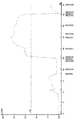
- Fig. 4 is a characteristic chart showing QTL analysis results regarding stalk length (the 18th linkage group).
- Fig. 5 is a characteristic chart showing QTL analysis results regarding stalk length (the 23rd linkage group).
- Fig. 6 is a characteristic chart showing QTL analysis results regarding stalk length (the 46th linkage group).
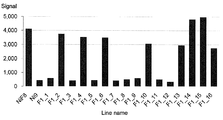
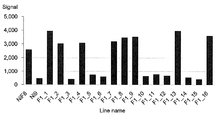
- Fig. 7 is a characteristic chart showing N828509 signal levels for individual lines.
- Fig. 8 is a characteristic chart showing N827910 signal levels for individual lines.
- Fig. 9 is a characteristic chart showing N804812 signal levels for individual lines.
- the sugarcane-stalk-length-related marker and the method for using the same according to the present invention are described below.
- a method for producing a sugarcane line using a sugarcane-stalk-length-related marker is described.
- the sugarcane-stalk-length-related marker of the present invention corresponds to a specific region present on a sugarcane chromosome and is linked to causative genes (i.e., gene group) for a trait that causes an increase in sugarcane stalk length. Thus it can be used to identify a trait characterized by an increase in sugarcane stalk length.
- a progeny line obtained using a known sugarcane variety/line is a line having a trait characterized by an increase in stalk length by confirming the presence of a sugarcane-stalk-length-related marker in such progeny line.
- the expression "increase in stalk length” used herein particularly indicates an increase in stalk length in the initial growth phase after germination. In other words, it corresponds to acceleration of stalk growth rate in the initial growth phase.
- the term “initial growth phase” refers to a period of approximately 5 months after germination.
- saccharum of the family Poaceae refers to a plant belonging to the genus Saccharum of the family Poaceae.
- sugarcane includes both so-called noble cane (scientific name: Saccharum officinarum) and wild cane (scientific name: Saccharum spontaneum).
- known sugarcane variety/line is not particularly limited. It includes any variety/line capable of being used in Japan and any variety/line used outside Japan. Examples of sugarcane varieties cultivated in Japan include, but are not limited to, Ni1, NiN2, NiF3, NiF4, NiF5, Ni6, NiN7, NiF8, Ni9, NiTn10, Ni11, Ni12, Ni14, Ni15, Ni16, Ni17, NiTn19, NiTn20, Ni22, and Ni23.
- main sugarcane varieties used in Japan described herein include, but are not limited to, NiF8, Ni9, NiTn10, and Ni15.
- main sugarcane varieties that have been introduced into Japan include, but are not limited to, F177, NCo310, and F172.
- a progeny line may be a line obtained by crossing a mother plant and a father plant of the same species, each of which is a sugarcane variety/line, or it may be a hybrid line obtained from parent plants when one thereof is a sugarcane variety/line and the other is a closely related variety/line (Erianthus arundinaceus).
- a progeny line may be obtained via so-called backcrossing.
- the sugarcane-stalk-length-related marker of the present invention has been newly identified by QTL (Quantitative Trait Loci) analysis using a genetic linkage map containing 3004 markers originally obtained from sugarcane chromosomes and sugarcane stalk length data. In addition, many genes are presumably associated with sugarcane stalk length, which is a quantitative trait characterized by a continuous distribution of stalk-length values.
- QTL Quantitative Trait Loci
- peaks with LOD scores equivalent to or exceeding a given threshold have been found in 3 regions included in the above genetic linkage map by QTL analysis described above. That is, the following 3 regions have been specified: an approximately 39.9-cM (centimorgan) region, an approximately 21.1-cM region, and an approximately 15.2-cM region having such peaks.
- morgan (M) used herein refers to a unit representing the relative distance between genes on a chromosome, and it is expressed by the percentage of the crossover rate. In a case of a sugarcane chromosome, 1 cM corresponds to approximately 2000 kb.
- causative genes i.e., gene group
- the 39.9-cM region having the above peak is a region that comprises 13 types of markers listed in table 1 below in the order shown in table 1.
- the 21.1-cM region having the above peak is a region that comprises 9 types of markers listed in table 2 below in the order shown in table 2.
- the 15.2-cM region having the above peak is a region that comprises 7 types of markers listed in table 3 below in the order shown in table 3.
- Linkage group represents the number given to each group among a plurality of linkage groups specified by QTL analysis.
- Marker name represents the name given to each marker originally obtained in the present invention.
- Synignal threshold represents a threshold used for determination of the presence or absence of a marker.
- the peak contained in the 39.9-cM region is present in a region sandwiched between a marker (N810652) having the nucleotide sequence shown in SEQ ID NO: 6 and a marker (N827138) having the nucleotide sequence shown in SEQ ID NO: 8.
- the peak contained in the 21.1-cM region is present in a region sandwiched between a marker (N819412) having the nucleotide sequence shown in SEQ ID NO: 18 and a marker (N829748) having the nucleotide sequence shown in SEQ ID NO: 19.
- the peak contained in the 15.2-cM region is present in a region sandwiched between a marker (N826007) having the nucleotide sequence shown in SEQ ID NO: 24 and a marker (N829577) having the nucleotide sequence shown in SEQ ID NO: 28.
- a continuous nucleic acid region existing in any of 3 regions containing markers shown in tables 1 to 3 can be used as a sugarcane-stalk-length-related marker.
- nucleic acid region refers to a region having a nucleotide sequence having 95% or less, preferably 90% or less, more preferably 80% or less, and most preferably 70% or less identity to a different region present on a sugarcane chromosome. If the identity of a nucleic acid region serving as a sugarcane-stalk-length-related marker to a different region falls within the above range, the nucleic acid region can be specifically detected according to a standard method. The identity level described herein can be calculated using default parameters and BLAST or a similar algorithm.
- the base length of a nucleic acid region serving as a sugarcane-stalk-length-related marker can be at least 8 bases, preferably 15 bases or more, more preferably 20 bases or more, and most preferably 30 bases. If the base length of a nucleic acid region serving as a sugarcane-stalk-length-related marker falls within the above range, the nucleic acid region can be specifically detected according to a standard method. In particular, among the 13 types of markers contained in the 39.9-cM region, a sugarcane-stalk-length-related marker is preferably designated as existing in the region sandwiched between the nucleotide sequence shown in SEQ ID NO: 6 and the nucleotide sequence shown in SEQ ID NO: 8.
- a sugarcane-stalk-length-related marker is preferably designated as existing in the region sandwiched between the nucleotide sequence shown in SEQ ID NO: 18 and the nucleotide sequence shown in SEQ ID NO: 19. This is because the above peak is present in the region sandwiched between the nucleotide sequence shown in SEQ ID NO: 18 and the nucleotide sequence shown in SEQ ID NO: 19.
- a sugarcane-stalk-length-related marker is preferably designated as existing in the region sandwiched between the nucleotide sequence shown in SEQ ID NO: 24 and the nucleotide sequence shown in SEQ ID NO: 28. This is because the above peak is present in the region sandwiched between the nucleotide sequence shown in SEQ ID NO: 24 and the nucleotide sequence shown in SEQ ID NO: 28.
- a nucleic acid region containing a single marker selected from among the 29 types of markers shown in tables 1 to 3 can be used as a sugarcane-stalk-length-related marker.
- a nucleic acid region containing a marker (N812117) comprising the nucleotide sequence shown in SEQ ID NO: 7 located closest to the peak position in the 39.9-cM region, a nucleic acid region containing a marker (N829748) comprising the nucleotide sequence shown in SEQ ID NO: 19 located closest to the peak position in the 21.1-cM region, or a nucleic acid region containing a marker (N821523) comprising the nucleotide sequence shown in SEQ ID NO: 26 located closest to the peak position in the 15.2-cM region.
- the nucleotide sequence of a nucleic acid region containing the marker can be specified by inverse PCR using primers designed based on the nucleotide sequence of such marker.
- a sugarcane-stalk-length-related marker any of the above 29 types of markers can be directly used. Specifically, one or more type(s) of markers selected from among the 29 types of such markers can be directly used as a sugarcane-stalk-length-related marker.
- a marker (N812117) consisting of the nucleotide sequence shown in SEQ ID NO: 7 located closest to the peak position in the 39.9-cM region, a marker (N829748) consisting of the nucleotide sequence shown in SEQ ID NO: 19 located closest to the peak position in the 21.1-cM region, or a marker (N821523) consisting of the nucleotide sequence shown in SEQ ID NO: 26 closest to the peak position in the 15.2-cM region.
- ⁇ Sugarcane marker identification>> sugarcane-stalk-length-related markers were identified from among 3004 markers originally obtained from sugarcane chromosomes in the present invention. These 3004 markers are described below. Upon identification of these markers, a DNA microarray can be used according to the method disclosed in JP Patent Application No. 2009-283430. Specifically, 3004 markers originally obtained from sugarcane chromosomes are used with a DNA microarray having probes designed by the method disclosed in JP Patent Application No. 2009-283430. The method for designing probes as shown in fig. 1 is described below. First, genomic DNA is extracted from sugarcane (step 1a).
- restriction enzymes A and B are used (in the order of A first and then B) to digest genomic DNA.
- the restriction enzymes used herein are not particularly limited. However, examples of restriction enzymes that can be used include PstI, EcoRI, HindIII, BstNI, HpaII, and HaeIII.
- restriction enzymes can be adequately selected in consideration of the frequency of appearance of recognition sequences such that a genomic DNA fragment having a base length of 20 to 10000 can be obtained when genomic DNA is completely digested.
- a genomic DNA fragment obtained after the use of all restriction enzymes it is preferable for a genomic DNA fragment obtained after the use of all restriction enzymes to have a base length of 200 to 6000.
- the order in which restriction enzymes are subjected to treatment is not particularly limited.
- a plurality of restriction enzymes may be used in an identical reaction systalk if they are treated under identical conditions (e.g., solution composition and temperature). Specifically, in the example shown in fig. 1, genomic DNA is digested using restriction enzymes A and B in such order. However, genomic DNA may be digested by simultaneously using restriction enzymes A and B in an identical reaction systalk.
- genomic DNA may be digested using restriction enzymes B and A in such order. Further, 3 or more restriction enzymes may be used.
- adapters are bound to a genomic DNA fragment subjected to restriction enzyme treatment (step 1c).
- the adapter used herein is not particularly limited as long as it can be bound to both ends of a genomic DNA fragment obtained via the above restriction enzyme treatment.
- an adapter it is possible to use, as an adapter, an adapter having a single strand complementary to a protruding end (sticky end) formed at each end of genomic DNA via restriction enzyme treatment and a primer binding sequence to which a primer used upon amplification treatment as described in detail below can hybridize.
- an adapter having a single strand complementary to the above protruding end (sticky end) and a restriction enzyme recognition site that is incorporated into a vector upon cloning.
- a plurality of adapters corresponding to the relevant restriction enzymes can be prepared and used.
- a plurality of adapters having single strands complementary to different protruding ends formed upon digestion of genomic DNA with a plurality of restriction enzymes may have a common primer binding sequence such that a common primer can hybridize to each such adapter.
- genomic DNA is digested using a plurality of restriction enzymes
- a genomic DNA fragment to both ends of which adapters have been added is amplified (step 1d).
- an adapter having a primer binding sequence is used, the genomic DNA fragment can be amplified using a primer that can hybridize to the primer binding sequence.
- a genomic DNA fragment to which an adapter has been added is cloned into a vector using the adapter sequence.
- the genomic DNA fragment can be amplified using primers that can hybridize to specific regions of the vector.
- PCR can be used for a genomic DNA fragment amplification reaction using primers.
- the adapters are ligated to all genomic DNA fragments obtained via treatment with a plurality of restriction enzymes. In this case, all the obtained genomic DNA fragments can be amplified by carrying out a nucleic acid amplification reaction using primer binding sequences contained in adapters.
- genomic DNA is digested using a plurality of restriction enzymes, followed by ligation of adapter(s) corresponding to one or more restriction enzyme(s) selected from among a plurality of the used restriction enzymes to genomic DNA fragments.
- a genomic DNA fragment to both ends of which the selected restriction enzyme recognition sequences have been bound can be exclusively amplified.
- the nucleotide sequence of the amplified genomic DNA fragment is determined (step 1e). Then, at least one region, which has a base length shorter than the base length of the genomic DNA fragment and corresponds to at least a partial region of the genomic DNA fragment, is specified.
- Sugarcane probes are designed using at least one of the thus specified regions (step 1f).
- a method for determining the nucleotide sequence of a genomic DNA fragment is not particularly limited.
- a conventionally known method using a DNA sequencer applied to the Sanger method or the like can be used.
- a region to be designed herein has a 20- to 100-base length, preferably a 30- to 90-base length, and more preferably a 50- to 75-base length as described above.
- a DNA microarray can be produced by designing many probes using genomic DNA extracted from sugarcane and synthesizing an oligonucleotide having a desired nucleotide sequence on a support based on the nucleotide sequence of the designed probe.
- 3004 markers including the above 29 types of sugarcane-stalk-length-related markers shown in SEQ ID NOS: 1 to 29, can be identified. More specifically, the present inventors obtained signal data of known sugarcane varieties (NiF8 and Ni9) and a progeny line (line 191) obtained by crossing the varieties with the use of the DNA microarray described above. Then, genotype data were obtained based on the obtained signal data.
- chromosomal marker position information was obtained by calculation using the gene distance function (Kosambi) and the AntMap genetic map creation software (Iwata H, Ninomiya S (2006) AntMap: constructing genetic linkage maps using an ant colony optimization algorithm, Breed Sci 56: 371-378). Further, a genetic map datasheet was created based on the obtained marker position information using Mapmaker/EXP ver. 3.0 (A Whitehead Institute for Biomedical Research Technical Report, Third Edition, January, 1993) As a result, 3004 markers, including the aforementioned 29 types of sugarcane-stalk-length-related markers shown in SEQ ID NOS: 1 to 29, were identified.
- sugarcane-stalk-length-related markers makes it possible to determine whether a sugarcane progeny line or the like, which has a phenotype exhibiting unknown stalk length, is a line having a phenotype showing an increase in stalk length.
- the expression "the use of sugarcane-stalk-length-related markers” used herein indicates the use of a DNA microarray having probes corresponding to sugarcane-stalk-length-related markers in one embodiment.
- probes corresponding to sugarcane-stalk-length-related markers indicates oligonucleotides that can specifically hybridize under stringent conditions to sugarcane-stalk-length-related markers defined as above.
- oligonucleotides can be designed as partial or whole regions with base lengths of at least 10 continuous bases, 15 continuous bases, 20 continuous bases, 25 continuous bases, 30 continuous bases, 35 continuous bases, 40 continuous bases, 45 continuous bases, or 50 or more continuous bases of the nucleotide sequences or complementary strands thereof of sugarcane-stalk-length-related markers defined as above.
- a DNA microarray having such probes may be any type of microarray, such as a microarray having a planar substrate comprising glass, silicone, or the like, a bead array comprising microbeads as carriers, or a three-dimensional microarray having an inner wall comprising hollow fibers to which probes are fixed.
- a DNA microarray prepared as described above makes it possible to determine whether a sugarcane line such as a progeny line or the like, which has a phenotype exhibiting unknown stalk length, is a line having a phenotype showing an increase in stalk length.
- a sugarcane line which has a phenotype exhibiting unknown stalk length
- a sugarcane line which has a phenotype exhibiting unknown stalk length
- a line having a trait characterized by an increase in stalk length by detecting the above sugarcane-stalk-length-related markers by a conventionally known method.
- the method involving the use of a DNA microarray is described in more detail. As shown in fig.
- genomic DNA is extracted from a sugarcane sample.
- a sugarcane sample is a sugarcane line such as a sugarcane progeny line, which has a phenotype exhibiting unknown stalk length, and thus which can be used as a subject to be determined whether to have a trait characterized by an increase in stalk length or not.
- a plurality of genomic DNA fragments are prepared by digesting the extracted genomic DNA with restriction enzymes used for preparing the DNA microarray. Then, the obtained genomic DNA fragments are ligated to adapters used for preparation of the DNA microarray. Subsequently, the genomic DNA fragments, to both ends of which adapters have been added, are amplified using primers employed for preparation of the DNA microarray.
- sugarcane-sample-derived genomic DNA fragments corresponding to the genomic DNA fragments amplified in step 1d upon preparation of the DNA microarray can be amplified.
- specific genomic DNA fragments may be selectively amplified. For instance, in a case in which a plurality of adapters corresponding to a plurality of restriction enzymes are used, genomic DNA fragments to which specific adapters have been added can be selectively amplified.
- genomic DNA fragments to which adapters have been added can be selectively amplified by adding adapters only to genomic DNA fragments that have protruding ends corresponding to specific restriction enzymes among the obtained genomic DNA fragments.
- DNA fragment concentration can be increased by selectively amplifying specific genomic DNA fragments.
- amplified genomic DNA fragments are labeled. Any conventionally known substance may be used as a labeling substance. Examples of a labeling substance that can be used include fluorescent molecules, dye molecules, and radioactive molecules.
- this step can be omitted using a labeled nucleotide in the step of amplifying genomic DNA fragments.
- amplified DNA fragments can be labeled.
- labeled genomic DNA fragments are allowed to come into contact with the DNA microarray under certain conditions such that probes fixed to the DNA microarray hybridize to the labeled genomic DNA fragments.
- highly stringent conditions are provided for hybridization. Under highly stringent conditions, it becomes possible to determine with high accuracy whether or not sugarcane-stalk-length-related markers are present in a sugarcane sample.
- stringent conditions can be adjusted based on reaction temperature and salt concentration. That is, an increase in temperature or a decrease in salt concentration results in more stringent conditions.
- hybridization conditions 40 degrees C to 44 degrees C; 0.21SDS; and 6 x SSC.
- hybridization between labeled genomic DNA fragments and probes can be confirmed by detecting a labeling substance. Specifically, after the above hybridization reaction of labeled genomic DNA fragments and probes, unreacted genomic DNA fragments and the like are washed, and the labeling substance bound to each genomic DNA fragment specifically hybridizing to a probe is observed. For instance, in a case in which the labeling substance is a fluorescent material, the fluorescence wavelength is detected. In a case in which the labeling substance is a dye molecule, the dye wavelength is detected.
- apparatuses such as fluorescent detectors and image analyzers used for conventional DNA microarray analysis can be used.
- a sugarcane sample has the above sugarcane-stalk-length-related marker(s) with the use of a DNA microarray.
- the area of a field used for cultivation of a sugarcane sample and other factors such as cost of cultivation can be significantly reduced with the use of the sugarcane-stalk-length-related marker(s).
- a novel sugarcane variety when a novel sugarcane variety is created, it is preferable to produce several tens of thousands of hybrid varieties via crossing and then to identify a novel sugarcane variety using sugarcane-stalk-length-related markers prior to or instead of seedling selection.
- the use of such sugarcane-stalk-length-related marker(s) makes it possible to significantly reduce the number of excellent lines that need to be cultivated in an actual field. This allows drastic reduction of time-consuming efforts and the cost required to create a novel sugarcane variety.
- Genomic DNAs (750 ng each) were treated with a PstI restriction enzyme (NEB; 25 units) at 37 degrees C for 2 hours.
- a BstNI restriction enzyme (NEB; 25 units) was added thereto, followed by treatment at 60 degrees C for 2 hours.
- the adapters were selectively added to genomic DNA fragments having PstI recognition sequences at both ends thereof among the genomic DNA fragments treated in (2).
- PCR amplification A PstI sequence adapter recognition primer (5'-GATGGATCCAGTGCAG-3' (SEQ ID NO: 32)) and Taq polymerase (TAKARA; PrimeSTAR; 1.25 units) were added to the genomic DNA fragment (15 ng) having the adaptors obtained in (3). Then, the genomic DNA fragment was amplified by PCR (treatment at 98 degrees C for 10 seconds, 55 degrees C for 15 seconds, 72 degrees C for 1 minute for 30 cycles, and then at 72 degrees C for 3 minutes, followed by storage at 4 degrees C).
- Genome sequence acquisition The nucleotide sequence of the genomic DNA fragment subjected to PCR amplification in (4) was determined by the Sanger method. In addition, information on a nucleotide sequence sandwiched between PstI recognition sequences was obtained based on the total sorghum genome sequence information contained in the genome database (Gramene: http://www.gramene.org/). (6) Probe design and DNA microarray production 50- to 75-bp probes were designed based on the genome sequence information in (5). Based on the nucleotide sequence information of the designed probes, a DNA microarray having the probes was produced. 2.
- Adapter ligation PstI sequence adapters (5'-CACGATGGATCCAGTGCA-3' (SEQ ID NO: 30) and 5'-CTGGATCCATCGTGCA-3' (SEQ ID NO: 31)) and T4 DNA Ligase (NEB; 800 units) were added to the genomic DNA fragments treated in (2) (120 ng each), and the obtained mixtures were treated at 16 degrees C for a full day.
- the adaptors were selectively added to a genomic DNA fragment having PstI recognition sequences at both ends thereof among the genomic DNA fragments treated in (2).
- PCR amplification A PstI sequence adapter recognition primer (5'-GATGGATCCAGTGCAG-3' (SEQ ID NO: 32)) and Taq polymerase (TAKARA; PrimeSTAR; 1.25 units) were added to the genomic DNA fragment (15 ng) having the adapters obtained in (3). Then, the genomic DNA fragment was amplified by PCR (treatment at 98 degrees C for 10 seconds, 55 degrees C for 15 seconds, 72 degrees C for 1 minute for 30 cycles, and then 72 degrees C for 3 minutes, followed by storage at 4 degrees C). (5) Labeling The PCR amplification fragment obtained in (4) above was purified with a column (Qiagen). Cy3-labeled 9mers (TriLink; 1 O.D.) was added thereto.
- Genotype data of possible 3004 markers were obtained based on the signal data detected in 2 above of the NiF8 and Ni9 sugarcane varieties and the progeny line (line 191). Based on the obtained genotype data, chromosomal marker position information was obtained by calculation using the gene distance function (Kosambi) and the AntMap genetic map creation software (Iwata H, Ninomiya S (2006) AntMap: constructing genetic linkage maps using an ant colony optimization algorithm, Breed Sci 56: 371-378). Further, a genetic map datasheet was created based on the obtained marker position information using Mapmaker/EXP ver. 3.0 (A Whitehead Institute for Biomedical Research Technical Report, Third Edition, January, 1993).
- QTL analysis Based on the genetic map datasheet obtained in (1) above and the stalk-length data obtained in (2) above, QTL analysis was carried out by the composite interval mapping (CIM) method using the QTL Cartographer gene analysis software (Wang S., C. J. Basten, and Z.-B. Zeng (2010), Windows QTL Cartographer 2.5, Department of Statistics, North Carolina State University, Raleigh, NC). Upon analysis, the LOD threshold was determined to be 2.5. As a result, as shown in figs.
- peaks exceeding the LOD threshold were observed in the following ranges for the NiF8 sugarcane variety: the range between markers N826961 and N825180 present in the 18th linkage group; the range between markers N827910 and N811685 present in the 23rd linkage group; and the range between markers N804812 and N826565 present in the 46th linkage group. It was possible to specify the obtained peaks as shown in table 4, suggesting the presence of causative genes (i.e., gene group) each having the function of causing an increase in stalk length at relevant peak positions.
- markers located in the vicinity of the relevant peaks are inherited in linkage with causative genes (i.e., gene group) each having the function of causing an increase in stalk length.
- causative genes i.e., gene group
- the markers can be used as sugarcane-stalk-length-related markers.
- 29 types of markers shown in figs. 4 to 6 can be used as sugarcane-stalk-length-related markers.
- table 5 shows signal levels of 13 types of markers among markers N826961 to N825180 present in the 18th linkage group for NiF8 and Ni9 and their 16 progeny lines (F1_1 to F1_16).
- the signal levels of N828509 are shown in fig. 7.
Landscapes
- Life Sciences & Earth Sciences (AREA)
- Health & Medical Sciences (AREA)
- Botany (AREA)
- Chemical & Material Sciences (AREA)
- Developmental Biology & Embryology (AREA)
- Environmental Sciences (AREA)
- Genetics & Genomics (AREA)
- Physiology (AREA)
- Physics & Mathematics (AREA)
- Organic Chemistry (AREA)
- General Health & Medical Sciences (AREA)
- Engineering & Computer Science (AREA)
- Proteomics, Peptides & Aminoacids (AREA)
- Analytical Chemistry (AREA)
- Natural Medicines & Medicinal Plants (AREA)
- Spectroscopy & Molecular Physics (AREA)
- Biotechnology (AREA)
- Zoology (AREA)
- Wood Science & Technology (AREA)
- Immunology (AREA)
- Molecular Biology (AREA)
- Microbiology (AREA)
- Mycology (AREA)
- Biophysics (AREA)
- Biochemistry (AREA)
- Bioinformatics & Cheminformatics (AREA)
- General Engineering & Computer Science (AREA)
- Measuring Or Testing Involving Enzymes Or Micro-Organisms (AREA)
- Breeding Of Plants And Reproduction By Means Of Culturing (AREA)
Abstract
Cette invention concerne un marqueur relatif à la longueur de la tige de la canne à sucre en rapport avec une caractéristique quantitative de la canne à sucre telle qu'une augmentation de la longueur de la tige. Un tel marqueur comprend une zone d'acides nucléiques continus existant dans une région prise en sandwich entre la séquence de nucléotides représentée dans SEQ ID NO :1 et la séquence de nucléotides représentée dans SEQ ID NO :13, dans une région prise en sandwich entre la séquence de nucléotides représentée dans SEQ ID NO :14 et la séquence de nucléotides représentée dans SEQ ID NO :22, ou dans une région prise en sandwich entre la séquence de nucléotides représentée dans SEQ ID NO: 23 et la séquence de nucléotides représentée dans SEQ ID NO: 29 d'un chromosome de canne à sucre.
Applications Claiming Priority (4)
| Application Number | Priority Date | Filing Date | Title |
|---|---|---|---|
| JP2010177631 | 2010-08-06 | ||
| JP2010-177631 | 2010-08-06 | ||
| JP2011171081A JP2012050429A (ja) | 2010-08-06 | 2011-08-04 | サトウキビ属植物の茎長関連マーカーとその利用 |
| JP2011-171081 | 2011-08-04 |
Publications (1)
| Publication Number | Publication Date |
|---|---|
| WO2012017679A1 true WO2012017679A1 (fr) | 2012-02-09 |
Family
ID=45559198
Family Applications (1)
| Application Number | Title | Priority Date | Filing Date |
|---|---|---|---|
| PCT/JP2011/004457 Ceased WO2012017679A1 (fr) | 2010-08-06 | 2011-08-05 | Marqueur relatif à la longueur de la tige d'une plante du genre saccharum et son utilisation |
Country Status (2)
| Country | Link |
|---|---|
| JP (1) | JP2012050429A (fr) |
| WO (1) | WO2012017679A1 (fr) |
Cited By (2)
| Publication number | Priority date | Publication date | Assignee | Title |
|---|---|---|---|---|
| WO2012073498A3 (fr) * | 2010-12-03 | 2012-08-30 | Toyota Jidosha Kabushiki Kaisha | Marqueur de teneur en sucre d'une tige de canne à sucre et son utilisation |
| US10617076B2 (en) | 2012-03-26 | 2020-04-14 | Toyota Jidosha Kabushiki Kaisha | Stalk-length-related marker derived from genome of wild-type sugarcane and use thereof |
Citations (1)
| Publication number | Priority date | Publication date | Assignee | Title |
|---|---|---|---|---|
| JP2009283430A (ja) | 2008-05-19 | 2009-12-03 | Dai Sasagawa | バッテリー |
-
2011
- 2011-08-04 JP JP2011171081A patent/JP2012050429A/ja not_active Withdrawn
- 2011-08-05 WO PCT/JP2011/004457 patent/WO2012017679A1/fr not_active Ceased
Patent Citations (1)
| Publication number | Priority date | Publication date | Assignee | Title |
|---|---|---|---|---|
| JP2009283430A (ja) | 2008-05-19 | 2009-12-03 | Dai Sasagawa | バッテリー |
Non-Patent Citations (7)
| Title |
|---|
| "A Whitehead Institute for Biomedical Research Technical Report", January 1993 |
| "Molecular genotyping of sugarcane clones with microsatellite DNA markers", MAYDICA, vol. 48, 2003, pages 319 - 329 |
| AITKEN K S ET AL: "Genetic control of yield related stalk traits in sugarcane", THEORETICAL AND APPLIED GENETICS, vol. 117, no. 7, November 2008 (2008-11-01), pages 1191 - 1203, XP002662393, ISSN: 0040-5752 * |
| HOARAU J -Y ET AL: "Genetic dissection of a modern sugarcane cultivar (Saccharum spp.). II. Detection of QTLs for yield components.", THEORETICAL AND APPLIED GENETICS, vol. 105, no. 6-7, November 2002 (2002-11-01), pages 1027 - 1037, XP002662392, ISSN: 0040-5752 * |
| IWATA H, NINOMIYA S: "AntMap: constructing genetic linkage maps using an ant colony optimization algorithm", BREED SCI, vol. 56, 2006, pages 371 - 378 |
| NATHALIE PIPERIDIS ET AL., MOLECULAR BREEDING, vol. 21, 2008, pages 233 - 247 |
| WANG S., C. J. BASTEN, Z.-B. ZENG, WINDOWS QTL CARTOGRAPHER 2.5, DEPARTMENT OF STATISTICS, NORTH CAROLINA STATE UNIVERSITY, 2010 |
Cited By (4)
| Publication number | Priority date | Publication date | Assignee | Title |
|---|---|---|---|---|
| WO2012073498A3 (fr) * | 2010-12-03 | 2012-08-30 | Toyota Jidosha Kabushiki Kaisha | Marqueur de teneur en sucre d'une tige de canne à sucre et son utilisation |
| AU2011335966B2 (en) * | 2010-12-03 | 2016-01-14 | Toyota Jidosha Kabushiki Kaisha | Sugarcane-stalk-sugar-content-related marker and the use thereof |
| US9677134B2 (en) | 2010-12-03 | 2017-06-13 | Toyota Jidosha Kabushiki Kaisha | Sugarcane-stalk-sugar-content-related marker and the use thereof |
| US10617076B2 (en) | 2012-03-26 | 2020-04-14 | Toyota Jidosha Kabushiki Kaisha | Stalk-length-related marker derived from genome of wild-type sugarcane and use thereof |
Also Published As
| Publication number | Publication date |
|---|---|
| JP2012050429A (ja) | 2012-03-15 |
Similar Documents
| Publication | Publication Date | Title |
|---|---|---|
| US10526666B2 (en) | Marker associated with resistance to smut in plant belonging to genus Saccharum, and use thereof | |
| KR20160095213A (ko) | 수박의 과형 구별용 dna 마커 | |
| US11814638B2 (en) | Marker associated with smut resistance in plant belonging to genus Saccharum and use thereof | |
| US20240043862A1 (en) | Marker associated with smut resistance in plant belonging to genus saccharum and use thereof | |
| WO2012017679A1 (fr) | Marqueur relatif à la longueur de la tige d'une plante du genre saccharum et son utilisation | |
| WO2012017682A2 (fr) | Marqueur relatif à la longueur du limbe foliaire d'un végétal de l'espèce saccharum et son utilisation | |
| WO2012017683A1 (fr) | Marqueur associé à la surface foliaire d'une plante du genre saccharum et son utilisation | |
| WO2012073495A2 (fr) | Marqueur de nombre de tiges d'une canne à sucre et son utilisation | |
| WO2012073494A2 (fr) | Marqueur relatif au diamètre de tige de canne à sucre | |
| US9677134B2 (en) | Sugarcane-stalk-sugar-content-related marker and the use thereof | |
| WO2012073496A2 (fr) | Marqueur associé au poids de tige de canne à sucre et son utilisation | |
| WO2012073497A2 (fr) | Marqueur de poids d'une tige unique de canne à sucre et son utilisation | |
| WO2012073493A2 (fr) | Marqueur de rendement en sucre d'une canne à sucre et son utilisation |
Legal Events
| Date | Code | Title | Description |
|---|---|---|---|
| 121 | Ep: the epo has been informed by wipo that ep was designated in this application |
Ref document number: 11749939 Country of ref document: EP Kind code of ref document: A1 |
|
| DPE1 | Request for preliminary examination filed after expiration of 19th month from priority date (pct application filed from 20040101) | ||
| NENP | Non-entry into the national phase |
Ref country code: DE |
|
| 122 | Ep: pct application non-entry in european phase |
Ref document number: 11749939 Country of ref document: EP Kind code of ref document: A1 |