WO2012020482A1 - Procédé de sauvegarde, dispositif de traitement d'informations et programme - Google Patents
Procédé de sauvegarde, dispositif de traitement d'informations et programme Download PDFInfo
- Publication number
- WO2012020482A1 WO2012020482A1 PCT/JP2010/063619 JP2010063619W WO2012020482A1 WO 2012020482 A1 WO2012020482 A1 WO 2012020482A1 JP 2010063619 W JP2010063619 W JP 2010063619W WO 2012020482 A1 WO2012020482 A1 WO 2012020482A1
- Authority
- WO
- WIPO (PCT)
- Prior art keywords
- virtual machine
- active
- replication
- virtual
- backup
- Prior art date
- Legal status (The legal status is an assumption and is not a legal conclusion. Google has not performed a legal analysis and makes no representation as to the accuracy of the status listed.)
- Ceased
Links
Images






Classifications
-
- G—PHYSICS
- G06—COMPUTING OR CALCULATING; COUNTING
- G06F—ELECTRIC DIGITAL DATA PROCESSING
- G06F9/00—Arrangements for program control, e.g. control units
- G06F9/06—Arrangements for program control, e.g. control units using stored programs, i.e. using an internal store of processing equipment to receive or retain programs
- G06F9/46—Multiprogramming arrangements
- G06F9/461—Saving or restoring of program or task context
-
- G—PHYSICS
- G06—COMPUTING OR CALCULATING; COUNTING
- G06F—ELECTRIC DIGITAL DATA PROCESSING
- G06F3/00—Input arrangements for transferring data to be processed into a form capable of being handled by the computer; Output arrangements for transferring data from processing unit to output unit, e.g. interface arrangements
- G06F3/06—Digital input from, or digital output to, record carriers, e.g. RAID, emulated record carriers or networked record carriers
- G06F3/0601—Interfaces specially adapted for storage systems
- G06F3/0628—Interfaces specially adapted for storage systems making use of a particular technique
- G06F3/0646—Horizontal data movement in storage systems, i.e. moving data in between storage devices or systems
- G06F3/065—Replication mechanisms
-
- G—PHYSICS
- G06—COMPUTING OR CALCULATING; COUNTING
- G06F—ELECTRIC DIGITAL DATA PROCESSING
- G06F11/00—Error detection; Error correction; Monitoring
- G06F11/07—Responding to the occurrence of a fault, e.g. fault tolerance
- G06F11/14—Error detection or correction of the data by redundancy in operations
- G06F11/1402—Saving, restoring, recovering or retrying
- G06F11/1415—Saving, restoring, recovering or retrying at system level
- G06F11/1438—Restarting or rejuvenating
-
- G—PHYSICS
- G06—COMPUTING OR CALCULATING; COUNTING
- G06F—ELECTRIC DIGITAL DATA PROCESSING
- G06F3/00—Input arrangements for transferring data to be processed into a form capable of being handled by the computer; Output arrangements for transferring data from processing unit to output unit, e.g. interface arrangements
- G06F3/06—Digital input from, or digital output to, record carriers, e.g. RAID, emulated record carriers or networked record carriers
- G06F3/0601—Interfaces specially adapted for storage systems
- G06F3/0602—Interfaces specially adapted for storage systems specifically adapted to achieve a particular effect
- G06F3/0614—Improving the reliability of storage systems
- G06F3/0617—Improving the reliability of storage systems in relation to availability
-
- G—PHYSICS
- G06—COMPUTING OR CALCULATING; COUNTING
- G06F—ELECTRIC DIGITAL DATA PROCESSING
- G06F3/00—Input arrangements for transferring data to be processed into a form capable of being handled by the computer; Output arrangements for transferring data from processing unit to output unit, e.g. interface arrangements
- G06F3/06—Digital input from, or digital output to, record carriers, e.g. RAID, emulated record carriers or networked record carriers
- G06F3/0601—Interfaces specially adapted for storage systems
- G06F3/0668—Interfaces specially adapted for storage systems adopting a particular infrastructure
- G06F3/0671—In-line storage system
- G06F3/0673—Single storage device
-
- G—PHYSICS
- G06—COMPUTING OR CALCULATING; COUNTING
- G06F—ELECTRIC DIGITAL DATA PROCESSING
- G06F9/00—Arrangements for program control, e.g. control units
- G06F9/06—Arrangements for program control, e.g. control units using stored programs, i.e. using an internal store of processing equipment to receive or retain programs
- G06F9/44—Arrangements for executing specific programs
- G06F9/455—Emulation; Interpretation; Software simulation, e.g. virtualisation or emulation of application or operating system execution engines
- G06F9/45533—Hypervisors; Virtual machine monitors
- G06F9/45558—Hypervisor-specific management and integration aspects
-
- G—PHYSICS
- G06—COMPUTING OR CALCULATING; COUNTING
- G06F—ELECTRIC DIGITAL DATA PROCESSING
- G06F9/00—Arrangements for program control, e.g. control units
- G06F9/06—Arrangements for program control, e.g. control units using stored programs, i.e. using an internal store of processing equipment to receive or retain programs
- G06F9/46—Multiprogramming arrangements
- G06F9/48—Program initiating; Program switching, e.g. by interrupt
- G06F9/4806—Task transfer initiation or dispatching
- G06F9/4843—Task transfer initiation or dispatching by program, e.g. task dispatcher, supervisor, operating system
- G06F9/485—Task life-cycle, e.g. stopping, restarting, resuming execution
-
- G—PHYSICS
- G06—COMPUTING OR CALCULATING; COUNTING
- G06F—ELECTRIC DIGITAL DATA PROCESSING
- G06F9/00—Arrangements for program control, e.g. control units
- G06F9/06—Arrangements for program control, e.g. control units using stored programs, i.e. using an internal store of processing equipment to receive or retain programs
- G06F9/44—Arrangements for executing specific programs
- G06F9/455—Emulation; Interpretation; Software simulation, e.g. virtualisation or emulation of application or operating system execution engines
- G06F9/45533—Hypervisors; Virtual machine monitors
- G06F9/45558—Hypervisor-specific management and integration aspects
- G06F2009/4557—Distribution of virtual machine instances; Migration and load balancing
-
- G—PHYSICS
- G06—COMPUTING OR CALCULATING; COUNTING
- G06F—ELECTRIC DIGITAL DATA PROCESSING
- G06F9/00—Arrangements for program control, e.g. control units
- G06F9/06—Arrangements for program control, e.g. control units using stored programs, i.e. using an internal store of processing equipment to receive or retain programs
- G06F9/44—Arrangements for executing specific programs
- G06F9/455—Emulation; Interpretation; Software simulation, e.g. virtualisation or emulation of application or operating system execution engines
- G06F9/45533—Hypervisors; Virtual machine monitors
- G06F9/45558—Hypervisor-specific management and integration aspects
- G06F2009/45575—Starting, stopping, suspending or resuming virtual machine instances
-
- G—PHYSICS
- G06—COMPUTING OR CALCULATING; COUNTING
- G06F—ELECTRIC DIGITAL DATA PROCESSING
- G06F2201/00—Indexing scheme relating to error detection, to error correction, and to monitoring
- G06F2201/815—Virtual
-
- G—PHYSICS
- G06—COMPUTING OR CALCULATING; COUNTING
- G06F—ELECTRIC DIGITAL DATA PROCESSING
- G06F2201/00—Indexing scheme relating to error detection, to error correction, and to monitoring
- G06F2201/84—Using snapshots, i.e. a logical point-in-time copy of the data
Definitions
- the present invention relates to a backup method, an information processing apparatus, a program, and the like.
- a physical computer collects and backs up the operating state of a computer so that ongoing processing can continue even if a failure occurs in the computer. Since the operation status of the computer is collected and backed up as a so-called snapshot, even if a failure occurs in the active computer, for example, the operation status of the active computer that was collected and backed up before the failure occurred By using the snapshot, it is possible to restore the operation state of the active computer before the failure occurs in the replica computer.
- the operation state of the virtual machine includes the operation state of the virtual processor (for example, virtual CPU) formed by the processor (for example, CPU: Central Processing Unit) of the computer forming the virtual computer and the contents of the memory.
- the failure includes a failure caused by software generated in the virtual computer and a failure caused by hardware generated in the computer forming the virtual computer.
- the virtual machine operation state (virtual CPU operation state and memory contents) is directly stored as backup data (ie, snapshot) in storage such as a disk device. Since the backup is performed on the apparatus, the time required for the backup process becomes longer according to the size of the memory allocated to the virtual machine. Therefore, during the backup process, if the active virtual machine is paused, the suspension time of the business process will be longer, and if the active virtual machine is not paused, the virtual data restored using the backup data will be Consistency between computer data and active virtual computer data cannot be maintained.
- the virtual machine can be restored using the backup data only when a failure occurs in the active virtual machine, and the consistency is maintained while the active virtual machine remains operating.
- the backup data cannot be referenced. If the data consistency cannot be maintained, for example, the state of the data structure and semantics are not missing or inconsistent when viewed from the application (Application or Application Program) executed on the active virtual machine (hereinafter referred to as application consistency) Can't keep up).
- the conventional backup method has a problem that the data of the active virtual machine cannot be properly backed up while the active virtual machine is operating.
- an object of the present invention is to provide a backup method, an information processing apparatus, and a program that can appropriately back up data of a virtual computer while an active virtual computer is operating.
- a backup method for backing up data of an information processing apparatus having a physical computer including a memory and a storage device, and an interruption step of interrupting processing of an active virtual computer formed in the physical computer And a first replication step of replicating operation state data of the active virtual machine to a replica virtual machine formed in the memory while processing of the active virtual machine is interrupted, While the processing of the active virtual machine is suspended, the data of the contents of the active virtual recording medium forming the active virtual machine is replicated in the storage device to form the replica virtual machine
- a backup method including a second duplication step of duplicating in the system virtual recording medium and a restarting step of resuming the processing of the active virtual computer.
- an information processing apparatus having a physical computer including a memory and a storage device, an interruption mechanism for interrupting processing of an active virtual machine formed in the physical computer, and an active virtual machine While the processing of the computer is interrupted, a first replication mechanism that replicates the operating state data of the active virtual computer to the replica virtual computer formed in the memory, and the active virtual computer While processing is interrupted, the data of the contents of the active virtual recording medium forming the active virtual computer is stored in the storage virtual apparatus in the replica virtual recording medium forming the replica virtual computer.
- An information processing apparatus is provided that includes a second replication mechanism that replicates and a first restart mechanism that resumes the processing of the active virtual machine.
- the backup method the information processing apparatus, and the program in one embodiment, it is possible to appropriately back up data of the virtual computer while the active virtual computer is operating.
- a backup method, an information processing apparatus, and a program interrupt processing of an active virtual computer formed in a physical computer when backing up data of a physical computer including a memory and an information processing apparatus having a storage device
- the operation state data of the active virtual machine is replicated to the replica virtual machine formed in the memory, and the process of the active virtual machine is performed.
- the data of the contents of the active virtual recording medium that forms the active virtual computer is replicated in the storage virtual device to the replica virtual recording medium that forms the replica virtual computer.
- Resume computer processing is performed.
- the backup process is performed to replicate the operating state of the active virtual machine to the replica virtual machine formed in memory without actually stopping the active virtual machine, the operation of the active virtual machine The state is appropriately backed up to the replica virtual machine while the active virtual machine is running.
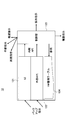
- FIG. 1 is a block diagram showing an information processing apparatus in the first embodiment of the present invention.
- the information processing apparatus (computer system or computer system) shown in FIG. 1 is formed by at least a physical computer 1 and has a storage device 2 in this embodiment, but the storage device 2 is connected to the computer 1 by a network or the like. It may be connected externally via
- the computer 1 has a known hardware configuration including at least one processor such as a CPU, at least one memory, an input device such as a keyboard, and a display device.
- the memory stores various data including a program executed by the processor and intermediate data of arithmetic processing executed by the processor.
- Operational virtual machines (VM) 11-1 to 11-N (N is a natural number of 1 or more), replication virtual machine (VM) 18, backup mechanism 12, virtualization mechanism 13, and replication mechanism 14 included in the computer 1
- the interruption mechanism 15, the restart mechanism 16, and the storage mechanism 17 correspond to functions or means that are realized by a processor executing a program procedure.
- the virtualization mechanism 13 is a well-known function or means for forming the VMs 11-1 to 11 -N, 18 in the computer 1.
- the portion of the replication system is shown surrounded by a broken line in FIG.
- the storage device 2 has a known hardware configuration including at least one processor and at least one storage device.
- the storage device forming the storage device 2 is at least one disk device having at least one disk recording medium (that is, a physical recording medium).
- the storage device 2 includes operational virtual disks 21-1 to 21-M (M is a natural number of 2 or more), a snapshot (SS) mechanism 22, a replication system disk 23-1, and a backup disk 24.
- the SS mechanism 22 may be provided not in the storage device 2 but in the computer 1.
- the backup storage 24 can be formed by a storage device that is separate from the storage device 2 and externally connected to the computer 1 as long as it can be accessed by the storage mechanism 17.
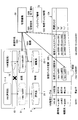
- step ST1 when the user inputs a backup instruction from the input device to the backup mechanism 12, or when a known timer mechanism (not shown) in the computer 1 inputs the backup instruction to the backup mechanism 12, the backup mechanism 12 In step ST2, an interruption instruction is issued to the interruption mechanism 15.
- the timer mechanism inputs a backup instruction to the backup mechanism 12 at regular time intervals or at a timing according to a predetermined arbitrary schedule.
- the order in which the timer mechanism inputs the backup instructions of the plurality of active VMs 11-1 to 11-N to the backup mechanism 12 may be set in an arbitrary order in advance, or may be a random order. It may be set to.
- the interruption mechanism 15 executes an interruption operation for interrupting the process to the active VM 11-1 in step ST3.
- the backup mechanism 12 issues a replication instruction to the replication mechanism 14 in step ST4.
- the duplication mechanism 14 duplicates the operation state of the virtual CPU that forms the active VM 11-1 and the contents of the memory that forms the active VM 11-1, that is, the operation state snapshot. It is created in the memory forming the system VM 18. Since the operating state of the virtual CPU that forms the active VM 11-1 is stored in the memory that forms the active VM 11-1, the operating state that the replication mechanism 14 creates in the memory that forms the replica VM 18-1. This snapshot corresponds to a copy of the memory contents forming the active VM 11-1. In this embodiment, as indicated by COW in FIG. 1, a snapshot in the operation state is created in the memory that forms the replica VM 18 by copy-on-write (COW).
- COW copy-on-write
- the backup mechanism 12 issues a duplication instruction to the SS mechanism 22 in step ST6.
- the SS mechanism 22 creates a storage snapshot of the active virtual disk 21-1, for example, in the replica virtual disk 23-1.
- the backup mechanism 12 issues a restart instruction to the restart mechanism 16 in step ST8.
- the restart mechanism 16 interrupts the processing by the interrupt mechanism 15 and the active VM in which the snapshot of the operating state is formed in the replica VM 18 by the replica mechanism 14, in this example, the active VM 11-1, Execute the resume operation to resume the process.
- the backup mechanism 12 issues a storage instruction to the storage mechanism 17 in step ST10.
- the storage mechanism 17 collectively saves the memory contents of the replica VM 18 and the contents of the replica virtual disk 23-1 in the backup storage 24 in step ST11.
- the timing at which the backup mechanism 12 issues a save instruction to the save mechanism 17 may be any timing as long as the processing of the active VM 11-1 is resumed by the resume mechanism 16, and is instructed by, for example, the timer mechanism. It may be the timing. In other words, the process of collectively saving the memory contents of the replica VM 18 and the contents of the replica virtual disk 23-1 in the backup storage 24 can be completed without affecting the processes of the active VM 11-1. It is.
- the replica of the operation state of the virtual CPU of the active VM 11-1 and the contents of the memory in the memory of the replica VM 18 and the replica of the contents of the active virtual disk 21-1 Since the processes created in the virtual disk 23-1 are executed asynchronously with each other, the interruption mechanism 15 and the restart mechanism 16 maintain the consistency between the memory data and the disk data. Also, a process for creating a copy of the operation state of the virtual CPU of the active VM 11-1 and the contents of the memory in the memory of the replication VM 18 (ie, creation of a snapshot of the operation state) is executed by COW.
- FIG. 2 is a diagram for explaining an example of the backup mechanism 12.
- the backup mechanism 12 includes a user interface (UI) 121, an external API (Application Programming Interface) 122, a control unit 123, and a VM management table 124.
- the UI 121 includes a web UI, a graphic user interface (GUI), a command line, and the like, and receives a backup instruction input from the input device by the user.
- the external API 122 receives a backup instruction from a timer mechanism or the like in the computer 1.
- the UI 121 and the external API 122 call an internal API provided by the control unit 123 in response to the backup instruction.
- the control unit 123 refers to the VM management table 124 as necessary, and outputs an interruption instruction, a replication instruction, a restart instruction, and a storage instruction.
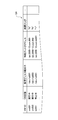
- FIG. 3 is a diagram for explaining an example of the VM management table 124.
- the VM management table 124 includes a VM identifier VM-ID for identifying each of the VMs 1-1 to 11-N (including the VM 18), a VM state indicating the operating state of the virtual CPU of the VM, and the virtual disk 21- 1 to 21-M (including the virtual disk 23-1), a virtual disk identifier, a physical disk address indicating the address of each disk in the storage apparatus 2, a restart flag indicating the necessity of restarting a stopped VM, and the like Manage.
- “vm” added to the beginning of the VM-ID managed by the VM management table 124 indicates an active VM
- “bk” indicates a replica VM.
- the information held by the well-known virtualization mechanism 13 includes at least a part of the information managed by the VM management table 124, so refer to the information held by the virtualization mechanism 13.
- the VM management table 124 may be created.
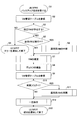
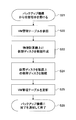
- FIG. 4 is a flowchart for explaining an example of the operation of the backup mechanism 12.
- the UI 121 or the external API 122 receives a backup instruction.
- the control unit 123 refers to the VM management table 124 based on the internal API call issued by the UI 121 or the external API 122 in response to the backup instruction.
- the control unit 123 determines whether a VM with the VM-ID specified by the backup instruction exists, that is, whether it is managed by the VM management table 124. If the decision result in the step S3 is NO, in a step S4, the control unit 123 notifies an error via the UI 121 or the external API 122 that has received the backup instruction, and the process ends.
- step S5 the VM state of the VM of the VM-ID designated by the control unit 123 by the backup instruction and managed in the VM management table 124 is “in execution” If the determination result is YES, in step S6, the control unit 123 issues an interruption instruction to interrupt the processing of the VM being “executed”, that is, the active VM. Output to. Thereby, the interruption mechanism 15 updates the VM state of the VM of the corresponding VM-ID in the VM management table 124 to “stopped” in response to the interruption instruction, and indicates that it is necessary to restart the processing of this VM. Therefore, the restart flag is set to “1”.
- step S7 the control unit 123 outputs a replication instruction instructing creation of a replica of the active VM to the replication mechanism 14.
- the replication mechanism 14 responds to the replication instruction by copying the operation state of the virtual CPU that forms the active VM and the contents of the memory that forms the active VM, that is, the snapshot of the operation state. Are created in the memory forming the VM.
- a replication instruction for instructing creation of a replica of the active virtual disk 21-1 is output to the SS mechanism 22.
- the SS mechanism 22 creates a copy of the contents of the active virtual disk 21-1, that is, a snapshot of the storage in the replica virtual disk 23-1 in response to the copy instruction.
- the control unit 123 refers to the VM information of the VM-ID specified by the backup instruction managed by the VM management table 124.
- step S10 the control unit 123 determines whether or not the VM resumption flag of the VM-ID specified by the backup instruction managed by the VM management table 124 is set to “1”. If the decision result in the step S10 is YES, the control unit 123 outputs a restart instruction to the restart mechanism 16 in a step S11. As a result, the restart mechanism 16 clears the VM restart flag of the VM-ID in the VM management table 124 to “0” in response to the restart instruction.
- the determination result in step S10 is NO, or after step S11, the control unit 123 outputs a storage instruction to the storage mechanism 17 in step S12.
- the storage mechanism 17 collectively stores the memory contents of the replication VM 18 and the contents of the replication virtual disk 23-1 in the backup storage 24 in response to the storage instruction.
- the control unit 123 notifies the completion or success of the backup via the UI 121 or the external API 122 that has received the backup instruction, and the process ends.
- the backup processing of this embodiment it is possible to back up the data of the active VM while maintaining the application consistency while the active VM is operating.
- the operating state of the active VM is replicated at high speed on the memory, the backup process can be completed within a predictable time without substantially stopping the active VM.
- a data center operator or administrator can flexibly schedule a backup operation of a system of a large number of users.
- the replica VM is restarted and the system to which the VM is applied is quickly recovered. It is also possible to do.
- the operation state of the active VM stored in the memory that is, the replica VM can be discarded at any time, for example, when the batch storage to the backup storage is completed. good.
- FIG. 5 is a block diagram showing an information processing apparatus in the second embodiment of the present invention.
- the same parts as those in FIG. In FIG. 5, the duplication mechanism 14, the interruption mechanism 15, the resumption mechanism 16, the storage mechanism 17, and the SS mechanism 22 are not shown.
- the computer 31 illustrated in FIG. 5 includes a backup mechanism 32, a switching mechanism 33, a load mechanism 34, a blocking mechanism 35, a virtual bridge 36, a restart mechanism 37, and an end mechanism 38.
- the part of the replication system is shown surrounded by a broken line in FIG.
- connection destination virtual disk of the replication system VM 18 is switched to a replication system virtual disk 23-1, which is different from the operation system virtual disk 21-1, and the process (or operation) of the operation system VM 11-1 is performed.
- the network connection with the outside of the replication VM 18 is shut off, and then the processing (or operation) of the replication VM 18 is performed. ) To resume.
- These series of processes may be automatically executed by the backup mechanism 32 following the batch storage in the backup storage 24 in the first embodiment.
- step ST11 when the user inputs a restore instruction from the input device to the backup mechanism 32, or when a restore instruction generated in the computer 31 is input to the backup mechanism 32, the backup mechanism 32 loads the load instruction in step ST12. Issued to the mechanism 34, a switching instruction is issued to the switching mechanism 33 in step ST13, and a blocking instruction is issued to the blocking mechanism 35 in step ST14.
- the blocking mechanism 35 issues a blocking instruction to the virtual bridge 36 in step ST15.
- the backup mechanism 32 issues a resumption instruction to the resumption mechanism 37 in step ST16, and the resumption mechanism 37 executes a resumption operation that causes the replication VM 18 to resume processing in step ST17. Further, the backup mechanism 32 issues an end instruction to the end mechanism 38 in step ST18, and the end mechanism 38 executes an end operation to end the process of the duplicate VM 18 by a normal shutdown procedure in step ST19.
- FIG. 6 is a diagram for explaining an example of the backup mechanism 32.
- the control unit 223 of the backup mechanism 32 includes a load instruction for the load mechanism 34, a switching instruction for the switching mechanism 33, and a blocking mechanism 35 in addition to the interruption instruction, the replication instruction, the restart instruction, and the storage instruction output by the backup mechanism 12 of FIG. 2 is different from the control unit 23 of the backup mechanism 12 in FIG.
- FIG. 7 is a diagram for explaining an example of the switching mechanism 33. 7, the same parts as those in FIGS. 3 and 5 are denoted by the same reference numerals, and the description thereof is omitted.
- FIG. 8 is a flowchart for explaining an example of the operation of the switching mechanism 33.
- the physical disk areas for the VMs 11-1 to 11-N, 18 in the storage apparatus 2 are associated with the virtual disks 21-1 to 21-M, 23-1 on the computer 31, and the virtualization mechanism 13 Performs processing for associating the virtual disks 21-1 to 21-M, 23-1 with the VMs 11-1 to 11-N, 18.
- Such association of the virtual disk with the VM is also executed in the first embodiment.
- the switching mechanism 33 switches the association of the virtual disk to the VM, and avoids that the virtual disk read / written by the replica VM and the virtual disk read / written by the active VM are the same.
- step S21 the backup mechanism 32 receives a switching instruction for the replica VM 18.
- step S22 the physical disk address of the physical disk to be switched is acquired by referring to the VM management table 124.
- step S23 a new replica virtual disk different from the active virtual disk is created on the computer 31.
- the physical disk address acquired in step S22 is “iqn.2009-12.com.bk001”
- the virtual disk identifier of the newly created replica virtual disk in step S23 is “/ dev / sdbk001”. This is different from the virtual disk identifier “/ dev / sd001” of the active virtual disk.
- step S24 the newly created replica virtual disk is connected to, or associated with, the physical disk in the storage apparatus 2.
- step S24 the virtual disk identifier column in the VM management table 124 is updated.
- the virtual disk identifier for the VM-ID “bk001” managed in the management table 124 is “/ dev / sd001”, which is the same as the virtual disk identifier for the VM-ID “vm001”. Then it is updated to "/ dev / sdbk001".
- step S25 the backup mechanism 32 is notified of completion of the virtual disk switching, and the process ends.
- FIG. 9 is a diagram for explaining an example of the blocking mechanism 35.
- the VMs 11-1 to 11 -N, 18 in the computer 31 can be connected to an external network via the virtual bridge 36.
- Each VM and the virtual part bridge 36 are connected by a known virtual network interface, and the virtual bridge 36 and the external network interface are connected by a known physical network interface.
- the blocking mechanism 35 executes a stop operation for stopping the virtual network interface between the VM 18 of the replication target and the virtual bridge 36, and is therefore a blocking target. It appears that the connection partner has stopped responding to the replica VM 18. In this way, the replication-target VM 18 that is the block target is blocked from the external network.
- FIG. 10 is a flowchart for explaining an example of the operation of the backup mechanism 32.
- the UI 121 or the external API 122 receives a restore instruction.
- the control unit 223 refers to the VM management table 124 based on the internal API call executed by the UI 121 or the external API 122 in response to the restore instruction.
- the control unit 223 has the VM-ID of the replica VM 18 corresponding to the target VM 11-1 specified by the restore instruction, for example, is managed by the VM management table 124.
- step S33 if the decision result in the step S33 is YES, the control unit 223 outputs a load instruction to the load mechanism 34 in a step S35.
- the load mechanism 34 responds to the load instruction from the backup storage 24 with the replica VM 18 that is specified in the restore instruction and is managed by the VM management table 124 and whose execution state is “stopped”. Load into the computer 1.
- step S ⁇ b> 36 the control unit 223 outputs a switching instruction to the switching mechanism 33.
- the switching mechanism 33 executes the virtual disk switching as described with reference to FIG. 7, and updates the virtual disk identifier in the VM management table 124 in accordance with the virtual disk switching.
- step S ⁇ b> 37 the control unit 223 outputs a blocking instruction to the blocking mechanism 35.
- the shut-off mechanism 35 shuts off the replica VM 18 that is the shut-off target as described with reference to FIG. 9 from the external network.
- step S38 the control unit 223 outputs a restart instruction to the restart mechanism 37.
- the restart mechanism 37 executes a restart operation for restarting the processing of the replication VM 18 specified by the restore instruction in response to the restart instruction, and also executes the restart of the replication VM 18 managed in the VM management table 124.
- the VM state for the VM-ID is updated to “running”.
- the control unit 223 refers to the VM management table 124, and in step S40, the VM state for the VM-ID of the replica VM 18 specified by the restore instruction in the VM management table 124 referred to by the control unit 223 is “ It is determined whether it is “executing”. If the decision result in the step S40 is NO, the process advances to a step S34.
- the control unit 223 outputs an end instruction to the end mechanism 38 in a step S41.
- the termination mechanism 38 executes a termination operation for terminating the processing of the replication VM 18 specified by the restore instruction in response to the termination instruction in accordance with the normal shutdown procedure, and is managed by the VM management table 124.
- the VM state for the VM-ID of the replica VM 18 is updated to “stopped”.
- step S42 the control unit 223 refers to the VM management table 124, and in step S43, the VM state for the VM-ID of the replica VM 18 specified by the restore instruction in the VM management table 124 referred to by the control unit 223 is “ It is determined whether it is “stopping”. If the decision result in the step S43 is NO, the process advances to a step S34. On the other hand, if the decision result in the step S43 is YES, in a step S44, the control unit 223 notifies the completion or success of the restore via the UI 121 or the external API 122 that has received the restore instruction, and the process ends.
- the present embodiment by executing loading of the replica VM, restarting the process, and ending the process, application consistency can be achieved with a single virtual disk that is created from the replica VM and forms the replica VM. It becomes possible to keep. Also, by switching the connection destination virtual disk of the replication VM to a replication virtual disk different from the operation virtual disk and disconnecting the connection with the external network of the replication VM, It is possible to maintain application consistency with a single replication VM virtual disk without affecting the processing. As a result, it is possible to refer to or update a replication virtual disk in which application consistency is maintained from an active VM or an external system.
- FIG. 11 is a block diagram showing an information processing apparatus in the third embodiment of the present invention. 11, the same parts as those in FIGS. 1 and 5 are denoted by the same reference numerals, and the description thereof is omitted.
- the backup mechanism 42 basically has the functions of the backup mechanism 12 of FIG. 1 and the backup mechanism 32 of FIG. Further, a storage mechanism 44 is provided instead of the storage mechanism 17 shown in FIG. 1, and the load mechanism 34 shown in FIG. 5 is not provided.
- steps ST21 to ST29 correspond to steps ST1 to ST9 of FIG.
- steps ST30 to ST36 correspond to steps ST13 to ST19 in FIG.
- the backup mechanism 42 since the backup mechanism 42 does not output a load instruction in response to the restore instruction, the output of the backup mechanism 42 switching instruction in step ST30 is not triggered by the restore instruction, but is resumed in step ST28.
- the output of an instruction (specifically, the restart mechanism 16 starts a restart operation for the active VM 11-1) is a trigger.
- Steps ST37 and ST38 correspond to steps ST10 and ST11 in FIG.
- the save mechanism 44 saves the contents of the virtual disk 23-1 in which application consistency is maintained in the backup storage 24 in step ST38.
- the storage mechanism 17 shown in FIG. 1 collectively saves the memory contents of the replication VM 18 and the contents of the replication virtual disk 23-1 in the backup storage 24 in step ST11.
- the storage mechanism 44 shown in FIG. Since the memory contents of the replica VM 18 are not saved in the backup storage 24 in ST38, the saving in step ST38 is different from the batch saving in step ST11.
- FIG. 12 is a flowchart for explaining an example of the operation of the backup mechanism 44.
- the processes of steps S51 to S53, S70, S54 to S60, and S69 are the same as the processes of steps S1 to S11 and S13 of FIG.
- the processing in steps S61 to S68 is the same as that in steps S36 to S43 in FIG.
- the batch storage to the backup storage of the replica VM and the reload from the backup storage are not performed.
- the backup process becomes relatively simple, and the backup process can be completed in a relatively short time.
Landscapes
- Engineering & Computer Science (AREA)
- Theoretical Computer Science (AREA)
- Software Systems (AREA)
- Physics & Mathematics (AREA)
- General Engineering & Computer Science (AREA)
- General Physics & Mathematics (AREA)
- Human Computer Interaction (AREA)
- Quality & Reliability (AREA)
- Information Retrieval, Db Structures And Fs Structures Therefor (AREA)
- Retry When Errors Occur (AREA)
Abstract
L'invention concerne un procédé de sauvegarde destiné à créer une copie de sauvegarde de données dans un dispositif de traitement d'informations doté d'une machine physique comprenant de la mémoire et un dispositif de stockage, le procédé comportant les étapes consistant à : interrompre le traitement dans une machine virtuelle (VM) de système d'exploitation formée au sein de la machine physique ; à copier, pendant l'interruption, les données d'un état d'exploitation de la machine virtuelle de système d'exploitation pour donner une machine virtuelle de réplique du système formée dans la mémoire ; copier, pendant l'interruption, les données du contenu d'un support d'enregistrement virtuel de système d'exploitation formant la machine virtuelle de système d'exploitation pour donner un support d'enregistrement virtuel de réplique du système formant la machine virtuelle réplique du système dans le dispositif de stockage ; et reprendre le traitement dans la machine virtuelle de système d'exploitation.
Priority Applications (3)
| Application Number | Priority Date | Filing Date | Title |
|---|---|---|---|
| JP2012528536A JP5413515B2 (ja) | 2010-08-11 | 2010-08-11 | 仮想計算機のデータ複製方法、情報処理装置及びプログラム |
| PCT/JP2010/063619 WO2012020482A1 (fr) | 2010-08-11 | 2010-08-11 | Procédé de sauvegarde, dispositif de traitement d'informations et programme |
| US13/762,683 US9594522B2 (en) | 2010-08-11 | 2013-02-08 | Backup method and information processing apparatus |
Applications Claiming Priority (1)
| Application Number | Priority Date | Filing Date | Title |
|---|---|---|---|
| PCT/JP2010/063619 WO2012020482A1 (fr) | 2010-08-11 | 2010-08-11 | Procédé de sauvegarde, dispositif de traitement d'informations et programme |
Related Child Applications (1)
| Application Number | Title | Priority Date | Filing Date |
|---|---|---|---|
| US13/762,683 Continuation US9594522B2 (en) | 2010-08-11 | 2013-02-08 | Backup method and information processing apparatus |
Publications (1)
| Publication Number | Publication Date |
|---|---|
| WO2012020482A1 true WO2012020482A1 (fr) | 2012-02-16 |
Family
ID=45567461
Family Applications (1)
| Application Number | Title | Priority Date | Filing Date |
|---|---|---|---|
| PCT/JP2010/063619 Ceased WO2012020482A1 (fr) | 2010-08-11 | 2010-08-11 | Procédé de sauvegarde, dispositif de traitement d'informations et programme |
Country Status (3)
| Country | Link |
|---|---|
| US (1) | US9594522B2 (fr) |
| JP (1) | JP5413515B2 (fr) |
| WO (1) | WO2012020482A1 (fr) |
Cited By (4)
| Publication number | Priority date | Publication date | Assignee | Title |
|---|---|---|---|---|
| JP2015022353A (ja) * | 2013-07-16 | 2015-02-02 | 日本電信電話株式会社 | データ管理サーバのスナップショット作成システム、および、サーバクラスタのスナップショット作成システム |
| JP2016525244A (ja) * | 2013-06-26 | 2016-08-22 | アマゾン テクノロジーズ インコーポレイテッド | コンピューティングセッションの管理 |
| CN106933704A (zh) * | 2015-12-31 | 2017-07-07 | 中移(苏州)软件技术有限公司 | 一种备份方法及装置 |
| JP2020194521A (ja) * | 2019-05-24 | 2020-12-03 | ベイジン バイドゥ ネットコム サイエンス アンド テクノロジー カンパニー リミテッド | 仮想マシンを起動させるための方法、装置、デバイス及び媒体 |
Families Citing this family (17)
| Publication number | Priority date | Publication date | Assignee | Title |
|---|---|---|---|---|
| WO2013136457A1 (fr) * | 2012-03-13 | 2013-09-19 | 富士通株式会社 | Système d'ordinateur virtuel, programme de traitement de stockage d'informations et procédé de traitement de stockage d'informations |
| US9002982B2 (en) | 2013-03-11 | 2015-04-07 | Amazon Technologies, Inc. | Automated desktop placement |
| US10142406B2 (en) | 2013-03-11 | 2018-11-27 | Amazon Technologies, Inc. | Automated data center selection |
| US10313345B2 (en) | 2013-03-11 | 2019-06-04 | Amazon Technologies, Inc. | Application marketplace for virtual desktops |
| WO2014160660A1 (fr) * | 2013-03-27 | 2014-10-02 | Ixia | Procédés, systèmes et supports lisibles par ordinateur pour émuler des ressources de virtualisation |
| US10623243B2 (en) | 2013-06-26 | 2020-04-14 | Amazon Technologies, Inc. | Management of computing sessions |
| US9454549B1 (en) | 2013-06-28 | 2016-09-27 | Emc Corporation | Metadata reconciliation |
| US9477693B1 (en) | 2013-06-28 | 2016-10-25 | Emc Corporation | Automated protection of a VBA |
| US9424056B1 (en) * | 2013-06-28 | 2016-08-23 | Emc Corporation | Cross site recovery of a VM |
| US10503405B2 (en) * | 2015-02-10 | 2019-12-10 | Red Hat Israel, Ltd. | Zero copy memory reclaim using copy-on-write |
| US9626221B2 (en) * | 2015-02-24 | 2017-04-18 | Red Hat Israel, Ltd. | Dynamic guest virtual machine identifier allocation |
| US9483360B1 (en) * | 2015-05-27 | 2016-11-01 | Red Hat Israel, Ltd. | Guest-driven virtual machine backups |
| US10341215B2 (en) | 2016-04-06 | 2019-07-02 | Keysight Technologies Singapore (Sales) Pte. Ltd. | Methods, systems, and computer readable media for emulating network traffic patterns on a virtual machine |
| US10915348B2 (en) * | 2017-01-31 | 2021-02-09 | Intel Corporation | Technologies for duplicating virtual machine states |
| US11422851B2 (en) * | 2019-04-22 | 2022-08-23 | EMC IP Holding Company LLC | Cloning running computer systems having logical partitions in a physical computing system enclosure |
| US11323354B1 (en) | 2020-10-09 | 2022-05-03 | Keysight Technologies, Inc. | Methods, systems, and computer readable media for network testing using switch emulation |
| US11483227B2 (en) | 2020-10-13 | 2022-10-25 | Keysight Technologies, Inc. | Methods, systems and computer readable media for active queue management |
Citations (2)
| Publication number | Priority date | Publication date | Assignee | Title |
|---|---|---|---|---|
| JP2004133894A (ja) * | 2002-07-11 | 2004-04-30 | Microsoft Corp | 仮想マシンをフォークまたはマイグレートするための方法 |
| JP2006072591A (ja) * | 2004-09-01 | 2006-03-16 | Hitachi Ltd | 仮想計算機制御方法 |
Family Cites Families (6)
| Publication number | Priority date | Publication date | Assignee | Title |
|---|---|---|---|---|
| US7093086B1 (en) * | 2002-03-28 | 2006-08-15 | Veritas Operating Corporation | Disaster recovery and backup using virtual machines |
| US20060203815A1 (en) * | 2005-03-10 | 2006-09-14 | Alain Couillard | Compliance verification and OSI layer 2 connection of device using said compliance verification |
| JP4839841B2 (ja) | 2006-01-04 | 2011-12-21 | 株式会社日立製作所 | スナップショット再起動方法 |
| US8015563B2 (en) * | 2006-04-14 | 2011-09-06 | Microsoft Corporation | Managing virtual machines with system-wide policies |
| US8321377B2 (en) | 2006-04-17 | 2012-11-27 | Microsoft Corporation | Creating host-level application-consistent backups of virtual machines |
| JP2009080692A (ja) | 2007-09-26 | 2009-04-16 | Toshiba Corp | 仮想計算機システム及び同システムにおけるサービス引き継ぎ制御方法 |
-
2010
- 2010-08-11 JP JP2012528536A patent/JP5413515B2/ja not_active Expired - Fee Related
- 2010-08-11 WO PCT/JP2010/063619 patent/WO2012020482A1/fr not_active Ceased
-
2013
- 2013-02-08 US US13/762,683 patent/US9594522B2/en not_active Expired - Fee Related
Patent Citations (2)
| Publication number | Priority date | Publication date | Assignee | Title |
|---|---|---|---|---|
| JP2004133894A (ja) * | 2002-07-11 | 2004-04-30 | Microsoft Corp | 仮想マシンをフォークまたはマイグレートするための方法 |
| JP2006072591A (ja) * | 2004-09-01 | 2006-03-16 | Hitachi Ltd | 仮想計算機制御方法 |
Non-Patent Citations (1)
| Title |
|---|
| TORU MIYAHARA: "SD-ryu Kasoka Gijutsu Full Course [Migration-hen]", SOFTWARE DESIGN, no. 218, 18 December 2008 (2008-12-18), pages 40 - 42 * |
Cited By (5)
| Publication number | Priority date | Publication date | Assignee | Title |
|---|---|---|---|---|
| JP2016525244A (ja) * | 2013-06-26 | 2016-08-22 | アマゾン テクノロジーズ インコーポレイテッド | コンピューティングセッションの管理 |
| KR101828338B1 (ko) | 2013-06-26 | 2018-03-22 | 아마존 테크놀로지스, 인크. | 컴퓨팅 세션 관리 |
| JP2015022353A (ja) * | 2013-07-16 | 2015-02-02 | 日本電信電話株式会社 | データ管理サーバのスナップショット作成システム、および、サーバクラスタのスナップショット作成システム |
| CN106933704A (zh) * | 2015-12-31 | 2017-07-07 | 中移(苏州)软件技术有限公司 | 一种备份方法及装置 |
| JP2020194521A (ja) * | 2019-05-24 | 2020-12-03 | ベイジン バイドゥ ネットコム サイエンス アンド テクノロジー カンパニー リミテッド | 仮想マシンを起動させるための方法、装置、デバイス及び媒体 |
Also Published As
| Publication number | Publication date |
|---|---|
| JPWO2012020482A1 (ja) | 2013-10-28 |
| US20130159650A1 (en) | 2013-06-20 |
| JP5413515B2 (ja) | 2014-02-12 |
| US9594522B2 (en) | 2017-03-14 |
Similar Documents
| Publication | Publication Date | Title |
|---|---|---|
| JP5413515B2 (ja) | 仮想計算機のデータ複製方法、情報処理装置及びプログラム | |
| US7529897B1 (en) | Generating and using checkpoints in a virtual computer system | |
| US6795966B1 (en) | Mechanism for restoring, porting, replicating and checkpointing computer systems using state extraction | |
| JP4839841B2 (ja) | スナップショット再起動方法 | |
| JP4688617B2 (ja) | 記憶制御システム及び方法 | |
| US9996378B2 (en) | Managing a check-point based high-availability backup virtual machine | |
| US9448895B2 (en) | Recording activity of software threads in a concurrent software environment | |
| US7689859B2 (en) | Backup system and method | |
| EP3846028A1 (fr) | Procédé et dispositif de reprise d'exécution d'application, et ordinateur | |
| US20130246355A1 (en) | Using virtual machine cloning to create a backup virtual machine in a fault tolerant system | |
| JP5728812B2 (ja) | 分散型情報処理システム及び分散ストレージシステム | |
| US11900097B2 (en) | Application downtime reduction using detached mode operation during operating system updates | |
| US20040078636A1 (en) | Input and output control means for computer system storage and a software execution method using same | |
| JP2007219757A (ja) | 仮想計算機システムを機能させるためのプログラム | |
| US20140089393A1 (en) | Near Live-Migration of Operating System and Application | |
| JPH03278126A (ja) | 計算機システム立上げ方式 | |
| JP2011070667A (ja) | 高利用率と仮想化の観点から固体ドライブの管理を向上する方法 | |
| US20100332722A1 (en) | Virtual machine system and control method thereof | |
| CN101876926A (zh) | 一种非对称结构的软件三机热备容错方法 | |
| CN110737507B (zh) | 一种虚拟机迁移方法与装置 | |
| US6332199B1 (en) | Restoring checkpointed processes including adjusting environment variables of the processes | |
| CN117093332B (zh) | 一种虚拟机克隆的实现方法和装置 | |
| JPH06274354A (ja) | 破壊的なハードウェア動作を制御する方法及びシステム | |
| JP7418670B2 (ja) | コンピュータ、制御方法及び制御プログラム | |
| Mvondo et al. | Fine-grained fault tolerance for resilient pvm-based virtual machine monitors |
Legal Events
| Date | Code | Title | Description |
|---|---|---|---|
| 121 | Ep: the epo has been informed by wipo that ep was designated in this application |
Ref document number: 10855883 Country of ref document: EP Kind code of ref document: A1 |
|
| ENP | Entry into the national phase |
Ref document number: 2012528536 Country of ref document: JP Kind code of ref document: A |
|
| NENP | Non-entry into the national phase |
Ref country code: DE |
|
| 122 | Ep: pct application non-entry in european phase |
Ref document number: 10855883 Country of ref document: EP Kind code of ref document: A1 |