WO2012043904A1 - Particule hybride destinée à un procédé de réaction de déplacement au gaz à l'eau à sorption sur lit fluidisé améliorée et procédé de préparation de celle-ci - Google Patents
Particule hybride destinée à un procédé de réaction de déplacement au gaz à l'eau à sorption sur lit fluidisé améliorée et procédé de préparation de celle-ci Download PDFInfo
- Publication number
- WO2012043904A1 WO2012043904A1 PCT/KR2010/006680 KR2010006680W WO2012043904A1 WO 2012043904 A1 WO2012043904 A1 WO 2012043904A1 KR 2010006680 W KR2010006680 W KR 2010006680W WO 2012043904 A1 WO2012043904 A1 WO 2012043904A1
- Authority
- WO
- WIPO (PCT)
- Prior art keywords
- oxide
- carbon dioxide
- active ingredient
- hybrid particle
- hybrid
- Prior art date
- Legal status (The legal status is an assumption and is not a legal conclusion. Google has not performed a legal analysis and makes no representation as to the accuracy of the status listed.)
- Ceased
Links
Images




Classifications
-
- B—PERFORMING OPERATIONS; TRANSPORTING
- B01—PHYSICAL OR CHEMICAL PROCESSES OR APPARATUS IN GENERAL
- B01J—CHEMICAL OR PHYSICAL PROCESSES, e.g. CATALYSIS OR COLLOID CHEMISTRY; THEIR RELEVANT APPARATUS
- B01J23/00—Catalysts comprising metals or metal oxides or hydroxides, not provided for in group B01J21/00
- B01J23/70—Catalysts comprising metals or metal oxides or hydroxides, not provided for in group B01J21/00 of the iron group metals or copper
- B01J23/76—Catalysts comprising metals or metal oxides or hydroxides, not provided for in group B01J21/00 of the iron group metals or copper combined with metals, oxides or hydroxides provided for in groups B01J23/02 - B01J23/36
- B01J23/80—Catalysts comprising metals or metal oxides or hydroxides, not provided for in group B01J21/00 of the iron group metals or copper combined with metals, oxides or hydroxides provided for in groups B01J23/02 - B01J23/36 with zinc, cadmium or mercury
-
- B—PERFORMING OPERATIONS; TRANSPORTING
- B01—PHYSICAL OR CHEMICAL PROCESSES OR APPARATUS IN GENERAL
- B01J—CHEMICAL OR PHYSICAL PROCESSES, e.g. CATALYSIS OR COLLOID CHEMISTRY; THEIR RELEVANT APPARATUS
- B01J20/00—Solid sorbent compositions or filter aid compositions; Sorbents for chromatography; Processes for preparing, regenerating or reactivating thereof
- B01J20/02—Solid sorbent compositions or filter aid compositions; Sorbents for chromatography; Processes for preparing, regenerating or reactivating thereof comprising inorganic material
- B01J20/04—Solid sorbent compositions or filter aid compositions; Sorbents for chromatography; Processes for preparing, regenerating or reactivating thereof comprising inorganic material comprising compounds of alkali metals, alkaline earth metals or magnesium
- B01J20/041—Oxides or hydroxides
-
- B—PERFORMING OPERATIONS; TRANSPORTING
- B01—PHYSICAL OR CHEMICAL PROCESSES OR APPARATUS IN GENERAL
- B01J—CHEMICAL OR PHYSICAL PROCESSES, e.g. CATALYSIS OR COLLOID CHEMISTRY; THEIR RELEVANT APPARATUS
- B01J20/00—Solid sorbent compositions or filter aid compositions; Sorbents for chromatography; Processes for preparing, regenerating or reactivating thereof
- B01J20/02—Solid sorbent compositions or filter aid compositions; Sorbents for chromatography; Processes for preparing, regenerating or reactivating thereof comprising inorganic material
- B01J20/04—Solid sorbent compositions or filter aid compositions; Sorbents for chromatography; Processes for preparing, regenerating or reactivating thereof comprising inorganic material comprising compounds of alkali metals, alkaline earth metals or magnesium
- B01J20/043—Carbonates or bicarbonates, e.g. limestone, dolomite, aragonite
-
- B—PERFORMING OPERATIONS; TRANSPORTING
- B01—PHYSICAL OR CHEMICAL PROCESSES OR APPARATUS IN GENERAL
- B01J—CHEMICAL OR PHYSICAL PROCESSES, e.g. CATALYSIS OR COLLOID CHEMISTRY; THEIR RELEVANT APPARATUS
- B01J20/00—Solid sorbent compositions or filter aid compositions; Sorbents for chromatography; Processes for preparing, regenerating or reactivating thereof
- B01J20/02—Solid sorbent compositions or filter aid compositions; Sorbents for chromatography; Processes for preparing, regenerating or reactivating thereof comprising inorganic material
- B01J20/06—Solid sorbent compositions or filter aid compositions; Sorbents for chromatography; Processes for preparing, regenerating or reactivating thereof comprising inorganic material comprising oxides or hydroxides of metals not provided for in group B01J20/04
-
- B—PERFORMING OPERATIONS; TRANSPORTING
- B01—PHYSICAL OR CHEMICAL PROCESSES OR APPARATUS IN GENERAL
- B01J—CHEMICAL OR PHYSICAL PROCESSES, e.g. CATALYSIS OR COLLOID CHEMISTRY; THEIR RELEVANT APPARATUS
- B01J20/00—Solid sorbent compositions or filter aid compositions; Sorbents for chromatography; Processes for preparing, regenerating or reactivating thereof
- B01J20/02—Solid sorbent compositions or filter aid compositions; Sorbents for chromatography; Processes for preparing, regenerating or reactivating thereof comprising inorganic material
- B01J20/10—Solid sorbent compositions or filter aid compositions; Sorbents for chromatography; Processes for preparing, regenerating or reactivating thereof comprising inorganic material comprising silica or silicate
-
- B—PERFORMING OPERATIONS; TRANSPORTING
- B01—PHYSICAL OR CHEMICAL PROCESSES OR APPARATUS IN GENERAL
- B01J—CHEMICAL OR PHYSICAL PROCESSES, e.g. CATALYSIS OR COLLOID CHEMISTRY; THEIR RELEVANT APPARATUS
- B01J20/00—Solid sorbent compositions or filter aid compositions; Sorbents for chromatography; Processes for preparing, regenerating or reactivating thereof
- B01J20/02—Solid sorbent compositions or filter aid compositions; Sorbents for chromatography; Processes for preparing, regenerating or reactivating thereof comprising inorganic material
- B01J20/10—Solid sorbent compositions or filter aid compositions; Sorbents for chromatography; Processes for preparing, regenerating or reactivating thereof comprising inorganic material comprising silica or silicate
- B01J20/16—Alumino-silicates
-
- B—PERFORMING OPERATIONS; TRANSPORTING
- B01—PHYSICAL OR CHEMICAL PROCESSES OR APPARATUS IN GENERAL
- B01J—CHEMICAL OR PHYSICAL PROCESSES, e.g. CATALYSIS OR COLLOID CHEMISTRY; THEIR RELEVANT APPARATUS
- B01J20/00—Solid sorbent compositions or filter aid compositions; Sorbents for chromatography; Processes for preparing, regenerating or reactivating thereof
- B01J20/28—Solid sorbent compositions or filter aid compositions; Sorbents for chromatography; Processes for preparing, regenerating or reactivating thereof characterised by their form or physical properties
- B01J20/28002—Solid sorbent compositions or filter aid compositions; Sorbents for chromatography; Processes for preparing, regenerating or reactivating thereof characterised by their form or physical properties characterised by their physical properties
- B01J20/28004—Sorbent size or size distribution, e.g. particle size
-
- B—PERFORMING OPERATIONS; TRANSPORTING
- B01—PHYSICAL OR CHEMICAL PROCESSES OR APPARATUS IN GENERAL
- B01J—CHEMICAL OR PHYSICAL PROCESSES, e.g. CATALYSIS OR COLLOID CHEMISTRY; THEIR RELEVANT APPARATUS
- B01J20/00—Solid sorbent compositions or filter aid compositions; Sorbents for chromatography; Processes for preparing, regenerating or reactivating thereof
- B01J20/28—Solid sorbent compositions or filter aid compositions; Sorbents for chromatography; Processes for preparing, regenerating or reactivating thereof characterised by their form or physical properties
- B01J20/28002—Solid sorbent compositions or filter aid compositions; Sorbents for chromatography; Processes for preparing, regenerating or reactivating thereof characterised by their form or physical properties characterised by their physical properties
- B01J20/28011—Other properties, e.g. density, crush strength
-
- B—PERFORMING OPERATIONS; TRANSPORTING
- B01—PHYSICAL OR CHEMICAL PROCESSES OR APPARATUS IN GENERAL
- B01J—CHEMICAL OR PHYSICAL PROCESSES, e.g. CATALYSIS OR COLLOID CHEMISTRY; THEIR RELEVANT APPARATUS
- B01J20/00—Solid sorbent compositions or filter aid compositions; Sorbents for chromatography; Processes for preparing, regenerating or reactivating thereof
- B01J20/28—Solid sorbent compositions or filter aid compositions; Sorbents for chromatography; Processes for preparing, regenerating or reactivating thereof characterised by their form or physical properties
- B01J20/28014—Solid sorbent compositions or filter aid compositions; Sorbents for chromatography; Processes for preparing, regenerating or reactivating thereof characterised by their form or physical properties characterised by their form
- B01J20/2803—Sorbents comprising a binder, e.g. for forming aggregated, agglomerated or granulated products
-
- B—PERFORMING OPERATIONS; TRANSPORTING
- B01—PHYSICAL OR CHEMICAL PROCESSES OR APPARATUS IN GENERAL
- B01J—CHEMICAL OR PHYSICAL PROCESSES, e.g. CATALYSIS OR COLLOID CHEMISTRY; THEIR RELEVANT APPARATUS
- B01J20/00—Solid sorbent compositions or filter aid compositions; Sorbents for chromatography; Processes for preparing, regenerating or reactivating thereof
- B01J20/28—Solid sorbent compositions or filter aid compositions; Sorbents for chromatography; Processes for preparing, regenerating or reactivating thereof characterised by their form or physical properties
- B01J20/28054—Solid sorbent compositions or filter aid compositions; Sorbents for chromatography; Processes for preparing, regenerating or reactivating thereof characterised by their form or physical properties characterised by their surface properties or porosity
- B01J20/28057—Surface area, e.g. B.E.T specific surface area
-
- B—PERFORMING OPERATIONS; TRANSPORTING
- B01—PHYSICAL OR CHEMICAL PROCESSES OR APPARATUS IN GENERAL
- B01J—CHEMICAL OR PHYSICAL PROCESSES, e.g. CATALYSIS OR COLLOID CHEMISTRY; THEIR RELEVANT APPARATUS
- B01J20/00—Solid sorbent compositions or filter aid compositions; Sorbents for chromatography; Processes for preparing, regenerating or reactivating thereof
- B01J20/30—Processes for preparing, regenerating, or reactivating
- B01J20/32—Impregnating or coating ; Solid sorbent compositions obtained from processes involving impregnating or coating
- B01J20/3202—Impregnating or coating ; Solid sorbent compositions obtained from processes involving impregnating or coating characterised by the carrier, support or substrate used for impregnation or coating
- B01J20/3204—Inorganic carriers, supports or substrates
-
- B—PERFORMING OPERATIONS; TRANSPORTING
- B01—PHYSICAL OR CHEMICAL PROCESSES OR APPARATUS IN GENERAL
- B01J—CHEMICAL OR PHYSICAL PROCESSES, e.g. CATALYSIS OR COLLOID CHEMISTRY; THEIR RELEVANT APPARATUS
- B01J20/00—Solid sorbent compositions or filter aid compositions; Sorbents for chromatography; Processes for preparing, regenerating or reactivating thereof
- B01J20/30—Processes for preparing, regenerating, or reactivating
- B01J20/32—Impregnating or coating ; Solid sorbent compositions obtained from processes involving impregnating or coating
- B01J20/3231—Impregnating or coating ; Solid sorbent compositions obtained from processes involving impregnating or coating characterised by the coating or impregnating layer
- B01J20/3234—Inorganic material layers
- B01J20/3236—Inorganic material layers containing metal, other than zeolites, e.g. oxides, hydroxides, sulphides or salts
-
- B—PERFORMING OPERATIONS; TRANSPORTING
- B01—PHYSICAL OR CHEMICAL PROCESSES OR APPARATUS IN GENERAL
- B01J—CHEMICAL OR PHYSICAL PROCESSES, e.g. CATALYSIS OR COLLOID CHEMISTRY; THEIR RELEVANT APPARATUS
- B01J20/00—Solid sorbent compositions or filter aid compositions; Sorbents for chromatography; Processes for preparing, regenerating or reactivating thereof
- B01J20/30—Processes for preparing, regenerating, or reactivating
- B01J20/34—Regenerating or reactivating
- B01J20/3433—Regenerating or reactivating of sorbents or filter aids other than those covered by B01J20/3408 - B01J20/3425
-
- B—PERFORMING OPERATIONS; TRANSPORTING
- B01—PHYSICAL OR CHEMICAL PROCESSES OR APPARATUS IN GENERAL
- B01J—CHEMICAL OR PHYSICAL PROCESSES, e.g. CATALYSIS OR COLLOID CHEMISTRY; THEIR RELEVANT APPARATUS
- B01J35/00—Catalysts, in general, characterised by their form or physical properties
- B01J35/19—Catalysts containing parts with different compositions
-
- C—CHEMISTRY; METALLURGY
- C01—INORGANIC CHEMISTRY
- C01B—NON-METALLIC ELEMENTS; COMPOUNDS THEREOF; METALLOIDS OR COMPOUNDS THEREOF NOT COVERED BY SUBCLASS C01C
- C01B3/00—Hydrogen; Gaseous mixtures containing hydrogen; Separation of hydrogen from mixtures containing it; Purification of hydrogen; Reversible storage of hydrogen
- C01B3/02—Production of hydrogen; Production of gaseous mixtures containing hydrogen
- C01B3/06—Production of hydrogen; Production of gaseous mixtures containing hydrogen by reaction of inorganic compounds containing electro-positively bound hydrogen with inorganic reducing agents
- C01B3/12—Production of hydrogen; Production of gaseous mixtures containing hydrogen by reaction of inorganic compounds containing electro-positively bound hydrogen with inorganic reducing agents by reaction of water vapour with carbon monoxide
- C01B3/16—Production of hydrogen; Production of gaseous mixtures containing hydrogen by reaction of inorganic compounds containing electro-positively bound hydrogen with inorganic reducing agents by reaction of water vapour with carbon monoxide using catalysts
-
- C—CHEMISTRY; METALLURGY
- C01—INORGANIC CHEMISTRY
- C01B—NON-METALLIC ELEMENTS; COMPOUNDS THEREOF; METALLOIDS OR COMPOUNDS THEREOF NOT COVERED BY SUBCLASS C01C
- C01B3/00—Hydrogen; Gaseous mixtures containing hydrogen; Separation of hydrogen from mixtures containing it; Purification of hydrogen; Reversible storage of hydrogen
- C01B3/50—Separation of hydrogen or hydrogen-containing gases from gaseous mixtures, e.g. purification
- C01B3/56—Separation of hydrogen or hydrogen-containing gases from gaseous mixtures, e.g. purification by contacting with solids; Regeneration of used solids
-
- B—PERFORMING OPERATIONS; TRANSPORTING
- B01—PHYSICAL OR CHEMICAL PROCESSES OR APPARATUS IN GENERAL
- B01J—CHEMICAL OR PHYSICAL PROCESSES, e.g. CATALYSIS OR COLLOID CHEMISTRY; THEIR RELEVANT APPARATUS
- B01J2220/00—Aspects relating to sorbent materials
- B01J2220/50—Aspects relating to the use of sorbent or filter aid materials
- B01J2220/56—Use in the form of a bed
-
- C—CHEMISTRY; METALLURGY
- C01—INORGANIC CHEMISTRY
- C01B—NON-METALLIC ELEMENTS; COMPOUNDS THEREOF; METALLOIDS OR COMPOUNDS THEREOF NOT COVERED BY SUBCLASS C01C
- C01B2203/00—Integrated processes for the production of hydrogen or synthesis gas
- C01B2203/04—Integrated processes for the production of hydrogen or synthesis gas containing a purification step for the hydrogen or the synthesis gas
- C01B2203/042—Purification by adsorption on solids
-
- C—CHEMISTRY; METALLURGY
- C01—INORGANIC CHEMISTRY
- C01B—NON-METALLIC ELEMENTS; COMPOUNDS THEREOF; METALLOIDS OR COMPOUNDS THEREOF NOT COVERED BY SUBCLASS C01C
- C01B2203/00—Integrated processes for the production of hydrogen or synthesis gas
- C01B2203/04—Integrated processes for the production of hydrogen or synthesis gas containing a purification step for the hydrogen or the synthesis gas
- C01B2203/0465—Composition of the impurity
- C01B2203/0475—Composition of the impurity the impurity being carbon dioxide
-
- Y—GENERAL TAGGING OF NEW TECHNOLOGICAL DEVELOPMENTS; GENERAL TAGGING OF CROSS-SECTIONAL TECHNOLOGIES SPANNING OVER SEVERAL SECTIONS OF THE IPC; TECHNICAL SUBJECTS COVERED BY FORMER USPC CROSS-REFERENCE ART COLLECTIONS [XRACs] AND DIGESTS
- Y02—TECHNOLOGIES OR APPLICATIONS FOR MITIGATION OR ADAPTATION AGAINST CLIMATE CHANGE
- Y02C—CAPTURE, STORAGE, SEQUESTRATION OR DISPOSAL OF GREENHOUSE GASES [GHG]
- Y02C20/00—Capture or disposal of greenhouse gases
- Y02C20/40—Capture or disposal of greenhouse gases of CO2
-
- Y—GENERAL TAGGING OF NEW TECHNOLOGICAL DEVELOPMENTS; GENERAL TAGGING OF CROSS-SECTIONAL TECHNOLOGIES SPANNING OVER SEVERAL SECTIONS OF THE IPC; TECHNICAL SUBJECTS COVERED BY FORMER USPC CROSS-REFERENCE ART COLLECTIONS [XRACs] AND DIGESTS
- Y02—TECHNOLOGIES OR APPLICATIONS FOR MITIGATION OR ADAPTATION AGAINST CLIMATE CHANGE
- Y02P—CLIMATE CHANGE MITIGATION TECHNOLOGIES IN THE PRODUCTION OR PROCESSING OF GOODS
- Y02P20/00—Technologies relating to chemical industry
- Y02P20/50—Improvements relating to the production of bulk chemicals
- Y02P20/52—Improvements relating to the production of bulk chemicals using catalysts, e.g. selective catalysts
-
- Y—GENERAL TAGGING OF NEW TECHNOLOGICAL DEVELOPMENTS; GENERAL TAGGING OF CROSS-SECTIONAL TECHNOLOGIES SPANNING OVER SEVERAL SECTIONS OF THE IPC; TECHNICAL SUBJECTS COVERED BY FORMER USPC CROSS-REFERENCE ART COLLECTIONS [XRACs] AND DIGESTS
- Y02—TECHNOLOGIES OR APPLICATIONS FOR MITIGATION OR ADAPTATION AGAINST CLIMATE CHANGE
- Y02P—CLIMATE CHANGE MITIGATION TECHNOLOGIES IN THE PRODUCTION OR PROCESSING OF GOODS
- Y02P30/00—Technologies relating to oil refining and petrochemical industry
Definitions
- the present invention is an active ingredient for water gas shift reaction catalyst; And it relates to a hybrid particle and a method for producing the same comprising an active ingredient for carbon dioxide absorption.
- CCS carbon capture and storage
- the CCS technology includes pre-combustion, in-combustion and post-combustion technologies, among which CO 2 capture technology partially oxidizes (gasifies) various fossil fuels to produce a synthesis gas mainly composed of hydrogen and carbon monoxide, and converts water gas. After converting the hydrogen and carbon dioxide through the reaction is a technique for separating the hydrogen and carbon dioxide.
- the technique is a technique for capturing carbon dioxide before using the synthesis gas for various applications (fuel cell technology, coal liquefaction technology, compound production, etc.).
- the pre-combustion carbon dioxide capture technology can use coal, biomass and organic waste as raw materials to prepare for oil depletion and high oil prices, and the synthesis gas as a product can be utilized in various ways such as power generation, fuel cells, and synthetic raw materials production.
- high temperature, and it is possible to recover the CO 2 at a high pressure can reduce the efficiency reduction of the technology, it is possible to lower the cost of compressing the large reduction potential of the CO 2 capture technology costs.
- the pre-combustion CO 2 capture technique includes a technique using a PSA process and a wet physiological absorber such as Selexol and Rectisol, and a membrane separation technique.
- the technology using the PSA process and physical absorbents such as Selexol and Rectisol has a problem of low energy efficiency and high energy consumption due to low thermal efficiency and high energy consumption.
- the existing commercial wet process requires at least four stages of process configuration, such as two-stage water gas conversion (WGS), heat exchange, and low temperature CO 2 absorption, and requires at least two stages of compression for storage due to low pressure of recovered CO 2 . Do.
- WGS water gas conversion
- the cost and efficiency loss due to reheating at the front of the gas turbine are high.
- Membrane separation technology has high energy efficiency because it can be operated at high pressure, but there is a limit to apply to large industrial process due to its small capacity.
- Sorption Enhanced Water Gas Shift is a technology that can effectively capture and separate CO 2 while maintaining the high temperature and high pressure conditions of the syngas produced in the gasifier.
- This technology can promote CO conversion rate by simultaneous process with water gas conversion (WGS) reaction, and can be separated into high concentration of CO 2 during regeneration, and applied as pre-combustion CO 2 capture technology aiming to use clean energy. It is possible.
- the fluidized bed SEWGS process is capable of a one-loop process of conversion / absorption-regeneration and is suitable for large-capacity CO 2 recovery.
- the absorbent and the catalyst are continuously circulated between two reactors composed of a fluidized bed reactor, and the first reactor produces a high concentration of hydrogen by performing a carbon dioxide capture reaction simultaneously with a carbon monoxide conversion reaction.
- absorbents that capture carbon dioxide can be regenerated by water vapor and additional heat sources to separate high concentrations of carbon dioxide.
- the catalyst and the absorbent circulate the two reactors continuously and repeatedly, so that the continuous process is possible, making it easy to apply to large industrial processes such as coal gasification combined cycle power generation.
- This technology uses solid particles, so there is little waste water, less corrosion problems, and it is possible to use various inexpensive materials.
- the absorbent can be regenerated and used repeatedly, it is a technology having great potential for use as a future low-cost carbon dioxide recovery and hydrogen production technology.
- JP 378231 proposes a catalyst containing a lithium oxide and a composite oxide of iron oxide-chromium oxide for use in a fixed-bed multistage reactor, and the manufacturing method uses a supported method.
- US 6692545 and US 7354562 propose an absorbent consisting of potassium carbonate, magnesium, manganese oxide, lanthanum oxide, clay and an iron-chromium oxide catalyst which is a high temperature conversion catalyst, but the patent proposes a supporting method.
- US 7083658 proposes a calcium oxide absorber that can be used at high temperatures without mentioning a catalyst, and JP 2000-262837 and JP 2005-041749 propose iron and chromium composite oxide catalysts in various lithium compound forms.
- the present invention relates to a hybrid particle incorporating a catalyst function and an absorbent function that can be used to effectively capture and separate carbon dioxide contained in a synthesis gas by using an accelerated water gas shift reaction process.
- Hybrid particles may meet the requirements of the fluidized bed process (particle size, particle distribution, strength and packing density).
- hybrid particles according to the present invention can be utilized for coal gasification combined cycle power generation, fuel cells, coal liquefaction technology and the synthesis of compounds such as hydrogen.
- the present invention as a means for solving the above problems, active ingredient for water gas shift reaction catalyst;
- hybrid particle composition comprising an active ingredient for absorbing carbon dioxide.
- the present invention provides a slurry composition comprising a solid raw material and a solvent containing the hybrid particle composition as another means for solving the above problems.
- the present invention as another means for solving the above problems, (A) drying the slurry composition described above to produce a solid particle; And
- (B) it provides a method for producing a hybrid particle comprising the step of dry firing the prepared solid particles to produce a hybrid particle.
- the present invention provides a hybrid particle in which the active ingredient for water gas shift reaction catalyst and the active ingredient for carbon dioxide absorption are distributed on a support.
- the present invention as another means for solving the above problems, the first step of using a catalyst to convert carbon monoxide to carbon dioxide and hydrogen at the same time to capture the converted carbon dioxide in the absorbent;
- the catalyst and the absorbent are simultaneously distributed on the support the active ingredient for water gas shift reaction catalyst and the active ingredient for carbon dioxide absorption It provides a fluidized bed promoted water gas conversion method that is a hybrid particle.
- the hybrid particles according to the present invention can save time and cost compared to separately preparing the catalyst and the absorbent.
- the physical properties such as spherical shape, filling density and wear resistance, CO conversion rate, CO 2 absorption ability and regeneration performance is excellent, it is possible to effectively capture and separate the carbon dioxide contained in the synthesis gas of fossil fuel.
- by applying the spray technology mass production is easy, and the production yield is high, so that there is little cost, it can be used as a low-cost pre-combustion CO 2 recovery technology for coal gasification combined cycle, fuel cell, coal liquefaction process, compound production process.
- the high temperature and high pressure of the synthesis gas can be used as it is to minimize the reduction in efficiency due to the CO 2 recovery, it is possible to significantly reduce the compression cost can recover CO 2 at a low cost.
- FIG. 1 is a process chart showing a process for producing a hybrid particle according to the present invention.
- FIG. 2 is a process chart showing a process for preparing a slurry.
- FIG. 3 is a process chart showing a process of forming a solid particle by spray drying the slurry.
- Figure 4 is a process chart showing a process for producing a hybrid particle by dry firing the solid particles molded by the spray drying method.
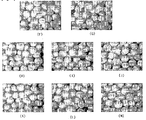
- 5 and 6 are SEM pictures of the hybrid particles according to the present invention.
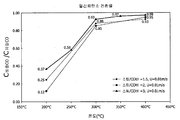
- Example 7 is a graph showing the CO conversion rate of the hybrid particles according to Example 1 of the present invention.
- Example 8 is a graph showing the carbon dioxide absorption reaction evaluation of the hybrid particles prepared by Example 6 according to the present invention.
- Example 10 is a graph showing the carbon monoxide conversion rate of the particles prepared in Example 12.
- FIG. 11 and 12 are graphs showing a curve of the accelerated water gas shift reaction of the hybrid particles prepared in Example 12.
- FIG. 11 and 12 are graphs showing a curve of the accelerated water gas shift reaction of the hybrid particles prepared in Example 12.
- the present invention is an active ingredient for water gas shift reaction catalyst
- It relates to a hybrid particle composition
- a hybrid particle composition comprising an active ingredient for absorbing carbon dioxide.
- the active ingredient for the water gas shift reaction catalyst and the active ingredient for carbon dioxide absorption reacts with carbon monoxide and water included in the synthesis gas effectively converts to hydrogen and carbon dioxide and at the same time selectively reacts with the converted carbon dioxide to effectively carbon dioxide It is a substance that can be collected and separated.
- the active ingredient for the water gas shift reaction catalyst may be, for example, a transition metal oxide, a transition metal oxide precursor, or a nitride oxide.
- the transition metal oxide precursor refers to a material that can be converted into a transition metal oxide.
- transition metal oxide copper oxide (CuO, Cu 2 O), zinc oxide (ZnO), cerium dioxide (CeO 2 ) nickel oxide (NiO), cobalt oxide (CaO, Co 3 O 4 ), iron oxide (FeO, Fe 2 O 3 , Fe 3 O 4 ), chromium oxide (Cr 2 O 3, CrO 3 CrO CrO 2 ), molybdenum oxide (MoO 3 ), tungsten oxide (WO 3 ) and At least one selected from the group consisting of alumina (Al 2 O 3 ), and specific examples of nitrates include iron nitrate (Fe (NO 3 ) 3 ), chromium nitrate (Cr (NO 3 ) 3 ), and aluminum nitrate ( One or more selected from the group consisting of Al (NO 3 ) 3 ).
- Examples of the active ingredient for absorbing carbon dioxide in the present invention include alkali metal oxides, alkaline earth metal oxides, alkali metal carbonates, alkali metal bicarbonates, alkaline earth metal carbonates, alkaline earth metal bicarbonates, alkali metal hydroxides, alkaline earth metal hydroxides or carbonates.
- Precursors can be used.
- the carbonate precursor means a material that can be converted to carbonate.
- the active ingredient in the present invention include potassium carbonate, potassium bicarbonate, potassium hydroxide, calcium carbonate, calcium oxide, sodium carbonate, sodium bicarbonate, sodium hydroxide, calcium hydroxide, manganese oxide, magnesium hydroxide, magnesium oxide, magnesium carbonate, calcium oxide, And at least one selected from the group consisting of lithium zirconate, lithium silicate, lithium hydroxide, lithium oxide, titanium aluminum oxide magnesium hydroxide, thallium oxide, lead oxide, beryllium oxide and beryllium hydroxide.
- the total content of the active ingredient for the water gas shift reaction catalyst and the active ingredient for absorbing carbon dioxide may be 10 to 80 parts by weight, and preferably 30 to 70 parts by weight.
- the constituent ratio of the active ingredient for the absorbent may be 0.2 to 1 based on the weight of the active ingredient for the catalyst. If the content is less than 10 parts by weight, there is a fear that the carbon dioxide capture efficiency is lowered, if it exceeds 70 parts by weight, the physical properties (ex, wear resistance and packing density, etc.) required in the fluidized bed accelerated aqueous conversion reaction process may be lowered. There is.
- the purity of the active ingredient is preferably 98% or more.
- the hybrid particle composition of the present invention may further comprise a support.
- the support is a substance which makes the active ingredient well distributed in the hybrid particles, thereby increasing the utility of the active ingredient and providing pores and surface areas necessary for the reaction.
- the type of the support is not particularly limited as long as it has a large specific surface area.
- One or more selected from the group consisting of manganese compounds may be used, and preferably one or more selected from the group consisting of alumina and hydrotalcite may be used.
- the purity of the material used as the support is preferably 99.8% or more, the specific surface area may be 100 to 700 m 2 / g.
- the alumina used is Al 9 O 3 content of about 99.8%, the specific surface area may be 150 to 250 m 2 / g, and hydrotalcite is alumina doped with magnesium oxide (MgO), the Hydrotalcite may comprise 25 to 90% by weight of magnesium oxide (MgO), preferably 29 to 80% by weight.
- the specific surface area of the hydrotalcite may be 100 m 2 / g or more, and the upper limit may be 300 m 2 / g.
- the content of the support may be, for example, 5 to 70 parts by weight, and preferably 15 to 30 parts by weight. If the content is less than 5 parts by weight, physical properties such as abrasion resistance and packing density required in the fluidized bed accelerated aqueous conversion reaction process may be lowered. If the content is more than 70 parts by weight, performance may be reduced due to the reduction of the relative active ingredient. There is.
- the hybrid particle composition of the present invention may further include an inorganic binder.
- the inorganic binder is a substance which binds the active ingredient and the support to impart strength to the absorbent and enables the absorbent to be used without loss due to prolonged wear.
- the type of the inorganic binder is not particularly limited, and for example, at least one selected from the group consisting of cements, clays, ceramics, and the like may be used, and the group consisting of clays and ceramics may be used. One or more selected from can be used.
- specific types of the clays include bentonite or kaolin
- specific types of ceramics include alumina sol, silica sol or boehmite, and the like. Silicates, calcium aluminate, and the like.
- the content of the inorganic binder may be, for example, 3 to 70 parts by weight, and preferably 5 to 20 parts by weight. If the content is less than 3 parts by weight, there is a fear that the physical properties are lowered due to a decrease in the bonding strength between the raw materials, if the content exceeds 70 parts by weight, the performance as a catalyst and absorbent may be lowered due to the relative content of the active ingredient.
- the hybrid particle composition according to the present invention may further comprise an additive.
- the additive is a material that improves the performance of the particles, and allows the repeated use of absorption and regeneration reactions without deterioration of the reaction due to long-term use.
- the additive include titanium oxide (TiO 2 ), zirconium oxide (ZrO 2 ), barium titania (BaTiO 3 ), molybdenum oxide (MoO 2, MoO 3 ), nickel oxide (NiO), and oxidation Cobalt (CoO , Co 2 O 3, Co 3 O 4 ), Iron Oxide (Fe 2 O 3, Fe 3 O 4 ), Copper Oxide (CuO), Zinc Oxide (ZnO), Cerium Oxide (CeO 2, Ce 2 O 3 ), yttria stabilized zirconium (Yitria-stabilized zirconia), cerium nitrate, tungsten oxide, vanadium oxide, magnesium oxide, zinc oxide, precious metals (Pt, Au, Pd, Rb, Ru
- the amount of the additive may be, for example, 3 to 70 parts by weight, and preferably 3 to 25 parts by weight.
- the present invention is the above-mentioned hybrid particle composition, namely.
- the present invention relates to a slurry composition comprising the solid raw material and the solvent using a composition containing the active ingredient for the water gas shift reaction catalyst, the active ingredient for absorbing carbon dioxide, the support, the inorganic binder, and the additive.
- the active ingredient for the water gas shift reaction catalyst the active ingredient for absorbing carbon dioxide, the support, the inorganic binder, and the additive may be used without limitation the above-described type, and the content thereof may also be used in the aforementioned amount.
- the kind of the solvent is not particularly limited, and a solvent generally used in the art may be used. Specifically, water or alcohol may be used, and water is preferably used.
- the content of the solid raw material in the present invention may be included, for example, 15 to 60 parts by weight with respect to 100 parts by weight of the solvent, preferably 20 to 40 parts by weight.
- the content of the solid raw material is less than 20 parts by weight, the amount of the slurry for preparing the absorbent may be relatively increased, thereby reducing the manufacturing efficiency.
- the content of the solid material exceeds 50 parts by weight, the fluidity may be increased due to an increase in the viscosity of the slurry due to an increase in concentration. Due to this deterioration, it is difficult to transport through the pump during spray drying, and workability may be deteriorated.
- the slurry composition according to the present invention further comprises at least one organic additive selected from the group consisting of dispersants, antifoaming agents and organic binders for controlling homogenization of solid raw materials, concentration, viscosity, stability, flowability and strength and density of slurry. It may include.
- a dispersant is used to prevent agglomeration between particles in the grinding process, which will be described below. That is, in the grinding process for controlling the particle size of the solid raw material constituting the absorbent, the dispersant may be used to prevent the reduction of the grinding efficiency by agglomeration of the pulverized fine powder particles.
- dispersant in the present invention for example, at least one selected from the group consisting of anionic dispersants, cationic dispersants, amphoteric dispersants and nonionic dispersants may be used, and preferably anionic dispersants and nonionics.
- Systemic dispersants can be used.
- anionic dispersant polycarboxylic acid, polycarboxylic acid amine, polycarboxylic acid amine salt, polycarboxylic acid soda salt, or the like may be used.
- nonionic dispersant a fluorine-based surfactant may be used.
- the anionic dispersant may be used in an amount of 0.1 to 10 parts by weight based on a solid raw material, and a nonionic dispersant may be used in an amount of 0.001 to 0.3 parts by weight based on a solid raw material. In this range, the dispersion effect of the particles is excellent.
- a defoager may be used to remove bubbles in the slurry to which the dispersant and the organic binder are applied.
- the antifoaming agent may include, for example, at least one selected from the group consisting of silicone, metal soap, amide, polyether, polyester, polyglycol, organophosphoric acid and alcohol.
- a metal soap type and polyester type nonionic surfactant can be used.
- the antifoaming agent may be used in 0.001 to 1.0 parts by weight based on the solid raw material.
- the organic binder imparts plasticity and fluidity to the slurry and ultimately gives strength to the solid particles formed during spray drying, thereby facilitating handling of the particles before drying and firing.
- the type of the organic binder for example, one or more selected from the group consisting of polyvinyl alcohol, polyglycol, and methyl cellulose may be used.
- the content of the organic binder may be, for example, 0.5 to 5 parts by weight based on the solid raw material. If the content is less than 0.5 parts by weight, it may be difficult to maintain the spherical shape until the drying and firing due to the decrease in the bonding strength of the spray-dried solid particles, if the content exceeds 5 parts by weight of the final material by the residual ash after firing There is a risk of deterioration in performance.
- a pH adjusting agent may be further used.
- organic amine or ammonia water can be used, for example.
- the pH adjusting agent may be used in an amount of 0.01 to 10 parts by weight based on the solid material.
- the method for producing the hybrid particles in the present invention is not particularly limited.
- the hybrid particles may be manufactured by a method including preparing the final hybrid particles by dry baking the prepared solid particles.
- the slurry composition in step (A) may be prepared by mixing the aforementioned solid raw material in a solvent.
- the solid raw material may include an active ingredient for a water gas shift reaction catalyst, an active ingredient for absorbing carbon dioxide, a support, an inorganic binder, and an additive, and the active ingredient, the support, the inorganic binder, and the additive may be used without any limitation as described above. Its content may also be used within the aforementioned content range.
- the slurry composition according to the present invention comprises the steps of preparing a mixture of a solvent and a solid raw material
- the mixture may be prepared by stirring and grinding.
- the solvent may be used in the above-described kind, and specifically, water may be used.
- the content of the solid raw material in the present invention may be 20 to 50 parts by weight based on 100 parts by weight of the solvent.
- the organic additive in the step of adding the organic additive to the mixture of the present invention, one or more selected from the group consisting of a dispersant, an antifoaming agent, and an organic binder may be used.
- a dispersant an antifoaming agent and an organic binder
- a pH adjusting agent may be further added to the mixture.
- the dispersant, the antifoaming agent, and the organic binder may be used in the above-mentioned kinds and contents.
- the stirring may be performed in the process of adding the components included in the mixture, and / or in a state where all of them are added, and may be performed using a stirrer.
- the type of the stirrer used is not particularly limited, and a general stirrer, a double helix mixer, a high speed emulsifier, a homogenizer, a high shear blender or an ultrasonic homogenizer may be used. homogenizer) and the like, and may be selectively used depending on the amount of raw material to be added.
- the solid raw material particles can be finely ground and homogeneously dispersed.
- an additional antifoaming agent and a dispersant may be used as necessary during the grinding, and a stable slurry may be prepared using an additional pH adjusting agent.
- a wet milling method may be used to improve the grinding effect and to solve problems such as blowing of particles generated during dry grinding.
- the grinding is performed using a grinder, and the type of the grinder used is not particularly limited.
- a roller mill, a ball mill, an attrition mill, A planar mill, bead mill, or high energy bead mill can be used.
- a high energy bead mill can be preferably used.
- the filling amount of the bead (grind), which is the pulverization medium is preferably 60% to 80% based on the volume of the grinding container when grinding and homogenizing.
- Beads, which are grinding media may use Yttria stabilized zirconia beads, which are excellent in strength and stability.
- the size of the ball is preferably 0.3 to 1.25 mm.
- the grinding may be performed two or more times to produce a homogeneous slurry.
- a dispersant and an antifoaming agent may be added to the slurry (mixture) in order to perform the next pulverization, thereby controlling the fluidity of the slurry to facilitate the transfer through the pump.
- an organic binder may be added prior to final grinding to uniformly mix the slurry.
- the average diameter of the particles in the ground mixture may be 3 ⁇ m or less, preferably 1 ⁇ m or less.
- the slurry composition which has been ground, can be used to adjust specificity such as concentration and viscosity by using a dispersant, an antifoaming agent or an additional solvent.
- the grinding process may be omitted.
- Preparation of the slurry composition of the present invention may further comprise the step of removing the foreign matter contained in the slurry after preparing the slurry composition.
- the step of removing the foreign matter contained in the slurry after preparing the slurry composition Through the above step, it is possible to remove the foreign matter or agglomerated raw materials that may cause the nozzle clogging during spray molding. Removal of the foreign matter may be carried out through sieving.
- Drying of the slurry composition in the step of drying the slurry composition of the present invention into solid particles may use spray drying, and preferably, may be performed using a spray dryer.
- the drying is performed by transferring the slurry composition to the spray dryer using a pump, and then spraying the transferred slurry into the spray dryer through a pump or the like to form solid particles by the drying.
- the viscosity of the slurry transferable to the said pump can be sprayed as 300 cP or more, for example.
- the operating conditions of the spray dryer for molding the hybrid particles in the spray dryer in the present invention may apply the operating conditions generally used in this field.
- the spray method of the slurry composition in the present invention may use a countercurrent spray method for spraying in the direction opposite to the flow of the drying air using a pressure nozzle. That is, in order to control the average particle size of the particles in the spray dryer and increase the residence time of the particles sprayed in the dryer, a countercurrent spray method may be used in which a pressurized nozzle is installed at the bottom of the dryer.
- the shape, particle size, particle distribution and absorbent structure of the hybrid particles are affected by the concentration, viscosity, dispersion degree of the slurry composition, injection pressure of the slurry composition, injection amount, drying capacity and temperature of the spray dryer, the spray The structure and spray form of the dryer can be adjusted to suit.
- the injection pressure of the spray dryer may be 4 to 15 kg / cm 2
- the inner diameter of the pressure nozzle is 0.4 to 1.6 mm
- the inlet temperature of the dryer 240 to 300 °C and the outlet temperature may be 90 to 180 °C.
- the particle size distribution of the solid particles produced in this step is preferably 30 to 500 ⁇ m.
- step (B) is a step of dry firing the solid particles prepared in step (A) to produce hybrid particles.
- step (B) the solid particles may be dried and then fired to produce hybrid particles.
- Drying in the present invention may be carried out by drying the molded solid particles in a reflux dryer of 100 to 200 °C for 2 hours or more. At this time, drying is performed in an air atmosphere.
- the dried particles are placed in a high temperature firing furnace to raise the final firing temperature to 350 to 1000 ° C. at a rate of 0.5 to 10 ° C./min, and then fired for 2 hours or more.
- the stagnation section of each 30 minutes or more at a stagnation temperature of two or more steps up to the final firing temperature may be fired.
- firing may use a firing furnace such as a muffle furnace, a tubular furnace, or a kiln.
- a firing furnace such as a muffle furnace, a tubular furnace, or a kiln.
- the method of firing the solid particles is not particularly limited, and the method of firing the solid particles by fluidization, the method of firing without fluidization, or the method of rotating and firing the particles in a cylindrical kiln such as Rotary Kiln may be used. .
- the firing may be performed in an atmosphere of air, nitrogen, hellum, hydrogen, water, or reducing gas, and the flow rate of the atmospheric gas may be variously applied according to the type and size of the firing furnace, for example , 60 ml / min or more.
- the upper limit of the flow rate is not particularly limited.
- the organic additives (dispersant, antifoaming agent and organic binder) introduced during the preparation of the slurry by the firing are burned, and the strength of the particles is improved by bonding between the raw materials.
- the present invention also relates to hybrid particles.
- the hybrid particle according to the present invention includes an active ingredient for water gas shift reaction catalyst and an active ingredient for carbon dioxide absorption, and the active ingredient is preferably distributed in the above-described support.
- the hybrid particles may further include the above-described inorganic binder, and the active component and the support are bound by the inorganic binder.
- the shape of the hybrid particles may be spherical. If the shape is not spherical, but donut-shaped or grooved, the wear loss of the particles is increased.
- the particle size and particle distribution of the hybrid particles are not particularly limited, and may be, for example, 80 to 180 ⁇ m and 30 to 500 ⁇ m, respectively.
- the packing density of the hybrid particles of the present invention is not particularly limited, and may be, for example, 0.8 to 2.0 g / cc.
- the wear resistance is represented by the wear index (AI), the lower the wear index means that the wear resistance is better.
- the wear resistance of the hybrid particles is not particularly limited, and may be, for example, 40% or less, and preferably 0.80% to 35%. When the wear resistance exceeds 40%, a lot of fine powder may be generated, which may make it difficult to use the fluidized bed promoted water gas shift reaction process.
- the carbon monoxide conversion rate of the hybrid particles at 200 ° C or more may be 30% or more, and preferably, the carbon monoxide conversion rate of the hybrid particles at 300 ° C or more may be 80% or more.
- the carbon monoxide conversion rate refers to the rate at which carbon monoxide is converted to carbon dioxide and hydrogen by reaction with water.
- the present invention also provides a first step of converting carbon monoxide into carbon dioxide and hydrogen using a catalyst and simultaneously collecting the converted carbon dioxide into the absorbent;
- the catalyst and the absorbent are related to a fluidized bed promoted water gas shift method, wherein the active ingredient for water gas shift reaction catalyst and the active ingredient for carbon dioxide absorption are hybrid particles simultaneously distributed on a support.
- one or more selected from the group consisting of iron oxide, chromium oxide, alumina, and the like is used as the active ingredient for the water gas shift reaction catalyst, and manganese oxide, lithium zirconate, lithium silicate,
- the fluidized bed accelerated aqueous gas conversion method is characterized in that the capture of carbon dioxide is 300 to 600 °C, Preferably it may be carried out at 350 to 550 °C.
- At least one selected from the group consisting of copper oxide and zinc oxide is used as the active ingredient for the water gas shift reaction catalyst, and potassium carbonate, potassium bicarbonate, potassium hydroxide, sodium carbonate, sodium bicarbonate, sodium hydroxide as the active ingredient for carbon dioxide absorption.
- the fluidized-bed accelerated aqueous gas conversion method is characterized in that the capture of carbon dioxide is carried out at 200 to 500 ° C, preferably at 200 to 400 ° C. Can be done.
- Syngas produced in a gasifier or the like contains carbon monoxide and hydrogen as main components.
- the carbon monoxide in the synthesis gas in the first step is converted into carbon dioxide and hydrogen as shown in Scheme 1 below.
- the conversion of carbon monoxide may be activated by the catalytic role of the hybrid particles.
- Carbon dioxide produced by the reaction may be captured by the hybrid particles.
- the hybrid particles may serve as an absorbent in addition to a catalyst, and thus may easily collect carbon dioxide.
- the second step is to regenerate the hybrid particles in which carbon dioxide is collected, the regeneration may be carried out by reacting the hybrid particles with water vapor.
- Supplying steam and additional heat sources to the hybrid particles separates the carbon dioxide in the hybrid particles, which can be regenerated and reused for the conversion of carbon monoxide and the capture of carbon dioxide.
- Hybrid particles recycled in the present invention can be carried out again the first step of collecting carbon dioxide.
- FIG. 1 is a process chart showing a process for producing a hybrid particle according to the present invention.
- Figure 2 of the present invention is a process chart showing a process for producing a mixture of a solid raw material and a solvent as a slurry.
- the slurry is prepared by mixing a solid material in water (solvent) to prepare a mixture (11), adding an organic additive, etc. to the mixture (12), stirring the mixture ( 13) pulverizing and homogenizing the solid raw material 14 and removing the foreign matter contained in the slurry (15).
- the organic additive one or more selected from the group consisting of a dispersant, an antifoaming agent, an organic binder, and a pH adjusting agent may be used, and preferably all may be used.
- FIG. 3 is a process chart showing a process of forming a solid particle by spray drying the slurry.
- the spray drying of the slurry to form the solid particles comprises a step 21 of transferring the slurry to the spray dryer and a step 22 of spraying the transferred slurry into the spray dryer.
- Figure 4 is a process chart showing a process for producing a hybrid particle by dry firing the solid particles molded by the spray drying method.
- the solid particles first dried in the spray drying step are prepared as the final hybrid particles through the firing process 32 after the drying process 31.
- a solid slurry was added to water while stirring with a stirrer to prepare a mixed slurry.
- the content of the solid raw material was about 31 parts by weight based on 100 parts by weight of the solvent (water).
- the dispersant was added prior to the input of raw materials for easy mixing and dispersion of the solid material, or a small amount of the dispersant was added depending on the viscosity of the mixed slurry and the degree of agitation in the sequential loading of the raw materials.
- the antifoaming agent was added in small amounts depending on the degree of bubbles generated after the dispersant or stirring the slurry.
- the slurry was sufficiently stirred for 10 minutes or more at a speed of 10000 rpm to 25000 rpm using a double spiral stirrer to prevent sedimentation of particles having a relatively high specific gravity or large sizes in the solid raw material.
- the slurry was pulverized and homogenized using a high energy bead mill two or more times to prepare a final slurry.
- additional water, a dispersant, an antifoaming agent, and a pH adjusting agent (organic amine) were added to control the properties of the slurry, such as the viscosity of the slurry, the concentration of the solid raw material and the pH, or to facilitate the operation.
- Polyethylglycol as an organic binder was added before final grinding to homogeneously disperse the slurry.
- the final slurry obtained through the characteristics control of the slurry as described above was sieved to remove foreign matter that can be introduced during the manufacturing process.
- the prepared slurry was dried at 120 ° C. for 2 hours or more in an air atmosphere dryer, and then heated at a heating rate of 0.5 ° C./min to 10 ° C./min to a final firing temperature of 500 ° C. to 650 ° C. in a Muffle Furnace. After maintaining at the final temperature for 2 hours or more to prepare a final hybrid particles.
- each was maintained at 200 ° C., 400 ° C. and 500 ° C. for 1 hour before reaching the final firing temperature.
- Example 1 Example 2 Example 3 Example 4 Example 5 CuO (parts by weight) 6.5 13 20 26 33 ZnO (parts by weight) 3.5 7 10 14 17 K 2 CO 3 (parts by weight) 27 22 17 11 6 ⁇ -Alumina (part by weight) 20 20 20 20 20 MgO / Al 2 O 3 (parts by weight) 23 18 13 9 4 Bentonite (parts by weight) 4 4 4 4 4 Pseudoboehmite (parts by weight) 3 3 3 3 3 3 3 ZrO 2 (parts by weight) 10 10 10 10 10 10 10 BaTiO 3 (parts by weight) 3 3 3 3 3 3 3 3 3 Total Solid Raw Materials (parts by weight) 100 100 100 100 100 100 100 100 100 100 100 100 100 100 100 100 100 100 100 100 100 100 100 100 100 100 100 100 100 100 100 100 100 100 100 100 100 100 100 100 100 100 100 100 100 100 100 100 100 100 100 100 100 100 100 100 100 100 100 100 100 100 100 100 100 100 100 100 100 100 100 100 100 100 100 100 100 100 100
- a solid slurry was added to water while stirring with a stirrer to prepare a mixed slurry.
- the content of the solid raw material was about 26.2 parts by weight based on 100 parts by weight of the solvent (water).
- the dispersant was added prior to the input of raw materials for easy mixing and dispersion of the solid material, or a small amount of the dispersant was added depending on the viscosity of the mixed slurry and the degree of agitation in the sequential loading of the raw materials.
- the antifoaming agent was added in small amounts depending on the degree of bubbles generated after the dispersant or stirring the slurry.
- the slurry was sufficiently stirred for 10 minutes or more at a speed of 10000 rpm to 25000 rpm using a double spiral stirrer to prevent sedimentation of particles having a relatively high specific gravity or large sizes in the solid raw material.
- the slurry was pulverized and homogenized using a high energy bead mill two or more times to prepare a final slurry.
- additional water, a dispersant, an antifoaming agent, and a pH adjusting agent (organic amine) were added to control the properties of the slurry, such as the viscosity of the slurry, the concentration of the solid raw material and the pH, or to facilitate the operation.
- Polyethylglycol as an organic binder was added before final grinding to homogeneously disperse the slurry.
- the final slurry obtained through the characteristics control of the slurry as described above was sieved to remove foreign matter that can be introduced during the manufacturing process.
- the prepared slurry was dried at 120 ° C. for 2 hours or more in a drier of an air atmosphere, and then heated at a heating rate of 0.5 ° C./min to a final firing temperature of 550 ° C. in a box-type firing furnace, and maintained at the final temperature for 2 hours or more. To produce the final hybrid particles.
- each one hour was maintained at 200 ° C, 300 ° C and 400 ° C before reaching the final firing temperature.
- Example 11 Example 12
- the shape of the hybrid particles was measured using a naked eye, an industrial microscope or an electron scanning microscope (SEM).
- Average particle size and particle size distribution of the hybrid particles were measured according to the standard method ASTM E-11. At this time, 10g of the hybrid particle sample was sieved in a sieve shaker for 30 minutes, and then the average particle size and size distribution were calculated according to the calculation method presented.
- the packing density of the hybrid particles was measured according to the apparatus and method presented in the standard ASTM D 4164-88.
- the wear resistance of the hybrid particles was measured in accordance with the test method and procedure given in the specification using a 3-hole attrition tester manufactured according to ASTM D 5757-95.
- the wear index (AI) calculated according to the method proposed by ASTM, is expressed as the ratio of the initial sample volume (50 g) of fine powders generated due to abrasion in wear tubes for 5 hours at a flow rate of 10 slpm (standard liters per minute).
- One of the important indicators of the (fluidized bed or high velocity fluidized bed) process is less than 30% in the fluidized bed process.
- the wear index (AI) expressed in wear resistance indicates that the smaller the value, the higher the wear strength.
- CO conversion of the prepared hybrid particles was performed using a Batch fluidized bed (2 cm ID) reactor. The conversion was measured at 20 bar and reaction conditions of 300 to 420 ° C.
- the gas composition used in the reaction is a simulation of the synthesis gas produced by coal gasification, and the volume percentage is 29.8% carbon monoxide, 13.4% hydrogen, 4.9% carbon dioxide, and 59.1% nitrogen, which is a balance gas. Water was added by steam to adjust the volume ratio of water and carbon monoxide from 1: 1 to 5: 1.
- the absorption and regeneration reactions of the prepared hybrid particles were measured using a pressurized thermogravimetric analysis.
- CO 2 absorption was measured at 200 ° C. and 20 bar, and regeneration was measured at 400 ° C. and 20 bar.
- the gas composition used for the absorption reaction is 37% carbon dioxide in volume percentage, 10% water as steam and 57% nitrogen as balance gas.
- the regeneration reaction used nitrogen containing 10% water as steam.
- Example 1 Example 2
- Example 3 Example 4
- Example 5 shape ss ss ss ss ss ss Particle Size ⁇ m 122 125 116 118 109 Particle Distribution ⁇ m 40-250 40-250 40-250 40-250 Packing density g / cc 1.0 0.94 0.93 0.93 0.99 % Wear resistance 0.84 3.70 25.5 34.8 31.8
- Final firing temperature 550 550 550 550 Absorption in the batch fluid bed reactor capacity (g CO 2 / 100g sorbent) 6.04 - - - - - -
- Example 12 shape ss ss ss ss ss ss ss ss ss ss sss sss Particle Size ⁇ m 106 101 102 113 109 103 105 105 Particle Distribution ⁇ m 40-250 40-250 40-250 40-250 40-250 40-250 40-250 40-250 Packing density g / cc 1.03 0.95 0.92 0.95 0.96 0.99 0.94 0.92 % Wear resistance 0.24 2.82 13.82 23.32 26.42 14.06 18.56 18.44 Final firing temperature 550 550 550 550 550 550 550 550 550 550 550 550 550 550 550 550 550 550 550 550 550 550 550 550 550
- Example 8 is a graph showing the carbon dioxide absorption reaction evaluation of the hybrid particles prepared by Example 6 according to the present invention.
- the particles of Example 1 exhibited high values of carbon monoxide degeneration rate of 0.80 (80%) or more at 300 ° C. or higher, and the particles of Example 6 had 0.80 ( 80%) or higher, and the particles of Example 12 exhibit high carbon monoxide conversion of 0.90 (90%) or higher at 400 ° C or higher. That is, the hybrid particles according to the present invention can be usefully used in the fluidized bed accelerated water gas conversion process.
- FIGS. 11 and 12 show the acceleration water gas shift reaction curve of the hybrid particles prepared by Example 12. As shown in FIGS. 11 and 12, it can be seen that the hybrid particles absorb carbon dioxide by the accelerated water gas conversion reaction to increase the carbon monoxide conversion rate.
Landscapes
- Chemical & Material Sciences (AREA)
- Organic Chemistry (AREA)
- Chemical Kinetics & Catalysis (AREA)
- Analytical Chemistry (AREA)
- Inorganic Chemistry (AREA)
- Engineering & Computer Science (AREA)
- Combustion & Propulsion (AREA)
- Materials Engineering (AREA)
- Health & Medical Sciences (AREA)
- General Health & Medical Sciences (AREA)
- Catalysts (AREA)
Abstract
La présente invention concerne un ingrédient actif destiné à un catalyseur de réaction de déplacement au gaz à l'eau ; et une composition de particule hybride possédant un ingrédient actif permettant d'absorber le dioxyde de carbone et sa particule hybride. La particule hybride de la présente invention possède d'excellentes caractéristiques physiques telles que la densité d'empilement et la résistance à l'abrasion, le taux de déplacement du CO, la capacité d'absorption du CO2, et la performance de régénération, ce qui permet une capture et un isolement efficaces du dioxyde de carbone. En outre, la présente invention permet une production de masse aisée par l'application d'une technologie de pulvérisation, et peut être utilisée en tant que technologie de récupération de CO2 à précombustion à faible coût pour la génération d'un cycle combiné de gazéification intégrée du charbon, une pile à combustible, la liquéfaction du charbon, et un procédé de fabrication de composé du fait du rendement élevé et de sa production à faible coût.
Applications Claiming Priority (4)
| Application Number | Priority Date | Filing Date | Title |
|---|---|---|---|
| KR1020100094731A KR101790065B1 (ko) | 2010-09-29 | 2010-09-29 | 촉진수성가스전환반응 공정용 하이브리드 입자 및 그 제조 방법 |
| KR1020100094739A KR101790068B1 (ko) | 2010-09-29 | 2010-09-29 | 촉진수성가스전환반응 공정용 하이브리드 입자 및 그 제조 방법 |
| KR10-2010-0094731 | 2010-09-29 | ||
| KR10-2010-0094739 | 2010-09-29 |
Publications (1)
| Publication Number | Publication Date |
|---|---|
| WO2012043904A1 true WO2012043904A1 (fr) | 2012-04-05 |
Family
ID=45893327
Family Applications (1)
| Application Number | Title | Priority Date | Filing Date |
|---|---|---|---|
| PCT/KR2010/006680 Ceased WO2012043904A1 (fr) | 2010-09-29 | 2010-09-30 | Particule hybride destinée à un procédé de réaction de déplacement au gaz à l'eau à sorption sur lit fluidisé améliorée et procédé de préparation de celle-ci |
Country Status (1)
| Country | Link |
|---|---|
| WO (1) | WO2012043904A1 (fr) |
Cited By (8)
| Publication number | Priority date | Publication date | Assignee | Title |
|---|---|---|---|---|
| US9370743B2 (en) | 2012-12-21 | 2016-06-21 | Samsung Electronics Co., Ltd | Carbon dioxide adsorbent including barium titanate, carbon dioxide capture module including the same, and methods for separating carbon dioxide using the same |
| CN107311108A (zh) * | 2016-04-26 | 2017-11-03 | 内蒙古盾安光伏科技有限公司 | 一种避免吸附柱再生延时生产工艺 |
| CN108529625A (zh) * | 2018-06-13 | 2018-09-14 | 昆明理工大学 | 一种利用煤制备一氧化碳的方法 |
| CN108722106A (zh) * | 2018-06-24 | 2018-11-02 | 南京市雨花台区绿宝工业设计服务中心 | 一种甲醛清除剂的制备方法 |
| CN108722105A (zh) * | 2018-06-24 | 2018-11-02 | 南京市雨花台区绿宝工业设计服务中心 | 一种复合甲醛清除剂的制备方法 |
| CN110342867A (zh) * | 2019-08-19 | 2019-10-18 | 江苏健祥生态农业集团有限责任公司 | 负离子生态养生房 |
| WO2021179618A1 (fr) * | 2020-03-13 | 2021-09-16 | 武汉科技大学 | Matériau à base d'hexaluminate de calcium contenant du titane et son procédé de préparation |
| JPWO2022145217A1 (fr) * | 2020-12-28 | 2022-07-07 |
Citations (4)
| Publication number | Priority date | Publication date | Assignee | Title |
|---|---|---|---|---|
| US20020147103A1 (en) * | 2000-09-25 | 2002-10-10 | Ruettinger Wolfgang F. | Enhanced stability water-gas shift reaction catalysts |
| US20040082669A1 (en) * | 2002-10-28 | 2004-04-29 | Ruettinger Wolfgang Friedrich | Operating conditions for copper-based water-gas shift catalysts |
| US20050005520A1 (en) * | 2003-07-10 | 2005-01-13 | Anca Faur-Ghenciu | High activity water gas shift catalysts based on platinum group metals and cerium-containing oxides |
| US20050207958A1 (en) * | 2004-03-18 | 2005-09-22 | Anca Faur-Ghenciu | High activity water gas shift catalysts with no methane formation |
-
2010
- 2010-09-30 WO PCT/KR2010/006680 patent/WO2012043904A1/fr not_active Ceased
Patent Citations (4)
| Publication number | Priority date | Publication date | Assignee | Title |
|---|---|---|---|---|
| US20020147103A1 (en) * | 2000-09-25 | 2002-10-10 | Ruettinger Wolfgang F. | Enhanced stability water-gas shift reaction catalysts |
| US20040082669A1 (en) * | 2002-10-28 | 2004-04-29 | Ruettinger Wolfgang Friedrich | Operating conditions for copper-based water-gas shift catalysts |
| US20050005520A1 (en) * | 2003-07-10 | 2005-01-13 | Anca Faur-Ghenciu | High activity water gas shift catalysts based on platinum group metals and cerium-containing oxides |
| US20050207958A1 (en) * | 2004-03-18 | 2005-09-22 | Anca Faur-Ghenciu | High activity water gas shift catalysts with no methane formation |
Cited By (9)
| Publication number | Priority date | Publication date | Assignee | Title |
|---|---|---|---|---|
| US9370743B2 (en) | 2012-12-21 | 2016-06-21 | Samsung Electronics Co., Ltd | Carbon dioxide adsorbent including barium titanate, carbon dioxide capture module including the same, and methods for separating carbon dioxide using the same |
| CN107311108A (zh) * | 2016-04-26 | 2017-11-03 | 内蒙古盾安光伏科技有限公司 | 一种避免吸附柱再生延时生产工艺 |
| CN108529625A (zh) * | 2018-06-13 | 2018-09-14 | 昆明理工大学 | 一种利用煤制备一氧化碳的方法 |
| CN108722106A (zh) * | 2018-06-24 | 2018-11-02 | 南京市雨花台区绿宝工业设计服务中心 | 一种甲醛清除剂的制备方法 |
| CN108722105A (zh) * | 2018-06-24 | 2018-11-02 | 南京市雨花台区绿宝工业设计服务中心 | 一种复合甲醛清除剂的制备方法 |
| CN110342867A (zh) * | 2019-08-19 | 2019-10-18 | 江苏健祥生态农业集团有限责任公司 | 负离子生态养生房 |
| WO2021179618A1 (fr) * | 2020-03-13 | 2021-09-16 | 武汉科技大学 | Matériau à base d'hexaluminate de calcium contenant du titane et son procédé de préparation |
| JPWO2022145217A1 (fr) * | 2020-12-28 | 2022-07-07 | ||
| EP4268933A4 (fr) * | 2020-12-28 | 2024-12-11 | Sumitomo Chemical Company, Limited | Procédé de réduction de dioxyde de carbone dans un espace de vie, adsorbant de dioxyde de carbone et son procédé de production |
Similar Documents
| Publication | Publication Date | Title |
|---|---|---|
| WO2012043904A1 (fr) | Particule hybride destinée à un procédé de réaction de déplacement au gaz à l'eau à sorption sur lit fluidisé améliorée et procédé de préparation de celle-ci | |
| WO2012033250A1 (fr) | Absorbant de dioxyde de carbone et son procédé de fabrication | |
| WO2013065880A1 (fr) | Absorbant solide de dioxyde de carbone comprenant une amine ou un composé de cette amine, destiné à être utilisé dans le procédé de capture du dioxyde de carbone par voie sèche, et procédé de fabrication dudit absorbant | |
| WO2012043905A1 (fr) | Catalyseur de déplacement au gaz à l'eau à sorption améliorée et procédé de préparation de celui-ci | |
| KR20130034993A (ko) | 중·고온 이산화탄소 포집용 흡수제 및 그 제조방법 | |
| KR20130035639A (ko) | 유동층 수성가스전환촉매 | |
| US20080119356A1 (en) | Highly attrition resistant and dry regenerable sorbents for carbon dioxide capture | |
| WO2013048191A9 (fr) | Absorbant de dioxyde de carbone, et son procédé de préparation | |
| KR101790065B1 (ko) | 촉진수성가스전환반응 공정용 하이브리드 입자 및 그 제조 방법 | |
| CN103201028B (zh) | 脱硫吸附剂及其制备方法 | |
| KR101585792B1 (ko) | 이산화탄소 중온 활성 고체 흡수제, 슬러리 조성물 및 이의 제조방법 | |
| WO2016064084A1 (fr) | Réacteur de type multitubulaire à calandre permettant de reformer du gaz naturel et procédé de fabrication de gaz de synthèse ou d'hydrogène gazeux faisant appel à celui-ci | |
| CN101524609A (zh) | 非对称膜FeAl金属间化合物多孔材料过滤元件及应用 | |
| WO2011052829A1 (fr) | Absorbant de dioxyde de carbone pour gaz d'échappement et procédé de préparation associé | |
| WO2018066751A1 (fr) | Matière première solide pour absorbant de dioxyde de carbone, composition de l'absorbant de dioxyde de carbone la comprenant, et absorbant de dioxyde de carbone préparé à l'aide de celle-ci | |
| WO2020004751A1 (fr) | Composition de matière première pour la fabrication de particules de transfert d'oxygène, particules de transfert d'oxygène fabriquées à l'aide de celle-ci, et méthode de fabrication de particules de transfert d'oxygène | |
| KR20230118771A (ko) | 이산화탄소 흡수제용 개질 벤토나이트 제조방법 및이에 의해 제조된 개질 벤토나이트 | |
| WO2019078413A1 (fr) | Composition de matériau pour préparer des particules de transfert d'oxygène, particules de transfert d'oxygène préparées à l'aide de celle-ci, et méthode de préparation de particules de transfert d'oxygène | |
| KR20120060972A (ko) | 촉진수성가스전환반응 공정용 하이브리드 입자 및 그 제조 방법 | |
| WO2012018156A1 (fr) | Dispositif de transport d'oxygène et son procédé de fabrication | |
| Ding et al. | Synergistic intensification of membrane reactor with biochar catalyst for efficient production of clean syngas from biomass gasification | |
| JP5412584B2 (ja) | 噴霧乾燥方法で成形された亜鉛系脱硫剤及びその製造方法 | |
| WO2018056766A1 (fr) | Composition de matière première pour préparer des particules de transport d'oxygène, particules de transport d'oxygène préparées à l'aide de celle-ci, et procédé de préparation de particules de transport d'oxygène | |
| JP2006187701A (ja) | 高強度乾式再生用co2吸収剤 | |
| WO2011052825A1 (fr) | Particules donneuses d'oxygène pour combustion ou reformage en boucle chimique, et procédé de préparation de ces dernières |
Legal Events
| Date | Code | Title | Description |
|---|---|---|---|
| 121 | Ep: the epo has been informed by wipo that ep was designated in this application |
Ref document number: 10857905 Country of ref document: EP Kind code of ref document: A1 |
|
| NENP | Non-entry into the national phase |
Ref country code: DE |
|
| 122 | Ep: pct application non-entry in european phase |
Ref document number: 10857905 Country of ref document: EP Kind code of ref document: A1 |