WO2012053744A2 - 선글라스 또는 고글용 광학 특성 조절 시스템 및 이를 구비하는 선글라스 및 고글 - Google Patents
선글라스 또는 고글용 광학 특성 조절 시스템 및 이를 구비하는 선글라스 및 고글 Download PDFInfo
- Publication number
- WO2012053744A2 WO2012053744A2 PCT/KR2011/006745 KR2011006745W WO2012053744A2 WO 2012053744 A2 WO2012053744 A2 WO 2012053744A2 KR 2011006745 W KR2011006745 W KR 2011006745W WO 2012053744 A2 WO2012053744 A2 WO 2012053744A2
- Authority
- WO
- WIPO (PCT)
- Prior art keywords
- sunglasses
- lcd
- goggles
- unit
- lens
- Prior art date
- Legal status (The legal status is an assumption and is not a legal conclusion. Google has not performed a legal analysis and makes no representation as to the accuracy of the status listed.)
- Ceased
Links
Images


Classifications
-
- A—HUMAN NECESSITIES
- A61—MEDICAL OR VETERINARY SCIENCE; HYGIENE
- A61F—FILTERS IMPLANTABLE INTO BLOOD VESSELS; PROSTHESES; DEVICES PROVIDING PATENCY TO, OR PREVENTING COLLAPSING OF, TUBULAR STRUCTURES OF THE BODY, e.g. STENTS; ORTHOPAEDIC, NURSING OR CONTRACEPTIVE DEVICES; FOMENTATION; TREATMENT OR PROTECTION OF EYES OR EARS; BANDAGES, DRESSINGS OR ABSORBENT PADS; FIRST-AID KITS
- A61F9/00—Methods or devices for treatment of the eyes; Devices for putting in contact-lenses; Devices to correct squinting; Apparatus to guide the blind; Protective devices for the eyes, carried on the body or in the hand
- A61F9/02—Goggles
- A61F9/022—Use of special optical filters, e.g. multiple layers, filters for protection against laser light or light from nuclear explosions, screens with different filter properties on different parts of the screen; Rotating slit-discs
-
- G—PHYSICS
- G02—OPTICS
- G02C—SPECTACLES; SUNGLASSES OR GOGGLES INSOFAR AS THEY HAVE THE SAME FEATURES AS SPECTACLES; CONTACT LENSES
- G02C7/00—Optical parts
- G02C7/02—Lenses; Lens systems ; Methods of designing lenses
-
- G—PHYSICS
- G02—OPTICS
- G02B—OPTICAL ELEMENTS, SYSTEMS OR APPARATUS
- G02B27/00—Optical systems or apparatus not provided for by any of the groups G02B1/00 - G02B26/00, G02B30/00
- G02B27/01—Head-up displays
- G02B27/017—Head mounted
-
- G—PHYSICS
- G02—OPTICS
- G02C—SPECTACLES; SUNGLASSES OR GOGGLES INSOFAR AS THEY HAVE THE SAME FEATURES AS SPECTACLES; CONTACT LENSES
- G02C11/00—Non-optical adjuncts; Attachment thereof
- G02C11/10—Electronic devices other than hearing aids
-
- G—PHYSICS
- G02—OPTICS
- G02C—SPECTACLES; SUNGLASSES OR GOGGLES INSOFAR AS THEY HAVE THE SAME FEATURES AS SPECTACLES; CONTACT LENSES
- G02C7/00—Optical parts
- G02C7/02—Lenses; Lens systems ; Methods of designing lenses
- G02C7/08—Auxiliary lenses; Arrangements for varying focal length
- G02C7/086—Auxiliary lenses located directly on a main spectacle lens or in the immediate vicinity of main spectacles
-
- G—PHYSICS
- G02—OPTICS
- G02C—SPECTACLES; SUNGLASSES OR GOGGLES INSOFAR AS THEY HAVE THE SAME FEATURES AS SPECTACLES; CONTACT LENSES
- G02C7/00—Optical parts
- G02C7/10—Filters, e.g. for facilitating adaptation of the eyes to the dark; Sunglasses
-
- G—PHYSICS
- G02—OPTICS
- G02C—SPECTACLES; SUNGLASSES OR GOGGLES INSOFAR AS THEY HAVE THE SAME FEATURES AS SPECTACLES; CONTACT LENSES
- G02C7/00—Optical parts
- G02C7/10—Filters, e.g. for facilitating adaptation of the eyes to the dark; Sunglasses
- G02C7/101—Filters, e.g. for facilitating adaptation of the eyes to the dark; Sunglasses having an electro-optical light valve
-
- G—PHYSICS
- G02—OPTICS
- G02C—SPECTACLES; SUNGLASSES OR GOGGLES INSOFAR AS THEY HAVE THE SAME FEATURES AS SPECTACLES; CONTACT LENSES
- G02C7/00—Optical parts
- G02C7/10—Filters, e.g. for facilitating adaptation of the eyes to the dark; Sunglasses
- G02C7/107—Interference colour filters
-
- G—PHYSICS
- G02—OPTICS
- G02C—SPECTACLES; SUNGLASSES OR GOGGLES INSOFAR AS THEY HAVE THE SAME FEATURES AS SPECTACLES; CONTACT LENSES
- G02C7/00—Optical parts
- G02C7/10—Filters, e.g. for facilitating adaptation of the eyes to the dark; Sunglasses
- G02C7/108—Colouring materials
-
- G—PHYSICS
- G02—OPTICS
- G02B—OPTICAL ELEMENTS, SYSTEMS OR APPARATUS
- G02B27/00—Optical systems or apparatus not provided for by any of the groups G02B1/00 - G02B26/00, G02B30/00
- G02B27/01—Head-up displays
- G02B27/0101—Head-up displays characterised by optical features
- G02B2027/0112—Head-up displays characterised by optical features comprising device for genereting colour display
-
- G—PHYSICS
- G02—OPTICS
- G02B—OPTICAL ELEMENTS, SYSTEMS OR APPARATUS
- G02B27/00—Optical systems or apparatus not provided for by any of the groups G02B1/00 - G02B26/00, G02B30/00
- G02B27/01—Head-up displays
- G02B27/0101—Head-up displays characterised by optical features
- G02B2027/0118—Head-up displays characterised by optical features comprising devices for improving the contrast of the display / brillance control visibility
-
- G—PHYSICS
- G02—OPTICS
- G02B—OPTICAL ELEMENTS, SYSTEMS OR APPARATUS
- G02B27/00—Optical systems or apparatus not provided for by any of the groups G02B1/00 - G02B26/00, G02B30/00
- G02B27/01—Head-up displays
- G02B27/017—Head mounted
- G02B2027/0178—Eyeglass type
-
- G—PHYSICS
- G02—OPTICS
- G02F—OPTICAL DEVICES OR ARRANGEMENTS FOR THE CONTROL OF LIGHT BY MODIFICATION OF THE OPTICAL PROPERTIES OF THE MEDIA OF THE ELEMENTS INVOLVED THEREIN; NON-LINEAR OPTICS; FREQUENCY-CHANGING OF LIGHT; OPTICAL LOGIC ELEMENTS; OPTICAL ANALOGUE/DIGITAL CONVERTERS
- G02F1/00—Devices or arrangements for the control of the intensity, colour, phase, polarisation or direction of light arriving from an independent light source, e.g. switching, gating or modulating; Non-linear optics
- G02F1/01—Devices or arrangements for the control of the intensity, colour, phase, polarisation or direction of light arriving from an independent light source, e.g. switching, gating or modulating; Non-linear optics for the control of the intensity, phase, polarisation or colour
- G02F1/13—Devices or arrangements for the control of the intensity, colour, phase, polarisation or direction of light arriving from an independent light source, e.g. switching, gating or modulating; Non-linear optics for the control of the intensity, phase, polarisation or colour based on liquid crystals, e.g. single liquid crystal display cells
- G02F1/133—Constructional arrangements; Operation of liquid crystal cells; Circuit arrangements
- G02F1/13306—Circuit arrangements or driving methods for the control of single liquid crystal cells
- G02F1/13318—Circuits comprising a photodetector
Definitions
- the present invention relates to sunglasses and goggles, and more particularly, to a control system of optical properties such as color or light transmittance of sunglasses or goggles lenses, and sunglasses and goggles provided with such a control system.
- Another object of the present invention is to provide an optical characteristic adjusting system capable of adjusting light transmittance and / or color of sunglasses or goggles lenses, and sunglasses and goggles lenses having the same.
- Still another object of the present invention is to provide an optical characteristic adjusting system capable of controlling the light transmittance of sunglasses or goggles lenses optimally and quickly in response to ambient temperature and illuminance, and sunglasses and goggles having the same.
- Still another object of the present invention is to provide an optical characteristic adjusting system for sunglasses or goggles that minimizes power consumption and sunglasses and goggles having the same.
- Still another object of the present invention is to provide an optical characteristic adjusting system capable of selecting automatic adjustment and manual adjustment for light transmittance of sunglasses or goggles lenses, and sunglasses and goggles having the same.
- a lens having an LCD panel having an LCD panel;
- a control unit for controlling the operation of the lens driving unit in response to the signal from the illuminance detection sensor.
- the LCD panel may be a shutter LCD whose light transmittance is adjusted by the LCD driver.
- the optical property adjusting system for sunglasses or goggles further includes a light source unit for providing light of one or more colors, the lens further includes the diffuse color filter for receiving light from the light source unit, and the lens driving unit includes: A light source driving unit for driving the light source unit may be provided.
- the lens includes a red first LCD panel, a green second LCD panel, and a blue third LCD panel, and the LCD driver adjusts an energization time of a signal periodically output to all three LCD panels.
- a distribution ratio operation unit for adjusting a distribution ratio of signals output to each of the three LCD panels.
- the optical characteristic adjusting system for sunglasses or goggles may further include a temperature sensor for providing ambient temperature data to the controller, and the controller may output a control signal compensated for the ambient temperature to the LCD driver.
- the control unit may further include a wear detection sensor that provides information on a wearing state of sunglasses or goggles.
- the driving voltage of the LCD panel may have a frequency of 36 Hz or less.
- the driving voltage of the LCD panel may have a frequency of 1 Hz or less.
- the optical property adjusting system for sunglasses or goggles may further include a function selection unit for selecting automatic adjustment and manual adjustment for the light transmittance of the lens.
- a sunglasses and goggles including the optical characteristic control system.
- the optical characteristic adjusting system for sunglasses or goggles includes a lens composed of an LCD panel, a driving unit for applying a driving voltage to the LCD panel, and a control unit for outputting a control signal to the driving unit. Can be adjusted.
- optical characteristic control system for sunglasses or goggles is equipped with a temperature sensor to compensate for temperature changes.
- the optical characteristic adjusting system for sunglasses or goggles includes an illumination sensor, it is possible to quickly and optimally adjust the light transmittance of the lens according to the illumination change.
- the wear detection sensor since the wear detection sensor is provided, driving to the lens may be blocked when not wearing, thereby minimizing power consumption.
- FIG. 1 is a perspective view of sunglasses according to an embodiment of the present invention.
- FIG. 2 is a block diagram of an optical characteristic adjusting system for sunglasses according to a first embodiment of the present invention.
- FIG. 3 is a cross-sectional view of the lens shown in FIG. 2.
- FIG. 4 is a flowchart illustrating the operation of the optical characteristic adjusting system for sunglasses shown in FIG. 2.
- FIG. 5 is a block diagram of an optical characteristic adjusting system for sunglasses according to a second embodiment of the present invention.
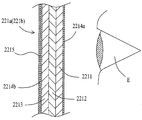
- FIG. 6 is a cross-sectional view of the lens shown in FIG. 5.
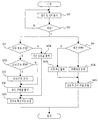
- FIG. 7 is a flowchart illustrating the operation of the optical characteristic adjusting system for sunglasses shown in FIG. 5.
- FIG. 8 is a perspective view of goggles according to another embodiment of the present invention.
- sunglasses 110 sunglasses frame
- the sunglasses 100 include a sunglasses frame 110 and an optical characteristic adjusting system 120 for sunglasses.
- the sunglasses 100 may select the lens color and / or automatically adjust the light transmittance by the optical characteristic adjusting system 120.
- the sunglasses frame 110 includes a body portion 111 and first and second leg portions 112a and 112b.
- Body portion 111 is a portion located in front of the wearer's eyes when worn, and has a nose support 111a.
- the first and second leg portions 112a and 112b are respectively located on the left and right sides of the wearer's head when worn, and are hinged to both sides of the body portion 111 so as to be folded and unfolded with respect to the body portion 111. .
- the optical property adjusting system 120 for sunglasses includes lenses 121a and 121b, a controller 122, a temperature sensor 123a, a wear sensor 123b, and an illumination sensor. 123c, a function selection unit 124, a state display unit 125, a lens drive unit 126, a light source unit 1261a, a power source 127, and a charging unit 128 are provided.
- the lenses 121a and 121b are fixed to the body 111 of the sunglasses frame 110 as shown in FIG. 1.
- 3 is a cross-sectional view of the lenses 121a and 121b.
- the lenses 121a and 121b may include the LCD panel 1211, the first and second polarizing films 1212a and 1212b positioned on both surfaces of the shutter LCD 1211, and the second polarizing film ( Diffuse color filter 1213 positioned opposite the shutter LCD 1211 with 1212b interposed therebetween, and harmful light positioned opposite the second polarizing film 1212b with diffused color filter 1213 interposed therebetween.
- a filter 1214 is provided.
- the LCD panel 1211 is a shutter LCD whose light transmittance can be adjusted by the magnitude of the driving voltage.
- the magnitude of the driving voltage applied to the LCD panel 1211 to adjust the light transmittance is adjusted by the lens driver 126. That is, the density of the lenses 121a and 121b is adjusted by the LCD panel 1211.
- the LCD panel 1211 is described as being a flexible plastic LCD.
- the diffusion color filter 1213 represents the colors of the lenses 121a and 121b.
- the color of the light source unit 1261a is diffused from the diffusion color filter 1213 to determine the colors of the lenses 121a and 121b.
- the controller 122 may be in the form of a microcomputer including a memory device in which a control program is stored and a central processing unit (CPU) for executing the control program.
- the control unit 122 receives power from the power source 127, receives ambient temperature data from the temperature sensor 123a, receives information about whether the user is wearing the wear sensor 123b, and receives an illuminance sensor 123c. ) Receives peripheral illumination data.
- the control unit 124 receives function selection information such as automatic adjustment of concentration and manual adjustment from the function selection unit 124.
- the control unit 122 outputs a control signal to the lens driver 126, and outputs information on the current state to the state display unit 125.
- the controller 122 receives power from the power 127 and the external power 129 provided therein. The controller 122 will be described in more detail with reference to FIG. 4 below.
- the temperature sensor 123a detects a temperature around the sunglasses 100 and transmits the data to the controller 122.
- the temperature sensor 123a is described as being located on one side of the body portion 111a of the sunglasses frame 110 as shown in FIG. 1, but the present invention is not limited thereto.
- a thermistor may be used as the temperature sensor 123a.
- the wear detection sensor 123b detects a wearing state of the sunglasses 100 and transmits the information to the controller 122.
- the wear detection sensor 123b is an optical sensor installed in the nose support part 111b of the body part 111a of the sunglasses frame 110. It is not limited to this. In this case, the wearing state is determined according to the light sensing state of the wearing detection sensor 123b.
- the illuminance sensor 123c detects the illuminance around the sunglasses 100 and transmits the data to the controller 122.
- the illumination sensor 123c is located at the center of the body portion 11a of the sunglasses frame 110, but the present invention is not limited thereto.
- the function selector 124 allows the user of the sunglasses 100 to select whether to select color, whether to adjust the density automatically or manually.
- the function selection unit 124 is described as being provided in the second leg portion 112b of the sunglasses frame 110, but the present invention is not limited thereto.
- the status display unit 125 is a display device like an LCD, and receives and outputs data on a current state from the control unit 122. Information that may be displayed on the status display unit 125 may be a matter such as density, color, and battery remaining. In the present embodiment, as shown in FIG. 1, the state display unit 125 is described as being provided in the second leg portion 112b of the sunglasses frame 110, but the present invention is not limited thereto.
- the lens driver 126 includes a light source driver 126a and a shutter LCD driver 126b.
- the lens driver 126 receives a control signal from the controller 122 and drives the shutter LCD 1211 and the light source 1261a of the lens 126 accordingly.
- the light source driver 126a causes the light source unit 1261a to emit light of a selected color based on the control signal input from the controller 122.
- the shutter LCD driver 126b adjusts the operating voltage so that the shutter LCD 1211 has an appropriate light transmittance (concentration) based on the control signal input from the controller 122.
- the shutter LCD driver 126b generates an operating voltage having a frequency of 36 Hz or less (preferably 1 Hz or less), thereby reducing power consumption.
- the lens driver 126 receives power from the power source 127.
- the power source 127 supplies power to the controller 122, the lens driver 126, and the like.
- the power source 127 is described as being composed of a rechargeable secondary battery, but the present invention is not limited thereto.
- the charging unit 128 is controlled by the control unit 122 to allow the charging of the power source 127 from the external power source 129 to be stable.
- the power source 127 and the charging unit 128 are described as being provided in the first leg portion 112a of the sunglasses frame 110 as shown in FIG. 1, but the present invention is not limited thereto.
- a primary battery may be used instead of a secondary battery as the power source 127.
- the solar cells 130a and 130b installed in the sunglasses frame 110 may be connected to the power source 127.
- FIG. 4 is a flow chart illustrating the operation of the optical property adjustment system for sunglasses shown in FIG. 2.
- the operation of the optical characteristic adjusting system for sunglasses shown in FIG. 2 will be described in detail with reference to FIG. 4.
- the display of the setting and the state is made regardless of the wearing state (S10).
- the remaining amount of battery is displayed through the status display unit 125.
- the wearing state is checked (S20).
- the wearing state check is performed by the wearing detection sensor 123b of FIG. 1 and FIG. 2, detecting whether the wearing state is worn, and transmitting the result to the control unit 122, and the control unit 122 determines whether to wear. If it is determined as the non-wearing state (N), the display step (S10) for the setting and the state is performed again. If it is determined that the wearing state (Y), the process for density control (light transmittance control) and color selection are performed at the same time.
- the concentration adjustment process includes a function selection check step (S31), illuminance / temperature change check step (S32a), illuminance / temperature compensation step (S33), a concentration variable value output step (S34), and a shutter LCD drive step (S35). ) And a basic concentration value outputting step S32b.
- the function selection confirmation step S31 is a step of confirming whether the user has selected the automatic concentration adjustment function, and is performed through the function selection unit 124 of FIGS. 1 and 2. If the automatic concentration control function is not selected (N), the basic concentration value output step S32b is performed.
- the basic concentration value output step S32b outputs a control signal to the shutter LCD driver 126b of FIG.
- the controller 122 in FIGS. 1 and 2 so that the controller 122 (in FIGS. 1 and 2) outputs a preset basic concentration value.
- the basic concentration value may be one or more.
- the default concentration value can be manually selected in three steps (light, medium light, dark).
- the illuminance / temperature change check step (S32a) is performed.
- the controller 122 receives a related signal from the temperature sensor 123a and the illuminance sensor 123c to determine that the present illuminance and / or temperature is different from the previous one. Is done. In case of automatic concentration adjustment, more than 3 levels of automatic concentration adjustment is possible. At this time, the light transmittance may be set in steps from 3.2% to 99%. If a difference occurs in at least one of illuminance and temperature (Y), the illuminance / temperature compensation step (S33) is performed. The illuminance / temperature compensation step S33 is achieved by the controller 122 calculating a new control value for compensating for the different illuminance and / or temperature.
- the human optic nerve has an average time of about 20mS for determining the instantaneous change in ambient illumination.
- the human body reaction occurs to reduce eye fatigue by controlling the degree of opening of the pupil.
- the completion time of the pupil reaction varies from person to person, and may be from 0.1 seconds to several seconds.
- the time from the detection of changes in illuminance in the optic nerve to the completion of the pupil response indicates eye fatigue. Therefore, before determining the peripheral illumination changed in the optic nerve, the signal input from the illumination detection sensor 123c is judged by the controller 122 to compensate for the concentration of the lens by the corresponding illumination intensity.
- the shutter LCD 1211 changes the blocking concentration and the reaction time according to the temperature.
- the controller 122 In the concentration variable value outputting step S34, the controller 122 outputs a control signal to the shutter LCD driver 126b based on the compensated illuminance / temperature data. If there is no change in both illuminance and temperature in the illuminance / temperature change check step (S32a), the concentration variable value output step (S34) is immediately performed.
- the shutter LCD driving step S35 is performed by the concentration shutter LCD driver 126b applying a driving voltage to the shutter LCD 1211.
- the color selection process includes a step (S41) of checking whether or not a color is selected, a selected color output step (S42a), a basic color output step (S42b), and a color filter driving step (S43).
- the step S41 of checking whether or not the color is selected is a step of checking whether the user has selected a desired color, and is performed through the function selection unit 124 of FIGS. 1 and 2. If the color N is not selected, the basic color output step S42b is performed.
- the basic color output step S42b outputs a control signal to the light source driver 126a such that the control unit 122 of FIGS. 1 and 2 outputs a preset basic color.
- the selected color output step S42a is performed.
- the control unit 122 of FIGS. 1 and 2 outputs a control signal to the light source driver 126a so that the light source unit 1261a irradiates the color selected by the wearer.
- the color filter driving step S43 is performed by the light source driver 126a applying a driving voltage to the light source unit 1261a according to a control signal from the controller 122.
- the optical property adjusting system 220 for sunglasses includes lenses 221a and 221b, a controller 222, a temperature sensor 123a, a wear sensor 123b, and an illumination sensor. 123c, a function selection unit 124, a state display unit 125, a lens drive unit 226, a power supply 127, and a charging unit 128 are provided. Except for the lenses 221a and 221b, the control unit 222, and the lens driving unit 226, the other configurations are the same as those of the first embodiment shown in FIG. 2, and thus, the lenses 221a and 221b, the control unit 222, Only the lens driver 226 will be described.
- the lenses 221a and 221b include a red first LCD panel 2211, a green second LCD panel 2212 stacked on the first LCD panel 2211, and a first LCD panel ( A blue third LCD panel 2213 laminated on the second LCD panel 2212 on the opposite side of the 2211, a first polarizing film 2214a formed on an outer surface of the first LCD panel 2211, and a third LCD panel A second polarizing film 2214b formed on the outer surface of 2223 and a harmful light filter 2215 formed on the outer surface of the second polarizing film 2214b.
- Each LCD panel 2211, 2212, 2213 is driven by the lens driver 226 to adjust color and light transmittance.
- the controller 122 may be in the form of a microcomputer including a memory device in which a control program is stored and a central processing unit (CPU) for executing the control program.
- the control unit 122 receives power from the power source 127, receives ambient temperature data from the temperature sensor 123a, receives information about whether the user is wearing the wear sensor 123b, and receives an illuminance sensor 123c. ) Receives peripheral illumination data.
- the control unit 124 receives function selection information such as automatic adjustment of concentration and manual adjustment from the function selection unit 124.
- the controller 122 outputs a control signal to the lens driver 226, and outputs information on the current state to the state display unit 125.
- the controller 122 receives power from the power 127 and the external power 129 provided therein. The controller 122 will be described in more detail with reference to FIG. 7 below.
- the lens driver 226 includes a distribution ratio adjusting unit 226a and an energization time adjusting unit 226b.
- the lens driver 226 receives a control signal from the controller 222 and drives the LCD panels 2211, 2212, and 2213 of the lenses 221a and 221b accordingly.
- the distribution ratio adjusting unit 226a adjusts the distribution ratios of the signals output to the LCD panels 2211, 2212, and 2213 to adjust colors of the lenses 221a and 221b.
- the energization time adjusting unit 226b controls the light transmittance of the lenses 221a and 221b by adjusting the energization time of signals periodically output to the entire LCD panels 2211, 2212, and 2213.
- the concentrations of the lenses 221a and 221b are proportional to the energization time of signals periodically output to the entire LCD panels 2211, 2212, and 2213.
- the lens driver 226 receives power from the power source 127.
- FIG. 7 is a flow chart illustrating the operation of the optical characteristic adjustment system for sunglasses shown in FIG. 5. Referring to FIG. 7, since it is the same as the content described in FIG. 4, except that a current supply time adjustment step (S351) and a distribution ratio adjustment step (S431) of a signal for color selection are included, Detailed description thereof will be omitted.
- S351 current supply time adjustment step
- S431 distribution ratio adjustment step
- the optical characteristic adjusting system according to the present invention has been described as being used in sunglasses, but the present invention is not limited thereto.
- the optical characteristic adjusting system according to the present invention may be equally applied to the goggles 200 having the frame 210, the lens 221, the solar cell 240, and the band 250, as shown in FIG. 8. It will be easily understood by those skilled in the art, which is also within the scope of the present invention.
Landscapes
- Physics & Mathematics (AREA)
- Health & Medical Sciences (AREA)
- Ophthalmology & Optometry (AREA)
- Optics & Photonics (AREA)
- General Health & Medical Sciences (AREA)
- General Physics & Mathematics (AREA)
- Life Sciences & Earth Sciences (AREA)
- Vascular Medicine (AREA)
- Heart & Thoracic Surgery (AREA)
- Animal Behavior & Ethology (AREA)
- Biomedical Technology (AREA)
- Public Health (AREA)
- Veterinary Medicine (AREA)
- Acoustics & Sound (AREA)
- Otolaryngology (AREA)
- Engineering & Computer Science (AREA)
- Eyeglasses (AREA)
- Liquid Crystal (AREA)
Abstract
본 발명은 선글라스 및 고글에 관한 것으로서, 특히 선글라스나 고글 렌즈의 색상이나 광투과율과 같은 광학 특성의 조절 시스템 및 이러한 조절 시스템을 구비하는 선글라스 및 고글에 관한 것이다. 본 발명에 의하면, 엘시디 패널을 구비하는 렌즈; 상기 엘시디 패널에 구동 전압을 인가하는 엘시디 구동부를 구비하는 렌즈 구동부; 주변의 조도를 감지하는 조도 감지 센서; 및 상기 조도 감지 센서로부터의 신호에 대응하여 상기 렌즈 구동부의 작동을 제어하는 제어부를 포함하는 것을 특징으로 하는 선글라스 또는 고글용 광학 특성 조절 시스템 및 이를 구비하는 선글라스 및 고글이 제공된다.
Description
본 발명은 선글라스 및 고글에 관한 것으로서, 특히 선글라스나 고글 렌즈의 색상이나 광투과율과 같은 광학 특성의 조절 시스템 및 이러한 조절 시스템을 구비하는 선글라스 및 고글에 관한 것이다.
종래에는 선글라스의 광학 특성을 개선하기 위하여, 자외선에 반응하여 작용하는 변색형 렌즈 또는 단순히 투과율을 변경하기 위한 액정을 사용하는 기술이 제안되었다. 그러나, 변색형 렌즈를 사용하는 경우 야간이나 자외선 차단 유리가 설치된 차량에서 사용하기가 어려우며 사용환경의 온도에 영향을 많이 받는다는 문제가 있다. 또한, 단순 투과율 조절을 목적으로 액정을 사용하는 기술의 경우 주변 조도에 대응할 수 없기 때문에 사용이 제한적이다. 따라서, 환경의 변화에 따라 다양한 광학 특성을 용이하게 조절할 수 있는 개선된 선글라스 및 고글이 요구된다.
본 발명의 목적은 선글라스 또는 고글용 광학 특성 조절 시스템 및 이를 구비하는 선글라스 및 고글을 제공하는 것이다.
본 발명의 다른 목적은 선글라스 또는 고글 렌즈의 광투과율 및/또는 색상에 대한 조절이 가능한 광학 특성 조절 시스템 및 이를 구비하는 선글라스 및 고글 렌즈를 제공하는 것이다.
본 발명의 또 다른 목적은 주변의 온도 및 조도에 대응하여 선글라스 또는 고글 렌즈의 광투과율을 최적으로 빠르게 조절할 수 있는 광학 특성 조절 시스템 및 이를 구비하는 선글라스 및 고글을 제공하는 것이다.
본 발명의 또 다른 목적은 소비전력을 최소화하는 선글라스 또는 고글용 광학 특성 조절 시스템 및 이를 구비하는 선글라스 및 고글을 제공하는 것이다.
본 발명의 또 다른 목적은 선글라스 또는 고글 렌즈의 광투과율에 대한 자동 조절 및 수동 조절을 선택할 수 있는 광학 특성 조절 시스템 및 이를 구비하는 선글라스 및 고글을 제공하는 것이다.
본 발명의 일측면에 따르면,
엘시디 패널을 구비하는 렌즈; 상기 엘시디 패널에 구동 전압을 인가하는 엘시디 구동부를 구비하는 렌즈 구동부; 주변의 조도를 감지하는 조도 감지 센서; 및 상기 조도 감지 센서로부터의 신호에 대응하여 상기 렌즈 구동부의 작동을 제어하는 제어부를 포함하는 것을 특징으로 하는 선글라스 또는 고글용 광학 특성 조절 시스템이 제공된다.
상기 엘시디 패널은 상기 엘시디 구동부에 의해 광투과율이 조절되는 셔터 엘시디일 수 있다.
상기 선글라스 또는 고글용 광학 특성 조절 시스템은 하나 이상의 색상의 광을 제공하는 광원부를 더 포함하며, 상기 렌즈는 상기 광원부로부터의 광을 제공받는 상기 확산형 컬러필터를 더 구비하며, 상기 렌즈 구동부는 상기 광원부를 구동시키는 광원 구동부를 구비할 수 있다.
상기 렌즈는 적색의 제1 엘시디 패널과, 녹색의 제2 엘시디 패널과, 청색의 제3 엘시디 패널을 구비하며, 상기 엘시디 구동부는 상기 3개의 엘시디 패널 전체에 주기적으로 출력되는 신호의 통전시간을 조절하는 통전시간 조절부와, 상기 3개의 엘시디 패널 각각에 출력되는 신호의 분배 비율을 조절하는 분배 비율 조작부를 구비할 수 있다.
상기 선글라스 또는 고글용 광학 특성 조절 시스템은 상기 제어부에 주변의 온도 데이터를 제공하는 온도 감지 센서를 더 포함하며, 상기 제어부는 주변의 온도에 대해 보상된 제어신호를 상기 엘시디 구동부로 출력할 수 있다.
상기 제어부에 선글라스 또는 고글의 착용 상태에 대한 정보를 제공하는 착용 감지 센서를 더 포함할 수 있다.
상기 엘시디 패널의 구동전압은 36Hz 이하의 주파수를 가질 수 있다.
상기 엘시디 패널의 구동전압은 1Hz 이하의 주파수를 가질 수 있다.
상기 선글라스 또는 고글용 광학 특성 조절 시스템은 상기 렌즈의 광투과율에 대한 자동 조절 및 수동 조절을 선택하기 위한 기능 선택부를 더 포함할 수 있다.
본 발명의 다른 측면에 따르면, 상기 광학 특성 조절 시스템을 포함하는 선글라스 및 고글이 제공된다.
본 발명에 의하면 앞서서 기재한 본 발명의 목적을 달성할 수 있다. 구체적으로는 선글라스 또는 고글용 광학 특성 조절 시스템이 엘시디 패널로 구성된 렌즈와 상기 엘시디 패널에 구동 전압을 인가하는 구동부와 상기 구동부에 제어신호를 출력하는 제어부를 구비하므로 렌즈의 광투과율 및/또는 색상에 대한 조절이 가능하게 된다.
또한, 선글라스 또는 고글용 광학 특성 조절 시스템이 온도 감지 센서를 구비하므로 온도 변화에 대한 보상이 가능하다.
그리고, 선글라스 또는 고글용 광학 특성 조절 시스템이 조도 감지 센서를 구비하므로 조도 변화에 따른 렌즈의 광투과율을 최적으로 빠르게 조절할 수 있다.
또한, 착용 감지 센서가 구비되므로 비착용시에 렌즈에 대한 구동을 차단할 수 있어서 소비전력을 최소화할 수 있다.
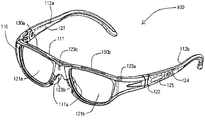
도 1은 본 발명의 일 실시예에 따른 선글라스의 사시도이다.
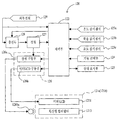
도 2는 본 발명의 제1 실시예에 따른 선글라스용 광학 특성 조절 시스템의 블록도이다.
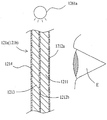
도 3은 도2에 도시된 렌즈의 단면도이다.
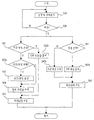
도 4는 도 2에 도시된 선글라스용 광학 특성 조절 시스템의 작용을 설명하는 순서도이다.
도 5는 본 발명의 제2 실시예에 따른 선글라스용 광학 특성 조절 시스템의 블록도이다.
도 6은 도 5에 도시된 렌즈의 단면도이다.
도 7은 도 5에 도시된 선글라스용 광학 특성 조절 시스템의 작용을 설명하는 순서도이다.
도 8은 본 발명의 다른 실시예에 따른 고글의 사시도이다.
<부호의 설명>
100 : 선글라스 110 : 선글라스테
120 : 선글라스용 광학 특성 조절 시스템
121 : 렌즈 122 : 제어부
123a : 온도 감지 센서 123b : 착용 감지 센서
123c : 조도 감지 센서 124 : 기능 선택부
125 : 상태 표시부 126 : 렌즈 구동부
127 : 전원 128 : 충전부
200 : 고글
이하, 첨부된 도면을 참조하여 본 발명에 따른 실시예의 구성 및 작용을 상세히 설명한다.
도 1에는 본 발명의 일 실시예에 따른 선글라스가 도시되어 있다. 도 1을 참조하면, 선글라스(100)는 선글라스테(110)와, 선글라스용 광학 특성 조절 시스템(120)을 구비한다. 선글라스(100)는 광학 특성 조절 시스템(120)에 의해 렌즈 색상에 대한 선택 및/또는 광투과율의 자동 조절이 가능하다.
선글라스테(110)는 몸체부(111)와, 제1, 제2 다리부(112a, 112b)를 구비한다. 몸체부(111)는 착용시에 착용자의 눈 앞에 위치하는 부분으로서, 코받침부(111a)를 구비한다. 제1, 제2 다리부(112a, 112b)는 착용시에 착용자의 머리 좌우측에 각각 위치하는 부분으로서, 몸체부(111)에 대해 접고 펼칠 수 있도록 몸체부(111)의 양측에 각각 힌지 결합된다.
도 2에는 본 발명의 제1 실시예에 따른 선글라스용 광학 특성 조절 시스템이 도시되어 있다. 도 2를 참조하면, 선글라스용 광학 특성 조절 시스템(120)은 렌즈(121a, 121b)와, 제어부(122)와, 온도 감지 센서(123a)와, 착용 감지 센서(123b)와, 조도 감지 센서(123c)와, 기능 선택부(124)와, 상태 표시부(125)와, 렌즈 구동부(126)와, 광원부(1261a)와, 전원(127)과, 충전부(128)를 구비한다.
렌즈(121a, 121b)는 도 1에 도시된 바와 같이 선글라스테(110)의 몸체부(111)에 고정된다. 도 3에는 렌즈(121a, 121b)의 단면도가 도시되어 있다. 도 3을 참조하면, 렌즈(121a, 121b)는 엘시디 패널(1211)와, 셔터 엘시디(1211)의 양면에 각각 위치하는 제1, 제2 편광 필름(1212a, 1212b)과, 제2 편광 필름(1212b)을 사이에 두고 셔터 엘시디(1211)의 반대편에 위치하는 확산형 컬러 필터(1213)와, 확산형 컬러 필터(1213)를 사이에 두고 제2 편광 필름(1212b)의 반대편에 위치하는 유해광선 필터(1214)를 구비한다.
엘시디 패널(1211)은 구동 전압의 크기에 의해 광투과율 조절이 가능한 셔터 엘시디이다. 광투과율 조절을 위해 엘시디 패널(1211)에 가해지는 구동 전압의 크기는 렌즈 구동부(126)에 의해 조절된다. 즉, 엘시디 패널(1211)에 의해 렌즈(121a, 121b)의 농도가 조절된다. 본 실시예에서는 엘시디 패널(1211)이 유연한 플라스틱 엘시디인 것으로 설명한다.
확산형 컬러 필터(1213)는 렌즈(121a, 121b)의 색상을 나타내는 것으로서, 광원부(1261a)의 색상이 확산형 컬러 필터(1213)에서 확산되어 렌즈(121a, 121b)의 색상이 결정된다.
제어부(122)는 도시되지는 않았으나, 제어프로그램이 저장된 메모리장치와, 제어프로그램을 실행하는 중앙처리장치(CPU)를 구비하는 마이컴의 형태로 이루어질 수 있다. 본 실시예에서는 제어부(122)가 도 1에 도시된 바와 같이, 선글라스테(110)의 제2 다리부(112b) 내부에 설치되는 것으로 설명하는데, 본 발명은 이에 제한되는 것은 아니다. 제어부(122)는 전원(127)으로부터 전원을 입력받으며, 온도 감지 센서(123a)로부터 주변 온도 데이터를 입력받으며, 착용 감지 센서(123b)로부터 착용 여부에 대한 정보를 입력받고, 조도 감지 센서(123c)로부터 주변의 조도 데이터를 입력받는다. 또한, 제어부(124)는 기능 선택부(124)로부터 농도의 자동 조절 및 수동 조절 등의 기능 선택 정보를 입력받는다. 제어부(122)는 렌즈 구동부(126)에 제어신호를 출력하며, 상태 표시부(125)에는 현 상태에 대한 정보를 출력한다. 제어부(122)는 자체로 제공되는 전원(127) 및 외부 전원(129)으로부터 전원을 공급받는다. 제어부(122)에 대해서는 아래에서 도 4를 참조하여 더욱 상세하게 설명될 것이다.
온도 감지 센서(123a)는 선글라스(100) 주변의 온도를 감지하여 그 데이터를 제어부(122)에 전달한다. 본 실시예에서는 온도 감지 센서(123a)가 도 1에 도시된 바와 같이, 선글라스테(110)의 몸체부(111a)의 일측에 위치하는 것으로 설명하는데, 본 발명은 이에 제한되는 것은 아니다. 온도 감지 센서(123a)로는 예를 들어 써미스터(thermister)가 사용될 수 있다.
착용 감지 센서(123b)는 선글라스(100)의 착용 상태를 감지하여 그 정보를 제어부(122)에 전달한다. 본 실시예에서는 착용 감지 센서(123b)가 도 1에 도시된 바와 같이, 선글라스테(110)의 몸체부(111a)의 코받침부(111b)에 설치되는 광센서인 것으로 설명하는데, 본 발명은 이에 제한되는 것은 아니다. 이 경우 착용 감지 센서(123b)의 광 감지 상태에 따라 착용 상태가 결정된다.
조도 감지 센서(123c)는 선글라스(100) 주변의 조도를 감지하여 그 데이터를 제어부(122)에 전달한다. 본 실시예에서는 조도 감지 센서(123c)가 도 1에 도시된 바와 같이, 선글라스테(110)의 몸체부(11a)의 중심부에 위치하는 것으로 설명하는데, 본 발명은 이에 제한되는 것은 아니다.
기능 선택부(124)는 선글라스(100)의 사용자가 색상 선택 여부, 농도의 자동 조절 또는 수동 조절 여부 등을 선택할 수 있도록 해준다. 본 실시예에서 기능 선택부(124)는 도 1에 도시된 바와 같이, 선글라스테(110)의 제2 다리부(112b)에 구비되는 것으로 설명하는데, 본 발명은 이에 제한되는 것은 아니다.
상태 표시부(125)는 엘시디와 같이 디스플레이 장치로서, 제어부(122)로부터 현 상태에 대한 데이터를 전달받아서 출력한다. 상태 표시부(125)에 표시될 수 있는 정보는 농도, 색상, 전지 잔량과 같은 사항일 수 있다. 본 실시예에서 상태 표시부(125)는 도 1에 도시된 바와 같이, 선글라스테(110)의 제2 다리부(112b)에 구비되는 것으로 설명하는데, 본 발명은 이에 제한되는 것은 아니다.
렌즈 구동부(126)는 광원 구동부(126a)와, 셔터 엘시디 구동부(126b)를 구비한다. 렌즈 구동부(126)는 제어부(122)로부터 제어신호를 입력받아서 그에 따라 렌즈(126)의 셔터 엘시디(1211)와 광원부(1261a)를 구동시킨다. 광원 구동부(126a)는 제어부(122)로부터 입력된 제어신호에 근거하여 광원부(1261a)가 선택된 색상의 광을 조사하도록 한다. 셔터 엘시디 구동부(126b)는 제어부(122)로부터 입력된 제어신호에 근거하여 셔터 엘시디(1211)가 적절한 광투과율(농도)을 갖도록 작동 전압을 조절한다. 셔터 엘시디 구동부(126b)는 36Hz 이하(바람직하기로는 1Hz 이하)의 주파수를 갖는 동작전압을 발생시켜서 소비전력을 줄인다. 렌즈 구동부(126)는 전원(127)으로부터 전원을 공급받는다.
전원(127)은 제어부(122)와 렌즈 구동부(126) 등에 전원을 공급한다. 본 실시예에서는 전원(127)이 충전가능한 이차 전지로 이루어지는 것으로 설명하는데, 본 발명은 이에 제한되는 것은 아니다. 충전부(128)는 제어부(122)에 의해 제어되며 외부전원(129)으로부터 전원(127)의 충전이 안정적으로 이루어지도록 한다. 본 실시예에서 전원(127)과 충전부(128)는 도 1에 도시된 바와 같이 선글라스테(110)의 제1 다리부(112a)에 구비되는 것으로 설명하는데, 본 발명은 이에 제한되는 것은 아니다. 또한, 전원(127)으로는 이차 전지 대신 일차 전지가 사용될 수도 있다. 또한, 전원(127)에는 선글라스테(110)에 설치된 태양전지(130a, 130b)가 연결되어 사용될 수도 있다.
도 4에는 도 2에 도시된 선글라스용 광학 특성 조절 시스템의 작용을 설명하는 순서도가 도시되어 있다. 이하, 도 4를 참조하여 도 2에 도시된 선글라스용 광학 특성 조절 시스템의 작용을 상세히 설명한다.
먼저, 착용 상태에 관계없이 설정 및 상태에 대한 표시가 이루어진다(S10). 이 단계는 상태 표시부(125)를 통해 전지의 잔량 등이 표시되게 된다.
다음, 착용 상태를 확인하게 된다(S20). 착용 상태 확인은 착용 감지 센서(도 1 및 도 2의 123b)가 착용 여부를 감지하여 그 결과를 제어부(122)에 전달하고, 제어부(122)가 착용 여부를 결정함으로써 이루어진다. 만일, 비착용 상태로 결정(N)되면, 설정 및 상태에 대한 표시 단계(S10)를 다시 실시하게 된다. 만일, 착용 상태로 결정(Y)되면, 농도 조절(광투과율 조절) 및 색상 선택에 대한 과정이 동시에 이루어지게 된다.
먼저, 농도 조절 과정에 대해 설명한다. 농도 조절 과정은 기능 선택 확인 단계(S31)와, 조도/온도 변화 확인 단계(S32a)와, 조도/온도 보상 단계(S33)와, 농도 가변값 출력 단계(S34)와, 셔터 엘시디 구동 단계(S35)와, 기본 농도값 출력 단계(S32b)를 구비한다. 기능 선택 확인 단계(S31)는 사용자가 자동 농도 조절 기능을 선택하였는지 여부를 확인하는 단계로서, 기능 선택부(도 1 및 도 2의 124)를 통해 이루어진다. 만일, 자동 농도 조절 기능이 선택되지 않은 상태(N)라면, 기본 농도값 출력 단계(S32b)를 실시하게 된다. 기본 농도값 출력 단계(S32b)는 제어부(도 1 및 도 2의 122)가 미리 설정된 기본 농도값을 출력하도록 셔터 엘시디 구동부(도 2의 126b)에 제어신호를 출력한다. 이때, 기본 농도값은 하나일 수도 있으나, 그 이상일 수도 있다. 예를 들면, 기본 농도값은 3단계(밝음, 중간 밝음, 어두움)로서 수동으로 선택될 수 있다. 기본 농도값 출력 단계(S32b) 후에는 셔터 엘시디 구동 단계(S35)가 실시된다.
만일, 자동 농도 조절 기능이 선택된 상태(Y)이면, 이후에 조도/온도 변화 확인 단계(S32a)를 실시하게 된다. 조도/온도 변화 확인 단계(S32a)는 제어부(122)가 온도 감지 센서(123a) 및 조도 감지 센서(123c)로부터 관련 신호를 입력받아서 현재의 조도 및/또는 온도가 이전과 차이가 있음을 판단함으로써 이루어진다. 자동 농도 조절 시에는 3단계 이상의 자동 농도 조절이 가능하다. 이때, 광투과율은 3.2% 내지 99%에서 단계적으로 설정될 수 있다. 만일, 조도와 온도 중 적어도 하나에 차이가 발생하면(Y), 조도/온도 보상 단계(S33)를 실시하게 된다. 조도/온도 보상 단계(S33)는 제어부(122)가 차이나는 조도 및/또는 온도를 보상하기 위한 새로운 제어값을 계산함으로써 이루어진다.
일반적으로 사람의 시신경은 주변 조도의 순간 변화를 판단하는 최소 시간은 평균 약 20mS이다. 시신경에서 조도 변화가 감지되면 동공의 열림 정도를 조절하여 눈의 피로를 줄이기 위한 인체의 반응이 일어나는데 동공의 반응 완료시간은 사람에 따라 다르며 0.1초 에서 길게는 수초까지도 될 수 있다. 시신경에서 조도변화를 감지하는 순간부터 동공의 반응이 완료할 때까지의 시간은 눈의 피로를 의미한다. 따라서, 시신경에서 변화된 주변조도를 판단하기 전에 조도 감지 센서(123c)에서 입력된 신호를 제어부(122)에서 판단하여 렌즈의 농도를 변화된 조도에 상응하는 만큼 보상해준다. 셔터 엘시디(1211)는 온도에 따라 차단농도와 반응시간이 변한다. 즉, 온도가 낮아짐에 따라, 셔터 엘시디(1211)의 차단농도와 반응속도도 낮아지게 된다. 따라서, 셔터 엘시디(1211)에서 원하는 수준의 농도와 반응속도를 얻기 위해서는 온도에 대한 보상이 요구되며, 이러한 보상이 조도/온도 보상 단계(S33)에서 이루어지게 된다.
농도 가변값 출력 단계(S34)에서는 제어부(122)가 보상된 조도/온도 데이터에 근거하여 제어신호를 셔터 엘시디 구동부(126b)에 출력함으로써 이루어진다. 조도/온도 변화 확인 단계(S32a)에서 조도와 온도 모두 변화가 없으면(N) 농도 가변값 출력 단계(S34)를 바로 실시하게 된다.
셔터 엘시디 구동 단계(S35)는 농도 셔터 엘시디 구동부(126b)가 셔터 엘시디(1211)에 구동 전압을 인가함으로써 이루어진다.
다음, 색상 선택의 과정에 대하여 설명한다. 색상 선택 과정은 색상 선택 여부를 확인하는 단계(S41)와, 선택 색상 출력 단계(S42a)와, 기본 색상 출력 단계(S42b)와, 컬러 필터 구동 단계(S43)를 구비한다.
색상 선택 여부를 확인하는 단계(S41)는 사용자가 원하는 색상을 선택한 상태인지를 확인하는 단계로서, 기능 선택부(도 1 및 도 2의 124)를 통해 이루어진다. 만일, 색상이 선택되지 않은 상태(N)라면, 기본 색상 출력 단계(S42b)를 실시하게 된다. 기본 색상 출력 단계(S42b)는 제어부(도 1 및 도 2의 122)가 미리 설정된 기본 색상을 출력하도록 광원 구동부(126a)에 제어신호를 출력한다.
만일, 착용자에 의해 색상이 선택된 상태(Y)라면, 선택 색상 출력 단계(S42a)를 실시하게 된다. 선택 색상 출력 단계(S42a)는 착용자가 선택한 색상을 광원부(1261a)가 조사하도록 제어부(도 1 및 도 2의 122)가 광원 구동부(126a)에 제어신호를 출력한다. 컬러 필터 구동 단계(S43)는 제어부(122)로부터의 제어신호에 따라 광원 구동부(126a)가 광원부(1261a)에 구동 전압을 인가함으로써 이루어진다.
도 5에는 본 발명의 제2 실시예에 따른 선글라스용 광학 특성 조절 시스템이 도시되어 있다. 도 5를 참조하면, 선글라스용 광학 특성 조절 시스템(220)은 렌즈(221a, 221b)와, 제어부(222)와, 온도 감지 센서(123a)와, 착용 감지 센서(123b)와, 조도 감지 센서(123c)와, 기능 선택부(124)와, 상태 표시부(125)와, 렌즈 구동부(226)와, 전원(127)과, 충전부(128)를 구비한다. 렌즈(221a, 221b)와, 제어부(222)와, 렌즈 구동부(226)를 제외한 나머지 구성들은 도 2에 도시된 제1 실시예와 동일하므로 여기서는 렌즈(221a, 221b)와, 제어부(222)와, 렌즈 구동부(226)에 대해서만 설명한다.
도 6에는 렌즈(221a, 221b)의 단면도가 도시되어 있다. 도 6을 참조하면, 렌즈(221a, 221b)는 적색의 제1 엘시디 패널(2211)과, 제1 엘시디 패널(2211)에 적층된 녹색의 제2 엘시디 패널(2212)과, 제1 엘시디 패널(2211)의 반대편에 제2 엘시디 패널(2212)에 적층된 청색의 제3 엘시디 패널(2213)과, 제1 엘시디 패널(2211)의 외면에 형성된 제1 편광필름(2214a)와, 제3 엘시디 패널(2213)의 외면에 형성된 제2 편광필름(2214b)와, 제2 편광필름(2214b)의 외면에 형성된 유해광선 필터(2215)를 구비한다. 각 엘시디 패널(2211, 2212, 2213)은 렌즈 구동부(226)에 의해 색상과 광투과율이 조절되도록 구동된다.
제어부(122)는 도시되지는 않았으나, 제어프로그램이 저장된 메모리장치와, 제어프로그램을 실행하는 중앙처리장치(CPU)를 구비하는 마이컴의 형태로 이루어질 수 있다. 제어부(122)는 전원(127)으로부터 전원을 입력받으며, 온도 감지 센서(123a)로부터 주변 온도 데이터를 입력받으며, 착용 감지 센서(123b)로부터 착용 여부에 대한 정보를 입력받고, 조도 감지 센서(123c)로부터 주변의 조도 데이터를 입력받는다. 또한, 제어부(124)는 기능 선택부(124)로부터 농도의 자동 조절 및 수동 조절 등의 기능 선택 정보를 입력받는다. 제어부(122)는 렌즈 구동부(226)에 제어신호를 출력하며, 상태 표시부(125)에는 현 상태에 대한 정보를 출력한다. 제어부(122)는 자체로 제공되는 전원(127) 및 외부 전원(129)으로부터 전원을 공급받는다. 제어부(122)에 대해서는 아래에서 도 7를 참조하여 더욱 상세하게 설명될 것이다.
렌즈 구동부(226)는 분배비율 조절부(226a)와, 통전시간 조절부(226b)를 구비한다. 렌즈 구동부(226)는 제어부(222)로부터 제어신호를 입력받아서 그에 따라 렌즈(221a, 221b)의 각 엘시디 패널(2211, 2212, 2213)을 구동시킨다. 분배비율 조절부(226a)는 각 엘시디 패널(2211, 2212, 2213)에 출력되는 신호의 분배 비율을 조절하여 렌즈(221a, 221b)의 색상을 조절한다. 통전시간 조절부(226b)는 전체 엘시디 패널(2211, 2212, 2213)에 주기적으로 출력되는 신호의 통전시간을 조절하여 렌즈(221a, 221b)의 광투과율을 조절한다. 렌즈(221a, 221b)의 농도는 전체 엘시디 패널(2211, 2212, 2213)에 주기적으로 출력되는 신호의 통전시간에 비례한다. 렌즈 구동부(226)는 전원(127)으로부터 전원을 공급받는다.
도 7에는 도 5에 도시된 선글라스용 광학 특성 조절 시스템의 작용을 설명하는 순서도가 도시되어 있다. 도 7을 참조하면, 농도조절을 위한 신호의 통전시간 조절 단계(S351)와 색상 선택을 위한 신호의 분배 비율 조절 단계(S431)를 구비하는 것을 제외하면, 도 4에서 설명된 내용과 동일하므로, 이에 대한 상세한 설명은 생략한다.
상기 실시예에서는 본 발명에 따른 광학 특성 조절 시스템이 선글라스에 사용되는 것으로 설명하였으나, 본 발명은 이에 제한되지 않는다. 본 발명에 따른 광학 특성 조절 시스템은 도 8에 도시된 바와 같이 프레임(210), 렌즈(221), 태양전지(240) 및 밴드(250)를 구비하는 고글(200)에도 동일하게 적용되어 사용될 수 있음을 당업자라면 쉽게 이해할 수 있을 것이며, 이 또한 본 발명의 범위에 속하는 것이다.
이상 실시예를 들어 본 발명을 설명하였으나, 본 발명은 이에 제한되는 것은 아니다. 상기 실시예는 본 발명의 취지 및 범위를 벗어나는 않고 수정되거나 변경될 수 있으며, 당업자는 이러한 수정과 변경도 본 발명에 속하는 것임을 알 수 있을 것이다.
Claims (11)
- 엘시디 패널을 구비하는 렌즈;상기 엘시디 패널에 구동 전압을 인가하는 엘시디 구동부를 구비하는 렌즈 구동부;주변의 조도를 감지하는 조도 감지 센서; 및상기 조도 감지 센서로부터의 신호에 대응하여 상기 렌즈 구동부의 작동을 제어하는 제어부를 포함하는 것을 특징으로 하는 선글라스 또는 고글용 광학 특성 조절 시스템.
- 청구항 1에 있어서,상기 엘시디 패널은 상기 엘시디 구동부에 의해 광투과율이 조절되는 셔터 엘시디인 것을 특징으로 하는 선글라스 또는 고글용 광학 특성 조절 시스템.
- 청구항 1에 있어서,하나 이상의 색상의 광을 제공하는 광원부를 더 포함하며,상기 렌즈는 상기 광원부로부터의 광을 제공받는 상기 확산형 컬러필터를 더 구비하며, 상기 렌즈 구동부는 상기 광원부를 구동시키는 광원 구동부를 구비하는 것을 특징으로 하는 선글라스 또는 고글용 광학 특성 조절 시스템.
- 청구항 1에 있어서,상기 렌즈는 적색의 제1 엘시디 패널과, 녹색의 제2 엘시디 패널과, 청색의 제3 엘시디 패널을 구비하며,상기 엘시디 구동부는 상기 3개의 엘시디 패널 전체에 주기적으로 출력되는 신호의 통전시간을 조절하는 통전시간 조절부와, 상기 3개의 엘시디 패널 각각에 출력되는 신호의 분배 비율을 조절하는 분배 비율 조작부를 구비하는 것을 특징으로 하는 선글라스 또는 고글용 광학 특성 조절 시스템.
- 청구항 1에 있어서,상기 제어부에 주변의 온도 데이터를 제공하는 온도 감지 센서를 더 포함하며,상기 제어부는 주변의 온도에 대해 보상된 제어신호를 상기 엘시디 구동부로 출력하는 것을 특징으로 하는 선글라스 또는 고글용 광학 특성 조절 시스템.
- 청구항 1에 있어서,상기 제어부에 선글라스의 착용 상태에 대한 정보를 제공하는 착용 감지 센서를 더 포함하는 것을 특징으로 하는 선글라스 또는 고글용 광학 특성 조절 시스템.
- 청구항 1에 있어서,상기 엘시디 패널의 구동전압은 36Hz 이하의 주파수를 갖는 것을 특징으로 하는 선글라스 또는 고글용 광학 특성 조절 시스템.
- 청구항 1에 있어서,상기 엘시디 패널의 구동전압은 1Hz 이하의 주파수를 갖는 것을 특징으로 하는 선글라스 또는 고글용 광학 특성 조절 시스템.
- 청구항 1에 있어서,상기 렌즈의 광투과율에 대한 자동 조절 및 수동 조절을 선택하기 위한 기능 선택부를 더 포함하는 것을 특징으로 하는 선글라스 또는 고글용 광학 특성 조절 시스템.
- 청구항 1 내지 청구항 9 중 어느 하나의 청구항에 기재된 광학 특성 조절 시스템을 포함하는 것을 특징으로 하는 선글라스.
- 청구항 1 내지 청구항 9 중 어느 하나의 청구항에 기재된 광학 특성 조절 시스템을 포함하는 것을 특징으로 하는 고글.
Priority Applications (2)
| Application Number | Priority Date | Filing Date | Title |
|---|---|---|---|
| EP11834544.6A EP2631706A4 (en) | 2010-10-22 | 2011-09-09 | Optical-characteristics adjusting system for sunglasses or goggles and sunglasses and goggles equipped therewith |
| US13/880,797 US9477096B2 (en) | 2010-10-22 | 2011-09-09 | Optical-characteristics adjusting system for sunglasses or goggles and sunglasses and goggles equipped therewith |
Applications Claiming Priority (2)
| Application Number | Priority Date | Filing Date | Title |
|---|---|---|---|
| KR10-2010-0103341 | 2010-10-22 | ||
| KR1020100103341A KR101221426B1 (ko) | 2010-10-22 | 2010-10-22 | 선글라스 또는 고글용 광학 특성 조절 시스템 및 이를 구비하는 선글라스 및 고글 |
Publications (2)
| Publication Number | Publication Date |
|---|---|
| WO2012053744A2 true WO2012053744A2 (ko) | 2012-04-26 |
| WO2012053744A3 WO2012053744A3 (ko) | 2012-06-14 |
Family
ID=45975683
Family Applications (1)
| Application Number | Title | Priority Date | Filing Date |
|---|---|---|---|
| PCT/KR2011/006745 Ceased WO2012053744A2 (ko) | 2010-10-22 | 2011-09-09 | 선글라스 또는 고글용 광학 특성 조절 시스템 및 이를 구비하는 선글라스 및 고글 |
Country Status (4)
| Country | Link |
|---|---|
| US (1) | US9477096B2 (ko) |
| EP (1) | EP2631706A4 (ko) |
| KR (1) | KR101221426B1 (ko) |
| WO (1) | WO2012053744A2 (ko) |
Families Citing this family (12)
| Publication number | Priority date | Publication date | Assignee | Title |
|---|---|---|---|---|
| KR20140093590A (ko) * | 2013-01-18 | 2014-07-28 | 주식회사 오토스윙 | 유해 섬광 차단 눈부심방지 전자 보안경 |
| KR101466684B1 (ko) * | 2013-05-01 | 2014-11-28 | 오토스테크 주식회사 | 선글라스 또는 고글의 좌, 우 lcd 패널의 광학적 투과율 보정 제어방법 |
| FR3016705B1 (fr) * | 2014-01-20 | 2017-06-16 | Essilor Int | Systeme de compensation visuelle et dispositif binoculaire d'optometrie |
| EP3040760B1 (en) * | 2014-12-30 | 2023-05-03 | Essilor International | Management system and method of an active lens |
| WO2016110959A1 (ja) * | 2015-01-07 | 2016-07-14 | カラーリンク・ジャパン 株式会社 | 光学装置 |
| CN104730729A (zh) * | 2015-03-23 | 2015-06-24 | 上海交通大学 | 一种根据环境光强度自动调节镜片透明度的智能眼镜 |
| CN105204187A (zh) * | 2015-09-11 | 2015-12-30 | 厦门红信息电子科技有限公司 | 一种镜片七色变换led变色眼镜 |
| KR20170056977A (ko) * | 2015-11-16 | 2017-05-24 | 주식회사 스포컴 | 기능성 전기 변색 아이웨어 |
| US11025892B1 (en) | 2018-04-04 | 2021-06-01 | James Andrew Aman | System and method for simultaneously providing public and private images |
| KR102029188B1 (ko) * | 2018-05-06 | 2019-10-07 | 주식회사 스포컴 | 광 투과율 조절 아이웨어 |
| USD968401S1 (en) | 2020-06-17 | 2022-11-01 | Focus Labs, LLC | Device for event-triggered eye occlusion |
| US20230288733A1 (en) * | 2020-08-10 | 2023-09-14 | Luxottica S.R.L. | Electronic eyeglasses |
Family Cites Families (16)
| Publication number | Priority date | Publication date | Assignee | Title |
|---|---|---|---|---|
| JPH0643405A (ja) | 1993-03-29 | 1994-02-18 | Seiko Epson Corp | 電子サングラス |
| JPH08136883A (ja) * | 1994-11-04 | 1996-05-31 | Wako Inter:Kk | 電子サングラス |
| JPH09179075A (ja) * | 1995-12-22 | 1997-07-11 | Fujitsu Kiden Ltd | 調光メガネ |
| US6097450A (en) * | 1996-09-20 | 2000-08-01 | Humphrey Engineering, Inc. | Method and apparatus for enhanced high-speed perception (EHP) of a moving object using an optical shutter spectacle |
| US6350275B1 (en) * | 1997-06-09 | 2002-02-26 | The Board Of Trustees Of The Leland Stanford Junior University | Devices for treating circadian rhythm disorders using LED's |
| US7023594B2 (en) * | 2000-06-23 | 2006-04-04 | E-Vision, Llc | Electro-optic lens with integrated components |
| US7500746B1 (en) * | 2004-04-15 | 2009-03-10 | Ip Venture, Inc. | Eyewear with radiation detection system |
| WO2005043224A2 (en) * | 2003-11-03 | 2005-05-12 | Ophthocare Ltd | Liquid-crystal eyeglass system |
| US7404645B2 (en) * | 2005-06-20 | 2008-07-29 | Digital Display Innovations, Llc | Image and light source modulation for a digital display system |
| US7651220B1 (en) * | 2005-11-07 | 2010-01-26 | Ram Pattikonda | Selective system for blocking glare in a specific location of a user's field of vision |
| JP2008181064A (ja) * | 2006-12-26 | 2008-08-07 | Victor Co Of Japan Ltd | 電子サングラス |
| CH704436B1 (de) * | 2007-03-26 | 2012-08-15 | Giuseppe Nunzio Caruso | Filter für eine Filtriervorrichtung, insbesondere für einen entlastenden sowie präventiven Augenschutz als Brille, Sonnenbrille oder Scheibe, und Filtriervorrichtung mit mindestens einem solchen Filter. |
| US20090213283A1 (en) * | 2008-02-27 | 2009-08-27 | Burlingame Robert G | Apparatus and method for adjustable variable transmissivity polarized eye glasses |
| US20100149073A1 (en) * | 2008-11-02 | 2010-06-17 | David Chaum | Near to Eye Display System and Appliance |
| WO2010080999A1 (en) * | 2009-01-09 | 2010-07-15 | Pixeloptics, Inc. | Electro-active spectacles and associated electronics |
| US8702230B2 (en) * | 2010-01-28 | 2014-04-22 | Jung Soo Yi | Attachable/detachable covering lens |
-
2010
- 2010-10-22 KR KR1020100103341A patent/KR101221426B1/ko active Active
-
2011
- 2011-09-09 EP EP11834544.6A patent/EP2631706A4/en not_active Withdrawn
- 2011-09-09 US US13/880,797 patent/US9477096B2/en active Active
- 2011-09-09 WO PCT/KR2011/006745 patent/WO2012053744A2/ko not_active Ceased
Non-Patent Citations (2)
| Title |
|---|
| None |
| See also references of EP2631706A4 |
Also Published As
| Publication number | Publication date |
|---|---|
| EP2631706A4 (en) | 2017-11-01 |
| WO2012053744A3 (ko) | 2012-06-14 |
| EP2631706A2 (en) | 2013-08-28 |
| KR101221426B1 (ko) | 2013-01-11 |
| US20130222710A1 (en) | 2013-08-29 |
| US9477096B2 (en) | 2016-10-25 |
| KR20120041923A (ko) | 2012-05-03 |
Similar Documents
| Publication | Publication Date | Title |
|---|---|---|
| WO2012053744A2 (ko) | 선글라스 또는 고글용 광학 특성 조절 시스템 및 이를 구비하는 선글라스 및 고글 | |
| US6067129A (en) | Welding lens with integrated display and method | |
| US9766459B2 (en) | Display devices with dimming panels | |
| JP3715616B2 (ja) | 液晶表示装置及び該装置のコモン電圧設定方法 | |
| US20150370071A1 (en) | Display devices with transmittance compensation mask | |
| CN106415383B (zh) | 透视调光面板 | |
| EP3245553B1 (en) | Head-mounted display apparatus, and display method | |
| JP7155527B2 (ja) | 表示装置および表示方法 | |
| US20020158813A1 (en) | Head mounted type image display device | |
| US20120274544A1 (en) | Temperature estimating apparatus, method for controlling the same, and image display apparatus | |
| WO2019216505A1 (ko) | 광 투과율 조절 아이웨어 | |
| US20090179850A1 (en) | Three-dimensional liquid crystal display device and related method of operation | |
| JP6819031B2 (ja) | 頭部装着型表示装置、表示方法 | |
| BR112017012595B1 (pt) | Sistema e método de gestão de uma lente ativa, óculos e lente ativa | |
| JP2017097098A (ja) | 透過型映像表示装置 | |
| CN114690412A (zh) | 头戴显示设备 | |
| WO2019117335A1 (ko) | 굴절률 조절이 가능한 렌즈를 갖는 시력훈련장치 | |
| WO2017086542A1 (ko) | 기능성 전기 변색 아이웨어 | |
| CN1187252A (zh) | 光强度衰减装置和衰减方法 | |
| JP3077166B2 (ja) | 眼鏡型映像表示装置 | |
| JPH0670268A (ja) | 眼鏡型の映像表示装置 | |
| WO1994001850B1 (en) | Night vision goggle simulator | |
| KR19980013821A (ko) | 액정 디스플레이의 자동 밝기 조절장치 | |
| KR101263334B1 (ko) | 선글라스 또는 고글의 절전형 슬립모드 제어방법 | |
| KR20120091632A (ko) | 눈부심 방지 장치 및 이를 구비하는 선글라스 |
Legal Events
| Date | Code | Title | Description |
|---|---|---|---|
| 121 | Ep: the epo has been informed by wipo that ep was designated in this application |
Ref document number: 11834544 Country of ref document: EP Kind code of ref document: A2 |
|
| NENP | Non-entry into the national phase |
Ref country code: DE |
|
| WWE | Wipo information: entry into national phase |
Ref document number: 13880797 Country of ref document: US |
|
| WWE | Wipo information: entry into national phase |
Ref document number: 2011834544 Country of ref document: EP |