WO2012060340A1 - 前照灯制御装置 - Google Patents
前照灯制御装置 Download PDFInfo
- Publication number
- WO2012060340A1 WO2012060340A1 PCT/JP2011/075102 JP2011075102W WO2012060340A1 WO 2012060340 A1 WO2012060340 A1 WO 2012060340A1 JP 2011075102 W JP2011075102 W JP 2011075102W WO 2012060340 A1 WO2012060340 A1 WO 2012060340A1
- Authority
- WO
- WIPO (PCT)
- Prior art keywords
- color
- headlamp
- vehicle
- control device
- host vehicle
- Prior art date
- Legal status (The legal status is an assumption and is not a legal conclusion. Google has not performed a legal analysis and makes no representation as to the accuracy of the status listed.)
- Ceased
Links
Images







Classifications
-
- B—PERFORMING OPERATIONS; TRANSPORTING
- B60—VEHICLES IN GENERAL
- B60Q—ARRANGEMENT OF SIGNALLING OR LIGHTING DEVICES, THE MOUNTING OR SUPPORTING THEREOF OR CIRCUITS THEREFOR, FOR VEHICLES IN GENERAL
- B60Q1/00—Arrangement of optical signalling or lighting devices, the mounting or supporting thereof or circuits therefor
- B60Q1/02—Arrangement of optical signalling or lighting devices, the mounting or supporting thereof or circuits therefor the devices being primarily intended to illuminate the way ahead or to illuminate other areas of way or environments
- B60Q1/04—Arrangement of optical signalling or lighting devices, the mounting or supporting thereof or circuits therefor the devices being primarily intended to illuminate the way ahead or to illuminate other areas of way or environments the devices being headlights
- B60Q1/06—Arrangement of optical signalling or lighting devices, the mounting or supporting thereof or circuits therefor the devices being primarily intended to illuminate the way ahead or to illuminate other areas of way or environments the devices being headlights adjustable, e.g. remotely-controlled from inside vehicle
- B60Q1/08—Arrangement of optical signalling or lighting devices, the mounting or supporting thereof or circuits therefor the devices being primarily intended to illuminate the way ahead or to illuminate other areas of way or environments the devices being headlights adjustable, e.g. remotely-controlled from inside vehicle automatically
- B60Q1/085—Arrangement of optical signalling or lighting devices, the mounting or supporting thereof or circuits therefor the devices being primarily intended to illuminate the way ahead or to illuminate other areas of way or environments the devices being headlights adjustable, e.g. remotely-controlled from inside vehicle automatically due to special conditions, e.g. adverse weather, type of road, badly illuminated road signs or potential dangers
-
- B—PERFORMING OPERATIONS; TRANSPORTING
- B60—VEHICLES IN GENERAL
- B60Q—ARRANGEMENT OF SIGNALLING OR LIGHTING DEVICES, THE MOUNTING OR SUPPORTING THEREOF OR CIRCUITS THEREFOR, FOR VEHICLES IN GENERAL
- B60Q1/00—Arrangement of optical signalling or lighting devices, the mounting or supporting thereof or circuits therefor
- B60Q1/26—Arrangement of optical signalling or lighting devices, the mounting or supporting thereof or circuits therefor the devices being primarily intended to indicate the vehicle, or parts thereof, or to give signals, to other traffic
- B60Q1/28—Arrangement of optical signalling or lighting devices, the mounting or supporting thereof or circuits therefor the devices being primarily intended to indicate the vehicle, or parts thereof, or to give signals, to other traffic for indicating front of vehicle
-
- B—PERFORMING OPERATIONS; TRANSPORTING
- B60—VEHICLES IN GENERAL
- B60Q—ARRANGEMENT OF SIGNALLING OR LIGHTING DEVICES, THE MOUNTING OR SUPPORTING THEREOF OR CIRCUITS THEREFOR, FOR VEHICLES IN GENERAL
- B60Q1/00—Arrangement of optical signalling or lighting devices, the mounting or supporting thereof or circuits therefor
- B60Q1/26—Arrangement of optical signalling or lighting devices, the mounting or supporting thereof or circuits therefor the devices being primarily intended to indicate the vehicle, or parts thereof, or to give signals, to other traffic
- B60Q1/44—Arrangement of optical signalling or lighting devices, the mounting or supporting thereof or circuits therefor the devices being primarily intended to indicate the vehicle, or parts thereof, or to give signals, to other traffic for indicating braking action or preparation for braking, e.g. by detection of the foot approaching the brake pedal
- B60Q1/442—Arrangement of optical signalling or lighting devices, the mounting or supporting thereof or circuits therefor the devices being primarily intended to indicate the vehicle, or parts thereof, or to give signals, to other traffic for indicating braking action or preparation for braking, e.g. by detection of the foot approaching the brake pedal visible on the front side of the vehicle, e.g. for pedestrians
-
- B—PERFORMING OPERATIONS; TRANSPORTING
- B60—VEHICLES IN GENERAL
- B60Q—ARRANGEMENT OF SIGNALLING OR LIGHTING DEVICES, THE MOUNTING OR SUPPORTING THEREOF OR CIRCUITS THEREFOR, FOR VEHICLES IN GENERAL
- B60Q1/00—Arrangement of optical signalling or lighting devices, the mounting or supporting thereof or circuits therefor
- B60Q1/26—Arrangement of optical signalling or lighting devices, the mounting or supporting thereof or circuits therefor the devices being primarily intended to indicate the vehicle, or parts thereof, or to give signals, to other traffic
- B60Q1/50—Arrangement of optical signalling or lighting devices, the mounting or supporting thereof or circuits therefor the devices being primarily intended to indicate the vehicle, or parts thereof, or to give signals, to other traffic for indicating other intentions or conditions, e.g. request for waiting or overtaking
- B60Q1/509—Arrangement of optical signalling or lighting devices, the mounting or supporting thereof or circuits therefor the devices being primarily intended to indicate the vehicle, or parts thereof, or to give signals, to other traffic for indicating other intentions or conditions, e.g. request for waiting or overtaking specific to unauthorised use, e.g. for indicating stolen vehicles or infringements of traffic rules
-
- B—PERFORMING OPERATIONS; TRANSPORTING
- B60—VEHICLES IN GENERAL
- B60Q—ARRANGEMENT OF SIGNALLING OR LIGHTING DEVICES, THE MOUNTING OR SUPPORTING THEREOF OR CIRCUITS THEREFOR, FOR VEHICLES IN GENERAL
- B60Q1/00—Arrangement of optical signalling or lighting devices, the mounting or supporting thereof or circuits therefor
- B60Q1/26—Arrangement of optical signalling or lighting devices, the mounting or supporting thereof or circuits therefor the devices being primarily intended to indicate the vehicle, or parts thereof, or to give signals, to other traffic
- B60Q1/50—Arrangement of optical signalling or lighting devices, the mounting or supporting thereof or circuits therefor the devices being primarily intended to indicate the vehicle, or parts thereof, or to give signals, to other traffic for indicating other intentions or conditions, e.g. request for waiting or overtaking
- B60Q1/543—Arrangement of optical signalling or lighting devices, the mounting or supporting thereof or circuits therefor the devices being primarily intended to indicate the vehicle, or parts thereof, or to give signals, to other traffic for indicating other intentions or conditions, e.g. request for waiting or overtaking for indicating other states or conditions of the vehicle
-
- B—PERFORMING OPERATIONS; TRANSPORTING
- B60—VEHICLES IN GENERAL
- B60Q—ARRANGEMENT OF SIGNALLING OR LIGHTING DEVICES, THE MOUNTING OR SUPPORTING THEREOF OR CIRCUITS THEREFOR, FOR VEHICLES IN GENERAL
- B60Q1/00—Arrangement of optical signalling or lighting devices, the mounting or supporting thereof or circuits therefor
- B60Q1/26—Arrangement of optical signalling or lighting devices, the mounting or supporting thereof or circuits therefor the devices being primarily intended to indicate the vehicle, or parts thereof, or to give signals, to other traffic
- B60Q1/50—Arrangement of optical signalling or lighting devices, the mounting or supporting thereof or circuits therefor the devices being primarily intended to indicate the vehicle, or parts thereof, or to give signals, to other traffic for indicating other intentions or conditions, e.g. request for waiting or overtaking
- B60Q1/544—Arrangement of optical signalling or lighting devices, the mounting or supporting thereof or circuits therefor the devices being primarily intended to indicate the vehicle, or parts thereof, or to give signals, to other traffic for indicating other intentions or conditions, e.g. request for waiting or overtaking for indicating other states or conditions of the vehicle occupants, e.g. for indicating disabled occupants
-
- B—PERFORMING OPERATIONS; TRANSPORTING
- B60—VEHICLES IN GENERAL
- B60Q—ARRANGEMENT OF SIGNALLING OR LIGHTING DEVICES, THE MOUNTING OR SUPPORTING THEREOF OR CIRCUITS THEREFOR, FOR VEHICLES IN GENERAL
- B60Q11/00—Arrangement of monitoring devices for devices provided for in groups B60Q1/00 - B60Q9/00
-
- B—PERFORMING OPERATIONS; TRANSPORTING
- B60—VEHICLES IN GENERAL
- B60Q—ARRANGEMENT OF SIGNALLING OR LIGHTING DEVICES, THE MOUNTING OR SUPPORTING THEREOF OR CIRCUITS THEREFOR, FOR VEHICLES IN GENERAL
- B60Q2300/00—Indexing codes for automatically adjustable headlamps or automatically dimmable headlamps
- B60Q2300/20—Indexing codes relating to the driver or the passengers
-
- B—PERFORMING OPERATIONS; TRANSPORTING
- B60—VEHICLES IN GENERAL
- B60Q—ARRANGEMENT OF SIGNALLING OR LIGHTING DEVICES, THE MOUNTING OR SUPPORTING THEREOF OR CIRCUITS THEREFOR, FOR VEHICLES IN GENERAL
- B60Q2300/00—Indexing codes for automatically adjustable headlamps or automatically dimmable headlamps
- B60Q2300/30—Indexing codes relating to the vehicle environment
- B60Q2300/305—Calendar date or clock time
-
- B—PERFORMING OPERATIONS; TRANSPORTING
- B60—VEHICLES IN GENERAL
- B60Q—ARRANGEMENT OF SIGNALLING OR LIGHTING DEVICES, THE MOUNTING OR SUPPORTING THEREOF OR CIRCUITS THEREFOR, FOR VEHICLES IN GENERAL
- B60Q2300/00—Indexing codes for automatically adjustable headlamps or automatically dimmable headlamps
- B60Q2300/30—Indexing codes relating to the vehicle environment
- B60Q2300/31—Atmospheric conditions
- B60Q2300/312—Adverse weather
-
- B—PERFORMING OPERATIONS; TRANSPORTING
- B60—VEHICLES IN GENERAL
- B60Q—ARRANGEMENT OF SIGNALLING OR LIGHTING DEVICES, THE MOUNTING OR SUPPORTING THEREOF OR CIRCUITS THEREFOR, FOR VEHICLES IN GENERAL
- B60Q2300/00—Indexing codes for automatically adjustable headlamps or automatically dimmable headlamps
- B60Q2300/30—Indexing codes relating to the vehicle environment
- B60Q2300/31—Atmospheric conditions
- B60Q2300/314—Ambient light
-
- B—PERFORMING OPERATIONS; TRANSPORTING
- B60—VEHICLES IN GENERAL
- B60Q—ARRANGEMENT OF SIGNALLING OR LIGHTING DEVICES, THE MOUNTING OR SUPPORTING THEREOF OR CIRCUITS THEREFOR, FOR VEHICLES IN GENERAL
- B60Q2300/00—Indexing codes for automatically adjustable headlamps or automatically dimmable headlamps
- B60Q2300/30—Indexing codes relating to the vehicle environment
- B60Q2300/33—Driving situation
-
- B—PERFORMING OPERATIONS; TRANSPORTING
- B60—VEHICLES IN GENERAL
- B60Q—ARRANGEMENT OF SIGNALLING OR LIGHTING DEVICES, THE MOUNTING OR SUPPORTING THEREOF OR CIRCUITS THEREFOR, FOR VEHICLES IN GENERAL
- B60Q2300/00—Indexing codes for automatically adjustable headlamps or automatically dimmable headlamps
- B60Q2300/30—Indexing codes relating to the vehicle environment
- B60Q2300/33—Driving situation
- B60Q2300/334—Driving situation on motorways
-
- B—PERFORMING OPERATIONS; TRANSPORTING
- B60—VEHICLES IN GENERAL
- B60Q—ARRANGEMENT OF SIGNALLING OR LIGHTING DEVICES, THE MOUNTING OR SUPPORTING THEREOF OR CIRCUITS THEREFOR, FOR VEHICLES IN GENERAL
- B60Q2300/00—Indexing codes for automatically adjustable headlamps or automatically dimmable headlamps
- B60Q2300/30—Indexing codes relating to the vehicle environment
- B60Q2300/33—Driving situation
- B60Q2300/338—Overtaking
-
- B—PERFORMING OPERATIONS; TRANSPORTING
- B60—VEHICLES IN GENERAL
- B60Q—ARRANGEMENT OF SIGNALLING OR LIGHTING DEVICES, THE MOUNTING OR SUPPORTING THEREOF OR CIRCUITS THEREFOR, FOR VEHICLES IN GENERAL
- B60Q2300/00—Indexing codes for automatically adjustable headlamps or automatically dimmable headlamps
- B60Q2300/40—Indexing codes relating to other road users or special conditions
- B60Q2300/42—Indexing codes relating to other road users or special conditions oncoming vehicle
-
- B—PERFORMING OPERATIONS; TRANSPORTING
- B60—VEHICLES IN GENERAL
- B60Q—ARRANGEMENT OF SIGNALLING OR LIGHTING DEVICES, THE MOUNTING OR SUPPORTING THEREOF OR CIRCUITS THEREFOR, FOR VEHICLES IN GENERAL
- B60Q2300/00—Indexing codes for automatically adjustable headlamps or automatically dimmable headlamps
- B60Q2300/40—Indexing codes relating to other road users or special conditions
- B60Q2300/43—Indexing codes relating to other road users or special conditions following vehicle
-
- B—PERFORMING OPERATIONS; TRANSPORTING
- B60—VEHICLES IN GENERAL
- B60Q—ARRANGEMENT OF SIGNALLING OR LIGHTING DEVICES, THE MOUNTING OR SUPPORTING THEREOF OR CIRCUITS THEREFOR, FOR VEHICLES IN GENERAL
- B60Q2300/00—Indexing codes for automatically adjustable headlamps or automatically dimmable headlamps
- B60Q2300/40—Indexing codes relating to other road users or special conditions
- B60Q2300/45—Special conditions, e.g. pedestrians, road signs or potential dangers
Definitions
- the present invention relates to a headlamp control device that switches the color of light emitted from a headlamp of a vehicle such as an automobile, a motorcycle, a bicycle, or a train.
- Patent Document 1 when an obstacle is detected in front of the automobile on which the device is mounted, the brightness, irradiation direction, and irradiation range of the headlamp are adjusted, and the surrounding area of the detected obstacle is detected. A headlamp device for increasing the brightness is described.
- Patent Document 2 describes a control device that controls the lighting intensity of the headlamp and the irradiable distance according to the brightness of the surroundings of the automobile on which the device is mounted.
- the driver can more reliably recognize an obstacle ahead of the host vehicle, and the driver's visibility can be improved.
- changing the brightness and irradiation direction of the headlamps may cause dazzling to pedestrians around the host vehicle and drivers of other vehicles.
- This invention is made in view of the said subject, and it aims at providing the headlamp control apparatus which can perform a driving
- the invention of the first aspect of the present application made in view of the above problems is a headlamp control device that controls a headlamp that irradiates light ahead of the host vehicle and can change the color of the light. And color control means for making a color switching request for switching the color of light emitted from the headlamp.
- the vehicle means an automobile, a motorcycle, a bicycle, a train or the like.
- the color of the headlamp can be switched according to the situation around the host vehicle, the state of the host vehicle, etc., and the visibility ahead of the host vehicle is improved, and the presence of the host vehicle is conspicuous Or alerting the driver. For this reason, driving can be supported without dazzling those who are in the vicinity of the vehicle such as drivers and pedestrians of other vehicles.
- Japanese Patent Application Laid-Open No. 2010-146209 discloses a driving control device that detects the state of a road surface on a road on which an automobile equipped with the device is traveling and the steering operation of the vehicle. Proposed. This driving control device is configured to issue a warning for awakening the driver, assuming that the driver is drowsy when a steering wheel operation according to road surface unevenness or the like is not performed.
- the color control means executes a periodic color switching process for making a color switching request every time a predetermined time elapses. According to such a configuration, the driver's vision can be continuously stimulated by periodically changing the color of the headlamps during driving of the host vehicle, and the driver is sleepy. Even in this case, the driver can be awakened early.
- the following effects can be obtained. That is, when the light from the headlamp is irradiated onto the object, the visibility of the object differs depending on the combination of the color and material of the object and the color of the light. According to this configuration, since the color of the headlamp light periodically changes, it is possible to generate a timing at which the visibility of the object is improved regardless of the color of the object.
- the cycle for switching the color of the headlamp is preferably 5 minutes or more (third aspect of the present invention), and by switching the color of the headlamp at such a cycle, the driver can It is thought that moderate stimulation can be given.
- At least one headlamp is provided at each end in the vehicle width direction on the front surface of the host vehicle, and the color control unit individually cycles each headlamp provided at each end.
- the target color switching process may be executed (fourth aspect of the present invention).
- the headlights provided at the left and right ends of the front surface of the host vehicle can be switched periodically with different colors or can be switched with individual cycles. It can give a stronger stimulus to the driver.
- Japanese Patent Application Laid-Open No. 11-183610 discloses an on-vehicle radar device that measures an inter-vehicle distance from a preceding vehicle that is mounted on an automobile and travels ahead of the automobile. Are listed. This in-vehicle radar device is configured to automatically set the minimum value of the inter-vehicle distance according to the current weather, and warn the driver when the measured inter-vehicle distance falls below the minimum value.
- the headlamp control device further includes weather discrimination means for discriminating the weather based on a signal from a weather sensor provided in the device, and the color control means includes light of the headlamp.
- a weather color switching process is executed to request a color switching to switch the color of the color to the corresponding color corresponding to the current weather determined by the weather determination means.
- the headlight color can be automatically switched to a color (corresponding color) according to the weather. For this reason, by appropriately setting the corresponding colors for each weather, without bothering the driver's hand, when the weather gets worse, the driver's field of view can be improved, Pedestrians and drivers of other vehicles can easily notice the presence of the own vehicle. Therefore, the driver can drive safely when the weather gets worse.
- the weather determination means described above may determine the weather by further considering the operating state of the removal device that removes raindrops attached to the window of the host vehicle (sixth aspect of the present invention). This makes it possible to determine the weather with higher accuracy.
- the headlamp control device may be configured as follows.
- the headlamp control apparatus according to the seventh aspect of the present invention further includes an instruction receiving unit that receives an instruction from the user, and the color control unit is configured in advance according to the instruction received from the user via the instruction receiving unit. You may perform the color setting process which switches the color of the light of a headlamp whenever the defined time passes. Then, the headlight control device, during execution of the color setting process, in accordance with the instruction received from the user via the instruction receiving means, the current headlight color determined by the weather determination means There may be further provided setting means for setting as a corresponding color corresponding to.
- the driver can easily set the color with the best field of view or the most prominent color in the weather as the corresponding color of the headlamp in the current weather.
- At least one headlamp is provided at each end in the vehicle width direction on the front surface of the host vehicle, and different colors are set individually for the headlamps provided at each end. (The eleventh aspect of the present invention). By doing so, the color of the light of the headlamps provided at each end can be made different. For this reason, when the weather gets worse, the visibility of the driver can be further improved, the host vehicle can be made more conspicuous, and the vehicle width of the host vehicle can be easily understood.
- Patent Document 2 describes a control device that controls the lighting intensity of the headlamp and the irradiable distance according to the brightness of the surroundings of the automobile on which the device is mounted. According to such a control device, it is possible to automatically perform ON / OFF of the headlamps and brightness adjustment according to time zones such as daytime, evening, and nighttime. For this reason, without bothering the driver's hand, the driver's field of view can be improved and the presence of the host vehicle can be made conspicuous, and safer driving is possible.
- brightening the headlamps may dazzle those around the vehicle.
- the space around the vehicle is reddish, and even if the brightness of the headlamp is increased, the driver's view In some cases, it was not possible to make the vehicle sufficiently satisfactory, or the presence of the host vehicle could not be made sufficiently conspicuous.
- the headlamp control device further includes time zone discrimination means for discriminating the current time zone by a clock function provided in the own device, and the color control means is a light of the headlamp.
- a time zone color switching process is executed to request a color switching to switch the color of the color to the corresponding color corresponding to the current time zone determined by the time zone determination means.
- the headlamp control device includes an illuminance detection means for detecting brightness around the own vehicle by an illuminance sensor provided in the own apparatus, and an illuminance detection means detected by the illuminance detection means.
- a time zone discriminating unit for discriminating the current time zone based on brightness, and the color control unit corresponds to the current time zone determined by the time zone discriminating unit for the color of the light of the headlamp.
- a time zone color switching process for performing a color switching request to switch to the corresponding color is executed.
- the color of the headlamp can be automatically switched to a color (corresponding color) corresponding to the time zone.
- the time zone such as in the morning, evening, or just after sunset, without bothering the driver and dazzling the people around the vehicle.
- the headlamp control device may be configured as follows.
- the headlamp control device according to the tenth aspect of the present invention further includes an instruction receiving unit that receives an instruction from the user, and the color control unit is configured in advance according to the instruction received from the user via the instruction receiving unit.
- the headlamp control device sets the current headlamp color as the corresponding color corresponding to the current time zone according to the instruction received from the user via the instruction receiving unit during the color setting process. You may further provide the setting means to set.
- the driver can easily set the color of the headlamp with the best field of view and the most prominent color in the time zone as the corresponding color of the headlamp in the current time zone.
- At least one headlamp is provided at each end in the vehicle width direction on the front surface of the host vehicle, and different colors are set individually for the headlamps provided at each end. (The eleventh aspect of the present invention). By doing so, the color of the light of the headlamps provided at each end can be made different. For this reason, the driver's field of view can be improved and the vehicle can be made more conspicuous in the morning, evening, or just after sunset, and the vehicle width of the vehicle can be easily understood. can do.
- Patent Document 2 describes a control device that is mounted on an automobile and reduces the lighting intensity of the headlamp when an oncoming vehicle or an overtaking vehicle traveling in an oncoming lane is detected. Has been.
- the headlamp control apparatus further includes color detection means for detecting the color of oncoming vehicle irradiation light emitted from the oncoming vehicle of the host vehicle, and the color control means includes: An oncoming vehicle color switching process is performed in which a color switching request is made to switch the light color to a color different from the color of the oncoming vehicle irradiation light detected by the color detection means.
- the oncoming vehicle means another vehicle that passes by the host vehicle.
- the colors of the headlamps of the two vehicles passing each other can be made different, so that the driver of each vehicle can easily notice the presence of the headlamps irradiated from the opponent vehicle. Therefore, even if the lighting intensity of the headlamp is low, it is possible to prevent the driver of each vehicle from overlooking the opponent vehicle.
- At least one headlamp is provided at each end in the vehicle width direction on the front surface of the host vehicle, and the color switching request performed in the oncoming vehicle color switching process is performed by the headlamp provided at each end.
- the color of the light of the headlamps provided at each end can be made different. For this reason, the driver of each vehicle of the own vehicle and the oncoming vehicle is more likely to notice the existence of the opponent vehicle, and further, it is easier to grasp the vehicle width of the own vehicle.
- horns are generally used to warn people in the vicinity of the vehicle while driving a car or motorcycle. Couldn't make any warnings.
- Japanese Patent Application Laid-Open No. 09-180079 proposes an alarm device that switches the headlamp from the low beam to the high beam simultaneously with the sounding of the horn. According to such an alarm device, it is possible to give a warning through both hearing and vision to a person in the vicinity of the host vehicle, and can reliably give a warning regardless of noise. There is a risk of dazzling those around the vehicle.
- the headlamp control device further includes a ringing instruction detection unit that detects that a ringing instruction for sounding a warning sound has been made, and the color control unit receives a ringing instruction by the ringing instruction detection unit.
- a warning tone color switching process for making a color switching request according to the detection is executed.
- the registered utility model No. 3124140 describes a lighting system that turns on an indicator light of an automobile on which the system is mounted in response to an accelerator operation. According to such a lighting system, it is possible to determine the operation state of the accelerator of the host vehicle from the lighting state of the indicator light, and even if the visibility is poor, the speed and acceleration state of the host vehicle can be grasped from outside the vehicle. It becomes easy to do.
- the headlamp control apparatus further includes an operation state detection unit that detects an operation state of an operation unit that receives an operation for increasing the speed of the host vehicle.
- An operation state color switching process is performed to make a color switching request for switching the color of the light of the illumination lamp to a color corresponding to the operation state detected by the operation state detection means.
- the host vehicle is driven by a motor supplied with electric power from a battery mounted on the host vehicle
- the headlamp control device includes a remaining amount detecting means for detecting the remaining amount of the battery.
- the color control means executes a battery remaining color switching process for making a color switching request for switching the color of the headlight light to a color corresponding to the remaining amount detected by the remaining amount detecting means.
- Japanese Patent Application Laid-Open No. 7-137574 when an obstacle existing in front of an automobile on which the apparatus is mounted is detected, the brightness, irradiation direction, and irradiation range of the headlamp are adjusted, and the detected obstacle is detected.
- a headlamp device for increasing the brightness of an object is described. By using such a headlamp device, the visibility around the obstacle existing in front of the host vehicle can be partially improved, but the overall visibility in front of the host vehicle cannot be improved.
- the headlamp control device further includes target detection means for detecting a target illuminated by the headlamp, and the color control means determines the color of the light from the headlamp.
- An object color switching process for performing a color switching request for switching to a color corresponding to the object detected by the object detection means is executed.
- the color of the headlamps can be switched according to the scenery ahead, the color of the road surface on the road, the presence or absence of snow on the road, etc., and the overall visibility ahead of the vehicle Can be improved.
- the headlamp control apparatus further includes operation accepting means for accepting an operation by the driver, and the color control means issues a color switching request according to the operation accepted via the operation accepting means. A driver operation color switching process is performed.
- the driver can communicate with these persons without dazzling those who are in front of the host vehicle.
- the driver may adjust the vehicle speed, brake timing, etc. according to the presence or absence of the oncoming vehicle traveling in the oncoming lane and the degree of congestion of the oncoming lane, When the visibility is poor or the vehicle is traveling on a road with poor visibility, the driver may not be able to fully grasp the situation of the oncoming lane.
- Japanese Patent Application Laid-Open No. 2009-298299 describes a driving support device that detects a subsequent vehicle that travels behind a car on which the device is mounted and notifies the driver.
- the driver can surely recognize the presence of the following vehicle, and safer driving is possible, but it goes without saying that even if this driving support device is used, It will not be easy to understand the situation of the oncoming lane.
- by notifying the driver of the oncoming vehicle of the presence or absence of the following vehicle detected by the driving support device it is considered that the driver of the oncoming vehicle can grasp the situation of the oncoming lane.
- a specific method for notifying the driver of the oncoming vehicle of the presence or absence of the following vehicle is not described.
- the headlamp control apparatus further includes vehicle detection means for detecting a succeeding vehicle that is a vehicle located behind the host vehicle, and the color control means is a color of light of the headlamp. Then, the subsequent vehicle color switching process is executed to make a color switching request for switching to a color corresponding to the detection result by the vehicle detection means.
- the light color of the headlamp can be changed according to the presence or absence and the number of the following vehicles. For this reason, the driver of the oncoming vehicle can easily grasp the situation of the oncoming lane, and can perform driving according to the situation of the oncoming lane.
- the headlamp device described in Japanese Patent Laid-Open No. 7-137574 increases the illuminance around the obstacle when it detects an obstacle in front of the automobile on which the device is mounted.
- the headlamp device detects an obstacle ahead of the host vehicle from an image taken by a video camera. For this reason, it is necessary to perform various types of image processing and image recognition processing on the captured image, which may increase the processing load for detecting an obstacle.
- the headlamp control apparatus further includes transmission / reception means for transmitting an electromagnetic wave in front of the host vehicle and receiving a reflected wave of the transmitted electromagnetic wave, and the color control means includes the headlamp.
- the reflected wave color switching process is executed to make a color switching request to switch the color of the light to a color corresponding to the reflected wave received by the transmission / reception means.
- At least one headlamp is provided at each end in the vehicle width direction on the front surface of the host vehicle, and the color switching request switches the color of the light of the headlamp provided at one end. It may be a request (the 21st aspect of the present invention). Even in such a case, it is possible to obtain substantially the same effect as the case of performing the color switching process for the headlamps provided at both ends, and also for the headlamp at one end. Since it is only necessary to change the color of the light that is irradiated only, the cost can be reduced.
- the headlamp control apparatus further includes a location detection unit that detects a location where the host vehicle is traveling, and the color control unit detects the color of the light of the headlamp.
- a travel location color switching process may be executed in which a color switching request for switching to a color corresponding to the location detected by the means is performed.
- the color of the headlamp when driving in places where traffic accidents are likely to occur, such as intersections, railroad crossings, and busy streets, the color of the headlamp can be used as a warning color.
- a warning can be given to pedestrians and the like around the host vehicle without dazzling those who are in the vehicle, and the occurrence of an accident can be suppressed.
- the color of the headlamp when traveling in a residential area or the like, can be set to a soft color tone, thereby suppressing the surrounding residents from being stimulated.
- the headlights when traveling in the mountains or the countryside, the headlights can have a vibrant color tone, so that the front view of the vehicle can be reduced without dazzling other drivers. It is possible to improve, to stimulate the driver, to suppress the drowsy driving and the like.
- the host vehicle travels on a predetermined operation route, and passengers get on and off at the boarding / exiting locations provided on the operation route.
- the color control means is a place where the host vehicle detected by the place detecting means is running in the running place color switching process. May be switched according to the determination result of whether or not passengers get on and off at the boarding / alighting place by the boarding / alighting place.
- the own vehicle in the 23rd aspect of this invention means a route bus and a passenger train, for example. By doing so, it is possible to inform passengers at the station or bus stop whether or not a vehicle that can be boarded arrives without dazzling those who are in the vicinity of the host vehicle, and the convenience can be improved.
- the host vehicle is configured as a railway vehicle provided with a driver's cab, and the boarding / alighting location may be a station.
- a warning is given to the driver of the own vehicle in accordance with the inter-vehicle distance from the preceding vehicle traveling in front of the own vehicle. The driver of the vehicle cannot be notified that the own vehicle has approached.
- the headlamp control apparatus further includes an inter-vehicle distance detection means for detecting an inter-vehicle distance from a vehicle traveling in front of the host vehicle, and the color control means An inter-vehicle distance color switching process is performed in which a color switching request is made to switch the light color to a color corresponding to the inter-vehicle distance detected by the inter-vehicle distance detection means.
- Japanese Patent Application Laid-Open No. 2004-268720 describes that the hazard lamp starts blinking automatically when the shift lever is in the reverse position. However, when the vehicle is stopped on the expressway due to traffic congestion, the shift lever is not changed to the reverse position, and the blinking of the hazard lamp cannot be automatically started.
- the host vehicle is configured as an automobile or a motorcycle, a road type detection means for detecting the type of road on which the host vehicle is traveling, and the host vehicle Hazard lamp control means for controlling the hazard lamp, and speed reduction detection means for detecting that the speed of the host vehicle is lower than a predetermined threshold.
- the color control means detects when the road type detection means detects the road for exclusive use of the automobile as the road type and the speed reduction detection means detects that the speed of the host vehicle is lower than the threshold value.
- the speed reduction color switching process for performing a color switching request for switching the color of the light of the lamp is executed, and the hazard lamp control means detects the road for exclusive use of the automobile as the road type by the road type detection means, and the speed reduction detection means When it is detected that the speed of the host vehicle is lower than the threshold, blinking of the hazard lamp is started.
- the hazard lamps can start blinking automatically and the color of the headlamps can be changed. The driver can be alerted more reliably.
- Japanese Patent Laid-Open No. 2005-10035 describes a navigation device that detects the number of persons in a vehicle and searches for a destination according to the number of persons. According to such a navigation device, the number of passengers in the vehicle can be automatically grasped, but the number of passengers in the vehicle cannot be notified to a person existing outside the vehicle.
- the headlamp control device of the twenty-seventh aspect of the present invention further includes a number detection means for detecting the number of persons on the own vehicle, and the color control means determines the color of the headlamp light, A passenger color switching process for making a color switching request for switching to a color corresponding to the number of persons detected by the number of people detecting means is executed.
- JP-A-10-16780 an identification label is provided on a train vehicle, the identification label is read by an infrared sensor or the like installed on the side of the track, and a waiting time at a railroad crossing is displayed based on the read result.
- a crossing warning display device is described. By using such a level crossing warning device, it is possible to notify pedestrians and vehicle drivers crossing the level crossing of the waiting time at the level crossing, and pedestrians can bypass the level crossing according to the waiting time. And so on.
- the host vehicle is configured as a railcar provided with a cab, and detects the number of railcars forming a series of trains including the host vehicle.
- Vehicle number detection means, and the color control means performs a color change request for switching the color of the headlight light to a color corresponding to the number of railway vehicles detected by the vehicle number detection means. Execute the process.
- the vehicle number detection means may communicate with devices provided in each vehicle and detect the number of vehicles based on information acquired from these devices. According to such a configuration, a new facility is not provided on the side of the railway vehicle or the track, and it is based on the color of the headlight for a pedestrian or vehicle driver who waits for the train to pass at a low cost. A waiting time for a level crossing can be grasped, and a pedestrian or the like can bypass a level crossing according to the waiting time.
- Japanese Patent Application Laid-Open No. 11-238195 describes a train type display device that irradiates a side surface of a train stopped at a station with different light depending on whether the train is a forward train or a service train. Has been.
- the passenger can easily determine whether or not it is possible to get on the train stopped at the station.
- it is necessary to provide a train type display device that irradiates each vehicle constituting the train with light at each station, and there is a concern about an increase in cost.
- the headlamp control apparatus is configured such that the host vehicle travels on a predetermined operation route and passengers get on and off at a boarding place provided on the operation route. And a color control means for determining whether or not the vehicle can be boarded as determined by the boarding availability determination means. A boarding / non-mounting color switching process for performing a color switching request to switch to a corresponding color is executed.
- the host vehicle in the 29th aspect of the present invention may be, for example, a route bus or a passenger train. By doing so, it is possible to allow passengers to know whether or not they can get on their own vehicle at low cost without providing new facilities at a boarding / alighting place such as a station.
- the host vehicle is configured as a railway vehicle provided with a driver's cab, and detects a pedestrian existing on a track in front of the host vehicle.
- the color control unit further includes a detection unit, and the color control unit executes a pedestrian color switching process for performing a color switching request to switch the color of the headlight light to a color corresponding to the presence or absence of the pedestrian detected by the pedestrian detection unit. To do.
- the headlamp is configured to be blinkable, and the color control means is responsive to the presence or absence of a pedestrian detected by the pedestrian detection means in the pedestrian color switching process. You may further perform the blink state switching request
- a brake lamp that is turned on when the brake is operated is provided on the rear surface of the automobile or motorcycle, and this can notify the other vehicle traveling behind the host vehicle of the operating state of the brake.
- the registered utility model No. 3124140 describes a lighting system that lights an indicator light of an automobile in response to an accelerator operation. In place of the accelerator operation, an indicator light in response to an operation of a brake pedal is described. It is considered that the operating state of the brake can be notified to other vehicles traveling in front of the host vehicle by turning on.
- the headlamp control apparatus further includes an operating state detecting unit that detects the operating state of the brake of the host vehicle, and the color control unit determines the color of the headlamp light in the operating state.
- Brake operation state color switching processing is performed for making a color switch request for switching to a color corresponding to the brake operation state detected by the detection means.
- the headlamp control apparatus further includes failure detection means for detecting a failure of the host vehicle, and the color control means detects the color of the headlamp light by the failure detection means. Fault color switching processing is performed for requesting color switching to switch to a color corresponding to a failure of the own vehicle.
- the navigation device described in Japanese Patent Application Laid-Open No. 2002-288172 provides various setting information related to the vehicle environment such as seat position, audio volume, and air conditioner set temperature for each user of the own vehicle. It is configured to be registerable. Then, identification information of the user is acquired from a mobile phone or the like existing in the vicinity of the own device by wireless communication, and the vehicle environment is adjusted by setting information corresponding to the user indicated by the identification information.
- a navigation apparatus by registering the setting information in advance, it is possible to automatically adjust the in-vehicle environment according to individual users who get on the vehicle, and to improve usability. .
- this navigation device since this navigation device only adjusts the in-vehicle environment according to the user, it is impossible to determine who the user of the vehicle is from outside the vehicle.
- the headlamp control apparatus acquires user identification information from a portable device near the driver's seat by wireless communication, and the person who is registered in advance as the identification information and the driver of the own vehicle.
- the color control means further executes a driver color switching process for making a color switching request to switch the color of the headlamp light to a color corresponding to the comparison result by the comparison means. To do.
- the driver when the vehicle is running with the headlights on, the driver can be identified even from outside the vehicle. For this reason, it is possible to easily grasp from outside the vehicle that another person who is not registered as a driver is driving the vehicle, and it is possible to detect theft of the vehicle at an early stage. For example, if this headlamp control device is installed in a vehicle that is expected to be driven by multiple drivers, such as a company sales vehicle or a vehicle shared by family members, the vehicle driver is registered. Therefore, it is possible to easily determine who the driver is, and convenience can be improved.
- the navigation device described in Japanese Patent Application Laid-Open No. 2002-288172 is configured to acquire vehicle user identification information from a mobile phone by wireless communication in order to adjust the in-vehicle environment.
- the usage state of the mobile phone cannot be acquired, and it is impossible to alert other vehicles to the danger of an accident.
- the headlamp control device further includes usage state determination means for determining the usage state of the mobile phone by the driver, and the color control means determines the color of the headlight light in the usage state.
- usage state determination means for determining the usage state of the mobile phone by the driver
- the color control means determines the color of the headlight light in the usage state.
- a use state color switching process is performed in which a color switching request for switching to a color corresponding to the determination result by the determination unit is performed.
- the headlamp device described in Japanese Patent Application Laid-Open No. 7-137574 when an obstacle ahead of the host vehicle is detected, the brightness of the headlamp is increased so as to increase the brightness around the obstacle.
- the irradiation direction and irradiation range are adjusted. Thereby, the visibility around the obstacle existing in front of the host vehicle can be partially improved, but the overall visibility in front of the host vehicle cannot be improved.
- a plurality of set colors are determined in advance as the light color of the headlamp, and the color control means is provided each time a predetermined timing arrives.
- one of the set colors is selected in order, and a set color switching process is performed in which a color switch request is made to switch the headlight light color to the selected set color.
- the visibility of the object differs depending on the combination of the color and material of the object and the color of the light. According to the above, the color of the light of the headlamp is switched in order to each set color. For this reason, by appropriately selecting the set color, it is possible to periodically generate a timing at which the visibility of the object is improved regardless of the color of the object.
- a time of about several seconds at the longest is set as one cycle, and the color of the headlamp is switched so that all set colors are selected in each cycle, thereby improving the visibility of the object. Can be made to arrive in a short period. For this reason, even when there are a plurality of objects of different colors etc. in front of the host vehicle, the visibility of these objects is improved almost simultaneously, improving the overall visibility in front of the host vehicle. It becomes possible to make it.
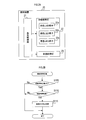
- FIG. 1A is a block diagram of a headlamp system in the first embodiment
- FIG. 1B is a block diagram of a headlamp control device.
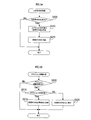
- FIG. 2A is a block diagram of the lighting device
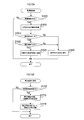
- FIG. 2B is a flowchart of sleepiness suppression processing. It is a flowchart about a weather discrimination
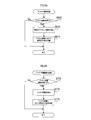
- FIG. 5A is a flowchart for the oncoming vehicle handling process
- FIG. 5B is a flowchart for the horn interlocking process.
- 6A is a flowchart for the accelerator interlocking process
- FIG. 6B is a flowchart for the battery remaining amount notification process.
- FIG. 1A is a block diagram of a headlamp system in the first embodiment
- FIG. 1B is a block diagram of a headlamp control device.
- FIG. 2A is a block diagram of the lighting device
- FIG. 2B is a flowchart of sleep
- FIG. 7A is a flowchart for the object handling process
- FIG. 7B is a flowchart for the passing process
- FIG. 8A is a flowchart for the subsequent vehicle detection process
- FIG. 8B is a flowchart for the obstacle detection process
- FIG. 9A is a flowchart for the travel location detection process
- FIG. 9B is a flowchart for the inter-vehicle distance detection process
- FIG. 10A is a flowchart for the passenger number detection process
- FIG. 10B is a flowchart for the vehicle speed detection process.
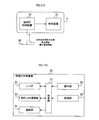
- FIG. 11A is a block diagram of the headlamp system in the second embodiment
- FIG. 11B is a block diagram of the headlamp control device.
- FIG. 11A is a block diagram of the headlamp system in the second embodiment
- FIG. 12A is a flowchart for the station passing process
- FIG. 12B is a flowchart for the vehicle number detection process
- FIG. 13A is a flowchart for the boarding availability detection process
- FIG. 13B is a flowchart for the pedestrian detection process.
- FIG. 14A is a block diagram of a headlamp system in the third embodiment
- FIG. 14B is a block diagram of a headlamp control device.
- FIG. 15A is a flowchart for the brake interlocking process
- FIG. 15B is a flowchart for the failure interlocking process.
- FIG. 16A is a flowchart regarding the driver determination process
- FIG. 16B is a flowchart regarding the use state determination process. It is a flowchart about a visual field improvement process.
- SYMBOLS 1 ... Headlamp system, 2 ... Headlamp system, 3 ... Headlamp system, 10 ... Headlamp control apparatus, 11 ... Control part, 12 ... Weather sensor group, 13 ... Camera, 14 ... Radar, 15 ... In-vehicle LAN communication unit, 16 ... communication unit, 17 ... operation unit, 18 ... storage unit, 20 ... lighting device, 21 ... light emission control unit, 22 ... right headlamp, 22a ... red LED element, 22b ... green LED element, 22c ... Blue LED element, 23 ... Left headlight, 30 ... In-vehicle LAN, 40 ... Hazard lamp, 50 ... Headlight control device, 51 ... Control unit, 52 ... Radar, 53 ...
- the headlamp system 1 is configured to irradiate light in front of the host vehicle from each end in the width direction on the front surface of the host vehicle and change the color of the irradiated light. It has a headlight control device 10 that controls lighting, extinction, blinking, and the color and intensity of the irradiated light.
- the headlight control device 10 detects the operation state of the wiper of the own vehicle, the operation state of the horn, the operation state of the accelerator, and the passing switch (the operation of pulling the operation lever of the direction indicator light forward) via the in-vehicle LAN 30. Various information such as the operation state of the switch), the vehicle speed of the host vehicle, and the like, and the lighting device 20 is controlled in accordance with these information. Further, if the host vehicle is configured as an electric vehicle, the headlamp control device 10 further acquires the remaining amount of the battery that supplies power to the motor that drives the host vehicle via the in-vehicle LAN 30. The lighting device 20 is controlled according to the remaining amount of the battery.
- the headlight control device 10 is connected via an in-vehicle LAN 30 to a navigation device (not shown) and an occupant detection device that is provided in each seat and detects the presence or absence of a person sitting on the seat by a weight sensor.
- a navigation device not shown
- an occupant detection device that is provided in each seat and detects the presence or absence of a person sitting on the seat by a weight sensor.
- the road type and the traveling location where the host vehicle is traveling are acquired from the navigation device, and notification of the presence or absence of a person seated in the seat is received from each occupant detection device.
- the headlamp control device 10 includes a control unit 11, a weather sensor group 12, a camera 13, a radar 14, an in-vehicle LAN communication unit 15, and a communication unit 16.
- the operation unit 17 and the storage unit 18 are provided.
- the control unit 11 is configured using a microcomputer (not shown) having a CPU 111, a ROM 112, a RAM 113, an I / O (not shown), a bus line (not shown) for connecting them, and the like, and a program stored in the ROM Accordingly, the headlamp control device 10 is comprehensively controlled.
- the meteorological sensor group 12 includes a raindrop sensor that detects raindrops attached to the windshield of the host vehicle, an illuminance sensor that detects brightness outside the vehicle, a temperature sensor that detects temperature outside the vehicle, a humidity sensor that detects humidity outside the vehicle, and the like.
- the camera 13 is for photographing the periphery of the host vehicle.
- the radar 14 is for detecting an obstacle existing in front of the host vehicle.
- the in-vehicle LAN communication unit 15 is for communicating with various devices mounted on the host vehicle via the in-vehicle LAN 30.
- the communication unit 16 is for communicating with the lighting device 20.
- the operation unit 17 is for receiving various operations from the user.
- the storage unit 18 is configured by a device that does not require a storage holding operation such as an HDD or a flash memory, and stores various types of information.
- the radar 14 has directivity and is received by an antenna that transmits a radio wave in front of the host vehicle and receives a reflected wave of the radio wave, a transmission unit that modulates a signal and transmits it from the antenna, and an antenna. Consists of a receiving unit that demodulates the reflected wave, a signal processing unit that detects the distance and positional relationship between the host vehicle and the obstacle ahead of the host vehicle, the shape of the obstacle, and the like from the signal demodulated by the receiving unit Has been.
- the lighting device 20 includes a right headlight 22, a left headlight 23, and a headlight control device 10 provided at the left and right ends of the front surface of the host vehicle.
- the headlights are turned on, turned off, blinked, and the light emission control unit 21 controls the color and intensity of the irradiated light according to the signal from the light source.
- the right headlamp 22 includes a red LED element 22a, a green LED element 22b, and a blue LED element 22c.
- the light emission control unit 21 adjusts the lighting intensity of each LED element, so that the right headlamp 22 The light is turned on and off, and the color and intensity of the irradiated light are adjusted.
- the left headlamp 23 is configured in the same manner as the right headlamp 22. [Description of operation] Next, the operation of the headlamp control device 10 will be described.
- the control unit 11 communicates with the light emission control unit 21 of the lighting device 20 via the communication unit 16, and the color of the right headlamp 22 or the left headlamp 23. It is configured to make a color switching request for switching between. Further, the headlamp control device 10 periodically makes a color switching request to change the color of the headlamp, and the drowsiness suppression process for awakening the driver and the color of the headlamp according to the current weather It is configured to be able to execute the process of switching the color of the headlamps according to the state of the host vehicle and the surrounding situation, such as a weather determination process that makes a color switching request to switch to a color, and each process is enabled by the user It is comprised so that it can select whether to do. Below, the content of these processes is demonstrated concretely.
- control unit 11 of the headlamp control device 10 determines whether or not the drowsiness suppression process is enabled, and if an affirmative determination is obtained (S105: Yes), the process proceeds to S110. If a negative determination is obtained (S105: No), the process is terminated.
- the control unit 11 determines whether or not the switching time has elapsed since the previous switching of the headlight color. If an affirmative determination is obtained (S110: Yes), the process proceeds to S115. If the determination is negative (S110: No), the process is terminated.
- the switching time is preferably 5 minutes or more. Further, the control unit 11 may set the switching time according to an operation received from the user via the operation unit 17.
- the control unit 11 makes a color switching request and switches the colors of the left and right headlamps.
- a switching order for switching colors such as red ⁇ blue ⁇ yellow ⁇ green ⁇ white may be determined in advance, and the headlight color may be switched cyclically according to the order.
- a plurality of colors may be determined in advance as the headlight color, and any one of these colors may be selected at random.
- each headlamp may be switched while the left and right headlamps are different in color.
- the right and left headlamps are switched differently so that they do not have the same color at the same time.
- the order (for example, the right headlight 22 is red ⁇ blue ⁇ yellow ⁇ green ⁇ white, and the left headlight 23 is blue ⁇ yellow ⁇ green ⁇ white ⁇ red) is determined separately, and the color of each headlight is determined.
- switching may be performed according to a switching order determined individually.
- the switching order and switching time may be set individually for the left and right headlamps, and the switching time of the left and right headlamps may be different. Then, for each headlamp, the colors may be switched according to an individual switching order at individual timing.
- the color of light may be switched for one of the left and right headlamps.
- the control unit 11 ends the present process.
- Second Weather determination process Next, a weather determination process for switching the color of the headlamp according to the current weather will be described with reference to the flowchart of FIG.
- the headlamp control device 10 of the first embodiment it is possible to set a corresponding color for each weather such as sunny, cloudy, rainy, etc.
- the current weather is discriminated and the light of the headlamp is set. Is switched to the corresponding color set for the determined weather. Note that this process is a process that is periodically executed while the host vehicle is being operated with the headlamp turned on.
- control unit 11 of the headlamp control device 10 determines whether or not the weather determination process is valid. If an affirmative determination is obtained (S205: Yes), the process proceeds to S210. If a negative determination is obtained (S205: No), the process is terminated.
- control unit 11 measures weather information such as the state of raindrops attached to the windshield, illuminance outside the vehicle, temperature, humidity, and the like by a signal from the weather sensor group 12, and the process proceeds to S215.
- control unit 11 acquires the operation state of the wiper of the host vehicle via the in-vehicle LAN 30, and the process proceeds to S220.
- control part 11 discriminate
- control unit 11 determines whether a change request for changing the current headlamp color is received from the user via the operation unit 17. If an affirmative determination is obtained (S225: Yes), the process proceeds to S245. If a negative determination is obtained (S225: No), the process proceeds to S230.
- control unit 11 determines whether the weather has changed, and if an affirmative determination is obtained (S230: Yes), the process proceeds to S235, and if a negative determination is obtained (S230) : No), this process ends.
- control unit 11 determines whether or not the corresponding color of the current weather has been set. If an affirmative determination is obtained (S235: Yes), the process proceeds to S240, and a negative determination is made. Is obtained (S235: No), the process proceeds to S245.
- the control unit 11 issues a color switching request for switching the light color of the headlamp to a color corresponding to the current weather, and thereafter ends the present process.
- different colors may be individually set as the corresponding colors for each weather, and the colors may be switched according to the weather with the left and right headlights having different colors. .
- control unit 11 causes the lighting device 20 to cycle the headlamps in a predetermined cycle (for example, about 10 s) in accordance with a predetermined change order (for example, red ⁇ blue ⁇ yellow ⁇ green ⁇ white).
- a predetermined change order for example, red ⁇ blue ⁇ yellow ⁇ green ⁇ white.
- control unit 11 determines whether or not a selection operation for selecting the current headlight color switched by the color setting process as the corresponding color for the current weather has been received via the operation unit 17. . If an affirmative determination is obtained (S250: Yes), the process proceeds to S255, and if a negative determination is obtained (S250: No), the process proceeds to S250 again.
- control unit 11 fixes the light color of the headlight with the color of the headlight light when the selection operation is accepted, and sets the color as a corresponding color for the current weather.
- the setting information is stored in the storage unit 18 and the present process is terminated.
- the color setting process and selection operation for the right headlamp 22 are first performed (S245 to S255), and then the color setting process and selection operation for the left headlamp 23 may be accepted.
- the control unit 11 may set a predetermined color corresponding to the current weather as the corresponding color.
- control unit 11 of the headlamp control device 10 determines whether or not the time zone determination process is valid. If an affirmative determination is obtained (S305: Yes), the process proceeds to S310. In addition, when a negative determination is obtained (S305: No), this process is terminated.
- control unit 11 specifies the current year / month / day by the clock function built in the part, and determines the current time zone based on the year / month / date. In addition, the control unit 11 may detect the brightness outside the vehicle based on a signal from the illuminance sensor of the weather sensor group 12 and determine the current time zone based on the brightness. Then, the process proceeds to S315.
- control unit 11 determines whether a change request for changing the current headlamp color is received from the user via the operation unit 17. If an affirmative determination is obtained (S315: Yes), the process proceeds to S335, and if a negative determination is obtained (S315: No), the process proceeds to S320.
- control unit 11 determines whether the time zone has changed, and when an affirmative determination is obtained (S320: Yes), the process proceeds to S325, and when a negative determination is obtained ( S320: No), this process is terminated.
- control unit 11 determines whether or not the corresponding color for the current time zone has been set. If an affirmative determination is obtained (S325: Yes), the process proceeds to S330, and a negative result is obtained. If the determination is obtained (S325: No), the process proceeds to S335.
- the control unit 11 issues a color switching request for switching the light color of the headlamp to the corresponding color for the current time zone, and thereafter ends the present process.
- different colors are set as the corresponding colors for each time zone, and the colors are switched according to the time zone with the left and right headlamp colors different. May be.
- control unit 11 causes the lighting device 20 to cycle the headlamps in a predetermined cycle (for example, about 10 s) according to a predetermined change order (for example, red ⁇ blue ⁇ yellow ⁇ green ⁇ white).
- a predetermined change order for example, red ⁇ blue ⁇ yellow ⁇ green ⁇ white.
- control unit 11 determines whether or not a selection operation for selecting the current headlight color switched by the color setting process as the corresponding color for the current weather has been received via the operation unit 17. . If an affirmative determination is obtained (S340: Yes), the process proceeds to S345. If a negative determination is obtained (S340: No), the process proceeds to S340 again.
- control unit 11 fixes the light color of the headlight with the color of the headlight light when the selection operation is accepted, and sets the color as the corresponding color for the current time zone. Then, the setting information is stored in the storage unit 18 and the present process is terminated.
- the color setting process and selection operation for the right headlamp 22 are first performed (S335 to S345), and thereafter In addition, the color setting process and selection operation for the left headlamp 23 may be accepted.
- the control unit 11 may set a predetermined color corresponding to the current weather as the corresponding color.
- control unit 11 of the headlamp control device 10 determines whether or not the oncoming vehicle handling process is enabled. If an affirmative determination is obtained (S405: Yes), the process proceeds to S410. In addition, if a negative determination is obtained (S405: No), this process is terminated.
- the control part 11 discriminate
- the control unit 11 changes the color of the headlamp from the color of the headlamp of the oncoming vehicle.
- a color switching request to switch to is performed.
- the color of the right headlamp 22 and the color of the left headlamp 23 may be different colors.
- control unit 11 of the headlamp control device 10 determines whether or not the horn interlocking process is valid. If an affirmative determination is obtained (S505: Yes), the process proceeds to S510. If a negative determination is obtained (S505: No), the process is terminated.
- control unit 11 acquires the operation state of the horn via the in-vehicle LAN 30, and determines whether the horn is being pressed based on this. When an affirmative determination is obtained (S510: Yes), the process proceeds to S515, and when a negative determination is obtained (S510: No), the process proceeds to S520.
- control unit 11 makes a color switching request to switch the headlight color to a warning color (for example, yellow). At this time, the color may be switched for only one headlamp. And the control part 11 complete
- the control unit 11 issues a color switching request for returning the headlamp color from the warning color to the original color (for example, white), and then ends the present process.
- the same processing may be performed even when the headlamp is not lit.
- the control unit 11 The headlamp may be turned on in a state where the color of the irradiated light is a warning color, and the headlamp may be turned off when the horn operation is released. It goes without saying that this process may be performed only for one headlamp.
- control unit 11 of the headlamp control device 10 determines whether or not the accelerator interlocking process is valid. If an affirmative determination is obtained (S605: Yes), the process proceeds to S610. If a negative determination is obtained (S605: No), the process is terminated.
- control part 11 acquires the operation state of an accelerator via in-vehicle LAN 30, detects the present accelerator opening based on this, and transfers a process to S615.
- control unit 11 makes a color switching request for switching the headlight color to a color corresponding to the current accelerator opening.
- the corresponding color for each range of the accelerator opening such as 0 to 10%, 10 to 20%, and 20 to 30% is set. It may be determined and the color of the headlamp may be switched to a color corresponding to a range to which the detected accelerator opening belongs.
- the headlamp color is white
- the lighting intensity of the red LED element of the headlamp increases or decreases by 1%.
- the color of the headlamp may be switched continuously according to the change in the accelerator opening.
- control unit 11 of the headlamp control device 10 determines whether or not the battery remaining amount notification process is valid, and if an affirmative determination is obtained (S705: Yes), the process proceeds to S710. If the determination is negative and a negative determination is obtained (S705: No), this process ends.
- control unit 11 acquires the current remaining battery level via the in-vehicle LAN 30, and the process proceeds to S715.
- the control unit 11 issues a color switching request to switch the headlamp color to a color corresponding to the current remaining battery level.
- the color of the headlamp may be switched stepwise, for example, from white to yellow to green to. Further, for example, when the remaining amount of the battery is 100%, the color of the headlamp is white, and the lighting intensity of the red LED element of the headlamp is 1% as the remaining amount of the battery decreases by 1%. For example, the color of the headlamp may be switched continuously according to a change in the remaining battery level.
- control unit 11 ends the present process. Note that this process may be executed over a certain period at the start of driving of the host vehicle or at the end of driving.
- the same processing may be performed even when the headlamp is not lit.
- the control unit 11 is, for example, constant at the start of driving or at the end of driving of the host vehicle.
- the headlamp may be lit in a state where the lighting device 20 is irradiated with light of a color corresponding to the remaining amount of the battery over a period. It goes without saying that this process may be performed only for one headlamp.
- the object correspondence processing for switching the color of the headlamp according to the object illuminated by the headlamp of the own vehicle (in other words, an object existing in front of the own vehicle). This will be described with reference to the flowchart of FIG. 7A. Note that this process is a process that is periodically executed while the host vehicle is being operated with the headlamp turned on.
- control unit 11 of the headlamp control device 10 determines whether or not the object handling process is valid. If an affirmative determination is obtained (S805: Yes), the process proceeds to S810. In addition, if a negative determination is obtained (S805: No), this process is terminated.
- the control unit 11 detects an object illuminated by the headlamp based on an image ahead of the host vehicle taken by the camera 13. Specifically, for example, objects existing around roads such as wooden houses, trees and high-rise buildings may be detected as objects, gravel roads, asphalted roads, and concrete paved roads. A road that is running, such as a closed road, may be detected as an object, and snow or a puddle accumulated on the road may be detected as an object. And the control part 11 transfers a process to S815.
- the control unit 11 makes a color switching request to switch the headlamp color to a color corresponding to the detected object. Specifically, when one object is detected, the color of the headlamp is switched according to the object, and when a plurality of objects are detected, among these objects, The headlamp color is switched according to the object that has the greatest influence on the visibility ahead of the host vehicle.
- the snow that has accumulated on the road is regarded as the object that has the greatest impact on visibility.
- the headlight color may be switched to yellow according to the condition.
- the wooden house is regarded as an object that has the greatest effect on visibility, and a headlamp is accordingly used.
- the color of may be switched to white.
- FIG. 7B shows a passing process for switching the color of the headlamp of the host vehicle in accordance with the operation state of the passing switch (the presence or absence of an operation of pulling the operation lever of the direction indicator lamp forward). Will be described. Note that this process is a process that is periodically executed while the host vehicle is being operated with the headlamp turned on.
- control unit 11 of the headlamp control device 10 determines whether or not the passing process is valid, and when an affirmative determination is obtained (S905: Yes), the process proceeds to S910. If a negative determination is obtained (S905: No), this process ends.
- control unit 11 determines whether a passing operation is performed based on the operation state of the passing switch acquired through the in-vehicle LAN communication unit 15. When an affirmative determination is obtained (S910: Yes), the process proceeds to S915, and when a negative determination is obtained (S910: No), the process proceeds to S920.
- control unit 11 makes a color switching request to switch the headlight color to a warning color (for example, yellow). At this time, the color may be switched for only one headlamp. And the control part 11 complete
- the control unit 11 makes a color switching request for returning the headlight color from the warning color to the original color, and then ends this processing.
- the same processing may be performed even when the headlamp is not turned on.
- the control unit 11 irradiates the illumination device 20 with irradiation when a passing operation is performed.
- the headlamp may be turned on in a state where the color of the emitted light is a warning color, and the headlamp may be turned off when the passing operation is canceled. It goes without saying that this process may be performed only for one headlamp.
- control unit 11 of the headlamp control device 10 determines whether or not the subsequent vehicle detection process is valid. If an affirmative determination is obtained (S1005: Yes), the process proceeds to S1010. In addition, when a negative determination is obtained (S1005: No), this processing is terminated.
- control unit 11 detects the number of succeeding vehicles traveling at a distance within a certain distance (for example, within 50 m) from the own vehicle based on an image behind the own vehicle taken by the camera 13. The process proceeds to S1015.
- step S ⁇ b> 1015 the control unit 11 issues a color switching request for switching the headlamp color to a color corresponding to the number of subsequent vehicles detected. Specifically, for example, a corresponding color is determined for each range of the number of subsequent vehicles such as 0 to 2, 3 to 5, and 6 to 8, and the color of the headlamp is detected. You may switch to the color corresponding to the range to which the number of vehicles belongs.
- the headlight color is white
- the lighting intensity of the red LED element of the headlamp increases or decreases by 5%.
- the color of the headlamp may be continuously switched according to the number of the following vehicles.
- control part 11 may perform the color switching request
- control unit 11 of the headlamp control device 10 determines whether or not the obstacle detection process is valid. If an affirmative determination is obtained (S1105: Yes), the process proceeds to S1110. In addition, if a negative determination is obtained (S1105: No), this process is terminated.
- step S1110 the control unit 11 detects an obstacle ahead of the host vehicle using the radar 14, and also grasps the distance and positional relationship between the host vehicle and the obstacle, the shape of the obstacle, and the like. To migrate.
- the control unit 11 issues a color switching request to switch the headlight color to a color corresponding to the presence or absence of the detected obstacle ahead of the host vehicle and the distance between the host vehicle and the obstacle.
- the color of the headlamp may be a warning color (for example, yellow).
- a plurality of different warning colors are set in advance according to the distance between the obstacle and the host vehicle, and the headlight color is changed to a warning color according to the distance between the host vehicle and the detected obstacle. You may switch.
- the headlight color will be green. If the obstacle is estimated to be a two-wheeled vehicle, the headlight color will be yellow. In this case, the headlight color may be switched to red.
- a template indicating the shape of an obstacle such as a vehicle (four-wheeled vehicle, two-wheeled vehicle) or a pedestrian is stored in the storage unit 18.
- An obstacle may be identified by well-known pattern matching using the template.
- control unit 11 of the headlamp control device 10 determines whether or not the travel location detection process is valid. If an affirmative determination is obtained (S1205: Yes), the process proceeds to S1210. In addition, if a negative determination is obtained (S1205: No), this process is terminated.
- control unit 11 acquires the current travel location of the host vehicle from a navigation device (not shown) via the in-vehicle LAN 30, and the process proceeds to S1215.
- control unit 11 makes a color switching request to switch the color of the headlamp to a color according to the traveling location of the host vehicle.
- the headlight color is set to a warning color (for example, yellow) Also good.
- the headlight color may be soft, and when the vehicle is in the mountains or the countryside, the headlight color is bright. It is also good.
- control unit 11 of the headlamp control device 10 determines whether or not the inter-vehicle distance detection process is valid. If an affirmative determination is obtained (S1305: Yes), the process proceeds to S1310. In addition, if a negative determination is obtained (S1305: No), this process is terminated.
- the control unit 11 detects the inter-vehicle distance from the preceding vehicle using the radar 14, and the process proceeds to S1315.
- the control unit 11 determines whether or not the inter-vehicle distance from the preceding vehicle is equal to or less than a predetermined threshold value (for example, 5 m). If an affirmative determination is obtained (S1315: Yes), the process proceeds to S1320. If a negative determination is obtained (S1315: No), the process proceeds to S1325.
- a predetermined threshold value for example, 5 m
- control unit 11 makes a color switching request to switch the headlight color to a warning color (for example, yellow). At this time, the color may be switched for only one headlamp. And the control part 11 complete
- a warning color for example, yellow
- control unit 11 issues a color switching request to return the headlight color from the warning color to the original color (for example, white), and then ends the process.
- the control unit 11 issues a color switching request to return the headlight color from the warning color to the original color (for example, white), and then ends the process.
- the color of the headlamp may be changed in multiple stages according to the inter-vehicle distance.
- the control unit 11 changes the color of light emitted to the lighting device 20.
- the headlamp may be turned on in a warning color state. It goes without saying that this process may be performed only for one headlamp.
- control unit 11 of the headlamp control device 10 determines whether or not the number of passengers detection process is valid. If an affirmative determination is obtained (S1405: Yes), the process proceeds to S1410. In addition, when a negative determination is obtained (S1405: No), this process is terminated.
- control unit 11 receives a notification about the presence / absence of a person sitting in the seat from the passenger detection device provided in each seat via the in-vehicle LAN 30, and based on this, the number of passengers in the own vehicle Is detected. Then, the process proceeds to S1415.
- the control unit 11 makes a color switching request to switch the headlight color to a color corresponding to the number of passengers. Specifically, for example, when the number of passengers is 0 (when only the driver is in the vehicle), the headlight color is blue, and the number of passengers is 1 or more. The headlight color may be white. Moreover, you may switch a color only about one headlamp. Then, when the switching of the headlight color is completed, the control unit 11 ends the present process.
- control unit 11 of the headlamp control device 10 determines whether or not the vehicle speed detection process is valid, and if an affirmative determination is obtained (S1505: Yes), the process proceeds to S1510. If a negative determination is obtained (S1505: No), the process is terminated.
- the control unit 11 acquires the type of the road on which the host vehicle is traveling from a navigation device (not shown) via the in-vehicle LAN 30, and the process proceeds to S1515.
- the control unit 11 determines whether or not the host vehicle is traveling on an automobile-only road. If an affirmative determination is obtained (S1515: Yes), the process proceeds to S1520, and a negative determination is made. If the determination is obtained (S1515: No), this process ends.
- the control unit 11 acquires the vehicle speed of the host vehicle via the in-vehicle LAN 30, and the process proceeds to S1525.
- the control unit 11 determines whether or not the vehicle speed of the host vehicle is equal to or less than a predetermined threshold (for example, 10 km / h). When an affirmative determination is obtained (S1525: Yes), the process proceeds to S1530, and when a negative determination is obtained (S1525: No), the process proceeds to S1540.
- a predetermined threshold for example, 10 km / h
- control unit 11 makes a color switching request to switch the headlight color to a warning color (for example, yellow). At this time, the color may be switched for only one headlamp. And the control part 11 transfers a process to S1535.
- a warning color for example, yellow
- control unit 11 instructs the hazard lamp 40 to start blinking the hazard lamp via the in-vehicle LAN 30, and ends this process.
- control unit 11 issues a color switching request to return the headlight color from the warning color to the original color (for example, white), and the process proceeds to S1545.
- step S1545 the control unit 11 instructs the hazard lamp 40 to stop blinking the hazard lamp 40 via the in-vehicle LAN 30, and ends this process.
- the headlamp system 2 includes a lighting device 20 similar to the first embodiment that irradiates light in front of the host vehicle from each end portion in the width direction on the front surface of the host vehicle, and lighting / extinguishing of the lighting device 20 and irradiation. And a headlamp control device 50 for controlling the color and intensity of the emitted light.
- the headlight control device 50 organizes the position information indicating the current position of the own vehicle and the train via the in-vehicle LAN 60 provided in each rail car forming a series of trains including the own vehicle.
- Various information such as vehicle information indicating the type of each railway vehicle and operation mode information indicating the mode of operation of the own vehicle (express, express, normal, forward, etc.) can be acquired.
- the lighting device 20 is controlled.
- the in-vehicle LAN 60 is connected to an on-board device that forms a known train position detection system that detects the current position of the host vehicle, and the position information is acquired from the on-board device.
- the headlamp control device 50 is configured around a well-known microcomputer comprising a CPU, a ROM, a RAM, an I / O, a bus line connecting them, and the like.
- a control unit 51 that controls the headlamp control device 50 according to the program stored in the vehicle, a known radar 52 that detects obstacles existing in front of the host vehicle, and the like.
- An in-vehicle LAN communication unit 53 that communicates with various devices, a communication unit 54 that communicates with the lighting device 20, an operation unit 55 that accepts various operations from the user, and a device that does not require a memory holding operation such as an HDD or a flash memory And a storage unit 56 that can store various types of information.
- the radar 52 has directivity and is received by an antenna that transmits a radio wave in front of the host vehicle and receives a reflected wave of the radio wave, a transmission unit that modulates a signal and transmits it from the antenna, and an antenna. Consists of a receiving unit that demodulates the reflected wave, a signal processing unit that detects the distance and positional relationship between the host vehicle and the obstacle ahead of the host vehicle, the shape of the obstacle, and the like from the signal demodulated by the receiving unit Has been.
- the storage unit 56 stores operation schedule information indicating an operation schedule route of the own vehicle, a station location on the operation route, a station where the own vehicle stops, an estimated arrival time at the station, and the like. ing.
- Station Passing Process First, the station passing process for switching the color of the headlamp when the host vehicle passes through the station will be described with reference to the flowchart of FIG. 12A. In addition, this process is a process performed regularly while the own vehicle is operating with the headlamp turned on.
- control unit 51 of the headlamp control device 50 determines whether or not the station passing process is valid. If an affirmative determination is obtained (S1605: Yes), the process proceeds to S1610. If a negative determination is obtained (S1605: No), the process is terminated.
- the control unit 51 acquires position information indicating the current position of the host vehicle from the above-mentioned on-vehicle device via the in-vehicle LAN 60, and the process proceeds to S1615.
- the control unit 51 determines whether or not the current position of the host vehicle is near the station (for example, within 500 m from the station). If an affirmative determination is obtained (S1615: Yes), the process proceeds to S1620. If a negative determination is obtained (S1615: No), the process proceeds to S1630.
- control unit 51 determines whether or not the host vehicle passes through the station based on the operation schedule information stored in the storage unit 56. If an affirmative determination is obtained (S1620: Yes), the process proceeds to S1625. If a negative determination is obtained (S1620: No), the process proceeds to S1630.
- control unit 51 makes a color switching request for switching the headlamp color to a predetermined color (for example, yellow). At this time, the color may be switched for only one headlamp. And the control part 51 complete
- a predetermined color for example, yellow
- the control unit 51 makes a color switching request for returning the headlight color from the predetermined color to the original color (for example, white), and ends this processing.
- This station passing process can also be applied to, for example, the headlamp system 2 mounted on a route bus. In such a case, the same processing is performed when the host vehicle that is a route bus passes the bus stop. Can be considered.
- the headlight color may be switched to a predetermined color.
- the vehicle number detection process which switches the color of a headlamp according to the number of the railway vehicles which comprise a series of trains including the own vehicle is demonstrated using the flowchart of FIG. 12B. . Note that this process is a process that is periodically executed while the host vehicle is being operated with the headlamp turned on.
- control unit 51 of the headlamp control device 50 determines whether or not the vehicle number detection process is enabled. If an affirmative determination is obtained (S1705: Yes), the process proceeds to S1710. In addition, when a negative determination is obtained (S1705: No), this process is terminated.
- control unit 51 acquires vehicle information indicating the type of the rail vehicle from other rail vehicles that form the train via the in-vehicle LAN 60, and the rail vehicle that forms the train based on the vehicle information. Detect the number. Then, the process proceeds to S1715.
- the control unit 51 makes a color switching request to switch the color of the headlamps to a color corresponding to the number of railway vehicles. Specifically, for example, when the number of railway vehicles is 1, the color of the headlamps may be white, and the redness of the color of the headlamps may be increased as the number of railway vehicles increases. Then, when the switching of the headlight color is completed, the control unit 51 ends the present process.
- control unit 51 of the headlamp control device 50 determines whether or not the boarding availability detection process is enabled. If an affirmative determination is obtained (S1805: Yes), the process proceeds to S1810. In addition, if a negative determination is obtained (S1805: No), this processing is terminated.
- the control unit 51 acquires operation mode information indicating the operation mode (express, rapid, normal, forwarding, etc.) of the host vehicle via the in-vehicle LAN 60, and the process proceeds to S1815.
- the control unit 51 determines whether the passenger train including the host vehicle is a power transmission vehicle based on the operation mode information. If an affirmative determination is obtained (S1815: Yes), the process proceeds to S1820. If a negative determination is obtained (S1815: No), the process proceeds to S1825.
- control unit 51 makes a color switching request to switch the headlight color to a predetermined color (for example, blue). At this time, the color may be switched for only one headlamp. And the control part 51 complete
- a predetermined color for example, blue
- control unit 51 makes a color switching request for returning the headlight color from the predetermined color to the original color (for example, white), and ends this processing.
- the boarding availability detection process can also be applied to the headlamp system 2 mounted on a bus, for example.
- control unit 51 of the headlamp control device 50 determines whether or not the pedestrian detection process is enabled. If an affirmative determination is obtained (S1905: Yes), the process proceeds to S1910. In addition, when a negative determination is obtained (S1905: No), this process is terminated.
- control unit 51 detects a pedestrian existing in the track ahead of the host vehicle by the radar 52, and the process proceeds to S1915.
- control unit 51 determines whether or not there is a pedestrian present in the track in front of the host vehicle. If an affirmative determination is obtained (S1915: Yes), the process proceeds to S1920. If a negative determination is obtained (S1915: No), the process proceeds to S1930.
- control unit 51 makes a color switching request for switching the headlamp color to a warning color (for example, red). At this time, the color may be switched for only one headlamp. And the control part 51 transfers a process to S1925.
- a warning color for example, red
- control unit 51 communicates with the light emission control unit 21 of the lighting device 20 via the communication unit 54, instructs the headlight to be switched to the warning color to blink, and ends the present process.
- control unit 51 makes a color switching request for returning the headlight color from the warning color to the original color (for example, white), and the process proceeds to S1935.
- control unit 51 communicates with the light emission control unit 21 of the lighting apparatus 20 via the communication unit 54, terminates the blinking of the headlamp, and instructs to restart the lighting of the headlamp. The process ends.
- the headlamp system 3 includes a lighting device 20 similar to that of the first embodiment, and a headlamp control device 70 that controls lighting, extinguishing, blinking, and the color and intensity of the irradiated light. Have.
- the headlight control device 70 operates the brake state of the host vehicle via the in-vehicle LAN 30 (specifically, for example, the brake fluid pressure of the master cylinder of the hydraulic brake, the depression force of the brake pedal, etc.), Various types of information such as failure information can be acquired, and the lighting device 20 is controlled in accordance with the information.
- the headlamp control device 70 is mainly composed of a well-known microcomputer comprising a CPU, a ROM, a RAM, an I / O, a bus line connecting them, and the like. And a wireless communication unit 72 that performs wireless communication with a portable device 80 such as a mobile phone or a PDA possessed by a driver sitting in the driver's seat.
- a portable device 80 such as a mobile phone or a PDA possessed by a driver sitting in the driver's seat.
- An in-vehicle LAN communication unit 73 that communicates with various devices mounted on the host vehicle via the in-vehicle LAN 30, a communication unit 74 that communicates with the lighting device 20, an operation unit 75 that receives various operations from the user, And a storage unit 76 that is configured from a device that does not require a storage holding operation, such as an HDD or a flash memory, and that can store various types of information.
- the wireless communication unit 72 periodically transmits a signal to the portable device 80 using the area where the driver's seat is located and an area in the vicinity thereof as a communication range, and a response from the portable device 80 existing in the area.
- a signal indicating various information is received.
- the storage unit 76 stores identification information indicating a person registered as a driver for driving the host vehicle.
- the control unit 71 communicates with the light emission control unit 21 of the lighting device 20 via the communication unit 74 in the same manner as in the first embodiment, and the right headlamp 22. Alternatively, a color switching request for switching the color of the left headlamp 23 is made.
- the headlamp control device 70 is configured to be able to execute a process of switching the color of the headlamp according to the state of the host vehicle, the driver, and the like, and selects whether or not to enable each process by the user It is possible. Below, the content of these processes is demonstrated concretely.
- control unit 71 of the headlamp control device 70 determines whether or not the brake interlocking process is valid. If an affirmative determination is obtained (S2005: Yes), the process proceeds to S2010. If a negative determination is obtained (S2005: No), this process is terminated.
- control unit 71 acquires the operating state of the brake via the in-vehicle LAN 30, and the process proceeds to S2015.
- control unit 71 issues a color switching request for switching the headlight color to a color corresponding to the operating state of the brake.
- the headlight color is red
- the brake braking state is classified into multiple stages according to the operation state of the brake pedal and the brake fluid pressure, and the color corresponding to each stage is determined, and the color of the headlamp is changed to the current braking state of the brake. You may switch to the color corresponding to the stage.
- control unit 71 of the headlamp control device 70 determines whether or not the failure interlocking process is valid. If an affirmative determination is obtained (S2105: Yes), the process proceeds to S2110. If a negative determination is obtained (S2105: No), this process is terminated.
- control unit 71 detects failure of the host vehicle by collecting failure information via the in-vehicle LAN 30, and the process proceeds to S2115.
- control unit 71 issues a color switching request for switching the headlight color to a color corresponding to the detected failure.
- the headlight color when a failure is detected, the headlight color is set to a warning color (for example, yellow), and when no failure is detected, the headlight color is set to the original color (for example, white).
- a warning color for example, yellow
- the headlight color when no failure is detected, the headlight color is set to the original color (for example, white).
- colors corresponding to the respective parts of the host vehicle such as an engine, a meter, an air conditioner, etc. are set, and when a failure is detected, the color of the headlamp corresponds to the part where the failure has occurred.
- the headlight color may be the original color.
- control unit 71 of the headlamp control device 70 determines whether or not the driver determination process is valid. If an affirmative determination is obtained (S2205: Yes), the process proceeds to S2210. If a negative determination is obtained (S2205: No), the process is terminated.
- control unit 71 acquires identification information indicating the user of the mobile device 80 by performing wireless communication with the mobile device 80 present in the driver's seat via the wireless communication unit 72, and the process proceeds to S2215. To do.
- control unit 71 determines whether or not the acquired identification information matches the registered identification information of the driver. If an affirmative determination is obtained (S2215: Yes), the process proceeds to S2220. If the determination is negative (S2215: No), the process proceeds to S2225. Note that if the acquisition of the identification information fails, the process proceeds to S2225.
- step S2220 the control unit 71 issues a color switching request to switch the headlight color to the color set for the driver corresponding to the acquired identification information, and then ends the process.
- step S2225 the control unit 71 issues a color switching request for switching the headlight color to a warning color (for example, yellow), and then ends the present process.
- usage state determination processing for switching the color of the headlamp of the host vehicle according to the usage state of the portable device 80 or the like present in the driver's seat will be described with reference to the flowchart of FIG. To do. Note that this process is a process that is periodically executed while the host vehicle is being operated with the headlamp turned on.
- control unit 71 of the headlamp control device 70 determines whether or not the use state determination process is valid. If an affirmative determination is obtained (S2305: Yes), the process proceeds to S2310. In addition, if a negative determination is obtained (S2305: No), this process is terminated.
- control unit 71 wirelessly communicates with the mobile device 80 existing in the driver's seat via the wireless communication unit 72, thereby acquiring usage state information indicating the usage state of the mobile device 80, and the process in S2215 To migrate.
- the usage state of the mobile device 80 may be the presence or absence of a call, whether or not a call is being made using a hands-free device, etc., if the mobile device 80 is configured as a mobile phone. In addition to this, it is conceivable whether the mail is being created and viewed, whether the web is being browsed, whether or not the portable device 80 is operated, and the like.
- control unit 71 determines whether or not the mobile device 80 is in use based on the acquired use state information, and when an affirmative determination is obtained (S2315: Yes), the process proceeds to S2320. In addition, if a negative determination is obtained (S2315: No), the process proceeds to S2325.
- the process proceeds to S2325. If a call is being made using a hands-free device, the mobile device 80 is being used, but the risk of an accident may be considered low, and the process may proceed to S2325.
- control unit 71 issues a color switching request to switch the headlight color to a warning color (for example, red), and then ends the process.
- control unit 71 issues a color switching request to switch the headlight color to the original color, and then ends the present process.
- the use state determination process it is determined whether or not the driver is using the mobile device 80 by performing wireless communication with the mobile device 80. For example, based on the image of the driver taken by the camera. It may be determined whether or not the mobile device 80 is being used.
- control unit 11 of the headlamp control device 10 determines whether or not the visibility enhancement process is valid, and if an affirmative determination is obtained (S2405: Yes), the process proceeds to S2410. If a negative determination is obtained (S2405: No), the process is terminated.
- the control unit 11 determines whether or not the switching timing has arrived, and when an affirmative determination is obtained (S2410: Yes), the process proceeds to S2415 and a negative determination is obtained. (S2410: No), this process is terminated. Note that it may be considered that the switching timing has arrived when a predetermined time (for example, about 10 to 500 ms) has elapsed since the color of the headlamp was switched last time.
- a predetermined time for example, about 10 to 500 ms
- step S2415 the control unit 11 issues a color switching request, and switches the left and right headlight colors to one of predetermined setting colors (eg, red, blue, yellow, green, white, etc.).
- predetermined setting colors eg, red, blue, yellow, green, white, etc.
- a switching order for switching colors such as red ⁇ blue ⁇ yellow ⁇ green ⁇ white may be determined in advance, and the headlight color may be switched cyclically according to the order.
- each period when six switching timings are reached is one period, and all the setting colors are selected in each period, The setting color may be selected at random.
- the control unit 11 ends the present process.
- the color of the headlight periodically changes during driving of the host vehicle, and the driver's vision is continuously displayed. Can irritate. For this reason, even if the driver is drowsy, the driver can be awakened early.
- the headlight color is switched to an optimal color according to the situation around the host vehicle. It is possible to improve the visibility in front of the host vehicle, to make it easier for a pedestrian or driver of another vehicle to recognize the host vehicle. For this reason, it becomes possible to drive the own vehicle safely.
- the headlight color can be switched according to the operation of the horn, and both hearing and vision can be performed without dazzling the drivers of other vehicles around the host vehicle. More reliable warning can be performed via
- the color of the headlamp can be changed according to the operation state of the accelerator, and it becomes easy to grasp the speed and acceleration state of the host vehicle from outside the vehicle.
- the color of the headlamp can be changed according to the remaining battery level by enabling the remaining battery level notification process. For this reason, it is possible to determine the remaining battery level of the host vehicle from outside the vehicle, and it is possible to more reliably alert the user about the shortage of the remaining battery level.
- the color of the headlamp can be switched according to the operation of the passing switch, and without causing dazzling to pedestrians and drivers of other vehicles located in front of the host vehicle. Communicating with these persons becomes possible.
- the color of the headlamp can be changed according to the number of the following vehicles, and the presence or number of the following vehicles can be notified to the driver of the oncoming vehicle. .
- the driver of the oncoming vehicle can easily grasp the situation of the oncoming lane, and can perform driving according to the situation of the oncoming lane.
- the color of the headlamp can be changed according to the presence or absence of an obstacle present in front of the host vehicle, the distance to the obstacle, and the like. For this reason, the driver can be surely ascertained whether there is an obstacle in front of the host vehicle, the distance to the obstacle, and the like.
- the color of the headlamp can be used as a warning color.
- the inter-vehicle distance detection process it is possible to alert the driver of the preceding vehicle when approaching the preceding vehicle traveling in front of the host vehicle.
- the passenger number detection process the number of people on the vehicle can be easily ascertained from the outside, and the passengers can ride with priority. It becomes easy to control when a vehicle without a passenger is traveling in the passenger priority lane.
- the hazard lamp can automatically start blinking, and the color of the headlight can be changed. It can be changed, and the driver of the vehicle around the host vehicle can be alerted more reliably.
- the headlight control device 50 of the second embodiment by enabling the station passing process, it is possible to notify passengers at the station whether or not a train that can be boarded arrives. Can be increased.
- the boarding availability detection process it is possible to make the passenger know whether or not boarding is possible.
- the pedestrian detection process when a pedestrian is present in front of the host vehicle, the pedestrian and the driver of the host vehicle are alerted without being dazzled by the person existing in front of the host vehicle. It can be performed.
- the headlight control device 70 of the third embodiment it is not necessary to provide a dedicated indicator light by making the brake interlocking process effective, and the headlight originally illuminates the front of the host vehicle. It is possible to grasp the operating state of the brake of the host vehicle from the front of the host vehicle without obstructing the role of the host vehicle.
- the driver can be discriminated even from outside the vehicle, so that the vehicle theft can be detected early.
- the color of the headlamp is a color corresponding to the driver, it is possible to easily determine who the driver of the vehicle is, and convenience can be improved.
- the headlight is switched to one of the five set colors in each cycle with a period of several seconds at most as one cycle. Even when a plurality of different objects are present in front of the host vehicle, the timing at which the visibility of these objects is improved can be reached in a short cycle. For this reason, the visibility of these objects can be improved almost simultaneously, and the overall visibility in front of the host vehicle can be improved.
- the color of light emitted from the headlamp is switched by adjusting the lighting intensity of the red LED element, the green LED element, and the blue LED element.
- the method of switching the headlight color is not limited to this. Specifically, for example, by providing a plurality of filter members of different colors and switching the filter member that transmits the light emitted from the light source of the headlamp, the color of the light emitted from the headlamp is switched. Also good. Further, a plurality of light sources having different colors of light to be irradiated may be provided, and the colors of the light to be irradiated may be switched by switching these light sources. Even in such a case, the same effect can be obtained.
- the headlamp control device 10 of the first embodiment is configured to switch the color of the headlamp according to the current weather and time zone.
- the weather is raining and the time
- the color of the headlamp may be switched according to the combination of the weather and the time zone, such as when the zone is night, the weather is snow, and the time zone is evening.
- the color of the headlamp can be switched to a more appropriate color according to the situation around the host vehicle, improving the visibility in front of the host vehicle, It becomes possible to make the driver of the vehicle easily recognize the host vehicle.
- the headlamp system 1 is mounted on an automobile.
- a similar headlamp system 1 may be mounted on a vehicle such as a motorcycle, a bicycle, or a train. Similar effects can be obtained even when the above-described processes such as the drowsiness prevention process and the weather determination process are performed in these vehicles.
- the operation state of the operation unit that accepts an operation for increasing the train speed is used instead of the operation state of the accelerator. Similarly, it is possible to switch the color of the headlamp.
- the color of the headlight may be switched to effectively notify the train approaching to people at the railroad crossing or station.
- the color of the headlamp may be switched in order to effectively notify the approach of the train.
- the headlamp system 1 may be mounted on an electric motorcycle or an electric assist bicycle.
- the remaining battery level of the electric motorcycle or the like is further increased by a battery remaining amount notification process. It becomes possible to grasp with certainty.
- the illuminating device 20 in the headlamp system 1 is comprised as a headlamp of a motor vehicle, the illuminating device 20 is not a headlamp, but the front surface and side surface of a motor vehicle. , A rear surface, a roof, or the like, may be configured as an illumination attached to the outer surface of the automobile body.
- the lighting device 20 may be configured as lighting attached to the outer surface of the vehicle. Even in such a case, the same effect can be obtained.
- the illumination device 20 in the headlamp system 2 is configured as a headlight of a railway vehicle, but is not a headlamp, but a front surface, a side surface, and a rear surface of the railway vehicle. , A roof or the like, may be configured as illumination attached to the outer surface of the body of the railway vehicle. Even in such a case, the same effect can be obtained.
- the headlamp system 3 is mounted on a vehicle.
- the same headlamp is applied to a vehicle such as a motorcycle, an electric vehicle, an electric motorcycle, a bicycle, and an electric assist bicycle.
- the light system 3 may be mounted, and the same effect can be obtained even when the above-described processing such as brake interlock processing is performed in these vehicles.
- the illuminating device 20 in the headlamp system 3 is comprised as a headlamp of a motor vehicle
- the illuminating device 20 is not a headlamp, but the front surface, side surface, rear surface of a motor vehicle
- You may be comprised as illumination attached to the outer surface of the body of a motor vehicle, such as a roof.
- the lighting device 20 may be configured as a light mounted on the outer surface of the vehicle. Even in such a case, the same effect can be obtained.
- the control unit 11 of the headlamp control device 10 is an example of color control means
- the operation unit 17 is an example of instruction reception means
- the in-vehicle LAN communication unit 15 is an example of operation reception means
- the radar 14 is an example. Corresponds to the transmission / reception means.
- the wiper corresponds to an example removing device
- the accelerator corresponds to an example operation unit.
- S110 and S115 of the sleepiness suppression process correspond to the periodic color switching process as an example.
- S220 of the weather determination process corresponds to the process performed by the weather determination unit as an example
- S240 corresponds to the weather color switching process as an example
- S255 corresponds to the process performed by the setting unit of claim 7 as an example.
- S310 of the time zone determination process corresponds to, for example, a process performed by the time zone determination unit according to claim 8, or a process performed by the illuminance detection unit according to claim 9 and a process performed by the time zone determination unit.
- S330 corresponds to the time zone color switching process as an example
- S345 corresponds to the process performed by the setting means of claim 10 as an example.
- S410 of the oncoming vehicle corresponding process corresponds to the process performed by the color detection unit as an example
- S415 corresponds to the oncoming vehicle color switching process as an example
- the horn operation corresponds to a ringing instruction as an example
- S510 in the horn interlocking process corresponds to a process performed by the ringing instruction detection unit as an example
- S515 corresponds to a warning tone color switching process as an example.
- S610 of the accelerator interlocking process corresponds to the process performed by the operation state detecting unit as an example
- S615 corresponds to the operation state color switching process as an example
- S710 of the battery remaining amount notification process corresponds to a process performed by the remaining amount detecting unit as an example
- S715 corresponds to a battery remaining color switching process as an example.
- S810 of the object handling process corresponds to the process performed by the object detection unit as an example
- S815 corresponds to the object color switching process as an example
- S915 of the passing process corresponds to a driver operation color switching process as an example.
- S1010 of the subsequent vehicle detection process corresponds to the process performed by the vehicle detection unit as an example
- S1015 corresponds to the subsequent vehicle color switching process as an example
- S1110 and S1115 of the obstacle detection process correspond to the reflected wave color switching process as an example.
- S1210 of the travel location detection process corresponds to a process performed by the location detection unit as an example
- S1215 corresponds to a travel location color switching process as an example
- S1310 of the inter-vehicle distance detection process corresponds to the process performed by the inter-vehicle distance detection means
- S1315 to S1325 correspond to the inter-vehicle distance color switching process.
- S1410 of the passenger number detection process corresponds to the process performed by the passenger number detection unit as an example
- S1415 corresponds to the passenger color switching process as an example
- S1510 of the vehicle speed detection process is a process performed by the road type detection unit as an example
- S1535 and S1545 are processes performed by the hazard lamp control unit as an example
- S1520 and S1525 are processes performed by the speed reduction detection unit as an example
- S1530 corresponds to a speed reduction color switching process as an example.
- S1610 of the station passing process corresponds to the process performed by the place detecting unit as an example
- S1615, S1625, and S1630 correspond to the traveling place color switching process as an example
- S1620 corresponds to the process performed by the boarding / alighting determination unit as an example.
- S1710 of the vehicle number detection process corresponds to the process performed by the vehicle number detection unit as an example
- S1715 corresponds to the vehicle number color switching process as an example
- S1815 of the boarding availability detection process corresponds to the process performed by the boarding availability determination unit as an example
- S1820 and S1825 of the boarding availability detection process correspond to the boarding availability color switching process as an example.
- S1815 of the boarding availability detection process corresponds to the process performed by the boarding availability judging means as an example
- S1820 and S1825 correspond to the boarding availability color switching process as an example
- S1910 of the pedestrian detection process is a process performed by the pedestrian detection means as an example
- S1915, S1920, S1930 is an example of the pedestrian color switching process
- S1915, S1925, S1935 is an example of a blinking state switching request. Corresponds to processing.
- S2010 of the brake interlocking process corresponds to the process performed by the operation state detecting unit as an example
- S2015 corresponds to the brake operation state color switching process as an example
- S2110 of the failure interlocking process corresponds to the process performed by the failure detection unit as an example
- S2115 corresponds to the failure color switching process as an example.
- driver determination processing S2210 and S2215 correspond to processing performed by the comparison means as an example
- S2220 and S2225 correspond to driver color switching processing as an example
- S2310 and S2315 of the use state determination process correspond to the process performed by the use state determination unit as an example
- S2320 and S2325 correspond to the use state color switching process as an example.
- S2410 and S2415 of the visibility enhancement process correspond to the setting color switching process as an example.
Landscapes
- Engineering & Computer Science (AREA)
- Mechanical Engineering (AREA)
- Lighting Device Outwards From Vehicle And Optical Signal (AREA)
Abstract
前照灯制御装置は、自車両の前方に光を照射すると共に、該光の色を変化させることができる前照灯を制御する装置であり、前照灯から照射される光の色を切り替える色切替要求を行う色制御手段を備える。
Description
本国際出願は、2010年11月1日に日本国特許庁に出願された日本国特許出願第2010-245326号に基づく優先権及び2011年2月15日に日本国特許庁に出願された日本国特許出願第2011-29935号に基づく優先権を主張するものであり、日本国特許出願第2010-245326号及び日本国特許出願第2011-29935号の全内容を参照により本国際出願に援用する。
本発明は、自動車,オートバイ,自転車,列車等の車両の前照灯から照射される光の色を切り替える前照灯制御装置に関する。
近年、自動車の運転を支援する様々な運転支援装置が提案されているが、このような運転支援装置の一つとして、自車両周辺の状況に応じて前照灯を制御することで、運転手の運転を支援するといったものが知られている。
具体的には、特許文献1には、自装置が搭載された自動車の前方に障害物を検知すると、前照灯の明るさ,照射方向,照射範囲を調整し、検知した障害物の周辺の明るさを上昇させる前照灯装置について記載されている。また、特許文献2には、自装置が搭載された自動車の周辺の明るさに応じて前照灯の点灯強度や照射可能距離を制御する制御装置について記載されている。
このような装置により自車両の前照灯を制御することで、運転手に自車両前方の障害物をより確実に認識させることや、運転手の視界を向上させることができる。しかしながら、前照灯の明るさや照射方向等を変えることで、自車両周辺の歩行者や他の車両の運転手等を眩惑させてしまうというおそれがある。
本願発明は上記課題に鑑みてなされたものであり、自車両周辺の者を眩惑することなく運転の支援を行うことができる前照灯制御装置を提供することを目的とする。
上記課題に鑑みてなされた本願の第1局面の発明は、自車両の前方に光を照射すると共に、該光の色を変化させることができる前照灯を制御する前照灯制御装置であって、前照灯から照射される光の色を切り替える色切替要求を行う色制御手段を備える。
なお、車両とは、自動車,オートバイ,自転車,列車等を意味する。
このような構成によれば、自車両周辺の状況や自車両の状態等に応じて前照灯の色を切り替えることができ、自車両前方の視界を向上させることや、自車両の存在を目立たせることや、運転手に注意喚起を行うこと等が可能となる。このため、他の車両の運転手や歩行者等といった自車両周辺にいる者を眩惑することなく運転を支援することができる。
このような構成によれば、自車両周辺の状況や自車両の状態等に応じて前照灯の色を切り替えることができ、自車両前方の視界を向上させることや、自車両の存在を目立たせることや、運転手に注意喚起を行うこと等が可能となる。このため、他の車両の運転手や歩行者等といった自車両周辺にいる者を眩惑することなく運転を支援することができる。
また、上述の運転支援装置として、特開2010-146209号公報では、自装置が搭載された自動車が走行している道路の路面の状態と、自車両のハンドル操作とを検出する運転制御装置について提案されている。この運転制御装置は、路面の凹凸等に応じたハンドル操作が行われていない場合には運転手が眠気を帯びているとみなし、運転手を覚醒させるための警告を行うよう構成されている。
このような運転制御装置を用いることで、運転手の眠気を精度良く検出することができ、居眠り運転を抑制することができると考えられる。しかしながら、運転手がハンドル操作に支障をきたす程の重度の眠気を帯びなければ、運転手を覚醒させるための警告が行われないため、眠気により運転操作を誤ってしまう前に運転手を覚醒させることができないおそれがある。
そこで、本発明の第2局面の前照灯制御装置では、色制御手段は、予め定められた時間が経過する度に色切替要求を行う周期的色切替処理を実行する。
このような構成によれば、自車両の運転中に、周期的に前照灯の色を変化させることで継続的に運転手の視覚に刺激を与えることができ、運転手が眠気を帯びた場合であっても、該運転手を早期に覚醒させることができる。
このような構成によれば、自車両の運転中に、周期的に前照灯の色を変化させることで継続的に運転手の視覚に刺激を与えることができ、運転手が眠気を帯びた場合であっても、該運転手を早期に覚醒させることができる。
また、これ以外にも、次のような効果が得られると考えられる。すなわち、前照灯の光を対象物に照射した際には、該対象物の色や材質等と該光の色との組合せにより、該対象物の視認性が異なるものとなるが、このような構成によれば、前照灯の光の色が周期的に変化するため、対象物の色等に拘らず、対象物の視認性が向上するタイミングを生成することが可能となる。
したがって、例えば、長くても数秒程度の時間を1周期とすると共に、複数の色を設定色として定め、各周期で全ての設定色が選択されるように周期的色切替処理を行うことで、対象物の視認性が向上するタイミングを短周期で到来させることができる。このため、自車両前方に色等の異なる複数の対象物が存在する場合であっても、これらの対象物の視認性がほぼ同時に向上するようになり、自車両前方の全体の視認性を向上させることが可能となる。
なお、前照灯の色を切り替える周期は、5分以上の時間であることが望ましく(本発明の第3局面)、このような周期で前照灯の色を切り替えることで、運転手に対し適度な刺激を与えることができると考えられる。
また、前照灯は、自車両の前面における車幅方向の各端部に少なくとも一つずつ設けられており、色制御手段は、それぞれの端部に設けられた前照灯について、個別に周期的色切替処理を実行しても良い(本発明の第4局面)。
こうすることにより、自車両の前面の左右の両端に設けられた各前照灯について、互いの色を異ならせた状態で周期的に色を切り替えることや、個別の周期で色を切り替えることができ、運転手に対しより強い刺激を与えることができる。
また、上述の運転支援装置の一つとして、特開平11-183610号公報には、自動車に搭載され、当該自動車の前方を走行する先行車両との間の車間距離を測定する車載用レーダ装置について記載されている。この車載用レーダ装置は、車間距離の最低値を現在の天気に応じて自動的に設定し、測定した車間距離が最低値を下回った際に運転手に警告を行うよう構成されている。
このような車載用レーダ装置を用いることで、先行車両との間に天気に応じた適切な車間距離をとることが可能となり、より安全な運転を行うことができる。しかしながら、例えば、大雨や大雪の場合等には、視界が悪化し、仮に前照灯を点灯していたとしても周辺の視認が困難となると共に、先行車両等からの自車両の視認も困難となる。このため、適切な車間距離をとって運転を行っていたとしても、事故が発生する危険性が高くなってしまう。
そこで、本発明の第5局面の前照灯制御装置は、自装置に設けられた気象センサからの信号に基づき天気を判別する天気判別手段をさらに備え、色制御手段は、前照灯の光の色を、天気判別手段により判別された現在の天気に対応する対応色に切り替える色切替要求を行う天気色切替処理を実行する。
こうすることにより、前照灯の色を天気に応じた色(対応色)に自動的に切り替えることができる。このため、各天気の対応色を適切に設定しておくことで、運転手の手を煩わすことなく、天気が悪化した場合において、運転手の視界を向上させることや、自車両を目立たせ、歩行者や他の車両の運転手が自車両の存在に気づき易くすることができる。したがって、運転手は、天気が悪化した場合等により安全に運転を行うことができる。
なお、上述の天気判別手段は、自車両の窓に付着した雨滴を除去する除去装置の稼動状態をさらに加味して天気を判別しても良い(本発明の第6局面)。
こうすることにより、より精度良く天気を判別することができる。
こうすることにより、より精度良く天気を判別することができる。
また、天気に応じた前照灯の色を適切に設定するため、前照灯制御装置は、以下のように構成されていても良い。
すなわち、本発明の第7局面の前照灯制御装置は、ユーザからの指示を受け付ける指示受付手段をさらに備え、色制御手段は、指示受付手段を介してユーザから受け付けた指示に応じて、予め定められた時間が経過する度に前照灯の光の色を切り替える色設定処理を実行しても良い。そして、前照灯制御装置は、色設定処理の実行中、指示受付手段を介してユーザから受け付けた指示に応じて、現在の前照灯の色を、天気判別手段により判別された現在の天気に対応する対応色として設定する設定手段をさらに備えても良い。
すなわち、本発明の第7局面の前照灯制御装置は、ユーザからの指示を受け付ける指示受付手段をさらに備え、色制御手段は、指示受付手段を介してユーザから受け付けた指示に応じて、予め定められた時間が経過する度に前照灯の光の色を切り替える色設定処理を実行しても良い。そして、前照灯制御装置は、色設定処理の実行中、指示受付手段を介してユーザから受け付けた指示に応じて、現在の前照灯の色を、天気判別手段により判別された現在の天気に対応する対応色として設定する設定手段をさらに備えても良い。
こうすることにより、運転手は、現在の天気における前照灯の対応色として、視界が最良となる色や、当該天気において最も目立つ色を容易に設定することができる。
なお、前照灯を自車両の前面における車幅方向の各端部に少なくとも一つずつ設け、それぞれの端部に設けられた前照灯には、互いに異なる色の対応色が個別に設定されていても良い(本発明の第11局面)。こうすることにより、各端部に設けられた前照灯の光の色を異ならせた状態とすることができる。このため、天気が悪化した場合等において、運転手の視界をより向上させることや、自車両をより目立たせることができ、さらに、自車両の車幅の把握を容易化することができる。
なお、前照灯を自車両の前面における車幅方向の各端部に少なくとも一つずつ設け、それぞれの端部に設けられた前照灯には、互いに異なる色の対応色が個別に設定されていても良い(本発明の第11局面)。こうすることにより、各端部に設けられた前照灯の光の色を異ならせた状態とすることができる。このため、天気が悪化した場合等において、運転手の視界をより向上させることや、自車両をより目立たせることができ、さらに、自車両の車幅の把握を容易化することができる。
また、既に述べたように、特許文献2には、自装置が搭載された自動車の周辺の明るさに応じて前照灯の点灯強度や照射可能距離を制御する制御装置について記載されている。このような制御装置によれば、昼間,夕方,夜間等といった時間帯に応じて、前照灯のON/OFFや明るさ調整を自動的に行うことができる。このため、運転手の手を煩わすことなく、運転手の視界を良好にすることや、自車両の存在を目立たせることができ、より安全な運転が可能となる。
しかしながら、既に述べたように、前照灯の明るくすることで、自車両周辺の者を眩惑してしまうおそれがある。また、例えば、夕焼けや朝焼けが発生している場合等には、自車両周辺の空間に赤みがかかった状態となってしまい、単に前照灯の明るさを強めたとしても、運転手の視界を十分に良好にすることや、自車両の存在を十分に目立たせることができない場合があった。
そこで、本発明の第8局面の前照灯制御装置は、自装置に設けられた時計機能により現在の時間帯を判別する時間帯判別手段をさらに備え、色制御手段は、前照灯の光の色を、時間帯判別手段により判別された現在の時間帯に対応する対応色に切り替える色切替要求を行う時間帯色切替処理を実行する。
また、本発明の第9局面の前照灯制御装置は、自装置に設けられた照度センサにより自車両周辺の明るさを検知する照度検知手段と、照度検知手段により検知された自車両周辺の明るさに基づき現在の時間帯を判別する時間帯判別手段と、をさらに備え、色制御手段は、前照灯の光の色を、時間帯判別手段により判別された現在の時間帯に対応する対応色に切り替える色切替要求を行う時間帯色切替処理を実行する。
こうすることにより、前照灯の色を時間帯に応じた色(対応色)に自動的に切り替えることができる。このため、各時間帯の対応色を適切に設定しておくことで、運転手の手を煩わすことや、自車両周辺の者を眩惑すること無く、朝方や夕方や日没直後等の時間帯において、運転手の視界を向上させることや、自車両を目立たせ、歩行者や他の車両の運転手が自車両の存在に気づき易くすることができる。したがって、運転手は、朝方や夕方や日没直後等の時間帯により安全に運転を行うことができる。
また、時間帯に応じた前照灯の色を適切に設定するため、前照灯制御装置は、以下のように構成されていても良い。
すなわち、本発明の第10局面の前照灯制御装置は、ユーザからの指示を受け付ける指示受付手段をさらに備え、色制御手段は、指示受付手段を介してユーザから受け付けた指示に応じて、予め定められた時間が経過する度に前照灯の光の色を切り替える色設定処理を実行しても良い。そして、前照灯制御装置は、色設定処理の実行中、指示受付手段を介してユーザから受け付けた指示に応じて、現在の前照灯の色を、現在の時間帯に対応する対応色として設定する設定手段をさらに備えても良い。
すなわち、本発明の第10局面の前照灯制御装置は、ユーザからの指示を受け付ける指示受付手段をさらに備え、色制御手段は、指示受付手段を介してユーザから受け付けた指示に応じて、予め定められた時間が経過する度に前照灯の光の色を切り替える色設定処理を実行しても良い。そして、前照灯制御装置は、色設定処理の実行中、指示受付手段を介してユーザから受け付けた指示に応じて、現在の前照灯の色を、現在の時間帯に対応する対応色として設定する設定手段をさらに備えても良い。
こうすることにより、運転手は、現在の時間帯における前照灯の対応色として、視界が最良となる前照灯の色や、当該時間帯において最も目立つ色を容易に設定することができる。
また、前照灯を自車両の前面における車幅方向の各端部に少なくとも一つずつ設け、それぞれの端部に設けられた前照灯には、互いに異なる色の対応色が個別に設定されていても良い(本発明の第11局面)。こうすることにより、各端部に設けられた前照灯の光の色を異ならせた状態とすることができる。このため、朝方や夕方や日没直後等の時間帯等において、運転手の視界をより向上させることや、自車両をより目立たせることができ、さらに、自車両の車幅の把握を容易化することができる。
また、上述の運転支援装置の一つとして、特許文献2には、自動車に搭載され、対向車線を走行する対向車や追い越し車を検知した場合に前照灯の点灯強度を弱める制御装置について記載されている。
このような制御装置によれば、対向車等の運転手を眩惑させてしまうことを抑制することができるが、その一方で、対向車等の運転手における自車両の視認性を悪化させてしまうおそれがあり、該運転手が自車両を見落としてしまうおそれがある。
そこで、本発明の第12局面の前照灯制御装置は、自車両の対向車から照射される対向車照射光の色を検知する色検知手段をさらに備え、色制御手段は、前照灯の光の色を、色検知手段により検知された対向車照射光の色とは異なる色に切り替える色切替要求を行う対向車色切替処理を実行する。
なお、対向車とは、自車両とすれ違う他の車両を意味する。
こうすることにより、すれ違う2台の車両の前照灯の色を異ならせることができるため、各車両の運転手は、相手車両から照射される前照灯の存在に気づきやすくなる。したがって、仮に前照灯の点灯強度が低くても、各車両の運転手が相手車両を見落としてしまうことを抑制することができる。
こうすることにより、すれ違う2台の車両の前照灯の色を異ならせることができるため、各車両の運転手は、相手車両から照射される前照灯の存在に気づきやすくなる。したがって、仮に前照灯の点灯強度が低くても、各車両の運転手が相手車両を見落としてしまうことを抑制することができる。
また、前照灯を自車両の前面における車幅方向の各端部に少なくとも一つずつ設け、対向車色切替処理において行われる色切替要求は、それぞれの端部に設けられた前照灯の光の色が互いに異なる状態で、該前照灯の光の色を対向車照射光の色とは異なる色に切り替える要求であっても良い(本発明の第13局面)。こうすることにより、各端部に設けられた前照灯の光の色を異ならせた状態とすることができる。このため、自車両と対向車の各車両の運転手は、より相手車両の存在に気づき易くなり、さらに、当該自車両の車幅を把握し易くなる。
ところで、自動車やオートバイの運転中に、自車両周辺にいる者に対して警告を行う際には、一般的にクラクションが用いられるが、騒音が激しい場合等には警告音が聞こえづらくなり、十分な警告を行うことができなかった。
そこで、特開平09-180079号公報では、クラクションの鳴動と同時に、前照灯をロービームからハイビームに切り替える警報装置について提案されている。このような警報装置によれば、自車両周辺にいる者に対し聴覚と視覚の両方を介した警告を行うことができ、騒音に関らず確実に警告を行うことができるが、その一方で、自車両周辺にいる者を眩惑してしまうおそれがある。
そこで、本発明の第14局面の前照灯制御装置は、警告音を鳴らす鳴動指示がなされたことを検知する鳴動指示検知手段をさらに備え、色制御手段は、鳴動指示検知手段による鳴動指示の検知に応じて色切替要求を行う警告音色切替処理を実行する。
こうすることにより、自車両周辺にいる者を眩惑することなく、聴覚と視覚の両方を介して確実に警告を行うことができる。
ところで、例えば、天気が悪い時や夜間等といった視界が悪い場合には、走行中の自動車の速度や加速状態を車外から把握することが困難となり、事故の発生する危険性が高くなってしまう。
ところで、例えば、天気が悪い時や夜間等といった視界が悪い場合には、走行中の自動車の速度や加速状態を車外から把握することが困難となり、事故の発生する危険性が高くなってしまう。
これに対し、登録実用新案第3124140号公報には、アクセルの操作に応じて、当該システムが搭載された自動車の表示灯を点灯する灯火システムが記載されている。このような灯火システムによれば、表示灯の点灯状態から自車両のアクセルの操作状態を判別することが可能となり、視界が悪い場合等であっても車外から自車両の速度や加速状態を把握し易くなる。
しかしながら、上記灯火システムの搭載に際して、仮に、アクセルの操作に応じて点灯される専用の表示灯を新たに設けるとした場合、製造コストの上昇や見栄えの悪化が懸念される。また、仮に、前照灯や方向指示灯等、従来から自動車に搭載されている照明装置をアクセルの操作に応じて点灯させるとした場合には、これらの照明装置が本来の使用態様とは異なった態様で使用され、該照明装置本来の役割を十分に果たすことができなくなる。
そこで、本発明の第15局面の前照灯制御装置は、自車両の速度を上昇させるための操作を受け付ける操作部の操作状態を検知する操作状態検知手段をさらに備え、色制御手段は、前照灯の光の色を、操作状態検知手段により検知された操作状態に応じた色に切り替える色切替要求を行う操作状態色切替処理を実行する。
こうすることにより、専用の表示灯を設けることを不要とし、尚且つ、自車両前方を照らすという前照灯の本来の役割を阻害することなく、前照灯の色からアクセル等の操作状態を判別することが可能となり、車外からでも自車両の速度や加速状態を把握し易くなる。
ところで、モータにより駆動される電気自動車が知られているが、特開2003-209901では、電気自動車におけるバッテリ残量の報知方法として、運転終了時に、当該電気自動車のインパネに設けられたインジゲータランプ等によりバッテリ残量不足について警告を行うことが記載されている。
このようなタイミングでバッテリ残量不足についての警告を行うことで、運転手に対し、より効果的にバッテリの充電を促すことができる。しかしながら、運転手が当該電気自動車の運転に慣れていない場合等には、バッテリ残量不足についての警告を見落としてしまう可能性もある。
そこで、本発明の第16局面では、自車両は、自身に搭載されたバッテリから電力が供給されるモータにより駆動され、前照灯制御装置は、バッテリの残量を検知する残量検知手段をさらに備え、色制御手段は、前照灯の光の色を、残量検知手段により検知された残量に応じた色に切り替える色切替要求を行うバッテリ残量色切替処理を実行する。
こうすることにより、車外からでも容易にバッテリ残量不足を把握することができる。このため、仮に運転手がバッテリ残量不足に関する警告を見落としていた場合であっても、車外にいる者がバッテリ残量不足に気づく場合もあり、バッテリ残量不足についての注意喚起をより確実に行うことができる。
ところで、夜間等に自動車の運転を行っている場合においては、前方の風景,走行中の道路の路面の色,該道路に積もった雪等、前照灯により照らされる対象物により、前方の視認性の良し悪しが変化する。
ここで、特開平7-137574号公報には、自装置が搭載された自動車の前方に存在する障害物を検知すると、前照灯の明るさ,照射方向,照射範囲を調整し、検知した障害物の周辺の明るさを上昇させる前照灯装置について記載されている。このような前照灯装置を用いることで、自車両前方に存在する障害物周辺の視認性を部分的に向上させることができるが、自車両前方の全体の視認性を向上させることはできない。
そこで、本発明の第17局面の前照灯制御装置は、前照灯により照らされる対象物を検知する対象物検知手段をさらに備え、色制御手段は、前照灯の光の色を、対象物検知手段により検知された対象物に応じた色に切り替える色切替要求を行う対象物色切替処理を実行する。
こうすることにより、前方の風景,走行中の道路の路面の色,道路に積もった雪の有無等に応じて、前照灯の色を切り替えることができ、自車両前方の全体的な視認性を向上させることができる。
ところで、運転手が歩行者や他の自動車の運転手等との間で意思疎通を図る際、瞬間的に前照灯をハイビームの状態で点灯するパッシングが行われる場合がある。また、特開2007-45407号公報には、パッシングの際に前照灯の輝度を上昇させることが記載されており、これにより、自車両前方にいる者に対しより確実にパッシングを認識させることができる。しかしながら、その一方で、従来からパッシングにより自車両前方にいる者を眩惑させてしまうという問題があり、パッシングのタイミングには十分な注意を払う必要があったが、パッシングと同時に前照灯の輝度を上げるとなると、この問題をさらに増長させてしまう。
そこで、本発明の第18局面の前照灯制御装置は、運転手による操作を受け付ける操作受付手段をさらに備え、色制御手段は、操作受付手段を介して受け付けた操作に応じて色切替要求を行う運転手操作色切替処理を実行する。
こうすることにより、運転手は、自車両前方にいる者を眩惑させることなく、これらの者との間で意思疎通を図ることが可能となる。
ところで、対面通行が行われる道路を走行する場合において、運転手は、対向車線を走行する対向車の有無や対向車線の混雑度合いに応じて、車速やブレーキタイミング等を調整する場合があるが、視界が悪い場合や見通しの悪い道路を走行している場合には、運転手は、対向車線の状況について十分に把握することができない場合がある。
ところで、対面通行が行われる道路を走行する場合において、運転手は、対向車線を走行する対向車の有無や対向車線の混雑度合いに応じて、車速やブレーキタイミング等を調整する場合があるが、視界が悪い場合や見通しの悪い道路を走行している場合には、運転手は、対向車線の状況について十分に把握することができない場合がある。
これに対し、特開2009-298299号公報には、自装置が搭載された自動車の後方を走行する後続車両を検知し、運転手に報知する運転支援装置について記載されている。このような運転支援装置を用いることで、運転手は後続車両の存在を確実に認識することができ、より安全な運転が可能となるが、言うまでもなく、この運転支援装置を用いたとしても、対向車線の状況の把握が容易となる等といったことはない。また、該運転支援装置により検知した後続車両の有無を対向車の運転手に通知することで、対向車の運転手に対向車線の状況を把握させることができると考えられるが、上記公報には後続車両の有無を対向車の運転手に通知する具体的方法については記載されていない。
そこで、本発明の第19局面の前照灯制御装置は、自車両の後方に位置する車両である後続車両を検知する車両検知手段をさらに備え、色制御手段は、前照灯の光の色を、車両検知手段による検知結果に応じた色に切り替える色切替要求を行う後続車両色切替処理を実行する。
このような構成によれば、後続車両の有無や数に応じて前照灯の光の色を変化させることができる。このため、対向車の運転手は、対向車線の状況を容易に把握することができ、対向車線の状況に応じた運転を行うことができる。
また、先に述べたように、特開平7-137574号公報に記載の前照灯装置は、自装置が搭載された自動車の前方の障害物を検知すると、該障害物の周辺の照度を上げるよう構成されているが、該前照灯装置は、ビデオカメラにて撮影した画像から自車両前方の障害物を検知している。このため、撮影した画像に対し各種画像処理や画像認識処理を施す必要があり、障害物を検知するための処理負荷が増加してしまうおそれがある。
そこで、本発明の第20局面の前照灯制御装置は、自車両の前方に電磁波を送信すると共に、送信した電磁波の反射波を受信する送受信手段をさらに備え、色制御手段は、前照灯の光の色を、送受信手段が受信した反射波に応じた色に切り替える色切替要求を行う反射波色切替処理を実行する。
こうすることにより、処理負荷を抑えつつ、自車両と自車両前方に存在する障害物との間の距離や、該障害物がどのような物体であるか等を運転手に知らせることができる。
なお、前照灯を、自車両の前面における車幅方向の各端部に少なくとも一つずつ設けておき、色切替要求は、一方の端部に設けられた前照灯の光の色を切り替える要求であっても良い(本発明の第21局面)。このような場合であっても、両方の端部に設けられた前照灯についての色切替処理を行う場合とほぼ同様の効果を得ることができ、また、一方の端部の前照灯についてのみ照射される光の色を変更可能に構成すれば良いため、コストを抑えることができる。
なお、前照灯を、自車両の前面における車幅方向の各端部に少なくとも一つずつ設けておき、色切替要求は、一方の端部に設けられた前照灯の光の色を切り替える要求であっても良い(本発明の第21局面)。このような場合であっても、両方の端部に設けられた前照灯についての色切替処理を行う場合とほぼ同様の効果を得ることができ、また、一方の端部の前照灯についてのみ照射される光の色を変更可能に構成すれば良いため、コストを抑えることができる。
また、本発明の第22局面の前照灯制御装置は、自車両が走行している場所を検知する場所検知手段をさらに備え、色制御手段は、前照灯の光の色を、場所検知手段により検知された場所に応じた色に切り替える色切替要求を行う走行場所色切替処理を実行しても良い。
このような構成によれば、例えば、交差点,踏切,繁華街等、交通事故の生じ易い場所を走行する際に、前照灯の色を警告色とすることができ、これにより、自車両周辺にいる者を眩惑することなく、自車両周辺の歩行者等に警告を与え、事故の発生を抑制することができる。また、例えば、住宅街等を走行する際に、前照灯の色を柔らかい色調とすることができ、これにより、周辺住民に刺激を与えてしまうことを抑制することができる。また、山中や田舎等を走行する際には、前照灯の色を鮮やかな色調とすることができ、これにより、他の車両の運転手等を眩惑することなく、自車両前方の視界を向上させることや、運転手に刺激を与え、居眠り運転を抑制すること等が可能となる。
また、本発明の第23局面では、自車両は、予め定められた運行経路を走行し、該運行経路上に設けられた乗降場所で乗客の乗降を行い、前照灯制御装置は、自車両が、乗降場所で乗客の乗降を行うか否かを判定する乗降判定手段をさらに備え、色制御手段は、走行場所色切替処理において、場所検知手段により検知された自車両が走行している場所が乗降場所或いは該乗降場所付近である場合に、乗降判定手段による該乗降場所で乗客の乗降を行うか否かの判定結果に応じて、前照灯の光の色を切り替えても良い。
なお、本発明の第23局面における自車両とは、例えば、路線バスや旅客列車を意味する。
こうすることにより、自車両周辺にいる者を眩惑することなく、駅やバス停にいる乗客に対し、乗車可能な車両が到着するか否かを知らせることができ、利便性を高めることができる。
こうすることにより、自車両周辺にいる者を眩惑することなく、駅やバス停にいる乗客に対し、乗車可能な車両が到着するか否かを知らせることができ、利便性を高めることができる。
なお、本発明の第24局面では、自車両は、運転室が設けられた鉄道車両として構成されており、乗降場所とは、駅であっても良い。
また、上述した特開平11-183610号公報に記載の発明によれば、自車両の前方を走行する先行車両との間の車間距離に応じて自車両の運転手に警告がなされるが、先行車両の運転手に対しては自車両が接近したことを通知することはできない。
また、上述した特開平11-183610号公報に記載の発明によれば、自車両の前方を走行する先行車両との間の車間距離に応じて自車両の運転手に警告がなされるが、先行車両の運転手に対しては自車両が接近したことを通知することはできない。
そこで、本発明の第25局面の前照灯制御装置は、自車両の前方を走行する車両との間の車間距離を検知する車間距離検知手段をさらに備え、色制御手段は、前照灯の光の色を、車間距離検知手段により検知された車間距離に応じた色に切り替える色切替要求を行う車間距離色切替処理を実行する。
こうすることにより、自車両が先行車両に接近した際に、先行車両の運転手に対し注意喚起を行うことができる。
ところで、高速道路を走行中に渋滞が発生し、車両を停車させる場合には、後続車両への警告としてハザードランプを点滅する必要があるが、運転手が、ハザードランプを点滅させるスイッチの操作を忘れてしまう場合や、該スイッチがどこに設けられているかを咄嗟に思い出せない場合がある。
ところで、高速道路を走行中に渋滞が発生し、車両を停車させる場合には、後続車両への警告としてハザードランプを点滅する必要があるが、運転手が、ハザードランプを点滅させるスイッチの操作を忘れてしまう場合や、該スイッチがどこに設けられているかを咄嗟に思い出せない場合がある。
これに対し、特開2004-268720号公報には、シフトレバーがリバースポジションにある場合に、ハザードランプの点滅を自動的に開始することが記載されている。しかしながら、渋滞により高速道路で車両を停車させる際には、シフトレバーがリバースポジションに変更されることは無く、ハザードランプの点滅を自動的に開始することはできない。
そこで、本発明の第26局面の前照灯制御装置は、自車両は、自動車或いはオートバイとして構成されており、自車両が走行している道路の種別を検知する道路種別検知手段と、 自車両のハザードランプを制御するハザードランプ制御手段と、自車両の速度が予め定められた閾値よりも低いことを検知する速度低下検知手段と、をさらに備える。そして、色制御手段は、道路種別検知手段により道路の種別として自動車専用道路が検知され、且つ、速度低下検知手段により自車両の速度が前記閾値よりも低いことが検知された際に、前照灯の光の色を切り替える色切替要求を行う速度低下色切替処理を実行し、ハザードランプ制御手段は、道路種別検知手段により道路の種別として自動車専用道路が検知され、且つ、速度低下検知手段により自車両の速度が前記閾値よりも低いことが検知された際に、ハザードランプの点滅を開始させる。
こうすることにより、渋滞により高速道路で車両を停車させる際には、ハザードランプの点滅を自動的に開始することができると共に、前照灯の色を変化させることができ、自車両周辺の車両の運転手に対し、より確実に注意喚起を行うことができる。
ところで、渋滞の緩和等のため、同乗者が乗車している自動車が優先して走行可能な同乗者優先レーンが設けられた道路が存在するが、外部からは同乗者の有無を判別することは困難であり、同乗者のいない自動車が同乗者優先レーンを走行した場合の取り締まりは困難であった。
ここで、特開2005-10035号公報には、車両に乗車している者の人数を検知し、該人数に応じて目的地の検索等を行うナビゲーション装置について記載されている。このようなナビゲーション装置によれば、車両の乗車人数を自動的に把握することができるが、車外に存在する者に対し、車両の乗車人数を通知することはできない。
そこで、本発明の第27局面の前照灯制御装置は、自車両に乗車している者の人数を検知する人数検知手段をさらに備え、色制御手段は、前照灯の光の色を、人数検知手段により検知された人数に応じた色に切り替える色切替要求を行う乗車人数色切替処理を実行する。
こうすることにより、車両に乗車している者の人数を外部から容易に把握することができ、同乗者がいない車両が上述の同乗者優先レーンを走行している際の取り締まりが容易となる。
ところで、特開平10-16780号公報には、列車の車両に識別ラベルを設けると共に、線路脇に設置した赤外線センサ等により該識別ラベルを読み取り、読み取った結果に基づき踏切での待ち時間を表示する踏切警報表示装置について記載されている。このような踏切警報装置を用いることで、踏切を横断する歩行者や車両の運転手に対し、踏切での待ち時間を通知することができ、歩行者等は、待ち時間に応じて踏切を迂回すること等が可能となる。しかしながら、列車に識別ラベルを設けることや、線路脇に赤外線センサを設けることが必要となると共に、これらを維持管理する必要があり、コストが上昇してしまう。
そこで、本発明の第28局面の前照灯制御装置は、自車両は、運転室が設けられた鉄道車両として構成されており、自車両を含む一連なりの列車をなす鉄道車両の数を検知する車両数検知手段をさらに備え、色制御手段は、前照灯の光の色を、車両数検知手段により検知された鉄道車両の数に応じた色に切り替える色切替要求を行う車両数色切替処理を実行する。
なお、車両数検知手段は、各車両に設けられた装置と通信を行い、これらの装置から取得した情報に基づき、車両の数を検知しても良い。
このような構成によれば、鉄道車両や線路脇に新たに設備を設けなく、低コストで、踏切で列車の通過を待つ歩行者や車両の運転手等に対し、前照灯の色に基づき踏切の待ち時間を把握させることができ、歩行者等は、待ち時間に応じて踏切を迂回すること等が可能となる。
このような構成によれば、鉄道車両や線路脇に新たに設備を設けなく、低コストで、踏切で列車の通過を待つ歩行者や車両の運転手等に対し、前照灯の色に基づき踏切の待ち時間を把握させることができ、歩行者等は、待ち時間に応じて踏切を迂回すること等が可能となる。
ところで、特開平11-238195号公報には、駅に停車している列車の側面に、該列車が回送列車であるか運行列車であるかに応じて異なる光を照射する列車種別表示装置について記載されている。このような列車種別表示装置を用いることで、乗客は、駅に停車している列車に乗車可能か否かを容易に判別することができる。しかしながら、各駅に、列車を構成する各車両に光を照射する列車種別表示装置を設ける必要があり、コストの増加が懸念される。
そこで、本発明の第29局面の前照灯制御装置は、自車両は、予め定められた運行経路を走行し、該運行経路上に設けられた乗降場所で乗客の乗降を行うよう構成されており、自車両への乗車の可否を判定する乗車可否判定手段をさらに備え、色制御手段は、前照灯の光の色を、乗車可否判定手段により判定された自車両への乗車の可否に応じた色に切り替える色切替要求を行う乗車可否色切替処理を実行する。
なお、本発明の第29局面における自車両とは、例えば、路線バスや旅客列車であっても良い。
こうすることにより、駅等の乗降場所に新たな設備を設けることなく、低コストで、乗客に対し自車両への乗車の可否を把握させることができる。
こうすることにより、駅等の乗降場所に新たな設備を設けることなく、低コストで、乗客に対し自車両への乗車の可否を把握させることができる。
ところで、上述の特開平7-137574号公報には、自装置が搭載された自動車の前方に存在する障害物を検知すると、前照灯の明るさ,照射方向,照射範囲を調整し、検知した障害物の周辺の明るさを上昇させる前照灯装置について記載されている。このような前照灯装置を鉄道車両に搭載することで、鉄道車両が踏切に接近した際に、踏切を通過する歩行者や該鉄道車両の運転手に対し注意喚起を行うことができるが、その反面、自車両前方の車両の運転手や他の歩行者等を眩惑させてしまうおそれがある。
そこで、本発明の第30局面の前照灯制御装置は、自車両は、運転室が設けられた鉄道車両として構成されており、自車両前方の軌道上に存在する歩行者を検知する歩行者検知手段をさらに備え、色制御手段は、前照灯の光の色を、歩行者検知手段により検知された歩行者の有無に応じた色に切り替える色切替要求を行う歩行者色切替処理を実行する。
こうすることにより、鉄道車両の前方に踏切を横断する歩行者等が存在する場合に、前方に存在する者を眩惑することなく該歩行者や自車両の運転手に注意喚起を行うことができる。
なお、本発明の第31局面では、前照灯は、点滅可能に構成されており、色制御手段は、歩行者色切替処理において、歩行者検知手段により検知された歩行者の有無に応じて前照灯の点滅状態を切り替える点滅状態切替要求をさらに行っても良い。
こうすることで、自車両前方に歩行者が存在する際に、より効果的に注意喚起を行うことができる。
ところで、従来、自動車やオートバイの後面には、ブレーキの作動時に点灯するブレーキランプが設けられており、これにより、自車両の後方を走行する他の車両にブレーキの作動状態を通知することができるが、自車両の前方を走行する他の車両にブレーキの作動状態を通知することはできなかった。
ところで、従来、自動車やオートバイの後面には、ブレーキの作動時に点灯するブレーキランプが設けられており、これにより、自車両の後方を走行する他の車両にブレーキの作動状態を通知することができるが、自車両の前方を走行する他の車両にブレーキの作動状態を通知することはできなかった。
ここで、登録実用新案第3124140号公報には、アクセルの操作に応じて自動車の表示灯を点灯する灯火システムが記載されており、アクセルの操作に替えて、ブレーキペダルの操作に応じて表示灯を点灯することで、自車両の前方を走行する他の車両にブレーキの作動状態を通知することができると考えられる。
しかしながら、上記灯火システムの搭載に際して、仮に、ブレーキペダルの操作に応じて点灯される専用の表示灯を設けるとした場合、製造コストの上昇や見栄えの悪化が懸念される。また、仮に、前照灯や方向指示灯等、従来から自動車に搭載されている照明装置をブレーキペダルの操作に応じて点灯させるとした場合には、これらの照明装置が本来の使用態様とは異なった態様で使用され、該照明装置本来の役割を十分に果たすことができなくなる。
そこで、本発明の第32局面の前照灯制御装置は、自車両のブレーキの作動状態を検知する作動状態検知手段をさらに備え、色制御手段は、前照灯の光の色を、作動状態検知手段により検知されたブレーキの作動状態に応じた色に切り替える色切替要求を行うブレーキ作動状態色切替処理を実行する。
こうすることにより、専用の表示灯を設けることを不要とし、尚且つ、自車両前方を照らすという前照灯の本来の役割を阻害することなく、自車両の前方から、自車両のブレーキの作動状態を把握することが可能となる。
ところで、特開平06-159160号公報に記載されているように、自車両の診断を行い、異常が検出された際にはランプ等により警告を行う自己診断装置が搭載された車両が知られている。このような自己診断装置を搭載することで、車両の故障を早期に発見することができるようになるが、車両の扱いに慣れていない者は、車両の故障を見落としてしまう場合があった。
そこで、本発明の第33局面の前照灯制御装置は、自車両の故障を検知する故障検知手段をさらに備え、色制御手段は、前照灯の光の色を、故障検知手段により検知された自車両の故障に応じた色に切り替える色切替要求を行う故障色切替処理を実行する。
このような構成によれば、車外からでも車両の故障の有無を判別することができるため、車両の持ち主以外の者や、車両を利用しない者等でも、容易に故障が生じたことに気づくことができる。このため、車両の持ち主や利用者が故障を見落としていた場合であっても、他の者が故障に気づき、持ち主等に故障の発生を知らせるという可能性があり、長期にわたり車両の故障が放置されてしまうことを抑制することができる。
ところで、近年、ドライバが所持する携帯電話等と協調して各種機能を実現する車載装置が提案されている。具体的には、例えば、特開2002-288172号公報に記載のナビゲーション装置は、シートの位置,オーディオのボリューム,エアコンの設定温度等といった車両環境に関する各種設定情報を、自車両の使用者毎に登録可能に構成されている。そして、無線通信により自装置付近に存在する携帯電話等から使用者の識別情報を取得し、該識別情報が示す使用者に対応する設定情報により車両環境の調整を行う。
このようなナビゲーション装置によれば、予め設定情報を登録しておくことで、車両に乗車した個々の使用者に合わせて自動的に車内環境を調整することができ、使い勝手を向上させることができる。しかしながら、このナビゲーション装置は、使用者に合わせて車内環境を調整するのみであるので、車外から車両の使用者が誰であるかを判別することができない。
そこで、本発明の第34局面の前照灯制御装置は、無線通信により運転席付近の携帯機器からユーザの識別情報を取得すると共に、該識別情報と、自車両のドライバとして予め登録された者を示す識別情報とを比較する比較手段をさらに備え、色制御手段は、前照灯の光の色を、比較手段による比較結果に応じた色に切り替える色切替要求を行うドライバ色切替処理を実行する。
このような構成によれば、車両が前照灯を点灯した状態で走行している際には、車外からでもドライバを判別することができる。このため、ドライバとして登録されていない他人が車両を運転していることを車外から容易に把握することが可能となり、車両の盗難を早期に発見することができる。また、例えば、会社の営業用の車両や、家族で共用されている車両等、複数のドライバによる運転が想定される車両にこの前照灯制御装置を搭載した場合には、車両のドライバが登録されたドライバのうちの誰であるかを容易に判別することが可能となり、利便性を高めることができる。
ところで、運転中にドライバが携帯電話による通話やメール等を行うことで、事故の危険性が高くなると考えられるが、ドライバによる携帯電話の使用状態を車外に通知することで、他の車両や歩行者に対し事故の危険性について注意喚起を行うことができると考えられる。
ここで、特開2002-288172号公報に記載のナビゲーション装置では、車内環境の調整のため、無線通信により携帯電話から車両の使用者の識別情報を取得するよう構成されている。しかしながら、携帯電話の使用状態を取得することはできず、他の車両等に事故の危険性についての注意喚起を行うことはできない。
そこで、本発明の第35局面の前照灯制御装置は、ドライバによる携帯電話の使用状態を判別する使用状態判別手段をさらに備え、色制御手段は、前照灯の光の色を、使用状態判別手段による判別結果に応じた色に切り替える色切替要求を行う使用状態色切替処理を実行する。
このような構成によれば、車両が前照灯を点灯した状態で走行している際には、車外からでもドライバにより携帯電話での通話やメール等が行われていることを把握することができ、他の車両や歩行者に対し注意喚起を行うことができる。
ところで、既に述べたように、夜間等に自動車の運転を行っている場合においては、前方の風景,走行中の道路の路面の色,該道路に積もった雪等、前照灯により照らされる対象物により、前方の視認性の良し悪しが変化する。
これに対し、特開平7-137574号公報に記載の前照灯装置によれば、自車両前方の障害物を検知すると、該障害物の周辺の明るさを上昇させるよう、前照灯の明るさ,照射方向,照射範囲が調整される。これにより、自車両前方に存在する障害物周辺の視認性を部分的に向上させることができるが、自車両前方の全体の視認性を向上させることはできない。
そこで、本発明の第36局面の前照灯制御装置では、前照灯の光の色として、複数の設定色が予め定められており、色制御手段は、予め定められたタイミングが到来する度に、設定色のうちのいずれかを順番に選択すると共に、前照灯の光の色を、選択した設定色に切り替える色切替要求を行う設定色切替処理を実行する。
前照灯の光を対象物に照射した際には、該対象物の色や材質等と該光の色との組合せにより、該対象物の視認性が異なるものとなるが、このような構成によれば、前照灯の光の色が各設定色に順番に切り替わる。このため、設定色を適切に選択することで、対象物の色等に拘らず、対象物の視認性が向上するタイミングを周期的に生成することが可能となる。
したがって、例えば、長くても数秒程度の時間を1周期とすると共に、各周期で全ての設定色が選択されるように前照灯の色を切り替えることで、対象物の視認性が向上するタイミングを短周期で到来させることができる。このため、自車両前方に色等の異なる複数の対象物が存在する場合であっても、これらの対象物の視認性がほぼ同時に向上するようになり、自車両前方の全体の視認性を向上させることが可能となる。
1…前照灯システム、2…前照灯システム、3…前照灯システム、10…前照灯制御装置、11…制御部、12…気象センサ群、13…カメラ、14…レーダ、15…車内LAN通信部、16…通信部、17…操作部、18…記憶部、20…照明装置、21…発光制御部、22…右側前照灯、22a…赤色LED素子、22b…緑色LED素子、22c…青色LED素子、23…左側前照灯、30…車内LAN、40…ハザードランプ、50…前照灯制御装置、51…制御部、52…レーダ、53…車内LAN通信部、54…通信部、55…操作部、56…記憶部、60…車内LAN、70…前照灯制御装置、71…制御部、72…無線通信部、73…車内LAN通信部、74…通信部、75…操作部、76…記憶部、80…携帯機器。
以下、本発明の実施形態について図面を用いて説明する。なお、本発明の実施の形態は、下記の実施形態に何ら限定されることはなく、本発明の技術的範囲に属する限り種々の形態を採りうる。
[第一実施形態]
[構成の説明]
まず、自動車に搭載される第一実施形態の前照灯システム1について、図1Aに記載のブロック図を用いて説明する。この前照灯システム1は、自車両の前面における幅方向の各端部から自車両前方に光を照射すると共に、照射する光の色を変化させることができる照明装置20と、照明装置20の点灯,消灯,点滅や、照射される光の色や強度を制御する前照灯制御装置10とを有している。
[構成の説明]
まず、自動車に搭載される第一実施形態の前照灯システム1について、図1Aに記載のブロック図を用いて説明する。この前照灯システム1は、自車両の前面における幅方向の各端部から自車両前方に光を照射すると共に、照射する光の色を変化させることができる照明装置20と、照明装置20の点灯,消灯,点滅や、照射される光の色や強度を制御する前照灯制御装置10とを有している。
なお、前照灯制御装置10は、車内LAN30を介して、自車両のワイパーの動作状態,クラクションの操作状態,アクセルの操作状態,パッシングスイッチ(方向指示灯の操作レバーを手前に引く操作を検知するスイッチ)の操作状態,自車両の車速等といった各種情報を取得可能に構成されており、これらの情報に応じて照明装置20を制御する。また、仮に自車両が電気自動車として構成されている場合には、前照灯制御装置10は、車内LAN30を介して、自車両を駆動するモータに電力を供給するバッテリの残量をさらに取得し、該バッテリの残量に応じて照明装置20を制御する。また、前照灯制御装置10は、車内LAN30を介して、図示しないナビゲーション装置と、各座席に設けられ、重量センサにより座席に着席している者の有無を検知する乗員検知装置とに接続されており、ナビゲーション装置から自車両が走行中の道路種別や走行場所を取得すると共に、各乗員検知装置から座席に着席している者の有無の通知を受け取るよう構成されている。
また、図1Bに記載されているように、前照灯制御装置10は、制御部11と、気象センサ群12と、カメラ13と、レーダ14と、車内LAN通信部15と、通信部16と、操作部17と、記憶部18とを有している。制御部11は、CPU111、ROM112、RAM113、I/O(図示省略)及びこれらを接続するバスライン(図示省略)等を有するマイクロコンピュータ(図示省略)を用いて構成され、ROMに記憶されたプログラムに従い当該前照灯制御装置10を統括制御するためのものである。気象センサ群12は、自車両のフロントガラスに付着した雨滴を検知する雨滴センサ,車外の明るさを検知する照度センサ,車外の温度を検知する温度センサ,車外の湿度を検知する湿度センサ等からなる。カメラ13は、自車両周辺を撮影するためのものである。レーダ14は、自車両前方に存在する障害物を検知するためのものである。車内LAN通信部15は、車内LAN30を介して自車両に搭載された各種装置と通信を行うためのものである。通信部16は、照明装置20と通信を行うためのものである。操作部17は、ユーザからの各種操作を受け付けるためのものである。記憶部18は、HDDやフラッシュメモリ等の記憶保持動作が不要なデバイスから構成され、各種情報を記憶するためのものである。
なお、レーダ14は、指向性を有し、自車両前方への電波の送信や該電波の反射波の受信を行うアンテナや、信号を変調してアンテナから送信する送信部や、アンテナで受信した反射波を復調する受信部や、受信部により復調された信号から、自車両と自車両前方の障害物との距離や位置関係や、該障害物の形状等を検知する信号処理部等から構成されている。
また、図2Aに記載されているように、照明装置20は、自車両の前面における左右方向の端部に設けられた右側前照灯22,左側前照灯23と、前照灯制御装置10からの信号に応じて、これらの前照灯の点灯,消灯,点滅や、照射される光の色や強度を制御する発光制御部21とを有している。
右側前照灯22は、赤色LED素子22a,緑色LED素子22b,青色LED素子22cから構成されており、発光制御部21が各LED素子の点灯強度を調整することで、右側前照灯22の点灯,消灯や、照射される光の色や強度の調整が行われる。
また、左側前照灯23は、右側前照灯22と同様に構成されている。
[動作の説明]
次に、前照灯制御装置10の動作について説明する。
[動作の説明]
次に、前照灯制御装置10の動作について説明する。
第一実施形態の前照灯制御装置10では、制御部11は、通信部16を介して照明装置20の発光制御部21と通信を行い、右側前照灯22或いは左側前照灯23の色を切り替えさせる色切替要求を行うよう構成されている。また、前照灯制御装置10は、定期的に色切替要求を行って前照灯の色を変化させ、運転手を覚醒させる眠気抑制処理や、前照灯の色を現在の天気に応じた色に切り替える色切替要求を行う天気判別処理等といった、自車両の状態や周辺の状況等に応じて前照灯の色を切り替える処理を実行可能に構成されており、ユーザにより各処理を有効とするか否かを選択できるよう構成されている。以下では、これらの処理の内容について、具体的に説明する。
(1)眠気抑制処理について
まず、前照灯の色を定期的に変化させることで運転手を覚醒させる眠気抑制処理について、図2Bのフローチャートを用いて説明する。本処理は、前照灯を点灯した状態で自車両の運転が行われている間に定期的に実行される処理である。
まず、前照灯の色を定期的に変化させることで運転手を覚醒させる眠気抑制処理について、図2Bのフローチャートを用いて説明する。本処理は、前照灯を点灯した状態で自車両の運転が行われている間に定期的に実行される処理である。
S105では、前照灯制御装置10の制御部11は、眠気抑制処理が有効となっているかどうかを判定し、肯定判定が得られた場合には(S105:Yes)、S110に処理を移行すると共に、否定判定が得られた場合には(S105:No)、本処理を終了する。
S110では、制御部11は、前回前照灯の色を切り替えた後から切替時間が経過したか否かを判定し、肯定判定が得られた場合には(S110:Yes)、S115に処理を移行すると共に、否定判定が得られた場合には(S110:No)、本処理を終了する。なお、切替時間は、5分以上の時間であることが望ましい。また、制御部11は、操作部17を介してユーザから受け付けた操作に従い切替時間を設定しても良い。
S115では、制御部11は、色切替要求を行い、左右の前照灯の色を切り替えさせる。具体的には、例えば、赤→青→黄→緑→白といった具合に色を切り替える切替順序を予め定めておき、該順序に従い循環的に前照灯の色を切り替えても良い。また、例えば、前照灯の色として複数の色を予め定めておき、これらの色のうちのいずれかをランダムに選択しても良い。
また、左右の前照灯の色を異ならせた状態で各前照灯の色を切り替えても良く、このような場合であれば、左右の前照灯につき、同時に同色とならないような異なる切替順序(例えば、右側前照灯22は赤→青→黄→緑→白,左側前照灯23は青→黄→緑→白→赤)を個別に定めておき、各前照灯の色を、個別に定められた切替順序に従い切り替えても良い。
また、左右の前照灯につき個別に切替順序と切替時間を設定しておくと共に、左右の前照灯の切替時間を異ならせておいても良い。そして、各前照灯につき、個別のタイミングで個別の切替順序に従い色を切り替えても良い。
また、左右の前照灯のうちの一方について、光の色を切り替えても良い。
前照灯の光の色の切り替えが終了すると、制御部11は、本処理を終了する。
(2)天気判別処理について
次に、現在の天気に応じて前照灯の色を切り替える天気判別処理について、図3のフローチャートを用いて説明する。第一実施形態の前照灯制御装置10では、晴れ,曇り,雨等といった各天気につき対応色を設定可能となっており、本処理では、現在の天気を判別すると共に、前照灯の光の色を、判別した天気に設定された対応色に切り替える。なお、本処理は、前照灯を点灯した状態で自車両の運転が行われている間に定期的に実行される処理である。
前照灯の光の色の切り替えが終了すると、制御部11は、本処理を終了する。
(2)天気判別処理について
次に、現在の天気に応じて前照灯の色を切り替える天気判別処理について、図3のフローチャートを用いて説明する。第一実施形態の前照灯制御装置10では、晴れ,曇り,雨等といった各天気につき対応色を設定可能となっており、本処理では、現在の天気を判別すると共に、前照灯の光の色を、判別した天気に設定された対応色に切り替える。なお、本処理は、前照灯を点灯した状態で自車両の運転が行われている間に定期的に実行される処理である。
S205では、前照灯制御装置10の制御部11は、天気判別処理が有効となっているかどうかを判定し、肯定判定が得られた場合には(S205:Yes)、S210に処理を移行すると共に、否定判定が得られた場合には(S205:No)、本処理を終了する。
S210では、制御部11は、気象センサ群12からの信号によりフロントガラスに付着した雨滴の状態や、車外の照度,温度,湿度等といった気象情報を計測し、S215に処理を移行する。
S215では、制御部11は、車内LAN30を介して自車両のワイパーの動作状態を取得し、S220に処理を移行する。
S220では、制御部11は、計測した気象情報とワイパーの動作状態とに基づき現在の天気を判別し、S225に処理を移行する。
S220では、制御部11は、計測した気象情報とワイパーの動作状態とに基づき現在の天気を判別し、S225に処理を移行する。
S225では、制御部11は、操作部17を介して、ユーザから、現在の前照灯の色を変更する変更要求を受け付けたか否かを判定する。そして、肯定判定が得られた場合には(S225:Yes)、S245に処理を移行し、否定判定が得られた場合には(S225:No)、S230に処理を移行する。
S230では、制御部11は、天気が変化したかを判定し、肯定判定が得られた場合には(S230:Yes)、S235に処理を移行し、否定判定が得られた場合には(S230:No)、本処理を終了する。
S235では、制御部11は、現在の天気の対応色が設定済みであるか否かを判定し、肯定判定が得られた場合には(S235:Yes)、S240に処理を移行し、否定判定が得られた場合には(S235:No)、S245に処理を移行する。
S240では、制御部11は、前照灯の光の色を現在の天気についての対応色に切り替える色切替要求を行い、その後に本処理を終了する。なお、左右の前照灯について、各天気の対応色として異なる色を個別に設定しておき、左右の前照灯の色を異ならせた状態で天気に応じた色の切り替えを行っても良い。
S245では、制御部11は、照明装置20に、所定周期(例えば10s程度)で、予め定められた変更順序(例えば、赤→青→黄→緑→白)に従い、循環的に前照灯の色を切り替えさせる色設定処理を開始し、S250に処理を移行する。
S250では、制御部11は、操作部17を介して、色設定処理により切り替えられた現在の前照灯の色を現在の天気についての対応色として選択する選択操作を受け付けたか否かを判定する。そして、肯定判定が得られた場合には(S250:Yes)、S255に処理を移行し、否定判定が得られた場合には(S250:No)、再度S250に処理を移行する。
S255では、制御部11は、前照灯の光の色を、選択操作を受け付けた際の前照灯の光の色で固定すると共に、該色を現在の天気についての対応色として設定し、設定情報を記憶部18に記憶して本処理を終了する。
なお、仮に、左右の前照灯について個別に対応色を設定する場合であれば、例えば、先に右側前照灯22についての色設定処理及び選択操作の受け付け(S245~S255)を行い、その後に、左側前照灯23についての色設定処理及び選択操作の受け付けを行っても良い。
また、一定時間を経過しても選択操作がなされない場合には、制御部11は、現在の天気に対応して予め定められた色を対応色として設定しても良い。
(3)時間帯判別処理について
次に、現在の時間帯に応じて前照灯の色を切り替える時間帯判別処理について、図4のフローチャートを用いて説明する。第一実施形態の前照灯制御装置10では、朝方,夕方,日没直後,夜間等といった各時間帯につき対応色を設定可能となっており、本処理では、現在の時間帯を判別すると共に、前照灯の光の色を、判別した時間帯に設定された対応色に切り替える。なお、本処理は、前照灯を点灯した状態で自車両の運転が行われている間に定期的に実行される処理である。
(3)時間帯判別処理について
次に、現在の時間帯に応じて前照灯の色を切り替える時間帯判別処理について、図4のフローチャートを用いて説明する。第一実施形態の前照灯制御装置10では、朝方,夕方,日没直後,夜間等といった各時間帯につき対応色を設定可能となっており、本処理では、現在の時間帯を判別すると共に、前照灯の光の色を、判別した時間帯に設定された対応色に切り替える。なお、本処理は、前照灯を点灯した状態で自車両の運転が行われている間に定期的に実行される処理である。
S305では、前照灯制御装置10の制御部11は、時間帯判別処理が有効となっているかどうかを判定し、肯定判定が得られた場合には(S305:Yes)、S310に処理を移行すると共に、否定判定が得られた場合には(S305:No)、本処理を終了する。
S310では、制御部11は、当該部位に内蔵された時計機能により現在の年月日時を特定し、該年月日時に基づき、現在の時間帯を判別する。また、これ以外にも、制御部11は、気象センサ群12の照度センサからの信号に基づき車外の明るさを検知し、該明るさに基づき現在の時間帯を判別しても良い。そして、S315に処理を移行する。
S315では、制御部11は、操作部17を介して、ユーザから、現在の前照灯の色を変更する変更要求を受け付けたか否かを判定する。そして、肯定判定が得られた場合には(S315:Yes)、S335に処理を移行し、否定判定が得られた場合には(S315:No)、S320に処理を移行する。
S320では、制御部11は、時間帯が変化したかを判定し、肯定判定が得られた場合には(S320:Yes)、S325に処理を移行し、否定判定が得られた場合には(S320:No)、本処理を終了する。
S325では、制御部11は、現在の時間帯の対応色が設定済みであるか否かを判定し、肯定判定が得られた場合には(S325:Yes)、S330に処理を移行し、否定判定が得られた場合には(S325:No)、S335に処理を移行する。
S330では、制御部11は、前照灯の光の色を現在の時間帯についての対応色に切り替える色切替要求を行い、その後に本処理を終了する。なお、左右の前照灯について、各時間帯についての対応色として異なる色を個別に設定しておき、左右の前照灯の色を異ならせた状態で時間帯に応じた色の切り替えを行っても良い。
S335では、制御部11は、照明装置20に、所定周期(例えば10s程度)で、予め定められた変更順序(例えば、赤→青→黄→緑→白)に従い、循環的に前照灯の色を切り替えさせる色設定処理を開始し、S340に処理を移行する。
S340では、制御部11は、操作部17を介して、色設定処理により切り替えられた現在の前照灯の色を現在の天気についての対応色として選択する選択操作を受け付けたか否かを判定する。そして、肯定判定が得られた場合には(S340:Yes)、S345に処理を移行し、否定判定が得られた場合には(S340:No)、再度S340に処理を移行する。
S345では、制御部11は、前照灯の光の色を、選択操作を受け付けた際の前照灯の光の色で固定すると共に、該色を現在の時間帯についての対応色として設定し、設定情報を記憶部18に記憶して本処理を終了する。
なお、仮に、左右の前照灯について個別に対応色を設定する場合であれば、例えば、先に右側前照灯22についての色設定処理及び選択操作の受け付け(S335~S345)を行い、その後に、左側前照灯23についての色設定処理及び選択操作の受け付けを行っても良い。
また、一定時間を経過しても選択操作がなされない場合には、制御部11は、現在の天気に対応して予め定められた色を対応色として設定しても良い。
(4)対向車対応処理について
次に、対向車の前照灯の色に応じて自車両の前照灯の色を切り替える対向車対応処理について、図5Aのフローチャートを用いて説明する。なお、本処理は、前照灯を点灯した状態で自車両の運転が行われている間に定期的に実行される処理である。
(4)対向車対応処理について
次に、対向車の前照灯の色に応じて自車両の前照灯の色を切り替える対向車対応処理について、図5Aのフローチャートを用いて説明する。なお、本処理は、前照灯を点灯した状態で自車両の運転が行われている間に定期的に実行される処理である。
S405では、前照灯制御装置10の制御部11は、対向車対応処理が有効となっているかどうかを判定し、肯定判定が得られた場合には(S405:Yes)、S410に処理を移行すると共に、否定判定が得られた場合には(S405:No)、本処理を終了する。
S410では、制御部11は、カメラ13により撮影された自車両の右側前方の画像に基づき対向車の前照灯の色を判別し、S415に処理を移行する。
S415では、制御部11は、対向車の前照灯の色と自車両の前照灯の色が一致する場合には、前照灯の色を対向車の前照灯の色とは異なる色に切り替える色切替要求を行う。なお、このとき、右側前照灯22の色と左側前照灯23の色とを異なる色としても良い。そして、前照灯の色を切り替えた後、制御部11は、本処理を終了する。
S415では、制御部11は、対向車の前照灯の色と自車両の前照灯の色が一致する場合には、前照灯の色を対向車の前照灯の色とは異なる色に切り替える色切替要求を行う。なお、このとき、右側前照灯22の色と左側前照灯23の色とを異なる色としても良い。そして、前照灯の色を切り替えた後、制御部11は、本処理を終了する。
(5)クラクション連動処理について
次に、自車両のクラクションの操作状態に応じて自車両の前照灯の色を切り替えるクラクション連動処理について、図5Bのフローチャートを用いて説明する。なお、本処理は、前照灯を点灯した状態で自車両の運転が行われている間に定期的に実行される処理である。
次に、自車両のクラクションの操作状態に応じて自車両の前照灯の色を切り替えるクラクション連動処理について、図5Bのフローチャートを用いて説明する。なお、本処理は、前照灯を点灯した状態で自車両の運転が行われている間に定期的に実行される処理である。
S505では、前照灯制御装置10の制御部11は、クラクション連動処理が有効となっているかどうかを判定し、肯定判定が得られた場合には(S505:Yes)、S510に処理を移行すると共に、否定判定が得られた場合には(S505:No)、本処理を終了する。
S510では、制御部11は、車内LAN30を介してクラクションの操作状態を取得し、これに基づきクラクションが押されているかどうかを判定する。そして、肯定判定が得られた場合には(S510:Yes)、S515に処理を移行すると共に、否定判定が得られた場合には(S510:No)、S520に処理を移行する。
S515では、制御部11は、前照灯の色を警告色(例えば黄色)に切り替える色切替要求を行う。なお、このとき、一方の前照灯についてのみ色を切り替えても良い。そして、制御部11は、本処理を終了する。
一方、S520では、制御部11は、前照灯の色を警告色から元の色(例えば白色)に戻す色切替要求を行い、その後、本処理を終了する。
なお、前照灯が点灯していない状態においても同様の処理を行っても良く、このような場合には、制御部11は、クラクションの操作がなされた際には、照明装置20に対し、照射される光の色を警告色とした状態で前照灯を点灯させ、クラクションの操作が解除された際には、前照灯を消灯させても良い。また、この処理を一方の前照灯についてのみ行っても良いことは、言うまでもない。
なお、前照灯が点灯していない状態においても同様の処理を行っても良く、このような場合には、制御部11は、クラクションの操作がなされた際には、照明装置20に対し、照射される光の色を警告色とした状態で前照灯を点灯させ、クラクションの操作が解除された際には、前照灯を消灯させても良い。また、この処理を一方の前照灯についてのみ行っても良いことは、言うまでもない。
(6)アクセル連動処理について
次に、自車両のアクセルの操作状態に応じて自車両の前照灯の色を切り替えるアクセル連動処理について、図6Aのフローチャートを用いて説明する。なお、本処理は、前照灯を点灯した状態で自車両の運転が行われている間に定期的に実行される処理である。
次に、自車両のアクセルの操作状態に応じて自車両の前照灯の色を切り替えるアクセル連動処理について、図6Aのフローチャートを用いて説明する。なお、本処理は、前照灯を点灯した状態で自車両の運転が行われている間に定期的に実行される処理である。
S605では、前照灯制御装置10の制御部11は、アクセル連動処理が有効となっているかどうかを判定し、肯定判定が得られた場合には(S605:Yes)、S610に処理を移行すると共に、否定判定が得られた場合には(S605:No)、本処理を終了する。
S610では、制御部11は、車内LAN30を介してアクセルの操作状態を取得し、これに基づき現在のアクセル開度を検出してS615に処理を移行する。
S615では、制御部11は、前照灯の色を現在のアクセル開度に応じた色に切り替える色切替要求を行う。
S615では、制御部11は、前照灯の色を現在のアクセル開度に応じた色に切り替える色切替要求を行う。
具体的には、例えば、アクセル開度が0~100%の範囲で変化するとした場合において、0~10%,10~20%,20~30%といったアクセル開度の各範囲につき対応する色を定めておき、前照灯の色を、検出したアクセル開度が属する範囲に対応する色に切り替えても良い。
また、例えば、アクセル開度が0%である場合の前照灯の色を白とし、アクセル開度が1%増減するに応じて、前照灯の赤色LED素子の点灯強度を1%増減させるといった具合に、アクセル開度の変化に応じて連続的に前照灯の色を切り替えても良い。
また、一方の前照灯についてのみ、色を切り替えても良い。
そして、前照灯の色の切り替えを終えると、制御部11は本処理を終了する。
(7)バッテリ残量通知処理について
次に、自車両が電気自動車として構成されている場合において、自車両の動力源となるモータのバッテリの残量に応じて前照灯の色を切り替えるバッテリ残量通知処理について、図6Bのフローチャートを用いて説明する。なお、本処理は、前照灯を点灯した状態で自車両の運転が行われている間に定期的に実行される処理である。
そして、前照灯の色の切り替えを終えると、制御部11は本処理を終了する。
(7)バッテリ残量通知処理について
次に、自車両が電気自動車として構成されている場合において、自車両の動力源となるモータのバッテリの残量に応じて前照灯の色を切り替えるバッテリ残量通知処理について、図6Bのフローチャートを用いて説明する。なお、本処理は、前照灯を点灯した状態で自車両の運転が行われている間に定期的に実行される処理である。
S705では、前照灯制御装置10の制御部11は、バッテリ残量通知処理が有効となっているかどうかを判定し、肯定判定が得られた場合には(S705:Yes)、S710に処理を移行すると共に、否定判定が得られた場合には(S705:No)、本処理を終了する。
S710では、制御部11は、車内LAN30を介して現在のバッテリの残量を取得し、S715に処理を移行する。
S715では、制御部11は、前照灯の色を現在のバッテリの残量に応じた色に切り替える色切替要求を行う。
S715では、制御部11は、前照灯の色を現在のバッテリの残量に応じた色に切り替える色切替要求を行う。
具体的には、例えば、バッテリの残量が10%減少する度に、白→黄→緑→…といった具合に、段階的に前照灯の色を切り替えても良い。
また、例えば、バッテリの残量が100%である場合の前照灯の色を白とし、バッテリの残量が1%減少するに応じて、前照灯の赤色LED素子の点灯強度を1%減少させるといった具合に、バッテリの残量の変化に応じて連続的に前照灯の色を切り替えても良い。
また、例えば、バッテリの残量が100%である場合の前照灯の色を白とし、バッテリの残量が1%減少するに応じて、前照灯の赤色LED素子の点灯強度を1%減少させるといった具合に、バッテリの残量の変化に応じて連続的に前照灯の色を切り替えても良い。
また、一方の前照灯についてのみ、色を切り替えても良い。
そして、前照灯の色の切り替えを終えると、制御部11は本処理を終了する。
なお、本処理は、自車両の運転開始時や運転終了時に一定期間にわたり実行されても良い。
そして、前照灯の色の切り替えを終えると、制御部11は本処理を終了する。
なお、本処理は、自車両の運転開始時や運転終了時に一定期間にわたり実行されても良い。
また、前照灯が点灯していない状態においても同様の処理を行っても良く、このような場合には、制御部11は、例えば、自車両の運転開始時や運転終了時等において、一定期間にわたり、照明装置20に対し、バッテリの残量に応じた色の光が照射される状態で前照灯を点灯させても良い。また、この処理を一方の前照灯についてのみ行っても良いことは、言うまでもない。
(8)対象物対応処理について
次に、自車両の前照灯により照らされる対象物(換言すれば、自車両前方に存在する物体)に応じて前照灯の色を切り替える対象物対応処理について、図7Aのフローチャートを用いて説明する。なお、本処理は、前照灯を点灯した状態で自車両の運転が行われている間に定期的に実行される処理である。
次に、自車両の前照灯により照らされる対象物(換言すれば、自車両前方に存在する物体)に応じて前照灯の色を切り替える対象物対応処理について、図7Aのフローチャートを用いて説明する。なお、本処理は、前照灯を点灯した状態で自車両の運転が行われている間に定期的に実行される処理である。
S805では、前照灯制御装置10の制御部11は、対象物対応処理が有効となっているかどうかを判定し、肯定判定が得られた場合には(S805:Yes)、S810に処理を移行すると共に、否定判定が得られた場合には(S805:No)、本処理を終了する。
S810では、制御部11は、カメラ13により撮影された自車両前方の画像に基づき、前照灯により照らされる対象物を検出する。具体的には、例えば、木造住宅,樹木,高層ビル等、走行中の道路周辺に存在するものを対象物として検出しても良いし、砂利道,アスファルトで舗装された道路,コンクリートで舗装された道路等、走行中の道路を対象物として検出しても良いし、道路に積もった雪や水溜り等を対象物として検出しても良い。そして、制御部11は、S815に処理を移行する。
S815では、制御部11は、前照灯の色を検出された対象物に応じた色に切り替える色切替要求を行う。具体的には、一つの対象物が検出された場合には、該対象物に応じて前照灯の色を切り替え、複数の対象物が検出された場合には、これらの対象物のうち、自車両前方の視認性に最も大きな影響を与える対象物に応じて、前照灯の色を切り替える。
例えば、対象物として、道路に積もった雪,アスファルトで舗装された道路,樹木が検出された場合であれば、道路に積もった雪を、視認性に最も大きな影響を与える対象物とみなし、これに応じて前照灯の色を黄色に切り替えても良い。また、例えば、対象物として、木造住宅,コンクリートで舗装された道路が検出された場合であれば、木造住宅を、視認性に最も大きな影響を与える対象物とみなし、これに応じて前照灯の色を白に切り替えても良い。
また、このとき、一方の前照灯についてのみ、色を切り替えても良い。
そして、前照灯の色の切り替えを終えると、制御部11は本処理を終了する。
(9)パッシング処理について
次に、パッシングスイッチの操作状態(方向指示灯の操作レバーを手前に引く操作の有無)に応じて自車両の前照灯の色を切り替えるパッシング処理について、図7Bのフローチャートを用いて説明する。なお、本処理は、前照灯を点灯した状態で自車両の運転が行われている間に定期的に実行される処理である。
そして、前照灯の色の切り替えを終えると、制御部11は本処理を終了する。
(9)パッシング処理について
次に、パッシングスイッチの操作状態(方向指示灯の操作レバーを手前に引く操作の有無)に応じて自車両の前照灯の色を切り替えるパッシング処理について、図7Bのフローチャートを用いて説明する。なお、本処理は、前照灯を点灯した状態で自車両の運転が行われている間に定期的に実行される処理である。
S905では、前照灯制御装置10の制御部11は、パッシング処理が有効となっているかどうかを判定し、肯定判定が得られた場合には(S905:Yes)、S910に処理を移行すると共に、否定判定が得られた場合には(S905:No)、本処理を終了する。
S910では、制御部11は、車内LAN通信部15を介して取得したパッシングスイッチの操作状態に基づき、パッシング操作がなされているかどうかを判定する。そして、肯定判定が得られた場合には(S910:Yes)、S915に処理を移行すると共に、否定判定が得られた場合には(S910:No)、S920に処理を移行する。
S915では、制御部11は、前照灯の色を警告色(例えば黄色)に切り替える色切替要求を行う。なお、このとき、一方の前照灯についてのみ色を切り替えても良い。そして、制御部11は、本処理を終了する。
一方、S920では、制御部11は、前照灯の色を警告色から元の色に戻す色切替要求を行い、その後、本処理を終了する。
なお、前照灯が点灯していない状態においても同様の処理を行っても良く、このような場合には、制御部11は、パッシング操作がなされた際には、照明装置20に対し、照射される光の色を警告色とした状態で前照灯を点灯させ、パッシング操作が解除された際には、前照灯を消灯させても良い。また、この処理を一方の前照灯についてのみ行っても良いことは、言うまでもない。
なお、前照灯が点灯していない状態においても同様の処理を行っても良く、このような場合には、制御部11は、パッシング操作がなされた際には、照明装置20に対し、照射される光の色を警告色とした状態で前照灯を点灯させ、パッシング操作が解除された際には、前照灯を消灯させても良い。また、この処理を一方の前照灯についてのみ行っても良いことは、言うまでもない。
(10)後続車両検知処理について
次に、自車両が走行中の道路を当該自車両に続いて走行する車両である後続車両の台数に応じて前照灯の色を切り替える後続車両検知処理について、図8Aのフローチャートを用いて説明する。なお、本処理は、前照灯を点灯した状態で自車両の運転が行われている間に定期的に実行される処理である。
次に、自車両が走行中の道路を当該自車両に続いて走行する車両である後続車両の台数に応じて前照灯の色を切り替える後続車両検知処理について、図8Aのフローチャートを用いて説明する。なお、本処理は、前照灯を点灯した状態で自車両の運転が行われている間に定期的に実行される処理である。
S1005では、前照灯制御装置10の制御部11は、後続車両検知処理が有効となっているかどうかを判定し、肯定判定が得られた場合には(S1005:Yes)、S1010に処理を移行すると共に、否定判定が得られた場合には(S1005:No)、本処理を終了する。
S1010では、制御部11は、カメラ13により撮影された自車両後方の画像に基づき、自車両と一定以内(例えば、50m以内)の距離を隔てて走行している後続車両の台数を検知し、S1015に処理を移行する。
S1015では、制御部11は、前照灯の色を検知された後続車両の台数に応じた色に切り替える色切替要求を行う。
具体的には、例えば、0~2台,3台~5台,6台~8台といった後続車両の台数の各範囲につき対応する色を定めておき、前照灯の色を、検知した後続車両の台数が属する範囲に対応する色に切り替えても良い。
具体的には、例えば、0~2台,3台~5台,6台~8台といった後続車両の台数の各範囲につき対応する色を定めておき、前照灯の色を、検知した後続車両の台数が属する範囲に対応する色に切り替えても良い。
また、例えば、後続車両が0台のときの前照灯の色を白とし、後続車両が1台増減するに応じて、前照灯の赤色LED素子の点灯強度を5%増減させるといった具合に、後続車両の台数に応じて連続的に前照灯の色を切り替えても良い。
また、制御部11は、単に後続車両の有無に応じて前照灯の色を切り替える色切替要求を行っても良い。
また、一方の前照灯についてのみ、色を切り替えても良い。
また、一方の前照灯についてのみ、色を切り替えても良い。
そして、前照灯の色の切り替えを終えると、制御部11は本処理を終了する。
(11)障害物検知処理について
次に、自車両前方に存在する障害物に応じて前照灯の色を切り替える障害物検知処理について、図8Bのフローチャートを用いて説明する。なお、本処理は、前照灯を点灯した状態で自車両の運転が行われている間に定期的に実行される処理である。
(11)障害物検知処理について
次に、自車両前方に存在する障害物に応じて前照灯の色を切り替える障害物検知処理について、図8Bのフローチャートを用いて説明する。なお、本処理は、前照灯を点灯した状態で自車両の運転が行われている間に定期的に実行される処理である。
S1105では、前照灯制御装置10の制御部11は、障害物検知処理が有効となっているかどうかを判定し、肯定判定が得られた場合には(S1105:Yes)、S1110に処理を移行すると共に、否定判定が得られた場合には(S1105:No)、本処理を終了する。
S1110では、制御部11は、レーダ14により自車両前方の障害物を検知すると共に、自車両と該障害物との間の距離,位置関係や、障害物の形状等を把握し、S1115に処理を移行する。
S1115では、制御部11は、前照灯の色を、検知された自車両前方の障害物の有無や、自車両と該障害物との間の距離に応じた色に切り替える色切替要求を行う。
具体的には、例えば、自車両前方の障害物を検知した際には、前照灯の色を警告色(例えば黄色)としても良い。また、障害物と自車両との距離に応じて予め複数の異なる警告色を設定しておき、前照灯の色を、自車両と検知した障害物との間の距離に応じた警告色に切り替えても良い。
具体的には、例えば、自車両前方の障害物を検知した際には、前照灯の色を警告色(例えば黄色)としても良い。また、障害物と自車両との距離に応じて予め複数の異なる警告色を設定しておき、前照灯の色を、自車両と検知した障害物との間の距離に応じた警告色に切り替えても良い。
また、障害物の形状から該障害物がどのような物体であるかを推定し、推定結果に応じて前照灯の色を切り替えても良い。すなわち、障害物が普通乗用車と推定される場合には前照灯の色を緑に、障害物が二輪車と推定される場合には前照灯の色を黄に、障害物が人と推定される場合には前照灯の色を赤に切り替えても良い。
なお、障害物がどのような物体であるかの推定方法に関しては、例えば、車両(四輪者,二輪車)や歩行者等の障害物の形状を示すテンプレートを記憶部18に記憶しておき、該テンプレートを用いた周知のパターンマッチングにより障害物を識別しても良い。
また、一方の前照灯についてのみ、色を切り替えても良い。
そして、前照灯の色の切り替えを終えると、制御部11は本処理を終了する。
(12)走行場所検知処理について
次に、自車両の走行場所(例えば、交差点,踏切,住宅街,市街地,繁華街,山中,田舎等)に応じて前照灯の色を切り替える走行場所検知処理について、図9Aのフローチャートを用いて説明する。なお、本処理は、前照灯を点灯した状態で自車両の運転が行われている間に定期的に実行される処理である。
そして、前照灯の色の切り替えを終えると、制御部11は本処理を終了する。
(12)走行場所検知処理について
次に、自車両の走行場所(例えば、交差点,踏切,住宅街,市街地,繁華街,山中,田舎等)に応じて前照灯の色を切り替える走行場所検知処理について、図9Aのフローチャートを用いて説明する。なお、本処理は、前照灯を点灯した状態で自車両の運転が行われている間に定期的に実行される処理である。
S1205では、前照灯制御装置10の制御部11は、走行場所検知処理が有効となっているかどうかを判定し、肯定判定が得られた場合には(S1205:Yes)、S1210に処理を移行すると共に、否定判定が得られた場合には(S1205:No)、本処理を終了する。
S1210では、制御部11は、車内LAN30を介して、図示しないナビゲーション装置から自車両の現在の走行場所を取得し、S1215に処理を移行する。
S1215では、制御部11は、前照灯の色を、自車両の走行場所に応じた色に切り替える色切替要求を行う。
S1215では、制御部11は、前照灯の色を、自車両の走行場所に応じた色に切り替える色切替要求を行う。
具体的には、例えば、自車両の走行場所が、自車両が交差点,踏切,繁華街等といった事故が発生し易い場所である場合には、前照灯の色を警告色(例えば黄色)としても良い。また、自車両の走行場所が住宅街である場合には、前照灯の色を柔らかい色調としても良いし、走行場所が山中や田舎である場合には、前照灯の色を鮮やかな色調としても良い。
また、一方の前照灯についてのみ、色を切り替えても良い。
そして、前照灯の色の切り替えを終えると、制御部11は本処理を終了する。
(13)車間距離検知処理について
次に、自車両と、自車両の前方を走行する先行車両との間の車間距離に応じて自車両の前照灯の色を切り替える車間距離検知処理について、図9Bのフローチャートを用いて説明する。なお、本処理は、前照灯を点灯した状態で自車両の運転が行われている間に定期的に実行される処理である。
そして、前照灯の色の切り替えを終えると、制御部11は本処理を終了する。
(13)車間距離検知処理について
次に、自車両と、自車両の前方を走行する先行車両との間の車間距離に応じて自車両の前照灯の色を切り替える車間距離検知処理について、図9Bのフローチャートを用いて説明する。なお、本処理は、前照灯を点灯した状態で自車両の運転が行われている間に定期的に実行される処理である。
S1305では、前照灯制御装置10の制御部11は、車間距離検知処理が有効となっているかどうかを判定し、肯定判定が得られた場合には(S1305:Yes)、S1310に処理を移行すると共に、否定判定が得られた場合には(S1305:No)、本処理を終了する。
S1310では、制御部11は、レーダ14により先行車両との間の車間距離を検知し、S1315に処理を移行する。
S1315では、制御部11は、先行車両との車間距離が予め定められた閾値(例えば5m)以下であるか否かを判定する。そして、肯定判定が得られた場合には(S1315:Yes)、S1320に処理を移行すると共に、否定判定が得られた場合には(S1315:No)、S1325に処理を移行する。
S1315では、制御部11は、先行車両との車間距離が予め定められた閾値(例えば5m)以下であるか否かを判定する。そして、肯定判定が得られた場合には(S1315:Yes)、S1320に処理を移行すると共に、否定判定が得られた場合には(S1315:No)、S1325に処理を移行する。
S1320では、制御部11は、前照灯の色を警告色(例えば黄色)に切り替える色切替要求を行う。なお、このとき、一方の前照灯についてのみ色を切り替えても良い。そして、制御部11は、本処理を終了する。
一方、S1325では、制御部11は、前照灯の色を警告色から元の色(例えば白色)に戻す色切替要求を行い、その後、本処理を終了する。
なお、上記閾値を複数設け、車間距離に応じて多段階に前照灯の色を変化させても良い。
なお、上記閾値を複数設け、車間距離に応じて多段階に前照灯の色を変化させても良い。
また、前照灯が点灯していない状態においても、同様にして車間距離が予め定められた値以下となった際に、制御部11は、照明装置20に対し、照射される光の色を警告色とした状態で前照灯を点灯させても良い。また、この処理を一方の前照灯についてのみ行っても良いことは、言うまでもない。
(14)乗車人数検知処理について
次に、自車両の同乗者の人数に応じて前照灯の色を切り替える乗車人数検知処理について、図10Aのフローチャートを用いて説明する。なお、本処理は、前照灯を点灯した状態で自車両の運転が行われている間に定期的に実行される処理である。
次に、自車両の同乗者の人数に応じて前照灯の色を切り替える乗車人数検知処理について、図10Aのフローチャートを用いて説明する。なお、本処理は、前照灯を点灯した状態で自車両の運転が行われている間に定期的に実行される処理である。
S1405では、前照灯制御装置10の制御部11は、乗車人数検知処理が有効となっているかどうかを判定し、肯定判定が得られた場合には(S1405:Yes)、S1410に処理を移行すると共に、否定判定が得られた場合には(S1405:No)、本処理を終了する。
S1410では、制御部11は、車内LAN30を介して、各座席に設けられた乗員検知装置から、座席に着席している者の有無についての通知を受け取り、これに基づき自車両の同乗者の人数を検知する。そして、S1415に処理を移行する。
S1415では、制御部11は、前照灯の色を、同乗者の人数に応じた色に切り替える色切替要求を行う。具体的には、例えば、同乗者が0人である場合(運転手のみが乗車している場合)には前照灯の色を青とし、同乗者の人数が1人以上である場合には、前照灯の色を白としても良い。また、一方の前照灯についてのみ、色を切り替えても良い。そして、前照灯の色の切り替えを終えると、制御部11は本処理を終了する。
(15)車速検知処理について
次に、自車両の車速に応じて前照灯の色を切り替える車速検知処理について、図10Bのフローチャートを用いて説明する。なお、本処理は、前照灯を点灯した状態で自車両の運転が行われている間に定期的に実行される処理である。
次に、自車両の車速に応じて前照灯の色を切り替える車速検知処理について、図10Bのフローチャートを用いて説明する。なお、本処理は、前照灯を点灯した状態で自車両の運転が行われている間に定期的に実行される処理である。
S1505では、前照灯制御装置10の制御部11は、車速検知処理が有効となっているかどうかを判定し、肯定判定が得られた場合には(S1505:Yes)、S1510に処理を移行すると共に、否定判定が得られた場合には(S1505:No)、本処理を終了する。
S1510では、制御部11は、車内LAN30を介して、図示しないナビゲーション装置から自車両が走行中の道路の種別を取得し、S1515に処理を移行する。
S1515では、制御部11は、自車両が自動車専用道路を走行中であるか否かを判定し、肯定判定が得られた場合には(S1515:Yes)、S1520に処理を移行すると共に、否定判定が得られた場合には(S1515:No)、本処理を終了する。
S1515では、制御部11は、自車両が自動車専用道路を走行中であるか否かを判定し、肯定判定が得られた場合には(S1515:Yes)、S1520に処理を移行すると共に、否定判定が得られた場合には(S1515:No)、本処理を終了する。
S1520では、制御部11は、車内LAN30を介して自車両の車速を取得し、S1525に処理を移行する。
S1525では、制御部11は、自車両の車速が予め定められた閾値(例えば10km/h)以下であるか否かを判定する。そして、肯定判定が得られた場合には(S1525:Yes)、S1530に処理を移行すると共に、否定判定が得られた場合には(S1525:No)、S1540に処理を移行する。
S1525では、制御部11は、自車両の車速が予め定められた閾値(例えば10km/h)以下であるか否かを判定する。そして、肯定判定が得られた場合には(S1525:Yes)、S1530に処理を移行すると共に、否定判定が得られた場合には(S1525:No)、S1540に処理を移行する。
S1530では、制御部11は、前照灯の色を警告色(例えば黄色)に切り替える色切替要求を行う。なお、このとき、一方の前照灯についてのみ色を切り替えても良い。そして、制御部11は、S1535に処理を移行する。
S1535では、制御部11は、車内LAN30を介して、ハザードランプ40に対し、ハザードランプの点滅開始を指示し、本処理を終了する。
一方、S1540では、制御部11は、前照灯の色を警告色から元の色(例えば白色)に戻す色切替要求を行い、S1545に処理を移行する。
一方、S1540では、制御部11は、前照灯の色を警告色から元の色(例えば白色)に戻す色切替要求を行い、S1545に処理を移行する。
S1545では、制御部11は、車内LAN30を介して、ハザードランプ40に対し、ハザードランプの点滅終了を指示し、本処理を終了する。
[第二実施形態]
[構成の説明]
次に、運転室が設けられた鉄道車両に搭載される第二実施形態の前照灯システム2について、図11Aに記載のブロック図を用いて説明する。この前照灯システム2は、自車両の前面における幅方向の各端部から自車両前方に光を照射する第一実施形態と同様の照明装置20と、照明装置20の点灯,消灯や、照射される光の色や強度を制御する前照灯制御装置50とを有している。
[第二実施形態]
[構成の説明]
次に、運転室が設けられた鉄道車両に搭載される第二実施形態の前照灯システム2について、図11Aに記載のブロック図を用いて説明する。この前照灯システム2は、自車両の前面における幅方向の各端部から自車両前方に光を照射する第一実施形態と同様の照明装置20と、照明装置20の点灯,消灯や、照射される光の色や強度を制御する前照灯制御装置50とを有している。
また、前照灯制御装置50は、自車両を含む一連なりの列車をなす各鉄道車両に設けられた車内LAN60を介して、自車両の現在の位置を示す位置情報や、該列車を編成する各鉄道車両の種別等を示す車両情報や、自車両の運行態様(特急,快速,普通,回送等)を示す運行態様情報等の各種情報を取得可能に構成されており、これらの情報に応じて照明装置20を制御する。なお、車内LAN60には、自車両の現在の位置を検出する周知の列車位置検知システムをなす車上装置が接続されており、上記位置情報は該車上装置から取得される。
また、図11Bに記載されているように、前照灯制御装置50は、CPU、ROM、RAM、I/O及びこれらを接続するバスライン等からなる周知のマイクロコンピュータを中心に構成され、ROMに記憶されたプログラムに従い当該前照灯制御装置50を統括制御する制御部51と、自車両前方に存在する障害物を検知する周知のレーダ52と、車内LAN60を介して自車両に搭載された各種装置と通信を行う車内LAN通信部53と、照明装置20と通信を行う通信部54と、ユーザからの各種操作を受け付ける操作部55と、HDDやフラッシュメモリ等の記憶保持動作が不要なデバイスから構成され、各種情報を記憶することができる記憶部56と、を有している。
なお、レーダ52は、指向性を有し、自車両前方への電波の送信や該電波の反射波の受信を行うアンテナや、信号を変調してアンテナから送信する送信部や、アンテナで受信した反射波を復調する受信部や、受信部により復調された信号から、自車両と自車両前方の障害物との距離や位置関係や、該障害物の形状等を検知する信号処理部等から構成されている。
また、記憶部56には、自車両の運行予定経路や、該運行経路上の駅の場所や、自車両が停車する駅や、該駅への到着予定時刻等を示す運行予定情報が記憶されている。
(1)駅通過処理について
まず、自車両が駅を通過する際に前照灯の色を切り替える駅通過処理について、図12Aのフローチャートを用いて説明する。なお、本処理は、前照灯を点灯した状態で自車両が運行している間に定期的に実行される処理である。
(1)駅通過処理について
まず、自車両が駅を通過する際に前照灯の色を切り替える駅通過処理について、図12Aのフローチャートを用いて説明する。なお、本処理は、前照灯を点灯した状態で自車両が運行している間に定期的に実行される処理である。
S1605では、前照灯制御装置50の制御部51は、駅通過処理が有効となっているかどうかを判定し、肯定判定が得られた場合には(S1605:Yes)、S1610に処理を移行すると共に、否定判定が得られた場合には(S1605:No)、本処理を終了する。
S1610では、制御部51は、車内LAN60を介して、上述の車上装置から、自車両の現在の位置を示す位置情報を取得し、S1615に処理を移行する。
S1615では、制御部51は、自車両の現在の位置が駅付近(例えば、駅から500m以内)であるか否かを判定する。そして、肯定判定が得られた場合には(S1615:Yes)、S1620に処理を移行すると共に、否定判定が得られた場合には(S1615:No)、S1630に処理を移行する。
S1615では、制御部51は、自車両の現在の位置が駅付近(例えば、駅から500m以内)であるか否かを判定する。そして、肯定判定が得られた場合には(S1615:Yes)、S1620に処理を移行すると共に、否定判定が得られた場合には(S1615:No)、S1630に処理を移行する。
S1620では、制御部51は、記憶部56に記憶されている運行予定情報に基づき、自車両が上記駅を通過するか否かを判定する。そして、肯定判定が得られた場合には(S1620:Yes)、S1625に処理を移行すると共に、否定判定が得られた場合には(S1620:No)、S1630に処理を移行する。
S1625では、制御部51は、前照灯の色を所定の色(例えば黄色)に切り替える色切替要求を行う。なお、このとき、一方の前照灯についてのみ色を切り替えても良い。そして、制御部51は、本処理を終了する。
一方、S1630では、制御部51は、前照灯の色を上記所定の色から元の色(例えば白色)に戻す色切替要求を行い、本処理を終了する。
なお、この駅通過処理は、例えば路線バスに搭載された前照灯システム2に適用することもでき、このような場合には、路線バスである自車両がバス停を通過する際に同様の処理を行うことが考えられる。
なお、この駅通過処理は、例えば路線バスに搭載された前照灯システム2に適用することもでき、このような場合には、路線バスである自車両がバス停を通過する際に同様の処理を行うことが考えられる。
また、自車両が停車する駅付近を走行している場合に、前照灯の色を所定の色に切り替えても良い。
(2)車両数検知処理について
次に、自車両を含む一連なりの列車をなす鉄道車両の数に応じて前照灯の色を切り替える車両数検知処理について、図12Bのフローチャートを用いて説明する。なお、本処理は、前照灯を点灯した状態で自車両の運転が行われている間に定期的に実行される処理である。
(2)車両数検知処理について
次に、自車両を含む一連なりの列車をなす鉄道車両の数に応じて前照灯の色を切り替える車両数検知処理について、図12Bのフローチャートを用いて説明する。なお、本処理は、前照灯を点灯した状態で自車両の運転が行われている間に定期的に実行される処理である。
S1705では、前照灯制御装置50の制御部51は、車両数検知処理が有効となっているかどうかを判定し、肯定判定が得られた場合には(S1705:Yes)、S1710に処理を移行すると共に、否定判定が得られた場合には(S1705:No)、本処理を終了する。
S1710では、制御部51は、車内LAN60を介して列車を編成する他の鉄道車両から、該鉄道車両の種別等を示す車両情報を取得し、該車両情報に基づき該列車を編成する鉄道車両の数を検知する。そして、S1715に処理を移行する。
S1715では、制御部51は、前照灯の色を、鉄道車両の数に応じた色に切り替える色切替要求を行う。具体的には、例えば、鉄道車両の数が1である場合の前照灯の色を白とし、鉄道車両の数の増加に応じて前照灯の色の赤みを強くしても良い。そして、前照灯の色の切り替えを終えると、制御部51は本処理を終了する。
(3)乗車可否検知処理について
次に、自車両により編成される旅客列車への乗車の可否に応じて前照灯の色を切り替える乗車可否検知処理について、図13Aのフローチャートを用いて説明する。なお、本処理は、前照灯を点灯した状態で自車両が運行している間に定期的に実行される処理である。
次に、自車両により編成される旅客列車への乗車の可否に応じて前照灯の色を切り替える乗車可否検知処理について、図13Aのフローチャートを用いて説明する。なお、本処理は、前照灯を点灯した状態で自車両が運行している間に定期的に実行される処理である。
S1805では、前照灯制御装置50の制御部51は、乗車可否検知処理が有効となっているかどうかを判定し、肯定判定が得られた場合には(S1805:Yes)、S1810に処理を移行すると共に、否定判定が得られた場合には(S1805:No)、本処理を終了する。
S1810では、制御部51は、車内LAN60を介して、自車両の運行態様(特急,快速,普通,回送等)を示す運行態様情報を取得し、S1815に処理を移行する。
S1815では、制御部51は、運行態様情報に基づき、自車両を含む旅客列車が回送電車であるか否かを判定する。そして、肯定判定が得られた場合には(S1815:Yes)、S1820に処理を移行すると共に、否定判定が得られた場合には(S1815:No)、S1825に処理を移行する。
S1815では、制御部51は、運行態様情報に基づき、自車両を含む旅客列車が回送電車であるか否かを判定する。そして、肯定判定が得られた場合には(S1815:Yes)、S1820に処理を移行すると共に、否定判定が得られた場合には(S1815:No)、S1825に処理を移行する。
S1820では、制御部51は、前照灯の色を所定の色(例えば青色)に切り替える色切替要求を行う。なお、このとき、一方の前照灯についてのみ色を切り替えても良い。そして、制御部51は、本処理を終了する。
一方、S1825では、制御部51は、前照灯の色を上記所定の色から元の色(例えば白色)に戻す色切替要求を行い、本処理を終了する。
なお、この乗車可否検知処理は、例えばバスに搭載された前照灯システム2に適用することもできる。
なお、この乗車可否検知処理は、例えばバスに搭載された前照灯システム2に適用することもできる。
(4)歩行者検知処理について
次に、自車両の前方の軌道内に存在する歩行者の有無に応じて前照灯の色を切り替える歩行者検知処理について、図13Bのフローチャートを用いて説明する。なお、本処理は、前照灯を点灯した状態で自車両が運行している間に定期的に実行される処理である。
次に、自車両の前方の軌道内に存在する歩行者の有無に応じて前照灯の色を切り替える歩行者検知処理について、図13Bのフローチャートを用いて説明する。なお、本処理は、前照灯を点灯した状態で自車両が運行している間に定期的に実行される処理である。
S1905では、前照灯制御装置50の制御部51は、歩行者検知処理が有効となっているかどうかを判定し、肯定判定が得られた場合には(S1905:Yes)、S1910に処理を移行すると共に、否定判定が得られた場合には(S1905:No)、本処理を終了する。
S1910では、制御部51は、レーダ52により自車両前方の軌道内に存在する歩行者を検知し、S1915に処理を移行する。
S1915では、制御部51は、自車両前方の軌道内に存在する歩行者の有無を判定する。そして、肯定判定が得られた場合には(S1915:Yes)、S1920に処理を移行すると共に、否定判定が得られた場合には(S1915:No)、S1930に処理を移行する。
S1915では、制御部51は、自車両前方の軌道内に存在する歩行者の有無を判定する。そして、肯定判定が得られた場合には(S1915:Yes)、S1920に処理を移行すると共に、否定判定が得られた場合には(S1915:No)、S1930に処理を移行する。
S1920では、制御部51は、前照灯の色を警告色(例えば赤色)に切り替える色切替要求を行う。なお、このとき、一方の前照灯についてのみ色を切り替えても良い。そして、制御部51は、S1925に処理を移行する。
S1925では、制御部51は、通信部54を介して照明装置20の発光制御部21と通信を行い、警告色に切り替える前照灯を点滅させるよう指示し、本処理を終了する。
一方、S1930では、制御部51は、前照灯の色を警告色から元の色(例えば白色)に戻す色切替要求を行い、S1935に処理を移行する。
一方、S1930では、制御部51は、前照灯の色を警告色から元の色(例えば白色)に戻す色切替要求を行い、S1935に処理を移行する。
S1935では、制御部51は、通信部54を介して照明装置20の発光制御部21と通信を行い、前照灯の点滅を終了させ、該前照灯の点灯を再開するよう指示し、本処理を終了する。
[第三実施形態]
[構成の説明]
次に、自動車に搭載される第三実施形態の前照灯システム3について、図14Aに記載のブロック図を用いて説明する。この前照灯システム3は、第一実施形態と同様の照明装置20と、照明装置20の点灯,消灯,点滅や、照射される光の色や強度を制御する前照灯制御装置70とを有している。
[構成の説明]
次に、自動車に搭載される第三実施形態の前照灯システム3について、図14Aに記載のブロック図を用いて説明する。この前照灯システム3は、第一実施形態と同様の照明装置20と、照明装置20の点灯,消灯,点滅や、照射される光の色や強度を制御する前照灯制御装置70とを有している。
なお、前照灯制御装置70は、車内LAN30を介して、自車両のブレーキの作動状態(具体的には、例えば、油圧式ブレーキのマスタシリンダのブレーキ液圧や、ブレーキペダルの踏力等),故障情報等といった各種情報を取得可能に構成されており、これらの情報に応じて照明装置20を制御する。
また、図14Bに記載されているように、前照灯制御装置70は、CPU、ROM、RAM、I/O及びこれらを接続するバスライン等からなる周知のマイクロコンピュータを中心に構成され、ROMに記憶されたプログラムに従い当該前照灯制御装置70を統括制御する制御部71と、運転席に座っているドライバが所持する携帯電話やPDA等の携帯機器80と無線通信を行う無線通信部72と、車内LAN30を介して自車両に搭載された各種装置と通信を行う車内LAN通信部73と、照明装置20と通信を行う通信部74と、ユーザからの各種操作を受け付ける操作部75と、HDDやフラッシュメモリ等の記憶保持動作が不要なデバイスから構成され、各種情報を記憶することができる記憶部76と、を有している。
なお、無線通信部72は、運転席が位置するエリアや、さらにその付近のエリアを通信範囲として携帯機器80に対し定期的に信号を送信すると共に、該エリアに存在する携帯機器80からの応答信号として、各種情報を示す信号を受信するよう構成されている。また、記憶部76には、自車両を運転するドライバとして登録された者を示す識別情報が記憶されている。
[動作の説明]
第三実施形態の前照灯制御装置70では、第一実施形態と同様に、制御部71は、通信部74を介して照明装置20の発光制御部21と通信を行い、右側前照灯22或いは左側前照灯23の色を切り替えさせる色切替要求を行うよう構成されている。そして、前照灯制御装置70は、自車両の状態やドライバ等に応じて前照灯の色を切り替える処理を実行可能に構成されており、ユーザにより各処理を有効とするか否かを選択可能となっている。以下では、これらの処理の内容について、具体的に説明する。
第三実施形態の前照灯制御装置70では、第一実施形態と同様に、制御部71は、通信部74を介して照明装置20の発光制御部21と通信を行い、右側前照灯22或いは左側前照灯23の色を切り替えさせる色切替要求を行うよう構成されている。そして、前照灯制御装置70は、自車両の状態やドライバ等に応じて前照灯の色を切り替える処理を実行可能に構成されており、ユーザにより各処理を有効とするか否かを選択可能となっている。以下では、これらの処理の内容について、具体的に説明する。
(1)ブレーキ連動処理について
まず、自車両のブレーキの作動状態に応じて自車両の前照灯の色を切り替えるブレーキ連動処理について、図15Aのフローチャートを用いて説明する。なお、本処理は、前照灯を点灯した状態で自車両の運転が行われている間に定期的に実行される処理である。
まず、自車両のブレーキの作動状態に応じて自車両の前照灯の色を切り替えるブレーキ連動処理について、図15Aのフローチャートを用いて説明する。なお、本処理は、前照灯を点灯した状態で自車両の運転が行われている間に定期的に実行される処理である。
S2005では、前照灯制御装置70の制御部71は、ブレーキ連動処理が有効となっているかどうかを判定し、肯定判定が得られた場合には(S2005:Yes)、S2010に処理を移行すると共に、否定判定が得られた場合には(S2005:No)、本処理を終了する。
S2010では、制御部71は、車内LAN30を介してブレーキの作動状態を取得し、S2015に処理を移行する。
S2015では、制御部71は、前照灯の色をブレーキの作動状態に応じた色に切り替える色切替要求を行う。
S2015では、制御部71は、前照灯の色をブレーキの作動状態に応じた色に切り替える色切替要求を行う。
具体的には、例えば、ブレーキの作動中である場合(換言すれば、ブレーキランプが点灯状態となる場合)には前照灯の色を赤とし、ブレーキの作動中で無い場合には前照灯の色を白としても良い。また、例えば、ブレーキペダルの操作状態やブレーキ液圧によりブレーキの制動状態を多段階に分類すると共に、各段階に対応する色を定めておき、前照灯の色を、現在のブレーキの制動状態の段階に対応する色に切り替えても良い。
また、一方の前照灯についてのみ、色を切り替えても良い。
そして、前照灯の色の切り替えを終えると、制御部71は本処理を終了する。
(2)故障連動処理について
次に、自車両の故障情報に応じて自車両の前照灯の色を切り替える故障連動処理について、図15Bのフローチャートを用いて説明する。なお、本処理は、前照灯を点灯した状態で自車両の運転が行われている間に定期的に実行される処理である。
そして、前照灯の色の切り替えを終えると、制御部71は本処理を終了する。
(2)故障連動処理について
次に、自車両の故障情報に応じて自車両の前照灯の色を切り替える故障連動処理について、図15Bのフローチャートを用いて説明する。なお、本処理は、前照灯を点灯した状態で自車両の運転が行われている間に定期的に実行される処理である。
S2105では、前照灯制御装置70の制御部71は、故障連動処理が有効となっているかどうかを判定し、肯定判定が得られた場合には(S2105:Yes)、S2110に処理を移行すると共に、否定判定が得られた場合には(S2105:No)、本処理を終了する。
S2110では、制御部71は、車内LAN30を介して故障情報を収集することで自車両の故障を検知し、S2115に処理を移行する。
S2115では、制御部71は、前照灯の色を検知された故障に応じた色に切り替える色切替要求を行う。
S2115では、制御部71は、前照灯の色を検知された故障に応じた色に切り替える色切替要求を行う。
具体的には、例えば、故障が検知された場合には前照灯の色を警告色(例えば黄色)とし、故障が検知されなかった場合には前照灯の色を元の色(例えば白)としても良い。
また、例えば、エンジン,メータ,エアコン等といった自車両の各部位に対応する色を設定しておき、故障が検知された場合には、前照灯の色を、故障が生じた部位に対応する色に切り替えると共に、故障が検知されなかった場合には前照灯の色を元の色としても良い。
また、例えば、エンジン,メータ,エアコン等といった自車両の各部位に対応する色を設定しておき、故障が検知された場合には、前照灯の色を、故障が生じた部位に対応する色に切り替えると共に、故障が検知されなかった場合には前照灯の色を元の色としても良い。
また、例えば、検知された故障の数や種類により自車両に生じている故障が運転に与える影響の大きさを判別し、前照灯の色を、該大きさに応じた色に切り替えても良い。
また、一方の前照灯についてのみ、色を切り替えても良い。
また、一方の前照灯についてのみ、色を切り替えても良い。
そして、前照灯の色の切り替えを終えると、制御部71は本処理を終了する。
(3)ドライバ判別処理について
次に、自車両のドライバが誰であるかにより自車両の前照灯の色を切り替えるドライバ判別処理について、図16Aのフローチャートを用いて説明する。なお、本処理は、前照灯を点灯した状態で自車両の運転が行われている間に定期的に実行される処理である。
(3)ドライバ判別処理について
次に、自車両のドライバが誰であるかにより自車両の前照灯の色を切り替えるドライバ判別処理について、図16Aのフローチャートを用いて説明する。なお、本処理は、前照灯を点灯した状態で自車両の運転が行われている間に定期的に実行される処理である。
S2205では、前照灯制御装置70の制御部71は、ドライバ判別処理が有効となっているかどうかを判定し、肯定判定が得られた場合には(S2205:Yes)、S2210に処理を移行すると共に、否定判定が得られた場合には(S2205:No)、本処理を終了する。
S2210では、制御部71は、無線通信部72を介して運転席に存在する携帯機器80と無線通信を行うことで、該携帯機器80のユーザを示す識別情報を取得し、S2215に処理を移行する。
S2215では、制御部71は、取得した識別情報が、登録されたドライバの識別情報と一致するか否かを判定し、肯定判定が得られた場合には(S2215:Yes)、S2220に処理を移行すると共に、否定判定が得られた場合には(S2215:No)、S2225に処理を移行する。なお、識別情報の取得に失敗した場合にも、S2225に処理が移行される。
S2220では、制御部71は、前照灯の色を、取得した識別情報に対応するドライバに対して設定された色に切り替える色切替要求を行い、その後、本処理を終了する。
一方、S2225では、制御部71は、前照灯の色を警告色(例えば黄色)に切り替える色切替要求を行い、その後、本処理を終了する。
一方、S2225では、制御部71は、前照灯の色を警告色(例えば黄色)に切り替える色切替要求を行い、その後、本処理を終了する。
(4)使用状態判別処理について
次に、運転席に存在する携帯機器80等の使用状態に応じて自車両の前照灯の色を切り替える使用状態判別処理について、図16Bのフローチャートを用いて説明する。なお、本処理は、前照灯を点灯した状態で自車両の運転が行われている間に定期的に実行される処理である。
次に、運転席に存在する携帯機器80等の使用状態に応じて自車両の前照灯の色を切り替える使用状態判別処理について、図16Bのフローチャートを用いて説明する。なお、本処理は、前照灯を点灯した状態で自車両の運転が行われている間に定期的に実行される処理である。
S2305では、前照灯制御装置70の制御部71は、使用状態判別処理が有効となっているかどうかを判定し、肯定判定が得られた場合には(S2305:Yes)、S2310に処理を移行すると共に、否定判定が得られた場合には(S2305:No)、本処理を終了する。
S2310では、制御部71は、無線通信部72を介して運転席に存在する携帯機器80と無線通信を行うことで、該携帯機器80の使用状態を示す使用状態情報を取得し、S2215に処理を移行する。
なお、携帯機器80の使用状態とは、仮に携帯機器80が携帯電話として構成されている場合であれば、通話の有無や、ハンズフリー装置による通話が行われているか否か等が考えられる。また、これ以外にも、メールの作成,閲覧中であるか否かや、Webの閲覧中であるか否かや、携帯機器80に対する操作の有無等が考えられる。
S2315では、制御部71は、取得した使用状態情報に基づき携帯機器80を使用中であるか否かを判定し、肯定判定が得られた場合には(S2315:Yes)、S2320に処理を移行すると共に、否定判定が得られた場合には(S2315:No)、S2325に処理を移行する。
なお、使用状態情報を取得できなかった場合には、携帯機器80の使用中で無いものとみなし、S2325に処理が移行される。また、ハンズフリー装置による通話が行われている場合には、携帯機器80の使用中ではあるが事故の危険性は低いとみなし、S2325に処理を移行しても良い。
S2320では、制御部71は、前照灯の色を警告色(例えば赤色)に切り替える色切替要求を行い、その後、本処理を終了する。
一方、S2325では、制御部71は、前照灯の色を元の色に切り替える色切替要求を行い、その後、本処理を終了する。
一方、S2325では、制御部71は、前照灯の色を元の色に切り替える色切替要求を行い、その後、本処理を終了する。
なお、使用状態判別処理では、携帯機器80と無線通信を行うことで、ドライバが携帯機器80を使用しているか否かを判別しているが、例えば、カメラにより撮影されたドライバの画像に基づき、携帯機器80の使用中であるか否かを判別しても良い。
(5)視界向上処理について
次に、前照灯の色を変化させることで自車両前方の視界を向上させる視界向上処理について、図17のフローチャートを用いて説明する。本処理は、前照灯を点灯した状態で自車両の運転が行われている間に定期的に実行される処理である。
次に、前照灯の色を変化させることで自車両前方の視界を向上させる視界向上処理について、図17のフローチャートを用いて説明する。本処理は、前照灯を点灯した状態で自車両の運転が行われている間に定期的に実行される処理である。
S2405では、前照灯制御装置10の制御部11は、視界向上処理が有効となっているかどうかを判定し、肯定判定が得られた場合には(S2405:Yes)、S2410に処理を移行すると共に、否定判定が得られた場合には(S2405:No)、本処理を終了する。
S2410では、制御部11は、切替タイミングが到来したか否かを判定し、肯定判定が得られた場合には(S2410:Yes)、S2415に処理を移行すると共に、否定判定が得られた場合には(S2410:No)、本処理を終了する。なお、前回前照灯の色を切り替えた後、予め定められた時間(例えば、10~500ms程度)が経過した際に、切替タイミングが到来したものとみなしても良い。
S2415では、制御部11は、色切替要求を行い、左右の前照灯の色を、予め定められた設定色(例えば、赤,青,黄,緑,白等)のうちのいずれかに切り替えさせる。具体的には、例えば、赤→青→黄→緑→白といった具合に色を切り替える切替順序を予め定めておき、該順序に従い循環的に前照灯の色を切り替えても良い。また、例えば、5種類の設定色が存在する場合であれば、6回の切替タイミングが到来する間を1周期とし、各周期にて全ての設定色が選択されるという条件を満たしつつ、各設定色をランダムに選択しても良い。
前照灯の光の色の切り替えが終了すると、制御部11は、本処理を終了する。
[効果]
第一実施形態の前照灯制御装置10によれば、眠気抑制処理を有効とすることで、自車両の運転中に周期的に前照灯の色が変化し、継続的に運転手の視覚に刺激を与えることができる。このため、運転手が眠気を帯びた場合であっても、該運転手を早期に覚醒させることができる。
[効果]
第一実施形態の前照灯制御装置10によれば、眠気抑制処理を有効とすることで、自車両の運転中に周期的に前照灯の色が変化し、継続的に運転手の視覚に刺激を与えることができる。このため、運転手が眠気を帯びた場合であっても、該運転手を早期に覚醒させることができる。
また、天気判別処理や、時間帯判別処理や、対向車対応処理や、対象物対応処理等を有効とすることで、自車両周辺の状況に応じて前照灯の色を最適な色に切り替えることができ、自車両前方の視認性を向上させることや、自車両周辺の歩行者や他の車両の運転手に対し自車両を認識させ易くすること等が可能となる。このため、自車両を安全に運転することが可能となる。
また、クラクション連動処理を有効とすることで、クラクションの操作に応じて前照灯の色を切り替えることができ、自車両周辺の他の車両の運転手を眩惑することなく、聴覚と視覚の両方を介したより確実な警告を行うことができる。
また、アクセル連動処理を有効とすることで、アクセルの操作状態に応じて前照灯の色を変化させることができ、車外から自車両の速度や加速状態を把握し易くなる。
また、自車両が電気自動車として構成されている場合においては、バッテリ残量通知処理を有効とすることで、バッテリの残量に応じて前照灯の色を変化させることができる。このため、車外からも自車両のバッテリ残量を判別することができ、バッテリ残量不足についての注意喚起をより確実に行うことができる。
また、自車両が電気自動車として構成されている場合においては、バッテリ残量通知処理を有効とすることで、バッテリの残量に応じて前照灯の色を変化させることができる。このため、車外からも自車両のバッテリ残量を判別することができ、バッテリ残量不足についての注意喚起をより確実に行うことができる。
また、パッシング処理を有効とすることで、パッシングスイッチの操作に応じて前照灯の色を切り替えることができ、自車両前方に位置する歩行者や他の車両の運転手等を眩惑させることなく、これらの者との間で意思疎通を図ることが可能となる。
また、後続車両検知処理を有効とすることで、後続車両の台数に応じて前照灯の色を変化させることができ、対向車の運転手に対し後続車両の有無や台数を知らせることができる。このため、対向車の運転手は、対向車線の状況を容易に把握することができ、対向車線の状況に応じた運転を行うことが可能となる。
また、障害物検知処理を有効とすることで、自車両前方に存在する障害物の有無や、該障害物までの距離等に応じて、前照灯の色を変化させることができる。このため、運転手に対し、自車両前方に存在する障害物の有無や、該障害物までの距離等をより確実に把握させることができる。
また、走行場所検知処理を有効とすることで、例えば、交差点,踏切,繁華街等、交通事故の生じ易い場所を走行する際に、前照灯の色を警告色とすることができ、これにより、自車両周辺にいる者を眩惑することなく、自車両周辺の歩行者等に警告を与え、事故の発生を抑制することができる。
また、車間距離検知処理を有効とすることで、自車両の前方を走行する先行車両に接近した際に、先行車両の運転手に対し注意喚起を行うことができる。
また、乗車人数検知処理を有効とすることで、自車両に乗車している者の人数を外部から容易に把握することができ、同乗者が乗車している自動車が優先して走行可能な同乗者優先レーンを、同乗者がいない車両が走行している際の取り締まりが容易となる。
また、乗車人数検知処理を有効とすることで、自車両に乗車している者の人数を外部から容易に把握することができ、同乗者が乗車している自動車が優先して走行可能な同乗者優先レーンを、同乗者がいない車両が走行している際の取り締まりが容易となる。
また、車速検知処理を有効とすることで、渋滞により高速道路で車両を停車させる際には、自動的に、ハザードランプの点滅を自動的に開始することができると共に、前照灯の色を変化させることができ、自車両周辺の車両の運転手に対し、より確実に注意喚起を行うことができる。
第二実施形態の前照灯制御装置50によれば、駅通過処理を有効とすることで、駅にいる乗客に対し、乗車可能な列車が到着するか否かを知らせることができ、利便性を高めることができる。
また、車両数検知処理を有効とすることで、踏切で列車の通過を待つ歩行者や車両の運転手等に対し、前照灯の色に基づき踏切の待ち時間を把握させることができ、歩行者等は、待ち時間に応じて踏切を迂回すること等が可能となる。
また、乗車可否検知処理を有効とすることで、乗客に対し自車両への乗車の可否を把握させることができる。
また、歩行者検知処理を有効とすることで、自車両前方に歩行者が存在する際に、自車両前方に存在する者を眩惑することなく、該歩行者や自車両の運転手に注意喚起を行うことができる。
また、歩行者検知処理を有効とすることで、自車両前方に歩行者が存在する際に、自車両前方に存在する者を眩惑することなく、該歩行者や自車両の運転手に注意喚起を行うことができる。
第三実施形態の前照灯制御装置70によれば、ブレーキ連動処理を有効とすることで、専用の表示灯を設けることを不要とし、尚且つ、自車両前方を照らすという前照灯の本来の役割を阻害することなく、自車両の前方から、自車両のブレーキの作動状態を把握することが可能となる。
また、故障連動処理を有効とすることで、車両の持ち主以外の者や、車両を利用しない者等でも、容易に故障が生じたことに気づくことができる。このため、車両の持ち主や利用者が故障を見落としていた場合であっても、他の者が故障に気づき、持ち主等に故障の発生を知らせるという可能性があり、長期にわたり車両の故障が放置されてしまうことを抑制することができる。
また、ドライバ判別処理を有効とすることで、車外からでもドライバを判別することができるため、車両の盗難を早期に発見することができる。また、前照灯の色がドライバに応じた色になるため、該車両のドライバが誰であるかを容易に判別することが可能となり、利便性を高めることができる。
また、使用状態判別処理を有効とすることで、車外からでもドライバにより携帯電話での通話やメール等が行われていることを把握することができ、他の車両や歩行者に対し注意喚起を行うことができる。
また、視界向上処理を有効とすることで、長くても数秒程度の時間を1周期として、各周期に前照灯が5種類の設定色のどれかに順番に切り替わるため、色や材質等の異なる複数の物体が自車両前方に存在する場合であっても、これらの物体の視認性が向上するタイミングを短周期で到来させることができる。このため、これらの物体の視認性がほぼ同時に向上し、自車両前方の全体の視認性を向上させることができる。
[他の実施形態]
(1)第一~第三実施形態の照明装置20では、赤色LED素子,緑色LED素子,青色LED素子の点灯強度を調整することで前照灯から照射される光の色を切り替えているが、前照灯の色を切り替える方法はこれに限定されることはない。具体的には、例えば、色の異なる複数のフィルタ部材を設け、前照灯の光源から照射される光を透過させるフィルタ部材を切り替えることで、前照灯から照射される光の色を切り替えても良い。また、照射される光の色が異なる複数の光源を設け、これらの光源を切り替えることで、照射される光の色を切り替えても良い。このような場合であっても、同様の効果を得ることができる。
(1)第一~第三実施形態の照明装置20では、赤色LED素子,緑色LED素子,青色LED素子の点灯強度を調整することで前照灯から照射される光の色を切り替えているが、前照灯の色を切り替える方法はこれに限定されることはない。具体的には、例えば、色の異なる複数のフィルタ部材を設け、前照灯の光源から照射される光を透過させるフィルタ部材を切り替えることで、前照灯から照射される光の色を切り替えても良い。また、照射される光の色が異なる複数の光源を設け、これらの光源を切り替えることで、照射される光の色を切り替えても良い。このような場合であっても、同様の効果を得ることができる。
(2)また、第一実施形態の前照灯制御装置10は、現在の天気や時間帯に応じて前照灯の色を切り替えるよう構成されているが、例えば、天気が雨、且つ、時間帯が夜間,天気が雪、且つ、時間帯が夕方等といった具合に、天気と時間帯との組合せに応じて前照灯の色を切り替えても良い。こうすることにより、自車両周辺の状況に応じて前照灯の色をより適切な色に切り替えることができ、自車両前方の視認性を向上させることや、自車両周辺の歩行者や他の車両の運転手に対し自車両を認識させ易くすること等が可能となる。
(3)第一実施形態では、前照灯システム1が自動車に搭載されているものとしたが、オートバイ,自転車,列車等の車両にも同様の前照灯システム1を搭載しても良く、これらの車両において眠気防止処理,天気判別処理等の上述した処理を行った場合であっても、同様の効果を得ることができる。
なお、仮に前照灯システム1が列車に搭載されている場合であれば、アクセル連動処理においては、アクセルの操作状態に替えて、列車の速度を上昇させる操作を受け付ける操作部の操作状態に応じて、同様にして前照灯の色を切り替えることが考えられる。
また、列車が踏切や駅に接近した場合に、列車の接近を踏切や駅にいる人に効果的に報知するために、前照灯の色を切り替えてもよい。或いは、列車の前方の線路上や踏切に車両や人等の障害物があることを検知した場合に、列車の接近を効果的に報知するために、前照灯の色を切り替えてもよい。
また、前照灯システム1は、言うまでも無く、電動オートバイや電動アシスト自転車に搭載しても良く、このような場合には、バッテリ残量通知処理により、電動オートバイ等のバッテリ残量をより確実に把握することが可能となる。
(4)また、第一実施形態では、前照灯システム1における照明装置20は、自動車の前照灯として構成されているが、照明装置20は、前照灯ではなく、自動車の前面,側面,後面,ルーフ等、自動車のボディの外面に取り付けられた照明として構成されていても良い。また、該前照灯システム1がオートバイ,自転車,列車等に搭載されている場合においても同様に、照明装置20は、車両の外面に取り付けられた照明として構成されていても良い。このような場合であっても、同様の効果を得ることができる。
(5)また、第二実施形態においても、前照灯システム2における照明装置20は、鉄道車両の前照灯として構成されているが、前照灯ではなく、鉄道車両の前面,側面,後面,ルーフ等、鉄道車両のボディの外面に取り付けられた照明として構成されていても良い。このような場合であっても、同様の効果を得ることができる。
(6)また、第三実施形態では、前照灯システム3が自動車に搭載されているものとしたが、オートバイ,電気自動車,電動オートバイ,自転車,電動アシスト自転車等の車両にも同様の前照灯システム3を搭載しても良く、これらの車両においてブレーキ連動処理等の上述した処理を行った場合であっても、同様の効果を得ることができる。
また、第三実施形態では、前照灯システム3における照明装置20は、自動車の前照灯として構成されているが、照明装置20は、前照灯ではなく、自動車の前面,側面,後面,ルーフ等、自動車のボディの外面に取り付けられた照明として構成されていても良い。無論、該前照灯システム3がオートバイ等に搭載されている場合においても同様に、照明装置20は、車両の外面に取り付けられた照明として構成されていても良い。このような場合であっても、同様の効果を得ることができる。
[実施形態の用語と特許請求の範囲の用語との対応]
前照灯制御装置10の制御部11が一例としての色制御手段に、操作部17が一例としての指示受付手段に、車内LAN通信部15が一例としての操作受付手段に、レーダ14が一例としての送受信手段に対応する。
前照灯制御装置10の制御部11が一例としての色制御手段に、操作部17が一例としての指示受付手段に、車内LAN通信部15が一例としての操作受付手段に、レーダ14が一例としての送受信手段に対応する。
また、ワイパーが一例としての除去装置に、アクセルが一例としての操作部に対応する。
また、眠気抑制処理のS110,S115が一例としての周期的色切替処理に対応する。
また、眠気抑制処理のS110,S115が一例としての周期的色切替処理に対応する。
また、天気判別処理のS220が一例としての天気判別手段の行う処理に、S240が一例としての天気色切替処理に、S255が一例としての請求項7の設定手段の行う処理に対応する。
また、時間帯判別処理のS310が、一例としての、請求項8の時間帯判別手段の行う処理、或いは、請求項9の照度検知手段の行う処理及び時間帯判別手段の行う処理に対応する。また、S330が一例としての時間帯色切替処理に、S345が一例としての請求項10の設定手段の行う処理に対応する。
また、対向車対応処理のS410が一例としての色検知手段の行う処理に、S415が一例としての対向車色切替処理に対応する。
また、クラクションの操作が一例としての鳴動指示に、クラクション連動処理のS510が一例としての鳴動指示検知手段の行う処理に、S515が一例としての警告音色切替処理に対応する。
また、クラクションの操作が一例としての鳴動指示に、クラクション連動処理のS510が一例としての鳴動指示検知手段の行う処理に、S515が一例としての警告音色切替処理に対応する。
また、アクセル連動処理のS610が一例としての操作状態検知手段の行う処理に、S615が一例としての操作状態色切替処理に対応する。
また、バッテリ残量通知処理のS710が一例としての残量検知手段の行う処理に、S715が一例としてのバッテリ残量色切替処理に対応する。
また、バッテリ残量通知処理のS710が一例としての残量検知手段の行う処理に、S715が一例としてのバッテリ残量色切替処理に対応する。
また、対象物対応処理のS810が一例としての対象物検知手段の行う処理に、S815が一例としての対象物色切替処理に対応する。
また、パッシング処理のS915が一例としての運転手操作色切替処理に相当する。
また、パッシング処理のS915が一例としての運転手操作色切替処理に相当する。
また、後続車両検知処理のS1010が一例としての車両検知手段の行う処理に、S1015が一例としての後続車両色切替処理に対応する。
また、障害物検知処理のS1110,S1115が一例としての反射波色切替処理に対応する。
また、障害物検知処理のS1110,S1115が一例としての反射波色切替処理に対応する。
また、走行場所検知処理のS1210が一例としての場所検知手段の行う処理に、S1215が一例としての走行場所色切替処理に対応する。
また、車間距離検知処理のS1310が一例としての車間距離検知手段の行う処理に、S1315~S1325が一例としての車間距離色切替処理に対応する。
また、車間距離検知処理のS1310が一例としての車間距離検知手段の行う処理に、S1315~S1325が一例としての車間距離色切替処理に対応する。
また、乗車人数検知処理のS1410が一例としての人数検知手段の行う処理に、S1415が一例としての乗車人数色切替処理に対応する。
また、車速検知処理のS1510が一例としての道路種別検知手段の行う処理に、S1535,S1545が一例としてのハザードランプ制御手段の行う処理に、S1520,S1525が一例としての速度低下検知手段の行う処理に、S1530が一例としての速度低下色切替処理に対応する。
また、車速検知処理のS1510が一例としての道路種別検知手段の行う処理に、S1535,S1545が一例としてのハザードランプ制御手段の行う処理に、S1520,S1525が一例としての速度低下検知手段の行う処理に、S1530が一例としての速度低下色切替処理に対応する。
また、駅通過処理のS1610が一例としての場所検知手段の行う処理に、S1615,S1625,S1630が一例としての走行場所色切替処理に、S1620が一例としての乗降判定手段の行う処理に対応する。
また、車両数検知処理のS1710が一例としての車両数検知手段の行う処理に、S1715が一例としての車両数色切替処理に対応する。
また、乗車可否検知処理のS1815が一例としての乗車可否判定手段の行う処理に、乗車可否検知処理のS1820,S1825が一例としての乗車可否色切替処理に対応する。
また、乗車可否検知処理のS1815が一例としての乗車可否判定手段の行う処理に、乗車可否検知処理のS1820,S1825が一例としての乗車可否色切替処理に対応する。
また、乗車可否検知処理のS1815が一例としての乗車可否判定手段の行う処理に、S1820,S1825が一例としての乗車可否色切替処理に対応する。
また、歩行者検知処理のS1910が一例としての歩行者検知手段の行う処理に、S1915,S1920,S1930が一例としての歩行者色切替処理に、S1915,S1925,S1935が一例としての点滅状態切替要求処理に対応する。
また、歩行者検知処理のS1910が一例としての歩行者検知手段の行う処理に、S1915,S1920,S1930が一例としての歩行者色切替処理に、S1915,S1925,S1935が一例としての点滅状態切替要求処理に対応する。
また、ブレーキ連動処理のS2010が一例としての作動状態検知手段の行う処理に、S2015が一例としてのブレーキ作動状態色切替処理に対応する。
また、故障連動処理のS2110が一例としての故障検知手段の行う処理に、S2115が一例としての故障色切替処理に対応する。
また、故障連動処理のS2110が一例としての故障検知手段の行う処理に、S2115が一例としての故障色切替処理に対応する。
また、ドライバ判別処理のS2210,S2215が一例としての比較手段が行う処理に、S2220,S2225が一例としてのドライバ色切替処理に対応する。
また、使用状態判別処理のS2310,S2315が一例としての使用状態判別手段の行う処理に、S2320,S2325が一例としての使用状態色切替処理に対応する。
また、使用状態判別処理のS2310,S2315が一例としての使用状態判別手段の行う処理に、S2320,S2325が一例としての使用状態色切替処理に対応する。
また、視界向上処理のS2410,S2415が一例としての設定色切替処理に対応する。
Claims (36)
- 自車両の前方に光を照射すると共に、該光の色を変化させることができる前照灯を制御する前照灯制御装置であって、
前記前照灯から照射される光の色を切り替える色切替要求を行う色制御手段を備えること、
を特徴とする前照灯制御装置。 - 請求項1に記載の前照灯制御装置において、
前記色制御手段は、予め定められた時間が経過する度に前記色切替要求を行う周期的色切替処理を実行すること、
を特徴とする前照灯制御装置。 - 請求項2に記載の前照灯制御装置において、
前記予め定められた時間とは、5分以上の時間であること、
を特徴とする前照灯制御装置。 - 請求項2または請求項3に記載の前照灯制御装置において、
前記前照灯は、自車両の前面における車幅方向の各端部に少なくとも一つずつ設けられており、
前記色制御手段は、それぞれの前記端部に設けられた前記前照灯について、個別に前記周期的色切替処理を実行すること、
を特徴とする前照灯制御装置。 - 請求項1に記載の前照灯制御装置において、
自装置に設けられた気象センサからの信号に基づき天気を判別する天気判別手段をさらに備え、
前記色制御手段は、前記前照灯の光の色を、前記天気判別手段により判別された現在の天気に対応する対応色に切り替える前記色切替要求を行う天気色切替処理を実行すること、
を特徴とする前照灯制御装置。 - 請求項5に記載の前照灯制御装置において、
前記天気判別手段は、自車両の窓に付着した雨滴を除去する除去装置の稼動状態をさらに加味して天気を判別すること、
を特徴とする前照灯制御装置。 - 請求項5または請求項6に記載の前照灯制御装置において、
ユーザからの指示を受け付ける指示受付手段をさらに備え、
前記色制御手段は、前記指示受付手段を介してユーザから受け付けた指示に応じて、予め定められた時間が経過する度に前記前照灯の光の色を切り替える色設定処理を実行し、
前記前照灯制御装置は、前記色設定処理の実行中、前記指示受付手段を介してユーザから受け付けた指示に応じて、現在の前記前照灯の色を、前記天気判別手段により判別された現在の天気に対応する前記対応色として設定する設定手段をさらに備えること、
を特徴とする前照灯制御装置。 - 請求項1に記載の前照灯制御装置において、
自装置に設けられた時計機能により現在の時間帯を判別する時間帯判別手段をさらに備え、
前記色制御手段は、前記前照灯の光の色を、前記時間帯判別手段により判別された前記現在の時間帯に対応する対応色に切り替える前記色切替要求を行う時間帯色切替処理を実行すること、
を特徴とする前照灯制御装置。 - 請求項1に記載の前照灯制御装置において、
自装置に設けられた照度センサにより自車両周辺の明るさを検知する照度検知手段と、
前記照度検知手段により検知された自車両周辺の明るさに基づき現在の時間帯を判別する時間帯判別手段と、
をさらに備え、
前記色制御手段は、前記前照灯の光の色を、前記時間帯判別手段により判別された前記現在の時間帯に対応する対応色に切り替える前記色切替要求を行う時間帯色切替処理を実行すること、
を特徴とする前照灯制御装置。 - 請求項8または請求項9に記載の前照灯制御装置において、
ユーザからの指示を受け付ける指示受付手段をさらに備え、
前記色制御手段は、前記指示受付手段を介してユーザから受け付けた指示に応じて、予め定められた時間が経過する度に前記前照灯の光の色を切り替える色設定処理を実行し、
前記前照灯制御装置は、前記色設定処理の実行中、前記指示受付手段を介してユーザから受け付けた指示に応じて、現在の前記前照灯の色を、前記現在の時間帯に対応する前記対応色として設定する設定手段をさらに備えること、
を特徴とする前照灯制御装置。 - 請求項5から請求項10のうちのいずれか1項に記載の前照灯制御装置において、
前記前照灯は、自車両の前面における車幅方向の各端部に少なくとも一つずつ設けられており、
それぞれの前記端部に設けられた前記前照灯には、互いに異なる色の前記対応色が個別に設定されていること、
を特徴とする前照灯制御装置。 - 請求項1に記載の前照灯制御装置において、
自車両の対向車から照射される対向車照射光の色を検知する色検知手段をさらに備え、
前記色制御手段は、前記前照灯の光の色を、前記色検知手段により検知された前記対向車照射光の色とは異なる色に切り替える前記色切替要求を行う対向車色切替処理を実行すること、
を特徴とする前照灯制御装置。 - 請求項12に記載の前照灯制御装置において、
前記前照灯は、自車両の前面における車幅方向の各端部に少なくとも一つずつ設けられており、
前記対向車色切替処理において行われる前記色切替要求は、それぞれの前記端部に設けられた前記前照灯の光の色が互いに異なる状態で、該前照灯の光の色を前記対向車照射光の色とは異なる色に切り替える要求であること、
を特徴とする前照灯制御装置。 - 請求項1に記載の前照灯制御装置において、
警告音を鳴らす鳴動指示がなされたことを検知する鳴動指示検知手段をさらに備え、
前記色制御手段は、前記鳴動指示検知手段による前記鳴動指示の検知に応じて前記色切替要求を行う警告音色切替処理を実行すること、
を特徴とする前照灯制御装置。 - 請求項1に記載の前照灯制御装置において、
自車両の速度を上昇させるための操作を受け付ける操作部の操作状態を検知する操作状態検知手段をさらに備え、
前記色制御手段は、前記前照灯の光の色を、前記操作状態検知手段により検知された前記操作状態に応じた色に切り替える前記色切替要求を行う操作状態色切替処理を実行すること、
を特徴とする前照灯制御装置。 - 請求項1に記載の前照灯制御装置において、
自車両は、自身に搭載されたバッテリから電力が供給されるモータにより駆動され、
前記バッテリの残量を検知する残量検知手段をさらに備え、
前記色制御手段は、前記前照灯の光の色を、前記残量検知手段により検知された前記残量に応じた色に切り替える前記色切替要求を行うバッテリ残量色切替処理を実行すること、
を特徴とする前照灯制御装置。 - 請求項1に記載の前照灯制御装置において、
前記前照灯により照らされる対象物を検知する対象物検知手段をさらに備え、
前記色制御手段は、前記前照灯の光の色を、前記対象物検知手段により検知された前記対象物に応じた色に切り替える前記色切替要求を行う対象物色切替処理を実行すること、
を特徴とする前照灯制御装置。 - 請求項1に記載の前照灯制御装置において、
運転手による操作を受け付ける操作受付手段をさらに備え、
前記色制御手段は、前記操作受付手段を介して受け付けた前記操作に応じて前記色切替要求を行う運転手操作色切替処理を実行すること、
を特徴とする前照灯制御装置。 - 請求項1に記載の前照灯制御装置において、
自車両の後方に位置する車両である後続車両を検知する車両検知手段をさらに備え、
前記色制御手段は、前記前照灯の光の色を、前記車両検知手段による検知結果に応じた色に切り替える前記色切替要求を行う後続車両色切替処理を実行すること、
を特徴とする前照灯制御装置。 - 請求項1に記載の前照灯制御装置において、
自車両の前方に電磁波を送信すると共に、送信した電磁波の反射波を受信する送受信手段をさらに備え、
前記色制御手段は、前記前照灯の光の色を、前記送受信手段が受信した前記反射波に応じた色に切り替える前記色切替要求を行う反射波色切替処理を実行すること、
を特徴とする前照灯制御装置。 - 請求項14から請求項20のうちのいずれか1項に記載の前照灯制御装置において、
前記前照灯は、自車両の前面における車幅方向の各端部に少なくとも一つずつ設けられており、
前記前記色切替要求は、一方の端部に設けられた前記前照灯の光の色を切り替える要求であること、
を特徴とする前照灯制御装置。 - 請求項1に記載の前照灯制御装置において、
自車両が走行している場所を検知する場所検知手段をさらに備え、
前記色制御手段は、前記前照灯の光の色を、前記場所検知手段により検知された場所に応じた色に切り替える前記色切替要求を行う走行場所色切替処理を実行すること、
を特徴とする前照灯制御装置。 - 請求項22に記載の前照灯制御装置において、
自車両は、予め定められた運行経路を走行し、該運行経路上に設けられた乗降場所で乗客の乗降を行い、
自車両が、前記乗降場所で乗客の乗降を行うか否かを判定する乗降判定手段をさらに備え、
前記色制御手段は、前記走行場所色切替処理において、前記場所検知手段により検知された自車両が走行している場所が前記乗降場所或いは該乗降場所付近である場合に、前記乗降判定手段による該乗降場所で乗客の乗降を行うか否かの判定結果に応じて、前記前照灯の光の色を切り替えること、
を特徴とする前照灯制御装置。 - 請求項23に記載の前照灯制御装置において、
自車両は、運転室が設けられた鉄道車両として構成されており、
前記乗降場所とは、駅であること、
を特徴とする前照灯制御装置。 - 請求項1に記載の前照灯制御装置において、
自車両の前方を走行する車両との間の車間距離を検知する車間距離検知手段をさらに備え、
前記色制御手段は、前記前照灯の光の色を、前記車間距離検知手段により検知された前記車間距離に応じた色に切り替える前記色切替要求を行う車間距離色切替処理を実行すること、
を特徴とする前照灯制御装置。 - 請求項1に記載の前照灯制御装置において、
自車両は、自動車或いはオートバイとして構成されており、
自車両が走行している道路の種別を検知する道路種別検知手段と、
自車両のハザードランプを制御するハザードランプ制御手段と、
自車両の速度が予め定められた閾値よりも低いことを検知する速度低下検知手段と、
をさらに備え、
前記色制御手段は、前記道路種別検知手段により前記道路の種別として自動車専用道路が検知され、且つ、前記速度低下検知手段により自車両の速度が前記閾値よりも低いことが検知された際に、前記前照灯の光の色を切り替える前記色切替要求を行う速度低下色切替処理を実行し、
前記ハザードランプ制御手段は、前記道路種別検知手段により前記道路の種別として自動車専用道路が検知され、且つ、前記速度低下検知手段により自車両の速度が前記閾値よりも低いことが検知された際に、前記ハザードランプの点滅を開始させること、
を特徴とする前照灯制御装置。 - 請求項1に記載の前照灯制御装置において、
自車両に乗車している者の人数を検知する人数検知手段をさらに備え、
前記色制御手段は、前記前照灯の光の色を、前記人数検知手段により検知された前記人数に応じた色に切り替える前記色切替要求を行う乗車人数色切替処理を実行すること、
を特徴とする前照灯制御装置。 - 請求項1に記載の前照灯制御装置において、
自車両は、運転室が設けられた鉄道車両として構成されており、
自車両を含む一連なりの列車をなす鉄道車両の数を検知する車両数検知手段をさらに備え、
前記色制御手段は、前記前照灯の光の色を、前記車両数検知手段により検知された鉄道車両の数に応じた色に切り替える前記色切替要求を行う車両数色切替処理を実行すること、
を特徴とする前照灯制御装置。 - 請求項1に記載の前照灯制御装置において、
自車両は、予め定められた運行経路を走行し、該運行経路上に設けられた乗降場所で乗客の乗降を行うよう構成されており、
自車両への乗車の可否を判定する乗車可否判定手段をさらに備え、
前記色制御手段は、前記前照灯の光の色を、前記乗車可否判定手段により判定された自車両への乗車の可否に応じた色に切り替える前記色切替要求を行う乗車可否色切替処理を実行すること、
を特徴とする前照灯制御装置。 - 請求項1に記載の前照灯制御装置において、
自車両は、運転室が設けられた鉄道車両として構成されており、
自車両前方の軌道上に存在する歩行者を検知する歩行者検知手段をさらに備え、
前記色制御手段は、前記前照灯の光の色を、前記歩行者検知手段により検知された前記歩行者の有無に応じた色に切り替える前記色切替要求を行う歩行者色切替処理を実行すること、
を特徴とする前照灯制御装置。 - 請求項30に記載の前照灯制御装置において、
前記前照灯は、点滅可能に構成されており、
前記色制御手段は、前記歩行者色切替処理において、前記歩行者検知手段により検知された前記歩行者の有無に応じて前記前照灯の点滅状態を切り替える点滅状態切替要求をさらに行うこと、
を特徴とする前照灯制御装置。 - 請求項1に記載の前照灯制御装置において、
自車両のブレーキの作動状態を検知する作動状態検知手段をさらに備え、
前記色制御手段は、前記前照灯の光の色を、前記作動状態検知手段により検知された前記ブレーキの作動状態に応じた色に切り替える前記色切替要求を行うブレーキ作動状態色切替処理を実行すること、
を特徴とする前照灯制御装置。 - 請求項1に記載の前照灯制御装置において、
自車両の故障を検知する故障検知手段をさらに備え、
前記色制御手段は、前記前照灯の光の色を、前記故障検知手段により検知された前記自車両の故障に応じた色に切り替える前記色切替要求を行う故障色切替処理を実行すること、
を特徴とする前照灯制御装置。 - 請求項1に記載の前照灯制御装置において、
無線通信により運転席付近の携帯機器からユーザの識別情報を取得すると共に、該識別情報と、自車両のドライバとして予め登録された者を示す識別情報とを比較する比較手段をさらに備え、
前記色制御手段は、前記前照灯の光の色を、前記比較手段による比較結果に応じた色に切り替える前記色切替要求を行うドライバ色切替処理を実行すること、
を特徴とする前照灯制御装置。 - 請求項1に記載の前照灯制御装置において、
ドライバによる携帯機器の使用状態を判別する使用状態判別手段をさらに備え、
前記色制御手段は、前記前照灯の光の色を、前記使用状態判別手段による判別結果に応じた色に切り替える前記色切替要求を行う使用状態色切替処理を実行すること、
を特徴とする前照灯制御装置。 - 請求項1に記載の前照灯制御装置において、
前記前照灯の光の色として、複数の設定色が予め定められており、
前記色制御手段は、予め定められたタイミングが到来する度に、前記設定色のうちのいずれかを順番に選択すると共に、前記前照灯の光の色を、選択した前記設定色に切り替える前記色切替要求を行う設定色切替処理を実行すること、
を特徴とする前照灯制御装置。
Priority Applications (3)
| Application Number | Priority Date | Filing Date | Title |
|---|---|---|---|
| JP2012541857A JPWO2012060340A1 (ja) | 2010-11-01 | 2011-10-31 | 前照灯制御装置 |
| EP11837990.8A EP2636560A4 (en) | 2010-11-01 | 2011-10-31 | SPOTLIGHT CONTROL DEVICE |
| US13/803,478 US20140049973A1 (en) | 2010-11-01 | 2013-03-14 | Headlamp control apparatus |
Applications Claiming Priority (4)
| Application Number | Priority Date | Filing Date | Title |
|---|---|---|---|
| JP2010245326 | 2010-11-01 | ||
| JP2010-245326 | 2010-11-01 | ||
| JP2011029935 | 2011-02-15 | ||
| JP2011-029935 | 2011-02-15 |
Related Child Applications (1)
| Application Number | Title | Priority Date | Filing Date |
|---|---|---|---|
| US13/803,478 Continuation-In-Part US20140049973A1 (en) | 2010-11-01 | 2013-03-14 | Headlamp control apparatus |
Publications (1)
| Publication Number | Publication Date |
|---|---|
| WO2012060340A1 true WO2012060340A1 (ja) | 2012-05-10 |
Family
ID=46024454
Family Applications (1)
| Application Number | Title | Priority Date | Filing Date |
|---|---|---|---|
| PCT/JP2011/075102 Ceased WO2012060340A1 (ja) | 2010-11-01 | 2011-10-31 | 前照灯制御装置 |
Country Status (4)
| Country | Link |
|---|---|
| US (1) | US20140049973A1 (ja) |
| EP (1) | EP2636560A4 (ja) |
| JP (1) | JPWO2012060340A1 (ja) |
| WO (1) | WO2012060340A1 (ja) |
Cited By (14)
| Publication number | Priority date | Publication date | Assignee | Title |
|---|---|---|---|---|
| JP2015058342A (ja) * | 2014-02-19 | 2015-03-30 | 株式会社東芝 | 移動型x線診断装置 |
| WO2015194131A1 (ja) * | 2014-06-20 | 2015-12-23 | 株式会社デンソー | 車両用投射装置 |
| WO2016047686A1 (ja) * | 2014-09-26 | 2016-03-31 | ウシオ電機株式会社 | 車載用照明装置 |
| JP2016064683A (ja) * | 2014-09-22 | 2016-04-28 | スタンレー電気株式会社 | 車両用前照灯システムの制御方法 |
| KR20170019376A (ko) * | 2014-06-24 | 2017-02-21 | 로베르트 보쉬 게엠베하 | 차량 작동 방법 및 장치 |
| JP2017199212A (ja) * | 2016-04-27 | 2017-11-02 | 株式会社デンソー | 運転支援装置 |
| KR101830664B1 (ko) * | 2016-07-08 | 2018-02-21 | 엘지전자 주식회사 | 차량에 구비된 제어장치 및 이의 제어방법 |
| KR20180053057A (ko) * | 2016-11-11 | 2018-05-21 | 주식회사 만도 | 거리 및 영상을 감지하는 시스템, 이를 이용한 차량 제어 시스템 및 거리 및 영상을 감지하는 방법 |
| WO2019003916A1 (ja) * | 2017-06-27 | 2019-01-03 | コイト電工株式会社 | 制御装置及び点灯システム |
| JP2019140529A (ja) * | 2018-02-09 | 2019-08-22 | 株式会社シマノ | 通信装置および照明装置 |
| JP2020515467A (ja) * | 2017-03-24 | 2020-05-28 | ユン、ジョングYUN, Jong Gu | 自転車の知能型前照灯システム |
| KR20210069444A (ko) * | 2019-12-03 | 2021-06-11 | 현대모비스 주식회사 | 운전자를 위한 가변 빔 패턴 램프 시스템 및 제어방법 |
| WO2024042677A1 (ja) * | 2022-08-25 | 2024-02-29 | 三菱電機株式会社 | 色表示制御装置および色表示制御方法 |
| JP2024129051A (ja) * | 2022-01-14 | 2024-09-26 | トヨタ自動車株式会社 | 車両の自動減速制御装置 |
Families Citing this family (34)
| Publication number | Priority date | Publication date | Assignee | Title |
|---|---|---|---|---|
| US9878693B2 (en) | 2004-10-05 | 2018-01-30 | Vision Works Ip Corporation | Absolute acceleration sensor for use within moving vehicles |
| US8437935B2 (en) | 2004-10-05 | 2013-05-07 | Vision Works Ip Corporation | Absolute acceleration sensor for use within moving vehicles |
| US9327726B2 (en) | 2004-10-05 | 2016-05-03 | Vision Works Ip Corporation | Absolute acceleration sensor for use within moving vehicles |
| US8963706B2 (en) * | 2012-08-06 | 2015-02-24 | Shindengen Electric Manufacturing Co., Ltd. | Direction indicating apparatus |
| EP2881286B1 (en) * | 2012-08-06 | 2018-05-23 | Shindengen Electric Manufacturing Co., Ltd. | Direction-indication device |
| US9855986B2 (en) | 2013-08-28 | 2018-01-02 | Vision Works Ip Corporation | Absolute acceleration sensor for use within moving vehicles |
| US9371002B2 (en) | 2013-08-28 | 2016-06-21 | Vision Works Ip Corporation | Absolute acceleration sensor for use within moving vehicles |
| US20150062935A1 (en) * | 2013-08-28 | 2015-03-05 | Vision Works Ip Corporation | Absolute acceleration sensor for use within moving vehicles |
| FR3019260B1 (fr) * | 2014-04-01 | 2019-04-05 | Valeo Vision | Eclairage a couleur adaptative |
| US9744903B2 (en) * | 2014-08-26 | 2017-08-29 | Ford Global Technologies, Llc | Urgent vehicle warning indicator using vehicle illumination |
| JP6484420B2 (ja) * | 2014-09-17 | 2019-03-13 | 株式会社小糸製作所 | 車両用リアランプ |
| DE102015200131A1 (de) * | 2015-01-08 | 2016-07-14 | Volkswagen Aktiengesellschaft | Verfahren und Fahrerassistenzsystem zum Unterstützen eines Fahrers eines Fahrzeugs |
| US10906463B2 (en) * | 2016-02-01 | 2021-02-02 | Magna Electronics Inc. | Vehicle adaptive lighting system |
| CN109715442A (zh) * | 2016-09-15 | 2019-05-03 | 株式会社小糸制作所 | 照明系统 |
| JP6841020B2 (ja) * | 2016-11-30 | 2021-03-10 | スズキ株式会社 | ポジション照明装置および車両 |
| IT201600122012A1 (it) * | 2016-12-01 | 2018-06-01 | Matteo Pellegrino | Sistema di sicurezza per un veicolo |
| EP3333016A1 (de) * | 2016-12-12 | 2018-06-13 | Magna Steyr Fahrzeugtechnik AG & Co KG | Fahrzeug-sicherheitsvorrichtung |
| JP6483759B2 (ja) * | 2017-06-29 | 2019-03-13 | 本田技研工業株式会社 | 作業機 |
| US10933798B2 (en) * | 2017-09-22 | 2021-03-02 | Magna Electronics Inc. | Vehicle lighting control system with fog detection |
| US10864854B2 (en) * | 2018-01-02 | 2020-12-15 | Getac Technology Corporation | Vehicle camera device and method for setting the same |
| US10841495B2 (en) * | 2018-01-03 | 2020-11-17 | Getac Technology Corporation | Vehicle camera device and exposure parameter setting method thereof |
| EP3882076A4 (en) * | 2018-11-12 | 2022-05-04 | Koito Manufacturing Co., Ltd. | VEHICLE LAMP SYSTEM |
| JP7146171B2 (ja) * | 2018-11-16 | 2022-10-04 | トヨタ自動車株式会社 | 情報処理装置、照明システム、車両及び照明制御方法 |
| US10864848B2 (en) * | 2018-12-21 | 2020-12-15 | Continental Automotive Systems, Inc. | Reverse lights trailer hitch assist |
| DE102019108505A1 (de) * | 2019-04-02 | 2020-10-08 | Claas E-Systems Gmbh | Landwirtschaftliche Arbeitsmaschine |
| DE102019210246A1 (de) * | 2019-07-11 | 2021-01-14 | Zf Friedrichshafen Ag | Verfahren für eine Vorrichtung zur Erfassung der Umgebung sowie eine derartige Vorrichtung |
| US11377022B2 (en) | 2019-11-15 | 2022-07-05 | Toyota Motor Engineering & Manufacturing North America, Inc. | Adaptive headlights |
| US12054095B2 (en) | 2022-01-12 | 2024-08-06 | Pedestrian Safety Solutions, Llc | Vehicle front alert system |
| US11712994B1 (en) * | 2022-01-12 | 2023-08-01 | Pedestrian Safety Solutions, Llc | Vehicle front alert system |
| US11865965B2 (en) | 2022-02-23 | 2024-01-09 | Toyota Research Institute, Inc. | Systems and methods for adapting headlights with color according to speed |
| IT202200015960A1 (it) * | 2022-07-28 | 2024-01-28 | Fca Italy Spa | Assistenza alla guida di un autoveicolo in presenza di aquaplaning |
| TWI827199B (zh) * | 2022-08-16 | 2023-12-21 | 日商山葉發動機股份有限公司 | 跨坐型車輛之光源切換控制裝置及光源切換控制方法 |
| CN115352356B (zh) * | 2022-08-31 | 2025-12-12 | 长城汽车股份有限公司 | 车灯控制方法、车灯控制装置和车辆 |
| JP2025184753A (ja) * | 2024-06-07 | 2025-12-18 | 巨鎧精密工業股▲ふん▼有限公司 | 車両用ランプシステム |
Citations (27)
| Publication number | Priority date | Publication date | Assignee | Title |
|---|---|---|---|---|
| JPS54118036A (en) * | 1978-03-03 | 1979-09-13 | Nippon Denso Co Ltd | Reckless overtaking alarming method and its device |
| JPH03124140A (ja) | 1989-10-09 | 1991-05-27 | Yamaha Corp | データ転送システム |
| JPH0366753U (ja) * | 1989-10-30 | 1991-06-28 | ||
| JPH0456543U (ja) * | 1990-09-21 | 1992-05-14 | ||
| JPH06159160A (ja) | 1992-11-30 | 1994-06-07 | Nippondenso Co Ltd | 燃料蒸発ガス拡散防止装置の自己診断装置 |
| JPH07137574A (ja) | 1993-11-15 | 1995-05-30 | Toyota Motor Corp | 車両用前照灯装置 |
| JPH09180079A (ja) | 1995-12-21 | 1997-07-11 | Masao Kitayama | 自動車用警報装置 |
| JPH1016780A (ja) | 1996-07-05 | 1998-01-20 | Toshiba Corp | 踏切警報表示装置 |
| JPH11183610A (ja) | 1997-12-18 | 1999-07-09 | Hino Motors Ltd | 車載用レーダ装置 |
| JPH11238195A (ja) | 1998-02-24 | 1999-08-31 | Nippon Signal Co Ltd:The | 車両種別表示装置 |
| JPH11321440A (ja) * | 1998-05-18 | 1999-11-24 | Koito Mfg Co Ltd | 車輌用灯具装置 |
| JP2002508724A (ja) * | 1997-03-11 | 2002-03-19 | ホーン ウォーニング システムズ コーポレイション | 車両の警報システム |
| JP2002288172A (ja) | 2001-03-26 | 2002-10-04 | Denso Corp | ナビゲーション装置 |
| JP2003209901A (ja) | 2002-01-16 | 2003-07-25 | Mitsubishi Motors Corp | 電気自動車 |
| JP2004268720A (ja) | 2003-03-07 | 2004-09-30 | Calsonic Kansei Corp | ハザードランプ制御装置 |
| JP2005010035A (ja) | 2003-06-19 | 2005-01-13 | Denso Corp | 車両用ナビゲーション装置 |
| JP2006069382A (ja) * | 2004-09-02 | 2006-03-16 | Fuji Heavy Ind Ltd | 車両用ヘッドライト装置 |
| JP2006151287A (ja) * | 2004-11-30 | 2006-06-15 | Nissan Motor Co Ltd | 車両用照明装置 |
| JP2007045407A (ja) | 2000-03-20 | 2007-02-22 | Gentex Corp | 車両外部ライトを制御するシステム |
| JP2008015612A (ja) * | 2006-07-03 | 2008-01-24 | Hitachi Ltd | 路線バス運行管理システム、路線バス運行管理方法、路線バス運行管理プログラム |
| JP2008143505A (ja) * | 2006-11-16 | 2008-06-26 | Denso Corp | 前照灯制御装置 |
| JP2009018804A (ja) | 2008-08-25 | 2009-01-29 | Hitachi Ltd | 自動車用補助機器制御装置 |
| JP2009101926A (ja) * | 2007-10-24 | 2009-05-14 | Toyota Motor Corp | 車両用照明装置、照明制御方法 |
| JP2009143503A (ja) * | 2007-12-18 | 2009-07-02 | Mazda Motor Corp | 車両用ヘッドランプの制御装置 |
| JP2009202866A (ja) * | 2008-01-31 | 2009-09-10 | Yaskawa Electric Corp | 移動体 |
| JP2009298299A (ja) | 2008-06-13 | 2009-12-24 | Suzuki Motor Corp | 船外機用樹脂性カバー部材の固定構造 |
| JP2010146209A (ja) | 2008-12-17 | 2010-07-01 | Toyota Motor Corp | 眠気検出装置及びそれを用いた運転制御装置 |
Family Cites Families (18)
| Publication number | Priority date | Publication date | Assignee | Title |
|---|---|---|---|---|
| JPH05174979A (ja) * | 1991-12-19 | 1993-07-13 | Matsushita Electric Works Ltd | 照明制御装置 |
| JP3944972B2 (ja) * | 1997-10-28 | 2007-07-18 | 松下電工株式会社 | 色温度制御照明装置とこれを用いた入眠装置、覚醒装置及び入眠覚醒装置 |
| JP2004136838A (ja) * | 2002-10-21 | 2004-05-13 | Toyota Industries Corp | 車両用の投射装置及び表示装置 |
| JP4367232B2 (ja) * | 2004-05-20 | 2009-11-18 | トヨタ自動車株式会社 | 車両用照灯装置 |
| JP4771055B2 (ja) * | 2005-06-16 | 2011-09-14 | スタンレー電気株式会社 | 車両用灯具及びそのled光源 |
| CZ302547B6 (cs) * | 2005-07-04 | 2011-07-07 | Visteon Global Technologies, Inc. | Systém adaptivního predního osvetlení motorových vozidel |
| JP2007030570A (ja) * | 2005-07-22 | 2007-02-08 | Arumo Technos Kk | 照明装置及びこれを用いた車輌用ヘッドランプ |
| EP1966679A1 (en) * | 2005-12-22 | 2008-09-10 | Koninklijke Philips Electronics N.V. | Button arrangement for colored lighting controller |
| JP2007276704A (ja) * | 2006-04-10 | 2007-10-25 | Denso Corp | 照明制御システム |
| US20080062706A1 (en) * | 2006-08-30 | 2008-03-13 | David Charles Feldmeier | Systems, devices, components and methods for controllably configuring the brightness and color of light emitted by an automotive LED illumination system |
| JP5262057B2 (ja) * | 2006-11-17 | 2013-08-14 | 株式会社豊田中央研究所 | 照射装置 |
| JP5313153B2 (ja) * | 2006-11-17 | 2013-10-09 | コーニンクレッカ フィリップス エヌ ヴェ | 照明制御のための光ワンド |
| JP2008146327A (ja) * | 2006-12-08 | 2008-06-26 | Toshiba Lighting & Technology Corp | 乗り物用照明装置 |
| JP2008213595A (ja) * | 2007-03-01 | 2008-09-18 | Denso Corp | 前照灯制御装置 |
| JP2009107543A (ja) * | 2007-10-31 | 2009-05-21 | Panasonic Corp | 車両用照明装置 |
| JP2009266484A (ja) * | 2008-04-23 | 2009-11-12 | Sharp Corp | 照明装置 |
| JP4964195B2 (ja) * | 2008-07-10 | 2012-06-27 | パナソニック株式会社 | 車両用照明装置 |
| JP5668053B2 (ja) * | 2009-04-16 | 2015-02-12 | コーニンクレッカ フィリップス エヌ ヴェ | 照明装置及び睡眠慣性を低減する又は覚醒状態を制御する方法 |
-
2011
- 2011-10-31 EP EP11837990.8A patent/EP2636560A4/en not_active Withdrawn
- 2011-10-31 JP JP2012541857A patent/JPWO2012060340A1/ja active Pending
- 2011-10-31 WO PCT/JP2011/075102 patent/WO2012060340A1/ja not_active Ceased
-
2013
- 2013-03-14 US US13/803,478 patent/US20140049973A1/en not_active Abandoned
Patent Citations (27)
| Publication number | Priority date | Publication date | Assignee | Title |
|---|---|---|---|---|
| JPS54118036A (en) * | 1978-03-03 | 1979-09-13 | Nippon Denso Co Ltd | Reckless overtaking alarming method and its device |
| JPH03124140A (ja) | 1989-10-09 | 1991-05-27 | Yamaha Corp | データ転送システム |
| JPH0366753U (ja) * | 1989-10-30 | 1991-06-28 | ||
| JPH0456543U (ja) * | 1990-09-21 | 1992-05-14 | ||
| JPH06159160A (ja) | 1992-11-30 | 1994-06-07 | Nippondenso Co Ltd | 燃料蒸発ガス拡散防止装置の自己診断装置 |
| JPH07137574A (ja) | 1993-11-15 | 1995-05-30 | Toyota Motor Corp | 車両用前照灯装置 |
| JPH09180079A (ja) | 1995-12-21 | 1997-07-11 | Masao Kitayama | 自動車用警報装置 |
| JPH1016780A (ja) | 1996-07-05 | 1998-01-20 | Toshiba Corp | 踏切警報表示装置 |
| JP2002508724A (ja) * | 1997-03-11 | 2002-03-19 | ホーン ウォーニング システムズ コーポレイション | 車両の警報システム |
| JPH11183610A (ja) | 1997-12-18 | 1999-07-09 | Hino Motors Ltd | 車載用レーダ装置 |
| JPH11238195A (ja) | 1998-02-24 | 1999-08-31 | Nippon Signal Co Ltd:The | 車両種別表示装置 |
| JPH11321440A (ja) * | 1998-05-18 | 1999-11-24 | Koito Mfg Co Ltd | 車輌用灯具装置 |
| JP2007045407A (ja) | 2000-03-20 | 2007-02-22 | Gentex Corp | 車両外部ライトを制御するシステム |
| JP2002288172A (ja) | 2001-03-26 | 2002-10-04 | Denso Corp | ナビゲーション装置 |
| JP2003209901A (ja) | 2002-01-16 | 2003-07-25 | Mitsubishi Motors Corp | 電気自動車 |
| JP2004268720A (ja) | 2003-03-07 | 2004-09-30 | Calsonic Kansei Corp | ハザードランプ制御装置 |
| JP2005010035A (ja) | 2003-06-19 | 2005-01-13 | Denso Corp | 車両用ナビゲーション装置 |
| JP2006069382A (ja) * | 2004-09-02 | 2006-03-16 | Fuji Heavy Ind Ltd | 車両用ヘッドライト装置 |
| JP2006151287A (ja) * | 2004-11-30 | 2006-06-15 | Nissan Motor Co Ltd | 車両用照明装置 |
| JP2008015612A (ja) * | 2006-07-03 | 2008-01-24 | Hitachi Ltd | 路線バス運行管理システム、路線バス運行管理方法、路線バス運行管理プログラム |
| JP2008143505A (ja) * | 2006-11-16 | 2008-06-26 | Denso Corp | 前照灯制御装置 |
| JP2009101926A (ja) * | 2007-10-24 | 2009-05-14 | Toyota Motor Corp | 車両用照明装置、照明制御方法 |
| JP2009143503A (ja) * | 2007-12-18 | 2009-07-02 | Mazda Motor Corp | 車両用ヘッドランプの制御装置 |
| JP2009202866A (ja) * | 2008-01-31 | 2009-09-10 | Yaskawa Electric Corp | 移動体 |
| JP2009298299A (ja) | 2008-06-13 | 2009-12-24 | Suzuki Motor Corp | 船外機用樹脂性カバー部材の固定構造 |
| JP2009018804A (ja) | 2008-08-25 | 2009-01-29 | Hitachi Ltd | 自動車用補助機器制御装置 |
| JP2010146209A (ja) | 2008-12-17 | 2010-07-01 | Toyota Motor Corp | 眠気検出装置及びそれを用いた運転制御装置 |
Non-Patent Citations (1)
| Title |
|---|
| See also references of EP2636560A4 |
Cited By (23)
| Publication number | Priority date | Publication date | Assignee | Title |
|---|---|---|---|---|
| JP2015058342A (ja) * | 2014-02-19 | 2015-03-30 | 株式会社東芝 | 移動型x線診断装置 |
| WO2015194131A1 (ja) * | 2014-06-20 | 2015-12-23 | 株式会社デンソー | 車両用投射装置 |
| KR20170019376A (ko) * | 2014-06-24 | 2017-02-21 | 로베르트 보쉬 게엠베하 | 차량 작동 방법 및 장치 |
| KR102287574B1 (ko) * | 2014-06-24 | 2021-08-10 | 로베르트 보쉬 게엠베하 | 차량 작동 방법 및 장치 |
| JP2016064683A (ja) * | 2014-09-22 | 2016-04-28 | スタンレー電気株式会社 | 車両用前照灯システムの制御方法 |
| WO2016047686A1 (ja) * | 2014-09-26 | 2016-03-31 | ウシオ電機株式会社 | 車載用照明装置 |
| JP2017199212A (ja) * | 2016-04-27 | 2017-11-02 | 株式会社デンソー | 運転支援装置 |
| KR101830664B1 (ko) * | 2016-07-08 | 2018-02-21 | 엘지전자 주식회사 | 차량에 구비된 제어장치 및 이의 제어방법 |
| KR20180053057A (ko) * | 2016-11-11 | 2018-05-21 | 주식회사 만도 | 거리 및 영상을 감지하는 시스템, 이를 이용한 차량 제어 시스템 및 거리 및 영상을 감지하는 방법 |
| KR102670195B1 (ko) * | 2016-11-11 | 2024-05-29 | 주식회사 에이치엘클레무브 | 거리 및 영상을 감지하는 시스템, 이를 이용한 차량 제어 시스템 및 거리 및 영상을 감지하는 방법 |
| JP2020515467A (ja) * | 2017-03-24 | 2020-05-28 | ユン、ジョングYUN, Jong Gu | 自転車の知能型前照灯システム |
| TWI669228B (zh) * | 2017-06-27 | 2019-08-21 | 日商小糸電工股份有限公司 | 控制裝置以及點燈系統 |
| KR20200041833A (ko) * | 2017-06-27 | 2020-04-22 | 코이토 덴코 가부시키가이샤 | 제어장치 및 점등 시스템 |
| US10857933B2 (en) | 2017-06-27 | 2020-12-08 | Koito Electric Industries, Ltd. | Control apparatus and lighting system |
| KR102277248B1 (ko) * | 2017-06-27 | 2021-07-13 | 코이토 덴코 가부시키가이샤 | 제어장치 및 점등 시스템 |
| JP2019006302A (ja) * | 2017-06-27 | 2019-01-17 | コイト電工株式会社 | 制御装置及び点灯システム |
| JP7011901B2 (ja) | 2017-06-27 | 2022-02-10 | コイト電工株式会社 | 制御装置及び点灯システム |
| WO2019003916A1 (ja) * | 2017-06-27 | 2019-01-03 | コイト電工株式会社 | 制御装置及び点灯システム |
| JP2019140529A (ja) * | 2018-02-09 | 2019-08-22 | 株式会社シマノ | 通信装置および照明装置 |
| KR20210069444A (ko) * | 2019-12-03 | 2021-06-11 | 현대모비스 주식회사 | 운전자를 위한 가변 빔 패턴 램프 시스템 및 제어방법 |
| KR102791861B1 (ko) | 2019-12-03 | 2025-04-07 | 현대모비스 주식회사 | 운전자를 위한 가변 빔 패턴 램프 시스템 및 제어방법 |
| JP2024129051A (ja) * | 2022-01-14 | 2024-09-26 | トヨタ自動車株式会社 | 車両の自動減速制御装置 |
| WO2024042677A1 (ja) * | 2022-08-25 | 2024-02-29 | 三菱電機株式会社 | 色表示制御装置および色表示制御方法 |
Also Published As
| Publication number | Publication date |
|---|---|
| JPWO2012060340A1 (ja) | 2014-05-12 |
| EP2636560A4 (en) | 2015-07-08 |
| US20140049973A1 (en) | 2014-02-20 |
| EP2636560A1 (en) | 2013-09-11 |
Similar Documents
| Publication | Publication Date | Title |
|---|---|---|
| WO2012060340A1 (ja) | 前照灯制御装置 | |
| JP7033337B2 (ja) | 車両制御装置及び車両 | |
| KR101850324B1 (ko) | 램프 및 자율 주행 차량 | |
| CA3002629C (en) | Vehicular notification device | |
| CN101401762B (zh) | 小型电动车辆 | |
| WO2018054273A1 (zh) | 灯光控制方法及装置、计算机存储介质及车载设备 | |
| US6152587A (en) | Sideview mirror with auxiliary lights | |
| EP3060430B1 (en) | A warning system for a turning vehicle and a vehicle comprising such a warning system | |
| CN112550135B (zh) | 可自动驾驶的车辆 | |
| CN112272843A (zh) | 用于车辆的指示装置 | |
| US20070159319A1 (en) | Warning Device and System | |
| CN112550138A (zh) | 可自动驾驶的车辆 | |
| CN112550134A (zh) | 可自动驾驶的车辆 | |
| JP3193765U (ja) | 車体前面にブレーキランプを有する自動車 | |
| JP2008056056A (ja) | 車両前照灯制御システム | |
| JP6750527B2 (ja) | 運転支援装置 | |
| JP3224121U (ja) | 車両用謝意表示装置 | |
| JP2005148815A (ja) | 接近警告装置 | |
| JPH06298002A (ja) | 車輌及びその制動灯並びに安全確認灯 | |
| CN113276760A (zh) | 一种远光灯控制系统及方法 | |
| JP2005084940A (ja) | 車両接近警報装置 | |
| JP3224312U (ja) | 車両用謝意表示装置 | |
| JP2003291719A (ja) | 自動車車幅灯等の点滅装置 | |
| BE1014799A6 (fr) | Advertissement lumineux de freinage a l'avant des vehicules | |
| KR20140002327A (ko) | 자동차용 퍼들 램프 제어장치 및 그 방법 |
Legal Events
| Date | Code | Title | Description |
|---|---|---|---|
| 121 | Ep: the epo has been informed by wipo that ep was designated in this application |
Ref document number: 11837990 Country of ref document: EP Kind code of ref document: A1 |
|
| ENP | Entry into the national phase |
Ref document number: 2012541857 Country of ref document: JP Kind code of ref document: A |
|
| WWE | Wipo information: entry into national phase |
Ref document number: 2011837990 Country of ref document: EP |
|
| NENP | Non-entry into the national phase |
Ref country code: DE |