WO2012060662A2 - 절연 조성물 및 이를 포함하는 전기 케이블 - Google Patents
절연 조성물 및 이를 포함하는 전기 케이블 Download PDFInfo
- Publication number
- WO2012060662A2 WO2012060662A2 PCT/KR2011/008383 KR2011008383W WO2012060662A2 WO 2012060662 A2 WO2012060662 A2 WO 2012060662A2 KR 2011008383 W KR2011008383 W KR 2011008383W WO 2012060662 A2 WO2012060662 A2 WO 2012060662A2
- Authority
- WO
- WIPO (PCT)
- Prior art keywords
- polypropylene
- conductor
- insulating
- reactive
- composition
- Prior art date
- Legal status (The legal status is an assumption and is not a legal conclusion. Google has not performed a legal analysis and makes no representation as to the accuracy of the status listed.)
- Ceased
Links
Images




Classifications
-
- H—ELECTRICITY
- H01—ELECTRIC ELEMENTS
- H01B—CABLES; CONDUCTORS; INSULATORS; SELECTION OF MATERIALS FOR THEIR CONDUCTIVE, INSULATING OR DIELECTRIC PROPERTIES
- H01B3/00—Insulators or insulating bodies characterised by the insulating materials; Selection of materials for their insulating or dielectric properties
- H01B3/18—Insulators or insulating bodies characterised by the insulating materials; Selection of materials for their insulating or dielectric properties mainly consisting of organic substances
- H01B3/30—Insulators or insulating bodies characterised by the insulating materials; Selection of materials for their insulating or dielectric properties mainly consisting of organic substances plastics; resins; waxes
-
- H—ELECTRICITY
- H01—ELECTRIC ELEMENTS
- H01B—CABLES; CONDUCTORS; INSULATORS; SELECTION OF MATERIALS FOR THEIR CONDUCTIVE, INSULATING OR DIELECTRIC PROPERTIES
- H01B3/00—Insulators or insulating bodies characterised by the insulating materials; Selection of materials for their insulating or dielectric properties
- H01B3/18—Insulators or insulating bodies characterised by the insulating materials; Selection of materials for their insulating or dielectric properties mainly consisting of organic substances
- H01B3/28—Insulators or insulating bodies characterised by the insulating materials; Selection of materials for their insulating or dielectric properties mainly consisting of organic substances natural or synthetic rubbers
-
- C—CHEMISTRY; METALLURGY
- C08—ORGANIC MACROMOLECULAR COMPOUNDS; THEIR PREPARATION OR CHEMICAL WORKING-UP; COMPOSITIONS BASED THEREON
- C08L—COMPOSITIONS OF MACROMOLECULAR COMPOUNDS
- C08L23/00—Compositions of homopolymers or copolymers of unsaturated aliphatic hydrocarbons having only one carbon-to-carbon double bond; Compositions of derivatives of such polymers
- C08L23/02—Compositions of homopolymers or copolymers of unsaturated aliphatic hydrocarbons having only one carbon-to-carbon double bond; Compositions of derivatives of such polymers not modified by chemical after-treatment
- C08L23/10—Homopolymers or copolymers of propene
-
- C—CHEMISTRY; METALLURGY
- C08—ORGANIC MACROMOLECULAR COMPOUNDS; THEIR PREPARATION OR CHEMICAL WORKING-UP; COMPOSITIONS BASED THEREON
- C08L—COMPOSITIONS OF MACROMOLECULAR COMPOUNDS
- C08L23/00—Compositions of homopolymers or copolymers of unsaturated aliphatic hydrocarbons having only one carbon-to-carbon double bond; Compositions of derivatives of such polymers
- C08L23/02—Compositions of homopolymers or copolymers of unsaturated aliphatic hydrocarbons having only one carbon-to-carbon double bond; Compositions of derivatives of such polymers not modified by chemical after-treatment
- C08L23/16—Ethylene-propylene or ethylene-propylene-diene copolymers
-
- H—ELECTRICITY
- H01—ELECTRIC ELEMENTS
- H01B—CABLES; CONDUCTORS; INSULATORS; SELECTION OF MATERIALS FOR THEIR CONDUCTIVE, INSULATING OR DIELECTRIC PROPERTIES
- H01B3/00—Insulators or insulating bodies characterised by the insulating materials; Selection of materials for their insulating or dielectric properties
- H01B3/18—Insulators or insulating bodies characterised by the insulating materials; Selection of materials for their insulating or dielectric properties mainly consisting of organic substances
- H01B3/30—Insulators or insulating bodies characterised by the insulating materials; Selection of materials for their insulating or dielectric properties mainly consisting of organic substances plastics; resins; waxes
- H01B3/44—Insulators or insulating bodies characterised by the insulating materials; Selection of materials for their insulating or dielectric properties mainly consisting of organic substances plastics; resins; waxes vinyl resins; acrylic resins
- H01B3/441—Insulators or insulating bodies characterised by the insulating materials; Selection of materials for their insulating or dielectric properties mainly consisting of organic substances plastics; resins; waxes vinyl resins; acrylic resins from alkenes
-
- H—ELECTRICITY
- H01—ELECTRIC ELEMENTS
- H01B—CABLES; CONDUCTORS; INSULATORS; SELECTION OF MATERIALS FOR THEIR CONDUCTIVE, INSULATING OR DIELECTRIC PROPERTIES
- H01B9/00—Power cables
-
- C—CHEMISTRY; METALLURGY
- C08—ORGANIC MACROMOLECULAR COMPOUNDS; THEIR PREPARATION OR CHEMICAL WORKING-UP; COMPOSITIONS BASED THEREON
- C08F—MACROMOLECULAR COMPOUNDS OBTAINED BY REACTIONS ONLY INVOLVING CARBON-TO-CARBON UNSATURATED BONDS
- C08F10/00—Homopolymers and copolymers of unsaturated aliphatic hydrocarbons having only one carbon-to-carbon double bond
- C08F10/04—Monomers containing three or four carbon atoms
- C08F10/06—Propene
-
- C—CHEMISTRY; METALLURGY
- C08—ORGANIC MACROMOLECULAR COMPOUNDS; THEIR PREPARATION OR CHEMICAL WORKING-UP; COMPOSITIONS BASED THEREON
- C08L—COMPOSITIONS OF MACROMOLECULAR COMPOUNDS
- C08L2205/00—Polymer mixtures characterised by other features
- C08L2205/02—Polymer mixtures characterised by other features containing two or more polymers of the same C08L -group
-
- C—CHEMISTRY; METALLURGY
- C08—ORGANIC MACROMOLECULAR COMPOUNDS; THEIR PREPARATION OR CHEMICAL WORKING-UP; COMPOSITIONS BASED THEREON
- C08L—COMPOSITIONS OF MACROMOLECULAR COMPOUNDS
- C08L23/00—Compositions of homopolymers or copolymers of unsaturated aliphatic hydrocarbons having only one carbon-to-carbon double bond; Compositions of derivatives of such polymers
- C08L23/02—Compositions of homopolymers or copolymers of unsaturated aliphatic hydrocarbons having only one carbon-to-carbon double bond; Compositions of derivatives of such polymers not modified by chemical after-treatment
- C08L23/04—Homopolymers or copolymers of ethene
- C08L23/08—Copolymers of ethene
- C08L23/0807—Copolymers of ethene with unsaturated hydrocarbons only containing four or more carbon atoms
- C08L23/0815—Copolymers of ethene with unsaturated hydrocarbons only containing four or more carbon atoms with aliphatic 1-olefins containing one carbon-to-carbon double bond
Definitions
- the present invention relates to electrical cables, and in particular, to insulation compositions of electrical cables.
- the insulating composition of the present invention consists of a non-crosslinking material, and thus the electrical cable comprising an insulating layer made of the non-crosslinking material makes it possible to design the diameter of the conductor smaller than before.
- FIG. 1 shows the structure of an electric cable of the most common type.
- the electrical cable shown in FIG. 1 has an inner semiconducting layer 2, an insulating layer 3, an outer semiconducting layer 4, a shielding layer 5 and a sheath layer 6 around the conductor 1.
- polyethylene particularly low density polyethylene (LDPE)
- LDPE low density polyethylene
- the insulating material forming the insulating layer should have high heat resistance even at a temperature of 121 ° C to 136 ° C.
- crosslinked polyethylene obtained by crosslinking polyethylene in various ways has been used as an insulator for electrical cables in order to improve the constraints according to the existing temperature conditions.
- Such crosslinking is carried out in a steam crosslinking tube of high temperature and high pressure and a method of progressing in a high temperature inert gas crosslinking tube.
- LDPE low density polyethylene
- the crosslinking of low density polyethylene (LDPE) used in the insulating layer is mainly applied to the chemical cross-linking method, in order to proceed with such chemical cross-linking to decompose the peroxide at a high temperature to form a radical.
- This decomposition process is very sensitive to temperature so that the extruded polymer is decomposed abnormally by the decomposition of peroxide, which is a crosslinking agent, in the extruder before the normal crosslinking proceeds inside the crosslinking tube, and the crosslinking progresses. Problems may arise with the characteristics.
- crosslinking by-products are generated in the crosslinking process. Crosslinking by-products generated during chemical crosslinking have a high polarity component, which degrades the electrical characteristics of the insulator. In particular, the breakdown strength of the insulation is lowered, which makes it difficult to secure quality. Therefore, chemical crosslinking products need to remove the crosslinking by-products that occur inevitably through a drying process. However, this drying process not only extends the product manufacturing period but also requires additional processing equipment. In recent years, there is an increasing demand for recycling materials in terms of environmental protection. However, crosslinked polyethylene cannot be regenerated.
- a second object of the present invention is to provide an insulator composition composed of a non-crosslinked polymer that does not require a crosslinking process.
- the insulating composition constituting the insulating layer surrounding at least one conductor according to the first aspect of the present invention is characterized by being made of non-crosslinked polypropylene so that the maximum allowable temperature of the conductor is 110 ° C to 120 ° C.
- the insulating composition which comprises the insulating layer which surrounds at least 1 or more conductor which concerns on the 2nd aspect of this invention is characterized by including reactive polypropylene and polypropylene.
- the reactive polypropylene and polypropylene are contained 60 to 90% by weight and 40 to 10% by weight, respectively.
- the reactive polypropylene is one selected from the group consisting of ethylene-propylene rubber (EPR), ethylene-propylene-diene rubber (EPDM) or a mixture thereof and a reactive polyolefin (RTPO) produced by polymerizing a propylene monomer.
- the polypropylene is at least one member selected from the group consisting of random polypropylene, homo polypropylene and block polypropylene.
- a third aspect of the invention is an electrical cable comprising at least one conductor and an insulation layer surrounding the conductor, wherein the insulation composition for forming the insulation layer is made of the insulation composition of the first or second aspect. It is characterized by.
- the conductors are characterized by having a nominal cross-sectional area of at least 15% less than the nominal cross-sectional area of the conductors specified in IEC standard 60502-2 when applying the same allowable current.
- the electric cable may further include an inner semiconducting layer surrounding the conductor, an outer semiconducting layer surrounding the insulating layer, a shielding layer surrounding the outer semiconducting layer, and a sheath layer surrounding the shielding layer.
- the inner semiconducting layer and the outer semiconducting layer is characterized in that it is produced by a composition comprising a non-crosslinked polypropylene base resin and carbon black.
- a conductor having a nominal cross-sectional area of at least 15% smaller than the nominal cross-sectional area of the conductor specified in IEC standard 60502-2 can be used in the electric cable, making it easy to lighten and compact the electric cable. Is achieved.
- the electric cable of the present invention when the conductor has a nominal cross-sectional area specified in IEC standard 60502-2, has a maximum allowable current value at least 10% higher than the maximum allowable current value specified in IEC standard 60502-2. do.
- the electric cable of the present invention not only problems of cost increase due to the crosslinking process and problems of deterioration of insulation performance due to crosslinking by-products are caused, but also the insulating material of the cable can be recycled.
- 1 is a cross-sectional view of a conventional electric cable.
- FIG. 2 is a cross sectional view of an exemplary embodiment of an electrical cable according to the invention.
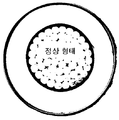
- FIG. 3 is a photograph showing a cross section of the electric cable manufactured by Example 2 of Table 3.
- FIG. 3 is a photograph showing a cross section of the electric cable manufactured by Example 2 of Table 3.
- Figure 4 is a photograph showing a cross section of the electrical cable manufactured by Example 4 of Table 3.
- the present invention relates to an electrical cable comprising at least one conductor and an insulating layer surrounding the conductor.
- FIG. 2 is a cross sectional view of an exemplary embodiment of an electrical cable according to the invention.
- the electric cable of the present invention includes at least one conductor 11, an inner semiconducting layer 12 surrounding the conductor 11, an insulating layer 13 surrounding the inner semiconducting layer 12, and the An outer semiconducting layer 14 surrounding the insulating layer 13, a shielding layer 15 made of a metal shield or copper tape covering the outer semiconducting layer 14, and a sheath layer 16 surrounding the shielding layer 15. Include.
- the structure of the electric cable of the present invention is not limited to the structure of FIG. That is, the electric cable of the present invention may have a modified structure in which any one or more of the inner semiconducting layer, the outer semiconducting layer, and the shielding layer are removed.
- the conductor of the electric cable according to the invention is characterized in that its diameter (or nominal cross-sectional area) is significantly reduced than that of the conductor of a conventional electric cable (or nominal cross-sectional area). That is, the conductors have a nominal cross-sectional area of at least 15% less than the nominal cross-sectional area of the conductors specified in IEC standard 60502-2 when the same allowable current is applied.
- the maximum allowable temperature of the conductor exceeds 90 ° C and reaches 110 ° C or more and 120 ° C or less.
- the insulating material may not withstand the high heat generation temperature of the conductor.
- the non-crosslinked polypropylene was applied to the insulating layer as an insulation composition which can endure the conductor's maximum allowable temperature of 110 degreeC-120 degreeC. Accordingly, the electric cable of the present invention has a maximum allowable current value at least 10% higher than the maximum allowable current value specified in the IEC standard 60502-2 when the conductor has a nominal cross-sectional area specified in the IEC standard 60502-2. Will have
- additives such as antioxidants or nucleating agents may be further added to the insulating composition of the present invention.
- antioxidant of the present invention for example, a compound such as 3,5-bis (1,1-dimethylethyl) -4-hydroxybenzenepropanoic acid octadecyl ester may be used.
- the nucleating agent of the present invention is an additive to promote the crystallization rate of the polypropylene to maintain the circular shape of the insulating layer, to refine the crystal size to improve transparency and improve mechanical properties.
- nucleating agents talc, silica, kaolin, organic carboxylic acid salts, carboxylic acid polymers, organic phosphates and the like can be used.
- the insulating composition according to the present invention is preferably made of a composition comprising reactive polypropylene and polypropylene.
- the term 'reactive polypropylene' refers to a polymer exhibiting rubber characteristics polymerized based on a propylene monomer.
- RTPO reactor-made thermoplastic polyolefin
- the olefin is also included in the 'reactive polypropylene' when the olefin or propylene and other olefins.
- Reactive polypropylene in the present invention serves to improve the flexibility of the insulating layer.
- the insulation composition according to the present invention consists of 60 to 90% by weight of reactive polypropylene and 40 to 10% by weight of polypropylene.
- polypropylene (about 140 to 160 ° C.) having a higher softening point than reactive polypropylene (about 57 ° C.) is used together within the above content range, so that the insulating layer may be Significantly reduced shrinkage can significantly improve cable crushing.
- the reactive polypropylene and polypropylene are preferably used within the content range.
- Reactive polypropylenes usable in the present invention are, for example, reactive polyolefins (RTPO) prepared by polymerizing propylene monomer with ethylene-propylene rubber (EPR), ethylene-propylene-diene rubber (EPDM) or mixtures thereof.
- RTPO reactive polyolefins
- EPR ethylene-propylene rubber
- EPDM ethylene-propylene-diene rubber
- One or more types selected from the group consisting of can be used.
- polypropylene which can be used by this invention may use any form of random polypropylene, homo polypropylene, and block polypropylene, for example.
- non-crosslinked polypropylene that is, a composition containing reactive polypropylene and polypropylene, which are non-crosslinked resins, as an insulating material for forming the insulating layer
- a crosslinking process there is no need to go through a crosslinking process separately, thereby producing a cost Since the peroxide, which is a crosslinking agent, is already decomposed inside the extruder before the crosslinking proceeds, the crosslinking progresses, thereby extrudes abnormally and the appearance of the insulator does not occur.
- the inner semiconducting layer 12 and the outer semiconducting layer 14 are made of a composition comprising a non-crosslinked polypropylene base resin and carbon black, and further comprising other additives as necessary. It can be prepared by the composition.
- the conductor wrapped with an insulating layer of non-crosslinked polypropylene according to the invention is an insulating layer of conventional crosslinked polyethylene. It is possible to transmit a maximum allowable current (at least 10% higher maximum allowable current) of more than 1.00 times the conductors enclosed by. This is indicative of the structure of an 18/30 kV electrical cable with an insulation layer made of conventional crosslinked polyethylene shown in Table 1 below (In air / flat touching structure in IEC 60502-2 Appendix B Table B.2) and conductors.
- ⁇ The maximum permissible temperature minus the ambient temperature (°C) (The maximum permissible temperature of the conductor wrapped with insulating layer made of crosslinked polyethylene is 90 °C, and the maximum permissible conductor of wrapped with insulating layer made of non-crosslinked polypropylene. The temperature is 110 °C and the standby temperature is set to 30 °C.)
- W d Dielectric loss per unit length of the insulation layer surrounding the conductor (W / m)
- T 1 Thermal resistance per unit length between conductor and sheath layer (Km / W)
- T 3 Thermal resistance of the sheath layer (Km / W)
- T 4 Thermal resistance outside the sheath layer (Km / W)
- R AC resistance per unit length of conductor at the maximum permissible temperature of the conductor ( ⁇ / m)
- n is the number of conductors included in the cable
- An electrical cable including a conductor wrapped by an insulating material (forming an insulating layer) consisting of the composition (content% by weight) of Table 3 was prepared, and then the physical properties of the insulating material included in the electrical cable were tested.
- the insulation of the cable shall be at least 1.26 kgf / mm 2 and at least 200% of tensile elongation measured at a tensile rate of 250 mm / min in accordance with IEC 60811-1-1 (ICEA S-94-649).
- the insulation of the cable should be less than 80 Mpa and less than 12 Mpa as measured by DMA.
- the cold resistance of the insulation material of the cable is measured by the method specified in IEC 60811 and no breakdown or cracking should occur at -40 ° C.
- the heating strain of the insulation of the cable shall not exceed 50% as measured by the IEC 60811-3-1 method.
- the insulating materials (including reactive polypropylene and random polypropylene) of Examples 1 to 4 of the present invention are tensile strength, tensile elongation, storage modulus, loss modulus, cold resistance, and heat strain Although all of the criteria were satisfied in Comparative Example 1 (only reactive polypropylene), the heat strain was found to be too high, Comparative Example 3 (including only crosslinked polyethylene) was slightly higher in the heat strain.
- Comparative Example 2 includes a reactive polypropylene and a random polypropylene, the content ratio is outside the scope of the present invention, did not meet the cold resistance criteria.
- FIG. 3 to 5 are photographs showing cross sections of the cables of Examples 2, 4 and Comparative Example 1, respectively.
- Examples 2 and 4 (FIGS. 3 and 4) of the present invention are maintained in a normal circle without the insulator crushing, whereas Comparative Example 1 (FIG. 5) is not good appearance because the insulator is pressed. It was.
- the insulation composition according to the invention is applicable to all electrical cables of various structures, including at least one conductor and an insulation layer surrounding the conductor.
Landscapes
- Chemical & Material Sciences (AREA)
- Physics & Mathematics (AREA)
- Spectroscopy & Molecular Physics (AREA)
- Health & Medical Sciences (AREA)
- Chemical Kinetics & Catalysis (AREA)
- Medicinal Chemistry (AREA)
- Polymers & Plastics (AREA)
- Organic Chemistry (AREA)
- Organic Insulating Materials (AREA)
- Compositions Of Macromolecular Compounds (AREA)
Abstract
본 발명은 적어도 하나 이상의 도체를 둘러싸는 절연층을 구성하는 절연 조성물에 관한 것으로서, 이 절연 조성물이 반응형 폴리프로필렌 60 내지 90 중량%와 폴리프로필렌 40 내지 10 중량%를 포함하는 비가교 폴리프로필렌으로 이루어진 것을 특징으로 한다.
Description
본 발명은 전기 케이블에 관한 것으로서, 특히, 전기 케이블의 절연 조성물에 관한 것이다.
본 발명의 절연 조성물은 비가교 물질로 이루어지고, 이렇게 비가교 물질로 이루어진 절연층을 포함하는 전기 케이블은 도체의 직경을 기존 보다 더 작게 설계하는 것을 가능하게 한다.
도 1은 가장 통상적인 형태의 전기 케이블의 구조를 도시하고 있다. 도 1에 도시된 전기 케이블은 도체(1)를 중심으로 내부 반도전층(2), 절연층(3), 외부 반도전층(4), 차폐층(5) 및 시스층(6)을 구비한다. 기존에는 상기 절연층의 재료로서 폴리에틸렌 특히, 저밀도 폴리에틸렌(LDPE)을 주로 사용하였다.
IEC, ICEA 등 대부분의 국제규격은 전기 케이블의 도체의 최고 허용 온도를 90℃로 규정하고 있다. 이러한 도체 최고 허용 온도 조건을 만족하기 위해서 절연층을 형성하는 절연재료는 121℃ 내지 136℃의 온도에서도 높은 내열성을 가져야 한다.
또한, 최근에는 전기 케이블의 경량화 또는 컴팩트화를 위해 상기 도체의 직경을 줄이기 위한 노력들이 다양하게 시도되고 있다. 이렇게 전기 케이블의 도체의 직경이 줄어들게 되면, 도체의 발열 온도가 90℃ 이상으로 높아지기 때문에 녹는점이 100℃ ~ 125℃ 사이에 불과한 폴리에틸렌은 절연층의 재료로서 적당하지 못하다.
따라서, 이러한 기존의 온도 조건에 따른 제약 조건을 개선하기 위하여 폴리에틸렌을 다양한 방법으로 가교 시킨 가교 폴리에틸렌이 전기 케이블의 절연체로 사용되었다.
이러한 가교는 고온 고압의 스팀 가교관에서 진행하는 방법과 고온의 불활성 가스 가교관에서 진행하는 방법이 있다. 상기 두 종류의 가교 공정을 구현하기 위해서는 고비용의 설비 투자가 이루어져야 할 뿐만 아니라, 설비를 유지 관리하는데도 많은 비용이 추가적으로 소요된다. 또한, 절연층에 사용되는 저밀도 폴리에틸렌(LDPE)의 가교는 주로 화학가교 방식을 적용하는데, 이러한 화학가교를 진행하기 위해서는 고온에서 과산화물을 분해하여 라디칼을 형성하여야 한다. 이러한 분해 과정은 온도에 매우 민감하여 압출된 고분자가 가교관 내부에서 정상적인 가교가 진행되기 전에 이미 압출기 내부에서 가교제인 과산화물이 분해되어 가교가 진행됨으로써 비정상적으로 압출되고 절연체 외관이 불량하여 일반적인 특성 및 전기적인 특성에 문제가 발생할 수 있다. 또한, 화학가교는 가교 과정에서 가교 부산물이 발생하게 된다. 화학 가교시 발생하는 가교 부산물은 극성 성분이 많아 절연체의 전기적 특성을 저하시키는데, 특히 절연파괴 강도가 낮아져 품질 확보에 어려움을 주기도 한다. 그러므로, 화학 가교 제품은 필연적으로 발생하는 가교 부산물을 건조 공정을 통하여 제거해야 할 필요가 있다. 그런데, 이러한 건조 공정은 제품 제조 기간을 연장시킬 뿐만 아니라 부가적인 공정 설비가 필요하다. 그리고, 최근에는 환경 보호 측면에서 재료의 재활용에 대한 요구가 증가하고 있는데 가교된 폴리에틸렌은 재생을 할 수 없다는 단점이 있다.
따라서, 가교 폴리에틸렌을 사용하지 않으면서 도체의 최고 허용 온도 90℃ 이상을 견딜수 있는 새로운 절연층 조성물 및 이 절연층 조성물을 포함하는 컴팩트한 전기 케이블이 요청된다.
본 발명의 제 1 목적은 도체의 최고 허용 온도 90℃ 이상을 견딜 수 있는 절연체 조성물을 제공하는 것이다.
본 발명의 제 2 목적은 가교 공정이 필요없는 비가교 고분자로 이루어진 절연체 조성물을 제공하는 것이다.
본 발명의 제 3 목적은 상기 비가교 고분자를 절연재료로 사용하는 것에 의해 도체의 직경을 최소화시킨 컴팩트한 전기 케이블을 제공하는 것이다.
본 발명의 제 1 양태에 따른 적어도 하나 이상의 도체를 둘러싸는 절연층을 구성하는 절연 조성물은, 도체의 최고 허용 온도가 110℃ ~ 120℃가 되도록 비가교 폴리프로필렌으로 이루어진 것을 특징으로 한다.
또한, 본 발명의 제 2 양태에 따른 적어도 하나 이상의 도체를 둘러싸는 절연층을 구성하는 절연 조성물은, 반응형 폴리프로필렌과 폴리프로필렌을 포함하는 것을 특징으로 한다. 이때, 상기 반응형 폴리프로필렌과 폴리프로필렌은 각각 60 내지 90 중량%와 40 내지 10 중량% 함유된다.
상기 반응형 폴리프로필렌은, 에틸렌-프로필렌 고무(EPR), 에틸렌-프로필렌-디엔 고무(EPDM) 또는 이들의 혼합물과 프로필렌 모노머를 중합하여 제조된 반응형 폴리올레핀(RTPO)으로 이루어지는 군에서 선택되는 1 종 이상이고, 상기 폴리프로필렌은, 랜덤 폴리프로필렌, 호모 폴리프로필렌 및 블록 폴리프로필렌으로 구성된 군으로부터 선택된 1종 이상인 것을 특징으로 한다.
본 발명의 제 3 양태는, 적어도 하나 이상의 도체 및 상기 도체를 둘러싸는 절연층을 포함하는 전기 케이블에 있어서, 상기 절연층을 형성하는 절연 조성물이 상기 제 1 양태 또는 제 2 양태의 절연 조성물로 이루어진 것을 특징으로 한다.
상기 도체는 동일한 허용전류를 적용할 때 IEC 표준 60502-2에 규정된 도체의 공칭 단면적 보다 적어도 15% 작은 공칭 단면적을 갖는 것을 특징으로 한다.
상기 전기 케이블은, 상기 도체를 감싸는 내부 반도전층, 상기 절연층을 감싸는 외부 반도전층, 상기 외부 반도전층을 감싸는 차폐층 및 상기 차폐층을 감싸는 시스층을 더 포함할 수 있다. 이때, 상기 내부 반도전층 및 외부 반도전층은 비가교 폴리프로필렌 기본수지와 카본블랙을 포함하는 조성물에 의해 제조되는 것을 특징으로 한다.
본 발명에 따르면, 동일한 허용전류를 적용할 때 IEC 표준 60502-2에 규정된 도체의 공칭 단면적 보다 적어도 15% 작은 공칭 단면적을 갖는 도체를 전기 케이블에 사용할 수 있게 되어 전기 케이블의 경량화 및 컴팩트화가 손쉽게 달성된다. 또한, 본 발명의 전기 케이블은, 도체가 IEC 표준 60502-2에 규정된 공칭 단면적을 가질 때, 상기 IEC 표준 60502-2에 규정된 최대 허용전류값 보다 적어도 10% 이상 높은 최대 허용전류값을 갖게 된다.
또한, 본 발명의 전기 케이블에 따르면, 가교 공정에 따른 비용 증가 문제, 가교 부산물에 의한 절연 성능 저하의 문제점들이 발생하지 않을 뿐만 아니라, 케이블의 절연 재료를 재활용할 수 있다.
본 명세서에 첨부되는 다음의 도면들은 본 발명의 바람직한 실시예를 예시하는 것이며, 후술할 발명의 상세한 설명과 함께 본 발명의 기술사상을 더욱 이해시키는 역할을 하는 것이므로, 본 발명은 그러한 도면에 기재된 사항에만 한정되어 해석되어서는 아니된다.
도 1은 통상적인 전기 케이블의 횡단면도이다.
도 2는 본 발명에 따른 전기 케이블에 대한 전형적인 실시예의 횡단면도이다.
도 3은 표 3의 실시예 2에 의해 제조된 전기 케이블의 단면을 보여주는 사진이다.
도 4는 표 3의 실시예 4에 의해 제조된 전기 케이블의 단면을 보여주는 사진이다.
도 5는 표 3의 비교예 1에 의해 제조된 전기 케이블의 단면을 보여주는 사진이다.
이하, 본 발명을 자세히 설명한다.
본 발명은 적어도 하나의 도체 및 이 도체를 둘러싸는 절연층을 포함하는 전기 케이블에 관한 것이다.
도 2는 본 발명에 따른 전기 케이블에 대한 전형적인 실시예의 횡단면도이다.
도 2를 참조하면, 본 발명의 전기 케이블은 적어도 하나의 도체(11), 상기 도체(11)를 감싸는 내부 반도전층(12), 상기 내부 반도전층(12)을 감싸는 절연층(13), 상기 절연층(13)을 감싸는 외부 반도전층(14), 상기 외부 반도전층(14)을 감싸는 금속쉴드 또는 동테이프로 이루어진 차폐층(15) 및 상기 차폐층(15)을 감싸는 시스층(16)을 포함한다.
상기 도 2에 도시된 전기 케이블은 본 발명의 가장 전형적인 전기 케이블의 구조를 도시한 것으로서, 본 발명의 전기 케이블의 구조가 도 2의 구조로 국한 되는 것은 아니다. 즉, 본 발명의 전기 케이블은 내부 반도전층, 외부 반도전층, 차폐층중 어느 하나 이상이 제거된 변형된 형태의 구조를 가질 수도 있다.
본 발명에 따른 전기 케이블의 도체는 그 직경(또는 공칭 단면적)이 종래의 전기 케이블의 도체의 직경(또는 공칭 단면적)보다 상당히 감소된 것이 특징이다. 즉, 상기 도체는 동일한 허용전류를 적용할 때 IEC 표준 60502-2에 규정된 도체의 공칭 단면적 보다 적어도 15% 작은 공칭 단면적을 갖는다.
이로 인해, 전기 케이블의 전체 외경이 축소되어 컴팩트하면서도 경량화된 케이블이 탄생된다.
다만, 이 경우 도체의 최고 허용 온도가 90℃ 이상을 초과하여 110℃ 이상 120℃ 이하에 이르게 된다. 이때, 도체를 감싸는 절연층의 절연 재료로서 기존의 가교 폴리에틸렌이 사용될 경우 도체의 높은 발열온도로 인해 절연 재료가 견딜수없게 된다.
따라서, 본 발명에서는 도체의 최고 허용 온도 110℃ ~ 120℃까지 견딜수 있는 절연 조성물로서 비가교 폴리프로필렌을 절연층에 적용하였다. 이에 따라, 본 발명의 전기 케이블은, 상기 도체가 IEC 표준 60502-2에 규정된 공칭 단면적을 가질 때, 상기 IEC 표준 60502-2에 규정된 최대 허용전류값 보다 적어도 10% 이상 높은 최대 허용전류값을 갖게 된다.
또한, 본 발명의 절연 조성물에는 산화 방지제 또는 핵제와 같은 첨가제가 더 부가될 수 있다. 본 발명의 산화방지제로서는 예를 들어, 3,5-비스(1,1-디메틸에틸)-4-히드록시벤젠프로파노익 애시드 옥타데실 에스테르와 같은 화합물 등이 사용될 수 있다.
본 발명의 핵제는 폴리프로필렌의 결정화 속도를 촉진시켜 절연층의 원형 형태를 유지하게 하며, 결정의 크기를 미세화시켜 투명성을 향상시키고 기계적 물성을 향상시키는 첨가제이다. 이러한 핵제로서, 활석, 실리카, 카오린, 유기 카르본산 염, 카르복시산 중합체, 유기 인산염 등이 사용될 수 있다.
특히, 본 발명에 따른 상기 절연 조성물은 반응형 폴리프로필렌과 폴리프로필렌을 포함하는 조성물로 이루어지는 것이 바람직하다.
여기서, 상기 '반응형 폴리프로필렌'이라 함은 프로필렌 모노머에 근거하여 중합한 고무 특성을 나타내는 고분자를 가리킨다. 일반적인 반응기 제조 열가소성 폴리올레핀(reactor-made thermoplastic polyolefin, RTPO) 중에서 올레핀이 프로필렌이거나 프로필렌과 다른 올레핀을 포함하는 경우도 상기 '반응형 폴리프로필렌'에 포함된다. 본 발명에서 반응형 폴리프로필렌은 절연층의 유연성을 향상시키는 역할을 한다.
보다 구체적으로, 본 발명에 따른 상기 절연 조성물은 60 내지 90 중량%의 반응형 폴리프로필렌과 40 내지 10 중량%의 폴리프로필렌으로 이루어진다.
이때, 상기 반응형 폴리프로필렌의 함량이 60 중량% 미만일 경우(또는, 폴리프로필렌의 함량이 40 중량%를 초과하는 경우)에는 딱딱한 폴리프로필렌의 함량이 많아짐에 따라 신율과 내한성이 좋지 못하며, 상기 반응형 폴리프로필렌의 함량이 90 중량%를 초과할 경우(또는, 폴리프로필렌의 함량이 10 중량% 미만일 경우)에는 탄성율과 가열 변형율이 좋지 못하며 도체 내에서 들뜨는 현상이 나타날 수 있어 불리하다.
이렇게 반응형 폴리프로필렌에 덧붙여 반응형 폴리프로필렌(약 57℃)보다 연화점이 높은 폴리프로필렌(약 140 ~ 160℃)을 상기 함량범위내에서 함께 사용함으로써, 케이블의 제조 공정 중 냉각 공정에서 절연층의 수축율을 상당히 감소시켜 케이블의 눌림 현상을 상당히 개선할 수 있다. 따라서, 상기 반응형 폴리프로필렌과 폴리프로필렌은 상기 함량 범위내에서 사용되는 것이 바람직하다.
본 발명에서 사용 가능한 반응형 폴리프로필렌은 예를 들어, 에틸렌-프로필렌 고무(EPR), 에틸렌-프로필렌-디엔 고무(EPDM) 또는 이들의 혼합물과 프로필렌 모노머를 중합하여 제조된 반응형 폴리올레핀(RTPO)으로 이루어지는 군에서 선택되는 1 종 이상을 사용할 수 있다.
또한, 본 발명에서 사용 가능한 폴리프로필렌은 예를 들어, 랜덤 폴리프로필렌, 호모 폴리프로필렌, 블록 폴리프로필렌 중 어떠한 형태를 사용하여도 무방하다.
이와 같이, 본 발명에서는 절연층을 형성하는 절연재료로서 비가교 폴리프로필렌, 즉, 비가교 수지인 반응형 폴리프로필렌과 폴리프로필렌을 포함하는 조성물을 사용함으로써, 별도로 가교 공정을 거칠 필요가 없어 제조 비용을 절감할 수 있고, 정상적인 가교가 진행되기 전에 이미 압출기 내부에서 가교제인 과산화물이 분해되어 가교가 진행됨으로써 비정상적으로 압출되고 절연체 외관이 불량해 지는 문제점도 발생시키지 않는 고유한 장점을 가진다.
또한, 본 발명의 전기 케이블에서 상기 내부 반도전층(12) 및 외부 반도전층(14)은 비가교 폴리프로필렌 기본수지와 카본블랙을 포함하는 조성물에 의해 제조되며, 필요에 따라 기타 첨가제를 더 포함하는 조성물에 의해 제조될 수 있다.
18/30kV 등급에서, 전기 케이블의 도체가 IEC 표준 60502-2에 규정된 공칭 단면적을 가질 때, 본 발명에 따른 비가교 폴리프로필렌으로 이루어진 절연층으로 감싸진 도체는 기존의 가교 폴리에틸렌으로 이루어진 절연층으로 감싸진 도체보다 1.00배를 초과하는 최대 허용전류(적어도 10% 높은 최대 허용전류)를 송전할 수 있다. 이러한 내용은 하기의 표 1에 나타낸 기존의 가교 폴리에틸렌으로 이루어진 절연층을 가진 18/30kV 등급의 전기 케이블의 구조(IEC 60502-2 Appendix B Table B.2 의 In air / flat touching 구조) 및 도체의 최대 허용전류와, 하기의 표 2에 나타낸 본 발명의 비가교 폴리프로필렌으로 이루어진 절연층을 가진 18/30kV 등급의 전기 케이블의 구조(IEC 60502-2 Appendix B Table B.2 의 In air / flat touching 구조) 및 도체의 최대 허용전류를 비교함으로써 확인할 수 있다.
표 1
| 도체 | 절연층 | 시스층 | 전기케이블 | |||
| 공칭 단면적(mm2) | 모양 | 바깥지름(mm) | 최대 허용전류(A) | 두께(mm) | 두께(mm) | 외경(mm) |
| 95 | 원형압축 | 11.4 | 369 | 8.0 | 2.1 | 38 |
| 120 | 원형압축 | 12.9 | 426 | 8.0 | 2.1 | 40 |
| 150 | 원형압축 | 14.4 | 481 | 8.0 | 2.1 | 41 |
| 185 | 원형압축 | 15.9 | 550 | 8.0 | 2.2 | 43 |
| 240 | 원형압축 | 18.3 | 647 | 8.0 | 2.3 | 46 |
| 300 | 원형압축 | 20.5 | 739 | 8.0 | 2.4 | 48 |
| 400 | 원형압축 | 23.2 | 837 | 8.0 | 2.5 | 51 |
표 2
| 도체 | 절연층 | 시스층 | 전기케이블 | |||
| 공칭 단면적(mm2) | 모양 | 바깥지름(mm) | 최대 허용전류(A) | 두께(mm) | 두께(mm) | 외경(mm) |
| 70 | 원형압축 | 9.8 | 370 | 8.0 | 2.0 | 36 |
| 95 | 원형압축 | 11.4 | 427 | 8.0 | 2.1 | 38 |
| 120 | 원형압축 | 12.9 | 491 | 8.0 | 2.1 | 40 |
| 150 | 원형압축 | 14.4 | 552 | 8.0 | 2.1 | 41 |
| 185 | 원형압축 | 15.9 | 650 | 8.0 | 2.2 | 43 |
| 240 | 원형압축 | 18.3 | 741 | 8.0 | 2.3 | 46 |
| 300 | 원형압축 | 20.5 | 839 | 8.0 | 2.4 | 48 |
| 400 | 원형압축 | 23.2 | 945 | 8.0 | 2.5 | 51 |
상기 표 1 내지 표 2의 최대 허용전류는 IEC 표준 60287에 따른 하기의 수학식 1에 의해 계산되었다.
수학식 1 
I : 도체의 최대 허용전류(A)
△θ : 최대 허용 온도에서 대기 온도를 뺀 값(℃) (가교 폴리에틸렌으로 이루어진 절연층으로 감싸진 도체의 최대 허용 온도는 90℃이고, 비가교 폴리프로필렌으로 이루어진 절연층으로 감싸진 도체의 최대 허용온도는 110℃이며, 대기 온도는 30℃로 설정함.)
Wd : 도체를 감싸는 절연층의 단위 길이당 유전 손실(dielectric loss)(W/m)
T1 : 도체와 시스층 사이의 단위 길이당 열저항(thermal resistance)(K.m/W)
T3 : 시스층의 열저항(K.m/W)
T4 : 시스층 외부의 열저항(K.m/W)
R : 도체의 최고 허용 온도에서 도체의 단위 길이당 교류 저항(Ω/m)
n : 케이블에 포함된 도체의 개수
λ1 : 회로 손실율
Lf : 부하 손실율(load loss factor)
예시적으로 상기 표 1 및 표 2에서는 18/30kV 등급에 대해서만 나타냈으나, 6/10kV 등급 및 12/20kV 등급에서도 동일한 결과가 나타난다.
이하 실시예를 들어 본 발명을 더 구체적으로 설명한다. 본 발명이 속하는 분야의 평균적 기술자는 아래 실시예에 기재된 실시 태양 외에 여러 가지 다른 형태로 본 발명을 변경할 수 있으며, 이하 실시예는 본 발명을 예시할 따름이지 본 발명의 기술적 사상의 범위를 아래 실시예 범위로 한정하기 위한 의도라고 해석해서는 아니된다.
<실시예 1 ~ 4 및 비교예 1 ~ 3>
하기 표 3의 함량(중량%)의 조성물로 이루어진 절연 재료(절연층 형성)에 의해 감싸진 도체를 포함하는 전기 케이블을 제조한 후, 이 전기 케이블에 포함된 절연 재료의 물성을 시험하였다.
표 3 [단위 : 중량%]
| 실시예 1 | 실시예 2 | 실시예 3 | 실시예 4 | 비교예 1 | 비교예 2 | 비교예 3 | |
| 반응형 폴리프로필렌 | 90 | 80 | 70 | 60 | 100 | 50 | |
| 랜덤 폴리프로필렌 | 10 | 20 | 30 | 40 | 0 | 50 | |
| 가교 폴리에틸렌 | 100 |
* 반응형 폴리프로필렌 : 바젤사의 CA7441A
* 랜덤 폴리프로필렌 : 바젤사의 RP-242G
* 가교 폴리에틸렌 : 엘지화학의 XL-8080NT (XLPE)를 사용하여 절연압출 후 가교
물성 측정 및 평가
상기 제조된 전기 케이블에 대해 상온에서의 기계적 물성(인장 강도, 인장 신율), 탄성율(저장 탄성율, 손실 탄성율), 내한성 및 가열변형율을 측정한 결과를 아래 표 4에 정리하였고, 간략한 실험 조건은 다음과 같다.
㉠ 상온 기계적 물성
케이블의 절연재료는 IEC 60811-1-1 (ICEA S-94-649)에 준하여 인장속도 250 mm/분으로 측정하였을 때 인장 강도는 1.26 kgf/mm2 이상, 인장 신율은 200 % 이상이어야 한다.
㉡ 탄성율
케이블의 절연재료는 DMA로 측정하였을 때 저장 탄성율은 80 Mpa 이하, 손실 탄성율은 12 Mpa 이하여야 한다.
㉢ 내한성
케이블의 절연재료의 내한성은 KS C IEC 60811에 명시된 방법으로 측정하여 -40 ℃에서도 파괴 및 크래킹이 발생하지 않아야 한다.
㉣ 가열변형율
케이블의 절연재료의 가열변형율은 IEC 60811-3-1 방법으로 측정하였을 때 50 % 이하여야 한다.
표 4
| 실시예 1 | 실시예 2 | 실시예 3 | 실시예 4 | 비교예 1 | 비교예 2 | 비교예 3 | |
| 인장강도(kgf/mm2) | 2.202 | 2.544 | 2.572 | 2.756 | 2.488 | 2.818 | 2.319 |
| 인장신율(%) | 600.39 | 631.43 | 623.31 | 618.19 | 630.80 | 556.01 | 497.12 |
| 저장탄성율(MPa) | 43.23 | 56.53 | 68.47 | 75.78 | 30.88 | 62.52 | 90.76 |
| 손실탄성율(MPa) | 7.02 | 8.21 | 9.41 | 10.75 | 4.74 | 10.22 | 17.78 |
| 내한성 | pass | pass | pass | pass | pass | fail | pass |
| 가열변형율(%) | 18.39 | 9.26 | 9.84 | 3.48 | 72.48 | 6.23 | 30.20 |
상기 표 4에서 볼 수 있는 바와 같이, 본 발명의 실시예 1 내지 4의 절연 재료(반응형 폴리프로필렌과 랜덤 폴리프로필렌을 포함)는 인장강도, 인장신율, 저장탄성율, 손실탄성율, 내한성 및 가열변형율에서 모두 기준치를 만족하였으나, 비교예 1(반응형 폴리프로필렌만 포함)은 가열변형율이 지나치게 높게 나타났고, 비교예 3(가교 폴리에틸렌만 포함)은 가열변형율이 다소 높게 나타났다.
한편, 비교예 2는 반응형 폴리프로필렌과 랜덤 폴리프로필렌을 포함하고 있으나, 그 함량비가 본 발명의 범위를 벗어나, 내한성 기준을 만족하지 못하였다.
한편, 도 3 내지 5은 각각, 상기 실시예 2, 4 및 비교예 1의 케이블의 단면을 보여주는 사진이다. 상기 사진에서 볼 수 있듯이, 본 발명의 실시예 2 및 4(도 3 및 도 4)는 절연체의 눌림 현상 없이 정상적인 원형이 유지된 반면, 비교예 1(도 5)은 절연체가 눌려 외관이 좋지 못하였다.
이상에서 본 발명은 비록 한정된 실시예와 도면에 의해 설명되었으나, 본 발명은 이것에 의해 한정되지 않으며 본 발명이 속하는 기술분야에서 통상의 지식을 가진 자에 의해 본 발명의 기술사상과 아래에 기재될 특허청구범위의 균등범위 내에서 다양한 수정 및 변형이 가능함은 물론이다. 또한, 본 명세서 및 청구범위에 사용된 용어나 단어는 통상적이거나 사전적인 의미로 한정해서 해석되어서는 아니되며, 발명자는 그 자신의 발명을 가장 최선의 방법으로 설명하기 위해 용어의 개념을 적절하게 정의할 수 있다는 원칙에 입각하여 본 발명의 기술적 사상에 부합하는 의미와 개념으로 해석되어야만 한다. 따라서, 본 명세서에 기재된 실시예와 도면에 도시된 구성은 본 발명의 가장 바람직한 일 실시예에 불과할 뿐이고 본 발명의 기술적 사상을 모두 대변하는 것은 아니므로, 본 출원시점에 있어서 이들을 대체할 수 있는 다양한 균등물과 변형예들이 있을 수 있음을 이해하여야 한다.
본 발명에 따른 절연 조성물은 적어도 하나 이상의 도체와 이 도체를 감싸는 절연층을 포함하는 다양한 구조의 모든 전기 케이블에 적용 가능하다.
Claims (17)
- 적어도 하나 이상의 도체 및 상기 도체를 둘러싸는 절연층을 포함하는 전기 케이블에 있어서,상기 절연층을 형성하는 절연 조성물이, 상기 도체의 최고 허용 온도가 110℃ ~ 120℃가 되도록 비가교 폴리프로필렌으로 이루어진 것을 특징으로 하는 전기 케이블.
- 적어도 하나 이상의 도체 및 상기 도체를 둘러싸는 절연층을 포함하는 전기 케이블에 있어서,상기 절연층을 형성하는 절연 조성물이, 반응형 폴리프로필렌 60 내지 90 중량%와 폴리프로필렌 40 내지 10 중량%를 포함하는 것을 특징으로 하는 전기 케이블.
- 제 2 항에 있어서,상기 반응형 폴리프로필렌은, 에틸렌-프로필렌 고무(EPR), 에틸렌-프로필렌-디엔 고무(EPDM) 또는 이들의 혼합물과 프로필렌 모노머를 중합하여 제조된 반응형 폴리올레핀(RTPO)으로 이루어지는 군에서 선택되는 1 종 이상인 것을 특징으로 하는 전기 케이블.
- 제 2 항에 있어서,상기 폴리프로필렌은, 랜덤 폴리프로필렌, 호모 폴리프로필렌 및 블록 폴리프로필렌으로 구성된 군으로부터 선택된 1종 이상인 것을 특징으로 하는 전기 케이블.
- 제 1 항 또는 제 2 항에 있어서,상기 도체를 감싸는 내부 반도전층, 상기 절연층을 감싸는 외부 반도전층, 상기 외부 반도전층을 감싸는 차폐층 및 상기 차폐층을 감싸는 시스층을 포함하는 것을 특징으로 하는 전기 케이블.
- 제 1 항에 있어서,상기 도체는 동일한 허용전류를 적용할 때 IEC 표준 60502-2에 규정된 도체의 공칭 단면적 보다 적어도 15% 작은 공칭 단면적을 갖는 것을 특징으로 하는 전기 케이블.
- 제 1 항에 있어서,상기 도체가 IEC 표준 60502-2에 규정된 공칭 단면적을 가질 때, 상기 IEC 표준 60502-2에 규정된 최대 허용전류값 보다 적어도 10% 이상 높은 최대 허용전류값을 갖는 것을 특징으로 하는 전기 케이블.
- 제 5 항에 있어서,상기 내부 반도전층 및 외부 반도전층은 비가교 폴리프로필렌 기본수지와 카본블랙을 포함하는 조성물에 의해 제조되는 것을 특징으로 하는 전기 케이블.
- 제 6 항 또는 제 7 항에 있어서,상기 절연 조성물은 산화방지제를 더 포함하는 것을 특징으로 하는 전기 케이블.
- 제 3 항 또는 제 4 항에 있어서,상기 절연 조성물은, 활석, 실리카, 카오린, 유기 카르본산 염, 카르복시산 중합체 또는 유기 인산염과 같은 핵제를 더 포함하는 것을 특징으로 하는 전기 케이블.
- 적어도 하나 이상의 도체를 둘러싸는 절연층을 구성하는 절연 조성물로서,상기 도체의 최고 허용 온도가 110℃ ~ 120℃가 되도록 비가교 폴리프로필렌으로 이루어진 것을 특징으로 하는 절연 조성물.
- 제 11 항에 있어서,산화방지제를 더 포함하는 것을 특징으로 하는 절연 조성물.
- 적어도 하나 이상의 도체를 둘러싸는 절연층을 구성하는 절연 조성물로서,상기 절연 조성물이, 반응형 폴리프로필렌과 폴리프로필렌을 포함하는 것을 특징으로 하는 절연 조성물.
- 제 13 항에 있어서,상기 반응형 폴리프로필렌 60 내지 90 중량%와 폴리프로필렌 40 내지 10 중량%를 포함하는 것을 특징으로 하는 절연 조성물.
- 제 14 항에 있어서,상기 반응형 폴리프로필렌은, 에틸렌-프로필렌 고무(EPR), 에틸렌-프로필렌-디엔 고무(EPDM) 또는 이들의 혼합물과 프로필렌 모노머를 중합하여 제조된 반응형 폴리올레핀(RTPO)으로 이루어지는 군에서 선택되는 1 종 이상인 것을 특징으로 하는 절연 조성물.
- 제 14 항에 있어서,상기 폴리프로필렌은, 랜덤 폴리프로필렌, 호모 폴리프로필렌 및 블록 폴리프로필렌으로 구성된 군으로부터 선택된 1종 이상인 것을 특징으로 하는 절연 조성물.
- 제 15 항 또는 제 16 항에 있어서,활석, 실리카, 카오린, 유기 카르본산 염, 카르복시산 중합체 또는 유기 인산염과 같은 핵제를 더 포함하는 것을 특징으로 하는 절연 조성물.
Priority Applications (1)
| Application Number | Priority Date | Filing Date | Title |
|---|---|---|---|
| EP11838267.0A EP2637178B1 (en) | 2010-11-05 | 2011-11-04 | Insulating composition and electric cable comprising same |
Applications Claiming Priority (4)
| Application Number | Priority Date | Filing Date | Title |
|---|---|---|---|
| KR10-2010-0109989 | 2010-11-05 | ||
| KR20100109989 | 2010-11-05 | ||
| KR20110079653 | 2011-08-10 | ||
| KR10-2011-0079653 | 2011-08-10 |
Publications (2)
| Publication Number | Publication Date |
|---|---|
| WO2012060662A2 true WO2012060662A2 (ko) | 2012-05-10 |
| WO2012060662A3 WO2012060662A3 (ko) | 2012-08-23 |
Family
ID=46024974
Family Applications (1)
| Application Number | Title | Priority Date | Filing Date |
|---|---|---|---|
| PCT/KR2011/008383 Ceased WO2012060662A2 (ko) | 2010-11-05 | 2011-11-04 | 절연 조성물 및 이를 포함하는 전기 케이블 |
Country Status (3)
| Country | Link |
|---|---|
| EP (1) | EP2637178B1 (ko) |
| KR (1) | KR102005113B1 (ko) |
| WO (1) | WO2012060662A2 (ko) |
Cited By (1)
| Publication number | Priority date | Publication date | Assignee | Title |
|---|---|---|---|---|
| CN120932967A (zh) * | 2025-10-15 | 2025-11-11 | 华远高科电缆有限公司 | 一种大电流铜芯导体聚丙烯绝缘中压电力电缆 |
Families Citing this family (16)
| Publication number | Priority date | Publication date | Assignee | Title |
|---|---|---|---|---|
| DE102016224415A1 (de) | 2016-12-08 | 2018-06-14 | Leoni Kabel Gmbh | Leitung und Verfahren zur Herstellung einer solchen |
| KR101953669B1 (ko) | 2016-12-29 | 2019-03-04 | 주식회사 티엠씨 | 케이블 피복재 조성물 및 이의 제조방법 |
| KR101939638B1 (ko) | 2016-12-29 | 2019-01-18 | 주식회사 티엠씨 | 내열성이 향상된 절연층을 포함하는 선박용 케이블 |
| WO2018147706A1 (ko) * | 2017-02-13 | 2018-08-16 | 일진전기 주식회사 | 투명성이 향상된 절연층을 구비한 전력케이블 |
| KR102082674B1 (ko) * | 2017-02-13 | 2020-02-28 | 일진전기 주식회사 | 투명성이 향상된 절연층을 구비한 전력케이블 |
| KR102082673B1 (ko) * | 2017-02-13 | 2020-02-28 | 일진전기 주식회사 | 유연성이 향상된 절연층을 구비한 전력케이블 |
| WO2018147707A1 (ko) * | 2017-02-13 | 2018-08-16 | 일진전기 주식회사 | 유연성이 향상된 절연층을 구비한 전력케이블 |
| KR20180096174A (ko) * | 2017-02-20 | 2018-08-29 | 엘에스전선 주식회사 | 고전압 케이블용 고분자 조성물 및 이로부터 형성된 절연층 및 시스층을 포함하는 케이블 |
| KR101946945B1 (ko) * | 2017-06-16 | 2019-02-12 | 일진전기 주식회사 | 전력케이블용 폴리프로필렌 복합수지 조성물 |
| KR101880534B1 (ko) | 2017-08-02 | 2018-07-23 | 주식회사 디와이엠 솔루션 | 전력케이블용 반도전성 수지 조성물 및 이의 제조 방법 |
| US10626260B2 (en) | 2017-08-04 | 2020-04-21 | Dym Solution Co., Ltd. | Semiconductive composition for cable |
| KR101985611B1 (ko) * | 2018-01-16 | 2019-06-03 | 한화토탈 주식회사 | 전선 절연용 폴리올레핀 수지 조성물 |
| WO2020066071A1 (ja) * | 2018-09-28 | 2020-04-02 | 住友電気工業株式会社 | ワイヤーハーネス |
| EP4056645A4 (en) * | 2019-11-08 | 2022-12-07 | Sumitomo Electric Industries, Ltd. | RESIN COMPOSITION, RESIN COMPOSITION MOLDING AND POWER CORD |
| KR20210139068A (ko) * | 2020-05-13 | 2021-11-22 | 한국전력공사 | 직류 전력케이블용 친환경 절연조성물 및 이를 이용하여 제조된 케이블 |
| KR20230072132A (ko) * | 2021-11-17 | 2023-05-24 | 엘에스전선 주식회사 | 스피커 케이블 |
Family Cites Families (11)
| Publication number | Priority date | Publication date | Assignee | Title |
|---|---|---|---|---|
| US6372344B1 (en) * | 1997-07-23 | 2002-04-16 | Pirelli Cavi E Sistemi S.P.A. | Cables with a halogen-free recyclable coating comprising polypropylene and an ethylene copolymer having high elastic recovery |
| IT1293759B1 (it) * | 1997-07-23 | 1999-03-10 | Pirelli Cavi S P A Ora Pirelli | Cavi con rivestimento riciclabile a bassa deformazione residua |
| JP2002109970A (ja) * | 2000-09-28 | 2002-04-12 | Fujikura Ltd | 電力ケーブル |
| MXPA03008156A (es) * | 2001-03-14 | 2003-12-12 | Tyco Electronics Ltd Uk | Aislamiento de alambres y cables. |
| JP2004349160A (ja) * | 2003-05-23 | 2004-12-09 | Fujikura Ltd | 高周波同軸ケーブル用絶縁材料 |
| US7435781B2 (en) * | 2004-10-05 | 2008-10-14 | Exxonmobil Chemical Patents Inc. | Polymers for electrical applications |
| KR100855795B1 (ko) * | 2007-02-28 | 2008-09-01 | 엘에스전선 주식회사 | 반도전 난연 수지 조성물 및 이를 이용하여 제조된 전선 |
| JP5659450B2 (ja) * | 2007-06-13 | 2015-01-28 | 日立金属株式会社 | ノンハロゲン難燃電線・ケーブル |
| JP5027590B2 (ja) * | 2007-08-10 | 2012-09-19 | 矢崎総業株式会社 | 電線絶縁体用樹脂組成物及び被覆電線 |
| CN102282208A (zh) * | 2008-11-19 | 2011-12-14 | 联合碳化化学及塑料技术有限责任公司 | 用于制备缆线绝缘体的多相聚合物组合物 |
| KR20100070020A (ko) * | 2008-12-17 | 2010-06-25 | 명성통신 주식회사 | 무독성 케이블용 열가소성 수지, 이의 제조 방법 및 이를 이용한 케이블의 제조 방법 |
-
2011
- 2011-11-04 KR KR1020110114597A patent/KR102005113B1/ko active Active
- 2011-11-04 EP EP11838267.0A patent/EP2637178B1/en active Active
- 2011-11-04 WO PCT/KR2011/008383 patent/WO2012060662A2/ko not_active Ceased
Non-Patent Citations (2)
| Title |
|---|
| None |
| See also references of EP2637178A4 |
Cited By (1)
| Publication number | Priority date | Publication date | Assignee | Title |
|---|---|---|---|---|
| CN120932967A (zh) * | 2025-10-15 | 2025-11-11 | 华远高科电缆有限公司 | 一种大电流铜芯导体聚丙烯绝缘中压电力电缆 |
Also Published As
| Publication number | Publication date |
|---|---|
| EP2637178A2 (en) | 2013-09-11 |
| EP2637178B1 (en) | 2025-01-22 |
| WO2012060662A3 (ko) | 2012-08-23 |
| EP2637178A4 (en) | 2017-11-01 |
| KR102005113B1 (ko) | 2019-07-30 |
| KR20120048520A (ko) | 2012-05-15 |
Similar Documents
| Publication | Publication Date | Title |
|---|---|---|
| WO2012060662A2 (ko) | 절연 조성물 및 이를 포함하는 전기 케이블 | |
| WO2013022206A2 (ko) | 가교 폴리에틸렌 조성물 | |
| WO2014081096A1 (en) | Fire resistant cable for medium or high voltage | |
| WO2020022651A1 (ko) | 절연재 조성물 및 이를 이용하여 제조된 절연재 | |
| WO2017160009A1 (ko) | 저유전율을 갖는 절연 조성물 및 이로부터 형성된 절연층을 포함하는 케이블 | |
| WO2022102904A1 (ko) | 전자파 차폐용 복합수지 조성물 및 이를 포함하는 고전압 차폐 전선 | |
| CN113571235A (zh) | 一种具有热塑性绝缘层的电缆 | |
| WO2019147027A1 (ko) | 전력 케이블 | |
| WO2018004210A1 (ko) | 전력 케이블 | |
| WO2018151420A1 (ko) | 고전압 케이블용 절연 조성물 및 이로부터 형성된 절연층을 포함하는 케이블 | |
| KR20110135173A (ko) | 비가교 열가소성 고분자로 제조되는 전선 | |
| WO2018093074A1 (ko) | 전력 케이블 | |
| WO2023090625A1 (ko) | 내백화 특성이 우수한 전력 케이블의 절연층용 폴리프로필렌 수지 조성물 및 이를 이용한 성형품 | |
| CN117059328A (zh) | 基于低烟无卤阻燃聚烯烃护套料的电力电缆制造方法 | |
| WO2018151421A1 (ko) | 고전압 케이블용 고분자 조성물 및 이로부터 형성된 절연층 및 시스층을 포함하는 케이블 | |
| WO2022010244A1 (ko) | 고전압 전력 케이블 | |
| WO2020009336A1 (ko) | 전력 케이블 | |
| WO2014112682A1 (en) | Power cable | |
| WO2021132971A1 (ko) | 고압 케이블의 반도전층 조성물 | |
| WO2020138956A1 (ko) | 케이블 시스용 수지 조성물 및 이를 포함하는 전선 | |
| WO2018221804A1 (ko) | 초고압 직류 전력케이블의 중간접속시스템 | |
| WO2021230431A1 (ko) | 직류 전력케이블용 친환경 절연조성물 및 이를 이용하여 제조된 직류 전력케이블 | |
| WO2022265181A1 (ko) | 반도전성 조성물 및 이로부터 형성된 반도전층을 갖는 전력 케이블 | |
| US12062470B2 (en) | Electric cable with improved thermal conductivity | |
| KR102354984B1 (ko) | 내트래킹성 절연 조성물 및 이를 포함하는 고전압 케이블 |
Legal Events
| Date | Code | Title | Description |
|---|---|---|---|
| 121 | Ep: the epo has been informed by wipo that ep was designated in this application |
Ref document number: 11838267 Country of ref document: EP Kind code of ref document: A2 |
|
| NENP | Non-entry into the national phase |
Ref country code: DE |
|
| WWE | Wipo information: entry into national phase |
Ref document number: 2011838267 Country of ref document: EP |