WO2012070902A2 - Dispositif d'affichage vidéo et son procédé de commande - Google Patents
Dispositif d'affichage vidéo et son procédé de commande Download PDFInfo
- Publication number
- WO2012070902A2 WO2012070902A2 PCT/KR2011/009044 KR2011009044W WO2012070902A2 WO 2012070902 A2 WO2012070902 A2 WO 2012070902A2 KR 2011009044 W KR2011009044 W KR 2011009044W WO 2012070902 A2 WO2012070902 A2 WO 2012070902A2
- Authority
- WO
- WIPO (PCT)
- Prior art keywords
- content
- information
- display device
- additional service
- video display
- Prior art date
- Legal status (The legal status is an assumption and is not a legal conclusion. Google has not performed a legal analysis and makes no representation as to the accuracy of the status listed.)
- Ceased
Links
Images











Classifications
-
- H—ELECTRICITY
- H04—ELECTRIC COMMUNICATION TECHNIQUE
- H04N—PICTORIAL COMMUNICATION, e.g. TELEVISION
- H04N21/00—Selective content distribution, e.g. interactive television or video on demand [VOD]
- H04N21/40—Client devices specifically adapted for the reception of or interaction with content, e.g. set-top-box [STB]; Operations thereof
- H04N21/43—Processing of content or additional data, e.g. demultiplexing additional data from a digital video stream; Elementary client operations, e.g. monitoring of home network or synchronising decoder's clock; Client middleware
- H04N21/431—Generation of visual interfaces for content selection or interaction; Content or additional data rendering
- H04N21/4312—Generation of visual interfaces for content selection or interaction; Content or additional data rendering involving specific graphical features, e.g. screen layout, special fonts or colors, blinking icons, highlights or animations
- H04N21/4316—Generation of visual interfaces for content selection or interaction; Content or additional data rendering involving specific graphical features, e.g. screen layout, special fonts or colors, blinking icons, highlights or animations for displaying supplemental content in a region of the screen, e.g. an advertisement in a separate window
-
- H—ELECTRICITY
- H04—ELECTRIC COMMUNICATION TECHNIQUE
- H04N—PICTORIAL COMMUNICATION, e.g. TELEVISION
- H04N21/00—Selective content distribution, e.g. interactive television or video on demand [VOD]
- H04N21/20—Servers specifically adapted for the distribution of content, e.g. VOD servers; Operations thereof
- H04N21/23—Processing of content or additional data; Elementary server operations; Server middleware
- H04N21/242—Synchronisation processes, e.g. processing of PCR [Programme Clock References]
-
- H—ELECTRICITY
- H04—ELECTRIC COMMUNICATION TECHNIQUE
- H04N—PICTORIAL COMMUNICATION, e.g. TELEVISION
- H04N21/00—Selective content distribution, e.g. interactive television or video on demand [VOD]
- H04N21/40—Client devices specifically adapted for the reception of or interaction with content, e.g. set-top-box [STB]; Operations thereof
- H04N21/43—Processing of content or additional data, e.g. demultiplexing additional data from a digital video stream; Elementary client operations, e.g. monitoring of home network or synchronising decoder's clock; Client middleware
-
- G—PHYSICS
- G06—COMPUTING OR CALCULATING; COUNTING
- G06F—ELECTRIC DIGITAL DATA PROCESSING
- G06F16/00—Information retrieval; Database structures therefor; File system structures therefor
- G06F16/40—Information retrieval; Database structures therefor; File system structures therefor of multimedia data, e.g. slideshows comprising image and additional audio data
- G06F16/43—Querying
-
- G—PHYSICS
- G06—COMPUTING OR CALCULATING; COUNTING
- G06F—ELECTRIC DIGITAL DATA PROCESSING
- G06F16/00—Information retrieval; Database structures therefor; File system structures therefor
- G06F16/40—Information retrieval; Database structures therefor; File system structures therefor of multimedia data, e.g. slideshows comprising image and additional audio data
- G06F16/48—Retrieval characterised by using metadata, e.g. metadata not derived from the content or metadata generated manually
- G06F16/489—Retrieval characterised by using metadata, e.g. metadata not derived from the content or metadata generated manually using time information
-
- G—PHYSICS
- G06—COMPUTING OR CALCULATING; COUNTING
- G06F—ELECTRIC DIGITAL DATA PROCESSING
- G06F16/00—Information retrieval; Database structures therefor; File system structures therefor
- G06F16/90—Details of database functions independent of the retrieved data types
- G06F16/95—Retrieval from the web
- G06F16/951—Indexing; Web crawling techniques
-
- G—PHYSICS
- G06—COMPUTING OR CALCULATING; COUNTING
- G06F—ELECTRIC DIGITAL DATA PROCESSING
- G06F3/00—Input arrangements for transferring data to be processed into a form capable of being handled by the computer; Output arrangements for transferring data from processing unit to output unit, e.g. interface arrangements
- G06F3/01—Input arrangements or combined input and output arrangements for interaction between user and computer
- G06F3/048—Interaction techniques based on graphical user interfaces [GUI]
- G06F3/0481—Interaction techniques based on graphical user interfaces [GUI] based on specific properties of the displayed interaction object or a metaphor-based environment, e.g. interaction with desktop elements like windows or icons, or assisted by a cursor's changing behaviour or appearance
- G06F3/04817—Interaction techniques based on graphical user interfaces [GUI] based on specific properties of the displayed interaction object or a metaphor-based environment, e.g. interaction with desktop elements like windows or icons, or assisted by a cursor's changing behaviour or appearance using icons
-
- G—PHYSICS
- G06—COMPUTING OR CALCULATING; COUNTING
- G06F—ELECTRIC DIGITAL DATA PROCESSING
- G06F3/00—Input arrangements for transferring data to be processed into a form capable of being handled by the computer; Output arrangements for transferring data from processing unit to output unit, e.g. interface arrangements
- G06F3/01—Input arrangements or combined input and output arrangements for interaction between user and computer
- G06F3/048—Interaction techniques based on graphical user interfaces [GUI]
- G06F3/0481—Interaction techniques based on graphical user interfaces [GUI] based on specific properties of the displayed interaction object or a metaphor-based environment, e.g. interaction with desktop elements like windows or icons, or assisted by a cursor's changing behaviour or appearance
- G06F3/0482—Interaction with lists of selectable items, e.g. menus
-
- G—PHYSICS
- G06—COMPUTING OR CALCULATING; COUNTING
- G06F—ELECTRIC DIGITAL DATA PROCESSING
- G06F3/00—Input arrangements for transferring data to be processed into a form capable of being handled by the computer; Output arrangements for transferring data from processing unit to output unit, e.g. interface arrangements
- G06F3/01—Input arrangements or combined input and output arrangements for interaction between user and computer
- G06F3/048—Interaction techniques based on graphical user interfaces [GUI]
- G06F3/0484—Interaction techniques based on graphical user interfaces [GUI] for the control of specific functions or operations, e.g. selecting or manipulating an object, an image or a displayed text element, setting a parameter value or selecting a range
- G06F3/04842—Selection of displayed objects or displayed text elements
-
- H—ELECTRICITY
- H04—ELECTRIC COMMUNICATION TECHNIQUE
- H04L—TRANSMISSION OF DIGITAL INFORMATION, e.g. TELEGRAPHIC COMMUNICATION
- H04L12/00—Data switching networks
- H04L12/02—Details
- H04L12/16—Arrangements for providing special services to substations
- H04L12/18—Arrangements for providing special services to substations for broadcast or conference, e.g. multicast
- H04L12/1813—Arrangements for providing special services to substations for broadcast or conference, e.g. multicast for computer conferences, e.g. chat rooms
-
- H—ELECTRICITY
- H04—ELECTRIC COMMUNICATION TECHNIQUE
- H04N—PICTORIAL COMMUNICATION, e.g. TELEVISION
- H04N21/00—Selective content distribution, e.g. interactive television or video on demand [VOD]
- H04N21/20—Servers specifically adapted for the distribution of content, e.g. VOD servers; Operations thereof
- H04N21/23—Processing of content or additional data; Elementary server operations; Server middleware
- H04N21/236—Assembling of a multiplex stream, e.g. transport stream, by combining a video stream with other content or additional data, e.g. inserting a URL [Uniform Resource Locator] into a video stream, multiplexing software data into a video stream; Remultiplexing of multiplex streams; Insertion of stuffing bits into the multiplex stream, e.g. to obtain a constant bit-rate; Assembling of a packetised elementary stream
- H04N21/2362—Generation or processing of Service Information [SI]
-
- H—ELECTRICITY
- H04—ELECTRIC COMMUNICATION TECHNIQUE
- H04N—PICTORIAL COMMUNICATION, e.g. TELEVISION
- H04N21/00—Selective content distribution, e.g. interactive television or video on demand [VOD]
- H04N21/40—Client devices specifically adapted for the reception of or interaction with content, e.g. set-top-box [STB]; Operations thereof
- H04N21/43—Processing of content or additional data, e.g. demultiplexing additional data from a digital video stream; Elementary client operations, e.g. monitoring of home network or synchronising decoder's clock; Client middleware
- H04N21/437—Interfacing the upstream path of the transmission network, e.g. for transmitting client requests to a VOD server
-
- H—ELECTRICITY
- H04—ELECTRIC COMMUNICATION TECHNIQUE
- H04N—PICTORIAL COMMUNICATION, e.g. TELEVISION
- H04N21/00—Selective content distribution, e.g. interactive television or video on demand [VOD]
- H04N21/40—Client devices specifically adapted for the reception of or interaction with content, e.g. set-top-box [STB]; Operations thereof
- H04N21/43—Processing of content or additional data, e.g. demultiplexing additional data from a digital video stream; Elementary client operations, e.g. monitoring of home network or synchronising decoder's clock; Client middleware
- H04N21/442—Monitoring of processes or resources, e.g. detecting the failure of a recording device, monitoring the downstream bandwidth, the number of times a movie has been viewed, the storage space available from the internal hard disk
- H04N21/44209—Monitoring of downstream path of the transmission network originating from a server, e.g. bandwidth variations of a wireless network
-
- H—ELECTRICITY
- H04—ELECTRIC COMMUNICATION TECHNIQUE
- H04N—PICTORIAL COMMUNICATION, e.g. TELEVISION
- H04N21/00—Selective content distribution, e.g. interactive television or video on demand [VOD]
- H04N21/40—Client devices specifically adapted for the reception of or interaction with content, e.g. set-top-box [STB]; Operations thereof
- H04N21/45—Management operations performed by the client for facilitating the reception of or the interaction with the content or administrating data related to the end-user or to the client device itself, e.g. learning user preferences for recommending movies, resolving scheduling conflicts
-
- H—ELECTRICITY
- H04—ELECTRIC COMMUNICATION TECHNIQUE
- H04N—PICTORIAL COMMUNICATION, e.g. TELEVISION
- H04N21/00—Selective content distribution, e.g. interactive television or video on demand [VOD]
- H04N21/40—Client devices specifically adapted for the reception of or interaction with content, e.g. set-top-box [STB]; Operations thereof
- H04N21/45—Management operations performed by the client for facilitating the reception of or the interaction with the content or administrating data related to the end-user or to the client device itself, e.g. learning user preferences for recommending movies, resolving scheduling conflicts
- H04N21/462—Content or additional data management e.g. creating a master electronic programme guide from data received from the Internet and a Head-end or controlling the complexity of a video stream by scaling the resolution or bit-rate based on the client capabilities
-
- H—ELECTRICITY
- H04—ELECTRIC COMMUNICATION TECHNIQUE
- H04N—PICTORIAL COMMUNICATION, e.g. TELEVISION
- H04N21/00—Selective content distribution, e.g. interactive television or video on demand [VOD]
- H04N21/40—Client devices specifically adapted for the reception of or interaction with content, e.g. set-top-box [STB]; Operations thereof
- H04N21/45—Management operations performed by the client for facilitating the reception of or the interaction with the content or administrating data related to the end-user or to the client device itself, e.g. learning user preferences for recommending movies, resolving scheduling conflicts
- H04N21/462—Content or additional data management e.g. creating a master electronic programme guide from data received from the Internet and a Head-end or controlling the complexity of a video stream by scaling the resolution or bit-rate based on the client capabilities
- H04N21/4622—Retrieving content or additional data from different sources, e.g. from a broadcast channel and the Internet
-
- H—ELECTRICITY
- H04—ELECTRIC COMMUNICATION TECHNIQUE
- H04N—PICTORIAL COMMUNICATION, e.g. TELEVISION
- H04N21/00—Selective content distribution, e.g. interactive television or video on demand [VOD]
- H04N21/40—Client devices specifically adapted for the reception of or interaction with content, e.g. set-top-box [STB]; Operations thereof
- H04N21/47—End-user applications
- H04N21/472—End-user interface for requesting content, additional data or services; End-user interface for interacting with content, e.g. for content reservation or setting reminders, for requesting event notification, for manipulating displayed content
- H04N21/4722—End-user interface for requesting content, additional data or services; End-user interface for interacting with content, e.g. for content reservation or setting reminders, for requesting event notification, for manipulating displayed content for requesting additional data associated with the content
- H04N21/4725—End-user interface for requesting content, additional data or services; End-user interface for interacting with content, e.g. for content reservation or setting reminders, for requesting event notification, for manipulating displayed content for requesting additional data associated with the content using interactive regions of the image, e.g. hot spots
-
- H—ELECTRICITY
- H04—ELECTRIC COMMUNICATION TECHNIQUE
- H04N—PICTORIAL COMMUNICATION, e.g. TELEVISION
- H04N21/00—Selective content distribution, e.g. interactive television or video on demand [VOD]
- H04N21/80—Generation or processing of content or additional data by content creator independently of the distribution process; Content per se
- H04N21/81—Monomedia components thereof
- H04N21/8166—Monomedia components thereof involving executable data, e.g. software
-
- H—ELECTRICITY
- H04—ELECTRIC COMMUNICATION TECHNIQUE
- H04N—PICTORIAL COMMUNICATION, e.g. TELEVISION
- H04N5/00—Details of television systems
- H04N5/04—Synchronising
-
- H—ELECTRICITY
- H04—ELECTRIC COMMUNICATION TECHNIQUE
- H04N—PICTORIAL COMMUNICATION, e.g. TELEVISION
- H04N7/00—Television systems
- H04N7/08—Systems for the simultaneous or sequential transmission of more than one television signal, e.g. additional information signals, the signals occupying wholly or partially the same frequency band, e.g. by time division
Definitions
- the present invention relates to a video display device and a control method thereof.
- broadcasting stations transmit main service audio content, together with enhanced service data that can be used in connection with the main audio and video content or independent of the main audio and video content.
- video display devices in each home rarely directly receive broadcast signals through airwaves. Rather, the video display device of each home is connected to a broadcast receiving device such as a set-top box, and thus often reproduces uncompressed audio and video content provided by the broadcast receiving device.
- a broadcast receiving device such as a set-top box
- the broadcast reception device receives content from a server called a multichannel video programming distributor (MVD).
- the multi-channel video distributor receives a broadcast signal from a broadcast station, extracts content from the received broadcast signal, converts the content into a signal suitable for transmission, and provides the converted signal to the broadcast receiving device.
- the broadcasting station since the multi-channel video distributor may exclude extracted additional service data or add another additional service data, the broadcasting station only plays a role of providing audiovisual contents and provides broadcasting service-oriented additional services. Can not.
- the broadcast receiving apparatus also extracts main audio and video data from the signal received from the multichannel video distributor, and provides only the uncompressed audio and video data to the video display device, only an additional service under the control of the broadcast receiving device is available, No additional services can be provided. This further prevents the broadcaster from providing self-directed supplementary services.
- An object of the present invention is to provide a video display device and a control method thereof which enable broadcast service-driven supplementary services.
- a control method of an image display device including a display unit includes: obtaining uncompressed audio and video content; Playing the uncompressed audio and video content through the display unit; Acquiring content information of the uncompressed audio and video content based on one content section of the uncompressed audio and video content; Obtaining content change time information and additional service information based on the content information; And determining a delay time for obtaining next content information based on the content change time information.
- a method of controlling a video display device including a display unit, the method comprising: obtaining uncompressed audio and video content; Playing the uncompressed audio and video content through the display unit; Extracting one content section of the uncompressed audio and video content; Obtaining content information including an identifier of the uncompressed audio and video content and a start time of the extracted content section based on the extracted content section; Acquiring additional service information including a first delay time based on the extracted content section or the content information; Determining a second delay time based on the first delay time; And starting the supplementary service corresponding to the supplementary service information when the second delay time elapses.
- an image display device includes a display unit; A receiver for obtaining uncompressed audio and video content; Acquires content information of the uncompressed audio and video content based on one content section of the uncompressed audio and video content, obtains content change time information and additional service information based on the content information, and based on the content change time information An additional service manager to determine a delay time for acquiring the next content information; And a playback controller for playing the uncompressed audio and video content through the display unit.
- an image display device includes a display unit; A receiver for obtaining uncompressed audio and video content; Obtaining content information including an identifier of the uncompressed audio and video content and a start time of the extracted content section, based on the content section extracted from the uncompressed audio and video content, and based on the extracted content section or the content information Obtaining additional service information including a first delay time, determining a second delay time based on the first delay time, and starting the additional service corresponding to the additional service information when the second delay time elapses. An additional service manager; And a playback controller for playing the uncompressed audio and video content through the display unit.
- an image display device includes a display unit; A receiver for obtaining uncompressed audio and video content; A content recognizing unit that acquires content information of the uncompressed audio and video content based on one content section of the uncompressed audio and video content; A life cycle manager configured to manage an additional service according to the additional service information obtained based on the content information; And a playback controller for playing the uncompressed audio and video content and the supplementary service on the display unit.
- Embodiments of the present invention enable broadcast station-led services.
- embodiments of the present invention enable broadcast station-driven alternative advertisement services, scene association information provision services, rating-based content provision services, and user characteristic-based services.
- the embodiment of the present invention reduces the load on the server and the load on the image display device.
- the video display device may synchronize the time-sensitive additional service to the audiovisual content. have.
- Various embodiments of the present invention enable information retrieval, chat, news retrieval, digital media download, product catalog download, and product purchase related to main audiovisual content without inconvenient text input via a remote control.
- FIG. 1 is a block diagram illustrating a network topology according to an embodiment of the present invention.
- FIG. 2 is a block diagram illustrating a watermark based network topology according to an embodiment of the present invention.
- FIG. 3 is a ladder diagram illustrating a data flow in a watermark based network topology according to an embodiment of the present invention.
- FIG. 4 illustrates a watermark based content recognition timing according to an embodiment of the present invention.
- FIG. 5 is a block diagram illustrating a fingerprint based network topology according to an embodiment of the present invention.
- FIG. 6 is a ladder diagram illustrating a data flow in a fingerprint based network topology according to an embodiment of the present invention.
- FIG. 7 shows an XML schema diagram of an ACR-Resulttype containing a query result according to an embodiment of the present invention.
- FIG. 8 is a block diagram illustrating a watermark and fingerprint based network topology according to an embodiment of the present invention.
- FIG. 9 is a ladder diagram illustrating a data flow in a watermark and fingerprint based network topology according to an embodiment of the present invention.
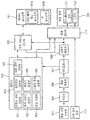
- FIG. 10 is a block diagram of a video display device according to an embodiment of the present invention.
- FIG. 11 is a hierarchical diagram of an additional service management unit according to an embodiment of the present invention.
- FIG. 12 is a flowchart illustrating an operation of an additional service manager according to an embodiment of the present invention.
- FIG. 13 is a hierarchical diagram of an additional service manager according to an embodiment of the present invention.
- FIG. 14 is a flowchart illustrating an operation of an additional service manager according to an embodiment of the present invention.
- 15 is a hierarchical diagram of an additional service manager according to an embodiment of the present invention.
- 16 is a flowchart illustrating an operation of an additional service manager according to an embodiment of the present invention.
- 17 is a hierarchical diagram of an additional service management unit according to an embodiment of the present invention.
- FIG. 18 is a flowchart illustrating an operation of an additional service manager according to an embodiment of the present invention.
- 19 is a flowchart illustrating a method of synchronizing a play time of a main audio and video content and a play time of an additional service according to an embodiment of the present invention.
- 20 is a conceptual diagram illustrating a method of synchronizing a play time of a main audio and video content and a play time of an additional service according to an embodiment of the present invention.
- 21 shows an execution screen of an auto play application according to an embodiment of the present invention.
- FIG. 22 shows an execution screen of a content provider application according to an embodiment of the present invention.
- FIG. 23 illustrates a screen on which a video display device manufacturer application having a resizing user interface is executed according to an embodiment of the present invention.
- FIG. 24 illustrates a screen on which a video display device manufacturer application having an overlay user interface according to an embodiment of the present invention is executed.
- 25 is a flowchart illustrating a method of executing a video display device manufacturer application according to an embodiment of the present invention.
- FIG. 26 illustrates a screen on which an application selection menu is displayed according to an embodiment of the present invention.
- FIG. 27 is a diagram illustrating a screen when an entire submenu of a program main menu of a video display device manufacturer application is selected according to an exemplary embodiment of the present invention.
- FIG. 28 is a diagram illustrating a screen when a participation submenu of a program main menu of a video display device manufacturer application is selected according to an embodiment of the present invention.
- FIG. 29 is a diagram illustrating a screen when a discovery submenu of a program main menu of an image display device manufacturer application is selected according to an exemplary embodiment of the present invention.
- FIG. 30 is a flowchart illustrating a search method according to an embodiment of the present invention.
- FIG. 31 is a diagram illustrating a screen when a search submenu of an information main menu of a video display device manufacturer application is selected according to an embodiment of the present invention.
- FIG. 32 is a diagram illustrating another screen when a search sub menu of an information main menu of a video display device manufacturer application is selected according to an embodiment of the present invention.
- FIG. 33 is a flowchart illustrating a chat window display method according to an embodiment of the present invention.
- FIG. 34 is a diagram illustrating one screen when a twitter submenu of an information main menu of a video display device manufacturer application is selected according to an embodiment of the present invention.
- 35 is a flowchart illustrating a news acquisition method according to an embodiment of the present invention.
- 36 is a screen when a news submenu of an information main menu of a video display device manufacturer application is selected according to an embodiment of the present invention.
- FIG. 37 is a flowchart illustrating a method of displaying a viewer list according to an embodiment of the present invention.
- FIG. 38 illustrates a screen when a viewer list submenu of a social main menu of a video display device manufacturer application is selected according to an embodiment of the present invention.
- 39 is a view illustrating a signal flow in which a video display device obtains a friend list and viewing information according to an embodiment of the present invention.
- FIG. 40 is a view illustrating a signal flow for acquiring a friend list and viewing information by the video display device according to another embodiment of the present invention.
- 41 is a flowchart illustrating a crush display method according to an embodiment of the present invention.
- FIG. 42 illustrates a screen when a crush display submenu of a social main menu of a video display device manufacturer application is selected according to an embodiment of the present invention.
- 43 is a flowchart illustrating a digital media download method according to an embodiment of the present invention.
- 44 is a screen illustrating a case where a previous episode sub-menu of a recommended main menu of a video display device manufacturer application is selected according to an embodiment of the present invention.
- 45 is a screen illustrating a case where a VOD submenu of a recommended main menu of a video display device manufacturer application is selected according to an embodiment of the present invention.
- FIG. 46 illustrates a screen when an application submenu of a recommended main menu of a video display device manufacturer application is selected according to an embodiment of the present invention.
- 47 is a flowchart illustrating a catalog display method according to an embodiment of the present invention.
- FIG. 48 is a screen illustrating a case where a style submenu of a recommended main menu of a video display device manufacturer application is selected according to an embodiment of the present invention.
- FIG. 49 illustrates a screen when a music sub menu of a recommended main menu of a video display device manufacturer application is selected according to an embodiment of the present invention.
- FIG. 50 is a screen illustrating another sub-menu of a recommended main menu of a video display device manufacturer application according to an embodiment of the present invention.
- 51 is a view illustrating a user interface for controlling an ACR function according to an embodiment of the present invention.
- FIG. 52 is a flowchart of a control method of a video display device according to an embodiment of the present invention.
- 53 is a flowchart illustrating a control method of a video display device according to another embodiment of the present invention.
- FIG. 54 is a flowchart illustrating a control method of a video display device according to another embodiment of the present invention.
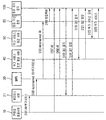
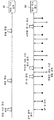
- 55 is a timing diagram of an additional service according to an embodiment of the present invention.
- 56 is a timing diagram of an additional service according to another embodiment of the present invention.
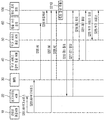
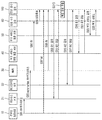
- 57 is a ladder diagram illustrating a data flow in a fingerprint based network topology according to another embodiment of the present invention.
- 58 is a ladder diagram illustrating a data flow in a fingerprint based network topology according to another embodiment of the present invention.
- 59 is a ladder diagram illustrating a data flow in a fingerprint based network topology according to another embodiment of the present invention.
- 60 is a flowchart illustrating a control method of a video display device according to another embodiment of the present invention.
- FIG. 61 is a ladder diagram illustrating a data flow in a watermark based network topology according to another embodiment of the present invention.
- FIG. 61 is a ladder diagram illustrating a data flow in a watermark based network topology according to another embodiment of the present invention.
- FIG. 62 is a timing diagram of an additional service according to another embodiment of the present invention.
- 63 is a timing diagram of an additional service according to another embodiment of the present invention.
- 64 is a hierarchical diagram of an additional service manager according to another embodiment of the present invention.
- 65 is a ladder diagram illustrating a data flow in a fingerprint based network topology according to another embodiment of the present invention.
- FIG. 66 is a ladder diagram illustrating a data flow in a fingerprint based network topology according to another embodiment of the present invention.
- 67 shows a screen controlled by a lifecycle management application according to an embodiment of the present invention.
- FIG. 68 is a block diagram illustrating a structure of a fingerprint based video display device according to another embodiment.
- FIG. 68 is a block diagram illustrating a structure of a fingerprint based video display device according to another embodiment.
- 69 is a block diagram illustrating a structure of a watermark based video display device according to another embodiment.
- FIG. 1 is a block diagram illustrating a network topology according to an embodiment of the present invention.
- the network topology includes a content providing server 10, a content recognizing service providing server 20, a multi-channel video distribution server 30, and an additional service information providing server ( 40, a plurality of additional service providing servers 50, a broadcast receiving device 60, a network 70, and a video display device 100.
- the content providing server 10 may correspond to a broadcasting station and broadcasts a broadcast signal including main audio-visual content.
- the broadcast signal may further include an additional service.
- the supplementary service may or may not be related to the main audiovisual content.
- Additional services include service information, metadata, additional data, compiled executables, web applications, Hypertext Markup Language (HTML) documents, XML documents, cascading style sheet (CSS) documents, audio files, and video.
- File ATSC 2.0 content, address, such as a Uniform Resource Locator (URL).
- URL Uniform Resource Locator
- the content recognizing service providing server 20 provides a content recognizing service that enables the video display device 100 to recognize content based on the main audio and video content.
- the content recognizing service providing server 20 may or may not modify the main audio and video content.
- One or more content recognition service providing servers may exist.
- the content recognizing service providing server 20 may be a watermark server for modifying the main audiovisual content to insert a visible watermark such as a logo into the main audiovisual content.
- the watermark server may watermark the content provider's logo on the upper left or upper right of each frame of the main audiovisual content.
- the content recognizing service providing server 20 may be a watermark server for modifying the main AV content and inserting the content information into the main AV content as an invisible watermark.
- the content recognizing service providing server 20 may be a fingerprint server that extracts and stores feature information from some frames or some audio samples of the main audio and video content. This feature information is also called signature.
- the multi-channel video distribution server 30 receives and multiplexes broadcast signals from a plurality of broadcast stations and provides the multiplexed signals to the broadcast receiving device 60.
- the multi-channel video distribution server 30 performs demodulation and channel decoding on the received broadcast signal to extract the main AV content and the additional service, and then performs channel encoding on the extracted main AV content and the extracted additional service. It is possible to generate multiplexed signals for distribution.
- the multi-channel video distribution server 30 may exclude the extracted additional service or add another additional service, the broadcasting station may not provide a broadcaster-led service.
- the broadcast receiving device 60 tunes a channel selected by a user, receives a signal of a tuned channel, performs demodulation and channel decoding on the received signal, and extracts main audio and video content.
- the broadcast receiving device 60 extracts the extracted main audio and video content from H.264 / MPEG-4 Moving Picture Experts Group-4 advanced video coding (DVC), Dolby AC-3, and MPEG-2 Moving Picture Experts Group-2 Advanced.
- Decoding is performed using an audio coding algorithm to generate uncompressed main AV content.
- the broadcast receiving device 60 provides the generated uncompressed main audio and video content to the video display device 100 through an external input port of the video display device 100.
- the supplementary service information providing server 40 provides supplementary service information for one or more available supplementary services related to the main AV content in response to a request of the video display device. There may be one or more additional service address providing servers. The additional service information providing server 40 may provide additional service information for the highest priority additional service among a plurality of available additional services.
- the additional service providing server 50 may provide one or more additional services that may be used in connection with the main audio and video content in response to a request of the video display device. There may be one or more additional service providing servers.
- the video display device 100 may be a display unit such as a television, a laptop, a mobile phone, a smartphone, or the like.
- the video display device 100 may receive uncompressed main audio and video content from the broadcast reception device 60 and broadcast including main audio and video content encoded from the content providing server 10 or the multichannel video distribution server 30. You can also receive a signal.
- the video display device 100 may be provided with a content recognition service from the content recognition service providing server 20 through the network 70, and may receive main audiovisual content from the additional service information providing server 40 through the network 70. Receive the address of one or more additional services available in relation to, and may receive one or more additional services available in connection with the main audio-visual content from the additional service providing server 50.
- At least two of the content providing server 10, the content recognizing service providing server 20, the multichannel video distribution server 30, the additional service information providing server 40, and the plurality of additional service providing servers 50 are one server. It may be combined in the form of or may be operated by one operator.
- FIG. 2 is a block diagram illustrating a watermark based network topology according to an embodiment of the present invention.
- the network topology according to the embodiment of the present invention further includes a watermark server 21.
- the watermark server 21 as shown in FIG. 2 applies a modification to the main audiovisual content and inserts the content information into the main audiovisual content.
- the multichannel video distribution server 30 receives and distributes a broadcast signal including the modified main AV content.
- the watermark server may use a digital watermarking technique as described below.
- Digital watermarks are the process of embedding information in digital signals in a way that is difficult to delete.
- the digital signal can be audio, photo, or video.
- the inserted information is also contained in the copy.
- One digital signal can carry several different watermarks at the same time.
- the inserted information is discernible to the eye in the picture or video.
- the inserted information is text or a logo that identifies the owner of the media.
- a television station adds its logo to the corner of the video being sent, this is an eye identifiable watermark.
- the copying device may obtain a watermark from the digital media before copying the digital media, and may decide whether to copy or not based on the content of the watermark.
- Another application of watermarking is in tracking the source of digital media. At each point on the distribution path, a watermark is embedded in the digital media. If such digital media is found later, a watermark can be extracted from the digital media and the source of the distribution can be grasped from the content of the watermark.
- the file format for digital media may include additional information called metadata, which is distinguished from metadata in that digital watermarks are conveyed in the audiovisual signal of digital media itself.
- Watermarking methods include spread spectrum, quantization, and amplitude modulation.
- the watermarking method corresponds to spread spectrum.
- Spread-spectrum watermarks are known to be quite robust, but they do not carry much information because they interfere with the embedded host signal.
- the watermarking method corresponds to the quantization type. Quantization watermarks are less robust, but can carry quite a bit of information.
- the watermarking method corresponds to an amplitude modulation.
- FIG. 3 is a ladder diagram illustrating a data flow in a watermark based network topology according to an embodiment of the present invention.
- the content providing server 10 transmits a broadcast signal including the main audio and video content and the additional service (S101).
- the watermark server 21 receives a broadcast signal provided by the content providing server 10 and applies a modification to the main audiovisual content to insert a visible watermark such as a logo into the main audiovisual content, or to the main audiovisual content.
- the watermark information is inserted as an invisible watermark, and the watermarked main AV content and the supplementary service are provided to the MVPD 30 (S103).
- the watermark information inserted through the invisible watermark may include one or more of watermark usage, content information, additional service information, and available additional services.
- the watermark usage may indicate one of unauthorized copy protection, audience rating research, and additional service acquisition.
- the content information may include identification information of a content provider providing main audio and video content, main audio and video content identification information, main audio and video content rating information, time information of a content section used to acquire content information, a name of a channel on which main audio and video content is broadcasted, and main Among the logo of the channel on which the audiovisual content is broadcast, the description of the channel on which the main audiovisual content is broadcast, the usage information reporting address, the usage information reporting period, the minimum usage time for obtaining the usage information, and additional service information available in connection with the main audiovisual content. It may include one or more.
- the time information of the content section used to acquire the content information may be time information of the content section in which the used watermark is embedded. If the video display device 100 uses the fingerprint for obtaining the content information, the time information of the content section used for obtaining the content information may be time information of the content section from which the feature information is extracted.
- the time information of the content section used to acquire the content information includes the start time of the content section used to acquire the content information, the duration of the content section used to acquire the content information, and the end time of the content section used to acquire the content information. It may include one or more of.
- the usage information report address may include at least one of a main AV content viewing information report address and an additional service usage information report address.
- the usage information reporting period may include one or more of a main audio and video content viewing information reporting period and an additional service usage information reporting period.
- the minimum usage time for acquiring the usage information may include at least one of a minimum viewing time for acquiring the main AV content viewing information and a minimum usage time for extracting additional service usage information.
- the video display device 100 Based on the case in which the main audio and video content is watched for a minimum viewing time or more, the video display device 100 obtains the viewing information of the main audio and video content, and the viewing information extracted as the main audio and video content viewing information report address in the main audio and video content viewing information reporting period. Can report.
- the video display device 100 may obtain the additional service usage information and report the usage information extracted to the additional service usage information report address in the additional service usage information reporting period. .
- the supplementary service information includes information on whether an supplementary service exists, an supplementary service address providing server address, an acquisition path of each available supplementary service, an address for each available supplementary service, a start time of each available supplementary service, End time of each available supplementary service, lifetime of each available supplementary service, acquisition mode of each available supplementary service, request period for each available supplementary service, of each available supplementary service
- One or more of priority information, a description of each available additional service, a category of each available additional service, a usage information reporting address, a usage information reporting period, and a minimum usage time for obtaining usage information. have.
- the acquisition path of the available additional service may indicate IP or Advanced Television Systems Committee-Mobile / Handheld (ATSC M / H).
- ATSC M / H Advanced Television Systems Committee-Mobile / Handheld
- the additional service information may further include frequency information and channel information.
- the acquisition mode of each available supplementary service may indicate Push or Pull.
- the watermark server 21 may insert watermark information as an invisible watermark in the logo of the main audio and video content.
- the watermark server 21 may insert a barcode at a predetermined position of the logo.
- the predetermined position of the logo may correspond to the bottom 1 line of the area where the logo is displayed.
- the image display apparatus 100 may not display the barcode.
- the watermark server 21 may insert watermark information in the form of metadata of a logo. At this time, the shape of the logo can be maintained.
- the watermark server 21 may insert N-bit watermark information into each of the logos of the M frames. That is, the watermark server 21 may insert M * N watermark information through M frames.
- the MVPD 30 receives a broadcast signal including watermarked main AV content and an additional service, generates a multiplexed signal, and provides the multiplexed signal to the broadcast receiving device 60 in operation S105.
- the multiplexed signal may exclude the received additional service or include a new additional service.
- the broadcast receiving device 60 tunes a channel selected by a user, receives a signal of a tuned channel, demodulates the received broadcast signal, performs channel decoding, and performs AV decoding to perform an uncompressed main AV. After generating the content, the generated uncompressed main AV content is provided to the video display device 100 in operation S106.
- the content providing server 10 also broadcasts a broadcast signal including main AV content through a wireless channel (S107).
- the MVPD 30 may transmit a broadcast signal including main AV content to the video display device 100 directly without passing through the broadcast receiving device 60 (S108).
- the video display device 100 may receive uncompressed main audio and video content through the set top box 60. Alternatively, the video display device 100 may obtain a main audio and video content by receiving a broadcast signal through a wireless channel and demodulating and decoding the received broadcast signal. Alternatively, the video display device 100 may receive a broadcast signal from the MVPD 30, and demodulate and decode the received broadcast signal to receive main AV content. The video display device 100 extracts watermark information from audio frames of some frames or sections of the obtained main audio and video content. If the watermark information corresponds to a logo, the video display device 100 checks the watermark server address corresponding to the logo extracted from the correspondence between the plurality of logos and the plurality of watermark server addresses.
- the video display device 100 cannot identify the main audio and video content using only the logo.
- the video display device 100 may not identify the main audio and video content, but the watermark information may include content provider identification information or a watermark server address.
- the video display device 100 may include a watermark server address corresponding to content provider identification information extracted from a correspondence between the plurality of content provider identification information and the plurality of watermark server addresses. You can check.
- the video display device 100 accesses the watermark server 21 corresponding to the obtained watermark server address and transmits the first query. S109).
- the watermark server 21 provides a first response to the first query in operation S111.
- the first response may include one or more of content information, additional service information, and available additional services.
- the video display device 100 may not obtain the additional service. However, the watermark information and the first response may include the additional service address providing server address. As such, if the video display device 100 does not acquire the additional service address or the additional service through the watermark information and the first response, and obtains the additional service address providing server address, the video display device 100 obtains the acquired additional information.
- the second query including the content information is transmitted by accessing the additional service information providing server 40 corresponding to the service address providing server address (S119).
- the supplementary service information providing server 40 retrieves one or more available supplementary services related to the content information of the second query. Thereafter, the supplementary service information providing server 40 provides supplementary service information for one or more available supplementary services to the video display device 100 as a second response to the second query in operation S121.
- the video display device 100 obtains one or more available additional service addresses through the watermark information, the first response, or the second response, the video display device 100 accesses the one or more available additional service addresses and requests additional services (S123). In step S125, an additional service is obtained.
- FIG. 4 illustrates a watermark based content recognition timing according to an embodiment of the present invention.
- the broadcast receiving device 60 is turned on and the channel is tuned, and the video display device 100 is the main audiovisual of the channel tuned from the broadcast receiving device 60 through the external input port 111.
- the video display device 100 may detect the content provider identifier (or broadcaster identifier) from the watermark of the main AV content. Thereafter, the video display device 100 may detect content information from the watermark of the main AV content based on the detected content provider identifier.
- the detectable period of the content provider identifier and the detectable period of the content information may be different.
- the detectable period of the content provider identifier may be shorter than the detectable period of the content information.
- FIG. 5 is a block diagram illustrating a fingerprint based network topology according to an embodiment of the present invention.
- the network topology according to the embodiment of the present invention further includes a fingerprint server 22.
- the fingerprint server 22 as shown in FIG. 5 does not modify the main audio and video content, and extracts and stores feature information from audio samples of some frames or sections of the main audio and video content. Subsequently, when the fingerprint server 22 receives the characteristic information from the image display apparatus 100, the fingerprint server 22 provides the identifier and time information of the audiovisual content corresponding to the received characteristic information.
- FIG. 6 is a ladder diagram illustrating a data flow in a fingerprint based network topology according to an embodiment of the present invention.
- the content providing server 10 transmits a broadcast signal including the main audio and video content and the additional service (S201).
- the fingerprint server 22 receives a broadcast signal provided by the content providing server 10, extracts a plurality of feature information from a plurality of frame sections or a plurality of audio sections of the main audio and video content, and adds the plurality of feature information to each of the plurality of feature information.
- a database for a plurality of corresponding query results is constructed (S203).
- the query result may include one or more of content information, additional service information, and available additional services.
- the MVPD 30 receives a broadcast signal including main AV content and an additional service, generates a multiplexed signal, and provides the multiplexed signal to the broadcast receiving device 60 in operation S205.
- the multiplexed signal may exclude the received additional service or include a new additional service.
- the broadcast receiving device 60 tunes a channel selected by a user, receives a signal of a tuned channel, demodulates the received broadcast signal, performs channel decoding, and performs AV decoding to perform an uncompressed main AV. After generating the content, the generated uncompressed main AV content is provided to the video display device 100 in operation S206.
- the content providing server 10 also broadcasts a broadcast signal including main AV content through a wireless channel (S207).
- the MVPD 30 may transmit a signal including main AV content to the video display device 100 directly without passing through the broadcast receiving device 60 (S208).
- the video display device 100 may receive uncompressed main audio and video content through the set top box 60. Alternatively, the video display device 100 may obtain a main audio and video content by receiving a broadcast signal through a wireless channel and demodulating and decoding the received broadcast signal. Alternatively, the video display device 100 may receive a broadcast signal from the MVPD 30, and demodulate and decode the received broadcast signal to receive main AV content. The video display device 100 extracts feature information from audio frames of some frames or some sections of the acquired main audio and video content in operation S213.
- the video display device 100 accesses the fingerprint server 22 corresponding to the preset fingerprint server address and transmits a first query including the extracted feature information (S215).
- the fingerprint server 22 provides a query result as a first response to the first query (S217). If the first response corresponds to a failure, the video display device 100 may access the fingerprint server 22 corresponding to another fingerprint server address and transmit a first query including the extracted feature information.
- the fingerprint server 22 may provide an Extensible Markup Language (XML) document as a query result.
- XML Extensible Markup Language
- An example of an XML document containing a query result will be described with reference to FIG. 7 and Table 1.
- FIG. 7 An example of an XML document containing a query result will be described with reference to FIG. 7 and Table 1.
- FIG. 7 shows an XML schema diagram of an ACR-Resulttype containing a query result according to an embodiment of the present invention.
- an ACR-Resulttype containing a query result has a ResultCode attribute, ContentID, NTPTimestamp, SignalingChannelInformation, and ServiceInformation elements.
- the ResultCode attribute has a value of 200, this may mean that the query result is successful. If the ResultCode attribute has a value of 404, this may mean that the query result has failed.
- the SignalingChannelInformation element has a SignalingChannelURL element, and the SignalingChannelURL element has UpdateMode and PollingCycle attributes.
- the UpdateMode property may have a Pull value or a Push value.
- the ServiceInformation element has a ServiceName, ServiceLogo, and ServiceDescription element.
- Table 1 shows the XML Schema of ACR-ResultType containing such query result.
- an ATSC content identifier as shown in Table 2 below may be used.
- the ATSC content identifier has a structure consisting of a TSID and a house number.
- the 16 bit unsigned integer TSID carries a transport stream identifier.
- the 5-bit unsigned integer end_of_day is set to the hour of the day when broadcast is over and the content_id value can be reused.
- the 9-bit unsigned integer unique_for is set to the number of days for which the content_id value cannot be reused.
- content_id represents a content identifier.
- the video display device 100 may decrement unique_for by 1 at a time corresponding to end_of_day every day, and may consider that content_id is unique if unique_for is not zero.
- a Global service identifier for an ATSC-M / H service as described below may be used.
- the global service identifier has the form
- ⁇ region> is a two letter international country code as defined by ISO 639-2.
- ⁇ Xsid> for local service is a decimal number of TSID as defined in ⁇ region>, and ⁇ xsid> for local service (major> 69) is "0".
- ⁇ serviceid> is defined as ⁇ major> or ⁇ minor>. ⁇ major> represents a major channel number, and ⁇ minor> represents a minor channel number.
- an ATSC content identifier as described below may be used.
- the ATSC Content Identifier has the following form:
- ⁇ region> is a two letter international country code as defined by ISO 639-2.
- ⁇ Xsid> for local service is a decimal number of TSID as defined in ⁇ region>, which may be followed by ".”
- ⁇ Xsid> for regional service (major> 69) is ⁇ serviceid>.
- ⁇ content_id> is the base64 sign of the content_id field defined in Table 2
- ⁇ unique_for> is the decimal sign of the unique_for field defined in Table 2
- ⁇ end_of_day> is the decimal sign of the end_of_day field defined in Table 2.
- FIG. 6 will be described again.
- the video display device 100 provides the additional service information providing server 40 corresponding to the obtained additional service address providing server address.
- a second query including content information is transmitted.
- the supplementary service information providing server 40 retrieves one or more available supplementary services related to the content information of the second query. Thereafter, the supplementary service information providing server 40 provides supplementary service information for one or more available supplementary services to the video display device 100 as a second response to the second query in operation S221.
- the video display device 100 obtains one or more available additional service addresses through the first response or the second response, the video display device 100 accesses the one or more available additional service addresses and requests additional services (S223). Acquire (S225).
- the video display device 100 transmits an HTTP request to the supplementary service providing server 50 through SignalingChannelURL and sends an HTTP response including a PSIP binary stream in response thereto. 50).
- the video display device 100 may transmit an HTTP request according to the polling period specified by the PollingCycle property.
- the SignalingChannelURL element may have an update time attribute. In this case, the video display device 100 may transmit an HTTP request at the update time specified by the update time attribute.
- the video display device 100 may asynchronously receive the update from the server by using the XMLHTTPRequest API. After the video display device 100 makes an asynchronous request to the server through the XMLHTTPRequest object, the server provides the signaling information as a response through this channel when there is a change in the signaling information. If there is a limit in the waiting time of the session, a session timeout respond is generated, and the receiver can immediately recognize and re-request it to maintain the signaling channel between the receiver and the server at all times.
- FIG. 8 is a block diagram illustrating a watermark and fingerprint based network topology according to an embodiment of the present invention.
- the network topology according to the embodiment of the present invention further includes a watermark server 21 and a fingerprint server 22.
- the watermark server 21 as shown in FIG. 8 inserts content provider identification information into the main audiovisual content.
- the watermark server 21 may insert the content provider identification information into the main audio and video content as a watermark that looks like a logo, or insert the content provider identification information into the main audio and video content as an invisible watermark.
- the fingerprint server 22 does not modify the main audio and video content, and extracts and stores feature information from audio samples of some frames or sections of the main audio and video content. Subsequently, when the fingerprint server 22 receives the characteristic information from the image display apparatus 100, the fingerprint server 22 provides the identifier and time information of the audiovisual content corresponding to the received characteristic information.
- FIG. 9 is a ladder diagram illustrating a data flow in a watermark and fingerprint based network topology according to an embodiment of the present invention.
- the content providing server 10 transmits a broadcast signal including the main audio and video content and the additional service (S301).
- the watermark server 21 receives a broadcast signal provided by the content providing server 10 and applies a modification to the main audiovisual content to insert a visible watermark such as a logo into the main audiovisual content, or to the main audiovisual content.
- the watermark information is inserted as an invisible watermark, and the watermarked main AV content and the additional service are provided to the MVPD 30 (S303).
- the watermark information inserted through the invisible watermark may include one or more of content information, additional service information, and available additional services.
- the content information and the additional service information are as described above.
- the MVPD 30 receives a broadcast signal including watermarked main AV content and an additional service, generates a multiplexed signal, and provides the multiplexed signal to the broadcast receiving device 60 in operation S305.
- the multiplexed signal may exclude the received additional service or include a new additional service.
- the broadcast receiving device 60 tunes a channel selected by a user, receives a signal of a tuned channel, demodulates the received broadcast signal, performs channel decoding, and performs AV decoding to perform an uncompressed main AV. After the content is generated, the generated uncompressed main AV content is provided to the video display device 100 in operation S306.
- the content providing server 10 also broadcasts a broadcast signal including main AV content through a wireless channel (S307).
- the MVPD 30 may transmit a signal including main AV content to the video display device 100 directly without passing through the broadcast receiving device 60 (S308).
- the video display device 100 may receive uncompressed main audio and video content through the set top box 60. Alternatively, the video display device 100 may obtain a main audio and video content by receiving a broadcast signal through a wireless channel and demodulating and decoding the received broadcast signal. Alternatively, the video display device 100 may receive a broadcast signal from the MVPD 30, and demodulate and decode the received broadcast signal to receive main AV content. The video display device 100 extracts watermark information from audio frames of some frames or sections of the obtained main audio and video content. If the watermark information corresponds to a logo, the video display device 100 checks the watermark server address corresponding to the logo extracted from the correspondence between the plurality of logos and the plurality of watermark server addresses.
- the video display device 100 cannot identify the main audio and video content using only the logo.
- the video display device 100 may not identify the main audio and video content, but the watermark information may include content provider identification information or a watermark server address.
- the video display device 100 may include a watermark server address corresponding to content provider identification information extracted from a correspondence between the plurality of content provider identification information and the plurality of watermark server addresses. You can check.
- the video display device 100 accesses the watermark server 21 corresponding to the obtained watermark server address and transmits the first query. S309).
- the watermark server 21 provides a first response to the first query in operation S311.
- the first response may include one or more of a fingerprint server address, content information, additional service information, and available additional services.
- the content information and the additional service information are as described above.
- the video display device 100 extracts feature information from audio frames of some frames or some sections of the main audio and video content (S313).
- the video display device 100 connects to the fingerprint server 22 corresponding to the fingerprint server address in the first response and transmits a second query including the extracted feature information (S315).
- the fingerprint server 22 provides a query result as a second response to the second query in operation S317.
- the video display device 100 provides the additional service information providing server 40 corresponding to the obtained additional service address providing server address.
- a third query including content information is transmitted.
- the supplementary service information providing server 40 retrieves one or more available supplementary services related to the content information of the third query. Thereafter, the additional service information providing server 40 provides the video display device 100 with additional service information for one or more available additional services in a third response to the third query in operation S321.
- the video display device 100 obtains one or more available additional service addresses through the first response, the second response, or the third response, the video display device 100 accesses the one or more available additional service addresses and requests additional services (S323). In step S325, an additional service is acquired.
- FIG. 10 is a block diagram of a video display device according to an embodiment of the present invention.
- the video display device 100 includes a broadcast signal receiver 101, a demodulator 103, a channel decoder 105, a demultiplexer 107, and an audiovisual It includes a decoder 109, an external input port 111, a playback controller 113, a playback device 120, an additional service manager 130, a data transceiver 141, and a memory 150.
- the broadcast signal receiving unit 101 receives a broadcast signal from the content providing server 10 or the MVPD 30.
- the demodulator 103 demodulates the received broadcast signal to generate a demodulated signal.
- the channel decoder 105 performs channel decoding on the demodulated signal to generate channel decoded data.
- the demultiplexer 107 separates the main AV content and the supplementary service from the channel decoded data.
- the separated additional service is stored in the additional service storage unit 152.
- the audio-visual decoding unit 109 audio-decodes the separated main audio-visual content to generate uncompressed main audio-visual content.
- the external input port 111 receives uncompressed main audio and video content from the broadcast receiving device 60, the digital versatile disk (DVD) player, the Blu-ray disc player, or the like.
- the external input port 111 may include one or more of a DSUB port, a high definition multimedia interface (HDMI) port, a digital visual interface (DVI) port, a composite port, a component port, and an S-video port. have.
- HDMI high definition multimedia interface
- DVI digital visual interface
- the reproduction control unit 113 reproduces at least one of the uncompressed main audio and video content generated by the audiovisual decoder 109 or the uncompressed main audio and video content received from the external input port 111 on the reproduction device 120 by user selection. do.
- the playback device 120 includes a display 121 and a speaker 123.
- the display unit 121 may be a liquid crystal display (LCD), a thin film transistor-liquid crystal display (TFT LCD), an organic light-emitting diode (OLED), or a flexible display (flexible). and at least one of a 3D display.
- the additional service manager 130 obtains content information of the main AV content and obtains an available additional service based on the obtained content information.
- the additional service manager 130 may obtain identification information of the main AV content based on an audio sample of some frame or a section of the uncompressed main AV content.
- ACR automatic contents recognition
- the data transceiver 141 may include an ATSC-M / H (Advanced Television Systems Committee-Mobile / Handheld) channel transceiver 141a and an IP transceiver 141b.
- ATSC-M / H Advanced Television Systems Committee-Mobile / Handheld
- the memory 150 may include a flash memory type, a hard disk type, a multimedia card micro type, a card type memory (for example, SD or XD memory), RAM (Random Access Memory, RAM), Static Random Access Memory (SRAM), Read-Only Memory (ROM), Electrically Erasable Programmable Read-Only Memory (EEPROM), Programmable Read-Only Memory (PROM), Magnetic Memory, Magnetic It may include a storage medium of at least one type of disk, optical disk.
- the video display device 100 may operate in association with a web storage that performs a storage function of the memory 150 on the Internet.
- the memory 150 includes a content information storage unit 151, an additional service storage unit 152, a logo storage unit 153, a setting information storage unit 154, a bookmark storage unit 155, and a user information storage unit 156.
- the usage information storage unit 157 may be included.
- the content information storage unit 151 stores a plurality of content information corresponding to the plurality of feature information.
- the additional service storage unit 152 may store a plurality of additional services corresponding to the plurality of feature information, or may store a plurality of additional services corresponding to the plurality of content information.
- the logo storage unit 153 stores a plurality of logos.
- the logo storage unit may further store a content provider identifier corresponding to the plurality of logos or a watermark server address corresponding to the plurality of logos.
- the setting information storage unit 154 stores setting information for the ACR.
- the bookmark storage unit 155 stores the bookmark.
- the user information storage unit 156 stores user information.
- the user information may include one or more of one or more account information, region information, family member information, preferred genre information, video display device information, and usage information providing range for one or more services.
- the one or more account information may include account information for the usage information measuring server and account information of a social network service such as twitter and facebook.
- Area information may include address information, postal code.
- Family member information may include the number of family members, the age of each member, the gender of each member, the religion of each member, the occupation of each member, and the like.
- Preferred genre information may be set to one or more of sports, movies, dramas, education, news, entertainment, and other genres.
- the video display device information may include information about a type, a manufacturer, a firmware version, a resolution, a model name, an OS, a browser, a storage device, a storage device capacity, and a network speed.
- the video display device 100 may collect and report main audio and video content viewing information and additional service usage information within the set range.
- the usage information providing range may be set for each virtual channel.
- the usage information measurement allowable range may be set for the entire physical channel.
- the usage information storage unit 157 stores main audio and video content viewing information and additional service usage information collected by the video display device 100.
- the video display device 100 may analyze the service usage pattern based on the collected main audio and video content viewing information and the collected additional service usage information, and store the analyzed service usage pattern in the usage information storage unit 157. .
- the additional service manager 130 may obtain content information of the main AV content from the fingerprint server 22 or the content information storage unit 151. If there is no content information corresponding to the extracted feature information in the content information storage unit 151 or there is not enough content information, the additional service manager 130 may receive additional content information through the data transceiver 141. In addition, the additional service manager 130 may continuously update the content information.
- the additional service manager 130 may obtain an additional service available from the additional service providing server 50 or the additional service storage unit 153. When there is no additional service in the additional service storage unit 153 or there is not enough additional service, the additional service manager 130 may update the additional service through the data transceiver 141. In addition, the additional service manager 130 may continuously update the additional service.
- the additional service manager 130 may extract a logo from the main audio and video content, and query the logo storage unit 155 to obtain a content provider identifier or a watermark server address corresponding to the extracted logo. If there is no logo matching the extracted logo in the logo storage unit 155 or there is not enough logo, the additional service manager 130 may receive the additional logo through the data transmission / reception unit 141. In addition, the additional service manager 130 may continuously update the logo.
- the additional service manager 130 may perform various methods to reduce the burden of computation in comparing the logo extracted from the main audio and video content with the plurality of logos in the logo storage unit 155.
- the additional service manager 130 may perform the comparison based on the color characteristics. That is, the additional service manager 130 may compare the color characteristics of the extracted logo with the color characteristics of the logo in the logo storage unit 155 to determine whether they match.
- the additional service manager 130 may perform the comparison based on the character recognition. That is, the additional service manager 130 may compare the characters recognized from the extracted logo with the characters recognized from the logo in the logo storage unit 155 to determine whether they match.
- the additional service manager 130 may perform the comparison based on the shape of the outline of the logo. That is, the additional service manager 130 may compare the contour shape of the extracted logo with the contour shape of the logo in the logo storage unit 155 to determine whether there is a match.
- FIG. 11 is a hierarchical diagram of an additional service management unit according to an embodiment of the present invention.
- the additional service manager 130 may include an operating system 131a, an audio driver 132a, a video driver 133a, and a network driver 134a.
- the user does not need to recognize the channel or the content at all, and the ACR operation may always be performed.
- the additional service manager 130 may access an application store and download an application through the data transceiver 141.
- the audio driver 132a can access the audio buffer used for the audio fingerprint or audio watermark.
- the video driver 133a may access a video buffer used for the video fingerprint or video watermark.
- the network driver 134a allows the ACR engine 136a to access the data transceiver 141.
- the ACR platform API 135a provides an API that allows the ACR engine 136a to access the audio driver 132a, the video driver 133a, and the network driver 134a.
- the video display device 100 may mount a plurality of ACR engines 136a. That is, the video display device 100 may include an ACR engine for one or more of a plurality of video watermark extraction algorithms, a plurality of audio watermark extraction algorithms, a plurality of video signature extraction algorithms, and a plurality of audio signature extraction algorithms. .
- the watermark based ACR engine 136a may extract watermark information to obtain one or more of watermark usage, content information, additional service information, and available additional services from the extracted watermark information.
- the fingerprint-based ACR engine 136a may extract feature information of a portion of the main audio and video content and obtain one or more of content information, additional service information, and available additional services based on the extracted feature information.
- An ACR daemon 137a manages one or more ACR engines 136a. Daemons are those that continue to run to service periodic service requests. The daemon properly forwards the collected requests to another program or service.
- the ACR daemon 137a may manage the execution and termination of the ACR engine 136a.
- the ACR daemon 137a searches for an ACR engine that matches the current main audio and video content among the plurality of ACR engines 136a. In particular, when a plurality of ACR engines are executed to consume a lot of system resources, the ACR daemon 137a sequentially executes the plurality of ACR engines 136a one by one according to a specific rule or priority to determine whether content recognition is successful. Can be.
- the ACR daemon 137a may acquire and execute the ACR application 139a corresponding to the additional service for the recognized content. If the ACR engine 136a is successfully performing content recognition and can no longer recognize the content due to a channel change or the like, the ACR daemon 137a may terminate the ACR application 139a.
- ACR middleware 138a serves as a browser for one or more ACR applications 139a.
- the ACR application 139a may provide the user with an enhanced user experience with the help of ACR.
- the ACR application 139a may be an application that can be downloaded from an application store or the Internet, or may simply be a Uniform Resource Locator (URL).
- the ACR application 139a may provide a program specific service or a content provider specific service such as a content target advertisement, a content provider portal service, an electronic program guide (EPG) service, or the like.
- EPG electronic program guide
- the ACR application 139a receives content information or signatures from the ACR engine 136a while interacting with the ACR engine 136a through the ACR application interface of the ACR middleware 138a and adds an additional service corresponding to the content information or signatures. Can be obtained and reproduced in the playback device 120.
- the ACR application interface available to the ACR application 139a is shown in Table 3 below.
- FIG. 12 is a flowchart illustrating an operation of an additional service manager according to an embodiment of the present invention.
- the ACR daemon 137a is connected to at least one ACR engine 136a.
- operation S401 content information of main audio and video content broadcast in the tuned channel is obtained.
- the ACR daemon 137a obtains an available additional service related to the content information (S403).
- the ACR daemon 137a executes the acquired additional service in the background (S405).
- the ACR daemon 137a displays a color button on the display 121 to inform the user that an additional service is available (S407).
- the ACR daemon 137a When the ACR daemon 137a receives the use of the supplementary service, the ACR daemon 137a reproduces the supplementary service, which has been executed in the background, to the playback device 120 (S409).
- the ACR daemon 137a recognizes the change through one or more ACR engines 136a and ends the additional service (S411).
- FIG. 13 is a hierarchical diagram of an additional service manager according to an embodiment of the present invention.
- the additional service manager 130 may include an operating system 131b, an audio driver 132b, a video driver 133b, and a network driver 134b.
- the user needs to recognize a channel or content, but the number of queries for ACR may be reduced, thereby reducing the burden on the server.
- the audio driver 132b, the video driver 133b, the network driver 134b, the ACR platform API 135b, the plurality of ACR engines 136b, and the ACR middleware 138b in the additional service manager 130 of FIG. The same as the audio driver 132a, the video driver 133a, the network driver 134a, the ACR platform API 135a, the plurality of ACR engines 136a, and the ACR middleware 138a in the 11 additional service manager 130.
- a similar function is omitted, a detailed description thereof will be omitted.
- An ACR engine manager 137b manages a list of one or more ACR engines 136b and provides a selection interface of the ACR engine 136b to the ACR application 139b.
- the ACR application 139b may provide the user with an enhanced user experience with the help of ACR.
- the ACR application 139b may be an application that can be downloaded from an application store or the Internet, or may simply be a Uniform Resource Locator (URL).
- the ACR application 139b may provide a program specific service or a content provider specific service such as a content target advertisement, a content provider portal service, an electronic program guide (EPG) service, or the like.
- the ACR application 139b may select the ACR engine 136b to use while interacting with the ACR engine manager 137b via the ACR application interface of the ACR middleware 138b. To this end, the ACR application interfaces available to the ACR application 139b are shown in Tables 4 and 5 below.
- the argument acrid means the unique identifier of the ACR engine / solution.
- Table 5 Name description Property readonly Integer length The number of ACR engines in the collection Method ACR item (Integer index) Return the ACR object at position index in the collection, or undefined if no item is present at that position.
- the argument index means the index of the item that shall be returned.
- the ACR application 139b can control the ACR engine 136b while interacting with the ACR engine 136b through the ACR application interface of the ACR middleware 138a, and receives content information or signatures from the ACR engine 136b.
- An additional service corresponding to the content information or the signature may be additionally acquired and reproduced by the reproduction device 120.
- the ACR application interface available to the ACR application 139b is shown in Table 6 below.
- ACR_AUDIO_VIDEO 3 Both audio / video components are used.
- Method Boolean Initialize () Initialize the ACR object.
- Boolean Finalize () Destroy the ACR object.
- Boolean startACR () Start ACR engine in order to get ready to content recognition.
- Boolean stopACR () Stop the ACR engine.
- Boolean getSignature for FP String getContentId () for WM String getTiming () for WM String getALSURL () for WM
- Boolean setAudioAlgorithm Integer audioNumCh, Interget audioSampleRate, Integer audioNumSamples, Integer audioBitPerSample
- Boolean setVideoAlgorithm Integer videoNFrame, RECT screenRect
- FIG. 14 is a flowchart illustrating an operation of an additional service manager according to an embodiment of the present invention.
- the video display device 100 Even if the power of the broadcast receiving device 60 and the video display device 100 is turned on and the external input port 111 of the video display device 100 is selected, the video display device 100 before the execution of the ACR application 139b. The automatic content recognition operation is not performed.
- the ACR application 139b When the channel related ACR application 139b is executed by a user who recognizes the channel of the main audiovisual content, the ACR application 139b sends information about the ACR engine 136a used by the ACR engine manager ( 137b) to query and receive (S501).
- the ACR application 139b starts the ACR engine 136b that it uses (S503), and acquires content information through the ACR engine 136b (S505).
- the ACR application 139b obtains an available additional service related to the main audio and video content through the obtained content information (S507), and displays a color button on the display 121 to inform the user that the additional service is available (S507). S509).
- the ACR application 139b When the ACR application 139b receives the use of the supplementary service from the user, the ACR application 139b reproduces the supplementary service to the reproduction device 120 (S511).
- the ACR middleware 138b When the ACR middleware 138b receives a user input regarding the termination of the ACR application 139b, the ACR middleware 138b terminates the ACR application 139b (S513).
- 15 is a hierarchical diagram of an additional service manager according to an embodiment of the present invention.
- the additional service manager 130 may include an operating system 131c, an audio driver 132c, a video driver 133c, and a network driver 134c.
- the user needs to recognize a channel or content, but the number of queries for ACR may be reduced, thereby reducing the burden on the server.
- the audio driver 132c, the video driver 133c, the network driver 134c, the ACR platform API 135c, and the ACR middleware 138c in the additional service manager 130 of FIG. 15 are the additional service manager 130 of FIG. Since the audio driver 132a, the video driver 133a, the network driver 134a, the ACR platform API 135a, and the ACR middleware 138a respectively perform the same or similar functions, detailed description thereof will be omitted.
- the ACR engine 136c extracts feature information from some frames or a section of audio samples of the main audiovisual content and transmits a query including the extracted feature information to an ACR coordination server (not shown).
- the ACR coordination server may send a fingerprint server address in response to this query.
- the ACR coordination server may transmit content information corresponding to the feature information together with the fingerprint server address.
- the ACR application 139c When the ACR application 139c receives the fingerprint server address from the ACR engine 136c, the ACR application 139c directly transmits a query including the feature information extracted by the ACR engine 136c to the fingerprint server corresponding to the fingerprint server address. To this end, the ACR application interfaces available to the ACR application 139c are shown in Table 11.
- Table 12 shows an example of a fingerprint sample code using the ACR application interface.
- 16 is a flowchart illustrating an operation of an additional service manager according to an embodiment of the present invention.
- the ACR engine 136c When the power of the broadcast receiving device 60 and the video display device 100 is turned on and the external input port 111 of the video display device 100 is selected, the ACR engine 136c performs some frames or some sections of the main audio and video content.
- the feature information is extracted from the audio samples of the ACR coordination server (not shown), and the query including the extracted feature information is transmitted (S601).
- the ACR engine 136c receives the fingerprint server address in response to this query (S603).
- the ACR application 139c obtains a fingerprint server address from the ACR engine 136c using the getACRBackend () method (S605).
- the ACR application 139c obtains feature information of some video frame sections or some audio sections of the main audio and video content from the ACR engine 136c by using the getSignature () method (S607).
- the ACR application 139c transmits a query including the acquired feature information to the fingerprint server corresponding to the obtained fingerprint server address (S609).
- the ACR application 139c receives content information in response to this query (S611).
- the ACR application 139c obtains an available additional service based on the received content information (S613), and displays a color button on the display 121 to inform the user that the additional service is available (S615).
- the ACR application 139c When the ACR application 139c receives the use of the additional service from the user, the ACR application 139c reproduces the additional service to the reproduction device 120 (S617).
- the ACR middleware 138c When the ACR middleware 138c receives a user input regarding the termination of the ACR application 139c, the ACR middleware 138c terminates the ACR application 139c (S619).
- 17 is a hierarchical diagram of an additional service management unit according to an embodiment of the present invention.
- the additional service manager 130 may include an operating system 131d, an audio driver 132d, a video driver 133d, a network driver 134d, and an ACR platform API. 135d, one or more ACR engines 136d, an ACR engine manager 137d, an application manager 138d, and one or more ACR applications 139d.
- the user does not need to recognize the channel or the content at all, and the ACR operation may always be performed.
- the ACR engine manager 137d checks the ACR engine 136d that matches the main audiovisual content received from the external input port 111, and confirms the ACR engine 136d that matches the application 139d. do. In this case, the ACR engine manager 137d may control the plurality of ACR engines 136d so that the plurality of ACR engines 136d may perform watermark extraction or query transmission simultaneously or sequentially. The ACR engine management unit 137d may control the plurality of ACR engines 136d with priority. If any one of the plurality of ACR engines 136d succeeds in recognizing the main audio and video content, the ACR engine manager 137d sleeps the remaining ACR engines and obtains content information of the main audio and video content from the operating ACR engine.
- the application manager 138d interacts with the ACR engine manager 137d to control the creation, start, stop, sleep, and termination of the ACR application.
- the ACR application 139d may be a built-in application.
- the ACR application 139d may control the ACR engine 136b through a function as shown in Table 13 below.
- FIG. 18 is a flowchart illustrating an operation of an additional service manager according to an embodiment of the present invention.
- the ACR engine manager 137d receives the signal from the external input port 111.
- the ACR engine 136a matching the main audio and video content is checked (S701).
- the ACR engine management unit 137d may control the plurality of ACR engines 136a to allow the plurality of ACR engines 136a to perform watermark extraction or query transmission simultaneously or sequentially.
- the ACR engine manager 137d may control the plurality of ACR engines 136a with priority.
- the ACR engine manager 137d sleeps the remaining ACR engines (S702) and acquires the content information of the main audio and video content from the operating ACR engine. (S703).
- the ACR engine manager 137d checks the available applications related to the content information (S704), and requests the application manager 138d to execute the checked application 139d.
- the application manager 138d executes the confirmed application 139d in the background (S705).
- the application 139d executed in the background displays a color button on the display 121 to inform the user that an additional service is available (S707).
- the application 139d executed in the background receives the use of the additional service from the user, the additional service is reproduced in the reproduction device 120 (S709).
- the ACR engine manager 137d checks the ACR engine 136a matching the application 139d, and checks the identified ACR engine 136a and the application 139d. Connect (S711). At this time, the ACR engine management unit 137d may control the plurality of ACR engines 136a to allow the plurality of ACR engines 136a to perform watermark extraction or query transmission simultaneously or sequentially.
- the application manager 138d When the application manager 138d receives a user input for terminating the application 139d (S712), the application manager 138d terminates the application 139d (S713).
- 19 is a flowchart illustrating a method of synchronizing a play time of a main audio and video content and a play time of an additional service according to an embodiment of the present invention.
- the additional service information may include a start time of the additional service.
- the video display device 100 needs to start an additional service at this start time.
- the criterion of the playback time of the main audio and video content and the start time of the additional service are different from each other.
- the video display device 100 receives the main audio and video content having time information, the criterion of the reproduction time of the main audio and video content and the start time of the additional service may be different from each other, such as rebroadcast. Therefore, the video display device 100 needs to synchronize the reference time of the main AV content with the reference time of the additional service. In particular, the video display device 100 needs to synchronize the playback time of the main AV content with the start time of the additional service.
- the additional service manager 130 extracts a partial section of the main audio and video content (S801). Some sections of the main audio and video content may include one or more of some video frames and some audio sections of the main audio and video content.
- Tn The time at which the additional service manager 130 extracts a part of the main AV content.
- the additional service manager 130 obtains content information of the main AV content based on the extracted section (S803).
- the additional service manager 130 may obtain content information by decoding information encoded with an invisible watermark in the extracted section.
- the additional service manager 130 extracts feature information of the extracted section and obtains content information of the main AV content from the fingerprint server 22 or the content information storage unit 151 based on the extracted feature information. Can be.
- the time that the additional service manager 130 acquires the content information is called Tm.
- the content information includes the start time Ts of the extracted section.
- the additional service manager 130 synchronizes the playback time of the main AV content with the start time of the additional service based on the time Ts, the time Tm, and the time Tn after the content information acquisition time Tm (S805). ).
- the additional service manager 130 regards the content information acquisition time Tm as the time Tp calculated in Equation 1 below.
- the additional service manager 130 may regard the time elapsed from the content information acquisition time as Tp + Tx.
- the additional service manager 130 obtains an additional service and a start time Ta of the additional service based on the acquired content information (S807).
- the additional service manager 130 starts the acquired additional service (S809).
- the additional service manager 130 may start the additional service when the following Equation 2 is satisfied.
- 20 is a conceptual diagram illustrating a method of synchronizing a play time of a main audio and video content and a play time of an additional service according to an embodiment of the present invention.
- the video display device 100 extracts an audiovisual sample at a system time Tn.
- the video display device 100 extracts feature information from the extracted audiovisual sample, and transmits a query including the extracted feature information to the fingerprint server 22 to receive a query result.
- the video display device 100 checks at time Tm that the start time Ts of the audiovisual sample obtained by parsing the query result corresponds to 11000 ms.
- the video display device regards the time point at which the start time of the audiovisual sample extracted according to Equation 1 is regarded as Ts + (Tm-Tn), and can synchronize the play time of the main audio and video content with the start time of the additional service thereafter. .
- An ACR application may include an automatic playback application, a content provider application, a video display device manufacturer application, and the like.
- 21 shows an execution screen of an auto play application according to an embodiment of the present invention.
- the autoplay application automatically plays the supplementary service even if the user takes no action.
- the auto-play application is also referred to herein as a lean back application.
- the auto play application automatically plays additional services such as scene association information provided by the content provider or the broadcaster during the reproduction of the main audio and video content without user input according to the reproduction time of the main audio and video content. That is, the content provider or broadcaster totally controls the autoplay application.
- the screen 200 may include a sub screen 210 on which the reduced main audio and video content is played and a sub screen 220 on which additional information is displayed.
- the sub screen 220 on which the additional information is displayed may be spatially divided from the sub screen 210 on which the main audio and video content is played.
- the area where the additional information is displayed may be translucent.
- the region where the additional information is displayed may be overlaid on the region where the main audio and video content is played.
- FIG. 22 shows an execution screen of a content provider application according to an embodiment of the present invention.
- the content provider application may also be referred to as a full interactive application.
- the video display device 100 may download and store a plurality of applications.
- 22A illustrates icons 230 of a plurality of applications.
- the content provider application is an application produced and distributed by the content provider, and thus may be under the control of the content provider.
- the user of the video display device 100 may download the content provider application from the application store, and determine to execute the downloaded content provider application.
- the screen 200 includes a sub screen 210 on which the reduced main AV content is played, a sub screen 220 on which additional information is displayed, and a sub screen on which a menu is displayed. can do.
- the video display device manufacturer application may be produced by the video display device manufacturer, controlled by the video display device manufacturer, and stored in advance in the production of the video display device 100. That is, the video display device manufacturer application may provide the same service regardless of the content provider or the content, and may provide the same user interface regardless of the content provider or the content.
- the video display device manufacturer application may separately have an area in which an additional service provided by a content provider is displayed and an area in which an additional service provided by the video display device manufacturer is displayed.
- the image display device manufacturer application may be determined by a user of the image display device 100.
- the video display device manufacturer application may have two types.
- the first type of video display device manufacturer application has a resizing user interface.
- the video display device manufacturer application having the resizing user interface allows the entire contents of the main audio and video content to be displayed within the reduced area of the area where the main audio and video content is displayed.
- a video display device manufacturer application having a resizing user interface makes the area in which the application is displayed to have an L or Inverse-L structure.
- the second type of video display device manufacturer application has an overlay user interface.
- a video display device manufacturer application having an overlay user interface superimposes the area where the application is displayed on the main audiovisual content while maintaining the size of the area where the main audiovisual content is displayed. Since the area where the application is displayed hides the main audiovisual content, the application area may be translucent.
- FIG. 23 illustrates a screen on which a video display device manufacturer application having a resizing user interface is executed according to an embodiment of the present invention.
- a screen 300 on which a video display device manufacturer application having a resizing user interface according to an exemplary embodiment of the present invention is executed may include a main audio and video content area 310 in which main audio and video content is displayed, and a main screen.
- Main menu area 320 for displaying a menu for displaying a menu
- notification area 330 for displaying a notification message for displaying a notification message
- control button area 340 for displaying control buttons for controlling an image display device manufacturer application
- sub menu for displaying a sub menu.
- the control button area 340 includes an end button 341 of the video display device manufacturer application, a hide button 342 of the video display device manufacturer application, and a back button 343 for returning to previous information.
- the main audio and video content area 310 is located at the upper left of the screen 300, and the main menu area 320 and the notification area 330 are provided.
- the control button area 340 is located at the top right
- the sub-menu area 350 is located between the control button area 340 and the additional information area 360
- the advertisement area 370 is located at the lower right side
- the additional information area 360 is located between the sub menu area 350 and the advertisement area 370, but their positions may be variously changed.
- FIG. 24 illustrates a screen on which a video display device manufacturer application having an overlay user interface according to an embodiment of the present invention is executed.
- the screen 300 on which the video display device manufacturer application having the overlay user interface according to an embodiment of the present invention is executed is main.
- a main audio and video content area 310 in which audio-visual content is displayed, a main menu area 320 in which a main menu is displayed, a notification area 330 in which a notification message is displayed, and a control button for controlling a video display device manufacturer application is displayed.
- the control button area 340 includes a sub menu area 350 on which a sub menu is displayed, an additional information area 360 on which additional information is displayed, and an advertisement area 370 on which an advertisement is displayed.
- the main audio and video content area 310 is located at the upper left of the screen 300, and the main menu area 320 and the notification area 330 are provided.
- the control button area 340 is located at the upper right
- the sub-menu area 350 is located between the control button area 340 and the additional information area 360
- the area 370 is located at the lower right side
- the additional information area 360 is located between the sub-menu area 350 and the advertising area 370, but their positions may be variously changed.
- the video display device manufacturer application receives the necessary information from the ACR engine built in the video display device 100. There are two types of menus according to characteristics.
- the first type of menu is for time insensitive side services. That is, when a menu related to an additional service that is not sensitive to time is selected, the video display device 100 obtains an identifier of the main audio and video content being played on the screen, and acquires the additional service based on the obtained identifier. The added additional service is displayed on the additional information area 360. Examples of value-added services that are not time sensitive include titles, genres, actors, directors, ratings of others, short clips, and short explanations. Through this basic information, the video display device 100 may search for additional information, link with a social network service such as Facebook or Twitter, or provide a recommendation service and an associated advertisement.
- a social network service such as Facebook or Twitter
- the second type of menu is for time sensitive side services. That is, when a menu related to a time-sensitive additional service is selected, the video display device 100 obtains the identifier and playback time information of the main audio and video content being played on the screen, and based on the obtained identifier and playback time information Acquires an additional service sensitive to the information and displays the obtained additional service in the additional information area 360.
- a main menu of a video display device manufacturer application includes a program menu, an information menu, a social menu, a recommendation menu, and a catalog menu.
- the time insensitive menu is an information menu
- a social menu is an information menu
- a recommendation menu is a catalog menu
- a time sensitive menu is a program menu. Even if a time-sensitive menu is selected, a time-sensitive application may be invoked.
- other main menus can be added. When each main menu is selected, a sub menu of the selected main menu appears in the sub menu area 350.
- 25 is a flowchart illustrating a method of executing a video display device manufacturer application according to an embodiment of the present invention.
- the video display device 100 presses a specific key, shakes the motion remote control downward, and moves the cursor of the motion remote control to the bottom of the screen to display an application selection menu.
- the video display device 100 displays an application selection menu as shown in FIG. 26 (S903).
- FIG. 26 illustrates a screen on which an application selection menu is displayed according to an embodiment of the present invention.
- the application selection menu 380 is located at the bottom of the screen 300.
- the application selection menu 380 may be translucent.
- the application selection menu 380 includes execution icons of a plurality of applications installed in the video display device 100. One of the displayed execution icons corresponds to the execution icon of the video display device manufacturer application.
- the video display device 100 When the video display device 100 receives a user input corresponding to selection of an icon of the video display device manufacturer application through manipulation of the left and right arrow keys of the remote controller or movement of the cursor according to the movement of the motion remote controller (S905), the video display device ( In operation S907, the image display device manufacturer application is executed. This allows the user to watch the main audiovisual content and launch the application immediately without the app store access as desired.
- the main menu of the video display device manufacturer application is displayed.
- the program menu is selected as default and the submenu of the program menu appears in the submenu area 350.
- the entire submenu is selected by default.
- the focus is on the entire submenu.
- the additional service displayed in the additional information area 360 is automatically updated. Returning to the previous menu is done via the ⁇ -button, and closing the video display manufacturer application and returning to full screen is done via the X button.
- the program main menu is a menu for displaying, in the additional information area 360, an application associated with time with the main audio and video content being played. Additional service information for launching an application linked with main AV content may be provided by a content owner such as a TV broadcaster.
- the video display device 100 interprets the additional service information and displays the corresponding application in the additional information area 360 at an appropriate timing.
- the UI shown on the screen is shown below.
- the program menu has an All submenu, a Participation submenu, and a Discovery submenu.
- the entire submenu is a menu in which all applications related to the participating submenu and the discovery submenu are displayed in the additional information area 360.
- the participation submenu is a menu in which an application for inducing program participation, such as voting in a program, appears.
- the discovery submenu is a menu in which an application such as scene association information appears.
- the submenu of the program menu may be added or changed according to the content of the application desired by the content owner.
- FIG. 27 is a diagram illustrating a screen when an entire submenu of a program main menu of a video display device manufacturer application is selected according to an exemplary embodiment of the present invention.
- the video display device 100 displays all the applications related to the participating submenu and the discovery submenu in the additional information area 360.
- the video display device 100 displays an application or an event synchronized with a specific time in the additional information area 360.
- the video display device 100 may leave the additional information area 360 empty. However, since the empty space may not cause the user to induce additional interaction, when there is no application synchronized at a specific time, the video display device 100 collects the history of applications or events generated before that time. Can also be displayed.
- the user may view the main audiovisual content and have an intention of executing an interactive application associated with the main audiovisual content.
- an interactive application associated with the main audiovisual content.
- the video display device 100 displays a notification message for this in the notification area 330, so that the user at the broadcaster at the present time. It can tell you that there is a specific event to send.
- the video display device 100 displays a notification message in the notification area 330.
- the video display device 100 receives a user input corresponding to pressing the Go To button, the video display device 100 enters a sub-menu related to the generated time coordinated application, and displays the generated time coordinated application in the additional information area 360. Display on.
- the notification message may be a text message. Also, the video display device 100 may display the amount of the delivered application numerically. The notification message may be delivered to the viewer in a push manner.
- FIG. 28 is a diagram illustrating a screen when a participation submenu of a program main menu of a video display device manufacturer application is selected according to an embodiment of the present invention.
- the video display device 100 displays an application for inducing viewer participation such as voting in the additional information area 360.
- the video display device 100 displays it in the additional information area.
- the video display device 100 may display a voting question and a voting result.
- the video display device 100 may provide not only the current time event but also the past viewer participation event at the bottom of the current time event to provide convenience to the user.
- FIG. 29 is a diagram illustrating a screen when a discovery submenu of a program main menu of an image display device manufacturer application is selected according to an exemplary embodiment of the present invention.
- the video display device 100 displays all the time-linked applications other than the viewer participation application in the additional information area 360.
- the video display device 100 may display scene related information about a product or a place shown in the main audio and video content.
- the video display device 100 may display past scene association information together with current scene association information.
- the video display device 100 may display a notification that there is a time-linked application or an event on the sub menu. For example, when a viewer participation application occurs, the video display device 100 may induce a user's participation by displaying a blinking icon N on the participation submenu. If the user does not respond to the notification for a predetermined time, the video display device 100 may remove the notification.
- An information main menu is an area that is not time sensitive and does not act as a UI that automatically appears and disappears at certain times, like the UI of a program main menu.
- the time-linked application as described above may also be displayed through this menu, but if a main menu other than the program main menu is selected, a secondary service such as a search service or a tweeter service may be linked.
- the information main menu has a search submenu, a tweeter submenu, and a news submenu.
- FIG. 30 is a flowchart illustrating a search method according to an embodiment of the present invention.
- the video display device 100 extracts a partial section of the main audio and video content and obtains content information based on the extracted section (S1001).
- the video display device 100 obtains a search list including a plurality of search items corresponding to an additional service based on the acquired content information. (S1003).
- the search list may include one or more of a genre, actor, director, place, product.
- the video display device 100 displays the search list in the additional information area 360 (S1007).
- An example of display of the search list will be described with reference to FIG. 30.
- FIG. 31 is a diagram illustrating a screen when a search submenu of an information main menu of a video display device manufacturer application is selected according to an embodiment of the present invention.
- the search list includes a person of main audiovisual content.
- the video display device 100 may display one or more of a picture or a name of a search item in the additional information area 360.
- the video display device 100 searches for information on the selected search item (S1011).
- the video display device 100 may use an internet search engine such as Google.
- the video display device 100 may use information such as tribune media or IMDb.
- the video display device 100 displays the retrieved information in the additional information area 360 (S1013). Search results are automatically loaded programmatically via the service provider's Open API, which saves considerable time for screen design. An example of display of the search information will be described with reference to FIG. 32.
- FIG. 32 is a diagram illustrating another screen when a search sub menu of an information main menu of a video display device manufacturer application is selected according to an embodiment of the present invention.
- the video display device 100 displays a search result for the selected search item in the additional information area 360. Meanwhile, the video display device 100 may arrange a twitter button and an edit button in the additional information area 360 to follow an actor's Twitter or to edit a profile such as another actor's appearance or a biography. have.
- information related to the main audio and video data may be searched through a single click, thereby reducing the trouble of inputting a search word.
- FIG. 33 is a flowchart illustrating a chat window display method according to an embodiment of the present invention.
- the video display device 100 extracts a partial section of the main audio and video content and obtains content information based on the extracted section (S1101).
- the video display device 100 When the Twitter submenu of the information main menu of the video display device manufacturer application is selected (S1102), the video display device 100 obtains a Twitter chat list corresponding to an additional service based on the acquired content information (S1103).
- the video display device 100 may write a program name on the hashtag of Twitter to bring up a Twitter chat list related to this program only. This chat list will be updated in real time in conjunction with Twitter.
- the video display device 100 displays a chat window in the Twitter chat list in the additional information area 360 through user selection or automatically (S1107).
- An example of the display of the chat window will be described with reference to FIG. 34.
- FIG. 34 is a diagram illustrating one screen when a twitter submenu of an information main menu of a video display device manufacturer application is selected according to an embodiment of the present invention.
- the video display device 100 may display a chat window in the additional information area 360 to support a chat between viewers watching the same program.
- the programmer may actually write a message directly in the chat room.
- the video display device 100 is a device having a log in mechanism such as a smart TV, when entering the menu, the user of the video display device 100 may be logged in and start chatting immediately with his id. .
- the video display device 100 may simply display a chat message.
- the video display device 100 is linked with a 2nd device such as a smart phone or a tablet, a message may be input through the input device of the 2nd device.
- the information contained in the hashtag is basically a program name, but it can also be selected as a tag such as actor or director, which is the basic information described above, so that the user can selectively participate in the chat of the subject.
- 35 is a flowchart illustrating a news acquisition method according to an embodiment of the present invention.
- the video display device 100 extracts a partial section of the main audio and video content, and obtains content information based on the extracted section (S1201).
- the video display device 100 obtains news corresponding to an additional service based on the acquired content information (S1203).
- the news may or may not be related to the main audiovisual content.
- the news may be provided by the broadcaster of the main audio and video content. If the broadcaster does not provide news through the Open API, the video display device 100 may receive the news through a news feed of an Internet service such as Google or Yahoo.
- the video display device 100 displays the obtained news in the additional information area 360 (S1207). An example of displaying a news will be described with reference to FIG. 36.
- 36 is a screen when a news submenu of an information main menu of a video display device manufacturer application is selected according to an embodiment of the present invention.
- the video display device 100 may display the acquired news in the additional information area 360.
- the social main menu is an area that is not time sensitive and does not act as a UI that automatically appears and disappears at certain times, like the UI of a program main menu.
- the time-linked application as described above may also be displayed through this menu, but if a main menu other than the program main menu is selected, a secondary service such as Facebook may be linked.
- the social main menu has a viewer list submenu and a crush display submenu.
- FIG. 37 is a flowchart illustrating a method of displaying a viewer list according to an embodiment of the present invention.
- the video display device 100 extracts a partial section of the main audio and video content and obtains content information based on the extracted section (S1301).
- the video display device 100 may determine whether to view the friend list and the main audio and video content of each friend based on the acquired content information. To obtain (S1303).
- the video display device 100 may acquire a list of friends who watch main AV content in association with a social network service such as a facebook.
- the video display device 100 displays the obtained viewer list in the additional information area 360 (S1307). An example of display of the viewer list will be described with reference to FIG. 38.
- FIG. 38 illustrates a screen when a viewer list submenu of a social main menu of a video display device manufacturer application is selected according to an embodiment of the present invention.
- the video display device 100 may display, in the additional information area 360, pictures and names of viewers corresponding to the acquired viewer list.
- the video display device 100 may display a list of friends along with whether or not to view them, or may display only a list of friends who are watching.
- the video display device 100 checks whether the selected friend is watching the main AV content (S1311).
- the video display device 100 displays a chat window with the selected friend in the additional information area 360 (S1313).
- the video display device 100 transmits a message for recommending the viewing of the main audio and video content to the email or mobile phone of the selected friend (S1315). Even if the selected friend is not watching the main audio and video content, the video display device 100 may display a chat window with the selected friend in the additional information area 360.
- the user may use a remote controller of the video display device 100, an input device of a 2nd device connected to the video display device 100, and a social network service of a smartphone regardless of the video display device 100.
- a chat screen of a social network service may be displayed on the screen of the video display device 100.
- the button to rate the program allows the user to communicate his or her wishes to friends. For example, Facebook's "Like" button lets a user know that they are watching main audiovisual content, or encourages a friend not to watch the main audiovisual content.
- the video display device 100 may automatically determine who is watching what program using the ACR technology through the viewer list submenu. User login is required to see who is watching. When an account for logging in to the video display device 100 is registered, the video display device 100 may automatically log in each time it is turned on, so the video display device 100 may determine who is watching the main audio and video content. Can be.
- 39 is a view illustrating a signal flow in which a video display device obtains a friend list and viewing information according to an embodiment of the present invention.
- the identifier of the main audio and video content A and the friend A's identifier are transmitted to the SNS providing server 75 (S1401).
- the video display device of friend B if it is playing the main audio and video content A, it transmits the identifier of the main audio and video content A and the friend B to the SNS providing server 75 (S1403).
- the video display device 100 If the video display device 100 is playing the main audio and video content A, the video display device 100 transmits the user's ID and the identifier of the main audio and video content A to the SNS providing server 75 in operation S1405.
- the SNS providing server 75 checks the friend list of the video display device 100 and information on whether the main audio and video content of each friend is watched based on the friend relationship information and the received content identifier, and displays the confirmed information on the video. Provided to the device 100 (S1407).
- FIG. 40 is a view illustrating a signal flow for acquiring a friend list and viewing information by the video display device according to another embodiment of the present invention.
- the identifier of friend A is transmitted to SNS providing server 75 (S1501), and the main audio and video is transmitted to ACR server 77.
- the content A is transmitted (S1503).
- the ACR server 77 may be one of the watermark server 21, the fingerprint server 22, the additional service information providing server 40, and the additional service providing server 50.
- the identifier of the friend B is transmitted to the SNS providing server 75 (S1505), and the main audio and video content A is transmitted to the ACR server 77 ( S1507).
- the video display device 100 transmits the user's ID to the SNS providing server 75 in operation S1509.
- the SNS providing server 75 provides a friend list corresponding to the user's ID to the ACR server 75 (S1511).
- the video display device 100 transmits the identifier of the main audio and video content A to the ACR server 77 (S1513).
- the ACR server 75 checks the friend list of the video display device 100 and the information on whether the main audio and video content of each friend is watched based on the friend list corresponding to the user's ID and the content identifier, and checks the confirmed information. It is provided to the video display device 100 in operation S1515.
- 41 is a flowchart illustrating a crush display method according to an embodiment of the present invention.
- the video display device 100 extracts a partial section of the main audio and video content and obtains content information based on the extracted section (S1601).
- the video display device 100 obtains a crush display list including a plurality of crush display items based on the acquired content information (S1602). S1603).
- the crush display item may include a preview or a preview address.
- the preview may be an image or a video of short length.
- the preview may be provided directly by the broadcaster through the Open API, may be obtained a search engine of the Internet service, or may be obtained by extracting only a necessary portion from the broadcaster's Internet server. An image corresponding to a core scene of several minutes may be provided, or only one image may be provided to a program.
- the video display device 100 displays the obtained likelihood display list in the additional information area 360 (S1607).
- An example of display of the viewer list will be described with reference to FIG. 42.
- FIG. 42 illustrates a screen when a crush display submenu of a social main menu of a video display device manufacturer application is selected according to an embodiment of the present invention.
- the video display device 100 may display previews of the crush display list and 'Like it' buttons for crush display in the additional information area 360.
- the video display device 100 posts a preview and a simple text corresponding to the selected crush display item to an SNS such as a facebook (S1611).
- the simple text may be automatically generated, input by a remote controller, or input via a 2nd device input device.
- the recommended main menu is an area that is not time sensitive and does not act as a UI that automatically appears and disappears at any particular time, like the UI of a program main menu.
- the time-linked application as described above may also be displayed through this menu, but when the recommended menu is selected, other services may be linked.
- the recommended main menu has a previous episode submenu, a VOD submenu, and an application submenu.
- 43 is a flowchart illustrating a digital media download method according to an embodiment of the present invention.
- the video display device 100 extracts a partial section of the main audio and video content and obtains content information based on the extracted section (S1701).
- the video display device manufacturer application obtains a digital media list based on the acquired content information (S1703). If the previous episode submenu is selected, the video display device 100 obtains a previous episode list. When the VOD submenu is selected, the video display device 100 obtains a VOD list associated with the main audiovisual content or recommended by the provider of the main audiovisual content. When the application sub menu is selected, the video display device 100 obtains a list of applications related to the main audio and video content or recommended by the provider of the main audio and video content.
- the digital media list may include a preview or preview address, an icon, and an associated image.
- the video display device manufacturer application displays the acquired digital media list in the additional information area 360 (S1707).
- 44 is a screen illustrating a case where a previous episode sub-menu of a recommended main menu of a video display device manufacturer application is selected according to an embodiment of the present invention.
- the video display device 100 displays previews and titles of a previous episode list in the additional information area 360. As described above, according to the exemplary embodiment of the present invention, the video display device 100 may automatically search for and display the previous episode without user's manipulation.
- 45 is a screen illustrating a case where a VOD submenu of a recommended main menu of a video display device manufacturer application is selected according to an embodiment of the present invention.
- the video display device 100 displays previews and titles of the VOD list in the additional information area 360.
- the video display device 100 may automatically search for and display the VOD related to the main audio and video content without a user's manipulation.
- FIG. 46 illustrates a screen when an application submenu of a recommended main menu of a video display device manufacturer application is selected according to an embodiment of the present invention.
- the video display device 100 displays icons and application names of an application list in the additional information area 360.
- the video display device 100 may automatically search for and display an application related to the main AV content without a user's manipulation.
- the video display device manufacturer application downloads the digital media corresponding to the selected item (S1711). In this case, after charging, the video display device 100 may download the digital media. If the selected item is a previous episode or a VOD, the video display device 100 may play the downloaded digital media. If the selected item is an application, the video display device 100 may execute the downloaded application automatically or through user selection.
- the video display device 10 may download the digital media through a simple operation.
- the catalog main menu is an area that is not time sensitive and does not act as a UI that automatically appears and disappears at any particular time, like the UI of a program main menu.
- the time-linked application as described above may also be displayed through this menu, but when the catalog menu is selected, other services may be linked.
- the catalog main menu has a style submenu, a music submenu, and other submenus.
- 47 is a flowchart illustrating a catalog display method according to an embodiment of the present invention.
- the video display device 100 extracts a partial section of the main audio and video content and obtains content information based on the extracted section (S1801).
- the video display device manufacturer application obtains a catalog list based on the acquired content information (S1803).
- the style submenu is selected, the video display device 100 obtains a catalog list for clothes related to the main audiovisual content or recommended by the provider of the main audiovisual content.
- the music submenu is selected, the video display device 100 obtains a catalog list for music related to the main audiovisual content or recommended by the provider of the main audiovisual content.
- the video display device 100 obtains a catalog list for a product or a place related to the main audiovisual content or recommended by the provider of the main audiovisual content.
- the digital media list may include related images, price information, descriptions, and coupons.
- the coupon may be in the form of a number or a QR code.
- the video display device 100 may display the coupon only while the main audio and video content is being viewed, the video display device 100 may store the coupon in the memory 150 for the user to use it later.
- the video display device manufacturer application displays the obtained catalog list in the additional information area 360 (S1807).
- a display example of the clothing catalog list will be described with reference to FIG. 48.
- FIG. 48 is a screen illustrating a case where a style submenu of a recommended main menu of a video display device manufacturer application is selected according to an embodiment of the present invention.
- the video display device 100 displays maker information, price information, and description information of clothing related to the main audio and video content in the additional information area 360. As described above, according to the exemplary embodiment of the present invention, the video display device 100 may automatically search for and display the clothing catalog related to the main audio-visual content without user manipulation.
- FIG. 49 illustrates a screen when a music sub menu of a recommended main menu of a video display device manufacturer application is selected according to an embodiment of the present invention.
- the video display device 100 displays singer information, price information, and description information of music related to the main AV content in the additional information area 360.
- the video display device 100 may automatically search for and display a music catalog related to the main AV content without a user's manipulation.
- FIG. 50 is a screen illustrating another sub-menu of a recommended main menu of a video display device manufacturer application according to an embodiment of the present invention.
- the video display device 100 displays price information and description information of a product or a place related to main AV content in the additional information area 360.
- the video display device 100 may automatically search and display a catalog of goods or places related to the main audio and video content without a user's manipulation.
- the video display device manufacturer application displays a purchase page corresponding to the selected item (S1811).
- the user can purchase a product through a simple operation.
- Each item in the catalog list may have a purchase review button and a bookmark button.
- the video display device 100 may display a review of the item in the additional information area 360.
- the user may also write a purchase review.
- the user may bookmark a specific item through the bookmark button and then recommend the bookmarked item through the viewer list submenu of the social main menu.
- the video display device 100 may provide bookmark item information to the ACR server 77 or the SNS providing server 75.
- the recommended viewer's video display device 100 obtains the content information based on the section extracted from the main AV content, and if the main AV content corresponds to the advertisement of the recommended item from the acquired content information, Recommendation message such as "This item is recommended by friend U.” Also, a short video may be displayed instead of the recommendation message.
- 51 is a view illustrating a user interface for controlling an ACR function according to an embodiment of the present invention.
- the playback control section 113 displays the ACR function setting window.
- the user can activate or deactivate the ACR function through the ACR function setting window.
- the ACR mode may be set to one of an auto play application mode, a content provider application mode, and a video display device manufacturer application mode.
- the reproduction control unit 113 stores the setting information in the setting information storage unit 154.
- FIG. 52 is a flowchart of a control method of a video display device according to an embodiment of the present invention.
- the additional service manager 130 checks whether the ACR function is turned on (S1901).
- the enhanced service manager 130 no longer performs the content information acquisition procedure.
- the additional service manager 130 extracts a partial section of the main audio and video content (S1902).
- the additional service manager 130 obtains content information of the main AV content based on the extracted section (S1903).
- the additional service manager 130 synchronizes the reference time of the main AV content with the reference time of the substitute advertisement (S1905).
- the additional service manager 130 obtains an additional service based on the acquired content information (S1907).
- the additional service manager 130 may obtain additional service information based on the acquired content information, and may obtain additional service based on the obtained additional service information.
- the additional service manager 130 checks the ACR mode (S1909).
- the additional service manager 130 reproduces the additional service according to the ACR mode (S1911).
- the additional service manager 130 executes the auto play application, and the executed auto play application plays the obtained supplementary service.
- the additional service manager 130 executes a content provider application corresponding to the acquired content information in the background.
- the additional service manager 130 receives a user input corresponding to the use of the additional service, the additional service manager 130 displays the content provider application.
- the additional service obtained by this content provider application can be played back.
- the content provider application can be executed by user input.
- the additional service manager 130 executes the video display device manufacturer application in the background.
- the additional service manager 130 receives a user input corresponding to the use of the additional service
- the additional service manager 130 displays the video display device manufacturer application.
- the additional service acquired by the video display device manufacturer application may be played.
- the video display device manufacturer application may be executed by user input.
- 53 is a flowchart illustrating a control method of a video display device according to another embodiment of the present invention.
- the additional service manager 130 extracts a partial section of the main audio and video content in operation S2001.
- the additional service manager 130 obtains content information of the main AV content based on the extracted section (S2003). For example, the additional service manager 130 may extract watermark information from the extracted section and obtain content information from the extracted watermark information. In addition, the additional service manager 130 may extract feature information of the extracted section, and transmit a query including the extracted feature information to the fingerprint server 22 to obtain content information in response thereto.
- the additional service manager 130 obtains additional service information or additional services based on the acquired content information (S2005).
- the additional service manager 130 performs the procedure from step S2001 again.
- the video display device 100 does not know when the main audio and video content will change in the same channel. Therefore, it is necessary to periodically perform ACR. In addition, even when the user changes the channel, the video display device 100 needs to perform ACR with the fastest cycle for detecting the channel change time.
- Tdelay a predetermined time (Tdelay) is reduced, resources of the video display device 100 (CPU and Memory Occupation, etc.) are wasted, and frequent requests reduce the efficiency of using the channel bandwidth.
- the frequent request greatly increases the load of the content recognition service providing server 20, the additional service information providing server 40, and the additional service providing server 50.
- ACR period Tp may be determined as in Equation 3 below.
- the additional service information or the number of requests for the additional service may be determined as in Equation 4 below.
- Equation 4 [] means a Gaussian symbol.
- Equation 4 As shown in Equation 4, (N-1) request for additional service information or additional service may be unnecessary.
- the time required from the channel change time until the acquisition of the content information is between Tmin in Equation 5 and Tmax in Equation 6.
- Tt The average required time (Tt) from the point of channel change to the acquisition of content information is shown in Equation (7).
- Tmin corresponds to the case where the ACR operation starts immediately after the channel change
- Tmax corresponds to the case where the ACR operation starts immediately before the channel change
- FIG. 54 is a flowchart illustrating a control method of a video display device according to another embodiment of the present invention.
- the additional service manager 130 extracts a partial section of the main audio and video content in operation S2101.
- the additional service manager 130 obtains content information of the main AV content based on the extracted section (S2103). For example, the additional service manager 130 may extract watermark information from the extracted section and obtain content information from the extracted watermark information. In addition, the additional service manager 130 may extract feature information of the extracted section, and transmit a query including the extracted feature information to the fingerprint server 22 to obtain content information in response thereto.
- the additional service manager 130 obtains additional service information or additional services based on the obtained content information (S2105). At this time, the additional service manager 130 obtains ACR time information corresponding to content change time information together with additional service information or additional service (S2107).
- the additional service information may include content change time information.
- the additional service manager 130 determines a delay time Tdelay based on the content change time information (S2109).
- the additional service manager 130 may delay the ACR operation until the content change time.
- the additional service manager 130 detects a channel change (S2113).
- the video reproducing apparatus 100 may not easily detect a channel change. Therefore, the image reproducing apparatus 100 may detect a channel change by detecting that there is no video signal or an audio signal in the external input port 111 for a predetermined time. In particular, the channel change detection procedure S2113 may be omitted.
- the additional service manager 130 performs the procedure from step S2001 again.
- the additional service manager 130 performs the procedure from step S2001 again.
- 55 is a timing diagram of an additional service according to an embodiment of the present invention.
- an advertisement application, a program related application, and a CP related application are available at a time point 1
- a singer information application, a voting application, a program related application, and a CP related application are available at a time point 2, and a time point 3.
- voting applications, program-related applications, CP-related applications are available.
- the applications available at various time points are different, so that an application available before the start time of the application should be able to be identified.
- 56 is a timing diagram of an additional service according to another embodiment of the present invention.
- the supplementary service related to the main audiovisual content is a singer application.
- Tstart (app)
- Tend (app)
- Ts-limit (app)
- t (app) represents the length of execution time of the mantissa application.
- the metadata of the singer application corresponding to the additional service information is available from Tstart (meta) to Tend (meta).
- t (m) is the length of time available for the metadata of the singer application.
- t (pre) represents the time from Tend (meta) to Tstart (app).
- t (w) represents a time from acquisition of additional service information to Tstart (app).
- 57 is a ladder diagram illustrating a data flow in a fingerprint based network topology according to another embodiment of the present invention.
- the video display device 100 extracts a partial section of the main audio and video content by sampling the main audio and video content in operation S2201.
- the video display device 100 extracts feature information of the extracted partial section in operation S2203.
- the video display device 100 transmits the first query including the extracted feature information to the fingerprint server 22 in operation S2205.
- the fingerprint server 22 searches the internal database to obtain content information and additional service information corresponding to the feature information of the first query, and generates a first response including the content information and additional service information (S2207).
- the first response or the additional service information includes a server side wait time ts (w) as shown in Equation (8).
- the fingerprint server 22 transmits a first response to the video display device 100 in operation S2209.
- the video display device 100 obtains the client side waiting time tc (w) based on the server side waiting time ts (w) in the first response or additional service information, and obtains the client side waiting time tc (w).
- the additional service acquired based on the additional service information is started (S2211).
- the client side wait time tc (w) can be obtained as shown in Equation 9 below.
- t (a) is a difference time from the start of sampling to the time of acquiring the first response.
- the video display device 100 may easily obtain the difference time between the sampling start time and the acquisition time of the first response.
- t (a) is equal to Equation 10.
- Equation 10 t (s) represents the time required for sampling, t (g) represents the time required to extract feature information from the sampling data, t (q) is the time taken to transmit the first query T (p) represents the time taken for the fingerprint server 220 to search the internal database, and t (r) represents the time taken to transmit the first response.
- 58 is a ladder diagram illustrating a data flow in a fingerprint based network topology according to another embodiment of the present invention.
- the main audio and video content starts at 9 pm and ends at 10 pm.
- the main audiovisual content application (app1) starts at 9:10 pm and ends at 9:20 pm.
- the image display apparatus 100 extracts the feature information kxxx by sampling from a time point corresponding to 9: 9: 45 pm and prints the first query including the extracted feature information kxxx. Assume that we sent to.
- the fingerprint server 22 confirms that the time stamp of the section in which the extracted feature information kxxx is extracted is 9 minutes 45 seconds. In addition, the fingerprint server 22 confirms that the start time of the application app1 is 10 minutes and 0 seconds. Therefore, the fingerprint server 22 can obtain the server side waiting time ts (w) for 15 seconds (10 minutes 0 seconds-9 minutes 45 seconds).
- the fingerprint server 22 provides the video display device 100 with a first response including content information, additional service information, and server-side waiting time (15 seconds).
- the video display device 100 If the video display device 100 receives the first response at a time corresponding to 9: 9: 55 pm, the video display device 100 sets t (a) to 10 seconds (9: 55: 55-99: 00). 9 minutes 45 seconds).
- the video display device 100 may obtain the client side waiting time tc (w) as 5 seconds (ts (w) -t (a)).
- 59 is a ladder diagram illustrating a data flow in a fingerprint based network topology according to another embodiment of the present invention.
- the video display device 100 extracts a partial section of the main audio and video content by sampling the main audio and video content in operation S2301.
- the video display device 100 extracts feature information of the extracted partial section in operation S2303.
- the video display device 100 transmits the first query including the extracted feature information to the fingerprint server 22 in operation S2305.
- the fingerprint server 22 searches the internal database to obtain content information corresponding to the feature information of the first query, and generates a first response including the content information (S2307).
- the fingerprint server 22 transmits a first response to the video display device 100 in operation S2309.
- the video display device 100 transmits a second query including content information of the first response to the additional service information providing server 40 (S2311).
- the additional service information providing server 40 searches the internal database to obtain additional service information corresponding to the content information of the second query, and generates a second response including the content information and the additional service information (S2313).
- the additional service information providing server 40 may know the start time of the section from which the feature information is extracted from the content information of the second query, and may know the start time of the additional service from the internal database. (w)). Therefore, the second response or the additional service information may include a server side wait time ts (w) as shown in Equation (8).
- the additional service information providing server 40 transmits a second response to the video display device 100 in operation S2315.
- the video display device 100 obtains the client-side waiting time tc (w) as shown in Equation 11 based on the server-side waiting time ts (w) in the second response or additional service information. After (tc (w)), the additional service acquired based on the additional service information is started (S2317).
- the client side wait time tc (w) can be obtained as shown in Equation 11 below.
- t (a) is a difference time from the start of sampling to the time of acquiring the second response.
- the video display device 100 may easily obtain the difference time between the sampling start time and the acquisition time of the first response.
- 60 is a flowchart illustrating a control method of a video display device according to another embodiment of the present invention.
- the video display device 100 extracts watermark information from a partial section of the main AV content and obtains content information and additional service information from the extracted watermark information (S2401).
- the additional service information includes a first waiting time ts (w) conceptually similar to the server side waiting time as shown in Equation (8).
- the video display device 100 obtains the second waiting time tc (w) based on the first waiting time ts (w) in the additional service information, and when the second waiting time tc (w) elapses, The additional service acquired based on the additional service information is started (S2403).
- the second waiting time tc (w) may be obtained as in Equation 12 below.
- t (a) is a difference time from the start point of extracting the watermark information to the acquisition time of the additional service information.
- the video display device 100 may easily obtain a difference time between the start time of watermark information extraction and the time point of acquisition of additional service information.
- FIG. 61 is a ladder diagram illustrating a data flow in a watermark based network topology according to another embodiment of the present invention.
- FIG. 61 is a ladder diagram illustrating a data flow in a watermark based network topology according to another embodiment of the present invention.
- the video display device 100 obtains content information from the extracted watermark information by extracting watermark information from a partial section of the main audio and video content (S2501).
- the video display device 100 transmits the first query including the obtained content information to the additional service information providing server 40 in operation S2503.
- the additional service information providing server 40 searches the internal database to obtain additional service information corresponding to the content information of the second query, and generates a first response including the content information and the additional service information (S2505).
- the additional service information providing server 40 may know the start time of the section from which the watermark information is extracted from the content information of the first query and the start time of the additional service from the internal database. ts (w)) can be obtained.
- the first response or additional service information may include a server side wait time ts (w) as shown in Equation (8).
- the additional service information providing server 40 transmits the first response to the video display device 100 in operation S2507.
- the video display device 100 obtains the client-side waiting time tc (w) as shown in Equation 11 based on the server-side waiting time ts (w) in the first response or additional service information.
- tc (w) the additional service acquired based on the additional service information is started (S2509).
- the client side wait time tc (w) can be obtained as shown in Equation 13 below.
- t (a) is a difference time from the start of watermark information extraction to the time of acquiring the first response.
- the video display device 100 can easily obtain this difference time.
- FIG. 62 is a timing diagram of an additional service according to another embodiment of the present invention.
- FIG. 62 shows a timing diagram when t (a) is greater than t (pre) and t (m).
- the video reproducing apparatus 100 may obtain additional service information through a query during t (m). However, since t (a) is larger than t (pre), the supplementary service cannot be started at start time.
- FIG. 63 is a timing diagram of an additional service according to another embodiment of the present invention.
- FIG. 62 shows a timing diagram when t (a) is less than t (pre) and t (m).
- the video reproducing apparatus 100 when the video reproducing apparatus 100 makes a first query immediately before t (m), the video reproducing apparatus 100 provides an additional service. No additional services can be found because no information can be obtained. However, since t (a) is smaller than t (m), the video reproducing apparatus 100 may discover the additional service by obtaining the additional service information through the secondary query. At this time, the video reproducing apparatus 100 starts the additional service after waiting for tc (w).
- the image reproducing apparatus 100 performs the query even if the image reproducing apparatus 100 performs a query immediately before the end of t (m), so that t (a) is smaller than t (pre).
- the playback device 100 may start the supplementary service exactly at the start time of the supplementary service. At this time, the video reproducing apparatus 100 starts the additional service after waiting for tc (w).
- 64 is a hierarchical diagram of an additional service manager according to another embodiment of the present invention.
- the additional service manager 130 may include an ACR engine 131e, a browser 132e, an ACR plug-in 133e, and a life cycle management application. LCM app) 134e, and one or more applications 135e.
- the ACR plug-in 133e is plugged into the browser 132e.
- the lifecycle management application 134e manages the download, execution, and termination of the application 135e.
- 65 is a ladder diagram illustrating a data flow in a fingerprint based network topology according to another embodiment of the present invention.
- the lifecycle management application 134e associated with FIG. 65 may utilize methods and events as shown in Table 14.
- ACRMetadata getACRMetadata () Event function onContentChanged (String contentId) When this event is registered, this is called whenever content is changed. If it's not registered, nothing will be called. function onMediaTimeUpdated (Number mediaTime) When this event is registered, this is called whenever media time is updated. Since media time is always changed, it will provide ACR app with up-to-date media time synchronized with AV stream.
- the ACR engine 131e extracts feature information of a partial section of the main audio and video content (S2601).
- the ACR engine 131e transmits a content information request message including the extracted feature information to the content recognition service providing server 20 (S2603).
- the content recognizing service providing server 20 searches an internal database to obtain content information corresponding to the feature information, and transmits the obtained content information to the ACR engine 131e (S2605).
- the ACR engine 131e delivers the received content information to the ACR plug-in 133e (S2607), and the ACR plug-in 133e delivers the received content information to the lifecycle management application 134e (S2609).
- the lifecycle management application 134e may obtain content information through a getACRMetadata () method, an onContentChanged (String contentId) event, or an onMediaTimeUpdated (Number mediaTime) event.
- the life cycle management application 134e transmits an additional service information request message including content information to the additional service providing server 50 or the additional service information providing server 40 (S2611).
- the additional service providing server 50 or the additional service information providing server 40 searches an internal database to obtain additional service information corresponding to the content information and transmits the obtained additional service information to the lifecycle management application 134e. (S2613).
- the lifecycle management application 134e manages the application 135e according to the received additional service information (S2615).
- the additional service information may include an additional service address, an additional service start time, and an additional service end time.
- the lifecycle management application 134e accesses the additional service address to obtain the application 135e corresponding to the additional service, starts the acquired application 135e at the additional service start time, and starts the application 135e at the end of the additional service termination. ).
- FIG. 66 is a ladder diagram illustrating a data flow in a fingerprint based network topology according to another embodiment of the present invention.
- ACRMetadata getACRMetadata () Event function onContentChanged (String contentId) When this event is registered, this is called whenever content is changed. If it's not registered, nothing will be called. function onMediaTimeUpdated (Number mediaTime) When this event is registered, this is called whenever media time is updated. Since media time is always changed, it will provide ACR app with up-to-date media time synchronized with AV stream.
- the additional service providing server 50 or the additional service information providing server 40 provides the additional service information to the content recognizing service providing server 20 (S2701).
- the ACR engine 131e extracts feature information of a partial section of the main audio and video content (S2703).
- the ACR engine 131e transmits an ACR query message including the extracted feature information to the content recognizing service providing server 20 (S2705).
- the content recognizing service providing server 20 searches an internal database to obtain content information and additional service information corresponding to the feature information, and transmits the obtained content information and additional service information to the ACR engine 131e (S2707).
- the ACR engine 131e delivers the received content information and additional service information to the ACR plug-in 133e (S2709), and the ACR plug-in 133e transmits the received content information and additional service information to the lifecycle management application 134e. Transfer (S2711).
- the lifecycle management application 134e may obtain content information and additional service information through an ACRMetadata getACRMetadata () method, an onContentChanged (String contentId) event, and an onMediaTimeUpdated (Number mediaTime) event.
- ACRMetadata getACRMetadata () method an onContentChanged (String contentId) event, and an onMediaTimeUpdated (Number mediaTime) event.
- the lifecycle management application 134e manages the application 135e according to the received additional service information (S2713).
- the additional service information may include an additional service address, an additional service start time, and an additional service end time.
- the lifecycle management application 134e accesses the additional service address to obtain the application 135e corresponding to the additional service, starts the acquired application 135e at the additional service start time, and starts the application 135e at the start of the additional service termination. ).
- 67 shows a screen controlled by a lifecycle management application according to an embodiment of the present invention.
- the lifecycle management application 134e displays a trigger icon 610 on the screen 600 indicating that the application 135e is available.
- the lifecycle management application 134e displays the information of the application 135e in the additional information display area 620.
- FIG. 68 is a block diagram illustrating a structure of a fingerprint based video display device according to another embodiment.
- FIG. 68 is a block diagram illustrating a structure of a fingerprint based video display device according to another embodiment.
- the tuner 501 extracts a symbol from an 8-VSB RF signal transmitted through an air channel.
- the 8-VSB Demodulator 503 demodulates the 8-VSB Symbol extracted by the Tuner 501 to restore meaningful digital data.
- the VSB Decoder 505 restores the ATSC main service and ATSC M / H service by decoding the digital data restored by the 8-VSB Demodulator 503.
- the MPEG-2 TP Demux 507 filters the transport packet to be processed by the video display device 100 from the MPEG-2 Transport Packet or the MPEG-2 Transport Packet stored in the PVR storage through an 8-VSB signal, and then processes it appropriately. Relay to the module.
- the PES decoder 539 buffers and restores the Packetized Elementary Stream transmitted through the MPEG-2 Transport Stream.
- the PSI / PSIP decoder 541 buffers and analyzes PSI / PSIP Section Data transmitted through the MPEG-2 Transport Stream.
- the analyzed PSI / PSIP data is collected by a service manager (not shown) and stored in a DB in the form of a service map and guide data.
- the DSMCC Section Buffer / Handler 511 buffers and processes DSMCC Section Data for file transfer and IP datagram encapsulation transmitted through MPEG-2 TP.
- the IP / UDP Datagram Buffer / Header Parser 513 analyzes the header of each Datagram by encapsulating through the DSMCC Addressable section and buffering and restoring the IP Datagram transmitted through the MPEG-2 TP. In addition, the IP / UDP Datagram Buffer / Header Parser 513 buffers and restores the UDP Datagram transmitted through the IP Datagram, and analyzes and processes the restored UDP Header.
- the stream component handler 557 may include an ES Buffer / Handler, a PCR Handler, an STC Module, a Descrambler, a CA Stream Buffer / Handler, and a Service Signaling Section Buffer / Handler.
- ES Buffer / Handler buffers and restores Elementary Streams such as Video and Audio data transmitted in PES format and delivers them to the appropriate A / V Decoder.
- the PCR Handler processes PCR (Program Clock Reference) Data used for Time synchronization of Audio and Video Streams.
- STC module performs Time Synchronization by correcting Clock values of A / V Decoders using Reference Clock value received through PCR Handler.
- the descrambler restores the payload data by using the encryption key received from the CA stream handler.
- CA Stream Buffer / Handler buffers and processes data such as key values for Descrambling such as EMM and ECM transmitted for Conditional Access function transmitted through MPEG-2 TS or IP Stream.
- the output of CA Stream Buffer / Handler is delivered to Descrambler, which performs decryption of MPEG-2 TP or IP Datagram that transmits A / V Data and File Data.
- Service Signaling Section Buffer / Handler buffers restores and analyzes NRT Service Signaling Channel Section Data transmitted in the form of IP Datagram.
- Service Manager (not shown) collects the analyzed NRT Service Signaling Channel Section data and stores it in DB in the form of Service Map and Guide data.
- the A / V Decoder 561 decodes the audio / video data received through the ES Handler and presents it to the user.
- the MPEG-2 Service Demux may include an MPEG-2 TP Buffer / Parser, a Descrambler, and a PVR Storage Module.
- the MPEG-2 TP Buffer / Parser (not shown) buffers and restores an MPEG-2 Transport Packet transmitted through an 8-VSB signal, and detects and processes a Transport Packet Header.
- the descrambler restores the payload data using the encryption key received from the CA Stream Handler for the packet payload to which Scramble is applied among the MPEG-2 TPs.
- the PVR storage module stores the received MPEG-2 TP using the 8-VSB signal according to the user's request and also outputs the MPEG-2 TP at the user's request.
- the PVR Storage Module may be controlled by a PVR Manager (not shown).
- the file handler 551 may include an ALC / LCT Buffer / Parser, an FDT Handler, an XML Parser, a File Reconstruction Buffer, a Decompressor, a File Decoder, and a File Storage.
- ALC / LCT Buffer / Parser buffers and restores ALC / LCT data transmitted through UDP / IP stream and analyzes Header and Header extension of ALC / LCT.
- the ALC / LCT Buffer / Parser may be controlled by an NRT Service Manager (not shown).
- FDT Handler analyzes and processes File Description Table of FLUTE protocol transmitted through ALC / LCT session.
- the FDT Handler may be controlled by an NRT Service Manager (not shown).
- XML Parser analyzes XML Document transmitted through ALC / LCT session and delivers analyzed data to appropriate module such as FDT Handler, SG Handler.
- File Reconstruction Buffer restores files transmitted to ALC / LCT, FLUTE session.
- the decompressor performs a process of decompressing a file transmitted to an ALC / LCT or FLUTE session when it is compressed.
- the File Decoder decodes a file restored from the File Reconstruction Buffer, a file extracted from the Decompressor, or a file extracted from File Storage.
- File Storage saves or extracts restored files as needed.
- the M / W Engine (not shown) processes data such as files, not A / V streams, which are transmitted through DSMCC Section, IP Datagram, etc.
- the M / W Engine delivers the processed data to the Presentation Manager module.
- the SG Handler (not shown) performs a process of collecting, analyzing, and delivering Service Guide data transmitted in the form of XML Document to the EPG Manager.
- the Service Manager collects and analyzes PSI / PSIP Data transmitted through MPEG-2 Transport Stream and Service Signaling Section Data transmitted through IP Stream to produce a Service Map.
- the Service Manager stores the created service map in the Service Map & Guide Database, and controls access to the service desired by the user. It is controlled by an Operation Controller (not shown), and controls Tuner 501, MPEG-2 TP Demux 507, and IP Datagram Buffer / Handler 513.
- the NRT Service Manager (not shown) performs overall management of the NRT service transmitted in the form of object / file through a FLUTE session on the IP layer.
- the NRT Service Manager (not shown) may control the FDT Handler, File Storage, and the like.
- the Application Manager (not shown) performs overall management regarding the processing of Application data transmitted in the form of Object, file, and the like.
- the UI manager (not shown) delivers the user's input to the operation controller through the user interface and starts the operation of the process for the service requested by the user.
- An operation controller (not shown) processes a user's command received through a UI manager and allows a manager of a required module to perform a corresponding action.
- Fingerprint Extractor 565 extracts fingerprint feature information from the Audio / Video stream.
- the Fingerprint Comparator 567 compares the feature information extracted by the Fingerprint Extractor with a Reference fingerprint to find a matching content.
- the Fingerprint Comparator 567 may use a Reference fingerprint DB stored locally, or may query a Fingerprint query server on the Internet and receive a result.
- the result data matched with the comparison result may be delivered to the application and used.
- the application 569 is an application module that provides enhanced services based on an ACR or a module that manages the ACR function.
- the application 569 identifies extended broadcast content and provides an extended service associated with it.
- 69 is a block diagram illustrating a structure of a watermark based video display device according to another embodiment.
- the watermark-based image display device illustrated in FIG. 69 is similar to the fingerprint-based image display device illustrated in FIG. 68, but includes a fingerprint extractor 565 and a fingerprint printer 567 of the fingerprint-based image display device. Rather, it further comprises a Watermark Extractor (566).
- the watermark extractor 566 extracts data inserted in the form of watermark from the audio / video stream.
- the extracted data can be delivered to the application and used.
- the above-described method may be implemented as code that can be read by a processor in a medium in which a program is recorded.
- processor-readable media include ROM, RAM, CD-ROM, magnetic tape, floppy disk, optical data storage, and the like, and may be implemented in the form of a carrier wave (for example, transmission over the Internet). Include.
- the video display device described above may not be limitedly applied to the configuration and method of the above-described embodiments, but the embodiments may be configured by selectively combining all or some of the embodiments so that various modifications may be made. May be
Landscapes
- Engineering & Computer Science (AREA)
- Multimedia (AREA)
- Signal Processing (AREA)
- Databases & Information Systems (AREA)
- Theoretical Computer Science (AREA)
- General Engineering & Computer Science (AREA)
- Physics & Mathematics (AREA)
- General Physics & Mathematics (AREA)
- Data Mining & Analysis (AREA)
- Human Computer Interaction (AREA)
- Computer Networks & Wireless Communication (AREA)
- Business, Economics & Management (AREA)
- Marketing (AREA)
- Software Systems (AREA)
- Library & Information Science (AREA)
- Two-Way Televisions, Distribution Of Moving Picture Or The Like (AREA)
- Television Systems (AREA)
Abstract
Priority Applications (10)
| Application Number | Priority Date | Filing Date | Title |
|---|---|---|---|
| CA2814196A CA2814196C (fr) | 2010-11-24 | 2011-11-24 | Dispositif d'affichage video et son procede de commande |
| KR1020127007110A KR20130136369A (ko) | 2010-11-24 | 2011-11-24 | 영상 표시 장치 및 그 제어 방법 |
| EP11842488.6A EP2645730A4 (fr) | 2010-11-24 | 2011-11-24 | Dispositif d'affichage vidéo et son procédé de commande |
| CN201180056746.9A CN103229514B (zh) | 2010-11-24 | 2011-11-24 | 视频显示装置及其控制方法 |
| US13/883,600 US8848108B2 (en) | 2010-11-24 | 2011-11-24 | Video display device and control method thereof |
| US14/326,687 US9253372B2 (en) | 2010-11-24 | 2014-07-09 | Video display device and control method thereof |
| US14/555,987 US9154668B2 (en) | 2010-11-24 | 2014-11-28 | Video display device and control method thereof |
| US14/831,436 US10080046B2 (en) | 2010-11-24 | 2015-08-20 | Video display device and control method thereof |
| US14/982,913 US20160112733A1 (en) | 2010-11-24 | 2015-12-29 | Video display device and control method thereof |
| US16/107,446 US20190014364A1 (en) | 2010-11-24 | 2018-08-21 | Video display device and control method thereof |
Applications Claiming Priority (10)
| Application Number | Priority Date | Filing Date | Title |
|---|---|---|---|
| US41719610P | 2010-11-24 | 2010-11-24 | |
| US61/417,196 | 2010-11-24 | ||
| US201161490067P | 2011-05-26 | 2011-05-26 | |
| US61/490,067 | 2011-05-26 | ||
| US201161526685P | 2011-08-24 | 2011-08-24 | |
| US61/526,685 | 2011-08-24 | ||
| US201161549238P | 2011-10-20 | 2011-10-20 | |
| US201161549237P | 2011-10-20 | 2011-10-20 | |
| US61/549,238 | 2011-10-20 | ||
| US61/549,237 | 2011-10-20 |
Related Child Applications (2)
| Application Number | Title | Priority Date | Filing Date |
|---|---|---|---|
| US13/883,600 A-371-Of-International US8848108B2 (en) | 2010-11-24 | 2011-11-24 | Video display device and control method thereof |
| US14/326,687 Continuation US9253372B2 (en) | 2010-11-24 | 2014-07-09 | Video display device and control method thereof |
Publications (2)
| Publication Number | Publication Date |
|---|---|
| WO2012070902A2 true WO2012070902A2 (fr) | 2012-05-31 |
| WO2012070902A3 WO2012070902A3 (fr) | 2012-07-19 |
Family
ID=46146329
Family Applications (1)
| Application Number | Title | Priority Date | Filing Date |
|---|---|---|---|
| PCT/KR2011/009044 Ceased WO2012070902A2 (fr) | 2010-11-24 | 2011-11-24 | Dispositif d'affichage vidéo et son procédé de commande |
Country Status (6)
| Country | Link |
|---|---|
| US (6) | US8848108B2 (fr) |
| EP (1) | EP2645730A4 (fr) |
| KR (1) | KR20130136369A (fr) |
| CN (1) | CN103229514B (fr) |
| CA (1) | CA2814196C (fr) |
| WO (1) | WO2012070902A2 (fr) |
Cited By (1)
| Publication number | Priority date | Publication date | Assignee | Title |
|---|---|---|---|---|
| WO2014129803A1 (fr) | 2013-02-21 | 2014-08-28 | Lg Electronics Inc. | Appareil d'affichage vidéo et son procédé de fonctionnement |
Families Citing this family (24)
| Publication number | Priority date | Publication date | Assignee | Title |
|---|---|---|---|---|
| KR101479890B1 (ko) * | 2010-12-26 | 2015-01-06 | 엘지전자 주식회사 | 미디어 콘텐트 송수신 방법 및 그를 이용한 송수신 장치 |
| EP2741497A4 (fr) | 2011-08-05 | 2015-03-11 | Sony Corp | Dispositif de réception, procédé de réception, programme et système de traitement d'informations |
| US8893168B2 (en) * | 2012-02-07 | 2014-11-18 | Turner Broadcasting System, Inc. | Method and system for synchronization of dial testing and audience response utilizing automatic content recognition |
| KR20140125766A (ko) * | 2012-02-10 | 2014-10-29 | 엘지전자 주식회사 | 영상 표시 장치 및 그 동작 방법 |
| US10255227B2 (en) * | 2012-05-21 | 2019-04-09 | Oath Inc. | Computerized system and method for authoring, editing, and delivering an interactive social media video |
| KR101952702B1 (ko) * | 2012-06-01 | 2019-02-28 | 삼성전자주식회사 | 개인 정보에 기초한 서비스를 제공하는 사용자 단말 장치 및 그 서비스 제공 방법 |
| KR20150033827A (ko) * | 2013-09-24 | 2015-04-02 | 삼성전자주식회사 | 영상표시장치, 서버 및 그 동작방법 |
| KR20150069760A (ko) * | 2013-12-16 | 2015-06-24 | 엘지전자 주식회사 | 디스플레이 디바이스 및 그 제어 방법 |
| KR102254838B1 (ko) * | 2014-08-04 | 2021-05-24 | 엘지전자 주식회사 | 영상 표시 장치 및 그의 동작 방법 |
| JP1526604S (fr) * | 2014-09-03 | 2015-06-15 | ||
| KR101499397B1 (ko) * | 2014-09-05 | 2015-03-05 | 임홍재 | 동영상 분석기능을 갖는 모바일 단말기 |
| USD810763S1 (en) * | 2014-09-23 | 2018-02-20 | Beijing Eryiju Technology Co., Ltd | Display screen with graphical user interface |
| USD771099S1 (en) * | 2015-03-20 | 2016-11-08 | Beijing Eryiju Technology Co., Ltd | Display screen with graphical user interface |
| EP3043572A1 (fr) * | 2015-01-07 | 2016-07-13 | Dolby Laboratories Licensing Corporation | Reconnaissance automatique de contenu hybride et inscription d'un filigrane |
| USD788149S1 (en) * | 2015-03-20 | 2017-05-30 | Beijing Eryiju Technology Co., Ltd | Display screen with graphical user interface |
| KR102424839B1 (ko) | 2015-10-14 | 2022-07-25 | 삼성전자주식회사 | 디스플레이 장치 및 이의 제어 방법 |
| KR102482207B1 (ko) * | 2016-03-11 | 2022-12-29 | 삼성전자주식회사 | 디지털 방송 시스템에서 서비스 전환을 위한 방법 및 장치 |
| WO2017159844A1 (fr) | 2016-03-17 | 2017-09-21 | Sharp Kabushiki Kaisha | Messages d'urgence dans des filigranes |
| KR102481643B1 (ko) * | 2017-01-31 | 2022-12-28 | 삼성전자주식회사 | 디스플레이 제어 방법 및 전자 장치 |
| US20180227255A1 (en) * | 2017-02-03 | 2018-08-09 | AIXEP, Inc. | Method and system for distributing digital content |
| CN106953935B (zh) * | 2017-05-19 | 2022-05-17 | 腾讯科技(深圳)有限公司 | 一种媒体信息推送方法、装置及存储介质 |
| KR102781239B1 (ko) * | 2019-10-29 | 2025-03-17 | 삼성전자주식회사 | 전자 장치 및 그 제어 방법 |
| WO2022066692A1 (fr) * | 2020-09-22 | 2022-03-31 | VIDAA USA, Inc. | Appareil d'affichage |
| CN114494928B (zh) * | 2020-11-13 | 2025-10-31 | 阿里巴巴达摩院(杭州)科技有限公司 | 数据处理方法、装置、存储介质及计算机设备 |
Family Cites Families (21)
| Publication number | Priority date | Publication date | Assignee | Title |
|---|---|---|---|---|
| US6240555B1 (en) * | 1996-03-29 | 2001-05-29 | Microsoft Corporation | Interactive entertainment system for presenting supplemental interactive content together with continuous video programs |
| DE19813784A1 (de) * | 1998-03-27 | 1999-09-30 | Nokia Deutschland Gmbh | Verfahren zum Erhöhen der Speicherkapazität für Serviceinformation in einem Empfänger für digitale TV-Sendungen |
| US20020112237A1 (en) * | 2000-04-10 | 2002-08-15 | Kelts Brett R. | System and method for providing an interactive display interface for information objects |
| CA2326368A1 (fr) * | 2000-11-20 | 2002-05-20 | Adexact Corporation | Methode et systeme de presentation, de gestion, de rapport et de distribution ciblee de contenu |
| US20030084453A1 (en) * | 2001-11-01 | 2003-05-01 | Commerce Tv Corporation | System and method for providing product information over an interactive television system |
| AU2003239385A1 (en) * | 2002-05-10 | 2003-11-11 | Richard R. Reisman | Method and apparatus for browsing using multiple coordinated device |
| US20060156003A1 (en) * | 2002-08-21 | 2006-07-13 | Junbiao Zhang | Watermarking digital data at a user device |
| US7434154B2 (en) * | 2005-01-07 | 2008-10-07 | Dell Products L.P. | Systems and methods for synchronizing media rendering |
| US20070022437A1 (en) | 2005-07-19 | 2007-01-25 | David Gerken | Methods and apparatus for providing content and services coordinated with television content |
| JP4408845B2 (ja) | 2005-07-27 | 2010-02-03 | シャープ株式会社 | 映像合成装置及びプログラム |
| KR100738685B1 (ko) * | 2005-09-27 | 2007-07-11 | 주식회사 케이티 | 양방향 방송 서비스를 이용한 부가정보 제공 장치 및 그방법 |
| US8407741B2 (en) * | 2006-11-20 | 2013-03-26 | Sk Planet Co., Ltd. | System, server and method for providing supplementary information service related to broadcast content |
| KR101253546B1 (ko) | 2006-11-20 | 2013-04-11 | 에스케이플래닛 주식회사 | 방송 컨텐츠와 부가 정보의 동기화 시스템 및 그 방법 |
| KR101356163B1 (ko) * | 2007-07-12 | 2014-01-24 | 엘지전자 주식회사 | 휴대 단말기 및 그 휴대 단말기의 채널정보 표시 방법과방송정보 표시 방법 |
| WO2009026263A1 (fr) * | 2007-08-17 | 2009-02-26 | Realnetworks, Inc. | Système de formation de filigrane multicanal avancé et procédé |
| CN101855635B (zh) * | 2007-10-05 | 2013-02-27 | 杜比实验室特许公司 | 可靠地与媒体内容对应的媒体指纹 |
| KR101436887B1 (ko) * | 2008-02-26 | 2014-09-02 | 에스케이플래닛 주식회사 | 방송 컨텐츠와 부가 정보의 동기화 방법 및 시스템 |
| KR20100053300A (ko) * | 2008-11-12 | 2010-05-20 | 삼성전자주식회사 | 방송 부가정보를 제공하는 방송수신장치 및 그 방법 |
| US9015741B2 (en) * | 2009-04-17 | 2015-04-21 | Gracenote, Inc. | Method and system for remotely controlling consumer electronic devices |
| US8209730B2 (en) * | 2009-06-22 | 2012-06-26 | Sony Corporation | Speculative video on demand |
| US8705933B2 (en) * | 2009-09-25 | 2014-04-22 | Sony Corporation | Video bookmarking |
-
2011
- 2011-11-24 US US13/883,600 patent/US8848108B2/en active Active
- 2011-11-24 WO PCT/KR2011/009044 patent/WO2012070902A2/fr not_active Ceased
- 2011-11-24 KR KR1020127007110A patent/KR20130136369A/ko not_active Ceased
- 2011-11-24 CN CN201180056746.9A patent/CN103229514B/zh active Active
- 2011-11-24 EP EP11842488.6A patent/EP2645730A4/fr not_active Ceased
- 2011-11-24 CA CA2814196A patent/CA2814196C/fr active Active
-
2014
- 2014-07-09 US US14/326,687 patent/US9253372B2/en not_active Expired - Fee Related
- 2014-11-28 US US14/555,987 patent/US9154668B2/en not_active Expired - Fee Related
-
2015
- 2015-08-20 US US14/831,436 patent/US10080046B2/en active Active
- 2015-12-29 US US14/982,913 patent/US20160112733A1/en not_active Abandoned
-
2018
- 2018-08-21 US US16/107,446 patent/US20190014364A1/en not_active Abandoned
Non-Patent Citations (2)
| Title |
|---|
| None |
| See also references of EP2645730A4 |
Cited By (3)
| Publication number | Priority date | Publication date | Assignee | Title |
|---|---|---|---|---|
| WO2014129803A1 (fr) | 2013-02-21 | 2014-08-28 | Lg Electronics Inc. | Appareil d'affichage vidéo et son procédé de fonctionnement |
| EP2962473A4 (fr) * | 2013-02-21 | 2016-07-20 | Lg Electronics Inc | Appareil d'affichage vidéo et son procédé de fonctionnement |
| US9848230B2 (en) | 2013-02-21 | 2017-12-19 | Lg Electronics Inc. | Video display apparatus and operating method thereof |
Also Published As
| Publication number | Publication date |
|---|---|
| US9154668B2 (en) | 2015-10-06 |
| CN103229514B (zh) | 2017-03-08 |
| US20150373413A1 (en) | 2015-12-24 |
| WO2012070902A3 (fr) | 2012-07-19 |
| KR20130136369A (ko) | 2013-12-12 |
| CA2814196C (fr) | 2016-10-25 |
| US20190014364A1 (en) | 2019-01-10 |
| US20160112733A1 (en) | 2016-04-21 |
| US20150002741A1 (en) | 2015-01-01 |
| US20150085191A1 (en) | 2015-03-26 |
| US20140028915A1 (en) | 2014-01-30 |
| US10080046B2 (en) | 2018-09-18 |
| US8848108B2 (en) | 2014-09-30 |
| CN103229514A (zh) | 2013-07-31 |
| US9253372B2 (en) | 2016-02-02 |
| CA2814196A1 (fr) | 2012-05-31 |
| EP2645730A2 (fr) | 2013-10-02 |
| EP2645730A4 (fr) | 2014-08-27 |
Similar Documents
| Publication | Publication Date | Title |
|---|---|---|
| WO2012070903A2 (fr) | Dispositif d'affichage vidéo et son procédé de commande | |
| WO2012070901A2 (fr) | Procédé de réception de service amélioré et appareil d'affichage pour celui-ci | |
| WO2013027941A1 (fr) | Dispositif d'affichage vidéo, dispositif terminal et procédé associé | |
| WO2013119082A1 (fr) | Appareil d'affichage d'image et procédé de fonctionnement associé | |
| WO2013133601A1 (fr) | Dispositif d'affichage vidéo et son procédé de fonctionnement | |
| WO2013103273A1 (fr) | Appareil d'affichage vidéo et son procédé d'utilisation | |
| WO2014129803A1 (fr) | Appareil d'affichage vidéo et son procédé de fonctionnement | |
| WO2013042902A1 (fr) | Procédé de réception de service de diffusion et dispositif de réception correspondant | |
| WO2014126422A1 (fr) | Appareil d'affichage vidéo et procédé de fonctionnement de ce dernier | |
| WO2014035131A1 (fr) | Procédé et appareil de traitement de signal de service numérique | |
| WO2014007571A1 (fr) | Procédé et appareil de traitement de signaux de service numérique | |
| WO2012099339A2 (fr) | Récepteur numérique et procédé d'évaluation en temps réel associé | |
| WO2014014252A1 (fr) | Procédé et appareil pour le traitement de signaux de service numériques | |
| WO2012091322A1 (fr) | Procédé de transmission de service audiovisuel, procédé de réception de service audiovisuel et appareil de réception de service audiovisuel | |
| WO2013058633A1 (fr) | Procédé de réception de service de diffusion et appareil de réception de service de diffusion | |
| WO2012161535A2 (fr) | Procédé permettant de transmettre un service de diffusion, appareil permettant de le recevoir, et procédé permettant de traiter un service supplémentaire en utilisant l'appareil permettant de le recevoir | |
| WO2014200248A1 (fr) | Dispositif d'affichage d'image et son procédé de fonctionnement | |
| WO2013022309A1 (fr) | Procédé d'émission de service de radiodiffusion, procédé de réception de service de radiodiffusion et appareil pour recevoir un service de radiodiffusion | |
| WO2014062017A1 (fr) | Appareil et procédé de traitement d'un service interactif | |
| WO2014030924A1 (fr) | Appareil et procédé de traitement d'un service interactif | |
| WO2016171496A1 (fr) | Dispositif d'émission de signal de radiodiffusion, dispositif de réception de signal de radiodiffusion, procédé d'émission de signal de radiodiffusion, et procédé de réception de signal de radiodiffusion | |
| WO2014051315A1 (fr) | Procédé et appareil pour traiter un signal de service numérique | |
| WO2012169779A2 (fr) | Procédé permettant de transmettre et de recevoir un service de radiodiffusion et dispositif récepteur associé | |
| WO2012173441A2 (fr) | Procédé d'émission d'un service de diffusion, procédé de réception d'un service de diffusion et appareil de réception d'un service de diffusion | |
| WO2014042368A1 (fr) | Appareil et procédé de traitement d'un service interactif |
Legal Events
| Date | Code | Title | Description |
|---|---|---|---|
| ENP | Entry into the national phase |
Ref document number: 20127007110 Country of ref document: KR Kind code of ref document: A |
|
| 121 | Ep: the epo has been informed by wipo that ep was designated in this application |
Ref document number: 11842488 Country of ref document: EP Kind code of ref document: A2 |
|
| ENP | Entry into the national phase |
Ref document number: 2814196 Country of ref document: CA |
|
| WWE | Wipo information: entry into national phase |
Ref document number: 2011842488 Country of ref document: EP |
|
| WWE | Wipo information: entry into national phase |
Ref document number: 13883600 Country of ref document: US |
|
| NENP | Non-entry into the national phase |
Ref country code: DE |