WO2012084338A2 - Haarbehandlungsmittel zur glättung keratinhaltiger fasern - Google Patents
Haarbehandlungsmittel zur glättung keratinhaltiger fasern Download PDFInfo
- Publication number
- WO2012084338A2 WO2012084338A2 PCT/EP2011/070016 EP2011070016W WO2012084338A2 WO 2012084338 A2 WO2012084338 A2 WO 2012084338A2 EP 2011070016 W EP2011070016 W EP 2011070016W WO 2012084338 A2 WO2012084338 A2 WO 2012084338A2
- Authority
- WO
- WIPO (PCT)
- Prior art keywords
- acid
- polyquaternium
- salts
- weight
- keratin
- Prior art date
- Legal status (The legal status is an assumption and is not a legal conclusion. Google has not performed a legal analysis and makes no representation as to the accuracy of the status listed.)
- Ceased
Links
- 0 CCC[N+](C)(CCNC(*)=O)C(*)=* Chemical compound CCC[N+](C)(CCNC(*)=O)C(*)=* 0.000 description 2
Classifications
-
- A—HUMAN NECESSITIES
- A61—MEDICAL OR VETERINARY SCIENCE; HYGIENE
- A61K—PREPARATIONS FOR MEDICAL, DENTAL OR TOILETRY PURPOSES
- A61K8/00—Cosmetics or similar toiletry preparations
- A61K8/18—Cosmetics or similar toiletry preparations characterised by the composition
- A61K8/92—Oils, fats or waxes; Derivatives thereof, e.g. hydrogenation products thereof
- A61K8/922—Oils, fats or waxes; Derivatives thereof, e.g. hydrogenation products thereof of vegetable origin
-
- A—HUMAN NECESSITIES
- A61—MEDICAL OR VETERINARY SCIENCE; HYGIENE
- A61K—PREPARATIONS FOR MEDICAL, DENTAL OR TOILETRY PURPOSES
- A61K8/00—Cosmetics or similar toiletry preparations
- A61K8/18—Cosmetics or similar toiletry preparations characterised by the composition
- A61K8/30—Cosmetics or similar toiletry preparations characterised by the composition containing organic compounds
- A61K8/40—Cosmetics or similar toiletry preparations characterised by the composition containing organic compounds containing nitrogen
- A61K8/44—Aminocarboxylic acids or derivatives thereof, e.g. aminocarboxylic acids containing sulfur; Salts; Esters or N-acylated derivatives thereof
- A61K8/447—Aminocarboxylic acids or derivatives thereof, e.g. aminocarboxylic acids containing sulfur; Salts; Esters or N-acylated derivatives thereof containing sulfur
-
- A—HUMAN NECESSITIES
- A61—MEDICAL OR VETERINARY SCIENCE; HYGIENE
- A61K—PREPARATIONS FOR MEDICAL, DENTAL OR TOILETRY PURPOSES
- A61K8/00—Cosmetics or similar toiletry preparations
- A61K8/18—Cosmetics or similar toiletry preparations characterised by the composition
- A61K8/30—Cosmetics or similar toiletry preparations characterised by the composition containing organic compounds
- A61K8/46—Cosmetics or similar toiletry preparations characterised by the composition containing organic compounds containing sulfur
-
- A—HUMAN NECESSITIES
- A61—MEDICAL OR VETERINARY SCIENCE; HYGIENE
- A61Q—SPECIFIC USE OF COSMETICS OR SIMILAR TOILETRY PREPARATIONS
- A61Q5/00—Preparations for care of the hair
- A61Q5/04—Preparations for permanent waving or straightening the hair
Definitions
- the present invention relates to a hair treatment composition for smoothing keratin-containing fibers and to a process for smoothing keratinous fibers with this hair treatment agent.
- keratin-containing fibers are usually carried out by mechanically deforming the fiber and determining the deformation by means of suitable aids.
- the fiber is treated with the aqueous preparation of a keratin-reducing compound and rinsed after a contact time with water or an aqueous solution.
- the fiber is then treated with the aqueous preparation of an oxidizing agent. After an exposure time, this is also rinsed out.
- the second type of smoothing uses hair creams and pomades, which contain a high content of fatty substances, in particular paraffins. As a result, the hair is heavily weighted, which makes it a smooth appearance. This is done in particular by combing and pulling strongly.
- the smoothing keratin fibers containing highly curled is disadvantageous that after application of the keratin-reducing compound, the fibers must either be straightened by constant, such as combing, or by fixing aids, such as large-diameter winder, into a smooth shape.
- This adversely affects the gloss, combability of the wet and dry keratinic fibers, the grip of the wet and dry fibers, and the susceptibility to split of the keratinic fiber.
- all animal hair e.g. Wool, horsehair, angora hair, furs, feathers and products or textiles made from them.
- the keratinic fibers are human hairs.
- the aqueous preparation of the keratin-reducing compound is usually adjusted to be alkaline so that, on the one hand, a sufficient proportion of the thiol functions are deprotonated and, on the other hand, the fiber swells and in this way a deep penetration of the keratin-reducing substance into the fiber is made possible.
- the keratin-reducing compound cleaves some of the disulfide bonds of the keratin to -SH groups, thus causing a relaxation of the Peptide crosslinking and due to the tension of the fiber by the mechanical deformation to a reorientation of Keratingeglages comes.
- the smoothing is gentle on the skin and, in the case of an application on the hair of a test person, also gentle on the scalp.
- a staining, in particular an oxidative staining, of the keratin fibers can be carried out without difficulty following the application of the said composition, without the fiber structure being overused.
- the combability of the wet and dry fibers is significantly improved.
- the fibers show a pleasant and supple soft feel in both dry and wet conditions.
- the keratinic fibers treated with these smoothing agents show a significantly increased gloss.
- a first object of the present invention is a hair treatment composition containing
- keratin reducing compound selected from thioglycolic acid and its salts, and / or thiolactic acid and its salts and / or cysteine and / or acetylcysteine and / or cysteamine and salts thereof and mixtures of this keratin reducing compounds.
- a second subject of the present invention is a method comprising the following steps:
- the fibers are rinsed and optionally dried after a contact time Z1, d) subsequently an oxidative composition containing 0.01 to 20.0% by weight, based on the agent, of Bertholletia excelsea nut oil and 0.01 to 15, 0% by weight, based on the average, of at least one oxidizing agent selected from sodium bromate or Potassium bromate or hydrogen peroxide is applied to the fibers and after a
- Reaction time Z2 is rinsed off again.
- compositions of the invention contain the ingredients in a cosmetic carrier.
- Preferred cosmetic carriers are water-containing cosmetic carriers.
- the composition according to the invention preferably contains at least 10% by weight of water, more preferably at least 40% by weight of water, most preferably at least 60% by weight of water, in each case based on the total agent.
- the grip defines the tactility of a fiber collective, whereby the expert sensoryly senses and evaluates the parameters fullness and suppleness of the collective.
- Shaping is understood to mean the ability to give a shape change to a group of previously treated keratin-containing fibers, in particular human hair. Hair cosmetics also speak of hair styling.
- an oxidative cosmetic agent containing at least one oxidizing agent on hair in a cosmetic carrier is defined according to the invention.
- Brazil nut oil is understood to mean Brazil nut oil, but also Brazil Nut Oil, which is the oil pressed from the nuts of the Brazil nut tree, preferably using the cold pressed oil is not exceeded by 60 ° C. During the pressing process, the oil of the first pressing is particularly preferred. Oils according to the invention are commercially available, for example, from the companies Rovi or Dr. Straetmans.
- the Brazil nut, Bertholletia excelsea nut oil, in an amount of 0.01 to 20.0 wt.%, Preferably from 0.01 to 10.0 wt.%, Particularly preferably 0.05 to 7.5 wt.% And most preferably used in an amount of 0.1 to 5.0 wt.%.
- a compound is considered keratin-reducing if a solution of 50 mmol of this compound in 100 g of water at 20 ° C. and a pH of 8 (adjusted with 2-aminoethanol) disulfide bonds of the keratin to -SH- Groups splits.
- the keratin-reducting substances are selected from thioglycolic acid and its salts, and / or thiolactic acid and its salts and / or cysteine and / or acetylcysteine and / or cysteamine and salts thereof and mixtures thereof.
- keratin-reducing compounds thioglycolic acid and its salts, and / or thiolactic acid and its salts and / or cysteine and / or acetylcysteine and / or cysteamine are present as a salt, in principle all physiologically compatible cations are suitable as counterions.
- these are metal cations of the physiologically acceptable metals from the groups Ia, Ib, IIa, IIb, IIIb, Via or VIII of the Periodic Table of the Elements, as well as cationic organic compounds having a quaternized nitrogen atom. The latter are formed, for example, by protonation of primary, secondary or tertiary organic amines with an acid.
- (C 2 to C 6 ) -alkanolammonium ions are preferred.
- these cationic organic (C 2 to C 6 ) -alkanolammonium ions are 2-ammonioethanol and 2-trimethylammonioethanol.
- the term (C 2 to C 6 ) -alkanolammonium ion means organic ammonium compounds which have two to six carbon atoms which form a carbon skeleton to which at least one ammonio group (preferably exactly one ammonio group) and at least one hydroxy group (again preferably exactly one hydroxy group) binds.
- Preferred (C 2 to C 6 ) -alkanolammonium ions are 2-ammonioethane-1-ol, 3-ammoniopropane-1-ol, 4-ammoniobutan-1-ol, 5-ammoniopentan-1-ol, 1-ammononiopropane 2-ol, 1-ammoniobutan-2-ol, 1-ammononiopentan-2-ol, 1-ammononiopentan-3-ol, 1-ammononiopentan-4-ol, 3-ammonio-2-methylpropan-1-ol, 1 - Ammonio-2-methylpropan-2-ol, 3-ammoniopropane-1, 2-diol or 2-ammonio-2-methylpropane-1, 3-diol.
- any stereoisomers of said chiral derivatives are included. It is preferably the L-form.
- a particularly preferred embodiment of the present invention contains as keratin reducing substance thioglycolic acid and / or thiolactic acid or its salts and cysteine or its salts. These compounds show excellent effects when they are in a ratio (thioglycolic acid or thiolactic acid relative to cysteine) of from 1:20 to 1: 1, preferably from 1:15 to 1: 1, more preferably from 1:10 to 1: 3 on their respective weight in the entire composition.
- compositions according to the invention contain mixtures in the previously described mixing ratios of thioglycolic acid and its salts as well as L-cysteine hydrochloride monohydrate.
- the total amount of keratin reducing compounds is 0.01 to 15.0% by weight, preferably 0.1 to 15.0% by weight, based on the composition, amounts of 0.1 to 12.0% by weight are preferred here.
- the amount of thioglycolic acid or thioglycolate is preferably 0.1 to 7 wt.%, Particularly preferably 0.1 to 5.0 wt.%.
- the amount of cysteine, cysteamine is preferably 0.1 to 12.0% by weight, based on the total composition, more preferably 0.5 to 10.0% by weight, and most preferably 1, 0 to 8.0% by weight. ,
- compositions according to the invention particularly well achieve the object if the pH is greater than pH 7, in particular pH 7.5 to pH 10.0, particularly preferably pH 8.0 to pH 9.5.
- the nourishing effect is further enhanced by using at least one cationic substance. In this most preferred embodiment, therefore, 0.1 to 10.0 wt.% Of at least one quaternary ammonium compound selected from at least one of the groups
- radicals R are each independently a saturated or unsaturated, linear or branched hydrocarbon radical having a chain length of 8 to 30 carbon atoms and A is a physiologically acceptable anion, and / or
- quaternized cellulose derivatives in particular Polyquaternium 10 and / or Polyquaternium 67, and / or
- Quaternary ammonium compounds are in principle monomeric cationic or amphoteric ammonium compounds, monomeric amines, aminoamides, polymeric cationic ammonium compounds and polymeric amphoteric ammonium compounds. From this large number of possible quaternary ammonium compounds, the following groups have proven to be particularly suitable.
- Esterquats according to the formula (Tkat1 -2) form the first group.
- radicals R1, R2 and R3 are each independently and may be the same or different.
- the radicals R1, R2 and R3 mean:
- branched or unbranched alkyl radical having 1 to 4 carbon atoms, which may contain at least one hydroxyl group, or
- aryl or alkaryl radical for example phenyl or benzyl
- radical (--X - R4) with the proviso that at most 2 of the radicals R1, R2 or R3 can stand for this radical:
- the rest - (X - R4) is contained at least 1 to 3 times.
- n 1 to 200, preferably 1 to 100, particularly preferably 1 to 50, and particularly preferably 1 to 20 with R 5 in the meaning of hydrogen, methyl or ethyl,
- hydroxyalkyl group of one to four carbon atoms which may be branched or unbranched, and which contains at least one and at most 3 hydroxy groups.
- Examples are: -CH 2 OH, -CH 2 CH 2 OH, -CHOHCHOH, -CH 2 CHOHCH 3 , -CH (CH 2 OH) 2 , -COH (CH 2 OH) 2 , -CH 2 CHOHCH 2 OH, CH 2 CH 2 CH 2 OH and hydroxybutyl radicals,
- R6-0-CO- wherein R6 is a saturated or unsaturated, branched or unbranched or cyclic saturated or unsaturated alkyl radical having 6 to 30 carbon atoms, which may contain at least one hydroxy group, and which optionally further with 1 to 100 ethylene oxide units and or 1 to 100 propylene oxide units may be ethoxylated
- R7-CO- wherein R7 is a saturated or unsaturated, branched or unbranched or cyclic saturated or unsaturated alkyl radical having 6 to 30 carbon atoms, which may contain at least one hydroxy group, and which optionally further with 1 to 100 ethylene oxide units and / or 1 to 100 propylene oxide units can be ethoxylated
- R7-CO- wherein R7 is a saturated or unsaturated, branched or unbranched or cyclic saturated or unsaturated alkyl radical having 6 to 30 carbon atoms, which may contain at least one hydroxy group, and which optionally further with 1 to 100 ethylene oxide units and
- A represents a physiologically acceptable organic or inorganic anion and is defined here as representative of all structures also described below.
- the anion of all described cationic compounds is selected from the halide ions, fluoride, chloride, bromide, iodide, sulfates of the general formula RSO 3 " , wherein R has the meaning of saturated or unsaturated alkyl radicals having 1 to 4 carbon atoms, or anionic radicals of organic acids such as Maleate, fumarate, oxalate, tartrate, citrate, lactate or acetate.
- Such products are marketed under the trademarks Rewoquat ®, Stepantex® ®, Dehyquart® ®, ® and Armocare® Akypoquat ®.
- the products Armocare ® VGH-70, Dehyquart ® F-75, Dehyquart ® C-4046 Dehyquart ® L80, Dehyquart ® F-30, Dehyquart ® AU-35, Rewoquat ® WE18, Rewoquat ® WE38 DPG, Stepantex ® VS 90 and Akypoquat ® 131 are examples of these esterquats.
- R8 corresponds in its meaning R7.
- esterquats with tradenames Armocare ® VGH-70 are, as well as Dehyquart ® F-75, Dehyquart ® L80, Stepantex ® VS 90 and Akypoquat ® 131st
- Tkat2 Another group are quaternary imidazoline compounds.
- the formula (Tkat2) shown below shows the structure of these compounds.
- the radicals R independently of one another each represent a saturated or unsaturated, linear or branched hydrocarbon radical having a chain length of 8 to 30 carbon atoms.
- the preferred compounds of the formula (Tkat2) contain for R the same hydrocarbon radical.
- the chain length of the radicals R is preferably 12 to 21 carbon atoms.
- A is an anion as previously described.
- Especially inventive Examples are available, for example, under the INCII names Quaternium-27, Quaternium-72, Quaternium-83 and Quaternium-91. Quaternium 91 is highly preferred according to the invention.
- compositions according to the invention furthermore comprise at least one amine and / or cationized amine, in particular an amidoamine and / or a cationized amidoamine having the following structural formulas:
- R 1 is an acyl or alkyl radical having 6 to 30 C atoms, which may be branched or unbranched, saturated or unsaturated, and wherein the acyl radical and / or the alkyl radical may contain at least one OH group, and
- R2, R3 and R4 are each independently
- hydroxyalkyl group having one to 4 carbon atoms having at least one and at most three hydroxy groups, for example -CH 2 OH, -CH 2 CH 2 OH, -CHOHCHOH, -CH 2 CHOHCH 3 , -CH (CH 2 OH) 2 , -COH (CH 2 OH) 2 , -CH 2 CHOHCH 2 OH, -CH 2 CH 2 CH 2 OH and hydroxybutyl radicals, and
- A is an anion as previously described and
- n is an integer between 1 and 10.
- R1 is a branched or unbranched, saturated or unsaturated acyl radical having 6 to 30 carbon atoms, which may contain at least one OH group means.
- amidoamines and / or quaternized amidoamines in which R 2, R 3 and / or R 4 in the formula (Tkat3) represent a radical according to the general formula CH 2 CH 2 OR 5, where R 5 is the meaning of alkyl radicals having 1 to 4 carbon atoms , Hydroxyethyl or hydrogen.
- the preferred size of n in the general formula (Tkat8) is an integer between 2 and 5.
- the alkylamidoamines can both be present as such and converted by protonation in a correspondingly acidic solution into a quaternary compound in the composition. According to the invention, the cationic alkylamidoamines are preferred.
- Witcamine ® 100 Incromine ® BB, Mackine ® 401 and other Mackine ® grades, Adogen ® S18V, and as a permanent cationic aminoamines: Rewoquat ® RTM 50, Empigen ® CSC, Swanol ® Lanoquat DES-50, Rewoquat ® UTM 50, Schercoquat® ® BAS ® Lexquat AMG-BEO, or Incroquat ® behenyl HE.
- the abovementioned cationic surfactants can be used individually or in any desired combinations with one another, with amounts of from 0.01 to 10% by weight, preferably from 0.01 to 7.5% by weight, and very particularly preferably from 0 to 0, 1 to 5.0% by weight. The very best results are obtained with amounts of from 0.1 to 3.0% by weight, based in each case on the total composition of the particular agent.
- quaternary ammonium compounds are cationic and amphoteric polymers.
- the cationic and / or amphoteric polymers may be homopolymers or copolymers or polymers based on natural polymers, wherein the quaternary nitrogen groups are contained either in the polymer chain or preferably as a substituent on one or more of the monomers.
- the ammonium group-containing monomers may be copolymerized with non-cationic monomers.
- Suitable cationic monomers are unsaturated, free-radically polymerizable compounds which carry at least one cationic group, in particular ammonium-substituted vinyl monomers such as, for example, trialkylmethacryloxyalkylammonium, trialkylacryloxyalkylammonium, dialkyldiallylammonium and quaternary
- Vinyl ammonium monomers with cyclic, cationic nitrogen-containing groups such as pyridinium, imidazolium or quaternary pyrrolidones, e.g. Alkylvinylimidazolium, Alkylvinylpyridinium, or Alkylvinylpyrrolidone salts.
- the alkyl groups of these monomers are preferably lower alkyl groups such as C1 to C7 alkyl groups, more preferably C1 to C3 alkyl groups.
- the ammonium group-containing monomers may be copolymerized with non-cationic monomers.
- Suitable comonomers are, for example, acrylamide, methacrylamide; Alkyl and dialkylacrylamide, alkyl and dialkylmethacrylamide, alkylacrylate, alkylmethacrylate, vinylcaprolactone, vinylcaprolactam, vinylpyrrolidone, vinylester, e.g. Vinyl acetate, vinyl alcohol, propylene glycol or ethylene glycol, wherein the alkyl groups of these monomers are preferably C1 to C7 alkyl groups, more preferably C1 to C3 alkyl groups.
- R -H or -CH 3 , R 2 , R 3 and R 4 are independently selected from C 1-4-
- Alkyl, alkenyl or hydroxyalkyl groups, m 1, 2, 3 or 4, n is a natural number and
- Polymers are those inventively preferred for which at least one of the following
- R is a methyl group
- R 2 , R 3 and R 4 are methyl groups
- m is 2.
- Suitable physiologically tolerated counterions X " include, for example, halide ions, sulfate ions, phosphate ions, methosulfate ions and organic ions such as lactate, citrate, tartrate and acetate ion. Preference is given to methosulfates and halide ions, in particular chloride.
- a particularly suitable homopolymer is the optionally crosslinked, poly (methacryloyloxyethyltrimethylammonium chloride) with the INCI name Polyquaternium 37.
- Such products are, for example, under the names Rheocare ® CTH (Cosmetic Rheologies) and Synthalen ® CR (3V Sigma) are commercially available.
- the homopolymer is preferably used in the form of a nonaqueous polymer dispersion.
- Such polymer dispersions are available under the names Salcare ® SC 95 and Salcare ® SC 96 in the trade.
- Suitable cationic polymers derived from natural polymers are cationic derivatives of polysaccharides, for example, cationic derivatives of cellulose, starch or guar. Also suitable are chitosan and chitosan derivatives. Cationic polysaccharides have the general formula G-O-B-N + R a R b R c A "
- G is an anhydroglucose residue, for example starch or cellulose anhydroglucose
- B is a divalent linking group, for example alkylene, oxyalkylene, polyoxyalkylene or
- R a , R b and R c are independently alkyl, aryl, alkylaryl, arylalkyl, alkoxyalkyl or alkoxyaryl each having up to 18 carbon atoms, wherein the total number of carbon atoms in R a , R b and R c is preferably not more than 20 is;
- a " is a common counteranion and is preferably chloride.
- Cationic, ie quaternized celluloses are available on the market with varying degrees of substitution, cationic charge density, nitrogen content and molecular weights.
- Polyquaternium-67 is commercially available under the designations SL ® polymer or polymer ® SK (Amerchol) is.
- Other cationic celluloses are, 400 (Amerchol, INCI name Polyquaternium-10) and polymer Quatrisoft ® LM-200 (Amerchol, INCI name Polyquaternium-24) under the names Polymer JR ®.
- Other commercial products, the compounds Celquat ® H 100 and Celquat ® L are 200.
- Mirustyle CP ® of the company.
- Croda with Trimonium and Cocodimonium hydroxyethylcellulose a further derivatized cellulose with the INCI name Polyquaternium-72 before.
- Polyquaternium-72 can be used pre-dissolved both in solid form and already in aqueous solution.
- Particularly preferred cationic celluloses are Polyquaternium-10, Polyquaternium-24, Polyquaternium-67 and Polyquaternium-72.
- Suitable cationic guar derivatives are marketed under the trade name Jaguar ® and have the INCI name guar hydroxypropyltrimonium chloride. Also particularly suitable cationic guar derivatives also by the company. Hercules under the name N-Hance ® commercially. Other cationic guar derivatives are marketed by the company. Cognis under the name Cosmedia® ®. A preferred cationic guar derivative is the commercial product AquaCat® ® from. Hercules. This raw material is an already pre-dissolved cationic guar derivative. The cationic guar derivatives are preferred according to the invention.
- a suitable chitosan is sold, for example, by Kyowa Oil & Fat, Japan under the trade name Flonac ®.
- a preferred chitosan salt is Chitosoniumpyrrolidoncarboxylat, which is sold, for example under the name Kytamer PC from Amerchol, USA.
- Further chitosan derivatives are Hydagen® ® CMF, Hydagen® ® HCMF and Chitolam ® NB / 101 freely available under the trade names in the trade.
- honey for example the commercial product Honeyquat ® 50,
- Vinylpyrrolidone vinylimidazoliummethochloride copolymers such as those offered under the names Luviquat.RTM ® FC 370, FC 550 and the INCI name Polyquaternium-16 and FC 905 and HM 552,
- vinylpyrrolidone / dimethylaminoethyl for example vinylpyrrolidone / dimethylaminoethyl copolymer available under the trade names Gafquat ® 755 N and Gafquat ® 734, United States is marketed by Gaf Co. and the INCI - name Polyquaternium-1 1,
- Vinylpyrrolidone-vinylcaprolactam-acrylate terpolymers such as those offered with acrylic acid esters and acrylamides as the third monomer building commercially, for example, under the name Aquaflex ® SF 40.
- Amphoteric polymers of the invention are those polymers in which a cationic
- R -CH CR 2 -CO-Z- (C n H 2n ) -N (+) R 2 R 3 R 4 A () (monol)
- R and R 2 independently of one another represent hydrogen or a methyl group and R 3 , R 4 and R 5 independently of one another represent alkyl groups having 1 to 4 carbon atoms, Z denotes an NH group or an oxygen atom, n denotes an integer of 2 to 5 and A () is the anion of an organic or inorganic acid,
- R 6 and R 7 independently of one another represent a (C 1 -C 4 ) -alkyl group, in particular a methyl group and
- R 8 -CH CR 9 -COOH (mono 3)
- R 8 and R 9 are independently hydrogen or methyl groups.
- amphoteric polymers are copolymers of at least one monomer (monol) or (mono 2) with the monomer (mono 3), in particular copolymers of the monomers (mono 2) and (mono 3).
- amphoteric polymers are copolymers of diallyl dimethyl ammonium chloride and acrylic acid. These copolymers are sold under the INCI name Polyquaternium-22, inter alia with the trade name Merquat® 280 (Nalco).
- amphoteric polymers according to the invention may additionally contain one monomer (mono 4).
- R 0 and R independently of one another are hydrogen or methyl groups and R 2 is a hydrogen atom or a (C 8 -C 8 ) -alkyl group.
- Amphoteric polymers based on a comonomer (Mono4) which are very particularly preferably used according to the invention are terpolymers of diallyldimethylammonium chloride, acrylamide and acrylic acid. These copolymers are sold under the INCI name Polyquaternium-39, inter alia, under the trade name Merquat® Plus 3330 (Nalco).
- Amphoteric polymers based on a comonomer (Mono4) which are very particularly preferably used according to the invention are terpolymers of diallyldimethylammonium chloride, acrylamide and acrylic acid. These copolymers are sold under the INCI name Polyquaternium-39, inter alia, under the trade name Merquat® Plus 3330 (Nalco).
- the amphoteric polymers can generally be used both directly and in salt form, which is obtained by neutralization of the polymers, for example with an alkali metal hydroxide, according to the invention.
- a highly preferred amphoteric polymer according to the invention is a copolymer which is composed as follows: 0.1 to 50% (based on the total number of monomers in the copolymer) of monomers of the formula (I)
- R is preferably a methyl group, and also R 2 , R 3 , R 4 , R 5 and R 6 are methyl groups.
- the group Z is preferably an -NH group, the index n is particularly preferably the number 3.
- Polymers preferred according to the invention are composed of monomers A1)
- A1 from 0.1 to 50%, preferably from 10 to 50% (based on the total number of monomers in the copolymer) of monomers of the formula (Ia)
- X is chloride, sulphate, methosulphate,
- the monomers A2) from the group of acrylic acid, methacrylic acid and the alkali metal and ammonium salts of these acids,
- the monomer A2 is 50 to 99.9%, preferably 50 to 90% (based on the total number of monomers in the copolymer) of the copolymer.
- a further preferred monomer which corresponds to the criteria mentioned in the preceding paragraph, has, as group B, furthermore a -CH 2 -CH (OH) -CH 2 group, as group A a - (CH 2 ) 2- or a - ( CH 2 ) 3 - or a - (CH 2 ) 4 group, and the index m is the number 1.
- at least one copolymer A is selected from:
- A1 from 0.1 to 50%, preferably from 10 to 50% (based on the total number of monomers in the copolymer) of monomers of the formula (Ib)
- p 2, 3 or 4
- X is chloride, sulphate, methosulphate,
- the monomer A2 represents 50 to 99.9%, preferably 50 to 90% (based on the total number of monomers in the copolymer) of the copolymer;
- Particularly preferred monomers A2 are acrylic acid or its salts (also mixed, ie partially neutralized acrylic acids) and also acrylamide.
- a preferred copolymer A is a copolymer of the monomer (Ia), sodium acrylate and acrylamide, the following distribution (in% of the total monomers contained in the polymer) being preferred:
- Sodium acrylate 10 to 95%, preferably for 50 to 70%
- Acrylamide 0 to 50%, preferably 0 to 30%
- a preferred copolymer A contains the following number of the respective monomers:
- Monomer (Ia) Values from 1 to 12500, preferably from 2 to 8000, more preferably from 3 to 4000 and in particular from 5 to 2000
- Sodium acrylate Values from 1 to 24,000, preferably from 5 to 15,000, more preferably from
- amphopolymers according to the invention are particularly preferred if they contain at least one copolymer A of the general formula (Ic)
- Q stands for (0.1 to 0.95) Q, preferably for (0.5 to 0.7) Q and in particular for values from 1 to 24000, preferably from 5 to 15000, particularly preferably from 10 to 10000 and in particular from 100 to
- compositions according to the invention may also contain a copolymer which is composed of monomers of the formula (Ia), maleic or fumaric acid (or their disodium salts) and acrylamide.
- a copolymer which is composed of monomers of the formula (Ia), maleic or fumaric acid (or their disodium salts) and acrylamide.
- the following distribution in% of the total monomers contained in the polymer is preferred:
- Acrylamide 0 to 50%, preferably 0 to 30
- a preferred copolymer A contains the following number of the respective monomers:
- Monomer (Ia) Values from 1 to 12500, preferably from 2 to 8000, more preferably from 3 to 4000 and in particular from 5 to 2000
- Maleic acid or fumaric acid (or their disodium salt): values of from 1 to 24,000, preferably from 5 to 15,000, more preferably from 10 to 10,000 and in particular from 100 to 4800
- a most preferred polymer which is constructed as described previously, under the INCI - free commercially, for example from Rhodia available as Polycare ® Boost designation Polyquaternium-74.
- amphoteric polymers can generally be used both directly and in salt form, which is obtained by neutralization of the polymers, for example with an alkali metal hydroxide, according to the invention.
- the abovementioned cationic polymers can be used individually or in any desired combinations with one another, with amounts of from 0.01 to 10% by weight, preferably from 0.01 to 7.5% by weight, and very particularly preferably from 0 to 0, 1 to 5.0 wt.% Are included. The very best results are obtained with amounts of from 0.1 to 3.0% by weight, based in each case on the total composition of the particular agent.
- compositions according to the invention may contain include, for example
- Heterocyclic compounds such as imidazole, pyrrolidine, piperidine, dioxolane, dioxane, morpholine and piperazine, and derivatives of these compounds, for example the C 1-4 -alkyl derivatives, C 1-4 -alkyl-alkyl derivatives and C 1-4 -alkyl-derivatives.
- Preferred substituents which may be positioned on both carbon atoms and nitrogen atoms of the heterocyclic ring systems are methyl, ethyl, ⁇ -hydroxyethyl and ⁇ -aminoethyl groups.
- Preferred derivatives of heterocyclic compounds according to the invention are, for example, 1-methylimidazole, 2-methylimidazole, 4 (5) -methylimidazole, 1, 2-dimethylimidazole, 2-ethylimidazole, 2-isopropylimidazole, N-methylpyrrolidone, 1-methylpiperidine, 4-methylpiperidine, 2 Ethyl piperidine, 4-methylmorpholine, 4- (2-hydroxyethyl) morpholine, 1-ethylpiperazine, 1- (2-hydroxyethyl) piperazine, 1- (2-aminoethyl) piperazine.
- Further preferred imidazole derivatives according to the invention are biotin, hydantoin and benzimidazole. Most preferably, the imidazole.
- Amino acids such as in particular arginine, citrulline, histidine, ornithine and lysine.
- the amino acids can be used both as free amino acid and as salts, eg. B. as hydrochlorides used.
- oligopeptides of on average 2-3 amino acids, which have a high proportion (> 50%, in particular> 70%) of the amino acids mentioned, have proven to be usable according to the invention.
- Particularly preferred according to the invention are arginine and its salts and arginine-rich oligopeptides.
- Diols such as 2-ethyl-1, 3-hexanediol, 1, 3-butanediol, 1, 4-butanediol, 1, 2-propanediol, 1, 3-propanediol, neopentyl glycol and ethylene glycol.
- 1, 3-diols, especially 2-ethyl-1, 3-hexanediol and 1, 3-butanediol, have been found to be particularly suitable.
- the reinforcing compounds may be present in the compositions of the invention in amounts of from 0.5% to 5% by weight, based on the total weight of the composition. Amounts of 1 to 4 wt .-%, in the case of the diols of 0.5 to 3 wt .-%, have been found to be sufficient, which is why these amounts are particularly preferred.
- compositions according to the invention may additionally contain at least one oil component which is different from the obligatory component Bertholletia excelsea nutoil.
- Oil components which are suitable according to the invention are, in principle, all oils and fatty substances and also mixtures thereof with solid paraffins and waxes. Preference is given to those oil components whose solubility in water at 20 ° C. is less than 1% by weight, in particular less than 0.1% by weight.
- the melting point of the individual oil or fat components is preferably below about 40 ° C. Oil components which are at room temperature, d. H. may be liquid below 25 ° C, may be particularly preferred according to the invention. When using several oil and fat components and possibly solid paraffins and waxes, it is usually sufficient, however, if the mixture of oil and fat components and possibly paraffins and waxes meets these conditions.
- a preferred group of oil components are vegetable oils.
- vegetable oils examples include Apricot kernel oil, avocado oil, sunflower oil, olive oil, soybean oil, rapeseed oil, almond oil, jojoba oil, orange oil, wheat germ oil, peach kernel oil and the liquid portions of coconut oil.
- triglyceride oils such as the liquid portions of beef tallow as well as synthetic triglyceride oils.
- liquid paraffin oils and synthetic hydrocarbons and also di-n-alkyl ethers having a total of from 12 to 36 carbon atoms, in particular 12 to 24 carbon atoms, such as, for example, di-n-octyl ether, di-n -decyl ether, di-n-nonyl ether, di-n-undecyl ether, di-n-dodecyl ether, n-hexyl n-octyl ether, n-octyl n-decyl ether, n-decyl n-undecyl ether, n-undecyl-n dodecyl ether and n-hexyl n-undecyl ether and di-tert-butyl ether, di-isopentyl ether, di-3-ethyl decyl ether,
- the compounds are available as commercial products 1, 3-di- (2-ethyl-hexyl) -cyclohexane (Cetiol ® S), and di-n-octyl ether (Cetiol ® OE) may be preferred.
- oil components are fatty acid and fatty alcohol esters.
- the monoesters of the fatty acids with alcohols having 3 to 24 C atoms are preferred.
- This group of substances are the products of the esterification of fatty acids having 8 to 24 carbon atoms such as caproic acid, caprylic acid, 2-ethylhexanoic acid, capric acid, lauric acid, isotridecanoic acid, myristic acid, palmitic acid, palmitoleic acid, stearic acid, isostearic acid, oleic acid, elaidic acid, Petroselinic acid, linoleic acid, linolenic acid, elaeostearic acid, arachidic acid, gadoleic acid, behenic acid and erucic acid and their technical mixtures, the z.
- alcohols such as isopropyl alcohol, glycerol, caproic alcohol, caprylic alcohol, 2-ethylhexyl alcohol, capric alcohol, lauryl alcohol, for example in the pressure splitting of natural fats and oils.
- Isotridecyl alcohol myristyl alcohol, cetyl alcohol, palmoleyl alcohol, stearyl alcohol, isostearyl alcohol, oleyl alcohol, elaidyl alcohol, petroselinyl alcohol, linolyl alcohol, linolenyl alcohol, elaeostearyl alcohol, arachyl alcohol, gadoleyl alcohol, behenyl alcohol, erucyl alcohol and brassidyl alcohol, and technical mixtures thereof, which are described, for example, in US Pat. B.
- dicarboxylic acid esters such as di-n-butyl adipate, di (2-ethylhexyl) adipate, di (2-ethylhexyl) succinate and diisotridecyl acelate
- diol esters such as ethylene glycol dioleate, ethylene glycol diisotridecanoate, propylene glycol di (2-ethylhexanoate), propylene glycol di-isostearate, propylene glycol di-pelargonat, butanediol di-isostearate and Neopentylglykoldi-capylate oil components used in the invention, as complex esters such.
- dicarboxylic acid esters such as di-n-butyl adipate, di (2-ethylhexyl) adipate, di (2-ethylhexyl) succinate and diisotridecyl acelate
- diol esters such as
- oil components which can preferably be used according to the invention are also silicone oils, in particular dialkyl and alkylaryl siloxanes, such as, for example, dimethylpolysiloxane and methylphenylpolysiloxane, and also their alkoxylated and quaternized analogs and also cyclic siloxanes.
- silicones examples include the products marketed by Dow Corning under the names DC 190, DC 200 and DC 1401 and the commercial products DC 344 and DC 345 from Dow Corning, Q2-7224 (manufacturer: Dow Corning, a stabilized trimethylsilylamodimethicone), Dow Corning ® 929 emulsion (containing a hydroxylamino-modified silicone which is also known as amodimethicone), SM-2059 (manufacturer: General Electric), SLM-55067 (manufacturer: Wacker) and Abil ® -Quat 3270 and 3272 ( Manufacturer: Th. Goldschmidt; quaternary polydimethylsiloxanes, quaternium-80).
- Dow Corning a stabilized trimethylsilylamodimethicone
- Dow Corning ® 929 emulsion containing a hydroxylamino-modified silicone which is also known as amodimethicone
- SM-2059 manufactured by General Electric
- silicone oils having a kinematic viscosity of up to 50,000 cSt, measured at 25 ° C. may be preferred. Very particular preference is given to silicone oils having kinematic viscosities of up to 10,000 cSt, measured at 25.degree.
- the determination of the viscosities is carried out according to the falling ball method according to the method "british standard 188". Comparable values are obtained with manufacturer's "British Standard 188" analog test specifications, for example "CTM 0577” from Dow Corning Corporation.
- especially cyclic siloxanes such as the products of Dow Corning ® 344, Dow Corning ® 345, Dow Corning ® 244, Dow Corning ® 245 or Dow Corning ® 246 are used as oil component having kinematic viscosities of up to 10,000 cSt at 25 ° C determined according to the manufacturer's instructions.
- oil components which can be used according to the invention are also dialkyl carbonates, as described in detail in DE-OS 197 101 54, to which reference is expressly made.
- Dioctyl carbonates, especially the di-2-ethylhexyl carbonate, are preferred oil components within the scope of the present invention.
- compositions according to the invention may additionally contain only limited water-miscible alcohols.
- water-immiscible miscible are meant those alcohols which are soluble in water at 20 ° C to not more than 10 wt .-%, based on the mass of water.
- triols and in particular diols have proven to be particularly suitable according to the invention.
- Alcohols having 4 to 20, in particular 4 to 10, carbon atoms can be used according to the invention.
- the alcohols used in the invention may be saturated or unsaturated and linear, branched or cyclic.
- the fatty alcohols are derived from preferably natural fatty acids, which can usually be based on recovery from the esters of fatty acids by reduction.
- those fatty alcohol cuts which are produced by reduction of naturally occurring triglycerides such as beef tallow, palm oil, peanut oil, rapeseed oil, cottonseed oil, soybean oil, sunflower oil and linseed oil or fatty acid esters formed from their transesterification products with corresponding alcohols, and thus represent a mixture of different fatty alcohols.
- alcohols are 2-ethyl-hexanediol-1, 3, butanol-1, cyclohexanol, pentanol-1 and 1, 2-butanediol.
- 2-ethyl-hexanediol-1, 3, but also butanol-1 and cyclohexanol are particularly preferred.
- emulsifiers can be used in the compositions according to the invention.
- Emulsifiers effect at the phase interface the formation of water- or oil-stable adsorption layers, which protect the dispersed droplets against coalescence and thus stabilize the emulsion.
- Emulsifiers are therefore constructed like surfactants from a hydrophobic and a hydrophilic part of the molecule.
- Hydrophilic emulsifiers preferably form O / W emulsions and hydrophobic emulsifiers preferably form W / O emulsions.
- An emulsion is to be understood as meaning a droplet-like distribution (dispersion) of a liquid in another liquid under the expense of energy in order to create stabilizing phase interfaces by means of surfactants.
- the selection of these emulsifying surfactants or emulsifiers depends on the substances to be dispersed and the respective outer phase and the fineness of the emulsion. Further definitions and properties of emulsifiers can be found in "H. -D.Derfler, interfacial and colloid chemistry, VCH Verlagsgesellschaft mbH, Weinheim, 1994".
- Emulsifiers which can be used according to the invention are, for example
- Glucosides mixtures of alkyl (oligo) and fatty alcohols for example, the commercially available product ® Montanov 68,
- Sterols are understood to mean a group of steroids which are located at C atom 3 of the steroid Skeleton carry a hydroxyl group and be isolated both from animal tissue (zoosterols) as well as vegetable fats (phytosterols). Examples of zoosterols are cholesterol and lanosterol. Examples of suitable phytosterols are ergosterol, stigmasterol and sitosterol. Mushrooms and yeasts are also used to isolate sterols, the so-called mycosterols.
- glucose phospholipids e.g. as lecithins or phosphatidylcholines from e.g. Egg yolk or plant seeds (e.g., soybeans) are understood.
- Fatty acid esters of sugars and sugar alcohols such as sorbitol
- Polyglycerols and polyglycerol derivatives such as polyglycerol poly-12-hydroxystearate (commercial product Dehymuls ® PGPH),
- Linear and branched fatty acids with 8 to 30 C atoms and their Na, K, Ca, Mg and Zn salts.
- compositions according to the invention preferably contain the emulsifiers in amounts of from 0.1 to 25% by weight, in particular from 0.1 to 3% by weight, based on the particular total composition.
- compositions according to the invention may preferably contain at least one nonionic emulsifier having an HLB value of 8 to 18, according to the methods described in the Römpp-Lexikon Chemie (Hrg. J. Falbe, M. Regitz), 10th edition, Georg Thieme Verlag Stuttgart, New York, (1997), page 1764, listed definitions.
- Nonionic emulsifiers having an HLB value of 10 to 15 may be particularly preferred according to the invention.
- the hydrous composition according to the invention may be in various forms, for example as a lotion, oil-in-water emulsion or water-in-oil emulsion.
- compositions according to the invention contain a caring active substance selected from protein hydrolysates and their derivatives.
- protein hydrolysates are elastin, collagen, keratin, milk protein, silk protein, soy protein, almond protein, pea protein, potato protein, oat protein, corn protein and wheat protein hydrolysates.
- products based on plants can be preferred according to the invention.
- Suitable derivatives are, in particular, quaternized protein hydrolysates.
- Examples of this class of compounds are sold under the names Lamequat® ® L (CTFA name: lauryl ryldimonium hydroxypropylamino Hydrolyzed Animal Protein; Grunau), Croquat ® WKP and Gluadin® ® WQ on the market products. The latter plant-based product may be preferred.
- the protein derivatives are preferably contained in the compositions according to the invention in amounts of from 0.1 to 10% by weight, based on the total amount of the composition. Amounts of 0.1 to 5 wt .-% are preferred.
- anionic surfactants such as soap
- zwitterionic surfactants such as betaines and 2-alkyl-3-carboxymethyl-3-hydroxyethyl-imidazolines.
- ampholytic surfactants such as N-alkylglycines, N-alkylpropionic acids, N-alkylaminobutyric acids, N-alkyliminodipropionic acids, N-hydroxyethyl-N-alkylamidopropylglycines, N-alkyltaurines, N-alkylsarcosines, 2-alkylaminopropionic acids and alkylaminoacetic acids.
- nonionic surfactants such as addition products of 2 to 30 moles of ethylene oxide and / or 0 to 5 moles of propylene oxide to linear fatty alcohols having 15 to 22 carbon atoms, to fatty acids having 12 to 22 carbon atoms and to alkylphenols having 8 to 15 carbon atoms in the alkyl group, C12-C22 fatty acid mono- and diesters of addition products of 1 to 30 moles of ethylene oxide with glycerol, C8-C22 alkyl mono- and oligoglycosides and their ethoxylated analogues and addition products of 5 to 60 moles of ethylene oxide with castor oil and hydrogenated castor oil.
- nonionic surfactants such as addition products of 2 to 30 moles of ethylene oxide and / or 0 to 5 moles of propylene oxide to linear fatty alcohols having 15 to 22 carbon atoms, to fatty acids having 12 to 22 carbon atoms and to alkylphenols having 8 to 15 carbon atoms in the
- nonionic polymers such as vinyl pyrrolidone / vinyl acrylate copolymers, polyvinyl pyrrolidone and vinyl pyrrolidone / vinyl acetate copolymers,
- anionic polymers such as polyacrylic and polymethacrylic acids, their salts, their copolymers with acrylic and methacrylic acid esters and amides and their derivatives, which are obtained by cross-linking with polyfunctional agents,
- Polyoxycarboxylic acids such as polyketo- and polyaldehydocarboxylic acids and their salts, and also polymers and copolymers of crotonic acid with esters and amides of acrylic and methacrylic acid, such as vinyl acetate-crotonic acid and vinyl acetate-vinylpropionate-crotonic acid copolymers,
- organic thickeners such as agar-agar, guar gum, alginates, cellulose ethers (such as hydroxyethyl cellulose, methylpropyl cellulose or methyl hydroxypropyl cellulose), gelatin, pectins and / or xanthan gum.
- Ethoxylated fatty alcohols especially those with limited homolog distribution, such as for example as a commercial product under the name Arlypon ® F (Henkel) in the market, alkoxylated methylglucoside esters, such as the commercial product Glucamate ® DOE 120 (Amerchol), and ethoxylated propylene glycol esters, such as the commercial product Antil ® 141 (Goldschmidt) may be preferred organic thickeners.
- Structurants such as glucose and maleic acid, hair-conditioning compounds such as phospholipids, for example soya lecithin, egg
- Solubilizers such as ethanol, isopropanol, ethylene glycol, propylene glycol, glycerol,
- Anti-dandruff agents such as climbazole, piroctone olamine and zinc omadine,
- Active ingredients such as bisabolol, allantoin, panthenol, niacinmide, tocopherol and plant extracts,
- Bodying agents such as sugar esters, polyol esters or polyol alkyl ethers,
- Swelling and penetration substances such as PCA, glycerol, propylene glycol monoethyl ether, carbonates,
- Opacifiers such as latex or styrene / acrylamide copolymers
- Pearlescing agents such as ethylene glycol mono- and distearate or PEG-3-distearate,
- a third subject of the invention is a kit-of-parts comprising
- Oxidizing agents in the sense of the invention are capable of oxidatively forming a disulfide bond from two thiol groups.
- suitable are sodium bromate or potassium bromate or hydrogen peroxide.
- Hydrogen peroxide is a particularly preferred oxidizing agent.
- the oxidative preparation preferably contains 0.5 to 15 wt .-%, in particular 2.0 to 9 wt .-%, oxidizing agent, in particular hydrogen peroxide.
- the oxidative preparation preferably contains at least 50% by weight of water.
- the pH of the oxidative preparation is preferably from 2 to 6, in particular from 2 to 4.
- the containers each have an application aid, which allows a direct application of the corresponding composition from the container to the hair.
- this application aid on tines or bristles or nubs, with the help of which the hair can be mechanically smoothed.
- a mechanical smoothing is understood according to the invention to mean a stretching of the curly, keratin-containing fiber along its longest spatial extent.
- Tools for mechanical smoothing are in particular a comb or a brush, a smoothing board or a heatable smoothing iron. During step (iii) there is preferably no use of mechanical smoothing aids.
- step (a) it is optional according to the invention to wet the keratin-containing fibers before step (a). This can be done by spraying the fibers with a liquid, preferably water.
- a liquid preferably water.
- the fibers are shampooed with a conventional shampoo, rinsed and then toweled with a towel. After completion of the terry step remains a noticeable residual moisture in the hair.
- the agent of the first subject of the invention can also be applied to non-moistened keratin-containing fibers.
- Mechanical smoothing is understood according to the invention to mean stretching of the curly fiber along its longest spatial extent.
- the reaction time Z1 is preferably 5-60 minutes, more preferably 10-30 minutes.
- the reaction time Z2 is preferably 1 to 30 minutes, more preferably 5 to 20 minutes.
- oxidative compositions which can be used in the process according to the invention are the oxidative preparations described in connection with the kit-of-parts of the second subject of the invention.
- a conditioning agent can be applied to the keratin-containing fibers following step (d) and rinsed off again after a contact time.
- This conditioning agent preferably has a pH of pH less than 7, in particular in a pH range between pH 2.0 and pH 5.0.
- this conditioner also contains in addition to the usual ingredients contained in conditioning agents in particular Bertholletia excelsea nut oil in the amounts already described, more preferably in an amount of 0.1 to 5.0 wt.% Based on the weight of the conditioning agent.
- step (d) of the process according to the invention no conditioning agent is applied to the keratin-containing fibers, or after its application and rinsing out of the conditioner, the keratin-containing fibers are processed in the usual way with the aid of air and heat, for example with the aid of a commercial hair dryer or dried with a towel and made into a hairstyle.
- the aid of air and heat for example with the aid of a commercial hair dryer or dried with a towel and made into a hairstyle.
- compositions of Table 1 were packaged in a container with application aid with prongs.
- Bertholletia excelsea nut oil 0,2
- Kit 1 (G1) and (Ol)
- Kit 2 (G2) and (Ol)
- Each subject applied the corresponding inventive composition of Table 1 by combing movements with the aid of the application aid of the container directly on the hair.
- the composition of the invention was allowed to act for 20 minutes and rinsed thoroughly under running water. Then the respective oxidative preparation and with a brush were applied to the hair. After a contact time of 10 minutes, the hair was thoroughly rinsed under running water, combed and dried.
- the natural hair of the subjects was smoothed and showed an intense shine, was easy to comb both wet and dried hair and felt supple soft. Subjects did not experience scalp irritation during and after use.
Landscapes
- Life Sciences & Earth Sciences (AREA)
- Health & Medical Sciences (AREA)
- Animal Behavior & Ethology (AREA)
- General Health & Medical Sciences (AREA)
- Public Health (AREA)
- Veterinary Medicine (AREA)
- Birds (AREA)
- Epidemiology (AREA)
- Chemical & Material Sciences (AREA)
- Oil, Petroleum & Natural Gas (AREA)
- Cosmetics (AREA)
Abstract
Die vorliegende Erfindung betrifft ein Haarbehandlungsmittel zur Glättung keratinhaltiger Fasern sowie ein Verfahren zur Glättung keratinischer Fasern mit diesem Haarbehandlungsmittel. Die Glättung von gewelltem oder gekraustem Haar wird häufig gewünscht und durchgeführt. Stark gekraustes Haar ist auch als "ethnic hair" bzw. "african hair" bekannt. Dieses kommt natürlich von allem bei Personen afrikanischer Abstammung vor. Aber auch aufgrund der Modeschwankungen besteht in der Bevölkerung oft der Wunsch ehemals gekraustes oder dauergewelltes Haar wieder zu glätten.
Description
„Haarbehandlungsmittel zur Glättung keratinhaltiger Fasern"
Die vorliegende Erfindung betrifft ein Haarbehandlungsmittel zur Glättung keratinhaltiger Fasern sowie ein Verfahren zur Glättung keratinischer Fasern mit diesem Haarbehandlungsmittel.
Die Glättung von gewelltem oder gekraustem Haar wird häufig gewünscht und durchgeführt. Stark gekraustes Haar ist auch als„ethnic hair" bzw„african hair" bekannt. Dieses kommt natürlich von allem bei Personen afrikanischer Abstammung vor. Aber auch aufgrund der Modeschwankungen besteht in der Bevölkerung oft der Wunsch ehemals gekraustes oder dauergewelltes Haar wieder zu glätten.
Es haben sich hierzu im Wesentlichen zwei Arten von Behandlungsmitteln durchgesetzt. Eine Art sind Wellmittel, welche auch im Falle einer Dauerwelle angewendet werden würden. Die dauerhafte Verformung keratinhaltiger Fasern wird üblicherweise so durchgeführt, dass man die Faser mechanisch verformt und die Verformung durch geeignete Hilfsmittel festlegt. Vor und/oder nach dieser Verformung behandelt man die Faser mit der wässrigen Zubereitung einer keratinreduzierenden Verbindung und spült nach einer Einwirkungszeit mit Wasser oder einer wässrigen Lösung. In einem zweiten Schritt behandelt man dann die Faser mit der wässrigen Zubereitung eines Oxidationsmittels. Nach einer Einwirkungszeit wird auch dieses ausgespült. Die zweite Art der Glättung verwendet Haarcremes und Pomaden, welche einen hohen Gehalt an Fettkörpern, insbesondere Paraffine, enthalten. Hierdurch wird das Haar stark beschwert, wodurch es sich in ein glattes Erscheinungsbild bringen lässt. Dies erfolgt insbesondere durch Kämmen und starkes Ziehen.
Insbesondere bei der Glättung stark gekrauster keratinhaltiger Fasern ist von Nachteil, dass nach der Applikation der keratinreduzierenden Verbindung die Fasern entweder durch ständiges begradigen, wie beispielsweise kämmen, oder durch fixierende Hilfsmittel, wie beispielsweise Wickler mit großem Durchmesser, in eine glatte Form gebracht werden müssen. Dadurch werden Glanz, Kämmbarkeit der nassen und der trockenen keratinischen Fasern, der Griff der nassen und trockenen Fasern und die Anfälligkeit für den Spliss der keratinischen Faser nachteilig beeinflusst. Es besteht ein Bedarf, Mittel zur Haarbehandlung für die Glättung ohne diesen Nachteil und Verfahren zur Glättung mit diesen Mitteln bereitzustellen
Unter keratinhaltigen Fasern werden prinzipiell alle tierischen Haare, z.B. Wolle, Rosshaar, Angorahaar, Pelze, Federn und daraus gefertigte Produkte oder Textilien verstanden. Vorzugsweise handelt es sich bei den keratinischen Fasern jedoch um menschliche Haare.
Die wässrige Zubereitung der keratinreduzierenden Verbindung ist üblicherweise alkalisch eingestellt, damit zum einen ein genügender Anteil der Thiolfunktionen deprotoniert vorliegt und zum anderen die Faser quillt und auf diese Weise ein tiefes Eindringen der keratinreduzierenden Substanz in die Faser ermöglicht wird. Die keratinreduzierende Verbindung spaltet einen Teil der Disulfid-Bindungen des Keratins zu -SH-Gruppen, so dass es zu einer Lockerung der
Peptidvernetzung und infolge der Spannung der Faser durch die mechanische Verformung zu einer Neuorientierung des Keratingefüges kommt. Unter dem Einfluss des Oxidationsmittels werden erneut Disulfid-Bindungen geknüpft, und auf diese Weise wird das Keratingefüge in der vorgegebenen Verformung neu fixiert. Ein bekanntes derartiges Verfahren stellt die Dauerwell- Behandlung menschlicher Haare dar. Dieses kann sowohl zur Erzeugung von Locken und Wellen in glattem Haar als auch zur Glättung von gekräuselten Haaren angewendet werden.
Es bestand daher die Aufgabe, den Glättungsprozess für keratinhaltige Fasern für die keratinischen Fasern weniger belastend und deutlich mehr pflegend zu gestalten. Insbesondere sollten die Kämmbarkeiten der nassen und der trockenen Fasern sowie der Griff der nassen und trockenen Fasern sowie der Glanz deutlich verbessert werden sowie die Anfälligkeit für Spliss deutlich verringert werden. Zudem soll der Glättungsprozess zu einem effektiven Glättungsergebnis führen, sowie schonend zur Haut und zur Haarwurzel sein.
Es wurde nun überraschenderweise gefunden, dass Glättungsmittel enthaltend 0,01 bis 20,0 Gew.% Bertholletia excelsea nut oil diese Aufgabe in hervorragender Weise lösen. Die Glättung erfolgt faserschonend und im Falle einer Anwendung am Haar eines Probanden auch schonend für die Kopfhaut. Eine Färbung, insbesondere eine oxidative Färbung, der Keratinfasern kann problemlos im Anschluss an die Anwendung der besagten Zusammensetzung vorgenommen werden, ohne dass die Faserstruktur überstrapaziert wird. Die Kämmbarkeiten der nassen und trockenen Fasern ist deutlich verbessert. Die Fasern zeigen einen angenehmen und geschmeidigen weichen Griff sowohl im trockenen als auch im nassen Zustand. Die mit diesen Glättungsmitteln behandelten keratinischen Fasern zeigen insbesondere einen deutlich erhöhten Glanz.
Ein erster Gegenstand der vorliegenden Erfindung ist ein Haarbehandlungsmittel, enthaltend
a) 0,01 bis 20,0 Gew.% Bertholletia excelsea nut oil und
b) 0,01 bis 15,0 Gew.% mindestens einer Keratin reduzierenden Verbindung ausgewählt aus Thioglykolsäure und deren Salzen, und / oder Thiomilchsäure und deren Salzen und/oder Cystein und/oder Acetylcystein und/oder Cysteamin und deren Salzen sowie Mischungen dieser Keratin reduzierenden Verbindungen.
Ein zweiter Gegenstand der vorliegenden Erfindung ist ein Verfahren, welches die folgenden Schritte umfasst:
a) Auftragen eines Haarbehandlungsmittels gemäß Anspruch 1 auf die keratinischen Fasern, insbesondere menschlichen Haaren,
b) die Fasern unter Zuhilfenahme eines Hilfsmittels zur mechanischen Glättung nach und/oder während des Schritts (a) verformt werden,
c) die Fasern nach einer Einwirkzeit Z1 , gespült und gegebenenfalls getrocknet werden, d) anschließend eine oxidative Zusammensetzung, enthaltend 0,01 bis 20,0 Gew.%, bezogen auf das Mittel, Bertholletia excelsea nut oil und 0,01 bis 15,0 Gew.%, bezogen auf das Mittel, mindestens eines Oxidationsmittels, ausgewählt aus Natriumbromat oder
Kaliumbromat oder Wasserstoffperoxid auf die Fasern aufgetragen und nach einer
Einwirkzeit Z2 wieder abgespült wird.
Die erfindungsgemäßen Zusammensetzungen enthalten die Inhalts- bzw. Wirkstoffe in einem kosmetischen Träger. Bevorzugte kosmetische Träger sind wasserhaltige kosmetische Träger. Die erfindungsgemäße Zusammensetzung enthält vorzugsweise mindestens 10 Gew.-% Wasser, besonders bevorzugt mindestens 40 Gew.-% Wasser, ganz besonders bevorzugt mindestens 60 Gew.-% Wasser, jeweils bezogen auf das gesamte Mittel.
Als Griff definiert sich die Taktilität eines Faserkollektivs, wobei der Fachmann sensorisch die Parameter Fülle und Geschmeidigkeit des Kollektivs fühlt und bewertet.
Unter Formgebung wird die Fähigkeit verstanden, einem Kollektiv zuvor behandelter keratinhaltiger Fasern, insbesondere menschlicher Haare, eine Formänderung zu verleihen. In der Haarkosmetik wird auch von Frisierbarkeit gesprochen.
Unter einer oxidativen Haarbehandlung wird erfindungsgemäß die Einwirkung eines oxidativen kosmetischen Mittels, enthaltend in einem kosmetischen Träger mindestens ein Oxidationsmittel, auf Haar definiert.
Unter dem Begriff„Bertholletia excelsea nut oil" wird Paranussöl verstanden. Ein weiterer Name ist auch Brazil Nut Oil. Es ist das aus den Nüssen des Paranussbaumes gepresste Öl. Bevorzugt wird das kalt gepresste Öl verwendet. Unter kalt gepresst wird verstanden, dass eine Temperatur von 60 °C während des Pressprozesses nicht überschritten wird. Besonders bevorzugt ist das Öl der ersten Pressung. Erfindungsgemäße Öle sind im Handel beispielsweise von den Firmen Rovi oder Dr. Straetmans erhältlich.
Das Paranussnül, Bertholletia excelsea nut oil, wird in einer Menge von 0,01 bis 20,0 Gew. %, bevorzugt von 0,01 bis 10,0 Gew. %, besonders bevorzugt 0,05 bis 7,5 Gew. % und höchst bevorzugt in einer Menge von 0,1 bis 5,0 Gew. % verwendet.
Eine Verbindung gilt im Sinne der Erfindung als keratinreduzierend, wenn eine Lösung von 50 mmol dieser Verbindung in 100 g Wasser bei 20°C und einem pH-Wert von pH 8 (eingestellt mit 2- Aminoethanol) Disulfid-Bindungen des Keratins zu -SH-Gruppen spaltet.
Die Keratin redurzierenden Substanzen sind ausgewählt aus Thioglykolsäure und deren Salzen, und / oder Thiomilchsäure und deren Salzen und/oder Cystein und/oder Acetylcystein und/oder Cysteamin und deren Salzen sowie Mischungen derselben.
Wenn die Keratin reduzierenden Verbindungen Thioglykolsäure und deren Salzen, und / oder Thiomilchsäure und deren Salzen und/oder Cystein und/oder Acetylcystein und/oder Cysteamin als Salz vorliegen, kommen prinzipiell alle physiologisch verträglichen Kationen als Gegenionen in Frage. Insbesondere sind dies Metallkationen der physiologisch verträglichen Metalle aus den Gruppen la, Ib, IIa, IIb, lllb, Via oder VIII des Periodensystems der Elemente, sowie kationische organische Verbindungen mit quaterniertem Stickstoffatom. Letztere werden beispielsweise durch Protonierung primärer, sekundärer oder tertiärer organischer Amine mit einer Säure, gebildet.
Darunter sind (C2 bis C6)-Alkanolammonium-lonen bevorzugt. Beispiele dieser kationischen organischen (C2 bis C6)-Alkanolammonium-lonen sind 2-Ammonioethanol und 2- Trimethylammonioethanol.
Unter dem Begriff (C2 bis C6)-Alkanolammonium-lon sind erfindungsgemäß organische Ammoniumverbindungen zu verstehen, die zwei bis sechs Kohlenstoffatome besitzen, welche ein Kohlenstoffgerüst bilden, an das mindestens eine Ammoniogruppe (bevorzugt genau eine Ammoniogruppe) und mindestens eine Hydroxygruppe (wiederum bevorzugt genau eine Hydroxygruppe) bindet.
Bevorzugt geeignete (C2 bis C6)-Alkanolammonium-lonen sind 2-Ammonioethan-1 -ol, 3- Ammoniopropan-1 -ol, 4-Ammoniobutan-1 -ol, 5-Ammoniopentan-1 -ol, 1 -Ammoniopropan-2-ol, 1 - Ammoniobutan-2-ol, 1 -Ammoniopentan-2-ol, 1 -Ammoniopentan-3-ol, 1 -Ammoniopentan-4-ol, 3- Ammonio-2-methylpropan-1 -ol, 1 -Ammonio-2-methylpropan-2-ol, 3-Ammoniopropan-1 ,2-diol oder 2-Ammonio-2-methylpropan-1 ,3-diol.
Tragen die keratinreduzierenden Verbindungen ein Chiralitätszentum, wie beispielsweise Cystein, sind jegliche Stereoisomere der besagten chiralen Derivate umfasst. Bevorzugt handelt es sich um die L-Form.
Eine besonders bevorzugte Ausführungsform der vorliegenden Erfindung enthält als Keratin reduzierende Substanz Thioglykolsäure und/oder Thiomilchsäure bzw. deren Salze und Cystein bzw. dessen Salze. Diese Verbindungen zeigen herausragende Effekte, wenn sie in einem Verhältnis (Thioglykolsäure oder Thiomilchsäure im Verhältnis zu Cystein) von 1 : 20 bis 1 : 1 , bevorzugt von 1 : 15 bis 1 : 1 , besonders bevorzugt von 1 : 10 bis 1 : 3 bezogen auf ihr jeweiliges Gewicht in der gesamten Zusammensetzung aufweisen.
Höchst bevorzugte erfindungsgemäße Zusammensetzungen enthalten Mischungen in den zuvor beschriebenen Mischungsverhältnissen aus Thioglykolsäure und dessen Salzen sowie L- Cysteinhydrochloridmonohydrat.
Die Gesamtmenge an Keratin reduzierenden Verbindungen beträgt 0,01 bis 15,0 Gew. %, vorzugsweise 0,1 bis 15,0 Gew. % bezogen auf die Zusammensetzung, Mengen von 0,1 bis 12,0 Gew. % sind hierbei bevorzugt.
Die Menge an Thioglykolsäure bzw. Thioglykolat beträgt bevorzugt 0,1 bis 7 Gew. %, besonders bevorzugt 0,1 bis 5,0 Gew. %.
Die Menge an Cystein, Cysteamin beträgt bevorzugt 0,1 bis 12,0 Gew. %, bezogen auf die gesamte Zusammensetzung, besonders bevorzugt 0,5 bis 10,0 Gew. % und höchst bevorzugt 1 ,0 bis 8,0 Gew. %.
Es zeigte sich, dass die erfindungsgemäßen Zusammensetzungen besonders gut die Aufgabe lösen, wenn der pH-Wert größer pH 7, insbesondere pH 7,5 bis pH 10,0, besonders bevorzugt pH 8,0 bis pH 9,5, beträgt.
In einer höchst bevorzugten Ausführungsform wird der pflegende Effekt dadurch weiter gesteigert, dass mindestens eine kationaktive Substanz verwendet wird. In dieser höchst bevorzugten Ausführungsform ist daher weiterhin 0,1 bis 10,0 Gew.% mindestens einer quartären Ammoniumverbindung ausgewählt mindestens einer der Gruppen
der Esterquats und/oder
der quarternären Imidazoline der Formel I,

in welcher die Reste R unabhängig voneinander jeweils für einen gesättigten oder ungesättigten, linearen oder verzweigten Kohlenwasserstoffrest mit einer Kettenlänge von 8 bis 30 Kohlenstoffatomen und A für ein physiologisch verträgliches Anion steht, und/oder
der Amine und/oder kationisierten Amine und/oder
Poly(methacryloyloxyethyltrimethylammoniumverbindungen) und/oder;
quaternisierten Cellulose-Derivaten, insbesondere Polyquaternium 10 und/oder Polyquaternium 67, und/oder
kationischen Alkylpolyglycosiden und/oder
kationisertem Honig und/oder
kationischen Guar-Derivaten und/oder
Chitosan und/oder
polymeren Dimethyldiallylammoniumsalzen und deren Copolymeren mit Estern und Amiden von Acrylsäure und Methacrylsäure und/oder
Copolymeren des Vinylpyrrolidons mit quaternierten Derivaten des Dialkylamino- alkylacrylats und -methacrylats und/oder
Vinylpyrrolidon-Vinylimidazoliummethochlorid-Copolymeren und/oder quaterniertem Polyvinylalkohol und/oder
Polyquaternium 2 und/oder
Polyquaternium-7 und/oder
Polyquaternium-16 und/oder
Polyquaternium 17 und/oder
Polyquaternium 18 und/oder
Polyquaternium 24 und/oder
Polyquaternium 27 und/oder
Polyquaternium 74 enthalten.
Quaternäre Ammoniumverbindungen sind prinzipiell monomere kationische oder amphotäre Ammoniumverbindungen, monomere Amine, Aminoamide, polymere kationische Ammoniumverbindungen sowie polymere amphotere Ammoniumverbindungen. Aus dieser Vielzahl an möglichen quaternären Ammoniumverbindungen haben sich die folgenden Gruppen als besonders geeignet erwiesen.
Esterquats gemäß der Formel (Tkat1 -2) bilden die erste Gruppe. R2
l +
R1 N— X— R4
I
R3
(Tkat1 -2)
Hierin sind die Reste R1 , R2 und R3 jeweils unabhängig voneinander und können gleich oder verschieden sein. Die Reste R1 , R2 und R3 bedeuten:
ein verzweigter oder unverzweigter Alkylrest mit 1 bis 4 Kohlenstoffatomen, welcher mindestens eine Hydroxylgruppe enthalten kann, oder
ein gesättigter oder ungesättigter, verzweigter oder unverzweigter oder ein cyclischer gesättigter oder ungesättigter Alkylrest mit 6 bis 30 Kohlenstoffatomen, welcher mindestens eine Hydroxylgruppe enthalten kann, oder
ein Aryl oder Alkarylrest, beispielsweise Phenyl oder Benzyl,
den Rest (- X - R4), mit der Maßgabe, dass höchstens 2 der Reste R1 , R2 oder R3 für diesen Rest stehen können:
Der Rest -(X - R4) ist mindestens 1 bis 3 mal enthalten.
Hierin steht X für:
1 ) -(CH2)n- mit n = 1 bis 20, vorzugsweise n = 1 bis 10 und besonders bevorzugt n = 1 - 5, oder
2) -(CH2-CHR5-0)n- mit n = 1 bis 200, vorzugsweise 1 bis 100, besonders bevorzugt 1 bis 50, und besonders bevorzugt 1 bis 20 mit R5 in der Bedeutung von Wasserstoff, Methyl oder Ethyl,
3) eine Hydroxyalkylgruppe mit ein bis vier Kohlenstoffatomen, welche verzweigt oder unverzweigt sein kann, und welche mindestens eine und höchstens 3 Hydroxygruppen enthält. Beispiele sind: -CH2OH, -CH2CH2OH, -CHOHCHOH, -CH2CHOHCH3, -CH(CH2OH)2, -COH(CH2OH)2, -CH2CHOHCH2OH, -CH2CH2CH2OH und Hydroxybutylreste,
und R4 steht für:
1 ) R6-0-CO-, worin R6 einen gesättigten oder ungesättigten, verzweigten oder unverzweigten oder einen cyclischen gesättigten oder ungesättigten Alkylrest mit 6 bis 30 Kohlenstoffatomen ist, welcher mindestens eine Hydroxygruppe enthalten kann, und welcher gegebenenfalls weiterhin mit 1 bis 100 Ethylenoxideinheiten und/oder 1 bis 100 Propylenoxideinheiten oxethyliert sein kann, oder
2) R7-CO-, worin R7 einen gesättigten oder ungesättigten, verzweigten oder unverzweigten oder einen cyclischen gesättigten oder ungesättigten Alkylrest mit 6 bis 30 Kohlenstoffatomen ist, welcher mindestens eine Hydroxygruppe enthalten kann, und welcher gegebenenfalls weiterhin mit 1 bis 100 Ethylenoxideinheiten und/oder 1 bis 100 Propylenoxideinheiten oxethyliert sein kann,
und A steht für ein physiologisch verträgliches organisches oder anorganisches Anion und wird an dieser Stelle stellvertretend für alle auch im Folgenden beschriebenen Strukturen definiert. Das Anion aller beschriebenen kationischen Verbindungen ist ausgewählt aus den Halogenidionen, Fluorid, Chlorid, Bromid, lodid, Sulfaten der allgemeinen Formel RS03 ", worin R die Bedeutung von gesättigtem oder ungesättigtem Alkylresten mit 1 bis 4 Kohlenstoffatomen hat, oder anionischen Reste organischer Säuren wie Maleat, Fumarat, Oxalat, Tartrat, Citrat, Lactat oder Acetat.
Solche Produkte werden beispielsweise unter den Warenzeichen Rewoquat®, Stepantex®, Dehyquart®, Armocare® und Akypoquat® vertrieben. Die Produkte Armocare® VGH-70, Dehyquart® F-75, Dehyquart® C-4046, Dehyquart® L80, Dehyquart® F-30, Dehyquart® AU-35, Rewoquat® WE18, Rewoquat® WE38 DPG, Stepantex® VS 90 und Akypoquat® 131 sind Beispiele für diese Esterquats.
Weitere erfindungsgemäß besonders bevorzugte Verbindungen der Formel (Tkat1 -2) zählen zur
Betainestern.

R8 entspricht in seiner Bedeutung R7.
Besonders bevorzugt sind die Esterquats mit den Handelsbezeichnungen Armocare® VGH-70, sowie Dehyquart® F-75, Dehyquart® L80, Stepantex® VS 90 und Akypoquat® 131 .
Eine weitere Gruppe sind quartäre Imidazolinverbindungen. Die im folgenden dargestellte Formel (Tkat2) zeigt die Struktur dieser Verbindungen.

Die Reste R stehen unabhängig voneinander jeweils für einen gesättigten oder ungesättigten, linearen oder verzweigten Kohlenwasserstoffrest mit einer Kettenlänge von 8 bis 30 Kohlenstoffatomen. Die bevorzugten Verbindungen der Formel (Tkat2) enthalten für R jeweils den gleichen Kohlenwasserstoffrest. Die Kettenlänge der Reste R beträgt bevorzugt 12 bis 21 Kohlenstoffatome. A steht für ein Anion wie zuvor beschrieben. Besonders erfindungsgemäße
Beispiele sind beispielsweise unter den INCII - Bezeichnungen Quaternium-27, Quaternium-72, Quaternium-83 und Quaternium-91 erhältlich. Höchst bevorzugt ist erfindungsgemäß Quaternium- 91 .
In einer besonders bevorzugten Ausführungsform der Erfindung enthalten die erfindungsgemäßen Mittel weiterhin mindestens ein Amin und/oder kationisiertes Amin, insbesondere ein Amidoamin und/oder ein kationisiertes Amidoamin mit den folgenden Strukturformeln:
R1 - NH - (CH2)n - N+R2R3R4 A (Tkat3)
worin R1 ein Acyl-oder Alkylrest mit 6 bis 30 C-Atomen, welche verzweigt oder unverzweigt, gesättigt oder ungesättigt sein können, und wobei der Acylrest und/oder der Alkylrest mindestens eine OH-Gruppe enthalten können, und
R2, R3 und R4 jeweils unabhängig voneinander
1 ) Wasserstoff oder
2) ein Alkylrest mit 1 bis 4 C-Atomen, welcher gleich oder verschieden, gesättigt oder ungesättigt sein kann, und
3) eine verzweigte oder unverzweigte Hydroxyalkylgruppe mit ein bis 4 Kohlenstoffatomen mit mindestens einer und höchstens drei Hydroxygruppen beispielsweise -CH2OH, -CH2CH2OH, -CHOHCHOH, -CH2CHOHCH3, -CH(CH2OH)2, -COH(CH2OH)2, -CH2CHOHCH2OH, -CH2CH2CH2OH und Hydroxybutylreste, und
A ein Anion wie zuvor beschrieben und
n eine ganze Zahl zwischen 1 und 10 bedeuten.
Bevorzugt wird eine Zusammensetzung, in welcher das Amin und/oder das quaternisierte Amin gemäß allgemeiner Formeln (Tkat3) ein Amidoamin und/oder ein quaternisiertes Amidoamin ist, worin R1 ein verzweigter oder unverzweigter, gesättigter oder ungesättigter Acylrest mit 6 bis 30 C- Atomen, welcher mindestens eine OH-Gruppe enthalten kann, bedeutet. Bevorzugt ist hierbei ein Fettsäurerest aus Ölen und Wachsen, insbesondere aus natürlichen Ölen und Wachsen. Als Beispiele hierfür kommen Lanolin, Bienen-oder Candellilawachse in Betracht.
Bevorzugt sind auch solche Amidoamine und/oder quaternisierte Amidoamine, in denen R2, R3 und/oder R4 in der Formel (Tkat3) ein Rest gemäß der allgemeinen Formel CH2CH2OR5 bedeuten, worin R5 die Bedeutung von Alkylresten mit 1 bis 4 Kohlenstoffatomen, Hydroxyethyl oder Wasserstoff haben kann. Die bevorzugte Größe von n in der allgemeinen Formel (Tkat8) ist eine ganze Zahl zwischen 2 und 5.
Die Alkylamidoamine können sowohl als solche vorliegen und durch Protonierung in entsprechend saurer Lösung in eine quaternäre Verbindung in der Zusammensetzung überführt werden. Erfindungsgemäß bevorzugt sind die kationischen Alkylamidoamine.
Beispiele für derartige erfindungsgemäße Handelsprodukte sind Witcamine® 100, Incromine® BB, Mackine® 401 und andere Mackine® -Typen, Adogen® S18V, und als permanent kationische Aminoamine: Rewoquat® RTM 50, Empigen® CSC, Swanol® Lanoquat DES-50, Rewoquat® UTM 50, Schercoquat® BAS, Lexquat® AMG-BEO, oder Incroquat® Behenyl HE.
Die zuvor genannten kationischen Tenside können einzeln oder in beliebigen Kombinationen miteinander verwendet werden, wobei Mengen zwischen 0,01 bis 10 Gew.%, bevorzugt in Mengen von 0,01 bis 7,5 Gew.% und ganz besonders bevorzugt in Mengen von 0,1 bis 5,0 Gew.% enthalten. Die allerbesten Ergebnisse werden dabei mit Mengen von 0,1 bis 3,0 Gew.% jeweils bezogen auf die Gesamtzusammensetzung des jeweiligen Mittels erhalten.
Weitere quarternäre Ammoniumverbindungen sind kationische und amphotere Polymer.
Die kationischen und/oder amphoteren Polymere können Homo- oder Copolymere oder Polymere auf Basis natürlicher Polymere sein, wobei die quaternären Stickstoffgruppen entweder in der Polymerkette oder vorzugsweise als Substituent an einem oder mehreren der Monomeren enthalten sind. Die Ammoniumgruppen enthaltenden Monomere können mit nicht kationischen Monomeren copolymerisiert sein. Geeignete kationischen Monomere sind ungesättigte, radikalisch polymerisierbare Verbindungen, welche mindestens eine kationische Gruppe tragen, insbesondere ammoniumsubstituierte Vinylmonomere wie zum Beispiel Trialkylmethacryloxyalkylammonium, Trialkylacryloxyalkylammonium, Dialkyldiallylammonium und quaternäre
Vinylammoniummonomere mit cyclischen, kationische Stickstoffe enthaltenden Gruppen wie Pyridinium, Imidazolium oder quaternäre Pyrrolidone, z.B. Alkylvinylimidazolium, Alkylvinylpyridinium, oder Alkylvinylpyrrolidon Salze. Die Alkylgruppen dieser Monomere sind vorzugsweise niedere Alkylgruppen wie zum Beispiel C1 - bis C7-Alkylgruppen, besonders bevorzugt C1 - bis C3-Alkylgruppen.
Die Ammoniumgruppen enthaltenden Monomere können mit nicht kationischen Monomeren copolymerisiert sein. Geeignete Comonomere sind beispielsweise Acrylamid, Methacrylamid; Alkyl- und Dialkylacrylamid, Alkyl- und Dialkylmethacrylamid, Alkylacrylat, Alkylmethacrylat, Vinylcaprolacton, Vinylcaprolactam, Vinylpyrrolidon, Vinylester, z.B. Vinylacetat, Vinylalkohol, Propylenglykol oder Ethylenglykol, wobei die Alkylgruppen dieser Monomere vorzugsweise C1 - bis C7-Alkylgruppen, besonders bevorzugt C1 - bis C3-Alkylgruppen sind.
Aus der Vielzahl dieser Polymere haben sich als besonders wirkungsvolle Bestandteile des erfindungsgemäßen Wirkstoffkomplexes erwiesen:
Homopolymere der allgemeinen Formel -{CH2-[CR COO-(CH2)mN+R2R3R4]}n X",
in der R = -H oder -CH3 ist, R2, R3 und R4 unabhängig voneinander ausgewählt sind aus C1 -4-
Alkyl-, -Alkenyl- oder -Hydroxyalkylgruppen, m = 1 , 2, 3 oder 4, n eine natürliche Zahl und
X" ein physiologisch verträgliches organisches oder anorganisches Anion ist. Im Rahmen dieser
Polymere sind diejenigen erfindungsgemäß bevorzugt, für die mindestens eine der folgenden
Bedingungen gilt: R steht für eine Methylgruppe, R2, R3 und R4 stehen für Methylgruppen, m hat den Wert 2.
Als physiologisch verträgliches Gegenionen X" kommen beispielsweise Halogenidionen, Sulfationen, Phosphationen, Methosulfationen sowie organische Ionen wie Lactat-, Citrat-, Tartrat- und Acetationen in Betracht. Bevorzugt sind Methosulfate und Halogenidionen, insbesondere Chlorid.
Ein besonders geeignetes Homopolymer ist das, gewünschtenfalls vernetzte, Poly(methacryloyloxyethyltrimethylammoniumchlorid) mit der INCI-Bezeichnung Polyquaternium- 37. Solche Produkte sind beispielsweise unter den Bezeichnungen Rheocare® CTH (Cosmetic Rheologies) und Synthalen® CR (3V Sigma) im Handel erhältlich.
Das Homopolymer wird bevorzugt in Form einer nichtwässrigen Polymerdispersion eingesetzt. Solche Polymerdispersionen sind unter den Bezeichnungen Salcare® SC 95 und Salcare® SC 96 im Handel erhältlich.
Geeignete kationische Polymere, die von natürlichen Polymeren abgeleitet sind, sind kationische Derivate von Polysacchariden, beispielsweise kationische Derivate von Cellulose, Stärke oder Guar. Geeignet sind weiterhin Chitosan und Chitosanderivate. Kationische Polysaccharide haben die allgemeine Formel G-0-B-N+RaRbRc A"
G ist ein Anhydroglucoserest, beispielsweise Stärke- oder Celluloseanhydroglucose;
B ist eine divalente Verbindungsgruppe, beispielsweise Alkylen, Oxyalkylen, Polyoxyalkylen oder
Hydroxyalkylen;
Ra, Rb und Rc sind unabhängig voneinander Alkyl, Aryl, Alkylaryl, Arylalkyl, Alkoxyalkyl oder Alkoxyaryl mit jeweils bis zu 18 C-Atomen, wobei die Gesamtzahl der C-Atome in Ra, Rb und Rc vorzugsweise maximal 20 ist;
A" ist ein übliches Gegenanion und ist vorzugsweise Chlorid.
Kationische, also quaternisierte Cellulosen sind mit unterschiedlichem Substitutionsgrad, kationischer Ladungsdichte, Stickstoffgehalt und Molekulargewichten auf dem Markt erhältlich. Beispielsweise wird Polyquaternium-67 im Handel unter den Bezeichnungen Polymer® SL oder Polymer® SK (Amerchol) angeboten. Weitere kationische Cellulosen sind unter den Bezeichnungen Polymer JR® 400 (Amerchol, INCI-Bezeichnung Polyquaternium-10) sowie Polymer Quatrisoft® LM-200 (Amerchol, INCI-Bezeichnung Polyquaternium-24). Weitere Handelsprodukte sind die Verbindungen Celquat® H 100 und Celquat® L 200. Schließlich liegt unter der Handelsbezeichnung Mirustyle® CP der Fa. Croda mit Trimonium and Cocodimonium Hydroxyethylcellulose eine weitere derivatisierte Cellulose mit der INCI-Bezeichnung Polyquaternium-72 vor. Polyquaternium-72 kann sowohl in fester Form als auch bereits in wässriger Lösung vorgelöst verwendet werden. Besonders bevorzugte kationische Cellulosen sind Polyquaternium-10, Polyquaternium-24, Polyquaternium-67 und Polyquaternium-72.
Geeignete kationische Guarderivate werden unter der Handelsbezeichnung Jaguar® vertrieben und haben die INCI-Bezeichnung Guar Hydroxypropyltrimonium Chloride. Weiterhin sind besonders geeignete kationische Guarderivate auch von der Fa. Hercules unter der Bezeichnung N-Hance® im Handel. Weitere kationische Guarderivate werden von der Fa. Cognis unter der Bezeichnung Cosmedia® vertrieben. Ein bevorzugtes kationisches Guarderivat ist das Handelsprodukt AquaCat® der Fa. Hercules. Bei diesem Rohstoff handelt es sich um ein bereits vorgelöstes kationisches Guarderivat. Die kationischen Guar-Derivate sind erfindungsgemäß bevorzugt.
Ein geeignetes Chitosan wird beispielsweise von der Firma Kyowa Oil& Fat, Japan, unter dem Handelsnamen Flonac® vertrieben. Ein bevorzugtes Chitosansalz ist
Chitosoniumpyrrolidoncarboxylat, welches beispielsweise unter der Bezeichnung Kytamer PC von der Firma Amerchol, USA, vertrieben wird. Weitere Chitosanderivate sind unter den Handelsbezeichnungen Hydagen® CMF, Hydagen® HCMF und Chitolam® NB/101 im Handel frei verfügbar.
Weitere bevorzugte kationische Polymere sind beispielsweise
kationische Alkylpolyglycoside,
kationisierter Honig, beispielsweise das Handelsprodukt Honeyquat® 50,
polymere Dimethyldiallylammoniumsalze und deren Copolymere mit Estern und Amiden von Acrylsäure und Methacrylsäure. Die unter den Bezeichnungen Merquat®100 (Poly(dimethyldiallylammoniumchlorid)) und Merquat®550 (Dimethyldiallylammoniumchlorid- Acrylamid-Copolymer) im Handel erhältlichen Produkte sind Beispiele für solche kationischen Polymere mit der INCI - Bezeichnung Polyquaternium-7,
Vinylpyrrolidon-Vinylimidazoliummethochlorid-Copolymere, wie sie unter den Bezeichnungen Luviquat® FC 370, FC 550 und der INCI-Bezeichnung Polyquaternium-16 sowie FC 905 und HM 552 angeboten werden,
quaternisiertes Vinylpyrrolidon/Dimethylaminoethylmethacrylat, zum Beispiel Vinylpyrrolidon/Dimethylaminoethylmethacrylatmethosulfat Copolymer, das unter den Handelsbezeichnungen Gafquat® 755 N und Gafquat® 734 von der Firma Gaf Co., USA vertrieben wird und die INCI - Bezeichnung Polyquaternium-1 1 ,
quaternierter Polyvinylalkohol,
sowie die unter den Bezeichnungen Polyquaternium-2, Polyquaternium-17, Polyquaternium- 18 und Polyquaternium-27 bekannten Polymeren mit quartären Stickstoffatomen in der Polymerhauptkette,
Vinylpyrrolidon-Vinylcaprolactam-Acrylat-Terpolymere, wie sie mit Acrylsäureestern und Acrylsäureamiden als dritter Monomerbaustein im Handel beispielsweise unter der Bezeichnung Aquaflex® SF 40 angeboten werden.
Erfindungsgemäße amphotere Polymere sind solche Polymerisate, in denen sich eine kationische
Gruppe ableitet von mindestens einem der folgenden Monomere:
(i) Monomeren mit quartären Ammoniumgruppen der allgemeinen Formel (Monol),
R -CH=CR2-CO-Z-(CnH2n)-N(+)R2R3R4 A( ) (Monol)
in der R und R2 unabhängig voneinander stehen für Wasserstoff oder eine Methylgruppe und R3, R4und R5 unabhängig voneinander für Alkylgruppen mit 1 bis 4 Kohlenstoff-Atomen, Z eine NH-Gruppe oder ein Sauerstoffatom, n eine ganze Zahl von 2 bis 5 und A( ) das Anion einer organischen oder anorganischen Säure ist,
(ii) Monomeren mit quartären Ammoniumgruppen der allgemeinen Formel (Mono2),

worin R6 und R7 unabhängig voneinander stehen für eine (C-^ bis C4)-Alkylgruppe, insbesondere für eine Methylgruppe und
A" das Anion einer organischen oder anorganischen Säure ist,
(iii) monomeren Carbonsäuren der allgemeinen Formel (Mono3),
R8-CH=CR9-COOH (Mono3)
in denen R8 und R9 unabhängig voneinander Wasserstoff oder Methylgruppen sind .
Besonders bevorzugt sind solche Polymerisate, bei denen Monomere des Typs (i) eingesetzt werden, bei denen R3, R4 und R5 Methylgruppen sind, Z eine NH-Gruppe und A(_) ein Halogenid-, Methoxysulfat- oder Ethoxysulfat-Ion ist; Acrylamidopropyl-trimethyl-ammoniumchlorid ist ein besonders bevorzugtes Monomeres (i). Als Monomeres (ii) für die genannten Polymerisate wird bevorzugt Acrylsäure verwendet.
Besonders bevorzugte amphotere Polymere sind Copolymere, aus mindestens einem Monomer (Monol ) bzw. (Mono2) mit dem Momomer (Mono3), insbesondere Copolymere aus den Monomeren (Mono2) und (Mono3). Erfindungsgemäß ganz besonders bevorzugt verwendete amphotere Polymere sind Copolymerisate aus Diallyl-dimethylammoniumchlorid und Acrylsäure. Diese Copolymerisate werden unter der INCI-Bezeichnung Polyquaternium-22 unter anderem mit dem Handelsnamen Merquat® 280 (Nalco) vertrieben.
Darüber hinaus können die erfindungsgemäßen amphoteren Polymere neben einem Monomer (Monol ) oder (Mono2) und einem Monomer (Mono3) zusätzlich ein Monomer (Mono4)
(iv) monomere Carbonsäureamide der allgemeinen Formel (Mono4),
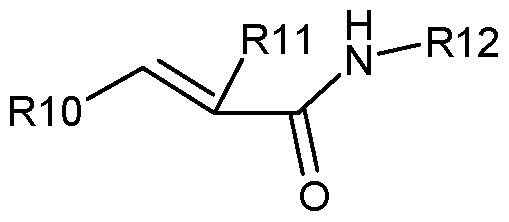
in denen R 0 und R unabhängig voneinander Wasserstoff oder Methylgruppen sind und R 2 für ein Wasserstoffatom oder eine (C bis C8)-Alkylgruppe steht, enthalten .
Erfindungsgemäß ganz besonders bevorzugt verwendete amphotere Polymere auf Basis eines Comonomers (Mono4) sind Terpolymere aus Diallyldimethylammoniumchlorid, Acrylamid und Acrylsäure. Diese Copolymerisate werden unter der INCI-Bezeichnung Polyquaternium-39 unter anderem mit dem Handelsnamen Merquat® Plus 3330 (Nalco) vertrieben.
Erfindungsgemäß ganz besonders bevorzugt verwendete amphotere Polymere auf Basis eines Comonomers (Mono4) sind Terpolymere aus Diallyldimethylammoniumchlorid, Acrylamid und Acrylsäure. Diese Copolymerisate werden unter der INCI-Bezeichnung Polyquaternium-39 unter anderem mit dem Handelsnamen Merquat® Plus 3330 (Nalco) vertrieben.
Die amphoteren Polymere können generell sowohl direkt als auch in Salzform, die durch Neutralisation der Polymerisate, beispielsweise mit einem Alkalihydroxid, erhalten wird, erfindungsgemäß eingesetzt werden.
Ein erfindungsgemäßes höchst bevorzugtes amphoteres Polymer ist ein Copolymer, welches wie folgt zusammengesetzt ist: 0,1 bis 50 % (bezogen auf die Gesamt-Anzahl an Monomeren im Copolymer) Monomeren der Formel (I)

(l) in der die weiter oben genannten Definitionen für die Reste R , R2, R3, R4, R5, R6 sowie die Indices n, m und die Gruppen Z, A, B, X gelten, und Monomeren aus der Gruppe Acrylsäure, Methacrylsäure, alpha-Ethacrylsäure, beta.beta-Dimethylacrylsäure, Methylenmalonsäure, Vinylessigsäure, Allylessigsäure, Ethylidinessigsäure, Propylidinessigsäure, Crotonsäure, Maleinsäure, Fumarsäure, Itaconsäure, Citraconsäure, Mesaconsäure, N-Methacryloylalanin, N- Acryloylhydroxyglycin, Sulfopropylacrylat, Sulfoethylacrylat, Sulfoethylmethacrylat, Sulfoethylmethacrylat, Styrolsulfonsäure, Vinylsulfonsäure, Vinylphosphonsäure, Phosphoethylacrylat, Phosphonoethylacrylat, Phosphopropylacrylat, Phosphonopropylacrylat, Phosphoethylmethacrylat, Phosphonoethylmethacrylat, Phosphopropylmethacrylat und Phosphonopropylmethacrylat sowie die Alkalimetall- und Ammoniumsalze dieser Säuren, sowie optional nichtionischen Monomeren aus der Gruppe Acrylamid, Vinylalkohol, C^C^Alkylester von Acrylsäure und/oder von Methacrylsäure, C C^Hydroxyalkylester von Acrylsäure und/oder von Methacrylsäure, insbsondere Ethylenglykol- und Propylenglykolacrylat und -methacrylat, polyalkoxylierte Ester von Acrylsäure und/oder von Methacrylsäure, insbesondere die Polyethylenglykol- und Polypropylenglykolester, Ester von Acrylsäure und/oder von Methacrylsäuremit Polyethylenglykol- oder Polypropylenglykol-mono(C -C25)alkylethern, Vinylacetat, Vinylpyrrolidon und Methylvinylether, wobei die Monomere A2 und A3 gemeinsam 50 bis 99,9 % (bezogen auf die Gesamt-Anzahl an Monomeren im Copolymer) des Copolymers ausmachen.
In der Formel (I) für das Monomer (A) ist R vorzugsweise eine Methylgruppe, und auch R2, R3, R4, R5 und R6 stehen für Methylgruppen. Die Gruppe Z ist vorzugsweise eine -NH-Gruppe, der Index n steht besonders bevorzugt für die Zahl 3.
Je nach Wahl der Gruppen A und B sowie des Index m können verschiedene Monomere der Formel (I) bevorzugt sein. Ein bevorzugtes Monomer, das den im vorgenannten Absatz genannten Kriterien entspricht, besitzt als Gruppe B darüber hinaus eine -CH2-CH(OH)-CH2-Gruppe, und der
Index m steht für die Zahl 0. Erfindungsgemäß bevorzugte Polymere sind zusammengesetzt aus Monomeren A1)
A1 ) 0,1 bis 50 %, vorzugsweise 10 bis 50 % (bezogen auf die Gesamt-Anzahl an Monomeren im Copolymer) Monomeren der Formel (la)

in der
X steht für Chlorid, Sulfat, Methosulfat,
und den Monomeren A2) aus der Gruppe Acrylsäure, Methacrylsäure sowie den Alkalimetall- und Ammoniumsalzen dieser Säuren,
wobei das Monomere A2 50 bis 99,9 %, vorzugsweise 50 bis 90 % (bezogen auf die Gesamt- Anzahl an Monomeren im Copolymer) des Copolymers ausmacht.
Ein weiteres bevorzugtes Monomer, das den im vorvorgenannten Absatz genannten Kriterien entspricht, besitzt als Gruppe B darüber hinaus eine -CH2-CH(OH)-CH2-Gruppe, als Gruppe A eine -(CH2)2- oder eine -(CH2)3- oder eine -(CH2)4-Gruppe, und der Index m steht für die Zahl 1 . In diesen Polymeren, die solche Monomere enthalten, ist mindestens ein Copolymer A ausgewählt aus:
A1 ) 0,1 bis 50 %, vorzugsweise 10 bis 50 % (bezogen auf die Gesamt-Anzahl an Monomeren im Copolymer) Monomeren der Formel (Ib)

(Ib) in der
p steht für 2, 3 oder 4,
X steht für Chlorid, Sulfat, Methosulfat,
A2) Monomeren aus der Gruppe Acrylsäure, Methacrylsäure sowie den Alkalimetall- und
Ammoniumsalzen dieser Säuren,
wobei das Monomere A2 50 bis 99,9 %, vorzugsweise 50 bis 90 % (bezogen auf die Gesamt- Anzahl an Monomeren im Copolymer) des Copolymers ausmacht;
enthalten.
Besonders bevorzugte Monomere A2 sind Acrylsäure bzw. ihre Salze (auch gemischt, d.h. teilneutralisierte Acrylsäuren) sowie Acrylamid. Ein bevorzugtes Copolymer A ist ein Copolymer aus dem Monomer (la), Natriumacrylat und Acrylamid, wobei folgende Verteilung (in % der insgesamt im Polymer enthaltenen Monomere) bevorzugt ist:
Monomer (la): 0,1 bis 50 %, vorzugsweise 10 bis 50 %
Natriumacrylat: 10 bis 95 %, vorzugsweise für 50 bis 70 %
Acrylamid: 0 bis 50 %, vorzugsweise 0 bis 30 %
Vorzugsweise enthält ein bevorzugtes Copolymer A folgende Anzahl an den jeweiligen Monomeren:
Monomer (la): Werte von 1 bis 12500, vorzugsweise von 2 bis 8000, besonders bevorzugt von 3 bis 4000 und insbesondere von 5 bis 2000
Natriumacrylat: Werte von 1 bis 24000, vorzugsweise von 5 bis 15000, besonders bevorzugt von
10 bis 10000 und insbesondere von 100 bis 4800
Acrylamid: Werte 0, 1 , 2, 3, 4, 5, wobei der Wert 0 bevorzugt ist
Zusammenfassend sind erfindungsgemäße Amphopolymere besonders bevorzugt, wenn sie mindestens ein Copolymer A der allgemeinen Formel (Ic)

(Ic)
enthalten, in der gilt:
x + y + z = Q
steht für Werte von 3 bis 55000, vorzugsweise von 10 bis 25000, besonders bevorzugt von 50 bis 15000, weiter bevorzugt von 100 bis 10000, noch weiter bevorzugt von 500 bis 8000 und insbesondere von 1000 bis 5000,
steht für (0 bis 0,5) Q, vorzugsweise für (0 bis 0,3) Q und insbesondere für die Werte 0, 1 , 2, 3, 4, 5, wobei der Wert 0 bevorzugt ist,
steht für (0,1 bis 0,95) Q, vorzugsweise für (0,5 bis 0,7) Q und insbesondere für Werte von 1 bis 24000, vorzugsweise von 5 bis 15000, besonders bevorzugt von 10 bis 10000 und insbesondere von 100 bis
4800,
z steht für (0,001 bis 0,5) Q, vorzugsweise für (0,1 bis 0,5) Q und insbesondere für Werte von 1 bis 12500, vorzugsweise von 2 bis 8000, besonders bevorzugt von 3 bis 4000 und insbesondere von 5 bis 2000. Zusätzlich zu dem vorstehend genannten Copolymer oder an seiner Stelle können die erfindungsgemäßen Mittel auch ein Copolymer enthalten, das aus Monomeren der Formel (la), Malein- bzw. Fumarsäure (bzw. deren Dinatriumsalzen) und Acrylamid aufgebaut ist. Hierbei ist folgende Verteilung (in % der insgesamt im Polymer enthaltenen Monomere) bevorzugt:
Monomer (la): 0,1 bis 50 %, vorzugsweise 10 bis
50 %
Maleinsäure bzw. Fumarsäure (bzw. deren Dinatriumsalz): 10 bis 95 %, vorzugsweise für 50 bis 70 %
Acrylamid: 0 bis 50 %, vorzugsweise 0 bis 30
%
Vorzugsweise enthält ein bevorzugtes Copolymer A folgende Anzahl an den jeweiligen Monomeren:
Monomer (la): Werte von 1 bis 12500, vorzugsweise von 2 bis 8000, besonders bevorzugt von 3 bis 4000 und insbesondere von 5 bis 2000
Maleinsäure bzw. Fumarsäure (bzw. deren Dinatriumsalz): Werte von 1 bis 24000, vorzugsweise von 5 bis 15000, besonders bevorzugt von 10 bis 10000 und insbesondere von 100 bis 4800
Acrylamid: Werte 0, 1 , 2, 3, 4, 5, wobei der
Wert 0 bevorzugt ist
Ein höchst bevorzugtes Polymer, welches wie zuvor beschrieben aufgebaut ist, ist unter der INCI - Bezeichnung Polyquaternium-74 frei im Handel beispielsweise von der Firma Rhodia als Polycare® Boost erhältlich.
Die amphoteren Polymere können generell sowohl direkt als auch in Salzform, die durch Neutralisation der Polymerisate, beispielsweise mit einem Alkalihydroxid, erhalten wird, erfindungsgemäß eingesetzt werden.
Die zuvor genannten kationischen Polymere können einzeln oder in beliebigen Kombinationen miteinander verwendet werden, wobei Mengen zwischen 0,01 bis 10 Gew.%, bevorzugt, Mengen von 0,01 bis 7,5 Gew.% und ganz besonders bevorzugt in Mengen von 0,1 bis 5,0 Gew.% enthalten sind. Die allerbesten Ergebnisse werden dabei mit Mengen von 0,1 bis 3,0 Gew.% jeweils bezogen auf die Gesamtzusammensetzung des jeweiligen Mittels erhalten.
Weiterhin können die erfindungsgemäßen Zusammensetzungen wellkraftverstärkende Kompo-
nenten enthalten, wie beispielsweise
• heterocyclische Verbindungen wie Imidazol, Pyrrolidin, Piperidin, Dioxolan, Dioxan, Morpholin und Piperazin sowie Derivate dieser Verbindungen wie beispielsweise die C1 -4-Alkyl-Derivate, C1 -4-Hydroxyalkyl-Derivate und C1 -4-Aminoalkyl-Derivate. Bevorzugte Substituenten, die sowohl an Kohlenstoffatomen als auch an Stickstoffatomen der heterocyclischen Ringsysteme positioniert sein können, sind Methyl-, Ethyl-, ß-Hydroxyethyl- und ß-Aminoethyl-Gruppen. Erfindungsgemäß bevorzugte Derivate heterocyclischer Verbindungen sind beispielsweise 1 - Methylimidazol, 2-Methylimidazol, 4(5)-Methylimidazol, 1 ,2-Dimethylimidazol, 2-Ethylimidazol, 2-lsopropylimidazol, N-Methylpyrrolidon, 1 -Methylpiperidin, 4-Methylpiperidin, 2-Ethylpiperidin, 4-Methylmorpholin, 4-(2-Hydroxyethyl)morpholin, 1 -Ethylpiperazin, 1 -(2-Hydroxy- ethyl)piperazin, 1 -(2-Aminoethyl)piperazin. Weiterhin erfindungsgemäß bevorzugte Imidazolderivate sind Biotin, Hydantoin und Benzimidazol. Ganz besonders bevorzugt ist das Imidazol.
• Aminosäuren wie insbesondere Arginin, Citrullin, Histidin, Ornithin und Lysin. Die Aminosäuren können sowohl als freie Aminosäure als auch als Salze, z. B. als Hydrochloride, eingesetzt werden. Weiterhin haben sich auch Oligopeptide aus durchschnittlich 2-3 Aminosäuren, die einen hohen Anteil (> 50 %, insbesondere > 70 %) an den genannten Aminosäuren haben, als erfindungsgemäß einsetzbar erwiesen. Erfindungsgemäß besonders bevorzugt sind Arginin sowie dessen Salze und argininreiche Oligopeptide.
• Diole wie beispielsweise 2-Ethyl-1 ,3-hexandiol, 1 ,3-Butandiol, 1 ,4-Butandiol, 1 ,2-Propandiol, 1 ,3-Propandiol, Neopentylglykol und Ethylenglykol. 1 ,3-Diole, insbesondere 2-Ethyl-1 ,3- hexandiol und 1 ,3-Butandiol, haben sich als besonders gut geeignet erwiesen.
• Harnstoff und seine am Stickstoffatom modifizierten Derivate.
Die wellkraftverstärkenden Verbindungen können in den erfindungsgemäßen Zusammensetzungen in Mengen von 0,5 bis 5 Gew.-%, bezogen auf das Gesamtgewicht der Zusammensetzung, enthalten sein. Mengen von 1 bis 4 Gew.-%, im Falle der Diole von 0,5 bis 3 Gew.-%, haben sich als ausreichend erwiesen, weshalb diese Mengen besonders bevorzugt sind.
Die erfindungsgemäßen Zusammensetzungen können zusätzlich mindestens eine Olkomponente enthalten, welche von der zwingenden Komponente Bertholletia excelsea nut oil verschieden ist. Erfindungsgemäß geeignete Ölkomponenten sind prinzipiell alle Öle und Fettstoffe sowie deren Mischungen mit festen Paraffinen und Wachsen. Bevorzugt sind solche Ölkomponenten, deren Löslichkeit in Wasser bei 20 °C kleiner 1 Gew.-%, insbesondere kleiner als 0,1 Gew.-% beträgt. Der Schmelzpunkt der einzelnen Öl- oder Fettkomponenten liegt bevorzugt unterhalb von etwa 40 °C. Ölkomponenten, die bei Raumtemperatur, d. h. unterhalb von 25 °C flüssig sind, können erfindungsgemäß besonders bevorzugt sein. Bei Verwendung mehrerer Öl- und Fettkomponenten sowie ggf. festen Paraffinen und Wachsen ist es in der Regel jedoch auch ausreichend, wenn die Mischung der Öl- und Fettkomponenten sowie ggf. Paraffine und Wachse diesen Bedingungen genügt.
Eine bevorzugte Gruppe von Ölkomponenten sind pflanzliche Öle. Beispiele für solche Öle sind
Aprikosenkernöl, Avokadoöl, Sonnenblumenöl, Olivenöl, Sojaöl, Rapsöl, Mandelöl, Jojobaöl, Orangenöl, Weizenkeimöl, Pfirsichkernöl und die flüssigen Anteile des Kokosöls. Geeignet sind aber auch andere Triglyceridöle wie die flüssigen Anteile des Rindertalgs sowie synthetische Triglyceridöle.
Eine weitere, besonders bevorzugte Gruppe erfindungsgemäß einsetzbarer Ölkomponenten sind flüssige Paraffinöle und synthetische Kohlenwasserstoffe sowie Di-n-alkylether mit insgesamt zwischen 12 bis 36 C-Atomen, insbesondere 12 bis 24 C-Atomen, wie beispielsweise Di-n- octylether, Di-n-decylether, Di-n-nonylether, Di-n-undecylether, Di-n-dodecylether, n-Hexyl-n- octylether, n-Octyl-n-decylether, n-Decyl-n-undecylether, n-Undecyl-n-dodecylether und n-Hexyl-n- Undecylether sowie Di-tert-butylether, Di-iso-pentylether, Di-3-ethyldecylether, tert.-Butyl-n- octylether, iso-Pentyl-n-octylether und 2-Methyl-pentyl-n-octylether. Die als Handelsprodukte erhältlichen Verbindungen 1 ,3-Di-(2-ethyl-hexyl)-cyclohexan (Cetiol® S) und Di-n-octylether (Cetiol® OE) können bevorzugt sein.
Ebenfalls erfindungsgemäß einsetzbare Ölkomponenten sind Fettsäure- und Fettalkoholester. Bevorzugt sind die Monoester der Fettsäuren mit Alkoholen mit 3 bis 24 C-Atomen. Bei dieser Stoffgruppe handelt es sich um die Produkte der Veresterung von Fettsäuren mit 8 bis 24 C- Atomen wie beispielsweise Capronsäure, Caprylsäure, 2-Ethylhexansäure, Caprinsäure, Laurinsäure, Isotridecansäure, Myristinsäure, Palmitinsäure, Palmoleinsäure, Stearinsäure, Isostearinsäure, Ölsäure, Elaidinsäure, Petroselinsäure, Linolsäure, Linolensäure, Elaeostearin- säure, Arachinsäure, Gadoleinsäure, Behensäure und Erucasäure sowie deren technische Mischungen, die z. B. bei der Druckspaltung von natürlichen Fetten und Ölen, bei der Reduktion von Aldehyden aus der Roelen'schen Oxosynthese oder der Dimerisierung von ungesättigten Fettsäuren anfallen, mit Alkoholen wie beispielsweise Isopropylalkohol, Glycerin, Capronalkohol, Caprylalkohol, 2-Ethylhexylalkohol, Caprinalkohol, Laurylalkohol, Isotridecylalkohol, My- ristylalkohol, Cetylalkohol, Palmoleylalkohol, Stearylalkohol, Isostearylalkohol, Oleylalkohol, Elaidylalkohol, Petroselinylalkohol, Linolylalkohol, Linolenylalkohol, Elaeostearylalkohol, Arachylal- kohol, Gadoleylalkohol, Behenylalkohol, Erucylalkohol und Brassidylalkohol sowie deren technische Mischungen, die z. B. bei der Hochdruckhydrierung von technischen Methylestern auf Basis von Fetten und Ölen oder Aldehyden aus der Roelen'schen Oxosynthese sowie als Monomer- fraktion bei der Dimerisierung von ungesättigten Fettalkoholen anfallen. Erfindungsgemäß besonders bevorzugt sind Isopropylmyristat, lsononansäure-C16-18-alkylester (Cetiol® SN), Stearinsäure-2-ethylhexylester (Cetiol® 868), Cetyloleat, Glycerintricaprylat, Kokosfettalkohol- caprinat/-caprylat und n-Butylstearat.
Weiterhin stellen auch Dicarbonsäureester wie Di-n-butyladipat, Di-(2-ethylhexyl)-adipat, Di-(2- ethylhexyl)-succinat und Di-isotridecylacelaat sowie Diolester wie Ethylenglykol-dioleat, Ethylenglykol-di-isotridecanoat, Propylenglykol-di(2-ethylhexanoat), Propylenglykol-di-isostearat, Propylenglykol-di-pelargonat, Butandiol-di-isostearat und Neopentylglykoldi-capylat erfindungsgemäß verwendbare Ölkomponenten dar, ebenso komplexe Ester wie z. B. das Diacetyl-glycerinmonostearat.
Erfindungsgemäß bevorzugt verwendbare Ölkomponenten sind schließlich auch Silikonöle, insbesondere Dialkyl- und Alkylarylsiloxane, wie beispielsweise Dimethylpolysiloxan und Methylphenylpolysiloxan, sowie deren alkoxylierte und quaternierte Analoga sowie cyclische Siloxane. Beispiele für solche Silikone sind die von Dow Corning unter den Bezeichnungen DC 190, DC 200 und DC 1401 vertriebenen Produkte sowie die Handelsprodukte DC 344 und DC 345 von Dow Corning, Q2-7224 (Hersteller: Dow Corning; ein stabilisiertes Trimethyl- silylamodimethicon), Dow Corning® 929 Emulsion (enthaltend ein hydroxyl-amino-modifiziertes Silicon, das auch als Amodimethicone bezeichnet wird), SM-2059 (Hersteller: General Electric), SLM-55067 (Hersteller: Wacker) sowie Abil®-Quat 3270 und 3272 (Hersteller: Th. Goldschmidt; di- quaternäre Polydimethylsiloxane, Quaternium-80). Bevorzugt im Sinne der Erfindung können Silikonöle mit einer kinematischen Viskosität bis zu 50.000 cSt gemessen bei 25 °C sein. Ganz besonders bevorzugt sind Silikonöle mit kinematischen Viskositäten bis zu 10.000 cSt gemessen bei 25 °C. Die Bestimmung der Viskositäten erfolgt dabei nach der Kugelfallmethode entsprechend der Methode "british Standard 188". Vergleichbare Werte werden mit zum "british Standard 188" analogen Prüfvorschriften der Hersteller erhalten, beispielsweise der "CTM 0577" der Dow Corning Corporation.
In einer besonderen Ausführungsform werden als Ölkomponente insbesondere cyclische Siloxane wie beispielsweise die Produkte Dow Corning® 344, Dow Corning® 345, Dow Corning® 244, Dow Corning® 245 oder Dow Corning® 246 mit kinematischen Viskositäten von bis zu 10.000 cSt bei 25 °C bestimmt entsprechend den Angaben des Herstellers eingesetzt.
Erfindungsgemäß einsetzbare Ölkomponenten sind schließlich auch Dialkylcarbonate, wie sie in der DE-OS 197 101 54, auf die ausdrücklich Bezug genommen wird, ausführlich beschrieben werden. Dioctylcarbonate, insbesondere das Di-2-ethylhexylcarbonat, sind bevorzugte Ölkomponenten in Rahmen der vorliegenden Erfindung.
Weiterhin können die erfindungsgemäßen Zusammensetzungen zusätzlich nur begrenzt mit Wasser mischbare Alkohole enthalten.
Unter„mit Wasser begrenzt mischbar" werden solche Alkohole verstanden, die in Wasser bei 20 °C zu nicht mehr als 10 Gew.-%, bezogen auf die Wassermasse, löslich sind.
In vielen Fällen haben sich Triole und insbesondere Diole als erfindungsgemäß besonders geeignet erwiesen. Erfindungsgemäß einsetzbar sind Alkohole mit 4 bis 20, insbesondere 4 bis 10, Kohlenstoffatomen. Die erfindungsgemäß verwendeten Alkohole können gesättigt oder ungesättigt und linear, verzweigt oder cyclisch sein. Einsetzbar im Sinne der Erfindung sind beispielsweise Butanol-1 , Cyclohexanol, Pentanol-1 , Decanol, Octanol, Octenol, Dodecenol, Decenol, Octadienol, Dodecadienol, Decadienol, Oleylalkohol, Erucaalkohol, Ricinolalkohol, Stearylalkohol, Isoste- arylalkohol, Cetylalkohol, Laurylalkohol, Myristylalkohol, Arachidylalkohol, Caprylalkohol, Caprinalkohol, Linoleylalkohol, Linolenylalkohol und Behenylalkohol, sowie deren Guerbetalkohole, wobei diese Aufzählung beispielhaften und nicht limitierenden Charakter haben soll. Die Fettalkohole stammen jedoch von bevorzugt natürlichen Fettsäuren ab, wobei üblicherweise von einer Gewinnung aus den Estern der Fettsäuren durch Reduktion ausgegangen werden kann.
Erfindungsgemäß einsetzbar sind ebenfalls solche Fettalkoholschnitte, die durch Reduktion natürlich vorkommender Triglyceride wie Rindertalg, Palmöl, Erdnussöl, Rüböl, Baumwollsaatöl, Sojaöl, Sonnenblumenöl und Leinöl oder aus deren Umesterungsprodukten mit entsprechenden Alkoholen entstehenden Fettsäureestern erzeugt werden, und somit ein Gemisch von unterschiedlichen Fettalkoholen darstellen.
Erfindungsgemäß bevorzugt als Alkohole sind 2-Ethyl-hexandiol-1 ,3, Butanol-1 , Cyclohexanol, Pentanol-1 und 1 ,2-Butandiol. Insbesondere 2-Ethyl-hexandiol-1 ,3, aber auch Butanol-1 und Cyclohexanol sind besonders bevorzugt.
In einer weiteren Ausführungsform können in den erfindungsgemäßen Zusammensetzungen Emulgatoren verwendet werden. Emulgatoren bewirken an der Phasengrenzfläche die Ausbildung von wasser- bzw. ölstabilen Adsorptionsschichten, welche die dispergierten Tröpfchen gegen Koaleszenz schützen und damit die Emulsion stabilisieren. Emulgatoren sind daher wie Tenside aus einem hydrophoben und einem hydrophilen Molekülteil aufgebaut. Hydrophile Emulgatoren bilden bevorzugt O/W - Emulsionen und hydrophobe Emulgatoren bilden bevorzugt W/O - Emulsionen. Unter einer Emulsion ist eine tröpfchenförmige Verteilung (Dispersion) einer Flüssigkeit in einer anderen Flüssigkeit unter Aufwand von Energie zur Schaffung von stabilisierenden Phasengrenzflächen mittels Tensiden zu verstehen. Die Auswahl dieser emulgierenden Tenside oder Emulgatoren richtet sich dabei nach den zu dispergierenden Stoffen und der jeweiligen äußeren Phase sowie der Feinteiligkeit der Emulsion. Weiterführende Definitionen und Eigenschaften von Emulgatoren finden sich in "H. -D.Dörfler, Grenzflächen- und Kolloidchemie, VCH Verlagsgesellschaft mbH. Weinheim, 1994". Erfindungsgemäß verwendbare Emulgatoren sind beispielsweise
Anlagerungsprodukte von 4 bis 100 Mol Ethylenoxid und/oder 0 bis 5 Mol Propylenoxid an lineare Fettalkohole mit 8 bis 22 C-Atomen, an Fettsäuren mit 12 bis 22 C-Atomen und an Alkylphenole mit 8 bis 15 C-Atomen in der Alkylgruppe,
C 2-C22-Fettsäuremono- und -diester von Anlagerungsprodukten von 1 bis 30 Mol Ethylenoxid an Polyole mit 3 bis 6 Kohlenstoffatomen, insbesondere an Glycerin,
Ethylenoxid- und Polyglycerin-Anlagerungsprodukte an Methylglucosid-Fettsäureester, Fettsäurealkanolamide und Fettsäureglucamide,
C8-C22-Alkylmono- und -oligoglycoside und deren ethoxylierte Analoga, wobei Oli- gomerisierungsgrade von 1 ,1 bis 5, insbesondere 1 ,2 bis 2,0, und Glucose als Zuckerkomponente bevorzugt sind,
Gemische aus Alkyl-(oligo)-glucosiden und Fettalkoholen zum Beispiel das im Handel erhältliche Produkt Montanov®68,
Anlagerungsprodukte von 5 bis 60 Mol Ethylenoxid an Rizinusöl und gehärtetes Rizinusöl, Partialester von Polyolen mit 3-6 Kohlenstoffatomen mit gesättigten Fettsäuren mit 8 bis 22 C- Atomen,
Sterine. Als Sterine wird eine Gruppe von Steroiden verstanden, die am C-Atom 3 des Steroid-
Gerüstes eine Hydroxylgruppe tragen und sowohl aus tierischem Gewebe (Zoosterine) wie auch aus pflanzlichen Fetten (Phytosterine) isoliert werden. Beispiele für Zoosterine sind das Cholesterin und das Lanosterin. Beispiele geeigneter Phytosterine sind Ergosterin, Stigmasterin und Sitosterin. Auch aus Pilzen und Hefen werden Sterine, die sogenannten Mykosterine, isoliert.
Phospholipide. Hierunter werden vor allem die Glucose-Phospolipide, die z.B. als Lecithine bzw. Phospahtidylcholine aus z.B. Eidotter oder Pflanzensamen (z.B. Sojabohnen) gewonnen werden, verstanden.
Fettsäureester von Zuckern und Zuckeralkoholen, wie Sorbit,
Polyglycerine und Polyglycerinderivate wie beispielsweise Polyglycerinpoly-12-hydroxystearat (Handelsprodukt Dehymuls® PGPH),
Lineare und verzweigte Fettsäuren mit 8 bis 30 C - Atomen und deren Na-, K-, Ca-, Mg- und Zn - Salze.
Die erfindungsgemäßen Zusammensetzungen enthalten die Emulgatoren bevorzugt in Mengen von 0,1 bis 25 Gew.-%, insbesondere 0,1 bis 3 Gew.-%, bezogen auf die jeweilige gesamte Zusammensetzung.
Bevorzugt können die erfindungsgemäßen Zusammensetzungen mindestens einen nichtionogenen Emulgator mit einem HLB-Wert von 8 bis 18, gemäß den im Römpp-Lexikon Chemie (Hrg. J. Falbe, M.Regitz), 10. Auflage, Georg Thieme Verlag Stuttgart, New York, (1997), Seite 1764, aufgeführten Definitionen enthalten. Nichtionogene Emulgatoren mit einem HLB-Wert von 10 - 15 können erfindungsgemäß besonders bevorzugt sein.
Die erfindungsgemäße wasserhaltige Zusammensetzung kann in verschiedenen Formen, beispielsweise als Lotion, ÖI-in-Wasser-Emulsion oder Wasser-in-ÖI-Emulsion, vorliegen.
Weiterhin hat es sich als vorteilhaft erwiesen, wenn die erfindungsgemäßen Zusammensetzungen einen pflegenden Wrkstoff, ausgewählt aus Proteinhydrolysaten und deren Derivaten, enthalten. Geeignete Proteinhydrolysate sind insbesondere Elastin-, Kollagen-, Keratin-, Milcheiweiß-, Seidenprotein-, Sojaprotein-, Mandelprotein-, Erbsenprotein-, Kartoffelprotein-, Haferprotein-, Maisprotein- und Weizenproteinhydrolysate. Dabei können Produkte auf pflanzlicher Basis erfindungsgemäß bevorzugt sein.
Geeignete Derivate sind insbesondere quaternisierte Proteinhydrolysate. Beispiele für diese Verbindungsklasse sind die unter den Bezeichnungen Lamequat®L(CTFA-Bezeichnung: Lau- ryldimonium Hydroxypropylamino Hydrolyzed Animal Protein; Grünau), Croquat®WKP und Gluadin®WQ auf dem Markt befindlichen Produkte. Das letztgenannte Produkt, das auf pflanzlicher Basis beruht, kann bevorzugt sein.
Die Protein-Derivate sind in den erfindungsgemäßen Zusammensetzungen bevorzugt in Mengen von 0,1 bis 10 Gew.-%, bezogen auf die Gesamtmenge der Zusammensetzung enthalten. Mengen von 0,1 bis 5 Gew.-% sind bevorzugt.
Weitere übliche Bestandteile für die erfindungsgemäßen Zusammensetzungen sind:
anionische Tenside wie beispielsweise Seifen, Alkylsulfate und Alkylpolyglykolethersulfate, Salze von Ethercarbonsäuren der Formel R-0-(CH2-CH20)x-CH2-COOH, in der R eine lineare Alkylgruppe mit 10 bis 22 C-Atomen und x = 0 oder 1 bis 16 ist, Acylsarcoside, Acyltauride, Acylisethionate, Sulfobernsteinsäuremono- und dialkylester, lineare Alkansulfonate, lineare Alpha-Olefinsulfonate, alpha-Sulfofettsäuremethylester und Ester der Weinsäure und Zitronensäure Alkylglykosiden oder Alkoholen, welche Anlagerungsprodukte von etwa 2-15 Molekülen Ethylenoxid und/oder Propylenoxid an Fettalkohole mit 8 bis 22 C- Atomen darstellen.
zwitterionische Tenside wie beispielsweise Betaine und 2-Alkyl-3-carboxymethyl-3- hydroxyethyl-imidazoline.
ampholytische Tenside, wie beispielsweise N-Alkylglycine, N-Alkylpropionsäuren, N- Alkylaminobuttersäuren, N-Alkyliminodipropionsäuren, N-Hydroxyethyl-N-alkylamidopropylg- lycine, N-Alkyltaurine, N-Alkylsarcosine, 2-Alkylaminopropionsäuren und Alkylaminoessigsäuren.
nichtionische Tenside wie beispielsweise Anlagerungsprodukte von 2 bis 30 Mol Ethylenoxid und/oder 0 bis 5 Mol Propylenoxid an lineare Fettalkohole mit 15 bis 22 C-Atomen, an Fettsäuren mit 12 bis 22 C-Atomen und an Alkylphenole mit 8 bis 15 C-Atomen in der Alkylgruppe, C12-C22-Fettsäuremono- und -diester von Anlagerungsprodukten von 1 bis 30 Mol Ethylenoxid an Glycerin, C8-C22-Alkylmono- und -oligoglycoside und deren ethoxylierte Analoga sowie Anlagerungsprodukte von 5 bis 60 Mol Ethylenoxid an Rizinusöl und gehärtetes Rizinusöl.
nichtionische Polymere wie beispielsweise Vinylpyrrolidon/Vinylacrylat-Copolymere, Polyvinylpyrrolidon und Vinylpyrrolidon/Vinylacetat-Copolymere,
anionische Polymere, wie Polyacryl- und Polymethacrylsäuren, deren Salze, deren Co- polymere mit Acrylsäure- und Methacrylsäureestern und -amiden und deren Derivate, die durch Kreuzvernetzung mit polyfunktionellen Agentien erhalten werden,
Polyoxycarbonsäuren, wie Polyketo- und Polyaldehydocarbonsäuren und deren Salze, sowie Polymere und Copolymere der Crotonsäure mit Estern und Amiden der Acryl- und der Methacrylsäure, wie Vinylacetat-Crotonsäure- und Vinylacetat-Vinylpropio- nat-Crotonsäure-Copolymere,
zur Einstellung der erfindungsgemäßen Viskosität organische Verdickungsmittel wie Agar- Agar, Guar-Gum, Alginate, Celluloseether (wie Hydroxyethylcellulose, Methylpropylcellulose oder Methylhydroxypropylcellulose), Gelatine, Pektine und/oder Xanthan-Gum. Ethoxilierte Fettalkohole, insbesondere solche mit eingeschränkter Homologenverteilung, wie sie beispielsweise als Handelsprodukt unter der Bezeichnung Arlypon®F (Henkel) auf dem Markt sind, alkoxylierte Methylglucosidester, wie das Handelsprodukt Glucamate® DOE 120 (Amerchol), und ethoxylierte Propylenglykolester, wie das Handelsprodukt Antil® 141 (Goldschmidt), können bevorzugte organische Verdickungsmittel sein.
Strukturanten wie Glucose und Maleinsäure,
haarkonditionierende Verbindungen wie Phospholipide, beispielsweise Sojalecithin, Ei-
Lecithin und Kephaline,
Parfümöle,
Lösungsvermittler, wie Ethanol, Isopropanol, Ethylenglykol, Propylenglykol, Glycerin,
Diethylenglykol und ethoxylierte Triglyceride sowie Fettalkoholethoxylate und deren Derivate,
Antischuppenwirkstoffe wie Climbazol, Piroctone Olamine und Zink Omadine,
Wirkstoffe wie Bisabolol, Allantoin, Panthenol, Niacinmid, Tocopherol und Pflanzenextrakte,
Lichtschutzmittel,
Konsistenzgeber wie Zuckerester, Polyolester oder Polyolalkylether,
Fettsäurealkanolamide,
Komplexbildner wie EDTA, NTA, ß-Alanindiessigsäure und Phosphonsäuren,
Quell- und Penetrationsstoffe wie PCA, Glycerin, Propylenglykolmonoethylether, Carbonate,
Hydrogencarbonate, Guanidine, Harnstoffe sowie primäre, sekundäre und tertiäre
Phosphate,
Trübungsmittel wie Latex oder Styrol/Acrylamid-Copolymere,
Perlglanzmittel wie Ethylenglykolmono- und -distearat oder PEG-3-distearat,
direktziehende Farbstoffe.
Ein dritter Erfindungsgegenstand ist ein Kit-of-parts, umfassend
(i) mindestens einen ersten Behälter, enthaltend eine kosmetische Zusammensetzung, die mindestens eine Keratin reduzierende Verbindung ausgewählt aus
Thiglykolsäure und deren Salzen, und/oder Thiomilchsäure und deren Salzen, und/oder Cyste in und/oder Acetylcystein und/oder Cysteamin und deren Salzen und/oder Mischungen dieser Keratin reduzierenden Verbindungen enthält,
(ii) mindestens einen zweiten Behälter, enthaltend eine zweite kosmetische Zusammensetzung, die - 0,01 bis 15,0 Gew. %, bezogen auf das Mittel, mindestens ein Oxidationsmittel ausgewählt aus Natriumbromat oder Kaliumbromat oder Wasserstoffperoxid enthält, dadurch gekennzeichnet, dass mindestens eine der beiden Zusammensetzungen bezogen auf ihr Gewicht 0,01 bis 20,0 Gew. % Bertholletia Excelsea nut oil enthält.
Bezüglich des Bertholletia Excelsea nut oil gilt das bereits zuvor ausgeführte.
Oxidationsmittel im Sinne der Erfindung sind in der Lage aus zwei Thiolguppen oxidativ eine Disulfidbindung zu bilden. Bevorzugt geeignet sind Natriumbromat oder Kaliumbromat oder Wasserstoffperoxid. Wasserstoffperoxid ist ein besonders bevorzugtes Oxidationsmittel.
Die oxidative Zubereitung enthält bevorzugt 0,5 bis 15 Gew.-%, insbesondere 2,0 bis 9 Gew.-%, Oxidationsmittel, insbesondere Wasserstoffperoxid.
Die oxidative Zubereitung enthält bevorzugt mindestens 50 Gew.-% Wasser.
Der pH-Wert der oxidativen Zubereitung liegt bevorzugt bei 2 bis 6, insbesondere 2 bis 4.
Es ist erfindungsgemäß bevorzugt, wenn die Behälter jeweils eine Applikationshilfe besitzen, die eine direkte Applikation der entsprechenden Zusammensetzung aus dem Behälter auf das Haar ermöglicht. Bevorzugt weist diese Applikationshilfe Zinken oder Borsten oder Noppen auf, mit deren Hilfe das Haar mechanisch geglättet werden kann. Unter einer mechanischen Glättung wird erfindungsgemäß eine Streckung der krausen, keratinhaltigen Faser entlang ihrer längsten räumlichen Ausdehnung verstanden.
Hilfsmittel zur mechanischen Glättung sind insbesondere ein Kamm oder eine Bürste, ein Glättungsboard oder ein beheizbares Glättungseisen. Während des Schritts (iii) findet bevorzugt keine Anwendung von Hilfsmitteln zur mechanischen Glättung statt.
Es ist erfindungsgemäß optional, die keratinhaltigen Fasern vor dem Schritt (a) anzufeuchten. Dies kann durch Besprühen der Fasern mit einer Flüssigkeit, bevorzugt mit Wasser, geschehen. Bevorzugterweise werden die Fasern vor Schritt (a) mit einem herkömmlichen Shampoo shampooniert, gespült und dann mit einem Handtuch frottiert. Nach Abschluss des Frottierschritts bleibt eine fühlbare Restfeuchtigkeit im Haar zurück. Das Mittel des ersten Erfindungsgegenstands kann jedoch auch auf nicht angefeuchteten keratinhaltigen Fasern angewendet werden.
Unter einer mechanischen Glättung wird erfindungsgemäß eine Streckung der krausen Faser entlang ihrer längsten räumlichen Ausdehnung verstanden.
Die Einwirkzeit Z1 beträgt bevorzugt 5-60 Minuten, besonders bevorzugt 10-30 Minuten.
Die Einwirkzeit Z2 beträgt bevorzugt 1 -30 Minuten, besonders bevorzugt 5-20 Minuten.
Die in dem erfindungsgemäßen Verfahren einsetzbaren oxidativen Zusammensetzungen sind die im Zusammenhang mit dem erfindungsgemäßen Kit-of-parts des zweiten Erfindungsgegenstandes beschriebenen oxidativen Zubereitungen.
Im Rahmen des erfindungsgemäßen Verfahrens kann im Anschluss an Schritt (d) ein Konditioniermittel auf die keratinhaltigen Fasern appliziert werden und nach einer Einwirkzeit wieder abgespült werden. Dieses Konditioniermittel weist bevorzugt einen pH-Wert von pH kleiner als 7, insbesondere in einem pH-Wertebereich zwischen pH 2,0 und pH 5,0 auf. Besonders bevorzugt enthält auch dieses Konditioniermittel neben den üblichen in Konditioniermitteln enthaltenen Inhaltsstoffen insbesondere Bertholletia excelsea nut oil in den bereits beschriebenen Mengen, besonders bevorzugt in einer Menge von 0,1 bis 5,0 Gew. % bezogen auf das Gewicht des Konditioniermittels.
Wenn im Anschluss an den Schritt (d) des erfindungsgemäßen Verfahrens kein Konditioniermittel auf die keratinhaltigen Fasern aufgetragen wird, oder nach dessen Applizierung und dem Ausspülen des Konditioniermittels werden die keratinhaltigen Fasern in üblicher Art mit Hilfe von Luft und Wärme, beispielsweise mit Hilfe eines handelsüblichen Föhnes oder mit einem Handtuch getrocknet und zur Frisur gestaltet.
Beispiele:
Folgende Zusammensetzungen wurden jeweils durch Vermischen der Komponenten bereitgestellt. Die Zusammensetzungen der Tabelle 1 wurden in einen Behälter mit Applikationshilfe mit Zinken konfektioniert.
Tabelle 1 : erfindungsgemäßes Glättungsmittel 1
G1
Rohstoff
[Gew.-%]
Citronensäure 0,5
Thioglykolsäure 1 ,0
Cyste in 7,0
Salicylsäure 0,2
Panthenol 75%ig 0,5
Na- Benzoat 0,5
Euperlan® PK 3000 2,0
Cetiol® HE 1 ,0
Bertholletia excelsea nut oil 0,2
Polyquaternium-10 1 ,0
Monoethanolamin 4,0
Natriumchlorid 0,5
Wasser, Parfüm Ad 100
Tabelle 2: oxidative Zusammensetzung
Ol
Rohstoff
[Gew.-%]
Wasserstoffperoxid 2,0 - 6,0
Distearoylethyl Hydroxyethylmonium 2,0
Methosulfate
Paranussöl 2,0
Quaternium-87 1 ,5
Cetearyl Alcohol 3,5
Lecithin 0,4
Panthenol 75%ig 0,2
Hydrolyzed Wheat Proteine 1 ,0
Polyquaternium-37 1 ,0
Parfüm 0,4

Tabelle 3: erfindungsgemäßes Glättungsmittel 2

Je ein Proband mit naturkrausem Haar erhielt ein Kit-of-Parts umfassend folgende Zusammensetzungen gemäß Tabellen 1 bis 3: Kit 1 : (G1) und (Ol)
Kit 2: (G2) und (Ol)
Jeder Proband applizierte die entsprechende erfindungsgemäße Zusammensetzung der Tabelle 1 durch Kämmbewegungen mit Hilfe der Applikationshilfe des Behälters direkt auf das Haar. Die erfindungsgemäße Zusammensetzung wurde 20 Minuten einwirken gelassen und gründlich unter fließendem Wasser ausgespült. Anschließend wurden die jeweilige oxidative Zubereitung und mit einem Pinsel auf die Haare aufgetragen. Nach einer Einwirkzeit von 10 Minuten wurden die Haare unter fließendem Wasser gründlich gespült, gekämmt und getrocknet.
Das naturkrause Haar der Probanden war geglättet und zeigte einen intensiven Glanz, war sowohl im nassen als auch im getrockneten Haar leicht kämmbar und fühlte sich geschmeidig weich an. Die Probanden empfanden während und nach der Anwendung keine Kopfhautreizung.
Claims
Patentansprüche:
1 . Haarbehandlungsmittel, enthaltend
a) 0,01 bis 20,0 Gew.% Bertholletia excelsea nut oil und
b) 0,01 bis 15,0 Gew.% mindestens einer Keratin reduzierenden Verbindung ausgewählt aus Thioglykolsäure und deren Salzen, und / oder Thiomilchsäure und deren Salzen und / oder Cystein und / oder Acetylcystein und / oder Cysteamin und deren Salzen sowie Mischungen dieser Keratin reduzierenden Verbindungen.
2. Haarbehandlungsmittel nach Anspruch 1 , dadurch gekennzeichnet, dass weiterhin 0,1 bis 10,0 Gew.% mindestens einer quartären Ammoniumverbindung ausgewählt aus mindestens einer der Gruppen
der Esterquats und/oder
der quarternären Imidazoline der Formel I,

in welcher die Reste R unabhängig voneinander jeweils für einen gesättigten oder ungesättigten, linearen oder verzweigten Kohlenwasserstoffrest mit einer Kettenlänge von 8 bis 30 Kohlenstoffatomen und A für ein physiologisch verträgliches Anion steht, und/oder
der Amine und/oder kationisierten Amine und/oder
Poly(methacryloyloxyethyltrimethylammoniumverbindungen) und/oder;
quaternisierten Cellulose-Derivaten, insbesondere Polyquaternium 10 und/oder Polyquaternium 67, und/oder
kationischen Alkylpolyglycosiden und/oder
kationisertem Honig und/oder
kationischen Guar-Derivaten und/oder
Chitosan und/oder
polymeren Dimethyldiallylammoniumsalzen und deren Copolymeren mit Estern und Amiden von Acrylsäure und Methacrylsäure und/oder
Copolymeren des Vinylpyrrolidons mit quaternierten Derivaten des Dialkylamino- alkylacrylats und -methacrylats und/oder
Vinylpyrrolidon-Vinylimidazoliummethochlorid-Copolymeren und/oder quaterniertem Polyvinylalkohol und/oder
Polyquaternium 2 und/oder
Polyquaternium-7 und/oder
Polyquaternium-16 und/oder
Polyquaternium 17 und/oder
Polyquaternium 18 und/oder
Polyquaternium 24 und/oder
Polyquaternium 27 und/oder
Polyquaternium 74 enthalten ist.
Haarbehandlungsmittel nach einem der Ansprüche 1 oder 2, dadurch gekennzeichnet, dass die Keratin reduzierende Verbindung ausgewählt ist aus 0,1 bis 7,0 Gew. % Thioglykolsäure und deren Salzen, 0,1 bis 12,0 Gew.% Cystein und / oder Cysteamin und deren Salzen sowie Mischungen dieser Keratin reduzierenden Verbindungen
Haarbehandlungsmittel nach einem der Ansprüche 1 bis 3, dadurch gekennzeichnet, dass die Keratin reduzierende Verbindung eine Mischung aus Thioglykolsäure und Cystein und deren Salzen im Verhältnis 1 : 20 bis 1 : 1 und in einer Gesamtmenge an Keratin reduzierenden Verbindungen von 0,01 bis 15,0 Gew. % bezogen auf das Mittel ist.
Haarbehandlungsmittel nach einem der Ansprüche 1 bis 4, dadurch gekennzeichnet, dass die quaternäre Ammoniumverbindung in einer Menge von 0,1 bis 5,0 Gew.% enthalten und ausgewählt ist aus der Esterquats und/oder der quarternären Imidazoline der Formel I,
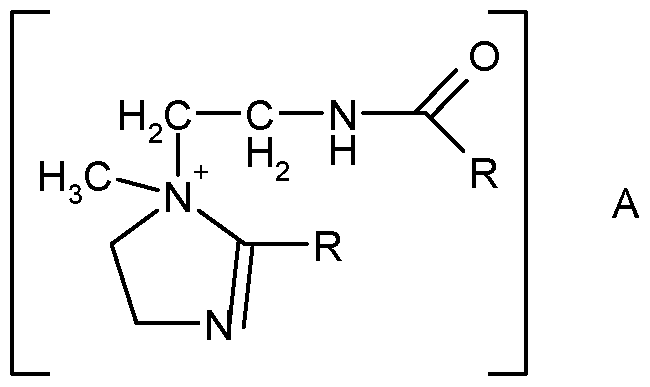
in welcher die Reste R unabhängig voneinander jeweils für einen gesättigten oder ungesättigten, linearen oder verzweigten Kohlenwasserstoffrest mit einer Kettenlänge von 8 bis 30 Kohlenstoffatomen und A für ein physiologisch verträgliches Anion steht, und/oder
Poly(methacryloyloxyethyltrimethylammoniumverbindungen) und/oder;
Polyquaternium-7 und / oder
quaternisierten Cellulose-Derivaten, insbesondere Polyquaternium 10 und/oder Polyquaternium 67.
6. Kit of parts umfassend
(i) mindestens einen ersten Behälter, enthaltend eine kosmetische Zusammensetzung, die
mindestens eine Keratin reduzierende Verbindung ausgewählt aus Thiglykolsäure und deren Salzen, und/oder Thiomilchsäure und deren Salzen, und/oder Cyste in und/oder Acetylcystein und/oder Cysteamin und deren Salzen und/oder Mischungen dieser Keratin reduzierenden Verbindungen enthält,
(ii) mindestens einen zweiten Behälter, enthaltend eine zweite kosmetische Zusammensetzung, die
0,01 bis 15,0 Gew. %, bezogen auf das Mittel, mindestens ein Oxidationsmittel ausgewählt aus Natriumbromat oder Kaliumbromat oder Wasserstoffperoxid enthält, dadurch gekennzeichnet, dass mindestens eine der beiden Zusammensetzungen bezogen auf ihr Gewicht 0,01 bis 20,0 Gew. % Bertholletia Excelsea nut oil enthält.
Kit-of parts gemäß Anspruch 6, umfassend
(i) mindestens einen ersten Behälter, enthaltend eine kosmetische Zusammensetzung, die mindestens eine Keratin reduzierende Verbindung ausgewählt aus
Thiglykolsäure und deren Salzen, und/oder Thiomilchsäure und deren Salzen, und/oder Cystein und/oder Acetylcystein und/oder Cysteamin und deren Salzen und/oder Mischungen dieser Keratin reduzierenden Verbindungen enthält,
(ii) mindestens einen zweiten Behälter, enthaltend eine zweite kosmetische Zusammensetzung, die
0,01 bis 15,0 Gew. %, bezogen auf das Mittel, Wasserstoffperoxid enthält, dadurch gekennzeichnet, dass mindestens eine der beiden Zusammensetzungen bezogen auf ihr Gewicht 0,01 bis 20,0 Gew. % Bertholletia Excelsea nut oil enthält
Verfahren, welches die folgenden Schritte umfasst:
a) Auftragen eines Haarbehandlungsmittels gemäß Anspruch 1 auf die keratinischen Fasern, insbesondere menschlichen Haaren,
b) die Fasern unter Zuhilfenahme eines Hilfsmittels zur mechanischen Glättung nach und/oder während des Schritts (a) verformt werden,
c) die Fasern nach einer Einwirkzeit Z1 , gespült und gegebenenfalls getrocknet werden, d) anschließend eine oxidative Zusammensetzung, enthaltend 0,01 bis 20,0 Gew.%, bezogen auf das Mittel, Bertholletia excelsea nut oil und 0,01 bis 15,0 Gew.%, bezogen auf das Mittel, mindestens eines Oxidationsmittels, ausgewählt aus Natriumbromat oder
Kaliumbromat oder Wasserstoffperoxid auf die Fasern aufgetragen und nach einer Einwirkzeit Z2 wieder abgespült wird.
9. Verfahren nach Anspruch 8, dadurch gekennzeichnet, dass sich an den Schritt d) des Verfahrens nach Anspruch 8 ein Konditioniermittel, welches 0,1 bis 5,0 Gew. % Bertholletia excelsea nut oil in einer Menge von 0,1 bis 5,0 Gew.% bezogen auf das Gewicht des Konditioniermittels enthält, aufgetragen und nach einer Einwirkzeit wieder ausgespült wird.
10. Verwendung eines Glättungsmittels enthaltend 0,01 bis 20,0 Gew. % - in Bezug auf das gesamte Mittel - Bertholletia excelsea nut oil zur Erzielung von Glanz, zur Verbesserung der Kämmbarkeiten der nassen und trockenen keratinischen Fasern und zur Verbesserung des Griffes von nassen und trockenen keratinischen Fasern.
Applications Claiming Priority (2)
| Application Number | Priority Date | Filing Date | Title |
|---|---|---|---|
| DE201010064110 DE102010064110A1 (de) | 2010-12-23 | 2010-12-23 | Haarbehandlungsmittel zur Glättung keratinhaltiger Fasern |
| DE102010064110.3 | 2010-12-23 |
Publications (2)
| Publication Number | Publication Date |
|---|---|
| WO2012084338A2 true WO2012084338A2 (de) | 2012-06-28 |
| WO2012084338A3 WO2012084338A3 (de) | 2013-09-06 |
Family
ID=44936285
Family Applications (1)
| Application Number | Title | Priority Date | Filing Date |
|---|---|---|---|
| PCT/EP2011/070016 Ceased WO2012084338A2 (de) | 2010-12-23 | 2011-11-14 | Haarbehandlungsmittel zur glättung keratinhaltiger fasern |
Country Status (2)
| Country | Link |
|---|---|
| DE (1) | DE102010064110A1 (de) |
| WO (1) | WO2012084338A2 (de) |
Cited By (4)
| Publication number | Priority date | Publication date | Assignee | Title |
|---|---|---|---|---|
| WO2012163594A3 (de) * | 2011-06-01 | 2013-03-21 | Henkel Ag & Co. Kgaa | Im wesentlichen ammoniak freie wellmittel mit cystein |
| CN108289814A (zh) * | 2015-12-04 | 2018-07-17 | 宝洁公司 | 用于毛发卷曲减少的组合物 |
| WO2019113656A1 (en) * | 2017-12-15 | 2019-06-20 | L'oreal | Leave-on hair care compositions |
| FR3130146A1 (fr) * | 2021-12-10 | 2023-06-16 | L'oreal | Composition comprenant de la cystéine, un triglycéride d’acide gras particulier et un agent réducteur supplémentaire |
Citations (1)
| Publication number | Priority date | Publication date | Assignee | Title |
|---|---|---|---|---|
| DE19710154A1 (de) | 1997-03-12 | 1998-09-17 | Henkel Kgaa | Kosmetische und/oder pharmazeutische Zubereitungen |
Family Cites Families (3)
| Publication number | Priority date | Publication date | Assignee | Title |
|---|---|---|---|---|
| DE19534722C3 (de) * | 1995-09-19 | 2002-01-10 | Goldwell Gmbh | Mittel zur dauerhaften Verformung von menschlichen Haaren |
| EP1011609A4 (de) * | 1997-05-09 | 2000-08-16 | Medlogic Global Corp | Zusammensetzungen für kosmetische anwendungen |
| FR2940109B1 (fr) * | 2008-12-18 | 2011-02-11 | Natura Cosmeticos Sa | Nanoemulsion huile dans l'eau contenant de l'huile de noix du bresil, composition cosmetique et produit cosmetique renfermant cette emulsion et utilisation de cette derniere. |
-
2010
- 2010-12-23 DE DE201010064110 patent/DE102010064110A1/de not_active Withdrawn
-
2011
- 2011-11-14 WO PCT/EP2011/070016 patent/WO2012084338A2/de not_active Ceased
Patent Citations (1)
| Publication number | Priority date | Publication date | Assignee | Title |
|---|---|---|---|---|
| DE19710154A1 (de) | 1997-03-12 | 1998-09-17 | Henkel Kgaa | Kosmetische und/oder pharmazeutische Zubereitungen |
Non-Patent Citations (1)
| Title |
|---|
| "Römpp-Lexikon Chemie", 1997, GEORG THIEME VERLAG, pages: 1764 |
Cited By (5)
| Publication number | Priority date | Publication date | Assignee | Title |
|---|---|---|---|---|
| WO2012163594A3 (de) * | 2011-06-01 | 2013-03-21 | Henkel Ag & Co. Kgaa | Im wesentlichen ammoniak freie wellmittel mit cystein |
| CN108289814A (zh) * | 2015-12-04 | 2018-07-17 | 宝洁公司 | 用于毛发卷曲减少的组合物 |
| CN108289814B (zh) * | 2015-12-04 | 2022-04-01 | 宝洁公司 | 用于毛发卷曲减少的组合物 |
| WO2019113656A1 (en) * | 2017-12-15 | 2019-06-20 | L'oreal | Leave-on hair care compositions |
| FR3130146A1 (fr) * | 2021-12-10 | 2023-06-16 | L'oreal | Composition comprenant de la cystéine, un triglycéride d’acide gras particulier et un agent réducteur supplémentaire |
Also Published As
| Publication number | Publication date |
|---|---|
| DE102010064110A1 (de) | 2012-06-28 |
| WO2012084338A3 (de) | 2013-09-06 |
Similar Documents
| Publication | Publication Date | Title |
|---|---|---|
| DE102015221460B4 (de) | Dauerwellverfahren mit verbesserter Pflegeleistung und Wellwirkung | |
| EP2352484A1 (de) | Haarkonditionierende mittel mit imidazolinen und esterölen | |
| WO2009074465A2 (de) | Haarkonditionierende mittel mit kationischen behenylverbindungen und ausgewählten siliconen und/oder kosmetischen ölen | |
| DE102012203240A1 (de) | Haarpflegemittel mit Antischuppenmitteln und ausgewählten Aminosilikonen | |
| DE102011088558A1 (de) | Haarbehandlungsmittel mit speziellen Polymeren | |
| WO2008110223A2 (de) | Wellmittel mit haarfaserstrukturanten | |
| EP1009367B1 (de) | Verwendung einer wirkstoffkombination und mittel zum schutz von keratinischen fasern | |
| EP1696863B1 (de) | Zwei-oder mehrphasige kosmetische mittel mit verbessertem reversiblen mischungs-und entmischungsverhalten | |
| DE19930769A1 (de) | Verfahren zur dauerhaften Verformung keratinischer Fasern und Mittel | |
| WO2012084338A2 (de) | Haarbehandlungsmittel zur glättung keratinhaltiger fasern | |
| DE19823552A1 (de) | Zubereitung zur Behandlung der menschlichen Haut und der menschlichen Haare mit einer speziellen Wirkstoffkombination sowie Verwendung dieser Wirkstoffkombination | |
| EP2054024B1 (de) | Stylingmittel mit hohem haltegrad | |
| WO2014095163A2 (de) | Schaumaerosol zur volumensteigerung | |
| WO2012163594A2 (de) | Im wesentlichen ammoniak freie wellmittel mit cystein | |
| DE102012223971A1 (de) | Schaumaerosol zur Volumensteigerung | |
| EP2651385A2 (de) | Haarbehandlungsmittel enthaltend dicocoyl pentaerythrityl distearyl citrate | |
| DE102009029197A1 (de) | Haarbehandlungsmittel mit Inca Inchi Oil | |
| WO2015090856A1 (de) | Haarbehandlungsmittel mit spezieller konditioniermittelkombination enthaltend liponsäureester | |
| EP2882409A2 (de) | Haarpflegemittel mit antischuppenmitteln und ausgewählte komplexe aus sauren proteinhydrolysaten und basischen fettsäureamidoaminen | |
| DE102011088929A1 (de) | Haarkur mit einem speziellen Emulgator und Proteinhydrolysaten | |
| EP1786389B1 (de) | Hautschonende wellmittel | |
| DE102010029976A1 (de) | Im wesentlichen Ammoniak freie Wellmittel | |
| WO2007062731A1 (de) | Wasserbeständige frisiermittel | |
| EP1940345A1 (de) | Haarbehandlungsmittel mit verbesserter pflegeleistung sowie verfahren zur applikation des mittels | |
| WO2014095162A2 (de) | Schaumaerosol zur volumensteigerung |
Legal Events
| Date | Code | Title | Description |
|---|---|---|---|
| 121 | Ep: the epo has been informed by wipo that ep was designated in this application |
Ref document number: 11781810 Country of ref document: EP Kind code of ref document: A2 |
|
| 122 | Ep: pct application non-entry in european phase |
Ref document number: 11781810 Country of ref document: EP Kind code of ref document: A2 |