WO2012086920A2 - Système de stockage réparti possédant une fonction pour empêcher le chevauchement de contenus, procédé pour stocker son objet, et support de stockage lisible par ordinateur - Google Patents
Système de stockage réparti possédant une fonction pour empêcher le chevauchement de contenus, procédé pour stocker son objet, et support de stockage lisible par ordinateur Download PDFInfo
- Publication number
- WO2012086920A2 WO2012086920A2 PCT/KR2011/008224 KR2011008224W WO2012086920A2 WO 2012086920 A2 WO2012086920 A2 WO 2012086920A2 KR 2011008224 W KR2011008224 W KR 2011008224W WO 2012086920 A2 WO2012086920 A2 WO 2012086920A2
- Authority
- WO
- WIPO (PCT)
- Prior art keywords
- data node
- target
- proxy server
- content
- client
- Prior art date
- Legal status (The legal status is an assumption and is not a legal conclusion. Google has not performed a legal analysis and makes no representation as to the accuracy of the status listed.)
- Ceased
Links
Images



Classifications
-
- G—PHYSICS
- G06—COMPUTING OR CALCULATING; COUNTING
- G06F—ELECTRIC DIGITAL DATA PROCESSING
- G06F16/00—Information retrieval; Database structures therefor; File system structures therefor
- G06F16/10—File systems; File servers
- G06F16/17—Details of further file system functions
- G06F16/174—Redundancy elimination performed by the file system
- G06F16/1748—De-duplication implemented within the file system, e.g. based on file segments
Definitions
- the present invention relates to a content-based object storage technology for efficiently performing deduplication or deduplication of an object in an object storage system.
- the present invention relates to a region-grouped data node.
- the present invention relates to a distributed storage system capable of storing objects reliably by storing them in a target data node selected based on location information of a client.
- Cloud computing is a concept of distributing and serving various information technology (IT) resources through the Internet network.
- IaaS infrastructure as a service
- PaaS Platform As A Service
- SaaS Software As A Service
- IaaS has a number of service categories, typically compute and storage services that provide compute resources in the form of virtual machines.
- the distributed storage system provides a cloud storage service, which uses a low specification hardware to create a common storage pool to satisfy elastic and flexible usage in a timely manner.
- simple and powerful object-based storage techniques are widely used to perform physical storage management directly on the storage device itself. Therefore, the performance of the storage device can be improved and the capacity of the storage device can be easily expanded. It also features the ability to safely share data independent of the platform.
- FIG. 1 is a diagram conceptually illustrating a distributed storage system according to the prior art.
- the object storage system shown in FIG. 1 stores metadata including an authentication server that handles the client's authentication, a proxy server (or master server) that handles the client's requirements, and a physical location of the objects. It includes a metadata database, a data node that is responsible for storing and managing physical objects, and a replica server that manages the replication of data.
- the client is initially authenticated through the authentication server. After the authentication is completed, the client requests the proxy server information of the data node managing the desired object.
- the proxy server refers to the metadata and sends the desired operation request to the corresponding data node, and the data node transmits the result of performing the operation to the client through the proxy server.
- the data node may provide a response directly to the client without going through the proxy server. In this case, the delay or data traffic can be reduced, but since all data nodes must have a client interface, the complexity of the data node can be increased.
- the object store replicates the data for its safety and high availability, and this copy is called a replica.
- Widely used distributed storage systems generally have two to three copies, but may have more copies depending on the importance of the object.
- Replicas of objects must be synchronized with each other, which is usually handled by separate replica servers.
- deduplication or deduplication technology is to store only one object when there is a request to store multiple objects with the same content.
- the latest popular movie file may be something that many people want to store in object storage.
- a request to upload an object of the same content occurs (even by another client)
- only the metadata that stores the location information for the object is kept separate. The object itself does not save again, improving economics.
- the duplication prevention technique checks whether the same logical name exists for all data nodes based on the logical name of the object. Therefore, the conventional physical location mapping method requires too much load because all existing objects need to be inspected to prevent duplication.
- An object of the present invention is to provide a content-based object storage technique for deduplication in the object storage system for cloud storage services.
- a distributed storage system for distributed storage in a plurality of data nodes the object transmitted over a network from a plurality of clients.
- a distributed storage system including: an authentication server for authenticating a client, a plurality of data nodes each storing at least one object, unique information of an object, and metadata including unique information of a data node in which the object is stored;
- an authentication server for authenticating a client
- a plurality of data nodes each storing at least one object, unique information of an object, and metadata including unique information of a data node in which the object is stored
- the unique information of the target data node in which the target object is to be stored by referring to the metadata.
- a proxy server that provides a list of clients to the client, the proxy server determines a content-specific index determined by the content of the target object when a store request is received from the client, and determines the determined content-specific index.
- Target Object Using Index Is determined to be duplicated with previously stored objects, and is configured to provide the client with a list of unique information of the target data node only for the non-duplicate target object, and the client uses the provided list of unique information of the target data node. Configured to store the target object.
- the proxy server is configured to determine the result of applying the predetermined hash function to the predetermined portion of the target object as the content specific index.
- the proxy server determines the content specific index using any one of MD5, SHA1, SHA256, SHA384, RMD128, RMD160, RMD256, RMD320, HAS160, and TIGER hash functions that use the first predetermined length of the target object as input. It is configured to.
- the metadata includes an object table comprising at least one of a user ID, a directory ID, an object ID, and a content specific index and an ID of a data node in which a copy of the object and a content specific index are stored. Contains the replica location table.
- data nodes are grouped by zone, and the proxy server is configured to determine a list of unique information of the target data node such that the same object is stored only in one of the data nodes belonging to the same zone group. do.
- the distributed storage system of the present invention selects a local group to which the target data node to store the target object based on the positional relationship between the data nodes and the client, and prioritizes the regional groups based on the distance between the selected regional group and the client. It further includes a location-aware server that determines the ranking, and the proxy server determines one target data node per regional group selected by the location aware server and uses the list of determined target data nodes to determine the metadata database.
- Is configured to send a list of target data nodes and a priority per region group to the client, the client storing the target object in a target data node belonging to the region group having the highest priority per region group. Sequentially according to more It is first caused to be further configured to copy operation is performed where the target object is replicated to the destination data node belonging to the group having a priority area.
- the proxy server gives priority to the data nodes included in the same area group by considering the available storage capacity and the object storage history of the data nodes included in the same area group, and selects the data node having the highest priority. It is further configured to determine as a target data node.
- the unique information of the object includes at least one of an ID, a size, a data type, and a creator of the object
- the unique information of the data node is one of an ID, an Internet Protocol (IP) address, and a physical location of the data node.
- IP Internet Protocol
- the metadata further includes at least one of usage of data nodes, a list of data nodes belonging to each regional group, a priority per region group for a target object, and a priority among data nodes belonging to the same regional group.
- the distributed storage method includes authenticating a client, receiving a request for storing an object of an authenticated client from which the proxy server wants to store a target object, and determining, by the proxy server, a content specific index determined by the content of the target object. Determining the content-specific index, determining whether the target object is duplicated with previously stored objects by using the determined content-specific index, and the proxy server determines unique information of the object only for the target object that is not duplicated.
- a target data node determining step of determining a target data node in which a target object is to be stored by referring to metadata including unique information of the data node in which the object is stored, by the proxy server, the unique information of the determined target data node. List of clients And providing the target object to the target data node included in the list. Further, the content specific index determination step includes the proxy server determining the result of applying the predetermined hash function to the predetermined portion of the target object as the content specific index.
- the content specific index determination step is performed by the proxy server by applying the initial predetermined length of the target object to any one of MD5, SHA1, SHA256, SHA384, RMD128, RMD160, RMD256, RMD320, HAS160, and TIGER hash functions. Determining an index.
- the metadata also includes an object table that includes at least one of a user ID, a directory ID, an object ID, and a content specific index and a replica location table that includes a content specific index and an ID of a data node where a copy of the object is stored. do.
- determining the target data node includes the proxy server determining a list of unique information of the target data node such that the same object is stored only in one of the data nodes belonging to the same zone group.
- the step of determining the target data node selects a regional group to which the location-aware server belongs to store the target object based on the location relationship of the data nodes and the client, and based on the distance between the selected regional group and the client. Determining a priority per regional group, and the proxy server determining one target data node per regional group selected by the location aware server.
- determining the target data node may include a step in which the proxy server gives priority to the data nodes included in the same regional group in consideration of the available storage capacity and the object storage history of the data nodes included in the same regional group, and the proxy. Determining, by the server, the data node having the highest priority as the target data node.
- the present invention can efficiently support the duplication and duplication prevention function required by the cloud storage service at the same time.
- FIG. 1 is a diagram conceptually illustrating a distributed storage system according to the prior art.
- FIG. 2 is a diagram conceptually illustrating an embodiment of a distributed storage system having a duplication prevention function according to an aspect of the present invention.
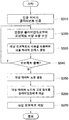
- FIG. 3 is a flowchart conceptually illustrating an object storage method of a distributed storage system having a duplication prevention function according to another aspect of the present invention.
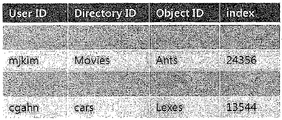
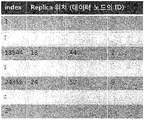
- 5A and 5B are diagrams illustrating tables included in metadata used in the distributed storage system according to the present invention.
- FIG. 6 is a diagram conceptually showing another embodiment of a distributed storage system having a duplication prevention function according to an aspect of the present invention.
- FIG. 2 is a diagram conceptually illustrating an embodiment of a distributed storage system having a duplication prevention function according to an aspect of the present invention.
- the distributed storage system 200 shown in FIG. 2 includes a plurality of clients 210, 212, 216 and data nodes DN11-DN1n, DN21-DN2n, DNm1-DNmn connected to the network 290. .
- the distributed storage system 200 shown in FIG. 2 further includes an authentication server 220, a proxy server 250, and a metadata database 280.
- the authentication server 220 authenticates the client, and the data nodes DN11-DN1n, DN21-DN2n, and DNm1-DNmn each store at least one object.
- the metadata database 280 stores metadata including unique information of the object and unique information of the data node in which the object is stored.
- the authenticated client 210 transmits an object storage request of the client to the proxy server 250 in order to store the target object.
- the proxy server 250 does not store all target objects when there is an operation request, but whether the target object is already stored in one of the data nodes DN11-DN1n, DN21-DN2n, and DNm1-DNmn. Judge.
- the proxy server 250 In order to perform such a duplication prevention operation, the proxy server 250 first determines a content-specific index determined by the content of the target object, and the target object is pre-determined using the determined content-specific index. It is determined whether the stored objects are duplicated. If the target object is already stored in one of the data nodes, the proxy server 250 ignores the operation request. Therefore, it is possible to prevent the same object from being stored in many data nodes unnecessarily and wasting system resources. If the target object is different from the pre-stored objects, the proxy server 250 provides the client with a list of unique information of the target data node only for the non-duplicate target object. Then, the client 210 identifies the target data node by referring to the list of unique information of the provided target data node, and stores the target object in the corresponding target data node using the IP address of the target data node.
- the proxy server applies a hash function to a predetermined portion of the target object (eg, the first 65 megabytes of the target object) and determines the result as a content specific index for that target object.
- the content specific index may be all information used to easily find duplicate target objects.
- the hash function used by the proxy server 250 will be described later in detail with reference to FIG. 4. Since the proxy server 250 included in the distributed storage system 200 according to the present invention determines whether an object is the same by using a content-specific index, the proxy server 250 is the same object as the target object but has a different name given by another user. You can easily determine that the object is the same object as the target object.
- a 'target object' refers to an object that a client wants to store or an object that is of interest to be inquired from a data node.
- a "target data node” refers to a data node in which a target object is stored among a plurality of data nodes.
- 'priority' refers to a ranking determined by determining which regional group or data node is more suitable than another regional group or data node for storing a specific target object. The priority may include a priority of a specific regional group compared to other regional groups and a priority between data nodes belonging to the same regional group.
- the priority may be ranked directly by the client based on a preference for a particular region and data node with respect to a target object, or may be automatically determined by a proxy server or location aware server. This is described in detail later in the relevant part of the specification.
- the data nodes DN11-DN1n, DN21-DN2n, and DNm1-DNmn are included in any one of the first to m-th regional groups ZG1, ZG2, and ZGm.
- the zone groups ZG1, ZG2, ZG3 shown in FIG. 2 are defined by grouping locally adjacent data nodes, respectively, for effective distributed storage of replicas.
- data nodes belonging to the same local group are configured not to store the same object. That is, since a replica of one object is distributed and stored in data nodes belonging to another local group, two replicas are not commonly stored in two data nodes belonging to one local group.
- replicas of one object are mapped to data nodes belonging to different local groups in the metadata representing the physical location of the object. Therefore, even if a certain regional group suffers a physical damage such as a problem in the entire network, the replica is distributed to and stored in data nodes belonging to another regional group, thereby improving reliability.
- a regional group may be a data center or a server rack in a narrower area.
- data nodes belonging to the local group are registered in the metadata as belonging to the local group.
- the replicas of the object are then replicated to data nodes belonging to different local groups.
- all clients 210, 212, 216 and data nodes DN11-DN1n, DN21-DN2n, DNm1-DNmn communicate with each other via network 290. That is, there is a virtual channel between each client and each data.
- these virtual channels do not necessarily have the same conditions for every pair of client and data nodes.
- the communication environment of the virtual channel may vary depending on the physical distance between the client and the data node. The greater the physical distance between the client and the data node, the longer it takes to transmit and receive objects because objects are passed through more relay nodes or gateways.
- the communication environment of the virtual channel may also vary depending on the amount of network traffic and the performance of network resources constituting the virtual channel.
- the present invention selects the most optimal virtual channel between the client and the data node in consideration of the communication environment of the virtual channel.
- the distributed storage system according to the present invention may refer to a physical distance between a client and a local group. Therefore, the upload time of the object can be minimized by storing the object in a data node belonging to a local group located closest to the client including the stored object.
- the distributed storage system according to the present invention does not replicate to data nodes belonging to the same local group when replicating an object. Therefore, the target object to be stored is distributed and stored in several local groups.
- operation of data nodes in an adjacent area is often impossible. For example, suppose there are several data nodes in a data center, and this data center is set up as one regional group.
- the distributed storage system stores the target object only in one target data node of the data nodes of the corresponding data center, and the replica is stored in the target data node belonging to another local group. Therefore, even if all data nodes in the data center fail, the desired target object can be easily retrieved from the target data nodes belonging to different regional groups.
- the distributed storage system 200 is configured based on the contents of the object, not the metadata for mapping the actual physical location of the object based on the logical name of the object. Therefore, it is easy to determine whether the target object is already stored in order to perform the duplication prevention operation.
- FIG. 3 is a flowchart conceptually illustrating an object storage method of a distributed storage system having a duplication prevention function according to another aspect of the present invention.
- the authentication server authenticates the client included in the distributed storage system (S310). If authentication is successful, the proxy server receives an object storage request of an authenticated client that wants to store a target object (S320). If the request to save the object is not received, it waits until the operation request is received.
- the proxy server determines a content specific index by using the content of the target object (S330).
- the proxy server determines whether the target object is overlapped with previously stored objects by using the determined content specific index (S340).
- the proxy server If it is determined that the target object is a duplicate of the previously stored object, the proxy server ignores the storage request and waits for the next operation request. On the other hand, if it is determined that there is no duplicate object as a result of the determination of the overlap, the proxy server determines a target data node in which the non-duplicate target object is to be stored (S350). To determine the target data node, the proxy server may predetermine the weight value of each data node in consideration of the storage capacity of each data node for load balancing of the data nodes. Then, the proxy server first assigns the highest weight data node as a target data node with reference to the weight value. In this way, load balancing between data nodes is achieved.
- the proxy server When the target data node is determined, the proxy server provides the client with a list of the determined unique information of the target data node (S360), and the client stores the target object in the target data node included in the list (S370).
- the proxy server determines whether or not the object is duplicated only for objects having the same hash result value when uploading the object. Therefore, the duplication prevention operation can be performed efficiently. That is, according to the present invention, it is sufficient to determine whether the objects in the corresponding folder of the data node having the same result value are the same as the target object by looking at the result value obtained by applying the hash function to the target object when uploading the object. Because of the nature of the hash algorithm itself, if the contents are different, it is very rare that the result is duplicated. Therefore, finding the same object can be performed efficiently and duplication prevention becomes easy.
- a hash function is a function that compresses an input message of any length into a fixed length output.
- the hash function is used to verify the integrity of the data and to authenticate the message and must satisfy two properties: one-way and strong collision avoidance.
- it is computationally impossible to find any input message that satisfies a given condition.
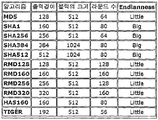
- the proxy server according to the present invention generates a content specific index using a hash function according to the hash algorithm shown in FIG. 4 lists the output length, block size, number of rounds and endianness of each algorithm.
- Endian is a method of arranging several consecutive objects in a one-dimensional space such as a computer memory.
- MD5 is a widely used hash algorithm, but there is an analysis that there is a problem in collision avoidance, so it is only used for compatibility with existing applications and is not commonly used.
- SHA1 is intended to be used by the DSA and is the default hash algorithm in many Internet applications.
- SHA256, SHA384, and SHA512 are hash algorithms having extended output lengths corresponding to 128, 192, and 256 bits, which are key lengths of the (Advanced Encryption Standard).
- RMD128 and RMD160 are hash algorithms designed to replace RIPEMD, MD4 and MD5 of the RIPE project.
- RMD128, which produces 128 bits of output, is also problematic in collision avoidance.
- the RMD160 is less efficient but more secure and is widely adopted by many Internet standards.
- RMD256 and RMD320 are extensions of RMD128 and RMD160, respectively.
- HAS160 is a hash function developed for the domestic standard signature algorithm KCDSA. Designed to take advantage of MD5 and SHA1. TIGER is optimized for 64-bit processors and is very fast on 64-bit processors.
- the proxy server according to the present invention uses the result obtained by applying various hash functions to the target object as the content specific index.
- 5A and 5B are diagrams illustrating tables included in metadata used in the distributed storage system according to the present invention.
- FIG. 5A illustrates an object table included in metadata
- FIG. 5B illustrates a replica location table.
- the object table includes items of a user ID, a directory ID, an object ID, and a content specific index of the object.
- the replica location table includes a location of a replica for each index as an item.
- the proxy server creates an object table as shown in FIG. 5A and stores the result value of applying the hash algorithm to the ID of each object and the contents of the object in an index column.
- Each object can be distinguished by user ID, directory ID, and object ID.
- MD5 can set an index column to 128 bits by generating a 128-bit fixed-length output by receiving an arbitrary length message.
- the input can be the first 64 megabytes in the object content. This is for easily explaining the present invention, and it is obvious that the present invention is not limited.
- the number of replicas is three, and the number of columns of the replica location table may be adjusted according to the actual number of replicas.
- the first column of the replica location table stores the indexes in order, and the columns after that are the IDs of the data nodes where the actual replica is located.
- the Ants object under the Movies directory of the user mjkim in the object table of FIG. 5A has an index value of 24356 when the MD5 hash algorithm is applied to the first 64 megabytes. If an index value of 24356 is found in the replica location table of FIG. 5B, it matches the IDs of the data nodes of 24, 52, and 9. That is, mjkim's Ants file exists at data nodes 24, 52, and 9.
- the data node makes it easy to search for an object by using an index value as a key when actually storing the object data. For example, you can create folders by index value. Objects with the same index will be stored in the same folder on the same data node. The duplication prevention operation can then be performed more quickly.
- FIG. 6 is a diagram conceptually showing another embodiment of a distributed storage system having a duplication prevention function according to an aspect of the present invention.
- FIG. 6 is a diagram conceptually showing another embodiment of a distributed storage system according to an aspect of the present invention.
- the distributed storage system 600 shown in FIG. 6 includes a plurality of clients 610, 612, 616 and data nodes DN11-DN1n, DN21-DN2n, DNm1-DNmn connected to the network 690. .
- the distributed storage system 600 shown in FIG. 6 further includes an authentication server 620, a proxy server 650, a location aware server 660, a replication server 670, and a metadata database 680.
- the proxy server 650 included in FIG. 6 may determine a result of applying a hash function to the target object as a content specific index when an object storage request is received, and the target object may use the determined content specific index. It may be determined whether it is the same as the stored target object.
- the target object is different from the pre-stored objects.
- the location aware server 660 included in the distributed storage system 600 shown in FIG. 6 is used to automatically select local groups or target data nodes.
- the proxy server 650 queries the location aware server 660 for the most advantageous local group.
- the location aware server 660 may determine the location of the client in various ways. In general, the location aware server 660 may determine the physical location of the client by the IP address of the client. The location aware server 660 selects as many regional groups as the number of basic replicas of the client according to the request of the proxy server 650, and transmits the selected regional group list to the proxy server 650. The location aware server 660 may be physically integrated into the proxy server 650 and implemented.
- the determining of the target data node belonging to each of the regional groups determined by the location aware server 660 may be performed by the proxy server 650 or the location aware server 660. If the location aware server 660 also determines the target data node, the location aware server 660 refers to the metadata database 680 to select the target data node that is closest to the client having the target object within the selected regional group. Can be. On the other hand, if the proxy server 650 selects the target data node, the proxy server 650 checks the state of the data nodes belonging to each regional group by using a load balancer 655, and among them, the optimal condition A data node having a can be selected as a target data node. Although load balancer 655 is shown to be included in proxy server 650, it should be understood that this is not a limitation of the present invention.
- the proxy server 650 manages the information of the data nodes in each regional group in metadata, and determines the weight value of each data node in advance in consideration of the storage capacity of each data node for load balancing of the data nodes. .
- load balancing between data nodes in a local group is maintained by selecting data nodes of request clients in consideration of object data stored in each data node and weight values of data nodes.
- the method according to the present invention can be embodied as computer readable codes on a computer readable recording medium.
- the computer-readable recording medium may include all kinds of recording devices in which data that can be read by a computer system is stored. Examples of computer-readable recording media include ROMs, RAMs, CD-ROMs, magnetic tapes, floppy disks, optical data storage devices, and the like, and may also be implemented in the form of carrier waves (for example, transmission over the Internet). Include.
- the computer readable recording medium can also store computer readable code that can be executed in a distributed fashion by a networked distributed computer system.
- the present invention can be applied to a technique for efficiently supporting deduplication in object storage that can provide a cloud storage service.
Landscapes
- Engineering & Computer Science (AREA)
- Theoretical Computer Science (AREA)
- Data Mining & Analysis (AREA)
- Databases & Information Systems (AREA)
- Physics & Mathematics (AREA)
- General Engineering & Computer Science (AREA)
- General Physics & Mathematics (AREA)
- Information Retrieval, Db Structures And Fs Structures Therefor (AREA)
- Storage Device Security (AREA)
Abstract
L'invention concerne un système de stockage réparti possédant une fonction pour empêcher le chevauchement de contenus et un procédé pour stocker un objet. Le système de stockage réparti comprend: un serveur d'authentification pour authentifier un client; un pluralité de noeuds de données, chacun des noeuds de données stockant au moins un objet; un base de métadonnées pour stocker les métadonnées qui comprend les informations uniques de l'objet et les informations uniques du noeud de données qui stocke l'objet; et un serveur proxy pour répondre à une requête pour stocker l'objet par le client authentifié afin de stocker un objet cible et pour référencer les métadonnées afin de fournir au client la liste des informations uniques du noeud de données cible auquel est stocké l'objet cible. Le serveur proxy décide sur un index spécifique au contenu, qui est décidé sur la base du contenu de l'objet cible, et fait une estimation quant au chevauchement de l'objet cible avec les objets préenregistrés en utilisant l'index spécifique au contenu décidé préalablement. Selon la présente invention, on peut entreprendre une action efficace pour empêcher le chevauchement de contenus
Applications Claiming Priority (2)
| Application Number | Priority Date | Filing Date | Title |
|---|---|---|---|
| KR10-2010-0134842 | 2010-12-24 | ||
| KR1020100134842A KR20120072909A (ko) | 2010-12-24 | 2010-12-24 | 내용 기반 중복 방지 기능을 가지는 분산 저장 시스템 및 그 오브젝트 저장 방법 및 컴퓨터에 의하여 독출가능한 저장 매체 |
Publications (2)
| Publication Number | Publication Date |
|---|---|
| WO2012086920A2 true WO2012086920A2 (fr) | 2012-06-28 |
| WO2012086920A3 WO2012086920A3 (fr) | 2012-09-07 |
Family
ID=46314561
Family Applications (1)
| Application Number | Title | Priority Date | Filing Date |
|---|---|---|---|
| PCT/KR2011/008224 Ceased WO2012086920A2 (fr) | 2010-12-24 | 2011-10-31 | Système de stockage réparti possédant une fonction pour empêcher le chevauchement de contenus, procédé pour stocker son objet, et support de stockage lisible par ordinateur |
Country Status (3)
| Country | Link |
|---|---|
| US (1) | US20120166403A1 (fr) |
| KR (1) | KR20120072909A (fr) |
| WO (1) | WO2012086920A2 (fr) |
Cited By (4)
| Publication number | Priority date | Publication date | Assignee | Title |
|---|---|---|---|---|
| CN105119741A (zh) * | 2015-07-21 | 2015-12-02 | 重庆邮电大学 | 一种云网络可靠性度量方法 |
| CN110045987A (zh) * | 2012-09-28 | 2019-07-23 | 英特尔公司 | 用于sha256算法的消息调度的指令处理器 |
| CN112492008A (zh) * | 2020-11-19 | 2021-03-12 | 深圳壹账通智能科技有限公司 | 节点位置确定方法、装置、计算机设备和存储介质 |
| US10999060B2 (en) | 2018-10-26 | 2021-05-04 | Advanced New Technologies Co., Ltd. | Data processing method and apparatus |
Families Citing this family (71)
| Publication number | Priority date | Publication date | Assignee | Title |
|---|---|---|---|---|
| US8484162B2 (en) | 2008-06-24 | 2013-07-09 | Commvault Systems, Inc. | De-duplication systems and methods for application-specific data |
| US8930306B1 (en) | 2009-07-08 | 2015-01-06 | Commvault Systems, Inc. | Synchronized data deduplication |
| US8364652B2 (en) | 2010-09-30 | 2013-01-29 | Commvault Systems, Inc. | Content aligned block-based deduplication |
| US8578109B2 (en) | 2010-09-30 | 2013-11-05 | Commvault Systems, Inc. | Systems and methods for retaining and using data block signatures in data protection operations |
| US9020900B2 (en) | 2010-12-14 | 2015-04-28 | Commvault Systems, Inc. | Distributed deduplicated storage system |
| US9116850B2 (en) | 2010-12-14 | 2015-08-25 | Commvault Systems, Inc. | Client-side repository in a networked deduplicated storage system |
| US8996501B2 (en) | 2011-12-08 | 2015-03-31 | Here Global B.V. | Optimally ranked nearest neighbor fuzzy full text search |
| US9262486B2 (en) * | 2011-12-08 | 2016-02-16 | Here Global B.V. | Fuzzy full text search |
| CN102546782B (zh) * | 2011-12-28 | 2015-04-29 | 北京奇虎科技有限公司 | 一种分布式系统及其数据操作方法 |
| US9100245B1 (en) * | 2012-02-08 | 2015-08-04 | Amazon Technologies, Inc. | Identifying protected media files |
| US20130232124A1 (en) * | 2012-03-05 | 2013-09-05 | Blaine D. Gaither | Deduplicating a file system |
| US8812456B2 (en) * | 2012-03-30 | 2014-08-19 | Netapp Inc. | Systems, methods, and computer program products for scheduling processing to achieve space savings |
| US8903764B2 (en) * | 2012-04-25 | 2014-12-02 | International Business Machines Corporation | Enhanced reliability in deduplication technology over storage clouds |
| US9251186B2 (en) | 2012-06-13 | 2016-02-02 | Commvault Systems, Inc. | Backup using a client-side signature repository in a networked storage system |
| US8918372B1 (en) | 2012-09-19 | 2014-12-23 | Emc Corporation | Content-aware distributed deduplicating storage system based on consistent hashing |
| US9268784B1 (en) * | 2012-09-19 | 2016-02-23 | Emc Corporation | Content-aware distributed deduplicating storage system based on locality-sensitive hashing |
| US9135274B2 (en) * | 2012-11-21 | 2015-09-15 | General Electric Company | Medical imaging workflow manager with prioritized DICOM data retrieval |
| US9319474B2 (en) * | 2012-12-21 | 2016-04-19 | Qualcomm Incorporated | Method and apparatus for content delivery over a broadcast network |
| US9633033B2 (en) * | 2013-01-11 | 2017-04-25 | Commvault Systems, Inc. | High availability distributed deduplicated storage system |
| US20140214775A1 (en) * | 2013-01-29 | 2014-07-31 | Futurewei Technologies, Inc. | Scalable data deduplication |
| EP4224324A3 (fr) | 2013-02-27 | 2023-09-27 | Hitachi Vantara LLC | Système d'archives à base de pluie avec objets auto-descriptifs |
| US9270467B1 (en) * | 2013-05-16 | 2016-02-23 | Symantec Corporation | Systems and methods for trust propagation of signed files across devices |
| WO2014185916A1 (fr) | 2013-05-16 | 2014-11-20 | Hewlett-Packard Development Company, L.P. | Sélection d'une mémoire pour des données dupliquées |
| US10592347B2 (en) * | 2013-05-16 | 2020-03-17 | Hewlett Packard Enterprise Development Lp | Selecting a store for deduplicated data |
| KR101451956B1 (ko) | 2013-06-07 | 2014-10-16 | 에스케이플래닛 주식회사 | 클라우드 서비스 시스템, 클라우드 서비스 장치 및 이를 이용한 방법 |
| CN103312815A (zh) * | 2013-06-28 | 2013-09-18 | 安科智慧城市技术(中国)有限公司 | 一种云存储系统及其数据存取方法 |
| US9178860B2 (en) * | 2013-08-22 | 2015-11-03 | Maginatics, Inc. | Out-of-path, content-addressed writes with untrusted clients |
| CN104469100A (zh) * | 2013-09-24 | 2015-03-25 | 张生福 | 一种分散式云端录像平台 |
| US9384206B1 (en) * | 2013-12-26 | 2016-07-05 | Emc Corporation | Managing data deduplication in storage systems |
| US9633056B2 (en) | 2014-03-17 | 2017-04-25 | Commvault Systems, Inc. | Maintaining a deduplication database |
| US10380072B2 (en) | 2014-03-17 | 2019-08-13 | Commvault Systems, Inc. | Managing deletions from a deduplication database |
| CN103942281B (zh) * | 2014-04-02 | 2017-07-25 | 北京中交兴路车联网科技有限公司 | 一种对持久化存储的对象进行操作的方法及装置 |
| US10069906B2 (en) * | 2014-04-29 | 2018-09-04 | Hitachi, Ltd. | Method and apparatus to deploy applications in cloud environments |
| US11249858B2 (en) | 2014-08-06 | 2022-02-15 | Commvault Systems, Inc. | Point-in-time backups of a production application made accessible over fibre channel and/or ISCSI as data sources to a remote application by representing the backups as pseudo-disks operating apart from the production application and its host |
| US9852026B2 (en) | 2014-08-06 | 2017-12-26 | Commvault Systems, Inc. | Efficient application recovery in an information management system based on a pseudo-storage-device driver |
| US9575673B2 (en) | 2014-10-29 | 2017-02-21 | Commvault Systems, Inc. | Accessing a file system using tiered deduplication |
| US10339106B2 (en) | 2015-04-09 | 2019-07-02 | Commvault Systems, Inc. | Highly reusable deduplication database after disaster recovery |
| US9817599B2 (en) | 2015-05-11 | 2017-11-14 | Hewlett Packard Enterprise Development Lp | Storing indicators of unreferenced memory addresses in volatile memory |
| US9892005B2 (en) * | 2015-05-21 | 2018-02-13 | Zerto Ltd. | System and method for object-based continuous data protection |
| US20160350391A1 (en) | 2015-05-26 | 2016-12-01 | Commvault Systems, Inc. | Replication using deduplicated secondary copy data |
| US9766825B2 (en) | 2015-07-22 | 2017-09-19 | Commvault Systems, Inc. | Browse and restore for block-level backups |
| US10310953B2 (en) | 2015-12-30 | 2019-06-04 | Commvault Systems, Inc. | System for redirecting requests after a secondary storage computing device failure |
| EP3420469B1 (fr) | 2016-02-17 | 2022-12-07 | Hitachi Vantara LLC | Classes de contenu pour des systèmes d'indexage de stockage d'objets |
| US10296368B2 (en) | 2016-03-09 | 2019-05-21 | Commvault Systems, Inc. | Hypervisor-independent block-level live browse for access to backed up virtual machine (VM) data and hypervisor-free file-level recovery (block-level pseudo-mount) |
| US9959058B1 (en) * | 2016-03-31 | 2018-05-01 | EMC IP Holding Company LLC | Utilizing flash optimized layouts which minimize wear of internal flash memory of solid state drives |
| US11113247B1 (en) * | 2016-05-10 | 2021-09-07 | Veritas Technologies Llc | Routing I/O requests to improve read/write concurrency |
| US10365974B2 (en) | 2016-09-16 | 2019-07-30 | Hewlett Packard Enterprise Development Lp | Acquisition of object names for portion index objects |
| US20180095985A1 (en) * | 2016-09-30 | 2018-04-05 | Cubistolabs, Inc. | Physical Location Scrambler for Hashed Data De-Duplicating Content-Addressable Redundant Data Storage Clusters |
| US11644992B2 (en) * | 2016-11-23 | 2023-05-09 | Samsung Electronics Co., Ltd. | Storage system performing data deduplication, method of operating storage system, and method of operating data processing system |
| CN106599178B (zh) * | 2016-12-12 | 2019-08-30 | 国云科技股份有限公司 | 一种可实现快速寻找并支持分布存储的大数据处理方法 |
| US10740193B2 (en) | 2017-02-27 | 2020-08-11 | Commvault Systems, Inc. | Hypervisor-independent reference copies of virtual machine payload data based on block-level pseudo-mount |
| US10359966B2 (en) * | 2017-05-11 | 2019-07-23 | Vmware, Inc. | Capacity based load balancing in distributed storage systems with deduplication and compression functionalities |
| US10664352B2 (en) | 2017-06-14 | 2020-05-26 | Commvault Systems, Inc. | Live browsing of backed up data residing on cloned disks |
| US11182256B2 (en) | 2017-10-20 | 2021-11-23 | Hewlett Packard Enterprise Development Lp | Backup item metadata including range information |
| US10592478B1 (en) * | 2017-10-23 | 2020-03-17 | EMC IP Holding Company LLC | System and method for reverse replication |
| CN108566277B (zh) * | 2017-12-22 | 2020-04-21 | 西安电子科技大学 | 云存储中基于数据存储位置的删除数据副本方法 |
| US10623889B2 (en) | 2018-08-24 | 2020-04-14 | SafeGraph, Inc. | Hyper-locating places-of-interest in buildings |
| US11010258B2 (en) | 2018-11-27 | 2021-05-18 | Commvault Systems, Inc. | Generating backup copies through interoperability between components of a data storage management system and appliances for data storage and deduplication |
| US10877947B2 (en) * | 2018-12-11 | 2020-12-29 | SafeGraph, Inc. | Deduplication of metadata for places |
| US11698727B2 (en) | 2018-12-14 | 2023-07-11 | Commvault Systems, Inc. | Performing secondary copy operations based on deduplication performance |
| US11392551B2 (en) * | 2019-02-04 | 2022-07-19 | EMC IP Holding Company LLC | Storage system utilizing content-based and address-based mappings for deduplicatable and non-deduplicatable types of data |
| US11940956B2 (en) | 2019-04-02 | 2024-03-26 | Hewlett Packard Enterprise Development Lp | Container index persistent item tags |
| US20200327017A1 (en) | 2019-04-10 | 2020-10-15 | Commvault Systems, Inc. | Restore using deduplicated secondary copy data |
| US11463264B2 (en) | 2019-05-08 | 2022-10-04 | Commvault Systems, Inc. | Use of data block signatures for monitoring in an information management system |
| US20210173811A1 (en) | 2019-12-04 | 2021-06-10 | Commvault Systems, Inc. | Optimizing the restoration of deduplicated data stored in multi-node replicated file systems |
| CN111131441A (zh) * | 2019-12-21 | 2020-05-08 | 西安天互通信有限公司 | 一种实时文件共享系统及方法 |
| US11687424B2 (en) | 2020-05-28 | 2023-06-27 | Commvault Systems, Inc. | Automated media agent state management |
| US11936624B2 (en) * | 2020-07-23 | 2024-03-19 | Dell Products L.P. | Method and system for optimizing access to data nodes of a data cluster using a data access gateway and bidding counters |
| CN114138756B (zh) * | 2020-09-03 | 2023-03-24 | 金篆信科有限责任公司 | 数据去重方法、节点及计算机可读存储介质 |
| US11899696B2 (en) | 2020-10-06 | 2024-02-13 | SafeGraph, Inc. | Systems and methods for generating multi-part place identifiers |
| US11762914B2 (en) | 2020-10-06 | 2023-09-19 | SafeGraph, Inc. | Systems and methods for matching multi-part place identifiers |
Family Cites Families (9)
| Publication number | Priority date | Publication date | Assignee | Title |
|---|---|---|---|---|
| JP4387087B2 (ja) * | 2002-07-25 | 2009-12-16 | 三洋電機株式会社 | データ記憶装置 |
| US20080021935A1 (en) * | 2004-09-10 | 2008-01-24 | Koninklijke Philips Electronics, N.V. | System and Method for Avoiding Redundant Copying of Shared Content When Using Virtual Titles |
| US8332375B2 (en) * | 2007-08-29 | 2012-12-11 | Nirvanix, Inc. | Method and system for moving requested files from one storage location to another |
| KR100946986B1 (ko) * | 2007-12-13 | 2010-03-10 | 한국전자통신연구원 | 파일 저장 시스템 및 파일 저장 시스템에서의 중복 파일관리 방법 |
| US8935366B2 (en) * | 2009-04-24 | 2015-01-13 | Microsoft Corporation | Hybrid distributed and cloud backup architecture |
| US8204867B2 (en) * | 2009-07-29 | 2012-06-19 | International Business Machines Corporation | Apparatus, system, and method for enhanced block-level deduplication |
| KR100985169B1 (ko) * | 2009-11-23 | 2010-10-05 | (주)피스페이스 | 분산 저장 시스템에서 파일의 중복을 제거하는 장치 및 방법 |
| US8633838B2 (en) * | 2010-01-15 | 2014-01-21 | Neverfail Group Limited | Method and apparatus for compression and network transport of data in support of continuous availability of applications |
| US9130912B2 (en) * | 2010-03-05 | 2015-09-08 | International Business Machines Corporation | System and method for assisting virtual machine instantiation and migration |
-
2010
- 2010-12-24 KR KR1020100134842A patent/KR20120072909A/ko not_active Ceased
-
2011
- 2011-10-31 WO PCT/KR2011/008224 patent/WO2012086920A2/fr not_active Ceased
- 2011-12-23 US US13/336,114 patent/US20120166403A1/en not_active Abandoned
Cited By (7)
| Publication number | Priority date | Publication date | Assignee | Title |
|---|---|---|---|---|
| CN110045987A (zh) * | 2012-09-28 | 2019-07-23 | 英特尔公司 | 用于sha256算法的消息调度的指令处理器 |
| CN110045987B (zh) * | 2012-09-28 | 2023-05-12 | 太浩研究有限公司 | 用于sha256算法的消息调度的指令处理器 |
| CN105119741A (zh) * | 2015-07-21 | 2015-12-02 | 重庆邮电大学 | 一种云网络可靠性度量方法 |
| US10999060B2 (en) | 2018-10-26 | 2021-05-04 | Advanced New Technologies Co., Ltd. | Data processing method and apparatus |
| US11626972B2 (en) | 2018-10-26 | 2023-04-11 | Advanced New Technologies Co., Ltd. | Data processing method and apparatus |
| CN112492008A (zh) * | 2020-11-19 | 2021-03-12 | 深圳壹账通智能科技有限公司 | 节点位置确定方法、装置、计算机设备和存储介质 |
| CN112492008B (zh) * | 2020-11-19 | 2022-05-20 | 深圳壹账通智能科技有限公司 | 节点位置确定方法、装置、计算机设备和存储介质 |
Also Published As
| Publication number | Publication date |
|---|---|
| WO2012086920A3 (fr) | 2012-09-07 |
| US20120166403A1 (en) | 2012-06-28 |
| KR20120072909A (ko) | 2012-07-04 |
Similar Documents
| Publication | Publication Date | Title |
|---|---|---|
| WO2012086920A2 (fr) | Système de stockage réparti possédant une fonction pour empêcher le chevauchement de contenus, procédé pour stocker son objet, et support de stockage lisible par ordinateur | |
| WO2012086919A2 (fr) | Système de stockage réparti comprenant une pluralité de serveurs proxy, procédé pour gérer son objet et support de stockage lisible par ordinateur | |
| WO2012086918A2 (fr) | Système de stockage réparti destiné au stockage réparti d'un objet sur la base de la position d'une pluralité de noeuds de données, procédé pour le stockage réparti sur la base de la même position et support de stockage lisible par ordinateur | |
| CN106156359B (zh) | 一种云计算平台下的数据同步更新方法 | |
| US9231988B2 (en) | Intercluster repository synchronizer and method of synchronizing objects using a synchronization indicator and shared metadata | |
| CN1531303B (zh) | 协议无关的客户端高速缓存系统和方法 | |
| EP2557514A1 (fr) | Système de stockage de cloud avec métadonnées réparties | |
| US10296254B2 (en) | Method and device for synchronization in the cloud storage system | |
| WO2014094468A1 (fr) | Système, procédé et client de navigateur pour permettre la synchronisation des données de navigateur | |
| WO2016122526A1 (fr) | Stockage de fichier conteneur régénéré | |
| CN108063813B (zh) | 一种集群环境下密码服务网络并行化的方法与系统 | |
| CN111708743A (zh) | 文件存储管理方法、文件管理客户端及文件存储管理系统 | |
| CN112948178A (zh) | 一种数据处理方法、装置、系统、设备及介质 | |
| JPWO2004063928A1 (ja) | データベース負荷軽減システムおよび負荷軽減プログラム | |
| CN111225003B (zh) | 一种nfs节点配置方法和装置 | |
| CN107566195A (zh) | 镜像仓库处理方法及系统 | |
| US11301454B2 (en) | System and method for consistency checks in cloud object stores using microservices | |
| CN108540510B (zh) | 一种云主机创建方法、装置及云服务系统 | |
| US10545667B1 (en) | Dynamic data partitioning for stateless request routing | |
| CN104125294A (zh) | 一种大数据安全管理方法和系统 | |
| KR20130130295A (ko) | 단말을 서버에 할당하고 단말로의 효율적인 메시징을 위한 시스템 및 방법 | |
| EP2078385B1 (fr) | Procédé et appareils permettant d'empêcher de dupliquer la stockage de ressources entre des dispositifs universal plug and play fournissant un service de répertoire de contenus | |
| CN112866406A (zh) | 一种数据存储方法、系统、装置、设备及存储介质 | |
| CN113691590B (zh) | 静态资源获取方法、系统、装置、计算机设备和存储介质 | |
| CN109587185B (zh) | 云存储系统和云存储系统中的对象处理方法 |
Legal Events
| Date | Code | Title | Description |
|---|---|---|---|
| 121 | Ep: the epo has been informed by wipo that ep was designated in this application |
Ref document number: 11852183 Country of ref document: EP Kind code of ref document: A2 |
|
| NENP | Non-entry into the national phase |
Ref country code: DE |
|
| 122 | Ep: pct application non-entry in european phase |
Ref document number: 11852183 Country of ref document: EP Kind code of ref document: A2 |