WO2012102552A2 - 3,6-안하이드로-l-갈락토오스에 작용하는 신규한 3,6-안하이드로-l-갈락토오스 데히드로게나제와 이 효소를 이용한 3,6-안하이드로 갈락토닉산의 생산 - Google Patents
3,6-안하이드로-l-갈락토오스에 작용하는 신규한 3,6-안하이드로-l-갈락토오스 데히드로게나제와 이 효소를 이용한 3,6-안하이드로 갈락토닉산의 생산 Download PDFInfo
- Publication number
- WO2012102552A2 WO2012102552A2 PCT/KR2012/000607 KR2012000607W WO2012102552A2 WO 2012102552 A2 WO2012102552 A2 WO 2012102552A2 KR 2012000607 W KR2012000607 W KR 2012000607W WO 2012102552 A2 WO2012102552 A2 WO 2012102552A2
- Authority
- WO
- WIPO (PCT)
- Prior art keywords
- anhydro
- galactose
- enzyme
- galactose dehydrogenase
- present
- Prior art date
- Legal status (The legal status is an assumption and is not a legal conclusion. Google has not performed a legal analysis and makes no representation as to the accuracy of the status listed.)
- Ceased
Links
Images






Classifications
-
- C—CHEMISTRY; METALLURGY
- C12—BIOCHEMISTRY; BEER; SPIRITS; WINE; VINEGAR; MICROBIOLOGY; ENZYMOLOGY; MUTATION OR GENETIC ENGINEERING
- C12N—MICROORGANISMS OR ENZYMES; COMPOSITIONS THEREOF; PROPAGATING, PRESERVING, OR MAINTAINING MICROORGANISMS; MUTATION OR GENETIC ENGINEERING; CULTURE MEDIA
- C12N9/00—Enzymes; Proenzymes; Compositions thereof; Processes for preparing, activating, inhibiting, separating or purifying enzymes
- C12N9/0004—Oxidoreductases (1.)
-
- C—CHEMISTRY; METALLURGY
- C07—ORGANIC CHEMISTRY
- C07D—HETEROCYCLIC COMPOUNDS
- C07D307/00—Heterocyclic compounds containing five-membered rings having one oxygen atom as the only ring hetero atom
- C07D307/02—Heterocyclic compounds containing five-membered rings having one oxygen atom as the only ring hetero atom not condensed with other rings
- C07D307/04—Heterocyclic compounds containing five-membered rings having one oxygen atom as the only ring hetero atom not condensed with other rings having no double bonds between ring members or between ring members and non-ring members
- C07D307/18—Heterocyclic compounds containing five-membered rings having one oxygen atom as the only ring hetero atom not condensed with other rings having no double bonds between ring members or between ring members and non-ring members with hetero atoms or with carbon atoms having three bonds to hetero atoms with at the most one bond to halogen, e.g. ester or nitrile radicals, directly attached to ring carbon atoms
- C07D307/20—Oxygen atoms
-
- C—CHEMISTRY; METALLURGY
- C12—BIOCHEMISTRY; BEER; SPIRITS; WINE; VINEGAR; MICROBIOLOGY; ENZYMOLOGY; MUTATION OR GENETIC ENGINEERING
- C12N—MICROORGANISMS OR ENZYMES; COMPOSITIONS THEREOF; PROPAGATING, PRESERVING, OR MAINTAINING MICROORGANISMS; MUTATION OR GENETIC ENGINEERING; CULTURE MEDIA
- C12N15/00—Mutation or genetic engineering; DNA or RNA concerning genetic engineering, vectors, e.g. plasmids, or their isolation, preparation or purification; Use of hosts therefor
- C12N15/09—Recombinant DNA-technology
- C12N15/11—DNA or RNA fragments; Modified forms thereof; Non-coding nucleic acids having a biological activity
- C12N15/52—Genes encoding for enzymes or proenzymes
-
- C—CHEMISTRY; METALLURGY
- C12—BIOCHEMISTRY; BEER; SPIRITS; WINE; VINEGAR; MICROBIOLOGY; ENZYMOLOGY; MUTATION OR GENETIC ENGINEERING
- C12N—MICROORGANISMS OR ENZYMES; COMPOSITIONS THEREOF; PROPAGATING, PRESERVING, OR MAINTAINING MICROORGANISMS; MUTATION OR GENETIC ENGINEERING; CULTURE MEDIA
- C12N9/00—Enzymes; Proenzymes; Compositions thereof; Processes for preparing, activating, inhibiting, separating or purifying enzymes
- C12N9/0004—Oxidoreductases (1.)
- C12N9/0006—Oxidoreductases (1.) acting on CH-OH groups as donors (1.1)
-
- C—CHEMISTRY; METALLURGY
- C12—BIOCHEMISTRY; BEER; SPIRITS; WINE; VINEGAR; MICROBIOLOGY; ENZYMOLOGY; MUTATION OR GENETIC ENGINEERING
- C12P—FERMENTATION OR ENZYME-USING PROCESSES TO SYNTHESISE A DESIRED CHEMICAL COMPOUND OR COMPOSITION OR TO SEPARATE OPTICAL ISOMERS FROM A RACEMIC MIXTURE
- C12P17/00—Preparation of heterocyclic carbon compounds with only O, N, S, Se or Te as ring hetero atoms
- C12P17/02—Oxygen as only ring hetero atoms
- C12P17/04—Oxygen as only ring hetero atoms containing a five-membered hetero ring, e.g. griseofulvin, vitamin C
-
- C—CHEMISTRY; METALLURGY
- C12—BIOCHEMISTRY; BEER; SPIRITS; WINE; VINEGAR; MICROBIOLOGY; ENZYMOLOGY; MUTATION OR GENETIC ENGINEERING
- C12P—FERMENTATION OR ENZYME-USING PROCESSES TO SYNTHESISE A DESIRED CHEMICAL COMPOUND OR COMPOSITION OR TO SEPARATE OPTICAL ISOMERS FROM A RACEMIC MIXTURE
- C12P7/00—Preparation of oxygen-containing organic compounds
- C12P7/40—Preparation of oxygen-containing organic compounds containing a carboxyl group including Peroxycarboxylic acids
Definitions
- the present invention is a technology corresponding to the field of bioenergy manufacturing, and 3,6-anhydro-L-galactose which metabolizes 3,6-anhydro-L-galactose to produce novel 3,6-anhydrogalactonic acid It relates to dehydrogenase.
- the first generation biomass which is currently used to produce bioethanol, is a saccharide- and starch-based biomass derived from food resources, and has a big problem of raising grain prices due to competition with food resources of all centuries. .
- second generation biomass which is a wood based biomass
- wood-based biomass contains a large amount of lignin, which is a hardly degradable substance, which presents a major problem in converting into a monosaccharide that can be fermented.
- Algae a third-generation biomass, has several advantages, such as not only competing with food resources, but also a relatively simple conversion to fermentable sugars because of its low lignin content or low content.
- seaweeds are attracting attention as the next generation bioenergy raw materials, and bioenergy production technologies using them are being actively researched.
- marine resources are abundant and it is easy to biomass algae.
- the annual production of seaweed is 13,754 tons in 2006, which is one of the world's seaweed producers, along with China, Japan and North Korea.
- the situation is low (Fishery Statistics, 2006, National Bureau of Statistics, Department of Agricultural and Fishery Production, Statistics Bureau).
- red algae eg Gelidiumamansii
- red algae biomass contains about 60% of the total dry weight of agarose and is considered as a major raw material for bioenergy production.
- Agar is the monosaccharide 3,6-anhydro-L-galactose (L-AHG) and D-galactose (D-Gal) is alpha-1,3
- Agar consists of agalopectin and agarose, and agalopectin has the same basic composition as agarose but partially substitutes substituents such as sulfate, pyruvic acid or glucuronic acid. Carbohydrate Research (1971) 16: 435-445).
- S. degradans Saccharophagusdegradans 2-40
- Chesapeake Bay, Virginia USA
- the entire genome sequence has been reported as the rod-shaped aerobic marine microorganism first discovered in the USA.
- S.degradans including agar, and has the ability to decompose at least 10 or more complex polysaccharides, and has agar decomposition metabolic system for using agar in metabolic processes.
- the enzymes used in these apoptosis metabolism systems are classified into four groups: GH16, GH50, GH86 and GH117.
- GH117 is estimated to be beta-agarase
- Aga50D enzyme belonging to the GH50 group is reported to produce the disaccharide neoagarobiose (NA2) as a final product (ApplMicrobiol Biotechnol 86: 227-234, 2010).
- NABH disaccharide neoagarobiose hydrolysis enzyme belonging to the GH117 group has been reported to cleave ⁇ -1,3-binding of the disaccharide NA2.
- Microorganisms that metabolize agar can convert agar into the form of fermentable sugar D-Gal and non-fermentable sugar L-AHG using agarases.
- L-AHG a monosaccharide produced during metabolism
- D-Gal metabolic pathways of D-Gal
- no studies on L-AHG metabolism in microorganisms using agar as a carbon source have not been reported. Therefore, in order to produce bioenergy using L-AHG, it is necessary to identify the exact metabolic pathway through the study of L-AHG metabolism process of microorganisms using agar as a carbon source.
- Another object of the present invention is to provide a new compound produced by the novel enzyme.
- the present invention provides a 3,6-anhydro-L-galactose dehydrogenase having the amino acid sequence set forth in SEQ ID NO: 1 to 4.
- the present invention also provides a gene encoding the 3,6-anhydro-L-galactose dehydrogenase.
- the present invention also provides a recombinant vector comprising a gene encoding the 3,6-anhydro-L-galactose dehydrogenase.
- the present invention also provides a transformant transformed with the recombinant vector.
- the present invention also provides a method for preparing 3,6-anhydro-L-galactose dehydrogenase comprising the step of obtaining 3,6-anhydro-L-galactose dehydrogenase from the culture of the transformant. To provide.
- the present invention also includes reacting 3,6-anhydro-L-galactose dehydrogenase with 3,6-anhydro-L-galactose using NADP (Nicotinamide Adenine Dinucleotide Phospate) as a cofactor.
- NADP Nicotinamide Adenine Dinucleotide Phospate
- the present invention also provides a compound of Formula 1 above.
- the present invention relates to a 3,6-anhydro-L-galactose dehydrate, a novel enzyme isolated from algae that can oxidize 3,6-anhydro-L-galactose to produce a new substance, 3,6-anhydrogalactonic acid. Provides logenase.
- the metabolism of 3,6-anhydro-L-galactose by the enzyme is expected to increase the yield of bioenergy from algae.
- Figure 1 shows the comparison of the activity of fractional activity with the active fraction protein based on L-AHG.
- Figure 2 shows the results of 10% SDS-PAGE analysis of the active fraction enzyme
- lane 1 is a molecular size marker
- lane 2 is crude extract (crude extract)
- lane 3 is a loading sample
- lane 4 is a sample washed with 10 mM imidazole
- Lanes 5 to 16 show fractions 14 to 25.
- Figure 3 shows the nucleotide sequence and amino acid sequence of the sde AHGD gene derived from Saccharophagus degradans ( Saccharophagus degradans ) 2-40.
- Figure 4 shows the pseudo alteromonas Atlantica ( Pseudoalteromonas atlantica Derived patl It shows the nucleotide sequence and amino acid sequence of the AHGD gene.
- Figure 5 shows the PCR product of sde AHGD and patl AHGD of the present invention
- M is a 1kb marker
- lane 1 is a pB2 vector
- lane 2 is patl AHGD
- lane 3 is sde AHGD.
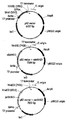
- Figure 6 shows a cleavage map of the expression vector of the present invention.
- Figure 7 shows the 10% SDS-PAGE results of the SdeAHGD and PatlAHGD protein of the present invention
- lane 1 is the molecular size marker
- lane 2 is SdeAHGD before expression
- lane 3 is SdeAHGD after expression
- lane 4 is PatlAHGD before expression
- lane 5 represents PatlAHGD after expression.
- Figure 9 shows the reaction product of the enzyme activity, lane 1 is L-AHG; Lane 2 shows the reaction product.
- Figure 10 shows the pH effect on the SdeAHGD and PatlAHGD activity of the present invention, A is SdeAHGD, B is PatlAHGD.
- Figure 11 shows the temperature effect on the SdeAHGD and PatlAHGD activity of the present invention, A is SdeAHGD, B is PatlAHGD.
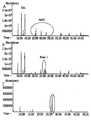
- Figure 13 is a total ion chromatogram in GC / MS, (a) the reaction product before the enzyme activity, (b) the reaction product after the enzyme activity, (c) the reaction product of the enzyme activity after fractional crystallization.
- FIG. 14 is thin layer chromatography (TLC) for reaction products before and after fractionation, where lane 1 is the reaction product before fractionation and lane 2 is the reaction product after fractionation.
- TLC thin layer chromatography
- FIG. 15 shows purification using 3- (trimethylsilyl) propionic-2,2,3,3-d 4 acid as 3- (trimethylsilyl) propionic-2,2,3,3-d 4 acid NMR spectrum result of the reaction product.
- Figure 16 shows the 2D 1 H- 13 CHSQC spectrum of the purified reaction product.
- Figure 17 shows the 2D 1 H- 13 CHMBC spectrum of the purified reaction product.
- Figure 18 shows the chemical structure of 3,6-anhydrogalatonic acid (3,6-anhydrogalatonic acid).
- the present inventors have found that 3,6-anhydro-L-galactose (or S. degradans ) 2-40 or Pseudolanteromonas Atlantica ( P.atlantica ) using agarose as a carbon source (or , An enzyme protein based on 'L-AHG') was attempted.
- the identified enzyme is a compound represented by 3,6-anhydrogalactonic acid (3,6-anhydrogalactonic acid) by oxidizing the aldehyde group of carbon 1 to a carboxyl group with the aid of NADP as L-AHG as a cofactor.
- L-AHG dehydrogenase hereinafter referred to as AHGD).
- the present invention provides 3,6-anhydro-L-galactose dehydrogenase having the amino acid sequence set forth in SEQ ID NOS: 1-4.
- the 3,6-anhydro-L-galactose dehydrogenase may have an amino acid sequence as set forth in SEQ ID NO: 1 to 4, 80% or more, 85% or more, specifically 90% or more relative to the amino acid sequence , And more specifically, amino acid sequences having at least 95% homology (eg, at least 98%).
- the homology search of a protein can be performed using a database of amino acid sequences of the protein (e.g., SWISS-PROT and PIR), a database of DNA sequences (e.g., DDBJ, EMBL and Gene-Bank), or data of amino acid sequences inferred from the DNA sequence.
- the base can be performed using programs such as BLAST and FASTA, for example via the Internet.
- mutants having the desired activity of the present invention through mutations such as one or more substitutions, deletions, inversions, translocations, etc. with respect to the amino acid sequence may be included in the enzyme of the present invention.
- amino acid substitutions are referred to as 'conservative substitutions'.
- Ala, Val, Leu, Ile, Pro, Met, Phe and Trp are all classified into the group of non-polar amino acids and have similar properties.
- Non-charged amino acids include Gly, Ser, Thr, Cys, Tyr, Asn and Gln.
- Acidic amino acids include Asp and Glu.
- Basic amino acids include Lys, Arg and His.
- the mutation can be carried out using site-directed mutagenesis and the like (Nucleic Acid Res., 10, 6487 (1982); Method in Enzymol., 100, 448 (1983); 'Molecular Cloning 2 nd Edition', Cold Spring Harbor Laboratory Press (1989); and 'PCR A Practical Approach', IRL Press, 200 (1991)).
- the enzyme is saccharopagus degradans ( S.degradans 2-40 or Pseudo-Altermonas Atlantica ( Pseudoalteromonas atlantica ) May be derived from, etc., but may include any transformant expressing the enzyme, but is not limited thereto.
- the 3,6-anhydro-L-galactose dehydrogenase may be prepared by methods known in the art for synthesizing peptides. For example, it may be prepared by a method of synthesis in vitro through genetic recombination and protein expression systems or peptide synthesizers.
- the enzymatic activity of the 3,6-anhydro-L-galactose dehydrogenase is excellent at pH 7-11 at 20-90 ° C., more specifically at pH 9-10 at 25-40 ° C. Can be represented.
- the present invention also relates to a gene encoding said 3,6-anhydro-L-galactose dehydrogenase.
- the gene of the present invention has the physicochemical activity of the 3,6-anhydro-L-galactose dehydrogenase, and the amino acids set forth in SEQ ID NOs 1 to 4 in which one or more amino acids are deleted, substituted, inserted, and / or added Polynucleotides encoding proteins comprising a sequence.
- Polynucleotide homologues of the invention also include polynucleotides comprising the nucleotides of SEQ ID NOs: 5 to 8 and hybridizing under stringent conditions to polynucleotides encoding proteins having the physicochemical properties of the invention.
- Polynucleotide hybridizing under stringent conditions refers to the ECL direct nucleic acid labeling and detection system (Amersham Pharmacia Biotech), for example, under the conditions described in the instructions (washing at 42 ° C. with primary wash buffer containing 0.5 ⁇ SSC).
- probe DNAs comprising a sequence of at least 20, preferably at least 30, contiguous residues (eg, 40, 60, or 100 contiguous residues) optionally selected from one of SEQ ID NOs: 5-8.
- contiguous residues eg, 40, 60, or 100 contiguous residues
- SEQ ID NOs: 5-8 refers to a polynucleotide that hybridizes.
- Polynucleotides of the invention include isolated polynucleotides.
- 'Isolated nucleotide' refers to a polynucleotide that exists in a different form compared to a naturally occurring polynucleotide.
- vectors and polynucleotides integrated into the genome of another organism are included in the isolated polynucleotide.
- the isolated polynucleotide also includes a polynucleotide obtained as a cDNA, PCR product, or restriction fragment.
- polynucleotides used as part of a polynucleotide encoding a fusion protein are also included in 'isolated polynucleotides'.
- Polynucleotides encoding the 3,6-anhydro-L-galactose dehydrogenase of the present invention can be isolated, for example, by the following method: Designing PCR primers based on the nucleotide sequence of SEQ ID NO: 2, As a template, PCR using chromosomal DNA or cDNA library derived from a reductase-producing strain is performed to obtain the DNA of the present invention.
- the polynucleotide of the present invention using a DNA fragment obtained as a probe, by colony hybridization, plaque hybridization, and the like, (a) of the chromosomal DNA derived from 3,6-anhydro-L-galactose dehydrogenase producing strain Restriction enzyme fragments may be prepared by introducing a phage or plasmid into the phage or vector and transforming E. coli cells with the phage or vector, or (b) cDNA library screening.
- the polynucleotide of the present invention can be used to analyze the nucleotide sequence of a DNA fragment obtained by PCR; Design of PCR primers based on the analyzed sequences to extend strands outside of known DNA sequences; And digestion of chromosomal DNA of reductase-producing strains with appropriate restriction enzymes and reverse-PCR by a self-cyclizing reaction using the DNA as a template (Genetics, 120, 621-). 623 (1988)).
- the polynucleotide of the present invention can be obtained by the RACE method (Rapid Amplification of cDNA End, 'PCR Jikken Manual (Manual for PCR experiments)', 25-33, HBJ Publishing Bureau).
- the polynucleotides of the present invention may comprise synthesized DNAs.
- the invention also relates to a recombinant vector comprising a gene encoding said 3,6-anhydro-L-galactose dehydrogenase.
- a "recombinant vector” refers to a gene construct that is capable of expressing a protein of interest in a suitable host cell and comprises an essential regulatory element operably linked to express a gene insert.
- Such vectors include, but are not limited to, plasmid vectors, cosmid vectors, bacteriophage vectors, or viral vectors.
- Suitable expression vectors include signal sequences or leader sequences for membrane targeting or secretion in addition to expression control elements such as promoters, operators, initiation codons, termination codons, polyadenylation signals and enhancers, and can be prepared in various ways depending on the purpose.
- the promoter of the vector may be constitutive or inducible.
- the expression vector includes a selection marker for selecting a host cell containing the vector and, in the case of a replicable expression vector, includes a replication origin.
- the recombinant vector of the present invention is preferably prepared by inserting the nucleic acid encoding the 3,6-anhydro-L-galactose dehydrogenase into a general E. coli strain expression vector, pBT21a (hereinafter referred to as 'pB2'). Can be.
- pB2 was used as an E. coli expression vector, but is not necessarily limited thereto. In general, all E. coli expression vectors that can be used may be used without limitation.
- a DNA fragment comprising the 3,6-anhydro-L-galactose dehydrogenase coding gene (SEQ ID NOs: 5 to 8) of the present invention is prepared using a pB2 vector, which is a vector for expressing E. coli strains.
- Recombinant vectors such as pB2 vector + sdeAHGD or pB2 vector + patlAHGD (the cleavage map of FIG. 6) can be prepared by insertion.
- the present invention also relates to a transformant transformed with the recombinant vector.
- the transformation may include any method of introducing a nucleic acid into an organism, cell, tissue or organ, and may be carried out by selecting a suitable standard technique according to the host cell as known in the art. These methods include electroporation, plasma fusion, calcium phosphate (CaPO 4 ) precipitation, calcium chloride (CaCl 2 ) precipitation, agitation with silicon carbide fibers, agrobacterial mediated transformation, PEG, dextran sulfate, lipo Pectamine, and the like.
- E. coli Esscherichiacoli
- Bacillus subtilis Bacillus subtilis
- a prokaryotic host cell such as a Streptomyces (Streptomyces), Pseudomonas (Pseudomonas), Proteus Mira Billy's (Proteusmirabilis) or Staphylococcus (Staphylococcus)
- fungi e.g. Aspergillus
- yeast e.g.
- Pichiapastoris Saccharomyces cerevisiae , Schizosaccharomyces
- the transformant can be easily prepared by introducing the recombinant vector into any host cell.
- the recombinant vector pB2 vector + sdeAHGD or pB2 vector + patlAHGD expressing 3,6-anhydro-L-galactose dehydrogenase (the cleavage map of FIG. 6) is transformed into E. coli strain BL21 (DE3). ) To produce a transformant.
- the present invention also provides a method for preparing 3,6-anhydro-L-galactose dehydrogenase comprising the step of obtaining 3,6-anhydro-L-galactose dehydrogenase from the culture of the transformant. It is about.
- the 3,6-anhydro-L-galactose dehydrogenase is preferably purified by culturing the transformant according to a conventional culture method.
- the 3,6-anhydro-L-galactose dehydrogenase is an amino acid sequence that does not affect the 3,6-anhydro-L-galactose metabolism according to the insert introduced into the recombinant vector, that is, the nucleotide sequence of the coding gene.
- modification is meant modification by deletion, insertion or substitution.
- Method for producing the enzyme according to an embodiment of the present invention is as follows. First, a transformant expressing 3,6-anhydro-L-galactose dehydrogenase is cultured, and the culture is harvested to reduce a reducing agent (e.g., 2-mercaptoethanol) and a protease inhibitor (e.g., phenylmethane). Cell-free extracts are prepared by lysis (cell) in buffer with sulfonyl fluoride).
- a reducing agent e.g., 2-mercaptoethanol
- a protease inhibitor e.g., phenylmethane
- a desired enzyme can be purified from the cell-free extract by an appropriate combination of affinity chromatography using a complexing agent, a dye, an antibody and the like.
- the enzymes of the present invention may be subjected to hydrophobic chromatography with phenyl-sepharose, anion exchange chromatography with mono Q, hydrophobic chromatography with butyl-sepharose, and adsorption chromatography with hydroxyapatite. By the process of electrophoresis can be purified into one band.
- 10% SDS-PAGE analysis yields an enzyme of approximately 52 kDa size.
- the present invention also relates to a polyclonal antibody that specifically binds to the 3,6-anhydro-L-galactose dehydrogenase.
- the manufacturing method of the said polyclonal antibody is not specifically limited, It is preferable to manufacture according to the following method.
- the 3,6-anhydro-L-galactose dehydrogenase of the present invention is immunized by one to several injections into SPF (specific pathogen free) animals. After a certain time after the final immunization, whole blood is taken and serum is taken to obtain a polyclonal antibody against 3,6-anhydro-L-galactose dehydrogenase of the present invention.
- the immunized animal is not particularly limited as long as it is an animal normally used for immunization, but is preferably a rat.
- the number, duration and method of administration for the immunization are not particularly limited because they can be modified or changed at the level of those skilled in the art.
- the present invention also includes reacting 3,6-anhydro-L-galactose dehydrogenase with 3,6-anhydro-L-galactose using NADP (Nicotinamide Adenine Dinucleotide Phospate) as a cofactor.
- NADP Nicotinamide Adenine Dinucleotide Phospate
- the present invention also provides a compound of Formula 1 above.
- 3,6-anhydro-L-galactose dehydrogenase can oxidize 3,6-anhydro-L-galactose (hereinafter referred to as 'L-AHG'), and reacts using NADP as a coenzyme.
- the aldehyde group of carbon number 1 of L-AHG may be oxidized to a carboxyl group to generate a compound of Chemical Formula 1, that is, 3,6-anhydrogalactonic acid.
- the 3,6-anhydro-L-galactose dehydrogenase may have any one of the amino acid sequences set forth in SEQ ID NOs: 1-4. In addition, it may be encoded from any one of the nucleotide sequences set forth in SEQ ID NOs: 5-8.
- the enzyme is derived from S. degradans 2-40, Pseudoalteromonas atlantica , Microscilla sp. PRE1 or Coraliomargarita akajimensis . It may be, but may include all transformants and the like expressing the enzyme is not limited thereto.
- the reaction may be carried out at a condition of pH 7 to 11 at 20 to 90 ° C, more specifically at a condition of pH 9 to 10 at 25 to 40 ° C, but is not particularly limited thereto.
- a single colony of Saccharophagusdegradans 2-40 (hereinafter sde) was added to a 10 mL minimum medium containing 0.2% agar (2.3% sea salt, 0.1% yeast extract and 0.05% NH 4 Cl aqueous solution). After incubation for 24 hours at 30 °C, 10mL of the cultured bacteria in the same medium 1L was added and further incubated for 24 hours at 30 °C. The cultured cells were collected by centrifugation at 4000 rpm for 30 minutes, and were made into crude cell extract using an ultrasonic crusher (Sonifier 450, Branson, USA).
- the crude extract was centrifuged at 15000 rpm for 1 hour at 4 ° C, divided into supernatant (coenzyme solution) and sediment (cell fragment), and the supernatant was fractionated by anion exchange chromatography using a HiTrap Q column (GE healthcare, USA). .
- the obtained fractions were finally made into 20mM Tris-HCl, pH 8.0 buffer using a Desalting column (GE healthcare, USA).
- Each fraction was confirmed the size and composition of the protein using the 10% SDS-PAGE method, and the active fraction was obtained through the activity of the enzyme as an L-AHG substrate in the following manner (Fig. 1 and 2).
- the activity of the enzyme L-AHG as a substrate was measured as follows. First, 10 ⁇ l of fractional sample was added to 200 ⁇ l of reaction solution (20 mM Tris-HCl, pH 8.0) containing 5 mM of various coenzymes (NAD, NADP, ATP) and 5 mM of substrate (L-AHG). Reacted for minutes. The final reaction solution was measured using a microplate spectrophotometer (Bio-Tek Instruments, Inc.) to determine the final concentration of NAD (P) H converted at 339 nm according to the end-point UV-methods (FIG. 1), or to generate the reaction product. Whether it was confirmed by TLC.
- the fractions showing activity were developed by SDS-PAGE and compared with the size of the proteins contained in the active fraction by Image J program. As a result, the size of the protein showing the same increase in the interval of increased activity was confirmed as about 52kDa.
- NAD National Center for Biotechnology Information
- AHGD EMBL ID ABD81905
- Sde and pseudo Alteromonas Atlantica (Pseudoalteromonasatlantica) (hereinafter referred to as 'Pat1') T6c derived AHGD has verified the final activity was cloned as follows.
- AHGD European Molecular Biology Institute
- primer 1 5'-GGCGGTGGTGGCGGCATGAAAATTCATAACATGAAAAATTTTATCAACG-3 '(49mer) (SEQ ID NO: 9)
- primer 2 5'-GTTCTTCTCCTTTGCGCCCCTATCATTCAGCAAAATACACTGTCTTC-3 '(47mer) (SEQ ID NO: 10)
- primer 1 5'-GGCGGTGGTGGCGGCATGACTGTTCAAGATTTACACTTTAAAAACAA-3 '(47mer), (SEQ ID NO: 11)
- primer 2 5'-GTTCTTCTCCTTTGCGCCCCTACTAAGCCTCATTGATATAAACGGTT-3 '(47mer). (SEQ ID NO: 12)
- the genes of interest were amplified by polymerase chain reaction using Sde and Patl genomic DNA ( S. degradans : sde AHGD, P.atlantica : patl AHGD).
- S. degradans S. degradans : sde AHGD, P.atlantica : patl AHGD.
- the amplified sde AHGD and patl AHGD amino acid / base sequences are shown in FIG. And 4, their PCR products are shown in FIG.
- Amplified sde AHGD and patl AHGD DNA fragments were cloned into a modified pET 21a (hereinafter referred to as pB2) vector with six histidine residues at the amino terminus and transformed into E. coli BL21 (DE3). (FIG. 6).
- Luria- Butani Luria- Butani
- the culture medium was recovered by centrifugation for 10 minutes at 4000rpm, the recovered cells were made into crude extract using an ultrasonic crusher, and then separated by the crude enzyme solution and precipitate by centrifugation at 15000rpm for 60 minutes at 4 °C.
- the crude enzyme solution was filtered using 0.45 ⁇ m-filter (Sartorius stedim biotech, Germany), purified by affinity chromatography using a Histaq column (GE healthcare, USA), and then ion exchange chromatography using a Hitraq Q column. Purification was carried out.
- the eluted active fractions were made up with 20 mM Tris-HCl, pH 8.0 buffer using a desalting column. Expressed SdeAHGD and PatlAHGD were confirmed by 10% SDS-PAGE analysis (FIG. 7).
- Purified protein activity was analyzed under the following conditions. First, SdeAHGD and PatlAHGD enzyme (final concentration: 0.1mg / mL) in 200ul of reaction solution (20mM Tris-HCl, pH 8.0) containing 5mM coenzyme (nicotinamide adenine dinucleotide phosphate, NADP) and 5mM substrate (L-AHG). ) Were added and reacted at 25 ° C. for 1 to 190 minutes.
- reaction solution was measured using a microplate spectrophotometer (Bio-Tek Instruments, Inc.) to determine the final concentration of NADPH converted over time at 339 nm according to End-point UV-methods (FIG. 8).
- reaction product by AHGD enzyme activity was confirmed using a thin layer chromatography (TLC) method.
- TLC thin layer chromatography
- the developed TLC plate was treated with sulfuric acid (10% (v / v) H 2 SO 4 inEthanol) as a primary treatment solution and dried, and the first treated plate was again treated with naphthoresorcinol (0.2 as a secondary treatment solution). % (w / v) naphthoresorcinol in ethanol) and then heated (Fig. 9).
- the buffer for each pH is 20 mM citric acid buffer for pH 3 to 5.5, 20 mM sodium phosphate buffer for pH 5.5 to 7.0, 20 mM Tris-HCl buffer for pH 7.0 to 9.0, and 20 mM borate for pH 9.0 to 11.0. Buffer was used. Each buffer solution containing 2 mM substrate (L-AHG) and 1.5 mM coenzyme (NADP) was reacted at 25 ° C. for 15 minutes at a final enzyme protein concentration of 0.1 mg / mL. In order to stop the reaction of the enzyme, the enzyme was treated at 95 ° C. for 5 minutes, centrifuged at 12000 rpm for 5 minutes, and NADPH converted at 339 nm was measured according to end-point UV-methods.
- SdeAHGD activity was highest in 20 mM Tris-HCl, pH 9.0 buffer, and PatlAHGD activity was highest in 20 mM borate, pH 9.0.
- the activity of the AHGD was measured in the range of 4, 16, 25, 37, 50, 70, 90 °C.
- SdeAHGD was measured in 20 mM borate, pH 9.0 buffer
- PatlAHGD was measured in 20 mM Tris-HCl, pH9.0 buffer, and each buffer containing 2 mM substrate (L-AHG) and 1.5 mM crude enzyme (NADP).
- the final enzyme protein concentration was 0.1 mg / mL, and the reaction was carried out at a predetermined temperature for 15 minutes.
- the enzyme was treated at 95 ° C. for 5 minutes, centrifuged at 12000 rpm for 5 minutes, and NADPH converted at 339 nm was measured according to end-point UV-methods.
- SdeAHGD and PatlAHGD fixed the final protein concentration at 0.1 mg / mL for kinetics analysis, and substrates (L-AHG, 21 mg / mL) were 1.8, 2.0, 2.2, 2.5 and 2.8 ⁇ l for SdeAHGD for PatlAHGD.
- a buffer solution containing 1.5, 1.8, 2.0, 2.2, and 2.5 ul, respectively, and 1.5 mM coenzyme (NADP) (SdeAHGD: 20 mM borate, pH 9.0, PatlAHGD: 20 mM Tris-HCl, pH 9.0) was used.
- the enzyme reaction of SdeAHGD was reacted at 25 ° C. for 15 minutes and PatlAHGD was reacted at 25 ° C. for 10 minutes.
- the supernatant obtained by treatment for 5 minutes at 95 °C and centrifugation for 5 minutes at 12000rpm to stop the enzyme reaction was measured NADPH converted at 339nm according to the end-point UV-methods.
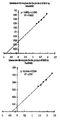
- K m values of SdeAHGD and PatlAHGD were found to be 1.2202 and 2.8529, respectively, and K cat values were found to be 15.0376 and 51.5464, respectively.
- the dried mixtures were extracted according to the difference in polarity by using solvent extraction method and finally only the reaction product was purified.
- the specific experimental method is as follows.
- the dried reactant was suspended in methanol, which is a polar solvent, and then dried by taking only a portion of the supernatant dissolved in the solvent through centrifugation. Due to the difference in polarity, L-AHG and reaction products are dissolved in methanol, but NADP and Tris-HCl are relatively insoluble.
- the dried product was resuspended in butanol, a solvent having a lower polarity than methanol to separate L-AHG and the reaction product. At this time, the supernatant portion in which L-AHG was dissolved was removed and the precipitate portion was dried again. The following procedure was repeated three times to obtain a high purity reaction product. Thereafter, the dried reaction product was dissolved in tertiary distilled water and confirmed purity by GC / MS (FIG. 13) and TLC (FIG.
- Figure 16 shows the results of the hydrogen-carbon pairs through 2D 1 H- 13 CHSQC, showing that there are six hydrogen-carbon pairs. This shows that the number 1 hydrogen-carbon pair disappeared in L-AHG.
- the present invention can be used for bioenergy production through agarose metabolism.
Landscapes
- Chemical & Material Sciences (AREA)
- Organic Chemistry (AREA)
- Life Sciences & Earth Sciences (AREA)
- Health & Medical Sciences (AREA)
- Engineering & Computer Science (AREA)
- Zoology (AREA)
- Wood Science & Technology (AREA)
- Genetics & Genomics (AREA)
- Bioinformatics & Cheminformatics (AREA)
- Biotechnology (AREA)
- General Engineering & Computer Science (AREA)
- Microbiology (AREA)
- General Health & Medical Sciences (AREA)
- Biochemistry (AREA)
- Biomedical Technology (AREA)
- Molecular Biology (AREA)
- General Chemical & Material Sciences (AREA)
- Medicinal Chemistry (AREA)
- Chemical Kinetics & Catalysis (AREA)
- Physics & Mathematics (AREA)
- Biophysics (AREA)
- Plant Pathology (AREA)
- Enzymes And Modification Thereof (AREA)
- Preparation Of Compounds By Using Micro-Organisms (AREA)
Abstract
본 발명은 신규한 3,6-안하이드로-L-갈락토오스 데히드로게나제 및 이로부터 생산된 신규 화합물에 관한 것으로, 보다 상세하게는 3,6-안하이드로-L-갈락토오스를 대사하여 신규한 3,6-안하이드로 갈락토닉산을 생성할 수 있는 3,6-안하이드로-L-갈락토오스 데히드로게나제를 제공할 수 있다.
Description
본 발명은 바이오에너지 제조 분야에 해당하는 기술로서, 3,6-안하이드로-L-갈락토오스를 대사하여 신규한 3,6-안하이드로 갈락토닉산을 생산하는 3,6-안하이드로-L-갈락토오스 데히드로게나제에 관한 것이다.
현재 주요 에너지자원 중 하나로 사용되고 있는 원유의 고갈 및 가격상승과 이러한 화석연료의 과다한 사용으로 인한 대기 중으로 배출되는 이산화탄소의 증가로 야기된 지구온난화 등의 환경문제로 인해 전세계적으로 새로운 이산화탄소 저감형 대체 에너지원의 개발이 시급히 요구되고 있다. 따라서 재생가능하고 풍부한 자원 중 하나인 식물성 바이오매스를 원료로 이용하는 바이오에너지가 주요 대체에너지로 각광받고 있다. 다른 대체에너지들과 다르게 수송용 연료로써 사용이 가능한 바이오에탄올은 현재 많은 수요를 보이고 있으며 미국, 브라질을 비롯한 여러 나라에서 사용을 법률로서 의무화 및 권장하고 있다.
현재 바이오에탄올을 생산하기 위해 사용되고 있는 제 1세대 바이오매스는 식량자원에서 유래된 당질계 및 전분질계 바이오매스로서, 전 인류의 식량자원과 경쟁함으로 인해 곡물가격의 상승을 유발하는 큰 문제점을 가지고 있다. 이러한 단점을 극복하기 위한 대안으로 목질계 바이오매스인 제2세대 바이오매스로부터의 에너지생산 연구가 본격적으로 진행되고 있다. 그러나 목질계 바이오매스는 난분해성물질인 리그닌을 많이 포함하고 있어 발효가 가능한 단당류로의 전환에 큰 문제를 나타내고 있다. 제 3세대 바이오매스인 해조류는 식량자원과 경쟁하지 않아도 될 뿐만 아니라, 리그닌이 없거나 함유량이 낮기 때문에 발효성당으로 전환을 비교적 간단하게 수행할 수 있는 등 여러 가지 장점을 가지고 있다. 따라서 해조류는 차세대 바이오에너지 원료로서 주목 받고 있으며, 이를 이용한 바이오에너지 생산기술들이 활발하게 연구되고 있다. 특히 대한민국의 경우, 삼면이 바다로 이루어져 있기 때문에 해양자원이 풍부하며 해조류를 생물자원화 하기가 용이하다. 또한 해조류의 연간 생산량은 2006년을 기준으로 13,754톤으로 중국, 일본, 북한과 더불어 세계적인 해조류 생산국가에 속하고 있다. 하지만 해조류의 활용면에서는 저조한 실정이다(어업생산통계, 2006, 통계청 사회통계국 농어업생산통계과).
현재 잘 알려진 해조류들 중에서 특히 홍조류(예, Gelidiumamansii)를 원료물질로 사용하는 연구가 활발하게 진행되고 있다. 이러한 홍조류는 전체 건중량의 70% 이상이 다당류로서 미생물이 이용 가능한 발효성당으로의 전환이 가능하다. 홍조류 바이오매스에서 유래된 다당류의 주요 성분은 아가로 전체 건중량의 60% 정도를 함유하고 있어 바이오에너지 생산을 위한 주요 원료로 고려되고 있다.
아가는 단당류인 3,6-안하이드로-L-갈락토오스(3,6-anhydro-L-galactose, 이하 L-AHG)와 D-갈락토오스(D-galactose, 이하 D-Gal)가 알파-1,3 글리코사이드 결합(알파-1,3-glycosidic bond)과 베타-1,4 글리코사이드 결합(베타-1,4-glycosidic bond)으로 교차되어 나타나는 선형의 다당류로 홍조류의 세포벽을 구성하는 주요물질이다. 아가는 아가로펙틴과 아가로오스로 이루어져있고, 이중 아가로펙틴은 아가로오스와 기본구성은 동일하나 부분적으로 황산기, 피루빅산(pyruvic acid)이나 글루쿠론산(glucuronic acid) 등의 치환기를 보유하고 있다(Carbohydrate Research(1971)16:435-445).
현재까지 아가를 분해할 수 있는 능력을 보유한 여러 종류의 미생물들이 동정되었고, 이중 사카로파거스 데그라단스(Saccharophagusdegradans2-40,이하 S. degradans)는 미국의 체사피크만(Chesapeak Bay, Virginia, USA)에서 최초로 발견된 막대모양의 호기성 해양미생물로 전체 유전체서열이 보고되어 있다. S.degradans는 아가를 포함하여 최소 10개 이상의 복합 다당류들을 분해하는 능력을 보유하고 있으며, 아가를 대사과정에 이용하기 위한 아가분해대사시스템을 가지고 있다. 이러한 아가분해대사시스템에 이용되는 효소들은 GH16, GH50, GH86 그리고 GH117의 네 그룹으로 분류된다. 이중 GH117을 제외한 나머지 그룹은 베타-아가라아제로 추정되어 있고, GH50그룹에 속하는 Aga50D효소는 최종 산물로 이당류인 네오아가로바이오스(Neoagarobiose, 이하 NA2)를 생산하는 것으로 보고되어 있다(ApplMicrobiolBiotechnol86:227-234,2010).그리고 GH117그룹에 속하는 네오아가로바이오스 가수분해효소 (Neoagarobiose hydrolysis enzyme, 이하 NABH)는 이당류인 NA2의 α-1,3-결합을 절단하는 것으로 보고되었다. 아가를 대사하는 미생물들은 아가라아제들을 이용하여 아가를 발효성당인 D-Gal과 비발효성당인 L-AHG의 형태로 전환할 수 있다. 해조류를 사용하여 바이오에너지를 생산하기 위해서는 발효성당으로 전환하는 전처리과정이 필수적이지만, 대사과정 중에 생성된 단당류인 L-AHG의 경우 일반적인 미생물에서는 발효성당으로 사용할 수 없어 바이오에너지 생산의 효율이 크게 저하되는 실정이다. 또한 여러 종류의 미생물에서 D-Gal의 대사경로는 잘 알려져 있지만, 아가를 탄소원으로 사용하는 미생물에서의 L-AHG 대사과정에 대한 연구는 전혀 보고되어 있지 않다. 따라서 L-AHG를 이용하여 바이오에너지를 생산하기 위해서는 아가를 탄소원으로 사용하는 미생물들의 L-AHG 대사과정에 대한 연구를 통해 정확한 대사경로의 규명이 필요하다.
본 발명의 목적은 3,6-안하이드로-L-갈락토오스를 대사하는 신규 효소를 제공하는 것이다.
본 발명의 다른 목적은 상기 신규 효소에 의해 생산되는 새로운 화합물을 제공하는 것이다.
상기 목적을 달성하기 위하여, 본 발명은 서열목록 서열번호 1 내지 4에 기재된 아미노산 서열을 갖는 3,6-안하이드로-L-갈락토오스 데히드로게나제를 제공한다.
본 발명은 또한 상기 3,6-안하이드로-L-갈락토오스 데히드로게나제를 코딩하는 유전자를 제공한다.
본 발명은 또한 상기 3,6-안하이드로-L-갈락토오스 데히드로게나제를 코딩하는 유전자를 포함하는 재조합 벡터를 제공한다.
본 발명은 또한 상기 재조합 벡터로 형질전환된 형질전환체를 제공한다.
본 발명은 또한 상기 형질전환체의 배양물로부터 3,6-안하이드로-L-갈락토오스 데히드로게나제를 수득하는 단계를 포함하는 3,6-안하이드로-L-갈락토오스 데히드로게나제의 제조방법을 제공한다.
본 발명은 또한 보조 인자로 NADP(Nicotinamide Adenine Dinucleotide Phospate)를 이용하여 3,6-안하이드로-L-갈락토오스 데히드로게나제와 3,6-안하이드로-L-갈락토오스를 반응시키는 단계를 포함하는 하기 화학식 1의 화합물의 제조방법을 제공한다:
[화학식 1]

본 발명은 또한 상기 화학식 1의 화합물을 제공한다.
본 발명은 3,6-안하이드로-L-갈락토오스를 산화시켜 신규 물질인 3,6-안하이드로 갈락토닉산을 생산할 수 있는 해조류에서 분리한 신규 효소인 3,6-안하이드로-L-갈락토오스 데히드로게나아제를 제공한다.
상기 효소에 의한 3,6-안하이드로-L-갈락토오스의 대사를 통해 해조류로부터 바이오에너지를 획득하는 수율을 높일 수 있을 것으로 기대된다.
도 1은 L-AHG를 기질로 하는 활성분획 단백질과 분획별 활성의 반응 비교를 나타낸 것이다.
도 2는 활성분획 효소의 10% SDS-PAGE 분석 결과로, 레인 1은 분자 크기 마커, 레인 2는 조추출액(crude extract), 레인 3은 로딩 샘플, 레인 4는 10mM 이미다졸로 세척한 샘플, 레인 5 내지 16은 분획 번호 14 내지 25를 나타낸다.
도 3은 사카로파거스 데그라단스(Saccharophagus degradans)2-40 유래의 sdeAHGD 유전자의 염기서열 및 아미노산 서열을 나타낸 것이다.
도 4는 슈도알테로모나스 아틀란티카(Pseudoalteromonas
atlantica) 유래의 patlAHGD 유전자의 염기서열 및 아미노산 서열을 나타낸 것이다.
도 5는 본 발명의 sdeAHGD와 patlAHGD의 PCR 산물을 나타낸 것으로, M은 1kb 마커, 레인 1은 pB2 벡터, 레인 2는 patlAHGD, 레인 3은 sdeAHGD을 나타낸다.
도 6은 본 발명의 발현벡터의 개열지도를 나타낸 것이다.
도 7은 본 발명의 SdeAHGD와 PatlAHGD 단백질의 10% SDS-PAGE 결과를 나타낸 것으로, 레인 1은 분자 크기 마커, 레인 2는 발현 전 SdeAHGD, 레인 3은 발현 후 SdeAHGD, 레인 4는 발현 전 PatlAHGD, 레인 5는 발현 후 PatlAHGD를 나타낸다.
도 8은 L-AHG에 대한 본 발명의 SdeAHG와 PatlAHG의 효소활성을 나타낸 것이다.
도 9는 효소활성의 반응산물을 나타낸 것으로, 레인 1은 L-AHG; 레인 2는 반응산물을 나타낸 것이다.
도 10은 본 발명의 SdeAHGD와 PatlAHGD 활성에 대한 pH 효과를 나타낸 것으로, A는 SdeAHGD이고, B는 PatlAHGD를 나타낸다.
도 11은 본 발명의 SdeAHGD와 PatlAHGD 활성에 대한 온도효과를 나타낸 것으로, A는 SdeAHGD이고, B는 PatlAHGD를 나타낸다.
도 12는 본 발명의 SdeAHGD와 PatlAHGD의 반응속도론적 분석을 나타낸 것이다.
도 13은 GC/MS에서의 전체이온크로마토그램으로, (a) 효소활성 전 반응산물, (b) 효소활성 후 반응산물, (c) 분별결정 후 효소활성의 반응산물을 나타낸다.
도 14는 분별결정 전과 후의 반응산물에 대한 TLC(Thin layer chromatography)로, 레인 1은 분별결정전 반응산물, 레인 2는 분별결정 후 반응산물을 나타낸다.
도 15는 3-(트리메틸실릴)프로피오닉-2,2,3,3-d4애시드(3-(trimethylsilyl)propionic-2,2,3,3-d4acid)를 내부 표준물질로 사용한 정제된 반응산물의 NMR 스펙트럼 결과이다.
도 16은 정제된 반응산물의 2D 1H-13CHSQC스펙트럼을 나타낸 것이다.
도 17은 정제된 반응산물의 2D1H-13CHMBC스펙트럼을 나타낸 것이다.
도 18은 3,6-안하이드로 갈락토닉산(3,6-anhydrogalatonic acid)의 화학적 구조를 나타낸 것이다.
이하 본 발명의 구성을 구체적으로 설명한다.
본 발명자들은 아가로오스를 탄소원으로 사용하는 사카로파거스 데그라단스(S. degradans) 2-40 또는 슈도알테로모나스 아틀란티카(P.atlantica)에서 3,6-안하이드로-L-갈락토오스(또는, 'L-AHG'라 함)를 기질로 하는 효소단백질의 동정을 시도하였다. 동정된 효소는 L-AHG가 보조 인자로 NADP의 도움으로 1번 탄소의 알데하이드기를 카르복실기로 산화하여 3,6-안하이드로 갈락토닉산(3,6-anhydrogalactonic acid, 하기 화학식 1로 표현되는 화합물임)으로 만드는 L-AHG 데히드로게나제(이하 AHGD)로 확인되었다.
따라서, 본 발명은 서열목록 서열번호 1 내지 4에 기재된 아미노산 서열을 갖는 3,6-안하이드로-L-갈락토오스 데히드로게나제를 제공한다.
상기 3,6-안하이드로-L-갈락토오스 데히드로게나제는 서열목록 서열번호 1 내지 4에 기재된 아미노산 서열을 가질 수 있으며, 해당 아미노산 서열에 대해 80% 이상, 85% 이상, 구체적으로 90% 이상, 및 보다 구체적으로는 95% 이상(예를 들어, 98% 이상)의 상동성을 갖는 아미노산 서열을 포함할 수 있다. 단백질의 상동성 검색은 단백질의 아미노산 서열의 데이타 베이스(예컨대, SWISS-PROT 및 PIR), DNA서열의 데이타 베이스(예컨대, DDBJ, EMBL 및 Gene-Bank), 또는 DNA 서열로부터 추론한 아미노산 서열의 데이타 베이스에 대해 예컨대 인터넷을 통해 BLAST 및 FASTA와 같은 프로그램을 이용하여 수행할 수 있다.
또한, 상기 아미노산 서열에 대해 하나 이상의 치환, 결손, 역위, 전좌 등의 돌연변이를 통하여 본 발명의 목적하고자 하는 활성을 가지는 모든 돌연변이체도 본 발명의 효소에 포함될 수 있다. 상기 아미노산 치환은 '보존적 치환(conservative substitution)'이라 부른다. 예를 들어, Ala, Val, Leu, Ile, Pro, Met, Phe 및 Trp는 전부 비극성(non-polar) 아미노산의 군으로 분류되고, 유사한 특성을 갖는다. 비-하전된(non-charged) 아미노산은 Gly, Ser, Thr, Cys, Tyr, Asn 및 Gln을 포함한다. 산성 아미노산은 Asp 및 Glu을 포함한다. 염기성 아미노산은 Lys, Arg 및 His을 포함한다. 상기 돌연변이는 사이트-유도 변이(site-directed mutagenesis) 등을 이용하여(Nucleic Acid Res., 10, 6487 (1982); Method in Enzymol., 100, 448 (1983); 'Molecular Cloning 2 nd Edition', Cold Spring Harbor Laboratory Press(1989); 및 'PCR A Practical Approach', IRL Press, 200(1991)) 실시할 수 있다.
상기 효소는 사카로파거스 데그라단스(S.degradans)2-40 또는 슈도알테로모나스 아틀란티카(Pseudoalteromonas
atlantica) 등에서 유래된 것일 수 있으나, 상기 효소를 발현하는 모든 형질전환체 등을 포함할 수 있어 이에 한정되지 아니한다.
상기 3,6-안하이드로-L-갈락토오스 데히드로게나제는 펩타이드를 합성하는 당해 분야의 공지된 방법에 의하여 제조할 수 있다. 예를 들어 유전자 재조합과 단백질 발현 시스템 또는 펩타이드 합성기 등을 통하여 시험관내에서 합성하는 방법에 의하여 제조할 수 있다.
상기 3,6-안하이드로-L-갈락토오스 데히드로게나제의 효소 활성은 20 내지 90 ℃에서 pH 7 내지 11의 조건에서, 보다 구체적으로 25 내지 40 ℃에서 pH 9 내지 10의 조건에서 우수한 활성을 나타낼 수 있다.
본 발명은 또한 상기 3,6-안하이드로-L-갈락토오스 데히드로게나제를 코딩하는 유전자에 관한 것이다.
본 발명의 유전자는 상기 3,6-안하이드로-L-갈락토오스 데히드로게나제의 물리 화학적 활성을 갖고, 하나 이상의 아미노산이 결실, 치환, 삽입, 및/또는 부가된 서열번호 1 내지 4에 기재된 아미노산 서열을 포함하는 단백질을 코딩하는 폴리뉴클레오티드를 포함한다.
당업자는 사이트-유도 변이(site-directed mutagenesis) 등을 이용하여 서열번호 2의 폴리뉴클레오티드로 결실, 치환, 삽입, 및/또는 부가를 적절히 도입함으로써(NucleicAcidRes.,10,6487(1982);MethodsinEnzymol.,100,448(1983);'MolecularCloning2ndEdition',ColdSpringHarborLaboratoryPress(1989);'PCRAPracticalApproach',IRLPress,200(1991)), 본 발명의 폴리뉴클레오티드의 상동체를 얻을 수 있다.
본 발명의 폴리뉴클레오티드 상동체는 서열번호 5 내지 8의 뉴클레오티드를 포함하고 상기 본 발명의 물리화학적 특성을 갖는 단백질을 코딩하는 폴리뉴클레오티드에 엄격한 조건 하에서 혼성화하는 폴리뉴클레오티드도 포함한다. '엄격한 조건하에서 혼성화하는 폴리뉴클레오티드' 라 함은, 예컨대 설명서에 기술된 조건하(0.5×SSC를 포함하는 일차 세척 완충액으로 42℃에서 세척)에서 ECL 직접 핵산 표지화 및 검출 시스템(Amersham Pharmacia Biotech)을 이용하여, 서열번호 5 내지 8 중 하나의 서열로부터 임의적으로 선택된 적어도 20, 바람직하게는 적어도 30의 연속적 잔기(예를 들어, 40, 60 또는 100 연속 잔기)의 서열을 포함하는 하나 이상의 프로브 DNAs에 혼성화하는 폴리뉴클레오티드를 말한다.
본 발명의 폴리뉴클레오티드는 분리된 폴리뉴클레오티드를 포함한다. '분리된 뉴클레오티드'라 함은 천연적으로 발생하는 폴리뉴클레오티드에 비해 상이한 형태로 존재하는 폴리뉴클레오티드를 말한다. 예를 들어, 다른 생물체의 게놈에 통합된 벡터 및 폴리뉴클레오티드는 상기 분리된 폴리뉴클레오티드에 포함된다. 또한, 상기 분리된 폴리뉴클레오티드는 cDNA, PCR 산물, 또는 제한 단편으로서 얻어진 폴리뉴클레오티드를 포함한다. 또한, 융합 단백질을 코딩하는 폴리뉴클레오티드의 부분으로서 사용되는 폴리뉴클레오티드는 '분리된 폴리뉴클레오티드'에 또한 포함된다.
본 발명의 3,6-안하이드로-L-갈락토오스 데히드로게나제를 코딩하는 폴리뉴클레오티드는 예를 들어, 하기 방법에 의해 분리할 수 있다: 서열번호 2의 뉴클레오티드 서열에 기초한 PCR 프라이머를 설계하고, 주형(template)으로서 환원효소-생산 균주 유래의 염색체 DNA나 cDNA 라이브러리를 이용한 PCR을 수행하여 본 발명의 DNA를 얻는다.
또한, 본 발명의 폴리뉴클레오티드는 프루브로서 얻어진 DNA 단편을 이용하여, 콜로니 혼성화, 플라크 혼성화 등으로, (a) 3,6-안하이드로-L-갈락토오스 데히드로게나제 생산 균주에서 유래된 염색체 DNA의 제한효소 단편을 파지나 플라스미드에 도입하고 상기 파지나 벡터로 대장균 세포를 형질전환하여 얻어진 라이브러리, 또는 (b) cDNA 라이브러리에 대한 스크리닝을 수행함으로써 제조할 수 있다.
택일적으로, 본 발명의 폴리뉴클레오티드는 PCR로 얻어진 DNA 단편의 뉴클레오티드 서열을 분석; 알려진 DNA 서열의 외부에 가닥(strand)을 신장하기 위해 분석된 서열에 기초한 PCR 프라이머의 설계; 및 적절한 제한효소로 환원효소-생성 균주의 염색체 DNA의 소화 및 주형으로서 상기 DNA를 이용하는 자가환화 반응(self-cyclizing reaction)에 의한 역-PCR을 수행함으로써 얻어질 수 있다(Genetics, 120, 621-623 (1988)). 또한, 본 발명의 폴리뉴클레오티드는 RACE 방법으로 얻어질 수 있다(Rapid Amplification of cDNA End, 'PCR Jikken Manual (Manual for PCR experiments)', 25-33, HBJ Publishing Bureau).
상기 방법으로 클로닝된 게놈 DNA 및 cDNA에 더하여, 본 발명의 폴리뉴클레오티드는 합성된 DNAs를 포함할 수 있다.
본 발명은 또한 상기 3,6-안하이드로-L-갈락토오스 데히드로게나제를 코딩하는 유전자를 포함하는 재조합 벡터에 관한 것이다.
본 발명에서 "재조합 벡터"란 적당한 숙주세포에서 목적 단백질을 발현할 수 있는 벡터로서, 유전자 삽입물이 발현되도록 작동가능하게 연결된 필수적인 조절 요소를 포함하는 유전자 작제물을 말한다.
상기 벡터는 플라스미드 벡터, 코즈미드 벡터, 박테리오파아지 벡터 또는 바이러스 벡터 등을 포함하나 이에 제한되지 않는다. 적합한 발현벡터는 프로모터, 오퍼레이터, 개시코돈, 종결코돈, 폴리아데닐화 시그널 및 인핸서 같은 발현 조절 엘리먼트 외에도 막 표적화 또는 분비를 위한 시그널 서열 또는 리더 서열을 포함하며, 목적에 따라 다양하게 제조될 수 있다. 벡터의 프로모터는 구성적 또는 유도성일 수 있다. 또한, 발현벡터는 벡터를 함유하는 숙주세포를 선택하기 위한 선택마커를 포함하고, 복제가능한 발현벡터인 경우 복제 기원을 포함한다.
본 발명의 재조합 벡터는 바람직하게는 일반적인 대장균 균주 발현용 벡터, pBT21a(이하 'pB2'라 함)에 상기 3,6-안하이드로-L-갈락토오스 데히드로게나제를 코딩하는 핵산을 삽입함으로써 제조될 수 있다. 본 발명의 일 구체예에서는 대장균 발현용 벡터로 pB2를 사용하였지만 반드시 이에 한정되는 것은 아니며, 일반적으로 사용할 수 있는 모든 대장균주 발현용 벡터가 제한 없이 사용될 수 있다.
본 발명의 일 구체예에서는 대장균 균주 발현용 벡터인 pB2 벡터를 사용하여 본 발명의 3,6-안하이드로-L-갈락토오스 데히드로게나제 코딩 유전자(서열번호 5 내지 8)를 포함하는 DNA 절편을 삽입하여 재조합 벡터, 예컨대 pB2 vector+sdeAHGD 또는 pB2 vector+patlAHGD(도 6의 개열지도)를 제조할 수 있다.
본 발명은 또한 상기 재조합 벡터로 형질전환된 형질전환체에 관한 것이다.
상기 형질전환은 핵산을 유기체, 세포, 조직 또는 기관에 도입하는 어떤 방법도 포함되며, 당 분야에서 공지된 바와 같이 숙주세포에 따라 적합한 표준 기술을 선택하여 수행할 수 있다. 이런 방법에는 전기충격유전자전달법(electroporation), 원형질 융합, 인산칼슘(CaPO4) 침전, 염화칼슘(CaCl2) 침전, 실리콘 카바이드 섬유 이용한 교반, 아그로박테리아 매개된 형질전환, PEG, 덱스트란 설페이트, 리포펙타민 등이 포함되나 이로 제한되지 않는다.
또한, 숙주세포에 따라서 단백질의 발현량과 수식 등이 다르게 나타나므로, 목적에 가장 적합한 숙주세포를 선택하여 사용하면 된다.
숙주세포로는 대장균(Escherichiacoli), 바실러스 서브틸리스(Bacillussubtilis), 스트렙토마이세스(Streptomyces), 슈도모나스(Pseudomonas),프로테우스 미라빌리스(Proteusmirabilis) 또는 스타필로코쿠스(Staphylococcus)와 같은 원핵 숙주세포가 있으나 이로 제한되는 것은 아니다. 또한, 진균(예를 들어, 아스페르길러스(Aspergillus)), 효모(예를 들어, 피치아 파스토리스(Pichiapastoris), 사카로마이세스 세르비시애(Saccharomycescerevisiae), 쉬조사카로마세스(Schizosaccharomyces), 뉴로스포라 크라사(Neurosporacrassa))등과 같은 하등 진핵세포, 곤충세포, 식물세포, 포유동물 등을 포함하는 고등 진핵생물 유래의 세포를 숙주세포로 사용할 수 있다.
상기 형질전환체는 상기 재조합 벡터를 임의의 숙주세포에 도입시킴으로써 용이하게 제조될 수 있다. 본 발명의 일 구체예에 따르면, 3,6-안하이드로-L-갈락토오스 데히드로게나제를 발현하는 재조합 벡터 pB2 vector+sdeAHGD 또는 pB2 vector+patlAHGD(도 6의 개열지도)를 대장균 균주 BL21(DE3)에 도입하여 형질전환체를 제조할 수 있다.
본 발명은 또한 상기 형질전환체의 배양물로부터 3,6-안하이드로-L-갈락토오스 데히드로게나제를 수득하는 단계를 포함하는 3,6-안하이드로-L-갈락토오스 데히드로게나제의 제조방법에 관한 것이다.
상기 3,6-안하이드로-L-갈락토오스 데히드로게나제는 통상의 배양방법에 따라 형질전환체를 배양하여 정제하는 것이 좋다. 상기 3,6-안하이드로-L-갈락토오스 데히드로게나제는 재조합 벡터에 도입되는 인서트 즉, 코딩 유전자의 염기서열에 따라 3,6-안하이드로-L-갈락토오스 대사능에 영향을 주지 않을 정도로 아미노산 서열의 일부에 얼마든지 변형이 있을 수 있다. 상기 변형은 결실, 삽입 또는 치환에 의한 변형을 의미한다.
본 발명의 일 구체예에 따른 상기 효소의 제조방법은 다음과 같다. 먼저 3,6-안하이드로-L-갈락토오스 데히드로게나제를 발현하는 형질전환체를 배양하고, 배양물을 수거하여 환원제(예로서, 2-머캅토에탄올) 및 프로테아제 저해제(예로서, 페닐메탄술포닐 플루오라이드)를 갖춘 완충용액 내에서 세포를 용해(lysis)시켜 무세포추출물을 제조한다.
단백질 용해도에 기초한 분획법(유기용매를 이용한 침전; 황산암모늄에 의한 염석(salting out)); 양이온 교환 크로마토그래피; 음이온 교환 크로마토그래피; 겔 여과; 소수성 크로마토그래피; 및 착화제, 색소, 항체 등을 이용한 친화성 크로마토그래피의 적절한 조합에 의해 상기 무세포추출물로부터 원하는 효소를 정제할 수 있다. 예를 들어, 본 발명의 효소는 페닐-세파로스를 이용한 소수성 크로마토그래피, 모노 Q를 이용한 음이온 교환 크로마토그래피, 부틸-세파로스를 이용한 소수성 크로마토그래피, 및 히드록시아파타이트를 이용한 흡착 크로마토그래피를 이용하는 일련의 과정에 의해 전기영동상 하나의 밴드로 정제될 수 있다.
본 발명의 일 구체예에 따르면, 10% SDS-PAGE 분석 결과, 대략 52 kDa 크기의 효소를 얻을 수 있다.
본 발명은 또한 상기 3,6-안하이드로-L-갈락토오스 데히드로게나제에 특이적으로 결합하는 다클론성 항체에 관한 것이다.
상기 다클론성 항체의 제조방법은 특별히 제한하지는 않으나, 다음의 방법에 따라 제조하는 것이 바람직하다.
본 발명의 3,6-안하이드로-L-갈락토오스 데히드로게나제를 SPF(specific pathogen free) 동물에 1 내지 수회 주사하여 면역화시킨다. 최종 면역 후 일정 시간이 지난 뒤에 전혈하여 혈청만 취해 본 발명의 3,6-안하이드로-L-갈락토오스 데히드로게나제에 대한 다클론성 항체를 얻는다.
상기 면역화 동물은 통상 면역화에 사용되는 동물이면 특별히 제한하지 않으나, 랫트인 것이 바람직하다. 상기 면역화를 위한 주사 횟수, 기간 및 투여방법은 당업자 수준에서 변형 또는 변경가능하므로 특별히 제한하지 않는다.
본 발명은 또한 보조 인자로 NADP(Nicotinamide Adenine Dinucleotide Phospate)를 이용하여 3,6-안하이드로-L-갈락토오스 데히드로게나제와 3,6-안하이드로-L-갈락토오스를 반응시키는 단계를 포함하는 하기 화학식 1의 화합물의 제조방법에 관한 것이다:
[화학식 1]

본 발명은 또한 상기 화학식 1의 화합물을 제공한다.
상기 3,6-안하이드로-L-갈락토오스 데히드로게나제는 3,6-안하이드로-L-갈락토오스(이하 'L-AHG’라 함)를 산화시킬 수 있어 조효소로 NADP를 사용하여 반응시킬 경우 L-AHG의 1번 탄소의 알데하이드기를 카르복실기로 산화하여 상기 화학식 1의 화합물, 즉, 3,6-안하이드로 갈락토닉산(3,6-anhydrogalactonic acid)을 생성할 수 있다.
상기 3,6-안하이드로-L-갈락토오스 데히드로게나제는 서열번호 1 내지 4에 기재된 아미노산 서열 중 어느 하나를 가질 수 있다. 아울러, 서열번호 5 내지 8에 기재된 염기서열 중 어느 하나로부터 코딩될 수 있다.
상기 효소는 사카로파거스 데그라단스(S.degradans)2-40, 슈도알테로모나스 아틀란티카(Pseudoalteromonas atlantica), 마이크로실라 에스피(Microscillasp.)PRE1 또는 코랄리오마가리타 아카지멘시스(Coraliomargaritaakajimensis) 등에서 유래된 것일 수 있으나, 상기 효소를 발현하는 모든 형질전환체 등을 포함할 수 있어 이에 한정되지 아니한다.
상기 반응은 20 내지 90 ℃에서 pH 7 내지 11의 조건에서, 보다 구체적으로 25 내지 40 ℃에서 pH 9 내지 10의 조건에서 실시할 수 있으나 이에 특별히 제한되는 것은 아니다.
이하, 본 발명을 실시예를 통해 상세히 설명한다. 하기 실시예는 본 발명을 예시하는 것일 뿐 본 발명의 범위가 하기 실시예에 한정되는 것은 아니다.
<실시예 1> 사카로파거스 데그라단스(Saccharophagusdegradans)2-40조추출액으로부터 L-AHG를 기질로 하는 효소의 활성분획 제조
사카로파거스 데그라단스(Saccharophagusdegradans)2-40(이하 sde)의 단일콜로니를 0.2%의 아가가 포함된 10mL의 최소배지(2.3% 해수염, 0.1% 효모 추출물 및 0.05% NH4Cl수용액)를 사용하여 30℃에서 24시간 동안 배양한 후, 같은 배지 1L에 배양된 균 10mL을 넣고 30℃에서 24시간 동안 추가 배양하였다. 배양된 균체는 4000rpm으로 30분간 원심분리하여 회수하고, 초음파 파쇄기(Sonifier 450, Branson, USA)를 사용하여 조추출액(crude cell extract)으로 만들었다. 조추출액은 4℃에서 15000rpm으로 1시간 동안 원심분리하여 상등액(조효소액)과 침전물(세포조각)로 나눈 뒤, 상등액은 HiTrap Q 컬럼(GE healthcare, USA)을 사용하여 음이온 교환 크로마토그래피로 분획하였다. 얻어진 분획들은 최종적으로 디솔팅(Desalting) 컬럼(GE healthcare, USA)을 사용하여 20mM Tris-HCl, pH 8.0의 완충용액으로 만들었다. 각 분획은 10% SDS-PAGE 방법을 사용하여 단백질의 크기 및 조성을 확인하였고, 아래와 같은 방법으로 L-AHG 기질로 하는 효소의 활성검증을 통해 활성분획을 획득하였다(도 1 및 2).
<실험예 1> 분획에 포함된 L-AHG 기질로 하는 효소 활성측정
조추출액으로부터 분획된 시료로부터 L-AHG를 기질로 하는 효소의 활성은 다음과 같이 측정하였다. 먼저 10㎕의 분획시료를 5mM의 여러 조효소(NAD, NADP, ATP)와 5mM의 기질(L-AHG)이 포함된 200㎕의 반응용액(20mM Tris-HCl, pH 8.0)에 넣어 25℃에서 30분 동안 반응시켰다. 최종 반응액은 microplate spectrophotometer(Bio-Tek Instruments, Inc.)를 사용하여 End-point UV-methods에 따라 339nm에서 변환된 NAD(P)H의 최종 농도를 측정하거나(도 1), 반응산물의 생성여부를 TLC를 통해 확인하였다.
<실시예 2> 활성 단백질의 동정
활성을 나타내는 분획들을 SDS-PAGE로 전개한 후 Image J 프로그램으로 활성분획에 포함된 단백질들의 크기를 비교 확인하였다. 그 결과 활성이 증가되는 구간에서 같은 증가를 보이는 단백질의 크기는 약 52kDa으로 확인하였다. National Center for Biotechnology Information(NCBI) site(http://www.ncbi.nlm.nih.gov/)에서 유사한 크기를 갖고, NAD(P)를 사용하는 데히드로게나아제(dehydrogenase)를 Sde의 유전체서열에서 검색한 결과 EMBL ID ABD81905(이하 L-AHG dehydrogenase, AHGD)로 예측되었고, 그와 서열 상동성을 갖는 단백질들의 서열도 확인하였다. Sde와 슈도알테로모나스 아틀란티카(Pseudoalteromonasatlantica)T6c(이하 'Pat1'라 함) 유래 AHGD는 아래와 같이 클로닝하여 최종적으로 활성을 검증하였다.
(AHGD의 클로닝)
사카로파거스 데그라단스와 슈도알테로모나스 아틀란티카 유전체 서열로부터 얻어진 AHGD의 뉴클레오티드 서열(유럽분자생물학연구소 (EMBL) 염기서열데이터베이스 식별번호: 각각 CP000282, 1446 nt와 CP000388, 1464 nt)에 대한 정보를 기반으로 다음과 같은 올리고뉴클레오티드를 제작하였다.
1. Sde;
primer 1: 5'-GGCGGTGGTGGCGGCATGAAAATTCATAACATGAAAAATTTTATCAACG-3'(49mer)(서열번호 9)
primer 2: 5'-GTTCTTCTCCTTTGCGCCCCTATCATTCAGCAAAATACACTGTCTTC-3' (47mer) (서열번호 10)
2. Patl;
primer 1: 5'-GGCGGTGGTGGCGGCATGACTGTTCAAGATTTACACTTTAAAAACAA-3'(47mer), (서열번호 11)
primer 2: 5'-GTTCTTCTCCTTTGCGCCCCTACTAAGCCTCATTGATATAAACGGTT-3'(47mer). (서열번호 12)
대상 유전자들은 Sde와 Patl 유전체 DNA를 사용하여 중합효소연쇄반응을 통해 증폭되었다(이하 S. degradans:sdeAHGD,P.atlantica:patlAHGD).증폭된 sdeAHGD와 patlAHGD 아미노산/염기서열은 도 3 및 4에 도시하였고, 이들의 PCR 산물은 도 5에 도시하였다. 증폭된 sdeAHGD와 patlAHGD DNA 조각들은 아미노 말단에 6개의 히스티딘 잔기가 부가된 변형된 pET21a (이하 pB2)벡터에 클로닝한 다음 발현용 대장균인 E. coli BL21 (DE3)에 형질전환하여 발현시켰다(도 6).
(AHGD 발현 및 정제)
형질전환된 대장균에서 SdeAHGD와 PatlAHGD의 발현을 확인하기 위해, 재조합 sdeAHGD와 patlAHGD 유전자를 각각 포함한 형질전환된 대장균 BL21 (DE3)를 50mg/L의 앰피실린 항생제가 포함된 루리아-버타니(LB)배지에 형질전환체를 접종한 후, 37℃에서 OD600=0.5~1.0까지 진탕배양하였다. 그 후에 0.5mM/L의 농도로 IPTG를 첨가하여 180rpm으로 16℃에서 24시간 동안 발현을 유도하였다. 배양액은 4000rpm으로 10분 동안 원심분리하여 균체를 회수하였고, 회수한 균체는 초음파 파쇄기를 사용하여 조추출액으로 만든 후, 4℃에서 15000rpm으로 60분 동안 원심분리 하여 조효소액과 침전물로 분리하였다. 조효소액은 0.45㎛-여과지(Sartorius stedim biotech, Germany)를 사용하여 여과한 후, Histaq 컬럼(GE healthcare, USA)을 사용하여 친화력 크로마토그래피로 정제하고, 다시 Hitraq Q 컬럼을 사용하여 이온교환 크로마토그래피로 정제를 하였다. 용출시킨 활성 분획물은 탈염(desalting) 컬럼을 사용하여 20mM Tris-HCl, pH 8.0의 완충용액으로 만들었다. 발현된 SdeAHGD와 PatlAHGD는 10% SDS-PAGE 분석을 통해 확인하였다(도 7).
<실험예 2> AHGD 활성 확인
정제한 단백질 활성은 다음과 같은 조건에서 분석하였다. 먼저 5mM의 조효소(nicotinamide adenine dinucleotide phosphate, NADP)와 5mM의 기질(L-AHG)이 포함된 200ul의 반응용액(20mM Tris-HCl, pH 8.0)에 SdeAHGD와 PatlAHGD 효소(최종농도: 0.1mg/mL)를 각각 넣은 후 25℃에서 1에서 190분 동안 반응시켰다.
반응액은 microplate spectrophotometer(Bio-Tek Instruments, Inc.)를 사용하여 End-point UV-methods에 따라 339nm에서 시간 별로 변환된 NADPH의 최종 농도를 측정하였다(도 8).
그리고, AHGD 효소활성에 의한 반응산물은 Thin layer chromatography (TLC)방법을 사용하여 확인하였다. TLC를 통한 확인은 Silica gel 60 TLC 평판에 반응액을 1㎕ 점적하고, TLC 용매조건(n-Buthanol:EtOH:물= 3:2:2)에서 전개하였다. 전개한 TLC 평판은 1차 처리 용액인 황산(10%(v/v) H2SO4inEthanol)으로 처리한 후 건조하고, 1차 처리된 평판은 다시 2차 처리 용액인 나프토레조시놀(0.2%(w/v) naphthoresorcinol in ethanol)로 처리 후 가열하였다(도 9).
<실험예 3> 효소활성에 미치는 pH의 영향
AHGD 효소의 최적 pH를 확인하기 위해, pH값은 pH 3~11범위에서 효소의 활성을 측정하였다. 각각의 pH에 대한 완충용액은 pH 3∼5.5는 20mM 시트르산 완충용액을 pH 5.5∼7.0은 20mM 소듐 포스페이트 완충용액을 pH 7.0∼9.0은 20mM Tris-HCl 완충용액을 마지막으로 pH 9.0∼11.0은 20mM 보레이트 완충용액을 사용하였다. 2mM의 기질(L-AHG)과 1.5mM의 조효소(NADP)가 포함된 각각의 완충용액에 최종 효소단백질 농도를 0.1mg/mL로 하여 25℃에서 15분 동안 반응하였다. 효소의 반응을 멈추기 위해 효소를 95℃에서 5분간 처리하고, 12000rpm으로 5분간 원심분리 후, End-point UV-methods에 따라 339nm에서 변환된 NADPH를 측정하였다.
도 10에 나타난 바와 같이, SdeAHGD의 활성은 20mM Tris-HCl, pH 9.0 완충용액에서 가장 높았고, PatlAHGD의 활성은 20mM 보레이트, pH 9.0에서 가장 높았다.
<실험예 4> 효소활성에 미치는 온도의 효과
AHGD 효소의 최적 온도를 확인하기 위해, AHGD의 활성은 4, 16, 25, 37, 50, 70, 90℃ 범위에서 각각의 활성을 측정하였다. SdeAHGD는 20mM 보레이트, pH 9.0 완충용액에서 PatlAHGD는 20mM Tris-HCl, pH9.0 완충용액에서 측정하였고, 2mM의 기질(L-AHG)과 1.5mM의 조효소(NADP)가 포함된 각각의 완충용액에 최종 효소단백질 농도를 0.1mg/mL로 하여 각각 정해진 온도에서 15분 동안 반응하였다. 효소의 반응을 멈추기 위해 효소를 95℃에서 5분간 처리하고 12000rpm으로 5분간 원심분리 후, End-point UV-methods에 따라 339nm에서 변환된 NADPH를 측정하였다.
도 11에 나타난 바와 같이, SdeAHGD는 25℃에서 가장 좋은 활성을 나타내었고, PatlAHGD는 37℃에서 가장 좋은 활성을 나타내었다.
<실험예 5> 효소의 반응속도론적 분석
SdeAHGD와 PatlAHGD는 반응속도론적 분석을 위해 최종단백질 농도를 0.1mg/mL로 고정하고, 기질(L-AHG, 21mg/mL)을 SdeAHGD의 경우 1.8, 2.0, 2.2, 2.5, 2.8㎕를 PatlAHGD의 경우 1.5, 1.8, 2.0, 2.2, 2.5ul를 각각 포함되어있고 1.5mM의 조효소(NADP)가 포함된 완충용액(SdeAHGD: 20mM 보레이트, pH 9.0, PatlAHGD: 20mM Tris-HCl, pH 9.0)을 사용하였다. SdeAHGD의 효소반응은 25℃에서 15분 동안 반응시키고 PatlAHGD은 25℃에서 10분 동안 반응시켰다. 효소반응을 멈추기 위해 95℃에서 5분간 처리하고, 12000rpm으로 5분 동안 원심분리하여 획득한 상등액은 End-point UV-methods에 따라 339nm에서 변환된 NADPH를 측정하였다.
도 12에 나타난 바와 같이, SdeAHGD와 PatlAHGD의 K m 값은 각각 1.2202와 2.8529로 확인되었고, K cat 값은 각각 15.0376과 51.5464로 확인되었다.
<실시예 3> 반응 산물의 정제 및 확인
건조시킨 혼합물들은 용매추출법을 이용하여 각각의 극성도 차에 따라 추출하고 최종적으로 반응 산물만을 정제하였다. 구체적인 실험 방법은 다음과 같다. 건조된 반응물은 극성 용매인 메탄올에 현탁한 후에 원심분리를 통해 용매에 녹은 상등액 부분만을 취하여 다시 건조시켰다. 극성도 차이에 의해 L-AHG와 반응산물은 메탄올에 녹지만 NADP와 Tris-HCl는 상대적으로 잘 녹지 않는다. 다시 건조시킨 반응물은 L-AHG와 반응 산물을 분리하기 위하여 메탄올보다 극성도가 낮은 용매인 부탄올에 재현탁 시켰다. 이때 L-AHG가 녹아있는 상등액 부분은 제거하고 침전물부분을 다시 건조시켰다. 높은 순도의 반응 산물을 얻기 위해 다음의 과정을 3회 반복하였다. 그 후 건조시킨 반응산물은 3차 증류수에 녹인 후 GC/MS(도 13)와 TLC로 순도를 확인하였다(도 14).
<실험예 6> 활성 산물의 NMR 분석
정제한 반응산물을 동정하기 위하여 NMR 분석을 실시하였다. 건조시킨 반응산물을 D2O에 녹이고 3-(trimethylsilyl)propionic-2,2,3,3-d4acid를 기준으로 1H chemical shift를 결정하였으며 2D 1H-13CHSQC(heteronuclearsinglequantumcoherence),이차원(2D) 1H-13CHMBC(heteronuclearmultiplebondcorrelation)spectra를 통해 반응 산물을 구조를 분석하였다. 1Hchemicalshift를 분석한 결과는 도 15에 나타내었다.
도 15에 나타난 바와 같이, 효소반응에서 기질로 사용한 L-AHG의 1번 탄소의 알데하이드기의 수소결합이 반응 산물에서는 나타나지 않았으며 이를 통해 1번 탄소의 기능기에서 변화가 일어났음을 알 수 있다.
구체적인 구조적 변화 및 동정을 위해 2D NMR 분석을 실시하였다.
도 16은 2D 1H-13CHSQC를 통해 수소-탄소 쌍을 나타낸 결과를 보여주고 있는데, 6개의 수소-탄소 쌍이 있음을 나타내고 있다. 이는 L-AHG에서는 나타났던 1번 수소-탄소 쌍이 사라진 것을 알 수 있다.
또한, 도 17의 2D 1H-13CHMBC분석을 통해 3번 탄소와 6번 수소, 그리고 6'수소 결합이 나타났는데 이을 통해 3번과 6번 탄소 사이의 안하이드로 고리는 그대로 유지됨을 확인할 수 있었다. 또한 2번 수소는 181.5 ppm의 카보닐 탄소와 연관이 있는데 1번 탄소가 카르복실기로 산화반응이 일어났다. 이는 도 16의 결과에서 나타난 1번 수소결합이 사라진 것과 일치한다.
결과적으로, L-AHG를 기질로 사용하고 NADP를 조효소로 효소반응을 했을 때 NADP가 NADPH로 환원이 되면서 기질은 산화 반응이 일어났다. 이 산화물은 L-AHG의 1번 탄소의 알데하이드기가 카르복실기로 산화된 구조라는 것을 NMR을 통해 분석하였으며 동정한 산화물의 구조는 도 18에 나타내었다. 이 산화물은 가장 일반적인 화합물의 명명법에 따라 3,6-안하이드로 갈락토닉산으로 명명하였다.
본 발명은 아가로오스 대사를 통한 바이오에너지 제조에 사용할 수 있다.
Claims (11)
- 서열목록 서열번호 1 내지 4에 기재된 아미노산 서열을 갖는 3,6-안하이드로-L-갈락토오스 데히드로게나제.
- 제1항의 3,6-안하이드로-L-갈락토오스 데히드로게나제를 코딩하는 유전자.
- 제2항에 있어서,서열번호 5 내지 8에 기재된 염기서열을 갖는 유전자.
- 제2항의 3,6-안하이드로-L-갈락토오스 데히드로게나제를 코딩하는 유전자를 포함하는 재조합 벡터.
- 제4항에 있어서,유전자는 서열번호 5 내지 8에 기재된 염기서열을 갖는 것인 재조합 벡터.
- 제4항의 재조합 벡터로 형질전환된 형질전환체.
- 제6항의 형질전환체의 배양물로부터 3,6-안하이드로-L-갈락토오스 데히드로게나제를 수득하는 단계를 포함하는 3,6-안하이드로-L-갈락토오스 데히드로게나제의 제조방법.
- 보조 인자로 NADP(Nicotinamide Adenine Dinucleotide Phospate)를 이용하여 3,6-안하이드로-L-갈락토오스 데히드로게나제와 3,6-안하이드로-L-갈락토오스를 반응시키는 단계를 포함하는 하기 화학식 1의 화합물의 제조방법:[화학식 1]

- 제8항에 있어서,3,6-안하이드로-L-갈락토오스 데히드로게나제는 서열번호 1 내지 4에 기재된 아미노산 서열 중 어느 하나를 갖는 화학식 1의 화합물의 제조방법.
- 제9항에 있어서,3,6-안하이드로-L-갈락토오스 데히드로게나제는 서열번호 5 내지 8에 기재된 염기서열 중 어느 하나로부터 코딩되는 것인 화학식 1의 화합물의 제조방법.
- 하기 화학식 1로 표현되는 화합물:[화학식 1]

Priority Applications (1)
| Application Number | Priority Date | Filing Date | Title |
|---|---|---|---|
| US13/980,211 US9181208B2 (en) | 2011-01-24 | 2012-01-25 | 3,6-anhydro-L-galactose dehydrogenase acting on 3,6-anhydro-L-galactose, and production of 3,6-anhydrogalactonic acid by using the enzyme |
Applications Claiming Priority (2)
| Application Number | Priority Date | Filing Date | Title |
|---|---|---|---|
| KR10-2011-0006631 | 2011-01-24 | ||
| KR1020110006631A KR101316084B1 (ko) | 2011-01-24 | 2011-01-24 | 3,6-안하이드로-l-갈락토오스에 작용하는 신규한 3,6-안하이드로-l-갈락토오스 데히드로게나제와 이 효소를 이용한 3,6-안하이드로 갈락토닉산의 생산 |
Publications (2)
| Publication Number | Publication Date |
|---|---|
| WO2012102552A2 true WO2012102552A2 (ko) | 2012-08-02 |
| WO2012102552A3 WO2012102552A3 (ko) | 2013-06-13 |
Family
ID=46581287
Family Applications (1)
| Application Number | Title | Priority Date | Filing Date |
|---|---|---|---|
| PCT/KR2012/000607 Ceased WO2012102552A2 (ko) | 2011-01-24 | 2012-01-25 | 3,6-안하이드로-l-갈락토오스에 작용하는 신규한 3,6-안하이드로-l-갈락토오스 데히드로게나제와 이 효소를 이용한 3,6-안하이드로 갈락토닉산의 생산 |
Country Status (3)
| Country | Link |
|---|---|
| US (1) | US9181208B2 (ko) |
| KR (1) | KR101316084B1 (ko) |
| WO (1) | WO2012102552A2 (ko) |
Cited By (2)
| Publication number | Priority date | Publication date | Assignee | Title |
|---|---|---|---|---|
| KR20140133457A (ko) | 2013-05-07 | 2014-11-19 | 고려대학교 산학협력단 | 3,6―안하이드로―l―갈락토오스를 대사하는 재조합 미생물 및 이의 용도 |
| US9637761B2 (en) | 2013-05-07 | 2017-05-02 | Korea University Research And Business Foundation | Recombinant microorganism metabolizing 3,6-anhydride-L-galactose and a use thereof |
Families Citing this family (4)
| Publication number | Priority date | Publication date | Assignee | Title |
|---|---|---|---|---|
| US4608883A (en) * | 1984-07-16 | 1986-09-02 | Eaton Corporation | Torsion damping mechanism |
| KR101743421B1 (ko) | 2015-10-16 | 2017-06-05 | 고려대학교 산학협력단 | 3,6―안하이드로―l―갈락토오스의 항충치 용도 |
| WO2018102753A1 (en) * | 2016-12-02 | 2018-06-07 | Emory University | Peptides and uses for managing viral infections |
| CN108715841B (zh) * | 2018-06-06 | 2021-09-03 | 中国海洋大学 | 一种产3,6-内醚-l-半乳糖的固定化酶 |
-
2011
- 2011-01-24 KR KR1020110006631A patent/KR101316084B1/ko active Active
-
2012
- 2012-01-25 WO PCT/KR2012/000607 patent/WO2012102552A2/ko not_active Ceased
- 2012-01-25 US US13/980,211 patent/US9181208B2/en active Active
Non-Patent Citations (5)
| Title |
|---|
| DATABASE NCBI GENBANK 03 January 2011 'Betaine-aldehyde dehydrogenase [Saccharophagus degradans 2-40]' * |
| DATABASE NCBI GENBANK 07 April 2010 'Aldehyde dehydrogenase [Coraliomargarita akajimensis DSM 45221]' Database accession no. 003547640 * |
| DATABASE NCBI GENBANK 10 April 2010 '''Betaine aldehyde dehydrogenase [Pseudoalteromonas atlantica T6c]' Database accession no. YP 662123 * |
| DATABASE NCBI GENBANK 18 July 2008 'Putative aldehyde dehydrogenase [Microscilla sp. PRE1]' Database accession no. 116831 * |
| MARIA ERREA ET AL.: 'Separation and quantitation of enantiomeric 3,6-anhydrogalactoses by conversion to the corresponding diastereomeric acetylated sec-butyl 3,6- anhydrogalactonates' CARBOHYDRATE RESEARCH vol. 311, no. 4, October 1998, pages 235 - 238 * |
Cited By (2)
| Publication number | Priority date | Publication date | Assignee | Title |
|---|---|---|---|---|
| KR20140133457A (ko) | 2013-05-07 | 2014-11-19 | 고려대학교 산학협력단 | 3,6―안하이드로―l―갈락토오스를 대사하는 재조합 미생물 및 이의 용도 |
| US9637761B2 (en) | 2013-05-07 | 2017-05-02 | Korea University Research And Business Foundation | Recombinant microorganism metabolizing 3,6-anhydride-L-galactose and a use thereof |
Also Published As
| Publication number | Publication date |
|---|---|
| US9181208B2 (en) | 2015-11-10 |
| WO2012102552A3 (ko) | 2013-06-13 |
| KR101316084B1 (ko) | 2013-11-13 |
| KR20120085364A (ko) | 2012-08-01 |
| US20130303743A1 (en) | 2013-11-14 |
Similar Documents
| Publication | Publication Date | Title |
|---|---|---|
| WO2011049418A9 (ko) | 테라박터 속 유래의 신규한 진세노시드 글리코시다제 및 이의 용도 | |
| An et al. | Identification and characterization of a novel Terrabacter ginsenosidimutans sp. nov. β-glucosidase that transforms ginsenoside Rb1 into the rare gypenosides XVII and LXXV | |
| WO2012102552A2 (ko) | 3,6-안하이드로-l-갈락토오스에 작용하는 신규한 3,6-안하이드로-l-갈락토오스 데히드로게나제와 이 효소를 이용한 3,6-안하이드로 갈락토닉산의 생산 | |
| KR101521711B1 (ko) | 신규한 아가로올리고당 분해효소 및 이를 이용한 아가로오스로부터 3,6-안하이드로-l-갈락토오스와 갈락토오스의 생산방법 | |
| KR20050058494A (ko) | 발효에 의한 생물학적 제조를 위한 전분 생성물의 이용 | |
| WO2010110599A2 (ko) | 신규한 알파-네오 아가로바이오스 가수분해 효소 및 그를 이용한 단당류의 획득 방법 | |
| Fujita et al. | Molecular cloning and characterization of a β-L-arabinobiosidase in Bifidobacterium longum that belongs to a novel glycoside hydrolase family | |
| WO2011034406A2 (ko) | 로다노박터 진세노시디뮤탄스 k c t c 2 2 2 3 1 t 유래의 진세노시드 글리코시다제 및 이의 용도 | |
| WO2019177311A1 (ko) | 해조류로부터 포도당 및 라미나리올리고당을 생산하는 신규한 베타-글루코시데이즈 | |
| KR20180072705A (ko) | 소분자 글리코실화 방법 | |
| CN110777155A (zh) | 最小霉素生物合成基因簇、重组菌及其应用 | |
| TWI777992B (zh) | 新穎內-β-N-乙醯基胺基葡萄糖苷酶 | |
| US11118202B2 (en) | Method for purifying and obtaining 3,6-anhydro-L-galactose using microorganisms | |
| US8383798B2 (en) | Polynucleotide encoding a cellulase enzyme and method for producing the enzyme | |
| Simerská et al. | Induction and characterization of an unusual α-D-galactosidase from Talaromyces flavus | |
| KR101350823B1 (ko) | 샤페론 단백질을 이용한 바이오매스의 당화 효율 증강용 조성물, 바이오매스의 당화 효율 증가 방법 및 바이오매스로부터 바이오에탄올의 대량생산 방법 | |
| CN113999887B (zh) | 一种酶法转化黄芪甲苷制备环黄芪醇的方法 | |
| JP2014138616A (ja) | 複合型糖鎖加水分解酵素 | |
| WO2014137148A1 (ko) | 향상된 전환 활성을 가지는 l-아라비노스 이성화효소 변이체 및 이를 이용한 d-타가토스의 생산 방법 | |
| WO2020050659A1 (ko) | 한천으로부터 당 알코올의 생물학적 신규 제조방법 | |
| KR101638334B1 (ko) | 싸이클로덱스트린 글루카노트랜스퍼라제 돌연변이 효소 및 이를 이용한 l-아스코르빈산 유도체의 제조방법 | |
| WO2014182054A1 (ko) | 3,6-안하이드로-l-갈락토오스를 대사하는 재조합 미생물 및 이의 용도 | |
| US20160369285A1 (en) | Termite superoxide dismutases and glutathione peroxidases for biomass conversion | |
| WO2015046978A1 (ko) | 2,3-부탄디올의 생성능이 증강된 재조합 미생물 및 이를 이용한 2,3-부탄디올의 생산 방법 | |
| Nagashima et al. | Cloning and characterization of glucosyltransferase cDNA from Eucalyptus perriniana cultured cells |
Legal Events
| Date | Code | Title | Description |
|---|---|---|---|
| 121 | Ep: the epo has been informed by wipo that ep was designated in this application |
Ref document number: 12739661 Country of ref document: EP Kind code of ref document: A2 |
|
| WWE | Wipo information: entry into national phase |
Ref document number: 13980211 Country of ref document: US |
|
| 122 | Ep: pct application non-entry in european phase |
Ref document number: 12739661 Country of ref document: EP Kind code of ref document: A2 |