WO2012105483A1 - Procédé de fabrication d'un complexe métallique d'un composé qui a un squelette de porphyrine - Google Patents
Procédé de fabrication d'un complexe métallique d'un composé qui a un squelette de porphyrine Download PDFInfo
- Publication number
- WO2012105483A1 WO2012105483A1 PCT/JP2012/051961 JP2012051961W WO2012105483A1 WO 2012105483 A1 WO2012105483 A1 WO 2012105483A1 JP 2012051961 W JP2012051961 W JP 2012051961W WO 2012105483 A1 WO2012105483 A1 WO 2012105483A1
- Authority
- WO
- WIPO (PCT)
- Prior art keywords
- porphyrin
- metal complex
- compound
- metal
- water
- Prior art date
- Legal status (The legal status is an assumption and is not a legal conclusion. Google has not performed a legal analysis and makes no representation as to the accuracy of the status listed.)
- Ceased
Links
- 0 CC1C(C)=C2N[C@]1C(*)=C(C(*)=C1*)N=C1C(*)=C(C([C@]1*)I)NC1=C(*)C(C(*)=C1C)=NC1=*2 Chemical compound CC1C(C)=C2N[C@]1C(*)=C(C(*)=C1*)N=C1C(*)=C(C([C@]1*)I)NC1=C(*)C(C(*)=C1C)=NC1=*2 0.000 description 1
Images



Classifications
-
- C—CHEMISTRY; METALLURGY
- C07—ORGANIC CHEMISTRY
- C07D—HETEROCYCLIC COMPOUNDS
- C07D487/00—Heterocyclic compounds containing nitrogen atoms as the only ring hetero atoms in the condensed system, not provided for by groups C07D451/00 - C07D477/00
- C07D487/22—Heterocyclic compounds containing nitrogen atoms as the only ring hetero atoms in the condensed system, not provided for by groups C07D451/00 - C07D477/00 in which the condensed system contains four or more hetero rings
Definitions
- the present invention relates to a method for producing a metal complex of a compound having a porphyrin type skeleton.
- a metal complex of porphyrin which is one of compounds having a porphyrin-type skeleton, has various characteristics.
- a metal complex of porphyrin has a ⁇ -conjugated system in the molecule, and ⁇ electrons move freely in the porphyrin molecule, thereby transmitting information and energy important for life activities.
- the ⁇ -conjugated system has a certain spread, and the spread has a great influence on the absorption of ultraviolet light and visible light, and therefore has characteristic optical characteristics in the ultraviolet-visible region.
- the porphyrin metal complex has a sharp absorption band in the vicinity of 400 nm to 500 nm called the Soray band and a wavelength in the vicinity of 500 nm to 700 nm called the Q band due to the heteropolyene structure (18 ⁇ electron system) in the skeleton. Since the former is a forbidden transition while the latter is an allowable transition, there is a characteristic that there is a large difference in each molecular extinction coefficient.
- the Q band is split into four when porphyrin is used alone. However, when the complex is made into a complex, the symmetry increases and the number of splits is reduced.
- the absorption spectrum of the Soret band, the Q band, and the like is characterized by being different depending on the skeleton shape, the external substituent, the central metal, the ligand, and the like of the porphyrin metal complex. Because of these diverse properties, porphyrin metal complexes are not only present in biological systems, but are used extensively as functional substances and are actively studied.
- porphyrin metal complexes are used as analytical reagents based on the characteristic optical properties described above.
- chlorophyll metal complexes and porphyrin zinc complexes which are compounds having a porphyrin-type skeleton, cause photoelectron transfer by absorbed light, and thus are being studied for application to solar cells.
- many metal complexes of porphyrin are luminescent, and they have been studied as light emitting materials for organic EL.
- porphyrin metal complexes those exhibiting stable redox properties have been utilized as catalysts for organic synthesis and the like.
- porphyrin metal complexes themselves become supramolecules due to interactions derived from the ⁇ -conjugated system.
- Porphyrin metal complexes also become supramolecules by complex formation with axial ligands. Since the metal complex of porphyrin strongly stacks to DNA, research as a sensitizer for phototherapy is also being conducted. Thus, since the metal complex of the compound having a porphyrin type skeleton has various characteristics, in recent years, it has been used in a wide range of fields such as functional materials such as solar cells and catalysts, pharmaceuticals such as sensitizers, and agricultural chemicals. Application is expected.
- a porphyrin metal complex can be synthesized by reacting porphyrin with metal acetate mainly in refluxed acetic acid or formic acid. For example, when porphyrin and copper acetate are reacted in refluxed acetic acid or formic acid, a porphyrin copper complex is formed, and when porphyrin and silver acetate are reacted, a porphyrin silver complex is formed, and porphyrin and gold chloride are combined. When reacted, a porphyrin gold complex is formed.
- porphyrin zinc complex When porphyrin and zinc acetate are reacted, a porphyrin zinc complex is formed. When porphyrin and manganese acetate are reacted, a porphyrin manganese complex is formed, and the porphyrin and iron acetate are reacted. It is said that a porphyrin iron complex is produced
- a metal complex of porphyrin can be synthesized by reacting porphyrin with metal acetate mainly in pyridine.
- reacting porphyrin with cadmium acetate in pyridine produces a porphyrin cadmium complex
- reacting porphyrin with mercury acetate produces a porphyrin mercury complex
- reacting porphyrin with thallium acetate produces a porphyrin thallium complex.
- porphyrin and tin chloride are reacted, a porphyrin tin complex is formed.
- porphyrin and lead acetate are reacted, a porphyrin lead complex is formed.
- porphyrin magnesium acetate is reacted, a porphyrin magnesium complex is formed.
- porphyrin dimethyl ester can be obtained by reacting porphyrin and mainly metal carbonyl in an organic solvent.
- each porphyrin dimethyl ester is produced by reacting porphyrin with any one of chromium, cobalt, nickel, iron, carbonyl of vanadium, and diphenyltitanium in an organic solvent (non-patent document). Reference 3).
- Non-Patent Document 4 As a method of synthesizing a metal complex of a compound having a porphyrin skeleton, there is a method of synthesizing a metal complex of porphyrin by dissolving them in a polar organic solvent in which both the compound having a porphyrin skeleton and a metal salt are dissolved. It has been proposed (Non-Patent Document 4).
- a metal complex of a compound having a porphyrin skeleton can be synthesized.
- tetraphenylporphyrin and any one selected from zinc, copper, magnesium, nickel, cobalt, iron, chromium, manganese, vanadium oxide, mercury, cadmium, lead, tin, magnesium, barium, calcium, palladium, and silver It is said that when an acetate, halide, hydroxide or carbonate is reacted in N, N-dimethylformamide (DMF), an equivalent tetraphenylporphyrin metal complex is formed (Non-patent Document 5).
- Non-patent Document 6 tetraphenylporphyrin and copper chloride are reacted in dimethyl sulfoxide (DMSO) at 35 ° C. to 60 ° C. to form a tetraphenylporphyrin copper complex.
- DMSO dimethyl sulfoxide
- the polar organic solvent can dissolve the metal salt, but is harmful, and depending on the type, there is a problem that handling is not easy, such as generating a bad odor.
- the polar organic solvent not only dissolves the compound and metal salt having a porphyrin-type skeleton that is a reaction raw material, but also dissolves the metal complex that is a product, so that it is difficult to separate the generated metal complex. There is a problem that there is.
- the present invention has been made in order to solve the above-mentioned problems, and the object thereof is not to use an organic solvent at the time of reaction, and after the reaction, the metal complex and water can be easily separated. It is an object of the present invention to provide a method for producing a metal complex of a compound having a porphyrin-type skeleton that has an extremely low environmental burden and is efficient in a few steps.
- the inventors have made a mixture of a metal salt and a compound having a porphyrin type skeleton in water at a high temperature and a high pressure, and dissolving the metal salt and the compound having a porphyrin type skeleton in high temperature and high pressure water.
- the inventors have found a technique for producing a metal complex of a compound having a porphyrin skeleton without using an organic solvent, and completed the present invention.
- the method for producing a metal complex of a compound having a porphyrin-type skeleton according to the present invention for solving the above-described problems is to react a compound having a porphyrin-type skeleton and a metal salt at a reaction temperature of 200 ° C. or higher and 450 ° C. or lower in water. It is characterized by.
- the compound having a porphyrin-type skeleton and the metal salt are reacted in water at a reaction temperature of 200 ° C. or higher and 450 ° C. or lower, so that water is used without using a harmful and malodorous organic solvent.
- a metal complex of a compound having a porphyrin type skeleton can be produced.
- water is used as a solvent, the product metal complex can be easily separated from the water solvent.
- the compound having a porphyrin skeleton is tetraphenylporphyrin represented by the following formula (1).
- Ph represents a phenyl group.
- the compound having a porphyrin type skeleton is tetraphenylporphyrin represented by the above formula (1), it can be easily applied widely to general compounds having a porphyrin type skeleton.
- the method for producing a metal complex of a compound having a porphyrin-type skeleton according to the present invention for solving the above-mentioned problems is obtained by reacting a compound having a porphyrin-type skeleton and a metal salt in water at a reaction temperature of 200 ° C. or higher and 450 ° C. or lower.
- the reaction step and the separation step described above are provided, a clean process using only water can be realized without using an organic solvent that generates harmful and offensive odors. Moreover, since water is used as a solvent, the product metal complex can be easily separated from the water solvent. As a result, as in the case of using a polar organic solvent, in the solvent after the reaction, the compound and metal salt having a porphyrin type skeleton that is a reaction raw material, and the metal of the compound having a porphyrin type skeleton that is a product The problem that all of the complex is dissolved and separation becomes difficult can be avoided.
- a metal complex of a compound having a porphyrin skeleton can be efficiently produced by a method with a very small environmental load and with few steps.
- the compound having a porphyrin-type skeleton is tetraphenylporphyrin represented by the following formula (1).
- the metal complex of the compound having a porphyrin type skeleton is a tetraphenylporphyrin metal complex represented by the following formula (2).
- Ph represents a phenyl group.
- formula (2) Ph represents a phenyl group, and M represents a metal.
- the compound having a porphyrin type skeleton is tetraphenylporphyrin represented by the above formula (1), and the metal complex thereof is a tetraphenylporphyrin metal complex represented by the above formula (2). It becomes easy to apply widely to general compounds having a porphyrin type skeleton.
- the metal salt is a sulfate.
- the metal salt since sulfate is used as the metal salt, the metal species is likely to exist in a cation state. As a result, the metal salt easily reacts with the compound having a porphyrin skeleton, and the metal complex can be stably produced at a high yield. In addition, a metal complex of a compound having a porphyrin skeleton can be manufactured using an inexpensive metal salt.
- the metal complex and water can be easily separated after the reaction without using an organic solvent.
- a metal complex of a compound having a porphyrin-type skeleton can be efficiently produced by a method with a very low environmental load and with few steps.
- the method for producing a metal complex of a compound having a porphyrin-type skeleton according to the present invention is preferably a compound having a porphyrin-type skeleton and a metal salt at 200 ° C. to 450 ° C. Is a reaction at a reaction temperature of 300 ° C. or higher and 400 ° C. or lower.
- a porphyrin-type skeleton is a skeleton structure such as porphyrin
- a compound having a porphyrin-type skeleton is a compound having such a skeleton structure.
- the compound having a porphyrin type skeleton includes a compound having a structure represented by the following formula (3) and the following formula (4).
- Z ia and Z ib represent a hydrogen atom, a halogen atom or a monovalent organic group
- R 1 to R 4 represent a hydrogen atom, a halogen atom or a monovalent organic group
- i is 1 Indicates an integer of ⁇ 4.
- Z ia and Z ib represent a hydrogen atom, a halogen atom or a monovalent organic group
- i represents an integer of 1 to 4.
- Z ia and Z ib (wherein i represents an integer of 1 to 4) in the above formula (3) and the above formula (4) include a hydrogen atom; a hydroxyl group; and an optionally substituted one having 1 to 10 carbon atoms.
- An amino group and a nitro group which may be substituted with an alkyl group having 1 to 10 carbon atoms; and the like. These may further have a substituent.
- Z ia and Z ib may be bonded to each other to form a ring.
- Examples of the ring formed as a structure of Z ia —CH ⁇ CH—Z ib include a benzene ring, a naphthalene ring and an anthracene ring.
- Aromatic hydrocarbons such as pyridine ring, quinoline ring, furan ring and thiophene ring; non-aromatic cyclic hydrocarbons such as cyclohexene;
- Examples of the monovalent organic group represented by R 1 to R 4 include an optionally substituted alkyl group, aryl group, alkoxy group, mercapto group, carboxyl group, carboxyl group, and an alcohol having 1 to 10 carbon atoms. Examples include esters.
- the compound having a porphyrin type skeleton is particularly preferably one or two selected from tetraphenylporphyrin and tetra-t-butyltetraazaporphyrin represented by the following formula (1).
- Ph represents a phenyl group.
- the compound having a porphyrin type skeleton is contained in the water described later in a range corresponding to 5 ⁇ 10 ⁇ 4 mol / L to 1 mol / L, and preferably 5 ⁇ 10 ⁇ 3 mol / L to 1 ⁇ 10 ⁇ 1. It is included in a range corresponding to mol / L, and more preferably in a range corresponding to 1 ⁇ 10 ⁇ 2 mol / L to 5 ⁇ 10 ⁇ 2 mol / L.
- the metal salt is not particularly limited as long as it is a reaction raw material for reacting with a compound having a porphyrin-type skeleton to form a metal complex, but it may literally be a metal salt or other metal and halogen atoms, etc. It may be a salt (metal complex salt) of an atom bonded to an atom or a metal complex.
- metal salts and metal complex salts include sulfates, nitrates, chlorides, acetates, carbonates, bicarbonates, dihydrogen phosphates, hydroxides, and citrates.
- metal salt, metal complex salt and metal constituting the metal complex examples include alkali metals such as Li, Na and K; alkaline earth metals such as Mg, Ca and Ba; transition metals such as Fe, Ni, Cu and Au And the like.
- metal complex salt in which the metal and other atoms are bonded examples include those in which the metal is bonded to a halogen atom or the like.
- the metal complex examples include porphyrin metal complexes having the above metals.
- the porphyrin metal complex is insoluble in water at room temperature, but in the present invention, high-temperature and high-pressure water is used as a solvent, so the porphyrin metal complex is soluble in water.
- the porphyrin metal complex can be used as a reaction raw material for generating the metal complex.
- porphyrin metal complex As such a porphyrin metal complex, a porphyrin metal complex in which one porphyrin ring coordinates one or two or more metal atoms, two or more porphyrin rings have one or two or more metal atoms
- a porphyrin metal complex in which three or more of these are bonded together and a porphyrin metal complex in which three or more of these are bonded to form a long chain can be exemplified, but the invention is not limited thereto.
- metal salts dissolve well in water described later, inexpensive metal salts such as sulfates, chlorides and hydroxides can be used without using expensive acetates.
- sulfate is preferable in terms of increasing the yield of the product. Specifically, it is preferable that it is 1 type, or 2 or more types chosen from copper sulfate, nickel sulfate, cobalt sulfate, and vanadyl sulfate.
- the metal salt is contained in water described later in the range of 1 ⁇ 10 ⁇ 3 mol / L to 5 mol / L, preferably in the range of 1 ⁇ 10 ⁇ 2 mol / L to 5 ⁇ 10 ⁇ 1 mol / L. More preferably, it is contained in the range of 5 ⁇ 10 ⁇ 2 mol / L to 1 ⁇ 10 ⁇ 1 mol / L.
- Water acts as a solvent.
- a method for producing a clean metal complex with an extremely low environmental load can be obtained.
- metal complexes can be formed using inexpensive metal salts such as sulfates, chlorides and hydroxides without using expensive metal salts such as acetates. Can be manufactured.
- the metal complex to be produced is insoluble in water below the predetermined reaction temperature, after the metal complex is produced, for example, the metal complex can be easily separated from water simply by bringing the temperature of the water to room temperature. It is possible to simplify the manufacturing process and make it economical.
- the metal complex can be easily separated from water, the metal complex can be recovered in a high yield, and industrial production can be expected.
- water as a solvent, it can be set as the manufacturing method which can use an inexpensive metal salt with little environmental burden, and can isolate
- Water dissolves inorganic salts such as metal salts well.
- room temperature water has a high dielectric constant, and therefore hardly dissolves nonpolar organic substances. Therefore, the temperature of the water is set to 250 ° C. or more and 400 ° C. or less, and the pressure is further increased.
- Such high-temperature and high-pressure water has a dielectric constant as low as that of a polar organic solvent, and dissolves inorganic salts as well as inorganic salts.
- water dissolves organic substances well enough to form a homogeneous phase with various organic substances.
- high-temperature and high-pressure water has a feature that it becomes a reaction solvent capable of dissolving both inorganic substances and organic substances.
- TPP tetraphenylporphyrin
- the mechanism by which high-temperature and high-pressure water dissolves a compound having a porphyrin-type skeleton is considered as follows. As the water temperature increases, the dielectric constant of the water decreases. Along with this, the polarity of water decreases and approaches nonpolarity. From this, as the temperature of the water rises, the high-temperature and high-pressure water will dissolve the organic matter, and will dissolve TPP well.
- the method for producing a metal complex of a compound having a porphyrin-type skeleton according to the present invention includes a compound having a porphyrin-type skeleton by reacting a compound having a porphyrin-type skeleton and a metal salt in water at a reaction temperature of 200 ° C. to 450 ° C.
- the reaction step is a step of producing a metal complex of a compound having a porphyrin type skeleton by reacting a compound having a porphyrin type skeleton and a metal salt in water at a reaction temperature of 200 ° C. or higher and 450 ° C. or lower.
- a compound having a porphyrin-type skeleton is dissolved in water and reacted with a metal salt at a high temperature of 200 ° C. to 450 ° C. and a high pressure state of 1.0 MPa to 50.0 MPa.
- the reaction temperature is less than 200 ° C., the reaction rate is low, and thus the efficiency is deteriorated.
- reaction temperature exceeds 450 ° C., side reactions other than the metal complex that is the target product are likely to proceed.
- the reaction temperature is preferably 300 ° C. or higher and 400 ° C. or lower, more preferably 350 ° C. or higher and 380 ° C. or lower.
- the compound having a porphyrin-type skeleton, metal salt and water used in the reaction step are as described above.
- reaction step for example, an aqueous metal salt solution and a compound having a porphyrin skeleton are introduced into a sealed reaction vessel (for example, a high-temperature high-pressure vessel capable of applying temperature and pressure), and the high-pressure vessel is placed in a sand bath. It is possible to carry out the process at a predetermined temperature and pressure.
- the reaction time is from 10 minutes to 120 minutes, preferably from 30 minutes to 60 minutes. By setting the reaction time within the above range, the metal complex can be reliably produced.
- reaction time here means the time which passed since the reaction container inside became a high temperature / high pressure state.
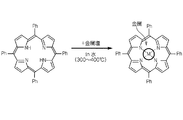
- FIG. 1 is a diagram showing a metal complex formation reaction when tetraphenylporphyrin (TPP) is used as a compound having a porphyrin-type skeleton.
- TPP and a metal salt are reacted in water at a temperature of 300 ° C. or higher and 400 ° C. or lower under high pressure.
- the metal salt and the compound having a porphyrin-type skeleton can be dissolved in the high-temperature and high-pressure water without using an organic solvent.
- a metal complex of a compound having a porphyrin type skeleton can be produced.
- reaction step prior to the reaction step, necessary pre-steps such as a step of preparing a compound having a porphyrin skeleton and a metal salt can be appropriately added.
- an appropriate amount of components necessary for producing a metal complex of a compound having a porphyrin type skeleton may be contained in water as long as it is within the scope of the present invention.
- the separation step is a step of separating water and the metal complex by lowering the reaction temperature after the above-described reaction step. Since the metal complex of the compound having a porphyrin type skeleton is insoluble in water at a temperature lower than the predetermined reaction temperature described above, the metal complex becomes a solid product by lowering the reaction temperature after the reaction step. Precipitate. As a result, the metal complex and water can be easily separated. When the reaction temperature is lowered to room temperature, the metal complex and water can be separated and the subsequent operation is facilitated.
- Room temperature refers to the temperature at which the liquid phase is formed at approximately 100 ° C. or lower.
- Separation of water and the metal complex can be performed, for example, by putting the reaction vessel after the reaction into a water bath and cooling it. Thereafter, the water after the reaction is filtered to separate the solid product, and the metal complex contained in the solid product can be recovered.
- the solid product when there is a compound having an unreacted porphyrin type skeleton in the water after the reaction, the solid product also includes a compound having an unreacted porphyrin type skeleton.
- the metal complex contained in the solid product and the compound having an unreacted porphyrin-type skeleton can be separated by column chromatography or the like. In this way, the metal complex contained in the solid product can be recovered.
- the unreacted metal salt is also contained in this water.
- water can also be referred to as an aqueous metal salt solution containing an unreacted metal salt.
- a nonpolar organic solvent such as chloroform is added to the reaction vessel after the reaction, the metal complex is extracted into the organic phase, and the organic phase is volatilized and concentrated, or column chromatography is performed. And a step of separating a metal complex from a compound having an unreacted porphyrin-type skeleton and a by-product.
- Metal complex examples of the metal complex produced by the method for producing a metal complex of a compound having a porphyrin skeleton according to the present invention include a tetraphenylporphyrin metal complex, a phthalocyanine metal complex, and a tetraazaporphyrin metal complex.
- the obtained metal complex can be qualitatively analyzed by an ultraviolet-visible spectrophotometer, a mass spectrometer, or the like.
- the method for producing a porphyrin metal complex according to the present invention can produce a metal complex of a compound having a porphyrin-type skeleton using water without using an organic solvent that generates harmful and offensive odors. it can. Moreover, since water is used as a solvent, the product metal complex can be easily separated from the water solvent. As a result, the separation process can be simplified. As described above, according to the production method of the present invention, a metal complex of a compound having a porphyrin skeleton can be efficiently produced by a method having a very small environmental load and with few steps.
- TPP tetraphenylporphyrin
- the visualization cell containing TPP and water is 50 ° C. (0.1 MPa), 150 ° C. (0.3 MPa), 200 ° C. (1.3 MPa), 250 ° C. (3.4 MPa), 300 ° C. (7.8 MPa), 325 ° C. (11.2 MPa), 350 ° C. (16.0 MPa) and 375 ° C. (21.3 MPa) were set to the respective conditions, and whether or not TPP was dissolved in water was observed. . As a result, it was slightly dissolved in the liquid phase (water) at 250 ° C.
- Example 1-1 Using a 50 mL volumetric flask, 1.208 g of copper sulfate as a metal salt was dissolved in 50 mL of distilled water to prepare a 0.1 mol / L CuSO 4 aqueous solution. Next, 0.02 g (3.3 ⁇ 10 ⁇ 5 mol) of tetraphenylporphyrin (TPP) as a compound having a porphyrin-type skeleton is placed in a batch reactor (made of stainless steel) having an internal volume of 6 cm 3 as a reaction vessel.
- TPP tetraphenylporphyrin
- aqueous copper sulfate solution (3.0 g) and reaction vessel corrosion prevention were charged with 0.032 g of sodium carbonate equivalent to copper sulfate, and the reaction vessel was purged with argon and sealed. Next, the reaction vessel was put into a sand bath set at 350 ° C. The reaction temperature reached the reaction temperature in about 4 minutes.
- the reaction vessel was placed in a water bath and quenched.
- the reaction vessel was washed with chloroform, and the aqueous phase and the chloroform phase in the reaction vessel were all collected in a screw tube bottle, transferred to a separating funnel, and the aqueous phase and the chloroform phase were separated.
- the chloroform phase was washed with distilled water and saturated brine.
- the chloroform phase was passed through sodium sulfate to remove water, and then the chloroform was removed with a rotary evaporator.
- the obtained solid content was separated by column chromatography using silica gel 60N (manufactured by Kanto Chemical Co., Inc.) as a filler and a 1: 1 solution of chloroform-hexane as a developing solvent to obtain a TPP copper complex solution.
- silica gel 60N manufactured by Kanto Chemical Co., Inc.
- a 1: 1 solution of chloroform-hexane as a developing solvent to obtain a TPP copper complex solution.
- thin layer chromatography was appropriately used to confirm whether the TPP copper complex was separated. Thereafter, the developing solvent was further flowed to recover the unreacted TPP solution and by-products.
- Example 1-2 A TPP copper complex was produced in the same manner as in Experimental Example 1-1 except that the reaction temperature was changed to 150 ° C., 200 ° C., 250 ° C., 300 ° C. and 400 ° C., respectively.
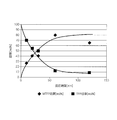
- the development of thin layer chromatography at each reaction temperature is shown in FIG. 2, and a graph showing the effect of reaction temperature on the yield of TPP copper complex is shown in FIG.
- the rhombus plot represents the yield (mol%) of the TPP copper complex
- the square plot represents the yield (mol%) of TPP.
- the pressure in the reaction vessel at each reaction temperature is specifically 0.5 MPa at 150 ° C., 1.6 MPa at 200 ° C., 4.0 MPa at 250 ° C., and 8.6 MPa at 300 ° C. Yes, it was 16.5 MPa at 350 ° C., 27.1 MPa at 380 ° C., and 37.2 MPa at 400 ° C.
- the temperature dependence of the reaction between TPP and an aqueous copper sulfate solution was examined.
- the yield of the TPP copper complex was 8 mol% at 150 ° C, 8 mol% at 200 ° C, 18 mol% at 250 ° C, 32 mol% at 300 ° C, 80 mol% at 350 ° C, and 91 mol% at 400 ° C. From these results, the reaction rapidly progressed around 350 ° C., which was consistent with the dissolution observation result shown in FIG.
- the yield of the TPP copper complex was 90 mol% or more.
- Example 1-3 A TPP copper complex was produced in the same manner as in Example 1-1, except that the reaction time was changed to 10 minutes, 20 minutes, 30 minutes, and 120 minutes, respectively.
- the graph showing the yield of the metal complex in each reaction time is shown in FIG.
- the yield of the TPP metal complex is 27 mol% when the reaction time is 10 minutes, 41 mol% for 20 minutes, 42 mol% for 30 minutes, 80 mol% for 60 minutes, and In the case of 120 minutes, it was 66 mol%.
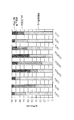
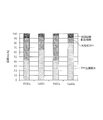
- Example 2-1 As the metal salt, instead of CuSO 4, CoSO 4, NiSO 4 , VOSO 4, Co (NO 3) 2, Ni (NO 3) 2, Cu (NO 3) 2, CoCl 2, NiCl 2 and CuCl 2, respectively A TPP metal complex was produced in the same manner as in Experimental Example 1-1, except that it was used. 7 and 8 show the yields of TPP metal complex, unreacted TPP, by-products and the like when each metal salt is used. FIG. 7 is a graph showing the effect of the anion of the metal salt, and FIG. 8 is a graph showing the effect of the metal species. As shown in FIG. 7 and FIG.
- the yield of TPP metal complex when CuSO 4 is used as the metal salt is 80 mol%, and the yield of unreacted TPP is 11 mol%.
- the yield of the recovered product was 8 mol%.
- the yield of the TPP metal complex when Co (NO 3 ) 2 is used as the metal salt is 37 mol%, the yield of unreacted TPP is 20 mol%, as shown in FIG.
- the yield of unrecovered material was 43 mol%.
- the yield of the TPP metal complex is 27 mol%
- the yield of unreacted TPP is 60 mol%
- the by-products and The yield of unrecovered material was 13 mol%.
- the yield of TPP metal complex is 18 mol%
- the yield of unreacted TPP is 40 mol%
- the yields of by-products and unrecovered products are It was 42 mol%.
- the yield of the TPP metal complex is 64 mol%
- the yield of unreacted TPP is 25 mol%
- the yield of by-products and unrecovered products is reduced.
- the rate was 11 mol%.
- the yield of TPP metal complex was 63 mol%
- the yield of unreacted TPP was 32 mol%
- the yield of by-products and unrecovered products was 6 mol%. It was.
- the yield of the TPP metal complex when CuCl 2 is used as the metal salt is 72 mol%, and the yield of unreacted TPP is 16 mol%.
- the yield was 12 mol%.
- the yield of TPP metal complex when VOSO 4 is used as the metal salt is 43 mol%, the yield of unreacted TPP is 48 mol%, as shown in FIG. The yield was 9 mol%.
- Example 2-2 In the same manner as in Experimental Example 2-1, except that NiSO 4 was used among the metal salts described in Experimental Example 2-1, and the reaction temperature was changed to 150 ° C, 200 ° C, 250 ° C, 300 ° C, and 400 ° C, respectively.
- a TPP nickel complex was prepared. The results are shown in FIG. FIG. 4 is a graph showing the temperature dependence of the reaction between TPP and aqueous nickel sulfate solution.
- the rhombus plot represents the yield (mol%) of the TPP nickel complex
- the square plot represents the yield (mol%) of TPP.
- the yield of the TPP nickel complex was 4 mol% at 200 ° C, 21 mol% at 250 ° C, 27 mol% at 300 ° C, 43 mol% at 350 ° C, and 50 mol% at 400 ° C.
- the TPP nickel complex was not obtained at 150 degreeC. From these results, the reaction rapidly progressed at around 350 ° C., which was consistent with the dissolution observation result shown in FIG. 2 as in Experimental Example 1-2.
- Example 2-3 In the same manner as in Experimental Example 2-1, except that CoSO 4 was used among the metal salts described in Experimental Example 2-1, and the reaction temperature was changed to 150 ° C, 200 ° C, 250 ° C, 300 ° C, and 400 ° C, respectively.
- a TPP cobalt complex was prepared.
- FIG. 5 is a graph showing the temperature dependence of the reaction between TPP and an aqueous cobalt sulfate solution.
- the rhombus plot represents the yield (mol%) of the TPP cobalt complex
- the square plot represents the yield (mol%) of TPP.
- the yield of TPP cobalt complex was 4 mol% at 200 ° C, 18 mol% at 250 ° C, 39 mol% at 300 ° C, 67 mol% at 350 ° C, and 82 mol% at 400 ° C.
- the TPP cobalt complex was not obtained at 150 degreeC. From these results, the reaction rapidly progressed at around 350 ° C., which was consistent with the dissolution observation result shown in FIG. 2 as in Experimental Example 1-2.
- Example 3-1 Compounds having a porphyrin type skeleton are 2,3,7,8,12,13,17,18-octaethylporphyrin represented by the following formula (5), tetrathienylporphyrin represented by the following formula (6), And a reaction temperature of 350 ° C. in the same manner as in Example 1-1, except that each of them was changed to 5,10,15,20-tetrakis (2,4,6-trimethylphenyl) porphyrin represented by the following formula (7). And the porphyrin metal complex was manufactured on the conditions for 60 minutes of reaction time.
- FIG. 9 is a graph showing porphyrin species dependency. As shown in FIG. 9, when 2,3,7,8,12,13,17,18-octaethylporphyrin was used, the yield of the porphyrin metal complex was 60 mol%, and the remaining 40% was not recovered. Product and by-product. When tetrathienylporphyrin was used, the yield of the porphyrin metal complex was 43 mol%, the yield of unreacted porphyrin was 10 mol%, and the remaining 47 mol% was unrecovered and by-products.
- Example 3-2 A porphyrin metal complex is produced under the conditions of a reaction temperature of 350 ° C. and a reaction time of 60 minutes, as in Example 1-1, except that the compound having a porphyrin-type skeleton is changed to a benzoporphyrin represented by the following formula (8). did.
- the analysis was qualitative by collecting the contents and drying them, and evaluating the presence or absence of peaks with a matrix-assisted laser desorption / ionization-time-of-flight mass spectrometer.
- Example 3-3 A compound having a porphyrin type skeleton, and a phthalocyanine represented by the following formula (9), a metal salt CuSO 4, except that the one of NiSO 4 and CoSO 4, like the Experimental Example 1-1, the reaction temperature A phthalocyanine metal complex was produced under the conditions of 350 ° C. and a reaction time of 60 minutes. The analysis was qualitatively performed by washing the contents, collecting them, drying them to obtain the collected substances, and evaluating the presence or absence of peaks with a matrix-assisted laser desorption / ionization time-of-flight mass spectrometer. The results are shown in Table 1 below.
- Example 3-4 A compound having a porphyrin type skeleton, except that the 2,3-naphthalocyanine represented by the following formula (10) and then change the metal salt CuSO 4, NiSO 4 and CoSO 4 same manner as in Experimental Example 1-1
- a naphthalocyanine metal complex was produced under the conditions of a reaction temperature of 350 ° C. and a reaction time of 60 minutes.
- the analysis was qualitatively performed by evaluating the presence or absence of a peak with a matrix-assisted laser desorption / ionization method-time-of-flight mass spectrometer after washing and collecting the contents and drying them to obtain a collected material. The results are shown in Table 1 below.
- a metal complex of a compound having a porphyrin skeleton can be produced using water as a solvent without using any harmful organic solvent.
- separation and recovery of the metal complex after the reaction is extremely easy.
- by appropriately setting the reaction temperature it is possible to synthesize a metal complex of a compound having a porphyrin-type skeleton in a high yield without using a polar organic solvent that generates harmful and offensive odors.
- water is used, inexpensive and safe metal salts (sulfates, chlorides, hydroxides, etc.) can be used.
- the reaction temperature is 400 ° C. and the yield of the TPP copper complex is 90% or more.
- the metal complex produced is insoluble in water below the predetermined reaction temperature, water and the metal complex can be easily separated and the metal complex can be easily recovered by lowering the temperature after the reaction. Can do.
Landscapes
- Chemical & Material Sciences (AREA)
- Organic Chemistry (AREA)
- Nitrogen Condensed Heterocyclic Rings (AREA)
Abstract
L'invention a pour but de pourvoir à un procédé propre et efficace de fabrication d'un complexe métallique d'un composé qui a un squelette de porphyrine, qui n'utilise pas du tout de solvant organique pendant la synthèse et est apte à séparer facilement un complexe métallique dans un état solide à partir d'une solution aqueuse d'un sel métallique après la réaction, et qui place un fardeau extrêmement petit sur l'environnement. A cet effet, selon l'invention, le problème décrit ci-dessus est résolu par un procédé de fabrication d'un complexe métallique d'un composé qui a un squelette de porphyrine, dans lequel un composé ayant un squelette de porphyrine et un sel métallique sont amenés à réagir l'un avec l'autre dans l'eau à une température de réaction de 200-450˚C (inclus). On préfère que la tétraphénylporphyrine et un sel métallique soient amenés à réagir l'un avec l'autre dans l'eau à une température de réaction de 300-400˚C (inclus).
Priority Applications (1)
| Application Number | Priority Date | Filing Date | Title |
|---|---|---|---|
| JP2012555854A JP5823988B2 (ja) | 2011-01-31 | 2012-01-30 | ポルフィリン型骨格を有する化合物の金属錯体の製造方法 |
Applications Claiming Priority (2)
| Application Number | Priority Date | Filing Date | Title |
|---|---|---|---|
| JP2011-019291 | 2011-01-31 | ||
| JP2011019291 | 2011-01-31 |
Publications (1)
| Publication Number | Publication Date |
|---|---|
| WO2012105483A1 true WO2012105483A1 (fr) | 2012-08-09 |
Family
ID=46602697
Family Applications (1)
| Application Number | Title | Priority Date | Filing Date |
|---|---|---|---|
| PCT/JP2012/051961 Ceased WO2012105483A1 (fr) | 2011-01-31 | 2012-01-30 | Procédé de fabrication d'un complexe métallique d'un composé qui a un squelette de porphyrine |
Country Status (2)
| Country | Link |
|---|---|
| JP (1) | JP5823988B2 (fr) |
| WO (1) | WO2012105483A1 (fr) |
Cited By (7)
| Publication number | Priority date | Publication date | Assignee | Title |
|---|---|---|---|---|
| CN105131002A (zh) * | 2015-08-25 | 2015-12-09 | 辽宁大学 | 一种无取代钴酞菁的合成方法 |
| EP2903049A4 (fr) * | 2012-09-28 | 2016-06-01 | Oceans King Lighting Science | Dispositif électroluminescent organique et son procédé de préparation |
| JP2018173413A (ja) * | 2018-05-24 | 2018-11-08 | メタロジェニクス 株式会社 | リチウム試薬組成物、それを用いたリチウムイオン測定方法及び測定装置 |
| CN112414988A (zh) * | 2020-12-15 | 2021-02-26 | 中南民族大学 | 一种圆片状四-(4-苯基)钡纳米卟啉荧光探针及利用其检测杀螟丹的方法 |
| JP2021085870A (ja) * | 2019-11-26 | 2021-06-03 | 厦門歴思科技服務有限公司 | 人体の摂取物質と摂取回数との新型検出方法 |
| CN114029089A (zh) * | 2021-12-20 | 2022-02-11 | 哈尔滨理工大学 | 用于6-r-四氢叶酸氧化合成叶酸的催化剂制备方法 |
| CN116465945A (zh) * | 2022-01-20 | 2023-07-21 | 佳能株式会社 | 离子选择膜、离子选择电极、离子传感器、样品测试装置和配位化合物 |
Citations (14)
| Publication number | Priority date | Publication date | Assignee | Title |
|---|---|---|---|---|
| JPS61189284A (ja) * | 1985-02-18 | 1986-08-22 | Tama Seikagaku Kk | 水溶性ポルフイリン誘導体金属キレ−ト化合物 |
| JPH06234661A (ja) * | 1993-02-08 | 1994-08-23 | Eiken Chem Co Ltd | 動脈硬化巣のmri造影剤およびmri造影方法 |
| JPH08504399A (ja) * | 1992-09-28 | 1996-05-14 | インスティトゥート フュア ディアグノスティックフォルシュング ゲゼルシャフト ミット ベシュレンクテル ハフツング | 3−,8−置換ジューテロポルフィリン誘導体、これを含用する薬剤及びその製法 |
| JPH11217385A (ja) * | 1998-01-30 | 1999-08-10 | Nihon Schering Kk | 含フッ素ポルフィリン錯体およびそれを含有する造影剤 |
| JP2000247978A (ja) * | 1999-02-25 | 2000-09-12 | Toyo Ink Mfg Co Ltd | 金属ポルフィリン錯体及びそれを含有してなる医薬組成物 |
| JP2001521939A (ja) * | 1997-11-03 | 2001-11-13 | デューク・ユニバーシティー | 置換されたポルフィリン類 |
| JP2002521384A (ja) * | 1998-07-24 | 2002-07-16 | シエーリング アクチエンゲゼルシヤフト | 3−,8−置換された常磁性ジューテロポルフィリン誘導体、該誘導体を含有する医薬調剤、その製造法及び壊死及び梗塞の核磁気共鳴映像法のための使用 |
| JP2002526502A (ja) * | 1998-09-22 | 2002-08-20 | シエーリング アクチエンゲゼルシヤフト | 金属ポルフィリン−金属錯体複合体 |
| JP2002535332A (ja) * | 1999-01-25 | 2002-10-22 | ナショナル・ジュウィッシュ・メディカル・アンド・リサーチ・センター | 置換ポルフィリン |
| JP2003501432A (ja) * | 1999-06-03 | 2003-01-14 | ザ トラスティーズ オブ プリンストン ユニバーシテイ | ペルオキシ亜硝酸塩分解触媒およびその使用方法 |
| JP2003519711A (ja) * | 2000-01-12 | 2003-06-24 | キンバリー クラーク ワールドワイド インコーポレイテッド | 新規な着色剤、着色剤安定剤、インク組成物、及びその改良された製造方法 |
| JP2003527448A (ja) * | 1998-01-20 | 2003-09-16 | キンバリー クラーク ワールドワイド インコーポレイテッド | スルファナトフェニル基置換ポルフィンを製造する改良された方法 |
| WO2007142132A1 (fr) * | 2006-06-02 | 2007-12-13 | Hamamatsu Foundation For Science And Technology Promotion | Nouveau procédé de production d'un composé entre une porphyrine (y) et un métal multivalent |
| JP2009515002A (ja) * | 2005-11-03 | 2009-04-09 | ビオメリュー | 水溶液に可溶であり、金属ポルフィリンを含む新規電解重合可能モノマー |
-
2012
- 2012-01-30 WO PCT/JP2012/051961 patent/WO2012105483A1/fr not_active Ceased
- 2012-01-30 JP JP2012555854A patent/JP5823988B2/ja not_active Expired - Fee Related
Patent Citations (15)
| Publication number | Priority date | Publication date | Assignee | Title |
|---|---|---|---|---|
| JPS61189284A (ja) * | 1985-02-18 | 1986-08-22 | Tama Seikagaku Kk | 水溶性ポルフイリン誘導体金属キレ−ト化合物 |
| JPH08504399A (ja) * | 1992-09-28 | 1996-05-14 | インスティトゥート フュア ディアグノスティックフォルシュング ゲゼルシャフト ミット ベシュレンクテル ハフツング | 3−,8−置換ジューテロポルフィリン誘導体、これを含用する薬剤及びその製法 |
| JPH06234661A (ja) * | 1993-02-08 | 1994-08-23 | Eiken Chem Co Ltd | 動脈硬化巣のmri造影剤およびmri造影方法 |
| JP2010229145A (ja) * | 1997-11-03 | 2010-10-14 | Duke Univ | 置換されたポルフィリン類 |
| JP2001521939A (ja) * | 1997-11-03 | 2001-11-13 | デューク・ユニバーシティー | 置換されたポルフィリン類 |
| JP2003527448A (ja) * | 1998-01-20 | 2003-09-16 | キンバリー クラーク ワールドワイド インコーポレイテッド | スルファナトフェニル基置換ポルフィンを製造する改良された方法 |
| JPH11217385A (ja) * | 1998-01-30 | 1999-08-10 | Nihon Schering Kk | 含フッ素ポルフィリン錯体およびそれを含有する造影剤 |
| JP2002521384A (ja) * | 1998-07-24 | 2002-07-16 | シエーリング アクチエンゲゼルシヤフト | 3−,8−置換された常磁性ジューテロポルフィリン誘導体、該誘導体を含有する医薬調剤、その製造法及び壊死及び梗塞の核磁気共鳴映像法のための使用 |
| JP2002526502A (ja) * | 1998-09-22 | 2002-08-20 | シエーリング アクチエンゲゼルシヤフト | 金属ポルフィリン−金属錯体複合体 |
| JP2002535332A (ja) * | 1999-01-25 | 2002-10-22 | ナショナル・ジュウィッシュ・メディカル・アンド・リサーチ・センター | 置換ポルフィリン |
| JP2000247978A (ja) * | 1999-02-25 | 2000-09-12 | Toyo Ink Mfg Co Ltd | 金属ポルフィリン錯体及びそれを含有してなる医薬組成物 |
| JP2003501432A (ja) * | 1999-06-03 | 2003-01-14 | ザ トラスティーズ オブ プリンストン ユニバーシテイ | ペルオキシ亜硝酸塩分解触媒およびその使用方法 |
| JP2003519711A (ja) * | 2000-01-12 | 2003-06-24 | キンバリー クラーク ワールドワイド インコーポレイテッド | 新規な着色剤、着色剤安定剤、インク組成物、及びその改良された製造方法 |
| JP2009515002A (ja) * | 2005-11-03 | 2009-04-09 | ビオメリュー | 水溶液に可溶であり、金属ポルフィリンを含む新規電解重合可能モノマー |
| WO2007142132A1 (fr) * | 2006-06-02 | 2007-12-13 | Hamamatsu Foundation For Science And Technology Promotion | Nouveau procédé de production d'un composé entre une porphyrine (y) et un métal multivalent |
Cited By (10)
| Publication number | Priority date | Publication date | Assignee | Title |
|---|---|---|---|---|
| EP2903049A4 (fr) * | 2012-09-28 | 2016-06-01 | Oceans King Lighting Science | Dispositif électroluminescent organique et son procédé de préparation |
| US9570700B2 (en) | 2012-09-28 | 2017-02-14 | Ocean's King Lighting Science & Technology Co., Ltd. | Organic electroluminescent device and preparation method thereof including forming a cathode by combining zinc oxide, acetic acid and a phthalocyanine substance |
| CN105131002A (zh) * | 2015-08-25 | 2015-12-09 | 辽宁大学 | 一种无取代钴酞菁的合成方法 |
| JP2018173413A (ja) * | 2018-05-24 | 2018-11-08 | メタロジェニクス 株式会社 | リチウム試薬組成物、それを用いたリチウムイオン測定方法及び測定装置 |
| JP2021085870A (ja) * | 2019-11-26 | 2021-06-03 | 厦門歴思科技服務有限公司 | 人体の摂取物質と摂取回数との新型検出方法 |
| JP7116122B2 (ja) | 2019-11-26 | 2022-08-09 | 厦門歴思科技服務有限公司 | 人体の摂取物質と摂取回数との新型検出方法 |
| CN112414988A (zh) * | 2020-12-15 | 2021-02-26 | 中南民族大学 | 一种圆片状四-(4-苯基)钡纳米卟啉荧光探针及利用其检测杀螟丹的方法 |
| CN112414988B (zh) * | 2020-12-15 | 2022-05-20 | 中南民族大学 | 一种圆片状四-(4-苯基)钡纳米卟啉荧光探针及利用其检测杀螟丹的方法 |
| CN114029089A (zh) * | 2021-12-20 | 2022-02-11 | 哈尔滨理工大学 | 用于6-r-四氢叶酸氧化合成叶酸的催化剂制备方法 |
| CN116465945A (zh) * | 2022-01-20 | 2023-07-21 | 佳能株式会社 | 离子选择膜、离子选择电极、离子传感器、样品测试装置和配位化合物 |
Also Published As
| Publication number | Publication date |
|---|---|
| JPWO2012105483A1 (ja) | 2014-07-03 |
| JP5823988B2 (ja) | 2015-11-25 |
Similar Documents
| Publication | Publication Date | Title |
|---|---|---|
| JP5823988B2 (ja) | ポルフィリン型骨格を有する化合物の金属錯体の製造方法 | |
| Durmuş et al. | Synthesis and solvent effects on the electronic absorption and fluorescence spectral properties of substituted zinc phthalocyanines | |
| Bunzen et al. | Synthesis and helicate formation of a new family of BINOL-based bis (bipyridine) ligands | |
| EP2067774A1 (fr) | Agent de captage d'ion acide perchlorique | |
| Goel et al. | Study of four new Cd (II) metal-organic frameworks: Syntheses, structures, and highly selective sensing for 4-nitrophenol | |
| Hamuryudan | Synthesis and solution properties of phthalocyanines substituted with four crown ethers | |
| WO2017061581A1 (fr) | Procédé de synthèse d'un composé de bipyridine et procédé de fabrication d'un composé de pyridine | |
| Arıcı et al. | Cobalt (II) and zinc (II)-coordination polymers constructed from ether-linked tetracarboxylic acid and isomeric bis (imidazole) linkers: luminescence-based Fe (III) detection in aqueous media | |
| US10544098B2 (en) | Method for synthesizing bipyridine compound and method for manufacturing pyridine compound | |
| CN112321426B (zh) | 催化氧化法制备4-酰氧基-2-甲基-2-丁烯醛 | |
| Mkumbuzi et al. | Synthesis and structures of zinc and cadmium bis (dithiophosphonate) complexes | |
| Heidebrecht et al. | Water-soluble NNN-pincer complexes of cobalt, nickel and palladium: Solid-state structures and catalytic activity | |
| Muthukumar et al. | Synthesis, characterization and aggregation and fluorescence properties of novel highly soluble zinc phthalocyanines bearing tetrakis-4-(3-(piperidin-1-yl) phenoxy) with tetra and dodecachloro substituents | |
| Kumar et al. | Synthesis and characterization of manganese (I) and rhenium (I) based M2L2-and M2 (µ-Br) 2L-type diethyleneglycol decorated ester functionalized metallacycles | |
| WO2015170688A1 (fr) | Catalyseur à polymère de coordination poreux à métal supporté | |
| CN103221369B (zh) | 金刚烷多元醇的制造方法 | |
| CN103910634A (zh) | 西格列汀中间体的制备方法 | |
| Zhou et al. | Two fluorescent 2, 6-substituted pyridyl boron-dipyrromethene dyes for selective sensing of cuprous ions | |
| KR101505467B1 (ko) | 수은 2가 이온 검출용 화학센서 및 그 제조방법 | |
| JP5274805B2 (ja) | フッ素化芳香族化合物の製造方法 | |
| JP2017137245A (ja) | ピリジン化合物の製造方法 | |
| JP6489577B2 (ja) | α,α,α,α,β,β,β,β−オクタ(ペンタフルオロスルファニル)フタロシアニン化合物およびその中間体、ならびに製造方法 | |
| Gök et al. | Synthesis, characterisation and aggregation properties of novel metal-free and metallophthalocyanines containing four 21-membered oxatetrathiadiaza macrocycles | |
| JP5211362B2 (ja) | リンカーを有するアゾ化合物及び当該アゾ化合物を用いた金属イオン回収方法 | |
| CN109939735B (zh) | 一种相转移催化剂及其合成方法 |
Legal Events
| Date | Code | Title | Description |
|---|---|---|---|
| 121 | Ep: the epo has been informed by wipo that ep was designated in this application |
Ref document number: 12741650 Country of ref document: EP Kind code of ref document: A1 |
|
| DPE1 | Request for preliminary examination filed after expiration of 19th month from priority date (pct application filed from 20040101) | ||
| ENP | Entry into the national phase |
Ref document number: 2012555854 Country of ref document: JP Kind code of ref document: A |
|
| NENP | Non-entry into the national phase |
Ref country code: DE |
|
| 122 | Ep: pct application non-entry in european phase |
Ref document number: 12741650 Country of ref document: EP Kind code of ref document: A1 |