WO2012111186A1 - Substrat transparent en résine - Google Patents
Substrat transparent en résine Download PDFInfo
- Publication number
- WO2012111186A1 WO2012111186A1 PCT/JP2011/067908 JP2011067908W WO2012111186A1 WO 2012111186 A1 WO2012111186 A1 WO 2012111186A1 JP 2011067908 W JP2011067908 W JP 2011067908W WO 2012111186 A1 WO2012111186 A1 WO 2012111186A1
- Authority
- WO
- WIPO (PCT)
- Prior art keywords
- epoxy resin
- substrate
- transparent resin
- refractive index
- resin substrate
- Prior art date
- Legal status (The legal status is an assumption and is not a legal conclusion. Google has not performed a legal analysis and makes no representation as to the accuracy of the status listed.)
- Ceased
Links
Images

Classifications
-
- C—CHEMISTRY; METALLURGY
- C08—ORGANIC MACROMOLECULAR COMPOUNDS; THEIR PREPARATION OR CHEMICAL WORKING-UP; COMPOSITIONS BASED THEREON
- C08G—MACROMOLECULAR COMPOUNDS OBTAINED OTHERWISE THAN BY REACTIONS ONLY INVOLVING UNSATURATED CARBON-TO-CARBON BONDS
- C08G59/00—Polycondensates containing more than one epoxy group per molecule; Macromolecules obtained by polymerising compounds containing more than one epoxy group per molecule using curing agents or catalysts which react with the epoxy groups
- C08G59/18—Macromolecules obtained by polymerising compounds containing more than one epoxy group per molecule using curing agents or catalysts which react with the epoxy groups ; e.g. general methods of curing
- C08G59/20—Macromolecules obtained by polymerising compounds containing more than one epoxy group per molecule using curing agents or catalysts which react with the epoxy groups ; e.g. general methods of curing characterised by the epoxy compounds used
- C08G59/32—Epoxy compounds containing three or more epoxy groups
- C08G59/3218—Carbocyclic compounds
-
- B—PERFORMING OPERATIONS; TRANSPORTING
- B32—LAYERED PRODUCTS
- B32B—LAYERED PRODUCTS, i.e. PRODUCTS BUILT-UP OF STRATA OF FLAT OR NON-FLAT, e.g. CELLULAR OR HONEYCOMB, FORM
- B32B5/00—Layered products characterised by the non- homogeneity or physical structure, i.e. comprising a fibrous, filamentary, particulate or foam layer; Layered products characterised by having a layer differing constitutionally or physically in different parts
- B32B5/16—Layered products characterised by the non- homogeneity or physical structure, i.e. comprising a fibrous, filamentary, particulate or foam layer; Layered products characterised by having a layer differing constitutionally or physically in different parts characterised by features of a layer formed of particles, e.g. chips, powder or granules
-
- H—ELECTRICITY
- H10—SEMICONDUCTOR DEVICES; ELECTRIC SOLID-STATE DEVICES NOT OTHERWISE PROVIDED FOR
- H10F—INORGANIC SEMICONDUCTOR DEVICES SENSITIVE TO INFRARED RADIATION, LIGHT, ELECTROMAGNETIC RADIATION OF SHORTER WAVELENGTH OR CORPUSCULAR RADIATION
- H10F77/00—Constructional details of devices covered by this subclass
- H10F77/10—Semiconductor bodies
- H10F77/16—Material structures, e.g. crystalline structures, film structures or crystal plane orientations
- H10F77/169—Thin semiconductor films on metallic or insulating substrates
-
- B—PERFORMING OPERATIONS; TRANSPORTING
- B32—LAYERED PRODUCTS
- B32B—LAYERED PRODUCTS, i.e. PRODUCTS BUILT-UP OF STRATA OF FLAT OR NON-FLAT, e.g. CELLULAR OR HONEYCOMB, FORM
- B32B2262/00—Composition or structural features of fibres which form a fibrous or filamentary layer or are present as additives
- B32B2262/10—Inorganic fibres
- B32B2262/101—Glass fibres
-
- B—PERFORMING OPERATIONS; TRANSPORTING
- B32—LAYERED PRODUCTS
- B32B—LAYERED PRODUCTS, i.e. PRODUCTS BUILT-UP OF STRATA OF FLAT OR NON-FLAT, e.g. CELLULAR OR HONEYCOMB, FORM
- B32B2361/00—Phenoplast, aminoplast
-
- B—PERFORMING OPERATIONS; TRANSPORTING
- B32—LAYERED PRODUCTS
- B32B—LAYERED PRODUCTS, i.e. PRODUCTS BUILT-UP OF STRATA OF FLAT OR NON-FLAT, e.g. CELLULAR OR HONEYCOMB, FORM
- B32B2363/00—Epoxy resins
-
- B—PERFORMING OPERATIONS; TRANSPORTING
- B32—LAYERED PRODUCTS
- B32B—LAYERED PRODUCTS, i.e. PRODUCTS BUILT-UP OF STRATA OF FLAT OR NON-FLAT, e.g. CELLULAR OR HONEYCOMB, FORM
- B32B2457/00—Electrical equipment
- B32B2457/20—Displays, e.g. liquid crystal displays, plasma displays
- B32B2457/202—LCD, i.e. liquid crystal displays
-
- G—PHYSICS
- G02—OPTICS
- G02F—OPTICAL DEVICES OR ARRANGEMENTS FOR THE CONTROL OF LIGHT BY MODIFICATION OF THE OPTICAL PROPERTIES OF THE MEDIA OF THE ELEMENTS INVOLVED THEREIN; NON-LINEAR OPTICS; FREQUENCY-CHANGING OF LIGHT; OPTICAL LOGIC ELEMENTS; OPTICAL ANALOGUE/DIGITAL CONVERTERS
- G02F1/00—Devices or arrangements for the control of the intensity, colour, phase, polarisation or direction of light arriving from an independent light source, e.g. switching, gating or modulating; Non-linear optics
- G02F1/01—Devices or arrangements for the control of the intensity, colour, phase, polarisation or direction of light arriving from an independent light source, e.g. switching, gating or modulating; Non-linear optics for the control of the intensity, phase, polarisation or colour
- G02F1/13—Devices or arrangements for the control of the intensity, colour, phase, polarisation or direction of light arriving from an independent light source, e.g. switching, gating or modulating; Non-linear optics for the control of the intensity, phase, polarisation or colour based on liquid crystals, e.g. single liquid crystal display cells
- G02F1/133—Constructional arrangements; Operation of liquid crystal cells; Circuit arrangements
- G02F1/1333—Constructional arrangements; Manufacturing methods
- G02F1/133302—Rigid substrates, e.g. inorganic substrates
-
- Y—GENERAL TAGGING OF NEW TECHNOLOGICAL DEVELOPMENTS; GENERAL TAGGING OF CROSS-SECTIONAL TECHNOLOGIES SPANNING OVER SEVERAL SECTIONS OF THE IPC; TECHNICAL SUBJECTS COVERED BY FORMER USPC CROSS-REFERENCE ART COLLECTIONS [XRACs] AND DIGESTS
- Y02—TECHNOLOGIES OR APPLICATIONS FOR MITIGATION OR ADAPTATION AGAINST CLIMATE CHANGE
- Y02E—REDUCTION OF GREENHOUSE GAS [GHG] EMISSIONS, RELATED TO ENERGY GENERATION, TRANSMISSION OR DISTRIBUTION
- Y02E10/00—Energy generation through renewable energy sources
- Y02E10/50—Photovoltaic [PV] energy
Definitions
- the present invention relates to a transparent resin substrate having colorless transparency obtained from an epoxy resin composition. More specifically, the present invention relates to a transparent resin substrate having colorless transparency obtained from an epoxy resin composition containing a trifunctional hydrogenated epoxy resin.
- a liquid crystal display comprising an epoxy resin sheet such as a cured product obtained by curing an epoxy resin composition containing an acid anhydride curing agent and a curing catalyst on an epoxy resin as a plastic material that can replace glass as a substrate material.
- Transparent resin substrates for elements have been proposed (see Patent Document 1 and Patent Document 2).
- a transparent laminate has been proposed by using a bisphenol type epoxy resin as a high refractive index resin and a hydrogenated bisphenol type epoxy resin as a low refractive index resin (see Patent Document 5).
- the proposed transparent laminated plate is a hydrogenated bisphenol type epoxy resin, which has a low glass transition temperature, resulting in a decrease in heat resistance of the resulting cured product.
- epoxy resins with high heat resistance are mostly polyfunctional epoxy resins, and these epoxy resins are usually colored, and are colorless and transparent, and require flat panel displays, various display panels, and solar cells. It is unsuitable for such applications.
- the present invention is intended to fundamentally solve these problems of the prior art.
- the present invention is colorless and excellent in transparency, and has a refractive index close to that of glass fiber (glass cloth). It is an object of the present invention to provide a colorless and transparent resin substrate having a high glass transition temperature and excellent heat resistance.
- the present invention provides a transparent resin substrate having an excellent performance of being colorless and excellent in transparency and excellent in heat resistance even when glass fibers are used.
- the transparent resin substrate of the present invention is used for applications such as a liquid crystal display element substrate, an organic EL display element substrate, a display element plastic substrate, a circuit forming plastic substrate, an active matrix display substrate, and a solar cell transparent substrate. Suitable.
- the present invention uses a specific hydrogenated epoxy resin having a refractive index close to that of glass fiber and having a high glass transition temperature and excellent heat resistance.
- the object is to provide a transparent resin substrate having high heat resistance.
- the present invention includes the following transparent resin substrates. [1] A transparent resin substrate obtained from an epoxy resin composition containing an epoxy resin (a) represented by the following general formula (1) and having a refractive index in the range of 1.52 to 1.58.
- R 1 , R 2 , R 3 , R 4 , R 5 , R 6 , and R 7 may be the same or different and each represents a hydrogen atom or an alkyl group having 1 to 4 carbon atoms.
- the refractive index of the epoxy resin composition containing the epoxy resin (a) and the bifunctional or higher functional epoxy resin is in the range of 1.52 to 1.58, and the epoxy resin composition is cured.
- the transparent resin substrate as described above, wherein the transparent resin substrate is a plastic substrate for display elements, a plastic substrate for circuit formation, an active matrix display substrate, or a transparent substrate for solar cells.
- the refractive index with the glass fiber can be approximated, and even if the glass fiber is included in the resin substrate, the transparency is improved.
- a transparent resin substrate capable of ensuring high transparency without being damaged is provided.
- the epoxy resin (a) the glass transition temperature of the resin composition can be improved, and the high heat resistance of the transparent resin substrate can be ensured.
- Transparent resin substrate that is colorless and highly transparent and has high heat resistance and high durability and reliability even when glass fibers are included in the resin substrate according to the present invention. It became possible to provide.
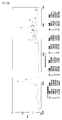
- FIG. 1 is an NMR analysis chart of the trifunctional hydrogenated epoxy resin used in Example 1.
- FIG. 2 is an IR analysis chart of the trifunctional hydrogenated epoxy resin used in Example 1.
- the epoxy resin (a) used in the present invention is a tri- or higher functional hydrogenated epoxy resin represented by the following general formula (1).
- R 1 , R 2 , R 3 , R 4 , R 5 , R 6 , and R 7 may be the same or different and each represents a hydrogen atom or an alkyl group having 1 to 4 carbon atoms.
- R 1, R 2 and R 3 are methyl groups
- R 4, R 5, those R 6, and R 7 is a hydrogen atom
- the glycidyl ether group is preferably bonded to the para position of the 6-membered cyclic group.
- the trifunctional or higher functional hydrogenated epoxy resin (a) represented by the formula (1) has a refractive index of 1.52 particularly when the refractive index of the glass fiber is, for example, 1.554. From 1.53 to 1.58, preferably from 1.53 to 1.57.
- the refractive index of the epoxy resin (a) is preferably in the range of n ⁇ 0.03 to n + 0.03, where n is the refractive index of the glass fiber. In the case of less than n ⁇ 0.03, or in the case of n + 0,03 or more, transparency is impaired due to a difference in refractive index from glass fiber.
- the glass transition temperature of the resin using the trifunctional or higher hydrogenated epoxy resin (a) described in the general formula (1) is 150 ° C. or higher, more preferably 170 ° C.
- the hydrogenated epoxy resin (a) is preferably 20% or more, more preferably 40%, based on the total amount of the epoxy resin. % Or more is preferable.
- the epoxy resin (a) used in the present invention can be appropriately prepared based on the description in the present specification. For example, a method obtained by reacting an epichlorohydrin with a phenol compound corresponding to the following general formula (2) and hydrogenating the resulting aromatic epoxy resin can be mentioned. Examples of such a phenol compound include a phenol compound represented by the following general formula (2).
- R 1 , R 2 , R 3 , R 4 , R 5 , R 6 , and R 7 have the same meaning as in General Formula (1).
- Specific examples of such a phenol compound include 1- [ ⁇ -methyl- ⁇ - (4′-hydroxyphenyl) ethyl] -4- [ ⁇ ′, ⁇ ′-bis (4 ′′ -hydroxyphenyl) ethyl] benzene, 1- [ ⁇ -methyl- ⁇ - (2′-methyl-4′-hydroxy-5′-tertiarybutylphenyl) ethyl] -4- [ ⁇ ′, ⁇ ′-bis (2 ′′ -methyl-4 ′′- Hydroxy-5 ′′ -tertiarybutylphenyl) ethyl] benzene, 1- [ ⁇ -methyl- ⁇ - (3′-tertiarybutyl-4′-hydroxyphenyl) ethyl] -4- [ ⁇ ′, ⁇ ′-bis (3 ′′ -tertiarybutyl-4′-hydroxy
- Such a phenol compound can be obtained by, for example, protons such as hydrochloric acid according to the method described in JP-A-62-84035. Although it can be obtained by reacting phenols with isopropenyl acetophenone under an acid catalyst, it is not limited to this method, and can also be obtained as a commercial product (for example, Honshu Chemical Co., Ltd.) "Tri P-PA "," TrisX-PA “, etc.). In order to react the phenol compound with epichlorohydrin to form an aromatic epoxy resin, it can be produced by a known method in which dehydrochlorination is performed in the presence of an alkali such as sodium hydroxide. By hydrogenating this, the hydrogenated epoxy resin (a) of the present invention is obtained.
- protons such as hydrochloric acid according to the method described in JP-A-62-84035.
- isopropenyl acetophenone under an acid catalyst it is not limited to this method, and can also be obtained as a commercial product (
- the epoxy resin composition of the present invention comprises a trifunctional or higher functional hydrogenated epoxy resin (a) as described above, an epoxy resin component containing a bifunctional or higher functional epoxy resin, and a curing agent for epoxy resin.
- This embodiment is a preferred embodiment of the present invention.
- bifunctional or higher functional epoxy resin examples include bisphenol A type, bisphenol F type, bisphenol S type and bisphenol type epoxy resins such as hydrogenated products thereof, glycidyl ether type epoxy resins such as polypropylene glycol diglycidyl ether type epoxy resins, Ester type epoxy resins such as diglycidyl phthalate type epoxy resin, novolak type epoxy resins such as phenol novolak type and cresol novolak type, bisphenol A novolak type epoxy resins and their hydrogenated products, triphenolmethane type epoxy resin, etc.
- Nitrogen-containing cyclic polyfunctional epoxy resins such as naphthalene type aromatic resins, biphenyl type epoxy resins, dicyclopentadiene type epoxy resins, ether ester type epoxy resins, 3,4-epoxycyclohexylmethyl-3 ′,
- An epoxy resin having an alicyclic structure such as 4′-epoxycyclohexanecarboxylate can be used.
- the transparent resin substrate of the present invention can be obtained by curing the epoxy resin composition of the present invention.
- the effect method is not particularly limited, and a conventionally known method can be used.
- an effective curing agent can be used and, if necessary, curing can be performed in the presence of a curing accelerator.
- the curing agent for epoxy resin is not particularly limited as long as it does not impair transparency, but in general, acid anhydrides, amines, polyhydric phenols, imidazoles, Bronsted acid salts, organic acids About hydrazides, dicyandiamide, polycarboxylic acids and the like are listed.
- acid anhydrides include phthalic anhydride, maleic anhydride, trimellitic anhydride, pyromellitic anhydride, methyl nadic acid anhydride, tetrahydrophthalic anhydride, methyl tetrahydrophthalic anhydride, hexahydrophthalic anhydride, methyl anhydride
- acid anhydrides include phthalic anhydride, maleic anhydride, trimellitic anhydride, pyromellitic anhydride, methyl nadic acid anhydride, tetrahydrophthalic anhydride, methyl tetrahydrophthalic anhydride, hexahydrophthalic anhydride, methyl anhydride
- hexahydrophthalic acid methylendomethylenetetrahydrophthalic anhydride, trialkyltetrahydrophthalic anhydride, and methyl hydrogenated nadic anhydride.
- curing agents may be used alone or in combination of two or more.
- an acid anhydride curing agent it is preferable to use a curing accelerator in combination.
- the curing accelerator include 1,8-diaza-bicyclo (5,4,0) undecene-7, tertiary amines such as triethylenediamine, 2-ethyl-4-methylimidazole, 1-benzyl-2-phenyl
- examples thereof include imidazoles such as imidazole, phosphorus compounds such as triphenylphosphine and tetraphenylphosphonium tetraphenylborate, quaternary ammonium salts, organometallic salts, and derivatives thereof.
- the blending ratio of the epoxy resin and the acid anhydride curing agent is preferably set to 0.5 to 1.5 equivalents of acid anhydride group with respect to 1 equivalent of epoxy group in the epoxy resin, 0.8 to 1.2 equivalents are more preferred.
- epoxy resin curing agents include amines such as ethylenediamine, propylenediamine, diethylenetriamine, triethylenetetramine, their amine adducts, metaphenylenediamine, diaminodiphenylmethane, diaminodiphenylsulfone, m-xylylenediamine, 3,9- Aromatic, aliphatic and alicyclic amines such as bis (3-aminopropyl) -2,4,8,10-tetraspiro [5,5] undecane, bis (4-aminocyclohexyl) methane, benzyldimethylamine, 3 such as 2,4,6-tris (dimethylaminomethyl) phenol, 1,8-diaza-bicyclo (5,4,0) undecene-7, 1-5azabicyclo (4,3,0) -nonene-7 Grade amines and their salts, and other amine curing agents Imidazoles such as 2-methylimidazo
- curing agents may be used alone or in combination of two or more.
- curing agents for epoxy resins include polyphenols such as bisphenol, bisphenol A, bisphenol F, bisphenol S, phenol novolacs, cresol novolacs, trishydroxyphenylmethanes, aralkyl polyphenols, biphenyl type phenols, And cyclopentadiene polyphenols, catechol, resorcin, hydroquinone and the like. These curing agents may be used alone or in combination of two or more. These epoxy resin curing agents may be used singly or in combination of two or more.
- the blending ratio of the epoxy resin and the curing agent is not particularly limited, but is usually 0.01 to 200 parts by weight, preferably 0.1 to 150 parts by weight with respect to 100 parts by weight of the epoxy resin component.
- the cationic curing agent can increase the transparency of the epoxy resin.
- the cationic curing agent include aromatic sulfonium salts, aromatic iodonium salts, ammonium salts, aluminum chelates, and boron trifluoride amine complexes. These curing agents may be used alone or in combination of two or more.
- the proportion of the cationic curing agent is not particularly limited, but is usually in the range of 0.1 to 10 parts by weight, preferably 0.2 to 5 parts by weight with respect to 100 parts by weight of the epoxy resin component.
- the epoxy resin composition used for the transparent resin substrate of the present invention the following components can be added and blended as necessary within a range that is not colored and does not impair transparency.
- the epoxy resin composition of the present invention include metal oxides such as aluminum oxide and magnesium oxide, silicon compounds such as fine powder silica, fused silica and crystalline silica, transparent fillers such as Gatas beads, and metal water such as aluminum hydroxide. Examples thereof include oxides, mica, kaolin, quartz powder, bentonite, graphite, molybdenum disulfide.
- solvents may be used alone or in combination of two or more. Usually, the range of 0.1 to 100 parts by weight is appropriate for 100 parts by weight of the epoxy resin component.
- a known additive can be blended as necessary within a range that does not impair the object of the present invention. Examples of such additives include flame retardants, ion adsorbents, coupling agents, antioxidants, ultraviolet absorbers, and other property improvers.
- the epoxy resin composition of the present invention is used as a resin varnish after being dissolved and dispersed in a solvent as necessary.
- solvent examples include, but are not limited to, toluene, xylene, methyl ethyl ketone, methyl isobutyl ketone, acetone, ethyl acetate, butyl acetate, inobutyl acetate, propylene glycol monomethyl ether, propylene glycol monomethyl ether acetate, methanol, Examples thereof include ethanol, isopropyl alcohol, 2-butanol, diacetone alcohol, N, N′-dimethylacetamide and the like. These solvents may be used alone or in combination of two or more.
- E glass or NE glass which is generally used as a glass fiber for resin reinforcement as alkali-free glass, is generally used from the effect of improving impact resistance. preferable. Furthermore, it is preferable to treat the glass fiber surface with a silane coupling agent or the like for the purpose of improving impact resistance.
- the refractive index of the glass fiber is preferably in the range of 1.52 to 1.58, and more preferably in the range of 1.53 to 1.57. If the refractive index of glass fiber is this range, the transparent resin substrate excellent in transparency can be obtained.
- a glass fiber woven fabric or non-woven fabric can be used.
- a prepreg can be prepared by impregnating, heating and drying the varnish of the epoxy resin composition in the glass fiber (glass woven fabric, glass cloth, glass nonwoven fabric, etc.) as described above.
- the drying conditions are not particularly limited, but a drying temperature of 80 ° C. to 170 ° C. and a drying time of 1 to 20 minutes are preferable.
- one sheet of this prepreg, or a plurality of sheets as necessary, are stacked and heated and pressed to cure the resin composition, thereby obtaining a transparent resin substrate.
- the heating and pressing conditions are not particularly limited, but a temperature of 140 ° C. to 220 ° C., a pressure of 1 to 5 MPa, and a time of 10 minutes to 180 minutes are preferable.
- the glass fiber content of the transparent resin substrate should be in the range of 30 to 70% by weight. preferable. If it is this range, high impact resistance, sufficient transparency, and heat resistance can be ensured by the reinforcing effect of glass fiber.
- the transparent resin substrate of the present invention in order to be colorless and transparent, the light transmittance at a wavelength of 550 nm is preferably 80% or more, more preferably 85% or more, and most preferably It is 88% or more. When the light transmittance is lower than 80%, transparency is inferior due to coloring or fogging of the resin substrate, and display performance cannot be sufficiently exhibited.
- the difference in refractive index between the glass fiber and the epoxy resin composition is preferably 0.02 or less, and more preferably 0.01 or less.
- Example 1 3 obtained by hydrogenating an aromatic epoxy resin represented by the following formula (4) obtained by reacting epichlorohydrin with a phenol compound represented by the following formula (3) as the epoxy resin (a) of the present invention.
- a functional hydrogenated epoxy resin (I) was used.
- the trifunctional hydrogenated epoxy resin (I) is a trifunctional hydrogenated epoxy resin represented by the general formula (1), wherein R 1 , R 2 and R 3 are methyl groups, and R 4 , R 5 , R 6 And R 7 is a hydrogen atom, and each glycidyl ether group is bonded to the para position of a 6-membered ring group, and has a refractive index of 1.547.
- the trifunctional hydrogenated epoxy resin (I) used in this example is a trifunctional hydrogenated epoxy resin represented by the general formula (1).
- R 1 , R 2 and R 3 is a methyl group
- R 4 , R 5 , R 6 , and R 7 are hydrogen atoms
- the glycidyl ether groups each correspond to those bonded to the para position of the 6-membered ring group
- the ratio of the number of hydrogen atoms / the number of hydrogen atoms on the aromatic carbon is 54/4, but the actual value of the signal derived from the hydrogen atom on the aliphatic carbon (chemical shift 0.5 to 4.3) / aromatic It was confirmed that the ratio of the area values of signals derived from hydrogen atoms on group carbon (chemical shift 6.8 to 7.2) also corresponded to this value.
- an IR analysis chart of the trifunctional hydrogenated epoxy resin (I) is shown in FIG. 2, and the IR analysis chart also supported the above conclusion.
- a glass cloth (Nittobo # 3313 type; refractive index: 1.554) is impregnated with the above epoxy resin varnish, heated at 140 ° C. for 4 minutes to remove the solvent, and the epoxy resin is semi-cured to prepare a prepreg. Prepared.
- One prepreg was press molded at 170 ° C. and 2 MPa for 2 hours with a press machine to obtain a transparent resin substrate having a thickness of 0.08 mm. About the obtained transparent resin substrate, the light transmittance and the glass transition temperature were measured. The measurement results are shown in Table 1.
- Example 2 70 parts by weight of trifunctional hydrogenated epoxy resin (I) used in Example 1, trisphenol type trifunctional epoxy resin; chemical name: 2- [4- (2,3-epoxypropoxy) phenyl] -2- [ 4- [1,1-bis [4-([2,3-epoxypropoxy] phenyl)] ethyl] phenyl] propane; 30 parts by weight of refractive index 1.606), methylhexahydrophthalic anhydride as a curing agent 78 parts by weight (“Rikacid MH-700” manufactured by Nippon Nippon Chemical Co., Ltd.) and 1 part of tetraphenylphosphonium bromide (“TPP-PB” manufactured by Hokuko Chemical) as a curing accelerator were added, and 50 parts by weight of methyl ethyl ketone was added thereto.
- TPP-PB tetraphenylphosphonium bromide
- the varnish of the epoxy resin composition was prepared by stirring and dissolving at normal temperature.
- the refractive index of this epoxy resin composition was 1.563.
- a prepreg was prepared, and one sheet of this prepreg was press-molded at 170 ° C. and 2 MPa for 2 hours with a press machine, thereby forming a 0.08 mm thick transparent resin substrate. Obtained. About the obtained transparent resin substrate, the light transmittance and the glass transition temperature were measured. The measurement results are shown in Table 1.
- Example 3 50 parts by weight of the trifunctional hydrogenated epoxy resin (I) used in Example 1, 50 parts by weight of hydrogenated bisphenol A type epoxy resin (“YX8000” refractive index 1.500 manufactured by Mitsubishi Chemical Corporation), curing agent As a compound, 79 parts by weight of methylhexahydrophthalic anhydride (“Ricacid MH-700” manufactured by Nippon Nippon Chemical Co., Ltd.) and 1 part of tetraphenylphosphonium bromide (“TPP-PB” manufactured by Hokuko Chemical Co., Ltd.) as a curing accelerator, 30 parts by weight of methyl ethyl ketone was added thereto and dissolved by stirring at room temperature to prepare a varnish of an epoxy resin composition.
- Ricacid MH-700 manufactured by Nippon Nippon Chemical Co., Ltd.
- TPP-PB tetraphenylphosphonium bromide
- the refractive index of this epoxy resin composition was 1.523.
- a prepreg was prepared, and one sheet of this prepreg was press-molded at 170 ° C. and 2 MPa for 2 hours with a press machine, thereby forming a 0.08 mm thick transparent resin substrate. Obtained. About the obtained transparent resin substrate, the light transmittance and the glass transition temperature were measured. The measurement results are shown in Table 1.
- Example 4 40 parts by weight of the trifunctional hydrogenated epoxy resin (I) used in Example 1, 60 parts by weight of a bisphenol A type epoxy resin (“E828” refractive index 1.540 manufactured by Mitsubishi Chemical Corporation), as a curing agent, 83 parts by weight of methylhexahydrophthalic anhydride (“Rikacid MH-700” manufactured by Nippon Chemical Co., Ltd.) and 1 part of tetraphenylphosphonium bromide (“TPP-PB” manufactured by Hokuko Chemical) as a curing accelerator
- An epoxy resin composition varnish was prepared by adding 30 parts by weight of methyl ethyl ketone and stirring and dissolving at room temperature. The refractive index of this epoxy resin composition was 1.546.
- Example 1 a prepreg was prepared, and one sheet of this prepreg was press-molded at 170 ° C. and 2 MPa for 2 hours with a press machine, thereby forming a 0.08 mm thick transparent resin substrate. Obtained. About the obtained transparent resin substrate, the light transmittance and the glass transition temperature were measured. The measurement results are shown in Table 1.
- Example 5 20 parts by weight of the trifunctional hydrogenated epoxy resin (I) used in Example 1, and 80 parts by weight of a trisphenol type trifunctional epoxy resin (“TECHMORE VG3101L” refractive index 1.606 manufactured by Printec Co., Ltd.) 78 parts by weight of methylhexahydrophthalic anhydride (“Rikacid MH-700” manufactured by Nippon Chemical Co., Ltd.) as the agent and 1 part of tetraphenylphosphonium bromide (“TPP-PB” manufactured by Hokuko Chemical) as the curing accelerator Then, 50 parts by weight of methyl ethyl ketone was added thereto and dissolved by stirring at room temperature to prepare a varnish of an epoxy resin composition.
- a trisphenol type trifunctional epoxy resin (“TECHMORE VG3101L” refractive index 1.606 manufactured by Printec Co., Ltd.)
- TPP-PB tetraphenylphosphonium bromide
- the refractive index of this epoxy resin composition was 1.572.
- a prepreg was prepared, and one sheet of this prepreg was press-molded at 170 ° C. and 2 MPa for 2 hours with a press machine, thereby forming a 0.08 mm thick transparent resin substrate. Obtained. About the obtained transparent resin substrate, the light transmittance and the glass transition temperature were measured. The measurement results are shown in Table 1.
- Trisphenol type trifunctional epoxy resin (Comparative Example 1) Trisphenol type trifunctional epoxy resin; chemical name: 2- [4- (2,3-epoxypropoxy) phenyl] -2- [4- [1,1-bis [4-([2,3-epoxypropoxy]] Phenyl)] ethyl] phenyl] propane; 100 parts by weight of refractive index 1.606), 78 parts by weight of methylhexahydrophthalic anhydride (“Ricacid MH-700” manufactured by Shin Nippon Chemical Co., Ltd.), curing accelerator As a mixture, 1 part of tetraphenylphosphonium bromide (“TPP-PB” manufactured by Hokuko Chemical Co., Ltd.) was blended, 50 parts by weight of methyl ethyl ketone was added thereto, and the mixture was stirred and dissolved at room temperature to prepare a varnish of an epoxy resin composition.
- TPP-PB tetraphenylphosphonium bromide
- the refractive index of this epoxy resin composition was 1.602.
- a prepreg was prepared, and one sheet of this prepreg was press-molded at 170 ° C. and 2 MPa for 2 hours with a press machine, thereby forming a 0.08 mm thick transparent resin substrate. Obtained. About the obtained transparent resin substrate, the light transmittance and the glass transition temperature were measured. The measurement results are shown in Table 1.
- Comparative Example 2 100 parts by weight of hydrogenated bisphenol A type epoxy resin (Mitsubishi Chemical Corporation “YX8000” refractive index 1.500), methyl hexahydrophthalic anhydride (“Ricacid MH-700” manufactured by Shin Nippon Chemical Co., Ltd.) as a curing agent 80 parts by weight, 1 part of tetraphenylphosphonium bromide (“TPP-PB” manufactured by Hokuko Chemical Co., Ltd.) is added as a curing accelerator, 20 parts by weight of methyl ethyl ketone is added to this, and dissolved by stirring at room temperature. A varnish of the resin composition was prepared. The refractive index of this epoxy resin composition was 1.510.
- Example 1 a prepreg was prepared, and one sheet of this prepreg was press-molded at 170 ° C. and 2 MPa for 2 hours with a press machine, thereby forming a 0.08 mm thick transparent resin substrate. Obtained. About the obtained transparent resin substrate, the light transmittance and the glass transition temperature were measured. The measurement results are shown in Table 1.
- Example 1 a prepreg was prepared, and one sheet of this prepreg was press-molded at 170 ° C. and 2 MPa for 2 hours with a press machine, thereby forming a 0.08 mm thick transparent resin substrate. Obtained. About the obtained transparent resin substrate, the light transmittance and the glass transition temperature were measured. The measurement results are shown in Table 1.
- the present invention provides a colorless and transparent resin substrate that is colorless and excellent in transparency, has a refractive index close to that of glass fiber (glass cloth), has a high glass transition temperature, and has excellent heat resistance. To do.
- the present invention provides a transparent resin substrate having an excellent performance of being colorless and excellent in transparency and excellent in heat resistance even when glass fibers are used.
- the transparent resin substrate of the present invention is used for applications such as a liquid crystal display element substrate, an organic EL display element substrate, a display element plastic substrate, a circuit forming plastic substrate, an active matrix display substrate, and a solar cell transparent substrate. Suitable.
Landscapes
- Chemical & Material Sciences (AREA)
- Health & Medical Sciences (AREA)
- Chemical Kinetics & Catalysis (AREA)
- Medicinal Chemistry (AREA)
- Polymers & Plastics (AREA)
- Organic Chemistry (AREA)
- Life Sciences & Earth Sciences (AREA)
- Engineering & Computer Science (AREA)
- Wood Science & Technology (AREA)
- Reinforced Plastic Materials (AREA)
- Epoxy Resins (AREA)
Abstract
Cette invention concerne un substrat transparent en résine qui est incolore, manifeste une excellente transparence, et possède un indice de réfraction proche de celui des fibres de verre (tissu de verre) et qui est un objet durci ayant une température de transition vitreuse élevée et une excellente résistance à la chaleur. Ce substrat transparent en résine est obtenu à partir d'une composition de résine époxy qui contient une résine époxy hydrogénée spécifique (a) ayant une fonctionnalité de 3 ou plus, la résine époxy (a) étant représentée par la formule (1) et ayant un indice de réfraction dans la plage de 1,52 à 1,58. Même quand il contient des fibres de verre, le substrat transparent en résine selon l'invention a d'excellentes performances, à savoir, qualité incolore, excellente transparence, et excellente résistance à la chaleur, et se prête à une utilisation dans des applications telles que des substrats en plastique pour éléments d'affichage, par exemple, substrats pour éléments d'affichage à cristaux liquides et substrats pour éléments d'affichage EL organiques, substrats en plastique pour formation de circuits, substrats pour affichage à matrice active, et substrats transparents pour cellules solaires.
Applications Claiming Priority (2)
| Application Number | Priority Date | Filing Date | Title |
|---|---|---|---|
| JP2011053621 | 2011-02-15 | ||
| JPPCT/JP2011/053621 | 2011-02-15 |
Publications (1)
| Publication Number | Publication Date |
|---|---|
| WO2012111186A1 true WO2012111186A1 (fr) | 2012-08-23 |
Family
ID=46672140
Family Applications (1)
| Application Number | Title | Priority Date | Filing Date |
|---|---|---|---|
| PCT/JP2011/067908 Ceased WO2012111186A1 (fr) | 2011-02-15 | 2011-07-29 | Substrat transparent en résine |
Country Status (1)
| Country | Link |
|---|---|
| WO (1) | WO2012111186A1 (fr) |
Cited By (2)
| Publication number | Priority date | Publication date | Assignee | Title |
|---|---|---|---|---|
| JP2015151439A (ja) * | 2014-02-13 | 2015-08-24 | 日立化成株式会社 | 感光性接着剤組成物、それを用いた半導体装置の製造方法、及び半導体装置 |
| JP2018080348A (ja) * | 2012-12-28 | 2018-05-24 | 三菱瓦斯化学株式会社 | プリプレグ及びフィルム |
Citations (9)
| Publication number | Priority date | Publication date | Assignee | Title |
|---|---|---|---|---|
| JPH06263676A (ja) * | 1992-11-11 | 1994-09-20 | Ciba Geigy Ag | 新規なシクロヘキシル基含有グリシジルエーテル |
| JP2003082062A (ja) * | 2001-06-25 | 2003-03-19 | Mitsubishi Chemicals Corp | 脂環式エポキシ化合物および脂環式エポキシ樹脂組成物ならびに発光ダイオード用封止材 |
| WO2003064530A1 (fr) * | 2002-01-25 | 2003-08-07 | Sumitomo Bakelite Co., Ltd. | Composition de composite transparent |
| JP2006169326A (ja) * | 2004-12-14 | 2006-06-29 | Daicel Chem Ind Ltd | 光学的立体造形用光硬化性樹脂組成物 |
| JP2006188605A (ja) * | 2005-01-06 | 2006-07-20 | Japan Epoxy Resin Kk | 水素化エポキシ樹脂、その製造方法及びエポキシ樹脂組成物 |
| WO2006109572A1 (fr) * | 2005-04-07 | 2006-10-19 | Nippon Kayaku Kabushiki Kaisha | Époxy-carboxylates réactifs et compositions de résine durcissable sous un rayonnement actinique contenant ceux-ci |
| WO2008143003A1 (fr) * | 2007-05-24 | 2008-11-27 | Sumitomo Bakelite Co., Ltd. | Feuille composite transparente |
| JP2009066931A (ja) * | 2007-09-13 | 2009-04-02 | Panasonic Electric Works Co Ltd | 透明積層板 |
| JP2010235933A (ja) * | 2009-03-09 | 2010-10-21 | Panasonic Electric Works Co Ltd | 透明フィルム |
-
2011
- 2011-07-29 WO PCT/JP2011/067908 patent/WO2012111186A1/fr not_active Ceased
Patent Citations (9)
| Publication number | Priority date | Publication date | Assignee | Title |
|---|---|---|---|---|
| JPH06263676A (ja) * | 1992-11-11 | 1994-09-20 | Ciba Geigy Ag | 新規なシクロヘキシル基含有グリシジルエーテル |
| JP2003082062A (ja) * | 2001-06-25 | 2003-03-19 | Mitsubishi Chemicals Corp | 脂環式エポキシ化合物および脂環式エポキシ樹脂組成物ならびに発光ダイオード用封止材 |
| WO2003064530A1 (fr) * | 2002-01-25 | 2003-08-07 | Sumitomo Bakelite Co., Ltd. | Composition de composite transparent |
| JP2006169326A (ja) * | 2004-12-14 | 2006-06-29 | Daicel Chem Ind Ltd | 光学的立体造形用光硬化性樹脂組成物 |
| JP2006188605A (ja) * | 2005-01-06 | 2006-07-20 | Japan Epoxy Resin Kk | 水素化エポキシ樹脂、その製造方法及びエポキシ樹脂組成物 |
| WO2006109572A1 (fr) * | 2005-04-07 | 2006-10-19 | Nippon Kayaku Kabushiki Kaisha | Époxy-carboxylates réactifs et compositions de résine durcissable sous un rayonnement actinique contenant ceux-ci |
| WO2008143003A1 (fr) * | 2007-05-24 | 2008-11-27 | Sumitomo Bakelite Co., Ltd. | Feuille composite transparente |
| JP2009066931A (ja) * | 2007-09-13 | 2009-04-02 | Panasonic Electric Works Co Ltd | 透明積層板 |
| JP2010235933A (ja) * | 2009-03-09 | 2010-10-21 | Panasonic Electric Works Co Ltd | 透明フィルム |
Cited By (2)
| Publication number | Priority date | Publication date | Assignee | Title |
|---|---|---|---|---|
| JP2018080348A (ja) * | 2012-12-28 | 2018-05-24 | 三菱瓦斯化学株式会社 | プリプレグ及びフィルム |
| JP2015151439A (ja) * | 2014-02-13 | 2015-08-24 | 日立化成株式会社 | 感光性接着剤組成物、それを用いた半導体装置の製造方法、及び半導体装置 |
Similar Documents
| Publication | Publication Date | Title |
|---|---|---|
| JP5599628B2 (ja) | 透明フィルム | |
| KR102332174B1 (ko) | 섬유강화 복합재료 | |
| US9657173B2 (en) | Curable resin composition and cured product thereof | |
| US20130281640A1 (en) | Cyanate ester compound, curable resin composition containing cyanate ester compound, and cured product thereof | |
| TW201026733A (en) | Soluble imide-skeleton resin, soluble imide-skeleton resin solution composition, curable resin composition, and cured product of same | |
| KR20140041718A (ko) | 경화성 수지 조성물 및 그것을 사용한 경화물의 제조 방법 | |
| US9062176B2 (en) | Transparent film | |
| JP4174355B2 (ja) | 透明複合体組成物 | |
| JP2009066931A (ja) | 透明積層板 | |
| KR20130131079A (ko) | 유리섬유 강화용 에폭시 수지 조성물 | |
| KR101422659B1 (ko) | 신규 옥세탄계 화합물, 그 제조방법, 및 이를 포함하는 디스플레이 기판용 복합시트 | |
| JP4873223B2 (ja) | 新規なエポキシ樹脂 | |
| JP2011116957A (ja) | 透明フィルム | |
| JP2016047811A (ja) | アリーロキシシランオリゴマー、エポキシ樹脂硬化剤、およびその用途 | |
| JP2011104929A (ja) | 透明基板/ガラス板/透明基板複合フィルムとその用途 | |
| JP2011105888A (ja) | 透明フィルム | |
| JP6254475B2 (ja) | エポキシ樹脂の硬化剤、製法、組成物、硬化物およびその用途 | |
| WO2011149018A1 (fr) | Film transparent | |
| WO2012111186A1 (fr) | Substrat transparent en résine | |
| KR20210075987A (ko) | 경화성 수지 조성물, 경화물 및 시트상 성형체 | |
| JP5918588B2 (ja) | 風力発電機ブレード用硬化性エポキシ樹脂組成物 | |
| WO2017066929A1 (fr) | Résine époxy modifiée et composition de résine durcissable la contenant | |
| JP2012219155A (ja) | 透明樹脂複合材 | |
| JP2001214037A (ja) | エポキシ樹脂組成物 | |
| JP2004307846A (ja) | 表示素子基板用エポキシ樹脂組成物 |
Legal Events
| Date | Code | Title | Description |
|---|---|---|---|
| 121 | Ep: the epo has been informed by wipo that ep was designated in this application |
Ref document number: 11858804 Country of ref document: EP Kind code of ref document: A1 |
|
| NENP | Non-entry into the national phase |
Ref country code: DE |
|
| 122 | Ep: pct application non-entry in european phase |
Ref document number: 11858804 Country of ref document: EP Kind code of ref document: A1 |
|
| NENP | Non-entry into the national phase |
Ref country code: JP |