WO2012116196A2 - Substituted lactosyl compounds and use thereof for cellular imaging and therapy - Google Patents
Substituted lactosyl compounds and use thereof for cellular imaging and therapy Download PDFInfo
- Publication number
- WO2012116196A2 WO2012116196A2 PCT/US2012/026344 US2012026344W WO2012116196A2 WO 2012116196 A2 WO2012116196 A2 WO 2012116196A2 US 2012026344 W US2012026344 W US 2012026344W WO 2012116196 A2 WO2012116196 A2 WO 2012116196A2
- Authority
- WO
- WIPO (PCT)
- Prior art keywords
- cancer
- compound
- lactosyl
- molecule
- ring
- Prior art date
- Legal status (The legal status is an assumption and is not a legal conclusion. Google has not performed a legal analysis and makes no representation as to the accuracy of the status listed.)
- Ceased
Links
Classifications
-
- C—CHEMISTRY; METALLURGY
- C07—ORGANIC CHEMISTRY
- C07B—GENERAL METHODS OF ORGANIC CHEMISTRY; APPARATUS THEREFOR
- C07B59/00—Introduction of isotopes of elements into organic compounds ; Labelled organic compounds per se
- C07B59/005—Sugars; Derivatives thereof; Nucleosides; Nucleotides; Nucleic acids
-
- A—HUMAN NECESSITIES
- A61—MEDICAL OR VETERINARY SCIENCE; HYGIENE
- A61K—PREPARATIONS FOR MEDICAL, DENTAL OR TOILETRY PURPOSES
- A61K51/00—Preparations containing radioactive substances for use in therapy or testing in vivo
- A61K51/02—Preparations containing radioactive substances for use in therapy or testing in vivo characterised by the carrier, i.e. characterised by the agent or material covalently linked or complexing the radioactive nucleus
- A61K51/04—Organic compounds
- A61K51/0491—Sugars, nucleosides, nucleotides, oligonucleotides, nucleic acids, e.g. DNA, RNA, nucleic acid aptamers
-
- A—HUMAN NECESSITIES
- A61—MEDICAL OR VETERINARY SCIENCE; HYGIENE
- A61P—SPECIFIC THERAPEUTIC ACTIVITY OF CHEMICAL COMPOUNDS OR MEDICINAL PREPARATIONS
- A61P35/00—Antineoplastic agents
-
- C—CHEMISTRY; METALLURGY
- C07—ORGANIC CHEMISTRY
- C07H—SUGARS; DERIVATIVES THEREOF; NUCLEOSIDES; NUCLEOTIDES; NUCLEIC ACIDS
- C07H13/00—Compounds containing saccharide radicals esterified by carbonic acid or derivatives thereof, or by organic acids, e.g. phosphonic acids
- C07H13/02—Compounds containing saccharide radicals esterified by carbonic acid or derivatives thereof, or by organic acids, e.g. phosphonic acids by carboxylic acids
- C07H13/04—Compounds containing saccharide radicals esterified by carbonic acid or derivatives thereof, or by organic acids, e.g. phosphonic acids by carboxylic acids having the esterifying carboxyl radicals attached to acyclic carbon atoms
-
- C—CHEMISTRY; METALLURGY
- C07—ORGANIC CHEMISTRY
- C07H—SUGARS; DERIVATIVES THEREOF; NUCLEOSIDES; NUCLEOTIDES; NUCLEIC ACIDS
- C07H15/00—Compounds containing hydrocarbon or substituted hydrocarbon radicals directly attached to hetero atoms of saccharide radicals
- C07H15/02—Acyclic radicals, not substituted by cyclic structures
- C07H15/04—Acyclic radicals, not substituted by cyclic structures attached to an oxygen atom of the saccharide radical
-
- C—CHEMISTRY; METALLURGY
- C07—ORGANIC CHEMISTRY
- C07H—SUGARS; DERIVATIVES THEREOF; NUCLEOSIDES; NUCLEOTIDES; NUCLEIC ACIDS
- C07H15/00—Compounds containing hydrocarbon or substituted hydrocarbon radicals directly attached to hetero atoms of saccharide radicals
- C07H15/26—Acyclic or carbocyclic radicals, substituted by hetero rings
Definitions
- the present invention relates generally to the fields of chemistry and radionuclide imaging. More particularly, it concerns compositions and methods involving compounds comprising a lactosyl ring with radionuclide substitution. 2. DESCRIPTION OF RELATED ART
- HIP/PAP ⁇ hepatocarcinoma-intestine-pancreas/pancreatitis-associated protein
- HIP/PAP is overexpressed in hepatocellular carcinomas by the tumor cells (Demaugre et ai, 2004; Cervello et ai , 2002; Cavard et ai , 2006).
- the level of HIP/PAP expression continues to increase with the increasing tumor mass (Drickamer, 1999). Therefore, HIP/PAP is a promising target for PET imaging of pancreatic carcinoma and hepatocellular carcinoma (Rosty et ai, 2002).
- HIP/PAP is a 16-kD secreted protein, which belongs to a family of proteins that contain a C-type lectin-like domain (Lasserre et ai , 1999; Drickamer, 1999), that binds carbohydrates and also known as " lactose-binding protein” (Iovanna and Dagorn, 2005).
- the present invention is based on the synthesis of certain novel compounds comprising a substituted lactosyl ring and methods for making the same.
- a lactosyl derivative compound comprising a radionuclide at the 1 '-position of the lactosyl ring is provided. These compounds can be applied in the imaging of a site in a subject, and in the diagnosis and treatment of disease in a subject.
- Ri comprises a radionuclide
- Z is sulfur or oxygen
- R 2 .s are each, independently alkyl, substituted alkyl, aryl, sugar, polysaccharide, alkoxy ⁇ e.g., OAc), hydroxyl groups or protecting groups.
- R 2- 8 positions can be alkyl, aryl, sugar, polysaccharide, alkoxy (e.g., -Oalkyl or -Oaryl) or hydroxyl groups.
- each of the R 2 _8 positions are -OAc or -OH.
- a compound according to the invention is as specifically binding to a lectin such a galectin (e.g., Gal-3) or HIP/PAP.
- Z is O, N, S or -CH 2 -; Li is alkenediyl (C I - 10); or n(H 2 C) ⁇ ⁇ / (CH ⁇ n
- L 2 is arenediyl (C ⁇ 10) or heteroarenediyl (C ⁇ 10) and n is, each independently, 0-6; and wherein Ri is a radiohalide or "C methoxy.
- is a radio halide, such as 18 F.
- groups include, without limitation, (CH 2 )i.] 0 (e.g., -CH 2 CH 2 -), a trizole or a group of formula:
- Li is (IV) or (V) and one or both of the n's are 2.
- Z is O and Li and R
- Ri comprises a chelating moiety and a radionuclide chelate.
- the compound can be chelated to a radionuclide, such as a technetium ion, a copper ion, an indium ion, a thallium ion, a gallium ion, an arsenic ion, a rhenium ion, a holmium ion, a yttrium ion, a samarium ion, a selenium ion, a strontium ion, a gadolinium ion, a bismuth ion, an iron ion, a manganese ion, a lutecium ion, a cobalt ion, a platinum ion, a calcium ion, and/or a rhodium ion.
- a radionuclide such as a technetium ion, a
- radionuclides examples include, but are Medicare not . ! li ⁇ mi ⁇ «t.eoriald j t to subdivision, 9 ⁇ I Cincinnatic, 188r R>eterrorism, 186 D Re purity, l53 C a m m, 166, H.o, 90 v Y, 89 c r chalk, 67 ⁇ uadire, 68 Uasourcing, 1 1 1. In, 183 ⁇ d., 59 r c greede, 225 Ac, 212 Bi, 21 1 At, 45 Ti, 60 Cu, 6l Cu, 67 Cu, and 64 Cu.
- Chelating moieties for use according to the invention include, but are not limited to, a acyclic polyamioncarboxylate, a diposphine, a Schiff base, a bis(thiosemicarbazone), a cyclic polyamine, a cyclic polyaminocarboxylate, a cross-bridged cyclic polyamine, a cross-bridged cyclicpolyamioncarboxylate, a l ,3,5-cis,cis- triamioncyclohexane derivative, a sarcophagine, or a sepulchrate.
- the chelating moiety can be l ,4,7-triazacyclononane-l ,4,7-triacetic acid (NOTA), 1 ,4,7,10- tetraazacyclododecane-l ,4,7, 10-tetraacetic acid (DOTA), diethylenetriaminetetraacetic acid (DTTA), Diethylenetriaminopentaacetic acid (DTPA), ethylenediaminetetraacetic acid (EDTA), diethylenetriaminepentaacetic acid (DTPA), 1 ,4,8, 1 1 -tetraazacyclotetradecane- 1 ,4,8, 1 1-tetraacetic acid (TETA), 1 ,4,8, 1 l -tetraazacyclotetradecane- l ,8-diacetic acid (TE2A) Mercaptoacetyltriglycine (MAG3) or 4,5-bis(2-mercaptoacetamido)pentanoic acid.
- MAG3 Mercapto
- Ri comprises covalently bound radionuclide, such as a radionuclide covalently bound, either directly or indirectly, by and an alkoxy or sulfur linkage to the lactosyl ring.
- Ri can comprise -Oalkyl or -Salkyl, wherein the alkyl is substituted with a radionuclide (e.g., -Oalkyl 18 F or -0(CH2) complicat 18 F).
- the radionuclide is "C, l3 N, 15 0 or a radiohalide, such as 18 F, 75 Br, 76 Br, l23 I, 124 1, 1 5 I or 131 1.
- is -OCH2CH2 18 F, -SCF ⁇ CI- ⁇ F or a group having the formula (VII) or (VIII), wherein Z is S or O and wherein the depicted carbon-carbon double bond is optional.
- an alkyl chain comprising "n" carbons can be used, for example n can be 1 - 10, such as 1 , 2, 3, 4, 5, 6, 7, 8, 9 or 10.
- n can be 1 - 10, such as 1 , 2, 3, 4, 5, 6, 7, 8, 9 or 10.
- Such compounds may be synthesized, for example, by use of Click chemistry (see, e.g., FIG. 7 and PCT Patent Application Nos. WO2006/1 16629 and WO2006/067376, the disclosures of which are incorporated herein by reference).
- a compound according to the invention may have a structure (or a Z, Li or Ri group) as depicted in the compounds below.
- n can be 1 -10, such as 1 , 2, 3, 4, 5, 6, 7, 8, 9 or 10.
- n can be 1 -10, such as 1 , 2, 3, 4, 5, 6, 7, 8, 9 or 10.
- These compounds may also be synthesized, for example, by use of Click chemistry (see, e.g., FIG. 8).
- a compound according to the invention comprises the formula (I or IX) wherein each of R 2 . 8 are each OH, Z is oxygen and Ri is -OCH 2 CH 2 18 F or a group having the formula (VII) or (VIII).
- the compound may a l 8 F labeled 2-fluoroethyl lactose or 2-(6- ⁇ 2-[ 1 -(2-fluoroethyl)- 1 H- 1 ,2,3-triazole-4-yl]ethoxy ⁇ -tetrahydro4.5-dihydroxy-2- (hydroxymethyl)-2H-pyran-3-yloxy)tetrahydro-6-(hydroxymethyl)-2H-pyran-2,3,5-triol compound.
- the invention provides a method for substitution at the position of a lactosyl ring comprising treating a lactosyl ring compound with silver p- toluenesulfonate in the presence of an alcohol.
- the method may comprise (i) treating a first molecule comprising a halide ⁇ e.g., Br) at the 1 ' position of a lactosyl ring with silver p-toluenesulfonate and an alcohol under conditions sufficient to produce an alkoxy substitution at the 1 ' position of the lactosyl ring.
- one or more of the 2', 3', 6', 2, 3, 4, and 6 positions of the lactosyl ring of the first molecule comprise a protecting substitution, such as -OAc or -OBz, thereby protecting the molecule from a substitution and the corresponding position.
- the first molecule may comprise a protecting substitution at each of positions 2', 3', 6', 2, 3, 4, and 6 (e.g., such as 1 '-hydroxyethyl- 2',3',6',2,3,4,6-hepta-0-acetyl-p-D-lactose).
- a substitution method according to the invention may be used to generate radionuclide labeled compound according to formula (I or IX).
- a method of substitution according to the invention additionally comprises treating the molecule comprising the alkoxy substitution with sodium methoxide to remove the protecting substitution(s).
- the -OAc will be replaced with a hydroxyl group.
- alcohol molecules may be used in a substitution method according to the invention.
- some non-limiting alcohols include a HO-alkyl-CCH alcohol, such as butyn- l -ol, a polyhydric alcohol, such as ethylene glycol or a bromoalcohol, such as 2- bromoethanol.
- a method for substitution at the position of a lactosyl ring comprises (i) treating a first molecule comprising a halide at the position of a lactosyl ring with silver p-toluenesulfonate and a polyhydric alcohol under conditions sufficient to produce an alkoxy substitution at the 1 ' position of the lactosyl ring (ii) treating the molecule comprising the alkoxy substitution with Ts 2 0 and Et ⁇ N; and (iii) treating the molecule with (1 ) TBAF (e.g., TBA I 8 F) and THF or (2) KF/kryptofix (e.g., K l 8 F/kryptofix) and MeCN to produce a molecule with a -OalkylF substitution at the position of the lactosyl ring.
- TBAF e.g., TBA I 8 F
- KF/kryptofix e.g., K l 8 F/kry
- the polyhydric alcohol is a HO-alkyl-OH alcohol, such as ethylene glycol.
- a HO-alkyl-OH alcohol is used in the substitution a corresponding -OalkylF substitution at the 1 ' position is produced.
- a substitution method comprises (i) treating a first molecule comprising a halide at the position of a lactosyl ring with silver p- toluenesulfonate and a bromoalcohol under conditions sufficient to produce an alkoxy substitution at the position of the lactosyl ring and (ii) treating the molecule with (1 ) TBAF (e.g., TBA I 8 F) and THF or (2) KF/kryptofix (e.g., K 18 F/kryptofix) and MeCN to produce a molecule with a -OalkylF substitution at the position of the lactosyl ring.
- TBAF e.g., TBA I 8 F
- KF/kryptofix e.g., K 18 F/kryptofix
- MeCN MeCN
- a substitution method comprises (i) treating a first molecule comprising a halide at the position of a lactosyl ring with silver p- toluenesulfonate and butyn- l -ol under conditions sufficient to produce an alkoxy substitution at the 1 ' position of the lactosyl ring and (ii) treating the molecule with N3(CH 2 ) radicalF to produce a molecule with a substitution at the position of the lactosyl ring having the structure (II) or (III) wherein Z is O.
- step (ii) can comprise treating the molecule with N 3 (CH 2 ) n F wherein n is 1 - 10, such as 1 , 2, 3, 4, 5, 6, 7, 8, 9 or 10.
- n is 1 - 10, such as 1 , 2, 3, 4, 5, 6, 7, 8, 9 or 10.
- the compounds according to the invention are provided in one or more sealed container(s) and/or are formulated in pharmaceutically acceptable carrier.
- compounds generated according to the invention are between about 90% and about 99.9% pure.
- the compounds set forth herein are about or at least about 80%, 81 %, 82%, 83%, 84%, 85%, 86%, .87%, 88%, 89%, 90%, 91 %, 92%, 93%, 94%, 95%, 96%, 97%, 98%, 99%, 99.5%, or 99.9% pure.
- a method preparing a subject for imaging comprising administering a compound according to the invention to the subject in an amount effective for imaging.
- a method of imaging a subject comprising (i) administering a compound of claim 1 to the subject in an amount effective for imaging (e.g., by positron emission tomography (PET) or single photon emission computed tomography (SPECT) imaging); and (ii) detecting the compound in the subject to produce an image.
- a method for imaging a subject may be further defined as a method for diagnosing a subject or a method for detecting a disease in a subject.
- Imaging methods for use according to the invention include, but are not limited to, SPECT, PET, SPECT/CT ,MRI, SPECT MRI, PET/CT and PET/ RI.
- a method for imaging is further defined as a method of detecting at least a first cell that comprises a lactose binding protein.
- the lactose binding protein may be a lectin, a galectin (e.g., Gal-3) or HIP/PAP.
- the invention provides a method for treating a subject with a disease comprising administering a compound according to the invention to the subject in an amount effective to treat the disease.
- Methods for treatment may, in some aspects, comprise treating the subject with one or more additional therapy selected from the group consisting of surgery, chemotherapy, radiation therapy, gene therapy, hormonal therapy and immunotherapy.
- a method according to the invention may be defined as a method for performing dual imaging and chemotherapy in a subject with a hyperproliferative disease comprising administering a compound to a subject in an amount effective for imaging and/or treatment of the subject.
- a disease for detection and/or treatment in a subject is a hyperproliferative disease, such as cancer.
- the cancer may be breast cancer, lung cancer, prostate cancer, ovarian cancer, brain cancer, liver cancer, cervical cancer, colon cancer, renal cancer, skin cancer, head and neck cancer, bone cancer, a esophageal cancer, bladder cancer, uterine cancer, lymphatic cancer, stomach cancer, pancreatic cancer (e.g., pancreatic carcinoma), testicular cancer, lymphoma, or leukemia.
- a subject for imaging and/or treatment is a human, however, non-human subjects such as livestock or companion animals are also contemplated.
- FIG. 1 Chemical synthesis scheme 1
- FIG. 2 Chemical synthesis scheme 2.
- FIG. 4 HPLC chromatogram of l '-[ 18 F]fluoroethyl-2',3',6',2,3,4,6-hepta-0- acetyl-P-D-lactose [ l 8 F]-6, co-injected with standard r-fluoroethyl-2',3',6',2,3,4,6-hepta-0- acetyl-p-D-lactose 6: Analytical C ) 8 Column; 55% MeCN and 45% H 2 0; flow 1.0 mL/min.
- FIG. 5 Radio-TLC of l '-[ 18 F]fluoroethyl-P-D-lactose [ 18 F]-7: Developing solvent; MeOH:H 2 0 (95:5).
- FIG. 6 Additional chemical synthesis methods for producing lactosyl thioester derivatives.
- FIG. 7A-B Additional chemical synthesis methods for producing lactosyl thioester derivatives.
- FIG. 8A-B Additional chemical synthesis methods for producing lactosyl thioester derivatives.
- FIG. 9A-H Autoradioraphic representation of 18 F-FEL distribution after intravenous administration and immunohistochemistry of HIP/PAP expression. Mice were imaged with a micro-PET/CT 1 hour after intravenous injection of F-FEL (0.5 mCi).
- FIG. 9A-B Hematoxylin and eosin stained tumor xenografts (derived from L3.6pl-GL+ pancreatic tumor cells) and surrounding tissues.
- FIG. 9C-D Low magnification of tissues processed for autoradiographic localization of 18 F-FEL. Tumors are enclosed within the circumscribed areas in circles.
- FIG. 9E-F High magnification of tumor areas from FIG. 9C- D.
- FIG. 9G-H Immunohistochemistry of HIP/PAP (target for l 8 F-FEL). Note intense immunostaining of peritumoral area but not the tumor tissue. Studies shown are from one mouse, but are representative of 4 mice tested.
- FIG. lOA-C Axial PET image (FIG. 10A-B) of l 8 F- Lactose in a swine carcinogen-induced liver tumor model. A correlative axial CT image in the same region is also depicted (FIG. I OC).
- FIG. 11A-C In vivo dynamic PET/CT imaging with [ l 8 FEL] in Swine #1.
- FIG. 1 1A Axial PET/CT image showing localization of [ l8 FEL] in hepatic tumors.
- FIG. 1 1 B time-activity curves of [ 18 FEL]-derived radioactivity concentrations in peritumoral areas, liver, spleen and muscle.
- FIG. C Logan plot analysis to quantify the distribution volume ratio in peritumoral areas of [ 18 FEL]. Using normal liver (*) as reference tissue. Studies shown are from one pig, but are representative of 3 pigs tested.
- HIP/PAP is overexpressed in hepatocellular carcinoma tumor cells and accordingly would be a promising target for both anti-cancer compounds and tumor imaging agents ((Demaugre et ai, 2004; Cervello et ai, 2002; Cavard et ai, 2006).
- tumor imaging agents (Demaugre et ai, 2004; Cervello et ai, 2002; Cavard et ai, 2006).
- radiolabeled HIP/PAP-binding agents are costly and difficult to synthesize.
- Studies provided here demonstrate efficient methods for the synthesis of novel radiolabled lactosyl compounds that can bind to tumor cells.
- the symbol “-” means a single bond
- " ⁇ " means triple bond.
- the symbol " " represents an optional bond, which if present is either single or double.
- the symbol " rrr-.” represents a single bond ple, the structure includes the structures will be understood by a person of skill in the art, no one such ring atom forms part of more than one double bond.
- the symbol ⁇ ⁇ " when drawn perpendicularly across a bond indicates a point of attachment of the group. It is noted that the point of attachment is typically only identified in this manner for larger groups in order to assist the reader in rapidly and unambiguously identifying a point of attachment.
- the symbol "- ⁇ ” means a single bond where the group attached to the thick end of the wedge is “out of the page.”
- the symbol “ "'”H” means a single bond where the group attached to the thick end of the wedge is “into the page”.
- the symbol “ ⁇ ” means a single bond where the conformation (e.g., either R or S) or the geometry is undefined (e.g., either E or Z).
- Any undefined valency on an atom of a structure shown in this application implicitly represents a hydrogen atom bonded to the atom.
- R may replace any hydrogen atom attached to any of the ring atoms, including a depicted, implied, or expressly defined hydrogen, so long as a stable structure is formed.
- a group "R” is depicted as a "floating group” on a fused ring system, as for example in the formula:
- R may replace any hydrogen attached to any of the ring atoms of either of the fused rings unless specified otherwise.
- Replaceable hydrogens include depicted hydrogens (e.g., the hydrogen attached to the nitrogen in the formula above), implied hydrogens (e.g., a hydrogen of the formula above that is not shown but understood to be present), expressly defined hydrogens, and optional hydrogens whose presence depends on the identity of a ring atom (e.g., a hydrogen attached to group X, when X equals -CH-), so long as a stable structure is formed.
- R may reside on either the 5-membered or the 6- membered ring of the fused ring system.
- (Cn) defines the exact number (n) of carbon atoms in the group/class.
- (C ⁇ n) defines the maximum number (n) of carbon atoms that can be in the group/class, with the minimum number as small as possible for the group in question, e.g., it is understood that the minimum number of carbon atoms in the group “alkenyl(c ⁇ 8)” or the class “alkene(c ⁇ 8)” is two.
- alkoxy(c ⁇ io) designates those alkoxy groups having from 1 to 10 carbon atoms (e.g., 1 , 2, 3, 4, 5, 6, 7, 8, 9, or 10, or any range derivable therein (e.g., 3 to 10 carbon atoms).
- Cn-n' defines both the minimum (n) and maximum number ( ⁇ ') of carbon atoms in the group.
- alkyl(C2-i 0) designates those alkyl groups having from 2 to 10 carbon atoms (e.g., 2, 3, 4, 5, 6, 7, 8, 9, or 10, or any range derivable therein (e.g., 3 to 10 carbon atoms)).
- saturated means the compound or group so modified has no carbon-carbon double and no carbon-carbon triple bonds, except as noted below.
- the term does not preclude carbon-heteroatom multiple bonds, for example a carbon oxygen double bond or a carbon nitrogen double bond. Moreover, it does not preclude a carbon- carbon double bond that may occur as part of keto-enol tautomerism or imine/enamine tautomerism.
- aliphatic when used without the "substituted” modifier signifies that the compound/group so modified is an acyclic or cyclic, but non-aromatic hydrocarbon compound or group.
- aliphatic compounds/groups the carbon atoms can be joined together in straight chains, branched chains, or non-aromatic rings (alicyclic).
- Aliphatic compounds/groups can be saturated, that is joined by single bonds (alkanes/alkyl), or unsaturated, with one or more double bonds (alkenes/alkenyl) or with one or more triple bonds (alkynes/alkynyl).
- alkanes/alkyl alkanes/alkyl
- unsaturated with one or more double bonds
- alkenes/alkenyl alkenes/alkenyl
- triple bonds alkynes/alkynyl
- one or more hydrogen atom has been independently replaced by -OH, -F, -CI, -Br, -I, -NH 2 , ⁇ N0 2 , -C0 2 H, -C0 2 CH 3 , ⁇ CN, -SH, -OCH 3 , -OCH 2 CH 3 , - C(0)CH 3 , -N(CH 3 ) 2 , -C(0)NH 2 , -OC(0)CH 3 , or -S(0) 2 NH 2 .
- alkyl when used without the "substituted” modifier refers to a monovalent saturated aliphatic group with a carbon atom as the point of attachment, a linear or branched, cyclo, cyclic or acyclic structure, and no atoms other than carbon and hydrogen.
- cycloalkyl is a subset of alkyl.
- the groups -CH 3 (Me), -CH 2 CH 3 (Et), -CH 2 CH 2 CH 3 (n-Pr), -CH(CH 3 ) 2 (/so-Pr), -CH(CH 2 ) 2 (cyclopropyl), -CH 2 CH 2 CH 2 CH 3 ( «- Bu), -CH(CH 3 )CH 2 CH 3 (sec-butyl), -CH 2 CH(CH 3 ) 2 (/so-butyl), ⁇ C(CH 3 ) 3 (1 ⁇ 2ri-butyl), -CH 2 C(CH 3 ) 3 (weo-pentyl), cyclobutyl, cyclopentyl, cyclohexyl, and cyclohexylmethyl are non-limiting examples of alkyl groups.
- alkanediyl when used without the "substituted” modifier refers to a divalent saturated aliphatic group, with one or two saturated carbon atom(s) as the point(s) of attachment, a linear or branched, cyclo, cyclic or acyclic structure, no carbon-carbon double or triple bonds, and no atoms other than carbon and hydrogen.
- alkanediyl groups are non-limiting examples of alkanediyl groups.
- one or more hydrogen atom has been independently replaced by -OH, -F, -CI, -Br, -I, -NH 2 , -N0 2 , -C0 2 H, -C0 2 CH 3 , -CN, -SH, -OCH 3 , -OCH 2 CH 3 , -C(0)CH 3 , -N(CH 3 ) 2 , -C(0)NH 2 , -OC(0)CH 3 , or -S(0) 2 NH 2 .
- the following groups are non-limiting examples of substituted alkyl groups: -CH 2 OH, -CH 2 C1, -CF 3 , -CH 2 CN, -CH 2 C(0)OH, -CH 2 C(0)OCH 3 , -CH 2 C(0)NH 2 , -CH 2 C(0)CH 3 , -CH 2 OCH 3 , -CH 2 OC(0)CH 3 , -CH 2 NH 2 , -CH 2 N(CH 3 ) 2 , and -CH 2 CH 2 C1.
- haloalkyl is a subset of substituted alkyl, in which one or more hydrogen has been substituted with a halo group and no other atoms aside from carbon, hydrogen and halogen are present.
- the group, -CH 2 C1 is a non-limiting examples of a haloalkyl.
- An “alkane” refers to the compound H-R, wherein R is alkyl.
- the term “fluoroalkyl” is a subset of substituted alkyl, in which one or more hydrogen has been substituted with a fluoro group and no other atoms aside from carbon, hydrogen and fluorine are present.
- the groups, -CH 2 F, -CF 3 , and -CH 2 CF 3 are non- limiting examples of fluoroalkyl groups.
- An “alkane” refers to the compound H-R, wherein R is alkyl.
- alkenyl when used without the "substituted” modifier refers to an monovalent unsaturated aliphatic group with a carbon atom as the point of attachment, a linear or branched, cyclo, cyclic or acyclic structure, at least one nonaromatic carbon-carbon double bond, no carbon-carbon triple bonds, and no atoms other than carbon and hydrogen.
- alkenediyl when used without the "substituted” modifier refers to a divalent unsaturated aliphatic group, with two carbon atoms as points of attachment, a linear or branched, cyclo, cyclic or acyclic structure, at least one nonaromatic carbon-carbon double bond, no carbon- carbon triple bonds, and no atoms other than carbon and hydrogen.
- the groups, -CH CH-,
- substituted one or more hydrogen atom has been independently replaced by -OH, -F, -CI, -Br, -I, -NH 2 , -N0 2 , -C0 2 H, -C0 2 CH 3 , -CN, -SH, -OCH 3 , -OCH 2 CH 3 , -C(0)CH 3 , -N(CH 3 ) 2 , -C(0)NH 2 , -OC(0)CH 3 , or -S(0) 2 NH 2 .
- alkene refers to the compound H-R, wherein R is alkenyl.
- alkynyl when used without the "substituted” modifier refers to an monovalent unsaturated aliphatic group with a carbon atom as the point of attachment, a linear or branched, cyclo, cyclic or acyclic structure, at least one carbon-carbon triple bond, and no atoms other than carbon and hydrogen.
- alkynyl does not preclude the presence of one or more non-aromatic carbon-carbon double bonds.
- the groups, -C ⁇ CH, -C ⁇ CCH3, and -CH 2 C ⁇ CCH 3 are non-limiting examples of alkynyl groups.
- alkynyl When alkynyl is used with the "substituted" modifier one or more hydrogen atom has been independently replaced by -OH, -F, -CI, -Br, -I, -NH 2 , -N0 2 , -C0 2 H, -C0 2 CH 3 , -CN, -SH, -OCH 3 , -OCH 2 CH 3 , -C(0)CH 3 , -N(CH 3 ) 2 , -C(0)NH 2 , -OC(0)CH 3 , or -S(0) 2 NH 2 .
- An "alkyne” refers to the compound H-R, wherein R is alkynyl.
- aryl when used without the "substituted” modifier refers to a monovalent unsaturated aromatic group with an aromatic carbon atom as the point of attachment, said carbon atom forming part of a one or more six-membered aromatic ring structure, wherein the ring atoms are all carbon, and wherein the group consists of no atoms other than carbon and hydrogen. If more than one ring is present, the rings may be fused or unfused. As used herein, the term does not preclude the presence of one or more alkyl group (carbon number limitation permitting) attached to the first aromatic ring or any additional aromatic ring present.
- Non-limiting examples of aryl groups include phenyl (Ph), methylphenyl, (dimethyl)phenyl, -C 6 H 4 CH 2 CH 3 (ethylphenyl), naphthyl, and the monovalent group derived from biphenyl.
- aromaticiyl when used without the "substituted” modifier refers to a divalent aromatic group, with two aromatic carbon atoms as points of attachment, said carbon atoms forming part of one or more six-membered aromatic ring structure(s) wherein the ring atoms are all carbon, and wherein the monovalent group consists of no atoms other than carbon and hydrogen.
- the term does not preclude the presence of one or more alkyl group (carbon number limitation permitting) attached to the first aromatic ring or any additional aromatic ring present. If more than one ring is present, the rings may be fused or unfused.
- alkyl group carbon number limitation permitting
- arenediyl groups include:
- one or more hydrogen atom has been independently replaced by -OH, -F, -CI, -Br, -I, -NH 2 , -N0 2 , -C0 2 H, -C0 2 CH 3 , -CN, -SH, -OCH 3 , -OCH 2 CH 3 , -C(0)CH 3 , -N(CH 3 ) 2 , -C(0)NH 2 , -OC(0)CH 3 , or - S(0) 2 NH 2 .
- An "arene” refers to the compound H-R, wherein R is aryl.
- aralkyl when used without the “substituted” modifier refers to the monovalent group -alkanediyl-aryl, in which the terms alkanediyl and aryl are each used in a manner consistent with the definitions provided above.
- Non-limiting examples of aralkyls are: phenylmethyl (benzyl, Bn) and 2-phenyl-ethyl.
- substituted aralkyls are: (3-chlorophenyl)-methyl, and 2-chloro-2-phenyl-eth-l -yl.
- heteroaryl when used without the "substituted” modifier refers to a monovalent aromatic group with an aromatic carbon atom or nitrogen atom as the point of attachment, said carbon atom or nitrogen atom forming part of one or more aromatic ring structures wherein at least one of the ring atoms is nitrogen, oxygen or sulfur, and wherein the heteroaryl group consists of no atoms other than carbon, hydrogen, aromatic nitrogen, aromatic oxygen and aromatic sulfur.
- the term does not preclude the presence of one or more alkyl, aryl, and/or aralkyl groups (carbon number limitation permitting) attached to the aromatic ring or aromatic ring system. If more than one ring is present, the rings may be fused or unfused.
- heteroaryl groups include furanyl, imidazolyl, indolyl, indazolyl (Im), isoxazolyl, methylpyridinyl, oxazolyl, phenylpyridinyl, pyridinyl, pyrrolyl, pyrimidinyl, pyrazinyl, quinolyl, quinazolyl, quinoxalinyl, triazinyl, tetrazolyl, thiazolyl, thienyl, and triazolyl.
- heteroarenediyl when used without the "substituted” modifier refers to an divalent aromatic group, with two aromatic carbon atoms, two aromatic nitrogen atoms, or one aromatic carbon atom and one aromatic nitrogen atom as the two points of attachment, said atoms forming part of one or more aromatic ring structure(s) wherein at least one of the ring atoms is nitrogen, oxygen or sulfur, and wherein the divalent group consists of no atoms other than carbon, hydrogen, aromatic nitrogen, aromatic oxygen and aromatic sulfur.
- the term does not preclude the presence of one or more alkyl, aryl, and/or aralkyl groups (carbon number limitation permitting) attached to the aromatic ring or aromatic ring system. If more than one ring is present, the rings may be fused or unfused.
- Non-limiting examples of heteroarenediyl groups include:
- one or more hydrogen atom has been independently replaced by -OH, -F, -CI, -Br, -1, -NH 2 , -N0 2 , -C0 2 H, -C0 2 CH 3 , -CN, -SH, -OCH3, -OCH 2 CH 3 , -C(0)CH 3 , -N(CH 3 ) 2 , -C(0)NH 2 , -OC(0)CH 3 , or - S(0) 2 NH 2 .
- heterocycloalkyl when used without the "substituted” modifier refers to a monovalent non-aromatic group with a carbon atom or nitrogen atom as the point of attachment, said carbon atom or nitrogen atom forming part of one or more non-aromatic ring structures wherein at least one of the ring atoms is nitrogen, oxygen or sulfur, and wherein the heterocycloalkyl group consists of no atoms other than carbon, hydrogen, nitrogen, oxygen and sulfur.
- the term does not preclude the presence of one or more alkyl groups (carbon number limitation permitting) attached to the ring or ring system. If more than one ring is present, the rings may be fused or unfused.
- heterocycloalkyl groups include aziridinyl, pyrrolidinyl, piperidinyl, piperazinyl, morpholinyl, thiomorpholinyl, tetrahydrofuranyl, tetrahydrothiofuranyl, tetrahydropyranyl, and pyranyl.
- heterocycloalkyl used with the "substituted" modifier one or more hydrogen atom has been independently replaced by -OH, -F, -CI, -Br, -I, -NH 2 , -N0 2 , -C0 2 H, -C0 2 CH 3 , -CN, -SH, -OCH 3 , -OCH 2 CH 3 , -C(0)CH 3 , -N(CH 3 ) 2 , - C(0)NH 2 , -0C(0)CH 3 , or -S(0) 2 NH 2 .
- acyl when used without the "substituted” modifier refers to the group -C(0)R, in which R is a hydrogen, alkyl, aryl, aralkyl or heteroaryl, as those terms are defined above.
- the groups, -CHO, -C(0)CH 3 (acetyl, Ac), -C(0)CH 2 CH 3 , -C(0)CH 2 CH 2 CH 3 , -C(0)CH(CH 3 ) 2) -C(0)CH(CH 2 ) 2 , -C(0)C 6 H 5 , -C(0)C 6 H 4 CH 3 , -C(0)CH 2 C6H5, -C(0)(imidazolyl) are non-limiting examples of acyl groups.
- a “thioacyl” is defined in an analogous manner, except that the oxygen atom of the group -C(0)R has been replaced with a sulfur atom, -C(S)R.
- one or more hydrogen atom (including the hydrogen atom directly attached the carbonyl or thiocarbonyl group) has been independently replaced by-OH, -F, -CI, -Br, -I, -NH 2 , -N0 2 , -C0 2 H, -C0 2 CH 3 , -CN, -SH, -OCH 3 , -OCH 2 CH 3 , -C(0)CH 3 , -N(CH 3 ) 2 , -C(0)NH 2 , -OC(0)CH 3 , or -S(0) 2 NH 2 .
- the groups, -C(0)CH 2 CF 3 , -C0 2 H (carboxyl), -C0 2 CH 3 (methylcarboxyl), -C0 2 CH 2 CH 3 , -C(0)NH 2 (carbamoyl), and -CON(CH 3 ) 2 are non-limiting examples of substituted acyl groups.
- alkoxy when used without the "substituted” modifier refers to the group -OR, in which R is an alkyl, as that term is defined above.
- alkoxy groups include: -OCH 3 , -OCH 2 CH 3 , -OCH 2 CH 2 CH 3 , -OCH(CH 3 ) 2) -OCH(CH 2 ) 2) -O-cyclopentyl, and -O-cyclohexyl.
- alkenyloxy”, “alkynyloxy”, “aryloxy”, “aralkoxy”, “heteroaryloxy”, and “acyloxy” when used without the "substituted” modifier, refers to groups, defined as -OR, in which R is alkenyl, alkynyl, aryl, aralkyl, heteroaryl, and acyl, respectively.
- alkoxydiyl refers to the divalent group -O-alkanediyl-, -O-alkanediyl-O-, or -alkanediyl-O-alkanediyl-.
- alkylthio when used without the "substituted” modifier refers to the group -SR, in which R is an alkyl, as that term is defined above.
- a "sugar” are the basic structural units of carbohydrates, which cannot be readily hydrolyzed into simpler units.
- the elementary formula of a simple monosaccharide is C n H 2n O n , where the integer n is at least 3 and rarely greater than 7.
- Simple monosachharides may be named generically according on the number of carbon atoms n: trioses, tetroses, pentoses, hexoses, etc.
- Simple sugars may be open chain (acyclic), cyclic or mixtures thereof. In these cyclic forms, the ring usually has 5 or 6 atoms. These forms are called furanoses and pyranoses, respectively— by analogy with furan and pyran.
- Simple sugars may be further classified into aldoses, those with a carbonyl group at the end of the chain in the acyclic form, and ketoses, those in which the carbonyl group is not at the end of the chain.
- aldoses include: glycolaldehyde, glyceraldehydes, erythrose, threose, ribose, arabinose, xylose, lyxose, allose, altrose, glucose, mannose, gulose, idose, galactose and talose.
- Non-limiting examples of aldoses include: dihydroxyacetone, erythrulose, ribulose, xylulose, fructose, psicose, sorbose and tagatose.
- the 'd-' and ⁇ -' prefixes may be used to distinguish two particular stereoisomers which are mirror-images of each other.
- the term simple sugar also covers O-acetyl derivatives thereof.
- a "polysaccharide group” is a monovalent carbohydrate group consisting of two or more monosaccharide groups, wherein the second monosaccharide group replaces a hydrogen on a hydroxy group of the first monosaccharide group.
- disaccharide groups include those derived from sucrose, lactulose, lactose, maltose trehalose and cellobiose.
- protecting group refers to a moiety attached to a functional group to prevent an otherwise unwanted reaction of that functional group.
- Protecting groups are well-known to those of skill in the art. Non-limiting exemplary protecting groups fall into categories such as hydroxy protecting groups, amino protecting groups, sulfhydryl protecting groups and carbonyl protecting groups. Such protecting groups may be found in Greene and Wuts, 1999.
- radioactive nuclide a species of atom able to exist for a measurable lifetime and distinguished by its charge, mass, number, and quantum state of the nucleus which, in specific embodiments, disintegrates with emission of corpuscular or electromagnetic radiation.
- the claimed invention is also intended to encompass salts of any of the synthesized compounds of the present invention.
- salt(s) as used herein, is understood as being acidic and/or basic salts formed with inorganic and/or organic acids and bases.
- Zwitterions are understood as being included within the term “salt(s)” as used herein, as are quaternary ammonium salts such as alkylammonium salts.
- Nontoxic, pharmaceutically acceptable salts are preferred as described below, although other salts may be useful, as for example in isolation or purification steps.
- Non-limiting examples of acid addition salts include but are not limited to acetate, adipate, alginate, aspartate, benzoate, benzenesulfonate, bisulfate, butyrate, citrate, camphorate, camphorsulfonate, cyclopentanepropionate, digluconate, dodecylsulfate, ethanesulfonate, fumarate, glucoheptanoate, glycerophosphate, hemisulfate, heptanoate, hexanoate, hydrochloride, hydrobromide, hydroiodide, 2-hydroxyethanesulfonate, lactate, maleate, methanesulfonate, 2-naphthalenesulfonate, nicotinate, oxalate, pectinate, persulfate, 3-phenylpropionate, picrate, pivalate, propionate, succinate, tartrate, thi
- Non-limiting examples of basic salts include but are not limited to ammonium salts; alkali metal salts such as sodium, lithium, and potassium salts; alkaline earth metal salts such as calcium and magnesium salts; salts comprising organic bases such as amines (e.g., dicyclohexylamine, alkylamines such as /-butylamine and i-amylamine, substituted alkylamines, aryl-alkylamines such as benzylamine, dialkylamines, substituted dialkylamines such as N-methyl glucamine, trialkylamines, and substituted trialkylamines); and salts comprising amino acids such as arginine, lysine and so forth.
- amines e.g., dicyclohexylamine, alkylamines such as /-butylamine and i-amylamine, substituted alkylamines, aryl-alkylamines such as benzylamine,
- the basic nitrogen-containing groups may be quaternized with agents such as lower alkyl halides e.g., methyl, ethyl, propyl, and butyl chlorides, bromides and iodides), dialkyl sulfates (e.g., dimethyl, diethyl, dibutyl, and diamyl sulfates), long chain halides (e.g., decyl, lauryl, myrtistyl and stearyl chlorides, bromides and iodides), arylalkyl halides (e.g., benzyl and phenethyl bromides) and others known in the art.
- agents such as lower alkyl halides e.g., methyl, ethyl, propyl, and butyl chlorides, bromides and iodides), dialkyl sulfates (e.g., dimethyl, diethyl, dibutyl, and
- compositions provided herein comprise an effective amount (e.g., for therapy and/or imaging) of one or more substituted lactosyl compound of the embodiments and, optionally, an additional agent dissolved or dispersed in a pharmaceutically acceptable carrier.
- pharmaceutically acceptable refers to molecular entities and compositions that do not produce an adverse, allergic or other untoward reaction when administered to an animal, such as, for example, a human, as appropriate.
- the preparation of a pharmaceutical composition that contains at least lactosyl compound or additional active ingredient will be known to those of skill in the art in light of the present disclosure, as exemplified by Remington's Pharmaceutical Sciences, 18th Ed. Mack Printing Company, 1990, incorporated herein by reference.
- preparations should meet sterility, pyrogenicity, general safety and purity standards as required by FDA Office of Biological Standards.
- pharmaceutically acceptable carrier includes any and all solvents, dispersion media, coatings, surfactants, antioxidants, preservatives (e.g., antibacterial agents, antifungal agents), isotonic agents, absorption delaying agents, salts, preservatives, drugs, drug stabilizers, gels, binders, excipients, disintegration agents, lubricants, sweetening agents, flavoring agents, dyes, such like materials and combinations thereof, as would be known to one of ordinary skill in the art (see, for example, Remington's Pharmaceutical Sciences, 1 8th Ed. Mack Printing Company, 1990, pp. 1289-1329, incorporated herein by reference). Except insofar as any conventional carrier is incompatible with the active ingredient, its use in the therapeutic or pharmaceutical compositions is contemplated.
- the pharmaceutical composition may comprise different types of carriers depending on whether it is to be administered in solid, liquid or aerosol form, and whether it need to be sterile for such routes of administration as injection.
- pharmaceutical compositions provided herein can be administered intravenously, intradermally, intraarterially, intraperitoneally, intralesionally, intracranially, intraarticularly, intraprostaticaly, intrapleurally, intratracheal ly, intranasally, intravitreally, intravaginally, intrarectally, topically, intratumorally, intramuscularly, intraperitoneally, subcutaneously, subconjunctival, intravesicularlly, mucosally, intrapericardially, intraumbilically, intraocu!arally, orally, topically, locally, inhalation (e.g.
- aerosol inhalation injection, infusion, continuous infusion, localized perfusion bathing target cells directly, via a catheter, via a lavage, in cremes, in lipid compositions (e.g., liposomes), or by other method or any combination of the forgoing as would be known to one of ordinary skill in the art (see, for example, Remington's Pharmaceutical Sciences, 18th Ed. Mack Printing Company, 1990, incorporated herein by reference).
- lipid compositions e.g., liposomes
- the pharmaceutical composition is administered intraperitoneally.
- the pharmaceutical composition is administered intraperitoneally to treat a cancer (e.g., a cancerous tumor).
- a cancer e.g., a cancerous tumor
- the pharmaceutical composition may be administered intraperitoneally to treat gastrointestinal cancer.
- the actual dosage amount of a composition administered to a patient can be determined by physical and physiological factors such as body weight, severity of condition, the type of disease being treated, previous or concurrent therapeutic interventions, idiopathy of the patient and on the route of administration.
- the practitioner responsible for administration will, in any event, determine the concentration of active ingredient(s) in a composition and appropriate dose(s) for the individual subject.
- compositions may comprise, for example, at least about 0.1 % of an active compound.
- the an active compound may comprise between about 2% to about 75% of the weight of the unit, or between about 25% to about 60%, for example, and any range derivable therein.
- a dose may also comprise from about 1 microgram/kg/body weight, about 5 microgram/kg/body weight, about 10 microgram/kg/body weight, about 1 5 microgram/kg/body weight, about 20 microgram/kg/body weight, about 25 microgram/kg/body weight, about 30 microgram/kg/body weight, about 35 microgram/kg/body weight, about .
- 0.04 milligram/kg/body weight about 0.05 milligram/kg/body weight, about 0.06 milligram/kg/body weight, about 0.07 milligram/kg/body weight, about 0.08 milligram/kg/body weight, about 0.09 milligram/kg/body weight, about 0.1 milligram/kg/body weight, about 0.2 milligram/kg/body weight, to about 0.5 mg/kg/body weight or more per administration, and any range derivable therein.
- a range of about 0.01 mg/kg/body weight to about 0.1 mg/kg/body weight, about 0.04 microgram/kg/body weight to about 0.08 milligram/kg/body weight, etc. can be administered, based on the numbers described above.
- the composition may comprise various antioxidants to retard oxidation of one or more component.
- the prevention of the action of microorganisms can be brought about by preservatives such as various antibacterial and antifungal agents, including but not limited to parabens (e.g., methylparabens, propylparabens), chlorobutanol, phenol, sorbic acid, thimerosal or combinations thereof.
- parabens e.g., methylparabens, propylparabens
- chlorobutanol phenol
- sorbic acid thimerosal or combinations thereof.
- the lactosyl compound or additional agent may be formulated into a composition in a free base, neutral or salt form.
- Pharmaceutically acceptable salts include the acid addition salts, e.g., those formed with the free amino groups of a proteinaceous composition, or which are formed with inorganic acids such as for example, hydrochloric or phosphoric acids, or such organic acids as acetic, oxalic, tartaric or mandelic acid. Salts formed with the free carboxyl groups can also be derived from inorganic bases such as for example, sodium, potassium, ammonium, calcium or ferric hydroxides; or such organic bases as isopropylamine, trimethylamine, histidine or procaine.
- a carrier can be a solvent or dispersion medium comprising but not limited to, water, ethanol, polyol (e.g., glycerol, propylene glycol, liquid polyethylene glycol, etc.), lipids (e.g., triglycerides, vegetable oils, liposomes) and combinations thereof.
- the proper fluidity can be maintained, for example, by the use of a coating, such as lecithin; by the maintenance of the required particle size by dispersion in carriers such as, for example liquid polyol or lipids; by the use of surfactants such as, for example hydroxypropylcelluiose; or combinations thereof such methods.
- an oral composition may comprise one or more binders, excipients, disintegration agents, lubricants, flavoring agents, and combinations thereof.
- a composition may comprise one or more of the following: a binder, such as, for example, gum tragacanth, acacia, cornstarch, gelatin or combinations thereof; an excipient, such as, for example, dicalcium phosphate, mannitol, lactose, starch, magnesium stearate, sodium saccharine, cellulose, magnesium carbonate or combinations thereof; a disintegrating agent, such as, for example, corn starch, potato starch, alginic acid or combinations thereof; a lubricant, such as, for example, magnesium stearate; a sweetening agent, such as, for example, sucrose, lactose, saccharin or combinations thereof; a flavoring agent, such as, for example peppermint, oil of wintergreen, cherry flavoring, orange flavoring, etc.; or combinations thereof the foregoing.
- a binder such as, for example, gum tragacanth, acacia, cornstarch, gelatin or combinations thereof
- an excipient such as
- the dosage unit form When the dosage unit form is a capsule, it may contain, in addition to materials of the above type, carriers such as a liquid carrier. Various other materials may be present as coatings or to otherwise modify the physical form of the dosage unit. For instance, tablets, pills, or capsules may be coated with shellac, sugar or both.
- suppositories are solid dosage forms of various weights and shapes, usually medicated, for insertion into the rectum, vagina or urethra. After insertion, suppositories soften, melt or dissolve in the cavity fluids.
- traditional carriers may include, for example, polyalkylene glycols, triglycerides or combinations thereof.
- suppositories may be formed from mixtures containing, for example, the active ingredient in the range of about 0.5% to about 10%, and preferably about 1 % to about 2%.
- Sterile injectable solutions are prepared by incorporating the active compounds in the required amount in the appropriate solvent with various of the other ingredients enumerated above, as required, followed by filtered sterilization.
- dispersions are prepared by incorporating the various sterilized active ingredients into a sterile vehicle which contains the basic dispersion medium and/or the other ingredients.
- the preferred methods of preparation are vacuum-drying or freeze-drying techniques which yield a powder of the active ingredient plus any additional desired ingredient from a previously sterile-filtered liquid medium thereof.
- the liquid medium should be suitably buffered if necessary and the liquid diluent first rendered isotonic prior to injection with sufficient saline or glucose.
- the preparation of highly concentrated compositions for direct injection is also contemplated, where the use of DMSO as solvent is envisioned to result in extremely rapid penetration, delivering high concentrations of the active agents to a small area.
- prolonged absorption of an injectable composition can be brought about by the use in the compositions of agents delaying absorption, such as, for example, aluminum monostearate, gelatin or combinations thereof.
- compositions in order to increase the effectiveness of a substituted lactosyl compound of the present embodiments, it may be desirable to combine these compositions with other agents effective in the treatment of the disease of interest.
- the treatment of cancer may be implemented with a lactosyl compound of the present embodiments along with other anti-cancer agents.
- an "anti-cancer” agent is capable of negatively affecting cancer in a subject, for example, by killing cancer cells, inducing apoptosis in cancer cells, reducing the growth rate of cancer cells, reducing the incidence or number of metastases, reducing tumor size, inhibiting tumor growth, reducing the blood supply to a tumor or cancer cells, promoting an immune response against cancer cells or a tumor, preventing or inhibiting the progression of cancer, or increasing the lifespan of a subject with cancer. More generally, these other compositions would be provided in a combined amount effective to kill or inhibit proliferation of the cell.
- Treatment with the lactosyl compound may precede or follow the other agent treatment by intervals ranging from minutes to weeks.
- the other agent and the lactosyl compound are applied separately to the cell, one would generally ensure that a significant period of time did not expire between the time of each delivery, such that the agent and the lactosyl compound would still be able to exert an advantageously combined effect on the cell.
- days e.g., 2, 3, 4, 5, 6 or 7 days
- weeks e.g., 1 , 2, 3, 4, 5, 6, 7 or 8 weeks
- lactosyl compound is "A” and the secondary agent, such as radiotherapy, chemotherapy or anti-inflammatory agent, is "B”: [0084] A/B/A B/A/B B/B/A A/A/B A/B/B B/A/A A/B/B/B B/A/B/B/B
- administering will follow general protocols for the administration of chemotherapeutics, taking into account the toxicity, if any, of the carrier. It is expected that the treatment cycles would be repeated as necessary. It also is contemplated that various standard therapies, as well as surgical intervention, may be applied in combination with the described hyperproliferative cell therapy. a. Chemotherapy
- Cancer therapies also include a variety of combination therapies.
- a lactosyl compound of the embodiments is administered (or formulated) in conjunction with a chemotherapeutic agent.
- the chemotherapeutic agent is a protein kinase inhibitor
- further combination chemotherapies include, for example, alkylating agents such as thiotepa and cyclosphosphamide; alkyl sulfonates such as busulfan, improsulfan and piposulfan; aziridines such as benzodopa, carboquone, meturedopa, and uredopa; ethylenimines and methylamelamines including altretamine, triethylenemelamine, trietylenephosphoramide, triethiylenethiophosphoramide and trimethylolomelamine; acetogenins (especially bullatacin and bullatacinone); a camptothecin (including the synthetic analogue to
- ⁇ -rays X-rays
- X-rays X-rays
- UV-irradiation UV-irradiation
- Dosage ranges for X-rays range from daily doses of 50 to 200 roentgens for prolonged periods of time (3 to 4 wk), to single doses of 2000 to 6000 roentgens.
- Dosage ranges for radioisotopes vary widely, and depend on the half-life of the isotope, the strength and type of radiation emitted, and the uptake by the neoplastic cells.
- contacted and “exposed,” when applied to a cell, are used herein to describe the process by which a therapeutic composition and a chemotherapeutic or radiotherapeutic agent are delivered to a target cell or are placed in direct juxtaposition with the target cell. To achieve cell killing or stasis, both agents are delivered to a cell in a combined amount effective to kill the cell or prevent it from dividing. c. Immunotherapy
- Immunotherapeutics generally, rely on the use of immune effector cells and molecules to target and destroy cancer cells.
- the immune effector may be, for example, an antibody specific for some marker on the surface of a tumor cell.
- the antibody alone may serve as an effector of therapy or it may recruit other cells to actually effect cell killing.
- the antibody also may be conjugated to a drug or toxin (chemotherapeutic, radionuclide, ricin A chain, cholera toxin, pertussis toxin, etc.) and serve merely as a targeting agent.
- the effector may be a lymphocyte carrying a surface molecule that interacts, either directly or indirectly, with a tumor cell target.
- Various effector cells include cytotoxic T cells and N cells.
- Immunotherapy thus, could be used as part of a combined therapy, in conjunction with a lactosyl compound of the present embodiments.
- the general approach for combined therapy is discussed below.
- the tumor cell must bear some marker that is amenable to targeting, i.e. , is not present on the majority of other cells. Many tumor markers exist and any of these may be suitable for targeting in the context of the present embodiments.
- Common tumor markers include carcinoembryonic antigen, prostate specific antigen, urinary tumor associated antigen, fetal antigen, tyrosinase (p97), gp68, TAG-72, HMFG, Sialyl Lewis Antigen, MucA, MucB, PLAP, estrogen receptor, laminin receptor, erb B and pi 55. d. Gene Therapy
- the secondary treatment is a gene therapy in which a therapeutic polynucleotide is administered before, after, or at the same time as the therapeutic composition.
- Viral vectors for the expression of a gene product are well known in the art, and include such eukaryotic expression systems as adenoviruses, adeno-associated viruses, retroviruses, herpesviruses, lentiviruses, poxviruses including vaccinia viruses, and papiloma viruses, including SV40.
- the administration of expression constructs can be accomplished with lipid based vectors such as liposomes or DOTAPxholesterol vesicles. All of these method are well known in the art (see, e.g. Sambrook et al. , 1989; Ausubel et al., 1998; Ausubel, 1996). e. Surgery
- Curative surgery is a cancer treatment that may be used in conjunction with other therapies, such as the treatments provided herein, chemotherapy, radiotherapy, hormonal therapy, gene therapy, immunotherapy and/or alternative therapies.
- Curative surgery includes resection in which all or part of cancerous tissue is physically removed, excised, and/or destroyed. Tumor resection refers to physical removal of at least part of a tumor.
- treatment by surgery includes laser surgery, cryosurgery, electrosurgery, and miscopically controlled surgery (Mohs' surgery). It is further contemplated that the present embodiments may be used in conjunction with removal of superficial cancers, precancers, or incidental amounts of normal tissue.
- a cavity may be formed in the body.
- Treatment may be accomplished by perfusion, direct injection or local application of the area with an additional anti-cancer therapy.
- Such treatment may be repeated, for example, every 1 , 2, 3, 4, 5, 6, or 7 days, or every 1 , 2, 3, 4, and 5 weeks or every 1 , 2, 3, 4, 5, 6, 7, 8, 9, 10, 1 1 , or 12 months.
- These treatments may be of varying dosages as well. g.
- Other agents may be of varying dosages as well.
- agents may be used in combination with the compositions provided herein to improve the therapeutic efficacy of treatment.
- additional agents include immunomodulatory agents, agents that affect the upregulation of cell surface receptors and GAP junctions, cytostatic and differentiation agents, inhibitors of cell adehesion, or agents that increase the sensitivity of the hyperproliferative cells to apoptotic inducers.
- Immunomodulatory agents include tumor necrosis factor; interferon alpha, beta, and gamma; IL-2 and other cytokines; F42 and other cytokine analogs; or MIP- 1, MIP- l beta, MCP-1 , RANTES, and other chemokines.
- cytostatic or differentiation agents can be used in combination with the compositions provided herein to improve the anti-hyerproliferative efficacy of the treatments.
- Inhibitors of cell adehesion are contemplated to improve the efficacy of the present invention.
- cell adhesion inhibitors are focal adhesion kinase (FAKs) inhibitors and Lovastatin. It is further contemplated that other agents that increase the sensitivity of a hyperproliferative cell to apoptosis, such as the antibody c225, could be used in combination with the compositions provided herein to improve the treatment efficacy.
- hormonal therapy may also be used in conjunction with the present embodiments or in combination with any other cancer therapy previously described.
- the use of hormones may be employed in the treatment of certain cancers such as breast, prostate, ovarian, or cervical cancer to lower the level or block the effects of certain hormones such as testosterone or estrogen. This treatment is often used in combination with at least one other cancer therapy as a treatment option or to reduce the risk of metastases.
- This compound was prepared according to a previously published method (Schmidt, 1962). Briefly, a solution of r,2',3',6',2,3,4,6-octa-0-acetyl-P-D-lactose (10 g, 14.72 mmol) in anhydrous dichloromethane (20 mL) was treated with 30% HBr in acetic acid (20 mL) at room temperature for 30 min.
- l '-Bromoethyl- 'jS' ⁇ ' ⁇ -hepta-O-acet l-P-D-lactose 4 was prepared from 2 as described for the preparation of 3. Briefly, compound 2 ( 1.0 g 1.43 mmol) and 2- bromoethanol (2.0 mL) in MeCN (12 mL) was stirred under argon in the presence of molecular sieves (2 g, 4 A 0 ) and Ag-OTs (0.8 g) for 1 h at room temperature. The reaction mixture was diluted with MeCN (5 mL), filtered through a celite pad and the filtrate evaporated.
- Method 1 r-Fluoroethyl-2',3',6',2,3,4,6-hepta-0-acetyl-P-D-lactose 6 was prepared from 2 as described for the preparation of 3 and 4. Briefly, a mixture of 2 (1.0 g, 1.43 mmol) and 2-fluoroethanol (2.5 mL) in dry MeCN (10 mL) containing activated molecular sieves (4 A°, 2 g) and Ag-OTs (0.8 g) was stirred at room temperature under N 2 for 1 h.
- the reaction mixture was diluted with MeCN (5 mL), filtered through a celite pad, and the filtrate evaporated.
- the product was dissolved in ethyl acetate (20 mL), washed with water (3x20 mL), and the aqueous washing back-extracted once with EtOAc (15 mL).
- the combined EtOAc extract was dried over anhydrous Na 2 S0 4 and concentrated under vacuum.
- the crude product was purified by flash chromatography on a silica gel column and eluted with 60%-80% EtOAc in hexane as a gradient elution. Solvent was evaporated to afford 6 (0.49 g) in 50% yield as a white solid.
- Method 2 Compound 6 prepared from 2 (method 1 ) is not suitable for radiosynthesis, therefore, an alternative method was developed. In this method 6 was prepared either from compound 4 or 5 by fluorination with Bu 4 NF; a representative preparation from 4 is described here.
- Compound 4 (10 mg, 13.5 ⁇ ) was dissolved in MeCN (1.0 mL) in a v-vial. To this solution, 40 ⁇ of Bu 4 NF in tetrahydrofuran (1 M solution, 3 equiv.) was added, and the reaction mixture was heated at 100°C for 20 min. The reaction mixture was cooled to room temperature, filtered through a small silica gel column and eluted with EtOAc (5 mL).
- the product [ l 8 F]-6 was eluted with 45% acetonitrile/water at a flow of 4 mL/min.
- the appropriate fraction (radioactive) was collected between 16.5 and 19.0 min, and an aliquot of the product [ l8 F]-6 was analyzed on an analytical HPLC column to verify its identity and purity by coinjection with the nonradioactive authentic sample 6.
- the solvent from the rest of the product [ l F]-6 was evaporated under reduced pressure, and the product was dissolved in CH 2 C1 2 , transferred to a V-vial, and the solvent evaporated again. The residue was dissolved in methanol (0.4 mL), 0.5M NaOMe/MeOH solution (0.
- Scheme 1 (see FIG. 1) describes the synthesis of l '-fluoroethyl- -D-lactose (FEL) 7
- Scheme 2 (see FIG. 2) describes the radiosynthesis of l '-[ 18 F]fluoroethyl-P-D-lactose ([ 18 F]-FEL) [ 18 F]-7.
- the lactose derivative r-bromo-l'-deoxy-2',3',6',2,3,4,6-hepta-0-acetyl- a-D-lactose 2 was synthesized from peracetyl lactose 1 using a method described previously (Schmidt, 1962).
- the inventors prepared 6 from 2 as a direct method to achieve the standard compound with full characterization by ⁇ , 13 C, and 19 F-NMR spectroscopy and high-resolution mass spectrometry.
- Reaction of 2 with 2-fluoroethanol was performed in the presence of AgOTs and molecular sieves, the latter of which act as a drying agent.
- AgOTs was used to accelerate the reaction for production of the corresponding compounds 3, 4, and 6.
- the isolated yield of 6 in this methodology was moderate, 50%.
- the ⁇ NMR spectrum of 6 was quite complex in the region where the CH 2 -F protons resonate. These two protons were observed at 4.54 ppm with a typical germinal H-F coupling constant of 47.4 Hz.
- ⁇ - bromoethyl-2',3',6',2,3,4,6-hepta-0-acetyl-P-D-lactose 4 was prepared from 2 by reacting with bromoethanol, and obtained in 50% yield. Both compounds 3 and 4 were characterized by ⁇ and 13 C NMR spectroscopy and high-resolution mass spectrometry. The 1 - hydroxyethyl-P-lactose 3 was converted to the corresponding tosyl derivative 5 by treatment with tosyl anhydride and triethyl amine in CH2CI2. The chemical yield in this step was 50%. The product was fully characterized by ⁇ NMR spectroscopy and high-resolution mass spectrometry.
- Both the bromoethyl lactose 4 and the tosyl-ethyl lactose 5 were used as precursors for radiosynthesis of the peracetyl-l '-fluoroethyl-P-lactose 6.
- Reaction of 4 and 5 with n-Bu 4 NF at 80°C-100°C for 20 min produced 6 in 40%-42% yields.
- tosylate precursor 5 appeared to be slightly better precursor with an average crude yield of 21 %, where as that from the bromo-precursor 4 was 18%.
- tosylate 5 at around 100°C for 20 min may be the ideal reaction condition for routine production.
- FIG. 3 represents a HPLC chromatogram for purification of -[ l 8 F]fluoroethyl-2',3',6',2,3,4,6-hepta- O-acetyl-P-D-lactose 18 F-6.
- An aliquot of [ 18 F]-6 was analyzed by HPLC on an analytical column, which showed a single radioactive peak co-eluted with an authentic nonradioactive standard (FIG. 4).
- the product l 8 F-6 was hydrolyzed with NaOMe to obtain the final product [ 18 F]-7 in quantitative yield.
- 10A-B shows results from axial PET image of l8 F-Lactose in a carcinogen-induced liver tumor model.
- a correlative axial CT image in the same region is also depicted in FIG. I OC.
- animals was subjected to 40 min of dynamic PET imaging after IV bolus of l '-[ 18 F]fluoroethyl-b-D-lactose ([ 18 F]-FEL) at a dose of 5 mCi/5 ml saline. Images show
- liver tumors labeled as 1-4
- regional distribution of radioactivity of ([ F]-FEL) Time- activity curves of [ 18 FEL]-derived radioactivity concentrations in peritumoral areas, liver, spleen and muscle as shown in FIG. I I B and FIG. 1 1 C shows a Logan plot analysis to quantify the distribution volume ratio in peritumoral areas of [ l 8 FEL]. As in the murine studies tumor specific tissue labeling was observed,.
Landscapes
- Chemical & Material Sciences (AREA)
- Organic Chemistry (AREA)
- Health & Medical Sciences (AREA)
- Life Sciences & Earth Sciences (AREA)
- General Health & Medical Sciences (AREA)
- Biochemistry (AREA)
- Molecular Biology (AREA)
- Engineering & Computer Science (AREA)
- Biotechnology (AREA)
- Genetics & Genomics (AREA)
- Veterinary Medicine (AREA)
- Pharmacology & Pharmacy (AREA)
- Public Health (AREA)
- Medicinal Chemistry (AREA)
- Animal Behavior & Ethology (AREA)
- Nuclear Medicine, Radiotherapy & Molecular Imaging (AREA)
- Chemical Kinetics & Catalysis (AREA)
- General Chemical & Material Sciences (AREA)
- Crystallography & Structural Chemistry (AREA)
- Proteomics, Peptides & Aminoacids (AREA)
- Physics & Mathematics (AREA)
- Optics & Photonics (AREA)
- Epidemiology (AREA)
- Medicines Containing Antibodies Or Antigens For Use As Internal Diagnostic Agents (AREA)
Abstract
The invention provides methods for producing compounds comprising a substitution at the 1'-position of a lactosyl ring. Also provided are compounds having a radionuclide, such as 18F substituted at the 1'-position of a lactosyl ring. Compounds according to the invention may be used as therapeutics or imaging agents, such as PET imaging agents. Methods for therapeutic and diagnostic use of substituted lactosyl compounds are also provided.
Description
DESCRIPTION
SUBSTITUTED LACTOSYL COMPOUNDS AND USE THEREOF FOR CELLULAR
IMAGING AND THERAPY
[0001] This application claims the benefit of United States Provisional Patent Application No. 61/446, 183, filed February 24, 201 1 , the entirety of which is incorporated herein by reference.
[0002] This, invention was made with Government support under Grant Nos. 1 U24 CA 126577 01 and 106672 awarded by the National Institutes of Health and the National Cancer Institute. The Government has certain rights in the invention. BACKGROUND OF THE INVENTION
FIELD OF THE INVENTION
[0003] The present invention relates generally to the fields of chemistry and radionuclide imaging. More particularly, it concerns compositions and methods involving compounds comprising a lactosyl ring with radionuclide substitution. 2. DESCRIPTION OF RELATED ART
[0004] The · hepatocarcinoma-intestine-pancreas/pancreatitis-associated protein (HIP/PAP) gene is overexpressed by more than 130-fold in peritumoral pancreatic acinar cells, as compared to normal pancreas during early stages of cancer development (Lasserre et ai, 1992; Lasserre et ai, 1999; Fukushima et ai, 2005; Rosty et ai, 2002). Also, HIP/PAP is overexpressed in hepatocellular carcinomas by the tumor cells (Demaugre et ai, 2004; Cervello et ai , 2002; Cavard et ai , 2006). The level of HIP/PAP expression continues to increase with the increasing tumor mass (Drickamer, 1999). Therefore, HIP/PAP is a promising target for PET imaging of pancreatic carcinoma and hepatocellular carcinoma (Rosty et ai, 2002). HIP/PAP is a 16-kD secreted protein, which belongs to a family of proteins that contain a C-type lectin-like domain (Lasserre et ai , 1999; Drickamer, 1999), that binds carbohydrates and also known as " lactose-binding protein" (Iovanna and Dagorn, 2005). Previous biochemical studies demonstrated that glutathione-S-transferase purified recombinant HIP/PAP has a very high affinity to D-lactose but it binds insignificantly to a-D- glucopyroanose, a-L-fucose, a-D-galactopyranose, and N-acetyl-P-D-glucosamine (Christa et ai, 1994). Therefore, radiolabeled D-lactose analogues, such as [18F]-labeled D-lactose or its
derivatives, should be highly useful for detection of early pancreatic and hepatocellular carcinomas by PET.
[0005] Two different [l 8F]-labeled lactose derivatives have been previously reported: β- 0-D-galactopyranosyl-(l ,4')-2'-[l 8F]fluoro-2'-deoxy-D-glucopyranose ([l 8F]-FDL) (Bormans and Verbrugen, 2001) and Et-P-D-galactopyranosyl-(l ,4')-2'-deoxy-2'-[18F]fluoroethyl-D- glucopyranose (Et-[I 8F]-FDL) (Yun et ai, 2002). Biodistribution studies of [18F]-FDL in normal mice have demonstrated that [18F]-FDL did not accumulate in any of the major organs and that it was rapidly cleared from the circulation by renal clearance and appeared in urine as the non-metabolized parent compound (Bormans and Verbrugen, 2001). Recently, the
18 · inventors reported a high-yield radiosynthesis of Et-[ FJ-FDL (Ying et ai, 2010) and its efficacy for detecting early microscopic pancreatic carcinoma lesions in a bioluminescent variant of an orthotopic pancreatic carcinoma xenograft model in mice using microPET/CT (Flores et ai, 2009). MicroPET/CT results from our study suggested that Et-[18F]-FDL is an excellent agent for PET imaging of HIP/PAP expression in pancreatic carcinomas in animals (Flores et ai, 2009). However, synthesis of the precursor for Et-[I 8F]-FDL involves 1 1 steps, which is quite lengthy and produces overall low yields.
SUMMARY OF THE INVENTION
[0006] The present invention is based on the synthesis of certain novel compounds comprising a substituted lactosyl ring and methods for making the same. In certain aspects, a lactosyl derivative compound comprising a radionuclide at the 1 '-position of the lactosyl ring is provided. These compounds can be applied in the imaging of a site in a subject, and in the diagnosis and treatment of disease in a subject.
[0007] In a first embodiment there is provided a compound of formula (IX):

(IX)
wherein Ri, comprises a radionuclide; Z is sulfur or oxygen; and wherein R2.s are each, independently alkyl, substituted alkyl, aryl, sugar, polysaccharide, alkoxy {e.g., OAc),
hydroxyl groups or protecting groups. For example, one or more of the R2-8 positions can be alkyl, aryl, sugar, polysaccharide, alkoxy (e.g., -Oalkyl or -Oaryl) or hydroxyl groups. In certain aspects, each of the R2_8 positions are -OAc or -OH. In further aspects, a compound according to the invention is as specifically binding to a lectin such a galectin (e.g., Gal-3) or HIP/PAP.
[0008] In a further embodiment there is provided a compound having the formula:

(II) L2 , wherein L2 is arenediyl (C<10) or heteroarenediyl (C<10) and n is, each independently, 0-6; and wherein Ri is a radiohalide or "C methoxy. For example, in some aspects, R| is a radio halide, such as 18F. Examples of L| groups include, without limitation, (CH2)i.]0 (e.g., -CH2CH2-), a trizole or a group of formula:

For instance, in some aspects, Li is (IV) or (V) and one or both of the n's are 2. Thus, in some specific aspects, Z is O and Li and R| together have the formula:
18p
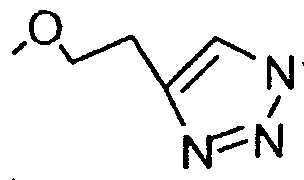
(VI)
[0009] In certain further embodiments, Ri comprises a chelating moiety and a radionuclide chelate. For example, the compound can be chelated to a radionuclide, such as a technetium ion, a copper ion, an indium ion, a thallium ion, a gallium ion, an arsenic ion, a rhenium ion, a holmium ion, a yttrium ion, a samarium ion, a selenium ion, a strontium ion, a gadolinium ion, a bismuth ion, an iron ion, a manganese ion, a lutecium ion, a cobalt ion, a platinum ion, a calcium ion, and/or a rhodium ion. Examples of radionuclides include, but are „ not . ! li·mi■«t.e„d j t to„, 9Λητ I„c, 188r R>e„, 186D Re„, l53C amm, 166, H.o, 90v Y, 89cr„, 67^ ua„, 68 Ua„, 1 1 1. In, 183^d., 59 rc„e, 225 Ac, 212Bi, 21 1 At, 45Ti, 60Cu, 6lCu, 67Cu, and 64Cu. Chelating moieties for use according to the invention include, but are not limited to, a acyclic polyamioncarboxylate, a diposphine, a Schiff base, a bis(thiosemicarbazone), a cyclic polyamine, a cyclic polyaminocarboxylate, a cross-bridged cyclic polyamine, a cross-bridged cyclicpolyamioncarboxylate, a l ,3,5-cis,cis- triamioncyclohexane derivative, a sarcophagine, or a sepulchrate. For example, the chelating moiety can be l ,4,7-triazacyclononane-l ,4,7-triacetic acid (NOTA), 1 ,4,7,10- tetraazacyclododecane-l ,4,7, 10-tetraacetic acid (DOTA), diethylenetriaminetetraacetic acid (DTTA), Diethylenetriaminopentaacetic acid (DTPA), ethylenediaminetetraacetic acid (EDTA), diethylenetriaminepentaacetic acid (DTPA), 1 ,4,8, 1 1 -tetraazacyclotetradecane- 1 ,4,8, 1 1-tetraacetic acid (TETA), 1 ,4,8, 1 l -tetraazacyclotetradecane- l ,8-diacetic acid (TE2A) Mercaptoacetyltriglycine (MAG3) or 4,5-bis(2-mercaptoacetamido)pentanoic acid.
[0010] In certain embodiments, Ri comprises covalently bound radionuclide, such as a radionuclide covalently bound, either directly or indirectly, by and an alkoxy or sulfur linkage to the lactosyl ring. For example, Ri can comprise -Oalkyl or -Salkyl, wherein the alkyl is substituted with a radionuclide (e.g., -Oalkyl18F or -0(CH2)„18F). In some aspects, the radionuclide is "C, l3N, 150 or a radiohalide, such as 18F, 75Br, 76Br, l23I, 1241, 1 5I or 1311. In certain specific aspects, R| is -OCH2CH218F, -SCF^CI-^F or a group having the formula (VII) or (VIII), wherein Z is S or O and wherein the depicted carbon-carbon double bond is optional.


[0012] As indicated in the compounds above, portions of the Ri group may be repeated "n" times, for example n can be 1 -10, such as 1 , 2, 3, 4, 5, 6, 7, 8, 9 or 10. These compounds may also be synthesized, for example, by use of Click chemistry (see, e.g., FIG. 8). Thus, in some specific aspects, a compound according to the invention comprises the formula (I or IX) wherein each of R2.8 are each OH, Z is oxygen and Ri is -OCH2CH2 18F or a group having the formula (VII) or (VIII). For example, the compound may a l 8F labeled 2-fluoroethyl lactose or 2-(6- {2-[ 1 -(2-fluoroethyl)- 1 H- 1 ,2,3-triazole-4-yl]ethoxy } -tetrahydro4.5-dihydroxy-2- (hydroxymethyl)-2H-pyran-3-yloxy)tetrahydro-6-(hydroxymethyl)-2H-pyran-2,3,5-triol compound.
[0013] In certain embodiments, the invention provides a method for substitution at the position of a lactosyl ring comprising treating a lactosyl ring compound with silver p- toluenesulfonate in the presence of an alcohol. For example, the method may comprise (i) treating a first molecule comprising a halide {e.g., Br) at the 1 ' position of a lactosyl ring with silver p-toluenesulfonate and an alcohol under conditions sufficient to produce an alkoxy substitution at the 1 ' position of the lactosyl ring. In certain aspects, one or more of the 2', 3', 6', 2, 3, 4, and 6 positions of the lactosyl ring of the first molecule comprise a protecting
substitution, such as -OAc or -OBz, thereby protecting the molecule from a substitution and the corresponding position. For example, the first molecule may comprise a protecting substitution at each of positions 2', 3', 6', 2, 3, 4, and 6 (e.g., such as 1 '-hydroxyethyl- 2',3',6',2,3,4,6-hepta-0-acetyl-p-D-lactose). In some aspects, a substitution method according to the invention may be used to generate radionuclide labeled compound according to formula (I or IX).
[0014] In a further embodiment, a method of substitution according to the invention additionally comprises treating the molecule comprising the alkoxy substitution with sodium methoxide to remove the protecting substitution(s). For example, in the case of -OAc protecting substitution, the -OAc will be replaced with a hydroxyl group.
[0015] Various alcohol molecules may be used in a substitution method according to the invention. For example, some non-limiting alcohols include a HO-alkyl-CCH alcohol, such as butyn- l -ol, a polyhydric alcohol, such as ethylene glycol or a bromoalcohol, such as 2- bromoethanol. [0016] In certain embodiments, a method for substitution at the position of a lactosyl ring comprises (i) treating a first molecule comprising a halide at the position of a lactosyl ring with silver p-toluenesulfonate and a polyhydric alcohol under conditions sufficient to produce an alkoxy substitution at the 1 ' position of the lactosyl ring (ii) treating the molecule comprising the alkoxy substitution with Ts20 and Et^N; and (iii) treating the molecule with (1 ) TBAF (e.g., TBAI 8F) and THF or (2) KF/kryptofix (e.g., Kl 8F/kryptofix) and MeCN to produce a molecule with a -OalkylF substitution at the position of the lactosyl ring. In certain aspects, the polyhydric alcohol is a HO-alkyl-OH alcohol, such as ethylene glycol. For example, in the case where a HO-alkyl-OH alcohol is used in the substitution a corresponding -OalkylF substitution at the 1 ' position is produced. [0017] In a further embodiment, a substitution method comprises (i) treating a first molecule comprising a halide at the position of a lactosyl ring with silver p- toluenesulfonate and a bromoalcohol under conditions sufficient to produce an alkoxy substitution at the position of the lactosyl ring and (ii) treating the molecule with (1 ) TBAF (e.g., TBAI 8F) and THF or (2) KF/kryptofix (e.g., K18F/kryptofix) and MeCN to produce a molecule with a -OalkylF substitution at the position of the lactosyl ring. For
example, in the case where 2-bromoethanol is used in the substitution a corresponding - OalkylF substitution at the 1 ' position is produced.
[0018] In yet further embodiment, a substitution method comprises (i) treating a first molecule comprising a halide at the position of a lactosyl ring with silver p- toluenesulfonate and butyn- l -ol under conditions sufficient to produce an alkoxy substitution at the 1 ' position of the lactosyl ring and (ii) treating the molecule with N3(CH2)„F to produce a molecule with a substitution at the position of the lactosyl ring having the structure (II) or (III) wherein Z is O. For example, step (ii) can comprise treating the molecule with N3(CH2)nF wherein n is 1 - 10, such as 1 , 2, 3, 4, 5, 6, 7, 8, 9 or 10. [0019] In some embodiments of the present invention, the compounds according to the invention are provided in one or more sealed container(s) and/or are formulated in pharmaceutically acceptable carrier. In certain aspects, compounds generated according to the invention are between about 90% and about 99.9% pure. In certain embodiments, the compounds set forth herein are about or at least about 80%, 81 %, 82%, 83%, 84%, 85%, 86%, .87%, 88%, 89%, 90%, 91 %, 92%, 93%, 94%, 95%, 96%, 97%, 98%, 99%, 99.5%, or 99.9% pure.
[0020] In a further embodiment there is provided a method preparing a subject for imaging, comprising administering a compound according to the invention to the subject in an amount effective for imaging. In still a further embodiment a method of imaging a subject is provided, comprising (i) administering a compound of claim 1 to the subject in an amount effective for imaging (e.g., by positron emission tomography (PET) or single photon emission computed tomography (SPECT) imaging); and (ii) detecting the compound in the subject to produce an image. In certain aspects, a method for imaging a subject may be further defined as a method for diagnosing a subject or a method for detecting a disease in a subject. Imaging methods for use according to the invention include, but are not limited to, SPECT, PET, SPECT/CT ,MRI, SPECT MRI, PET/CT and PET/ RI. In further aspects, a method for imaging is further defined as a method of detecting at least a first cell that comprises a lactose binding protein. For example, the lactose binding protein may be a lectin, a galectin (e.g., Gal-3) or HIP/PAP. [0021] In still yet a further embodiment, the invention provides a method for treating a subject with a disease comprising administering a compound according to the invention to the
subject in an amount effective to treat the disease. Methods for treatment may, in some aspects, comprise treating the subject with one or more additional therapy selected from the group consisting of surgery, chemotherapy, radiation therapy, gene therapy, hormonal therapy and immunotherapy. In still further aspects, a method according to the invention may be defined as a method for performing dual imaging and chemotherapy in a subject with a hyperproliferative disease comprising administering a compound to a subject in an amount effective for imaging and/or treatment of the subject.
[0022] In some embodiments, a disease for detection and/or treatment in a subject is a hyperproliferative disease, such as cancer. For example, the cancer may be breast cancer, lung cancer, prostate cancer, ovarian cancer, brain cancer, liver cancer, cervical cancer, colon cancer, renal cancer, skin cancer, head and neck cancer, bone cancer, a esophageal cancer, bladder cancer, uterine cancer, lymphatic cancer, stomach cancer, pancreatic cancer (e.g., pancreatic carcinoma), testicular cancer, lymphoma, or leukemia. In certain aspects, a subject for imaging and/or treatment is a human, however, non-human subjects such as livestock or companion animals are also contemplated.
[0023] A person of ordinary skill in the art will recognize that chemical modifications can be made to the compounds of the present invention, as well as compounds employed in the method of the present invention, without departing from the spirit and scope of the present invention. Substitutes, derivatives, or equivalents can also be used, all of which are contemplated as being part of the present invention.
[0024] It is. contemplated that any embodiment discussed in this specification can be implemented with respect to any method or composition of the invention, and vice versa. Furthermore, compositions of the invention can be used to achieve the methods of the invention. [0025] Other objects, features and advantages of the present invention will become apparent from the following detailed description. It should be understood, however, that the detailed description and the specific examples, while indicating specific embodiments of the invention, are given by way of illustration only, since various changes and modifications within the spirit and scope of the invention will become apparent to those skilled in the art from this detailed description.
BRIEF DESCRIPTION OF THE DRAWINGS
[0026] The following drawings form part of the present specification and are included to further demonstrate certain aspects of the present invention. The invention may be better understood by reference to one or more of these drawings in combination with the detailed description of specific embodiments presented herein.
[0027] FIG. 1. Chemical synthesis scheme 1
[0028] FIG. 2. Chemical synthesis scheme 2.
[0029] FIG. 3. HPLC purification of l '-[l 8F]fluoroethyl-2',3',6,,2,3,4,6-hepta-0-acetyl-p- D-lactose, [18F]-6: Semipreparative C|8 Column; 45% MeCN and 55% H20; flow 4.0 mL/min.
[0030] FIG. 4. HPLC chromatogram of l '-[18F]fluoroethyl-2',3',6',2,3,4,6-hepta-0- acetyl-P-D-lactose [l 8F]-6, co-injected with standard r-fluoroethyl-2',3',6',2,3,4,6-hepta-0- acetyl-p-D-lactose 6: Analytical C) 8 Column; 55% MeCN and 45% H20; flow 1.0 mL/min.
[0031] FIG. 5. Radio-TLC of l '-[18F]fluoroethyl-P-D-lactose [18F]-7: Developing solvent; MeOH:H20 (95:5).
[0032] FIG. 6. Additional chemical synthesis methods for producing lactosyl thioester derivatives.
[0033] FIG. 7A-B. Additional chemical synthesis methods for producing lactosyl thioester derivatives. [0034] FIG. 8A-B. Additional chemical synthesis methods for producing lactosyl thioester derivatives.
[0035] FIG. 9A-H. Autoradioraphic representation of 18F-FEL distribution after intravenous administration and immunohistochemistry of HIP/PAP expression. Mice were imaged with a micro-PET/CT 1 hour after intravenous injection of F-FEL (0.5 mCi). FIG. 9A-B, Hematoxylin and eosin stained tumor xenografts (derived from L3.6pl-GL+ pancreatic tumor cells) and surrounding tissues. FIG. 9C-D, Low magnification of tissues processed for autoradiographic localization of 18F-FEL. Tumors are enclosed within the circumscribed areas in circles. FIG. 9E-F, High magnification of tumor areas from FIG. 9C-
D. Note that peritumoral area in FIG. 9E (corresponding to area depicted in FIG. 9C) shows a higher %ID/g equivalent than in central tumor areas . FIG. 9G-H, Immunohistochemistry of HIP/PAP (target for l 8F-FEL). Note intense immunostaining of peritumoral area but not the tumor tissue. Studies shown are from one mouse, but are representative of 4 mice tested. [0036] FIG. lOA-C. Axial PET image (FIG. 10A-B) of l 8F- Lactose in a swine carcinogen-induced liver tumor model. A correlative axial CT image in the same region is also depicted (FIG. I OC). Animals was subjected to 40 min of dynamic PET imaging after IV bolus of l '-[18F]fluoroethyl-b-D-lactose ([18F]-FEL) at a dose of 5 mCi/5 ml saline. Images show liver tumors (1 -4) and regional distribution of radioactivity of ([l 8F]-FEL). (*) Area of normal liver. Studies shown are from one pig, but are representative of 3 pigs tested.
[0037] FIG. 11A-C. In vivo dynamic PET/CT imaging with [l 8FEL] in Swine #1. FIG. 1 1A, Axial PET/CT image showing localization of [l8FEL] in hepatic tumors. FIG. 1 1 B, time-activity curves of [18FEL]-derived radioactivity concentrations in peritumoral areas, liver, spleen and muscle. FIG. C, Logan plot analysis to quantify the distribution volume ratio in peritumoral areas of [18FEL]. Using normal liver (*) as reference tissue. Studies shown are from one pig, but are representative of 3 pigs tested.
DESCRIPTION OF ILLUSTRATIVE EMBODIMENTS
[0038] HIP/PAP is overexpressed in hepatocellular carcinoma tumor cells and accordingly would be a promising target for both anti-cancer compounds and tumor imaging agents ((Demaugre et ai, 2004; Cervello et ai, 2002; Cavard et ai, 2006). Unfortunately, radiolabeled HIP/PAP-binding agents are costly and difficult to synthesize. Studies provided here demonstrate efficient methods for the synthesis of novel radiolabled lactosyl compounds that can bind to tumor cells. Compounds in accordance with the embodiments, such as 1 '- [18F]fluoroethyl- -D-lactose ([18F]-FEL, can by produced using the efficient and cost- effective synthesis methods detailed herein. Such compounds specifically bind to tumor tissue, even when tested in vivo (see e.g., FIGs. 9-1 1) and can therefore be used for live imaging of patients to diagnose patients or provide a guide for anticancer therapy {e.g., localized or surgical intervention). Moreover, the in vivo association of the compounds to cancer cells allows for targeted delivery of a radionuclide to provide localized, tumor-specific cell killing for cancer treatment.
I. DEFINITIONS
[0039] When used in the context of a chemical group, "hydrogen" means -H; "hydroxy" means -OH; "oxo" means =0; "halo" means independently -F, -CI, -Br or -I; "amino" means -NH2; "hydroxyamino" means -NHOH; "nitro" means -N02; imino means =NH; "cyano" means -CN; "isocyanate" means -N=C=0; "azido" means -N3; in a monovalent context "phosphate" means -OP(0)(OH)2 or a deprotonated form thereof; in a divalent context "phosphate" means -OP(0)(OH)0- or a deprotonated form thereof; "mercapto" means -SH; and "thio" means =S; "sulfonyl" means -S(0)2-; and "sulfinyl" means -S(O)-.
[0040] In the context of chemical formulas, the symbol "-" means a single bond, "=" means a double bond, and "≡" means triple bond. The symbol " " represents an optional bond, which if present is either single or double. The symbol " rrr-." represents a single bond ple, the structure includes the structures
 will be understood by a person of skill in the art, no one such ring atom forms part of more than one double bond. The symbol Κ λλλ ", when drawn perpendicularly across a bond indicates a point of attachment of the group. It is noted that the point of attachment is typically only identified in this manner for larger groups in order to assist the reader in rapidly and unambiguously identifying a point of attachment. The symbol "-^ " means a single bond where the group attached to the thick end of the wedge is "out of the page." The symbol " "'"H " means a single bond where the group attached to the thick end of the wedge is "into the page". The symbol " ^ " means a single bond where the conformation (e.g., either R or S) or the geometry is undefined (e.g., either E or Z).
[0041] Any undefined valency on an atom of a structure shown in this application implicitly represents a hydrogen atom bonded to the atom. When a group "R" is depicted as a "floating group" on a ring system, for example, in the formula:
 then R may replace any hydrogen atom attached to any of the ring atoms, including a depicted, implied, or expressly defined hydrogen, so long as a stable structure is formed.
When a group "R" is depicted as a "floating group" on a fused ring system, as for example in the formula:
then R may replace any hydrogen atom attached to any of the ring atoms, including a depicted, implied, or expressly defined hydrogen, so long as a stable structure is formed.
When a group "R" is depicted as a "floating group" on a fused ring system, as for example in the formula:

then R may replace any hydrogen attached to any of the ring atoms of either of the fused rings unless specified otherwise. Replaceable hydrogens include depicted hydrogens (e.g., the hydrogen attached to the nitrogen in the formula above), implied hydrogens (e.g., a hydrogen of the formula above that is not shown but understood to be present), expressly defined hydrogens, and optional hydrogens whose presence depends on the identity of a ring atom (e.g., a hydrogen attached to group X, when X equals -CH-), so long as a stable structure is formed. In the example depicted, R may reside on either the 5-membered or the 6- membered ring of the fused ring system. In the formula above, the subscript letter "y" immediately following the group "R" enclosed in parentheses, represents a numeric variable. Unless specified otherwise, this variable can be 0, 1 , 2, or any integer greater than 2, only limited by the maximum number of replaceable hydrogen atoms of the ring or ring system.
[0042] For the groups and classes below, the following parenthetical subscripts further define the group/class as follows: "(Cn)" defines the exact number (n) of carbon atoms in the group/class. "(C<n)" defines the maximum number (n) of carbon atoms that can be in the group/class, with the minimum number as small as possible for the group in question, e.g., it is understood that the minimum number of carbon atoms in the group "alkenyl(c≤8)" or the class "alkene(c<8)" is two. For example, "alkoxy(c≤io)" designates those alkoxy groups having from 1 to 10 carbon atoms (e.g., 1 , 2, 3, 4, 5, 6, 7, 8, 9, or 10, or any range derivable therein (e.g., 3 to 10 carbon atoms). (Cn-n') defines both the minimum (n) and maximum number (η') of carbon atoms in the group. Similarly, "alkyl(C2-i0)" designates those alkyl groups having from 2 to 10 carbon atoms (e.g., 2, 3, 4, 5, 6, 7, 8, 9, or 10, or any range derivable therein (e.g., 3 to 10 carbon atoms)).
[0043] The term "saturated" as used herein means the compound or group so modified has no carbon-carbon double and no carbon-carbon triple bonds, except as noted below. The term does not preclude carbon-heteroatom multiple bonds, for example a carbon oxygen double bond or a carbon nitrogen double bond. Moreover, it does not preclude a carbon- carbon double bond that may occur as part of keto-enol tautomerism or imine/enamine tautomerism.
[0044] The term "aliphatic" when used without the "substituted" modifier signifies that the compound/group so modified is an acyclic or cyclic, but non-aromatic hydrocarbon compound or group. In aliphatic compounds/groups, the carbon atoms can be joined together in straight chains, branched chains, or non-aromatic rings (alicyclic). Aliphatic compounds/groups can be saturated, that is joined by single bonds (alkanes/alkyl), or unsaturated, with one or more double bonds (alkenes/alkenyl) or with one or more triple bonds (alkynes/alkynyl). When the term "aliphatic" is used without the "substituted" modifier only carbon and hydrogen atoms are present. When the term is used with the "substituted" modifier one or more hydrogen atom has been independently replaced by -OH, -F, -CI, -Br, -I, -NH2, ~N02, -C02H, -C02CH3, ~CN, -SH, -OCH3, -OCH2CH3, - C(0)CH3, -N(CH3)2, -C(0)NH2, -OC(0)CH3, or -S(0)2NH2.
[0045] The term "alkyl" when used without the "substituted" modifier refers to a monovalent saturated aliphatic group with a carbon atom as the point of attachment, a linear or branched, cyclo, cyclic or acyclic structure, and no atoms other than carbon and hydrogen. Thus, as used herein cycloalkyl is a subset of alkyl. The groups -CH3 (Me), -CH2CH3 (Et), -CH2CH2CH3 (n-Pr), -CH(CH3)2 (/so-Pr), -CH(CH2)2 (cyclopropyl), -CH2CH2CH2CH3 («- Bu), -CH(CH3)CH2CH3 (sec-butyl), -CH2CH(CH3)2 (/so-butyl), ~C(CH3)3 (½ri-butyl), -CH2C(CH3)3 (weo-pentyl), cyclobutyl, cyclopentyl, cyclohexyl, and cyclohexylmethyl are non-limiting examples of alkyl groups. The term "alkanediyl" when used without the "substituted" modifier refers to a divalent saturated aliphatic group, with one or two saturated carbon atom(s) as the point(s) of attachment, a linear or branched, cyclo, cyclic or acyclic structure, no carbon-carbon double or triple bonds, and no atoms other than carbon and hydrogen. The groups, -CH2- (methylene), -CH2CH2- -CH2C(CH3)2CH2-
-CH2CH2CH2-, and * , are non-limiting examples of alkanediyl groups. The term "alkylidene" when used without the "substituted" modifier refers to the divalent group =CRR' in which R and Rf are independently hydrogen, alkyl, or R and R' are taken together to represent an alkanediyl having at least two carbon atoms. Non-limiting examples of alkylidene groups include: =CH2, =CH(CH2CH3), and =C(CH3)2. When any of these terms is used with the "substituted" modifier one or more hydrogen atom has been independently replaced by -OH, -F, -CI, -Br, -I, -NH2, -N02, -C02H, -C02CH3, -CN, -SH, -OCH3, -OCH2CH3, -C(0)CH3, -N(CH3)2, -C(0)NH2, -OC(0)CH3, or -S(0)2NH2. The following groups are non-limiting examples of substituted alkyl groups: -CH2OH, -CH2C1, -CF3,
-CH2CN, -CH2C(0)OH, -CH2C(0)OCH3, -CH2C(0)NH2, -CH2C(0)CH3, -CH2OCH3, -CH2OC(0)CH3, -CH2NH2, -CH2N(CH3)2, and -CH2CH2C1. The term "haloalkyl" is a subset of substituted alkyl, in which one or more hydrogen has been substituted with a halo group and no other atoms aside from carbon, hydrogen and halogen are present. The group, -CH2C1 is a non-limiting examples of a haloalkyl. An "alkane" refers to the compound H-R, wherein R is alkyl. The term "fluoroalkyl" is a subset of substituted alkyl, in which one or more hydrogen has been substituted with a fluoro group and no other atoms aside from carbon, hydrogen and fluorine are present. The groups, -CH2F, -CF3, and -CH2CF3 are non- limiting examples of fluoroalkyl groups. An "alkane" refers to the compound H-R, wherein R is alkyl.
[0046] The term "alkenyl" when used without the "substituted" modifier refers to an monovalent unsaturated aliphatic group with a carbon atom as the point of attachment, a linear or branched, cyclo, cyclic or acyclic structure, at least one nonaromatic carbon-carbon double bond, no carbon-carbon triple bonds, and no atoms other than carbon and hydrogen. Non-limiting examples of alkenyl groups include: -CH=CH2 (vinyl), -CH=CHCH3, -CH=CHCH2CH3, -CH2CH=CH2 (allyl), -CH2CH=CHCH3, and -CH=CH-C6H5. The term "alkenediyl" when used without the "substituted" modifier refers to a divalent unsaturated aliphatic group, with two carbon atoms as points of attachment, a linear or branched, cyclo, cyclic or acyclic structure, at least one nonaromatic carbon-carbon double bond, no carbon- carbon triple bonds, and no atoms other than carbon and hydrogen. The groups, -CH=CH-,
-CH=C(CH3)CH2- -CH=CHCH2- and
 , are non-limiting examples of alkenediyl groups. When these terms are used with the "substituted" modifier one or more hydrogen atom has been independently replaced by -OH, -F, -CI, -Br, -I, -NH2, -N02, -C02H, -C02CH3, -CN, -SH, -OCH3, -OCH2CH3, -C(0)CH3, -N(CH3)2, -C(0)NH2, -OC(0)CH3, or -S(0)2NH2. The groups, -CH=CHF, -CH=CHC1 and -CH=CHBr, are non- limiting examples of substituted alkenyl groups. An "alkene" refers to the compound H-R, wherein R is alkenyl.
[0047] The term "alkynyl" when used without the "substituted" modifier refers to an monovalent unsaturated aliphatic group with a carbon atom as the point of attachment, a linear or branched, cyclo, cyclic or acyclic structure, at least one carbon-carbon triple bond, and no atoms other than carbon and hydrogen. As used herein, the term alkynyl does not preclude the presence of one or more non-aromatic carbon-carbon double bonds. The groups,
-C≡CH, -C≡CCH3, and -CH2C≡CCH3, are non-limiting examples of alkynyl groups. When alkynyl is used with the "substituted" modifier one or more hydrogen atom has been independently replaced by -OH, -F, -CI, -Br, -I, -NH2, -N02, -C02H, -C02CH3, -CN, -SH, -OCH3, -OCH2CH3, -C(0)CH3, -N(CH3)2, -C(0)NH2, -OC(0)CH3, or -S(0)2NH2. An "alkyne" refers to the compound H-R, wherein R is alkynyl.
[0048] The term "aryl" when used without the "substituted" modifier refers to a monovalent unsaturated aromatic group with an aromatic carbon atom as the point of attachment, said carbon atom forming part of a one or more six-membered aromatic ring structure, wherein the ring atoms are all carbon, and wherein the group consists of no atoms other than carbon and hydrogen. If more than one ring is present, the rings may be fused or unfused. As used herein, the term does not preclude the presence of one or more alkyl group (carbon number limitation permitting) attached to the first aromatic ring or any additional aromatic ring present. Non-limiting examples of aryl groups include phenyl (Ph), methylphenyl, (dimethyl)phenyl, -C6H4CH2CH3 (ethylphenyl), naphthyl, and the monovalent group derived from biphenyl. The term "arenediyl" when used without the "substituted" modifier refers to a divalent aromatic group, with two aromatic carbon atoms as points of attachment, said carbon atoms forming part of one or more six-membered aromatic ring structure(s) wherein the ring atoms are all carbon, and wherein the monovalent group consists of no atoms other than carbon and hydrogen. As used herein, the term does not preclude the presence of one or more alkyl group (carbon number limitation permitting) attached to the first aromatic ring or any additional aromatic ring present. If more than one ring is present, the rings may be fused or unfused. Non-limiting examples of arenediyl groups include:

When these terms are used with the "substituted" modifier one or more hydrogen atom has been independently replaced by -OH, -F, -CI, -Br, -I, -NH2, -N02, -C02H, -C02CH3, -CN, -SH, -OCH3, -OCH2CH3, -C(0)CH3, -N(CH3)2, -C(0)NH2, -OC(0)CH3, or - S(0)2NH2. An "arene" refers to the compound H-R, wherein R is aryl.
[0049] The term "aralkyl" when used without the "substituted" modifier refers to the monovalent group -alkanediyl-aryl, in which the terms alkanediyl and aryl are each used in a manner consistent with the definitions provided above. Non-limiting examples of aralkyls are: phenylmethyl (benzyl, Bn) and 2-phenyl-ethyl. When the term is used with the
"substituted" modifier one or more hydrogen atom from the alkanediyl and/or the aryl has been independently replaced by -OH, -F, -CI, -Br, -I, -NH2, -N02, -C02H, -C02CH3, -CN, -SH, -OCH3, -OCH2CH3, -C(0)CH3, -N(CH3)2, -C(0)NH2, -OC(0)CH3, or - S(0)2NH2. Non-limiting examples of substituted aralkyls are: (3-chlorophenyl)-methyl, and 2-chloro-2-phenyl-eth-l -yl.
[0050] The term "heteroaryl" when used without the "substituted" modifier refers to a monovalent aromatic group with an aromatic carbon atom or nitrogen atom as the point of attachment, said carbon atom or nitrogen atom forming part of one or more aromatic ring structures wherein at least one of the ring atoms is nitrogen, oxygen or sulfur, and wherein the heteroaryl group consists of no atoms other than carbon, hydrogen, aromatic nitrogen, aromatic oxygen and aromatic sulfur. As used herein, the term does not preclude the presence of one or more alkyl, aryl, and/or aralkyl groups (carbon number limitation permitting) attached to the aromatic ring or aromatic ring system. If more than one ring is present, the rings may be fused or unfused. Non-limiting examples of heteroaryl groups include furanyl, imidazolyl, indolyl, indazolyl (Im), isoxazolyl, methylpyridinyl, oxazolyl, phenylpyridinyl, pyridinyl, pyrrolyl, pyrimidinyl, pyrazinyl, quinolyl, quinazolyl, quinoxalinyl, triazinyl, tetrazolyl, thiazolyl, thienyl, and triazolyl. The term "heteroarenediyl" when used without the "substituted" modifier refers to an divalent aromatic group, with two aromatic carbon atoms, two aromatic nitrogen atoms, or one aromatic carbon atom and one aromatic nitrogen atom as the two points of attachment, said atoms forming part of one or more aromatic ring structure(s) wherein at least one of the ring atoms is nitrogen, oxygen or sulfur, and wherein the divalent group consists of no atoms other than carbon, hydrogen, aromatic nitrogen, aromatic oxygen and aromatic sulfur. As used herein, the term does not preclude the presence of one or more alkyl, aryl, and/or aralkyl groups (carbon number limitation permitting) attached to the aromatic ring or aromatic ring system. If more than one ring is present, the rings may be fused or unfused. Non-limiting examples of heteroarenediyl groups include:

[0051] The term "heterocycloalkyl" when used without the "substituted" modifier refers to a monovalent non-aromatic group with a carbon atom or nitrogen atom as the point of attachment, said carbon atom or nitrogen atom forming part of one or more non-aromatic ring structures wherein at least one of the ring atoms is nitrogen, oxygen or sulfur, and wherein the heterocycloalkyl group consists of no atoms other than carbon, hydrogen, nitrogen, oxygen and sulfur. As used herein, the term does not preclude the presence of one or more alkyl groups (carbon number limitation permitting) attached to the ring or ring system. If more than one ring is present, the rings may be fused or unfused. Non-limiting examples of heterocycloalkyl groups include aziridinyl, pyrrolidinyl, piperidinyl, piperazinyl, morpholinyl, thiomorpholinyl, tetrahydrofuranyl, tetrahydrothiofuranyl, tetrahydropyranyl, and pyranyl. When the term "heterocycloalkyl" used with the "substituted" modifier one or more hydrogen atom has been independently replaced by -OH, -F, -CI, -Br, -I, -NH2, -N02, -C02H, -C02CH3, -CN, -SH, -OCH3, -OCH2CH3, -C(0)CH3, -N(CH3)2, - C(0)NH2, -0C(0)CH3, or -S(0)2NH2.
[0052] The term "acyl" when used without the "substituted" modifier refers to the group -C(0)R, in which R is a hydrogen, alkyl, aryl, aralkyl or heteroaryl, as those terms are defined above. The groups, -CHO, -C(0)CH3 (acetyl, Ac), -C(0)CH2CH3, -C(0)CH2CH2CH3, -C(0)CH(CH3)2) -C(0)CH(CH2)2, -C(0)C6H5, -C(0)C6H4CH3, -C(0)CH2C6H5, -C(0)(imidazolyl) are non-limiting examples of acyl groups. A "thioacyl" is defined in an analogous manner, except that the oxygen atom of the group -C(0)R has been replaced with a sulfur atom, -C(S)R. When either of these terms are used with the "substituted" modifier one or more hydrogen atom (including the hydrogen atom directly attached the carbonyl or thiocarbonyl group) has been independently replaced by-OH, -F, -CI, -Br, -I, -NH2, -N02, -C02H, -C02CH3, -CN, -SH, -OCH3, -OCH2CH3, -C(0)CH3, -N(CH3)2, -C(0)NH2, -OC(0)CH3, or -S(0)2NH2. The groups, -C(0)CH2CF3, -C02H (carboxyl), -C02CH3 (methylcarboxyl), -C02CH2CH3, -C(0)NH2 (carbamoyl), and -CON(CH3)2, are non-limiting examples of substituted acyl groups.
[0053] The term "alkoxy" when used without the "substituted" modifier refers to the group -OR, in which R is an alkyl, as that term is defined above. Non-limiting examples of alkoxy groups include: -OCH3, -OCH2CH3, -OCH2CH2CH3, -OCH(CH3)2) -OCH(CH2)2) -O-cyclopentyl, and -O-cyclohexyl. The terms "alkenyloxy", "alkynyloxy", "aryloxy", "aralkoxy", "heteroaryloxy", and "acyloxy", when used without the "substituted" modifier, refers to groups, defined as -OR, in which R is alkenyl, alkynyl, aryl, aralkyl, heteroaryl, and acyl, respectively. The term "alkoxydiyl" refers to the divalent group -O-alkanediyl-, -O-alkanediyl-O-, or -alkanediyl-O-alkanediyl-. The term "alkylthio" when used without the "substituted" modifier refers to the group -SR, in which R is an alkyl, as that term is defined above. When any of these terms is used with the "substituted" modifier one or more hydrogen atom has been independently replaced by -OH, -F, -CI, -Br, -I, -NH2, -N02, -C02H, -C02CH3, -CN -SH, -OCH3, -OCH2CH3, -C(0)CH3, -N(CH3)2, - C(0)NH2, -OC(0)CH3, or -S(0)2NH2. The term "alcohol" corresponds to an alkane, as defined above, wherein at least one of the hydrogen atoms has been replaced with a hydroxy group.
[0054] A "sugar" are the basic structural units of carbohydrates, which cannot be readily hydrolyzed into simpler units. The elementary formula of a simple monosaccharide is CnH2nOn, where the integer n is at least 3 and rarely greater than 7. Simple monosachharides may be named generically according on the number of carbon atoms n: trioses, tetroses, pentoses, hexoses, etc. Simple sugars may be open chain (acyclic), cyclic or mixtures thereof. In these cyclic forms, the ring usually has 5 or 6 atoms. These forms are called furanoses and pyranoses, respectively— by analogy with furan and pyran. Simple sugars may be further classified into aldoses, those with a carbonyl group at the end of the chain in the acyclic form, and ketoses, those in which the carbonyl group is not at the end of the chain. Non-limiting examples of aldoses include: glycolaldehyde, glyceraldehydes, erythrose, threose, ribose, arabinose, xylose, lyxose, allose, altrose, glucose, mannose, gulose, idose, galactose and talose. Non-limiting examples of aldoses include: dihydroxyacetone, erythrulose, ribulose, xylulose, fructose, psicose, sorbose and tagatose. The 'd-' and Ί-' prefixes may be used to distinguish two particular stereoisomers which are mirror-images of each other. The term simple sugar also covers O-acetyl derivatives thereof.
[0055] A "polysaccharide group" is a monovalent carbohydrate group consisting of two or more monosaccharide groups, wherein the second monosaccharide group replaces a
hydrogen on a hydroxy group of the first monosaccharide group. Non-limiting examples of disaccharide groups include those derived from sucrose, lactulose, lactose, maltose trehalose and cellobiose.
[0056] As used herein, "protecting group" refers to a moiety attached to a functional group to prevent an otherwise unwanted reaction of that functional group. Protecting groups are well-known to those of skill in the art. Non-limiting exemplary protecting groups fall into categories such as hydroxy protecting groups, amino protecting groups, sulfhydryl protecting groups and carbonyl protecting groups. Such protecting groups may be found in Greene and Wuts, 1999. [0057] As used herein the term "radionuclide" is defined as a radioactive nuclide (a species of atom able to exist for a measurable lifetime and distinguished by its charge, mass, number, and quantum state of the nucleus) which, in specific embodiments, disintegrates with emission of corpuscular or electromagnetic radiation. The term may be used interchangeably with the term "radioisotope." [0058] Compounds as described herein may contain one or more asymmetric centers and thus can occur as racemates and racemic mixtures, single enantiomers, diastereomeric mixtures and individual diastereomers. All possible stereoisomers of the all the compounds described herein, unless otherwise noted, are contemplated as being within the scope of the present invention. The chiral centers of the compounds of the present invention can have the S- or the R-configuration, as defined by the IUPAC 1974 Recommendations. The present invention is meant to comprehend all such isomeric forms of the compounds of the invention.
[0059] The claimed invention is also intended to encompass salts of any of the synthesized compounds of the present invention. The term "salt(s)" as used herein, is understood as being acidic and/or basic salts formed with inorganic and/or organic acids and bases. Zwitterions (internal or inner salts) are understood as being included within the term "salt(s)" as used herein, as are quaternary ammonium salts such as alkylammonium salts. Nontoxic, pharmaceutically acceptable salts are preferred as described below, although other salts may be useful, as for example in isolation or purification steps.
[0060] Non-limiting examples of acid addition salts include but are not limited to acetate, adipate, alginate, aspartate, benzoate, benzenesulfonate, bisulfate, butyrate, citrate, camphorate, camphorsulfonate, cyclopentanepropionate, digluconate, dodecylsulfate,
ethanesulfonate, fumarate, glucoheptanoate, glycerophosphate, hemisulfate, heptanoate, hexanoate, hydrochloride, hydrobromide, hydroiodide, 2-hydroxyethanesulfonate, lactate, maleate, methanesulfonate, 2-naphthalenesulfonate, nicotinate, oxalate, pectinate, persulfate, 3-phenylpropionate, picrate, pivalate, propionate, succinate, tartrate, thiocyanate, tosylate and undecanoate.
[0061] Non-limiting examples of basic salts include but are not limited to ammonium salts; alkali metal salts such as sodium, lithium, and potassium salts; alkaline earth metal salts such as calcium and magnesium salts; salts comprising organic bases such as amines (e.g., dicyclohexylamine, alkylamines such as /-butylamine and i-amylamine, substituted alkylamines, aryl-alkylamines such as benzylamine, dialkylamines, substituted dialkylamines such as N-methyl glucamine, trialkylamines, and substituted trialkylamines); and salts comprising amino acids such as arginine, lysine and so forth. The basic nitrogen-containing groups may be quaternized with agents such as lower alkyl halides e.g., methyl, ethyl, propyl, and butyl chlorides, bromides and iodides), dialkyl sulfates (e.g., dimethyl, diethyl, dibutyl, and diamyl sulfates), long chain halides (e.g., decyl, lauryl, myrtistyl and stearyl chlorides, bromides and iodides), arylalkyl halides (e.g., benzyl and phenethyl bromides) and others known in the art.
[0062] The term "effective," as that term is used in the specification and/or claims (e.g., "an effective amount," means adequate to accomplish a desired, expected, or intended result. [0063] The use of the word "a" or "an" when used in conjunction with the term "comprising" in the claims and/or the specification may mean "one," but it is also consistent with the meaning of "one or more," "at least one," and "one or more than one." As used herein "another" may mean at least a second or more.
[0064] Throughout this application, the term "about" is used to indicate that a value includes the inherent variation of error for the device, the method being employed to determine the value, or the variation that exists among the study subjects.
[0065] The use of the term "or" in the claims is used to mean "and/or" unless explicitly indicated to refer to alternatives only or the alternatives are mutually exclusive.
[0066] As used in this specification and claim(s), the words "comprising" (and any form of comprising, such as "comprise" and "comprises"), "having" (and any form of having, such
as "have" and "has"), "including" (and any form of including, such as "includes" and "include"), or "containing" (and any form of containing, such as "contains" and "contain") are inclusive or open-ended and do not exclude additional, unrecited elements or method steps. II. PHARMACEUTICAL FORMULATIONS
[0067] Pharmaceutical compositions provided herein comprise an effective amount (e.g., for therapy and/or imaging) of one or more substituted lactosyl compound of the embodiments and, optionally, an additional agent dissolved or dispersed in a pharmaceutically acceptable carrier. The phrases "pharmaceutical or pharmacologically acceptable" refers to molecular entities and compositions that do not produce an adverse, allergic or other untoward reaction when administered to an animal, such as, for example, a human, as appropriate. The preparation of a pharmaceutical composition that contains at least lactosyl compound or additional active ingredient will be known to those of skill in the art in light of the present disclosure, as exemplified by Remington's Pharmaceutical Sciences, 18th Ed. Mack Printing Company, 1990, incorporated herein by reference. Moreover, for animal (e.g., human) administration, it will be understood that preparations should meet sterility, pyrogenicity, general safety and purity standards as required by FDA Office of Biological Standards.
[0068] As used herein, "pharmaceutically acceptable carrier" includes any and all solvents, dispersion media, coatings, surfactants, antioxidants, preservatives (e.g., antibacterial agents, antifungal agents), isotonic agents, absorption delaying agents, salts, preservatives, drugs, drug stabilizers, gels, binders, excipients, disintegration agents, lubricants, sweetening agents, flavoring agents, dyes, such like materials and combinations thereof, as would be known to one of ordinary skill in the art (see, for example, Remington's Pharmaceutical Sciences, 1 8th Ed. Mack Printing Company, 1990, pp. 1289-1329, incorporated herein by reference). Except insofar as any conventional carrier is incompatible with the active ingredient, its use in the therapeutic or pharmaceutical compositions is contemplated.
[0069] In certain embodiments, the pharmaceutical composition may comprise different types of carriers depending on whether it is to be administered in solid, liquid or aerosol form, and whether it need to be sterile for such routes of administration as injection. In certain embodiments, pharmaceutical compositions provided herein can be administered
intravenously, intradermally, intraarterially, intraperitoneally, intralesionally, intracranially, intraarticularly, intraprostaticaly, intrapleurally, intratracheal ly, intranasally, intravitreally, intravaginally, intrarectally, topically, intratumorally, intramuscularly, intraperitoneally, subcutaneously, subconjunctival, intravesicularlly, mucosally, intrapericardially, intraumbilically, intraocu!arally, orally, topically, locally, inhalation (e.g. aerosol inhalation), injection, infusion, continuous infusion, localized perfusion bathing target cells directly, via a catheter, via a lavage, in cremes, in lipid compositions (e.g., liposomes), or by other method or any combination of the forgoing as would be known to one of ordinary skill in the art (see, for example, Remington's Pharmaceutical Sciences, 18th Ed. Mack Printing Company, 1990, incorporated herein by reference).
[0070] In certain embodiments, the pharmaceutical composition is administered intraperitoneally. In further embodiments, the pharmaceutical composition is administered intraperitoneally to treat a cancer (e.g., a cancerous tumor). For example, the pharmaceutical composition may be administered intraperitoneally to treat gastrointestinal cancer. In certain embodiments it may be desirable to administer the pharmaceutical composition into or near a tumor.
[0071] In certain embodiments, the actual dosage amount of a composition administered to a patient can be determined by physical and physiological factors such as body weight, severity of condition, the type of disease being treated, previous or concurrent therapeutic interventions, idiopathy of the patient and on the route of administration. The practitioner responsible for administration will, in any event, determine the concentration of active ingredient(s) in a composition and appropriate dose(s) for the individual subject.
[0072] In certain embodiments, pharmaceutical compositions may comprise, for example, at least about 0.1 % of an active compound. In other embodiments, the an active compound may comprise between about 2% to about 75% of the weight of the unit, or between about 25% to about 60%, for example, and any range derivable therein. In other non-limiting examples, a dose may also comprise from about 1 microgram/kg/body weight, about 5 microgram/kg/body weight, about 10 microgram/kg/body weight, about 1 5 microgram/kg/body weight, about 20 microgram/kg/body weight, about 25 microgram/kg/body weight, about 30 microgram/kg/body weight, about 35 microgram/kg/body weight, about . 0.04 milligram/kg/body weight, about 0.05 milligram/kg/body weight, about 0.06 milligram/kg/body weight, about 0.07
milligram/kg/body weight, about 0.08 milligram/kg/body weight, about 0.09 milligram/kg/body weight, about 0.1 milligram/kg/body weight, about 0.2 milligram/kg/body weight, to about 0.5 mg/kg/body weight or more per administration, and any range derivable therein. In non-limiting examples of a derivable range from the numbers listed herein, a range of about 0.01 mg/kg/body weight to about 0.1 mg/kg/body weight, about 0.04 microgram/kg/body weight to about 0.08 milligram/kg/body weight, etc., can be administered, based on the numbers described above.
[0073] In any case, the composition may comprise various antioxidants to retard oxidation of one or more component. Additionally, the prevention of the action of microorganisms can be brought about by preservatives such as various antibacterial and antifungal agents, including but not limited to parabens (e.g., methylparabens, propylparabens), chlorobutanol, phenol, sorbic acid, thimerosal or combinations thereof.
[0074] The lactosyl compound or additional agent may be formulated into a composition in a free base, neutral or salt form. Pharmaceutically acceptable salts, include the acid addition salts, e.g., those formed with the free amino groups of a proteinaceous composition, or which are formed with inorganic acids such as for example, hydrochloric or phosphoric acids, or such organic acids as acetic, oxalic, tartaric or mandelic acid. Salts formed with the free carboxyl groups can also be derived from inorganic bases such as for example, sodium, potassium, ammonium, calcium or ferric hydroxides; or such organic bases as isopropylamine, trimethylamine, histidine or procaine.
[0075] In embodiments where the composition is in a liquid form, a carrier can be a solvent or dispersion medium comprising but not limited to, water, ethanol, polyol (e.g., glycerol, propylene glycol, liquid polyethylene glycol, etc.), lipids (e.g., triglycerides, vegetable oils, liposomes) and combinations thereof. The proper fluidity can be maintained, for example, by the use of a coating, such as lecithin; by the maintenance of the required particle size by dispersion in carriers such as, for example liquid polyol or lipids; by the use of surfactants such as, for example hydroxypropylcelluiose; or combinations thereof such methods. In many cases, it will be preferable to include isotonic agents, such as, for example, sugars, sodium chloride or combinations thereof. [0076] In certain preferred embodiments an oral composition may comprise one or more binders, excipients, disintegration agents, lubricants, flavoring agents, and combinations
thereof. In certain embodiments, a composition may comprise one or more of the following: a binder, such as, for example, gum tragacanth, acacia, cornstarch, gelatin or combinations thereof; an excipient, such as, for example, dicalcium phosphate, mannitol, lactose, starch, magnesium stearate, sodium saccharine, cellulose, magnesium carbonate or combinations thereof; a disintegrating agent, such as, for example, corn starch, potato starch, alginic acid or combinations thereof; a lubricant, such as, for example, magnesium stearate; a sweetening agent, such as, for example, sucrose, lactose, saccharin or combinations thereof; a flavoring agent, such as, for example peppermint, oil of wintergreen, cherry flavoring, orange flavoring, etc.; or combinations thereof the foregoing. When the dosage unit form is a capsule, it may contain, in addition to materials of the above type, carriers such as a liquid carrier. Various other materials may be present as coatings or to otherwise modify the physical form of the dosage unit. For instance, tablets, pills, or capsules may be coated with shellac, sugar or both.
[0077] Additional formulations which are suitable for other modes of administration include suppositories. Suppositories are solid dosage forms of various weights and shapes, usually medicated, for insertion into the rectum, vagina or urethra. After insertion, suppositories soften, melt or dissolve in the cavity fluids. In general, for suppositories, traditional carriers may include, for example, polyalkylene glycols, triglycerides or combinations thereof. In certain embodiments, suppositories may be formed from mixtures containing, for example, the active ingredient in the range of about 0.5% to about 10%, and preferably about 1 % to about 2%.
[0078] Sterile injectable solutions are prepared by incorporating the active compounds in the required amount in the appropriate solvent with various of the other ingredients enumerated above, as required, followed by filtered sterilization. Generally, dispersions are prepared by incorporating the various sterilized active ingredients into a sterile vehicle which contains the basic dispersion medium and/or the other ingredients. In the case of sterile powders for the preparation of sterile injectable solutions, suspensions or emulsion, the preferred methods of preparation are vacuum-drying or freeze-drying techniques which yield a powder of the active ingredient plus any additional desired ingredient from a previously sterile-filtered liquid medium thereof. The liquid medium should be suitably buffered if necessary and the liquid diluent first rendered isotonic prior to injection with sufficient saline or glucose. The preparation of highly concentrated compositions for direct injection is also
contemplated, where the use of DMSO as solvent is envisioned to result in extremely rapid penetration, delivering high concentrations of the active agents to a small area.
[0079] In particular embodiments, prolonged absorption of an injectable composition can be brought about by the use in the compositions of agents delaying absorption, such as, for example, aluminum monostearate, gelatin or combinations thereof.
III. COMBINATION THERAPIES
[0080] In order to increase the effectiveness of a substituted lactosyl compound of the present embodiments, it may be desirable to combine these compositions with other agents effective in the treatment of the disease of interest. [0081] As a non-limiting example, the treatment of cancer may be implemented with a lactosyl compound of the present embodiments along with other anti-cancer agents. An "anti-cancer" agent is capable of negatively affecting cancer in a subject, for example, by killing cancer cells, inducing apoptosis in cancer cells, reducing the growth rate of cancer cells, reducing the incidence or number of metastases, reducing tumor size, inhibiting tumor growth, reducing the blood supply to a tumor or cancer cells, promoting an immune response against cancer cells or a tumor, preventing or inhibiting the progression of cancer, or increasing the lifespan of a subject with cancer. More generally, these other compositions would be provided in a combined amount effective to kill or inhibit proliferation of the cell.
[0082] Treatment with the lactosyl compound may precede or follow the other agent treatment by intervals ranging from minutes to weeks. In embodiments where the other agent and the lactosyl compound are applied separately to the cell, one would generally ensure that a significant period of time did not expire between the time of each delivery, such that the agent and the lactosyl compound would still be able to exert an advantageously combined effect on the cell. In such instances, it is contemplated that one may contact the cell with both modalities within about 12-24 hours of each other and, more preferably, within about 6- 12 hours of each other. In some situations, it may be desirable to extend the time period for treatment significantly where several days (e.g., 2, 3, 4, 5, 6 or 7 days) to several weeks (e.g., 1 , 2, 3, 4, 5, 6, 7 or 8 weeks) lapse between the respective administrations.
[0083] Various combinations may be employed, where the lactosyl compound is "A" and the secondary agent, such as radiotherapy, chemotherapy or anti-inflammatory agent, is "B":
[0084] A/B/A B/A/B B/B/A A/A/B A/B/B B/A/A A/B/B/B B/A/B/B
[0085] B/B/B/A B/B/A/B A/A/B/B A/B/A B A B/B/A B/B/A A
[0086] B/A/B/A B/A/A/B A/A/A/B B/A/A/A A B/A/A A/A/B/A
[0087] In certain embodiments, administration of the lactosyl compound therapy of the present embodiments to a patient will follow general protocols for the administration of chemotherapeutics, taking into account the toxicity, if any, of the carrier. It is expected that the treatment cycles would be repeated as necessary. It also is contemplated that various standard therapies, as well as surgical intervention, may be applied in combination with the described hyperproliferative cell therapy. a. Chemotherapy
[0088] Cancer therapies also include a variety of combination therapies. In some aspects a lactosyl compound of the embodiments is administered (or formulated) in conjunction with a chemotherapeutic agent. For example, in some aspects the chemotherapeutic agent is a protein kinase inhibitor Yet further combination chemotherapies include, for example, alkylating agents such as thiotepa and cyclosphosphamide; alkyl sulfonates such as busulfan, improsulfan and piposulfan; aziridines such as benzodopa, carboquone, meturedopa, and uredopa; ethylenimines and methylamelamines including altretamine, triethylenemelamine, trietylenephosphoramide, triethiylenethiophosphoramide and trimethylolomelamine; acetogenins (especially bullatacin and bullatacinone); a camptothecin (including the synthetic analogue topotecan); bryostatin; callystatin; CC-1065 (including its adozelesin, carzelesin and bizelesin synthetic analogues); cryptophycins (particularly cryptophycin 1 and cryptophycin 8); dolastatin; duocarmycin (including the synthetic analogues, KW-2189 and CBl-TMl); eleutherobin; pancratistatin; a sarcodictyin; spongistatin; nitrogen mustards such as chlorambucil, chlornaphazine, cholophosphamide, estramustine, ifosfamide, mechlorethamine, mechlorethamine oxide hydrochloride, melphalan, novembichin, phenesterine, prednimustine, trofosfamide, uracil mustard; nitrosureas such as carmustine, chlorozotocin, fotemustine, lomustine, nimustine, and ranimnustine; antibiotics such as the enediyne antibiotics {e.g., calicheamicin, especially calicheamicin gammall and calicheamicin omegall ; dynemicin, including dynemicin A; bisphosphonates, such as clodronate; an esperamicin; as well as neocarzinostatin chromophore and related chromoprotein enediyne antiobiotic chromophores, aclacinomysins, actinomycin,
authrarnycin, azaserine, bleomycins, cactinomycin, carabicin, carminomycin, carzinophilin, chromomycinis, dactinomycin, daunorubicin, detorubicin, 6-diazo-5-oxo-L-norleucine, doxorubicin (including morpholino-doxorubicin, cyanomorpholino-doxorubicin, 2-pyrrolino- doxorubicin and deoxydoxorubicin), epirubicin, esorubicin, idarubicin, marcellomycin, mitomycins such as mitomycin C, mycophenolic acid, nogalarnycin, olivomycins, peplomycin, potfiromycin, puromycin, quelamycin, rodorubicin, streptonigrin, streptozocin, tubercidin, ubenimex, zinostatin, zorubicin; anti-metabolites such as methotrexate and 5- fluorouracil (5-FU); folic acid analogues such as denopterin, pteropterin, trimetrexate; purine analogs such as fludarabine, 6-mercaptopurine, thiamiprine, thioguanine; pyrimidine analogs such as ancitabine, azacitidine, 6-azauridine, carmofur, cytarabine, dideoxyuridine, doxifluridine, enocitabine, floxuridine; androgens such as calusterone, dromostanolone propionate, epitiostanol, mepitiostane, testolactone; anti-adrenals such as mitotane, trilostane; folic acid replenisher such as frolinic acid; aceglatone; aldophosphamide glycoside; aminolevulinic acid; eniluracil; amsacrine; bestrabucil; bisantrene; edatraxate; defofamine; demecolcine; diaziquone; elformithine; elliptinium acetate; an epothilone; etoglucid; gallium nitrate; hydroxyurea; lentinan; lonidainine; maytansinoids such as maytansine and ansamitocins; mitoguazone; mitoxantrone; mopidanmol; nitraerine; pentostatin; phenamet; pirarubicin; losoxantrone; podophyllinic acid; 2-ethylhydrazide; procarbazine; PS polysaccharide complex; razoxane; rhizoxin; sizofiran; spirogermanium; tenuazonic acid; triaziquone; 2,2',2"-trichlorotriethylamine; trichothecenes (especially T-2 toxin, verracurin A, roridin A and anguidine); urethan; vindesine; dacarbazine; mannomustine; mitobronitol; mitolactol; pipobroman; gacytosine; arabinoside ("Ara-C"); cyclophosphamide; taxoids, e.g., paclitaxel and docetaxel gemcitabine; 6-thioguanine; mercaptopurine; platinum coordination complexes such as cisplatin, oxaliplatin and carboplatin; vinblastine; platinum; etoposide (VP-16); ifosfamide; mitoxantrone; vincristine; vinorelbine; novantrone; teniposide; edatrexate; daunomycin; aminopterin; xeloda; ibandronate; irinotecan (e.g., CPT-1 1); topoisomerase inhibitor RFS 2000; difluorometlhylornithine (DMFO); retinoids such as retinoic acid; capecitabine; carboplatin, procarbazine, plicomycin, gemcitabien, navelbine, farnesyl-protein tansferase inhibitors, transplatinum, and pharmaceutically acceptable salts, acids or derivatives of any of the above. In certain embodiments, one or more chemotherapeutic may be used in combination with the compositions provided herein.
b. Radiotherapy
[0089] Other factors that cause DNA damage and have been used extensively include what are commonly known as γ-rays, X-rays, and/or the directed delivery of radioisotopes to tumor cells. Other forms of DNA damaging factors are also contemplated such as microwaves and UV-irradiation. It is most likely that all of these factors effect a broad range of damage on DNA, on the precursors of DNA, on the replication and repair of DNA, and on the assembly and maintenance of chromosomes. Dosage ranges for X-rays range from daily doses of 50 to 200 roentgens for prolonged periods of time (3 to 4 wk), to single doses of 2000 to 6000 roentgens. Dosage ranges for radioisotopes vary widely, and depend on the half-life of the isotope, the strength and type of radiation emitted, and the uptake by the neoplastic cells.
[0090] The terms "contacted" and "exposed," when applied to a cell, are used herein to describe the process by which a therapeutic composition and a chemotherapeutic or radiotherapeutic agent are delivered to a target cell or are placed in direct juxtaposition with the target cell. To achieve cell killing or stasis, both agents are delivered to a cell in a combined amount effective to kill the cell or prevent it from dividing. c. Immunotherapy
[0091] Immunotherapeutics, generally, rely on the use of immune effector cells and molecules to target and destroy cancer cells. The immune effector may be, for example, an antibody specific for some marker on the surface of a tumor cell. The antibody alone may serve as an effector of therapy or it may recruit other cells to actually effect cell killing. The antibody also may be conjugated to a drug or toxin (chemotherapeutic, radionuclide, ricin A chain, cholera toxin, pertussis toxin, etc.) and serve merely as a targeting agent. Alternatively, the effector may be a lymphocyte carrying a surface molecule that interacts, either directly or indirectly, with a tumor cell target. Various effector cells include cytotoxic T cells and N cells.
[0092] Immunotherapy, thus, could be used as part of a combined therapy, in conjunction with a lactosyl compound of the present embodiments. The general approach for combined therapy is discussed below. Generally, the tumor cell must bear some marker that is amenable to targeting, i.e. , is not present on the majority of other cells. Many tumor markers exist and any of these may be suitable for targeting in the context of the present embodiments. Common tumor markers include carcinoembryonic antigen, prostate specific
antigen, urinary tumor associated antigen, fetal antigen, tyrosinase (p97), gp68, TAG-72, HMFG, Sialyl Lewis Antigen, MucA, MucB, PLAP, estrogen receptor, laminin receptor, erb B and pi 55. d. Gene Therapy
[0093] In yet another embodiment, the secondary treatment is a gene therapy in which a therapeutic polynucleotide is administered before, after, or at the same time as the therapeutic composition. Viral vectors for the expression of a gene product are well known in the art, and include such eukaryotic expression systems as adenoviruses, adeno-associated viruses, retroviruses, herpesviruses, lentiviruses, poxviruses including vaccinia viruses, and papiloma viruses, including SV40. Alternatively, the administration of expression constructs can be accomplished with lipid based vectors such as liposomes or DOTAPxholesterol vesicles. All of these method are well known in the art (see, e.g. Sambrook et al. , 1989; Ausubel et al., 1998; Ausubel, 1996). e. Surgery
[0094] Approximately 60% of persons with cancer will undergo surgery of some type, which includes preventative, diagnostic or staging, curative and palliative surgery. Curative surgery is a cancer treatment that may be used in conjunction with other therapies, such as the treatments provided herein, chemotherapy, radiotherapy, hormonal therapy, gene therapy, immunotherapy and/or alternative therapies. [0095] Curative surgery includes resection in which all or part of cancerous tissue is physically removed, excised, and/or destroyed. Tumor resection refers to physical removal of at least part of a tumor. In addition to tumor resection, treatment by surgery includes laser surgery, cryosurgery, electrosurgery, and miscopically controlled surgery (Mohs' surgery). It is further contemplated that the present embodiments may be used in conjunction with removal of superficial cancers, precancers, or incidental amounts of normal tissue.
[0096] Upon excision of part of all of cancerous cells, tissue, or tumor, a cavity may be formed in the body. Treatment may be accomplished by perfusion, direct injection or local application of the area with an additional anti-cancer therapy. Such treatment may be repeated, for example, every 1 , 2, 3, 4, 5, 6, or 7 days, or every 1 , 2, 3, 4, and 5 weeks or every 1 , 2, 3, 4, 5, 6, 7, 8, 9, 10, 1 1 , or 12 months. These treatments may be of varying dosages as well.
g. Other agents
[0097] It is contemplated that other agents may be used in combination with the compositions provided herein to improve the therapeutic efficacy of treatment. These additional agents include immunomodulatory agents, agents that affect the upregulation of cell surface receptors and GAP junctions, cytostatic and differentiation agents, inhibitors of cell adehesion, or agents that increase the sensitivity of the hyperproliferative cells to apoptotic inducers. Immunomodulatory agents include tumor necrosis factor; interferon alpha, beta, and gamma; IL-2 and other cytokines; F42 and other cytokine analogs; or MIP- 1, MIP- l beta, MCP-1 , RANTES, and other chemokines. It is further contemplated that the upregulation of cell surface receptors or their ligands such as Fas / Fas ligand, DR4 or DR5 / TRAIL would potentiate the apoptotic inducing abililties of the compositions provided herein by establishment of an autocrine or paracrine effect on hyperproliferative cells. Increases intercellular signaling by elevating the number of GAP junctions would increase the anti- hyperproliferative effects on the neighboring hyperproliferative cell population. In other embodiments, cytostatic or differentiation agents can be used in combination with the compositions provided herein to improve the anti-hyerproliferative efficacy of the treatments. Inhibitors of cell adehesion are contemplated to improve the efficacy of the present invention. Examples of cell adhesion inhibitors are focal adhesion kinase (FAKs) inhibitors and Lovastatin. It is further contemplated that other agents that increase the sensitivity of a hyperproliferative cell to apoptosis, such as the antibody c225, could be used in combination with the compositions provided herein to improve the treatment efficacy.
[0098] In certain embodiments, hormonal therapy may also be used in conjunction with the present embodiments or in combination with any other cancer therapy previously described. The use of hormones may be employed in the treatment of certain cancers such as breast, prostate, ovarian, or cervical cancer to lower the level or block the effects of certain hormones such as testosterone or estrogen. This treatment is often used in combination with at least one other cancer therapy as a treatment option or to reduce the risk of metastases.
IV EXAMPLES
[0099] The following examples are included to demonstrate certain preferred embodiments of the invention. It should be appreciated by those of skill in the art that the techniques disclosed in the examples which follow represent techniques discovered by the inventor to function well in the practice of the invention, and thus can be considered to
constitute certain preferred modes for its practice. However, those of skill in the art should, in light of the present disclosure, appreciate that many changes can be made in the specific embodiments which are disclosed and still obtain a like or similar result without departing from the spirit and scope of the invention. EXAMPLE 1
Reagents and Instrumentation
[00100] All reagents and solvents were purchased from Aldrich Chemical Co. (Milwaukee, WI), and used without further purification. Solid-phase extraction cartridges (Sep-Pak, silica gel, 900 mg) were purchased from Alltech Associates (Deerfield, IL). Thin layer chromatography (TLC) was performed on pre-coated ieselgel 60 F254 (Merck, Darmstadt, Germany) glass plates. NMR spectral data were collected at the University of Texas M. D. Anderson Cancer using either a Bruker 300 or a 600 MHz spectrometer. Proton, l3C, and 19F NMR spectra were recorded using tetramethylsilane as an internal reference or hexafluorobenzene as an external reference. High-resolution mass spectra (MS) were obtained on a Bruker BioTOF II mass spectrometer at the University of Minnesota using electrospray ionization (ESI).
[ooioi ] High Performance Liquid Chromatography (HPLC) was performed with an 1 100 series pump, (Agilent Technologies, Stuttgart, Germany), with a built-in UV detector operated at 210 and 254 nm, and a radioactivity detector with a single-channel analyzer (Bioscan, Washington, D C) and a semipreparative Ci8 reverse-phase column (Alltech, Econosil, 10x250 mm) and an analytical Ci8 column (Alltech, Econosil, 4.6x250 mm). An acetonitrile/water solvent system (45% MeCN/H20) was used for purification of the radiolabeled product at a flow of 4 mL/min. Quality control analyses were performed on an analytical HPLC column with 55% MeCN/H20 solvents at a flow of 1 mL/min. Radio-TLC was performed on an AR-2000 Imaging Scanner (Bioscan, Washington, D C).
EXAMPLE 2
Synthesis of compounds
Preparation of -bromo-r-deoxy-2',3',6',2,3,4,6-hepta-0-acetyl-a-D-lactose: 2
[00102] This compound was prepared according to a previously published method (Schmidt, 1962). Briefly, a solution of r,2',3',6',2,3,4,6-octa-0-acetyl-P-D-lactose (10 g, 14.72 mmol) in anhydrous dichloromethane (20 mL) was treated with 30% HBr in acetic acid (20 mL) at room temperature for 30 min. The solution was cooled in an ice bath, diluted with
dichloromethane (CH2CI2, 50 mL), washed with ice-cold water (2x5 mL) and ice-cold saturated bicarbonate (2x25 mL), dried under Na2S04 and evaporated to give a colorless oil. The crude product was stirred with diethyl ether ( 50 mL) to give a white crystalline solid, which was filtered to give 2 (8.5 g) in 82% yield, m. p. 139-142°C. Ή NMR (CDC13) δ: 6.53 (d, J = 3.6 Hz, l H), 5.56 (t, J = 9.6 Hz, 1 H), 5.36 (d, J = 3.0 Hz, 1 H), 5.13 (dd, J = 7.8, 7.8 Hz, 1 H), 4.97 (dd, J = 3.0, 3.6 Hz, 1 H), 4.77 (dd, J = 3.6, 4.2 Hz, 1 H), 4.49-4.53 (m, 2H), 4.07-4.23 (m, 4H), 3.85-3.92 (m, 2H), 2.10 (s, 3H), 2.14 (s, 3H), 2.10 (s, 3H), 2.08 (s, 3H), 2.07 (s, 3H), 2.06 (s, 3H), 1.98 (s, 3H). I3C NMR (CDC13) δ: 170.38, 170.21 , 170.17, 170.1 1 , 170.01 , 169.26, 168.99, 100.84, 86.40, 75.00, 72.99, 71.02, 70.88, 70.81, 69.62, 69.04, 66.62, 61.06, 60.89, 20.84, 20.82, 20.69, 20.69, 20.69, 20.89, 20.53. MS (ESI): calculated for C26H35BrOi7 698.10, found 716.40, and 718.40 (M+NH4).
Preparation of l '-hydroxyethyl-2',3',6',2,3,4,6-hepta-0-acetyl-p-D-lactose: 3
[00103] A mixture of 2 (2.0 g, 2.86 mmol) and ethylene glycol (5 mL) in dry acetonitrile
(MeCN, 20 mL) containing activated molecular sieves (4 A', 5 g) was stirred at room temperature under N2 for 15 min. Silver -toluenesulfonate (AgOTs, 1.6 g, 5.8 mmol) was added and the reaction mixture was stirred for 1 h at room temperature. The reaction mixture was diluted with MeCN (5 mL), filtered through a celite pad and the filtrate was evaporated. The product was dissolved in ethyl acetate (EtOAc, 30 mL), washed with water (3x30 mL) and the aqueous washing was back extracted with EtOAc (30 mL). The combined EtOAc extract was dried over anhydrous Na2S04 and concentrated under vacuum. The crude product was purified by flash column chromatography on a silica gel column, eluted with 60-80% EtOAc in hexane as a gradient elution. Solvent was evaporated to afford 3 (1.4 g) in 72% yield as a white solid. Ή NMR (CDC13) δ: 5.35 (d, J = 3.6 Hz, 1 H), 5.21 (t, J = 9.6 Hz, 1 H),
5.12 (dd, J = 7.8, 7.8 Hz, 1 H), 4.96 (dd, J = 3.0, 3.6 Hz, 1H), 4.92 (dd, J = 7.8, 7.8 Hz, 1 H), 4.48-4.56 (m, 3H), 4.05-4.17 (m, 4H), 3.86-3.91 (m, 2H), 3.66-3.81 (m, 5H), 2.16 (s, 3H),
2.13 (s, 3H), 2.07 (s, 3H), 2.06 (s, 6H), 2.05 (s, 3H), 1.97 (s, 3H). 13C NMR (CDC13) δ: 170.42, 170.38, 170.16, 170.09, 169.78, 169.73, 169.12, 101 .33, 101.1 1 , 76.40, 73.54, 72.78,
72.65, 70.68, 70.96, 70.74, 69.09, 66.60, 62.07, 62.04, 60.80, 20.80, 20.77, 20.74, 20.66,
20.66, 20.64, 20.53, 20.53. High-resolution MS: calculated for C28H40O19 703.2056, found 703.2107 (M+Na); calculated 698.2502, found 698.2593 (Μ+Νϋ,).
Preparation of l '-bromoethyl-2',3',6',2,3,4,6-hepta-0-acetyl-fi-D-lactose: 4
[00104] l '-Bromoethyl- 'jS'^'^^^^-hepta-O-acet l-P-D-lactose 4 was prepared from 2 as described for the preparation of 3. Briefly, compound 2 ( 1.0 g 1.43 mmol) and 2- bromoethanol (2.0 mL) in MeCN (12 mL) was stirred under argon in the presence of molecular sieves (2 g, 4 A0) and Ag-OTs (0.8 g) for 1 h at room temperature. The reaction mixture was diluted with MeCN (5 mL), filtered through a celite pad and the filtrate evaporated. The product was dissolved in EtOAc (20 mL), washed with water (3x20 mL), and the aqueous washing back-extracted once with EtOAc (1 5 mL). The combined EtOAc extract was dried over anhydrous Na2S0 and concentrated under vacuum. The crude product was purified by flash chromatography on a silica gel column and eluted with 60%-80% EtOAc in hexane as a gradient elution. Solvent was evaporated to afford 4 (0.53 g) in 50% yield as a white solid. "H NMR (CDCI3) δ: 5.35 (dd, J = 3.6, 1.2 Hz, 1 H), 5.21 (t, J = 9.0 Hz, 1 H), 5.12 (dd, J = 7.8, 7.8 Hz, l H), 4.96 (dd, J = 3.0, 3.6 Hz, 1 H), 4.92 (dd, J = 7.8, 7.8 Hz, 1H), 4.48-4.55 (m, 3H), 4.06-4.16 (m, 4H), 3.86-3.89 (m, 1 H), 3.78-3.83 (m, 2H), 3.61 -3.64 (m, 1 H), 3.41-3.48 (m, 2H), 2.16 (s, 3H), 2.13 (s, 3H), 2.07 (s, 6H), 2.052 (s, 3H), 2.05 (s, 3H), 1.97 (s, 3H). I 3C NMR (CDC13) δ: 170.37, 170.37, 170.17, 170.10, 169.76, 169.74, 169.09, 101.10, 100.79, 76.19, 72.76, 72.59, 71.41 , 70.98, 70.71 , 69.81 , 69.10, 66.59, 61.85, 60.80, 29.86, 20.89, 20.82, 20.80, 20.67 (3C), 20.54. High-resolution MS: calculated for C28H39BrO, 8 765.1212, found 765.1212 (M+Na); 760.1658, found 760.1673 (M+NH4). Preparation of I '-p-toluenesulfonylethyl-2',3',6',2,3,4,6-hepta-0-acetyl-fi-D-lactose: 5
[00105] l'-Hydroxyethyl-2',3',6',2,3,4,6-hepta-0-acetyl-p-D-lactose 3 (1.0 g, 1 .5 mmol) was dissolved in dichloromethane (20 mL). Triethylamine (0.5 mL, 3.6 mmol) and p- toluenesulfonic anhydride (1.0 g, 3.0 mmol) were added, and the solution was stirred at room temperature for 5 h. The solvent was evaporated and the crude product purified by flash chromatography on a silica gel column using 60-70% EtOAc in hexane as a gradient elution to yield 5 (0.98 g) in 50% yield as a white solid. Ή NMR (CDC13) δ: 7.78 (d, J = 7.78 Hz, 2H), 7.36 (d, J = 7.78 Hz, 2H), 5.35 (d, J = 3.6 Hz, 1 H), 5.17 (t, J = 9.0 Hz, 1 H), 5.10 (dd, J = 7.8, 7.8 Hz, 1 H), 4.95 (dd, J = 3.0, 3.6 Hz, 1 H), 4.86 (dd, J = 7.8, 7.8 Hz, 1 H), 4.46-4.50 (m, 3H), 4.06-4.17 (m, 5H), 3.95-3.99 (m, 1 H), 3.86-3.99 (m 1 H), 3.74-3.81 (m, 2H), 3.57- 3.61 (m, 1 H), 2.46 (s, 3H), 2.16 (s, 3H), 2.12 (s, 3H), 2.06 (s, 3H), 2.05 (s, 6H), 2.04(s, 3H), 1.97 (s, 3H). I 3C NMR (CDCI3) δ: 170.38, 170.38, 170.17, 170.09, 169.79, 169.72, 169.09, 145.02, 132.77, 129.95, 127.93, 101.07, 100.03, 76.09, 72.71 , 72.62, 71.34, 70.98, 70.68,
69.09, 68.49, 67.09, 66.59, 61.86, 60.79, 21.66, 20.86, 20.81 , 20.67, 20.67, 20.67, 20.65, 20.53. High-resolution MS: calculated for C35H46O21 S 857.2145, found 457.2182 (M+Na).
Preparation of ] '-fluoroethyl-2',3',6',2,3,4,6-hepta-0-acetyl- -D-lactose: 6
[00106] This compound was prepared using two different methods as described below. [00107] Method 1: r-Fluoroethyl-2',3',6',2,3,4,6-hepta-0-acetyl-P-D-lactose 6 was prepared from 2 as described for the preparation of 3 and 4. Briefly, a mixture of 2 (1.0 g, 1.43 mmol) and 2-fluoroethanol (2.5 mL) in dry MeCN (10 mL) containing activated molecular sieves (4 A°, 2 g) and Ag-OTs (0.8 g) was stirred at room temperature under N2 for 1 h. The reaction mixture was diluted with MeCN (5 mL), filtered through a celite pad, and the filtrate evaporated. The product was dissolved in ethyl acetate (20 mL), washed with water (3x20 mL), and the aqueous washing back-extracted once with EtOAc (15 mL). The combined EtOAc extract was dried over anhydrous Na2S04 and concentrated under vacuum. The crude product was purified by flash chromatography on a silica gel column and eluted with 60%-80% EtOAc in hexane as a gradient elution. Solvent was evaporated to afford 6 (0.49 g) in 50% yield as a white solid. Ή NMR (CDC13) δ: 5.35 (d, J = 3.0 Hz, 1H), 5.21 (t, J = 9.0 Hz, 1 H), 5.10 (dd, J = 8.4, 7.8 Hz, 1 H), 4.96 (dd, J = 3.6, 3.6 Hz, 1 H), 4.92 (dd, J = 8.4, 7,8 Hz, 1 H), 4.47-4.58 (m, 5H), 4.07-4.16 (m, 4H), 3.94-4.04 (m, 1H), 3.78-3.91 (m, 3H), 3.60-3.64 (m, l H), 2.16 (s, 3H), 2.13 (s, 3H), 2.07 (s, 3H), 2.05 (s, 9H), 1.97 (s, 3H). 13C NMR (CDCb) δ: 170.39, 170.39, 170.18, 170.09, 169.77, 169.77, 169.09, 101.07, 100.73, 83.05, 81.92, 76.18, 72.69, 71.53, 70.99, 70.69, 69.10, 68.82, 61.90, 60.81 , 20.87, 20.82, 20.66(4C), 20.53. 19F NMR (coupled) δ: -224.22 (m). High-resolution MS: calculated for C28H39FO, 8 705.2013, found 705.2032 (M+Na).
[00108] Method 2: Compound 6 prepared from 2 (method 1 ) is not suitable for radiosynthesis, therefore, an alternative method was developed. In this method 6 was prepared either from compound 4 or 5 by fluorination with Bu4NF; a representative preparation from 4 is described here. Compound 4 (10 mg, 13.5 μπιοΐ) was dissolved in MeCN (1.0 mL) in a v-vial. To this solution, 40μί of Bu4NF in tetrahydrofuran (1 M solution, 3 equiv.) was added, and the reaction mixture was heated at 100°C for 20 min. The reaction mixture was cooled to room temperature, filtered through a small silica gel column and eluted with EtOAc (5 mL). Solvent was evaporated; the crude product was re-dissolved in MeCN and analyzed by HPLC, which showed the product to be 40% in the crude mixture. I9F NMR
spectrum of this crude product showed a peak at -224.22 ppm, which was identical with the pure product as described above in method 1 .
Preparation of 1 '-fluoroethyl-fi-D-lactose: 7
[00109] A solution of l '-fluoroethyl-2',3',6',2,3,4,6-hepta-0-acetyl-P-D-lactose 6 (200 mg, 0.29 mmol) in absolute methanol (10 mL) was diluted with 0.1 sodium methoxide in absolute methanol (6 mL). The solution was stirred at room temperature for 1 h and then quenched with ion-exchange resin (Amberlite IRC-50, 200 mg). The resin was removed by filtration, the resin washed with methanol (5 mL), and the combined filtrate evaporated to give 7 as an off-white solid ( 108 mg) in 95% yield. Ή NMR (D20) δ: 4.47 (dt, 2 H, JH-F =47.4 Hz, JH-H =3.6 Hz), 4.35 (d, 1 H, J = 8.4 Hz), 4.24 (d, J = 7.8 Hz, 1 H), 3.90-3.98 (m, l H), 3.71 -3.81 (m, 3H), 3.5 1 -3.62 (m, 4H), 3.44-3.48 (m, 3H), 3.40 (m, 1 H), 3.32-3.36 (m, 1 H), 3.13-3.17 (m, 1 H). I 3C NMR (D20) δ: 102.90, 102.1 5, 83.82, 82.74, 78.25, 75.32, 74.78, 74.28, 72.73, 72.47, 70.91 , 69.25, 69.13, 68.50, 60.99, 59.99. I 9F NMR (coupled) δ: -223.19 (m). High-resolution MS: calculated for Cn^sFOn 41 1 .1273, found 41 1.1255 (M+Na). Radiosynthesis of 1 '-['8 Flfluoroethyl-fi-D-lactose: f'8F/- 7
18 18
[00110] The aqueous [ F]fluoride produced from the cyclotron by the reaction of 0(p, n)[l 8F] was trapped on an ion-exchange cartridge (Chromafix 3O-PS-HCO3, ABX) and eluted with an aqueous solution of 2C03 (2.75 mg mL) into a V-vial containing kryptofix [2.2.2] solution (12.0 mg/mL) in acetonitrile. Water was removed by an azeotropic evaporation at 90°C with acetonitrile (1.0 mL) under a stream of argon. A solution of 4 or 5 (5-6 mg) in acetonitrile (0.5 mL) was added to the dry K18F/kryptofix [2.2.2]. The reaction mixture was heated at 90°C for 20 min. The crude reaction mixture was passed through a silica Sep-Pak cartridge followed by elution with two portions of ethyl acetate (2.5 mL, total) which was evaporated at 80°C under a stream of argon. The residue was dissolved in 60% acetonitrile/water ( 1.0 mL) and injected onto the HPLC connected with a semipreperative Qg column. The product [l 8F]-6 was eluted with 45% acetonitrile/water at a flow of 4 mL/min. The appropriate fraction (radioactive) was collected between 16.5 and 19.0 min, and an aliquot of the product [l8F]-6 was analyzed on an analytical HPLC column to verify its identity and purity by coinjection with the nonradioactive authentic sample 6. The solvent from the rest of the product [l F]-6 was evaporated under reduced pressure, and the product was dissolved in CH2C12, transferred to a V-vial, and the solvent evaporated again. The residue was dissolved in methanol (0.4 mL), 0.5M NaOMe/MeOH solution (0. 1 mL) was
added, and the mixture was heated at 80°C for 5 min, when HPLC showed complete hydrolysis of [18F]-6. Solvent was evaporated; the residue, [18F]-7, was neutralized with HC1, diluted with saline and finally filtered through a Millipore filter. Compound 7 ([l8F]-FEL) was analyzed by radio-TLC, which showed > 99% pure product with same Rf value as the authentic compound.
EXAMPLE 3
Description of the Synthesis Schemes
[00111] Scheme 1 (see FIG. 1) describes the synthesis of l '-fluoroethyl- -D-lactose (FEL) 7, and Scheme 2 (see FIG. 2) describes the radiosynthesis of l '-[18F]fluoroethyl-P-D-lactose ([18F]-FEL) [18F]-7. The lactose derivative r-bromo-l'-deoxy-2',3',6',2,3,4,6-hepta-0-acetyl- a-D-lactose 2 was synthesized from peracetyl lactose 1 using a method described previously (Schmidt, 1962). The chemical yield of 2 was quite high (82%), and the Ή NMR spectrum was consistent with that reported in the literature (Schmidt, 1962). Compound 2 was the key intermediate that could be used to produce more than one compound, such as 3, 4, and 6. Compound 6 is a -fluoroethyl-2',3',6',2,3,4,6-hepta-0-acetyl-P-D-lactose derivative, which produced the desired FEL 7 upon hydrolysis. Although this methodology is not suitable for radiosynthesis, 6 obtained by this methodology can be used as the standard compound for HPLC analysis. Therefore, the inventors prepared 6 from 2 as a direct method to achieve the standard compound with full characterization by Ή, 13C, and 19F-NMR spectroscopy and high-resolution mass spectrometry. Reaction of 2 with 2-fluoroethanol was performed in the presence of AgOTs and molecular sieves, the latter of which act as a drying agent. AgOTs was used to accelerate the reaction for production of the corresponding compounds 3, 4, and 6. The isolated yield of 6 in this methodology was moderate, 50%. The Ή NMR spectrum of 6 was quite complex in the region where the CH2-F protons resonate. These two protons were observed at 4.54 ppm with a typical germinal H-F coupling constant of 47.4 Hz. However, a few other protons were also resonating with similar chemical shifts, therefore complicating the interpretation of the Ή NMR spectrum. The l9F NMR spectrum (coupled) was clear, showing a peak at - 224.22 ppm as a multiplet, which supports the presence of CH2-F. [00112] Reaction of ethylene glycol with 2 in the presence of AgOTs and molecular sieves produced r-hydroxyoethyl-2',3',6',2,3,4,6-hepta-0-acetyl-P-D-lactose 3 in 72% yield. This reaction was also enhanced and the yield improved by the presence of AgOTs. Similarly, Γ-
bromoethyl-2',3',6',2,3,4,6-hepta-0-acetyl-P-D-lactose 4 was prepared from 2 by reacting with bromoethanol, and obtained in 50% yield. Both compounds 3 and 4 were characterized by Ή and 13C NMR spectroscopy and high-resolution mass spectrometry. The 1 - hydroxyethyl-P-lactose 3 was converted to the corresponding tosyl derivative 5 by treatment with tosyl anhydride and triethyl amine in CH2CI2. The chemical yield in this step was 50%. The product was fully characterized by Ή NMR spectroscopy and high-resolution mass spectrometry. Both the bromoethyl lactose 4 and the tosyl-ethyl lactose 5 were used as precursors for radiosynthesis of the peracetyl-l '-fluoroethyl-P-lactose 6. Reaction of 4 and 5 with n-Bu4NF at 80°C-100°C for 20 min produced 6 in 40%-42% yields. After deacetylation of peracetyl-l '-fluoroethyl-P-lactose 6 by reaction with 0.5 M sodium methoxide (0.1 mL) in methanol (0.4 mL) for 10 min at 80°C, l'-fluoroethyl-P-lactose 7 was produced in quantitative yield.
[00113] For radiosynthesis of 7, both precursors 4 and 5 were radiofluorinated with
18
F/kryptofix [2.2.2.] in dry MeCN (Scheme 2) at several temperatures. Compound 4 was radiofluorinated at temperatures of 85°C-100°C; and 5 was radiofluorinated at temperatures of 90°C-1 10°C. The crude product 18F-6 was passed through a silica gel cartridge to remove unreacted fluoride then eluted with EtOAc, and solvent was evaporated under a stream of argon. The precursor 4 produced 18F-6 in 15%, 19%, and 21 % crude yields at 85°C, 90°C, and 100°C, respectively; and the precursor 5 produced 18F-6 in 17%, 31 %, and 17% crude yields at 90°C, 100°C, and 1 10°C, respectively. In the radiofluorination step, the tosylate precursor 5 appeared to be slightly better precursor with an average crude yield of 21 %, where as that from the bromo-precursor 4 was 18%. Thus, tosylate 5 at around 100°C for 20 min may be the ideal reaction condition for routine production.
[00114] After solvent evaporation, the crude product [18F]-6 was purified by HPLC. FIG. 3 represents a HPLC chromatogram for purification of -[l 8F]fluoroethyl-2',3',6',2,3,4,6-hepta- O-acetyl-P-D-lactose 18F-6. An aliquot of [18F]-6 was analyzed by HPLC on an analytical column, which showed a single radioactive peak co-eluted with an authentic nonradioactive standard (FIG. 4). After removal of the HPLC solvent under vacuum, the product l 8F-6 was hydrolyzed with NaOMe to obtain the final product [18F]-7 in quantitative yield. Hydrolysis was monitored by HPLC, which showed that in 5 rriin the hydrolysis was complete. After solvent evaporation from [18F]-7, the product was neutralized with 1 M HC1 solution, diluted with saline, and finally filtered through a Millipore filter. Radio-TLC of the product [18F]-7
showed a single product with an Rf value of 0.82, consistent with that of the non-radioactive compound (FIG. 5). The Rf value was similar to that of the previously reported compound (Ying et ai, 2010). The overall radiochemical yield was 7%-l 1 % with an average of 9% (d. c, n=7). The radiochemical purity was >99% with specific activity of 55.5 GBq/μπιοΙ at the end of synthesis. The synthesis time was 100-105 min from the end of bombardment.
EXAMPLE 4
In Vivo Studies with Substituted Lactosyl Compounds
[00115] In vivo studies were undertaken to confirm the effectiveness of the substituted lactosyl compounds in animal model systems. The efficacy of l '-[18F]fluoroethyl-b-D- lactose ([l8F]-FEL) was first examined in a murine model system.. For these studies mice were imaged with a micro-PET/CT 1 hour after intravenous injection of 18F-FEL (0.5 mCi). Results, shown in FIG. 9 demonstrated tumor-specificity by l 8F-FEL. (A & B) Hematoxylin and eosin stained tumor xenografts (derived from L3.6pl-GL+pancreatic tumor cells) and surrounding tissues. (C & D) Low magnification of tissues processed for autoradiographic localization of l 8F-FEL. Tumors are enclosed within the circumscribed areas in circles. (E & F) High magnification of tumor areas from C & D. Note that peritumoral area in E (corresponding to area depicted in C) shows a higher %ID/g equivalent than in central tumor areas . (G & H) Immunohistochemistry of HIP/PAP (target for 18F-FEL ). Note intense immunostaining of peritumoral area but not the tumor tissue. [00116] Further in vivo imaging studies were undertaken in a porcine model system. FIG. 10A-B shows results from axial PET image of l8F-Lactose in a carcinogen-induced liver tumor model. A correlative axial CT image in the same region is also depicted in FIG. I OC. For these studies, animals was subjected to 40 min of dynamic PET imaging after IV bolus of l '-[18F]fluoroethyl-b-D-lactose ([18F]-FEL) at a dose of 5 mCi/5 ml saline. Images show
18
liver tumors (labeled as 1-4) and regional distribution of radioactivity of ([ F]-FEL). Time- activity curves of [18FEL]-derived radioactivity concentrations in peritumoral areas, liver, spleen and muscle as shown in FIG. I I B and FIG. 1 1 C shows a Logan plot analysis to quantify the distribution volume ratio in peritumoral areas of [l 8FEL]. As in the murine studies tumor specific tissue labeling was observed,.
REFERENCES
The following references, to the extent that they provide exemplary procedural or other details supplementary to those set forth herein, are specifically incorporated herein by reference.
Ausubel et al, Current Protocols in Molecular Biology, Greene Publishing Associates and Wiley Interscience, N.Y., 1998.
Ausubel et al., Current Protocols in Molecular Biology, Greene Publishing Associates and Wiley Interscience, N.Y., 1996.
Bormans and Verbrugen, Labelled Comp. Radiopharm., 44:417-423, 2001.
Cavard et al, Oncogene, 25:599-608, 2006.
Cervello et al., Ann. NY Acad. Sci., 963:53-58, 2002.
Christa ei al., FEBS Lett., 337: 1 14-1 18, 1994.
Demaugre et al., Eur. J. Biochem., 271 :3812-3820, 2004.
Drickamer, Curr. Opin. Struct. Biol., 9:585-590, 1999.
Flores et al, PLoSONE, 4(1 l ):e7977, 2009.
Fukushima e/ a/., Mod. Pathol., 18:779-787, 2005.
Greene and Wuts, In: Protecting Groups in Organic Synthesis, 3rd ed., John Wiley & Sons, Inc., 1999.
Iovanna and Dagorn, Biochim. Biophys. Acta, 1723:8-18, 2005.
Lasserre et al., Am. J. Pathol, 154: 1601-1610, 1999.
Lasserre et al, Cancer Res., 52:5089-5095, 1992.
PCT Appln. WO2006/067376
PCT Appln. WO2006/1 16629
Remington's Pharmaceutical Sciences, 18th Ed. Mack Printing Company, 1289-1329, 1990.
Rosty et al, Cancer Res., 62: 1868-1875, 2002.
Sambrook and Russell, Molecular Cloning: A Laboratory Manual, 3rd Edition, Cold Spring
Harbor Laboratory, N.Y., 1989.
Schmidt, Methods Carbohydr. Chem., 1 :349-352, 1962.
Ying et al, Mol. Imaging Biol, 13(3):536-546, 2010.
Yun et al, Bull. Korean Chem. Soc, 23: 177-178, 2002.
Claims
1. A compound of formula (I):

wherein Z is O, N, S or -CH2-;
Li is alkenediyl (C1-10); or
n(H2C) ^ ^^ (CH2)n
(II) L2
wherein L2 is arenediyl (C<10) or heteroarenediyl (C<10) and n is 0-6; and
Ri is a radiohalide or UC methoxy.
2. The compound of claim 1, wherein Ri is a radiohalide.
The compound of claim 2, wherein the radiohalide
4. The compound of claim 1, wherein Ri is C methoxy.
5. The compound of claim 1, wherein Z is O or S.
6. The compound of claim 5, wherein Z is O.
7. The compound of claim 1, wherein the radionuclide is covalently bound to the compound.
8. The compound of claim 1, wherein Li is (CH2)1-10.
The compound of claim 8, wherein Li is -CH2CH2-.
The compound of claim 9, wherein the compound has the formula: 
1 1. The compound of claim 1 , wherein L2 is a triazole.
12. The compound of claim 11, wherein Li is:

13. The compound of claim 12, wherein n is 2.
14. The compound of claim 1, wherein Z is O and Li and Ri together have the formula:

(VI)
15. A method for producing a compound according to claim 1 comprising:
(i) treating a first molecule comprising a halide at the position of a lactosyl ring with silver p-toluenesulfonate and an alcohol molecule comprising a radionuclide under conditions sufficient to produce an alkoxy substitution comprising the radionuclide at the 1 ' position of the lactosyl ring.
16. The method of claim 15, wherein the first molecule comprises a bromine at position of the lactosyl ring.
17. The method of claim 15, wherein the 2', 3', 6', 2, 3, 4, and 6 positions of the lactosyl ring of the first molecule comprise a protecting group.
18. The method of claim 17, wherein the protecting group is -OAc or -OBz.
19. The method of claim 17, further comprising
(ii) treating the molecule comprising the alkoxy substitution with sodium methoxide to remove the protecting group.
20. The method of claim 15, wherein the first molecule is -hydroxyethyl-2',3',6',2, 3,4,6- hepta-O-acetyl-P-D-lactose.
21. A method for producing a compound according to claim 1 comprising:
(i) treating a first molecule comprising a halide at the position of a lactosyl ring with silver p-toluenesulfonate and ethylene glycol under conditions sufficient to produce an alkoxy substitution at the 1 ' position of the lactosyl ring;
(ii) treating the molecule comprising the alkoxy substitution with Ts20 and Et3N; and
(iii) treating the molecule with (1) TBA18F and THF or (2) K18F/kryptofix and MeCN to produce a molecule with a -Oethyl 18 F substitution at the 1 ' position of the lactosyl ring.
22. A method for producing a compound according to claim 1 comprising:
(i) treating a first molecule comprising a halide at the position of a lactosyl ring with silver p-toluenesulfonate and 2-bromoethanol under conditions sufficient to produce an alkoxy substitution at the 1 ' position of the lactosyl ring;
(ii) treating the molecule with (1) TBA18F and THF (2) K18F/kryptofix and MeCN to produce a molecule with a -Oethyl 18 F substitution at the 1 ' position of the lactosyl ring,
23. A method for producing a compound according to claim 1 comprising:
(i) treating a first molecule comprising a halide at the position of a lactosyl ring with silver p-toluenesulfonate and butyn-l-ol under conditions sufficient to produce an alkoxy substitution at the 1 ' position of the lactosyl ring;
(ii) treating the molecule with 18
N3(CH2)n F to produce a molecule with a substitution at the 1 ' position of the lactosyl ring having the structure (II) or (III): 
wherein Z is S or O.
24. A reagent comprising the compound of claim 1 comprised in a sealed container.
25. The reagent of claim 24, wherein the compound of claim 1 is between about 90% and about 99.9% pure.
26. A composition comprising the compound of claim 1 and a pharmaceutically acceptable carrier.
27. A composition for use in the diagnostic imaging of a subject comprising a compound of claim 1 in an amount effective for imaging a subject.
28. The composition of claim 27, wherein the subject is a mammal.
29. The composition of claim 28, wherein the mammal is a human.
30. The composition of claim 27, wherein the diagnostic imaging comprises PET or SPECT.
31. The composition of claim 27, wherein the diagnostic imaging comprises detecting a cell in a subject, wherein the cell comprises a lactose binding protein.
32. The composition of claim 31, wherein the lactose binding protein is HIP/PAP or a galectin.
33. The composition of claim 27, wherein the diagnostic imaging is for detecting a disease in the subject.
34. The composition of claim 33, wherein the disease is a hyperproliferative disease.
35. The composition of claim 34, wherein the hyperproliferative disease is cancer.
36. The composition of claim 35, wherein the cancer is breast cancer, lung cancer, prostate cancer, ovarian cancer, brain cancer, liver cancer, cervical cancer, colon cancer, renal cancer, skin cancer, head and neck cancer, bone cancer, a esophageal cancer, bladder cancer, uterine cancer, lymphatic cancer, stomach cancer, pancreatic cancer, testicular cancer, lymphoma, or leukemia.
37. The composition of claim 33, wherein the composition is for use in diagnostic imaging and chemotherapy in a subject with a hyperproliferative disease.
38. The composition of claim 37, comprising a compound of claim 1 in an amount effective for treating the hyperproliferative disease in the subject.
39. A composition for use in treating a subject with a hyperproliferative disease comprising a compound of claim 1 in an amount effective to treat the hyperproliferative disease in the subject.
40. The composition of claim 39, wherein the hyperproliferative disease is cancer.
41. The composition of claim 40, wherein the cancer is breast cancer, lung cancer, prostate cancer, ovarian cancer, brain cancer, liver cancer, cervical cancer, colon cancer, renal cancer, skin cancer, head and neck cancer, bone cancer, a esophageal cancer, bladder cancer, uterine cancer, lymphatic cancer, stomach cancer, pancreatic cancer, testicular cancer, lymphoma, or leukemia.
42. The composition of claim 39, for use in treating a subject in conjunction with one or more additional therapy selected from the group consisting of surgery, chemotherapy, radiation therapy, and immunotherapy.
43. A method preparing a subject for imaging, comprising administering a compound of claim 1 to the subject in an amount effective for imaging.
44. A method of imaging a subject, comprising
(i) administering a compound of claim 1 to the subject in an amount effective for imaging; and
(ii) detecting the compound in the subject to produce an image.
45. The method of claim 44, wherein the subject is a mammal.
46. The method of claim 45, wherein the mammal is a human.
47. The method of claim 44, wherein detecting the compound comprises performing PET or SPECT on the subject.
48. The method of claim 44, further defined as a method of detecting a cell in a subject, wherein the cell comprises a lactose binding protein.
49. The method of claim 48, wherein the lactose binding protein is HIP/PAP or a galectin.
50. The method of claim 44, further defined as a method of detecting a disease in the subject.
51. The method of claim 50, wherein the disease is a hyperproliferative disease.
52. The method of claim 51 , wherein the hyperproliferative disease is cancer.
53. The method of claim 52, wherein the cancer is breast cancer, lung cancer, prostate cancer, ovarian cancer, brain cancer, liver cancer, cervical cancer, colon cancer, renal cancer, skin cancer, head and neck cancer, bone cancer, a esophageal cancer, bladder cancer, uterine cancer, lymphatic cancer, stomach cancer, pancreatic cancer, testicular cancer, lymphoma, or leukemia.
54. The method of claim 50, further defined as a method for performing dual imaging and chemotherapy in a subject with a hyperproliferative disease.
55. The method of claim 54, wherein administering a compound of claim 1 further comprises administering an amount of the compound effective to treat a hyperproliferative disease.
56. A method for treating a subject with a hyperproliferative disease comprising administering a compound of claim 1 to the subject in an amount effective to treat the hyperproliferative disease.
57. The method of claim 56, wherein the hyperproliferative disease is cancer.
58. The method of claim 57, wherein the cancer is breast cancer, lung cancer, prostate cancer, ovarian cancer, brain cancer, liver cancer, cervical cancer, colon cancer, renal cancer, skin cancer, head and neck cancer, bone cancer, a esophageal cancer, bladder cancer, uterine cancer, lymphatic cancer, stomach cancer, pancreatic cancer, testicular cancer, lymphoma, or leukemia.
59. The method of claim 56, further comprising a treating the subject with one or more additional therapy selected from the group consisting of surgery, chemotherapy, radiation therapy, and immunotherapy.
60. A method for substitution at the 1 ' position of a lactosyl ring comprising:
(i) treating a first molecule comprising a halide at the 1 ' position of a lactosyl ring with silver p-toluenesulfonate and an alcohol under conditions sufficient to produce an alkoxy substitution at the 1 ' position of the lactosyl ring.
61. The method of claim 60, wherein the first molecule comprises a bromine at the position of the lactosyl ring.
62. The method of claim 60, wherein the 2', 3', 6', 2, 3, 4, and 6 positions of the lactosyl ring comprise a protecting group.
63. The method of claim 62, wherein the protecting group is -OAc or -OBz.
64. The method of claim 62, further comprising
(ii) treating the molecule comprising the alkoxy substitution with sodium methoxide to remove the protecting group.
65. The method of claim 60, wherein the first molecule is -hydroxyethyl-2',3',6',2, 3,4,6- hepta-O-acetyl-P-D-lactose.
66. The method of claim 60, wherein the alcohol is ethylene glycol.
67. The method of claim 66, further comprising:
(ii) treating the molecule comprising the alkoxy substitution with Ts20 and Et3N; and
(iii) treating the molecule with (1) TBAF and THF or (2) KF/kryptofix and MeCN to produce a molecule with a -OethylF substitution at the 1 ' position of the lactosyl ring.
68. The method of claim 60, wherein the alcohol is 2-bromoethanol.
69. The method of claim 68, further comprising:
(ii) treating the molecule with (1) TBAF and THF or (2) (2) KF/kryptofix and MeCN to produce a molecule with a -OethylF substitution at the 1 ' position of the lactosyl ring,
70. The method of claim 60, wherein the alcohol is butyn-l-ol.
71. The method of claim 70, further comprising:
(ii) treating the molecule with N3(CH2)nF to produce a molecule with a substitution at the osition of the lactosyl ring having the formula:

72. The method of claim 60, further defined as a method for substitution of a radionuclide at the 1 ' position of a lactosyl ring.
73. The method of claim 72, wherein the radionuclide is uC or a radiohalide.
74. The method of claim 73, wherein the radiohalide is 18F.
75. The method of claim 72, wherein the substitution at position of the lactosyl ring is - OCH2CH2 18F: or

Applications Claiming Priority (2)
| Application Number | Priority Date | Filing Date | Title |
|---|---|---|---|
| US201161446183P | 2011-02-24 | 2011-02-24 | |
| US61/446,183 | 2011-02-24 |
Publications (2)
| Publication Number | Publication Date |
|---|---|
| WO2012116196A2 true WO2012116196A2 (en) | 2012-08-30 |
| WO2012116196A3 WO2012116196A3 (en) | 2012-11-22 |
Family
ID=46721455
Family Applications (1)
| Application Number | Title | Priority Date | Filing Date |
|---|---|---|---|
| PCT/US2012/026344 Ceased WO2012116196A2 (en) | 2011-02-24 | 2012-02-23 | Substituted lactosyl compounds and use thereof for cellular imaging and therapy |
Country Status (1)
| Country | Link |
|---|---|
| WO (1) | WO2012116196A2 (en) |
Cited By (9)
| Publication number | Priority date | Publication date | Assignee | Title |
|---|---|---|---|---|
| CN104817605A (en) * | 2015-04-14 | 2015-08-05 | 湖北工程学院 | 2-(1',2',3'-triazole-4'-benzyloxy)-1,3,4,6-O-acetyl-D-glucose and preparation method and application thereof |
| CN104945456A (en) * | 2015-06-04 | 2015-09-30 | 湖北工程学院 | 2-(1',2',3'-triazolyl-4'-oxymethylenepyridyl)-1,3,4,6-O-acetyl-D-glucose and its preparation method and use |
| CN104945457A (en) * | 2015-06-10 | 2015-09-30 | 湖北工程学院 | 1-(1',3',4',6'-tetra-O-acetyl-D-glucose)-4-para-substituted aromatic-[1,2,3]-triazole, preparation method and application thereof |
| WO2017019770A1 (en) * | 2015-07-27 | 2017-02-02 | Wayne State University | Compositions and methods relating to galectin detection |
| WO2018033132A1 (en) * | 2016-08-19 | 2018-02-22 | 北京市神经外科研究所 | Magnetic resonance imaging compound, intermediate thereof, magnetic resonance imaging agent and application of same, and magnetic resonance imaging method |
| TWI622679B (en) * | 2016-04-29 | 2018-05-01 | 財團法人紡織產業綜合研究所 | High frictional force fiber and method of fabricating the same |
| CN109232690A (en) * | 2018-09-10 | 2019-01-18 | 南方医科大学南方医院 | A kind of pet imaging agent standard items precursor and preparation method thereof |
| CN109369755A (en) * | 2018-09-10 | 2019-02-22 | 南方医科大学南方医院 | A kind of positron imaging agent targeting ASGPR and preparation method and application thereof |
| US11492318B2 (en) * | 2017-05-19 | 2022-11-08 | Etna-Tec, Ltd. | Methods for making functionalized fluorinated monomers, fluorinated monomers, and compositions for making the same |
Family Cites Families (4)
| Publication number | Priority date | Publication date | Assignee | Title |
|---|---|---|---|---|
| WO2008024829A2 (en) * | 2006-08-23 | 2008-02-28 | Board Of Regents, The University Of Texas System | Radiohaloimatinibs and methods of their synthesis and use in pet imaging of cancers |
| AU2008237932C1 (en) * | 2007-04-11 | 2014-04-24 | Merck & Cie | 18 F-labelled folates |
| AU2008302703B2 (en) * | 2007-09-19 | 2013-11-07 | The Regents Of The University Of California | Positron emission tomography probes for imaging immune activation and selected cancers |
| US8293208B2 (en) * | 2009-05-15 | 2012-10-23 | The Governors Of The University Of Alberta | Fluorinated fructose derivatives for PET imaging |
-
2012
- 2012-02-23 WO PCT/US2012/026344 patent/WO2012116196A2/en not_active Ceased
Cited By (16)
| Publication number | Priority date | Publication date | Assignee | Title |
|---|---|---|---|---|
| CN104817605A (en) * | 2015-04-14 | 2015-08-05 | 湖北工程学院 | 2-(1',2',3'-triazole-4'-benzyloxy)-1,3,4,6-O-acetyl-D-glucose and preparation method and application thereof |
| CN104817605B (en) * | 2015-04-14 | 2017-09-08 | 湖北工程学院 | 2‑(The oxygen benzyl of 1 ', 2 ', 3 ' triazole 4 ')1,3,4,6 O acetyl group D glucose and its preparation method and application |
| CN104945456A (en) * | 2015-06-04 | 2015-09-30 | 湖北工程学院 | 2-(1',2',3'-triazolyl-4'-oxymethylenepyridyl)-1,3,4,6-O-acetyl-D-glucose and its preparation method and use |
| CN104945456B (en) * | 2015-06-04 | 2018-01-05 | 湖北工程学院 | 2‑(The Oxymethylene pyridine of 1 ', 2 ', 3 ' triazole 4 ')1,3,4,6 O acetyl group D glucose and its preparation method and application |
| CN104945457B (en) * | 2015-06-10 | 2018-03-23 | 湖北工程学院 | 1‑(1 ', 3 ', 4 ', 6 '-four O acetyl group α/β D glucopyanosyls)4 contraposition substituted aryl [1,2,3] triazoles and its preparation method and application |
| CN104945457A (en) * | 2015-06-10 | 2015-09-30 | 湖北工程学院 | 1-(1',3',4',6'-tetra-O-acetyl-D-glucose)-4-para-substituted aromatic-[1,2,3]-triazole, preparation method and application thereof |
| US10799522B2 (en) * | 2015-07-27 | 2020-10-13 | Wayne State University | Compositions and methods relating to galectin detection |
| WO2017019770A1 (en) * | 2015-07-27 | 2017-02-02 | Wayne State University | Compositions and methods relating to galectin detection |
| TWI622679B (en) * | 2016-04-29 | 2018-05-01 | 財團法人紡織產業綜合研究所 | High frictional force fiber and method of fabricating the same |
| WO2018033132A1 (en) * | 2016-08-19 | 2018-02-22 | 北京市神经外科研究所 | Magnetic resonance imaging compound, intermediate thereof, magnetic resonance imaging agent and application of same, and magnetic resonance imaging method |
| CN109563082A (en) * | 2016-08-19 | 2019-04-02 | 北京市神经外科研究所 | Magnetic resonance imaging compound, wherein mesosome, magnetic resonance imaging agent and application and magnetic resonance imaging method employing |
| CN109563082B (en) * | 2016-08-19 | 2021-03-30 | 北京市神经外科研究所 | Nuclear magnetic resonance imaging compound, its intermediate, nuclear magnetic resonance imaging agent and application, and nuclear magnetic resonance imaging method |
| US11492318B2 (en) * | 2017-05-19 | 2022-11-08 | Etna-Tec, Ltd. | Methods for making functionalized fluorinated monomers, fluorinated monomers, and compositions for making the same |
| CN109232690A (en) * | 2018-09-10 | 2019-01-18 | 南方医科大学南方医院 | A kind of pet imaging agent standard items precursor and preparation method thereof |
| CN109369755A (en) * | 2018-09-10 | 2019-02-22 | 南方医科大学南方医院 | A kind of positron imaging agent targeting ASGPR and preparation method and application thereof |
| CN109369755B (en) * | 2018-09-10 | 2022-03-04 | 南方医科大学南方医院 | Positron imaging agent of targeting ASGPR (advanced persistent receptor-induced gpropy), and preparation method and application thereof |
Also Published As
| Publication number | Publication date |
|---|---|
| WO2012116196A3 (en) | 2012-11-22 |
Similar Documents
| Publication | Publication Date | Title |
|---|---|---|
| WO2012116196A2 (en) | Substituted lactosyl compounds and use thereof for cellular imaging and therapy | |
| JP5541922B2 (en) | Efficient synthesis and composition and use of chelating agents for nuclear imaging and radiation therapy | |
| ES2264141T3 (en) | CONJUGADOS DE SACARIDOS. | |
| CN101668547B (en) | Hypoxia-selective, weakly basic 2-nitroimidazole delivery agents and methods of use thereof | |
| KR20070106711A (en) | Conjugates for Dual Imaging and Radiochemotherapy: Compositions, Methods of Preparation, and Applications | |
| WO2022123462A1 (en) | Radiolabelled prostate specific membrane antigen (psma) inhibitors and use thereof | |
| WO2010073126A2 (en) | Compounds useful in delivering anti-neoplastic therapy and diagnostic imaging to hypoxic cells and methods of use thereof | |
| US11191778B2 (en) | Multifunctional linker technology containing an N4 group | |
| CA2679915C (en) | Novel sulfonated sugar compound and use thereof as medicine | |
| WO2024189080A1 (en) | New senescence tracer generation | |
| Singh et al. | Synthesis and preliminary evaluation of a 99m Tc labelled deoxyglucose complex {[99m Tc] DTPA-bis (DG)} as a potential SPECT based probe for tumor imaging | |
| CN102282153A (en) | Compound retained in tumor | |
| JP7003057B2 (en) | A method for destroying a glycosylated chlorin e6 derivative or a pharmaceutically acceptable salt thereof, a pharmaceutical composition or a target, and a method for producing a glycosylated chlorin e6 derivative or a pharmaceutically acceptable salt thereof. | |
| CN119101100B (en) | Radionuclide drug and preparation method and application thereof | |
| US6245316B1 (en) | Enhancement of delivery of radioimaging and radioprotective agents | |
| Jalilian et al. | PREPARATION, BIODISTRIBUTION AND STABILITY OF [65 ZN] BLEOMYCIN COMPLEX. | |
| WO2006134822A1 (en) | Radioactive diagnostic imaging agent | |
| US20220273826A1 (en) | Prostate specific membrane antigen (psma) ligands and uses thereof | |
| GB2124901A (en) | Enhancer of anti-tumor effect | |
| Lameijer | The synthesis and biological applications of photo-activated ruthenium anticancer | |
| HK1132672B (en) | Efficient synthesis of chelators for nuclear imaging and radiotherapy: compositions and applications | |
| HK1132672A (en) | Efficient synthesis of chelators for nuclear imaging and radiotherapy: compositions and applications | |
| JPS5910519A (en) | Antitumor effect intensifier | |
| JPH09176050A (en) | Radioactive diagnostic agent containing glucose or galactose derivative |
Legal Events
| Date | Code | Title | Description |
|---|---|---|---|
| 121 | Ep: the epo has been informed by wipo that ep was designated in this application |
Ref document number: 12748964 Country of ref document: EP Kind code of ref document: A2 |
|
| NENP | Non-entry into the national phase |
Ref country code: DE |
|
| 122 | Ep: pct application non-entry in european phase |
Ref document number: 12748964 Country of ref document: EP Kind code of ref document: A2 |