WO2012121084A1 - Particules composites expansées en résine de polystyrène et mousse moulée à partir de celles-ci - Google Patents
Particules composites expansées en résine de polystyrène et mousse moulée à partir de celles-ci Download PDFInfo
- Publication number
- WO2012121084A1 WO2012121084A1 PCT/JP2012/055122 JP2012055122W WO2012121084A1 WO 2012121084 A1 WO2012121084 A1 WO 2012121084A1 JP 2012055122 W JP2012055122 W JP 2012055122W WO 2012121084 A1 WO2012121084 A1 WO 2012121084A1
- Authority
- WO
- WIPO (PCT)
- Prior art keywords
- polystyrene resin
- particles
- composite polystyrene
- composite
- resin
- Prior art date
- Legal status (The legal status is an assumption and is not a legal conclusion. Google has not performed a legal analysis and makes no representation as to the accuracy of the status listed.)
- Ceased
Links
Images


Classifications
-
- C—CHEMISTRY; METALLURGY
- C08—ORGANIC MACROMOLECULAR COMPOUNDS; THEIR PREPARATION OR CHEMICAL WORKING-UP; COMPOSITIONS BASED THEREON
- C08F—MACROMOLECULAR COMPOUNDS OBTAINED BY REACTIONS ONLY INVOLVING CARBON-TO-CARBON UNSATURATED BONDS
- C08F220/00—Copolymers of compounds having one or more unsaturated aliphatic radicals, each having only one carbon-to-carbon double bond, and only one being terminated by only one carboxyl radical or a salt, anhydride ester, amide, imide or nitrile thereof
- C08F220/02—Monocarboxylic acids having less than ten carbon atoms; Derivatives thereof
- C08F220/10—Esters
- C08F220/12—Esters of monohydric alcohols or phenols
- C08F220/16—Esters of monohydric alcohols or phenols of phenols or of alcohols containing two or more carbon atoms
- C08F220/18—Esters of monohydric alcohols or phenols of phenols or of alcohols containing two or more carbon atoms with acrylic or methacrylic acids
- C08F220/1804—C4-(meth)acrylate, e.g. butyl (meth)acrylate, isobutyl (meth)acrylate or tert-butyl (meth)acrylate
-
- C—CHEMISTRY; METALLURGY
- C08—ORGANIC MACROMOLECULAR COMPOUNDS; THEIR PREPARATION OR CHEMICAL WORKING-UP; COMPOSITIONS BASED THEREON
- C08F—MACROMOLECULAR COMPOUNDS OBTAINED BY REACTIONS ONLY INVOLVING CARBON-TO-CARBON UNSATURATED BONDS
- C08F257/00—Macromolecular compounds obtained by polymerising monomers on to polymers of aromatic monomers as defined in group C08F12/00
- C08F257/02—Macromolecular compounds obtained by polymerising monomers on to polymers of aromatic monomers as defined in group C08F12/00 on to polymers of styrene or alkyl-substituted styrenes
-
- C—CHEMISTRY; METALLURGY
- C08—ORGANIC MACROMOLECULAR COMPOUNDS; THEIR PREPARATION OR CHEMICAL WORKING-UP; COMPOSITIONS BASED THEREON
- C08F—MACROMOLECULAR COMPOUNDS OBTAINED BY REACTIONS ONLY INVOLVING CARBON-TO-CARBON UNSATURATED BONDS
- C08F285/00—Macromolecular compounds obtained by polymerising monomers on to preformed graft polymers
-
- C—CHEMISTRY; METALLURGY
- C08—ORGANIC MACROMOLECULAR COMPOUNDS; THEIR PREPARATION OR CHEMICAL WORKING-UP; COMPOSITIONS BASED THEREON
- C08J—WORKING-UP; GENERAL PROCESSES OF COMPOUNDING; AFTER-TREATMENT NOT COVERED BY SUBCLASSES C08B, C08C, C08F, C08G or C08H
- C08J9/00—Working-up of macromolecular substances to porous or cellular articles or materials; After-treatment thereof
- C08J9/0061—Working-up of macromolecular substances to porous or cellular articles or materials; After-treatment thereof characterized by the use of several polymeric components
-
- C—CHEMISTRY; METALLURGY
- C08—ORGANIC MACROMOLECULAR COMPOUNDS; THEIR PREPARATION OR CHEMICAL WORKING-UP; COMPOSITIONS BASED THEREON
- C08J—WORKING-UP; GENERAL PROCESSES OF COMPOUNDING; AFTER-TREATMENT NOT COVERED BY SUBCLASSES C08B, C08C, C08F, C08G or C08H
- C08J9/00—Working-up of macromolecular substances to porous or cellular articles or materials; After-treatment thereof
- C08J9/04—Working-up of macromolecular substances to porous or cellular articles or materials; After-treatment thereof using blowing gases generated by a previously added blowing agent
- C08J9/12—Working-up of macromolecular substances to porous or cellular articles or materials; After-treatment thereof using blowing gases generated by a previously added blowing agent by a physical blowing agent
- C08J9/14—Working-up of macromolecular substances to porous or cellular articles or materials; After-treatment thereof using blowing gases generated by a previously added blowing agent by a physical blowing agent organic
- C08J9/141—Hydrocarbons
-
- C—CHEMISTRY; METALLURGY
- C08—ORGANIC MACROMOLECULAR COMPOUNDS; THEIR PREPARATION OR CHEMICAL WORKING-UP; COMPOSITIONS BASED THEREON
- C08J—WORKING-UP; GENERAL PROCESSES OF COMPOUNDING; AFTER-TREATMENT NOT COVERED BY SUBCLASSES C08B, C08C, C08F, C08G or C08H
- C08J9/00—Working-up of macromolecular substances to porous or cellular articles or materials; After-treatment thereof
- C08J9/16—Making expandable particles
- C08J9/18—Making expandable particles by impregnating polymer particles with the blowing agent
-
- C—CHEMISTRY; METALLURGY
- C08—ORGANIC MACROMOLECULAR COMPOUNDS; THEIR PREPARATION OR CHEMICAL WORKING-UP; COMPOSITIONS BASED THEREON
- C08J—WORKING-UP; GENERAL PROCESSES OF COMPOUNDING; AFTER-TREATMENT NOT COVERED BY SUBCLASSES C08B, C08C, C08F, C08G or C08H
- C08J9/00—Working-up of macromolecular substances to porous or cellular articles or materials; After-treatment thereof
- C08J9/22—After-treatment of expandable particles; Forming foamed products
- C08J9/224—Surface treatment
-
- C—CHEMISTRY; METALLURGY
- C08—ORGANIC MACROMOLECULAR COMPOUNDS; THEIR PREPARATION OR CHEMICAL WORKING-UP; COMPOSITIONS BASED THEREON
- C08J—WORKING-UP; GENERAL PROCESSES OF COMPOUNDING; AFTER-TREATMENT NOT COVERED BY SUBCLASSES C08B, C08C, C08F, C08G or C08H
- C08J9/00—Working-up of macromolecular substances to porous or cellular articles or materials; After-treatment thereof
- C08J9/22—After-treatment of expandable particles; Forming foamed products
- C08J9/228—Forming foamed products
- C08J9/232—Forming foamed products by sintering expandable particles
-
- C—CHEMISTRY; METALLURGY
- C08—ORGANIC MACROMOLECULAR COMPOUNDS; THEIR PREPARATION OR CHEMICAL WORKING-UP; COMPOSITIONS BASED THEREON
- C08J—WORKING-UP; GENERAL PROCESSES OF COMPOUNDING; AFTER-TREATMENT NOT COVERED BY SUBCLASSES C08B, C08C, C08F, C08G or C08H
- C08J9/00—Working-up of macromolecular substances to porous or cellular articles or materials; After-treatment thereof
- C08J9/35—Composite foams, i.e. continuous macromolecular foams containing discontinuous cellular particles or fragments
-
- C—CHEMISTRY; METALLURGY
- C08—ORGANIC MACROMOLECULAR COMPOUNDS; THEIR PREPARATION OR CHEMICAL WORKING-UP; COMPOSITIONS BASED THEREON
- C08F—MACROMOLECULAR COMPOUNDS OBTAINED BY REACTIONS ONLY INVOLVING CARBON-TO-CARBON UNSATURATED BONDS
- C08F220/00—Copolymers of compounds having one or more unsaturated aliphatic radicals, each having only one carbon-to-carbon double bond, and only one being terminated by only one carboxyl radical or a salt, anhydride ester, amide, imide or nitrile thereof
- C08F220/02—Monocarboxylic acids having less than ten carbon atoms; Derivatives thereof
- C08F220/10—Esters
- C08F220/12—Esters of monohydric alcohols or phenols
- C08F220/16—Esters of monohydric alcohols or phenols of phenols or of alcohols containing two or more carbon atoms
- C08F220/18—Esters of monohydric alcohols or phenols of phenols or of alcohols containing two or more carbon atoms with acrylic or methacrylic acids
- C08F220/1808—C8-(meth)acrylate, e.g. isooctyl (meth)acrylate or 2-ethylhexyl (meth)acrylate
-
- C—CHEMISTRY; METALLURGY
- C08—ORGANIC MACROMOLECULAR COMPOUNDS; THEIR PREPARATION OR CHEMICAL WORKING-UP; COMPOSITIONS BASED THEREON
- C08J—WORKING-UP; GENERAL PROCESSES OF COMPOUNDING; AFTER-TREATMENT NOT COVERED BY SUBCLASSES C08B, C08C, C08F, C08G or C08H
- C08J2201/00—Foams characterised by the foaming process
- C08J2201/02—Foams characterised by the foaming process characterised by mechanical pre- or post-treatments
- C08J2201/034—Post-expanding of foam beads or sheets
-
- C—CHEMISTRY; METALLURGY
- C08—ORGANIC MACROMOLECULAR COMPOUNDS; THEIR PREPARATION OR CHEMICAL WORKING-UP; COMPOSITIONS BASED THEREON
- C08J—WORKING-UP; GENERAL PROCESSES OF COMPOUNDING; AFTER-TREATMENT NOT COVERED BY SUBCLASSES C08B, C08C, C08F, C08G or C08H
- C08J2201/00—Foams characterised by the foaming process
- C08J2201/02—Foams characterised by the foaming process characterised by mechanical pre- or post-treatments
- C08J2201/036—Use of an organic, non-polymeric compound to impregnate, bind or coat a foam, e.g. fatty acid ester
-
- C—CHEMISTRY; METALLURGY
- C08—ORGANIC MACROMOLECULAR COMPOUNDS; THEIR PREPARATION OR CHEMICAL WORKING-UP; COMPOSITIONS BASED THEREON
- C08J—WORKING-UP; GENERAL PROCESSES OF COMPOUNDING; AFTER-TREATMENT NOT COVERED BY SUBCLASSES C08B, C08C, C08F, C08G or C08H
- C08J2203/00—Foams characterized by the expanding agent
- C08J2203/14—Saturated hydrocarbons, e.g. butane; Unspecified hydrocarbons
-
- C—CHEMISTRY; METALLURGY
- C08—ORGANIC MACROMOLECULAR COMPOUNDS; THEIR PREPARATION OR CHEMICAL WORKING-UP; COMPOSITIONS BASED THEREON
- C08J—WORKING-UP; GENERAL PROCESSES OF COMPOUNDING; AFTER-TREATMENT NOT COVERED BY SUBCLASSES C08B, C08C, C08F, C08G or C08H
- C08J2325/00—Characterised by the use of homopolymers or copolymers of compounds having one or more unsaturated aliphatic radicals, each having only one carbon-to-carbon double bond, and at least one being terminated by an aromatic carbocyclic ring; Derivatives of such polymers
- C08J2325/02—Homopolymers or copolymers of hydrocarbons
- C08J2325/04—Homopolymers or copolymers of styrene
- C08J2325/06—Polystyrene
-
- C—CHEMISTRY; METALLURGY
- C08—ORGANIC MACROMOLECULAR COMPOUNDS; THEIR PREPARATION OR CHEMICAL WORKING-UP; COMPOSITIONS BASED THEREON
- C08J—WORKING-UP; GENERAL PROCESSES OF COMPOUNDING; AFTER-TREATMENT NOT COVERED BY SUBCLASSES C08B, C08C, C08F, C08G or C08H
- C08J2351/00—Characterised by the use of graft polymers in which the grafted component is obtained by reactions only involving carbon-to-carbon unsaturated bonds; Derivatives of such polymers
-
- C—CHEMISTRY; METALLURGY
- C08—ORGANIC MACROMOLECULAR COMPOUNDS; THEIR PREPARATION OR CHEMICAL WORKING-UP; COMPOSITIONS BASED THEREON
- C08J—WORKING-UP; GENERAL PROCESSES OF COMPOUNDING; AFTER-TREATMENT NOT COVERED BY SUBCLASSES C08B, C08C, C08F, C08G or C08H
- C08J2433/00—Characterised by the use of homopolymers or copolymers of compounds having one or more unsaturated aliphatic radicals, each having only one carbon-to-carbon double bond, and only one being terminated by only one carboxyl radical, or of salts, anhydrides, esters, amides, imides, or nitriles thereof; Derivatives of such polymers
- C08J2433/04—Characterised by the use of homopolymers or copolymers of compounds having one or more unsaturated aliphatic radicals, each having only one carbon-to-carbon double bond, and only one being terminated by only one carboxyl radical, or of salts, anhydrides, esters, amides, imides, or nitriles thereof; Derivatives of such polymers esters
- C08J2433/06—Characterised by the use of homopolymers or copolymers of compounds having one or more unsaturated aliphatic radicals, each having only one carbon-to-carbon double bond, and only one being terminated by only one carboxyl radical, or of salts, anhydrides, esters, amides, imides, or nitriles thereof; Derivatives of such polymers esters of esters containing only carbon, hydrogen, and oxygen, the oxygen atom being present only as part of the carboxyl radical
- C08J2433/08—Homopolymers or copolymers of acrylic acid esters
Definitions
- the present invention relates to a composite polystyrene resin expanded particle and an expanded molded body thereof.
- ADVANTAGE OF THE INVENTION According to this invention, the composite polystyrene-type resin expanded particle used as the foaming molding which is excellent in impact resistance also in the high expansion ratio, and has a favorable external appearance can be provided.
- Foam molded articles made of polystyrene resins are widely used as packaging materials and heat insulating materials because they have excellent buffering properties and heat insulating properties and are easy to mold.
- a foam molded article made of polypropylene resin is a foam molded article excellent in impact resistance and flexibility, but requires large-scale equipment at the time of molding.
- due to the nature of the resin it must be transported from the raw material manufacturer to the molding processing manufacturer in the form of expanded particles, which causes the problem that the bulky material is transported and the manufacturing cost increases.
- Patent Document 1 discloses foamed particles having improved impact resistance, which are made of a resin in which non-oriented rubber particles are dispersed in polystyrene.
- the rubber particles are non-oriented, deformation of the rubber particles hardly occurs, and in the thin bubble film forming the foam, the rubber particles are easily exposed from the bubble film surface, and the pre-expanded particles having a particularly high expansion ratio.
- the retention of the blowing agent gas becomes insufficient due to the exposure of the rubber particles.
- Patent Document 2 discloses a resin foam in which HIPS and a hydrogenated styrene-butadiene block copolymer are mechanically mixed.
- this foam contains a rubber component mechanically mixed, if the dispersion of the mixed rubber component is insufficient, the dispersion of the rubber component of the foam cell membrane becomes non-uniform and the bubbles are connected. There is a problem that it is easy to pass (open bubbles). This tendency is particularly remarkable when high-magnification foaming is performed, and the expansion force of the high-magnification foamed particles is reduced, inter-particle voids are formed in the foam-molded product, and the appearance of the foam-molded product becomes poor. Further, although the impact resistance of the foamed molded product is improved as compared with the conventional polystyrene-based foamed molded product, it is still at a practically insufficient level.
- Patent Document 5 discloses a foam-molded product of a rubber-modified styrene resin composition in which diene rubber particles encapsulating a polystyrene resin are dispersed in a continuous phase made of a polystyrene resin. It is disclosed.
- the polystyrene resin foam molded article disclosed in the above-mentioned prior art obtained a foam molded article having a particularly high expansion ratio.
- the foaming molding cannot be used with high foaming ratio, and there was a limit to resource saving of packaging materials. This is because when foamable polystyrene resin particles are produced using HIPS, the thickness of the foam film of the foamed particles is particularly low when the blended butadiene rubber or other elastic body has poor flexibility, particularly when the expansion ratio is high.
- this invention solves said subject, and makes it a subject to provide the composite polystyrene-type resin foam particle and foaming molding which become a foaming molding which is excellent in impact resistance also in the high foaming ratio, and an external appearance. .
- a polystyrene resin having a plurality of bubbles and a bubble film partitioning them, the bubble film forming a continuous phase, and a polydisperse dispersed in the continuous phase to form a dispersed phase.
- Acrylic acid alkyl ester resin fine particles, and the polystyrene resin is a composite polystyrene resin foamed particle in which the polyacrylic acid alkyl ester resin fine particles are combined,
- a composite polystyrene resin foam particle in which the dispersed phase is plural and present in a layered manner in the thickness direction of the bubble film in the cross section of the foam film of the composite polystyrene resin foam particle.
- a plurality of bubbles and a bubble film partitioning them the polystyrene film in which the bubble film forms a continuous phase, and a polycrystal that is dispersed in the continuous phase to form a dispersed phase.
- An acrylic acid alkyl ester resin fine particle, and the polystyrene resin is a composite polystyrene resin foam molded article obtained by compounding the polyacrylic acid alkyl ester resin fine particles,
- the composite polystyrene-type resin foaming particle and foaming molding which become the foaming molding which is excellent in impact resistance also in the high foaming ratio, and with the favorable external appearance can be provided.
- the composite polystyrene resin foamed particle of the present invention is a foamed particle composed of a composite polystyrene resin in which polyacrylic acid alkyl ester resin fine particles are dispersed in a continuous phase of the polystyrene resin.
- the polyacrylic acid alkyl ester resin fine particles When viewed in a cross-section in the thickness direction, the polyacrylic acid alkyl ester resin fine particles have a distributed structure in which a plurality of polyacrylic acid alkyl ester resin fine particles are present in the thickness direction.
- the polyacrylic acid alkyl ester resin fine particles are present in layers in the thickness direction of the cell membrane, that is, The polyacrylic acid alkyl ester resin fine particles are well oriented in the bubble film, and the polyacrylic acid alkyl ester resin fine particles are exposed from the bubble film surface to keep the bubbles from communicating, and the volatile foaming agent is retained. Therefore, it is possible to provide a composite polystyrene-based resin foam molded article excellent in all of mechanical strength, moldability and impact resistance.
- the dispersed phase has a dimension in the bubble film thickness direction (thickness of the polyacrylic acid alkyl ester resin fine particles) and a dimension in the bubble film surface direction (the thickness of the polystyrene resin resin expanded particles).
- the aspect ratio (b / a) is 7 or more and 60 or less, preferably 20 or more and 50 or less, where the lengths of the polyacrylic acid alkyl ester resin fine particles are a and b, respectively, a superior machine A composite polystyrene resin foam molded article having strength, moldability and impact resistance can be provided.
- the polystyrene resin has a weight average molecular weight (MW) of 200,000 to 350,000 and a ratio of the Z average molecular weight (MZ) to the weight average molecular weight (MW) (MZ / MW) of 2 to 4.
- MW weight average molecular weight
- MZ Z average molecular weight
- MZ / MW weight average molecular weight
- polyacrylic acid alkyl ester resin fine particles are formed from a polymer of ethyl acrylate, butyl acrylate, 2-ethylhexyl acrylate, or a mixture thereof, polyacrylic acid is further added.
- a composite polystyrene resin foam molded article having better mechanical strength, moldability and impact resistance when the alkyl ester resin fine particles are 5 to 100 parts by weight with respect to 100 parts by weight of the polystyrene resin. can do.
- the polystyrene resin expanded particles further contain a component derived from polybutadiene terminal acrylate
- the polystyrene resin and the polyacrylate resin are compatibilized to further improve the impact resistance.
- a composite polystyrene-based resin foam molded article can be provided.
- compatibilization does not mean that the polyacrylic ester resin fine particles are present in the polystyrene resin simply by phase separation, but some or all of them are bonded by some bond, for example, a graft bond. This means that it exists in a mixture and is thought to contribute to the improvement of impact resistance.
- the composite polystyrene-based resin expanded particles have a bulk density of 0.015 g / cm 3 or more and 0.1 g / cm 3 or less, more excellent mechanical strength, moldability and impact resistance. It is possible to provide a composite polystyrene-based resin foam-molded article having the following.
- the expanded polystyrene-based resin particles contain 2 to 10% by weight of a volatile foaming agent containing pentane as a main component based on the expanded polystyrene-based resin particles.
- a volatile foaming agent containing pentane as a main component based on the expanded polystyrene-based resin particles.
- the material is pre-foamed, it is possible to provide a composite polystyrene-based resin foam molded article having more excellent mechanical strength, moldability and impact resistance.
- the composite polystyrene resin foamed particles are surface-coated with an antistatic agent-containing component, a composite polystyrene resin foam molded article having excellent antistatic performance can be provided.
- 18 is a scanning electron microscope (SEM) photograph of a cross-section of expanded particles of Example 15.
- the composite polystyrene-based resin expanded particles (hereinafter also referred to as “expanded particles”) of the present invention have a plurality of bubbles and a bubble film partitioning them, and the bubble-based film forms a continuous phase, and a continuous phase.
- a plurality of the dispersed phases are present in layers in the thickness direction of the bubble film in the cross section of the bubble film of the composite polystyrene-based resin foamed particles.
- the “composite polystyrene resin” in the foamed particles of the present invention means a resin obtained by combining (compositing) a polystyrene resin and a polyacrylic acid alkyl ester resin.
- the “composite polystyrene resin” is a form in which a dispersoid composed of polyacrylic acid alkyl ester resin fine particles is dispersed in a dispersion medium composed of a polystyrene resin. Is called “dispersed phase”.
- the polystyrene resin constituting the continuous phase of the composite polystyrene resin foamed particles of the present invention is not particularly limited as long as it is a resin mainly composed of a styrene monomer, and a styrene or styrene derivative homopolymer or copolymer. Is mentioned.
- the styrene derivative include ⁇ -methylstyrene, vinyl toluene, chlorostyrene, ethyl styrene, isopropyl styrene, dimethyl styrene, bromostyrene, and the like. These styrenic monomers may be used alone or in combination.
- the polystyrene resin may be a combination of a vinyl monomer copolymerizable with a styrene monomer.
- the vinyl monomer include divinylbenzene such as o-divinylbenzene, m-divinylbenzene and p-divinylbenzene, alkylene glycol di (meth) acrylate such as ethylene glycol di (meth) acrylate and polyethylene glycol di (meth) acrylate.
- Multifunctional monomers such as (meth) acrylate; ⁇ -methylstyrene, (meth) acrylonitrile, methyl (meth) acrylate, butyl (meth) acrylate and the like.
- polyfunctional monomers are preferable, ethylene glycol di (meth) acrylate, polyethylene glycol di (meth) acrylate having n of 4 to 16 and divinylbenzene are more preferable, and divinylbenzene and ethylene glycol di (meth) acrylate are more preferable.
- the monomer used together may be used independently or may be used together.
- the content is set so that it may become the quantity (for example, 50 weight% or more) which a styrene-type monomer becomes a main component.
- “(meth) acryl” means “acryl” or “methacryl”.
- the polystyrene resin preferably has a weight average molecular weight (MW) of 200,000 to 350,000 and a ratio of the Z average molecular weight (MZ) to the weight average molecular weight (MW) (MZ / MW) of 2 to 4.
- MW weight average molecular weight
- MZ Z average molecular weight
- MZ / MW weight average molecular weight
- MW weight average molecular weight
- Specific MWs are, for example, 200,000, 250,000, 300,000 and 350,000.
- the ratio (MZ / MW) of the Z average molecular weight (MZ) to the weight average molecular weight (MW) is less than 2, the polyacrylic acid alkyl ester resin fine particles in the bubble film are difficult to be oriented, and a foam molded article is obtained. Sometimes the impact resistance is reduced.
- the ratio (MZ / MW) of the Z average molecular weight (MZ) to the weight average molecular weight (MW) exceeds 4, the foamability of the foamed composite polystyrene resin particles is reduced, and the surface of the foam molded product is reduced. In some cases, the appearance of the foamed molded article is inferior due to insufficient elongation.
- the more preferred weight average molecular weight (MW) is 230,000 to 330,000, and the ratio of the Z average molecular weight (MZ) to the more preferred weight average molecular weight (MW) (MZ / MW) is 2 to 3.
- Specific MZ / MW is, for example, 2.0, 2.5, 3.0, or the like.
- the polyacrylic acid alkyl ester resin fine particles constituting the dispersed phase of the composite polystyrene resin foamed particles of the present invention are not particularly limited as long as the resin is mainly composed of an acrylic acid alkyl ester monomer, for example, Examples include methyl acrylate, ethyl acrylate, propyl acrylate, butyl acrylate, pentyl acrylate, 2-ethylhexyl acrylate, hexyl acrylate, etc. Among them, ethyl acrylate, butyl acrylate, 2-ethylhexyl acrylate Is preferred.
- alkyl acrylate monomers may be used alone or in combination.
- the above “alkyl” has 1 to 30 carbon atoms. Therefore, the polyacrylic acid alkyl ester resin fine particles are preferably formed from a polymer of ethyl acrylate, butyl acrylate, 2-ethylhexyl acrylate, or a mixture thereof.
- the polyacrylic acid alkyl ester resin fine particles are preferably 5 to 100 parts by weight with respect to 100 parts by weight of the polystyrene resin.
- the weight ratio of the resin fine particles is within the above range, a composite polystyrene resin foam molded article having more excellent mechanical strength, moldability and impact resistance can be provided.
- the resin fine particles are less than 5 parts by weight based on 100 parts by weight of the polystyrene resin, the effect of improving the impact resistance of the obtained composite polystyrene resin foam molded article may not be sufficiently obtained.
- the resin fine particle exceeds 100 parts by weight with respect to 100 parts by weight of the polystyrene resin, it is difficult to foam the obtained expandable composite polystyrene resin particles at a high magnification, and the density of the foamed molded product cannot be reduced.
- a more preferable resin fine particle is 10 to 70 parts by weight with respect to 100 parts by weight of the polystyrene resin.
- Specific polyacrylic acid alkyl ester resin fine particles are, for example, 5, 10, 15, 20, 25, 30, 50, 70, 75, and 100 parts by weight with respect to 100 parts by weight of the polystyrene resin.
- the ratio of the raw material resin and monomer is substantially the same as the ratio of the expanded particles and the expanded molded body.
- the dispersed phase of the composite polystyrene resin foamed particles of the present invention has a plurality of polyacrylic acid alkyl ester resin fine particles in the thickness direction in a layered manner when the cell membrane of the composite polystyrene resin foamed particles is viewed in the cross section in the thickness direction. It is an existing structure. In the present invention, it is considered that the fine particles are dispersed substantially uniformly when viewed in terms of the foam film and the foam film unit in the foam molded article. From this point of view, the distribution state of the fine particles in the dispersed phase is as follows. It is substantially uniform in the foamed molded product.
- the dispersed phase When the cell phase of the foamed particles is viewed in a cross section in the thickness direction, the dispersed phase has a size in the thickness direction of the dispersed phase (resin fine particle thickness a) and a size in the direction of the cell phase of the dispersed phase (resin fine particle size). It is preferable to have an aspect ratio (b / a) of 7 or more and 60 or less when the length is b). If the aspect ratio (b / a) is less than 7, the resin fine particles are easily exposed from the bubble film surface, and the retention of the foaming agent gas may be lowered.
- a more preferable aspect ratio (b / a) is 10 or more and 60 or less, and a more preferable aspect ratio (b / a) is 20 or more and 50 or less.
- Specific b / a is, for example, 10, 15, 20, 25, 30, 35, 45, 50, 55 and 60.
- the aspect ratio and the measuring method thereof will be described in detail in Examples.
- the shape of the resin fine particles in the composite polystyrene resin particles before foaming is not particularly limited, and may be, for example, spherical, elliptical spherical, indefinite shape, or the like.
- the shape of the resin fine particles in the cell membrane cross section of the foamed particles after foaming is not particularly limited, and may be, for example, a circle, an ellipse, an indeterminate shape, or the like.
- the average particle size of the resin fine particles in the composite polystyrene resin particles before foaming is preferably 100 to 1000 nm.
- the average particle size of the resin fine particles is less than 100 nm, the impact resistance of the obtained foamed molded product may be insufficient.
- the average particle diameter of the resin fine particles exceeds 1000 nm, the dissipation rate of the foaming agent may be increased.
- a more preferable average particle diameter of the resin fine particles is 200 to 500 nm. Specific average particle diameters are, for example, 100, 200, 250, 500, 750, and 1000 nm.
- the shape of the composite polystyrene resin particles is not particularly limited, and may be, for example, spherical, elliptical spherical, cylindrical or the like. Preferably, it is spherical.
- the average particle size thereof is then expanded into the mold of the expanded particles obtained by further expanding the expandable composite polystyrene-based resin particles impregnated with the volatile foaming agent.
- the thickness is preferably 0.3 to 2.0 mm, more preferably 0.5 to 1.5 mm. Specific average particle diameters are, for example, 0.3, 0.5, 0.8, 1.0, 1.5, and 2.0 mm.
- the composite polystyrene resin particles preferably further contain a component derived from polybutadiene terminal acrylate.
- the polystyrene and the polyacrylic acid ester are made compatible, and the composite polystyrene-type resin foaming molded object which improved the impact resistance further can be provided.
- the polybutadiene-terminated acrylate a monomer having a structure in which one or more (meth) acryloyl groups are bonded to a polybutadiene molecule containing 80% or more of 1,2-bonds and 1,4-bonds can be used.
- This monomer preferably has a structure in which a (meth) acryloyl group is introduced at the polybutadiene molecular end.
- the polybutadiene-terminated acrylate is composed of a polybutadiene molecule containing the following repeating unit (1) having 1,2-bonds and the following repeating unit (2) having 1,4-bonds, one terminal or both of the polybutadiene molecules. It is a monomer having a functional group ((meth) acryloyl group) represented by the following formula (3) at the terminal.
- the molar ratio between the units (1) and (2) is preferably (1) / [(1) + (2)] ⁇ 0.8.
- the unit (2) may be a trans structure or a cis structure. Units (1) and (2) may be present in the monomer in various repeating forms such as random, block, and alternating.
- R is preferably a hydrogen atom or a lower alkyl group having 1 to 4 carbon atoms.
- the functional groups of formula (3) are preferably located at both ends of the polybutadiene molecule.
- the polybutadiene-terminated acrylate for example, trade names BAC-45 and BAC-15 available from Osaka Organic Chemical Industry Co., Ltd. can be used. In addition, those newly synthesized by the following known methods can also be used.
- a method of introducing a (meth) acryl group into a polybutadiene structure by reacting a hydroxyl group-containing polybutadiene with a compound having a (meth) acryl group examples include (i) a method in which a hydroxyl group of a hydroxyl group-containing polybutadiene and a carboxyl group of a compound having a (meth) acryl group are subjected to a dehydration reaction using a dehydration catalyst such as p-toluenesulfonic acid.
- a transesterification reaction between a (meth) acrylic acid ester and a hydroxyl group of polybutadiene is performed using a transesterification catalyst such as a titanium catalyst or a tin catalyst.
- a transesterification catalyst such as a titanium catalyst or a tin catalyst.
- the compound having a (meth) acrylic group include (meth) acrylic acid, methyl (meth) acrylate, ethyl (meth) acrylate, propyl (meth) acrylate, butyl (meth) acrylate, and the like.
- Propyl and butyl include structural isomers).
- the polybutadiene terminated acrylate preferably has a number average molecular weight in the range of 200 to 10,000. If the number average molecular weight is less than 200, the elasticity of the composite polystyrene resin particles may be lowered. If it exceeds 10,000, it may be difficult to charge and dissolve in the reaction system.
- a more preferred number average molecular weight is in the range of 2500 to 3000.
- the number average molecular weight here is a value obtained by measurement with a gel permeation chromatograph. Specific number average molecular weights are, for example, 200, 1000, 1500, 2000, 2500, 3000, 3500, 5000 and 10,000.
- the polybutadiene-terminated acrylate preferably has a viscosity (25 ° C.) in the range of 500 to 9000 Pa ⁇ s.
- a viscosity 25 ° C.
- the viscosity is a value obtained by measuring with a rotary viscometer.
- the component derived from the polybutadiene-terminated acrylate is preferably contained in the composite polystyrene resin particles in the range of 0.1 to 3.0 parts by weight with respect to 100 parts by weight of the composite polystyrene resin particles. If the content of this component is less than 0.1 parts by weight, the elasticity of the composite polystyrene resin particles may be lowered. If it exceeds 3.0 parts by weight, it may be difficult to be absorbed by the composite polystyrene resin particles. A more preferred content is in the range of 0.1 to 2.0 parts by weight, particularly 0.5 to 1.0 parts by weight.
- Specific polybutadiene-terminated acrylates are, for example, 0.1, 0.3, 0.5, 0.8, 1.0, 1.5, 2.0 and 3 with respect to 100 parts by weight of the composite polystyrene resin particles. 0.0 parts by weight and the like.
- the composite polystyrene-based resin expanded particles preferably have a bulk density of 0.015 g / cm 3 or more and 0.1 g / cm 3 or less.
- a composite polystyrene resin foam molded article having more excellent mechanical strength, moldability and impact resistance can be provided.
- the bulk density of the expanded particles is less than 0.015 g / cm 3 , the impact resistance of the expanded molded article may be lowered.
- the foamed molded product becomes large in weight when used as a packaging material or a cushioning material, which may be economically disadvantageous.
- the bulk density of the preferred foam particles is less 0.018 g / cm 3 or more 0.05 g / cm 3. Specific bulk densities are, for example, 0.015, 0.018, 0.02, 0.03, 0.04, 0.05, 0.08, and 0.1.
- the resin fine particles in the cross section of the foam film of the foam particles have a specific flat shape because the polystyrene system that forms a continuous phase in the process of foaming the resin, that is, in the process of stretching the foam film as the foam expands
- the resin fine particles in the dispersed phase are appropriately stretched with the elongation of the resin.
- the viscoelasticity of the polystyrene resin forming the continuous phase that is, the molecular weight needs to be in a specific range.
- the polystyrene resin preferably has a weight average molecular weight (MW) and a ratio (MZ / MW) of the Z average molecular weight (MZ) to the weight average molecular weight (MW) in the above range.
- the composite polystyrene resin foamed particles of the present invention are prepared by preliminarily expanding the expandable composite polystyrene resin particles impregnated with a volatile foaming agent to a predetermined bulk density (eg, 0.015 to 0.1 g / cm3) by a known method. It can be manufactured by foaming.
- the foamable composite polystyrene resin particles of the present invention for example, polymerize a monomer mixture after absorbing a monomer mixture containing an alkyl acrylate ester into seed particles made of polystyrene resin in an aqueous medium.
- a step of dispersing and forming the polyacrylic acid alkyl ester resin fine particles in the seed particles followed by adding a styrene monomer to the seed particles in which the polyacrylic acid alkyl ester resin fine particles are dispersed and formed in the aqueous medium.
- the monomer mixture may be polymerized to further grow polystyrene resin particles, and to be produced by a step of impregnating a foaming agent after the polymerization or in the middle of the polymerization. it can.
- the expandable composite polystyrene resin particle of the present invention is based on 100 parts by weight of seed particles made of polystyrene resin in a dispersion obtained by dispersing seed particles made of polystyrene resin in water.
- the acrylic acid alkyl ester monomer used in the first polymerization step and the amount of use thereof and the styrene monomer used in the second polymerization step are (polyacrylic acid alkyl ester resin fine particles) and (polystyrene resin particles). ).
- the seed particles made of polystyrene resin are not particularly limited and can be produced by a known method.
- a suspension polymerization method or a method in which a raw material resin is melt-kneaded with an extruder, extruded into a strand shape, and cut with a desired particle diameter can be mentioned.
- a part or all of a polystyrene-based resin recovered product can be used, and particles obtained by a suspension polymerization method or a cutting method are used as they are, or styrene monomers are added to the particles in an aqueous medium. Particles obtained by impregnation and polymerization may be used.
- the particle diameter of the seed particles can be adjusted as appropriate according to the average particle diameter of the composite polystyrene resin particles to be prepared. For example, when preparing composite polystyrene resin particles having an average particle diameter of 1 mm, the average particle diameter is 0.4. It is preferable to use seed particles of about 0.7 mm.
- the weight average molecular weight of the seed particles is not particularly limited, but is preferably 150,000 to 700,000, more preferably 200,000 to 500,000. (Other ingredients)
- additives such as plasticizers, anti-binding agents, bubble regulators, crosslinking agents, fillers, flame retardants, flame retardant aids, lubricants, and colorants are added to the seed particles within the range that does not impair the physical properties. May be.
- the polymerization initiator used in the above production method is not particularly limited as long as it is conventionally used for the polymerization of styrene monomers.
- a suspension stabilizer may be used in order to stabilize the dispersibility of the styrene monomer droplets and the polystyrene resin seed particles.
- a suspension stabilizer is not particularly limited as long as it is conventionally used for suspension polymerization of a styrene-based monomer.
- a water-soluble solution such as polyvinyl alcohol, methyl cellulose, polyacrylamide, polyvinyl pyrrolidone, etc.
- poorly soluble inorganic compounds such as tribasic calcium phosphate and magnesium pyrophosphate.
- an anionic surfactant is used together normally.
- anionic surfactants include fatty acid soaps, N-acyl amino acids or salts thereof, carboxylates such as alkyl ether carboxylates, alkylbenzene sulfonates, alkylnaphthalene sulfonates, and dialkyl sulfosuccinate esters.
- Sulfates such as alkyl sulfoacetates, ⁇ -olefin sulfonates, higher alcohol sulfates, secondary higher alcohol sulfates, alkyl ether sulfates, polyoxyethylene alkylphenyl ether sulfates, etc.
- phosphoric acid ester salts such as alkyl ether phosphoric acid ester salts and alkyl phosphoric acid ester salts.
- the composite polystyrene resin particles can contain a plasticizer having a boiling point of more than 200 ° C. under 1 atm in order to maintain good foam moldability even when the pressure of water vapor used during heat foaming is low.
- the plasticizer include glycerin fatty acid esters such as phthalic acid esters, glycerin diacetomonolaurate, glycerin tristearate, and glycerin diacetomonostearate, adipic acid esters such as diisobutyl adipate, and plasticizers such as coconut oil. .
- the content of the plasticizer in the composite polystyrene resin particles is less than 2% by weight.
- the foamed composite polystyrene resin particles of the present invention are preferably surface-coated with an antistatic agent-containing component.
- the surface coating include a method of applying an antistatic agent to the surface of the composite polystyrene resin particles. Specifically, it is preferable to stir the composite polystyrene resin particles together with the antistatic agent in a stirrer.
- a stirrer such as a tumbler mixer or a Redige mixer is used.
- Antistatic agents include, for example, nonionic surfactants such as hydroxyalkylamines, hydroxyalkyl monoetheramines, glycerin fatty acid esters, polyoxyethylene alkyl ethers, and anionic surfactants such as alkylsulfonates and alkylbenzenesulfonates. Agents, cationic surfactants such as tetraalkylammonium salts and trialkylbenzylammonium salts. Nonionic surfactants such as hydroxyalkylamine, hydroxyalkyl monoetheramine, glycerin fatty acid ester, polyoxyethylene alkyl ether and the like can be mentioned.
- antistatic agent examples include, for example, N, N-bis (hydroxyethyl) dodecylamine, N, N-bis (hydroxyethyl) tetradecylamine, and N, N-bis (hydroxyethyl) hexadecylamine.
- the antistatic agent is preferably in the range of 0.5 to 5.0 parts by weight with respect to 100 parts by weight of the composite polystyrene resin particles. If the coating amount of the antistatic agent is small and less than 0.5 part by weight, sufficient antistatic performance may not be obtained. On the other hand, when the coating amount of the antistatic agent exceeds 5.0 parts by weight, the fusion-bonding property of the foamed molded product may be impaired. A more preferable content is in the range of 0.8 to 2.0 parts by weight, and a further preferable content is in the range of 0.9 to 1.5 parts by weight. Specific antistatic agents are, for example, 0.5, 0.8, 0.9, 1.0, 1.5, 2.0, and 5.0 with respect to 100 parts by weight of the composite polystyrene resin particles. It is.
- the expandable composite polystyrene resin particles of the present invention include composite polystyrene resin particles and a volatile foaming agent, and are produced by impregnating a volatile foaming agent after the polymerization in the second polymerization step or during the polymerization. be able to. If the temperature at which the volatile foaming agent is impregnated is low, the impregnation takes time, and the production efficiency of the expandable polystyrene resin particles may be lowered. On the other hand, if it is high, a large amount of coalescence between the expandable polystyrene resin particles may occur, so 70 to 130 ° C is preferable, and 80 to 120 ° C is more preferable.
- the volatile foaming agent is not particularly limited as long as it is conventionally used for foaming polystyrene-based resins.
- carbon such as isobutane, n-butane, n-pentane, isopentane, neopentane, cyclopentane, etc.
- volatile foaming agents such as aliphatic hydrocarbons of several tens or less, and in particular, butane-based foaming agents and pentane-based foaming agents are preferable, and volatile foaming agents containing pentane as a main component (for example, 50% by weight or more). Particularly preferred.
- pentane can be expected to act as a plasticizer.
- the content of the volatile foaming agent in the expandable composite polystyrene resin particles is usually in the range of 2 to 10% by weight, preferably in the range of 3 to 10% by weight, and particularly preferably in the range of 3 to 8% by weight.
- the content of the volatile foaming agent is small, for example, less than 2% by weight, a low-density composite polystyrene resin foam molding may not be obtained from the foamable composite polystyrene resin particles, and at the time of in-mold foam molding Since the effect of increasing the secondary foaming power cannot be obtained, the appearance of the composite polystyrene resin foamed molded product may be deteriorated.
- the content of the volatile foaming agent is large, for example, if it exceeds 10% by weight, the time required for the cooling process in the production process of the composite polystyrene resin foamed product using the composite polystyrene resin foam particles becomes long, and the productivity is increased. May decrease.
- the foamed composite polystyrene resin particles of the present invention can contain a foaming aid together with a volatile foaming agent.
- the foaming aid is not particularly limited as long as it is conventionally used for foaming polystyrene resins.
- aromatic organic compounds such as styrene, toluene, ethylbenzene, xylene, cyclohexane, methylcyclohexane, etc.
- solvents having a boiling point of 200 ° C. or less under 1 atm such as cycloaliphatic hydrocarbons, ethyl acetate, and butyl acetate.
- the content of the foaming aid in the composite polystyrene resin particles is usually in the range of 0.2 to 2.5% by weight, and preferably in the range of 0.3 to 2% by weight.
- the content of the foaming aid is small, for example, less than 0.2% by weight, the plasticizing effect of the polystyrene resin may not be exhibited.
- the content of the foaming auxiliary agent is large and exceeds 2.5% by weight, shrinkage or melting occurs in the composite polystyrene resin foam molded product obtained by foam molding of the foamable composite polystyrene resin particles. The appearance may be deteriorated, or the time required for the cooling step in the production process of the composite polystyrene resin foam molded article using the composite polystyrene resin foam particles may be long.
- the foamable composite polystyrene resin particles impregnated with the volatile foaming agent are pre-foamed to a predetermined bulk density (for example, 0.015 to 0.1 g / cm 3 ) by a known method, whereby The composite polystyrene resin expanded particles of the invention can be obtained.
- a predetermined bulk density for example, 0.015 to 0.1 g / cm 3
- air may be introduced simultaneously with steam when foaming as necessary.
- the pre-foaming conditions may be appropriately selected depending on the resin particles to be used and desired physical properties.
- the pressure is about 0.01 to 0.04 MPa, more preferably 0.01 to 0.03 MPa, and still more preferably 0.015 to 0.02 MPa.
- Specific examples include 0.01 MPa, 0.015 MPa, 0.02 MPa, 0.03 MPa, and 0.04 MPa.
- the time is about 30 to 240 seconds, more preferably 60 to 180 seconds, and still more preferably 90 to 150 seconds. Specific examples include 30 seconds, 60 seconds, 90 seconds, 120 seconds, 150 seconds, 180 seconds, and 240 seconds.
- the composite polystyrene resin expanded particles of the present invention preferably have a bulk density of 0.015 g / cm 3 or more and 0.1 g / cm 3 or less.
- a composite polystyrene resin foam molded article having more excellent mechanical strength, moldability and impact resistance can be provided.
- the bulk density of the expanded particles is less than 0.015 g / cm 3 , the impact resistance of the expanded molded article may be lowered.
- the bulk density of the foamed particles exceeds 0.1 g / cm 3 , the foamed molded product becomes large in weight when used as a packaging material or a cushioning material, which may be economically disadvantageous.
- the bulk density of the preferred foam particles is less 0.018 g / cm 3 or more 0.05 g / cm 3.
- Specific bulk densities are, for example, 0.015, 0.018, 0.02, 0.03, 0.04, 0.05, 0.08, and 0.1.
- the composite polystyrene resin foam particles of the present invention include expandable composite polystyrene resin particles containing 2 to 10% by weight of a volatile foaming agent mainly composed of pentane with respect to the expandable composite polystyrene resin particles. A pre-foamed one is preferred.
- the composite polystyrene resin foam molded article of the present invention can be obtained by treating the composite polystyrene resin foam particles of the present invention by a known method, and the composite polystyrene resin foam particles of the present invention are incorporated in a molding machine. It is preferable to obtain it by fusing and integrating in a mold. Specifically, the composite polystyrene resin foamed particles of the present invention are filled in a mold of a foam molding machine and heated again, so that the foamed particles are thermally fused together while foaming to form a foamed molded product. Is obtained.
- the conditions for foam molding may be appropriately selected depending on the resin particles to be used, desired physical properties, and the like.
- the pressure is about 0.06 to 0.10 MPa, more preferably 0.07 to 0.09 MPa, and still more preferably 0.075 to 0.08 MPa.
- Specific examples include 0.06 MPa, 0.07 MPa, 0.075 MPa, 0.08 MPa, 0.09 MPa, and 0.10 MPa.
- the heating time is about 20 to 60 seconds, more preferably 25 to 50 seconds, and still more preferably 30 to 40 seconds. Specific examples include 20 seconds, 25 seconds, 30 seconds, 40 seconds, 50 seconds, 60 seconds, and the like.
- the composite polystyrene-based resin foam molded article of the present invention preferably has a falling ball impact value according to JIS K7211 of 11 cm or more, a bending break point displacement amount according to JIS K7221-1 of 12 mm or more, and a crack amount according to JIS Z0235 of less than 50%.
- the falling ball impact value, the bending break point displacement amount, and the crack amount are more preferably 13 cm or more, 14 mm or more and less than 45%, respectively.
- the properties were measured and evaluated according to the following measurement methods and evaluation criteria. Further, the surface resistivity of the foamed molded product was measured by the following method to evaluate the antistatic property.
- the average particle diameter is a value expressed by D50.
- sieve openings are 4.00 mm, 3.35 mm, 2.80 mm, 2.36 mm, 2.00 mm, 1.70 mm, 1.40 mm. 1.18mm, 1.00mm, 0.85mm, 0.71mm, 0.60mm, 0.50mm, 0.425mm, 0.355mm, 0.300mm, 0.250mm, 0.212mm and 0.180mm JIS
- About 50 g of the sample is classified with a standard sieve for 10 minutes, and the sample weight on the sieve mesh is measured.
- a cumulative weight distribution curve is created from the obtained results, and the particle diameter (median diameter) at which the cumulative weight is 50% is defined as the average particle diameter.
- the bulk density and bulk multiple of the composite polystyrene resin foamed particles are measured as follows.
- the weight (a) of about 5 g of expanded particles is weighed at the second decimal place, and the measured expanded particles are put into a 500 cm 3 graduated cylinder having a minimum memory unit of 5 cm 3 .
- a pressing tool which is a round resin plate slightly smaller than the diameter of the graduated cylinder, with a rod-shaped resin plate having a width of about 1.5 cm and a length of about 30 cm standing upright and fixed at the center thereof. Apply the volume (b) of the foamed particles.
- the photographed photograph was enlarged and printed on an A4 sheet so as to form one image, and 30 particles were selected in order from the longest polyacrylic acid alkyl ester resin fine particles that can be confirmed at both ends in the range of 150 mm ⁇ 200 mm in the image. Then, the thickness a (dimension in the bubble film thickness direction) and the length b (dimension in the bubble film surface direction) of these particles are measured, and the aspect ratio (b / a) is calculated. Each dimension is the longest part. That is, the distance between both ends of the particle that can be confirmed even when the particle is curved is defined as b, and the distance between the line connecting the both ends of the particle and the longest portion in the vertical direction is defined as a.
- the total average aspect ratio is calculated from the obtained aspect ratio, and is defined as the aspect ratio of the polyacrylic acid alkyl ester resin fine particles in the composite polystyrene resin foamed particles (see FIG. 2).
- the skin is removed from the foamed molded product, a section is cut out from the vicinity of the center of the surface from which the skin has been removed, the section is embedded in an epoxy resin, and the epoxy resin containing the section is made into an ultramicrotome (Leica Microsystems, LEICA). Ultrathin sections are processed by using ULTRACUT UCT). Ruthenium tetroxide is used as the staining agent.
- the ultrathin section is photographed with a transmission electron microscope (H-7600, manufactured by Hitachi High-Technologies Corporation) at a magnification of 5000 times (in some cases, 10,000 times or 20000 times).
- the photographed photograph was enlarged and printed on an A4 sheet so as to form one image, and 30 particles were selected in order from the longest polyacrylic acid alkyl ester resin fine particles that can be confirmed at both ends in the range of 150 mm ⁇ 200 mm in the image.
- the thickness c dimension in the bubble film thickness direction
- the length d dimension in the bubble film surface direction
- the aspect ratio (d / c) is calculated. Each dimension is the longest part.
- the total average aspect ratio is calculated from the obtained aspect ratio and is defined as the aspect ratio of the polyacrylic acid alkyl ester resin fine particles in the composite polystyrene resin foam molded article.
- the molecular weight means an average molecular weight in terms of polystyrene (PS) measured using a gel permeation chromatography (GPC) method (internal standard method). Divide it into two so as to pass through the center of the expanded particles, dissolve 30 mg ⁇ 3 mg of the divided expanded particles in 4 mL of chloroform containing 0.1 wt% BHT (butylhydroxytoluene), and filter through a non-aqueous 0.45 ⁇ m chromatodisc. The obtained filtrate is measured using a chromatograph under the following conditions. The average molecular weight of the sample is obtained from a standard polystyrene calibration curve that has been measured and prepared in advance.
- GPC gel permeation chromatography
- Measuring apparatus Tosoh HPLC (pump DP-8020, autosampler AS-8020, detector UV-8020, RI-8020)
- the molecular weight means an average molecular weight in terms of polystyrene (PS) measured using a gel permeation chromatography (GPC) method (internal standard method).
- PS polystyrene
- GPC gel permeation chromatography
- a sample of 30 mg ⁇ 3 mg was taken from the foam molded article, this sample was dissolved in 4 mL of chloroform containing 0.1 wt% BHT (butylhydroxytoluene), filtered through a non-aqueous 0.45 ⁇ m chromatodisc, and the obtained filtrate was Measure using a chromatograph under the following conditions.
- the average molecular weight of the sample is obtained from a standard polystyrene calibration curve that has been measured and prepared in advance.
- Measuring apparatus Tosoh HPLC (pump DP-8020, autosampler AS-8020, detector UV-8020, RI-8020)
- both ends of the test piece are fixed with clamps so that the distance between the fulcrums is 150 mm, and a hard ball having a weight of 321 g is dropped from a predetermined height onto the center of the test piece to check whether the test piece is broken or not.
- the test piece was tested by changing the falling height (test height) of the hard sphere at 5 cm intervals from the lowest height at which all five specimens were destroyed to the highest height at which all were not destroyed, and the falling ball impact value (cm), ie 50%
- the fracture height is calculated by the following formula.
- H50 Hi + d [ ⁇ (i ⁇ ni) /N ⁇ 0.5]
- H50 50% fracture height (cm)
- Hi Test height (cm) when the height level (i) is 0, and the height at which the test piece is expected to break
- d Height interval (cm) when the test height is raised or lowered
- ni Number of test pieces destroyed (or not destroyed) at each level, whichever data is used (if the number is the same, either may be used)
- ⁇ 0.5 Use a negative number when using destroyed data, and a positive number when using data that was not destroyed
- the obtained falling ball impact value is evaluated according to the following criteria. The larger the falling ball impact value, the greater the impact resistance of the foamed molded product. ⁇ (excellent): Falling ball impact value is 13 cm or more. ⁇ (Good): Falling ball impact value is in the range of 11 cm to less than 13 cm. ⁇ (possible): Falling ball impact value is in the range of 9 cm to less than 11 cm. Less than 9cm
- press wedge 5R and support base 5R are mounted on the universal testing machine (Orientec, Tensilon (registered trademark) UCT-10T) as the tip jig, and the test piece is set at a distance of 100 mm between the fulcrums, and the compression speed is 10 mm.
- Bending test is performed under the conditions of / min. In this test, the fracture detection sensitivity was set to 0.5%, and when the decrease exceeded the set value of 0.5% compared to the previous load sampling point, the previous sampling point was changed to the bending fracture point displacement ( mm).
- the obtained bending break point displacement is evaluated according to the following criteria. It shows that the flexibility of a foaming molding is so large that a bending fracture point displacement amount is large.
- ⁇ Crack amount of foamed molded product The amount of cracking is measured according to the method described in JIS Z0235: 1976 “Packaging Buffer Material—Evaluation Test Method”. The obtained foam molded article having a bulk multiple of 50 times is dried at a temperature of 50 ° C. for 1 day, and then a test piece of 75 mm ⁇ 300 mm ⁇ 50 mm (thickness) is cut out from the foam molded article. Next, the test piece is lightly fixed on the center of the base of the shock absorber for shock absorbing material (CST-320S, manufactured by Yoshida Seiki Co., Ltd.) so that it does not move when impacted, as shown in FIG. The weight of 13.5 kg was dropped from a height of 60 cm so as to cover the entire lengthwise direction of the test piece and the entire width direction, and the cracks of the test piece generated at this time were observed. The amount of cracks (%) is calculated by the following formula.
- the surface resistivity is measured according to the method described in JIS K6911: 1995 “General Test Method for Thermosetting Plastics”.
- the obtained foamed molded article having a bulk multiple of 50 times is dried at a temperature of 50 ° C. for 1 day, and then 10 test pieces of 100 mm ⁇ 100 mm ⁇ original thickness (10 mm or less) are cut out from the same foamed molded article.
- a digital ultrahigh resistance / microammeter and a resiliency chamber Advancedest Co., Ltd., R8340 and R12702A
- an electrode is crimped to the sample piece with a load of about 30 N, and a voltage of 500 V is applied for 1 minute.
- the resistance value of the sample piece is measured, and the surface resistivity is calculated by the following formula.
- ⁇ s ⁇ (D + d) / (D ⁇ d) ⁇ Rs
- ⁇ s Surface resistivity (M ⁇ )
- D Inner diameter (cm) of the annular electrode on the surface
- d outer diameter of inner circle of surface electrode (cm)
- Rs Surface resistance (M ⁇ )
- the obtained surface resistivity is evaluated according to the following criteria.
- Example 1 Manufacture of seed (nuclear PS) particles
- 100 kg of water, 100 g of tribasic calcium phosphate as a suspension stabilizer and 2.0 g of sodium dodecylbenzenesulfonate as an anionic surfactant are fed into a polymerization vessel equipped with a stirrer with an internal volume of 100 liters, and 40 kg of styrene monomer and polymerization are started while stirring.
- n-pentane / isopentane 75/25 to 85/15 pentane (gas type a: product name pentane, manufactured by Cosmo Oil Co., Ltd.) as a blowing agent was injected into the 5 liter polymerization vessel and held for 3 hours. Then, it cooled to 30 degrees C or less, and took out from the inside of a polymerization container. Subsequently, it was dried and left in a thermostatic chamber at 13 ° C. for 7 days to obtain expandable composite polystyrene resin particles.
- FIG. 1 shows a scanning electron microscope (SEM) photograph (a) of a cross section of the composite polystyrene-based resin foamed particles and a transmission electron microscope (TEM) photograph (b) of the internal cell membrane.
- SEM scanning electron microscope
- Example 2 In the production of composite polystyrene resin particles, composite polystyrene resin particles, expandable composite polystyrene resin particles, composite polystyrene were used in the same manner as in Example 1 except that 2-ethylhexyl acrylate was used instead of butyl acrylate. System resin foamed particles and foamed molded products were obtained and measured and evaluated. The results are shown in Tables 1 and 2.
- Example 3 In the production of composite polystyrene resin particles, composite polystyrene resin particles, expandable composite polystyrene resin particles, composite polystyrene resin were used in the same manner as in Example 1 except that ethyl acrylate was used instead of butyl acrylate. Foamed particles and a foamed molded article were obtained and measured and evaluated. The results are shown in Tables 1 and 2.
- Example 4 Manufacture of composite polystyrene resin particles
- a polymerization vessel equipped with a stirrer with an internal volume of 5 liters, 2000 g of water, 600 g of the above polystyrene resin seed particles (B-1), 10.0 g of magnesium pyrophosphate as a suspension stabilizer and sodium dodecylbenzenesulfonate as an anionic surfactant 0.4 g was supplied and the temperature was raised to 75 ° C. while stirring.
- 400 g of butyl acrylate in which 1.2 g of dicumyl peroxide was dissolved as a polymerization initiator was supplied to the 5 liter polymerization vessel, and then absorbed into the seed particles, held at 75 ° C.
- Example 5 In the production of composite polystyrene resin particles, the polystyrene resin seed particles (B-2) were used instead of the polystyrene resin seed particles (B-1), and 4.0 g of benzoyl peroxide was changed to 3.0 g. Except that, composite polystyrene resin particles, expandable composite polystyrene resin particles, composite polystyrene resin foam particles and foamed molded articles were obtained, measured and evaluated in the same manner as in Example 4. The results are shown in Tables 1 and 2.
- Example 6 In the production of composite polystyrene resin particles, composite polystyrene resin particles, expandable composite polystyrene resin particles, composite polystyrene series are the same as in Example 1 except that 5.2 g of benzoyl peroxide is changed to 6.5 g. Resin foam particles and a foam-molded article were obtained and measured and evaluated. The results are shown in Tables 1 and 2.
- Example 7 In the production of composite polystyrene resin particles, 200 g of butyl acrylate in which 0.2 g of divinylbenzene was dissolved in addition to 0.6 g of dicumyl peroxide as a polymerization initiator was supplied to a 5-liter polymerization vessel, and benzoyl peroxide was added. Except having changed 2g to 7.15g, it carried out similarly to Example 1, and obtained the composite polystyrene-type resin particle, the expandable composite polystyrene-type resin particle, the composite polystyrene-type resin foam particle, and the foaming molding, and measured and evaluated. . The results are shown in Tables 1 and 2.
- Example 8 In the production of composite polystyrene resin particles, composite polystyrene resin particles, expandable composite polystyrene resin particles, composite polystyrene resin were used in the same manner as in Example 1 except that 5.2 g of benzoyl peroxide was changed to 2.6 g. Resin foam particles and a foam-molded article were obtained and measured and evaluated. The results are shown in Tables 1 and 2.
- Example 10 Example 4 except that 400 g of butyl acrylate in which 1.0 g of divinylbenzene was dissolved in addition to 1.2 g of dicumyl peroxide as a polymerization initiator was supplied to a 5-liter polymerization vessel in the production of composite polystyrene resin particles.
- composite polystyrene resin particles, expandable composite polystyrene resin particles, composite polystyrene resin foam particles, and foamed molded articles were obtained and measured and evaluated. The results are shown in Tables 1 and 2.
- Example 11 In the production of the composite polystyrene resin particles, a composite polystyrene system was prepared in the same manner as in Example 1 except that 6.5 g of t-butylperoxy-2-ethylhexanoate was used instead of 5.2 g of benzoyl peroxide. Resin particles, expandable composite polystyrene resin particles, composite polystyrene resin foam particles and a foamed molded article were obtained, and measured and evaluated. The results are shown in Tables 1 and 2.
- Example 12 In the production of composite polystyrene resin particles, composite polystyrene resin particles, expandable composite polystyrene resin particles, composite polystyrene resin were used in the same manner as in Example 1 except that 5.2 g of benzoyl peroxide was changed to 9.1 g. Foamed particles and a foamed molded article were obtained and measured and evaluated. The results are shown in Tables 1 and 2.
- Comparative Example 1 Manufacture of polystyrene resin particles
- a polymerization vessel equipped with a stirrer having an internal volume of 5 liters, 2000 g of water, 500 g of the above polystyrene resin seed particles (B-1), 8.0 g of magnesium pyrophosphate as a suspension stabilizer and sodium dodecylbenzenesulfonate as an anionic surfactant 0.4 g was supplied and the temperature was raised to 75 ° C. while stirring.
- the polystyrene resin foam particles and the foam molded article were produced according to the production of the composite polystyrene resin foam particles and the foam molded article of Example 1, and a foam molded article was obtained, measured and evaluated. The results are shown in Tables 1 and 2.
- Comparative Example 2 Manufacture of rubber-modified polystyrene resin particles
- To 100 parts by weight of this solution 5 parts by weight of ethylbenzene, 0.05 part by weight of 1,1-bis (t-butylperoxy) cyclohexane and 0.05 part by weight of t-dodecyl mercaptan were added to obtain a polymerization raw material liquid.
- the obtained polymerization raw material liquid was supplied to a polymerization vessel equipped with a stirrer having an internal volume of 5 liters, and polymerization was performed under the following conditions.
- Polymerization temperature is 105 ° C. for 3 hours
- temperature is raised to 130 ° C. for 2 hours
- temperature is further raised and polymerization is conducted at 145 ° C. for 1 hour
- the resulting polymerization solution is sent to a devolatilizer under heating vacuum to unreacted styrene monomer
- ethylbenzene was removed to obtain a polymer.
- the obtained polymer was supplied to an extruder, kneaded, a strand was drawn from the pores of the die, immediately cooled with water, and then cut into pellets having a diameter of about 1 mm and a length of about 1.5 mm.
- the content of the butadiene component in the obtained pellet-shaped rubber-modified polystyrene resin particles was 10.5% by weight as calculated from the mass balance of styrene-butadiene block copolymer and styrene.
- n-pentane / isopentane 75/25 to 85/15 pentane (gas type a: product name pentane, manufactured by Cosmo Oil Co., Ltd.) as a blowing agent is injected into the 5 liter polymerization vessel and held for 5 hours.
- pentane gas type a: product name pentane, manufactured by Cosmo Oil Co., Ltd.
- expandable rubber-modified polystyrene resin particles were obtained.
- the foamed rubber-modified polystyrene resin particles were taken out from the polymerization container after being cooled to 30 ° C. or lower, dried, and left in a thermostatic chamber at 13 ° C. for 5 days.
- Example 13 Manufacture of composite polystyrene resin particles
- butyl acrylate in which 0.6 g of dicumyl peroxide and 10 g of polybutadiene terminal acrylate (product name: BAC-45, manufactured by Osaka Organic Chemical Industry Co., Ltd.) was dissolved as a polymerization initiator was supplied to the 5 liter polymerization vessel. Then, butyl acrylate was absorbed in the seed particles, held at 75 ° C. for 60 minutes, then heated to 130 ° C. and held for 2 hours.
- dicumyl peroxide and 10 g of polybutadiene terminal acrylate product name: BAC-45, manufactured by Osaka Organic Chemical Industry Co., Ltd.
- Example 14 In the production of the composite polystyrene resin particles, the composite polystyrene resin particles, the expandable composite polystyrene resin particles, the composite polystyrene resin foam particles, and the composite polystyrene resin particles, except that 10 g of the polybutadiene terminal acrylate is 16 g, and A foamed molded product was obtained and measured and evaluated. The results are shown in Tables 3 and 4.
- Example 15 In the production of composite polystyrene resin particles, except that 10 g of polybutadiene terminal acrylate is changed to 20 g, composite polystyrene resin particles, expandable composite polystyrene resin particles, composite polystyrene resin foam particles and A foamed molded product was obtained and measured and evaluated. The results are shown in Tables 3 and 4.
- Example 16 In the production of the composite polystyrene resin particles, the composite polystyrene resin particles, the expandable composite polystyrene resin particles, the composite polystyrene resin foam particles, and the composite polystyrene resin particles, except that 10 g of the polybutadiene terminal acrylate is 40 g, and A foamed molded product was obtained and measured and evaluated. The results are shown in Tables 3 and 4.
- Example 17 Coating of expandable particles
- the foamable composite polystyrene resin particles 1500 g were charged into a tumbler mixer having an internal volume of 20 L.
- polyoxyethylene hydroxyalkylamine trade name Antistar 80FS, manufactured by Tanaka Chemical Laboratory
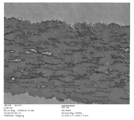
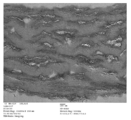
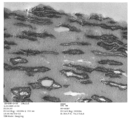
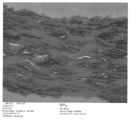
- FIGS. 4 to 6 show scanning electron microscope (SEM) photographs of the expanded particle cross sections of Examples 13 to 15, respectively, and FIG. 7 shows a transmission electron microscope (TEM) photograph of the expanded molded article cross section of Example 14. Show.
Landscapes
- Chemical & Material Sciences (AREA)
- Health & Medical Sciences (AREA)
- Chemical Kinetics & Catalysis (AREA)
- Medicinal Chemistry (AREA)
- Polymers & Plastics (AREA)
- Organic Chemistry (AREA)
- Engineering & Computer Science (AREA)
- Materials Engineering (AREA)
- Composite Materials (AREA)
- Manufacture Of Porous Articles, And Recovery And Treatment Of Waste Products (AREA)
- Compositions Of Macromolecular Compounds (AREA)
Abstract
Priority Applications (4)
| Application Number | Priority Date | Filing Date | Title |
|---|---|---|---|
| US13/984,040 US9127135B2 (en) | 2011-03-04 | 2012-02-29 | Expanded composite polystyrene-based resin particles and expanded molded article thereof |
| JP2013503471A JP5592558B2 (ja) | 2011-03-04 | 2012-02-29 | 複合ポリスチレン系樹脂発泡粒子及びその発泡成形体 |
| EP12754988.9A EP2682420A4 (fr) | 2011-03-04 | 2012-02-29 | Particules composites expansées en résine de polystyrène et mousse moulée à partir de celles-ci |
| CN201280011338.6A CN103415559B (zh) | 2011-03-04 | 2012-02-29 | 复合聚苯乙烯系树脂发泡颗粒及其发泡成形体 |
Applications Claiming Priority (2)
| Application Number | Priority Date | Filing Date | Title |
|---|---|---|---|
| JP2011047791 | 2011-03-04 | ||
| JP2011-047791 | 2011-03-04 |
Publications (1)
| Publication Number | Publication Date |
|---|---|
| WO2012121084A1 true WO2012121084A1 (fr) | 2012-09-13 |
Family
ID=46798052
Family Applications (1)
| Application Number | Title | Priority Date | Filing Date |
|---|---|---|---|
| PCT/JP2012/055122 Ceased WO2012121084A1 (fr) | 2011-03-04 | 2012-02-29 | Particules composites expansées en résine de polystyrène et mousse moulée à partir de celles-ci |
Country Status (6)
| Country | Link |
|---|---|
| US (1) | US9127135B2 (fr) |
| EP (1) | EP2682420A4 (fr) |
| JP (1) | JP5592558B2 (fr) |
| CN (1) | CN103415559B (fr) |
| TW (1) | TWI530517B (fr) |
| WO (1) | WO2012121084A1 (fr) |
Cited By (9)
| Publication number | Priority date | Publication date | Assignee | Title |
|---|---|---|---|---|
| WO2013141169A1 (fr) * | 2012-03-21 | 2013-09-26 | 積水化成品工業株式会社 | Pièce d'automobile |
| WO2014157188A1 (fr) | 2013-03-27 | 2014-10-02 | 積水化成品工業株式会社 | Particules de résine réticulée à base de polystyrène modifié et leur procédé de production, particules expansibles et leur procédé de production, grains pré-expansés, et objet moulé en mousse |
| JP2014193948A (ja) * | 2013-03-28 | 2014-10-09 | Sekisui Plastics Co Ltd | スチレン系発泡樹脂粒子及びスチレン系発泡成形体 |
| JP2014193937A (ja) * | 2013-03-28 | 2014-10-09 | Sekisui Plastics Co Ltd | 発泡性スチレン系樹脂粒子、発泡粒子及び発泡成形体 |
| JP2014193950A (ja) * | 2013-03-28 | 2014-10-09 | Sekisui Plastics Co Ltd | 発泡成形体 |
| JP2015113418A (ja) * | 2013-12-12 | 2015-06-22 | 積水化成品工業株式会社 | 異音防止用発泡性ポリスチレン系樹脂粒子とその製造方法、予備発泡粒子、及び発泡成形体 |
| JP2017149840A (ja) * | 2016-02-24 | 2017-08-31 | 株式会社ジェイエスピー | 複合樹脂発泡粒子、その製造方法、複合樹脂発泡粒子成形体 |
| JP2021147597A (ja) * | 2020-03-24 | 2021-09-27 | 積水化成品工業株式会社 | 発泡性スチレン系樹脂粒子、予備発泡スチレン系樹脂粒子、およびスチレン系樹脂発泡成形体 |
| KR20210157480A (ko) * | 2014-03-05 | 2021-12-28 | 가부시키가이샤 제이에스피 | 다층 발포 시트 및 유리판용 간지 |
Families Citing this family (2)
| Publication number | Priority date | Publication date | Assignee | Title |
|---|---|---|---|---|
| EP2623521B1 (fr) | 2010-09-30 | 2017-01-11 | Sekisui Plastics Co., Ltd. | Particules de résine polystyrène modifiées et leur procédé de fabrication, particules expansibles et leur procédé de fabrication, particules préexpansées et article moulé expansé |
| CN109291300A (zh) * | 2017-07-24 | 2019-02-01 | 中国石油化工股份有限公司 | 复合型聚苯乙烯发泡珠粒及其成型体和制备方法 |
Citations (8)
| Publication number | Priority date | Publication date | Assignee | Title |
|---|---|---|---|---|
| JPS5611929A (en) * | 1979-07-12 | 1981-02-05 | Hitachi Chem Co Ltd | Foaming styrene resin particle |
| JPS5667344A (en) | 1979-11-08 | 1981-06-06 | Asahi Chem Ind Co Ltd | Expandable polymer composition |
| JPH03182529A (ja) | 1989-12-12 | 1991-08-08 | Asahi Chem Ind Co Ltd | 発泡用樹脂組成物とその発泡成形体 |
| JP3462775B2 (ja) | 1998-01-28 | 2003-11-05 | 積水化成品工業株式会社 | 発泡成形体 |
| JP4101379B2 (ja) | 1998-12-16 | 2008-06-18 | 株式会社ジェイエスピー | ゴム変性スチレン系樹脂発泡成形体 |
| WO2009096327A1 (fr) * | 2008-01-30 | 2009-08-06 | Sekisui Plastics Co., Ltd. | Perles de resine de polystyrene expansible, procede de production associe, perles pre-expansees et moulages expanses |
| JP2011026511A (ja) * | 2009-07-28 | 2011-02-10 | Sekisui Plastics Co Ltd | 難燃性発泡性ポリスチレン系樹脂粒子とその製造方法、難燃性ポリスチレン系樹脂予備発泡粒子及び難燃性ポリスチレン系樹脂発泡成形体 |
| JP2011068817A (ja) * | 2009-09-28 | 2011-04-07 | Sekisui Plastics Co Ltd | ポリスチレン系樹脂組成物、ポリスチレン系樹脂粒子、発泡性ポリスチレン系樹脂粒子とその製造方法、ポリスチレン系樹脂予備発泡粒子、ポリスチレン系樹脂発泡成形体 |
Family Cites Families (9)
| Publication number | Priority date | Publication date | Assignee | Title |
|---|---|---|---|---|
| JPH0679500B2 (ja) | 1990-08-20 | 1994-10-05 | 東日電気株式会社 | 電熱器用ヒータの製造方法 |
| EP0960904B1 (fr) * | 1996-12-26 | 2005-03-09 | Kaneka Corporation | Perles de resines de polystyrene expansibles, leurs procedes de preparation, et mousse produite a l'aide de ces perles |
| GB9721603D0 (en) * | 1997-10-10 | 1997-12-10 | Dyno Ind Asa | Method |
| US7960443B2 (en) | 2007-09-10 | 2011-06-14 | Jsp Corporation | Extruded styrenic resin foam and method for producing the same |
| JP5478140B2 (ja) * | 2009-07-28 | 2014-04-23 | 積水化成品工業株式会社 | 低密度発泡成形用発泡性ポリスチレン系樹脂粒子とその製造方法、低密度ポリスチレン系樹脂予備発泡粒子及び低密度ポリスチレン系樹脂発泡成形体 |
| JP2011026506A (ja) | 2009-07-28 | 2011-02-10 | Sekisui Plastics Co Ltd | 低揮発分発泡性ポリスチレン系樹脂粒子とその製造方法、低揮発分ポリスチレン系樹脂予備発泡粒子及び低揮発分ポリスチレン系樹脂発泡成形体 |
| JP5386262B2 (ja) * | 2009-07-28 | 2014-01-15 | 積水化成品工業株式会社 | 発泡性ポリスチレン系樹脂粒子とその製造方法、予備発泡粒子、発泡成形体 |
| EP2623521B1 (fr) | 2010-09-30 | 2017-01-11 | Sekisui Plastics Co., Ltd. | Particules de résine polystyrène modifiées et leur procédé de fabrication, particules expansibles et leur procédé de fabrication, particules préexpansées et article moulé expansé |
| WO2013141169A1 (fr) * | 2012-03-21 | 2013-09-26 | 積水化成品工業株式会社 | Pièce d'automobile |
-
2012
- 2012-02-29 EP EP12754988.9A patent/EP2682420A4/fr not_active Withdrawn
- 2012-02-29 US US13/984,040 patent/US9127135B2/en not_active Expired - Fee Related
- 2012-02-29 CN CN201280011338.6A patent/CN103415559B/zh active Active
- 2012-02-29 JP JP2013503471A patent/JP5592558B2/ja active Active
- 2012-02-29 WO PCT/JP2012/055122 patent/WO2012121084A1/fr not_active Ceased
- 2012-03-03 TW TW101107171A patent/TWI530517B/zh active
Patent Citations (9)
| Publication number | Priority date | Publication date | Assignee | Title |
|---|---|---|---|---|
| JPS5611929A (en) * | 1979-07-12 | 1981-02-05 | Hitachi Chem Co Ltd | Foaming styrene resin particle |
| JPS5667344A (en) | 1979-11-08 | 1981-06-06 | Asahi Chem Ind Co Ltd | Expandable polymer composition |
| JPH03182529A (ja) | 1989-12-12 | 1991-08-08 | Asahi Chem Ind Co Ltd | 発泡用樹脂組成物とその発泡成形体 |
| JP2841303B2 (ja) | 1989-12-12 | 1998-12-24 | 旭化成工業株式会社 | 発泡用樹脂組成物とその発泡成形体 |
| JP3462775B2 (ja) | 1998-01-28 | 2003-11-05 | 積水化成品工業株式会社 | 発泡成形体 |
| JP4101379B2 (ja) | 1998-12-16 | 2008-06-18 | 株式会社ジェイエスピー | ゴム変性スチレン系樹脂発泡成形体 |
| WO2009096327A1 (fr) * | 2008-01-30 | 2009-08-06 | Sekisui Plastics Co., Ltd. | Perles de resine de polystyrene expansible, procede de production associe, perles pre-expansees et moulages expanses |
| JP2011026511A (ja) * | 2009-07-28 | 2011-02-10 | Sekisui Plastics Co Ltd | 難燃性発泡性ポリスチレン系樹脂粒子とその製造方法、難燃性ポリスチレン系樹脂予備発泡粒子及び難燃性ポリスチレン系樹脂発泡成形体 |
| JP2011068817A (ja) * | 2009-09-28 | 2011-04-07 | Sekisui Plastics Co Ltd | ポリスチレン系樹脂組成物、ポリスチレン系樹脂粒子、発泡性ポリスチレン系樹脂粒子とその製造方法、ポリスチレン系樹脂予備発泡粒子、ポリスチレン系樹脂発泡成形体 |
Non-Patent Citations (1)
| Title |
|---|
| See also references of EP2682420A4 |
Cited By (15)
| Publication number | Priority date | Publication date | Assignee | Title |
|---|---|---|---|---|
| JP5739057B2 (ja) * | 2012-03-21 | 2015-06-24 | 積水化成品工業株式会社 | 自動車部材 |
| WO2013141169A1 (fr) * | 2012-03-21 | 2013-09-26 | 積水化成品工業株式会社 | Pièce d'automobile |
| JP6076463B2 (ja) * | 2013-03-27 | 2017-02-08 | 積水化成品工業株式会社 | 改質ポリスチレン系架橋樹脂粒子とその製造方法、発泡性粒子とその製造方法、予備発泡粒子及び発泡成形体 |
| CN105073803A (zh) * | 2013-03-27 | 2015-11-18 | 积水化成品工业株式会社 | 改性聚苯乙烯系交联树脂颗粒及其制造方法、发泡性颗粒及其制造方法、预发泡颗粒以及发泡成型体 |
| EP2980109A4 (fr) * | 2013-03-27 | 2016-11-30 | Sekisui Plastics | Particules de résine réticulée à base de polystyrène modifié et leur procédé de production, particules expansibles et leur procédé de production, grains pré-expansés, et objet moulé en mousse |
| WO2014157188A1 (fr) | 2013-03-27 | 2014-10-02 | 積水化成品工業株式会社 | Particules de résine réticulée à base de polystyrène modifié et leur procédé de production, particules expansibles et leur procédé de production, grains pré-expansés, et objet moulé en mousse |
| JP2014193937A (ja) * | 2013-03-28 | 2014-10-09 | Sekisui Plastics Co Ltd | 発泡性スチレン系樹脂粒子、発泡粒子及び発泡成形体 |
| JP2014193950A (ja) * | 2013-03-28 | 2014-10-09 | Sekisui Plastics Co Ltd | 発泡成形体 |
| JP2014193948A (ja) * | 2013-03-28 | 2014-10-09 | Sekisui Plastics Co Ltd | スチレン系発泡樹脂粒子及びスチレン系発泡成形体 |
| JP2015113418A (ja) * | 2013-12-12 | 2015-06-22 | 積水化成品工業株式会社 | 異音防止用発泡性ポリスチレン系樹脂粒子とその製造方法、予備発泡粒子、及び発泡成形体 |
| KR20210157480A (ko) * | 2014-03-05 | 2021-12-28 | 가부시키가이샤 제이에스피 | 다층 발포 시트 및 유리판용 간지 |
| KR102388639B1 (ko) | 2014-03-05 | 2022-04-19 | 가부시키가이샤 제이에스피 | 다층 발포 시트 및 유리판용 간지 |
| JP2017149840A (ja) * | 2016-02-24 | 2017-08-31 | 株式会社ジェイエスピー | 複合樹脂発泡粒子、その製造方法、複合樹脂発泡粒子成形体 |
| JP2021147597A (ja) * | 2020-03-24 | 2021-09-27 | 積水化成品工業株式会社 | 発泡性スチレン系樹脂粒子、予備発泡スチレン系樹脂粒子、およびスチレン系樹脂発泡成形体 |
| JP7425639B2 (ja) | 2020-03-24 | 2024-01-31 | 積水化成品工業株式会社 | 発泡性スチレン系樹脂粒子、予備発泡スチレン系樹脂粒子、およびスチレン系樹脂発泡成形体 |
Also Published As
| Publication number | Publication date |
|---|---|
| CN103415559B (zh) | 2016-03-23 |
| EP2682420A4 (fr) | 2014-05-28 |
| JP5592558B2 (ja) | 2014-09-17 |
| TWI530517B (zh) | 2016-04-21 |
| TW201245302A (en) | 2012-11-16 |
| EP2682420A1 (fr) | 2014-01-08 |
| JPWO2012121084A1 (ja) | 2014-07-17 |
| CN103415559A (zh) | 2013-11-27 |
| US9127135B2 (en) | 2015-09-08 |
| US20130310475A1 (en) | 2013-11-21 |
Similar Documents
| Publication | Publication Date | Title |
|---|---|---|
| JP5592558B2 (ja) | 複合ポリスチレン系樹脂発泡粒子及びその発泡成形体 | |
| EP1990351B1 (fr) | Particule de resine polypropylene modifiee au styrene, particule de resine polypropylene modifiee au styrene expansible, particule de mousse de resine polypropylene modifiee au styrene, corps moule a base de mousse de resine polypropylene modifiee au styrene, et leurs procedes de production | |
| CN102471515B (zh) | 可发泡改性树脂粒子、改性树脂发泡粒子以及改性树脂发泡粒子模制品 | |
| EP2860217B1 (fr) | Perle de résine composite expansible | |
| JP6453995B2 (ja) | 複合樹脂粒子とその発泡性粒子、発泡粒子及び発泡成形体 | |
| JP5460880B2 (ja) | 改質ポリスチレン系樹脂粒子とその製造方法、発泡性粒子とその製造方法、予備発泡粒子及び発泡成形体 | |
| JP5883703B2 (ja) | 緩衝材 | |
| JP2014189769A (ja) | 改質ポリスチレン系発泡性樹脂粒子とその製造方法及び発泡粒子、発泡成形体 | |
| JP6076463B2 (ja) | 改質ポリスチレン系架橋樹脂粒子とその製造方法、発泡性粒子とその製造方法、予備発泡粒子及び発泡成形体 | |
| JP6404164B2 (ja) | シード重合用種粒子、複合樹脂粒子、発泡性粒子、発泡粒子及び複合樹脂発泡成形体 | |
| JP5739057B2 (ja) | 自動車部材 | |
| JP2013203470A (ja) | ガラス搬送用容器 | |
| EP2980144A1 (fr) | Procédé de production de particules expansées, appareil de production de particules expansées et particules expansées | |
| JP2016014104A (ja) | 圧縮複合樹脂発泡成形体 | |
| JP2011168695A (ja) | 無機系物理発泡成形用ポリプロピレン樹脂組成物およびその発泡体 |
Legal Events
| Date | Code | Title | Description |
|---|---|---|---|
| WWE | Wipo information: entry into national phase |
Ref document number: 201280011338.6 Country of ref document: CN |
|
| 121 | Ep: the epo has been informed by wipo that ep was designated in this application |
Ref document number: 12754988 Country of ref document: EP Kind code of ref document: A1 |
|
| ENP | Entry into the national phase |
Ref document number: 2013503471 Country of ref document: JP Kind code of ref document: A |
|
| WWE | Wipo information: entry into national phase |
Ref document number: 13984040 Country of ref document: US |
|
| NENP | Non-entry into the national phase |
Ref country code: DE |
|
| WWE | Wipo information: entry into national phase |
Ref document number: 2012754988 Country of ref document: EP |