WO2012128205A1 - Système de communication, appareil de station de base, appareil de station mobile, procédé de gestion de capacité d'appareil de station mobile et circuit intégré - Google Patents
Système de communication, appareil de station de base, appareil de station mobile, procédé de gestion de capacité d'appareil de station mobile et circuit intégré Download PDFInfo
- Publication number
- WO2012128205A1 WO2012128205A1 PCT/JP2012/056853 JP2012056853W WO2012128205A1 WO 2012128205 A1 WO2012128205 A1 WO 2012128205A1 JP 2012056853 W JP2012056853 W JP 2012056853W WO 2012128205 A1 WO2012128205 A1 WO 2012128205A1
- Authority
- WO
- WIPO (PCT)
- Prior art keywords
- mobile station
- station apparatus
- base station
- station device
- processing capability
- Prior art date
- Legal status (The legal status is an assumption and is not a legal conclusion. Google has not performed a legal analysis and makes no representation as to the accuracy of the status listed.)
- Ceased
Links
Images





Classifications
-
- H—ELECTRICITY
- H04—ELECTRIC COMMUNICATION TECHNIQUE
- H04W—WIRELESS COMMUNICATION NETWORKS
- H04W8/00—Network data management
- H04W8/22—Processing or transfer of terminal data, e.g. status or physical capabilities
-
- H—ELECTRICITY
- H04—ELECTRIC COMMUNICATION TECHNIQUE
- H04W—WIRELESS COMMUNICATION NETWORKS
- H04W72/00—Local resource management
- H04W72/04—Wireless resource allocation
Definitions
- the present invention relates to a communication system, a base station apparatus, a mobile station apparatus, a communication method, and an integrated circuit, and more particularly, to a communication method in which a mobile station apparatus notifies a base station apparatus of its own communication processing capability.
- 3GPP 3rd Generation Partnership Project
- 3GPP which is a standardization project, has evolved to realize high-speed communication by adopting OFDM (Orthogonal Frequency Frequency Division) Multiplexing (OFDM) communication method and flexible scheduling in predetermined frequency and time units called resource blocks Universal Terrestrial Radio Access (hereinafter referred to as EUTRA) has been studied, and further development of Advanced EUTRA (also referred to as LTE-Advanced) is underway.
- OFDM Orthogonal Frequency Frequency Division
- EUTRA Universal Terrestrial Radio Access
- Carrier Aggregation has been proposed as a technology that enables higher-speed data transmission while maintaining compatibility with EUTRA.
- Carrier aggregation is a method of receiving data of a transmitting device transmitted in a plurality of different frequency bands (also referred to as carrier frequency and component carrier) by receiving devices corresponding to different frequency bands. It is a technology that improves the rate.
- carrier aggregation can divide one frequency band into a plurality of frequency resources to be component carriers.
- a receiving device in downlink transmission is referred to as a mobile station device
- a transmitting device is referred to as a base station device
- a receiving device in uplink transmission is a base station device
- a transmitting device in uplink transmission is a base station device
- a transmitting device in uplink transmission is a base station device
- mobile station apparatuses but the scope of application of the present invention need not be limited to these apparatuses.
- Component carriers used in Advanced EUTRA carrier aggregation are classified into primary component carriers (PCC: Primary Component Carrier) and secondary component carriers (SCC: Secondary Component Carrier), and mobile station devices are connected by downlink PCC.
- a cell is called a primary cell (PCell: ellPrimary Cell), and a cell connected by a downlink SCC is called a secondary cell (SCell: Secondary Cell).
- the primary cell always includes an uplink component carrier, but may not be included in the secondary cell.
- MIMO Multiple Input Multiple Output
- transmission data is divided into a plurality of signals (streams) in advance in a transmitting apparatus, and these are simultaneously transmitted from a plurality of antennas in the same frequency band, and the divided signals are transmitted using a plurality of antennas in a receiving apparatus.
- This method is called spatial multiplexing or SM (Spatial (Multiplexing) because it is equivalent to generating a plurality of independent spatial channels by performing signal processing such as least square error method (MMSE).
- SM spatial multiplexing
- MMSE least square error method
- This spatial channel is also called a spatial layer from the image of dividing a radio propagation path into several layers and transmitting radio signals in parallel in each layer.
- the number of carrier aggregation component carriers and the number of MIMO spatial layers that can be supported by the mobile station apparatus may differ depending on the number of receivers and antennas of the mobile station apparatus and the frequency band to be used.
- the mobile station apparatus includes a first receiver and a second receiver each having two antennas
- downlink communication is performed only in the first frequency band as shown in FIG. 11A.
- the first receiver and the second receiver in the first frequency band and supports 4 component carriers and 4 MIMO spatial layers.
- the number of component carriers in the first frequency band is 4, and the number of MIMO spatial layers is 2, in order to assign the second receiver to the second frequency band.
- the number of component carriers in the second frequency band is 4 and the number of MIMO spatial layers is 2.
- Patent Document 1 a mechanism has been proposed in which the mobile station apparatus notifies the base station apparatus of information (processing capability) such as the number of component carriers and the number of spatial layers supported for each frequency band to be used and combinations of frequency bands (non-capable).
- NodeB Node B
- eNodeB the base station apparatus in EUTRA and Advanced EUTRA
- the base station apparatus manages a cell that is an area where the mobile station apparatus can communicate, and the cell is also referred to as a femto cell, a pico cell, or a nano cell depending on the size of the area that can communicate with the mobile station apparatus.
- the cell of the base station device is a serving cell of the mobile station device, and other base station devices or cells of different frequencies are referred to as neighboring cells. Is done.
- Non-Patent Document 1 proposes to notify the base station apparatus of the processing capability for each frequency band and each combination of frequency bands supported by the mobile station apparatus. Further, the processing capability notified to the base station apparatus is notified from the base station apparatus to the switching center (MME), maintained during the connection state with the MME (ECM_Connected), and updated if the contents are changed.
- MME switching center
- ECM_Connected the switching center
- the present invention provides a communication system, a base station apparatus, a mobile station apparatus, a mobile station apparatus processing capacity management method, and an integrated circuit that can efficiently notify and manage the processing capacity of a mobile station apparatus. For the purpose.
- the communication system of the present invention is a communication system including a mobile station apparatus, a base station apparatus, and an exchange station that manages the mobile station apparatus, and the mobile station apparatus can transmit and receive by itself.
- the base station apparatus is notified of the processing capacity for each frequency band and each combination of frequency bands, and the base station apparatus performs the processing when the processing capacity notified from the mobile station apparatus is notified to the exchange. A part of the capability is notified to the exchange.
- the communication system of the present invention is a communication system including a mobile station device, a base station device, and an exchange station that manages the mobile station device, and the base station device is a cell of its own station.
- the processing capacity of the mobile station apparatus is acquired and held from the exchange, and the base station apparatus is not included in the acquired processing capacity
- the mobile station apparatus is inquired about additional processing capability, and the mobile station apparatus In response to the inquiry, a target for additional notification is extracted from the processing capability of the own station and notified to the base station apparatus.
- the processing capability notified from the exchange is a processing capability for each frequency band that can be transmitted and received by the mobile station device, and is added to the mobile station device.
- the processing capacity to be inquired is a processing capacity for each combination of frequency bands that can be transmitted and received by the mobile station apparatus.
- the communication system of the present invention is a communication system including a mobile station device, a base station device, and an exchange station that manages the mobile station device, and the base station device is a cell of its own station.
- the processing capacity of the mobile station apparatus is acquired and held from the exchange, and the mobile station apparatus is based on a combination of frequency bands from the base station apparatus.
- the wireless communication is set, the mobile station apparatus is inquired about the additional processing capacity from the base station apparatus or which processing capacity is notified from the base station apparatus to the switching center
- the base station device is notified of the processing capability for the combination. And butterflies.
- the base station apparatus of the present invention is a base station apparatus that performs radio communication with a mobile station apparatus, and the base station apparatus can transmit and receive a frequency band and a frequency band that can be transmitted and received by the mobile station apparatus.
- a mobile station device processing capability information management unit that acquires and manages the processing capability for each combination from the mobile station device or an exchange that manages the mobile station device, and the mobile station device processing capability information management unit includes: When there is a possibility of performing wireless communication with the mobile station apparatus using a combination of frequency bands not included in the retained processing capacity, the mobile station apparatus is inquired about additional processing capacity.
- the base station apparatus of this invention is a base station apparatus which performs radio
- the said base station apparatus is a frequency band and frequency band which the said mobile station apparatus can transmit / receive
- a mobile station device processing capability information management unit that acquires and manages the processing capability for each combination from the mobile station device or an exchange that manages the mobile station device, and the mobile station device processing capability information management unit includes: When wireless communication using a combination of frequency bands not included in the retained processing capacity is set for the mobile station apparatus, the mobile station apparatus is inquired about the additional processing capacity and notified from the mobile station apparatus It is characterized by retaining the processing capability.
- the mobile station apparatus of the present invention is a mobile station apparatus that performs radio communication with the base station apparatus, and the mobile station apparatus has a frequency band and a frequency band that can be transmitted and received by the local station.
- a processing capability information holding unit that manages the processing capability for each combination separately into basic information and additional information, and when the request for addition notification is included in the message for inquiring processing capability from the base station device, the addition Information is notified to the base station apparatus.
- the mobile station apparatus processing capacity management method of the present invention is a mobile station apparatus processing capacity management method in a communication system comprising a mobile station apparatus, a base station apparatus, and an exchange station that manages the mobile station apparatus.
- the base station device acquiring and holding the processing capability of the mobile station device from the exchange when communication to a mobile station device in a standby state occurs in the cell of the base station device;
- a step of inquiring the mobile station apparatus for additional processing capacity In response to an inquiry from the base station apparatus, the mobile station apparatus includes a step of extracting a target to be added from its own processing capacity and notifying the base station apparatus.
- the mobile station apparatus processing capacity management method of the present invention is a mobile station apparatus processing capacity management method in a communication system comprising a mobile station apparatus, a base station apparatus, and an exchange station that manages the mobile station apparatus.
- the base station device acquiring and holding the processing capability of the mobile station device from the exchange when communication to a mobile station device in a standby state occurs in the cell of the base station device;
- the base station device makes a wireless communication based on a combination of frequency bands, an inquiry about additional processing capability is made from the base station device, or any processing capability is
- notification from the base station apparatus to the switching center is known in the mobile station apparatus, and communication of combinations of frequency bands not included in the known processing capability is set in the own station , Characterized in that it comprises the steps of performing notification processing capacity for the combination to the base station apparatus.
- An integrated circuit according to the present invention is an integrated circuit that acquires and manages a mobile station apparatus processing capability of a base station apparatus that performs radio communication with a mobile station apparatus, and the mobile station apparatus transmits and receives. Wireless communication based on a combination of frequency bands that are acquired from the mobile station apparatus or an exchange that manages the mobile station apparatus and holds the processing capacity for each possible frequency band and frequency band combination, and that are not included in the held processing capacity
- the mobile station apparatus has a mobile station apparatus processing capacity information management unit that makes an inquiry about additional processing capacity to the mobile station apparatus.
- the present invention it is possible to provide a communication system, a base station device, a mobile station device, a transmission method, and an integrated circuit that can efficiently notify and manage the processing capability of the mobile station device.
- the physical channel includes a downlink channel in the downlink transmitted from the base station apparatus to the mobile station apparatus, and an uplink channel in the uplink transmitted from the mobile station apparatus to the base station apparatus.
- the physical channel may be added or changed in the future in EUTRA and Advanced EUTRA. However, even if the physical channel is changed, the description of each embodiment of the present invention is not affected.
- the synchronization signal (Synchronization Signals) is composed of three types of primary synchronization signals and secondary synchronization signals composed of 31 types of codes arranged alternately in the frequency domain.
- 504 kinds of cell identifiers (cell ID: PhysicalPhysCell Identity; PCI) for identifying the base station apparatus and frame timing for radio synchronization are shown.
- the mobile station device specifies the cell ID of the synchronization signal received by the cell search.
- the physical broadcast information channel is transmitted for the purpose of reporting control parameters (broadcast information (system information); System information) that are commonly used by mobile station apparatuses in the cell. Broadcast information that is not notified by the physical broadcast information channel is transmitted by a layer 3 message using the downlink data channel, in which radio resources are notified by the downlink control channel.
- a cell global identifier CGI; “Cell Global Identifier”
- TAI tracking area identifier
- the downlink reference signal is a pilot signal transmitted at a predetermined power for each cell.
- the downlink reference signal is a known signal that is periodically repeated at a frequency / time position based on a predetermined rule.
- the mobile station apparatus measures the reception quality for each cell by receiving the downlink reference signal.
- the mobile station apparatus also uses the downlink reference signal as a reference signal for demodulation of the downlink control channel or downlink data channel transmitted simultaneously with the downlink reference signal.
- a sequence used for the downlink reference signal a sequence that can be identified for each cell is used.
- a downlink reference signal may be described as cell specific RS (Cell-specific reference
- the downlink control channel (PDCCH: Physical Downlink Control Channel) is transmitted in several OFDM symbols from the beginning of each subframe, and is transmitted to the mobile station device by radio resource allocation information according to the scheduling of the base station device or transmission Used to indicate the amount of power increase / decrease adjustment.
- the mobile station apparatus monitors (monitors) the downlink control channel addressed to itself before transmitting / receiving the layer 3 message (paging, handover command, etc.) that is downlink data or downlink control data, and By receiving the downlink control channel, it is necessary to acquire radio resource allocation information called an uplink grant at the time of transmission and a downlink grant at the time of reception.
- the downlink data channel (PDSCH: Physical Downlink Shared Channel) is used to notify paging and broadcast information as a layer 3 message that is downlink control data in addition to downlink data.
- the radio resource allocation information of the downlink data channel is indicated by the downlink control channel.
- the uplink data channel (PUSCH: Physical Uplink Shared Channel) mainly transmits uplink data and uplink control data, and can also include control data such as downlink reception quality and ACK / NACK. Similarly to the downlink, the radio resource allocation information of the uplink data channel is indicated by the downlink control channel.
- PUSCH Physical Uplink Shared Channel
- the random access channel (PRACH; “Physical” Random “Access” Channel) is a channel used to notify the preamble sequence and has a guard time.
- the random access channel is used as a means for accessing the base station apparatus of the mobile station apparatus.
- the mobile station apparatus uses a random access channel for a request for scheduling transmission data when the uplink control channel is not set and a request for transmission timing adjustment information necessary for matching the uplink transmission timing with the reception timing window of the base station apparatus. .
- the mobile station apparatus that has received the transmission timing adjustment information sets an effective time of the transmission timing adjustment information, and is in a transmission timing adjustment state during the effective time and in a transmission timing non-adjustment state outside the effective period. Since other physical channels are not related to each embodiment of the present invention, detailed description thereof is omitted.
- Carrier aggregation is a technology that aggregates (aggregates) a plurality of different frequency bands (component carriers) and treats them as a single frequency band. For example, when five component carriers having a frequency bandwidth of 20 MHz are aggregated by carrier aggregation, the mobile station apparatus can access the mobile station apparatus by regarding it as a frequency bandwidth of 100 MHz.
- the component carriers to be aggregated may be a continuous frequency band or a frequency band in which all or part of the component carriers are discontinuous.
- the usable frequency band is the 800 MHz band, the 2.4 GHz band, and the 3.4 GHz band
- one component carrier is the 800 MHz band
- another component carrier is the 2 GHz band
- another component carrier is 3.4 GHz. It may be a band.
- each component carrier may be a frequency bandwidth narrower than 20 MHz, or may be different from each other.
- the base station device Based on various factors such as the processing capacity of the mobile station device, the amount of data buffer that remains, the reception quality of the mobile station device, the load in the cell and QoS, the base station device assigns the uplink or The number of downlink component carriers can be increased or decreased.
- FIG. 1 is a diagram illustrating an example of a communication network configuration according to an embodiment of the present invention.
- the communication network configuration has one base
- the station apparatus 2 includes transmitters 21 to 23 (and receivers 24 to 26 (not shown)) for each of a plurality of frequency bands, and the configuration in which control of each frequency band is performed by one base station apparatus 2 simplifies the control.
- the base station apparatus 2 transmits a single frequency band with a plurality of transmitters, or transmits a plurality of frequency bands with a single transmitter because the frequency bands are continuous. You may be the structure to perform.
- the communicable range of each frequency band controlled by the transmitter of the base station apparatus 2 is regarded as a cell and exists in the same spatial area. At this time, the areas (cells) covered by each frequency band may have different sizes and shapes. Further, the mobile station apparatus 1 includes receivers 14 to 16 (and transmitters 11 to 13 (not shown)) to perform communication with the base station apparatus 2 by carrier aggregation.
- the mobile station apparatus 1 may also have a configuration in which a plurality of receivers receive a single frequency band or a configuration in which a single receiver receives a plurality of frequency bands.
- each area covered by the frequency of the component carrier formed by the base station apparatus 2 will be referred to as a cell, but this may be different from the definition of the cell in the actually operated communication system. Note that there is sex.
- a part of component carriers used by carrier aggregation may be defined as merely an additional radio resource instead of a cell.
- the component carrier as a cell in the present invention, even if a case different from the definition of the cell in the actually operated communication system occurs, the gist of the present invention is not affected.
- the mobile station device 1 may be wirelessly connected to the base station device 2 via a relay station device (or repeater).
- FIG. 2A shows the correspondence between the downlink component carrier and the uplink component carrier that the base station device 2 sets for the mobile station device 1 when the mobile station device 1 according to the embodiment of the present invention performs carrier aggregation. It is the figure which showed an example of the relationship.
- the downlink component carrier DL_CC1 and the uplink component carrier UL_CC1, the downlink component carrier DL_CC2 and the uplink component carrier UL_CC2, and the downlink component carrier DL_CC3 and the uplink component carrier UL_CC3 are cell-specific connected (Sell Specific Linkage).
- the cell-specific connection is, for example, a correspondence relationship (linkage relationship) between uplink and downlink frequency bands accessible to the base station device 2 when the mobile station device 1 is not carrier-aggregated. Is indicated by the notification information.
- the relationship between the uplink and downlink frequency bands is specified explicitly as frequency information in broadcast information, or when it is not explicitly specified, the uplink and downlink specifications that are uniquely determined for each operating frequency It is implicitly instructed by using frequency difference information. In addition to these methods, other methods may be used as long as the correspondence relationship between uplink and downlink frequency bands can be shown for each cell.
- the base station apparatus 2 can also individually set the correspondence relationship between the downlink component carrier and the uplink component carrier for each mobile station apparatus separately from the cell-specific connection (individual connection: UE Specific Linkage). It is.
- the dedicated connection is set at the same time when a downlink component carrier and an uplink component carrier are added from the base station apparatus 2.
- two downlink component carriers correspond to an uplink component carrier UL_CC2 to which a certain mobile station apparatus 1 is wirelessly connected, and DL_CC3 and UL_CC2 are individually connected.
- DL_CC1 and DL_CC2 are cell-specific connected to UL_CC1 and UL_CC2, respectively.
- the mobile station apparatus 1 performs reception processing with DL_CC1 to DL_CC3, and performs transmission processing with UL_CC1 and UL_CC2.
- DL_CC1 to DL_CC3 and UL_CC1 to UL_CC2 are connection component carriers used by the mobile station device 1 for communication with the base station device 2, and UL_CC3 is not used by the mobile station device 1 for communication with the base station device 2.
- Connection component carrier typically, the uplink and downlink of the primary cell are cell-specific connected, and the uplink and downlink of the secondary cell are individually connected.
- the reception quality of the downlink component carrier (the power of the radio signal transmitted from the base station apparatus 2 is received by the mobile station apparatus 1)
- the path loss value indicating the amount of attenuation until the first time is used.
- the downlink reception quality of the primary cell is used for transmission power adjustment of the primary cell.
- the transmission power adjustment of the secondary cell is based on either the primary cell or the downlink reception quality of the secondary cell. Whether the downlink reception quality of the primary cell or the secondary cell is used for adjusting the transmission power of the secondary cell is determined based on broadcast information or an individual layer 3 message (RRC message) for each mobile station apparatus. A notification is sent from the station device 2 to the mobile station device 1.
- RRC message individual layer 3 message
- Random access procedure There are two access methods for random access: Contention based Random Access and Non-contention based Random Access.
- the Contention based Random Access is a random access that may collide between mobile station apparatuses, and is a random access that is normally performed during connection processing.
- Non-contention based Random Access is a random access in which no collision occurs between mobile station devices, and is a random access used to quickly synchronize between a mobile station device and a base station device, such as a handover. This is done in the special case of the base station equipment.
- a random access preamble (also simply referred to as a preamble) is transmitted through a random access channel in order to achieve uplink synchronization (adjustment of uplink synchronization timing).
- the preamble includes a signature which is a signal pattern representing information, and several tens of types of signatures can be prepared to express several bits of information.
- 6-bit information is transmitted, and it is assumed that 64 types of signatures are prepared.
- the 6-bit information is determined based on the random ID, 5 bits are the random ID, the remaining 1 bit is the downlink path loss, and the amount of uplink data to be transmitted after random access.
- FIG. 3 is a sequence chart showing a procedure example of Contention based Random Access. Contention based Random Access is used for initial access, reconnection, Inter-RAT handover, and so on.
- step S51 the mobile station apparatus receives broadcast information from the base station apparatus, and acquires signature information (such as radio resource information of a random access channel and signature group information) for selecting a signature to be transmitted.
- signature information such as radio resource information of a random access channel and signature group information
- step S52 a signature is selected based on the signature information, and the selected preamble is transmitted to the base station apparatus using the random access channel (step S53).
- the base station apparatus calculates an uplink synchronization timing shift (Timing Advance) between the mobile station apparatus and the base station apparatus from the transmitted preamble, and a random access response (random access response) Mobile station apparatus that performs scheduling to transmit a message, assigns temporary C-RNTI (Cell-Radio Network Temporary Identity) as a temporary identifier to the mobile station apparatus, and transmits a preamble to the downlink shared control channel (PDCCH) RA-RNTI (Random Access-Radio Network Temporary Identity) that is an identifier indicating a response addressed to and a downlink data channel resource allocation information are arranged, and uplink synchronization timing shift information, uplink scheduling information, Temporary are assigned to the downlink data channel (PDSCH).
- the mobile station apparatus When the mobile station apparatus confirms that the downlink shared control channel (PDCCH) has RA-RNTI, the mobile station apparatus confirms the content of the random access response arranged in the downlink data channel (PDSCH), and transmits the signature ID number ( (Or random ID) is extracted. Then, the uplink synchronization timing deviation is corrected, and uplink scheduling data including Temporary C-RNTI is transmitted using the scheduled radio resource (step S55). Note that the mobile station apparatus continues to wait for a random access response from the base station apparatus for a certain period, and when it does not receive the random access response including the signature ID number of the transmitted preamble, it transmits the preamble again.
- the mobile station apparatus continues to wait for a random access response from the base station apparatus for a certain period, and when it does not receive the random access response including the signature ID number of the transmitted preamble, it transmits the preamble again.
- the base station apparatus uses the Temporary C-RNTI included in the received uplink scheduling data to determine whether the mobile station apparatus has a collision between the mobile station apparatuses.
- Downlink scheduling data to be transmitted to the mobile station apparatus (step S56).
- the downlink scheduling data is also called contention resolution.
- the mobile station apparatus determines that the random access has succeeded by correctly receiving the downlink scheduling data within the time limit, and ends the random access procedure.
- Temporary C-RNTI is not temporary, but is used as an identifier (C-RNT) for identifying the mobile station apparatus in the cell.
- the base station apparatus selects a signature ID number and notifies the mobile station apparatus.
- the mobile station apparatus uses the notified signature and transmits a preamble using a random access channel.
- the base station device Upon receiving the preamble from the mobile station device, the base station device calculates a synchronization timing shift between the mobile station device and the base station device from the preamble, and transmits the random access channel to the downlink shared control channel (PDCCH)
- PDCCH downlink shared control channel
- a C-RNTI is arranged to indicate a response addressed to the device, and a random access response including synchronization timing shift information is transmitted.
- the mobile station apparatus corrects the synchronization timing shift from the received random access response, and determines that the random access has been correctly completed.
- the mobile station apparatus notifies the base station apparatus of the processing capability including the number of component carriers and the number of MIMO layers that can be supported for each frequency band and each combination of frequency bands based on a request from the base station apparatus.
- the processing capability notification / management method of the mobile station apparatus described in Non-Patent Document 2 is shown in FIG.
- the base station apparatus transmits a mobile station apparatus capability inquiry message (RRC: UECapabilityEnquiry), which is an RRC message for inquiring processing capability to the mobile station apparatus (step S91).
- the mobile station apparatus capability inquiry message includes information on which communication system (RAT; “Radio” Access ”technology) is requested to be notified.
- the mobile station apparatus that has received the message indicates the processing capability of the mobile station regarding the requested RAT (for example, EUTRAN, UTRAN, GERAN-PS, GERAN-CS, CDMA2000-1XRTT, etc.), and the mobile station apparatus capability information message (RRC: UECapability Information) is used to notify the base station apparatus (step S92).
- the requested RAT for example, EUTRAN, UTRAN, GERAN-PS, GERAN-CS, CDMA2000-1XRTT, etc.
- RRC UECapability Information
- the base station apparatus retains the processing capability of the mobile station apparatus during the RRC_CONNECTED state connected to the mobile station apparatus.
- the base station apparatus uses the mobile station apparatus capability information notification message (S1-AP: UE CAPABILITY INFO INDICATION) of the S1-AP message used for communication with the switching center (MME) to the MME that manages the mobile station apparatus.
- the processing capability of the mobile station apparatus is notified (step S93).
- the processing capability of the mobile station apparatus is held in the memory of the MME while being connected to the MME (ECM_Connected), and if the mobile station apparatus capability information notification message is notified again from the base station apparatus, the contents of the memory Is updated.
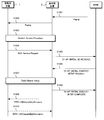
- FIG. 5 is a sequence chart showing a mobile station calling procedure when starting communication with a mobile station apparatus in an ECM_Connected standby (RRC_IDLE) state.
- the MME transmits a paging message for calling the mobile station device to the base station device in the standby area (tracking area) where the location of the mobile station device is registered (step S1001). All base station apparatuses that have received the Paging message from the MME wirelessly transmit a paging signal addressed to the mobile station apparatus in the cell of the local station (step S1002). The mobile station apparatus that has received the Paging signal performs a random access procedure and connects to the base station apparatus of the cell in which the mobile station is waiting (step S1003).
- the connected mobile station apparatus transmits a service request message (NAS: Service Request), which is a NAS (Non-Access-Stratum) message used for communication with the MME, to the connected base station apparatus (Step S1004) and receives it.
- the base station apparatus which made the notification notifies the MME of the initial mobile station apparatus message (S1-AP: INITIAL UE MESSAGE) including the service request message (step S1005).
- the MME that has received the initial mobile station device message transmits an initial context setup request (S1-AP: INITIAL CONTEXT SETUP REQUEST) to the base station device (step S1006).
- This message includes a general mobile station apparatus context (General UE context), a radio access bearer context (E-RAB Context), and the like, and includes the processing capability of the mobile station apparatus.
- the base station device that has received the initial context setup request sets up the context of the target mobile station device and performs necessary processing such as radio bearer setup (step S1007).
- the base station device transmits an initial context setup completion message (S1-AP: INITIALMCONTEXT ⁇ ⁇ SETUP ⁇ ⁇ COMPLETE) to the MME (step S1008). If the connection fails, an initial context setup failure message (S1-AP: INITIAL CONTEXT SETUP FAILURE) is sent.
- S1-AP INITIAL CONTEXT SETUP FAILURE
- the base station apparatus transmits a mobile station apparatus capability inquiry message to the mobile station apparatus in order to acquire the processing capability of another RAT as necessary (step S1009), and receives the mobile station apparatus capability information message. (Step S1010). According to the above procedure, since the base station apparatus does not need to acquire processing capability from the mobile station apparatus directly using radio resources, it is possible to improve the efficiency of radio resource utilization.
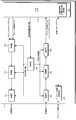
- FIG. 6 is a block diagram showing an example of the mobile station apparatus according to the embodiment of the present invention.
- the mobile station apparatus 1 includes a reception unit 101, a demodulation unit 102, a decoding unit 103, a measurement processing unit 104, a control unit 105, a random access processing unit 106, a coding unit 107, a modulation unit 108, a transmission unit 109, an upper layer 110, a processing
- the capability information holding unit 111 is configured.
- mobile station apparatus control information Prior to reception, mobile station apparatus control information is input from the upper layer 110 to the control unit 105, and the mobile station apparatus control information related to reception is received as reception control information.
- the reception unit 101, demodulation unit 102, decoding unit 103, and measurement processing unit 104 Is entered appropriately.
- the reception control information includes information such as demodulation information, decoding information, reception frequency band information, reception timing for each channel, multiplexing method, and radio resource arrangement information as reception schedule information.
- the received signal is received by the receiving unit 101.
- the receiving unit 101 receives a signal in the frequency band notified by the reception control information.
- the received signal is input to demodulator 102.
- Demodulation section 102 demodulates the received signal and inputs the received signal to decoding section 103.
- the decoding unit 103 correctly decodes the received signal based on the reception control information. Decoding section 103 appropriately separates the received signal into downlink traffic data and downlink control data, and inputs the separated signals to higher layer 110, respectively.
- the decoding unit 103 inputs a decoded received signal related to measurement to the measurement processing unit 104.
- the measurement processing unit 104 performs measurement processing of the reception quality of the downlink reference signal for each cell and measurement processing of the reception error rate of the downlink control channel or the downlink data channel, and averages the measured reception quality for each sample. (Filtered) downlink measurement information is generated, and the downlink measurement information is output to the upper layer 110.
- the measurement processing unit 104 compares the obtained reception quality with a threshold value (also referred to as Qout) used for detecting a downlink synchronization error, and determines the downlink synchronization error and the downlink synchronization recovery as necessary. Output to.
- a threshold value also referred to as Qout
- mobile station apparatus control information is input from the upper layer 110 to the control section 105, and the mobile station apparatus control information related to transmission is transmitted to the random access processing section 106, encoding section 107, modulation section 108, and transmission section 109 as transmission control information. Entered appropriately.
- the transmission control information includes information such as encoding information, modulation information, transmission frequency band information, transmission timing for each channel, multiplexing method, and radio resource arrangement information as uplink scheduling information of the transmission signal.
- Random access processing unit 106 receives random access information necessary for transmission of a random access channel such as random access radio resource information and the maximum number of transmissions from upper layer 110.
- the random access processing unit 106 detects the random access problem by counting the number of transmissions of the random access channel, the random access processing unit 106 notifies the upper layer 110 of random access problem information indicating that the random access problem has occurred.
- the encoding unit 107 receives uplink traffic data and uplink control data from the upper layer 110, and random access data from the random access processing unit 106.
- the encoding unit 107 appropriately encodes each data according to the transmission control information and outputs the data to the modulation unit 108.
- the modulation unit 108 modulates the input from the coding unit 107.
- the transmission unit 109 maps the output of the modulation unit 108 to the frequency domain, converts the frequency domain signal into a time domain signal, performs power amplification on a predetermined frequency carrier wave, and transmits the signal.
- the transmission unit 109 and the reception unit 101 are called a transmitter and a receiver in combination with an antenna (not shown), respectively, and a plurality of mobile station apparatuses 1 are used to perform communication in the same or different frequency bands.
- a transmitter or a receiver may be provided.
- Other components of the mobile station apparatus 1 are not related to the present embodiment, and are omitted.
- FIG. 7 is a block diagram showing an example of the base station apparatus according to the embodiment of the present invention.
- the base station apparatus 2 has functions of a reception unit 201, a demodulation unit 202, a decoding unit 203, a control unit 204, a coding unit 205, a modulation unit 206, a transmission unit 207, a network signal transmission / reception unit 208, an upper layer 210, and an upper layer 210.
- the mobile station apparatus processing capability information management unit 209 is included.
- the higher layer 210 inputs downlink traffic data and downlink control data to the encoding unit 205.
- the encoding unit 205 encodes each input data and inputs the data to the modulation unit 206.
- Modulation section 206 modulates the encoded signal.
- the downlink reference signal is multiplexed with the modulated signal and mapped to the frequency domain.
- the transmission unit 207 converts the frequency domain signal output from the modulation unit 206 into a time domain signal, places the converted signal on a carrier wave of a predetermined frequency, and performs power amplification and transmission.
- a downlink data channel in which downlink control data is arranged typically constitutes a layer 3 message (RRC message).
- the receiving unit 201 converts the received signal from the mobile station apparatus 1 into a baseband digital signal.
- the digital signal is input to the demodulation unit 202 and demodulated.
- the signal demodulated by the demodulator 202 is subsequently input to the decoder 203 and decoded.
- the decoding unit 203 appropriately separates the received signal into uplink traffic data and uplink control data, and inputs each to the higher layer 210.
- Base station apparatus control information necessary for the control of each block is input from the upper layer 210 to the control unit 204, and the base station apparatus control information related to transmission is transmitted from the control unit 204 as transmission control information as a coding unit 205, modulation.
- Base station apparatus control information related to reception is appropriately input to each block of the reception unit 201, demodulation unit 202, and decoding unit 203 as reception control information in each block of the unit 206 and transmission unit 207.
- the network signal transmission / reception unit 208 transmits or receives a control message between the base station devices 2 or between the control station device (or gateway device) or the MME and the base station device 2. Control messages are transmitted and received via a network line.
- the mobile station apparatus processing capacity information management unit 209 acquires the processing capacity from the MME or the mobile station apparatus 1 and holds the acquired processing capacity.
- the mobile station apparatus processing capability information management unit 209 notifies all or part of the processing capability to the MME that manages the mobile station apparatus 1 through the network signal transmission / reception unit 208.
- the mobile station device processing capability information management unit 209 deletes the information of the mobile station device 1.
- the upper layer 210 manages the network signal transmitting / receiving unit 208.
- the RRC of the base station device 2 exists as a part of the upper layer 210.
- the other constituent elements of the base station apparatus 2 are not related to the present embodiment, and are omitted.
- the MME (not shown) holds information on the mobile station apparatus 1 in the ECM_Connected state on the memory (or other storage medium), acquires information from the base station apparatus 2 as necessary, and stores the information Update. Further, when a communication request for the mobile station apparatus 1 in the ECM_Connected state and the RRC_IDLE state is generated, the above-described mobile station calling procedure is performed.
- FIG. 8 is a sequence chart showing a method for notifying and managing the processing capability of the mobile station apparatus in this embodiment.
- the base station apparatus 2 includes the number of component carriers and the number of MIMO layers supported for each frequency band and combination of frequency bands of the mobile station apparatus 1. Get processing power.
- the base station apparatus 2 selects only the processing capacity for each frequency band from the acquired processing capacity (step S63), and notifies the MME with a mobile station apparatus capability information notification message (step S64).
- the MME holds the notified processing capability (step S65).
- FIG. 9 is a sequence chart showing a part of a mobile station calling procedure when starting communication with the mobile station apparatus 1 in the ECM_Connected standby (RRC_IDLE) state in the present embodiment.
- the processing up to the initial mobile station apparatus message transmission (steps S701 to S705) in FIG. 9 is the same as steps S1001 to S1005 in FIG.
- the MME notifies the base station apparatus 2 connected to the mobile station apparatus 1 of the processing capability for each frequency band of the mobile station apparatus 1 using an initial context setup request message (step S706).
- the base station apparatus 2 retains the processing capability.
- the base station apparatus 2 sets up the context of the target mobile station apparatus 1 and performs necessary processing such as radio bearer setup (step S708).
- the base station device 2 transmits an initial context setup completion message (S1-AP: INITIAL ⁇ ⁇ ⁇ ⁇ ⁇ ⁇ CONTEXT SETUP COMPLETE) to the MME when the connection with the mobile station device 1 is successful. If the connection fails, an initial context setup failure message (S1-AP: INITIAL CONTEXT SETUP FAILURE) is transmitted (step S709).
- S1-AP INITIAL CONTEXT SETUP FAILURE
- the base station apparatus 2 determines whether or not additional notification from the mobile station apparatus 1 is necessary based on whether the carrier aggregation process of the own station or the mobile station apparatus 1 is possible (step S710).
- the base station apparatus 2 gives the mobile station apparatus 1 other than the processing capability for each frequency band for a specific RAT.
- Mobile station apparatus capability inquiry message (Additional Info.
- Inquiry for inquiring information (information of processing capability for each combination of frequency bands) is transmitted (step S711), and the mobile station apparatus 1 that has received the mobile station capability inquiry message Then, the processing capability for each combination of frequency bands supported by the own station in the designated RAT is extracted (step S712), and the extracted processing capability (Additional Info) is notified to the base station apparatus 2 (step S713).
- the MME in the present embodiment holds only the processing capability for each frequency band supported by the mobile station apparatus 1 as basic information, and the base station apparatus 2 performs carrier aggregation using a plurality of frequency bands.
- the base station apparatus 2 performs carrier aggregation using a plurality of frequency bands.
- step S63 of FIG. 8 only the processing capability for each frequency band is selected as the basic information in step S63 of FIG. 8, but this is not limiting, and the processing capability for each combination of frequency bands is included. Also good.
- the basic information also includes the processing capability for each combination of the partial frequency bands, and the base station apparatus 2 uses the frequency other than the basic information held by itself in step S710. It is determined that additional notification is necessary when performing carrier aggregation using a combination of bands.
- the base station apparatus 2 acquires additional processing capacity (for each combination of frequency bands) using the mobile station apparatus capability inquiry message.
- the mobile station apparatus 1 moves the processing capacity in the combination of the frequency bands of the component carriers allocated to the mobile station apparatus 1 at that time to the base station apparatus 2. You may make it notify automatically.
- the base station device 2 can include information on whether or not it is necessary to notify the processing capability of the combination in the component carrier addition message, and the content held by the base station device 2 as basic information is If it is known in the mobile station device 1, it can be notified when the frequency band combination is not included in the basic information.
- the configurations of the mobile station apparatus and the base station apparatus used in the present embodiment may be the same as those of the mobile station apparatus 1 (FIG. 6) and the base station apparatus 2 (FIG. 7) of the first embodiment, respectively, and thus description thereof is omitted. .
- FIG. 10 is a sequence chart showing a processing capability notification / management method of the mobile station apparatus according to this embodiment.
- the base station apparatus 2 transmits to the mobile station apparatus 1 a mobile station apparatus capability inquiry message that inquires about the processing capability for each frequency band (step S81).
- the inquiry message includes information regarding which communication system (RAT; “Radio” Access ”technology) is requested and whether basic information or additional information is requested.
- the mobile station device 1 that has received the message requests the processing capability for each frequency band, if the basic information (Basic Info) is requested, among the processing capabilities of the local station related to the requested RAT, and requests additional information (Additional Info).
- step S82 the processing capacity for each combination of frequency bands is extracted (step S82), and the base station apparatus 2 is notified with a mobile station apparatus capability information message (step S83).
- the base station apparatus 2 retains the processing capability of the mobile station apparatus 1 during the RRC_CONNECTED state connected to the mobile station apparatus 1. Further, the base station apparatus 2 notifies the basic information of the processing capabilities of the mobile station apparatus 1 to the MME that manages the mobile station apparatus 1 with a mobile station apparatus capability information notification message (step S84).
- the processing capability of the mobile station apparatus 1 is held in the MME while being connected to the MME (ECM_Connected) (step S85).
- steps S711 to S713 in FIG. 9 are operations at the time of requesting additional information in steps S81 to S83 in FIG.
- the MME in the present embodiment holds only the processing capability for each frequency band supported by the mobile station apparatus 1 as basic information, and the base station apparatus 2 performs carrier aggregation using a plurality of frequency bands.
- the base station apparatus 2 performs carrier aggregation using a plurality of frequency bands.
- step S82 in FIG. 10 only the processing capability for each frequency band is selected as the basic information in step S82 in FIG. 10, but this is not limiting, and the processing capability for each combination of frequency bands is included. Also good.
- the basic information also includes the processing capability for each combination of the partial frequency bands, and the base station apparatus 2 uses the frequency other than the basic information held by itself in step S710. It is determined that additional notification is necessary when performing carrier aggregation using a combination of bands.
- the base station apparatus 2 acquires additional processing capacity (for each combination of frequency bands) using the mobile station apparatus capability inquiry message.
- the mobile station apparatus 1 moves the processing capacity in the combination of the frequency bands of the component carriers allocated to the mobile station apparatus 1 at that time to the base station apparatus 2. You may make it notify automatically.
- the base station device 2 can include information on whether or not it is necessary to notify the processing capability of the combination in the component carrier addition message, and the content held by the base station device 2 as basic information is Since it is known in the mobile station apparatus 1, it can be notified when the frequency band combination is not included in the basic information.
- the mobile station apparatus capability inquiry message in the present embodiment may be designed so that the basic information request, additional information only request, and all information request can be identified.
- the base station device 2 does not have the processing capability related to the mobile station device 1
- a message requesting all information is transmitted to the mobile station device 1
- the basic information of the acquired processing capability is sent to the MME.
- a message requesting basic information may be sent to the mobile station apparatus 1, the acquired processing capability is notified to the MME, and additional information is requested only when additional information is required for carrier aggregation. It is also possible to transmit a message to be transmitted to the mobile station apparatus 1.
- the mobile station device 1 and the base station device 2 of the embodiment have been described using functional block diagrams.
- the functions of each part of the mobile station device 1 and the base station device 2 or one of these functions Is recorded on a computer-readable recording medium, and the program recorded on the recording medium is read into a computer system and executed to control the mobile station apparatus and the base station apparatus.
- the “computer system” includes an OS and hardware such as peripheral devices.
- the “computer-readable recording medium” refers to a semiconductor medium (eg, RAM, nonvolatile memory card, etc.), an optical recording medium (eg, DVD, MO, MD, CD, BD, etc.), a magnetic recording medium (eg, , A magnetic tape, a flexible disk, etc.) and a storage device such as a disk unit built in a computer system. Furthermore, the “computer-readable recording medium” means that a program is dynamically held for a short time, like a communication line when a program is transmitted via a network such as the Internet or a communication line such as a telephone line.
- a network such as the Internet
- a communication line such as a telephone line.
- the program may be a program for realizing a part of the functions described above, and may be a program capable of realizing the functions described above in combination with a program already recorded in a computer system. .
- each functional block of the mobile station device 1 and the base station device 2 used in the above embodiments may be realized as an LSI that is typically an integrated circuit.
- Each functional block may be individually formed into chips, or a part or all of them may be integrated into a chip.
- the method of circuit integration is not limited to LSI, and may be realized by a dedicated circuit or a general-purpose processor.
- an integrated circuit based on the technology can also be used.
Landscapes
- Engineering & Computer Science (AREA)
- Databases & Information Systems (AREA)
- Computer Networks & Wireless Communication (AREA)
- Signal Processing (AREA)
- Mobile Radio Communication Systems (AREA)
Abstract
L'invention porte sur un système de communication qui peut efficacement fournir une notification de la capacité d'un appareil de station mobile (1) et gérer cette capacité. L'invention porte également sur un appareil de station de base (2), l'appareil de station mobile (1), un procédé de gestion de capacité d'appareil de station mobile et un circuit intégré. Un système de communication comprend un appareil de station mobile (1), un appareil de station de base (2) et une station centrale qui gère l'appareil de station mobile (1). L'appareil de station mobile (1) notifie à l'appareil de station de base (2) les capacités pour chaque bande de fréquences parmi une pluralité de bandes de fréquences que l'appareil de station mobile (1) peut utiliser en émission et en réception et pour chaque combinaison parmi une pluralité de combinaisons de ces bandes de fréquences. Lorsque l'appareil de station de base (2) fournit à la station centrale une notification concernant les capacités que l'appareil de station mobile (1) a notifiées à l'appareil de station de base (2), l'appareil de station de base (2) notifie à la station centrale une partie des capacités.
Applications Claiming Priority (2)
| Application Number | Priority Date | Filing Date | Title |
|---|---|---|---|
| JP2011-065444 | 2011-03-24 | ||
| JP2011065444A JP2012204910A (ja) | 2011-03-24 | 2011-03-24 | 通信システム、基地局装置、移動局装置、移動局装置処理能力の管理方法及び集積回路 |
Publications (1)
| Publication Number | Publication Date |
|---|---|
| WO2012128205A1 true WO2012128205A1 (fr) | 2012-09-27 |
Family
ID=46879352
Family Applications (1)
| Application Number | Title | Priority Date | Filing Date |
|---|---|---|---|
| PCT/JP2012/056853 Ceased WO2012128205A1 (fr) | 2011-03-24 | 2012-03-16 | Système de communication, appareil de station de base, appareil de station mobile, procédé de gestion de capacité d'appareil de station mobile et circuit intégré |
Country Status (2)
| Country | Link |
|---|---|
| JP (1) | JP2012204910A (fr) |
| WO (1) | WO2012128205A1 (fr) |
Cited By (2)
| Publication number | Priority date | Publication date | Assignee | Title |
|---|---|---|---|---|
| WO2014181673A1 (fr) * | 2013-05-09 | 2014-11-13 | 株式会社Nttドコモ | Station mobile |
| JP5698822B1 (ja) * | 2013-10-25 | 2015-04-08 | 株式会社Nttドコモ | 移動通信方法、移動通信システム及び無線基地局 |
Families Citing this family (4)
| Publication number | Priority date | Publication date | Assignee | Title |
|---|---|---|---|---|
| US9237440B2 (en) * | 2013-01-18 | 2016-01-12 | Qualcomm Incorporated | Methods and apparatus for resolving ambiguous user equipment (UE) capability signaling |
| US11350348B2 (en) * | 2014-03-13 | 2022-05-31 | Intel Corporation | Method for the transfer of radio capability information |
| ES3054323T3 (en) * | 2015-05-15 | 2026-02-02 | Huawei Tech Co Ltd | Capability reporting apparatus and method |
| US11651190B2 (en) | 2017-10-23 | 2023-05-16 | Nokia Technologies Oy | End-to-end learning in communication systems |
Citations (2)
| Publication number | Priority date | Publication date | Assignee | Title |
|---|---|---|---|---|
| WO2010087334A1 (fr) * | 2009-01-28 | 2010-08-05 | シャープ株式会社 | Appareil de station de base, appareil de terminal, système de communication sans fil comprenant ces appareils et programmes devant être exécutés par l'appareil de station de base et l'appareil de terminal |
| JP2011091747A (ja) * | 2009-10-26 | 2011-05-06 | Sharp Corp | 移動局装置、基地局装置、無線通信システム、通信制御方法、通信制御プログラム、及びプロセッサ |
-
2011
- 2011-03-24 JP JP2011065444A patent/JP2012204910A/ja not_active Withdrawn
-
2012
- 2012-03-16 WO PCT/JP2012/056853 patent/WO2012128205A1/fr not_active Ceased
Patent Citations (2)
| Publication number | Priority date | Publication date | Assignee | Title |
|---|---|---|---|---|
| WO2010087334A1 (fr) * | 2009-01-28 | 2010-08-05 | シャープ株式会社 | Appareil de station de base, appareil de terminal, système de communication sans fil comprenant ces appareils et programmes devant être exécutés par l'appareil de station de base et l'appareil de terminal |
| JP2011091747A (ja) * | 2009-10-26 | 2011-05-06 | Sharp Corp | 移動局装置、基地局装置、無線通信システム、通信制御方法、通信制御プログラム、及びプロセッサ |
Non-Patent Citations (2)
| Title |
|---|
| HUAWEI ET AL.: "Consideration on UE RF capability in CA", 3GPP TSG-RAN WG4 MEETING AD HOC 2010 #3 R4-102608, 2 July 2010 (2010-07-02) * |
| HUAWEI ET AL.: "UE Capabilities for MIMO", 3GPP TSG RAN WG1 MEETING #63BIS R1-110521, 21 January 2011 (2011-01-21) * |
Cited By (4)
| Publication number | Priority date | Publication date | Assignee | Title |
|---|---|---|---|---|
| WO2014181673A1 (fr) * | 2013-05-09 | 2014-11-13 | 株式会社Nttドコモ | Station mobile |
| JP2014220689A (ja) * | 2013-05-09 | 2014-11-20 | 株式会社Nttドコモ | 移動局 |
| JP5698822B1 (ja) * | 2013-10-25 | 2015-04-08 | 株式会社Nttドコモ | 移動通信方法、移動通信システム及び無線基地局 |
| WO2015060327A1 (fr) * | 2013-10-25 | 2015-04-30 | 株式会社Nttドコモ | Procédé de communication mobile, système de communication mobile, et station de base radio |
Also Published As
| Publication number | Publication date |
|---|---|
| JP2012204910A (ja) | 2012-10-22 |
Similar Documents
| Publication | Publication Date | Title |
|---|---|---|
| US10542552B2 (en) | Communication system, mobile station apparatus, radio link state management method, and integrated circuit | |
| US9220095B2 (en) | Communication system, mobile station device, base station device, random access processing method, and integrated circuit | |
| JP5425679B2 (ja) | 移動局装置、基地局装置、通信システム、通信方法、集積回路および移動局装置の制御プログラム | |
| JP5667011B2 (ja) | 通信システム、移動局装置、基地局装置、同期状態管理方法及び集積回路 | |
| CN104412657B (zh) | 终端装置、基站装置、小区选择方法以及集成电路 | |
| WO2012039289A1 (fr) | Système de communication, dispositif formant station de base, dispositif formant station mobile, procédé de transmission à accès aléatoire et circuit intégré | |
| WO2012128205A1 (fr) | Système de communication, appareil de station de base, appareil de station mobile, procédé de gestion de capacité d'appareil de station mobile et circuit intégré | |
| JP2011249964A (ja) | 通信システム、移動局装置、基地局装置、測定方法及び集積回路 | |
| WO2023068356A1 (fr) | Dispositif de communication, station de base et procédé de communication | |
| JP2012209649A (ja) | 通信システム、基地局装置、移動局装置、無線リソース割り当て方法および集積回路 | |
| WO2012137865A1 (fr) | Système de communication, appareil de station de base, appareil de station relais, procédé pour informer des capacités de traitement de l'appareil de station relais et circuit intégré | |
| WO2023153360A1 (fr) | Procédé de resélection de cellule | |
| JPWO2016063599A1 (ja) | 端末装置、集積回路、および、通信方法 | |
| JP6230516B2 (ja) | 基地局装置、移動局装置、及び処理方法 | |
| JP2012004767A (ja) | 通信システム、移動局装置、基地局装置及び測定設定管理方法 | |
| WO2023204171A1 (fr) | Procédé de confirmation d'existence de prise en charge de tranche et dispositif utilisateur | |
| JP5695167B2 (ja) | 移動局装置、基地局装置及び処理方法 | |
| JP5960781B2 (ja) | 通信システム、移動局装置、基地局装置、同期状態管理方法及び集積回路 | |
| WO2023238688A1 (fr) | Dispositif de communication et procédé de communication | |
| WO2023068350A1 (fr) | Dispositif de communication, station de base et procédé de communication | |
| JP2015119495A (ja) | 移動局装置、基地局装置、通信システム、通信方法、集積回路および移動局装置の制御プログラム | |
| JP2012231529A (ja) | 通信システム、移動局装置、無線リンク状態管理方法及び集積回路 |
Legal Events
| Date | Code | Title | Description |
|---|---|---|---|
| 121 | Ep: the epo has been informed by wipo that ep was designated in this application |
Ref document number: 12760519 Country of ref document: EP Kind code of ref document: A1 |
|
| NENP | Non-entry into the national phase |
Ref country code: DE |
|
| 122 | Ep: pct application non-entry in european phase |
Ref document number: 12760519 Country of ref document: EP Kind code of ref document: A1 |