WO2012128231A1 - Procédé de production de polymère, procédé de production d'acide organique et micro-organisme produisant de l'acide organique - Google Patents
Procédé de production de polymère, procédé de production d'acide organique et micro-organisme produisant de l'acide organique Download PDFInfo
- Publication number
- WO2012128231A1 WO2012128231A1 PCT/JP2012/056935 JP2012056935W WO2012128231A1 WO 2012128231 A1 WO2012128231 A1 WO 2012128231A1 JP 2012056935 W JP2012056935 W JP 2012056935W WO 2012128231 A1 WO2012128231 A1 WO 2012128231A1
- Authority
- WO
- WIPO (PCT)
- Prior art keywords
- acid
- activity
- producing
- succinic acid
- gene
- Prior art date
- Legal status (The legal status is an assumption and is not a legal conclusion. Google has not performed a legal analysis and makes no representation as to the accuracy of the status listed.)
- Ceased
Links
Images


Classifications
-
- C—CHEMISTRY; METALLURGY
- C12—BIOCHEMISTRY; BEER; SPIRITS; WINE; VINEGAR; MICROBIOLOGY; ENZYMOLOGY; MUTATION OR GENETIC ENGINEERING
- C12P—FERMENTATION OR ENZYME-USING PROCESSES TO SYNTHESISE A DESIRED CHEMICAL COMPOUND OR COMPOSITION OR TO SEPARATE OPTICAL ISOMERS FROM A RACEMIC MIXTURE
- C12P7/00—Preparation of oxygen-containing organic compounds
- C12P7/40—Preparation of oxygen-containing organic compounds containing a carboxyl group including Peroxycarboxylic acids
- C12P7/44—Polycarboxylic acids
- C12P7/46—Dicarboxylic acids having four or less carbon atoms, e.g. fumaric acid, maleic acid
-
- C—CHEMISTRY; METALLURGY
- C12—BIOCHEMISTRY; BEER; SPIRITS; WINE; VINEGAR; MICROBIOLOGY; ENZYMOLOGY; MUTATION OR GENETIC ENGINEERING
- C12N—MICROORGANISMS OR ENZYMES; COMPOSITIONS THEREOF; PROPAGATING, PRESERVING, OR MAINTAINING MICROORGANISMS; MUTATION OR GENETIC ENGINEERING; CULTURE MEDIA
- C12N9/00—Enzymes; Proenzymes; Compositions thereof; Processes for preparing, activating, inhibiting, separating or purifying enzymes
- C12N9/10—Transferases (2.)
- C12N9/12—Transferases (2.) transferring phosphorus containing groups, e.g. kinases (2.7)
- C12N9/1205—Phosphotransferases with an alcohol group as acceptor (2.7.1), e.g. protein kinases
-
- C—CHEMISTRY; METALLURGY
- C12—BIOCHEMISTRY; BEER; SPIRITS; WINE; VINEGAR; MICROBIOLOGY; ENZYMOLOGY; MUTATION OR GENETIC ENGINEERING
- C12N—MICROORGANISMS OR ENZYMES; COMPOSITIONS THEREOF; PROPAGATING, PRESERVING, OR MAINTAINING MICROORGANISMS; MUTATION OR GENETIC ENGINEERING; CULTURE MEDIA
- C12N9/00—Enzymes; Proenzymes; Compositions thereof; Processes for preparing, activating, inhibiting, separating or purifying enzymes
- C12N9/88—Lyases (4.)
-
- C—CHEMISTRY; METALLURGY
- C12—BIOCHEMISTRY; BEER; SPIRITS; WINE; VINEGAR; MICROBIOLOGY; ENZYMOLOGY; MUTATION OR GENETIC ENGINEERING
- C12Y—ENZYMES
- C12Y207/00—Transferases transferring phosphorus-containing groups (2.7)
- C12Y207/01—Phosphotransferases with an alcohol group as acceptor (2.7.1)
- C12Y207/01029—Glycerone kinase (2.7.1.29), i.e. dihydroxyacetone kinase
-
- C—CHEMISTRY; METALLURGY
- C12—BIOCHEMISTRY; BEER; SPIRITS; WINE; VINEGAR; MICROBIOLOGY; ENZYMOLOGY; MUTATION OR GENETIC ENGINEERING
- C12Y—ENZYMES
- C12Y402/00—Carbon-oxygen lyases (4.2)
- C12Y402/01—Hydro-lyases (4.2.1)
- C12Y402/01118—3-Dehydroshikimate dehydratase (4.2.1.118)
-
- Y—GENERAL TAGGING OF NEW TECHNOLOGICAL DEVELOPMENTS; GENERAL TAGGING OF CROSS-SECTIONAL TECHNOLOGIES SPANNING OVER SEVERAL SECTIONS OF THE IPC; TECHNICAL SUBJECTS COVERED BY FORMER USPC CROSS-REFERENCE ART COLLECTIONS [XRACs] AND DIGESTS
- Y02—TECHNOLOGIES OR APPLICATIONS FOR MITIGATION OR ADAPTATION AGAINST CLIMATE CHANGE
- Y02P—CLIMATE CHANGE MITIGATION TECHNOLOGIES IN THE PRODUCTION OR PROCESSING OF GOODS
- Y02P20/00—Technologies relating to chemical industry
- Y02P20/50—Improvements relating to the production of bulk chemicals
- Y02P20/52—Improvements relating to the production of bulk chemicals using catalysts, e.g. selective catalysts
Definitions
- the present invention relates to a method for producing a high-quality polymer with little coloring, a method for producing an organic acid for obtaining the polymer, and an organic acid-producing bacterium used for the organic acid.
- Biodegradable plastic materials that are finally decomposed into water and carbon dioxide by microorganisms are used in a wide range of applications such as food containers and agricultural materials.
- Such polyester is currently produced by polycondensation of raw materials derived from fossil fuel resources.
- fossil fuel resources there are concerns about the recent depletion of fossil fuel resources and the increase of atmospheric carbon dioxide.
- a technique for deriving these polymer raw materials from biomass resources has attracted attention. So far, technologies for producing dicarboxylic acids such as succinic acid and adipic acid used as raw materials for polyester from biomass resources derived from glucose, sucrose, and the like have been described (Patent Document 1, Patent Document 2, and Non-patent document 1).
- Patent Document 1 In the production methods described in Patent Document 1, Patent Document 2, and Non-Patent Document 1, by-products other than the target dicarboxylic acid and saccharides remaining without being completely assimilated by microorganisms, nitrogen derived from biomass resources Various impurities such as compounds having elements and metal cations may be mixed in, and further improvement is necessary. Further, the dicarboxylic acids obtained by the purification processes described in Patent Documents 3 and 4 also require further improvements such as the tendency of the polymer to be colored when used as a polymer raw material. Furthermore, Patent Document 5 does not specify the impurities that cause the coloring of the polymer, and it has been an important issue for practical use to remove the impurities from the dicarboxylic acid by a more efficient and inexpensive method. . An object of the present invention is to provide a production method for producing a high-quality polymer with little coloration, a method for producing an organic acid suitable for the purpose, and a microorganism for producing the organic acid.
- the present inventors have found that, among various impurities mixed in the organic acid that is the polymer raw material, the substance that causes the polymer coloring is an aromatic such as protocatechuic acid. It has been found that it is a carboxylic acid, and that aromatic carboxylic acids such as protocatechuic acid are difficult to separate by purification. Then, an organic acid is generated by causing a microorganism or a processed product thereof modified so as to reduce aromatic carboxylic acid such as protocatechuic acid to an organic raw material, and polymer synthesis is performed using this to synthesize a polymer. Has been found to be reduced, and the present invention has been completed.
- the following inventions are provided. [1] It was obtained by allowing an organic raw material to act on a microorganism or a treated product thereof that has an organic acid-producing ability and has been modified so that the production of aromatic carboxylic acids is reduced compared to non-modified strains. A method for producing a polymer in which a polymerization reaction is performed using an organic acid as a raw material. [2] The microorganism has at least one enzyme activity selected from the group consisting of DAHP synthase activity, dehydroquinate synthase activity, dehydroquinate dehydratase activity, and dehydroshikimate dehydratase activity compared to an unmodified strain.
- [3] The method for producing a polymer according to [1] or [2], wherein the organic acid is crystallized.
- [4] The method for producing a polymer according to any one of [1] to [3], wherein the aromatic carboxylic acid is hydroxybenzene carboxylic acid.
- an organic raw material is allowed to act on a microorganism or a treated product thereof that has an organic acid-producing ability and has been modified so that the production of aromatic carboxylic acid is reduced compared to an unmodified strain.
- a method for producing an organic acid [8]
- the microorganism has at least one enzyme activity selected from the group consisting of DAHP synthase activity, dehydroquinate synthase activity, dehydroquinate dehydratase activity, and dehydroshikimate dehydratase activity compared to an unmodified strain.
- the microorganism is at least one selected from the group consisting of coryneform bacteria, Mycobacterium bacteria, Rhodococcus bacteria, Nocardia bacteria, or Streptomyces bacteria [7] to [7]
- a gene encoding dehydroshikimate dehydratase hybridizes with DNA containing the nucleotide sequence of SEQ ID NO: 15 or a complementary sequence of the nucleotide sequence of SEQ ID NO: 15 under stringent conditions, and dehydroshikimate dehydratase -Coryneform bacterium according to [16], which is a DNA encoding a protein having ze activity.
- the aromatic carboxylic acid that causes polymer coloring can be reduced, and as a result, a high-quality polymer with little coloring can be obtained when used as a polymer raw material.
- the purification process of the organic acid can be simplified and the manufacturing cost can be reduced.
- the present invention can greatly contribute to solving environmental problems, fossil fuel resource depletion problems, and the like.
- the microorganism of the present invention is a microorganism that has an organic acid-producing ability and has been modified so that the production of aromatic carboxylic acid is reduced as compared with an unmodified strain.
- Modified to reduce the production of aromatic carboxylic acid compared to unmodified strain means that the enzyme activity is not directly or indirectly modified with respect to the enzyme involved in the biosynthetic pathway of aromatic carboxylic acid.
- the enzyme activity is increased as compared with the unmodified strain.
- one or more enzyme activities selected from the group consisting of DAHP synthase activity, dehydroquinate synthase activity, dehydroquinate dehydratase activity, and dehydroshikimate dehydratase activity are reduced compared to non-modified strains.
- microorganisms that are modified as described above are modified as described above.
- one or more enzyme activities selected from the group consisting of dehydroquinic acid synthase activity, dehydroquinic acid dehydratase activity, and dehydroshikimate dehydratase activity are modified so as to be reduced as compared with non-modified strains. More preferably, the microorganism is modified so that the dehydroquinic acid dehydratase activity and / or dehydroshikimate dehydratase activity is reduced as compared with the non-modified strain, and the dehydroshikimate dehydratase activity is non- Microorganisms modified so as to be reduced as compared with modified strains are particularly preferred.
- “having the ability to produce an organic acid” means that an organic acid can be produced and accumulated in the medium when the microorganism is cultured in the medium.
- organic acids other than aromatic carboxylic acid as an organic acid Amino acid and carboxylic acid are preferable, carboxylic acid is more preferable, and aliphatic carboxylic acid is still more preferable.
- carboxylic acids polyvalent carboxylic acids are preferred, and dicarboxylic acids are more preferred.
- organic acids other than aromatic carboxylic acids include lactic acid, succinic acid, malic acid, fumaric acid, oxaloacetic acid, citric acid, isocitric acid, 2-oxoglutaric acid, cis-aconitic acid, pyruvic acid, acetic acid or amino acids.
- succinic acid, malic acid, fumaric acid, citric acid, isocitric acid, 2-oxoglutaric acid, cis-aconitic acid or pyruvic acid is more preferred, and succinic acid, malic acid, fumaric acid is further preferred.
- succinic acid is particularly preferable.
- aromatic carboxylic acid-producing ability refers to the ability to produce and accumulate aromatic carboxylic acid in the medium when the microorganism of the present invention is cultured in the medium.
- Aromaatic carboxylic acid-producing ability has decreased means that the aromatic carboxylic acid-producing ability has decreased as compared to an unmodified strain such as a wild-type strain.
- the “unmodified strain” includes a wild strain, a strain having an ability to produce an aromatic carboxylic acid similar to the wild strain, a DAHP synthase activity, a dehydroquinate synthase activity, a dehydroquinate dehydratase activity, and a dehydroshikimate. Also included are strains having dehydratase activity.
- Examples of the aromatic carboxylic acid that is reduced during the culture include oxygen-containing heteroaromatic carboxylic acid, nitrogen-containing heteroaromatic carboxylic acid, and benzene-based aromatic carboxylic acid.
- Examples of the oxygen-containing heteroaromatic carboxylic acid include those in which a carboxyl group is bonded to an oxygen-containing heterocyclic ring having an aromatic attribute directly or via a bonding group.
- furoic acid or pyromucous acid is used.
- furan carboxylic acids such as dehydromucic acid.
- Examples of the nitrogen-containing heteroaromatic carboxylic acid include those in which a carboxyl group is bonded to a nitrogen-containing heterocyclic ring having an aromatic attribute directly or via a bonding group.
- nicotinic acid, picolinic acid or Pyridine monocarboxylic acids such as isonicotinic acid; Hydroxypyridine carboxylic acids such as citrazic acid; Pyridine dicarboxylic acids such as quinolinic acid, lutidine acid, isocincomeronic acid, dipicolinic acid, cinchomeronic acid, dinicotinic acid or ubitonic acid; Of pyridine tricarboxylic acid.
- the benzene-based aromatic carboxylic acid include those in which a carboxyl group is bonded to the benzene ring directly or through a bonding group, and those in which the benzene ring has a plurality of substituents are preferable.
- hydroxybenzenecarboxylic acid having a hydroxy group in addition to the carboxyl group is preferable, and hydroxybenzenecarboxylic acid having a plurality of carboxyl groups is more preferable.
- hydroxybenzenecarboxylic acid having a hydroxy group and a plurality of carboxyl groups at the same time is preferable.
- Hydroxybenzene carboxylic acid includes a derivative of hydroxybenzene carboxylic acid having a substituent other than a hydroxy group and a carboxyl group.
- benzene monocarboxylic acid such as benzoic acid, toluic acid, xylyl acid, ⁇ -toluic acid, cinnamic acid or hydrocinnamic acid
- benzene dicarboxylic acid such as phthalic acid, isophthalic acid or terephthalic acid
- Benzenetricarboxylic acid such as trimellitic acid or trimesic acid
- hydroxybenzenecarboxylic acid such as salicylic acid or creosote acid
- dihydroxybenzenecarboxylic acid such as pyrocatechuic acid, protocatechuic acid, resorcylic acid or gentisic acid
- trihydroxybenzenecarboxylic acid such as gallic acid
- acids include acids.
- furandicarboxylic acids such as dehydromucic acid; hydroxypyridinecarboxylic acids such as citrazic acid; pyridinedicarboxylic acids such as quinolinic acid, lutidine acid, isocincomeronic acid, dipicolinic acid, cinchomeronic acid, dinicotinic acid or ubitonic acid; berberone Pyridine tricarboxylic acids such as acids; benzene dicarboxylic acids such as phthalic acid, isophthalic acid or terephthalic acid; benzene tricarboxylic acids such as hemimellitic acid, trimellitic acid or trimesic acid; hydroxybenzene carboxylic acids such as salicylic acid or creosote acid; It is preferable that dihydroxybenzene carboxylic acid such as protocatechuic acid, resorcylic acid or gentisic acid; trihydroxybenzene carboxylic acid such as gallic acid is reduced.
- Hydroxypyridine carboxylic acids such as citrazic acid; pyridine dicarboxylic acids such as quinolinic acid, lutidine acid, isocincomeronic acid, dipicolinic acid, cinchomeronic acid, dinicotinic acid or ubitonic acid; benzenedicarboxylic acids such as phthalic acid, isophthalic acid or terephthalic acid Benzenetricarboxylic acid such as hemimellitic acid, trimellitic acid or trimesic acid; hydroxybenzenecarboxylic acid such as salicylic acid or creosote acid; dihydroxybenzenecarboxylic acid such as pyrocatechuic acid, protocatechuic acid, resorcylic acid or gentisic acid preferable.
- pyridine dicarboxylic acids such as quinolinic acid, lutidine acid, isocincomeronic acid, dipicolinic acid, cinchomeronic acid, dinicotinic acid or
- Pyridine dicarboxylic acids such as quinolinic acid, lutidine acid, isocincomeronic acid, dipicolinic acid, cinchomeronic acid, dinicotinic acid or ubitonic acid; hydroxybenzene carboxylic acids such as salicylic acid or creosotenic acid; More preferably, dihydroxybenzenecarboxylic acid such as acid is reduced. It is particularly preferred that lutidine acid, ubitonic acid, pyrocatechuic acid, protocatechuic acid, resorcylic acid or gentisic acid is reduced. More preferably, pyrocatechuic acid, protocatechuic acid, resorcylic acid or gentisic acid is reduced.
- protocatechuic acid is reduced.
- a colored substance in which these aromatic carboxylic acids are coordinated to the catalyst used for polymer synthesis or these aromatic carboxylic acids are cross-linked between the polymers in the polymer polymerization reaction described later It is presumed that the generation of the color causes the coloring. Therefore, the reduction of the aromatic carboxylic acid that causes coloration during the production of the organic acid can simplify the purification process described later, and as a result, the production cost of the organic acid can be reduced. Therefore, it is preferable.
- the concentration of the aromatic carboxylic acid in the culture solution or the organic acid described later can be determined by organic acid analysis measurement by conventionally known column chromatography.
- the microorganism of the present invention is a microorganism inherently capable of producing an organic acid or a microorganism imparted with an organic acid producing ability by breeding.
- -Aromatic carboxylic acid production ability may be reduced by modifying so as to reduce the activity of one or more enzymes selected from the group consisting of zea.
- the organic acid-producing ability may be imparted.
- means for imparting organic acid-producing ability by breeding include mutation treatment and gene recombination treatment.
- a known method such as enhancement of biosynthetic enzyme gene expression can be employed.
- modifications such as those described below that reduce lactate dehydrogenase activity and means for enhancing pyruvate carboxylase activity are included.
- the microorganism used in the present invention can be obtained by using the following microorganism as a parent strain and modifying the parent strain.
- the kind of the parent strain is not particularly limited as long as it is a microorganism capable of producing an organic acid, but is not limited to Coryneform bacteria, Mycobacterium bacteria, Rhodococcus bacteria, Nocardia bacteria Or Streptomyces genus bacteria, etc., and coryneform bacteria are more preferred.
- the coryneform bacterium is not particularly limited as long as it is classified as such, and examples thereof include bacteria belonging to the genus Corynebacterium, bacteria belonging to the genus Brevibacterium, and bacteria belonging to the genus Arthrobacter.
- Examples include those belonging to the genus Corynebacterium or Brevibacterium, more preferably, Corynebacterium glutamicum, Brevibacterium flavum, Brevibacterium ammoniagenes (Brevibaterium). bacteria classified as Ammoniagenes) or Brevibacterium lactofermentum Is mentioned.
- Particularly preferred specific examples of the parent strain of the microorganism used in the present invention include Brevibacterium flavum MJ-233 (FERM BP-1497), MJ-233 AB-41 (FERM BP-1498), Brevibacterium ammoniagenes. ATCC6872, Corynebacterium glutamicum ATCC31831, Brevibacterium lactofermentum ATCC13869 and the like. Brevibacterium flavum is currently sometimes classified as Corynebacterium glutamicum (Lielbl W, Ehrmann M, Ludwig W, Schleiffer KH, Int J Systact Bacteriol., 1991, Vol. 41).
- Brevibacterium flavum MJ-233 and its mutant MJ-233 AB-41 are respectively Corynebacterium glutamicum MJ-233 and MJ-233 AB-41. It shall be the same stock as the stock. Brevibacterium flavum MJ-233 was established on April 28, 1975 at the Institute of Microbiological Technology, Ministry of International Trade and Industry (currently National Institute of Advanced Industrial Science and Technology, Patent Biological Deposit Center) Deposited as deposit number FERM P-3068 at 1-chome, East 1-chome, 1-chome, Tsukuba City, Ibaraki Prefecture, and transferred to an international deposit based on the Budapest Treaty on May 1, 1981, deposited under a deposit number of FERM BP-1497 Has been.
- microorganism used as a parent strain is induced not only by wild strains but also by mutants obtained by ordinary mutation treatment such as UV irradiation and NTG treatment, genetic techniques such as cell fusion or gene recombination. Any strain such as a recombinant strain may be used.
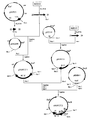
- Protocatechuic acid is an intermediate metabolite of the glycolytic intermediate metabolite phosphoenolpyruvate and pentose phosphate by enzymes such as DAHP synthase, dehydroquinate synthase, dehydroquinate dehydratase, and dehydroshikimate dehydratase. It is synthesized from 3-dehydroshikimic acid via the shikimic acid pathway from the condensation reaction of erythrose-4-phosphate. The protocatechuic acid synthesis pathway is shown in FIG.
- the microorganism used in the present invention comprises a strain as described above, wherein one or more enzyme activities selected from the group consisting of DAHP synthase activity, dehydroquinate synthase activity, dehydroquinate dehydratase activity, and dehydroshikimate dehydratase activity. Can be obtained by modifying so as to be reduced compared to the unmodified strain.
- DAHP synthase activity refers to the activity of catalyzing the reaction of condensing phosphoenolpyruvate and erythrose-4-phosphate to produce DAHP (3-deoxy-D-arabino-heptulosonate-7-phosphate) (EC: 2.5.1.54).
- Modified to reduce DAHP synthase activity means that DAHP synthase activity is lower than that of an unmodified strain, for example, a wild strain.
- the DAHP synthase activity is preferably reduced to 30% or less per unit cell weight, and more preferably 10% or less, compared to the unmodified strain. Further, the DAHP synthase activity may be completely lost.
- the decrease in DAHP synthase activity is due to a known method, for example, the method of Liu et al. (Liu YJ, Li PP, Zhao KX, Wang BJ, Jiang CY, Drake HL, Liu SJ, Appl Environol. (14), p5497-5503), and can be confirmed by measuring DAHP synthase activity.
- Dehydroquinic acid synthase activity refers to the activity of catalyzing the reaction of producing 3-dehydroquinic acid from DAHP (3-deoxy-D-arabino-heptulosonic acid-7-phosphate) (EC: 4.2.3.4). ). “Modified to reduce dehydroquinate synthase activity” means that the dehydroquinate synthase activity is lower than that of an unmodified strain, such as a wild strain. The dehydroquinate synthase activity is preferably reduced to 30% or less per unit cell weight, more preferably 10% or less, compared to the unmodified strain. Further, the dehydroquinate synthase activity may be completely lost.
- the decrease in dehydroquinic acid synthase activity is a known method, for example, the method of de Mendonca et al. (De Mendonca JD, Ely F, Palma MS, Frazzon J, Basso LA, Santos DS, J Bacteriol., 2007. Vol. 17), p6246-6252), which can be confirmed by measuring the dehydroquinate synthase activity.
- Dehydroquinic acid dehydratase activity refers to an activity (EC: 4.2.1.10) that catalyzes a reaction for producing 3-dehydroshikimic acid from 3-dehydroquinic acid.
- Modified to reduce dehydroquinic acid dehydratase activity means that the dehydroquinic acid dehydratase activity is lower than that of an unmodified strain, for example, a wild strain.
- the dehydroquinic acid dehydratase activity is preferably reduced to 30% or less per unit cell weight, more preferably 10% or less, compared to the unmodified strain. Further, the dehydroquinic acid dehydratase activity may be completely lost.
- the decrease in dehydroquinic acid dehydratase activity was confirmed by a known method such as the method of Elsmore et al. (Elsemore DA, Orston LN, J Bacteriol., 1995, Vol. 177 (20), p 5971-5978). It can be confirmed by measuring the activity.
- Dehydroshikimate dehydratase activity refers to an activity (EC: 4.2.1.-) that catalyzes a reaction for producing protocatechuic acid from 3-dehydroshikimate.
- “Modified to reduce dehydroshikimate dehydratase activity” means that the dehydroshikimate dehydratase activity is lower than that of an unmodified strain such as a wild strain.
- the dehydroshikimate dehydratase activity is preferably reduced to 30% or less per unit cell weight, more preferably 10% or less, compared to the unmodified strain. Further, the dehydroshikimate dehydratase activity may be completely lost.
- the decrease in the dehydroshikimate dehydratase activity was confirmed by a known method such as Elsemore et al. (Elsemore DA, Orston LN, J Bacteriol., 1995, Vol. 177 (20), p 5971-5978). This can be confirmed by measuring acid dehydratase activity.
- the DAHP synthase gene on the chromosome is not particularly limited as long as it encodes a protein having DAHP synthase activity. Examples thereof include genes (hereinafter also referred to as aroF gene and aroG gene).
- the dehydroquinate synthase gene, dehydroquinate dehydratase gene, and dehydroshikimate dehydratase gene are not particularly limited as long as they encode proteins having the respective enzyme activities, but are SEQ ID NO: 11, SEQ ID NO: 13, Examples thereof include genes derived from Corynebacterium glutamicum MJ-233 strain containing the nucleotide sequence shown in Fig. 15 (hereinafter also referred to as aroB gene, qsuC gene, and qsuB gene, respectively).
- the aroF gene, aroG gene, aroB gene, qsuC gene, and qsuB gene have one or several amino acids in the amino acid sequences shown in SEQ ID NOs: 8, 10, 12, 14, and 16 as long as each enzyme activity is present. It may be a gene encoding a protein having an amino acid sequence including substitution, deletion, insertion, or addition.
- everal means usually 2 or more, and usually 20 or less, preferably 10 or less, more preferably 5 or less.
- DAHP synthase gene dehydroquinic acid synthase gene, dehydroquinic acid dehydratase gene, dehydroshikimate dehydratase gene derived from bacteria other than coryneform bacteria or other microorganisms are used.
- DAHP synthase gene dehydroquinate synthase gene, dehydroquinate dehydratase gene, dehydroshikimate dehydratase gene derived from microorganisms are based on genes whose base sequences have already been determined, homology, etc., DAHP synthase, dehydroquinate synthase
- a gene encoding a protein having dehydroquinic acid dehydratase or dehydroshikimic acid dehydratase activity isolated from the chromosome of a microorganism and the base sequence thereof determined can be used.
- a gene synthesized according to the sequence can also be used. These can be obtained by amplifying the region containing the promoter and ORF portion by hybridization or PCR.
- the qsuB gene can be obtained by, for example, cloning by synthesizing a synthetic oligonucleotide based on the above sequence and performing a PCR reaction using the chromosomal DNA of Corynebacterium glutamicum as a template.
- Chromosomal DNA is obtained from bacteria that are DNA donors, for example, by Saito, Miura's method (Saito H, Miura K, Biochim Biophys Acta., 1963, Vol. 72, p619-629, Biotechnology Experiments, Japan Society for Biotechnology, Ed., Pages 97 to 98, Bafukan, 1992).
- the qsuB gene prepared as described above or a part thereof can be used for gene disruption.
- the gene used for gene disruption only needs to have homology (identity) to the extent that homologous recombination occurs with the qsuB gene on the chromosomal DNA of the bacterium to be disrupted, it has homology with SEQ ID NO: 15.
- homology that causes homologous recombination is preferably 80% or more, more preferably 90% or more, and particularly preferably 95% or more.
- homologous recombination can occur as long as it is a DNA that can hybridize with the above gene (the complementary strand of SEQ ID NO: 15) under stringent conditions.
- the stringent conditions are 60 ° C., 1 ⁇ SSC, 0.1% SDS, preferably 60 ° C., 0.1 ⁇ SSC, 0.1%, which are the usual washing conditions for Southern hybridization.
- a condition for hybridization at a salt concentration corresponding to SDS is mentioned.
- the aroF gene, the aroG gene, the aroB gene, and the qsuC gene are also genes having homology with SEQ ID NOs: 7, 9, 11, and 13 (the complementary strands and stringents of SEQ ID NOs: 7, 9, 11, and 13, respectively). DNA that can hybridize under mild conditions) can also be used.
- a gene as described above for example, deleting a partial sequence of the qsuB gene, preparing a deleted qsuB gene modified so as not to produce a normal QsuB protein, and using a DNA containing the gene to coryneform bacteria
- the qsuB gene on the chromosome can be destroyed by transformation and recombination between the deletion gene and the gene on the chromosome.
- Gene disruption by gene replacement using such homologous recombination has already been established, and there are a method using linear DNA and a method using a plasmid containing a temperature-sensitive replication origin (US Pat. No. 6,303,383). Or Japanese Patent Laid-Open No. 05-007491).
- gene disruption by gene replacement using homologous recombination as described above can also be performed using a plasmid that does not have replication ability on the host.
- a plasmid that does not have replication ability in coryneform bacteria A plasmid having replication ability in Escherichia coli is preferable, and examples thereof include pHSG299 (manufactured by Takara Bio Inc.) pHSG399 (manufactured by Takara Bio Inc.) and the like.
- pHSG299 manufactured by Takara Bio Inc.
- pHSG399 manufactured by Takara Bio Inc.
- microorganism having a reduced ability to produce an aromatic carboxylic acid such as protocatechuic acid it is selected from the group consisting of DAHP synthase, dehydroquinate synthase, dehydroquinate dehydratase, and dehydroshikimate dehydratase
- DAHP synthase dehydroquinate synthase
- dehydroquinate dehydratase dehydroquinate dehydratase
- dehydroshikimate dehydratase Any microorganism may be used as long as it is modified so that the activity of one or more kinds of enzymes is reduced.
- a microorganism modified so as to reduce dehydroshikimate dehydratase activity is preferable. This is due to the following reason.
- DAHP synthase, dehydroquinate synthase, or dehydroquinate dehydratase activity makes it difficult to synthesize not only protocatechuic acid but also metabolites required for growth such as phenylalanine synthesized from the shikimate pathway and suppresses growth. It tends to end up. It has been reported that coryneform bacteria in which a gene encoding DAHP synthase is actually disrupted are inhibited from growing in a synthetic medium (Liu YJ, Li PP, Zhao KX, Wang BJ, Jiang CY, Drake HL, Liu SJ, Appl Environ Microbiol., 2008, Vol. 74 (14), p5497-5503).
- microorganisms modified to reduce dehydroshikimate dehydratase activity may require a small amount of aromatic amino acid such as phenylalanine or organic nitrogen containing them for growth, and can be a simple medium such as a synthetic medium.
- a microorganism having a reduced ability to produce an aromatic carboxylic acid such as protocatechuic acid it is selected from the group consisting of DAHP synthase, dehydroquinate synthase, dehydroquinate dehydratase, and dehydroshikimate dehydratase It may be a microorganism that has been modified to reduce the activity of one or more enzymes, or it may be a microorganism that has been modified to enhance shikimate dehydrogenase activity.
- the “shikimate dehydrogenase activity” means an activity that catalyzes a reaction for producing shikimate from 3-dehydroshikimate (EC: 1.1.1.125, 1.1.1.182, 1.1.5. 8).
- “Modified to enhance shikimate dehydrogenase activity” means that shikimate dehydrogenase activity is higher than that of an unmodified strain such as a wild strain.
- the shikimate dehydrogenase activity is preferably increased 1.5 times or more per unit cell weight, more preferably 3 times or more, compared to the unmodified strain.
- the increased shikimate dehydrogenase activity is known in the art, for example, the method of Fonseca et al.
- the parent strain is treated with a mutagen that is commonly used for mutagenesis such as N-methyl-N'-nitro-N-nitrosoguanidine (NTG) or nitrous acid, and shikimate dehydrogenase activity.
- NTG N-methyl-N'-nitro-N-nitrosoguanidine
- shikimate dehydrogenase activity Can be obtained by selecting strains with elevated levels.
- the enhancement of shikimate dehydrogenase activity can also be achieved by high expression by introducing a mutation into the promoter of the shikimate dehydrogenase gene on the chromosome or on the plasmid, replacement with a stronger promoter, or the like.
- the shikimate dehydrogenase gene is not particularly limited as long as it encodes a protein having shikimate dehydrogenase activity.
- a gene derived from Corynebacterium glutamicum MJ-233 comprising the base sequence shown in SEQ ID NO: 17 can be mentioned.
- the qsuD gene hybridizes with a DNA having a complementary sequence of the base sequence under stringent conditions, or 80% or more, preferably 90% with the base sequence. %, More preferably 95% or more, particularly preferably 99% or more homologues such as DNA having homology.
- the stringent conditions are 60 ° C., 1 ⁇ SSC, 0.1% SDS, preferably 60 ° C., 0.1 ⁇ SSC, 0.1%, which are the usual washing conditions for Southern hybridization.
- a condition for hybridization at a salt concentration corresponding to SDS is mentioned.
- the term “several” means usually 2 or more, and usually 20 or less, preferably 10 or less, more preferably 5 or less.
- bacteria other than coryneform bacteria, other microorganisms, and shikimate dehydrogenase genes derived from animals and plants can also be used.
- a shikimate dehydrogenase gene derived from a microorganism or animal or plant is isolated from a chromosome of a microorganism, animal or plant, etc., by encoding a gene encoding a protein having shikimate dehydrogenase activity based on a gene whose sequence has already been determined, homology, etc.
- a sequence determined can be used.
- a gene synthesized according to the sequence can also be used. These can be obtained by amplifying the region containing the promoter and ORF portion by hybridization or PCR.
- a shikimate dehydrogenase expression vector is provided by inserting the gene encoding shikimate dehydrogenase isolated as described above into a known expression vector so that the gene can be expressed. By transforming with this expression vector, a shikimate dehydrogenase activity-enhancing strain can be obtained. Alternatively, a shikimate dehydrogenase activity-enhanced strain can also be obtained by incorporating a DNA encoding shikimate dehydrogenase into a chromosomal DNA of a host bacterium so that it can be expressed by homologous recombination. Note that transformation and homologous recombination can be performed according to ordinary methods known to those skilled in the art.
- an appropriate promoter is incorporated 5′-upstream of the gene, more preferably a terminator is incorporated 3′-downstream of the gene.
- the promoter and terminator are not particularly limited as long as they are known to function in bacteria used as hosts, and may be the promoter and terminator of the shikimate dehydrogenase gene itself. These promoters and terminators may be substituted. Vectors, promoters and terminators that can be used in these various bacteria are described in detail in, for example, “Microbiology Basic Course 8 Genetic Engineering / Kyoritsu Shuppan”.
- the expression of the qsuD gene is enhanced in the coryneform bacterium by introducing a DNA fragment containing the qsuD gene into a plasmid vector containing a gene that controls the replication replication function of the plasmid in the coryneform bacterium. Possible recombinant plasmids can be obtained.
- a coryneform bacterium with enhanced expression of the qsuD gene can be obtained. Transformation can be performed, for example, by an electric pulse method (Vertes AA, Inui M, Kobayashi M, Kurasu Y, Yukawa H, Res. Microbiol., 1993, Vol. 144 (3), p181-185).
- a plasmid vector capable of introducing a gene into a coryneform bacterium is not particularly limited as long as it contains at least a gene that controls the replication and proliferation function in the coryneform bacterium.
- Specific examples thereof include, for example, plasmid pCRY30 described in JP-A-3-210184; plasmids pCRY21, pCRY2KE, pCRY2KX described in JP-A-2-72876 and US Pat. No. 5,185,262.
- pCRY31, pCRY3KE, and pCRY3KX plasmids pCRY2 and pCRY3 described in JP-A-1-191686; pAM330 described in JP-A-58-67679; pHM1519 described in JP-A-58-77895; PAJ655, pAJ611, and pAJ1844 described in JP-A-58-192900; pCG1 described in JP-A-57-134500; pCG2 described in JP-A-58-35197; JP-A-57-183799 PC described in 4 and pCG11, and the like.
- plasmid vectors used in the host-vector system of coryneform bacteria have a gene responsible for the replication and replication function of the plasmid in coryneform bacteria and a gene responsible for the plasmid stabilization function in coryneform bacteria.
- plasmids pCRY30, pCRY21, pCRY2KE, pCRY2KX, pCRY31, pCRY3KE, and pCRY3KX are preferably used.
- the promoter for expressing the qsuD gene may be any promoter as long as it functions in coryneform bacteria, and may be the promoter of the qsuD gene itself to be used.
- the expression level of the qsuD gene can also be adjusted by appropriately selecting a promoter.
- enhancement of shikimate dehydrogenase activity can be achieved by the same method also when other bacteria are used.
- the microorganism of the present invention comprises an activity of one or more enzymes selected from the group consisting of modifications that reduce the ability to produce aromatic carboxylic acids (DAHP synthase, dehydroquinate synthase, dehydroquinate dehydratase, and dehydroshikimate dehydratase) Or modified so that the shikimate dehydrogenase activity is enhanced), or a lactate dehydrogenase (hereinafter also referred to as LDH) activity.
- LDH activity refers to an activity (EC: 1.1.1.17) that catalyzes a reaction of reducing pyruvic acid to produce lactic acid.
- “LDH activity is reduced” means that LDH activity is reduced as compared to an unmodified strain.
- the LDH activity is preferably reduced to 30% or less per unit cell weight, more preferably 10% or less, compared to the unmodified strain. LDH activity may be completely lost. Decrease in LDH activity can be confirmed by measuring LDH activity by a known method, for example, the method of Kanarek et al. (Kanarek L, Hill RL, J Biol Chem., 1964, Vol. 239, p4202-4206). Can do.
- a method for producing a strain with reduced LDH activity a method by homologous recombination to a chromosome described in JP-A-11-206385, or a method using a sacB gene (Schafer A, Tach A, Jager W, Kalinowski J, Thierbach G, Puller A, Gene 1994 Vol. 145 (1), p69-73) and the like.
- Bacteria with reduced LDH activity and reduced aromatic carboxylic acid-producing ability are prepared, for example, by producing bacteria in which the ldh gene is disrupted, and performing modification that reduces aromatic carboxylic acid-producing ability in the bacterium Can be obtained.
- the modification operation for reducing LDH activity or the modification operation for reducing the ability to produce aromatic carboxylic acid may be performed first.
- the microorganism used in the present invention is one or more kinds selected from the group consisting of modifications (DAHP synthase, dehydroquinate synthase, dehydroquinate dehydratase, and dehydroshikimate dehydratase) that reduce the ability to produce aromatic carboxylic acids.
- modifications DAHP synthase, dehydroquinate synthase, dehydroquinate dehydratase, and dehydroshikimate dehydratase
- it may be a bacterium modified to enhance the activity of pyruvate carboxylase (hereinafter also referred to as PC).
- PC activity refers to an activity (EC: 6.4.1.1) that catalyzes a reaction in which pyruvic acid is carboxylated to produce oxaloacetic acid.
- PC activity is enhanced means that PC activity is increased as compared to an unmodified strain.
- the PC activity is preferably increased 1.5 times or more per unit cell weight, more preferably 3 times or more, compared to the unmodified strain.
- the increase in PC activity is measured by a known method, for example, the method of Fisher et al. (Fisher SH, Magsanik B, J Bacteriol., 1984, Vol. .158 (1), p55-62). Can be confirmed.
- a strain having enhanced PC activity can be prepared in the same manner as the method for enhancing shikimate dehydrogenase activity described above.
- the pc gene is introduced into coryneform bacteria and highly expressed in the same manner as described in JP-A-11-196888.
- Specific examples of the pc gene include, for example, a pc gene derived from Corynebacterium glutamicum (Peters-Wendish PG, Kreutzer C, Kalinowski J, Patek M, Sham H, Eikmanns BJ, Microbiol. 14, 19). 927) and the like can be used.
- the pc gene is a DNA that hybridizes with the pc gene derived from Corynebacterium glutamicum under stringent conditions, or the base sequence of the gene is 80% or more, preferably 90% or more, more preferably 95% or more. Particularly preferably, a DNA having a homology of 99% or more and encoding a protein having PC activity can also be used suitably.
- pc genes derived from coryneform bacteria other than Corynebacterium glutamicum, other microorganisms, and animals and plants can also be used.
- the following pc genes derived from microorganisms or animals and plants are known in sequence (documents are shown below), and obtained by hybridization or amplification of the ORF portion by PCR as described above. can do.
- Bacteria with enhanced PC activity and reduced aromatic carboxylic acid production ability for example, produce bacteria that are highly expressed by introducing the pc gene, and reduce aromatic carboxylic acid production ability in the bacteria It can be obtained by modification. However, either the modification operation for enhancing PC activity or the modification operation for reducing the aromatic carboxylic acid-producing ability may be performed first.
- the microorganism of the present invention comprises one or more enzymes selected from the group consisting of modifications (DAHP synthase, dehydroquinate synthase, dehydroquinate dehydratase, and dehydroshikimate dehydratase) that reduce the ability to produce aromatic carboxylic acids.
- 1 type selected from the group consisting of acetate kinase (hereinafter also referred to as ACK) and phosphotransacetylase (hereinafter also referred to as PTA), in addition to reduction of the activity of or modification of shikimate dehydrogenase activity. It may be a bacterium modified so that the activity of the above enzyme is reduced.
- PTA activity refers to an activity (EC: 2.3.1.8) that catalyzes a reaction of transferring phosphoric acid to acetyl CoA to produce acetyl phosphoric acid.
- Modified to reduce PTA activity means that PTA activity is reduced as compared to an unmodified strain. The PTA activity is preferably reduced to 30% or less per unit cell weight, more preferably 10% or less, compared to the unmodified strain. Further, the PTA activity may be completely lost. The decrease in PTA activity can be confirmed by measuring the PTA activity by a known method, for example, the method of Klotzsch et al. (Klotzsch HR, Meth Enzymol., 1969, Vol. 12, p381-386).
- ACK activity refers to an activity (EC: 2.7.2.1) that catalyzes a reaction for producing acetic acid from acetyl phosphate and ADP. “Modified so that the ACK activity is reduced” means that the PTA activity is reduced as compared to the unmodified strain. The ACK activity is preferably reduced to 30% or less per unit cell weight, more preferably 10% or less, compared to the unmodified strain. Further, the ACK activity may be completely lost. The decrease in ACK activity can be confirmed by measuring the ACK activity by a known method, for example, the method of Ramponi et al. (Ramponi G, Meth Enzymol., 1975, Vol. 42, p409-426).
- Either PTA or ACK may decrease the activity, but in order to efficiently reduce acetic acid by-product, it is more preferable to decrease both activities.
- Corynebacterium glutamicum including those classified as Brevibacterium flavum
- Microbiology. 1999 Feb; 145 (Pt2): 503-13 both enzymes are encoded by the pta-ack operon (GenBank Accession No. X89084), so when the pta gene is disrupted, The activity of both ACK enzymes can be reduced.
- Strains with reduced PTA and ACK activity can be obtained by known methods, for example, methods using homologous recombination or methods using the sacB gene (Schaffer A, Tach A, Jager W, Kalinowski J, Thierbach G, Publisher A, Gene). 1994 Vol.145 (1), p69-73) can be carried out by destroying these genes. Specifically, it can be performed according to the method disclosed in JP-A-2006-000019.
- Examples of the pta gene and the ack gene include the above GenBank Accession No.
- a gene having a degree of homology that causes homologous recombination with the pta gene and the ack gene on the host chromosome can also be used.
- the homology that causes homologous recombination is preferably 80% or more, more preferably 90% or more, and particularly preferably 95% or more.
- homologous recombination can occur if the DNAs can hybridize with each other under stringent conditions.
- a bacterium having reduced activity of one or more enzymes selected from the group consisting of PTA and ACK and reduced aromatic carboxylic acid-producing ability is produced by destroying the pta gene and the ack gene, for example. It can be obtained by modifying the bacterium to reduce the ability to produce aromatic carboxylic acids.
- the modification operation for reducing PTA or ACK activity or the modification operation for reducing the ability to produce aromatic carboxylic acid may be performed first.
- the microorganism used in the present invention is one or more selected from the group consisting of modifications that reduce the ability to produce aromatic carboxylic acids (DAHP synthase, dehydroquinic acid synthase, dehydroquinic acid dehydratase, and dehydroshikimic acid dehydratase).
- the bacterium may be obtained by combining two or more of the above-mentioned modifications in addition to a reduction in the activity of the enzyme or a modification to enhance the shikimate dehydrogenase activity. When making a plurality of modifications, the order does not matter.
- the method for producing an organic acid according to the present invention is a method for producing an organic acid, characterized in that an organic acid is produced by allowing the microorganism or a processed product thereof to act on an organic raw material. Among these, it is preferable to produce an organic acid by allowing the microorganism or a processed product thereof to act on an organic raw material, and collect this. Examples of organic acids that can be produced and examples of preferred organic acids are as described above.
- slant cultures in solid media such as agar media may be used for direct reaction, but those in which the above microorganisms have been cultured in a liquid medium (seed culture) in advance are used.
- a medium used for seed culture a normal medium used for culturing microorganisms can be used.
- a general medium in which a natural nutrient source such as meat extract, yeast extract or peptone is added to a composition composed of inorganic salts such as ammonium sulfate, potassium phosphate and magnesium sulfate can be used.
- the bacterial cells after seed culture are preferably collected by centrifugation, membrane separation, etc., and then used for the reaction for producing an organic acid.
- An organic acid may be produced by reacting a seed-cultured microorganism with an organic raw material while growing it in a medium containing the organic raw material, or the cells obtained by proliferating in advance contain the organic raw material.
- the organic acid may also be produced by reacting with an organic raw material in the reaction solution.
- a processed product of microbial cells can also be used.
- treated cells include, for example, immobilized cells obtained by immobilizing cells with acrylamide, carrageenan, etc., crushed materials obtained by crushing cells, centrifuged supernatants thereof, or partial supernatants thereof by ammonium sulfate treatment, etc. Examples include purified fractions.
- the organic raw material used in the production method of the present invention is not particularly limited as long as the present microorganism is a carbon source that can be assimilated to produce succinic acid, but is usually galactose, lactose, glucose, fructose, glycerol, sucrose, sucrose, Carbohydrates such as starch or cellulose; fermentable carbohydrates such as polyalcohols such as glycerin, mannitol, xylitol or ribitol are used, among which glucose, sucrose or fructose is preferable, and glucose or sucrose is particularly preferable.
- the starch saccharified solution or molasses containing the fermentable saccharide is also used, and specifically, a sugar solution extracted from a plant such as sugar cane, sugar beet or sugar maple is preferable. These sugars can be used alone or in combination.
- the concentration of the sugar used is not particularly limited, but is advantageously as high as possible within a range not inhibiting the production of succinic acid, and is usually 5% (W / V) or more, preferably 10%, relative to the reaction solution. % (W / V) or more, and usually 30% (W / V) or less, preferably 20% (W / V) or less. Further, additional sugar may be added in accordance with the decrease of the sugar as the reaction proceeds.
- the reaction solution containing the organic raw material is not particularly limited, and may be, for example, a medium for culturing microorganisms or a buffer solution such as a phosphate buffer solution.
- the reaction solution is preferably an aqueous solution containing a nitrogen source, an inorganic salt, and the like.
- the nitrogen source is not particularly limited as long as the microorganism can be assimilated to produce succinic acid, and specifically, ammonium salt, nitrate, urea, soybean hydrolysate, casein degradation product And various organic and inorganic nitrogen compounds such as peptone, yeast extract, meat extract and corn steep liquor.
- the inorganic salt various phosphates, sulfates, magnesium, potassium, manganese, iron, zinc, and other metal salts are used.
- factors that promote growth such as vitamins such as biotin, pantothenic acid, inositol, and nicotinic acid, nucleotides, and amino acids are added as necessary.
- the reaction solution contains, for example, carbonate ions, bicarbonate ions, or carbon dioxide gas (carbon dioxide gas) in addition to the organic raw material, nitrogen source, and inorganic salt described above.
- Carbonate ions or bicarbonate ions are supplied from magnesium carbonate, sodium carbonate, sodium bicarbonate, potassium carbonate, potassium bicarbonate, etc., which can also be used as a neutralizing agent. It can also be supplied from these salts or carbon dioxide gas.
- Specific examples of the carbonate or bicarbonate salt include magnesium carbonate, ammonium carbonate, sodium carbonate, potassium carbonate, ammonium bicarbonate, sodium bicarbonate, potassium bicarbonate and the like.
- the carbonate ion or bicarbonate ion is usually added at a concentration of 1 mM or more, preferably 2 mM or more, more preferably 3 mM or more. On the other hand, it is added usually at a concentration of 500 mM or less, preferably 300 mM or less, more preferably 200 mM or less.
- carbon dioxide gas is contained, 50 mg or more, preferably 100 mg or more, more preferably 150 mg or more of carbon dioxide gas is contained per liter of the solution.
- carbon dioxide gas is usually contained in an amount of 25 g or less, preferably 15 g or less, more preferably 10 g or less.
- the pH of the reaction solution can be adjusted by adding sodium carbonate, sodium bicarbonate, potassium carbonate, potassium bicarbonate, magnesium carbonate, sodium hydroxide, calcium hydroxide, magnesium hydroxide, ammonia or the like.
- the pH in this reaction is usually 5 or more, preferably 5.5 or more, more preferably 6 or more, while it is 10 or less, preferably 9.5 or less, more preferably 9.0 or less.
- the pH of the reaction solution is adjusted within the above range with an alkaline substance, carbonate, urea or the like as necessary.
- the optimum growth temperature of the microorganism used in this reaction is not particularly limited as long as it is the optimum growth temperature, but is usually 25 ° C. or more, and is usually 35 ° C. or less, preferably 32 ° C. or less, particularly preferably 30. It is below °C.
- the optimum growth temperature refers to the temperature at which the growth rate is fastest under the conditions used for the production of succinic acid.
- the method of culturing so as to alternately and repeatedly repeat depletion and fullness of the carbon source described in JP-A-2008-259451 can be used. it can.
- the amount of microbial cells used in the reaction is not particularly defined, but the weight of wet cells is usually 1 g / L or more, preferably 10 g / L or more, more preferably 20 g / L or more, while usually 700 g / L. L or less, preferably 500 g / L or less, more preferably 400 g / L or less.
- the reaction time is not particularly limited, but is usually 1 hour or longer, preferably 3 hours or longer, and is usually 168 hours or shorter, preferably 72 hours or shorter.
- the production reaction of an organic acid such as succinic acid may be carried out by aeration and stirring, but may be carried out in an anaerobic atmosphere without aeration and without supplying oxygen.
- anaerobic atmosphere here, for example, the container is sealed and reacted without aeration, the reaction is performed by supplying an inert gas such as nitrogen gas, or the inert gas containing carbon dioxide gas is vented.
- organic acids such as succinic acid, fumaric acid, malic acid, or pyruvic acid are generated and accumulated in the reaction solution.
- the protocatechuic acid production amount per succinic acid production amount in the culture solution after the reaction after the microorganism of the present invention or its processed product is allowed to act on the organic raw material is usually 500 ppm or less, preferably 300 ppm or less, more preferably 150 ppm or less. More preferably, it is 75 ppm or less, and particularly preferably 50 ppm or less. There is no particular limitation on the lower limit.
- the amount of ubitonic acid produced per succinic acid produced in the culture broth after the reaction after the microorganism of the present invention or its processed product is allowed to act on the organic raw material is usually 500 ppm or less, preferably 300 ppm or less, more preferably 150 ppm or less. More preferably, it is 75 ppm or less, and particularly preferably 50 ppm or less. There is no particular limitation on the lower limit.
- the concentrations of protocatechuic acid and ubitonic acid with respect to the target organic acid in the culture solution after the reaction are usually 500 ppm or less, preferably 300 ppm or less, more preferably 150 ppm or less, More preferably, it is 75 ppm or less, Most preferably, it is 50 ppm or less.
- the organic acid accumulated in the reaction solution can be collected from the reaction solution according to a conventional method.
- the method of collecting the organic acid from the reaction solution is not limited as long as the composition containing the target organic acid can be obtained.
- Organic acids can be collected from the reaction solution by removing microorganisms, water and / or impurities.
- the method for removing microorganisms, water and / or impurities from the reaction solution is not particularly limited, and any known method or known method such as concentration, extraction, crystallization, activated carbon treatment, hydrogen treatment, ion exchange column treatment, etc. may be arbitrarily combined. be able to.
- the method for producing an organic acid of the present invention since the production of aromatic carboxylic acid, which has conventionally been difficult to separate by crystallization treatment, is reduced, it is preferable that collection of the organic acid includes crystallization treatment.
- a method for collecting an organic acid including crystallization include a method of removing microorganisms from a reaction solution, concentrating and extracting an organic acid as necessary, and then performing crystallization, solid-liquid separation, and drying. Can be mentioned. After the solid-liquid separation, activated carbon treatment, hydrogen treatment, and / or ion exchange column treatment may be performed.
- a method for obtaining succinic acid which is one of organic acids will be described. However, the method for obtaining succinic acid is not limited to the following description.
- the fermentation broth after the microbial reaction may be appropriately concentrated in consideration of operability and efficiency in the subsequent purification step.
- concentration method The method of distribute
- concentration operation may be performed by a batch operation or a continuous operation.
- the method for removing the microorganisms is not particularly limited, and sedimentation separation, centrifugation, filtration separation, a combination thereof, and the like are used. Industrially, it is performed by a method such as centrifugal separation or membrane filtration separation. In centrifugation, centrifugal sedimentation, centrifugal filtration, or the like can be used. In the centrifugation, the operating conditions are not particularly limited, but the separation is usually performed with a centrifugal force of 100 G or more and 100,000 G or less. The operation can be performed continuously or batchwise.
- membrane filtration separation microfiltration and / or ultrafiltration can be used.
- the material of the film is not particularly limited, and for example, an organic film such as polyolefin, polysulfine, polyacrylonitrile, polyvinylidene fluoride, or a film made of an inorganic material such as ceramic can be used.
- an operation method either a dead end type or a cross flow type can be used.
- membrane filtration separation since microorganisms often clog the membrane, a method of performing membrane filtration after roughly removing the microorganisms by centrifugation or the like is also used.
- a succinic acid salt is obtained, and the obtained succinic acid salt is converted into the desired succinic acid.
- the succinic acid may be converted to succinic acid by a reaction crystallization method using a weakly acidic organic acid having a higher acid dissociation constant (pKa) than the target succinic acid.
- pKa acid dissociation constant
- An example of such an organic acid is acetic acid.
- the succinic acid salt obtained as described above may be converted to succinic acid with an inorganic acid.
- examples of the inorganic acid used include sulfuric acid, hydrochloric acid, carbonic acid, phosphoric acid, and nitric acid.
- succinic acid fermentation when fermentation is performed while neutralizing the produced succinic acid with ammonia or magnesium hydroxide, ammonium succinate or magnesium succinate is produced in the fermentation broth.
- a fermented solution containing ammonium succinate or magnesium succinate is treated with sulfuric acid or the like, an aqueous solution containing succinic acid is obtained.
- the solution or aqueous solution containing succinic acid is a solution or aqueous solution mainly containing succinic acid derived from biomass resources. Accordingly, a solution or an aqueous solution mainly containing a succinate such as ammonium succinate or magnesium succinate is referred to as a solution or aqueous solution containing succinate.
- the term “contained as the main component” as used herein means that the weight of the component relative to the weight of all components excluding the solvent is usually 50% by weight or more, preferably 60% by weight or more, more preferably 70% by weight or more, and particularly preferably The state of 90% by weight or more is shown.
- succinic acid may be extracted from the aqueous solution converted to succinic acid with the inorganic acid, although not particularly limited, using an organic solvent.
- the organic solvent used in this method usually has an inorganic value / organic value ratio (I / O value) of 0.2 or more and 2.3 or less, and a boiling point of 40 ° C. at normal pressure (1 atm). More preferably, the organic solvent is an organic solvent having an I / O value of 0.3 or more and 2.0 or less and a boiling point of 40 ° C. or more at normal pressure, and more preferably I / O. An organic solvent having a value of 0.3 or more and 2.0 or less and a normal pressure and a boiling point of 60 ° C. or more.
- succinic acid can be selectively extracted and efficiently separated from saccharides and amino acids.
- an organic solvent having a boiling point of 40 ° C. or higher at normal pressure there is a risk that the solvent vaporizes and ignites, a problem that the solvent vaporizes and the extraction efficiency of succinic acid decreases, and the solvent is recycled. The problem of difficulty can be avoided.
- Inorganic values and organic values have been proposed by an organic conceptual diagram ("Systematic organic qualitative analysis", Satoshi Fujita, Kazama Shobo (1974)), and are set in advance for functional groups constituting organic compounds. The organic value and the inorganic value are calculated based on the numerical values, and the ratio is obtained.
- Organic solvents having an I / O value of 0.2 or more and 2.3 or less and a boiling point of 40 ° C. or more at normal pressure include ketone solvents such as methyl ethyl ketone, methyl isobutyl ketone and acetone, and ether solvents such as tetrahydrofuran and dioxane.
- ketone solvents such as methyl ethyl ketone, methyl isobutyl ketone and acetone
- ether solvents such as tetrahydrofuran and dioxane.
- Examples include solvents, ester solvents such as ethyl acetate, nitrile solvents such as acetonitrile, and alcohols having 3 or more carbon chains such as propanol, butanol, and octanol.
- the I / O value and boiling point of each solvent are shown below.
- the organic solvent is added in an amount of usually 0.5 volumes or more, preferably 1 volume or more, with respect to the volume 1 of the aqueous solution containing succinic acid.
- the volume is usually 5 volumes or less, preferably 3 volumes or less.
- the temperature of the extraction step may be any temperature at which succinic acid is extracted, but is usually 10 ° C. or higher, preferably 20 ° C. or higher, and is usually 90 ° C. or lower, preferably 85 ° C. or lower.
- succinic acid is recovered in an organic solvent, and impurities such as ammonia, sulfur-containing impurities, metal cations, and the like derived from fermentation bacteria are separated to some extent in addition to saccharides and nitrogen elements derived from fermentation.
- the extraction process with an organic solvent may be repeated a plurality of times, or countercurrent extraction may be performed.
- succinic acid In order to reduce impurities having absorption in the ultraviolet region of 250 to 300 nm contained in this succinic acid, particularly aromatic dicarboxylic acid, to an average absorbance of 0.05 or less, it was usually produced as described above. It is necessary to carry out succinic acid in combination with purification treatment such as crystallization treatment, activated carbon treatment, hydrogen treatment and drying treatment. However, the succinic acid-containing liquid obtained by the fermentation method (organic acid production method) of the present invention has much less impurities than the conventional fermentation method (organic acid production method). It is preferable because the purification process such as activated carbon treatment and the like can be reduced and the conditions of the purification process can be relaxed. As a result, the cost of organic acids such as succinic acid can be reduced and the yield of organic acids can be improved.
- succinic acid may be recovered by crystallization from a solution containing succinic acid obtained by the reaction.
- aromatic carboxylic acids such as protocatechuic acid can be further reduced.
- the number of crystallization operations can be reduced as compared with the case of using a conventional microorganism, which is useful.
- the succinic acid crystallization in the present invention is an operation for precipitating succinic acid crystals from a solution containing succinic acid by changing the solubility of succinic acid by giving some change to the solution containing succinic acid.
- any method may be used as long as it is an operation for precipitating succinic acid as crystals from a fluid containing succinic acid. More specifically, for example, by changing the temperature of the solution containing succinic acid and utilizing the temperature dependence of the succinic acid solubility, a cooling crystallization method for precipitating succinic acid, heating or depressurizing the solvent from the solution.
- Concentrated crystallization method in which succinic acid is deposited by increasing the succinic acid concentration in the solution by adding the third component (poor solvent) to decrease the solubility of succinic acid to the solution containing succinic acid to precipitate succinic acid For example, a poor solvent crystallization method and a combination thereof.
- succinic acid When the solution containing succinic acid also contains a salt of succinic acid, by adding a strong acid such as sulfuric acid or hydrochloric acid to the solution containing succinic acid, the succinate is changed to non-dissociated succinic acid.
- the succinic acid crystals can be precipitated in combination with the above-mentioned methods such as cooling, concentration and addition of a poor solvent.
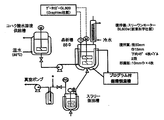
- cooling crystallization as a cooling method, a method of circulating and cooling a solution containing succinic acid to an external heat exchanger, a method of introducing a pipe (inner coil) through which a refrigerant flows into a solution containing succinic acid,
- a method in which the solvent in the solution is volatilized by reducing the pressure in the apparatus and the solvent is cooled by the heat of vaporization of the solvent.
- the method of volatilizing the solvent in the solution by reducing the pressure in the apparatus and cooling it with the heat of vaporization of the solvent can prevent the heat transfer from being inhibited by the precipitation of succinic acid at the heat exchange interface.
- succinic acid in the solution is also concentrated.
- the succinic acid concentration in the solution containing succinic acid supplied to the crystallization tank is preferably 10 to 45% by weight, more preferably 15 to 40% by weight. Desirably, it is 20% to 35% by weight.
- Crystallization solvents include water, organic acids such as acetic acid and propionic acid, esters such as ethyl acetate, alcohols such as methanol, ethanol, propanol, isopropanol, butanol, 2-ethyl-1-hexanol and isobutanol, diethyl Used ethers such as ether, di-n-butyl ether, diisopropyl ether, di-n-butyl ether, tetrahydrofuran and dioxane, ketones such as acetone, methyl ethyl ketone and diethyl ketone, nitriles such as acetonitrile, and mixed solvents thereof Of these, water is most preferred. Usually, de
- the temperature of the fluid containing the succinic acid crystals in the crystallization tank during crystallization (hereinafter sometimes referred to as the crystallization temperature) is set to the temperature at which the succinic acid crystals are crystallized from the succinic acid-containing fluid, Usually, 5 ° C to 60 ° C, preferably 10 ° C to 50 ° C is selected. When the crystallization temperature is lower than 5 ° C, a high yield of succinic acid can be obtained. However, a very large facility is required for cooling, or in a method of cooling by flowing a coolant through a jacket or an inner coil.
- the temperature difference between the succinic acid slurry and the refrigerant on the heat transfer surface becomes too large, and the scale is severely scaled.
- the temperature difference between the succinic acid slurry and the refrigerant on the heat transfer surface is usually set to 20 ° C. or less, preferably 10 ° C. or less, from the viewpoint of preventing scaling. It is desirable to do.
- the pressure in the tank in the method of crystallization under reduced pressure is determined by the crystallization temperature to be obtained, and is usually 0.5 kPa to 20 kPa, preferably 1 kPa to 15 kPa, particularly 1.5 kPa to 10 kPa. If the pressure is low, the temperature in the crystallization tank can be lowered and the crystallization efficiency can be increased. However, depending on the concentration of the succinic acid-containing fluid to be supplied, the slurry concentration in the crystallization tank is high. Therefore, there is a possibility that the handling becomes difficult and the control of the pressure becomes difficult. Moreover, the equipment for pressure reduction is limited, and generally the equipment cost is increased, which is not economically preferable.
- the vacuum generator can be selected from known methods depending on the required pressure, the presence or absence of a solvent that evaporates with water, and the type thereof. Known methods include those listed in Design / Operation Series No. 3 revised crystallization (Chemical Engineering Co., Ltd.) P292-293, such as water or steam ejector, oil-sealed rotary vacuum pump, and the like.
- the crystallization operation may be a batch type in which the entire amount of the succinic acid-containing fluid to be crystallized is placed in the crystallization tank and then the entire amount of the fluid after crystallization is withdrawn.
- a continuous type in which the supply and extraction of the succinic acid-containing fluid is appropriately performed during the crystallization operation may be performed.
- the supply of the succinic acid-containing fluid to the crystallization tank during continuous crystallization is performed continuously using a liquid feed pump or a pressure difference so that the inside of the crystallization tank does not become empty. It is performed by a method of intermittently pumping.
- the supply speed of the succinic acid solution is usually supplied so that the average residence time in the crystallization tank is 0.5 hours or more and 10 hours or less. If the residence time in the crystallization tank is short, the succinic acid supersaturation degree in the tank becomes large, a large amount of microcrystals are generated, and the slurry is withdrawn from the crystallization tank while leaving the supersaturation degree. There is a risk of causing problems such as scaling in the process. Conversely, if the residence time is too long, the crystallization tank becomes unnecessarily large and inefficient.
- the succinic acid obtained in the continuous crystallization is extracted from the crystallization tank, it is usually extracted as a slurry together with the succinic acid-containing fluid.
- the extraction at this time is compared with the amount of the succinic acid-containing fluid supplied as appropriate so that the inside of the crystallization tank is not emptied more continuously or intermittently than the slurry pump or the crystallization tank. It is carried out by a method of drawing out the pressure receiving tank by pressure feeding or the like using a pressure difference.
- the liquid level sensor or the like may be supplied when the liquid level in the crystallization tank is below a certain level, and the operation is repeated when the liquid level is above a certain level.
- nucleation and crystal growth of succinic acid are usually controlled by the degree of supersaturation of succinic acid in the tank.
- a method of controlling the crystallization time is usually used.
- the crystallization time is usually 0.5 hours to 10 hours, preferably 1 hour to 5 hours.
- the succinic acid-containing fluid is cooled over 0.5 hours to 5 hours to lower the succinic acid-containing fluid to a predetermined temperature, and further aged for 0.1 hours to 5 hours. It is desirable to do.
- the cooling rate of the succinic acid-containing fluid at that time is usually 0.05 ° C./min or more and 2 ° C./min or less, preferably 0.1 ° C./min or more and 1.5 ° C./min or less. It is preferably at least 1 ° C / min.
- the average residence time of the succinic acid-containing fluid is 0.5 hours or more and 10 hours or less, preferably 1 hour or more and 5 hours or less. If the crystallization time or the average residence time is short, the succinic acid supersaturation degree in the tank increases and the nucleation rate increases, so that many microcrystals are generated or the slurry is left from the crystallization tank while leaving the supersaturation degree. Extraction may cause troubles such as scaling in subsequent processes. Conversely, if the crystallization time is too long, the crystallization tank becomes unnecessarily large and inefficient.
- the structure of the crystallization tank is not particularly limited as long as it is a container equipped with a stirrer, and a container having a generally known stirrer can be used, but a cylindrical container having a bottom part Is preferred.
- a baffle plate in order to efficiently apply shear to the slurry, it is preferable to install a baffle plate in the tank.
- a container having a cylindrical guide such as a draft tube can be used to adjust the flow in the crystallization tank.
- the ratio of the diameter and height of the container is usually 0.5 or more and 3 or less.
- the container is preferably 0.7 or more and 2.5 or less, particularly preferably 1 or more and 2 or less.
- the stirring device As the stirring device, a stirring device provided with a stirring blade is used.
- the stirring blade need not be a special blade, and a known stirring blade can be used.
- it is selected from shearing blades such as paddle blades and turbine blades, swept blades, fiddler blades, Max blend blades (registered trademark of Sumitomo Heavy Industries, Ltd.), discharge-type blades such as full zone blades (registered trademark of Shinko Pantech Co., Ltd.), etc.
- shearing blades such as paddle blades and turbine blades, swept blades, fiddler blades, Max blend blades (registered trademark of Sumitomo Heavy Industries, Ltd.), discharge-type blades such as full zone blades (registered trademark of Shinko Pantech Co., Ltd.), etc.
- There is no particular limitation on the size of the stirring blades but other stirring devices that circulate the fluid may be used in addition to the stirring device provided with the stirring blades.
- a stirring device for example, a device that circulates a solution containing succinic acid led from the crystallization tank to the crystallization tank by a fluid transfer pump such as a centrifugal pump can be used.
- the stirring of the crystallization tank is not particularly limited as long as the succinic acid crystals flow in the crystallization tank without precipitation, but the purity of the obtained succinic acid is increased, or the succinic acid having a more uniform particle size is used.
- a stirring power required per unit volume of a solution containing succinic acid (hereinafter sometimes abbreviated as Pv) is 0.2 kW / m 3 or more 5 kW / m 3 or less, preferably 0 .4kW / m 3 or more 3 kW / m 3 for crystallization under stirring conditions such as to become less.
- the succinic acid slurry after crystallization can be subjected to solid-liquid separation treatment of succinic acid crystals and mother liquor by a known method.
- the separation method is not particularly limited, and examples thereof include filtration separation and sedimentation separation.
- the operation may be batch or continuous.
- Examples of efficient solid-liquid separators include a continuous centrifugal filter and a centrifugal sedimentator such as a decanter.
- recovered by solid-liquid separation operation can be rinsed with cold water etc. with the purity of the succinic acid calculated
- the succinic acid recovered by crystallization depends on its use, but can be dried by a conventional method.
- the water content of succinic acid is usually 0.1% by weight or more, preferably 0.2% by weight, while it is usually dried to 2% by weight or less, preferably 1% by weight or less.
- the drying method is not particularly limited, and examples thereof include a convection heat transfer dryer such as a band dryer and a fluid dryer, and a conduction heat transfer dryer such as a drum dryer.
- a fluidized dryer which can be continuously processed in a large amount and has a small crystal crushing during the drying process.
- the atmospheric oxygen concentration is preferably 12% or less.
- the temperature of succinic acid during drying is preferably 100 ° C. or lower, more preferably 90 ° C. or lower, and even more preferably 80 ° C. or lower because succinic anhydride may be generated due to intramolecular dehydration. To do.
- a succinic acid aqueous solution supply tank for example, as shown in FIG. 4, a crystallization tank having two baffle plates and four inclined paddle blades (stirring blades), a slurry removal Examples thereof include a crystallizer equipped with a discharge tank and the like.
- activated carbon treatment any known activated carbon such as coal-based, wood-based, coconut grain-based, or resin-based can be used. Also, use activated carbon activated by various methods such as gas activation method, steam activation method, chemical activation method such as zinc chloride and phosphoric acid, etc. Can do.
- Calgon CPG Calgon CAL
- Calgon SGL Diasorb W
- Diahope MS10 Diahope M010
- Diahope MS16 Diahope 6MD
- Diahope 6MW Diahope 8ED
- Diahope ZGN4 Centur, Nippon Norit Co., Ltd.
- GW GWH, GLC, 4GC, KW, PW, PK, HC-30S, GL-30S, 4G-3S, PA, PC, manufactured by Tsurumi Co., Ltd., P, W, CW, SG, SGP, S, GB, CA, K, manufactured by Futamura Chemical Co., Ltd. Nippon Environment Chemi Hakuetsu CL made by Ruzu Co., Ltd. -K, Hokuetsu Hs, Hokuetsu KS and the like.
- coconut charcoal and woody charcoal are preferred because impurities that absorb in the ultraviolet region of 250 to 300 nm contained in succinic acid can be efficiently removed.
- activated carbon activated by a method such as a gas activation method, a water vapor activation method, a chemical activation method such as zinc chloride or phosphoric acid, and the like is preferable.
- Chemically activated activated carbon such as zinc chloride and phosphoric acid is preferred, and activated chemical activated carbon such as zinc chloride and phosphoric acid is particularly preferred.
- the shape of the activated carbon used may be any of powdered coal, crushed coal, formed coal, and fibrous activated carbon.
- the treatment time is usually 5 minutes or more, preferably 10 minutes or more, while it is usually 5 hours or less, preferably 2 hours or less.
- the treatment temperature is usually 20 ° C. or higher and 90 ° C. or lower.
- these impurity removal methods include a method of combining a plurality of activated carbon species, activated carbon treatment and the above crystallization treatment, hydrogen treatment and ion exchange column described later. There is a method of combining processing.
- the insoluble component may be mixed in the succinic acid solution derived from fermentation. Such an insoluble component is a factor that reduces the efficiency of the above-described impurity removal by activated carbon and the subsequent purification process, so it is preferable to remove the insoluble component in advance.
- Insoluble components are removed from the succinate produced by the fermentation method to succinic acid, and the process from the succinic acid solution to the activated carbon treatment process is performed using a known membrane permeabilization process.
- the powdered activated carbon is allowed to coexist to adsorb insoluble components to improve the permeability of the membrane permeation treatment, or the above-mentioned impurities are simultaneously adsorbed and removed together with the insoluble components using appropriate powdered activated carbon.
- the hydrogen treatment described later is performed.
- a process in which a crystallization or / and activated carbon treatment step is performed before the step is preferably used.
- the succinic acid obtained by the microbial reaction usually contains an odor component, but it is preferable to reduce the content of the odor component contained in the succinic acid.
- Known methods for removing odor components include a deodorizing method using an adsorbent such as activated carbon, a washing and removing method using an organic solvent, a crystallization method, and an aeration method. Hydrogen treatment in the presence of a catalyst is particularly effective for removing odor components.
- a small amount of fumaric acid may be contained in the succinic acid-containing liquid derived from biomass resources by fermentation or the like.
- the hydrotreating method is a particularly superior method as a deodorizing method for succinic acid. It is preferred to include in the purification process a hydrotreating step in the presence of a catalyst of a solution containing succinic acid derived from fermentation.
- the hydrogen treatment may be performed in either a batch type or a continuous type, and can be performed according to a conventionally known method.
- a solution containing succinic acid and a hydrogenation catalyst are allowed to coexist in a pressure reactor, hydrogen gas is introduced while stirring the mixture, and hydrogen treatment is performed.
- known homogeneous and heterogeneous noble metal-containing hydrogenation catalysts can be used. Specific examples include, but are not limited to, hydrogenation catalysts containing noble metals such as ruthenium, rhodium, palladium and platinum. Among these, hydrogenation catalysts containing palladium and platinum, particularly palladium, are preferred. These hydrogenation catalysts can be used with the above compounds containing noble metals as they are or in the presence of ligands such as organic phosphines, but heterogeneous noble metal-containing catalysts for reasons of ease of catalyst separation. Is preferred.
- these noble metal-containing compounds can be subjected to hydrogen treatment in the presence of a metal oxide such as silica, titanium, zirconia, or activated alumina, or a composite metal oxide thereof, or activated carbon.
- a metal oxide such as silica, titanium, zirconia, or activated alumina, or a composite metal oxide thereof, or activated carbon.
- This method is a preferred embodiment because not only the odor components contained in the succinic acid derived from fermentation, but also the colored components and organic impurities can be adsorbed and removed simultaneously, and the impurities can be removed efficiently.
- the same effect is also achieved when using a catalyst in which the above-mentioned noble metal is supported on a metal oxide such as silica, titanium, zirconia, activated alumina or a composite metal oxide thereof, or a support such as activated carbon.
- a method using these supported catalysts is also preferably used.
- the amount of the noble metal supported is usually 0.1 to 10% by weight of the carrier, but the carrier is not particularly limited, but silica or activated carbon, especially activated carbon is used for the reason that the amount of eluted metal during the hydrogen treatment is small. preferable. Therefore, in the present invention, the aspect in which the hydrogen treatment is performed with a hydrogenation catalyst in which a noble metal is supported on a metal oxide such as silica, titanium, zirconia, activated alumina, or a composite metal oxide thereof, or a support such as activated carbon is a metal It shall be included in the definition of the aspect which performs a hydrogen treatment with a hydrogenation catalyst in the presence of any adsorbent selected from the group of oxide, silica and activated carbon.
- Solvents containing succinic acid derived from biomass resources during hydrogen treatment are water, organic acids such as acetic acid and propionic acid, esters such as ethyl acetate, methanol, ethanol, propanol, isopropanol, butanol, 2-ethyl Alcohols such as 1-hexanol and isobutanol, ethers such as diethyl ether, di-n-butyl ether, diisopropyl ether, di-n-butyl ether, tetrahydrofuran and dioxane, ketones such as acetone, methyl ethyl ketone and diethyl ketone, acetonitrile Nitriles such as these, and mixed solvents thereof can be used, and water is most preferred among them.
- organic acids such as acetic acid and propionic acid
- esters such as ethyl acetate, methanol, ethanol, propanol, isopropano
- succinic acid is crystallized from the succinic acid-containing reaction solution in the subsequent step after the hydrogenation reaction.
- the solution after filtration can be used repeatedly.
- the succinic acid concentration in the solution may be equal to or lower than the saturation solubility at the liquid temperature.
- Hydrogen to be used may be pure hydrogen, but hydrogen diluted with an inert gas such as nitrogen, helium or argon can also be used.
- the carbon monoxide concentration in the hydrogen gas is usually 10000 ppm or less, preferably 2000 ppm or less, more preferably 1000 ppm or less because there is concern about the influence on the hydrogen treatment efficiency. If the hydrogen pressure during hydroprocessing is too low, the reaction rate is slow, and it takes time to complete the reaction.On the other hand, if it is too high, succinic acid hydrides such as butanediol and tetrahydrofuran may be produced as a by-product depending on the catalyst and reaction conditions. Therefore, the upper limit is usually 0.1 MPa or more, and the upper limit is usually 5 MPa or less, preferably 3 MPa or less, more preferably 1 MPa or less.
- the temperature during hydroprocessing is usually 30 ° C. or higher, preferably 50 ° C. or higher, and the upper limit is usually 150 ° C. or lower, preferably 120 ° C. or lower.
- a purification operation such as ion exchange column treatment may be used in combination.
- the ion exchange column treatment is to remove ions by passing a liquid to be treated through a column filled with an ion exchange resin.
- the ion exchange resin should be selected according to the ions contained in the liquid to be treated and the required purity of succinic acid.
- anion exchange resins are used to remove anions such as sulfate ions and chloride ions.
- a cation exchange resin (H type) can be used, but both of them may be used if necessary.
- Ion exchange resins are classified into strongly acidic cation exchange resins, weakly acidic cation exchange resins, strongly basic anion exchange resins, and weakly basic anion exchange resins depending on the strength of the functional group as an acid or base. Although it is classified into a gel type and a porous type, the ion exchange resin used here is not particularly limited. However, in consideration of the efficiency of ion exchange, it is preferable to use a strongly acidic cation exchange resin or a strongly basic anion exchange resin having a stronger strength as an acid or a base. Further, it is desirable to use a more versatile and inexpensive gel type without any special reason that the shape is also a porous type. Specifically, Diaion SK1B (H type) is exemplified as a cation exchange resin, and Diaion SA10A is exemplified as an anion exchange resin.
- the ion exchange column treatment can be performed within a temperature range that is equal to or higher than the temperature at which succinic acid is dissolved in the liquid to be treated and lower than the heat resistant temperature of the ion exchange resin.
- the cation exchange resin is usually treated at 20 to 100 ° C. depending on the succinic acid concentration in the solution to be treated.
- anion exchange resins are usually treated at 10 to 80 ° C. because they have lower heat resistance than cation exchange resins.
- a step where the succinic acid concentration is low and the column treatment can be performed at a low temperature is desirable.
- the liquid flow treatment method is not particularly limited, but if the treatment speed is too high, pressure loss before and after the column becomes large, or ion exchange becomes insufficient, and conversely, if the treatment speed is unnecessarily slowed. Since the column becomes unnecessarily large, the treatment is usually carried out at a space velocity (SV) of 0.1 to 10 hr-1 and a superficial velocity of 1 to 20 m / hr.
- SV space velocity
- the ion concentration is measured regularly or periodically at the column outlet, and if ion leakage is observed at the column outlet, the ion exchange resin is regenerated.
- the regeneration of the ion exchange resin can be carried out in accordance with a normal method, using an acid such as sulfuric acid or hydrochloric acid for a cation exchange resin, or an alkali such as caustic soda for an anion exchange resin.
- the organic acid such as succinic acid obtained by the production method of the present invention has a low impurity content of aromatic carboxylic acid as described above, but the average absorbance in the ultraviolet region of 250 to 300 nm is 0.05 or less. Preferably, it is 0.03 or less, more preferably 0.01 or less.
- succinic acid having a high average absorbance is used as a raw material for polyester, the produced polymer is markedly colored.
- the absorbance is a value measured with an ultraviolet-visible absorption spectrophotometer by placing a 3.0 wt% aqueous succinic acid solution in a quartz cell having an optical path length of 1 cm.
- Absorbance can be measured using a commercially available UV-visible absorption spectrophotometer.
- the absorbance (A) is the absorbance when measured at an optical path length of 1 cm, and is a value calculated according to the following definition.
- the protocatechuic acid concentration with respect to succinic acid obtained by the production method of the present invention is preferably 80 ppm or less, more preferably 30 ppm or less, further preferably 15 ppm or less, and even more preferably 10 ppm or less. It is still more preferably 5 ppm or less, and particularly preferably 3 ppm or less.
- the ubitonic acid concentration with respect to succinic acid obtained by the production method of the present invention is preferably 300 ppm or less, more preferably 150 ppm or less, further preferably 100 ppm or less, and even more preferably 30 ppm or less. It is particularly preferably 10 ppm or less.
- concentration of ubitonic acid is high, polymer coloring increases.
- excessive purification treatment is required to make the concentration low, but the effect of improving the polymer coloring is small and inefficient.
- the concentration of protocatechuic acid relative to the target organic acid obtained by the production method of the present invention is preferably 80 ppm or less, more preferably 30 ppm or less, and 15 ppm. Is more preferably 10 ppm or less, still more preferably 5 ppm or less, and particularly preferably 3 ppm or less.
- the concentration of ubitonic acid relative to the target organic acid obtained by the production method of the present invention is preferably 300 ppm or less, more preferably 150 ppm or less, further preferably 100 ppm or less, and preferably 30 ppm or less. Even more preferred is 10 ppm or less.
- the succinic acid produced in the present invention is usually preferably one having little absorption in the visible light region and little coloring
- the upper limit of the yellowness (YI value) of succinic acid is usually 50. Or less, preferably 30 or less, more preferably 20 or less, still more preferably 10 or less, even more preferably 6 or less, particularly preferably 4 or less, while the lower limit is not particularly limited, but is usually ⁇ 10 or more Preferably, it is -5 or more, more preferably -1 or more.
- Succinic acid exhibiting a high YI value has a drawback that when used as a polymer raw material, coloring of the produced polymer becomes remarkable.
- the YI value is a value measured by a method based on JIS K7105.
- the organic acid such as succinic acid obtained by the production method of the present invention may contain nitrogen element as an impurity due to a purification process including a biomass resource-derived, fermentation process and a neutralization step with an acid. Specifically, nitrogen elements such as amino acids, proteins, ammonium salts, urea, and fermenting bacteria may be included.
- the nitrogen atom content contained in the organic acid such as succinic acid obtained by the production method of the present invention the upper limit is usually 2000 ppm or less, preferably 1000 ppm or less, more preferably 100 ppm or less in terms of atoms in the organic acid. Most preferably, it is 20 ppm or less.
- the lower limit is usually 0.01 ppm or more, preferably 0.05 ppm or more, more preferably 0.1 ppm or more, still more preferably 1 ppm or more for reasons of economic efficiency of the purification step.
- the nitrogen atom content is measured by a known method such as elemental analysis or an amino acid analyzer and a method of separating amino acids and ammonia in a sample under biological amino acid separation conditions and detecting them by ninhydrin color development. It is a value.
- Succinic acid having a nitrogen atom content in the above range is advantageous for reducing the color of the resulting polyester when used as a polyester raw material. It also has the effect of suppressing the delay of the polyester polymerization reaction.
- the organic acid such as succinic acid obtained by the production method of the present invention may contain sulfur atoms due to a purification treatment including a neutralization step with an acid.
- examples of the impurities containing sulfur atoms include sulfuric acid, sulfate, sulfurous acid, organic sulfonic acid, and organic sulfonate.
- the sulfur atom content contained in the organic acid such as succinic acid obtained by the production method of the present invention is not particularly limited.
- the upper limit is usually 100 ppm or less, preferably 20 ppm or less. More preferably, it is 10 ppm or less, Especially preferably, it is 5 ppm or less, Most preferably, it is 0.5 ppm or less.
- the lower limit is usually 0.001 ppm or more, preferably 0.01 ppm or more, more preferably 0.05 ppm or more, and particularly preferably 0.1 ppm or more.
- the sulfur atom content is a value measured by a known elemental analysis method.
- the organic acid such as succinic acid obtained by the production method of the present invention may contain an alkali metal element. If the content of the alkali metal contained in the aliphatic dicarboxylic acid is too large, not only will the thermal stability and hydrolysis resistance be reduced when used as a polymer raw material, but it will cause severe polymerization inhibition during the polymerization, Since a polymer having a high degree of polymerization having practically sufficient mechanical properties may not be obtained, it is usually 50 ppm or less, preferably 30 ppm or less, more preferably 10 ppm or less, and particularly preferably 5 ppm or less.
- an organic acid containing polymer can be manufactured by performing a polymerization reaction using the obtained organic acid as a raw material.
- organic acids such as a succinic acid
- an organic acid containing polymer can be manufactured by performing a polymerization reaction using the obtained organic acid as a raw material.
- the succinic acid produced in the present invention can be used after being processed into a known polymer using a dicarboxylic acid component, preferably an aliphatic dicarboxylic acid as a raw material, for example, a polymer such as polyester, polyamide or polyurethane.
- succinic acid unit-containing polymer examples include polyesters obtained by polymerizing diols such as butanediol and ethylene glycol and succinic acid, and polyamides obtained by polymerizing diamines such as hexamethylenediamine and succinic acid. .
- a polyester production method will be described as an example of a polymer production method.
- a conventionally known method can be used. For example, after performing an esterification reaction and / or a transesterification reaction between the aliphatic dicarboxylic acid component containing succinic acid and a diol component. It can also be produced by a general method of melt polymerization such as a polycondensation reaction under reduced pressure or a known solution heating dehydration condensation method using an organic solvent. From the viewpoint, a method of producing a polyester by melt polymerization performed in the absence of a solvent is preferable.
- the dicarboxylic acid component is not limited as long as it includes succinic acid obtained by the above-described organic acid production method, and may include aliphatic and / or aromatic dicarboxylic acids derived from fossil resources. Succinic acid obtained by an acid production method is preferred.
- aliphatic diol is preferable.
- the aliphatic diol is not particularly limited as long as it is an aliphatic and alicyclic compound having two OH groups, but the lower limit of the carbon number is 2 or more, and the upper limit is usually 10 or less, preferably 6 The following aliphatic diols are mentioned.
- aliphatic diol examples include, for example, ethylene glycol, 1,3-propylene glycol, neopentyl glycol, 1,6-hexamethylene glycol, decamethylene glycol, 1,4-butanediol and 1,4- Examples include cyclohexanedimethanol. These may be used alone or as a mixture of two or more.
- ethylene glycol, 1,4-butanediol, 1,3-propylene glycol and 1,4-cyclohexanedimethanol are preferable, and among them, ethylene glycol and 1,4-butanediol, and these
- a mixture containing 1,4-butanediol as a main component or 1,4-butanediol is particularly preferable.
- the main component here means that the component is usually at least 50 mol%, preferably at least 60 mol%, more preferably at least 70 mol%, particularly preferably at least 90 mol%, based on all diol units. Show.
- both terminal hydroxy polyethers may be used by mixing with the above aliphatic diol.
- the lower limit is usually 4 or more, preferably 10 or more
- the upper limit is usually 1000 or less, preferably 200 or less, more preferably 100 or less.
- Specific examples of both terminal hydroxy polyethers include diethylene glycol, triethylene glycol, polyethylene glycol, polypropylene glycol, polytetramethylene glycol, poly 1,3-propanediol, and poly 1,6-hexamethylene glycol. .
- a copolymerized polyether of polyethylene glycol and polypropylene glycol can be used.
- the use amount of these both terminal hydroxy polyethers is an amount calculated as a content in the polyester of usually 90% by weight or less, preferably 50% by weight or less, more preferably 30% by weight or less.
- a copolymer component may be added to the polyester in addition to the diol component and the dicarboxylic acid component.
- the copolymer component include a bifunctional oxycarboxylic acid, an unsaturated dicarboxylic acid, a trihydric or higher polyhydric alcohol and a trifunctional or higher polyhydric carboxylic acid or an anhydride thereof to form a crosslinked structure.
- at least one polyfunctional compound selected from the group consisting of trifunctional or higher functional oxycarboxylic acids are added, an effect of remarkably improving the polymerization rate during production of the polyester is exhibited.
- oxycarboxylic acids are preferably used because polyesters having a high degree of polymerization tend to be easily produced.
- bifunctional oxycarboxylic acid examples include lactic acid, glycolic acid, hydroxybutyric acid, hydroxycaproic acid, 2-hydroxy-3,3-dimethylbutyric acid, 2-hydroxy-3-methylbutyric acid, 2-hydroxyiso
- examples thereof include caproic acid, and these may be esters of oxycarboxylic acid, lactones, or derivatives of oxycarboxylic acid polymers.
- These oxycarboxylic acids can be used alone or as a mixture of two or more. When optical isomers exist in these, any of D-form, L-form, and racemic form may be sufficient, and a form may be a solid, a liquid, or aqueous solution. Of these, readily available lactic acid or glycolic acid is particularly preferable.
- a 30-95% aqueous solution is preferable because it can be easily obtained.
- the amount of oxycarboxylic acid used is usually 0.02 mol% or more, preferably 0.5 mol% or more, more preferably 1.0 mol% or more, with respect to the raw material monomer.
- the upper limit is usually 30 mol% or less, preferably 20 mol% or less, more preferably 10 mol% or less.
- the unsaturated dicarboxylic acid examples include itaconic acid, aconitic acid, fumaric acid, maleic acid and the like, and these can be used alone or as a mixture of two or more. Since the amount of unsaturated dicarboxylic acid used is a cause of gel generation, it is usually 5 mol% or less, preferably 0.5 mol% or less, more preferably based on all monomer units constituting the polyester. 0.05 mol% or less.
- trifunctional or higher polyhydric alcohol examples include glycerin, trimethylolpropane, pentaerythritol, and the like. These can be used alone or as a mixture of two or more.
- tri- or higher functional polycarboxylic acid or anhydride thereof examples include propanetricarboxylic acid, pyromellitic anhydride, benzophenonetetracarboxylic anhydride, cyclopentatetracarboxylic anhydride, and the like. It can also be used as a mixture of two or more.
- the tri- or higher functional oxycarboxylic acid examples include malic acid, hydroxyglutaric acid, hydroxymethylglutaric acid, tartaric acid, citric acid, hydroxyisophthalic acid, hydroxyterephthalic acid, and the like. It can also be used as a mixture of In particular, malic acid, tartaric acid, and citric acid are preferable because of easy availability. Since the amount of the trifunctional or higher functional compound is a cause of gel generation, it is usually 5 mol% or less, preferably 0.5 mol% or less, based on all monomer units constituting the polyester. More preferably, it is 0.2 mol% or less.
- the reaction temperature of the esterification reaction and / or transesterification reaction of the aliphatic dicarboxylic acid component containing succinic acid and the diol component is usually 150 ° C. or higher, preferably 180 ° C. or higher, and the upper limit is usually 260 ° C. or lower, preferably It is 250 degrees C or less.
- the reaction atmosphere is usually an inert gas atmosphere such as nitrogen or argon.
- the reaction pressure is usually from normal pressure to 10 kPa, but normal pressure is preferred.
- the reaction time is usually 1 hour or longer, and the upper limit is usually 10 hours or shorter, preferably 4 hours or shorter.
- the pressure during polymerization production is too high, the polymerization production time of the polyester becomes longer, and accordingly the molecular weight reduction and coloration due to thermal decomposition of the polyester are caused, producing a polyester that exhibits practically sufficient characteristics.
- the method of producing using an ultra-high vacuum polymerization equipment is a preferable embodiment from the viewpoint of improving the polymerization rate, but not only a very expensive equipment investment is required, but still Since the polymerization production time of the polyester tends to be long, and there is a concern about molecular weight reduction and coloration due to thermal decomposition of the polyester, the lower limit is usually 0.01 ⁇ 10 3 Pa or more, preferably 0.01 ⁇ 10 3 Pa. As described above, the upper limit is usually 1.4 ⁇ 10 3 Pa or less, preferably 0.4 ⁇ 10 3 Pa or less.
- the reaction temperature is too low, the polymerization reaction rate becomes extremely slow, and not only does it take a long time to produce a polyester with a high degree of polymerization, but also requires a high power stirrer, which is economically disadvantageous, If it is too high, the polymerization rate will be improved, but at the same time, thermal decomposition of the polymer during production will be caused, and as a result, it will be difficult to produce polyester with a high degree of polymerization, so the lower limit is usually 150 ° C or higher, preferably 180 ° C or higher.
- the upper limit is usually 280 ° C. or lower, preferably 260 ° C. or lower.
- the reaction time is too short, a polyester with a low degree of polymerization is obtained, the tensile elongation at break is low, the carboxyl group terminal amount is large, and the tensile elongation at break is significantly deteriorated.
- the molecular weight decrease due to thermal decomposition of the polyester becomes remarkable, and not only the tensile elongation at break is decreased, but also the terminal amount of carboxyl group that affects the durability of the polymer increases due to thermal decomposition.
- the lower limit is usually 2 hours or longer, and the upper limit is usually 15 hours or shorter, preferably 8 hours or shorter, more preferably 6 hours or shorter.
- the molar ratio of the diol component to the aliphatic dicarboxylic acid component for obtaining the polyester having the desired degree of polymerization differs in the preferred range depending on the purpose and the type of raw material, but the diol component relative to 1 mol of the acid component.
- the lower limit is usually 0.8 mol or more, preferably 0.9 mol or more, and the upper limit is usually 3.0 mol or less, preferably 2.7 mol or less, particularly preferably 2.5 mol or less. .
- the polycondensation reaction is preferably performed in the presence of a polymerization catalyst.
- the addition timing of the polymerization catalyst is not particularly limited as long as it is before the polycondensation reaction, and it may be added when the raw materials are charged, or may be added at the start of pressure reduction.
- the polymerization catalyst generally include compounds containing Group 1 to Group 14 metal elements excluding hydrogen and carbon in the periodic table. Specifically, at least one metal selected from the group consisting of titanium, zirconium, tin, antimony, cerium, germanium, zinc, cobalt, manganese, iron, aluminum, magnesium, calcium, strontium, sodium, and potassium.
- Examples thereof include compounds containing an organic group such as carboxylate, alkoxy salt, organic sulfonate, or ⁇ -diketonate salt, and inorganic compounds such as metal oxides and halides described above and mixtures thereof.
- These catalyst components may be contained in a polyester raw material derived from biomass resources for the reasons described above. In that case, the raw material may be used as it is as a raw material containing a metal without purification. However, depending on the polyester to be produced, a polyester having a high degree of polymerization may be easier to produce as the content of a group 1 metal element such as sodium or potassium contained in the polyester raw material is smaller. In such a case, the raw material refine
- the catalyst is preferably a compound that is liquid at the time of polymerization or that dissolves in an ester low polymer or polyester because the polymerization rate increases when it is melted or dissolved at the time of polymerization.
- the titanium compound is preferably a tetraalkyl titanate, specifically, tetra-n-propyl titanate, tetraisopropyl titanate, tetra-n-butyl titanate, tetra-t-butyl titanate, tetraphenyl titanate, tetracyclohexyl titanate, tetra Examples include benzyl titanate and mixed titanates thereof.
- tetra-n-propyl titanate, tetraisopropyl titanate and tetra-n-butyl titanate titanium (oxy) acetylacetonate, titanium tetraacetylacetonate, titanium bis (ammonium lactate) dihydroxide, polyhydroxytitanium stearate
- rate titanium lactate, butyl titanate dimer, titanium oxide, titania / silica composite oxide, tetra-n-butyl titanate, titanium (oxy) acetylacetonate, titanium tetraacetylacetonate, polyhydroxy titanium stearate, titanium lactate Butyl titanate dimer and titania / silica composite oxide are more preferable, especially tetra-n-butyl titanate, polyhydroxy titanium stearate, titanium (oxy ) Acetylacetonate, titanium tetraacetyl acetonate, titania / silica composite oxide
- zirconium compound examples include zirconium tetraacetate, zirconium acetylate hydroxide, zirconium tris (butoxy) stearate, zirconyl diacetate, zirconium oxalate, zirconyl oxalate, potassium potassium oxalate, and polyhydroxyzirconium.
- zirconium oxide and composite oxides containing, for example, zirconium and silicon are also preferably used.
- germanium compound examples include inorganic germanium compounds such as germanium oxide and germanium chloride, and organic germanium compounds such as tetraalkoxygermanium.
- germanium oxide, tetraethoxygermanium, tetrabutoxygermanium, and the like are preferable, and germanium oxide is particularly preferable.
- the amount of catalyst used in the case of using a metal compound as the polymerization catalyst is not only economically disadvantageous if the catalyst amount is too much, but also lowers the thermal stability of the polymer, whereas conversely if too little, the polymerization activity is reduced.
- the decomposition of the polymer is likely to be induced during the production of the polymer, so that the lower limit is usually 5 ppm or more, preferably 10 ppm or more, and the upper limit is usually 30000 ppm or less, preferably as the amount of metal to the polyester produced. Is 1000 ppm or less, more preferably 250 ppm or less, and particularly preferably 130 ppm or less.
- the polyester produced by the method of the present invention is usually characterized by a small amount of terminal carboxylic acid that significantly adversely affects the thermal stability of the polymer. Therefore, the polyester is excellent in thermal stability and has little deterioration in quality during molding. In the melt molding, there are few side reactions such as cleavage of terminal groups and cleavage of the main chain. Therefore, the number of terminal COOH groups of the preferred polyester produced in the present invention is usually 100 equivalent / ton (hereinafter sometimes referred to as eq / ton) or less, preferably 60 eq / ton, although it depends on the degree of polymerization of the polyester.
- the lower limit of the number of terminal COOH groups of the polyester is usually 0.1 eq / ton or more, more preferably 1 eq / ton.
- the polyester produced in the present invention is usually preferably a polyester with little coloring
- the upper limit of the yellowness (YI value) of the polyester is usually 50 or less, preferably 30 or less, more preferably 20 or less. More preferably, it is 15 or less, particularly preferably 10 or less.
- the lower limit is not particularly limited, but is usually ⁇ 20 or more, preferably ⁇ 10 or more, more preferably ⁇ 5 or more, particularly preferably. -3 or more, most preferably -1 or more.
- Polyesters exhibiting high YI values have the disadvantage that their use applications such as films and sheets are limited.
- polyesters exhibiting a low YI value are a more preferred form, but there are economical disadvantages in producing such polymers, such as complicated manufacturing processes and very high capital investment.
- the YI value is a value measured by a method based on JIS K7105.
- the reduced viscosity ( ⁇ sp / C) value of the polyester produced according to the present invention is 0.5 or more, and preferably 1.6 or more, in view of obtaining practically sufficient mechanical properties. 0 or more is more preferable, and 2.3 or more is particularly preferable.
- the upper limit of the reduced viscosity ( ⁇ sp / C) value is usually 6.0 or less, preferably 5.0 or less, from the viewpoint of operability such as ease of pulling out after polyester polymerization and ease of molding. Preferably it is 4.0 or less.
- the reduced viscosity as used in the present invention is measured under the following measurement conditions.
- Viscosity tube Ubbelohde viscosity tube Measurement temperature: 30 ° C
- Solvent Phenol / tetrachloroethane (1: 1 weight ratio) solution
- Polyester concentration 0.5 g / dl
- various additives such as a heat stabilizer, an antioxidant, a crystal nucleating agent, a difficulty are added to the reaction system in the course of the production method of the polyester of the present invention or to the obtained polyester.
- a flame retardant, an antistatic agent, a release agent, an ultraviolet absorber and the like may be added during polymerization.
- glass fiber, carbon fiber, titanium whisker, mica, talc, CaCO 3 , TiO 2 , silica and other reinforcing agents and extenders should be added for molding. You can also.
- the polyester obtained by the production method of the present invention is excellent in heat resistance, color tone, hydrolysis resistance and biodegradability, and can be produced at low cost, so it is suitable for various film applications and injection molded product applications. ing.
- the polyester obtained by the production method of the present invention can be obtained by molding.
- a normal method can be adopted as the forming method.
- the obtained molded product is shown below together with its use. Specific applications include injection molded products (for example, fresh food trays, fast food containers, outdoor leisure products, etc.), extrusion molded products (films, sheets, etc., for example fishing lines, fishing nets, vegetation nets, water retaining sheets, etc.) , Hollow molded products (bottles, etc.), and other agricultural films, coating materials, fertilizer coating materials, laminate films, plates, stretched sheets, monofilaments, multifilaments, non-woven fabrics, flat yarns, staples, crimps Fiber, striped tape, split yarn, composite fiber, blow bottle, foam, shopping bag, garbage bag, compost bag, cosmetic container, detergent container, bleach container, rope, binding material, surgical thread, sanitary cover stock material It can be used for a cold box, a cushion material film, a synthetic paper, and the like.
- YI Yellowness
- JIS K7105 the YI of the obtained polyester was measured four times by a reflection method using a polymer meter ZE-6000 manufactured by Nippon Denshoku Industries Co., Ltd., and the average value thereof.
- YI Reduced viscosity Time t during which the polyester is dissolved in phenol / tetrachloroethane (1/1 (mass ratio) mixed solution) to a concentration of 0.5 g / dL, and the solution falls in the thermostat at 30 ° C. (Sec) was measured.
- the obtained cells were suspended in 0.15 mL of a 10 mM NaCl / 20 mM Tris buffer (pH 8.0) / 1 mM EDTA ⁇ 2Na solution containing lysozyme at a concentration of 10 mg / mL.
- proteinase K was added to the suspension so that the final concentration was 100 ⁇ g / mL, and the mixture was incubated at 37 ° C. for 1 hour.
- sodium dodecyl sulfate was added to a final concentration of 0.5%, and the mixture was incubated at 50 ° C. for 6 hours for lysis.
- PCR was performed using the DNA fragments in the 5 ′ terminal region of the qsuB gene as SEQ ID NO: 1 and SEQ ID NO: 2, and the DNA fragments in the 3 ′ terminal region of the synthetic DNAs of SEQ ID NO: 3 and SEQ ID NO: 4, respectively.
- Composition of reaction solution Template DNA 1 ⁇ L, PfxDNA polymerase (manufactured by Invitrogen) 0.5 ⁇ L, 1-fold concentration buffer, 0.4 ⁇ M each primer, 1 mM MgSO 4 , 0.2 ⁇ M dNTPs were mixed to make a total volume of 50 ⁇ L.
- DNA thermal cycler PTC-200 manufactured by MJ Research
- a cycle consisting of 94 ° C. for 15 seconds, 55 ° C. for 30 seconds and 68 ° C. for 45 seconds was repeated 35 times.
- the heat retention at 94 ° C. in the first cycle was 2 minutes
- the heat retention at 68 ° C. in the final cycle was 3 minutes.
- PCR was performed using the obtained two amplification products as templates and the synthetic DNAs of SEQ ID NO: 1 and SEQ ID NO: 4 as primers.
- reaction solution Template DNA 1 ⁇ L, PfxDNA polymerase (manufactured by Invitrogen) 0.5 ⁇ L, 1-fold concentration buffer, 0.4 ⁇ M each primer, 1 mM MgSO 4 , 0.2 ⁇ M dNTPs were mixed to make a total volume of 50 ⁇ L.
- Reaction temperature conditions DNA thermal cycler PTC-200 (manufactured by MJ Research) was used, and a cycle consisting of 94 ° C. for 15 seconds, 55 ° C. for 30 seconds, and 68 ° C. for 1 minute 20 seconds was repeated 35 times. However, the heat retention at 94 ° C. in the first cycle was 2 minutes, and the heat retention at 68 ° C.
- the obtained DNA fragment lacking the internal sequence of the qsuB gene was purified using ChargeSwitch PCR Clean-Up Kit (Invitrogen), and then cleaved with restriction enzymes XhoI and SacI.
- the resulting DNA fragment of about 1.2 kb was separated by 0.9% agarose (SeaKem GTG agarose: manufactured by FMC BioProducts) gel electrophoresis and then visualized by staining with ethidium bromide. Zymo Research) was used to recover from the gel.
- This DNA fragment was mixed with DNA prepared by cleaving pKMB1 (Japanese Patent Laid-Open No.
- Escherichia coli (DH5 ⁇ strain) was transformed with the obtained plasmid DNA and smeared on an LB agar medium containing 50 ⁇ g / mL kana machine and 50 ⁇ g / mL X-Gal. Clones that formed white colonies on this medium were subjected to liquid culture by a conventional method, and then the plasmid DNA was purified. The obtained plasmid DNA was cleaved with restriction enzymes XhoI and SacI, and an insert fragment of about 1.2 kb was recognized, and this was named pQsuB1. The construction process of pQsuB1 is shown in FIG.
- the obtained transformant was smeared on an LBG agar medium (10 g tryptone, 5 g yeast extract, 5 g NaCl, 20 g glucose, and 15 g agar dissolved in 1 L distilled water) containing 50 ⁇ g / mL kanamycin.
- the strain grown on this medium is a plasmid in which pQsuB1 cannot replicate in the Brevibacterium flavum MJ233 strain
- the qsuB gene of the plasmid and the same gene on the Brevibacterium flavum MJ-233 genome As a result of homologous recombination with the kanamycin, a kanamycin resistance gene derived from the plasmid should be inserted on the same genome.
- kanamycin resistant strain thus obtained has undergone homologous recombination between the qsuB gene present on its genome and the gene present on the plasmid pQsuB1 is confirmed by SEQ ID NO: 1 and This was carried out by colony PCR using the synthetic DNAs of SEQ ID NO: 5, SEQ ID NO: 4 and SEQ ID NO: 6 as primers.
- the template DNA was a supernatant obtained by suspending colonies in 50 ⁇ L of sterilized water and boiling for 5 minutes.
- reaction solution Template DNA 1 ⁇ L, Ex-Taq DNA polymerase (manufactured by Takara Bio Inc.) 0.2 ⁇ L, 1 ⁇ concentration buffer, 0.2 ⁇ M each primer, 0.2 ⁇ M dNTPs were mixed to make a total volume of 20 ⁇ L.
- Reaction temperature conditions DNA thermal cycler PTC-200 (manufactured by MJ Research) was used, and a cycle consisting of 98 ° C. for 10 seconds, 55 ° C. for 20 seconds and 72 ° C. for 2 minutes was repeated 35 times. However, the heat retention at 95 ° C. in the first cycle was 2 minutes, and the heat retention at 72 ° C. in the final cycle was 5 minutes.
- a strain that obtains a PCR amplification product of 1,256 bp in the combination of SEQ ID NO: 1 and SEQ ID NO: 5 and 1,866 bp in the combination of SEQ ID NO: 4 and SEQ ID NO: 6 is selected, This was named Brevibacterium flavum MJ233 / ⁇ QsuB / PC-4 / ⁇ LDH.
- the obtained cells were suspended in 0.15 mL of a 10 mM NaCl / 20 mM Tris buffer (pH 8.0) / 1 mM EDTA ⁇ 2Na solution containing lysozyme at a concentration of 10 mg / mL.
- proteinase K was added to the suspension so that the final concentration was 100 ⁇ g / mL, and the mixture was incubated at 37 ° C. for 1 hour.
- sodium dodecyl sulfate was added to a final concentration of 0.5%, and the mixture was incubated at 50 ° C. for 6 hours for lysis.
- (B) Construction of PC gene promoter replacement plasmid The DNA fragment of the N-terminal region of the pyruvate carboxylase gene derived from Brevibacterium flavum MJ233 strain was obtained using the DNA prepared in (A) above as a template and the entire genome sequence This was performed by PCR using synthetic DNA (SEQ ID NO: 19 and SEQ ID NO: 20) designed based on the reported sequence of the gene of Corynebacterium glutamicum ATCC13032 strain (Cgl0689 of GenBank Database Accession No. BA00000036). The DNA of SEQ ID NO: 19 used was phosphorylated at the 5 ′ end.
- reaction solution Template DNA 1 ⁇ L, PfxDNA polymerase (manufactured by Invitrogen) 0.2 ⁇ L, 1 ⁇ concentration attached buffer, 0.3 ⁇ M each primer, 1 mM MgSO 4 , 0.25 ⁇ M dNTPs were mixed to make a total volume of 20 ⁇ L.
- Reaction temperature conditions DNA thermal cycler PTC-200 (manufactured by MJ Research) was used, and a cycle of 94 ° C. for 20 seconds, 60 ° C. for 20 seconds, and 72 ° C. for 1 minute was repeated 35 times. However, the heat retention at 94 ° C. in the first cycle was 1 minute 20 seconds, and the heat retention at 72 ° C. in the final cycle was 4 minutes.
- the TZ4 promoter fragment constitutively highly expressed from Brevibacterium flavum MJ233 strain is a PCR using plasmid pMJPC1 (Japanese Patent Laid-Open No. 2005-95169) as a template and the synthetic DNAs described in SEQ ID NO: 21 and SEQ ID NO: 22. It was prepared by. The DNA of SEQ ID NO: 22 used was phosphorylated at the 5 ′ end.
- reaction solution Template DNA 1 ⁇ L, PfxDNA polymerase (manufactured by Invitrogen) 0.2 ⁇ L, 1 ⁇ concentration attached buffer, 0.3 ⁇ M each primer, 1 mM MgSO 4 , 0.25 ⁇ M dNTPs were mixed to make a total volume of 20 ⁇ L.
- Reaction temperature condition DNA thermal cycler PTC-200 (manufactured by MJ Research) was used, and a cycle of 94 ° C. for 20 seconds, 60 ° C. for 20 seconds, and 72 ° C. for 30 seconds was repeated 25 times. However, the heat retention at 94 ° C. in the first cycle was 1 minute 20 seconds, and the heat retention at 72 ° C. in the final cycle was 3 minutes.
- the amplification product was confirmed by separation by 1.0% agarose (SeaKem GTG agarose: manufactured by FMC BioProducts) gel electrophoresis and visualization by ethidium bromide staining, and a fragment of about 0.5 kb was detected. Recovery of the target DNA fragment from the gel was performed using QIAQuick Gel Extraction Kit (manufactured by QIAGEN), and this was used as the TZ4 promoter fragment.
- the PC gene N-terminal fragment prepared above and the TZ4 promoter fragment were mixed, and ligation kit ver. 2 (manufactured by Takara Shuzo), cleaved with the restriction enzyme PstI, separated by 1.0% agarose (SeaKem GTG agarose: manufactured by FMC BioProducts) gel electrophoresis, and a DNA fragment of about 1.0 kb was extracted using QIAQuick Gel Extraction Kit. (Manufactured by QIAGEN) was used as a TZ4 promoter :: PC gene N-terminal fragment. Further, this DNA fragment and E.
- coli plasmid pHSG299 (Takara Shuzo) were mixed with DNA prepared by cutting with PstI, and ligation kit ver. 2 (Takara Shuzo) were used for connection.
- Escherichia coli DH5 ⁇ strain
- the recombinant Escherichia coli thus obtained was smeared on an LB agar medium containing 50 ⁇ g / mL kana machine and 50 ⁇ g / mL X-Gal. Clones that formed white colonies on this medium were subjected to liquid culture by a conventional method, and then plasmid DNA was purified.
- the obtained plasmid DNA was cleaved with the restriction enzyme PstI, whereby an inserted fragment of about 1.0 kb was recognized, and this was named pMJPC17.1.
- the DNA fragment of the 5 ′ upstream region of the pyruvate carboxylase gene derived from Brevibacterium flavum MJ233 strain was obtained from Corynebacterium glutamicum ATCC13032 in which the whole genome sequence was reported using the DNA prepared in (A) as a template. This was performed by PCR using synthetic DNA (SEQ ID NO: 23 and SEQ ID NO: 24) designed based on the sequence of the gene of the strain (GenBank Database Accession No. BA000036).
- reaction solution Template DNA 1 ⁇ L, PfxDNA polymerase (manufactured by Invitrogen) 0.2 ⁇ L, 1 ⁇ concentration attached buffer, 0.3 ⁇ M each primer, 1 mM MgSO 4 , 0.25 ⁇ M dNTPs were mixed to make a total volume of 20 ⁇ L.
- Reaction temperature conditions DNA thermal cycler PTC-200 (manufactured by MJ Research) was used, and a cycle consisting of 94 ° C. for 20 seconds, 60 ° C. for 20 seconds and 72 ° C. for 30 seconds was repeated 35 times. However, the heat retention at 94 ° C. in the first cycle was 1 minute 20 seconds, and the heat retention at 72 ° C.
- the amplification product was confirmed by separation by 1.0% agarose (SeaKem GTG agarose: manufactured by FMC BioProducts) gel electrophoresis and visualization by ethidium bromide staining, and a fragment of about 0.7 kb was detected.
- the DNA fragment of interest was recovered from the gel using a QIAQuick Gel Extraction Kit (manufactured by QIAGEN). The recovered DNA fragment was phosphorylated at the 5 ′ end with T4 polynucleotide kinase (T4 Polynucleotide Kinase: manufactured by Takara Shuzo), and then ligated with a ligation kit ver.
- the obtained plasmid DNA was subjected to a PCR reaction using the synthetic DNAs shown in SEQ ID NO: 25 and SEQ ID NO: 24 as primers.
- Composition of reaction solution 1 ng of the above plasmid, Ex-Taq DNA polymerase (manufactured by Takara Shuzo Co., Ltd.) 0.2 ⁇ L, 1 ⁇ concentration attached buffer, 0.2 ⁇ M each primer, 0.25 ⁇ M dNTPs were mixed to make a total volume of 20 ⁇ L.
- Reaction temperature condition DNA thermal cycler PTC-200 (manufactured by MJ Research) was used, and a cycle consisting of 94 ° C. for 20 seconds, 60 ° C. for 20 seconds and 72 ° C.
- a plasmid that recognized an amplification product of about 0.7 kb was selected and named pMJPC5.1.
- pMJPC17.1 and pMJPC5.1 were cut with restriction enzyme XbaI and mixed, and ligation kit ver. 2 (Takara Shuzo) were used for connection.
- the DNA fragment cleaved with restriction enzyme SacI and restriction enzyme SphI was separated by 0.75% agarose (SeaKem GTG agarose: manufactured by FMCBioProducts) gel electrophoresis, and a DNA fragment of about 1.75 kb was manufactured by QIAQUICK Gel Extraction Kit (QIAGEN Kit) ).
- a DNA fragment in which the TZ4 promoter is inserted between the 5 ′ upstream region and the N-terminal region of this PC gene, and a DNA prepared by cleaving the plasmid pKMB1 (JP-A-2005-95169) containing the sacB gene with SacI and SphI Mixed and ligation kit ver. 2 (Takara Shuzo) were used for connection.
- Escherichia coli DH5 ⁇ strain
- the recombinant Escherichia coli thus obtained was smeared on an LB agar medium containing 50 ⁇ g / mL kana machine and 50 ⁇ g / mLX-Gal.
- Plasmid DNA was purified. By cutting the obtained plasmid DNA with restriction enzymes SacI and SphI, an insert fragment of about 1.75 kb was observed, which was named pMJPC17.2 (FIG. 2).
- LBG agar medium [tryptone 10 g, yeast extract 5 g, NaCl 5 g, glucose 20 g, and agar 15 g dissolved in 1 L of distilled water] was smeared.
- the strain grown on this medium is a plasmid in which pMJPC17.2 cannot replicate in the Brevibacterium flavum MJ233 strain
- the PC gene of the plasmid and the same gene on the genome of Brevibacterium flavum MJ233 strain As a result of homologous recombination with the kanamycin, the kanamycin resistance gene and sacB gene derived from the plasmid should be inserted on the genome.
- the homologous recombination strain was subjected to liquid culture in an LBG medium containing kanamycin 25 ⁇ g / mL. A portion corresponding to about 1 million cells in this culture was smeared on a 10% sucrose-containing LBG medium.
- the enzyme activity was measured using 100 mM Tris / HCl buffer (pH 7.5), 0.1 mg / 10 ml biotin, 5 mM magnesium chloride, 50 mM sodium bicarbonate, 5 mM sodium pyruvate, 5 mM adenosine triphosphate, 0.32 mM NADH.
- the reaction was carried out at 25 ° C. in a reaction solution containing 20 units / 1.5 ml malate dehydrogenase (manufactured by WAKO, derived from yeast) and the enzyme.
- 1 U was defined as the amount of enzyme that catalyzes the decrease of 1 ⁇ mol of NADH per minute.
- the specific activity in the cell-free extract with enhanced pyruvate carboxylase expression was 0.1 U / mg protein.
- the cells cultured in the same manner as the parent strain MJ233 / ⁇ LDH strain it was below the detection limit of this activity measurement method.
- Example 1 Evaluation of growth in synthetic medium
- the same procedure as in Example 1 was performed except that Brevibacterium flavum MJ233 / PC-4 / ⁇ LDH was cultured instead of Brevibacterium flavum MJ233 / ⁇ QsuB / PC-4 / ⁇ LDH.
- kanamycin was not added during the culture.
- the absorbance of OD 660 was measured at 1.5, 3.1, 5.0, 7.0, 9.0, 11.0, and 23.5 hours after the start of culture. The measurement results are shown in Table 1.
- Example 2 (Production of succinic acid by QsuB disruption strain) A medium (urea: 4 g, ammonium sulfate: 14 g, monopotassium phosphate: 0.5 g, dipotassium phosphate 0.5 g, magnesium sulfate heptahydrate: 0.5 g, ferrous sulfate heptahydrate: 20 mg, manganese sulfate hydrate: 20 mg, D-biotin: 200 ⁇ g, thiamine hydrochloride: 200 ⁇ g, yeast extract: 1 g, casamino acid: 1 g, dissolved in 1 L of distilled water) 100 mL was put in a 500 mL Erlenmeyer flask, Sterilized by heating for 20 minutes.
- a medium urea: 4 g, ammonium sulfate: 14 g, monopotassium phosphate: 0.5 g, dipotassium phosphate 0.5 g, magnesium sulfate hept
- the solution A containing succinic acid thus prepared is stored in a succinic acid aqueous solution supply tank, and the liquid level is set to a predetermined position in a crystallization tank whose jacket temperature is controlled at 80 ° C. in a circulating thermostat with a program. It supplied to the crystallization tank with the stock solution supply pump. After the liquid level reaches a predetermined position, the paddle blade is stirred at 500 rpm, the hot water supplied to the crystallization tank jacket is lowered to 20 ° C. over about 1 hour, and the temperature in the crystallization tank is reduced. Cooled to 20 ° C. After reaching 20 ° C., stirring was continued for another hour while maintaining the temperature.
- the solution A containing succinic acid is continuously supplied at 250 ml / min, and is about once every 15 minutes.
- the solid succinic acid-containing slurry was intermittently extracted into the slurry extraction tank so that the volume of the succinic acid slurry in the crystallization tank became substantially constant with the frequency of the rotation.
- the extracted succinic acid-containing slurry was vacuum filtered and separated into a succinic acid wet cake and a crystallization mother liquor each time. This continuous crystallization operation was continued for 24 hours, and the succinic acid wet cake obtained after 6 hours from the start of the continuous crystallization operation was recovered.
- the recovered succinic acid wet cake was suspended and washed with cold water at 10 ° C. 5 times the weight of the wet cake, and then the slurry was vacuum filtered to obtain a succinic acid wet cake.
- the obtained wet cake was vacuum dried at 80 ° C. to recover succinic acid.
- the succinic acid thus obtained is dissolved in hot water at 80 ° C. so that the succinic acid concentration is 35% by weight, and continuously crystallized for 7 hours by the above crystallization operation.
- the succinic acid wet cake obtained between the first and seventh hours was suspended and washed with cold water at 10 ° C. 5 times the weight of the wet cake, and then the slurry was vacuum filtered to obtain a succinic acid wet cake. .
- the wet cake thus obtained was vacuum dried at 80 ° C. to recover 55 g of succinic acid.
- aromatic carboxylic acid in the obtained succinic acid was quantified, 3.6 ppm of protocatechuic acid was contained.
- This mixed solution was transferred to a 1000 cm 3 eggplant-shaped flask and concentrated under reduced pressure by an evaporator in an oil bath at 60 ° C. After 1 hour, most of the ethanol was distilled off, leaving a translucent viscous liquid. The temperature of the oil bath was further increased to 80 ° C., and further concentration was performed under a reduced pressure of 5 Torr. The viscous liquid gradually changed from the surface to a powder form, and was completely powdered after 2 hours. Then, it returned to normal pressure using nitrogen, and it cooled to room temperature, and obtained 108 g of pale yellow powder.
- the temperature in the reaction vessel is gradually raised to 250 ° C., and simultaneously reduced to 0.06 ⁇ 10 3 Pa over 2 hours, and further reacted for 2.5 hours at the same reduced pressure.
- YI was 10
- the reduced viscosity ( ⁇ sp / c) was 2.3
- the amount of terminal carboxyl groups was 24 equivalents / ton.
- Example 2 [Model experiment (1) of polymer production using succinic acid obtained in Example 2] (Preparation of solution B containing succinic acid, crystallization and polymer production) Food additive grade succinic acid (manufactured by Kawasaki Kasei Co., Ltd.) and protocatechuic acid (manufactured by Wako Pure Chemical Industries, Ltd.) are dissolved in warm water at 80 ° C., and the succinic acid concentration is 35 wt. Solution B was prepared. A crystallization operation was performed in the same manner as in Experimental Example 1 except that the solution B containing succinic acid was used, and 54 g of succinic acid was recovered.
- succinic acid manufactured by Kawasaki Kasei Co., Ltd.
- protocatechuic acid manufactured by Wako Pure Chemical Industries, Ltd.
- the aromatic carboxylic acid in the obtained succinic acid contained 0.1 ppm of protocatechuic acid.
- a polyester was produced in the same manner as in Experimental Example 1, and this polyester was evaluated according to the polymer evaluation method. As a result, YI was 5, and reduced viscosity ( ⁇ sp / c) was 2.3. The amount of terminal carboxyl groups was 24 equivalents / ton.
- succinic acid When the aromatic carboxylic acid in the obtained succinic acid was quantified, 1 ppm of protocatechuic acid was contained. Using the obtained succinic acid, a polyester was produced in the same manner as in Experimental Example 1, and when this polyester was evaluated according to the polymer evaluation method, the YI was 6 and the reduced viscosity ( ⁇ sp / c) was 2.3. The amount of terminal carboxyl groups was 24 equivalents / ton.
- a food additive grade succinic acid (manufactured by Kawasaki Kasei) was used as the succinic acid, except that protocatechuic acid (manufactured by Wako Pure Chemical Industries, Ltd.) or ubitonic acid produced by the above method was added in the amount shown in Table 2.
- the YI value of the obtained polyester was measured according to the polymer evaluation method. The measurement results are shown in Table 2 below.
- succinic acid is produced from a petrochemical-derived raw material and used in a wide variety of applications, but succinic acid derived from bioresources can be preferably used for such applications as well.
- succinic acid esters such as dimethyl succinate and diethyl succinate, pyrrolidone or N-methylpyrrolidone, as raw materials for polymer compounds and products such as polyester, polyurethane or polyamide, acidulants, seasonings, brewing chemicals or
- food additives such as processed food additives, as foaming bath ingredients, plant growth inhibitors, herbicides, antibacterial agents, insecticides or
- raw materials for metal processing As raw materials and components for solder or welding flux, raw materials for production aids for ceramics and inorganic compounds such as porous titanium oxide production, boehmite production, photocatalyst coating agent or porous ceramic production
- a raw material and component such as a detergent
- a raw material and component such as a bleaching agent
- a raw material and component such as a dyeing assistant
- a raw material and component such as an electrolyte solvent and a plating bath solution
- a raw material and component as a detergent As raw materials and components, such as bioabsorbable compound raw materials such as bioabsorbable sutures, As raw materials and components for processing fiber products, softeners, etc., as raw materials and components for solvents or solvents, as raw materials and components for water-soluble paint solvents, as raw materials and components for biodegradable resins, etc., as odorless sealants, etc.
- raw materials and components as a raw material and components such as coatings for steel products, copper products or alloy products, anti-freezing, metal processing, lead for perchloric acid, boiler water treatment, etc., synthetic lubricants, heat-resistant plastics Synthetic raw materials and components for lubricants such as lubricants for electrical machinery or electrical contacts, raw materials and components for solvent removal detergents such as resins or polymer materials, etc. for products used in textile industry or dry cleaning, etc.
- Raw materials and components include ink solvents, deinking agents, automotive topcoat agents, insulating paints, powder paints, and three-dimensional printing Ink, photo-curable paint, photo-curable ink composition, nano-particle ink, ink-jet ink, printing screen cleaning, organic semiconductor solution, color filter ink, toner, quinacdon pigment production, succinyl succinic acid production, dye intermediate, etc.
- raw materials and components such as pigments, dyes or inks as raw materials and components such as oxygen-containing diesel fuel, as raw materials and components such as cement admixtures and treating agents, as raw materials and components such as engine cleaners
- raw materials and components such as solvents as raw materials and components of petroleum and natural gas mining aids such as proppant composition or precipitation filter cake removal
- raw materials and components of natural gas production products such as natural gas dehydrating solvents
- raw materials and components of building materials such as low dust concrete flooring or asphalt pavement
- a raw material and components such as an ink solvent or deinking agents may be used.
- SEQ ID NO: 1 (Primer base sequence) SEQ ID NO: 2 (base sequence of primer) SEQ ID NO: 3 (base sequence of primer) SEQ ID NO: 4 (primer base sequence) SEQ ID NO: 5 (base sequence of primer) SEQ ID NO: 6 (primer base sequence) SEQ ID NOs: 7 and 8 (amino acid sequence encoded by base sequence of aroF gene) SEQ ID NOs: 9 and 10 (amino acid sequence encoded by base sequence of aroG gene) SEQ ID NOS: 11 and 12 (amino acid sequence encoded by the base sequence of aroB gene) SEQ ID NOs: 13 and 14 (base sequence of qsuC gene and amino acid sequence encoded) SEQ ID NOs: 15 and 16 (the amino acid sequence encoded by the base sequence of the qsuB gene) SEQ ID NOs: 17 and 18 (the amino acid sequence encoded by the base sequence of the qsuD gene) SEQ ID NO: 19 (base sequence of primer for construction of
Landscapes
- Chemical & Material Sciences (AREA)
- Organic Chemistry (AREA)
- Life Sciences & Earth Sciences (AREA)
- Health & Medical Sciences (AREA)
- Engineering & Computer Science (AREA)
- Zoology (AREA)
- Wood Science & Technology (AREA)
- Genetics & Genomics (AREA)
- Bioinformatics & Cheminformatics (AREA)
- General Health & Medical Sciences (AREA)
- Biochemistry (AREA)
- General Engineering & Computer Science (AREA)
- Microbiology (AREA)
- Biotechnology (AREA)
- Molecular Biology (AREA)
- Biomedical Technology (AREA)
- Medicinal Chemistry (AREA)
- Chemical Kinetics & Catalysis (AREA)
- General Chemical & Material Sciences (AREA)
- Preparation Of Compounds By Using Micro-Organisms (AREA)
- Micro-Organisms Or Cultivation Processes Thereof (AREA)
Abstract
Priority Applications (6)
| Application Number | Priority Date | Filing Date | Title |
|---|---|---|---|
| EP12760069.0A EP2687591B1 (fr) | 2011-03-18 | 2012-03-16 | Procédé de production de polymère, procédé de production d'acide organique et micro-organisme produisant de l'acide organique |
| CA2830373A CA2830373A1 (fr) | 2011-03-18 | 2012-03-16 | Procede de production de polymere, procede de production d'acide organique et micro-organisme produisant de l'acide organique |
| BR112013023848A BR112013023848A2 (pt) | 2011-03-18 | 2012-03-16 | método para produzir polímero, método para produzir ácido orgânico, e microrganismo produtor de ácido orgânico. |
| JP2013505959A JP6032198B2 (ja) | 2011-03-18 | 2012-03-16 | ポリマーの製造方法、有機酸の製造方法及び有機酸生産菌 |
| US14/030,486 US9388433B2 (en) | 2011-03-18 | 2013-09-18 | Method for producing polymer, method for producing organic acid, and organic acid-producing microorganism |
| US15/168,838 US10077456B2 (en) | 2011-03-18 | 2016-05-31 | Method for producing polymer, method for producing organic acid, and organic acid-producing microorganism |
Applications Claiming Priority (2)
| Application Number | Priority Date | Filing Date | Title |
|---|---|---|---|
| JP2011-061412 | 2011-03-18 | ||
| JP2011061412 | 2011-03-18 |
Related Child Applications (1)
| Application Number | Title | Priority Date | Filing Date |
|---|---|---|---|
| US14/030,486 Continuation US9388433B2 (en) | 2011-03-18 | 2013-09-18 | Method for producing polymer, method for producing organic acid, and organic acid-producing microorganism |
Publications (1)
| Publication Number | Publication Date |
|---|---|
| WO2012128231A1 true WO2012128231A1 (fr) | 2012-09-27 |
Family
ID=46879378
Family Applications (1)
| Application Number | Title | Priority Date | Filing Date |
|---|---|---|---|
| PCT/JP2012/056935 Ceased WO2012128231A1 (fr) | 2011-03-18 | 2012-03-16 | Procédé de production de polymère, procédé de production d'acide organique et micro-organisme produisant de l'acide organique |
Country Status (6)
| Country | Link |
|---|---|
| US (2) | US9388433B2 (fr) |
| EP (1) | EP2687591B1 (fr) |
| JP (2) | JP6032198B2 (fr) |
| BR (1) | BR112013023848A2 (fr) |
| CA (1) | CA2830373A1 (fr) |
| WO (1) | WO2012128231A1 (fr) |
Cited By (2)
| Publication number | Priority date | Publication date | Assignee | Title |
|---|---|---|---|---|
| WO2017169399A1 (fr) * | 2016-03-28 | 2017-10-05 | 公益財団法人地球環境産業技術研究機構 | Transformant, et procédé de production d'acide protocatéchuique ou son sel l'utilisant |
| JP2023059066A (ja) * | 2021-10-14 | 2023-04-26 | オルガノ株式会社 | 酸性溶液の精製方法 |
Families Citing this family (4)
| Publication number | Priority date | Publication date | Assignee | Title |
|---|---|---|---|---|
| EP2687591B1 (fr) * | 2011-03-18 | 2021-01-06 | Mitsubishi Chemical Corporation | Procédé de production de polymère, procédé de production d'acide organique et micro-organisme produisant de l'acide organique |
| US9771487B2 (en) | 2014-11-10 | 2017-09-26 | Xerox Corporation | Method of three-dimensional printing |
| JP7475866B2 (ja) * | 2020-01-08 | 2024-04-30 | 花王株式会社 | 2,5-ピリジンジカルボン酸類生産能を有する形質転換細胞 |
| JP7849216B2 (ja) * | 2022-04-28 | 2026-04-21 | キリンホールディングス株式会社 | テレフタル酸の回収方法 |
Citations (20)
| Publication number | Priority date | Publication date | Assignee | Title |
|---|---|---|---|---|
| JPS57134500A (en) | 1981-02-12 | 1982-08-19 | Kyowa Hakko Kogyo Co Ltd | Plasmid pcg1 |
| JPS57183799A (en) | 1981-04-17 | 1982-11-12 | Kyowa Hakko Kogyo Co Ltd | Novel plasmid |
| JPS5835197A (ja) | 1981-08-26 | 1983-03-01 | Kyowa Hakko Kogyo Co Ltd | プラスミドpcg2 |
| JPS5867679A (ja) | 1981-09-30 | 1983-04-22 | アメリカン・サイアナミド・カンパニ− | イソシアン酸を三量化してシアヌル酸をつくる方法 |
| JPS5877895A (ja) | 1981-11-02 | 1983-05-11 | Ajinomoto Co Inc | プラスミドphm1519 |
| JPS58192900A (ja) | 1982-05-04 | 1983-11-10 | Ajinomoto Co Inc | 複合プラスミド |
| JPH01191686A (ja) | 1988-01-26 | 1989-08-01 | Mitsubishi Petrochem Co Ltd | 複合プラスミド |
| JPH0272876A (ja) | 1988-09-08 | 1990-03-13 | Mitsubishi Petrochem Co Ltd | トリプトフアンシンターゼの製造法 |
| JPH02283289A (ja) | 1989-03-17 | 1990-11-20 | Michigan Biotechnol Inst | コハク酸の製造及び精製方法 |
| JPH03210184A (ja) | 1990-01-11 | 1991-09-13 | Mitsubishi Petrochem Co Ltd | 新規プラスミドベクター |
| JPH057491A (ja) | 1990-10-15 | 1993-01-19 | Ajinomoto Co Inc | 温度感受性プラスミド |
| US5185262A (en) | 1988-07-27 | 1993-02-09 | Mitsubishi Petrochemical Co., Ltd. | DNA fragment containing gene which encodes the function of stabilizing plasmid in host microorganism |
| JPH11113588A (ja) | 1997-10-09 | 1999-04-27 | Mitsubishi Chemical Corp | 含酸素化合物の製造方法 |
| JPH11196888A (ja) | 1998-01-16 | 1999-07-27 | Mitsubishi Chemical Corp | ピルビン酸カルボキシラーゼ遺伝子組み換え菌体による有機酸の製造法 |
| US6284904B1 (en) | 1998-03-02 | 2001-09-04 | Michigan Biotechnology Institute | Purification of organic acids using anion exchange chromatography |
| US6303383B1 (en) | 1999-03-16 | 2001-10-16 | Ajinomoto Co., Inc. | Temperature sensitive plasmid for coryneform bacteria |
| JP2005095169A (ja) | 2003-08-28 | 2005-04-14 | Mitsubishi Chemicals Corp | コハク酸の製造方法 |
| JP2006000091A (ja) | 2004-05-20 | 2006-01-05 | Mitsubishi Chemicals Corp | オキザロ酢酸またはオキザロ酢酸誘導体の製造方法 |
| JP2008259451A (ja) | 2007-04-12 | 2008-10-30 | Mitsubishi Chemicals Corp | 有機酸生産微生物の菌体の調製法及び有機酸の製造法 |
| JP2010100617A (ja) | 2008-09-29 | 2010-05-06 | Mitsubishi Chemicals Corp | コハク酸およびその製造方法 |
Family Cites Families (18)
| Publication number | Priority date | Publication date | Assignee | Title |
|---|---|---|---|---|
| US5168055A (en) | 1986-06-11 | 1992-12-01 | Rathin Datta | Fermentation and purification process for succinic acid |
| DE3783081T2 (de) | 1986-06-11 | 1993-04-15 | Michigan Biotech Inst | Verfahren zur herstellung von bernsteinsaeure durch anaerobe fermentation. |
| SK7702000A3 (en) | 1998-09-25 | 2000-10-09 | Ajinomoto Kk | Process for preparing coryneform bacteria having an improved amino acid- or nucleic acid-productivity |
| JP4469568B2 (ja) | 2003-07-09 | 2010-05-26 | 三菱化学株式会社 | 有機酸の製造方法 |
| DE602004026192D1 (de) | 2003-07-29 | 2010-05-06 | Res Inst Innovative Tech Earth | Transformanten eines coryneformen bakteriums und deren verwendung in verfahren zur produktion von dicarbonsäure |
| CN100575496C (zh) | 2003-08-28 | 2009-12-30 | 三菱化学株式会社 | 产生琥珀酸的方法 |
| CN1852978A (zh) | 2003-09-17 | 2006-10-25 | 三菱化学株式会社 | 制备无-氨基有机酸的方法 |
| JP4554277B2 (ja) | 2004-05-27 | 2010-09-29 | 昭和電工株式会社 | 微生物によるコハク酸の製造方法 |
| CN101389752B (zh) | 2006-02-24 | 2015-08-05 | 三菱化学株式会社 | 能够产生有机酸的细菌以及产生有机酸的方法 |
| WO2009025363A1 (fr) | 2007-08-23 | 2009-02-26 | Mitsubishi Chemical Corporation | Procédé de fabrication d'acide succinique |
| ES2656790T3 (es) * | 2008-03-27 | 2018-02-28 | Genomatica, Inc. | Microorganismos para la producción de ácido adípico y otros compuestos |
| JP2012515795A (ja) * | 2009-01-22 | 2012-07-12 | アミリス, インコーポレイテッド | ドデカン二酸およびその誘導体の生成方法 |
| JP5651989B2 (ja) | 2009-04-16 | 2015-01-14 | 三菱化学株式会社 | コハク酸の製造方法 |
| WO2011059031A1 (fr) | 2009-11-13 | 2011-05-19 | 三菱化学株式会社 | Procédé pour produire un acide organique non aminé |
| BR112012016855A2 (pt) | 2010-01-08 | 2015-09-15 | Amyris Inc | "métodos para produzir isômeros de ácido mucônico e sais de muconato". |
| CN102812127B (zh) | 2010-03-09 | 2014-12-03 | 三菱化学株式会社 | 琥珀酸的制造方法 |
| EP2687591B1 (fr) * | 2011-03-18 | 2021-01-06 | Mitsubishi Chemical Corporation | Procédé de production de polymère, procédé de production d'acide organique et micro-organisme produisant de l'acide organique |
| EP2778227A4 (fr) | 2011-11-11 | 2014-12-17 | Mitsubishi Chem Corp | Procédé de production d'acide succinique |
-
2012
- 2012-03-16 EP EP12760069.0A patent/EP2687591B1/fr active Active
- 2012-03-16 CA CA2830373A patent/CA2830373A1/fr not_active Abandoned
- 2012-03-16 WO PCT/JP2012/056935 patent/WO2012128231A1/fr not_active Ceased
- 2012-03-16 BR BR112013023848A patent/BR112013023848A2/pt not_active IP Right Cessation
- 2012-03-16 JP JP2013505959A patent/JP6032198B2/ja active Active
-
2013
- 2013-09-18 US US14/030,486 patent/US9388433B2/en active Active
-
2016
- 2016-05-31 US US15/168,838 patent/US10077456B2/en active Active
- 2016-06-08 JP JP2016114089A patent/JP6296099B2/ja active Active
Patent Citations (20)
| Publication number | Priority date | Publication date | Assignee | Title |
|---|---|---|---|---|
| JPS57134500A (en) | 1981-02-12 | 1982-08-19 | Kyowa Hakko Kogyo Co Ltd | Plasmid pcg1 |
| JPS57183799A (en) | 1981-04-17 | 1982-11-12 | Kyowa Hakko Kogyo Co Ltd | Novel plasmid |
| JPS5835197A (ja) | 1981-08-26 | 1983-03-01 | Kyowa Hakko Kogyo Co Ltd | プラスミドpcg2 |
| JPS5867679A (ja) | 1981-09-30 | 1983-04-22 | アメリカン・サイアナミド・カンパニ− | イソシアン酸を三量化してシアヌル酸をつくる方法 |
| JPS5877895A (ja) | 1981-11-02 | 1983-05-11 | Ajinomoto Co Inc | プラスミドphm1519 |
| JPS58192900A (ja) | 1982-05-04 | 1983-11-10 | Ajinomoto Co Inc | 複合プラスミド |
| JPH01191686A (ja) | 1988-01-26 | 1989-08-01 | Mitsubishi Petrochem Co Ltd | 複合プラスミド |
| US5185262A (en) | 1988-07-27 | 1993-02-09 | Mitsubishi Petrochemical Co., Ltd. | DNA fragment containing gene which encodes the function of stabilizing plasmid in host microorganism |
| JPH0272876A (ja) | 1988-09-08 | 1990-03-13 | Mitsubishi Petrochem Co Ltd | トリプトフアンシンターゼの製造法 |
| JPH02283289A (ja) | 1989-03-17 | 1990-11-20 | Michigan Biotechnol Inst | コハク酸の製造及び精製方法 |
| JPH03210184A (ja) | 1990-01-11 | 1991-09-13 | Mitsubishi Petrochem Co Ltd | 新規プラスミドベクター |
| JPH057491A (ja) | 1990-10-15 | 1993-01-19 | Ajinomoto Co Inc | 温度感受性プラスミド |
| JPH11113588A (ja) | 1997-10-09 | 1999-04-27 | Mitsubishi Chemical Corp | 含酸素化合物の製造方法 |
| JPH11196888A (ja) | 1998-01-16 | 1999-07-27 | Mitsubishi Chemical Corp | ピルビン酸カルボキシラーゼ遺伝子組み換え菌体による有機酸の製造法 |
| US6284904B1 (en) | 1998-03-02 | 2001-09-04 | Michigan Biotechnology Institute | Purification of organic acids using anion exchange chromatography |
| US6303383B1 (en) | 1999-03-16 | 2001-10-16 | Ajinomoto Co., Inc. | Temperature sensitive plasmid for coryneform bacteria |
| JP2005095169A (ja) | 2003-08-28 | 2005-04-14 | Mitsubishi Chemicals Corp | コハク酸の製造方法 |
| JP2006000091A (ja) | 2004-05-20 | 2006-01-05 | Mitsubishi Chemicals Corp | オキザロ酢酸またはオキザロ酢酸誘導体の製造方法 |
| JP2008259451A (ja) | 2007-04-12 | 2008-10-30 | Mitsubishi Chemicals Corp | 有機酸生産微生物の菌体の調製法及び有機酸の製造法 |
| JP2010100617A (ja) | 2008-09-29 | 2010-05-06 | Mitsubishi Chemicals Corp | コハク酸およびその製造方法 |
Non-Patent Citations (32)
| Title |
|---|
| "Crystallization", KAGAKU KOGAKU SHA, article "Design and Operation Series No. 3", pages: 292 - 293 |
| "Text for Bioenginnering Experiments", 1992, SOCIETY FOR BIOTECHNOLOGY, JAPAN, pages: 97 - 98 |
| BIOCHIMIE, vol. 54, 1972, pages 115 |
| DE MENDONCA J.D.; ELY F.; PALMA M.S.; FRAZZON J.; BASSO L.A.; SANTOS D.S., J. BACTERIOL., vol. 189, no. 17, 2007, pages 6246 - 6252 |
| ELSEMORE D.A.; ORNSTON L.N., J. BACTERIOL., vol. 177, no. 20, 1995, pages 5971 - 5978 |
| ELSEMORE D.A.; ORNSTON L.N., J. BACTERIOL., vol. L77, no. 20, 1995, pages 5971 - 5978 |
| FISHER S.H.; MAGASANIK B., J. BACTERIOL., vol. 158, no. 1, 1984, pages 55 - 62 |
| FONSECA 1.0.; MAGALHAES M.L.; OLIVEIRA J.S.; SILVA R.G.; MENDES M.A.; PALMA M.S.; SANTOS D.S.; BASSO L.A., PROTEIN EXPR. PURIF., vol. 46, no. 2, 2006, pages 429 - 437 |
| FUJITA A.: "Organic Conceptual Diagram", 1974, KAZAMASHOBO CO., LTD., article "Systematic Organic Qualitative Analysis" |
| GENE, vol. 191, 1997, pages 47 - 50 |
| HUMAN, BIOCHEM. BIOPHYS. RES. COMM., vol. 202, 1994, pages 1009 - 1014 |
| J. BACTERIOL., vol. 178, 1996, pages 5960 - 5970 |
| J. ORG. CHEM., vol. 47, 1982, pages 1148 |
| J. ORG. CHEM., vol. 50, 1985, pages 1688 |
| JOURNAL OF THE AMERICAN CHEMICAL SOCIETY, 1994, pages 399 - 400 |
| KANAREK L.; HILL R.L., J. BIOL. CHEM., vol. 239, 1964, pages 4202 - 4206 |
| KLOTZSCH H.R., METH. ENZYMOL., vol. 12, 1969, pages 381 - 386 |
| LIELBL, W.; EHRMANN, M.; LUDWIG, W.; SCHLEIFER, K.H., INT. J. SYST. BACTERIOL., vol. 41, 1991, pages 255 - 260 |
| LIU Y.-J. ET AL.: "Corynebacterium glutamicum contains 3-deoxy-D-arabino-heptulosonate 7-phosphate synthases that display novel biochemical features.", APPL. ENVIRON. MICROBIOL., vol. 74, no. 17, 2008, pages 5497 - 5503, XP009173981 * |
| LIU Y.J.; LI P.P.; ZHAO K.X.; WANG B.J.; JIANG C.Y.; DRAKE H.L.; LIU S.J., APPL. ENVIRON. MICROBIOL., vol. 74, no. 14, 2008, pages 5497 - 5503 |
| MICROBIOLOGY, vol. 145, February 1999 (1999-02-01), pages 503 - 13 |
| MOUSE, PROC. NATL. ACAD. SCI. USA., vol. 90, 1993, pages 1766 - 1779 |
| PETERS-WENDISCH P.G.; KREUTZER C.; KALINOWSKI J.; PATEK M.; SAHM H.; EIKMANNS B.J., MICROBIOLOGY, vol. 144, 1998, pages 915 - 927 |
| RAMPONI G., METH. ENZYMOL., vol. 42, 1975, pages 409 - 426 |
| RAN N. ET AL.: "Directed evolution of 2-keto- 3-deoxy-6-phosphogalactonate aldolase to replace 3-deoxy-D-arabino-heptulosonic acid 7-phosphate synthase.", J. AM. CHEM. SOC., vol. 129, 2007, pages 6130 - 6139, XP009173986 * |
| RAT, GENE, vol. 165, 1995, pages 331 - 332 |
| RES. MICROBIOL., vol. 144, 1993, pages 181 - 185 |
| SAITO H.; MIURA K., BIOCHIM BIOPHYS ACTA, vol. 72, 1963, pages 619 - 629 |
| SCHAFER A.; TAUCH A.; JAGER W.; KALINOWSKI J.; THIERBACH G.; PUHLER A., GENE, vol. 145, no. 1, 1994, pages 69 - 73 |
| TERAMOTO H. ET AL.: "Regulation of expression of genes involved in quinate and shikimate utilization in Corynebacterium glutamicum.", APPL. ENVIRON. MICROBIOL., vol. 75, no. 11, 2009, pages 3461 - 3468, XP009173982 * |
| VERTES A.A.; INUI M.; KOBAYASHI M.; KURUSU Y.; YUKAWA H., RES. MICROBIOL., vol. 144, no. 3, 1993, pages 181 - 185 |
| YEAST: "Saccharomyces cerevisiae", MOL. GEN. GENET., vol. 229, 1991, pages 307 - 315 |
Cited By (5)
| Publication number | Priority date | Publication date | Assignee | Title |
|---|---|---|---|---|
| WO2017169399A1 (fr) * | 2016-03-28 | 2017-10-05 | 公益財団法人地球環境産業技術研究機構 | Transformant, et procédé de production d'acide protocatéchuique ou son sel l'utilisant |
| JPWO2017169399A1 (ja) * | 2016-03-28 | 2018-09-06 | 公益財団法人地球環境産業技術研究機構 | 形質転換体及びそれを用いるプロトカテク酸又はその塩の製造方法 |
| US20190119664A1 (en) * | 2016-03-28 | 2019-04-25 | Research Institute Of Innovative Technology For The Earth | Transformant, and method for producing protocatechuic acid or salt thereof using same |
| US10961526B2 (en) | 2016-03-28 | 2021-03-30 | Research Institute Of Innovative Technology For The Earth | Transformant, and method for producing protocatechuic acid or salt thereof using same |
| JP2023059066A (ja) * | 2021-10-14 | 2023-04-26 | オルガノ株式会社 | 酸性溶液の精製方法 |
Also Published As
| Publication number | Publication date |
|---|---|
| CA2830373A1 (fr) | 2012-09-27 |
| EP2687591A1 (fr) | 2014-01-22 |
| US9388433B2 (en) | 2016-07-12 |
| US10077456B2 (en) | 2018-09-18 |
| US20140018511A1 (en) | 2014-01-16 |
| EP2687591A4 (fr) | 2014-03-05 |
| US20160289711A1 (en) | 2016-10-06 |
| JP6296099B2 (ja) | 2018-03-20 |
| JP2016154565A (ja) | 2016-09-01 |
| JP6032198B2 (ja) | 2016-11-24 |
| EP2687591B1 (fr) | 2021-01-06 |
| JPWO2012128231A1 (ja) | 2014-07-24 |
| BR112013023848A2 (pt) | 2018-07-03 |
Similar Documents
| Publication | Publication Date | Title |
|---|---|---|
| JP5703551B2 (ja) | コハク酸の製造方法 | |
| JP4582228B2 (ja) | ポリエステル | |
| JP6296099B2 (ja) | ポリマーの製造方法、有機酸の製造方法及び有機酸生産菌 | |
| JP4967578B2 (ja) | バイオマス資源由来ポリエステル製モノフィラメント及びその製造方法 | |
| JP2005295998A (ja) | 有機酸アンモニウム溶液の製造方法 | |
| JP5857954B2 (ja) | コハク酸の製造方法 | |
| JP5602982B2 (ja) | コハク酸の製造方法 | |
| JP2006321994A (ja) | ポリエステルの製造方法 | |
| JP2006328374A (ja) | ポリエステルの製造方法 | |
| JP2006328379A (ja) | ポリエステルの製造方法 | |
| JP5663859B2 (ja) | 非アミノ有機酸生産菌および非アミノ有機酸の製造方法 | |
| JP5168072B2 (ja) | ポリエステルの製造方法 | |
| JP2006328372A (ja) | ポリエステルの製造方法 | |
| JP2006328380A (ja) | ポリエステルの製造方法 | |
| JP2006328377A (ja) | ポリエステルペレットの貯蔵方法 | |
| JP2006328375A (ja) | ポリエステルの製造方法 | |
| JP2006321995A (ja) | ポリエステルの製造方法 | |
| JP2006328371A (ja) | ポリエステルの製造方法 | |
| JP2006328373A (ja) | ポリエステルの製造方法 | |
| JP2006328370A (ja) | ポリエステルの製造方法 | |
| JP2006328376A (ja) | ポリエステルペレットの貯蔵方法 | |
| JP2006328378A (ja) | ポリエステルの製造方法 | |
| JP2006321997A (ja) | ポリエステルの製造方法 | |
| JP2006321996A (ja) | ポリエステルの製造方法 | |
| JP2006327188A (ja) | ポリエステルペレットの貯蔵方法 |
Legal Events
| Date | Code | Title | Description |
|---|---|---|---|
| 121 | Ep: the epo has been informed by wipo that ep was designated in this application |
Ref document number: 12760069 Country of ref document: EP Kind code of ref document: A1 |
|
| ENP | Entry into the national phase |
Ref document number: 2013505959 Country of ref document: JP Kind code of ref document: A |
|
| ENP | Entry into the national phase |
Ref document number: 2830373 Country of ref document: CA |
|
| NENP | Non-entry into the national phase |
Ref country code: DE |
|
| WWE | Wipo information: entry into national phase |
Ref document number: 1301005222 Country of ref document: TH |
|
| WWE | Wipo information: entry into national phase |
Ref document number: 2012760069 Country of ref document: EP |
|
| REG | Reference to national code |
Ref country code: BR Ref legal event code: B01A Ref document number: 112013023848 Country of ref document: BR |
|
| ENP | Entry into the national phase |
Ref document number: 112013023848 Country of ref document: BR Kind code of ref document: A2 Effective date: 20130917 |