WO2012132304A1 - Dispositif de contrôle d'affichage d'image stéréoscopique et procédé de contrôle d'affichage d'image stéréoscopique - Google Patents
Dispositif de contrôle d'affichage d'image stéréoscopique et procédé de contrôle d'affichage d'image stéréoscopique Download PDFInfo
- Publication number
- WO2012132304A1 WO2012132304A1 PCT/JP2012/001889 JP2012001889W WO2012132304A1 WO 2012132304 A1 WO2012132304 A1 WO 2012132304A1 JP 2012001889 W JP2012001889 W JP 2012001889W WO 2012132304 A1 WO2012132304 A1 WO 2012132304A1
- Authority
- WO
- WIPO (PCT)
- Prior art keywords
- stereoscopic
- image
- parallax amount
- display control
- still image
- Prior art date
- Legal status (The legal status is an assumption and is not a legal conclusion. Google has not performed a legal analysis and makes no representation as to the accuracy of the status listed.)
- Ceased
Links
Images



Classifications
-
- H—ELECTRICITY
- H04—ELECTRIC COMMUNICATION TECHNIQUE
- H04N—PICTORIAL COMMUNICATION, e.g. TELEVISION
- H04N13/00—Stereoscopic video systems; Multi-view video systems; Details thereof
- H04N13/30—Image reproducers
- H04N13/398—Synchronisation thereof; Control thereof
-
- H—ELECTRICITY
- H04—ELECTRIC COMMUNICATION TECHNIQUE
- H04N—PICTORIAL COMMUNICATION, e.g. TELEVISION
- H04N13/00—Stereoscopic video systems; Multi-view video systems; Details thereof
- H04N13/10—Processing, recording or transmission of stereoscopic or multi-view image signals
- H04N13/106—Processing image signals
- H04N13/128—Adjusting depth or disparity
-
- H—ELECTRICITY
- H04—ELECTRIC COMMUNICATION TECHNIQUE
- H04N—PICTORIAL COMMUNICATION, e.g. TELEVISION
- H04N13/00—Stereoscopic video systems; Multi-view video systems; Details thereof
- H04N13/10—Processing, recording or transmission of stereoscopic or multi-view image signals
- H04N13/106—Processing image signals
- H04N13/144—Processing image signals for flicker reduction
-
- H—ELECTRICITY
- H04—ELECTRIC COMMUNICATION TECHNIQUE
- H04N—PICTORIAL COMMUNICATION, e.g. TELEVISION
- H04N2213/00—Details of stereoscopic systems
- H04N2213/002—Eyestrain reduction by processing stereoscopic signals or controlling stereoscopic devices
Definitions
- the present invention relates to a control method for reproducing and displaying continuous shot image data composed of a plurality of three-dimensional still images as a three-dimensional moving image in a three-dimensional image display control apparatus that handles both a three-dimensional moving image and a three-dimensional still image. .
- a stereoscopic image displayed so as to be stereoscopically viewed in this way can be generated in both a moving image and a still image.
- Patent Document 1 discloses an image information processing apparatus in which a depth value is smoothly changed in scene switching so as not to cause discomfort and fatigue.
- a light-sensitive epilepsy symptom called a Pokemon phenomenon in which an observer causes physical symptoms such as convulsions by receiving a stimulus of flashing light from a display screen.
- Patent Document 2 discloses an image processing apparatus in which the maximum luminance is limited when a slide show is displayed as a measure against light-sensitive epilepsy symptoms.
- a stereoscopic image since the allowable parallax amount that can be normally observed by an observer in a stereoscopic still image is set to be larger than that of a stereoscopic video, when being reproduced as a stereoscopic still image Even if the image can be observed appropriately by the observer, the observer may not be able to observe appropriately when a plurality of three-dimensional still images are integrated and reproduced as a three-dimensional moving image.
- the present invention provides a stereoscopic image display control apparatus that handles both a stereoscopic moving image and a stereoscopic still image, and a stereoscopic image display control apparatus that allows an observer to appropriately observe both the stereoscopic moving image and the stereoscopic still image.
- An object of the present invention is to provide a stereoscopic image display control method and a body image display control device and a stereoscopic image display control method capable of reducing discomfort and fatigue due to stereoscopic viewing.
- the first three-dimensional image display control device of the present invention can reproduce continuous shot image data composed of a plurality of three-dimensional still images as a three-dimensional still image from one arbitrary three-dimensional image from the plurality of three-dimensional still images.
- the stereoscopic video data representing the stereoscopic video is integrated by integrating continuous shooting image data composed of the plurality of stereoscopic still images.
- a stereoscopic image display control device that can be generated and reproduced and displayed, A still image parallax amount adjustment unit that adjusts the parallax amount of stereoscopic still image data representing the stereoscopic still image with respect to the reproduced and displayed stereoscopic still image; And a moving image parallax amount converting unit that converts the parallax amount of the stereoscopic moving image data so as to be smaller than the parallax amount adjusted by the still image parallax amount adjusting unit.
- “integrating continuous shot image data composed of a plurality of three-dimensional still images to generate and reproduce and display three-dimensional moving image data representing a three-dimensional moving image” means, for example, without generating three-dimensional moving image data.
- the display control includes a plurality of three-dimensional still images that are quickly switched and displayed so as to display a moving image, and a plurality of three-dimensional still images that are displayed in a fast-forward reproduction and displayed as a moving image when frame-by-frame playback is performed.
- the observer Including a stereoscopic determination unit that determines whether or not can be appropriately observed
- the moving image parallax amount conversion unit may convert the parallax amount of the stereoscopic moving image data when the stereoscopic determination unit determines that the observer cannot appropriately observe.
- the second stereoscopic image display control device of the present invention when reproducing and displaying continuous shot image data composed of a plurality of stereoscopic still images as a stereoscopic still image, selects one arbitrary image from the plurality of stereoscopic still images.
- a stereoscopic image display control device capable of generating and reproducing and displaying
- a still image parallax amount adjustment unit that adjusts the parallax amount of stereoscopic still image data representing the stereoscopic still image with respect to the reproduced and displayed stereoscopic still image
- a video parallax amount conversion unit that converts the parallax amount of the stereoscopic video data so that the parallax amount is the same as the parallax amount adjusted by the still image parallax amount adjustment unit
- a playback mode setting section for setting the playback mode to a stereoscopic video or a stereoscopic still image
- a warning output unit that issues a warning when the playback mode is a stereoscopic moving
- the observer appropriately observes when the stereoscopic video represented by the stereoscopic video data whose parallax amount is converted by the moving image parallax amount conversion unit is reproduced and displayed.
- a stereoscopic vision judgment unit for judging whether or not The warning output unit may give a warning when it is determined by the stereoscopic vision determination unit that the observer cannot properly observe.
- the moving image parallax amount conversion unit determines that the observer cannot appropriately observe by the stereoscopic vision determination unit, the observation is performed. Converting the parallax amount of the stereoscopic video data representing the stereoscopic video composed of the plurality of stereoscopic still images including the stereoscopic still image in which the parallax amount is adjusted so that a person can appropriately observe the parallax Also good.
- the stereoscopic vision determination unit detects any one or more change amounts including the parallax amount among parallax amount, brightness, motion, contrast, and sharpness. Then, it may be determined whether or not the observer can appropriately observe based on the detected change amount.
- the first stereoscopic image display control method of the present invention when continuous shot image data composed of a plurality of stereoscopic still images is reproduced and displayed as a stereoscopic still image, one arbitrary stereoscopic image is selected from the plurality of stereoscopic still images.
- the stereoscopic video data representing the stereoscopic video is integrated by integrating continuous shooting image data composed of the plurality of stereoscopic still images.
- the parallax amount of the stereoscopic moving image data is converted so as to be smaller than the adjusted parallax amount.
- the stereoscopic video data representing the stereoscopic video having the same parallax amount as the adjusted parallax amount when reproduced and displayed, an observer may appropriately observe the stereoscopic video data. Determine if you can, The parallax amount of the stereoscopic video data can be converted when it is determined that the observer cannot properly observe.
- the second stereoscopic image display control method of the present invention when continuous shot image data composed of a plurality of stereoscopic still images is reproduced and displayed as a stereoscopic still image, one arbitrary image is selected from the plurality of stereoscopic still images.
- Three-dimensional video data representing a three-dimensional video by integrating the continuous-shot image data composed of the plurality of three-dimensional still images when acquiring and reproducing and displaying three-dimensional still image data representing a three-dimensional still image and reproducing and displaying it as a three-dimensional video Is a stereoscopic image display control method for generating and reproducing and displaying, Adjusting the parallax amount of the stereoscopic still image data representing the stereoscopic still image with respect to the reproduced and displayed stereoscopic still image; Converting the parallax amount of the stereoscopic video data so that the parallax amount is the same as the adjusted parallax amount; A warning is given when the playback mode is a stereoscopic video.
- the second stereoscopic image display control method of the present invention it is determined whether or not the observer can appropriately observe when the stereoscopic moving image represented by the stereoscopic moving image data in which the parallax amount is converted is reproduced and displayed. And A warning can be given when it is determined that the observer cannot properly observe.
- the parallax amount is set so that the observer can appropriately observe when it is determined that the observer cannot appropriately observe.
- the parallax amount of the stereoscopic video data representing the stereoscopic video composed of the plurality of stereoscopic still images including the adjusted stereoscopic still image can be converted.
- any one or more change amounts including the parallax amount among the parallax amount, brightness, movement, contrast, and sharpness are detected, and the detected change amount is detected. Based on the above, it can be determined whether or not the observer can appropriately observe.
- a plurality of three-dimensional still images are displayed when continuous shot image data composed of a plurality of three-dimensional still images is reproduced and displayed as a three-dimensional still image.
- 3D still image data representing one arbitrary 3D still image is acquired, reproduced and displayed, and when it is reproduced and displayed as a 3D movie, continuous shooting image data composed of a plurality of 3D still images is integrated to create a 3D movie
- the parallax amount of the stereoscopic still image data representing the stereoscopic still image is adjusted and adjusted for the reproduced and displayed stereoscopic still image.
- the amount of parallax of the stereoscopic video data is converted so as to be smaller than the amount of parallax
- the amount of parallax corresponding to the stereoscopic still image 3D still images can be properly observed
- a 3D movie with a parallax amount converted so as to be smaller than the 3D still image can be viewed.
- the observer can appropriately observe both the stereoscopic moving image and the stereoscopic still image.
- a plurality of stereoscopic still images are displayed when continuous shot image data composed of a plurality of stereoscopic still images is reproduced and displayed as a stereoscopic still image.
- 3D still image data representing one arbitrary 3D still image is acquired from the image and reproduced and displayed.
- the continuous shot image data composed of a plurality of 3D still images are integrated to create a 3D image.
- the parallax amount of the stereoscopic still image data representing the stereoscopic still image is adjusted and adjusted with respect to the stereoscopic still image that is reproduced and displayed.
- the parallax amount of the stereoscopic video data is converted so that the parallax amount is the same as the parallax amount, and a warning is given when the playback mode is a stereoscopic video, so the observer can
- a warning is given when the playback mode is a stereoscopic video, so the observer can
- it is possible to take measures such as stopping viewing a stereoscopic moving image, thereby reducing discomfort and fatigue due to stereoscopic viewing.
- action of the stereo image display control apparatus of FIG. The block diagram which shows the structure of the three-dimensional image display control apparatus of 2nd Embodiment.
- action of the stereo image display control apparatus of FIG. The block diagram which shows the structure of the three-dimensional image display control apparatus of 3rd Embodiment.
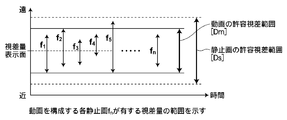
- action of the stereo image display control apparatus of FIG. The figure explaining the allowable parallax range of stereoscopic video and stereoscopic still image Schematic diagram of the amount of left-right shift of each point in the image
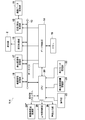
- FIG. 1 is a block diagram showing the configuration of the stereoscopic image display control apparatus 1
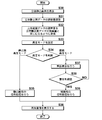
- FIG. 2 is a flowchart showing the operation of the stereoscopic image display control apparatus 1 of FIG.
- the stereoscopic image display control apparatus 1 of the present embodiment may be mounted on, for example, a stereoscopic camera (3D camera) that can capture a stereoscopic moving image and a stereoscopic still image.
- a stereoscopic camera 3D camera
- the stereoscopic image display control apparatus 1 of the present embodiment can display or record a stereoscopic moving image and a stereoscopic still image, and is connected to a data bus 13 as shown in FIG.
- a stereoscopic image display control apparatus comprising a recording / reading control unit 12 for controlling recording and reading of information with respect to an image data recording unit 11 such as a removable medium in which continuous shot image data composed of still images is recorded, an LCD, and the like.
- a display control unit 15 that controls display of a stereoscopic still image and a stereoscopic video on the display unit 2 connected to 1
- a still image signal processing unit 17 that performs signal processing for still images on the image data
- a video signal processing unit 18 and a CPU 20 for performing video signal processing.
- These control units and processing units are connected to a data control unit 14, respectively. Data transfer via the data bus 13 between the processing unit is controlled by the data control unit 14.
- a memory 19 is connected to the data control unit 14.
- the recording / reading control unit 12, the display control unit 15, the still image signal processing unit 17, and the moving image signal processing unit 18 are also connected to the CPU 20, and processing in these control units and processing units is performed. Is controlled by the CPU 20.
- an operation unit 23 composed of a power switch, various setting switches, a keyboard, a mouse, and the like provided in the main body of the stereoscopic image display control apparatus 1.
- the CPU 20 is connected to a playback mode setting unit 22 that sets the playback mode to the display unit 2 to a moving image playback mode or a still image playback mode.
- the playback mode setting unit 22 is operated by an observer operating the operation unit 23.
- the reproduction mode desired by the input observer can be set.
- the CPU 20 also functions as a determination unit that determines whether the reproduction mode set by the reproduction mode setting unit 22 is a stereoscopic moving image or a stereoscopic still image.
- the CPU 20 is connected to a still image parallax adjustment unit 21 and another parallax conversion unit 24, which will be described in detail later.
- the stereoscopic image display control apparatus 1 is also provided with a microphone and a speaker.
- the microphone is connected to the data bus 13 via an A / D converter or the like.
- the speaker is an amplifier and a D / A. It is connected to the data bus 13 via a converter.
- the display control unit 15 displays stereoscopic video data and stereoscopic still image data on the display unit 2 in a stereoscopic manner.
- the display control unit 15 performs a stereoscopic display process in accordance with the stereoscopic display method of the display unit 2 to the display unit 2.
- 3D display means displaying so that the observer can recognize the stereoscopic effect of the subject. Note that any known method can be used as the stereoscopic display in the present embodiment.
- a left-eye image and a right-eye image are displayed side-by-side and stereoscopically viewed by the naked eye balance method, or a lenticular lens is attached to the display unit 2, and the left-eye image and right-eye are placed at predetermined positions on the display surface of the display unit 2.
- a lenticular method in which the left-eye image and the right-eye image are incident to the left and right eyes to realize stereoscopic display.
- the optical path of the backlight of the display unit 2 is optically separated so as to correspond to the left and right eyes, and the left-eye image and the right-eye image are separated on the display surface of the display unit 2 to the left and right of the backlight.
- the display unit 2 is processed according to the stereoscopic display method.
- the stereoscopic display method is the lenticular method
- a lenticular lens is attached to the display surface of the display unit 2
- an optical element for changing the light beam direction of the left and right images is provided. It is attached to the display surface of the display unit 2.
- the display control unit 15 is also for causing the display unit 2 to display planar moving image data and planar still image data.
- the still image signal processing unit 17 performs signal processing for a stereoscopic still image on the stereoscopic still image data in order to improve the quality of the stereoscopic still image represented by the stereoscopic still image data.
- the signal processing for stereoscopic still images includes noise reduction processing for reducing noise components in stereoscopic still image data, contour enhancement processing for extracting contour components in stereoscopic still images and enhancing the extracted contour components, and specific processing Examples include a filtering process for attenuating or enhancing a spatial frequency component, a color correction process for correcting the color balance of a still image, and the like.
- the moving image signal processing unit 18 integrates continuous image data composed of a plurality of three-dimensional still images stored in the image data recording unit 11 or the memory 19 and read out via the recording / reading control unit 12. Processing for generating stereoscopic video data representing a stereoscopic video is performed, and signal processing for stereoscopic video is performed on the stereoscopic video data in order to improve the image quality of the stereoscopic video represented by the stereoscopic video data.
- the signal processing for stereoscopic video includes noise reduction processing for reducing noise components in stereoscopic video data, contour enhancement processing for extracting contour components from stereoscopic video data and enhancing the extracted contour components, and a specific spatial frequency. Examples include a filtering process for attenuating or enhancing a component, a color correction process for correcting the color balance of a stereoscopic moving image, and the like.
- the term “stereoscopic video” means that a plurality of three-dimensional still images are switched at random, or one or a plurality of three-dimensional still images are displayed so as to move on the screen according to a predetermined speed. Including high-speed frame advancement of images.
- the still image parallax amount adjusting unit 21 adjusts the parallax amount of the stereoscopic still image data representing the reproduced and displayed stereoscopic still image with respect to the stereoscopic still image reproduced and displayed on the display unit 2.
- the stereoscopic still image data representing the reproduced stereoscopic still image is adjusted to a parallax amount representing the stereoscopic effect desired by the observer. Can do.
- the method for adjusting the amount of parallax will be described in detail later.
- the moving image parallax amount conversion unit 24 includes a plurality of stereoscopic still images including a stereoscopic still image whose parallax amount has been adjusted so as to be smaller than the parallax amount of the stereoscopic still image adjusted by the still image parallax amount adjustment unit 21.
- the parallax amount of the stereoscopic moving image data representing the generated stereoscopic moving image is converted.
- the parallax amount of the stereoscopic video data is converted by the still image parallax amount adjustment unit 21 so that the parallax amount of the stereoscopic still image data representing each stereoscopic still image in all of the plurality of stereoscopic still images constituting the stereoscopic video data is converted by the still image parallax amount adjustment unit 21. This is performed by converting the adjusted stereoscopic still image so as to be smaller than the parallax amount.
- the “parallax amount” means a shift amount between feature points in the left-eye image and the right-eye image that form the stereoscopic image.
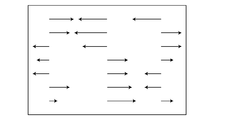
- FIG. 10 is a diagram schematically showing the amount of left-right shift of each point in the image.
- the shift amount that is, the length of the arrow increases
- the shift direction that is, the arrow direction differs between the front side and the back side of the cross point. Therefore, in the conversion of the parallax amount, the still image for the right eye and / or the still image for the left eye is deformed so that the length of the arrow in FIG. 10 is shortened. Since the amount and direction in which the shift is reduced at each point in the image are different, the image is deformed by so-called nonlinear geometric transformation called warping so that the shift amount, that is, the parallax amount is reduced. In the warping, for example, an image is locally distorted, that is, warped and deformed.
- an image is divided into a plurality of triangular patches, and deformation is performed for each triangular patch.
- a technique described in Japanese Patent Application Laid-Open No. 2010-152819 can be used as a specific method of image deformation by warping.
- the conversion of the parallax amount of the stereoscopic moving image data by the moving image parallax amount conversion unit 24 will be further described later.
- the display control unit 15 observes from continuous shot image data composed of a plurality of stereoscopic still images stored in the image data storage unit 11.
- the stereoscopic still image data represented by the predetermined stereoscopic still image selected in advance by the user is reproduced and displayed on the display unit 2 (S10).
- the operation unit 23 is used for a desired 3D still image while viewing the 3D still image reproduced by the observer on the display unit 2 one by one. It can be selected by operating.
- the still image parallax amount adjusting unit 21 determines the parallax amount of the stereoscopic still image data representing the stereoscopic still image reproduced and displayed on the display unit 2 based on the input from the operation unit 23 by the observer as described above. Adjust (S11). Note that the parallax amount in the stereoscopic still image is specifically adjusted so that the parallax amount of the stereoscopic still image data becomes the parallax amount corresponding to the input amount from the operation unit 23 by the observer. The conversion is performed by the same method as the parallax amount conversion method by the conversion unit 24.
- the stereoscopic still image data is converted so as to have the adjusted amount of parallax and reproduced and displayed on the display unit 2.
- the brightness, contrast, and sharpness values of the stereoscopic still image data representing the reproduced and displayed stereoscopic still image may be adjusted. These adjustments can be performed by operating the operation unit 23.
- the reproduction mode setting unit 22 sets the reproduction mode input by the observer (S12), and the CPU 20 determines whether the reproduction mode set by the reproduction mode setting unit 22 is a still image reproduction mode or a moving image reproduction mode. If it is determined whether there is a still image reproduction mode (S13; still image reproduction mode), the still image signal processing unit 17 converts the still image data representing the three-dimensional still image reproduced and displayed. On the other hand, signal processing for stereoscopic still image is performed (S14), the display control unit 15 displays the stereoscopic still image represented by the stereoscopic still image data after signal processing on the display unit 2 (S15), and the series of processing ends. To do.
- step S13 when it is determined in step S13 that the playback mode is the video playback mode (S13; video playback mode), the video parallax conversion unit 24 is played back and displayed on the display unit 2 as described above.
- 3D still images including this 3D still image so that the parallax amount of the 3D still image data representing the 3D still image, that is, the 3D still image data whose parallax amount has been adjusted by the observer
- the parallax amount of the stereoscopic video data representing the stereoscopic video thus converted is converted (S16).
- values of brightness, contrast, and sharpness may be changed so as to be smaller than the value of stereoscopic still image data representing the stereoscopic still image reproduced and displayed on the display unit 2.
- the allowable parallax range D S that can be appropriately observed by the observer in the stereoscopic still image is set to be larger than the allowable parallax range D m in the stereoscopic moving image (see FIG. 9), so that the stereoscopic still image is reproduced.
- the amount of parallax can be properly observed by the observer, when reproduced and displayed as a stereoscopic video, the amount of pop-up from the display screen of the display unit 2 and the amount of retraction in the depth direction are too large.
- the observer may not be able to observe appropriately such as feeling uncomfortable or tired.
- brightness, contrast, and sharpness are values that can be properly observed when reproduced and displayed as a single 3D still image, but when reproduced and displayed as a 3D movie, eyes are tired or convulsed. May cause effects on the human body, such as causing physical symptoms.
- the parallax amount of each stereoscopic still image f n included in the stereoscopic moving image is adjusted by the moving image parallax amount conversion unit 21 as illustrated in FIG. converting the parallax amount of the stereoscopic still image data to be smaller than the amount of parallax of the three-dimensional still image f 1 was.
- Parallax amount after conversion this time is set to be a value within the allowable disparity range D m of stereoscopic video.
- the amount of parallax is reduced is the disparity amount of the stereoscopic still image on the display surface where the amount of parallax is 0, that is, on the far side from the cross point (upward from... In the figure). It means that the maximum value (the tip of the upward arrow in the figure) is located on the lower side, and on the near side (lower side than in the figure) of the cross point where the parallax amount becomes 0, It means that the minimum value of the parallax amount of the stereoscopic still image (the tip of the downward arrow in the figure) is located on the upper side.
- the observer can appropriately observe the stereoscopic video without feeling tired or uncomfortable when displaying and reproducing the stereoscopic video. Can do.
- each of the three-dimensional still image data representing the plurality of three-dimensional still images constituting the three-dimensional moving image is configured with a parallax amount within the allowable parallax range D m that can be appropriately observed by the observer, the viewer And 3D still images can be properly observed.
- the parallax amount adjustment by the still image parallax amount adjustment unit 21 and the parallax amount conversion by the moving image parallax amount conversion unit 24 are centered on a display surface on which a stereoscopic still image indicated by.
- the stereoscopic effect in the projection direction from the display surface and the stereoscopic effect in the depth direction from the display surface may have the same value, or the disparity amount indicating the stereoscopic effect in the far direction, that is, the depth direction. You may enable it to set separately the amount of parallax which shows the three-dimensional effect of a direction, ie, a pop-out direction.
- the moving image signal processing unit 18 When the parallax amount conversion is performed by the moving image parallax amount conversion unit 24 as described above (S16), the moving image signal processing unit 18 then includes a plurality of three-dimensional images including the predetermined three-dimensional still image previously selected by the observer.
- 3D video data is generated by integrating continuous shot image data composed of still images, and the generated 3D video data is subjected to signal processing for 3D video to improve the quality of the 3D video represented by the 3D video data. (S17).
- the display control unit 15 displays the three-dimensional moving image represented by the three-dimensional moving image data after the signal processing on the display unit 2 (S15), and the series of processing ends.
- the stereoscopic image display control device 1 causes the display unit 2 to perform reproduction display.
- the parallax amount of the stereoscopic still image data representing the stereoscopic still image is adjusted for the reproduced and displayed stereoscopic still image.
- the parallax amount of the stereoscopic moving image data is converted so as to be smaller than the adjusted parallax amount, when the observer views the continuous shot image data as a stereoscopic still image, it corresponds to the stereoscopic still image.
- a stereoscopic video with a parallax amount converted to be smaller than a stereoscopic still image can be viewed. Even if the allowable amount of parallax that an observer can appropriately observe in a stereoscopic video is set smaller than that of a stereoscopic still image, both the stereoscopic video and the stereoscopic still image can be appropriately observed. That.
- FIG. 3 is a block diagram showing the configuration of the stereoscopic image display control device 1-2
- FIG. 4 is a flowchart showing the operation of the stereoscopic image display control device 1-2 of FIG.
- the stereoscopic image display control device 1-2 of the present embodiment includes a stereoscopic vision determination unit 25 in addition to the configuration of FIG.
- the stereoscopic image determination unit 25 reproduces and displays the stereoscopic video data representing the stereoscopic video having the same parallax amount as the parallax amount adjusted by the still image parallax amount adjusting unit 21 on the display unit 2, the viewer appropriately selects the stereoscopic video. It is determined whether or not it can be observed.
- the determination as to whether or not the observer can appropriately observe the stereoscopic video is based on the parallax amount adjusted by the still image parallax amount adjusting unit 21 being the preset allowable parallax range of the stereoscopic video. When it is inside, it is done by judging that it can observe appropriately.
- the parallax amount is appropriately observed when it is outside the allowable parallax range of the stereoscopic video. Judge that you can not.
- the parallax angle ⁇ that can be appropriately observed has been empirically determined by various studies.
- the parallax angle ⁇ refers to the difference between the convergence angle when viewing a point on the display surface and the convergence angle when viewing a solid determined by binocular parallax.
- Non-Patent Document 1 the allowable parallax range of stereoscopic video when assuming a high-definition television is based on the assumption that the interpupillary distance is 6.5 cm and viewing at a viewing viewing distance (three times the screen height of the television). There is a research result that the depth range in one screen is easy to see if it is kept within 1 degree (see Non-Patent Document 1).
- the upper limit value and the lower limit value of the allowable parallax range of the stereoscopic moving image are set as the parallax amount values at which the parallax angle is 1 degree.
- the parallax angle is 1 in the case of 1920 horizontal pixels.
- the pop-out amount and the retract amount with respect to the screen width are 2.9% with respect to the screen width.
- the pop-out amount and the retract amount from the display screen are 2 with respect to the screen width.
- the allowable parallax range of the stereoscopic video is set so as to be 9%.
- the allowable parallax range of a stereoscopic video is set so that the distance from the display screen and the amount of retraction from the display screen on which a stereoscopic still image is displayed are the same value, i.e.
- the distance may be set to be different from each other around the cross point, that is, the amount of protrusion and the amount of retraction from the display screen may be different values.
- an observer detects a range of values in which the operator feels discomfort or fatigue by operating the operation unit 23 while observing a stereoscopic video displayed on the display unit 2 in advance.
- the range of detected values can be set as an allowable range. Note that the allowable parallax range of the stereoscopic video may be set in the same manner as described above.
- the allowable parallax range of the stereoscopic video may be narrowed as the value of the height is increased. Similarly, the allowable parallax range of the stereoscopic video may be narrowed as the contrast setting value of the screen of the display unit 2 increases. Similarly, the allowable parallax range of the stereoscopic video may be narrowed as the sharpness value of the screen of the display unit increases.
- the allowable parallax range of the stereoscopic video can be set in consideration of a synergistic effect of one or more values among brightness, contrast, and sharpness.
- step S20 to step S25 in FIG. 4 is the same as the processing from step S10 to step S15 in FIG.
- the stereoscopic image display control device 1-2 determines that the playback mode is the moving image playback mode in step S23 (S23: moving image playback mode).
- the determination unit 25 reproduces and displays the stereoscopic video data representing the stereoscopic video having the same parallax amount as the parallax amount adjusted by the still image parallax amount adjustment unit 21 on the display unit 2, the observer may appropriately observe the stereoscopic video data. Whether or not it is possible is determined as described above (S26), and when it is determined that the observer can appropriately observe (S26; YES), the video signal processing unit 18 adjusts the parallax amount of the still image.
- the continuous moving image data composed of a plurality of three-dimensional still images including a three-dimensional still image whose parallax amount is adjusted by the unit 21 is integrated to generate three-dimensional moving image data.
- 3D video representing It performs signal processing for stereoscopic video to the image quality (S27).
- the display control unit 15 displays the three-dimensional moving image represented by the three-dimensional moving image data after the signal processing on the display unit 2 (S25), and the series of processing ends.
- the moving image parallax conversion unit 24 reproduces the data on the display unit 2 as described in the first embodiment.
- the parallax amount of the stereoscopic moving image data representing the stereoscopic moving image constituted by is converted (S28).
- the moving image signal processing unit 18 integrates continuous shot image data composed of a plurality of stereoscopic still images whose parallax amounts are converted by the moving image parallax amount conversion unit 24 to generate stereoscopic moving image data, and the generated stereoscopic moving image
- the signal processing for the stereoscopic video is performed on the data to improve the image quality of the stereoscopic video represented by the stereoscopic video data (S27), and the display control unit 15 displays the stereoscopic video represented by the stereoscopic video data after the signal processing on the display unit 2. Display (S25), and the series of processing ends.
- the determination by the stereoscopic vision determination unit 25 has been described as being performed before the moving image signal processing unit 18 generates the stereoscopic moving image data.
- the present invention is not limited to this, and the stereoscopic moving image is not limited to this. It may be performed immediately before reproduction display, or may be performed at the time of generating stereoscopic moving image data, or may be performed at any timing, and the observer can change the setting of the determination timing.
- the stereoscopic display control device 1-2 and the stereoscopic display control method of the present embodiment when stereoscopic video data representing a stereoscopic video having the same parallax amount as the parallax amount adjusted by the still image parallax amount adjusting unit is reproduced and displayed. Since the moving image parallax amount conversion unit 24 converts the parallax amount of the stereoscopic moving image data only when the observer cannot properly observe, the parallax amount of the stereoscopic moving image data is not unnecessarily reduced. Therefore, sufficient stereoscopic effect can be obtained when the stereoscopic video represented by the stereoscopic video data is reproduced and displayed.
- the stereoscopic vision determination unit 25 of the second embodiment determines whether or not the observer can appropriately observe as described above, but the present invention is not limited to this. Absent.
- the allowable parallax range D S that can be appropriately observed by the observer in the stereoscopic still image is set to be larger than the allowable parallax range D m in the stereoscopic moving image (see FIG. 9).
- stereoscopic video it is known that when the amount of change in parallax is large, it is difficult for an observer to observe properly.
- the parallax amounts of a plurality of stereoscopic still images constituting a stereoscopic image are all allowable in the stereoscopic video. even were the disparity range D m, the viewer is large amount of change parallax amount among the three-dimensional still image can no longer be able to properly observe the stereoscopic video.
- the stereoscopic vision determination unit 25 first detects the amount of parallax in each of the plurality of stereoscopic still images constituting the stereoscopic moving image data to be reproduced, and calculates the amount of change in the amount of parallax between adjacent stereoscopic still images in the time series.
- the parallax amount is calculated by detecting the coordinate values of a plurality of feature points whose features match on the right-eye still image and left-eye still image constituting the stereoscopic still image, and the right-eye still image and the left-eye still image are detected. It can be obtained by calculating the amount of deviation of the feature point from the image. Note that the feature points between the still image for the right eye and the still image for the left eye are in the reverse direction in the direction of popping out from the display surface on which the stereoscopic still image is displayed and in the depth (withdrawal) direction, that is, on the near side and the far side of the cross point. Therefore, when calculating the amount of parallax, the direction of deviation is also obtained.
- the continuous-shot image data recorded in the image data recording unit 11 is data representing, as an image, the amount of left-right shift of each point in the image for each of a plurality of stereoscopic still images constituting the continuous-shot image data.
- the file includes a distance image as attached information
- the amount of parallax can be calculated by reading the attached information. Note that the method of calculating the amount of parallax is not limited to this, and a known method can be used.
- the stereoscopic vision determination unit 25 calculates the degree of influence on stereoscopic vision, assuming that the greater the amount of change in the calculated parallax amount, the more difficult it is for the observer to perform appropriate observation.
- the effect on stereoscopic vision is not only due to the amount of change in parallax, but also the amount of scene change such as the amount of change in brightness, the amount of change in contrast, and the amount of motion.
- the stereoscopic vision determination unit 25 detects the brightness, contrast, and motion in each of the plurality of stereoscopic still images constituting the stereoscopic moving image data to be reproduced, and determines the amount of change between the stereoscopic still images adjacent in the time series.
- the degree of influence on stereoscopic vision is calculated assuming that the greater the calculated change amount, the greater the influence on stereoscopic vision.
- a known technique can be used for detecting brightness, contrast, and motion in a stereoscopic still image.
- the predetermined threshold value is a value of the parallax amount when the pop-out amount and the retraction amount are 2.9% or more with respect to the screen width.
- the predetermined threshold value may be decreased as the brightness value is increased.
- the contour of the subject becomes clearer in a stereoscopic video, it becomes easier to feel a stereoscopic effect when observing the stereoscopic display, that is, it is considered that the effect on stereoscopic vision is large, so in step S21 in FIG.
- the predetermined threshold value may be decreased as the sharpness value adjusted with the amount of parallax increases.
- the predetermined value may be decreased as the adjusted contrast value increases.
- the predetermined threshold value for the amount of parallax can be set in consideration of a synergistic effect due to one or more values of brightness, contrast, and sharpness.
- the effect on stereoscopic vision in stereoscopic video is not only due to the amount of change in parallax, but also due to the magnitude of scene changes such as the amount of change in brightness, the amount of change in contrast, and the amount of motion. Therefore, when two or more change amounts including the change amount of the parallax amount among the change amounts described above are equal to or greater than a predetermined threshold, the stereoscopic determination unit 25 cannot allow the observer to appropriately observe the stereoscopic video. You may make it judge.
- the stereoscopic vision determination unit 25 may determine whether or not the observation can be appropriately performed. In this case, when it is determined that proper observation is not possible (S26; NO), a warning may be displayed using a warning output unit 26 described later, or the reproduction and display of the stereoscopic video is stopped. Alternatively, a planar moving image may be displayed by reproducing and displaying a moving image represented by image data for only the right eye or only for the left eye among the stereoscopic moving image data.
- FIG. 5 is a block diagram showing the configuration of the stereoscopic image display control apparatus 1-3
- FIG. 6 is a flowchart showing the operation of the stereoscopic image display control apparatus 1-3 in FIG.
- the stereoscopic image display control apparatus 1-3 further includes a warning output unit 26 in the configuration of FIG.
- the warning output unit 26 issues a warning when the playback mode set by the playback mode setting unit 22 is a stereoscopic video.
- a warning method it may be possible to display on the display unit 2 that there is a possibility that it cannot be observed properly, or to output sound through a speaker (not shown), or change as appropriate. can do.
- the moving image parallax amount conversion unit 24 ′ displays the stereoscopic still image with the parallax amount adjusted so that the parallax amount is the same as the parallax amount of the stereoscopic still image adjusted by the still image parallax amount adjustment unit 21.
- the parallax amount of stereoscopic video data representing a stereoscopic video composed of a plurality of stereoscopic still images is converted.
- the parallax amount of the stereoscopic video data is converted by the still image parallax amount adjustment unit 21 so that the parallax amount of the stereoscopic still image data representing each stereoscopic still image in all of the plurality of stereoscopic still images constituting the stereoscopic video data is converted by the still image parallax amount adjustment unit 21.
- This is performed by converting the parallax amount so as to be the same as the parallax amount of the adjusted stereoscopic still image.
- a specific parallax amount conversion method a method similar to that of the moving image parallax amount conversion unit 24 of the first embodiment can be used, and thus detailed description thereof is omitted.
- steps S30 to S31 and steps S34 to S36 in FIG. 6 are the same as the processes in steps S10 to S11 and steps S13 to S15 in FIG.
- the stereoscopic image display control device 1-3 of the present embodiment adjusts the parallax amount of the stereoscopic still image data representing the stereoscopic still image reproduced and displayed on the display unit 2 in step S31.
- the moving image parallax amount conversion unit 24 ′ adjusts the parallax amount of the stereoscopic still image data representing the stereoscopic still image reproduced and displayed on the display unit 2, that is, the parallax amount by the observer as described above.
- the parallax amount of the stereoscopic video data representing the stereoscopic video composed of a plurality of stereoscopic still images including the stereoscopic still image is converted so that the parallax amount is the same as the parallax amount of the generated stereoscopic still image data (S32).
- the brightness, contrast, and sharpness values may be changed to the same value as the stereoscopic still image data representing the stereoscopic still image reproduced and displayed on the display unit 2.
- step S34 If it is determined in step S34 that the playback mode is the video playback mode (S34; video playback mode), the display unit 2 is warned that the warning output unit 26 may not be able to properly observe. Displayed (S37). Then, the CPU 20 determines whether or not the observer has confirmed the warning (S38). If it is determined that the observer has not confirmed (S38; NO), the process proceeds to step S37, and the warning output unit 26 continues to perform the above process. A warning is displayed and the subsequent processing is repeated.
- step S39 the moving image signal processing unit 18 displays the stereoscopic still image whose parallax amount has been adjusted in step S31.
- 3D video data is generated by integrating continuous shot image data composed of a plurality of 3D still images, and the generated 3D video data is used for 3D video to improve the quality of the 3D video represented by the 3D video data.
- Signal processing is performed (S39), the display control unit 15 displays the stereoscopic moving image represented by the stereoscopic moving image data after the signal processing on the display unit 2 (S36), and the series of processing ends.
- Whether or not the observer has confirmed the warning is determined, for example, by inputting from the operation unit 23 when the observer confirms the warning, and the CPU 20 can determine whether or not there is an input. it can.
- the present invention when it is determined that the playback mode is the video playback mode, if the observer confirms the warning, the stereoscopic video that the viewer may not be able to properly observe is reproduced and displayed.
- the present invention is not limited to this, and may be configured to prohibit reproduction display.
- the stereoscopic image display control device 1-3 and the stereoscopic image display control method of the present embodiment when an observer views continuous shot image data as a stereoscopic still image, the amount of parallax corresponding to the stereoscopic still image 3D still images can be properly observed, and when continuous shot image data is viewed as a 3D video, it is known that the viewer may not be able to properly observe when the 3D video is played back Therefore, it is possible to take measures such as stopping viewing a stereoscopic video, for example, thereby reducing discomfort and fatigue due to stereoscopic viewing.
- FIG. 7 is a block diagram showing the configuration of the stereoscopic image display control device 1-4
- FIG. 8 is a flowchart showing the operation of the stereoscopic image display control device 1-4 of FIG.
- the same parts as those in the configuration of the stereoscopic image display control apparatus 1-3 according to the above-described embodiment shown in FIG. Are omitted, and only different parts will be described.
- the stereoscopic image display control device 1-4 of the present embodiment is further provided with a stereoscopic vision determination unit 25 in the configuration of FIG. Since the stereoscopic vision determination unit 25 is the same as the stereoscopic vision determination unit 25 of FIG. 3 described in the second embodiment, detailed description thereof is omitted.
- the moving image parallax amount conversion unit 24 ′′ is the same as the moving image parallax amount conversion unit 24 ′ of FIG.
- step S40 to step S46 in FIG. 8 is the same as the processing from step S30 to step S36 in FIG.
- the stereoscopic image display control device 1-4 determines that the playback mode is the moving image playback mode in step S44 (S44: moving image playback mode).
- the stereoscopic video data representing the stereoscopic video in which the parallax amount is converted by the video parallax conversion unit 24 ′′ is reproduced and displayed on the display unit 2 in step S42, the observer may appropriately observe the stereoscopic video.
- the moving image signal processing unit 18 uses the moving image parallax amount conversion unit 24 '' to perform the parallax amount.
- 3D moving image data that is, continuous shooting image data composed of a plurality of 3D still images converted in parallax amount is integrated to generate 3D moving image data. It performs signal processing for stereoscopic video to the stereoscopic video image quality improvement (S48).
- the display control unit 15 displays the three-dimensional moving image represented by the three-dimensional moving image data after the signal processing on the display unit 2 (S48), and the series of processing ends.
- step S48 the moving image signal processing unit 18 converts the amount of parallax by the moving image parallax amount conversion unit 24 ′′.
- Stereoscopic video that is, continuous video image data composed of a plurality of stereoscopic still images whose parallax amounts have been converted is integrated to generate stereoscopic video data, and the quality of the stereoscopic video represented by the stereoscopic video data for the generated stereoscopic video data
- signal processing for stereoscopic video is performed (S48)
- the display control unit 15 displays the stereoscopic video represented by the stereoscopic video data after the signal processing on the display unit 2 (S46), and the series of processing ends. .
- Whether or not the observer has confirmed the warning is determined, for example, by inputting from the operation unit 23 when the observer confirms the warning, and the CPU 20 can determine whether or not there is an input. it can.
- the present invention when the viewer confirms the warning when the playback mode is determined to be the video playback mode, the stereoscopic video that cannot be properly observed by the viewer is reproduced and displayed.
- the present invention is not limited to this, and may be configured to prohibit reproduction display.
- the warning output unit 26 displays a warning and the moving image parallax amount conversion unit 24 "
- the parallax amount of the stereoscopic video data may be converted so that the observer can appropriately observe, and the display control unit 15 may display only the right-eye image or the left-eye image of the stereoscopic video data.
- a planar moving image may be displayed by reproducing and displaying the moving image represented by the data.
- the determination by the stereoscopic vision determination unit 25 has been described as being performed before the moving image signal processing unit 18 generates the stereoscopic moving image data.
- the present invention is not limited to this, It may be performed immediately before reproduction display, or may be performed at the time of generating stereoscopic moving image data, or may be performed at any timing, and the observer can change the setting of the determination timing.
- the stereoscopic image display control device 1-4 and the stereoscopic image display control method of the present embodiment when an observer views continuous shot image data as a stereoscopic still image, the amount of parallax corresponding to the stereoscopic still image 3D still images can be properly observed, and when continuous shot image data is viewed as a 3D video, the viewer can know that the 3D video cannot be properly observed when the 3D video is played back. For example, it is possible to take measures such as stopping viewing a stereoscopic moving image, thereby reducing discomfort and fatigue due to stereoscopic viewing.
- the present invention is not limited to a stereoscopic image.
- the present invention can also be applied to a planar image.
- the stereoscopic image display control devices 1, 1-2, 1-3, and 1-4 of the first to fourth embodiments described above can perform stereoscopic stationary.
- a stereoscopic video is provided with a still image setting value adjusting unit that adjusts one or more setting values of brightness, contrast, and sharpness of a planar still image instead of the still image parallax amount adjusting unit 21 that adjusts the parallax amount of the image.
- a moving image setting value changing unit that changes one or more setting values of brightness, contrast, and sharpness of a flat moving image instead of the moving image parallax amount conversion units 24, 24 ′, and 24 ′′ that convert the parallax amount It becomes.
- the stereoscopic vision determination unit 25 excludes the parallax amount as a determination item.
Landscapes
- Engineering & Computer Science (AREA)
- Multimedia (AREA)
- Signal Processing (AREA)
- Testing, Inspecting, Measuring Of Stereoscopic Televisions And Televisions (AREA)
- Controls And Circuits For Display Device (AREA)
Abstract
La présente invention a pour objectif de rendre possible la visualisation d'une vidéo stéréoscopique et d'une image fixe stéréoscopique. Pour atteindre cet objectif, la présente invention propose un dispositif de contrôle d'affichage d'image stéréoscopique (1, 1-2, 1-3, 1-4) dans lequel, quand des données d'images en continu comprenant une pluralité d'images fixes stéréoscopiques doivent être lues et affichées sous la forme d'une image fixe stéréoscopique, des données d'images fixes stéréoscopiques représentant l'une quelconque des images fixes stéréoscopiques de la pluralité d'images fixes stéréoscopiques sont acquises et ensuite lues et affichées. Par ailleurs, dans le dispositif de contrôle d'affichage d'image stéréoscopique selon la présente invention, quand les données d'images en continu comprenant la pluralité d'images fixes stéréoscopiques doivent être lues et affichées sous la forme d'une vidéo stéréoscopique, les données d'images en continu comprenant la pluralité d'images fixes stéréoscopiques sont intégrées de sorte à générer des données vidéo stéréoscopiques représentant une vidéo stéréoscopique et elles sont ensuite lues et affichées. L'invention est caractérisée en ce que la quantité de la parallaxe des données d'images fixes stéréoscopiques représentant une image fixe stéréoscopique est ajustée par rapport à l'image fixe stéréoscopique qui est lue et affichée, et la quantité de la parallaxe des données vidéo stéréoscopiques est convertie de sorte à être inférieure à ladite quantité de la parallaxe.
Applications Claiming Priority (2)
| Application Number | Priority Date | Filing Date | Title |
|---|---|---|---|
| JP2011076370 | 2011-03-30 | ||
| JP2011-076370 | 2011-03-30 |
Publications (1)
| Publication Number | Publication Date |
|---|---|
| WO2012132304A1 true WO2012132304A1 (fr) | 2012-10-04 |
Family
ID=46930094
Family Applications (1)
| Application Number | Title | Priority Date | Filing Date |
|---|---|---|---|
| PCT/JP2012/001889 Ceased WO2012132304A1 (fr) | 2011-03-30 | 2012-03-19 | Dispositif de contrôle d'affichage d'image stéréoscopique et procédé de contrôle d'affichage d'image stéréoscopique |
Country Status (1)
| Country | Link |
|---|---|
| WO (1) | WO2012132304A1 (fr) |
Citations (4)
| Publication number | Priority date | Publication date | Assignee | Title |
|---|---|---|---|---|
| JP2007251422A (ja) * | 2006-03-14 | 2007-09-27 | Fujifilm Corp | 画像処理装置、方法およびプログラム |
| JP2010152819A (ja) * | 2008-12-26 | 2010-07-08 | Fujifilm Corp | 画像処理装置および方法並びにプログラム |
| JP2010258723A (ja) * | 2009-04-24 | 2010-11-11 | Sony Corp | 画像情報処理装置、撮像装置、画像情報処理方法およびプログラム |
| JP2011048295A (ja) * | 2009-08-28 | 2011-03-10 | Fujifilm Corp | 複眼撮影装置及びその姿勢検出方法 |
-
2012
- 2012-03-19 WO PCT/JP2012/001889 patent/WO2012132304A1/fr not_active Ceased
Patent Citations (4)
| Publication number | Priority date | Publication date | Assignee | Title |
|---|---|---|---|---|
| JP2007251422A (ja) * | 2006-03-14 | 2007-09-27 | Fujifilm Corp | 画像処理装置、方法およびプログラム |
| JP2010152819A (ja) * | 2008-12-26 | 2010-07-08 | Fujifilm Corp | 画像処理装置および方法並びにプログラム |
| JP2010258723A (ja) * | 2009-04-24 | 2010-11-11 | Sony Corp | 画像情報処理装置、撮像装置、画像情報処理方法およびプログラム |
| JP2011048295A (ja) * | 2009-08-28 | 2011-03-10 | Fujifilm Corp | 複眼撮影装置及びその姿勢検出方法 |
Similar Documents
| Publication | Publication Date | Title |
|---|---|---|
| CN103581640B (zh) | 图像数据处理方法以及使用其的立体图像显示器 | |
| EP3035681B1 (fr) | Procédé et appareil de traitement d'image | |
| US9041774B2 (en) | Dynamic adjustment of predetermined three-dimensional video settings based on scene content | |
| US8514225B2 (en) | Scaling pixel depth values of user-controlled virtual object in three-dimensional scene | |
| JP5243663B2 (ja) | 画像処理装置、撮像装置、再生装置および画像処理方法 | |
| TWI555400B (zh) | 應用於顯示裝置的字幕控制方法與元件 | |
| JP2011176541A (ja) | 立体映像処理装置および方法、並びにプログラム | |
| JP2011172172A (ja) | 立体映像処理装置および方法、並びにプログラム | |
| EP2469876B1 (fr) | Dispositif de contrôle d'un afficheur d'images stéréoscopiques et procédé de contrôle du fonctionnement de ce dernier | |
| US20130208097A1 (en) | Three-dimensional imaging system and image reproducing method thereof | |
| JP5656676B2 (ja) | 映像表示装置、映像表示方法及びプログラム | |
| JP2011259012A (ja) | 立体画像再生装置及び立体画像再生方法 | |
| WO2012132304A1 (fr) | Dispositif de contrôle d'affichage d'image stéréoscopique et procédé de contrôle d'affichage d'image stéréoscopique | |
| JP5507003B2 (ja) | 立体画像処理装置及び立体画像処理方法 | |
| WO2012132417A1 (fr) | Dispositif et procédé de reproduction et programme informatique | |
| JP2012049662A (ja) | 画像処理装置、画像処理方法及び画像表示装置 | |
| JP2006287813A (ja) | 3次元画像表示装置 | |
| JP5304760B2 (ja) | 立体映像撮像装置および立体映像撮像方法 | |
| JP2011176397A (ja) | 映像信号変換装置及び電子機器 | |
| JP5720475B2 (ja) | 立体映像制御装置、立体映像制御方法および立体映像制御用プログラム | |
| JP5501150B2 (ja) | 表示装置及びその制御方法 | |
| JP5351915B2 (ja) | 立体動画像処理装置および方法並びにプログラム | |
| JP2013135276A (ja) | 画像処理装置及び画像処理方法 | |
| JP2013120948A (ja) | 映像処理装置及び映像処理方法、表示装置、並びにコンピューター・プログラム |
Legal Events
| Date | Code | Title | Description |
|---|---|---|---|
| 121 | Ep: the epo has been informed by wipo that ep was designated in this application |
Ref document number: 12764432 Country of ref document: EP Kind code of ref document: A1 |
|
| NENP | Non-entry into the national phase |
Ref country code: DE |
|
| 122 | Ep: pct application non-entry in european phase |
Ref document number: 12764432 Country of ref document: EP Kind code of ref document: A1 |
|
| NENP | Non-entry into the national phase |
Ref country code: JP |